A Comprehensive Biblical, Historical, and Eschatological Comparison
📜 Israel, Prophecy, and the Church: Why This Debate Still Matters
Few topics in Christian theology generate as much passion, confusion, and disagreement as the question of Israel’s role in God’s plan.
For some believers, the modern State of Israel represents one of the most dramatic fulfillments of biblical prophecy in history.
For others, the promises given to Israel find their ultimate fulfillment in Jesus Christ and the global people of God.
Still others believe the truth may involve elements of both perspectives.
This debate touches some of the deepest questions in biblical interpretation:
How should Christians understand the Old Testament promises to Abraham?
What did the apostles teach about Israel and the Church?
Do modern events in the Middle East connect directly to biblical prophecy?
How should believers interpret passages like Romans 11, Ezekiel 37, and Zechariah 12?
For many Christians, these questions influence not only theology but also:
attitudes toward the Jewish people
views about modern geopolitics
interpretations of prophecy and the end times.
Yet when we step back and examine Scripture carefully, we discover that faithful Christians across centuries have wrestled with these questions and reached different conclusions while still honoring the authority of the Bible.
This article does not aim to inflame division or promote simplistic answers.
Instead, it seeks to do something much more valuable:
To explore the biblical texts, historical developments, and theological perspectives that shape this discussion.
By understanding the full picture—from the promises to Abraham to the teachings of Jesus, the writings of the apostles, and the unfolding of history—believers can approach this complex topic with:
greater biblical literacy
deeper historical awareness
and a spirit of humility and discernment.
The goal is not merely to win an argument.
The goal is to understand how God’s redemptive story unfolds through Scripture—and what that means for the Church today.
SECTION 1
A Comprehensive Biblical, Historical, and Eschatological Comparison
4
Introduction: Why This Debate Matters
The question of Israel, land, covenant, and prophecy is not a minor theological disagreement. It affects:
Eschatology (end-times theology)
Ecclesiology (what is the Church?)
Covenant theology
Political engagement
Christian attitudes toward the Jewish people
Interpretations of prophecy
Mission strategy toward Jewish communities
Christian perspectives on global geopolitics
At its core, this debate asks:
How does the Old Testament relate to the New? How do Abrahamic promises function after Christ? Is the modern state of Israel prophetically significant? What role does the Jewish people have in God’s unfolding plan of redemption?
These questions have shaped Christian theology for centuries and continue to influence preaching, missions, and global Christian attitudes toward the Middle East.
This blog presents both sides fairly, thoroughly, and deeply. The goal is not to declare a winner but to illuminate how sincere believers interpret the same Scriptures in different ways.
Understanding these perspectives can help Christians approach this sensitive topic with humility, biblical literacy, and historical awareness.
SECTION 2
🟦 Side 1: Christian Zionism
(God’s covenant with Israel remains nationally and territorially binding)
Christian Zionists believe the modern state of Israel plays a continuing role in biblical prophecy and that God’s land promises to Abraham remain in effect.
They argue that God’s covenantal faithfulness demands a literal fulfillment of territorial promises.
For them, the return of Jewish people to their ancestral homeland is not merely political history—it is part of God’s unfolding prophetic timeline.
Many supporters see the re-establishment of Israel in 1948 as one of the most remarkable fulfillments of biblical prophecy in modern history.
Christian Zionism is especially influential among evangelical Christians in the United States and has shaped modern Christian engagement with Middle Eastern geopolitics.
SECTION 3
📖 Key Verses They Use (Expanded Analysis)
1️⃣ Genesis 12:1–3
“I will bless those who bless you…”
Expanded Argument:
This covenant predates the Mosaic law.
It is unilateral (God alone passes through the covenant in Genesis 15).
It is called everlasting.
Blessing and cursing language suggests ongoing application.
Christian Zionists argue that nations are still judged in relation to Israel.
They often interpret this passage as a timeless principle governing how God deals with nations that either support or oppose the Jewish people.
This interpretation has influenced political attitudes among many Christians who believe supporting Israel aligns with God’s purposes.
Covenant is with Abraham’s descendants physically.
Supporters of Christian Zionism argue that if God revoked or redefined this promise, it would raise questions about the reliability of God’s covenant faithfulness.
3️⃣ Jeremiah 31:35–37
National permanence tied to cosmic stability.
Argument: If sun and moon endure, Israel endures as a nation.
Christian Zionists argue this excludes “replacement theology.”
This passage is often cited to demonstrate that Israel’s national identity cannot be erased from God’s plan.
4️⃣ Ezekiel 36:24–28
Regathering from nations → return to land → spiritual renewal.
Many interpret 1948 as first stage fulfillment.
In this reading, the prophecy unfolds in stages:
Physical regathering of Jewish people.
National restoration.
Spiritual revival and recognition of the Messiah.
5️⃣ Romans 11:1–2
Paul insists God has not rejected Israel.
This is often interpreted as a direct theological refutation of the idea that the Church replaces Israel.
6️⃣ Romans 11:25–29
“Irrevocable” calling.
Key emphasis: Irrevocable means not transferred to another people.
Supporters argue that the covenant promises given to Israel cannot be permanently reassigned to the Church.
7️⃣ Zechariah 12:2–3
Jerusalem central in global tension.
Often interpreted as end-times geopolitics.
Christian Zionists sometimes point to modern international disputes over Jerusalem as evidence that this prophecy is unfolding in real time.
SECTION 4
🧭 Theological Framework
Commonly associated with:
Dispensational premillennialism
Distinction between Israel and Church
Literal millennium (Revelation 20)
Future temple (Ezekiel 40–48)
Major historical developer:
John Nelson Darby
Darby’s teachings spread widely through the Scofield Reference Bible, which profoundly influenced evangelical interpretations of prophecy in the 20th century.
In this framework, history is divided into distinct dispensations, and God’s plan for Israel and the Church unfolds along parallel but distinct tracks.
SECTION 5
🟥 Side 2: Fulfillment / Covenant Theology
(Promises fulfilled in Christ and expanded to the Church)
This position sees Jesus as the climax of Israel’s story.
The Church is not replacing Israel — but fulfilling Israel’s calling in Christ.
In this view, Jesus is the true Israelite, and all covenant promises reach their ultimate fulfillment in Him.
Through union with Christ, both Jews and Gentiles participate in the blessings promised to Abraham.
SECTION 6
📖 Key Verses They Use (Expanded)
1️⃣ Galatians 3:16
Seed singular = Christ.
Paul’s interpretation emphasizes that the promise ultimately focuses on the Messiah rather than on a national ethnic lineage.
2️⃣ Galatians 3:28–29
Identity redefined by union with Christ.
In this perspective, faith in Christ becomes the defining marker of covenant membership rather than ethnic heritage.
3️⃣ Romans 9:6
Ethnic descent ≠ covenant membership.
Paul highlights that being biologically descended from Abraham does not automatically guarantee participation in the covenant promises.
4️⃣ Ephesians 2:14–16
One new humanity.
No dual covenant path.
This passage is interpreted as dissolving the theological separation between Jews and Gentiles.
5️⃣ Hebrews 11:13–16
Abraham ultimately sought heavenly inheritance.
The patriarchs are described as pilgrims looking toward a heavenly homeland.
6️⃣ John 18:36
Kingdom not geopolitical.
Jesus redefines expectations about the nature of God’s kingdom.
7️⃣ Hebrews 8:13
Old covenant obsolete.
The new covenant inaugurated through Christ fulfills and transcends the structures of the old covenant.
SECTION 7
🧭 Theological Framework
Often linked with:
Covenant theology
Amillennialism
Postmillennialism
Major early influence:
Augustine of Hippo
Augustine’s interpretation of the millennium shaped Christian eschatology for over a thousand years.
In his view, the millennium described in Revelation represents the current spiritual reign of Christ through the Church.
SECTION 8
🟨 The Middle Ground View
(Affirms Israel’s ongoing identity but avoids prophetic absolutism)
This approach emphasizes humility and mystery.
Affirms:
Jewish people remain beloved (Romans 11:28)
Salvation only through Christ
Modern Israel ≠ automatic prophetic fulfillment
Christians must pursue justice for all
Supporters of this perspective often believe that God’s relationship with the Jewish people continues in ways that remain mysterious and unfolding.
They also caution against overly confident prophetic interpretations of modern political events.
SECTION 9
📖 Deep Dive: Romans 11 (Verse-by-Verse Overview)
Romans 9–11 addresses Israel’s role in salvation history.
Paul wrestles with a central question: If Israel was chosen by God, why did many Jewish people reject Jesus?
His answer unfolds across these chapters with deep theological nuance.
Romans 11:1
God has not rejected His people.
Paul points to himself as evidence—a Jewish believer in Christ.
11:5
Remnant chosen by grace.
Throughout biblical history, God preserved a faithful remnant within Israel.
11:11
Israel’s stumbling brought Gentile salvation.
Paul suggests that Israel’s rejection of Christ opened the door for the gospel to spread among the nations.
11:17–24
Olive tree metaphor.
Gentiles are grafted into the covenant tree.
However, Paul warns Gentile believers not to become arrogant.
11:25–26
“All Israel will be saved.”
Interpretations differ widely.
Some believe this refers to a future national conversion of Israel.
Others believe it describes the complete number of God’s people throughout history.
11:32
God has consigned all to disobedience that He may have mercy on all.
Paul emphasizes the universal need for grace.
He concludes the section not with a prophetic timetable but with worship.
SECTION 10
📖 Ezekiel 37 — Valley of Dry Bones
Two interpretations:
Christian Zionist:
Physical regathering first
Spiritual revival later
1948 seen as stage one
Fulfillment view:
Symbolic of spiritual resurrection
Fulfilled in gospel era
Church as revived people
The passage itself emphasizes restoration after exile, but interpreters differ on whether its ultimate fulfillment lies in modern history or in the spiritual restoration brought through Christ.
SECTION 11
📖 Revelation 20 — The Millennium
Three major views:
1️⃣ Premillennialism
Christ returns before literal 1,000-year reign in Jerusalem.
2️⃣ Amillennialism
Millennium symbolic of current church age.
Influenced by Augustine.
3️⃣ Postmillennialism
Kingdom expands gradually before Christ returns.
Each interpretation leads to very different expectations regarding Israel’s role in the future.
Christian Zionism becomes influential in evangelical circles.
SECTION 13
⚖️ Where the Core Hermeneutical Divide Is
The debate ultimately comes down to how Scripture is interpreted.
Key questions include:
Should prophetic language be interpreted literally or symbolically?
Are Old Testament promises expanded or transformed in the New Testament?
How should the Church understand its relationship to Israel?
These hermeneutical decisions shape entire theological systems.
SECTION 14
🕊️ The Kingdom Theology Connection
For Christians who emphasize the Kingdom of God, these discussions intersect with broader questions about how God’s rule unfolds in history.
Some believe the Kingdom advances primarily through spiritual transformation.
Others expect dramatic prophetic events tied to the restoration of Israel.
Still others believe the Kingdom includes both spiritual and historical dimensions.
SECTION 15
🕊️ A Balanced Reflection (Expanded)
No matter which view Christians hold:
God remains faithful to His promises.
Jesus Christ stands at the center of salvation history.
The gospel is for all nations.
Ethnic pride or hostility contradicts the message of Christ.
The Church must reject antisemitism entirely.
Christians must pursue peace and reconciliation.
Paul’s final response to these mysteries is worship:
“Oh, the depth of the riches and wisdom and knowledge of God…”
SECTION 16
🔎 Final Summary Comparison Table
Issue Christian Zionism Fulfillment Theology Middle Ground
Land promise Literal & eternal Fulfilled in Christ Possibly layered
Israel today Prophetically central Theologically distinct from biblical Israel Historically important
Romans 11 National restoration Spiritual fulfillment Mystery
Millennium Future literal Symbolic now Open
Church & Israel Distinct One people Tension
SECTION 17
Final Word
This debate has endured for centuries because it touches profound mysteries within Scripture.
Christians across traditions continue to wrestle with how Old Testament promises, New Testament fulfillment, and modern history fit together.
Regardless of interpretation, believers affirm:
Jesus is Lord. Salvation is by grace through faith. God’s Kingdom will ultimately fill the earth.
And until that day, Christians are called to pursue truth, humility, and love.
SECTION 18
📜 Biblical Zionism vs Modern Political Zionism
Understanding a Critical Distinction
One of the biggest sources of confusion in discussions about Israel, prophecy, and Christian theology is the assumption that Biblical Zionism and modern political Zionism are the same thing.
In reality, these two ideas developed in very different historical contexts and are not identical.
Understanding the distinction is essential for Christians seeking to interpret Scripture responsibly while also understanding modern history.
SECTION 19
🕊️ What Is Biblical Zionism?
Biblical Zionism refers to the biblical and theological concept of Zion found throughout the Old and New Testaments.
In Scripture, Zion originally referred to a specific hill in Jerusalem that became associated with God’s dwelling place and covenant presence.
Over time, the meaning expanded to include:
The city of Jerusalem
The people of Israel
God’s kingdom
The future reign of the Messiah
The gathering of God’s people
The word “Zion” appears over 150 times in Scripture and carries deep spiritual symbolism.
SECTION 20
📖 Key Biblical Passages About Zion
Psalm 132:13
“For the Lord has chosen Zion; he has desired it for his dwelling place.”
Here Zion represents the location where God chose to dwell among His people.
Isaiah 2:2–3
“Out of Zion shall go forth the law, and the word of the Lord from Jerusalem.”
This passage envisions Zion as the spiritual center of God’s instruction to the nations.
Isaiah 60
A prophetic vision of nations coming to Zion in the Messianic age.
This passage describes Zion becoming a light to the nations.
Joel 2:32
“Everyone who calls on the name of the Lord shall be saved; for in Mount Zion… there shall be deliverance.”
The New Testament quotes this passage in Acts, connecting Zion with the salvation message of the gospel.
Hebrews 12:22
“You have come to Mount Zion and to the city of the living God, the heavenly Jerusalem.”
This passage shows how the New Testament expands the concept of Zion into a spiritual and heavenly reality.
SECTION 21
Key Characteristics of Biblical Zionism
Biblical Zionism is primarily:
Theological
Messianic
Spiritual in fulfillment
Centered on God’s kingdom
It focuses on God’s covenant purposes, not national political movements.
For many theologians, Zion ultimately points toward the reign of the Messiah and the restoration of God’s people.
SECTION 22
🏛️ What Is Modern Political Zionism?
Modern Zionism is a political movement that began in the late 19th century.
It arose largely as a response to:
European antisemitism
Pogroms in Eastern Europe
Lack of political safety for Jewish communities
One of the most influential figures in modern Zionism was:
Theodor Herzl
In 1896 Herzl published “Der Judenstaat” (The Jewish State), arguing that Jewish people needed a national homeland for safety and self-determination.
This movement eventually led to the establishment of the modern state of Israel in 1948.
Key Goals of Modern Zionism
Modern Zionism focused on:
Jewish self-determination
Establishing a Jewish homeland
National security for Jewish communities
Cultural and national revival
While many Zionists were religious, the early movement was largely secular and political.
Some founders were not motivated by biblical prophecy but by political necessity and survival.
✡️ Modern Judaism vs Biblical Judaism
How Jewish Religious Practice Changed Over Time
When many people read the Bible and compare it with modern Jewish practice, they sometimes assume that Judaism has always looked the same throughout history.
However, the religion practiced by Jewish communities today is not identical to the form of Judaism described in the Hebrew Scriptures and the New Testament.
The difference largely developed because of a major historical event: the destruction of the Jerusalem temple in 70 AD.
Understanding how Jewish religious life changed after this event helps clarify the differences between biblical Judaism and modern Judaism.
🏛️ Biblical Judaism
Temple-Centered Worship
The form of Judaism practiced during the time of the Hebrew Bible and the New Testament revolved around the temple in Jerusalem.
The temple served as the central location for worship, sacrifice, and national religious life.
The first temple was built by King Solomon and later destroyed by the Babylonians in 586 BC.
A second temple was rebuilt after the return from exile and stood during the time of Jesus.
Biblical Judaism included several central elements
1️⃣ Animal Sacrifices
The sacrificial system described in the book of Leviticus played a central role in worship.
Offerings included:
burnt offerings
sin offerings
peace offerings
festival sacrifices
These sacrifices were performed by priests descended from the tribe of Levi.
2️⃣ The Priesthood
Priests served as mediators between the people and God.
The high priest performed special duties during important festivals such as the Day of Atonement.
Religious authority was closely tied to the temple priesthood.
3️⃣ Temple Festivals
Several major festivals required pilgrims to travel to Jerusalem.
Examples include:
Passover
Pentecost (Shavuot)
Tabernacles (Sukkot)
These gatherings reinforced the central role of the temple in Jewish life.
4️⃣ The Sanhedrin
During the late Second Temple period, Jewish religious leadership also included councils such as the Sanhedrin.
This body included members from groups like the Pharisees and Sadducees.
They helped interpret the law and oversee religious matters.
⚔️ The Destruction of the Second Temple
In 70 AD, the Roman Empire destroyed Jerusalem and the temple during a major Jewish revolt.
This event dramatically changed Jewish religious life.
Without the temple:
sacrifices could no longer be performed
the priesthood lost its central role
the traditional structure of biblical worship ended
Jewish communities had to adapt in order to continue practicing their faith.
📚 The Rise of Rabbinic Judaism
After the destruction of the temple, Jewish religious leadership gradually shifted toward scholars and teachers known as rabbis.
These teachers preserved Jewish traditions through study, teaching, and interpretation of Scripture.
Rabbinic Judaism emphasized:
study of the Torah
prayer instead of sacrifices
community-based worship in synagogues
The Talmud
One of the key developments of this period was the compilation of the Talmud, a large body of Jewish legal discussions and commentary.
The Talmud includes interpretations of the Mishnah, an earlier collection of oral traditions.
🕍 Modern Jewish Practice
Today, Jewish religious life focuses primarily on:
synagogue worship
prayer
study of the Torah
observance of festivals and traditions
Since there is no temple, sacrifices described in the Bible are no longer performed.
Instead, prayer and repentance are understood to serve as expressions of devotion.
Different branches of modern Judaism interpret these traditions in different ways.
Major branches include
Orthodox Judaism
Conservative Judaism
Reform Judaism
Each of these movements approaches Jewish law and tradition with different levels of strictness and interpretation.
✝️ The Early Christian Context
Understanding the difference between biblical Judaism and modern Judaism also helps explain the historical setting of Jesus and the early Christian movement.
Jesus lived during the Second Temple period, when temple worship, sacrifices, and priestly leadership were still active.
The early followers of Jesus were Jewish and initially practiced their faith within this historical context.
Only after the destruction of the temple did Christianity and rabbinic Judaism develop along separate historical paths.
⚖️ Key Differences Between Biblical and Modern Judaism
Pilgrimage festivals at the temple Community-based observances
Sanhedrin and temple authorities Rabbinic scholars and traditions
🕊️ A Faith That Adapted Through History
Despite these changes, Jewish communities preserved their identity and traditions through centuries of diaspora and cultural change.
The transition from temple-based worship to rabbinic Judaism allowed Jewish religious life to continue even without the temple in Jerusalem.
Understanding this historical transformation helps readers better appreciate both the continuity and the changes within Jewish history and religious practice.
SECTION 23
⚖️ Key Differences Between Biblical Zionism and Modern Zionism
Biblical Zionism Modern Political Zionism
Rooted in Scripture Rooted in 19th century political history
Focused on God’s covenant Focused on national self-determination
Theological concept Political movement
Centered on God’s kingdom Centered on a nation-state
Often spiritualized in the New Testament Concerned with geography and sovereignty
These differences are important because confusing the two can lead to theological misunderstandings.
Why This Distinction Matters for Christians
Some Christians automatically assume that:
Modern Israel = direct fulfillment of every Zion prophecy.
Others argue the opposite and claim that modern Israel has no theological significance at all.
Both positions can oversimplify the issue.
Recognizing the difference between biblical and political Zionism allows for a more nuanced understanding.
Christians can affirm:
God’s faithfulness to His covenant
The historical reality of the Jewish people
The complexity of modern geopolitics
The centrality of Christ in biblical prophecy
Without assuming that every modern political event equals a prophetic fulfillment.
The New Testament Expansion of Zion
One of the most striking developments in the New Testament is how Zion language expands beyond geography.
Hebrews 12:22
“You have come to Mount Zion… the heavenly Jerusalem.”
1 Peter 2:6
“Behold, I lay in Zion a cornerstone.”
The cornerstone is identified with Christ.
This suggests that Zion ultimately points toward the kingdom of God revealed through Jesus.
A Thoughtful Christian Approach
Christians can approach this topic with wisdom by recognizing:
Biblical Zion has rich theological meaning.
Modern Zionism is a political movement shaped by history.
The relationship between the two is debated among Christians.
Scripture must remain the ultimate authority in interpreting prophecy.
This distinction helps prevent simplistic conclusions and encourages deeper biblical reflection.
How This Connects to the Larger Debate
Understanding the difference between Biblical Zionism and modern political Zionism clarifies why Christians disagree on Israel’s role today.
Those who support Christian Zionism often see modern Israel as part of God’s prophetic restoration.
Those who hold fulfillment theology believe Zion’s promises culminate in Christ and the Church.
Others hold a middle position, acknowledging both the theological depth of Zion and the historical significance of modern Israel without equating them directly.
🏛️ Did Early Christians Believe in Christian Zionism?
When examining whether early Christians believed in something similar to modern Christian Zionism, it is important to remember that the earliest followers of Jesus were themselves Jewish and deeply rooted in the Hebrew Scriptures.
However, as Christianity spread throughout the Roman world, interpretations of Israel, Zion, and the kingdom of God began to develop in different directions.
The question scholars often ask is:
Did early Christians expect a future national restoration of Israel in the land, or did they interpret these promises spiritually through Christ and the Church?
The answer is complex.
Some early Christians held views that resemble modern premillennialism, while others interpreted Israel’s promises symbolically or spiritually.
Early Jewish-Christian Expectations
The first generations of believers, many of whom were Jewish, still expected a visible kingdom of God.
For example, the disciples themselves asked Jesus:
Acts 1:6
“Lord, will you at this time restore the kingdom to Israel?”
This question reveals that early followers of Jesus were still thinking in terms of national restoration.
Jesus did not directly deny the idea of a restored kingdom but redirected their focus toward the coming mission of the gospel.
Early Church Fathers with Premillennial Views
Some early church leaders expected a future earthly reign of Christ.
One example is:
Papias of Hierapolis
Papias believed Christ would establish a literal kingdom on earth.
Another early theologian was:
Irenaeus
Irenaeus taught that Christ would return and reign physically on earth during a future millennium.
However, even these early premillennial views did not resemble modern Christian Zionism exactly.
They focused more on Christ’s reign than on the political restoration of a Jewish state.
The Rise of Spiritual Interpretations
By the 3rd and 4th centuries, many Christian theologians began interpreting Israel’s promises more symbolically.
One influential thinker was:
Origen
Origen emphasized allegorical interpretation and saw many Old Testament promises as spiritual realities fulfilled in the Church.
Later, this approach was strongly developed by:
Augustine of Hippo
Augustine taught that the millennium described in Revelation represented the current age of the Church rather than a future earthly kingdom centered in Jerusalem.
His view became the dominant interpretation in much of Christianity for over a thousand years.
Summary of Early Christian Views
Early Christianity contained multiple interpretations:
Some expected a future earthly reign of Christ.
Others believed Old Testament promises were fulfilled spiritually through the Church.
What is clear is that modern Christian Zionism as it exists today did not fully develop in the early church.
It emerged much later in Christian history.
SECTION 24
📚 How the Scofield Bible Spread Christian Zionism in America
One of the most significant developments in modern Christian Zionism occurred through the publication of the Scofield Reference Bible in 1909.
The Bible was created by:
Cyrus I. Scofield
Scofield was heavily influenced by the teachings of:
John Nelson Darby
Darby developed a theological system known as dispensationalism, which divides biblical history into different eras in which God interacts with humanity in distinct ways.
Within this framework, Israel and the Church are seen as two distinct groups with separate roles in God’s plan.
What Made the Scofield Bible So Influential?
The Scofield Reference Bible included extensive study notes alongside the biblical text.
These notes explained prophecy through a dispensational framework.
Because the notes were printed directly on the same pages as Scripture, many readers began to treat Scofield’s interpretations as if they were part of the Bible itself.
This had enormous influence on evangelical theology in the United States.
Key Teachings Promoted in the Scofield Bible
Scofield’s notes emphasized several ideas:
Israel and the Church are distinct.
The Jewish people will return to their land before Christ’s return.
A future tribulation period will occur.
Christ will reign in a literal millennium.
These interpretations helped shape modern evangelical expectations regarding Israel and prophecy.
Influence on Modern Evangelical Culture
Through the 20th century, Scofield’s ideas spread widely through:
Bible colleges
prophecy conferences
evangelical publishing
popular prophecy teachers
By the late 20th century, Christian Zionism had become a major influence in American evangelical thought.
Many Christians came to see the existence of modern Israel as direct confirmation of biblical prophecy.
✡️ What the Earliest Jewish Christians Believed About Zion and the Kingdom
The earliest followers of Jesus were Jewish believers who accepted Him as the Messiah while remaining rooted in Jewish tradition.
These believers sometimes referred to themselves as the Nazarenes or the Ebionites.
They continued to observe many Jewish customs while believing that Jesus fulfilled the promises of the Hebrew Scriptures.
Their Understanding of the Kingdom
Early Jewish Christians believed that Jesus was the long-awaited Messiah promised in the prophets.
They believed the kingdom of God had already begun through Jesus’ ministry.
However, they also expected the kingdom to be fully revealed when Christ returned.
This created a theological tension often described as “already but not yet.”
Their View of Zion
For many early Jewish Christians, Zion remained important as the historical center of God’s covenant people.
However, the meaning of Zion began to expand as the gospel spread to the nations.
Passages like Hebrews 12:22 described believers as coming to “the heavenly Zion.”
This suggested that the concept of Zion was growing beyond a single geographic location.
The Mission to the Nations
The early church quickly realized that the gospel was not limited to Israel.
Under the leadership of apostles such as:
Paul the Apostle
Christianity expanded rapidly among Gentile populations throughout the Roman Empire.
This expansion reshaped how believers understood the relationship between Israel and the global Church.
A Unified People of God
Many early Christians concluded that God was creating one unified people composed of Jews and Gentiles.
This idea appears strongly in passages like Ephesians 2.
The dividing wall between Jew and Gentile was broken through Christ.
Zion, in this sense, became less about geography and more about God’s redeemed community.
Why These Historical Perspectives Matter
Understanding how early Christians interpreted Zion and Israel helps modern readers approach the debate with greater humility.
It shows that sincere believers have wrestled with these questions for nearly two thousand years.
The relationship between Israel, the Church, and the kingdom of God remains one of the most complex topics in Christian theology.
Christians continue to study Scripture carefully while recognizing that some aspects of God’s plan remain mysterious until the full revelation of His kingdom.
SECTION 25
📜 What the Old Testament Actually Says About the Land Covenant
One of the central issues in the debate about Israel and Christian Zionism concerns the land promise given to Abraham and his descendants.
This promise appears repeatedly throughout the Old Testament and forms a major part of Israel’s covenant identity.
Understanding how the land promise functions in Scripture is essential for interpreting later biblical theology.
📖 The Original Promise to Abraham
The land covenant begins with God’s call to Abraham.
Genesis 12:1
“Go from your country and your kindred and your father’s house to the land that I will show you.”
This passage introduces the concept of a specific land chosen by God.
The promise is expanded later.
Genesis 15:18
“To your offspring I give this land, from the river of Egypt to the great river, the Euphrates.”
This covenant ceremony is particularly significant because it is unilateral.
God alone passes through the covenant pieces, symbolizing that the promise ultimately depends on God’s faithfulness rather than human performance.
The Land as an Everlasting Possession
Genesis 17:8
“I will give to you and to your offspring after you the land… for an everlasting possession.”
Supporters of Christian Zionism often emphasize the word “everlasting.”
They argue that this language suggests the land promise cannot be permanently revoked.
Conditional Warnings in the Law
However, the Mosaic covenant introduces an important tension.
While the land was promised to Abraham, remaining in the land was connected to covenant obedience.
Deuteronomy 28
This chapter outlines blessings for obedience and curses for disobedience.
Among the curses is exile from the land.
Israel’s later history reflects this pattern through the Babylonian exile.
Prophetic Restoration Promises
After exile, the prophets speak about restoration.
Jeremiah 30–33
These chapters describe Israel returning to the land and experiencing covenant renewal.
Ezekiel 36–37
These passages combine national restoration with spiritual transformation.
Interpretations differ on whether these prophecies refer to:
Israel’s return from Babylon
a future Messianic restoration
or spiritual renewal in Christ
Expansion of the Land Promise in the New Testament
Some theologians argue that the New Testament expands the land promise beyond a single geographic territory.
Matthew 5:5
“Blessed are the meek, for they shall inherit the earth.”
This statement echoes Psalm 37 but broadens the inheritance.
Instead of a specific land, the inheritance becomes the whole earth.
The Land as a Foreshadowing
Some scholars argue that the land promise functioned as a type or foreshadowing of something greater.
In this interpretation, the land pointed toward:
the kingdom of God
the renewal of creation
the future reign of Christ
This interpretation is common within covenant theology.
📜 The Difference Between Abrahamic, Mosaic, and New Covenant Promises
Understanding biblical covenants is essential for interpreting Israel’s role in Scripture.
The Bible describes several major covenants that structure the story of redemption.
Each covenant builds upon earlier promises while introducing new dimensions.
The Abrahamic Covenant
The covenant with Abraham includes three central promises:
Land
Descendants
Blessing to the nations
Genesis 12:3
“In you all the families of the earth shall be blessed.”
The apostle Paul later connects this promise directly to the gospel.
Galatians 3:8
Paul interprets the Abrahamic promise as anticipating the inclusion of Gentiles in God’s redemptive plan.
The Mosaic Covenant
The Mosaic covenant was established at Mount Sinai after Israel’s exodus from Egypt.
Its purpose was to establish Israel as a holy nation under God’s law.
Exodus 19:5–6
“You shall be to me a kingdom of priests and a holy nation.”
Unlike the Abrahamic covenant, the Mosaic covenant contained explicit conditions.
This covenant governed Israel’s national life in the land.
The New Covenant
The prophets anticipated a future covenant that would transform the relationship between God and His people.
Jeremiah 31:31–33
“I will make a new covenant… I will put my law within them.”
The New Testament identifies Jesus as the mediator of this covenant.
Luke 22:20
“This cup… is the new covenant in my blood.”
The New covenant emphasizes:
internal transformation
forgiveness of sins
universal access to God
How the Covenants Interact
Different theological systems interpret these covenants differently.
Christian Zionism often views the Abrahamic covenant as still operative for ethnic Israel, while the Church participates in the New Covenant.
Covenant theology tends to see the New Covenant as the fulfillment of earlier covenants, bringing Jews and Gentiles into one people of God.
SECTION 26
🏺 How Prophecy Was Interpreted in Second Temple Judaism
To understand how early Christians read the Old Testament, it is helpful to understand how Jewish communities interpreted prophecy during the period before Jesus.
This period is often called Second Temple Judaism, referring to the era between the rebuilding of the temple after the Babylonian exile and its destruction in 70 AD.
Messianic Expectations
Many Jewish groups expected a coming Messiah who would:
restore Israel
defeat foreign oppressors
renew the covenant
bring justice and righteousness
Some expected a political ruler like King David.
Others expected a priestly Messiah.
Still others anticipated a heavenly deliverer.
Apocalyptic Literature
Jewish writings during this period often emphasized dramatic divine intervention.
Books such as Daniel and later Jewish texts described cosmic battles between good and evil.
These writings shaped expectations about the coming kingdom of God.
The Hope of Restoration
Many Jews expected God to restore Israel fully.
This restoration included:
the return of scattered tribes
the rebuilding of Jerusalem
the purification of the temple
the reign of the Messiah
However, these expectations varied widely among different Jewish communities.
Jesus and Prophetic Expectations
When Jesus appeared, many people interpreted His ministry through these prophetic hopes.
However, Jesus frequently redefined expectations about the kingdom.
Instead of leading a political revolt, He proclaimed a kingdom rooted in repentance, faith, and transformation.
Early Christian Reinterpretation
After Jesus’ resurrection, His followers began rereading the Hebrew Scriptures in light of His life and teachings.
They concluded that many prophecies pointed to Christ in ways they had not previously understood.
This reinterpretation shaped the New Testament understanding of:
Zion
the Messiah
the kingdom of God
the inclusion of the nations
Why These Sections Matter
These three topics help illuminate why the debate about Israel continues among Christians today.
The question is not simply political or modern.
It touches the deepest issues in biblical theology:
covenant
prophecy
fulfillment
and the nature of God’s kingdom.
By studying Scripture carefully and understanding historical context, believers can approach this topic with greater clarity and humility.
SECTION 27
🔎 10 Common Misconceptions About Christian Zionism and Israel
The topic of Israel, Zionism, prophecy, and the Church often generates strong opinions. Unfortunately, many discussions are shaped by misunderstandings, incomplete information, or assumptions about what different groups believe.
Clarifying these misconceptions helps create a more balanced and biblically grounded conversation.
1️⃣ Misconception: Christian Zionism Is the Same as Supporting Every Policy of Modern Israel
One common misunderstanding is that Christian Zionism means supporting every decision made by the government of Israel.
In reality, many Christians who hold Zionist theological views still distinguish between:
God’s covenant promises in Scripture
the policies of a modern political government
Just as Christians can support a nation’s existence without endorsing every political action, many Christian Zionists make a distinction between biblical prophecy and contemporary politics.
2️⃣ Misconception: Rejecting Christian Zionism Means Being Anti-Jewish
Another harmful misunderstanding is the assumption that Christians who disagree with Christian Zionism are automatically hostile toward Jewish people.
Historically, many Christian theologians who rejected a future national restoration of Israel still affirmed:
God’s ongoing concern for the Jewish people
the Jewish roots of the Christian faith
the importance of combating antisemitism
Disagreeing over prophetic interpretation does not necessarily imply hostility toward the Jewish people.
3️⃣ Misconception: Zionism Is Only a Religious Idea
Modern Zionism is often assumed to be purely religious.
In fact, the modern Zionist movement began largely as a political response to antisemitism in Europe.
The movement was strongly influenced by figures such as:
Theodor Herzl
Many early Zionists were secular and focused on national survival rather than biblical prophecy.
4️⃣ Misconception: All Christians Interpret Israel Prophecies the Same Way
Christian traditions interpret biblical prophecy differently.
Major theological approaches include:
Dispensational premillennialism
Historic premillennialism
Amillennialism
Postmillennialism
Each framework reads Old Testament prophecies about Israel differently.
These differences explain why sincere Christians reach different conclusions about Israel’s future role.
5️⃣ Misconception: The Modern State of Israel Is Identical to Biblical Israel
The ancient kingdom of Israel described in the Bible existed within a very different historical and religious context.
The modern nation-state established in 1948 is a modern political state with a secular government.
While many Jewish people see historical continuity, the two are not identical in structure or covenant status.
This distinction is important in theological discussions.
6️⃣ Misconception: The Church Has Completely Replaced Israel
Some critics of Christian Zionism are accused of teaching that the Church has entirely replaced Israel in God’s plan.
However, many theologians who reject Christian Zionism instead argue for fulfillment theology, which sees Christ as the culmination of Israel’s story.
In this view:
Jesus fulfills Israel’s calling.
The Church includes both Jews and Gentiles.
God’s promises are expanded rather than canceled.
7️⃣ Misconception: Supporting Israel Guarantees God’s Blessing on a Nation
Some people interpret Genesis 12:3 as a direct political principle for modern foreign policy.
However, biblical scholars debate whether the passage refers specifically to:
Abraham himself
the people of Israel
or ultimately the Messiah through whom blessing comes to all nations
Interpretations vary widely among Christian traditions.
8️⃣ Misconception: The New Testament Ignores Israel
The New Testament actually contains significant discussion about Israel’s role in God’s plan.
For example:
Romans 11:1
“Has God rejected his people? By no means.”
The apostle:
Paul the Apostle
devotes several chapters of Romans to explaining the relationship between Israel, the Gentiles, and the Church.
This shows that the issue remained important in early Christian theology.
9️⃣ Misconception: Prophecy Always Has Only One Fulfillment
Biblical prophecy often operates on multiple levels.
Some prophecies have:
immediate historical fulfillments
later Messianic fulfillments
ultimate eschatological fulfillments
Because of this layered structure, Christians sometimes disagree about which level a prophecy refers to.
🔟 Misconception: The Debate About Israel Is Only About Politics
While modern politics often dominates headlines, the deeper discussion about Israel is primarily theological and biblical.
It involves questions about:
covenant
prophecy
the nature of God’s kingdom
the relationship between the Old and New Testaments
Understanding these issues requires careful study of Scripture and history rather than relying only on modern political narratives.
Why Understanding These Misconceptions Matters
When discussions about Israel are dominated by misunderstandings, they can quickly become polarized.
Clarifying these misconceptions helps believers:
approach the topic more thoughtfully
engage with differing perspectives respectfully
remain rooted in biblical teaching
Ultimately, Christians across theological traditions agree on several central truths:
God is faithful to His promises.
Jesus is the Messiah.
Salvation is available to all people through Christ.
Even when interpretations differ, these shared convictions provide a foundation for unity and continued dialogue.
SECTION 28
📖 How the Word “Israel” Is Used in the Bible
Understanding the Different Meanings of “Israel”
One of the reasons the debate about Israel is so complex is that the word “Israel” is used in several different ways throughout the Bible.
Depending on the context, the word can refer to:
a person
a family
a group of tribes
a political kingdom
a spiritual community
Failing to recognize these different meanings can lead to confusion when interpreting biblical passages.
Understanding how Scripture uses the term helps readers interpret prophecy and theology more accurately.
👤 1️⃣ Israel as a Person (Jacob)
The first appearance of the name Israel refers to an individual.
The patriarch Jacob received the name Israel after wrestling with God.
Genesis 32:28
“Your name shall no longer be Jacob, but Israel, for you have striven with God and with men, and have prevailed.”
From that moment forward, Jacob became known as Israel.
In this sense, the word Israel originally referred to a single man, the ancestor of the nation.
👨👩👦 2️⃣ Israel as a Family
As Jacob’s descendants multiplied, the name Israel began to refer to his entire family.
Jacob had twelve sons, and their descendants became the twelve tribes of Israel.
For example:
Exodus 1:7
“The people of Israel were fruitful and increased greatly.”
Here Israel refers to the growing population of Jacob’s descendants living in Egypt.
🏛️ 3️⃣ Israel as a Nation
After the Exodus from Egypt, Israel became a unified nation.
This nation entered into a covenant with God at Mount Sinai.
Exodus 19:6
“You shall be to me a kingdom of priests and a holy nation.”
In this context, Israel refers to the entire covenant nation governed by God’s law.
🗺️ 4️⃣ Israel as the Northern Kingdom
After the reign of King Solomon, the united monarchy divided.
The northern kingdom retained the name Israel, while the southern kingdom became known as Judah.
This distinction appears throughout the historical books of the Old Testament.
For example:
1 Kings 12:20
“All Israel made Jeroboam king.”
Here Israel refers specifically to the northern kingdom rather than the entire people.
✡️ 5️⃣ Israel as the Jewish People
After the destruction of the northern kingdom and later the Babylonian exile, the identity of Israel became closely associated with the people of Judah.
Over time the word Jew developed from the name Judah.
Despite this change, Jewish tradition continued to see the people as descendants of the broader nation of Israel.
In many later biblical passages, Israel refers generally to the Jewish people.
✝️ 6️⃣ Israel as the Faithful Remnant
The prophets often spoke about a remnant of Israel who remained faithful to God.
For example:
Isaiah 10:22
“Though your people Israel be as the sand of the sea, only a remnant of them will return.”
This concept emphasizes that not all members of the nation lived faithfully according to the covenant.
Instead, God preserved a smaller group who remained devoted to Him.
🌎 7️⃣ Israel in a Spiritual Sense
In the New Testament, some passages appear to use the word Israel in a broader spiritual sense.
One example is found in the writings of:
Paul the Apostle
Galatians 6:16
“Peace and mercy be upon them, and upon the Israel of God.”
Some theologians interpret this phrase as referring to the community of believers united through faith in Christ.
Others believe Paul still refers specifically to Jewish believers.
This debate continues among biblical scholars.
🧩 Why These Different Meanings Matter
Because the word Israel can refer to several different things, interpreting biblical passages requires careful attention to context.
When readers encounter the word Israel in Scripture, it may refer to:
the patriarch Jacob
the twelve tribes
the ancient nation
the northern kingdom
the Jewish people
the faithful remnant
or a spiritual community of believers
Recognizing these distinctions can clarify many passages that are often debated in discussions about prophecy and theology.
🕊️ A Word with Deep Biblical History
Few words in the Bible carry as much historical and theological weight as the word Israel.
From a single patriarch wrestling with God, the term grew to represent an entire people and a central story within the biblical narrative.
Understanding the different meanings of the word helps readers follow the unfolding story of Scripture more clearly and engage thoughtfully with discussions about Israel’s place in biblical theology.
SECTION 29
📜 Hebrew vs Jew vs Israeli
Understanding Three Related but Different Terms
In conversations about biblical history, modern Israel, and Jewish identity, the terms Hebrew, Jew, and Israeli are sometimes used interchangeably.
However, these words refer to different historical and cultural identities.
Understanding the distinctions between these terms can help readers better interpret both biblical texts and modern discussions about Israel.
🐪 Hebrew
The Earliest Biblical Identity
The term Hebrew is the oldest of the three.
It appears in the earliest parts of the Bible and is often used to describe the ancient ancestors of the people of Israel.
One of the first uses of the term occurs when Abraham is described as:
Genesis 14:13
“Abram the Hebrew.”
The word Hebrew is thought to come from a root meaning “one who crosses over” or possibly from the name Eber, an ancestor in Abraham’s genealogy.
In the biblical context, “Hebrew” typically referred to:
Abraham and his descendants
the early people who eventually became the nation of Israel
Israelites before the development of later national identities
For example, during the time of Moses, the enslaved people in Egypt are frequently called Hebrews.
Exodus 1:15
“The king of Egypt spoke to the Hebrew midwives.”
In this early period, the term emphasized ethnic and cultural identity rather than national citizenship.
✡️ Jew
A Later Historical Identity
The word Jew developed much later in biblical history.
It comes from the name Judah, one of the twelve tribes of Israel.
After the united kingdom of Israel divided, the southern kingdom centered around Jerusalem became known as the Kingdom of Judah.
When the northern kingdom fell to Assyria, the people of Judah became the primary surviving group representing Israel’s heritage.
After the Babylonian exile, people from Judah came to be known as Jews.
The term appears in later biblical books.
Esther 2:5
“There was a Jew in Susa the citadel whose name was Mordecai.”
Over time, the word Jew came to describe:
descendants of the people of Judah
followers of the Jewish religion
members of the Jewish people worldwide
Today, the word can refer to both ethnic heritage and religious identity.
Someone may identify as Jewish through ancestry, religious belief, or both.
🇮🇱 Israeli
A Modern National Identity
The term Israeli is the newest of the three.
It refers to citizens of the modern State of Israel, which was established in 1948.
Unlike the terms Hebrew or Jew, Israeli is primarily a national citizenship identity rather than an ethnic or religious label.
An Israeli citizen may be:
Jewish
Muslim
Christian
Druze
or from other religious or ethnic backgrounds.
Therefore, not every Israeli is Jewish, and not every Jewish person is Israeli.
The term Israeli functions much like other national identities such as American, French, or Japanese.
🧭 How the Terms Relate to Each Other
Although these terms are connected historically, they refer to different things.
Term Primary Meaning Historical Period
Hebrew Ancient ethnic identity of Abraham’s descendants Patriarchal and early biblical period
Jew Descendants of the people of Judah and followers of Judaism Post-exilic period to present
Israeli Citizen of the modern State of Israel Modern era (after 1948)
📖 Why This Distinction Matters in Biblical Interpretation
Understanding the differences between Hebrew, Jew, and Israeli can help readers avoid confusion when studying the Bible or discussing modern political issues.
For example:
Abraham was called a Hebrew, not a Jew or Israeli.
Jesus lived as a Jew in the first century.
A person living in the modern state today may be an Israeli citizen, regardless of religion.
Recognizing these distinctions helps readers interpret historical and biblical discussions with greater accuracy.
🕊️ A Shared Historical Story
Despite their differences, these three identities are connected through the long history of the people associated with the biblical story of Israel.
From the ancient Hebrews of the patriarchal age, to the Jewish communities that preserved their traditions through centuries of diaspora, to the citizens of the modern State of Israel, the story spans thousands of years of history.
Understanding these terms helps illuminate that history and clarifies many discussions about faith, identity, and the interpretation of biblical texts.
SECTION 30
📖 Covenant Identity and True Faith
Why Adopting a Religion Alone Does Not Make Someone “God’s Chosen People”
Throughout biblical history, belonging to God’s people has never been defined solely by outward identity or by adopting religious practices.
While the people of Israel were chosen for a unique covenant role in the biblical story, the Scriptures repeatedly emphasize that true relationship with God depends on faithfulness, obedience, and transformation of the heart.
Both the Old and New Testaments stress that outward identity alone is not enough.
📜 The Old Testament Warning
Even within ancient Israel itself, the prophets frequently warned that simply belonging to the nation was not sufficient.
For example:
Jeremiah 9:25–26
“All the house of Israel are uncircumcised in heart.”
Although circumcision was the physical sign of the covenant, the prophets emphasized that God desired something deeper: a transformed heart.
Similarly, Moses had already warned the people that covenant membership required inward devotion.
Deuteronomy 10:16
“Circumcise therefore the foreskin of your heart, and be no longer stubborn.”
These passages show that from the earliest periods of Israel’s history, faithfulness to God involved more than external religious identity.
✝️ Jesus’ Teaching About True Obedience
During His ministry, Jesus often challenged religious assumptions about who truly belonged to God.
In debates with religious leaders, He emphasized that genuine faith involves humility, repentance, and love for God.
One striking example appears when Jesus warns that outward religious activity alone does not guarantee a relationship with God.
Matthew 7:21
“Not everyone who says to me, ‘Lord, Lord,’ will enter the kingdom of heaven.”
This teaching reinforces the biblical theme that true covenant membership involves inward transformation, not merely outward religious identification.
📖 What Jesus Meant: “I Came Not to Abolish but to Fulfill”
One of Jesus’ most important statements about the Law appears in the Sermon on the Mount.
Matthew 5:17
“Do not think that I have come to abolish the Law or the Prophets; I have not come to abolish them but to fulfill them.”
This statement is central to understanding how the New Testament views the relationship between the Old Covenant and the mission of Christ.
What “Abolish” Would Mean
To abolish the Law would mean completely discarding the teachings and commandments found in the Hebrew Scriptures.
Jesus explicitly rejects this idea.
Instead, He affirms that the Law and the Prophets remain part of God’s unfolding plan.
What “Fulfill” Means
The word fulfill carries several related meanings in the New Testament context.
Jesus fulfills the Law in several ways:
1️⃣ He fulfills the prophecies about the Messiah
Many passages in the Hebrew Scriptures point forward to the coming of a deliverer.
Christians believe these prophecies find their fulfillment in Jesus.
2️⃣ He reveals the true meaning of the Law
In the Sermon on the Mount, Jesus repeatedly deepens the moral meaning of the commandments.
For example:
Matthew 5:21–22
Jesus teaches that anger is connected to the commandment against murder.
Matthew 5:27–28
He connects lust with the commandment against adultery.
In these teachings, Jesus emphasizes that God’s law addresses the condition of the heart, not just outward behavior.
3️⃣ He fulfills the sacrificial system
The sacrificial system described in the Torah symbolized the need for atonement.
Christians believe that Jesus’ death provided the ultimate sacrifice for sin.
Because of this, the New Testament presents Christ as the culmination of the sacrificial system.
4️⃣ He fulfills Israel’s calling
The people of Israel were called to be a light to the nations.
Christians believe Jesus embodies that calling perfectly.
Through Him, the message of God’s kingdom extends to the entire world.
🌎 Covenant Identity Expands
The New Testament repeatedly emphasizes that participation in God’s covenant is no longer defined solely by ethnic lineage or cultural identity.
The apostle:
Paul the Apostle
writes:
Galatians 3:28–29
“There is neither Jew nor Greek… and if you belong to Christ, then you are Abraham’s offspring.”
This passage highlights the idea that the covenant community is defined by faith in Christ rather than by ancestry alone.
🕊️ The Heart of the Message
From the prophets of the Old Testament to the teachings of Jesus and the apostles, Scripture consistently emphasizes the same principle:
God desires faithful hearts, not merely external religious identity.
Adopting religious labels or practices does not automatically make someone part of God’s covenant people.
Instead, the Bible points to faith, repentance, and transformation through God’s grace as the foundation of a true relationship with Him.
In this way, Jesus’ mission did not discard the message of the Hebrew Scriptures.
Rather, He brought their deepest meaning and purpose to completion.
SECTION 31
📜 The Written Torah and the Oral Law
The Historical Split Between Scriptural Law and Rabbinic Tradition
Another important issue in understanding Jewish history and theology involves the distinction between the Written Torah and what later became known as the Oral Law, eventually compiled in the Mishnah.
This distinction played a major role in shaping both rabbinic Judaism and the debates recorded in the New Testament.
📖 The Written Torah
The Written Torah refers to the first five books of the Hebrew Bible:
Genesis
Exodus
Leviticus
Numbers
Deuteronomy
According to Jewish tradition, these books contain the laws given by God to Moses at Mount Sinai.
They form the foundation of Israel’s covenant relationship with God and include commandments governing:
worship
sacrifices
moral behavior
civil law
festival observances
For centuries, these written Scriptures served as the primary authority for religious life among the people of Israel.
🗣️ The Development of Oral Traditions
Alongside the written commandments, many teachers believed that additional explanations and interpretations had also been passed down through oral teaching.
These teachings were intended to explain how the written laws should be applied in everyday life.
For example, while the Torah commands keeping the Sabbath holy, it does not always specify every action that might count as work.
Teachers developed interpretations to clarify how the commandment should be practiced.
Over time, these interpretations formed a body of traditions that became known as the Oral Law.
📚 The Mishnah
Around the end of the second century AD, Jewish scholars began writing down these oral traditions.
The result was the Mishnah, a structured collection of legal teachings and interpretations.
The Mishnah was compiled by the rabbi:
Judah haNasi
The Mishnah organizes Jewish legal traditions into several categories, covering topics such as:
agriculture
festivals
marriage and family law
civil disputes
ritual purity
This text later became the foundation for the Talmud, which expanded on the Mishnah with additional commentary and discussion.
🏛️ Pharisees and the Oral Law
During the time of Jesus, the group most closely associated with the Oral Law was the Pharisees.
The Pharisees believed that both the written Torah and the oral traditions carried authority for interpreting God’s commands.
These traditions often provided detailed guidance on how to live according to the law in everyday situations.
However, not all Jewish groups accepted these traditions.
⚖️ The Sadducees and the Written Law
Another group, the Sadducees, rejected the authority of the Oral Law.
They believed that only the written Torah should be considered binding.
This disagreement created significant theological differences between the two groups.
The Sadducees were often associated with the temple priesthood and the aristocratic leadership of Jerusalem.
✝️ Jesus and the Debate Over Tradition
The New Testament records several moments when Jesus challenged certain religious traditions.
In one well-known passage, Jesus criticizes the elevation of human traditions above the commandments of God.
Mark 7:8
“You leave the commandment of God and hold to the tradition of men.”
Jesus’ critique focused on situations where traditions had begun to overshadow the original intent of God’s law.
However, His criticism was not directed at Jewish Scripture itself but at interpretations that, in His view, had moved away from the heart of the law.
📚 The Legacy of the Mishnah and the Talmud
After the destruction of the temple in 70 AD, rabbinic teachers preserved Jewish religious life through study and interpretation of both the written Torah and the Mishnah.
The later Talmud expanded on the Mishnah with centuries of rabbinic discussion and legal analysis.
Together, these texts became the central foundation of rabbinic Judaism, which continues to influence Jewish religious life today.
🕊️ Why This Distinction Matters
Understanding the difference between the Written Torah and the Oral Law helps explain many historical developments in Jewish and Christian history.
It sheds light on:
debates between different Jewish groups during the time of Jesus
the development of rabbinic Judaism after the destruction of the temple
the background of several discussions recorded in the New Testament
By recognizing the role of both written Scripture and later interpretive traditions, readers gain a clearer picture of the religious landscape in which early Christianity emerged.
SECTION 32
📚 The Talmud, Controversial Passages, and Debates About Interpretation
The Talmud is one of the most influential texts in rabbinic Judaism, but it is also one of the most frequently misunderstood religious writings in the world.
Because the Talmud records centuries of legal debate and rabbinic discussion, individual passages are sometimes circulated online without their historical context. This has led to controversy and misunderstanding, particularly in discussions about Christianity and Jewish–Christian relations.
Understanding these passages requires examining the structure of the Talmud, its historical setting, and how rabbinic texts function.
📜 What the Talmud Actually Is
The Talmud is composed of two parts:
The Mishnah
Compiled around 200 AD, the Mishnah contains written versions of Jewish oral traditions and legal rulings.
The Gemara
Compiled between 400–600 AD, the Gemara contains discussions and debates about the Mishnah.
Together, these form the Talmud.
🏛️ The Two Major Versions
Two main compilations exist:
Jerusalem Talmud
Babylonian Talmud
The Babylonian Talmud is the most widely studied.
🧠 The Talmud as a Record of Debate
Unlike a systematic theology book, the Talmud records arguments between rabbis.
A single page may contain:
multiple opinions
hypothetical legal cases
rejected arguments
minority viewpoints
Because of this structure, individual statements do not always represent final or authoritative teachings.
⚠️ Passages About Jesus
A number of passages in the Talmud refer to a figure called Yeshu, which some scholars believe refers to Jesus.
These passages are controversial and debated among historians.
For example, one passage in Sanhedrin 43a states:
“On the eve of Passover Yeshu was hanged.”
The text then states that he was accused of sorcery and leading Israel astray.
Scholars disagree about whether this passage refers specifically to Jesus of Nazareth or another historical figure with the same name.
Some historians note that the passage appears centuries after the time of Jesus and may reflect later Jewish–Christian conflicts.
📜 Other Negative References
Some later passages portray a figure named Yeshu in unflattering ways.
For example, one passage in Sanhedrin 107b describes a student who turned to idolatry after being rejected by his teacher.
Some medieval commentators associated this story with Jesus, although the identification is debated.
These passages likely emerged during periods of intense conflict between Jewish communities and emerging Christianity.
⚖️ Historical Context of These References
By the time the Talmud was compiled, Christianity had become a dominant religion in parts of the Roman Empire.
Jewish communities often faced:
persecution
forced debates
pressure to convert
Some scholars believe the negative references to Yeshu reflect polemical responses to Christian accusations against Jews during that period.
📖 The “Three-Year-Old” Passage
Another controversial passage often cited online appears in Ketubot 11b and Niddah 44b.
Some translations discuss legal implications related to a girl three years old and one day.
These passages appear in discussions about ancient marriage law and legal liability, not as moral endorsements.
In ancient Near Eastern societies, legal discussions sometimes defined ages for contractual or familial obligations.
Modern readers often find these discussions disturbing because cultural norms regarding age and marriage have changed dramatically over time.
Most contemporary Jewish scholars emphasize that these passages are legal hypotheticals within rabbinic debate, not prescriptions for behavior.
🧭 Why Misquotations Spread Online
Many controversial Talmud quotes circulating online come from:
anti-Jewish polemical literature in medieval Europe
mistranslations from Aramaic
excerpts taken from debates rather than final rulings
Without context, these fragments can give a misleading impression of what the text actually teaches.
📚 How Jewish Scholars Interpret the Talmud
Within Judaism, the Talmud is studied alongside centuries of commentary.
Rabbinic interpretation emphasizes ethical principles such as:
justice
compassion
respect for human dignity
These themes are drawn directly from the Hebrew Scriptures.
For example:
Leviticus 19:18
“You shall love your neighbor as yourself.”
Many Jewish teachers interpret this commandment as applying broadly to interactions with all people.
🕊️ A Complex Historical Document
The Talmud is best understood as a record of intellectual debate among rabbis living in difficult historical circumstances.
It reflects centuries of discussion about how Jewish communities should live faithfully according to the Torah.
Like many ancient texts, it contains passages that are difficult for modern readers, but interpreting them responsibly requires understanding their historical, linguistic, and cultural context.
Careful scholarship allows readers to engage these texts thoughtfully rather than relying on isolated quotations.
SECTION 33
🏺 The Khazar Kingdom, the Khazarian Conversion, and Modern Conspiracy Claims
In discussions about Israel, Jewish identity, and global politics, references to Khazaria and the so-called “Khazarian Mafia” sometimes appear. These ideas are often discussed online, but they are frequently misunderstood or presented without historical context.
To understand the topic properly, it is important to separate:
Documented historical facts
Scholarly debates
Modern conspiracy theories
🗺️ What Was the Khazar Kingdom?
The Khazar Kingdom—often called Khazaria—was a powerful empire that existed roughly between the 7th and 10th centuries AD.
It was located in the region between the Black Sea and the Caspian Sea, covering parts of modern:
southern Russia
Kazakhstan
Ukraine
Azerbaijan
the Caucasus region
Khazaria controlled key trade routes between Europe and Asia and played an important geopolitical role in medieval Eurasia.
The people who ruled the empire were known as the Khazars, a Turkic-speaking nomadic group.
Their empire acted as a major buffer state between:
the expanding Islamic caliphates to the south
the Byzantine Empire to the west
steppe nomadic tribes to the north and east
🏛️ The Khazar Conversion to Judaism
One of the most unusual features of Khazar history is the reported conversion of parts of the ruling elite to Judaism.
Historical sources from medieval writers—including Jewish, Muslim, and Byzantine historians—indicate that the Khazar ruling class adopted Judaism sometime between the 8th and 9th centuries.
One of the most famous historical documents describing this is the Khazar Correspondence, which includes letters between a Jewish scholar in Spain and the Khazar king.
According to these sources, the Khazar leadership chose Judaism after considering representatives of:
Christianity
Islam
Judaism
Some historians interpret this as a strategic political decision that allowed Khazaria to remain neutral between the powerful Christian Byzantine Empire and the Muslim caliphates.
📜 What Historians Generally Agree On
Most historians agree on several basic points:
The Khazar Empire existed between the 600s and 900s AD.
It was ruled by a Turkic-speaking elite.
Some portion of the ruling class adopted Judaism.
Khazaria was an important regional power controlling trade routes.
However, historians continue to debate how widespread the conversion to Judaism was among the population.
Some believe mainly the ruling elite converted, while others argue that a broader portion of the population adopted Judaism.
🧬 The Khazar Theory of Jewish Origins
In modern discussions, Khazaria sometimes appears in debates about the origins of Ashkenazi Jews (Jews whose communities historically lived in Central and Eastern Europe).
A theory sometimes called the Khazar hypothesis suggests that large numbers of Ashkenazi Jews descended from Khazars who converted to Judaism.
However, most modern genetic and historical research indicates that Ashkenazi Jews primarily descend from ancient Jewish populations of the Levant combined with European admixture.
While some Khazar ancestry may exist, most historians and geneticists do not believe Khazars were the primary origin of Ashkenazi Jewish communities.
🧩 The Phrase “Khazarian Mafia”
The phrase “Khazarian Mafia” appears primarily in modern conspiracy literature and on various websites and social media discussions.
It is often used to suggest that descendants of Khazars secretly control global financial or political institutions.
However, this phrase does not come from established historical scholarship.
Instead, it emerged in conspiracy narratives in the late 20th century and is sometimes associated with broader claims about hidden elites controlling world events.
These claims often mix historical facts about Khazaria with speculative or unsupported conclusions.
⚠️ Why These Conspiracy Claims Are Controversial
Many historians and researchers strongly criticize the “Khazarian Mafia” narrative because it often overlaps with older antisemitic conspiracy theories.
Historically, similar claims about secret Jewish control of global institutions appeared in texts such as the fabricated document known as The Protocols of the Elders of Zion, which has been widely debunked.
Because of this history, scholars caution against repeating claims that assign secret global power to ethnic or religious groups.
Such narratives rarely rely on credible evidence and can promote harmful stereotypes.
🧠 Separating History from Conspiracy
Understanding Khazaria responsibly requires separating three different layers:
1️⃣ Historical Facts
Khazaria existed as a medieval empire.
Some Khazar elites adopted Judaism.
2️⃣ Academic Debate
The degree of Khazar influence on later Jewish populations remains debated among scholars.
3️⃣ Conspiracy Claims
Ideas about a secret “Khazarian Mafia” controlling world events are not supported by credible historical evidence.
Recognizing these distinctions allows readers to approach the topic with historical accuracy and intellectual honesty.
Why This Topic Appears in Discussions About Israel
Khazaria sometimes appears in debates about Israel and Zionism because some conspiracy theories claim that modern Jewish populations are not connected to ancient Israel.
However, historical, archaeological, and genetic research overwhelmingly supports a deep historical connection between Jewish communities and the ancient people of Israel.
Because of this, most scholars consider the Khazar narrative—when used to deny Jewish historical identity—to be misleading or exaggerated.
A Responsible Historical Approach
When studying complex historical topics like Khazaria, it is important to rely on:
credible historical sources
archaeological evidence
peer-reviewed research
History is often more nuanced and complex than simplified narratives found online.
Careful scholarship helps readers understand the past without falling into misinformation or harmful stereotypes.
SECTION 34
🕰️ From the Time of Jesus to 1948
The Long Historical Journey of Israel
When Jesus lived in the first century, the land of Israel was part of the Roman Empire. The region had already experienced centuries of foreign rule, including control by the Babylonians, Persians, Greeks, and Romans.
After the time of Jesus, the land and the Jewish people went through a long and complex history that eventually led—nearly two thousand years later—to the creation of the modern State of Israel in 1948.
Understanding this history helps explain how the ancient land of the Bible became a modern nation again after centuries of diaspora.
🏛️ Roman Rule and the Destruction of Jerusalem (70 AD)
During the time of Jesus, Judea was governed by Rome.
Tensions between Jewish groups and Roman authorities eventually led to a major revolt.
In 70 AD, Roman forces led by General Titus destroyed Jerusalem and the Second Temple.
This event had enormous consequences:
the temple-centered worship system ended
large numbers of Jews were killed or displaced
Jewish religious life began to reorganize around rabbinic teaching and synagogue worship
The destruction of the temple marked the end of the Second Temple period in Jewish history.
⚔️ The Bar Kokhba Revolt (132–135 AD)
About sixty years after the destruction of Jerusalem, another Jewish uprising took place against Rome.
The revolt was led by a figure known as Simon Bar Kokhba.
At first the rebels gained control of parts of Judea, but the Roman Empire eventually crushed the rebellion.
After the revolt:
Jerusalem was rebuilt as a Roman city
Jews were banned from living there for a time
the province was renamed Syria Palaestina
This renaming was part of Rome’s attempt to weaken Jewish identification with the land.
🌍 The Jewish Diaspora
Over the centuries that followed, Jewish communities spread across many regions of the world.
Large Jewish populations developed in areas such as:
the Middle East
North Africa
Spain
Eastern Europe
This widespread distribution of Jewish communities is often referred to as the diaspora, meaning dispersion.
Despite living in many countries, Jewish communities maintained:
religious traditions
Hebrew Scriptures
cultural identity connected to the land of Israel
Many prayers and traditions continued to express hope for a future return to Jerusalem.
🏛️ Byzantine and Islamic Periods
After the Roman Empire adopted Christianity, the region became part of the Byzantine Empire.
During this period, Christianity became the dominant religion in the region.
In the 7th century, Islamic armies conquered the area.
The land remained under Muslim rule for many centuries under various empires, including:
the Umayyad Caliphate
the Abbasid Caliphate
later Islamic dynasties
Jerusalem remained an important religious center for Jews, Christians, and Muslims.
⚔️ The Crusades
During the medieval period, European Christian armies launched a series of campaigns known as the Crusades.
These campaigns aimed to gain control of Jerusalem and other holy sites.
Crusader forces captured Jerusalem in 1099 and established Christian kingdoms in the region.
However, Muslim rulers later regained control of the territory.
The Crusades added another layer of conflict and religious tension to the region’s history.
🏛️ Ottoman Rule (1517–1917)
For several centuries, the land of Israel was governed by the Ottoman Empire.
Under Ottoman rule:
the population included Muslims, Christians, and Jews
Jewish communities continued to live in cities such as Jerusalem, Safed, Hebron, and Tiberias
the region remained relatively small and rural compared to major cities elsewhere in the empire
During this period, Jewish migration to the land occurred in waves, often motivated by religious devotion.
🌍 The Rise of Modern Zionism
In the late 19th century, a political movement emerged advocating the creation of a Jewish homeland.
This movement became known as Zionism.
One of the most influential figures in this movement was:
Theodor Herzl
Herzl argued that Jewish communities needed a national homeland where they could live safely and exercise self-determination.
Zionism developed in response to rising antisemitism in Europe and increasing nationalist movements across the continent.
🗺️ The British Mandate Period
During World War I, the Ottoman Empire collapsed.
After the war, the region came under British administration.
The League of Nations established the British Mandate for Palestine, giving Britain responsibility for governing the territory.
During this period:
Jewish immigration increased
tensions between Jewish and Arab communities grew
political debates intensified over the future of the region
🌍 World War II and the Holocaust
The tragedy of the Holocaust during World War II profoundly affected global attitudes toward the Jewish people.
Six million Jews were murdered by the Nazi regime.
This catastrophe intensified international support for the idea of a Jewish homeland where survivors could rebuild their lives.
🇮🇱 The Creation of the State of Israel (1948)
In 1947, the United Nations proposed a plan to divide the territory into separate Jewish and Arab states.
The following year, Jewish leaders declared the establishment of the State of Israel.
On May 14, 1948, the modern State of Israel officially came into existence.
The declaration marked the first time in nearly two thousand years that a Jewish state existed in the historic land of Israel.
However, the creation of the state also led to immediate conflict with neighboring countries and remains part of a complex and ongoing political situation.
🕊️ A History Spanning Two Millennia
From the destruction of the temple in 70 AD to the founding of the modern state in 1948, the history of Israel and the Jewish people spans nearly two thousand years of migration, cultural preservation, and political change.
Understanding this long historical journey provides important context for modern discussions about Israel, prophecy, and the relationship between ancient biblical history and contemporary events.
SECTION 35
🐑 “I Was Sent to the Lost Sheep of Israel”
Understanding What Jesus Meant
One of the most discussed statements of Jesus regarding His mission appears in the Gospel of Matthew.
Matthew 15:24
“I was sent only to the lost sheep of the house of Israel.”
At first glance, this statement raises an important question:
If Jesus came only for Israel, how does this fit with the later message that the gospel is for all nations?
To understand this passage, it is important to examine the historical and theological context of Jesus’ ministry.
📖 The Immediate Context of the Passage
Jesus makes this statement during an interaction with a Canaanite woman who asks Him to heal her daughter.
At first, Jesus responds that His mission is directed toward the lost sheep of Israel.
However, the conversation continues, and ultimately Jesus heals the woman’s daughter and praises her faith.
This story illustrates an important theme in the Gospels:
Jesus’ ministry begins with Israel but ultimately extends beyond it.
🐑 Who Were “The Lost Sheep of Israel”?
The phrase “lost sheep” comes from imagery used frequently in the Hebrew Scriptures.
The prophets often described Israel as sheep who had wandered away from their shepherd.
For example:
Ezekiel 34:5
“They were scattered because there was no shepherd.”
In this prophetic tradition, the “lost sheep” refers to God’s people who had drifted away from covenant faithfulness.
When Jesus used this language, He was identifying His mission as a restoration mission.
He came first to call Israel back to God.
📜 The Pattern of Biblical Redemption
Throughout the Old Testament, God often works through Israel in order to bless the nations.
The covenant with Abraham included this promise:
Genesis 12:3
“In you all the families of the earth shall be blessed.”
This pattern suggests a two-stage mission:
Restoration of Israel
Blessing flowing outward to the nations
Jesus’ ministry reflects this pattern.
🌍 The Mission Expands Beyond Israel
Although Jesus initially focused His ministry on Israel, the Gospels contain many moments where His mission extends beyond ethnic boundaries.
Examples include:
Healing the Roman centurion’s servant
Speaking with the Samaritan woman
Praising the faith of Gentiles
After His resurrection, Jesus gives the famous commission:
Matthew 28:19
“Go therefore and make disciples of all nations.”
This shows that the gospel message was never intended to remain limited to one group.
🏛️ The Religious Leaders of Jesus’ Time
Pharisees and Sadducees
To understand Jesus’ message about the “lost sheep of Israel,” it is also important to understand the religious leadership of first-century Judaism.
Two groups frequently mentioned in the Gospels are the Pharisees and the Sadducees.
Both groups were influential during the time of Jesus but had different beliefs and roles within Jewish society.
📜 The Pharisees
The Pharisees were a group of Jewish teachers and scholars devoted to interpreting the Law of Moses.
Their goal was to help the Jewish people live faithfully according to God’s commandments.
Characteristics of the Pharisees included:
strong emphasis on the Torah
careful interpretation of religious law
traditions that expanded on the written Scriptures
The Pharisees believed in several theological ideas that were debated during their time, including:
the resurrection of the dead
angels and spiritual beings
future judgment
Because they were influential teachers, they often debated with Jesus about how the law should be interpreted.
Jesus sometimes criticized certain Pharisees for emphasizing external religious rules while neglecting deeper spiritual transformation.
🏛️ The Sadducees
The Sadducees were another influential group, often associated with the priestly aristocracy and temple leadership in Jerusalem.
Unlike the Pharisees, the Sadducees were generally more connected with the temple system and the political structures of the time.
Key beliefs associated with the Sadducees included:
acceptance of the written Torah but not the oral traditions
rejection of the resurrection
skepticism toward angels and spiritual beings
Because of these differences, the Sadducees and Pharisees sometimes disagreed with each other on theological matters.
⚖️ Jesus’ Criticism of Religious Leadership
Jesus frequently challenged both groups, not because they were seeking to follow God, but because He believed some of their practices had become disconnected from the heart of the law.
For example:
Matthew 23:23
“You tithe mint and dill and cumin, and have neglected the weightier matters of the law: justice and mercy and faithfulness.”
Jesus’ critique focused on the danger of religious systems that emphasize outward behavior while neglecting inner transformation.
🕊️ The Deeper Meaning of Jesus’ Mission
When Jesus said He came for the lost sheep of Israel, He was announcing that the time of restoration had arrived.
Israel’s Messiah had come to call God’s people back to covenant faithfulness.
But the story did not end there.
Through Jesus’ death and resurrection, the invitation to enter God’s kingdom would extend to every nation and people group.
The message that began among the “lost sheep of Israel” ultimately became a global message of redemption for the entire world.
SECTION 36
🐑 The Lost Tribes of Israel
What Happened to Them?
The phrase “lost sheep of the house of Israel” sometimes leads readers to wonder about the so-called Lost Tribes of Israel.
This topic has fascinated historians, theologians, and researchers for centuries.
It connects to the history of ancient Israel, the Assyrian exile, and the way later Jewish and Christian communities understood Israel’s identity.
To understand the issue properly, it is important to begin with the historical background of the twelve tribes of Israel.
📜 The Twelve Tribes of Israel
According to the Hebrew Scriptures, the nation of Israel descended from the twelve sons of the patriarch Jacob, who was later named Israel.
These tribes were:
Reuben
Simeon
Levi
Judah
Dan
Naphtali
Gad
Asher
Issachar
Zebulun
Joseph (represented by Ephraim and Manasseh)
Benjamin
Each tribe eventually occupied different regions within the land of Israel.
For centuries these tribes formed the structure of Israel’s national and religious identity.
🏛️ The Division of the Kingdom
After the reign of King Solomon, the united kingdom of Israel divided into two separate kingdoms.
The northern kingdom, usually called Israel, consisted of ten tribes.
The southern kingdom, called Judah, included the tribes of Judah and Benjamin and remained centered around Jerusalem.
This division created political and religious tensions that lasted for generations.
⚔️ The Assyrian Conquest
In the 8th century BC, the powerful Assyrian Empire conquered the northern kingdom.
Around 722 BC, the capital city of Samaria fell to the Assyrians.
The Assyrians deported many inhabitants of the northern kingdom and resettled people from other regions in the land.
This event is described in the Bible:
2 Kings 17:6
“The king of Assyria captured Samaria and carried the Israelites away to Assyria.”
Because many members of the northern tribes were dispersed and assimilated into other populations, they later became known as the “Lost Tribes of Israel.”
🧭 What Happened to the Tribes?
Historians believe several things happened after the Assyrian exile.
Some Israelites were taken into captivity and eventually assimilated into surrounding cultures.
Others likely fled south to the kingdom of Judah before or during the conquest.
Over time, the distinct tribal identities of the northern kingdom largely disappeared.
However, many descendants of those tribes likely continued to live among the Jewish people.
Because of this mixing and migration, the idea that the tribes simply vanished completely is probably an oversimplification.
🕊️ The Southern Kingdom and the Jewish People
The southern kingdom of Judah continued to exist for about another century after the fall of the northern kingdom.
Eventually Judah was conquered by Babylon in 586 BC.
However, many people from Judah later returned from exile and rebuilt Jerusalem.
From this point forward, the Jewish people were primarily identified with the heritage of Judah, which is where the word “Jew” originates.
Despite this shift, Jewish tradition continued to see the people as descendants of the broader nation of Israel.
📖 Prophetic Hope for Restoration
Several Old Testament prophets spoke about the future restoration of the tribes of Israel.
For example:
Ezekiel 37:22
“I will make them one nation in the land.”
The famous prophecy of the two sticks becoming one symbolized the reunification of the divided kingdoms of Israel and Judah.
Many Jews in the time of Jesus still hoped that God would eventually restore the scattered tribes.
✝️ How the New Testament Addresses the Tribes
The New Testament occasionally refers to the twelve tribes as still existing in a broader spiritual sense.
For example:
James 1:1
“To the twelve tribes in the Dispersion.”
This suggests that early Christians still viewed the people of Israel as a unified identity, even though the historical tribal structure had largely faded.
The early church also believed that the message of Jesus fulfilled the hope of restoring God’s people.
🧩 Theories About the Lost Tribes
Over the centuries, many theories have emerged about the fate of the lost tribes.
Some claims suggest they migrated to distant regions such as:
Central Asia
Ethiopia
Europe
the British Isles
However, most historians believe that the tribes were gradually absorbed into surrounding populations and into the broader Jewish community.
Because of this assimilation, tracing exact tribal lines became extremely difficult.
⚠️ Modern Speculations and Claims
In modern times, various groups have claimed to be descendants of the lost tribes.
Examples sometimes discussed include communities in:
Ethiopia
India
parts of Africa
Some of these claims are supported by cultural traditions or historical connections, while others remain debated.
Scholars generally approach such claims cautiously, relying on historical evidence and genetic research where possible.
🕊️ Theological Meaning of the “Lost Sheep”
When Jesus spoke about the lost sheep of Israel, He was not necessarily referring to a literal search for geographically lost tribes.
Instead, He was speaking about the spiritual condition of God’s people.
Israel had wandered away from faithful obedience, and Jesus came to call them back to God.
In this sense, the “lost sheep” imagery reflects the prophetic tradition of shepherds and sheep used throughout the Old Testament.
🌎 From Israel to the Nations
While Jesus’ ministry began among the people of Israel, the message of the gospel quickly expanded beyond those boundaries.
The early church understood that the restoration of Israel ultimately pointed toward a much larger restoration.
Through Christ, the invitation to become part of God’s people would extend to every nation and tribe on earth.
This global expansion fulfilled the promise given to Abraham that all the families of the earth would be blessed through his descendants.
SECTION 37
📖 “All Israel Will Be Saved”
Understanding Romans 11 in Context
One of the most frequently cited passages in debates about Israel’s future role in God’s plan appears in the writings of:
Paul the Apostle
In Romans 11:26, Paul writes:
“And in this way all Israel will be saved.”
This short statement has generated centuries of theological discussion.
Christians who hold different views about Israel often interpret this verse in different ways.
To understand the passage, it is important to examine Romans chapters 9–11, where Paul addresses the relationship between Israel, the Gentiles, and the unfolding plan of salvation.
📜 The Problem Paul Is Addressing
Paul begins this section of Romans with a troubling question.
If Israel was chosen by God and received the promises, why had many Jewish people not accepted Jesus as the Messiah?
This issue was deeply personal for Paul, who himself was Jewish.
Romans 9:2–3
“I have great sorrow and unceasing anguish in my heart.”
Paul is wrestling with the mystery of Israel’s response to the gospel.
🌿 The Olive Tree Illustration
One of Paul’s key explanations appears in Romans 11 through the metaphor of an olive tree.
In this illustration:
The root represents the covenant promises given to Israel.
Some natural branches (unbelieving Israelites) are broken off.
Wild branches (Gentile believers) are grafted in.
However, Paul emphasizes that the story is not finished.
Romans 11:23
“And even they, if they do not continue in their unbelief, will be grafted in.”
This image suggests that God’s covenant relationship with Israel is not permanently ended.
🧩 The Meaning of “All Israel”
The phrase “all Israel will be saved” has been interpreted in several different ways.
Because Paul does not fully explain the phrase, theologians have proposed different possibilities.
Interpretation 1: A Future National Turning to Christ
Some Christians believe Paul is predicting a future moment when large numbers of Jewish people will recognize Jesus as the Messiah.
In this view:
Israel as a people still has a role in God’s plan.
The current period of unbelief is temporary.
A future revival among Jewish people will occur before the end of the age.
This interpretation is common among many premillennial and Christian Zionist theologians.
Interpretation 2: The Total Number of God’s People
Other theologians believe the phrase refers to the complete people of God throughout history.
In this interpretation:
“Israel” is understood spiritually.
The phrase refers to the total number of believers, both Jews and Gentiles.
According to this view, salvation always occurs through faith in Christ rather than through national identity.
Interpretation 3: The Faithful Remnant of Israel
Another interpretation focuses on the idea of a remnant, a theme that appears frequently in the Old Testament.
Paul earlier states:
Romans 11:5
“There is a remnant chosen by grace.”
In this reading, “all Israel” refers to the full number of faithful Israelites throughout history who respond to God’s grace.
📖 Paul’s Use of Old Testament Prophecy
Paul connects his statement to prophetic passages from the Hebrew Scriptures.
Romans 11:26–27
“The Deliverer will come from Zion; he will banish ungodliness from Jacob.”
These verses echo prophecies from Isaiah that speak about God’s future redemption of His people.
Paul interprets these promises through the work of Christ.
⚖️ God’s Faithfulness to His Promises
Regardless of which interpretation one adopts, Paul emphasizes an important theological principle.
Romans 11:29
“The gifts and the calling of God are irrevocable.”
Paul stresses that God remains faithful to the promises He made.
At the same time, he emphasizes that salvation comes through God’s mercy rather than human status or achievement.
🕊️ A Mystery in God’s Plan
Paul ultimately describes the relationship between Israel and the Gentiles as a mystery.
Romans 11:25
“A partial hardening has come upon Israel until the fullness of the Gentiles has come in.”
This suggests that history unfolds according to a divine plan that may not be fully visible to human understanding.
🙏 Paul Ends with Worship
Rather than resolving every question about Israel’s future, Paul ends this section with a powerful expression of worship.
Romans 11:33
“Oh, the depth of the riches and wisdom and knowledge of God!”
This response reminds readers that while theology seeks understanding, some aspects of God’s plan remain beyond human comprehension.
🌎 The Big Picture of Romans 9–11
Paul’s overall message in these chapters emphasizes several key themes:
God remains faithful to His promises.
Salvation comes through grace.
Both Jews and Gentiles are invited into God’s covenant through Christ.
God’s redemptive plan unfolds in ways that sometimes surprise human expectations.
For this reason, Romans 11 continues to be a central passage in discussions about Israel, prophecy, and the nature of the people of God.
SECTION 38
⛪ How Early Christian Leaders Responded to Rabbinic Judaism
The Early Church and the Rise of Rabbinic Tradition
In the centuries after the time of Jesus, both Christianity and Judaism underwent major transformations.
The destruction of Jerusalem and the temple in 70 AD reshaped the religious landscape for both communities. As Jewish leaders developed the rabbinic traditions that would eventually be recorded in the Mishnah and later expanded in the Talmud, early Christian writers began reflecting on how these traditions related to the message of the gospel.
Several influential Christian thinkers wrote about the relationship between the teachings of Jesus, the Hebrew Scriptures, and the traditions that were developing in rabbinic Judaism.
📜 The Earliest Christian Perspective
The first followers of Jesus were Jewish believers who continued to worship the God of Israel and study the Hebrew Scriptures.
The apostles themselves debated questions about how Jewish law applied to Gentile believers.
For example, the Council of Jerusalem described in Acts 15 addressed whether Gentile Christians were required to follow certain aspects of Jewish law.
The early church ultimately concluded that salvation came through faith in Christ rather than through full adherence to the Mosaic legal system.
🧠 Justin Martyr and Jewish–Christian Dialogue
One of the earliest Christian writers to discuss Judaism in detail was:
Justin Martyr
In his work Dialogue with Trypho, Justin describes a conversation between a Christian teacher and a Jewish interlocutor.
Justin argued that the Hebrew Scriptures ultimately pointed toward Jesus as the Messiah.
He also claimed that many prophetic passages were fulfilled in Christ and that the Christian community represented the continuation of God’s covenant promises.
At the same time, Justin acknowledged that Jewish scholars maintained their own interpretations of the Scriptures.
📚 Irenaeus and the Fulfillment of the Law
Another influential early Christian theologian was:
Irenaeus
Irenaeus emphasized that Jesus fulfilled the story of Israel described in the Hebrew Scriptures.
According to his writings, the Law and the Prophets prepared the way for Christ, and the gospel revealed their deeper meaning.
Irenaeus did not focus heavily on rabbinic legal traditions but rather on the broader theological narrative of Scripture.
🏛️ Origen and Biblical Interpretation
The theologian:
Origen
lived in the third century and engaged deeply with Jewish interpretations of Scripture.
Origen believed that many biblical passages contained layers of meaning beyond the literal sense.
He argued that understanding Scripture required both historical study and spiritual interpretation.
Although he respected Jewish scholarship, he maintained that the ultimate meaning of the Hebrew Scriptures pointed to Christ.
🕊️ Augustine and the Role of the Jewish People
Later in Christian history, the influential theologian:
Augustine of Hippo
developed a view that Jewish communities played a continuing role in preserving the Hebrew Scriptures.
Augustine argued that the existence of Jewish communities throughout the world served as a historical witness to the authenticity of the biblical texts.
He believed that while Christians interpreted the Scriptures through Christ, Jewish communities preserved the ancient traditions and writings that formed the foundation of the Bible.
📚 The Parallel Development of Two Traditions
By the second and third centuries, Christianity and rabbinic Judaism had developed along increasingly separate paths.
Christian communities focused on:
the teachings of Jesus
the writings of the apostles
the development of Christian theology
Meanwhile, Jewish communities developed the traditions that would eventually form the Mishnah and later the Talmud.
Both traditions drew from the same Hebrew Scriptures but interpreted them in different ways.
⚖️ Areas of Agreement and Disagreement
Early Christian writers and rabbinic teachers agreed on several important points:
the authority of the Hebrew Scriptures
belief in the God of Israel
the importance of ethical living
However, they disagreed strongly about the identity of the Messiah and the interpretation of certain prophetic passages.
These disagreements gradually led to the development of two distinct religious traditions.
🕊️ A Shared Historical Foundation
Despite their differences, Christianity and Judaism share a deeply connected history rooted in the biblical story of Israel.
Understanding how early Christian thinkers responded to rabbinic traditions helps illuminate the historical relationship between the two faiths.
It also helps modern readers better understand the complex theological discussions that shaped both religious communities during the first centuries after the time of Jesus.
SECTION 39
🌍 How Modern Geopolitics, Prophecy, and Media Narratives Interact in the Israel Debate
Few regions of the world receive as much global attention as the land historically associated with biblical Israel. Political developments in the Middle East frequently intersect with theological beliefs, historical memory, and media narratives.
Because of this intersection, discussions about Israel often involve three different frameworks at the same time:
Biblical prophecy and theology
Modern geopolitics and international relations
Media and cultural narratives
Understanding how these three elements interact can help readers interpret news and commentary with greater clarity.
🕊️ The Prophetic Lens
Many Christians interpret modern events in the Middle East through the lens of biblical prophecy.
Passages from books such as:
Ezekiel
Daniel
Zechariah
Revelation
are often discussed in relation to contemporary developments.
For example, some believers see geopolitical tensions surrounding Jerusalem as connected to prophecies like:
Zechariah 12:3
“I will make Jerusalem a heavy stone for all the peoples.”
In this perspective, modern events are sometimes viewed as part of a larger prophetic timeline leading toward the return of Christ.
However, other Christians caution against directly equating every modern political development with specific biblical prophecies.
They emphasize that prophetic interpretation requires humility and careful study.
🏛️ The Geopolitical Reality
At the same time, the modern state of Israel operates within the complex world of international politics.
Like any nation, Israel navigates issues such as:
security concerns
territorial disputes
diplomatic relationships
economic development
regional alliances
The Middle East includes many nations, cultures, and religious traditions, which makes the region one of the most politically complex areas in the world.
Understanding the political dynamics of the region requires studying history, diplomacy, and international relations alongside biblical interpretation.
📰 The Role of Media Narratives
Media coverage also plays a significant role in shaping public perception of events in the region.
Different media outlets may frame the same events through very different lenses.
Some emphasize:
security concerns
geopolitical strategy
historical conflicts
Others highlight:
humanitarian concerns
regional inequalities
diplomatic negotiations
Because media organizations operate within different cultural and political contexts, their coverage can reflect different perspectives.
This can make it difficult for readers to fully understand the situation without consulting multiple sources.
🔍 Why Interpretations Differ So Widely
When prophecy, politics, and media narratives intersect, people often reach very different conclusions.
For example:
A Christian focused primarily on biblical prophecy may see modern events as confirmation of end-times predictions.
A political analyst may view the same events primarily through strategic and diplomatic considerations.
A journalist may frame the issue through humanitarian or social perspectives.
Each framework highlights certain aspects of the situation while downplaying others.
📚 The Importance of Careful Discernment
Because of these overlapping influences, thoughtful readers benefit from approaching the topic carefully.
This may include:
studying biblical texts in context
learning about historical developments in the region
consulting diverse news sources
distinguishing theological claims from political analysis
Approaching the topic this way allows believers to engage with the issue without oversimplifying complex realities.
🕊️ Keeping the Central Message of Scripture
While geopolitical debates and prophetic interpretations can generate intense discussion, the central message of the Bible remains focused on the person and work of Jesus Christ.
The New Testament emphasizes themes such as:
reconciliation
humility
justice
mercy
love for neighbor
These themes guide how Christians engage with the world, even when addressing complicated historical and political questions.
A Balanced Perspective
Recognizing the interaction between prophecy, politics, and media narratives can help Christians approach the Israel debate with greater wisdom.
Rather than reacting solely to headlines or assumptions, believers can strive to:
study Scripture carefully
understand historical context
listen to different perspectives
pursue peace and justice
This balanced approach allows faith and thoughtful analysis to work together rather than in opposition.
SECTION 40
🕊️ What Christians Should Ultimately Focus on in the Israel Debate
After exploring biblical prophecy, covenant theology, historical developments, modern geopolitics, and media narratives, it becomes clear that the debate about Israel is complex and deeply layered.
Christians across different traditions interpret the role of Israel in very different ways.
Some believe modern developments surrounding Israel are directly connected to biblical prophecy.
Others believe the promises made to Israel find their ultimate fulfillment in Christ and the global people of God.
Still others hold positions somewhere between these perspectives.
Despite these differences, Scripture repeatedly calls believers to keep their focus on the central message of the gospel.
✝️ The Center of the Christian Faith Is Christ
Throughout the New Testament, the apostles emphasize that Jesus is the fulfillment of God’s redemptive plan.
The apostle:
Paul the Apostle
writes in 2 Corinthians 1:20:
“For all the promises of God find their Yes in him.”
This statement reminds believers that every covenant, promise, and prophecy ultimately points toward Christ.
The Christian faith is not built around a particular geopolitical situation but around the person and work of Jesus.
🌎 The Global Scope of the Gospel
One of the most striking developments in the New Testament is the expansion of God’s covenant people beyond a single ethnic group or geographic region.
Jesus commissioned His followers to carry the gospel to all nations.
Matthew 28:19
“Go therefore and make disciples of all nations.”
The message of salvation extends across every culture, language, and nation.
This global vision reshapes how Christians understand the unfolding story of redemption.
🕊️ A Call to Humility
Because prophecy and covenant theology involve complex interpretations, Christians throughout history have often disagreed about these topics.
The apostle Paul himself acknowledges the mystery of God’s plans in Romans 11.
Instead of ending with a detailed timeline of events, Paul concludes with worship:
“Oh, the depth of the riches and wisdom and knowledge of God!”
This response reminds believers that some aspects of God’s purposes remain beyond complete human understanding.
Humility is therefore an essential posture when discussing these issues.
❤️ Loving Both Truth and People
Debates about Israel can sometimes become emotionally charged, especially when they intersect with political conflict.
However, the New Testament consistently calls Christians to approach difficult topics with both truth and love.
Believers are instructed to:
pursue peace
show compassion
seek justice
reject hatred and prejudice
This includes rejecting antisemitism while also avoiding simplistic assumptions about political or theological questions.
📖 The Importance of Continued Study
The relationship between Israel, the Church, and the kingdom of God has been studied for centuries.
Serious engagement with Scripture includes:
examining biblical texts carefully
understanding historical context
learning from the perspectives of different Christian traditions
Rather than assuming easy answers, believers can continue exploring these questions with patience and curiosity.
🌅 Looking Toward the Future
Regardless of differing interpretations about Israel, Christians share a common hope rooted in the promises of Scripture.
The Bible ultimately points toward a future in which God’s kingdom is fully revealed.
The book of Revelation describes a vision in which people from every nation gather before God.
Revelation 7:9
“A great multitude that no one could number, from every nation, from all tribes and peoples and languages.”
This vision reminds believers that the final goal of God’s plan is the restoration of all creation under the reign of Christ.
Final Reflection
The debate about Israel touches important questions about prophecy, covenant, and history.
Yet at the heart of Christianity remains a simple and profound truth:
God’s ultimate purpose is the redemption of humanity through Jesus Christ.
As Christians wrestle with complex theological questions, they are called to remain grounded in:
faith in Christ
love for others
humility before God’s wisdom
Keeping these priorities at the center allows believers to engage difficult topics thoughtfully while remaining faithful to the core message of the gospel.
🕊️ Continue the Conversation
The relationship between Israel, the Church, prophecy, and the kingdom of God is one of the most profound and complex topics in biblical theology.
Christians have studied these questions for nearly two thousand years, and thoughtful believers continue to wrestle with them today.
Rather than approaching the topic with fear or hostility, followers of Christ are called to pursue something better:
Truth with humility.
If this article has helped you explore the issue more deeply, consider taking the next step:
Open your Bible and read the passages discussed here for yourself.
Study how different Christian traditions interpret these texts.
Engage in respectful conversations with believers who hold different views.
Seek wisdom through prayer and careful reflection.
The goal of studying Scripture is not simply to win debates.
It is to grow in understanding, faith, and love for God and others.
No matter where one lands on the question of Israel and prophecy, Christians across traditions agree on the central truth of the gospel:
Jesus Christ is Lord. Salvation is by grace through faith. And God’s kingdom will ultimately fill the earth.
Until that day, believers are called to walk in truth, humility, and love as they seek to understand the unfolding story of God’s redemption.
📚 References & Sources
Primary Biblical Sources
The Holy Bible (various translations including ESV, NASB, NIV, KJV)
Key passages referenced throughout this article include:
Richard Bauckham The Theology of the Book of Revelation
Greg Beale The Book of Revelation
Academic Bible Reference Tools
The Anchor Yale Bible Dictionary
The New International Dictionary of Old Testament Theology and Exegesis
The New International Dictionary of New Testament Theology
The Oxford Handbook of Biblical Studies
Historical Documents and Events Referenced
The Roman Destruction of Jerusalem (70 AD)
The Bar Kokhba Revolt (132–135 AD)
The British Mandate for Palestine (1920–1948)
United Nations Partition Plan (1947)
Declaration of the State of Israel (May 14, 1948)
Closing Note on Sources
This article draws from biblical texts, early Christian writings, Jewish historical sources, and modern academic scholarship. Because the topics of Israel, prophecy, covenant theology, and church history involve centuries of interpretation, scholars from different traditions sometimes reach different conclusions.
Readers are encouraged to explore these sources directly, study Scripture carefully, and approach these questions with humility, intellectual honesty, and a commitment to understanding the broader historical and theological context.
📚 Suggested Further Reading
Readers who want to explore the topics discussed in this article more deeply may find the following books helpful. These works represent a variety of theological perspectives and historical approaches to the relationship between Israel, the Church, biblical prophecy, and modern history.
Biblical Theology & Covenant Studies
O. Palmer Robertson — The Christ of the Covenants A widely respected work explaining how the major biblical covenants relate to the unfolding story of redemption.
G. K. Beale — A New Testament Biblical Theology Explores how the New Testament writers interpret the Old Testament and how biblical promises are fulfilled in Christ.
Graeme Goldsworthy — According to Plan A clear introduction to biblical theology and how the story of Scripture unfolds through Christ.
Israel, the Church, and Biblical Prophecy
Michael Vlach — Has the Church Replaced Israel? A detailed defense of the view that God’s promises to Israel still have a future role in biblical prophecy.
Anthony A. Hoekema — The Bible and the Future A classic presentation of amillennial eschatology and fulfillment theology.
Craig A. Blaising & Darrell L. Bock — Progressive Dispensationalism An influential work exploring a modified dispensational approach to Israel and the Church.
George Eldon Ladd — The Blessed Hope A historic premillennial perspective on biblical prophecy and the return of Christ.
Second Temple Judaism & the Historical Context of Jesus
E. P. Sanders — Judaism: Practice and Belief 63 BCE–66 CE A major academic study explaining the religious world of Judaism during the time of Jesus.
N. T. Wright — Jesus and the Victory of God Examines Jesus’ ministry within the context of Jewish expectations about the kingdom of God.
Geza Vermes — Jesus the Jew A classic historical study exploring Jesus within first-century Jewish culture.
Early Christianity & Church History
Justo L. González — The Story of Christianity (Volume 1) A widely used introduction to early Christian history.
Robert Louis Wilken — The First Thousand Years: A Global History of Christianity A broad historical survey of early Christian development.
Jewish History & the Diaspora
Martin Goodman — Rome and Jerusalem A comprehensive historical account of the Jewish world during the Roman period.
Simon Schama — The Story of the Jews A sweeping narrative of Jewish history from ancient times to the modern era.
Modern Israel & Zionism
Walter Laqueur — A History of Zionism One of the most detailed historical accounts of the development of modern Zionism.
Anita Shapira — Israel: A History A scholarly overview of the development of the modern State of Israel.
📖 Encouragement for Readers
The topics discussed in this article—Israel, prophecy, covenant theology, and church history—have been studied and debated for centuries.
Exploring these sources can help readers:
• deepen their understanding of Scripture • learn how Christians throughout history interpreted prophecy • understand the historical development of Jewish and Christian traditions • approach the subject of Israel with greater historical and theological awareness.
Serious study of these questions ultimately leads believers back to the central message of the Bible: the unfolding story of redemption fulfilled in Jesus Christ.



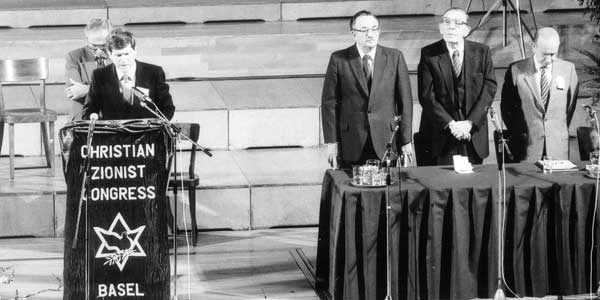
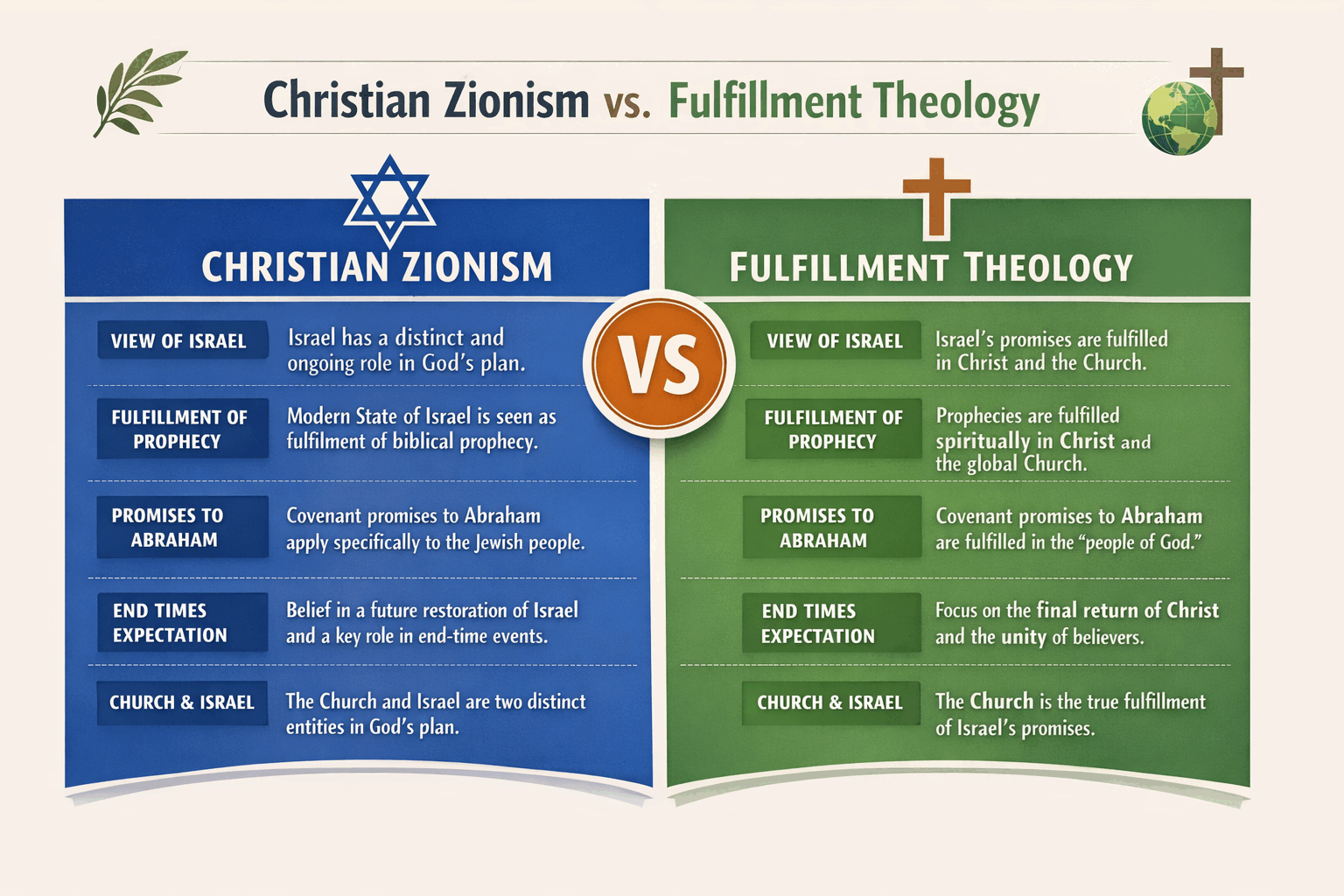

Comments and reactions 0
No comments yet. Yours would be the first.