Prayer

Every request below is live from the prayer chain at Worldwide Prayer Chain. They are numbered in the order they came in, newest first, and this page updates as they do — nothing here is a copy. #1309 A people with no scripture Not one verse in the language they... #1308 My daughter drives to work at five in the morning An hour each way, dark both ends of... #1307 Another hearing postponed They have been waiting fourteen months... #1306 My son will not discuss it He is kind about it, which is somehow... #1305 Learning to walk on it Physio twice a week and it is... #1304 Nobody can tell me what it is Four appointments and no answer, and I... #1303 The assessment came back wrong Months of forms and they have refused... #1302 Twenty-five years next month Thank you for what we have had. Pray... #1301 A pastor arrested last week His wife has three children and no... #1300 The cafe on Fridays Twenty people, hot food, and nobody is... Worldwide Prayer Chain Every prayer above is live from the chain, newest first, and each one carries its own number. Get them by email — everything, or only the subjects you will pray for. Open it on Worldwide Prayer Chain → Subscribing happens on Worldwide Prayer Chain, so there is one list and one place to unsubscribe. :root{--wp-blue:#0345bf;--wp-gold:#9a6b00;--wp-rule:#e4ded1} /* ⚠ THE CLASSES ARE mod_feed's OWN, NOT A SUFFIX OF MINE. The module-class suffix is not rendered by these templates' module chrome, so a selector built on it styled nothing and the feed came out as a bare bulleted list. div.feed > ul.newsfeed > li is what mod_feed actually emits. */ .feed ul.newsfeed{list-style:none;margin:1.1rem 0 0;padding:0;display:grid;gap:.7rem} .feed ul.newsfeed li{background:#fff;border:1px solid var(--wp-rule);border-left:4px solid var(--wp-blue); border-radius:10px;padding:.85rem 1rem;transition:transform .15s ease,box-shadow .15s ease} .feed ul.newsfeed li:hover{transform:translateY(-1px);box-shadow:0 6px 18px rgba(16,20,30,.08)} .feed ul.newsfeed .feed-link a{color:#1d2330;text-decoration:none;font-weight:650;font-size:1.04rem;line-height:1.35; display:inline-flex;align-items:baseline;gap:.5em} .feed ul.newsfeed .feed-link a:hover{color:var(--wp-blue)} .feed .feed-item-description{color:#5f6775;font-size:.9rem;line-height:1.55;margin:.4rem 0 0} /* the number, lifted out of the title text and given the same badge it wears on Worldwide Prayer */ .wwp-num{display:inline-flex;align-items:center;justify-content:center;min-width:2.6em;padding:.1em .5em; border-radius:6px;background:var(--wp-blue);color:#fff;font-size:.72em;font-weight:700; font-variant-numeric:tabular-nums;flex:none} .wwp-intro{font-size:1rem;color:#1d2330;margin:0 0 .2rem} /* ── the call to action ────────────────────────────────────────────────── */ .wwp-cta{margin:1.6rem 0 0;padding:1.3rem 1.4rem;border:1px solid #d9d4c8;border-radius:14px; background:linear-gradient(180deg,#eef3ff 0%,#fff 150px);box-shadow:0 2px 4px rgba(3,69,191,.07),0 14px 36px rgba(3,69,191,.10)} .wwp-cta__mark{font-weight:800;font-size:1.25rem;letter-spacing:-.01em;margin-bottom:.5rem} .wwp-cta__a{color:var(--wp-blue)}.wwp-cta__b{color:var(--wp-gold)} .wwp-cta__lead{margin:0 0 .4rem;font-size:1rem;color:#1d2330} .wwp-cta__note{margin:0 0 .9rem;color:#5f6775;font-size:.92rem} .wwp-cta__act{display:flex;flex-wrap:wrap;gap:.7rem;align-items:center;margin:0 0 .6rem} .wwp-cta__btn{display:inline-block;padding:.65rem 1.15rem;border-radius:999px;background:var(--wp-blue); color:#fff!important;text-decoration:none;font-weight:700;font-size:.95rem} .wwp-cta__btn:hover{background:#022f85} .wwp-cta__link{color:var(--wp-gold);text-decoration:none;font-weight:600;font-size:.9rem} .wwp-cta__link:hover{text-decoration:underline} .wwp-cta__small{margin:.4rem 0 0;color:#7a8190;font-size:.78rem} /* ⚠ A CROSS-ORIGIN FRAME CANNOT REPORT ITS OWN HEIGHT, so it is given a generous one and allowed to scroll rather than being cut off. */ .wwp-cta__frame{margin:.2rem 0 .8rem;border:1px solid #d9d4c8;border-radius:10px;overflow:hidden;background:#fff} .wwp-cta__frame iframe{display:block;width:100%;height:560px;border:0} @media (max-width:575.98px){.wwp-cta__frame iframe{height:640px}} /* The feed gives the number as part of the title string - there is no field for it - so it is lifted into a badge here, matching the parent site. Guarded, so a title without a number is simply left alone. */ (function(){ document.querySelectorAll('.feed ul.newsfeed .feed-link a').forEach(function(a){ var t=a.textContent.trim(), m=t.match(/^#(\d+)\s+(.*)$/); if(!m){ a.textContent=t; return; } a.textContent=''; var b=document.createElement('span'); b.className='wwp-num'; b.textContent=m[1]; a.appendChild(b); a.appendChild(document.createTextNode(m[2])); }); }());

Read more Prayer

When God Acts and When the World Turns: A 77-Part Biblical Theology of Sovereignty, Freedom, and Divine Providence

PART 1 Rain on the Just and the Unjust The Foundation of Common Grace Primary Text 📖 Gospel of Matthew 5:45 “He causes His sun to rise on the evil and the good, and sends rain on the righteous and the unrighteous.” Context Jesus speaks these words in the Sermon on the Mount. The immediate context is love for enemies. The theological implication is enormous: God’s benevolence is not limited to the redeemed.   Greek Word Study “Causes to rise” — anatellōMeaning: to bring forth, to cause to shine, to spring up. “Sends rain” — brechōMeaning: to rain, to water. The verbs are present active indicatives — continuous divine activity. This is not deism.This is ongoing providence. Theological Development: Common Grace The term “common grace” was later systematized by Reformed theologians, but the concept predates them. Augustine of Hippo Augustine acknowledged that unbelievers possess genuine virtues — though not salvific ones. John Calvin Calvin wrote in Institutes (II.2.15): “Whenever we come upon these matters in secular writers, let that admirable light of truth shining in them teach us that the mind of man, though fallen and perverted, is nevertheless clothed and ornamented with God’s excellent gifts.” Calvin was not denying depravity — he was affirming residual image-bearing capacity. Implication An atheist doctor saving lives is not operating outside God’s providential order. Rain falls on both believer and unbeliever. This destabilizes simplistic “God blesses only His people materially” thinking. PART 2 Natural Law Is Not Competition with God Sustaining Creation 📖 Epistle to the Colossians 1:17 “In Him all things hold together.” Greek: synistēmi — to cohere, to stand together. 📖 Epistle to the Hebrews 1:3 “Upholding all things by the word of His power.” Greek: pherō — to bear, to carry continuously. The picture is not of a clockmaker who walked away. It is of a King sustaining the ontological fabric of reality. Aquinas and Secondary Causation Thomas Aquinas In Summa Theologiae I.105, Aquinas argued: God moves all things according to their nature. Meaning: Fire burns because that is its nature. Humans choose because rational will is their nature. God does not override secondary causes — He empowers them. Thus meteorology does not eliminate providence.It describes the mechanisms through which providence ordinarily operates. PART 3 Primary and Secondary Causes Layered Causation Scripture repeatedly affirms dual causation. 📖 Book of Genesis 50:20 “You meant evil against me, but God meant it for good.” Hebrew word study: “Meant” — chashavMeaning: to plan, devise, reckon, weave. Same verb used twice.Two agents.Two intentions.One event. Joseph’s brothers acted freely.God sovereignly incorporated the act into redemptive design. No metaphysical mechanics are given. Only layered affirmation. PART 4 The Error of Oversimplification Job and the Collapse of Easy Answers 📖 Book of Job Job includes: Natural disaster (windstorm) Human violence (raiders) Satanic accusation Divine permission Job’s friends assume:Suffering = punishment. God rebukes them. The lesson:Theology that explains too quickly is often wrong. PART 5 God’s Will — Three Dimensions The word “will” in Greek: thelēma — desire, wish boulē — counsel, determined plan 📖 Epistle to the Ephesians 1:11 Uses boulē — counsel, deliberate purpose. 📖 First Epistle to Timothy 2:4 Uses thelō — desire. This lexical distinction matters. God may desire something (moral will) that He does not decree (sovereign will). Failure to distinguish categories creates confusion. PART 6 Calvinism: Strengths and Limits John Calvin Calvin emphasized: 📖 Epistle to the Romans 9:16 “It depends not on human will…” He was combating works-based religion. Strength:Protects grace. Risk:Overextension into exhaustive determinism. PART 7 Arminianism: Strengths and Limits Jacobus Arminius Emphasized human response. 📖 Book of Deuteronomy 30:19 “Choose life.” Strength:Protects responsibility. Risk:Over-centers human initiative. PART 8 Scripture’s Refusal to Collapse the Tension 📖 Acts of the Apostles 2:23 “Delivered up according to the definite plan and foreknowledge of God,”“You crucified and killed.” Greek: “Definite plan” — hōrismenē boulē “Foreknowledge” — prognōsis Divine determination.Human culpability. No philosophical explanation.Only coexistence. PART 9 Augustine Before the Camps Augustine of Hippo In On Free Choice of the Will, Augustine wrote: God foreknows our choices without forcing them. He affirmed: Grace is necessary. Will is real. Evil originates in misused freedom. Augustine resisted simplistic fatalism. PART 10 Molinism and Middle Knowledge Luis de Molina Proposed:God knows what any free creature would do in any circumstance. This preserves: Sovereignty Libertarian freedom Exhaustive foreknowledge Critics argue it philosophically speculates beyond explicit biblical revelation. PART 11 Word Study: “Foreknowledge” (Prognōsis & Proginōskō) Primary texts: 📖 Acts of the Apostles 2:23 “Delivered up according to the definite plan and foreknowledge of God.” 📖 First Epistle of Peter 1:2 “Elect according to the foreknowledge of God the Father…” Greek Analysis Pro = before Ginōskō = to know relationally, to recognize, to perceive Important distinction: In biblical usage, “know” often implies relational intimacy, not mere data awareness. Example: 📖 Book of Amos 3:2 “You only have I known…” Hebrew: yada — covenantal knowing. Thus debate arises: Does “foreknowledge” mean: Mere awareness of future events? Or relational fore-love? Augustine of Hippo Argued that foreknowledge does not cause human choices. John Calvin Understood foreknowledge as rooted in divine decree. Jacobus Arminius Understood it as God foreseeing human response. The text itself does not fully explain mechanism.It affirms foreknowledge without philosophical breakdown. PART 12 Word Study: “Predestine” (Proorizō) Key passages: 📖 Epistle to the Romans 8:29–30 📖 Epistle to the Ephesians 1:5, 1:11 Greek: Pro = before Horizō = to determine, mark out, appoint (root of “horizon”) Meaning: to mark out beforehand. But what is marked out? In Romans 8: “Predestined to be conformed to the image of His Son.” The object of predestination is conformity to Christ. Debate:Is predestination about: Individuals chosen unto salvation? Or destiny prepared for those in Christ? Karl Barth Argued that election is centered in Christ — Christ is both electing God and elected man. Barth reframed election as primarily Christological, not abstractly individualistic. PART 13 Word Study: “Choose” (Eklegomai) 📖 Epistle to the Ephesians 1:4 “He chose us in Him before the foundation of the world.” Greek: Ek = out of Legō = to gather, to pick out Used in contexts of selecting individuals for purpose. But note the phrase:“In Him.” Corporate election scholars argue:The choosing is covenantal — Christ is chosen, and those united to Him share in that election. Irenaeus Emphasized recapitulation — humanity summed up in Christ. Election may therefore be: Individual Corporate Christ-centered The text allows layered interpretation. PART 14 Word Study: “Harden” (Sklērynō) Primary example: 📖 Epistle to the Romans 9:18 “He hardens whom He wills.” Greek: sklērynō — to make firm, stiff, resistant. But consider Exodus narrative: 📖 Book of Exodus Pharaoh both: Hardened his own heart Had his heart hardened by God Dual agency again. Origen Suggested hardening is judicial — God confirming prior resistance. Hardening may be: Active judicial confirmation Or permissive withdrawal of restraint Scripture affirms both divine action and human stubbornness. PART 15 Word Study: “Draw” (Helkō) — John 6:44 📖 Gospel of John 6:44 “No one can come to Me unless the Father draws him.” Greek: helkō — to draw, drag, pull. Used elsewhere for: Dragging nets (John 21:6) Dragging Paul into marketplace (Acts 16:19) Debate:Is drawing irresistible? Some argue yes.Others argue drawing enables but does not coerce. The verb itself does not specify irresistibility.It specifies divine initiative. PART 16 Romans 9 — Extended Exegesis (Part 1) 📖 Epistle to the Romans 9 Themes: Jacob and Esau Mercy and hardening Potter and clay Historical context:Paul addressing Israel’s unbelief. Key question:Is Romans 9 about: Individual eternal destinies? Or redemptive-historical roles? John Wesley Interpreted Romans 9 corporately. Jonathan Edwards Interpreted it individually. The chapter resists simplistic reading. PART 17 Romans 9 — Mercy and Justice 📖 Romans 9:15 “I will have mercy on whom I have mercy.” Quoted from Exodus. Mercy by definition is undeserved. The text emphasizes divine freedom. But Romans 10 immediately emphasizes human responsibility. Paul holds both together without apology. PART 18 Ephesians 1 — Phrase-by-Phrase (Part 1) 📖 Epistle to the Ephesians 1:3–14 Repeated phrase:“In Christ” / “In Him” Election is not abstract.It is located in union with Christ. Greek participles emphasize:Blessing, predestination, adoption — all “in Him.” Christocentric focus tempers abstract determinism. PART 19 Ephesians 1 — Sealing and Inheritance 📖 Ephesians 1:13 “Having believed, you were sealed…” Sequence: Hearing Believing Sealing Grammatically, belief precedes sealing. Debate continues:Is faith enabled irresistibly?Or genuinely responsive? The text affirms both divine initiative and human belief. PART 20 Acts 2:23 Revisited — The Crucifixion as Model 📖 Acts of the Apostles 2:23 The crucifixion is the clearest example of: Predetermined plan (hōrismenē boulē) Foreknowledge (prognōsis) Human guilt (“you crucified”) No biblical writer attempts to philosophically reconcile the tension. They proclaim it. This becomes the model for understanding providence:Divine sovereignty does not eliminate human responsibility. PART 21 Genesis 50:20 — Hebrew Providence in Narrative Form 📖 Book of Genesis 50:20 “You meant evil against me, but God meant it for good.” Hebrew verb: חָשַׁב (chashav)Meaning: to plan, weave, account, devise. The same verb describes: The brothers’ malicious intention God’s redemptive intention One event. Two intentions. One verb. The text does not say:God reacted. It does not say:God caused the evil morally. It affirms:Simultaneous intentionality. Theological Implication This is compatibilism in narrative form:Human intent and divine intent coexist without explanation of mechanism. PART 22 Deuteronomy 30 — Covenant Choice and Responsibility 📖 Book of Deuteronomy 30:19 “I have set before you life and death… therefore choose life.” Hebrew: בָּחַר (bachar) — to choose, select. This is covenantal language. Important context:Israel had already been chosen corporately. Choice operates within covenant relationship. The tension:Divine election of Israel precedes human response.Yet response is commanded. Election and responsibility coexist. PART 23 1 Timothy 2:4 — “All” Means What? 📖 First Epistle to Timothy 2:4 “Who desires all people to be saved.” Greek: pantas anthrōpous Debate centers on “all.” Options: All without exception All without distinction (kings and commoners, Jew and Gentile) John Calvin Argued for “all kinds.” John Wesley Argued for universal scope. Context:Verse 1–2 speaks of “kings and all in authority.” Paul’s emphasis may be social breadth, not metaphysical universality. The verse affirms divine desire.It does not explain why not all are saved. PART 24 2 Peter 3:9 — Patience and Perishing 📖 Second Epistle of Peter 3:9 “Not wishing that any should perish…” Greek: “Wishing” — boulomai (to intend, to desire deliberately) Audience question:Is “any” referring to: Humanity universally? Or the beloved community (v.8)? Theological tension:If God does not wish any to perish, why do some perish? Scripture affirms divine patience.It does not resolve philosophical implications. PART 25 Exodus and Hardening — Judicial or Deterministic? 📖 Book of Exodus Narrative sequence: Pharaoh hardens his heart. God hardens Pharaoh’s heart. Hebrew verbs: חָזַק (chazaq) — strengthen כָּבֵד (kaved) — make heavy The alternation suggests:Progressive judicial hardening. Origen Argued God hardens by withdrawing grace. The text resists simplistic fatalism. PART 26 Luther and Erasmus — The Reformation Clash Martin Luther Wrote The Bondage of the Will. Desiderius Erasmus Wrote On Free Will. Luther:Human will is bound by sin. Erasmus:Moral exhortation implies capacity to respond. Luther’s strength:Emphasized grace. Risk:Minimized experiential human agency. Erasmus’ strength:Protected moral responsibility. Risk:Underestimated depravity. PART 27 Jonathan Edwards and Compatibilism Jonathan Edwards In Freedom of the Will, Edwards argued: Freedom means:Acting according to one’s strongest inclination. If God governs inclinations,human choices are still voluntary. This is theological compatibilism. Critics argue:This collapses libertarian freedom. Supporters argue:It preserves moral responsibility without denying sovereignty. PART 28 John Wesley and Prevenient Grace John Wesley Wesley taught:Prevenient grace restores enough freedom for genuine response. Grace precedes faith.Faith responds freely. This attempts balance:Neither Pelagian autonomy nor strict determinism. PART 29 Karl Barth — Christ as the Elect One Karl Barth Barth reframed election radically: Christ is: The electing God The elected man Election is centered in Christ,not abstract decrees about individuals. Strength:Christocentric focus. Criticism:Ambiguity regarding individual salvation. PART 30 Romans 11 — Paul Ends in Doxology 📖 Epistle to the Romans 11:33 “Oh, the depth of the riches and wisdom and knowledge of God!” After discussing election, hardening, mercy —Paul does not conclude with a system. He concludes with worship. This is instructive. Theological tension culminates in doxology. PART 31 Determinism — What It Is and What It Is Not Determinism, philosophically defined, is the view that: Every event is necessitated by prior causes such that no alternative outcome was possible. Strict determinism leaves no room for contingency. Important distinction: Theological determinism ≠ naturalistic determinism. Theological determinism argues:God ordains all that comes to pass. Naturalistic determinism argues:Impersonal physical laws exhaust causation. Classical Christian theology rejects impersonal determinism.But some argue certain Calvinist formulations approach theological determinism. 📖 Book of Proverbs 16:33 “The lot is cast into the lap, but its every decision is from the Lord.” The verse affirms divine sovereignty,but does not define metaphysical necessity. Scripture affirms governance,not mechanistic fatalism. PART 32 Libertarian Free Will Libertarian freedom (philosophical term) means: At the moment of choice,a person could genuinely choose otherwise. This view is often associated with Arminianism. Key text often cited: 📖 Book of Joshua 24:15 “Choose this day whom you will serve.” Libertarians argue:Commands imply capacity. Critics respond:Commands may reveal moral obligation, not moral ability. The debate hinges on:Does moral responsibility require alternative possibilities? Scripture affirms responsibility.It does not define metaphysical freedom categories. PART 33 Compatibilism — A Middle Proposal Compatibilism argues: Divine sovereignty and human responsibility are compatible. Freedom is defined not as:“Could have done otherwise” But as:“Acts according to one’s desires.” Jonathan Edwards Defined freedom as acting according to strongest inclination. Scriptural example: 📖 Epistle of James 1:14 “Each person is tempted when he is lured and enticed by his own desire.” Human desire is real.Divine sovereignty is real. Mechanism remains unexplained. PART 34 Divine Foreknowledge and Time Does God know the future because:He determines it? Or because:He exists outside time? Augustine of Hippo Argued God exists outside temporal succession. God does not “foresee.”He eternally sees. 📖 Second Epistle of Peter 3:8 “With the Lord one day is as a thousand years…” This verse is not a metaphysical treatise,but it gestures toward divine transcendence of time. If God is timeless,foreknowledge does not imply causation. PART 35 Divine Simplicity and Sovereignty Classical theism teaches: God is simple — not composed of parts. This means: God’s will is not separate from His nature. God does not deliberate like humans. Thomas Aquinas Argued God’s knowledge and will are identical with His essence. Implication:God’s sovereignty is not reactive.It is intrinsic to His being. Yet simplicity deepens mystery.It does not solve tension. PART 36 The Problem of Evil The core question: If God is sovereign and good,why does evil exist? Classical categories: Moral evil — human sin Natural evil — disaster, disease Augustine of Hippo Defined evil as privation (lack of good). 📖 Book of Isaiah 45:7 “I form light and create darkness…” Hebrew word for “create” (bara) emphasizes sovereignty.Yet moral evil is never attributed to God as author. The tension remains:God permits what He does not morally approve. PART 37 Open Theism — A Radical Alternative Open Theism argues: The future is partly open,even to God. God knows all possibilities,but not all future free decisions. Associated thinkers include: Clark Pinnock Greg Boyd Open Theists cite: 📖 Book of Genesis 6:6 “The Lord regretted…” They interpret divine regret as genuine change. Critics argue:This undermines omniscience. Open Theism prioritizes relational dynamism.Classical theism prioritizes exhaustive foreknowledge. PART 38 Process Theology — Beyond Classical Sovereignty Process theology, influenced by Alfred North Whitehead,argues: God does not control history.He persuades. This departs significantly from biblical theism. 📖 Book of Daniel 4:35 “None can stay His hand.” Biblical narrative portrays decisive sovereignty,not mere persuasion. Process theology attempts to solve evil,but at cost of traditional omnipotence. PART 39 Mystery in Classical Theism 📖 Book of Deuteronomy 29:29 “The secret things belong to the Lord…” 📖 Epistle to the Romans 11:33 “How unsearchable are His judgments…” Scripture repeatedly affirms:Some aspects of divine governance are beyond human analysis. Mystery is not contradiction.It is epistemic limitation. PART 40 Why Systems Break Both Calvinism and Arminianism attempt coherence. But Scripture: Speaks narratively Speaks poetically Speaks covenantally Speaks doxologically It does not present systematic metaphysics. When systems try to flatten tension,they exceed Scripture. The Bible’s method is layered affirmation,not philosophical reduction. And perhaps that is intentional. PART 41 Prayer and Sovereignty — If God Has Decreed, Why Pray? One of the most practical objections: If God already knows and ordains everything,why pray? 📖 Epistle of James 4:2 “You do not have because you do not ask.” 📖 Gospel of Matthew 7:7 “Ask, and it will be given to you.” Scripture presents prayer as: Meaningful Effective Commanded Augustine of Hippo Argued prayer does not change God’s eternal will,but changes us and participates in God’s ordained means. John Calvin Called prayer “the chief exercise of faith.” God ordains both: Ends Means Prayer is a means within providence. PART 42 Miracles and Natural Law Is a miracle a violation of natural law? Or an event beyond ordinary patterns? 📖 Gospel of John 2 Water becomes wine. The Greek word often used for miracle:sēmeion — sign. Miracles in Scripture: Reveal divine authority Authenticate revelation Signal redemptive turning points They are rare in biblical history,clustered around key epochs: Exodus Elijah/Elisha Christ and apostles This suggests:God usually works through ordinary providence,occasionally through extraordinary intervention. PART 43 Healing and Non-Healing 📖 Second Epistle to the Corinthians 12:7–9 Paul’s thorn in the flesh remained,despite prayer. 📖 Epistle of James 5:14 Encourages prayer for healing. Both are biblical. The conclusion: God heals. God sometimes does not. Both occur under sovereignty. Avoid two errors: Claiming lack of healing = lack of faith Denying healing entirely Scripture affirms tension. PART 44 Financial Success — Favor or Process? If someone prospers financially,what caused it? Skill? Market conditions? Timing? Favor? Luck? Providence? 📖 Book of Deuteronomy 8:18 “It is He who gives you power to get wealth.” Hebrew:koach — strength, ability, capacity. God gives capacity,not necessarily direct deposits. Secondary causes matter. Prosperity is not automatic proof of divine endorsement. PART 45 Suffering — Punishment or Participation? 📖 First Epistle of Peter 4:12 “Do not be surprised at the fiery trial…” Not all suffering is: Judgment Demonic attack Personal failure Sometimes suffering is: Participation in Christ Refinement Mystery Martin Luther Spoke of the “theology of the cross.” God works hidden beneath weakness. PART 46 Spiritual Warfare — Real but Limited 📖 Epistle to the Ephesians 6:12 “We wrestle not against flesh and blood…” Spiritual warfare is real. But Scripture never attributes:Every inconvenienceEvery sicknessEvery setbackTo demons. The book of Job shows:Satan operates within divine permission. This guards against paranoia. PART 47 Providence in Career and Calling When someone gets hired: HR decision Qualifications Interview performance Organizational needs All are real. 📖 Book of Proverbs 16:9 “The heart of man plans his way, but the Lord establishes his steps.” Hebrew:kun — to establish, make firm. Planning is real.Divine establishment is real. PART 48 Chance and “Luck” Is there such thing as luck? 📖 Book of Ecclesiastes 9:11 “Time and chance happen to them all.” Hebrew:pegaʿ — occurrence, happening. Ecclesiastes observes unpredictability. From human perspective:Events appear random. From divine perspective:Nothing is outside providence. Scripture allows phenomenological language (“chance”),without denying sovereignty. PART 49 The Role of Wisdom Literature Wisdom books emphasize: Cause and effect Patterns Probability Proverbs:Righteous living tends toward stability. Ecclesiastes:Life defies simplistic formulas. Together they prevent:Prosperity theologyAnd fatalism PART 50 Living Without Fatalism or Anxiety If sovereignty is true,fatalism is unnecessary. If responsibility is true,passivity is sinful. 📖 Epistle to the Philippians 2:12–13 “Work out your salvation… for it is God who works in you.” Greek: “Work out” — katergazomai (to bring to completion) “Works in” — energeō (to energize) Human effort.Divine energizing.Simultaneous. This verse may be one of the clearest compatibilist texts in Scripture. PART 51 Perseverance of the Saints — Guaranteed or Conditional? Classic Calvinism affirms:Those truly regenerated will persevere. Key text: 📖 Gospel of John 10:28 “No one will snatch them out of My hand.” 📖 Epistle to the Philippians 1:6 “He who began a good work… will bring it to completion.” Greek: “Bring to completion” — epiteleō (to finish fully) These texts emphasize divine preservation. Yet Scripture also contains warnings. PART 52 Apostasy Warnings — Real or Hypothetical? 📖 Epistle to the Hebrews 6:4–6 Describes those who: Have tasted Have shared Have fallen away Debate:Are these genuine believers?Or those near salvation? John Wesley Affirmed real possibility of falling away. John Calvin Argued such people were never truly regenerate. The text warns seriously.It does not provide a systematic explanation. PART 53 Assurance — Objective or Experiential? 📖 First Epistle of John 5:13 “That you may know that you have eternal life.” Assurance involves: Faith in Christ Evidence of transformation Inner witness of the Spirit Jonathan Edwards Spoke of religious affections as evidence. Assurance is not fatalistic certainty,nor anxious insecurity. It is grounded in Christ. PART 54 Corporate vs Individual Election Is election primarily about: Individuals? Or covenant communities? 📖 Epistle to the Ephesians 1:4 “He chose us in Him…” Plural language dominates. Karl Barth Argued election is centered in Christ and shared corporately. Old Testament precedent: 📖 Book of Deuteronomy 7:6 Israel chosen corporately. Corporate election does not eliminate individual responsibility. PART 55 Israel and Hardening 📖 Epistle to the Romans 11:25 “A partial hardening has come upon Israel.” Hardening is: Partial Temporary Purposeful Paul affirms:God’s gifts and calling are irrevocable (11:29). This reinforces layered providence. PART 56 The Remnant Principle Throughout Scripture: Elijah thought he was alone. God preserved 7,000. 📖 First Book of Kings 19:18 Remnant theology:God preserves a people within broader unbelief. Election and faithfulness intersect historically. PART 57 Eschatology and Sovereignty End-time texts emphasize divine culmination. 📖 Book of Revelation 22:13 “I am the Alpha and the Omega.” History is not random.It is teleological — moving toward divine consummation. Yet human actions still matter in the unfolding. PART 58 Final Judgment and Justice 📖 Second Epistle to the Corinthians 5:10 “We must all appear before the judgment seat of Christ.” Judgment implies: Accountability Real choice Moral agency Divine sovereignty does not erase moral evaluation. PART 59 Mercy and Justice in Tension 📖 Epistle to the Romans 9:22–23 Vessels of wrath.Vessels of mercy. Interpretive tension:Are these eternally fixed categories?Or redemptive-historical roles? The text emphasizes divine patience:“Endured with much patience…” Mercy and justice coexist. PART 60 The Doxological Boundary After 11 chapters of wrestling with: Election Hardening Mercy Israel Gentiles Paul concludes: 📖 Epistle to the Romans 11:33 “How unsearchable are His judgments…” This is critical. The apostle does not end with:Philosophical closure. He ends with:Worship. This is the biblical boundary line. PART 61 Living Between Control and Chaos Two dangers: • Fatalism (“Nothing I do matters.”)• Autonomy (“Everything depends on me.”) Scripture rejects both. 📖 Book of Proverbs 21:31 “The horse is made ready for the day of battle, but the victory belongs to the Lord.” Preparation matters.Outcome belongs to God. Human responsibility and divine sovereignty operate simultaneously. PART 62 Planning Without Presumption 📖 Epistle of James 4:13–15 “You ought to say, ‘If the Lord wills…’” Greek: ean ho Kyrios thelēsei — conditional humility. James does not condemn planning.He condemns arrogant certainty. The biblical posture is:Active effort, humble dependence. PART 63 Work Ethic and Providence 📖 Epistle to the Colossians 3:23 “Whatever you do, work heartily, as for the Lord.” Divine sovereignty does not eliminate diligence. Martin Luther Developed theology of vocation:Ordinary work is sacred calling. Providence includes ordinary labor. PART 64 Suffering Without Superstition Not all suffering is:• Demonic• Punishment• Discipline 📖 Gospel of John 9:3 “Neither this man nor his parents sinned…” Jesus rejects simplistic causation. The mature believer resists:Blame reflexes. PART 65 Gratitude Without Naivety 📖 First Epistle to the Thessalonians 5:18 “Give thanks in all circumstances.” This does not mean:Call evil good. It means:Trust divine providence even in incomplete understanding. PART 66 Avoiding Theological Arrogance 📖 First Epistle to the Corinthians 8:2 “If anyone imagines that he knows something, he does not yet know as he ought.” Systems can become idols. Calvinism and Arminianism both attempt coherence.Neither exhausts divine mystery. Theologians must remain worshipers. PART 67 Faith, Not Formula Scripture calls for trust, not metaphysical mastery. 📖 Book of Isaiah 55:8–9 “My thoughts are not your thoughts…” The gap between Creator and creature is not accidental.It is ontological. PART 68 The Hiddenness of God 📖 Book of Isaiah 45:15 “Truly, You are a God who hides Himself.” Divine hiddenness is biblical. Martin Luther Spoke of the “hidden God” (Deus absconditus). God’s ways are often concealed within ordinary processes. PART 69 Providence and Freedom in Daily Decisions When choosing:• Career• Marriage• Location Scripture emphasizes wisdom over deterministic signs. 📖 Book of Proverbs 3:5–6 “Trust in the Lord… He will make straight your paths.” Hebrew: yashar — make smooth, upright. Guidance is often gradual, not mechanical. PART 70 Risk and Responsibility Faith does not eliminate uncertainty. 📖 Book of Ecclesiastes 11:4 “He who observes the wind will not sow.” Action requires risk. Sovereignty encourages courage, not paralysis. PART 71 The Cross as Ultimate Model The crucifixion remains the clearest example of layered causation. 📖 Acts of the Apostles 4:27–28 “To do whatever Your hand and Your plan had predestined…” Yet:Human rulers acted freely. At the center of history:Sovereignty and responsibility converge. PART 72 Worship Beyond Explanation 📖 Epistle to the Romans 11:36 “For from Him and through Him and to Him are all things.” Prepositions matter: From Him — originThrough Him — sustenanceTo Him — purpose This is teleological sovereignty. PART 73 The Danger of Over-Spiritualization Blaming demons for:• Every setback• Every illness• Every inconvenience Undermines:• Secondary causes• Wisdom• Responsibility Spiritual warfare exists.But Scripture is restrained. PART 74 The Danger of Secular Reduction Explaining everything as:• Biology• Psychology• Sociology Eliminates divine governance. Christian theology affirms:Natural explanations are not anti-theistic.They describe mechanisms within providence. PART 75 Living With Mystery Without Despair Mystery does not imply randomness. 📖 Book of Lamentations 3:37 “Who has spoken and it came to pass, unless the Lord has commanded it?” Even lament assumes sovereignty. Mystery invites trust, not nihilism. PART 76 Humility as the Final Posture 📖 Book of Micah 6:8 “Walk humbly with your God.” Theological maturity is measured not by:• Systematic precisionBut by:• Reverent humility. PART 77 Final Synthesis — The God Who Holds the Tension We conclude where Paul did: 📖 Epistle to the Romans 11:33 “How unsearchable are His judgments…” This 77-part journey has shown: • God is sovereign.• Humans are responsible.• Nature operates consistently.• Miracles occur selectively.• Prayer matters.• Evil is real.• Mercy is real.• Judgment is real.• Mystery remains. Calvinism preserves divine initiative.Arminianism preserves human response.Neither fully exhausts biblical revelation. The Bible does not give a metaphysical blueprint.It gives a King. The mature believer: Plans.Works.Prays.Repents.Trusts.Acts.Endures.Worships. Not because everything is explained —but because everything is held. And the One who holds itis wise. REFERENCES I. PRIMARY SOURCE: SCRIPTURE The Holy Bible. Hebrew Bible (Masoretic Text). Greek New Testament (Nestle-Aland 28th Edition). Key biblical books cited extensively in this work: Book of GenesisBook of ExodusBook of DeuteronomyBook of JoshuaFirst Book of KingsBook of JobBook of ProverbsBook of EcclesiastesBook of IsaiahBook of MicahBook of LamentationsBook of Daniel Gospel of MatthewGospel of JohnActs of the ApostlesEpistle to the RomansFirst Epistle to the CorinthiansSecond Epistle to the CorinthiansEpistle to the GalatiansEpistle to the EphesiansEpistle to the PhilippiansEpistle to the ColossiansFirst Epistle to TimothySecond Epistle of PeterEpistle of JamesFirst Epistle of PeterFirst Epistle of JohnBook of Revelation II. EARLY CHURCH FATHERS Irenaeus. Against Heresies. Origen. On First Principles. Augustine of Hippo. On Free Choice of the Will. Enchiridion. City of God. Pelagius. Commentary on Romans. (Fragments) III. MEDIEVAL THEOLOGY Thomas Aquinas. Summa Theologiae. Summa Contra Gentiles. Anselm of Canterbury. Cur Deus Homo. IV. REFORMATION ERA Martin Luther. The Bondage of the Will. Desiderius Erasmus. On Free Will. John Calvin. Institutes of the Christian Religion. Jacobus Arminius. Works of Arminius. Synod of Dort (1618–1619). Canons of Dort. V. POST-REFORMATION & REVIVAL ERA Jonathan Edwards. Freedom of the Will. Religious Affections. John Wesley. Sermons on prevenient grace. Notes on the New Testament. VI. MODERN THEOLOGY Karl Barth. Church Dogmatics II/2. Clark Pinnock. Most Moved Mover. Greg Boyd. God of the Possible. Wayne Grudem. Systematic Theology. Millard Erickson. Christian Theology. Louis Berkhof. Systematic Theology. R.C. Sproul. Chosen by God. Roger Olson. Arminian Theology: Myths and Realities. VII. PHILOSOPHICAL SOURCES Alfred North Whitehead. Process and Reality. William Lane Craig. The Only Wise God. Alvin Plantinga. God, Freedom, and Evil. Robert Kane. The Significance of Free Will. VIII. LEXICONS & CONCORDANCES Brown, Driver, Briggs. Hebrew and English Lexicon of the Old Testament (BDB). Bauer, Danker, Arndt, Gingrich. A Greek-English Lexicon of the New Testament and Other Early Christian Literature (BDAG). Strong, James. Strong’s Exhaustive Concordance. Louw & Nida. Greek-English Lexicon Based on Semantic Domains. IX. THEMATIC CATEGORIES REPRESENTED This volume draws from theological reflection in areas including: Divine sovereignty Human freedom Compatibilism Libertarianism Molinism Open Theism Process Theology Common Grace Providence The Problem of Evil Election Perseverance Apostasy Eschatology Doxology Concluding Reference Note This 77-part theological construction stands within the broad stream of historic Christian orthodoxy while acknowledging unresolved tensions. It draws from: Patristic theology Medieval scholasticism Reformation debates Evangelical systematic theology Philosophical theology Without collapsing into any single camp.

Read more When God Acts and When the World Turns: A 77-Part Biblical Theology of Sovereignty, Freedom, and Divine Providence

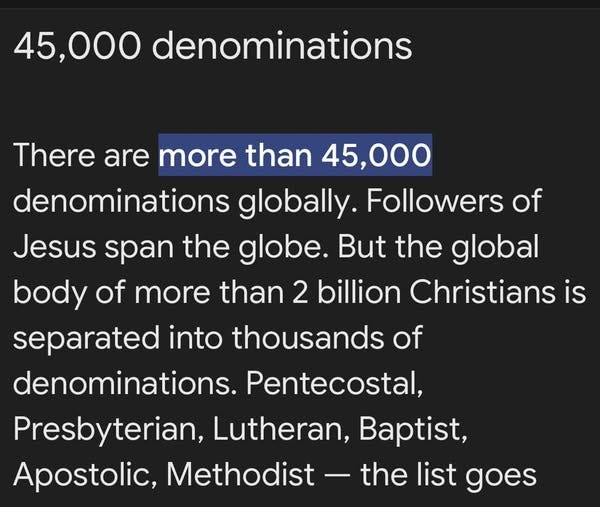
One Body, Many Labels: Denominations, Division, and God’s Heart for One Church

The modern Christian landscape is marked by denominations, movements, affiliations, and theological tribes. While many of these distinctions began with sincere convictions, the result today is often fragmentation, suspicion, and competition rather than unity. Yet Scripture presents a radically different vision: one Church, united under Christ, reflecting heaven on earth.   “There is one body and one Spirit… one Lord, one faith, one baptism.” (Ephesians 4:4–5) God never intended His Church to function as rival camps. How Denominations Began Denominations did not arise overnight, nor were they originally meant to divide. Many formed due to: Doctrinal disputes Political pressure Cultural differences Persecution or reform movements Desire for purity or correction In many cases, denominations preserved truth when the wider Church drifted. That matters. God has often used reformers and movements to restore neglected doctrines. But preservation eventually became identification. What began as conviction hardened into competition. When Distinction Becomes Division The moment a label becomes more important than love, unity fractures. Paul addressed this directly: “Each of you says, ‘I am of Paul,’ or ‘I am of Apollos’… Is Christ divided?” (1 Corinthians 1:12–13) The problem wasn’t theology — it was allegiance. Modern equivalents sound like: “We’re Reformed.” “We’re Charismatic.” “We’re Catholic.” “We’re Baptist.” “We’re Non-denominational.” None of these are wrong. But none of them are Christ. The Danger of Tribal Christianity Denominationalism becomes unhealthy when: We assume spiritual superiority We refuse fellowship We caricature other believers We treat secondary doctrines as salvific Jesus said: “By this all will know that you are My disciples, if you have love for one another.” (John 13:35) Not agreement. Love. Heaven Is Not Denominational Scripture gives us a glimpse of heaven’s worship: “A great multitude which no one could number, of all nations, tribes, peoples, and tongues.” (Revelation 7:9) Heaven is unified without being uniform. There are no denominations in heaven.No doctrinal camps.No ministry brands. There is only Christ — and those who belong to Him. Unity Does Not Mean Compromise Biblical unity is not theological flattening. Jesus prayed: “Sanctify them by Your truth. Your word is truth.” (John 17:17) Truth matters.Doctrine matters.But truth without love becomes brutality.Love without truth becomes sentimentality. True unity holds both. One Church, Many Functions Paul uses the body metaphor intentionally: “The body is one and has many members.” (1 Corinthians 12:12) Unity is functional diversity under one Head. Denominations often emphasize: Teaching Evangelism Sacraments Spiritual gifts Justice and mercy Liturgy Revival Each reflects an aspect of Christ — but none reflect the whole. Why the World Is Unconvinced Jesus prayed: “That they may be one… that the world may believe.” (John 17:21) Disunity weakens witness. When Christians: Fight publicly Cancel one another Refuse cooperation Divide over non-essential issues …the world concludes Christ cannot unify what He claims to redeem. What Unity Actually Requires Unity begins with humility. It requires: Listening before labeling Curiosity instead of suspicion Conviction without contempt Fellowship without assimilation Unity is not enforced from the top — it is cultivated at the heart level. The Role of the Holy Spirit in Unity The Spirit unites what doctrine alone cannot. “Make every effort to keep the unity of the Spirit.” (Ephesians 4:3) Unity is already given.Our responsibility is to maintain, not manufacture it. The Church as Heaven’s Embassy Jesus taught: “Your kingdom come, Your will be done, on earth as it is in heaven.” (Matthew 6:10) The Church is meant to model heaven’s order now. Not perfect agreement.Not institutional sameness.But shared allegiance to Christ. Closing Reflection Denominations may remain — and that’s okay.But division does not have to. The Church is not a brand.It is a body. And the closer we draw to Christ, the closer we draw to one another. Heaven will not ask what denomination we belonged to.It will only reveal whether we belonged to Him.

Read more One Body, Many Labels: Denominations, Division, and God’s Heart for One Church

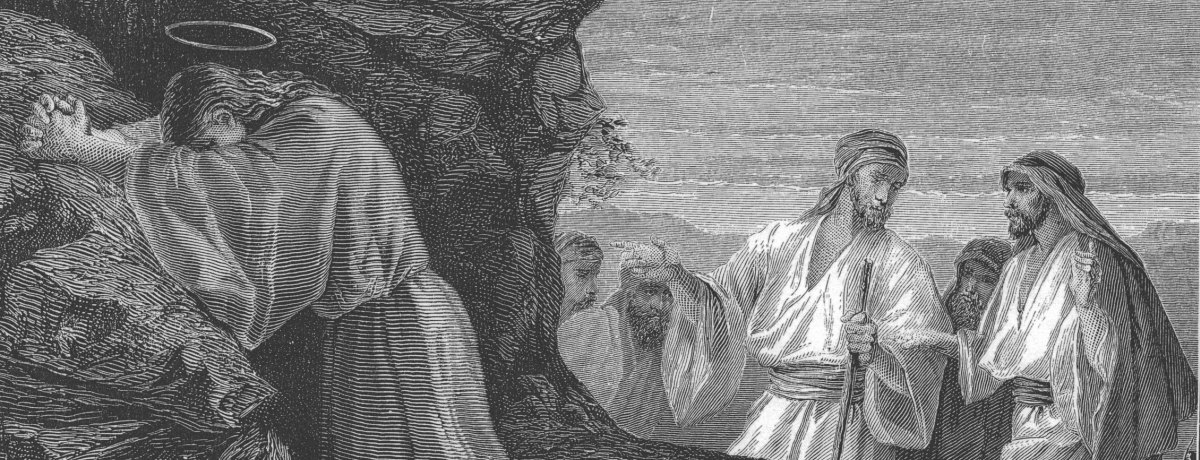
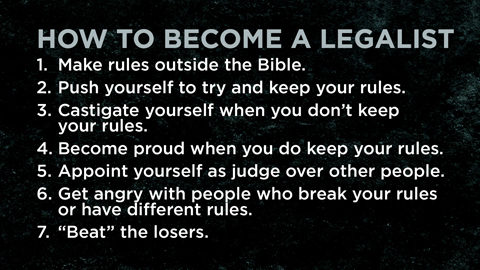
Legalism and Religion: When Obedience Replaces Relationship

Few things did Jesus confront more directly than religion without relationship. Legalism is not merely strict behavior or discipline—it is the belief that righteousness is achieved, maintained, or proven through external performance rather than inward transformation. Legalism does not reject God.It replaces Him.   What Legalism Actually Is Legalism is not obedience.Legalism is obedience without intimacy. Paul defines the problem clearly: “Having a form of godliness but denying its power.” (2 Timothy 3:5) Legalism focuses on: Rules over relationship Appearance over heart Control over transformation Behavior modification instead of spiritual rebirth Religion becomes the substitute for God’s presence. Jesus vs. Religious Systems Jesus’ strongest rebukes were reserved not for sinners, but for religious leaders. “Woe to you, scribes and Pharisees, hypocrites!” (Matthew 23) The Pharisees knew Scripture, practiced discipline, and maintained morality—but they missed God entirely. Jesus said: “You search the Scriptures, for in them you think you have eternal life; and these are they which testify of Me. But you are not willing to come to Me.” (John 5:39–40) Legalism studies God without knowing Him. Why Legalism Feels Safe Legalism thrives because it offers: Clear boundaries Predictable outcomes A sense of control Measurable righteousness But safety is not the same as surrender. The cross was not safe.Grace is not manageable.The Holy Spirit cannot be systematized. “The letter kills, but the Spirit gives life.” (2 Corinthians 3:6) Religion vs. Relationship Religion says: “Try harder” “Do better” “Earn approval” The gospel says: “It is finished” “Abide in Me” “Walk by the Spirit” Paul warns: “Are you so foolish? Having begun in the Spirit, are you now being made perfect by the flesh?” (Galatians 3:3) Legalism begins where faith stops trusting. Legalism and the Fear of Freedom One reason legalism persists is fear—fear that grace will lead to sin. Paul addressed this directly: “Shall we continue in sin that grace may abound? Certainly not!” (Romans 6:1–2) Grace does not remove holiness; it produces it. Legalism restrains behavior.Grace transforms desire. How Legalism Destroys the Church Legalism produces: Judgment without mercy Pride without humility Conformity without unity Burnout without joy It creates outward compliance while hiding inward rebellion. Jesus warned: “They bind heavy burdens, hard to bear, and lay them on men’s shoulders.” (Matthew 23:4) Legalism exhausts what grace was meant to heal. True Obedience Flows from Love Jesus did not abolish obedience. He redefined its source. “If you love Me, keep My commandments.” (John 14:15) Obedience is the fruit of love—not the price of acceptance. When love leads, obedience follows naturally. The Holy Spirit vs. Religious Control The Spirit leads internally, not through pressure. “For as many as are led by the Spirit of God, these are sons of God.” (Romans 8:14) Religion controls from the outside.The Spirit transforms from within. Where the Spirit is present, freedom follows: “Where the Spirit of the Lord is, there is liberty.” (2 Corinthians 3:17) Freedom Is Not Lawlessness Freedom does not mean self-rule—it means Spirit rule. Paul explains: “You were called to freedom… but through love serve one another.” (Galatians 5:13) Grace produces responsibility, not rebellion. Closing Reflection Legalism looks righteous but produces death.Grace looks risky but produces life. The gospel does not call us to behave better—it calls us to become new. True Christianity is not about avoiding sin.It is about walking with God. And when relationship comes first, obedience becomes joy instead of burden.

Read more Legalism and Religion: When Obedience Replaces Relationship

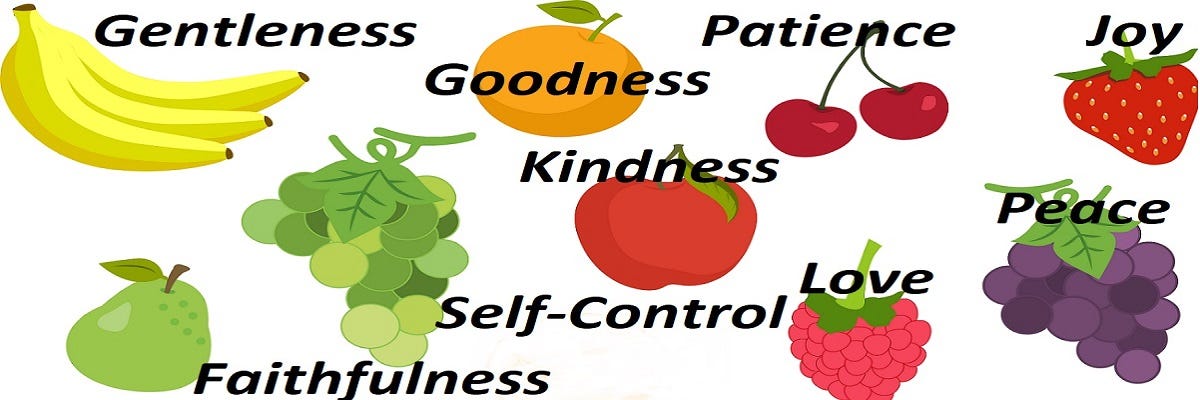
9 Fruits of the Spirit9 Fruits of the Spirit

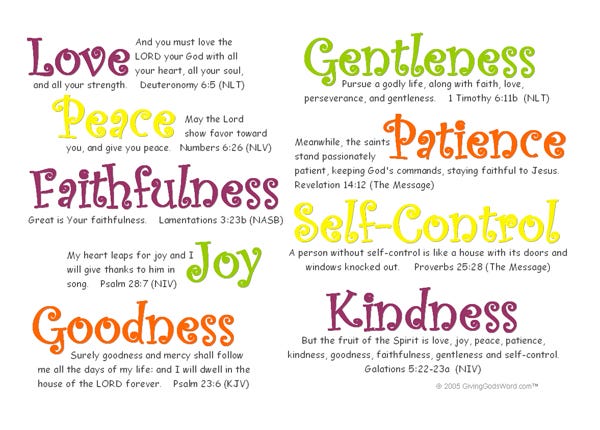
1. Love (Agape): The Root of All Spiritual Fruit Love is listed first because it is not merely one fruit—it is the soil from which all the others grow. Biblical love (agape) is not emotional warmth, tolerance, or affirmation. It is covenantal commitment rooted in truth. “God is love.” (1 John 4:8) Love reflects God’s nature, not human preference. It is sacrificial, truthful, and often costly. Jesus defined love not by feelings, but by action:   “Greater love has no one than this, than to lay down one’s life for his friends.” (John 15:13) Love does not mean avoiding confrontation. In fact, love often requires it. “Faithful are the wounds of a friend.” (Proverbs 27:6) Without love, every other spiritual expression becomes noise (1 Corinthians 13). Love is the fruit that proves whether spiritual activity is God-centered or self-centered. 2. Joy: Stability That Circumstances Cannot Steal Joy is not happiness. Happiness responds to events; joy responds to truth. “The joy of the Lord is your strength.” (Nehemiah 8:10) Joy flows from confidence in God’s character, not control over outcomes. Paul wrote about joy while imprisoned, beaten, and misunderstood. That alone should redefine how we understand it. Joy does not deny suffering—it transcends it. “Though now for a little while you may have had to suffer grief… yet you rejoice.” (1 Peter 1:6–8) Joy is evidence that faith is rooted deeper than emotion. 3. Peace: Inner Order Under God’s Authority Peace (shalom) is not calmness or conflict avoidance. It is alignment—the soul submitted to God’s rule. “The peace of God… will guard your hearts and minds.” (Philippians 4:7) Peace guards because the mind is often the battlefield. Peace grows when we surrender outcomes, expectations, and control. Jesus promised peace not by removing trouble, but by overcoming it: “In this world you will have tribulation. But take heart; I have overcome the world.” (John 16:33) Peace is proof that fear is no longer in charge. 4. Patience: Strength That Endures Pressure Biblical patience is endurance with faith—not passivity or delay. “Let patience have its perfect work.” (James 1:4) Patience is developed where frustration is frequent: unanswered prayer, slow growth, difficult people. God uses time to expose whether faith is genuine or transactional. Patience matures when we stop asking “How long?” and start asking “Who am I becoming?” “The one who endures to the end will be saved.” (Matthew 24:13) 5. Kindness: Love Made Visible Kindness is love in motion. It reflects God’s posture toward sinners and sufferers alike. “It is the kindness of God that leads you to repentance.” (Romans 2:4) Kindness does not weaken truth—it delivers it safely. Jesus was kind without being permissive, and truthful without being cruel. Kindness reveals whether our theology has softened our hearts or hardened them. “Be kind to one another, tenderhearted.” (Ephesians 4:32) 6. Goodness: Moral Integrity in a Confused World Goodness speaks to righteousness, integrity, and moral clarity. “Hate what is evil; cling to what is good.” (Romans 12:9) Goodness resists cultural compromise. It chooses obedience when rebellion is popular. Goodness requires discernment because not everything labeled “good” is godly. “Woe to those who call evil good, and good evil.” (Isaiah 5:20) Goodness reflects holiness without hypocrisy. 7. Faithfulness: Obedience That Outlasts Emotion Faithfulness is consistency when excitement fades. “It is required in stewards that one be found faithful.” (1 Corinthians 4:2) Faithfulness proves trustworthiness over time—remaining committed when no one applauds. God measures faithfulness, not results. Jesus praised servants who were faithful with little, not spectacular. “Well done, good and faithful servant.” (Matthew 25:21) Faithfulness is spiritual endurance made practical. 8. Gentleness: Strength Under Control Gentleness is not weakness. It is restrained power modeled after Christ. “I am gentle and lowly in heart.” (Matthew 11:29) Gentleness governs tone, posture, and response—especially when correcting others. It allows truth to land without crushing the hearer. Paul instructed: “Correct opponents with gentleness.” (2 Timothy 2:25) Gentleness proves that authority is under submission to God. 9. Self-Control: Mastery of the Inner Life Self-control governs desires, impulses, speech, and reactions. “Like a city broken down without walls is a man who lacks self-control.” (Proverbs 25:28) Spiritual power without self-control leads to destruction. Self-control protects integrity and sustains freedom. Paul disciplined himself deliberately: “I discipline my body and bring it into subjection.” (1 Corinthians 9:27) Self-control is not repression—it is freedom rightly governed. Closing Thought for the Series The Fruit of the Spirit reveals who we are becoming, not what we can do. Gifts demonstrate power.Fruit demonstrates Christlikeness. And Scripture is clear: God cares deeply about both—but He prioritizes fruit.

Read more 9 Fruits of the Spirit9 Fruits of the Spirit

The Fruit of the Spirit: How God Measures Spiritual Maturity

One of the most misunderstood ideas in modern Christianity is how God measures spiritual growth. Many believers equate maturity with gifting, visibility, influence, or spiritual experiences. Scripture does not. The Bible’s clearest metric for spiritual maturity is found in Galatians 5:22–23 — the Fruit of the Spirit.   “But the fruit of the Spirit is love, joy, peace, patience, kindness, goodness, faithfulness, gentleness, and self-control. Against such things there is no law.” Fruit is not about what we do for God.Fruit is about what the Spirit produces in us. Fruit vs. Gifts: Power Is Not Proof of Maturity Spiritual gifts are given freely by grace. Fruit is formed slowly through obedience. Jesus made this distinction unmistakably clear: “You will know them by their fruits.” (Matthew 7:16) He did not say, “You will know them by their gifts.” A person can: Prophesy Heal Teach powerfully Operate in miracles …while still lacking Christlike character. Fruit reveals who we are when: No one is watching We are offended We are corrected We are disappointed We do not get our way Why Paul Calls It “Fruit,” Not “Fruits” Paul uses the singular word fruit, not fruits, because these qualities are one unified work of the Spirit, not separate virtues we pick and choose. You don’t grow patience without love.You don’t grow joy without peace.You don’t grow self-control without faithfulness. They mature together. The Nine Expressions of the Fruit of the Spirit 1. Love — The Root of All Fruit Biblical love (agape) is not emotional affection; it is self-giving commitment. “God demonstrates His own love toward us in that while we were still sinners, Christ died for us.” (Romans 5:8) Love is the soil from which all other fruit grows. Without love, everything else becomes performance. 2. Joy — Stability Beyond Circumstances Joy is not happiness. Joy is spiritual stability that comes from knowing God is present, faithful, and sovereign. “The joy of the Lord is your strength.” (Nehemiah 8:10) Joy remains even when circumstances do not improve. 3. Peace — Inner Order Under God’s Authority Peace (shalom) is not the absence of conflict — it is alignment. “And the peace of God, which surpasses all understanding, will guard your hearts and minds through Christ Jesus.” (Philippians 4:7) Peace is evidence that the soul is surrendered. 4. Patience — Strength Under Pressure Biblical patience is endurance, not passivity. “Let patience have its perfect work.” (James 1:4) Patience proves whether faith is shallow or rooted. 5. Kindness — The Visible Expression of Love Kindness reflects God’s posture toward humanity. “It is the kindness of God that leads you to repentance.” (Romans 2:4) True kindness does not compromise truth — it delivers truth gently. 6. Goodness — Moral Integrity in Action Goodness speaks to righteousness, purity, and moral clarity. “Do not be overcome by evil, but overcome evil with good.” (Romans 12:21) Goodness resists cultural drift and moral confusion. 7. Faithfulness — Reliability Over Time Faithfulness is consistency — staying obedient when enthusiasm fades. “Moreover it is required in stewards that one be found faithful.” (1 Corinthians 4:2) Faithfulness reflects trustworthiness to God and others. 8. Gentleness — Power Under Control Gentleness is not weakness. It is restrained strength modeled after Christ. “Take My yoke upon you and learn from Me, for I am gentle and lowly in heart.” (Matthew 11:29) Gentleness protects truth without crushing people. 9. Self-Control — Mastery of the Inner Life Self-control governs desires, reactions, speech, and impulses. “Like a city broken down without walls is a man who lacks self-control.” (Proverbs 25:28) Spiritual power without self-control is dangerous. Fruit Is Grown, Not Forced Fruit does not grow through striving. Jesus said: “Abide in Me… he who abides in Me bears much fruit.” (John 15:5) Fruit grows naturally when: We remain in Christ We obey His word We submit to correction We allow pruning Pruning is uncomfortable — but it is always purposeful. Fruit as the Measure of True Spiritual Authority In a culture obsessed with influence, visibility, and platforms, fruit quietly exposes reality. Fruit determines: Whether leadership is trustworthy Whether gifts are safe Whether authority is Christlike Without fruit, gifting becomes noise. Closing Reflection The Fruit of the Spirit is not a checklist — it is a portrait of Jesus formed in us over time. Gifts may impress people.Fruit transforms lives. And in the end, it is fruit — not fame, not gifting, not influence — that reveals whether Christ truly reigns within us.

Read more The Fruit of the Spirit: How God Measures Spiritual Maturity

The Five-Fold Ministry: Christ’s Design for a Mature and Balanced Church

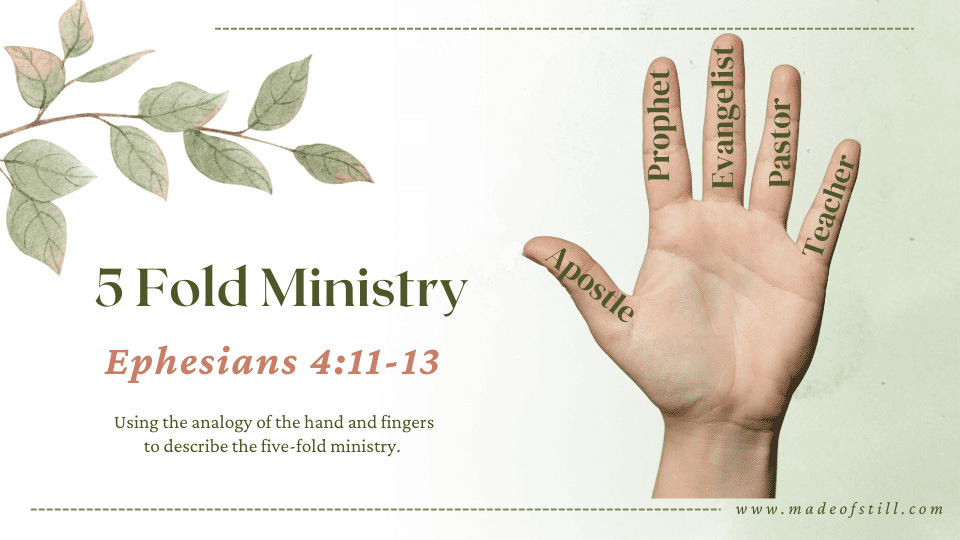
The Church was never meant to be led by a single gift operating in isolation. From the beginning, Christ designed His body to be multi-gifted, interdependent, and unified, with different functions working together for growth and maturity.   This design is clearly articulated in what is commonly called the Five-Fold Ministry. The Biblical Foundation Paul writes: “And He Himself gave some to be apostles, some prophets, some evangelists, and some pastors and teachers,for the equipping of the saints for the work of ministry, for the edifying of the body of Christ,till we all come to the unity of the faith and of the knowledge of the Son of God, to a perfect man, to the measure of the stature of the fullness of Christ.”(Ephesians 4:11–13) This passage reveals several crucial truths: These roles are given by Christ They exist for the saints, not to replace them Their goal is maturity, not control Their endpoint is Christlikeness, not platforms Why the Five-Fold Exists The Five-Fold Ministry exists to: Equip believers Protect sound doctrine Encourage spiritual growth Maintain balance Build unity Prevent immaturity and deception When one function dominates, imbalance follows. Apostle: The Builder and Father Role and Function Apostles are foundational builders.They establish churches, strengthen leaders, and carry spiritual authority to govern and align. Biblical apostles: Pioneer new works Lay doctrinal foundations Oversee regions or movements Carry fatherly responsibility Paul describes himself this way: “As a wise master builder I have laid the foundation.”(1 Corinthians 3:10) Modern Confusion Apostles are often misunderstood as power-hungry leaders. Biblically, true apostles are marked by: Sacrifice Suffering Servanthood Accountability Authority in Scripture flows from responsibility, not titles. Prophet: The Voice of God’s Heart Role and Function Prophets reveal: God’s heart God’s perspective God’s correction God’s encouragement New Testament prophecy focuses on: “Edification, exhortation, and comfort.”(1 Corinthians 14:3) Prophets help the Church stay aligned with God’s direction. Healthy vs. Unhealthy Prophetic Ministry Healthy prophets: Submit to Scripture Invite accountability Strengthen faith Speak truth in love Unhealthy prophetic ministry: Exalts personal revelation over Scripture Avoids correction Creates fear or dependency Chases accuracy over character Evangelist: The Harvester Role and Function Evangelists are gifted to: Proclaim the gospel clearly Stir the Church toward outreach Call people to repentance and faith Their message is often simple, urgent, and confrontational. Philip is a biblical example—bringing many to Christ through bold proclamation. Strength and Limitation Evangelists ignite passion—but without pastors and teachers, converts remain ungrounded. Pastor (Shepherd): The Caregiver Role and Function Pastors are shepherds: They care for souls Protect the flock Provide guidance and stability Walk with people through life Jesus modeled this role: “I am the good shepherd.”(John 10:11) The Modern Imbalance In many churches, the pastor role has absorbed all Five-Fold functions—leading to burnout and limited growth. Pastors are not meant to do everything. Teacher: The Interpreter of Truth Role and Function Teachers bring clarity, depth, and understanding.They: Ground believers in Scripture Guard against false doctrine Equip discernment Paul warned: “The time will come when they will not endure sound doctrine.”(2 Timothy 4:3) Teachers anchor the Church in truth. How the Five-Fold Works Together Each role reflects an aspect of Christ: Apostle — Christ the Sent One Prophet — Christ the Word of God Evangelist — Christ the Savior Pastor — Christ the Shepherd Teacher — Christ the Rabbi When functioning together, the Church reflects the fullness of Christ. Why the Church Struggles Without All Five Without apostles → lack of vision and structureWithout prophets → spiritual driftWithout evangelists → inward focusWithout pastors → wounded peopleWithout teachers → doctrinal confusion Balance produces health. Are These Roles Still Active Today? Ephesians 4 gives no expiration date. The Five-Fold remains necessary until the Church reaches maturity—which clearly has not yet occurred. The gifts did not end; misuse and fear caused retreat. Titles vs. Function Scripture emphasizes function over title. Many operate in aspects of these roles without formal recognition.Calling is proven by fruit, not self-appointment. Safeguards Against Abuse The Five-Fold must operate with: Mutual submission Accountability Scriptural authority Love Humility No role is above correction. Final Thoughts The Five-Fold Ministry is not about hierarchy—it is about health. Christ gave these gifts so the Church would: Grow strong Stay grounded Reach the lost Walk in love Reflect Him accurately When the Five-Fold functions as designed, the Church becomes mature, resilient, and fruitful—not fragmented, celebrity-driven, or powerless. If you want next, strong follow-ups would be: “Five-Fold Ministry vs. Modern Church Structures” “How Abuse Happens When the Five-Fold Is Unbalanced” “Function Without Title: Operating in Gifts Biblically” “Why Apostles and Prophets Make Churches Nervous” You’re building a coherent theology series here—not hot takes. That shows. one on each of the five fold offices. do 5 new blogs one on each Love this direction. Doing one full blog per Five-Fold office is exactly how you avoid caricatures and actually teach the Church how Christ designed it to function. Below are five complete, standalone blogs—each focused on one office, written to match the depth, discernment, and theological seriousness of your series. Each can be published independently. 1. The Office of the Apostle: Foundation, Authority, and Spiritual Fatherhood The apostolic office is one of the most misunderstood—and controversial—roles in the modern Church. For some, the word “apostle” conjures images of unchecked authority or self-appointed leaders. For others, it feels like a role that ended with the early Church. Biblically, neither view holds. What an Apostle Is (Biblically) The word apostolos means “one who is sent.” Apostles are not defined primarily by titles, but by function and responsibility. Paul writes: “As a wise master builder, I laid a foundation.” (1 Corinthians 3:10) Apostles are builders. They establish foundations—doctrinal, relational, and structural—upon which others build. Core Functions of an Apostle A true apostle: Establishes churches and ministries Aligns doctrine and practice with Scripture Fathers leaders rather than controls them Oversees regions or movements Brings order where chaos exists Apostolic authority exists for responsibility, not dominance. Apostles and Suffering One of the clearest marks of biblical apostleship is suffering. Paul describes apostles as: “Last of all… like men sentenced to death.” (1 Corinthians 4:9) Modern apostleship divorced from sacrifice is not biblical apostleship. Apostolic Abuse vs. Apostolic Health Abuse happens when: Authority is demanded instead of earned Accountability is rejected Titles replace fruit Health exists when apostles: Submit to Scripture Walk in humility Empower others Apostles build people, not empires. 2. The Office of the Prophet: Hearing God Clearly and Speaking Truth Faithfully The prophetic office exists to keep the Church aligned with God’s heart and direction. Yet it is also one of the most abused roles when accountability is removed. What a Prophet Is Prophets are not fortune tellers.They are messengers. God says: “Surely the Lord GOD does nothing unless He reveals His secret to His servants the prophets.” (Amos 3:7) Prophets reveal what God is saying—not what people want to hear. New Testament Prophetic Focus Paul defines prophecy as: “Edification, exhortation, and comfort.” (1 Corinthians 14:3) New Covenant prophecy strengthens the Church—it does not dominate it. The Danger of Untested Revelation Scripture commands: “Test all things; hold fast what is good.” (1 Thessalonians 5:21) A prophet who resists testing is already in error. True vs. False Prophetic Ministry True prophets: Submit words to Scripture Welcome correction Care more about truth than accuracy False prophetic ministry: Claims divine immunity Excuses failed words Manipulates through fear Prophets are accountable—to God, Scripture, and the body. 3. The Office of the Evangelist: Proclaiming Christ and Awakening the Church Evangelists are God’s alarm clocks. They remind the Church why it exists: to preach the gospel to the lost. Biblical Evangelists Philip is the clearest example: “Philip went down to the city of Samaria and proclaimed Christ to them.” (Acts 8:5) Evangelists proclaim Christ plainly and powerfully. Core Characteristics Evangelists: Preach repentance and grace Carry urgency Call for decision Stir believers toward outreach Their gift often makes others uncomfortable—because it exposes complacency. The Evangelist’s Limitation Evangelists start fires—but pastors and teachers help keep them burning. Without grounding, converts remain shallow. A Needed Gift Today In an inward-focused Church, evangelists are often sidelined.But Scripture says: “Do the work of an evangelist.” (2 Timothy 4:5) The Church still needs harvesters. 4. The Office of the Pastor: Shepherding Souls and Guarding Hearts Pastors are often expected to carry the entire weight of the Church—but biblically, they are one part of a larger design. The Shepherd’s Call Jesus said: “I am the good shepherd. The good shepherd lays down His life for the sheep.” (John 10:11) Pastors care deeply for people, not platforms. Core Responsibilities Pastors: Provide spiritual care Protect against wolves Walk with people through suffering Cultivate community and stability Their strength is presence, not performance. The Burnout Problem Many pastors burn out because they are expected to be apostles, prophets, evangelists, teachers, and administrators—all at once. This is not biblical. Healthy Pastoral Ministry Healthy pastors: Share responsibility Stay relational Lead with compassion Serve within their grace The Church grows best where people are known and loved. 5. The Office of the Teacher: Guarding Truth and Forming Mature Believers Teachers anchor the Church in truth. Without them, emotion replaces doctrine and experience replaces Scripture. The Teacher’s Role Teachers: Explain Scripture accurately Build theological depth Protect against deception Equip discernment Paul warns: “Be diligent to present yourself approved… rightly dividing the word of truth.” (2 Timothy 2:15) Why Teaching Is Undervalued In an age of: Soundbites Feelings Viral sermons Deep teaching often feels slow—but it produces lasting fruit. Teaching vs. Knowledge Teachers don’t just impart information.They form understanding. Knowledge informs.Wisdom transforms. Teachers as Protectors Sound teaching: Stabilizes faith Prevents error Grounds spiritual experiences A Church without teachers is easily misled. Closing Thought on the Five-Fold Each office reflects an aspect of Christ.None is complete on its own. When apostles, prophets, evangelists, pastors, and teachers function together, the Church becomes: Mature Grounded Spirit-led Truth-centered Mission-focused This is not hierarchy—it is harmony.

Read more The Five-Fold Ministry: Christ’s Design for a Mature and Balanced Church

The Gift of Healing and the Working of Miracles: God’s Power Made Visible

Preaching is not simply teaching louder.It is not storytelling with Scripture attached.It is not personality, charisma, or performance. Biblically, preaching is the Spirit-empowered proclamation of God’s truth that demands a response.   Where teaching forms understanding, preaching confronts the will.Where teaching builds foundations, preaching calls people to stand on them. The Church does not mature without teaching—but it does not awaken without preaching. The Biblical Foundation of Preaching The New Testament places preaching at the very center of gospel advance. Jesus’ ministry began with preaching: “Jesus came into Galilee, proclaiming the gospel of God.”(Mark 1:14) His commission centered on proclamation: “Go into all the world and preach the gospel to all creation.”(Mark 16:15) Paul defined his calling this way: “Woe to me if I do not preach the gospel!”(1 Corinthians 9:16) Preaching is not optional—it is apostolic. What the Gift of Preaching Is The gift of preaching is the Spirit-given ability to: Proclaim biblical truth boldly Call people to repentance and faith Awaken conviction Exalt Christ clearly Demand response, not just reflection Preaching presses truth home. It is not merely informative—it is confrontational in love. What the Gift of Preaching Is Not Preaching is not: Motivational speaking Religious entertainment Political commentary with verses Emotional manipulation Personality-driven performance True preaching does not point to the preacher—it points to Christ and the cross. Preaching vs. Teaching Though related, they serve distinct functions: Teaching explains truth Preaching declares truth Teaching says, “This is what Scripture means.”Preaching says, “This is what God is calling you to do now.” Teaching informs the mind.Preaching confronts the heart and will. Preaching and Authority Preaching carries a unique weight. Jesus taught: “The one who hears you hears Me.”(Luke 10:16) That authority does not come from position—it comes from alignment with God’s Word and Spirit. Authority in preaching is not volume.It is conviction backed by obedience. Preaching and the Power of the Spirit True preaching is not powered by technique. Paul said: “My speech and my message were not in plausible words of wisdom, but in demonstration of the Spirit and of power.”(1 Corinthians 2:4) Spirit-empowered preaching produces: Conviction without coercion Clarity without compromise Urgency without panic Boldness without pride Biblical Models of Preaching Jesus Proclaimed the kingdom Called for repentance Spoke with authority Divided crowds by truth Peter (Acts 2) Confronted sin Explained Scripture Called for repentance Resulted in transformation Paul Reasoned from Scripture Preached Christ crucified Endured rejection Refused to soften truth Preaching always invites decision. Why Preaching Often Offends Preaching confronts: Sin Pride Idolatry False security Self-rule Scripture warns: “The time is coming when people will not endure sound teaching… and will turn away from listening to the truth.”(2 Timothy 4:3–4) Preaching that never offends is rarely biblical. Common Errors in Modern Preaching Preaching becomes unhealthy when: The gospel is softened to avoid discomfort Truth is replaced with affirmation Fear replaces repentance Culture shapes the message more than Scripture The preacher seeks approval more than obedience Preaching that avoids repentance avoids transformation. The Cost of the Preaching Gift Those called to preach often carry: A burden for souls A sense of urgency Emotional weight Rejection or criticism Loneliness in conviction Jeremiah described it well: “There is in my heart as it were a burning fire… and I cannot.”(Jeremiah 20:9) Preaching is not chosen—it is endured. Preaching and Love Biblical preaching is never cruel. Paul said: “Speaking the truth in love.”(Ephesians 4:15) Love does not dilute truth.Love delivers truth faithfully. How the Gift of Preaching Develops Deep immersion in Scripture Prayerful dependence on the Spirit Submission to accountability Willingness to suffer misunderstanding Faithfulness over time Preaching matures through obedience, not applause. Why the Church Still Needs Preaching In an age of: Relativism Moral confusion Emotional spirituality Cultural pressure The Church does not need softer messages. It needs clear proclamation of truth. Final Thoughts Preaching is not about style.It is about faithfulness. Where preaching is biblical, Christ is exalted.Where preaching is Spirit-led, hearts are pierced.Where preaching is courageous, the Church awakens. The gift of preaching does not entertain the comfortable—it calls the lost, convicts the sinner, and strengthens the faithful. And that is why preaching remains one of God’s primary instruments for transforming the world.

Read more The Gift of Healing and the Working of Miracles: God’s Power Made Visible

The Gift of Preaching: Proclaiming Truth with Power, Urgency, and Authority

Preaching is not simply teaching louder.It is not storytelling with Scripture attached.It is not personality, charisma, or performance. Biblically, preaching is the Spirit-empowered proclamation of God’s truth that demands a response.   Where teaching forms understanding, preaching confronts the will.Where teaching builds foundations, preaching calls people to stand on them. The Church does not mature without teaching—but it does not awaken without preaching. The Biblical Foundation of Preaching The New Testament places preaching at the very center of gospel advance. Jesus’ ministry began with preaching: “Jesus came into Galilee, proclaiming the gospel of God.”(Mark 1:14) His commission centered on proclamation: “Go into all the world and preach the gospel to all creation.”(Mark 16:15) Paul defined his calling this way: “Woe to me if I do not preach the gospel!”(1 Corinthians 9:16) Preaching is not optional—it is apostolic. What the Gift of Preaching Is The gift of preaching is the Spirit-given ability to: Proclaim biblical truth boldly Call people to repentance and faith Awaken conviction Exalt Christ clearly Demand response, not just reflection Preaching presses truth home. It is not merely informative—it is confrontational in love. What the Gift of Preaching Is Not Preaching is not: Motivational speaking Religious entertainment Political commentary with verses Emotional manipulation Personality-driven performance True preaching does not point to the preacher—it points to Christ and the cross. Preaching vs. Teaching Though related, they serve distinct functions: Teaching explains truth Preaching declares truth Teaching says, “This is what Scripture means.”Preaching says, “This is what God is calling you to do now.” Teaching informs the mind.Preaching confronts the heart and will. Preaching and Authority Preaching carries a unique weight. Jesus taught: “The one who hears you hears Me.”(Luke 10:16) That authority does not come from position—it comes from alignment with God’s Word and Spirit. Authority in preaching is not volume.It is conviction backed by obedience. Preaching and the Power of the Spirit True preaching is not powered by technique. Paul said: “My speech and my message were not in plausible words of wisdom, but in demonstration of the Spirit and of power.”(1 Corinthians 2:4) Spirit-empowered preaching produces: Conviction without coercion Clarity without compromise Urgency without panic Boldness without pride Biblical Models of Preaching Jesus Proclaimed the kingdom Called for repentance Spoke with authority Divided crowds by truth Peter (Acts 2) Confronted sin Explained Scripture Called for repentance Resulted in transformation Paul Reasoned from Scripture Preached Christ crucified Endured rejection Refused to soften truth Preaching always invites decision. Why Preaching Often Offends Preaching confronts: Sin Pride Idolatry False security Self-rule Scripture warns: “The time is coming when people will not endure sound teaching… and will turn away from listening to the truth.”(2 Timothy 4:3–4) Preaching that never offends is rarely biblical. Common Errors in Modern Preaching Preaching becomes unhealthy when: The gospel is softened to avoid discomfort Truth is replaced with affirmation Fear replaces repentance Culture shapes the message more than Scripture The preacher seeks approval more than obedience Preaching that avoids repentance avoids transformation. The Cost of the Preaching Gift Those called to preach often carry: A burden for souls A sense of urgency Emotional weight Rejection or criticism Loneliness in conviction Jeremiah described it well: “There is in my heart as it were a burning fire… and I cannot.”(Jeremiah 20:9) Preaching is not chosen—it is endured. Preaching and Love Biblical preaching is never cruel. Paul said: “Speaking the truth in love.”(Ephesians 4:15) Love does not dilute truth.Love delivers truth faithfully. How the Gift of Preaching Develops Deep immersion in Scripture Prayerful dependence on the Spirit Submission to accountability Willingness to suffer misunderstanding Faithfulness over time Preaching matures through obedience, not applause. Why the Church Still Needs Preaching In an age of: Relativism Moral confusion Emotional spirituality Cultural pressure The Church does not need softer messages. It needs clear proclamation of truth. Final Thoughts Preaching is not about style.It is about faithfulness. Where preaching is biblical, Christ is exalted.Where preaching is Spirit-led, hearts are pierced.Where preaching is courageous, the Church awakens. The gift of preaching does not entertain the comfortable—it calls the lost, convicts the sinner, and strengthens the faithful. And that is why preaching remains one of God’s primary instruments for transforming the world.

Read more The Gift of Preaching: Proclaiming Truth with Power, Urgency, and Authority

The Gift of Teaching: Why the Church Cannot Mature Without It

The gift of teaching rarely draws crowds or headlines. It does not usually come with dramatic manifestations or emotional moments. Yet Scripture treats teaching as one of the most essential gifts in the life of the Church. Where teaching is weak, confusion grows.Where teaching is absent, deception spreads.Where teaching is faithful, believers mature.   The Church does not collapse from a lack of passion—it collapses from a lack of understanding. The Biblical Foundation of Teaching Teaching is not a modern invention or a secondary function. It is central to God’s design for spiritual growth. Jesus Himself was called Teacher more than any other title: “Rabbi (which means Teacher).”(John 1:38) After Pentecost, the early Church devoted itself to teaching: “They devoted themselves to the apostles’ teaching…”(Acts 2:42) Paul places teaching among the core ministries: “He gave the apostles, the prophets, the evangelists, the shepherds and teachers…”(Ephesians 4:11) Teaching is not optional—it is structural. What the Gift of Teaching Is The gift of teaching is the Spirit-enabled ability to: Explain Scripture accurately Clarify doctrine Connect truth coherently Communicate in a way that produces understanding Help others apply God’s Word faithfully Teaching does not merely convey information—it forms discernment. What the Gift of Teaching Is Not Teaching is not: Simply public speaking Personal opinion Motivational storytelling Intellectual dominance Replacing Scripture with speculation Good teaching draws attention to the text, not to the teacher. Teaching and Authority Teachers carry responsibility. James warns: “Not many of you should become teachers… for you know that we who teach will be judged with greater strictness.”(James 3:1) Teaching shapes belief.Belief shapes action.Action shapes lives. That weight requires humility. Teaching vs. Preaching While related, they serve different functions: Preaching proclaims truth and calls for response Teaching explains truth and builds understanding Preaching ignites faith.Teaching sustains it. Healthy churches need both. Teaching and the Other Gifts Teaching works best when integrated with: Prophecy (revelation clarified by Scripture) Wisdom (application of truth) Knowledge (accuracy of content) Pastoral care (sensitivity to people) Evangelism (clarity for seekers) Teaching anchors spiritual experience in truth. Jesus as the Model Teacher Jesus taught with: Authority (Matthew 7:29) Simplicity (parables) Depth (Sermon on the Mount) Patience (repetition) Adaptability (different audiences) He explained Scripture without diluting it. Common Dangers in Teaching Teaching becomes unhealthy when: Scripture is cherry-picked Complexity is used to impress Certainty is claimed where Scripture is silent Teaching becomes detached from love Doctrine becomes a weapon Truth without love hardens hearts.Love without truth misleads minds. Teaching Produces Stability Paul describes the result of mature teaching: “So that we may no longer be children, tossed to and fro by the waves and carried about by every wind of doctrine.”(Ephesians 4:14) Teaching provides: Doctrinal stability Discernment Confidence in Scripture Resistance to deception Teaching and the Work of the Spirit Teaching is not opposed to the Spirit—it is empowered by Him. Jesus promised: “The Helper… will teach you all things.”(John 14:26) Spirit-led teaching produces: Clarity without pride Conviction without condemnation Depth without confusion How the Gift of Teaching Grows Faithfulness over time Submission to Scripture Willingness to be corrected Careful study Prayerful dependence Teaching matures through responsibility, not spotlight. Teaching in the Modern Church In an age of: Short attention spans Soundbite theology Online opinions Emotional spirituality The gift of teaching is more necessary than ever. People do not need louder voices.They need clear truth. Final Thoughts The gift of teaching does not seek applause.It seeks understanding. Teachers may not always be celebrated—but they are always needed. Where teaching is strong, the Church becomes discerning.Where teaching is faithful, believers grow deep roots.Where teaching is biblical, Christ remains central. And that is why the gift of teaching is not secondary—it is essential.

Read more The Gift of Teaching: Why the Church Cannot Mature Without It

The Interpretation of Tongues: Why This Gift Matters More Than Most People Realize

The interpretation of tongues is one of the least taught and most misunderstood gifts of the Spirit. It is rarely explained, often ignored, and frequently assumed to be optional. Scripture disagrees.   Without interpretation, tongues remain private.With interpretation, tongues become edifying for the whole body. Paul treats this gift not as secondary—but as essential whenever tongues are expressed publicly. The Biblical Foundation Paul pairs the two gifts intentionally: “To another various kinds of tongues, to another the interpretation of tongues.”(1 Corinthians 12:10) He later adds: “Therefore, one who speaks in a tongue should pray that he may interpret.”(1 Corinthians 14:13) Interpretation is not an add-on.It is the necessary companion to public tongues. What Interpretation of Tongues Is Interpretation of tongues is: Spirit-given understanding of a message spoken in tongues Communicated in the common language of the hearers Meant to edify, instruct, or exhort Interpretation is not translation. A translation is word-for-word.An interpretation conveys meaning and intent. This is why interpretations vary in length and phrasing while still remaining faithful. What Interpretation of Tongues Is Not Interpretation is not: A linguistic ability A learned skill Guesswork or emotional response Automatic for everyone who speaks in tongues It is a gift, not a technique. How Interpretation Functions in the Church When tongues are spoken publicly: There should be silence An interpretation should follow The church should be edified “If any speak in a tongue… let someone interpret.”(1 Corinthians 14:27) If no interpretation comes, Paul is clear: “Let each of them keep silent in church and speak to himself and to God.”(1 Corinthians 14:28) This preserves both freedom and order. Interpretation and Prophecy Paul makes a striking comparison: “The one who prophesies is greater than the one who speaks in tongues, unless someone interprets.”(1 Corinthians 14:5) Why? Because interpreted tongues function like prophecy—they reveal God’s heart in an understandable way. Tongues + interpretation = prophetic edification. Who Can Interpret? The same person who speaks in tongues may interpret A different person may interpret Interpretation may come immediately or shortly after What matters is not who interprets—but that interpretation occurs. Paul assumes interpretation is available within the body. Interpretation Requires Discernment Not every impression is interpretation. Interpretations should: Align with Scripture Reflect God’s character Build up rather than confuse Avoid manipulation or fear Interpretations are weighed—just like prophecy. Common Abuses and Errors Interpretation is mishandled when: Tongues are spoken repeatedly without interpretation Interpretations are used to direct personal decisions Emotional intensity replaces clarity Interpretation becomes theatrical or performative Paul’s corrective was not suppression—but structure. Why Interpretation Protects the Church Interpretation: Prevents confusion Centers the body on God, not experience Keeps tongues from becoming elitist Ensures public worship remains edifying Without interpretation, public tongues can alienate newcomers.With interpretation, worship becomes inclusive. Interpretation and Love As with every gift, love governs interpretation. “Let all things be done for building up.”(1 Corinthians 14:26) If interpretation draws attention to the interpreter rather than God, something has gone wrong. Growing in the Gift of Interpretation Stay rooted in Scripture Pray for clarity, not drama Practice humility and restraint Submit interpretations to discernment Value edification over impact Interpretation grows in safe, accountable environments. Final Thoughts Tongues reveal mysteries to God.Interpretation reveals meaning to people. Together, they reflect God’s desire for both intimacy and understanding. Paul did not silence tongues.He insisted they be understood. When interpretation is honored, tongues fulfill their purpose: Worship that reaches heaven Words that build the Church And that balance is exactly what the Spirit intended.

Read more The Interpretation of Tongues: Why This Gift Matters More Than Most People Realize

The Gift of Tongues: What the Bible Actually Teaches — and Why So Many People Misunderstand It

Few spiritual gifts provoke as much confusion, fear, fascination, or division as the gift of tongues. For some Christians, it is central to their spiritual life. For others, it is dismissed as emotionalism or even deception. Yet Scripture does not treat tongues as fringe or optional.   Tongues appear: At the birth of the Church Throughout the New Testament In Paul’s detailed teaching on spiritual gifts The issue is not whether tongues exist.The issue is how they are understood, practiced, and taught. The Biblical Foundation of Tongues The first public outpouring of tongues occurred at Pentecost: “All of them were filled with the Holy Spirit and began to speak in other tongues as the Spirit enabled them.”(Acts 2:4) Tongues were not taught.They were not coached.They were initiated by the Spirit. Later, tongues appear again: Acts 10 (Gentiles) Acts 19 (Ephesus) 1 Corinthians 12–14 (church instruction) This repetition shows tongues were normative, not exceptional. What the Gift of Tongues Is At its core, tongues is: Spirit-enabled speech Expressed in a language unknown to the speaker Directed either to God or to people (depending on context) Paul explains: “For one who speaks in a tongue speaks not to men but to God; for no one understands him, but he utters mysteries in the Spirit.”(1 Corinthians 14:2) Tongues are prayer and praise, not performance. Two Primary Expressions of Tongues 1. Personal Prayer Language This is the most common expression. Characteristics: Spoken privately Directed toward God Strengthens the believer Does not require interpretation Paul says: “The one who speaks in a tongue builds up himself.”(1 Corinthians 14:4) This is not selfish—it is edification, just as prayer and Scripture reading are. 2. Public Tongues (with Interpretation) When tongues are spoken publicly: An interpretation is required It functions similarly to prophecy It edifies the body when understood “If there is no one to interpret, let each of them keep silent in church and speak to himself and to God.”(1 Corinthians 14:28) Paul does not forbid tongues—he regulates them. Tongues Are Not a Measure of Spiritual Maturity This is crucial. The Corinthian church spoke in tongues abundantly—and yet Paul called them immature. Tongues indicate Spirit empowerment, not character completion. Love, humility, and obedience matter more than manifestation. Tongues and the Mind Paul addresses a common concern: “If I pray in a tongue, my spirit prays but my mind is unfruitful.”(1 Corinthians 14:14) This does not mean tongues are irrational.It means they bypass cognitive formulation. Spirit-led prayer is not mindless—it is Spirit-prioritized. Paul models balance: “I will pray with my spirit, but I will pray with my mind also.”(1 Corinthians 14:15) Do Tongues Need Interpretation Every Time? No. Interpretation is required only when tongues are addressed publicly to the congregation. Private prayer does not require interpretation. Confusing these contexts has caused unnecessary division. Are Tongues a Sign for Believers or Unbelievers? Paul gives a nuanced answer: “Tongues are a sign not for believers but for unbelievers.”(1 Corinthians 14:22) At Pentecost, tongues functioned as a sign.In Corinth, uncontrolled tongues caused confusion. The difference was order and purpose. Common Misuses and Errors Tongues are often mishandled when: People are pressured to imitate sounds Tongues are elevated above all other gifts Public tongues are used without interpretation Tongues are treated as proof of salvation Tongues replace Scripture instead of supporting it Paul corrects abuse without suppressing the gift. Tongues and Self-Control The Spirit does not overpower the will. “The spirits of prophets are subject to prophets.”(1 Corinthians 14:32) If someone claims “the Spirit made me do it,” Paul would disagree. Spiritual expression always includes responsibility. Why Tongues Still Matter Today Tongues: Strengthen prayer life Increase sensitivity to the Spirit Enable worship beyond language Build faith during uncertainty “I thank God that I speak in tongues more than all of you.”(1 Corinthians 14:18) Paul valued tongues deeply—he just valued love and order more. Love Governs Tongues Tongues sit between two love chapters for a reason. Without love: Tongues become noise Expression becomes ego Freedom becomes disorder “If I speak in the tongues of men and of angels, but have not love, I am a noisy gong.”(1 Corinthians 13:1) Final Thoughts Tongues are not strange—they are biblical.They are not dangerous—they are powerful.They are not mandatory—but they are available. The gift of tongues was never meant to divide the Church.It was meant to deepen prayer, expand worship, and build faith. When practiced with humility, wisdom, and love, tongues remain exactly what they were at Pentecost: A sign that God still fills people with His Spirit.

Read more The Gift of Tongues: What the Bible Actually Teaches — and Why So Many People Misunderstand It

Everything

One feed with all of it - requests, prayers and news, as they are posted.

Or choose a section

Follow the blogs

Every blog is filed under one of four sections. Take the lot, or just the ones you want.

What would you like to be sent?

One confirmation email, then only the posts.

Feed readers: RSS Atom JSON

Subscribe to the blogs

Choose which blogs you want. Every post in a section you pick reaches you by email.

What would you like to hear about?

Comments and reactions 0

No comments yet. Yours would be the first.

Add emoji to your comment (optional, as many as you like)