🇩🇲 CULTURAL SURVIVAL — DOMINICA
PART 1 — THE KALINAGO, THE FIRST PEOPLES, THE CARIBBEAN, EUROPEAN CONTACT, AND THE SURVIVAL OF DOMINICAN CULTURE
From the First Peoples of the Island Through the Arrival of Europeans
Dominica is one of the most extraordinary islands in the Caribbean.
It is relatively small.
But its landscape is enormous in character.
MOUNTAINS.
RAINFOREST.
RIVERS.
VOLCANOES.
HOT SPRINGS.
WATERFALLS.
COASTLINE.
And long before Dominica became an independent country, the island was home to Indigenous peoples who developed ways of life adapted to its rugged volcanic environment.
Among the most important were the:
KALINAGO.
Their history is central to understanding Dominica.
Because unlike many Indigenous peoples of the Caribbean, the Kalinago community survived the centuries of European colonization and remains a living Indigenous population today.
That makes Dominica unusual.
Its history is not simply:
"THE INDIGENOUS PEOPLE DISAPPEARED."
Instead, it is a story of:
SURVIVAL.
ADAPTATION.
RESISTANCE.
CULTURAL MEMORY.
And ultimately:
CULTURAL CONTINUITY.
🇩🇲 THE ISLAND
Dominica lies in the:
EASTERN CARIBBEAN.
It is part of the:
LESSER ANTILLES.
🇩🇲 ITS NEIGHBORS
To the north is:
GUADELOUPE.
To the south is:
MARTINIQUE.
Both are French overseas territories.
🇩🇲 DOMINICA
therefore sits between two islands with strong French historical connections.
THE ISLAND
is located between the:
CARIBBEAN SEA
and the:
ATLANTIC OCEAN.
🇩🇲 A VOLCANIC ISLAND
Dominica is part of the volcanic arc of the Lesser Antilles.
Its landscape was shaped by:
VOLCANIC ACTIVITY.
THE RESULT
is one of the most mountainous landscapes in the Caribbean.
PEAKS.
VALLEYS.
RAVINES.
RIVERS.
WATERFALLS.
🇩🇲 MORNE DIABLOTINS
The highest mountain on the island is:
MORNE DIABLOTINS.
It rises to approximately:
1,447 METERS.
🇩🇲 THE MORNE TROIS PITONS
Another major volcanic area is:
MORNE TROIS PITONS NATIONAL PARK.
It is recognized as a:
UNESCO WORLD HERITAGE SITE.
🇩🇲 BOILING LAKE
One of Dominica's most famous natural features is:
BOILING LAKE.
It is one of the world's largest hot lakes.
🇩🇲 WHY DOES THIS MATTER TO HISTORY?
Because the island's environment shaped the people who lived there.
THE MOUNTAINS
provided:
PROTECTION.
THE FOREST
provided:
FOOD.
MEDICINE.
MATERIALS.
THE RIVERS
provided:
WATER.
THE COAST
provided:
FISH.
SHELLFISH.
MARINE RESOURCES.
🇩🇲 THE FIRST PEOPLES
Human settlement in Dominica predates European arrival by many centuries.
PEOPLE
moved through the Caribbean island chain over long periods.
THE CARIBBEAN
was not an empty region waiting for Europeans.
IT
was already a connected world.
ISLANDS
were linked by:
CANOES.
TRADE.
FAMILY.
MIGRATION.
WARFARE.
CULTURAL EXCHANGE.
🇩🇲 THE CARIBBEAN SEA
was therefore not simply a barrier.
IT
was a:
HIGHWAY.
🇩🇲 CANOE TRAVEL
Indigenous peoples developed sophisticated knowledge of:
OCEAN CURRENTS.
WIND.
WEATHER.
NAVIGATION.
SMALL CANOES
could connect communities across considerable distances.
🇩🇲 THIS
allowed ideas and goods to travel between islands.
FOOD.
TOOLS.
POTTERY.
STONE.
SHELL.
KNOWLEDGE.
🇩🇲 EARLY CULTURES
Archaeological evidence shows that different Indigenous cultural traditions existed in the Caribbean long before the arrival of Europeans.
THESE
included communities associated with:
ORTOIROID.
SALADOID.
OSTIONOID.
and other archaeological traditions.
🇩🇲 THESE NAMES
are modern archaeological classifications.
They describe:
MATERIAL CULTURES.
POTTERY.
SETTLEMENT PATTERNS.
TECHNOLOGY.
THEY
should not be treated as simple equivalents of modern ethnic identities.
🇩🇲 THE CARIBBEAN
was a constantly changing cultural environment.
PEOPLE
migrated.
COMMUNITIES
intermarried.
LANGUAGES
changed.
TRADITIONS
were adapted.
🇩🇲 THE KALINAGO
By the time Europeans arrived, one of the most important Indigenous peoples associated with Dominica were the:
KALINAGO.
KALINAGO
is the preferred Indigenous name used today.
Historically, Europeans often called them:
CARIBS.
🇩🇲 THE WORD "CARIB"
became one of the names European writers used to describe Indigenous peoples in the Lesser Antilles.
BUT
European terminology often simplified complex Indigenous societies.
THE KALINAGO
had their own:
LANGUAGE.
COMMUNITIES.
SOCIAL ORGANIZATION.
RELIGIOUS PRACTICES.
TRADE NETWORKS.
AGRICULTURAL KNOWLEDGE.
🇩🇲 KALINAGO TERRITORY
The Kalinago were not confined to Dominica.
Their cultural world extended across parts of the:
LESSER ANTILLES.
DOMINICA
however became one of their most important strongholds.
🇩🇲 WHY DOMINICA?
Its geography was ideal for resistance.
MOUNTAINS.
DENSE FORESTS.
RIVERS.
RUGGED COASTLINES.
AN INVADING FORCE
could have enormous difficulty controlling the interior.
🇩🇲 THE FOREST
could provide:
FOOD.
WATER.
SHELTER.
KNOWLEDGE.
🇩🇲 THIS
would become extremely important after European arrival.
AGRICULTURE
The Kalinago practiced agriculture suited to the tropical environment.
CASSAVA
was particularly important.
🇩🇲 CASSAVA
is a root crop that became one of the major staples of Indigenous Caribbean agriculture.
IT
could be processed into:
FLOUR.
BREAD.
OTHER FOODS.
🇩🇲 OTHER CROPS
included:
SWEET POTATOES.
YAMS.
MAIZE.
PEPPERS.
FRUITS.
🇩🇲 FISHING
The sea was equally important.
FISH.
SHELLFISH.
TURTLES.
OTHER MARINE RESOURCES.
🇩🇲 THE COAST
provided a second food system alongside:
AGRICULTURE.
🇩🇲 HUNTING
The forests also provided:
GAME.
BIRDS.
SMALL ANIMALS.
OTHER FOREST RESOURCES.
🇩🇲 BOTANICAL KNOWLEDGE
The tropical environment contained hundreds of useful plants.
MEDICINE.
FOOD.
FIBER.
WOOD.
RESIN.
THE PEOPLE
needed detailed knowledge of the environment.
🇩🇲 THIS
is one of the great forms of Indigenous knowledge.
A FOREST
is not simply:
TREES.
TO THE PEOPLE WHO KNOW IT,
it can be:
A PHARMACY.
A SUPERMARKET.
A HARDWARE STORE.
A SOURCE OF BUILDING MATERIAL.
A MAP.
🇩🇲 KALINAGO HOMES
Traditional communities used locally available materials to construct houses and other structures.
WOOD.
PALM.
LEAVES.
FIBER.
🇩🇲 CANOES
Canoe construction was also highly important.
LARGE TREES
could be transformed into:
DUGOUT CANOES.
THESE
allowed people to travel between:
COASTAL COMMUNITIES.
🇩🇲 THE SEA
was therefore part of everyday life.
NOT:
AN OCEAN BETWEEN ISLANDS.
BUT:
A NETWORK CONNECTING ISLANDS.
🇩🇲 TRADE
The Indigenous peoples of the Caribbean participated in extensive exchange networks.
GOODS
could travel between islands.
OBSIDIAN.
STONE.
SHELL.
POTTERY.
FOOD.
OTHER MATERIALS.
🇩🇲 DOMINICA
occupied an important position in these networks.
ITS LOCATION
between the northern and southern Lesser Antilles made it strategically important.
🇩🇲 EUROPEAN ARRIVAL
Then came:
CHRISTOPHER COLUMBUS.
NOVEMBER 3, 1493.
COLUMBUS
encountered the island during his second voyage.
HE
named it:
DOMINICA.
WHY?
Because the island was encountered on:
SUNDAY.
"DOMINGO"
is Spanish for:
SUNDAY.
🇩🇲 THE NAME
therefore came from:
THE DAY OF THE WEEK.
BUT
the island already had a name among its Indigenous inhabitants.
EUROPEAN NAMING
was part of a much larger colonial process.
EUROPEANS
began renaming:
ISLANDS.
RIVERS.
MOUNTAINS.
PLACES.
🇩🇲 THIS
created a new geography of power.
A PLACE
could have one name to its original inhabitants
and another name on European maps.
🇩🇲 EUROPEAN CLAIMS
Columbus's voyage was followed by European claims over Caribbean territories.
SPAIN
initially dominated much of the Caribbean.
BUT
other European powers soon became interested.
FRANCE.
BRITAIN.
NETHERLANDS.
🇩🇲 THE CARIBBEAN
became one of the most contested regions in the world.
🇩🇲 WHY?
Because of:
LAND.
SUGAR.
TRADE.
PORTS.
SHIPPING.
AND:
EMPIRE.
🇩🇲 THE KALINAGO RESIST
European colonization did not proceed peacefully.
THE KALINAGO
resisted European attempts to establish permanent settlements.
WHY?
Because European settlement threatened:
LAND.
INDEPENDENCE.
FOOD SYSTEMS.
COMMUNITY.
CULTURE.
🇩🇲 DOMINICA
became one of the islands where Indigenous resistance remained particularly strong.
THE MOUNTAINS
provided refuge.
THE FORESTS
provided protection.
THE RUGGED TERRAIN
made conquest difficult.
🇩🇲 THE KALINAGO
therefore maintained a stronger presence in Dominica than many Indigenous peoples elsewhere in the Caribbean.
🇩🇲 THE COLONIAL STRUGGLE
The European powers fought among themselves as well.
FRANCE
sought control.
BRITAIN
sought control.
THE KALINAGO
were trying to preserve their own:
LAND.
🇩🇲 THIS
created a complicated three-way struggle.
EUROPEAN EMPIRE.
EUROPEAN EMPIRE.
INDIGENOUS PEOPLE.
🇩🇲 THE FRENCH CONNECTION
French settlers eventually established a significant presence on Dominica.
FRENCH
became an important colonial language.
CATHOLICISM
also became important.
AGRICULTURE
was reorganized around European colonial interests.
🇩🇲 PLANTATIONS
European colonization increasingly introduced:
PLANTATION AGRICULTURE.
COFFEE.
SUGAR.
TOBACCO.
OTHER CASH CROPS.
🇩🇲 THIS
transformed the island's economy.
LAND
that had previously supported Indigenous communities
was increasingly incorporated into:
COLONIAL AGRICULTURE.
🇩🇲 ENSLAVEMENT
European plantation economies depended heavily upon:
AFRICAN ENSLAVEMENT.
AFRICANS
were forcibly transported across the Atlantic.
THEY
were made to work on plantations throughout the Caribbean.
🇩🇲 THIS
created another major population transformation.
THE ISLAND
became home to people of:
AFRICAN.
EUROPEAN.
INDIGENOUS.
MIXED.
heritage.
🇩🇲 AFRICAN CULTURE
Africans brought with them:
LANGUAGES.
MUSIC.
RELIGIOUS TRADITIONS.
FOODWAYS.
AGRICULTURAL KNOWLEDGE.
SOCIAL CUSTOMS.
EVEN UNDER ENSLAVEMENT,
culture survived.
🇩🇲 THIS
is another form of:
CULTURAL SURVIVAL.
PEOPLE
could lose their political freedom
without losing:
MEMORY.
MUSIC.
FOOD.
LANGUAGE.
RELIGION.
FAMILY.
🇩🇲 DOMINICA'S CULTURE
therefore became increasingly:
CREOLE.
MULTILAYERED.
MULTILINGUAL.
MULTICULTURAL.
🇩🇲 THE KALINAGO
Despite European colonization and demographic pressure,
the Kalinago did not disappear.
SOME
were killed.
SOME
were displaced.
SOME
intermarried.
SOME
retreated into areas where colonial control was weaker.
SOME
adapted to new political circumstances.
🇩🇲 SURVIVAL
did not necessarily mean remaining unchanged.
IT
often meant:
ADAPTING.
🇩🇲 THIS
is one of the most important lessons in the history of Indigenous peoples.
CULTURE
can survive even when:
POLITICAL POWER
is lost.
🇩🇲 KALINAGO TERRITORY
Today, the Kalinago have a legally recognized territory on the eastern side of Dominica.
KALINAGO TERRITORY
contains communities where Indigenous identity remains an important part of everyday life.
🇩🇲 THIS
makes Dominica exceptional within the Caribbean.
THE KALINAGO
are not merely:
AN ARCHAEOLOGICAL CULTURE.
THEY
are a:
LIVING PEOPLE.
🇩🇲 CULTURAL CONTINUITY
can be seen through:
CRAFT.
CANOE BUILDING.
FOOD.
STORIES.
LANGUAGE.
COMMUNITY.
TRADITIONAL KNOWLEDGE.
🇩🇲 BASKETRY
Traditional basket-making is one important example.
NATURAL FIBERS
can be transformed into:
BASKETS.
MATS.
OTHER OBJECTS.
🇩🇲 THIS
connects modern people with:
ANCIENT MATERIAL KNOWLEDGE.
🇩🇲 CANOE BUILDING
Traditional canoe construction has also remained culturally significant.
A CANOE
is more than:
A BOAT.
IT
represents:
SEA KNOWLEDGE.
FOREST KNOWLEDGE.
CRAFT.
TRANSMISSION BETWEEN GENERATIONS.
🇩🇲 THE KALINAGO LANGUAGE
The original Kalinago language was profoundly affected by centuries of colonial transformation.
BUT
linguistic elements and cultural memory survived in the region.
LANGUAGE
can survive through:
PLACE NAMES.
PERSONAL NAMES.
FOOD TERMS.
STORIES.
CULTURAL REVIVAL.
🇩🇲 CULTURAL REVIVAL
Modern Indigenous communities increasingly have opportunities to:
DOCUMENT.
TEACH.
REVIVE.
their heritage.
🇩🇲 THIS
is especially important for younger generations.
A YOUNG KALINAGO PERSON
should not have to choose between:
MODERN LIFE
and
INDIGENOUS IDENTITY.
BOTH
can exist together.
🇩🇲 THE ENVIRONMENT
Dominica's forests are central to this cultural story.
THE ISLAND
is often called:
THE NATURE ISLAND.
WHY?
Because of its extraordinary:
RAINFOREST.
RIVERS.
WATERFALLS.
MOUNTAINS.
🇩🇲 THE FOREST
is part of the island's national identity.
BUT
it is also part of its Indigenous heritage.
🇩🇲 TRADITIONAL KNOWLEDGE
includes understanding:
PLANTS.
ANIMALS.
WATER.
WEATHER.
LAND.
🇩🇲 THIS
is becoming increasingly valuable in the modern era.
CLIMATE CHANGE
is affecting Caribbean islands.
HURRICANES.
RISING SEA LEVELS.
EXTREME WEATHER.
CHANGING RAINFALL.
🇩🇲 DOMINICA
is especially vulnerable.
BUT
its forests also provide:
NATURAL PROTECTION.
FORESTS
can reduce:
EROSION.
FLOODING.
THEY
also protect:
WATER SYSTEMS.
🇩🇲 THE INDIGENOUS LANDSCAPE
therefore remains relevant to:
MODERN CLIMATE RESILIENCE.
🇩🇲 EUROPEAN COMPETITION
During the seventeenth and eighteenth centuries,
Dominica became contested between:
FRANCE.
and
BRITAIN.
🇫🇷 FRENCH SETTLEMENT
became increasingly important.
🇬🇧 BRITISH POWER
also expanded across the Caribbean.
🇩🇲 THE ISLAND
changed hands through the broader struggles of European imperial warfare.
🇩🇲 THE SEVEN YEARS' WAR
The global:
SEVEN YEARS' WAR
was fought across multiple continents.
THE CARIBBEAN
was one of its theaters.
DOMINICA
eventually came under:
BRITISH CONTROL.
🇬🇧 BRITISH DOMINICA
British rule increasingly shaped:
LAW.
ADMINISTRATION.
EDUCATION.
LANGUAGE.
ECONOMY.
ENGLISH
became increasingly important.
🇩🇲 BUT
French influence did not disappear.
🇩🇲 CREOLE CULTURE
developed from the interaction of:
AFRICAN.
FRENCH.
BRITISH.
INDIGENOUS.
influences.
🇩🇲 KWÉYÒL
French-based Creole became an important part of Dominica's cultural heritage.
KWÉYÒL
is also known as:
DOMINICAN CREOLE FRENCH.
🇩🇲 THIS
is an extraordinary example of cultural survival.
A LANGUAGE
can emerge from:
COLONIALISM.
AFRICAN CULTURE.
INDIGENOUS CULTURE.
EUROPEAN LANGUAGES.
AND THEN
become:
A LOCAL IDENTITY.
🇩🇲 CULTURE
is rarely pure.
IT
is often:
CREATED.
RECREATED.
ADAPTED.
SHARED.
🇩🇲 DOMINICA
is a perfect example.
INDIGENOUS.
AFRICAN.
FRENCH.
BRITISH.
CARIBBEAN.
=
DOMINICAN CULTURE.
🇩🇲 THE ABOLITION OF SLAVERY
The plantation system eventually faced growing opposition.
BRITAIN
abolished slavery throughout most of its empire in:
1834.
FULL EMANCIPATION
followed after an apprenticeship period.
🇩🇲 EMANCIPATION
changed Dominican society.
FORMERLY ENSLAVED PEOPLE
could build:
FAMILIES.
COMMUNITIES.
FARMS.
BUSINESSES.
CHURCHES.
🇩🇲 AFRICAN CULTURE
could develop more freely.
MUSIC.
DANCE.
FOOD.
RELIGION.
COMMUNITY ORGANIZATION.
🇩🇲 THIS
became another foundation of modern Dominican identity.
🇩🇲 THE KALINAGO AND EMANCIPATION
The end of slavery did not solve the Indigenous question.
THE KALINAGO
still faced:
LAND PRESSURES.
ECONOMIC MARGINALIZATION.
CULTURAL PRESSURES.
BUT
their survival continued.
🇩🇲 A UNIQUE CARIBBEAN STORY
In many Caribbean islands,
Indigenous populations suffered catastrophic demographic collapse after European contact.
DOMINICA
was different.
ITS:
MOUNTAINS.
FORESTS.
DISTANCE FROM MAJOR COLONIAL CENTERS.
KALINAGO RESISTANCE.
all helped Indigenous communities survive.
🇩🇲 THE KALINAGO TERRITORY
The area now recognized as the Kalinago Territory became an important center of Indigenous continuity.
COMMUNITY
could survive there.
TRADITION
could survive there.
MEMORY
could survive there.
🇩🇲 CULTURAL SURVIVAL
therefore became geographic.
A PLACE
could preserve:
IDENTITY.
🇩🇲 THE IMPORTANCE OF LAND
For Indigenous peoples,
land is not merely:
REAL ESTATE.
IT
can be:
ANCESTRY.
HISTORY.
FOOD.
SPIRITUALITY.
IDENTITY.
🇩🇲 THIS
makes Indigenous land rights fundamentally important.
🇩🇲 DOMINICA TODAY
still carries the consequences of all these historical layers.
KALINAGO.
AFRICAN DESCENDANT.
CREOLE.
EUROPEAN.
CARIBBEAN.
ALL
form part of the national story.
🇩🇲 THE COUNTRY
does not have to erase one history to celebrate another.
IT
can recognize:
ALL OF THEM.
🇩🇲 THE DEEPEST LESSON
Dominica demonstrates that cultural survival is not always about preserving a society exactly as it existed centuries ago.
IT
is about preserving:
CONTINUITY.
THE KALINAGO
have changed.
DOMINICA
has changed.
THE CARIBBEAN
has changed.
BUT
Indigenous identity remains.
🇩🇲 A CANOE
built today can still connect to:
ANCIENT KNOWLEDGE.
A BASKET
made today can still connect to:
ANCESTRAL CRAFT.
A STORY
told today can still carry:
HISTORICAL MEMORY.
A CHILD
learning about their ancestors can still continue:
CULTURAL TRANSMISSION.
🇩🇲 THAT
is survival.
🇩🇲 PART 1 — FINAL LESSON
Before there was:
DOMINICA.
Before there was:
BRITISH DOMINICA.
Before there was:
FRENCH DOMINICA.
Before European maps,
there were:
THE KALINAGO.
They knew the:
MOUNTAINS.
They knew the:
FORESTS.
They knew the:
RIVERS.
They knew the:
SEA.
They knew how to:
FARM.
They knew how to:
FISH.
They knew how to:
BUILD CANOES.
They knew how to:
NAVIGATE.
They knew how to:
SURVIVE.
🇩🇲 THEN CAME EUROPEAN COLONIZATION.
LAND WAS TAKEN.
POPULATIONS WERE DISPLACED.
AFRICANS WERE ENSLAVED.
PLANTATIONS WERE CREATED.
LANGUAGES CHANGED.
POLITICAL SYSTEMS CHANGED.
BUT:
CULTURE SURVIVED.
🇩🇲 AFRICAN CULTURES
survived.
🇩🇲 KALINAGO CULTURE
survived.
🇩🇲 CREOLE CULTURE
emerged.
🇩🇲 DOMINICAN IDENTITY
eventually developed.
AND
the island itself remained:
GREEN.
MOUNTAINOUS.
VOLCANIC.
ALIVE.
🇩🇲 NEXT
PART 2 — SLAVERY, PLANTATIONS, AFRICAN CULTURAL SURVIVAL, FRENCH AND BRITISH RULE, EMANCIPATION, CREOLE SOCIETY, AND THE DEVELOPMENT OF A DISTINCT DOMINICAN IDENTITY
1700s–1800s — How Africans, Europeans, and Indigenous survivors reshaped Dominica, how slavery transformed the island, and how new cultures emerged from one of the Caribbean's most turbulent colonial societies.
🇩🇲 CULTURAL SURVIVAL — DOMINICA
PART 2 — SLAVERY, PLANTATIONS, AFRICAN CULTURAL SURVIVAL, FRENCH AND BRITISH RULE, EMANCIPATION, CREOLE SOCIETY, AND THE DEVELOPMENT OF A DISTINCT DOMINICAN IDENTITY
1700s–1800s — How Africans, Europeans, and Indigenous Survivors Reshaped Dominica
Dominica's colonial history entered a much darker period during the eighteenth century.
The island's forests and mountains had protected Indigenous communities from complete European control.
But European powers continued competing for the island.
And eventually:
COLONIAL RULE.
PLANTATION AGRICULTURE.
AFRICAN SLAVERY.
would transform Dominica forever.
The people who emerged from this period would create a society unlike the one that existed before European arrival.
It would be:
AFRICAN.
KALINAGO.
FRENCH.
BRITISH.
CREOLE.
CARIBBEAN.
And eventually:
DOMINICAN.
🇩🇲 THE COLONIAL STRUGGLE
Dominica's location made it valuable to competing European empires.
It was positioned between:
GUADELOUPE
and
MARTINIQUE.
Both were strongly associated with France.
🇫🇷 FRANCE
French settlers established communities on Dominica.
🇬🇧 BRITAIN
Britain also wanted control of the island.
🇩🇲 THE KALINAGO
continued resisting attempts to permanently dominate their territory.
THIS
made Dominica different from many islands where colonial settlement became firmly established much earlier.
🇩🇲 THE MOUNTAINS
continued to matter.
EUROPEAN SETTLERS
could establish themselves along:
COASTAL AREAS.
BUT
the interior remained much more difficult to control.
🇩🇲 THE FOREST
remained:
A REFUGE.
🇩🇲 THE PLANTATION ECONOMY
As European control expanded, agriculture became increasingly organized around:
CASH CROPS.
COFFEE.
SUGAR.
TOBACCO.
COTTON.
OTHER TROPICAL PRODUCTS.
🇩🇲 THESE CROPS
were not primarily produced for local consumption.
THEY
were produced for:
EXPORT.
🇪🇺 EUROPE
wanted Caribbean commodities.
SUGAR
was particularly valuable.
EUROPEAN CONSUMERS
increasingly consumed:
SUGAR.
TEA.
COFFEE.
CHOCOLATE.
🇩🇲 THE CARIBBEAN
became deeply integrated into:
THE ATLANTIC ECONOMY.
🇩🇲 BUT
this economy depended upon an enormous human tragedy:
AFRICAN SLAVERY.
⛓️ THE ATLANTIC SLAVE TRADE
Millions of Africans were forcibly transported across the Atlantic.
THEY
were taken from:
WEST AFRICA.
CENTRAL AFRICA.
and other regions.
THEY
were transported in brutal conditions aboard:
SLAVE SHIPS.
MANY
died during the journey.
THOSE WHO SURVIVED
were sold as:
ENSLAVED PEOPLE.
🇩🇲 DOMINICA
became part of this Atlantic system.
ENSLAVED AFRICANS
were forced to work in:
PLANTATIONS.
FIELDS.
MILLS.
HOUSEHOLDS.
PORTS.
OTHER COLONIAL LABOR SYSTEMS.
🇩🇲 THIS
transformed the population.
THE AFRICAN POPULATION
eventually became the overwhelming majority.
🇩🇲 BUT
Africans did not arrive as a single culture.
THEY
came from many different societies.
DIFFERENT LANGUAGES.
DIFFERENT RELIGIOUS TRADITIONS.
DIFFERENT FOODS.
DIFFERENT MUSICAL SYSTEMS.
DIFFERENT SOCIAL STRUCTURES.
🇩🇲 COLONIAL SLAVERY
attempted to break those identities.
ENSLAVED PEOPLE
were often deliberately separated from:
FAMILY.
LANGUAGE.
COMMUNITY.
THE PURPOSE
was control.
🇩🇲 BUT
culture proved difficult to destroy.
PEOPLE
created new communities.
PEOPLE
shared stories.
PEOPLE
shared songs.
PEOPLE
shared food.
PEOPLE
shared religious traditions.
PEOPLE
created families.
🇩🇲 THIS
was cultural resistance.
CULTURE
could survive even when:
FREEDOM
was denied.
🇩🇲 AFRICAN FOODWAYS
African influence became deeply embedded in Dominican food.
ROOT CROPS.
BANANAS.
PLANTAINS.
YAMS.
CASSAVA.
FISH.
SPICES.
🇩🇲 COOKING
became a place where different traditions met.
AFRICAN.
INDIGENOUS.
EUROPEAN.
=
CREOLE FOOD CULTURE.
🇩🇲 THIS
is one of the most visible forms of cultural survival.
A RECIPE
can carry:
HISTORY.
A COOKING METHOD
can carry:
MEMORY.
A FOOD
can carry:
ANCESTRY.
🇩🇲 MUSIC
Music was another powerful form of cultural survival.
AFRICAN RHYTHMS
and traditions influenced Caribbean musical culture.
DRUMS.
DANCE.
CALL AND RESPONSE.
RHYTHMIC PATTERNS.
🇩🇲 EVEN UNDER COLONIAL CONTROL
people found ways to preserve musical traditions.
MUSIC
could be:
ENTERTAINMENT.
BUT IT
could also be:
COMMUNITY.
MEMORY.
SPIRITUALITY.
RESISTANCE.
🇩🇲 RELIGION
Christianity was imposed and promoted through colonial society.
BUT
Africans did not simply abandon all previous cultural understandings.
RELIGIOUS PRACTICES
could merge.
AFRICAN.
EUROPEAN.
CARIBBEAN.
🇩🇲 THIS
created forms of:
CREOLE RELIGIOUS CULTURE.
🇩🇲 LANGUAGE
Language underwent a similar transformation.
ENGLISH
became increasingly important under British rule.
FRENCH
remained deeply influential.
AFRICAN LANGUAGES
were largely suppressed or lost over generations.
BUT
African linguistic influence remained embedded in:
VOCABULARY.
SPEECH PATTERNS.
NAMES.
ORAL TRADITIONS.
🇩🇲 KWÉYÒL
French-based Creole became an important part of Dominican identity.
IT
developed through generations of contact between:
FRENCH.
AFRICAN LANGUAGES.
ENGLISH.
INDIGENOUS LANGUAGES.
🇩🇲 A CREOLE LANGUAGE
is not simply:
"BAD FRENCH."
IT
is a:
LANGUAGE.
A LANGUAGE
with:
GRAMMAR.
VOCABULARY.
HISTORY.
IDENTITY.
🇩🇲 KWÉYÒL
became a marker of:
DOMINICAN CULTURAL IDENTITY.
🇩🇲 THE FRENCH PERIOD
During the eighteenth century, France remained heavily involved in Dominica.
FRENCH SETTLERS
developed plantations.
FRENCH CULTURE
became embedded in:
LANGUAGE.
FOOD.
RELIGION.
PLACE NAMES.
🇫🇷 CATHOLICISM
became especially important.
🇩🇲 BUT
British power was growing.
🇬🇧 THE BRITISH EMPIRE
Britain increasingly viewed Dominica as strategically valuable.
THE CARIBBEAN
was a major theater of imperial competition.
FRANCE
and
BRITAIN
fought repeatedly for control of Caribbean territories.
🇩🇲 DOMINICA
changed hands as part of these larger imperial struggles.
🇬🇧 BRITISH RULE
Eventually Britain secured control of Dominica.
THIS
changed the island's political system.
ENGLISH
became increasingly important.
BRITISH LAW
was introduced.
BRITISH ADMINISTRATION
became dominant.
BUT
the French cultural layer did not disappear.
🇩🇲 THIS
created an unusual situation.
POLITICALLY:
BRITISH.
CULTURALLY:
BRITISH + FRENCH + AFRICAN + INDIGENOUS.
🇩🇲 THAT
combination would become central to Dominica's identity.
⛓️ LIFE UNDER SLAVERY
For enslaved people,
life was extraordinarily difficult.
WORK
could be physically exhausting.
PUNISHMENT
could be brutal.
FAMILIES
could be separated.
LEGAL RIGHTS
were severely restricted.
ENSLAVED PEOPLE
were treated under colonial law as property.
🇩🇲 BUT
they were never simply:
PASSIVE VICTIMS.
PEOPLE
resisted slavery in many ways.
WORK SLOWDOWNS.
ESCAPE.
SABOTAGE.
REFUSAL.
COMMUNITY BUILDING.
CULTURAL PRESERVATION.
AND SOMETIMES:
ARMED RESISTANCE.
🇩🇲 MAROONS
Escaped enslaved people in the Caribbean often formed:
MAROON COMMUNITIES.
THESE
were communities of people who escaped slavery and sought independence beyond plantation control.
🇩🇲 DOMINICA'S
mountainous terrain made such resistance possible.
THE FOREST
could hide:
RUNAWAYS.
MOUNTAINS
could provide:
REFUGE.
RIVERS
could provide:
WATER.
KNOWLEDGE OF THE LAND
could provide:
SURVIVAL.
🇩🇲 THE KALINAGO
also continued to occupy parts of the island.
THIS
created opportunities for cultural interaction.
AFRICAN.
KALINAGO.
EUROPEAN.
🇩🇲 THE RESULT
was not a simple three-way division.
PEOPLE
intermarried.
PEOPLE
traded.
PEOPLE
learned from one another.
PEOPLE
adopted each other's practices.
🇩🇲 CULTURE
therefore became:
CREOLE.
🇩🇲 THE WORD "CREOLE"
can have different meanings depending on context.
In the Caribbean, it can refer to:
LANGUAGE.
CULTURE.
FOOD.
PEOPLE.
SOCIAL IDENTITY.
🇩🇲 DOMINICA'S CREOLE CULTURE
developed from centuries of interaction.
AFRICAN ROOTS.
FRENCH INFLUENCE.
BRITISH INSTITUTIONS.
KALINAGO SURVIVAL.
🇩🇲 THE PLANTATION SYSTEM
also transformed the landscape.
FORESTS
were cleared.
LAND
was reorganized.
ROADS
were constructed.
PORTS
were developed.
AGRICULTURAL AREAS
expanded.
🇩🇲 THIS
had environmental consequences.
SOIL.
FORESTS.
WATER.
ALL
were affected by colonial agriculture.
🇩🇲 BUT DOMINICA
never became as completely plantation-dominated as some other Caribbean islands.
ITS:
MOUNTAINS.
STEEP TERRAIN.
HEAVY RAINFALL.
DENSE FORESTS.
made large-scale plantation agriculture more difficult in many areas.
🇩🇲 THIS
helped preserve:
FOREST.
AND
helped preserve:
INDIGENOUS PRESENCE.
🇩🇲 EMANCIPATION
The nineteenth century brought one of the most important transformations in Caribbean history:
THE ABOLITION OF SLAVERY.
BRITAIN
abolished slavery in most of its empire in:
1834.
FULL EMANCIPATION
followed after the apprenticeship system ended.
🇩🇲 FORMERLY ENSLAVED PEOPLE
were now legally free.
THIS
was revolutionary.
BUT
freedom did not immediately mean:
EQUALITY.
🇩🇲 WHY?
Because former enslavers retained:
LAND.
WEALTH.
POLITICAL POWER.
FORMERLY ENSLAVED PEOPLE
often had:
LITTLE LAND.
LITTLE CAPITAL.
LIMITED ACCESS TO EDUCATION.
🇩🇲 SO
emancipation created:
FREEDOM.
BUT
the struggle for:
ECONOMIC INDEPENDENCE
continued.
🇩🇲 SMALL FARMING
became particularly important.
FORMERLY ENSLAVED FAMILIES
could establish:
SMALL FARMS.
THEY
grew:
FOOD.
ROOT CROPS.
FRUIT.
BANANAS.
OTHER PRODUCE.
🇩🇲 THIS
created a different agricultural landscape.
LARGE PLANTATION
↓
SMALL FARM.
ENSLAVED LABOR
↓
FAMILY LABOR.
COLONIAL PRODUCTION
↓
LOCAL SURVIVAL.
🇩🇲 THIS
was another form of independence.
🇩🇲 THE RISE OF PEASANT SOCIETY
A substantial small-farming population developed.
FAMILIES
worked their own land.
PRODUCE
could be sold in:
LOCAL MARKETS.
PEOPLE
could maintain:
FAMILY NETWORKS.
🇩🇲 THIS
helped create a distinctive Dominican rural culture.
🇩🇲 THE VILLAGE
became important.
CHURCH.
MARKET.
FAMILY.
FARM.
COMMUNITY.
ALL
became interconnected.
🇩🇲 WOMEN
Women played an especially important role in family and economic survival.
MARKET TRADING.
FARMING.
FOOD PRODUCTION.
CHILDCARE.
COMMUNITY ORGANIZATION.
🇩🇲 WOMEN
often became central economic actors.
THIS
is another important but sometimes overlooked aspect of Caribbean history.
🇩🇲 EDUCATION
Education expanded gradually during the nineteenth century.
CHURCHES
played an important role.
SCHOOLS
expanded.
LITERACY
increased.
🇩🇲 BUT
access remained unequal.
WEALTHIER FAMILIES
generally had more opportunities.
RURAL COMMUNITIES
often had fewer resources.
🇩🇲 POLITICAL CHANGE
Freedom eventually led to greater demands for:
REPRESENTATION.
PEOPLE
wanted:
POLITICAL VOICE.
PROPERTY RIGHTS.
EDUCATION.
ECONOMIC OPPORTUNITY.
🇩🇲 THIS
laid the foundations for later Dominican nationalism.
🇩🇲 THE AFRICAN MAJORITY
By the nineteenth century,
African-descended Dominicans formed the overwhelming majority of the population.
THIS
meant that African culture was no longer simply an influence.
IT
was becoming:
THE FOUNDATION OF DOMINICAN SOCIETY.
🇩🇲 MUSIC.
FOOD.
LANGUAGE.
RELIGION.
FAMILY.
COMMUNITY.
ALL
were deeply shaped by African heritage.
🇩🇲 YET
Dominica did not become simply:
AFRICAN.
IT
became:
CREOLE.
🇩🇲 CREOLE IDENTITY
could incorporate:
AFRICAN HERITAGE.
FRENCH HERITAGE.
BRITISH POLITICAL INSTITUTIONS.
KALINAGO HERITAGE.
🇩🇲 THIS
would eventually become part of:
DOMINICAN NATIONAL IDENTITY.
🇩🇲 THE KALINAGO AFTER EMANCIPATION
The end of slavery did not erase Indigenous marginalization.
THE KALINAGO
continued to face pressure from:
LAND DEVELOPMENT.
COLONIAL ADMINISTRATION.
ECONOMIC CHANGE.
BUT
their community survived.
🇩🇲 THE EASTERN COAST
remained especially important to Indigenous continuity.
COMMUNITY.
LAND.
FAMILY.
CULTURE.
all helped preserve identity.
🇩🇲 THIS
would eventually become the foundation for modern recognition of:
KALINAGO TERRITORY.
🇩🇲 CREOLE LANGUAGE
One of the most remarkable cultural developments was the survival of:
KWÉYÒL.
Even as English became dominant under British administration,
French-based Creole remained an important community language.
🇩🇲 WHY DID IT SURVIVE?
Because language is not maintained only by governments.
IT
is maintained by:
FAMILIES.
GRANDPARENTS.
PARENTS.
CHILDREN.
NEIGHBORS.
MARKETS.
MUSIC.
STORIES.
🇩🇲 A LANGUAGE
can survive without:
OFFICIAL STATUS.
IF
people continue:
SPEAKING IT.
🇩🇲 THIS
is a powerful lesson in cultural survival.
🇩🇲 THE CHURCH
Christianity became deeply embedded in Dominican life.
CATHOLICISM
was particularly influential because of the island's French history.
PROTESTANT DENOMINATIONS
also became important under British rule.
🇩🇲 TODAY
Dominica's Christian landscape reflects these historical layers.
🇩🇲 RELIGION
became intertwined with:
COMMUNITY.
EDUCATION.
FAMILY.
SOCIAL LIFE.
🇩🇲 THE MARKET
Markets also became centers of cultural exchange.
FARMERS
brought produce.
FAMILIES
bought food.
TRADERS
exchanged goods.
STORIES
were shared.
LANGUAGES
mixed.
🇩🇲 THE MARKET
was therefore more than an economic institution.
IT
was:
A CULTURAL INSTITUTION.
🇩🇲 DOMINICAN FOOD
Food became one of the strongest expressions of this blended history.
CASSAVA
carried Indigenous heritage.
ROOT VEGETABLES
reflected both Indigenous and African agricultural traditions.
BANANAS
became increasingly important in the colonial economy.
SPICES
reflected Caribbean and international influences.
FISH
connected the population to:
THE SEA.
🇩🇲 A MEAL
could therefore contain:
INDIGENOUS.
AFRICAN.
EUROPEAN.
CARIBBEAN.
influences.
🇩🇲 THIS
is what cultural survival often looks like.
NOT
one culture defeating another.
BUT
cultures:
MIXING.
ADAPTING.
SURVIVING.
🇩🇲 THE NINETEENTH CENTURY
By the late nineteenth century,
Dominica had developed a society substantially different from the one Europeans encountered centuries earlier.
THE KALINAGO
remained.
AFRICAN DESCENDANTS
formed the overwhelming majority.
EUROPEAN DESCENDANTS
remained.
CREOLE CULTURE
was flourishing.
ENGLISH
was dominant politically.
FRENCH CREOLE
remained culturally important.
CHRISTIANITY
was central.
SMALL FARMING
was widespread.
🇩🇲 AND
a distinct sense of:
DOMINICAN IDENTITY
was beginning to develop.
🇩🇲 BUT
Dominica was still:
A BRITISH COLONY.
THE PEOPLE
did not yet control their own state.
🇩🇲 THE NEXT QUESTION
would therefore become:
WHO SHOULD GOVERN DOMINICA?
🇩🇲 THAT
would lead to the rise of:
POLITICAL CONSCIOUSNESS.
LABOR ORGANIZATION.
NATIONALISM.
SELF-GOVERNMENT.
🇩🇲 PART 2 — FINAL LESSON
The colonial period fundamentally transformed Dominica.
THE KALINAGO
lost much of their political power,
but:
SURVIVED.
AFRICANS
were brought to the island through slavery,
but:
CREATED A CULTURE.
SLAVERY
attempted to destroy family and identity,
but:
FAMILY AND IDENTITY SURVIVED.
FRENCH RULE
left:
LANGUAGE.
FOOD.
RELIGION.
CULTURE.
BRITISH RULE
left:
ENGLISH.
LAW.
POLITICAL INSTITUTIONS.
EMANCIPATION
created:
FREEDOM.
SMALL FARMING
created:
ECONOMIC INDEPENDENCE FOR MANY FAMILIES.
AND FROM ALL THESE LAYERS
emerged:
CREOLE DOMINICA.
🇩🇲 THE DEEPEST LESSON
The people of Dominica did not simply inherit a culture.
THEY
built one.
AFRICAN.
KALINAGO.
FRENCH.
BRITISH.
CARIBBEAN.
ALL
became part of the story.
🇩🇲 CULTURAL SURVIVAL
was not about keeping the island frozen in the past.
IT
was about taking what survived:
LANGUAGE.
FOOD.
MUSIC.
MEMORY.
FAMILY.
LAND.
FAITH.
AND
passing it forward.
🇩🇲 NEXT
PART 3 — THE RISE OF DOMINICAN POLITICAL CONSCIOUSNESS, LABOR MOVEMENTS, THE 1930s, UNIVERSAL SUFFRAGE, SELF-GOVERNMENT, THE WEST INDIES FEDERATION, AND THE LONG ROAD TOWARD INDEPENDENCE
1900s–1978 — How Dominicans transformed cultural identity into political identity and eventually achieved independence.
🇩🇲 CULTURAL SURVIVAL — DOMINICA
PART 3 — THE RISE OF DOMINICAN POLITICAL CONSCIOUSNESS, LABOR MOVEMENTS, UNIVERSAL SUFFRAGE, SELF-GOVERNMENT, THE WEST INDIES FEDERATION, AND THE ROAD TO INDEPENDENCE
1900s–1978 — How Cultural Identity Became Political Identity
By the beginning of the twentieth century, Dominica had developed a society that was increasingly confident in its own identity.
The island was still a British colony.
But the people living there were no longer simply thinking about:
SURVIVAL.
They were increasingly thinking about:
RIGHTS.
REPRESENTATION.
LAND.
EDUCATION.
WORK.
SELF-GOVERNMENT.
And eventually:
INDEPENDENCE.
The transformation would take decades.
It would involve farmers, workers, teachers, merchants, religious leaders, politicians, women, young people, and community organizations.
And it would eventually produce an independent country.
🇩🇲 THE TWENTIETH CENTURY BEGINS
At the beginning of the 1900s, Dominica remained part of the:
BRITISH EMPIRE.
KING.
COLONIAL GOVERNOR.
BRITISH ADMINISTRATION.
THE PEOPLE
had limited control over the government.
🇩🇲 MOST PEOPLE
were descended from:
AFRICANS.
with smaller populations of:
EUROPEANS.
MIXED COMMUNITIES.
and the surviving:
KALINAGO.
🇩🇲 THE ECONOMY
remained heavily agricultural.
SMALL FARMERS
grew:
BANANAS.
CITRUS.
ROOT CROPS.
COCOA.
COFFEE.
OTHER PRODUCE.
🇩🇲 AGRICULTURE
was the foundation of ordinary life.
THE FARM
was not merely:
A BUSINESS.
IT
was:
FOOD.
FAMILY.
LAND.
IDENTITY.
🇩🇲 THE SMALL FARMER
therefore became an important part of Dominican society.
🇩🇲 BUT
small farmers faced major economic problems.
LOW PRICES.
LIMITED ACCESS TO CREDIT.
DIFFICULT TRANSPORT.
LIMITED INFRASTRUCTURE.
COLONIAL ECONOMIC CONTROL.
🇩🇲 THIS
created political frustration.
PEOPLE
began demanding greater control over:
THEIR ECONOMIC FUTURE.
🇩🇲 LABOR
The growth of export agriculture also created a larger labor force.
FARM WORKERS.
DOCK WORKERS.
PUBLIC WORKERS.
SERVICE WORKERS.
🇩🇲 WORKERS
began organizing.
WHY?
Because individual workers often had little power.
ORGANIZATION
could provide:
COLLECTIVE POWER.
🇩🇲 LABOR MOVEMENTS
would become one of the major forces behind political change throughout the Caribbean.
DOMINICA
was part of this broader regional transformation.
🇩🇲 THE CARIBBEAN
was experiencing:
LABOR UNREST.
POLITICAL REFORM.
NATIONALISM.
🇩🇲 THE GREAT DEPRESSION
The:
1930s
brought severe economic hardship.
THE GLOBAL ECONOMIC CRISIS
reduced demand for many agricultural products.
PRICES
fell.
FARMERS
suffered.
WORKERS
suffered.
UNEMPLOYMENT
increased.
🇩🇲 POVERTY
became even more visible.
🇩🇲 THIS
helped produce greater political activism.
PEOPLE
began asking:
WHY ARE WE POOR?
WHY
does the colonial government control so much?
WHY
do ordinary people have so little political power?
🇩🇲 THESE
were no longer simply economic questions.
THEY
were becoming:
POLITICAL QUESTIONS.
🇩🇲 THE 1930s LABOR REVOLTS
Across the British Caribbean,
workers began protesting colonial economic conditions.
STRIKES.
DEMONSTRATIONS.
RIOTS.
LABOR ORGANIZATION.
🇩🇲 DOMINICA
was affected by the same regional forces.
PEOPLE
demanded:
BETTER WAGES.
BETTER WORKING CONDITIONS.
GREATER REPRESENTATION.
🇩🇲 THE COLONIAL STATE
could no longer assume that people would simply accept:
COLONIAL AUTHORITY.
🇩🇲 POLITICAL REFORM
Britain gradually responded to pressure.
REPRESENTATIVE INSTITUTIONS
expanded.
POLITICAL PARTICIPATION
increased.
BUT
the process was slow.
🇩🇲 THE CENTRAL QUESTION
was:
WHO GETS TO VOTE?
🇩🇲 UNIVERSAL SUFFRAGE
The expansion of voting rights became a major milestone.
MORE PEOPLE
could participate in elections.
THIS
changed political life.
POLITICIANS
could no longer focus exclusively on:
ELITES.
THEY
had to appeal to:
FARMERS.
WORKERS.
WOMEN.
ORDINARY FAMILIES.
🇩🇲 WOMEN
The political participation of women became increasingly important.
WOMEN
had always played major roles in:
FAMILY.
AGRICULTURE.
MARKETS.
COMMUNITY.
NOW
their political voice increasingly became recognized.
🇩🇲 THIS
was a major transformation.
THE WOMAN
who had helped feed the family
could increasingly become:
A VOTER.
THE MARKET WOMAN
could become:
A POLITICAL CONSTITUENT.
THE MOTHER
could become:
A POLITICAL ACTOR.
🇩🇲 POLITICS
was becoming:
MASS POLITICS.
🇩🇲 WORLD WAR II
The Second World War transformed the wider Caribbean.
BRITAIN
mobilized resources throughout its empire.
CARIBBEAN PEOPLE
served in military and support roles.
THE WAR
also disrupted:
TRADE.
SHIPPING.
FOOD SUPPLIES.
🇩🇲 DOMINICA
felt the effects.
🇩🇲 BUT
the war also accelerated the decline of traditional European imperialism.
EUROPE
was devastated.
COLONIAL PEOPLES
increasingly questioned:
WHY SHOULD EUROPE RULE THE WORLD?
🇩🇲 AFTER 1945
the international political environment changed dramatically.
THE UNITED NATIONS
was created.
SELF-DETERMINATION
became an increasingly powerful political principle.
COLONIALISM
was increasingly challenged.
🇩🇲 DOMINICA
was part of that global transformation.
🇩🇲 THE WEST INDIES FEDERATION
One of the most ambitious political ideas of the period was:
WEST INDIAN FEDERATION.
THE IDEA
was that British Caribbean territories could unite into:
ONE FEDERATION.
WHY?
Because individually,
many Caribbean islands were:
SMALL.
LIMITED IN RESOURCES.
DEPENDENT UPON FOREIGN TRADE.
A FEDERATION
could potentially create:
GREATER ECONOMIC POWER.
GREATER POLITICAL POWER.
REGIONAL COOPERATION.
🇩🇲 DOMINICA
became part of this experiment.
🇩🇲 1958
The:
WEST INDIES FEDERATION
was established.
MEMBERS
included territories such as:
JAMAICA.
TRINIDAD AND TOBAGO.
BARBADOS.
DOMINICA.
GRENADA.
SAINT LUCIA.
ST VINCENT.
and others.
🇩🇲 THE IDEA
was bold.
ONE CARIBBEAN POLITICAL ENTITY.
🇩🇲 BUT
the federation struggled.
WHY?
Because the islands had:
DIFFERENT ECONOMIES.
DIFFERENT POLITICAL INTERESTS.
DIFFERENT POPULATION SIZES.
DIFFERENT NATIONAL IDENTITIES.
🇩🇲 JAMAICA
was much larger than Dominica.
TRINIDAD AND TOBAGO
had a different economic structure.
THE SMALLER ISLANDS
feared being dominated by the larger ones.
🇩🇲 THIS
created an important lesson.
REGIONAL UNITY
was attractive.
BUT
people also wanted:
LOCAL CONTROL.
🇩🇲 JAMAICA
left the federation following a referendum in:
1961.
🇹🇹 TRINIDAD AND TOBAGO
followed in:
1962.
THE FEDERATION
eventually collapsed.
🇩🇲 BUT
the dream of Caribbean cooperation did not disappear.
TODAY
Caribbean countries continue cooperating through:
CARICOM.
🇩🇲 THE ASSOCIATED STATEHOOD PERIOD
After the federation failed,
the British Caribbean territories pursued another model.
ASSOCIATED STATEHOOD.
THIS
provided greater internal self-government while Britain retained responsibility for certain external matters.
🇩🇲 DOMINICA
became an associated state in:
1967.
THIS
was a major step.
THE COUNTRY
could increasingly govern:
ITSELF.
🇩🇲 BUT
Britain still remained responsible for:
CERTAIN EXTERNAL AFFAIRS.
🇩🇲 THIS
created an intermediate stage between:
COLONIALISM
and
INDEPENDENCE.
🇩🇲 POLITICAL PARTIES
Political parties became increasingly important.
THE DOMINICA LABOUR PARTY
became one of the major forces in Dominican politics.
🇩🇲 EDWARD OLIVER LEBLANC
One of the most important political figures of the period was:
EDWARD OLIVER LEBLANC.
LEBLANC
became closely associated with:
LABOR.
SMALL FARMERS.
DOMINICAN NATIONALISM.
🇩🇲 HE
served as:
CHIEF MINISTER.
and later:
PREMIER.
HIS POLITICS
helped move Dominica toward greater self-government.
🇩🇲 THE POLITICAL MESSAGE
was increasingly:
DOMINICA SHOULD CONTROL ITS OWN FUTURE.
🇩🇲 BUT
independence was not universally embraced at the same pace.
SOME
wanted:
FULL INDEPENDENCE.
OTHERS
preferred:
ASSOCIATED STATEHOOD.
OTHERS
were concerned about:
ECONOMIC SURVIVAL.
🇩🇲 THIS
was understandable.
DOMINICA
was small.
IT
had limited:
INDUSTRY.
CAPITAL.
INFRASTRUCTURE.
🇩🇲 INDEPENDENCE
would mean taking responsibility for:
EVERYTHING.
EDUCATION.
HEALTH.
ROADS.
SECURITY.
FOREIGN AFFAIRS.
ECONOMIC POLICY.
🇩🇲 THE QUESTION
was not simply:
"DO WE WANT FREEDOM?"
IT
was:
"CAN WE SUPPORT OURSELVES?"
🇩🇲 THE ANSWER
eventually became:
YES.
🇩🇲 NATIONAL IDENTITY
By the 1960s and 1970s,
Dominican identity had become increasingly distinct.
PEOPLE
could identify simultaneously as:
CARIBBEAN.
WEST INDIAN.
AFRICAN DESCENDANT.
CREOLE.
KALINAGO.
DOMINICAN.
🇩🇲 THIS
was not contradictory.
IDENTITY
could have:
MANY LAYERS.
🇩🇲 CULTURAL NATIONALISM
Music, food, language, religion, and local traditions became increasingly important in defining:
WHO DOMINICANS WERE.
🇩🇲 KWÉYÒL
remained an important marker of French Creole heritage.
🇬🇧 ENGLISH
remained the official language.
🇩🇲 KALINAGO HERITAGE
remained part of the island's history.
AFRICAN HERITAGE
remained dominant in the population and culture.
🇩🇲 CHRISTIANITY
remained deeply embedded.
🇩🇲 THE RESULT
was a national identity that could not be reduced to:
ONE ANCESTRY.
🇩🇲 DOMINICA
was becoming:
DOMINICAN.
🇩🇲 THE 1970s
The final years before independence were politically complicated.
ECONOMIC PROBLEMS
continued.
POLITICAL COMPETITION
increased.
QUESTIONS ABOUT:
LAND.
DEVELOPMENT.
GOVERNMENT.
ECONOMIC POLICY.
ALL
became central.
🇩🇲 PATRICK JOHN
The Dominica Labour Party remained a major political force.
PATRICK JOHN
became an important political leader.
🇩🇲 BUT
political divisions were growing.
THE COUNTRY
was entering a new era.
🇩🇲 1978
The decisive year arrived.
NOVEMBER 3, 1978.
DOMINICA
became:
INDEPENDENT.
🇩🇲 THE BRITISH FLAG
was replaced by:
THE FLAG OF DOMINICA.
🇩🇲 A NEW REPUBLIC?
Not immediately.
Dominica became an:
INDEPENDENT STATE
within the Commonwealth.
🇩🇲 THE FIRST PRIME MINISTER
was:
PATRICK JOHN.
🇩🇲 THE FIRST PRESIDENT
was:
SIR LOUIS COUVILLE.
🇩🇲 INDEPENDENCE
was an enormous moment.
AFTER CENTURIES
of:
INDIGENOUS RESISTANCE.
EUROPEAN COLONIALISM.
AFRICAN SLAVERY.
BRITISH RULE.
DOMINICA
now controlled:
ITS OWN GOVERNMENT.
🇩🇲 THE FLAG
The Dominican flag contains:
GREEN.
RED.
BLACK.
WHITE.
YELLOW.
🇩🇲 THE SISserou PARROT
At the center is the:
SISEROU PARROT.
THIS
is one of Dominica's national symbols.
🇩🇲 THE PARROT
represents the island's unique natural environment.
GREEN
reflects:
THE LUSH LANDSCAPE.
BLACK
has been associated with:
THE RICH SOIL
and the African heritage of the population.
YELLOW
can symbolize:
SUNSHINE.
CITRUS.
THE INDIGENOUS AND CARIBBEAN HERITAGE.
WHITE
can represent:
WATER.
PURITY.
🇩🇲 THE FLAG
therefore expresses multiple layers of national identity.
NATURE.
AFRICAN HERITAGE.
INDIGENOUS HERITAGE.
NATIONAL UNITY.
🇩🇲 THE NAME
The country's name remained:
DOMINICA.
NOT:
DOMINICAN REPUBLIC.
🇩🇲 THIS
distinction is important.
Dominica is a separate Caribbean island nation.
🇩🇲 INDEPENDENCE DAY
November 3 became:
INDEPENDENCE DAY.
🇩🇲 THE CELEBRATIONS
included:
MUSIC.
DANCE.
FOOD.
CULTURAL EVENTS.
NATIONAL CEREMONIES.
🇩🇲 CULTURE
was no longer simply something preserved under colonial rule.
IT
was now part of:
THE NATIONAL PROJECT.
🇩🇲 KALINAGO
The Indigenous population had survived into the independent era.
AFRICAN DESCENDANTS
formed the majority.
CREOLE CULTURE
remained important.
ENGLISH
remained official.
KWÉYÒL
remained culturally important.
CHRISTIANITY
remained dominant.
🇩🇲 THE NEW COUNTRY
therefore inherited:
MANY HISTORIES.
THE CHALLENGE
was to turn those histories into:
ONE COUNTRY.
🇩🇲 THIS
is where national identity becomes especially important.
CULTURAL IDENTITY
says:
"THIS IS WHO WE ARE."
NATIONAL IDENTITY
says:
"THIS IS THE COUNTRY WE SHARE."
🇩🇲 DOMINICA
needed both.
🇩🇲 THE ROAD TO INDEPENDENCE
was therefore not simply a political story.
IT
was the final stage of a much longer transformation.
INDIGENOUS COMMUNITY
↓
COLONIAL SOCIETY
↓
AFRICAN-CREOLE SOCIETY
↓
SELF-GOVERNMENT
↓
NATIONAL IDENTITY
↓
INDEPENDENT STATE.
🇩🇲 THE CULTURAL SURVIVAL STORY
continued through every stage.
THE KALINAGO
survived colonization.
AFRICAN CULTURES
survived slavery.
CREOLE LANGUAGES
survived linguistic pressure.
SMALL FARMERS
preserved traditional relationships with the land.
FAMILIES
preserved food and oral traditions.
COMMUNITIES
preserved music and religion.
🇩🇲 AND THEN
all of these surviving traditions became part of:
AN INDEPENDENT DOMINICA.
🇩🇲 PART 3 — FINAL LESSON
Political independence did not appear suddenly in 1978.
IT
was built over generations.
FARMERS
demanded economic fairness.
WORKERS
organized.
WOMEN
expanded their political participation.
POLITICIANS
demanded self-government.
COMMUNITIES
developed a shared national identity.
🇩🇲 THE KALINAGO
continued defending their identity.
AFRICAN DESCENDANTS
continued building their own communities.
CREOLE CULTURE
continued developing.
🇩🇲 ALL OF THIS
created the foundation for:
INDEPENDENCE.
🇩🇲 NOVEMBER 3, 1978
was therefore more than a change in government.
IT
was the moment when:
DOMINICA
became responsible for:
ITS OWN DESTINY.
🇩🇲 BUT
independence created a new question.
HOW
would this tiny island survive as an independent nation?
HOW
would it build an economy?
HOW
would it protect its forests?
HOW
would it protect the Kalinago?
HOW
would it preserve Creole culture?
HOW
would it survive hurricanes?
HOW
would it develop without destroying the environment?
🇩🇲 THE NEXT CHAPTER
would answer some of those questions.
🇩🇲 NEXT
PART 4 — INDEPENDENCE, PATRICK JOHN, THE 1979 HURRICANE DAVID DISASTER, POLITICAL TURMOIL, MARY EUGENIA CHARLES, DEMOCRATIC REFORM, AND THE TRANSFORMATION OF MODERN DOMINICA
1978–1995 — How a New Nation Survived Political Crisis, Natural Disaster, and Economic Hardship.
🇩🇲 CULTURAL SURVIVAL — DOMINICA
PART 4 — INDEPENDENCE, HURRICANE DAVID, POLITICAL TURMOIL, MARY EUGENIA CHARLES, DEMOCRATIC REFORM, AND THE TRANSFORMATION OF MODERN DOMINICA
1978–1995 — How a New Nation Survived Political Crisis, Natural Disaster, and Economic Hardship
When Dominica became independent on:
NOVEMBER 3, 1978,
the people of the island entered a completely new chapter.
For the first time, Dominica was responsible for its own:
GOVERNMENT.
FOREIGN POLICY.
NATIONAL DEVELOPMENT.
ECONOMIC POLICY.
SECURITY.
FUTURE.
But independence did not magically solve the problems inherited from colonialism.
The new country was:
SMALL.
POOR.
AGRICULTURAL.
ECONOMICALLY VULNERABLE.
And only months after independence, Dominica would experience one of the most devastating natural disasters in its modern history.
Then came political turmoil.
Then a change of government.
Then a woman who would become one of the most important political leaders in Caribbean history.
Her name was:
MARY EUGENIA CHARLES.
🇩🇲 A COUNTRY IS BORN
Dominica became independent on November 3, 1978.
The country retained membership in the:
COMMONWEALTH.
THE NEW GOVERNMENT
inherited institutions that had developed under British colonial rule.
PARLIAMENT.
COURTS.
CIVIL SERVICE.
POLICE.
SCHOOLS.
PUBLIC ADMINISTRATION.
BUT
these institutions now belonged to:
AN INDEPENDENT COUNTRY.
🇩🇲 THE FIRST GOVERNMENT
The first prime minister of independent Dominica was:
PATRICK JOHN.
JOHN
had already been an important political figure during the transition toward independence.
HIS GOVERNMENT
faced enormous challenges.
ECONOMIC DEVELOPMENT.
INFRASTRUCTURE.
UNEMPLOYMENT.
HOUSING.
AGRICULTURE.
EDUCATION.
🇩🇲 THE COUNTRY
had very limited financial resources.
THERE WAS:
NO LARGE OIL INDUSTRY.
NO MASSIVE MINERAL WEALTH.
NO HUGE DOMESTIC MARKET.
DOMINICA
had to build its future largely through:
AGRICULTURE.
TOURISM.
INTERNATIONAL TRADE.
SERVICES.
🇩🇲 BANANAS
Agriculture remained central.
BANANAS
became particularly important.
SMALL FARMERS
could grow bananas for export.
🇩🇲 THE BANANA ECONOMY
provided:
INCOME.
EMPLOYMENT.
FOREIGN EXCHANGE.
BUT
it also created vulnerability.
IF
banana prices fell,
farmers suffered.
IF
a hurricane destroyed crops,
farmers suffered.
IF
international trade rules changed,
farmers suffered.
🇩🇲 DOMINICA
was therefore dependent upon forces it could not completely control.
🇩🇲 THEN CAME 1979.
🌪️ HURRICANE DAVID
On:
AUGUST 29, 1979,
Hurricane David struck Dominica.
IT
was catastrophic.
🇩🇲 THE HURRICANE
brought:
EXTREME WINDS.
TORRENTIAL RAIN.
FLOODING.
LANDSLIDES.
HOMES
were destroyed.
ROADS
were damaged.
BRIDGES
were destroyed.
ELECTRICITY
was disrupted.
TELECOMMUNICATIONS
were damaged.
AGRICULTURE
was devastated.
🇩🇲 BANANA PLANTATIONS
were especially vulnerable.
CROPS
were flattened.
TREES
were destroyed.
FARMERS
lost their livelihoods.
🇩🇲 THE COUNTRY
was only months old as an independent state.
AND
now it had to rebuild.
🇩🇲 HURRICANE DAVID
became one of the defining events of modern Dominican history.
WHY?
Because it demonstrated immediately:
HOW VULNERABLE A SMALL ISLAND STATE CAN BE.
🇩🇲 A LARGE COUNTRY
may have:
MANY CITIES.
MANY ROADS.
MANY POWER PLANTS.
MANY PORTS.
MANY ECONOMIC CENTERS.
DOMINICA
had far fewer.
ONE MAJOR DISASTER
could affect:
ALMOST EVERYTHING.
🇩🇲 THE HUMAN COST
Thousands of people were left:
HOMELESS.
FAMILIES
lost:
HOMES.
FARMS.
LIVELIHOODS.
POSSESSIONS.
🇩🇲 THE GOVERNMENT
had to respond under extraordinarily difficult circumstances.
FOOD.
WATER.
MEDICINE.
SHELTER.
RECONSTRUCTION.
🇩🇲 INTERNATIONAL ASSISTANCE
Foreign governments and international organizations provided assistance.
THIS
was critical.
🇩🇲 BUT
the disaster also produced something else:
NATIONAL SOLIDARITY.
NEIGHBORS
helped neighbors.
FAMILIES
helped families.
COMMUNITIES
worked together.
🇩🇲 CULTURAL SURVIVAL
again became visible.
WHEN
formal infrastructure collapsed,
community networks became:
INFRASTRUCTURE.
PEOPLE
who knew:
WHO NEEDED HELP
could respond faster than bureaucracy.
🇩🇲 TRADITIONAL COMMUNITY STRUCTURES
therefore had practical value.
FAMILY.
CHURCH.
VILLAGE.
NEIGHBORHOOD.
ALL
became part of the recovery.
🇩🇲 THE ENVIRONMENT
Hurricane David also demonstrated the power of Dominica's natural environment.
RIVERS
flooded.
MOUNTAIN SLOPES
experienced landslides.
FORESTS
were damaged.
COASTAL AREAS
were battered.
🇩🇲 BUT
Dominica's forests proved remarkably resilient.
TROPICAL FORESTS
can regenerate after major storms.
THIS
would become an important lesson for the future:
PROTECT THE FOREST.
🇩🇲 WHY?
Because forests help protect:
WATER.
SOIL.
BIODIVERSITY.
COMMUNITIES.
🇩🇲 POLITICAL CRISIS
Hurricane David created enormous pressure on the government.
THE ECONOMY
was struggling.
INFRASTRUCTURE
needed rebuilding.
PEOPLE
were angry and frustrated.
POLITICAL OPPOSITION
grew.
🇩🇲 THE POLITICAL ENVIRONMENT
became increasingly unstable.
DEMONSTRATIONS.
STRIKES.
POLITICAL CONFLICT.
🇩🇲 1979
became a year of extraordinary turmoil.
THE HURRICANE
had destroyed physical infrastructure.
POLITICAL CONFLICT
was threatening to destroy institutional stability.
🇩🇲 THE COMMITTEE OF NATIONAL SALVATION
Opposition forces formed the:
COMMITTEE OF NATIONAL SALVATION.
ITS PURPOSE
was to pressure the government and demand political change.
🇩🇲 THE MOVEMENT
included political and civil society forces opposed to Patrick John's government.
🇩🇲 THE SITUATION
eventually became severe enough that:
PATRICK JOHN
left office.
🇩🇲 AN INTERIM GOVERNMENT
was established.
THIS
was an extraordinary moment.
THE COUNTRY
had been independent for:
LESS THAN ONE YEAR.
AND
its first government had already collapsed.
🇩🇲 BUT
the democratic system survived.
THIS
is important.
POLITICAL CRISIS
did not become:
PERMANENT DICTATORSHIP.
NOR:
CIVIL WAR.
THE COUNTRY
eventually returned to:
ELECTORAL POLITICS.
🇩🇲 MARY EUGENIA CHARLES
A new political figure was rising.
MARY EUGENIA CHARLES.
🇩🇲 SHE
was a lawyer.
SHE
was also a politician.
AND
she would become:
DOMINICA'S FIRST FEMALE PRIME MINISTER.
🇩🇲 1980
The Dominica Freedom Party won the general election.
MARY EUGENIA CHARLES
became:
PRIME MINISTER.
🇩🇲 THIS
was historic.
SHE
was not merely:
DOMINICA'S FIRST FEMALE PRIME MINISTER.
SHE
became one of the first women to lead a government in the Caribbean.
🇩🇲 THE SYMBOLISM
was enormous.
A SOCIETY
that had been governed for centuries by:
MEN.
A COLONIAL SYSTEM
dominated by:
MEN.
NOW
a woman was leading:
AN INDEPENDENT STATE.
🇩🇲 CHARLES
would remain prime minister for:
15 YEARS.
1980–1995.
🇩🇲 THAT
made her one of the longest-serving democratic leaders in Caribbean history.
🇩🇲 HER POLITICAL STYLE
was often described as:
FIRM.
DISCIPLINED.
ANTI-CORRUPTION.
STRONGLY DEMOCRATIC.
🇩🇲 SHE
emphasized:
RULE OF LAW.
GOVERNMENT INSTITUTIONS.
FINANCIAL DISCIPLINE.
NATIONAL SOVEREIGNTY.
🇩🇲 HER GOVERNMENT
also faced enormous external challenges.
🇩🇲 THE COLD WAR
The world of the 1980s was dominated by:
UNITED STATES.
and
SOVIET UNION.
THE CARIBBEAN
became strategically important.
CUBA
was aligned with the Soviet Union.
GRENADA
experienced a revolution in:
1979.
🇬🇩 THE GRENADA REVOLUTION
The New Jewel Movement took power in Grenada.
🇩🇲 THIS
deeply concerned the United States.
🇺🇸 THE UNITED STATES
feared the spread of:
SOVIET-CUBAN INFLUENCE.
🇩🇲 DOMINICA
was now part of this geopolitical environment.
🇩🇲 CHARLES
strongly opposed revolutionary Marxist governments in the Caribbean.
🇬🇩 1983
Grenada descended into internal political crisis.
PRIME MINISTER:
MAURICE BISHOP
was killed.
🇺🇸 UNITED STATES
and Caribbean partners subsequently invaded Grenada.
🇩🇲 DOMINICA
supported the intervention.
THIS
was controversial.
BUT
it demonstrated the geopolitical position of Dominica during the Cold War.
🇩🇲 A TINY COUNTRY
was participating in major regional security decisions.
🇩🇲 DEMOCRACY
Mary Eugenia Charles became known internationally as a defender of democratic government.
SHE
argued that Caribbean countries should not become:
DICTATORSHIPS.
🇩🇲 THIS
was especially significant because the region had experienced:
COUPS.
AUTHORITARIAN GOVERNMENTS.
REVOLUTIONS.
MILITARY RULE.
🇩🇲 DOMINICA
instead developed a reputation for:
ELECTORAL DEMOCRACY.
🇩🇲 THE CONSTITUTION
The Constitution of Dominica established a framework based upon:
PARLIAMENTARY GOVERNMENT.
RULE OF LAW.
FUNDAMENTAL RIGHTS.
🇩🇲 THIS
provided an institutional framework for the new country.
🇩🇲 POLITICAL POWER
could change through:
ELECTIONS.
🇩🇲 THAT
was one of the most important achievements of the post-independence era.
🇩🇲 CULTURAL SURVIVAL
requires more than:
MUSIC.
FOOD.
LANGUAGE.
IT
also requires:
INSTITUTIONS.
IF
a country cannot govern itself,
its cultural future can be determined by:
OTHERS.
🇩🇲 INDEPENDENT INSTITUTIONS
therefore became part of cultural survival.
🇩🇲 ECONOMIC RECONSTRUCTION
The 1980s also involved rebuilding the economy.
BANANAS
remained central.
BUT
the government increasingly recognized the importance of:
DIVERSIFICATION.
TOURISM.
MANUFACTURING.
SERVICES.
INTERNATIONAL BUSINESS.
🇩🇲 TOURISM
Dominica had a major advantage.
NATURE.
THE ISLAND
was dramatically different from the:
FLAT BEACH RESORTS
that attracted mass tourism elsewhere in the Caribbean.
DOMINICA
offered:
RAINFOREST.
HIKING.
WATERFALLS.
HOT SPRINGS.
VOLCANIC LANDSCAPES.
DIVING.
🇩🇲 THIS
helped establish a different tourism model:
NATURE TOURISM.
🇩🇲 THE NATURE ISLAND
The phrase:
"THE NATURE ISLAND"
became closely associated with Dominica.
THIS
was more than marketing.
NATURE
became part of:
NATIONAL IDENTITY.
🇩🇲 FOREST
was no longer merely:
UNUSED LAND.
IT
could be:
ECONOMIC ASSET.
TOURISM ASSET.
WATER RESOURCE.
CLIMATE PROTECTION.
CULTURAL HERITAGE.
🇩🇲 MORNE TROIS PITONS
The island's natural environment received international recognition.
MORNE TROIS PITONS NATIONAL PARK
was designated a:
UNESCO WORLD HERITAGE SITE
in:
1997.
THIS
would happen after Charles left office,
but the conservation philosophy developed during the preceding decades helped establish the broader framework.
🇩🇲 THE KALINAGO
The post-independence period also brought increasing attention to Indigenous identity.
THE KALINAGO
continued to live in their eastern territory.
BUT
they faced economic challenges.
LIMITED INFRASTRUCTURE.
LIMITED EMPLOYMENT.
REMOTE COMMUNITIES.
🇩🇲 CULTURAL REVIVAL
became increasingly important.
TRADITIONAL CRAFTS.
CANOE BUILDING.
BASKETRY.
FOOD.
STORYTELLING.
🇩🇲 THESE
could become:
CULTURAL EDUCATION.
AND
also:
ECONOMIC OPPORTUNITY.
🇩🇲 TOURISTS
could purchase:
TRADITIONAL CRAFTS.
VISIT:
KALINAGO COMMUNITIES.
LEARN:
INDIGENOUS HISTORY.
🇩🇲 THIS
could create a positive cycle:
CULTURE
↓
EDUCATION
↓
TOURISM
↓
INCOME
↓
PRESERVATION.
🇩🇲 BUT
there is also a danger.
CULTURE
must not become merely:
A TOURIST PERFORMANCE.
🇩🇲 AUTHENTICITY
matters.
CULTURAL PRACTICES
should continue to exist because:
THE COMMUNITY VALUES THEM.
NOT ONLY:
BECAUSE TOURISTS PAY FOR THEM.
🇩🇲 THIS
is an important principle of cultural survival.
🇩🇲 RELIGION
Christianity remained central to Dominican society.
CATHOLIC.
PROTESTANT.
EVANGELICAL.
OTHER CHRISTIAN COMMUNITIES.
🇩🇲 CHURCHES
served as:
PLACES OF WORSHIP.
BUT ALSO:
SCHOOLS.
COMMUNITY CENTERS.
SOCIAL NETWORKS.
SOURCES OF ASSISTANCE.
🇩🇲 AFTER HURRICANES
church networks often helped communities recover.
🇩🇲 THIS
demonstrates another form of resilience.
FORMAL GOVERNMENT
and
INFORMAL COMMUNITY
can work together.
🇩🇲 FAMILY
remained equally important.
EXTENDED FAMILY
helped people survive:
ECONOMIC HARDSHIP.
NATURAL DISASTERS.
UNEMPLOYMENT.
🇩🇲 THE FAMILY
was therefore one of the most important institutions of Dominican life.
🇩🇲 MUSIC AND CULTURE
The 1980s also saw continuing development of Dominican musical culture.
CALYPSO.
REGGAE.
SOCA.
CREOLE MUSIC.
🇩🇲 MUSIC
became a way to express:
POLITICS.
HUMOR.
SOCIAL CRITICISM.
IDENTITY.
🇩🇲 CARNIVAL
became increasingly important as a national cultural celebration.
COSTUMES.
MUSIC.
DANCE.
PARADE.
FOOD.
🇩🇲 CARNIVAL
brought together:
AFRICAN HERITAGE.
EUROPEAN HERITAGE.
CREOLE CULTURE.
MODERN CARIBBEAN CULTURE.
🇩🇲 CULTURE
therefore remained dynamic.
🇩🇲 IT
was not frozen in:
1800.
IT
was evolving.
🇩🇲 THE 1990s
By the beginning of the 1990s,
Dominica had survived:
COLONIALISM.
INDEPENDENCE.
HURRICANE DAVID.
POLITICAL CRISIS.
ECONOMIC DIFFICULTY.
COLD WAR GEOPOLITICS.
🇩🇲 MARY EUGENIA CHARLES
remained prime minister.
BUT
political change was approaching.
🇩🇲 1995
After 15 years in office,
Mary Eugenia Charles left the position of prime minister.
HER ERA
had profoundly shaped modern Dominica.
🇩🇲 HER LEGACY
is complicated.
SUPPORTERS
credit her with:
STABILITY.
DEMOCRATIC GOVERNMENT.
FINANCIAL DISCIPLINE.
STRONG INSTITUTIONS.
CRITICS
argued that her government could be:
AUTHORITARIAN IN STYLE.
POLITICALLY DOMINANT.
🇩🇲 BUT
one fact is difficult to dispute:
SHE TRANSFORMED DOMINICAN POLITICS.
A WOMAN
had governed the country for:
15 YEARS.
🇩🇲 THIS
changed expectations about:
WOMEN IN POLITICS.
GIRLS
could now see:
A WOMAN LEADING THE COUNTRY.
🇩🇲 SYMBOLS
matter.
WHEN
a young girl sees a woman become:
PRIME MINISTER,
the boundaries of what she believes possible can change.
🇩🇲 CULTURAL SURVIVAL
therefore includes:
REPRESENTATION.
PEOPLE
need to see themselves:
IN THEIR HISTORY.
IN THEIR GOVERNMENT.
IN THEIR FUTURE.
🇩🇲 PART 4 — FINAL LESSON
Dominica's first decades of independence were extraordinarily difficult.
1978:
INDEPENDENCE.
1979:
HURRICANE DAVID.
1979:
POLITICAL CRISIS.
1980:
MARY EUGENIA CHARLES.
1980s:
DEMOCRATIC CONSOLIDATION.
1990s:
ECONOMIC AND POLITICAL TRANSITION.
🇩🇲 THROUGH ALL OF THIS
the country remained:
INDEPENDENT.
THAT
was an achievement.
🇩🇲 THE PEOPLE
rebuilt after disaster.
FARMERS
replanted.
FAMILIES
rebuilt homes.
COMMUNITIES
rebuilt churches.
GOVERNMENT
rebuilt infrastructure.
🇩🇲 THE FOREST
regrew.
🇩🇲 THE CULTURE
continued.
🇩🇲 THE KALINAGO
continued preserving their identity.
🇩🇲 AFRICAN-CARIBBEAN CULTURE
continued developing.
🇩🇲 CREOLE
continued being spoken.
🇩🇲 MUSIC
continued evolving.
🇩🇲 CARNIVAL
continued celebrating identity.
🇩🇲 THIS
is what independence ultimately means.
NOT
that a country will never experience crisis.
BUT
that the people have:
THE RIGHT TO RECOVER.
🇩🇲 DOMINICA
had been struck by:
COLONIALISM.
SLAVERY.
POLITICAL TURMOIL.
HURRICANES.
ECONOMIC CRISIS.
AND YET:
IT SURVIVED.
🇩🇲 THE NEXT CHALLENGE
would be even more profound.
HOW
does a small island develop economically without destroying its environment?
HOW
does it preserve Indigenous culture while entering the modern economy?
HOW
does it protect its people from increasingly powerful hurricanes?
HOW
does it preserve its agricultural traditions while moving toward:
TOURISM.
SERVICES.
TECHNOLOGY.
🇩🇲 THESE
would define the next generation.
🇩🇲 NEXT
PART 5 — THE KALINAGO TERRITORY, TOURISM, BANANA AGRICULTURE, THE RISE OF THE SERVICE ECONOMY, HURRICANE MARIA, CLIMATE RESILIENCE, AND DOMINICA'S "NATURE ISLAND" VISION
1995–2017 — How Dominica Rebuilt Its Economy and Then Faced One of the Most Devastating Hurricanes in Caribbean History.
🇩🇲 CULTURAL SURVIVAL — DOMINICA
PART 5 — THE KALINAGO TERRITORY, TOURISM, BANANA AGRICULTURE, THE SERVICE ECONOMY, HURRICANE MARIA, CLIMATE RESILIENCE, AND THE “NATURE ISLAND” VISION
1995–2017 — How Dominica Built a New Economic Identity and Then Faced One of the Most Devastating Disasters in Its History
By the middle of the 1990s, Dominica had already survived the difficult first generation of independence.
The country had established:
DEMOCRATIC INSTITUTIONS.
NATIONAL IDENTITY.
ITS OWN GOVERNMENT.
ITS OWN FOREIGN POLICY.
But another challenge was becoming increasingly important:
ECONOMIC SURVIVAL.
Dominica could not depend forever upon the same agricultural economy inherited from colonial times.
The island needed:
NEW INDUSTRIES.
NEW JOBS.
NEW INFRASTRUCTURE.
NEW SOURCES OF FOREIGN CURRENCY.
At the same time, Dominica possessed something few Caribbean countries could match:
AN EXTRAORDINARY NATURAL ENVIRONMENT.
Its mountains, rainforests, rivers, volcanic features, and marine ecosystems could become the foundation of a new economic model.
The vision was increasingly clear:
DOMINICA AS THE NATURE ISLAND.
But before that vision could fully develop, Dominica would face one of the greatest catastrophes in its history.
HURRICANE MARIA.
🇩🇲 THE POST-CHARLES ERA
Mary Eugenia Charles left office in:
1995.
A new political era began.
🇩🇲 EDISON JAMES
The:
UNITED WORKERS' PARTY
won the 1995 election.
EDISON JAMES
became:
PRIME MINISTER.
🇩🇲 THE CHANGE
was significant.
For the first time in fifteen years,
the Dominica Freedom Party was no longer governing the country.
DEMOCRATIC TRANSITION
occurred through:
ELECTIONS.
🇩🇲 THIS
was one of the strongest signs that Dominica's democratic institutions had matured.
GOVERNMENTS
could lose power.
OPPOSITION
could win.
POWER
could change hands without:
COUP.
CIVIL WAR.
MILITARY RULE.
🇩🇲 THIS
was important for a small country that had experienced political turmoil during its first year of independence.
🇩🇲 THE ECONOMIC CHALLENGE
The new government inherited a difficult economy.
AGRICULTURE
remained important.
BUT
the world was changing.
GLOBALIZATION
was increasing.
INTERNATIONAL TRADE RULES
were changing.
CARIBBEAN COUNTRIES
could no longer assume that traditional preferential access to European markets would remain unchanged forever.
🇩🇲 BANANAS
were at the center of this problem.
🍌 THE BANANA ECONOMY
Bananas had become one of Dominica's most important export crops.
SMALL FARMERS
could participate in the industry.
A FAMILY
could cultivate a relatively small farm and sell its bananas for export.
🇩🇲 THIS
was important because Dominica had developed a different agricultural structure from large plantation economies.
SMALL FARM.
↓
FAMILY LABOR.
↓
EXPORT MARKET.
🇩🇲 THE BANANA TRADE
therefore supported:
THOUSANDS OF FAMILIES.
BUT
it also created vulnerability.
IF
international banana prices changed:
FARMERS SUFFERED.
IF
trade preferences changed:
FARMERS SUFFERED.
IF
a hurricane destroyed banana trees:
FARMERS SUFFERED.
🇩🇲 THE BANANA INDUSTRY
was therefore both:
A STRENGTH
and
A VULNERABILITY.
🇩🇲 THE EUROPEAN MARKET
For decades, Caribbean banana producers benefited from preferential access to European markets.
SMALL CARIBBEAN PRODUCERS
could compete against much larger producers partly because of these arrangements.
BUT
international trade disputes increasingly challenged those preferences.
🇩🇲 DOMINICA
therefore faced a difficult question:
WHAT COMES AFTER BANANAS?
🇩🇲 ECONOMIC DIVERSIFICATION
The answer increasingly involved:
TOURISM.
FINANCIAL SERVICES.
SMALL BUSINESS.
CONSTRUCTION.
INTERNATIONAL SERVICES.
AGRICULTURAL DIVERSIFICATION.
🇩🇲 TOURISM
Dominica had a different tourism opportunity from many Caribbean islands.
OTHER ISLANDS
had built large-scale tourism around:
BEACHES.
RESORTS.
CRUISE SHIPS.
DOMINICA
had something different.
RAINFOREST.
MOUNTAINS.
VOLCANOES.
HOT SPRINGS.
WATERFALLS.
HIKING.
DIVING.
🇩🇲 THE "NATURE ISLAND"
The national brand increasingly emphasized:
NATURE.
THIS
was a strategic decision.
INSTEAD OF COMPETING
with larger islands on:
MASS TOURISM,
Dominica could specialize in:
ECO-TOURISM.
🇩🇲 ECO-TOURISM
could bring visitors interested in:
HIKING.
BIRD WATCHING.
DIVING.
WHALE WATCHING.
HOT SPRINGS.
RAINFOREST.
VOLCANIC LANDSCAPES.
🇩🇲 THIS
could generate income while providing an economic reason to protect:
THE ENVIRONMENT.
🇩🇲 THE FOREST
The rainforest became one of Dominica's greatest national assets.
WATER.
BIODIVERSITY.
TOURISM.
CLIMATE PROTECTION.
LANDSCAPE.
ALL
depended upon:
HEALTHY FORESTS.
🇩🇲 MORNE TROIS PITONS NATIONAL PARK
Dominica's volcanic and forest environment received international recognition.
1997
Morne Trois Pitons National Park became a:
UNESCO WORLD HERITAGE SITE.
🇩🇲 THIS
strengthened the idea that Dominica's natural environment was not simply:
LAND.
IT
was:
NATIONAL HERITAGE.
🇩🇲 THE KALINAGO TERRITORY
During this same period, Indigenous identity received increasing recognition.
🇩🇲 THE KALINAGO
continued living primarily along the island's eastern side.
THEIR TERRITORY
contained multiple communities.
THE LAND
was essential to:
COMMUNITY.
CULTURE.
IDENTITY.
🇩🇲 KALINAGO CULTURAL REVIVAL
The late twentieth and early twenty-first centuries saw increasing efforts to preserve and promote:
KALINAGO CULTURE.
TRADITIONAL CRAFTS.
BASKETRY.
CANOE BUILDING.
FOOD.
STORYTELLING.
TRADITIONAL KNOWLEDGE.
🇩🇲 THIS
was not simply about preserving the past.
IT
was about creating:
A FUTURE FOR KALINAGO IDENTITY.
🇩🇲 THE KALINAGO CHALLENGE
Modernization creates opportunities.
BUT
it also creates pressure.
YOUNG PEOPLE
may leave rural communities to seek:
EDUCATION.
JOBS.
HIGHER INCOMES.
THEY
may move to:
ROSEAU.
OR
leave Dominica entirely.
🇩🇲 MIGRATION
has therefore been a major feature of Dominican life.
UNITED KINGDOM.
UNITED STATES.
CANADA.
OTHER CARIBBEAN COUNTRIES.
🇩🇲 THE DIASPORA
became an important part of the Dominican nation.
A DOMINICAN
could live:
IN LONDON.
IN NEW YORK.
IN TORONTO.
WHILE STILL
maintaining connections with:
DOMINICA.
🇩🇲 MONEY SENT HOME
remittances can support:
FAMILIES.
HOMES.
EDUCATION.
SMALL BUSINESSES.
🇩🇲 THE DIASPORA
therefore became an economic and cultural extension of Dominica.
🇩🇲 BUT
migration also creates cultural challenges.
IF
young people leave,
who will remain to:
FARM.
SPEAK KWÉYÒL.
MAINTAIN TRADITIONS.
PRESERVE LOCAL KNOWLEDGE?
🇩🇲 CULTURAL SURVIVAL
therefore requires maintaining connections between:
THE ISLAND
and
THE DIASPORA.
🇩🇲 DIGITAL TECHNOLOGY
would eventually make this easier.
VIDEO CALLS.
SOCIAL MEDIA.
ONLINE ARCHIVES.
DIGITAL MUSIC.
ONLINE EDUCATION.
🇩🇲 THE GLOBAL DOMINICAN
could remain connected to home.
🇩🇲 THE TOURISM ECONOMY
By the 2000s,
tourism was increasingly important.
CRUISE SHIPS
brought visitors to:
ROSEAU.
HIKERS
visited the mountains.
DIVERS
visited the reefs.
TOURISTS
visited:
HOT SPRINGS.
WATERFALLS.
RAINFOREST.
🇩🇲 THE COUNTRY
was increasingly marketed as:
THE NATURE ISLAND OF THE CARIBBEAN.
🇩🇲 THIS
created a powerful economic idea.
PROTECT:
NATURE.
AND
you can create:
JOBS.
🇩🇲 BUT
there is a danger.
TOURISM
can also damage:
NATURE.
TOO MANY VISITORS
can produce:
WASTE.
POLLUTION.
EROSION.
PRESSURE ON WATER.
🇩🇲 THEREFORE
eco-tourism must actually be:
ECOLOGICAL.
🇩🇲 THE SAME
applies to cruise tourism.
A CRUISE SHIP
can bring thousands of visitors.
BUT
if visitors spend little money locally,
the economic benefit may be limited.
🇩🇲 DOMINICA
therefore needed to encourage:
LOCAL SPENDING.
LOCAL GUIDES.
LOCAL RESTAURANTS.
LOCAL CRAFTS.
LOCAL TRANSPORT.
LOCAL FARMERS.
🇩🇲 THIS
creates a stronger connection between:
TOURISM
and
LOCAL COMMUNITIES.
🇩🇲 KALINAGO TOURISM
Indigenous tourism can also provide opportunities.
VISITORS
can learn about:
KALINAGO HISTORY.
CULTURE.
CRAFTS.
FOOD.
CANOE BUILDING.
🇩🇲 BUT
the Kalinago community must remain in control of its own cultural presentation.
CULTURE
should not become:
A COMMODITY CONTROLLED BY OUTSIDERS.
🇩🇲 CULTURAL TOURISM
works best when:
COMMUNITIES BENEFIT.
🇩🇲 CLIMATE CHANGE
Another challenge was becoming increasingly obvious.
THE CLIMATE
was changing.
CARIBBEAN ISLANDS
are highly vulnerable to:
HURRICANES.
SEA-LEVEL RISE.
EXTREME RAINFALL.
DROUGHT.
🇩🇲 DOMINICA
was especially vulnerable because of:
MOUNTAINS.
STEEP SLOPES.
RIVERS.
COASTAL COMMUNITIES.
🇩🇲 BUT
the country also possessed a major advantage:
EXPERIENCE.
DOMINICA
had already experienced:
HURRICANE DAVID.
🇩🇲 THE MEMORY
of 1979 remained.
PEOPLE
knew what a major hurricane could do.
BUT
nothing would prepare them completely for:
2017.
🌪️ HURRICANE MARIA
In September 2017,
a powerful hurricane approached Dominica.
HURRICANE MARIA
rapidly intensified before striking the island.
SEPTEMBER 18, 2017
the storm made a devastating impact.
🇩🇲 MARIA
was catastrophic.
EXTREME WINDS.
TORRENTIAL RAIN.
FLOODING.
LANDSLIDES.
ROOFS
were ripped away.
TREES
were stripped bare.
POWER LINES
were destroyed.
COMMUNICATIONS
collapsed.
ROADS
were blocked.
🇩🇲 THE COUNTRY
was effectively cut apart.
🇩🇲 ROSEAU
was badly affected.
RURAL COMMUNITIES
were devastated.
🇩🇲 THE KALINAGO TERRITORY
was also severely affected.
HOMES
were destroyed.
FARMS
were destroyed.
FORESTS
were stripped.
AGRICULTURE
was devastated.
🇩🇲 BANANAS
were particularly vulnerable.
BANANA TREES
were destroyed across the island.
🇩🇲 FARMERS
lost:
CROPS.
INCOME.
EQUIPMENT.
HOMES.
🇩🇲 THE ECONOMIC DAMAGE
was enormous relative to the size of Dominica's economy.
WHY?
Because the storm did not destroy:
ONE INDUSTRY.
IT
damaged:
MANY INDUSTRIES.
AGRICULTURE.
TOURISM.
INFRASTRUCTURE.
HOUSING.
ELECTRICITY.
WATER.
COMMUNICATIONS.
🇩🇲 THIS
was a national catastrophe.
🇩🇲 THE COMMUNICATIONS BLACKOUT
One of the most frightening aspects of Maria was the loss of communication.
PHONE NETWORKS
went down.
INTERNET
went down.
ELECTRICITY
went down.
PEOPLE
could not easily contact:
FAMILY.
🇩🇲 THIS
was especially frightening for the diaspora.
DOMINICANS ABROAD
were desperately trying to find out:
ARE OUR FAMILIES ALIVE?
🇩🇲 COMMUNICATION
became a matter of:
LIFE.
🇩🇲 COMMUNITY SURVIVAL
Again,
the same thing that had happened after Hurricane David became visible.
FORMAL SYSTEMS
had collapsed.
COMMUNITY
became essential.
NEIGHBORS
helped neighbors.
FAMILIES
shared:
FOOD.
WATER.
SHELTER.
PEOPLE
cleared:
ROADS.
COMMUNITIES
helped restore:
HOMES.
🇩🇲 THE CHURCH
again played a role.
🇩🇲 THE DIASPORA
also mobilized.
MONEY.
FOOD.
MEDICINE.
GENERATORS.
BUILDING MATERIALS.
🇩🇲 HELP
came from:
AROUND THE WORLD.
🇩🇲 BUT
the scale of destruction was extraordinary.
🇩🇲 THE COUNTRY
had to rethink:
EVERYTHING.
🇩🇲 THE QUESTION
became:
HOW DO WE REBUILD?
NOT:
HOW DO WE REPLACE WHAT WE HAD?
BUT:
HOW DO WE BUILD SOMETHING STRONGER?
🇩🇲 CLIMATE-RESILIENT DOMINICA
The government increasingly embraced a vision of:
CLIMATE RESILIENCE.
ROADS
must be stronger.
BUILDINGS
must be stronger.
HOSPITALS
must be stronger.
SCHOOLS
must be stronger.
POWER SYSTEMS
must be stronger.
WATER SYSTEMS
must be stronger.
TELECOMMUNICATIONS
must be stronger.
🇩🇲 THIS
eventually became part of a national goal:
THE WORLD'S FIRST CLIMATE-RESILIENT NATION.
🇩🇲 THE IDEA
was ambitious.
CLIMATE CHANGE
could not be stopped by Dominica alone.
BUT
Dominica could:
PREPARE.
🇩🇲 RESILIENCE
means:
EXPECT THE STORM.
BUILD FOR THE STORM.
RECOVER FROM THE STORM.
LEARN FROM THE STORM.
🇩🇲 ENERGY
One major area of transformation was:
ELECTRICITY.
DOMINICA
has enormous potential for:
GEOTHERMAL ENERGY.
WHY?
Because the island is:
VOLCANIC.
UNDERGROUND
there is enormous geothermal potential.
🇩🇲 GEOTHERMAL ENERGY
could eventually provide:
RELIABLE.
LOW-CARBON.
DOMESTIC.
electricity.
🇩🇲 SOLAR ENERGY
could also become important.
SOLAR PANELS
can provide:
DECENTRALIZED POWER.
🇩🇲 WHY IS THAT IMPORTANT?
Because after a hurricane,
a centralized power grid can fail.
SMALL SOLAR SYSTEMS
with batteries can keep:
HOMES.
CLINICS.
COMMUNITY CENTERS.
operating.
🇩🇲 RESILIENCE
therefore means:
DECENTRALIZATION.
🇩🇲 WATER
Water systems also became increasingly important.
DOMINICA
receives abundant rainfall.
BUT
during disasters,
water infrastructure can become contaminated or damaged.
🇩🇲 RESILIENT WATER SYSTEMS
need:
STORAGE.
PROTECTION.
BACKUP.
🇩🇲 AGRICULTURE
The banana economy could not simply be restored exactly as it had existed before Maria.
THE QUESTION
became:
WHAT CROPS CAN SURVIVE THE FUTURE?
🇩🇲 DIVERSIFICATION
became even more important.
ROOT CROPS.
FRUIT.
VEGETABLES.
COCOA.
COFFEE.
SPICES.
🇩🇲 FOOD SECURITY
became a national issue.
IF
the island imports too much food,
a disaster can disrupt:
SUPPLY.
🇩🇲 LOCAL AGRICULTURE
can provide:
RESILIENCE.
🇩🇲 THE FOREST AFTER MARIA
The hurricane stripped much of Dominica's vegetation.
FROM THE AIR,
parts of the island looked:
BROWN.
THE GREEN ISLAND
had temporarily lost its green appearance.
BUT
the forest began recovering.
🇩🇲 THIS
was extraordinary.
TROPICAL ECOSYSTEMS
can recover from catastrophic storms.
NEW GROWTH.
NEW LEAVES.
NEW SHOOTS.
LIFE
returned.
🇩🇲 THIS
became a symbol.
THE FOREST
was saying:
WE ARE STILL HERE.
🇩🇲 CULTURAL SURVIVAL
and environmental survival were once again connected.
PEOPLE
survive because:
THE ENVIRONMENT SUPPORTS THEM.
THE ENVIRONMENT
survives because:
PEOPLE PROTECT IT.
🇩🇲 THE KALINAGO
For the Kalinago,
Maria was especially painful.
THE COMMUNITY
lost:
HOMES.
FARMS.
TREES.
CULTURAL INFRASTRUCTURE.
BUT
rebuilding also created an opportunity.
TRADITIONAL KNOWLEDGE
could be combined with:
MODERN ENGINEERING.
TRADITIONAL FOOD CROPS
could be combined with:
MODERN AGRICULTURE.
TRADITIONAL CRAFTS
could be combined with:
TOURISM.
🇩🇲 THIS
is what a resilient culture does.
IT
does not reject:
MODERNITY.
IT
does not abandon:
TRADITION.
IT
combines:
BOTH.
🇩🇲 THE DIASPORA
After Maria,
Dominicans living overseas played a major role in recovery.
UNITED STATES.
CANADA.
UNITED KINGDOM.
OTHER CARIBBEAN COUNTRIES.
MONEY
flowed back.
SUPPLIES
were sent.
PEOPLE
returned to help rebuild.
🇩🇲 THE DIASPORA
was therefore not simply:
PEOPLE WHO LEFT.
IT
was:
PART OF THE NATIONAL COMMUNITY.
🇩🇲 THIS
is increasingly important in the modern world.
A COUNTRY
can exist beyond its geographic borders.
🇩🇲 THE DOMINICAN NATION
exists:
ON THE ISLAND.
AND
in:
ITS DIASPORA.
🇩🇲 PART 5 — FINAL LESSON
From the mid-1990s to 2017,
Dominica attempted to transform itself.
BANANAS
remained important.
BUT
the country increasingly pursued:
TOURISM.
SERVICES.
ECO-TOURISM.
CULTURAL TOURISM.
THE KALINAGO
received increasing recognition.
THE FOREST
became an economic and cultural asset.
THE COUNTRY
developed a national identity around:
NATURE.
THEN:
HURRICANE MARIA.
🇩🇲 SEPTEMBER 2017
The storm devastated the island.
HOMES.
FARMS.
ROADS.
POWER.
COMMUNICATIONS.
FORESTS.
EVERYTHING
was affected.
BUT
the country did not disappear.
PEOPLE
remained.
COMMUNITIES
remained.
CULTURE
remained.
THE KALINAGO
remained.
THE FOREST
began to recover.
🇩🇲 AND
Dominica began rebuilding around a new principle:
RESILIENCE.
NOT JUST:
REBUILD.
BUT:
REBUILD BETTER.
🇩🇲 THAT
would become the central theme of the next chapter.
🇩🇲 NEXT
PART 6 — MODERN DOMINICA AFTER HURRICANE MARIA, CLIMATE RESILIENCE, ROOSEVELT SKERRIT, KALINAGO RIGHTS, CREOLE CULTURE, TOURISM, THE BLUE ECONOMY, AND THE FUTURE OF DOMINICAN IDENTITY
2017–Present — How Dominica Rebuilt After Catastrophe and Turned Climate Survival Into a National Mission.
🇩🇲 CULTURAL SURVIVAL — DOMINICA
PART 6 — MODERN DOMINICA AFTER HURRICANE MARIA, CLIMATE RESILIENCE, ROOSEVELT SKERRIT, KALINAGO RIGHTS, CREOLE CULTURE, TOURISM, THE BLUE ECONOMY, AND THE FUTURE OF DOMINICAN IDENTITY
2017–Present — How Dominica Rebuilt After Catastrophe and Turned Climate Survival Into a National Mission
When Hurricane Maria struck Dominica in September 2017, the country was forced to confront a question it had faced before.
HOW DO WE SURVIVE?
Dominica had already answered that question after:
HURRICANE DAVID.
But Maria was another level of catastrophe.
The destruction affected virtually every part of national life.
HOMES.
ROADS.
ELECTRICITY.
COMMUNICATIONS.
AGRICULTURE.
TOURISM.
WATER.
FORESTS.
PUBLIC BUILDINGS.
Yet the people of Dominica remained.
And from the devastation emerged one of the most ambitious visions in the country's history:
BUILD A CLIMATE-RESILIENT NATION.
🇩🇲 ROOSEVELT SKERRIT
At the time Hurricane Maria struck, Dominica was led by:
ROOSEVELT SKERRIT.
Skerrit had become prime minister in:
2004.
🇩🇲 HE
had therefore already been in office for more than a decade when Maria arrived.
THE DISASTER
immediately transformed the government's priorities.
BEFORE MARIA:
DEVELOPMENT.
ECONOMIC GROWTH.
TOURISM.
INFRASTRUCTURE.
AFTER MARIA:
SURVIVAL.
RECOVERY.
RESILIENCE.
🇩🇲 THE FIRST DAYS
After the hurricane,
Dominica faced an almost complete breakdown of normal infrastructure.
POWER
was largely unavailable.
COMMUNICATIONS
were severely disrupted.
ROADS
were blocked by:
TREES.
ROCKS.
DEBRIS.
WATER SYSTEMS
were damaged.
ROOFS
were missing from thousands of buildings.
🇩🇲 PEOPLE
had to depend heavily upon:
FAMILY.
NEIGHBORS.
COMMUNITY.
THIS
was familiar from the country's earlier history.
WHEN
formal systems failed,
COMMUNITY
became the first line of survival.
🇩🇲 THE DIASPORA
Dominicans abroad immediately began searching for relatives.
NEW YORK.
LONDON.
TORONTO.
OTHER CITIES.
PEOPLE
were desperate for information.
WHO SURVIVED?
WHO LOST THEIR HOME?
WHO NEEDS MEDICINE?
WHO NEEDS FOOD?
🇩🇲 THE DIASPORA
mobilized enormous support.
MONEY.
FOOD.
CLOTHING.
MEDICINE.
BUILDING MATERIALS.
🇩🇲 THIS
demonstrated that the Dominican nation extends beyond the island itself.
🇩🇲 A GLOBAL DOMINICAN COMMUNITY
can support:
THE HOME COUNTRY.
🇩🇲 THE REBUILDING
Recovery would take years.
ROADS
had to be cleared.
HOMES
had to be rebuilt.
SCHOOLS
had to reopen.
HOSPITALS
had to function.
ELECTRICITY
had to return.
WATER
had to be restored.
AGRICULTURE
had to be restarted.
🇩🇲 BUT
the government increasingly argued that rebuilding should not simply reproduce the same vulnerabilities.
THE GOAL
was:
BUILD BACK BETTER.
🇩🇲 CLIMATE RESILIENCE
Dominica adopted a national vision of becoming:
THE WORLD'S FIRST CLIMATE-RESILIENT NATION.
THIS
was an ambitious goal.
BUT
the logic was straightforward.
DOMINICA
cannot prevent every hurricane.
IT
cannot stop global sea-level rise.
IT
cannot control the world's climate.
BUT
it can make its:
BUILDINGS.
ROADS.
POWER SYSTEMS.
WATER SYSTEMS.
AGRICULTURE.
HEALTHCARE.
more resilient.
🇩🇲 RESILIENCE
means designing for:
THE NEXT STORM.
NOT:
THE LAST STORM.
🇩🇲 BUILDING CODES
One part of resilience involves stronger construction.
ROOFS
must be able to withstand stronger winds.
HOSPITALS
must remain operational during disasters.
SCHOOLS
must function as:
COMMUNITY SHELTERS.
POWER SYSTEMS
need:
BACKUP.
COMMUNICATIONS
need:
REDUNDANCY.
🇩🇲 THIS
changes how a country thinks about infrastructure.
A ROAD
is no longer simply:
A ROAD.
IT
is:
AN EVACUATION ROUTE.
A SUPPLY ROUTE.
AN ECONOMIC CONNECTION.
🇩🇲 A HOSPITAL
is no longer simply:
A HOSPITAL.
IT
is:
A DISASTER-RESPONSE CENTER.
🇩🇲 A SCHOOL
can become:
A SHELTER.
🇩🇲 THIS
is what climate resilience means in practice.
🇩🇲 RENEWABLE ENERGY
Energy became another major issue.
AFTER MARIA,
the vulnerability of a centralized electricity system became painfully obvious.
🇩🇲 DOMINICA
therefore has strong incentives to develop:
RENEWABLE ENERGY.
🇩🇲 GEOTHERMAL POWER
The island's volcanic geology provides enormous geothermal potential.
UNDERGROUND
there is:
HEAT.
THAT HEAT
can potentially be used to generate:
ELECTRICITY.
🇩🇲 GEOTHERMAL ENERGY
could help reduce dependence upon:
IMPORTED FOSSIL FUELS.
🇩🇲 SOLAR
Solar power can provide another layer of resilience.
SOLAR PANELS
combined with:
BATTERY STORAGE
can allow individual facilities to continue operating when the main grid fails.
🇩🇲 IMAGINE:
A hurricane strikes.
THE MAIN GRID
goes down.
BUT:
HOSPITALS.
EMERGENCY CENTERS.
WATER FACILITIES.
COMMUNICATIONS.
can continue operating.
🇩🇲 THAT
is not simply:
GREEN ENERGY.
IT
is:
NATIONAL SECURITY.
🇩🇲 WATER SECURITY
Dominica receives substantial rainfall.
BUT
a hurricane can contaminate or destroy water infrastructure.
RESILIENCE
therefore requires:
STORAGE.
PROTECTION.
BACKUP SYSTEMS.
🇩🇲 WATER
is especially important for:
HEALTH.
AGRICULTURE.
COMMUNITIES.
🇩🇲 AGRICULTURE AFTER MARIA
The agricultural sector suffered enormously.
BANANAS
were devastated.
FARMERS
lost:
CROPS.
EQUIPMENT.
INCOME.
🇩🇲 THIS
accelerated an existing conversation:
DIVERSIFICATION.
DOMINICA
could not depend entirely upon:
ONE EXPORT CROP.
🇩🇲 OTHER AGRICULTURAL PRODUCTS
could include:
ROOT CROPS.
FRUIT.
COCOA.
COFFEE.
HERBS.
SPICES.
VEGETABLES.
🇩🇲 FOOD SECURITY
became increasingly important.
A COUNTRY
that can grow more of its own food is less vulnerable when:
SHIPPING.
ROADS.
IMPORTS.
are disrupted.
🇩🇲 TRADITIONAL AGRICULTURE
also has cultural importance.
FARMING
connects generations.
GRANDPARENTS
teach:
CHILDREN.
CHILDREN
learn:
WHICH CROPS GROW WHERE.
THEY
learn:
WHEN TO PLANT.
THEY
learn:
HOW TO PREPARE FOOD.
🇩🇲 THIS
is cultural knowledge.
🇩🇲 THE KALINAGO
The Kalinago community faced a particularly difficult recovery.
HOMES
were damaged.
FARMS
were damaged.
FORESTS
were damaged.
ROADS
were damaged.
🇩🇲 BUT
the community began rebuilding.
🇩🇲 KALINAGO CULTURAL PRESERVATION
continues to involve:
BASKETRY.
CANOE BUILDING.
TRADITIONAL FOODS.
STORYTELLING.
COMMUNITY HISTORY.
🇩🇲 THESE
are not merely souvenirs.
THEY
are:
KNOWLEDGE SYSTEMS.
🇩🇲 BASKETRY
requires knowledge of:
PLANTS.
FIBERS.
HARVESTING.
PROCESSING.
DESIGN.
🇩🇲 CANOE BUILDING
requires knowledge of:
TREES.
WOOD.
SHAPING.
BALANCE.
WATER.
🇩🇲 THIS
means traditional crafts can preserve:
ENVIRONMENTAL KNOWLEDGE.
🇩🇲 CULTURAL EDUCATION
The next generation must know:
WHERE THEY CAME FROM.
🇩🇲 KALINAGO CHILDREN
should learn:
KALINAGO HISTORY.
DOMINICAN CHILDREN
should learn:
INDIGENOUS HISTORY.
THEY
should understand:
COLONIALISM.
SLAVERY.
EMANCIPATION.
INDEPENDENCE.
HURRICANE DAVID.
HURRICANE MARIA.
🇩🇲 WHY?
Because a nation without historical memory is vulnerable to:
FORGETTING.
🇩🇲 HISTORY
is not merely:
THE PAST.
IT
explains:
WHO WE ARE.
🇩🇲 CREOLE CULTURE
Dominica's Creole heritage remains one of its defining characteristics.
KWÉYÒL
remains an important cultural language.
ENGLISH
remains the official language.
🇩🇲 THE TWO
reflect two different layers of history.
ENGLISH:
BRITISH COLONIAL LEGACY.
KWÉYÒL:
FRENCH-CARIBBEAN AND CREOLE HERITAGE.
🇩🇲 BUT
language is more than colonial history.
IT
is:
IDENTITY.
🇩🇲 CREOLE DAY
Dominica's celebration of Creole culture has become an important part of national life.
MUSIC.
FOOD.
CLOTHING.
LANGUAGE.
DANCE.
TRADITION.
🇩🇲 WORLD CREOLE MUSIC FESTIVAL
The annual:
WORLD CREOLE MUSIC FESTIVAL
has become another major expression of Dominica's cultural identity.
🇩🇲 MUSIC
brings together:
DOMINICAN.
CARIBBEAN.
AFRICAN.
CREOLE.
influences.
🇩🇲 CULTURE
therefore becomes a form of:
DIPLOMACY.
MUSIC
can introduce Dominica to:
THE WORLD.
🇩🇲 CARNIVAL
Dominica's Carnival remains another important national celebration.
COSTUMES.
MUSIC.
DANCE.
PARADES.
🇩🇲 CARNIVAL
demonstrates that Caribbean culture is:
ALIVE.
🇩🇲 THE YOUTH
Young Dominicans face a very different world from their grandparents.
INTERNET.
SMARTPHONES.
SOCIAL MEDIA.
GLOBAL MUSIC.
ONLINE EDUCATION.
🇩🇲 THIS
creates tremendous opportunities.
BUT
it can also weaken local cultural transmission.
🇩🇲 A CHILD
can spend hours consuming:
GLOBAL CULTURE.
BUT
may spend little time learning:
LOCAL HISTORY.
🇩🇲 THE SOLUTION
is not to reject technology.
IT
is to use technology to preserve culture.
🇩🇲 DIGITAL DOMINICA
Imagine:
ONLINE KALINAGO LANGUAGE RESOURCES.
DIGITAL ARCHIVES.
VIDEO INTERVIEWS WITH ELDERS.
ONLINE CREOLE DICTIONARIES.
DIGITAL COOKBOOKS.
RECORDED SONGS.
DOCUMENTARIES.
VIRTUAL MUSEUMS.
🇩🇲 THIS
could make cultural preservation accessible to:
THE DIASPORA.
🇩🇲 A DOMINICAN
living in:
LONDON
could still learn:
KWÉYÒL.
A DOMINICAN
living in:
TORONTO
could watch:
KALINAGO CULTURAL VIDEOS.
A CHILD
living abroad could learn:
DOMINICAN HISTORY.
🇩🇲 TECHNOLOGY
therefore does not have to destroy culture.
IT
can become:
THE ARCHIVE.
🇩🇲 THE DIASPORA
The Dominican diaspora remains crucial.
PEOPLE
have migrated for:
EDUCATION.
EMPLOYMENT.
FAMILY.
OPPORTUNITY.
🇩🇲 BUT
many continue sending:
REMITTANCES.
THEY
also return for:
HOLIDAYS.
CARNIVAL.
FAMILY EVENTS.
CULTURAL CELEBRATIONS.
🇩🇲 THIS
keeps connections alive.
🇩🇲 THE BLUE ECONOMY
Dominica's future is not only on land.
IT
is also:
IN THE SEA.
🇩🇲 MARINE RESOURCES
include:
FISH.
CORAL REEFS.
MARINE ECOSYSTEMS.
TOURISM.
🇩🇲 WHALE WATCHING
has become an important tourism opportunity.
THE WATERS
around Dominica are known for their marine biodiversity.
🇩🇲 MARINE TOURISM
can generate income while encouraging:
CONSERVATION.
BUT
again,
there is a balance.
TOO MUCH EXPLOITATION
can destroy:
THE RESOURCE.
🇩🇲 THE BLUE ECONOMY
therefore means:
USE THE OCEAN.
BUT:
PROTECT THE OCEAN.
🇩🇲 TOURISM
Tourism remains one of Dominica's major development opportunities.
BUT
the country should avoid becoming simply:
ANOTHER MASS-MARKET CARIBBEAN RESORT.
🇩🇲 ITS STRENGTH
is its uniqueness.
RAINFOREST.
VOLCANOES.
RIVERS.
HIKING.
HOT SPRINGS.
MARINE LIFE.
CULTURE.
KALINAGO HERITAGE.
🇩🇲 THE PRODUCT
is:
EXPERIENCE.
🇩🇲 A VISITOR
should not simply say:
"I WENT TO A BEACH."
THEY
should say:
"I EXPERIENCED DOMINICA."
🇩🇲 THE NATURE ISLAND
The phrase remains powerful because it connects:
ECONOMY.
ENVIRONMENT.
IDENTITY.
PROTECTING NATURE
can create:
TOURISM.
TOURISM
can create:
JOBS.
JOBS
can create:
INCENTIVES TO PROTECT NATURE.
🇩🇲 THIS
is the ideal cycle.
🇩🇲 BUT
development must be carefully managed.
ROADS.
HOTELS.
CRUISE FACILITIES.
CONSTRUCTION.
ALL
can damage:
ECOSYSTEMS.
🇩🇲 THEREFORE
the country needs:
SUSTAINABLE DEVELOPMENT.
🇩🇲 THE CLIMATE FUTURE
Dominica faces a future in which climate change is likely to remain one of its greatest challenges.
HURRICANES.
HEAVY RAIN.
FLOODS.
LANDSLIDES.
COASTAL CHANGE.
🇩🇲 BUT
Dominica also has extraordinary natural defenses.
FORESTS.
MOUNTAINS.
WETLANDS.
HEALTHY MARINE ECOSYSTEMS.
🇩🇲 NATURE
can itself be:
INFRASTRUCTURE.
A FOREST
can protect:
WATER.
A MANGROVE
can protect:
COASTLINES.
A HEALTHY REEF
can reduce:
WAVE ENERGY.
🇩🇲 THIS
is sometimes called:
NATURE-BASED RESILIENCE.
🇩🇲 THE FUTURE
may therefore require combining:
ENGINEERING
with
ECOLOGY.
🇩🇲 BUILD:
STRONGER BUILDINGS.
PROTECT:
STRONGER ECOSYSTEMS.
🇩🇲 THE TWO
can work together.
🇩🇲 NATIONAL IDENTITY
Modern Dominica has developed a remarkable national identity.
IT
is:
AFRICAN.
IT
is:
KALINAGO.
IT
is:
CREOLE.
IT
is:
BRITISH-INSTITUTIONAL.
IT
is:
FRENCH-INFLUENCED.
IT
is:
CARIBBEAN.
IT
is:
DOMINICAN.
🇩🇲 NONE
of these identities necessarily has to eliminate the others.
🇩🇲 THAT
is one of Dominica's greatest cultural strengths.
🇩🇲 NATIONAL UNITY
does not require:
CULTURAL UNIFORMITY.
IT
requires:
SHARED BELONGING.
🇩🇲 A KALINAGO PERSON
can be:
KALINAGO
and
DOMINICAN.
A CREOLE-SPEAKING DOMINICAN
can be:
CREOLE
and
DOMINICAN.
A DOMINICAN OF AFRICAN DESCENT
can preserve:
AFRICAN HERITAGE
while being:
DOMINICAN.
🇩🇲 THIS
is how plural societies survive.
🇩🇲 THE POLITICAL FUTURE
Dominica has remained a parliamentary democracy.
ELECTIONS
continue to determine governments.
POLITICAL PARTIES
compete.
POWER
changes through constitutional mechanisms.
🇩🇲 THIS
is an important achievement for a country that experienced severe political instability shortly after independence.
🇩🇲 BUT
democracy requires constant maintenance.
TRANSPARENCY.
ACCOUNTABILITY.
RULE OF LAW.
FREE POLITICAL PARTICIPATION.
🇩🇲 THESE
are never permanently guaranteed.
🇩🇲 THE ECONOMIC FUTURE
Dominica needs continued diversification.
TOURISM.
AGRICULTURE.
DIGITAL SERVICES.
RENEWABLE ENERGY.
MARINE ECONOMY.
SMALL BUSINESS.
🇩🇲 THE COUNTRY
cannot depend upon:
ONE INDUSTRY.
NOR
can it depend upon:
ONE FOREIGN MARKET.
NOR
can it depend upon:
ONE SOURCE OF ENERGY.
🇩🇲 RESILIENCE
means:
DIVERSITY.
🇩🇲 THE SAME
is true culturally.
ONE LANGUAGE
is not enough.
ONE TRADITION
is not enough.
ONE GENERATION
is not enough.
🇩🇲 CULTURE
must be transmitted:
GENERATION TO GENERATION.
🇩🇲 THE ELDERS
carry:
MEMORY.
THE ADULTS
carry:
RESPONSIBILITY.
THE CHILDREN
carry:
THE FUTURE.
🇩🇲 THE FUTURE OF KALINAGO CULTURE
The Kalinago community faces many of the same challenges experienced by Indigenous peoples elsewhere.
ECONOMIC PRESSURE.
MIGRATION.
GLOBALIZATION.
LANGUAGE LOSS.
CULTURAL COMMERCIALIZATION.
BUT
there are also enormous opportunities.
EDUCATION.
CULTURAL TOURISM.
DIGITAL MEDIA.
LAND RIGHTS.
COMMUNITY DEVELOPMENT.
🇩🇲 THE GOAL
should not be:
PRESERVE KALINAGO CULTURE IN A MUSEUM.
IT
should be:
KEEP KALINAGO CULTURE LIVING.
🇩🇲 THAT MEANS:
CHILDREN LEARNING IT.
FAMILIES PRACTICING IT.
COMMUNITIES TEACHING IT.
ARTISTS USING IT.
BUSINESSES SUPPORTING IT.
SCHOOLS DOCUMENTING IT.
🇩🇲 CULTURE
survives when:
PEOPLE LIVE IT.
🇩🇲 THE SAME
applies to Creole culture.
KWÉYÒL
must remain more than:
A SYMBOL.
IT
must remain:
A LANGUAGE PEOPLE CAN USE.
🇩🇲 THIS
requires:
SPEAKING.
TEACHING.
WRITING.
RECORDING.
DIGITIZING.
🇩🇲 THE FUTURE
could therefore produce a new form of Dominican identity.
MODERN.
DIGITAL.
GLOBAL.
BUT ALSO:
HISTORICAL.
INDIGENOUS.
AFRICAN.
CREOLE.
CARIBBEAN.
🇩🇲 THE GREAT LESSON OF MARIA
Hurricane Maria destroyed an enormous amount of physical infrastructure.
BUT
it did not destroy:
DOMINICAN IDENTITY.
IT
did not destroy:
FAMILY.
IT
did not destroy:
COMMUNITY.
IT
did not destroy:
CULTURE.
IT
did not destroy:
NATIONAL MEMORY.
🇩🇲 THE FOREST
began growing again.
FARMERS
returned to their fields.
COMMUNITIES
rebuilt their homes.
CHILDREN
returned to school.
MUSIC
returned.
CARNIVAL
returned.
🇩🇲 LIFE
returned.
🇩🇲 THIS
may be the most important definition of:
RESILIENCE.
RESILIENCE
does not mean:
NEVER BEING HURT.
IT
means:
GETTING BACK UP.
🇩🇲 DOMINICA
has repeatedly gotten back up.
COLONIALISM.
↓
EMANCIPATION.
↓
INDEPENDENCE.
↓
HURRICANE DAVID.
↓
POLITICAL CRISIS.
↓
ECONOMIC TRANSFORMATION.
↓
HURRICANE MARIA.
↓
CLIMATE RESILIENCE.
🇩🇲 THE STORY
continues.
🇩🇲 FINAL LESSON — CULTURAL SURVIVAL
Dominica's cultural survival story is extraordinary because the island has endured repeated attempts by history and nature to overwhelm it.
THE KALINAGO
survived European colonization.
AFRICAN CULTURES
survived slavery.
CREOLE LANGUAGE
survived colonial linguistic pressure.
SMALL FARMERS
survived economic transformation.
DEMOCRACY
survived political crisis.
COMMUNITIES
survived Hurricane David.
THE NATION
survived Hurricane Maria.
🇩🇲 AND NOW
the country is attempting something even more ambitious:
TO SURVIVE THE FUTURE.
🇩🇲 THE FUTURE WILL REQUIRE:
CLIMATE RESILIENCE.
ECONOMIC DIVERSIFICATION.
STRONG DEMOCRATIC INSTITUTIONS.
KALINAGO CULTURAL PRESERVATION.
CREOLE LANGUAGE PRESERVATION.
ENVIRONMENTAL PROTECTION.
EDUCATION.
TECHNOLOGY.
DIASPORA CONNECTIONS.
🇩🇲 THE MOST IMPORTANT RESOURCE
is not:
BANANAS.
NOT:
TOURISM.
NOT:
GEOTHERMAL ENERGY.
NOT:
THE RAINFOREST.
THE MOST IMPORTANT RESOURCE
is:
THE PEOPLE.
🇩🇲 PEOPLE
carry:
MEMORY.
PEOPLE
carry:
LANGUAGE.
PEOPLE
carry:
TRADITION.
PEOPLE
carry:
KNOWLEDGE.
PEOPLE
carry:
IDENTITY.
🇩🇲 AS LONG AS
those things continue to be passed from:
ONE GENERATION
to
THE NEXT,
Dominica's cultural survival story will continue.
🇩🇲 DOMINICA
is a small island.
BUT
its story is enormous.
IT IS:
THE ISLAND OF THE KALINAGO.
THE ISLAND OF:
AFRICAN-CARIBBEAN CULTURE.
THE ISLAND OF:
CREOLE HERITAGE.
THE ISLAND OF:
RAINFORESTS.
THE ISLAND OF:
VOLCANOES.
THE ISLAND OF:
HURRICANES.
THE ISLAND OF:
RESILIENCE.
🇩🇲 FROM THE KALINAGO
to the:
MODERN DOMINICAN.
FROM THE CANOE
to:
THE INTERNET.
FROM THE FOREST TRAIL
to:
THE GLOBAL ECONOMY.
FROM COLONIAL RULE
to:
INDEPENDENCE.
FROM HURRICANE DAVID
to:
HURRICANE MARIA.
THE PEOPLE
have continued forward.
🇩🇲 AND THAT IS THE ESSENCE OF CULTURAL SURVIVAL:
CHANGE WITHOUT DISAPPEARANCE.
MODERNIZATION WITHOUT FORGETTING.
GLOBALIZATION WITHOUT ERASING IDENTITY.
RECOVERY WITHOUT SURRENDER.
MEMORY WITHOUT LIVING ONLY IN THE PAST.
🇩🇲 DOMINICA SURVIVES.
DOMINICA REMEMBERS.
DOMINICA REBUILDS.
DOMINICA ADAPTS.
DOMINICA MOVES FORWARD.
🇩🇲 THE STORY OF DOMINICA
is ultimately not a story about a small island trying to remain unchanged.
It is a story about a people learning how to change while carrying their history with them.
The Kalinago survived.
African traditions survived.
Creole culture survived.
The forest survived.
The nation survived.
And after Hurricane Maria, Dominica made a decision that may define its future:
NOT JUST TO REBUILD.
BUT TO BUILD A STRONGER NATION.
A nation that protects its forests.
A nation that values its Indigenous heritage.
A nation that preserves its Creole culture.
A nation that prepares for stronger storms.
A nation that develops new industries.
A nation that remains connected to its diaspora.
A nation that teaches its children where they came from.
And above all:
A NATION THAT REMEMBERS.
🇩🇲 DOMINICA
THE NATURE ISLAND.
THE ISLAND OF THE KALINAGO.
THE LAND OF CREOLE CULTURE.
A CARIBBEAN NATION FORGED BY COLONIALISM, SLAVERY, EMANCIPATION, INDEPENDENCE, HURRICANES, AND RESILIENCE.
A PEOPLE WHO HAVE LEARNED THAT SURVIVAL IS NOT THE END OF THE STORY.
SURVIVAL IS THE BEGINNING OF THE NEXT CHAPTER.


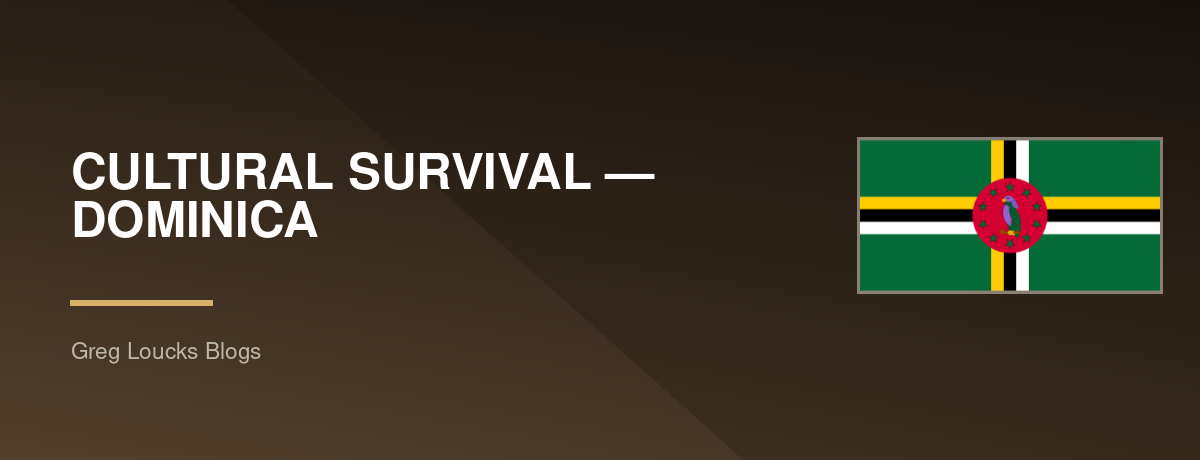

Comments and reactions 0
No comments yet. Yours would be the first.