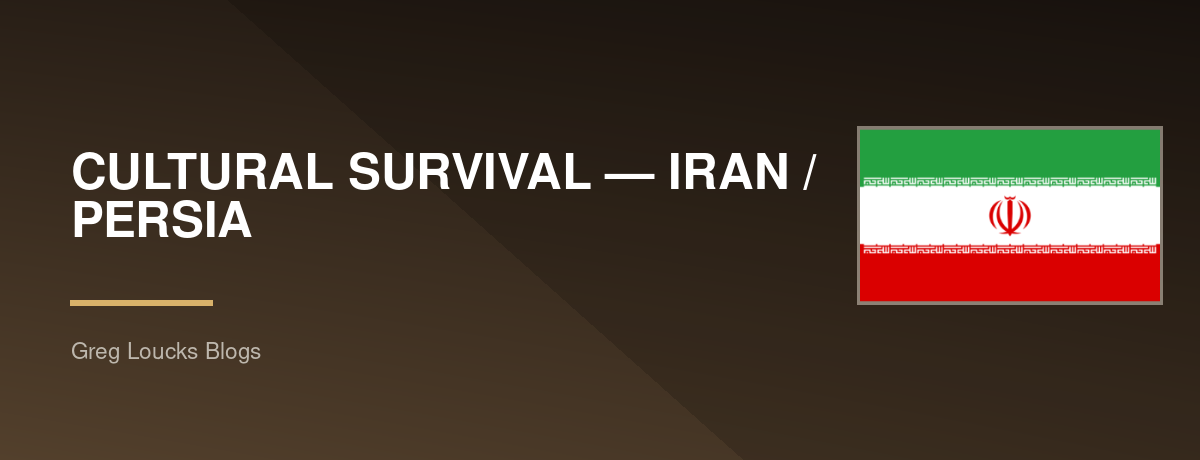
🇮🇷 CULTURAL SURVIVAL — IRAN / PERSIA

🇮🇷 CULTURAL SURVIVAL — IRAN / PERSIA PART 1 — THE ANCIENT PERSIAN CIVILIZATION From the Achaemenid Empire to the Foundations of a Civilization That Refused to Disappear Few civilizations in human history have left a cultural footprint as large as Persia. The name has changed. The dynasties have changed. The religions have changed. The borders have changed. The languages have evolved. Empires have risen and fallen. Foreign armies have invaded. Yet something remarkably persistent has remained: Persian civilization. What is today called Iran stands at the center of one of the world's oldest continuous cultural traditions. Its history reaches from the ancient kingdoms of the Iranian plateau to the modern Islamic Republic. Between those points came: the Achaemenids, the Seleucids, the Parthians, the Sasanians, the Arab conquest, the Persian revival, Islamic dynasties, the Mongols, the Safavids, the Qajars, and the modern Iranian state. Again and again, political structures were destroyed. Again and again, Persian culture adapted. And again and again, it emerged in a new form. WHAT DOES "PERSIA" MEAN? The word Persia comes from the ancient Greek name associated with Persis, the region corresponding roughly to modern Fars in southwestern Iran. The people of Iran themselves used different names and political traditions. IRAN The name Iran derives from an ancient Iranian expression meaning roughly "land of the Aryans" or "realm of the Iranians." PERSIA Became the name widely used in the Western world for the country and its civilization. IRANIAN Refers to a much broader cultural and linguistic world. THIS DISTINCTION MATTERS Persian civilization is part of the larger Iranian world. THE IRANIAN PLATEAU The geography of Iran helped shape its history. MOUNTAINS The Zagros Mountains form a massive natural barrier across western Iran. ALBORZ The Alborz Mountains rise north of the Iranian plateau. DESERTS Central Iran contains enormous arid regions. CASPIAN SEA To the north lies the Caspian Sea. PERSIAN GULF To the south lies the Persian Gulf. CENTRAL ASIA Iran also sits at the crossroads between the Middle East, Central Asia, South Asia, and the Caucasus. A CROSSROADS OF CIVILIZATIONS Trade routes passed through the Iranian plateau for thousands of years. MESOPOTAMIA To the west. CENTRAL ASIA To the northeast. INDIA To the east. ANATOLIA To the northwest. THE PERSIAN GULF Connected Iran to the wider maritime world. THIS GEOGRAPHY Made the region strategically important. But it also meant that Iranian civilization was constantly interacting with other civilizations. ANCIENT ROOTS Persian civilization did not begin suddenly with the Achaemenid Empire. ELAM One of the earliest major civilizations associated with the Iranian plateau was Elam. SUSA The ancient city of Susa became one of the major centers of Elamite civilization. WRITING The Elamites developed their own writing traditions. LANGUAGE Elamite was unrelated to the Indo-European Iranian languages that would later become dominant in much of the region. ARCHITECTURE ADMINISTRATION RELIGION TRADE Elam developed a sophisticated civilization long before the Persian Empire. MESOPOTAMIAN CONNECTIONS Elam interacted extensively with civilizations to the west. SUMER AKKAD BABYLON ASSYRIA The Iranian plateau was therefore already part of a larger Near Eastern world. THE IRANIAN PEOPLES Over time, Indo-Iranian-speaking peoples migrated into the Iranian plateau. MEDES One of the most important early Iranian peoples were the Medes. MEDIAN KINGDOM The Medes established a powerful political system in western Iran. ECTABANA The ancient city of Ecbatana, generally identified with modern Hamadan, became associated with Median power. THE MEDES Played a major role in the destruction of the Neo-Assyrian Empire. ASSYRIA One of the most powerful empires of the ancient Near East. 612 BC Nineveh, the Assyrian capital, fell to a coalition involving the Medes and Babylonians. THE BALANCE OF POWER In the ancient Near East was transformed. THEN A new Persian dynasty emerged. CYRUS THE GREAT One of the most important figures in ancient history was Cyrus II, known as Cyrus the Great. THE ACHAEMENID EMPIRE Cyrus founded the Achaemenid Persian Empire. SIXTH CENTURY BC His conquests transformed the ancient world. ANSHAN Cyrus originally ruled in southwestern Iran. MEDES He eventually defeated the Median ruler and united Median and Persian power. A NEW EMPIRE Then expanded rapidly. LYDIA Cyrus conquered the kingdom of Lydia in Anatolia. BABYLON In 539 BC, Cyrus conquered Babylon. THE BABYLONIAN EMPIRE Was absorbed into the expanding Persian state. MESOPOTAMIA Came under Persian rule. THE LEVANT Was incorporated. CENTRAL ASIA Persian authority expanded eastward. THE EMPIRE Became enormous. CYRUS Had created one of the largest empires the ancient world had yet seen. IMPERIAL GOVERNANCE But military conquest was only part of Cyrus's achievement. THE CHALLENGE Was governing many peoples. DIFFERENT LANGUAGES DIFFERENT RELIGIONS DIFFERENT CUSTOMS DIFFERENT LEGAL TRADITIONS DIFFERENT ECONOMIES The empire could not function by forcing everyone to become Persian. THE PERSIAN APPROACH Relied heavily on local elites and existing institutions. LOCAL GOVERNMENTS Could continue operating. LOCAL RELIGIONS Could continue. LOCAL CUSTOMS Could continue. THIS HELPED THE EMPIRE Maintain stability across enormous distances. CYRUS AND BABYLON Cyrus's conquest of Babylon became especially important in later historical memory. THE CYRUS CYLINDER A clay cylinder written in Babylonian cuneiform was produced in connection with Cyrus's rule. MODERN INTERPRETATIONS The cylinder has sometimes been described as an early declaration of human rights. HISTORICAL CAUTION That description is debated among historians. The cylinder is better understood within the ancient Mesopotamian tradition of royal inscriptions, where rulers presented themselves as legitimate restorers of order and temples. BUT ITS IMPORTANCE Is still enormous. IT SHOWS How Cyrus presented his rule. BABYLONIAN TRADITION He portrayed himself as restoring temples and established religious practices. IMPERIAL LEGITIMACY The Persians could rule without requiring every conquered people to abandon its identity. THIS WAS A POWERFUL MODEL THE EMPIRE Was not simply Persian in culture. It became a multinational imperial system. EGYPT Eventually came under Persian rule. ANATOLIA MESOPOTAMIA LEVANT CENTRAL ASIA PARTS OF SOUTH ASIA The empire stretched across an enormous geographical area. DARIUS THE GREAT After Cyrus and a period of succession struggles, Darius I, known as Darius the Great, became emperor. DARIUS Transformed the empire's administration. SATRAPIES The empire was organized into major administrative provinces called satrapies. SATRAPS Governors were responsible for administering the provinces. TAXATION The imperial system organized tribute and taxation. ROADS Communication networks were expanded. ROYAL MESSENGERS Could move information across enormous distances. THE ROYAL ROAD One of the most famous ancient communication routes connected parts of the empire from Anatolia toward Mesopotamia and beyond. HERODOTUS The Greek historian Herodotus famously admired the efficiency of the Persian communication system. THE ROYAL POST Demonstrated that an empire could be connected across vast distances. PERSEPOLIS Darius also established one of the greatest ceremonial capitals of the ancient world. PERSEPOLIS The city became a monumental expression of Achaemenid imperial power. TERRACES STONE STAIRWAYS COLUMNS RELIEFS PALACES GATES The architecture was enormous. THE APADANA The great audience hall at Persepolis was one of the most impressive structures of the ancient world. DELEGATIONS Stone reliefs depict representatives from different peoples of the empire bringing tribute. PERSIANS MEDES EGYPTIANS BABYLONIANS INDIANS CENTRAL ASIANS MANY PEOPLES The reliefs communicate an important idea: THE EMPIRE WAS DIVERSE BUT UNITED Under the authority of the Great King. ART AS POLITICAL LANGUAGE The Persian rulers used art to communicate imperial ideology. NOT SIMPLY CONQUEST The reliefs emphasize order. STABILITY DIVERSITY ROYAL AUTHORITY CEREMONY The empire presented itself as a world brought into order. PASARGADAE Another important royal site was Pasargadae, associated with Cyrus the Great. THE TOMB OF CYRUS A simple but monumental structure became associated with Cyrus. THE TOMB Survived for centuries. CYRUS Became a symbol of Persian statecraft. ZOROASTRIANISM Persian civilization also developed one of the world's most influential religious traditions. ZOROASTER The prophet traditionally known as Zarathustra, or Zoroaster, is associated with the origins of Zoroastrianism. AHURA MAZDA The supreme deity in Zoroastrian tradition is Ahura Mazda. TRUTH Zoroastrian thought places great emphasis on truth and righteousness. ASHA The concept of asha represents truth, order, and righteousness. DRUJ The opposing principle of falsehood and disorder is associated with druj. HUMAN CHOICE Zoroastrianism places strong emphasis on moral choice. GOOD THOUGHTS GOOD WORDS GOOD DEEDS This became one of the best-known expressions associated with Zoroastrian ethical teaching. FIRE Fire became an important religious symbol. NOT BECAUSE FIRE IS GOD But because it represents purity, light, and truth. FIRE TEMPLES Became important centers of worship. ZOROASTRIANISM Would eventually influence other religious traditions in ways scholars continue to debate. THE ACHAEMENID RELIGIOUS WORLD The Persian Empire contained multiple religions. ZOROASTRIANS BABYLONIAN RELIGIONS EGYPTIAN RELIGIONS JUDAISM LOCAL ANATOLIAN RELIGIONS GREEK RELIGIONS Imperial rule did not eliminate all these traditions. THE JEWISH PEOPLE Persian history also became deeply connected to Jewish history. BABYLONIAN EXILE The Jewish population had been deported to Babylon by the Neo-Babylonian Empire. CYRUS After conquering Babylon, Cyrus permitted displaced peoples to return to their ancestral communities and restored certain religious institutions. JUDAH Jewish exiles were permitted to return to Jerusalem. SECOND TEMPLE The rebuilding of the Temple began during the Persian period. THE HEBREW BIBLE The Persian period became an important era in Jewish history. EZRA NEHEMIAH These biblical books describe events associated with the Persian imperial period. PERSIA Was therefore not merely a political power in the Bible. IT BECAME PART OF BIBLICAL HISTORY CYRUS Is explicitly named in the Hebrew Bible. ISAIAH 45:1 Cyrus is described as the Lord's "anointed" in the biblical text. AN EXTRAORDINARY TITLE For a non-Israelite ruler. WHY? Because Cyrus was portrayed as an instrument in the restoration of Jerusalem and the Jewish community. PERSIA Therefore occupies an unusual place in Jewish memory. THE BOOK OF ESTHER The story of Esther is set within the Persian imperial world. SUSA The story takes place in the Persian royal setting of Susa. JEWISH SURVIVAL The narrative tells of a plot against the Jewish population and its eventual reversal. PURIM The Jewish festival of Purim commemorates the events described in the Book of Esther. PERSIAN HISTORY Therefore became part of the religious calendar of another civilization. THE GREEKS Persia also became one of the principal powers encountered by the ancient Greeks. IONIAN REVOLT Persian control of Greek cities in Anatolia contributed to conflict. GREEK-PERSIAN WARS The Persian Empire invaded mainland Greece during the reigns of Darius and Xerxes. MARATHON The Persians were defeated at Marathon in 490 BC. THERMOPYLAE Xerxes' forces fought the Greeks at Thermopylae. SALAMIS The Persian fleet was defeated at Salamis. PLATAEA Persian forces were eventually defeated on land at Plataea. THE GREEK NARRATIVE Later Greek writers portrayed Persia as the great eastern opponent of Greece. BUT THERE WAS ANOTHER SIDE The Persian Empire was far more than its wars with Greece. MILLIONS OF PEOPLE Lived within it. CITIES Flourished. TRADE Expanded. ROADS Connected regions. ADMINISTRATION Became sophisticated. ART Blended different traditions. THE PERSIAN EMPIRE Was one of the great multicultural political systems of antiquity. XERXES Xerxes I succeeded Darius. PERSEPOLIS Was expanded. IMPERIAL CEREMONIAL Became even more elaborate. BUT The Achaemenid Empire eventually faced internal challenges. SUCCESSION Could be unstable. DISTANCE Made administration difficult. LOCAL REBELLIONS Occurred. GREEK STATES Remained a source of conflict. MACEDONIA Then emerged as a new power. ALEXANDER THE GREAT In the fourth century BC, Alexander III of Macedon invaded the Persian Empire. 334 BC Alexander crossed into Asia. GRANICUS He defeated Persian forces. ISSUS Another major victory followed. TYRE He captured the Phoenician city. EGYPT He entered Egypt and was welcomed as a liberator from Persian rule. Gaugamela In 331 BC, Alexander defeated the Persian army at Gaugamela. DARIUS III The last Achaemenid emperor was defeated. PERSEPOLIS Alexander eventually captured the ceremonial capital. FIRE Persepolis was burned. THE SYMBOL The destruction became one of the great turning points in Persian history. THE ACHAEMENID EMPIRE Was gone. BUT PERSIAN CIVILIZATION Was not gone. THIS IS THE FIRST GREAT LESSON The empire could be conquered. The civilization could continue. ALEXANDER'S EMPIRE After Alexander's death, his empire fragmented. SELEUCIDS Greek rulers controlled much of the former Persian territory. HELLENISTIC CULTURE Spread. GREEK CITIES Were established or expanded. GREEK LANGUAGE Became important in administration and culture. BUT Iranian traditions did not disappear. LOCAL ELITES Continued. LOCAL LANGUAGES Continued. RELIGIOUS TRADITIONS Continued. IRANIAN IDENTITY Continued evolving. THE PARTHIANS Then a new Iranian power emerged. ARSACID EMPIRE The Parthian Empire developed from the northeastern Iranian world. PARTHIANS Eventually challenged Seleucid control. IRANIAN POWER RETURNS Persian and Iranian political traditions were again dominant. HORSE ARCHERS Parthian cavalry became famous. THE PARTHIAN SHOT The ability of mounted archers to shoot backward while retreating became legendary. ROME The Parthians became one of Rome's greatest eastern rivals. MESOPOTAMIA Was contested between Rome and Parthia. ARMENIA Became another area of competition. SILK ROAD Parthian territories were connected to trade between East and West. CHINA CENTRAL ASIA MESOPOTAMIA MEDITERRANEAN Trade routes crossed the Parthian world. PERSIAN CULTURE Continued developing. ZOROASTRIAN TRADITIONS Continued. IRANIAN LANGUAGES Continued. ROYAL TRADITIONS Continued. THE SASANIANS Then came another transformation. SASSANIAN EMPIRE Founded in the third century AD by Ardashir I. THE SASANIANS Presented themselves as restorers of Persian imperial greatness. ARDASHIR Defeated the last major Parthian ruler. A NEW PERSIAN EMPIRE Was established. CTEPHON The city of Ctesiphon became a major imperial capital. ZOROASTRIANISM Received strong institutional support. FIRE TEMPLES Expanded. PRIESTHOOD Became influential. ROYAL POWER Was closely connected with religious legitimacy. THE SASSANIAN STATE Was highly organized. TAXATION MILITARY BUREAUCRACY ROYAL COURT ART All developed. ROCK RELIEFS Sasanian kings commissioned monumental reliefs. SILK Persian textiles became famous. METALWORK Reached extraordinary artistic quality. JEWELRY CERAMICS CARPET TRADITIONS Developed within a much older Iranian textile culture. PERSIAN ART Was influencing neighboring civilizations. BYZANTINE EMPIRE The Sasanians fought the Romans and later Byzantines for centuries. ROME Was Persia's great western rival. CONSTANTINOPLE CTEPHON Two great imperial worlds confronted one another. WAR Was frequent. BUT Trade and cultural exchange continued. MEDICINE PHILOSOPHY SCIENCE ART Knowledge moved between civilizations. GONDISHAPUR The city of Gundeshapur became associated with learning and medicine during the Sasanian period. SCHOLARS From different intellectual traditions interacted there. GREEK SYRIAC PERSIAN Medical and philosophical knowledge circulated. THIS WOULD MATTER LATER Because Persian civilization would contribute heavily to the intellectual world that emerged after the Arab conquest. THE ARAB CONQUEST Then came the greatest political transformation Persian civilization had experienced in centuries. SEVENTH CENTURY Arab Muslim armies defeated the Sasanian Empire. QADISIYYA The Battle of al-Qadisiyyah was an important Persian defeat. NAHAVAND Another major defeat followed. Ctesiphon The Sasanian capital fell. YAZDEGERD III The last Sasanian emperor eventually fled eastward and was later killed. THE SASANIAN EMPIRE Collapsed. ZOROASTRIAN POLITICAL POWER Was destroyed. ARAB MUSLIM RULE Spread across Iran. THIS COULD HAVE MEANT The end of Persian civilization. BUT IT DID NOT THE PERSIAN LANGUAGE Survived. PERSIAN LITERATURE Eventually flourished. IRANIAN IDENTITY Survived. ZOROASTRIAN COMMUNITIES Survived. LOCAL CUSTOMS Survived. PERSIAN ADMINISTRATORS Entered the new Islamic political system. PERSIAN CULTURE Began influencing the civilization that had conquered it. THIS WOULD BECOME ONE OF HISTORY'S GREAT CULTURAL REVERSALS The Arabs conquered Persia politically. But Persian civilization would profoundly influence the wider Islamic world. THE PERSIAN REVIVAL The next centuries would witness an extraordinary cultural revival. NEW DYNASTIES Would emerge. NEW PERSIAN POETRY Would emerge. NEW SCIENCE Would emerge. NEW PHILOSOPHY Would emerge. NEW ARCHITECTURE Would emerge. AND EVENTUALLY A new form of Persian civilization would emerge within Islam. THE LANGUAGE Would become one of the great literary languages of Eurasia. THE POETS Would become famous from Spain to India. THE SCHOLARS Would transform mathematics, medicine, astronomy, and philosophy. THE ARCHITECTS Would create some of the world's most recognizable Islamic monuments. THE MYSTICS Would influence millions. AND PERSIA Would once again become a cultural superpower. THE DEEPER LESSON OF PART 1 The first great Persian empire disappeared. The second emerged. The second disappeared. Another emerged. Foreign armies conquered the land. Yet the civilization adapted. THE ACHAEMENIDS Fell. THE SELEUCIDS Came. THE PARTHIANS Returned Iranian political power. THE SASANIANS Created another great Persian empire. THE ARABS Conquered the Sasanians. BUT PERSIAN CULTURE Survived. THIS IS THE PATTERN Empires disappear. Civilizations adapt. 🇮🇷 PART 2 — THE PERSIAN REVIVAL How Persia Survived the Arab Conquest and Became One of the Great Cultural Forces of the Islamic World The next part will follow the extraordinary transformation after the seventh-century conquest: the survival of Persian identity under Islamic rule, the development of New Persian, the Samanids, the rise of Persian literature, Ferdowsi and the Shahnameh, Persian science and philosophy, Avicenna, al-Biruni, the Seljuks, Persian architecture, Sufi traditions, the Mongol invasion, and the remarkable way Persian culture eventually spread far beyond Iran itself. The Persian Empire fell. Persia did not.   🇮🇷 CULTURAL SURVIVAL — IRAN / PERSIA PART 2 — THE PERSIAN REVIVAL How Persia Survived the Arab Conquest and Became One of the Great Cultural Forces of the Islamic World The Arab conquest of the Sasanian Empire changed Persia forever. The old imperial government disappeared. The Zoroastrian state disappeared. Arabic became the dominant language of administration and religion in the new Islamic order. Islam gradually became the religion of the majority. Yet something unexpected happened. Persian civilization did not disappear into the civilization that conquered it. Instead, it adapted. Persian people entered the new Islamic world. Persian administrators helped govern it. Persian scholars contributed to it. Persian merchants expanded its trade. Persian architects transformed its cities. Persian philosophers transformed intellectual life. And Persian poets created a literary tradition that would eventually become one of the greatest in human history. THE CONQUEST WAS NOT THE END The seventh-century Arab conquest destroyed the Sasanian political order. But conquest and cultural disappearance are not the same thing. THE OLD GOVERNMENT Was gone. THE OLD ROYAL COURT Was gone. THE SASANIAN ARMY Was gone. ZOROASTRIAN POLITICAL POWER Was gone. BUT THE PEOPLE REMAINED THE LANGUAGE Changed. THE RELIGION Changed. THE POLITICAL SYSTEM Changed. BUT MEMORY Survived. PERSIAN IDENTITY Did not vanish. ISLAM Gradually became deeply rooted in Iranian society. BUT IRANIAN CULTURE Also began influencing the Islamic world. THE GREAT CULTURAL EXCHANGE Was beginning. ARABIC Became the language of the Qur'an and Islamic scholarship. PERSIAN Would become one of the great languages of Islamic civilization. THE RESULT Was not simply Arabization. IT WAS A NEW SYNTHESIS Iranian civilization became Islamic while retaining a distinctive Persian cultural identity. NEW PERSIAN The Persian language underwent a profound transformation. MIDDLE PERSIAN The language of the Sasanian period gradually gave way to forms of Persian written in the Arabic script. NEW PERSIAN Eventually emerged as a major literary language. ARABIC LOANWORDS Entered Persian in large numbers. BUT The basic Iranian linguistic structure remained. PERSIAN Had survived the conquest. THE SCRIPT CHANGED But the language continued. THIS WOULD PROVE CRUCIAL Because language is one of the strongest carriers of cultural memory. THE SAMANIDS One of the most important dynasties in the Persian cultural revival was the Samanid dynasty. CENTRAL ASIA The Samanids ruled territories centered in parts of modern Iran and Central Asia. BUKHARA Became an important center of Persian culture. SAMARKAND Also flourished. NEW PERSIAN Received royal patronage. POETRY Expanded. SCHOLARSHIP Expanded. TRADE Expanded. THE PERSIAN REVIVAL Was underway. THE SAMANID COURT Supported Persian poets and intellectuals. A LANGUAGE OF EMPIRE Persian was becoming something more than a regional language. IT WAS BECOMING A CIVILIZATIONAL LANGUAGE PERSIAN Would eventually spread across: Iran, Afghanistan, Central Asia, the Caucasus, and South Asia. THE PERSIANATE WORLD A broad cultural sphere emerged in which Persian language and Persian cultural traditions influenced societies far beyond modern Iran. THIS IS ONE OF THE MOST IMPORTANT IDEAS IN PERSIAN HISTORY Persian civilization did not need a Persian political empire to survive. CULTURE Could travel without conquest. POETRY Could travel. LANGUAGE Could travel. MUSIC Could travel. ARCHITECTURE Could travel. COURT CUSTOMS Could travel. SCHOLARSHIP Could travel. THE SHAHNAMEH And then came one of the greatest works in Persian literature. FERDOWSI The poet Abu al-Qasim Ferdowsi began composing the Shahnameh, or Book of Kings, around the turn of the first millennium. THE SHAHNAMEH Is an enormous epic poem recounting Persian legendary and historical traditions. KINGS HEROES WARRIORS BATTLES LOVE BETRAYAL TRAGEDY DESTINY The poem preserves an enormous body of Iranian cultural memory. ROSTAM One of its greatest heroes is Rostam. ROSTAM Represents strength, loyalty, courage, and heroic struggle. SOHRAB The tragedy of Rostam and his son Sohrab became one of the most famous stories in Persian literature. A FATHER Fights his own son without knowing his identity. TRAGEDY Reveals the terrible consequences of war and ignorance. THE SHAHNAMEH Is not merely a collection of legends. IT IS A CULTURAL ARCHIVE PRE-ISLAMIC IRAN Lives within it. ANCIENT KINGS Live within it. HEROES Live within it. MYTHOLOGY Lives within it. MORAL VALUES Live within it. LANGUAGE Lives within it. FERDOWSI Helped ensure that the Persian language could carry ancient Iranian memory into the Islamic era. THIS IS WHY THE SHAHNAMEH Is central to the story of cultural survival. POLITICAL PERSIA Had fallen. LITERARY PERSIA Was returning. FERDOWSI Helped preserve a Persian cultural identity without rejecting Islam. THIS DISTINCTION IS IMPORTANT The Shahnameh is deeply connected to pre-Islamic Iranian traditions. But it was produced in an Islamic society. THE RESULT Was a layered identity. ISLAMIC And IRANIAN BOTH Could exist together. THE PERSIAN LANGUAGE Became one of the great literary languages of the Islamic world. POETRY Became especially important. OMAR KHAYYAM The mathematician, astronomer, and poet Omar Khayyam became famous far beyond Iran. MATHEMATICS He made important contributions to algebra. ASTRONOMY He participated in the development of the Jalali calendar. POETRY He became famous for his rubaiyat, or quatrains. THE WEST Later translations made Khayyam internationally famous. A PERSIAN SCHOLAR Had become a global literary figure. AVICENNA Perhaps even more influential was Ibn Sina, known in the West as Avicenna. BORN In the tenth century in the Persian cultural world. PHILOSOPHER PHYSICIAN SCIENTIST POLYMATH Avicenna became one of the most important intellectual figures of the medieval world. THE CANON OF MEDICINE His Canon of Medicine became one of the most influential medical texts of the medieval period. MEDICAL EDUCATION The work was studied for centuries. PHILOSOPHY Avicenna also made major contributions to metaphysics and philosophy. ARISTOTLE He engaged deeply with Aristotelian philosophy. ISLAMIC PHILOSOPHY Was profoundly influenced by his work. EUROPEAN SCHOLARS Eventually encountered his writings through translation. PERSIAN INTELLECTUAL TRADITION Had entered the wider history of global philosophy and medicine. AL-BIRUNI Another extraordinary Persianate scholar was Abu Rayhan al-Biruni. ASTRONOMY MATHEMATICS GEOGRAPHY HISTORY ANTHROPOLOGY He wrote across many fields. INDIA Al-Biruni traveled to and studied Indian civilization. RELIGION He studied Indian religious traditions. LANGUAGE He learned about Sanskrit. SCIENCE He examined Indian scientific knowledge. CULTURE He attempted to understand another civilization on its own terms. THIS WAS EXTRAORDINARY A scholar from the Persianate Islamic world was systematically studying India centuries before the modern academic discipline of comparative civilization existed. PERSIAN SCHOLARS Were contributing to a global intellectual network. THE ISLAMIC GOLDEN AGE Persian scholars played major roles in the broader intellectual flowering commonly associated with the Islamic Golden Age. MATHEMATICS ASTRONOMY MEDICINE PHILOSOPHY OPTICS GEOGRAPHY CHEMISTRY LITERATURE The intellectual world was multilingual. ARABIC Was the dominant scholarly language in many fields. PERSIAN Was increasingly important in literature and administration. GREEK Classical works were translated. SYRIAC Christian scholars contributed to translation networks. INDIAN KNOWLEDGE Entered the Islamic intellectual world. PERSIA Was one of the major crossroads. THE SELJUKS Another transformation came with the arrival of the Seljuk Turks. TURKIC RULERS Established control over large portions of Iran and the Middle East. BUT They adopted much of the Persian administrative and cultural tradition. PERSIAN Became an important language of administration and literature. THE SELJUK COURT Was heavily influenced by Persian culture. NIZAM AL-MULK The great Persian administrator Nizam al-Mulk served the Seljuk rulers. THE SIYASATNAMA His famous political work, the Siyasatnama, discussed governance and political administration. PERSIAN BUREAUCRATIC CULTURE Continued. THIS BECAME A PATTERN Turkic rulers could rule Iran. But Persian administrators could run the state. POLITICAL POWER And CULTURAL POWER Did not always belong to the same group. THIS HELPED PERSIAN CULTURE SURVIVE THE NIZAMIYA SCHOOLS Nizam al-Mulk also supported educational institutions known as the Nizamiyas. BAGHDAD NISHAPUR OTHER CITIES Became centers of scholarship. EDUCATION Was institutionalized. RELIGIOUS STUDIES LAW THEOLOGY PHILOSOPHY LANGUAGE Knowledge circulated through an expanding educational system. PERSIAN ARCHITECTURE Persian civilization also transformed Islamic architecture. MOSQUES Began incorporating distinctive Iranian forms. FOUR-IWAN PLAN The four-iwan architectural arrangement became particularly important in Persian and later Islamic architecture. IWAN A vaulted hall open on one side. COURTYARD Surrounded by monumental spaces. DOMES TILEWORK CALLIGRAPHY Together created a distinctive visual language. ISFAHAN Would eventually become one of the great architectural capitals of the Persian world. BLUE TILE MOSQUES MADRASAS BAZAARS BRIDGES Persian architecture increasingly blended function, geometry, spirituality, and beauty. SUFISM Another major force in Persian cultural history was Sufism, the mystical tradition within Islam. MYSTICISM Focused on the transformation of the inner self and the search for closeness to God. POETRY Became one of its greatest vehicles. RUMI Perhaps the most famous Persian mystical poet was Jalal al-Din Rumi. BORN In the Persian cultural world of Central Asia. LIVED Much of his later life in Anatolia. WROTE Primarily in Persian. THE MASNAVI His great mystical poem became one of the masterpieces of Persian literature. LOVE GOD THE SOUL LONGING TRANSFORMATION Rumi's poetry transcended political borders. TODAY His works are read around the world. AMERICA EUROPE INDIA TURKEY IRAN CENTRAL ASIA Rumi's Persian poetry became global literature. SAADI Another great Persian poet was Saadi of Shiraz. GULISTAN His Gulistan combined poetry and prose. BUSTAN His Bustan explored ethical and spiritual themes. HUMANITY Saadi emphasized human dignity and moral responsibility. A FAMOUS IDEA His poetry expressed the interconnectedness of humanity. HAFEZ Then came Hafez of Shiraz. HAFEZ Became one of the greatest lyric poets in Persian history. GHAZALS His poetry explored: love, wine, mysticism, spiritual longing, beauty, and hypocrisy. HAFEZ Became especially influential in Persian-speaking cultures. HIS TOMB In Shiraz remains an important cultural site. POETRY Was not merely entertainment. IT WAS MEMORY PHILOSOPHY ETHICS SPIRITUALITY POLITICAL CRITICISM LOVE Persian poetry could carry almost every dimension of human experience. THE MONGOL INVASION Then came one of the most devastating catastrophes in Persian history. GENGHIS KHAN The Mongol conquests reached the Iranian world in the thirteenth century. CITIES Were attacked. POPULATIONS Were devastated. AGRICULTURE Was disrupted. IRRIGATION Was damaged. SCHOLARLY CENTERS Suffered. THE DESTRUCTION Was enormous. BUT AGAIN Persian civilization survived. THE ILKHANATE The Mongols established the Ilkhanate in Iran. MONGOL RULERS Eventually adopted Islam. PERSIAN ADMINISTRATORS Returned to positions of importance. PERSIAN SCHOLARS Returned to court. PERSIAN CULTURE Again began influencing the conquerors. THIS IS ONE OF THE GREAT PATTERNS Persia repeatedly absorbed conquerors culturally. THE CONQUEROR Arrives. THE CONQUEROR Establishes political power. THE CONQUEROR Needs administrators. THE CONQUEROR Needs scholars. THE CONQUEROR Needs legitimacy. PERSIAN CULTURE Provides many of these things. EVENTUALLY The conqueror becomes part of the Persian cultural world. RASHID AL-DIN The Ilkhanid period produced scholars such as Rashid al-Din, who wrote a monumental universal history. JAMI' AL-TAWARIKH His work attempted to document the history of many civilizations. MONGOLS PERSIANS CHINESE EUROPEANS TURKS A Persianate scholar was documenting a globalizing medieval world. MARAGHEH The Ilkhanid period also produced an important astronomical center. NASIR AL-DIN AL-TUSI The great Persian scholar Nasir al-Din al-Tusi helped establish the Maragheh Observatory. ASTRONOMY Was studied systematically. MATHEMATICS Advanced. OBSERVATION Was central. THE MARAGHEH SCHOOL Became influential in the history of Islamic astronomy. SCIENCE Had survived political catastrophe. THE MONGOLS Had destroyed cities. BUT They could not destroy knowledge permanently. KNOWLEDGE Could be rebuilt. MANUSCRIPTS Could be recopied. SCHOOLS Could reopen. SCHOLARS Could teach. CULTURE Could regenerate. TIMUR Another conqueror arrived centuries later. TIMUR Known in the West as Tamerlane, conquered much of Iran and Central Asia. DESTRUCTION Again occurred. SAMARKAND Became his imperial capital. PERSIAN CULTURE Again flourished under a Turkic conqueror. TIMURID RENAISSANCE The Timurid period became famous for: architecture, painting, poetry, astronomy, and scholarship. HERAT Became a major cultural center. MINIATURE PAINTING Reached extraordinary levels of refinement. CALLIGRAPHY Flourished. POETRY Flourished. ARCHITECTURE Flourished. THE PERSIAN CULTURAL WORLD Had survived another conquest. THE PATTERN WAS BECOMING CLEAR Persia's greatest survival mechanism was not political power. IT WAS CULTURAL ADAPTABILITY A CONQUEROR Could change the government. BUT COULD NOT EASILY CHANGE the language, the literature, the memory, the artistic traditions, the administrative culture, and the intellectual traditions of an entire civilization. PERSIA Could absorb new influences without completely losing itself. ISLAM Became part of Persian identity. TURKIC PEOPLES Became part of Persian history. MONGOLS Became part of Persian history. CENTRAL ASIA Became part of Persian cultural history. ARAB CULTURE Influenced Persia. PERSIA Influenced the Arab and wider Islamic world in return. THIS WAS NOT A ONE-WAY PROCESS It was cultural exchange. THE PERSIANATE WORLD By the late medieval period, Persian cultural influence stretched far beyond the borders of modern Iran. AFGHANISTAN Persian languages and literary traditions became deeply rooted. TAJIKISTAN Persian survived in the form of Tajik. UZBEKISTAN Persian cultural influence remained strong. INDIA Persian became a major court and literary language. MUGHAL INDIA Persian became one of the principal languages of government and culture. DELHI Became part of the Persianate cultural world. LAHORE AGRA HYDERABAD Persian literary and artistic traditions flourished. THE TAJ MAHAL Even the architecture of Mughal India reflects the broader Persianate artistic tradition. PERSIAN Had become a language of prestige across enormous regions. WHY DID THIS HAPPEN? Because Persian was not merely a language. IT WAS A CULTURAL SYSTEM It carried: literature, administration, religious thought, poetry, philosophy, court culture, art, architecture, and education. A LANGUAGE Can become a civilization. PERSIAN Did. THE PERSIAN LITERARY TRADITION Could be learned by people who were not ethnically Persian. TURKS Learned Persian. INDIANS Learned Persian. CENTRAL ASIANS Learned Persian. AFGHANS Used Persian varieties. COURTS Patronized Persian poets. SCHOLARS Wrote in Persian. GOVERNMENTS Used Persian administration. THE CULTURE TRAVELED. THE SAFAVIDS Eventually another major transformation would occur. 1501 Shah Ismail I established the Safavid dynasty. THE SAFAVIDS Would reunify much of Iran politically. BUT THEY WOULD DO SOMETHING EVEN MORE IMPORTANT They would transform the religious identity of Iran. TWELVER SHI'ISM The Safavid state adopted Twelver Shi'a Islam as its official religion. IRAN Would gradually become the world's principal center of Twelver Shi'ism. THIS WOULD CHANGE IRAN FOREVER PERSIAN IDENTITY And SHI'A ISLAM Would become deeply intertwined. THE SAFAVID ERA Would create the foundations of much of the religious and political identity associated with modern Iran. AND THAT Is where our story will continue. 🇮🇷 PART 3 — THE SAFAVIDS How Shi'a Islam, Persian Identity, and the Reunification of Iran Created the Foundations of the Modern Nation The next part will examine: Shah Ismail I, the Safavid dynasty, the conversion of Iran to Twelver Shi'ism, the rise of Shi'a religious institutions, Shah Abbas I, Isfahan, Persian art and architecture, the relationship between Persian identity and Islam, relations with the Ottoman Empire, the Safavid legacy, and how the Safavid transformation created the religious identity that still defines Iran today. Persia had survived the Arab conquest. It had survived Turkic dynasties. It had survived the Mongols. It had survived Timur. Now it was about to undergo perhaps its most important internal transformation: the creation of a unified Iranian state built around Persian culture and Twelver Shi'a Islam.   🇮🇷 CULTURAL SURVIVAL — IRAN / PERSIA PART 3 — THE SAFAVIDS How Shi'a Islam, Persian Identity, and the Reunification of Iran Created the Foundations of the Modern Nation By the beginning of the sixteenth century, Persia had already survived an extraordinary sequence of transformations. The Achaemenid Empire had fallen. The Seleucids had come and gone. The Parthians had ruled. The Sasanians had created another Persian empire. The Arab conquest had transformed the religious and political landscape. Turkic dynasties had ruled Iran. The Mongols had invaded. Timur had conquered. Yet Persian civilization remained. Then, in 1501, another transformation began. A young ruler named Shah Ismail I established the Safavid dynasty. What followed would permanently reshape Iran. The Safavids did not merely create another dynasty. They created a political and religious framework that helped define Iran as a distinct civilization-state. SHAH ISMAIL I Shah Ismail was born into a powerful religious and military movement. THE SAFAVIYYA The Safavid movement began as a Sufi religious order associated with Safi al-Din Ardabili. ARDABIL The order was based in Ardabil in northwestern Iran. SUFISM Originally, the movement was a Sufi organization. BUT OVER TIME Its political ambitions expanded. TURKMEN FOLLOWERS The Safavid leaders attracted large numbers of Turkoman tribal warriors. QIZILBASH These followers became known as the Qizilbash, meaning "redheads," referring to their distinctive headgear. MILITARY POWER The Qizilbash provided the military force that enabled Shah Ismail to build his state. 1501 Shah Ismail captured Tabriz. A NEW DYNASTY The Safavid state was born. SHAH ISMAIL Was still extremely young. BUT HIS AMBITION Was enormous. IRAN Was politically fragmented. LOCAL RULERS Controlled different territories. TURKMEN CONFEDERATIONS Competed for power. UZBEKS Threatened Iran from Central Asia. OTTOMANS Were expanding from the west. THE SAFAVIDS Began consolidating the Iranian plateau. A NEW IRANIAN STATE Was emerging. THE RELIGIOUS REVOLUTION The most consequential Safavid decision was religious. TWELVER SHI'ISM The Safavid state adopted Twelver Shi'a Islam as its official religion. THIS WAS A MASSIVE CHANGE Much of the Iranian population had historically been Sunni Muslim. THE SAFAVIDS Began transforming the country into a predominantly Shi'a society. WHY? Religion became a tool of political consolidation. A DISTINCT IDENTITY Iran could distinguish itself from its major Sunni neighbors. OTTOMAN EMPIRE The Ottomans were overwhelmingly Sunni. UZBEK KHANATES Were also Sunni. IRAN Was becoming a major Shi'a power. RELIGION Became connected to state identity. POLITICS Became connected to religious identity. NATIONAL DISTINCTIVENESS Became connected to both. THIS LEGACY Would last for centuries. MODERN IRAN Remains the world's largest Shi'a-majority country. THE SAFAVIDS Therefore created more than a dynasty. They helped create the religious character of the modern Iranian state. RELIGIOUS SCHOLARS The Safavid rulers needed scholars to establish the new religious system. SHI'A SCHOLARS Were invited from other regions. JABAL AMIL Scholars from the Levant played an important role. IRAQ Also became an important source of Shi'a scholarship. RELIGIOUS INSTITUTIONS Expanded. MADRASAS Were established. MOSQUES Were built. ENDOWMENTS Supported religious institutions. CLERICAL NETWORKS Began developing. THIS WOULD HAVE LONG-TERM CONSEQUENCES Iran developed a powerful Shi'a scholarly tradition. QOM Would eventually become one of its most important centers. NAJAF Outside modern Iran, in Iraq, would also become one of the great centers of Shi'a scholarship. RELIGION Was becoming institutionalized. SHI'A IDENTITY Was becoming deeply embedded in Iranian society. BUT THE SAFAVID STATE Was not purely religious. IT WAS IMPERIAL IT NEEDED taxes, armies, roads, administrators, cities, trade, and diplomacy. THE SAFAVIDS Had to compete with one of the most powerful empires of the era. THE OTTOMANS The Ottoman Empire was expanding rapidly. SULTAN SELIM I Was one of the Ottoman rulers who confronted the Safavids. CHALDIRAN In 1514, Ottoman and Safavid forces met at the Battle of Chaldiran. SAFAVID DEFEAT The Ottomans possessed superior artillery and firearms. SHAH ISMAIL Was defeated. TABRIZ Was temporarily occupied. THE BATTLE Had enormous psychological significance. THE OTTOMAN-SAFAVID BORDER Would remain contested for centuries. IRAQ Was repeatedly fought over. CAUCASUS Was repeatedly contested. ANATOLIA Contained populations connected to both powers. MESOPOTAMIA Was strategically vital. THE BORDER Would eventually contribute to the modern political geography of Iran. WAR Was not the only relationship between the Safavids and Ottomans. TRADE Continued. DIPLOMACY Continued. CULTURAL EXCHANGE Continued. ARCHITECTURE Moved across borders. ARTISTS Moved between courts. SCHOLARS Moved between cities. CIVILIZATIONS Could compete politically while influencing one another culturally. SHAH ABBAS I The greatest Safavid ruler was probably Shah Abbas I, who ruled from 1588 to 1629. HE INHERITED A fragile state. HE TRANSFORMED IT MILITARY REFORM Shah Abbas reduced the dependence on the Qizilbash tribal military system. FIREARMS The Safavid military adopted more gunpowder weapons. CENTRALIZATION Royal authority strengthened. ADMINISTRATION Improved. ECONOMY Expanded. TRADE Expanded. THE CAPITAL Was moved. ISFAHAN Shah Abbas made Isfahan the great Safavid capital. ISFAHAN Would become one of the most beautiful cities in the Islamic world. "ISFAHAN NESF-E JAHAN" A famous Persian expression called Isfahan: "half the world." WHY? Because of its extraordinary architecture, gardens, bridges, markets, mosques, and public spaces. NAQSH-E JAHAN SQUARE The centerpiece of Safavid Isfahan was the enormous Naqsh-e Jahan Square. IMAM MOSQUE The magnificent Imam Mosque was constructed on the square. SHEIKH LOTFOLLAH MOSQUE Another masterpiece stood opposite the royal complex. ALI QAPU The Ali Qapu Palace overlooked the square. BAZAAR The enormous bazaar connected the commercial life of the city with the royal and religious centers. THE SQUARE Was not merely beautiful. IT WAS POLITICAL RELIGIOUS COMMERCIAL CEREMONIAL PUBLIC All at once. THE CITY Became an expression of Safavid power. PERSIAN ARCHITECTURE Reached extraordinary heights. BLUE TILE Safavid buildings became famous for brilliant blue and turquoise tilework. CALLIGRAPHY Arabic and Persian inscriptions decorated monuments. GEOMETRY Complex geometric patterns filled surfaces. FLORAL DESIGNS Created intricate visual effects. DOMES Became monumental. IWANS Framed courtyards. GARDENS Connected architecture to nature. PERSIAN GARDEN DESIGN Was also becoming highly influential. CHARBAGH The traditional four-part garden layout became an important feature of Persian landscape architecture. WATER Was carefully incorporated. CHANNELS Created movement. FOUNTAINS Provided sound. TREES Provided shade. GEOMETRY Created order. THE GARDEN Became an earthly image of paradise. PERSIAN GARDEN CULTURE Would later influence architecture and landscape design far beyond Iran. THE CARPET Another major Persian art form flourished under the Safavids. PERSIAN CARPETS Were not simply household objects. THEY WERE ART FLORAL PATTERNS MEDALLIONS GARDEN DESIGNS HUNTING SCENES CALLIGRAPHY Could all appear. COURT WORKSHOPS Produced highly sophisticated textiles. CARPET EXPORTS Connected Persia with international markets. EUROPE Persian carpets became luxury goods. OTTOMAN COURTS Admired Persian textiles. INDIA Developed its own Persianate carpet traditions. THE PERSIAN CARPET Became one of the great symbols of Persian craftsmanship. CALLIGRAPHY Was equally important. NASTA'LIQ The elegant Persian script style known as Nasta'liq became particularly associated with Persian poetry and literary culture. POETRY Was often written by hand in beautiful calligraphy. BOOKS Could become works of art. MANUSCRIPTS Could combine: text, painting, calligraphy, and decoration. PERSIAN MINIATURE Painting reached extraordinary levels of refinement. COURT ARTISTS Illustrated manuscripts. COLORS Were carefully prepared. FIGURES Were stylized. LANDSCAPES Were highly detailed. STORIES From Persian literature were visually represented. THE BOOK Became an artistic object. THE SHAHNAMEH Continued to inspire manuscript illustration. PERSIAN CULTURAL MEMORY Was therefore preserved not only in words. BUT IN IMAGES RELIGIOUS CULTURE Safavid Iran also developed a distinctive Shi'a religious culture. IMAM HUSAYN The martyrdom of Husayn ibn Ali at Karbala became central to Shi'a religious memory. ASHURA The commemoration of Husayn's martyrdom became one of the most important religious observances. MOURNING PROCESSIONS RECITATION DRAMA MEMORY The tragedy of Karbala became embedded in Iranian religious culture. MUHARRAM The first month of the Islamic calendar became especially significant. TAZIYEH A form of religious theatrical performance developed in Iran around the story of Karbala. RELIGION Became performance. MEMORY Became ritual. HISTORY Became identity. THE SAFAVID STATE Used Shi'a religious institutions to consolidate its rule. BUT Ordinary people also made these traditions their own. RELIGION Could not simply be imposed from above. IT HAD TO BE LIVED FAMILY COMMUNITY MOSQUE MARKET SCHOOL RELIGIOUS CEREMONY All helped transmit identity. PERSIAN LANGUAGE AND SHI'A ISLAM Became increasingly intertwined. BUT PERSIAN IDENTITY Was not simply religious. IRANIAN HISTORY Remained important. CYRUS Was remembered. DARIUS Was remembered. ROSTAM Was remembered. THE SHAHNAMEH Was read. ANCIENT IRAN Remained part of Persian consciousness. THIS CREATED A UNIQUE SYNTHESIS PRE-ISLAMIC IRANIAN HERITAGE   ISLAMIC RELIGION   PERSIAN LANGUAGE   SHI'A IDENTITY = A DISTINCTIVE IRANIAN CIVILIZATION THIS SYNTHESIS Would become one of the defining characteristics of Iran. NOROOZ One of the clearest examples is Nowruz, the Persian New Year. NOWRUZ Predates Islam by many centuries. SPRING It celebrates the arrival of spring. FIRE Traditional celebrations include fire-related rituals. FAMILY Families gather. FOOD Special dishes are prepared. HAFT-SIN The Haft-Sin table became a central Nowruz tradition. SEVEN "S" ITEMS The table contains symbolic objects beginning with the Persian letter س (sin). APPLES GARLIC SUMAC VINEGAR SPROUTS COINS MIRRORS Different families and traditions may use different arrangements. THE IMPORTANT POINT Nowruz survived the religious transformation of Iran. ISLAM ARRIVED DYNASTIES CHANGED EMPIRES FELL NOWRUZ CONTINUED THIS IS CULTURAL SURVIVAL A pre-Islamic festival became part of the life of an Islamic civilization. CHAHARSHANBE SURI Another pre-Islamic-rooted celebration associated with the Persian New Year period involves jumping over fire. FIRE Symbolizes purification and renewal in the traditional practice. SPRING Symbolizes new life. OLD YEAR Is left behind. NEW YEAR Begins. CULTURE Can preserve ancient elements while changing their meanings over time. THE SAFAVID ECONOMY The Safavid period was also a major commercial era. SILK Was one of the most important exports. GILAN The Caspian region was important for silk production. EUROPEAN MERCHANTS Sought Persian silk. ARMENIAN MERCHANTS Played an important role in international trade. NEW JULFA Shah Abbas relocated Armenian merchants to New Julfa, a district of Isfahan. TRADE NETWORKS Armenian merchants connected Safavid Iran to: Russia, the Ottoman Empire, India, and Europe. INTERNATIONAL COMMERCE Made Isfahan a global city. EUROPE European diplomats and travelers visited Persia. ENGLAND THE NETHERLANDS FRANCE ITALY European powers sought trade and diplomatic relationships. PERSIA Was part of the global economy. THE SILK ROAD Was evolving. OCEANIC TRADE Was becoming increasingly important. THE PERSIAN GULF Connected Iran to maritime commerce. HORMUZ The island of Hormuz was strategically important. PORTUGUESE Portuguese forces had seized Hormuz in the early sixteenth century. SHAH ABBAS Eventually worked with the English East India Company to drive the Portuguese from Hormuz in 1622. PERSIAN GULF Returned more firmly under Safavid influence. INTERNATIONAL POLITICS Was becoming global. PERSIA Was part of that transformation. SCIENCE The Safavid period continued Persian intellectual traditions. MEDICINE ASTRONOMY PHILOSOPHY THEOLOGY MATHEMATICS Scholarship continued. ISFAHAN SCHOOL A philosophical tradition developed in Safavid Iran. MULLA SADRA The philosopher Mulla Sadra became one of its greatest representatives. PHILOSOPHY He combined elements of: Islamic theology, Aristotelian philosophy, Avicennan philosophy, and mystical thought. HIKMAH His intellectual tradition is often associated with Transcendent Philosophy. IRANIAN PHILOSOPHY Continued developing centuries after the Islamic conquest. THIS MATTERS Because it demonstrates another form of cultural survival. THE PERSIAN INTELLECTUAL TRADITION Did not end with ancient Greece. IT DID NOT END With the Arab conquest. IT DID NOT END With the Mongols. IT CONTINUED Through Islamic philosophy. AND IT CONTINUES Into the modern era. THE SAFAVID MILITARY Despite its cultural achievements, the Safavid state faced constant threats. OTTOMANS To the west. UZBEKS To the northeast. TRIBAL RIVALS Internally. SUCCESSION Could become unstable. SHAH ABBAS Strengthened the central government. BUT The system depended heavily on strong rulers. AFTER SHAH ABBAS The dynasty gradually weakened. COURT POLITICS Became increasingly complicated. MILITARY EFFECTIVENESS Declined. ECONOMIC PRESSURES Increased. THE AFGHAN INVASION In the early eighteenth century, Afghan forces rebelled against Safavid rule. 1722 The Safavid capital, Isfahan, fell to Afghan forces. FAMINE WAR POLITICAL COLLAPSE Followed. THE SAFAVID DYNASTY Eventually disappeared. ANOTHER EMPIRE Had fallen. BUT LOOK AT WHAT REMAINED SHI'A ISLAM Had become deeply established. PERSIAN LANGUAGE Remained. NOWRUZ Remained. SHAHNAMEH Remained. PERSIAN ARCHITECTURE Remained. ISFAHAN Remained. PERSIAN ART Remained. PERSIAN CARPETS Remained. PERSIAN LITERATURE Remained. THE IRANIAN STATE IDEA Remained. THIS IS WHY THE SAFAVIDS MATTER The dynasty itself eventually disappeared. But its cultural transformation became permanent. IRAN Was no longer simply one of many Muslim lands. IT HAD BECOME A distinctive Shi'a Iranian civilization. A NEW IDENTITY Had formed. PERSIAN IRANIAN SHI'A ISLAMIC ANCIENT MODERNIZING All of these identities could coexist. THE SAFAVID LEGACY Would survive the dynasty by centuries. NADIR SHAH After the Safavid collapse, Nader Shah emerged as one of the most powerful rulers of eighteenth-century Iran. MILITARY CONQUEST He rebuilt Iranian power. INDIA He invaded Mughal India. DELHI Was captured. PEACOCK THRONE Nader Shah brought immense wealth back to Iran. KOH-I-NOOR The famous diamond became associated with the spoils of his Indian campaigns, though its later history passed through several rulers and empires. BUT Nader Shah's empire was not stable. AFTER HIS DEATH Iran fragmented again. ZAND DYNASTY The Zands later controlled much of Iran. KARIM KHAN ZAND Attempted to restore stability. SHIRAZ Became an important center. THE NASIR AL-MULK MOSQUE Though later, Shiraz would become famous for its extraordinary architecture. PERSIAN CULTURE Continued evolving. AGAIN Political instability did not equal cultural disappearance. THIS IS THE CENTRAL PATTERN Iranian history repeatedly demonstrates the difference between: state survival and civilizational survival. STATES Can disappear. DYNASTIES Can disappear. BORDERS Can change. CULTURE Can continue. THE PERSIAN CIVILIZATION Had become larger than any single dynasty. AND THAT Would become critically important when the Qajar dynasty eventually took power. 🇮🇷 PART 4 — THE QAJARS AND THE MODERN AGE Foreign Pressure, Constitutional Revolution, Modernization, and the Struggle to Preserve Iranian Sovereignty The next part will examine the period when Iran faced a new kind of threat: European imperialism. We will cover: the Qajar dynasty, Russian and British influence, the loss of territory in the Caucasus, the Tobacco Protest, the Constitutional Revolution of 1905–1911, the creation of a parliament, modernization, Reza Shah, the Pahlavi era, World War II, oil, the nationalization movement, Mohammad Mosaddegh, the 1953 coup, and the growing conflict between modernization, monarchy, religion, and national sovereignty. The Safavids had created the foundations of modern Iran. The next challenge was whether Iran could remain independent in a world increasingly dominated by European empires. Persia had survived conquerors before. Now it faced something different: imperial pressure from the modern industrial world.   🇮🇷 CULTURAL SURVIVAL — IRAN / PERSIA PART 4 — THE QAJARS AND THE MODERN AGE Foreign Pressure, Constitutional Revolution, Modernization, Oil, and the Struggle for Iranian Sovereignty The Safavid dynasty had disappeared. But the civilization it helped shape remained. Persian language remained. Shi'a Islam remained. Nowruz remained. Persian literature remained. Persian art remained. The idea of Iran remained. But the world around Iran was changing dramatically. Europe was entering the age of industrialization. Russia was expanding southward. Britain was expanding across Asia. Steamships were transforming trade. Modern weapons were transforming warfare. Telegraphs were transforming communication. European empires were becoming enormously powerful. Iran suddenly faced a new question: Could an ancient civilization preserve its independence in the modern imperial world? THE QAJAR DYNASTY After years of political instability, the Qajar dynasty established control over much of Iran. AGHA MOHAMMAD KHAN QAJAR He reunified much of the country in the late eighteenth century. TEHRAN The Qajars made Tehran their capital. A NEW CAPITAL Tehran would eventually become the political center of modern Iran. THE OLD PERSIAN WORLD Was entering a new era. RUSSIA Was expanding southward. THE OTTOMANS Remained a major regional power. BRITAIN Was becoming dominant in India. THE PERSIAN GULF Was increasingly important to British imperial strategy. IRAN Was caught between competing powers. THE RUSSIAN THREAT The Qajars fought several wars with the Russian Empire. CAUCASUS The Caucasus became a major battlefield. GEORGIA ARMENIA AZERBAIJAN DAGHESTAN The region was politically fragmented and contested. RUSSIAN EXPANSION Gradually pushed south. RUSSO-PERSIAN WAR The Qajars suffered major defeats. TREATY OF GULISTAN In 1813, Iran ceded substantial territories in the Caucasus to Russia. TREATY OF TURKMENCHAY After another war, the 1828 treaty imposed further territorial losses. THE CONSEQUENCES Were enormous. IRAN Lost large portions of its historic territories north of the Aras River. MODERN AZERBAIJAN Would develop on the Russian side of the new border. ARMENIA Would also largely fall under Russian control. THE CAUCASUS Was increasingly separated from Iran politically. A HISTORIC LOSS For Iranians, these treaties became symbols of weakness and foreign domination. THE MEMORY Still matters. TERRITORY Was not merely geography. IT WAS HISTORY LANGUAGE FAMILY TRADE CULTURE Borders could divide communities that had been connected for centuries. THE GREAT POWERS Iran was increasingly pressured by both Russia and Britain. RUSSIA Wanted influence in northern Iran. BRITAIN Wanted to protect its interests in India. IRAN Was caught between them. THE "GREAT GAME" The rivalry between Britain and Russia across Central and South Asia became known as the Great Game. IRAN Was one of the territories affected by this competition. FOREIGN INFLUENCE Was not always military. LOANS CONCESSIONS TRADE AGREEMENTS DIPLOMACY ECONOMIC PRESSURE Foreign influence could enter through economic arrangements. THE TOBACCO CONCESSION One of the most important examples came in the nineteenth century. 1890 The Qajar government granted a major tobacco concession to British businessman Major Gerald Talbot. THE CONCESSION Gave the company extensive control over the production and sale of tobacco in Iran. IRANIANS Were outraged. MERCHANTS Opposed it. RELIGIOUS SCHOLARS Opposed it. TOBACCO WORKERS Opposed it. ORDINARY PEOPLE Opposed it. THE TOBACCO PROTEST A major national movement emerged. TOBACCO BOYCOTT People refused to use tobacco. SHOPS Stopped selling it. MERCHANTS Participated. RELIGIOUS LEADERS Supported the resistance. THE MOVEMENT Forced the government to cancel the concession. WHY WAS THIS IMPORTANT? Because it demonstrated that Iranian society could mobilize against foreign economic control. A NEW POLITICAL IDEA Was emerging. SOVEREIGNTY Was becoming a popular issue. NATIONALISM Was growing. RELIGIOUS AUTHORITY Could mobilize society. MERCHANTS Could mobilize society. INTELLECTUALS Could mobilize society. THE PEOPLE Could pressure the monarchy. THE CONSTITUTIONAL REVOLUTION The next major transformation came in the early twentieth century. 1905 Political unrest intensified. ECONOMIC PROBLEMS FOREIGN INFLUENCE CORRUPTION GOVERNMENT INEFFICIENCY POPULAR DISCONTENT All contributed. MERCHANTS Wanted greater protection. RELIGIOUS LEADERS Demanded justice. INTELLECTUALS Wanted political reform. THE BAZAAR Became a center of political organization. MOSQUES Became gathering places. PROTESTS Spread. THE SHAH Faced increasing pressure. 1906 Muzaffar al-Din Shah Qajar agreed to establish a constitution. THE MAJLIS A national parliament, the Majlis, was created. A NEW IDEA The monarch would no longer have unlimited political authority. THE CONSTITUTION Established a framework for representative government. THIS WAS HISTORIC Iran became one of the first countries in the broader Middle East to establish a constitutional political system. THE CONSTITUTIONAL REVOLUTION Was not simply a Western import. IT WAS IRANIAN MERCHANTS CLERGY INTELLECTUALS URBAN WORKERS POLITICAL ACTIVISTS All participated. THE MOVEMENT Drew on both Islamic and modern political ideas. JUSTICE CONSULTATION REPRESENTATION RULE OF LAW NATIONAL SOVEREIGNTY These ideas were debated in an Iranian context. THE MAJLIS Became a symbol. IRAN Could modernize politically without simply abandoning its traditions. BUT THE REVOLUTION Faced enormous resistance. MOHAMMAD ALI SHAH The new shah opposed the constitutionalists. 1908 The Majlis was bombarded by forces loyal to the shah, with Russian support. THE CONSTITUTIONALISTS Fought back. TABRIZ Became a major center of resistance. BAKHTIARI FORCES And constitutionalist fighters helped retake Tehran. THE SHAH Was eventually removed. CONSTITUTIONALISM Survived. BUT Iran remained politically unstable. FOREIGN POWERS Continued interfering. RUSSIA Occupied parts of northern Iran. BRITAIN Maintained influence in the south. WORLD WAR I Iran declared neutrality. BUT Foreign armies nevertheless operated within the country. RUSSIA BRITAIN OTTOMAN FORCES All became involved in Iranian territory during the war. FOOD SHORTAGES ECONOMIC DISRUPTION DISEASE POLITICAL INSTABILITY The war caused severe suffering. THE QAJAR STATE Was increasingly weak. A NEW MAN Then emerged. REZA KHAN A military officer rose to prominence. 1921 A coup brought him into a position of major political influence. REZA KHAN Eventually became prime minister. 1925 The Qajar dynasty was formally ended. REZA SHAH PAHLAVI Reza Khan became shah. THE PAHLAVI DYNASTY Was born. MODERNIZATION Became the central goal. REZA SHAH Wanted to create a strong centralized modern state. THE MILITARY Was strengthened. GOVERNMENT Was centralized. ROADS Were expanded. RAILWAYS Were developed. EDUCATION Was expanded. INDUSTRY Was promoted. STATE INSTITUTIONS Were strengthened. UNIVERSITY OF TEHRAN Was established in 1934. A MODERN INTELLECTUAL CLASS Began developing. WOMEN Were also affected by state modernization policies. 1936 The government prohibited the public wearing of the veil, a policy known as kashf-e hijab. THE POLICY Was deeply controversial. SOME WOMEN Welcomed greater public participation. OTHERS Experienced the policy as coercive. RELIGIOUS COMMUNITIES Strongly opposed it. MODERNIZATION Could therefore create its own cultural conflicts. THE QUESTION Was no longer simply: How can Iran resist foreign domination? IT WAS ALSO How should Iran become modern? TWO VISIONS Began competing. ONE Wanted a secular, centralized, Westernizing state. ANOTHER Wanted modernization while preserving Islamic traditions. STILL ANOTHER Wanted a constitutional system balancing monarchy, religion, and representative government. THESE TENSIONS Would continue for decades. THE NAME "PERSIA" Another important change occurred internationally. 1935 The Iranian government formally requested that foreign governments use Iran rather than Persia in official international correspondence. WHY? "Iran" was the country's own historical name. PERSIA Remained culturally important. IRAN Became the official international designation. TODAY Both words continue to be used. PERSIAN Remains the principal cultural and linguistic adjective. IRANIAN Refers more broadly to the country and its people. THE NAME CHANGE Did not erase Persia. IT ADDED ANOTHER LAYER To the identity. WORLD WAR II Then changed Iran's political trajectory again. 1941 Britain and the Soviet Union invaded Iran. WHY? Iran's strategic position and its importance to Allied supply routes were major factors. THE PERSIAN CORRIDOR Iran became a critical route for supplying the Soviet Union. REZA SHAH Was forced to abdicate. HIS SON Mohammad Reza Pahlavi became shah. IRAN Entered another political era. THE OIL QUESTION Would soon become central. ANGLO-IRANIAN OIL COMPANY British influence over Iranian oil was enormous. IRANIAN OIL Was becoming one of the country's most valuable resources. BUT Many Iranians believed Iran was not receiving a fair share of the wealth. NATIONALISM Grew. MOHAMMAD MOSADDEGH One of the most important nationalist politicians was Mohammad Mosaddegh. PRIME MINISTER He became prime minister in 1951. OIL NATIONALIZATION Mosaddegh supported nationalizing Iran's oil industry. 1951 The Iranian parliament approved nationalization. BRITAIN Opposed the move. OIL CRISIS Followed. BRITISH BLOCKADE Economic pressure intensified. IRANIAN ECONOMY Suffered. POLITICAL CONFLICT Intensified. THE CIA AND MI6 In 1953, the United States and Britain supported a covert operation against Mosaddegh. OPERATION AJAX The coup helped remove Mosaddegh from power and strengthened the shah. 1953 Became one of the defining events of modern Iranian history. WHY? Because it shaped Iranian attitudes toward: Britain, the United States, the monarchy, national sovereignty, and foreign intervention. THE MEMORY Would survive for generations. OIL Was no longer simply an economic resource. IT BECAME A SYMBOL Of national sovereignty. WHO OWNS THE NATION'S RESOURCES? WHO CONTROLS THE GOVERNMENT? WHO DECIDES IRAN'S FOREIGN POLICY? THESE QUESTIONS Would eventually contribute to the revolutionary crisis of the late twentieth century. THE WHITE REVOLUTION The shah then launched an ambitious modernization program. 1963 The White Revolution was introduced. LAND REFORM LITERACY CAMPAIGNS INDUSTRIALIZATION WOMEN'S SUFFRAGE HEALTHCARE INFRASTRUCTURE The government promoted rapid modernization. WOMEN Received expanded legal and political rights in several areas. EDUCATION Expanded dramatically. URBANIZATION Accelerated. INDUSTRY Expanded. OIL REVENUES Funded development. TEHRAN Transformed rapidly. MODERN BUILDINGS Rose. UNIVERSITIES Expanded. ROADS Expanded. FACTORIES Expanded. BUT Modernization also produced major social disruption. RURAL MIGRATION Millions moved toward cities. TRADITIONAL COMMUNITIES Were disrupted. INEQUALITY Remained. POLITICAL FREEDOM Was restricted. SAVAK The shah's security and intelligence organization became notorious for repression. POLITICAL OPPOSITION Was restricted. LEFTISTS NATIONALISTS ISLAMISTS DISSIDENTS All faced varying degrees of repression. MODERNIZATION And AUTHORITARIANISM Were developing simultaneously. THIS CREATED A CONTRADICTION Iran was becoming more modern economically. BUT Not necessarily more politically open. RELIGIOUS OPPOSITION Grew. AYATOLLAH RUHOLLAH KHOMEINI A cleric named Ruhollah Khomeini emerged as one of the most prominent opponents of the shah. 1963 He criticized the shah's reforms and government. ARREST Khomeini was arrested. EXILE He was eventually forced into exile. IRAQ FRANCE He spent years outside Iran. BUT His influence continued growing. MOSQUES RELIGIOUS NETWORKS CASSETTE TAPES SERMONS His messages circulated widely. TECHNOLOGY Ironically helped an anti-Western revolutionary movement. CASSETTE TAPES Allowed speeches to circulate throughout Iran. A MODERN COMMUNICATION TOOL Was being used to spread a religious revolution. THE 1970s Iran became increasingly wealthy because of rising oil revenues. BUT Wealth did not eliminate political dissatisfaction. INFLATION INEQUALITY CORRUPTION AUTHORITARIANISM CULTURAL DISLOCATION All contributed to growing unrest. THE SHAH Promoted a highly centralized national identity. ANCIENT PERSIA Was emphasized. 1971 Iran celebrated 2,500 years of Persian monarchy at Persepolis. WORLD LEADERS Were invited. THE CEREMONY Was extraordinarily elaborate. ANCIENT KINGS Were celebrated. CYRUS Was invoked as a foundational figure. BUT CRITICS Argued that the celebration was extravagant and disconnected from ordinary Iranians. ANOTHER CONTRADICTION The government was celebrating ancient Persia. WHILE Religious opposition was growing. IRANIAN IDENTITY Was being contested. ONE VISION Emphasized: Cyrus, Darius, Persepolis, modernization, national monarchy. ANOTHER Emphasized: Islam, Shi'a identity, religious justice, and resistance to Western influence. STILL ANOTHER Emphasized: democracy, constitutionalism, national sovereignty, and political freedom. ALL THREE Were claiming Iran. 1978 The crisis intensified dramatically. PROTESTS Spread across the country. MOSQUES Became centers of mobilization. STUDENTS Participated. WORKERS Participated. MERCHANTS Participated. INTELLECTUALS Participated. RELIGIOUS GROUPS Participated. STRIKES Paralyzed parts of the economy. OIL WORKERS Went on strike. THE GOVERNMENT Lost control. 1979 The shah left Iran. THE MONARCHY Collapsed. KHOMEINI Returned from exile. A NEW POLITICAL ORDER Was established. THE ISLAMIC REPUBLIC Was proclaimed after a referendum. IRAN Entered yet another transformation. THIS WAS NOT The end of Persian civilization. IT WAS ANOTHER LAYER ANCIENT PERSIA ISLAM SHI'A IDENTITY MODERN NATIONALISM REVOLUTIONARY POLITICS All became part of the modern Iranian story. THE DEEPER CULTURAL SURVIVAL LESSON Iran had survived: Greek conquest, Arab conquest, Turkic dynasties, Mongol conquest, Timurid conquest, European pressure, and internal revolutions. EACH ERA Changed Iran. NONE Completely erased it. THE QAJARS Were gone. THE PAHLAVIS Were gone. BUT IRAN Remained. THE LANGUAGE Remained. NOWRUZ Remained. SHAHNAMEH Remained. POETRY Remained. PERSIAN CUISINE Remained. CARPETS Remained. MUSIC Remained. ARCHITECTURE Remained. SHI'A RELIGIOUS CULTURE Remained. THE IDEA OF IRAN Remained. AND THE STORY Was entering its most dramatic modern chapter. 🇮🇷 PART 5 — REVOLUTION, WAR, AND THE ISLAMIC REPUBLIC How Iran Survived Revolution, the Iran-Iraq War, Sanctions, and Decades of Political Transformation The next part will examine the period from 1979 to the present: the Iranian Revolution, the creation of the Islamic Republic, the hostage crisis, the Iran-Iraq War, chemical warfare, reconstruction, the rise of reform movements, the Green Movement, sanctions, nuclear politics, the Persian diaspora, Iranian cinema, music, literature, science, technology, women's cultural resistance, and the continuing tension between ancient Persian identity and modern political ideology. Iran's monarchy had fallen. But the civilization had not. The next question was whether Iran's culture could continue to survive—and evolve—under an entirely new political system.   🇮🇷 CULTURAL SURVIVAL — IRAN / PERSIA PART 5 — REVOLUTION, WAR, AND THE ISLAMIC REPUBLIC How Iran Survived Revolution, War, Sanctions, and Decades of Political Transformation Iran entered 1979 carrying thousands of years of history. The country had inherited: the memory of Cyrus, the poetry of Ferdowsi, the philosophy of Avicenna, the gardens of Persia, the architecture of Isfahan, the rituals of Nowruz, the traditions of Shi'a Islam, and the political memory of foreign intervention. Then the monarchy collapsed. A revolution created a new political system. For many outside observers, the transformation seemed so dramatic that it was easy to imagine that the old Iran had disappeared. But cultural civilizations rarely disappear simply because governments change. The Islamic Republic could replace the monarchy. It could rewrite institutions. It could change foreign policy. It could establish a new constitution. But it could not erase thousands of years of Persian memory. Instead, another layer was added to Iranian civilization. THE REVOLUTION OF 1979 The Iranian Revolution was one of the most consequential political events of the twentieth century. THE SHAH Mohammad Reza Pahlavi left Iran in January 1979. KHOMEINI Ayatollah Ruhollah Khomeini returned from exile on February 1, 1979. THE MONARCHY Collapsed shortly afterward. THE ISLAMIC REPUBLIC Was established following a referendum. A NEW STATE Had replaced the Pahlavi monarchy. BUT IRAN Had not been replaced. THE COUNTRY Still contained: Persians, Azeris, Kurds, Lurs, Arabs, Baluch, Turkmen, Gilaks, Mazanderanis, and many other communities. THE LANGUAGES Continued to be spoken. THE FAMILIES Continued. THE CITIES Continued. THE BAZAARS Continued. THE MOSQUES Continued. THE UNIVERSITIES Continued. THE POETRY Continued. THE MUSIC Continued. NOWRUZ Continued. THE REVOLUTION Had changed the state. It had not destroyed the civilization. A NEW CONSTITUTION The Islamic Republic created a political system combining republican institutions with Islamic clerical authority. PRESIDENT Iran would have an elected president. PARLIAMENT Iran would have an elected parliament, the Majles. SUPREME LEADER Ultimate political and religious authority would be vested in the Supreme Leader. GUARDIAN COUNCIL A powerful body would review legislation and electoral candidates. ISLAMIC LAW Would become central to the legal system. THIS WAS A NEW MODEL It was neither a traditional monarchy nor a conventional secular republic. THE ISLAMIC REPUBLIC Was attempting to create a political system based on its revolutionary interpretation of Shi'a Islam. BUT Political ideology could not completely define cultural identity. AN IRANIAN Could simultaneously be: Iranian, Persian, Muslim, Shi'a, Azeri, Kurdish, modern, traditional, urban, rural, and part of a global diaspora. IDENTITY Was layered. THE HOSTAGE CRISIS One of the first major international crises of the new republic occurred at the United States Embassy in Tehran. NOVEMBER 1979 Iranian students seized the embassy. AMERICAN HOSTAGES Were held for 444 days. THE CRISIS Transformed the relationship between Iran and the United States. AMERICAN PUBLIC OPINION Turned sharply against Iran. SANCTIONS Began. DIPLOMATIC RELATIONS Were severed. THE HOSTAGE CRISIS Became one of the defining images of the revolution. BUT INSIDE IRAN The revolution was entering an even more dangerous period. THE IRAN-IRAQ WAR In September 1980, Iraq invaded Iran. SADDAM HUSSEIN Believed revolutionary Iran was vulnerable. HE WAS WRONG THE WAR Would last nearly eight years. 1980–1988 It became one of the bloodiest conflicts of the late twentieth century. KHORRAMSHAHR Was heavily damaged. ABADAN Was besieged. BASRA Became a major battlefield. THE SHATT AL-ARAB Was strategically important. THE BORDER Had been contested for generations. IRAQI INVASION Turned territorial disputes into total war. IRANIAN RESISTANCE Became a central part of national identity. THE SACRED DEFENSE Iran often refers to the war as the Sacred Defense. MILLIONS Were affected. SOLDIERS Were mobilized. CIVILIANS Were displaced. CITIES Were bombed. OIL FACILITIES Were attacked. TANKERS Were attacked in the Persian Gulf. CHEMICAL WEAPONS Iraq used chemical weapons extensively during the war. IRANIAN SOLDIERS Suffered horrific injuries. CIVILIANS Were also victims. HALABJA The 1988 chemical attack on Halabja in Iraqi Kurdistan became one of the most infamous examples. THE WAR Was devastating. BUT It also produced an extraordinary sense of national mobilization. IRANIAN FLAGS Appeared everywhere. MARTYRS Were commemorated. MEMORIALS Were built. POSTERS Covered cities. POETRY Responded to the war. MUSIC Responded to the war. FILM Responded to the war. RELIGIOUS RITUAL Connected the conflict to the memory of Karbala. HUSAYN Became a powerful symbol. KAR BALA Provided a language of sacrifice. MARTYRDOM Was presented as a continuation of a much older Shi'a tradition. BUT THE WAR Also created enormous suffering. CHILDREN Lost parents. PARENTS Lost children. CITIES Were destroyed. FAMILIES Were separated. REFUGEES Were displaced. ECONOMIC DEVELOPMENT Was delayed. THE WAR ENDED In 1988. CEASEFIRE Was accepted. NO GREAT TERRITORIAL CONQUEST Had resulted. BUT Iran had survived another invasion. THE CULTURAL MEMORY Of the war became permanent. THE WAR Would be remembered in: literature, films, memorials, religious ceremonies, museums, and family stories. THIS IS AN IMPORTANT PART OF CULTURAL SURVIVAL A nation does not preserve only its victories. IT PRESERVES Its tragedies. ITS LOSSES ITS SACRIFICES ITS WARNINGS ITS MEMORIES THE POSTWAR PERIOD After 1988, Iran entered a period of reconstruction. AKBAR HASHEMI RAFSANJANI The presidency of Ali Akbar Hashemi Rafsanjani focused heavily on rebuilding the economy. ROADS INDUSTRY INFRASTRUCTURE CITIES Were rebuilt. THE COUNTRY Had to recover from eight years of war. OIL Remained central to the economy. BUT Iran was also developing other sectors. UNIVERSITIES Expanded. SCIENCE Expanded. ENGINEERING Expanded. MEDICINE Expanded. TECHNOLOGY Expanded. EDUCATION Became one of the most important parts of Iranian society. WOMEN Iranian women became a major force in education. UNIVERSITIES Women became a substantial part of the student population. PROFESSIONAL LIFE Women entered many professions. MEDICINE EDUCATION SCIENCE ENGINEERING LAW BUSINESS Iranian women continued building careers despite the restrictions imposed by the Islamic Republic. THIS CREATED ANOTHER CONTRADICTION The state imposed significant restrictions on women. YET Women became highly educated. WOMEN Became doctors. WOMEN Became professors. WOMEN Became engineers. WOMEN Became artists. WOMEN Became athletes. WOMEN Became writers. WOMEN Became filmmakers. WOMEN Became entrepreneurs. EDUCATION Became one of the major ways Iranian society transformed itself. MOHAMMAD KHATAMI In 1997, Mohammad Khatami was elected president. REFORM Became a major political theme. CIVIL SOCIETY PRESS FREEDOM RULE OF LAW CULTURAL OPENNESS Supporters wanted greater reform. YOUNG PEOPLE Were particularly important. IRAN Had a young population. UNIVERSITY STUDENTS Became politically active. NEWSPAPERS Multiplied. DEBATE Expanded. INTERNET Eventually transformed communication. THE REFORM MOVEMENT Demonstrated that Iranian society contained substantial political diversity. IRAN Was not politically monolithic. CONSERVATIVES REFORMISTS NATIONALISTS RELIGIOUS ACTIVISTS SECULAR-LEANING IRANIANS LEFTISTS MONARCHISTS DIFFERENT POLITICAL VISIONS Continued competing. THE GREEN MOVEMENT The most dramatic post-revolutionary protest movement emerged after the 2009 presidential election. 2009 Mahmoud Ahmadinejad was declared the winner. OPPOSITION Supporters of reform candidate Mir-Hossein Mousavi disputed the result. PROTESTS Spread across major cities. GREEN Became the movement's symbolic color. TEHRAN Saw enormous demonstrations. SOCIAL MEDIA Played an increasingly important role. CELL PHONES INTERNET VIDEOS Allowed events to circulate internationally. THE MOVEMENT Was suppressed. BUT Its memory remained. THE GREEN MOVEMENT Demonstrated the growing importance of digital communication in Iranian political life. THE INTERNET Created a new space. BLOGS SOCIAL MEDIA VIDEO PODCASTS ONLINE NEWS Iranians increasingly communicated beyond traditional state-controlled media. CULTURAL SURVIVAL Was entering the digital age. SANCTIONS Iran also faced extensive international sanctions. NUCLEAR PROGRAM Became one of the central issues. WESTERN GOVERNMENTS Were concerned about Iran's nuclear activities. IRAN Insisted its program was intended for peaceful purposes. NEGOTIATIONS Produced years of international diplomacy. 2015 Iran and the major powers reached the Joint Comprehensive Plan of Action, commonly called the JCPOA. NUCLEAR LIMITS Were accepted. SANCTIONS RELIEF Was provided under the agreement. 2018 The United States under President Donald Trump withdrew from the agreement. SANCTIONS Were reimposed. "MAXIMUM PRESSURE" Became the central U.S. policy. IRANIAN ECONOMY Faced significant pressure. OIL EXPORTS Were affected. CURRENCY Lost value. INFLATION Created difficulties. ORDINARY PEOPLE Felt the consequences. SANCTIONS Can be understood as a geopolitical tool. BUT Their effects are also experienced by families. MEDICINES FOOD JOBS HOUSING INVESTMENT Economic pressure becomes human pressure. IRANIAN RESILIENCE Again became important. DOMESTIC INDUSTRY Expanded in some areas. ENGINEERING Adapted. MANUFACTURING Adapted. SCIENCE Continued. TECHNOLOGY Continued. THE IRANIAN DIASPORA Meanwhile, millions of Iranians and people of Iranian heritage live outside Iran. UNITED STATES Has a large Iranian-American population. LOS ANGELES Has one of the world's most visible Iranian diaspora communities. "TEHRANGELES" Became an informal nickname associated with the large Iranian community in the Los Angeles area. CANADA UNITED KINGDOM GERMANY FRANCE SWEDEN AUSTRALIA Iranian communities exist across the world. DIASPORA Has become a second cultural homeland. FAMILIES Maintain Persian traditions abroad. NOWRUZ Is celebrated. PERSIAN FOOD Is prepared. PERSIAN MUSIC Is performed. PERSIAN LANGUAGE Is taught. POETRY Is read. CHILDREN Learn about Iran. GRANDPARENTS Pass down memories. CULTURAL SURVIVAL No longer depends entirely on geography. A PERSON Can live thousands of miles from Iran and still participate in Persian civilization. PERSIAN CINEMA One of the greatest examples of Iranian cultural influence in the modern era is cinema. ABBAS KIAROSTAMI The director Abbas Kiarostami became one of the most internationally respected filmmakers of his generation. HIS FILMS Often explored: children, rural life, mortality, human relationships, and the boundary between reality and fiction. IRANIAN CINEMA Became internationally acclaimed. ASGHAR FARHADI Another major Iranian filmmaker achieved global recognition. A SEPARATION Won the Academy Award for Best Foreign Language Film in 2012. THE SALESMAN Later won the same award. IRANIAN FILMMAKERS Demonstrated that Iranian culture could reach the world through storytelling. THIS IS IMPORTANT A government can control a country's borders. BUT It cannot easily control how every artist represents human experience. CINEMA Became another vehicle of cultural survival. LITERATURE Iranian writers also continued the tradition. FOROUGH FARROKHZAD The poet and filmmaker became one of the most influential modern Iranian literary figures. HER POETRY Explored: love, identity, freedom, isolation, and modernity. SIMIN BEHBAHANI Became another major Iranian poet. SHAHNUsh PARSIPUR And other women writers challenged social conventions through literature. PERSIAN WOMEN Were increasingly visible in literary culture. THE OLD TRADITION Continued. FERDOWSI SAADI HAFEZ RUMI MODERN POETS The chain had not been broken. MUSIC Iranian music also evolved. TRADITIONAL PERSIAN MUSIC Uses instruments such as: the tar, setar, santur, ney, kamancheh, and tombak. RADIF The Persian classical musical tradition is organized around the radif, a repertoire and system transmitted through generations. ORAL TRANSMISSION Has been extremely important. TEACHER STUDENT MASTER DISCIPLE Knowledge passes from one generation to another. AGAIN Cultural survival depends on transmission. POP MUSIC Iranian popular music also evolved. BEFORE THE REVOLUTION Tehran had a thriving popular music industry. AFTER 1979 Many musicians left the country. LOS ANGELES Became a major center of Iranian popular music. DIASPORA Created its own cultural industries. MUSIC Could cross borders. CASSETTES SATELLITE TELEVISION INTERNET STREAMING Each new technology made cultural exchange easier. IRANIAN CULTURE Could continue beyond state boundaries. FOOD Iranian cuisine is another powerful form of cultural memory. CHELOW KEBAB GHORMEH SABZI FESENJAN GHEYMEH ASH RESHTEH TAHDIG Food connects generations. A GRANDMOTHER Teaches a recipe. A DAUGHTER Learns it. A SON Learns it. A FAMILY Makes it abroad. CULTURE Survives. NOWRUZ Perhaps no tradition better illustrates Iranian cultural endurance. THE CALENDAR Changes. GOVERNMENTS Change. RELIGIOUS SYSTEMS Change. POLITICAL IDEOLOGIES Change. BUT SPRING ARRIVES FAMILIES GATHER HAFT-SIN Is prepared. CHILDREN Receive gifts. HOUSES Are cleaned. VISITS Are made. THE NEW YEAR Begins. NOWRUZ Is celebrated not only in Iran. AFGHANISTAN TAJIKISTAN KURDISH COMMUNITIES CENTRAL ASIA THE CAUCASUS DIASPORA COMMUNITIES Celebrate it around the world. UNESCO Recognizes Nowruz as an important item of intangible cultural heritage shared by multiple countries. THE PERSIAN NEW YEAR Has therefore become a global cultural tradition. RELIGION AND CULTURE Iran presents an especially interesting example of cultural layering. ZOROASTRIAN HERITAGE ISLAMIC HERITAGE SHI'A HERITAGE PRE-ISLAMIC MYTHOLOGY PERSIAN LITERATURE MODERN NATIONALISM All coexist. THE IRANIAN CALENDAR The official Iranian calendar itself reflects this complexity. SOLAR HIJRI Iran uses a solar calendar based on the Hijri era. NOWRUZ Marks its beginning. ISLAMIC MONTHS Continue to structure religious life. THE GREGORIAN CALENDAR Is also widely used for international purposes. MULTIPLE TIMES Can exist within one civilization. MULTIPLE MEMORIES Can exist. MULTIPLE IDENTITIES Can exist. THIS IS THE ESSENCE OF IRANIAN CULTURAL SURVIVAL THE WOMAN IN TEHRAN May listen to Hafez. WATCH A MODERN FILM Celebrate Nowruz. Use social media. Study engineering. And participate in Shi'a religious traditions. THE YOUNG MAN May read the Shahnameh. Listen to rap. Study physics. Attend Ashura ceremonies. And dream of leaving Iran. THE DIASPORA CHILD May grow up in Los Angeles. Speak English. Learn Persian from grandparents. Celebrate Nowruz. Eat Persian food. And still identify deeply with Iran. CULTURE Does not fit neatly into political categories. THE ISLAMIC REPUBLIC Has attempted to define Iranian identity through its revolutionary ideology. BUT Iranian identity is larger than any government. THE MONARCHY Attempted to emphasize ancient Persia. THE ISLAMIC REPUBLIC Emphasized Islam and revolution. THE PEOPLE Carry both histories. CYRUS And HUSAYN. PERSEPOLIS And KARBALA. NOWRUZ And RAMADAN. SHAHNAMEH And QUR'AN. PERSIAN POETRY And SHI'A MOURNING TRADITIONS. THESE Can coexist within Iranian civilization. THIS DOES NOT MEAN Iranian society has no conflict. IT MEANS The civilization is complicated. CULTURAL SURVIVAL Does not require perfect agreement. IT REQUIRES Enough shared memory to keep a people connected. THE FUTURE OF IRAN The twenty-first century presents new challenges. CLIMATE CHANGE Iran faces serious water and environmental pressures. WATER Is increasingly important. LAKES Have suffered environmental degradation. DROUGHT Affects agriculture. CITIES Face water stress. MIGRATION Could increase. ECONOMIC PRESSURE Remains significant. SANCTIONS Continue to affect the economy. TECHNOLOGY Creates both opportunity and political tension. YOUNG PEOPLE Want greater opportunities. EDUCATION Continues expanding. THE DIASPORA Continues growing. CULTURAL PRESERVATION Will therefore require adaptation. THE IRANIAN INTERNET Has become an enormous cultural space. SOCIAL MEDIA VIDEO PODCASTS ONLINE EDUCATION DIGITAL MUSIC DIGITAL BOOKS The Persian language is now part of the global digital ecosystem. THIS IS A MAJOR CHANGE Ferdowsi needed manuscripts. HAFEZ Needed handwritten copies. RUMI Traveled through books. TODAY A Persian poem can reach millions of people instantly. A SONG Can travel across the world in seconds. A FILM Can be watched internationally. A FAMILY Can video-call across continents. CULTURE Has become portable. THE FINAL LESSON OF PART 5 Iran has survived political transformation because Iranian civilization is larger than political institutions. THE MONARCHY Fell. THE ISLAMIC REPUBLIC Rose. WAR Came. SANCTIONS Came. PROTESTS Came. ECONOMIC CRISES Came. GOVERNMENTS Changed. BUT PERSIAN LANGUAGE Remained. NOWRUZ Remained. HAFEZ Remained. SHAHNAMEH Remained. PERSIAN FOOD Remained. PERSIAN MUSIC Remained. PERSIAN ART Remained. FAMILY Remained. MEMORY Remained. IRAN Remained. THE CIVILIZATION Continued. 🇮🇷 PART 6 — THE PERSIAN FUTURE Cultural Survival in the Twenty-First Century The final question is not: Can Iran survive? Iran has already demonstrated that it can. The greater question is: What will Iranian civilization become next? For more than two thousand years, Persian civilization has repeatedly transformed itself. It survived conquest. It survived religious transformation. It survived foreign rule. It survived dynastic collapse. It survived imperial pressure. It survived revolution. It survived war. And it continues to evolve. The future will depend on whether Iran can preserve its extraordinary cultural inheritance while giving future generations the freedom, knowledge, prosperity, and stability necessary to carry it forward. THE GREAT PERSIAN INHERITANCE Iran possesses one of the world's richest cultural inheritances. CYRUS Represents ancient statecraft. DARIUS Represents imperial administration. ZOROASTER Represents an ancient moral and religious tradition. FERDOWSI Represents cultural memory. AVICENNA Represents science and philosophy. RUMI Represents mystical literature. HAFEZ Represents poetry. SHAH ABBAS Represents Safavid state-building. MOSADDEGH Represents modern nationalism and resource sovereignty. THE REVOLUTION Represents the continuing struggle over Iran's political identity. THE DIASPORA Represents the global expansion of Iranian culture. THESE STORIES Are not separate. They are layers. CULTURAL SURVIVAL Means carrying those layers forward. PRESERVE THE LANGUAGE Persian remains the central language of Iranian literary civilization. BUT Persian itself continues changing. MODERN SLANG DIGITAL LANGUAGE FOREIGN LOANWORDS NEW LITERATURE NEW MUSIC NEW TECHNOLOGY The language evolves. THAT IS NOT CULTURAL DEATH It is cultural life. A DEAD CULTURE Does not change. A LIVING CULTURE Adapts. PERSIAN Has adapted repeatedly. FROM CUNEIFORM To Middle Persian scripts. FROM PAHLAVI To Arabic-derived Persian writing. FROM MANUSCRIPTS To printing. FROM PRINTING To radio. FROM RADIO To television. FROM TELEVISION To the internet. FROM THE INTERNET To social media. THE LANGUAGE Continues. PRESERVE THE LITERATURE The Shahnameh should remain accessible to future generations. HAFEZ Should remain readable. SAADI Should remain taught. RUMI Should remain studied. MODERN WRITERS Should be preserved. DIGITAL LIBRARIES Can make Persian literature available worldwide. MANUSCRIPT DIGITIZATION Can protect fragile works. TRANSLATION Can introduce Persian literature to new audiences. EDUCATION Can connect children with their literary inheritance. THIS IS CRITICAL A culture survives when young people understand that their heritage is not merely something old. IT IS SOMETHING THEY OWN THEY CAN READ IT QUESTION IT INTERPRET IT ADD TO IT AND PASS IT FORWARD PRESERVE NOWRUZ Nowruz may be one of the strongest examples of Persian cultural continuity. IT HAS SURVIVED religious transformation, political revolution, foreign conquest, and modern globalization. IT CAN CONTINUE In Iran. In Afghanistan. In Tajikistan. In Kurdish communities. In Central Asia. And throughout the diaspora. NOWRUZ Demonstrates something important. CULTURE Does not have to belong exclusively to a state. IT CAN BELONG To families. TO COMMUNITIES. TO PEOPLES. TO HUMANITY. PRESERVE THE ARCHITECTURE Iran's architectural heritage is enormous. PERSEPOLIS PASARGADAE ISFAHAN YAZD SHIRAZ TABRIZ TEHRAN Each preserves different layers of history. ANCIENT ZOROASTRIAN ISLAMIC SAFAVID QAJAR MODERN The country is effectively a living historical archive. BUT ARCHIVES Need protection. EARTHQUAKES DEVELOPMENT POLLUTION WAR NEGLECT Can damage cultural heritage. PRESERVATION Must therefore be a national priority. DIGITAL MAPPING Could document monuments. 3D SCANNING Could preserve architecture digitally. PHOTOGRAPHY Can create permanent visual records. ARCHAEOLOGY Can protect historical knowledge. CULTURAL TOURISM Can create economic incentives for preservation. PRESERVE RELIGIOUS HERITAGE Iran's heritage is not only secular. MOSQUES IMAMZADEHS ZOROASTRIAN FIRE TEMPLES SYNAGOGUES ARMENIAN CHURCHES ASSYRIAN CHURCHES JEWISH HERITAGE All form part of Iran's historical landscape. CULTURAL PRESERVATION Should remember the diversity of Iranian history. PERSIAN JEWS Have lived in Iran for thousands of years. ARMENIAN IRANIANS Have maintained their traditions for centuries. ASSYRIANS Have preserved ancient Christian traditions. ZOROASTRIANS Continue maintaining one of the world's oldest religious traditions. IRANIAN CULTURE Is larger than a single religious identity. THIS IS AN IMPORTANT LESSON A civilization becomes stronger when it remembers all of its layers. PRESERVE THE DIASPORA CONNECTION Millions of people of Iranian heritage live outside Iran. THEY ARE PART OF THE STORY THEIR MEMORIES Matter. THEIR LANGUAGES Matter. THEIR MUSIC Matters. THEIR STORIES Matter. THEIR FAMILY ARCHIVES Matter. THEIR RECIPES Matter. THEIR PHOTOGRAPHS Matter. THEIR MEMORIES OF IRAN Matter. A GLOBAL IRANIAN ARCHIVE Could connect these communities. IMAGINE A digital archive containing: FAMILY PHOTOGRAPHS ORAL HISTORIES PERSIAN MUSIC POETRY RECIPES DIALECTS MANUSCRIPTS FILMS LETTERS ART RELIGIOUS TRADITIONS IMMIGRATION STORIES MEMORIES It would become a record of Iranian civilization across the world. THE FUTURE Will increasingly be digital. CULTURAL PRESERVATION Must therefore become digital as well. ARTIFICIAL INTELLIGENCE Could help digitize and translate Persian manuscripts. LANGUAGE TECHNOLOGY Could help preserve endangered Iranian languages. SPEECH RECORDING Could preserve dialects. DIGITAL HUMANITIES Could map historical Persian literature. VIRTUAL REALITY Could reconstruct ancient cities. 3D MODELS Could preserve monuments. TECHNOLOGY Could become a tool of cultural memory. BUT TECHNOLOGY Is not enough. PEOPLE Are necessary. TEACHERS HISTORIANS LINGUISTS ARCHAEOLOGISTS ARTISTS MUSICIANS FILMMAKERS PARENTS GRANDPARENTS CHILDREN Culture is ultimately transmitted by people. THE FUTURE OF IRANIAN YOUTH Perhaps the greatest cultural question is the next generation. WILL THEY SPEAK PERSIAN? WILL THEY READ HAFEZ? WILL THEY KNOW THE SHAHNAMEH? WILL THEY CELEBRATE NOWRUZ? WILL THEY KNOW THEIR FAMILY HISTORY? WILL THEY UNDERSTAND ZOROASTRIAN HERITAGE? WILL THEY UNDERSTAND ISLAMIC HISTORY? WILL THEY KNOW ABOUT CYRUS? WILL THEY KNOW ABOUT AVICENNA? WILL THEY KNOW ABOUT FERDOWSI? WILL THEY KNOW ABOUT THE MODERN HISTORY OF IRAN? These questions matter. BECAUSE A civilization can have monuments everywhere and still disappear culturally if its children stop caring about them. CULTURAL SURVIVAL Begins with education. TEACH THE HISTORY Not just the glorious parts. TEACH THE CONQUESTS TEACH THE WARS TEACH THE FAILURES TEACH THE ACHIEVEMENTS TEACH THE INTERNAL CONFLICTS TEACH THE GREAT THINKERS TEACH THE ORDINARY PEOPLE TEACH THE WOMEN TEACH THE MINORITIES TEACH THE DIASPORA TEACH THE FULL STORY A civilization does not become weaker by understanding its history honestly. IT BECOMES STRONGER IRAN'S FUTURE Will also depend on environmental survival. WATER May become one of the country's greatest challenges. DROUGHT DESERTIFICATION SHRINKING LAKES GROUNDWATER DEPLETION These problems threaten agriculture and settlement. THE PERSIAN GARDEN Historically depended on sophisticated water management. QANATS Ancient underground water channels helped communities survive in arid environments. IRANIAN ENGINEERS Developed extraordinary techniques for managing water. THE PAST Could therefore offer lessons for the future. ANCIENT KNOWLEDGE   MODERN SCIENCE Could help Iran adapt to environmental change. THIS IS ANOTHER FORM OF CULTURAL SURVIVAL The past can become a resource for the future. ECONOMIC SURVIVAL Is equally important. CULTURE Cannot thrive when families are permanently struggling to survive. YOUNG PEOPLE Need opportunity. BUSINESSES Need investment. SCIENTISTS Need research opportunities. ARTISTS Need audiences. UNIVERSITIES Need resources. CULTURAL INSTITUTIONS Need funding. A STRONG ECONOMY Can support cultural preservation. A WEAK ECONOMY Can force people to leave. BRAIN DRAIN Is therefore a cultural issue as well as an economic one. WHEN A SCIENTIST LEAVES Iran loses more than a worker. WHEN A DOCTOR LEAVES Iran loses knowledge. WHEN AN ARTIST LEAVES Iran loses creativity. WHEN A TEACHER LEAVES Iran loses experience. BUT THE DIASPORA Can also become a bridge. PEOPLE ABROAD Can maintain relationships. INVEST TEACH CREATE TRANSLATE ARCHIVE CONNECT The diaspora does not have to mean cultural separation. IT CAN MEAN Cultural expansion. THE PERSIAN LANGUAGE Could become increasingly global. UNIVERSITIES Teach Persian. TRANSLATORS Translate Persian literature. FILMMAKERS Tell Iranian stories. MUSICIANS Perform Persian music. RESTAURANTS Introduce Persian cuisine. FESTIVALS Celebrate Nowruz. THE CULTURE Continues spreading. THE FUTURE OF PERSIA There is also an important question about the word itself. PERSIA Will never disappear. Even though the official country name is Iran, Persia remains deeply embedded in global cultural vocabulary. PERSIAN Literature. PERSIAN Carpets. PERSIAN Cats. PERSIAN Gulf. PERSIAN Gardens. PERSIAN Poetry. PERSIAN Cuisine. PERSIAN Art. The word itself carries thousands of years of cultural memory. IRAN Is the modern political name. PERSIA Remains a civilization. BOTH Can be understood together. THE FINAL LESSON Iran's story is perhaps one of the clearest examples of the difference between: empire and civilization. THE ACHAEMENID EMPIRE Disappeared. BUT PERSIA Survived. THE SASANIAN EMPIRE Disappeared. BUT PERSIA Survived. ARAB RULE Arrived. BUT PERSIA Survived. MONGOLS Arrived. BUT PERSIA Survived. TIMUR Arrived. BUT PERSIA Survived. SAFAVIDS Rose. SAFAVIDS Fell. QAJARS Rose. QAJARS Fell. PAHLAVIS Rose. PAHLAVIS Fell. ISLAMIC REPUBLIC Rose. AND STILL Persian civilization remains. THAT May be the most important lesson. A CIVILIZATION Does not necessarily survive because it maintains the same government. IT SURVIVES Because people continue carrying it. A MOTHER Teaches a child a song. A FATHER Reads the Shahnameh. A GRANDMOTHER Makes a traditional dish. A GRANDFATHER Tells the story of his childhood. A TEACHER Introduces Hafez. A MUSICIAN Learns the radif. A POET Writes something new. A FILMMAKER Tells an Iranian story. A FAMILY Sets the Haft-Sin table. A CHILD Learns the Persian alphabet. AND THEN The inheritance continues. 🇮🇷 A PRAYER FOR IRAN May Iran preserve the wisdom of its ancient civilization. May its people remember the generations who came before them. May Persian remain a living language. May the works of Ferdowsi, Hafez, Saadi, Rumi, and countless other writers continue to be read. May Iran's archaeological treasures be protected. May Persepolis continue to stand. May the gardens of Persia continue to bloom. May its music continue to be played. May its food continue to bring families together. May Nowruz continue to welcome the spring. May the diverse peoples of Iran be treated with dignity. May religious communities be able to preserve their heritage. May young people have access to education and opportunity. May science and technology flourish. May the Iranian diaspora remain connected to its heritage. May the country find peace and stability. And may future generations inherit not only the memory of ancient Persia, but the freedom and opportunity to create something worthy of that inheritance. FROM CYRUS To the modern Iranian. FROM PERSEPOLIS To Tehran. FROM ZOROASTER To the Islamic intellectual tradition. FROM FERDOWSI To modern Persian literature. FROM AVICENNA To modern science. FROM RUMI To readers around the world. FROM ISFAHAN To global architecture. FROM NOWRUZ To millions celebrating spring. FROM THE REVOLUTION To the uncertain future. PERSIA Has been conquered. PERSIA Has been transformed. PERSIA Has been divided. PERSIA Has been rebuilt. PERSIA Has been challenged. PERSIA Has adapted. AND PERSIA Has survived. 🇮🇷 IRAN / PERSIA A civilization does not survive because history leaves it unchanged. It survives because each generation finds a way to carry its memory into a new world.    
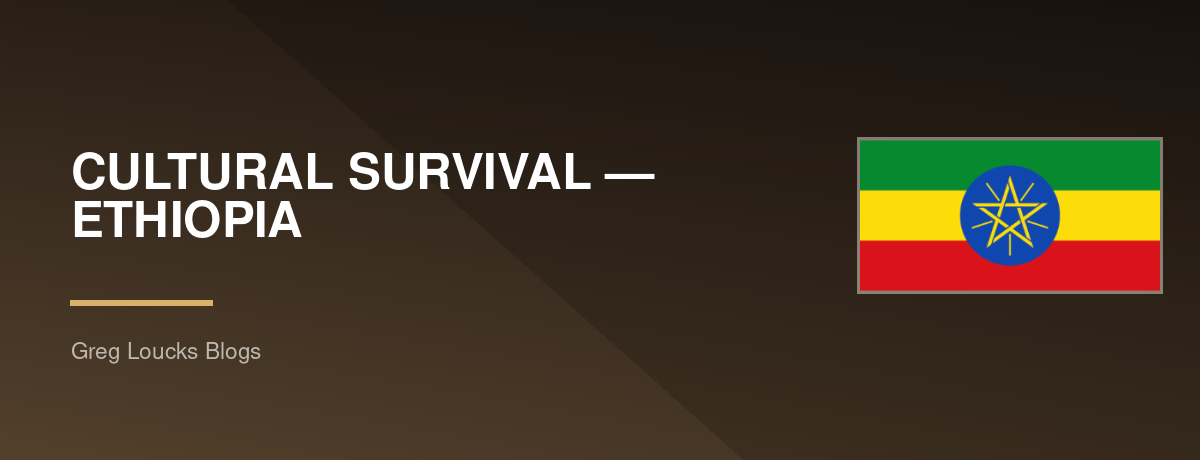
Read more 🇮🇷 CULTURAL SURVIVAL — IRAN / PERSIA

🇪🇹 CULTURAL SURVIVAL — ETHIOPIA

🇪🇹 CULTURAL SURVIVAL — ETHIOPIA PART 1 — THE ANCIENT KINGDOM From Aksum to the Birth of a Distinctive Ethiopian Civilization The story of Ethiopia is one of the most extraordinary stories of cultural survival in Africa. For thousands of years, civilizations have risen and fallen. Kingdoms have disappeared. Languages have changed. Empires have conquered one another. Religions have spread across continents. Borders have been redrawn. Yet Ethiopia preserved a remarkably distinctive civilization through many of these transformations. It developed its own: languages, writing system, Christian tradition, royal history, literature, architecture, music, calendar, religious traditions, and historical memory. Ethiopia's story is also unusual because it developed largely within Africa while maintaining ancient connections with the Middle East, the Mediterranean, and the wider Indian Ocean world. Its history cannot be understood through one simple narrative. Ethiopia is ancient. But it is also diverse. It is Christian. But it also has ancient Jewish and Islamic traditions. It contains dozens of languages and many peoples. And throughout its history, different kingdoms and communities have contributed to what eventually became the modern Ethiopian state. At the center of the story is one of Africa's greatest ancient civilizations: Aksum. THE LAND OF ETHIOPIA Geography played an enormous role in Ethiopia's history. THE HIGHLANDS The Ethiopian Highlands contain some of the highest elevations in Africa. MOUNTAINS PLATEAUS DEEP VALLEYS RIVERS The landscape created natural barriers between communities. THE BLUE NILE One of Africa's most important rivers begins in the Ethiopian Highlands. AGRICULTURE The highlands also provided fertile areas for farming. CLIMATE Different elevations created different agricultural environments. GEOGRAPHY AND CULTURE The Ethiopian Highlands helped several powerful kingdoms develop. THE HORN OF AFRICA Ethiopia also occupies a strategic position in the Horn of Africa. RED SEA To the north lies the Red Sea. ARABIA Across the Red Sea lies the Arabian Peninsula. TRADE This geography connected northeastern Africa with Arabia and the wider Indian Ocean. ANCIENT TRADE NETWORKS Goods moved between: Africa, Arabia, Egypt, the Mediterranean, and Asia. GOLD IVORY FRANKINCENSE MYRRH ANIMALS AGRICULTURAL PRODUCTS Trade helped local kingdoms grow wealthy. BEFORE AKSUM Ethiopia's ancient history stretches back far beyond the Christian era. PREHISTORIC AFRICA Human communities lived in the region for many thousands of years. EARLY AGRICULTURE Farming and pastoral communities gradually developed. KINGDOMS Eventually, more complex political societies emerged. D'MT One early kingdom associated with northern Ethiopia and Eritrea was D'mt. SOUTH ARABIAN CONNECTIONS D'mt had cultural connections across the Red Sea. ARABIAN INFLUENCE South Arabian traditions influenced architecture, writing, religion, and political culture. BUT THE HORN OF AFRICA WAS NOT SIMPLY A COPY OF ARABIA Local African traditions developed alongside these influences. CULTURAL EXCHANGE The ancient Red Sea world was interconnected. ETHIOPIAN CIVILIZATION Developed through interaction between: African, Arabian, and later Mediterranean traditions. AKSUM Then a major civilization emerged. THE KINGDOM OF AKSUM The Kingdom of Aksum developed in northern Ethiopia and Eritrea. FIRST CENTURIES AD Aksum became a major regional power during the first centuries of the Common Era. AKSUM Controlled important territory. TRADE It became deeply involved in Red Sea commerce. ADULIS The port of Adulis was critical to Aksum's international trade. THE RED SEA Ships connected Aksum to Arabia and beyond. ROMAN EMPIRE Aksum traded with the Roman world. INDIA Aksum was also connected to Indian Ocean trade networks. A GLOBAL KINGDOM Aksum was therefore not isolated. It was part of an international commercial system. COINS One of Aksum's most remarkable achievements was its production of coins. GOLD COINS Aksumite rulers minted gold coins. SILVER BRONZE ROYAL AUTHORITY Coins communicated the power of the king. INTERNATIONAL TRADE They also facilitated commerce. WRITING Aksum had another extraordinary achievement. GE'EZ The ancient Ge'ez language became the foundation of Ethiopia's classical written tradition. GE'EZ SCRIPT The writing system associated with Ge'ez developed from earlier South Semitic traditions. A DISTINCTIVE SCRIPT Over time, it became one of the most distinctive writing systems in Africa. ABUGIDA The Ge'ez-derived writing system developed into an abugida, in which consonant-vowel combinations are represented by related characters. ETHIOPIC SCRIPT The script continues to be used today for languages including: Amharic, Tigrinya, and Tigre. A LIVING WRITING TRADITION This is one of the remarkable aspects of Ethiopian cultural survival. A writing tradition with ancient roots continues to be used in modern life. THE STELAe OF AKSUM Aksum also became famous for enormous stone monuments. OBELISKS The Aksumite stelae are among the most recognizable monuments of ancient Africa. STONE Massive stone pillars were carved and erected. ARCHITECTURE Their surfaces were decorated to resemble multi-story buildings. ENGINEERING Their construction required extraordinary technical skill. MEMORY They also represented royal power. THE GREAT STELE One of the largest known Aksumite stelae was enormous. THE MONUMENTS Demonstrated that Aksum was a sophisticated state. A CIVILIZATION With: engineering, writing, trade, coinage, architecture, and centralized political authority. KING EZANA Then came one of the most important rulers in Ethiopian history. EZANA King Ezana ruled Aksum during the fourth century. CHRISTIANITY During his reign, Christianity became associated with the royal court. FRUMENTIUS According to Ethiopian tradition, a Christian missionary known as Frumentius played a central role in the Christianization of the Aksumite court. KING EZANA Ezana eventually adopted Christianity. A TURNING POINT This transformed Ethiopian history. CHRISTIAN KINGDOM Aksum became one of the earliest states in the world to officially embrace Christianity. BEFORE EUROPEAN CHRISTENDOM Christianity had already become established in Aksum centuries before many European kingdoms adopted it. EASTERN CHRISTIANITY Ethiopian Christianity developed within the broader Christian world connected to Alexandria. COPTIC CONNECTION The Ethiopian Church maintained a particularly strong historical relationship with the Coptic Church of Egypt. ETHIOPIAN CHRISTIANITY Over centuries, it developed its own distinctive traditions. GE'EZ LITURGY Ge'ez became the liturgical language. FASTING Ethiopian Christianity developed extensive fasting traditions. FEAST DAYS ICONOGRAPHY MONASTICISM PILGRIMAGE SCRIPTURE All became part of Ethiopian Christian culture. THE BIBLE Ethiopian Christianity developed one of the world's oldest continuous Christian literary traditions. GE'EZ SCRIPTURES Biblical texts were translated into Ge'ez. MANUSCRIPTS Monks copied manuscripts by hand. MONASTERIES Became centers of learning. RELIGION BECOMES CULTURE Christianity was not simply a theological system. It became woven into: calendar, language, music, architecture, art, education, and family life. THE ETHIOPIAN CALENDAR Ethiopia retained a distinctive calendar tradition derived from the ancient Christian calendar system. THIRTEEN MONTHS The Ethiopian calendar has 13 months. TWELVE MONTHS Contain 30 days each. PAGUMEN The final month contains five days in an ordinary year and six in a leap year. A DIFFERENT CALENDAR This became another marker of Ethiopian cultural identity. TIME ITSELF Was culturally distinctive. ETHIOPIAN CHRISTMAS Known as Genna, is celebrated according to the Ethiopian calendar. TIMKAT The Ethiopian celebration of Epiphany is known as Timkat. TIMKAT It commemorates the baptism of Jesus. PROCESSIONS PRAYER WATER MUSIC COLORFUL CEREMONIES Religion becomes public culture. ETHIOPIAN EASTER Known as Fasika, is another major religious celebration. FASTING The period preceding Easter is particularly important. CULTURAL RHYTHM The calendar itself became part of identity. ETHIOPIAN JUDAISM Ethiopia also developed an ancient Jewish community. BETA ISRAEL The Beta Israel are an Ethiopian Jewish community with a distinctive historical tradition. ANCIENT ROOTS Their origins remain debated, but their presence in Ethiopia is centuries old. JEWISH TRADITIONS They maintained distinctive religious practices. SCRIPTURE FESTIVALS COMMUNITY MIGRATION Many Beta Israel eventually migrated to Israel, particularly during the twentieth century. MULTIPLE TRADITIONS This demonstrates another important feature of Ethiopian history. Ethiopia has never been culturally simple. CHRISTIANS MUSLIMS BETA ISRAEL INDIGENOUS TRADITIONS Different communities have contributed to Ethiopian history. ISLAM ARRIVES Islam also has deep roots in Ethiopia. THE FIRST HIJRA According to Islamic tradition, the first migration of Muslims outside Arabia took place to the Christian kingdom of Aksum. ABYSSINIA Early Muslims fleeing persecution in Mecca sought protection under the Aksumite ruler traditionally known as the Negus, or king. THE NEGUS The ruler is traditionally identified as Ashama ibn Abjar in Islamic sources, though historical identification remains debated. A REMARKABLE MEMORY Islamic tradition remembers Aksum as a place where early Muslims received protection. CHRISTIAN AND MUSLIM HISTORY Thus Ethiopia became connected to both Christianity and Islam at a very early stage. THE HORN OF AFRICA Islam later became deeply established in many parts of the region. TRADE Muslim merchants became important participants in Red Sea commerce. COASTAL CITIES Islamic communities developed along trade routes. INTERACTION Christian and Muslim societies existed alongside one another, sometimes peacefully and sometimes through conflict. AKSUM'S DECLINE No empire remains powerful forever. TRADE CHANGES Red Sea trade patterns changed. POLITICAL PRESSURE Regional powers changed. AKSUM Gradually declined. THE END OF AN ERA The political center of Ethiopian civilization shifted southward. THE ZAGWE DYNASTY A new ruling dynasty emerged. ZAGWE The Zagwe dynasty became especially famous for monumental religious architecture. LALIBELA One of the greatest achievements was the development of the rock-hewn churches of Lalibela. ROCK-HEWN CHURCHES Instead of building churches from separate stones, builders carved them directly into the living rock. ENGINEERING The achievement is extraordinary. ARCHITECTURE The churches contain: columns, windows, doors, passageways, courtyards, and religious spaces. BĒTE GIORGIS The Church of Saint George is perhaps the most famous. A CROSS The church is carved into the ground in the shape of a cross. STONE The entire structure emerges from the rock. SACRED LANDSCAPE Lalibela became one of the most important pilgrimage centers in Ethiopia. JERUSALEM According to Ethiopian tradition, Lalibela was intended to function as a kind of sacred alternative to Jerusalem. PILGRIMAGE Christians could journey there without traveling to the Holy Land. CULTURAL MEMORY Again, architecture became memory. A CHURCH Could preserve history. A MONASTERY Could preserve literature. A FESTIVAL Could preserve tradition. A LANGUAGE Could preserve identity. THE SOLOMONIC DYNASTY Then another major transformation occurred. THE SOLOMONIC TRADITION The Solomonic dynasty claimed descent from the biblical King Solomon and the Queen of Sheba. KEBRA NAGAST The medieval Ethiopian text known as the Kebra Nagast became central to this tradition. QUEEN OF SHEBA According to the tradition, the Queen of Sheba traveled to Jerusalem to meet Solomon. MENELIK I The tradition states that their son, Menelik I, became the ancestor of the Ethiopian royal dynasty. ARK OF THE COVENANT The tradition also connects Menelik with the Ark of the Covenant. HISTORICAL AND RELIGIOUS TRADITION These accounts are deeply important to Ethiopian cultural history, although they should be distinguished from independently established historical evidence. ROYAL IDENTITY The tradition gave Ethiopian monarchy a sacred genealogy. DAVID SOLOMON SHEBA MENELIK ETHIOPIAN EMPERORS The monarchy could therefore present itself as part of a biblical historical tradition. THE NEGUS Ethiopian rulers used titles including Negus and later Negusa Nagast, often translated as "King of Kings." IMPERIAL ETHIOPIA The monarchy became one of the longest-lasting political institutions in African history. AMHARIC Amharic became increasingly important as a language of government and administration. GE'EZ Remained the classical liturgical language. TIGRINYA Developed as another major language of northern Ethiopia and Eritrea. OROMO Oromo-speaking peoples became one of the largest ethnolinguistic populations in the region. SOMALI Somali communities also played important roles in the Horn of Africa. AFAR Afar communities inhabited the northeastern regions. MANY PEOPLES Ethiopia was becoming a complex multicultural empire. THIS IS IMPORTANT The story of Ethiopian cultural survival cannot be reduced to one ethnic group. ETHIOPIA IS A CIVILIZATIONAL MOSAIC Its history includes: Amhara, Tigrayan, Oromo, Afar, Somali, Gurage, Sidama, Wolayta, and many other peoples. LANGUAGES Dozens of languages are spoken across the country. RELIGIONS Christianity and Islam are both major traditions. CULTURES Regional cultures remain distinctive. THE IMPERIAL STATE Attempted to hold these diverse populations together. THE ETHIOPIAN HIGHLANDS The highlands became the core of the Christian imperial state. MONASTERIES Expanded. CHURCHES Expanded. MANUSCRIPTS Expanded. ROYAL COURTS Supported artists and scribes. THE ETHIOPIAN LITERARY TRADITION Developed over many centuries. HAGIOGRAPHY Lives of saints were written. CHRONICLES Royal histories were recorded. RELIGIOUS TEXTS Were copied. POETRY Developed within Ge'ez and later Amharic traditions. QENE The Ethiopian poetic tradition known as qene became especially sophisticated. DOUBLE MEANING Qene is famous for linguistic complexity and layered meanings. LANGUAGE Could contain multiple levels of interpretation. THEOLOGY Poetry and theology became intertwined. EDUCATION Traditional Ethiopian church education developed distinctive stages. CHURCH SCHOOLS Students learned scripture, liturgy, chant, and religious texts. DEBRE Monastic and church centers became places of learning. MEMORIZATION Students often memorized large bodies of material. ORAL AND WRITTEN CULTURE Ethiopia developed both. MUSIC Ethiopian church music also became distinctive. ZEMA Traditional Ethiopian Christian chant developed into a sophisticated musical system. THREE MUSICAL MODES Ethiopian church music is traditionally associated with three main modes: Ge'ez, Ezl, and Ararai. DRUMS SISTRUMS CHANT Music became part of religious identity. THE CROSS The Ethiopian cross developed many distinctive artistic forms. PROCESSIONAL CROSSES Are among the most recognizable objects in Ethiopian Christian culture. ART Ethiopian Christian art developed a highly distinctive visual tradition. ICONS MANUSCRIPT ILLUMINATION MURAL PAINTING CROSS DESIGN COLOR Ethiopian religious art became immediately recognizable. CULTURAL SURVIVAL Again, religion had become inseparable from art. THE EUROPEAN ENCOUNTER By the fifteenth century, Ethiopia increasingly came into contact with European powers. PORTUGAL Portuguese involvement in the region became significant. AHMED GRAGN The sixteenth century brought one of Ethiopia's greatest military crises. AHMAD IBN IBRAHIM AL-GHAZI Known in Ethiopian history as Ahmed Gragn, he led a powerful Muslim military campaign against the Ethiopian Christian kingdom. WAR Much of the Ethiopian highlands were devastated. CHURCHES Were destroyed. MANUSCRIPTS Were lost. CITIES Were attacked. SURVIVAL The Ethiopian state nearly collapsed. PORTUGUESE ASSISTANCE Portuguese forces eventually assisted the Ethiopian monarchy. MUSKETS Firearms changed the military balance. THE CONFLICT Demonstrated how vulnerable Ethiopia could be. BUT THE KINGDOM SURVIVED A RECURRING PATTERN Again and again: A crisis arrives. A political system weakens. Communities suffer. But the civilization continues. GONDAR Later, the Ethiopian capital became associated with Gondar. THE GONDARINE PERIOD Gondar became a major center of political and cultural life. CASTLES The city became famous for its royal compounds. FASIL GHEBBI A complex of castles and palaces developed. ARCHITECTURE The buildings reflected a mixture of Ethiopian, Portuguese, Indian, and other influences. CULTURAL EXCHANGE Again Ethiopia adapted without simply losing its identity. THE ZEMENE MESAFINT The eighteenth and early nineteenth centuries became known as the Zemene Mesafint, or "Era of the Princes." POLITICAL FRAGMENTATION Central imperial authority weakened. REGIONAL LORDS Power was divided among competing rulers. ETHIOPIA Was politically fragmented. BUT CULTURE CONTINUED MONASTERIES CHURCHES LANGUAGE TRADITIONS FAMILIES RELIGION Survived political fragmentation. THEODROS II Then a ruler attempted to reunify the country. EMPEROR TĒWODROS II He became one of the major figures of nineteenth-century Ethiopian history. CENTRALIZATION He sought to strengthen imperial authority. MILITARY He attempted to create a more centralized army. FIREARMS He sought modern weapons. EUROPE He wanted Ethiopia to acquire modern technology. BRITAIN Relations with Britain deteriorated. MAGDALA In 1868, a British expedition attacked the emperor's stronghold at Magdala. TĒWODROS Committed suicide rather than surrender. ANOTHER CRISIS But the Ethiopian state continued. YOHANNES IV Emperor Yohannes IV strengthened the empire in the late nineteenth century. MENELIK II Then came one of the most famous Ethiopian rulers. EMPEROR MENELIK II Menelik II transformed Ethiopia. MODERNIZATION He expanded and modernized the empire. ADDIS ABABA The capital of Addis Ababa was established and became the center of modern Ethiopia. TELEGRAPH Modern communication systems were introduced. RAILWAY A railway connected Addis Ababa toward the coast through Djibouti. FIREARMS Modern weapons were acquired. DIPLOMACY Ethiopia became increasingly active in international politics. EUROPEAN COLONIALISM Africa was being divided among European empires. ETHIOPIA Was surrounded by colonial territories. ITALY Italy sought to establish a colonial empire in East Africa. ETHIOPIA RESISTS Menelik II refused to accept permanent Italian domination. ADWA Then came one of the most important battles in African history. 1896 The Ethiopian army defeated Italian forces at the Battle of Adwa. ADWA The victory was extraordinary. AN AFRICAN STATE Had defeated a European colonial power. COLONIALISM At a time when much of Africa was being conquered. ETHIOPIA REMAINED INDEPENDENT This became central to Ethiopian national identity. ADWA Became a symbol of: independence, resistance, African sovereignty, and national pride. THE GLOBAL SIGNIFICANCE Adwa became important far beyond Ethiopia. PAN-AFRICANISM The victory inspired later African and Black international movements. CARIBBEAN AFRICAN DIASPORA ANTI-COLONIAL MOVEMENTS Ethiopia became a symbol of African independence. ETHIOPIA Was one of the few African states to retain its sovereignty during the European colonial partition of Africa. A UNIQUE STATUS This became one of the defining elements of modern Ethiopian identity. HAILE SELASSIE The twentieth century brought another internationally famous emperor. RAS TAFARI MAKONNEN He became Emperor Haile Selassie I in 1930. MODERNIZATION Haile Selassie expanded: education, government institutions, international diplomacy, and infrastructure. LEAGUE OF NATIONS Ethiopia became a member of the League of Nations. ITALIAN INVASION But independence was threatened again. 1935 Fascist Italy invaded Ethiopia. WAR The conflict became one of the most important early crises of the pre-World War II period. CHEMICAL WEAPONS Italian forces used chemical weapons during the war. ADDIS ABABA Italian forces eventually captured the capital. EMPEROR IN EXILE Haile Selassie appealed to the League of Nations. GENEVA His speech became famous. COLLECTIVE SECURITY He warned that aggression against one nation threatened international order. ETHIOPIA OCCUPIED Italy controlled Ethiopia for several years. RESISTANCE Ethiopian resistance continued. BRITAIN British forces supported Ethiopian forces during the Second World War. 1941 Ethiopian and Allied forces liberated the country. HAILE SELASSIE RETURNS The emperor returned to Addis Ababa. INDEPENDENCE RESTORED Again, Ethiopia survived. THE PATTERN CONTINUES A powerful foreign empire invaded. OCCUPATION Occurred. RESISTANCE Continued. LIBERATION Followed. THE STATE Survived. THE CULTURE Survived. THE LANGUAGE Survived. THE CHURCH Survived. THE MEMORY Survived. THE DEEPER LESSON OF PART 1 Ethiopia's cultural survival did not happen because its history was peaceful. It happened despite repeated crises. KINGDOMS ROSE KINGDOMS FELL RELIGIONS INTERACTED EMPIRES ATTACKED POLITICAL CENTERS MOVED LANGUAGES CHANGED YET The civilization continued adapting. AKSUM Gave Ethiopia a written tradition and international identity. CHRISTIANITY Gave Ethiopia a distinctive religious civilization. GE'EZ Preserved a classical literary tradition. MONASTERIES Preserved knowledge. LALIBELA Preserved architectural genius. THE SOLOMONIC TRADITION Connected Ethiopian monarchy with biblical memory. ADWA Created a powerful symbol of independence. THE CHURCH Preserved spiritual continuity. THE FAMILY Preserved traditions. THE LAND Preserved monuments. THE PEOPLE Preserved the culture. THE NEXT CHAPTER But Ethiopia's survival story would become even more complicated in the twentieth century. The country would face: Italian occupation, imperial modernization, ethnic and regional tensions, the revolution of 1974, the communist Derg, civil war, famine, the rise of the Tigray People's Liberation Front, the fall of the Derg, the creation of a federal system, Eritrea's independence, and the challenges facing modern Ethiopia. The ancient kingdom had survived. The modern state would now be tested. 🇪🇹 PART 2 — ETHIOPIA, EMPIRE AND INVASION The next part will explore how Ethiopia transformed from an ancient imperial civilization into a modern state, and how it survived European colonialism, Italian occupation, revolution, communism, famine, civil war, and political upheaval without losing its distinctive cultural identity. Ethiopia survived invasion before. But the twentieth century would test that survival in entirely new ways. 🇪🇹 CULTURAL SURVIVAL — ETHIOPIA PART 2 — EMPIRE, INVASION, AND THE STRUGGLE FOR INDEPENDENCE From Menelik II to the Fall of Haile Selassie Ethiopia entered the twentieth century as something unusual. It was an ancient African civilization that had retained its independence while much of the continent was being divided among European colonial powers. The victory at Adwa in 1896 had demonstrated that Ethiopia could defeat a European army. But Adwa did not mean Ethiopia was untouched by the forces transforming Africa. The twentieth century would bring: modernization, centralization, foreign pressure, war, occupation, revolution, and eventually the collapse of the imperial system. Through all of it, Ethiopia would continue struggling with one fundamental question: How can an ancient civilization become a modern state without losing itself? MENELIK II AND THE MODERN STATE Emperor Menelik II had inherited an empire that was powerful but still largely premodern in its institutions. MODERNIZATION Menelik understood that Ethiopia needed modern technology if it was going to remain independent. FIREARMS Modern firearms became increasingly important to the Ethiopian military. TELEGRAPH Communication technology began connecting the empire. TELEPHONE Modern communications expanded. POSTAL SERVICE Ethiopia developed modern postal institutions. PRINTING Printing technology expanded the circulation of written information. EDUCATION Modern schools began to appear. MEDICINE Modern medical institutions slowly developed. RAILWAY One of the most important projects was the railway connecting Addis Ababa with Djibouti. THE RAILWAY The railway connected the Ethiopian interior with the Red Sea and international trade networks. ADDIS ABABA The capital grew rapidly. A MODERN CAPITAL Government offices, markets, foreign diplomatic missions, and new neighborhoods developed. INTERNATIONAL DIPLOMACY Ethiopia increasingly interacted with European governments on its own terms. THE COLONIAL WORLD But the geopolitical environment remained dangerous. AFRICA WAS BEING COLONIZED Britain controlled enormous territories. FRANCE Controlled large areas of Africa. ITALY Was building its own colonial empire. BELGIUM Controlled the Congo. PORTUGAL Controlled territories in southern and eastern Africa. GERMANY Had colonies before World War I. ETHIOPIA Was surrounded by colonial territories. ERITREA Italy controlled Eritrea to the north. SOMALILAND European colonial powers controlled territories to the east. SUDAN Britain controlled the Sudanese region to the west. KENYA British rule expanded south of Ethiopia. ETHIOPIA Was increasingly surrounded. ITALY WANTS MORE The Italian government had not forgotten its defeat at Adwa. ITALIAN COLONIAL AMBITION Italy wanted to establish a larger East African empire. FASCISM In the 1920s, Benito Mussolini came to power in Italy. MUSSOLINI Mussolini wanted Italy to become a major imperial power. ETHIOPIA Became one of his targets. HAILE SELASSIE By the 1930s, Emperor Haile Selassie was the internationally recognized ruler of Ethiopia. THE EMPEROR Haile Selassie represented the continuation of the Ethiopian imperial tradition. MODERNIZATION He also wanted to modernize Ethiopia. CONSTITUTION A written constitution was introduced. EDUCATION Modern schools expanded. GOVERNMENT Central government institutions became stronger. DIPLOMACY Ethiopia became increasingly active in international affairs. LEAGUE OF NATIONS Ethiopia joined the League of Nations in 1923. A SYMBOL Its membership demonstrated that Ethiopia was being treated as a sovereign state within the international system. BUT THE WORLD WAS CHANGING 1935 Mussolini ordered the invasion of Ethiopia. THE SECOND ITALIAN-ETHIOPIAN WAR The war began in October 1935. ITALIAN FORCES Italy possessed: modern artillery, aircraft, tanks, and chemical weapons. ETHIOPIAN FORCES Many Ethiopian soldiers fought with: rifles, older weapons, and traditional equipment. TECHNOLOGICAL IMBALANCE The military disparity was enormous. ETHIOPIAN RESISTANCE But Ethiopia fought. HAILE SELASSIE The emperor attempted to organize resistance while appealing to the international community. THE LEAGUE OF NATIONS Ethiopia appealed for assistance. COLLECTIVE SECURITY Haile Selassie argued that the international system needed to protect smaller nations from aggression. GENEVA In 1936, he addressed the League of Nations in Geneva. THE SPEECH His appeal became one of the most famous anti-war speeches of the twentieth century. THE WARNING The Ethiopian crisis demonstrated a fundamental weakness in the League of Nations. AGGRESSION Italy was able to invade despite Ethiopia's membership in the international organization. SANCTIONS The League imposed sanctions on Italy. BUT THEY WERE INSUFFICIENT Italy continued its military campaign. CHEMICAL WEAPONS Italian forces used mustard gas and other chemical agents. CIVILIANS The effects were devastating. VILLAGES Were attacked. LIVESTOCK Was destroyed. WATER SOURCES Were contaminated. MEDICAL FACILITIES Were attacked in some cases. THE ETHIOPIAN ARMY Was gradually overwhelmed. ADDIS ABABA Italian forces entered the capital in May 1936. THE EMPEROR LEAVES Haile Selassie went into exile. ITALIAN EAST AFRICA Ethiopia was incorporated into the Italian colonial project alongside Eritrea and Italian Somaliland. ETHIOPIA WAS OCCUPIED But occupation did not mean complete submission. RESISTANCE Ethiopian resistance continued. ARBEGNOCH Ethiopian resistance fighters became known as the Arbegnoch, or "Patriots." GUERRILLA WAR They fought Italian forces across the countryside. MOUNTAINS Ethiopia's geography made resistance possible. RURAL COMMUNITIES Provided support. LOCAL LEADERS Organized resistance. THE CHURCH In some areas, religious institutions became connected with resistance networks. ITALIAN REPRESSION The occupation was brutal. MASS KILLINGS Italian forces carried out reprisals against civilians. YEKATIT 12 One of the darkest episodes occurred in Addis Ababa in February 1937. THE ASSASSINATION ATTEMPT An attempt was made to assassinate the Italian viceroy, Rodolfo Graziani. REPRISALS Italian forces responded with mass killings. THOUSANDS Of Ethiopians were killed. DESTRUCTION Churches, homes, and communities were affected. CULTURAL MEMORY The massacre remains a central part of modern Ethiopian historical memory. THE RESISTANCE CONTINUES The occupation remained contested. WORLD WAR II Then the international situation changed. 1939 World War II began in Europe. ITALY Entered the war in 1940 on the side of Germany. BRITAIN Was now at war with Italy. ETHIOPIAN RESISTANCE Could now cooperate with British forces. 1941 British and Commonwealth forces entered Ethiopia. ETHIOPIAN PATRIOTS Supported the campaign. HAILE SELASSIE Returned to Ethiopia. ITALIAN RULE COLLAPSES Ethiopia was liberated. INDEPENDENCE RESTORED Once again, Ethiopia had survived foreign occupation. A REMARKABLE PATTERN The country had been: invaded, occupied, and temporarily conquered. BUT NOT ABSORBED THE EMPEROR RETURNS Haile Selassie resumed his rule. REBUILDING The country faced enormous challenges. INFRASTRUCTURE Had been damaged. GOVERNMENT Had to be reconstructed. ECONOMY Needed modernization. EDUCATION Required expansion. POLITICAL CENTRALIZATION Continued. THE POSTWAR WORLD Ethiopia now entered a new international era. UNITED NATIONS Ethiopia became a founding member of the United Nations in 1945. INTERNATIONAL DIPLOMACY Addis Ababa became increasingly important in African and international affairs. AFRICAN DIPLOMACY Ethiopia's survival as an independent African state gave it enormous symbolic importance. ADDIS ABABA The city would eventually become one of the diplomatic capitals of Africa. AFRICAN UNITY Ethiopia played an important role in the movement toward continental cooperation. 1963 The Organization of African Unity was established in Addis Ababa. OAU Its creation was a major milestone in African history. ETHIOPIA Had become a diplomatic center for the continent. AFRICAN HEADQUARTERS Addis Ababa became home to the organization's headquarters. THE SYMBOLISM A country that had defeated European colonialism at Adwa had now become a diplomatic center for African independence. THE EMPEROR Haile Selassie became an important international figure. MODERNIZATION CONTINUES But Ethiopia remained deeply unequal. RURAL SOCIETY Most Ethiopians lived in rural communities. AGRICULTURE Agriculture dominated the economy. LAND Land ownership was highly unequal in many areas. PEASANTS Many farmers lived in poverty. EDUCATION Access remained limited. HEALTHCARE Medical services were unevenly distributed. POLITICAL POWER Was concentrated in the imperial system. CENTRALIZATION The imperial government increasingly attempted to strengthen control over the provinces. LOCAL IDENTITIES Ethiopia's many peoples had their own languages, cultures, and political traditions. THIS CREATED TENSION AMHARA The imperial state was often associated strongly with Amhara political and cultural dominance. TIGRAY Tigrayan communities had their own historical traditions and grievances. OROMO Oromo communities represented one of the largest populations in the country. ERITREA Eritrea had a distinct colonial history and political trajectory. SOMALI REGIONS Ethiopia also contained Somali-inhabited territories. MANY PEOPLES The empire had become a multinational state. ONE IMPERIAL SYSTEM Attempted to govern all of them. MODERN NATIONALISM But the twentieth century was producing new ideas. ETHNIC NATIONALISM REGIONAL AUTONOMY SELF-DETERMINATION FEDERALISM These concepts increasingly challenged centralized imperial rule. ERITREA One of the greatest challenges emerged there. ERITREA'S HISTORY Eritrea had been an Italian colony. AFTER WORLD WAR II Its future became an international question. FEDERATION In 1952, Eritrea became federated with Ethiopia under a UN arrangement. AUTONOMY Eritrea retained its own parliament and institutions. BUT The Ethiopian government gradually reduced Eritrean autonomy. 1962 The federation was formally dissolved. ERITREA Was incorporated into Ethiopia as a province. RESISTANCE An armed independence movement developed. ERITREAN WAR OF INDEPENDENCE The conflict would last for decades. THE LONG WAR The Eritrean struggle became one of Africa's longest independence wars. THE ETHIOPIAN STATE Faced another major challenge. FAMINE Then came another crisis. 1972–1974 Severe famine affected parts of Ethiopia. WOLLO Wollo was particularly affected. STARVATION Large numbers of people died. GOVERNMENT RESPONSE The imperial government's response was widely criticized. INTERNATIONAL ATTENTION Images of Ethiopian famine eventually shocked the world. MEDIA The crisis became an international story. CHARITY International humanitarian organizations responded. BUT The famine also became a political crisis for the emperor. THE IMPERIAL SYSTEM Was increasingly criticized. STUDENTS University students demanded reform. MILITARY Military dissatisfaction increased. ECONOMIC PROBLEMS Inflation and unemployment contributed to unrest. LAND REFORM The question of land became increasingly important. "LAND TO THE TILLER" Became a major political demand. THE OLD ORDER Was weakening. 1974 A military committee known as the Derg seized power. THE EMPEROR Haile Selassie was deposed. THE IMPERIAL ERA Had ended. ANCIENT INSTITUTION The Ethiopian monarchy, with roots reaching back through centuries of imperial history, was gone. HAILE SELASSIE Died in 1975 while under house arrest. THE REVOLUTION Ethiopia entered an entirely new political era. THE DANGER Was that the revolution would not produce immediate stability. IT WOULD PRODUCE ANOTHER PERIOD OF VIOLENCE THE DERG The military government declared Ethiopia a socialist state. MARXISM-LENINISM Became the ideological framework. LAND NATIONALIZATION Land was nationalized. INDUSTRY Major businesses were nationalized. THE MONARCHY Was abolished. THE OLD ELITE Lost power. THE NEW STATE Became highly centralized. MENGISTU HAILE MARIAM Eventually emerged as the dominant leader. THE RED TERROR A campaign of political repression known as the Red Terror began. OPPOSITION Government forces targeted political opponents. YOUTH Students and young activists became targets. EXECUTIONS Thousands were killed. IMPRISONMENT Many others were detained. FEAR Spread throughout the country. THE REVOLUTION Had transformed into another form of authoritarian rule. THE ETHIOPIAN CHURCH The new communist government was hostile toward traditional religious institutions. RELIGIOUS PROPERTY Was confiscated. CHURCH POWER Was restricted. RELIGIOUS EDUCATION Was weakened. BUT AGAIN Religion did not simply disappear. FAMILIES Continued traditions. PRAYER Continued. FASTING Continued. FEAST DAYS Continued. MONASTERIES Survived. THE CULTURAL MEMORY Survived another political revolution. ETHIOPIAN ORTHODOX CHRISTIANITY Had survived: kingdoms, invasions, foreign occupation, and imperial political change. NOW It faced Marxist revolution. THE SAME PATTERN Political systems changed. Cultural traditions endured. CIVIL WAR The Derg also faced armed opposition from multiple groups. ERITREA The independence war continued. TIGRAY Insurgency developed. OROMO AREAS Armed resistance also developed. SOMALI REGION Conflict occurred there as well. THE ETHIOPIAN STATE Was fighting on multiple fronts. SOMALIA Then invaded Ethiopia. OGADEN WAR The Somali invasion of 1977–78 became another major conflict. SOVIET UNION The Soviet Union supported Ethiopia. CUBA Cuban forces also participated on Ethiopia's side. THE COLD WAR Had reached the Horn of Africa. ETHIOPIA Became a major Cold War battleground. FAMINE AGAIN The 1980s brought another catastrophic humanitarian crisis. 1983–1985 A major famine devastated parts of Ethiopia. DROUGHT Was an important factor. WAR Made conditions worse. GOVERNMENT POLICIES Also contributed to the severity and distribution of the crisis. MILLIONS Were affected. INTERNATIONAL MEDIA Again brought Ethiopian suffering to the world. LIVE AID The Ethiopian famine helped inspire the massive international fundraising movement associated with Live Aid. MUSIC Artists around the world organized concerts and recordings. MONEY Was raised for famine relief. ETHIOPIA Became one of the most recognizable symbols of humanitarian crisis. BUT THERE WAS ANOTHER SIDE The Ethiopian people were not simply victims. COMMUNITIES Survived. FARMERS Returned to their fields. FAMILIES Protected children. RELIGIOUS COMMUNITIES Maintained traditions. DIASPORA Sent money and assistance. CULTURE Continued. THE DISSOLUTION OF THE DERG By the late 1980s, the Derg government was weakening. SOVIET UNION The Soviet Union was itself collapsing. FOREIGN SUPPORT For Ethiopia declined. REBEL MOVEMENTS Gained strength. TIGRAYAN FORCES Became increasingly powerful. 1991 The Derg regime collapsed. MENGISTU Fled Ethiopia. A NEW ERA Ethiopia entered another political transformation. ERITREA Eritrean forces took control of Eritrea. 1993 Eritrea became independent after a referendum. ETHIOPIA Lost its coastline. A MAJOR GEOPOLITICAL CHANGE For a country that had historically depended on Red Sea access, this was enormously significant. THE FEDERAL REPUBLIC Ethiopia adopted a federal political structure. ETHNIC FEDERALISM The country was divided into regional states largely organized around ethnolinguistic identities. THE IDEA Different peoples would receive greater political autonomy. A NEW MODEL Instead of forcing everyone into one centralized identity, the state would recognize multiple national communities. BUT Federalism created its own challenges. BORDERS Regional boundaries became politically important. LAND Ownership became contentious. LANGUAGE Became politically significant. POWER Different groups competed for influence. ETHIOPIA Was still trying to answer the same fundamental question: How can many peoples share one country? THE CULTURAL SURVIVAL LESSON Ethiopia's history demonstrates that cultural survival is not always about preserving one uniform identity. Sometimes survival means preserving many identities within one civilization. AMHARIC OROMO TIGRINYA SOMALI AFAR SIDAMO GURAGE AND MANY OTHERS CHRISTIAN MUSLIM JEWISH INDIGENOUS TRADITIONS Ethiopia's civilization has always been more complicated than a single narrative. THE GREAT PARADOX Ethiopia survived because it had a strong civilization. But it also survived because its people continually adapted. AKSUM Adapted to Red Sea trade. CHRISTIANITY Was incorporated into Ethiopian culture. GE'EZ Became a literary language. LALIBELA Created new architectural forms. THE SOLOMONIC MONARCHY Created a powerful historical narrative. ADWA Created a symbol of independence. MODERNIZATION Brought railways, schools, telegraphs, and modern institutions. THE ITALIAN OCCUPATION Produced another generation of resistance. THE REVOLUTION Destroyed the monarchy. COMMUNISM Attempted to transform society. THE FEDERAL SYSTEM Attempted to recognize Ethiopia's diversity. THROUGH ALL OF IT The civilization continued. THE DEEPER QUESTION What exactly survived? Not simply a government. THE MONARCHY DISAPPEARED THE DILLERENT DYNASTIES DISAPPEARED POLITICAL SYSTEMS CHANGED BORDERS CHANGED BUT: The languages remained. THE CHURCH REMAINED THE MOSQUES REMAINED THE MANUSCRIPTS REMAINED THE MUSIC REMAINED THE FOOD REMAINED THE CALENDAR REMAINED THE FAMILY REMAINED THE MEMORY REMAINED 🇪🇹 PART 3 — THE FEDERAL ERA AND MODERN ETHIOPIA The next part will examine: the fall of the Derg, the creation of ethnic federalism, the rise of the Ethiopian People's Revolutionary Democratic Front, the transformation of Addis Ababa, economic development, the Ethiopia–Eritrea relationship, the 1998–2000 border war, the rise of Abiy Ahmed, the Ethiopian Orthodox Church, Islam and religious diversity, ethnic identity, the Tigray conflict, and the struggle to hold a diverse civilization together. Ethiopia had survived emperors. It had survived colonial occupation. It had survived revolution. It had survived communism. But the next challenge would be perhaps even more complicated: Could a country containing dozens of peoples, languages, and historical identities build a common future without destroying the identities that make it Ethiopia? 🇪🇹 CULTURAL SURVIVAL — ETHIOPIA PART 3 — THE FEDERAL ERA From the Fall of the Derg to the Rise of a New Ethiopia The collapse of the Derg in 1991 did not end Ethiopia's struggles. It began another chapter. The monarchy was gone. The communist revolution was gone. The military dictatorship was gone. Eritrea was moving toward independence. And Ethiopia had to create a political system capable of governing one of Africa's most diverse societies. The answer was federalism. But Ethiopian federalism would be unlike the traditional model found in many countries. It would be built largely around ethnicity, language, and regional identity. The experiment would produce both important achievements and enormous tensions. THE FALL OF THE DERG By 1991, the Derg government was collapsing. THE ECONOMY Was struggling. THE MILITARY Was under increasing pressure. THE REBEL MOVEMENTS Were becoming stronger. THE SOVIET UNION Was collapsing. FOREIGN SUPPORT For the Derg was disappearing. ADDIS ABABA The capital was increasingly vulnerable. 1991 The Ethiopian People's Revolutionary Democratic Front, or EPRDF, entered Addis Ababa. THE DERG COLLAPSES Mengistu Haile Mariam fled the country. A NEW POLITICAL ERA Ethiopia was about to be reorganized. ERITREA The Eritrean People's Liberation Front controlled Eritrea. THE ERITREAN QUESTION Had dominated Ethiopian politics for decades. 1993 Eritrea held a referendum on independence. THE RESULT An overwhelming majority voted for independence. ERITREA BECOMES INDEPENDENT Ethiopia lost its coastline. A HISTORIC CHANGE For centuries, Ethiopian political power had been connected to the Red Sea. Now Ethiopia became landlocked. THE NEW ETHIOPIA The political leadership began building a federal system. ETHNIC FEDERALISM The country was divided into regional states. REGIONS Were largely organized around major ethnolinguistic communities. OROMIA The largest regional state. AMHARA A major region centered around the Amhara people. TIGRAY The northern region historically associated with the Tigrayan people. SOMALI The Somali Regional State covers a large area in eastern Ethiopia. AFAR The Afar Region occupies part of the northeastern country. SOUTHERN REGIONS Contained numerous different peoples and languages. THE IDEA Was revolutionary. Instead of requiring every community to assimilate into one dominant national culture, the constitution would recognize Ethiopia as a country of multiple peoples. THE 1995 CONSTITUTION The Federal Democratic Republic of Ethiopia was formally established in 1995. A NEW POLITICAL PRINCIPLE The constitution recognized the rights of Ethiopia's "nations, nationalities and peoples." LANGUAGE Regional governments could promote local languages. CULTURE Communities were given greater constitutional recognition. SELF-GOVERNMENT Regional states received substantial powers. THE GOAL Was to create unity through recognition of diversity. BUT THERE WAS A QUESTION Could ethnic federalism create unity? Or would it strengthen divisions? THE ETHIOPIAN PEOPLE'S REVOLUTIONARY DEMOCRATIC FRONT The EPRDF dominated Ethiopian politics for decades. COALITION The ruling coalition brought together several ethnically based political organizations. TIGRAY The Tigray People's Liberation Front was particularly influential. AMHARA The Amhara Democratic Party became another major component. OROMO The Oromo People's Democratic Organization represented the Oromo component of the coalition. SOUTHERN ETHIOPIA Other groups were represented through additional organizations. MELLES ZENAWI Meles Zenawi became the dominant political figure. PRIME MINISTER He served as Ethiopia's prime minister from 1995 until his death in 2012. A NEW DEVELOPMENT MODEL The government pursued rapid economic development. AGRICULTURE Remained central. INFRASTRUCTURE Expanded. ROADS Were constructed. ELECTRICITY Expanded. TELECOMMUNICATIONS Expanded. EDUCATION Enrollment increased dramatically. UNIVERSITIES New universities were established. HEALTHCARE Health services expanded in many areas. ECONOMIC GROWTH Ethiopia became one of Africa's faster-growing economies during much of the 2000s and early 2010s. ADDIS ABABA The capital transformed rapidly. SKYSCRAPERS Modern buildings began changing the skyline. ROADS Major transportation projects expanded. LIGHT RAIL Addis Ababa eventually became home to one of Africa's first modern light-rail systems. AIRPORT Bole International Airport became an increasingly important regional hub. ETHIOPIAN AIRLINES The national airline became one of Africa's most important carriers. THE WORLD Became increasingly connected to Ethiopia. THE DIASPORA Also grew. WASHINGTON LONDON TORONTO DUBAI STOCKHOLM MELBOURNE Ethiopian communities established themselves around the world. REMITTANCES Money sent home by Ethiopians abroad became an important economic resource. CULTURAL CONNECTIONS The diaspora also maintained: language, religion, food, music, and family traditions. ETHIOPIAN CUISINE Perhaps nowhere is cultural identity more immediately recognizable than at the dinner table. INJERA The fermented flatbread became one of the defining foods of Ethiopian cuisine. TEFF The tiny grain used to make injera became an important Ethiopian agricultural product. DORO WAT A spicy chicken stew is one of Ethiopia's best-known dishes. SHIRO A traditional chickpea-based stew is another staple. COFFEE And then there is coffee. COFFEE'S ETHIOPIAN HERITAGE Ethiopia is widely recognized as the birthplace of Coffea arabica and has one of the world's oldest and richest coffee cultures. COFFEE CEREMONY The Ethiopian coffee ceremony can last for an extended period. ROASTING Beans are roasted in front of guests. GRINDING They are traditionally ground by hand. BREWING Coffee is prepared in a jebena. SHARING The ceremony is about more than drinking coffee. COMMUNITY It is about hospitality. CONVERSATION FAMILY CULTURE ANCIENT TRADITIONS IN A MODERN CITY A family can live in a modern apartment in Addis Ababa and still conduct a traditional coffee ceremony. THIS IS CULTURAL SURVIVAL The old does not necessarily disappear when the new arrives. RELIGIOUS DIVERSITY Modern Ethiopia also demonstrates extraordinary religious diversity. ETHIOPIAN ORTHODOX CHRISTIANITY Remains one of the country's major religious traditions. PROTESTANT CHRISTIANITY Has grown substantially. ISLAM Is practiced by a large portion of the population. TRADITIONAL RELIGIONS Continue in some communities. RELIGIOUS HISTORY Is therefore part of Ethiopia's broader cultural complexity. ETHIOPIAN ORTHODOX CHRISTIANITY Has especially deep historical roots. MONASTERIES Continue to operate. CHURCHES Continue to hold worship services. PRIESTS Continue teaching. MONKS Continue preserving religious traditions. GE'EZ Remains the liturgical language. TIMKAT Continues to attract enormous crowds. MESKEL Another major Ethiopian Christian celebration commemorates the finding of the True Cross according to Christian tradition. BONFIRES Are lit during celebrations. PROCESSIONS Fill the streets. MUSIC Accompanies worship. CULTURE AND RELIGION Remain closely intertwined. ISLAM IN ETHIOPIA Islam also has an exceptionally long history. THE FIRST HIJRA The Islamic connection to Ethiopia goes back to the earliest years of Islam. MUSLIM COMMUNITIES Developed across eastern, southern, and central Ethiopia. HARAR One of the most important centers of Islamic culture is Harar. HARAR The ancient walled city became a major center of Islamic scholarship and commerce. MOSQUES Hundreds of mosques and shrines developed in the city and surrounding region. ISLAMIC LEARNING Harar became internationally known as a center of Islamic scholarship. ANOTHER CULTURAL WORLD Ethiopia therefore contains both ancient Christian and Islamic civilizations. THE ETHIOPIAN QUESTION How do these traditions coexist within one country? SOMETIMES They coexist peacefully. SOMETIMES Political and religious tensions emerge. THE SAME IS TRUE Between ethnic communities. OROMO AMHARA TIGRAYAN SOMALI AFAR AND MANY OTHERS Ethiopia's diversity is both its strength and its challenge. THE OROMO The Oromo are one of the largest ethnolinguistic groups in Ethiopia. OROMO LANGUAGE Known as Afaan Oromoo, it is one of the country's major languages. CULTURE Oromo society contains rich traditions of: music, poetry, oral history, family, and social organization. GADAA The traditional Oromo Gadaa system is a particularly important cultural institution. GADAA Historically organized political, social, and generational responsibilities. CULTURAL HERITAGE The system became an important symbol of Oromo identity. AMHARA The Amhara people have played a major role in Ethiopian political and cultural history. AMHARIC Became one of Ethiopia's most important languages of administration and literature. GE'EZ Remained the language of the Ethiopian Orthodox liturgy. ROYAL HISTORY Many imperial traditions were associated with Amhara-speaking highland society. TIGRAYANS Tigrayan communities have their own long history. AXUM The ancient center of Aksum lies in the modern Tigray region. TIGRINYA Is one of the major languages of the region. MONASTERIES Northern Ethiopia contains many ancient monasteries and churches. HISTORICAL MEMORY The region considers itself central to Ethiopian civilization. THE FEDERAL SYSTEM Was supposed to allow these identities to coexist politically. BUT POLITICS Became increasingly competitive. 2005 National elections produced major controversy. OPPOSITION The opposition gained substantial support. PROTESTS Demonstrations followed. GOVERNMENT RESPONSE Security forces used deadly force. POLITICAL TENSIONS Continued. OPPOSITION Faced restrictions. THE GOVERNMENT Maintained tight control. ETHIOPIA'S DEVELOPMENT Was therefore accompanied by political authoritarianism. ECONOMIC GROWTH Did not automatically produce political freedom. 2012 Meles Zenawi died. HAILEMARIAM DESALEGN Became prime minister. BUT Political pressure continued. OROMO PROTESTS Beginning in 2015, major protests emerged among Oromo communities. LAND One important issue concerned expansion plans around Addis Ababa. DISPLACEMENT Communities feared losing land. POLITICAL REPRESENTATION Was another concern. PROTESTS Spread. AMHARA PROTESTS Major protests also occurred among Amhara communities. THE GOVERNMENT Declared a state of emergency. POLITICAL CRISIS Deepened. 2018 Hailemariam Desalegn resigned. A NEW LEADER Ethiopia entered another major transition. ABIY AHMED Abiy Ahmed became prime minister in 2018. A NEW POLITICAL MOMENT Abiy promised reforms. POLITICAL PRISONERS Many were released. OPPOSITION Some restrictions were eased. MEDIA The political environment initially became more open. DIASPORA Many Ethiopians abroad returned or became more engaged. PEACE WITH ERITREA One of Abiy's most important early initiatives concerned Eritrea. THE BORDER WAR Ethiopia and Eritrea had fought a devastating war from 1998 to 2000. BADME The disputed town of Badme became one of the major flashpoints. WAR Tens of thousands were killed. BORDER Was militarized. PEACE Did not come quickly. 2018 Abiy's government accepted the terms of the 2000 Algiers Agreement and moved toward peace with Eritrea. BORDER REOPENED Cross-border communication resumed. FAMILIES Separated by the conflict were reunited. FLIGHTS Resumed. TRADE Began reopening. PEACE PRIZE Abiy Ahmed was awarded the Nobel Peace Prize in 2019 for his efforts to achieve peace and international cooperation, particularly with Eritrea. HOPE Many Ethiopians believed a new political era had begun. BUT ETHIOPIA'S INTERNAL CRISIS Was not resolved. ETHNIC POLITICS Remained powerful. REGIONAL COMPETITION Continued. POLITICAL RIVALRIES Intensified. TIGRAY The most serious confrontation emerged in the north. TIGRAY PEOPLE'S LIBERATION FRONT The TPLF had once been the dominant force within the Ethiopian political coalition. AFTER 2018 The TPLF became increasingly opposed to Abiy's government. THE EPRDF Was reorganized. PROSPERITY PARTY Abiy's political movement became the Prosperity Party. TIGRAY The TPLF largely remained outside it. POLITICAL TENSIONS Grew. 2020 National elections were postponed because of the COVID-19 pandemic. TIGRAY Held its own regional election despite the federal postponement. POLITICAL CRISIS Escalated. NOVEMBER 2020 Fighting broke out between federal forces and the TPLF. TIGRAY WAR A devastating conflict began. ERITREA Eritrean forces became involved. AMHARA FORCES Regional forces from Amhara also participated. HUMANITARIAN CRISIS The war caused enormous suffering. DISPLACEMENT Millions were affected. FOOD INSECURITY Became severe. COMMUNICATIONS Were disrupted. ATROCITIES Multiple sides were accused of serious abuses. WAR CRIMES International organizations documented allegations of grave violations. CULTURAL HERITAGE Was also threatened. AXUM The ancient city of Aksum was affected by the conflict. CHURCHES Religious sites were damaged or threatened. MONASTERIES Were placed in danger. MANUSCRIPTS And sacred objects faced risks. HISTORY ITSELF Was caught in the war. THE CULTURAL SURVIVAL QUESTION What happens when political conflict threatens the physical places where culture is stored? THE ANSWER Preservation becomes urgent. DOCUMENTATION DIGITIZATION RESTORATION INTERNATIONAL PROTECTION LOCAL STEWARDSHIP All become essential. 2022 The Ethiopian government and Tigrayan authorities signed a Cessation of Hostilities Agreement in Pretoria, South Africa. THE WAR Largely came to an end. BUT The consequences remain. FAMILIES Lost loved ones. COMMUNITIES Were displaced. INFRASTRUCTURE Was damaged. ECONOMIES Were disrupted. TRAUMA Will remain for generations. THE ETHIOPIAN STATE Must now attempt reconstruction and reconciliation. THE LARGER QUESTION Can Ethiopia build a common national identity while recognizing the identities of its many peoples? ETHIOPIAN IDENTITY Has historically been layered. A PERSON Can be: Oromo, Ethiopian, Muslim, Christian, African, and part of a local community at the same time. IDENTITY Does not have to be one-dimensional. THIS IS ONE OF ETHIOPIA'S GREATEST CHALLENGES The political system often encourages people to think primarily through ethnic categories. BUT HISTORY IS MORE COMPLEX CULTURE CROSSES BORDERS Languages interact. RELIGIONS INTERACT FAMILIES MIX TRADE CONNECTS CITIES CONNECT MUSIC CROSSES REGIONS FOOD CROSSES ETHNIC LINES ETHIOPIAN IDENTITY Can therefore exist above regional identity. ADDIS ABABA Perhaps more than anywhere else, this is visible. THE CAPITAL Contains people from every major region. LANGUAGES Multiple languages are spoken. RELIGIONS Multiple religions are practiced. FOOD Different regional cuisines are available. MUSIC Different traditions meet. BUSINESS Different communities interact every day. THE CITY Represents Ethiopia's possibility of coexistence. ETHIOPIAN COFFEE Provides another example. A coffee ceremony can bring together people from different communities. THE TABLE Can become a place of cultural connection. THE SAME IS TRUE OF FOOD Injera is eaten across many Ethiopian communities. MUSIC Can cross linguistic boundaries. SPORT Can create national identity. THE ETHIOPIAN NATIONAL TEAM Can represent the entire country. ATHLETICS Has become one of Ethiopia's most internationally recognized achievements. LONG-DISTANCE RUNNING Ethiopian runners have become legendary. ABEBE BIKILA Perhaps the most famous example. 1960 At the Rome Olympics, Abebe Bikila won the marathon. BAREFOOT He famously ran barefoot. GOLD MEDAL He became the first Black African to win an Olympic gold medal. ETHIOPIA Was suddenly visible to the entire world. 1964 Bikila won the Olympic marathon again in Tokyo. CULTURAL SYMBOL His achievements became part of Ethiopia's international identity. HAILE GEBRSELASSIE Another legendary Ethiopian runner. KENENISA BEKELE Another. TIRUNESH DIBABA Another. ATHLETICS Became a source of national pride. SPORT Can therefore do something politics sometimes cannot. It can give millions of people a shared identity. ETHIOPIAN MUSIC Modern Ethiopian music also developed an international audience. ETHIO-JAZZ The music of Mulatu Astatke became internationally influential. ETHIO-JAZZ Combined Ethiopian musical traditions with jazz and other global influences. A CULTURAL FUSION That demonstrated an important principle. ETHIOPIA Does not have to choose between tradition and modernity. IT CAN CREATE SOMETHING NEW From both. CULTURAL SURVIVAL Therefore does not mean freezing culture in the past. IT MEANS Allowing culture to evolve without losing its foundations. THE SAME PRINCIPLE Applies to language. AMHARIC Can exist online. OROMO Can exist online. TIGRINYA Can exist online. SOMALI Can exist online. GE'EZ Can be digitized. MANUSCRIPTS Can be scanned. HISTORY Can be preserved. EDUCATION Can reach the diaspora. TECHNOLOGY Can become a tool of cultural survival. THE ETHIOPIAN DIASPORA This may become increasingly important. UNITED STATES Ethiopian communities are especially prominent in cities such as Washington, D.C., and the surrounding region. ISRAEL Ethiopian Jewish communities have established a major presence there. EUROPE Ethiopian communities exist in Britain, Germany, Sweden, and elsewhere. MIDDLE EAST Ethiopian workers and communities are also present in Gulf countries. CANADA Ethiopian communities continue to grow. CULTURAL NETWORK The diaspora creates another Ethiopia outside Ethiopia. CHURCHES MOSQUES RESTAURANTS LANGUAGE SCHOOLS COMMUNITY CENTERS CULTURAL FESTIVALS FAMILY NETWORKS These become extensions of Ethiopian culture. A CHILD BORN ABROAD Can still learn: Amharic, Oromo, Tigrinya, or another Ethiopian language. CAN LEARN Ethiopian history. CAN EAT Injera. CAN PARTICIPATE In a coffee ceremony. CAN CELEBRATE Timkat. CAN LEARN Family history. CULTURE TRAVELS THE DEEPER LESSON Ethiopia's survival has never depended on political stability alone. AKSUM Survived political transformation. CHRISTIANITY Survived dynastic change. GE'EZ Survived the decline of Aksum. LALIBELA Survived centuries. THE MONARCHY Survived invasions. THE CHURCH Survived communism. LANGUAGES Survived political restructuring. FAMILY TRADITIONS Survived migration. CULTURE Continued. BUT THE FUTURE Will require deliberate preservation. DOCUMENT THE LANGUAGES PRESERVE MANUSCRIPTS PROTECT MONASTERIES PRESERVE MOSQUES RECORD ORAL HISTORY TEACH CHILDREN SUPPORT UNIVERSITIES DEVELOP DIGITAL ARCHIVES PRESERVE MUSIC SUPPORT ARTISTS CONNECT THE DIASPORA PROMOTE RECONCILIATION THE FUTURE OF ETHIOPIA Will depend on whether diversity becomes a source of strength rather than permanent conflict. UNITY Does not have to mean uniformity. DIVERSITY Does not have to mean separation. FEDERALISM Does not have to mean hostility. NATIONAL IDENTITY Does not have to erase local identity. THE CHALLENGE Is finding the balance. 🇪🇹 PART 4 — ETHIOPIA'S CULTURAL HEART Faith, Language, Food, Music, Literature, Family, and the Preservation of an Ancient Civilization The next part will move deeper into the cultural foundations that allowed Ethiopia to survive political upheaval: Ge'ez and the Ethiopian writing system, Amharic and the country's other languages, Ethiopian Orthodox Christianity, Islam and Beta Israel, monasteries and manuscripts, the Ethiopian calendar, Timkat and Meskel, coffee culture, injera and traditional cuisine, Ethiopian music and dance, literature, oral traditions, family structures, the Ethiopian diaspora, and the preservation of cultural heritage in the digital age. The political history of Ethiopia is extraordinary. But the deeper story may be even more remarkable: The governments changed. The empires changed. The borders changed. The people kept carrying the culture forward.   🇪🇹 CULTURAL SURVIVAL — ETHIOPIA PART 4 — THE CULTURAL HEART Language, Faith, Food, Music, Literature, Family, and the Living Memory of an Ancient Civilization Political systems can disappear. Empires can collapse. Governments can be overthrown. Borders can move. But culture often survives in places that governments cannot completely control. It survives in the home. It survives in the language spoken between parents and children. It survives in the food prepared for a celebration. It survives in songs. It survives in prayer. It survives in manuscripts. It survives in festivals. It survives in the stories grandparents tell their grandchildren. Ethiopia is one of the clearest examples of this kind of cultural continuity. Its civilization survived not because every institution remained unchanged, but because generation after generation continued carrying pieces of the past into the future. THE LANGUAGE OF AN ANCIENT CIVILIZATION One of the strongest foundations of Ethiopian cultural survival is language. GE'EZ The ancient language of Ge'ez occupies a unique position in Ethiopian history. It was once a spoken language of the northern Ethiopian and Eritrean highlands. Over time, it ceased to function as an everyday vernacular. But it did not disappear. IT BECAME SACRED Ge'ez became the principal liturgical language of the Ethiopian Orthodox Tewahedo Church. SCRIPTURE Biblical texts were translated into Ge'ez. PRAYER Church services continued to use it. CHANT Religious music preserved it. MANUSCRIPTS Monks continued copying it. EDUCATION Traditional church schools taught it. A LANGUAGE CAN DIE AS A SPOKEN LANGUAGE And still survive as a literary and religious language. GE'EZ DID NOT DISAPPEAR It became something different. A SACRED LANGUAGE A LITERARY LANGUAGE A HISTORICAL LANGUAGE A CULTURAL MEMORY The language itself became an archive. THE ETHIOPIC SCRIPT The writing system associated with Ge'ez is equally remarkable. AN ANCIENT WRITING SYSTEM It developed from earlier Semitic writing traditions in the Horn of Africa. AN ABUGIDA The script developed into a system in which consonant-vowel combinations are represented through related characters. MODERN USE The script remains alive. AMHARIC Uses it. TIGRINYA Uses it. TIGRE Uses related forms. DIGITAL AGE The script can now be typed on computers and smartphones. AN ANCIENT SCRIPT Can therefore appear on a modern phone. A MEDIEVAL MANUSCRIPT And a modern website can use the same broad writing tradition. THIS IS CULTURAL SURVIVAL The medium changes. The writing tradition continues. AMHARIC The Amharic language became one of the most important languages of modern Ethiopia. GOVERNMENT Amharic served for generations as a major language of imperial administration. LITERATURE A large modern literary tradition developed in Amharic. NEWSPAPERS EDUCATION RADIO TELEVISION MUSIC POLITICS Amharic became an important national language. BUT ETHIOPIA IS NOT AN AMHARIC-ONLY COUNTRY This distinction is essential. OROMO Afaan Oromoo is one of the largest languages in Ethiopia. TIGRINYA Is spoken primarily in the northern highlands. SOMALI Is widely spoken in eastern Ethiopia. AFAR Is spoken in the Afar region and surrounding areas. SIDAMO Is another major Ethiopian language. MANY MORE Ethiopia contains dozens of languages belonging to several language families. LANGUAGE IS IDENTITY For many communities, language is more than communication. It represents: ancestry, family, land, history, and belonging. THE FEDERAL ERA Gave greater official recognition to regional languages. EDUCATION Can be provided in local languages in many areas. MEDIA Regional-language broadcasting has expanded. WRITING More languages are increasingly represented in written and digital forms. THE DIGITAL CHALLENGE Some Ethiopian languages have far fewer digital resources than globally dominant languages. THE FUTURE Will require: dictionaries, language databases, digital keyboards, speech recognition, translation systems, online educational material, and archives. ARTIFICIAL INTELLIGENCE Could become an important tool. LANGUAGE MODELS Could eventually support Ethiopian languages more effectively. SPEECH RECOGNITION Could help preserve recordings. AUTOMATIC TRANSCRIPTION Could transform oral-history preservation. DIGITAL DICTIONARIES Could make endangered languages easier to learn. TECHNOLOGY Can therefore become a tool of cultural survival. THE ETHIOPIAN ORTHODOX CHURCH Few institutions have played a larger role in Ethiopian cultural continuity. ANCIENT CHRISTIANITY Christianity became established in Aksum during the fourth century. CENTURIES Have passed since then. DYNASTIES Have changed. INVADERS Have come. POLITICAL SYSTEMS Have collapsed. BUT THE CHURCH REMAINS MONASTERIES Remain active. PRIESTS Continue teaching. MONKS Continue praying. CHURCHES Continue holding services. CHILDREN Continue learning religious traditions. GE'EZ Continues to be used in worship. FASTING Remains central. PRAYER Remains central. FEAST DAYS Remain central. ICONS Remain important. THE CROSS Remains one of the most recognizable symbols of Ethiopian Christianity. ETHIOPIAN CROSSES Come in extraordinary varieties. HANDMADE Many are crafted by artisans. PROCESSIONAL Large crosses are carried during ceremonies. METALWORK Can be intricate. DESIGN Often contains geometric and symbolic patterns. THE CROSS Can become a piece of portable history. TIMKAT Perhaps the most spectacular expression of Ethiopian Orthodox culture is Timkat. EPIPHANY Timkat commemorates the baptism of Jesus. PROCESSIONS Thousands of people can participate. TABOT Sacred replicas representing the Ark of the Covenant are carried in procession. PRIESTS Wear ceremonial garments. UMBRELLAS Colorful ceremonial umbrellas appear in processions. CHANT Fills the streets. DRUMS Provide rhythm. WATER Plays a central symbolic role. COMMUNITY Participates together. RELIGION BECOMES PUBLIC CULTURE A person can see: history, art, music, theology, architecture, clothing, and community all within a single celebration. MESKEL Another important festival is Meskel. THE TRUE CROSS The festival commemorates the discovery of the True Cross according to Ethiopian Christian tradition. DEMERA Large ceremonial bonfires are constructed. FIRE Becomes a central symbol. PROCESSION People gather around the celebration. MUSIC PRAYER COMMUNITY Again, religious tradition becomes social tradition. FASIKA Ethiopian Easter is known as Fasika. FASTING The long fasting period preceding Easter is particularly significant. FOOD After the fast, families gather for celebration. FAMILY Religion and family life become intertwined. THE ETHIOPIAN CALENDAR The calendar itself contributes to cultural distinctiveness. THIRTEEN MONTHS The Ethiopian calendar contains thirteen months. TWELVE Have thirty days. PAGUMEN The final month contains five days, or six during a leap year. NEW YEAR Ethiopian New Year, Enkutatash, occurs in September. A DIFFERENT RHYTHM The calendar provides Ethiopians with a distinctive cultural framework. TIME Becomes part of identity. THE CALENDAR Can remind a person that their culture does not have to follow every cultural pattern around them. ETHIOPIAN JUDAISM Ethiopia's religious history also includes the Beta Israel. BETA ISRAEL The Ethiopian Jewish community maintained a distinctive Jewish tradition for centuries. RELIGIOUS PRACTICE COMMUNITY FESTIVALS PRAYER MIGRATION Large numbers of Beta Israel eventually moved to Israel during the twentieth century. A DIASPORA Was created. BUT CULTURAL MEMORY Traveled with them. ISLAM Ethiopian Islamic history is equally ancient. THE FIRST HIJRA Early Muslims fleeing persecution in Mecca sought refuge in the Christian kingdom of Aksum. A REMARKABLE CONNECTION One of the earliest encounters between Islam and a major Christian kingdom took place in the Horn of Africa. HARAR Later became one of the most important Islamic cultural centers in the region. MOSQUES SHRINES ISLAMIC SCHOLARSHIP TRADE Harar became a major center of commerce and religious learning. ETHIOPIA'S RELIGIOUS LANDSCAPE Is therefore layered. CHRISTIANITY ISLAM BETA ISRAEL INDIGENOUS TRADITIONS These traditions have interacted for centuries. THE COFFEE CEREMONY Then there is one of Ethiopia's most famous cultural traditions. COFFEE Ethiopia is widely recognized as the center of origin of Coffea arabica. COFFEE CULTURE Is much more than a beverage. ROASTING Green beans are roasted in front of guests. AROMA The smell fills the room. GRINDING The beans are traditionally ground. JEBENA Coffee is brewed in a traditional clay pot. THREE ROUNDS The ceremony traditionally involves several rounds of coffee. COMMUNITY People sit together. CONVERSATION Takes place. FAMILY Gathers. GUESTS Are welcomed. HOSPITALITY Becomes the central meaning. THE COFFEE CEREMONY Demonstrates something fundamental about Ethiopian culture. Culture is not only found in monuments. CULTURE IS FOUND IN DAILY LIFE A CUP OF COFFEE Can preserve centuries of tradition. FOOD Ethiopian cuisine is another extraordinary example. INJERA The most recognizable Ethiopian food is injera. TEFF Teff is one of the grains traditionally used to make it. FERMENTATION The batter is fermented before cooking. SPONGY TEXTURE Makes injera ideal for eating with stews. WAT Ethiopian stews are commonly known as wat. DORO WAT Chicken stew is one of the best-known dishes. SHIRO A spiced stew made from ground legumes is another staple. MISIR Lentil-based dishes are common. VEGETARIAN FOOD Ethiopian cuisine has an especially rich vegetarian tradition. WHY? Partly because of the extensive fasting traditions of Ethiopian Christianity. FASTING Traditional Ethiopian Orthodox fasting often means avoiding animal products. FOOD Therefore becomes connected to religion. RELIGION Influences cuisine. CUISINE Influences family life. FAMILY Preserves culture. CULTURAL CHAIN Again. MUSIC Ethiopia has developed an extraordinary musical tradition. CHURCH MUSIC Ethiopian Orthodox chant is centuries old. ZEMA The traditional system of Ethiopian church music is associated with Yared, the sixth-century saint and composer traditionally credited with developing it. THREE MODES The tradition includes: Ge'ez, Ezl, and Ararai. DRUMS The kebero is an important traditional drum. SISTRUM The tsenatsil is a traditional metal rattle used in church music. CHANT Religious music is often performed responsively. VOICE Becomes an instrument of memory. MODERN ETHIOPIAN MUSIC The twentieth century produced another musical revolution. ETHIO-JAZZ The sound associated with Mulatu Astatke became internationally influential. JAZZ Combined with Ethiopian musical scales and rhythms. A NEW SOUND Was created. CULTURAL FUSION Did not erase Ethiopian music. It expanded it. THIS IS AN IMPORTANT LESSON A culture does not have to reject outside influences to survive. IT CAN ABSORB ADAPT TRANSFORM CREATE AND REMAIN ITSELF LITERATURE Ethiopia also developed a remarkable literary heritage. GE'EZ LITERATURE Includes: religious texts, royal chronicles, hagiographies, poetry, and theological works. MANUSCRIPTS Were traditionally copied by hand. MONASTERIES Became centers of manuscript preservation. ILLUMINATION Manuscripts were often decorated with paintings. COLOR SYMBOLISM RELIGIOUS ART THE KEBRA NAGAST One of the most famous Ethiopian literary works is the Kebra Nagast. ROYAL LEGEND It contains the tradition connecting Ethiopia's royal dynasty with Solomon and the Queen of Sheba. MENELIK I Is presented within this tradition as their son. THE ARK The text contributes to the Ethiopian tradition concerning the Ark of the Covenant. HISTORY AND FAITH The Kebra Nagast is important as a cultural and religious text regardless of how its legendary elements are evaluated historically. ROYAL IDENTITY It helped shape Ethiopian ideas about monarchy and sacred history. CHURCH EDUCATION Traditional Ethiopian education was deeply connected with religious institutions. CHILDREN Learned scripture. MEMORIZATION Was extremely important. CHANT Was taught. LANGUAGE Was taught. QENE Advanced students studied sophisticated poetic composition. INTERPRETATION Was highly valued. KNOWLEDGE Was passed from teacher to student. ORAL TRADITION Was equally important. STORIES Were told. PROVERBS Were remembered. GENEALOGIES Were transmitted. HISTORY Was preserved through oral memory. THE ELDER Could function as an archive. THE GRANDPARENT Could carry knowledge that had never been written down. THIS IS CULTURAL SURVIVAL The archive is not always a library. Sometimes the archive is a person. FAMILY The family remains one of the most important cultural institutions. PARENTS Teach children. GRANDPARENTS Tell stories. RELATIVES Gather for celebrations. RELIGIOUS HOLIDAYS Bring families together. WEDDINGS Preserve customs. FUNERALS Preserve community bonds. FOOD Brings people together. COFFEE Brings people together. MUSIC Brings people together. FAITH Brings people together. THE FAMILY Can preserve culture even when the state changes. THE DIASPORA Modern migration has created another layer of Ethiopian cultural survival. UNITED STATES Large Ethiopian communities developed, particularly in the Washington metropolitan area. ISRAEL Ethiopian Jewish communities established themselves there. EUROPE Ethiopian communities exist across Britain, Germany, Sweden, Italy, and other countries. CANADA Ethiopian communities continue to grow. MIDDLE EAST Ethiopian communities also live and work throughout the Gulf region. RESTAURANTS Ethiopian restaurants have become cultural ambassadors. A RESTAURANT Can become a small piece of Ethiopia in another country. INJERA COFFEE MUSIC LANGUAGE COMMUNITY A restaurant can preserve culture. CHURCHES Ethiopian Orthodox churches abroad perform an even greater role. SERVICES Are conducted. FESTIVALS Are celebrated. CHILDREN Learn traditions. COMMUNITY Is preserved. THE SECOND GENERATION Faces a special challenge. CHILDREN BORN ABROAD May speak the dominant language of their new country better than their parents' language. THIS IS NORMAL But it creates a cultural question. WILL THEY LEARN ETHIOPIAN LANGUAGES? WILL THEY KNOW THEIR HISTORY? WILL THEY KNOW THEIR FAMILY'S REGION? WILL THEY UNDERSTAND THE RELIGIOUS TRADITIONS? WILL THEY KNOW THE FOOD? WILL THEY KNOW THE MUSIC? THE ANSWER Depends largely on intentional transmission. CULTURE DOES NOT AUTOMATICALLY TRANSFER It must be taught. LANGUAGE SCHOOLS Can help. CHURCHES Can help. COMMUNITY CENTERS Can help. FAMILY Is still the most important. DIGITAL MEDIA Now provides another tool. YOUTUBE PODCASTS SOCIAL MEDIA ONLINE COURSES DIGITAL ARCHIVES A CHILD IN LONDON Can watch Ethiopian church services. A CHILD IN WASHINGTON Can learn Amharic online. A CHILD IN TORONTO Can listen to Ethiopian music. A CHILD IN MELBOURNE Can watch Ethiopian cooking videos. CULTURE Can travel instantly. THE DIGITAL ETHIOPIA May eventually become one of the most important cultural preservation projects of the twenty-first century. DIGITIZE MANUSCRIPTS RECORD ELDERLY SPEAKERS PRESERVE DIALECTS RECORD MUSIC DOCUMENT DANCE PHOTOGRAPH CEREMONIES ARCHIVE FAMILY STORIES BUILD LANGUAGE DATABASES PRESERVE RECIPES MAP HISTORIC SITES DOCUMENT MONASTERIES DOCUMENT MOSQUES PRESERVE BETA ISRAEL HERITAGE CULTURAL DATABASES Could eventually connect all of these resources. THE FUTURE OF CULTURAL PRESERVATION Will not only be in museums. IT WILL BE ONLINE DIGITAL HUMANITIES Can connect: history, language, archaeology, religion, music, genealogy, and geography. ETHIOPIA Has an enormous amount of material to preserve. MANUSCRIPTS FOLKTALES ORAL HISTORY SONGS PHOTOGRAPHS ARCHITECTURE RELIGIOUS ART FAMILY RECORDS THE CHALLENGE Much of this material remains vulnerable. CLIMATE Can damage manuscripts. FIRE Can destroy buildings. NEGLECT Can destroy traditions. WAR Can destroy cultural sites. MIGRATION Can weaken language transmission. GLOBALIZATION Can replace local traditions. DIGITAL PRESERVATION Can provide another layer of protection. BUT DIGITAL ARCHIVES Are not enough by themselves. CULTURE MUST BE LIVED A scanned recipe is not the same as cooking the food. A RECORDING OF A LANGUAGE Is not the same as speaking it. A PHOTOGRAPH OF A FESTIVAL Is not the same as celebrating it. A DIGITAL COPY OF A MANUSCRIPT Is not the same as reading and understanding it. PRESERVATION Must therefore have two sides. ARCHIVE Preserve the evidence. COMMUNITY Continue the practice. BOTH ARE NECESSARY ETHIOPIAN IDENTITY Will survive strongest when history and daily life remain connected. A CHILD Should be able to see an ancient manuscript. AND UNDERSTAND why it matters. A CHILD Should see a traditional cross. AND UNDERSTAND what it represents. A CHILD Should eat injera. AND KNOW the cultural traditions surrounding it. A CHILD Should hear Ge'ez. AND KNOW why it remains important. A CHILD Should participate in a coffee ceremony. AND UNDERSTAND that hospitality is part of the culture. A CHILD Should learn Ethiopian history. AND ALSO learn science, mathematics, technology, and the wider world. CULTURAL SURVIVAL DOES NOT MEAN CULTURAL ISOLATION It means giving people enough roots to engage the world without losing themselves. THE ETHIOPIAN EXAMPLE Ethiopia has repeatedly demonstrated this principle. IT ADOPTED CHRISTIANITY But created a distinct Ethiopian Christian civilization. IT INTERACTED WITH ARABIA But maintained its own African identity. IT TRADED WITH THE WORLD But retained its own traditions. IT ADOPTED MODERN TECHNOLOGY Without abandoning its ancient writing tradition. IT CREATED MODERN CITIES While maintaining ancient religious festivals. IT ENTERED GLOBAL DIPLOMACY While maintaining its own calendar. IT PRODUCED MODERN MUSIC While preserving traditional chant. IT ENTERED THE DIGITAL AGE While continuing coffee ceremonies. THIS IS THE BALANCE ROOTS Without isolation. MODERNITY Without total cultural replacement. GLOBAL CONNECTION Without complete cultural disappearance. THE DEEPER LESSON Ethiopia's greatest cultural achievement may not be any single monument. Not Aksum. Not Lalibela. Not Gondar. Not Addis Ababa. IT MAY BE CONTINUITY ITSELF A LANGUAGE Continued. A CHURCH Continued. A CALENDAR Continued. A FOOD Continued. A SONG Continued. A FAMILY Continued. A STORY Continued. A PEOPLE Continued. THE CHAIN Was never unbroken because history was peaceful. It was unbroken because people repeatedly rebuilt it. 🇪🇹 PART 5 — ETHIOPIA AND THE WORLD Adwa, African Independence, the Diaspora, Rastafari, Science, Sport, and Ethiopia's Global Influence The next part will move beyond Ethiopia's internal culture and examine its influence on the wider world: the victory at Adwa and African anti-colonialism, Ethiopia's role in Pan-Africanism, Addis Ababa and the Organization of African Unity, Haile Selassie's global significance, the Rastafari movement and Ethiopia's symbolic importance, Ethiopian migration, Ethiopian-American communities, Ethiopian cuisine and coffee around the world, athletics, music, science, education, and Ethiopia's place in the modern African and global imagination. Ethiopia did not merely survive history. It became a symbol of survival for other peoples. 🇪🇹 CULTURAL SURVIVAL — ETHIOPIA PART 5 — ETHIOPIA AND THE WORLD Adwa, African Independence, the Diaspora, Rastafari, Science, Sport, and Global Influence Ethiopia's cultural survival story eventually became larger than Ethiopia itself. The country did not simply preserve its own civilization. It became a symbol. To Africans living under European colonial rule, Ethiopia represented something extraordinary: an African state that had defeated a European colonial army. To Black communities across the Atlantic, Ethiopia became associated with dignity, independence, and African identity. To Christians, Ethiopia represented one of the world's oldest Christian civilizations. To Muslims, it was connected with the earliest history of Islam through the first hijra. To the African diplomatic world, Addis Ababa became a center of continental cooperation. To the global diaspora, Ethiopian food, coffee, music, religion, art, and history became ways of maintaining connection with a homeland. And to modern Ethiopians themselves, the challenge became something new: How can a civilization with thousands of years of history participate in the modern world without losing the identity that made it distinctive? ADWA CHANGED THE WORLD The Battle of Adwa in 1896 was more than a military victory. It became a symbol. AN AFRICAN ARMY Had defeated a European colonial power. ITALY Had attempted to establish a colonial empire in Ethiopia. ETHIOPIA Resisted. MENELIK II Mobilized an enormous Ethiopian force. EMPRESS TAYTU Played an important role in the Ethiopian war effort and is remembered as one of the major figures associated with the resistance to Italian expansion. ETHIOPIAN SOLDIERS Came from many parts of the empire. DIFFERENT PEOPLES Fought under one imperial banner. ADWA Therefore became an example of political unity in defense of sovereignty. THE VICTORY Was extraordinary in the context of nineteenth-century colonialism. AFRICA Was being divided among European empires. ETHIOPIA Remained independent. THE NEWS TRAVELED The victory was reported internationally. AFRICAN INTELLECTUALS Took notice. THE AFRICAN DIASPORA Took notice. ANTI-COLONIAL THINKERS Took notice. ADWA BECAME A SYMBOL Not simply of Ethiopia. BUT OF POSSIBILITY IF ETHIOPIA COULD DEFEAT COLONIALISM Then colonial domination was not necessarily inevitable. PAN-AFRICANISM This symbolism became important to the development of Pan-Africanism. PAN-AFRICANISM Sought solidarity among African peoples and people of African descent around the world. AFRICA Was increasingly understood not simply as a collection of colonies. BUT AS A CIVILIZATION A PEOPLE A HISTORY A FUTURE ETHIOPIA Occupied a special place within that imagination. WHY? Because Ethiopia had not been fully colonized. AN INDEPENDENT AFRICAN STATE Could serve as a living example of African sovereignty. THE NAME "ETHIOPIA" Itself became symbolic. THE AFRICAN DIASPORA Had long encountered the word Ethiopia through the Bible. PSALM 68:31 “Princes will come from Egypt; Ethiopia will stretch out her hands to God.” The biblical references to Ethiopia—often associated historically with the broader region south of Egypt—became especially meaningful within later Black religious and political thought. BIBLICAL ETHIOPIA And modern Ethiopia became connected in the imagination of many people. THIS CONNECTION Would become particularly important in the Caribbean. RASTAFARI The Rastafari movement emerged in Jamaica during the twentieth century. HAILE SELASSIE The Ethiopian emperor became a central figure within Rastafari thought. RAS TAFARI Before becoming emperor, Haile Selassie was known as Ras Tafari Makonnen. THE NAME "Rastafari" derives from this name. ETHIOPIA Became a powerful symbol of African dignity and redemption within the movement. AFRICA Was imagined not as a place of inferiority, but as a source of identity and liberation. ZION Ethiopia and Africa were incorporated into a spiritual geography of liberation. JAMAICA The movement developed far from Ethiopia. BUT ETHIOPIA Was at its symbolic center. THIS IS ONE OF THE MOST FASCINATING EXAMPLES Of a country's cultural influence traveling far beyond its borders. ETHIOPIA Did not create Rastafari. But Ethiopian history and Haile Selassie's identity became central to the movement. MUSIC Helped spread this symbolism worldwide. REGGAE Carried references to: Africa, Zion, Babylon, liberation, and Ethiopia. BOB MARLEY Became one of the most internationally influential artists associated with Rastafari. ETHIOPIA Was therefore mentioned in music heard by millions of people. THE CULTURAL IMAGE Traveled: from Ethiopia, to Jamaica, to Britain, to the United States, to Africa, and eventually around the world. ETHIOPIA Had become part of a global conversation about identity. HAILE SELASSIE His international importance extended beyond Rastafari. AFRICAN DIPLOMACY He played an important role in the formation of continental institutions. ADDIS ABABA In 1963, leaders from across Africa gathered there to establish the Organization of African Unity. THE OAU Sought to promote: African unity, sovereignty, territorial integrity, and cooperation. ADDIS ABABA Became one of Africa's major diplomatic centers. THE AFRICAN UNION The OAU was eventually replaced by the African Union in 2002. THE HEADQUARTERS Remained in Addis Ababa. ETHIOPIA Therefore became a permanent center of African diplomacy. FOREIGN MINISTERS PRESIDENTS PRIME MINISTERS DIPLOMATS INTERNATIONAL ORGANIZATIONS All regularly interact in Addis Ababa. THIS IS CULTURAL INFLUENCE A country's importance does not depend entirely on military power. DIPLOMACY Can create influence. HISTORY Can create influence. CULTURE Can create influence. SYMBOLS Can create influence. THE UNITED NATIONS Ethiopia also became deeply involved in international institutions. PEACEKEEPING Ethiopian troops have participated in international peacekeeping missions. AFRICAN SECURITY Ethiopia has often played a major role in regional politics. THE HORN OF AFRICA Places Ethiopia at the center of major geopolitical questions. RED SEA SUDAN SOUTH SUDAN SOMALIA DJIBOUTI ERITREA KENYA Ethiopia's geography makes it impossible to separate its history from the wider region. THE HORN OF AFRICA Is one interconnected historical zone. TRADE MIGRATION RELIGION WAR DIPLOMACY CULTURE Have crossed the region for thousands of years. ETHIOPIAN DIASPORA Modern migration has expanded that network across the planet. UNITED STATES Ethiopian communities have become particularly prominent. WASHINGTON, D.C. The Washington metropolitan region has one of the largest Ethiopian communities outside Africa. RESTAURANTS Ethiopian restaurants have become familiar parts of the local food culture. CHURCHES Ethiopian Orthodox congregations have established themselves. COMMUNITY ORGANIZATIONS Preserve cultural connections. BUSINESSES Build economic networks. MUSIC Ethiopian musicians perform for diaspora audiences. LANGUAGE Amharic and other Ethiopian languages remain important. A NEW ETHIOPIA Has emerged outside Ethiopia. LOS ANGELES MINNEAPOLIS ATLANTA SEATTLE NEW YORK Ethiopian communities exist across the United States. CANADA Toronto and other Canadian cities also have Ethiopian communities. EUROPE London, Stockholm, Rome, Frankfurt, and other cities contain Ethiopian communities. THE MIDDLE EAST Ethiopian migration is also significant across the Gulf. ISRAEL Contains a large Ethiopian Jewish population. THE DIASPORA Creates a remarkable network. A CHILD IN AMERICA May speak English at school. AT HOME They may hear Amharic. AT CHURCH They may hear Ge'ez. AT A RESTAURANT They may eat injera. AT A FAMILY CEREMONY They may participate in Ethiopian traditions. ONLINE They may consume Ethiopian music. IDENTITY Can exist across multiple worlds. ETHIOPIAN-AMERICAN Does not have to mean choosing between two cultures. BOTH CAN EXIST THE SAME Can be true for: Ethiopian-Canadian, Ethiopian-British, Ethiopian-Swedish, Ethiopian-Israeli, and other identities. CULTURE TRAVELS FOOD AS DIPLOMACY Perhaps nothing has spread Ethiopian culture more naturally than food. INJERA Has become internationally recognizable. DORO WAT SHIRO KITFO MISIR GOMEN TIBS Ethiopian dishes have found audiences far beyond Ethiopia. THE SHARED PLATE Ethiopian meals are traditionally eaten communally. INJERA Functions as both food and utensil. HANDS Food is often eaten with the hands. COMMUNITY The meal becomes social. HOSPITALITY Becomes central. FOOD Therefore becomes a cultural ambassador. SOMEONE MAY KNOW NOTHING ABOUT ETHIOPIAN POLITICS But they may know Ethiopian food. THAT MATTERS Because culture often enters the world through ordinary experiences. A MEAL A SONG A COFFEE A FESTIVAL A STORY These can create curiosity. COFFEE Coffee may be Ethiopia's most globally significant cultural export. ARABICA Ethiopia is the genetic homeland of Coffea arabica. KAFFA The southwestern region of Kaffa is often associated with coffee's historical origins, although the exact origin story is more complicated than the popular legend. COFFEE FORESTS Wild coffee grows naturally in parts of Ethiopia. FARMERS Have cultivated coffee for generations. COFFEE CEREMONY Preserves a distinctive Ethiopian social tradition. GLOBAL COFFEE CULTURE Millions of people around the world drink coffee every day. BUT FEW KNOW How deeply connected the beverage is to Ethiopian history. CULTURAL STORYTELLING Can change that. ETHIOPIAN COFFEE Is not merely a commodity. It is part of a cultural heritage. MUSIC Music has created another global connection. ETHIO-JAZZ The sound developed by Ethiopian musicians such as Mulatu Astatke introduced Ethiopian musical ideas to international jazz audiences. MAHMOUD AHMED Became another internationally respected Ethiopian singer. TÉSHOME MITIKU And other artists contributed to the development of modern Ethiopian popular music. THE GOLDEN AGE Ethiopian popular music developed a distinctive sound during the twentieth century. AMHARIC LYRICS TRADITIONAL SCALES MODERN INSTRUMENTS JAZZ SOUL FUNK Came together. CULTURAL FUSION Again. ETHIOPIA Was not isolated from global culture. IT INTERPRETED GLOBAL CULTURE Through an Ethiopian lens. SPORT Another major source of global Ethiopian visibility is athletics. ABEBE BIKILA In 1960, Ethiopia became famous when Abebe Bikila won the Olympic marathon in Rome. BAREFOOT He ran the race barefoot. GOLD He won Olympic gold. AFRICA Was watching. BIKILA Became a symbol of African athletic excellence. TOKYO 1964 Bikila won again. TWO OLYMPIC MARATHON TITLES He became the first athlete to win the Olympic marathon twice. HAILE GEBRSELASSIE Later became one of the greatest distance runners in history. WORLD RECORDS OLYMPIC MEDALS GLOBAL FAME KENENISA BEKELE Became another legendary Ethiopian athlete. TIRUNESH DIBABA Became one of the greatest female distance runners of her generation. LETESENBET GIDEY And many other Ethiopian runners have continued the tradition. RUNNING Became part of the national image. WHY? The answer is partly physical geography. HIGH ALTITUDE Many Ethiopian athletes train at high elevations. BUT CULTURE Also matters. RUNNING Became an admired path to opportunity. CHILDREN Can dream of international competition. SPORT Can create economic mobility. NATIONAL PRIDE Can cross ethnic boundaries. A RUNNER Wearing the Ethiopian flag can represent the entire country. SCIENCE Ethiopia's global influence is not limited to athletics. MEDICINE ENGINEERING AGRICULTURE ARCHAEOLOGY ANTHROPOLOGY Ethiopian scholars and scientists contribute to international knowledge. LUCY Perhaps no discovery has had a greater impact on the world's understanding of human origins than the fossil known as Lucy, discovered in Ethiopia in 1974. AUSTRALOPITHECUS AFARENSIS Lucy became one of the most famous early hominin fossils ever discovered. HADAR The discovery site in Ethiopia became internationally important. HUMAN ORIGINS Ethiopia is one of the most important regions in the study of human evolution. THE GREAT RIFT VALLEY Contains extraordinary archaeological and paleontological evidence. ANCIENT TOOLS HOMININ FOSSILS EARLY HUMAN REMAINS PREHISTORY Ethiopia is therefore not simply part of African history. IT IS CENTRAL TO THE STORY OF HUMANITY HUMANITY'S DEEP PAST Is preserved in the Ethiopian landscape. THIS CREATES ANOTHER KIND OF CULTURAL SIGNIFICANCE Ethiopia is connected not only to the history of one nation. BUT TO HUMAN HISTORY ITSELF ARCHAEOLOGY Continues uncovering evidence. PALEOANTHROPOLOGY Continues studying human origins. SCIENCE Continues revising our understanding. THE LAND Continues to preserve the evidence. ETHIOPIA'S ANCIENT LANDSCAPE Is therefore an enormous historical archive. AKSUM Preserves ancient civilization. LALIBELA Preserves medieval architecture. GONDAR Preserves imperial history. HARAR Preserves Islamic heritage. ADDIS ABABA Preserves modern political history. HADAR Preserves human prehistory. ONE COUNTRY Contains layers of history spanning millions of years. EDUCATION The preservation of this heritage depends partly on education. UNIVERSITIES Are essential. ARCHAEOLOGY Needs trained researchers. LANGUAGE Needs scholars. MANUSCRIPTS Need conservators. HISTORY Needs historians. ARCHITECTURE Needs preservation specialists. MUSEUMS Need curators. DIGITAL ARCHIVES Need technologists. CULTURAL SURVIVAL Therefore requires modern expertise. THIS IS AN IMPORTANT PARADOX To preserve ancient civilization, Ethiopia needs modern science. TO PRESERVE OLD MANUSCRIPTS Modern conservation technology is needed. TO PRESERVE LANGUAGES Modern digital technology is needed. TO PROTECT MONUMENTS Modern engineering is needed. TO UNDERSTAND HISTORY Modern archaeology is needed. TO SHARE CULTURE Modern media is needed. TRADITION And technology do not have to be enemies. THEY CAN WORK TOGETHER ETHIOPIA'S FUTURE Will increasingly depend on this relationship. DIGITAL CULTURAL PRESERVATION Imagine an Ethiopian cultural archive containing: EVERY KNOWN MANUSCRIPT Digitized. EVERY MAJOR MONASTERY Mapped. EVERY HISTORIC CHURCH Documented. EVERY MAJOR MOSQUE Documented. EVERY LANGUAGE Represented. EVERY MAJOR DIALECT Recorded. EVERY TRADITIONAL SONG Archived. EVERY MAJOR FESTIVAL Filmed. EVERY HISTORIC RECIPE Documented. EVERY ORAL HISTORY Preserved. EVERY ARCHAEOLOGICAL SITE Mapped. THIS WOULD CREATE A digital memory of Ethiopia. AND IT WOULD BELONG Not just to the government. BUT TO THE PEOPLE TO THE DIASPORA TO SCHOLARS TO FUTURE GENERATIONS THE DIGITAL ARCHIVE Could become one of the greatest cultural preservation projects Ethiopia could undertake. BECAUSE THE THREAT Is not only war. IT IS TIME ELDERLY SPEAKERS Die. TRADITIONAL CRAFTS Disappear. DIALECTS Change. OLD BUILDINGS Decay. MANUSCRIPTS Become fragile. ORAL HISTORIES Are forgotten. PRESERVATION Must happen before the knowledge disappears. THE ETHIOPIAN DIASPORA Can play a major role. PEOPLE ABROAD Often possess resources. TECHNOLOGY EDUCATION FUNDING NETWORKS CULTURAL CONNECTIONS The diaspora can help preserve heritage from outside the country. FAMILY ARCHIVES Can be digitized. OLD PHOTOGRAPHS Can be scanned. GRANDPARENTS Can be interviewed. LANGUAGES Can be recorded. STORIES Can be preserved. THIS CREATES A transnational Ethiopian archive. THE COUNTRY And the diaspora can preserve culture together. ETHIOPIA AND AFRICAN IDENTITY There is another dimension. ETHIOPIA Has become one of the most recognizable symbols of Africa. ADWA HAILE SELASSIE ADDIS ABABA THE AFRICAN UNION PAN-AFRICANISM RASTAFARI OLYMPIC ATHLETICS All contributed. THE SYMBOL Is larger than any individual government. ETHIOPIA Can represent: independence, resistance, African dignity, ancient civilization, Christian heritage, and cultural survival. BUT SYMBOLS Can become simplified. ETHIOPIA IS NOT JUST A SYMBOL It is a real country. REAL PEOPLE REAL LANGUAGES REAL RELIGIONS REAL CONFLICTS REAL FAMILIES REAL POVERTY REAL DEVELOPMENT REAL ACHIEVEMENTS REAL CHALLENGES Cultural survival requires seeing the whole picture. ROMANTICIZING History is not enough. CRITICISM Is not enough. MEMORY Must be accompanied by understanding. THE FUTURE Requires practical work. EDUCATION INFRASTRUCTURE HEALTHCARE ECONOMIC DEVELOPMENT PEACE GOOD GOVERNANCE CULTURAL PRESERVATION All matter. CULTURAL SURVIVAL Cannot happen if people cannot build sustainable lives. YOUNG PEOPLE Need opportunities. FARMERS Need economic security. STUDENTS Need education. ENTREPRENEURS Need functioning institutions. ARTISTS Need audiences. SCHOLARS Need resources. FAMILIES Need stability. CULTURE Needs a living population to carry it. THIS IS WHY DEMOGRAPHY MATTERS If millions of young people leave permanently, culture changes. MIGRATION Is not automatically cultural loss. BUT Strong connections are necessary. THE DIASPORA Can become an extension of Ethiopian society. CULTURAL EXCHANGE Can flow both directions. PEOPLE ABROAD Can bring ideas back. PEOPLE IN ETHIOPIA Can maintain traditions. TECHNOLOGY Can connect them. A GLOBAL ETHIOPIAN COMMUNITY Could become one of the great cultural networks of the twenty-first century. THE DEEPER LESSON OF ETHIOPIA Ethiopia's influence demonstrates something important. A COUNTRY DOES NOT NEED TO BE LARGE To have enormous cultural influence. ETHIOPIA Has influenced: African political thought, religious movements, music, food, coffee culture, athletics, archaeology, and international diplomacy. A COUNTRY DOES NOT NEED TO BE RICH To possess extraordinary historical wealth. ETHIOPIA'S CULTURAL HERITAGE Is priceless. A COUNTRY DOES NOT NEED TO CONTROL AN EMPIRE To shape the imagination of millions. ADWA Did that. RASTAFARI Did that. HAILE SELASSIE Did that. THE AFRICAN UNION Did that. ETHIOPIAN ATHLETES Did that. ETHIOPIAN MUSIC Did that. ETHIOPIAN FOOD Did that. COFFEE Did that. THE FINAL QUESTION What does Ethiopia need to preserve? NOT JUST BUILDINGS NOT JUST BOOKS NOT JUST ARTIFACTS BUT KNOWLEDGE LANGUAGE MEMORY FAITH MUSIC FAMILY FOOD STORIES SCIENCE AND HOPE CULTURAL SURVIVAL Is ultimately about transmission. ONE GENERATION Receives. ONE GENERATION Preserves. ONE GENERATION Transforms. ONE GENERATION Passes it on. ETHIOPIA Has done this for thousands of years. FROM AKSUM To Lalibela. FROM GONDAR To Addis Ababa. FROM ADWA To the African Union. FROM GE'EZ To smartphones. FROM MONASTERIES To universities. FROM COFFEE CEREMONIES To global coffee culture. FROM TRADITIONAL MUSIC To Ethio-jazz. FROM LOCAL RUNNERS To Olympic champions. FROM ANCIENT HUMAN FOSSILS To modern scientific research. THE STORY CONTINUES 🇪🇹 PART 6 — THE FUTURE OF ETHIOPIA From Cultural Survival to Cultural Renewal The final question is no longer simply: How did Ethiopia survive? The deeper question is: How will Ethiopia preserve its civilization in the future? The answer will not be found in returning to the past. It will be found in carrying the best of the past into the future. Ethiopia does not need to choose between: tradition and technology, faith and education, local identity and global participation, ancient history and modern science, national unity and cultural diversity. It can pursue both. THE FUTURE GENERATION The most important cultural preservation project is not a museum. It is a child. A child who knows: their language, their family, their history, their culture, and their place in the wider world. THAT CHILD Can become a scientist. AN ENGINEER A DOCTOR A TEACHER AN ARTIST A FILMMAKER A PROGRAMMER AN ENTREPRENEUR A FARMER A HISTORIAN And still carry Ethiopia with them. CULTURAL SURVIVAL Does not mean keeping people in the past. IT MEANS Giving them roots strong enough to grow into the future. ETHIOPIA Has survived kings. IT HAS SURVIVED EMPIRES IT HAS SURVIVED INVASIONS IT HAS SURVIVED OCCUPATION IT HAS SURVIVED REVOLUTION IT HAS SURVIVED DICTATORSHIP IT HAS SURVIVED WAR IT HAS SURVIVED FAMINE AND IT HAS SURVIVED POLITICAL TRANSFORMATION The next challenge is different. BUILDING PEACE BUILDING PROSPERITY PROTECTING DIVERSITY PRESERVING HERITAGE EDUCATING CHILDREN DEVELOPING TECHNOLOGY AND CREATING A COMMON FUTURE ETHIOPIA'S STORY IS NOT OVER The civilization that began in the ancient Horn of Africa continues to write its history. THE MONASTERIES STILL STAND THE CHURCHES STILL RING THE MOSQUES STILL CALL PEOPLE TO PRAYER THE COFFEE CEREMONIES CONTINUE THE MUSIC CONTINUES THE LANGUAGES CONTINUE THE FAMILIES CONTINUE THE STORIES CONTINUE AND THE CHILDREN Are listening. THAT IS CULTURAL SURVIVAL Not merely surviving destruction. But surviving forgetfulness. THE FINAL LESSON Ethiopia demonstrates that a civilization can survive extraordinary political change when ordinary people continue carrying its memory. A MONK Preserves a manuscript. A PRIEST Preserves a prayer. A FARMER Preserves a crop. A GRANDMOTHER Preserves a recipe. A MUSICIAN Preserves a melody. A PARENT Preserves a language. A TEACHER Preserves knowledge. A HISTORIAN Preserves evidence. A SCIENTIST Discovers something new. A CHILD Receives it all. AND THEN The child becomes the keeper. THIS IS HOW ETHIOPIA SURVIVED AND THIS IS HOW ETHIOPIA CAN CONTINUE A PRAYER FOR ETHIOPIA May Ethiopia preserve the wisdom of its ancient civilizations. May its people remember the generations who came before them. May its many peoples find a way to live together in peace. May its languages continue to be spoken. May its manuscripts be preserved. May its churches and monasteries be protected. May its mosques and Islamic heritage be protected. May the heritage of Beta Israel be remembered. May its archaeological treasures be protected. May its young people receive excellent education. May science and technology flourish. May families have opportunity and stability. May the Ethiopian diaspora remain connected to its heritage. May Ethiopia find peace with its neighbors. May historical memory become a source of wisdom rather than permanent division. And may the next generation inherit not only the memories of Ethiopia's past, but the opportunity to build its future. PSALM 68:31 “Princes will come from Egypt; Ethiopia will stretch out her hands to God.” For centuries, Ethiopians have carried their own understanding of this ancient verse. Whatever interpretation one gives it, the image is powerful: a people reaching beyond themselves. FROM AKSUM To the modern world. FROM LALIBELA To global heritage. FROM ADWA To African independence. FROM ADDIS ABABA To continental diplomacy. FROM ETHIOPIAN COFFEE To coffeehouses around the world. FROM ETHIOPIAN MUSIC To international stages. FROM ETHIOPIAN RUNNERS To Olympic history. FROM GE'EZ To the digital age. FROM ANCIENT MANUSCRIPTS To modern scholarship. FROM THE HIGHLANDS To the global diaspora. ETHIOPIA Has never been simply a country that survived. It became a civilization that remembered. REMEMBERED ITS LANGUAGE REMEMBERED ITS FAITH REMEMBERED ITS STORIES REMEMBERED ITS HEROES REMEMBERED ITS DEAD REMEMBERED ITS LAND REMEMBERED ITS HISTORY AND NOW It must remember its responsibility to the future. CULTURAL SURVIVAL Is not guaranteed. Every generation receives the inheritance. Every generation can lose it. Every generation can strengthen it. THE CHOICE Belongs to the people. PRESERVE What is valuable. REPAIR What has been damaged. TEACH What has been forgotten. DOCUMENT What is disappearing. CREATE What does not yet exist. RECONCILE Where history has produced wounds. BUILD Where poverty has limited opportunity. PROTECT What cannot be replaced. AND PASS IT ON 🇪🇹 ETHIOPIA From the ancient kingdom of Aksum, through the Christian kingdoms, through Lalibela, through Gondar, through centuries of political struggle, through Adwa, through Italian occupation, through imperial modernization, through revolution, through communism, through famine, through civil war, through federalism, through the modern era— the story continues. THE KINGDOMS CHANGED But the civilization remained. THE EMPERORS CHANGED But the people remained. THE GOVERNMENTS CHANGED But the languages remained. THE BORDERS CHANGED But the memories remained. THE POLITICAL SYSTEMS CHANGED But the traditions remained. AND TODAY A new generation stands at the edge of another chapter. FROM SURVIVAL TO PRESERVATION. FROM PRESERVATION TO RENEWAL. FROM RENEWAL TO THE FUTURE. 🇪🇹 THE STORY OF ETHIOPIA CONTINUES A civilization survives when its people remember where they came from—and have the courage to build where they are going.    

Read more 🇪🇹 CULTURAL SURVIVAL — ETHIOPIA

CULTURAL SURVIVAL — 🇷🇸 SERBIA

CULTURAL SURVIVAL — 🇷🇸 SERBIA PART 1 — ANCIENT ROOTS AND THE BIRTH OF SERBIAN IDENTITY From the Balkans to the Medieval Serbian State The story of Serbia is a story of survival. It is the story of a people living at the crossroads of Europe. A land between: East and West, Central Europe and the Balkans, Christianity and Islam, the Roman world and the Byzantine world, the Ottoman Empire and the Habsburg world. For centuries, armies crossed the territory. Empires rose and disappeared. Borders moved. Kingdoms were conquered. Religions and languages interacted. Yet Serbian identity survived. It survived through: language, family, faith, church, literature, music, tradition, memory, and the stories passed from one generation to another. To understand Serbian cultural survival, however, we must go far beyond the modern Republic of Serbia. The story begins in the ancient Balkans. THE BALKANS BEFORE SERBIA Long before the Serbian state existed, the Balkan Peninsula was home to numerous peoples and cultures. ANCIENT PEOPLES Among the peoples associated with the ancient Balkans were: the Illyrians, the Thracians, the Dacians, the Greeks, and numerous other local communities. THE CELTS Celtic peoples also entered parts of the Balkans. SINGIDUNUM One important settlement developed at the location of modern Belgrade. The Celtic settlement of Singidunum later became an important Roman city. ROME ARRIVES The Roman Republic and later Roman Empire gradually incorporated the Balkans. ROMAN PROVINCES Large parts of the territory of modern Serbia became incorporated into the Roman imperial system. ROADS Rome built roads connecting settlements across the region. FORTIFICATIONS Military fortifications protected important strategic positions. CITIES Roman cities developed throughout the region. BELGRADE Singidunum became an important Roman settlement. SIRMIUM Another extraordinarily important city was Sirmium, near modern Sremska Mitrovica. SIRMIUM Sirmium became one of the major cities of the Roman Empire. EMPERORS Several Roman emperors were born in the territory of modern Serbia or its surrounding region. CONSTANTINE THE GREAT One of the most important was Constantine the Great. NIŠ Constantine was born in Naissus, modern Niš, around 272. THE EMPEROR Constantine became one of the most influential rulers in Roman history. CHRISTIANITY His reign dramatically changed the relationship between the Roman Empire and Christianity. MILAN The Edict of Milan in 313 is associated with the establishment of religious toleration for Christians within the Roman Empire. CONSTANTINOPLE Constantine later founded Constantinople, which became the capital of the Eastern Roman Empire. A BALKAN CONNECTION The region that would eventually become associated with Serbian history was therefore deeply connected to the Roman and later Byzantine worlds. ROMAN HERITAGE Roman infrastructure left a lasting imprint. ROADS FORTS CITIES ADMINISTRATION CHRISTIANITY TRADE The Balkans were not isolated. They were part of a vast interconnected civilization. THE DIVISION OF ROME The Roman world eventually divided into eastern and western spheres. THE EASTERN ROMAN EMPIRE The eastern empire continued for centuries. Modern historians often call it the Byzantine Empire, although its inhabitants generally understood themselves as Romans. CONSTANTINOPLE The city became the center of the eastern Christian world. THE BALKANS The Balkans became a major frontier between competing powers. MIGRATIONS Then came enormous population movements. THE GREAT MIGRATION PERIOD From late antiquity into the early medieval period, numerous peoples moved through Europe. GERMANIC PEOPLES HUNS AVARS SLAVS The Slavic migrations would become particularly important for the future of the Balkans. THE ARRIVAL OF THE SLAVS During the sixth and seventh centuries, Slavic-speaking groups settled extensively throughout the Balkans. A NEW LINGUISTIC LANDSCAPE The languages spoken across much of the region gradually became predominantly Slavic. SOUTHERN SLAVS The Slavic peoples who settled in the Balkans became known collectively as South Slavs. SERBS Among the South Slavic peoples were the ancestors of the medieval Serbs. CROATS Croats developed their own political and cultural traditions. SLOVENES Slovenian-speaking communities developed farther west. BULGARIANS The Bulgarian state emerged through a complex combination of Slavic and Bulgar political traditions. MACEDONIAN-SPEAKING COMMUNITIES Communities in the central Balkans developed their own linguistic and cultural histories. THE SOUTH SLAVIC WORLD The Balkans therefore became a mosaic of related but distinct peoples. WHO WERE THE SERBS? The origins of the Serbian people are discussed in medieval sources and modern scholarship, but their early history is not documented in the same detail as later medieval Serbian history. BYZANTINE SOURCES The Byzantine emperor Constantine VII Porphyrogenitus wrote about the Serbs in the tenth century. DE ADMINISTRANDO IMPERIO His work contains an important account of the early medieval Serbs and their settlement in the Balkans. THE WHITE SERBIA TRADITION The text describes traditions connecting the Serbs with a region north of the Balkans. MIGRATION According to the Byzantine account, groups identified as Serbs moved southward during the early medieval period. HISTORY AND TRADITION Some details remain debated by historians. WHAT IS CLEAR By the early medieval period, a distinct Serbian political and cultural identity had developed. THE LAND The Serbian lands were positioned in a strategically important part of the Balkans. BETWEEN EMPIRES Serbian rulers interacted with: Byzantium, Bulgaria, Hungary, and other neighboring powers. CHRISTIANITY Religion became one of the most important forces shaping Serbian identity. CHRISTIANIZATION The Serbian lands gradually became Christianized during the early medieval period. BYZANTINE INFLUENCE Eastern Christianity became especially influential. CYRIL AND METHODIUS The missionary work of Cyril and Methodius transformed the Slavic Christian world. SLAVONIC They developed a written tradition for Slavic-language Christianity. GLAGOLITIC The Glagolitic alphabet became one of the earliest writing systems used for Slavic languages. CYRILLIC A later script tradition associated with the Cyrillic alphabet became enormously influential among Orthodox Slavs. SERBIAN LITERACY Christianization therefore brought more than religion. It brought: writing, books, education, liturgy, literature, and a new intellectual world. LANGUAGE BECOMES MEMORY This would become one of the most important themes in Serbian cultural survival. THE CHURCH The Serbian Orthodox Church eventually became one of the central institutions of Serbian identity. BUT FIRST The Serbian political world had to develop. EARLY SERBIAN PRINCIPALITIES Medieval Serbian political organization emerged gradually. VLASTIMIR Prince Vlastimir is traditionally regarded as the founder of the first Serbian dynasty known as the Vlastimirović dynasty. THE VLASTIMIROVIĆ DYNASTY The dynasty ruled during a period when Serbia existed between larger powers. BYZANTIUM BULGARIA FRANKISH INFLUENCE The region was politically complex. SMALL STATES Medieval Balkan states frequently had to balance between stronger neighbors. SURVIVAL Political survival depended upon diplomacy as much as military strength. CHRISTIAN IDENTITY Christianity increasingly provided a shared cultural framework. SERBIAN RULERS Serbian rulers gradually consolidated territory. RASCIA The region of Raška became particularly important in the development of medieval Serbia. RAS The settlement of Ras became associated with the early Serbian state. THE NAME The term Raška became closely associated with medieval Serbia. A KINGDOM TAKES SHAPE By the twelfth century, Serbia was becoming a significant regional power. STEFAN NEMANJA Then one of the most important figures in Serbian history emerged. STEFAN NEMANJA Stefan Nemanja became the founder of the Nemanjić dynasty. THE NEMANJIĆ DYNASTY This dynasty would dominate Serbian medieval history. POLITICAL CONSOLIDATION Nemanja expanded and consolidated Serbian territories. RELIGIOUS UNITY He also supported the strengthening of Orthodox Christianity. MONASTERIES Monasteries became important centers of: worship, education, writing, art, and cultural preservation. STUDENICA One of the greatest monuments of medieval Serbia is the Studenica Monastery. 1190s Studenica became one of the most important religious and cultural centers in medieval Serbia. ARCHITECTURE Its architecture combined Byzantine and Western influences. FRESCOES Its frescoes became some of the greatest examples of Serbian medieval art. MONASTERIES AS ARCHIVES Before modern libraries and universities, monasteries preserved knowledge. MANUSCRIPTS Monks copied texts by hand. RELIGIOUS BOOKS Liturgical texts were preserved. HISTORIES Serbian rulers and saints were recorded. GENEALOGIES Dynastic history was preserved. LANGUAGE Written Serbian culture developed within the broader Slavic literary tradition. THE NEMANJIĆS The dynasty's importance went beyond politics. It created a cultural foundation that would influence Serbian identity for centuries. STEFAN THE FIRST-CROWNED Nemanja's son, Stefan Nemanjić, became the first Serbian king of the Nemanjić dynasty. 1217 He received a royal crown. A KINGDOM Serbia had become a recognized medieval kingdom. BUT SOMETHING EVEN MORE IMPORTANT WAS ABOUT TO HAPPEN SAINT SAVA Nemanja's son became one of the most important figures in Serbian history. RASTKO NEMANJIĆ Born Rastko, he became known as Saint Sava. THE PRINCE WHO BECAME A MONK He rejected a political life and entered monastic life. MOUNT ATHOS He traveled to Mount Athos. HILANDAR He and his father became associated with the founding and development of the Serbian monastery of Hilandar on Mount Athos. A SPIRITUAL CENTER Hilandar became one of the great centers of Serbian Orthodox culture. SAINT SAVA But Sava's influence went far beyond monastic life. AUTOCEPHALY In 1219, the Serbian Church achieved autocephaly, with Sava becoming its first archbishop. A NATIONAL CHURCH The Serbian Church became a central institution in the development of Serbian identity. EDUCATION Sava promoted education. MONASTIC CENTERS Monasteries became places where books were copied and knowledge preserved. LAW Sava also became associated with the development of Serbian legal tradition. NOMOCANON His legal and ecclesiastical work became important to medieval Serbian society. THE SAINT After his death, Sava became one of the most revered figures in Serbian history. SAINT SAVA'S DAY His legacy continues to be commemorated. SCHOOL SLAVA Saint Sava became especially associated with education and schools. THE TEACHER This is important. Serbian cultural survival became connected to: faith + education + language + family + memory. THE MEDIEVAL SERBIAN STATE EXPANDS The Nemanjić dynasty continued expanding Serbia. STEFAN UROŠ I STEFAN DRAGUTIN STEFAN MILUTIN STEFAN DEČANSKI The dynasty produced a succession of powerful rulers. KING MILUTIN Stefan Uroš II Milutin became one of the most significant medieval Serbian kings. CHURCH BUILDING He sponsored numerous monasteries and churches. GRAČANICA The Gračanica Monastery became one of the masterpieces of Serbian medieval architecture. GRAČANICA Its architecture and frescoes became symbols of medieval Serbian culture. BANJSKA King Milutin also sponsored the Banjska Monastery. MEDIEVAL ART The Serbian medieval period produced an extraordinary artistic tradition. FRESCOES Religious murals covered church interiors. ICONOGRAPHY Artists developed distinctive styles within the Orthodox Christian tradition. LITERATURE Monastic writers produced hagiographies and chronicles. SAINTS' LIVES The lives of Serbian rulers and saints were written down. STEFAN THE FIRST-CROWNED His life was recorded by his brother Saint Sava. STEFAN DEČANSKI His life became another part of the Serbian literary tradition. SAINTS Political history and religious memory became deeply connected. THE MEDIEVAL SERBIAN IDENTITY Serbian identity was increasingly associated with: Orthodox Christianity, the Serbian Church, the Nemanjić dynasty, the Serbian language, monastic culture, and the memory of medieval rulers. STEFAN DUŠAN Then Serbia reached the height of its medieval power. DUŠAN THE MIGHTY Stefan Uroš IV Dušan became one of the most powerful rulers in the Balkans. EMPEROR In 1346, Dušan was crowned emperor. THE SERBIAN EMPIRE Serbia expanded dramatically. MACEDONIA Large parts of Macedonia came under Serbian rule. ALBANIA Territories in present-day Albania were incorporated into the empire. GREECE Serbian forces expanded into Byzantine territories. BYZANTIUM WEAKENS The Byzantine Empire was increasingly threatened by internal divisions and external enemies. SERBIA RISES For a brief period, Serbia became one of the dominant powers of the Balkans. DUŠAN'S CODE One of the most important achievements of Dušan's reign was the Dušan's Code. LAW The code established a broad framework of law for the empire. SOCIETY It addressed: property, crime, church authority, social relations, and governance. A LEGAL TRADITION The code became one of the most important monuments of medieval Serbian legal history. THE EMPEROR Dušan represented the height of medieval Serbian power. BUT HISTORY CAN CHANGE VERY QUICKLY DUŠAN DIES In 1355, Dušan died. THE EMPIRE FRAGMENTS His successor, Stefan Uroš V, struggled to maintain the enormous empire. REGIONAL LORDS Power became increasingly decentralized. THE OTTOMANS At the same time, a new power was entering the Balkans. THE OTTOMAN EMPIRE The Ottoman Turks were expanding into southeastern Europe. THE THREAT The Serbian states increasingly faced Ottoman military pressure. MARICA In 1371, the Battle of Maritsa dealt a severe blow to Serbian power. KOSOVO Then came the battle that would become one of the most important events in Serbian historical memory. 1389 The Battle of Kosovo took place on Kosovo Polje, the Field of Blackbirds. PRINCE LAZAR Serbian forces were led by Prince Lazar Hrebeljanović. OTTOMAN FORCES The Ottoman army was led by Sultan Murad I. THE BATTLE Both sides suffered enormous losses. MURAD I Sultan Murad was killed. LAZAR Prince Lazar was captured and executed. SERBIA WEAKENS The battle did not immediately end Serbian political existence. BUT The Ottoman advance continued. KOSOVO IN MEMORY Over the centuries, Kosovo became one of the central symbols of Serbian historical memory. THE KOSOVO TRADITION Epic poetry developed around the battle. PRINCE LAZAR Lazar became remembered not merely as a political ruler but as a martyr-like figure. MILOŠ OBILIĆ The legendary figure of Miloš Obilić became associated with the killing of Sultan Murad. HISTORICAL RECORD The historical details surrounding the battle and later legends must be distinguished. CULTURAL MEMORY But cultural memory operates differently from historical documentation. THE EPIC Songs preserved the story. THE POET Bards carried the memory. THE FAMILY Parents taught the stories to children. THE CHURCH Religious commemoration reinforced the memory. THE LAND Kosovo itself became associated with Serbian history and identity. VIDOVDAN The anniversary of the battle became known as Vidovdan, celebrated on June 28 in the Gregorian calendar in modern Serbia. A NATIONAL MEMORY The Battle of Kosovo became one of the foundational narratives of Serbian identity. BUT SERBIAN HISTORY WAS NOT OVER THE DESPOTATE After the Battle of Kosovo, Serbian political structures survived. STEFAN LAZAREVIĆ Prince Lazar's son, Stefan Lazarević, became ruler. DESPOT He later received the title of despot. BELGRADE Stefan Lazarević made Belgrade an important political center. CULTURE His reign became associated with literature, architecture, and cultural development. MANASIJA The Manasija Monastery became one of the great cultural centers of medieval Serbia. RESAVA SCHOOL A major center of literary scholarship developed there. MANUSCRIPTS Scribes carefully copied texts. LANGUAGE They worked to preserve and standardize written forms. THE RESAVA LITERARY TRADITION The work of these scholars became important to Serbian literary history. DESPOT ĐURAĐ BRANKOVIĆ Later rulers continued trying to preserve Serbian independence. SMEDEREVO The fortress of Smederevo became the center of the Serbian Despotate. FORTRESS Its massive walls represented the desperate attempt to maintain an independent Serbian state. 1459 Smederevo fell to the Ottomans. THE MEDIEVAL SERBIAN STATE FALLS Political independence largely disappeared. BUT THE CULTURE DID NOT This is where the story of Serbian cultural survival becomes especially important. THE STATE COULD FALL THE DYNASTY COULD DISAPPEAR THE TERRITORY COULD BE CONQUERED BUT THE CHURCH REMAINED THE MONASTERIES REMAINED THE LANGUAGE REMAINED THE EPIC POEMS REMAINED THE FAMILY REMAINED THE MEMORY REMAINED CULTURAL SURVIVAL BEGINS Serbia had entered a new historical era. THE OTTOMAN CENTURIES For centuries, large parts of the Serbian lands would exist under Ottoman rule. A DIFFERENT WORLD The political system changed. BUT SERBIAN IDENTITY DID NOT DISAPPEAR THE MONASTERIES Continued to preserve manuscripts. THE CHURCH Continued religious traditions. THE PEOPLE Continued speaking Serbian and related South Slavic dialects. THE EPIC Continued transmitting historical memory. THE FAMILY Continued passing traditions forward. THE SLAVA The Serbian Orthodox tradition of Slava, the family celebration of a household's patron saint, became one of the most distinctive expressions of Serbian religious culture. FAMILY Each family traditionally celebrates its patron saint. GENERATIONS The tradition passes from parents to children. THE HOME The home becomes a sacred cultural space. FOOD PRAYER ICONS CANDLE MEMORY All come together. SLAVA Is therefore more than a religious ceremony. It is a mechanism of cultural transmission. A FAMILY CAN LOSE ITS STATE But it can still keep its Slava. A FAMILY CAN MOVE But it can take its tradition with it. A FAMILY CAN CROSS A BORDER But the cultural chain can continue. THIS WOULD BECOME CRITICAL IN SERBIAN HISTORY Because Serbia's political borders would change repeatedly. THE CULTURE WOULD HAVE TO TRAVEL THE LANGUAGE WOULD HAVE TO SURVIVE THE CHURCH WOULD HAVE TO SURVIVE THE MEMORY WOULD HAVE TO SURVIVE AND IT DID THE DEEPER LESSON The first chapter of Serbian cultural survival teaches us that national identity was not created by the modern Serbian state. It developed through centuries of interaction between: people, land, language, Christianity, church, dynasty, literature, law, family, and memory. THE NEMANJIĆS Built a kingdom. SAINT SAVA Built an enduring spiritual and educational institution. THE MONASTERIES Preserved knowledge. THE EPIC POETS Preserved memory. THE FAMILIES Preserved traditions. THE CHURCH Preserved religious identity. THE PEOPLE Preserved the language. THE LAND Preserved physical reminders of the past. EVEN AFTER THE MEDIEVAL STATE FELL The cultural chain continued. THE NEXT CHAPTER The Serbian people would now enter centuries under Ottoman rule. The great question would become: How does a people preserve its identity when it no longer controls its own state? That question would shape Serbian history for centuries. 🇷🇸 PART 2 — SERBIA UNDER THE OTTOMAN EMPIRE The next part will examine: the Ottoman conquest, the Serbian Orthodox Church, monasteries and cultural preservation, migration, the Habsburg frontier, the Great Serb Migrations, the Serbian epic tradition, Kosovo memory, language, Slava, Serbian communities outside the Ottoman Empire, and how Serbian identity survived centuries without an independent Serbian state. The medieval kingdom had fallen. But Serbia had not disappeared. The state was conquered. The culture survived.   CULTURAL SURVIVAL — 🇷🇸 SERBIA PART 2 — SERBIA UNDER THE OTTOMAN EMPIRE How a People Preserved Their Identity Without an Independent State The medieval Serbian state had fallen. In 1459, the fortress of Smederevo was captured by the Ottoman Empire. The Serbian Despotate disappeared. The political structure that had existed under the Nemanjić dynasty and its successors was gone. But something unexpected happened. Serbia did not disappear. The Serbian people continued to exist. They continued to speak their language. They continued to celebrate their religious traditions. They continued to tell stories about their ancestors. They continued to visit monasteries. They continued to preserve manuscripts. They continued to celebrate their family Slava. And they continued to remember the medieval Serbian state. For centuries, Serbia would exist largely without an independent Serbian kingdom. This makes the Ottoman period one of the most important chapters in the entire story of Serbian cultural survival. Because it demonstrates a fundamental principle: A nation can lose its state without necessarily losing its identity. THE OTTOMAN CONQUEST The Ottoman Empire had been expanding into southeastern Europe for generations. THE BALKANS The region became a major frontier between Christian European states and the expanding Ottoman Empire. KOSOVO The Battle of Kosovo in 1389 had weakened the Serbian political position. THE DESPOTATE But Serbian rulers continued governing for decades afterward. SMEDEREVO Smederevo became the final major capital of medieval Serbia. 1459 The Ottomans captured Smederevo. THE END OF MEDIEVAL SERBIA The independent Serbian medieval state was effectively absorbed into the Ottoman political system. BUT CONQUEST DID NOT MEAN CULTURAL ERASURE This distinction is essential. THE STATE Was gone. THE CHURCH Survived. THE FAMILY Survived. THE LANGUAGE Survived. THE MONASTERIES Survived. THE STORIES Survived. THE MEMORY Survived. SERBIAN ORTHODOX CHRISTIANITY The Serbian Orthodox Church became one of the most important institutions preserving Serbian identity. THE CHURCH UNDER OTTOMAN RULE The situation was complicated. The Ottoman system generally recognized religious communities and gave certain religious authorities administrative responsibilities over their communities. THE MILLET SYSTEM Orthodox Christians were incorporated into the broader Ottoman religious framework. RELIGIOUS COMMUNITY This meant that religious identity became an important organizing principle. THE CHURCH Was not simply a place of worship. IT WAS A COMMUNITY INSTITUTION It preserved: baptism, marriage, burial, religious festivals, education, and cultural traditions. THE PRIEST The local priest became an important figure in community life. THE MONASTERY Monasteries became places where Serbian religious and literary traditions could continue. HILANDAR The Serbian monastery of Hilandar on Mount Athos remained an important center of Serbian Orthodox culture. STUDENICA Studenica continued to serve as a major spiritual symbol. ŽIČA Žiča remained associated with the medieval Serbian Church. PEĆ The Peć Monastery became especially important. THE PEĆ PATRIARCHATE The Serbian Orthodox Church's institutional history became deeply connected with Peć. 1557 The Serbian Patriarchate at Peć was restored under Ottoman rule. PATRIARCHATE The restoration gave Serbian Orthodox communities an important religious institution. PATRIARCH The Serbian patriarch became an important spiritual leader. CHURCH NETWORK Bishops, priests, monasteries, and parishes helped maintain religious continuity. THE CULTURAL CHAIN A child could be baptized. Then married. Then have children. Then celebrate the family's Slava. Then bury loved ones according to tradition. The cycle continued. GENERATION AFTER GENERATION SLAVA One of the most distinctive Serbian traditions remained the family patron-saint celebration. A FAMILY TRADITION A household traditionally honors its patron saint. ICON An icon occupies a central place. CANDLE A ceremonial candle is lit. BREAD The Slavski kolač is prepared. WHEAT Kolivo is associated with remembrance and commemoration. PRAYER The family gathers. MEMORY Ancestors are remembered. TRANSMISSION The tradition passes from one generation to another. THE IMPORTANCE OF SLAVA Slava demonstrates how culture can survive without political independence. NO KING IS REQUIRED NO PARLIAMENT IS REQUIRED NO BORDER IS REQUIRED THE FAMILY IS ENOUGH THE HOME BECOMES THE CULTURAL INSTITUTION This is one of the deepest lessons of Serbian history. CULTURE CAN LIVE IN A HOUSE Not only in a palace. CULTURE CAN LIVE IN A PRAYER Not only in a government. CULTURE CAN LIVE IN A SONG Not only in a library. CULTURE CAN LIVE IN A FAMILY Not only in a state. THE SERBIAN LANGUAGE Language became another major pillar of identity. CHURCH SLAVONIC The Serbian Orthodox literary tradition was closely connected to Church Slavonic. SERBIAN REDACTION Serbian scribes developed distinctive traditions within the broader Church Slavonic literary world. MANUSCRIPTS Monks continued copying books. GOSPELS Religious texts were preserved. PSALTERS LITURGICAL BOOKS SAINTS' LIVES CHRONICLES LANGUAGE AND MEMORY Writing preserved the intellectual heritage of medieval Serbia. THE MONASTERIES AS LIBRARIES Before modern publishing houses, monasteries served as centers of manuscript production. THE SCRIBE A monk might spend months or years copying a single manuscript. INK PARCHMENT PAPER DECORATION ICONOGRAPHY THE BOOK Was itself an act of cultural preservation. EVERY COPIED MANUSCRIPT Meant that the knowledge could survive another generation. THE OTTOMAN PERIOD Therefore did not simply represent destruction. It also became a period of cultural preservation. SERBIAN MIGRATIONS But Ottoman expansion caused enormous population movements. PEOPLE MOVE War, taxation, insecurity, economic opportunity, and political change all contributed to migration. NORTHWARD Many Serbian communities moved toward territories controlled by the Habsburg Monarchy. THE MILITARY FRONTIER The Habsburg-Ottoman frontier became an important region of Serbian settlement. AUSTRIAN LANDS Serbian communities established themselves in areas north of the Ottoman frontier. VOJVODINA The region that is now Vojvodina became an important center of Serbian life. NOVI SAD Novi Sad eventually became one of the most important Serbian cultural centers. SRPSKA ATHENA Novi Sad later became known as the Serbian Athens because of its cultural importance. CULTURE OUTSIDE SERBIA This is another critical element of Serbian survival. SERBIAN IDENTITY WAS NO LONGER CONFINED TO THE TERRITORY OF THE MEDIEVAL KINGDOM SERBS LIVED IN MULTIPLE POLITICAL WORLDS Some lived under Ottoman rule. Others lived under Habsburg authority. Others lived in neighboring territories. ONE PEOPLE Different governments. DIFFERENT POLITICAL SYSTEMS One cultural tradition. THE GREAT SERB MIGRATIONS Among the most important episodes were the migrations traditionally associated with the Serbian Patriarch Arsenije III Čarnojević. 1690 During the Great Turkish War, large numbers of Serbs moved northward into Habsburg lands. THE HABSburg MONARCHY The Habsburg authorities encouraged settlement in frontier areas for military purposes. SERBIAN COMMUNITIES Serbs established religious and cultural institutions. CHURCHES MONASTERIES SCHOOLS PRINTING CULTURAL CENTERS A NEW SERBIAN WORLD Northern Serbian communities developed a distinct cultural environment. SREMSKI KARLOVCI Sremski Karlovci became one of the most important centers of Serbian religious and cultural life. THE METROPOLITANATE Serbian Orthodox leadership developed strong institutions there. SCHOOLS Education became increasingly important. PRINTING Books could be reproduced more efficiently. LITERACY A literate cultural elite began to develop. THE SERBIAN CULTURAL REVIVAL The northern communities would later play an important role in the development of modern Serbian nationalism and literary culture. THE GREAT MIGRATIONS HAD A LONG-TERM EFFECT The Serbian people became more geographically dispersed. BUT DISPERSION DID NOT NECESSARILY MEAN DISSOLUTION IT CREATED MULTIPLE CENTERS OF SERBIAN CULTURE KOSOVO MEMORY Meanwhile, memories of medieval Serbia continued to develop. KOSOVO The 1389 battle became increasingly important in Serbian cultural memory. EPIC POETRY Stories were passed orally. GUSLE The gusle, a traditional one-stringed instrument, became closely associated with epic singing. THE GUSLAR A singer could perform stories about: Prince Lazar, Miloš Obilić, the Battle of Kosovo, Serbian heroes, and other historical or legendary figures. ORAL HISTORY These performances served as a form of cultural memory. A VILLAGE Could preserve stories that were not found in formal histories. A GRANDFATHER Could teach a grandson a song. THE GRANDSON Could teach his own children. THE CHAIN Continued. THE EPIC TRADITION Historical memory became part of everyday identity. KOSOVO AS SYMBOL The Kosovo story came to represent themes of: sacrifice, faith, loyalty, heroism, loss, and endurance. THE KOSOVO COVENANT Later Serbian tradition developed the idea of a "Kosovo covenant," although interpretations of that concept have varied considerably over time. HISTORY AND LEGEND It is important to distinguish historical events from later literary traditions. BUT BOTH MATTER History tells us what happened. MEMORY TELLS US What later generations believed those events meant. CULTURAL SURVIVAL REQUIRES BOTH THE MONASTERIES The monasteries remained physical reminders of medieval Serbia. FRESCOES A person could enter a monastery and see medieval rulers painted on the walls. SAINTS Religious figures connected the present with the past. KINGS The Nemanjić dynasty remained visible. HISTORY Was literally painted onto the walls. STUDENICA GRAČANICA DEČANI PEĆ MORAČA MILEŠEVA MANASIJA RAVANICA These monasteries and many others became part of the Serbian cultural landscape. VISUAL MEMORY A child could see the face of a medieval ruler. READ THE STORY Hear the story. PRAY THE PRAYER. THE PAST BECOMES PRESENT SERBIAN MONASTIC ART Serbian medieval fresco painting became one of the great artistic achievements of Orthodox Europe. MILEŠEVA The famous White Angel fresco became internationally recognized. THE WHITE ANGEL The image became a symbol of Serbian artistic heritage. SOPHISTICATED ART These were not crude historical remnants. They represented sophisticated medieval artistic traditions. BYZANTINE INFLUENCE The art was deeply connected to Byzantine traditions. LOCAL DEVELOPMENT Serbian artists developed distinctive regional styles. CULTURAL SYNTHESIS Again, Serbia's history demonstrates that cultural survival does not mean isolation. SERBIA LEARNED FROM BYZANTIUM SERBIA INTERACTED WITH THE WEST SERBIA ABSORBED BALKAN INFLUENCES SERBIA DEVELOPED ITS OWN CULTURE THE HABSBURG WORLD Serbs living north of the Ottoman frontier entered another cultural environment. CENTRAL EUROPE They encountered: German, Hungarian, Roman Catholic, Protestant, and other cultural influences. SERBIAN ORTHODOXY Yet they maintained their own religious institutions. SCHOOLS Serbian schools expanded. PRINTING PRESSES Serbian books could be printed. NEWSPAPERS Later, newspapers became important. CULTURAL ORGANIZATION Serbian communities developed institutions to preserve identity. THE CHURCH Remained central. EDUCATION Became increasingly important. LITERATURE Began to move toward modern forms. THE MODERN ERA APPROACHES By the eighteenth century, Europe was changing rapidly. THE ENLIGHTENMENT New ideas about: reason, science, political rights, and national identity were spreading. SERBIAN INTELLECTUALS Serbian writers and scholars increasingly encountered these ideas. DOSITEJ OBRADOVIĆ One of the most important figures was Dositej Obradović. EDUCATION Obradović promoted education and intellectual modernization. THE MODERN SERBIAN CULTURE He believed Serbian society needed broader access to knowledge. LANGUAGE Education should be accessible to ordinary people. THIS WAS A REVOLUTIONARY IDEA The cultural future would not belong only to monks and aristocrats. IT WOULD BELONG TO THE PEOPLE THE SERBIAN LANGUAGE The development of modern literary Serbian would become one of the central projects of the nineteenth century. VUK KARADŽIĆ Then another extraordinary figure appeared. VUK STEFANOVIĆ KARADŽIĆ Vuk Karadžić became one of the most important reformers of the Serbian language. THE LANGUAGE OF THE PEOPLE He advocated a literary language based more closely on the language actually spoken by the people. "WRITE AS YOU SPEAK" His reform is often summarized through the principle that writing should correspond closely to speech. ORTHOGRAPHY He helped reform Serbian orthography. CYRILLIC He developed a modern Serbian Cyrillic alphabet. LETTERS The system became highly phonetic. LANGUAGE REFORM This had enormous consequences. LITERACY Writing became more accessible. EDUCATION Textbooks could reflect everyday speech. LITERATURE Modern Serbian literature could develop in a more accessible form. FOLK POETRY Vuk also collected Serbian oral literature. EPIC SONGS He recorded songs that might otherwise have disappeared. FOLK TALES He collected stories. PROVERBS He preserved Serbian proverbs. CUSTOMS He documented aspects of Serbian culture. THE CULTURAL ARCHIVIST Vuk was doing something extraordinarily important. He was turning oral culture into a permanent written archive. THE GRANDMOTHER'S STORY Could become a book. THE VILLAGE SONG Could become literature. THE PROVERB Could be preserved. THE DIALECT Could become documented evidence. CULTURAL SURVIVAL ENTERS THE PRINTING AGE THE SERBIAN UPRISING While cultural revival was taking place, political resistance was also growing. OTTOMAN RULE By the beginning of the nineteenth century, Ottoman authority in the Serbian lands was facing serious challenges. LOCAL GRIEVANCES Heavy taxation and abuses by local officials contributed to unrest. THE DAHIJAS Renegade Janissary leaders known as dahijas took control in the Belgrade Pashalik. FEAR Their rule became increasingly oppressive. THE SLAUGHTER OF THE KNEZES In 1804, Serbian leaders were targeted in an attempt to prevent rebellion. THE RESULT Instead of stopping resistance, the killings helped trigger an uprising. FIRST SERBIAN UPRISING The Serbian Revolution began. KARAĐORĐE PETROVIĆ The uprising was led by Karađorđe Petrović. KARAĐORĐE He became one of the most important figures in modern Serbian history. REVOLT The rebellion initially sought relief from abuses. INDEPENDENCE It increasingly developed into a movement for Serbian autonomy and statehood. 1806 Belgrade was captured by Serbian insurgents. GOVERNMENT The rebels began building institutions of government. EDUCATION Schools were established. CHURCH Religious institutions were reorganized. STATE The foundations of a modern Serbian state began to emerge. NAPOLEONIC EUROPE The uprising occurred within a larger European conflict involving the Ottoman Empire, Russia, Austria, and Napoleon's France. RUSSIA Russian support was important at various stages. THE OTTOMANS RETURN Eventually, Ottoman forces regained control. 1813 The First Serbian Uprising was suppressed. KARAĐORĐE FLEES He left Serbia. BUT THE REVOLUTION WAS NOT OVER SECOND SERBIAN UPRISING In 1815, another uprising began. MILOŠ OBRENOVIĆ This time the leading figure was Miloš Obrenović. DIPLOMACY Miloš combined armed resistance with negotiation. AUTONOMY Serbia gradually gained increasing autonomy within the Ottoman Empire. A NEW POLITICAL ERA The Serbian people were beginning to recover political institutions. THE CULTURAL AND POLITICAL REVIVAL The nineteenth century would become one of the most important periods in Serbian history. LANGUAGE Was being standardized. LITERATURE Was expanding. EDUCATION Was growing. POLITICAL INSTITUTIONS Were developing. NATIONAL CONSCIOUSNESS Was strengthening. THE CHURCH Continued preserving religious identity. THE FAMILY Continued preserving traditions. MEMORY Connected the modern generation with medieval Serbia. THE CULTURAL CHAIN The chain that had survived Ottoman conquest was now becoming the foundation for a modern national revival. THE DEEPER LESSON Serbian cultural survival during the Ottoman period reveals a pattern that appears throughout history. A state can disappear. But if the people retain: language, religion, family traditions, literature, historical memory, and institutions, the nation can eventually re-emerge politically. SERBIA DID NOT WAIT FOR INDEPENDENCE TO EXIST It existed culturally first. THE MONASTERIES Preserved the books. THE CHURCH Preserved the faith. THE FAMILY Preserved Slava. THE GUSLE Preserved epic memory. THE POETS Preserved stories. THE MIGRANTS Carried the culture to new lands. THE SCHOLARS Preserved the language. VUK KARADŽIĆ Collected the oral tradition. THE UPRISINGS Eventually transformed cultural identity into political independence. THE STATE RETURNS The nineteenth century would see Serbia move from: Ottoman province to autonomous principality to independent kingdom and eventually toward the modern Serbian state. BUT ANOTHER CHAPTER WAS COMING The modern Serbian nation would face enormous challenges. EMPIRE NATIONALISM WAR GREAT POWER POLITICS WORLD WAR I YUGOSLAVIA WORLD WAR II COMMUNISM THE BREAKUP OF YUGOSLAVIA MODERN SERBIA The twentieth century would test Serbian identity in ways almost as profound as the Ottoman centuries. 🇷🇸 PART 3 — THE SERBIAN REVIVAL AND THE RETURN OF STATEHOOD The next part will examine: the Serbian Revolution, Miloš Obrenović, autonomy, independence in 1878, the Principality and Kingdom of Serbia, modernization, Belgrade, Serbian literature, the language reforms of Vuk Karadžić, education, the Serbian Orthodox Church, the development of Serbian national identity, and the transformation from an Ottoman province into a modern European state. The Ottoman Empire had once conquered the medieval Serbian state. But it could not permanently erase Serbian identity. The culture survived long enough for the state to return. CULTURAL SURVIVAL — 🇷🇸 SERBIA PART 3 — THE SERBIAN REVIVAL AND THE RETURN OF STATEHOOD From Ottoman Rule to an Independent Kingdom The Serbian people had survived centuries without an independent state. They had preserved their language. They had preserved their faith. They had preserved their monasteries. They had preserved Slava. They had preserved epic poetry. They had preserved memories of medieval Serbia. And during the eighteenth and early nineteenth centuries, another transformation began. Serbia began to return politically. The process would not be simple. It would involve: revolution, war, diplomacy, education, language reform, political modernization, and the gradual creation of a modern Serbian national consciousness. The medieval Serbian state had been destroyed. But the cultural foundation had survived long enough for a new state to emerge. THE SERBIAN REVOLUTION By the beginning of the nineteenth century, Ottoman rule in the Serbian lands was increasingly unstable. THE BELGRADE PASHAALIK The territory around Belgrade was administered as the Belgrade Pashalik. LOCAL POWER Ottoman central authority weakened. Local military leaders increasingly exercised power. THE DAHIJAS Renegade Janissary leaders known as the dahijas seized control of the Belgrade Pashalik. OPPRESSION Their rule created widespread fear and resentment. THE KNEZES Serbian local leaders, known as knezes, became increasingly concerned about their own survival. THE SLAUGHTER OF THE KNEZES In 1804, the dahijas ordered the killing of prominent Serbian leaders. THE PLAN FAILED Instead of destroying resistance, the killings triggered rebellion. THE FIRST SERBIAN UPRISING The Serbian Revolution had begun. KARAĐORĐE The uprising's principal military leader was Đorđe Petrović, better known as Karađorđe. A REVOLUTIONARY LEADER Karađorđe emerged as the central figure of the rebellion. THE GOAL Initially, the rebellion focused on ending the abuses of the dahijas. THEN THE GOAL CHANGED As the uprising succeeded, Serbian leaders began seeking much greater autonomy. BELGRADE The rebels captured Belgrade in 1806. THE CAPITAL Belgrade became the center of the emerging Serbian political movement. A NEW GOVERNMENT The revolutionaries began creating institutions of government. ADMINISTRATION A functioning administration was developed. COURTS Judicial institutions were established. TAXATION The rebels attempted to create their own fiscal system. MILITARY A Serbian military organization developed. EDUCATION Education became an important concern. THE GREAT TRANSFORMATION The rebellion was no longer simply a peasant revolt. It was becoming a state-building project. THE SERBIAN COUNCIL Political institutions developed to coordinate the revolutionary movement. MODERN GOVERNMENT Serbian leaders began confronting questions that medieval rulers had faced centuries earlier, but under modern conditions. HOW SHOULD THE STATE BE GOVERNED? WHO COLLECTS TAXES? WHO ADMINISTERS JUSTICE? WHO EDUCATES CHILDREN? WHO DEFENDS THE COUNTRY? WHO REPRESENTS THE PEOPLE? THE REVOLUTION BECAME A POLITICAL AWAKENING RUSSIA Russia became an important ally of the Serbian rebels. ORTHODOX CONNECTIONS Religious and cultural ties between Russia and Serbia were significant. THE OTTOMAN-RUSSIAN WARS The wider conflict between Russia and the Ottoman Empire affected the Serbian uprising. NAPOLEON Europe was also being transformed by the Napoleonic Wars. A SMALL PEOPLE IN A GREAT POWER STRUGGLE Serbia's future was connected to events far beyond the Balkans. 1812 Russia signed the Treaty of Bucharest with the Ottoman Empire. SERBIAN EXPECTATIONS The agreement did not provide the independence Serbian revolutionaries had hoped for. RUSSIA WITHDRAWS Russian military pressure decreased. THE OTTOMANS RESPOND The Ottoman Empire was able to concentrate more forces against the Serbian rebels. 1813 The First Serbian Uprising collapsed. KARAĐORĐE FLEES Karađorđe left Serbia. THE OTTOMANS RETURN Ottoman authority was restored. REVOLUTION DEFEATED? At first, it appeared that the entire Serbian revolution had failed. BUT HISTORY HAD CHANGED The population had experienced self-government. SERBIAN LEADERS Had gained political experience. SERBIAN SOLDIERS Had gained military experience. SERBIAN INTELLECTUALS Were developing new ideas about education and national identity. THE CHURCH Continued providing institutional continuity. THE MEMORY Of the uprising would not disappear. THE SECOND SERBIAN UPRISING In 1815, another rebellion began. MILOŠ OBRENOVIĆ This uprising was led by Miloš Obrenović. A DIFFERENT STRATEGY Miloš combined military resistance with diplomacy. NEGOTIATION He understood that Serbia could not simply defeat the Ottoman Empire militarily. AUTONOMY The goal increasingly became political autonomy. DIPLOMACY Miloš negotiated with Ottoman officials. THE RESULT Serbia gradually gained greater self-government. A NEW SERBIAN PRINCIPALITY The Serbian political entity became increasingly autonomous. MILOŠ Became the dominant political figure. THE OBRENOVIĆ DYNASTY A new Serbian ruling dynasty emerged. KARAĐORĐE AND MILOŠ The rivalry between the descendants and supporters of Karađorđe and Miloš would become a recurring feature of Serbian political history. TWO DYNASTIES The Karađorđević and Obrenović dynasties would compete for political power. MODERN SERBIA This rivalry reflected a deeper transformation. The Serbian question was no longer simply: Can Serbia survive? It had become: What kind of state should Serbia become? THE PRINCIPALITY Serbia gradually developed modern institutions. GOVERNMENT COURTS TAXATION MILITARY EDUCATION DIPLOMACY ADMINISTRATION BELGRADE Belgrade became increasingly important as the capital. THE FORTRESS The Belgrade Fortress remained a powerful reminder of the region's strategic history. THE CITY Belgrade began transforming into a modern European capital. SERBIAN ORTHODOX CHURCH The Church remained an important part of national life. EDUCATION Religious institutions continued teaching literacy. BUT A NEW EDUCATIONAL SYSTEM WAS DEVELOPING SCHOOLS Secular schools expanded. UNIVERSITIES Higher education became increasingly important. SCIENCE Modern scientific knowledge entered Serbian society. EUROPEAN CONNECTIONS Serbian intellectuals increasingly traveled to Vienna, Budapest, and other European centers. THE SERBIAN INTELLECTUAL REVIVAL The nineteenth century brought a cultural awakening. DOSITEJ OBRADOVIĆ Dositej Obradović had already argued for education and intellectual modernization. EDUCATION FOR THE PEOPLE Knowledge should not belong exclusively to monasteries or elites. ORDINARY PEOPLE Should have access to education. THE LANGUAGE Should be understandable. THE BOOK Should be accessible. MODERNIZATION Serbian culture began moving toward a modern literary and educational system. VUK KARADŽIĆ No figure was more important to this transformation than Vuk Stefanović Karadžić. VUK Born in 1787, Vuk became a linguist, writer, folklorist, and reformer. LANGUAGE REFORM His greatest contribution was transforming Serbian literary language and orthography. THE OLD LITERARY TRADITION Written Serbian culture had long been deeply connected with Church Slavonic traditions. THE SPOKEN LANGUAGE But ordinary people spoke vernacular Serbian. THE PROBLEM The literary language could be difficult for ordinary people to read. VUK'S SOLUTION Build literary Serbian more directly upon the language of the people. PHONETIC ORTHOGRAPHY Vuk developed a system designed to represent Serbian pronunciation much more consistently. CYRILLIC He created a revised Serbian Cyrillic alphabet. THE PRINCIPLE A famous formulation associated with his reform is: “Write as you speak and read as it is written.” LANGUAGE BECOMES ACCESSIBLE This had enormous consequences. CHILDREN Could learn more easily. BOOKS Could be written in a more accessible language. LITERATURE Could reach a broader population. NATIONAL CULTURE Could become more widely shared. FOLK CULTURE Could be preserved in writing. VUK THE COLLECTOR Vuk traveled widely and collected Serbian oral traditions. EPIC POETRY He recorded epic songs. FOLK TALES He collected traditional stories. PROVERBS He documented Serbian proverbs. DICTIONARY He produced an important Serbian dictionary. GRAMMAR He contributed to the development of modern Serbian grammatical description. THE ORAL TRADITION Was being transformed into a permanent literary archive. THIS WAS CULTURAL SURVIVAL IN A NEW FORM For centuries, Serbian culture had survived through: monasteries, churches, families, and oral tradition. Now it had another tool: the printing press. THE PRINTED BOOK A story no longer needed to remain inside one village. IT COULD TRAVEL ONE COPY Could become many. ONE SONG Could become literature. ONE PROVERB Could reach thousands. ONE LANGUAGE Could become standardized across a growing state. THE CULTURAL REVOLUTION Language reform therefore helped create modern Serbian national consciousness. LITERATURE Serbian literature expanded dramatically. POETRY PROSE HISTORY DRAMA FOLK LITERATURE TRAVEL WRITING NEWSPAPERS The nineteenth-century Serbian public sphere expanded. READING Literacy became increasingly important. NATIONAL IDENTITY People increasingly understood themselves as members of a wider Serbian cultural community. THE SERBIAN LANGUAGE Became one of the major foundations of this identity. THE CHURCH Religion remained another. ORTHODOXY The Serbian Orthodox tradition connected communities across political borders. KOSOVO Medieval memory continued to shape national consciousness. NEMANJIĆS The medieval dynasty remained a source of historical pride. SAINT SAVA His legacy became increasingly associated with education and national culture. VIDOVDAN The memory of Kosovo remained central. THE PAST Was being reinterpreted for the modern era. NATIONAL REVIVAL This was happening across Europe. GERMANY German national consciousness developed. ITALY Italian unification was underway. HUNGARY Hungarian nationalism was strengthening. THE BALKANS Greek, Bulgarian, Romanian, Serbian, and other national movements were developing. NATIONALISM The nineteenth century increasingly connected: language, history, culture, and political sovereignty. SERBIA Was part of this broader European transformation. AUTONOMY But Serbia still remained formally within the Ottoman Empire. THE NEXT STEP Would be independence. THE 1860s Serbian autonomy continued expanding. MIHAJLO OBRENOVIĆ Prince Mihailo Obrenović became an important modernizing ruler. DIPLOMACY He worked to strengthen Serbia's international position. THE OTTOMAN GARRISONS Ottoman military forces still occupied several Serbian fortresses. BELGRADE The Ottoman garrison remained in the Belgrade Fortress. 1867 The Ottoman garrisons withdrew from the Serbian fortresses. BELGRADE Serbia now had much greater practical control over its territory. STATEHOOD The path toward full independence was becoming clearer. THE BERLIN CONGRESS The Russo-Turkish War of 1877–78 transformed the Balkans. RUSSIA Russia defeated the Ottoman Empire. SAN STEFANO The Treaty of San Stefano proposed major territorial changes. GREAT POWERS Other European powers opposed parts of the settlement. BERLIN The Congress of Berlin met in 1878. SERBIA Serbia's independence was internationally recognized. 1878 This became one of the defining moments of modern Serbian history. INDEPENDENCE The centuries-long Ottoman political relationship had finally ended. THE STATE HAD RETURNED FROM 1459 To 1878 More than four centuries had passed since the fall of Smederevo. FOUR CENTURIES The Serbian people had maintained a distinct identity through enormous political changes. NOW They once again possessed an internationally recognized independent state. THE PRINCIPALITY OF SERBIA The autonomous principality had become an independent country. MODERNIZATION ACCELERATES Independence opened new possibilities. RAILROADS Serbia developed modern transportation infrastructure. TELEGRAPH Communication networks expanded. INDUSTRY Industrial development increased. TRADE Serbia became increasingly connected to European markets. BANKING Modern financial institutions developed. EDUCATION Schools expanded. SCIENCE Scientific institutions developed. MEDICINE Modern medical institutions emerged. THE MILITARY The Serbian armed forces were modernized. BELGRADE The capital expanded. A MODERN EUROPEAN STATE Serbia was increasingly integrated into European political and economic life. THE KINGDOM In 1882, Serbia became a kingdom. MILAN OBRENOVIĆ Prince Milan became King Milan I. A KINGDOM Serbia now possessed a political form that recalled its medieval royal tradition while operating as a modern European state. THE NEMANJIĆ MEMORY The medieval kingdom was not forgotten. THE MODERN KINGDOM Was presented as a continuation of Serbian historical statehood. SYMBOLS Flags. COATS OF ARMS ROYAL CEREMONIES MONUMENTS HISTORICAL EDUCATION NATIONAL MEMORY All reinforced continuity. BELGRADE The city became increasingly modern. EUROPEAN ARCHITECTURE New buildings reflected European styles. THE NATIONAL THEATRE Culture became an important part of the modern capital. THE UNIVERSITY OF BELGRADE Higher education expanded and eventually became one of Serbia's most important institutions. SCIENTISTS Serbian scientists increasingly participated in European scientific networks. NIKOLA TESLA Then one of the most famous people connected to Serbian cultural history emerged. NIKOLA TESLA Tesla was born in 1856 in Smiljan, in the Austrian Empire, to a Serbian family. ELECTRICITY His work transformed modern electrical engineering. ALTERNATING CURRENT Tesla became one of the most important figures in the development of alternating-current electrical systems. THE GLOBAL SERB Tesla's career demonstrated something that would become increasingly important: Serbian identity could exist within a global scientific civilization. SCIENCE TECHNOLOGY ENGINEERING INTERNATIONALISM TESLA Became a symbol of Serbian scientific achievement around the world. THE CULTURAL QUESTION Could Serbia modernize without abandoning its identity? THE ANSWER It tried to do both. MODERN SCIENCE MODERN EDUCATION MODERN INDUSTRY MODERN GOVERNMENT TRADITIONAL RELIGION SERBIAN LANGUAGE ORTHODOX CULTURE HISTORICAL MEMORY THIS BALANCE WAS NOT ALWAYS EASY MODERNIZATION CREATED NEW TENSIONS Traditional society was changing. URBANIZATION More people moved into cities. EDUCATION Young people encountered new ideas. SECULARISM Modern European political thought challenged traditional institutions. NATIONALISM National identity became increasingly important. SOCIAL CLASS A modern educated middle class developed. POLITICS Political parties emerged. PARLIAMENT Parliamentary institutions became increasingly important. THE CONSTITUTION Serbia developed constitutional government, although political stability remained difficult. THE DYNASTIC RIVALRY The Obrenović and Karađorđević dynasties continued competing for power. THE OBRENOVIĆS Favored by one political camp. THE KARAĐORĐEVIĆS Favored by another. A DEEP DIVISION Serbian political life became increasingly polarized. 1903 King Alexander Obrenović and Queen Draga were assassinated in a military coup. THE KARAĐORĐEVIĆS RETURN Peter Karađorđević became king. KING PETER I His reign became associated with parliamentary government and Serbia's growing political importance. THE BALKAN LEAGUE Serbia entered a new era of regional conflict. THE BALKAN WARS In 1912, Serbia joined Greece, Bulgaria, and Montenegro against the Ottoman Empire. THE OTTOMANS Their remaining territories in much of the Balkans were dramatically reduced. KOSOVO AND MACEDONIA Serbia expanded into territories that had been under Ottoman control. 1913 The Second Balkan War followed. BULGARIA Bulgaria fought its former allies over territorial disputes. SERBIA Serbia emerged with increased territory and influence. BUT THE BALKANS WERE BECOMING EXTREMELY TENSE AUSTRIA-HUNGARY The Habsburg Empire viewed Serbian expansion with growing concern. SERBIAN NATIONALISM Serbian national aspirations increasingly conflicted with Austro-Hungarian interests. BOSNIA AND HERZEGOVINA Many Serbs lived within Austria-Hungary. THE NATIONAL QUESTION Could Serbs living outside the Serbian Kingdom become politically united with Serbia? THE QUESTION WAS EXPLOSIVE SARAJEVO Then came June 28, 1914. VIDOVDAN Again, the date carried enormous symbolic significance in Serbian culture. ARCHDUKE FRANZ FERDINAND The heir to the Austro-Hungarian throne visited Sarajevo. GAVRILO PRINCIP A Bosnian Serb associated with the Young Bosnia movement assassinated Franz Ferdinand and his wife Sophie. THE AFTERMATH Austria-Hungary declared war on Serbia. WORLD WAR I The assassination became the immediate trigger for the chain of events that led to the First World War. SERBIA ATTACKED The Serbian Kingdom faced invasion. SMALL COUNTRY Was confronted by a major empire. RESISTANCE Serbian forces initially achieved important victories. CER The Serbian army defeated Austro-Hungarian forces at the Battle of Cer in 1914. KOLUBARA Another major Serbian victory followed at the Battle of Kolubara. BUT THE WAR CONTINUED 1915 The Central Powers launched a major offensive. SERBIA OVERRUN Serbian forces and civilians faced catastrophic conditions. THE GREAT RETREAT The Serbian army retreated through Montenegro and Albania toward the Adriatic. ALBANIAN MOUNTAINS Thousands died from: cold, disease, starvation, and exhaustion. CORFU Surviving Serbian forces were evacuated to the Greek island of Corfu. REORGANIZATION The Serbian army was rebuilt. SALONIKA FRONT Serbian forces later fought alongside Allied armies on the Macedonian Front. 1918 The Allied breakthrough on the Salonika Front contributed to the collapse of the Central Powers in the Balkans. SERBIA LIBERATED The Serbian army returned. BUT THE WORLD HAD CHANGED THE OLD EUROPE WAS GONE The Austro-Hungarian Empire collapsed. THE OTTOMAN EMPIRE Collapsed. THE RUSSIAN EMPIRE Had fallen. EUROPEAN BORDERS Were being redrawn. SERBIA Would soon become part of a much larger state. THE KINGDOM OF SERBS, CROATS AND SLOVENES In 1918, the Kingdom of Serbs, Croats and Slovenes was established. A NEW SOUTH SLAVIC STATE Serbia was no longer an independent kingdom in the same sense. A LARGER IDEA The new state sought to unite South Slavic peoples. BUT UNITY WOULD BE DIFFICULT DIFFERENT HISTORIES DIFFERENT RELIGIONS DIFFERENT POLITICAL TRADITIONS DIFFERENT LANGUAGES AND DIALECTS DIFFERENT REGIONAL IDENTITIES THE YUGOSLAV EXPERIMENT The next chapter of Serbian history would therefore become inseparable from the history of Yugoslavia. 🇷🇸 PART 4 — SERBIA AND YUGOSLAVIA The next part will examine: the creation of Yugoslavia, the Karađorđević monarchy, the tensions between South Slavic national identities, World War II, the Axis occupation, the Chetniks and Partisans, the socialist Yugoslav period, Tito, Serbian identity under communism, the Serbian Orthodox Church, language and culture, and the complicated legacy of Yugoslavia. Serbia had regained independence. Then it helped create a new country. The question would become: Could several South Slavic peoples build one state without losing their individual identities?   CULTURAL SURVIVAL — 🇷🇸 SERBIA PART 4 — SERBIA AND YUGOSLAVIA The Great Experiment, World War II, Communism, Tito, and the Struggle to Preserve Serbian Identity The Serbian Kingdom had emerged from centuries of Ottoman rule. It had fought for independence. It had modernized. It had built institutions. It had developed a national literature. It had created a modern army. And it had become an important Balkan state. Then World War I changed everything. The Austro-Hungarian Empire collapsed. The Ottoman Empire collapsed. The political map of Europe was redrawn. And Serbia became part of a new country. That country would eventually be known as Yugoslavia. The idea was ambitious: Bring together the South Slavic peoples into one state. But the experiment would face enormous challenges. Serbs, Croats, Slovenes, Bosniaks, Montenegrins, Macedonians, and others had different historical experiences, religious traditions, political interests, and regional identities. For Serbia, the twentieth century would therefore create a new cultural-survival question: How can a people participate in a larger multinational state without losing its own identity? THE CREATION OF YUGOSLAVIA At the end of World War I, the political order of southeastern Europe was transformed. 1918 The Kingdom of Serbs, Croats and Slovenes was established. A NEW STATE The new kingdom brought together territories that had previously belonged to different political systems. SERBIA The Serbian Kingdom entered the new state. CROATIA Croatian lands became part of the new kingdom. SLOVENIA Slovenian territories joined as well. BOSNIA AND HERZEGOVINA Bosnia and Herzegovina became part of the new state. MONTENEGRO Montenegro was incorporated into the new kingdom following the political upheavals surrounding the end of World War I. VOJVODINA Vojvodina became part of the new South Slavic state. MACEDONIA The territories that had been incorporated into Serbia during the Balkan Wars also became part of the new kingdom. ONE COUNTRY The new state represented a remarkable political experiment. SOUTH SLAVIC UNITY The basic idea was that related South Slavic peoples could live together within one political framework. BUT THEY WERE NOT IDENTICAL RELIGION Serbs were predominantly Orthodox Christians. CROATS Croats were predominantly Roman Catholic. SLOVENES Slovenes were also predominantly Roman Catholic. BOSNIAN MUSLIMS Muslims constituted a major population in Bosnia and Herzegovina. DIFFERENT HISTORIES These communities had spent centuries under different empires. SERBIA Had developed through the Ottoman and later independent Serbian state traditions. CROATIA Had been connected for centuries to Central European and Habsburg political structures. SLOVENIA Had developed within the Habsburg world. BOSNIA Had experienced Ottoman, Austro-Hungarian, and South Slavic political influences. MONTENEGRO Had maintained a distinctive history of political autonomy and resistance. A COMMON LANGUAGE? There was considerable linguistic closeness among the South Slavic peoples, but language itself would eventually become politically contested. A COMMON CULTURE? There were similarities. But there were also enormous differences. THE FIRST PROBLEM What should the new state actually be? CENTRALIZED OR FEDERAL? This became one of the defining political disputes. BELGRADE Serbian political leaders often favored stronger central institutions. CROATIAN POLITICIANS Many Croatian leaders advocated greater autonomy. THE CONSTITUTION OF 1921 The new state adopted a constitution that established a centralized political structure. KING ALEXANDER King Alexander Karađorđević eventually became the dominant figure in the kingdom. POLITICAL CONFLICT Political disagreements intensified. SERB-CROAT RELATIONS Relations between Serbian and Croatian political forces became increasingly tense. STJEPAN RADIĆ Croatian political leader Stjepan Radić became one of the most important opponents of centralized government. 1928 Radić was shot inside the Yugoslav parliament. HIS DEATH He later died from his wounds. POLITICAL CRISIS The assassination deepened the crisis. KING ALEXANDER'S DICTATORSHIP In 1929, King Alexander abolished the existing parliamentary system and established a royal dictatorship. YUGOSLAVIA The country was officially renamed the Kingdom of Yugoslavia. THE IDEA Alexander attempted to suppress competing national political identities in favor of a unified Yugoslav identity. YUGOSLAVISM The state promoted the idea that South Slavs should identify primarily as Yugoslavs. THE PROBLEM National identity cannot simply be legislated away. SERBIAN IDENTITY Remained strong. CROATIAN IDENTITY Remained strong. SLOVENIAN IDENTITY Remained strong. MACEDONIAN IDENTITY Developed increasingly strongly. MONTENEGRIN IDENTITY Remained distinctive. BOSNIAN MUSLIM IDENTITY Developed within its own historical framework. THE LESSON Cultural identities continued to exist beneath the political structure. THE SERBIAN ORTHODOX CHURCH For Serbs, the Serbian Orthodox Church remained a major institution. RELIGIOUS LIFE Continued. SLAVA Continued. MONASTERIES Continued. SAINT SAVA Continued to be honored. SERBIAN CYRILLIC Continued to be used. EPIC POETRY Continued to be remembered. KOSOVO MEMORY Continued to shape Serbian historical consciousness. THE CULTURAL CHAIN Political unification did not erase these traditions. WORLD WAR II Then the Second World War reached Yugoslavia. 1941 Axis forces invaded Yugoslavia. THE KINGDOM COLLAPSED The country was defeated and occupied. OCCUPATION German, Italian, Hungarian, Bulgarian, and other Axis forces controlled different parts of the former Yugoslav territory. SERBIA Serbia was placed under German occupation with a collaborationist administration. CROATIA The Independent State of Croatia, or NDH, was established under the Ustaše. A REGIME OF TERROR The Ustaše regime conducted mass persecution and murder of Serbs, Jews, Roma, and political opponents. JASENOVAC The Jasenovac concentration camp complex became one of the most notorious sites of mass killing in the region. SERBIAN CIVILIANS Large numbers of Serbs were murdered, expelled, imprisoned, or otherwise persecuted in the NDH. THE HOLOCAUST Jewish communities across Yugoslavia were also devastated. ROMA Roma communities suffered systematic persecution and mass murder. WAR BECOMES CIVIL WAR Yugoslavia's conflict was not simply an international war. It became a complex combination of: occupation, resistance, revolution, ethnic violence, and civil war. TWO MAJOR RESISTANCE MOVEMENTS Two movements became particularly important. CHEtniks The Chetniks, initially associated with Colonel Draža Mihailović, were a Serbian royalist resistance movement. PARTISANS The Yugoslav Partisans, led by Josip Broz Tito, were a communist-led resistance movement. DIFFERENT GOALS The two movements opposed the Axis occupation. But they had fundamentally different visions for Yugoslavia. CHEtnik GOAL The royalist movement generally sought restoration of the Yugoslav monarchy. PARTISAN GOAL The communists sought revolutionary transformation. COLLABORATION The history is complicated. Some Chetnik commanders collaborated with Axis or collaborationist forces in particular circumstances. Some Partisan units also engaged in actions against rival resistance forces and civilians. CIVIL WAR The conflict became increasingly brutal. THE PARTISANS GROW The Partisans eventually became the strongest resistance movement. ALLIED SUPPORT Britain and later the United States increasingly supported Tito's Partisans. 1944 The Red Army and Yugoslav Partisans helped liberate Belgrade. 1945 The war ended. THE MONARCHY ENDS The communist movement took power. YUGOSLAVIA BECOMES COMMUNIST A completely new political era began. JOSIP BROZ TITO Tito became the dominant leader of Yugoslavia. THE FEDERAL PEOPLE'S REPUBLIC The new communist state was organized as a federation. SIX REPUBLICS The federation consisted of: Serbia, Croatia, Slovenia, Bosnia and Herzegovina, Montenegro, and Macedonia. TWO AUTONOMOUS PROVINCES Within Serbia were: Vojvodina and Kosovo and Metohija. FEDERALISM The new constitution attempted to balance Yugoslav unity with the identities of its constituent peoples and republics. THE COMMUNIST PARTY Political power was concentrated in the Communist Party. MONARCHY Gone. MULTIPARTY POLITICS Gone. PRIVATE POLITICAL ORGANIZATION Severely restricted. RELIGION The communist state was officially secular and often hostile to organized religion. THE SERBIAN ORTHODOX CHURCH Its social and political influence was restricted. RELIGIOUS PROPERTY Some property was confiscated. CLERGY Religious institutions faced state pressure. BUT RELIGION DID NOT DISAPPEAR FAMILY Families continued traditions privately. SLAVA Slava survived. BAPTISM Continued in many families. CHRISTMAS Continued to be observed. EASTER Continued to be observed. MONASTERIES Survived. THE CULTURAL CHAIN Communism could change the state. It could not completely eliminate inherited identity. TITO'S YUGOSLAVIA Yugoslavia under Tito developed a unique position in the communist world. 1948 Tito broke with Stalin. THE SOVIET UNION Yugoslavia refused to remain under direct Soviet control. SOCIALISM But Yugoslavia remained socialist. SELF-MANAGEMENT Yugoslavia developed a distinctive system of workers' self-management. NON-ALIGNMENT Yugoslavia became a founding member of the Non-Aligned Movement. TITO Became an internationally important political figure. BETWEEN EAST AND WEST Yugoslavia maintained relations with both Western and communist countries. OPEN BORDERS Compared with many other communist states, Yugoslav citizens had relatively broad opportunities to travel abroad. MIGRATION Millions of Yugoslav workers traveled to Western Europe as "guest workers." GERMANY Many Yugoslavs worked in West Germany. AUSTRIA Others worked in Austria. SWITZERLAND Others moved to Switzerland. FRANCE Yugoslav communities also developed in France. THE DIASPORA Serbian and other Yugoslav communities became increasingly international. MONEY Workers sent money home. CULTURE They also brought Western cultural influences back. A NEW SERBIAN DIASPORA The Serbian cultural world was becoming increasingly global. YUGOSLAV IDENTITY The communist government promoted a common Yugoslav identity. BROTHERHOOD AND UNITY The slogan "Brotherhood and Unity" became one of the defining political concepts of Tito's Yugoslavia. THE IDEA Different nationalities were supposed to live together peacefully. SERBS CROATS SLOVENES BOSNIAKS MONTENEGRINS MACEDONIANS OTHER COMMUNITIES The state attempted to suppress nationalism when it threatened federal unity. SERBIAN NATIONALISM Was particularly sensitive. WHY? Because Serbia was the largest republic by territory and population, and because Yugoslav institutions attempted to prevent any one national group from dominating the federation. THE CONSTITUTION OF 1974 The 1974 constitution significantly decentralized Yugoslavia. REPUBLICS The republics gained substantial powers. AUTONOMOUS PROVINCES Vojvodina and Kosovo also received extensive autonomy within Serbia. SERBIA Serbian leaders increasingly argued that the constitutional arrangement weakened Serbia. KOSOVO Kosovo became one of the most politically sensitive questions. DEMOGRAPHY Kosovo's Albanian population grew to constitute a large majority. SERBIAN POPULATION The Serbian population in Kosovo declined proportionally over time. CULTURAL MEMORY For many Serbs, Kosovo was deeply connected to medieval Serbian history. POLITICAL REALITY But modern Kosovo had its own Albanian majority and its own political aspirations. TWO HISTORIES Two communities understood the same territory through different historical narratives. THIS WOULD BECOME ONE OF THE MOST DIFFICULT ISSUES IN LATE YUGOSLAV HISTORY TITO DIES In 1980, Josip Broz Tito died. THE CENTRAL FIGURE WAS GONE ECONOMIC PROBLEMS Yugoslavia faced growing economic difficulties. INFLATION DEBT UNEMPLOYMENT REGIONAL INEQUALITY Different republics experienced different levels of economic development. POLITICAL TENSIONS National questions became increasingly important. SERBIA A new political leadership emerged. SLOBODAN MILOŠEVIĆ Milošević became the dominant Serbian political figure. KOSOVO He rose to prominence partly through his engagement with the Kosovo issue. 1989 The autonomy of Kosovo and Vojvodina was drastically reduced under Serbian leadership. SERBIAN NATIONAL POLITICS Became increasingly assertive. OTHER REPUBLICS Leaders in Slovenia and Croatia became increasingly concerned about Serbian power. YUGOSLAVIA Was entering a period of profound crisis. NATIONALISM Was rising in multiple republics. ECONOMY Was deteriorating. COMMUNISM Was weakening across Eastern Europe. THE BERLIN WALL Fell in 1989. COMMUNIST REGIMES Collapsed throughout Eastern Europe. YUGOSLAVIA Was increasingly divided. MULTIPARTY ELECTIONS Were introduced in several republics. NATIONAL PARTIES Became increasingly powerful. THE OLD SYSTEM Was collapsing. 1991 Slovenia and Croatia declared independence. WAR The Yugoslav crisis became violent. CROATIA War broke out between Croatian forces and Serb forces supported by the Yugoslav People's Army and Serbia. BOSNIA AND HERZEGOVINA In 1992, Bosnia and Herzegovina declared independence. WAR IN BOSNIA A devastating war followed. BOSNIAK, CROAT, AND SERB FORCES All sides committed serious crimes during the conflict. SARAJEVO The city endured a prolonged siege. SREBRENICA In July 1995, Bosnian Serb forces murdered more than 8,000 Bosniak men and boys at Srebrenica. WAR CRIMES The International Criminal Tribunal for the former Yugoslavia prosecuted numerous individuals for war crimes and crimes against humanity committed during the conflicts. REFUGEE CRISIS Millions of people were displaced throughout the former Yugoslavia. SERBS Hundreds of thousands of Serbs were also displaced from various parts of Croatia and Bosnia during the wars. CROATS Croats were displaced. BOSNIAKS Bosniaks were displaced. A HUMAN CATASTROPHE The breakup of Yugoslavia demonstrated how dangerous nationalist politics can become when combined with state collapse and violence. SERBIA Was increasingly isolated internationally. SANCTIONS The United Nations imposed sanctions on the Federal Republic of Yugoslavia, consisting of Serbia and Montenegro. ECONOMIC COLLAPSE The sanctions contributed to severe economic hardship. HYPERINFLATION Serbia experienced one of the worst episodes of hyperinflation in modern history during the early 1990s. ORDINARY PEOPLE Families struggled to afford basic necessities. THE CULTURAL QUESTION Even during economic collapse, people continued: celebrating holidays, raising children, speaking Serbian, going to churches, listening to music, watching films, and preserving family traditions. CULTURE SURVIVES CRISIS THE SERBIAN ORTHODOX REVIVAL As communism weakened, religious life experienced a revival. CHURCHES Attendance increased. MONASTERIES Received renewed attention. RELIGIOUS SYMBOLS Returned more openly to public life. SAINT SAVA Became increasingly prominent as a cultural symbol. SLAVA Continued as a major family tradition. KOSOVO Returned to the center of Serbian political and cultural consciousness. VIDOVDAN Remained an important date. THE CULTURAL MEMORY That had survived Ottoman rule now had to survive another political transformation. THE END OF YUGOSLAVIA The Yugoslav project was collapsing. 1992 Serbia and Montenegro formed the Federal Republic of Yugoslavia. A MUCH SMALLER YUGOSLAVIA The new federation was very different from Tito's Yugoslavia. SERBIA MONTENEGRO Were the remaining republics. KOSOVO Remained formally within Serbia. CONFLICT But tensions in Kosovo were escalating. KOSOVO LIBERATION ARMY The Kosovo Liberation Army emerged as an armed Albanian separatist organization. VIOLENCE Conflict between Yugoslav/Serbian forces and the KLA intensified. NATO In 1999, NATO launched an air campaign against the Federal Republic of Yugoslavia. BOMBING Serbia and Montenegro were bombed for 78 days. BELGRADE The capital was struck. INFRASTRUCTURE Bridges, government facilities, industrial sites, and other targets were attacked. CIVILIANS Civilian casualties occurred. KOSOVO Serbian forces withdrew from Kosovo following the conflict. UNITED NATIONS Kosovo was placed under international administration through UN Security Council Resolution 1244. SERBIAN CULTURAL HERITAGE Serbian Orthodox monasteries and churches in Kosovo became a major concern. DEČANI The Visoki Dečani Monastery remained an especially important Serbian cultural and religious site. GRAČANICA Gračanica remained another major Serbian Orthodox center. PEĆ The Peć Patriarchate remained an important symbol of Serbian religious heritage. CULTURAL HERITAGE The conflict demonstrated again that monuments can become symbols of political identity. 2000 Slobodan Milošević was removed from power following mass protests after a disputed election. DEMOCRATIC TRANSITION Serbia entered another new era. 2003 The Federal Republic of Yugoslavia was transformed into the State Union of Serbia and Montenegro. 2006 Montenegro voted for independence. SERBIA Became an independent state again. THE YUGOSLAV ERA WAS OVER The country that had dominated much of Serbian twentieth-century history had disappeared. SERBIA RETURNS TO THE MAP AS ITSELF But Serbia was not returning to the nineteenth century. IT WAS A MODERN REPUBLIC PARLIAMENTARY GOVERNMENT MULTIPARTY POLITICS MARKET ECONOMY GLOBALIZATION DIGITAL TECHNOLOGY EUROPEAN INTEGRATION A NEW SERBIA The country now had to define itself in a completely different environment. THE DEEPER LESSON The Yugoslav period presents perhaps the most complicated cultural-survival question in Serbian history. SERBIA ENTERED A LARGER STATE And attempted to preserve its identity within it. SERBS BECAME YUGOSLAVS For some people, Yugoslav identity became genuinely important. BUT SERBIAN IDENTITY REMAINED LANGUAGE REMAINED ORTHODOXY REMAINED SLAVA REMAINED MONASTERIES REMAINED LITERATURE REMAINED MUSIC REMAINED FAMILY REMAINED MEMORY REMAINED THE CULTURAL CHAIN CONTINUED But the twentieth century left deep wounds. WAR GENOCIDE ETHNIC CLEANSING REFUGEES SANCTIONS BOMBING POLITICAL AUTHORITARIANISM ECONOMIC COLLAPSE NATIONALISM COMMUNISM Serbia entered the twenty-first century carrying all of these memories. 🇷🇸 PART 5 — SERBIA AFTER YUGOSLAVIA The next part will examine: the collapse of Yugoslavia, the Kosovo question, the 1999 NATO bombing, the fall of Milošević, the independence of Montenegro, Kosovo's declaration of independence, Serbia's modern political identity, the Serbian diaspora, the Serbian Orthodox Church, cultural heritage, language, music, sports, Nikola Tesla, Novak Djokovic, Serbian science, technology, and Serbia's place between the Balkans, Europe, and the wider world. The Yugoslav experiment had ended. But Serbia remained. The question now became what kind of Serbia would emerge from the ruins of the twentieth century.   CULTURAL SURVIVAL — 🇷🇸 SERBIA PART 5 — SERBIA AFTER YUGOSLAVIA War, Kosovo, the Fall of Milošević, Independence, the Diaspora, and the Search for a Modern Serbian Identity The twentieth century had transformed Serbia again and again. Serbia had been: a kingdom, part of Yugoslavia, occupied during World War II, a socialist republic, part of Tito's federation, and finally the center of a much smaller Yugoslav state. By the beginning of the twenty-first century, almost everything had changed. The Yugoslav federation was gone. Communism was gone. The old socialist economy was gone. The monarchy was gone. The political map of the Balkans had been redrawn. But Serbia remained. And once again, the Serbian people faced a question that had appeared repeatedly throughout their history: Who are we now? THE END OF THE YUGOSLAV ERA The collapse of Yugoslavia left Serbia facing an entirely new geopolitical reality. 1990s The decade had brought: war, sanctions, economic collapse, political isolation, refugees, and enormous social disruption. MILOŠEVIĆ Slobodan Milošević had dominated Serbian politics during much of the decade. INTERNATIONAL ISOLATION Serbia and Montenegro faced extensive international sanctions. HYPERINFLATION The population experienced extraordinary economic hardship. ORDINARY FAMILIES People struggled with: food, fuel, employment, savings, and basic economic security. REFUGEES Serbia also received large numbers of Serb refugees from Croatia and Bosnia and Herzegovina. A COUNTRY UNDER PRESSURE The political crisis was accompanied by a humanitarian and economic crisis. KOSOVO Meanwhile, Kosovo became increasingly central to Serbian politics. A HISTORICAL SYMBOL For many Serbs, Kosovo represented the medieval heartland of Serbian history. A MODERN REALITY But Kosovo also had a large Albanian majority with its own national aspirations. TWO NARRATIVES Serbian historical memory emphasized: medieval Serbia, Orthodox monasteries, the Battle of Kosovo, and centuries of Serbian presence. ALBANIAN MEMORY Kosovo's Albanian population emphasized its own history, demographic majority, and political aspirations. THE CONFLICT These competing national narratives became increasingly difficult to reconcile. THE KOSOVO WAR By 1998, armed conflict had intensified. KLA The Kosovo Liberation Army fought against Serbian and Yugoslav security forces. SERBIAN RESPONSE Yugoslav and Serbian forces conducted military and police operations against the KLA. CIVILIANS Civilians suffered extensively. DISPLACEMENT Hundreds of thousands of people were displaced during the conflict. INTERNATIONAL INTERVENTION Western governments increasingly demanded an end to the violence. NATO In March 1999, NATO began an air campaign against the Federal Republic of Yugoslavia. 78 DAYS The bombing lasted 78 days. SERBIA Serbian territory became a major target. BELGRADE The capital was struck repeatedly. INFRASTRUCTURE Bridges, roads, railways, industrial facilities, government buildings, and other infrastructure were attacked. CIVILIAN DEATHS Civilians were also killed. MEDIA Television stations were among the targets. THE RTS BOMBING The bombing of the Radio Television Serbia headquarters in Belgrade killed sixteen civilian employees. THE DANUBE BRIDGES Bridges across major rivers became strategic targets. A COUNTRY UNDER BOMBARDMENT For ordinary Serbs, the experience was deeply traumatic. AIR RAID SIRENS SHELTERS BLACKOUTS DESTROYED BUILDINGS FEAR The war became part of the memory of an entire generation. KOSOVO AFTER THE WAR In June 1999, Yugoslav and Serbian forces withdrew from Kosovo. INTERNATIONAL ADMINISTRATION The territory came under international administration pursuant to UN Security Council Resolution 1244. KFOR A NATO-led international peacekeeping force entered Kosovo. SERBIAN POPULATION Large numbers of Serbs left Kosovo during and after the conflict. SERBIAN COMMUNITIES Some remained, particularly in northern Kosovo and in enclaves elsewhere. MONASTERIES Serbian Orthodox monasteries remained major symbols of Serbian heritage. VISOKI DEČANI The Dečani Monastery became an internationally recognized example of medieval Serbian cultural heritage. GRAČANICA Gračanica remained an important Serbian Orthodox religious center. PEĆ PATRIARCHATE The Peć Patriarchate remained one of the most important sites in Serbian Orthodox history. CULTURAL HERITAGE The preservation of these sites became an international concern. THE SERBIAN MEMORY OF KOSOVO For many Serbs, the issue was not simply political territory. It was connected to: religion, history, ancestry, literature, monasteries, and national identity. THE ALBANIAN MEMORY OF KOSOVO For Kosovo Albanians, the issue was connected to: demographic majority, political self-determination, security, and independence. TWO MEMORIES The challenge remains extraordinarily difficult because both communities understand the same territory through profoundly different historical experiences. THE FALL OF MILOŠEVIĆ After the Kosovo War, Serbia remained politically isolated. 2000 A disputed presidential election became the catalyst for mass protests. OCTOBER 5 Mass demonstrations took place in Belgrade. THE GOVERNMENT FALLS Milošević was forced from power. A NEW ERA Serbia began a democratic transition. DEMOCRATIC REFORMS Institutions were reorganized. ECONOMIC REFORMS The economy began moving more rapidly toward a market system. INTERNATIONAL REINTEGRATION Serbia reestablished relationships with the international community. THE HAGUE Milošević was transferred to the International Criminal Tribunal for the former Yugoslavia. HIS TRIAL He faced charges related to crimes committed during the Yugoslav wars. DEATH Milošević died in 2006 before a final judgment was reached in his case. SERBIA MOVES FORWARD The post-Milošević period brought major changes. REFORM PRIVATIZATION FOREIGN INVESTMENT DEMOCRATIC POLITICS MEDIA CIVIL SOCIETY EUROPEAN INTEGRATION Serbia increasingly looked toward Europe. THE EUROPEAN UNION EU membership became a major foreign-policy objective. CANDIDATE STATUS Serbia eventually received EU candidate status. NEGOTIATIONS Accession negotiations began. BUT THE KOSOVO QUESTION REMAINED 2008 Kosovo declared independence. SERBIA Serbia rejected the declaration. INTERNATIONAL RECOGNITION Many countries recognized Kosovo as an independent state. OTHER COUNTRIES Others, including Serbia, Russia, China, and several EU member states, did not recognize Kosovo's independence. THE DISPUTE The status of Kosovo remains one of Serbia's most important foreign-policy issues. NATIONAL MEMORY For Serbia, Kosovo continues to carry enormous historical importance. THE MODERN REPUBLIC But Serbia's identity is not only Kosovo. SERBIA IS MUCH LARGER THAN ONE HISTORICAL QUESTION BELGRADE The capital has become one of the major cities of southeastern Europe. NOVI SAD Novi Sad is an important center of culture, education, and technology. NIŠ Niš carries both ancient Roman and modern Serbian history. KRAGUJEVAC Kragujevac played an important role in the development of modern Serbia. NOVI PAZAR Novi Pazar reflects the multicultural heritage of southwestern Serbia. VOJVODINA Vojvodina remains one of Serbia's most culturally diverse regions. A MULTIETHNIC SERBIA Serbia is not culturally uniform. HUNGARIANS Hungarian communities are especially important in Vojvodina. BOSNIAKS Bosniak communities are concentrated particularly in the Sandžak region. ROMA Roma communities are part of Serbia's social and cultural landscape. SLOVAKS Slovak communities have long existed in Vojvodina. ROMANIANS Romanian communities also live in the region. CROATS Croatian communities remain part of Vojvodina's cultural diversity. RUSYNs Rusyn communities preserve their own linguistic and cultural traditions. THE CULTURAL LESSON Serbian identity itself exists within a diverse society. THE SERBIAN ORTHODOX CHURCH Religion remains one of the most visible pillars of Serbian cultural identity. THE CHURCH AFTER COMMUNISM Religious life became more public after the collapse of socialism. MONASTERIES Historic monasteries received renewed attention. PILGRIMAGE People increasingly visited sacred sites. SAINT SAVA Saint Sava became an increasingly prominent national cultural figure. ST. SAVA'S DAY January 27 is celebrated as Saint Sava's Day and is closely associated with education and Serbian culture. SLAVA Family Slava remains one of the strongest examples of Serbian cultural continuity. UNESCO In 2014, Slava was inscribed on UNESCO's Representative List of the Intangible Cultural Heritage of Humanity. A FAMILY TRADITION That began centuries ago continues today. THE CULTURAL CHAIN Grandparents. Parents. Children. THE TRADITION CONTINUES SERBIAN CYRILLIC Language remains another major cultural symbol. TWO SCRIPTS Serbian is written in both Cyrillic and Latin scripts. CYRILLIC Serbian Cyrillic carries strong historical and cultural significance. LATIN Latin script is also widely used in modern life. THE DIGITAL AGE Both scripts now exist within the internet and digital media. SOCIAL MEDIA Serbian is used extensively online. MUSIC Serbian musicians reach international audiences. FILM Serbian filmmakers participate in European and international cinema. LITERATURE Serbian writers continue developing a modern literary tradition. SPORT Perhaps nowhere is modern Serbian identity more visible internationally than sports. TENNIS NOVAK DJOKOVIĆ Novak Djokovic became one of the greatest tennis players in history. GRAND SLAMS His extraordinary career brought Serbian identity into living rooms around the world. A SERBIAN FLAG Could appear at international sporting events. NATIONAL PRIDE Sport became one of the ways Serbia represented itself internationally. BASKETBALL Serbia also developed an exceptional basketball tradition. KK PARTIZAN KK CRVENA ZVEZDA Belgrade's major clubs developed enormous followings. YUGOSLAV LEGACY The basketball tradition began during the Yugoslav era. SERBIAN CONTINUITY It continued after Yugoslavia disappeared. NIKOLA JOKIĆ Another extraordinary Serbian athlete emerged. BASKETBALL Jokić became one of the world's greatest basketball players. NBA He became a major figure in the National Basketball Association. SERBIA ON THE GLOBAL STAGE Again, a small country became globally visible. FOOTBALL Serbian football also remains culturally important. RED STAR BELGRADE PARTIZAN BELGRADE Their rivalry is among the most intense in Serbian sport. SPORT AS CULTURE Sports clubs can function as: community institutions, symbols, social networks, and expressions of local identity. MUSIC Serbian music contains multiple layers. ORTHODOX CHURCH MUSIC FOLK MUSIC EPIC MUSIC ROMA MUSICAL TRADITIONS ROCK POP ELECTRONIC MUSIC GUČA The Guča Trumpet Festival became one of Serbia's most famous cultural festivals. TRUMPETS Brass-band music became deeply associated with Serbian cultural life. MUSIC TRAVELS Serbian musicians perform throughout Europe and around the world. FOOD Cuisine is another form of cultural memory. ĆEVAPI PLJESKAVICA SARMA GIBANICA AJVAR PROJA PREBRANAC SLAVSKI KOLAČ Food connects: family, region, memory, and celebration. THE KITCHEN Like the monastery and the church, the kitchen can become an archive. A RECIPE Can survive longer than a political system. THE SERBIAN DIASPORA Millions of people of Serbian origin live outside Serbia. AUSTRALIA Serbian communities developed there. CANADA Serbian communities established churches, cultural organizations, and businesses. UNITED STATES Serbian-American communities have preserved religious and cultural institutions. WESTERN EUROPE Large Serbian communities exist in: Germany, Austria, Switzerland, France, Sweden, and other countries. AUSTRIA Vienna has a particularly important Serbian community. GERMANY Germany has one of the largest Serbian diaspora populations in Europe. SWITZERLAND Serbian cultural and religious organizations are active there as well. THE DIASPORA Maintains: churches, folklore groups, language schools, sports clubs, cultural associations, and family traditions. A SERBIAN CHILD ABROAD Can grow up thousands of miles from Belgrade. BUT STILL KNOW Slava. SERBIAN FOOD. SERBIAN MUSIC. SERBIAN HISTORY. THE SERBIAN LANGUAGE. THE CHURCH. THE FAMILY. CULTURE TRAVELS NIKOLA TESLA Perhaps no figure better symbolizes the global reach of Serbian identity than Nikola Tesla. TESLA'S ORIGIN He was born in the Habsburg Empire to Serbian parents. SCIENTIST He worked across Europe and eventually in the United States. ELECTRICITY His contributions transformed modern electrical technology. NEW YORK Tesla became associated with the extraordinary technological world of New York. GLOBAL LEGACY Today his name is recognized worldwide. THE TESLA MUSEUM The Nikola Tesla Museum in Belgrade preserves his legacy. A GLOBAL SERB Tesla demonstrates that Serbian cultural identity has never required isolation from the wider world. SERBIA AND SCIENCE Modern Serbia continues to develop scientific institutions. UNIVERSITIES The University of Belgrade remains a major educational institution. NOVI SAD The University of Novi Sad contributes to research and education. INFORMATION TECHNOLOGY Serbia has developed a growing technology sector. SOFTWARE Serbian programmers work for international companies. STARTUPS Entrepreneurship has grown. GAME DEVELOPMENT Serbian studios have become internationally visible. DIGITAL ECONOMY Technology is becoming increasingly important to the Serbian economy. THE NEW SERBIAN IDENTITY The modern Serbian identity therefore cannot be reduced to medieval history. IT IS ALSO software engineers, doctors, scientists, artists, athletes, students, entrepreneurs, musicians, and filmmakers. THE ANCIENT AND MODERN SERBIA A young Serbian programmer may use: a Serbian Cyrillic keyboard, an American operating system, a Japanese smartphone, and an Austrian car. CULTURAL IDENTITY IS NOT ISOLATION IT IS CONTINUITY WITHIN CHANGE SERBIA AND EUROPE One of the biggest questions facing Serbia is its relationship with Europe. GEOGRAPHY Serbia is geographically European. HISTORY Its history is connected to: Byzantium, Central Europe, the Ottoman world, Russia, and the Balkans. CULTURE Serbian culture contains both Eastern Christian and Central European influences. ORTHODOXY Connects Serbia to the Eastern Christian world. CENTRAL EUROPE Vojvodina reflects centuries of Habsburg influence. OTTOMAN HERITAGE Southern Serbia and the broader Balkan region retain Ottoman cultural influences. THE BALKANS Serbia is deeply Balkan. EUROPEAN UNION At the same time, Serbia has sought closer integration with the European Union. CANDIDATE COUNTRY Serbia is an EU candidate country. NEGOTIATIONS Accession negotiations continue. BUT THE PROCESS IS COMPLEX Issues include: rule of law, institutional reform, foreign policy, regional relations, and the Kosovo dispute. SERBIA'S POSITION Serbia also maintains important relationships with countries outside the EU. RUSSIA Historical religious and political ties remain important. CHINA Economic and infrastructure relationships have grown. UNITED STATES Relations with the United States remain important. EUROPE European economic integration remains highly significant. THE BALANCING ACT Serbia's foreign policy therefore involves navigating among multiple relationships. A HISTORICAL PATTERN This is not entirely new. For centuries Serbia has lived between larger geopolitical worlds. BYZANTIUM HUNGARY OTTOMAN EMPIRE HABSBURG MONARCHY RUSSIA CENTRAL EUROPE THE WEST Serbia has repeatedly had to navigate between competing powers. THE CULTURAL SURVIVAL LESSON A small country at a crossroads must learn how to remain itself while interacting with everyone around it. SERBIA TODAY Modern Serbia is a parliamentary republic. BELGRADE The capital is a major regional center. POPULATION The country has a population of roughly six to seven million people. LANGUAGE Serbian is the official language. SCRIPT Both Cyrillic and Latin scripts are used. RELIGION The Serbian Orthodox Church remains the dominant religious institution, although Serbia is religiously diverse and constitutionally secular. ECONOMY Serbia has a mixed economy with important sectors including: manufacturing, services, agriculture, information technology, energy, and trade. TOURISM Tourism has grown. BELGRADE Known for nightlife, architecture, rivers, and history. NOVI SAD Known for culture and the Petrovaradin Fortress. NIŠ Known for its Roman heritage and strategic history. MOUNTAINS Serbia has extensive mountain landscapes. RIVERS The Danube and Sava are major geographic features. THE DANUBE The river connects Serbia with Central and Eastern Europe. A HISTORICAL HIGHWAY Again, geography has shaped Serbian history. SERBIA IS A CROSSROADS THE FUTURE OF SERBIAN CULTURAL SURVIVAL The modern challenge is different from the Ottoman era. SERBIA HAS A STATE SERBIA HAS A GOVERNMENT SERBIA HAS UNIVERSITIES SERBIA HAS MEDIA SERBIA HAS DIGITAL TECHNOLOGY SERBIA HAS INTERNATIONAL CONNECTIONS THE DANGER IS NO LONGER SIMPLY CONQUEST The modern danger is cultural fragmentation and forgetting. GLOBALIZATION Young Serbs consume global culture. ENGLISH English is increasingly dominant in international education and technology. DIGITAL MEDIA Global platforms influence cultural habits. MIGRATION Young people may leave Serbia for education or employment. DEMOGRAPHIC DECLINE Serbia faces population decline and emigration. THE CULTURAL QUESTION What happens when young people leave? THE ANSWER Culture must travel with them. LANGUAGE FAMILY RELIGION FOOD MUSIC HISTORY DIASPORA The Serbian diaspora can therefore become a cultural bridge rather than simply a sign of population loss. THE DIGITAL SERBIA The internet gives Serbia an extraordinary opportunity. DIGITIZE MANUSCRIPTS RECORD FOLK MUSIC ARCHIVE DIALECTS PRESERVE FAMILY HISTORIES DOCUMENT MONASTERIES DIGITIZE OLD NEWSPAPERS PRESERVE PHOTOGRAPHS RECORD ORAL HISTORY CREATE DIGITAL DICTIONARIES TEACH SERBIAN ONLINE THE CULTURAL ARCHIVE The next generation could have access to more Serbian historical material than any previous generation. THE CHALLENGE Will they use it? THE CULTURAL WATCHMAN This is where the idea of the watchman becomes especially relevant. THE WATCHMAN SEES THE THREAT Not only invasion. Not only war. But forgetting. WHEN A CHILD STOPS SPEAKING THE LANGUAGE A link weakens. WHEN A FAMILY STOPS CELEBRATING ITS TRADITIONS A link weakens. WHEN OLD SONGS ARE FORGOTTEN A link weakens. WHEN HISTORIC MONASTERIES ARE NEGLECTED A link weakens. WHEN HISTORY BECOMES UNKNOWN A link weakens. BUT WHEN A CHILD LEARNS The chain strengthens. WHEN A FAMILY CELEBRATES The chain strengthens. WHEN A STUDENT READS The chain strengthens. WHEN A MUSICIAN PLAYS The chain strengthens. WHEN A FILMMAKER TELLS A STORY The chain strengthens. WHEN A PROGRAMMER DIGITIZES AN ARCHIVE The chain strengthens. WHEN A PARENT TEACHES A CHILD The chain continues. THE DEEPER LESSON Serbia's modern history demonstrates that cultural survival is not merely about surviving foreign rulers. It is about surviving historical transformation. SERBIA SURVIVED EMPIRE SERBIA SURVIVED OCCUPATION SERBIA SURVIVED WORLD WAR I SERBIA SURVIVED WORLD WAR II SERBIA SURVIVED COMMUNISM SERBIA SURVIVED THE BREAKUP OF YUGOSLAVIA SERBIA SURVIVED SANCTIONS SERBIA SURVIVED BOMBING SERBIA SURVIVED POLITICAL TRANSFORMATION AND SERBIA REMAINS BUT SURVIVAL IS NOT THE SAME AS STAGNATION The challenge now is to build a future. PRESERVE THE PAST BUILD THE FUTURE EDUCATE THE CHILDREN SUPPORT SCIENCE SUPPORT ART PROTECT HERITAGE PRESERVE LANGUAGE SUPPORT FAMILIES CONNECT THE DIASPORA STRENGTHEN INSTITUTIONS ENGAGE EUROPE ENGAGE THE WORLD REMAIN SERBIAN THE FINAL QUESTION What does it mean to be Serbian in the twenty-first century? IT MAY MEAN MANY THINGS SPEAKING SERBIAN CELEBRATING SLAVA HONORING FAMILY REMEMBERING HISTORY VISITING A MONASTERY LISTENING TO GUSLE WATCHING A SERBIAN FILM EATING SARMA CHEERING FOR DJOKOVIĆ PLAYING BASKETBALL READING VUK STUDYING TESLA LIVING IN BELGRADE LIVING IN VIENNA LIVING IN CHICAGO LIVING IN TORONTO LIVING IN AUSTRALIA THE LOCATION CAN CHANGE But identity can continue. THAT IS THE POWER OF CULTURE A border cannot completely contain it. AN EMPIRE CANNOT AUTOMATICALLY ERASE IT. A POLITICAL SYSTEM CANNOT FULLY CONTROL IT. A MIGRANT CANNOT NECESSARILY LOSE IT. A FAMILY CAN CARRY IT. A CHILD CAN LEARN IT. A COMMUNITY CAN RENEW IT. THE CULTURAL CHAIN Serbia's history is therefore not only a history of kings and wars. It is the history of ordinary people who carried something forward. A PRAYER A SONG A RECIPE A LANGUAGE A FAMILY NAME A CHURCH A MANUSCRIPT A MEMORY SOMETHING SMALL Can preserve something enormous. 🇷🇸 PART 6 — THE FUTURE OF SERBIA From Cultural Survival to Cultural Renewal The final part will bring the Serbian story into the present and future: Serbian language and Cyrillic, the Orthodox Church, monasteries and UNESCO heritage, Slava, Serbian literature and music, the global Serbian diaspora, science and technology, Nikola Tesla's legacy, sports and global identity, Serbia's relationship with Europe, demographic challenges, young Serbs, digital cultural preservation, Kosovo and historical memory, and the question of what Serbia must carry forward into the next century. Serbia has already survived the loss of its medieval state. It survived centuries of Ottoman rule. It survived empire, war, monarchy, communism, Yugoslavia, and the violent breakup of Yugoslavia. The question now is different. Can Serbia turn survival into renewal? And perhaps the deepest lesson of Serbian history is this: A people survives when every generation decides that something from the past is worth carrying into the future.   CULTURAL SURVIVAL — 🇷🇸 SERBIA PART 6 — THE FUTURE OF SERBIA From Cultural Survival to Cultural Renewal The story of Serbia has never been simply a story about territory. It has been a story about continuity. A people can lose a kingdom. A people can live under an empire. A people can migrate across borders. A people can lose political independence. A people can experience war, occupation, communism, economic collapse, and political transformation. And yet identity can remain. For Serbia, that identity was carried through centuries by things that at first might appear ordinary: a language spoken at home, a family gathering around a Slava, an Orthodox icon, a church bell, a monastery, a song, a recipe, a story about an ancestor, a book, a manuscript, a name, a memory. These things became the threads connecting one generation to another. Now Serbia faces a completely different challenge. The greatest threat is no longer necessarily an invading army. It is the possibility of forgetting. THE QUESTION OF THE TWENTY-FIRST CENTURY For centuries, Serbian survival meant answering: How do we survive conquest? Today the question is increasingly: How do we preserve identity while participating fully in the modern world? That is a different challenge. GLOBALIZATION Serbia is connected to the entire world. THE INTERNET A Serbian teenager in Belgrade can communicate instantly with someone in: New York, London, Vienna, Sydney, Toronto, Moscow, or Tokyo. TECHNOLOGY Serbs work in industries that did not exist for their medieval ancestors. SOFTWARE ARTIFICIAL INTELLIGENCE ENGINEERING MEDICINE FILM MUSIC DESIGN ENTREPRENEURSHIP Serbia is no longer an isolated Balkan society. It is part of a global civilization. BUT GLOBALIZATION CREATES A QUESTION How much of the old culture survives when the younger generation increasingly consumes global culture? ENGLISH English dominates much of the internet. SOCIAL MEDIA Global platforms shape entertainment and communication. INTERNATIONAL ENTERTAINMENT American movies, British music, global streaming services, and international sports are part of everyday Serbian life. THIS IS NOT NECESSARILY BAD Cultural survival does not require rejecting the outside world. SERBIA HAS ALWAYS BORROWED From Byzantium. FROM CENTRAL EUROPE FROM THE OTTOMAN WORLD FROM RUSSIA FROM THE WEST CULTURES GROW THROUGH INTERACTION The challenge is not interaction. The challenge is disappearance. LANGUAGE Language remains one of the strongest foundations of Serbian identity. SERBIAN It connects millions of people through a shared linguistic tradition. CYRILLIC Serbian Cyrillic carries centuries of historical memory. THE ALPHABET The modern Serbian Cyrillic alphabet is closely associated with the reforms of Vuk Karadžić. ONE LETTER One sound. One written symbol. A remarkably efficient system. LATIN SCRIPT Serbian is also widely written in Latin script. THE MODERN WORLD Both scripts exist side by side. DIGITAL SERBIAN Phones and computers allow Serbian to exist everywhere. SOCIAL MEDIA Serbian can be written from almost anywhere on Earth. THE DIASPORA A Serbian family living in Germany can communicate with relatives in Serbia instantly. A SERBIAN CHILD IN CANADA Can watch Serbian videos. LISTEN TO SERBIAN MUSIC LEARN THE LANGUAGE TALK TO GRANDPARENTS CELEBRATE SLAVA CULTURE NO LONGER HAS TO STAY IN ONE COUNTRY The internet has created an entirely new possibility: a digital Serbian cultural space. PRESERVING OLD BOOKS Thousands of historical documents can be digitized. MANUSCRIPTS Ancient manuscripts can be photographed and archived. MONASTIC RECORDS Can be preserved digitally. OLD NEWSPAPERS Can be scanned. PHOTOGRAPHS Can be preserved. FAMILY LETTERS Can be archived. ORAL HISTORY Can be recorded. FOLK MUSIC Can be preserved in digital collections. DIALECTS Can be recorded before they disappear. THIS COULD CHANGE EVERYTHING For centuries, cultural survival depended on physical objects. A manuscript could burn. A library could be destroyed. A monastery could be damaged. A book could disappear. DIGITAL ARCHIVES Create multiple copies. GLOBAL ACCESS A Serbian manuscript can potentially be studied by someone in: Belgrade, London, New York, Toronto, or Melbourne. CULTURAL PRESERVATION Can therefore become a global project. THE MONASTERIES Serbia possesses an extraordinary architectural and artistic heritage. STUDENICA ŽIČA MILEŠEVA SOPÓĆANI GRAČANICA VISOKI DEČANI PEĆ MANASIJA RAVANICA These places are more than tourist attractions. THEY ARE ARCHIVES Their walls preserve: art, history, religion, architecture, names, and memory. FRESCOES A medieval Serbian fresco is not merely a painting. It is evidence. EVIDENCE OF BELIEF EVIDENCE OF ART EVIDENCE OF TECHNOLOGY EVIDENCE OF POLITICS EVIDENCE OF FAMILY EVIDENCE OF HISTORY THE MONASTERY Therefore becomes a kind of historical document. PROTECTING HERITAGE Cultural survival requires protecting these places. EARTHQUAKES WEATHER FIRE NEGLECT WAR POLLUTION DEVELOPMENT All can threaten historic monuments. PRESERVATION Requires: experts, funding, documentation, maintenance, and public awareness. THE SERBIAN ORTHODOX CHURCH The Church remains one of the most important institutions in Serbian cultural life. FAITH For believers, it provides spiritual continuity. CULTURE For the wider society, it also preserves historical traditions. MONASTERIES ICONS FRESCOES CHURCH MUSIC RELIGIOUS FESTIVALS SAINTS THE CALENDAR All connect the present with centuries of Serbian history. SAINT SAVA Perhaps no figure represents this connection more strongly. A PRINCE Who became a monk. A MONK Who became an archbishop. AN ARCHBISHOP Who helped build an independent Serbian Church. A SAINT Who became associated with education. A HISTORICAL FIGURE Who became a cultural symbol. SAINT SAVA Represents an important principle: education and identity can reinforce one another. EDUCATION If children know their history, they can understand where they came from. BUT HISTORY MUST BE TAUGHT CAREFULLY MEMORY IS POWERFUL And memory can be used for good or for division. SERBIAN HISTORY CONTAINS TRAGEDY IT ALSO CONTAINS ACHIEVEMENT HEROES VICTIMS SAINTS SCHOLARS SCIENTISTS ARTISTS ATHLETES POLITICAL LEADERS ORDINARY PEOPLE A mature national history should be capable of remembering all of them. REMEMBERING DOES NOT REQUIRE HATRED This is an important lesson for the future. HISTORY Should teach. MEMORY Should preserve. BUT MEMORY Should not necessarily become a permanent justification for revenge. SERBIA'S FUTURE Will depend partly on its ability to remember its history without becoming imprisoned by it. KOSOVO This is perhaps nowhere more difficult than Kosovo. THE MEDIEVAL MEMORY Kosovo is deeply connected to Serbian medieval history. MONASTERIES Important Serbian Orthodox monuments remain there. BATTLE OF 1389 Remains one of the most powerful symbols in Serbian historical memory. VIDOVDAN Continues to carry enormous cultural meaning. MODERN KOSOVO At the same time, Kosovo has an overwhelmingly Albanian population and its own political identity. TWO HISTORICAL EXPERIENCES Serbs and Kosovo Albanians have developed different narratives about the territory. THE FUTURE Any lasting solution requires recognition of the human reality on the ground as well as the importance of history and heritage. CULTURAL HERITAGE Whatever the political future, historic religious and cultural sites deserve protection. PEOPLE Need security. COMMUNITIES Need rights. HERITAGE Needs preservation. MEMORY Needs to be respected. PEACE Requires more than political agreements. It requires people to believe that their future does not require the destruction of someone else's past. THE SERBIAN DIASPORA Another major part of Serbia's future exists outside Serbia itself. MILLIONS Of people of Serbian heritage live abroad. AUSTRIA GERMANY SWITZERLAND FRANCE UNITED STATES CANADA AUSTRALIA NEW ZEALAND THE DIASPORA Can become one of Serbia's greatest cultural assets. SERBIAN CHURCHES Provide community. CULTURAL ASSOCIATIONS Provide connection. FOLKLORE GROUPS Teach dance and music. LANGUAGE SCHOOLS Teach Serbian. SPORTS CLUBS Create community among younger generations. FAMILY Carries traditions into the next generation. THE DIASPORA IS NOT NECESSARILY LOST A Serbian who leaves Serbia does not necessarily stop being Serbian. CULTURE TRAVELS THE GRANDMOTHER May carry recipes. THE GRANDFATHER May carry stories. THE PARENTS May carry language. THE CHILDREN May carry the culture into a new country. THE NEXT GENERATION May create something new. THIS IS HOW CULTURES SURVIVE Not by remaining frozen. BY ADAPTING SERBIAN-AMERICAN SERBIAN-CANADIAN SERBIAN-AUSTRALIAN SERBIAN-AUSTRIAN SERBIAN-GERMAN These identities can coexist. CULTURAL IDENTITY CAN HAVE MULTIPLE LAYERS A person can be: Serbian, European, American, Canadian, Australian, or something else at the same time. THIS IS NOT NECESSARILY A CONTRADICTION IT CAN BE A STRENGTH SCIENCE Serbia also has another cultural resource: its intellectual tradition. NIKOLA TESLA Tesla remains the most famous example. TESLA'S LEGACY Electric power. Motors. Alternating current. Wireless technology. Engineering. Scientific imagination. TESLA Demonstrates what can happen when an individual from a small cultural community contributes to the entire world. MIHAJLO PUPIN Another major Serbian-American scientist was Mihajlo Pupin. PHYSICS Pupin made important contributions to telecommunications and electrical engineering. IMMIGRANT He came from a Serbian village and became a prominent American scientist. EDUCATION His story demonstrates the transformative power of education. SERBIAN SCIENCE Can therefore be understood as part of a much larger Serbian cultural story. LANGUAGE Preserves identity. EDUCATION Creates opportunity. SCIENCE Expands human knowledge. CULTURE Connects generations. TECHNOLOGY Connects the world. MODERN SERBIA Has the opportunity to combine all five. TECHNOLOGY Serbia has developed a growing technology sector. SOFTWARE ENGINEERS Work for global companies. STARTUPS Develop new businesses. GAMING Serbian developers participate in the international video-game industry. ARTIFICIAL INTELLIGENCE New generations of Serbian engineers and researchers are entering the AI era. THE DIGITAL ECONOMY Could become an important part of Serbia's future. THE CULTURAL OPPORTUNITY Technology can also preserve culture. DIGITAL DICTIONARIES LANGUAGE CORPORA ONLINE COURSES DIGITAL MUSEUMS VIRTUAL MONASTERIES HISTORICAL MAPS DIGITIZED MANUSCRIPTS ORAL-HISTORY DATABASES FAMILY ARCHIVES CULTURAL DATABASES The same technology that can spread global culture can also preserve local culture. SERBIAN MUSIC Music remains another powerful form of identity. GUSLE The traditional gusle connects modern audiences with the epic tradition. FOLK MUSIC Continues to evolve. BRASS MUSIC The Guča tradition has become internationally recognizable. ROCK POP ELECTRONIC MUSIC CLASSICAL MUSIC Serbian musicians participate across the entire spectrum. CULTURAL SURVIVAL DOES NOT REQUIRE ONE MUSICAL STYLE It requires the freedom to continue creating. SERBIAN LITERATURE The same principle applies to literature. MEDIEVAL HAGIOGRAPHIES EPIC POETRY VUK KARADŽIĆ PETAR II PETROVIĆ-NJEGOŠ JOVAN JOVANOVIĆ ZMAJ IVO ANDRIĆ MODERN AUTHORS Serbian literature continues evolving. THE BOOK Remains one of the strongest tools of cultural continuity. FILM Serbian cinema also contributes to the cultural archive. STORIES Can preserve experiences that statistics cannot. A FILM Can show what a historical period felt like. A NOVEL Can preserve a worldview. A DOCUMENTARY Can preserve testimony. A SONG Can preserve emotion. A PHOTOGRAPH Can preserve a face. CULTURE IS AN ARCHIVE OF HUMAN EXPERIENCE SPORTS Modern Serbia has another form of global cultural visibility. NOVAK DJOKOVIĆ A Serbian tennis player became one of the most successful players in tennis history. NIKOLA JOKIĆ A Serbian basketball player became one of the world's most dominant modern players. WATER POLO Serbia has also developed a strong water-polo tradition. VOLLEYBALL FOOTBALL ATHLETICS SPORT Allows a small country to speak to the world without needing political power. A FLAG Can become visible to millions of people. A NATIONAL ANTHEM Can be heard around the world. A NAME Can become internationally recognized. THIS MATTERS Because cultural survival also involves visibility. IF NO ONE KNOWS YOU EXIST Your culture becomes easier to overlook. CULTURAL CREATION Makes a people visible. CULTURAL RENEWAL Makes a people relevant. DEMOGRAPHY But Serbia faces a serious challenge. POPULATION DECLINE Like several European countries, Serbia has experienced population decline. LOW BIRTH RATES AGING POPULATION EMIGRATION These trends create difficult questions. WHO WILL LIVE IN THE VILLAGES? WHO WILL RUN THE SCHOOLS? WHO WILL MAINTAIN THE CHURCHES? WHO WILL CARE FOR THE MONASTERIES? WHO WILL SPEAK THE LANGUAGE? WHO WILL CARRY THE TRADITIONS? THESE ARE CULTURAL QUESTIONS Not merely economic ones. FAMILIES Therefore become extremely important. CHILDREN Are the next generation of cultural carriers. EDUCATION Must give them both modern skills and historical understanding. TECHNOLOGY Must provide opportunities rather than forcing everyone to leave. REGIONAL DEVELOPMENT Can help smaller communities survive. DIASPORA CONNECTIONS Can allow people abroad to remain connected. THE FUTURE OF SERBIA Will depend partly on whether young people can imagine a future inside Serbia. NOT EVERYONE MUST STAY People will travel. People will study abroad. People will move. BUT THEY SHOULD NOT HAVE TO CHOOSE Between opportunity and identity. A PERSON CAN BE GLOBAL And still be Serbian. A SERBIAN ENGINEER Can work in Silicon Valley. A SERBIAN DOCTOR Can work in Vienna. A SERBIAN ARTIST Can live in Paris. A SERBIAN PROFESSOR Can teach in Toronto. A SERBIAN ENTREPRENEUR Can build a company in London. AND STILL Speak Serbian. Celebrate Slava. Visit Serbia. Teach their children. Support their communities. CULTURE DOES NOT HAVE TO BE GEOGRAPHICALLY TRAPPED THE WATCHMAN This is where the idea of cultural stewardship becomes important. EVERY GENERATION Receives something. EVERY GENERATION Must decide what to do with it. THE PREVIOUS GENERATION Cannot preserve culture forever. THE NEXT GENERATION Must receive the responsibility. A GRANDPARENT Teaches a song. A PARENT Teaches a language. A TEACHER Teaches history. A PRIEST Preserves worship. A MUSICIAN Preserves sound. A WRITER Preserves words. A FILMMAKER Preserves images. A PROGRAMMER Preserves data. A HISTORIAN Preserves evidence. A CHILD Receives it all. THEN THE CHILD Becomes the next keeper. THIS IS CULTURAL SURVIVAL NOT A SINGLE EVENT But a chain. A CHAIN OF GENERATIONS SERBIA'S STORY Can therefore be understood as thousands of years of cultural layering. ANCIENT BALKANS ROMAN WORLD BYZANTINE WORLD SOUTH SLAVIC MIGRATIONS MEDIEVAL SERBIAN KINGDOM NEMANJIĆ DYNASTY SAINT SAVA OTTOMAN CENTURIES HABSBURG FRONTIER GREAT MIGRATIONS SERBIAN REVOLUTION PRINCIPALITY KINGDOM WORLD WAR I YUGOSLAVIA WORLD WAR II SOCIALIST YUGOSLAVIA THE BREAKUP MODERN SERBIA Every period added another layer. SERBIA IS NOT ONE ERA It is all of them. THE MEDIEVAL MONASTERY And the modern university. THE GUSLE And the smartphone. THE SLAVA TABLE And the technology company. VUK KARADŽIĆ And artificial intelligence. TESLA And the modern Serbian engineer. THE KINGDOM And the republic. THE OLD And the new. CULTURAL SURVIVAL IS NOT A MUSEUM A culture that only preserves the past eventually becomes a museum. CULTURAL RENEWAL Means creating new things. NEW MUSIC NEW BOOKS NEW FILMS NEW SCIENCE NEW TECHNOLOGY NEW ART NEW BUSINESSES NEW IDEAS While remaining connected to the cultural foundation. THIS IS THE FUTURE SERBIA MUST SEEK Not a return to the past. BUT A FUTURE THAT KNOWS THE PAST THE DEEPER LESSON OF SERBIA Serbia's story teaches something larger than Serbia itself. NATIONS ARE NOT ONLY POLITICAL SYSTEMS A government can fall. A KINGDOM CAN DISAPPEAR A BORDER CAN MOVE AN EMPIRE CAN CONQUER A FEDERATION CAN COLLAPSE A POLITICAL IDEOLOGY CAN DIE BUT CULTURE CAN CONTINUE IF PEOPLE CARRY IT LANGUAGE Can survive. FAITH Can survive. FAMILY Can survive. MUSIC Can survive. MEMORY Can survive. STORIES Can survive. FOOD Can survive. ART Can survive. EDUCATION Can survive. AND THEN One day, the political circumstances may change again. SERBIA'S HISTORY PROVES THIS The medieval state fell. Then Serbia returned. OTTOMAN RULE ENDED Serbia became independent. THE KINGDOM DISAPPEARED A new Yugoslavia emerged. YUGOSLAVIA COLLAPSED Serbia remained. COMMUNISM ENDED Serbian cultural traditions continued. THE BORDERS CHANGED The people remained. THIS IS THE CENTRAL LESSON Political power is temporary. Cultural memory can be remarkably durable. A PRAYER FOR SERBIA May Serbia preserve the wisdom of its history. MAY ITS PEOPLE Remember those who came before them. MAY ITS CHILDREN Have opportunities to build their future. MAY ITS FAMILIES Remain strong. MAY ITS LANGUAGE Continue to be spoken. MAY ITS BOOKS Continue to be read. MAY ITS MUSIC Continue to be played. MAY ITS MONASTERIES Continue to be protected. MAY ITS CULTURAL HERITAGE Be preserved for future generations. MAY SERBIA Find peace with its neighbors. MAY HISTORICAL MEMORY Become a source of wisdom rather than hatred. MAY THE SERBIAN DIASPORA Remain connected to its heritage. MAY SCIENCE AND EDUCATION Continue to flourish. MAY YOUNG SERBS Have reasons to build their lives and families. MAY THE NEXT GENERATION Receive more than memories. MAY THEY RECEIVE knowledge, faith, language, culture, education, and hope. PSALM 90:17 “May the favor of the Lord our God rest on us; establish the work of our hands for us—yes, establish the work of our hands.” THE FINAL LESSON Serbia's cultural survival was never accomplished by one person. It was accomplished by generations. A MONK Copied a manuscript. A MOTHER Taught her children a prayer. A FATHER Passed down a family tradition. A SINGER Remembered an old song. A SCRIBE Preserved a story. A TEACHER Taught a language. A SOLDIER Defended his homeland. A REFUGEE Carried memories across a border. AN IMMIGRANT Built a new life without forgetting the old one. A SCIENTIST Carried Serbian achievement onto the world stage. AN ATHLETE Carried the Serbian flag before millions. A CHILD Learned the stories. AND THEN The child grew up. AND PASSED THEM ON THAT IS HOW CULTURES SURVIVE Not because history is kind. Not because nations are guaranteed to endure. Not because borders never change. But because ordinary people decide: This is worth remembering. This is worth teaching. This is worth preserving. This is worth passing on. 🇷🇸 SERBIA From ancient Balkan crossroads, to Roman cities, to the medieval kingdom, to the age of the Nemanjićs, to Saint Sava, to Kosovo, to centuries under the Ottoman Empire, to the Serbian Revolution, to independence, to the Kingdom, to World War I, to Yugoslavia, to communism, to the breakup of Yugoslavia, to modern Serbia— the story continues. THE KINGDOM FELL But the people remained. THE EMPIRE RULED But the culture remained. THE STATE CHANGED But the language remained. THE BORDERS MOVED But the memories remained. THE POLITICAL SYSTEMS COLLAPSED But the family remained. AND TODAY The responsibility passes to another generation. THE FUTURE OF SERBIA Will not be determined only by presidents, parliaments, armies, or borders. It will also be determined by what parents teach their children. What teachers put into classrooms. What writers put into books. What artists put onto screens. What musicians put into songs. What historians preserve. What churches protect. What communities celebrate. And what young people decide is worth carrying forward. THE CULTURAL SURVIVAL OF SERBIA Is therefore not finished. It is ongoing. Every generation writes another chapter. FROM SURVIVAL TO PRESERVATION. FROM PRESERVATION TO RENEWAL. FROM RENEWAL TO THE FUTURE. 🇷🇸 THE STORY CONTINUES Serbia survived because its people remembered who they were. Serbia will endure when the next generation remembers—and creates.              

Read more CULTURAL SURVIVAL — 🇷🇸 SERBIA

CULTURAL SURVIVAL — 🇮🇳 INDIA

CULTURAL SURVIVAL — 🇮🇳 INDIA PART 1 — THE ANCIENT CIVILIZATION The Indus Valley, the Vedic World, Hindu Traditions, Buddhism, Jainism, and the Foundations of Indian Civilization India's story is one of the longest continuous cultural stories on Earth. Few places have experienced such an extraordinary combination of: ancient cities, languages, religions, philosophies, kingdoms, empires, invasions, migrations, trade, colonialism, and political transformation. And yet, through all of these changes, something remarkably persistent remained. Indian civilization continued. Dynasties disappeared. Languages changed. Empires rose and fell. Foreign peoples arrived. Political borders were repeatedly redrawn. But traditions survived. Religions survived. Philosophies survived. Literature survived. Family structures survived. Sacred places survived. And perhaps most importantly, the idea of India as a civilization continued. This is what makes India one of the greatest examples of cultural survival in human history. BEFORE INDIA WAS A NATION Modern India is a nation-state. Ancient India was not. There was no single country covering the entire subcontinent in the way the Republic of India exists today. Instead, the Indian subcontinent contained countless: kingdoms, tribes, cities, republics, religious communities, languages, and cultural regions. Yet these communities were connected through trade, pilgrimage, philosophy, literature, religion, and shared cultural traditions. THE SUBCONTINENT The Indian subcontinent is enormous. It contains: the Himalayas, the Indo-Gangetic Plain, the Thar Desert, the Deccan Plateau, the Western Ghats, the Eastern Ghats, and extensive coastal regions. GEOGRAPHY SHAPED CIVILIZATION The Himalayas formed a massive northern barrier. THE INDUS RIVER The Indus supported one of the world's earliest urban civilizations. THE GANGES The Ganges became one of the most important rivers in Indian civilization. THE YAMUNA The Yamuna became closely connected with northern Indian religious and cultural history. THE DECCAN The Deccan Plateau developed its own civilizations and cultural traditions. THE COAST India's long coastline connected the subcontinent to maritime trade networks extending across the Indian Ocean. INDIA WAS NEVER ISOLATED This is important. India developed its own civilization, but it was never completely cut off from the outside world. TRADE Merchants connected India with: Central Asia, Persia, Arabia, East Africa, Southeast Asia, and eventually Europe. CULTURAL EXCHANGE Ideas traveled in both directions. THE FIRST GREAT URBAN CIVILIZATION One of the earliest major civilizations of South Asia was the Indus Valley Civilization, also known as the Harappan Civilization. THE INDUS VALLEY CIVILIZATION It flourished roughly between 2600 and 1900 BC during its mature urban phase. HARAPPA Harappa became one of its major urban centers. MOHENJO-DARO Mohenjo-daro became another extraordinary city. A CITY OF BRICKS Harappan cities were built with standardized bricks. PLANNED STREETS Some cities displayed remarkably organized street layouts. DRAINAGE Sophisticated drainage systems were constructed. WATER Water management was an important feature of urban life. THE GREAT BATH Mohenjo-daro contained the famous structure known as the Great Bath. A MYSTERIOUS CIVILIZATION The Harappan civilization left behind enormous archaeological remains. But one major mystery remains. THE SCRIPT The Indus script has not been conclusively deciphered. SILENT SYMBOLS Thousands of inscriptions survive. But historians still cannot confidently read them. THE LOST VOICE Imagine possessing thousands of written symbols from a civilization but being unable to understand what they say. THE CULTURAL WATCHMAN The archaeologist therefore becomes a kind of watchman. Digging. Recording. Preserving. Trying to recover the voice of people who lived thousands of years ago. TRADE WITH MESOPOTAMIA Harappan communities participated in long-distance trade. MESOPOTAMIA Evidence indicates connections with ancient Mesopotamia. THE PERSIAN GULF Maritime trade connected South Asia with regions around the Persian Gulf. CRAFT PRODUCTION Harappan communities produced: beads, pottery, metal objects, seals, ornaments, and other manufactured goods. STANDARDIZATION Weights and measures show evidence of sophisticated systems of economic organization. THE SEALS Small carved seals are among the civilization's most recognizable artifacts. ANIMALS Many depict animals. THE UNICORN One recurring motif is an animal often called the "unicorn," although its exact meaning remains unknown. THE MYSTERY What did these symbols mean? What religion did these people practice? What languages did they speak? How was their society organized? Historians continue investigating. THE TRANSFORMATION By around 1900 BC, the great urban phase of the Indus civilization declined. CITIES DECLINE Major urban centers were gradually abandoned or transformed. BUT THE PEOPLE DID NOT SIMPLY DISAPPEAR This is an important distinction. The decline of a civilization's cities does not necessarily mean the disappearance of its population. CULTURAL CONTINUITY Many traditions may have continued in changed forms among later populations. THE NEXT ERA Another major cultural transformation developed in northern India. THE VEDIC WORLD The period associated with the Vedic traditions became foundational to later Indian civilization. THE VEDAS The Vedas are among the oldest surviving bodies of sacred literature associated with the Indo-Aryan traditions. RIGVEDA The Rigveda contains hymns composed in an ancient form of Sanskrit. ORAL TRADITION One of the most extraordinary features of Vedic culture was its oral preservation. MEMORY Texts were memorized. RECITATION They were recited according to highly developed systems. GENERATION TO GENERATION Teachers transmitted the texts to students. THE HUMAN ARCHIVE Before modern printing, the human mind itself became an archive. PRECISION Vedic traditions developed extraordinarily precise methods of memorization and recitation. THE CULTURAL CHAIN One generation learned. The next generation repeated. The next generation preserved. THOUSANDS OF YEARS This oral tradition became one of the great mechanisms of cultural survival in Indian civilization. SANSKRIT Sanskrit became one of India's great classical languages. LANGUAGE OF SCHOLARSHIP It became important in: religion, philosophy, literature, science, law, and education. THE LANGUAGE OF THE SACRED Many major Hindu scriptures were composed in Sanskrit. THE EPICS Two enormous works became central to Indian civilization: the Mahabharata and the Ramayana. THE MAHABHARATA The Mahabharata is one of the world's longest epic traditions. A STORY OF FAMILY At its center is a conflict between related royal families. THE PANDAVAS The Pandavas are among its central figures. THE KAURAVAS The Kauravas are their principal rivals. KURUKSHETRA The conflict culminates in the great war of Kurukshetra. THE BHAGAVAD GITA Within the Mahabharata appears one of India's most influential religious and philosophical texts: the Bhagavad Gita. ARJUNA The warrior Arjuna faces a moral crisis before battle. KRISHNA Krishna serves as his charioteer and teacher. DUTY The dialogue explores: duty, action, knowledge, devotion, and spiritual liberation. A LIVING TEXT The Bhagavad Gita remains widely read thousands of years after its composition. THE RAMAYANA The Ramayana tells another foundational story. RAMA Rama is the central heroic figure. SITA Sita is one of the epic's most important figures. HANUMAN Hanuman becomes one of the most beloved figures in Hindu tradition. EXILE Rama is sent into exile. THE ABDUCTION Sita is abducted by the demon king Ravana. THE RETURN The story ultimately concerns the struggle to restore righteousness and order. THE EPIC LIVES The Ramayana has never existed only as a book. THEATER It has been performed. DANCE It has been expressed through classical dance. MUSIC It has been sung. TELEVISION It has been adapted for television. FILM It continues to influence cinema. FESTIVALS Its stories are central to major celebrations. THE CULTURAL LESSON A text becomes powerful when people continue to live its stories. RELIGION AS CULTURAL SURVIVAL Religion became one of the strongest mechanisms through which Indian civilization preserved identity. HINDU TRADITIONS What is today called Hinduism developed over a very long period rather than appearing suddenly as a single unified religion. MANY TRADITIONS Indian religious life contains enormous diversity. VISHNU Vishnu became one of the major deities within Hindu traditions. SHIVA Shiva became another major focus of worship. DEVI The Goddess, in many forms, became central to numerous traditions. BRAHMA Brahma became associated with creation within later Hindu thought. KRISHNA Krishna became one of the most widely worshiped divine figures. RAMA Rama became a major object of devotion. GANESHA Ganesha became one of the most recognizable Hindu deities. LAKSHMI Lakshmi became associated with prosperity and abundance. SARASWATI Saraswati became associated with knowledge, learning, music, and the arts. DIVERSITY These traditions do not all function identically. TEMPLE Temples became centers of worship. PILGRIMAGE Pilgrimage connected distant regions. SACRED GEOGRAPHY Rivers, mountains, temples, forests, and cities became sacred landscapes. THE GANGES The Ganges became one of the most sacred rivers in Hindu tradition. VARANASI Varanasi became one of India's most important sacred cities. PILGRIMS People traveled enormous distances to visit sacred places. CULTURAL CONNECTION Pilgrimage helped connect India's many regions. NORTH AND SOUTH People from different linguistic regions could share religious traditions. EAST AND WEST Different local traditions could participate in broader religious networks. INDIA AS A CIVILIZATIONAL SPACE This helped create a sense of cultural connection that extended beyond political borders. BUDDHISM Then another great religious movement emerged. SIDDHARTHA GAUTAMA According to Buddhist tradition, Siddhartha Gautama was born into a royal or aristocratic family in the region of the Himalayan foothills. THE PRINCE Tradition describes him as living a sheltered life. SUFFERING He eventually encountered: old age, sickness, and death. THE SEARCH He began searching for a way to understand suffering. THE BUDDHA After attaining enlightenment, he became known as the Buddha, meaning "Awakened One." THE FOUR NOBLE TRUTHS Buddhist teachings addressed: suffering, its causes, its cessation, and the path toward liberation. THE EIGHTFOLD PATH The Buddha taught a path involving: right understanding, right intention, right speech, right action, right livelihood, right effort, right mindfulness, and right concentration. A NEW RELIGIOUS MOVEMENT Buddhism spread rapidly across parts of India. MONASTIC COMMUNITIES Monasteries became centers of learning. PILGRIMAGE Places associated with the Buddha became sacred destinations. BODH GAYA Bodh Gaya became associated with the Buddha's enlightenment. SARNATH Sarnath became associated with his first sermon. KUSHINAGAR Kushinagar became associated with his death and final liberation. BUDDHISM LEAVES INDIA Eventually Buddhism spread far beyond the subcontinent. SRI LANKA Buddhism became deeply established in Sri Lanka. CENTRAL ASIA It spread through Central Asian networks. CHINA Buddhism became enormously influential in China. KOREA It spread to Korea. JAPAN It eventually became deeply embedded in Japanese civilization. SOUTHEAST ASIA Buddhist traditions spread throughout Southeast Asia. A GLOBAL RELIGION One of India's greatest religious traditions became an international civilization. JAINISM Another ancient Indian religious tradition emerged around the same broad period. MAHAVIRA Mahavira became the central historical teacher associated with Jainism. AHIMSA Jainism placed extraordinary emphasis on ahimsa, or nonviolence. ALL LIFE Jain thought emphasizes respect for living beings. ASCETICISM Jain traditions developed rigorous forms of spiritual discipline. TRUTH Jain philosophy emphasized multiple dimensions of truth and perspective. SURVIVAL Jain communities remained relatively small compared with some other Indian traditions. BUT THEY SURVIVED For more than two thousand years, Jain communities preserved: religious texts, rituals, temples, philosophy, and distinctive practices. ANOTHER CULTURAL LESSON A culture does not have to be numerically dominant to survive. THE MAURYAN EMPIRE India eventually produced one of its first great subcontinental empires. CHANDRAGUPTA MAURYA Chandragupta Maurya founded the Mauryan Empire in the late fourth century BC. A VAST EMPIRE The Mauryan state controlled enormous territories across South Asia. PATALIPUTRA Pataliputra became an important imperial center. ADMINISTRATION The Mauryan state developed sophisticated systems of administration. ASHOKA Then came one of the most important rulers in Indian history. EMPEROR ASHOKA Ashoka became one of the most famous rulers of ancient India. THE KALINGA WAR Early in his reign, Ashoka fought the devastating Kalinga War. DESTRUCTION The war produced enormous suffering. TRANSFORMATION According to Ashoka's own inscriptions, the experience profoundly affected him. DHARMA Ashoka increasingly promoted a moral policy associated with dhamma. NONVIOLENCE His inscriptions emphasize moral conduct, compassion, and restraint. BUDDHISM Ashoka became an important patron of Buddhism. ROCK EDICTS Ashoka had his messages carved into rocks and pillars. PILLARS The famous Ashokan pillars became symbols of imperial authority and moral instruction. THE LION CAPITAL The Lion Capital of Ashoka became one of the most important symbols of modern India. MODERN INDIA The Lion Capital appears on India's state emblem. THE DHARMA WHEEL The Ashoka Chakra appears at the center of India's national flag. ANCIENT SYMBOLS This is remarkable. Symbols created more than two thousand years ago became part of the identity of the modern Republic of India. CULTURAL SURVIVAL THROUGH SYMBOLS A civilization can preserve itself through symbols even when political systems change completely. ASHOKA'S LEGACY Ashoka's empire eventually declined. BUT HIS MEMORY SURVIVED His inscriptions remained. HIS SYMBOLS SURVIVED His pillars remained. HIS RELIGIOUS PATRONAGE SURVIVED Buddhist traditions remembered him. MODERN INDIA REMEMBERED HIM The modern Indian state later adopted major Ashokan symbols. THE GUPTA AGE Centuries later, another major period of Indian civilization emerged under the Gupta dynasty. CLASSICAL INDIA The Gupta period is often associated with major achievements in: literature, mathematics, astronomy, science, and art. KALIDASA The poet and dramatist Kalidasa became one of the great figures of Sanskrit literature. POETRY Sanskrit literature flourished. DRAMA Classical Indian drama developed sophisticated forms. MATHEMATICS Indian mathematicians made major contributions to mathematical thought. ZERO The development and transmission of the concept of zero became one of India's most consequential contributions to mathematics. DECIMAL SYSTEM Indian mathematical traditions contributed to the development of the decimal place-value system that later spread through the Islamic world and eventually Europe. THE MODERN WORLD Much of modern mathematics would be difficult to imagine without these developments. A NUMBER SYSTEM TRAVELS Indian mathematical ideas moved westward. ISLAMIC WORLD Scholars in the Islamic world adopted and developed Indian mathematical concepts. EUROPE The ideas eventually reached Europe. GLOBAL CIVILIZATION Today the numerical system is used across the world. ANOTHER FORM OF CULTURAL SURVIVAL An idea can travel farther than the people who created it. ASTRONOMY Indian scholars also made important astronomical observations and developed sophisticated mathematical models. AYURVEDA Indian medical traditions developed extensive systems of knowledge concerning health and medicine. SURGERY Ancient Indian medical literature includes descriptions of surgical procedures. HERBAL KNOWLEDGE Plants and natural substances became important components of traditional medicine. YOGA Another ancient Indian tradition became globally influential. YOGA Yoga developed through diverse philosophical and spiritual traditions. DISCIPLINE It included physical practices. BREATH Breathing practices became important. MEDITATION Meditation became central to many traditions. PHILOSOPHY Yoga was also connected with broader philosophical ideas concerning consciousness and liberation. THE MODERN WORLD DISCOVERS YOGA Centuries later, yoga spread around the world. INDIA'S CULTURAL EXPORT Yoga became one of the most recognizable global associations with Indian civilization. BUT ITS ROOTS ARE ANCIENT Modern yoga practices vary considerably from ancient traditions. ADAPTATION AGAIN An ancient Indian practice entered a modern global environment and transformed. THE PHILOSOPHICAL TRADITIONS Indian civilization also developed extraordinarily diverse philosophical schools. VEDANTA Vedanta explored questions concerning: reality, self, consciousness, and ultimate truth. SAMKHYA Samkhya developed a philosophical framework involving consciousness and material nature. YOGA Yoga developed philosophical and practical paths toward liberation. NYAYA Nyaya developed sophisticated traditions of logic and reasoning. MIMAMSA Mimamsa developed elaborate theories concerning ritual and interpretation. BUDDHIST PHILOSOPHY Buddhist thinkers developed their own sophisticated philosophical traditions. JAIN PHILOSOPHY Jain thinkers developed distinctive approaches to: knowledge, ethics, reality, and perspective. DEBATE Indian philosophical culture valued intellectual debate. THE QUESTION What is reality? THE SELF What is the self? KNOWLEDGE How can we know something is true? ETHICS How should we live? LIBERATION How can human beings become free from suffering and limitation? THESE QUESTIONS REMAIN Thousands of years later, people still ask them. UNIVERSITIES AND CENTERS OF LEARNING Ancient India developed major centers of scholarship. TAKSHASHILA Taxila became an important center of learning in the ancient world. NALANDA Nalanda later became one of the most famous Buddhist universities. MONASTIC SCHOLARSHIP Students and scholars traveled long distances to study. CHINA Chinese pilgrims traveled to India. XUANZANG The Chinese Buddhist monk Xuanzang spent years studying in India. RECORDING INDIA His writings provided valuable information about Indian society and Buddhist institutions. INDIA AS A DESTINATION FOR KNOWLEDGE Students came to India because knowledge traveled with teachers. CULTURAL NETWORKS This created another kind of civilization. Not an empire. Not a kingdom. A network of knowledge. RELIGION CONNECTED INDIA Pilgrimage routes connected regions. SCHOLARSHIP CONNECTED INDIA Teachers connected intellectual communities. TRADE CONNECTED INDIA Merchants connected ports. STORIES CONNECTED INDIA Epics traveled across languages and regions. THE SUBCONTINENT WAS DIVERSE There was no single Indian culture in the narrow sense. LANGUAGES Hundreds of languages and dialects developed across the subcontinent. DRAVIDIAN LANGUAGES Tamil, Telugu, Kannada, and Malayalam developed major literary traditions. SANSKRIT Sanskrit became a major classical language. PRAKRITS Various Prakrit languages were widely used. PALI Pali became especially important to Theravada Buddhist literature. TAMIL Tamil developed one of the world's great continuous classical literary traditions. SANGAM LITERATURE Ancient Tamil literature provides evidence of a sophisticated literary culture in southern India. SOUTH INDIA Southern India developed its own powerful kingdoms and cultural traditions. THE CULTURAL MAP India was never culturally uniform. YET CONNECTIONS EXISTED Religious ideas traveled. TRADE TRAVELED ART TRAVELED STORIES TRAVELED PILGRIMS TRAVELED SCHOLARS TRAVELED THIS CREATED CIVILIZATIONAL UNITY WITHOUT COMPLETE CULTURAL UNIFORMITY That may be one of India's greatest historical characteristics. MANY PEOPLES MANY LANGUAGES MANY RELIGIONS MANY KINGDOMS ONE CIVILIZATIONAL SPACE THE VILLAGE For ordinary people, cultural survival often occurred at the village level. FAMILY Family traditions were transmitted. FESTIVALS Festivals were celebrated. TEMPLES Temples were maintained. STORIES Stories were told. SONGS Songs were sung. FARMING Agricultural traditions continued. CRAFTS Craft knowledge was passed from one generation to another. THE VILLAGE AS ARCHIVE Written history may focus on kings. But civilization is preserved by ordinary people. THE POTTER The potter preserves techniques. THE WEAVER The weaver preserves patterns. THE FARMER The farmer preserves agricultural knowledge. THE COOK The cook preserves recipes. THE PRIEST The priest preserves ritual. THE STORYTELLER The storyteller preserves memory. THE FAMILY The family preserves identity. CULTURAL SURVIVAL IS OFTEN QUIET It does not always happen through famous battles. Sometimes it happens because a grandmother teaches a child a song. FESTIVALS India's festivals became some of the most powerful mechanisms of cultural continuity. DIWALI Diwali became one of India's most widely celebrated festivals. LIGHT Lamps symbolize light overcoming darkness in many traditions associated with the festival. FAMILY Families gather. FOOD Special foods are prepared. PRAYER Religious observances take place. COMMUNITY Neighborhoods celebrate together. HOLI Holi became another major Indian festival. COLORS People celebrate with colored powders and water. SPRING The festival is associated with the arrival of spring and has multiple religious and cultural meanings. NAVRATRI Navratri became an important festival in many parts of India. DURGA PUJA Durga Puja became especially important in Bengal and other regions. GANESH CHATURTHI The festival honoring Ganesha became particularly prominent in western India and beyond. PONGAL Pongal became a major harvest festival in Tamil Nadu. ONAM Onam became a major festival in Kerala. Baisakhi Baisakhi became important in Punjab and among Sikh communities. EID Muslim communities in India developed rich traditions around Eid. CHRISTMAS Christian communities celebrate Christmas in distinctive Indian forms. MANY FESTIVALS This is the Indian pattern. DIVERSITY Different regions celebrate different traditions. CONNECTION Many celebrations are still understood within a broader Indian cultural environment. THE FAMILY Again, the family becomes the transmitter. THE CHILD The child watches. THE CHILD PARTICIPATES THE CHILD LEARNS THE CHILD BECOMES THE ADULT THEN TEACHES THE NEXT CHILD THE CHAIN CONTINUES INDIA'S FIRST GREAT LESSON Indian civilization did not survive because it remained unchanged. It survived because it developed the ability to adapt while transmitting memory. HARAPPAN CITIES CHANGED VEDIC CULTURE DEVELOPED BUDDHISM EMERGED JAINISM EMERGED MAURYAN POWER ROSE ASHOKA CHANGED GUPTA CULTURE FLOURISHED SOUTHERN KINGDOMS DEVELOPED LANGUAGES EVOLVED RELIGIONS DEVELOPED PHILOSOPHIES DEBATED TRADE EXPANDED CULTURE CONTINUED THE DEEPER LESSON India demonstrates that cultural survival does not require cultural uniformity. INDIA DID NOT NEED ONE LANGUAGE INDIA DID NOT NEED ONE RELIGION INDIA DID NOT NEED ONE KINGDOM INDIA DID NOT NEED ONE ETHNIC GROUP INDIA'S UNITY WAS DIFFERENT It was often civilizational rather than purely political. A SHARED WORLD OF IDEAS Sacred geography. Epics. Philosophy. Pilgrimage. Trade. Family. Festivals. Literature. THE CIVILIZATIONAL THREAD Different communities could participate in this world while maintaining their own local identities. THIS WOULD BECOME CRUCIAL Because the Indian subcontinent would eventually experience enormous outside influences. NEW PEOPLES WOULD ARRIVE NEW RELIGIONS WOULD ARRIVE NEW EMPIRES WOULD RISE NEW LANGUAGES WOULD DEVELOP NEW POLITICAL SYSTEMS WOULD APPEAR AND INDIA WOULD ABSORB THEM Sometimes peacefully. Sometimes violently. Sometimes through cultural exchange. Sometimes through resistance. BUT THE STORY CONTINUED PART 1 — THE DEEPER LESSON The earliest chapters of Indian civilization reveal the foundation upon which everything that followed would be built. MEMORY India learned to preserve knowledge orally. TEXT India created enormous literary traditions. PILGRIMAGE Sacred geography connected distant regions. PHILOSOPHY Ideas were debated across generations. RELIGION Multiple spiritual traditions developed. LANGUAGE Many languages carried cultural traditions. FAMILY Households transmitted customs. FESTIVALS Communities reenacted traditions every year. SYMBOLS Ancient symbols continued into modern times. ADAPTATION Outside influences were absorbed and transformed. THE CIVILIZATION India therefore became something larger than any individual empire. EMPIRES FALL But civilization can continue. KINGS DIE But stories remain. CITIES DECLINE But traditions migrate. LANGUAGES CHANGE But cultural memory can survive. RELIGIONS DEVELOP But ancient ideas can remain embedded in new forms. THIS IS CULTURAL SURVIVAL THE FIRST WATCHMAN The first cultural watchmen were not historians sitting in libraries. They were: parents, teachers, priests, monks, poets, farmers, craftsmen, storytellers, and grandparents. THEY PASSED SOMETHING FORWARD A prayer. A song. A recipe. A story. A ritual. A language. A philosophy. A memory. THE CHAIN And because they did, India entered the next era carrying thousands of years of accumulated civilization. BUT A NEW AGE WAS COMING India's ancient world would eventually encounter: Persian influence, Greek contact, Central Asian peoples, Islam, new empires, new trading networks, and eventually European colonialism. THE NEXT CHAPTER WOULD TEST INDIA IN NEW WAYS The subcontinent would encounter rulers and cultures from beyond its traditional political world. Some would conquer. Some would settle. Some would trade. Some would convert. Some would assimilate. Some would be assimilated. NEW RELIGIONS WOULD TAKE ROOT Islam would become one of the major religions of India. NEW EMPIRES WOULD RISE The Delhi Sultanate would emerge. THE MUGHAL EMPIRE WOULD EVENTUALLY TRANSFORM MUCH OF THE SUBCONTINENT SIKHISM WOULD EMERGE IN PUNJAB SOUTHERN KINGDOMS WOULD CONTINUE DEVELOPING INDIA WOULD BECOME EVEN MORE DIVERSE THE CULTURAL SURVIVAL STORY WOULD ENTER ITS NEXT GREAT CHAPTER The question would become: Can an ancient civilization absorb new religions, peoples, languages, and empires without losing itself? India's answer would once again be tested. 🇮🇳 PART 2 — EMPIRES, FAITHS & CULTURAL SYNTHESIS The next chapter will examine: the arrival and growth of Islam in India, the Delhi Sultanate, the Mughal Empire, the Bhakti movement, Sikhism, Hindu-Muslim cultural exchange, Persian and Indian traditions, South Indian kingdoms, the Vijayanagara Empire, architecture, literature, music, and the extraordinary cultural synthesis that developed across medieval India. The civilization that began with ancient cities and sacred traditions was about to encounter a new world. And once again, India would not simply disappear. It would transform. CULTURAL SURVIVAL — 🇮🇳 INDIA PART 2 — EMPIRES, FAITHS & CULTURAL SYNTHESIS Islam, the Delhi Sultanate, the Mughals, Sikhism, Bhakti, Vijayanagara, and the Making of a Plural Civilization India's ancient civilization had already survived enormous transformations. The cities of the Indus Valley had risen and declined. Vedic traditions had developed. Hindu traditions had diversified. Buddhism and Jainism had emerged. The Mauryan Empire had risen and fallen. The Gupta age had flourished. Tamil and other southern civilizations had developed their own powerful literary and political traditions. But the next chapter would bring an even greater transformation. New peoples arrived from Central Asia and Afghanistan. New political powers emerged. Islam became a major religious presence. Persian became an important language of administration and culture. New architectural traditions appeared. New forms of music and literature developed. And eventually, one of the largest empires in Indian history would emerge: the Mughal Empire. Yet the story cannot simply be described as one civilization replacing another. That is too simple. The history of medieval and early modern India was much more complicated. There was conquest. There was conflict. There was persecution. There was resistance. But there was also trade. Marriage. Translation. Architecture. Music. Literature. Philosophy. And cultural exchange. Over centuries, Indian, Persian, Central Asian, Islamic, and regional traditions interacted. The result was not the disappearance of Indian civilization. It was another transformation. INDIA AFTER THE ANCIENT EMPIRES The decline of the Gupta Empire did not mean the end of Indian civilization. REGIONAL KINGDOMS Power became distributed among many kingdoms. NORTH INDIA Different dynasties competed for territory. SOUTH INDIA Powerful southern kingdoms developed their own political and cultural traditions. THE DECCAN The Deccan became an important zone of political and cultural interaction. TAMIL SOUTH Tamil civilization continued developing independently of northern political structures. TEMPLES Temple construction expanded. LITERATURE Regional languages developed increasingly sophisticated literary traditions. RELIGION Hindu traditions continued evolving. BUDDHISM Buddhism remained influential in parts of India, although its position within the subcontinent gradually declined relative to other traditions. JAINISM Jain communities continued preserving their religious and intellectual traditions. A DIVERSE INDIA There was no single political India. But there remained extensive cultural connections. THE ARRIVAL OF ISLAM Islam first reached parts of the Indian subcontinent through several different pathways. TRADE Arab merchants had traded along India's western coast for centuries. THE MALABAR COAST Muslim merchant communities became established along the southwestern coast. PEACEFUL CONTACT Trade brought people into contact with one another. SETTLEMENT Some Muslim merchants settled permanently. LOCAL COMMUNITIES Islam became part of the religious landscape of coastal India. THE ARABIAN SEA The sea connected India with: Arabia, Persia, East Africa, and beyond. RELIGION TRAVELED WITH TRADE This was one of the oldest patterns in Indian history. THEN CAME MILITARY CONQUEST Islam also entered northern India through Central Asian and Afghan military campaigns. MAHMUD OF GHAZNI Mahmud of Ghazni launched repeated raids into the Indian subcontinent during the early eleventh century. TEMPLE RAIDS Some of these campaigns targeted wealthy temples and cities. WEALTH Temples could possess enormous wealth. POLITICAL POWER They could also be important centers of political legitimacy. CONQUEST AND RELIGION The relationship between conquest and religion was complicated. Military rulers could use religious language to justify campaigns. But political power, wealth, territory, and imperial ambition were also major factors. THE GHURIDS A later Central Asian power, the Ghurids, expanded into northern India. MUHAMMAD OF GHOR Muhammad of Ghor played an important role in the establishment of Muslim political power in northern India. THE BATTLE OF TARAIN The battles of Tarain in the late twelfth century became important turning points. DELHI The city of Delhi became increasingly important. THE DELHI SULTANATE In 1206, the Delhi Sultanate emerged as a major political power in northern India. A NEW ERA India now contained a powerful Islamic-ruled state. BUT INDIA REMAINED DIVERSE The Delhi Sultanate did not control every part of the subcontinent continuously. REGIONAL KINGDOMS Powerful Hindu and other regional kingdoms continued to exist. THE SOUTH Southern India remained politically distinct. THE DECCAN The Deccan became a major arena of competition. THE NORTH The Delhi Sultanate expanded and contracted repeatedly. FIVE DYNASTIES The Delhi Sultanate passed through several dynasties. MAMLUKS The first major dynasty was the Mamluk or Slave dynasty. ILTUTMISH Sultan Iltutmish helped consolidate the Delhi Sultanate. RAZIA Razia Sultan became one of the most famous women to rule Delhi. A WOMAN ON THE THRONE Her reign was relatively brief. But her memory survived. CULTURAL MEMORY Again, history preserved someone whose political power was temporary. KHALJIS The Khalji dynasty followed. ALAUDDIN KHALJI Alauddin Khalji became one of the Sultanate's most powerful rulers. EXPANSION His armies expanded Sultanate influence into large parts of India. MONGOL THREAT The Delhi Sultanate also faced repeated Mongol attacks. DEFENSE The Sultanate developed military systems capable of defending northern India. TUGHLAQS The Tughlaq dynasty followed. MUHAMMAD BIN TUGHLUQ Muhammad bin Tughluq became famous for ambitious and sometimes disastrous policies. ADMINISTRATIVE EXPERIMENTS His government attempted major changes in: currency, administration, and capital location. THE CAPITAL He famously attempted to shift the capital from Delhi to Daulatabad. THE DECCAN The experiment caused enormous disruption. HISTORY'S LESSON Empires are often shaped by the decisions of individual rulers. FIRUZ SHAH TUGHLUQ Later rulers pursued somewhat different policies. THE SULTANATE WEAKENS Eventually, the Delhi Sultanate became increasingly fragmented. TIMUR In 1398, Timur invaded northern India and sacked Delhi. DEVASTATION The invasion caused enormous destruction. DELHI The city suffered greatly. THE SULTANATE SURVIVES But Delhi eventually recovered. LODIS The Lodi dynasty became the final major dynasty of the Delhi Sultanate. THE END OF AN ERA Then a new conqueror arrived. BABUR Babur was a Central Asian ruler descended from Timur on his father's side and associated with the broader Timurid world. A NEW EMPIRE Babur invaded northern India. FIRST BATTLE OF PANIPAT In 1526, Babur defeated Sultan Ibrahim Lodi at the First Battle of Panipat. THE MUGHAL EMPIRE A new imperial dynasty had begun. THE MUGHALS The Mughal Empire would eventually become one of the most powerful states in South Asian history. BABUR Babur was not simply a conqueror. He was also a writer. BABURNAMA His memoirs, the Baburnama, provide a remarkable personal account of his life and observations. CENTRAL ASIAN ROOTS Babur's culture was shaped by the Timurid world. PERSIANATE CULTURE Persian language and culture became increasingly important within the Mughal court. BUT INDIA CHANGED THE MUGHALS The empire did not simply transplant Central Asian culture into India. INDIA TRANSFORMED THE EMPIRE The Mughals became deeply Indian. HUMAYUN Babur's son Humayun struggled to maintain the empire. SHER SHAH SURI Sher Shah Suri defeated Humayun and established his own powerful state. ADMINISTRATION Sher Shah introduced important administrative and revenue reforms. ROADS He improved major transportation routes. THE GRAND TRUNK ROAD The great road network connecting northern India became associated with his reign and later development. HUMAYUN RETURNS Humayun eventually returned to power. AKBAR Then came one of the most important rulers in Indian history. EMPEROR AKBAR Akbar ruled from 1556 to 1605. THE GREAT MUGHAL His reign transformed the empire. EXPANSION Akbar expanded Mughal territory across much of northern and central India. ADMINISTRATION He created sophisticated systems of governance. REVENUE Land revenue became a central pillar of the empire. MANSABDARI The Mughal administration developed the mansabdari system for organizing imperial officials and military personnel. DIVERSITY Akbar governed an enormously diverse population. THE QUESTION How can one empire govern people with different: religions, languages, customs, and political traditions? AKBAR'S APPROACH Akbar became known for a degree of religious tolerance unusual for the period. JIZYA He abolished the jizya tax on non-Muslims during much of his reign. RAJPUTS Akbar developed alliances with many Rajput rulers. MARRIAGE ALLIANCES Marriage became one tool of political integration. ADMINISTRATION Hindu elites could participate in the Mughal administration. A MULTIRELIGIOUS EMPIRE The Mughal state was not exclusively composed of Muslims. HINDUS Hindus occupied important positions. MUSLIMS Muslim nobles remained central. JAIN SCHOLARS Akbar invited Jain thinkers to his court. CHRISTIANS Jesuit missionaries also visited the Mughal court. DEBATE Akbar encouraged religious and philosophical discussion. IBADAT KHANA He established a place for religious debates at Fatehpur Sikri. MANY TRADITIONS Scholars from different religions participated. THE IDEA Could different religious traditions discuss truth without destroying one another? AKBAR'S RELIGIOUS EXPERIMENTS Later in his reign, Akbar experimented with a spiritual-ethical movement sometimes called the Dīn-i Ilāhī. NOT A MASS RELIGION It did not become a major independent religion. BUT IT REVEALS SOMETHING Akbar was interested in creating an imperial culture capable of transcending religious divisions. FATEHPUR SIKRI Akbar built the remarkable city of Fatehpur Sikri. ARCHITECTURE Its buildings combine: Islamic, Persian, Central Asian, and Indian architectural influences. CULTURAL SYNTHESIS The architecture itself became a record of cultural interaction. THE MUGHAL COURT Persian remained the major language of high administration and literature. BUT LOCAL LANGUAGES FLOURISHED Hindi literary traditions continued developing. BRAJ BHASHA Braj Bhasha became important in devotional poetry. AWADHI Awadhi became another major literary language. URDU Over time, new forms of Indo-Islamic linguistic interaction contributed to the development of Urdu. LANGUAGE AS A BRIDGE Vocabulary from Persian, Arabic, Turkic, and Indian languages interacted. A NEW LITERARY WORLD India was developing new cultural forms. THE BHAKTI MOVEMENT At roughly the same time, devotional movements spread across India. BHAKTI Bhakti emphasized personal devotion to the divine. DEVOTION Rather than relying solely on ritual or elite scholarship, devotional traditions emphasized a direct spiritual relationship. POET-SAINTS Poets and saints composed devotional songs. LOCAL LANGUAGES Many wrote in languages ordinary people could understand. THIS WAS REVOLUTIONARY Religious expression increasingly moved beyond elite Sanskrit traditions. TAMIL Bhakti had deep roots in southern India. ALVARS The Alvars were devoted to Vishnu. NAYANARS The Nayanars were devoted to Shiva. SOUTH TO NORTH Devotional traditions spread across India. KABIR Kabir became one of the most influential devotional poets. CRITIQUE Kabir criticized religious hypocrisy and emphasized a direct relationship with the divine. HINDU AND MUSLIM AUDIENCES His poetry became influential among communities associated with both traditions. A BRIDGE Kabir's legacy illustrates the possibility of religious dialogue. MIRABAI Mirabai became one of India's most famous devotional poets. KRISHNA Her poetry expressed intense devotion to Krishna. WOMAN'S VOICE Her story became especially important because of her challenge to social expectations. TULSIDAS Tulsidas composed the Ramcharitmanas in Awadhi. RAMA The work retold the Ramayana in a language accessible to broader audiences. MASS CULTURE The epic therefore reached communities far beyond Sanskrit scholarship. DEVOTION IN LOCAL LANGUAGES This helped strengthen regional languages. CULTURAL SURVIVAL THROUGH TRANSLATION An ancient story survives when it can be retold in a new language. SIKHISM Another major religious tradition emerged in northern India. GURU NANAK Guru Nanak, born in the Punjab region in the fifteenth century, became the founder of Sikhism. ONE GOD Sikh teachings emphasize devotion to one God. EQUALITY Sikh tradition strongly emphasized the spiritual equality of human beings. SERVICE Seva, or selfless service, became central. COMMUNITY The Sikh community developed around shared religious practice. THE GURUS A succession of Sikh Gurus developed and organized the tradition. THE GURU GRANTH SAHIB The Sikh scripture became the central spiritual authority. SACRED TEXT It contains hymns and teachings associated with Sikh Gurus and other spiritual figures. LANGUAGES Its textual tradition reflects the multilingual environment of northern India. THE KHALSA In 1699, Guru Gobind Singh established the Khalsa. IDENTITY The Khalsa developed distinctive forms of Sikh identity and discipline. THE FIVE Ks Sikh tradition became associated with the five articles of faith. A DISTINCT COMMUNITY Sikhism developed into a powerful religious and cultural identity. PUNJAB Punjab became the center of Sikh civilization. THE MUGHALS AND SIKHS Relations between Sikh communities and Mughal authorities became increasingly conflictual. MARTYRDOM Several Sikh Gurus and followers became associated with resistance and martyrdom. MEMORY These stories became central to Sikh identity. THE CULTURAL CHAIN Again, religious memory became a mechanism of survival. SOUTH INDIA While northern India experienced the Delhi Sultanate and Mughals, southern India developed its own powerful states. CHOLA LEGACY The Chola tradition had already created a powerful maritime civilization. TEMPLE CULTURE South Indian temples became enormous cultural institutions. EDUCATION Temples could support scholarship. MUSIC They supported artistic traditions. DANCE They contributed to the development and preservation of classical performance traditions. ECONOMY Temples could also function as major economic institutions. VIJAYANAGARA One of the greatest southern empires was the Vijayanagara Empire. FOUNDED IN THE FOURTEENTH CENTURY Vijayanagara emerged in southern India during a period of intense political competition. HAMPI Its capital at Hampi became one of the great cities of the medieval world. A MASSIVE CITY Hampi contained: temples, markets, palaces, fortifications, water systems, and monumental architecture. INTERNATIONAL TRADE The empire participated in long-distance trade. HORSES Imported horses were particularly important to Indian armies. PORTS Trade connected southern India with the Indian Ocean world. RELIGION Hindu religious traditions were central to Vijayanagara's political identity. BUT TRADE WAS INTERNATIONAL Merchants from different cultures participated in its economy. ARCHITECTURE Vijayanagara architecture became one of the defining achievements of southern India. VIRUPAKSHA TEMPLE The Virupaksha Temple remains one of Hampi's most important monuments. VITTALA TEMPLE The Vittala Temple complex is famous for its monumental architecture and musical-pillared halls. CULTURAL MEMORY Even after the empire collapsed, the monuments survived. 1565 The Battle of Talikota severely weakened Vijayanagara. HAMPI DESTROYED The capital was devastated. THE EMPIRE DECLINED But the culture did not disappear. TEMPLES REMAINED TRADITIONS REMAINED LANGUAGES REMAINED MUSIC REMAINED RELIGIOUS PRACTICES REMAINED ANOTHER LESSON Political destruction does not necessarily equal cultural extinction. THE MUGHALS AT THEIR HEIGHT After Akbar, Mughal power continued expanding. JAHANGIR Akbar's son Jahangir ruled next. ART Mughal miniature painting flourished. NATURAL HISTORY Jahangir had a particular interest in animals and plants. PAINTING Artists produced extraordinarily detailed works. SHAH JAHAN Then came Shah Jahan. ARCHITECTURE His reign became famous for monumental architecture. THE TAJ MAHAL The Taj Mahal was built in Agra under Shah Jahan's rule. LOVE It became associated with Shah Jahan's memory of his wife Mumtaz Mahal. ARCHITECTURAL SYNTHESIS The monument combines: Persian, Central Asian, Islamic, and Indian artistic traditions. MARBLE White marble became its defining material. INLAY Precious and semi-precious stones were used in intricate decoration. GEOMETRY Islamic geometric principles appear throughout the structure. CALLIGRAPHY Arabic calligraphy decorates parts of the monument. INDIA But the monument became unmistakably part of India's cultural landscape. GLOBAL SYMBOL Today the Taj Mahal is one of the world's most recognizable monuments. A FOREIGN-ROOTED DYNASTY BECOMES PART OF INDIA This is an important historical phenomenon. THE MUGHALS WERE NOT AN ANCIENT HINDU DYNASTY But after generations in India, Mughal culture became deeply embedded in Indian civilization. FOOD Mughal culinary traditions influenced Indian cuisine. ARCHITECTURE Mughal architecture transformed Indian cities. LANGUAGE Persian influence shaped languages such as Urdu. MUSIC Court traditions influenced North Indian classical music. ART Mughal miniature painting became part of India's artistic heritage. ADMINISTRATION Mughal institutions influenced later governments. THE EMPIRE BECAME INDIAN Not because its origins disappeared. But because India transformed it. AURANGZEB Aurangzeb became the sixth major Mughal emperor. EXPANSION Under his rule, the empire reached its greatest territorial extent. DECCAN Mughal armies spent enormous resources fighting in the Deccan. MARATHAS The rise of the Marathas became one of the most important challenges to Mughal authority. SHIVAJI Shivaji emerged as a major political and military leader in western India. MARATHA POWER The Marathas eventually became one of the most powerful political forces in eighteenth-century India. REGIONAL POWER The decline of centralized Mughal power allowed regional states to expand. RAJPUTS Rajput states remained important. SIKHS Sikh political power expanded. MARATHAS Maratha influence spread across large areas. BENGAL Bengal became an important political and economic center. HYDERABAD The Nizam of Hyderabad developed another powerful regional state. MYSORE Mysore became increasingly important in southern India. INDIA FRAGMENTS POLITICALLY But cultural exchange continued. THE LANGUAGE OF THE COURTS Persian remained influential. REGIONAL LANGUAGES Bengali, Marathi, Punjabi, Gujarati, Tamil, Telugu, Kannada, Malayalam, and others developed rich literary traditions. INDIA'S LITERARY WORLD EXPANDS BENGALI Bengali literature developed major poetic and religious traditions. MARATHI Marathi devotional literature flourished. PUNJABI Punjabi literature developed through Sikh and other traditions. URDU Urdu poetry developed into one of South Asia's major literary traditions. TAMIL Tamil continued its ancient literary tradition. TELUGU Telugu literature flourished under southern kingdoms. KANNADA Kannada developed its own classical literature. MALAYALAM Malayalam emerged as a major literary language in Kerala. CULTURAL SURVIVAL THROUGH LANGUAGE Political empires might rule territories. But languages could preserve identities within those territories. MUSIC Indian music also underwent profound development. HINDUSTANI MUSIC Northern Indian classical music developed into the Hindustani tradition. CARNATIC MUSIC Southern India developed the Carnatic classical tradition. TWO GREAT SYSTEMS Both share ancient roots. But they developed distinctive forms. INSTRUMENTS Important instruments include: sitar, sarod, tabla, veena, mridangam, flute, and many others. COURT CULTURE Royal courts supported musicians. TEMPLE CULTURE Temples supported musicians. RELIGIOUS MUSIC Devotional traditions supported musicians. MUSIC SURVIVES POLITICS Kings disappear. Songs remain. DANCE Classical Indian dance traditions also developed. BHARATANATYAM Bharatanatyam developed in southern India. KATHAK Kathak developed in northern India and evolved through both Hindu and Muslim courtly environments. ODISSI Odissi developed in Odisha. KATHAKALI Kathakali became associated with Kerala. KUCHIPUDI Kuchipudi developed in Andhra Pradesh. MANIPURI Manipuri dance developed in northeastern India. CULTURAL SYNTHESIS Indian performing arts demonstrate that traditions can evolve through interaction. KATHAK For example, Kathak's development reflects both: Hindu storytelling traditions and the influence of Muslim courts. THIS IS CULTURAL SYNTHESIS The result cannot always be neatly assigned to one tradition. ARCHITECTURE The same phenomenon appears in architecture. TEMPLE Indian temple architecture continued. MOSQUE Islamic architecture developed. FORT Fortified cities expanded. PALACE Royal palaces reflected multiple influences. GARDEN Mughal gardens introduced distinctive Persianate concepts. THE CHARBAGH The four-part garden became an important Mughal architectural feature. LOCAL LANDSCAPES These gardens were adapted to Indian conditions. CULTURE IS NOT A ONE-WAY STREET India influenced the newcomers too. FOOD Indian spices transformed cuisines. TEXTILES Indian textiles became internationally famous. COTTON Indian cotton textiles were highly valued. SILK Silk production and trade flourished. INDIGO Indigo became a major commodity. PEPPER Indian spices were internationally prized. TRADE Merchants connected India to global markets. EUROPEAN INTEREST European powers increasingly wanted direct access to Indian trade. PORTUGUESE The Portuguese arrived by sea at the end of the fifteenth century. VASCO DA GAMA In 1498, Vasco da Gama reached the Malabar Coast by sea from Europe. A NEW ERA European maritime powers were now entering the Indian Ocean world. BUT THEY WERE NOT YET RULERS OF INDIA PORTUGUESE They established coastal possessions. DUTCH The Dutch developed trading networks. FRENCH The French established trading settlements. BRITISH The English East India Company gradually became the most powerful European commercial and political force. THE NEXT TRANSFORMATION India's medieval and early modern cultural synthesis would eventually face a new challenge. EUROPEAN COLONIALISM This would be fundamentally different from earlier cultural encounters. TRADE WOULD BECOME CONQUEST COMPANIES WOULD BECOME POLITICAL POWERS COMMERCIAL INTERESTS WOULD BECOME EMPIRE INDIA WOULD ENTER ANOTHER GREAT STRUGGLE FOR CULTURAL AND POLITICAL SURVIVAL PART 2 — THE DEEPER LESSON The medieval history of India demonstrates something extremely important. Indian civilization did not survive by preventing every outside influence. That would have been impossible. INDIA RECEIVED ISLAM INDIA RECEIVED PERSIAN CULTURE INDIA RECEIVED CENTRAL ASIAN DYNASTIES INDIA RECEIVED NEW ARTISTIC TRADITIONS INDIA RECEIVED NEW ARCHITECTURAL STYLES INDIA RECEIVED NEW LANGUAGES AND VOCABULARIES INDIA RECEIVED NEW MUSICAL FORMS AND INDIA TRANSFORMED THEM THE MUGHALS BECAME PART OF INDIAN HISTORY URDU BECAME PART OF INDIAN CULTURE THE TAJ MAHAL BECAME PART OF INDIA'S HERITAGE SUFI TRADITIONS BECAME PART OF INDIAN RELIGIOUS LIFE BHAKTI MOVEMENTS DEVELOPED ALONGSIDE OTHER RELIGIOUS TRADITIONS SIKHISM EMERGED IN THIS COMPLEX ENVIRONMENT SOUTHERN KINGDOMS CONTINUED THEIR OWN TRADITIONS REGIONAL LANGUAGES FLOURISHED INDIA BECAME MORE DIVERSE Not less. THE CULTURAL WATCHMAN The watchman must therefore avoid a simplistic understanding of history. CULTURAL SURVIVAL IS NOT CULTURAL PURITY Cultures have always interacted. SURVIVAL IS CONTINUITY The question is: Does the civilization retain enough of its inherited memory to remain recognizable while adapting to change? INDIA DID SANSKRIT SURVIVED TAMIL SURVIVED HINDU TRADITIONS SURVIVED BUDDHIST TRADITIONS SURVIVED JAINISM SURVIVED SIKHISM EMERGED REGIONAL CULTURES SURVIVED NEW CULTURES EMERGED THE RESULT India became not less complex. It became more complex. THE GREAT PARADOX The arrival of new peoples did not necessarily destroy Indian civilization. Sometimes it created new layers of it. THE TAJ MAHAL A monument created by a Muslim dynasty is now recognized as one of the great symbols of India. URDU A language shaped by multiple traditions became one of South Asia's great literary languages. SIKHISM A new faith emerged from the religious environment of northern India. BHAKTI Devotional traditions transformed Hindu religious expression. SUFISM Sufi traditions influenced Indian religious and cultural life. MUSIC Hindustani classical music emerged through centuries of cultural interaction. FOOD Indian cuisine absorbed influences and transformed them into distinctly Indian forms. THIS IS INDIA'S PATTERN Receive. Adapt. Transform. Preserve. BUT ANOTHER POWER WAS APPROACHING European merchants were becoming increasingly powerful. PORTUGUESE The first major European maritime power. DUTCH Another commercial competitor. FRENCH Another colonial contender. BRITISH The power that would eventually dominate much of the subcontinent. THE EAST INDIA COMPANY What began as a trading company would eventually become a political power. THE NEXT CHAPTER WOULD BE DIFFERENT The challenge would no longer simply be: How does India absorb another civilization? THE QUESTION WOULD BECOME How does India preserve its civilization under foreign colonial rule? 🇮🇳 PART 3 — COLONIALISM AND THE STRUGGLE FOR FREEDOM The next part will examine: the arrival of the British East India Company, the Battle of Plassey, the expansion of British rule, the Mughal decline, the Marathas, the Sikh Empire, the 1857 rebellion, British Crown rule, economic exploitation, railways and education, Indian nationalism, the Indian National Congress, Gandhi, nonviolent resistance, revolutionary movements, the independence struggle, Partition, and the birth of modern India and Pakistan. The civilization that had survived ancient empires and medieval conquest would now face perhaps its greatest political challenge yet: European colonial rule.   CULTURAL SURVIVAL — 🇮🇳 INDIA PART 3 — COLONIALISM AND THE STRUGGLE FOR FREEDOM The East India Company, British Rule, the 1857 Rebellion, Gandhi, Partition, and the Birth of Modern India India had survived the rise and fall of ancient civilizations. It had survived powerful regional kingdoms. It had absorbed Persian and Central Asian influences. It had experienced the rise of Islam. It had produced the Delhi Sultanate. It had witnessed the Mughal Empire. It had developed Sikhism. It had experienced the Bhakti and Sufi movements. It had created enormous literary, religious, scientific, architectural, and philosophical traditions. But now India faced a fundamentally different challenge. European powers were entering the Indian Ocean. At first, they came as merchants. Then they established trading posts. Then they built forts. Then they formed alliances. Then they intervened in Indian politics. And eventually, one European company became powerful enough to rule enormous portions of the subcontinent. That company was the British East India Company. What followed would transform India permanently. It would produce: economic exploitation, political resistance, social reform, new forms of education, modern transportation, Indian nationalism, religious and political movements, revolutionary activity, mass protests, and ultimately independence. But independence would come at an enormous cost. The British Empire would leave India in 1947. But the subcontinent would be divided. Millions would migrate. Hundreds of thousands, and perhaps more, would die in communal violence. India and Pakistan would emerge as separate states. The ancient civilization had survived. But it had entered the modern world carrying enormous wounds. THE EUROPEAN ARRIVAL European involvement in India began long before the British Empire ruled the subcontinent. PORTUGAL The Portuguese established a maritime presence after Vasco da Gama's arrival on the Malabar Coast in 1498. GOA Goa became one of the most important Portuguese possessions in India. DUTCH The Dutch East India Company also established trading interests. FRANCE The French created trading settlements. BRITAIN The English East India Company established trading centers. THE EAST INDIA COMPANY The East India Company was created in 1600. A TRADING COMPANY Its original purpose was commerce. SPICES Indian spices were highly valuable. TEXTILES Indian cotton textiles were enormously important to international trade. SILK Indian silk was also traded. INDIGO Indigo became another major commodity. TEA Tea would later become one of the most important commodities associated with British India. TRADE BECOMES POWER The company gradually learned that political power could protect commercial interests. FORTS Trading centers became fortified. ARMIES The company developed its own military forces. ALLIANCES Company officials entered alliances with Indian rulers. POLITICAL INTERVENTION They increasingly became involved in conflicts between Indian states. THE MUGHAL EMPIRE WEAKENS By the eighteenth century, Mughal central authority had weakened substantially. REGIONAL POWERS Power shifted toward: the Marathas, the Sikhs, the Nawabs of Bengal, the Nizam of Hyderabad, Mysore, and numerous other regional states. A FRAGMENTED POLITICAL LANDSCAPE The British East India Company entered this competitive environment. BENGAL Bengal became especially important. PLASSEY In 1757, the Battle of Plassey became a decisive turning point. ROBERT CLIVE Robert Clive led East India Company forces. SIRAJ UD-DAULAH The Nawab of Bengal, Siraj ud-Daulah, was defeated. THE COMPANY GAINS POWER The victory gave the East India Company enormous political influence in Bengal. A COMMERCIAL COMPANY BECOMES A RULER This was one of the most extraordinary transformations in colonial history. BATTLE OF BUXAR In 1764, the Battle of Buxar further strengthened Company authority. DIWANI RIGHTS The Company gained the right to collect revenue in Bengal, Bihar, and Orissa. TAXATION The Company now possessed a powerful source of income. THE ECONOMIC TRANSFORMATION India was increasingly integrated into an imperial economic system. REVENUE Land revenue became central to colonial administration. FARMERS Agricultural communities faced new demands. CASH CROPS Colonial economic policies encouraged production of commodities for wider markets. INDIGO Indigo cultivation became particularly controversial. OPIUM Opium production became another important part of British imperial trade. GLOBAL COMMERCE Indian agriculture was increasingly connected to global markets. BUT THE BENEFITS WERE UNEQUAL Economic growth in some sectors did not necessarily mean prosperity for ordinary Indians. FAMINES India experienced devastating famines during the colonial period. FOOD SECURITY Colonial economic policies have been intensely debated by historians in relation to famine vulnerability. THE DRAIN OF WEALTH Indian nationalists later argued that substantial wealth was transferred from India to Britain. DADABHAI NAOROJI Indian nationalist thinker Dadabhai Naoroji developed the famous "Drain of Wealth" theory. THE ECONOMIC QUESTION Was India becoming prosperous? Or was India being used primarily for the benefit of the empire? THIS QUESTION WOULD BECOME CENTRAL TO INDIAN NATIONALISM MYSORE The British also faced powerful resistance in southern India. HYDER ALI Hyder Ali became a major opponent of British expansion. TIPU SULTAN His son Tipu Sultan continued resistance. THE TIGER OF MYSORE Tipu Sultan became one of the most famous anti-British rulers. ROCKETS Mysorean forces used sophisticated iron-cased rockets. WARS The Anglo-Mysore Wars became major conflicts. 1799 Tipu Sultan was killed at the fall of Seringapatam. MYSORE FALLS British power expanded. BUT THE MEMORY SURVIVED Tipu Sultan became a symbol of resistance. THE MARATHAS The British also confronted the Maratha Confederacy. A MAJOR POWER The Marathas controlled large territories. ANGLO-MARATHA WARS A series of wars eventually weakened Maratha power. 1818 British victory left the East India Company as the dominant political force over much of India. BUT NOT ALL INDIA PRINCELY STATES Many Indian rulers retained their territories under British paramountcy. HYDERABAD The Nizam retained power. RAJPUT STATES Several Rajput rulers retained their states. KASHMIR The princely state of Jammu and Kashmir emerged under Dogra rule within the British imperial system. HUNDREDS OF STATES India therefore contained both: directly ruled British territories and princely states. A COMPLEX POLITICAL MAP Colonial India was not one uniform administrative system. BRITISH RULE AND INDIAN SOCIETY British colonialism brought enormous changes. EDUCATION Western-style education expanded. ENGLISH English became an important language of administration and higher education. PRINTING Printing technology expanded dramatically. NEWSPAPERS Indian-language newspapers became increasingly influential. PUBLIC DEBATE People could now communicate political ideas across much larger distances. A NEW INTELLECTUAL CLASS An educated Indian middle class emerged. LAWYERS TEACHERS JOURNALISTS DOCTORS CIVIL SERVANTS WRITERS THESE PEOPLE WOULD HELP CREATE INDIAN NATIONALISM SOCIAL REFORM The nineteenth century also witnessed major social reform movements. RAJA RAM MOHAN ROY Raja Ram Mohan Roy became one of the leading reformers of nineteenth-century India. BRAHMO SAMAJ He helped establish the Brahmo Samaj. REFORM The movement promoted religious and social reform. SATI Campaigns against sati became an important part of nineteenth-century reform. WIDOW REMARRIAGE Reformers advocated changes to the status and rights of widows. EDUCATION Education for women became another major reform issue. ISHWAR CHANDRA VIDYASAGAR Vidyasagar became a major advocate of widow remarriage and women's education. REFORM WAS COMPLEX Indian society was not simply divided between "traditional" and "modern." INDIAN REFORMERS Many reforms were promoted by Indians themselves. RELIGION AND MODERNITY Reformers debated how Indian traditions could respond to modern conditions. ARYA SAMAJ Swami Dayananda Saraswati founded the Arya Samaj in 1875. RETURN TO THE VEDAS The movement emphasized reform through what it understood as the original Vedic tradition. RELIGIOUS RENEWAL Other Hindu reform movements emerged as well. RAMAKRISHNA Ramakrishna became an influential spiritual figure. SWAMI VIVEKANANDA Swami Vivekananda later brought Indian philosophical ideas to international audiences. CHICAGO His appearance at the 1893 World's Parliament of Religions became famous. A NEW INDIAN CONFIDENCE Indian spirituality could now be presented to the world on its own terms. CULTURAL NATIONALISM Religion and cultural identity increasingly became connected to emerging nationalism. THE 1857 REBELLION Before Indian nationalism fully developed, however, a massive uprising shook British power. 1857 The Indian Rebellion of 1857 began among soldiers of the East India Company's army. SEPOYS Indian soldiers, known as sepoys, formed the backbone of the Company's military. CARTRIDGE CONTROVERSY The immediate crisis involved rifle cartridges rumored to be greased with substances offensive to both Hindu and Muslim religious beliefs. BUT THE CAUSES WERE BROADER Discontent had been building for years. LAND ANNEXATIONS British expansion had displaced some rulers. ECONOMIC GRIEVANCES Land policies created resentment. MILITARY GRIEVANCES Indian soldiers faced discrimination and other grievances. CULTURAL FEARS Some Indians feared that British rule threatened traditional society and religion. THE UPRISING The rebellion spread across parts of northern and central India. DELHI Rebels seized Delhi. BAHADUR SHAH ZAFAR The aging Mughal emperor was declared a symbolic leader. THE LAST MUGHAL His involvement gave the rebellion a powerful historical symbol. RANI LAKSHMIBAI The queen of Jhansi became one of the most famous figures associated with the uprising. JHANSI She fought against British forces. KANPUR Kanpur became another major center of conflict. LUCKNOW Lucknow witnessed prolonged fighting. RESISTANCE The rebellion was enormous. BUT IT WAS NOT UNITED Different groups fought for different reasons. PRINCES Some rulers supported the British. SOLDIERS Others joined the rebellion. PEASANTS Some rural communities participated. RELIGIOUS LEADERS Some religious figures supported resistance. THE BRITISH RESPONSE British forces eventually suppressed the rebellion. REVENGE The suppression was accompanied by severe reprisals. THE END OF COMPANY RULE The rebellion transformed British policy. 1858 The British government took direct control of India. THE BRITISH RAJ The era of Crown rule began. QUEEN VICTORIA The British monarch became formally associated with sovereignty over India. THE MUGHALS END Bahadur Shah Zafar was exiled. AN ERA CLOSED The Mughal dynasty was effectively finished. A NEW ERA BEGINS India was now governed directly by the British Crown. THE BRITISH RAJ The Raj developed a sophisticated administrative structure. INDIAN CIVIL SERVICE The Indian Civil Service became one of the most powerful institutions. DISTRICTS India was divided into administrative districts. POLICE Modern policing systems expanded. COURTS British legal institutions expanded. CENSUS The colonial state conducted large-scale censuses. MAPS India was mapped in unprecedented detail. RAILWAYS And then something transformative happened. THE RAILWAY The British built an enormous railway network across India. ECONOMIC PURPOSE Railways were built partly to move: troops, raw materials, and commercial goods. BUT THE CONSEQUENCES WERE MUCH LARGER PEOPLE COULD TRAVEL Distances became easier to cross. PILGRIMAGE Pilgrimage became more accessible. TRADE Markets became more connected. COMMUNICATION Ideas traveled faster. NATIONALISM People from different regions could meet. THE IRONY A system designed to strengthen empire also helped create the infrastructure through which Indian nationalism could spread. THE TELEGRAPH The telegraph transformed communication. MAIL Postal systems expanded. NEWSPAPERS Print culture expanded. INDIA BECAME MORE CONNECTED A NATIONAL CONSCIOUSNESS People increasingly began thinking beyond their immediate region. BENGAL A Bengali intellectual could read about events in Bombay. BOMBAY A political organizer could communicate with Madras. MADRAS A student could encounter ideas circulating in Calcutta. INDIA A larger political imagination became possible. THE INDIAN NATIONAL CONGRESS In 1885, the Indian National Congress was founded. AN EARLY NATIONAL PLATFORM The Congress initially sought greater Indian participation in government. NOT IMMEDIATELY INDEPENDENCE Early leaders generally pursued constitutional reform. DADABHAI NAOROJI Naoroji became one of the most important early nationalist leaders. GOPAL KRISHNA GOKHALE Gokhale became another major moderate nationalist. EDUCATION The educated middle class became increasingly political. BUT NATIONALISM RADICALIZED PARTITION OF BENGAL In 1905, the British government partitioned Bengal. PROTEST The decision generated enormous opposition. SWADESHI The Swadeshi movement encouraged Indians to boycott British goods and support Indian products. ECONOMIC NATIONALISM Buying Indian products became a political act. CLOTHING Indian-made cloth became a symbol of resistance. CULTURE Nationalism entered everyday life. SONGS Songs became political. LITERATURE Literature became political. EDUCATION Schools became political spaces. THE FLAG National symbols emerged. CULTURAL IDENTITY BECOMES POLITICAL IDENTITY MUSLIM POLITICAL ORGANIZATION The All-India Muslim League was founded in 1906. A DIFFERENT POLITICAL CONCERN Muslim political leaders increasingly debated how Muslim interests would be protected in a future India. INDIA'S NATIONAL MOVEMENT WAS NEVER SIMPLE There were different visions. HINDU NATIONALISTS Some emphasized Hindu civilizational identity. MUSLIM LEADERS Some emphasized Muslim political representation. SECULAR NATIONALISTS Others envisioned a plural Indian nation. SOCIALISTS Some wanted economic transformation. REVOLUTIONARIES Some believed armed resistance was necessary. MODERATES Others believed constitutional reform was the best path. INDIA WAS DEBATING ITS FUTURE WORLD WAR I Then the First World War changed the political environment. INDIAN SOLDIERS Hundreds of thousands of Indian soldiers served the British Empire. SACRIFICE Indian troops fought in: Europe, the Middle East, Africa, and elsewhere. EXPECTATIONS Many Indians expected greater political concessions after the war. INSTEAD Political repression intensified. ROWLATT ACT The 1919 Rowlatt Acts expanded the government's ability to suppress political activity. PROTEST Indians protested. AMRITSAR Then came one of the darkest events of British rule. JALLIANWALA BAGH On April 13, 1919, British troops under Brigadier General Reginald Dyer fired on a large gathering in Amritsar. MASSACRE Hundreds were killed, according to official British figures, while Indian estimates were higher. SHOCK The event deeply affected Indian public opinion. TRUST COLLAPSES Many Indians who had previously hoped for gradual reform became convinced that British rule had to end. GANDHI Then one of the most influential figures in modern Indian history entered the center of the movement. MOHANDAS KARAMCHAND GANDHI Gandhi had already developed political methods in South Africa. SATYAGRAHA He promoted satyagraha, often translated as truth-force or nonviolent resistance. AHIMSA Nonviolence became central to his political philosophy. TRUTH Gandhi believed political resistance should be connected to moral truth. SELF-DISCIPLINE Resistance required discipline. NONCOOPERATION Indians could refuse to cooperate with unjust institutions. BOYCOTT People could boycott British goods. STRIKES Workers could protest. CIVIL DISOBEDIENCE Citizens could deliberately violate unjust laws. A DIFFERENT KIND OF REVOLUTION The battlefield was no longer necessarily a battlefield. THE STREET The marketplace. THE VILLAGE The courtroom. THE FACTORY The railway station. EVERYDAY LIFE BECAME POLITICAL KHADI Gandhi promoted hand-spun and handwoven cloth. THE SPINNING WHEEL The charkha became a symbol of self-reliance. CLOTHING AS RESISTANCE Wearing khadi could become a political statement. ECONOMIC INDEPENDENCE The argument was simple: If India could produce its own necessities, British economic power would weaken. THE SALT MARCH One of Gandhi's most famous campaigns came in 1930. SALT The British government controlled the production and taxation of salt. A SIMPLE COMMODITY Salt was something everyone needed. DANDI Gandhi led a march to the coastal village of Dandi. THE MARCH He and his followers walked approximately 240 miles. THE ACT Gandhi broke the salt law by making salt from seawater. A SYMBOL The campaign transformed an ordinary commodity into a symbol of freedom. THE WORLD WATCHED International media reported on the movement. INDIA'S STRUGGLE BECOMES GLOBAL WOMEN Women increasingly participated in the independence movement. SAROJINI NAIDU Sarojini Naidu became one of the most prominent female leaders. KAMALA NEHRU Kamala Nehru also participated in nationalist activity. ARUNA ASAF ALI Aruna Asaf Ali became a prominent figure during the Quit India movement. WOMEN'S PARTICIPATION The independence struggle became a mass movement rather than simply an elite political campaign. BUT GANDHI WAS NOT THE ONLY PATH REVOLUTIONARIES Some Indian nationalists rejected nonviolence. BHAGAT SINGH Bhagat Singh became one of the most famous revolutionary figures. YOUTH He represented a generation willing to sacrifice everything for independence. REVOLUTION Bhagat Singh believed revolutionary action was necessary. HIS EXECUTION He was executed by the British in 1931. MARTYR His death transformed him into a national symbol. SUBHAS CHANDRA BOSE Another major nationalist leader was Subhas Chandra Bose. A DIFFERENT STRATEGY Bose believed armed struggle could help defeat British rule. INDIAN NATIONAL ARMY He became associated with the Indian National Army, which fought alongside Japan against the British during World War II. "GIVE ME BLOOD..." Bose became famous for his revolutionary rhetoric. TWO STRATEGIES Gandhi emphasized nonviolence. Bose emphasized military struggle. BOTH BECAME PART OF THE NATIONAL MEMORY WORLD WAR II The Second World War transformed India's political situation. MILLIONS OF INDIANS Indian soldiers again served around the world. THE BRITISH EMPIRE Britain emerged from the war severely weakened economically. INDIA Indian independence became increasingly difficult to postpone. QUIT INDIA In 1942, Gandhi and the Congress launched the Quit India Movement. "QUIT INDIA" The demand was direct. END BRITISH RULE MASS ARRESTS British authorities arrested major Congress leaders. PROTEST Demonstrations spread. REPRESSION The colonial government responded forcefully. THE END WAS APPROACHING After World War II, Britain increasingly recognized that maintaining its Indian empire was becoming unsustainable. THE QUESTION OF PARTITION But another crisis had become unavoidable. HINDU AND MUSLIM POLITICS The future of India was being debated. MUHAMMAD ALI JINNAH Jinnah became the central leader of the Muslim League. TWO-NATION THEORY The Muslim League increasingly argued that Muslims constituted a nation requiring political safeguards that ultimately became associated with a separate state. CONGRESS The Congress generally advocated a united India, although internal debates existed over how power would be structured. NEGOTIATIONS FAIL Repeated attempts to reach agreement broke down. BRITAIN DECIDES TO LEAVE 1947 Britain announced plans to transfer power. PARTITION India would be divided. INDIA A predominantly Hindu-majority state with a constitutionally secular framework would emerge. PAKISTAN A separate state for Muslims would emerge in two wings: West Pakistan and East Pakistan. THE BORDER The boundary was drawn with extraordinary speed. RADCLIFFE LINE Sir Cyril Radcliffe was tasked with drawing the boundary. PEOPLE DID NOT KNOW Some communities did not know which country they would belong to until the boundary was announced. THE GREAT MIGRATION Millions of people began moving. HINDUS Many Hindus moved toward India. SIKHS Many Sikhs moved toward India. MUSLIMS Many Muslims moved toward Pakistan. BUT NOT EVERYONE MOVED Millions remained minorities on the "other" side. VIOLENCE Communal violence erupted across northern India and Pakistan. TRAINS Refugee trains became symbols of the tragedy. VILLAGES Entire villages were emptied. FAMILIES Families were separated. WOMEN Women suffered horrific violence. CHILDREN Children were orphaned. DEATH Hundreds of thousands died, with estimates varying widely. THE HUMAN COST Independence had arrived. But it arrived alongside one of the greatest forced migrations in modern history. AUGUST 15, 1947 India became independent. JAWAHARLAL NEHRU Nehru became India's first prime minister. THE SPEECH His independence speech described the moment as India's "tryst with destiny." A NEW INDIA The British flag was lowered. THE INDIAN FLAG The tricolor rose. THE ASHOKA CHAKRA The wheel at its center connected modern India to ancient civilization. THE SYMBOLISM The modern republic was claiming ancient history as part of its identity. THE CULTURAL CHAIN CONTINUES Indus Valley civilization. Vedic traditions. Mauryan India. Ashoka. Gupta civilization. Regional kingdoms. Delhi Sultanate. Mughal India. Maratha power. Sikh traditions. Colonial India. Independence. ONE LONG STORY The political systems changed. The civilization continued. THE CONSTITUTION India still had one enormous task ahead. HOW DO YOU GOVERN SUCH A DIVERSE COUNTRY? India contained: hundreds of languages, many religions, different ethnic communities, different regional cultures, and enormous economic inequality. THE CONSTITUENT ASSEMBLY Indian leaders gathered to create a constitution. B. R. AMBEDKAR Dr. B. R. Ambedkar became chairman of the Constitution's Drafting Committee. EQUALITY The Constitution established fundamental principles of equality and rights. DEMOCRACY India chose parliamentary democracy. UNIVERSAL SUFFRAGE India eventually established universal adult suffrage. A MASSIVE EXPERIMENT A newly independent country with enormous poverty and diversity chose democracy. THE WORLD WATCHED Would it survive? THE QUESTION OF CULTURAL SURVIVAL HAD BECOME POLITICAL Could India preserve: religious diversity, linguistic diversity, regional identities, and ancient cultural traditions within one modern democratic republic? THE ANSWER WOULD UNFOLD IN THE NEXT CHAPTER PART 3 — THE DEEPER LESSON India's colonial experience demonstrates another form of cultural survival. COLONIALISM CHANGED INDIA There is no question about that. ECONOMY The colonial economy transformed India. LANGUAGE English became deeply established. EDUCATION Modern educational institutions expanded. LAW British legal traditions became embedded. INFRASTRUCTURE Railways, telegraphs, and ports expanded. CITIES Bombay, Calcutta, Madras, Delhi, and other cities transformed. BUT INDIA DID NOT BECOME BRITAIN THE LANGUAGE SURVIVED Indian languages continued. RELIGIONS SURVIVED Hinduism, Islam, Sikhism, Christianity, Jainism, Buddhism, and other traditions continued. FAMILY STRUCTURES SURVIVED FESTIVALS SURVIVED LITERATURE SURVIVED MUSIC SURVIVED FOOD SURVIVED PHILOSOPHY SURVIVED CULTURAL MEMORY SURVIVED THEN SOMETHING NEW EMERGED Indian nationalism. THE PARADOX Colonialism unintentionally helped create some of the conditions through which a modern Indian national identity could develop. RAILWAYS CONNECTED PEOPLE ENGLISH CONNECTED EDUCATED ELITES PRINT CONNECTED READERS NEWSPAPERS CONNECTED POLITICAL COMMUNITIES CITIES CONNECTED REGIONS POLITICAL ORGANIZATIONS CONNECTED ACTIVISTS THE EMPIRE CREATED NETWORKS THAT COULD EVENTUALLY BE USED AGAINST THE EMPIRE THE FINAL LESSON Cultural survival does not always mean remaining untouched. Sometimes survival means taking what history gives you— and transforming it into something of your own. INDIA DID NOT SIMPLY RETURN TO THE PAST It created something new. A REPUBLIC A DEMOCRACY A FEDERATION A MULTILINGUAL STATE A MULTIRELIGIOUS SOCIETY A MODERN ECONOMY AN ANCIENT CIVILIZATION ALL AT ONCE THE NEXT QUESTION What would happen after independence? Could this enormous experiment survive? Could India's languages survive modernization? Could regional cultures survive national integration? Could religion and democracy coexist? Could a poor country become an economic power? Could India preserve its ancient civilization while becoming modern? 🇮🇳 PART 4 — THE REPUBLIC OF INDIA The next part will examine: the Constitution, Ambedkar, Nehru, the creation of the republic, linguistic states, the preservation of India's languages, democracy, wars with Pakistan and China, the Green Revolution, economic reforms, religious and cultural diversity, regional identities, Bollywood, Indian literature, science, education, and the extraordinary challenge of holding one of the world's most diverse civilizations together. India had won political independence. Now it had to prove that independence could become a civilization's future. CULTURAL SURVIVAL — 🇮🇳 INDIA PART 4 — THE REPUBLIC OF INDIA Democracy, Languages, Religion, Regional Identity, Development, War, Science, Cinema, and the Preservation of a Civilization India had achieved independence. But independence was only the beginning. The British Empire had left. The colonial government was gone. The Indian flag flew over Delhi. But the new country faced an enormous question: Could such an extraordinarily diverse civilization remain united as a modern democratic nation? India contained hundreds of languages and thousands of linguistic varieties. It contained Hindus, Muslims, Sikhs, Christians, Buddhists, Jains, Parsis, and many other religious communities. It contained enormous differences between: north and south, east and west, mountains and plains, cities and villages, rich and poor, coastal and inland regions. It contained ancient civilizations and newly industrializing cities. It contained tribal communities and rapidly modernizing metropolitan centers. India therefore faced a challenge unlike almost any other newly independent country. It had to build a modern state without destroying the diversity that made the civilization what it was. THE CONSTITUTION India's answer began with its Constitution. THE CONSTITUENT ASSEMBLY Representatives from across the country participated in the creation of the constitutional framework. B. R. AMBEDKAR Dr. B. R. Ambedkar became chairman of the Drafting Committee. A NEW VISION The Constitution established a framework based on: democracy, fundamental rights, equality, representative government, and the rule of law. THE REPUBLIC India became a republic on January 26, 1950. THE PRESIDENT The new republic had a president as its constitutional head of state. THE PRIME MINISTER Executive government was centered on the prime minister and Council of Ministers. PARLIAMENT India adopted a parliamentary system. ELECTIONS Citizens would choose their representatives. UNIVERSAL ADULT FRANCHISE One of the most remarkable decisions was the adoption of universal adult suffrage. MILLIONS OF VOTERS A country with enormous poverty and widespread illiteracy nevertheless committed itself to mass democracy. THE EXPERIMENT Many observers wondered whether democracy could survive in such circumstances. INDIA ANSWERED It did. THE FIRST ELECTION India's first general election took place in 1951–52. AN ENORMOUS UNDERTAKING The election required reaching millions of people across an enormous country. VILLAGES Voting infrastructure had to reach remote villages. CITIES Urban populations participated as well. WOMEN Women participated as citizens with voting rights. THE BALLOT The ballot became a mechanism through which ordinary people could influence the government. DEMOCRACY AS CULTURAL SURVIVAL Democracy allowed India's diversity to remain politically visible. THE LANGUAGE QUESTION But another enormous problem immediately confronted the republic. INDIA'S LANGUAGES India did not have one universally spoken language. HINDI Hindi was spoken widely across northern and central India. BENGALI Bengali had a massive literary tradition. TAMIL Tamil possessed one of the world's oldest continuous classical literary traditions. TELUGU Telugu had its own enormous literary heritage. MARATHI Marathi had a long devotional and literary tradition. GUJARATI Gujarati had its own distinctive literary culture. PUNJABI Punjabi was deeply connected to Sikh and regional identity. KANNADA Kannada possessed a major classical literary tradition. MALAYALAM Malayalam had developed a rich literary culture in Kerala. ODIA Odia had its own historical literary tradition. ASSAMESE Assamese developed in northeastern India. KASHMIRI Kashmiri represented another important regional language tradition. MANY MORE India's linguistic landscape was extraordinarily complex. THE QUESTION Should India have one national language? HINDI Some leaders wanted Hindi to become the dominant national language. ENGLISH Others recognized the practical importance of English. REGIONAL LANGUAGES Regional communities feared that linguistic centralization could threaten their identities. TAMIL NADU Resistance to Hindi imposition became particularly powerful in the south. LANGUAGE AS IDENTITY For many people, language was not merely a communication tool. It was: history, literature, family, religion, music, and identity. THE SOLUTION India developed a multilingual constitutional framework. HINDI Hindi became the official language of the Union. ENGLISH English continued to be used for many official purposes. SCHEDULED LANGUAGES The Constitution recognized numerous languages through its Eighth Schedule. LINGUISTIC STATES The most important transformation came through reorganizing states largely along linguistic lines. ANDHRA The creation of Andhra State became an important milestone in linguistic reorganization. STATES REORGANIZATION The States Reorganisation Act of 1956 dramatically changed India's political map. LANGUAGE BECOMES GEOGRAPHY States could increasingly correspond with major linguistic communities. CULTURAL SURVIVAL THROUGH FEDERALISM Instead of forcing every community into one cultural mold, India allowed regional identities to exist within the federation. TAMIL Tamil identity could remain Tamil. BENGALI Bengali identity could remain Bengali. MARATHI Marathi identity could remain Marathi. PUNJABI Punjabi identity could remain Punjabi. KANNADA Kannada identity could remain Kannada. MALAYALAM Malayalam identity could remain Malayalam. TELUGU Telugu identity could remain Telugu. THE RESULT India did not eliminate regional identities. It incorporated them into the republic. THE CULTURAL CHAIN CONTINUES The ancient pattern remained: Unity without complete uniformity. NEHRU'S INDIA Jawaharlal Nehru became India's first prime minister. MODERNIZATION Nehru believed India needed rapid modernization. SCIENCE Science became a central national priority. INDUSTRY Heavy industry expanded. DAMS Large dams became symbols of national development. EDUCATION Universities and research institutions expanded. TECHNOLOGY India began building scientific institutions that would later become enormously important. THE INDIAN INSTITUTES OF TECHNOLOGY The IIT system became one of India's most important educational institutions. ENGINEERS India began producing generations of engineers and scientists. RESEARCH Scientific research became part of national identity. THE SPACE PROGRAM India eventually created its own space program. ISRO The Indian Space Research Organisation became one of the country's most important scientific institutions. SPACE India developed the ability to launch satellites. COMMUNICATION Satellites helped expand communications. WEATHER Space technology supported weather monitoring. REMOTE SENSING Satellite technology supported agriculture and environmental monitoring. MOON India eventually reached the Moon. CHANDRAYAAN The Chandrayaan missions demonstrated growing Indian space capabilities. MARS India also reached Mars orbit with the Mars Orbiter Mission. SCIENCE AS CULTURAL CONFIDENCE Modern Indian science became another expression of national independence. THE GREEN REVOLUTION But India faced an immediate practical problem. FOOD Could the country feed its enormous population? FAMINE Food insecurity remained a serious concern. AGRICULTURE India needed higher agricultural productivity. THE GREEN REVOLUTION Beginning in the 1960s, new agricultural technologies dramatically increased food production in major regions. HIGH-YIELD SEEDS New varieties were introduced. IRRIGATION Irrigation expanded. FERTILIZER Fertilizer use increased. MECHANIZATION Agricultural machinery became more common. PUNJAB Punjab became one of the major centers of agricultural productivity. HARYANA Haryana also became a major agricultural region. FOOD SECURITY India became much more capable of feeding itself. THE CULTURAL CONSEQUENCE Agricultural security provided the foundation for broader economic development. BUT DEVELOPMENT WAS UNEQUAL Some regions benefited more than others. RURAL INDIA Many villages remained poor. CITIES Cities expanded rapidly. THE URBAN TRANSFORMATION Mumbai. Delhi. Kolkata. Chennai. Bengaluru. Hyderabad. Ahmedabad. Pune. NEW INDIA These cities became centers of: industry, finance, education, technology, media, and culture. THE VILLAGE REMAINS But the majority of India's population remained connected to rural communities for much of the post-independence period. THE DUAL INDIA India therefore developed two realities simultaneously. ANCIENT VILLAGES Traditional communities continued. MODERN CITIES Modern metropolitan culture expanded. THE TWO CONNECT Migration connected them. THE VILLAGE TO THE CITY Young people moved to cities for education and employment. THE CITY TO THE VILLAGE Money and ideas flowed back to rural families. A NEW SOCIAL NETWORK The family became geographically distributed. RELIGION IN THE REPUBLIC India's Constitution established a secular framework. SECULARISM The state did not officially establish a single religion. HINDUS Hindu communities remained the majority. MUSLIMS India retained one of the world's largest Muslim populations. CHRISTIANS Christian communities continued across the country. SIKHS Sikh communities remained especially important in Punjab and throughout India. BUDDHISTS Buddhist communities continued. JAINS Jain communities continued their ancient traditions. PARSIS The Parsi community preserved its distinctive Zoroastrian heritage. TRIBAL RELIGIONS Many Indigenous and local traditions also survived. RELIGIOUS DIVERSITY India therefore remained one of the world's most religiously diverse societies. THE TEMPLE Hindu temples remained cultural centers. THE MOSQUE Mosques remained central to Muslim communities. THE GURDWARA Gurdwaras remained central to Sikh life. THE CHURCH Churches remained central to Christian communities. THE JAIN TEMPLE Jain temples continued preserving distinctive traditions. THE BUDDHIST TEMPLE Buddhist institutions continued. RELIGION AS COMMUNITY Religious institutions did more than provide worship. They provided: education, charity, food, community, festivals, and cultural continuity. THE GOLDEN TEMPLE The Harmandir Sahib, commonly known as the Golden Temple, became one of the most important symbols of Sikh identity. AMRITSAR Amritsar became a major pilgrimage center. LANGAR The tradition of communal meals became a powerful expression of equality and service. FOOD AS COMMUNITY Anyone can sit together. NO SOCIAL RANK The meal emphasizes shared human dignity. ANOTHER FORM OF CULTURAL SURVIVAL A tradition survives because people practice it. THE RAMAKRISHNA MISSION Religious institutions also developed modern educational and charitable networks. SWAMI VIVEKANANDA Vivekananda's ideas continued influencing modern Indian spiritual identity. YOGA Yoga became increasingly international. MEDITATION Indian meditation traditions spread globally. AYURVEDA Ayurvedic traditions became internationally recognized. INDIA'S SPIRITUAL IMAGE India increasingly became associated worldwide with: yoga, meditation, spirituality, philosophy, and pilgrimage. BUT INDIA WAS ALSO MODERN STEEL India built large industrial complexes. AUTOMOBILES Vehicle manufacturing expanded. PHARMACEUTICALS India developed a major pharmaceutical industry. INFORMATION TECHNOLOGY Then another transformation occurred. COMPUTERS India began developing a powerful information technology sector. BENGALURU Bengaluru became one of the world's major technology centers. SOFTWARE Indian software engineers became globally important. OUTSOURCING Indian companies became central to global outsourcing. ENGINEERING Indian technical talent became an international economic asset. THE DIASPORA Millions of Indians also lived abroad. UNITED STATES Indian communities became increasingly influential in American professional life. UNITED KINGDOM A large Indian diaspora developed in Britain. CANADA Indian communities expanded rapidly in Canada. EAST AFRICA Indian communities had already existed for generations in East African countries. GULF STATES Large Indian communities developed across the Gulf. AUSTRALIA Indian migration expanded substantially. FIJI Indian communities became an important part of Fiji's population and history. SOUTH AFRICA Indian communities became deeply connected with South African history. THE GLOBAL INDIAN The Indian identity became increasingly global. REMITTANCES Money sent home by overseas Indians became economically significant. EDUCATION Diaspora communities maintained Indian schools and cultural organizations. RELIGION Temples, gurdwaras, mosques, and other institutions expanded abroad. FOOD Indian cuisine became global. CINEMA Indian films reached international audiences. MUSIC Indian music became part of global popular culture. YOGA Indian traditions became global practices. CULTURAL EXPORT India's civilization was no longer confined to South Asia. BOLLYWOOD Perhaps no modern cultural institution demonstrates this better than Indian cinema. CINEMA India developed one of the world's largest film industries. HINDI CINEMA Hindi-language cinema became particularly internationally recognizable. BOLLYWOOD The term "Bollywood" became associated with the Hindi film industry. SONG Indian films often combined storytelling with music. DANCE Dance became part of popular cinema. FAMILY Family relationships became major themes. ROMANCE Romance became another major theme. RELIGION Religious and mythological stories continued to influence films. HISTORY Historical epics became popular. SOCIAL ISSUES Modern cinema also addressed: poverty, class, gender, corruption, politics, migration, and identity. CINEMA AS CULTURAL ARCHIVE Films recorded how Indians imagined themselves. THE 1950s Early post-independence cinema explored social transformation. THE 1970s The "angry young man" became a symbol of frustration with inequality and corruption. THE 1990s Liberalization and globalization changed Indian cinema. THE 2000s Indian films became increasingly international. STREAMING Digital platforms transformed distribution. A GLOBAL AUDIENCE Indian stories can now reach audiences worldwide without depending entirely on traditional theaters. REGIONAL CINEMA But India is not only Bollywood. TAMIL CINEMA Tamil cinema became a major global industry. TELUGU CINEMA Telugu cinema became increasingly internationally visible. MALAYALAM CINEMA Malayalam cinema developed a reputation for sophisticated storytelling. BENGALI CINEMA Bengali cinema maintained its distinguished artistic tradition. MARATHI CINEMA Marathi cinema continued developing distinctive stories. INDIA'S FILM INDUSTRY IS PLURAL MANY LANGUAGES MANY REGIONS MANY STORIES ONE CINEMATIC CIVILIZATION LITERATURE Indian literature also flourished after independence. ENGLISH Indian writers increasingly used English to reach global audiences. REGIONAL LANGUAGES But regional-language literature remained essential. RABINDRANATH TAGORE Tagore's legacy continued to influence Indian literature and culture. PREMCHAND Premchand's Hindi and Urdu literary legacy remained important. R. K. NARAYAN His novels presented ordinary Indian life to international readers. M. T. VASUDEVAN NAIR Malayalam literature developed powerful modern voices. SALMAN RUSHDIE Indian-born writers working in English helped transform global literature. ARUNDHATI ROY Indian literature continued engaging with politics and social questions. REGIONAL WRITERS Thousands of writers continued working in India's many languages. LITERATURE AS MEMORY The novel became another place where India could examine itself. THE QUESTION OF CASTE One of the deepest social challenges remained caste. THE CASTE SYSTEM Caste shaped social relationships for centuries. HIERARCHY Traditional caste structures created significant inequalities. UNTOUCHABILITY Practices of untouchability caused profound discrimination. AMBEDKAR Ambedkar became one of the strongest voices against caste oppression. CONSTITUTIONAL PROHIBITION The Constitution abolished untouchability. RESERVATIONS India developed affirmative-action policies for historically disadvantaged communities. SOCIAL CHANGE The struggle against caste discrimination continued after independence. NOT FINISHED Legal equality did not instantly erase centuries of social hierarchy. THE CULTURAL WATCHMAN Cultural preservation cannot mean preserving injustice. THIS IS IMPORTANT A civilization must be able to preserve its heritage while confronting harmful practices. PRESERVE LANGUAGE PRESERVE MUSIC PRESERVE LITERATURE PRESERVE ART PRESERVE FAMILY BUT REFORM INJUSTICE CULTURAL SURVIVAL AND SOCIAL REFORM CAN EXIST TOGETHER WOMEN IN MODERN INDIA Women's roles also changed dramatically. EDUCATION Women's access to education expanded. PROFESSIONS Women entered: medicine, law, science, business, politics, education, and technology. POLITICS India has had women in the highest levels of government. INDIRA GANDHI Indira Gandhi became India's first and, to date, only woman prime minister. A GLOBAL FIGURE Her leadership became one of the defining chapters of post-independence Indian politics. WOMEN'S CULTURAL ROLE Women remained central to: family, religion, education, food, language, and cultural transmission. BUT MODERNIZATION CREATED NEW QUESTIONS How much of traditional family structure should remain? How much should change? URBANIZATION Young people increasingly moved away from traditional villages. MARRIAGE Arranged marriages continued but changed substantially in many communities. LOVE MARRIAGES Love marriages became increasingly common. INTERCASTE MARRIAGE Intercaste marriages challenged traditional boundaries. INTERRELIGIOUS MARRIAGE Interreligious marriages raised additional social questions. THE MODERN FAMILY The Indian family was changing. JOINT FAMILY The traditional joint family remained important. NUCLEAR FAMILY But nuclear households became increasingly common in urban areas. MIGRATION Children moved away from parents for education and employment. TECHNOLOGY Phones and video calls allowed families to remain connected. ANCIENT FAMILY, MODERN TECHNOLOGY The relationship changed. But the family remained important. INDIA AND WAR The republic also faced serious security challenges. PAKISTAN Partition left India and Pakistan with a deeply complicated relationship. KASHMIR The status of Jammu and Kashmir became a central dispute. 1947–48 The first Indo-Pakistani war followed Partition. 1965 Another major war occurred. 1971 India fought Pakistan during the crisis surrounding East Pakistan. BANGLADESH The conflict contributed to the creation of Bangladesh. 1999 The Kargil War became another major confrontation. CHINA India also faced conflict with China. 1962 The Sino-Indian War deeply affected Indian strategic thinking. THE HIMALAYAS Border disputes remained important. NUCLEAR INDIA India developed nuclear weapons. 1974 India conducted its first nuclear test. 1998 India conducted another series of nuclear tests. STRATEGIC AUTONOMY India increasingly sought the ability to make independent strategic decisions. NON-ALIGNMENT During the Cold War, India pursued a policy associated with the Non-Aligned Movement. NOT FORMALLY JOINING EITHER BLOC India sought greater independence from both the American and Soviet blocs. GLOBAL SOUTH India became an important voice for developing countries. THE IDEA OF INDIA The republic was therefore becoming more than a former colony. IT WAS BECOMING A GLOBAL POWER ECONOMIC CRISIS But India's economic model faced major difficulties. 1991 India experienced a severe balance-of-payments crisis. LIBERALIZATION The government introduced major economic reforms. P. V. NARASIMHA RAO Prime Minister P. V. Narasimha Rao led the government during the reforms. MANMOHAN SINGH Finance Minister Manmohan Singh played a central role. REFORMS India reduced many restrictions on private enterprise and foreign investment. GLOBALIZATION India became increasingly integrated into the world economy. PRIVATE SECTOR Private companies expanded. TECHNOLOGY The information technology sector accelerated. MIDDLE CLASS A growing middle class emerged. CONSUMER CULTURE Television, cars, phones, travel, and consumer goods became increasingly widespread. A NEW INDIA India was entering a new economic era. THE INTERNET Then came another revolution. COMPUTERS Computers became common in business and education. MOBILE PHONES Mobile phones transformed communication. INTERNET Internet access expanded rapidly. SOCIAL MEDIA Indians became some of the world's most active users of digital platforms. DIGITAL INDIA Government services increasingly moved online. DIGITAL PAYMENTS India developed sophisticated digital payment systems. UPI The Unified Payments Interface transformed everyday transactions. A TEA SELLER A small merchant could accept a digital payment. A FARMER A farmer could use a smartphone to access information. A STUDENT A student could take an online course. A FAMILY Relatives separated by thousands of miles could communicate instantly. TECHNOLOGY BECOMES CULTURAL INFRASTRUCTURE BUT DIGITAL CULTURE ALSO CREATES RISKS MISINFORMATION False information can spread rapidly. POLARIZATION Political and religious disagreements can become amplified online. LANGUAGE Global digital platforms can favor dominant languages. CULTURAL HOMOGENIZATION Young Indians may consume more global content. THE QUESTION Can India use technology without allowing technology to erase local culture? THE ANSWER MAY BE THE SAME AS BEFORE Adapt. CREATE IN INDIAN LANGUAGES PRESERVE REGIONAL LITERATURE DIGITIZE MANUSCRIPTS RECORD ORAL HISTORIES TEACH CHILDREN USE TECHNOLOGY TO PRESERVE CULTURE NOT ONLY TO CONSUME IT INDIA'S CULTURAL PRESERVATION PROJECT India's heritage is enormous. TEMPLES Thousands of historic temples require preservation. MOSQUES Historic mosques require preservation. GURDWARAS Sikh heritage sites require preservation. BUDDHIST SITES Ancient Buddhist sites require protection. JAIN TEMPLES Jain heritage requires preservation. FORTS Rajput, Mughal, Maratha, and other forts preserve political history. PALACES Historic palaces preserve architectural heritage. CAVES Ajanta and Ellora preserve extraordinary artistic traditions. PAINTINGS Indian painting traditions span thousands of years. TEXTILES Traditional weaving traditions remain important. HANDICRAFTS Craft communities preserve techniques developed over generations. MUSIC Classical and folk music traditions remain alive. DANCE Classical dance remains part of India's cultural identity. FOOD Regional cuisines remain one of India's greatest cultural treasures. LANGUAGE And India's languages remain perhaps its most important living heritage. THE CULTURAL WATCHMAN'S QUESTION What happens if a language disappears? A LANGUAGE CONTAINS A WORLD It contains: stories, metaphors, songs, jokes, prayers, memories, and ways of understanding reality. INDIA'S LINGUISTIC DIVERSITY Therefore, preserving Indian civilization means preserving its languages. TAMIL BENGALI MARATHI TELUGU KANNADA MALAYALAM PUNJABI GUJARATI ASSAMESE ODIA KASHMIRI SANSKRIT PALI AND MANY OTHERS EVERY LANGUAGE IS AN ARCHIVE EVERY DIALECT A dialect may contain words found nowhere else. EVERY SONG May preserve memories unavailable in written history. EVERY RECIPE May contain centuries of adaptation. EVERY FESTIVAL May connect modern people with ancestors. CULTURAL SURVIVAL This is what survival actually looks like. NOT A STATUE A living practice. NOT ONLY A MUSEUM A family. NOT ONLY A TEXTBOOK A language. NOT ONLY A GOVERNMENT A people. THE REPUBLIC'S GREATEST ACHIEVEMENT India did not become culturally uniform after independence. IT BECAME POLITICALLY UNITED WHILE REMAINING CULTURALLY DIVERSE THIS IS THE INDIAN MODEL Different states. Different languages. Different cuisines. Different histories. Different religions. Different customs. ONE REPUBLIC THE DEEPER LESSON India's post-independence history demonstrates that cultural survival requires institutions. CONSTITUTION Protects rights. DEMOCRACY Provides representation. FEDERALISM Allows regional identities. EDUCATION Transmits knowledge. UNIVERSITIES Develop new knowledge. MUSEUMS Preserve artifacts. TEMPLES AND RELIGIOUS INSTITUTIONS Preserve traditions. FAMILIES Preserve everyday culture. MEDIA Creates modern culture. CINEMA Tells national stories. TECHNOLOGY Connects the civilization. THE CULTURAL CHAIN India's ancient traditions therefore entered the modern world through new institutions. THE VEDAS Entered modern scholarship. THE EPICS Entered cinema and television. YOGA Entered global culture. AYURVEDA Entered global markets. CLASSICAL MUSIC Entered international concert halls. INDIAN FOOD Entered cities around the world. INDIAN LANGUAGES Entered the digital age. INDIAN SCIENCE Entered space. INDIAN TECHNOLOGY Entered the global economy. ANCIENT CIVILIZATION Entered the twenty-first century. BUT THE STORY IS NOT FINISHED India still faces enormous challenges. POVERTY Millions have experienced economic improvement, but poverty remains a serious issue. INEQUALITY Economic growth has not benefited every community equally. EDUCATION Access and quality vary considerably. HEALTH Healthcare access remains unequal. ENVIRONMENT Air pollution, water stress, deforestation, and ecological degradation present serious challenges. CLIMATE CHANGE India faces increasing climate risks. URBANIZATION Cities are expanding rapidly. POPULATION India's enormous population creates both opportunities and pressures. CULTURAL CHANGE Globalization continues transforming traditional society. THE QUESTION Can India modernize without destroying its cultural inheritance? HISTORY OFFERS HOPE India has already transformed itself many times. IT CAN TRANSFORM AGAIN THE CULTURAL WATCHMAN The watchman therefore does not say: Never change. The watchman says: Know what you are changing. KNOW THE ANCESTORS KNOW THE LANGUAGE KNOW THE LITERATURE KNOW THE MUSIC KNOW THE RELIGIONS KNOW THE PHILOSOPHY KNOW THE LAND KNOW THE FAMILY KNOW THE HISTORY THEN BUILD THE FUTURE PART 4 — THE DEEPER LESSON Modern India demonstrates something remarkable. THE ANCIENT AND THE MODERN EXIST TOGETHER A person can visit an ancient temple in the morning... and work for a technology company in the afternoon. A STUDENT CAN STUDY THE VEDAS And learn artificial intelligence. A FAMILY CAN CELEBRATE DIWALI And make digital payments. A SCIENTIST CAN WORK ON A SPACE MISSION And participate in traditional festivals. A SOFTWARE ENGINEER CAN PRACTICE YOGA And work with colleagues across five continents. THIS IS NOT A CONTRADICTION It is modern India. THE CULTURAL CHAIN HAS CHANGED FORM The ancient teacher had a student sitting beside him. TODAY A teacher may be speaking through a smartphone. THE ANCIENT MANUSCRIPT May now be digitized. THE ANCIENT SONG May now be uploaded. THE ANCIENT RECIPE May now become a global cookbook. THE ANCIENT PHILOSOPHY May now be discussed by people on another continent. CULTURE HAS ENTERED THE DIGITAL AGE INDIA'S NEXT CHALLENGE The next question is no longer simply whether India can preserve its past. CAN INDIA BECOME A GLOBAL CIVILIZATION WITHOUT LOSING ITS SOUL? CAN ITS LANGUAGES SURVIVE? CAN ITS MINORITY CULTURES SURVIVE? CAN ITS RELIGIOUS DIVERSITY SURVIVE? CAN ITS TRADITIONAL ARTS SURVIVE? CAN ITS VILLAGES SURVIVE RAPID URBANIZATION? CAN ITS ENVIRONMENT SURVIVE DEVELOPMENT? CAN ITS CHILDREN KNOW THEIR HISTORY? CAN TECHNOLOGY STRENGTHEN CULTURE RATHER THAN REPLACE IT? THESE QUESTIONS WILL DEFINE THE NEXT GENERATION 🇮🇳 PART 5 — INDIA AND THE WORLD The next part will examine: the global Indian diaspora, Indian food, Bollywood and regional cinema, yoga, Hinduism, Sikhism, Buddhism, Jainism, Indian languages abroad, Indian science and technology, the IT revolution, Indian entrepreneurs, medicine and pharmaceuticals, India's role in the global economy, Indian influence on culture, and how India has become one of the world's most influential civilizations. India has survived the ancient world. It survived empire. It survived colonialism. It built a republic. Now it is becoming something else: a civilization whose influence extends far beyond its borders. CULTURAL SURVIVAL — 🇮🇳 INDIA PART 5 — INDIA AND THE WORLD The Global Indian, Diaspora, Technology, Food, Film, Faith, Science, and the Rise of a Civilizational Power India's story did not stop at its borders. For thousands of years, Indian merchants, monks, scholars, sailors, artisans, and travelers carried ideas across the Indian Ocean and beyond. Indian religions reached Sri Lanka and Southeast Asia. Indian mathematics traveled westward. Indian textiles reached global markets. Indian spices transformed international trade. Indian philosophical traditions influenced people far beyond South Asia. But in the modern era, something even larger happened. India became a global civilization. Millions of Indians and people of Indian heritage now live outside India. Indian restaurants operate across the world. Indian films reach international audiences. Indian music is heard on global platforms. Yoga is practiced on every continent. Indian technology companies serve international markets. Indian scientists participate in major global research programs. Indian doctors work throughout the world. Indian entrepreneurs have built companies across multiple industries. And Indian communities have established temples, gurdwaras, mosques, cultural centers, schools, and organizations in countries thousands of miles from the subcontinent. India's cultural survival story therefore entered a new phase. The civilization was no longer simply trying to survive foreign influence. It was becoming an influence itself. THE INDIAN OCEAN WORLD India's global connections are not new. ANCIENT TRADE Indian merchants traveled across the Indian Ocean for centuries. ARABIA Indian merchants traded with Arabian ports. EAST AFRICA Indian Ocean commerce connected India with East African societies. PERSIA Trade connected India with Persian lands. SOUTHEAST ASIA Indian cultural influences reached Southeast Asia through commerce, religion, language, and political connections. CAMBODIA Indian religious and cultural traditions influenced the development of Khmer civilization. INDONESIA Hindu and Buddhist traditions became deeply influential in parts of Indonesia. BALI Bali preserved a particularly strong Hindu cultural tradition. THAILAND Indian religious and literary traditions influenced Thai culture. MYANMAR Indian religious traditions influenced Burmese civilization. SRI LANKA Buddhism created especially strong connections between India and Sri Lanka. THE OCEAN WAS A HIGHWAY The Indian Ocean was not an empty space separating civilizations. It was a highway. MERCHANTS Merchants carried goods. MONKS Monks carried religion. SCHOLARS Scholars carried knowledge. ARTISTS Artists carried styles. STORIES Stories traveled with people. INDIA WAS ALREADY GLOBAL The modern Indian diaspora therefore did not appear from nowhere. It continued an ancient pattern of movement. THE MODERN DIASPORA The nineteenth and twentieth centuries created enormous new Indian communities outside the subcontinent. EAST AFRICA Indian workers and merchants became established in countries including: Kenya, Uganda, Tanzania, and South Africa. SOUTH AFRICA South Africa became especially important in Indian history. MAHATMA GANDHI Gandhi spent more than two decades in South Africa. A NEW POLITICAL LABORATORY His experiences there helped shape his later philosophy of resistance. FIJI Indian laborers were transported to Fiji during the colonial period. MAURITIUS Indian communities became a major part of Mauritius. CARIBBEAN Indian communities developed in: Guyana, Trinidad and Tobago, Suriname, and elsewhere. THE INDENTURED LABOR SYSTEM Many Indians were transported under systems of indentured labor after the abolition of slavery. HARD CONDITIONS Life could be extremely difficult. CULTURAL SURVIVAL Yet these communities preserved: religion, language, food, music, family traditions, and festivals. GENERATIONS LATER Their descendants continue identifying with Indian heritage. CULTURE CROSSES OCEANS A family could leave India. But India did not necessarily leave the family. RELIGION ABROAD Indian religious traditions became increasingly global. HINDU TEMPLES Hindu communities built temples around the world. SIKH GURDWARAS Sikh communities established gurdwaras in numerous countries. JAIN TEMPLES Jain communities created institutions dedicated to preserving their traditions. BUDDHISM Indian Buddhist heritage became globally influential, even though Buddhism's historical presence in India itself had declined substantially before its modern revival. YOGA CENTERS Yoga schools appeared across the world. MEDITATION CENTERS Indian meditation traditions became internationally popular. DIASPORA RELIGION Religious institutions often became community centers. LANGUAGE Parents taught children traditional languages. FOOD Families prepared Indian food. FESTIVALS Diwali, Holi, Vaisakhi, Eid, Navratri, and other celebrations became public events in many diaspora communities. IDENTITY The second generation often faced a difficult question. WHO AM I? Am I: Indian? American? British? Canadian? Australian? African? Caribbean? Something else? THE DIASPORA ANSWER Often: all of them. HYBRID IDENTITY Indian diaspora identity demonstrates that cultural survival does not require living in the ancestral homeland. CULTURE CAN TRAVEL LANGUAGE CAN TRAVEL RELIGION CAN TRAVEL FOOD CAN TRAVEL MUSIC CAN TRAVEL MEMORY CAN TRAVEL THE GLOBAL INDIAN By the twenty-first century, the Indian diaspora had become one of the world's most influential diaspora populations. THE UNITED STATES Indian Americans became increasingly prominent in: technology, medicine, academia, business, finance, and politics. TECHNOLOGY Indian engineers became particularly important to Silicon Valley. MICROSOFT Satya Nadella became CEO of Microsoft. GOOGLE Sundar Pichai became CEO of Google and later Alphabet. TECHNOLOGY LEADERSHIP Their careers became symbols of the growing influence of Indians in the global technology industry. BUSINESS Indian-origin executives became leaders in major international corporations. MEDICINE Indian physicians became important throughout healthcare systems around the world. A GLOBAL PROFESSIONAL NETWORK Indian migration increasingly became associated not only with labor but with highly educated professional communities. EDUCATION Indian students became a major presence at universities around the world. SCIENCE Indian-origin scientists contributed to: physics, chemistry, biology, medicine, computer science, engineering, and other fields. THE KNOWLEDGE DIASPORA India's cultural influence increasingly traveled through educated professionals. THE IT REVOLUTION India's transformation into a technology power became one of the defining stories of the late twentieth and early twenty-first centuries. BENGALURU Bengaluru became India's most famous technology hub. SOFTWARE Indian companies built software for global markets. INFOSYS Infosys became one of India's best-known technology companies. TATA CONSULTANCY SERVICES TCS became one of the world's largest IT services companies. WIPRO Wipro became another major Indian technology company. GLOBAL SERVICES Indian technology firms served customers across: North America, Europe, Asia, Africa, and the Middle East. Y2K The late 1990s technology boom created enormous opportunities for Indian software engineers. GLOBALIZATION Indian talent became integrated into global technology infrastructure. ENGLISH One unexpected advantage was the widespread use of English in higher education and professional environments. COLONIAL LEGACY A language introduced and expanded during British rule became one of the tools India used to compete in the global economy. ANOTHER HISTORICAL PARADOX Something inherited from colonialism became a tool for postcolonial globalization. CALL CENTERS India became famous for business-process outsourcing. CUSTOMER SERVICE Companies around the world relied on Indian workers for support services. SOFTWARE DEVELOPMENT Indian programmers became part of global development teams. ENGINEERING Indian engineers worked on international infrastructure and technology. THE INTERNET CONNECTS INDIA The digital revolution transformed the relationship between India and the rest of the world. MOBILE PHONES Hundreds of millions of Indians gained access to mobile communications. SMARTPHONES Smartphones became increasingly common. DIGITAL PAYMENTS Digital payment systems transformed commerce. UPI The Unified Payments Interface became one of India's most important digital innovations. SMALL BUSINESS A small shop could receive a payment instantly. DIGITAL ECONOMY India began building one of the world's largest digital ecosystems. DIGITAL PUBLIC INFRASTRUCTURE India developed digital systems designed to operate at enormous scale. IDENTITY Digital identification systems became deeply integrated into government services. BANKING Financial access expanded. PAYMENTS Digital transactions became routine. THE GLOBAL INTEREST Other countries began studying India's digital infrastructure. TECHNOLOGY BECOMES EXPORTABLE India was no longer simply exporting programmers. It was exporting technological ideas. INDIAN ENTREPRENEURS A new generation of Indian entrepreneurs emerged. STARTUPS India developed one of the world's largest startup ecosystems. FINTECH Financial technology companies expanded rapidly. E-COMMERCE Online commerce transformed shopping. EDUCATION TECHNOLOGY Indian companies developed online learning platforms. HEALTH TECHNOLOGY Digital healthcare expanded. SPACE TECHNOLOGY Private space companies emerged alongside India's established public space program. THE ENTREPRENEURIAL INDIA The economic identity of India was changing. FROM COLONY To GLOBAL COMPETITOR FROM RAW MATERIAL SUPPLIER To TECHNOLOGY PRODUCER FROM SUBJECTS OF AN EMPIRE To GLOBAL ENTREPRENEURS INDIAN SCIENCE India's scientific ambitions also became global. ISRO The Indian Space Research Organisation became one of the country's most respected institutions. SATELLITES India developed its own satellite capabilities. EARTH OBSERVATION Satellites monitor agriculture, weather, disasters, and environmental changes. COMMUNICATION Space technology supports communications. NAVIGATION India developed its own regional navigation capabilities. CHANDRAYAAN India's lunar missions captured global attention. CHANDRAYAAN-1 The mission contributed important observations about the Moon, including evidence concerning water-related signatures. CHANDRAYAAN-3 In 2023, India successfully landed a spacecraft near the Moon's south polar region. A GLOBAL MOMENT India became the first country to achieve a successful soft landing in that region. MARS India also sent the Mars Orbiter Mission to Mars. SCIENTIFIC CONFIDENCE India increasingly demonstrated that a developing country could conduct sophisticated space science. PHARMACEUTICALS India also became a major pharmaceutical producer. GENERIC MEDICINES Indian pharmaceutical companies became important suppliers of generic medicines. GLOBAL HEALTH Indian pharmaceutical manufacturing became especially important for developing countries. VACCINES India developed major vaccine manufacturing capabilities. THE PHARMACY OF THE WORLD India became associated with large-scale pharmaceutical production. MEDICINE Indian doctors also became influential internationally. HOSPITALS India developed major medical centers. MEDICAL TOURISM International patients increasingly traveled to India for medical treatment. A NEW FORM OF GLOBAL INFLUENCE India's influence was no longer only cultural. It was scientific. Medical. Technological. Economic. INDIAN FOOD But perhaps the most universally accessible form of Indian influence is food. SPICES India has been associated with spices for thousands of years. PEPPER Black pepper became one of the most important commodities in Indian Ocean trade. CARDAMOM Cardamom became another important spice. CINNAMON Indian trade networks participated in the movement of cinnamon and other spices. TURMERIC Turmeric became a defining ingredient in many Indian cuisines. CUMIN Cumin became central to countless dishes. CORIANDER Coriander became another staple. CHILI Chili peppers arrived in India after the Columbian Exchange but were rapidly incorporated into Indian cuisine. ADAPTATION This is another example of Indian cultural survival. A plant from the Americas became essential to cuisines across India. CURRY The word "curry" became a broad international term for many different Indian dishes. BUT THERE IS NO SINGLE INDIAN CUISINE There are many. PUNJABI FOOD Rich breads, legumes, dairy, and tandoori traditions became internationally famous. BENGALI FOOD Fish, rice, sweets, and distinctive spice combinations define many Bengali culinary traditions. SOUTH INDIAN FOOD Rice, lentils, coconut, fermented foods, and spices create distinctive cuisines. TAMIL FOOD Tamil cuisine has its own enormous regional diversity. KERALA Kerala cuisine reflects coastal trade and includes extensive use of coconut and seafood. GUJARATI FOOD Gujarati cuisine has distinctive vegetarian traditions. RAJASTHANI FOOD Rajasthan developed cuisines adapted to a dry environment. HYDERABADI FOOD Hyderabad became famous for dishes such as biryani. MUGHAL INFLUENCE Mughal and Persianate traditions contributed to northern Indian cuisine. INDIAN FOOD GOES GLOBAL Indian restaurants appeared across the world. LONDON London developed an enormous Indian restaurant culture. NEW YORK New York became another major center. TORONTO Toronto developed a large South Asian food scene. DUBAI Indian cuisine became deeply integrated into the Gulf. SYDNEY Indian restaurants expanded across Australia. AFRICA Indian food became deeply rooted in East African communities. FOOD AS MEMORY For immigrants, food often becomes one of the strongest connections to home. THE RECIPE A grandmother's recipe can cross an ocean. THE SPICE A smell can trigger childhood memories. THE MEAL A family can preserve identity around a dinner table. CULTURAL SURVIVAL Sometimes it begins with food. INDIAN CINEMA Indian film became another global cultural force. BOLLYWOOD Hindi cinema became globally recognizable. TAMIL CINEMA Tamil cinema became increasingly international. TELUGU CINEMA Telugu cinema reached enormous audiences. RRR The film RRR demonstrated the international potential of Indian regional cinema. BAFTA It gained major international recognition. THE SONG The song "Naatu Naatu" became a global phenomenon. OSCAR "Naatu Naatu" won the Academy Award for Best Original Song in 2023. A GLOBAL AUDIENCE An Indian-language song had become a global cultural event. THIS MATTERS For decades, global entertainment often flowed primarily from: Hollywood, Europe, and other major Western industries. NOW Indian cinema increasingly participates in global popular culture on its own terms. STREAMING Digital streaming has accelerated this process. INDIAN STORIES Audiences in other countries can now watch Indian stories without waiting for traditional international distribution. REGIONAL LANGUAGES This means international audiences can encounter: Tamil, Telugu, Malayalam, Bengali, Hindi, Marathi, Punjabi, and other Indian languages. LANGUAGE BECOMES GLOBAL INDIAN MUSIC Indian music has also crossed borders. CLASSICAL MUSIC Ravi Shankar introduced many international audiences to Indian classical music. SITAR The sitar became internationally recognizable. THE BEATLES George Harrison's interest in Indian music helped bring Indian sounds into Western popular culture. SPIRITUALITY AND MUSIC Indian philosophy and music became associated with the counterculture of the 1960s. THE GLOBALIZATION OF YOGA Yoga became one of India's most recognizable global cultural exports. ANCIENT ROOTS Yoga has ancient philosophical and religious roots. MODERN FORM Modern yoga developed through many historical influences and differs from ancient practices. GLOBAL PRACTICE Today yoga is practiced by millions of people. FITNESS Some practice it primarily for physical exercise. MEDITATION Others focus on meditation. SPIRITUALITY Others approach it through religious or philosophical traditions. THE TRANSFORMATION An Indian tradition entered a global environment. CULTURAL ADAPTATION Again: **India created something. The world adapted it. India's influence expanded.** AYURVEDA Ayurveda also became internationally recognized. ANCIENT MEDICAL TRADITION It contains extensive traditional theories concerning health, diet, and balance. GLOBAL INTEREST People around the world became interested in Ayurvedic practices. THE MODERN QUESTION Traditional systems must be evaluated carefully alongside modern scientific medicine, especially when people are making health decisions. CULTURAL HERITAGE At the same time, historical medical knowledge remains an important part of India's intellectual heritage. INDIAN PHILOSOPHY India's philosophical traditions have also become global. VEDANTA Vedanta influenced modern spiritual thinkers. ADVAITA Advaita Vedanta's ideas about non-duality became particularly influential in global spiritual literature. BUDDHISM Indian Buddhist philosophy became central to global Buddhist traditions. JAINISM Jain philosophy introduced distinctive approaches to: nonviolence, ethics, and multiple perspectives on truth. AHIMSA The principle of nonviolence became globally influential. GANDHI Gandhi transformed nonviolence into a political philosophy. MARTIN LUTHER KING JR. Martin Luther King Jr. studied Gandhi's methods and incorporated nonviolent resistance into the American civil rights movement. NELSON MANDELA The broader tradition of nonviolent resistance also influenced global struggles for justice, although Mandela's movement ultimately involved both nonviolent and armed strategies. GLOBAL POLITICAL INFLUENCE Indian political thought therefore traveled far beyond India. DEMOCRACY India itself became an example of democracy in a postcolonial society. THE WORLD'S LARGEST DEMOCRACY India has frequently been described as the world's largest democracy by population. SCALE Hundreds of millions of citizens participate in elections. POLITICAL DIVERSITY India has hosted governments representing: socialists, conservatives, regional parties, religious parties, centrist coalitions, and many other political traditions. FEDERALISM Regional parties have become enormously important. THE STATES India's states often have powerful political identities. TAMIL NADU Tamil politics developed its own distinctive traditions. WEST BENGAL Bengal developed a strong political culture. MAHARASHTRA Maharashtra became another major political center. PUNJAB Punjab developed its own political identity. KERALA Kerala became known for distinctive political and social development. NORTHEAST INDIA The northeastern states maintain unique cultural and ethnic identities. FEDERAL INDIA The republic's strength partly comes from allowing political diversity. THE GLOBAL SOUTH India also became a major voice for developing countries. NON-ALIGNMENT During the Cold War, India helped lead the Non-Aligned Movement. COLONIAL MEMORY India's leaders often emphasized the independence of formerly colonized nations. DECOLONIZATION India supported movements for independence across Asia and Africa. SOUTH-SOUTH COOPERATION India increasingly developed relationships with countries across the Global South. AFRICA India has longstanding economic and cultural relationships with African nations. SOUTHEAST ASIA Historical connections continue through trade and diplomacy. MIDDLE EAST India maintains extensive relationships with Gulf countries and the broader Middle East. EUROPE India has major economic and political relationships with European countries. UNITED STATES India and the United States developed increasingly important strategic and economic relations. RUSSIA India maintained longstanding relations with Russia and the former Soviet Union. JAPAN India and Japan developed important economic and strategic ties. AUSTRALIA India and Australia developed growing relationships across trade, education, and security. INDIA'S GLOBAL POSITION India increasingly acts as a major power rather than simply a developing country. THE INDIAN ECONOMY India became one of the world's largest economies. SERVICES The service sector became especially important. TECHNOLOGY Technology became a major export. MANUFACTURING Manufacturing increasingly became a national priority. PHARMACEUTICALS India became globally important in medicine production. SPACE India became a major space power. DEFENSE India developed a large defense industry. NUCLEAR POWER India became a nuclear-armed state. POPULATION India became the world's most populous country. SCALE BECOMES POWER India's enormous population creates challenges. But it also creates: markets, talent, workers, students, entrepreneurs, scientists, artists, and consumers. THE YOUNG INDIA A large young population can become an enormous economic advantage if properly educated and employed. EDUCATION The challenge is turning population into human capital. SKILLS Workers need skills for a rapidly changing economy. TECHNOLOGY AI and automation are transforming employment. THE FUTURE OF WORK India will have to educate people for jobs that may not yet exist. ARTIFICIAL INTELLIGENCE AI could transform: education, medicine, agriculture, business, government, and communication. BUT AI CREATES A CULTURAL QUESTION What happens to languages that have relatively little digital content? DIGITAL LANGUAGE PRESERVATION India has hundreds of languages and enormous linguistic diversity. THE OPPORTUNITY Technology could help preserve them. DIGITIZE MANUSCRIPTS RECORD ELDERS TRANSCRIBE ORAL HISTORIES CREATE DIGITAL DICTIONARIES BUILD LANGUAGE MODELS PRESERVE FOLK SONGS ARCHIVE DIALECTS THE DIGITAL ARCHIVE India could potentially create one of the largest digital cultural archives in history. THE CULTURAL WATCHMAN The watchman of the twenty-first century therefore needs new tools. THE OLD WATCHMAN Watched the village. THE MODERN WATCHMAN Can watch the servers. THE OLD ARCHIVE Was a manuscript. THE NEW ARCHIVE Can be a database. THE OLD SONG Was passed orally. THE NEW SONG Can be recorded forever. THE OLD LANGUAGE Was spoken by a village. THE NEW LANGUAGE Can be documented digitally. TECHNOLOGY CAN PRESERVE MEMORY BUT TECHNOLOGY CAN ALSO DESTROY IT GLOBAL HOMOGENIZATION Young people everywhere increasingly consume the same: music, movies, social media, fashion, and entertainment. THE RISK Local culture can become weaker. THE ANSWER Not isolation. CREATION Create local content. DIGITIZATION Digitize cultural knowledge. EDUCATION Teach heritage. PARTICIPATION Make traditions relevant to younger generations. INDIA'S CULTURAL FUTURE The next generation will determine whether India's cultural inheritance remains alive. THE GRANDPARENTS They hold memory. THE PARENTS They transmit memory. THE CHILDREN They decide whether to continue it. THE DIGITAL GENERATION They will carry it into a world that previous generations could not have imagined. INDIA'S GLOBAL INFLUENCE India's cultural survival story has therefore reached a remarkable point. ONCE India imported influences. THEN India adapted them. NOW India exports influence. FOOD FILM MUSIC YOGA PHILOSOPHY TECHNOLOGY MEDICINE SCIENCE ENTREPRENEURSHIP DEMOCRACY EDUCATION PEOPLE THE GLOBAL INDIAN This may be one of the most important developments in India's modern history. INDIA IS NO LONGER ONLY A PLACE It is also a global network. A PERSON CAN LIVE IN CANADA And celebrate Diwali. A PERSON CAN LIVE IN BRITAIN And speak Punjabi at home. A PERSON CAN LIVE IN AMERICA And attend a Hindu temple. A PERSON CAN LIVE IN SOUTH AFRICA And preserve Indian family traditions. A PERSON CAN LIVE IN MAURITIUS And maintain ancestral customs. A PERSON CAN LIVE IN AUSTRALIA And participate in Indian festivals. THE CULTURAL HOMELAND India remains the geographic center. But the culture is everywhere. THIS IS CULTURAL SURVIVAL The civilization has learned how to travel. THE DEEPER LESSON India's global story reveals something important about civilization. CIVILIZATIONS DO NOT SURVIVE ONLY BY STAYING HOME They survive by: remembering, adapting, teaching, creating, and traveling. INDIA TRAVELED ITS RELIGIONS TRAVELED ITS FOOD TRAVELED ITS LANGUAGES TRAVELED ITS MUSIC TRAVELED ITS PHILOSOPHY TRAVELED ITS PEOPLE TRAVELED ITS TECHNOLOGY TRAVELED AND THE WORLD CHANGED INDIA ALSO CHANGED The diaspora did not remain identical to the homeland. INDIAN-AMERICAN CULTURE Developed its own identity. INDO-CARIBBEAN CULTURE Developed its own traditions. INDIAN-AFRICAN CULTURES Developed distinctive identities. INDIAN-BRITISH CULTURE Became its own cultural world. CULTURE ADAPTS CULTURE HYBRIDIZES CULTURE SURVIVES PART 5 — THE FINAL QUESTION India's challenge is no longer simply: Can India survive? It clearly has. THE QUESTION NOW IS: What kind of civilization will India become? WILL IT PRESERVE ITS LANGUAGES? WILL IT PRESERVE ITS RELIGIOUS DIVERSITY? WILL IT PROTECT ITS MINORITY CULTURES? WILL IT PRESERVE ITS ANCIENT TEXTS? WILL IT PROTECT ITS TEMPLES, MOSQUES, GURDWARAS, CHURCHES, MONASTERIES, AND SACRED SITES? WILL ITS CHILDREN KNOW THEIR HISTORY? WILL TECHNOLOGY PRESERVE CULTURE? WILL GLOBALIZATION STRENGTHEN INDIA OR HOMOGENIZE IT? WILL INDIA REMAIN A CIVILIZATION OF MANY VOICES? THE ANSWER WILL NOT COME FROM GOVERNMENT ALONE It will come from families. TEACHERS WRITERS ARTISTS MUSICIANS SCIENTISTS ENGINEERS FARMERS ENTREPRENEURS RELIGIOUS COMMUNITIES AND CHILDREN THE CULTURAL CHAIN The ancient Indian civilization survived because generation after generation carried something forward. THE NEXT GENERATION MUST DO THE SAME But they will carry it differently. THE VILLAGE Becomes the city. THE MANUSCRIPT Becomes the database. THE SONG Becomes the recording. THE LETTER Becomes the message. THE MARKET Becomes the digital marketplace. THE TEMPLE Becomes both a sacred place and a global community. THE DIASPORA Becomes a worldwide network. INDIA Becomes a global civilization. 🇮🇳 PART 6 — THE FUTURE OF INDIAN CULTURAL SURVIVAL The final part will bring the entire story together: India's ancient civilization, languages, religions, family traditions, regional identities, diaspora, technology, globalization, artificial intelligence, environmental challenges, youth, education, cultural preservation, India's future as a world power, and the question of what must never be forgotten. The story began with ancient cities along the Indus. It passed through Vedic traditions. It produced Hinduism, Buddhism, and Jainism. It witnessed Mauryan and Gupta civilization. It absorbed Islam and Persian culture. It produced Sikhism. It experienced the Mughals, Marathas, and regional kingdoms. It endured British colonialism. It fought for independence. It created a democratic republic. And then it carried its civilization into the world. Now the question is no longer whether India has survived. The question is what India will choose to preserve as it becomes one of the defining civilizations of the twenty-first century.::: CULTURAL SURVIVAL — 🇮🇳 INDIA PART 6 — THE FUTURE OF INDIAN CULTURAL SURVIVAL What Must Be Preserved in the Civilization of Tomorrow India's story began thousands of years ago. It began before the modern nation-state. Before the British Empire. Before the Mughals. Before the Delhi Sultanate. Before modern borders. Before the idea of India as a republic. It began with ancient communities living along rivers, building cities, cultivating land, trading across regions, developing languages, creating religious traditions, and asking some of humanity's oldest questions. Over thousands of years, India changed. Again and again. Civilizations rose. Empires disappeared. Religions developed. Languages evolved. Foreign peoples arrived. New ideas entered. Old traditions were challenged. New traditions emerged. Colonialism transformed the economy and political system. Independence created a republic. Technology transformed everyday life. And now India stands at another turning point. The twenty-first century may become one of the most important periods in Indian history. India is no longer simply preserving an ancient civilization. It is deciding what that civilization will become. THE GREAT QUESTION Every civilization eventually faces the same question: What must be carried forward? WHAT SHOULD BE PRESERVED? Not everything from the past can or should remain unchanged. Some customs disappear naturally. Some institutions become obsolete. Some traditions need reform. Some practices that once seemed normal become recognized as unjust. Civilization must therefore distinguish between: heritage worth preserving and injustice worth overcoming. CULTURAL SURVIVAL IS NOT CULTURAL FREEZING India's history proves this. VEDIC INDIA CHANGED BUDDHISM EMERGED JAINISM EMERGED HINDU TRADITIONS DEVELOPED ISLAM ARRIVED SIKHISM EMERGED MUGHAL CULTURE DEVELOPED EUROPEAN INFLUENCE ARRIVED BRITISH RULE TRANSFORMED SOCIETY THE REPUBLIC WAS CREATED THE DIGITAL AGE ARRIVED INDIA CONTINUED The lesson is profound. Survival requires adaptation. THE LANGUAGE QUESTION One of India's greatest cultural responsibilities is language preservation. LANGUAGE IS MORE THAN WORDS A language contains: history, poetry, humor, religion, family memories, traditional knowledge, and ways of describing the world. TAMIL Tamil carries an extraordinary literary heritage. SANSKRIT Sanskrit preserves enormous bodies of religious, philosophical, scientific, and literary knowledge. BENGALI Bengali carries centuries of poetry and literature. HINDI Hindi has become one of the world's major languages. TELUGU Telugu preserves a major literary tradition. MARATHI Marathi carries centuries of devotional and literary culture. KANNADA Kannada preserves a long classical tradition. MALAYALAM Malayalam expresses the distinctive cultural world of Kerala. PUNJABI Punjabi is deeply connected to Sikh history and the cultural life of Punjab. GUJARATI Gujarati preserves its own extensive literary and commercial heritage. ASSAMESE Assamese carries the history and identity of Assam. ODIA Odia represents the cultural heritage of Odisha. KASHMIRI Kashmiri preserves the distinctive heritage of Kashmir. AND MANY MORE India's linguistic diversity extends far beyond the largest languages. TRIBAL LANGUAGES Many Indigenous communities maintain languages with deep connections to: land, ecology, family, oral history, and traditional knowledge. THE DANGER A language can disappear within only a few generations if children stop learning it. THE GRANDPARENT May still speak it. THE PARENT May understand it. THE CHILD May speak another language. THE NEXT GENERATION May know almost nothing of it. THEN THE CHAIN BREAKS THE DIGITAL OPPORTUNITY Technology provides a remarkable opportunity to prevent this. RECORD THE ELDERS Their voices can be preserved. RECORD STORIES Traditional stories can be archived. RECORD SONGS Folk music can be digitized. BUILD DICTIONARIES Languages can be documented. CREATE CORPORA Digital collections can preserve written and spoken examples. PRESERVE GRAMMAR Linguistic structures can be documented. PRESERVE SCRIPT Ancient and regional writing systems can be digitized. ARTIFICIAL INTELLIGENCE AI could eventually help create tools for languages with relatively little digital representation. TRANSLATION People could communicate across linguistic boundaries. SPEECH RECOGNITION Spoken languages could become searchable and transcribable. EDUCATION Children could learn endangered languages through digital platforms. THE FUTURE LANGUAGE ARCHIVE India could create one of the world's greatest digital archives of linguistic diversity. BUT TECHNOLOGY ALONE IS NOT ENOUGH A language survives when people use it. SPEAK IT AT HOME TEACH IT TO CHILDREN WRITE BOOKS MAKE FILMS CREATE MUSIC BUILD WEBSITES DEVELOP APPS USE IT ONLINE A LANGUAGE THAT ENTERS THE DIGITAL WORLD HAS A FUTURE THE FAMILY The family remains one of the most important institutions of cultural survival. GRANDPARENTS They preserve memory. PARENTS They transmit tradition. CHILDREN They determine whether tradition continues. THE MODERN FAMILY But Indian families are changing. URBANIZATION People increasingly live in cities. MIGRATION Families may be separated by thousands of miles. INTERNATIONAL EDUCATION Children may study abroad. GLOBAL CAREERS Adults may work on different continents. DIGITAL COMMUNICATION Yet technology allows families to remain connected. VIDEO CALLS A grandparent in India can speak to a grandchild in America. FAMILY GROUPS Relatives can share photographs and news instantly. FESTIVALS Families can participate in celebrations even when separated geographically. CULTURAL CONTINUITY The technology is new. The human relationship is ancient. THE FESTIVAL Festivals may be among India's most powerful mechanisms of cultural preservation. DIWALI Families gather. Lamps are lit. Food is prepared. Prayers are offered. Stories are remembered. HOLI Communities celebrate together. NAVRATRI Dance, music, devotion, and community come together. DURGA PUJA Religious worship becomes a major cultural event. GANESH CHATURTHI Communities gather around public celebrations. PONGAL Agriculture and gratitude remain connected. ONAM Kerala celebrates its own distinctive cultural traditions. VAISAKHI Punjab and Sikh communities celebrate an important religious and agricultural festival. EID Indian Muslim communities preserve their own rich traditions. CHRISTMAS Indian Christian communities maintain distinctive local expressions of the festival. FESTIVALS CHANGE Their forms evolve. BUT THE PURPOSE REMAINS People gather. Families remember. Communities reconnect. THE TEMPLE Religious institutions will remain important cultural anchors. HINDU TEMPLES Preserve ritual. MOSQUES Preserve Islamic community life. GURDWARAS Preserve Sikh identity and service. CHURCHES Preserve Christian traditions. BUDDHIST CENTERS Preserve Buddhist practice and teaching. JAIN TEMPLES Preserve Jain religious heritage. RELIGIOUS INSTITUTIONS Can also preserve: language, music, art, food, charity, education, and community memory. THE CULTURAL CENTER In the modern diaspora, religious buildings often become cultural centers. A CHILD MAY LEARN A prayer. A language. A song. A story. A tradition. THE CULTURAL CHAIN CONTINUES PRESERVING SACRED HERITAGE India possesses enormous numbers of historic religious and cultural sites. TEMPLES MOSQUES GURDWARAS CHURCHES MONASTERIES FORTS PALACES CAVES ANCIENT CITIES ARCHAEOLOGICAL SITES These are not simply tourist attractions. They are physical records of civilization. THE MONUMENT Can tell us what people built. THE INSCRIPTION Can tell us what they wrote. THE SCULPTURE Can tell us what they believed. THE TEMPLE Can tell us how they worshiped. THE FORT Can tell us how they defended themselves. THE MARKET Can tell us how they traded. THE ROAD Can tell us how they traveled. PRESERVATION IS THEREFORE MEMORY Destroy the archive, and part of the civilization becomes harder to recover. THE ENVIRONMENT But cultural survival depends on more than buildings and languages. It also depends on the land. THE GANGES The Ganges is simultaneously: a river, an ecosystem, an economic resource, and a sacred symbol. THE YAMUNA The Yamuna faces serious environmental pressures. THE HIMALAYAS The Himalayas are essential to India's ecological systems. THE MONSOON Indian civilization has always depended heavily on seasonal rainfall. AGRICULTURE Millions of livelihoods remain connected to land and water. CLIMATE CHANGE Changing temperatures and rainfall patterns create new challenges. HEAT Extreme heat can threaten human health. FLOODS Flooding can destroy communities. DROUGHT Drought can threaten agriculture. GLACIER CHANGE Changes in Himalayan glaciers and snow can affect water systems. THE CULTURAL QUESTION If the environment changes dramatically, cultural traditions connected to that environment can also disappear. THE FARMER Traditional agricultural knowledge may be lost. THE FISHERMAN Coastal traditions may be threatened. THE FOREST COMMUNITY Traditional relationships with forests may be disrupted. THE RIVER COMMUNITY River-based traditions depend upon healthy waterways. CULTURAL PRESERVATION MUST THEREFORE INCLUDE ENVIRONMENTAL PRESERVATION THE VILLAGE The Indian village has preserved traditions for generations. BUT VILLAGES ARE CHANGING EDUCATION Young people leave for universities. JOBS Workers move to cities. TECHNOLOGY Smartphones transform social life. ROADS Remote communities become connected. MIGRATION Families become geographically dispersed. THIS IS NOT NECESSARILY CULTURAL DEATH IT CAN BE CULTURAL TRANSFORMATION The village tradition can travel with the person who leaves. A VILLAGE RECIPE Can become a restaurant. A FOLK SONG Can become a recording. A WEAVING TECHNIQUE Can become a global product. A LOCAL FESTIVAL Can become an international celebration. A LANGUAGE Can become a digital language. CULTURE CAN MOVE THE DIASPORA This may be one of India's greatest advantages. INDIA'S CULTURAL BORDER IS NOT THE BORDER OF INDIA IT IS WHEREVER INDIAN PEOPLE BUILD A LIFE LONDON TORONTO NEW YORK DUBAI SINGAPORE SYDNEY JOHANNESBURG NAIROBI MAURITIUS FIJI GUYANA TRINIDAD SURINAME CULTURAL INDIA Exists far beyond political India. THE SECOND GENERATION The second generation will face a different challenge. THEY MAY NOT HAVE LIVED IN INDIA They may know India through: parents, grandparents, food, music, religion, stories, films, and family photographs. THE QUESTION Can cultural identity survive without geographic proximity? HISTORY SAYS YES Jewish communities preserved identity across centuries of diaspora. Armenian communities preserved identity across generations of dispersion. Chinese communities preserved traditions across the global diaspora. Indian communities have done the same. BUT NOTHING IS AUTOMATIC Culture must be taught. THE CHILD MUST HEAR THE STORY THE CHILD MUST KNOW THE NAME THE CHILD MUST KNOW THE LANGUAGE THE CHILD MUST KNOW THE HISTORY THE CHILD MUST KNOW THE FAMILY IDENTITY MUST BECOME PERSONAL INDIA AND ARTIFICIAL INTELLIGENCE AI may become one of the most important cultural technologies of the next generation. THE OPPORTUNITY Imagine an AI system that can: read Sanskrit manuscripts, translate Tamil poetry, transcribe folk songs, preserve tribal languages, catalog archaeological artifacts, teach classical music, explain traditional architecture, and make historical archives searchable. THE DIGITAL CULTURAL ARCHIVE India has an enormous amount of material that could be digitized. MANUSCRIPTS INSCRIPTIONS BOOKS NEWSPAPERS ORAL HISTORIES MUSIC FILMS PHOTOGRAPHS FAMILY RECORDS THE SCALE IS ENORMOUS But so is the opportunity. AI AS A WATCHMAN The ancient watchman protected the city. The modern cultural watchman can protect the archive. BUT THERE IS A WARNING AI can also distort history. FABRICATION Systems can produce false information. BIAS Training data can favor dominant perspectives. LANGUAGE LOSS Languages with less digital material may be poorly represented. CULTURAL MISREPRESENTATION Traditional concepts can be misunderstood when removed from their context. THEREFORE AI should preserve cultural knowledge with human oversight. SCHOLARS ELDERS LANGUAGE EXPERTS HISTORIANS RELIGIOUS SCHOLARS LOCAL COMMUNITIES All should have a role. THE DIGITAL WATCHMAN MUST VERIFY EDUCATION The most important cultural preservation institution may still be the school. WHAT CHILDREN LEARN Shapes what they remember. HISTORY Children should understand the major eras of Indian civilization. LANGUAGE They should have opportunities to learn their regional languages. LITERATURE They should encounter Indian writers. PHILOSOPHY They should learn that India produced diverse philosophical traditions. RELIGION They should understand the religious traditions that shaped the civilization. SCIENCE They should learn about India's contributions to mathematics, astronomy, medicine, and technology. COLONIALISM They should understand the colonial experience. INDEPENDENCE They should understand the struggle for freedom. PARTITION They should understand its human consequences. DEMOCRACY They should understand the institutions of the republic. CULTURAL EDUCATION Should not become propaganda. HISTORY MUST BE HONEST A mature civilization does not need to pretend that everything in its past was perfect. INDIA HAD GLORY INDIA HAD FAILURE INDIA HAD ACHIEVEMENT INDIA HAD INJUSTICE INDIA HAD TOLERANCE INDIA HAD CONFLICT INDIA HAD CREATION INDIA HAD DESTRUCTION ALL OF IT IS HISTORY THE CULTURAL WATCHMAN DOES NOT ERASE THE DARK CHAPTERS The watchman preserves the whole record. CASTE Must be studied honestly. COLONIALISM Must be studied honestly. RELIGIOUS CONFLICT Must be studied honestly. PARTITION Must be remembered honestly. SOCIAL REFORM Must be understood. INDEPENDENCE Must be remembered. CULTURAL ACHIEVEMENT Must be celebrated without turning history into mythology. THIS IS HOW A CIVILIZATION BECOMES MATURE INDIA'S ECONOMIC FUTURE Cultural survival also depends upon economic strength. POVERTY A community struggling simply to survive has fewer resources to preserve heritage. EMPLOYMENT Young people need meaningful opportunities. EDUCATION Education creates mobility. INFRASTRUCTURE Infrastructure connects communities. TECHNOLOGY Technology creates new opportunities. ENTREPRENEURSHIP Entrepreneurs create jobs. GLOBAL TRADE Trade connects India to the world. MANUFACTURING Manufacturing can strengthen economic independence. SCIENCE Scientific research creates long-term capacity. THE STRONGER THE ECONOMY The more resources India has to invest in: education, culture, heritage, science, and environmental protection. BUT ECONOMIC GROWTH HAS A COST IF POORLY MANAGED POLLUTION LAND DEGRADATION WATER SHORTAGES URBAN CONGESTION LOSS OF HABITAT THE FUTURE MUST BE SUSTAINABLE THE NEXT GENERATION India's future belongs to its young people. THEY ARE DIGITAL THEY ARE GLOBAL THEY SPEAK MULTIPLE LANGUAGES THEY WATCH INTERNATIONAL FILMS THEY LISTEN TO GLOBAL MUSIC THEY USE SOCIAL MEDIA THEY STUDY ABROAD THEY WORK FOR INTERNATIONAL COMPANIES THEY ALSO CELEBRATE ANCIENT FESTIVALS THIS IS THE PARADOX The most modern generation may also become one of the greatest carriers of ancient traditions. IF GIVEN THE TOOLS They can digitize manuscripts. THEY CAN RECORD GRANDPARENTS THEY CAN BUILD LANGUAGE APPS THEY CAN MAKE FILMS THEY CAN WRITE BOOKS THEY CAN CREATE MUSIC THEY CAN BUILD MUSEUMS THEY CAN CREATE AI SYSTEMS THEY CAN TAKE INDIA INTO SPACE AND TAKE ITS CULTURAL MEMORY WITH THEM INDIA AS A CIVILIZATIONAL POWER India's future may not fit neatly into the old categories of: East versus West, traditional versus modern, developed versus developing. INDIA IS BECOMING SOMETHING DIFFERENT A civilization-state with: ancient traditions, modern institutions, a massive population, global economic connections, technological capabilities, and an enormous diaspora. CIVILIZATION AND NATION India's identity cannot be understood entirely through the modern state. THE REPUBLIC Was created in 1950. THE CIVILIZATION Is thousands of years older. THE TWO NOW EXIST TOGETHER THE REPUBLIC PROTECTS THE CIVILIZATION Ideally through: law, rights, institutions, education, and preservation. THE CIVILIZATION GIVES THE REPUBLIC DEPTH Through: history, language, philosophy, art, religion, and collective memory. THIS RELATIONSHIP MUST BE CAREFULLY MAINTAINED UNITY India needs national cohesion. DIVERSITY India needs regional and cultural freedom. MODERNITY India needs technological progress. MEMORY India needs historical continuity. REFORM India must confront injustice. TRADITION India must preserve what remains valuable. GLOBALIZATION India must engage the world. IDENTITY India must know who it is. THE GREAT BALANCE That may be India's defining challenge. TOO MUCH CHANGE And cultural memory can disappear. TOO LITTLE CHANGE And society can become trapped in the past. TOO MUCH CENTRALIZATION And regional identities can weaken. TOO MUCH FRAGMENTATION And national cohesion can suffer. TOO MUCH GLOBALIZATION And local culture can become homogenized. TOO MUCH ISOLATION And innovation can suffer. INDIA MUST WALK THE MIDDLE PATH THE ANCIENT WISDOM India's philosophical traditions repeatedly wrestled with balance. DHARMA Duty. AHIMSA Nonviolence. KARMA Action and consequence. MOKSHA Liberation. DUKKHA Suffering. SEVA Service. SATYA Truth. THESE IDEAS EMERGED FROM DIFFERENT TRADITIONS They should not be treated as one single philosophy. BUT THEY REVEAL SOMETHING India has spent thousands of years asking how human beings should live. THAT QUESTIONS REMAIN RELEVANT TECHNOLOGY What should technology serve? ECONOMY What is prosperity for? GOVERNMENT What is justice? SOCIETY What is equality? ENVIRONMENT What do humans owe the natural world? FAMILY What do generations owe one another? CULTURE What should we preserve? THE ANCIENT QUESTIONS HAVE BECOME MODERN QUESTIONS THE FINAL CULTURAL CHAIN Think about the chain. THE ANCIENT INDIAN Who built the first cities. THE VEDIC TEACHER Who memorized sacred texts. THE SAGE Who asked philosophical questions. THE BUDDHA Who searched for liberation. THE JAIN TEACHER Who taught nonviolence. THE MAURYAN Who built an empire. ASHOKA Who carved messages into stone. THE GUPTA SCHOLAR Who advanced mathematics and astronomy. THE TEMPLE BUILDER Who created monuments. THE MERCHANT Who crossed the Indian Ocean. THE POET Who preserved stories. THE SUFI Who taught devotion. THE BHAKTI SAINT Who sang in a local language. THE SIKH GURU Who formed a community. THE MUGHAL ARTIST Who painted miniature worlds. THE FARMER Who preserved agricultural knowledge. THE WEAVER Who preserved patterns. THE GRANDMOTHER Who preserved recipes. THE REFORMER Who challenged injustice. THE FREEDOM FIGHTER Who challenged colonial rule. GANDHI Who turned nonviolence into mass political resistance. AMBEDKAR Who fought for equality and constitutional rights. THE CONSTITUTION MAKER Who built the framework of the republic. THE SCIENTIST Who built modern India. THE ENGINEER Who connected India to the digital world. THE IMMIGRANT Who carried India overseas. THE PARENT Who taught a child. THE CHILD Who must decide whether to continue the chain. THAT IS CULTURAL SURVIVAL Not a single event. Not a single leader. Not a single empire. Not a single religion. A CHAIN OF GENERATIONS THE QUESTION OF INDIA'S FUTURE Will the chain continue? THE ANSWER DEPENDS ON MEMORY IF INDIA FORGETS ITS LANGUAGES Part of the civilization disappears. IF INDIA FORGETS ITS LITERATURE Part of the civilization disappears. IF INDIA FORGETS ITS MUSIC Part of the civilization disappears. IF INDIA FORGETS ITS ART Part of the civilization disappears. IF INDIA FORGETS ITS RELIGIOUS HISTORY Part of the civilization disappears. IF INDIA FORGETS ITS SCIENTIFIC HISTORY Part of the civilization disappears. IF INDIA FORGETS ITS COLONIAL HISTORY Part of the civilization disappears. IF INDIA FORGETS PARTITION Part of the civilization disappears. IF INDIA FORGETS ITS REFORMERS Part of the civilization disappears. IF INDIA FORGETS ITS ORDINARY PEOPLE Perhaps the greatest part disappears. BECAUSE CIVILIZATION IS NOT ONLY KINGS It is people. THE FARMER THE FISHERMAN THE SHOPKEEPER THE TEACHER THE MUSICIAN THE ARTIST THE PRIEST THE MONK THE ENGINEER THE DOCTOR THE MOTHER THE FATHER THE GRANDPARENT THE CHILD EVERY GENERATION IS A CUSTODIAN THE WATCHMAN'S RESPONSIBILITY The watchman does not own the civilization. HE GUARDS IT HE REMEMBERS IT HE STUDIES IT HE WARNS WHEN IT IS THREATENED HE TEACHES THE NEXT GENERATION HE DOES NOT LIVE FOREVER THE NEXT WATCHMAN TAKES HIS PLACE INDIA'S NEXT WATCHMEN They may be: students, scientists, artists, teachers, programmers, farmers, historians, parents, entrepreneurs, religious leaders, and ordinary citizens. THEY WILL LIVE IN A DIFFERENT INDIA An India with: artificial intelligence, electric vehicles, space missions, digital economies, megacities, global companies, and enormous technological capabilities. BUT THEY WILL ALSO INHERIT The Ganges. THE HIMALAYAS THE VEDAS THE UPANISHADS THE RAMAYANA THE MAHABHARATA THE BHAGAVAD GITA BUDDHIST TRADITIONS JAIN TRADITIONS SIKH TRADITIONS TEMPLE ARCHITECTURE CLASSICAL MUSIC CLASSICAL DANCE REGIONAL LANGUAGES INDIAN CUISINE FOLK TRADITIONS THE MEMORY OF INDEPENDENCE THE LESSON OF PARTITION THE CONSTITUTION THE REPUBLIC THE GLOBAL DIASPORA A CIVILIZATION THAT REFUSED TO DISAPPEAR That may ultimately be the defining theme of India's history. INDIA CHANGED But it did not disappear. INDIA WAS CONQUERED But it was not erased. INDIA WAS COLONIZED But it was not culturally destroyed. INDIA WAS DIVIDED But its civilization continued. INDIA MODERNIZED But its ancient traditions remained. INDIA GLOBALIZED And its culture traveled with it. INDIA ENTERED THE DIGITAL AGE And now its ancient knowledge can enter the digital archive. THE FUTURE The future will bring challenges that previous generations could not imagine. ARTIFICIAL INTELLIGENCE CLIMATE CHANGE GLOBALIZATION URBANIZATION MIGRATION DIGITAL CULTURE CULTURAL HOMOGENIZATION ECONOMIC INEQUALITY POLITICAL POLARIZATION ENVIRONMENTAL PRESSURE BUT INDIA HAS FACED IMPOSSIBLE CHANGES BEFORE THE INDUS CITIES DISAPPEARED And civilization continued. EMPIRES COLLAPSED And civilization continued. RELIGIONS TRANSFORMED And civilization continued. FOREIGN DYNASTIES ARRIVED And civilization continued. COLONIALISM ARRIVED And civilization continued. INDEPENDENCE ARRIVED And civilization transformed again. THE DIGITAL AGE HAS ARRIVED And India is transforming again. THE FINAL LESSON The history of India teaches that cultural survival does not mean refusing to change. It means knowing what must not be forgotten while everything else changes. PRESERVE THE MEMORY PRESERVE THE LANGUAGE PRESERVE THE STORIES PRESERVE THE MUSIC PRESERVE THE ART PRESERVE THE SACRED PLACES PRESERVE THE FAMILY PRESERVE THE KNOWLEDGE PRESERVE THE RECORD PRESERVE THE TRUTH AND KEEP BUILDING BUILD THE FUTURE BUILD THE SCHOOLS BUILD THE UNIVERSITIES BUILD THE TECHNOLOGY BUILD THE SCIENCE BUILD THE ECONOMY BUILD THE CITIES PROTECT THE ENVIRONMENT DEFEND DEMOCRATIC INSTITUTIONS PROTECT HUMAN DIGNITY TEACH THE CHILDREN PASS THE TORCH INDIA'S CIVILIZATION IS NOT A MUSEUM It is alive. IT IS SPOKEN IT IS SUNG IT IS COOKED IT IS PRAYED IT IS STUDIED IT IS DEBATED IT IS FILMED IT IS CODED IT IS BUILT IT IS CARRIED IT IS LIVED THAT IS WHY IT SURVIVED THE FINAL WORD Thousands of years ago, people built cities along the rivers of South Asia. They could not have imagined modern India. They could not have imagined satellites. They could not have imagined smartphones. They could not have imagined artificial intelligence. They could not have imagined the Indian diaspora living on every continent. But they did something that made all of those future possibilities possible. They passed something forward. Then another generation did the same. And another. And another. The civilization changed. But the chain remained. 🇮🇳 INDIA A civilization of many languages. A civilization of many religions. A civilization of many peoples. A civilization of many kingdoms. A civilization of many philosophies. A civilization of many histories. A civilization that has repeatedly reinvented itself. FROM THE INDUS To the Vedas. FROM THE VEDAS To the great philosophical traditions. FROM THE BUDDHA To Ashoka. FROM THE GUPTAS To the great regional kingdoms. FROM THE SULTANATES To the Mughals. FROM THE MUGHALS To the Marathas and Sikhs. FROM COLONIAL RULE To independence. FROM INDEPENDENCE To the republic. FROM THE REPUBLIC To the global Indian. FROM THE GLOBAL INDIAN To the digital civilization. AND FROM THE DIGITAL CIVILIZATION To whatever comes next. THE CHAIN CONTINUES The responsibility now belongs to another generation. They must decide: what to preserve, what to reform, what to remember, what to create, and what to pass forward. THE CULTURAL WATCHMAN'S FINAL MESSAGE Do not merely inherit civilization. Know it. Study it. Protect it. Improve it. Teach it. And pass it forward. Because civilizations do not survive merely because they are ancient. They survive because every generation decides that something from the past is worth carrying into the future. 🇮🇳 INDIA A Civilization That Refused to Disappear The story continues.::: 🇮🇳 CULTURAL SURVIVAL — INDIA PART 1 — THE INDUS VALLEY CIVILIZATION, VEDIC INDIA, THE RISE OF HINDUISM, BUDDHISM AND JAINISM, THE MAURYAN EMPIRE, AND THE ANCIENT FOUNDATIONS OF INDIAN CIVILIZATION c. 3300 BCE–300 BCE — How One of the World's Oldest Civilizational Traditions Emerged and Survived for Thousands of Years India is not simply one civilization. It is a vast historical world containing: HUNDREDS OF LANGUAGES. MANY RELIGIONS. THOUSANDS OF COMMUNITIES. MULTIPLE PHILOSOPHICAL TRADITIONS. GREAT EMPIRES. REGIONAL KINGDOMS. MOUNTAIN CULTURES. DESERT CULTURES. COASTAL CULTURES. FOREST COMMUNITIES. And yet, across thousands of years, these different peoples developed overlapping cultural traditions that became one of the world's most enduring civilizational systems. The story begins long before the modern Republic of India. 🇮🇳 THE LAND OF INDIA The Indian subcontinent is enormous. TO THE NORTH rise the: HIMALAYAS. TO THE SOUTH the land extends deep into the: INDIAN OCEAN. TO THE WEST lies the: ARABIAN SEA. TO THE EAST lies the: BAY OF BENGAL. 🇮🇳 BETWEEN THESE are enormous geographic regions: THE INDUS VALLEY. THE GANGES PLAIN. THE DECCAN PLATEAU. THE THAR DESERT. THE EASTERN GHATS. THE WESTERN GHATS. THE HIMALAYAN FOOTHILLS. 🇮🇳 THIS GEOGRAPHY helped create many different cultures. THE HIMALAYAS created natural barriers. THE GREAT RIVERS created agricultural civilizations. THE COASTS created maritime trade. THE DECCAN developed its own cultures and kingdoms. 🇮🇳 INDIA therefore never had only one cultural center. MULTIPLE CENTERS developed simultaneously. 🌾 THE INDUS VALLEY One of the earliest great urban civilizations in South Asia developed around the: INDUS RIVER. THIS CIVILIZATION is generally known as the: INDUS VALLEY CIVILIZATION. IT flourished roughly from: 2600–1900 BCE during its mature urban phase. BUT its roots go back much earlier. 🇮🇳 EARLY AGRICULTURAL COMMUNITIES developed in the region thousands of years before the great cities appeared. FARMING. ANIMAL HUSBANDRY. CRAFT PRODUCTION. TRADE. THESE created the foundations for urban civilization. 🏙️ HARAPPA One of the major cities was: HARAPPA. IT was located in what is now: PAKISTAN. 🇵🇰 THIS is important because the ancient civilization of the Indus Valley existed across territories that today belong to several modern countries. MOHENJO-DARO Another extraordinary city was: MOHENJO-DARO. 🇵🇰 IT was also located in modern Pakistan. 🇮🇳 OTHER INDUS SITES extended into modern: INDIA. GUJARAT. HARYANA. RAJASTHAN. PUNJAB. 🇮🇳 THIS shows how ancient South Asian civilization existed long before modern national borders. 🏙️ THE CITIES The cities of the Indus civilization were remarkably organized. STREETS were laid out in planned patterns. BUILDINGS were constructed from standardized bricks. DRAINAGE SYSTEMS were sophisticated. WELLS provided water. PUBLIC STRUCTURES were carefully designed. 🇮🇳 MOHENJO-DARO is particularly famous for its: GREAT BATH. THE GREAT BATH was a large water structure whose exact function remains uncertain. BUT its existence demonstrates the importance of: WATER. ARCHITECTURE. PUBLIC SPACE. 🇮🇳 THE INDUS CIVILIZATION also developed standardized: WEIGHTS. MEASURES. BRICKS. THIS suggests extensive economic coordination. 🐂 AGRICULTURE The civilization depended heavily on agriculture. WHEAT. BARLEY. LEGUMES. SESAME. OTHER CROPS. ANIMALS included: CATTLE. WATER BUFFALO. SHEEP. GOATS. 🇮🇳 TRADE The Indus civilization participated in extensive trade networks. GOODS moved across: SOUTH ASIA. IRANIAN PLATEAU. MESOPOTAMIA. 🇮🇶 MESOPOTAMIAN TEXTS refer to a distant land often identified with: MELUHHA. MANY SCHOLARS associate Meluhha with the Indus civilization. 🇮🇳 THIS means that ancient South Asian merchants were participating in international trade more than: 4,000 YEARS AGO. 🐚 CRAFTS Indus artisans produced: POTTERY. BEADS. METALWORK. SEALS. JEWELRY. 🇮🇳 THE SEALS are among the most recognizable artifacts of the civilization. THEY often depict animals. BULLS. ELEPHANTS. RHINOCEROS. TIGER-LIKE ANIMALS. AND they contain symbols from the: INDUS SCRIPT. 🇮🇳 THE INDUS SCRIPT remains undeciphered. THIS is one of the great mysteries of ancient history. WE KNOW the civilization existed. WE KNOW it built cities. WE KNOW it traded internationally. WE KNOW it produced sophisticated art. BUT we still cannot confidently read its written language. 🇮🇳 THIS means that part of India's earliest history remains: SILENT. 🇮🇳 RELIGION Archaeologists have discovered artifacts that may indicate religious practices. FIGURINES. ANIMAL SYMBOLS. RITUAL OBJECTS. SOME have been interpreted as evidence of: FERTILITY CULTS. SACRED ANIMALS. RITUAL BATHING. BUT many interpretations remain uncertain. 🇮🇳 THIS is important. We should not automatically assume that every Indus artifact represents a direct predecessor of later Hindu beliefs. THERE MAY BE: CONTINUITY. THERE MAY ALSO BE: CHANGE. THE EXACT RELATIONSHIP between Indus religion and later Hinduism remains debated. 🇮🇳 THE DECLINE OF THE INDUS CITIES Around: 1900 BCE, the great urban system began to decline. LARGE CITIES became less prominent. LONG-DISTANCE TRADE appears to have decreased. URBAN CENTERS were gradually abandoned or transformed. 🇮🇳 WHY? There was probably no single explanation. CLIMATE CHANGE. CHANGING RIVER SYSTEMS. ECONOMIC TRANSFORMATION. ENVIRONMENTAL PRESSURE. CHANGES IN TRADE. ALL may have contributed. 🇮🇳 IMPORTANTLY the people themselves did not simply disappear. POPULATIONS continued living throughout South Asia. AGRICULTURAL COMMUNITIES continued. CULTURAL PRACTICES continued. REGIONAL TRADITIONS continued. 🇮🇳 THE CIVILIZATION therefore transformed rather than simply vanishing. 🌾 THE VEDIC PERIOD A later period of South Asian history is associated with: VEDIC CULTURE. THE VEDIC PERIOD is generally dated roughly from: 1500 BCE onward, although chronology remains debated and complex. 🇮🇳 THE RIGVEDA is one of the oldest surviving Indo-Aryan texts. IT contains: HYMNS. PRAYERS. POETRY. RELIGIOUS RITUALS. 🇮🇳 THE VEDAS became foundational texts for what would eventually develop into: HINDUISM. 🇮🇳 EARLY VEDIC SOCIETY was heavily connected to: CATTLE. PASTORALISM. AGRICULTURE. RITUAL. TRIBAL POLITICS. 🇮🇳 OVER TIME communities became increasingly settled. AGRICULTURE expanded eastward. THE GANGES PLAIN became increasingly important. 🇮🇳 IRON eventually became increasingly important in northern India. TOOLS could be used to clear forests. AGRICULTURE expanded. POPULATIONS grew. SETTLEMENTS became larger. 🇮🇳 THE RISE OF KINGDOMS By the first millennium BCE, larger political states were emerging. THESE included the: MAHAJANAPADAS. "GREAT REALMS." 🇮🇳 SOME were monarchies. OTHERS had more republican or oligarchic structures. 🇮🇳 MAGADHA became particularly powerful. ITS LOCATION in the Ganges region gave it major advantages. AGRICULTURAL WEALTH. IRON RESOURCES. ELEPHANTS. RIVER TRANSPORT. 🇮🇳 THESE helped Magadha become a major power. 🇮🇳 RELIGIOUS AND PHILOSOPHICAL REVOLUTION The first millennium BCE was also a period of extraordinary philosophical development. PEOPLE were asking: WHAT IS THE PURPOSE OF LIFE? WHAT HAPPENS AFTER DEATH? WHAT IS THE SELF? WHAT IS REALITY? HOW CAN SUFFERING END? 🇮🇳 THESE QUESTIONS produced some of the world's great philosophical traditions. ☸️ BUDDHISM A teacher named: SIDDHARTHA GAUTAMA became known as: THE BUDDHA. "THE AWAKENED ONE." 🇮🇳 THE BUDDHA was born in the broader region of the Himalayan foothills. HIS TEACHINGS focused on: SUFFERING. ITS CAUSES. ITS END. THE PATH TO LIBERATION. ☸️ THE FOUR NOBLE TRUTHS Buddhist teaching described: SUFFERING. THE CAUSE OF SUFFERING. THE POSSIBILITY OF ENDING SUFFERING. THE PATH LEADING TO ITS END. ☸️ THE EIGHTFOLD PATH emphasized: RIGHT UNDERSTANDING. RIGHT INTENTION. RIGHT SPEECH. RIGHT ACTION. RIGHT LIVELIHOOD. RIGHT EFFORT. RIGHT MINDFULNESS. RIGHT CONCENTRATION. 🇮🇳 BUDDHISM challenged aspects of the existing religious order. IT emphasized a path available beyond inherited social status. MONASTIC COMMUNITIES developed. MONKS. NUNS. BUDDHIST COMMUNITIES spread across India and eventually throughout: ASIA. 🕉️ JAINISM Another major tradition emerged from the same broad intellectual environment: JAINISM. MAHAVIRA is traditionally regarded as the: 24TH TIRTHANKARA. JAIN TEACHINGS emphasized: NONVIOLENCE. SELF-DISCIPLINE. TRUTH. DETACHMENT. ☸️ AHIMSA became one of the most important concepts associated with Indian religious thought. NONVIOLENCE. 🇮🇳 THIS IDEA would eventually influence figures thousands of years later. INCLUDING: MAHATMA GANDHI. 🕉️ THE UPANISHADS Meanwhile, another important development was taking place within Vedic tradition. THE UPANISHADS explored profound philosophical questions. BRAHMAN. ATMAN. KARMA. REBIRTH. LIBERATION. 🇮🇳 THE IDEA OF: MOKSHA became increasingly important. MOKSHA refers broadly to: LIBERATION. 🇮🇳 THE INDIAN PHILOSOPHICAL TRADITION therefore developed multiple paths toward understanding: EXISTENCE. CONSCIOUSNESS. DUTY. LIBERATION. 🇮🇳 THE DEVELOPMENT OF THE VARNА SYSTEM Social organization also became increasingly complex. VARNA traditionally describes four broad social categories: BRAHMINS. KSHATRIYAS. VAISHYAS. SHUDRAS. 🇮🇳 OVER MANY CENTURIES this broad system became intertwined with thousands of: JATIS. THESE were localized hereditary communities. 🇮🇳 THE RESULT was an extraordinarily complex social structure. IMPORTANTLY, the caste system was not static. IT changed across: REGIONS. PERIODS. KINGDOMS. COMMUNITIES. 🇮🇳 IT also became a source of: SOCIAL HIERARCHY. DISCRIMINATION. EXCLUSION. BUT Indian society was never simply one uniform caste system. 🇮🇳 IT contained enormous regional variation. 🇮🇳 THE MAURYAN EMPIRE By the fourth century BCE, a new political power was rising. CHANDRAGUPTA MAURYA founded: THE MAURYAN EMPIRE. 🇮🇳 THE MAURYAN STATE became one of the largest empires in ancient Indian history. ITS TERRITORY eventually stretched across much of the subcontinent. 🇮🇳 THE CAPITAL was: PATALIPUTRA. 🇮🇳 PATALIPUTRA was a major political center. ADMINISTRATION became highly organized. TAXATION. MILITARY. GOVERNMENT OFFICIALS. TRADE. 🇮🇳 THE MAURYAN EMPIRE was an early example of large-scale political unification in South Asia. 🇮🇳 CHANDRAGUPTA was associated with: CHANAKYA. ALSO KNOWN AS: KAUTILYA. HE is traditionally associated with the: ARTHASHASTRA. THE TEXT discusses: GOVERNMENT. ECONOMICS. WAR. DIPLOMACY. ESPIONAGE. 🇮🇳 THIS demonstrates the sophistication of ancient Indian political thought. 👑 ASHOKA The most famous Mauryan ruler was: ASHOKA. HE came to power in the third century BCE. EARLY IN HIS REIGN he pursued imperial expansion. 🇮🇳 THE KALINGA WAR was one of the bloodiest conflicts of his reign. KALINGA was located in eastern India. ASHOKA conquered it. BUT the suffering caused by the war reportedly transformed him. 🇮🇳 ASHOKA became a major patron of: BUDDHISM. HE promoted principles associated with: DHARMA. COMPASSION. NONVIOLENCE. RELIGIOUS TOLERANCE. 🪨 THE ASHOKA EDICTS Ashoka had his policies and moral teachings carved into: ROCKS. PILLARS. THESE became some of the most important surviving primary sources from ancient India. 🇮🇳 THE EDICTS discuss: MORAL CONDUCT. RELIGIOUS TOLERANCE. WELFARE. JUSTICE. GOVERNANCE. 🇮🇳 ASHOKA also supported Buddhist missions. BUDDHISM spread beyond India. 🇱🇰 SRI LANKA became a major center of Buddhist tradition. 🇮🇳 ACCORDING TO TRADITION, Ashoka's son: MAHINDA helped establish Buddhism in Sri Lanka. 🇮🇳 ASHOKA'S LEGACY became enormous. HE became remembered as: THE BUDDHIST EMPEROR. 🇮🇳 BUT his importance extends beyond Buddhism. THE LION CAPITAL associated with an Ashokan pillar at Sarnath eventually became the: NATIONAL EMBLEM OF INDIA. 🇮🇳 THE DHARMA CHAKRA the: WHEEL OF DHARMA became central to modern Indian national symbolism. 🇮🇳 IT appears at the center of the: INDIAN FLAG. 🇮🇳 THIS is an extraordinary example of ancient history becoming part of modern national identity. 🇮🇳 THE MAURYAN EMPIRE eventually declined. BUT the civilization did not. POLITICAL DYNASTIES changed. RELIGIONS developed. LANGUAGES evolved. PHILOSOPHIES expanded. TRADE continued. ART continued. 🇮🇳 THIS is one of the central patterns of Indian history. EMPIRE RISES. ↓ EMPIRE FALLS. ↓ CULTURE CONTINUES. 🇮🇳 THE DEEPER CIVILIZATIONAL STORY India's ancient history demonstrates that: POLITICAL POWER is temporary. CULTURE can be much more durable. THE INDUS CITIES eventually declined. BUT South Asian civilization continued. VEDIC TRADITIONS developed. BUDDHISM emerged. JAINISM emerged. HINDU PHILOSOPHIES developed. MAURYAN POWER unified much of the subcontinent. 🇮🇳 AND the people continued creating: LANGUAGES. TEXTS. TEMPLES. PHILOSOPHIES. ART. MUSIC. RITUALS. SCIENCE. 🇮🇳 CULTURAL SURVIVAL This is the beginning of India's cultural survival story. NOT because India remained unchanged. IT DIDN'T. INDIA changed constantly. BUT it repeatedly absorbed new ideas into older traditions. INDIGENOUS TRADITIONS. ↓ VEDIC CULTURE. ↓ BUDDHISM. ↓ JAINISM. ↓ NEW KINGDOMS. ↓ NEW LANGUAGES. ↓ NEW PHILOSOPHIES. 🇮🇳 THE RESULT was not a single frozen civilization. IT was a: CIVILIZATIONAL CONTINUUM. 🇮🇳 PART 1 — FINAL LESSON The history of India begins thousands of years before the modern nation. 🏙️ THE INDUS VALLEY CIVILIZATION created: PLANNED CITIES. DRAINAGE SYSTEMS. LONG-DISTANCE TRADE. STANDARDIZED MEASURES. COMPLEX CRAFTS. 🇮🇳 THE VEDIC TRADITIONS produced: THE VEDAS. RITUAL TRADITIONS. PHILOSOPHICAL TEXTS. ☸️ BUDDHISM introduced a powerful path toward liberation. 🪷 JAINISM made: AHIMSA one of its central principles. 🕉️ HINDU TRADITIONS developed through centuries of: RITUAL. PHILOSOPHY. TEXTS. DEVOTION. 👑 THE MAURYANS created a vast empire. ASHOKA turned from conquest toward a philosophy emphasizing: DHARMA. COMPASSION. TOLERANCE. 🇮🇳 AND even after the empire disappeared, its cultural legacy remained. 🇮🇳 THIS would become a recurring pattern throughout India's history. KINGDOMS WOULD FALL. DYNASTIES WOULD END. INVADERS WOULD ARRIVE. RELIGIONS WOULD CHANGE. LANGUAGES WOULD EVOLVE. BUT Indian civilization would continue adapting. 🇮🇳 NEXT PART 2 — THE GUPTA EMPIRE, CLASSICAL INDIA, HINDU PHILOSOPHY, SANSKRIT LITERATURE, MATHEMATICS, ASTRONOMY, TEMPLES, THE RISE OF REGIONAL KINGDOMS, AND THE ARRIVAL OF ISLAM IN SOUTH ASIA c. 300–1200 CE — How India's Classical Age Produced Major Advances in Mathematics, Science, Literature, Religion, and Art While Regional Civilizations Flourished. 🇮🇳 CULTURAL SURVIVAL — INDIA PART 2 — THE GUPTA EMPIRE, CLASSICAL INDIA, HINDU PHILOSOPHY, SANSKRIT LITERATURE, MATHEMATICS, ASTRONOMY, TEMPLES, REGIONAL KINGDOMS, AND THE ARRIVAL OF ISLAM c. 300–1200 CE — How India's Classical Civilizations Produced Major Advances in Mathematics, Science, Literature, Religion, and Art While Regional Cultures Flourished After the decline of the Mauryan Empire, India did not fall into cultural darkness. Quite the opposite. The following centuries produced some of the greatest achievements in: MATHEMATICS. ASTRONOMY. MEDICINE. LITERATURE. PHILOSOPHY. ARCHITECTURE. RELIGION. ART. And while later generations would remember the: GUPTA EMPIRE as one of India's great classical civilizations, the deeper story is even larger. India was never controlled by one empire for very long. Instead, different kingdoms and cultures repeatedly rose across: NORTH INDIA. SOUTH INDIA. WESTERN INDIA. EASTERN INDIA. THE DECCAN. 🇮🇳 THE GUPTA RISE Around the beginning of the fourth century CE, a new dynasty began building power in northern India: THE GUPTAS. CHANDRAGUPTA I became one of the dynasty's earliest major rulers. HIS REIGN helped establish the Gupta state as an important northern Indian power. 🇮🇳 SAMUDRAGUPTA His successor: SAMUDRAGUPTA, expanded Gupta influence dramatically. HE was both: WARRIOR. and PATRON OF CULTURE. 🇮🇳 THE ALLAHABAD PILLAR INSCRIPTION provides important information about his reign. IT describes: CONQUESTS. POLITICAL ALLIANCES. TRIBUTES. SUBORDINATE RULERS. 🇮🇳 THE GUPTA EMPIRE eventually controlled a large portion of northern India. BUT it was not an empire in exactly the same way as a modern centralized nation-state. MANY KINGDOMS remained outside direct Gupta administration. SOME paid tribute. SOME were allied. SOME were conquered. 🇮🇳 CHANDRAGUPTA II Another major Gupta ruler was: CHANDRAGUPTA II. HE is traditionally associated with the title: VIKRAMADITYA. HIS REIGN was associated with: POLITICAL EXPANSION. ECONOMIC PROSPERITY. CULTURAL DEVELOPMENT. 🇮🇳 TRADE Gupta India participated in extensive trade networks. MERCHANTS traveled across: SOUTH ASIA. CENTRAL ASIA. SOUTHEAST ASIA. THE INDIAN OCEAN. 🇮🇳 INDIAN OCEAN TRADE connected Indian ports with: EAST AFRICA. ARABIA. PERSIA. SOUTHEAST ASIA. 🇮🇳 THIS helped spread Indian cultural influences far beyond the subcontinent. 🕉️ HINDU TRADITIONS The Gupta period is especially important for the development of what we now recognize as many forms of: HINDUISM. VISHNU. SHIVA. SHAKTI. DEVOTIONAL WORSHIP became increasingly prominent. BHAKTI means: DEVOTION. PEOPLE could form personal devotional relationships with deities. 🇮🇳 THIS helped make religious practice accessible beyond elite philosophical circles. TEMPLES also became increasingly important. EARLIER religious practice had often centered heavily around: RITUAL. SACRIFICE. FIRE CEREMONIES. NOW permanent temples increasingly became centers of: WORSHIP. COMMUNITY. ART. EDUCATION. ECONOMIC ACTIVITY. 🛕 TEMPLE ARCHITECTURE Indian temple architecture began developing distinctive regional styles. NORTHERN INDIA eventually developed what is commonly called: NAGARA. SOUTHERN INDIA would develop: DRAVIDA. 🇮🇳 THESE would evolve dramatically over later centuries. 📜 SANSKRIT The Gupta period is often associated with a golden age of: SANSKRIT LITERATURE. SANSKRIT was already ancient. BUT during this period it became an extraordinarily important language of: COURT. RELIGION. PHILOSOPHY. SCIENCE. LITERATURE. 🇮🇳 KALIDASA One of India's greatest classical poets and playwrights was: KALIDASA. HIS WORKS include: SHAKUNTALA. MEGHADUTA. RAGHUVAMSHA. 🇮🇳 KALIDASA combined: POETRY. DRAMA. NATURE. LOVE. RELIGION. HUMAN EMOTION. 🇮🇳 SHAKUNTALA became internationally famous centuries later. EUROPEAN SCHOLARS eventually translated it. THE PLAY helped introduce European audiences to: CLASSICAL INDIAN LITERATURE. 🇮🇳 THE MAHABHARATA Another enormous achievement of Indian civilization was the development and preservation of: MAHABHARATA. IT is one of the world's longest epic traditions. THE STORY centers on a conflict between: PANDAVAS. and KAURAVAS. BUT the epic contains much more than warfare. PHILOSOPHY. RELIGION. POLITICS. ETHICS. DUTY. FAMILY. WAR. JUSTICE. 🇮🇳 THE BHAGAVAD GITA Within the Mahabharata is: THE BHAGAVAD GITA. KRISHNA speaks with: ARJUNA. THE CENTRAL QUESTION is: HOW SHOULD A PERSON ACT WHEN DUTY AND MORAL CONFLICT COLLIDE? 🇮🇳 THE GITA explores: DHARMA. KARMA. DEVOTION. KNOWLEDGE. LIBERATION. 🇮🇳 THE RAMAYANA Another foundational Indian epic is: RAMAYANA. RAMA is portrayed as an ideal king and embodiment of dharma. SITA is one of the most important figures in Indian literature and religious tradition. HANUMAN became one of the most beloved devotional figures in South and Southeast Asia. 🇮🇳 THESE EPICS did not remain confined to books. THEY were transmitted through: STORYTELLING. THEATER. MUSIC. DANCE. TEMPLES. FOLK TRADITIONS. 🇮🇳 THIS helped them survive for centuries. 🔢 MATHEMATICS Ancient and classical India made enormous contributions to mathematics. PLACE VALUE became increasingly sophisticated. THE DECIMAL SYSTEM developed into the system that would eventually spread across the world. 🇮🇳 ZERO became particularly important. ZERO was not merely a symbol for an empty place. IT became a number that could participate in mathematical calculations. 🇮🇳 BRAHMAGUPTA In the seventh century, the mathematician: BRAHMAGUPTA wrote important rules concerning zero and negative numbers. 🇮🇳 THIS was a major development in mathematical history. TODAY the modern world depends upon: ZERO. COMPUTERS. ALGEBRA. ENGINEERING. PHYSICS. FINANCE. ALL depend upon numerical systems in which zero is fundamental. 🇮🇳 THE DECIMAL SYSTEM eventually traveled westward through: ISLAMIC CIVILIZATION. EUROPE later adopted it. THIS is why the modern system is often called: HINDU-ARABIC NUMERALS. 🇮🇳 ARYABHATA Another extraordinary Indian scholar was: ARYABHATA. HE lived around the fifth and sixth centuries CE. HIS WORK covered: MATHEMATICS. ASTRONOMY. 🌍 EARTH'S ROTATION Aryabhata proposed that the apparent movement of the stars could be explained by: THE ROTATION OF EARTH. THIS was an extraordinary astronomical insight. 🌑 ECLIPSES He also developed mathematical explanations for eclipses rather than relying on supernatural explanations. 🇮🇳 TRIGONOMETRY Indian mathematicians developed important ideas involving: SINE. COSINE. ANGLES. THESE would eventually influence mathematical traditions beyond India. 🩺 MEDICINE Indian civilization also developed a long medical tradition: AYURVEDA. AYURVEDA is based on concepts involving: HEALTH. DIET. BODY. MIND. LIFESTYLE. 🇮🇳 CHARAKA became associated with: CHARAKA SAMHITA. THE TEXT discusses: DIAGNOSIS. MEDICINES. DIET. DISEASE. 🇮🇳 SUSHRUTA became associated with: SUSHRUTA SAMHITA. IT contains discussions of: SURGERY. ANATOMY. MEDICAL INSTRUMENTS. 🇮🇳 SURGERY was practiced in ancient India. PROCEDURES included forms of: WOUND TREATMENT. RECONSTRUCTION. SURGICAL INTERVENTION. 🇮🇳 THIS became part of India's long medical heritage. 🔭 ASTRONOMY Astronomy remained extremely important. WHY? Because astronomy was connected to: CALENDARS. AGRICULTURE. RELIGION. NAVIGATION. MATHEMATICS. 🇮🇳 INDIAN ASTRONOMERS carefully observed: PLANETS. ECLIPSES. SEASONS. CELESTIAL MOVEMENTS. 🇮🇳 THIS created an increasingly sophisticated mathematical astronomy. 🛕 AJANTA One of the greatest artistic achievements of classical India is: THE AJANTA CAVES. 🇮🇳 AJANTA contains Buddhist rock-cut monasteries and temples. THE CAVES contain extraordinary: MURALS. SCULPTURES. ARCHITECTURE. 🎨 THE PAINTINGS depict: BUDDHA. BODHISATTVAS. ROYAL COURTS. ORDINARY PEOPLE. ANIMALS. STORIES. 🇮🇳 THE ART shows the sophistication of Indian painting. 🪨 ELLORA Another extraordinary site is: ELLORA. THE CAVES contain monuments associated with: BUDDHISM. HINDUISM. JAINISM. 🇮🇳 THIS is especially important for understanding India's religious diversity. DIFFERENT RELIGIONS could exist within the same broader cultural world. 🇮🇳 CULTURAL SURVIVAL did not always mean: ONE RELIGION DESTROYING ANOTHER. OFTEN traditions interacted. SOMETIMES they competed. SOMETIMES they influenced one another. SOMETIMES they existed side by side. 🇮🇳 THE SOUTHERN KINGDOMS While the Guptas dominated northern India, southern India developed its own powerful civilizations. 🇮🇳 THE PALLAVAS became important in southern India. 🇮🇳 THE CHALUKYAS became powerful in the Deccan. 🇮🇳 THE PANDYAS were major rulers in southern India. 🇮🇳 THE CHERAS were important in the southwest. 🇮🇳 THESE KINGDOMS developed their own: LANGUAGES. TEMPLES. LITERATURE. ART. TRADE NETWORKS. 🇮🇳 TAMIL One of the world's oldest continuously used classical literary languages is: TAMIL. TAMIL LITERATURE has roots extending back more than two thousand years. 🇮🇳 SANGAM LITERATURE contains poetry concerning: LOVE. WAR. HEROISM. NATURE. POLITICS. HUMAN LIFE. 🇮🇳 THIS demonstrates that India was never simply a Sanskrit-speaking civilization. TAMIL. PRAKRIT. PALI. BENGALI. KANNADA. TELUGU. MALAYALAM. MARATHI. AND MANY OTHERS would become important literary languages. 🇮🇳 LANGUAGE became one of the greatest mechanisms of cultural survival. 🌊 INDIAN OCEAN TRADE Indian merchants did not remain inside India. SHIPS traveled across the Indian Ocean. TRADE connected India with: ARABIA. EAST AFRICA. PERSIA. SOUTHEAST ASIA. CHINA. GOODS included: SPICES. TEXTILES. PRECIOUS STONES. METALS. PERFUMES. 🇮🇳 INDIAN TEXTILES became especially famous. COTTON. SILK. DYES. 🇮🇳 INDIAN CULTURE also traveled with merchants. RELIGION. LANGUAGE. ART. ARCHITECTURE. LITERATURE. 🇮🇳 SOUTHEAST ASIA Indian cultural influence became particularly strong in: CAMBODIA. INDONESIA. THAILAND. MALAYSIA. VIETNAM. 🇰🇭 ANGKOR later developed extraordinary Hindu and Buddhist architecture influenced by broader Indian religious traditions. 🇮🇩 INDONESIA developed major Hindu and Buddhist kingdoms. 🇮🇳 THIS did not mean that India colonized Southeast Asia. RATHER, merchants, monks, rulers, and cultural networks carried ideas across the ocean. 🇮🇳 ISLAM ARRIVES By the seventh century, Islam had reached the Indian subcontinent. 🇦🇪 ARAB MERCHANTS traveled along the western coast. 🇮🇳 KERALA became an important center of early Muslim communities. TRADE was a major mechanism. MERCHANTS established communities. MOSQUES were built. 🇮🇳 ISLAM therefore became part of Indian society through more than military conquest. TRADE. MIGRATION. CONVERSION. POLITICAL CONTACT. 🇮🇳 THE SINDH CONQUEST In: 711 CE, Arab armies under: MUHAMMAD IBN QASIM conquered parts of Sindh. THIS created a permanent Muslim political presence in South Asia. 🇮🇳 BUT the conquest of Sindh did not mean that all of India became Muslim. FAR FROM IT. INDIA remained overwhelmingly composed of diverse: HINDU. BUDDHIST. JAIN. INDIGENOUS. communities. 🇮🇳 OVER THE FOLLOWING CENTURIES Muslim communities expanded. SOME through conquest. SOME through trade. SOME through migration. SOME through conversion. 🇮🇳 SUFI TRADITIONS would become particularly influential. SUFI SAINTS often interacted with local communities. THEIR SHRINES could become places where people from different backgrounds interacted. 🇮🇳 THIS would eventually contribute to a distinctive Indian Islamic culture. 🇮🇳 THE TURKIC CONQUESTS Beginning in the late tenth and eleventh centuries, Turkic Muslim rulers from Central Asia increasingly entered northern India. MAHMUD OF GHAZNI launched repeated raids into the Indian subcontinent. 🇮🇳 THESE included attacks on wealthy temples and cities. BUT his campaigns were not the same as permanent conquest of all India. 🇮🇳 MUHAMMAD OF GHOR later played a more important role in establishing permanent Muslim rule in northern India. 1192 the: SECOND BATTLE OF TARAIN became a major turning point. PRITHVIRAJ CHAUHAN was defeated. 🇮🇳 THIS opened the way for the establishment of: THE DELHI SULTANATE. 🇮🇳 THE DELHI SULTANATE would dominate northern India for centuries. BUT that belongs to the next chapter. 🇮🇳 WHAT MATTERS is that by the end of the twelfth century, India had become even more culturally diverse. HINDU KINGDOMS. BUDDHIST COMMUNITIES. JAIN COMMUNITIES. MUSLIM COMMUNITIES. TRIBAL PEOPLES. ALL were now part of the evolving civilization of South Asia. 🇮🇳 CULTURAL SURVIVAL India's history during these centuries demonstrates something remarkable. THE GUPTAS rose. THE GUPTAS fell. PALLAVAS rose. CHALUKYAS rose. PANDYAS rose. NEW MUSLIM POWERS arrived. BUT India's cultural traditions continued. SANSKRIT continued. TAMIL continued. BUDDHISM spread throughout Asia. JAINISM survived. HINDU TRADITIONS expanded. ISLAM became part of Indian society. 🇮🇳 THIS was not cultural replacement. IT was: CULTURAL LAYERING. ONE TRADITION could survive. ANOTHER could arrive. A THIRD could develop. AND all could influence one another. 🇮🇳 PART 2 — FINAL LESSON Classical India produced extraordinary achievements. 👑 THE GUPTAS created a powerful northern empire. 📜 SANSKRIT flourished. 🎭 KALIDASA produced great literature. 🕉️ HINDU DEVOTIONAL TRADITIONS expanded. ☸️ BUDDHISM continued spreading. 🪷 JAINISM survived. 🔢 INDIAN MATHEMATICIANS developed important concepts involving: ZERO. DECIMAL PLACE VALUE. TRIGONOMETRY. 🔭 ASTRONOMERS advanced mathematical astronomy. 🩺 MEDICAL SCHOLARS developed sophisticated medical traditions. 🎨 ARTISTS created: AJANTA. ELLORA. 🇮🇳 SOUTHERN KINGDOMS developed independent literary and architectural traditions. 🌊 INDIAN MERCHANTS connected South Asia to the wider: INDIAN OCEAN WORLD. ☪️ ISLAM arrived through: TRADE. MIGRATION. CONQUEST. 🇮🇳 AND rather than destroying India's older civilization, Islam became another layer in the developing Indian cultural world. 🇮🇳 THE NEXT ERA would be even more transformative. TURKIC DYNASTIES. THE DELHI SULTANATE. SUFI SAINTS. BHAKTI SAINTS. THE MUGHALS. SIKHISM. REGIONAL KINGDOMS. EUROPEAN TRADERS. 🇮🇳 ALL would reshape India. 🇮🇳 NEXT PART 3 — THE DELHI SULTANATE, SUFISM, BHAKTI, THE RISE OF SIKHISM, THE VIJAYANAGARA EMPIRE, THE MUGHAL CONQUEST, AKBAR, RELIGIOUS PLURALISM, AND THE CREATION OF A NEW INDO-ISLAMIC CIVILIZATION c. 1200–1707 — How Muslim Dynasties, Hindu Kingdoms, Sikhism, Sufi Traditions, and Indigenous Indian Cultures Interacted to Create One of the World's Most Complex Civilizations. 🇮🇳 CULTURAL SURVIVAL — INDIA PART 3 — THE DELHI SULTANATE, SUFISM, BHAKTI, THE RISE OF SIKHISM, VIJAYANAGARA, THE MUGHALS, AKBAR, AND THE CREATION OF A NEW INDO-ISLAMIC CIVILIZATION c. 1200–1707 — How Muslim Dynasties, Hindu Kingdoms, Sikhism, Sufi Traditions, and Regional Cultures Interacted to Create One of the World's Most Complex Civilizations By the beginning of the thirteenth century, India had entered another transformative period. New Muslim dynasties were establishing powerful states in northern India. But India did not become culturally uniform. Far from it. The subcontinent continued to contain: HINDU KINGDOMS. MUSLIM SULTANATES. JAIN COMMUNITIES. BUDDHIST COMMUNITIES. TRIBAL PEOPLES. MERCHANT COMMUNITIES. TEMPLE CITIES. SUFI ORDERS. BHAKTI MOVEMENTS. And eventually: SIKHISM. This period produced some of the most important cultural interactions in Indian history. It also produced: WAR. CONQUEST. TEMPLE DESTRUCTION. POLITICAL COMPETITION. RELIGIOUS CONFLICT. But alongside conflict came: TRADE. INTERMARRIAGE. LANGUAGE. MUSIC. ARCHITECTURE. PHILOSOPHY. DEVOTION. CULTURAL EXCHANGE. The result was a civilization that became increasingly: INDO-ISLAMIC. 🇮🇳 THE DELHI SULTANATE After the victories of Muhammad of Ghor, Muslim political authority became firmly established in northern India. 1206 Qutb al-Din Aibak became the first ruler of what historians call: THE DELHI SULTANATE. 🇮🇳 DELHI became one of the great political centers of South Asia. THE SULTANATE was not one single dynasty. It consisted of several ruling houses. THE MAMLUKS. THE KHALJIS. THE TUGHLAQS. THE SAYYIDS. THE LODIS. 🇮🇳 THESE ruled Delhi at different times. BUT their control over the rest of India varied enormously. SOMETIMES the sultanate controlled large territories. SOMETIMES provincial rulers became effectively independent. 🇮🇳 INDIA remained politically fragmented. 🕌 QUTB MINAR One of the most famous monuments associated with the early Delhi Sultanate is: QUTB MINAR. THE TOWER was begun under Qutb al-Din Aibak and expanded by later rulers. IT became a symbol of: DELHI. ISLAMIC ARCHITECTURE. POLITICAL POWER. 🇮🇳 BUT its architectural complex also contains materials from earlier structures. THIS reflects the complicated reality of conquest. NEW RULERS often reused: STONE. COLUMNS. BUILDING MATERIALS. from earlier structures. 🇮🇳 SOMETIMES temples were destroyed during conquest. SOMETIMES their materials were incorporated into new buildings. SOMETIMES older sacred buildings survived. 🇮🇳 THIS varied from ruler to ruler and region to region. ⚔️ CONQUEST The establishment of the Delhi Sultanate involved military conquest. INDIAN KINGDOMS resisted. RAJPUT RULERS fought Muslim armies. SOUTHERN KINGDOMS resisted expansion. LOCAL RULERS rebelled. 🇮🇳 THE SULTANATE therefore had to continually fight to maintain its territory. 🇮🇳 ALAUDDIN KHALJI One of the most powerful Delhi sultans was: ALAUDDIN KHALJI. HE ruled from: 1296–1316. HIS ARMIES expanded Sultanate territory dramatically. 🇮🇳 HE also launched campaigns into: GUJARAT. RAJASTHAN. THE DECCAN. 🇮🇳 SOUTHERN INDIA contained enormous wealth. TEMPLE CITIES. TRADE CENTERS. AGRICULTURAL REGIONS. DELHI wanted access to these resources. 🇮🇳 KHALJI'S ARMIES therefore pushed far south. BUT conquest did not always mean permanent direct administration. OFTEN local rulers continued governing after accepting: TRIBUTE. 🇮🇳 THIS created a complicated political system. THE SULTAN could be supreme. BUT local kings and governors still possessed substantial authority. 🇮🇳 MUHAMMAD BIN TUGHLUQ Another famous ruler was: MUHAMMAD BIN TUGHLUQ. HE was known for ambitious policies. HE attempted to move the capital from: DELHI to: DAULATABAD. 🇮🇳 THE PLAN was intended to make the empire easier to control. BUT the forced movement of populations created enormous suffering. EVENTUALLY the capital was moved back. 🇮🇳 TUGHLUQ also introduced experimental currency reforms. HIS POLICIES demonstrate both: AMBITION. and THE DANGERS OF RAPID GOVERNMENT EXPERIMENTATION. 🇮🇳 THE SULTANATE eventually weakened. REGIONAL KINGDOMS became increasingly powerful. 🇮🇳 AND one of the greatest southern empires was emerging. 🛕 VIJAYANAGARA In: 1336, the: VIJAYANAGARA EMPIRE was founded in southern India. 🇮🇳 ITS CAPITAL was: VIJAYANAGARA. TODAY the ruins are associated with: HAMPI. 🛕 HAMPI became one of the greatest urban centers in medieval India. TEMPLES. PALACES. MARKETS. RESERVOIRS. FORTIFICATIONS. 🇮🇳 VIJAYANAGARA became a major center of: HINDU POLITICAL POWER. BUT its society was not isolated from the Muslim world. TRADE connected Vijayanagara to: ARABIA. PERSIA. AFRICA. SOUTHEAST ASIA. 🇮🇳 HORSES were especially important. WARHORSES were imported through Indian Ocean trade. 🇮🇳 MUSLIM MERCHANTS participated in this trade. 🇮🇳 THIS shows that political rivalry did not prevent: ECONOMIC INTERACTION. 🕌 THE DECCAN SULTANATES North of Vijayanagara, several Muslim states developed in the Deccan. BIJAPUR. GOLCONDA. AHMADNAGAR. BIDAR. BERAR. 🇮🇳 THESE became major centers of: ISLAMIC ART. ARCHITECTURE. TRADE. LITERATURE. 🇮🇳 THE DECCAN therefore became one of the great meeting places between: PERSIAN. TURKIC. ARAB. AFRICAN. INDIAN. cultures. 🇮🇳 THIS produced distinctive forms of: MUSIC. ARCHITECTURE. CUISINE. LANGUAGE. 🗣️ URDU One of the most important linguistic developments of medieval India was the evolution of: HINDUSTANI. IT developed through interaction among: LOCAL INDIAN LANGUAGES. PERSIAN. ARABIC. TURKIC. OVER TIME different literary traditions developed. URDU became particularly associated with Persian-influenced literary culture. HINDI developed its own literary traditions. 🇮🇳 THIS is a powerful example of cultural mixing. ONE LANGUAGE did not simply replace another. LANGUAGES interacted. NEW VOCABULARY entered local speech. NEW LITERATURE developed. 🇮🇳 SUFISM Another major force shaping medieval India was: SUFISM. SUFIS were Muslim mystics emphasizing: LOVE. DEVOTION. REMEMBRANCE OF GOD. SPIRITUAL DISCIPLINE. 🇮🇳 SUFI ORDERS established communities throughout India. CHISHTI. SUHRAWARDI. QADIRI. NAQSHBANDI. 🇮🇳 THE CHISHTI ORDER became particularly influential. KHWAJA MUINUDDIN CHISHTI became one of India's most famous Sufi saints. HIS SHRINE at: AJMER became an important pilgrimage center. 🇮🇳 PEOPLE from different communities visited Sufi shrines. WHY? Because Sufi traditions often emphasized: LOVE. COMPASSION. SERVICE. SPIRITUAL EXPERIENCE. 🇮🇳 SUFI SHRINES could become meeting places between: MUSLIMS. HINDUS. OTHER COMMUNITIES. THIS did not eliminate religious differences. BUT it created: SHARED CULTURAL SPACES. 🕉️ THE BHAKTI MOVEMENT At approximately the same time, devotional movements were spreading throughout Hindu traditions. BHAKTI emphasized: PERSONAL DEVOTION TO GOD. GOD could be approached through: LOVE. SONG. PRAYER. DEVOTION. 🇮🇳 BHAKTI could challenge the idea that spiritual access required: ELABORATE RITUAL. SOME BHAKTI SAINTS also criticized: CASTE HIERARCHY. RELIGIOUS FORMALISM. SOCIAL EXCLUSION. 🇮🇳 RAMANANDA became associated with devotional traditions in northern India. KABIR became one of the most famous figures of the movement. 🇮🇳 KABIR criticized religious divisions. HIS TEACHINGS challenged: EMPTY RITUAL. SECTARIANISM. SOCIAL HIERARCHY. 🇮🇳 HE spoke of a divine reality beyond narrow religious boundaries. 🇮🇳 MIRABAI Another famous Bhakti figure was: MIRABAI. SHE devoted herself to: KRISHNA. HER POETRY became famous throughout India. 🇮🇳 HER STORY also became a powerful example of a woman asserting: SPIRITUAL AUTONOMY. 🇮🇳 SOUTHERN BHAKTI Devotional traditions had already existed for centuries in southern India. ALVARS devoted themselves to: VISHNU. NAYANARS devoted themselves to: SHIVA. 🇮🇳 THESE helped establish powerful devotional traditions. 🇮🇳 SIKHISM One of the most important new religions to emerge from this environment was: SIKHISM. GURU NANAK was born in: 1469. 🇮🇳 HE became the founder of the Sikh tradition. HIS TEACHINGS emphasized: ONE GOD. DEVOTION. EQUALITY. HONEST WORK. SERVICE. REMEMBRANCE OF GOD. 🇮🇳 GURU NANAK traveled widely according to Sikh tradition. HIS MESSAGE challenged religious divisions. HE criticized: EMPTY RITUAL. CASTE DISCRIMINATION. RELIGIOUS HYPOCRISY. 🇮🇳 LANGAR The Sikh tradition developed the institution of: LANGAR. EVERYONE could eat together. RICH. POOR. HIGH CASTE. LOW CASTE. DIFFERENT BACKGROUNDS. 🇮🇳 THIS became a practical expression of: EQUALITY. 🇮🇳 THE SIKH GURUS After Guru Nanak, successive Gurus developed the Sikh community. THE GURU GRANTH SAHIB eventually became the central scripture of Sikhism. 🇮🇳 SIKHISM therefore emerged as a distinct religious tradition while remaining deeply connected to the cultural world of northern India. 🇮🇳 THE MUGHALS ARRIVE In: 1526, a new power entered northern India. BABUR. HE was a Central Asian ruler descended from: TIMUR. and GENGHIS KHAN. 🇮🇳 BABUR defeated the Delhi Sultan: IBRAHIM LODI. THE FIRST BATTLE OF PANIPAT became a major turning point. 🇮🇳 BABUR used: GUNPOWDER ARTILLERY. FIELD FORTIFICATIONS. CAVALRY. HIS VICTORY established the foundations of: THE MUGHAL EMPIRE. 🇮🇳 THE MUGHALS would eventually become one of the most powerful dynasties in Indian history. 👑 AKBAR The greatest early Mughal ruler was: AKBAR. HE became emperor in: 1556. HE was only a teenager. BUT he eventually became one of India's most important rulers. 🇮🇳 AKBAR expanded Mughal territory dramatically. BUT his greatest legacy was not simply conquest. IT was: GOVERNANCE. 🇮🇳 AKBAR recognized that India was overwhelmingly populated by non-Muslims. HE therefore developed policies designed to integrate different communities. 🇮🇳 HE abolished the: JIZYA tax on non-Muslims for much of his reign. HE formed alliances with: RAJPUT. rulers. RAJPUT PRINCES could serve within the Mughal administration. 🇮🇳 THIS created political integration. AKBAR also encouraged discussions among representatives of different religions. MUSLIMS. HINDUS. JAINAS. CHRISTIANS. ZOROASTRIANS. 🇮🇳 THE IBADAT KHANA at Fatehpur Sikri was used for religious and philosophical discussions. 🇮🇳 AKBAR developed an idea of: SULH-I KUL. "UNIVERSAL PEACE." 🇮🇳 THE PRINCIPLE emphasized tolerance and peaceful relations among different communities. 🇮🇳 THIS was revolutionary in the political context of the time. 🕌 FATEHPUR SIKRI Akbar constructed a magnificent imperial city: FATEHPUR SIKRI. IT contains: PALACES. MOSQUES. COURTYARDS. PUBLIC BUILDINGS. 🇮🇳 THE ARCHITECTURE combined: ISLAMIC. PERSIAN. RAJPUT. INDIAN. architectural traditions. 🇮🇳 THIS became a visual expression of: CULTURAL SYNTHESIS. 🎨 MUGHAL ART Mughal rulers became major patrons of painting. MUGHAL MINIATURES combined: PERSIAN. INDIAN. CENTRAL ASIAN. artistic traditions. 🇮🇳 ARTISTS depicted: COURT LIFE. BATTLES. ANIMALS. PLANTS. PORTRAITS. RELIGIOUS STORIES. 🇮🇳 THE MUGHAL COURT therefore became an extraordinary center of cultural exchange. 🇮🇳 AKBAR also supported translations of Sanskrit works into Persian. THIS created intellectual exchange between: HINDU. and MUSLIM. scholars. 🇮🇳 JAHANGIR Akbar's son: JAHANGIR, continued the Mughal artistic tradition. HE was particularly interested in: NATURAL HISTORY. ANIMALS. PLANTS. PORTRAITURE. 🇮🇳 SHAH JAHAN Another famous Mughal ruler was: SHAH JAHAN. 🕌 THE TAJ MAHAL His reign produced the most famous monument in India: THE TAJ MAHAL. 🇮🇳 IT was constructed in memory of: MUMTAZ MAHAL. THE BUILDING combined: PERSIAN. CENTRAL ASIAN. ISLAMIC. INDIAN. architectural traditions. 🇮🇳 THE TAJ MAHAL therefore represents more than Mughal power. IT represents: CULTURAL SYNTHESIS. 🇮🇳 AURANGZEB The last of the great expansionist Mughal emperors was: AURANGZEB. HE ruled for nearly half a century. HIS EMPIRE reached its greatest territorial extent. 🇮🇳 BUT his reign was deeply controversial. AURANGZEB reimposed: JIZYA on non-Muslims. HIS GOVERNMENT also ordered the destruction of some Hindu temples. BUT the historical reality was complicated. 🇮🇳 TEMPLE DESTRUCTION was sometimes: RELIGIOUSLY MOTIVATED. SOMETIMES it was connected to: POLITICAL REBELLION. SOMETIMES temples were protected. SOME HINDU ELITES continued serving in the Mughal administration. 🇮🇳 THE MUGHAL EMPIRE therefore cannot accurately be described as either: COMPLETELY TOLERANT or COMPLETELY INTOLERANT. ITS POLICIES changed across: RULERS. REGIONS. POLITICAL CIRCUMSTANCES. 🇮🇳 SIKH-MUGHAL CONFLICT During the Mughal period, relations between the Sikh community and Mughal authorities became increasingly tense. GURU ARJAN the fifth Sikh Guru, was executed during the reign of: JAHANGIR. THIS became a major turning point in Sikh history. 🇮🇳 THE SIKH COMMUNITY became increasingly militarized. GURU HARGOBIND developed the idea of: MIRI AND PIRI. SPIRITUAL. and TEMPORAL. authority. 🇮🇳 GURU GOBIND SINGH eventually transformed the Sikh community further. 1699 he established: THE KHALSA. 🇮🇳 THE KHALSA created a disciplined Sikh community committed to: FAITH. COURAGE. EQUALITY. DEFENSE OF THE COMMUNITY. 🇮🇳 THE FIVE Ks became central symbols of Khalsa identity. KESH. KANGHA. KARA. KACHERA. KIRPAN. 🇮🇳 SIKHISM had now become a major distinct religious community. 🇮🇳 THE MUGHAL EMPIRE was approaching its limits. REGIONAL POWERS were growing. MARATHAS. SIKHS. RAJPUTS. DECCAN STATES. 🇮🇳 AURANGZEB died in: 1707. HIS DEATH marked the beginning of the Mughal Empire's long decline. 🇮🇳 BUT the Mughal cultural legacy would survive for centuries. LANGUAGE. ART. MUSIC. FOOD. ARCHITECTURE. ADMINISTRATION. GARDENS. LITERATURE. 🇮🇳 INDIA had become a civilization where: HINDU. MUSLIM. SIKH. JAIN. BUDDHIST. CHRISTIAN. and other communities increasingly interacted. 🇮🇳 CULTURAL SURVIVAL The central lesson of this period is not that everyone lived peacefully. They did not. THERE WAS: WAR. CONQUEST. PERSECUTION. TEMPLE DESTRUCTION. RELIGIOUS CONFLICT. BUT THERE WAS ALSO: TRADE. POETRY. MUSIC. ARCHITECTURE. PHILOSOPHY. MARRIAGE. LANGUAGE. DEVOTION. CULTURAL EXCHANGE. 🇮🇳 INDIA absorbed layer after layer of civilization. SANSKRIT. ↓ PERSIAN. ↓ ARABIC. ↓ TURKIC. ↓ REGIONAL INDIAN LANGUAGES. ↓ URDU. 🇮🇳 RELIGIONS also interacted. HINDUISM. ISLAM. SIKHISM. JAINISM. BUDDHISM. 🇮🇳 THIS created something unique. NOT A SINGLE CULTURE. BUT: A CIVILIZATIONAL MOSAIC. 🇮🇳 PART 3 — FINAL LESSON The medieval period transformed India. 🇮🇳 THE DELHI SULTANATE established powerful Muslim states in northern India. 🛕 VIJAYANAGARA became a major Hindu imperial center in the south. 🕌 THE DECCAN SULTANATES created distinctive Indo-Islamic cultures. 🕊️ SUFISM emphasized spiritual devotion. 🕉️ BHAKTI emphasized personal devotion. ☬ SIKHISM emerged under: GURU NANAK. 🇮🇳 THE MUGHALS created one of the most powerful empires in Indian history. 👑 AKBAR promoted a policy associated with: UNIVERSAL PEACE. 🕌 SHAH JAHAN built: THE TAJ MAHAL. ⚔️ AURANGZEB expanded the empire to its greatest territorial extent while adopting more controversial religious policies. 🇮🇳 BY 1707 the Mughal Empire was beginning its long decline. BUT Indian civilization had become richer and more complex. 🇮🇳 HINDU. MUSLIM. SIKH. JAIN. BUDDHIST. CHRISTIAN. INDIGENOUS. ALL would continue shaping India. 🇮🇳 NEXT PART 4 — THE MARATHA EMPIRE, THE DECLINE OF THE MUGHALS, THE RISE OF THE BRITISH EAST INDIA COMPANY, COLONIAL CONQUEST, THE 1857 REBELLION, BRITISH RAJ, AND THE TRANSFORMATION OF INDIAN SOCIETY 1707–1919 — How European Trade Became Colonial Rule and How Indians Resisted, Adapted, and Preserved Their Civilization. 🇮🇳 CULTURAL SURVIVAL — INDIA PART 4 — THE MARATHA EMPIRE, THE DECLINE OF THE MUGHALS, THE BRITISH EAST INDIA COMPANY, COLONIAL CONQUEST, THE 1857 REBELLION, THE BRITISH RAJ, AND THE TRANSFORMATION OF INDIAN SOCIETY 1707–1919 — How European Trade Became Colonial Rule and How Indians Resisted, Adapted, and Preserved Their Civilization The death of: AURANGZEB in: 1707 did not mean the immediate end of the Mughal Empire. But it marked the beginning of a long process of political fragmentation. Across the eighteenth century, new powers rose. Among the most important were: THE MARATHAS. THE SIKHS. THE JATS. THE RAJPUTS. THE NAWABS OF BENGAL. THE NIZAMS OF HYDERABAD. THE KINGDOM OF MYSORE. And increasingly: THE BRITISH EAST INDIA COMPANY. At first, the British were merchants. Then they became soldiers. Then tax collectors. Then rulers. By the nineteenth century, Britain controlled most of the Indian subcontinent. But India did not simply surrender. The eighteenth and nineteenth centuries were filled with: WARS. REBELLIONS. RESISTANCE. REFORM. CULTURAL REVIVAL. RELIGIOUS DEBATE. NATIONALISM. And eventually: THE BEGINNING OF THE INDIAN INDEPENDENCE MOVEMENT. 🇮🇳 THE MARATHAS RISE One of the greatest powers to emerge during the decline of the Mughals was: THE MARATHA EMPIRE. 🇮🇳 SHIVAJI The foundations of Maratha power were established by: SHIVAJI BHOSALE. SHIVAJI was born in: 1630. HE built a powerful kingdom in western India. HIS BASE was in the: DECCAN. 🏰 FORTS were central to his military strategy. THE MARATHAS used: MOUNTAIN FORTIFICATIONS. RAPID CAVALRY. GUERRILLA WARFARE. LOCAL KNOWLEDGE. 🇮🇳 SHIVAJI fought against: THE MUGHALS. THE SULTANATE OF BIJAPUR. HIS KINGDOM eventually became a major regional power. 🇮🇳 1674 Shivaji was formally crowned: CHHATRAPATI. THIS represented the establishment of an independent Maratha kingship. 🇮🇳 SHIVAJI became an enduring symbol of: MARATHA IDENTITY. RESISTANCE. STATECRAFT. MILITARY LEADERSHIP. 🇮🇳 AFTER SHIVAJI Maratha power continued expanding. THE PESHWA became increasingly important. PESHWA was originally a chief minister. BUT the office eventually became the effective center of Maratha political power. 🇮🇳 THE MARATHAS expanded across much of India. THEIR POWER eventually reached: CENTRAL INDIA. NORTHERN INDIA. WESTERN INDIA. PARTS OF THE DECCAN. 🇮🇳 BY THE MID-EIGHTEENTH CENTURY the Marathas were one of the strongest powers in India. 🇮🇳 BUT they faced enormous challenges. AFGHAN INVASION Ahmad Shah Durrani, also known as: AHMAD SHAH ABDALI, invaded northern India. 1761 the: THIRD BATTLE OF PANIPAT was fought. 🇮🇳 THE MARATHAS suffered a devastating defeat. THE BATTLE weakened Maratha expansion. BUT it did not destroy the Maratha political system. 🇮🇳 MARATHA POWER continued for decades. 🇮🇳 THE MUGHAL DECLINE Meanwhile, the Mughal emperor increasingly became a symbolic ruler. REGIONAL STATES gained independence. BENGAL. AWADH. HYDERABAD. MYSORE. MARATHA TERRITORIES. 🇮🇳 THE SUBCONTINENT was politically fragmented. THIS created an opportunity. 🇬🇧 THE BRITISH EAST INDIA COMPANY The: EAST INDIA COMPANY had originally been created as a commercial enterprise. ITS GOAL was trade. SPICES. TEXTILES. SILK. INDIGO. OTHER GOODS. 🇬🇧 BRITISH MERCHANTS established trading posts. SURAT. MADRAS. BOMBAY. CALCUTTA. 🇮🇳 THE COMPANY gradually became a political force. WHY? Because trade required: SECURITY. THE COMPANY created its own army. SOLDIERS. ARTILLERY. OFFICERS. 🇬🇧 THIS turned a commercial company into something extraordinary: A PRIVATE CORPORATION WITH AN ARMY. 🇮🇳 BATTLE OF PLASSEY One of the most important turning points occurred in: 1757. ROBERT CLIVE led the East India Company forces. THE NAWAB OF BENGAL was: SIRAJ UD-DAULAH. THE COMPANY defeated him at: THE BATTLE OF PLASSEY. 🇮🇳 THE VICTORY gave the Company enormous political influence in Bengal. 🇮🇳 BENGAL was one of the richest regions in India. TEXTILES. AGRICULTURE. TRADE. TAX REVENUE. 🇬🇧 THE COMPANY now had access to enormous resources. 🇮🇳 1764 the Company won another major victory at: THE BATTLE OF BUXAR. THIS strengthened Company power further. 🇮🇳 DIWANI RIGHTS In: 1765, the Company received the right to collect revenue in: BENGAL. BIHAR. ORISSA. 🇬🇧 THIS was a fundamental transformation. THE COMPANY was no longer merely: BUYING GOODS. IT was now: COLLECTING TAXES. 🇮🇳 A COMMERCIAL COMPANY had become: A GOVERNING POWER. 💰 COLONIAL REVENUE Company officials extracted enormous revenues from India. TAXATION became central. 🇮🇳 FARMERS were required to pay land revenue. IF they could not pay: LAND COULD BE LOST. 🇬🇧 COMPANY RULE also transformed traditional economic systems. 🇮🇳 INDIAN TEXTILES had once been among the world's most important manufactured goods. COTTON. MUSLIN. SILK. CALICO. EUROPEAN MARKETS loved Indian textiles. BUT British industrialization changed the relationship. 🇬🇧 BRITAIN developed mechanized textile production. FACTORIES could produce cloth at enormous scale. 🇮🇳 INDIA increasingly became: A SUPPLIER OF RAW MATERIALS. COTTON. INDIGO. JUTE. AND a market for: BRITISH MANUFACTURED GOODS. 🇮🇳 THIS contributed to: DEINDUSTRIALIZATION. TRADITIONAL ARTISANS faced severe economic pressure. WEAVERS lost markets. LOCAL INDUSTRIES declined in many areas. 🇮🇳 THIS was one of the major economic consequences of British rule. 🌾 LAND REVENUE British administrators introduced different land systems. PERMANENT SETTLEMENT. RYOTWARI. MAHALWARI. THESE treated land and taxation differently. BUT the common objective was: REVENUE. 🇮🇳 FARMERS could face heavy tax burdens. DROUGHT. FLOODS. CROP FAILURE. COULD turn a bad harvest into: DEBT. 🇮🇳 INDIGO One of the most controversial cash crops was: INDIGO. BRITISH PLANTERS forced or pressured many peasants to grow it. INDIGO was used to produce: BLUE DYE. 🇮🇳 FARMERS often received poor compensation. 🇮🇳 THIS eventually produced resistance. THE INDIGO REVOLT of: 1859–1860 became an important example. 🇮🇳 PEASANTS refused to grow indigo under exploitative arrangements. THIS demonstrated that colonial rule faced resistance from: ORDINARY FARMERS. 🇮🇳 MYSORE The British also faced powerful military opponents. TIPU SULTAN was one of the most famous. 🇮🇳 TIPU ruled the Kingdom of Mysore. HE fought repeatedly against the British. 🇬🇧 THE BRITISH considered Mysore a major threat. TIPU modernized his army. HE used: ROCKET ARTILLERY. 🇮🇳 MYSOREAN ROCKETS were technologically significant. 🇮🇳 TIPU also developed diplomatic relations with: FRANCE. 🇮🇳 THE BRITISH eventually defeated him. 1799 Tipu Sultan was killed at: SERINGAPATAM. 🇮🇳 HIS DEATH removed one of the strongest military opponents to British expansion in southern India. 🇮🇳 THE MARATHAS The British then confronted the: MARATHAS. 🇬🇧 ANGLO-MARATHA WARS occurred between: 1775 and 1818. 🇮🇳 BY 1818 the British had defeated the major Maratha political power. 🇬🇧 BRITISH SUPREMACY was now becoming the dominant political reality in India. 🇮🇳 BUT the British did not directly govern every region. PRINCÉLY STATES continued to exist. RULERS could retain their thrones. BUT they often accepted British: SUZERAINTY. 🇮🇳 THIS created a complex political map. BRITISH INDIA. plus PRINCELY STATES. 🇮🇳 THE BRITISH therefore ruled India through: DIRECT CONTROL. INDIRECT CONTROL. ALLIANCES. TREATIES. MILITARY POWER. 🇬🇧 LORD DALHOUSIE One of the most aggressive expansionists was: LORD DALHOUSIE. HE used the: DOCTRINE OF LAPSE. UNDER THIS POLICY certain princely states could be annexed when a ruler died without a recognized biological heir. 🇮🇳 STATES such as: SATARA. JHANSI. NAGPUR. were annexed under this broader policy. 🇮🇳 THIS created enormous resentment. 🇮🇳 JHANSI would become especially important. 👑 RANI LAKSHMIBAI The ruler of Jhansi was: RANI LAKSHMIBAI. SHE became one of the most famous figures of the: 1857 REBELLION. 🇮🇳 THE SEPOYS The British Indian Army contained large numbers of Indian soldiers known as: SEPOYS. THESE soldiers served under British officers. 🇮🇳 MANY were deeply connected to: LOCAL COMMUNITIES. RELIGIONS. FAMILIES. 🇮🇳 1857 A rebellion began among Indian soldiers. THE IMMEDIATE TRIGGER involved: ENFIELD RIFLE CARTRIDGES. RUMORS spread that the cartridges were greased with: COW FAT. and PIG FAT. 🇮🇳 FOR HINDUS the cow was sacred. 🇮🇳 FOR MUSLIMS pork was religiously prohibited. THIS created enormous outrage. BUT the cartridge issue was only: THE SPARK. THE DEEPER CAUSES included: LAND ANNEXATION. ECONOMIC EXPLOITATION. MILITARY GRIEVANCES. CULTURAL FEARS. RELIGIOUS CONCERNS. POLITICAL DISPOSSESSION. 🇮🇳 1857 the rebellion spread. MEERUT. ↓ DELHI. ↓ KANPUR. ↓ LUCKNOW. ↓ JHANSI. 👑 BAHADUR SHAH II The rebels proclaimed: BAHADUR SHAH ZAFAR as their symbolic emperor. HE was the last Mughal emperor. 🇮🇳 DELHI therefore became a symbolic center of the rebellion. 👑 RANI LAKSHMIBAI became one of the most famous resistance leaders. SHE fought British forces at: JHANSI. SHE eventually died in battle in: 1858. 🇮🇳 TANTIA TOPE was another major rebel leader. NANA SAHEB was also associated with the rebellion. BEGUM HAZRAT MAHAL led resistance in: LUCKNOW. 🇮🇳 THE REBELLION was enormous. BUT it was not a unified national independence movement in the modern sense. DIFFERENT GROUPS had different motivations. SOME wanted their kingdoms restored. SOME wanted the British expelled. SOME wanted to defend religious traditions. SOME wanted political autonomy. 🇮🇳 THE REBELLION was eventually defeated. 🇬🇧 BUT it transformed British rule. 1858 the British Crown took direct control of India. THE EAST INDIA COMPANY lost its governing authority. 🇬🇧 THE BRITISH RAJ had begun. 🇬🇧 QUEEN VICTORIA became the symbolic sovereign of British India. 🇮🇳 THE MUGHAL EMPIRE was finished. BAHADUR SHAH ZAFAR was exiled to: RANGOON. 🇮🇳 HIS DEATH marked the end of the Mughal dynasty. 🇮🇳 BUT Mughal cultural influence remained. URDU. POETRY. ARCHITECTURE. MUSIC. CUISINE. GARDENS. 🇮🇳 CULTURE outlived political power. 🇬🇧 THE BRITISH RAJ British rule now became more centralized. INDIA was governed by: THE BRITISH CROWN. VICEROY represented the monarch. 🇮🇳 THE INDIAN CIVIL SERVICE became the backbone of colonial administration. BRITISH OFFICIALS governed alongside: INDIAN OFFICIALS. 🇮🇳 ENGLISH became increasingly important. GOVERNMENT. HIGHER EDUCATION. LAW. BUSINESS. 🇮🇳 BUT Indian languages remained dominant among ordinary people. HINDI. BENGALI. TAMIL. TELUGU. MARATHI. URDU. PUNJABI. GUJARATI. KANNADA. MALAYALAM. ODIA. ASSAMESE. AND MANY MORE. 🇮🇳 ENGLISH therefore became an additional language rather than replacing India's enormous linguistic diversity. 🚂 THE RAILWAYS One of the most important British developments was: THE INDIAN RAILWAY SYSTEM. THE FIRST PASSENGER TRAIN ran in: 1853 between: BOMBAY. and THANE. 🇮🇳 RAILWAYS expanded rapidly. THEY connected: PORTS. CITIES. MILITARY CENTERS. AGRICULTURAL REGIONS. 🇬🇧 THE BRITISH built railways partly for: ECONOMIC. and MILITARY. purposes. BUT Indians eventually used the railways for their own purposes. MERCHANTS. PILGRIMS. STUDENTS. WORKERS. POLITICAL ACTIVISTS. 🇮🇳 THE RAILWAYS helped create a more connected India. THIS would eventually help: INDIAN NATIONALISM. 📚 EDUCATION British rule also expanded Western-style education. ENGLISH-LANGUAGE SCHOOLS were established. UNIVERSITIES were founded in: CALCUTTA. BOMBAY. MADRAS. 🇮🇳 1857 these universities were established as part of the colonial educational system. BUT their consequences went far beyond British intentions. EDUCATED INDIANS began reading: LIBERALISM. NATIONALISM. DEMOCRACY. HUMAN RIGHTS. CONSTITUTIONALISM. 🇮🇳 THEY began asking: WHY SHOULD BRITAIN GOVERN INDIA? 🇮🇳 SOCIAL REFORM Indian intellectuals also began reforming their own society. RAJA RAM MOHAN ROY was one of the most important early reformers. HE criticized: SOCIAL INEQUALITY. RELIGIOUS SUPERSTITION. THE PRACTICE OF SATI. 🇮🇳 SATI was the practice in which a widow was expected or pressured to die on her husband's funeral pyre. THE PRACTICE was abolished by the colonial government in: 1829. 🇮🇳 BUT Indian social reformers played a crucial role in the debate. 🇮🇳 ISHWAR CHANDRA VIDYASAGAR campaigned for: WIDOW REMARRIAGE. THE HINDU WIDOW REMARRIAGE ACT was passed in: 1856. 🇮🇳 REFORM therefore came from both: INDIAN REFORMERS. and COLONIAL LAW. 🇮🇳 RELIGIOUS REVIVAL At the same time, many Indians responded to colonialism by strengthening their own religious and cultural traditions. ARYA SAMAJ was founded by: SWAMI DAYANANDA SARASWATI. BRAHMO SAMAJ had earlier been founded by: RAJA RAM MOHAN ROY. RAMAKRISHNA MOVEMENT later became associated with: SWAMI VIVEKANANDA. 🇮🇳 THESE MOVEMENTS sought different combinations of: REFORM. REVIVAL. MODERNIZATION. RELIGIOUS RENEWAL. 🇮🇳 THIS was another form of cultural survival. NOT simply resisting everything foreign. BUT deciding: WHAT TO KEEP. WHAT TO CHANGE. WHAT TO RECLAIM. 🇮🇳 FAMINE British India also suffered devastating famines. DROUGHT. CROP FAILURE. POVERTY. EXPORT POLICIES. TAXATION. COULD combine to produce catastrophe. MILLIONS died in major nineteenth-century famines. 🇮🇳 THE GREAT FAMINES became one of the darkest legacies of colonial rule. CRITICS argued that British economic policies worsened the suffering. HISTORIANS continue debating the precise role of: CLIMATE. MARKET CONDITIONS. COLONIAL POLICY. ADMINISTRATIVE FAILURE. 🇮🇳 BUT the human suffering was enormous. 🇮🇳 INDIAN NATIONALISM By the late nineteenth century, a new political movement was developing. 1885 the: INDIAN NATIONAL CONGRESS was founded. ITS EARLY LEADERS included: DADABHAI NAOROJI. SURAMENDRANATH BANERJEE. GOPAL KRISHNA GOKHALE. 🇮🇳 THE EARLY CONGRESS initially sought: POLITICAL REFORM. GREATER INDIAN REPRESENTATION. CIVIL SERVICE REFORM. CONSTITUTIONAL RIGHTS. 🇮🇳 DADABHAI NAOROJI developed the: DRAIN THEORY. HE argued that wealth was being transferred from India to Britain. 🇮🇳 THIS became a major intellectual foundation of Indian economic nationalism. 🇮🇳 BY THE BEGINNING OF THE TWENTIETH CENTURY Indian nationalism was becoming more assertive. THE PARTITION OF BENGAL in: 1905 created enormous opposition. 🇮🇳 SWADESHI became a major movement. SWADESHI encouraged Indians to: BOYCOTT BRITISH GOODS. AND support: INDIAN PRODUCTS. 🇮🇳 THIS was both: ECONOMIC. and CULTURAL. BUYING INDIAN GOODS became a political statement. 🇮🇳 CULTURAL SURVIVAL was now becoming: POLITICAL NATIONALISM. 🇮🇳 1919 The next major turning point came in: 1919. WORLD WAR I had just ended. INDIA had contributed enormous numbers of soldiers and resources to the British war effort. MANY INDIANS expected: POLITICAL REFORM. INSTEAD the British government passed: THE ROWLATT ACTS. THESE expanded government powers to suppress political activity. 🇮🇳 PROTESTS spread. 🇮🇳 AMRITSAR On: APRIL 13, 1919, thousands gathered at: JALLIANWALA BAGH. BRITISH TROOPS under: GENERAL REGINALD DYER opened fire on the crowd. HUNDREDS were killed. THE EXACT DEATH TOLL remains disputed, but the massacre became one of the defining atrocities of British rule. 🇮🇳 THE EFFECT was enormous. MANY INDIANS lost faith in the idea that British rule could be peacefully reformed into a just system. 🇮🇳 A NEW ERA was beginning. 🇮🇳 MOHANDAS KARAMCHAND GANDHI was already emerging as India's most important nationalist leader. GANDHI would transform the independence movement. HIS WEAPONS would not primarily be: GUNS. BUT: NONVIOLENCE. CIVIL DISOBEDIENCE. MASS MOBILIZATION. SWADESHI. SATYAGRAHA. 🇮🇳 THIS would become the subject of: PART 5. 🇮🇳 PART 4 — FINAL LESSON The period from: 1707–1919 transformed India more dramatically than almost any previous era. 🇮🇳 THE MUGHAL EMPIRE declined. 🇮🇳 THE MARATHAS rose. 🇬🇧 THE BRITISH EAST INDIA COMPANY transformed from: MERCHANT. to: RULER. 🇮🇳 PLASSEY gave the Company control over Bengal. 🇮🇳 BUXAR strengthened its authority. 🇬🇧 BRITISH EXPANSION defeated: MYSORE. MARATHAS. OTHER REGIONAL POWERS. 🇮🇳 1857 Indians launched a massive rebellion. 🇬🇧 1858 British Crown rule replaced Company rule. 🚂 RAILWAYS connected India. 📚 ENGLISH EDUCATION created a new educated class. 🇮🇳 SOCIAL REFORMERS challenged harmful practices. 🇮🇳 RELIGIOUS MOVEMENTS renewed Indian traditions. 🇮🇳 NATIONALISTS began demanding political rights. 🇮🇳 1885 the Indian National Congress was founded. 🇮🇳 1905 Swadeshi turned economic choices into political resistance. 🇮🇳 1919 the Jallianwala Bagh massacre transformed Indian nationalism. 🇮🇳 AND the independence movement was about to become a mass movement. 🇮🇳 NEXT PART 5 — GANDHI, NONVIOLENT RESISTANCE, THE NONCOOPERATION MOVEMENT, THE SALT MARCH, BHAGAT SINGH, THE QUIT INDIA MOVEMENT, WORLD WAR II, PARTITION, AND INDEPENDENCE 1919–1947 — How India Transformed Anti-Colonial Resistance Into One of the Greatest Independence Movements in Modern History.   🇮🇳 CULTURAL SURVIVAL — INDIA PART 5 — GANDHI, NONVIOLENT RESISTANCE, THE SALT MARCH, BHAGAT SINGH, QUIT INDIA, WORLD WAR II, PARTITION, AND INDEPENDENCE 1919–1947 — How India Turned Anti-Colonial Resistance Into a Mass Independence Movement The massacre at: JALLIANWALA BAGH in 1919 transformed Indian politics. Many Indians who had once hoped that the British Empire could gradually become more democratic now concluded that: BRITISH RULE ITSELF had to be challenged. A new generation of leaders emerged. At the center was: MOHANDAS KARAMCHAND GANDHI. But Gandhi was not alone. India's independence movement contained: GANDHIANS. SOCIALISTS. REVOLUTIONARIES. COMMUNISTS. RELIGIOUS NATIONALISTS. MODERATES. RADICALS. DALIT LEADERS. MUSLIM POLITICAL ORGANIZATIONS. SIKH ACTIVISTS. WOMEN'S MOVEMENTS. And millions of ordinary Indians. The struggle for independence therefore became far larger than one man. 🇮🇳 GANDHI RETURNS TO INDIA Gandhi returned to India permanently in: 1915. BEFORE THAT he had developed his political philosophy in: SOUTH AFRICA. THERE he experimented with: SATYAGRAHA. SATYAGRAHA can be understood as: TRUTH FORCE. or HOLDING FIRMLY TO TRUTH. 🇮🇳 GANDHI believed political resistance could be powerful without relying primarily on violence. HIS METHOD combined: NONVIOLENCE. CIVIL DISOBEDIENCE. SELF-DISCIPLINE. BOYCOTT. NONCOOPERATION. MASS PARTICIPATION. 🇮🇳 THIS was revolutionary. AN EMPIRE could possess: ARMIES. POLICE. PRISONS. WEALTH. BUT what happens if millions of people simply refuse to cooperate? 🇮🇳 THAT became Gandhi's central political strategy. 🇮🇳 EARLY CAMPAIGNS Gandhi first became nationally prominent through local campaigns. CHAMPARAN in: BIHAR. FARMERS were suffering under exploitative indigo arrangements. GANDHI supported the peasants. 🇮🇳 KHEDA in Gujarat, farmers faced severe hardship after crop failure. GANDHI supported demands for tax relief. 🇮🇳 AHMEDABAD Gandhi also supported textile workers. THESE CAMPAIGNS helped establish his reputation as someone willing to defend: FARMERS. WORKERS. ORDINARY PEOPLE. 🇮🇳 NONCOOPERATION After Jallianwala Bagh, Gandhi proposed a much larger national movement. THE NONCOOPERATION MOVEMENT. 1920 the movement began expanding. 🇮🇳 INDIANS were encouraged to withdraw cooperation from British institutions. BOYCOTT: BRITISH GOODS. GOVERNMENT SCHOOLS. GOVERNMENT OFFICES. COLONIAL HONORS. 🇮🇳 KHADI Gandhi promoted: KHADI. KHADI is hand-spun and hand-woven cloth. 🇮🇳 THE SPINNING WHEEL became a symbol of: SELF-RELIANCE. 🇮🇳 WHY? Because Gandhi believed economic independence was connected to political independence. IF Indians purchased British manufactured cloth, they helped support the colonial economic system. IF Indians produced their own cloth, they could reclaim: ECONOMIC DIGNITY. 🇮🇳 THE CHARKHA became one of the most recognizable symbols of the independence movement. 🇮🇳 WOMEN became increasingly involved. THEY spun cloth. ORGANIZED BOYCOTTS. PARTICIPATED IN PROTESTS. PICKETED SHOPS. 🇮🇳 THIS expanded the independence movement beyond political elites. 🇮🇳 BUT the movement also faced serious problems. 1922 at: CHAURI CHAURA, a crowd attacked a police station and killed police officers. GANDHI was horrified by the violence. HE called off the Noncooperation Movement. 🇮🇳 MANY NATIONALISTS were frustrated. THEY believed the movement had gained enormous momentum. BUT GANDHI believed: NONVIOLENCE was not optional. 🇮🇳 IT was the foundation of the strategy. 🇮🇳 REVOLUTIONARY NATIONALISM Not everyone agreed with Gandhi. SOME INDIANS believed independence required: ARMED REVOLUTION. 🇮🇳 BHAGAT SINGH became one of the most famous revolutionary nationalists. HE was born in: 1907. 🇮🇳 BHAGAT SINGH was influenced by: SOCIALISM. REVOLUTIONARY NATIONALISM. ANTI-COLONIALISM. HE joined revolutionary organizations. 🇮🇳 1929 Bhagat Singh and Batukeshwar Dutt threw bombs in the Central Legislative Assembly. THE BOMBS were intentionally designed to avoid mass casualties. THEIR GOAL was political: TO BE HEARD. 🇮🇳 THEY were arrested. BHAGAT SINGH was later convicted for his involvement in the killing of a British police officer. 1931 he was executed. 🇮🇳 HE was only: 23 YEARS OLD. 🇮🇳 BHAGAT SINGH became a martyr to many Indians. HIS IMAGE came to symbolize: COURAGE. SACRIFICE. REVOLUTION. 🇮🇳 HIS LEGACY remains especially strong among young Indians. 🇮🇳 THE SALT MARCH The next great phase of Gandhi's movement began around: SALT. WHY SALT? Because salt was essential to everyone. RICH. POOR. HINDU. MUSLIM. SIKH. CHRISTIAN. FARMER. WORKER. EVERYONE needed salt. 🇬🇧 THE BRITISH controlled salt production and taxation. 🇮🇳 GANDHI decided to challenge the salt laws. MARCH 1930 he began a march from: SABARMATI ASHRAM. DESTINATION: DANDI. DISTANCE: approximately: 240 MILES. 🇮🇳 GANDHI walked with his followers. ALONG THE WAY thousands joined. THE MARCH became an international news story. 🇮🇳 WHEN GANDHI REACHED THE COAST he broke the salt law. HE picked up salt. A SIMPLE ACT. BUT politically enormous. 🇮🇳 THE MESSAGE was: AN UNJUST LAW DOES NOT BECOME JUST BECAUSE AN EMPIRE ENFORCES IT. 🇮🇳 SALT SATYAGRAHA spread throughout India. PEOPLE made salt. BOYCOTTED BRITISH GOODS. REFUSED CERTAIN TAXES. DEMONSTRATED. WOMEN played especially important roles. 🇮🇳 SAROJINI NAIDU was one of the prominent women leaders involved in the movement. 🇮🇳 KAMALA NEHRU also participated in nationalist activism. 🇮🇳 ARUNA ASAF ALI would later become an important figure in the Quit India movement. 🇮🇳 WOMEN were no longer simply observers. THEY were becoming political actors. 🇮🇳 THE ROUND TABLE CONFERENCES Gandhi eventually traveled to London for negotiations. 1931 he attended the: SECOND ROUND TABLE CONFERENCE. THE TALKS did not produce the constitutional settlement Gandhi wanted. 🇮🇳 ONE MAJOR ISSUE was: REPRESENTATION. WHO would speak for India's many communities? HINDUS. MUSLIMS. SIKHS. DALITS. PRINCELY STATES. REGIONAL COMMUNITIES. 🇮🇳 DR. B. R. AMBEDKAR became one of the most important voices representing: DALITS. AMBEDKAR was a brilliant: LAWYER. ECONOMIST. POLITICAL THINKER. SOCIAL REFORMER. 🇮🇳 HE strongly opposed: CASTE DISCRIMINATION. HIS VISION for India's future was different from Gandhi's in important ways. AMBEDKAR wanted strong constitutional protections for oppressed communities. 🇮🇳 THE POONA PACT of: 1932 was an important compromise between Gandhi and Ambedkar over political representation for historically oppressed communities. 🇮🇳 THIS revealed an important truth: THE INDEPENDENCE MOVEMENT was not simply: INDIA VS. BRITAIN. IT also contained debates about: WHAT KIND OF INDIA? 🇮🇳 A FREE INDIA would still have to answer: WHAT ABOUT CASTE? WHAT ABOUT RELIGIOUS MINORITIES? WHAT ABOUT WOMEN? WHAT ABOUT REGIONAL AUTONOMY? WHAT ABOUT ECONOMIC INEQUALITY? 🇮🇳 THESE QUESTIONS would continue after independence. 🇮🇳 THE MUSLIM LEAGUE Another major political force was: ALL-INDIA MUSLIM LEAGUE. MUHAMMAD ALI JINNAH became its most important leader. 🇮🇳 JINNAH initially supported cooperation between different Indian communities. BUT political disagreements intensified. 🇮🇳 THE QUESTION became: HOW WOULD MUSLIMS BE PROTECTED IN A DEMOCRATIC INDIA? 🇮🇳 CONGRESS generally envisioned a united India. 🇮🇳 THE MUSLIM LEAGUE increasingly demanded stronger guarantees for Muslim political power. 🇮🇳 EVENTUALLY the demand became: PAKISTAN. 🇮🇳 1940 the Muslim League adopted the: LAHORE RESOLUTION. IT called for independent states in Muslim-majority regions. 🇮🇳 THIS would eventually become the political foundation for: PARTITION. 🇮🇳 WORLD WAR II Then the world entered: WORLD WAR II. 1939 Britain declared war on Germany. WITHOUT consulting Indian elected leaders, British authorities declared: INDIA was also at war. 🇮🇳 THE CONGRESS strongly objected. MANY CONGRESS MINISTRIES resigned. 🇮🇳 BUT India contributed enormously to the Allied war effort. MORE THAN TWO MILLION INDIAN SOLDIERS served in the British Indian Army during World War II. 🇮🇳 INDIAN SOLDIERS fought in: NORTH AFRICA. ITALY. THE MIDDLE EAST. BURMA. SOUTHEAST ASIA. 🇮🇳 INDIAN INDUSTRY also supported the war. FOOD. MATERIALS. TRANSPORT. MONEY. 🇮🇳 BUT the war also intensified demands for independence. 🇮🇳 SUBHAS CHANDRA BOSE One of the most controversial nationalist leaders was: SUBHAS CHANDRA BOSE. HE believed independence should be achieved through: MILITARY STRUGGLE. BOSE eventually escaped British India. HE worked with the: AXIS POWERS during World War II in an effort to defeat British rule. 🇮🇳 THE INDIAN NATIONAL ARMY was reorganized under Bose. THE INA fought alongside Japanese forces in Southeast Asia. 🇮🇳 ITS MILITARY CAMPAIGN ultimately failed. BUT Bose became a national hero to many Indians. HIS MESSAGE: GIVE ME BLOOD, AND I WILL GIVE YOU FREEDOM. became one of the most famous slogans of the independence era. 🇮🇳 THE QUIT INDIA MOVEMENT In: 1942, Gandhi launched the: QUIT INDIA MOVEMENT. THE MESSAGE was simple: BRITAIN MUST LEAVE INDIA. 🇮🇳 GANDHI called for: DO OR DIE. 🇬🇧 THE BRITISH responded immediately. GANDHI. NEHRU. PATEL. OTHER CONGRESS LEADERS were arrested. 🇮🇳 BUT the movement continued. STUDENTS. WORKERS. FARMERS. WOMEN. ORDINARY CITIZENS. RESISTED. UNDERGROUND NETWORKS developed. SABOTAGE occurred in some places. PROTESTS spread. 🇮🇳 THE BRITISH could suppress the movement. BUT they could no longer easily restore the old political order. 🇮🇳 WORLD WAR II ENDS In: 1945, World War II ended. BRITAIN was exhausted. ITS ECONOMY was weakened. ITS EMPIRE was increasingly difficult to maintain. 🇮🇳 INDIA was demanding independence with unprecedented intensity. 🇮🇳 THE BRITISH now faced a fundamental question: HOW LONG CAN INDIA BE GOVERNED WITHOUT INDIAN CONSENT? 🇮🇳 THE INDIAN NAVY MUTINY In: 1946, Indian sailors in the Royal Indian Navy mutinied. THE MUTINY spread to several cities. BOMBAY. KARACHI. CALCUTTA. 🇮🇳 THIS deeply concerned British authorities. WHY? Because British control depended heavily on: INDIAN MILITARY FORCES. IF Indian soldiers and sailors stopped obeying, colonial rule could become impossible. 🇮🇳 INDEPENDENCE was now increasingly inevitable. BUT another question became more dangerous: UNITED INDIA OR PARTITION? 🇮🇳 THE PARTITION QUESTION Congress leaders: GANDHI. JAWAHARLAL NEHRU. SARDAR PATEL. generally favored: A UNITED INDIA. MUHAMMAD ALI JINNAH and the Muslim League increasingly demanded: PAKISTAN. 🇮🇳 COMMUNAL VIOLENCE was spreading. CALCUTTA. BIHAR. NOAKHALI. PUNJAB. HINDUS. MUSLIMS. SIKHS. COMMUNITIES were increasingly afraid of one another. 🇮🇳 GANDHI traveled through areas affected by violence. HE walked among communities. PRAYED. FASTED. APPEALED FOR: PEACE. 🇮🇳 BUT the political process was moving rapidly. LORD MOUNTBATTEN became the final British Viceroy. HIS TASK was to oversee: THE TRANSFER OF POWER. 🇮🇳 1947 the decision was made. BRITISH INDIA would be divided. 🇮🇳 INDIA. and 🇵🇰 PAKISTAN. 🇮🇳 PARTITION became one of the greatest human catastrophes of the twentieth century. BORDERS were drawn rapidly. PUNJAB was divided. BENGAL was divided. COMMUNITIES that had lived together for generations found themselves on opposite sides of a new international border. 🇮🇳 MILLIONS were displaced. HINDUS moved toward India. MUSLIMS moved toward Pakistan. SIKHS moved toward India. 🇮🇳 TRAINS became symbols of the tragedy. TRAINS carried refugees. AND SOMETIMES they arrived filled with: DEAD. 🇮🇳 THE DEATH TOLL is disputed. HISTORIANS generally estimate that: HUNDREDS OF THOUSANDS and possibly: MORE THAN A MILLION people died. 🇮🇳 MILLIONS MORE became refugees. 🇮🇳 FAMILIES were separated. HOMES were abandoned. COMMUNITIES that had existed for centuries were shattered. 🇮🇳 THIS was the darkest side of independence. 🇮🇳 AUGUST 15, 1947 India became independent. 🇮🇳 JAWAHARLAL NEHRU became the first prime minister. 🇮🇳 HIS FAMOUS INDEPENDENCE SPEECH celebrated India's arrival at freedom. 🇮🇳 BUT Gandhi was not in Delhi celebrating. HE was in: CALCUTTA. WHY? Because communal violence had erupted. 🇮🇳 GANDHI was trying to stop the bloodshed. 🇮🇳 AUGUST 15 was therefore simultaneously: A DAY OF FREEDOM. and A DAY OF TRAUMA. 🇮🇳 GANDHI'S FINAL DAYS The violence did not end immediately. GANDHI continued advocating: HINDU-MUSLIM UNITY. HE believed India's freedom meant little if Indians murdered one another. 🇮🇳 JANUARY 30, 1948 Gandhi was assassinated in: NEW DELHI. HIS ASSASSIN: NATHURAM GODSE. GODSE was a Hindu nationalist who opposed Gandhi's approach to Hindu-Muslim relations. 🇮🇳 GANDHI died at: 78. 🇮🇳 HIS DEATH shocked the world. INDIA had lost the central figure of its independence movement. 🇮🇳 CULTURAL SURVIVAL The independence struggle demonstrates that India's survival was not simply about defeating Britain. IT was also about preserving: LANGUAGE. RELIGION. CULTURE. COMMUNITY. DIGNITY. 🇮🇳 KHADI became a symbol of self-reliance. 🇮🇳 INDIAN LANGUAGES remained alive despite colonial English. 🇮🇳 RELIGIONS survived colonial rule. 🇮🇳 INDIAN PHILOSOPHY continued. 🇮🇳 MUSIC. DANCE. FOOD. LITERATURE. FAMILY TRADITIONS. ALL survived. 🇮🇳 BUT independence also created a new challenge. HOW could one country govern: HUNDREDS OF MILLIONS of people? HOW could India reconcile: HINDU. MUSLIM. SIKH. CHRISTIAN. BUDDHIST. JAIN. PARSI. INDIGENOUS. communities? HOW could it eliminate: UNTOUCHABILITY? HOW could it unite: HUNDREDS OF PRINCELY STATES? HOW could it create: DEMOCRACY? 🇮🇳 THESE would become the challenges of the next era. 🇮🇳 PART 5 — FINAL LESSON Between: 1919 and 1947, India experienced one of the greatest political transformations in modern history. 🇮🇳 GANDHI turned: NONVIOLENCE into a weapon of mass politics. 🇮🇳 THE NONCOOPERATION MOVEMENT brought millions into political activism. 🇮🇳 THE SALT MARCH turned an everyday commodity into a symbol of resistance. 🇮🇳 BHAGAT SINGH represented revolutionary nationalism. 🇮🇳 AMBEDKAR made social equality and Dalit rights central to India's future. 🇮🇳 JINNAH led the Muslim League toward the demand for Pakistan. 🇮🇳 SUBHAS CHANDRA BOSE pursued military liberation through the Indian National Army. 🇮🇳 QUIT INDIA made British withdrawal an immediate political demand. 🇮🇳 WORLD WAR II weakened Britain's ability to maintain the empire. 🇮🇳 1947 brought independence. BUT independence came with: PARTITION. 🇮🇳 MILLIONS lost their homes. 🇮🇳 HUNDREDS OF THOUSANDS died. 🇮🇳 INDIA was free. BUT it now had to build: A NATION. 🇮🇳 NEXT PART 6 — THE CONSTITUTION OF INDIA, AMBEDKAR, THE REPUBLIC, THE INTEGRATION OF THE PRINCELY STATES, NEHRU, NONALIGNMENT, THE 1962 WAR WITH CHINA, THE GREEN REVOLUTION, AND THE TRANSFORMATION OF MODERN INDIA 1947–1975 — How India Built the World's Largest Democracy While Facing Partition, War, Poverty, Linguistic Division, and the Challenge of Holding a Vast Civilization Together.   🇮🇳 CULTURAL SURVIVAL — INDIA PART 6 — THE CONSTITUTION, AMBEDKAR, THE REPUBLIC, NEHRU, NONALIGNMENT, WAR, THE GREEN REVOLUTION, AND THE BUILDING OF MODERN INDIA 1947–1975 — How India Built the World's Largest Democracy While Facing Partition, Poverty, War, Linguistic Division, and the Challenge of Holding a Vast Civilization Together India became independent in: 1947. But independence was only the beginning. The new country inherited enormous problems. PARTITION. REFUGEES. POVERTY. FOOD SHORTAGES. ILLITERACY. COMMUNAL VIOLENCE. PRINCELY STATES. REGIONAL LANGUAGES. CASTE INEQUALITY. BORDER DISPUTES. WEAK INFRASTRUCTURE. And India had to answer a question that few countries had ever faced on such a scale: HOW DO YOU BUILD ONE DEMOCRATIC COUNTRY OUT OF A CIVILIZATION OF HUNDREDS OF MILLIONS OF PEOPLE? 🇮🇳 THE REPUBLIC India initially remained a: DOMINION within the Commonwealth. BUT Indian leaders wanted a fully sovereign republic. THE CONSTITUTION was therefore one of the most important projects in modern Indian history. 🇮🇳 THE CONSTITUENT ASSEMBLY worked for years to create a constitutional framework. DR. B. R. AMBEDKAR became the chairman of the: DRAFTING COMMITTEE. 🇮🇳 AMBEDKAR was one of the most important constitutional thinkers of the twentieth century. HIS LIFE had been shaped by discrimination under the caste system. HE therefore insisted that the new Indian state must guarantee: EQUALITY. LIBERTY. JUSTICE. FUNDAMENTAL RIGHTS. 🇮🇳 THE CONSTITUTION was adopted on: NOVEMBER 26, 1949. IT came into force on: JANUARY 26, 1950. 🇮🇳 INDIA became: THE REPUBLIC OF INDIA. 🇮🇳 RAJENDRA PRASAD became the first: PRESIDENT OF INDIA. 🇮🇳 JAWAHARLAL NEHRU remained: PRIME MINISTER. 🇮🇳 THE CONSTITUTION created a: PARLIAMENTARY DEMOCRACY. IT guaranteed: FUNDAMENTAL RIGHTS. IT abolished: UNTOUCHABILITY. IT prohibited discrimination on certain grounds. 🇮🇳 UNIVERSAL ADULT FRANCHISE Perhaps the most remarkable decision was: EVERY ADULT CITIZEN would eventually have the right to vote regardless of: CASTE. RELIGION. GENDER. WEALTH. EDUCATION. 🇮🇳 THIS was extraordinary. INDIA was overwhelmingly: RURAL. POOR. LARGELY ILLITERATE. YET its founders trusted ordinary citizens with democratic power. 🇮🇳 WOMEN received voting rights on the same constitutional basis as men. 🇮🇳 THIS distinguished India from many countries that took decades longer to establish universal suffrage. 🇮🇳 INTEGRATING THE PRINCELY STATES At independence, India was not simply one unified territory. HUNDREDS OF PRINCELY STATES existed. THESE had rulers who had enjoyed varying degrees of autonomy under British paramountcy. THE NEW GOVERNMENT needed to integrate them into the Indian Union. 🇮🇳 SARDAR VALLABHBHAI PATEL played a crucial role. PATEL served as: DEPUTY PRIME MINISTER. and HOME MINISTER. 🇮🇳 V. P. MENON was another important official involved in the integration process. 🇮🇳 MOST PRINCELY STATES eventually joined India through: INSTRUMENTS OF ACCESSION. BUT some cases were much more difficult. 🇮🇳 HYDERABAD was one of the largest princely states. ITS RULER: THE NIZAM, wanted to preserve independence. 🇮🇳 THE INDIAN GOVERNMENT eventually launched a military operation in: 1948. HYDERABAD was incorporated into India. 🇮🇳 JUNAGADH was another complicated case. ITS RULER favored accession to Pakistan despite the territory's Hindu-majority population. 🇮🇳 INDIA eventually took control. 🇮🇳 KASHMIR was the most consequential case. THE MAHARAJA of Jammu and Kashmir initially attempted to remain independent. THEN tribal forces supported from Pakistan entered the territory. 🇮🇳 THE MAHARAJA requested military assistance from India. HE signed the: INSTRUMENT OF ACCESSION. 🇮🇳 INDIA sent troops. WAR followed. 🇮🇳 THE KASHMIR CONFLICT would continue for generations. 🇮🇳 THIS became one of the defining disputes between: INDIA. and PAKISTAN. 🇮🇳 NEHRU'S INDIA Jawaharlal Nehru became the central political figure of India's early republic. HE was a strong believer in: DEMOCRACY. SECULARISM. SCIENCE. INDUSTRIALIZATION. MODERNIZATION. 🇮🇳 NEHRU wanted India to escape: COLONIAL UNDERDEVELOPMENT. HIS VISION was a modern industrial nation. 🏭 HEAVY INDUSTRY became a major priority. STEEL. MACHINERY. POWER. ENGINEERING. 🇮🇳 PUBLIC-SECTOR INDUSTRIES were established. LARGE DAMS were constructed. NEHRU called dams: "TEMPLES OF MODERN INDIA." 🇮🇳 THE GOAL was to create: ECONOMIC SELF-RELIANCE. 🇮🇳 INDIA did not want to remain dependent on foreign powers for: INDUSTRY. FOOD. TECHNOLOGY. 🇮🇳 FIVE-YEAR PLANS India adopted centralized economic planning. THE FIRST FIVE-YEAR PLAN began in: 1951. PRIORITIES included: AGRICULTURE. IRRIGATION. ENERGY. INFRASTRUCTURE. 🇮🇳 LATER PLANS emphasized: HEAVY INDUSTRY. 🇮🇳 THE RESULT was mixed. INDUSTRIAL CAPACITY increased. SCIENTIFIC INSTITUTIONS expanded. BUT economic growth remained relatively slow. 🇮🇳 THE "LICENSE RAJ" Over time, India developed extensive government regulation of private business. COMPANIES often needed government licenses to: OPEN. EXPAND. IMPORT. PRODUCE. 🇮🇳 THIS created bureaucracy. IT also encouraged: CORRUPTION. INEFFICIENCY. LIMITED COMPETITION. BUT the system was intended to protect: ECONOMIC SELF-SUFFICIENCY. 🇮🇳 NONALIGNMENT India also refused to simply become a satellite of either: UNITED STATES. or SOVIET UNION. 🇮🇳 NEHRU became one of the leading architects of: NONALIGNED FOREIGN POLICY. 🇮🇳 NONALIGNMENT did not mean neutrality in every issue. IT meant: STRATEGIC INDEPENDENCE. INDIA wanted to make its own decisions. 🇮🇳 NEHRU worked with leaders including: JOSIP BROZ TITO. GAMAL ABDEL NASSER. SUKARNO. 🇮🇳 1955 the: BANDUNG CONFERENCE became an important milestone. ASIAN. AFRICAN. and OTHER POSTCOLONIAL. leaders met. 🇮🇳 THE MESSAGE was that newly independent countries should not automatically become subordinate to the great powers. 🇮🇳 INDIA therefore became an important voice for: ANTI-COLONIALISM. DISARMAMENT. DEVELOPMENT. NATIONAL SOVEREIGNTY. 🇮🇳 THE CHINA BORDER India's relationship with China initially appeared friendly. NEHRU supported the idea: "HINDI-CHINI BHAI BHAI." "INDIANS AND CHINESE ARE BROTHERS." 🇮🇳 BUT border disputes were growing. THE MAIN DISPUTES concerned: AKSAI CHIN. and ARUNACHAL PRADESH. 🇨🇳 CHINA controlled Tibet after the People's Republic of China established control there. 🇮🇳 INDIA gave refuge to: THE DALAI LAMA after his escape from Tibet in: 1959. 🇨🇳 RELATIONS deteriorated rapidly. 🇮🇳 1962 China and India went to war. 🇨🇳 CHINESE FORCES advanced across disputed Himalayan territories. 🇮🇳 INDIA suffered a major military defeat. 🇮🇳 THE WAR shocked the country. IT damaged Nehru's reputation. 🇮🇳 INDIA began dramatically strengthening its: MILITARY. 🇮🇳 DEFENSE SPENDING increased. 🇮🇳 THE HIMALAYAN BORDER became permanently militarized. 🇮🇳 THE CHINA-INDIA BORDER remains disputed today. 🇮🇳 LANGUAGE Another major challenge was: LANGUAGE. 🇮🇳 INDIA contained hundreds of languages and enormous linguistic diversity. THE CONSTITUTION recognized multiple languages. BUT the question of: NATIONAL LANGUAGE was extremely sensitive. 🇮🇳 HINDI was designated the official language of the Union alongside continued use of English for official purposes. 🇮🇳 NON-HINDI-SPEAKING STATES feared domination by northern India. TAMIL NADU became the center of major opposition to compulsory Hindi. 🇮🇳 1965 large protests occurred against the planned expansion of Hindi's official role. 🇮🇳 THE GOVERNMENT ultimately continued English alongside Hindi for Union official purposes. 🇮🇳 THIS became one of India's most important examples of: FEDERAL COMPROMISE. 🇮🇳 STATES REORGANIZATION India also reorganized its states largely along linguistic lines. 1956 the: STATES REORGANIZATION ACT created a major restructuring. 🇮🇳 THIS helped accommodate linguistic identities within the Indian Union. 🇮🇳 INSTEAD OF: ONE LANGUAGE. India accepted: MANY LANGUAGES. 🇮🇳 THIS was essential to cultural survival. 🇮🇳 REGIONAL IDENTITIES could remain strong without necessarily requiring: SECESSION. 🇮🇳 THE GREEN REVOLUTION India continued to struggle with food shortages. POPULATION was growing rapidly. AGRICULTURAL PRODUCTIVITY was often too low. 🇮🇳 FOOD IMPORTS were sometimes necessary. 🇮🇳 THE GOVERNMENT therefore invested heavily in agricultural modernization. 🌾 THE GREEN REVOLUTION began transforming Indian agriculture during the: 1960s. HIGH-YIELD VARIETIES. IRRIGATION. FERTILIZER. PESTICIDES. MECHANIZATION. 🇮🇳 PUNJAB. HARYANA. WESTERN UTTAR PRADESH. became major beneficiaries. 🇮🇳 FOOD PRODUCTION increased dramatically. 🇮🇳 INDIA became increasingly capable of feeding itself. THIS was one of the most important achievements of post-independence India. 🇮🇳 M. S. SWAMINATHAN became one of the most important figures associated with India's Green Revolution. 🇮🇳 NORMAN BORLAUG also played a major international role in agricultural science. 🇮🇳 BUT the Green Revolution had costs. WATER USE. CHEMICAL DEPENDENCE. REGIONAL INEQUALITY. SOIL PRESSURE. 🇮🇳 SOME FARMERS benefited enormously. OTHERS did not. 🇮🇳 STILL India's ability to avoid repeated mass famine became a major achievement. 🇮🇳 SCIENCE AND EDUCATION Nehru also believed India needed world-class scientific institutions. IITs. AIIMS. CSIR LABORATORIES. ATOMIC ENERGY PROGRAMS. 🇮🇳 HOMI J. BHABHA became a leading figure in India's nuclear science program. 🇮🇳 VIKRAM SARABHAI helped build India's space program. 🇮🇳 INDIA began developing scientific capabilities in: NUCLEAR ENERGY. SPACE. ENGINEERING. MEDICINE. TECHNOLOGY. 🇮🇳 THE SPACE PROGRAM would eventually become one of India's greatest technological achievements. 🇮🇳 1964 Nehru died. 🇮🇳 LAL BAHADUR SHASTRI became prime minister. HIS TERM was short. 🇮🇳 1965 India fought another major war. 🇮🇳 INDIA VS. PAKISTAN The conflict centered largely on: KASHMIR. THE WAR ended with a ceasefire. 🇮🇳 SHASTRI became famous for: "JAI JAWAN, JAI KISAN." "HAIL THE SOLDIER, HAIL THE FARMER." 🇮🇳 THE SLOGAN captured two national priorities: DEFENSE. and FOOD. 🇮🇳 SHASTRI died in: 1966. 🇮🇳 INDIRA GANDHI His successor was: INDIRA GANDHI. SHE was Nehru's daughter. 🇮🇳 SHE became one of the most powerful political figures in Indian history. 🇮🇳 INDIRA initially faced opposition from members of her own party. BUT she gradually consolidated power. 🇮🇳 1969 she nationalized major banks. 🇮🇳 HER GOVERNMENT also emphasized: POVERTY REDUCTION. HER POLITICAL SLOGAN was: "GARIBI HATAO." "REMOVE POVERTY." 🇮🇳 THE 1971 WAR The most dramatic event of Indira Gandhi's early career came in: 1971. 🇵🇰 EAST PAKISTAN was experiencing political conflict with: WEST PAKISTAN. 🇧🇩 THE BENGALI POPULATION demanded greater autonomy. THE PAKISTANI MILITARY launched a brutal crackdown. MILLIONS of refugees entered: INDIA. 🇮🇳 INDIA supported Bengali forces. 🇮🇳 WAR broke out between India and Pakistan. 🇧🇩 DECEMBER 1971 Pakistan's forces in East Pakistan surrendered. 🇧🇩 BANGLADESH became an independent country. 🇮🇳 THIS was a major geopolitical victory for India. 🇮🇳 INDIRA GANDHI became internationally renowned. 🇮🇳 INDIA had dramatically altered the political map of South Asia. 🇮🇳 THE 1974 NUCLEAR TEST India then demonstrated another aspect of its strategic independence. 1974 India conducted its first nuclear test. THE TEST was described as: "PEACEFUL NUCLEAR EXPLOSION." 🇮🇳 INDIA had entered the nuclear age. 🇮🇳 THE DECISION was partly shaped by: SECURITY CONCERNS. especially after: CHINA'S 1964 NUCLEAR TEST. 🇮🇳 BUT India continued insisting that its nuclear policy was connected to: STRATEGIC AUTONOMY. 🇮🇳 DEMOCRACY UNDER PRESSURE By the early 1970s, India remained democratic. ELECTIONS continued. OPPOSITION PARTIES continued. COURTS continued. PRESS continued. BUT political tensions were increasing. ECONOMIC PROBLEMS. INFLATION. CORRUPTION. UNEMPLOYMENT. POLITICAL PROTESTS. 🇮🇳 JAYAPRAKASH NARAYAN became an important opposition leader. HE called for: "TOTAL REVOLUTION." STUDENT MOVEMENTS grew. 🇮🇳 GUJARAT. BIHAR. PROTESTS spread. 🇮🇳 THE POLITICAL CRISIS would eventually lead to: THE EMERGENCY. 🇮🇳 1975 In June 1975, the Allahabad High Court found Indira Gandhi guilty of certain electoral violations. THE POLITICAL CRISIS deepened. JUNE 25, 1975 Indira Gandhi's government declared: A STATE OF EMERGENCY. 🇮🇳 THE EMERGENCY dramatically changed Indian democracy. OPPOSITION LEADERS were arrested. PRESS FREEDOMS were restricted. CIVIL LIBERTIES were curtailed. GOVERNMENT POWER expanded. 🇮🇳 FORCED STERILIZATION campaigns became one of the most controversial aspects of the period. 🇮🇳 SLUM CLEARANCES also caused enormous suffering. SANJAY GANDHI played an influential role in the government's campaign. 🇮🇳 THE EMERGENCY would become one of the darkest periods in India's democratic history. BUT something remarkable happened. 🇮🇳 DEMOCRACY SURVIVED. 🇮🇳 AFTER THE EMERGENCY Indira Gandhi eventually called elections. THE PEOPLE voted. AND her government lost. 🇮🇳 THIS demonstrated something extraordinary. INDIA could experience: AUTHORITARIAN PRESSURE. AND STILL return to: ELECTORAL DEMOCRACY. 🇮🇳 CULTURAL SURVIVAL The first decades of the republic were therefore not simply about politics. INDIA was trying to preserve its ancient diversity while creating a modern state. 🇮🇳 SANSKRIT continued. 🇮🇳 TAMIL continued. 🇮🇳 BENGALI continued. 🇮🇳 PUNJABI continued. 🇮🇳 URDU continued. 🇮🇳 HINDI expanded. 🇮🇳 ENGLISH remained important. 🇮🇳 RELIGIONS continued to coexist. HINDUISM. ISLAM. SIKHISM. CHRISTIANITY. BUDDHISM. JAINISM. ZOROASTRIANISM. INDIGENOUS TRADITIONS. 🇮🇳 REGIONAL IDENTITIES remained powerful. TAMIL. BENGALI. MARATHI. PUNJABI. GUJARATI. ASSAMESE. KANNADA. TELUGU. MALAYALAM. ODIA. 🇮🇳 INDIA did not attempt to erase all of these identities. IT built a federal system capable of accommodating them. 🇮🇳 THIS may be one of the greatest reasons the Indian Union survived. 🇮🇳 PART 6 — FINAL LESSON Between: 1947 and 1975, India accomplished something extraordinary. 🇮🇳 IT survived Partition. 🇮🇳 IT integrated hundreds of princely states. 🇮🇳 IT created a democratic constitution. 🇮🇳 IT established universal adult voting. 🇮🇳 IT abolished untouchability in law. 🇮🇳 IT built major industries. 🇮🇳 IT expanded scientific education. 🇮🇳 IT developed the Green Revolution. 🇮🇳 IT fought wars with: PAKISTAN. and CHINA. 🇮🇳 IT developed a nuclear program. 🇮🇳 IT helped create Bangladesh. 🇮🇳 IT survived the Emergency. 🇮🇳 AND through all of this, the ancient civilizational diversity of India remained. 🇮🇳 THE REPUBLIC did not erase: REGIONAL CULTURES. IT gave them a constitutional framework. 🇮🇳 THE GREAT INDIAN EXPERIMENT was therefore: CAN A CIVILIZATION OF HUNDREDS OF LANGUAGES, RELIGIONS, CASTES, ETHNIC COMMUNITIES, AND REGIONAL IDENTITIES LIVE TOGETHER AS ONE DEMOCRATIC REPUBLIC? 🇮🇳 SO FAR, the answer has been: YES. BUT not without: CONFLICT. CRISIS. COMPROMISE. REFORM. ELECTIONS. PROTEST. SACRIFICE. 🇮🇳 NEXT PART 7 — THE EMERGENCY, THE SIKH CRISIS, OPERATION BLUE STAR, INDIRA GANDHI'S ASSASSINATION, THE 1984 ANTI-SIKH MASSACRES, ECONOMIC LIBERALIZATION, THE RISE OF HINDU NATIONALISM, AND INDIA'S TRANSFORMATION INTO A GLOBAL POWER 1975–2004 — How India Survived Authoritarian Rule, Communal Violence, Economic Crisis, and Political Transformation While Preserving Its Democratic Civilization.      

Read more CULTURAL SURVIVAL — 🇮🇳 INDIA

CULTURAL SURVIVAL — 🇻🇳 VIETNAM

CULTURAL SURVIVAL — 🇻🇳 VIETNAM PART 1 — THE BIRTH OF VIETNAMESE CIVILIZATION Ancient Kingdoms, Chinese Rule, Indigenous Traditions, Language, and the Formation of a Vietnamese Identity Vietnam's story is one of the most remarkable stories of cultural survival in Southeast Asia. For thousands of years, the Vietnamese people have lived at the crossroads of civilizations. To the north stood powerful Chinese empires. To the west were mainland Southeast Asian kingdoms. To the south developed the civilizations of Champa and, later, the Khmer world. Across the seas were maritime societies connected through trade. Vietnam was therefore never isolated. It was constantly surrounded by powerful cultures and political forces. Yet despite centuries of Chinese political domination, repeated invasions, dynastic changes, colonialism, war, and enormous social transformation, a distinct Vietnamese identity survived. The Vietnamese people developed their own: language, literature, food, family traditions, religious practices, political institutions, historical memory, and national story. The history of Vietnam is therefore not simply a story of resistance. It is a story of adaptation without disappearance. Vietnam absorbed enormous influences from China. It adopted Chinese writing for centuries. It embraced Confucian political philosophy. It incorporated Buddhism and Daoism. It developed sophisticated governmental institutions modeled partly on Chinese systems. Yet Vietnamese civilization transformed those influences into something distinctly Vietnamese. That process began in antiquity. THE LAND OF VIETNAM Vietnam occupies the eastern edge of mainland Southeast Asia. Its geography is extraordinarily diverse. The country stretches for more than a thousand miles from north to south. It contains: mountains, river valleys, coastal plains, forests, deltas, and long stretches of coastline. TWO GREAT RIVER DELTAS Two river systems became especially important to Vietnamese civilization. In the north is the Red River Delta. In the south is the Mekong Delta. THE RED RIVER The Red River became the heartland of early Vietnamese civilization. Its fertile plains supported agriculture and dense settlement. RICE Rice cultivation became central to Vietnamese life. The agricultural calendar influenced: family life, village organization, festivals, religion, and economic development. THE WATER Vietnamese civilization developed in close relationship with water. Rivers provided: food, transportation, irrigation, and trade. But rivers could also bring catastrophic floods. THE MONSOON Vietnam's climate is strongly influenced by seasonal monsoon patterns. Rainfall could bring agricultural abundance. It could also bring destruction. THE SEA Vietnam's long coastline created another connection to the outside world. Fishing communities developed along the coast. Ports became centers of commerce. THE MOUNTAINS The mountains to the north and west also shaped Vietnamese history. They provided natural barriers. They also contained diverse ethnic communities. A MULTIETHNIC COUNTRY Vietnam has never consisted of only one cultural community. The Vietnamese, or Kinh, are the largest ethnic group. But Vietnam is also home to many other peoples, including: Tay, Thai, Hmong, Muong, Khmer, Cham, Dao, and numerous other communities. CULTURAL DIVERSITY These peoples developed their own: languages, customs, clothing, religious traditions, and histories. THE VIETNAMESE CORE The dominant Vietnamese cultural tradition developed particularly strongly in the Red River region. ANCIENT SETTLEMENT Archaeology reveals complex societies in northern Vietnam thousands of years ago. THE DONG SON CULTURE One of the most famous prehistoric cultures of the region was the Dong Son culture. It flourished in mainland Southeast Asia during the Bronze and early Iron Ages. BRONZE DRUMS Dong Son is especially famous for its magnificent bronze drums. THE DONG SON DRUM These drums feature intricate designs. They depict: boats, birds, geometric patterns, warriors, and ceremonial scenes. MORE THAN MUSICAL INSTRUMENTS Bronze drums were probably associated with: ritual, political authority, ceremony, and elite status. A CULTURAL SYMBOL The Dong Son drum became one of the most recognizable symbols of ancient Vietnamese civilization. THE BOAT Some drum designs depict boats. This reflects the importance of rivers and waterways. THE BIRD Bird imagery appears frequently. Its exact meaning remains debated, but it demonstrates a sophisticated symbolic tradition. METALWORKING The quality of Dong Son bronze technology demonstrates that ancient societies in northern Vietnam possessed highly developed metallurgical skills. AGRICULTURE Wet-rice agriculture became increasingly important. VILLAGES Permanent agricultural communities developed. COMMUNITY Village life would become one of the most important institutions in Vietnamese civilization. THE VILLAGE For centuries, Vietnamese people often understood their lives through local communities. The village could contain: families, fields, temples, communal houses, markets, and ancestral shrines. COMMUNITY AND IDENTITY Even when governments changed, village institutions could continue. This would become extremely important to Vietnamese cultural survival. THE ANCESTORS Vietnamese culture developed a strong tradition of honoring ancestors. FAMILY ALTARS Many Vietnamese families maintained ancestral altars. THE FAMILY The family became a central institution of cultural continuity. GENERATIONS Parents transmitted: names, stories, customs, religious practices, and family history to their children. THE FIRST GREAT CHALLENGE The development of Vietnamese civilization occurred next to one of the most powerful civilizations in human history: China. CHINA To the north lay the Chinese world. For centuries, Chinese states possessed enormous political, economic, military, and cultural power. THE HAN EMPIRE During the second century BC, the Han dynasty expanded southward. In 111 BC, Han forces conquered the kingdom of Nanyue, bringing much of what is now northern Vietnam under Chinese imperial control. THE BEGINNING OF LONG CHINESE RULE This began a period in which northern Vietnam was governed by Chinese dynasties for many centuries, though control varied over time and local resistance repeatedly occurred. A UNIQUE HISTORICAL EXPERIENCE Few civilizations have experienced such prolonged political domination by a much larger neighboring civilization while retaining a distinct identity. CHINESE ADMINISTRATION Chinese authorities introduced administrative institutions. TAXATION Local populations were incorporated into imperial taxation systems. LAW Chinese legal traditions influenced government. WRITING Chinese characters became the primary formal writing system. EDUCATION Chinese classical texts became important among educated elites. CONFUCIANISM Confucian political and social thought eventually became deeply influential. BUT CULTURAL TRANSFER WAS NOT ONE-WAY Vietnamese society did not simply become Chinese. LOCAL TRADITIONS REMAINED Local customs continued. Local religious practices continued. Village institutions continued. Family traditions continued. LANGUAGE The Vietnamese spoken by ordinary people remained distinct from Chinese. THE LANGUAGE OF THE PEOPLE This distinction is critical. The ruling administration could use Chinese. Scholars could study Chinese classics. But people continued speaking their own language. LANGUAGE AS SURVIVAL A people can lose political independence without losing its language. THE VIETNAMESE LANGUAGE Vietnamese developed independently as a distinct language within mainland Southeast Asia. It belongs to the Austroasiatic language family. TONAL LANGUAGE Modern Vietnamese is tonal. Changes in pitch can change the meaning of a word. DIALECTS Vietnamese developed significant regional differences. The northern, central, and southern varieties have distinct pronunciation patterns and vocabulary. LANGUAGE AND IDENTITY Vietnamese language became one of the strongest foundations of national identity. THE FIRST GREAT RESISTANCE Chinese domination repeatedly produced resistance. One of the most famous examples occurred in the first century AD. THE TRUNG SISTERS The Trưng Sisters, Trưng Trắc and Trưng Nhị, became legendary figures in Vietnamese history. TRƯNG TRẮC Trưng Trắc was the daughter of a local aristocratic family. Her husband was killed during the struggle against Chinese rule. REVOLT In AD 40, the sisters led a major rebellion against Han authority. THE REBELLION SPREADS The uprising gained widespread support. They reportedly controlled a large number of settlements and territories. A SHORT-LIVED KINGDOM The sisters established their own political authority. HAN RESPONSE The Han Empire eventually sent a large army under General Ma Yuan. DEFEAT The rebellion was defeated around AD 43. THE LEGEND SURVIVES Although the uprising did not permanently end Chinese rule, the Trung Sisters became symbols of Vietnamese resistance. WOMEN IN VIETNAMESE HISTORY Their story is particularly significant because women played important roles in early Vietnamese resistance traditions. NATIONAL MEMORY The Trung Sisters continue to be remembered in Vietnam. Temples and monuments honor them. THE STORY OF RESISTANCE Their story communicates a powerful message: Vietnamese identity existed even under foreign rule. LADY TRIỆU Another legendary figure was Lady Triệu, or Triệu Thị Trinh. ANOTHER REBELLION In the third century, she participated in a rebellion against Chinese rule. THE LEGEND Later Vietnamese tradition portrayed her as a warrior who refused to accept subordination. SYMBOL OF COURAGE Like the Trung Sisters, Lady Triệu became a symbol of Vietnamese resistance. HISTORY AND LEGEND Some details of these stories have been shaped by later tradition. But their cultural importance is undeniable. WHY THESE STORIES MATTER National identity is not created only by political institutions. It is also created by stories. THE HERO Every culture remembers people who represent courage. THE MARTYR Every culture remembers people who suffered. THE RESISTANCE Every culture remembers moments when survival seemed uncertain. VIETNAM REMEMBERED RESISTANCE The Trung Sisters. Lady Triệu. Later Vietnamese generals and rulers. These stories became part of the national memory. THE LONG CENTURIES Chinese rule continued in various forms for centuries. ADAPTATION Vietnamese elites increasingly adopted Chinese-style education and administration. CONFUCIAN EDUCATION Educated Vietnamese studied classical Chinese texts. BUREAUCRACY Vietnam developed sophisticated bureaucratic institutions. THE PARADOX Vietnamese civilization was becoming increasingly influenced by China while simultaneously developing a stronger sense of distinctiveness. BORROWING AND ADAPTING This became a recurring pattern. Vietnam would borrow: institutions, technology, philosophy, writing, and artistic traditions. But it would adapt them to local conditions. BUDDHISM Buddhism also became important. ARRIVAL OF BUDDHISM Buddhist traditions entered Vietnam through multiple routes. Some came through China. Others came through South and Southeast Asian maritime networks. A CROSSROADS Vietnam therefore stood between different Buddhist worlds. MAHAYANA Northern Vietnam became strongly influenced by Mahayana Buddhist traditions. THERAVADA In southern regions, especially among Khmer communities, Theravada Buddhism became important. RELIGIOUS PLURALISM Vietnamese religious culture became highly diverse. CONFUCIANISM Confucianism influenced: government, education, family relationships, and social ethics. BUDDHISM Buddhism influenced: spirituality, philosophy, art, architecture, and religious practice. DAOISM Daoist ideas also entered Vietnamese culture. INDIGENOUS BELIEFS Local spiritual traditions remained. ANCESTOR VENERATION Ancestor veneration remained particularly important. THE VIETNAMESE RELIGIOUS MIX A person could participate in traditions associated with multiple systems without seeing them as mutually exclusive. THE TEMPLE Vietnamese temples became places where different traditions could overlap. THE VILLAGE TEMPLE Local temples often connected: religion, community, history, and identity. THE FAMILY SHRINE The home itself could become a sacred space. ANCESTRAL WORSHIP Honoring ancestors connected the living with previous generations. THE CULTURAL CHAIN This was another mechanism of survival. The dead remained present in the memory of the living. THE RISE OF LOCAL KINGDOMS Eventually, Vietnamese political independence began to emerge more permanently. THE NGÔ DYNASTY In the tenth century, Vietnamese forces achieved a decisive break from Chinese political control. NGÔ QUYỀN A major figure was Ngô Quyền. THE BATTLE OF BẠCH ĐẰNG In 938, Ngô Quyền defeated Southern Han forces at the Bạch Đằng River. THE RIVER TRAP Vietnamese forces famously used sharpened wooden stakes placed in the riverbed. As the tide changed, enemy ships became trapped. A DECISIVE VICTORY The battle became a symbol of Vietnamese independence. THE END OF AN ERA After 938, Vietnam developed durable independent dynasties. A NATION EMERGES Vietnamese political independence did not mean separation from China. Instead, Vietnam became an independent civilization interacting with China as a neighboring state. THE ĐINH DYNASTY The short-lived Đinh dynasty helped consolidate the country. HOA LƯ The capital was established at Hoa Lư. THE LÝ DYNASTY In 1009, the Lý dynasty came to power. THĂNG LONG In 1010, Emperor Lý Thái Tổ moved the capital to Thăng Long, the city that eventually became Hanoi. HANOI Modern Hanoi therefore stands on a site with more than a thousand years of political history. THE CITY OF DRAGONS Thăng Long means "Ascending Dragon." A SYMBOLIC CAPITAL The city became the political and cultural heart of Vietnam. THE LÝ DYNASTY The Lý period became a major era of Vietnamese cultural development. BUDDHISM FLOURISHES Buddhism became especially influential. TEMPLES Temples were constructed. LITERATURE Vietnamese intellectual culture developed. EDUCATION Formal education expanded. THE IMPERIAL EXAMINATION SYSTEM Vietnam increasingly adopted civil service examination traditions influenced by China. SCHOLARS Educated officials became central to government. THE TRẦN DYNASTY The Lý dynasty was followed by the Trần dynasty. THE MONGOLS ARRIVE During the thirteenth century, Vietnam faced one of the most powerful military forces in world history: the Mongol Empire. KUBLAI KHAN The Mongol ruler Kublai Khan sought to expand southward. MONGOL INVASIONS Mongol-Yuan forces invaded Đại Việt multiple times. TRẦN HƯNG ĐẠO Vietnamese resistance was led by the legendary commander Trần Hưng Đạo. A GREAT GENERAL Trần Hưng Đạo became one of Vietnam's greatest military heroes. GUERRILLA WARFARE Vietnamese forces used mobility and knowledge of the terrain. LOGISTICS They targeted enemy supply lines. THE BẠCH ĐẰNG RIVER AGAIN In 1288, Vietnamese forces again used the Bạch Đằng River and a stake-based naval strategy. A HISTORIC VICTORY The Mongol-Yuan invasion was defeated. WHY IT MATTERED The victory demonstrated that Vietnam could resist even one of the world's most powerful empires. THE NATIONAL HERO Trần Hưng Đạo became a symbol of Vietnamese military genius and national defense. THE TEMPLE OF TRẦN HƯNG ĐẠO His memory remains embedded in Vietnamese cultural life. THE PATTERN REPEATS Vietnam had already resisted Chinese imperial rule. Now it had resisted Mongol expansion. THE LESSON Geography mattered. The mountains. The rivers. The forests. The coastline. The rice fields. Vietnamese military leaders learned to use the landscape as part of national defense. THE RICE FIELD An army moving through Vietnam could face: flooded terrain, mud, heat, disease, and unfamiliar geography. THE JUNGLE Dense vegetation could conceal small forces. THE RIVER Rivers could become defensive weapons. THE PEOPLE Local communities could provide: food, information, guides, and manpower. VILLAGE NETWORKS The village became more than an agricultural unit. It could become part of the country's defense system. THE VIETNAMESE VILLAGE Over centuries, villages became deeply rooted institutions. THE COMMUNAL HOUSE The đình became an important village institution. THE VILLAGE ELDER Local leaders helped manage community affairs. VILLAGE CUSTOMS Villages developed their own customs and traditions. THE VILLAGE AS A WORLD For many ordinary Vietnamese people, the village was the immediate social universe. THE NATIONAL STATE The imperial government could change. But the village often remained. THIS HELPED CULTURAL SURVIVAL A foreign army could capture a capital. But destroying every village and family tradition was much harder. THE LATER DYNASTIES Vietnam continued developing its own political institutions. THE LÊ DYNASTY The Lê dynasty became one of the most important Vietnamese dynasties. LÊ LỢI Its founder, Lê Lợi, led a rebellion against Ming Chinese occupation in the fifteenth century. MING OCCUPATION The Ming dynasty invaded and occupied Đại Việt beginning in 1407. RESISTANCE Vietnamese resistance developed under Lê Lợi. NGUYỄN TRÃI A major intellectual and strategist associated with Lê Lợi was Nguyễn Trãi. A POLITICAL PHILOSOPHER Nguyễn Trãi argued for Vietnamese independence and legitimacy. THE DECLARATION OF INDEPENDENCE His famous Bình Ngô đại cáo celebrated victory over the Ming and asserted Vietnamese sovereignty. NATIONAL LITERATURE This work became one of Vietnam's great historical texts. LANGUAGE AND IDENTITY Vietnamese intellectuals increasingly expressed national ideas through their own cultural tradition. CHỮ NÔM Vietnamese scholars developed Chữ Nôm, a writing system that adapted Chinese characters to represent Vietnamese. A VIETNAMESE WRITING SYSTEM This was an extraordinary development. Chinese characters remained important. But Vietnamese writers created a system capable of representing Vietnamese more directly. LANGUAGE BECOMES VISIBLE Chữ Nôm allowed Vietnamese literature to develop in forms more closely connected to the Vietnamese language. LITERATURE Poetry flourished. Historical writing flourished. Religious literature flourished. THE LANGUAGE OF THE PEOPLE Vietnamese could increasingly appear in written literature. THE GREAT VIETNAMESE POEM One of Vietnam's greatest literary works is The Tale of Kiều, written by Nguyễn Du in the early nineteenth century. NGUYỄN DU Nguyễn Du became one of Vietnam's most celebrated literary figures. THE TALE OF KIỀU The poem tells the story of a young woman whose life is devastated by circumstances beyond her control. THEMES It explores: love, family, sacrifice, suffering, justice, fate, and human dignity. A NATIONAL LITERARY TREASURE The Tale of Kiều became deeply embedded in Vietnamese culture. LITERATURE AS IDENTITY A civilization is preserved not only through political records. It is preserved through stories. THE VIETNAMESE STORY Vietnamese literature gave people stories that reflected their own experiences. THE GREAT SOUTHWARD EXPANSION Vietnamese history was not only about resisting foreign powers. Vietnam also expanded southward. CHAMPA Along the central and southern coast existed the Champa civilization. THE CHAM The Cham were an Austronesian-speaking people with their own civilization. CHAMPA Champa developed: cities, temples, maritime trade, and distinctive Hindu and later Islamic traditions. A DIFFERENT CIVILIZATION The history of Vietnam therefore also includes the interaction and conflict between Vietnamese and Cham societies. SOUTHWARD EXPANSION Vietnamese political control gradually expanded southward over centuries. CULTURAL ENCOUNTER This process involved: war, migration, trade, intermarriage, assimilation, and cultural exchange. THE MEKONG DELTA Vietnamese expansion eventually reached the Mekong Delta. THE KHMER WORLD The Mekong region had long been connected to Khmer civilization. SOUTHERN VIETNAM The southern region therefore developed through multiple cultural influences. MODERN VIETNAM Today's Vietnam contains cultural layers derived from: Vietnamese, Cham, Khmer, Chinese, and many indigenous traditions. CULTURAL SURVIVAL IS COMPLICATED Vietnam's story is therefore not simply one of defending a fixed territory. It also involves expansion, migration, cultural mixing, and the formation of new communities. THE NGUYỄN DYNASTY The final Vietnamese imperial dynasty was the Nguyễn dynasty. HUẾ The Nguyễn rulers established Huế as their imperial capital. THE IMPERIAL CITY Huế became a major center of Vietnamese political and cultural life. THE CITADEL The imperial citadel represented the power of the dynasty. THE PERFUME RIVER The city developed along the Perfume River. VIETNAMESE ARCHITECTURE Huế's architecture combined: Vietnamese traditions, Confucian symbolism, Buddhist influences, and elements inspired by Chinese imperial culture. THE IMPERIAL TOMBS Nguyễn emperors constructed elaborate tomb complexes. A CULTURAL LANDSCAPE Palaces, temples, gardens, tombs, and rivers became part of the historical landscape. THE LAST DYNASTY But the Nguyễn dynasty faced an entirely new threat. FRANCE During the nineteenth century, France expanded its imperial presence in Southeast Asia. FRENCH CONQUEST French forces gradually established control over Vietnam. COLONIAL INDOCHINA Vietnam became part of French Indochina, alongside Cambodia and Laos. ANOTHER ERA OF CULTURAL SURVIVAL Vietnam now faced European colonialism. THE OLD WORLD ENDS The imperial system was increasingly subordinated to French power. A NEW LANGUAGE French became important in: administration, education, business, and elite society. A NEW WRITING SYSTEM At the same time, something happened that would eventually transform Vietnamese literacy. QUỐC NGỮ The Latin-based Vietnamese writing system known as Quốc Ngữ developed from earlier missionary efforts and was later adopted and promoted much more broadly. A LATIN ALPHABET FOR VIETNAMESE Vietnamese could now be written using a modified Latin alphabet. TONE MARKS The writing system included diacritics to represent Vietnamese sounds and tones. A REVOLUTION IN LITERACY Quốc Ngữ eventually became the dominant writing system. THE IRONY A writing system developed partly through foreign missionary activity would eventually become one of the strongest tools of modern Vietnamese nationalism. LANGUAGE AND MODERNIZATION Vietnamese intellectuals could publish newspapers and books in a writing system that was easier to learn than classical Chinese. THE MODERN PRESS Vietnamese newspapers expanded. MODERN LITERATURE Vietnamese writers developed new forms of: fiction, poetry, journalism, and political writing. NATIONALISM A modern Vietnamese national consciousness grew. THE OLD QUESTION RETURNS Vietnam had survived Chinese domination. It had survived Mongol invasions. It had defeated Ming occupation. Now it faced European colonialism. THE CULTURAL CHAIN Again, the question was: Could Vietnamese identity survive? THE ANSWER It would. But not without enormous suffering. THE NEXT ERA The twentieth century would become one of the most turbulent periods in Vietnamese history. COLONIALISM French rule would reshape Vietnam. NATIONALISM Vietnamese independence movements would emerge. HO CHI MINH A revolutionary named Hồ Chí Minh would become one of the most important figures in modern Vietnamese history. WORLD WAR II Japanese forces would occupy French Indochina during World War II. FAMINE Vietnam would experience catastrophic famine during the final years of Japanese occupation. REVOLUTION The August Revolution of 1945 would transform the political order. INDEPENDENCE On September 2, 1945, Hồ Chí Minh declared Vietnamese independence. BUT INDEPENDENCE WOULD NOT BE SIMPLE France attempted to reassert colonial control. War followed. THE FIRST INDOCHINA WAR Vietnamese forces fought France. DIÊN BIÊN PHỦ In 1954, Vietnamese forces defeated French forces at Điện Biên Phủ. THE END OF FRENCH COLONIAL RULE The victory marked the end of major French colonial control in Vietnam. BUT THE COUNTRY WAS DIVIDED The Geneva settlement of 1954 led to a temporary division around the 17th parallel. NORTH AND SOUTH VIETNAM The Democratic Republic of Vietnam controlled the north. The State of Vietnam, later the Republic of Vietnam, controlled the south. ANOTHER DIVIDED NATION Vietnam now faced another devastating chapter. THE VIETNAM WAR The conflict escalated. FOREIGN POWERS RETURN The United States became deeply involved in supporting South Vietnam. The Soviet Union and China supported North Vietnam to varying degrees. A NEW GENERATION OF WAR Vietnam would once again become a battlefield between competing political systems. THE CULTURAL SURVIVAL QUESTION The Vietnamese people had survived: Chinese imperial rule, Mongol invasion, Ming occupation, French colonialism, and Japanese occupation. Now they faced a war that would devastate the country. THE FUTURE WAS UNCERTAIN But the cultural foundation had already been built. THE LANGUAGE Vietnamese remained. THE FAMILY Vietnamese families remained. THE VILLAGE Vietnamese villages remained. THE ANCESTORS Vietnamese ancestral traditions remained. THE LITERATURE Vietnamese literature remained. THE FOOD Vietnamese cuisine remained. THE MEMORY Vietnamese historical memory remained. PART 1 — THE DEEPER LESSON Vietnam's earliest history demonstrates one of the central principles of cultural survival: political domination does not automatically produce cultural disappearance. Vietnam absorbed enormous Chinese influence. But it did not become indistinguishable from China. CHINA INFLUENCED VIETNAM Chinese writing. Confucianism. Buddhism. Government. Law. Education. Technology. VIETNAM TRANSFORMED THEM Vietnamese culture adapted those influences. THE LANGUAGE REMAINED Vietnamese continued. THE VILLAGE REMAINED Local institutions continued. THE FAMILY REMAINED Ancestral traditions continued. THE STORIES REMAINED The Trung Sisters. Lady Triệu. Ngô Quyền. Trần Hưng Đạo. Lê Lợi. Nguyễn Trãi. These figures became part of a national historical memory. THE RIVERS REMAINED The Red River. The Bạch Đằng. The Mekong. THE LAND REMAINED The mountains. The rice fields. The coastline. THE CULTURAL THREAD Vietnamese civilization survived because identity existed at many levels. It was not dependent upon a single government. WHEN DYNASTIES FELL The family remained. WHEN CAPITALS CHANGED The village remained. WHEN WRITING SYSTEMS CHANGED The spoken language remained. WHEN FOREIGN POWERS RULED Memory remained. WHEN WARS DESTROYED CITIES People rebuilt. THE WATCHMAN'S LESSON A civilization is strongest when its identity is carried by ordinary people. Kings can die. Governments can collapse. Borders can move. Empires can conquer. But a mother can still teach her child the language. A father can still teach his child the family story. A grandparent can still teach the old traditions. A village can still celebrate its festival. A family can still honor its ancestors. CULTURAL SURVIVAL That is how civilization continues. THE STORY IS ONLY BEGINNING Vietnam's ancient foundations would soon face colonialism, revolution, world war, famine, and another devastating conflict. But the cultural inheritance built over centuries would provide the foundation for survival. 🇻🇳 PART 2 — VIETNAM UNDER COLONIAL RULE France, Japan, Nationalism, Hồ Chí Minh, the August Revolution, and the Struggle for Independence The next part will examine the French conquest and colonial system, the transformation of Vietnamese society, Quốc Ngữ and the modern Vietnamese press, Christian missions, nationalist and revolutionary movements, Hồ Chí Minh, Japanese occupation during World War II, the catastrophic 1944–45 famine, the August Revolution of 1945, the declaration of independence, and the beginning of the First Indochina War.:::   CULTURAL SURVIVAL — 🇻🇳 VIETNAM PART 2 — UNDER FOREIGN RULE France, Japan, Nationalism, Hồ Chí Minh, and the Struggle for Independence Vietnam's ancient civilization had survived centuries of Chinese domination. It had resisted Mongol armies. It had defeated Ming occupation. It had developed independent dynasties, its own literature, its own political traditions, and increasingly distinctive forms of Vietnamese identity. But in the nineteenth century, Vietnam encountered a different kind of power. This time the pressure came from Europe. France was expanding its colonial empire across Southeast Asia. Vietnam would become part of French Indochina. The colonial period would transform nearly every aspect of Vietnamese life. It would change: government, education, economics, transportation, religion, architecture, urban life, and language. But colonialism also produced an unexpected consequence. It helped create a modern Vietnamese nationalism. The Vietnamese people increasingly began asking a fundamental question: If Vietnam has its own history, language, culture, and civilization, why should it be ruled by another country? That question would eventually lead to revolution. THE ARRIVAL OF FRANCE French involvement in Vietnam began before formal colonial conquest. French Catholic missionaries had already been active in the region. CATHOLIC MISSIONS Christian missionaries established communities among Vietnamese converts. RELIGIOUS CHANGE Catholicism remained a minority religion, but it became an important part of Vietnamese history. THE NGUYỄN DYNASTY The Nguyễn dynasty ruled Vietnam during the nineteenth century. Its rulers increasingly viewed foreign missionary activity with suspicion. IMPERIAL RESTRICTIONS Some Nguyễn emperors restricted Christianity and persecuted missionaries and Vietnamese Christians. FRENCH JUSTIFICATION France used the persecution of missionaries and Catholics as one justification for military intervention. THE CONQUEST BEGINS In 1858, French and Spanish forces attacked Đà Nẵng. FRENCH EXPANSION The French then expanded their control southward. COCHINCHINA By the 1860s, France had established control over much of southern Vietnam. THE SOUTH Southern Vietnam became known as Cochinchina. CENTRAL AND NORTHERN VIETNAM France gradually extended its authority over central and northern Vietnam as well. ANNAM Central Vietnam became known as Annam within the French colonial system. TONKIN Northern Vietnam became known as Tonkin. FRENCH INDOCHINA In 1887, France established the broader colonial federation known as French Indochina. It eventually included: Vietnam, Cambodia, and Laos. A NEW POLITICAL ORDER Vietnamese emperors remained in place for part of the colonial period. But real authority increasingly rested with French colonial officials. THE EMPEROR The Nguyễn court continued to exist. But its political independence was severely restricted. COLONIAL ADMINISTRATION France created a centralized colonial bureaucracy. TAXATION Taxes were imposed on the population. MONOPOLIES Colonial authorities established monopolies involving commodities such as: salt, alcohol, and opium. ECONOMIC EXPLOITATION Vietnamese resources and labor were increasingly incorporated into the French imperial economy. RUBBER Rubber plantations became particularly important. PLANTATION LABOR Workers on plantations often endured extremely harsh conditions. COAL Coal mining expanded, particularly in northern Vietnam. RICE Rice production became increasingly integrated into colonial export markets. SAIGON Saigon became a major colonial commercial center. HAI PHONG Haiphong developed as an important northern port. HANOI Hanoi became the administrative center of French Indochina. COLONIAL CITIES French colonial rule transformed urban landscapes. FRENCH ARCHITECTURE French-style buildings appeared throughout major cities. THE FRENCH QUARTER Hanoi developed broad streets, government buildings, villas, and public institutions influenced by French architecture. A STRANGE CONTRAST European architecture stood alongside: Vietnamese temples, traditional markets, and ancient neighborhoods. TWO WORLDS The colonial city could therefore contain two very different cultural environments. THE OLD CITY Traditional Vietnamese communities continued their lives. THE COLONIAL CITY French officials and institutions operated according to European administrative practices. LANGUAGE French became an important language of colonial administration and elite education. BUT VIETNAMESE REMAINED The majority of Vietnamese people continued speaking Vietnamese. THE LANGUAGE OF HOME Vietnamese remained the language of: families, villages, markets, and everyday life. THIS MATTERED Colonial governments can control institutions. They cannot automatically control what millions of people speak inside their homes. QUỐC NGỮ One of the most consequential developments of the colonial period was the expansion of the Latin-based Vietnamese writing system known as Quốc Ngữ. THE MISSIONARY ROOTS European missionaries developed systems for representing Vietnamese using Latin letters. A NEW WRITING SYSTEM Quốc Ngữ used Latin letters combined with diacritics to represent Vietnamese sounds and tones. AT FIRST It was associated strongly with Catholic missionary activity. THEN IT CHANGED Vietnamese intellectuals increasingly adopted it. THE GREAT TRANSFORMATION Quốc Ngữ was much easier to learn than classical Chinese for mass literacy. PRINT CULTURE It became increasingly important in: newspapers, books, education, and political writing. THE MODERN PRESS Vietnamese-language newspapers began reaching broader audiences. IDEAS SPREAD Modern political ideas could circulate more quickly. NATIONALISM Vietnamese intellectuals began debating: independence, modernization, education, reform, and national identity. THE PARADOX French colonialism helped create institutions that eventually enabled Vietnamese nationalism to spread. MODERN EDUCATION French authorities established schools based partly on European educational models. BUT ACCESS WAS LIMITED Education remained unequal. THE ELITE A relatively small Vietnamese educated class emerged. A NEW INTELLECTUAL CLASS These Vietnamese intellectuals read: French literature, Chinese classics, Japanese political thought, and modern nationalist writings. THE WORLD CHANGES Vietnamese thinkers began looking beyond China for models of modernization. JAPAN Japan became particularly important. THE MEIJI RESTORATION Japan had transformed itself into a modern industrial state while remaining independent. VIETNAMESE INTELLECTUALS ASKED Could Vietnam do something similar? PHAN BỘI CHÂU One of the most important nationalist thinkers was Phan Bội Châu. A REVOLUTIONARY NATIONALIST He believed Vietnam needed independence and modernization. THE DONG DU MOVEMENT Phan Bội Châu helped organize the Đông Du movement. STUDY IN JAPAN Vietnamese students were encouraged to travel to Japan to study. LEARNING FROM JAPAN The objective was to acquire: modern education, military knowledge, political ideas, and technical skills. JAPANESE EXAMPLE Japan demonstrated that an Asian country could modernize without becoming a European colony. PHAN CHU TRINH Another major Vietnamese thinker was Phan Châu Trinh. REFORM Phan Châu Trinh emphasized education, modernization, and political reform. DIFFERENT STRATEGIES Vietnamese nationalists disagreed about how independence should be achieved. Some emphasized revolution. Others emphasized education and reform. BUT THEY SHARED A GOAL Vietnam should control its own future. THE CULTURAL QUESTION Nationalism was not only political. It was cultural. WHAT DOES IT MEAN TO BE VIETNAMESE? The answer increasingly involved: language, history, literature, education, and shared memory. LITERATURE Vietnamese literature entered a new era. THE NOVEL Modern prose developed. POETRY Poetry continued to flourish. JOURNALISM Newspapers became important platforms for political and cultural debate. WOMEN'S EDUCATION Questions about women's education and social roles became increasingly prominent. MODERNITY Vietnamese society was changing. THE OLD WORLD Confucian institutions still mattered. THE NEW WORLD Modern education and nationalism were emerging. THE GENERATIONAL DIVIDE Older scholars often remained deeply connected to classical Chinese learning. Younger intellectuals increasingly embraced: Quốc Ngữ, modern science, European political ideas, and nationalist movements. THE COLONIAL PARADOX Vietnamese society was being transformed by a foreign power. But those transformations were also creating tools for resistance. RESISTANCE Resistance never disappeared. PEASANT RESISTANCE Local uprisings occurred throughout the colonial period. SCHOLARS Confucian scholars organized resistance. NATIONALISTS Modern nationalist organizations emerged. REVOLUTIONARIES Eventually revolutionary movements became increasingly powerful. THE EARLY TWENTIETH CENTURY Vietnam entered an age of ideological experimentation. NATIONALISM Some wanted an independent constitutional monarchy. REPUBLICANISM Others wanted a republic. SOCIALISM Still others were attracted to socialism and communism. THE WORLD WAR Then the international system began changing dramatically. JAPAN Japan was expanding across Asia. 1940 During World War II, Japan established control over French Indochina while the French colonial administration remained in place for much of the occupation. TWO POWERS Vietnamese people increasingly lived under the influence of both: France, and Japan. WARTIME EXPLOITATION Agricultural production was heavily affected by wartime demands. FOOD SHORTAGES Transportation disruptions and requisitions contributed to severe food shortages. THE FAMINE In 1944 and 1945, Vietnam experienced a catastrophic famine. MILLIONS SUFFERED Hundreds of thousands—and likely around a million or more—people died, with estimates varying among historians. THE HUMAN TRAGEDY The famine devastated northern and north-central Vietnam. EMPTY VILLAGES Families watched relatives die. REFUGEES People traveled searching for food. STARVATION The famine became one of the defining memories of the final colonial period. JAPAN'S DEFEAT In August 1945, Japan surrendered. THE COLONIAL SYSTEM COLLAPSES The Japanese occupation ended. French authority had not yet been fully restored. A political vacuum emerged. THE VIỆT MINH The Việt Minh, led by Hồ Chí Minh and the Indochinese Communist Party, moved quickly. THE AUGUST REVOLUTION The Việt Minh organized uprisings and took control of major cities and administrative centers. HANOI Hanoi came under revolutionary control. THE EMPEROR ABDICATES Emperor Bảo Đại abdicated. THE END OF THE MONARCHY The centuries-old Vietnamese imperial system effectively ended. A NEW ERA Vietnam was about to become a modern republic. SEPTEMBER 2, 1945 Hồ Chí Minh declared Vietnamese independence in Hanoi. THE DECLARATION He proclaimed the creation of the Democratic Republic of Vietnam. A NEW NATIONAL STORY Vietnamese independence was now being expressed through a modern nation-state. HỒ CHÍ MINH Hồ Chí Minh became the central political figure of the new government. HIS LIFE He had spent years traveling internationally. FRANCE He lived in France. THE UNITED STATES He had also encountered American political ideas. COMMUNISM He eventually became deeply involved in the international communist movement. VIETNAMESE NATIONALISM But Vietnamese independence remained central to his political message. THE DECLARATION OF INDEPENDENCE Hồ Chí Minh's 1945 declaration famously invoked principles associated with the American Declaration of Independence and the French Declaration of the Rights of Man. THE PARADOX Vietnam's revolutionary leadership was using ideas from Western political documents to argue against Western colonial rule. THE MESSAGE Vietnamese people had the right to govern themselves. BUT FRANCE RETURNED French forces sought to reestablish colonial authority. THE FIRST INDOCHINA WAR Conflict began between the French and the Việt Minh. 1946 The struggle escalated into a full-scale war. THE VIỆT MINH Vietnamese forces developed a strategy based on: political organization, guerrilla warfare, local support, and eventually conventional military operations. THE COUNTRYSIDE The countryside became central to the conflict. VILLAGES Local communities provided: food, intelligence, recruits, and shelter. THE SAME CULTURAL STRUCTURE The village institutions that had helped preserve Vietnamese culture for centuries now became important in wartime politics. THE MOUNTAINS Northern Vietnam's mountains also provided strategic advantages. THE JUNGLE Dense terrain made conventional European military power more difficult to apply. THE FRENCH ARMY France possessed sophisticated military equipment. THE VIỆT MINH The Việt Minh possessed: local knowledge, political organization, and determination. A LONG WAR The conflict continued for years. INTERNATIONALIZATION The war increasingly became part of the wider Cold War. CHINA After the Chinese Communist Revolution of 1949, the People's Republic of China provided important assistance to the Việt Minh. THE SOVIET UNION The Soviet Union also recognized and supported the Democratic Republic of Vietnam. FRANCE France received support from the United States and its allies. THE COLD WAR ARRIVES IN VIETNAM Vietnam's independence struggle was now embedded within a global ideological conflict. BUT FOR VIETNAMESE PEOPLE The question remained deeply national: Who would rule Vietnam? DIÊN BIÊN PHỦ The decisive battle came in 1954. THE FRENCH FORTRESS French forces established a major fortified base at Điện Biên Phủ in northwestern Vietnam. THE VIỆT MINH PLAN Vietnamese forces surrounded the French position. ARTILLERY Vietnamese forces transported artillery through extremely difficult terrain. THE MOUNTAINS The logistics were extraordinary. Equipment and supplies had to be moved through rugged terrain. THE SIEGE The battle became a prolonged siege. FRENCH DEFEAT On May 7, 1954, the French garrison fell. A HISTORIC MOMENT The defeat shocked France and the international community. COLONIAL RULE COLLAPSES France was no longer able to maintain its previous position in Vietnam. GENEVA Negotiations followed at the Geneva Conference. TEMPORARY DIVISION Vietnam was divided around the 17th parallel. NORTH The Democratic Republic of Vietnam controlled the north. SOUTH The State of Vietnam controlled the south, later becoming the Republic of Vietnam. ANOTHER DIVIDED COUNTRY Vietnam had become another Cold War division. THE TRAGEDY The Vietnamese people had fought for independence. Now they faced another war. THE CULTURAL SURVIVAL QUESTION Yet despite decades of colonialism and war, Vietnamese identity remained extraordinarily strong. THE LANGUAGE Vietnamese remained the dominant language. THE FAMILY Families preserved traditions. THE VILLAGE Village culture continued. THE ANCESTORS Ancestor veneration remained central. FOOD Vietnamese cuisine remained distinctly Vietnamese. LITERATURE Vietnamese writers continued producing literature. RELIGION Buddhism, Catholicism, Confucian traditions, indigenous practices, and other religious traditions continued. NATIONAL MEMORY The stories of resistance became even more powerful. THE HEROES The Trung Sisters. Lady Triệu. Ngô Quyền. Trần Hưng Đạo. Lê Lợi. Nguyễn Trãi. THE MODERN HEROES New figures were added. HỒ CHÍ MINH Hồ Chí Minh became a central figure in the modern national narrative. THE REVOLUTIONARY GENERATION Millions of Vietnamese became involved in the independence struggle. A NEW NATIONAL IDENTITY Vietnamese identity had survived Chinese imperial rule. It had survived the imperial system. It had survived French colonialism. And now it would have to survive division and war. THE LANGUAGE OF INDEPENDENCE Quốc Ngữ became an important vehicle for modern Vietnamese nationalism. THE GREAT IRONY The colonial period had introduced and expanded many institutions that Vietnamese nationalists eventually used against colonial rule. PRINT Newspapers spread nationalist ideas. EDUCATION Schools produced intellectuals. MODERN TRANSPORTATION Railways and roads connected regions. CITIES Urban centers became political hubs. THE MODERN NATION Vietnam was entering the twentieth century as a modern national society. THE CULTURAL CHAIN CONTINUES The country had changed dramatically. But the inheritance remained. PART 2 — THE DEEPER LESSON Vietnam's colonial period demonstrates another important principle of cultural survival: outside influence does not always destroy identity. Sometimes it unintentionally strengthens it. FRANCE CHANGED VIETNAM French rule introduced: new institutions, new technology, new architecture, new educational systems, and new political ideas. BUT VIETNAMESE PEOPLE ADAPTED THEM They did not simply become French. QUỐC NGỮ A Latin-based writing system became a powerful Vietnamese national tool. MODERN EDUCATION Education produced a new generation of Vietnamese intellectuals. MODERN POLITICS Nationalism became increasingly organized. MODERN COMMUNICATION Newspapers allowed ideas to travel rapidly. NATIONAL MEMORY Vietnam's ancient history became even more important as a source of legitimacy. THE PAST SERVED THE FUTURE The Trung Sisters were remembered. Ngô Quyền was remembered. Trần Hưng Đạo was remembered. Lê Lợi was remembered. The resistance against China became part of the argument for resistance against France. HISTORY BECAME POLITICAL The message was simple: Vietnam had governed itself before. Therefore Vietnam could govern itself again. THE WATCHMAN'S LESSON Cultural survival is not merely keeping old customs unchanged. It is remembering who you are while navigating a changing world. Vietnamese society absorbed: Chinese civilization, Buddhism, Confucianism, French culture, Christianity, modern nationalism, and eventually socialism and global capitalism. But Vietnamese identity did not disappear. It continued to adapt. THE STORY CONTINUES The French were defeated. But Vietnam was not yet at peace. The country was divided. The Cold War was intensifying. And another conflict was approaching. 🇻🇳 PART 3 — THE DIVIDED NATION North Vietnam, South Vietnam, the Vietnam War, the Fall of Saigon, and the Reunification of Vietnam The next part will examine the division of Vietnam after 1954, the creation of North and South Vietnam, the political and cultural differences between the two societies, the rise of the National Liberation Front, American involvement, the Vietnam War, the impact on Vietnamese civilians, the refugee experience, the fall of Saigon in 1975, reunification, and the question of how Vietnamese cultural identity survived another generation of war.::: CULTURAL SURVIVAL — 🇻🇳 VIETNAM PART 3 — THE DIVIDED NATION North Vietnam, South Vietnam, the Vietnam War, the Fall of Saigon, and Reunification Vietnam had finally defeated the French. After nearly a century of colonial domination, Vietnamese forces had achieved a historic victory at Điện Biên Phủ. But independence did not immediately bring peace. Instead, Vietnam entered another chapter of conflict. The country was divided. Two political systems emerged. Two governments claimed legitimacy. And the Cold War transformed Vietnam into one of the most important and devastating conflicts of the twentieth century. For Vietnamese civilians, the conflict was not an abstract struggle between political ideologies. It was a war fought in villages, rice fields, cities, mountains, and family homes. It separated families. Destroyed communities. Created refugees. Killed enormous numbers of people. And ultimately transformed the political map of Vietnam. Yet once again, Vietnamese culture survived. The war destroyed buildings. It did not destroy the Vietnamese language. It destroyed villages. It did not destroy family memory. It divided political loyalties. It did not erase thousands of years of Vietnamese civilization. THE GENEVA SETTLEMENT In 1954, the Geneva Conference attempted to establish a political settlement after the French defeat. THE 17TH PARALLEL Vietnam was divided around the 17th parallel. A TEMPORARY DIVISION The division was intended to be temporary, with national elections envisioned for the future. But the political circumstances of the Cold War made reunification increasingly difficult. NORTH VIETNAM The Democratic Republic of Vietnam, led by Hồ Chí Minh, controlled the north. SOUTH VIETNAM The southern zone eventually became the Republic of Vietnam, with its capital at Saigon. TWO GOVERNMENTS Both claimed to represent the Vietnamese nation. TWO POLITICAL SYSTEMS The north developed as a communist state. The south developed as an anti-communist republic with strong American support. TWO DIFFERENT FUTURES The Vietnamese people now faced two competing visions of the country's future. THE NORTH North Vietnam emphasized: communism, national independence, social revolution, and reunification. THE SOUTH South Vietnam emphasized: anti-communism, Vietnamese nationalism, and an independent southern state. THE COLD WAR The division quickly became part of the larger confrontation between the United States, the Soviet Union, China, and their respective allies. THE UNITED STATES The United States increasingly viewed South Vietnam as part of the global struggle against communist expansion. THE SOVIET UNION The Soviet Union provided major assistance to North Vietnam. CHINA China also provided significant assistance to North Vietnam. VIETNAM BETWEEN GREAT POWERS Once again, Vietnam was caught between larger international powers. BUT THIS WAS ALSO A VIETNAMESE WAR It is important not to reduce the conflict entirely to the Cold War. Vietnamese political movements had their own goals, histories, grievances, and ambitions. THE QUESTION OF UNITY Many Vietnamese nationalists continued to believe that Vietnam should be one country. THE QUESTION OF GOVERNMENT The disagreement was over what kind of government that unified country should have. NORTH VIETNAM'S VISION The communist leadership sought reunification under its political system. SOUTH VIETNAM'S VISION The southern government sought to preserve its own state. THE NATIONAL LIBERATION FRONT In 1960, the National Liberation Front, commonly called the Viet Cong by its opponents, was formed in South Vietnam. THE INSURGENCY The organization challenged the South Vietnamese government. THE COUNTRYSIDE Much of the conflict took place outside major cities. VILLAGES Villages became politically contested spaces. FAMILIES DIVIDED A family might contain people supporting different sides. THE WAR ENTERS THE HOME This made the conflict especially painful. It was not always obvious who was: a soldier, a supporter, a civilian, or simply trying to survive. THE RURAL POPULATION Vietnam was still largely rural. RICE FIELDS Rice fields became military landscapes. RIVERS Rivers became transportation routes and strategic barriers. JUNGLES The forests provided concealment. MOUNTAINS The mountains provided routes and defensive positions. THE HO CHI MINH TRAIL North Vietnam developed a massive network of routes through Laos and Cambodia that became known collectively as the Ho Chi Minh Trail. A LOGISTICAL NETWORK The network allowed troops and supplies to move toward South Vietnam. BOMBED BUT CONTINUED The route system was heavily attacked but proved extraordinarily difficult to completely destroy. THE UNITED STATES ENTERS DEEPLY American involvement increased dramatically during the 1960s. ADVISERS Initially, the United States provided military advisers and assistance. ESCALATION The American military presence eventually expanded into a massive war effort. AMERICAN TROOPS Hundreds of thousands of American troops were deployed. ALLIED FORCES Other countries also supported South Vietnam militarily. NORTH VIETNAMESE FORCES The North Vietnamese Army fought alongside or in coordination with forces operating in the South. GUERRILLA WARFARE The conflict combined: guerrilla warfare, conventional warfare, air power, artillery, and political organization. A NEW KIND OF WAR Traditional military power was difficult to apply against an enemy deeply embedded within rural terrain. THE JUNGLE WAR American and South Vietnamese forces faced an opponent who often controlled the timing and location of engagements. SEARCH AND DESTROY American forces adopted strategies designed to locate and destroy enemy formations. THE COST The result was enormous destruction. BOMBING Vietnam experienced massive aerial bombardment. NAPALM Napalm became one of the most infamous symbols of the war. CHEMICAL HERBICIDES The United States also used herbicides, including Agent Orange, to destroy vegetation and expose military routes. ENVIRONMENTAL DAMAGE The environmental consequences lasted for decades. CIVILIAN SUFFERING Millions of Vietnamese civilians were affected by the conflict. DISPLACEMENT Families were forced to leave their homes. REFUGEES Entire communities were displaced. DESTROYED VILLAGES Some villages were destroyed during military operations. THE WAR'S HUMAN COST Vietnamese deaths numbered in the millions. Exact totals remain debated because of the complexity of the conflict and differing methods of counting. THE DEAD Soldiers died. Civilians died. Children died. Families disappeared. THE MISSING Many people were never recovered. THE MEMORIALS Modern Vietnam contains many memorials to those who died. THE FAMILY GRAVE Vietnamese families often maintain strong traditions surrounding graves and ancestors. WAR AND ANCESTOR MEMORY This gave the war another dimension. The dead were not simply statistics. They became ancestors. THE ANCESTRAL TRADITION Vietnamese families have long honored deceased relatives. WAR MEMORIALS AND FAMILY ALTARS The memory of wartime dead could therefore exist both publicly and privately. THE HOME A photograph of a dead soldier might occupy a place on the family altar. THE VILLAGE A village might maintain a memorial to local war dead. THE NATION The state might construct monuments commemorating national sacrifice. MEMORY BECOMES CULTURE The war became part of Vietnamese historical memory. THE BUDDHIST RESPONSE Buddhist communities and other religious groups experienced enormous disruption. THÍCH QUẢNG ĐỨC One of the most famous images of the war came from the self-immolation of Buddhist monk Thích Quảng Đức in Saigon in 1963. THE IMAGE Photographs of the event circulated around the world. GLOBAL OPINION The image became a powerful symbol of political and religious crisis in South Vietnam. BUDDHIST PROTESTS Buddhist movements played an important role in opposition to the South Vietnamese government during this period. RELIGION AND POLITICS Vietnamese religious institutions were therefore deeply affected by the conflict. CATHOLICISM Catholic communities also played important roles in South Vietnamese society. RELIGIOUS DIVERSITY The war did not erase Vietnam's diverse religious landscape. CAO ĐÀI The Cao Đài religion, founded in southern Vietnam in the twentieth century, represented another distinctive Vietnamese religious tradition. HÒA HẢO The Hòa Hảo religious movement also developed in the Mekong Delta. A COMPLEX SOCIETY Vietnamese society could not be reduced to a single religion or ideology. THE TET OFFENSIVE One of the most important turning points came in 1968. TẾT The Vietnamese Lunar New Year is one of Vietnam's most important traditional holidays. THE OFFENSIVE During the 1968 Tet Offensive, communist forces launched widespread attacks across South Vietnam. SURPRISE The scale and geographic reach of the offensive shocked many observers. HUE The ancient city of Huế became one of the major battlefields. THE BATTLE OF HUE The fighting caused enormous destruction. CULTURAL CITY Huế contained important historical and religious sites. WAR IN THE ANCIENT CAPITAL The battle demonstrated how modern war could collide directly with centuries of Vietnamese cultural heritage. SAIGON Fighting also reached Saigon. THE PSYCHOLOGICAL IMPACT Although communist forces suffered enormous casualties, the offensive had a major political and psychological effect. AMERICAN PUBLIC OPINION Confidence in the war effort declined among many Americans. THE MEDIA Television brought images of the war into American homes. THE WAR BECOMES GLOBAL Vietnam became one of the most heavily watched conflicts in modern history. ANTIWAR MOVEMENT Opposition to the war grew dramatically in the United States and elsewhere. STUDENTS Students became major participants in antiwar demonstrations. VETERANS Many returning American veterans criticized aspects of the war. INTERNATIONAL PROTESTS The war became a global political issue. VIETNAMESE CIVILIANS But for Vietnamese civilians, the war was immediate and personal. THE CHILD A child might grow up hearing artillery. THE FARMER A farmer might lose access to fields. THE MOTHER A mother might lose a son. THE FAMILY A family might be separated by military service or displacement. THE REFUGEE A refugee might never return home. WAR CHANGES GENERATIONS The psychological effects of war can last for decades. CHILDHOOD MEMORY People who experienced war as children may carry those memories throughout their lives. THE VIETNAMESE DIASPORA The war eventually produced one of the largest refugee movements of the modern era. 1975 The war reached its conclusion in 1975. THE FALL OF SAIGON On April 30, 1975, North Vietnamese forces and their allies entered Saigon. THE END OF SOUTH VIETNAM The Republic of Vietnam ceased to exist. REUNIFICATION Vietnam was eventually reunified as the Socialist Republic of Vietnam in 1976. THE CITY CHANGES NAME Saigon was renamed Ho Chi Minh City. THE SYMBOLISM The renaming represented the victory of the communist government and the revolutionary movement. THE WAR WAS OVER After decades of conflict, Vietnam was politically unified. BUT THE SUFFERING CONTINUED Reunification did not immediately produce stability. POSTWAR ECONOMIC DIFFICULTIES Vietnam faced enormous reconstruction challenges. INFRASTRUCTURE The country had suffered extraordinary physical destruction. AGRICULTURE Agricultural production had been disrupted. INDUSTRY Industrial infrastructure was limited and damaged. INTERNATIONAL ISOLATION Vietnam faced significant international isolation. REFUGEES Many Vietnamese fled the country. THE BOAT PEOPLE Some refugees escaped by sea in dangerous and overcrowded boats. THE SOUTH CHINA SEA The journey could be deadly. PIRACY Refugees sometimes faced piracy. STORMS Boats could sink. STARVATION Food and water could run out. DEATH Many refugees died during these journeys. THE GLOBAL VIETNAMESE DIASPORA Those who escaped eventually established communities around the world. UNITED STATES The United States became home to a large Vietnamese diaspora. CALIFORNIA California became one of the most important centers of Vietnamese-American life. LITTLE SAIGON The Vietnamese community in Orange County's Little Saigon became particularly significant. A NEW HOME Vietnamese refugees rebuilt their lives. RESTAURANTS They opened restaurants. MARKETS They opened grocery stores. CHURCHES They established churches. TEMPLES They established Buddhist temples. SCHOOLS They created Vietnamese-language schools. NEWSPAPERS They established Vietnamese-language newspapers and media. CULTURAL SURVIVAL ABROAD The refugee experience created another chapter in Vietnamese cultural survival. A COUNTRY LOST For many refugees, the Vietnam they left behind no longer existed in the same political form. BUT CULTURE TRAVELED Vietnamese culture traveled with them. THE FAMILY Families carried traditions. THE LANGUAGE They continued speaking Vietnamese. THE FOOD They carried recipes. THE FAITH They carried religious traditions. THE MUSIC They carried songs. THE MEMORY They carried memories of the homeland. THE NEXT GENERATION Children born abroad faced the challenge of maintaining that heritage. SECOND-GENERATION VIETNAMESE Many grew up speaking English or another local language. GRANDPARENTS But grandparents often continued speaking Vietnamese. FAMILY LANGUAGE The home became an important place for cultural transmission. VIETNAMESE SCHOOLS Weekend language schools helped preserve Vietnamese literacy. TẾT ABROAD Vietnamese communities abroad continued celebrating Tết. A HOLIDAY TRAVELS The Lunar New Year became one of the strongest symbols of Vietnamese identity overseas. CULTURAL FESTIVALS Vietnamese communities organize: lion dances, traditional clothing, music, food, and cultural performances. A NEW VIETNAM OUTSIDE VIETNAM The diaspora created Vietnamese communities that were geographically distant but culturally connected. CULTURAL MEMORY AFTER WAR The war produced different memories depending upon where people lived. NORTH VIETNAMESE MEMORY In the official narrative of the reunified state, the war is often understood primarily as a struggle for national liberation and reunification. SOUTH VIETNAMESE MEMORY For many former South Vietnamese and their descendants, the war is remembered as a struggle against communism and the loss of their homeland. DIASPORA MEMORY Vietnamese communities abroad preserve many different interpretations. HISTORY IS COMPLICATED A single war can produce multiple memories. THE SAME DEAD People on different sides may remember the same battlefield differently. THE SAME FAMILY Different relatives may have fought for different sides. THE SAME COUNTRY Yet they all belonged to Vietnam. RECONCILIATION This creates an enormous challenge. HOW DOES A NATION HEAL? Not simply by ending the shooting. MEMORY People must eventually confront memory. GRIEF Families must confront grief. LOSS Communities must confront loss. DISPLACEMENT Refugees must confront the loss of home. HISTORY Societies must decide how to remember the past. VIETNAM'S POSTWAR GENERATION The generation born after 1975 grew up in a different Vietnam. NO WAR For many young Vietnamese, the war became history rather than lived experience. EDUCATION They learned about the war through: schools, museums, memorials, films, and family stories. MEMORY CHANGES As the wartime generation dies, the relationship to the war changes. THE GRANDCHILDREN Grandchildren may know the war through photographs rather than personal memory. THE CULTURAL CHALLENGE How should a nation preserve historical memory without becoming trapped by it? VIETNAM'S ANSWER One answer has been to emphasize national continuity. ANCIENT HISTORY The country remembers its ancient civilization. IMPERIAL HISTORY It remembers the dynasties. COLONIAL RESISTANCE It remembers the struggle against France. MODERN WAR It remembers the Vietnam War. REUNIFICATION It remembers reunification. ONE LONG STORY The official national narrative places these events within a much longer history. THE NATIONAL THREAD The story becomes: ancient civilization, independence, resistance, colonialism, revolution, war, reunification, and development. THE CULTURAL THREAD IS OLDER But the deeper cultural identity goes beyond any political ideology. LANGUAGE Vietnamese predates modern communism. FAMILY Vietnamese family traditions predate the modern state. ANCESTOR WORSHIP Ancestor traditions predate modern political divisions. FOOD Vietnamese cuisine developed over centuries. VILLAGE LIFE Village culture predates colonialism. LITERATURE Vietnamese literature extends across dynasties and political systems. THE CULTURAL SURVIVOR This is why Vietnamese cultural survival is so important. The nation is larger than any particular government. THE VIETNAMESE DIASPORA TODAY Today Vietnamese communities exist across the globe. UNITED STATES Large Vietnamese communities exist in: California, Texas, Virginia, Washington, and other states. CANADA Vietnamese communities are established in major Canadian cities. AUSTRALIA Australia has a significant Vietnamese population. FRANCE France remains home to a major Vietnamese community because of the colonial connection and later migration. GERMANY Vietnamese communities also exist in Germany. EASTERN EUROPE Vietnamese communities developed in several former communist countries through labor migration and other forms of movement. THE DIASPORA IS DIVERSE Not all Vietnamese abroad share the same political history. REFUGEES Some families descend from postwar refugees. ECONOMIC MIGRANTS Others migrated later for education or work. STUDENTS Vietnamese students study at universities around the world. PROFESSIONALS Vietnamese professionals increasingly participate in global industries. GLOBAL VIETNAMESE IDENTITY Vietnamese identity has therefore become increasingly international. CULTURAL SURVIVAL THROUGH FOOD Perhaps nowhere is this more obvious than food. PHỞ Phở became one of Vietnam's most famous international foods. A BOWL OF HISTORY Phở reflects multiple cultural influences while remaining distinctly Vietnamese. BÁNH MÌ Vietnam's famous bánh mì demonstrates another example of cultural adaptation. FRENCH INFLUENCE The baguette entered Vietnam during the colonial period. VIETNAMESE TRANSFORMATION Vietnamese cooks transformed it into something distinctly Vietnamese. THIS IS CULTURAL ADAPTATION The original influence was foreign. The result became local. COFFEE Vietnam also developed a distinctive coffee culture. CONDENSED MILK Vietnamese coffee often incorporates sweetened condensed milk. ANOTHER CULTURAL MIX European coffee culture became something distinctly Vietnamese. THE LESSON Culture does not have to reject outside influences. It can transform them. VIETNAMESE CUISINE The same principle appears throughout Vietnamese food. REGIONAL DIFFERENCES Northern cuisine differs from central cuisine. CENTRAL VIETNAM Huế cuisine is known for distinctive dishes and royal culinary traditions. SOUTHERN VIETNAM Southern cuisine reflects the abundance and cultural diversity of the Mekong Delta. FOOD AS MEMORY A Vietnamese family living thousands of miles from Vietnam can still cook the same dishes their grandparents prepared. CULTURAL SURVIVAL ON THE PLATE That is survival. CULTURAL SURVIVAL IN LANGUAGE A child learning to say: "ông" and "bà" is learning more than vocabulary. FAMILY WORDS Vietnamese kinship vocabulary is particularly rich. RELATIONSHIP Vietnamese often uses different terms depending on age and family relationship. SOCIAL STRUCTURE Language therefore reflects Vietnamese concepts of family and respect. CULTURAL KNOWLEDGE The language itself teaches culture. TẾT The Lunar New Year remains one of the strongest cultural traditions. FAMILY REUNION Families gather. FOOD Special dishes are prepared. ANCESTORS Family altars are honored. NEW CLOTHES Children receive new clothing. RESPECT Younger people show respect to elders. THE PAST AND PRESENT Tết connects generations. EVEN ABROAD Vietnamese communities around the world celebrate Tết. THE CULTURAL HOMELAND For many Vietnamese people abroad, Tết provides a temporary return home. Even if they cannot physically travel to Vietnam. THE NEXT GENERATION Children can experience Vietnamese culture through: food, music, festivals, language, family, and stories. CULTURE SURVIVES WHEN IT IS LIVED A culture cannot survive entirely inside museums. IT MUST BE PRACTICED Cook the food. Speak the language. Celebrate the holidays. Tell the stories. Teach the children. THE WATCHMAN'S LESSON Vietnam's twentieth century demonstrates the extraordinary resilience of culture. COLONIALISM Could not erase Vietnamese identity. WAR Could not erase Vietnamese identity. DIVISION Could not erase Vietnamese identity. REFUGE Could not erase Vietnamese identity. MIGRATION Could not erase Vietnamese identity. GLOBALIZATION Instead, Vietnamese culture has become increasingly global. THE PARADOX Vietnamese culture was once threatened by foreign domination. Today Vietnamese culture is voluntarily embraced by people around the world. THE LANGUAGE Millions still speak Vietnamese. THE FOOD Millions eat Vietnamese food. THE HOLIDAYS Vietnamese communities celebrate Tết across continents. THE HISTORY Vietnamese history is taught in universities around the world. THE DIASPORA Vietnamese communities maintain connections with one another. THE FUTURE The next challenge is not simply survival. It is continuity. WHAT WILL THE NEXT GENERATION REMEMBER? Will they remember: the ancient kingdoms? The Trung Sisters? Trần Hưng Đạo? Lê Lợi? Nguyễn Trãi? The Nguyễn dynasty? French colonialism? Hồ Chí Minh? The Vietnam War? The refugee experience? The reunification? ALL OF IT BELONGS TO THE STORY Vietnamese history cannot be reduced to one period. THE ANCIENT VIETNAMESE They built the foundations. THE IMPERIAL VIETNAMESE They developed institutions. THE COLONIAL GENERATION They faced foreign domination. THE REVOLUTIONARY GENERATION They fought for independence. THE WAR GENERATION They endured enormous suffering. THE REFUGEE GENERATION They rebuilt lives abroad. THE MODERN GENERATION They are building a global Vietnam. THE CHAIN CONTINUES Every generation receives something from the previous one. THE QUESTION What will it pass forward? PART 3 — FINAL REFLECTION Vietnam's twentieth century was one of the most violent chapters in modern Asian history. The country experienced: colonialism, Japanese occupation, famine, revolution, war, division, foreign intervention, reunification, and mass migration. Yet Vietnamese civilization remained. THE COUNTRY WAS DIVIDED But the language remained. THE CITIES WERE DESTROYED But the family remained. THE VILLAGES WERE DISPLACED But the traditions remained. THE PEOPLE FLED But the culture traveled with them. THE GOVERNMENT CHANGED But the ancestors remained part of family memory. THE BORDER CHANGED But Vietnamese identity crossed it. THE DEEPER LESSON A culture can survive even when the physical homeland is transformed beyond recognition. Because culture is carried by people. A REFUGEE CARRIES A COUNTRY Not literally. But culturally. In a suitcase may be: a family photograph, a recipe, a book, a religious object, a traditional garment, a memory. THAT CAN BE ENOUGH A new home can be built. A new generation can be raised. A new community can emerge. And the old culture can continue. 🇻🇳 VIETNAM Vietnam's story therefore cannot be understood only through wars. It must also be understood through survival. The survival of: language, family, village, food, faith, literature, memory, and identity. THE NEXT CHAPTER Vietnam would eventually enter another transformation. The country would move from the devastation of war toward economic reform and globalization. 🇻🇳 PART 4 — FROM REUNIFICATION TO RENEWAL Đổi Mới, Economic Transformation, Vietnamese Culture, Globalization, and the Rise of Modern Vietnam The next part will examine Vietnam after reunification, the enormous postwar reconstruction challenge, economic difficulties, the Đổi Mới reforms beginning in 1986, the transformation toward a market-oriented economy, the growth of Hanoi and Ho Chi Minh City, Vietnamese education and technology, the preservation of traditional culture, Christianity and Buddhism, the global Vietnamese diaspora, and how Vietnam began transforming from a country defined internationally by war into a rapidly developing modern nation. CULTURAL SURVIVAL — 🇻🇳 VIETNAM PART 4 — FROM REUNIFICATION TO RENEWAL Đổi Mới, Economic Transformation, Globalization, and the Preservation of Vietnamese Identity The war was over. Vietnam had been reunified. But peace did not immediately bring prosperity. In 1975, Vietnam emerged from decades of warfare profoundly damaged. Cities had been devastated. Villages had been destroyed. Agriculture had been disrupted. Millions of people had been killed, wounded, displaced, or separated from their families. The country faced enormous reconstruction challenges. And Vietnam now had to answer a question that was completely different from the questions of the previous century. The question was no longer simply: How do we survive war? It became: How do we build a future? The answer would eventually transform Vietnam. Beginning in the 1980s, Vietnam embarked on a series of economic and political changes known as Đổi Mới, meaning "Renovation" or "Renewal." The reforms did not abandon the country's political system. Instead, they transformed the economic system. Vietnam increasingly allowed: private enterprise, market mechanisms, foreign investment, international trade, and entrepreneurial activity. The results were extraordinary. Vietnam moved from severe postwar economic hardship toward becoming one of Asia's major manufacturing and trading economies. But the most interesting part of the story is that modernization did not erase Vietnamese identity. Instead, Vietnam entered the global economy while continuing to preserve: language, food, family, religion, history, festivals, literature, and cultural traditions. THE AFTERMATH OF WAR Reunification created enormous expectations. After decades of fighting, many Vietnamese hoped that peace would finally bring stability. BUT THE COUNTRY WAS EXHAUSTED Vietnam had experienced almost continuous warfare for decades. INFRASTRUCTURE Roads and bridges had been damaged. AGRICULTURE Farm production had been disrupted. INDUSTRY Industrial capacity remained limited. HOUSING Millions of people needed homes. HEALTHCARE The war had placed enormous pressure on medical systems. EDUCATION Schools needed to be rebuilt and expanded. THE LAND The physical environment also carried scars from war. UNEXPLODED ORDNANCE Large quantities of unexploded bombs and other ordnance remained. LAND MINES Land mines continued to pose dangers long after the fighting ended. AGENT ORANGE The environmental and health consequences associated with wartime herbicide use also continued to affect communities. REBUILDING Vietnam therefore faced a monumental reconstruction project. CENTRAL PLANNING The government initially emphasized a centrally planned socialist economy. COLLECTIVE AGRICULTURE Agricultural production was reorganized through collectivization policies. STATE ENTERPRISES Large parts of the economy were controlled by state enterprises. SUBSIDIES The government used systems of state allocation and subsidies. THE PROBLEM The system struggled to produce sufficient economic growth. SHORTAGES Consumers experienced shortages of many goods. INFLATION Vietnam also experienced severe inflation. FOOD Food security remained a major concern. THE COUNTRYSIDE Vietnam was still heavily dependent upon agriculture. THE RICE FARMER The country's future depended heavily upon farmers being able to produce enough food. A TURNING POINT The government gradually recognized that the existing economic system needed major reform. ĐỔI MỚI In 1986, the Communist Party of Vietnam introduced the Đổi Mới reform program. THE MEANING Đổi Mới means approximately: Renewal. A NEW ECONOMIC APPROACH Vietnam began moving away from strict central planning toward what it called a socialist-oriented market economy. THE MARKET RETURNS Market mechanisms became increasingly important. FARMERS Agricultural households gained greater autonomy over production. PRIVATE BUSINESS Private businesses became increasingly accepted. ENTERPRISE Entrepreneurship became more important. TRADE Vietnam expanded international trade. FOREIGN INVESTMENT Foreign companies increasingly invested in Vietnam. THE COUNTRY OPENS Vietnam began reconnecting with the international economy. A MAJOR TRANSFORMATION The change was gradual. But over time it became profound. AGRICULTURE Vietnam's agricultural production increased dramatically. RICE Vietnam became one of the world's major rice exporters. COFFEE Vietnam also became a major coffee producer. SEAFOOD Aquaculture and seafood exports expanded. FARMERS Millions of rural households became more economically productive. THE MEKONG DELTA The Mekong Delta became especially important to agricultural production. RICE BOWL The delta became one of the world's major rice-producing regions. THE RIVER RETURNS The same river system that had sustained ancient Vietnamese civilization now supported a modern export economy. FROM ANCIENT RICE FIELDS TO GLOBAL MARKETS This is another example of continuity. The technology changed. The economic system changed. The destination of the crops changed. But agriculture remained central to Vietnamese life. INDUSTRIALIZATION Vietnam also began developing manufacturing. FACTORIES Factories expanded around major cities and industrial zones. TEXTILES Vietnam became an important producer of garments and textiles. ELECTRONICS Electronics manufacturing expanded dramatically. FOOTWEAR Vietnam became a major exporter of footwear. FURNITURE Furniture production also expanded. GLOBAL SUPPLY CHAINS Vietnam became increasingly integrated into global manufacturing networks. THE NEW VIETNAM The country that had once been internationally associated primarily with war was becoming associated with: manufacturing, exports, tourism, technology, and economic growth. FOREIGN INVESTMENT International companies increasingly viewed Vietnam as an important production base. EAST ASIA Vietnam became more deeply integrated with the economies of: China, Japan, South Korea, Singapore, and other Asian countries. THE UNITED STATES Relations with the United States also changed dramatically. OLD ENEMIES The United States and Vietnam had fought a devastating war. NEW RELATIONSHIP Over time, diplomatic relations were restored. 1995 The United States and Vietnam formally established diplomatic relations in 1995. A HISTORIC CHANGE Former enemies became economic partners. TRADE Trade expanded rapidly. PEOPLE-TO-PEOPLE CONNECTIONS Students, tourists, businesses, and families increasingly traveled between the two countries. HISTORY DID NOT DISAPPEAR Vietnam did not forget the war. But the relationship moved beyond the war. MEMORY AND THE FUTURE This is an important part of cultural survival. Remembering history does not necessarily mean remaining permanently trapped in it. THE NEXT GENERATION Young Vietnamese could grow up knowing the war as history while participating in an increasingly global economy. HANOI Vietnam's capital continued developing. OLD HANOI Historic neighborhoods preserved: traditional houses, markets, temples, and narrow streets. NEW HANOI Modern Hanoi developed: high-rise buildings, universities, business districts, shopping centers, and technology companies. TWO HANOIS The city became a visual representation of Vietnam's transformation. HO CHI MINH CITY Former Saigon experienced even more dramatic economic growth. THE MODERN METROPOLIS Ho Chi Minh City became one of Vietnam's major commercial centers. SKYSCRAPERS Modern towers rose above historic neighborhoods. MARKETS Traditional markets continued operating. STREET FOOD Street vendors continued preparing traditional dishes. MOTORBIKES Motorbikes became a defining feature of urban life. THE OLD AND THE NEW A young Vietnamese entrepreneur might work for a technology company during the day and eat traditional phở at night. THAT IS MODERN VIETNAM Global capitalism and ancient cultural traditions exist side by side. THE FAMILY Economic modernization also changed Vietnamese family life. URBANIZATION Millions of people moved from rural areas toward cities. MIGRATION Young people increasingly moved to: Hanoi, Ho Chi Minh City, Da Nang, and other urban centers. EDUCATION Education became increasingly important. UNIVERSITIES Vietnam expanded its higher education system. STUDENTS Young Vietnamese pursued: engineering, medicine, business, technology, foreign languages, and other professions. ENGLISH English became increasingly important. GLOBAL COMMUNICATION Vietnamese students could communicate internationally in ways previous generations could not. THE INTERNET Then came another revolution. DIGITAL VIETNAM The internet transformed Vietnamese society. SOCIAL MEDIA Young Vietnamese became connected to global culture. SMARTPHONES Almost every aspect of daily life could become digitally connected. ONLINE BUSINESS Small businesses could reach customers directly. E-COMMERCE Online shopping expanded. DIGITAL PAYMENTS Financial technology transformed commerce. ONLINE EDUCATION Students could access international educational resources. THE CULTURAL OPPORTUNITY Technology also created new opportunities to preserve Vietnamese culture. DIGITAL VIETNAMESE Vietnamese language content could reach people around the world. ONLINE LITERATURE Vietnamese writers could publish digitally. MUSIC Vietnamese musicians could reach global audiences. FILM Vietnamese filmmakers could distribute work internationally. HISTORY Historical information could be digitized. FAMILY ARCHIVES Families could scan photographs and documents. THE DIGITAL ANCESTOR A family can preserve a grandparent's voice for future generations. ORAL HISTORY An elderly Vietnamese person can record memories of: colonialism, war, migration, and reconstruction. THIS IS CULTURAL PRESERVATION Technology can turn personal memory into historical archives. LANGUAGE PRESERVATION Vietnamese communities abroad also benefit. THE SECOND GENERATION Vietnamese children born outside Vietnam may have limited exposure to Vietnamese. WEEKEND SCHOOLS Vietnamese-language schools help address this challenge. FAMILY Parents and grandparents remain essential. TẾT Tết becomes a powerful bridge between generations. FOOD Food becomes another bridge. MUSIC Music becomes another bridge. LANGUAGE Language remains the deepest bridge. VIETNAMESE ABROAD Vietnamese cultural identity now exists across the world. THE UNITED STATES Vietnamese-American communities have grown into major cultural centers. ORANGE COUNTY Southern California's Little Saigon became one of the best-known Vietnamese communities outside Vietnam. HOUSTON Houston also developed a significant Vietnamese population. SAN JOSE San Jose became another major Vietnamese-American center. CANADA Vietnamese communities developed throughout Canada. AUSTRALIA Australia became home to a large Vietnamese community. FRANCE France remained connected to Vietnam through language, history, and migration. EUROPE Vietnamese communities also developed throughout Germany, the Czech Republic, Poland, and other European countries. THE DIASPORA BECOMES GLOBAL Vietnamese culture is no longer geographically confined to Vietnam. THE GLOBAL FAMILY A Vietnamese family might have relatives in: Vietnam, California, Paris, Melbourne, Toronto, and Prague. TECHNOLOGY CONNECTS THEM Video calls. Social media. Messaging. Online banking. Digital photographs. THE FAMILY BECOMES TRANSNATIONAL The family can now exist across continents. REMITTANCES Vietnamese living abroad send money to relatives in Vietnam. INVESTMENT Some members of the diaspora invest in Vietnamese businesses. EDUCATION Others return to study or teach. TOURISM Others visit Vietnam to reconnect with their ancestral homeland. RETURNING HOME For the second or third generation, visiting Vietnam can be transformative. THE GRANDCHILD A Vietnamese-American child may have grown up hearing stories about Vietnam. THEN THEY ARRIVE They see: the markets, the food, the language, the temples, the family, the landscape. THE ABSTRACT BECOMES REAL The homeland becomes more than a story. CULTURAL RECONNECTION This can strengthen identity. RELIGION Vietnam's religious landscape also survived modernization. BUDDHISM Buddhism remains deeply influential. PAGODAS Vietnamese pagodas remain important religious and cultural sites. TEMPLE FESTIVALS Religious festivals continue. ANCESTOR VENERATION Family remembrance remains widespread. CONFUCIAN INFLUENCE Confucian concepts of family responsibility, education, and respect continue to influence Vietnamese society even when people do not explicitly identify themselves as Confucian. CATHOLICISM Vietnam also has a significant Catholic population. CHURCHES Catholic churches exist throughout the country. CHRISTIANITY IN VIETNAMESE HISTORY Christianity is now part of the broader Vietnamese cultural story. CAO ĐÀI The Cao Đài tradition remains another distinctive part of southern Vietnamese culture. HÒA HẢO Hòa Hảo Buddhism remains important particularly in the Mekong Delta. INDIGENOUS TRADITIONS Local spiritual traditions continue. RELIGIOUS PLURALISM Vietnam's religious identity cannot be reduced to a single tradition. THE ANCESTORS Perhaps the most persistent tradition is remembrance of ancestors. FAMILY ALTARS Many families maintain an ancestral altar. OFFERINGS Food, incense, flowers, and other offerings may be presented. MEMORY The purpose is not simply religious. It is also cultural. THE DEAD REMAIN PART OF THE FAMILY The ancestors remain part of the family's identity. THIS IS CULTURAL SURVIVAL The past remains connected to the present. TẾT Tết is perhaps the clearest example. NEW YEAR The Lunar New Year marks a new beginning. CLEANING THE HOUSE Families prepare their homes. FOOD Special dishes are prepared. ANCESTORS Families honor their ancestors. FAMILY REUNION Relatives gather. CHILDREN Children receive gifts and good wishes. THE FUTURE The holiday looks forward. THE PAST But it also looks backward. TẾT CONNECTS BOTH That is why cultural traditions can be so powerful. They simultaneously remember the past and prepare the future. VIETNAMESE FOOD AS CULTURAL MEMORY Vietnamese cuisine has become one of the country's most successful global cultural exports. PHỞ Phở became internationally famous. BÁNH MÌ Bánh mì became a global street-food phenomenon. BÚN Vietnamese noodle dishes spread internationally. SPRING ROLLS Fresh and fried spring rolls became popular worldwide. COFFEE Vietnamese coffee became increasingly recognizable internationally. FOOD CARRIES HISTORY Vietnamese food demonstrates cultural adaptation. CHINESE INFLUENCE Some Vietnamese dishes reflect historical Chinese influence. CHAM INFLUENCE Other foods reflect southern and Cham cultural interactions. FRENCH INFLUENCE Baguettes and coffee culture were transformed during the colonial era. LOCAL TRANSFORMATION Vietnamese cooks turned these influences into something distinctly Vietnamese. THE LESSON Cultural survival does not mean rejecting everything foreign. It means having enough cultural confidence to transform outside influences into something your own. VIETNAMESE MUSIC Traditional music also survived modernization. ĐÀN BẦU The đàn bầu, a Vietnamese monochord instrument, became one of the country's recognizable traditional instruments. TRADITIONAL OPERA Forms such as chèo, tuồng, and cải lương preserve different theatrical traditions. CẢI LƯƠNG Cải lương developed in southern Vietnam and combines theatrical, musical, and storytelling traditions. MODERN MUSIC Vietnamese popular music has evolved rapidly. V-POP Vietnamese pop music reaches younger generations. GLOBAL INFLUENCE K-pop, Western pop, Japanese culture, and other influences have entered Vietnamese popular culture. BUT LOCAL MUSIC CONTINUES Young Vietnamese musicians increasingly combine global sounds with Vietnamese language and themes. CULTURAL FUSION Again, adaptation rather than disappearance. VIETNAMESE CINEMA Vietnamese cinema has also developed an international audience. HISTORY ON SCREEN Filmmakers explore: war, family, migration, urbanization, tradition, and modern life. THE FAMILY DRAMA Vietnamese cinema frequently explores the tension between generations. OLD AND YOUNG Parents may value tradition. Children may value independence. THE SAME STORY EVERYWHERE This is not uniquely Vietnamese. But Vietnamese history gives the conflict a distinctive context. THE IMMIGRANT STORY Vietnamese filmmakers also explore migration. THE REFUGEE STORY The experience of displacement continues to influence Vietnamese communities abroad. THE MEMORY OF WAR Different generations continue debating how the war should be remembered. CULTURE CAN HOLD MULTIPLE MEMORIES A mature culture does not necessarily have to erase disagreement. It can preserve multiple perspectives. HISTORY IS NOT SIMPLE Vietnamese history includes: victories, defeats, heroes, villains, suffering, and transformation. THE CULTURAL WATCHMAN The responsibility of the historian is not simply to celebrate. It is to remember. REMEMBER THE VICTORIES Vietnamese resistance against foreign domination is important. REMEMBER THE SUFFERING Colonial exploitation and wartime destruction are also important. REMEMBER THE REFUGEES Millions experienced displacement. REMEMBER THE DEAD Families lost loved ones. REMEMBER THE REBUILDERS People rebuilt Vietnam after war. REMEMBER THE REFORMERS People created Đổi Mới. REMEMBER THE WORKERS Workers built factories. REMEMBER THE FARMERS Farmers transformed agricultural production. REMEMBER THE IMMIGRANTS The diaspora built communities abroad. THE COMPLETE STORY Vietnam is not simply a country that survived war. It is a country that transformed itself after war. FROM WAR TO TRADE Vietnam now participates in global trade. FROM ISOLATION TO CONNECTION Vietnam is connected to the international economy. FROM COLONIALISM TO SOVEREIGNTY Vietnam controls its own government. FROM POVERTY TO GROWTH Vietnam has experienced major economic development. FROM WAR TO TOURISM Millions of international visitors now travel to Vietnam. THE TOURIST A visitor may walk through: Hanoi's Old Quarter, the imperial city of Huế, the streets of Ho Chi Minh City, the rice terraces of the north, or the Mekong Delta. THE LANDSCAPE The same geography that shaped ancient Vietnamese civilization remains. THE RICE FIELD Still there. THE RIVER Still there. THE MOUNTAIN Still there. THE COAST Still there. THE PEOPLE Still there. THE LANGUAGE Still there. CULTURAL CONTINUITY This is the deeper story. VIETNAM MODERNIZES But it does not become culturally empty. THE SKYSCRAPER Modern Vietnam. THE PAGODA Ancient Vietnam. THE MOTORBIKE Modern Vietnam. THE VILLAGE FESTIVAL Ancient Vietnam. THE SMARTPHONE Modern Vietnam. THE FAMILY ALTAR Ancient tradition. THE FACTORY Modern economy. THE RICE FARM Ancient agricultural foundation. THE TWO WORLDS They coexist. THIS IS CULTURAL SURVIVAL Not freezing history. Not rejecting modernization. Not pretending the past never happened. IT IS CONTINUITY THROUGH CHANGE That may be the best way to understand modern Vietnam. THE NEXT GENERATION Vietnam's future will be shaped by young people. THEY ARE DIGITAL They use smartphones. THEY ARE GLOBAL They consume international culture. THEY ARE EDUCATED More Vietnamese are entering universities and skilled professions. THEY ARE MOBILE Many study and work abroad. THEY ARE ENTREPRENEURIAL Private businesses and startups continue to develop. THEY ARE STILL VIETNAMESE They may listen to American music. Watch Korean dramas. Use English. Travel internationally. Work for global companies. And still celebrate Tết with their families. THIS IS NOT A CONTRADICTION It is modern cultural identity. THE GLOBAL VIETNAMESE The Vietnamese of the future may be both: Vietnamese and global. THE DIASPORA This may become one of Vietnam's greatest cultural assets. MILLIONS ABROAD The Vietnamese diaspora represents a global network. CONNECTION Family connections can cross borders. BUSINESS Business connections can cross borders. EDUCATION Educational connections can cross borders. CULTURE Cultural connections can cross borders. THE HOMELAND Vietnam remains the geographic center. THE DIASPORA But the cultural network extends far beyond it. THE FUTURE OF VIETNAMESE LANGUAGE One of the greatest questions is language preservation. INSIDE VIETNAM Vietnamese remains dominant. ABROAD The situation is more complicated. THIRD GENERATION A third-generation Vietnamese child may understand Vietnamese but speak English more comfortably. LANGUAGE SHIFT This is common among immigrant communities. THE RISK If language disappears, some cultural knowledge becomes harder to transmit. THE SOLUTION Teach the language. FAMILY Speak Vietnamese at home. SCHOOLS Support Vietnamese-language education. MEDIA Create Vietnamese content. TECHNOLOGY Use digital tools. MUSIC Use Vietnamese in popular music. FILM Create Vietnamese-language films. BOOKS Publish Vietnamese literature. CULTURE MUST BE LIVED Language survives when people use it. THE SAME PRINCIPLE APPLIES TO HISTORY History survives when people learn it. FOOD Food survives when people cook it. MUSIC Music survives when people perform it. RELIGION Traditions survive when people practice them. STORIES Stories survive when people tell them. THE CULTURAL CHAIN Everything depends on transmission. PART 4 — THE DEEPER LESSON Vietnam's postwar transformation demonstrates one of the most important principles of cultural survival: A culture can modernize without abandoning its identity. THE OLD FEAR Modernization was sometimes imagined as the disappearance of tradition. BUT VIETNAM SHOWS SOMETHING DIFFERENT A society can become: industrial, urban, technological, global, and economically integrated while retaining: language, family, food, religion, history, and cultural memory. ĐỔI MỚI Economic reform did not require cultural abandonment. GLOBALIZATION International trade did not erase Vietnamese identity. TECHNOLOGY Smartphones did not eliminate Tết. MODERN CITIES Skyscrapers did not eliminate the family altar. INTERNATIONAL FOOD Global cuisine did not eliminate phở. THE INTERNET Global communication did not eliminate Vietnamese. CULTURAL CONFIDENCE A strong culture can interact with the world without disappearing into it. VIETNAM'S FUTURE Vietnam now faces a different set of challenges. CLIMATE CHANGE The Mekong Delta faces major environmental pressures. URBANIZATION Cities continue expanding. DEMOGRAPHIC CHANGE Vietnam's population structure is changing. TECHNOLOGY Artificial intelligence will transform work and education. GLOBAL COMPETITION Vietnam must compete in an increasingly interconnected economy. CULTURAL PRESERVATION Traditional culture must continue being transmitted. THE QUESTION Can Vietnam continue modernizing while preserving the cultural inheritance that made its civilization distinct? THE WATCHMAN'S ANSWER It can. But not automatically. CULTURAL SURVIVAL REQUIRES INTENTION Someone must preserve the language. Someone must record the stories. Someone must teach the children. Someone must maintain the temples. Someone must protect historic sites. Someone must preserve literature. Someone must archive family memories. Someone must cook the traditional food. EVERY GENERATION IS RESPONSIBLE The cultural inheritance does not preserve itself. THE FUTURE CHILD A Vietnamese child born in the twenty-first century may inherit a country completely different from the Vietnam of 1975. BUT THE CHILD CAN STILL RECEIVE THE CHAIN The language. The history. The traditions. The stories. The family. THE CHAIN CONTINUES Ancient Vietnam. Imperial Vietnam. Colonial Vietnam. Revolutionary Vietnam. Wartime Vietnam. Reunified Vietnam. Modern Vietnam. Global Vietnam. ONE LONG STORY Different eras. Different governments. Different economic systems. Different generations. But one continuing civilization. 🇻🇳 VIETNAM — CULTURAL SURVIVAL Vietnam's journey from war to renewal is one of the great transformations of the modern world. A country devastated by decades of conflict began rebuilding. A centrally planned economy began opening to markets. A society isolated by war began reconnecting with the world. A nation once associated primarily with military conflict became known increasingly for: technology, manufacturing, food, tourism, education, and entrepreneurship. BUT THE DEEPEST TRANSFORMATION IS CULTURAL Vietnam did not have to choose between: tradition and modernity. It learned to combine them. THE OLD AND THE NEW The temple and the smartphone. The rice field and the factory. The ancestral altar and the skyscraper. The village festival and the global internet. The traditional áo dài and modern fashion. The ancient language and artificial intelligence. THIS IS MODERN VIETNAM A civilization carrying its past into the future. THE NEXT CHAPTER But Vietnam's story does not end with economic reform. The country is now entering another transformation. Its young population is increasingly connected to the world. Its cities are growing. Its technology sector is expanding. Its diaspora is becoming increasingly influential. Its cultural exports are reaching international audiences. And the environmental challenges facing the Mekong Delta could reshape one of the most important regions in Vietnamese history. 🇻🇳 PART 5 — VIETNAM AND THE WORLD The Global Vietnamese Diaspora, Language, Religion, Food, Technology, Environment, and the Rise of a Global Culture The next part will examine Vietnam's place in the modern world, the global Vietnamese diaspora, Vietnamese language preservation, Tết and cultural traditions abroad, Buddhism and Christianity, Vietnamese cuisine as a form of cultural diplomacy, Vietnamese literature and cinema, technology and artificial intelligence, the Mekong Delta and climate change, relations with neighboring countries, and the question of how Vietnam can preserve its cultural identity while becoming increasingly global.   CULTURAL SURVIVAL — 🇻🇳 VIETNAM PART 5 — VIETNAM AND THE WORLD The Global Vietnamese Diaspora, Language, Religion, Food, Technology, Environment, and the Rise of a Global Culture Vietnam's cultural story no longer exists only within Vietnam. It now stretches across continents. Vietnamese communities can be found throughout: North America, Europe, Australia, Asia, and many other parts of the world. Some communities descend from refugees who left after the Vietnam War. Others came later for education, business, employment, or family. Some have lived outside Vietnam for generations. Others maintain homes in both Vietnam and another country. Yet across these different experiences, a common question remains: How does a people preserve its identity while becoming part of a larger global society? This is not a new question for Vietnam. Vietnam has spent much of its history adapting to outside influences. Chinese civilization influenced Vietnamese government, philosophy, literature, and religion. Buddhism entered from abroad. French colonialism transformed education, architecture, and language. American influence became enormous during the twentieth century. Global capitalism transformed the economy. The internet transformed communication. And now artificial intelligence is beginning to transform the way people learn, work, communicate, and preserve information. Vietnam's history demonstrates that cultural survival does not require isolation. Instead, it requires the ability to receive outside influences without losing the ability to recognize yourself. THE GLOBAL VIETNAMESE COMMUNITY The Vietnamese diaspora is one of the most important parts of modern Vietnamese cultural history. WHY PEOPLE LEFT Vietnamese migration occurred for many different reasons. Some people fled war. Some escaped political persecution. Some sought economic opportunity. Some pursued education. Some followed family members. THE REFUGEE GENERATION The years following 1975 produced a particularly significant Vietnamese refugee movement. THE BOAT PEOPLE Some refugees attempted to escape Vietnam by sea. DANGEROUS JOURNEYS Many traveled in overcrowded boats. THE SOUTH CHINA SEA The ocean became both a path to freedom and a deadly obstacle. STORMS Some boats were lost. STARVATION Some refugees ran out of food and water. PIRACY Others encountered pirates. THE REFUGEE CAMPS Many refugees spent months or longer in camps in countries throughout Southeast Asia before being resettled elsewhere. A NEW LIFE Eventually, many Vietnamese refugees were accepted by countries including: the United States, Canada, Australia, France, and other nations. STARTING OVER Imagine arriving in a foreign country with little money. Perhaps you do not speak the language. You have lost your home. Your country has changed. Your career may no longer transfer. You may have relatives missing or separated. THE FIRST GENERATION The first generation often worked extraordinarily hard to rebuild. RESTAURANTS Restaurants became common avenues for entrepreneurship. SMALL BUSINESSES Families opened: markets, shops, repair businesses, professional services, and other enterprises. CHURCHES Christian communities established churches. TEMPLES Buddhist communities established temples. COMMUNITY CENTERS Cultural organizations emerged. LANGUAGE SCHOOLS Vietnamese-language schools developed. NEWSPAPERS Vietnamese-language newspapers helped maintain community communication. RADIO Vietnamese-language radio stations also became important. CULTURE BUILT AROUND THE FAMILY The family became one of the most important institutions of cultural survival. THE PARENT Parents taught children: Vietnamese manners, family history, food, language, and traditions. THE GRANDPARENT Grandparents often became living connections to the old homeland. THE CHILD The child became the bridge between Vietnam and the new country. THE SECOND GENERATION The second generation faced a different challenge. ASSIMILATION Children often grew up speaking the language of their new country more comfortably. SCHOOL They attended local schools. FRIENDS Their friends spoke another language. MEDIA They consumed international entertainment. THE HOME Vietnamese might remain the language of the home. THE CULTURAL DIVIDE Some young Vietnamese grew up between two worlds. AMERICAN AND VIETNAMESE For a Vietnamese-American: being American did not necessarily mean abandoning Vietnamese identity. CANADIAN AND VIETNAMESE The same principle applies to Vietnamese Canadians. AUSTRALIAN AND VIETNAMESE And Vietnamese Australians. THE GLOBAL VIETNAMESE Identity can contain more than one cultural layer. THE THIRD GENERATION The third generation faces an even greater challenge. LANGUAGE LOSS Heritage-language ability often declines over generations. THE GRANDCHILD A grandchild may understand Vietnamese but struggle to speak it. THE GREAT-GRANDCHILD Later generations may know only a few Vietnamese words. WHAT SURVIVES? Often: food, family names, festivals, religious traditions, music, and stories. BUT LANGUAGE IS DIFFERENT Language provides access to an enormous amount of cultural knowledge. THE IMPORTANCE OF VIETNAMESE Vietnamese allows a person to communicate directly with: grandparents, relatives, elders, and communities. LANGUAGE IS A BRIDGE Without it, the bridge becomes harder to cross. VIETNAMESE LANGUAGE SCHOOLS Vietnamese communities around the world therefore establish weekend schools. HÀNG VIỆT NAM Students learn: reading, writing, pronunciation, history, and cultural traditions. TẾT IN THE DIASPORA The Vietnamese New Year is one of the most powerful mechanisms of cultural preservation. TẾT Tết is not simply a holiday. It is a cultural reunion. THE FAMILY GATHERS Families come together. THE ANCESTORS ARE HONORED Ancestral altars are prepared. FOOD IS PREPARED Traditional foods are made. CHILDREN PARTICIPATE Children experience customs that connect them to previous generations. THE RED ENVELOPE Children may receive lì xì, traditional lucky money given during Tết. THE LION DANCE Lion dances are performed at community celebrations. ÁO DÀI People may wear traditional Vietnamese clothing. THE CULTURAL EXPERIENCE A child living thousands of miles from Vietnam can experience something that connects them directly to the homeland. THE HOLIDAY TRAVELS Tết traveled with Vietnamese immigrants. LITTLE SAIGON Vietnamese-American communities transformed neighborhoods into cultural centers. ORANGE COUNTY Southern California's Little Saigon became one of the most recognizable Vietnamese cultural centers outside Vietnam. THE STREET SIGNS Vietnamese-language signs became visible. THE RESTAURANTS Vietnamese restaurants became community gathering places. THE MARKETS Vietnamese grocery stores sold familiar ingredients. THE TEMPLES Buddhist temples provided religious and cultural spaces. THE CHURCHES Vietnamese Catholic and Protestant churches served similar community functions. THE COMMUNITY BECAME A HOME The immigrant community recreated pieces of Vietnam abroad. CULTURAL SURVIVAL THROUGH FOOD Food may be one of the most powerful forms of cultural preservation. PHỞ Phở became perhaps the world's most recognizable Vietnamese dish. A GLOBAL DISH You can now find phở restaurants far beyond Vietnam. BÁNH MÌ Bánh mì became another international Vietnamese food. THE COLONIAL CONNECTION Its baguette reflects French influence. THE VIETNAMESE TRANSFORMATION But the fillings, herbs, sauces, and flavors transformed it into something distinctly Vietnamese. CULTURAL ADAPTATION This is a perfect example of Vietnam's historical pattern. TAKE SOMETHING FOREIGN Transform it. MAKE IT LOCAL Give it new meaning. PASS IT FORWARD Eventually, it becomes part of your own culture. COFFEE Vietnamese coffee provides another example. FRENCH ORIGINS Coffee culture expanded during the colonial era. VIETNAMESE STYLE Vietnam developed distinctive preparation methods, including strong coffee served with sweetened condensed milk. A NEW CULTURAL TRADITION An introduced product became part of Vietnamese daily life. RICE Rice remains fundamental. NOODLES Noodles remain fundamental. HERBS Fresh herbs distinguish many Vietnamese dishes. FISH SAUCE Fish sauce became one of the defining ingredients of Vietnamese cuisine. REGIONAL FOOD Vietnamese cuisine varies considerably from north to south. NORTHERN CUISINE Northern dishes often emphasize balance and relatively restrained seasoning. CENTRAL CUISINE Central Vietnamese cuisine is associated with particularly complex and sometimes spicy flavors. HUẾ Huế's culinary traditions were influenced by its history as an imperial capital. SOUTHERN CUISINE Southern cuisine reflects the abundance of the Mekong Delta. THE MEKONG The river provides: fish, fruit, rice, vegetables, and transportation. FOOD AS GEOGRAPHY Vietnamese cuisine tells the story of the land. FOOD AS HISTORY It also tells the story of outside influences. FOOD AS FAMILY And ultimately, food becomes a family memory. THE GRANDMOTHER'S RECIPE A recipe may never appear in a history book. But it can still survive for generations. THE FAMILY KITCHEN A grandmother teaches a daughter. The daughter teaches her children. The children teach theirs. THE RECIPE SURVIVES That is cultural survival. RELIGION AND IDENTITY Vietnamese cultural identity is also deeply connected with religious and spiritual traditions. BUDDHISM Buddhism has influenced Vietnamese civilization for centuries. PAGODAS Pagodas remain important cultural landmarks. TEMPLE FESTIVALS Festivals bring communities together. BUDDHIST DIASPORA Vietnamese Buddhist temples exist throughout the diaspora. AMERICA Vietnamese Buddhist temples can be found across the United States. AUSTRALIA Vietnamese Buddhist communities also exist in Australia. CANADA The same is true in Canada. EUROPE Vietnamese Buddhist communities developed in Europe as well. THE TEMPLE ABROAD A temple abroad can function as both: a religious institution and a cultural center. CHRISTIANITY Vietnamese Christianity has its own long history. CATHOLICISM Catholicism became established during the colonial era but developed into a distinctly Vietnamese expression. VIETNAMESE CATHOLIC COMMUNITIES Vietnamese Catholic communities are now found around the world. PROTESTANTISM Protestant communities also exist among Vietnamese populations. CHURCH AS COMMUNITY For immigrants, a church can provide: worship, language, friendship, education, and mutual assistance. CAO ĐÀI Vietnam's Cao Đài tradition is another remarkable example of Vietnamese religious creativity. A DISTINCTLY VIETNAMESE RELIGION Cao Đài emerged in southern Vietnam in the twentieth century. RELIGIOUS SYNTHESIS It incorporates elements associated with several religious and philosophical traditions. A CULTURAL CREATION It demonstrates that Vietnamese culture has not merely borrowed religions. It has also created new spiritual traditions. HÒA HẢO Hòa Hảo developed in the Mekong Delta. LOCAL ROOTS It reflects the distinctive religious culture of southern Vietnam. ANCESTOR VENERATION Beyond formal religious institutions, ancestral remembrance remains deeply important. THE FAMILY ALTAR The ancestral altar connects the living and the dead. PHOTOGRAPHS Photographs may be displayed. INCENSE Incense may be burned. FOOD Food may be offered. MEMORY The purpose is fundamentally about remembrance and continuity. THE DEAD ARE NOT FORGOTTEN The family continues to remember them. THIS IS ONE OF THE STRONGEST CULTURAL CHAINS The living remember the dead. The living teach the children. The children become the adults. The adults become the elders. The cycle continues. VIETNAM'S LITERARY HERITAGE Literature is another pillar of cultural survival. THE TALE OF KIỀU Nguyễn Du's The Tale of Kiều remains one of Vietnam's greatest literary works. A NATIONAL TEXT The work has influenced: language, poetry, education, and popular culture. LITERATURE PRESERVES EMOTION History tells us what happened. Literature tells us what people felt. WAR LITERATURE Vietnamese writers have also documented the experience of war. REFUGEE LITERATURE Writers in the diaspora have documented: exile, memory, identity, and displacement. TWO MEMORIES Vietnamese literature therefore contains multiple perspectives on modern history. THE COUNTRY Writers inside Vietnam describe one experience. THE DIASPORA Writers abroad may describe another. BOTH ARE PART OF THE STORY A complete cultural history can contain disagreement. VIETNAMESE CINEMA Film has become another way of telling these stories. WAR Vietnamese filmmakers explore the consequences of war. FAMILY They explore generational relationships. MIGRATION They explore leaving and returning. MODERN LIFE They explore: urbanization, romance, economic change, and generational conflict. THE GLOBAL AUDIENCE Vietnamese films increasingly reach international audiences. CULTURE THROUGH FILM A foreign viewer can learn something about Vietnam through cinema even without reading Vietnamese history. THE DIGITAL REVOLUTION Technology is now changing the way Vietnamese culture is created and preserved. SMARTPHONES Vietnam has become a highly connected digital society. SOCIAL MEDIA Vietnamese people communicate through social platforms. YOUTUBE Creators can publish directly to global audiences. TIKTOK Short-form video allows cultural traditions to spread rapidly. E-COMMERCE Small Vietnamese businesses can reach customers across the country and, increasingly, internationally. ONLINE LEARNING Students can study languages and history online. DIGITAL ARCHIVES Libraries and museums can digitize historical materials. THE FAMILY ARCHIVE Ordinary families can also become archivists. SCAN THE PHOTOGRAPHS Old family photographs can be digitized. RECORD THE GRANDPARENTS Their stories can be preserved. SAVE THE LETTERS Old letters can be scanned. PRESERVE THE RECIPES Traditional recipes can be documented. RECORD THE DIALECT Elderly relatives can preserve local vocabulary. DIGITAL CULTURAL SURVIVAL The technology of the twenty-first century provides tools that previous generations never possessed. ARTIFICIAL INTELLIGENCE AI could become particularly important. TRANSLATION AI can help translate Vietnamese into other languages. LANGUAGE LEARNING AI can help people practice Vietnamese. HISTORICAL DOCUMENTS AI can assist with digitizing and analyzing old documents. VOICE RECORDINGS AI can potentially help transcribe oral histories. FAMILY HISTORY A family could build a searchable archive of its own history. THE DIGITAL GRANDPARENT Imagine a future child being able to search a digital archive and hear their great-grandmother describing her childhood. HISTORY BECOMES PERSONAL The archive becomes more than a museum. It becomes family memory. THE DANGER OF TECHNOLOGY Technology can also contribute to cultural erosion. GLOBAL HOMOGENIZATION People around the world increasingly consume the same: music, movies, apps, fashion, and social media. LOCAL CULTURE CAN BE OVERWHELMED If younger generations consume only global entertainment, traditional culture can receive less attention. THE SOLUTION Do not reject global culture. Create Vietnamese culture within the global environment. VIETNAMESE CONTENT Create: Vietnamese films, Vietnamese games, Vietnamese educational platforms, Vietnamese music, Vietnamese podcasts, Vietnamese documentaries, and Vietnamese digital archives. CULTURE MUST ENTER THE FUTURE A culture that exists only in the past can become a museum artifact. A LIVING CULTURE A living culture creates new things. VIETNAMESE ENTREPRENEURS Vietnam's economic transformation has produced a growing entrepreneurial culture. TECHNOLOGY COMPANIES Vietnam has developed an expanding technology sector. SOFTWARE Vietnamese engineers work in software and information technology. STARTUPS Young entrepreneurs are creating new companies. GLOBAL WORK Vietnamese professionals increasingly work with international companies. THE DIGITAL ECONOMY The future Vietnamese economy will likely become increasingly digital. THE CULTURAL QUESTION Can Vietnam build a modern technological economy while retaining cultural identity? HISTORY SAYS YES Vietnam has repeatedly adapted new technologies without completely abandoning its traditions. PRINTING Chinese-style printing technologies were adapted. QUỐC NGỮ A foreign-derived writing system became Vietnamese. INDUSTRIALIZATION Foreign technologies were incorporated. INTERNET Global technology became Vietnamese technology. AI The same process can happen again. THE MEKONG DELTA But Vietnam's future also depends upon something much older than technology. The land. THE MEKONG The Mekong Delta is one of the most important agricultural regions in Vietnam. RICE It produces enormous quantities of rice. FRUIT It produces tropical fruit. FISH It supports fisheries and aquaculture. MILLIONS OF PEOPLE Millions depend directly or indirectly upon the delta. ENVIRONMENTAL PRESSURE The region faces significant environmental challenges. SEA LEVEL RISE Rising sea levels create long-term risks. SALTWATER INTRUSION Saltwater can move farther inland and damage agricultural land. LAND SUBSIDENCE Groundwater extraction and other factors can contribute to the sinking of parts of the delta. SEDIMENT Dams and changes in river systems can affect sediment flows. CLIMATE CHANGE Climate change could intensify many of these challenges. A CULTURAL THREAT This is more than an environmental problem. THE VILLAGES Communities may be forced to adapt. THE FARMS Agricultural practices may need to change. THE FOOD Food production could be affected. THE CULTURE If communities move, cultural landscapes can change. THE FUTURE OF THE MEKONG Vietnam must therefore preserve both: its cultural heritage and the physical environment that helped create that heritage. THE RICE FIELD A rice field is not merely farmland. It can be: family history, economic livelihood, community identity, and cultural memory. THE RIVER The river is not merely water. It is transportation. Food. Trade. Agriculture. Story. CULTURE IS CONNECTED TO LAND This has been true throughout Vietnamese history. THE RED RIVER Ancient civilization developed around it. THE BẠCH ĐẰNG Military history unfolded along it. THE MEKONG Southern Vietnam developed around it. THE COAST Maritime communities developed around it. THE MOUNTAINS Minority cultures developed around them. PRESERVING CULTURE MEANS PRESERVING PLACE Historic landscapes matter. ETHNIC MINORITIES Vietnam's cultural future also includes its many ethnic minority communities. THE HMONG Hmong communities possess their own languages and traditions. THE TAY The Tay have their own cultural heritage. THE THAI Thai communities preserve distinctive traditions. THE CHAM Cham communities preserve an especially important historical heritage. THE KHMER Khmer communities in southern Vietnam maintain their own cultural traditions and religious institutions. CULTURAL SURVIVAL IS NOT ONLY ABOUT THE MAJORITY A nation's cultural heritage includes minority cultures as well. THE CHAM HERITAGE The Cham are particularly important because their ancestors built Champa, a major civilization of Southeast Asia. CHAM TEMPLES Historic Cham towers remain visible in central and southern Vietnam. CHAM RELIGION Cham communities include both Hindu and Muslim traditions, as well as other religious practices. A LIVING HERITAGE The Cham are not simply an archaeological subject. They remain a living people. THE KHMER HERITAGE The Mekong Delta also contains communities connected to Khmer civilization. PAGODAS Khmer Buddhist temples form an important part of southern Vietnam's cultural landscape. MULTIETHNIC VIETNAM Vietnam's cultural identity therefore contains many layers. THE KINH The Kinh majority forms the central national cultural tradition. MINORITY PEOPLES But dozens of other communities contribute to the nation's cultural inheritance. THE FUTURE Preserving Vietnam means preserving this diversity as well. VIETNAM AND ITS NEIGHBORS Vietnam's cultural future is also tied to its relationships with neighboring countries. CHINA China remains Vietnam's largest and most consequential neighboring power. A COMPLICATED RELATIONSHIP The two countries share: history, trade, cultural influences, and a long border. BUT ALSO CONFLICT Their relationship has included serious historical conflicts. THE SOUTH CHINA SEA Maritime disputes remain an important issue. CAMBODIA Vietnam also shares a complex history with Cambodia. THE KHMER WORLD Southern Vietnam developed through centuries of interaction with Khmer civilization. LAOS Vietnam shares another important relationship with Laos. SOUTHEAST ASIA Vietnam is also deeply connected to the broader Southeast Asian region. ASEAN Vietnam is a member of the Association of Southeast Asian Nations. REGIONAL IDENTITY Vietnam is therefore both: East Asian-influenced and Southeast Asian. A CULTURAL CROSSROADS This dual identity has existed for centuries. THE CHINESE WORLD Vietnam received enormous influence from China. THE SOUTHEAST ASIAN WORLD It also interacted with: Champa, Khmer civilization, maritime Southeast Asia, and neighboring highland cultures. EUROPE French colonialism introduced another layer. AMERICA The twentieth century introduced another. THE GLOBAL WORLD The twenty-first century introduces all of them simultaneously. VIETNAM AS A CROSSROADS Perhaps that is one reason Vietnamese culture has been so adaptable. IT HAS ALWAYS BEEN CONNECTED Vietnam has never existed in complete isolation. CULTURAL SURVIVAL THROUGH ADAPTATION This is the central pattern. THE CHINESE INFLUENCE Vietnam adapted it. BUDDHISM Vietnam adapted it. CONFUCIANISM Vietnam adapted it. FRENCH CULTURE Vietnam adapted it. CHRISTIANITY Vietnam developed its own expressions of it. MODERN CAPITALISM Vietnam adapted it. GLOBAL TECHNOLOGY Vietnam is adapting it now. THE QUESTION What will Vietnam do with artificial intelligence? WHAT WILL VIETNAM DO WITH GLOBAL MEDIA? Will Vietnamese stories become global stories? WHAT WILL VIETNAM DO WITH ITS DIASPORA? Will overseas Vietnamese remain connected? WHAT WILL VIETNAM DO WITH ITS LANGUAGE? Will future generations continue speaking Vietnamese? WHAT WILL VIETNAM DO WITH ITS HISTORY? Will young people understand the centuries that came before them? THE ANSWERS WILL DETERMINE CULTURAL SURVIVAL The future is not guaranteed. THE WATCHMAN'S ROLE The cultural watchman looks beyond the present. LOOK BACK Remember the ancestors. LOOK AROUND Protect the living culture. LOOK FORWARD Prepare the next generation. THE CULTURAL CHAIN Vietnamese culture survived because generations carried it forward. ANCIENT FARMER The ancient farmer planted rice. IMPERIAL SCHOLAR The scholar preserved literature. VILLAGE ELDER The elder preserved tradition. REVOLUTIONARY The revolutionary fought for independence. REFUGEE The refugee carried culture across the ocean. IMMIGRANT The immigrant built a new community. PARENT The parent taught the child. DIGITAL CREATOR The modern creator puts Vietnamese culture online. THE NEXT GENERATION The child receives everything. WHAT WILL THE CHILD DO WITH IT? That is the question. PART 5 — THE DEEPER LESSON Vietnam's global story demonstrates that cultural survival can happen in unexpected places. NOT ONLY IN THE HOMELAND Culture survives in: California, Texas, Paris, Melbourne, Toronto, Prague, Berlin, and countless other places. NOT ONLY IN MUSEUMS Culture survives in: restaurants, churches, temples, schools, homes, markets, and family kitchens. NOT ONLY IN BOOKS Culture survives in: songs, recipes, stories, photographs, films, and conversations. NOT ONLY IN THE PAST Culture survives by creating the future. THIS IS THE VIETNAMESE PATTERN Vietnam does not simply preserve what it receives. It transforms it. THE BAGUETTE BECOMES BÁNH MÌ COFFEE BECOMES VIETNAMESE COFFEE LATIN LETTERS BECOME QUỐC NGỮ FOREIGN TECHNOLOGY BECOMES VIETNAMESE TECHNOLOGY GLOBAL MUSIC BECOMES VIETNAMESE POP GLOBAL BUSINESS BECOMES VIETNAMESE ENTREPRENEURSHIP THIS IS CULTURAL CONFIDENCE You do not have to fear every outside influence. YOU HAVE TO KNOW WHO YOU ARE That may be the deepest lesson. KNOW YOUR HISTORY KNOW YOUR LANGUAGE KNOW YOUR FAMILY KNOW YOUR LAND KNOW YOUR STORIES KNOW YOUR FAITH KNOW YOUR FOOD KNOW YOUR PEOPLE THEN ENTER THE WORLD Vietnam can participate in globalization without becoming culturally invisible. THE GLOBAL VIETNAMESE The Vietnamese future may be increasingly international. But international does not have to mean culturally empty. A VIETNAMESE ENGINEER May work for a global technology company. A VIETNAMESE FILMMAKER May make movies for international audiences. A VIETNAMESE STUDENT May study abroad. A VIETNAMESE ENTREPRENEUR May sell products around the world. A VIETNAMESE FAMILY May live in two or three countries. AND STILL They may return home for Tết. They may honor their ancestors. They may cook their grandmother's recipes. They may teach their children Vietnamese. THE CULTURAL CHAIN REMAINS 🇻🇳 VIETNAM — CULTURAL SURVIVAL Vietnam has survived empires. It has survived colonialism. It has survived war. It has survived division. It has survived displacement. It has survived economic hardship. And now it is navigating globalization. THE GREAT QUESTION HAS CHANGED Once the question was: Can Vietnam survive foreign domination? THEN Can Vietnam survive war? THEN Can Vietnam rebuild? TODAY Can Vietnam become globally connected without losing its cultural inheritance? THE ANSWER WILL NOT COME FROM GOVERNMENT ALONE It will come from: families, teachers, artists, religious communities, historians, entrepreneurs, immigrants, farmers, and children. EVERYONE HAS A ROLE The mother teaching Vietnamese. The father telling the family story. The grandmother preparing Tết food. The teacher explaining Vietnamese history. The monk maintaining the temple. The priest serving the community. The filmmaker telling Vietnamese stories. The musician singing in Vietnamese. The developer digitizing old documents. The immigrant establishing a cultural center. ALL OF THEM ARE CULTURAL GUARDIANS THE FINAL QUESTION What will Vietnam look like in another hundred years? WILL HANOI STILL BE VIETNAMESE? Yes—but it will probably look very different. WILL HO CHI MINH CITY STILL BE VIETNAMESE? Yes—but it will continue changing. WILL THE MEKONG DELTA REMAIN? That depends partly upon how Vietnam and its neighbors respond to environmental pressures. WILL THE LANGUAGE SURVIVE? Inside Vietnam, its future is strong. Among diaspora communities, preservation will require continued effort. WILL TẾT SURVIVE? As long as families continue celebrating it, yes. WILL VIETNAMESE FOOD SURVIVE? It has already become global. WILL VIETNAMESE CULTURE REMAIN DISTINCT? That depends on whether future generations continue to value it. THE CULTURAL WATCHMAN The watchman does not claim that the future is guaranteed. The watchman says: Pay attention. PRESERVE WHAT MATTERS TEACH WHAT WAS INHERITED RECORD WHAT IS DISAPPEARING CREATE WHAT IS NEW PASS IT FORWARD THE CHAIN MUST CONTINUE Because cultural survival is never accomplished once. It is accomplished again by every generation. 🇻🇳 PART 6 — THE FUTURE OF VIETNAMESE CULTURAL SURVIVAL The Next Generation, Artificial Intelligence, the Diaspora, Climate Change, Reconciliation, and the Civilization Vietnam Will Become The final part will bring the entire Vietnamese story together—from ancient river civilizations through Chinese rule, independent dynasties, French colonialism, the Vietnam War, reunification, Đổi Mới, the global Vietnamese diaspora, and modern globalization—and ask the ultimate question: What must Vietnam carry from its past into the future, and what must the next generation create for Vietnamese civilization to remain alive?   CULTURAL SURVIVAL — 🇻🇳 VIETNAM PART 6 — THE FUTURE OF VIETNAMESE CULTURAL SURVIVAL The Next Generation, Artificial Intelligence, the Diaspora, Climate Change, Reconciliation, and the Civilization Vietnam Will Become Vietnam's story has now brought us across thousands of years. From the ancient societies of the Red River Delta... to the Dong Son culture... to the rise of early Vietnamese kingdoms... to centuries of Chinese rule... to the Trung Sisters... to Ngô Quyền and the victory at Bạch Đằng... to the great dynasties of Đại Việt... to the resistance against the Mongols... to the struggle against Ming occupation... to the Nguyễn dynasty... to French colonialism... to the independence movement... to Hồ Chí Minh... to the First Indochina War... to Điện Biên Phủ... to the division of Vietnam... to the Vietnam War... to the fall of Saigon... to reunification... to Đổi Mới... to globalization... and finally to the emergence of a Vietnamese culture that now reaches around the world. But cultural survival is never finished. A civilization can survive thousands of years and still lose important parts of itself within a single generation. The future therefore presents Vietnam with a completely different challenge. The question is no longer simply: Can Vietnam survive? Vietnam has already demonstrated that it can. The question is: What will Vietnam become without forgetting what made Vietnam possible? THE LONG CULTURAL CHAIN Every generation of Vietnamese people inherited something. Ancient communities inherited agricultural traditions. Imperial generations inherited language, literature, religion, and political institutions. Colonial generations inherited a country under foreign rule. Revolutionary generations inherited the struggle for independence. The wartime generation inherited destruction. The postwar generation inherited reconstruction. The Đổi Mới generation inherited economic transformation. The modern generation has inherited globalization. And today's children are inheriting something unprecedented. They are inheriting a Vietnam connected to almost the entire world. THE FIRST VIETNAMESE The earliest communities could not have imagined modern Vietnam. They did not have smartphones. They did not have modern cities. They did not have national borders as we understand them today. But they left something behind. AGRICULTURE They developed sophisticated agricultural traditions. METALWORKING They produced extraordinary bronze objects. COMMUNITY They developed organized settlements. RITUAL They developed religious and ceremonial traditions. ART They created symbolic art. MEMORY Later generations remembered them. THE FIRST LESSON Civilization begins with people who create something worth transmitting. THE VIETNAMESE LANGUAGE Language became one of the strongest links connecting generations. BEFORE MODERN WRITING Vietnamese existed as a spoken language long before modern Vietnamese writing systems. CHINESE CHARACTERS For centuries, educated Vietnamese used Classical Chinese for official and scholarly writing. CHỮ NÔM Vietnamese scholars developed Chữ Nôm to represent Vietnamese more directly. QUỐC NGỮ Eventually, the Latin-based Quốc Ngữ system became dominant. THE LANGUAGE SURVIVED ALL OF THESE TRANSFORMATIONS That is extraordinary. The writing system changed. The political system changed. The economy changed. The religion changed. But Vietnamese remained. THE FUTURE OF VIETNAMESE The language will continue changing. NEW WORDS Technology creates new vocabulary. ENGLISH INFLUENCE English continues to influence Vietnamese. INTERNET SLANG Young people create new forms of expression. REGIONAL DIFFERENCES Northern, central, and southern speech will continue to evolve. THIS IS NOT NECESSARILY CULTURAL LOSS Language has always changed. THE REAL DANGER The danger would be losing the ability to transmit Vietnamese between generations. THE DIASPORA CHALLENGE This is particularly important outside Vietnam. THE FIRST GENERATION Usually speaks Vietnamese naturally. THE SECOND GENERATION Often understands Vietnamese but may prefer another language. THE THIRD GENERATION May have only limited Vietnamese ability. THE FOURTH GENERATION May know Vietnamese primarily through family names, food, holidays, and stories. BUT THIS DOES NOT HAVE TO HAPPEN Language can be intentionally preserved. HERITAGE SCHOOLS Vietnamese communities can maintain weekend schools. FAMILY LANGUAGE Parents can speak Vietnamese at home. CHILDREN'S MEDIA Vietnamese children's books and programs can make language learning enjoyable. DIGITAL LEARNING Technology can make Vietnamese accessible anywhere. ARTIFICIAL INTELLIGENCE AI could become one of the most powerful tools for language preservation. AI LANGUAGE TUTORS A student could practice Vietnamese conversation with an AI tutor. PRONUNCIATION AI could identify pronunciation problems. VOCABULARY AI could adapt lessons to individual learners. TRANSLATION AI could translate between Vietnamese and other languages. HISTORICAL DOCUMENTS AI could help researchers process large collections of Vietnamese texts. OLD MANUSCRIPTS Historical documents can be digitized. OCR Optical character recognition can convert scanned documents into searchable text. CHỮ NÔM This could be particularly valuable for preserving and studying historical Vietnamese texts written in Chữ Nôm. DIGITAL HUMANITIES Researchers can use technology to study: literature, genealogy, historical geography, language change, and cultural traditions. A DIGITAL VIETNAMESE LIBRARY Imagine a future archive containing: ancient manuscripts, imperial records, Chữ Nôm literature, colonial newspapers, wartime photographs, refugee stories, family archives, traditional music, films, and oral histories. THE DIGITAL MEMORY OF VIETNAM Such an archive could connect thousands of years of history. THE GRANDMOTHER'S VOICE Imagine a Vietnamese child in 2100 listening to a recording of a great-great-grandmother. She describes: her childhood, her village, her parents, Tết, the war, and her journey abroad. THE CHILD HEARS THE PAST The past becomes personal. CULTURAL PRESERVATION BECOMES HUMAN It is no longer merely a textbook. It is someone's voice. ORAL HISTORY Vietnam has millions of stories that have never been written down. COLONIAL MEMORIES Older people may remember the final years of French rule. WAR MEMORIES Others remember the Vietnam War. REFUGEE MEMORIES Some remember fleeing Vietnam. RECONSTRUCTION Others remember rebuilding the country after 1975. ĐỔI MỚI Others remember the economic changes of the 1980s and 1990s. DIGITAL VIETNAM Young people are creating entirely new memories today. EVERY GENERATION HAS A STORY If those stories are not recorded, some will disappear. THE CULTURAL WATCHMAN The watchman asks: Who is recording the memories? THE FAMILY ARCHIVIST Perhaps it should begin at home. Scan the photographs. Record the grandparents. Save the letters. Document the recipes. Preserve the family tree. Record the stories. EVERY FAMILY HAS HISTORY A family does not need to be famous to have a valuable story. THE REFUGEE The refugee story matters. THE FARMER The farmer's story matters. THE FACTORY WORKER The worker's story matters. THE TEACHER The teacher's story matters. THE IMMIGRANT The immigrant's story matters. THE CHILD And the child's story will eventually become history. THE NEXT GENERATION Vietnam's future will be shaped by young people. THEY WILL BE DIFFERENT They will probably be: more urban, more educated, more connected, more technologically sophisticated, and more globally aware. THEY MAY SPEAK ENGLISH Many will. THEY MAY STUDY ABROAD Many will. THEY MAY WORK FOR GLOBAL COMPANIES Many will. THEY MAY LIVE ABROAD Some will permanently. DOES THAT MAKE THEM LESS VIETNAMESE? Not necessarily. IDENTITY IS NOT A ZERO-SUM GAME A person can be: Vietnamese, American, Canadian, Australian, French, German, or something else at the same time. MULTIPLE IDENTITIES The future Vietnamese diaspora may be increasingly multicultural. THE GLOBAL VIETNAMESE This could become one of Vietnam's greatest strengths. KNOWLEDGE Diaspora communities bring knowledge back to Vietnam. CAPITAL They can bring investment. EDUCATION They can create educational connections. BUSINESS They can establish international partnerships. CULTURE They can preserve Vietnamese traditions abroad. THE DIASPORA AS A BRIDGE The diaspora can connect Vietnam to the world. THE HOMELAND Vietnam remains the geographic center. THE DIASPORA But the cultural network is global. THE CULTURAL HOMELAND Vietnamese culture can therefore exist in two forms: a physical homeland, and a global cultural network. THE SECOND HOMELAND For many diaspora families, their adopted country becomes home too. THE CHALLENGE The goal does not have to be choosing one. THE BRIDGE The future can create bridges between both. TẾT Tết demonstrates this beautifully. IN HANOI Families celebrate. IN HO CHI MINH CITY Families celebrate. IN CALIFORNIA Families celebrate. IN AUSTRALIA Families celebrate. IN FRANCE Families celebrate. IN CANADA Families celebrate. ONE TRADITION Different countries. Different political systems. Different generations. One cultural tradition. THE CULTURAL CHAIN That is what cultural survival looks like. RELIGION IN THE FUTURE Vietnam's religious traditions will also continue evolving. BUDDHISM Buddhism remains an important part of Vietnamese cultural heritage. TEMPLE CULTURE Temples preserve: architecture, ritual, music, art, and historical memory. THE FUTURE OF BUDDHISM Younger generations may practice differently. URBANIZATION People are moving away from traditional village environments. DIGITAL RELIGION Religious education is increasingly available online. DIASPORA TEMPLES Vietnamese Buddhist temples abroad continue transmitting traditions. CHRISTIANITY Vietnamese Christianity also continues. CATHOLIC COMMUNITIES Catholic communities maintain schools, churches, and family traditions. PROTESTANT COMMUNITIES Protestant communities also exist in Vietnam and throughout the diaspora. CAO ĐÀI Cao Đài remains an important part of Vietnam's distinctive religious heritage. HÒA HẢO Hòa Hảo remains particularly significant in southern Vietnam. ANCESTOR VENERATION And beneath many religious differences remains the cultural importance of remembering ancestors. THE ANCESTRAL ALTAR This tradition may prove remarkably resilient. WHY? Because it connects cultural identity directly to family. FAMILY MEMORY You do not need a government to remember your grandmother. YOU DO NOT NEED A POLITICAL PARTY You do not need a political system. YOU NEED A FAMILY That is one reason family can be such a powerful mechanism of cultural survival. THE FAMILY AS ARCHIVE The family remembers: names, birthplaces, marriages, deaths, migrations, and stories. THE FAMILY AS SCHOOL The family teaches: language, manners, food, religion, and traditions. THE FAMILY AS TEMPLE The ancestral altar creates sacred memory within the home. THE FAMILY AS NATION For an immigrant, the family may become the first place where the homeland survives. THE LAND But cultural survival is not only about people. It is also about place. THE RED RIVER DELTA One of the foundational regions of Vietnamese civilization. HANOI The historic political center. HUẾ The imperial capital. HO CHI MINH CITY The great commercial center of the south. THE MEKONG DELTA A major agricultural and cultural region. THE COAST A maritime world. THE MOUNTAINS Home to many ethnic communities. THE LANDSCAPE IS HISTORY Every landscape contains memories. THE MEKONG DELTA The future of this region is therefore one of Vietnam's greatest challenges. CLIMATE CHANGE The delta faces serious environmental pressures. SEA LEVEL RISE Rising seas could threaten low-lying communities. SALTWATER Saltwater intrusion can damage agricultural land. EROSION Riverbank and coastal erosion can destroy land. SUBSIDENCE Land subsidence can increase vulnerability. SEDIMENT Changes to river sediment flows can affect the delta. THE RICE QUESTION What happens if some traditional rice-growing areas become harder to farm? MIGRATION People may move toward cities. CULTURAL CHANGE When people move, communities change. VILLAGE LIFE Traditional village institutions may weaken. THE CULTURAL CONSEQUENCE Environmental change can become cultural change. THIS IS WHY CULTURAL PRESERVATION CANNOT BE SEPARATED FROM ENVIRONMENTAL PRESERVATION Protecting the landscape protects part of the culture. THE RICE FIELD Protect the field. THE RIVER Protect the river. THE VILLAGE Protect the village. THE COMMUNITY Protect the community. CULTURE Protect the culture. THE ETHNIC MINORITIES Vietnam's future cultural preservation also requires attention to ethnic minority communities. DOZENS OF CULTURES Vietnam is home to many ethnic groups. LANGUAGES They speak numerous languages. TRADITIONS They maintain distinctive customs. CLOTHING Traditional clothing varies. MUSIC Musical traditions vary. RELIGION Religious traditions vary. FOOD Cuisine varies. THE NATIONAL CULTURE The Vietnamese national story therefore contains many cultures. THE HMONG Their language and traditions are part of Vietnam's cultural inheritance. THE TAY Their traditions are part of the national story. THE THAI Their communities preserve distinctive cultural practices. THE CHAM Their heritage connects modern Vietnam to Champa. THE KHMER Their communities connect southern Vietnam to the broader Khmer cultural world. CULTURAL SURVIVAL MUST INCLUDE THEM A country cannot preserve its heritage while forgetting its minority peoples. THE CHAM EXAMPLE The Cham demonstrate how an older civilization can survive within a modern nation. CHAM TOWERS Historic towers remain. CHAM COMMUNITIES Modern Cham communities remain. CHAM RELIGION Religious traditions continue. LANGUAGE The Cham language survives in various communities. THE LESSON Civilizations do not always disappear completely. Sometimes they transform. VIETNAM'S RELATIONSHIP WITH CHINA The future will continue to be shaped partly by Vietnam's relationship with China. THE OLD NEIGHBOR China has been Vietnam's most important external cultural and political influence for more than two thousand years. THE HISTORICAL CONNECTION Vietnam adopted: writing, Confucianism, bureaucratic institutions, and many cultural practices from the Chinese world. BUT VIETNAM REMAINED DISTINCT The relationship was never simple. RESISTANCE Vietnam repeatedly resisted Chinese political domination. EXCHANGE Vietnam also traded and interacted with China. THE PARADOX Neighboring civilizations can influence one another while remaining separate. MODERN RELATIONS Today China is a major economic partner and strategic challenge. TRADE Economic connections are enormous. BORDER The countries share a land border. SEA They also have competing interests in the South China Sea. THE FUTURE Vietnam must balance: economic cooperation, national sovereignty, regional stability, and cultural independence. ASEAN Vietnam is also deeply connected to Southeast Asia. ASEAN Membership in ASEAN places Vietnam within a regional community. CAMBODIA Vietnam shares a complicated historical relationship with Cambodia. LAOS Vietnam also maintains close historical ties with Laos. THAILAND Vietnam participates in broader Southeast Asian economic and cultural networks. THE CROSSROADS Vietnam is simultaneously: Southeast Asian, East Asian-influenced, and globally connected. THIS IS NOT A CONTRADICTION It is part of Vietnam's historical identity. THE FUTURE ECONOMY Vietnam's economic transformation will continue. MANUFACTURING Manufacturing will remain important. TECHNOLOGY Technology will become increasingly important. ARTIFICIAL INTELLIGENCE AI will change many industries. EDUCATION Education will become increasingly technology-driven. GLOBAL TRADE Vietnam will remain deeply connected to international supply chains. ENTREPRENEURSHIP Vietnamese entrepreneurs will continue creating new businesses. THE CULTURAL QUESTION Can economic modernization remain culturally rooted? HISTORY SUGGESTS YES Vietnam has repeatedly absorbed new systems. THE BICYCLE The motorcycle. THE COMPUTER The smartphone. THE INTERNET. Each changed Vietnamese life. None completely erased Vietnamese identity. THE NEXT TECHNOLOGY Artificial intelligence may be even more transformative. AI LANGUAGE Vietnamese must be represented accurately in AI systems. AI EDUCATION Vietnamese children may learn through AI tutors. AI HISTORY AI could help organize historical archives. AI PRESERVATION AI could help transcribe: old interviews, regional dialects, and historical documents. AI CREATION Vietnamese filmmakers, musicians, writers, and artists will use AI to create new works. THE OPPORTUNITY Vietnam can use technology to strengthen its cultural inheritance. THE RISK Technology can also replace local cultural production with globally dominant content. THE ANSWER Create. CREATE VIETNAMESE MEDIA CREATE VIETNAMESE EDUCATION CREATE VIETNAMESE TECHNOLOGY CREATE VIETNAMESE GAMES CREATE VIETNAMESE FILMS CREATE VIETNAMESE MUSIC CREATE VIETNAMESE DIGITAL ARCHIVES CULTURE MUST CREATE Not merely remember. THE NEXT GENERATION AS CREATORS Today's children will not simply inherit Vietnamese culture. They will modify it. THAT IS NORMAL Culture has always changed. THE DONG SON CULTURE Changed into later societies. BUDDHISM Changed Vietnamese culture. CONFUCIANISM Changed Vietnamese institutions. QUỐC NGỮ Changed literacy. COLONIALISM Changed cities. WAR Changed families. ĐỔI MỚI Changed the economy. GLOBALIZATION Changed society. AI Will change the future. THE THREAD REMAINS The question is not whether Vietnam will change. It will. THE QUESTION IS WHETHER THE THREAD WILL REMAIN VISIBLE THE CULTURAL WATCHMAN The watchman must therefore protect the thread. REMEMBER THE LANGUAGE REMEMBER THE ANCESTORS REMEMBER THE LAND REMEMBER THE STORIES REMEMBER THE MARTYRS REMEMBER THE REFUGEES REMEMBER THE BUILDERS REMEMBER THE FARMERS REMEMBER THE TEACHERS REMEMBER THE ARTISTS REMEMBER THE CHILDREN AND THEN LOOK FORWARD THE FUTURE IS NOT A THREAT The future can be an opportunity. VIETNAM CAN BE MODERN VIETNAM CAN BE TECHNOLOGICAL VIETNAM CAN BE GLOBAL VIETNAM CAN BE WEALTHIER VIETNAM CAN BE MORE CONNECTED WITHOUT BECOMING CULTURALLY EMPTY THE CULTURAL CHAIN Think about the chain. THE ANCIENT FARMER Passed knowledge to the next generation. THE IMPERIAL SCHOLAR Preserved literature. THE VILLAGE ELDER Preserved traditions. THE RESISTANCE FIGHTER Defended independence. THE COLONIAL INTELLECTUAL Developed new forms of Vietnamese nationalism. THE REVOLUTIONARY Fought for a new political order. THE WAR GENERATION Endured unimaginable suffering. THE REFUGEE Carried Vietnamese culture across the ocean. THE IMMIGRANT Built a new community. THE PARENT Taught the child. THE DIGITAL CREATOR Put Vietnamese culture online. THE NEXT CHILD Receives the entire inheritance. WHAT WILL THEY DO? They will decide what survives. THE FINAL QUESTION Will the child know: who their ancestors were? WILL THEY KNOW THE LANGUAGE? WILL THEY KNOW THE STORIES? WILL THEY KNOW TẾT? WILL THEY KNOW THE FOOD? WILL THEY KNOW THE HISTORY? WILL THEY KNOW THE LAND? WILL THEY KNOW THE SACRIFICES? WILL THEY KNOW THE REFUGEE STORY? WILL THEY KNOW THE VILLAGE? WILL THEY KNOW THE CITY? WILL THEY KNOW THE WORLD? THEY SHOULD KNOW ALL OF IT Because none of these pieces alone explains Vietnam. VIETNAM IS THE WHOLE STORY Ancient civilization. Chinese influence. Resistance. Buddhism. Confucianism. Imperial government. Colonialism. Nationalism. Revolution. War. Division. Reunification. Đổi Mới. Globalization. Diaspora. Technology. ONE CIVILIZATION Different eras. Different governments. Different generations. Different experiences. ONE CONTINUING CULTURAL STORY CULTURAL SURVIVAL DOES NOT MEAN NEVER CHANGING It means changing without completely forgetting. THAT IS VIETNAM The country changed its writing systems. But kept its language. IT CHANGED ITS POLITICAL SYSTEMS But retained cultural traditions. IT CHANGED ITS ECONOMIC SYSTEM But retained family and community. IT EXPERIENCED MASS MIGRATION But the culture traveled. IT ENTERED GLOBALIZATION But remained distinctly Vietnamese. THE DEEPER LESSON Vietnam's history demonstrates that survival is not simply resistance. Sometimes survival is adaptation. ADAPT But remember. MODERNIZE But remember. GLOBALIZE But remember. INNOVATE But remember. CREATE But remember. THE FUTURE Vietnam's future generation will face challenges previous generations could never have imagined. Climate change. Artificial intelligence. Global economic competition. Demographic change. Urbanization. Migration. Digital culture. BUT THEY WILL ALSO HAVE TOOLS PREVIOUS GENERATIONS NEVER HAD Instant communication. Digital archives. Global education. Advanced medicine. Modern transportation. Artificial intelligence. Global markets. THE OPPORTUNITY IS ENORMOUS Vietnam can preserve its ancient cultural inheritance while becoming one of the world's most connected modern societies. THE FINAL PRAYER For those who pray, Vietnam's future provides many reasons for prayer. PRAY FOR PEACE May Vietnam never again experience the destruction of prolonged war. PRAY FOR FAMILIES May generations remain connected. PRAY FOR THE DIASPORA May Vietnamese communities around the world preserve their heritage. PRAY FOR THE CHILDREN May the next generation understand what they have inherited. PRAY FOR THE LAND May the Mekong Delta and Vietnam's natural environments be protected. PRAY FOR WISDOM May Vietnam's leaders make wise decisions for future generations. PRAY FOR CULTURAL PRESERVATION May the language, traditions, literature, and history continue. PRAY FOR RECONCILIATION May Vietnamese families separated by the divisions of history find peace. THE FINAL LESSON Vietnam's story is not ultimately a story about war. It is not only a story about colonialism. It is not only a story about revolution. It is not only a story about economic development. It is a story about continuity. THE PEOPLE CONTINUED When dynasties disappeared. THE LANGUAGE CONTINUED When writing systems changed. THE FAMILY CONTINUED When governments changed. THE MEMORY CONTINUED When people migrated. THE CULTURE CONTINUED When the country was divided. THE PEOPLE REBUILT When the war ended. THE COUNTRY RENEWED ITSELF Through Đổi Mới. THE CULTURE WENT GLOBAL Through migration, commerce, media, food, education, and technology. THE CHAIN CONTINUES And now the next link belongs to another generation. 🇻🇳 CULTURAL SURVIVAL — VIETNAM THE COMPLETE STORY Ancient Civilization → Chinese Rule → Resistance → Đại Việt → Imperial Vietnam → Champa and Southern Expansion → Nguyễn Dynasty → French Colonialism → Nationalism → Independence → Hồ Chí Minh → First Indochina War → Điện Biên Phủ → Division → Vietnam War → Reunification → Đổi Mới → Globalization → Vietnamese Diaspora → The Digital Age → The Future THE LAST WORD A civilization does not survive merely because its people remain alive. It survives when its people remember. They remember the language. They remember the ancestors. They remember the land. They remember the stories. They remember the sacrifices. They remember the celebrations. They remember the food. They remember the songs. They remember the faith. And then they teach those things to someone younger. THAT IS THE CULTURAL CHAIN One generation receives. One generation preserves. One generation creates. One generation passes it forward. VIETNAM HAS DONE THIS FOR THOUSANDS OF YEARS The question is whether the next generation will do it again. And if they do— Vietnamese civilization will not merely survive. It will continue.      

Read more CULTURAL SURVIVAL — 🇻🇳 VIETNAM

CULTURAL SURVIVAL — 🇰🇷 KOREA

CULTURAL SURVIVAL — 🇰🇷 KOREA PART 1 — THE BIRTH OF KOREAN CIVILIZATION Ancient Kingdoms, Language, Culture, and the Formation of a Korean Identity Few cultures in East Asia have experienced as many dramatic transformations as Korea. Korea has survived: ancient kingdoms, foreign invasions, dynastic changes, religious transformations, political division, colonial occupation, war, and the enormous pressures of modernization. Yet through all of these changes, a recognizable Korean cultural identity survived. The Korean peninsula produced powerful kingdoms long before the modern nation-state existed. It developed its own political traditions. It adopted Buddhism and Confucianism while transforming both according to Korean circumstances. It developed distinctive art, architecture, literature, food, music, and social customs. And eventually, one of the most remarkable writing systems in the world was created specifically so that ordinary Koreans could read and write their own language. The story begins thousands of years ago. THE KOREAN PENINSULA The Korean Peninsula extends southward from northeastern Asia between the Asian mainland and the seas surrounding Japan. Its geography shaped Korean history. To the north were powerful continental states. To the east was the sea and the Japanese archipelago. To the west lay China and the Yellow Sea. To the south was the Korea Strait. A LAND BETWEEN GREAT POWERS Korea's position created both opportunity and danger. It allowed Korean civilization to interact with China, Japan, and other neighboring societies. But it also meant that Korea repeatedly found itself caught between larger powers. GEOGRAPHY AND IDENTITY Mountains cover much of the Korean Peninsula. Rivers provided agricultural resources. Coastal regions supported fishing and maritime trade. The peninsula's geography helped create distinct local communities while also encouraging political consolidation. THE EARLIEST COMMUNITIES Human settlement on the Korean Peninsula reaches back thousands of years. Early communities developed agriculture, pottery, fishing, hunting, and increasingly sophisticated social structures. THE NEOLITHIC PERIOD During the Neolithic period, farming became increasingly important. Communities cultivated crops and established more permanent settlements. POTTERY Archaeological evidence reveals distinctive Korean pottery traditions. One famous example is Jeulmun pottery, associated with the Neolithic period. AGRICULTURE CHANGES SOCIETY Agriculture allowed communities to produce food surpluses. Surpluses supported: larger populations, specialized labor, trade, and increasingly complex political structures. THE BRONZE AGE The Korean Peninsula later entered the Bronze Age. Bronze technology was associated with changes in: weapons, tools, ritual objects, and social organization. THE RISE OF ELITES As societies became more complex, political and religious elites emerged. Power became increasingly concentrated. BURIAL MOUNDS Large burial sites provide evidence of social hierarchy. Some graves contained valuable objects, weapons, and ceremonial items. THE BEGINNINGS OF STATES Over time, competing communities developed into larger political organizations. One of the most important early traditions was associated with Gojoseon. GOJOSEON Gojoseon is traditionally regarded as the earliest Korean kingdom. Its historical development spans a long period and combines archaeological evidence with later Korean historical traditions. DANGUN Korean tradition associates the founding of Gojoseon with Dangun. According to the traditional founding myth, Dangun was born from the union of a heavenly figure and a bear-woman. THE DANGUN STORY The traditional story tells of: Hwanung, who descended from heaven, and a bear and tiger who wished to become human. The bear succeeds in fulfilling the required conditions. She becomes a woman and eventually gives birth to Dangun. MYTH AND NATIONAL MEMORY Whether interpreted literally, symbolically, or mythologically, the Dangun story became enormously important to Korean national identity. It provided Korea with an ancient founding narrative. OCTOBER 3 The traditional founding of Gojoseon is commemorated in Gaecheonjeol, often translated as National Foundation Day. The date represents the beginning of the Korean nation in traditional historical memory. THE IMPORTANCE OF FOUNDING STORIES Nearly every civilization develops stories explaining where its people came from. Such stories provide more than historical information. They create a sense of belonging. "WE CAME FROM SOMEWHERE" A founding myth tells a people: We have ancestors. We have a homeland. We have a shared story. GOJOSEON'S LEGACY Gojoseon eventually disappeared as a political state. But the memory of ancient Korean statehood remained. CHINA AND KOREA Ancient Korea developed in close contact with China. Chinese political institutions, writing, technology, philosophy, and Buddhism would eventually influence Korean civilization profoundly. INFLUENCE DOES NOT MEAN ERASURE This distinction is important. Korea borrowed many things from China. But Koreans adapted those influences to their own society. THE KOREAN PATTERN Throughout history, Korea repeatedly encountered outside civilizations. It did not simply copy them. It transformed what it received. THE THREE KINGDOMS By the early centuries of the first millennium, the Korean Peninsula was dominated by several major kingdoms. The most important were: Goguryeo Baekje and Silla. GOGURYEO Goguryeo occupied much of northern Korea and parts of Manchuria. It became one of the most powerful states in East Asia. A MILITARY POWER Goguryeo developed a strong military tradition. Its rulers controlled large territories. THE GREAT WALL OF DEFENSE Goguryeo constructed fortifications and mountain strongholds. Its ability to resist powerful Chinese dynasties became central to its historical reputation. THE GOGURYEO TOMBS One of the greatest surviving cultural treasures of Goguryeo is its tomb architecture and murals. MURALS Goguryeo tomb paintings depict: warriors, horses, hunters, dancers, animals, mythological beings, and scenes of daily life. A WINDOW INTO ANCIENT KOREA The murals show that ancient Korean civilization was sophisticated and visually rich. BAEKJE To the southwest was Baekje. Baekje became famous for: art, craftsmanship, religion, and international cultural exchange. BAekJE AND JAPAN Baekje played an important role in transmitting elements of continental civilization to Japan. Korean scholars, artisans, and religious figures contributed to Japanese culture. BUDDHISM Buddhism spread from India through Central Asia and China and eventually reached Korea. It transformed Korean civilization. BUDDHISM ARRIVES Buddhism reached the Korean kingdoms during the fourth century. THE RELIGIOUS TRANSFORMATION Buddhism provided new: philosophical ideas, ritual practices, artistic traditions, architectural forms, and approaches to education. TEMPLES Buddhist temples became major cultural centers. MONKS AS SCHOLARS Monks studied: philosophy, medicine, literature, history, and religious texts. BUDDHISM AND THE STATE Korean rulers often supported Buddhism because it could reinforce political legitimacy and social cohesion. SILLA The third major kingdom was Silla, located in southeastern Korea. Silla initially controlled a smaller territory than Goguryeo or Baekje. But over time, it became extraordinarily powerful. THE HWARANG Silla developed the Hwarang, groups of elite young men associated with military training, education, and aristocratic culture. THE HWARANG TRADITION The Hwarang became part of the historical image of Silla as a kingdom that emphasized: loyalty, discipline, courage, and service. THE UNIFICATION OF KOREA Silla eventually defeated Baekje and Goguryeo with assistance from China's Tang dynasty. By the late seventh century, Silla controlled most of the Korean Peninsula. UNIFIED SILLA The period known as Unified Silla became one of the major eras of Korean civilization. GYEONGJU The Silla capital was Gyeongju. The city became one of the great centers of ancient Korean culture. THE GOLDEN CITY Gyeongju became famous for: temples, palaces, burial mounds, stone monuments, and Buddhist art. BULGUKSA One of the most famous Silla Buddhist temples is Bulguksa. SEOKGURAM Nearby is Seokguram Grotto, famous for its monumental Buddhist sculpture. ART AS MEMORY These monuments survived long after Silla itself disappeared. They allow modern Koreans to see evidence of their ancestors' civilization. THE CULTURAL LANDSCAPE A nation does not preserve history only in books. It preserves history in: temples, tombs, roads, fortresses, statues, and landscapes. THE KOREAN BUDDHIST TRADITION Korean Buddhism developed distinctive characteristics. It was influenced by Chinese traditions but developed its own schools and practices. SEON Korean Seon Buddhism became especially important. It is related to the broader Zen tradition of East Asian Buddhism. MONASTIC CULTURE Mountain monasteries became important centers of Korean religious life. THE MOUNTAINS Korea's mountains became associated with spirituality. Many temples were built in mountain environments. NATURE AND RELIGION This helped create a distinctive relationship between Korean culture and the landscape. SHAMANISM Before and alongside Buddhism, indigenous Korean spiritual traditions developed. Korean shamanism is often associated with muism or musok. SPIRITS AND THE NATURAL WORLD Traditional Korean beliefs included spirits associated with: mountains, rivers, trees, villages, ancestors, and households. THE MUDANG Female shamans known as mudang became important ritual specialists. RITUAL Shamanic ceremonies could involve: music, dance, chanting, offerings, and ritual performance. RELIGIOUS LAYERS Korean culture therefore developed through layers of belief. Indigenous traditions. Buddhism. Later Confucianism. Christianity in the modern period. CULTURAL SURVIVAL THROUGH ADAPTATION These traditions did not simply replace one another. They often existed alongside one another. THE KOREAN FAMILY Family became one of the most important institutions of cultural continuity. ANCESTORS Respect for ancestors became deeply embedded in Korean culture. ANCESTRAL RITUAL Traditional ceremonies honoring ancestors helped connect generations. THE FAMILY LINE People understood themselves partly through: parents, grandparents, ancestors, and descendants. THE IMPORTANCE OF GENEALOGY Korean families often maintained detailed genealogical records. THE JOSEON GENEALOGICAL TRADITION BEGINS EARLIER Although genealogy became particularly important during the Joseon period, the broader importance of lineage developed over centuries. FAMILY AS MEMORY The family became a living historical institution. THE GORYEO DYNASTY Unified Silla eventually weakened. A new political order emerged. In 918, Wang Geon founded the Goryeo dynasty. KOREA'S NAME The modern English name Korea derives from Goryeo. A NEW DYNASTY Goryeo unified much of the peninsula and established a new political order. BUDDHIST KOREA Buddhism became deeply embedded in Goryeo society. TEMPLE CULTURE Monasteries accumulated wealth and influence. Buddhist art flourished. CELADON Goryeo became famous for its exquisite celadon pottery. GREEN CERAMICS Goryeo celadon became one of the most celebrated achievements of Korean craftsmanship. Its elegant green glaze and sophisticated designs became internationally renowned. THE ARTISAN A piece of pottery can appear small. But it may represent: technology, training, artistic tradition, trade, and cultural identity. METAL TYPE Goryeo Korea also made extraordinary advances in printing technology. THE TRIPITAKA KOREANA One of the greatest cultural achievements of Goryeo Korea was the Tripitaka Koreana. WOODBLOCKS The Buddhist scriptures were carved onto thousands of wooden printing blocks. A MASSIVE PROJECT The scale of the undertaking was enormous. Each block required careful carving and preservation. WHY CREATE IT? The project was connected to religious devotion and hopes for protection of the kingdom. KNOWLEDGE PRESERVED IN WOOD The result was an enormous repository of Buddhist knowledge. A CULTURAL TREASURE The Tripitaka Koreana demonstrates that Korea was a center of advanced printing and scholarship centuries before modern printing technologies. MONGOL INVASIONS Goryeo faced devastating invasions by the Mongol Empire. WAR AND SURVIVAL Korea endured repeated attacks. Cities and agricultural areas suffered. People were killed or displaced. THE ISLAND OF GANGHWA The Goryeo court moved to Ganghwa Island during part of the Mongol invasions. RESISTANCE AND NEGOTIATION Goryeo resisted Mongol power but eventually became subject to Mongol influence. CULTURAL CONTINUITY Even under external pressure, Goryeo institutions and Korean culture continued. THE END OF GORYEO By the late fourteenth century, Goryeo was weakening. A new dynasty emerged. JOSEON In 1392, Yi Seong-gye established the Joseon dynasty. FIVE CENTURIES Joseon would rule Korea for roughly five centuries. It became one of the longest-lasting dynasties in East Asian history. CONFUCIAN KOREA Joseon shifted the ideological center of Korean society toward Neo-Confucianism. A NEW SOCIAL ORDER Confucian values emphasized: education, family hierarchy, filial piety, social responsibility, and proper conduct. THE SCHOLAR-OFFICIAL Education became central to advancement within the political system. THE EXAMINATION SYSTEM Civil service examinations provided a pathway into government service. EDUCATION AND STATUS Studying classical texts became associated with social prestige. THE YANGBAN The yangban became the dominant scholar-official elite. SOCIAL HIERARCHY Joseon society developed a complex social structure. At the top were elite officials and scholar families. Below them were farmers, artisans, merchants, and other groups. There were also people with very low social status. CONFUCIAN FAMILY VALUES Family relationships became extremely important. Children were expected to honor parents. Families maintained ancestral rites. Marriage and lineage became major social institutions. THE WOMAN'S ROLE Joseon society placed increasing emphasis on patriarchal family structures. Women's lives were often constrained by social expectations. THE CULTURAL COST The Confucian order produced extraordinary educational and cultural achievements. But it also created rigid social hierarchies. KING SEJONG One of the greatest rulers in Korean history was King Sejong the Great. A KING WHO CARED ABOUT LANGUAGE Sejong recognized that the existing writing system was difficult for ordinary Koreans to master. CHINESE CHARACTERS Korean scholars had traditionally used Chinese characters, known in Korea as hanja, for formal writing. THE PROBLEM Chinese characters were complex. They were not designed specifically to represent Korean speech. ORDINARY PEOPLE Many ordinary Koreans had limited access to literacy. Sejong wanted a writing system that ordinary people could learn. HANGUL The result was Hunminjeongeum, introduced in 1443 and officially promulgated in 1446. It later became known as Hangul. ONE OF THE WORLD'S GREAT WRITING SYSTEMS Hangul is remarkable because its creation is historically documented and its design was intentionally explained. THE PRINCIPLE The system was designed around the sounds of the Korean language. THE SHAPES Many consonant letters reflect aspects of the speech organs used to pronounce them. SYSTEMATIC DESIGN The writing system was not simply inherited. It was consciously designed. LITERACY Hangul made literacy more accessible. THE PEOPLE'S SCRIPT Over time, Hangul became increasingly important among ordinary Koreans. LANGUAGE AS CULTURAL SURVIVAL This would become enormously important centuries later. During periods of foreign domination, Hangul became one of the strongest symbols of Korean identity. THE KOREAN LANGUAGE Korean is not simply a means of communication. It is a central part of Korean national identity. THE SCRIPT AND THE PEOPLE The creation of Hangul helped ensure that Korean could be written according to the structure of the Korean language itself. A CULTURAL REVOLUTION The importance of Hangul cannot be overstated. It gave Korea a writing system uniquely suited to its own language. SCIENCE AND CULTURE UNDER SEJONG Sejong's reign also saw important developments in: astronomy, calendar-making, agriculture, medicine, music, and printing. ASTRONOMY Korean scholars developed astronomical instruments and calendars. AGRICULTURE Agricultural knowledge was collected and disseminated. MUSIC Court music was organized and developed. PRINTING Printing technology continued to advance. THE JOSEON ARCHIVES Joseon rulers developed extensive record-keeping institutions. THE ANNALS The Annals of the Joseon Dynasty recorded the reigns of Joseon kings. HISTORY AS A DUTY Korean scholars believed that preserving accurate records was essential. THE ROYAL ARCHIVES Records were stored in specially protected repositories. THE IMJIN WAR In 1592, Japan invaded Korea under Toyotomi Hideyoshi. A NATIONAL CATASTROPHE The invasion devastated much of Korea. Cities were destroyed. Agriculture was disrupted. Millions suffered. ADMIRAL YI SUN-SIN One of Korea's greatest historical figures emerged during the war: Admiral Yi Sun-sin. THE TURTLE SHIPS Yi became famous for his naval victories and for the development and use of the geobukseon, or turtle ship. NAVAL WARFARE Korean naval victories helped disrupt Japanese supply lines. A NATIONAL HERO Yi Sun-sin became a symbol of: discipline, courage, strategic intelligence, and loyalty. THE IMJIN WAR AND CULTURAL MEMORY The war became one of the defining traumatic experiences in Korean history. ANOTHER INVASION Korea would later face invasions from the Manchu forces that established the Qing dynasty in China. SURVIVAL THROUGH CRISIS Again and again, Korea found itself between larger powers. THE LESSON Korean civilization survived not because it avoided invasion. It survived because invasion did not completely destroy its cultural institutions. THE FAMILY SURVIVED Families preserved traditions. THE LANGUAGE SURVIVED Korean remained the language of the people. THE WRITING SYSTEM SURVIVED Hangul continued to spread. THE RECORDS SURVIVED Historical records were preserved. THE FAITHS SURVIVED Buddhism continued. Confucianism shaped society. Traditional spiritual practices remained. A COMPLEX KOREAN IDENTITY By the later Joseon period, Korea possessed a deeply developed cultural identity. It included: language, Hangul, Confucian family values, Buddhist traditions, shamanic traditions, royal history, literature, food, music, art, and historical memory. BUT A NEW AGE WAS APPROACHING By the nineteenth century, the world around Korea was changing rapidly. Western powers were expanding into East Asia. Japan was modernizing. China was weakening. Russia was expanding. Korea faced a new question: How could it survive in a world dominated by modern imperial powers? THE OLD KINGDOM FACES THE MODERN WORLD Korea had survived Mongols. It had survived Japanese invasions. It had survived Manchu invasions. But the nineteenth century would bring a different kind of threat. MODERN IMPERIALISM Foreign powers were no longer simply invading to conquer territory. They were demanding: trade access, treaties, ports, political influence, and economic privileges. JAPAN RISES Japan underwent the Meiji Restoration beginning in 1868. It rapidly industrialized and built a modern military. CHINA WEAKENS The Qing dynasty faced internal rebellion and external pressure. RUSSIA EXPANDS The Russian Empire continued expanding in East Asia. KOREA BETWEEN THREE POWERS Korea increasingly found itself between: China, Japan, and Russia. THE QUESTION OF INDEPENDENCE Korean reformers debated how the country should respond. Should Korea: modernize? reform its government? strengthen its military? open to foreign trade? maintain traditional institutions? THE GABO REFORMS The late nineteenth century brought major political and social reforms. MODERNIZATION Traditional institutions began changing. Social status systems were challenged. Modern schools developed. THE KOREAN EMPIRE In 1897, King Gojong proclaimed the Korean Empire. A NEW IMPERIAL IDENTITY The proclamation asserted Korea's sovereignty in a rapidly changing international environment. BUT JAPANESE POWER GREW Japan increasingly dominated Korean affairs. THE RUSSO-JAPANESE WAR Japan's victory over Russia in 1905 dramatically changed the balance of power in East Asia. KOREA LOSES SOVEREIGNTY Japan established increasing control over Korea. In 1910, Japan formally annexed Korea. A NEW ERA OF CULTURAL SURVIVAL Korea had entered one of the darkest periods in its modern history. Japanese colonial rule would attempt to transform Korean society. It would affect: politics, education, language, religion, names, economics, and culture. THE LANGUAGE WOULD BECOME A BATTLEGROUND And this is where Hangul would become extraordinarily important. THE CULTURAL CHAIN CONTINUES From Gojoseon... to Goguryeo... to Baekje... to Silla... to Goryeo... to Joseon... to King Sejong... to Hangul... to the Korean Empire... and now to Japanese colonial rule. The political order would change. But the Korean people still possessed something enormously powerful: a language, a writing system, and a cultural memory of their own. PART 1 — THE DEEPER LESSON Korea's earliest history demonstrates that cultural survival is rarely a straight line. Civilizations rise. Kingdoms disappear. Dynasties replace one another. Religions transform. Foreign ideas enter. Borders change. But identity can continue through adaptation. THE KOREAN PATTERN Korea repeatedly borrowed from powerful neighbors. From China came: writing, Buddhism, Confucianism, political ideas, and technological influences. From elsewhere came additional cultural influences. But Korea transformed those influences into distinctly Korean traditions. BUDDHISM BECAME KOREAN Korea did not simply copy Chinese Buddhism. It developed Korean Buddhist traditions. CONFUCIANISM BECAME KOREAN Korean Confucianism developed its own institutions and social structures. CHINESE WRITING BECAME HANGUL Koreans used Chinese characters for centuries. Then they created a writing system specifically designed for Korean. OUTSIDE INFLUENCE DID NOT MEAN CULTURAL DEATH It became part of a continuing process of adaptation. THE WATCHMAN'S LESSON A culture survives when it can receive from the outside without losing its ability to create from within. Korea demonstrates that principle repeatedly. THE FINAL IMAGE OF PART 1 Imagine a Korean child centuries ago. They are standing in a village. They hear Korean being spoken. They see mountains in the distance. They may hear a Buddhist bell. They may know stories of ancient kingdoms. They may not know what the future will bring. They cannot know about Japanese occupation. They cannot know about the Korean War. They cannot know about Seoul becoming a global city. They cannot know about K-pop. They cannot know about smartphones or artificial intelligence. But they are already part of a cultural chain stretching backward for generations. THAT CHAIN WOULD BE TESTED Soon, Korea would face one of the greatest threats to its cultural identity. Japanese colonial rule would attempt to reshape the Korean nation. Korean names would be pressured to change. Korean language and education would be restricted. Korean history would be rewritten. Korean independence activists would be imprisoned. And yet Koreans would resist. 🇰🇷 PART 2 — KOREA UNDER JAPANESE RULE Colonialism, the March 1st Movement, Language, Faith, Resistance, and the Fight to Preserve Korean Identity The next part will cover the Japanese annexation of Korea, colonial rule from 1910–1945, forced assimilation, the March 1st Movement of 1919, the Korean independence movement, the struggle to preserve Hangul, Korean Christianity and Buddhism, cultural resistance, the Korean diaspora, liberation in 1945, and the terrible division that followed.   CULTURAL SURVIVAL — 🇰🇷 KOREA PART 2 — KOREA UNDER JAPANESE RULE Colonialism, the March 1st Movement, Language, Faith, Resistance, and the Fight to Preserve Korean Identity In 1910, Korea lost its sovereignty. The Korean Empire was formally annexed by the Japanese Empire, beginning a period of colonial rule that lasted until 1945. For Koreans, this was not simply a change of government. It was a profound challenge to national identity. The colonial authorities sought to restructure Korean society politically, economically, and culturally. Koreans faced restrictions on political activity. Education was placed under colonial control. Korean history was increasingly interpreted through a Japanese imperial framework. The Korean language came under pressure. Later in the colonial period, efforts to assimilate Koreans into Japanese society became increasingly aggressive. Yet the Korean identity did not disappear. Instead, resistance developed through: politics, religion, education, literature, language, student movements, armed struggle, and ordinary family life. The Korean people had lost their state. But they had not lost their nation. THE ANNEXATION OF 1910 On August 22, 1910, Japan and representatives of the Korean Empire signed the treaty that formalized annexation. The Japanese government subsequently proclaimed the annexation. Korea became part of the Japanese Empire. THE END OF THE KOREAN EMPIRE The Korean monarchy was abolished. The imperial government disappeared. Korean political sovereignty ended. A NEW COLONIAL GOVERNMENT Japan established the Government-General of Korea. The Governor-General exercised enormous authority. The colonial administration controlled: government, policing, education, economic regulation, and much of public life. THE MILITARY POLICE In the early colonial period, Japan relied heavily on a military-police system. The authorities maintained extensive surveillance. POLITICAL FREEDOM DISAPPEARS Koreans could not freely establish an independent national government. Political organizing was heavily restricted. THE COLONIAL STATE The Japanese administration presented colonial rule as modernization. Railways were expanded. Industry developed. Cities grew. Education expanded in certain areas. Infrastructure improved. But these developments occurred within a colonial system whose fundamental purpose was Japanese imperial rule. MODERNIZATION AND COLONIALISM This distinction matters. Colonial governments can build infrastructure while simultaneously denying political freedom. The existence of railways or factories does not mean that a population possesses sovereignty. THE RAILWAY Railways connected major Korean cities and ports. They helped transform the economy. They also helped the colonial government move: troops, goods, and administrative personnel. INDUSTRIALIZATION Industrial development accelerated particularly in northern Korea during the later colonial period. Factories and infrastructure expanded. THE ECONOMIC QUESTION The colonial economy was integrated into the Japanese imperial system. Korea produced agricultural and industrial resources that supported the empire. LAND SURVEYS The colonial government conducted land surveys. These changed the legal and administrative structure of land ownership. FARMERS Many Korean farmers experienced significant economic pressure during the colonial period. Agriculture became increasingly integrated into colonial economic systems. RURAL LIFE For ordinary villagers, however, cultural identity continued through daily life. Families continued speaking Korean. Traditional foods remained. Family customs remained. Religious practices continued. THE FAMILY BECOMES A CULTURAL REFUGE When political institutions disappear, families can become repositories of national identity. A Korean parent could still teach a child: Korean words, Korean songs, Korean stories, Korean customs, and Korean history. LANGUAGE The Korean language became one of the most important battlegrounds of cultural identity. EDUCATION Schools were controlled by the colonial government. Japanese language instruction became increasingly important. JAPANESE AS THE IMPERIAL LANGUAGE Japanese was the language of the colonial administration and increasingly became essential for advancement within the colonial system. KOREAN EDUCATION Korean-language education continued in various forms, but colonial policy increasingly restricted its place in formal education. THE HISTORY QUESTION Colonial authorities promoted interpretations of Korean history that emphasized Japan's role and diminished Korean sovereignty. HISTORY AS POWER If you control how people understand their past, you influence how they understand their future. KOREAN HISTORIANS Korean scholars responded by studying Korean history from a Korean perspective. NATIONAL HISTORY Historical research became part of the independence movement. The question was: Does Korea have a history of its own? The answer was emphatically yes. THE ANCIENT KINGDOMS Koreans continued studying: Gojoseon, Goguryeo, Baekje, Silla, Goryeo, and Joseon. THE MEMORY OF STATEHOOD Korea had not always been a colony. It had possessed kingdoms and dynasties for centuries. That memory mattered. HANGUL Hangul became especially important. THE SCRIPT OF THE PEOPLE Created during the Joseon period under King Sejong, Hangul had become increasingly important among ordinary Koreans. Now it also became a symbol of national identity. LANGUAGE AND INDEPENDENCE To defend Korean was increasingly understood as defending Korea itself. THE KOREAN LANGUAGE SOCIETY Korean scholars and activists worked to standardize and preserve the language. They created dictionaries and linguistic resources. A LANGUAGE STANDARD Standardizing vocabulary and spelling helped create a shared modern Korean language. THE DICTIONARY A dictionary may seem like an ordinary academic project. Under colonial rule, it could become an act of cultural preservation. EVERY WORD MATTERS If a language is not documented, standardized, and taught, it can gradually lose ground to a dominant language. Korean scholars understood this. THE WRITTEN WORD Newspapers, books, magazines, and educational materials became tools for national consciousness. LITERATURE Korean writers explored: identity, colonial life, poverty, modernization, tradition, and resistance. THE MODERN KOREAN WRITER Literature became a way to express what political organizations could not always say openly. RELIGION Religion also became deeply connected to Korean identity and resistance. CHRISTIANITY Christianity had spread in Korea during the nineteenth century. By the colonial period, Protestant Christian communities had become significant. CHRISTIAN SCHOOLS Christian missionaries and Korean Christian organizations operated schools and educational institutions. These schools helped develop literacy and modern education. CHRISTIANITY AND NATIONALISM Some Christian leaders and communities became active in the independence movement. MARCH 1ST MOVEMENT The most famous mass independence movement began on March 1, 1919. THE DECLARATION Korean activists proclaimed Korea's independence. The movement was intended to be peaceful. THE DECLARATION OF INDEPENDENCE A group of Korean activists signed and announced a declaration asserting Korea's right to independence. THE STUDENTS Students played a major role in spreading the movement. THE CROWDS Demonstrations spread across Korea. People gathered in cities, towns, villages, and marketplaces. THE CRY OF INDEPENDENCE Demonstrators shouted: "Manse!" A Korean expression meaning roughly: "Long live!" THE NATIONAL MOVEMENT The March 1st Movement became one of the defining events in modern Korean history. A MASSIVE UPRISING The movement spread throughout the country. Participants included: students, workers, farmers, religious leaders, merchants, and ordinary citizens. CHRISTIANS Christian communities were heavily involved in some regions. BUDDHISTS Buddhist activists also participated. CHEONDOGYO Members of the Korean religious tradition Cheondogyo were also important participants. A CROSS-RELIGIOUS MOVEMENT The movement demonstrated that Korean national identity could unite people from different religious backgrounds. THE COLONIAL RESPONSE The Japanese authorities responded with force. ARRESTS Thousands were arrested. VIOLENCE Demonstrations were suppressed. People were beaten, imprisoned, and in some cases killed. JEAMNI One of the most notorious incidents occurred at Jeamni, where Japanese authorities killed Korean civilians in a church building during the suppression of the movement. THE HUMAN COST The March 1st Movement demonstrated both the determination of the Korean population and the willingness of the colonial state to use violence. THE MOVEMENT FAILS POLITICALLY — BUT SUCCEEDS HISTORICALLY Korea did not become independent in 1919. But the movement changed Korean history. NATIONAL CONSCIOUSNESS Millions of Koreans now understood that independence was not simply the dream of a small group of intellectuals. It was a mass aspiration. THE PROVISIONAL GOVERNMENT Korean independence activists established the Provisional Government of the Republic of Korea in Shanghai. SHANGHAI The location was significant. The Korean independence movement was no longer limited to the peninsula. It had become an international movement. THE REPUBLIC OF KOREA The provisional government adopted the name Republic of Korea. This would later become the name of South Korea. SYNGMAN RHEE One important figure associated with the provisional government was Syngman Rhee. He would later become the first president of the Republic of Korea. KIM GU Another major independence leader was Kim Gu. He became one of the most important figures in the Korean independence movement. THE DIASPORA Koreans living abroad played an important role in the independence movement. CHINA Shanghai became a major center. Other Chinese cities also became important. MANCHURIA Korean communities in Manchuria became particularly important for armed resistance. SIBERIA AND RUSSIA Korean communities in the Russian Far East also participated in political and military movements. THE UNITED STATES Korean immigrants in the United States raised money and promoted the cause of independence. HAWAII Korean communities in Hawaii became important supporters of the independence movement. THE GLOBAL KOREAN Even under colonial rule, Koreans were building an international network. ARMED RESISTANCE Not all Korean resistance was peaceful. Some groups organized armed units. MANCHURIA The mountainous regions of Manchuria became important bases for Korean guerrilla fighters. GUERRILLA WARFARE Korean independence fighters attacked Japanese forces and colonial installations. THE BORDER The border between Korea and China became an important zone of conflict. JAPANESE COUNTERMEASURES Japan responded with military operations against Korean guerrillas and communities suspected of supporting them. THE COST OF RESISTANCE Independence fighters could face: execution, imprisonment, torture, and collective punishment. THE MARTYR The Korean independence movement developed a strong culture of martyrdom. People who died for independence became symbols of national sacrifice. YU GWAN-SUN One of the best-known young activists was Yu Gwan-sun. A TEENAGE ACTIVIST Yu Gwan-sun participated in the March 1st Movement. She helped organize demonstrations in her home region. ARREST She was arrested by Japanese authorities. IMPRISONMENT She continued advocating for independence while imprisoned. DEATH She died in prison in 1920 after severe mistreatment. A NATIONAL SYMBOL Yu Gwan-sun became one of Korea's most famous symbols of youthful courage. THE POWER OF HER STORY She represents something larger than one person. She represents the idea that national identity can be defended by ordinary people. THE 1920s After the March 1st Movement, Japanese colonial policy changed in some ways. The authorities introduced a period sometimes called cultural rule. CULTURAL RULE Some restrictions were relaxed. Korean newspapers were permitted under controlled conditions. Certain cultural organizations could operate. BUT COLONIAL RULE REMAINED Korea was still not independent. Japanese sovereignty remained. Political repression continued. THE NEWSPAPERS Korean-language newspapers became important cultural institutions. They helped develop modern Korean journalism. MODERN LITERATURE Korean literature expanded. Writers experimented with: novels, poetry, short stories, and journalism. MODERNITY Korea was undergoing rapid modernization. Cities grew. New schools appeared. Modern professions developed. SEOUL Seoul became increasingly modernized. Electricity. Streetcars. Modern buildings. Factories. Department stores. THE MODERN KOREAN A new generation of Koreans was growing up between tradition and modernity. THE CITY Young people encountered: Western clothing, modern education, cinema, radio, newspapers, and new political ideas. WOMEN Korean women increasingly entered modern education and public life. WOMEN'S EDUCATION Schools for girls expanded. Christian institutions played an important role. NEW WOMAN The concept of the modern Korean woman became part of public debate. TRADITION VERSUS MODERNITY Korean society was changing rapidly. But colonial rule complicated every transformation. Modernization occurred under foreign domination. THE ECONOMIC TRANSFORMATION Industrialization continued. But the benefits were unevenly distributed. LABOR Korean workers increasingly entered factories and mines. WORKING CONDITIONS Industrial workers often faced difficult conditions. Labor movements developed. SOCIALISM Communist and socialist ideas spread among some Korean activists. THE INDEPENDENCE MOVEMENT SPLITS Korean nationalists disagreed about strategy. Some supported liberal nationalism. Others supported socialism. Others focused on armed struggle. POLITICAL DIVISIONS The independence movement was not united around one ideology. But many shared one basic goal: the end of Japanese rule. THE 1930s The situation became increasingly repressive. Japan moved toward militarization and total war. THE JAPANESE EMPIRE EXPANDS Japan invaded and occupied large parts of China. Korea became increasingly important to Japan's wartime economy. TOTAL MOBILIZATION Koreans were increasingly mobilized for the Japanese war effort. FORCED LABOR Many Koreans were subjected to forced labor. They were sent to factories, mines, construction sites, and other workplaces. MILITARY SERVICE Toward the end of the colonial period, Koreans were increasingly compelled or pressured into Japanese military service. WOMEN AND SEXUAL SLAVERY One of the most traumatic aspects of Japanese colonial rule involved the system of military sexual slavery, commonly associated with the term "comfort women." A DEEP HISTORICAL WOUND Korean women were among those subjected to sexual exploitation and abuse within the Japanese military system. The issue remains deeply sensitive in Korean historical memory. SURVIVORS Survivors spent decades seeking recognition, acknowledgment, and justice. MEMORY AND JUSTICE The issue demonstrates how cultural survival is also connected to remembering victims. FORCED ASSIMILATION As the war intensified, Japan increasingly attempted to assimilate Koreans into Japanese imperial society. JAPANESE LANGUAGE Japanese became increasingly dominant in education and public life. KOREAN LANGUAGE RESTRICTED The use of Korean was increasingly restricted. KOREAN NAMES Koreans were pressured to adopt Japanese-style names under the Sōshi-kaimei policy. A NAME IS IDENTITY A person's name connects them to: family, ancestors, language, and history. CHANGING NAMES For Koreans, pressure to change names therefore had enormous cultural significance. THE FAMILY NAME Korean surnames such as: Kim, Lee, Park, Choi, and others carried generations of family history. IDENTITY UNDER PRESSURE The colonial state was attempting to transform not only how Koreans governed themselves but how they understood themselves. RELIGION UNDER PRESSURE Religious institutions also experienced increasing pressure. SHINTO Japanese authorities promoted participation in Shinto rituals associated with the imperial state. CHRISTIANS Some Korean Christians resisted participation in Shinto ceremonies because they regarded them as incompatible with their faith. CHURCHES Christian communities experienced surveillance and pressure. BUDDHISTS Korean Buddhist institutions were also influenced by Japanese colonial policies. RELIGION AS RESISTANCE For some Koreans, maintaining religious practice became another way of maintaining cultural identity. EDUCATION By the final years of colonial rule, assimilation pressures became especially strong. Korean history and language were marginalized. THE CULTURAL BATTLE The question was no longer simply: "Who governs Korea?" It increasingly became: "Will Korea remain culturally Korean?" THE ANSWER Koreans continued preserving identity in families and communities. SECRET LANGUAGE Even when public use was restricted, Korean could still be spoken privately. FAMILY TRADITIONS Traditional foods continued. Traditional holidays continued. Ancestor rituals continued. KOREAN MUSIC Traditional music continued. KOREAN ART Traditional crafts continued. THE CULTURAL UNDERGROUND Not everything had to be openly political to be an act of preservation. THE MOTHER TEACHING THE CHILD A mother teaching her child a Korean word was preserving culture. THE GRANDPARENT TELLING A STORY A grandparent telling a Korean historical story was preserving memory. THE FAMILY MEAL A family preparing traditional Korean food was maintaining continuity. THE PRAYER A family praying in Korean was preserving language and faith. CULTURAL SURVIVAL HAPPENS QUIETLY History often focuses on: armies, presidents, battles, and treaties. But cultures frequently survive through quieter actions. 1945 Then the Japanese Empire collapsed. World War II ended. Japan surrendered. Korea was liberated. AUGUST 15, 1945 August 15 became known as Gwangbokjeol, meaning "Restoration of Light Day." It commemorates liberation from Japanese rule. A MOMENT OF JOY After thirty-five years of colonial rule, Korea was free. People celebrated. Japanese rule had ended. THE FLAG RETURNS The Korean national flag, the Taegeukgi, became a powerful symbol of liberation. HANGUL RETURNS Korean language and culture could once again be publicly celebrated. THE DREAM OF UNITY But liberation brought a terrible new problem. Korea was divided. THE 38TH PARALLEL The Korean Peninsula was divided into Soviet and American occupation zones roughly along the 38th parallel. A TEMPORARY DIVISION The division was initially intended as an administrative arrangement. But it soon became permanent. TWO POLITICAL SYSTEMS The Soviet zone in the north developed under communist leadership. The American zone in the south developed along a different political path. NORTH AND SOUTH The Korean people had been liberated from Japan. But they were now entering a new period of geopolitical division. THE REPUBLIC OF KOREA In 1948, the Republic of Korea was established in the south. THE DEMOCRATIC PEOPLE'S REPUBLIC OF KOREA Later that year, the Democratic People's Republic of Korea was established in the north. ONE PEOPLE, TWO STATES Korea now had two governments claiming legitimacy over the peninsula. KIM IL SUNG North Korea was led by Kim Il Sung. SYNGMAN RHEE South Korea was led by Syngman Rhee. THE DIVISION The division was not simply cultural. Both states developed different: political systems, economic structures, foreign alliances, and national narratives. 1950 On June 25, 1950, North Korean forces crossed the 38th parallel and invaded South Korea. THE KOREAN WAR The Korean War began. A NATIONAL CATASTROPHE The war devastated the peninsula. Cities were destroyed. Millions of civilians were killed, wounded, or displaced. SEOUL FALLS Seoul changed hands multiple times during the war. FAMILY SEPARATION One of the greatest tragedies was the separation of families. Parents were separated from children. Brothers were separated from sisters. Husbands were separated from wives. A DIVIDED FAMILY Some families never saw each other again. CULTURAL SURVIVAL UNDER WAR Even amid destruction, Koreans continued trying to preserve: language, family, religion, food, and traditions. THE WAR ENDS In 1953, an armistice halted large-scale fighting. There was no formal peace treaty. THE DEMILITARIZED ZONE The DMZ became one of the most heavily fortified borders in the world. A BORDER THROUGH A NATION The Korean Peninsula was now physically divided. BUT THE CULTURAL QUESTION REMAINED Were North and South still one Korean people? That question would become increasingly complicated. THE GREAT PARADOX Two states developed. Two political systems developed. Two economic systems developed. But both continued using Korean language and Korean historical traditions. CULTURAL SURVIVAL Korea had survived Japanese colonialism. Now Korean culture had to survive division. PART 2 — THE DEEPER LESSON The colonial period demonstrated that cultural survival does not require political power. Korea lost its state. But Koreans continued: speaking Korean, preserving family traditions, studying Korean history, writing Korean literature, practicing religion, and remembering independence. THE LANGUAGE SURVIVED Despite enormous pressure, Korean remained. HANGUL SURVIVED The writing system remained. THE FAMILY SURVIVED Families continued transmitting culture. THE FAITH SURVIVED Christianity, Buddhism, and traditional practices continued. THE MEMORY SURVIVED The March 1st Movement became part of national memory. THE INDEPENDENCE DREAM SURVIVED And when Japan surrendered in 1945, the Korean people were ready to reclaim their identity. BUT THE STORY HAD BECOME MORE COMPLICATED Korea had regained freedom. It had not regained unity. THE NEXT CHAPTER 🇰🇷 PART 3 — KOREA DIVIDED The Korean War, North and South, Rebuilding, Religion, Language, and the Survival of One Culture Across Two States The next part will examine the Korean War, the devastation of the peninsula, the creation of North and South Korea, the different political and economic systems that developed, South Korea's transformation from poverty to an industrial power, North Korea's isolation, the continued survival of Korean language and traditions, separated families, Christianity and Buddhism, and the question of whether one Korean cultural identity can survive political division. CULTURAL SURVIVAL — 🇰🇷 KOREA PART 3 — KOREA DIVIDED War, Two States, Reconstruction, Religion, Language, Family, and the Survival of Korean Identity The liberation of Korea in 1945 should have been the beginning of a new national era. After thirty-five years of Japanese colonial rule, Koreans were finally free to govern themselves. But instead of immediately becoming one independent nation, Korea was divided. The division was initially presented as temporary. It did not remain temporary. Within a few years, two governments had emerged. Then came war. The Korean War transformed the peninsula. Cities were destroyed. Millions of people were killed or displaced. Families were separated. Entire communities disappeared. And when the fighting stopped, the Korean Peninsula remained divided by one of the most heavily fortified borders on Earth. Yet something remarkable happened. Despite political division, Korean culture survived on both sides of the border. The two governments developed radically different political systems. Their economies moved in different directions. Their alliances became different. Their propaganda told different stories. But both societies continued to speak Korean. Both preserved Korean food. Both retained Korean family structures. Both maintained memories of ancient kingdoms. Both continued traditions inherited from centuries of Korean civilization. The political nation had split. The cultural inheritance had not completely disappeared. LIBERATION On August 15, 1945, Japan surrendered. Korea was liberated from colonial rule. The Japanese colonial government collapsed. Koreans celebrated. For the first time in a generation, the Korean flag could be openly displayed again. THE RETURN OF NATIONAL SYMBOLS The Taegeukgi became a powerful symbol of liberation. Korean-language newspapers returned. Korean schools reopened. Korean history could once again be discussed publicly. THE DREAM OF INDEPENDENCE But Korea's liberation occurred during a moment of enormous international tension. The United States and Soviet Union were becoming rivals. The Cold War was beginning. Korea became one of the first major places where this rivalry would shape the future of an entire nation. THE 38TH PARALLEL The peninsula was divided into two occupation zones along the 38th parallel. The Soviet Union occupied the north. The United States occupied the south. A TEMPORARY ARRANGEMENT At first, the division was not necessarily intended to become permanent. But political disagreements grew. TWO VISIONS Different Korean political groups had competing visions for the future. Some wanted a democratic republic. Some wanted a socialist state. Some wanted a unified nationalist government. Others wanted different forms of political organization. THE COLD WAR ARRIVES The international rivalry between Washington and Moscow increasingly influenced Korean politics. THE NORTH The Soviet-backed northern government developed under communist leadership. THE SOUTH The American-backed southern government developed along a different political path. 1948 In 1948, the Republic of Korea was established in the south. THE REPUBLIC OF KOREA The government claimed legitimacy over Korea. Syngman Rhee became its first president. NORTH KOREA Later in 1948, the Democratic People's Republic of Korea was established in the north. KIM IL SUNG Kim Il Sung became the dominant political leader. TWO KOREAS Korea now had two governments. Each claimed to represent the Korean people. Each claimed legitimacy over the entire peninsula. THE CULTURAL PARADOX The political division was enormous. But the populations on both sides shared: a language, a historical heritage, traditional foods, family structures, and centuries of cultural memory. THE BORDER WAS NEW The Korean people had not spent thousands of years living on opposite sides of a permanent political border. The division was modern. The cultural inheritance was ancient. THE KOREAN WAR On June 25, 1950, North Korean forces crossed the 38th parallel and invaded South Korea. THE ATTACK North Korean forces rapidly advanced south. The South Korean government was caught under enormous pressure. SEOUL FALLS Seoul was captured early in the war. THE UNITED NATIONS The United Nations intervened in support of South Korea. The United States provided the largest contingent of foreign forces. Other countries also contributed troops or medical support. THE WAR EXPANDS The conflict quickly became an international war. CHINA ENTERS After United Nations forces advanced deep into North Korea, China entered the conflict. Chinese forces crossed into Korea in large numbers. THE FRONT MOVES The war became a brutal struggle in which the front repeatedly moved north and south. SEOUL CHANGES HANDS Seoul changed hands multiple times. The city suffered enormous destruction. THE HUMAN COST The Korean War killed and wounded enormous numbers of people. Military casualties were immense. But civilian suffering was equally devastating. CIVILIANS Civilians faced: bombing, mass displacement, hunger, disease, executions, and the destruction of homes. THE REFUGEE Millions of Koreans became refugees. Families fled south. Others fled north. Some moved repeatedly as the front shifted. FAMILIES SEPARATED One of the war's greatest tragedies was the separation of families. A BROTHER IN THE NORTH A brother could end up in North Korea. A SISTER IN THE SOUTH A sister could end up in South Korea. NO TELEPHONE CALL For decades, many had no way to communicate. NO LETTER In many cases, they could not even send a letter. NO RETURN Some people died without ever knowing what happened to their relatives. A DIVIDED FAMILY The Korean division therefore became deeply personal. It was not simply a line on a map. It ran through families. THE DMZ In 1953, the fighting stopped with an armistice. The Demilitarized Zone, or DMZ, became the dividing line. NOT A PEACE TREATY The Korean War ended in an armistice rather than a comprehensive peace treaty. ONE OF THE WORLD'S MOST FORTIFIED BORDERS The DMZ became one of the most militarized frontiers on Earth. A STRANGE LANDSCAPE The DMZ is heavily fortified. Yet because human development has been restricted in many areas, portions of it have also become an unusual wildlife refuge. THE BORDER OF MEMORY For Koreans, the DMZ represents: war, division, loss, and the possibility of future reconciliation. REBUILDING SOUTH KOREA The South was devastated by the war. Cities had been destroyed. Industry had been damaged. Millions were displaced. A POOR COUNTRY In the years after the war, South Korea was one of the poorer countries in the world. THE TRANSFORMATION But South Korea would eventually experience one of the most dramatic economic transformations of the modern era. THE "MIRACLE ON THE HAN RIVER" South Korea experienced rapid economic growth beginning particularly in the 1960s. INDUSTRIALIZATION Factories expanded. Infrastructure improved. Education expanded. Exports grew. SEOUL Seoul transformed from a war-damaged city into a major global metropolis. HAN RIVER The Han River became a symbol of South Korea's transformation. Modern bridges, highways, skyscrapers, and neighborhoods grew around it. EDUCATION One of the most important elements of South Korea's development was education. THE CULTURAL VALUE OF EDUCATION Korean society had long placed enormous importance on learning. This tradition existed before modern industrialization. CONFUCIAN ROOTS Joseon Confucianism emphasized: education, discipline, scholarship, and advancement through learning. THE MODERN VERSION South Korea transformed this cultural emphasis into a modern educational system. SCHOOLS Literacy expanded dramatically. Universities multiplied. Technical education grew. THE KNOWLEDGE ECONOMY South Korea eventually became a major center of: technology, engineering, manufacturing, science, and electronics. TECHNOLOGY Companies such as Samsung, LG, and Hyundai became internationally recognized. A GLOBAL ECONOMY South Korea moved from a war-torn agricultural economy to a major industrial and technological power. BUT CULTURE DID NOT DISAPPEAR Modernization did not eliminate Korean identity. HANBOK Traditional Korean clothing remained an important cultural symbol. HANOK Traditional Korean houses continued to be preserved. KIMCHI Korean cuisine remained central to family life. KIMCHI AS CULTURAL MEMORY Kimchi is more than a side dish. It represents: family, seasonality, regional traditions, and communal labor. KIMJANG The traditional process of preparing large quantities of kimchi became recognized as an important cultural tradition. FAMILY PARTICIPATION Generations can participate together. Grandparents. Parents. Children. FOOD TRANSMITS CULTURE A child learning a family recipe is also learning: vocabulary, customs, history, and family memory. KOREAN HOLIDAYS Traditional holidays continued to provide opportunities for cultural transmission. SEOLLAL Seollal, the Korean Lunar New Year, remains an important family holiday. CHUSEOK Chuseok, the harvest festival, is another major Korean holiday. ANCESTORS Families traditionally honor ancestors during important ceremonies. THE FAMILY TABLE Even in modern apartment buildings, traditional meals can connect people with earlier generations. CULTURAL SURVIVAL IN THE CITY Urbanization did not necessarily destroy Korean traditions. Instead, traditions adapted to urban life. FROM VILLAGE TO APARTMENT A traditional Korean village may disappear. But the family living in a Seoul apartment can still: cook traditional food, speak Korean, celebrate Chuseok, honor grandparents, and teach children Korean customs. THE LANGUAGE Korean remained the central language of South Korean society. HANGUL BECOMES UNIVERSAL South Korea increasingly used Hangul as its primary writing system. LITERACY Literacy rates rose dramatically. A NATIONAL LANGUAGE Hangul became a powerful unifying institution. NORTH KOREA North Korea also emphasized Korean language and Hangul. ONE LANGUAGE, TWO SYSTEMS This became one of the most fascinating aspects of the division. DIFFERENT VOCABULARY North and South Korean vocabulary developed differently over time. South Korea absorbed many English-derived terms. North Korea developed more terms based on Korean roots and political ideology. DIFFERENT ACCENTS Pronunciation and regional speech patterns also developed differently. BUT MUTUAL UNDERSTANDING REMAINS Despite decades of separation, North and South Koreans still share the same basic language. THE LANGUAGE AS A BRIDGE This means language remains one of the strongest cultural links across the DMZ. NORTH KOREA'S SYSTEM North Korea developed a highly centralized political system under Kim Il Sung. JUCHE The state promoted Juche, an ideology emphasizing self-reliance. THE KIM DYNASTY Leadership became concentrated within the Kim family. Kim Il Sung was succeeded by his son, Kim Jong Il, and later his grandson, Kim Jong Un. ISOLATION North Korea became increasingly isolated from much of the international community. ECONOMIC DIFFICULTIES The North experienced severe economic difficulties, particularly after the collapse of the Soviet Union. THE 1990s The 1990s brought famine and immense hardship. SURVIVAL North Korean civilians developed ways of surviving severe shortages. CULTURAL CONTINUITY Despite the political system, ordinary people continued living within a Korean cultural framework. KOREAN FOOD Traditional foods remained. KOREAN LANGUAGE Korean remained the language of everyday life. FAMILY Family relationships remained important. ANCIENT HISTORY North Korea also taught Korean historical narratives, although through its own political interpretation. THE TWO HISTORIES North and South Korea developed different interpretations of modern history. THE SAME ANCIENT PAST Yet both continued to claim: Goguryeo, Silla, Goryeo, Joseon, and other periods as part of Korean history. THE POLITICAL DIVISION The two governments disagreed over the meaning of modern Korean history. But the ancient cultural inheritance remained shared. RELIGION IN SOUTH KOREA South Korea developed an unusually diverse religious landscape. CHRISTIANITY Christianity grew dramatically after the Korean War. PROTESTANTISM Protestant churches became major institutions. CATHOLICISM Catholicism also expanded significantly. BUDDHISM Buddhism remained an important part of Korean cultural heritage and religious life. TRADITIONAL BELIEFS Shamanic traditions also continued. NO SINGLE RELIGION Modern South Korea therefore contains multiple religious traditions. CHRISTIANITY AND DEMOCRACY Christian communities also became involved in South Korea's democratic and human-rights movements. AUTHORITARIAN RULE South Korea's postwar development was not immediately democratic. The country experienced periods of authoritarian government. RAPID GROWTH Economic growth occurred alongside political repression during some periods. STUDENT MOVEMENTS Students became important actors in the struggle for democracy. THE GROWTH OF CIVIL SOCIETY Churches, universities, labor organizations, journalists, and activists increasingly demanded political reform. Gwangju In 1980, the Gwangju Democratization Movement became one of the defining events of South Korean modern history. THE Gwangju UPRISING Citizens protested against military rule. The government responded with military force. Many people were killed. MEMORY Gwangju became a powerful symbol of the struggle for democracy. DEMOCRATIZATION South Korea eventually transitioned toward a more democratic political system. 1987 The June Democratic Struggle played a major role in forcing political reforms. A NEW SOUTH KOREA By the late twentieth century, South Korea was becoming: wealthier, more democratic, more technologically advanced, and increasingly global. THE OLYMPICS The 1988 Seoul Olympics became a major international showcase. SEOUL ENTERS THE WORLD The Olympics demonstrated how dramatically South Korea had transformed. FROM WAR TO GLOBAL CITY Only a few decades separated: war-torn Seoul from modern Seoul. THE KOREAN ECONOMIC MIRACLE South Korea's transformation became a model studied around the world. INDUSTRIAL GIANTS South Korean corporations became global competitors. SHIPS South Korea became a major shipbuilding power. AUTOMOBILES South Korean automobiles spread internationally. ELECTRONICS South Korean electronics became global brands. SEMICONDUCTORS South Korea became a major center of semiconductor production. TECHNOLOGY AND CULTURE Technology would eventually become one of the vehicles through which Korean culture reached the world. THE KOREAN WAVE Beginning particularly in the late twentieth century and accelerating in the twenty-first century, Korean popular culture began spreading internationally. HALLYU This phenomenon became known as Hallyu, or the Korean Wave. K-DRAMAS Korean television dramas gained international audiences. K-POP Korean popular music eventually became a global cultural phenomenon. BTS Groups such as BTS became international superstars. BLACKPINK BLACKPINK also became one of the most globally recognized Korean music groups. KOREAN CINEMA Korean filmmakers achieved international recognition. PARASITE The film Parasite demonstrated the international reach of Korean cinema. It became the first non-English-language film to win the Academy Award for Best Picture. THE CULTURAL REVERSAL For centuries, Korea had often imported cultural influences from larger powers. Now the direction of cultural exchange was changing. THE WORLD LEARNS KOREAN CULTURE People around the world began learning: Korean words, Korean food, Korean music, Korean history, and Korean fashion. LANGUAGE LEARNING The popularity of Korean entertainment helped increase interest in learning Korean. HANGUL GOES GLOBAL Hangul, once created to make literacy easier for Koreans, became a writing system studied by people around the world. THE KOREAN DIASPORA Millions of people of Korean heritage live outside the peninsula. UNITED STATES The United States has a large Korean-American community. CANADA Canada also has significant Korean communities. JAPAN Korean communities have existed in Japan for generations. CHINA Large Korean communities also exist in China. CENTRAL ASIA Korean communities were forcibly relocated to parts of the Soviet Union under Stalin. These Koryo-saram communities developed their own distinctive history. THE DIASPORA AS CULTURAL MEMORY Korean communities abroad faced a difficult question: How do you remain Korean while living somewhere else? THE SECOND GENERATION Children born abroad often speak the dominant language of their country. THE THIRD GENERATION The connection can become increasingly cultural rather than linguistic. COMMUNITY ORGANIZATIONS Korean churches, schools, restaurants, cultural organizations, and community centers help preserve identity. KOREAN CHURCHES In many countries, Korean churches became important community institutions. They provided: worship, language, social networks, education, and cultural connection. KOREAN SCHOOLS Weekend Korean schools teach: Hangul, history, music, and culture. FOOD AS CONNECTION Korean restaurants can also become informal cultural ambassadors. CULTURE TRAVELS A Korean restaurant in Los Angeles or London can introduce non-Koreans to: kimchi, bulgogi, bibimbap, japchae, and other dishes. THE GLOBAL KOREAN FAMILY The Korean diaspora demonstrates that national identity can exist beyond political borders. THE QUESTION OF REUNIFICATION The division of Korea remains unresolved. ONE COUNTRY? Many Koreans continue to think of North and South as parts of one historically connected nation. BUT THE DIVISION HAS LASTED GENERATIONS A person born after the Korean War may have grandchildren who have never met relatives across the border. TWO GENERATIONS Then three. Then four. CULTURAL DISTANCE Political separation can eventually produce cultural differences. THE YOUNG SOUTH KOREAN A young South Korean may grow up in: a democracy, a global economy, a highly technological society, and a culture influenced by international media. THE YOUNG NORTH KOREAN A young North Korean grows up in: a highly centralized political system, a restricted information environment, and a very different economy. SAME ANCESTRAL ROOTS Yet both may still recognize: Korean foods, Korean family relationships, Korean language, Korean historical figures, and Korean traditions. THE QUESTION OF TIME The longer the division continues, the more difficult reunification could become. REUNIFICATION IS NOT SIMPLE It would involve enormous: economic, political, social, legal, and cultural challenges. ECONOMIC DIFFERENCE South Korea is vastly wealthier than North Korea. POPULATION The populations have also developed under different conditions. EDUCATION Educational systems differ. INFORMATION Access to information differs dramatically. CULTURE Popular culture differs enormously. YET THE LANGUAGE REMAINS This is one of the strongest bridges. THE FAMILY BRIDGE So are families. THE MEMORY BRIDGE And history. THE FOOD BRIDGE And cuisine. THE HOLIDAY BRIDGE And traditional holidays. THE FUTURE No one can know exactly what the future of the Korean Peninsula will look like. REUNIFICATION Perhaps one day Korea will reunify. CONFEDERATION Perhaps some form of political cooperation will emerge. PEACEFUL COEXISTENCE Perhaps the two states will remain separate while developing peaceful relations. HISTORY IS UNPREDICTABLE No one in 1945 could have predicted the Korea of today. THE CULTURAL CONSTANT But one thing has remained: Korean identity continues. THE DEEPER LESSON Korea demonstrates that cultural survival can occur even when political unity is destroyed. ONE LANGUAGE North and South remain Korean-speaking societies. ONE HISTORICAL ROOT Both claim the same ancient kingdoms as part of their heritage. ONE CULTURAL FAMILY Both maintain traditions rooted in centuries of Korean civilization. DIFFERENT FUTURES Yet they have developed different modern identities. CULTURAL SURVIVAL IS NOT STATIC Culture changes. It absorbs new influences. It develops new forms. SOUTH KOREA South Korea demonstrates how Korean culture can survive modernization. NORTH KOREA North Korea demonstrates how Korean traditions can survive under an isolated political system. THE DIASPORA Korean communities abroad demonstrate how Korean identity can survive outside the peninsula. THE GLOBAL KOREAN The Korean identity now exists: in Seoul, Busan, Pyongyang, Los Angeles, Toronto, Tokyo, Sydney, London, New York, and countless other cities. THE LANGUAGE CONNECTS THEM Even when political borders separate people, language can remain a bridge. THE CULTURAL CHAIN The chain stretches from: Gojoseon, to Goguryeo, Baekje, Silla, Goryeo, Joseon, King Sejong, Hangul, the Korean Empire, colonial resistance, liberation, war, division, reconstruction, and globalization. THE CHAIN DID NOT BREAK It changed. It adapted. It suffered. But it continued. PART 3 — FINAL REFLECTION The Korean War divided a country. It did not erase a civilization. The DMZ divided territory. It did not erase the Korean language. Two governments developed. They did not erase the memory of ancient Korea. Millions of families were separated. But family remained central to Korean culture. THE WATCHMAN'S LESSON The Korean story teaches that political borders can change faster than cultural memory. A border can be created in a day. A language takes centuries to develop. A family tradition may be thousands of years old. THE LANGUAGE OF THE ANCESTORS When a Korean child learns Hangul today, they are participating in a tradition connected to King Sejong. THE FOOD OF THE ANCESTORS When a Korean family prepares kimchi, they participate in generations of culinary tradition. THE HOLIDAYS OF THE ANCESTORS When families gather for Seollal or Chuseok, they connect the present to the past. THE STORIES OF THE ANCESTORS When Koreans remember Goguryeo, Silla, Goryeo, Joseon, and the independence movement, they preserve historical continuity. THE FUTURE OF KOREA The greatest question is no longer simply whether Korean culture can survive. It clearly has. The question is: What will Korean culture become next? 🇰🇷 PART 4 — KOREA BECOMES GLOBAL The next part will follow South Korea's transformation from a devastated postwar country into a technological and cultural powerhouse, while examining North Korea's continued isolation, the Korean diaspora, Christianity and Buddhism, the rise of Korean cinema and television, K-pop, Korean food, Hangul's global spread, and the beginning of the Korean Wave that carried Korean culture around the world.   CULTURAL SURVIVAL — 🇰🇷 KOREA PART 4 — THE KOREAN WAVE From War-Torn Peninsula to Global Cultural Power The story of Korean cultural survival takes another remarkable turn after the Korean War. Korea had survived ancient invasions. It had survived dynastic collapse. It had survived Japanese colonial rule. It had survived a devastating war. It had been divided into two states. And South Korea had begun its postwar existence in poverty. Yet within a few generations, something extraordinary happened. South Korea became one of the world's leading technological, industrial, and cultural powers. The country that had once been largely known internationally through its war and political instability began exporting something entirely different: culture. Korean films. Korean television. Korean music. Korean food. Korean fashion. Korean beauty. Korean language. Korean technology. The world began paying attention. This became known as Hallyu — the Korean Wave. But the Korean Wave did not appear from nowhere. It was built on centuries of cultural survival. FROM DEVASTATION TO DEVELOPMENT In 1953, the Korean War ended with Korea devastated. Cities had been destroyed. Infrastructure had been damaged. Millions of people had died or been displaced. South Korea faced enormous economic challenges. THE COUNTRY THAT HAD TO REBUILD There was no guarantee that South Korea would become a wealthy nation. The country had to build almost everything again. A GENERATION OF REBUILDING Factories were constructed. Roads were expanded. Schools were built. Universities grew. Ports were developed. Electricity networks expanded. EDUCATION Education became one of the most important foundations of South Korea's transformation. THE CONFUCIAN LEGACY The emphasis on education had deep historical roots. Joseon society had placed enormous value on scholarship. Passing examinations could transform a family's social position. THE MODERN EDUCATIONAL SYSTEM South Korea transformed that old emphasis into a modern educational system. Children were encouraged to study. Families invested heavily in education. Universities expanded. KNOWLEDGE AS NATIONAL POWER Education became one of the country's greatest resources. South Korea did not possess enormous quantities of natural resources. But it possessed something else: people. HUMAN CAPITAL Engineers. Scientists. Teachers. Doctors. Technicians. Entrepreneurs. Artists. Programmers. THE INDUSTRIAL TRANSFORMATION South Korea developed major industrial companies. SAMSUNG Samsung became one of the world's most recognizable technology companies. HYUNDAI Hyundai Motor Company became a major international automobile manufacturer. LG LG Electronics became another major global electronics brand. SHIPBUILDING South Korea became a major shipbuilding center. STEEL The steel industry became an important part of industrial development. SEMICONDUCTORS South Korea eventually became one of the world's most important semiconductor producers. TECHNOLOGY BECOMES CULTURE Something important happened as South Korea modernized. Technology and culture began reinforcing one another. THE DIGITAL REVOLUTION South Korea developed extremely advanced telecommunications infrastructure. Internet access expanded rapidly. Mobile technology spread. A CONNECTED COUNTRY South Korea became one of the world's most digitally connected societies. THE INTERNET CHANGES CULTURAL EXPORTS Earlier generations needed: newspapers, radio, television stations, or movie theaters to distribute culture internationally. The internet changed everything. A KOREAN VIDEO CAN REACH THE WORLD A song released in Seoul could be watched in: New York, London, Paris, São Paulo, Lagos, Sydney, or Cairo almost immediately. A NEW CULTURAL ERA Korean creators no longer needed foreign companies to introduce them to international audiences. They could reach the world directly. THE KOREAN WAVE The term Hallyu, or Korean Wave, describes the growing international popularity of Korean culture. THE FIRST WAVE The Korean Wave initially spread largely through television dramas and popular music in East Asia. KOREAN DRAMAS Korean television dramas became particularly popular in: Japan, China, Taiwan, Southeast Asia, and other parts of Asia. STORYTELLING Why did Korean dramas become so popular? They combined: family, romance, social conflict, humor, history, and emotional storytelling. THE FAMILY Korean dramas frequently explore relationships between: parents, children, siblings, friends, and grandparents. UNIVERSAL THEMES The stories may be Korean. But the emotions are universal. LOVE Love. LOSS Loss. FAMILY Family. AMBITION Ambition. SACRIFICE Sacrifice. JUSTICE Justice. THE KOREAN DRAMA INDUSTRY South Korea developed a highly sophisticated television and film industry. CINEMA Korean cinema became increasingly respected internationally. BONG JOON HO Director Bong Joon Ho became one of the most internationally recognized Korean filmmakers. PARASITE His film Parasite became a historic international success. It won the Academy Award for Best Picture in 2020. WHY PARASITE MATTERED The film demonstrated that a Korean-language movie could become a global cultural event. KOREAN STORYTELLING BECOMES GLOBAL The world did not need Korean filmmakers to abandon Korean identity to become internationally successful. The opposite happened. Their distinctiveness became part of their appeal. THE LESSON Cultural survival does not necessarily require isolation. Sometimes culture becomes stronger when it is shared. K-POP The Korean Wave expanded dramatically through music. THE K-POP INDUSTRY South Korea developed a highly organized popular music industry. It combined: music, dance, fashion, visual design, social media, and performance. THE TRAINEE SYSTEM Many K-pop performers undergo years of training. MUSIC They train in singing. DANCE They train extensively in choreography. PERFORMANCE They learn stage performance. MEDIA They learn how to interact with television, interviews, and digital platforms. GLOBAL MARKETING K-pop agencies increasingly designed campaigns for international audiences. BTS BTS became one of the greatest examples of this phenomenon. A GLOBAL FAN BASE BTS developed millions of fans around the world. Their music crossed language barriers. LANGUAGE International fans began learning Korean phrases from songs and performances. HANGUL Some fans became interested in learning Hangul itself. LANGUAGE THROUGH CULTURE This is one of the most powerful forms of cultural transmission. A person may begin learning Korean because they love a song. Then they discover: Korean history. Korean food. Korean literature. Korean geography. Korean traditions. BLACKPINK BLACKPINK also became one of the world's most internationally recognized music groups. KOREAN WOMEN IN GLOBAL POP CULTURE Their international success demonstrated the global reach of Korean entertainment. THE MUSIC VIDEO K-pop's highly visual music videos became particularly well suited to the internet. YOUTUBE Platforms such as YouTube allowed Korean music to reach audiences without traditional television distribution. THE DIGITAL CULTURAL REVOLUTION This changed the relationship between Korea and the rest of the world. FROM IMPORTER TO EXPORTER For centuries, Korea had absorbed cultural influences from: China, Japan, and the wider world. Now the cultural flow was moving outward. THE WORLD CONSUMES KOREAN CULTURE People began buying: Korean music, Korean cosmetics, Korean clothing, Korean food, and Korean entertainment. KOREAN BEAUTY The Korean beauty industry became internationally influential. SKINCARE Korean skincare products became popular around the world. BEAUTY AS CULTURAL EXPORT The Korean beauty industry became another example of cultural influence extending beyond traditional entertainment. KOREAN FOOD Korean cuisine became increasingly global. KIMCHI Kimchi became one of the most recognizable Korean foods internationally. BULGOGI Bulgogi became popular outside Korea. BIBIMBAP Bibimbap also spread internationally. KOREAN BARBECUE Korean barbecue became a major restaurant phenomenon. FOOD AND IDENTITY Cuisine provides a direct connection to culture. You do not need to understand Korean history to experience Korean food. THE FIRST BITE A person may encounter Korea through a restaurant. Then they may become interested in the culture behind the food. THE SUPERMARKET Korean products increasingly appeared in supermarkets outside Korea. THE HOME People began preparing Korean dishes in their own kitchens. THE CULTURAL CHAIN Food becomes another bridge. THE KOREAN DIASPORA The global Korean community also played an important role. KOREANS ABROAD Korean immigrants established communities throughout the world. LOS ANGELES Los Angeles became one of the major centers of Korean-American life. NEW YORK New York developed significant Korean communities and businesses. TORONTO Toronto became another major center of Korean diaspora life. SYDNEY Korean communities developed in Australia. LONDON London became home to a growing Korean community. TOKYO Koreans have maintained communities in Japan for generations. DIASPORA CULTURE These communities helped spread: Korean restaurants, churches, schools, markets, music, and language. KOREAN CHURCHES Korean churches became particularly important in many diaspora communities. MORE THAN WORSHIP A Korean church could also function as: a social network, language school, community center, and cultural gathering place. CHILDREN OF THE DIASPORA The second generation faces a familiar challenge. How do you remain connected to your family's heritage while growing up in another culture? THE LANGUAGE QUESTION Will the children speak Korean? THE CULTURAL QUESTION Will they understand Korean traditions? THE FAMILY QUESTION Will they know their grandparents' stories? THE ANSWER IS NOT AUTOMATIC Cultural survival requires intentional transmission. KOREAN LANGUAGE SCHOOLS Weekend schools became important in many communities. Children learn: Hangul, reading, writing, history, and cultural traditions. HANGUL AROUND THE WORLD Hangul is now studied far beyond Korea. Universities around the world offer Korean-language programs. LANGUAGE LEARNING People who once had no connection to Korea now study Korean because of: music, television, film, business, education, or personal interest. THE WRITING SYSTEM RETURNS TO THE WORLD King Sejong created Hangul to make Korean literacy more accessible. Centuries later, Hangul became one of Korea's greatest global cultural symbols. THE SYMBOL Seeing Korean written in Hangul immediately identifies Korea. CULTURAL IDENTITY IN A DIGITAL AGE Korea's experience demonstrates something important. Technology does not necessarily destroy cultural identity. It can amplify it. SOCIAL MEDIA Korean creators can communicate directly with international audiences. STREAMING Streaming platforms can distribute Korean dramas and films globally. ONLINE EDUCATION People can learn Korean from anywhere. DIGITAL COMMUNITIES Fans form communities across national borders. THE GLOBAL KOREAN COMMUNITY A person in Brazil can discuss a Korean drama with someone in Germany. A fan in Egypt can learn Korean with someone in Canada. A student in France can learn Hangul through online lessons. CULTURE HAS BECOME NETWORKED This is a major transformation. NORTH KOREA The cultural story is very different in North Korea. ISOLATION North Korea has remained one of the world's most isolated states. STATE CONTROL The government exercises extensive control over: media, education, public information, and cultural production. PROPAGANDA Much of North Korean cultural production is connected to state ideology. YET KOREAN CULTURE REMAINS North Koreans continue to speak Korean. They continue to eat Korean food. They maintain Korean family traditions. They celebrate traditional holidays, though sometimes in forms shaped by state ideology. TWO CULTURAL SYSTEMS North and South Korea have therefore developed different modern cultural environments. SOUTH KOREAN CULTURE Highly globalized. Highly commercialized. Highly digital. NORTH KOREAN CULTURE Highly controlled. Highly political. Much more isolated from international popular culture. BUT BOTH REMAIN KOREAN The shared cultural roots remain. THE KOREAN LANGUAGE This remains the most obvious example. DIFFERENT VOCABULARY Decades of separation have produced differences in vocabulary and usage. But the underlying language remains closely related. FOOD Both societies retain Korean culinary traditions. FAMILY Family remains culturally important. HISTORY Both teach Korean historical traditions, although interpretations differ. THE DIASPORA Outside Korea, another version of Korean identity has developed. KOREAN-AMERICAN A Korean-American may combine: Korean heritage, American citizenship, English, Korean, American popular culture, and Korean traditions. KOREAN-CANADIAN The same process happens in Canada. KOREAN-AUSTRALIAN And Australia. GLOBAL IDENTITY The modern Korean identity does not necessarily require physical residence on the peninsula. A NEW DEFINITION OF NATION A nation can exist through: language, memory, family, culture, citizenship, and shared history. CULTURAL POWER South Korea's global rise also demonstrates the concept of soft power. WHAT IS SOFT POWER? Soft power is the ability to influence others through attraction rather than coercion. KOREA'S SOFT POWER South Korea now influences people through: music, film, television, food, technology, fashion, and language. TECHNOLOGY AND CULTURE TOGETHER A Korean smartphone company can introduce people to Korean technology. A Korean drama can introduce them to Korean society. A Korean song can introduce them to Korean language. A Korean restaurant can introduce them to Korean food. EVERYTHING CONNECTS The cultural ecosystem reinforces itself. THE KOREAN BRAND "Korea" itself has become a recognizable global cultural identity. SEOUL Seoul became one of Asia's most important global cities. MODERN SEOUL Skyscrapers stand beside: palaces, temples, markets, and historic neighborhoods. THE PAST AND FUTURE This physical contrast symbolizes Korean civilization itself. GYEONGBOKGUNG The royal palace represents Joseon Korea. GANGNAM Modern Seoul represents technological and economic Korea. BOTH ARE KOREA The modern nation does not need to destroy its historical architecture to become modern. RESTORATION Historic palaces and neighborhoods have been restored. CULTURAL TOURISM Visitors can experience: palaces, temples, museums, traditional villages, markets, and modern city life. THE HANOK Traditional Korean houses have become important cultural sites. TRADITIONAL ARCHITECTURE The hanok demonstrates how Korean architecture developed according to: climate, materials, family structure, and cultural preferences. ONDOL Traditional Korean homes used ondol, an underfloor heating system. ANCIENT TECHNOLOGY Ondol is an example of how old technology can remain relevant in modern life. CULTURE AS INNOVATION Korea's cultural survival is therefore not simply preservation. It is innovation built on tradition. THE KOREAN FILM INDUSTRY Modern Korean cinema has become internationally respected. GENRE Korean filmmakers have excelled in: thrillers, dramas, horror, action, historical films, and social commentary. WHY KOREAN FILMS STAND OUT They often combine genres. A film can be: funny, terrifying, political, emotional, and socially critical at the same time. HISTORY IN CINEMA Korean films often engage with: war, class, family, politics, colonialism, and modernization. MEMORY BECOMES ART Cinema provides another way to remember difficult history. THE KOREAN WAR Films can preserve memories of the war. COLONIALISM Films can explore Japanese occupation. DIVISION Stories can portray separated families. DEMOCRACY Films can remember the struggle against authoritarian rule. CULTURE AS MEMORY This is one of the most important functions of art. THE KOREAN DRAMA Television performs a similar function. HISTORICAL DRAMAS Korean historical dramas bring: Goguryeo, Silla, Goryeo, and Joseon to modern audiences. THE PAST BECOMES POPULAR Young people may encounter Korean history through entertainment before encountering it through textbooks. CULTURAL EDUCATION Entertainment can therefore encourage historical curiosity. THE KOREAN WAVE AND HISTORY Hallyu is not simply entertainment. It has become a vehicle for cultural education. THE GLOBAL FAN A fan may begin with K-pop. Then discover Korean food. Then learn Hangul. Then visit Seoul. Then study Korean history. THE CULTURAL JOURNEY One cultural experience can lead to another. THE LANGUAGE BOOM Universities have seen growing interest in Korean-language study in many countries. THE KOREAN CLASSROOM Students may now sit in classrooms around the world learning: Hangul, Korean grammar, Korean history, and Korean culture. A REMARKABLE REVERSAL Centuries ago, Korean scholars studied Chinese civilization. Today, people around the world study Korean civilization. THE GLOBALIZATION OF KOREAN IDENTITY This does not mean Korean culture has become identical everywhere. Instead, it has become increasingly visible. CULTURE WITHOUT BORDERS A Korean song does not need a Korean passport. A Korean film does not need a Korean border. A Korean recipe does not need a Korean restaurant. Culture travels. THE GREAT TRANSFORMATION Korea went from: a divided, war-torn country to a major global cultural power. THE STORY OF SURVIVAL But the transformation did not erase the past. GOJOSEON Still remembered. GOGURYEO Still remembered. SILLA Still remembered. GORYEO Still remembered. JOSEON Still remembered. KING SEJONG Still remembered. HANGUL Still used every day. ADMIRAL YI Still remembered. MARCH 1ST Still commemorated. THE KOREAN WAR Still remembered. THE DIVIDED FAMILY Still remembered. THE CULTURAL CHAIN The chain continues. THE WATCHMAN'S LESSON The Korean story demonstrates that modernization does not have to mean cultural disappearance. A country can become: industrial, technological, urban, wealthy, global, and modern while retaining its: language, food, history, family traditions, music, and identity. THE DANGER OF SUCCESS But modernization also creates new challenges. LOW BIRTH RATES South Korea faces serious demographic challenges. AGING The population is aging rapidly. FAMILY CHANGE Traditional family structures are changing. URBANIZATION More people live in cities. GLOBALIZATION Young Koreans are increasingly exposed to global culture. THE QUESTION Can Korean culture remain strong while Korean society changes dramatically? THE FUTURE CULTURAL WATCHMAN The next generation will have to decide. WHAT SHOULD BE PRESERVED? The language. The historical memory. The family traditions. The traditional arts. The religious heritage. The cuisine. The architecture. WHAT SHOULD CHANGE? Almost everything else can continue evolving. CULTURE MUST BREATHE A culture that cannot change may become irrelevant. A culture that changes so completely that nothing remains recognizable may disappear. THE BALANCE The goal is: continuity without stagnation. KOREA'S GREAT ACHIEVEMENT Korea has demonstrated that balance repeatedly. FROM HANJA TO HANGUL A new writing system transformed literacy. FROM KINGDOMS TO REPUBLICS Political systems changed. FROM FARMING TO TECHNOLOGY The economy transformed. FROM LOCAL MUSIC TO K-POP Music evolved. FROM TRADITIONAL FOOD TO GLOBAL CUISINE Korean food traveled. FROM ISOLATION TO GLOBAL CULTURAL POWER The world began listening. BUT THE CULTURAL ROOTS REMAIN The Korean Wave did not replace Korean culture. It carried Korean culture outward. PART 4 — FINAL REFLECTION The greatest irony of Korea's modern history may be this: For centuries, Korea was worried about surviving larger civilizations. Today, Korean culture is influencing the larger world. THE CULTURAL SURVIVOR BECOMES A CULTURAL EXPORTER That is an extraordinary transformation. THE LANGUAGE Once threatened by colonial assimilation. Now studied around the world. THE SCRIPT Created for ordinary Koreans. Now recognized internationally. THE FOOD Once associated primarily with Korean households. Now served in restaurants across continents. THE MUSIC Once primarily domestic. Now performed before international audiences. THE FILM Once primarily Korean. Now winning the world's most prestigious awards. THE CITY Seoul was devastated by war. Now it is one of the world's major metropolitan centers. THE NATION Korea was divided. Yet Korean identity became globally visible. THE DEEPER LESSON Cultural survival is not merely about refusing to disappear. It can eventually become the foundation for cultural influence. THE WATCHMAN The watchman who once guarded the language from disappearance now has another responsibility: make sure the language remains alive in the future. THE NEXT GENERATION They will inherit: Hangul. Korean history. Korean food. Korean music. Korean cinema. Korean faith traditions. Korean technology. Korean literature. WHAT THEY DO WITH IT That is the next question. 🇰🇷 PART 5 — THE KOREAN PEOPLE BEYOND THE BORDER Diaspora, Faith, Family, Language, North and South, and the Search for Reconciliation The next part will examine the global Korean diaspora, Koryo-saram communities, Korean Americans, Korean Canadians, Korean communities in Japan, the role of Korean churches and schools, separated families, the cultural differences between North and South Korea, the possibility of reconciliation, and how Korean identity can survive even when Koreans live on opposite sides of the world—or opposite sides of the DMZ.   CULTURAL SURVIVAL — 🇰🇷 KOREA PART 5 — THE KOREAN PEOPLE BEYOND THE BORDER Diaspora, Family, Faith, Language, North and South, and the Search for Reconciliation The Korean story cannot be understood by looking only at the Korean Peninsula. Today, Koreans live in cities and countries across the world. They live in: South Korea, North Korea, the United States, Canada, Japan, China, Russia, Central Asia, Australia, Europe, Latin America, and many other places. Some left because of war. Some left because of poverty. Some left because of political circumstances. Some left for education. Some left for business. Some were born abroad and have never lived in Korea at all. Yet many remain connected to Korea through: language, food, family, religion, music, history, and memory. This creates another chapter in the story of cultural survival. A people does not necessarily stop being a people when it crosses a border. Sometimes the cultural homeland becomes larger than the physical homeland. THE KOREAN DIASPORA The Korean diaspora developed through several different historical periods. Some communities formed during the late nineteenth and early twentieth centuries. Others developed during Japanese colonial rule. Still others emerged after the Korean War. MIGRATION TO CHINA Koreans moved into northeastern China, particularly the region historically known as Manchuria. KOREANS IN MANCHURIA Migration was driven by: economic opportunity, land shortages, political instability, and eventually resistance to Japanese colonialism. YANBIAN The Yanbian Korean Autonomous Prefecture in northeastern China became one of the most important Korean communities outside the peninsula. A CULTURAL COMMUNITY Korean language and traditions remained strong in Yanbian. Schools, newspapers, families, and cultural organizations helped preserve Korean identity. THE KOREAN DIASPORA IS NOT ONE COMMUNITY This is important. A Korean American and a Korean living in China may have very different experiences. A Korean in Japan may have a different family history. A Korean in Central Asia may descend from people who were forcibly relocated. DIFFERENT HISTORIES The Korean diaspora is therefore a collection of different stories. But many of these stories share a common theme: the effort to preserve identity far from the homeland. THE KORYO-SARAM One of the most remarkable examples is the Koryo-saram, ethnic Koreans whose communities developed in the former Soviet Union. KOREANS IN THE RUSSIAN FAR EAST Korean migration into the Russian Far East increased during the late nineteenth and early twentieth centuries. LIFE IN THE SOVIET UNION Korean communities established farms, villages, schools, and cultural institutions. THEN CAME 1937 Under Joseph Stalin, the Soviet government forcibly deported hundreds of thousands of ethnic Koreans from the Soviet Far East to Central Asia. THE DEPORTATIONS Koreans were transported thousands of miles to areas including: Kazakhstan, and Uzbekistan. A PEOPLE MOVED BY FORCE Families were removed from their homes. Communities were broken apart. People had to rebuild their lives in unfamiliar environments. ANOTHER TEST OF CULTURAL SURVIVAL Imagine being taken from the land where your parents and grandparents lived. You lose: your home, your local community, your familiar landscape, and your established institutions. What remains? LANGUAGE The language can remain. FOOD The recipes can remain. FAMILY The family can remain. MEMORY The stories can remain. THE KORYO-SARAM ADAPTED Korean communities in Central Asia developed new forms of life while retaining aspects of their heritage. A NEW KOREAN IDENTITY The Koryo-saram experience demonstrates that cultural identity can survive enormous geographical displacement. LANGUAGE CHANGE Over generations, many Koryo-saram communities experienced increasing use of Russian and local languages. THE CULTURAL SHIFT This produced a distinctive identity. They remained connected to Korean ancestry while also becoming part of Central Asian and post-Soviet societies. CULTURAL SURVIVAL DOES NOT ALWAYS MEAN CULTURAL PURITY No culture remains unchanged. The Koryo-saram demonstrate that identity can evolve. KOREANS IN JAPAN Another major diaspora developed in Japan. COLONIAL HISTORY Large numbers of Koreans moved to Japan during the colonial period. Some migrated for work. Others were mobilized or forced into labor during wartime. AFTER 1945 After Japan's defeat, many Koreans returned to Korea. But hundreds of thousands remained. ZAINICHI KOREANS Koreans living in Japan became known broadly as Zainichi Koreans. A COMPLEX IDENTITY Zainichi communities developed under difficult circumstances. They faced discrimination. They also had to navigate the question of identity. NORTH OR SOUTH? Some families maintained connections with South Korea. Others supported North Korea. Some developed identities centered primarily on their lives in Japan. JAPANESE-KOREAN IDENTITY The experience demonstrates that cultural identity can become complicated across generations. THE SECOND GENERATION A child born in Japan may speak Japanese more comfortably than Korean. THE THIRD GENERATION A grandchild may feel culturally Korean but have limited Korean-language ability. THE QUESTION Does losing the language mean losing the identity? Not necessarily. CULTURE HAS MANY LAYERS Identity can survive through: family names, food, stories, religion, music, history, community, and personal identification. KOREANS IN THE UNITED STATES Korean migration to the United States expanded significantly during the twentieth century. HAWAII Korean immigration to Hawaii began in the early twentieth century. THE FIRST IMMIGRANTS Many early Korean immigrants worked on sugar plantations. A NEW LIFE They faced enormous challenges. They had to build communities far from Korea. KOREAN CHURCHES Christian churches became particularly important. WHY THE CHURCH MATTERED A Korean church could provide: worship, language, friendship, employment connections, education, and cultural support. THE CHURCH AS A VILLAGE For immigrants who had left their homeland, the church could function almost like a substitute village. KOREAN-AMERICAN COMMUNITIES Later generations established: restaurants, markets, businesses, schools, professional associations, newspapers, and cultural organizations. LOS ANGELES Los Angeles became one of the most important Korean-American centers. KOREATOWN Los Angeles' Koreatown became internationally recognizable. A PIECE OF KOREA ABROAD Restaurants. Markets. Churches. Businesses. Signs in Korean. LANGUAGE IN THE CITY A Korean-American child can grow up hearing Korean at home and English everywhere else. THE BILINGUAL CHILD That child lives between two cultural worlds. THIS CAN BE A STRENGTH Bilingualism can provide access to: two cultures, two bodies of literature, two communities, and multiple ways of understanding the world. BUT IT CAN ALSO BE A STRUGGLE Some children may feel pressure to assimilate. THE PARENT'S FEAR Parents may worry: "My child is forgetting Korean." THE CHILD'S EXPERIENCE The child may wonder: "Why do I need to speak a language I rarely use outside the home?" THE ANSWER Because language carries more than communication. It carries family memory. GRANDPARENTS A Korean-American grandparent may speak limited English. If grandchildren cannot speak Korean, an entire dimension of the relationship can be lost. THE LANGUAGE OF LOVE For many immigrant families, heritage language is connected to emotion. It is the language of: parents, grandparents, prayer, childhood, and home. KOREAN-AMERICAN CHRISTIANITY Korean-American churches became major institutions within many immigrant communities. COMMUNITY NETWORKS Churches helped immigrants find: jobs, housing, friends, business partners, and social networks. SECOND-GENERATION CHANGE Younger Korean Americans increasingly participate in both Korean and American cultural worlds. KOREAN CANADIANS Korean communities also developed throughout Canada. TORONTO Toronto became a major center of Korean-Canadian life. VANCOUVER Vancouver also developed a significant Korean community. THE SAME CULTURAL QUESTIONS Again: How do you preserve Korean language? How do you teach Korean history? How do you maintain traditions? How do you remain connected? AUSTRALIA Korean migration also expanded to Australia. SYDNEY Sydney developed Korean businesses, churches, restaurants, and community organizations. EUROPE Korean communities also developed across Europe. GERMANY Germany became home to Korean communities through migration, including nurses and workers who arrived during the twentieth century. THE KOREAN NURSES Korean nurses who went to West Germany during the 1960s and 1970s became part of an important migration story. WORK ABROAD They left Korea to work and support their families. REMITTANCES Money sent home helped families and contributed to Korea's broader economic development. SACRIFICE Migration often involves sacrifice. People leave: parents, siblings, friends, and familiar surroundings. THE DIASPORA CONTRIBUTES TO THE HOMELAND Migrants can strengthen the homeland through: money, knowledge, business connections, education, and international networks. THE GLOBAL KOREAN NETWORK Today, Korean communities abroad are connected to Korea through modern technology. VIDEO CALLS Grandparents can speak with grandchildren across oceans. SOCIAL MEDIA Families can share photographs and news instantly. STREAMING Koreans abroad can watch Korean television and movies almost immediately. MUSIC K-pop connects younger generations to Korea. LANGUAGE APPS Young people can learn Korean online. THE DIGITAL HOMELAND The internet has created a kind of cultural homeland that exists beyond geography. KOREA IN YOUR PHONE A person living thousands of miles from Seoul can access: Korean news, Korean music, Korean television, Korean books, Korean lessons, and Korean social media. DISTANCE HAS CHANGED For previous generations, maintaining contact with Korea could take months. Today it can take seconds. THE FAMILY ARCHIVE Digital technology also allows families to preserve: photographs, letters, videos, recordings, and genealogies. RECORD THE GRANDPARENTS An elderly Korean immigrant may possess memories that exist nowhere else. ORAL HISTORY Recording those memories can preserve: migration stories, war memories, family histories, and cultural traditions. THE GRANDMOTHER'S STORY Perhaps she remembers: the Korean War, moving south, leaving Korea, arriving in America, or raising children abroad. THE STORY DISAPPEARS If nobody records it, that personal history may disappear when she dies. CULTURAL SURVIVAL REQUIRES LISTENING The elderly are living archives. NORTH AND SOUTH The greatest Korean diaspora question, however, exists inside Korea itself. THE DIVIDED PEOPLE North and South Korea remain politically separated. THE DMZ The DMZ remains a physical barrier. BUT THE FAMILY CONNECTIONS REMAIN Some families still have relatives on the other side. FAMILY REUNIONS There have been periods in which separated families were permitted to meet. A MOMENTOUS MEETING Imagine seeing a sibling after seventy years. SEVENTY YEARS The person you remember as a child is now elderly. THE PHOTOGRAPH Some families have only old photographs connecting them. THE MEMORY A face from childhood can remain in someone's mind for an entire lifetime. THE LOST GENERATION Some family members died before reunification meetings could occur. THE LAST CHANCE Each generation that dies without reconciliation makes family reunification more difficult. THE CULTURAL MEMORY OF DIVISION South Korea has memorials and museums dedicated to the division and war. THE WAR MEMORIAL The War Memorial of Korea in Seoul preserves military and historical memory. THE DMZ AS MEMORY Tourism to the DMZ has also become a way for people to encounter the reality of division. A BORDER OF ABSENCE The DMZ is not simply a border. It is evidence that something is missing. THE MISSING COUNTRY There was once one Korean political world. Now there are two. THE QUESTION OF REUNIFICATION Could the peninsula ever become politically unified again? THE DREAM Many Koreans continue to hope for some form of peaceful reunification or reconciliation. THE REALITY Reunification would be enormously difficult. ECONOMIC DIFFERENCES South Korea has a highly developed economy. North Korea remains much poorer. INFRASTRUCTURE The infrastructure gap is enormous. INFORMATION The information environments are dramatically different. POLITICAL SYSTEMS The political systems are fundamentally different. GENERATIONAL DIFFERENCES People born after the Korean War have grown up with very different experiences. THE CULTURAL QUESTION Would reunification restore a shared culture? Or would it require rebuilding cultural connections that have weakened over generations? LANGUAGE AS THE FOUNDATION The Korean language could provide an important bridge. HISTORY AS A FOUNDATION Shared historical memory could provide another. FAMILY AS A FOUNDATION Family relationships could be another. FOOD AS A FOUNDATION Cuisine could connect people. TRADITION AS A FOUNDATION Traditional holidays and customs could reconnect communities. THE KOREAN CULTURAL CORE Even after decades of separation, the cultural core remains recognizable. RELIGION The religious landscapes are different. SOUTH KOREA South Korea has: Christianity, Buddhism, traditional practices, and a large secular population. NORTH KOREA Religious activity is much more restricted by the state. THE TRADITIONAL HERITAGE Yet traditional Korean cultural practices continue to exist in various forms. ANCESTRAL MEMORY Respect for ancestors remains part of Korean cultural history. FAMILY Family continues to matter. FOOD Korean food remains central. LANGUAGE Korean remains dominant. THE CULTURAL BRIDGE These shared traditions could become important in any future reconciliation. KOREAN CHRISTIANITY Christianity deserves particular attention because of its extraordinary growth in South Korea. THE EARLY MISSIONARIES Christian missionaries arrived in Korea during the nineteenth century. KOREAN CONVERTS Koreans themselves became important leaders in the growth of Christianity. THE CHURCH GROWS By the twentieth century, Protestant Christianity had become a major force in Korean society. EDUCATION Christian schools contributed to education. MEDICINE Christian missionaries and Korean Christians helped establish hospitals and medical institutions. WOMEN'S EDUCATION Christian institutions helped expand educational opportunities for women. NATIONALISM Christian communities also participated in the independence movement. THE MARCH 1ST MOVEMENT Christian leaders and communities were among the participants in the 1919 movement. DEMOCRACY Later, Christian activists participated in South Korea's democratization movement. FAITH AND PUBLIC LIFE Korean Christianity became deeply connected with: education, social service, politics, and community life. MEGA-CHURCHES South Korea eventually became home to some of the world's largest Protestant congregations. GLOBAL CHRISTIANITY Korean churches also became major participants in international missionary work. KOREAN MISSIONARIES Korean Christians have traveled around the world to establish churches and humanitarian organizations. A GLOBAL FAITH COMMUNITY Korean Christianity therefore became another part of the global Korean network. BUDDHISM Buddhism remains equally important to Korea's cultural heritage. MOUNTAIN TEMPLES Korean Buddhist temples preserve: architecture, art, ritual, and centuries of religious tradition. TEMPLE STAYS Visitors can participate in temple-stay programs and experience aspects of Korean Buddhist practice. CULTURE AND TOURISM Religious heritage has therefore become a way for people around the world to encounter Korean civilization. SHAMANISM Traditional Korean shamanic practices also continue. CULTURAL MEMORY Even when people are not practicing traditional religion, its influence remains visible in: festivals, folk traditions, symbols, stories, and popular culture. RELIGIOUS DIVERSITY Modern Korea demonstrates that cultural identity can contain multiple religious traditions. THE KOREAN DIASPORA AND RELIGION For Koreans abroad, religious communities can become particularly important. THE IMMIGRANT CHURCH A Korean church can preserve: language, food, music, family relationships, and cultural traditions. THE COMMUNITY CENTER The same principle can apply to: cultural associations, schools, community centers, and Korean festivals. FESTIVALS Korean cultural festivals abroad often feature: traditional dance, music, food, martial arts, clothing, and language. THE CHILD WHO WATCHES A child may attend a festival without fully understanding its history. But the experience creates familiarity. THE NEXT GENERATION Eventually the child may ask: "Why do we do this?" That question opens the door to history. CULTURE STARTS WITH CURIOSITY The next generation does not necessarily need to be forced to preserve culture. It can be invited to discover it. KOREAN LANGUAGE AND TECHNOLOGY The digital world provides enormous opportunities. ONLINE KOREAN SCHOOLS Students anywhere can learn Hangul. DIGITAL DICTIONARIES People can access Korean dictionaries from anywhere. DIGITAL BOOKS Korean literature can be read internationally. SUBTITLES Korean dramas and films can be translated into dozens of languages. TRANSLATION Korean literature can reach readers who cannot speak Korean. CULTURE BECOMES ACCESSIBLE This may be one of the greatest opportunities in Korean history. THE GLOBAL STUDENT A student in Brazil can learn Korean. A student in Germany can study Korean history. A student in Kenya can listen to Korean music. A student in Canada can read Korean literature. THE CULTURAL NETWORK The world has become a network. Korean culture can move through that network. THE CHALLENGE But globalization can work in both directions. ASSIMILATION Korean communities abroad can lose cultural connections over generations. LANGUAGE LOSS Language is often the first thing to weaken. FOOD REMAINS Food may survive longer. MUSIC REMAINS Music can survive. NAMES REMAIN Family names can survive. STORIES REMAIN But without language, some deeper layers can disappear. THE IMPORTANCE OF HERITAGE LANGUAGE A child who speaks Korean can communicate directly with older relatives. THE GRANDPARENT CONNECTION Language can allow grandparents to pass on memories without translation. THE FAMILY STORY That may be one of the most important reasons to preserve heritage language. THE CULTURAL WATCHMAN The watchman asks: Who will speak Korean fifty years from now? Who will teach the children? Who will record the stories? Who will preserve the recipes? Who will maintain the archives? THE ANSWER The answer must be: the next generation. CULTURAL SURVIVAL IS A CHAIN One generation receives. One generation preserves. One generation passes forward. THE CHAIN CAN BREAK If one generation decides the inheritance is worthless, the chain weakens. THE CHAIN CAN STRENGTHEN If one generation becomes passionate about the inheritance, it can become stronger. KOREA'S GLOBAL OPPORTUNITY The Korean Wave has created an unprecedented opportunity. People already want to know about Korea. USE THE OPPORTUNITY Teach them: history, language, literature, religion, food, music, and geography. BEYOND K-POP Korea is more than K-pop. BEYOND DRAMAS Korea is more than television dramas. BEYOND FOOD Korea is more than kimchi. A CIVILIZATION Korea possesses thousands of years of civilization. THE ANCIENT ROOTS Gojoseon. THE THREE KINGDOMS Goguryeo. Baekje. Silla. GORYEO The dynasty that gave Korea its modern international name. JOSEON Five centuries of Korean history. KING SEJONG The creation of Hangul. ADMIRAL YI Resistance against invasion. THE INDEPENDENCE MOVEMENT The struggle against Japanese colonial rule. THE KOREAN WAR The catastrophe of division. THE DEMOCRATIC STRUGGLE The struggle for political freedom in South Korea. THE KOREAN WAVE The transformation into a global cultural power. THE ENTIRE STORY All of these chapters belong to the same cultural inheritance. THE FUTURE OF RECONCILIATION Perhaps the most difficult question remains the relationship between North and South. PEACE FIRST Any future relationship must begin with peace. HUMAN CONNECTION Separated families need opportunities to reconnect. CULTURAL EXCHANGE Artists, scholars, athletes, and families could potentially become bridges. LANGUAGE Language programs could help rebuild mutual understanding. HISTORY Historical education could acknowledge shared roots. THE CHILDREN The youngest generation may eventually become the bridge. THE FUTURE KOREAN Perhaps the Korean of the future will understand both sides of the peninsula. A UNITED CULTURAL MEMORY Even if political systems remain different, Koreans can remember that their history did not begin in 1945. THE ANCIENT ROOTS PRECEDE THE DIVISION The peninsula existed before: the Cold War, the Soviet Union, the United States, and the modern DMZ. THE CULTURAL HOMELAND The deeper Korean homeland is therefore not simply one government. It is the accumulated memory of generations. THE WATCHMAN'S LESSON Political systems come and go. Borders change. Governments rise and fall. But culture can survive when people continue carrying it. THE KOREAN PEOPLE Today Koreans live under many circumstances. Some live in Seoul. Some live in Pyongyang. Some live in Los Angeles. Some live in Toronto. Some live in Tokyo. Some live in Almaty. Some live in Sydney. Some live in Berlin. ONE CULTURAL FAMILY Their lives are different. Their politics may be different. Their languages may have evolved differently. But the historical connection remains. THE FUTURE The question is not whether Korean culture will remain exactly the same. It will not. THE REAL QUESTION Will future generations still recognize themselves as connected to the Korean cultural inheritance? IF THEY DO The cultural chain continues. IF THEY DON'T Then political survival alone will not be enough. PART 5 — FINAL REFLECTION Korean cultural survival has crossed more borders than almost any previous generation could have imagined. It survived: colonialism, war, division, migration, and globalization. It survived because it traveled with people. IT TRAVELED IN THE LANGUAGE Korean traveled in words. IT TRAVELED IN FOOD Korean traveled through recipes. IT TRAVELED IN MUSIC Korean traveled through songs. IT TRAVELED IN FAITH Korean traveled through churches and temples. IT TRAVELED IN FAMILY Korean traveled through parents and grandparents. IT TRAVELED IN MEMORY Korean traveled through stories. IT TRAVELED DIGITALLY And now Korean culture travels through the internet. THE CULTURAL CHAIN IS GLOBAL The Korean cultural chain is no longer located only on the peninsula. It extends across continents. THE FINAL LESSON A people can be divided politically without being completely divided culturally. A family can be separated geographically without forgetting one another. A language can cross an ocean. A recipe can cross a border. A song can cross a generation. A story can cross a century. 🇰🇷 KOREA — CULTURAL SURVIVAL The Korean people have experienced extraordinary suffering. But they have also demonstrated extraordinary resilience. They did not simply survive history. They created new chapters. They transformed poverty into development. They transformed isolation into global connection. They transformed cultural memory into global influence. And they continue carrying the inheritance forward. THE STORY IS NOT OVER There is still: a peninsula divided, families separated, a diaspora scattered, a language evolving, a culture becoming global, and a new generation asking what it means to be Korean. The future remains unwritten. 🇰🇷 PART 6 — THE FUTURE OF KOREAN CULTURAL SURVIVAL Reunification, Language, Technology, Faith, the Diaspora, and the Next Generation The final part will bring the entire Korean story together—from ancient civilization to the modern global Korean community—and examine the future of Korean identity, the preservation of Hangul, artificial intelligence and Korean-language technology, the Korean diaspora, North-South reconciliation, demographic challenges, Christianity and Buddhism, Korean history and education, and the ultimate question: Can Korea enter the future without forgetting the civilization that carried it there?   CULTURAL SURVIVAL — 🇰🇷 KOREA PART 6 — THE FUTURE OF KOREAN CULTURAL SURVIVAL Reunification, Language, Technology, Faith, the Diaspora, and the Next Generation The story of Korea is not finished. It is still being written. For thousands of years, the Korean people have experienced the rise and fall of kingdoms, the arrival of new religions, foreign invasions, dynastic transformations, colonial occupation, war, division, industrialization, democratization, migration, and globalization. Through all of those transformations, something remarkable continued. The Korean language survived. Korean traditions survived. Korean food survived. Korean family structures survived. Korean historical memory survived. And eventually, Korean culture became known throughout the world. The story that began with ancient kingdoms on the Korean Peninsula now reaches into almost every continent. But cultural survival is never guaranteed. Every generation receives an inheritance. Every generation must decide what to preserve. And every generation must decide what to pass forward. That is the challenge facing Korea today. THE LONG KOREAN STORY The Korean cultural story reaches back thousands of years. It includes: Gojoseon, Goguryeo, Baekje, Silla, Goryeo, Joseon, the Korean Empire, the colonial period, liberation, division, the Korean War, the reconstruction of South Korea, the continued existence of North Korea, and the rise of the global Korean diaspora. Each era changed Korea. None completely erased what came before. THE KINGDOMS DISAPPEARED Goguryeo disappeared. Baekje disappeared. Silla disappeared. Goryeo eventually disappeared. Joseon disappeared. The Korean Empire disappeared. But Korean civilization continued. THE DYNASTIES CHANGED Kings came and went. Governments changed. Political systems transformed. Yet the people continued. THE LANGUAGE CONTINUED Korean survived every political transformation. That may be one of the greatest reasons Korean identity remained recognizable. HANGUL The creation of Hangul was one of the most consequential moments in Korean cultural history. King Sejong and his scholars created a writing system specifically suited to the Korean language. A SCRIPT FOR THE PEOPLE Hangul was designed to make reading and writing more accessible. It eventually became one of the defining symbols of Korean identity. COLONIALISM TESTED THE LANGUAGE During Japanese rule, Korean faced enormous pressure. Japanese became dominant in education and public administration. Korean-language education was restricted. Assimilation policies intensified. BUT KOREAN SURVIVED It survived in: homes, families, communities, literature, religious institutions, and the memories of ordinary people. HANGUL AFTER LIBERATION After 1945, Hangul became central to education in South Korea. It became a powerful symbol of national independence. HANGUL TODAY Today, Hangul is used by millions of people every day. It is seen in: books, newspapers, street signs, television, websites, text messages, government documents, and social media. FROM THE PALACE TO THE SMARTPHONE This is one of the great ironies of Korean history. A writing system created during the Joseon dynasty is now being typed on smartphones. THE FUTURE OF THE LANGUAGE But the Korean language faces new challenges. GLOBALIZATION English has enormous influence in South Korea. Many English words have entered everyday Korean. TECHNOLOGY New technologies constantly create new vocabulary. SOCIAL MEDIA Internet culture changes language rapidly. Young people create slang and expressions that older generations may not immediately understand. GENERATIONAL CHANGE Every language changes between generations. This is normal. The challenge is ensuring that change does not sever the connection between generations. THE GRANDPARENT An elderly Korean may speak in expressions that younger Koreans rarely use. THE CHILD A younger Korean may speak a more modern form of Korean influenced by global culture. THE CONNECTION As long as they can still communicate, the cultural chain remains strong. ARTIFICIAL INTELLIGENCE AND KOREAN The future of Korean culture will increasingly involve technology. Artificial intelligence can translate Korean. It can analyze historical documents. It can digitize books. It can preserve recordings. It can help teach Hangul. DIGITAL PRESERVATION Technology can preserve cultural materials that might otherwise deteriorate. OLD MANUSCRIPTS Historical Korean manuscripts can be digitized. OLD RECORDINGS Traditional music can be recorded and archived. FAMILY HISTORY Families can digitize photographs and documents. GENEALOGY Genealogical records can be preserved digitally. ORAL HISTORY Grandparents can record their stories for future generations. THE DIGITAL ARCHIVE Imagine a future Korean child being able to hear a recording of a great-grandparent who lived through the Korean War. That is more than information. It is a connection across time. TECHNOLOGY CAN PRESERVE MEMORY The digital age gives Korea an opportunity previous generations never had. Almost anything can potentially be: recorded, stored, copied, translated, and shared. BUT TECHNOLOGY CAN ALSO ERASE The same digital world that preserves culture can overwhelm it. GLOBAL POP CULTURE Young Koreans consume media from around the world. American. Japanese. European. Chinese. Indian. Latin American. African. THE QUESTION How does a culture remain distinct while participating in a global civilization? THE ANSWER IS NOT ISOLATION Korea has never existed in complete isolation. Its civilization developed through interaction with neighboring societies. CHINA Korea absorbed Chinese writing, philosophy, political ideas, and Buddhism. BUDDHISM Korea transformed Buddhism into distinctive Korean traditions. CONFUCIANISM Korea transformed Confucianism into a deeply Korean social and intellectual tradition. JAPAN Korean civilization also influenced Japan, particularly through Baekje and other historical exchanges. THE MODERN WORLD Today Korea is absorbing influences from the entire world. CULTURAL ADAPTATION The Korean pattern has always involved adaptation. The question is whether adaptation can continue without losing the cultural core. WHAT IS THE KOREAN CORE? There is no single answer. But several elements remain especially important. LANGUAGE Korean is perhaps the strongest common thread. FAMILY Family relationships remain deeply important. FOOD Cuisine remains one of the most visible expressions of Korean identity. HISTORY Historical memory continues to shape national consciousness. MUSIC Traditional and modern Korean music both contribute to identity. LITERATURE Korean literature preserves ways of understanding Korean experience. RELIGION Christianity, Buddhism, traditional practices, and secular life all form part of modern Korean society. LAND The Korean landscape itself remains part of cultural memory. THE MOUNTAINS Korea's mountains have been part of Korean spiritual and cultural life for centuries. THE CITIES Modern cities now dominate everyday life. Yet historic places remain. SEOUL Seoul is perhaps the clearest example. Ancient palaces stand near modern skyscrapers. Traditional markets operate beside luxury shopping districts. Historic neighborhoods coexist with technology companies. THE PAST BESIDE THE FUTURE This is Korea. The past does not necessarily have to disappear for the future to arrive. THE KOREAN DIASPORA The future of Korean culture will not be determined only inside Korea. Millions of people of Korean heritage live outside the peninsula. THE SECOND HOMELAND For some, Korea is the country where their parents were born. For others, it is the country of their grandparents. For still others, Korea may be a place they have never visited. YET THEY MAY STILL FEEL KOREAN This demonstrates something fundamental about cultural identity. It is not always determined by geography. KOREAN AMERICANS A Korean-American can be completely American while maintaining Korean heritage. KOREAN CANADIANS A Korean-Canadian can participate fully in Canadian society while preserving Korean traditions. KOREAN AUSTRALIANS The same is true in Australia. KOREANS IN EUROPE Korean communities throughout Europe demonstrate the same phenomenon. KORYO-SARAM The Koryo-saram demonstrate an even more complicated example. Their ancestors were displaced from the Korean homeland. Yet elements of Korean identity survived across Central Asia. CULTURE CAN TRAVEL A culture does not need to remain physically located in one place to survive. THE GLOBAL KOREAN The modern Korean cultural world is therefore much larger than the Korean Peninsula. THE KOREAN WAVE Hallyu has dramatically increased Korea's cultural visibility. K-POP K-pop introduced millions of people to Korean music. K-DRAMAS Korean television introduced audiences to Korean storytelling. KOREAN CINEMA Korean filmmakers introduced international audiences to Korean perspectives on: class, family, history, violence, justice, and society. KOREAN FOOD Restaurants introduced Korean cuisine. KOREAN BEAUTY The beauty industry introduced Korean approaches to skincare and cosmetics. KOREAN LANGUAGE Entertainment encouraged people to learn Korean. THE CULTURAL CHAIN Someone might discover Korea through a song. Then discover a drama. Then discover Korean food. Then learn Hangul. Then study Korean history. Then visit Korea. CULTURAL CURIOSITY That journey is enormously valuable. BEYOND ENTERTAINMENT The Korean Wave creates an opportunity to teach the deeper story. THE ANCIENT KOREA People should know about the ancient kingdoms. THE BUDDHIST HERITAGE They should understand Korean Buddhism. THE CONFUCIAN HERITAGE They should understand Joseon society. KING SEJONG They should understand why Hangul was created. COLONIALISM They should understand Japanese colonial rule. THE INDEPENDENCE MOVEMENT They should understand the March 1st Movement. THE KOREAN WAR They should understand the devastation of the war. DIVISION They should understand why North and South Korea became separate states. THE MODERN MIRACLE They should understand South Korea's extraordinary economic transformation. THE DIASPORA They should understand the millions of Koreans who built lives abroad. THE FUTURE And they should understand that the story is still being written. NORTH KOREA The future of Korean cultural survival cannot ignore North Korea. A DIFFERENT PATH North Korea developed under a radically different political and economic system. THE KIM DYNASTY Political authority became concentrated within the Kim family. STATE IDEOLOGY The government developed its own ideological framework. ISOLATION North Korea became increasingly isolated from the international community. CULTURAL CONTROL The state maintains extensive control over media and cultural production. YET KOREAN IDENTITY REMAINS North Koreans still speak Korean. They still have Korean families. They still eat Korean food. They still inhabit a cultural world that emerged from the same historical peninsula. THE DIVIDED LANGUAGE The Korean language has developed differently in the North and South. VOCABULARY Different political and cultural environments produced different vocabulary. ACCENTS Pronunciation and regional speech patterns differ. BUT THE FOUNDATION REMAINS The two linguistic systems remain closely connected. THE POSSIBILITY OF RECONCILIATION This shared language could someday become an important bridge. THE KOREAN WAR NEVER FULLY ENDED The 1953 armistice stopped major fighting. But the peninsula technically remains without a comprehensive peace treaty. THE DMZ The DMZ remains. THE BORDER Families remain separated. THE MEMORY The war remains part of Korean consciousness. REUNIFICATION Reunification remains one possible future. But it would be enormously complicated. ECONOMIC DIFFERENCES The economic gap between North and South is enormous. POLITICAL DIFFERENCES The political systems are radically different. SOCIAL DIFFERENCES Daily life has developed differently for generations. INFORMATION DIFFERENCES People have experienced radically different information environments. CULTURAL DIFFERENCES Popular culture has diverged. THE CHALLENGE OF REUNIFICATION A future unified Korea would need to address more than a political border. It would need to reconnect people who have lived under different systems for generations. START WITH FAMILIES One possible place to begin is family reunification. THE SEPARATED FAMILIES Thousands of families have histories of separation. TIME IS RUNNING Many people who directly experienced the Korean War are now elderly. THE LAST WITNESSES Their memories are disappearing. RECORD THEIR STORIES Before the last generation is gone, their experiences should be documented. HISTORY NEEDS WITNESSES Statistics tell us how many people died. Stories tell us what it felt like. THE GRANDMOTHER A grandmother remembering the moment she fled her hometown tells history differently than a textbook. THE SOLDIER A veteran remembering the war provides another perspective. THE REFUGEE A refugee describing separation gives the division a human face. CULTURAL MEMORY These stories should be preserved for future generations. RECONCILIATION BEGINS WITH MEMORY People cannot reconcile with a history they have forgotten. THE ROLE OF RELIGION Religion may also play a role in reconciliation. CHRISTIANITY Christian churches in South Korea have significant experience with humanitarian work and international engagement. BUDDHISM Buddhist institutions also have a long history of emphasizing compassion and reconciliation. TRADITIONAL VALUES Korean concepts of family, community, and respect can also contribute. PRAYER FOR PEACE For religious Koreans, prayer for peace on the peninsula remains important. THE FUTURE OF KOREAN CHRISTIANITY Christianity has become an important part of modern Korean identity. But it also faces challenges. GENERATIONAL CHANGE Younger Koreans may be less religious than older generations. SECULARIZATION Modern urban society has created a more secular environment. THE CHALLENGE Religious institutions must determine how to transmit faith without simply assuming that younger generations will automatically inherit it. THE SAME CULTURAL PRINCIPLE The issue is similar to language. Faith must be transmitted. BUDDHIST HERITAGE Korean Buddhism also faces the challenge of maintaining tradition in a rapidly changing society. TEMPLE CULTURE Mountain temples preserve centuries of tradition. MODERN LIFE But young Koreans increasingly live in modern cities. THE BRIDGE Cultural institutions must find ways to connect ancient traditions with contemporary life. DEMOGRAPHIC CHALLENGES Perhaps one of the greatest challenges facing South Korea is demographic. LOW BIRTH RATES South Korea has experienced exceptionally low fertility. AN AGING SOCIETY The population is aging rapidly. WHY THIS MATTERS Cultural traditions are transmitted through people. If fewer children are born, there are fewer young people to inherit: language, customs, family traditions, and institutions. THE FAMILY This creates an enormous challenge for a society that historically placed the family at the center of cultural continuity. MODERN FAMILIES South Korean families are changing. Marriage patterns are changing. Households are changing. Gender roles are changing. CULTURE CHANGES WITH SOCIETY The goal cannot simply be to freeze the old family structure. THE REAL QUESTION How can Korean culture continue to value family and intergenerational relationships in a modern society? THE ANSWER WILL COME FROM THE NEXT GENERATION Young Koreans will create new forms of Korean family life. THE SAME THING HAPPENED BEFORE Korea has repeatedly adapted. GOJOSEON TO GOGURYEO Political institutions changed. SILLA New political structures emerged. GORYEO Buddhism flourished. JOSEON Confucianism transformed society. KING SEJONG Hangul transformed literacy. THE MODERN ERA Industrialization transformed the economy. THE DIGITAL ERA Technology transformed communication. THE GLOBAL ERA The Korean Wave transformed Korea's cultural reach. THE NEXT TRANSFORMATION The future will bring another transformation. ARTIFICIAL INTELLIGENCE AI will change: language, education, translation, media, music, film, and historical preservation. KOREAN LANGUAGE AI AI systems will increasingly need to understand Korean accurately. DIALECTS Technology can potentially help document Korean dialects. OLD KOREAN Historical texts can be digitized and analyzed. TRANSLATION Korean literature can reach more readers through better translation. EDUCATION AI tutors may help students learn Korean. CULTURAL PRESERVATION Technology can help preserve endangered local traditions. THE DANGER But AI can also homogenize language. GLOBAL LANGUAGE PRESSURE If digital systems primarily prioritize a few major languages, smaller linguistic traditions can receive less attention. THE KOREAN ADVANTAGE Korean has an enormous advantage because it is spoken by millions of people and has a sophisticated digital ecosystem. THE FUTURE HANGUL Hangul will likely remain one of the world's most technologically integrated writing systems. THE KOREAN INTERNET Korea's advanced digital infrastructure gives it the ability to develop new cultural technologies. CULTURE AND TECHNOLOGY The challenge is to use technology to preserve identity rather than replace it. THE DIGITAL ARCHIVE OF KOREA Imagine a future system containing: ancient manuscripts, royal records, family genealogies, oral histories, traditional music, dialects, photographs, films, and modern Korean literature. A DIGITAL MEMORY Future generations could access thousands of years of Korean history through a single digital cultural archive. THE CULTURAL LIBRARY This would be more than a museum. It would be a living library of civilization. EVERY GENERATION ADDS SOMETHING Ancient Koreans contributed: kingdoms, architecture, religion, and art. GORYEO Contributed: celadon, Buddhist culture, printing, and scholarship. JOSEON Contributed: Confucian institutions, historical records, literature, and Hangul. MODERN KOREA Contributed: industrialization, technology, democracy, cinema, music, and global culture. THE NEXT GENERATION Will contribute something new. CULTURAL SURVIVAL IS CREATIVE Survival does not mean simply preserving an old photograph. It means creating something new from an old inheritance. THE KOREAN EXAMPLE Korea demonstrates this repeatedly. OLD AND NEW Hanbok can exist alongside modern fashion. OLD AND NEW Traditional architecture can exist alongside skyscrapers. OLD AND NEW Temple bells can exist alongside smartphones. OLD AND NEW Kimchi can exist alongside international cuisine. OLD AND NEW Hangul can exist alongside English and other global languages. OLD AND NEW Traditional music can exist alongside K-pop. OLD AND NEW Ancient history can exist alongside artificial intelligence. THIS IS NOT CONTRADICTION It is continuity. THE FUTURE KOREAN The Korean of the future may be: bilingual, global, digital, technologically sophisticated, and culturally Korean. THE GLOBAL KOREAN The future Korean may not even live in Korea. They may live in: Los Angeles, Toronto, Sydney, London, Berlin, Tokyo, or another city entirely. STILL CONNECTED They may still: speak Korean, cook Korean food, celebrate Chuseok, listen to Korean music, watch Korean films, study Korean history, and maintain Korean family traditions. THE CULTURAL HOMELAND EXPANDS The physical peninsula remains central. But the cultural world has expanded. THE GLOBAL KOREAN FAMILY Korean identity now exists across continents. THE GREAT PARADOX Korea once struggled to survive surrounded by larger powers. Now Korean culture is one of the world's most visible cultural exports. FROM SURVIVAL TO INFLUENCE That may be the greatest transformation in the entire story. THE NATION THAT SURVIVED Korea survived: ancient warfare, foreign invasions, dynastic collapse, colonialism, war, division, poverty, and globalization. THE CULTURE THAT REMAINED It preserved: language, family, memory, food, faith, music, literature, and history. THE CULTURE THAT GREW Then it created: technology, cinema, television, K-pop, global cuisine, and a new international cultural identity. THE FUTURE QUESTION The question now is no longer: Can Korea survive? Korea has already demonstrated that it can. The question is: What will Korea preserve as it becomes something new? WHAT MUST NEVER BE FORGOTTEN? The ancient kingdoms. THE ANCESTORS The people who built Korean civilization. THE LANGUAGE The language that survived colonial pressure. HANGUL The writing system that became a symbol of identity. THE MARTYRS Those who resisted colonial rule. THE VICTIMS Those who died in war. THE SEPARATED FAMILIES Those who never saw one another again. THE REFUGEES Those who rebuilt their lives after devastation. THE WORKERS Those who built the modern economy. THE STUDENTS Those who fought for democracy. THE IMMIGRANTS Those who carried Korean culture overseas. THE ARTISTS Those who transformed Korean experience into literature, film, music, and art. THE NEXT GENERATION Those who will decide what happens next. THE WATCHMAN'S LESSON A watchman does not merely look backward. A watchman watches what is coming. The Korean cultural watchman therefore has two responsibilities. First: remember. Second: prepare. REMEMBER THE PAST Remember the kingdoms. Remember the ancestors. Remember the victories. Remember the suffering. Remember colonialism. Remember independence. Remember the war. Remember the divided families. Remember the rebuilding. Remember the sacrifices. PREPARE FOR THE FUTURE Prepare the language. Prepare the archives. Prepare the schools. Prepare the families. Prepare the next generation. Prepare the cultural institutions. Prepare the technology. THE CULTURAL CHAIN Every generation stands between two worlds. Behind it is everything that came before. Ahead of it is everything that has not yet happened. THE GENERATION BETWEEN Today's Koreans stand between: ancient Korea and future Korea. THE CHOICE They can allow the chain to weaken. Or they can strengthen it. THE SAME CHOICE FACES THE DIASPORA Korean parents living abroad must decide what to teach their children. THE SAME CHOICE FACES THE CHURCH Religious communities must decide what traditions to transmit. THE SAME CHOICE FACES SCHOOLS Educators must decide what history to teach. THE SAME CHOICE FACES TECHNOLOGY Developers must decide what cultural knowledge to preserve. THE SAME CHOICE FACES ARTISTS Artists must decide which stories deserve to be told. EVERYONE BECOMES A CULTURAL GUARDIAN Cultural survival is not the responsibility of governments alone. IT BELONGS TO FAMILIES Parents teach children. IT BELONGS TO GRANDPARENTS Grandparents pass down memories. IT BELONGS TO TEACHERS Teachers transmit knowledge. IT BELONGS TO ARTISTS Artists preserve experience. IT BELONGS TO HISTORIANS Historians preserve evidence. IT BELONGS TO COMMUNITIES Communities preserve traditions. IT BELONGS TO THE NEXT GENERATION And eventually, every child becomes the keeper of the inheritance. A PRAYER FOR KOREA For those who believe in prayer, Korea's history provides many reasons to pray. PRAY FOR PEACE Pray that the Korean Peninsula will never again experience the devastation of war. PRAY FOR RECONCILIATION Pray for separated families. PRAY FOR WISDOM Pray for leaders on both sides of the peninsula. PRAY FOR THE NEXT GENERATION Pray that young Koreans will understand the history they inherited. PRAY FOR THE DIASPORA Pray for Korean families living around the world. PRAY FOR CULTURAL PRESERVATION Pray that language, history, and traditions will not disappear. PRAY FOR JUSTICE Remember those who suffered under colonialism and war. PRAY FOR PEACE IN JERUSALEM — AND PEACE IN KOREA The biblical tradition repeatedly calls people to seek peace. For Korea, peace would mean more than the absence of war. It could mean reconciliation. THE FINAL LESSON The Korean story demonstrates that cultural survival is possible even under extraordinary pressure. A nation can lose its kingdom. It can lose its sovereignty. It can lose its cities. It can lose its political unity. It can lose its economic security. And yet it can still preserve its identity. BECAUSE CULTURE LIVES IN PEOPLE Not merely in governments. CULTURE LIVES IN LANGUAGE Not merely in borders. CULTURE LIVES IN MEMORY Not merely in monuments. CULTURE LIVES IN FAMILIES Not merely in institutions. CULTURE LIVES IN STORIES Not merely in textbooks. CULTURE LIVES IN CREATION Not merely in preservation. KOREA'S GREATEST TEST The greatest test for Korea may therefore not be another invasion. It may be something much quieter. Will the next generation care? THAT IS THE QUESTION Will they learn Hangul? Will they learn their history? Will they know where their grandparents came from? Will they understand the meaning of the Korean War? Will they remember the independence movement? Will they preserve the language? Will they cook the food? Will they tell the stories? Will they teach their children? IF THEY DO The cultural chain continues. IF THEY DO NOT Even the most technologically advanced society can lose its connection to its past. THE FUTURE IS IN THEIR HANDS Korea has already demonstrated extraordinary resilience. Now it must demonstrate something else: intentional cultural stewardship. FROM ANCIENT KINGDOM TO GLOBAL NATION The journey has been extraordinary. From Gojoseon... to Goguryeo... to Baekje... to Silla... to Goryeo... to Joseon... to King Sejong... to Hangul... to the Korean Empire... to Japanese colonial rule... to the March 1st Movement... to liberation... to division... to the Korean War... to reconstruction... to democratization... to industrialization... to the Korean Wave... to a global Korean diaspora. THOUSANDS OF YEARS Thousands of years of history. ONE CULTURAL THREAD The political systems changed. The borders changed. The religions changed. The economy changed. The technology changed. But a recognizable Korean cultural thread continued. THE THREAD Language. Memory. Family. Food. Faith. History. Art. THE THREAD CONTINUES And now it passes to another generation. THE FINAL IMAGE Imagine a Korean child today. Perhaps that child lives in Seoul. Perhaps Busan. Perhaps Pyongyang. Perhaps Los Angeles. Perhaps Toronto. Perhaps Sydney. Perhaps London. Perhaps somewhere else entirely. The child holds a smartphone. They may listen to Korean music. They may watch a Korean drama. They may eat kimchi. They may type in Hangul. They may learn about ancient kingdoms at school. They may hear their grandparents tell stories. They may never personally experience the Korea of previous generations. But they have inherited it. THEY ARE STANDING IN THE CHAIN Behind them are thousands of years. Ahead of them is an unknown future. THE QUESTION What will they carry forward? THE ANSWER That depends on whether they understand that what they inherited did not survive by accident. Generations protected it. Generations taught it. Generations remembered it. Generations adapted it. Generations created something new from it. KOREA'S STORY IS THEREFORE NOT JUST A STORY OF SURVIVAL It is a story of continuity. NOT JUST CONTINUITY It is a story of adaptation. NOT JUST ADAPTATION It is a story of resilience. NOT JUST RESILIENCE It is a story of renewal. THE CULTURE SURVIVED And then it began influencing the world. THE FINAL LESSON OF KOREA A culture does not have to remain frozen in the past to remain faithful to its heritage. It can innovate. It can modernize. It can travel. It can change. It can speak to the world. But it must remember where it came from. 🇰🇷 CULTURAL SURVIVAL KOREA The story of Korea is the story of a people who endured. A people who remembered. A people who adapted. A people who rebuilt. A people who created. A people who carried their language across generations. A people who carried their culture across oceans. A people divided by war but connected by history. A people whose ancient civilization became a modern global culture. And a people whose story is not finished. THE CULTURAL CHAIN REMAINS Gojoseon → Goguryeo → Baekje → Silla → Goryeo → Joseon → Korean Empire → Independence → Liberation → Division → War → Reconstruction → Global Korea → The Future The chain continues. And the next generation holds the link.

Read more CULTURAL SURVIVAL — 🇰🇷 KOREA

CULTURAL SURVIVAL — 🇬🇪 GEORGIA

CULTURAL SURVIVAL — 🇬🇪 GEORGIA PART 1 — ANCIENT GEORGIA The Roots of a Caucasian Civilization The story of Georgia is one of the oldest and most remarkable stories of cultural survival in Eurasia. At the crossroads of Europe and Asia, Georgia has spent thousands of years surrounded by powerful civilizations. To the north stood the peoples of the Eurasian steppe and the Caucasus. To the south were the great civilizations of Anatolia and the Middle East. To the east and west were competing Persian, Roman, Byzantine, Ottoman, and Russian spheres of influence. Georgia was rarely isolated. It was constantly exposed to outside powers. Yet it developed something remarkably distinctive: a unique language, a unique alphabet, a distinctive Christian tradition, a rich literary heritage, a powerful historical memory, and a strong sense of national identity. Georgia's story therefore begins long before the modern Republic of Georgia. It begins in the ancient Caucasus. THE CAUCASUS The Caucasus is one of the world's great geographical crossroads. The mountain range separates the Black Sea from the Caspian Sea. The region connects: Eastern Europe, Anatolia, Iran, Central Asia, and the northern steppe. Because of this location, Georgia was never simply on the edge of civilization. It was located directly along major routes between civilizations. A LAND OF MOUNTAINS Georgia's geography helped shape its history. The Greater Caucasus Mountains provided enormous natural barriers. Deep valleys separated communities. Mountain passes connected them. Rivers provided transportation and agricultural resources. The Black Sea connected western Georgia to the wider Mediterranean world. TWO GEOGRAPHICAL WORLDS Ancient Georgia developed around two major historical regions. In the west was Colchis. In the east was Iberia, also known as the Kingdom of Kartli. These regions were not identical. They developed different political relationships and experienced different outside influences. But together they form an important part of the ancient foundations of Georgian civilization. COLCHIS The ancient kingdom of Colchis occupied much of western Georgia. It was located along the eastern coast of the Black Sea. The region was rich in: forests, rivers, agricultural land, and mineral resources. THE LAND OF THE GOLDEN FLEECE Colchis became famous in Greek mythology as the destination of Jason and the Argonauts. According to the ancient story, Jason traveled to Colchis in search of the Golden Fleece. JASON AND THE ARGONAUTS The story tells of Jason and his companions traveling aboard the Argo. They sought the Golden Fleece, which was guarded in the distant land of Colchis. The king of Colchis was Aeëtes. His daughter was Medea. MEDEA Medea became one of the most famous women in Greek mythology. The story connects her to magic, intelligence, betrayal, and tragedy. Her association with Colchis is one of the earliest famous representations of the region in Mediterranean literature. MYTH AND HISTORY The story of the Argonauts is mythology rather than a straightforward historical account. But the legend is important because it demonstrates that ancient Greek writers knew of the eastern Black Sea and viewed Colchis as a distant and wealthy land. GOLD IN COLCHIS The Golden Fleece legend may have been influenced by real practices. One explanation sometimes associated with the region is the use of sheep fleeces to collect tiny particles of gold from rivers. Whether this directly inspired the myth cannot be established with certainty. But the region was known for its mineral wealth. TRADE Colchis participated in extensive trade networks. Greek colonies appeared along the Black Sea coast. Goods moved between the Caucasus and the Mediterranean. GREEK COLONIES Ancient Greek settlements such as Phasis, associated with modern Poti, connected Colchis with the Greek world. These settlements became centers of trade. A CROSSROADS Greek merchants encountered local peoples. Local communities encountered Greek goods and ideas. The result was cultural exchange rather than simple replacement. LOCAL CULTURE SURVIVES The existence of Greek colonies did not erase the indigenous cultures of western Georgia. Local political communities continued. Local languages continued. Local traditions continued. THE KINGDOM OF IBERIA Eastern Georgia developed another important political center. The Kingdom of Iberia, also called Kartli, emerged as a significant ancient state. It should not be confused with the Iberian Peninsula in Spain and Portugal. KARTLI The Georgian term Kartli became deeply important to Georgian identity. The Georgian language is often referred to as Kartvelian, and Georgians themselves are Kartvelebi. THE KARTVELIAN WORLD Georgian belongs to the Kartvelian language family. This family is distinct from the Indo-European, Turkic, and Semitic language families that surround the Caucasus. A UNIQUE LANGUAGE FAMILY The Kartvelian languages include: Georgian, Mingrelian, Laz, and Svan. GEORGIAN Modern Georgian is by far the most widely spoken Kartvelian language. It serves as the principal literary and national language of Georgia. THE IMPORTANCE OF LANGUAGE For Georgia, language is not merely a communication system. It is one of the foundations of national identity. A LANGUAGE SURROUNDED BY OTHER LANGUAGE FAMILIES Georgia's linguistic environment is remarkable. Nearby languages belong to completely different families. Russian is Slavic. Armenian forms its own Indo-European branch. Azerbaijani is Turkic. Persian is Indo-Iranian. Georgian belongs to the Kartvelian family. A DISTINCTIVE IDENTITY This linguistic distinctiveness helped reinforce the idea that Georgians belonged to a separate cultural world. THE NAME GEORGIA The English name Georgia has a complicated history and is not simply the direct form of the Georgian name for the country. Georgians call their country Sakartvelo. SAKARTVELO The name Sakartvelo is connected to the Kartvelian identity. It essentially refers to the land of the Kartvelians. KARTVELI The Georgian national identity is therefore deeply connected to the concept of Kartveli. Language, territory, and people became interconnected. ANCIENT RELIGION Before Christianity, the peoples of ancient Georgia followed various local religious traditions. These traditions included multiple deities and sacred practices. NATURE AND RELIGION As in many ancient societies, nature was deeply connected with religious life. Mountains. Rivers. Forests. Springs. Trees. Sacred places. The landscape itself could carry spiritual significance. ANCIENT GODS Ancient Georgian religious traditions included various local deities. The exact nature of these beliefs changed over time and differed by region. CONTACT WITH GREEK RELIGION Greek colonization and trade introduced Greek religious and cultural influences. But local traditions remained important. ROME ENTERS THE CAUCASUS The Roman Empire eventually became a major power in the region. Roman influence reached both western and eastern Georgia. THE BLACK SEA FRONTIER Roman control along the Black Sea brought Georgia into closer contact with the Mediterranean world. Roman military and commercial networks reached the Caucasus. IBERIA BETWEEN EMPIRES The Kingdom of Iberia occupied a strategic position. It interacted with both Rome and Persia. ROME AND PERSIA Georgia became part of a much larger geopolitical struggle. Rome sought influence from the west. Persian empires sought influence from the east. Georgia stood between them. A PATTERN THAT WOULD REPEAT This would become one of the defining themes of Georgian history. Georgia repeatedly found itself between larger civilizations. Its survival required diplomacy, adaptation, military resistance, and cultural cohesion. THE SILK ROAD WORLD Georgia's geographic position also connected it to trade routes running between Europe and Asia. Merchants traveled through the Caucasus. Goods traveled through mountain passes. Ideas traveled with them. A CULTURAL CROSSROADS Georgia therefore absorbed outside influences without becoming culturally identical to its neighbors. Persian influence. Greek influence. Roman influence. Later Byzantine influence. Later Islamic influence. Yet Georgian culture remained distinct. CHRISTIANITY ARRIVES Then came one of the most important transformations in Georgian history. Christianity arrived. According to Georgian tradition, the central figure in Georgia's Christianization was Saint Nino. SAINT NINO Saint Nino is traditionally associated with the Christianization of the Kingdom of Iberia in the early fourth century. She is one of the most important figures in Georgian Christianity. THE CROSS OF GRAPEVINES Saint Nino is traditionally associated with a distinctive cross made from grapevine branches tied together with her own hair. The Grapevine Cross became one of the great symbols of Georgian Christianity. KING MIRIAN III The Georgian tradition associates the conversion of Iberia with King Mirian III. According to tradition, the king converted to Christianity after an extraordinary experience involving Saint Nino. CHRISTIANITY BECOMES THE STATE RELIGION Christianity was adopted by the Kingdom of Iberia in the early fourth century. Georgia became one of the earliest countries to adopt Christianity as a state religion. A NEW CULTURAL FOUNDATION Christianity transformed Georgian civilization. It affected: politics, art, architecture, literature, education, law, and identity. THE CHURCH The Christian Church became a major institution of Georgian society. Churches were constructed. Monasteries developed. Religious communities preserved texts. THE MONASTIC TRADITION Monasteries became centers of: prayer, education, manuscript production, translation, and scholarship. WRITING BECOMES SACRED Christianity increased the importance of written language. Scripture needed to be translated. Religious texts needed to be copied. Church administration required literacy. THE GEORGIAN ALPHABET One of the most extraordinary features of Georgian civilization is its distinctive writing system. Georgian has its own scripts. The modern Georgian script is Mkhedruli. THREE GEORGIAN SCRIPTS The Georgian writing tradition historically developed through three major scripts: Asomtavruli Nuskhuri Mkhedruli ASOMTAVRULI Asomtavruli is the oldest known Georgian script. It is characterized by rounded, monumental-looking letters. It was used especially in early inscriptions and religious manuscripts. NUSKHURI Nuskhuri developed later and became particularly important in religious manuscripts. It was traditionally associated with ecclesiastical writing. MKHEDRULI Mkhedruli eventually became the dominant script for secular Georgian writing. It is the script used for modern Georgian. A UNIQUE WRITING SYSTEM This is one of the defining characteristics of Georgian identity. Georgia did not simply adopt the Latin alphabet. It did not simply adopt Cyrillic. It developed and preserved its own writing tradition. THE ALPHABET AS CULTURAL MEMORY Every Georgian letter carries centuries of history. A modern Georgian reader can look at the writing on a street sign and see a script that belongs specifically to Georgian civilization. WRITING AND SURVIVAL This becomes especially important in a country repeatedly exposed to foreign empires. The alphabet became a visible marker of difference. THE BIBLE IN GEORGIAN Christianity required Scripture. Georgian biblical translation became an important part of Georgian literary history. GEORGIAN LITERATURE BEGINS The development of Christianity helped create a Georgian literary tradition. Religious texts became some of the earliest surviving examples of Georgian writing. THE MARTYRDOM OF SAINT SHUSHANIK One of the earliest important works of Georgian literature is the Martyrdom of Saint Shushanik, traditionally dated to the fifth century. It tells the story of a Christian woman who suffered persecution. SAINT SHUSHANIK Shushanik became an important figure in Georgian Christian memory. Her story connects: faith, persecution, family, and resistance. THE LITERARY TRADITION Georgian literature continued developing over the centuries. Religious writing was followed by: historical chronicles, poetry, philosophy, and secular literature. MONASTERIES ABROAD Georgian monks established monasteries beyond Georgia. Georgian monastic communities existed in places such as: Jerusalem, the Sinai, Antioch, and other centers of Eastern Christianity. GEORGIAN SCHOLARS Georgian monks participated in the intellectual world of Eastern Christianity. They translated works. They copied manuscripts. They established religious communities. CULTURAL NETWORKS Georgia's cultural world therefore extended beyond its political borders. A Georgian monastery outside Georgia could become a center of Georgian language and learning. BAGRATIONI DYNASTY One of the most important royal dynasties in Georgian history was the Bagrationi dynasty. The dynasty would eventually produce some of the most famous rulers in Georgian history. POLITICAL CONSOLIDATION Over time, Georgian rulers worked to unite different regions. The goal was difficult because Georgia's geography naturally encouraged political fragmentation. Mountain valleys could develop distinct identities. External empires encouraged divisions. DAVID THE BUILDER One of the greatest Georgian rulers was David IV, known as David the Builder. He ruled from 1089 to 1125. His reign transformed Georgia. A NEW ERA David inherited a kingdom facing serious challenges. The Seljuk Turks had expanded into the region. Georgian territory had suffered from invasions. Political authority was fragmented. DAVID'S REFORMS David strengthened: the army, the administration, the economy, and the church. THE BATTLE OF DIDGORI In 1121, David's forces achieved a major victory at the Battle of Didgori against the Seljuk forces. The victory became one of the most celebrated events in Georgian history. THE RECONQUEST OF TBILISI In 1122, David captured Tbilisi and made it the capital of his kingdom. Tbilisi became the political center of a strengthening Georgian state. TBILISI Tbilisi's location along the Kura River made it strategically important. It also became a major cultural crossroads. A MULTICULTURAL CITY Throughout its history, Tbilisi has been home to communities including: Georgians, Armenians, Azeris, Jews, Persians, Russians, and others. THE GOLDEN AGE David's reign helped begin what is often called Georgia's Golden Age. The kingdom became one of the strongest political powers in the Caucasus. QUEEN TAMAR Then came one of the most famous figures in Georgian history: Queen Tamar. She ruled from 1184 to 1213. A WOMAN ON THE THRONE Tamar was one of the most powerful rulers in medieval Georgia. Her reign is often regarded as the high point of Georgian political and cultural power. THE TITLE OF KING Interestingly, Georgian tradition often treated Tamar as a monarch with authority equivalent to a king. She was not simply viewed as a queen consort. She was the sovereign ruler. EXPANSION During Tamar's reign, Georgian influence expanded across large portions of the Caucasus. The kingdom became a major regional power. MILITARY POWER Georgian armies successfully fought neighboring powers. Georgia developed strong military institutions. CULTURAL POWER But Georgia's Golden Age was not only about military expansion. It was also a period of enormous cultural development. MONASTERIES Monasteries flourished. Churches were built. Frescoes were painted. Manuscripts were produced. VARDZIA One of the most extraordinary monuments associated with Tamar's era is Vardzia, a vast cave monastery complex carved into the cliffs of southern Georgia. A CITY IN THE MOUNTAIN Vardzia contains: caves, churches, tunnels, living spaces, and defensive structures. It demonstrates the architectural sophistication of medieval Georgia. THE CHURCH OF THE DORMITION At the center of Vardzia is the Church of the Dormition. Its frescoes include representations of Tamar and her father, George III. A KINGDOM OF ART Georgian churches became centers of artistic production. Stone carving. Fresco painting. Manuscript illumination. Metalwork. THE GEORGIAN CROSS The cross became one of the defining symbols of Georgian civilization. Christianity was no longer merely a religion. It was deeply embedded in national history. SHOTA RUSTAVELI The greatest literary figure of Georgia's Golden Age was Shota Rustaveli. He wrote the epic poem The Knight in the Panther's Skin. THE KNIGHT IN THE PANTHER'S SKIN The poem is one of the masterpieces of Georgian literature. It explores: love, friendship, loyalty, honor, courage, and justice. A NATIONAL EPIC The poem became more than literature. It became part of Georgian cultural identity. THE GEORGIAN LANGUAGE OF POETRY Rustaveli demonstrated the extraordinary expressive power of Georgian. The language could support sophisticated: metaphor, rhythm, philosophy, and storytelling. LITERATURE AS NATIONAL MEMORY A national epic can function as a cultural anchor. Generation after generation can read the same work. The stories become shared references. THE GOLDEN AGE'S LEGACY David the Builder and Queen Tamar became symbols of Georgian greatness. Their reigns entered national memory as an era when Georgia was: strong, united, independent, and culturally creative. BUT GOLDEN AGES END No civilization remains at its peak forever. Georgia's position would eventually become increasingly difficult. New empires would emerge. The Mongols would arrive. Later, Ottoman and Persian powers would compete for control. THE MONGOL INVASIONS In the thirteenth century, the Mongol Empire expanded into the Caucasus. Georgia was forced to submit to Mongol authority. A NEW PERIOD OF PRESSURE The Mongol invasions weakened Georgian political power. Economic resources were drained. Military obligations increased. Political fragmentation became more serious. THE KINGDOM FRAGMENTS After the Golden Age, Georgia gradually became politically divided. Different regions developed stronger autonomy. EAST AND WEST Georgia eventually became divided into major political units, including the kingdoms of: Kartli, Kakheti, and Imereti. Other principalities also emerged. WHY FRAGMENTATION MATTERED A divided Georgia was more vulnerable to outside powers. Persia could pressure eastern Georgia. The Ottoman Empire could pressure western Georgia. THE CAUCASUS BETWEEN EMPIRES Georgia once again found itself between powerful civilizations. This time the competing forces were: Ottoman Turks, Persian empires, and eventually Russia. THE PATTERN OF GEORGIAN HISTORY The pattern is becoming clear. Georgia develops. Georgia becomes strong. Outside powers expand. Georgia is pressured. Political unity weakens. Yet Georgian culture survives. THE CHURCH PRESERVES CONTINUITY During periods of political fragmentation, the Georgian Orthodox Church remained an important institution. LANGUAGE AND FAITH Georgian Christianity was expressed in the Georgian language. This created a powerful connection between: faith, language, literature, and identity. THE MONASTERIES AGAIN When political institutions weakened, monasteries continued preserving manuscripts and religious traditions. THE SCRIBES Monks copied texts by hand. Every manuscript represented hours, sometimes months or years, of labor. A BOOK CAN OUTLIVE A KING A ruler can die. A kingdom can fall. A border can change. But a manuscript can survive for centuries. THE MANUSCRIPT AS A SURVIVOR This is one of the deepest lessons of Georgian cultural history. Political sovereignty can disappear. Cultural memory can remain in writing. GEORGIAN CHURCH ARCHITECTURE Georgian churches also became repositories of identity. Stone buildings survived invasions. Frescoes preserved faces and stories. Inscriptions preserved names. THE CROSS ON THE MOUNTAIN Across Georgia, churches and monasteries became visible symbols of continuity. Even when political authority changed, the buildings remained. THE GRAPEVINE Another powerful Georgian symbol is the grapevine. Georgia has one of the world's oldest wine-making traditions. ANCIENT WINE CULTURE Archaeological evidence indicates that wine production in the South Caucasus is extremely ancient, with Georgia among the regions strongly associated with early viticulture. WINE AND CULTURE Wine became deeply connected to: hospitality, religion, agriculture, family, and community. THE QVEVRI Traditional Georgian winemaking uses large clay vessels called qvevri. These vessels are often buried underground. AN ANCIENT TECHNOLOGY The qvevri method became one of the distinctive features of Georgian wine culture. THE GRAPEVINE CROSS The connection between grapevines and Christianity is especially powerful in Georgian tradition. The cross associated with Saint Nino is traditionally made from grapevine branches. LAND, WINE, AND FAITH Three elements therefore become intertwined: the land, the grapevine, and Christianity. THE FEAST Georgian culture also developed a strong tradition of communal feasting. The supra became an important social institution. THE TAMADA The leader of the Georgian feast is the tamada, or toastmaster. The tamada guides the sequence of toasts. TOASTS AS MEMORY Georgian toasts can express: gratitude, friendship, family, peace, ancestors, love, and hope. CULTURE THROUGH ORAL TRADITION The supra demonstrates another way culture survives. Not through books. Not through governments. Through conversation. THE STORYTELLER A Georgian elder telling stories at a table becomes part of the cultural chain. THE SONG Georgian polyphonic singing is another extraordinary cultural tradition. POLYPHONY Georgian traditional singing often involves multiple independent vocal lines. The result can be complex and powerful. A DISTINCTIVE SOUND Georgian polyphonic singing developed different regional styles. It became one of the most recognizable elements of Georgian musical culture. SONG AS COMMUNITY People sing together. The music is not merely performed. It is participated in. UNESCO Georgian polyphonic singing has been recognized by UNESCO as part of humanity's intangible cultural heritage. CULTURE THAT SURVIVES WITHOUT A KING This is important. A king can lose a battle. A kingdom can disappear. But a village can still sing. A family can still make wine. A grandmother can still teach a child a song. A priest can still preserve a manuscript. THE DEEPER PATTERN Georgia's cultural survival was never based on one institution. It was distributed across society. LANGUAGE Preserved through families and literature. FAITH Preserved through churches and monasteries. MUSIC Preserved through communities. FOOD Preserved through families. WINE Preserved through agricultural traditions. HISTORY Preserved through chronicles and stories. WRITING Preserved through the Georgian alphabet. THE GEORGIAN CHRONICLES Medieval Georgian historians recorded the history of Georgian kings and kingdoms. These chronicles became important sources of national memory. THE STORY OF THE KINGS The chronicles connected different generations. A Georgian living centuries later could read about: David the Builder, Tamar, earlier kings, wars, invasions, and religious developments. HISTORY CREATES CONTINUITY The message was: We have been here before. We have survived before. We can survive again. THE MONGOL PERIOD Even under Mongol pressure, Georgian identity did not disappear. Political authority weakened. But the Georgian Church and language remained. THE OTTOMAN AND PERSIAN PRESSURE Later centuries brought intense competition between the Ottoman Empire and Persian empires. Georgia's territory became a battlefield. CONVERSION PRESSURES Different political powers sometimes attempted to increase their religious influence. Georgia's Christian identity became an important marker separating it from surrounding Muslim empires. THE GEORGIAN ORTHODOX CHURCH The Georgian Orthodox Church therefore became deeply connected with national survival. It preserved: liturgy, language, manuscripts, architecture, and historical memory. THE RUSSIAN OPTION By the eighteenth century, Georgian rulers faced an increasingly difficult strategic environment. Ottoman and Persian power threatened Georgia. Russia was expanding southward. Some Georgian leaders increasingly saw Russia as a potential protector. KING HERACLIUS II Heraclius II sought to strengthen eastern Georgia while navigating between Persia, the Ottoman Empire, and Russia. THE TREATY OF GEORGIEVSK In 1783, the Kingdom of Kartli-Kakheti entered into the Treaty of Georgievsk with the Russian Empire. Georgia sought Russian protection. THE PROBLEM The arrangement would eventually have consequences that Georgian rulers did not anticipate. Russia was not simply interested in protecting Georgia. It was also expanding its own imperial power. PERSIAN INVASION In 1795, Persian forces under Agha Mohammad Khan Qajar invaded eastern Georgia and devastated Tbilisi. The destruction demonstrated Georgia's vulnerability. RUSSIA'S RESPONSE Russia did not provide the level of protection Georgian leaders had hoped for. The strategic situation became increasingly desperate. ANNEXATION In 1801, the Russian Empire annexed the Kingdom of Kartli-Kakheti. Georgian political sovereignty was effectively eliminated. ANOTHER LOSS OF STATEHOOD The pattern that had appeared in Lithuania appears again in Georgia. A nation can lose its state without losing its culture. THE RUSSIAN EMPIRE Russian imperial rule gradually expanded across Georgian territories. Other Georgian kingdoms and principalities were eventually incorporated. THE GEORGIAN CHURCH IS ABOLISHED AS AN AUTOCEPHALOUS INSTITUTION In 1811, the Russian Empire abolished the autocephaly of the Georgian Orthodox Church and brought it under the Russian Orthodox Church. This was a major blow to Georgian institutional independence. LANGUAGE AND CHURCH The Georgian language remained central to Georgian identity. But the loss of an independent Georgian ecclesiastical structure represented another form of cultural and political subordination. THE CULTURAL SURVIVAL STORY ENTERS A NEW ERA Georgia now faced the Russian Empire. Its political sovereignty was gone. Its church autonomy was restricted. But its language remained. Its alphabet remained. Its literature remained. Its historical memory remained. THE WATCHMAN'S LESSON The first chapter of Georgian cultural survival reveals a powerful pattern. Georgia's political history was repeatedly disrupted. But its cultural foundations were remarkably resilient. The Georgian language survived. The Georgian alphabet survived. Christianity survived. The Georgian Orthodox tradition survived. The literature survived. The songs survived. The wine traditions survived. The communal feast survived. The historical memory survived. THE ANCIENT ROOTS From Colchis and Iberia... to the Christianization under Saint Nino... to the development of Georgian writing... to the Golden Age of David the Builder and Queen Tamar... to Rustaveli's great epic... Georgia developed a civilization with a remarkably distinctive identity. THE GREAT CONTRADICTION Georgia was often politically vulnerable. But culturally it was extraordinarily persistent. It could lose territory. It could lose kings. It could lose independence. But the people could still say: We are Kartvelebi. We speak Georgian. We write in our own script. We worship in our own tradition. We remember our history. THE NEXT CHAPTER The greatest challenge was still ahead. Russian imperial rule would attempt to integrate Georgia into the empire. Georgian intellectuals would respond with a national revival. Writers would defend the Georgian language. The church would remain a symbol of identity. The nineteenth century would produce a new Georgian national consciousness. And eventually, in 1918, Georgia would once again declare independence. But that independence would be short-lived. The Soviet Union would invade. And Georgia would enter one of the most complicated periods in its history. 🇬🇪 PART 1 — FINAL THOUGHT Georgia's ancient story teaches us that cultural survival does not require political stability. For thousands of years, Georgia stood at the crossroads of competing civilizations. It absorbed outside influences without losing its distinctive identity. It developed its own language family. It developed its own scripts. It became Christian while preserving its cultural distinctiveness. It produced its own literature. It developed a distinctive musical tradition. It created a unique wine culture. It preserved ancient traditions through families and communities. And even when kingdoms fell, the culture continued. THE WATCHMAN'S LESSON A kingdom can fall. A border can move. An empire can arrive. A capital can be conquered. A government can disappear. But if a people continues to: speak, sing, pray, remember, write, celebrate, and teach its children, then the nation has not disappeared. It is still alive. And Georgia's story was about to prove that lesson again. PART 2 — THE GEORGIAN NATIONAL REVIVAL Russian Rule, Language, Faith, Literature, and the Awakening of a Nation The next part will cover Russian imperial rule, the suppression and preservation of Georgian culture, the Georgian literary revival, Ilia Chavchavadze, Akaki Tsereteli, the role of the Georgian Orthodox Church, education, the national movement, and the road toward the short-lived independence of 1918. CULTURAL SURVIVAL — 🇬🇪 GEORGIA PART 2 — THE GEORGIAN NATIONAL REVIVAL Russian Rule, Language, Faith, Literature, and the Awakening of a Nation When the Russian Empire annexed the Kingdom of Kartli-Kakheti in 1801, Georgia entered a completely different historical era. The medieval Georgian kingdoms had disappeared. The monarchy was gradually dismantled. Georgian political institutions were subordinated to Russian imperial authority. The Georgian Orthodox Church lost its independent institutional status. And the country became part of a vast empire stretching across Eurasia. Yet something remarkable happened. The loss of political independence did not result in the disappearance of Georgian identity. Instead, during the nineteenth century, Georgian intellectuals began a cultural awakening that would transform the meaning of being Georgian. The struggle increasingly moved from the battlefield to: language, literature, education, history, religion, and national consciousness. THE RUSSIAN EMPIRE ARRIVES The Russian annexation of eastern Georgia was not simply a change of rulers. It represented the end of Georgia's independent monarchy in the region. The Russian imperial administration began reorganizing Georgian territory according to imperial structures. THE END OF THE BAGrationi MONARCHY The Bagrationi dynasty had ruled Georgia for centuries. Its political power was progressively dismantled by the Russian Empire. For Georgians, this meant the loss of an institution that had connected the modern population with medieval Georgian statehood. FROM KINGDOM TO GOVERNORATE Georgia was incorporated into the Russian imperial administrative system. Imperial officials replaced much of the old political order. Russian became increasingly important in government. A NEW IMPERIAL LANGUAGE The Russian Empire governed an enormous multinational territory. Russian served as the principal administrative language of the empire. This created a challenge for Georgian. THE LANGUAGE QUESTION The Georgian language was not simply a means of communication. It was one of the most visible signs that Georgians were a distinct people. If Georgian disappeared from public life, Georgian national identity could become much weaker. THE ALPHABET REMAINS But the Georgian alphabet survived. This was enormously significant. Georgians could still read and write using their own distinctive script. A WRITTEN CIVILIZATION Georgia was not an oral culture suddenly trying to invent a written tradition. It already possessed centuries of: manuscripts, religious texts, historical chronicles, poetry, and literature. THE MEMORY OF THE GOLDEN AGE Georgians could look backward to the reigns of: David the Builder, Queen Tamar, and other medieval rulers. They could read the works of Shota Rustaveli. They could visit ancient churches and monasteries. They could see the remains of medieval Georgian civilization. HISTORY BECOMES A RESOURCE The past therefore became an important source of national consciousness. The question was no longer only: Who rules us today? It increasingly became: Who were we before the empire? THE NINETEENTH-CENTURY NATIONAL AWAKENING Across Europe during the nineteenth century, national movements were transforming political life. Poles. Czechs. Hungarians. Romanians. Finns. Lithuanians. Armenians. Georgians. Many peoples were asking similar questions about: language, history, culture, and political self-determination. GEORGIAN INTELLECTUALS A new generation of Georgian intellectuals began working to strengthen Georgian cultural consciousness. Among the most important were: Ilia Chavchavadze Akaki Tsereteli Jakob Gogebashvili and others. ILIA CHAVCHAVADZE Ilia Chavchavadze became one of the central figures of the Georgian national revival. He was: a writer, poet, journalist, thinker, and political activist. ILIA'S VISION Chavchavadze believed that Georgian national survival depended heavily on: education, language, cultural consciousness, and social development. THE LANGUAGE For Ilia, Georgian was fundamental. A people without its language risked losing its distinct identity. THE FAMOUS IDEA The Georgian national revival became associated with a powerful cultural formula: Fatherland, Language, Faith. These three concepts became closely connected in Georgian national thought. FATHERLAND The homeland represented the physical territory of Georgia. Mountains. Valleys. Cities. Villages. Churches. Rivers. Historical sites. LANGUAGE The language represented cultural continuity. It connected modern Georgians to their ancestors. FAITH Christianity represented another powerful link to Georgian history. Georgia's Christian identity reached back to late antiquity. THREE PILLARS Together: Fatherland Language Faith became a powerful framework for national revival. AKAKI TSERETELI Another major figure was Akaki Tsereteli. He was a poet, writer, and public intellectual. His poetry became deeply connected to Georgian national consciousness. POETRY AS NATIONAL MEMORY Poetry allowed political ideas to become emotional. A historical argument can be read. A poem can be felt. THE POWER OF THE SONG Georgian poetry and music helped transform national identity from an intellectual concept into something ordinary people could experience. JAKOB GOGEBASHVILI Education was another crucial battlefield. Jakob Gogebashvili became one of the most important Georgian educators of the nineteenth century. TEACHING CHILDREN IN GEORGIAN If children were educated entirely through another language, the long-term future of Georgian could become uncertain. Gogebashvili therefore worked to develop Georgian educational materials. "MOTHER LANGUAGE" One of Gogebashvili's most famous contributions was Deda Ena, meaning Mother Language. It became an important Georgian primer. A CHILD'S FIRST BOOK A textbook may appear ordinary. But in a language-survival movement, a child's first book can be extraordinarily important. It teaches: letters, words, grammar, stories, and identity. THE CHILDREN'S ALPHABET Imagine a Georgian child opening a book and seeing: the Georgian alphabet, Georgian words, Georgian stories, and Georgian history. That child is learning more than reading. They are learning: This language belongs to me. EDUCATION AS RESISTANCE The national revival understood something fundamental: If you want a culture to survive, teach the children. PRINTING Printing technology became increasingly important. Georgian newspapers and books could reach larger audiences. THE PRESS Newspapers became forums for debates about: language, education, social reform, national identity, and political rights. "IVERIA" Ilia Chavchavadze was closely associated with the newspaper and cultural movement surrounding Iveria. The name itself referenced Georgia's historic identity. THE NEWSPAPER AS A NATIONAL INSTITUTION A newspaper could connect people living in different regions. A farmer in one part of Georgia could read about events elsewhere. An intellectual could communicate with a wider public. A NATIONAL PUBLIC This helped create something that had previously been difficult: a Georgian national public sphere. FROM LOCAL COMMUNITIES TO ONE PEOPLE A person might identify first with: their village, their valley, their church, or their region. The national movement encouraged them to see themselves as part of a larger Georgian people. REGIONAL DIFFERENCES Georgia contained substantial regional diversity. Kartli. Kakheti. Imereti. Guria. Samegrelo. Svaneti. Adjara. And others. DIFFERENT DIALECTS AND TRADITIONS Regional communities developed distinctive: dialects, music, food, customs, and political traditions. NATIONAL UNITY The cultural revival did not require eliminating these differences. Instead, it attempted to connect them into a larger Georgian identity. THE KARTVELIAN CONNECTION The Georgian language and related Kartvelian languages provided another foundation for understanding the region's cultural diversity. RELIGION The Georgian Orthodox Church remained deeply important to Georgian identity even after the Russian Empire abolished its autocephaly. THE LOSS OF AUTOCEPHALY In 1811, the Georgian Church was placed under the authority of the Russian Orthodox Church. Georgian church administration was therefore subordinated to an institution outside Georgia. WHY THIS MATTERED The church had been one of the central institutions connecting Georgians with their historical identity. It had preserved: manuscripts, liturgy, architecture, religious art, and education. THE CHURCH AS MEMORY Even when political independence disappeared, churches remained visible reminders of Georgia's past. THE MONASTERIES Ancient monasteries stood across the country. They connected contemporary Georgians with medieval Georgia. THE STONE RECORD A church inscription could preserve the name of a king from centuries earlier. A fresco could preserve a royal portrait. A manuscript could preserve a medieval prayer. HISTORY IN STONE The Georgian landscape itself became a historical archive. THE LANGUAGE OF WORSHIP Georgian remained central to Georgian Christian tradition. This strengthened the connection between language and faith. THE CULTURAL REVIVAL The nineteenth-century Georgian revival therefore operated on several fronts at once. Language. Education. Literature. Religion. History. Printing. Economic development. THE MERCHANTS AND NEW ECONOMY Georgia's economy also changed during the nineteenth century. The development of trade and transportation connected Georgia more closely to the Russian Empire and international markets. TBILISI GROWS Tbilisi became increasingly important. The city developed into a major administrative and commercial center. A MULTIETHNIC CITY Tbilisi was not exclusively Georgian. The city included significant: Armenian, Azerbaijani, Russian, Jewish, and other communities. THE CAUCASIAN CAPITAL Tbilisi became one of the great urban centers of the Caucasus. Different cultures met there. Different languages could be heard. Different religious communities lived alongside one another. CULTURAL EXCHANGE This diversity influenced Georgian culture. The Georgian national revival developed within a multicultural environment. MODERNIZATION Railroads, printing presses, schools, banks, and new businesses transformed Georgian society. THE RAILWAY The development of railway connections strengthened Georgia's integration into regional and international trade. Goods and people could move more quickly. BATUMI The Black Sea port of Batumi became increasingly important. Its location made it a major commercial center. OIL AND TRADE Georgia's location also connected it to the enormous oil economy of the Caucasus. Baku's oil wealth transformed regional trade. Transportation routes through Georgia became increasingly valuable. A MODERNIZING SOCIETY The nineteenth century therefore produced both: cultural revival and economic modernization. THE NATIONAL INTELLIGENTSIA A Georgian intellectual class emerged. These people read: European literature, Russian literature, Georgian classics, philosophy, political theory, and modern journalism. EUROPEAN IDEAS Georgian intellectuals increasingly encountered ideas about: nationalism, liberalism, socialism, democracy, constitutional government, and individual rights. THE NATIONAL QUESTION The central question became: How can Georgia modernize while preserving its identity? THE ANSWER WAS NOT SIMPLE Some Georgians believed in cultural revival without immediate political independence. Others increasingly advocated political autonomy. Still others became socialists or revolutionaries. DIFFERENT PATHS The Georgian national movement was never politically uniform. There were: nationalists, liberals, social democrats, conservatives, religious thinkers, and revolutionaries. SOCIAL DEMOCRACY Georgia developed a particularly strong social democratic movement. The Georgian Mensheviks would later play a major role in the country's short-lived independence. THE 1905 REVOLUTION The Russian Empire was shaken by revolution in 1905. Georgia also experienced major unrest. REVOLUTION IN GEORGIA Workers, peasants, political activists, and revolutionary groups participated in protests and uprisings. The imperial government responded with repression. THE RURAL WORLD Georgian peasants faced economic difficulties and land-related problems. The national question was therefore connected to social questions. NATIONAL AND SOCIAL LIBERATION For some activists, independence from imperial rule and economic justice were interconnected. THE ROLE OF THE CHURCH At the same time, religious Georgians continued emphasizing the importance of Christian identity. This created another dimension of the national movement. A PEOPLE WITH MANY POLITICAL IDEAS Georgia's national awakening therefore cannot be reduced to one ideology. What united many people was the conviction that Georgian identity was worth preserving. THE GEORGIAN LANGUAGE AGAIN Language remained the central common denominator. Political opinions could differ. Religious interpretations could differ. Economic interests could differ. But Georgian remained a powerful cultural bond. THEATER Georgian theater became another vehicle for national culture. Performances could be conducted in Georgian. Stories could reflect Georgian history. Audiences could gather around Georgian cultural themes. MUSIC Traditional Georgian polyphony remained an important cultural practice. New musical forms also developed. THE SUPRA The Georgian feast remained a major social institution. The tamada continued guiding toasts. The feast connected: food, wine, friendship, storytelling, and memory. CULTURAL SURVIVAL THROUGH DAILY LIFE This is an important distinction. National survival does not happen only through political movements. It happens at the dinner table. At church. At school. At weddings. At funerals. At village celebrations. THE FAMILY The family remained one of the most important transmitters of Georgian identity. Parents taught children: language, customs, religious traditions, food, songs, and family history. THE NATIONAL MOVEMENT NEEDS ORDINARY PEOPLE Intellectuals can write newspapers. Poets can write poems. Politicians can give speeches. But national identity survives only when ordinary people adopt it. ILIA'S VISION Chavchavadze understood the importance of connecting intellectual culture with everyday Georgian society. A NATIONAL AWAKENING The Georgian national movement therefore became a cultural awakening before it became a successful political movement. THE IDEA OF A GEORGIAN NATION The word "Georgia" began to represent more than a collection of historic kingdoms. It increasingly represented a modern nation. THE PAST AND THE FUTURE The movement looked backward to: David the Builder, Queen Tamar, Rustaveli, the medieval kingdom, and Christian Georgia. But it also looked forward. To: modern education, modern institutions, economic development, and political freedom. NATIONALISM AND MODERNITY The Georgian revival was therefore not simply an attempt to recreate medieval Georgia. It was an attempt to build a modern Georgia using historical identity as a foundation. THE GREAT QUESTION Could Georgia become modern without becoming Russian? Could it participate in European civilization without losing its own identity? Could it preserve Georgian while adopting modern education? Could it embrace new political ideas while retaining its historic culture? THE ANSWER WAS DEVELOPING The nineteenth century created the intellectual foundation for the political events that would follow. WORLD WAR I Then the entire imperial order began collapsing. World War I weakened the Russian Empire. In 1917, revolution erupted. THE RUSSIAN REVOLUTION The Tsar was overthrown. The imperial government collapsed. The Bolsheviks eventually seized power. Georgia faced a completely new political environment. THE CAUCASIAN FEDERATION Georgia initially participated in attempts to create a common political structure for the South Caucasus. Armenia, Azerbaijan, and Georgia faced the same fundamental problem: What would happen now that Russian imperial authority had collapsed? THE TRANSCAUCASIAN FEDERATION A short-lived Transcaucasian federation was created in 1918. But it did not last. The political interests of the three major South Caucasian nations increasingly diverged. GEORGIAN INDEPENDENCE On May 26, 1918, Georgia declared independence. The Democratic Republic of Georgia was born. A NEW REPUBLIC The new republic was led primarily by Georgian social democrats, particularly the Mensheviks. It attempted to establish a parliamentary democratic system. THE FIRST REPUBLIC The Georgian Democratic Republic was remarkably ambitious. It sought: democratic government, land reform, education, national sovereignty, and international recognition. WOMEN'S SUFFRAGE The Georgian Republic also granted women the right to vote. Women participated in the political life of the new republic. A MODERN DEMOCRACY For a brief period, Georgia became a democratic republic at the crossroads of Europe and Asia. BUT INDEPENDENCE WAS FRAGILE Georgia faced enormous challenges. The country had emerged from world war and imperial collapse. Regional conflicts continued. Neighboring powers were unstable. The Bolsheviks were expanding. THE RED ARMY The Bolshevik government in Russia increasingly sought control over the former imperial territories. Georgia stood in the way. A SHORT WINDOW OF FREEDOM Georgia's independence lasted only from 1918 to 1921. But those years became extremely important in Georgian national memory. A REPUBLIC TO REMEMBER The First Republic demonstrated that Georgia could operate as a modern democratic state. That memory would later become important during the restoration of independence in the late twentieth century. 1921 In February 1921, the Red Army invaded Georgia. Georgian forces resisted. But the military balance was overwhelming. TBILISI FALLS Soviet forces captured Tbilisi. The Georgian Democratic Republic collapsed. The Soviet period began. ANOTHER LOSS OF STATEHOOD Georgia had regained independence. Then lost it again. The pattern of Georgian history repeated itself. BUT THE NATIONAL REVIVAL HAD ALREADY CHANGED EVERYTHING The nineteenth-century cultural movement had created something that could not easily be destroyed. Georgians now possessed a modern national consciousness. They had: a standardized literary language, a modern educational tradition, a national press, a literary canon, political organizations, and a memory of independence. THE SOVIET UNION WOULD TRY TO CONTROL ALL OF THIS The Soviet authorities would attempt to reshape Georgian society. But they would encounter a people with a deeply rooted cultural identity. THE LANGUAGE REMAINS The Georgian language survived Soviet rule. THE ALPHABET REMAINS The Georgian script survived. THE CHURCH REMAINS Despite severe restrictions, Georgian Christianity survived. THE LITERATURE REMAINS Rustaveli remained. Ilia remained. Akaki remained. The national literary tradition remained. THE MEMORY OF 1918 REMAINS The short-lived democratic republic became part of the national memory. THE NEXT ERA Georgia was about to enter the Soviet period. It would experience: Sovietization, collectivization, political repression, purges, Russification pressures, religious persecution, and state-controlled education. Yet Georgia would also produce one of the most complicated figures in Soviet history: Joseph Stalin, a Georgian who became the ruler of the Soviet Union. THE STALIN PARADOX Georgia would therefore occupy a strange place in Soviet history. One of its sons became the most powerful figure in the USSR. At the same time, Georgians themselves would experience Soviet repression. THE NEXT CHAPTER PART 3 — GEORGIA UNDER SOVIET RULE Stalin, Repression, Religion, Language, and the Survival of Georgian Identity The next part will examine the Soviet invasion of 1921, the destruction of the Georgian Democratic Republic, Stalin's rise, the Great Purge, collectivization, Georgian intellectuals, the fate of the Georgian Orthodox Church, Soviet Russification, the 1956 protests in Tbilisi, underground nationalism, and the long road toward the independence movement of the 1980s. CULTURAL SURVIVAL — 🇬🇪 GEORGIA PART 3 — GEORGIA UNDER SOVIET RULE Stalin, Repression, Religion, Language, and the Survival of Georgian Identity The Georgian Democratic Republic lasted only three years. On May 26, 1918, Georgia had declared independence. By February 1921, the Red Army had invaded. Tbilisi fell. The democratic government was forced into exile. Georgia was incorporated into the Soviet system. Once again, Georgian political independence disappeared. But this time the challenge was different. The Russian Empire had attempted to integrate Georgia into an imperial structure. The Soviet Union sought something more comprehensive. It attempted to reorganize: politics, economics, religion, education, industry, agriculture, and society itself. The Soviet government could control the state. It could control the schools. It could control the newspapers. It could imprison political opponents. It could confiscate property. It could close churches. It could rewrite history. But there was one thing it could not completely control: the memory of being Georgian. THE INVASION OF 1921 The Soviet takeover of Georgia began with military force. In February 1921, Red Army forces entered Georgian territory. The Georgian government attempted to resist. But the military balance was heavily in favor of Soviet Russia. TBILISI FALLS Soviet forces captured Tbilisi. The Georgian government was forced to flee. Some leaders escaped abroad. Others remained underground. THE END OF THE FIRST REPUBLIC The Democratic Republic of Georgia had existed for only a few years. But its memory became enormously important. It demonstrated that Georgia could govern itself. It demonstrated that Georgia could hold elections. It demonstrated that Georgia could function as a modern republic. A REPUBLIC IN MEMORY The Soviet government could abolish the institutions of the First Republic. It could not completely erase the memory that those institutions had existed. THE SOVIET REPUBLIC Georgia became the Georgian Soviet Socialist Republic. For a period, Georgia was part of the Transcaucasian Socialist Federative Soviet Republic, together with Armenia and Azerbaijan, before becoming a separate union republic within the USSR in 1936. A NEW POLITICAL SYSTEM The Soviet system was fundamentally different from the Georgian republic that came before it. Political competition disappeared. The Communist Party dominated political life. Opposition organizations were suppressed. THE END OF POLITICAL PLURALISM Under the Soviet system, Georgians could no longer freely organize political parties competing for national power. The political future of Georgia was determined within the Soviet Communist system. THE STATE BECOMES THE PARTY The Communist Party controlled the major institutions of political life. Government officials. Security services. Economic organizations. Education. Media. SOVIETIZATION The transformation went far beyond political administration. The Soviet government attempted to create a new socialist society. THE NEW SOVIET CITIZEN Soviet ideology promoted the idea of a new society based on: class identity, socialism, collective ownership, industrialization, and loyalty to the Soviet state. THE ATTACK ON THE OLD ORDER Traditional Georgian institutions were viewed with suspicion. The monarchy was gone. Aristocratic structures were dismantled. Religious institutions were restricted. Independent political organizations disappeared. LAND REFORM AND COLLECTIVIZATION The Soviet government transformed agriculture. Private landholding was progressively replaced by collective farming. THE END OF THE OLD VILLAGE ECONOMY For generations, Georgian families had organized their lives around land, vineyards, livestock, and local communities. Collectivization disrupted those traditional economic structures. THE COLLECTIVE FARM Agricultural production became part of the Soviet planned economy. Farmers were increasingly required to work within collective structures. RESISTANCE TO COLLECTIVIZATION Resistance occurred in different parts of the Soviet Union, including Georgia. The transformation of rural life was deeply disruptive. THE SOVIET ECONOMIC SYSTEM Georgia was also incorporated into the broader Soviet economy. Factories produced according to centralized plans. Trade was increasingly organized through the Soviet system. INDUSTRIALIZATION The Soviet period brought substantial industrial development. Factories were built. Cities expanded. Infrastructure improved. Education became more widespread. THE DOUBLE STORY This is an important part of understanding Soviet Georgia. The Soviet period brought genuine modernization in some areas. At the same time, it involved: political repression, loss of sovereignty, religious persecution, forced collectivization, and restrictions on freedom. Both realities existed simultaneously. EDUCATION Literacy expanded significantly during the Soviet period. Schools became widely accessible. Higher education developed. Universities expanded. BUT EDUCATION WAS IDEOLOGICAL The Soviet educational system did not simply teach mathematics, science, and literature. It also taught Soviet ideology. History was interpreted through a Marxist-Leninist framework. THE HISTORY QUESTION This was especially important in Georgia. What happened to Georgian history under Soviet rule? The Soviet government could not completely eliminate Georgian history. But it could influence how that history was interpreted. DAVID THE BUILDER Georgian medieval kings remained part of cultural memory. But their history was placed within a Soviet interpretation of historical development. QUEEN TAMAR Queen Tamar remained one of the most powerful symbols of Georgian history. Her cultural importance could not simply be erased. SHOTA RUSTAVELI Rustaveli remained central to Georgian literature. The Soviet government could appropriate him as a Georgian cultural figure while placing literature within the Soviet cultural system. THE LANGUAGE SURVIVES Perhaps the most important cultural victory was the continued survival of Georgian. Georgian remained the principal language of everyday life among ethnic Georgians. THE ALPHABET SURVIVES The Georgian script also survived. A child growing up in Soviet Georgia still learned to read Georgian. THE NATIONAL MEMORY SURVIVES Even when political independence was absent, Georgians continued remembering: the medieval kingdom, the Golden Age, the Georgian Church, the First Republic, and the idea of national independence. THE CHURCH UNDER SOVIET RULE Religion faced a much more severe challenge. The Soviet Union was officially atheist. Religious institutions were viewed as potential competitors to Communist ideology. CHURCHES CLOSED Many churches and monasteries were closed, repurposed, or damaged. Some were turned into: warehouses, museums, storage facilities, or other secular buildings. RELIGIOUS LIFE RESTRICTED Religious education was severely limited. Public religious activity was controlled. Clergy faced pressure. THE GEORGIAN ORTHODOX CHURCH The Georgian Orthodox Church suffered greatly during the Soviet period. Yet it did not disappear. FAITH IN THE HOME When religious institutions were restricted, religious traditions could continue privately. Families could preserve: prayers, icons, religious holidays, baptismal traditions, and stories of the saints. THE HOME AS A CHURCH For some families, the home became the place where religious identity was maintained. CHRISTIAN MEMORY The stories of: Saint Nino, Saint George, Saint Shushanik, and other figures continued to form part of Georgian cultural memory. RELIGION AND NATIONAL IDENTITY Christianity remained connected to the idea of Georgian identity. This connection would become especially important during the late Soviet period. STALIN Then there was the most extraordinary paradox of Soviet Georgia. One of the most powerful people in world history was Georgian. Joseph Stalin. BORN IOSEB JUGHASHVILI Stalin was born Ioseb Jughashvili in Gori, Georgia, in 1878. He later adopted the revolutionary name Stalin. THE GEORGIAN REVOLUTIONARY Before becoming leader of the Soviet Union, Stalin was a revolutionary activist within the Russian Empire. He became involved in the Bolshevik movement. FROM GEORGIA TO MOSCOW Stalin eventually rose through the Bolshevik Party. After Lenin's death, he consolidated power. By the 1930s, he had become the dominant leader of the Soviet Union. THE GEORGIAN PARADOX Georgia therefore produced the ruler of the Soviet state that had occupied Georgia. This creates a fascinating historical contradiction. Stalin was Georgian by birth and spoke Georgian. But he became the leader of a Soviet system that denied Georgia independent sovereignty. STALIN AND GEORGIAN IDENTITY Stalin's Georgian background remained part of his biography. But his political identity became Soviet and communist. THE CULT OF STALIN During his rule, Stalin developed an enormous personality cult. His image appeared throughout the Soviet Union. Statues were erected. Portraits were displayed. His writings were treated as authoritative. STALIN'S STATUE IN GEORGIA Stalin remained particularly significant in Georgia. A large statue of Stalin stood in central Gori for decades. It was eventually removed in 2010. THE HOUSE IN GORI Stalin's birthplace in Gori became a museum. It remains a controversial historical site because Stalin's legacy is enormously complex. THE STALIN QUESTION How should Georgia remember a man who was: Georgian by birth, Soviet by political identity, and responsible for policies that caused enormous suffering throughout the Soviet Union, including Georgia? NATIONAL PRIDE AND HISTORICAL HORROR Some Georgians historically viewed Stalin with pride because he came from Georgia. Others emphasized the enormous human cost of his rule. These conflicting memories continue to exist. THE GREAT PURGE The 1930s brought one of the darkest periods of Soviet history. The Great Purge targeted: Communist officials, intellectuals, military officers, artists, religious figures, and ordinary citizens. GEORGIA IS HIT Georgia was not spared. Thousands were arrested. Many were executed. Others were imprisoned or sent to labor camps. THE INTELLIGENTSIA Georgian intellectuals were particularly vulnerable. Writers. Scholars. Artists. Teachers. Political activists. THE DESTRUCTION OF A GENERATION Repression could remove entire circles of intellectual life. One writer disappears. Then another. A professor is arrested. A political activist vanishes. A family becomes afraid to speak. FEAR BECOMES SOCIAL CONTROL People did not always know whom they could trust. A private comment could be reported. A political joke could have consequences. A family history could become dangerous. THE SECRET POLICE The Soviet security apparatus used surveillance, informants, interrogation, imprisonment, and execution to maintain control. THE KGB Later, the Soviet security system became associated with the KGB. The organization monitored dissidents and suspected political opponents. CULTURAL CONFORMITY Artists and writers faced pressure to produce work compatible with Soviet ideology. SOCIALIST REALISM The Soviet cultural system promoted Socialist Realism as the official artistic style. Literature and art were expected to portray socialist society positively. THE WRITER'S DILEMMA A Georgian writer could therefore face a difficult choice. Write what the government wanted. Or attempt to preserve a more independent cultural voice. THE LANGUAGE OF SYMBOLS Writers sometimes used historical themes and symbolism to communicate ideas indirectly. A medieval Georgian story could contain themes that modern readers interpreted through the lens of Soviet life. RUSTAVELI AGAIN Rustaveli's medieval epic could be read simply as literature. But it could also reinforce a sense of Georgian cultural greatness extending beyond the Soviet period. THE NATIONAL PAST The Georgian past therefore remained a source of cultural power. MAY 9 AND SOVIET VICTORY Soviet historical memory emphasized the victory over Nazi Germany. World War II became one of the foundational narratives of Soviet identity. Georgians participated heavily in the Soviet war effort. Many Georgian soldiers fought and died. GEORGIA IN WORLD WAR II Georgians served in the Red Army. Georgia also became an important location for Soviet agricultural and industrial production during the war. A GENERATION OF WAR The war left deep scars. Families lost sons. Villages lost fathers. Communities lost young men. MEMORY OF SACRIFICE The Soviet state emphasized the collective Soviet victory. Georgian families also remembered their individual losses. THE POSTWAR PERIOD After World War II, Soviet control remained firm. Industrialization continued. Urbanization increased. Education expanded. TBILISI GROWS Tbilisi became a major Soviet city. New apartment blocks appeared. Factories expanded. Universities grew. MODERNIZATION The Soviet period transformed Georgia's physical landscape. The country became increasingly urban and industrial. BUT THE CULTURAL CORE REMAINED Georgians continued: speaking Georgian, celebrating Georgian traditions, eating Georgian food, making wine, singing polyphonic songs, and maintaining family customs. THE SUPRA SURVIVES The Georgian feast remained an important cultural institution. The tamada continued giving toasts. Families gathered around tables. TOASTING THE PAST At a Georgian supra, people could raise a glass to: ancestors, parents, friends, Georgia, peace, and future generations. A CULTURAL SPACE OUTSIDE THE STATE The Soviet government could regulate political organizations. It could not completely regulate every family dinner. MUSIC SURVIVES Georgian polyphonic singing continued. Traditional music remained part of cultural life. DANCE SURVIVES Georgian traditional dances also remained important. WINE SURVIVES Traditional winemaking continued in many communities. FOOD SURVIVES Georgian cuisine remained deeply embedded in family life. Khachapuri. Khinkali. Lobio. Churchkhela. Regional dishes. CULTURE THROUGH THE KITCHEN A government can change political institutions. It is much harder to eliminate a grandmother's recipe. THE FAMILY AS RESISTANCE The family became one of the most important places where cultural continuity remained alive. 1953 — STALIN DIES Stalin died in March 1953. His death began a new period in Soviet history. DE-STALINIZATION Under Nikita Khrushchev, the Soviet leadership began criticizing aspects of Stalin's rule. This process became known as de-Stalinization. THE SECRET SPEECH In 1956, Khrushchev delivered his famous "Secret Speech," criticizing Stalin's personality cult and repression. The news had enormous consequences across the Soviet Union. GEORGIA REACTS In Georgia, Stalin's death and Khrushchev's criticism produced a powerful emotional reaction. Stalin was not simply a Soviet leader to many Georgians. He was also a Georgian-born figure. THE 1956 TBILISI PROTESTS In March 1956, large demonstrations took place in Tbilisi. Participants protested against the denigration of Stalin and expressed broader national and political grievances. A NATIONAL DIMENSION The demonstrations were not simply about Stalin. They also reflected Georgian national sentiment. The Soviet leadership responded with force. THE CRACKDOWN Soviet security forces suppressed the protests. People were killed and wounded. Arrests followed. WHY 1956 MATTERED The events demonstrated that Georgian national consciousness had not disappeared. It was still beneath the surface. A NEW GENERATION Young Georgians increasingly began questioning Soviet historical narratives. They wanted to know: What happened in 1921? What happened to the First Republic? Why had Georgia lost independence? What happened to Georgian political leaders? HISTORY RETURNS National history became politically important. THE FIRST REPUBLIC REMEMBERED The Democratic Republic of Georgia of 1918–1921 became a symbol of lost independence. ILIA RETURNS The writings of Ilia Chavchavadze and other nineteenth-century national figures remained important. LANGUAGE AS POLITICAL IDENTITY The defense of Georgian language became increasingly connected with national identity. THE LANGUAGE MOVEMENT One of the most important cultural conflicts of the late Soviet period concerned the status of Georgian. Soviet authorities sometimes promoted Russian as a language of broader Soviet communication. Georgians increasingly insisted on the importance of Georgian as the language of their republic. 1978 In 1978, a major controversy emerged over proposed changes that Georgians feared would weaken the constitutional status of Georgian as the republic's official language. APRIL 14, 1978 Thousands of Georgians gathered in Tbilisi to defend the status of the Georgian language. A PEACEFUL NATIONAL DEMONSTRATION The demonstrations were significant because people publicly defended their language against perceived pressure from the Soviet system. THE GOVERNMENT BACKS DOWN The Soviet authorities ultimately preserved the official status of Georgian. A LANGUAGE VICTORY April 14 became an important symbol of Georgian cultural resistance. It is now commemorated in Georgia as Day of the Georgian Language. THE LESSON OF 1978 The events demonstrated that cultural resistance could achieve results. Georgia did not need an army to defend its language. Thousands of citizens standing together could make their voices impossible to ignore. THE BOOK SMUGGLER'S GEORGIAN EQUIVALENT The nineteenth-century Georgian intellectual had defended language through books. The twentieth-century citizen defended it through public protest. Different century. Different tools. Same objective. THE UNDERGROUND Throughout the Soviet period, some Georgians participated in dissident and underground political activity. HUMAN RIGHTS Dissidents increasingly connected Georgian national concerns with broader human rights principles. HELSINKI The 1975 Helsinki Final Act became important to dissidents across the Soviet bloc. Its language concerning human rights and fundamental freedoms gave activists an international framework. THE DISSIDENT A dissident might demand: freedom of speech, religious freedom, national rights, or political reform. THE CHURCH AGAIN The Georgian Orthodox Church remained an important repository of national memory. Even when religious practice was restricted, the Church's historical significance remained. THE RETURN OF RELIGIOUS LIFE By the late Soviet period, religious identity began becoming increasingly visible. Churches gradually regained social importance. THE NATIONAL MOVEMENT GROWS By the 1980s, the Soviet Union was entering a period of deep crisis. The economy was stagnating. Political confidence was weakening. National movements were emerging throughout the Soviet republics. GORBACHEV In 1985, Mikhail Gorbachev became General Secretary of the Communist Party of the Soviet Union. He introduced: glasnost — greater openness and perestroika — restructuring. THE OPENING Censorship weakened. Historical discussions became more possible. Political organizations began forming. National grievances could increasingly be expressed publicly. GEORGIA AWAKENS Georgian national consciousness began moving from private memory into public political life. THE CULTURAL FOUNDATIONS WERE ALREADY THERE The movement did not suddenly appear from nowhere. It had roots in: Ilia Chavchavadze, Akaki Tsereteli, the Georgian language movement, the memory of 1918, the Church, the 1956 protests, and the 1978 demonstrations. CULTURE BECOMES POLITICS This is one of the recurring patterns in cultural survival. First: preserve the language. Then: preserve the history. Then: defend the culture. Eventually: demand political freedom. APRIL 9, 1989 The most important turning point came on April 9, 1989. A large pro-independence demonstration was held in central Tbilisi. THE DEMONSTRATORS Thousands gathered peacefully. They demanded greater independence and political freedom. SOVIET TROOPS ARRIVE Soviet troops moved against the demonstration. The crowd was attacked. THE APRIL 9 MASSACRE Twenty-one people were killed, most of them women, and hundreds were injured. The event became one of the defining tragedies of modern Georgian history. THE BLOOD IN TBILISI For many Georgians, April 9 transformed the independence movement. The Soviet state was no longer simply an abstract political system. Its violence had been witnessed directly. MARTYRS OF INDEPENDENCE Those who died became symbols of Georgia's struggle for freedom. NATIONAL UNITY The massacre brought many Georgians together. People who had previously disagreed politically could unite around the demand for independence. THE FLAG The old Georgian national symbolism returned to public life. The five-cross flag associated with Georgian history became increasingly visible. THE CHURCH AND THE NATION Religious symbols also became more prominent. The Georgian Orthodox Church increasingly occupied a central place in national revival. THE CULTURAL CHAIN The events of 1989 showed that the cultural chain had survived: Ancient Georgia. Christian Georgia. The Golden Age. Russian imperial rule. The national revival. The First Republic. Soviet rule.     Now 1989. THE SOVIET SYSTEM IS WEAKENING By the end of the 1980s, the Soviet Union could no longer suppress national movements as effectively as before. MULTIPLE REPUBLICS Across the USSR, national movements were demanding greater sovereignty. Baltic states. Armenia. Ukraine. Georgia. Others. GEORGIAN INDEPENDENCE Georgia moved toward independence. The political movement increasingly demanded the restoration of the state that had existed in 1918. MARCH 31, 1991 A referendum was held in Georgia on independence. An overwhelming majority voted in favor. APRIL 9, 1991 Two years after the tragedy of April 9, 1989, Georgia declared the restoration of its independence. The symbolism was extraordinary. A day of mourning became a day of national rebirth. THE STATE RETURNS The Georgian state had returned. After seventy years of Soviet rule, Georgia was once again independent. THE LONG CULTURAL JOURNEY Think about what had survived. The Georgian language. The Georgian alphabet. The Georgian Orthodox tradition. The medieval chronicles. Rustaveli. The songs. The dances. The supra. The wine. The memory of Queen Tamar. The memory of David the Builder. The memory of the First Republic. THE SOVIET ERA COULD NOT ERASE GEORGIA It could control the government. It could control the economy. It could imprison people. It could censor newspapers. It could close churches. It could rewrite textbooks. But it could not eliminate the Georgian identity. PART 3 — FINAL THOUGHT Georgia's Soviet experience was one of the most complicated chapters in its history. The country experienced: occupation, political repression, collectivization, industrialization, urbanization, religious persecution, censorship, and national suppression. But it also experienced: expanded education, modern infrastructure, industrial development, and the preservation of a strong Georgian cultural identity. These realities must be understood together. THE DEEPER LESSON The Soviet state attempted to create a broader Soviet identity. But Georgian identity remained remarkably resilient. THE LANGUAGE SURVIVED Georgian remained the language of the Georgian people. THE SCRIPT SURVIVED The distinctive Georgian alphabet remained visible. THE CHURCH SURVIVED Despite persecution, Georgian Christianity endured. THE SONG SURVIVED Polyphonic singing continued. THE FEAST SURVIVED The supra continued. THE FAMILY SURVIVED Parents taught children. THE MEMORY SURVIVED The First Republic was remembered. THE NATIONAL IDEA SURVIVED And eventually, it returned to the streets. THE WATCHMAN'S LESSON The people of Georgia demonstrated something powerful: A government can be occupied. A country can be renamed. A political system can be imposed. But a culture can continue living underneath the system. THE FINAL TURN The next part of Georgia's story would be extraordinarily difficult. Independence did not immediately produce stability. The new republic inherited: economic collapse, political conflict, ethnic tensions, armed groups, and territorial disputes. Georgia would experience civil war and conflict in Abkhazia and South Ossetia. The country would struggle to establish a stable democracy. And yet, through those difficulties, it would continue building a modern independent state. 🇬🇪 PART 4 — INDEPENDENCE, WAR, AND THE STRUGGLE TO REBUILD GEORGIA From 1991 to the Rose Revolution The next chapter will examine the restoration of Georgian independence, Zviad Gamsakhurdia, the civil war, Eduard Shevardnadze, Abkhazia and South Ossetia, the economic collapse of the 1990s, the Rose Revolution of 2003, and Georgia's attempt to build a stable democratic state after the collapse of the Soviet Union. CULTURAL SURVIVAL — 🇬🇪 GEORGIA PART 4 — INDEPENDENCE, WAR, AND THE STRUGGLE TO REBUILD GEORGIA From 1991 to the Rose Revolution Georgia regained its independence in 1991. After centuries of imperial pressure and decades of Soviet rule, the Georgian flag was once again associated with an independent state. But independence did not immediately bring peace. The new republic inherited an enormous set of problems: economic collapse, political division, armed conflict, territorial disputes, weak institutions, organized crime, and the difficult transition from a Soviet economy to a market economy. Georgia had won the right to govern itself. Now it had to learn how to govern itself again. THE RESTORATION OF INDEPENDENCE On April 9, 1991, Georgia restored its independence. The declaration was one of the most important moments in modern Georgian history. The Soviet Union was still formally in existence. But the Soviet system was rapidly collapsing. ZVIAD GAMSAKHURDIA Georgia's first president after the restoration of independence was Zviad Gamsakhurdia. He had been a prominent dissident during the Soviet period. FROM DISSIDENT TO PRESIDENT Gamsakhurdia had spent years opposing Soviet rule. He defended: Georgian national identity, human rights, religious freedom, and independence. Now he had to transform opposition into government. THE DIFFERENCE BETWEEN RESISTANCE AND GOVERNMENT Being a successful dissident and being a successful head of state are very different tasks. A dissident needs to oppose power. A president must exercise power responsibly. Gamsakhurdia faced enormous pressure almost immediately. A COUNTRY IN CRISIS Georgia's new government inherited an economy deeply connected to the Soviet system. Trade relationships were collapsing. Factories were losing markets. Fuel was difficult to obtain. Inflation increased. THE END OF THE SOVIET ECONOMY For decades, Georgian factories had operated within the Soviet economic system. A factory in Georgia might receive raw materials from another Soviet republic and send its finished products somewhere else in the USSR. When the Soviet Union collapsed, those economic connections were disrupted. ECONOMIC SHOCK Georgia entered the 1990s with: shortages, inflation, unemployment, declining industrial production, and widespread economic uncertainty. THE PEOPLE PAY THE PRICE Independence had been desired for generations. But freedom did not automatically put food on the table. The Georgian people had to experience the difficult reality of rebuilding an economy while rebuilding a state. POLITICAL DIVISION Political disagreements quickly intensified. Gamsakhurdia's government faced serious opposition. Critics accused the president of authoritarian tendencies and excessive nationalism. Supporters argued that Georgia needed strong leadership during an extraordinary national crisis. THE QUESTION OF NATIONALISM This became one of the most difficult questions in modern Georgian history. How should a newly independent state define Georgian national identity while protecting the rights of minorities? Georgia contained substantial: Armenian, Azerbaijani, Ossetian, Abkhaz, Russian, and other communities. THE DANGER OF EXCLUSION A national revival can unite a people. But nationalism can also create fear among communities that do not identify with the dominant national group. This tension would become particularly important in Georgia. SOUTH OSSETIA One of the earliest major conflicts involved South Ossetia. The region had a significant Ossetian population and had an autonomous status within the Soviet Georgian system. CONFLICT As Georgia moved toward independence, tensions increased between Georgian authorities and South Ossetian separatists. Violence broke out. WAR Armed conflict developed in the early 1990s. Thousands of people were displaced. The conflict created a lasting division between Tbilisi and South Ossetia. A FROZEN CONFLICT A ceasefire eventually reduced large-scale fighting. But the underlying political dispute remained unresolved. ABKHAZIA An even more devastating conflict emerged in Abkhazia, in northwestern Georgia. A COMPLEX REGION Abkhazia has a distinct historical and demographic identity. It also contained Georgian communities. During the Soviet period, its political status was complicated. THE WAR OF 1992–1993 Conflict between Georgian forces and Abkhaz separatists escalated into full-scale war. THE FALL OF SUKHUMI In 1993, Abkhaz forces captured Sukhumi, the regional capital. Georgian forces were defeated. MASS DISPLACEMENT The war produced enormous population displacement. Hundreds of thousands of people were forced from their homes. GEORGIAN DISPLACED PERSONS Many ethnic Georgians from Abkhazia became internally displaced within Georgia. They left behind: homes, villages, businesses, churches, cemeteries, and family property. A CULTURAL TRAGEDY War does not merely move borders. It destroys communities. A village emptied of its population loses more than houses. It loses: memories, traditions, local dialects, cemeteries, and family histories. THE LOSS OF HOME For displaced Georgians, Abkhazia became a place remembered through photographs, stories, and family memories. RUSSIA'S ROLE Russia played a significant and controversial role in the conflicts of the early 1990s. Russian military and political influence affected the balance of power. The conflicts therefore became part of a much larger geopolitical struggle in the Caucasus. GEORGIA BETWEEN POWERS The historical pattern returned. Georgia was again situated between powerful regional interests. THE CIVIL WAR Meanwhile, Georgia was experiencing political conflict within the country itself. Opposition forces challenged Gamsakhurdia. 1992 Gamsakhurdia was removed from power. He fled Tbilisi. Georgia entered a period of severe political instability. EDUARD SHEVARDNADZE A new leader emerged: Eduard Shevardnadze. He had previously been a senior Soviet official and had served as Soviet foreign minister under Mikhail Gorbachev. FROM SOVIET FOREIGN MINISTER TO GEORGIAN PRESIDENT Shevardnadze's political biography was extraordinary. He had been part of the Soviet system. Now he became the leader of independent Georgia. A DIFFERENT KIND OF LEADERSHIP Shevardnadze sought to stabilize the country. His government faced: armed groups, economic collapse, territorial conflicts, and weak state institutions. THE 1990s The 1990s were extremely difficult. Georgia had independence. But the state itself was fragile. ORGANIZED CRIME Criminal networks became powerful. Corruption spread. Government institutions struggled to enforce laws. POWER OUTSIDE THE STATE In some areas, armed groups and criminal organizations exercised significant influence. THE ECONOMIC COLLAPSE Georgia's industrial system suffered enormous disruption. Factories closed. Unemployment increased. People relied heavily on family networks. THE BLACK MARKET As formal economic institutions weakened, informal markets expanded. People survived through: small businesses, trading, agriculture, family networks, and informal economic activity. THE FAMILY AGAIN The Georgian family became an important economic safety net. When the state could not provide sufficient support, families helped one another. REMITTANCES Georgians working abroad increasingly sent money home. This became an important source of household income. THE DIASPORA RETURNS IN ANOTHER FORM Earlier generations of diaspora communities preserved culture. Now a new diaspora also became economically connected to Georgia. THE ROLE OF THE CHURCH The Georgian Orthodox Church began experiencing a major revival. RELIGION RETURNS TO PUBLIC LIFE Churches reopened. Religious ceremonies became public again. People returned to religious practices that had been restricted under Soviet rule. PATRIARCH ILIA II Ilia II, Catholicos-Patriarch of Georgia, became one of the country's most influential religious figures. He played a major role in the revival of Georgian Orthodox Christianity after Soviet rule. THE CHURCH AND NATIONAL IDENTITY For many Georgians, the Church became a symbol of continuity. It represented something that had survived: the Russian Empire, the Soviet Union, and the atheistic political system. THE CROSS RETURNS Churches and crosses once again became highly visible throughout Georgia. RELIGIOUS REVIVAL Baptisms increased. Church attendance increased. Monasteries were restored. New religious communities developed. AN ANCIENT TRADITION IN A MODERN STATE Georgia now faced the challenge of combining ancient Christian heritage with a modern democratic society. THE CONSTITUTION OF 1995 Georgia adopted a new constitution in 1995. The constitution established the framework for the modern republic. A NEW POLITICAL SYSTEM The state developed: a presidency, a parliament, courts, political parties, and other democratic institutions. BUT DEMOCRACY REMAINED FRAGILE Formal institutions existed. But institutions do not automatically create democratic culture. CORRUPTION Corruption became one of the defining problems of the Shevardnadze era. Bribes could affect: government services, business, policing, customs, and other institutions. THE STATE BECOMES WEAK When citizens believe that government services require personal connections or bribes, trust in the state declines. A NEW GENERATION A younger generation of Georgians grew up after independence. They had no personal memory of the Soviet Union as adults. They increasingly expected: democracy, economic opportunity, and integration with Europe. THE WESTERN ORIENTATION Georgia increasingly looked toward the West. The country sought stronger relationships with: Europe, the United States, and NATO. A STRATEGIC CHOICE This was not simply about economics. It was also about sovereignty. Many Georgians believed closer relationships with Western institutions could help protect independence. THE EUROPEAN IDEA For Georgia, Europe represented: democracy, rule of law, economic opportunity, and political independence. THE NATO QUESTION Georgia increasingly sought closer relations with NATO. The aspiration reflected the country's concern about regional security. THE BLACK SEA Georgia's position on the Black Sea also made it strategically important. The country sits between: Europe, the Caucasus, Central Asia, Turkey, Russia, and the Middle East. ENERGY AND PIPELINES Georgia's geography became economically important because major energy routes connected the Caspian region with Turkey and Europe. THE BAKU–TBILISI–CEYHAN PIPELINE The Baku–Tbilisi–Ceyhan pipeline became one of the most important infrastructure projects associated with Georgia's modern strategic role. It connects oil resources in Azerbaijan with the Turkish Mediterranean port of Ceyhan through Georgia. A TRANSIT COUNTRY Georgia increasingly saw itself as a bridge between regions. Not simply a small country at the edge of larger powers. But a country connecting: the Black Sea, Caucasus, Caspian, Central Asia, and Europe. THE CULTURAL SIDE OF TRANSFORMATION While politics and economics were changing, Georgian culture was also experiencing a revival. THE GEORGIAN ALPHABET RETURNS The Georgian script became highly visible again. Street signs. Government buildings. Books. Newspapers. Television. Advertising. A SYMBOL OF FREEDOM The script itself became a reminder: Georgia is independent. THE FLAG The modern five-cross Georgian flag became a national symbol. It draws on medieval Georgian symbolism and was restored as the national flag in the early twenty-first century. THE CROSS The national flag contains crosses. This reflects the deep historical connection between Georgian identity and Christianity. NATIONAL MEMORY The restored republic increasingly emphasized: David the Builder. Queen Tamar. Rustaveli. Saint Nino. The Georgian Orthodox Church. The First Republic. The independence movement. HISTORY RETURNS TO THE CLASSROOM Young Georgians could learn Georgian history without Soviet ideological control. THE 1918 REPUBLIC The Democratic Republic of Georgia became particularly important. Students could learn that their country had once been a parliamentary democracy before Soviet rule. THE SOVIET PERIOD IS REINTERPRETED The Soviet period increasingly came to be viewed as an occupation rather than simply a legitimate historical stage. APRIL 9 The victims of the 1989 Tbilisi massacre became national symbols. April 9 became both a day of remembrance and the anniversary of the restoration of independence. CULTURAL MEMORY AND NATIONAL UNITY The memory of April 9 helped connect generations. Older people remembered the Soviet era. Younger people learned about the sacrifice that preceded independence. THE ROSE REVOLUTION By the beginning of the twenty-first century, dissatisfaction with corruption and political stagnation had become widespread. Then came the parliamentary elections of November 2003. THE ELECTION CONTROVERSY The results were widely criticized by opposition groups and international observers. Protests followed. THE ROSES On November 22, 2003, opposition demonstrators entered parliament during the opening session carrying roses. The symbol was deliberate. Roses instead of weapons. EDUARD SHEVARDNADZE RESIGNS Shevardnadze resigned on November 23, 2003. The event became known as the Rose Revolution. MIKHEIL SAAKASHVILI Mikheil Saakashvili emerged as the central political figure of the new government. A NEW ERA The Rose Revolution promised: anti-corruption reforms, stronger institutions, economic modernization, and greater integration with Western institutions. THE STATE IS REBUILT One of the most important achievements of the Saakashvili period was the strengthening of state institutions. POLICE REFORM The government undertook major police reforms. Corruption within law enforcement was targeted. THE OLD POLICE SYSTEM The Soviet-era and post-Soviet policing system had developed a reputation for corruption. Reform attempted to create a more professional force. CUSTOMS AND TAXES The government also reformed tax collection and customs administration. BUSINESS The government sought to make it easier to start businesses. Economic reforms were introduced. CORRUPTION FALLS Georgia became known internationally for significant reductions in petty corruption. This was one of the major achievements of the post-2003 reforms. BUT REFORM HAD A COST The Saakashvili government was also criticized for: centralization of power, aggressive political tactics, and concerns about democratic backsliding. THE BALANCE The Rose Revolution therefore represents another complicated chapter. It brought substantial reforms. But it also raised questions about how much power should be concentrated in the executive. THE WESTERN TURN Georgia's relationship with the United States and European countries strengthened. Military cooperation increased. Economic connections expanded. NATO ASPIRATION Georgia increasingly pursued NATO membership. The goal became part of the country's strategic identity. RUSSIA WATCHES Georgia's western orientation was viewed with concern by Russia. Relations deteriorated. THE TERRITORIAL QUESTION RETURNS Abkhazia and South Ossetia remained outside Tbilisi's effective control. The conflicts were unresolved. THE ROAD TO 2008 Tensions increased between Georgia and Russia. The territorial disputes became increasingly militarized. THE 2008 WAR In August 2008, armed conflict erupted between Georgia and Russia over South Ossetia. A SHORT WAR WITH HUGE CONSEQUENCES The fighting lasted only days. But the consequences were enormous. Russian forces advanced into Georgian territory. DISPLACEMENT AGAIN Civilians were displaced. Homes were destroyed. Communities were divided. RUSSIA RECOGNIZES ABKHAZIA AND SOUTH OSSETIA After the war, Russia recognized Abkhazia and South Ossetia as independent states. Georgia and most of the international community rejected that recognition. OCCUPIED TERRITORIES Georgia considers Abkhazia and South Ossetia to be occupied Georgian territories. Russia maintains military forces there. THE LONG SHADOW The territorial conflicts remain unresolved. Families remain divided. People remain displaced. The question of sovereignty remains central to Georgian politics. CULTURAL SURVIVAL IN DISPLACEMENT Again, cultural identity becomes important. Displaced Georgians continue to preserve: family memories, regional traditions, dialects, religious practices, and connections to their ancestral homes. THE MEMORY OF ABKHAZIA For displaced families, Abkhazia is not simply a political issue. It is: a birthplace, a village, a family home, a cemetery, a church, a landscape. THE SAME PATTERN This resembles earlier periods of Georgian history. When people lose control of territory, they often preserve their relationship with it through memory. GEORGIA IN THE TWENTY-FIRST CENTURY Georgia entered the twenty-first century as an independent state. It was no longer: a Russian imperial province, or a Soviet republic. It had: its own government, its own military, its own currency, its own diplomatic relations, and its own national institutions. BUT INDEPENDENCE REMAINS A PROCESS The restoration of independence did not solve every problem. Georgia still faced: political polarization, economic inequality, territorial disputes, demographic challenges, emigration, and geopolitical pressure. THE CULTURAL FOUNDATION Yet the cultural foundation remained strong. Georgian remained the national language. The Georgian alphabet remained distinctive. The Orthodox Church remained influential. Georgian music remained alive. Traditional food remained part of daily life. Wine culture continued. The supra continued. UNESCO AND GEORGIAN CULTURE Several Georgian traditions have received international recognition as cultural heritage. This demonstrates that Georgian culture is not merely a national possession. It is also part of humanity's cultural heritage. GEORGIAN POLYPHONY The country's traditional polyphonic singing remains one of its most recognizable cultural traditions. QVEVRI WINE Traditional qvevri winemaking also represents an ancient Georgian cultural practice that survived into modern times. THE SUPRA The Georgian feast continues to provide a social institution connecting: food, wine, friendship, family, memory, and storytelling. CULTURE AFTER EMPIRE The contrast is extraordinary. Under Russian imperial rule: Georgia had no independent state. Under Soviet rule: Georgia had no independent state. Today: Georgia is an independent republic. THE LANGUAGE OF THE STATE The Georgian language that survived imperial and Soviet pressure is now used by: the government, schools, universities, media, businesses, and citizens. THE ALPHABET OF THE STATE The script that once belonged primarily to Georgian cultural institutions now appears throughout public life. THE CHURCH OF THE STATE The Georgian Orthodox Church operates openly. Monasteries and churches have been restored. Religious practice is no longer controlled by an atheist state. THE MEMORY OF THE FIRST REPUBLIC The short-lived republic of 1918–1921 has become an important symbol of democratic continuity. THE NATIONAL FLAG The Georgian flag flies over government buildings again. THE NATIONAL ANTHEM Georgian national symbols are now part of everyday public life. FROM SOVIET CITIZEN TO GEORGIAN CITIZEN Perhaps the greatest transformation is psychological. A person born in Soviet Georgia was legally a citizen of the USSR. A person born in modern Georgia is a citizen of an independent Georgian state. A NEW GENERATION Young Georgians increasingly grew up knowing independence as normal. They did not experience Soviet rule directly. THE DANGER OF FORGETTING This creates a new challenge. People who have always known freedom may not understand how difficult it was to regain. HISTORY MUST BE TAUGHT The next generation must understand:             1992–1993.     These dates form part of the modern Georgian story. THE CULTURAL WATCHMAN The role of the watchman therefore continues. The watchman of the modern era preserves: the documents, the stories, the photographs, the songs, the languages, and the memories. THE FAMILY PHOTOGRAPH A photograph of a village in Abkhazia may be more than an old picture. For a displaced family, it can represent a home that no longer exists in the same way. THE OLD SONG A traditional song can carry memory across generations. THE OLD RECIPE A family recipe can preserve regional identity. THE OLD CHURCH A church can preserve centuries of cultural memory. THE OLD SCRIPT A Georgian inscription can connect a modern citizen to medieval Georgia. THE CULTURAL CHAIN The chain continues: Colchis. Iberia. Christian Georgia. David the Builder. Queen Tamar. Rustaveli. Russian rule. Ilia Chavchavadze. The First Republic. Soviet Georgia.             And the Georgia of today. PART 4 — FINAL THOUGHT Georgia's return to independence was not a simple victory story. It was painful. The country experienced civil war. It lost effective control over Abkhazia and South Ossetia. Millions of people faced economic hardship. Institutions were weak. Corruption became entrenched. Political divisions remained intense. Yet Georgia survived the transition. THE GREAT ACHIEVEMENT The country that had been absorbed into the Soviet Union in 1921 became an independent state again in 1991. It then spent decades rebuilding institutions. FROM COLLAPSE TO REFORM The transformation from the chaotic 1990s to the more functional state that emerged after the Rose Revolution was enormous. BUT THE STORY IS NOT FINISHED Georgia remains a country whose independence is closely connected to cultural survival. Its geography still places it between powerful neighbors. Its history still influences its politics. Its territories remain contested. Its society continues to debate its future. THE WATCHMAN'S LESSON Georgia teaches another important lesson: Winning independence is one thing. Keeping independence is another. A nation must build institutions. It must preserve culture. It must maintain social cohesion. It must remember history. And it must prepare each generation to understand what freedom means. THE NEXT CHAPTER PART 5 — GEORGIA BETWEEN EUROPE AND EURASIA Europe, Russia, the Church, the Diaspora, and the Search for a Secure Future The next part will examine modern Georgia's relationship with Europe, NATO, the European Union, Russia, Turkey, Armenia, and Azerbaijan, the country's strategic Black Sea position, the Georgian diaspora, the continuing territorial disputes, the role of the Orthodox Church, modern national identity, and the challenge of protecting independence in the twenty-first century.   CULTURAL SURVIVAL — 🇬🇪 GEORGIA PART 5 — GEORGIA BETWEEN EUROPE AND EURASIA Europe, Russia, the Church, the Diaspora, and the Search for a Secure Future Georgia entered the twenty-first century carrying an ancient identity into an entirely new geopolitical world. For centuries, Georgia had survived between competing civilizations. Persian empires. The Byzantine world. The Ottoman Empire. The Russian Empire. The Soviet Union. Now Georgia faced a different question: Where does an independent Georgia belong? The answer has increasingly centered on Europe. But geography cannot be changed. Georgia remains in the South Caucasus. Russia remains to the north. Turkey lies to the southwest. Armenia and Azerbaijan are immediate neighbors. The Black Sea connects Georgia to Europe. The Caucasus connects it to Eurasia. Georgia therefore exists at a crossroads once again. But this time the country is trying to remain at that crossroads as an independent nation rather than as a possession of an empire. THE GEOGRAPHY OF SURVIVAL Georgia is a relatively small country. But its location gives it importance far beyond its size. It sits between the Black Sea and the Caucasus Mountains. It connects Europe with the Caspian region. It lies along routes linking: Turkey, Azerbaijan, Armenia, Central Asia, and Europe. THE BLACK SEA The Black Sea has always been important to Georgia. Ancient Greek traders reached the Georgian coast. Roman and Byzantine influence traveled through the region. Medieval trade routes connected Georgia with the wider world. Today the Black Sea provides Georgia with access to international shipping and European markets. BATUMI The city of Batumi has become one of Georgia's most recognizable Black Sea cities. It is simultaneously: a port, a tourist destination, a commercial center, and a symbol of Georgia's connection to the wider world. TBILISI Tbilisi remains the political and cultural heart of Georgia. The city embodies Georgia's position between civilizations. Its architecture contains layers of: Georgian, Persian, Russian, Armenian, European, and modern influences. THE OLD CITY The historic center of Tbilisi contains churches, synagogues, mosques, traditional houses, and other structures reflecting centuries of cultural interaction. A CITY BETWEEN WORLDS Tbilisi demonstrates that Georgian identity was never created in complete isolation. It developed through contact. But contact did not necessarily mean disappearance. GEORGIA AND EUROPE Modern Georgia increasingly defines itself as a European country. This is partly cultural. It is also political. THE EUROPEAN IDEA For many Georgians, Europe represents: democracy, rule of law, human rights, economic opportunity, and national sovereignty. A HISTORICAL CONNECTION Georgia's connection with European civilization is not entirely new. Georgian Christianity has been connected to the broader Christian world for more than sixteen centuries. Georgian monks traveled to Jerusalem, the Byzantine world, and other centers of Eastern Christianity. GEORGIA IS NOT SIMPLY "BECOMING EUROPEAN" From a Georgian perspective, the European orientation is often presented not as abandoning Georgian identity but as reconnecting Georgia with a broader European civilization. THE EUROPEAN UNION Georgia developed increasingly close relations with the European Union after independence. The relationship expanded through: trade, political cooperation, educational exchanges, and institutional reforms. THE ASSOCIATION AGREEMENT Georgia signed an Association Agreement with the European Union in 2014. The agreement strengthened economic and political ties. VISA-FREE TRAVEL Georgian citizens gained visa-free short-term travel to the Schengen Area in 2017. For ordinary Georgians, this made Europe more accessible. THE EUROPEAN DREAM A Georgian student could travel to: Germany, France, Italy, Poland, Greece, Spain, or another European country without the same barriers previous generations faced. A NEW GENERATION OF GEORGIANS Young Georgians increasingly study abroad. They work abroad. They travel abroad. They communicate with Europeans. They consume European media. They participate in international education. EUROPE AS AN OPPORTUNITY The relationship with Europe is therefore not simply about governments. It affects ordinary people. THE DIASPORA Georgia also has a large diaspora. Georgians live in: Europe, North America, Russia, Turkey, Israel, and other parts of the world. THE OLD DIASPORA Georgian communities abroad existed long before modern globalization. Georgian monasteries were established outside Georgia centuries ago. Merchants and migrants traveled through the Caucasus and beyond. THE MODERN DIASPORA After the collapse of the Soviet Union, economic hardship encouraged many Georgians to seek opportunities abroad. MIGRATION Georgians moved to: Russia, Turkey, Greece, Italy, Germany, the United States, and other countries. THE DIASPORA QUESTION Migration creates both opportunity and risk. People abroad can send money home. They can create businesses. They can develop international connections. They can promote Georgian culture. But long-term migration can also weaken communities inside Georgia. REMITTANCES Money sent home by Georgians working abroad became an important part of the economy. THE FAMILY CONNECTION A Georgian family might therefore have members living in several countries. One person in Tbilisi. Another in Athens. Another in Berlin. Another in New York. Yet they can remain one family. THE DIGITAL HOMELAND Modern communication makes this connection much easier. Video calls. Social media. Online Georgian news. Streaming. Digital churches. Online education. CULTURAL SURVIVAL WITHOUT BORDERS A Georgian does not necessarily have to live in Georgia to remain Georgian. This has always been true to some degree. But technology has made it dramatically easier. THE GEORGIAN LANGUAGE ABROAD One of the greatest challenges for diaspora families is language transmission. The first generation may speak Georgian naturally. The second generation may understand it but use another language more frequently. The third generation may know only a few words. THE LANGUAGE CHAIN This creates the same cultural question faced by Georgia itself throughout history: Will the next generation carry it forward? GEORGIAN SCHOOLS ABROAD Community organizations can help preserve language. Weekend schools. Cultural associations. Churches. Youth groups. THE CHURCH ABROAD The Georgian Orthodox Church and Georgian Orthodox communities abroad can also provide cultural connections. RELIGION AND DIASPORA A church can become more than a place of worship. It can become a community center. People meet there. Children hear Georgian. Families celebrate holidays. Cultural traditions continue. THE GEORGIAN ORTHODOX CHURCH Inside Georgia, the Georgian Orthodox Church remains one of the country's most influential institutions. Its historical significance is extraordinary. SIXTEEN CENTURIES Georgian Christianity reaches back to the fourth century. That means Christianity has been part of Georgian civilization for roughly sixteen centuries. A CONTINUOUS TRADITION Georgia has experienced: invasions, occupation, political collapse, imperial rule, Soviet atheism, and independence. Yet the Georgian Orthodox tradition survived. THE CHURCH AS CULTURAL MEMORY The Church preserves: liturgy, architecture, icons, manuscripts, saints, festivals, music, and historical traditions. SAINT NINO Saint Nino remains one of the central figures of Georgian Christianity. Her story connects modern Georgia to the country's conversion to Christianity. SAINT GEORGE Saint George is another deeply important figure in Georgian culture. His name and image appear throughout the country. THE CROSS The cross remains one of the strongest symbols of Georgia. It appears in: churches, art, monuments, and national symbolism. RELIGION AND NATIONAL IDENTITY For many Georgians, Christianity is intertwined with national history. But this relationship also requires care. Georgia is a diverse society. RELIGIOUS MINORITIES Georgia also contains Muslim, Armenian Apostolic, Catholic, Jewish, and other religious communities. ADJARA The region of Adjara has a particularly significant Muslim Georgian population alongside Orthodox Christian Georgians. AZERBAIJANI GEORGIANS Georgia also has a significant Azerbaijani-speaking population, particularly in regions such as Kvemo Kartli. ARMENIAN GEORGIANS Armenian communities have longstanding roots in Georgia. Tbilisi historically had a particularly important Armenian community. JEWISH GEORGIANS Georgian Jewish communities have an exceptionally long history. The relationship between Georgia and its Jewish communities is an important part of the country's cultural heritage. CULTURAL SURVIVAL MUST INCLUDE MEMORY OF OTHERS A strong national identity does not require forgetting minorities. The opposite can be true. Remembering the communities that helped build Georgia makes Georgian history richer. THE JEWISH COMMUNITY Georgian Jews have lived in the region for centuries. Many eventually emigrated, particularly to Israel. Their history remains part of Georgia's broader cultural story. THE MULTICULTURAL GEORGIAN PAST Georgia has never been culturally monolithic. Its history contains multiple peoples. The challenge of the modern nation is to preserve Georgian identity while respecting that diversity. THE RUSSIAN QUESTION No modern discussion of Georgia can avoid Russia. The relationship is one of the most important geopolitical questions facing the country. CENTURIES OF CONTACT Russia became a major power in Georgia in the nineteenth century. The Soviet Union controlled Georgia for seventy years. Modern Russia remains Georgia's largest and most powerful northern neighbor. THE MEMORY OF SOVIET RULE For many Georgians, the Soviet period remains closely associated with: loss of independence, political repression, religious persecution, and Russian domination. BUT HISTORY IS COMPLICATED Millions of Georgians also lived normal lives during the Soviet period. They attended school. They worked. They raised families. They made music. They played sports. They built careers. They experienced friendships and ordinary life. TWO MEMORIES One Georgian may remember the Soviet period as repression. Another may remember childhood. A third may remember both. Historical memory is rarely simple. RUSSIA TODAY The relationship between Georgia and Russia remains deeply strained. The central issue is sovereignty. ABKHAZIA AND SOUTH OSSETIA Russia maintains a military presence in both territories. Georgia considers them occupied territories. Most of the international community does not recognize them as independent states. THE BORDER The administrative boundary lines around these regions remain heavily contested. People living near them can experience restrictions and insecurity. THE HUMAN COST Families can be separated. Farmers can lose access to land. People can lose access to cemeteries. Communities can be divided. CULTURAL SURVIVAL IN THE CONFLICT ZONES This makes cultural preservation especially important. When a community becomes displaced, language and tradition can help maintain identity. THE MEMORY OF HOME A displaced person may never be able to return to the house where their parents lived. But they can preserve: the family photograph, the recipe, the story, the prayer, the song, and the memory. THE BLACK SEA STRATEGY Georgia's geography also gives it strategic importance. The Black Sea has become increasingly important for European security. A BRIDGE Georgia can function as a bridge between: Europe, Turkey, the South Caucasus, and Central Asia. THE MIDDLE CORRIDOR Trade routes connecting China and Central Asia with Europe increasingly draw attention to routes through the Caspian Sea and South Caucasus. Georgia can play an important transit role. RAILWAYS Georgia's rail network connects the Black Sea region with Azerbaijan and the wider Caucasus. PORTS Black Sea ports provide access to international shipping. THE BATUMI AND POTI CORRIDORS Georgia's Black Sea ports contribute to its role as a regional transportation hub. ENERGY Georgia also remains important for energy transit from the Caspian region toward Turkey and Europe. A SMALL COUNTRY WITH A LARGE STRATEGIC ROLE This is another recurring theme. Georgia is geographically small. But its location is strategically significant. NATO Georgia has sought membership in NATO. It has participated in NATO programs and international military cooperation. WHY NATO MATTERS TO GEORGIA For Georgia, the issue is closely connected to security. The country has experienced invasion. It has experienced occupation. It has unresolved territorial conflicts. THE LESSON OF HISTORY A country surrounded by larger powers must think carefully about security. THE EUROPEAN UNION The EU represents another dimension of Georgia's Western orientation. Economic integration and political reforms are closely connected. CANDIDATE STATUS Georgia was granted EU candidate status in December 2023. This represented a major milestone in the country's European integration path. A HISTORIC ASPIRATION For many Georgians, EU integration represents more than economic policy. It represents the possibility of becoming fully integrated into a European political community. THE 2024 ELECTIONS AND POLITICAL POLARIZATION Georgia's political environment has also become increasingly polarized. The country's major political forces disagree over: foreign policy, relations with Russia, European integration, economic policy, and the future of democracy. THE EUROPEAN DIRECTION For many Georgians, the European direction is considered central to national identity. Large public demonstrations have repeatedly shown the strength of this sentiment. THE FLAG OF EUROPE It is common to see Georgian and European flags displayed together. This symbolism communicates a political aspiration: Georgia wants to belong to Europe without ceasing to be Georgia. THE CHALLENGE OF SOVEREIGNTY Georgia's challenge is therefore not simply choosing between East and West. It is protecting the ability to choose for itself. NATIONAL SOVEREIGNTY The central Georgian principle is: Georgia should decide Georgia's future. THE LESSON OF THE EMPIRE The history of Georgia demonstrates the danger of having decisions made by outside powers. Persia made decisions. Russia made decisions. The Soviet Union made decisions. Georgians repeatedly lost control over their political future. INDEPENDENCE CHANGES THE QUESTION Today the question becomes: Can Georgia maintain enough strength and unity to make its own decisions? CULTURAL UNITY Political sovereignty requires some degree of social cohesion. Georgia therefore continues to need a shared national story. WHAT DOES IT MEAN TO BE GEORGIAN? Is it: speaking Georgian? Being Orthodox? Living in Georgia? Having Georgian ancestry? Being a citizen? Participating in Georgian culture? THE ANSWER IS COMPLEX Modern Georgia contains people with different: religions, ethnicities, regional identities, and political beliefs. CITIZENSHIP A modern national identity can be based on citizenship as well as ancestry. THE FUTURE OF GEORGIAN IDENTITY Georgia therefore faces a delicate balance. It must preserve its historic identity without turning identity into exclusion. THE LANGUAGE Georgian should remain strong. But minority languages also deserve protection. THE CHURCH The Orthodox tradition should remain part of Georgia's heritage. But religious minorities must also be able to practice their faith. THE HISTORY Georgian history should be taught. But history should also acknowledge the experiences of minorities. NATIONAL PRIDE National pride can be healthy. But it should not require hatred of another nation. THE RUSSIAN PEOPLE AND THE RUSSIAN STATE This distinction is especially important. The political actions of a government should not automatically be equated with every individual belonging to that country's culture. CULTURAL SURVIVAL IS NOT CULTURAL HATRED Georgia's history provides a powerful example. A nation can defend its identity without rejecting the humanity of others. THE DIASPORA AS CULTURAL AMBASSADOR Georgians abroad can play another important role. They can introduce the world to: Georgian wine, food, music, dance, literature, history, and language. GEORGIAN RESTAURANTS Georgian cuisine has become increasingly visible internationally. Khachapuri and khinkali are now known far beyond the Caucasus. WINE Georgian wine is increasingly recognized internationally. The qvevri tradition provides a direct connection to ancient Georgian agricultural culture. MUSIC Georgian polyphonic singing continues to attract international audiences. DANCE Georgian dance companies perform around the world. FILM Georgian filmmakers have increasingly participated in international cinema. CULTURE BECOMES DIPLOMACY Every time a Georgian song is performed abroad, Georgian culture travels. Every time Georgian wine is opened abroad, a small part of Georgian history travels. Every time a Georgian book is translated, the language reaches a new audience. SOFT POWER Culture can therefore become a form of national influence. THE FUTURE OF GEORGIAN LANGUAGE The greatest long-term question remains language. GLOBALIZATION English is increasingly dominant in: science, technology, business, aviation, entertainment, and the internet. THE GEORGIAN DIGITAL CHALLENGE Georgian must remain visible in the digital world. That means: Georgian websites, Georgian software, Georgian educational content, Georgian digital archives, Georgian AI datasets, and Georgian-language media. ARTIFICIAL INTELLIGENCE AI creates a new cultural challenge. Languages with enormous digital datasets will have major technological advantages. Smaller languages need to ensure that their: books, newspapers, dictionaries, recordings, and educational materials are digitized and represented. THE DIGITAL GEORGIAN ARCHIVE Imagine a future digital archive containing: ancient manuscripts, historical maps, old newspapers, photographs, folk songs, oral histories, family records, and literary works. THE ARCHIVE OF A NATION Such an archive would allow future generations to access material that could otherwise disappear. ORAL HISTORY Older Georgians possess memories that may not exist in written records. Their stories should be recorded. THE GRANDPARENT PROJECT Imagine thousands of Georgian grandparents recording their memories. Stories of: Soviet childhood, war, migration, independence, family, religion, and village life. THE HUMAN ARCHIVE Each person carries a small archive inside them. When that person dies, some of that archive can disappear. RECORD THE STORIES Cultural survival therefore requires documentation. THE NEXT GENERATION Ultimately, the future of Georgia depends on young Georgians. EDUCATION Young people need access to excellent education. But education should include Georgian history and language. INTERNATIONAL EDUCATION Studying abroad does not have to weaken Georgian identity. A Georgian student can study in: London, Paris, Berlin, Rome, or Washington and return with new knowledge. THE GLOBAL GEORGIAN The future Georgian may be internationally connected. They may speak several languages. They may work for international companies. They may live abroad. They may travel frequently. STILL GEORGIAN There is no contradiction. Cultural identity can survive modernization. THE MODERN SUPRA Even the traditional supra can evolve. It can exist in: a village, a Tbilisi apartment, a restaurant, or a Georgian community abroad. TRADITION AND MODERNITY The goal is not to freeze Georgian culture in the medieval period. That would not be cultural survival. That would be cultural fossilization. CULTURE MUST CREATE Georgia must continue producing new: music, literature, films, art, architecture, technology, and ideas. THE NEXT RUSTAVELI Perhaps somewhere in Georgia today is a young writer who will become the next great Georgian literary figure. THE NEXT MUSICIANS Young musicians can combine Georgian polyphony with modern musical forms. THE NEXT FILMMAKERS Georgian filmmakers can tell stories that connect ancient history with modern life. THE NEXT TECHNOLOGISTS Georgian programmers can create tools that make Georgian language and culture more accessible. THE NEXT HISTORIANS Young historians can explore previously neglected stories. THE CULTURAL FUTURE Georgia's cultural survival therefore depends on something more than preservation. It depends on creation. PRESERVE AND CREATE Preserve the old. Create the new. Connect the two. THE GEORGIAN MODEL Georgia provides a remarkable example of this principle. It preserved: an ancient language, an ancient script, a Christian tradition, traditional music, wine culture, food, dance, and historical memory. But it also became: modern, urban, digital, democratic, and internationally connected. THE FUTURE DOES NOT HAVE TO DESTROY THE PAST Modernization does not require cultural surrender. EUROPEAN AND GEORGIAN A Georgian can be: European, Christian, Georgian, Caucasian, and globally connected at the same time. Identity does not have to be one-dimensional. THE WATCHMAN The role of the cultural watchman therefore becomes increasingly important. The watchman asks: What are we losing? What are we preserving? What are we teaching? What are we creating? WATCH THE LANGUAGE Is Georgian being spoken by children? WATCH THE HISTORY Are young people learning the full story? WATCH THE CHURCHES Are historic churches and monasteries being preserved? WATCH THE ARCHIVES Are manuscripts and historical documents being digitized? WATCH THE DIASPORA Are Georgian communities abroad teaching their children the language? WATCH THE CULTURE Are young people creating new Georgian art? WATCH THE NATION Is Georgia remaining sovereign? THE WATCHMAN DOES NOT LIVE IN FEAR A watchman does not spend every day expecting disaster. A watchman simply remains awake. GEORGIA HAS LEARNED TO REMAIN AWAKE Its history required constant vigilance. ANCIENT INVASIONS Georgia survived ancient imperial competition. MEDIEVAL INVASIONS It survived Mongol invasion. IMPERIAL RULE It survived Russian annexation. SOVIET RULE It survived Sovietization. INDEPENDENCE It survived the difficult transition of the 1990s. WAR It survived the wars of Abkhazia, South Ossetia, and 2008. NOW THE FUTURE The next challenge is not necessarily an invading army. It may be: demographic decline, emigration, political polarization, economic inequality, digital globalization, or cultural forgetting. DIFFERENT THREATS Every generation faces a different threat. THE OLD THREATS Empires. Armies. Occupation. THE NEW THREATS Indifference. Fragmentation. Assimilation. Forgetting. THE ANSWER REMAINS THE SAME Remember. Teach. Create. Preserve. THE GEORGIAN DIASPORA The diaspora can become part of this effort. Georgians abroad can teach their children. They can support Georgian schools. They can preserve traditions. They can invest in Georgia. They can introduce Georgian culture to the world. GEORGIA'S GLOBAL COMMUNITY The nation is no longer limited to the people physically inside its borders. A GLOBAL GEORGIA A Georgian in Tbilisi. A Georgian in Batumi. A Georgian in New York. A Georgian in Berlin. A Georgian in Athens. A Georgian in Toronto. A Georgian in Istanbul. All can remain connected. THE NATIONAL FAMILY The diaspora can be understood as an extension of the national family. BUT THE HOMELAND MATTERS The diaspora cannot replace Georgia itself. The physical homeland remains the center of the national story. THE MOUNTAINS The Caucasus Mountains remain. THE VALLEYS The valleys remain. THE VINEYARDS The vineyards remain. THE CHURCHES The ancient churches remain. TBILISI The capital continues to grow. THE BLACK SEA The sea remains Georgia's western gateway. THE LAND The physical geography remains the foundation of national memory. THE FUTURE OF SOVEREIGNTY Georgia's future will depend partly on its ability to navigate relations with: Russia, Turkey, Azerbaijan, Armenia, the European Union, NATO, and the United States. THE PRINCIPLE The most important principle is simple: Georgia must retain the ability to choose its own future. THE EUROPEAN CHOICE If Georgia chooses deeper European integration, it should be able to pursue that choice peacefully. THE NATIONAL CHOICE If Georgian citizens disagree about the country's political direction, they should be able to debate that question democratically. THE DEMOCRATIC CHOICE The strength of a nation is not measured only by its military. It is also measured by whether citizens can peacefully disagree. UNITY WITHOUT UNIFORMITY Georgia does not need every citizen to think alike. It needs citizens to share enough common ground to remain one political community. THE GEORGIAN IDEA Perhaps the deepest Georgian idea is not simply: "We are different." It is: "We have remained ourselves." PART 5 — FINAL THOUGHT Georgia has survived because it has repeatedly adapted without completely surrendering its identity. It absorbed Greek influences. It interacted with Rome. It developed within the Christian world. It experienced Persian influence. It endured Ottoman pressure. It entered the Russian Empire. It survived the Soviet Union. It became independent. And now it is entering a globalized, digital, European future. THE CULTURAL CHAIN The chain remains: Colchis. Iberia. Saint Nino. The Georgian alphabet. David the Builder. Queen Tamar. Rustaveli. Russian imperial rule. Ilia Chavchavadze. The First Republic. Soviet Georgia. The 1956 protests. The 1978 language demonstrations. April 9, 1989. Independence in 1991. The Rose Revolution. The struggles of the twenty-first century. And now: the next generation. THE WATCHMAN'S LESSON The Georgian story teaches us that cultural survival is not merely about surviving an invasion. It is about surviving time. A nation must survive: changing empires, changing borders, changing technologies, changing economies, changing generations, and changing political systems. THE FINAL QUESTION Will the next generation still: speak Georgian? read Georgian? sing Georgian songs? remember Georgian history? celebrate Georgian traditions? preserve Georgian churches? drink Georgian wine? gather around the supra? tell the stories of their ancestors? IF THE ANSWER IS YES Then the cultural survival story continues. IF THE ANSWER IS NO Then political independence alone will not be enough. Because a nation can possess a flag and still lose its cultural identity. GEORGIA'S GREAT OPPORTUNITY Georgia now has something generations before it did not: the ability to preserve its culture freely. It can digitize its manuscripts. Teach its language. Restore its churches. Protect its historic sites. Record its elders. Support its artists. Teach its children. Build international relationships. And create new Georgian culture for a new century. A PRAYER FOR GEORGIA Lord, Protect the people of Georgia. Protect its families. Protect its children. Protect its independence. Give wisdom to its leaders. Give courage to its citizens. Give strength to those who preserve its language and history. Protect the displaced. Comfort families separated from their ancestral homes. Bring peace to Abkhazia and South Ossetia. Protect Georgia from war. Protect its cultural heritage. Give wisdom to its young people. And help Georgia enter the future without forgetting the people and traditions that carried it through the past. PRAYER FOR THE LANGUAGE May the Georgian language remain strong. May children learn it. May families speak it. May writers create in it. May scholars study it. May technology support it. May it remain a living language rather than merely a historical artifact. PRAYER FOR THE NEXT GENERATION May Georgian children know: the stories of David the Builder, the courage of Queen Tamar, the poetry of Rustaveli, the faith of Saint Nino, the sacrifices of April 9, the struggle for independence, and the responsibilities that come with freedom. THE DEEPER LESSON Georgia's story is ultimately about more than Georgia. It demonstrates that a small nation can survive between enormous powers. It demonstrates that geography does not determine destiny. It demonstrates that political occupation does not necessarily produce cultural extinction. It demonstrates that language can survive empire. Faith can survive atheism. Memory can survive censorship. And identity can survive borders. THE CULTURAL SURVIVAL OF GEORGIA Georgia has survived because generation after generation carried something forward. A word. A prayer. A song. A recipe. A manuscript. A vineyard. A church. A story. A name. THE CHAIN IS STILL IN THEIR HANDS And now it belongs to the next generation. They will decide whether Georgian culture merely survives... or whether it flourishes. 🇬🇪 GEORGIA — CULTURAL SURVIVAL A kingdom can fall. An empire can arrive. A government can disappear. A border can move. A capital can be occupied. But if a people continues to: speak, sing, pray, remember, create, and teach its children, then the culture is still alive. Georgia's history has demonstrated that again and again. WE ARE STILL HERE.   CULTURAL SURVIVAL — 🇬🇪 GEORGIA PART 6 — THE FUTURE OF GEORGIAN CULTURAL SURVIVAL Language, Faith, Memory, Diaspora, Sovereignty, and the Next Generation The story of Georgia does not end with independence. In many ways, independence begins a new chapter. For centuries, the central question was: Can Georgia survive foreign rule? Today the question is different: Can Georgia remain Georgian while participating fully in the modern world? That may ultimately be the harder question. An invading army is visible. An empire has borders. An occupation can be identified. But cultural change can happen quietly. A language can weaken one generation at a time. A tradition can disappear because fewer people practice it. A historic building can deteriorate because nobody maintains it. A song can be forgotten because nobody teaches it. A family story can disappear when the last person who remembers it dies. Cultural survival therefore requires something more than political independence. It requires intentional stewardship. THE NATION AFTER INDEPENDENCE Modern Georgia inherited an extraordinary cultural foundation. It possesses: an ancient language, a distinctive writing system, a Christian tradition stretching back to late antiquity, a major medieval literary heritage, traditional polyphonic music, a unique wine culture, regional cuisines, folk traditions, historic architecture, and a powerful national memory. But none of these things survives automatically. FREEDOM CREATES RESPONSIBILITY During periods of occupation, preserving culture can itself become an act of resistance. Under Russian imperial rule, defending Georgian language and literature carried political significance. Under Soviet rule, preserving national memory could become a form of resistance. But in an independent Georgia, preservation becomes a responsibility. The question changes from: How do we keep them from taking it away? to: What are we going to do with what we have received? THE CULTURAL INHERITANCE Every generation receives an inheritance. For Georgia, that inheritance includes thousands of years of history. The generation alive today did not create all of it. They inherited it. THE ANCIENT INHERITANCE They inherited the memory of Colchis and Iberia. THE CHRISTIAN INHERITANCE They inherited the legacy of Saint Nino and the Christianization of Georgia. THE LITERARY INHERITANCE They inherited Rustaveli and the Georgian literary tradition. THE MEDIEVAL INHERITANCE They inherited the memory of David the Builder and Queen Tamar. THE IMPERIAL INHERITANCE They inherited the memory of Russian imperial rule. THE NATIONAL REVIVAL They inherited the work of Ilia Chavchavadze and the nineteenth-century cultural revival. THE REPUBLICAN INHERITANCE They inherited the memory of the Democratic Republic of Georgia of 1918–1921. THE SOVIET INHERITANCE They inherited the complicated memories of seventy years of Soviet rule. THE INDEPENDENCE INHERITANCE They inherited the sacrifices of those who demonstrated for freedom. Especially those who died on April 9, 1989. THE QUESTION OF THE NEXT GENERATION Now the inheritance is moving again. From parents to children. From grandparents to grandchildren. From teachers to students. From one generation to another. THE GEORGIAN LANGUAGE The greatest long-term test of cultural survival may still be the Georgian language. A country can preserve monuments. It can preserve museums. It can preserve costumes. But if children stop speaking the language, something fundamental has changed. LANGUAGE IS LIVING MEMORY Language contains more than vocabulary. It contains: ways of thinking, expressions, humor, proverbs, poetry, family names, place names, and cultural assumptions. A WORD CAN CARRY HISTORY A Georgian word may contain centuries of cultural development. A proverb may contain the accumulated wisdom of generations. A traditional expression may be impossible to translate perfectly into another language. PRESERVE THE LANGUAGE That means Georgian must remain strong in: homes, schools, universities, government, literature, media, technology, and the internet. THE HOME The first language institution is the family. If parents speak Georgian with their children, the language remains naturally alive. THE SCHOOL Schools then reinforce that foundation. Children learn to: read, write, analyze, research, and create in Georgian. THE UNIVERSITY Higher education is equally important. A language that cannot support serious scholarship can gradually become restricted to informal communication. SCIENCE IN GEORGIAN Georgian should be capable of discussing: science, medicine, engineering, law, history, technology, economics, and philosophy. TECHNOLOGY AND GEORGIAN The digital world creates a new challenge. If Georgian is absent from technology, young people may increasingly turn to other languages for important parts of their lives. KEYBOARDS AND FONTS The Georgian script must remain easily accessible. People should be able to: type it, search it, publish it, read it, and communicate with it. DIGITAL LIBRARIES Georgia has enormous opportunities to digitize its cultural heritage. Ancient manuscripts. Historical newspapers. Photographs. Maps. Letters. Books. Recordings. THE DIGITAL ARCHIVE Imagine a Georgian child opening a computer and finding thousands of years of history available in their own language. They could examine a medieval manuscript. Read an old newspaper. Listen to traditional songs. View photographs from the First Republic. Hear an elderly Georgian describe Soviet life. TECHNOLOGY AS PRESERVATION The same technology that can weaken small languages can also help protect them. The difference is how it is used. ARTIFICIAL INTELLIGENCE Artificial intelligence creates a particularly important opportunity. AI systems depend heavily on language data. Large languages have enormous digital collections. Smaller languages can be underrepresented. THE GEORGIAN AI CHALLENGE Georgia can help ensure that Georgian is represented through: digitized books, dictionaries, encyclopedias, newspapers, oral histories, transcribed recordings, educational materials, and linguistic databases. A DIGITAL GEORGIAN FUTURE Imagine asking an AI system a question in Georgian and receiving a sophisticated answer in Georgian. Imagine Georgian-language educational software. Georgian historical databases. Georgian digital libraries. Georgian-language scientific resources. THE LANGUAGE MUST ENTER THE FUTURE Preservation cannot mean keeping Georgian only in old books. It must be a language of the future. THE GEORGIAN ALPHABET The Georgian writing system deserves special attention. It is one of the most recognizable elements of Georgian civilization. THREE SCRIPTS The historical Georgian writing tradition includes: Asomtavruli Nuskhuri Mkhedruli MORE THAN LETTERS These scripts represent different periods of Georgian history. They connect modern Georgia to its manuscript tradition. THE MANUSCRIPT A medieval Georgian manuscript is not merely a religious object. It is evidence that generations of Georgians invested enormous effort in preserving knowledge. THE SCRIBE Imagine the medieval scribe. No computer. No printer. No electricity. Just parchment or another writing surface, ink, tools, and patience. ONE PAGE AT A TIME A text could take enormous effort to reproduce. Yet people copied it. Why? Because they believed the knowledge mattered. THE MODERN SCRIBE Today preservation looks different. The modern cultural guardian may use: a scanner, a camera, a database, a server, or an online archive. THE PURPOSE IS THE SAME Pass it forward. THE GEORGIAN ORTHODOX TRADITION Religion remains another major part of Georgia's cultural identity. SIXTEEN CENTURIES OF CHRISTIANITY Few institutions have been connected to Georgian civilization for as long as Christianity. It survived: Persian pressure, Arab invasions, Mongol invasions, Ottoman expansion, Russian imperial rule, and Soviet atheism. THE CHURCHES Georgian churches are therefore not merely religious buildings. They are historical monuments. MONASTERIES Monasteries preserve: architecture, frescoes, icons, manuscripts, music, and religious traditions. RESTORATION Historic churches require continuous preservation. Stone deteriorates. Frescoes fade. Buildings require maintenance. PRESERVATION WITHOUT DESTRUCTION Modern restoration must balance accessibility with historical authenticity. A monument should be protected without losing the characteristics that make it historically valuable. THE CROSS The cross remains a powerful symbol of Georgian history. It represents: Christianity, sacrifice, continuity, and national memory. FAITH AND NATIONAL IDENTITY For many Georgians, faith remains deeply connected with national identity. But modern Georgia must also preserve freedom for people who belong to other religious traditions. NATIONAL IDENTITY WITHOUT EXCLUSION A strong Georgian identity does not require hostility toward minorities. It can recognize that Georgia's history includes: Orthodox Christians, Muslims, Armenian Christians, Catholics, Jews, and others. THE JEWISH HERITAGE Georgian Jewish history deserves particular attention. Jewish communities have existed in Georgia for centuries. Their synagogues, cemeteries, traditions, and stories are part of Georgian history. ARMENIAN HERITAGE Armenian communities also played an important role in the history of Tbilisi and other Georgian regions. Their churches and cultural institutions form part of the historical landscape. MUSLIM GEORGIANS The Muslim Georgian communities of Adjara and elsewhere demonstrate that Georgian identity cannot be reduced to one religious experience. CULTURE CAN BE BROADER THAN RELIGION Language, history, territory, family, and citizenship can connect people even when religious traditions differ. GEORGIAN MUSIC Music is another pillar of cultural survival. POLYPHONIC SINGING Georgian polyphonic singing is one of the country's greatest cultural treasures. Multiple voices interact simultaneously. Different regions developed distinctive styles. THE VILLAGE CHOIR For generations, this music was preserved not necessarily by professional conservatories but by ordinary people. People learned songs from other people. ORAL TRANSMISSION One person teaches another. One generation teaches the next. RECORDING THE SONGS Modern technology can record these traditions. But recording alone is not enough. SING THE SONG A song survives best when people continue singing it. THE FUTURE OF GEORGIAN MUSIC Young musicians can combine traditional Georgian music with: jazz, rock, classical music, electronic music, hip-hop, and other contemporary styles. TRADITION DOES NOT HAVE TO STAND STILL A culture that refuses to change may eventually become disconnected from its own people. CULTURAL CREATION The goal is therefore not: old versus new. It is: old informing new. GEORGIAN DANCE Traditional Georgian dance also demonstrates this principle. It can be performed in traditional settings. It can also become part of modern stage productions. THE MOVEMENT Georgian dance is famous for its: precision, energy, athleticism, and distinctive regional traditions. THE NEXT GENERATION OF DANCERS Young Georgians can preserve the traditional forms while creating new performances. GEORGIAN FOOD Food may be one of the most successful forms of cultural survival. KHACHAPURI Khachapuri has become internationally recognizable. KHINKALI Khinkali has also traveled far beyond Georgia. REGIONAL CUISINE But Georgian cuisine is much larger than two famous dishes. Different regions have their own: ingredients, recipes, preparation methods, and culinary traditions. THE FAMILY RECIPE A recipe written on paper may seem insignificant. But it can preserve a regional tradition. THE KITCHEN AS ARCHIVE A grandmother teaching a child how to prepare a traditional dish is transmitting cultural knowledge. THE SUPRA The supra brings many cultural elements together. Food. Wine. Music. Conversation. Friendship. Memory. THE TAMADA The tamada gives structure to the gathering. Toasts can honor: God, family, ancestors, friends, the homeland, and peace. THE TOAST AS MEMORY A Georgian toast can become a miniature history lesson. WINE Wine is another major component of Georgian cultural identity. ANCIENT VITICULTURE Georgia is one of the world's most important regions for ancient wine-making traditions. THE QVEVRI The qvevri represents a distinctive Georgian approach to winemaking. Large clay vessels are buried underground and used in traditional production. WINE AND FAMILY In many Georgian communities, winemaking has traditionally been associated with family and land. THE VINEYARD The vineyard connects people to geography. A family may know: which hillside receives sunlight, which grape grows best, which soil is suitable, and how the wine has been made for generations. LAND AS MEMORY The vineyard is therefore more than agriculture. It is a connection between: people, place, and history. THE DIASPORA Georgia's cultural future will not be limited to its territory. The Georgian diaspora will matter enormously. THE CHILD OF THE DIASPORA A Georgian child born abroad may have: a Georgian grandparent, a Georgian surname, a Georgian church, a Georgian community, or a Georgian family recipe. LANGUAGE IS THE CHALLENGE Will that child speak Georgian? That question may determine how strong the cultural connection remains. COMMUNITY SCHOOLS Georgian community schools can teach: language, history, music, and culture. CHURCHES AS COMMUNITY CENTERS Georgian churches abroad can also provide a place for cultural connection. DIGITAL COMMUNITIES Social media creates another possibility. Georgians across continents can remain connected. THE GLOBAL GEORGIAN A Georgian in New York can participate in a Georgian cultural event in Tbilisi virtually. A student in Germany can read Georgian newspapers. A family in Greece can speak with relatives in Batumi. CULTURE WITHOUT DISTANCE Technology has made geographical distance less powerful. THE RISK OF ASSIMILATION But technology cannot solve everything. Children eventually choose which language to use. THE SECOND GENERATION The second generation often understands the heritage language but becomes more comfortable in the dominant language of the country where they live. THE THIRD GENERATION By the third generation, the cultural connection can become mostly symbolic. THE SOLUTION Make culture useful. Make it beautiful. Make it relevant. Make it something young people want to participate in. CULTURE MUST BE ATTRACTIVE A child should not hear: "You have to learn this because you are Georgian." They should also experience: "This is fascinating." "This is beautiful." "This belongs to me." THE FUTURE OF GEORGIAN FILM Film can play a major role. Georgia has a rich cinematic tradition. Modern filmmakers can tell stories about: ancient history, family, war, migration, love, faith, modern cities, and the diaspora. THE POWER OF STORY A film can introduce millions of people to a culture. LITERATURE Georgian literature also has an opportunity to reach international audiences through translation. RUSTAVELI FOR THE WORLD The Knight in the Panther's Skin should not remain known only within Georgia. Its themes of: friendship, loyalty, love, honor, and courage are universal. MODERN GEORGIAN WRITERS The same is true for contemporary Georgian literature. Translation can make modern Georgian voices accessible internationally. HISTORY THROUGH STORY People often remember stories longer than facts. THE GEORGIAN DIASPORA AS STORYTELLERS Georgians abroad can become cultural ambassadors. They can tell their children: Where the family came from. Why the family left. What life was like. What traditions mattered. ORAL HISTORY PROJECTS A national cultural project could record thousands of Georgian family histories. THE FAMILY ARCHIVE Old: letters, photographs, military records, passports, church documents, and diaries can preserve personal history. THE NATIONAL ARCHIVE These personal archives can complement national historical collections. HISTORY FROM BELOW National history is not only about kings and presidents. It is also about: farmers, teachers, workers, mothers, soldiers, priests, artists, children, and families. THE ORDINARY GEORGIAN Cultural survival was achieved largely by ordinary people. A grandmother who preserved a recipe. A father who taught a song. A teacher who taught Georgian. A priest who preserved a church. A writer who refused to abandon the language. THE WATCHMAN These people were cultural watchmen. WHAT DOES A WATCHMAN DO? He watches. He notices what others overlook. He recognizes danger before it becomes catastrophe. He protects what has been entrusted to him. THE MODERN CULTURAL WATCHMAN Today the watchman may ask: Are young people learning Georgian? Are old manuscripts being preserved? Are historic buildings protected? Are oral histories being recorded? Are minority communities remembered? Are children learning the truth about history? THE DIGITAL WATCHMAN The modern watchman may also ask: Is Georgian represented online? Are Georgian books digitized? Are Georgian voices represented in AI? Are Georgian historical photographs preserved? Are traditional songs being recorded? THE EDUCATIONAL WATCHMAN The teacher asks: What will my students know when they leave this classroom? THE FAMILY WATCHMAN The parent asks: What will my children remember about where they came from? THE HISTORIAN The historian asks: What actually happened? THE ARTIST The artist asks: How can I express this inheritance in a new form? THE POLITICAL LEADER The statesman should ask: How do I protect the country my generation inherited? THE CITIZEN And the citizen asks: What responsibility do I have toward the future? GEORGIA AND SOVEREIGNTY The future of Georgian cultural survival is inseparable from sovereignty. WHY SOVEREIGNTY MATTERS Without political sovereignty, a country can have difficulty determining: its education system, its cultural policy, its borders, its foreign policy, and its national institutions. THE GEORGIAN EXPERIENCE Georgia knows what it means to lose sovereignty. It happened under: the Russian Empire, and the Soviet Union. INDEPENDENCE IS THEREFORE PRECIOUS The existence of an independent Georgian state is itself a historical achievement. BUT INDEPENDENCE IS NOT ENOUGH A country can be independent and still become culturally weak. THE TWO FORMS OF SOVEREIGNTY Political sovereignty means: we govern ourselves. Cultural sovereignty means: we remember ourselves. BOTH MATTER A nation needs both. THE FUTURE OF GEORGIAN POLITICS Political disagreements will continue. That is normal in a democracy. THE DANGER IS POLARIZATION If political divisions become so intense that citizens stop seeing each other as fellow Georgians, national cohesion can weaken. DISAGREEMENT IS NOT DISLOYALTY A healthy nation allows disagreement. THE COMMON GROUND Georgians can disagree about: economic policy, foreign policy, religion, political parties, and government. But they can still share: language, history, territory, culture, and citizenship. UNITY WITHOUT UNIFORMITY This may be one of Georgia's greatest challenges. THE EUROPEAN FUTURE Georgia's relationship with Europe will continue to shape its future. EUROPEAN INTEGRATION Closer European integration can bring: economic opportunities, educational opportunities, institutional reforms, and greater international connections. BUT CULTURAL IDENTITY REMAINS GEORGIAN European integration does not require abandoning Georgian culture. THE GEORGIAN MODEL Georgia can contribute its own traditions to Europe. Its: music, wine, food, literature, architecture, Christian heritage, and history are part of Europe's broader cultural story. A TWO-WAY RELATIONSHIP Georgia does not have to choose between: receiving from Europe and giving to Europe. It can do both. GEORGIA'S CONTRIBUTION Georgia brings something distinctive. A unique language. A unique alphabet. A unique Christian tradition. Ancient wine culture. Polyphonic music. A fascinating literary tradition. THE CAUCASUS AS A CULTURAL BRIDGE Georgia can also help connect Europe with the broader Caucasus. ARMENIA Georgia shares deep historical connections with Armenia. AZERBAIJAN Georgia shares economic and transportation connections with Azerbaijan. TURKEY Georgia shares a major economic and cultural relationship with Turkey. THE BLACK SEA Georgia connects the Caucasus to the Black Sea world. A BRIDGE NATION Georgia can therefore be more than a country caught between powers. It can become a bridge between regions. THE FUTURE OF THE BLACK SEA The Black Sea will remain strategically important. Georgia's location gives it a role in: trade, transportation, energy, tourism, and regional security. THE MIDDLE CORRIDOR The development of transportation routes across Central Asia, the Caspian Sea, the Caucasus, and toward Europe could increase Georgia's economic significance. INFRASTRUCTURE AS SOVEREIGNTY Roads. Railways. Ports. Digital networks. Energy infrastructure. These are not merely economic assets. They can increase a nation's independence. ECONOMIC INDEPENDENCE A country that depends excessively on one external power can become politically vulnerable. Diversification therefore matters. CULTURAL ECONOMIC POWER Georgia's culture itself can contribute economically. Tourism. Wine. Cuisine. Film. Music. Handicrafts. Heritage sites. BUT CULTURE MUST NOT BECOME A MUSEUM DISPLAY Tourists may love Georgian traditions. But Georgian culture must remain meaningful to Georgians themselves. THE LIVING CULTURE The best preservation is not: "Look at what our ancestors used to do." It is: "This is what we still do." THE FUTURE GEORGIAN The Georgian of the future may live differently. They may live in an apartment. They may work remotely. They may speak English. They may use artificial intelligence. They may travel throughout Europe. They may work for an international company. STILL GEORGIAN They can still: speak Georgian, visit church, drink Georgian wine, eat Georgian food, celebrate Georgian traditions, and tell their children where they came from. CULTURE AND MODERNITY The goal is not to recreate the twelfth century. The goal is to carry the spirit of Georgian civilization into the twenty-first and twenty-second centuries. THE NEXT RUSTAVELI The next great Georgian writer may write about smartphones instead of swords. But the story can still contain: friendship, loyalty, love, sacrifice, and courage. THE NEXT GEORGIAN SONG It may contain electronic instruments. But the distinctive Georgian harmonies can remain. THE NEXT GEORGIAN FILM It may take place in modern Tbilisi. But the story can still connect the characters to generations of history. THE NEXT GEORGIAN CHURCH New churches may be built with contemporary architecture. But the ancient liturgical tradition can continue. THE NEXT GEORGIAN TECHNOLOGY A Georgian startup could build software used around the world. Its founders could still proudly use Georgian. CREATION IS SURVIVAL Every time Georgians create something new while carrying their heritage forward, cultural survival continues. THE GREAT DANGER The greatest danger may not be invasion. It may be forgetting. FORGETTING THE LANGUAGE If fewer children speak Georgian, the chain weakens. FORGETTING HISTORY If young people do not know the past, they become vulnerable to someone else's version of it. FORGETTING FAITH If religious traditions disappear completely, another major part of Georgian civilization becomes disconnected from everyday life. FORGETTING THE SONGS If nobody sings them, recordings become museum pieces. FORGETTING THE STORIES If nobody tells the stories, the memories disappear with the people who carried them. THE ANSWER IS REMEMBERING But remembering does not mean living in the past. REMEMBER TO BUILD Remember the past. Then build the future. REMEMBER TO CREATE Remember Rustaveli. Then write new literature. REMEMBER THE OLD SONG Then compose new music. REMEMBER THE VINEYARD Then develop modern agriculture. REMEMBER THE CHURCH Then build communities of faith. REMEMBER THE MARTYRS Then protect peace. REMEMBER INDEPENDENCE Then protect democratic institutions. THE CULTURAL CHAIN Imagine the chain again. Thousands of years ago: Colchis. Then: Iberia. Then: Christian Georgia. Then: Saint Nino. Then: the Georgian alphabet. Then: David the Builder. Then: Queen Tamar. Then: Rustaveli. Then: Russian imperial rule. Then: the national revival. Then: Ilia Chavchavadze. Then: the First Republic. Then: Soviet rule. Then: 1956. Then: 1978. Then: April 9, 1989. Then: independence in 1991. Then: the struggles of the 1990s. Then: the Rose Revolution. Then: the conflicts of the twenty-first century. And now: you. THE CHAIN IS IN YOUR HANDS Every generation holds the chain temporarily. Then it passes it forward. THE FINAL RESPONSIBILITY The people of Georgia did not choose the circumstances of every previous generation. They inherited them. But they can choose what they pass forward. WHAT WILL THEY PASS FORWARD? Will they pass forward: fear? Or courage? Division? Or community? Ignorance? Or knowledge? Silence? Or stories? Assimilation? Or cultural confidence? THE CHOICE The future is not guaranteed. But Georgia has already demonstrated that survival is possible. THE GREAT GEORGIAN LESSON Georgia has survived because its identity was never contained in only one institution. When the kingdom disappeared: the language remained. When political independence disappeared: the Church remained. When the empire imposed itself: the literature remained. When the Soviet Union suppressed religion: faith remained. When political opposition was crushed: memory remained. When independence disappeared: the dream of independence remained. THE NATION THAT REMEMBERED That is perhaps the greatest Georgian achievement. Georgia remembered itself. THE WATCHMAN'S FINAL LESSON A watchman does not preserve the past simply because the past is old. He preserves it because the future needs it. The Georgian language is not important merely because it is ancient. It gives future Georgians a way to understand themselves. The Georgian alphabet is not important merely because it is beautiful. It connects modern Georgians with their written heritage. The churches are not important merely because they are old. They carry centuries of faith and memory. The songs are not important merely because they sound beautiful. They carry voices from generations that are gone. The stories are not important merely because they happened long ago. They teach the next generation who they are. THE FUTURE IS THE REAL TEST The greatest proof of Georgian cultural survival will not be whether Georgia can preserve everything exactly as it was. It cannot. No culture can. The real test will be whether Georgia can change without disappearing. CHANGE IS INEVITABLE Languages change. Cities change. Technology changes. Families change. Politics changes. Economies change. IDENTITY CAN CONTINUE But beneath the changes can remain: memory, language, faith, family, community, and story. A PRAYER FOR GEORGIA Lord, Watch over Georgia. Protect its people. Protect its families. Protect its children. Protect its freedom. Give wisdom to its leaders. Give courage to its citizens. Give strength to those who preserve its language. Give wisdom to teachers. Give creativity to artists. Give integrity to historians. Give faith to those who worship. Give peace to communities divided by conflict. Comfort those who have been displaced from their homes. Protect the ancient churches and monasteries. Protect the manuscripts and archives. Protect the songs and traditions. Protect the Georgian language. And give the next generation the wisdom to carry this inheritance forward. PRAYER FOR PEACE May Georgia not become defined by war. May the wounds of Abkhazia and South Ossetia eventually find a path toward peaceful resolution. May displaced families know justice and dignity. May communities separated by conflict someday have opportunities for reconciliation. May Georgia's neighbors respect its sovereignty. And may Georgia itself become a place where different communities can live together without fear. PRAYER FOR THE NEXT GENERATION May Georgian children know where they came from. May they know the stories of their ancestors. May they know the sacrifices that purchased their freedom. May they speak their language with confidence. May they learn other languages without abandoning Georgian. May they study the world without forgetting home. May they travel abroad without losing their roots. May they build modern lives without becoming disconnected from their heritage. THE DEEPER LESSON Georgia's story demonstrates that a nation is much more than its political government. It is: language. memory. family. faith. music. literature. food. land. community. story. THE COUNTRY THAT REFUSED TO DISAPPEAR Georgia has been invaded. Georgia has been divided. Georgia has been conquered. Georgia has been occupied. Georgia has been absorbed into empires. Georgia has suffered war. Georgia has lost people. Georgia has lost territory. Georgia has lost independence. And yet: Georgia remains. FROM THE ANCIENT CAUCASUS TO THE DIGITAL AGE The journey is extraordinary. From ancient Colchis... to the Kingdom of Iberia... to the conversion of Georgia to Christianity... to the creation of Georgian writing... to the Golden Age... to David the Builder... to Queen Tamar... to Rustaveli... to Russian imperial rule... to the national revival... to the First Republic... to Soviet occupation... to the demonstrations of 1956 and 1978... to April 9... to restored independence... to the challenges of the modern republic... and now into a digital, interconnected world. THE STORY CONTINUES The final chapter has not been written. The next Georgian generation will write it. THE LAST WATCHMAN'S CALL Guard the language. Guard the history. Guard the faith. Guard the family. Guard the truth. Guard the freedom. Guard the culture. But do not merely guard it. Build upon it. Create. Write. Sing. Teach. Film. Record. Digitize. Invent. Pray. Remember. And pass it forward. 🇬🇪 GEORGIA — CULTURAL SURVIVAL A kingdom can fall. An empire can arrive. A government can disappear. A border can move. A capital can be conquered. A generation can be scattered. But if the people continue to: speak, sing, pray, remember, create, and teach their children, then the cultural chain remains unbroken. Georgia's story is therefore not simply the story of a country that survived. It is the story of a people that repeatedly remembered who they were. And now the inheritance passes forward. WE ARE STILL HERE. AND THE STORY CONTINUES.    

Read more CULTURAL SURVIVAL — 🇬🇪 GEORGIA

CULTURAL SURVIVAL — 🇱🇹 LITHUANIA

CULTURAL SURVIVAL — 🇱🇹 LITHUANIA PART 1 — THE BALTIC ROOTS The Ancient People Who Preserved Their Identity Through Empires The history of Lithuania is one of the remarkable stories of cultural survival in Europe. For centuries, Lithuania stood between powerful civilizations. To the west were Germanic and later German powers. To the east were the expanding lands of Kievan Rus', the Grand Duchy of Moscow, and eventually the Russian Empire. To the south were Polish and Central European powers. The Baltic Sea connected Lithuania to the wider European world. Yet in the middle of these competing civilizations lived a people who developed their own language, traditions, religious practices, political institutions, and sense of identity. The Lithuanian story is especially remarkable because Lithuania eventually lost its independence for more than a century. Its political institutions disappeared. Its territory was absorbed into larger empires. Its language was pressured. Its traditional religion disappeared. Its people experienced wars, occupations, deportations, and attempts at cultural assimilation. Yet Lithuanian identity survived. And one of the greatest symbols of that survival is the Lithuanian language. THE BALTIC PEOPLES Lithuania belongs to the family of Baltic peoples. The Baltic peoples developed in the region surrounding the eastern Baltic Sea. Historically, this region contained several related Baltic-speaking communities. Among them were: Lithuanians, Latvians, Prussians, Curonians, Semigallians, and others. Many of these peoples eventually disappeared as distinct linguistic and political communities. Lithuanians and Latvians survived. That fact alone makes Lithuanian history significant. A LAND BETWEEN WORLDS Lithuania's geography shaped its history. The country sits in northeastern Europe near the Baltic Sea. Its location placed it between major cultural and political zones. The region experienced influence from: Baltic traditions, Slavic peoples, Germanic powers, Scandinavian traders, and later Polish and Russian political systems. Lithuania therefore developed in a world of constant interaction. THE BALTIC SEA The Baltic Sea was not simply a geographical feature. It was a highway. Merchants traveled across it. Warriors traveled across it. Ideas traveled across it. Religious influences traveled across it. Goods traveled across it. Lithuania was connected to the wider European world even before becoming deeply integrated into Western European political structures. AN ANCIENT LANDSCAPE The ancestors of modern Lithuanians lived in villages and agricultural communities. They cultivated crops. They raised animals. They hunted. They fished. They worked with wood and metal. Their communities were organized around kinship and local relationships. PAGAN LITHUANIA For many centuries, Lithuania remained one of the last major pagan societies in Europe. Before Christianity became dominant, Lithuanians followed traditional Baltic religious practices. Nature played an important role. Sacred groves and natural features could have religious significance. Fire could hold sacred meaning. Traditional gods and spirits were part of the religious world. THE OLD RELIGION The pre-Christian Lithuanian religious system was not preserved in the form of a single surviving sacred scripture. Much of what is known comes from later historical accounts, archaeology, comparative study, and surviving folklore. This is important. The ancient Lithuanian religious world has to be reconstructed from fragments. NATURE AND SACRED SPACE Traditional Baltic religion was deeply connected with the natural environment. Forests. Rivers. Lakes. Stones. Fire. Trees. These could carry spiritual significance. The natural world was not simply a backdrop. It was part of the sacred landscape. SACRED GROVES Sacred groves were important in Baltic religious traditions. Certain forests could be protected from ordinary activities. Such places represented a connection between community, nature, and the spiritual world. FIRE Fire held an important place in Baltic traditions. The sacred flame became associated with continuity. Fire could represent: life, purification, sacrifice, and the presence of the sacred. FOLKLORE AS MEMORY When a culture does not possess a large written literature from its earliest centuries, folklore becomes especially important. Songs. Stories. Proverbs. Seasonal customs. Wedding traditions. Funeral traditions. Folk dances. Crafts. These can preserve traces of an ancient worldview. THE POWER OF SONG Lithuanian traditional songs became one of the great repositories of cultural memory. Traditional Lithuanian songs are known as dainos. They cover many subjects. Love. Marriage. Work. War. Nature. Family. Seasonal celebrations. Loss. Hope. DAINOS The daina is more than a song. It can function as an archive. A song can preserve: words, rhythms, images, customs, and ideas that may have existed for generations. CULTURAL MEMORY WITHOUT BOOKS A people does not need a vast written archive to preserve everything. It can preserve culture orally. A grandmother sings a song. Her daughter learns it. The daughter teaches her child. The chain continues. THE LITHUANIAN LANGUAGE This becomes especially important when we consider Lithuanian. Lithuanian is one of the oldest surviving Indo-European languages in terms of preserving many archaic features. Linguists have found it especially valuable for studying the historical development of Indo-European languages. WHY LITHUANIAN MATTERS Lithuanian provides clues about earlier stages of Indo-European language development. Its grammar and vocabulary preserve features that have disappeared or changed substantially in many related languages. This gives Lithuanian enormous importance to linguists. A LIVING ANCIENT CONNECTION This does not mean modern Lithuanian is simply "ancient Indo-European." Languages constantly change. But Lithuanian has retained characteristics that make it especially valuable for understanding linguistic history. LANGUAGE AS NATIONAL MEMORY For Lithuania, language eventually became much more than a means of communication. It became a symbol of national identity. That would become especially important when Lithuania lost its independence. THE RISE OF THE LITHUANIAN STATE During the medieval period, Lithuanian political organization expanded. Local communities gradually became connected under stronger rulers. A Lithuanian state emerged. MINDaugas One of the most important early Lithuanian rulers was Mindaugas. He united significant Lithuanian territories and became the first and only crowned King of Lithuania. He was crowned in 1253. THE KINGDOM OF LITHUANIA Mindaugas' reign represented an important stage in the development of Lithuanian statehood. But the political situation remained unstable. Religious conversion became deeply connected with diplomacy and survival. CHRISTIAN EUROPE Most of Europe had already become Christian. Lithuania remained one of the last major pagan political powers in Europe. This placed it in a difficult geopolitical position. THE TEUTONIC KNIGHTS The Teutonic Order became one of Lithuania's most important adversaries. The order was a powerful military-religious organization based in the Baltic region. It conducted repeated campaigns against pagan Lithuanians. THE CRUSADING FRONTIER The Baltic region became a frontier between Christian European powers and pagan Baltic peoples. The Teutonic Knights presented their campaigns as Christian crusades. Lithuania resisted. CENTURIES OF WAR The conflict lasted for generations. Lithuanian warriors defended their territory. The Teutonic Order established castles and military settlements. Both sides experienced enormous losses. WHY LITHUANIA MATTERED Lithuania's resistance prevented the complete conquest of the region by the Teutonic Order. The survival of the Lithuanian political community became increasingly important. THE GRAND DUCHY OF LITHUANIA Eventually, Lithuania became one of the largest political entities in medieval Europe. The Grand Duchy of Lithuania expanded dramatically. Its territory eventually stretched far beyond the lands inhabited by ethnic Lithuanians. AN ENORMOUS STATE At its height, the Grand Duchy controlled territories extending deep into Eastern Europe. It included large populations of: Lithuanians, Ruthenians, Poles, Jews, and other peoples. This created a remarkably diverse political system. LITHUANIA WAS NOT ONLY LITHUANIAN This is an important part of the story. The Grand Duchy of Lithuania was a multinational state. Its rulers governed people who spoke different languages and practiced different religions. The state was Lithuanian in political origin. But its population was extremely diverse. ORTHODOX CHRISTIANS Large parts of the Grand Duchy were inhabited by Eastern Orthodox Christians. This created a complex religious environment. Lithuanian rulers often had to balance: pagan traditions, Catholic Christianity, and Eastern Orthodoxy. RUTHENIAN LANGUAGE A form of Ruthenian became an important administrative and literary language within the Grand Duchy. This demonstrates something fascinating: The Lithuanian state did not always use the Lithuanian language for all government functions. LITHUANIAN IDENTITY AND POLITICAL POWER Lithuanian rulers could govern a vast multinational territory while maintaining a distinct Lithuanian political identity. This would later complicate modern understandings of nationality. Medieval political identity was not identical to modern ethnic nationalism. GEDIMINAS One of Lithuania's most important rulers was Gediminas, who ruled in the early fourteenth century. He expanded Lithuanian power and strengthened the state's international position. VILNIUS Gediminas is closely associated with the development of Vilnius as an important political center. The city would eventually become the capital of Lithuania. THE LETTERS OF GEDIMINAS Gediminas sent famous letters to Western European rulers and communities. He invited: merchants, craftsmen, and other settlers to come to Lithuania. AN OPENING TO EUROPE The letters demonstrate that Lithuania was not isolated from Europe. It was actively communicating with Western European powers. A MULTICULTURAL CAPITAL Vilnius would eventually become one of the most culturally diverse cities in the region. Lithuanians. Poles. Jews. Ruthenians. Germans. Belarusians. Others. The city's history would become inseparable from this diversity. THE GRAND DUKE Lithuanian rulers were powerful figures in European politics. But Lithuania still faced a major challenge. The conflict with the Teutonic Order continued. JOGAILA Another crucial figure was Jogaila, known in Polish history as Władysław II Jagiełło. His political career would transform the history of both Lithuania and Poland. THE UNION WITH POLAND In 1385, the Union of Krewo established a political relationship between Lithuania and Poland. Jogaila agreed to marry Jadwiga of Poland and convert to Christianity. He became King of Poland. CHRISTIANIZATION OF LITHUANIA In 1387, Lithuania officially adopted Roman Catholic Christianity under Jogaila's rule. This was one of the most important transformations in Lithuanian history. THE END OF PAGAN LITHUANIA The old pagan religious system did not disappear overnight. Traditional practices continued among parts of the population. But Christianity increasingly became the official religious framework. A CULTURAL TRANSFORMATION Lithuania was entering a new European Christian world. Churches were built. Christian institutions expanded. Latin literacy became increasingly important. The old religious landscape began to change. WHY CONVERSION MATTERED Conversion was not simply theological. It was geopolitical. Christian Lithuania was less vulnerable to being portrayed as a pagan enemy by the Teutonic Order. The conversion also strengthened the relationship with Poland. THE BATTLE OF GRUNWALD In 1410, Lithuanian and Polish forces defeated the Teutonic Order at the Battle of Grunwald, also known as Tannenberg. It was one of the largest and most important battles of medieval Europe. A TURNING POINT The victory dramatically weakened the Teutonic Order. Lithuania's survival as an independent political power was strengthened. The old crusading threat diminished. VYTAUTAS THE GREAT One of the greatest Lithuanian rulers was Vytautas the Great. He ruled as Grand Duke of Lithuania and played a central role in the expansion and consolidation of the Grand Duchy. THE HEIGHT OF LITHUANIAN POWER Under Vytautas, Lithuania reached enormous territorial influence. The Grand Duchy became one of the major powers of Eastern Europe. THE GREAT DUCHY'S DIVERSITY Yet this enormous state remained culturally diverse. Lithuanian rulers governed territories where Lithuanian was not the dominant language. Orthodox Christianity was widespread. Different legal and cultural traditions coexisted. THE LITHUANIAN STATUTES The Lithuanian Statutes, developed in the sixteenth century, became an important body of law. They demonstrate the sophistication of the Grand Duchy's legal institutions. LAW AS CULTURAL MEMORY Legal documents preserve another form of cultural survival. They reveal: how people governed themselves, how property was defined, how crimes were punished, and how political authority worked. THE RENAISSANCE The sixteenth century brought Renaissance influences into Lithuania. Education expanded. Printing developed. European intellectual currents reached Lithuanian lands. THE FIRST BOOK IN LITHUANIAN In 1547, Martynas Mažvydas published the first known Lithuanian book, a Lutheran catechism. It is one of the most important milestones in Lithuanian literary history. THE IMPORTANCE OF PRINTING Printing changed everything. A language that had primarily existed in oral traditions could increasingly be written and reproduced. Books could travel. Texts could be preserved. Education could expand. LANGUAGE BECOMES VISIBLE Printing gave Lithuanian a new kind of permanence. The language could now exist in books. RELIGIOUS REFORMATIONS The Protestant Reformation also reached Lithuanian lands. Different Christian traditions competed and interacted. Catholicism remained extremely important. Lutheranism and Calvinism gained followers in some areas. Eastern Orthodoxy remained important in the eastern territories. A MULTICONFESSIONAL SOCIETY The Grand Duchy became a place where different Christian traditions coexisted. Jewish communities also played an important role. JEWISH LITHUANIA Jewish communities had been present in Lithuanian lands for centuries. Over time, Lithuania became an important center of Jewish religious and intellectual life. Vilnius eventually became famous as a major center of Jewish scholarship. THE "JERUSALEM OF LITHUANIA" Vilnius became known among Jews as the Jerusalem of Lithuania because of its importance as a center of Jewish learning. The city's history therefore cannot be understood through Lithuanian ethnic history alone. Jewish history became deeply intertwined with Lithuanian history. A SHARED LANDSCAPE Lithuanian history contains overlapping cultural memories. Lithuanian. Polish. Jewish. Belarusian. Russian. German. Tatar. Karaim. Others. The same city could be remembered differently by different communities. VILNIUS AS AN EXAMPLE Vilnius is perhaps the clearest example. For Lithuanians, it became the historic capital. For Poles, it was Wilno. For Jews, Vilna. For Belarusians, Vilnya. The different names reveal different historical relationships to the city. CULTURAL SURVIVAL IS SOMETIMES MULTIPLE A place can belong to several cultural memories at once. That does not erase the Lithuanian story. It makes the story more complex. THE POLISH-LITHUANIAN COMMONWEALTH In 1569, the Union of Lublin created the Polish-Lithuanian Commonwealth. Lithuania and Poland became part of a shared political system. A NEW POLITICAL ORDER The Commonwealth became one of Europe's major powers. It was enormous. It was religiously diverse. It had a distinctive political system. LITHUANIA REMAINS DISTINCT Although united politically with Poland, the Grand Duchy of Lithuania retained its own: laws, institutions, territory, and political identity. A COMMONWEALTH, NOT SIMPLE ABSORPTION This distinction matters. The union did not immediately erase Lithuania. Lithuania continued to exist as a political entity within the Commonwealth. POLONIZATION Over time, however, parts of the Lithuanian elite became increasingly culturally Polonized. Polish became an important language of high culture and administration. Many nobles gradually adopted Polish language and identity. THE LITHUANIAN LANGUAGE MOVES DOWNWARD As elite culture became increasingly Polish, Lithuanian remained strongest among rural populations. This created a major historical tension. The political elite could become culturally Polish. The peasantry could remain Lithuanian-speaking. THE FUTURE NATIONAL REVIVAL This division would later become extremely important. The nineteenth-century Lithuanian national revival would draw heavily from the Lithuanian-speaking rural population. THE LANGUAGE SURVIVES Even when Lithuanian was not the dominant language of political elites, it continued in: homes, villages, songs, religious texts, and oral traditions. ANOTHER CULTURAL SURVIVAL LESSON A language does not need to dominate government to survive. It can survive in the home. It can survive in the village. It can survive in the song. It can survive in the prayer. It can survive in the family. PART 1 — FINAL THOUGHT The earliest chapters of Lithuanian history reveal a remarkable pattern. Lithuania began as a Baltic society with its own language and traditional religion. It faced powerful neighbors. It resisted the Teutonic Order. It developed a powerful medieval state. The Grand Duchy of Lithuania became one of Europe's largest political entities. Lithuania adopted Christianity. It entered a political union with Poland. Its elites increasingly adopted Polish culture. Yet Lithuanian language and traditions survived among the population. The political structure changed. The religious world changed. The elite culture changed. But the Lithuanian cultural chain did not disappear. THE WATCHMAN'S LESSON The Lithuanian story teaches an important principle: A culture can survive even when its political and social position changes dramatically. Sometimes survival happens through kings. Sometimes through armies. Sometimes through laws. But sometimes it happens through something much smaller: A parent speaking to a child. A grandmother singing a song. A farmer speaking the language of his ancestors. A priest printing a book. A teacher preserving a word. THE NEXT CHAPTER The greatest tests of Lithuanian cultural survival were still ahead. The Polish-Lithuanian Commonwealth would eventually collapse. Lithuania would be divided among neighboring empires. The Russian Empire would attempt to integrate Lithuanian territories. The Lithuanian language would face restrictions. And then, unexpectedly, a cultural awakening would emerge. Books would become weapons of identity. Secret publications would circulate. A new generation of Lithuanian intellectuals would emerge. And the language that had survived for centuries would become the foundation of a modern national movement. PART 2 — THE LOSS OF STATEHOOD AND THE LITHUANIAN NATIONAL REVIVAL How a People Recovered Its National Identity After the Commonwealth The next part will cover the Partitions of the Polish-Lithuanian Commonwealth, Russian imperial rule, the suppression of Lithuanian culture, the Lithuanian book-smuggling movement, the national revival, the role of language and Catholicism, and the emergence of the modern Lithuanian national consciousness. CULTURAL SURVIVAL — 🇱🇹 LITHUANIA PART 2 — THE LOSS OF STATEHOOD AND THE LITHUANIAN NATIONAL REVIVAL How a People Preserved Its Language Under Imperial Rule The medieval Grand Duchy of Lithuania had once been one of the great political powers of Eastern Europe. Its rulers controlled enormous territories. Its armies fought major wars. Its capital, Vilnius, became an important center of political and religious life. But political power is never permanent. By the eighteenth century, the Polish-Lithuanian Commonwealth was weakening. Its neighbors were becoming stronger. Russia. Prussia. Austria. The balance of power was shifting. And eventually, Lithuania would lose its state. THE COLLAPSE OF THE COMMONWEALTH The Polish-Lithuanian Commonwealth had existed for more than two centuries. It was a large and politically unusual state. But by the eighteenth century, it faced serious internal problems. Political divisions weakened the government. Foreign powers increasingly interfered. Neighboring monarchies expanded. THE FIRST PARTITION In 1772, Russia, Prussia, and Austria carried out the First Partition of the Polish-Lithuanian Commonwealth. Large territories were taken. The Commonwealth was weakened. But it survived. THE SECOND PARTITION In 1793, Russia and Prussia carried out the Second Partition. Even more territory disappeared. The Commonwealth was becoming increasingly difficult to defend. THE THIRD PARTITION Then came the final blow. In 1795, the Commonwealth was completely divided among Russia, Prussia, and Austria. The Polish-Lithuanian Commonwealth disappeared from the map. Lithuania had lost its independent political state. A COUNTRY DISAPPEARS This is one of the most important moments in the Lithuanian cultural-survival story. There was no longer an independent Lithuanian government. There was no Lithuanian kingdom. There was no Lithuanian grand duchy governing itself. The territory was absorbed into larger imperial systems. BUT A PEOPLE REMAINED The disappearance of a state did not mean the disappearance of the Lithuanian people. Lithuanian families continued living in their villages. They continued farming. They continued speaking Lithuanian. They continued celebrating traditional holidays. They continued singing. They continued practicing Christianity. THE LANGUAGE BECOMES EVEN MORE IMPORTANT When political sovereignty disappears, cultural identity can become more important. Lithuanian language became one of the strongest remaining markers distinguishing Lithuanian communities from surrounding populations. THE RUSSIAN EMPIRE Most of the former Grand Duchy of Lithuania came under the Russian Empire. Russian authorities now governed Lithuanian territories. A completely different political system had replaced the Commonwealth. IMPERIAL INTEGRATION The Russian Empire sought to incorporate its new territories into the imperial system. Russian officials were placed in positions of authority. Russian became increasingly important in government. Imperial institutions expanded. POLISH INFLUENCE REMAINED The situation was complicated because the Lithuanian elite had already experienced significant Polish cultural influence. Many members of the nobility spoke Polish rather than Lithuanian. Some identified primarily with Polish culture. THE PEASANTRY Lithuanian remained strongest among rural communities. The Lithuanian-speaking peasantry became increasingly important to the future of Lithuanian nationalism. THE FUTURE NATIONAL MOVEMENT This created an unusual foundation for nationalism. The Lithuanian national revival would not initially come primarily from an old political aristocracy. Instead, intellectuals increasingly turned toward: language, folk culture, rural traditions, and Lithuanian history. THE NAPOLEONIC ERA The early nineteenth century brought another dramatic change. Napoleon Bonaparte invaded Russia in 1812. His armies passed through Lithuanian territories. For a brief moment, Lithuanians hoped that the collapse of Russian control might create opportunities for political restoration. NAPOLEON'S ARRIVAL Napoleon entered Vilnius in 1812. Some local elites welcomed him. There were hopes that the old political order might be restored. But those hopes were not fulfilled. THE FRENCH RETREAT Napoleon's invasion of Russia failed. The French army retreated under catastrophic conditions. Russian control returned. AFTER NAPOLEON The Congress of Vienna reshaped Europe after Napoleon's defeat. Russia retained control over most Lithuanian territories. The dream of restored Lithuanian statehood remained unrealized. RESISTANCE But political resistance did not disappear. Lithuanian and Polish territories experienced various underground movements and uprisings against Russian rule. THE 1830–1831 UPRISING In 1830–1831, an uprising against Russian rule spread through parts of the former Commonwealth. Lithuanian territories became involved. The uprising was defeated. THE 1863–1864 UPRISING Another major uprising occurred in 1863–1864. Again, resistance spread across Polish and Lithuanian lands. Again, Russian authorities suppressed it. REPRESSION After the uprising, Russian authorities increased repression. Political opponents were punished. Property could be confiscated. Leaders were executed or exiled. Imperial control intensified. THE CULTURAL DIMENSION The Russian government also increasingly sought to reduce Polish cultural influence. This had unintended consequences. Lithuanian intellectuals increasingly began distinguishing Lithuanian identity from both Polish and Russian identities. LANGUAGE POLICY Language became a political issue. Russian was promoted in administration and education. Polish cultural influence was also restricted. The Lithuanian language occupied a difficult position. THE LITHUANIAN BOOK BAN One of the most important episodes in Lithuanian cultural history occurred in the second half of the nineteenth century. From 1864 to 1904, the Russian authorities imposed restrictions that effectively banned the printing of Lithuanian books using the traditional Latin alphabet. WHY THE ALPHABET MATTERED The Lithuanian language itself was not simply eliminated. The issue was the writing system. Russian authorities promoted Lithuanian publications using a Cyrillic-based orthography. Lithuanian Catholic communities strongly resisted this. THE LATIN ALPHABET For many Lithuanians, the Latin alphabet became associated with: Lithuanian identity, Catholicism, and resistance to Russian imperialization. THE BOOK SMUGGLERS Then something extraordinary happened. People began secretly transporting Lithuanian books across the border. These people became known as knygnešiai, or book smugglers/book carriers. THE BOOK CARRIERS They risked arrest. They risked imprisonment. They risked exile. Some were caught. Some were punished severely. Yet they continued. BOOKS AS WEAPONS The books were not weapons in the conventional sense. They contained: prayers, schoolbooks, literature, history, and Lithuanian-language material. But under cultural repression, a book could become an instrument of resistance. THE UNDERGROUND PRINTING NETWORK Lithuanian publications were printed outside the Russian-controlled territory, particularly in neighboring East Prussia. They were then secretly transported into Lithuania. THE BORDER The border became a cultural frontier. Books crossed it. Ideas crossed it. Language crossed it. THE CULTURAL SMUGGLER The book carrier became a kind of cultural watchman. He or she was protecting something invisible: language. WHY THE BOOKS MATTERED A Lithuanian child who received one of these books could learn: the Lithuanian alphabet, Lithuanian prayers, Lithuanian stories, Lithuanian history, and Lithuanian vocabulary. The next generation could therefore continue the cultural chain. THE HOME AS A SCHOOL Because official educational institutions were restricted, families became increasingly important. Parents taught children. Older siblings taught younger ones. Priests helped preserve religious education. Underground teachers operated. CATHOLICISM The Catholic Church became a particularly important institution in Lithuanian cultural survival. Most ethnic Lithuanians were Catholic. Religious life therefore became closely connected with national identity. THE PRAYER BOOK A Lithuanian prayer book could be more than a religious object. It could also be a Lithuanian-language text. Reading it reinforced both: faith and language. THE CROSS Religious symbols became powerful markers of Lithuanian identity. Crosses appeared throughout the countryside. Lithuanian religious traditions remained deeply rooted. THE HILL OF CROSSES Near Šiauliai, a remarkable landscape eventually developed known as the Hill of Crosses. People placed crosses there as expressions of faith, remembrance, and resistance. During the Soviet era, authorities repeatedly attempted to remove them. Yet people continued returning. A SYMBOL OF RESISTANCE The Hill of Crosses demonstrates the connection between: faith, memory, and resistance. A simple cross could communicate: We are still here. FOLK CULTURE RETURNS TO IMPORTANCE Lithuanian intellectuals increasingly turned their attention toward rural culture. They collected: songs, stories, customs, legends, and folk traditions. THE NATIONAL REVIVAL The nineteenth century saw the emergence of the Lithuanian National Revival. It was not one single organization or event. It was a gradual awakening of national consciousness. A NEW DEFINITION OF LITHUANIA The old Grand Duchy had been a multinational state. Modern Lithuanian nationalism increasingly defined the nation through: language, culture, ethnicity, history, and territory. THE PEASANT BECOMES IMPORTANT The Lithuanian-speaking peasant was no longer viewed simply as part of the rural population. The peasant became the carrier of national culture. LANGUAGE AND NATIONALITY A new idea developed: Speaking Lithuanian could be a marker of belonging to the Lithuanian nation. This was a major shift. THE POWER OF FOLK SONGS Traditional songs became evidence of an ancient cultural heritage. They showed that Lithuanian culture had survived outside elite political institutions. THE POWER OF FOLKLORE Folklore provided a cultural history that was not dependent on imperial institutions. Stories came from families. Songs came from villages. Traditions came from generations. SIMONAS DAUKANTAS One of the important figures in the Lithuanian national revival was Simonas Daukantas. He wrote Lithuanian historical works and promoted Lithuanian language and history. HISTORY IN LITHUANIAN Daukantas helped demonstrate that Lithuanian could be used for serious historical writing. This mattered. If a language could tell the history of its people, it could become a language of national consciousness. MOTIEJUS VALANČIUS Another important figure was Bishop Motiejus Valančius. He promoted Catholicism, Lithuanian literacy, and cultural resistance. THE BISHOP AND THE BOOK Religious leaders and writers could help distribute Lithuanian-language material. The Catholic Church therefore became an important partner in cultural preservation. AUŠRA In 1883, the newspaper Aušra, meaning "Dawn," began publication. It became one of the most important publications of the Lithuanian national revival. A NEW VOICE Aušra promoted: Lithuanian language, Lithuanian history, national consciousness, and cultural revival. It helped create a new Lithuanian public sphere. THE IDEA OF A MODERN NATION The newspaper encouraged Lithuanians to think of themselves as members of a broader national community. Not simply villagers. Not simply Catholics. Not simply subjects of the Russian Empire. But Lithuanians. VINcAS KUDIRKA Another important figure was Vincas Kudirka. He became a major writer, journalist, and national activist. He also wrote the words of the Lithuanian national anthem, "Tautiška giesmė." THE NATIONAL ANTHEM The anthem became an expression of national identity. Its message emphasizes: Lithuania, its people, its history, and its future. JONAS BASANAVIČIUS Jonas Basanavičius became another central figure in the Lithuanian national movement. He was a physician, writer, historian, and cultural activist. He is often called one of the patriarchs of the Lithuanian national revival. SCIENCE AND NATIONAL IDENTITY Basanavičius demonstrated that cultural revival was not limited to poetry. Science, history, medicine, and scholarship could also contribute to national consciousness. VILNIUS Vilnius became a major center of Lithuanian cultural aspirations. But the city's population remained diverse. Polish culture was extremely influential. Jewish communities remained significant. Belarusian and Russian communities also existed. THE COMPLEXITY OF VILNIUS The question of who belonged to the city became increasingly political. Different national movements claimed historical connections to Vilnius. This would become a major issue in the twentieth century. LANGUAGE AND POWER The national revival demonstrated something fundamental. Language is not politically neutral. The language used in: schools, government, newspapers, churches, and books can shape how people understand themselves. PRINTING CREATES A PUBLIC Before mass printing, cultural identity could remain local. Newspapers connected villages. Books connected readers. A shared language created a broader imagined community. THE LITHUANIAN PRESS Despite restrictions, Lithuanian-language publications increasingly circulated. Book smugglers became essential. Readers became part of a growing national network. THE BOOK CARRIER AS WATCHMAN Imagine the risk. A person carries a bundle of Lithuanian books across the border. If discovered, the consequences can be severe. Why take the risk? Because the books represent something larger. A future in which Lithuanian children can read Lithuanian. CULTURAL RESISTANCE WITHOUT AN ARMY This is one of the most remarkable aspects of Lithuanian history. The national revival did not begin with a massive army. It began with: books, newspapers, teachers, priests, writers, students, and families. THE POWER OF EDUCATION Education transformed cultural survival into cultural revival. Instead of merely preserving what existed, Lithuanians began creating a modern intellectual culture. THE LITHUANIAN LANGUAGE BECOMES A PROJECT The language needed: grammar, dictionaries, books, newspapers, school materials, and literature. STANDARDIZATION Intellectuals worked to develop a standardized literary Lithuanian. This helped create a common language across regional dialects. LANGUAGE AND MODERNITY A modern nation requires a modern written language. Lithuanian intellectuals increasingly demonstrated that Lithuanian could serve every area of modern life. THE NATIONAL REVIVAL EXPANDS By the late nineteenth century, Lithuanian nationalism was becoming increasingly organized. Political ideas began emerging alongside cultural ones. FROM CULTURAL TO POLITICAL The movement was shifting. At first: Preserve Lithuanian culture. Then: Build Lithuanian national consciousness. Eventually: Restore Lithuanian political independence. A NEW GENERATION Young Lithuanians began studying in universities. They encountered: nationalism, liberalism, socialism, Christian democracy, and other European political ideas. POLITICAL DIVERSITY The Lithuanian national movement was not politically uniform. Different activists had different visions. Some were religious. Some were secular. Some were socialist. Some were conservative. Some favored democratic government. But they increasingly agreed that Lithuanian identity needed political expression. 1905 The Great Seimas of Vilnius in 1905 became an important moment in Lithuanian political history. Lithuanian representatives gathered to discuss political and national questions. AUTONOMY Demands for greater Lithuanian political autonomy became increasingly prominent. The national movement was no longer merely cultural. It was becoming political. THE RUSSIAN REVOLUTION The Russian Revolution of 1905 weakened imperial authority. The political environment temporarily opened. Lithuanian activists gained greater freedom. THE END OF THE PRESS BAN In 1904, the Russian government ended the Lithuanian press ban. This was a major victory. After forty years, Lithuanian publications using the Latin alphabet could again be printed legally within the empire. FORTY YEARS OF RESISTANCE The press ban had lasted from 1864 to 1904. For four decades, Lithuanians had maintained an underground publishing network. The ban failed to destroy Lithuanian literary culture. THE GREAT CULTURAL VICTORY The lesson was profound. An empire could control: government, police, schools, and borders. But it could not completely control what families whispered at home. THE BOOKS SURVIVED And when the restrictions ended, Lithuanian publishing expanded rapidly. The underground cultural network had prepared the foundation. CULTURAL SURVIVAL BECOMES NATIONAL AWAKENING This is the transformation at the center of Part 2. Lithuanian identity had survived. Now it was becoming politically organized. THE FIRST WORLD WAR Then Europe entered World War I. The Russian Empire became increasingly unstable. Germany occupied Lithuanian territory. The old imperial order began collapsing. A WINDOW OF OPPORTUNITY For Lithuanian nationalists, the collapse of imperial power created a historic opportunity. Could Lithuania become independent again? After more than a century without statehood, the answer might finally be yes. PART 2 — FINAL THOUGHT Lithuania lost its state in 1795. For more than a century, its territory was governed by empires. Yet the Lithuanian people did not disappear. The language survived. Catholicism survived. Folk songs survived. Family traditions survived. Historical memory survived. Then something more happened. The culture awakened. Books began circulating. Newspapers created a national public. Writers developed Lithuanian literature. Historians rediscovered Lithuanian history. Teachers educated a new generation. Book smugglers risked imprisonment to keep Lithuanian texts alive. The Lithuanian language became a symbol of resistance. THE BOOK AS A SEED A single book may seem insignificant. But one book can teach one child. That child can teach another. A writer can publish another book. A newspaper can reach another village. A teacher can educate another generation. Eventually, thousands of small acts become a national movement. THE WATCHMAN'S LESSON Lithuania teaches us: When political power is lost, preserve the culture. When the language is threatened, speak it. When books are banned, preserve them. When history is forgotten, teach it. When identity is weakened, rebuild it. THE NEXT CHAPTER The Lithuanian national revival was creating the foundations for something that had seemed almost impossible. Independence. The Russian Empire was collapsing. World War I was destroying the old European order. Lithuanian leaders were preparing to establish a modern state. On February 16, 1918, Lithuania would declare its independence. But independence would not come easily. Lithuania would have to fight for its survival against revolutionary Russia, Poland, and other forces. PART 3 — INDEPENDENCE, WAR, AND THE BIRTH OF MODERN LITHUANIA 1918 and the Struggle to Remain a Nation The next part will cover the 1918 Act of Independence, the Lithuanian Council, the Lithuanian Wars of Independence, the struggle with Bolshevik Russia, the conflict over Vilnius, the Polish-Lithuanian dispute, the creation of the interwar Lithuanian state, and how Lithuania rebuilt its national institutions after more than a century without sovereignty. CULTURAL SURVIVAL — 🇱🇹 LITHUANIA PART 3 — INDEPENDENCE, WAR, AND THE BIRTH OF MODERN LITHUANIA 1918–1920: How Lithuania Rebuilt a Nation After More Than a Century Without a State For more than one hundred years, Lithuania had existed without an independent state. The Grand Duchy had disappeared. The Polish-Lithuanian Commonwealth had been partitioned. The Russian Empire had absorbed Lithuanian territory. The Lithuanian press had been restricted. Political resistance had been crushed. Yet the Lithuanian language had survived. The national revival had survived. And by the beginning of the twentieth century, a new generation of Lithuanians had begun imagining something that had once seemed almost impossible: an independent Lithuania. Then World War I destroyed the political order that had ruled Lithuania for generations. The Russian Empire collapsed. Germany occupied Lithuania. Revolution spread across Russia. Old borders began disappearing. New nations began declaring independence. The moment Lithuania's national movement had been preparing for had arrived. But declaring independence was only the beginning. Lithuania would have to defend it. WORLD WAR I CHANGES EVERYTHING When World War I began in 1914, Lithuania was still part of the Russian Empire. The war quickly reached Lithuanian territory. German forces advanced eastward. Large numbers of civilians were displaced. The Russian army retreated. THE GERMAN OCCUPATION By 1915, Germany had occupied most of Lithuania. The country was placed under German military administration. For ordinary Lithuanians, the Russian Empire had disappeared, but genuine independence had not yet arrived. Instead, one empire had been replaced by another occupying power. THE GERMAN MILITARY ADMINISTRATION German authorities controlled: transportation, economic activity, communications, and political life. The occupation was restrictive. Yet the collapse of Russian power created an unexpected political opening. THE RUSSIAN REVOLUTION In 1917, the Russian Empire collapsed. The February Revolution overthrew Tsar Nicholas II. Later that year, the Bolsheviks seized power. The Russian political system was falling apart. A WINDOW FOR NATIONAL SELF-DETERMINATION Across the former Russian Empire, national movements began demanding independence. Estonia. Latvia. Finland. Ukraine. Georgia. Armenia. Lithuania. Others. The old imperial system was breaking apart. LITHUANIAN POLITICAL LEADERS Lithuanian intellectuals and political activists understood that the collapse of Russian authority could create an opportunity. But they needed an organized political body capable of representing Lithuania. THE VILNIUS CONFERENCE In September 1917, Lithuanian representatives gathered in Vilnius. The Vilnius Conference elected the Council of Lithuania, known as the Lietuvos Taryba. THE COUNCIL OF LITHUANIA The council became one of the central political institutions of the independence movement. It represented different political tendencies. Catholics. Nationalists. Liberals. Social democrats. Other political currents. Despite differences, they increasingly shared one central objective: Lithuanian statehood. JONAS BASANAVIČIUS Jonas Basanavičius played an important role in the Vilnius Conference. He had already become one of the leading figures of the Lithuanian national revival. His life's work had helped create the intellectual foundation for independence. ANTANAS SMETONA Antanas Smetona was another major Lithuanian political figure. He became one of the central figures in the independence movement and would later become president of Lithuania. THE QUESTION OF INDEPENDENCE The Council faced a difficult problem. Germany still occupied Lithuania. Could Lithuania declare independence while German troops controlled the country? Would Germany recognize Lithuanian independence? Would Russia accept it? Would Poland accept it? Would Lithuania survive between larger powers? FEBRUARY 16, 1918 On February 16, 1918, the Council of Lithuania adopted the Act of Independence of Lithuania. It declared that Lithuania was restoring an independent democratic state. The date became one of the most important days in Lithuanian history. THE ACT OF INDEPENDENCE The declaration represented the political culmination of decades of cultural revival. The people who had preserved Lithuanian books could now declare: Lithuania is a nation with the right to govern itself. FROM LANGUAGE TO STATEHOOD The transformation was extraordinary. A century earlier, Lithuanian political independence had disappeared. Now Lithuanian national activists were rebuilding a state. INDEPENDENCE ON PAPER But there was a problem. Declaring independence did not automatically create a functioning country. German forces were still present. The Russian Civil War was spreading. Bolshevik forces were advancing westward. Poland was rebuilding its own state. Lithuania had to establish an army, government, finances, administration, and diplomatic relations. GERMANY'S COLLAPSE In November 1918, Germany surrendered in World War I. German military power in Lithuania began collapsing. The political situation changed almost overnight. THE BOLSHEVIK ADVANCE As German forces withdrew, Bolshevik forces moved westward. The new Lithuanian government faced a direct military threat. The independence declaration had to become a defended reality. BUILDING AN ARMY Lithuania began organizing armed forces. Volunteers joined. Officers were recruited. Weapons were gathered. The government attempted to create a functioning military under extremely difficult conditions. VOLUNTEERS Young Lithuanian men volunteered to defend the new state. Some had little military experience. But they understood that the survival of the republic depended on whether someone was willing to defend it. THE LITHUANIAN WARS OF INDEPENDENCE From 1918 to 1920, Lithuania fought several conflicts as it struggled to establish its sovereignty. The most important opponents included: Bolshevik forces, Bermontian forces, and, in a different political and territorial struggle, Poland. THE BOLSHEVIK THREAT The Bolsheviks sought to spread revolutionary power westward. Lithuania stood in their path. If Soviet forces captured Lithuania, the newly declared state could disappear before it had fully developed. THE FIGHT FOR VILNIUS Vilnius became a central objective. It was Lithuania's historic capital. But the city was contested. Its population was ethnically and linguistically diverse. Lithuanians. Poles. Jews. Belarusians. Russians. Others. Different groups had competing political visions for the city. VILNIUS AS A SYMBOL For Lithuanians, Vilnius represented historic statehood. The city had been associated with the Grand Duchy for centuries. Its cathedral, castles, churches, and historic center represented Lithuania's political past. Losing Vilnius therefore had enormous symbolic consequences. THE BOLSHEVIK OCCUPATION In early 1919, Bolshevik forces captured Vilnius. The Lithuanian government was forced to retreat. The struggle for independence was suddenly very uncertain. THE LITHUANIAN GOVERNMENT MOVES The government operated under difficult conditions. Kaunas eventually became the temporary capital and principal administrative center of the Lithuanian state. KAUNAS Kaunas would become extremely important to interwar Lithuania. It developed into the political, cultural, and administrative center of the republic. Although Vilnius remained the historic capital, Kaunas became the practical capital during the interwar period. REBUILDING UNDER PRESSURE The government had to create institutions while fighting a war. It needed: ministries, courts, schools, tax systems, currency, police, and diplomatic representation. THE CONSTITUTIONAL QUESTION Lithuania also had to determine what kind of country it would become. A monarchy? A republic? A parliamentary democracy? A presidential system? Different political forces debated these questions. A REPUBLIC Lithuania ultimately developed as a republic. The early state was strongly influenced by parliamentary democracy. THE 1920 CONSTITUENT ASSEMBLY In 1920, Lithuania elected a Constituent Assembly, known as the Steigiamasis Seimas. This was a major milestone. The new country was not merely declaring independence. It was building democratic institutions. WOMEN VOTE One notable feature of Lithuania's early democracy was women's political participation. Lithuanian women gained voting rights and participated in elections during the creation of the new state. This placed Lithuania among the countries of the era that adopted relatively broad political participation. THE CHURCH AND THE STATE Catholicism remained deeply important in Lithuanian society. But the new republic was not simply a religious institution. It had to create a modern secular government capable of administering the country. LAND REFORM Land ownership was another major issue. Large estates existed. Many rural Lithuanians were small farmers or landless. The new government implemented land reform. THE PEASANT BECOMES A CITIZEN The national revival had elevated the Lithuanian-speaking peasant as the carrier of national culture. The republic now transformed that cultural identity into political citizenship. The farmer was not merely a subject. He was a citizen. EDUCATION Education became one of the highest priorities of the new state. The country needed a literate population capable of participating in modern national life. Schools expanded. Lithuanian became increasingly important in education. THE LITHUANIAN LANGUAGE BECOMES OFFICIAL For centuries, Lithuanian had often been excluded from elite government. Now it became the language of the state. That was a dramatic reversal. FROM BANNED BOOKS TO GOVERNMENT DOCUMENTS The transformation can hardly be overstated. The language once restricted by imperial authorities was now being used to write: laws, government documents, newspapers, schoolbooks, and official communications. THE CULTURAL REVOLUTION BECOMES POLITICAL REALITY The national revival had begun with books. Now it was building institutions. THE CONFLICT WITH POLAND But Lithuania's independence faced another major challenge. Poland had also re-emerged as an independent state. Both Lithuania and Poland claimed historic connections to the region. The greatest dispute centered on Vilnius. TWO NATIONAL VISIONS Polish nationalists viewed Vilnius and surrounding areas as deeply connected to Polish history. Lithuanian nationalists viewed Vilnius as their historic capital. The city became the center of a bitter territorial dispute. ŻELIGOWSKI'S MUTINY In 1920, Polish forces under General Lucjan Żeligowski seized Vilnius and surrounding territory. The Polish government presented the operation as an action by local forces rather than a straightforward Polish state operation, although the relationship with Polish leadership remains historically significant. THE VILNIUS REGION The territory was incorporated into Poland. Lithuania did not recognize the annexation. For Lithuania, losing Vilnius was an enormous national trauma. KAUNAS BECOMES THE CAPITAL IN PRACTICE Because Vilnius was under Polish control, Kaunas served as Lithuania's temporary capital. It remained the center of Lithuanian political life during the interwar period. A CAPITAL IN EXILE FROM ITS OWN CAPITAL This created an unusual situation. Lithuania officially claimed Vilnius as its capital. But its government operated from Kaunas. The phrase associated with the period was essentially: Vilnius is our capital. VILNIUS IN NATIONAL MEMORY The loss of Vilnius became deeply embedded in Lithuanian national consciousness. Maps showed the city. Schoolchildren learned its history. Political speeches referenced it. The city became a symbol of unfinished national sovereignty. THE JEWISH COMMUNITY OF VILNIUS Meanwhile, Vilnius remained home to a major Jewish community. Jewish intellectual and religious life continued. The city remained important to Jewish scholarship. This complex history would later be devastated during World War II. THE LITHUANIAN STATE SURVIVES Despite losing Vilnius, Lithuania survived as an independent state. Its government continued operating. Its institutions developed. Its economy expanded. Its education system grew. DIPLOMATIC RECOGNITION Lithuania worked to gain international recognition. The young state established diplomatic relationships. It joined the international community. THE LEAGUE OF NATIONS Lithuania became a member of the League of Nations in 1921. This represented international recognition of Lithuania as a sovereign state. A NEW GENERATION OF LITHUANIANS Children born after independence grew up differently from their parents. Their parents had been subjects of the Russian Empire. They were citizens of Lithuania. That difference mattered. NATIONAL EDUCATION Schools taught Lithuanian history. Children learned about: Mindaugas, Gediminas, Vytautas, the Grand Duchy, the national revival, and the independence struggle. THE NATIONAL STORY A national narrative began taking shape: Ancient Baltic roots. ↓ Grand Duchy of Lithuania. ↓ Loss of statehood. ↓ Cultural survival. ↓ National revival. ↓ Independence. This story gave meaning to the sacrifices of previous generations. THE FLAG The Lithuanian tricolor became a central national symbol. Yellow. Green. Red. The colors came to represent the nation and its national identity. THE NATIONAL ANTHEM Vincas Kudirka's "Tautiška giesmė" became the national anthem. It linked patriotism with moral responsibility and the future of Lithuania. CULTURAL INSTITUTIONS The new state invested in: libraries, universities, museums, theaters, archives, schools, and newspapers. THE UNIVERSITY OF LITHUANIA In 1922, a university was established in Kaunas. It later became known as Vytautas Magnus University. Higher education became an important part of building a modern Lithuanian intellectual culture. LANGUAGE STANDARDIZATION The interwar period accelerated the standardization of Lithuanian. Grammar was formalized. Vocabulary developed. Publishing expanded. MODERN LITHUANIAN LITERATURE Writers began producing modern Lithuanian novels, poetry, journalism, and scholarship. The language was no longer merely being preserved. It was being used creatively. CULTURAL SURVIVAL BECOMES CULTURAL CREATION This distinction is important. A culture that merely survives is vulnerable. A culture that creates has a future. THE CITY OF KAUNAS Kaunas developed into a modern European city. Government buildings were constructed. Universities expanded. Modernist architecture appeared. A Lithuanian urban culture developed. MODERNIZATION Lithuania was still primarily agricultural. But the state increasingly modernized: roads, railways, communications, education, healthcare, and government. THE FARMER AND THE STATE The new republic was heavily connected to rural society. Agriculture remained essential. But the government sought to turn Lithuania into a modern European state. THE ROLE OF COOPERATIVES Agricultural cooperatives helped farmers organize production and trade. They contributed to economic modernization. THE LITHUANIAN ECONOMY Lithuania developed exports of agricultural products. The economy remained vulnerable to international conditions. But the young state was building an economic foundation. CULTURAL CONFIDENCE After generations of imperial rule, independence produced a new cultural confidence. Lithuanian could now be publicly visible. Lithuanian names could be used officially. Lithuanian history could be taught without imperial censorship. Lithuanian symbols could be displayed openly. A NEW NATIONAL PSYCHOLOGY This mattered psychologically. People who had once been told that their language was backward could now see it used by: professors, politicians, writers, journalists, and government officials. FROM PEASANT LANGUAGE TO STATE LANGUAGE This was perhaps one of the greatest victories of the national revival. The language of the countryside became the language of the state. THE ROLE OF CATHOLICISM Catholicism continued to be deeply embedded in Lithuanian society. Churches remained important community institutions. Religious festivals continued. Catholic schools and organizations contributed to social life. RELIGION AND NATIONAL IDENTITY For many Lithuanians, Catholicism remained connected to the historical struggle against Russian imperial rule. But Lithuanian identity was broader than religion. Lithuania also contained Jewish, Orthodox, Protestant, and other communities. A MULTIETHNIC REPUBLIC Interwar Lithuania was not ethnically uniform. There were: Lithuanians, Poles, Jews, Belarusians, Russians, Germans, and others. JEWISH LITHUANIA Jewish communities played an important role in Lithuania's cultural and economic life. Yiddish newspapers were published. Schools operated. Religious institutions continued. Businesses flourished. YIDDISH CULTURE Lithuania was an important center of Yiddish culture. Vilnius in particular had an enormous Jewish intellectual legacy. A SHARED REPUBLIC The Lithuanian state therefore contained multiple cultural worlds. National identity was becoming increasingly Lithuanian. But society remained diverse. DEMOCRACY'S DIFFICULTIES Lithuania's early parliamentary democracy faced serious challenges. Political parties were divided. Coalition governments were unstable. Economic problems created pressure. National security remained uncertain. THE 1926 COUP In December 1926, a military coup brought Antanas Smetona to power. The democratic system was gradually transformed into an authoritarian presidential regime. SMETONA'S RULE Smetona became the dominant political figure. Parliamentary democracy was restricted. Political opposition faced limitations. The government emphasized national unity and state authority. AUTHORITARIANISM AND NATIONALISM The Smetona era remains debated. Supporters emphasized: national independence, stability, cultural development, and modernization. Critics emphasize: the weakening of democracy, restrictions on political opposition, and authoritarian government. THE IMPORTANT DISTINCTION Lithuania's independence did not automatically produce perfect democracy. The creation of a nation-state and the creation of a liberal democratic system were separate challenges. CULTURAL DEVELOPMENT CONTINUES Even under authoritarian rule, Lithuanian cultural life continued developing. Literature. Education. Architecture. Music. Theater. Scholarship. NATIONAL CULTURE BECOMES INSTITUTIONAL The state now had institutions capable of supporting cultural preservation. Museums could collect artifacts. Universities could train scholars. Schools could teach Lithuanian. Archives could preserve documents. THE WATCHMAN BECOMES AN INSTITUTION Earlier, cultural survival depended heavily on individuals. Now the state could become part of the preservation system. But that created another risk. What happens if the state itself is conquered? Lithuania would soon find out. THE APPROACH OF WORLD WAR II By the late 1930s, Europe was again approaching catastrophe. Germany was becoming increasingly aggressive. The Soviet Union was expanding its influence. Poland and Lithuania remained in conflict over Vilnius. The geopolitical position of Lithuania was extremely dangerous. THE MOLOTOV-RIBBENTROP PACT In August 1939, Nazi Germany and the Soviet Union signed the Molotov-Ribbentrop Pact. Secret protocols divided spheres of influence in Eastern Europe. Lithuania would soon become trapped between two totalitarian powers. THE END OF THE INTERWAR ERA In 1940, the Soviet Union occupied Lithuania. The independent Lithuanian state was destroyed. The interwar republic came to an end. BUT THE CULTURAL CHAIN DID NOT This is where Part 3 connects directly to the next chapter. Lithuania had regained independence. It had built: a government, an army, schools, universities, newspapers, museums, and a national cultural system. But now another empire had arrived. And this time, the challenge would be even more severe. PART 3 — FINAL THOUGHT Lithuania declared independence in February 1918 after more than a century without sovereign statehood. But the declaration was immediately tested. Lithuanian volunteers fought Bolshevik forces. The young republic established institutions under wartime conditions. Kaunas became the temporary capital. The country gained international recognition. Schools expanded. Lithuanian became the language of government. A new generation grew up as citizens rather than imperial subjects. Yet the conflict over Vilnius remained unresolved. The city became part of Poland. Lithuania continued to claim it as its historic capital. Then political instability contributed to the rise of authoritarian rule under Antanas Smetona. Despite these problems, Lithuanian cultural institutions expanded. A modern Lithuanian state was being built. THE GREAT ACHIEVEMENT Consider the transformation: In the nineteenth century: Lithuanian books were smuggled across an imperial border. By the 1920s: Lithuanian books were being printed openly. In the nineteenth century: Lithuanian was marginalized by imperial authorities. By the interwar period: Lithuanian was the language of the state. In the nineteenth century: Lithuanians were subjects of the Russian Empire. By 1918: They were citizens of an independent republic. THE CULTURAL WATCHMAN'S LESSON The independence movement demonstrates: Culture can prepare the way for statehood. Books created readers. Readers created intellectuals. Intellectuals created a national movement. The national movement created political institutions. Political institutions declared independence. And citizens defended the new state. BUT HISTORY WAS ABOUT TO TURN DARK The independent Lithuanian state lasted only about two decades. In 1940, the Soviet Union occupied Lithuania. Then came: Soviet repression. Deportations. Nazi occupation. The Holocaust. Soviet reoccupation. Guerrilla warfare. Mass arrests. Collectivization. Russification. And another attempt to suppress Lithuanian national identity. THE NEXT CHAPTER PART 4 — OCCUPATION, GENOCIDE, AND THE SOVIET ERA How Lithuanian Identity Survived Nazi and Soviet Rule The next part will examine the destruction of the interwar republic, the 1940 Soviet occupation, deportations and repression, the Nazi occupation and Holocaust in Lithuania, the postwar Soviet return, the Lithuanian partisan resistance, collectivization, Russification, the underground Catholic press, and the extraordinary ways Lithuanian culture survived nearly five decades of Soviet rule. CULTURAL SURVIVAL — 🇱🇹 LITHUANIA PART 4 — OCCUPATION, GENOCIDE, AND THE SOVIET ERA How Lithuanian Identity Survived Nazi and Soviet Rule The Lithuanian Republic had existed for only a little more than two decades when its independence was destroyed. The generation that had grown up in an independent Lithuania suddenly found itself living under foreign occupation. Then another occupation followed. Then another. Between 1940 and 1990, Lithuania experienced some of the most traumatic decades in its history. The country was occupied by the Soviet Union. Then Nazi Germany invaded. Then the Soviet Union returned. Lithuanians experienced: arrests, deportations, executions, war, the Holocaust, forced collectivization, political repression, guerrilla warfare, religious persecution, censorship, and Russification. Yet the Lithuanian language survived. The Catholic faith survived. Families survived. Folk traditions survived. National memory survived. And eventually, after nearly five decades of Soviet rule, Lithuania declared independence again. This chapter is therefore one of the darkest—and most important—parts of the entire Lithuanian story. THE END OF INDEPENDENT LITHUANIA The interwar Lithuanian Republic had spent two decades building its institutions. It had: a government, an army, schools, universities, newspapers, churches, museums, and a growing national culture. But Lithuania's geographic position was dangerous. It was caught between Nazi Germany and the Soviet Union. THE MOLOTOV-RIBBENTROP PACT On August 23, 1939, Nazi Germany and the Soviet Union signed the Molotov-Ribbentrop Pact. The agreement contained secret protocols dividing parts of Eastern Europe into German and Soviet spheres of influence. The arrangement placed the Baltic states in a particularly dangerous position. THE SECOND WORLD WAR Germany invaded Poland in September 1939. The Soviet Union invaded Poland from the east. The European order collapsed. Lithuania initially attempted to remain outside the conflict. But its independence was becoming increasingly difficult to maintain. THE SOVIET ULTIMATUM In June 1940, the Soviet Union presented Lithuania with an ultimatum. Soviet troops entered the country. The Lithuanian government was replaced. The independent republic effectively ceased to exist. THE FIRST SOVIET OCCUPATION The Soviet occupation began a new period of repression. Political institutions were dismantled. Independent organizations were suppressed. Private property was increasingly confiscated. Political opponents were targeted. SOVIETIZATION The Soviet authorities began transforming Lithuanian society according to the Soviet political and economic system. The goal was not merely military control. It was the transformation of society itself. POLITICAL REPRESSION Former government officials were targeted. Military officers were arrested. Political activists were imprisoned. People associated with independent Lithuania became potential enemies of the new regime. THE ARRESTS Families could receive terrifying news. A relative had disappeared. A government official had been arrested. A neighbor had been taken away. A teacher had vanished. A priest was being questioned. THE NIGHT KNOCK One of the most feared experiences under Soviet rule was the arrival of security forces at night. A knock at the door could mean: arrest, interrogation, deportation, or disappearance. DEPORTATIONS The Soviet authorities deported large numbers of Lithuanians to remote regions of the Soviet Union. Families were transported thousands of kilometers from their homes. SIBERIA Many deportees were sent to Siberia and other remote parts of the Soviet Union. They faced: cold, hunger, hard labor, disease, and separation from their homeland. THE JUNE 1941 DEPORTATIONS One of the most infamous waves of deportations occurred in June 1941, shortly before Nazi Germany invaded the Soviet Union. Thousands of Lithuanians were deported. Families were torn apart. CHILDREN WERE DEPORTED TOO The repression did not only target political leaders. Families were affected. Children were transported with their parents. Some children lost parents. Some families never returned. THE TRAIN For many deportees, the journey itself became a traumatic memory. People were loaded into cattle cars. The trains moved eastward. The destination was unknown. HOME DISAPPEARS The meaning of deportation was larger than physical transportation. A person was removed from: their home, their village, their church, their land, their community, and their cultural environment. CULTURAL EXILE Deportation was therefore also a cultural assault. A Lithuanian family living in a remote Soviet settlement was separated from the environment in which its traditions had developed. Yet families carried culture with them. THE FAMILY BECOMES THE ARCHIVE Parents taught children Lithuanian. Grandparents told stories. Prayer continued. Songs continued. Memories of home continued. JUNE 1941: GERMANY INVADES THE SOVIET UNION On June 22, 1941, Nazi Germany invaded the Soviet Union. The war reached Lithuania immediately. The Soviet administration collapsed. German forces advanced rapidly. THE NAZI OCCUPATION Lithuania came under German occupation. Some Lithuanians initially viewed the German advance as an opportunity to escape Soviet rule. But the Nazi occupation quickly revealed itself as another catastrophic dictatorship. THE HOLOCAUST IN LITHUANIA One of the darkest chapters in Lithuanian history was the destruction of Lithuania's Jewish population. Before World War II, Lithuania had a large and culturally significant Jewish population. Jewish communities had lived in Lithuanian lands for centuries. LITVAK CULTURE Lithuanian Jews, often referred to as Litvaks, developed a distinctive cultural tradition. They contributed to: religious scholarship, commerce, education, literature, music, and intellectual life. VILNIUS — THE JERUSALEM OF LITHUANIA Vilnius was one of the most important centers of Jewish intellectual life in Eastern Europe. Its Jewish population included scholars, rabbis, writers, merchants, artists, and workers. THE DESTRUCTION BEGINS After the Nazi invasion, Jewish communities were subjected to: registration, confiscation, forced labor, segregation, violence, and murder. MASS SHOOTINGS Unlike the later image of extermination camps alone, much of the Holocaust in Lithuania occurred through mass shootings. Jewish men, women, and children were taken to killing sites. PONARY One of the most infamous killing sites was Ponary, near Vilnius. Tens of thousands of people were murdered there. The victims included predominantly Jews, as well as others targeted by the Nazi occupation. A COMMUNITY DESTROYED The Jewish population of Lithuania was devastated. Synagogues were destroyed. Homes were emptied. Businesses disappeared. Libraries were destroyed or looted. Families were murdered. A civilization that had existed for centuries was shattered. THE HOLOCAUST AND LITHUANIAN HISTORY The Holocaust is inseparable from the history of Lithuania during World War II. It is also important to distinguish between different forms of participation. Some Lithuanians collaborated with Nazi authorities. Some participated in persecution or murder. Others resisted. Others attempted to save Jews. Many ordinary people faced impossible circumstances under occupation. LITHUANIAN RESCUERS Some Lithuanians risked their lives to hide and protect Jews. These people acted despite the possibility of execution. CHIUNE SUGIHARA One of the most famous individuals associated with the rescue of Jews in Lithuania was Chiune Sugihara, the Japanese diplomat stationed in Kaunas. In 1940, Sugihara issued transit visas to Jewish refugees despite instructions from his government. THE VISAS Those visas helped thousands of refugees escape through the Soviet Union and onward to safety. Sugihara's actions became one of the most famous stories of individual courage during the Holocaust. A COMPLICATED HISTORY The Lithuanian wartime experience cannot be reduced to a single category. There were: victims, perpetrators, collaborators, resisters, bystanders, and rescuers. The historical record contains all of them. REMEMBERING THE JEWISH COMMUNITY Modern Lithuania has increasingly worked to preserve the memory of the Jewish communities that once formed such an important part of Lithuanian society. Former synagogues. Cemeteries. Memorials. Museums. Archives. Memorial plaques. These help restore a part of the historical landscape that was nearly erased. WAR BETWEEN TWO OCCUPATIONS For Lithuanians, World War II was not simply a war between Germany and the Soviet Union. It was also a period in which Lithuania itself was repeatedly occupied. Soviet. Nazi. Then Soviet again. THE SOVIET RETURN In 1944, as the Red Army advanced westward, Soviet forces returned to Lithuania. German forces withdrew. Lithuania was once again incorporated into the Soviet system. THE SECOND SOVIET OCCUPATION For Lithuanians who had hoped that the end of Nazi rule might mean independence, the Soviet return brought another realization. The independent Lithuanian state was not being restored. Soviet rule was returning. THE PARTISANS Armed resistance developed. Lithuanian guerrillas took to the forests. They became known as the Lithuanian partisans. THE FOREST BROTHERS The resistance fighters are often remembered as the Forest Brothers. They operated from forests and remote areas. Their objective was Lithuanian independence. GUERRILLA WARFARE The partisans conducted: ambushes, sabotage, attacks on Soviet institutions, and intelligence operations. They also attempted to maintain underground political structures. A WAR AFTER THE WAR For many Lithuanians, World War II did not truly end in 1945. The armed resistance continued. The conflict became a struggle between Soviet security forces and Lithuanian partisans. THE PARTISAN MOVEMENT Thousands participated in the broader resistance movement over the postwar years. Many were eventually killed, captured, or imprisoned. THE FOREST The forest became a symbol. The forest provided: shelter, cover, food, and strategic protection. But it also became a place of sacrifice. THE BUNKER Partisans often lived in underground bunkers. Conditions were extremely difficult. They could be cold. Dark. Cramped. Dangerous. THE PARTISAN DOCUMENTS The resistance produced newspapers, proclamations, and political documents. They demonstrated that the struggle was not merely military. It was political. THE IDEA OF CONTINUITY The partisans viewed themselves as continuing the struggle of the independent Lithuanian Republic. They believed Soviet rule was an occupation rather than legitimate sovereignty. THE SOVIET SECURITY SERVICES The Soviet government deployed enormous resources against the resistance. Security forces used: informants, infiltration, arrests, interrogation, surveillance, and military operations. THE RESISTANCE IS CRUSHED By the early 1950s, organized armed resistance had largely been defeated. The Soviet state had overwhelming military and intelligence capabilities. BUT THE IDEA SURVIVED The defeat of the partisans did not mean that the idea of independence disappeared. It moved underground. FROM GUNS TO BOOKS The resistance gradually changed form. Armed struggle became increasingly impossible. Cultural resistance became more important. COLLECTIVIZATION The Soviet government transformed Lithuanian agriculture. Private farms were incorporated into collective and state agricultural structures. THE END OF THE INDEPENDENT FARMER For generations, Lithuanian identity had been closely connected with rural life. The Soviet economic system dramatically changed that. Farmers lost independent control over their land. COLLECTIVE FARMS Agriculture became organized through collective structures. Production was directed according to Soviet planning. A CULTURAL TRANSFORMATION The changes were economic. But they were also social. Traditional village structures weakened. People moved toward cities. Industrialization increased. INDUSTRIALIZATION Soviet authorities developed industries in Lithuania. Cities expanded. Factories were constructed. New workers arrived. RUSSIAN MIGRATION The Soviet period also brought migration from other parts of the USSR. Russians, Belarusians, Ukrainians, and other Soviet citizens moved to Lithuania. DEMOGRAPHIC CHANGE This altered the ethnic composition of Lithuania's cities. Vilnius became increasingly multilingual and multinational. RUSSIFICATION Russian became extremely important in Soviet administration, higher education, military life, and inter-republic communication. Lithuanian remained widely spoken, particularly among ethnic Lithuanians. But the pressure was clear. THE LANGUAGE QUESTION RETURNS Lithuanians had already fought the Russian Empire's attempt to restrict their language. Now another Russian-dominated political system was exerting pressure. The historical pattern appeared again. BUT THIS TIME THE LANGUAGE HAD INSTITUTIONS There was one major difference. The interwar republic had created: literature, schools, universities, publishing traditions, standardized language, and cultural institutions. The Soviet Union could control them. But it could not easily erase everything. THE FAMILY AGAIN At home, Lithuanian continued. Parents spoke it. Children learned it. Grandparents preserved traditions. The cultural chain continued. CATHOLICISM UNDER SOVIET RULE The Catholic Church became one of the most important centers of Lithuanian cultural resistance. Religious institutions were heavily restricted. Church property was confiscated. Religious education was limited. Clergy were monitored. THE CHURCH SURVIVES Yet Catholicism remained deeply rooted among Lithuanian families. People continued attending Mass. Children were secretly prepared for religious rites. Religious objects were preserved. THE CRUCIFIX The crucifix became an especially powerful symbol. A simple religious object could carry multiple meanings: faith, family, national identity, and resistance. THE HILL OF CROSSES The Hill of Crosses became increasingly important as a symbol of resistance. People placed crosses there. Soviet authorities removed them. People returned. The crosses were removed again. People returned again. THE CYCLE The government could destroy the crosses. It could not destroy the desire to place them there. THE UNDERGROUND PRESS The Soviet state controlled the official media. Independent publishing was forbidden. But Lithuanians created an underground press. THE CHRONICLE OF THE CATHOLIC CHURCH IN LITHUANIA One of the most important underground publications was the Chronicle of the Catholic Church in Lithuania. It documented: religious persecution, arrests, harassment, restrictions, and human rights abuses. SECRET PUBLICATION The Chronicle was produced secretly. Copies were passed from person to person. Some were smuggled abroad. The information eventually reached Western audiences. THE TYPEWRITER The underground press depended on simple technologies. Typewriters. Carbon paper. Handwritten notes. Primitive printing equipment. TECHNOLOGY AND RESISTANCE This is another cultural-survival lesson. Resistance does not always require advanced technology. Sometimes it requires only: a typewriter, paper, and someone willing to take the risk. THE KGB The Soviet security service, the KGB, attempted to identify those responsible for underground publications. Activists were watched. Homes were searched. People were interrogated. THE WATCHMAN UNDERGROUND The people producing these publications were modern versions of the nineteenth-century book smugglers. The tools had changed. The mission had not. Preserve the truth. THE LANGUAGE OF RESISTANCE Lithuanian remained one of the most important forms of resistance. Speaking Lithuanian did not automatically make someone a dissident. But preserving the language strengthened cultural continuity. FOLK SONGS Traditional songs remained important. Lithuanian folk culture became a way of maintaining connection to the past. THE SONG FESTIVAL Lithuanian choral and folk-song traditions became particularly important. Mass singing allowed people to participate in a cultural tradition larger than themselves. SONG AS COMMUNITY Thousands of people singing together creates a powerful sense of collective identity. That would become especially important in the late Soviet period. THE LITHUANIAN DIASPORA Many Lithuanians fled the Soviet takeover and postwar chaos. Large communities developed abroad. The United States. Canada. Australia. Western Europe. EXILE COMMUNITIES The diaspora preserved: Lithuanian churches, newspapers, schools, organizations, folk dancing, choirs, and political activism. THE LITHUANIAN FLAG ABROAD The tricolor continued to be displayed outside Lithuania. For people inside the Soviet Union, these communities served as evidence that independent Lithuania had not been forgotten. THE MEMORY OF INDEPENDENCE Parents who remembered the republic taught their children about it. Children who had never lived in independent Lithuania could nevertheless grow up knowing: Lithuania had once been free. MEMORY BECOMES POLITICAL This became crucial. The Soviet Union presented Lithuania as a legitimate Soviet republic. Many Lithuanians viewed the situation differently. They remembered the independent state. The occupation was not forgotten. THE HOLOCAUST MEMORY At the same time, Lithuanian historical memory also had to confront the Holocaust. This was difficult. National memory can become distorted if it remembers only its own suffering. A complete history must remember the suffering of others as well. MULTIPLE VICTIMS During the twentieth century, Lithuania experienced multiple forms of mass violence. Jews were murdered during the Holocaust. Lithuanians were deported under Soviet rule. Poles were displaced or killed in wartime conflicts. Other communities suffered under both Nazi and Soviet systems. REMEMBERING WITHOUT COMPETITION Historical memory should not become a competition over who suffered more. Different tragedies can be remembered simultaneously. THE SOVIET EDUCATIONAL SYSTEM Schools taught Soviet interpretations of history. The Soviet narrative emphasized: the October Revolution, Soviet victory, class struggle, and socialist progress. The independent Lithuanian state was presented differently than it was remembered by many Lithuanians. THE HIDDEN HISTORY Parents sometimes taught children things that were not emphasized—or were distorted—in official textbooks. Grandparents became alternative historians. THE FAMILY STORY A child might learn one version of history at school. Then hear another version at home. The home became a second historical classroom. THE CULTURAL DOUBLE LIFE This produced a complicated social environment. People publicly participated in Soviet institutions. Privately, they maintained Lithuanian traditions. A PRAYER AT HOME A family could display Soviet symbols publicly. And still pray privately. A person could work in a Soviet factory. And still remember the independent republic. A child could attend a Soviet school. And still learn Lithuanian history from grandparents. CULTURAL SURVIVAL THROUGH DUALITY This dual existence helped Lithuanian identity survive. THE 1970s By the 1970s, the Soviet system appeared extremely powerful. The Soviet Union controlled enormous territory. Its military was vast. Its security services were extensive. Lithuania appeared permanently incorporated into the USSR. But beneath the surface, national consciousness remained. THE HELSINKI ACCORDS The Helsinki Final Act of 1975 included commitments concerning human rights and fundamental freedoms. These principles became important to dissidents throughout the Soviet bloc. HUMAN RIGHTS ACTIVISM Lithuanian activists increasingly connected national independence with human rights. This created a new language of resistance. VIKTORAS PETKUS Lithuanian dissidents such as Viktoras Petkus became prominent human rights activists. They faced imprisonment and persecution. THE CATHOLIC DISSIDENT MOVEMENT Catholic activists documented religious persecution and demanded freedom of conscience. THE UNDERGROUND CONTINUES The underground press continued circulating. Information traveled from: Lithuania to the West and back. THE POWER OF RADIO Western radio broadcasts also helped break the Soviet information monopoly. Programs in Lithuanian provided alternative news and perspectives. THE OUTSIDE WORLD Lithuanians could sometimes hear news from: Radio Free Europe, Voice of America, and other Western broadcasters. THE IRON CURTAIN The Soviet Union could restrict travel. It could restrict publishing. It could control television. But information continued to leak through the Iron Curtain. THE 1980s Then the Soviet system began changing. In 1985, Mikhail Gorbachev became leader of the Soviet Union. He introduced policies associated with: glasnost — greater openness and perestroika — restructuring. THE SYSTEM BEGINS TO OPEN For the first time in decades, public criticism became somewhat more possible. Historical questions could be discussed. Environmental issues could be raised. National identity could become more visible. THE CHERNOBYL DISASTER In 1986, the Chernobyl nuclear disaster shocked the Soviet Union and the world. The government's initial secrecy damaged public trust. A NEW POLITICAL ENVIRONMENT The Soviet system was no longer as confident as it had once appeared. People began asking harder questions. THE SAJŪDIS MOVEMENT In 1988, the Lithuanian reform movement Sąjūdis emerged. It became the most important mass movement in the restoration of Lithuanian independence. FROM CULTURE TO POLITICS AGAIN The pattern from the nineteenth century returned. Cultural revival became political mobilization. Songs. Language. History. National symbols. Public gatherings. All became political. THE FLAG RETURNS The Lithuanian tricolor began appearing publicly again. After decades in which national symbols had been restricted, people displayed them openly. THE SONG REVOLUTION Mass singing became a powerful part of the independence movement. People gathered and sang Lithuanian songs. The emotional power was enormous. WHY SONG MATTERED The songs connected: grandparents, parents, children, and strangers. Thousands of individuals became one community. THE BALTIC WAY On August 23, 1989, approximately two million people in Lithuania, Latvia, and Estonia joined hands in a human chain stretching across the Baltic states. It became known as the Baltic Way. A HUMAN CHAIN The symbolism was extraordinary. People stood together across hundreds of kilometers. They were saying: We are here. We remember. We want freedom. THE DATE The Baltic Way was held on the fiftieth anniversary of the Molotov-Ribbentrop Pact. The message was unmistakable. The secret agreement that had helped destroy Baltic independence was being remembered publicly. THE WORLD WATCHES Images of the human chain traveled around the world. The Baltic independence movements gained international attention. THE SOVIET UNION WEAKENS By 1990, the Soviet Union was facing increasing political and economic problems. Lithuanian activists saw an opportunity. MARCH 11, 1990 On March 11, 1990, Lithuania declared the restoration of its independence. The Supreme Council of Lithuania announced that the independent Lithuanian state was being restored. INDEPENDENCE RETURNS The same country that had declared independence in 1918 was now declaring that its independence had been restored. The cultural chain had survived almost fifty years of Soviet rule. THE SOVIET RESPONSE The Soviet government refused to immediately accept Lithuanian independence. Economic pressure was applied. Political pressure increased. The possibility of military force remained. JANUARY 1991 In January 1991, Soviet forces attempted to seize strategic buildings in Vilnius. Lithuanians gathered to defend them. THE VILNIUS TELEVISION TOWER One of the most important confrontations occurred around the Vilnius television tower. Crowds gathered peacefully. Soviet forces attacked. People were killed and wounded. UNARMED RESISTANCE Many of those who gathered had no conventional weapons. Their weapon was their presence. They stood between Soviet military forces and the institutions of the emerging independent state. THE COST Fourteen people were killed during the January 1991 events, and hundreds were injured. Their deaths became part of Lithuania's modern independence story. THE BARRICADES People built barricades around important government buildings. Ordinary citizens brought: food, blankets, medical supplies, and whatever they could contribute. THE WATCHMAN RETURNS Once again, cultural survival depended on ordinary people. Not kings. Not armies alone. Citizens. AUGUST 1991 The failed coup attempt against Mikhail Gorbachev in Moscow dramatically weakened the Soviet government. International recognition of Baltic independence accelerated. THE SOVIET UNION COLLAPSES In December 1991, the Soviet Union ceased to exist. Lithuania was independent again. A CYCLE COMPLETES The journey had come full circle. 1795 — Lithuania loses statehood. 1864–1904 — Lithuanian press suppressed. 1918 — Lithuania declares independence. 1940 — Soviet occupation. 1941 — Nazi occupation. 1944 — Soviet reoccupation. 1990 — Independence restored. PART 4 — FINAL THOUGHT Lithuania endured one of the most brutal periods in its modern history. The country lost its independence. Its citizens were deported. Its Jewish population was devastated in the Holocaust. The Nazi occupation brought mass murder and terror. The Soviet Union returned. Partisans fought in the forests. Collectivization transformed rural society. Russian became dominant in many public institutions. Religious freedom was restricted. The underground press was persecuted. Yet Lithuanian identity survived. THE LANGUAGE SURVIVED Lithuanian continued to be spoken in homes. THE FAITH SURVIVED Catholic families continued practicing their religion. THE SONG SURVIVED Folk traditions continued. THE FLAG SURVIVED Lithuanian national symbols survived in private and in exile. THE MEMORY SURVIVED Families remembered the independent republic. THE BOOK SURVIVED Underground publications continued circulating. THE DIASPORA SURVIVED Lithuanian communities abroad preserved national culture. THE NATIONAL IDEA SURVIVED And eventually, the idea of independence returned to the streets. THE GREAT CULTURAL SURVIVAL The most remarkable thing is not simply that Lithuania became independent again. It is that after decades of occupation, a generation was still able to say: We know who we are. THE WATCHMAN'S LESSON Lithuania's twentieth century teaches: An army can defeat an army. An empire can occupy territory. A government can censor newspapers. A security service can arrest dissidents. A regime can redraw borders. But none of those things automatically destroys a people's identity. UNLESS THE PEOPLE FORGET That is the danger. Cultural survival ultimately depends upon memory. PART 5 — THE RESTORATION OF INDEPENDENCE AND THE NEW LITHUANIA From the Baltic Way to the European Union The next chapter will examine Lithuania after 1990: the restoration of state institutions, withdrawal of Soviet forces, economic transformation, NATO and European Union membership, the preservation of Lithuanian language and culture, the rebuilding of Vilnius, the modern Lithuanian diaspora, relations with Russia and Belarus, and the question facing every generation: How does a nation that fought so hard to regain independence protect it for the future? CULTURAL SURVIVAL — 🇱🇹 LITHUANIA PART 5 — THE RESTORATION OF INDEPENDENCE AND THE NEW LITHUANIA From the Baltic Way to the European Union The story of Lithuanian independence did not end when the declaration was signed on March 11, 1990. In many ways, that was when the most difficult chapter began. Lithuania had declared that it was independent. But Soviet troops were still present. Soviet institutions still existed. The Soviet economy still surrounded the country. The Soviet Union still possessed enormous military power. And Moscow had no intention of simply accepting the loss of one of its republics. Lithuania therefore faced a historic question: Could a nation that had regained its freedom actually make that freedom permanent? The answer would require political courage, economic sacrifice, international diplomacy, and the continued determination of ordinary citizens. THE DECLARATION OF MARCH 11 On March 11, 1990, Lithuania's parliament declared the restoration of the independent Lithuanian state. The wording was significant. Lithuania did not present independence as the creation of an entirely new country. It presented independence as the restoration of the state that had existed before Soviet occupation. This distinction became central to Lithuania's understanding of its own history. RESTORATION, NOT CREATION From the Lithuanian perspective, the independent republic had existed from 1918 until 1940. The Soviet occupation had interrupted that state. Therefore, the independence movement argued that Lithuania was restoring its legal continuity. This idea would influence Lithuania's relationship with the international community. MOSCOW RESPONDS The Soviet leadership rejected Lithuania's declaration. Moscow demanded that Lithuania reverse the decision. The Lithuanian government refused. ECONOMIC PRESSURE The Soviet Union imposed an economic blockade in 1990. Fuel became scarce. Supplies became difficult to obtain. Economic conditions deteriorated. Lithuanians were being asked to defend independence not only politically but materially. THE COST OF FREEDOM Independence was not an abstract concept. It affected: food, fuel, employment, transportation, industry, and everyday life. People had to decide whether freedom was worth economic hardship. The Lithuanian population overwhelmingly continued supporting independence. THE BARRICADES The memory of January 1991 remains central to modern Lithuanian identity. When Soviet forces attempted to seize strategic facilities, ordinary citizens gathered. They surrounded important buildings. They stood in the streets. They prayed. They sang. They brought food. They brought medical supplies. THE TELEVISION TOWER The Vilnius television tower became one of the most important symbols of the independence struggle. Soviet troops attempted to take control of the facility. Crowds gathered to defend it. JANUARY 13, 1991 Soviet forces attacked. Fourteen people were killed. Hundreds were injured. The victims became martyrs of Lithuania's restored independence. ORDINARY PEOPLE AGAIN Many of the people who gathered around the television tower were not soldiers. They were: workers, students, parents, elderly people, priests, teachers, and ordinary citizens. THE POWER OF NONVIOLENT RESISTANCE The Lithuanian independence movement demonstrated the power of mass civilian resistance. The crowds did not possess the military strength of the Soviet Union. But they possessed something else: legitimacy, solidarity, and determination. THE WORLD WATCHES Images of the confrontation spread internationally. The violence made it increasingly difficult for Soviet authorities to portray the Baltic independence movements as merely extremist political disturbances. THE FAILED SOVIET COUP In August 1991, hardline Soviet officials attempted to overthrow Mikhail Gorbachev. The coup failed. The Soviet political system rapidly weakened. INDEPENDENCE BECOMES IRREVERSIBLE The failed coup changed the political situation dramatically. Countries around the world began recognizing Lithuania's independence. The Soviet Union was losing control. INTERNATIONAL RECOGNITION Lithuania established diplomatic relations with other countries. Embassies reopened. International organizations recognized the restored republic. The country began rebuilding its place in the international system. THE UNITED NATIONS Lithuania joined the United Nations in September 1991. This was an important confirmation that Lithuania was once again functioning as an independent sovereign state. THE SOVIET ARMY REMAINS But independence was not yet completely secure. Soviet military forces remained in Lithuania. The new government wanted them gone. NEGOTIATIONS Lithuania negotiated with Russia over the withdrawal of Russian troops. The process took time. THE LAST RUSSIAN TROOPS The final Russian military personnel left Lithuania in 1993. This was an enormous symbolic moment. For the first time since the Soviet occupation, foreign troops were no longer stationed in Lithuania. SOVEREIGNTY BECOMES PHYSICAL A declaration had restored political sovereignty. The withdrawal of foreign troops made that sovereignty tangible. BUILDING A NEW STATE Lithuania now faced another enormous task. The country had to transform itself from a Soviet republic into an independent European democracy. That meant rebuilding almost every major institution. THE CONSTITUTION Lithuania adopted a new constitution in 1992. It established the basic structure of the modern Lithuanian state. The constitution provided for: democratic government, separation of powers, fundamental rights, and the rule of law. THE SEIMAS Lithuania's parliament is known as the Seimas. It became the central legislative institution of the restored republic. THE PRESIDENT Lithuania also established a directly elected presidency. The president became head of state. DEMOCRATIC ELECTIONS Political parties returned. Competitive elections became normal. Citizens could openly debate the country's direction. DEMOCRACY AFTER OCCUPATION This represented a major cultural transformation. For decades, political life had been controlled by a one-party authoritarian system. Now citizens had to learn how to operate within a democratic political culture. FREEDOM OF THE PRESS Independent newspapers and broadcasters returned. Journalists could investigate government decisions. Political criticism became legal. THE RETURN OF PUBLIC DEBATE Lithuanian society suddenly had to answer difficult questions publicly. What should the economy look like? How should property be returned? How should former Soviet officials be treated? How should relations with Russia develop? What should happen to the military? What should Lithuania's relationship with Europe be? THE ECONOMIC CHALLENGE The political transition was difficult. The economic transition was arguably even more difficult. Lithuania had inherited a Soviet economic system. Factories had been integrated into Soviet supply chains. Agriculture had been collectivized. Prices had been controlled. Trade had been oriented toward the Soviet bloc. FROM PLANNING TO MARKETS Lithuania began transitioning toward a market economy. State-owned enterprises were privatized. Private businesses emerged. Foreign investment increased. THE PRICE OF TRANSITION Economic reforms created hardship. Some people lost jobs. Inflation became a serious problem. Inequality increased. The old economic system had provided certain forms of security, however inefficient. The new system created opportunity but also uncertainty. A GENERATIONAL TRANSITION Older Lithuanians often experienced the transition differently from younger people. Older citizens remembered Soviet stability and predictability. Younger people increasingly saw the opportunities of a free-market European society. THE LITHUANIAN LITAS Lithuania restored its own national currency, the litas, in the 1990s. A national currency became another symbol of sovereignty. CURRENCY AS IDENTITY During Soviet rule, Lithuania had used the Soviet ruble. Now Lithuanian currency appeared again. National symbols were printed on money. History was literally placed in people's hands. ECONOMIC REORIENTATION Lithuania began shifting its trade toward Western Europe. The country increasingly looked westward. This would become one of the defining strategic decisions of the post-Soviet era. THE BALTIC STATES Lithuania did not make this journey alone. Latvia and Estonia were also restoring independence. The three Baltic countries increasingly coordinated their political and economic strategies. A SHARED HISTORY The Baltic states shared many experiences: Russian imperial rule. The interwar independence period. Soviet occupation. Nazi occupation. Soviet reoccupation. Postwar repression. The independence movements of the late 1980s. A SHARED FUTURE They also increasingly shared a common goal: integration into European and transatlantic institutions. EUROPEAN INTEGRATION Lithuania wanted to ensure that its restored independence could not easily be reversed. Joining Western institutions became part of the security strategy. NATO Lithuania joined NATO in 2004. This was a historic moment. The country that had once been absorbed into the Soviet military system was now part of a collective defense alliance of democratic states. A NEW SECURITY ENVIRONMENT NATO membership fundamentally changed Lithuania's strategic position. Lithuania was no longer isolated between larger powers. It was part of a broader military alliance. THE EUROPEAN UNION Lithuania also joined the European Union in 2004. This connected Lithuania economically and politically with much of Europe. FROM SOVIET REPUBLIC TO EU MEMBER The transformation was extraordinary. In less than fifteen years: Soviet republic ↓ independent state ↓ democracy ↓ market economy ↓ NATO member ↓ European Union member THE EUROPEAN PROJECT For Lithuania, European integration was not merely economic. It represented a return to the broader European political community from which Soviet rule had separated it. THE EURO Lithuania adopted the euro in 2015. The transition replaced the litas with the common European currency. ANOTHER SYMBOLIC TRANSFORMATION Lithuania had moved through several monetary systems within a century: interwar litas, Soviet ruble, restored litas, euro. Each currency reflected a different political era. THE MODERN LITHUANIAN STATE Today Lithuania is a parliamentary democratic republic. It has: a constitution, elections, political parties, independent institutions, a modern economy, and membership in European and transatlantic organizations. BUT POLITICAL INDEPENDENCE IS NOT THE SAME AS CULTURAL SURVIVAL The country had restored its state. But the cultural question remained. Could Lithuanian culture remain strong in an increasingly globalized society? THE LANGUAGE REMAINS CENTRAL Lithuanian remains the official language. It is used in: government, education, media, business, literature, and everyday life. A LANGUAGE THAT SURVIVED EMPIRES Think about the journey. Lithuanian survived: the Grand Duchy's transformation, the Polish-Lithuanian Commonwealth, Russian imperial rule, the press ban, Soviet occupation, and Russification. Now it had its own sovereign state again. THE LANGUAGE OF GOVERNMENT The language once smuggled across the Russian border now appears on: official documents, government websites, laws, universities, television, and public signs. A CULTURAL REVERSAL This is perhaps one of the most satisfying reversals in Lithuanian history. The language that authorities once tried to restrict became the language of the independent republic. EDUCATION Lithuanian schools teach the national language and history. Universities conduct research in Lithuanian and other languages. English is increasingly important, particularly in higher education and international business. THE GLOBAL LANGUAGE CHALLENGE Like many smaller nations, Lithuania faces pressure from larger languages. English dominates much of global technology and business. Russian remains relevant because of regional history. Other European languages are increasingly common. CULTURAL CONFIDENCE The challenge is not to isolate Lithuania from other languages. It is to ensure that international language skills do not replace Lithuanian. A Lithuanian can speak: Lithuanian, English, German, Polish, Russian, or other languages without abandoning Lithuanian identity. THE DIASPORA RETURNS After independence, many Lithuanians traveled abroad for education and employment. Some emigrated permanently. Others returned. MIGRATION Lithuanians have established communities throughout Europe and beyond. The United Kingdom. Ireland. Germany. Norway. United States. Canada. Australia. And elsewhere. A NEW KIND OF DIASPORA This diaspora is different from the refugee communities created by World War II. Modern Lithuanians often move voluntarily for: work, education, business, or family. THE DIGITAL DIASPORA Technology has transformed the relationship between Lithuania and its citizens abroad. A Lithuanian living in London can watch Lithuanian television. A student in Germany can speak with family in Vilnius. A Lithuanian organization can communicate with members around the world. THE CULTURAL CHAIN GOES DIGITAL The same principle that once operated through: songs, books, churches, and newspapers now operates through: websites, podcasts, video, social media, and digital archives. THE INTERNET AS A CULTURAL TOOL The internet can strengthen smaller languages. A language that might struggle to compete in global publishing can still create a vibrant online presence. DIGITAL LITHUANIAN Lithuanian-language websites, news organizations, educational resources, online dictionaries, and cultural projects allow the language to remain visible in the digital world. PRESERVING FOLK CULTURE Lithuania has also worked to preserve traditional cultural practices. Folk music. Traditional dances. Crafts. Seasonal celebrations. Traditional clothing. Local customs. THE SONG AND DANCE FESTIVAL The Lithuanian Song and Dance Festival is one of the most important expressions of national culture. Large numbers of performers participate. Choirs sing. Dancers perform. Traditional costumes appear. A LIVING TRADITION The festival is not simply a museum recreation. Young people participate. Children participate. Entire communities participate. SONG AS NATIONAL MEMORY The same cultural form that helped unite Lithuanians during the independence movement continues in modern Lithuania. Song remains a bridge between generations. THE HILL OF CROSSES TODAY The Hill of Crosses remains one of Lithuania's most recognizable cultural and religious sites. Thousands of crosses remain there. The site represents: faith, memory, resistance, and perseverance. WHY IT MATTERS The Soviet government could remove the crosses. But it could not permanently remove the meaning behind them. Today the hill stands openly. VILNIUS RESTORED Modern Vilnius has undergone enormous transformation. Historic buildings have been restored. Old churches have reopened. Cultural institutions have expanded. Tourism has increased. THE JEWISH HISTORY OF VILNIUS Modern Lithuania has also increasingly recognized the importance of Jewish heritage. Memorials mark former Jewish neighborhoods. Museums preserve Jewish history. Former synagogues and cemeteries receive attention. REMEMBERING WHAT WAS LOST This is important for cultural survival. Preserving Lithuanian identity should not require forgetting the communities that once lived alongside Lithuanians. THE GREAT SYNAGOGUE OF VILNIUS The former Great Synagogue of Vilna is an important symbol of the Jewish history of the city. Although the synagogue itself was destroyed during the twentieth century, archaeological and memorial work helps preserve its memory. A SHARED HERITAGE Modern Lithuania increasingly recognizes that its history includes: Lithuanian heritage, Jewish heritage, Polish heritage, Belarusian heritage, German heritage, Russian heritage, and other communities. HISTORICAL HONESTY A mature nation can celebrate its own survival while acknowledging the suffering experienced by others. THE HOLOCAUST Lithuania continues to confront the history of the Holocaust. Memorialization and education are important parts of this process. The goal is not to weaken Lithuanian identity. It is to make historical memory more complete. THE SOVIET PERIOD Lithuania also preserves memory of Soviet repression. Museums and memorial sites document: deportations, political prisoners, partisan resistance, KGB repression, and forced collectivization. THE MUSEUM OF OCCUPATIONS AND FREEDOM FIGHTS The Museum of Occupations and Freedom Fights in Vilnius occupies the former KGB building. It documents Soviet repression and the Lithuanian resistance. MEMORY IN A BUILDING Places like this transform history from something abstract into something physical. Visitors can see: prison cells, documents, photographs, and evidence of repression. THE KGB PRISON CELLS The cells provide a direct connection to the people who were imprisoned there. A museum can preserve the physical environment in which history happened. THE PARTISAN MEMORY Lithuania also commemorates the anti-Soviet partisans. Their story remains controversial in some contexts, particularly because the wartime and postwar period included complicated relationships among Lithuanian resistance groups, Soviet authorities, Nazi Germany, and the Holocaust. Historical scholarship therefore requires careful distinction. MEMORY WITHOUT MYTH Cultural survival should not mean creating an entirely heroic version of history. A nation can honor those who fought for independence while also acknowledging historical wrongdoing. THE RESPONSIBILITY OF HISTORY The purpose of historical memory should be: truth, understanding, and wisdom. Not simply propaganda. MODERN LITHUANIAN IDENTITY So what does it mean to be Lithuanian today? There is no single answer. For some, it means: speaking Lithuanian. For others: family ancestry. For others: Catholic tradition. For others: the history of the Grand Duchy. For others: modern citizenship. For many: some combination of all of these. IDENTITY CAN HAVE MANY LAYERS A Lithuanian can be: Lithuanian, European, Catholic, secular, urban, rural, global, diaspora, and multilingual. These identities can coexist. THE NEXT GENERATION The future of Lithuanian cultural survival will depend heavily on young people. They will decide: whether the language remains strong, whether traditional culture remains relevant, whether historical memory is preserved, and whether Lithuania remains culturally confident. CULTURE MUST EVOLVE Preserving culture does not mean freezing it in the nineteenth century. A living culture changes. New music appears. New literature appears. New technology appears. New political ideas appear. THE TREE METAPHOR Lithuanian culture can be imagined as a tree. Its roots reach into: Baltic antiquity. Its trunk passes through: the Grand Duchy. Its branches pass through: the Commonwealth. Its roots survive imperial rule. Its modern branches grow through independence. And new branches are now growing in the digital age. THE ROOTS MATTER Without roots, the tree cannot survive. Without knowledge of history, cultural identity becomes fragile. BUT A TREE MUST GROW A tree that never grows is not healthy. Likewise, a culture that refuses to adapt may eventually become disconnected from the people who are supposed to carry it. LITHUANIA AND THE FUTURE Lithuania therefore faces the same question as many smaller nations. How do you remain distinctly yourself in a world increasingly connected by: technology, commerce, media, migration, and global culture? THE ANSWER IS NOT ISOLATION Lithuania does not need to withdraw from Europe. It does not need to reject globalization. It does not need to reject other languages. THE ANSWER IS CULTURAL CONFIDENCE A secure culture can interact with the world without disappearing into it. Lithuania can be: European without ceasing to be Lithuanian. Global without abandoning its language. Modern without forgetting its history. THE EUROPEAN UNION AND NATIONAL IDENTITY European integration demonstrates that sovereignty and cooperation can coexist. Lithuania participates in a larger European political and economic system while maintaining its own: language, government, history, culture, and national identity. NATO AND SOVEREIGNTY Military alliances similarly demonstrate that independence does not necessarily mean isolation. Lithuania protects its sovereignty partly through cooperation with other countries. A DIFFERENT KIND OF INDEPENDENCE The Lithuania of 2026 is therefore independent in a very different environment from the Lithuania of 1918. It is not alone. It is connected to powerful international institutions. THE RUSSIAN QUESTION Relations with Russia remain an important part of Lithuania's security consciousness. Lithuania's history of Russian imperial and Soviet rule strongly influences its perception of regional security. BELARUS Lithuania also shares a border with Belarus. The historical relationship is complicated. Both countries were once part of the Grand Duchy of Lithuania. Modern national identities developed differently. SHARED HISTORY The Grand Duchy is therefore part of the historical memory of both Lithuania and Belarus. Different nations can inherit different interpretations of the same historical state. POLAND Poland also remains one of Lithuania's most important neighbors. The two countries share centuries of political history. The Polish-Lithuanian Commonwealth remains a major part of both national histories. OLD RIVALRIES, MODERN PARTNERS The relationship between Lithuania and Poland demonstrates how historical conflicts can eventually become cooperation. Today both countries are members of: NATO and the European Union. THE BALTIC IDENTITY Lithuania also maintains strong relationships with Latvia and Estonia. The Baltic states share a regional identity shaped by geography and twentieth-century history. THE BALTIC WAY CONTINUES The spirit of the Baltic Way remains a powerful symbol of regional solidarity. Three countries. One historical experience. A shared commitment to independence. CULTURAL SURVIVAL IS NOT ONLY NATIONAL The Baltic experience demonstrates another important lesson. Small nations can survive more effectively when they cooperate. THE MODERN LITHUANIAN CITIZEN A modern Lithuanian can live in a highly connected world. They can: study abroad, work internationally, travel freely, speak several languages, use global technology, and still maintain a strong Lithuanian identity. THIS WOULD HAVE BEEN UNIMAGINABLE A Lithuanian peasant living under the Russian Empire could not have imagined the modern freedom of movement available today. A Soviet-era Lithuanian could not easily imagine openly displaying the national flag. A book smuggler could not have imagined millions of Lithuanian documents being available digitally. FROM SECRET BOOKS TO DIGITAL LIBRARIES The contrast is extraordinary. In the nineteenth century: Lithuanian books had to be smuggled across borders. Today: Lithuanian books can be distributed instantly around the world. FROM SECRET PRAYERS TO PUBLIC WORSHIP Under Soviet rule: religious practice was restricted. Today: churches operate openly. FROM SECRET FLAGS TO NATIONAL CELEBRATIONS During Soviet rule: national symbols could be dangerous. Today: the Lithuanian flag flies openly over government buildings, schools, and homes. FROM DEPORTATION TO FREEDOM OF MOVEMENT Under Stalin: families could be deported thousands of kilometers away. Today: Lithuanians can freely travel throughout much of Europe. THE REVERSAL OF HISTORY These contrasts demonstrate how dramatically the country changed. BUT MEMORY MUST REMAIN Freedom can be taken for granted. That is why historical memory matters. A generation that forgets what freedom cost may not understand why it must be protected. THE WATCHMAN'S ROLE TODAY The modern watchman is no longer necessarily standing in a forest with a partisan rifle. The modern watchman might be: a historian, a teacher, a journalist, a parent, a filmmaker, an archivist, a musician, a priest, or simply someone who records the stories of their grandparents. THE NEW BOOK SMUGGLER The nineteenth-century book carrier carried Lithuanian books across an imperial border. The modern cultural preservationist carries Lithuanian culture across the digital world. THE DIGITAL BORDER Today the border is not only geographic. It is informational. Cultures compete for attention. Languages compete for online content. Traditions compete with entertainment. ATTENTION IS THE NEW BATTLEFIELD A young Lithuanian may have access to: American movies, British music, global social media, Russian-language content, European media, Asian entertainment, and Lithuanian culture. The question becomes: Will Lithuanian culture remain interesting enough to choose? CREATE, DON'T ONLY PRESERVE The answer cannot simply be: "Remember the old songs." Lithuania must also create new songs. Not only preserve old literature. Create new literature. Not only preserve old films. Make new films. CULTURAL SURVIVAL REQUIRES CREATIVITY A culture survives when it produces something new from what it inherited. THE ROLE OF YOUNG LITHUANIANS Young Lithuanians have enormous opportunities. They can use: film, music, gaming, technology, social media, podcasts, literature, and artificial intelligence to express Lithuanian identity to the world. THE FUTURE LITHUANIAN CULTURE The future Lithuanian culture may look different from the culture of 1900. That is not necessarily failure. It may be evidence that the culture is alive. THE IMPORTANT QUESTION The goal is not to recreate the past exactly. The goal is to ensure that the past remains connected to the future. PART 5 — FINAL THOUGHT Lithuania restored independence through extraordinary public courage. The country survived economic hardship. It endured the Soviet military presence. It rebuilt democratic institutions. It transformed its economy. It restored its currency. It joined NATO. It joined the European Union. It adopted the euro. It rebuilt its cities. It restored churches and cultural institutions. It preserved historical memory. And it remained a Lithuanian-speaking state. THE GREAT REVERSALS The history of Lithuania contains some remarkable reversals. A banned language became an official language. A forbidden flag became a national symbol. A suppressed religion became publicly practiced. A Soviet republic became a NATO member. A Soviet-controlled economy became a market economy. A deported people became citizens of a free European state. THE CULTURAL CHAIN The chain that began with ancient Baltic communities survived: the Grand Duchy, the Commonwealth, Russian imperial rule, the press ban, World War I, independence, Soviet occupation, Nazi occupation, the Holocaust, Soviet repression, the partisan war, and the independence movement. THE WATCHMAN'S LESSON Lithuania teaches us that cultural survival is rarely one dramatic event. It is thousands of decisions. A parent teaches a language. A priest preserves a prayer. A writer publishes a book. A singer teaches a song. A historian records a memory. A citizen protects a democracy. A family preserves an old photograph. A community gathers for a festival. CULTURE SURVIVES THROUGH PEOPLE Institutions help. Governments help. Museums help. Archives help. But culture ultimately survives through people. THE NEXT GENERATION The next generation inherits a Lithuania that previous generations could only dream about. A sovereign country. A democratic government. European integration. Freedom of movement. Freedom of speech. A living national language. BUT FREEDOM CREATES RESPONSIBILITY Freedom does not guarantee cultural survival. It creates the opportunity for cultural survival. The people must still choose to preserve it. THE FINAL QUESTION Lithuania has survived empires. It has survived occupations. It has survived repression. It has survived attempts at assimilation. But can it survive forgetting? That may be the great challenge of the modern era. THE ANSWER If Lithuanians continue to: speak the language, teach the history, preserve the archives, remember the victims, honor the truth, create new culture, protect democracy, and teach the next generation, then the cultural chain can continue. THE NEXT CHAPTER PART 6 — THE FUTURE OF LITHUANIAN CULTURAL SURVIVAL Language, Faith, Memory, Diaspora, and the Next Generation The final part will bring the Lithuanian story into the present and future: the Lithuanian language, Catholic heritage, folk culture, the diaspora, Vilnius, the memory of the Holocaust and Soviet repression, digital preservation, globalization, youth culture, national sovereignty, and the responsibility of the next generation to carry forward a culture that survived when its state itself had disappeared. CULTURAL SURVIVAL — 🇱🇹 LITHUANIA PART 6 — THE FUTURE OF LITHUANIAN CULTURAL SURVIVAL Language, Faith, Memory, Diaspora, and the Next Generation The story of Lithuania is ultimately not just a story about territory. It is not merely the story of a medieval grand duchy, a kingdom, an empire, a republic, or a modern European state. It is the story of a people who repeatedly faced circumstances that could have destroyed their identity. Lithuania lost its state. It lost its political institutions. Its territory was absorbed into empires. Its language was restricted. Its books were banned. Its people were deported. Its communities were devastated by war and genocide. Its churches were persecuted. Its political leaders were imprisoned. Its partisans were hunted through the forests. Its national symbols were suppressed. Yet Lithuania remained. That is the deeper meaning of cultural survival. A PEOPLE CAN OUTLIVE A STATE One of the greatest lessons of Lithuanian history is that a nation and a state are not always the same thing. Lithuania disappeared from the political map in 1795. But Lithuanians did not disappear. For more than a century, there was no independent Lithuanian government. There was no Lithuanian army defending a sovereign republic. There was no Lithuanian parliament exercising independent national authority. Yet Lithuanian families continued living in the country. They continued speaking their language. They continued passing down traditions. They continued remembering their history. THE NATION IN THE HOME When a state disappears, the home can become the smallest unit of national survival. The government may disappear. The family remains. The official newspaper may be censored. The grandmother can still tell the story. The school may teach an imperial history. The parents can teach another. The public language may change. The family can continue speaking Lithuanian. THE FAMILY AS THE FIRST ARCHIVE Archives preserve documents. Libraries preserve books. Museums preserve artifacts. But families preserve something different. They preserve memory. A family photograph can preserve a forgotten person. A handwritten letter can preserve a voice. A recipe can preserve a tradition. A song can preserve a language. A story can preserve an entire generation. THE GRANDPARENT AS HISTORIAN In many cultures, grandparents become living connections to the past. They remember: old villages, old customs, old celebrations, old songs, old words, old buildings, and old stories. Their memories may not always be perfectly precise. But they preserve something that official records sometimes cannot: how history felt to ordinary people. THE LITHUANIAN LANGUAGE If there is one institution that stands at the center of Lithuania's cultural survival, it is the Lithuanian language. The language survived political transformations that destroyed governments. FROM BALTIC ANTIQUITY TO THE MODERN WORLD Lithuanian developed from the ancient Baltic linguistic tradition. It survived the medieval period. It survived Christianization. It survived the Polish-Lithuanian Commonwealth. It survived Russian imperial rule. It survived the press ban. It survived Soviet rule. And it entered the modern digital age. ONE OF EUROPE'S GREAT LINGUISTIC SURVIVORS Lithuanian is particularly important to linguists because it preserves numerous archaic Indo-European features. That makes it valuable not only to Lithuanians. It is also valuable to humanity's understanding of language history. LANGUAGE AS A TIME CAPSULE A language contains traces of the people who spoke it. Words preserve relationships. Grammar preserves structures. Names preserve geography. Songs preserve rhythm. Proverbs preserve wisdom. THE LANGUAGE OF THE BOOK SMUGGLERS During the Russian imperial press ban, Lithuanian books became symbols of resistance. People risked imprisonment to transport them. The book carriers understood something fundamental: If the language disappeared from writing, its public future could become much weaker. FROM SECRET BOOKS TO DIGITAL BOOKS Today the situation is almost the opposite. Lithuanian content can be distributed around the world instantly. A Lithuanian book no longer needs to be carried secretly across a border. It can exist as: a printed book, an ebook, a website, an audiobook, a digital archive, or an online educational resource. THE DIGITAL AGE Technology therefore presents both an opportunity and a danger. It provides unprecedented tools for preservation. But it also exposes smaller languages to enormous competition. THE GLOBALIZATION QUESTION A Lithuanian teenager today can consume thousands of hours of content in English. Hollywood. YouTube. Netflix. TikTok. Video games. Music. Social media. Artificial intelligence. Much of the world's digital culture is produced in large languages. WHAT HAPPENS TO SMALL LANGUAGES? This is one of the great questions facing the twenty-first century. A language can remain officially protected while gradually becoming less important in everyday life. The danger is not necessarily a government banning the language. The danger can be that people simply stop using it. CULTURAL SURVIVAL IS DIFFERENT IN THE MODERN ERA In previous centuries, Lithuania often had to fight against direct political suppression. Today the challenge is more subtle. No one needs to ban Lithuanian. English can simply become more convenient. CONVENIENCE CAN CHANGE CULTURE If young people use one language for: technology, science, business, entertainment, and international communication, that language can become increasingly dominant. THE ANSWER IS NOT ISOLATION Lithuania does not need to reject English. Nor should Lithuanians reject international education. Multilingualism can be a strength. A LITHUANIAN CAN BE MULTILINGUAL A person can speak: Lithuanian at home, English at work, Polish with a neighbor, German while traveling, and still remain deeply Lithuanian. CULTURAL CONFIDENCE The goal is not linguistic isolation. The goal is cultural confidence. A confident culture can learn from others without disappearing into them. FAITH AND LITHUANIA Religion is another major part of Lithuanian history. Lithuania was one of Europe's last major pagan societies to become Christian. Eventually Roman Catholicism became deeply rooted. CATHOLICISM AND NATIONAL MEMORY During Russian imperial rule, Catholicism became closely associated with Lithuanian identity for many communities. During the Soviet period, the Catholic Church became an important center of resistance. THE CHURCH UNDER COMMUNISM The Soviet government attempted to restrict religious life. But people continued attending Mass. Families continued baptizing children. Religious traditions continued. Priests continued serving communities. THE UNDERGROUND CATHOLIC PRESS The underground Catholic press documented persecution. The Chronicle of the Catholic Church in Lithuania became an important channel through which information about Soviet religious repression reached the outside world. FAITH AS RESISTANCE For many Lithuanians, faith became more than private belief. It became a statement: We will not allow the state to define everything about us. THE CROSS The cross became one of Lithuania's most recognizable cultural symbols. It could represent: Christian faith, family, sacrifice, national identity, and resistance. THE HILL OF CROSSES The Hill of Crosses remains one of the most powerful physical symbols of Lithuanian perseverance. Crosses were removed. People returned. Crosses were destroyed. People returned again. WHY THE HILL MATTERS The hill demonstrates that cultural survival is not always about defeating an opponent. Sometimes it is simply about refusing to stop. MEMORY AND THE TWENTIETH CENTURY Lithuania's twentieth century was extraordinarily complicated. There was Soviet repression. There was Nazi occupation. There was the Holocaust. There was Lithuanian resistance. There was Soviet reoccupation. There was partisan warfare. There were deportations. There were collaborators. There were rescuers. There were victims. There were survivors. WHY MEMORY MATTERS A nation that remembers only its victories can become trapped in mythology. A nation that remembers only its suffering can become trapped in bitterness. A mature nation must remember both. REMEMBERING THE HOLOCAUST The destruction of Lithuania's Jewish communities must remain part of the national historical memory. Jewish communities had lived in Lithuania for centuries. They contributed profoundly to: religious scholarship, commerce, education, literature, and urban culture. THE LOST WORLD OF LITVAKS The Holocaust destroyed much of this civilization. The disappearance was not merely demographic. It was cultural. A language community was shattered. Religious institutions disappeared. Families were murdered. Libraries and archives were lost. Neighborhoods were emptied. VILNIUS The history of Vilnius is particularly important. For centuries it was a city shared by multiple communities. Lithuanians. Poles. Jews. Belarusians. Russians. Others. MANY NAMES The city has been known by different names: Vilnius. Wilno. Vilna. Vilnya. Each name reflects a different linguistic and historical tradition. A CITY OF MEMORY Modern Vilnius therefore contains layers of history. A church may stand near the site of a former synagogue. A medieval Lithuanian monument may stand near a Polish cultural landmark. A former Jewish neighborhood may exist beside modern Lithuanian institutions. PRESERVING ALL THE LAYERS Cultural preservation should not mean choosing only one layer. The history of a place becomes richer when all of its communities are remembered. THE MUSEUMS Lithuania has developed museums and memorial institutions dedicated to different parts of its history. These include: the Grand Duchy, the independence movement, Soviet repression, the Holocaust, Jewish heritage, and the resistance. MEMORY BECOMES EDUCATION A museum does more than preserve objects. It teaches the next generation. THE NEXT GENERATION And that is ultimately where the story returns. Everything Lithuania preserved was passed to another generation. The question now is: Will the next generation pass it forward? CHILDREN AND LANGUAGE Cultural survival begins early. A child who hears Lithuanian from birth does not experience it as a historical artifact. It is simply their language. LANGUAGE AS NORMAL LIFE This may be the strongest form of cultural survival. When people no longer think of preserving a language because using it is simply normal, the language has become deeply rooted. CULTURE SHOULD NOT FEEL LIKE A MUSEUM Young people should not experience Lithuanian culture as something locked behind glass. Culture should be alive. MUSIC Young Lithuanian musicians can combine traditional influences with: rock, pop, electronic music, hip-hop, folk, classical music, and international styles. FILM Lithuanian filmmakers can tell: historical stories, modern dramas, documentaries, comedies, thrillers, and stories about the diaspora. LITERATURE Lithuanian writers can explore modern life while still drawing from centuries of cultural memory. TECHNOLOGY Lithuanian developers can build: language tools, educational applications, digital archives, translation systems, and cultural platforms. ARTIFICIAL INTELLIGENCE AI creates a new opportunity for smaller languages. Large language technologies can potentially help preserve: vocabulary, dialects, historical texts, folk songs, and oral histories. BUT DATA MATTERS A language that is poorly represented in digital datasets can become increasingly invisible in the technological world. Therefore, digitizing Lithuanian materials is not merely a technological project. It is a cultural preservation project. DIGITIZING THE ARCHIVE Old: books, newspapers, photographs, letters, maps, songs, recordings, and manuscripts can be digitized. A DIGITAL LIBRARY OF LITHUANIA Imagine a future in which virtually every major surviving Lithuanian historical source can be searched online. A student in Vilnius could access a nineteenth-century newspaper. A Lithuanian in Chicago could listen to an old folk recording. A researcher in Australia could study a manuscript. A child could hear a traditional song. THE INTERNET AS THE NEW ARCHIVE The internet can make cultural preservation global. THE DIASPORA Lithuania's diaspora is another major part of the future. Lithuanians live throughout the world. Some left during World War II. Others left after independence. Some travel temporarily. Others establish permanent communities. THE DIASPORA AS EXTENSION A diaspora does not necessarily weaken a nation's culture. It can extend it. LITHUANIAN CHURCHES ABROAD Lithuanian communities abroad have historically created churches and cultural organizations. These institutions can become centers for: language, faith, music, history, and community. LITHUANIAN SCHOOLS ABROAD Weekend and community schools can teach children Lithuanian. This is especially important when children are growing up in English-, German-, Polish-, or other-language environments. THE CHALLENGE OF THE SECOND GENERATION The first generation usually remembers Lithuania directly. The second generation may understand Lithuania through parents. The third generation may know it primarily through stories. THE DIASPORA CHAIN This creates another cultural chain. Grandparent. Parent. Child. Grandchild. IF THE CHAIN BREAKS The language can disappear. Traditions can disappear. Historical knowledge can disappear. IF THE CHAIN CONTINUES A person living thousands of miles from Lithuania can still feel connected. MODERN COMMUNICATION Technology makes this easier than ever. Families can communicate daily. Lithuanian media can be accessed internationally. Cultural events can be streamed. THE DIGITAL HOMELAND For some members of the diaspora, the internet creates a kind of digital homeland. They can remain connected even when physically far away. LITHUANIA AND EUROPE Lithuania's membership in the European Union has changed its relationship with Europe. The country is no longer isolated. EUROPEAN AND LITHUANIAN There is no necessary contradiction between being European and being Lithuanian. Lithuania can participate in a larger political community while maintaining national identity. NATIONAL SOVEREIGNTY Lithuania's experience with the Soviet Union makes sovereignty particularly important. The memory of occupation influences modern Lithuanian attitudes toward security and independence. NATO Membership in NATO provides Lithuania with collective defense arrangements. For a country with a history of occupation, this carries particular significance. REGIONAL SECURITY Lithuania's geography remains important. The country borders: Latvia, Belarus, Poland, and Russia's Kaliningrad region. The Baltic Sea also connects Lithuania to Northern Europe. A SMALL COUNTRY WITH A STRATEGIC LOCATION Lithuania may be geographically small. But its location gives it strategic significance. THE LESSON OF HISTORY Lithuania's history demonstrates why small countries pay close attention to alliances. A nation does not need to be large to be sovereign. But it must protect that sovereignty. THE BALTIC STATES TOGETHER Lithuania, Latvia, and Estonia demonstrate the importance of regional cooperation. Their shared history creates a natural basis for cooperation. THE BALTIC WAY AS A SYMBOL The Baltic Way remains one of the most powerful examples of peaceful mass mobilization in modern European history. People linked themselves together physically. The message was simple: We are not alone. CULTURAL SURVIVAL AND SOLIDARITY That principle applies beyond Lithuania. A small culture can be strengthened when it builds relationships with others. THE FUTURE OF LITHUANIAN IDENTITY What will Lithuania look like fifty years from now? No one knows. But several challenges are clear. DEMOGRAPHY Like many European countries, Lithuania faces demographic challenges. Population decline, aging, and emigration can affect cultural institutions. EMIGRATION If large numbers of young people leave permanently, communities can weaken. Schools can close. Villages can shrink. Cultural organizations can lose members. RETURN MIGRATION At the same time, some emigrants return. Returning citizens can bring: new skills, business experience, international connections, and new ideas. A GLOBAL LITHUANIA Lithuania's future may therefore be less about keeping every Lithuanian physically inside the country's borders. It may be about maintaining a global Lithuanian community connected to the homeland. THE VILLAGE AND THE CITY Another challenge is urbanization. Traditional village culture is changing. Cities increasingly dominate economic and cultural life. CULTURAL ADAPTATION This does not necessarily mean rural traditions must disappear. They can be preserved through festivals, museums, recordings, schools, and community organizations. THE FUTURE OF FOLK CULTURE Traditional culture can become contemporary. A folk melody can become electronic music. Traditional patterns can inspire fashion. Historical stories can become films. Old legends can inspire video games. THE CULTURAL CREATIVE ECONOMY Cultural survival can therefore become cultural production. A culture can support: artists, musicians, filmmakers, writers, designers, developers, and educators. CULTURE AS AN ECONOMIC ASSET Heritage can attract tourism. Museums can create employment. Films can spread history. Traditional crafts can support local businesses. BUT CULTURE IS MORE THAN A PRODUCT There is a danger in turning everything into tourism. A culture should not exist merely for visitors. It must remain meaningful to the people who inherit it. THE DIFFERENCE BETWEEN HERITAGE AND IDENTITY Heritage is something you can display. Identity is something you live. THE LANGUAGE TEST The clearest test remains simple: Do people still speak Lithuanian? THE FAMILY TEST Do parents still teach children Lithuanian traditions? THE MEMORY TEST Do young people know what happened during: the Russian Empire, the independence movement, the Soviet occupation, the Holocaust, the partisan struggle, and the restoration of independence? THE CREATIVE TEST Are young Lithuanians creating new culture? THE CIVIC TEST Do citizens continue participating in democracy? THE SOVEREIGNTY TEST Does Lithuania continue protecting its independence? THE WATCHMAN TEST And perhaps the deepest question: Is someone still watching? THE WATCHMAN A watchman does not merely stand guard against an enemy. A watchman watches for what could be forgotten. He watches the language. He watches the history. He watches the culture. He watches the truth. He watches what is being passed to the next generation. THE LITHUANIAN WATCHMEN The Lithuanian book smugglers were watchmen. The underground journalists were watchmen. The priests who preserved faith were watchmen. The grandparents who told stories were watchmen. The teachers who taught Lithuanian were watchmen. The people who stood at the television tower were watchmen. THEY ALL SAID THE SAME THING Not necessarily with words. But through their actions: This belongs to the next generation. CULTURAL SURVIVAL IS AN ACT OF STEWARDSHIP Every generation receives something. Then it has a choice. Destroy it. Forget it. Change it. Or preserve it and pass it forward. LITHUANIA RECEIVED A FRAGILE INHERITANCE The generation of the national revival received Lithuanian language and folk culture. The generation of 1918 received a dream of independence. The generation of World War II received catastrophe. The postwar generation received occupation. The dissidents received underground resistance. The generation of 1988 received the opportunity to restore independence. THE CURRENT GENERATION RECEIVES FREEDOM Modern Lithuanians have inherited something previous generations desperately wanted: a free Lithuanian state. THAT FREEDOM SHOULD NOT BE TAKEN FOR GRANTED History demonstrates how quickly political circumstances can change. The independent republic of 1918 disappeared. The Soviet system appeared permanent. It was not. NOTHING IS AUTOMATIC A nation does not remain free simply because it was once free. A language does not remain strong simply because it survived the past. A culture does not remain alive simply because museums preserve it. Every generation must participate. THE FUTURE IS NOT GUARANTEED Lithuania's story is therefore unfinished. The cultural survival story continues. THE NEXT BOOK The next book may be written by a Lithuanian child who has not yet been born. That child may grow up in: Vilnius, Kaunas, London, Chicago, Berlin, Toronto, or somewhere else entirely. THE NEXT SONG The next Lithuanian song has not yet been written. The next Lithuanian film has not yet been made. The next Lithuanian historian has not yet published a book. The next cultural institution has not yet been created. THE NEXT GENERATION WILL DECIDE Will Lithuanian remain a strong living language? Will traditional culture continue? Will historical memory remain honest? Will Lithuania remain democratic? Will the diaspora remain connected? Will the country remain secure? THE ANSWER IS NOT YET WRITTEN That is what makes cultural survival an ongoing story. THE GREAT LITHUANIAN LESSON Lithuania demonstrates that survival is possible even under extraordinary pressure. A nation can lose: its government, its territory, its political elite, its independence, and still preserve its identity. BUT SURVIVAL REQUIRES MEMORY The language must be remembered. The songs must be remembered. The stories must be remembered. The suffering must be remembered. The mistakes must be remembered. The victories must be remembered. MEMORY MUST ALSO INCLUDE TRUTH Lithuanian history should not be reduced to either victimhood or triumph. The full story includes both courage and failure. Both resistance and collaboration. Both survival and loss. Both Lithuanian suffering and the suffering of other communities. THIS MAKES THE STORY STRONGER Truth does not weaken a culture. Truth gives a culture depth. THE JEWISH LESSON The disappearance of much of Lithuania's Jewish community demonstrates what happens when cultural destruction succeeds. A civilization that existed for centuries can be destroyed within a few years. That memory should produce humility. THE SOVIET LESSON The Soviet period demonstrates how political systems can attempt to reshape identity. It also demonstrates that repression cannot necessarily erase memory. THE BOOK-SMUGGLER LESSON The nineteenth century demonstrates the power of ordinary people. A person carrying a book can help preserve a nation. THE PARTISAN LESSON The postwar resistance demonstrates the willingness of some Lithuanians to risk everything for independence. THE BALTIC WAY LESSON The late twentieth century demonstrates the power of peaceful mass solidarity. Millions of people standing together can become a historical force. THE MODERN LESSON The twenty-first century presents a different battlefield. Not necessarily armies. Not necessarily censorship. But: attention, technology, migration, globalization, and memory. THE NEW CULTURAL BATTLEFIELD The question is no longer simply: Can Lithuania survive an empire? It is also: Can Lithuania remain itself in a global civilization? THE ANSWER Yes—but only if its people continue to value what they inherited. A CULTURE MUST BE LIVED You cannot preserve a culture entirely by putting it in a museum. You preserve it by: speaking it, singing it, cooking its food, celebrating its traditions, telling its stories, creating new art, and teaching children. THE LITHUANIAN CHAIN Imagine the chain stretching backward. An ancient Baltic family. Then a medieval Lithuanian family. Then a family in the Grand Duchy. Then a family under the Commonwealth. Then a family under Russian rule. Then a family hiding Lithuanian books. Then a family celebrating independence in 1918. Then a family surviving Soviet deportation. Then a family listening to underground broadcasts. Then a family standing in the Baltic Way. Then a family watching Lithuania restore independence. And now: your generation. THE CHAIN IS IN YOUR HANDS Every generation holds the chain for a short time. Then it passes it forward. THAT IS CULTURAL SURVIVAL Not merely surviving an enemy. Not merely preserving an artifact. Not merely remembering a date. It is the continuation of identity through time. LITHUANIA'S STORY A people whose state disappeared. A language that was suppressed. Books that were banned. Families that were deported. Communities that were destroyed. A nation that declared independence. A nation that lost independence again. A people who resisted. A people who remembered. A people who stood together. A nation that became free again. FROM THE BALTIC FORESTS TO THE DIGITAL WORLD The Lithuanian story stretches from ancient forests to modern cities. From sacred groves to cathedrals. From handwritten manuscripts to printing presses. From secret books to the internet. From horse-drawn transportation to digital communication. From the Grand Duchy to the European Union. THE JOURNEY CONTINUES The country is no longer fighting the battles of 1864. The book ban is over. The Soviet Union is gone. The independent state has returned. But cultural survival never completely ends. EVERY GENERATION FACES ITS OWN THREAT For one generation, it was conquest. For another, assimilation. For another, censorship. For another, occupation. For another, globalization. EVERY GENERATION ALSO HAS ITS OWN TOOLS The nineteenth century had: the printing press, the book smuggler, the underground network. The twentieth century had: radio, typewriters, church networks, mass demonstrations. The twenty-first century has: the internet, digital archives, video, social media, and artificial intelligence. USE THE TOOLS The lesson from Lithuanian history is not to fear change. It is to use change to strengthen continuity. THE FUTURE LITHUANIAN The future Lithuanian may be: digital, international, multilingual, urban, European, and globally connected. But there is no reason that person cannot also be deeply Lithuanian. THE LAST WORD Lithuania's story demonstrates that cultural survival is possible. But it does not happen automatically. It happens because someone decides: I will remember. Someone decides: I will teach. Someone decides: I will speak the language. Someone decides: I will preserve the story. Someone decides: I will tell the truth. Someone decides: I will pass it on. A PRAYER FOR LITHUANIA May Lithuania remember where it came from. May its people protect the freedom they inherited. May its language remain strong. May its children know their history. May its churches, schools, libraries, museums, and cultural institutions continue serving future generations. May Lithuania remember those who suffered under occupation. May it remember the Jewish communities that were destroyed during the Holocaust. May it honor those who resisted oppression. May it preserve historical truth without hatred. May it remain a place where different communities can live in peace. And may the next generation understand that freedom is not merely something received. It is something stewarded. PRAYER FOR THE NEXT GENERATION Lord, Give the people of Lithuania wisdom to preserve what is good from their past while building responsibly for the future. Give parents wisdom to teach their children. Give teachers wisdom to preserve truth. Give historians courage to tell the complete story. Give artists creativity to bring Lithuanian culture into the future. Give young people a love for their language and heritage. Protect Lithuania's independence. Protect its families. Protect its communities. And let the memory of those who suffered never be forgotten. THE DEEPER LESSON The Lithuanian story ultimately demonstrates something larger than Lithuania itself. A nation is more than a border. More than a government. More than a flag. More than an army. More than a passport. A nation is also: memory. language. faith. family. tradition. story. community. WHEN THE STATE DISAPPEARED, THE STORY CONTINUED That may be the greatest lesson of all. Lithuania disappeared from the political map. But Lithuania remained in: the language of a mother, the songs of a village, the prayers of a family, the pages of a hidden book, the memories of exiles, the dreams of nationalists, the courage of dissidents, and the hands of people standing together. THE CULTURAL SURVIVAL OF LITHUANIA And so the story continues. From ancient Baltic roots... to the Grand Duchy... to the Commonwealth... to imperial rule... to the book smugglers... to the national revival... to independence... to occupation... to resistance... to the Baltic Way... to restored freedom... and now into the future. The nation survived because generation after generation refused to let its identity disappear. THE FINAL WATCHMAN'S LESSON Guard what you inherit. Tell the truth about what happened. Teach the next generation. Preserve the language. Honor the dead. Protect the living. Create something new. And never assume that cultural survival takes care of itself. Because every generation becomes a link in the chain. And Lithuania's chain has survived for centuries. Now it belongs to the next generation to carry it forward. 🇱🇹 LITHUANIA — CULTURAL SURVIVAL A people can lose a kingdom and still preserve a nation. A language can be suppressed and still survive. Books can be banned and still be read. A flag can be hidden and still return. A country can be occupied and still become free again. And sometimes the greatest victory is simply this: WE ARE STILL HERE.    

Read more CULTURAL SURVIVAL — 🇱🇹 LITHUANIA

CULTURAL SURVIVAL — 🇬🇷 GREECE

CULTURAL SURVIVAL — 🇬🇷 GREECE PART 1 — ANCIENT ROOTS The Civilization That Became a Foundation of the Modern World There are civilizations whose political empires disappeared but whose cultural influence never truly died. There are peoples whose kingdoms were conquered, whose cities were occupied, whose territories were absorbed into larger empires, and whose political independence disappeared for centuries. Yet their language survived. Their stories survived. Their philosophy survived. Their literature survived. Their religious traditions survived. Their memory survived. And eventually, their national identity returned in a modern form. The story of Greece is one of those stories. The modern Greek state is relatively young compared with the civilization whose name it carries. The roots of Greek civilization stretch back thousands of years. Long before the modern borders of Greece existed, Greek-speaking peoples developed cities, kingdoms, colonies, religious traditions, literature, philosophy, mathematics, architecture, political ideas, and systems of education that would influence civilizations far beyond the Aegean. The political structures of ancient Greece eventually disappeared. The Greek world was conquered. It became part of larger empires. The Roman Empire absorbed the Greek world. The Byzantine Empire became the dominant political framework of the eastern Mediterranean. The Ottoman Empire later ruled Greek-speaking lands for centuries. Yet Greek identity did not disappear. The language survived. The Christian faith became deeply embedded in Greek society. Ancient literature continued to be copied and studied. Family traditions continued. Communities continued. And eventually, in the nineteenth century, a modern Greek state emerged. This makes Greece an extraordinary example of cultural survival. A LAND OF MOUNTAINS AND ISLANDS Geography played an important role in the development of the Greek world. The landscape of Greece is characterized by mountains, valleys, coastlines, and islands. The Aegean Sea connects rather than simply separates the region. Hundreds of islands and coastal settlements created opportunities for maritime travel and trade. The geography also contributed to political fragmentation. Instead of developing one enormous unified kingdom from the beginning, the ancient Greek world developed numerous communities. These communities could be fiercely independent. They fought one another. They competed. They formed alliances. They created different political systems. Yet they shared important elements of language and culture. THE GREEK WORLD WAS NEVER JUST ONE CITY When people hear "ancient Greece," they often think immediately of Athens. Athens was extraordinarily important. But Greece was never simply Athens. There was Sparta. Corinth. Thebes. Argos. Miletus. Ephesus. And many other Greek cities and settlements. Greek colonies were established throughout the Mediterranean and Black Sea regions. The ancient Greek world was therefore much larger than the territory of modern Greece. THE CITY-STATE One of the defining institutions of ancient Greek civilization was the polis, or city-state. A polis was not merely a city. It was a political community. Citizens identified with their particular polis. Athenians were Athenians. Spartans were Spartans. Corinthians were Corinthians. This local identity could be extremely powerful. ATHENS Athens eventually became one of the most influential cities of the ancient world. It became famous for: philosophy, politics, the arts, architecture, literature, education, and intellectual life. Athens would leave an enormous legacy. Ideas developed there would influence political thought for centuries. DEMOCRACY Athens is particularly famous for the development of an early form of democracy. The Athenian system was very different from modern democratic systems. Women, slaves, and many residents were excluded from political participation. It therefore should not simply be described as equivalent to modern universal democracy. But the idea that citizens could participate directly in political decision-making became enormously influential. THE POLITICAL EXPERIMENT Ancient Greece therefore became a place where people experimented with different forms of government. Democracy. Oligarchy. Monarchy. Tyranny. Mixed systems. Political philosophers began asking questions that remain relevant today: Who should rule? What makes government legitimate? What makes a good citizen? What is justice? What is freedom? What is the relationship between the individual and the state? SPARTA Sparta developed a radically different political and social model. Spartan society emphasized military discipline. The Spartan system became famous throughout the ancient world. Its citizens were trained for warfare. Discipline and communal obligation were emphasized. Sparta became one of Athens' greatest rivals. ATHENS AND SPARTA The contrast between Athens and Sparta became legendary. Athens became associated with: philosophy, democracy, the arts, commerce, and intellectual life. Sparta became associated with: military discipline, austere living, and communal military culture. The two societies demonstrate that there was never a single ancient Greek model. THE GREEK LANGUAGE One of the most important foundations of Greek cultural survival was language. Greek is one of the world's great long-lived languages. Ancient forms of Greek developed thousands of years ago. Different dialects existed. Later forms evolved. Koine Greek became enormously important throughout the eastern Mediterranean. Medieval Greek developed in the Byzantine world. Modern Greek eventually emerged. A LANGUAGE THAT CHANGED WITHOUT DISAPPEARING This is one of the most important lessons of Greek cultural survival. Greek did not remain frozen. It changed. Vocabulary changed. Pronunciation changed. Grammar evolved. New forms emerged. Yet the language maintained continuity across extraordinary periods of history. HOMER Among the most important works associated with ancient Greek civilization are the Iliad and the Odyssey, traditionally attributed to Homer. These epic poems became foundational works of Greek literature. They preserved stories of: war, honor, heroism, family, fate, anger, loyalty, and the struggle between human beings and forces beyond their control. STORIES THAT SURVIVE EMPIRES The importance of Homer demonstrates another principle of cultural survival. A story does not need a government to survive. It needs people willing to tell it. A poem can outlive a kingdom. A myth can outlive an empire. A language can survive political transformation. GREEK MYTHOLOGY Greek mythology became another major component of cultural memory. Stories of: Zeus, Hera, Athena, Apollo, Artemis, Poseidon, Ares, Aphrodite, Hermes, Demeter, and many others became part of the cultural inheritance of the Greek world. MYTH AS MEMORY These stories were not simply entertainment. They reflected ancient understandings of: nature, human behavior, the gods, morality, fate, family, war, and society. Even after the ancient religious system declined, the stories survived. ATHENA Athena became particularly associated with Athens. The Parthenon, built on the Acropolis, was dedicated to Athena. The temple became one of the most recognizable monuments of the ancient world. Today it remains a symbol of ancient Greek civilization. THE ACROPOLIS The Acropolis demonstrates the extraordinary architectural achievements of ancient Greece. The buildings were constructed thousands of years ago. Yet they remain recognizable symbols of Greek civilization. Architecture became another form of memory. THE PARTHENON The Parthenon has survived: political transformation, war, religious change, foreign occupation, and centuries of history. It is not simply a building. It is a cultural symbol. PHILOSOPHY Perhaps no part of ancient Greek civilization has had a more lasting intellectual influence than philosophy. Greek philosophers asked questions that remain at the heart of Western thought. What is truth? What is virtue? What is justice? What is knowledge? What is reality? How should a person live? SOCRATES Socrates became one of the most famous figures in the history of philosophy. He did not leave behind writings of his own. Much of what we know about him comes through later writers, especially Plato. Socrates became associated with questioning assumptions. His method emphasized dialogue. THE QUESTION Socrates demonstrated the power of a simple tool: the question. Instead of accepting an idea simply because it was popular, he asked people to examine it. What do you mean? Why do you believe that? What evidence supports it? What follows from that belief? PLATO Plato became one of the most influential philosophers in history. His writings explored: justice, politics, education, knowledge, reality, and human nature. He also founded the Academy. THE ACADEMY The Academy became one of the ancient world's most famous centers of learning. It represented an important cultural principle: knowledge must be transmitted. A teacher teaches students. Students teach future students. Ideas travel across generations. ARISTOTLE Aristotle expanded Greek philosophical inquiry into numerous fields. He studied: logic, biology, ethics, politics, physics, metaphysics, rhetoric, and many other subjects. His work would later influence scholars across Europe and the Middle East. KNOWLEDGE AS CULTURAL SURVIVAL The Greek intellectual tradition demonstrates another form of cultural survival. A culture survives not only through political independence. It also survives through ideas. A mathematical concept. A philosophical argument. A scientific observation. A literary work. These can travel across borders. MATHEMATICS Greek thinkers made major contributions to mathematics. Geometry became particularly associated with Greek mathematical thought. Euclid's Elements became one of the most influential mathematical texts in history. EUCLID Euclid's work organized geometric knowledge systematically. The importance of his work extends far beyond ancient Greece. Generations of students would study geometry using concepts preserved through this tradition. ARCHIMEDES Archimedes of Syracuse, a Greek-speaking mathematician and scientist from the ancient Greek world, became famous for contributions to mathematics, mechanics, hydrostatics, and engineering. His work illustrates the broader intellectual world created by Greek civilization. MEDICINE Greek thinkers also contributed to the development of medicine. The tradition associated with Hippocrates became particularly influential. The famous Hippocratic Oath became associated with medical ethics. THE HUMAN BODY AS AN OBJECT OF STUDY Ancient Greek thinkers increasingly attempted to understand natural phenomena through observation and reasoning. This did not produce modern science in its present form. But it contributed to traditions of systematic inquiry. THE OLYMPIC GAMES Another remarkable cultural legacy is the Olympic tradition. Ancient athletic competitions were associated with Olympia. Athletes competed in events connected with religious festivals. The ancient games eventually disappeared. But the idea of an international Olympic tradition was revived in the modern era. CULTURAL MEMORY RETURNS The modern Olympic Games demonstrate something fascinating. A tradition can disappear for centuries and later be consciously revived. Ancient Greek civilization therefore continues to influence the modern world not simply through archaeological remains, but through living institutions inspired by antiquity. GREEK THEATER The ancient Greeks also developed influential theatrical traditions. Tragedy. Comedy. Drama. Theater became an important part of public cultural life. TRAGEDY Greek tragedies explored: fate, guilt, family, war, power, revenge, and the consequences of human decisions. Works associated with Aeschylus, Sophocles, and Euripides continue to be performed. COMEDY Comedy also became an important literary form. Aristophanes became one of the best-known ancient Greek comic playwrights. Political satire and social criticism became part of theatrical culture. ART AS MEMORY Like philosophy and literature, art became another cultural archive. Pottery. Sculpture. Architecture. Mosaics. Paintings. These preserved images of ancient life. THE GREEK ALPHABET The Greek alphabet became another extraordinary legacy. The Greek writing system influenced later writing traditions. The alphabet made it possible to preserve: literature, philosophy, history, science, and religious texts. WRITING PRESERVES CIVILIZATION A culture that writes can preserve knowledge across generations. But writing alone is not enough. Texts must be copied. Libraries must survive. Teachers must interpret them. Students must read them. THE LIBRARY TRADITION The ancient Greek world became associated with great centers of learning. The Library of Alexandria, located in Egypt, became one of the most famous intellectual institutions of the ancient Mediterranean. Although Alexandria was not located in modern Greece, it was part of the wider Hellenistic Greek cultural world. THE HELLENISTIC WORLD The conquests of Alexander the Great transformed the Greek world. Alexander expanded his empire across enormous territories. Greek language and culture spread widely. After his death, successor kingdoms continued to promote Greek cultural influence. ALEXANDER THE GREAT Alexander was born in Macedon. He became king and conquered a vast territory stretching from Greece into Egypt and deep into Asia. His conquests created a new cultural environment. Greek language and institutions became influential across large parts of the eastern Mediterranean and Near East. KOINE GREEK One of the most important results was the spread of Koine Greek. Koine became a widely used language across the eastern Mediterranean. It became an international language of commerce, administration, and culture. THE NEW TESTAMENT Koine Greek later became the language in which much of the New Testament was written. This created another enormous connection between Greek language and world history. Christianity spread throughout the Greek-speaking eastern Mediterranean. GREEK CHRISTIANITY The Christianization of the Roman Empire transformed Greek society. The old pagan religious traditions gradually declined. Christianity became central. Greek became one of the major languages of Christian theology. THE BYZANTINE WORLD After the division and transformation of the Roman Empire, the eastern Roman Empire became what modern historians commonly call the Byzantine Empire. Its people often understood themselves as Romans. Yet Greek language and culture became increasingly dominant in the eastern empire. BYZANTIUM AND GREEK IDENTITY The Byzantine period is essential to understanding Greek cultural continuity. Greek language remained central. Christianity became foundational. Classical Greek literature continued to be studied. New Christian literature developed. Greek philosophical traditions were preserved and transformed. CONSTANTINOPLE Constantinople became the political and cultural center of the Byzantine Empire. The city became one of the greatest cities of the medieval world. Greek-speaking Christians lived throughout the empire. THE EASTERN ROMAN EMPIRE Modern people often use the term "Byzantine." But the inhabitants of the empire commonly understood themselves as Romans. This is important. Identity changes over time. A civilization can transform while maintaining connections to its earlier history. GREEK LANGUAGE AND CHRISTIANITY Greek became extraordinarily important in Christian theology. Many major theological works were written in Greek. Church councils used Greek extensively. Christian philosophy interacted with Greek philosophical traditions. THE CHURCH AS A CULTURAL INSTITUTION The Greek Orthodox Christian tradition later became one of the strongest institutions preserving Greek cultural identity. Churches preserved: texts, icons, liturgical traditions, music, language, and communal practices. ICONS Byzantine and Orthodox iconography became another form of cultural continuity. Icons preserved religious stories and artistic traditions. They connected generations through visual memory. GREEK ORTHODOXY Greek Orthodoxy would eventually become deeply connected with Greek national identity. During later centuries of foreign rule, religious institutions played an important role in maintaining Greek language and communal life. THE FALL OF CONSTANTINOPLE In 1453, Constantinople fell to the Ottoman Empire. The Byzantine political order came to an end. But Greek culture did not. The city changed rulers. The Greek language continued. Greek Christianity continued. Greek communities continued. Ancient texts continued to be studied. AN EMPIRE ENDS This is another crucial cultural-survival lesson. A political state can disappear while a civilization continues. The Byzantine Empire ended. Greek culture did not. THE OTTOMAN PERIOD Greek-speaking populations lived under Ottoman rule for centuries. The political system changed. But Greek communities maintained religious and cultural institutions. The Orthodox Church became especially important. THE PATRIARCHATE The Ecumenical Patriarchate in Constantinople remained an important center of Orthodox Christianity. Religious institutions helped preserve communal structures. THE GREEK LANGUAGE UNDER OTTOMAN RULE Greek continued to be spoken within Greek communities. Different dialects developed. Local customs varied. But the language remained a major source of identity. THE CHURCH AND EDUCATION Church institutions could also provide education. Greek schools and teachers helped preserve literacy and language. This illustrates a recurring cultural-survival principle: Education protects identity. THE DIASPORA Greek cultural survival did not depend entirely on the population remaining within the territory of modern Greece. Greek communities developed throughout the Mediterranean and beyond. Merchants traveled. Families migrated. Communities formed abroad. GREEK MERCHANT NETWORKS Greek merchants became active in regional and international trade. Commercial networks connected communities across the Mediterranean, Black Sea, and beyond. Migration created another form of cultural continuity. THE GREEK DIASPORA Eventually, large Greek communities developed in: Egypt, Asia Minor, the Balkans, Western Europe, North America, Australia, and other regions. Greek identity became global. THE LANGUAGE TRAVELS As with the Jewish diaspora, language became portable. A Greek family could move. The homeland could become distant. But Greek could still be spoken at home. Children could still learn Greek. Church services could still be conducted in Greek. Family traditions could continue. THE FAMILY AS THE FIRST SCHOOL The family remained one of the most important institutions. Parents taught children. Grandparents transmitted stories. Religious traditions were practiced. Food was prepared. Songs were sung. Language was spoken. CULTURAL SURVIVAL IN THE KITCHEN Greek food became another form of cultural memory. Recipes traveled with migrants. Olive oil. Bread. Cheese. Herbs. Fish. Vegetables. Traditional dishes. The kitchen became another place where Greek identity could survive outside Greece. MUSIC AND FOLK TRADITIONS Music also preserved regional identity. Songs could carry stories about: love, war, migration, loss, family, religion, and homeland. Folk traditions provided another bridge between generations. THE MEMORY OF ANCIENT GREECE By the eighteenth and nineteenth centuries, European intellectuals increasingly became fascinated by ancient Greece. The ancient Greek world became associated with: democracy, philosophy, art, literature, and classical civilization. This renewed attention would contribute to the international environment surrounding modern Greek nationalism. PHILHELLENISM The movement known as Philhellenism expressed admiration and support for Greek culture and the Greek struggle for independence. European intellectuals and artists often viewed the Greek cause through the lens of classical civilization. THE GREEK WAR OF INDEPENDENCE In 1821, the Greek War of Independence began against Ottoman rule. The struggle would eventually result in the establishment of an independent Greek state. THE RETURN OF SOVEREIGNTY After centuries without an independent Greek state, political sovereignty returned. This was a remarkable transformation. The modern Greek state could now organize institutions around Greek national identity. CULTURAL MEMORY BECOMES NATIONAL IDENTITY The new state drew upon multiple layers of history. Ancient Greece. Byzantine Christianity. Greek Orthodox traditions. The Ottoman-era experience. The independence struggle. Modern European nationalism. Greek language. These different layers became part of modern Greek identity. NOT A SIMPLE STRAIGHT LINE Modern Greece did not simply "become" ancient Greece again. History had changed. Religion had changed. Political institutions had changed. Language had changed. Society had changed. But cultural continuity remained. THE GREEK IDENTITY Modern Greek identity therefore contains multiple historical layers. Ancient Greek heritage. Byzantine heritage. Orthodox Christianity. Ottoman-era memory. Modern European identity. Diaspora experience. These are not always perfectly harmonious. But together they form part of the story. THE DEEPER LESSON Greece demonstrates that cultural survival does not require a civilization to remain politically dominant. The ancient Greek city-states disappeared. The Roman world transformed. The Byzantine Empire disappeared. The Ottoman Empire eventually disappeared. But Greek identity continued. THE LANGUAGE IS THE BRIDGE Perhaps the strongest bridge is the Greek language. It changed. But it continued. Ancient Greek. Koine Greek. Medieval Greek. Modern Greek. Different forms. One long linguistic history. THE TEXT IS THE BRIDGE Homer survived. Greek philosophy survived. Christian theological texts survived. Historical writings survived. Literature survived. The written tradition allowed later generations to reconnect with earlier ones. THE FAITH IS THE BRIDGE Greek Orthodoxy became another major source of continuity. For centuries, religious life connected communities across political transformations. Churches preserved language. Icons preserved artistic traditions. Liturgical music preserved sound. Religious festivals preserved communal rhythms. THE FAMILY IS THE BRIDGE And beneath all of it: the family. Parents. Children. Grandparents. The household remains the place where culture becomes personal. THE CULTURAL WATCHMAN The Greek cultural watchman therefore guards several things: language, history, literature, faith, family traditions, music, art, and memory. THE FIRST LESSON OF GREECE The first lesson is: A civilization can lose political power without losing cultural influence. THE SECOND LESSON The second lesson is: Language can survive enormous political change. Greek changed dramatically over thousands of years. Yet it never simply disappeared. THE THIRD LESSON The third lesson is: Institutions preserve identity. Schools. Churches. Families. Communities. Libraries. These can preserve culture when political structures change. THE FOURTH LESSON The fourth lesson is: A diaspora can strengthen cultural survival. Greek communities outside the homeland helped preserve language and traditions while creating international networks. THE FIFTH LESSON The fifth lesson is: Cultural identity can contain multiple historical layers. Modern Greek identity is not merely ancient Greek identity frozen in time. It is the product of thousands of years of transformation. MINISTRY REFLECTION The story of Greece offers a powerful spiritual and cultural reflection. A people can pass through enormous change. Kingdoms can fall. Empires can rise. Political systems can disappear. Borders can move. Yet identity can remain. ECCLESIASTES 3:1 “There is a time for everything, and a season for every activity under the heavens.” History moves through seasons. Civilizations experience seasons of strength. Seasons of weakness. Seasons of conquest. Seasons of rebuilding. THE GREEK STORY AS A STORY OF SEASONS Ancient Greece had its season. Rome had its season. Byzantium had its season. The Ottoman Empire had its season. Modern Greece has its season. But culture can pass from one era into another. PRAYER FOR GREECE Father, We pray for Greece. Preserve its language. Preserve its history. Preserve its families. Preserve its cultural heritage. Protect its ancient sites. Strengthen its communities. Give wisdom to its leaders. Help future generations understand the civilization they inherited. May Greece remember its past while building wisely for the future. Amen. THE DEEPER LESSON Greece teaches us that cultural survival is not always dramatic. Sometimes it is simply a language being spoken. A book being read. A child being taught. A church service being held. A family recipe being prepared. A song being sung. A story being remembered. Thousands of years of civilization can ultimately depend on ordinary people continuing ordinary traditions. PART 1 — FINAL THOUGHT The Greek story began long before the modern Greek state. It began in a world of city-states, islands, kingdoms, poets, philosophers, sailors, soldiers, artists, and religious communities. The ancient Greeks created traditions that would influence much of the world. But their political independence did not last forever. The Greek world was absorbed into larger empires. Rome conquered Greece. The Byzantine world transformed the Greek-speaking eastern Mediterranean. Constantinople fell. The Ottoman Empire ruled Greek lands for centuries. And yet Greek culture survived. The language continued. Greek Christianity continued. Ancient literature continued. Families continued. Communities continued. The memory of Greece continued. Eventually, political independence returned. But the question is: How did Greek identity survive all those centuries between ancient civilization and modern statehood? The answer lies in the institutions that carried Greek identity through time. The church. The school. The family. The language. The diaspora. And the written word. NEXT: PART 2 CULTURAL SURVIVAL — 🇬🇷 GREECE PART 2 — ROME, BYZANTIUM, AND THE TRANSFORMATION OF THE GREEK WORLD The next chapter will follow Greece through the rise of Rome, the Christianization of the Greek world, the transformation of the eastern Roman Empire, the development of Byzantine Greek culture, Constantinople, Orthodox Christianity, the preservation of classical Greek knowledge, and the long transition toward the Ottoman era. It will explore one of the most important questions in Greek history: How did Greek culture survive when ancient Greece itself had ceased to exist as a political system? CULTURAL SURVIVAL — 🇬🇷 GREECE PART 2 — ROME, BYZANTIUM, AND THE TRANSFORMATION OF THE GREEK WORLD How Greek Civilization Survived the End of Ancient Greece The story of Greece did not end when the ancient Greek city-states lost their independence. In fact, one of the most important periods of Greek cultural survival began precisely when ancient Greek political independence was disappearing. The Greek world was changing. Rome was rising. Greek kingdoms were being absorbed. The old city-state system was weakening. The ancient religious world was beginning to encounter Christianity. And eventually, the political center of the eastern Mediterranean would become Constantinople. The civilization that emerged would be neither simply ancient Greece nor simply Rome. It would become something new. For centuries, modern historians would call it the Byzantine Empire. But the people living within that empire often understood themselves as Romans. Greek language and culture, however, became increasingly dominant in the eastern empire. This creates one of the most fascinating questions in the entire story of Greek cultural survival: How does a civilization remain itself while becoming something different? The answer is transformation. Greek civilization did not survive by freezing itself in the fifth century BC. It survived by changing. ROME ENTERS THE GREEK WORLD By the second century BC, Rome had become the dominant power in the Mediterranean. The Greek world was divided among different kingdoms and political alliances. Rome gradually expanded its influence. Greek states that had once been major independent powers increasingly found themselves subordinate to Rome. In 146 BC, Rome destroyed Corinth after defeating the Achaean League. Roman control over Greece became firmly established. The political independence of ancient Greece had effectively ended. CONQUEST DID NOT MEAN CULTURAL DESTRUCTION But something remarkable happened. Rome conquered Greece politically. Yet Greek culture continued to influence Rome. The relationship between the two civilizations was not simply one of conqueror and conquered. Roman elites admired Greek literature. They studied Greek philosophy. They collected Greek art. They employed Greek teachers. They learned the Greek language. THE CONQUERED CULTURE INFLUENCES THE CONQUEROR This became one of history's great cultural reversals. Rome conquered Greece. But Greece profoundly influenced Rome. Greek philosophy entered Roman intellectual life. Greek literature became part of Roman education. Greek art influenced Roman artistic traditions. Greek architecture influenced Roman construction. Greek mythology was incorporated into Roman cultural life. HORACE'S OBSERVATION The Roman poet Horace famously described the paradox by writing that conquered Greece conquered its "savage conqueror." The phrase captured something historically significant. Military power does not necessarily determine cultural influence. A civilization can lose a war and still shape the civilization that defeated it. GREEK EDUCATION Greek tutors became highly valued among Roman elites. Knowledge of Greek became associated with education and sophistication. Roman children of wealthy families might study Greek literature and philosophy. Greek therefore remained an important language of intellectual life. PHILOSOPHY CONTINUES The major Greek philosophical traditions continued developing during the Roman period. Stoicism. Epicureanism. Platonism. Aristotelian traditions. Greek philosophy remained intellectually influential. ATHENS UNDER ROME Athens lost much of its political independence. But it remained an important intellectual center. Students continued traveling there to study philosophy. The city became less powerful politically but remained powerful culturally. This is another important lesson: Political importance and cultural importance are not always the same thing. THE GREEK EAST As Rome expanded eastward, Greek became extremely important throughout the eastern Mediterranean. Cities such as: Alexandria, Antioch, Ephesus, and others became major centers of Greek-speaking culture. The eastern Mediterranean was increasingly characterized by a mixture of Roman political authority and Greek cultural influence. A MULTILINGUAL EMPIRE The Roman Empire was never culturally uniform. Latin dominated much of the western empire. Greek was extremely important in the eastern Mediterranean. Other languages were spoken throughout the empire. This created a multilingual world. GREEK AND LATIN Eventually, two major cultural spheres emerged. The Latin-speaking West. The Greek-speaking East. The distinction would become increasingly important in the history of Christianity. CHRISTIANITY ENTERS THE GREEK WORLD Then something happened that would transform Greek civilization more profoundly than Roman conquest. Christianity emerged. The earliest Christian movement began in the eastern Mediterranean. Greek-speaking communities quickly became important to its expansion. THE NEW TESTAMENT IN GREEK A major portion of the New Testament was written in Koine Greek. This gave Greek enormous importance within early Christianity. The language of ancient Greek culture became one of the principal languages through which Christianity spread. PAUL AND THE GREEK WORLD The missionary journeys of the Apostle Paul took him through numerous Greek-speaking cities. He traveled to places including: Philippi, Thessalonica, Berea, Athens, and Corinth. His ministry demonstrates the importance of the Greek-speaking eastern Mediterranean to the early Christian movement. ATHENS AND PAUL The biblical account of Paul's visit to Athens is particularly significant. Acts 17 describes Paul speaking at the Areopagus. He encountered a city filled with philosophical traditions and religious monuments. The account places Christianity directly into conversation with Greek intellectual culture. THE CHRISTIAN MESSAGE ENTERS THE CLASSICAL WORLD Christianity did not emerge in isolation from Greek civilization. It entered a world already shaped by: philosophy, rhetoric, literature, political theory, and intellectual debate. Christian thinkers would eventually engage deeply with Greek philosophy. CHRISTIANITY TRANSFORMS GREEK CULTURE As Christianity expanded, the old religious system of ancient Greece gradually declined. Temples that had once been dedicated to Greek gods were transformed, abandoned, or repurposed. The religious landscape changed. But Greek language and intellectual traditions remained. A NEW GREEK WORLD This is an important distinction. Greek culture did not disappear simply because ancient Greek religion declined. Instead, Greek culture entered a new religious framework. The language remained. Philosophy remained. Literature remained. Education remained. But Christianity increasingly became the spiritual foundation of society. CONSTANTINE The reign of Emperor Constantine transformed the Roman world. Constantine's conversion to Christianity and subsequent policies dramatically changed the position of Christianity within the empire. Christianity moved from a persecuted religion toward becoming the dominant religion of the Roman state. THE CHRISTIAN EMPIRE Over time, the Roman Empire became increasingly Christian. The Greek-speaking eastern Mediterranean became one of Christianity's major centers. Churches were built. Bishops gained influence. Christian theology developed. THE COUNCILS Greek-speaking bishops and theologians played important roles in major Christian councils. Questions about: the nature of Christ, the Trinity, the relationship between humanity and divinity, and other theological issues were debated intensely. Greek became a major language of Christian theological development. GREEK PHILOSOPHY AND CHRISTIAN THEOLOGY Christian thinkers engaged with Greek philosophical traditions. They did not simply accept everything from ancient philosophy. They also did not simply reject it. They debated it. They adapted concepts. They rejected ideas they considered incompatible with Christian teaching. They created new intellectual frameworks. THEOLOGIANS Figures such as: Basil of Caesarea, Gregory of Nazianzus, and Gregory of Nyssa became major Greek-speaking Christian theologians. Their writings became foundational to Eastern Christian theology. THE FATHERS OF THE CHURCH The Greek-speaking Church developed a rich theological tradition. These writers helped establish: doctrine, biblical interpretation, spiritual theology, liturgical traditions, and Christian philosophy. THE RISE OF CONSTANTINOPLE The transformation accelerated when Constantine established Constantinople as a major imperial capital. The city was dedicated in AD 330. It became the political center of the eastern Roman Empire. A NEW CAPITAL Constantinople was strategically located. It connected Europe and Asia. It controlled important maritime routes. It became enormously wealthy. It grew into one of the greatest cities in the medieval world. THE CITY THAT WOULD BECOME ISTANBUL The city we now call Istanbul would eventually become one of the most important cities in world history. But for centuries, Constantinople was the heart of the eastern Roman world. THE BYZANTINE EMPIRE Modern historians use the term "Byzantine Empire" to describe the medieval eastern Roman Empire. But the people themselves did not generally call themselves Byzantines. They called themselves Romans. This is important when studying cultural identity. ROMAN POLITICAL IDENTITY The empire's political identity remained Roman. Its citizens considered themselves heirs of the Roman Empire. The emperor was the Roman emperor. Roman law continued. Roman political institutions continued in transformed forms. GREEK CULTURAL IDENTITY At the same time, Greek language and culture became increasingly dominant. Greek became the primary language of administration and intellectual life. Greek literature continued. Greek education continued. Greek philosophy continued. Christian theology developed largely in Greek. ROMAN AND GREEK TOGETHER The Byzantine world was therefore a combination of: Roman political heritage, Greek language and culture, and Christian religion. This combination created something new. THE TRANSFORMATION OF IDENTITY This is one of the most important lessons of Greek cultural survival. A culture does not always preserve itself by remaining exactly the same. Sometimes it survives by integrating new layers. Ancient Greek civilization became Christian. Greek culture became part of a Roman political world. The old city-state system disappeared. Yet Greek identity continued developing. EDUCATION Education remained central. Greek literary texts continued to be copied and studied. Students learned grammar and rhetoric. Classical authors remained part of the intellectual curriculum. HOMER SURVIVES Homer's works continued to be read. The Iliad and Odyssey were not simply forgotten relics. They remained important components of Greek literary education. CLASSICAL TEXTS ARE COPIED This may be one of the greatest contributions of the Byzantine world. Ancient Greek manuscripts were copied and preserved. Scribes worked to reproduce literary, philosophical, scientific, and theological works. Without generations of copying, much ancient Greek literature could have disappeared. THE CULTURAL LIBRARY The Byzantine world therefore functioned as a bridge. Ancient Greece had produced enormous intellectual achievements. The medieval Greek-speaking world preserved many of them. Later scholars would rediscover and study these works. THE LIBRARIAN AS WATCHMAN There is a cultural-survival lesson here. The scribe becomes a watchman. The person copying a manuscript may not know what future generations will do with it. But by preserving it, they protect possibilities. THE MONASTERIES Monasteries became important centers of religious and intellectual life. Monks copied manuscripts. Religious texts were preserved. Classical works could survive within broader Christian intellectual traditions. ICONOGRAPHY Byzantine religious art developed its own distinctive style. Icons became central to Orthodox Christianity. They preserved biblical stories and saints through visual tradition. THE ICON AS MEMORY For communities that could not read every text, visual imagery became important. An icon could communicate: who a saint was, what event occurred, what theological idea was being represented. Art became another form of cultural memory. ORTHODOX CHRISTIANITY Eastern Christianity developed distinctive traditions. Greek-speaking Christianity became closely associated with what would eventually be known as Eastern Orthodoxy. Its liturgy, theology, architecture, music, and spirituality would profoundly shape Greek identity. THE GREEK ORTHODOX TRADITION The Greek Orthodox Church would later become one of the most important institutions preserving Greek identity during centuries of Ottoman rule. But its roots reach back to the Byzantine period. CHURCH AND COMMUNITY Church life connected people. Families attended services. Religious festivals created communal rhythms. Children learned prayers. Churches became landmarks. Religious traditions were transmitted across generations. THE DIVISION OF CHRISTIANITY Relations between the Greek-speaking Eastern Church and Latin-speaking Western Church increasingly deteriorated. In 1054, the traditional date associated with the East-West Schism, the division between the churches became institutionalized. The separation was complex and developed over centuries. TWO CHRISTIAN WORLDS The Christian world increasingly developed two major spheres. The Latin West. The Greek East. This division would have profound consequences for European history. 1204 — THE FOURTH CRUSADE One of the most traumatic events in Byzantine history occurred in 1204. Crusaders of the Fourth Crusade captured and sacked Constantinople. The city was devastated. A Latin Empire was established. The Byzantine political order was severely weakened. CULTURAL TRAUMA The sack of Constantinople was not simply a military event. It was a cultural catastrophe. Religious buildings were looted. Treasures were taken. Political institutions were disrupted. The Byzantine Empire was fragmented. RECOVERY The Byzantine state eventually recovered Constantinople in 1261. But the empire never fully regained its previous strength. Its territory continued shrinking. New powers emerged. THE RISE OF THE OTTOMANS The Ottoman Turks expanded across Anatolia and southeastern Europe. The Byzantine Empire became increasingly surrounded. Constantinople remained the imperial capital. But the empire was becoming smaller and more vulnerable. THE LAST CENTURY OF BYZANTIUM The final centuries of Byzantium were characterized by: political weakness, economic difficulties, territorial losses, internal disputes, and increasing Ottoman pressure. Yet cultural and intellectual life continued. GREEK SCHOLARS Greek scholars continued studying ancient texts. Some traveled westward. They carried Greek manuscripts and knowledge with them. This would contribute to the intellectual environment of the European Renaissance. GREEK KNOWLEDGE ENTERS WESTERN EUROPE As Greek scholars and manuscripts reached Italy and other parts of Western Europe, interest in classical Greek literature increased. Greek texts became increasingly available to Western European scholars. THE RENAISSANCE CONNECTION The Renaissance was not simply caused by Greek scholars. Its origins were complex. But the renewed study of Greek texts was an important part of the intellectual transformation of Europe. THE FALL OF CONSTANTINOPLE Then came 1453. The Ottoman Sultan Mehmed II conquered Constantinople. The Byzantine Empire ended. For many people, the fall represented the end of the Roman imperial world in the East. But once again: a political civilization disappeared without destroying the culture associated with it. THE END OF AN EMPIRE The Byzantine Empire was gone. The Greek language remained. Greek Orthodox Christianity remained. Greek communities remained. Greek literature remained. Greek identity remained. THE OTTOMAN PERIOD BEGINS Greek-speaking Christians now lived under Ottoman rule. The political system changed dramatically. The empire was Islamic and Ottoman. But Christian communities continued to exist. THE MILLET SYSTEM The Ottoman Empire organized religious communities in ways that gave certain religious leaders authority over aspects of communal life. The Orthodox Christian community became an important institutional framework for Greek populations. THE CHURCH BECOMES EVEN MORE IMPORTANT Under Ottoman rule, the Greek Orthodox Church became a major guardian of communal identity. It helped preserve: religion, education, language, and community structures. THE PATRIARCH OF CONSTANTINOPLE The Ecumenical Patriarchate became an important center for Orthodox Christians. The Patriarchate's history therefore extends through: Byzantine rule, Ottoman rule, and the modern era. GREEK SCHOOLS Schools became another mechanism of cultural preservation. Greek-language education helped maintain literacy and cultural memory. THE GREEK LANGUAGE UNDER PRESSURE Greek communities existed within a multilingual empire. Ottoman Turkish was the dominant language of government. Arabic and other languages were widely used across the empire. Yet Greek continued within Greek communities. THE HOME SPEAKS GREEK Again, cultural survival ultimately returns to the family. A government can change languages. An empire can change borders. But parents can still speak Greek to their children. THE GRANDPARENT A grandmother can teach a traditional song. A grandfather can tell a family story. A church can continue a religious tradition. A school can teach Greek. A community can celebrate Greek holidays. The chain continues. THE GREEK DIASPORA EXPANDS Greek merchants and migrants continued moving throughout the eastern Mediterranean and beyond. Communities developed in major cities. Trade networks connected Greek populations. CULTURE TRAVELS WITH PEOPLE This is a recurring pattern in cultural survival. When people move, they carry culture. They carry: language, religion, food, music, family traditions, stories, and memories. THE DIASPORA BECOMES A SECOND HOMELAND For many Greeks, communities abroad became places where Greek identity could continue. A person could be born far from Greece and still grow up: speaking Greek, attending an Orthodox church, eating Greek food, learning Greek history, and maintaining family traditions. THE GREEK IDENTITY IS NOT ONLY GEOGRAPHICAL This demonstrates that national and cultural identity can exist beyond borders. Greece is a country. Greek identity is broader. THE CULTURAL SURVIVAL CHAIN The Greek chain can now be seen clearly: Ancient language → literature → philosophy → Christianity → Byzantine culture → Orthodox Church → schools → family → diaspora → modern nationalism. No single institution carried the entire burden. Multiple institutions worked together. THE CULTURAL WATCHMAN At every stage, someone preserved something. The poet preserved the story. The philosopher preserved the idea. The scribe preserved the manuscript. The monk preserved the text. The priest preserved the liturgy. The teacher preserved the language. The parent preserved the family tradition. POLITICAL POWER IS NOT THE ONLY POWER The Greek experience demonstrates something important. A people does not need to control an empire to have influence. A civilization can lose political power and still shape the world. ROME LEARNED FROM GREECE Rome conquered Greece. But Rome learned from Greece. CHRISTIANITY USED GREEK Christianity spread through the Greek-speaking world. Greek became one of its great theological languages. EUROPE STUDIED GREEK Medieval and Renaissance scholars preserved and rediscovered Greek texts. Greek philosophy became foundational to later intellectual traditions. MODERN SCIENCE REMEMBERS GREECE Modern science does not simply reproduce ancient Greek ideas. But modern scientific vocabulary and intellectual history contain enormous Greek influence. Words associated with: biology, physics, geography, philosophy, democracy, politics, and many other disciplines often draw from Greek roots. THE LANGUAGE LIVES IN OTHER LANGUAGES Greek influence therefore extends far beyond people who speak modern Greek. Greek words are embedded in scientific and academic vocabulary around the world. This is another form of cultural survival. THE CULTURAL GHOST THAT NEVER LEFT Ancient Greece no longer exists as an ancient city-state civilization. But its intellectual fingerprints are everywhere. In universities. In political vocabulary. In philosophy. In literature. In architecture. In science. In medicine. In theater. In the Olympic movement. THE GREEK PARADOX Greece demonstrates a fascinating paradox: The civilization did not survive by remaining unchanged. It survived by becoming something else. Ancient Greek civilization became part of the Roman world. The Roman East became Christian. The Christian East became increasingly Greek-speaking. The Byzantine world became part of Ottoman history. The Greek Orthodox community survived. The modern Greek nation emerged. CULTURAL SURVIVAL IS TRANSFORMATION This may be the most important lesson of Part 2. Survival does not always mean preserving an exact replica of the past. It means preserving enough continuity that the next generation can still recognize itself as connected to those who came before. A SPIRITUAL REFLECTION The story also illustrates the biblical principle that human institutions rise and fall. Psalm 90:2 declares: “Before the mountains were born or you brought forth the whole world, from everlasting to everlasting you are God.” Empires change. Borders change. Governments change. But God remains. EMPIRES RISE AND FALL The Greek world saw: Persian power. Macedonian expansion. Roman domination. Byzantine rule. Ottoman rule. Modern nation-states. No empire lasted forever. BUT CULTURE CAN CROSS EMPIRES Greek identity crossed political boundaries. That is what makes its history so remarkable. PRAYER FOR THE PRESERVATION OF GREEK CULTURE Father, We pray for Greece and the Greek people. Protect the Greek language. Protect families. Protect cultural traditions. Protect historic sites. Protect churches and communities. Give wisdom to teachers and leaders. Help future generations understand the long history they have inherited. May ancient knowledge continue to be preserved. May the lessons of history produce wisdom. Amen. PRAYER FOR THE GREEK DIASPORA Father, Bless Greek communities throughout the world. Strengthen families. Help parents teach their children the Greek language and traditions. Protect cultural institutions. Let the diaspora remain connected to its heritage while contributing positively to the societies in which it lives. Amen. PRAYER FOR WISDOM Father, Give us wisdom to understand history. Help us distinguish between myth and fact. Help us preserve truth. Help us recognize the achievements and failures of civilizations. Teach us to learn from the past rather than simply worship it. Amen. THE DEEPER LESSON Greece teaches us that cultural survival can happen even when political continuity is broken. Ancient Greece ended. But Greek culture continued. The Roman conquest did not erase Greek culture. Christianity did not erase Greek language. The fall of Constantinople did not erase Greek identity. Ottoman rule did not erase Greek traditions. Instead, Greek culture continued evolving. THE WATCHMAN'S MESSAGE The watchman therefore asks: What must be preserved? The language. The literature. The history. The faith. The family. The music. The art. The intellectual tradition. But also: What must be learned? The mistakes. The wars. The divisions. The consequences of political power. The dangers of forgetting. PART 2 — FINAL THOUGHT The ancient Greek world lost its political independence. Rome conquered it. Yet Rome became deeply influenced by Greek culture. Christianity transformed the religious landscape. Yet Greek remained a major language of Christian theology. The Roman Empire in the East evolved into the Byzantine world. Yet Greek literature, language, and education remained alive. Constantinople fell in 1453. Yet Greek communities survived. The Ottoman Empire ruled for centuries. Yet Greek language, Orthodox Christianity, family traditions, and communal institutions continued. The political map changed again and again. The cultural chain did not completely break. That is the essence of cultural survival. THE NEXT CHAPTER But survival under foreign empires was not the end of the Greek story. A new idea was emerging across Europe: national identity. The old question had been: How can Greek culture survive under another empire? The new question became: Can the Greek people govern themselves again? That question would lead directly to the Greek War of Independence and the birth of the modern Greek state. PART 3 — THE GREEK WAR OF INDEPENDENCE From Ottoman Rule to the Birth of Modern Greece The next chapter will examine the centuries of Ottoman rule, the preservation of Greek identity through the Orthodox Church and Greek schools, the rise of Greek nationalism, the Greek War of Independence beginning in 1821, the role of the diaspora and European Philhellenism, and the creation of the modern Greek state. The ancient civilization had survived. Now the question was whether the nation could return. CULTURAL SURVIVAL — 🇬🇷 GREECE PART 3 — THE GREEK WAR OF INDEPENDENCE From Ottoman Rule to the Birth of Modern Greece The fall of Constantinople in 1453 ended the Byzantine Empire. But it did not end the Greek people. For centuries afterward, Greek-speaking Orthodox Christian communities lived under Ottoman rule. The political world had changed completely. The Byzantine emperor was gone. The imperial government was gone. Constantinople had become an Ottoman city. Yet Greek language, Greek Christianity, Greek education, Greek literature, family traditions, and communal identity continued. For almost four centuries, the question was no longer: How can Greece rule an empire? It became: How can Greek identity survive without political independence? And eventually, another question emerged: Could political independence be restored? That question would lead to one of the great national movements of the nineteenth century. AFTER CONSTANTINOPLE The Ottoman conquest of Constantinople in 1453 was a turning point. The Byzantine political order disappeared. The Ottoman Empire became the dominant power in southeastern Europe and the eastern Mediterranean. Greek-speaking populations were now part of a vast multinational empire. They lived alongside: Turks, Albanians, Slavs, Armenians, Jews, Arabs, and many other peoples. The Ottoman Empire was not a nation-state in the modern sense. It was an empire containing numerous peoples and religions. GREEK CHRISTIANS UNDER OTTOMAN RULE Most Greeks were members of the Eastern Orthodox Christian tradition. Religion therefore became one of the strongest markers of communal identity. A person's identity could be described through: religion, language, family, community, and local origin. The Orthodox Church became particularly important. THE CHURCH AS A CULTURAL ANCHOR When political sovereignty disappeared, religious institutions became even more significant. Churches continued. Priests continued. Religious festivals continued. Baptisms continued. Marriages continued. Burials continued. Children continued learning Christian traditions. The Church became one of the institutions through which Greek communities maintained continuity. THE ECUMENICAL PATRIARCHATE The Ecumenical Patriarchate of Constantinople continued to function under Ottoman rule. The Patriarch became an important religious authority for Orthodox Christians. The Patriarchate therefore became part of the institutional structure connecting Orthodox communities. RELIGION AND IDENTITY For many Greek communities, Orthodox Christianity was more than private belief. It was part of communal identity. The church could serve as: a place of worship, a school, a community gathering place, a center of local leadership, and a repository of tradition. THE LANGUAGE Greek continued to be spoken. It existed in different regional forms. Educated Greeks could also study older forms of Greek. The relationship between ancient Greek, medieval Greek, and the language of ordinary people became increasingly important. LANGUAGE AS A LINK TO THE PAST Greek intellectuals could look backward toward the classical tradition. They could read ancient writers. They could study Byzantine Christian texts. They could communicate in contemporary Greek. This created an unusual sense of historical continuity. EDUCATION Education became another major instrument of cultural survival. Greek schools were established in various communities. Teachers taught: language, religion, literature, history, and classical texts. Education helped maintain a sense of collective identity. THE GREEK SCHOOL A Greek child could grow up under Ottoman political rule while learning about: Homer, Plato, Aristotle, Christianity, Byzantium, and Greek language. The political state might be Ottoman. But the cultural memory was much older. MEMORY OF BYZANTIUM The Byzantine past remained important. The fall of Constantinople became a powerful historical memory. The city itself remained central to Greek religious and cultural consciousness. Stories of the last days of Byzantium were passed down. THE LEGEND OF THE MARBLE KING Greek tradition developed legends surrounding the fall of Constantinople, including stories about the last Byzantine emperor, Constantine XI. Such stories helped preserve the emotional memory of the lost empire. History became intertwined with cultural memory. THE DREAM OF RETURN The memory of Constantinople and the Byzantine world contributed to later visions of national restoration. Not every Greek person understood this in the same way. But the past remained powerful. GREEK COMMUNITIES BEYOND GREECE Greek identity was not limited to the territories that would eventually become the modern Greek state. Greek communities existed throughout the Ottoman Empire. They lived in: Constantinople, Smyrna, Thessaloniki, the Aegean islands, the Black Sea region, Asia Minor, and elsewhere. GREEK MERCHANTS Greek merchants became particularly important in the economic life of the eastern Mediterranean. Trade created wealth. Travel created connections. Merchant families developed international networks. THE DIASPORA Greek merchants and intellectuals also established communities outside the Ottoman Empire. They lived in places such as: Venice, Vienna, Trieste, Odessa, and other European commercial centers. THE DIASPORA AS A BRIDGE These communities played an important role in transmitting ideas. Greeks living abroad encountered: European Enlightenment thought, new political ideas, printing technology, nationalism, and revolutionary movements. They brought these ideas back into Greek intellectual life. THE PRINTING PRESS Printing transformed cultural transmission. Greek books could be produced more efficiently. Texts could circulate. Education could expand. Ideas could move faster. The printing press became another tool of cultural survival. THE GREEK ENLIGHTENMENT During the eighteenth century, Greek intellectual life experienced a revival sometimes called the Modern Greek Enlightenment. Greek scholars increasingly engaged with: science, philosophy, education, European political thought, and classical Greek heritage. RIGAS FERAIOS One important figure was Rigas Feraios. He promoted revolutionary ideas and envisioned political liberation from Ottoman rule. He was eventually executed by Ottoman authorities in 1798. His death turned him into a symbol of the struggle for freedom. ADAMANTIOS KORAIS Another influential figure was Adamantios Korais. Korais lived much of his life in Western Europe. He promoted education and advocated cultural and political renewal among Greeks. He believed education was essential to national regeneration. THE IDEA OF THE NATION The eighteenth and nineteenth centuries transformed Europe. The concept of the nation became increasingly powerful. People increasingly asked: Who are we? What language do we speak? What history do we share? What political community should govern us? The Greek case became part of this broader transformation. FROM RELIGIOUS COMMUNITY TO NATIONAL COMMUNITY Greek identity had long been connected with Orthodoxy. Now another idea became increasingly important: national identity. A person could be Greek not only because they were Orthodox. They could also be Greek because of: language, history, culture, and national belonging. THE ANCIENT PAST RETURNS Classical Greece became especially important. European intellectuals had developed enormous admiration for ancient Greek civilization. Greek nationalists could therefore draw upon an ancient heritage that was already respected internationally. PHILHELLENISM The movement of European support for Greek independence became known as Philhellenism. European intellectuals, artists, writers, and political activists expressed admiration for Greece. For many, the ancient Greek world represented the foundations of European civilization. LORD BYRON The English poet Lord Byron became one of the most famous European supporters of Greek independence. He traveled to Greece and joined the revolutionary cause. He died at Missolonghi in 1824. His involvement helped make the Greek struggle internationally famous. THE ROMANTIC IMAGE OF GREECE European artists and intellectuals often imagined Greece through the lens of antiquity. They saw: Athens, Sparta, Homer, Socrates, Plato, and classical art. This admiration created international sympathy for Greek independence. THE REAL GREECE But nineteenth-century Greeks were not simply ancient Greeks reborn. They were Christians. They had lived under Ottoman rule. They spoke modern forms of Greek. They had Byzantine traditions. They had local customs. Their society was the product of centuries of change. ANCIENT AND MODERN Modern Greek nationalism therefore combined several layers: Ancient Greece. Byzantium. Orthodox Christianity. Ottoman-era Greek communities. Modern European nationalism. This combination became the foundation of the new national identity. 1821 Then, in 1821, the Greek War of Independence began. Revolutionary movements emerged against Ottoman rule. The conflict spread across areas inhabited by Greek populations. THE REVOLUTION The Greek revolution was not one simple event. It involved: local leaders, military commanders, island communities, merchant networks, political organizations, and foreign supporters. Different groups had different goals. THE FILIKI ETERIA The Filiki Eteria, or Society of Friends, was a secret organization established in 1814. Its purpose was to prepare for a Greek uprising against Ottoman rule. It helped organize revolutionary activity. THE REVOLUTION BEGINS In 1821, uprisings spread. Revolutionaries captured territories. Ottoman forces attempted to suppress the rebellion. The war became increasingly brutal. WAR AND CIVILIAN SUFFERING The conflict produced enormous suffering. Civilians were killed. Communities were destroyed. Captives were taken. Massacres occurred. The war was not a romantic adventure. For the people living through it, it was a struggle involving survival itself. THE MASSACRE OF CHIOS One of the most famous episodes occurred on the island of Chios in 1822. Ottoman forces massacred and enslaved large numbers of inhabitants following the uprising. News of the destruction shocked Europe. EUROPEAN OPINION Events such as Chios increased European sympathy for the Greek cause. Artists depicted Greek suffering. Writers wrote about the conflict. Political activists demanded intervention. ART AS POLITICAL POWER The Greek Revolution demonstrated the power of images. Paintings of suffering could influence public opinion. Poetry could mobilize sympathy. Newspapers could spread information. The international media environment of the nineteenth century helped turn the Greek struggle into an international cause. THE NAVAL STRUGGLE The Greek islands played an important role in the war. Greek naval forces used fast ships and fireships against Ottoman and allied fleets. The geography of the Aegean gave maritime communities strategic importance. MISSOLONGHI The siege of Missolonghi became one of the most famous episodes of the revolution. The city's defenders resisted Ottoman forces under devastating conditions. The eventual fall of the city became a symbol of Greek resistance. LORD BYRON'S DEATH Byron died at Missolonghi in 1824 from illness. Although he did not die in battle, his death became part of the international mythology surrounding the Greek cause. THE GREAT POWERS The Greek struggle eventually became a matter of international politics. Britain. France. Russia. The Ottoman Empire. European powers increasingly became involved. THE NAVAL BATTLE OF NAVARINO In 1827, British, French, and Russian naval forces defeated the Ottoman-Egyptian fleet at the Battle of Navarino. The battle became a decisive turning point. THE ROAD TO INDEPENDENCE International intervention changed the balance of power. Diplomatic negotiations followed. Eventually, the Ottoman Empire accepted arrangements that led to Greek independence. THE LONDON PROTOCOL International agreements in the late 1820s established the framework for an independent Greek state. Greek sovereignty became an international reality. THE MODERN GREEK STATE In 1830, Greek independence was formally recognized internationally. A new chapter had begun. After centuries without an independent Greek state, sovereignty had returned. A PEOPLE BECOMES A STATE This was a remarkable transformation. Greek cultural identity had survived under Ottoman rule. Now political sovereignty was being reconstructed around that identity. IOANNIS KAPODISTRIAS Ioannis Kapodistrias became the first governor of the new Greek state. He faced enormous challenges. The country had been devastated by war. Institutions needed to be created. The economy needed rebuilding. Political factions needed to be managed. THE CHALLENGE OF NATION-BUILDING Winning independence was only the beginning. A nation must also build: schools, courts, roads, government institutions, military structures, economic systems, and a functioning political order. THE BORDERS WERE SMALLER THAN THE GREEK WORLD The new Greek state did not initially include all Greek-speaking populations. Large Greek communities remained outside its borders. This became one of the central questions of nineteenth-century Greek politics. THE "GREAT IDEA" The concept known as the Megali Idea, or "Great Idea," envisioned expanding the Greek state to incorporate areas with significant Greek populations and historically important Greek centers. Constantinople became an especially powerful symbol. A NATIONAL DREAM The dream was not simply territorial. It reflected a broader vision of restoring Greek political power and bringing Greek communities together. But it also created tensions with neighboring peoples and states. THESSALONIKI Thessaloniki remained outside the Greek state for much of the nineteenth century. The city had a complex population including: Greeks, Jews, Muslims, and others. It demonstrates how difficult it was to draw national borders around mixed populations. CONSTANTINOPLE Constantinople remained under Ottoman rule. For many Greeks, it remained deeply important culturally and religiously. The city's Greek name, Constantinople, continued to carry historical meaning. ASIA MINOR Greek-speaking communities in Asia Minor also remained outside the new Greek state. These communities had ancient roots. Their future would become one of the most consequential questions in modern Greek history. THE GREEK DIASPORA The new state therefore did not contain all Greeks. The diaspora remained enormous. Greek communities continued to live throughout the eastern Mediterranean and beyond. THE CULTURAL NATION WAS LARGER THAN THE POLITICAL NATION This is an important lesson. The boundaries of a state do not necessarily match the boundaries of a culture. Greek identity existed beyond Greece. EDUCATION IN THE NEW STATE The new Greek government placed enormous emphasis on education. Schools became essential for creating national unity. Children learned: Greek language, history, literature, religion, and national identity. ANCIENT HISTORY IN THE CLASSROOM Ancient Greece became particularly important. Students learned about: Athens, Sparta, Alexander, Socrates, Plato, Aristotle, and classical literature. Ancient history became part of modern national identity. BYZANTIUM RETURNS TO THE STORY But ancient Greece was not the only historical layer. The Byzantine tradition also remained important. Greek Orthodoxy continued to play a major role in national identity. ORTHODOXY AND NATIONAL IDENTITY The Greek Constitution and political culture developed within a society where Orthodoxy was deeply embedded. The church remained a major institution. Religious identity and national identity frequently overlapped. THE GREEK FLAG The new state developed national symbols. The blue and white flag became associated with Greek national identity. The cross reflected the importance of Christianity. THE NATIONAL ANTHEM The Greek national anthem draws from Dionysios Solomos's poem "Hymn to Liberty." The anthem connected the new nation with the ideals of freedom and independence. A NEW NATIONAL MEMORY The revolution itself became part of the national calendar. Heroes were remembered. Battles were commemorated. Martyrs became symbols. The War of Independence became a foundational story. THE CULTURAL WATCHMAN CHANGES Before independence, the cultural watchman had been trying to preserve identity. After independence, the watchman had a new responsibility: Build institutions capable of transmitting that identity. FROM SURVIVAL TO NATION-BUILDING This distinction is critical. Before 1830: Preserve the culture. After 1830: Build a state that can preserve and develop the culture. THE DANGER OF ROMANTICISM There was also a danger. If modern Greece defined itself only through an idealized image of ancient Greece, it could overlook the actual complexity of Greek history. Greek civilization had changed dramatically. Ancient Greece. Roman Greece. Byzantine Greece. Ottoman Greece. Modern Greece. These were different societies. CONTINUITY DOES NOT MEAN IDENTICALITY A culture can remain connected to its past without being identical to it. That is one of the most important lessons of the Greek story. Modern Greece is not ancient Athens. But modern Greeks can still inherit the language, literature, historical memory, and cultural traditions connected to ancient Greece. THE LANGUAGE CONTINUES Greek remained the central bridge. The language had changed over thousands of years. But it provided continuity. Modern Greek speakers could still connect themselves to a much older literary tradition. THE FAMILY CONTINUES The family remained another bridge. Parents taught children. Grandparents transmitted traditions. Food, music, religion, and stories continued. THE CHURCH CONTINUES Orthodox Christianity continued connecting Greek communities. Churches remained cultural landmarks. Religious festivals remained part of communal life. THE DIASPORA CONTINUES Greeks outside Greece remained connected through: churches, schools, merchant networks, family relationships, language, and cultural organizations. CULTURAL SURVIVAL BECOMES NATIONAL REVIVAL This is the great transformation of the nineteenth century. Greek identity had survived. Now it was being politically revived. A SPIRITUAL REFLECTION The Greek story can be understood through the principle found in Psalm 126:5: “Those who sow with tears will reap with songs of joy.” The Greek struggle involved enormous suffering. But it eventually produced political independence. THE COST OF FREEDOM Independence was not free. People died. Communities were destroyed. Families were separated. Cities suffered. The new state inherited enormous debts and devastation. FREEDOM REQUIRES BUILDING Winning a revolution is one thing. Building a stable country is another. The new Greek state faced the difficult work of turning national aspiration into functioning institutions. THE GREEK DIASPORA REMAINS IMPORTANT The diaspora would continue playing a major role. Greek communities abroad contributed: money, education, commerce, political support, and cultural influence. A GLOBAL GREEK PEOPLE The emergence of Greece as an independent state therefore did not end the diaspora. Instead, the relationship changed. There was now a recognized homeland. THE HOMELAND AND THE DIASPORA This relationship remains important today. Greeks can live abroad and still identify strongly with Greece. Families can maintain: language, religion, food, music, and traditions. THE CULTURAL SURVIVAL MODEL The Greek experience can now be summarized as: Ancient civilization → Roman rule → Byzantine transformation → Ottoman rule → cultural preservation → national awakening → independence. THE LESSON OF THE GREEK REVOLUTION The revolution demonstrates: Cultural survival can eventually produce political revival. But it also demonstrates something else: Political revival does not erase historical complexity. MINISTRY REFLECTION The Greek story offers several lessons. Preserve Before You Build The Greek people maintained language, religion, and education before they possessed an independent state. Education Creates Continuity Schools gave the next generation access to the language and history of earlier generations. Memory Can Become Movement Historical memory helped inspire national consciousness. Freedom Requires Responsibility Political independence created new obligations to build functioning institutions. Identity Is Larger Than Borders Greek communities existed far beyond the borders of the new Greek state. PRAYER FOR GREECE Father, We thank You for the long history of the Greek people. Thank You for the preservation of language, literature, faith, family, and community through centuries of political change. Give wisdom to future generations. Help them preserve what is good. Help them learn from what was painful. Protect Greece's cultural heritage. Protect its people. Strengthen its families. Amen. PRAYER FOR THE GREEK DIASPORA Father, Bless Greeks living throughout the world. Help families preserve their language and traditions. Strengthen Greek schools and churches. Help younger generations understand the sacrifices of those who came before them. Let the diaspora remain connected to Greece while contributing positively to the nations where Greeks now live. Amen. THE DEEPER LESSON The Greek War of Independence was not the beginning of Greek identity. It was the political expression of an identity that had survived for centuries. The language existed before the state. The Church existed before the state. The family existed before the state. The literature existed before the state. The memory existed before the state. The revolution transformed that cultural identity into political sovereignty. PART 3 — FINAL THOUGHT For centuries, Greek communities lived under Ottoman rule. Yet they maintained language. They maintained Orthodox Christianity. They maintained education. They maintained family traditions. They maintained memories of ancient Greece and Byzantium. Then the intellectual movements of the eighteenth and nineteenth centuries created new possibilities. Greek scholars encountered Enlightenment ideas. The diaspora helped circulate political thought. European Philhellenes rallied to the Greek cause. The revolution began in 1821. The war brought immense suffering. International intervention eventually shifted the balance. And in 1830, an independent Greek state was recognized. A people that had survived centuries without sovereignty now possessed a nation-state. But independence created another question. What happens when a nation is born with a history much older than the state itself? How does it reconcile: ancient Greece, Byzantium, Orthodoxy, Ottoman history, European nationalism, and modern Greek identity? That question would shape the next century. NEXT: PART 4 CULTURAL SURVIVAL — 🇬🇷 GREECE PART 4 — THE GREEK DIASPORA, ASIA MINOR, AND THE CATASTROPHE OF 1922 The next chapter will examine the enormous Greek communities outside the borders of the Greek kingdom, the continuing Greek presence in Asia Minor and Constantinople, the expansion of the Greek state, the Balkan Wars, World War I, the Greco-Turkish War, the Asia Minor Catastrophe of 1922, the massive population exchange, and the transformation of Greek identity through one of the greatest forced migrations in modern Greek history.:::   CULTURAL SURVIVAL — 🇬🇷 GREECE PART 4 — THE GREEK DIASPORA, ASIA MINOR, AND THE CATASTROPHE OF 1922 The End of an Ancient Greek World and the Transformation of a Nation The creation of the modern Greek state in the nineteenth century did not mean that all Greeks now lived within Greece. Far from it. Millions of Greek-speaking people remained outside the borders of the new kingdom. Some lived in the Ottoman Empire. Some lived in Constantinople. Some lived in Asia Minor. Some lived along the Black Sea. Others lived in Egypt, the Balkans, and throughout the eastern Mediterranean. For centuries, these communities had maintained their own schools, churches, businesses, families, and traditions. They were part of a Greek cultural world that was much larger than the political boundaries of the Kingdom of Greece. But the twentieth century would transform that world. Wars would redraw borders. Empires would collapse. Nationalism would intensify. Communities would become caught between competing national projects. And in 1922, the Greek population of Asia Minor would experience one of the most devastating transformations in modern Greek history. The result would be the destruction of much of the centuries-old Greek presence in Asia Minor and the forced movement of enormous populations between Greece and Turkey. For Greece, it would become known as the Asia Minor Catastrophe. For Turkey, the same period is understood through a very different national narrative. And for the people who experienced displacement, it became something even more personal: the loss of home. THE GREEK WORLD AFTER INDEPENDENCE When the independent Greek state emerged in the nineteenth century, it was relatively small. Large Greek communities remained outside its borders. This created an unusual situation. There was now: a Greek state and a much larger Greek cultural population. The two were not the same thing. THE GREEKS OF ASIA MINOR Greek communities had existed in Asia Minor for thousands of years. Greek colonies had been established along the Anatolian coast during antiquity. Cities such as: Smyrna, Ephesus, Miletus, and others had played important roles in the ancient Greek world. Christianity later became deeply established throughout the region. By the Byzantine period, Greek language and Orthodox Christianity were major elements of the eastern Mediterranean. SMYRNA One of the most important Greek cities in Asia Minor was Smyrna, known today as İzmir. The city was a major commercial center. Greeks lived there alongside Turks, Armenians, Jews, Levantines, and other communities. Smyrna became a symbol of the cosmopolitan eastern Mediterranean. A CITY OF MANY PEOPLES Smyrna demonstrates why drawing national borders around historical populations was so difficult. The city was not culturally simple. Different languages were spoken. Different religions were practiced. Different communities maintained their own institutions. Trade connected them. The Ottoman Empire had accommodated this complexity through an imperial system. Nationalism would challenge that arrangement. CONSTANTINOPLE Constantinople remained another major center of Greek life. Although the city was under Ottoman rule, its Greek Orthodox population maintained important institutions. The Ecumenical Patriarchate remained there. Greek schools operated. Greek businesses flourished. Greek intellectuals participated in the city's cultural life. THE PHANARIOTS Greek families associated with the Phanar district of Constantinople became particularly influential within the Ottoman administrative and diplomatic world. Some Phanariot families served as interpreters, diplomats, administrators, and officials. This demonstrates that Greek identity under Ottoman rule was not simply one of isolation. Greeks could participate significantly in imperial society while maintaining their own identity. THE BLACK SEA Greek communities also existed around the Black Sea. Pontic Greeks developed distinctive traditions. Their dialects, music, food, and customs became part of the broader Greek cultural world. PONTIC GREEKS The Pontic Greek experience is particularly important to the cultural-survival story. The region had a Greek presence extending back to antiquity. Over centuries, Pontic Greeks developed a distinctive cultural identity. They preserved: language, Orthodox Christianity, music, dance, family traditions, and historical memory. THE GREEK DIASPORA EXPANDS Greek communities were not limited to the Ottoman Empire. Greeks also established communities throughout: Egypt, Romania, Russia, Italy, France, Britain, and the Americas. Merchant networks connected these communities. A GLOBAL GREEK NETWORK The diaspora became an economic and cultural network. A Greek merchant in Alexandria could have family connections in Smyrna. A family in Constantinople could have relatives in Athens. A student in Europe could return to Greece. Money could travel. Books could travel. Ideas could travel. THE DIASPORA AND NATIONALISM The diaspora also contributed to Greek nationalism. Greeks living abroad encountered nationalist movements across Europe. They encountered ideas of: self-determination, national sovereignty, constitutional government, and popular nationalism. These ideas influenced political thinking. THE "GREAT IDEA" The nineteenth-century Greek political vision known as the Megali Idea became increasingly influential. The concept envisioned a larger Greek state that would incorporate major Greek-populated and historically significant territories. Constantinople occupied a special place in this imagination. THE DREAM OF CONSTANTINOPLE For some Greek nationalists, Constantinople represented the unfinished story of Byzantium. The city had been the center of the Byzantine Empire. It remained the seat of the Ecumenical Patriarchate. It remained a major center of Greek cultural life. The dream of restoring Greek political influence there became deeply symbolic. BUT NATIONALISM HAD A COST The problem was that the territories envisioned by competing national movements were inhabited by mixed populations. Greeks. Turks. Armenians. Kurds. Jews. Arabs. Others. Nationalism increasingly asked people to define themselves according to nationality. The old imperial world was becoming harder to maintain. THE BALKANS The same process was occurring throughout southeastern Europe. The Ottoman Empire was losing territory. New states were emerging. Bulgaria. Serbia. Romania. Montenegro. Greece. Others. Borders shifted repeatedly. Populations moved. THE BALKAN WARS The Balkan Wars of 1912–1913 dramatically expanded Greek territory. Greece gained: Thessaloniki, Crete, and other territories. This significantly changed the size and population of the Greek state. THESSALONIKI The acquisition of Thessaloniki was especially important. The city had a long and complicated history. It contained major Greek, Jewish, Muslim, and other communities. Its incorporation into Greece strengthened the country's position in the region. THE JEWISH COMMUNITY OF THESSALONIKI Thessaloniki had one of Europe's most important Sephardi Jewish communities. The city had been a major center of Jewish life after the arrival of Jews expelled from Spain in the late fifteenth century. This reminds us again that Greek history is not only the story of Greeks. It is also the story of the many peoples who lived alongside them. WORLD WAR I Then Europe entered World War I. The Ottoman Empire joined the Central Powers. Greece initially remained neutral before eventually entering the war on the Allied side. The collapse of the Ottoman Empire created enormous possibilities and enormous dangers. THE END OF THE OTTOMAN EMPIRE By the end of World War I, the Ottoman Empire was defeated. Its territories were being divided. The future of Anatolia was uncertain. Greek nationalists saw an opportunity. THE GREEK LANDING AT SMYRNA In 1919, Greek forces landed at Smyrna with Allied authorization. The event was celebrated by many Greek inhabitants of the city. For Greek nationalists, it appeared that the dream of incorporating parts of Asia Minor into Greece might finally become reality. BUT THE SITUATION WAS COMPLEX The Greek advance into Anatolia did not occur in an empty political space. Turkish nationalist resistance was developing under Mustafa Kemal, later known as Atatürk. A new Turkish national movement was emerging. TWO NATIONAL PROJECTS The conflict increasingly involved two competing national visions. Greek nationalists sought territorial expansion and protection for Greek populations. Turkish nationalists sought an independent Turkish state and resisted foreign occupation and territorial partition. The result was war. THE GRECO-TURKISH WAR From 1919 to 1922, Greek and Turkish forces fought across Anatolia. The conflict became increasingly destructive. Military campaigns displaced civilians. Villages were destroyed. Communities suffered. Refugees multiplied. THE SCALE OF THE CONFLICT This was not simply a war between armies. Civilian populations became deeply involved in the consequences. Greek and Armenian communities faced violence and displacement. Muslim populations also experienced displacement and violence in different areas. The region was undergoing a massive demographic transformation. THE TURKISH NATIONAL MOVEMENT Mustafa Kemal's forces gradually gained the upper hand. Greek forces became increasingly overstretched. The political situation in Greece also became unstable. THE GREEK DEFEAT In 1922, Turkish nationalist forces launched a successful offensive. Greek forces retreated. The Greek military position collapsed. The consequences for Greek civilians were catastrophic. THE DESTRUCTION OF SMYRNA In September 1922, Smyrna was engulfed in violence and fire. Large numbers of Greek and Armenian residents were killed or displaced. The exact circumstances and responsibility for various events remain subjects of historical debate, but the human consequences were devastating. THE CITY BURNS For survivors, the destruction of Smyrna became one of the defining memories of the catastrophe. People crowded the waterfront. Families sought escape. Ships waited offshore. The city that had been home to generations of Greek families was being transformed forever. REFUGEES Hundreds of thousands of Greek refugees fled Asia Minor. Many arrived in Greece with little more than what they could carry. Some had lost: homes, businesses, family members, land, photographs, documents, and entire communities. HOME BECOMES MEMORY This is where the cultural-survival story becomes intensely personal. A refugee does not necessarily leave culture behind. They carry it. A family carries: recipes. Songs. Religious icons. Photographs. Stories. Names. Memories. Language. THE REFUGEE AS CULTURAL ARCHIVE A refugee can become a living archive. The person remembers a village that no longer exists. They remember a church. A neighborhood. A cemetery. A family home. A school. The next generation hears those memories. THE POPULATION EXCHANGE In 1923, the Convention Concerning the Exchange of Greek and Turkish Populations established a compulsory population exchange. The agreement was based primarily on religion. Most Orthodox Christians in Turkey were to be moved to Greece. Most Muslims in Greece were to be moved to Turkey, with important exceptions. AN ENORMOUS MOVEMENT OF PEOPLE Approximately 1.5 million Orthodox Christians from Turkey were transferred to Greece, while roughly 500,000 Muslims from Greece were transferred to Turkey. These numbers represent people, not abstractions. Families. Children. Parents. Grandparents. Entire communities. THE HUMAN COST OF THE EXCHANGE Population exchange was presented by governments as a way of creating more homogeneous nation-states. But for the people affected, it could mean: forced departure, loss of property, separation from ancestral lands, and permanent exile. THE END OF AN OLD WORLD For Greek communities in Asia Minor, the exchange marked the end of a presence that had existed for centuries and, in some places, millennia. An ancient Greek cultural world in Anatolia had largely disappeared. THE REFUGEES ARRIVE IN GREECE Greece suddenly received enormous numbers of refugees. The population of the country was transformed. The refugees needed: housing, food, employment, schools, medical care, and land. REFUGEE CAMPS Many refugees initially lived in difficult conditions. Temporary settlements were established. People lived in overcrowded areas. Disease and poverty were serious problems. STARTING OVER Families who had owned businesses in Smyrna might arrive with nothing. Farmers who had owned land in Asia Minor might become landless. Professionals might lose their careers. Communities had to rebuild from the beginning. REFUGEES CHANGE GREECE But the refugees also brought enormous cultural energy. They brought: music, food, literature, religious traditions, business skills, crafts, and regional identities. Greek society was transformed. REBETIKO One of the most important cultural developments associated with the refugee experience was the rise and transformation of rebetiko music. The music became associated with urban working-class life and carried influences from Asia Minor Greek musical traditions. MUSIC AS MEMORY Music allowed refugees to preserve emotional connections to places they had lost. A song could remember a city. A melody could remember a neighborhood. A rhythm could carry the memory of a vanished world. FOOD Refugees also influenced Greek cuisine. Foods and cooking traditions from Asia Minor entered mainstream Greek culture. Recipes that had once belonged to specific communities became part of the broader Greek culinary tradition. LANGUAGE Refugees brought different Greek dialects and linguistic traditions. Pontic Greeks preserved Pontic Greek. Asia Minor Greeks brought regional forms of speech. These contributed to the linguistic diversity of modern Greece. RELIGIOUS TRADITIONS Refugees also brought religious traditions. They brought icons. They preserved feast days. They established churches named after communities left behind. NEW NEIGHBORHOODS Refugees established new communities throughout Greece. Many neighborhoods were named after places their inhabitants had left. Names such as: Nea Smyrni, Nea Ionia, and other "New" settlements expressed the desire to recreate lost communities. THE WORD "NEA" The Greek word Nea means "new." A "New Smyrna" could be created because the old Smyrna had been lost. A "New Ionia" could preserve the name of a former homeland. The name itself became an act of remembrance. BUILDING A NEW HOME The refugee communities faced a profound challenge: How do you build a new home while remembering the old one? The answer was culture. THE SECOND GENERATION Children born in Greece to refugee parents grew up between two worlds. Their parents remembered Asia Minor. They were born in Greece. They inherited memories of a homeland they might never see. THE THIRD GENERATION Eventually, grandchildren inherited stories from grandparents. The original experience became family history. But it did not disappear. ORAL HISTORY The stories were transmitted through conversation. Grandparents described: the old village, the journey, the escape, the refugee camp, the rebuilding. These oral histories became essential cultural archives. THE CHURCHES OF MEMORY Refugee communities often established churches connected to their former homes. These churches preserved names and traditions. The religious calendar became a calendar of memory. CEMETERIES Cemeteries also became important. The dead remained connected to the communities they had left. For refugees, burial places could become reminders of an ancestral homeland. THE ASIA MINOR CATASTROPHE IN GREEK MEMORY The events of 1922 became known in Greece as the Asia Minor Catastrophe. The phrase itself reflects the enormous scale of the historical rupture. It was not simply a military defeat. It was the destruction of a world. THE END OF THE MEGALI IDEA The catastrophe also largely ended the nineteenth-century vision of a Greek state encompassing the major Greek centers of the eastern Mediterranean. The dream of Constantinople and large-scale territorial expansion became politically unrealistic. A NEW GREEK IDENTITY Greece now had to redefine itself. The country had become more geographically concentrated. But it was also culturally transformed. Millions of refugees had changed the society. THE REFUGEES BECOME GREEKS Over time, many refugee families integrated into Greek society. Their children and grandchildren became fully part of modern Greek national life. But they did not necessarily abandon their ancestral traditions. CULTURAL FUSION Instead, something new emerged. Mainland Greek traditions mixed with Asia Minor traditions. Pontic traditions mixed with island traditions. Urban culture mixed with refugee culture. Music changed. Food changed. Language changed. Politics changed. SURVIVAL THROUGH TRANSFORMATION — AGAIN The pattern of Greek history repeated itself. The culture survived by changing. The Asia Minor Greek world was largely destroyed as a geographic community. But elements of that culture were carried into Greece. THE REFUGEE AS CULTURAL CARRIER This is one of the deepest lessons of cultural survival. A person can lose a homeland. But the homeland does not necessarily disappear completely. It can survive: in a recipe, in a song, in a family name, in a prayer, in a photograph, in a story. THE LOST CITY CAN LIVE IN A SONG Smyrna can disappear as a Greek-majority city. But memories of Smyrna can remain in music. A lost neighborhood can remain in a family story. A vanished village can remain in a name. A destroyed church can remain in a photograph. THE CULTURAL WATCHMAN The refugee becomes a watchman. They say: "Remember where we came from." The child listens. The grandchild listens. The story continues. THE GREEK DIASPORA AFTER 1922 The catastrophe also expanded Greek migration beyond Greece. Some refugees and their descendants eventually moved elsewhere. Greek communities developed throughout: North America, Australia, Europe, and other parts of the world. AMERICAN GREEKS Greek immigrants established communities in the United States. They founded: churches, restaurants, businesses, schools, cultural organizations, and community associations. AUSTRALIAN GREEKS Australia also became home to substantial Greek communities. Greek language and Orthodox Christianity became important components of community life. THE DIASPORA AS A CULTURAL NETWORK Once again, Greek identity crossed borders. A Greek family could live in: Athens, Chicago, Melbourne, London, or Toronto and still participate in Greek cultural life. THE GLOBAL GREEK CHURCH Orthodox churches became particularly important to the diaspora. They provided: worship, language, community, education, and cultural continuity. CULTURAL SURVIVAL THROUGH INSTITUTIONS By the twentieth century, Greek cultural survival relied on a network of institutions: family church school community organization music food language diaspora These institutions worked together. THE POWER OF A NAME One of the simplest forms of cultural preservation is a name. Parents name children after: grandparents, saints, historical figures, or relatives who were lost. A name can carry a family story. THE POWER OF A RECIPE A recipe can also preserve history. The ingredients may be ordinary. But the memory attached to them is not. "This is what grandmother made." "This is what they ate in Smyrna." "This is what our family brought from Pontus." Food becomes testimony. THE POWER OF MUSIC Music may be even more powerful. A melody can cross generations without requiring a history textbook. A child can learn the song. Then ask: Where did this come from? And the story begins. THE POWER OF LANGUAGE Language preserves another layer. Words carry historical memories. Accents carry regional identity. Dialects reveal where communities came from. A language can function as a map of migration. THE GREEK CULTURAL MAP Modern Greece therefore contains traces of many different Greek worlds. Mainland Greece. The islands. Asia Minor refugees. Pontic Greeks. Constantinopolitan traditions. Diaspora communities. Each adds another layer. THE TWENTIETH CENTURY After 1922, Greece entered a new period of political and social upheaval. The country experienced: political instability, economic difficulties, the Great Depression, World War II, occupation, civil war, and eventually dictatorship. Each event tested Greek society. WORLD WAR II Greece was invaded by Axis forces during World War II. The occupation brought: famine, violence, resistance, and enormous civilian suffering. THE JEWISH COMMUNITY The Holocaust also devastated Greek Jewish communities. Thessaloniki's historic Jewish population was particularly devastated. The Holocaust therefore became another tragic chapter in Greek history. CULTURAL SURVIVAL AGAIN After World War II, Greece had to rebuild once more. The country had experienced multiple layers of catastrophe within a single generation. Yet cultural life continued. THE CIVIL WAR The Greek Civil War followed World War II. It further divided the country. Families and communities experienced political conflict. The country remained deeply traumatized. THE MILITARY JUNTA In 1967, a military coup established a dictatorship. The junta ruled Greece until 1974. Once again, political freedom was interrupted. DEMOCRACY RETURNS In 1974, democracy was restored. The modern Greek republic entered a new era. GREECE JOINS EUROPE Greece became a member of the European Economic Community in 1981. Later, it adopted the euro. The country became deeply integrated into European institutions. ANCIENT ROOTS, MODERN FUTURE Modern Greece now exists within a broader European and global environment. It is simultaneously: ancient, Byzantine, Orthodox, Mediterranean, European, and modern. THE CULTURAL SURVIVAL PARADOX RETURNS The question remains: How does Greece preserve its identity while participating fully in the modern world? The answer continues to involve: language, family, education, religion, history, art, music, food, and memory. MINISTRY REFLECTION The story of the Asia Minor catastrophe offers profound lessons. Home Can Be Carried A people can lose a physical homeland and still preserve its cultural memory. Refugees Can Preserve Civilizations People fleeing destruction can carry traditions into new societies. Memory Can Survive Geography A place can disappear from daily life but remain alive in family stories. Culture Can Be Rebuilt Communities can begin again even after enormous loss. Names Matter Naming a new community after an old homeland can preserve historical memory. PRAYER FOR THE DISPLACED Father, Remember those who have been forced from their homes. Comfort refugees. Protect families separated by war. Preserve the memories of communities destroyed by violence. Give displaced people dignity and a future. Help nations welcome those who have nowhere else to go. Amen. PRAYER FOR GREECE Father, Continue to protect Greece. Strengthen its families. Preserve its cultural heritage. Help future generations remember the sacrifices of those who came before them. Protect Greek communities throughout the world. Let the memory of past suffering produce wisdom rather than hatred. Amen. PRAYER FOR THE LOST COMMUNITIES Father, We remember communities that disappeared. The villages. The neighborhoods. The churches. The schools. The families. The people whose homes were lost. May their stories not disappear. May their descendants remember. May history preserve the truth. Amen. THE DEEPER LESSON The catastrophe of 1922 demonstrates that cultural survival is not always the survival of a place. Sometimes the place is lost. The buildings disappear. The community is scattered. The political boundary changes. But the culture survives through the people. THE REFUGEE'S GREAT SECRET The refugee carries something invisible. Not merely luggage. Not merely documents. Not merely possessions. They carry memory. A CITY CAN BE CARRIED Smyrna could be carried in a song. Pontus could be carried in a dance. Asia Minor could be carried in a recipe. A village could be carried in a family name. A church could be carried in an icon. A language could be carried in a child's voice. THE CULTURAL WATCHMAN'S DUTY The duty is therefore: Remember. Document. Teach. Record. Preserve. Tell the story. PART 4 — FINAL THOUGHT The Greek state was created in the nineteenth century, but the Greek cultural world was much larger than the state. Greek communities continued throughout Asia Minor, Constantinople, Pontus, the Balkans, Egypt, and the wider Mediterranean. Then the twentieth century brought enormous upheaval. The Balkan Wars expanded Greece. World War I destroyed the old Ottoman order. The Greek army entered Smyrna in 1919. The Turkish national movement resisted. War followed. In 1922, Greek forces were defeated. Smyrna was devastated. Hundreds of thousands of Greeks fled. The 1923 population exchange transformed the demographic map. An ancient Greek presence in Asia Minor was largely extinguished as a continuous community. But the people carried their culture with them. They carried: songs, recipes, language, religion, names, photographs, and memories. The refugees changed Greece. And Greece became the new home for traditions that had originated far beyond its modern borders. This was cultural survival through displacement. THE NEXT CHAPTER The Greek story does not become peaceful after 1922. The twentieth century still has enormous trials ahead. World War II. The Nazi occupation. The Holocaust in Greece. Civil war. Military dictatorship. The restoration of democracy. European integration. And the challenge of preserving Greek identity in a globalized world. PART 5 — WAR, OCCUPATION, AND THE SURVIVAL OF MODERN GREECE From World War II to Democracy The next chapter will examine how Greece survived another series of devastating crises and how Greek culture endured through occupation, famine, resistance, the Holocaust, civil war, dictatorship, and the eventual restoration of democracy.   CULTURAL SURVIVAL — 🇬🇷 GREECE PART 5 — WAR, OCCUPATION, AND THE SURVIVAL OF MODERN GREECE From World War II to Democracy The story of Greek cultural survival did not end with the catastrophe of 1922. Greece entered the twentieth century carrying the memories of Asia Minor, the Balkan Wars, the First World War, and enormous demographic change. Then another series of crises arrived. Within only a few decades, Greece would experience: World War II. Foreign occupation. Famine. Resistance. The Holocaust. Civil war. Military dictatorship. The restoration of democracy. Each crisis threatened the country's political stability. Some threatened entire communities. Yet Greek cultural identity continued. Once again, the story was not simply about the survival of a government. It was about the survival of a people. A COUNTRY STILL RECOVERING The refugees who arrived after 1922 had transformed Greece. Millions of people had been displaced. New neighborhoods had been established. New communities had been created. The economy had struggled to absorb the newcomers. Yet refugees also brought new energy. Greek society was changing. The old distinction between mainland Greeks and Greeks from Asia Minor gradually became less significant as their descendants became part of the broader Greek population. A NEW GENERATION Children born in the 1920s and 1930s inherited memories of a world they had never personally experienced. Their parents remembered Asia Minor. The children grew up in Greece. The grandchildren would eventually inherit stories from both worlds. The cultural chain continued. THE GREAT DEPRESSION The global economic crisis of the 1930s also affected Greece. Unemployment and poverty created political tensions. Political instability continued. The country struggled to establish a durable democratic system. THE METAXAS REGIME In 1936, Ioannis Metaxas established an authoritarian regime. The regime restricted political freedoms and promoted a strong form of Greek nationalism. Yet even under authoritarian rule, Greek cultural identity remained rooted in much older traditions. THE APPROACH OF WAR Europe was moving toward another catastrophic conflict. Nazi Germany expanded across Europe. Italy, under Benito Mussolini, sought greater influence in the Mediterranean. Greece would soon be drawn directly into the war. OCTOBER 28, 1940 On October 28, 1940, Mussolini's Italy demanded that Greece allow Axis forces to occupy strategic positions. Metaxas rejected the ultimatum. The response became associated with the Greek national commemoration known as Ohi Day. "Ohi" means "No." THE ITALIAN INVASION Italian forces invaded Greece from Albania. The Greek army resisted. Unexpectedly, Greek forces pushed Italian troops back into Albania. The Greek resistance became an important early setback for the Axis powers. GREEK RESISTANCE Greek soldiers fought under extremely difficult conditions. The conflict demonstrated that Greece would not simply surrender. But the military situation soon changed dramatically. GERMANY INVADES In April 1941, Germany invaded Greece. German military power overwhelmed Greek resistance. The country was occupied. OCCUPATION Greece was divided among occupying powers. Germany controlled major strategic areas. Italy controlled other regions. Bulgaria occupied parts of northern Greece. The occupation created enormous hardship. FAMINE One of the worst consequences was famine. Food shortages became severe. Urban populations suffered tremendously. Thousands of people died from starvation and disease. ATHENS DURING THE FAMINE Athens was particularly affected. Food distribution collapsed. Families searched for anything edible. The black market expanded. People traded possessions for food. ORDINARY PEOPLE The occupation demonstrated another important principle of cultural survival. History is not only about governments. It is about ordinary people. Mothers feeding children. Grandparents protecting families. Teachers continuing to educate. Priests continuing worship. Neighbors helping one another. THE RESISTANCE Greek resistance movements developed throughout the country. Different political factions participated. The largest resistance organization was EAM, associated with the Greek Communist movement. Other resistance groups also operated. RESISTANCE AND POLITICS The resistance was not politically unified. Communists. Republicans. Monarchists. Nationalists. Liberals. Different groups had competing visions for Greece's future. The occupation therefore created the conditions for another conflict after liberation. THE BRIDGE OF GORGOPOTAMOS One famous resistance operation occurred in 1942, when Greek resistance fighters and British agents sabotaged the Gorgopotamos railway bridge. The operation disrupted Axis transportation. It became a symbol of Greek resistance. CULTURAL RESISTANCE Resistance was not only military. People also resisted culturally. They preserved: language, religion, music, family traditions, and national memory. THE CHURCH DURING OCCUPATION The Greek Orthodox Church continued operating during the occupation. Priests often became important figures within local communities. Religious life provided continuity in a time of enormous instability. THE SCHOOL Education was disrupted by war. But teachers and families continued to educate children wherever possible. Knowledge itself became a form of continuity. THE GREEK JEWS One of the darkest chapters of the occupation was the destruction of Greek Jewish communities during the Holocaust. Before World War II, Greece was home to substantial Jewish communities. Thessaloniki was especially important. THESSALONIKI BEFORE THE HOLOCAUST Thessaloniki had long been home to a large Sephardi Jewish population. For centuries, Jewish families had built businesses, schools, synagogues, and cultural institutions. The community was one of the largest Jewish communities in southeastern Europe. THE HOLOCAUST During the German occupation, the Jewish population of Thessaloniki was subjected to persecution, deportation, and mass murder. The vast majority of Thessaloniki's Jews were deported to Nazi extermination camps, especially Auschwitz-Birkenau. Most did not survive. A COMMUNITY DESTROYED The Holocaust devastated Jewish life in Greece. Synagogues were destroyed or looted. Businesses disappeared. Families were murdered. A centuries-old community was almost completely destroyed. THE MEMORY OF GREEK JEWS Today, the Holocaust is an essential part of Greek history. Remembering Greek Jewish communities means recognizing that Greek history includes the stories of many different peoples who lived within the country. CULTURAL SURVIVAL AND LOSS The Holocaust demonstrates the darkest possible opposite of cultural survival. A community can be targeted specifically for destruction. Its institutions can be dismantled. Its people can be murdered. Its archives can be destroyed. Its neighborhoods can disappear. BUT MEMORY CAN SURVIVE Even after destruction, descendants and historians can preserve memory. Names can be recorded. Photographs can be preserved. Buildings can become memorials. Stories can be told. The dead can be remembered. THE END OF THE OCCUPATION German forces withdrew from Greece in 1944. Liberation arrived. But peace did not. The political divisions that had developed during the occupation soon became a major source of conflict. A COUNTRY DIVIDED Greece emerged from World War II economically devastated. Its infrastructure had been damaged. Its population had suffered enormous losses. Political factions were deeply divided. The country entered another period of violence. THE GREEK CIVIL WAR From 1946 to 1949, Greece experienced civil war between the government and communist forces. The conflict was brutal. Villages were affected. Families were divided. People were displaced. THE INTERNATIONAL DIMENSION The Greek Civil War also became part of the emerging Cold War. Britain initially supported the Greek government. The United States later became heavily involved through the Truman Doctrine. The Soviet Union did not directly intervene in the same way. GREECE AND THE COLD WAR Greece became firmly aligned with the Western bloc. The civil war left deep political scars. Families remembered which side their relatives had supported. Political divisions lasted for decades. THE HUMAN COST Again, ordinary people paid the price. People were displaced. Children were separated from families. Communities were destroyed. Political prisoners were imprisoned. Some people fled the country. MIGRATION The decades of war and political instability contributed to Greek migration abroad. Greeks moved to: the United States, Canada, Australia, Germany, Belgium, and other countries. THE DIASPORA GROWS AGAIN The Greek diaspora expanded. But migration also became another mechanism of cultural survival. Greeks carried their language and traditions abroad. THE GREEK-AMERICAN COMMUNITY Greek Americans established churches and community organizations. Greek Orthodox parishes became important cultural centers. Greek festivals brought communities together. Food became cultural memory. GREEK-AUSTRALIAN COMMUNITIES Australia also developed large Greek communities. Melbourne became particularly important for Greek Australians. Families preserved: language, church traditions, music, food, and connections with Greece. GREEK MIGRATION TO EUROPE Large numbers of Greeks also migrated to Western Europe after World War II. Germany became an important destination. Greek communities developed in major German cities. CULTURE FOLLOWS MIGRATION Once again, the same pattern appeared. A Greek family could leave Greece. But Greek identity did not necessarily remain behind. It traveled. THE FAMILY The family carried: language, recipes, religion, music, stories, and traditions. THE CHURCH The church provided: worship, community, education, and cultural connection. THE SCHOOL Greek-language schools helped children learn the language. THE COMMUNITY CENTER Cultural associations organized: festivals, dances, classes, sports, and social events. THE CULTURAL NETWORK Together, these institutions created a global Greek network. Greece had become a nation-state. But Greek culture remained transnational. THE POSTWAR REBUILDING Within Greece, the postwar period also brought modernization. Cities expanded. Infrastructure was rebuilt. Industry developed. Tourism began to become increasingly important. GREECE AND THE MEDITERRANEAN The country's geography became an economic asset. Its islands. Its coastline. Its historical sites. Its climate. Its cultural heritage. Tourism increasingly connected Greece to the wider world. ANCIENT HERITAGE BECOMES MODERN ECONOMY Ancient sites such as: the Acropolis, Delphi, Olympia, Epidaurus, and others became major cultural and tourist destinations. The ancient past became part of the modern economy. PRESERVATION AND DEVELOPMENT This created a new challenge. How do you protect ancient heritage while building a modern society? The question remains important today. THE 1960s Greece experienced economic growth during the postwar decades. But political tensions remained. The country was still divided by memories of the civil war. THE 1967 COUP On April 21, 1967, a group of military officers seized power. The Greek junta, often called the Regime of the Colonels, ruled Greece for seven years. DICTATORSHIP Political parties were restricted. Opposition figures were arrested. Censorship was imposed. Civil liberties were severely limited. CULTURE UNDER DICTATORSHIP Yet cultural expression continued in different forms. Artists. Writers. Musicians. Students. Intellectuals. Some openly resisted. Others found indirect ways to express opposition. MIKIS THEODORAKIS The composer Mikis Theodorakis became one of the most prominent cultural figures associated with resistance to the dictatorship. His music became closely associated with political freedom and Greek identity. MUSIC AS RESISTANCE Again, music became more than entertainment. It became memory. It became protest. It became a way for people to express emotions that political authorities attempted to suppress. THE POLYTECHNIC UPRISING In November 1973, students at the Athens Polytechnic occupied the university and protested against the dictatorship. The uprising became a major symbol of resistance. THE FALL OF THE JUNTA The dictatorship collapsed in 1974 after the political crisis surrounding Cyprus and the Turkish invasion of northern Cyprus. Democracy was restored. METAPOLITEFSI The transition to democracy is known as Metapolitefsi. A new political era began. DEMOCRACY RETURNS Political parties were legalized. Elections were restored. Civil liberties returned. Greece entered a new democratic period. THE REPUBLIC In 1974, a referendum abolished the monarchy. Greece became a republic. The modern political system began taking shape. THE CONSTITUTION A new constitutional order was established. Democratic institutions became central to Greek political life. EUROPEAN INTEGRATION Greece joined the European Economic Community in 1981. Membership connected Greece more deeply with Western Europe. A NEW GREEK IDENTITY The country now increasingly saw itself as both: Greek and European. The ancient past remained central. Orthodox Christianity remained important. But Greece was also becoming more integrated into modern European institutions. THE EURO Greece adopted the euro in 2001 and began using euro notes and coins in 2002. The currency change symbolized another stage of European integration. GLOBALIZATION The twenty-first century brought new challenges. Globalization increased cultural exchange. English became increasingly important. Young Greeks traveled and studied abroad. The internet transformed communication. THE LANGUAGE QUESTION Greek remained the national language. But English became widely used in business, tourism, technology, and international education. The challenge became one of maintaining Greek language and cultural confidence in a global environment. THE INTERNET The internet created new opportunities for cultural preservation. Greek literature could be digitized. Historic documents could be scanned. Ancient manuscripts could be made accessible. Greek-language media could reach diaspora communities instantly. THE DIGITAL DIASPORA A Greek teenager in Australia can now watch Greek television. A Greek American can communicate instantly with relatives in Athens. A Greek student abroad can read Greek news. A family can preserve photographs digitally. The diaspora has entered a new technological era. CULTURAL SURVIVAL BECOMES DIGITAL The cultural archive is no longer limited to: libraries, museums, churches, and family albums. It now includes: digital archives, websites, databases, video recordings, podcasts, online libraries, and social media. BUT TECHNOLOGY DOES NOT GUARANTEE SURVIVAL The existence of digital files does not guarantee that future generations will care about them. Culture still has to be lived. A language must be spoken. A tradition must be practiced. A story must be told. THE GREEK FAMILY The family therefore remains one of the most important cultural institutions. Grandparents teach grandchildren. Parents teach children. Recipes are passed down. Religious traditions are practiced. Stories about migration are remembered. THE MEMORY OF ASIA MINOR For many Greek families, memories of Asia Minor remain part of family identity. Some families still know: the village their ancestors came from, the city they left, the church they attended, the dialect they spoke, or the circumstances surrounding their migration. THE MEMORY OF OCCUPATION World War II memories also remain. Families remember: famine, resistance, execution, bombing, occupation, and survival. THE MEMORY OF THE CIVIL WAR The Civil War remains another layer. Different Greek families experienced it differently. Some fought for the government. Others fought with communist forces. Some fled. Some were imprisoned. Some were exiled. The memory remains complicated. CULTURAL MEMORY IS NOT ALWAYS UNIFIED This is important. A nation does not have only one memory. Different communities remember the same historical period differently. A mature culture makes room for multiple memories while still seeking historical truth. THE CULTURAL WATCHMAN The watchman therefore has to preserve complexity. Not merely: "This happened." But: "This happened, and different people experienced it differently." HISTORY WITHOUT ERASURE Cultural survival should not require historical erasure. Greece can remember its own suffering while remembering the suffering of: Jews, Turks, Armenians, Albanians, Slavs, refugees, political opponents, and other communities connected to its history. THE HOLOCAUST LESSON The destruction of Greek Jewish communities demonstrates the danger of allowing prejudice to become policy. Once a government begins defining certain people as less human, cultural destruction can quickly follow. THE REFUGEE LESSON The refugee experience demonstrates the fragility of home. A family can live somewhere for generations. Then war can change everything. THE DICTATORSHIP LESSON The dictatorship demonstrates that cultural identity and political freedom are not identical. A country can remain culturally Greek while political freedoms are suppressed. But democracy allows citizens greater ability to participate in determining their collective future. THE DIASPORA LESSON Migration does not necessarily destroy culture. It can create new cultural networks. Greek identity can exist simultaneously in: Athens, Thessaloniki, Melbourne, New York, Toronto, London, Sydney, and countless other cities. THE LANGUAGE LESSON Language remains one of the most powerful tools of continuity. Greek has survived for thousands of years because generation after generation continued to use it. THE RELIGIOUS LESSON Orthodox Christianity has also been an important pillar of Greek cultural continuity. Churches preserved: ritual, music, icons, calendar traditions, and community life. THE EDUCATIONAL LESSON Schools preserved knowledge. Universities continued intellectual traditions. Libraries preserved texts. Museums preserved physical heritage. THE FAMILY LESSON But ultimately, culture comes home. The family remains where many traditions first become personal. MINISTRY REFLECTION The Greek experience from World War II through the modern era offers several lessons. Cultural Survival Requires Memory A nation must remember what happened to it. Freedom Must Be Protected Democracy cannot be assumed permanently. Culture Can Survive Migration People carry traditions across borders. Art Can Preserve Resistance Music, literature, and art can express truths that political systems attempt to suppress. Historical Memory Must Be Honest A nation becomes stronger when it can confront difficult chapters rather than erase them. PRAYER FOR GREECE Father, Protect Greece. Protect its families. Protect its children. Preserve its language. Preserve its cultural heritage. Give wisdom to its leaders. Strengthen its democracy. Protect its historic sites. Help future generations learn from the sacrifices of the past. May Greece remain confident in its heritage while embracing the future. Amen. PRAYER FOR THE DIASPORA Father, Bless Greeks throughout the world. Strengthen families. Preserve language. Protect churches and cultural institutions. Help young people understand where their ancestors came from. Let Greek communities remain connected across continents. Amen. PRAYER FOR MEMORY Father, Help us remember those who suffered through: war, occupation, famine, the Holocaust, civil war, dictatorship, and displacement. May their stories teach future generations wisdom. May memory produce compassion rather than hatred. Amen. THE DEEPER LESSON The twentieth century demonstrated that cultural survival does not mean the absence of catastrophe. Greece experienced catastrophe repeatedly. The Asia Minor Catastrophe. World War II. The Holocaust. Civil war. Dictatorship. Yet the culture continued. THE CHAIN CONTINUED A Greek parent continued speaking Greek. A priest continued celebrating the liturgy. A teacher continued teaching. A musician continued playing. A grandmother continued telling stories. A family continued preparing traditional food. A student continued reading Greek literature. A community continued gathering. ORDINARY ACTS These acts may seem small. But cultural survival is built from small acts. A language survives one conversation at a time. A tradition survives one celebration at a time. A recipe survives one meal at a time. A story survives one telling at a time. THE WATCHMAN'S MESSAGE The watchman therefore says: Do not assume that your culture will survive automatically. Protect it. Teach it. Document it. Live it. Pass it forward. PART 5 — FINAL THOUGHT Greece entered World War II already carrying decades of political and demographic trauma. Then came occupation. Famine. Resistance. The Holocaust. Civil war. Dictatorship. Yet through every crisis, Greek cultural identity continued. The country eventually restored democracy. It joined the European community. It entered the modern global economy. Its ancient heritage became a source of cultural and economic strength. Its diaspora spread around the world. Its language remained alive. Its churches continued. Its families continued. Its music continued. Its stories continued. The political system changed repeatedly. The borders changed. The population changed. The economy changed. But the cultural chain remained. THE NEXT CHAPTER There is one final question. After thousands of years of conquest, empire, migration, war, occupation, and political transformation: What does it mean to be Greek today? Is Greek identity defined by ancient ancestry? Language? Orthodox Christianity? Citizenship? Family? Culture? History? The diaspora? Or some combination of all of them? And how can Greece preserve that identity in a world where globalization, technology, migration, secularization, and demographic change are transforming every society? PART 6 — MODERN GREECE AND THE FUTURE OF CULTURAL SURVIVAL Ancient Roots in a Global Age The final chapter will bring the entire Greek story into the present: modern Greek identity, language, Orthodoxy, the diaspora, ancient heritage, immigration, globalization, technology, the preservation of Greek history, and the responsibility of the next generation to carry the cultural inheritance forward. CULTURAL SURVIVAL — 🇬🇷 GREECE PART 6 — MODERN GREECE AND THE FUTURE OF CULTURAL SURVIVAL Ancient Roots in a Global Age The story of Greek cultural survival does not end with the restoration of democracy. It does not end with Greece joining Europe. It does not end with the rise of modern technology. And it certainly does not end with the generation that remembers the twentieth century. The story continues. Every generation receives an inheritance. Every generation decides what to preserve. And every generation decides what it will pass forward. For Greece, that inheritance is enormous. It contains the memory of ancient civilizations. The language of Homer and the philosophers. The Christian traditions of Byzantium. The heritage of the Greek Orthodox Church. The centuries under Ottoman rule. The struggle for independence. The experience of Asia Minor refugees. The resistance to occupation. The memory of World War II. The wounds of civil war. The restoration of democracy. The Greek diaspora. And the modern Greek state. The challenge now is different from the challenges faced by previous generations. Ancient Greeks fought to establish city-states. Byzantine Greeks defended an empire. Greek communities under Ottoman rule preserved their identity without sovereignty. Nineteenth-century Greeks fought to establish an independent state. Twentieth-century Greeks survived war, occupation, dictatorship, and political upheaval. The twenty-first century presents a different challenge: How does a culture preserve its identity while fully participating in a global civilization? GREECE ENTERS THE MODERN WORLD Modern Greece is a European country, a Mediterranean country, and a member of the global community. Its people travel. Its businesses operate internationally. Its universities participate in international research. Its young people communicate through global technology. Its economy is connected to Europe and the wider world. Greek citizens may live in Athens, Thessaloniki, Crete, Rhodes, London, Melbourne, New York, Toronto, or countless other places. The physical boundaries of Greek life have therefore become increasingly difficult to define. GREECE IS MORE THAN ITS BORDERS The modern Greek state has defined borders. Greek culture does not. There are Greek communities throughout the world. Some families have lived outside Greece for generations. Some still speak Greek at home. Some attend Orthodox churches. Some celebrate Greek holidays. Some maintain Greek food traditions. Some return to Greece regularly. Others may have only a distant connection. Yet the cultural connection can remain. THE GLOBAL GREEK DIASPORA The Greek diaspora is one of the most important parts of modern Greek cultural survival. Large Greek communities developed in: the United States, Canada, Australia, Germany, the United Kingdom, and many other countries. These communities established institutions designed to preserve Greek identity. GREEK ORTHODOX CHURCHES Greek Orthodox churches have often served as more than places of worship. They can become: community centers, language schools, cultural institutions, meeting places, and gathering points for immigrant families. A child can enter a church and encounter: Greek language, Greek music, Greek food, Greek names, Greek traditions, and Greek history. THE GREEK SCHOOL Many diaspora communities have established Greek-language schools. Children learn: the Greek alphabet, Greek vocabulary, Greek history, Greek literature, and aspects of Greek culture. This creates a bridge between generations. THE LANGUAGE CHALLENGE But maintaining language in a diaspora is difficult. The first generation may speak Greek fluently. The second generation may understand it but speak it less. The third generation may know only a few phrases. This is a common challenge for immigrant cultures around the world. LANGUAGE SHIFT Children naturally absorb the dominant language of the society around them. A Greek child in the United States may primarily speak English. A Greek child in Australia may primarily speak English. A Greek child in Germany may primarily speak German. The challenge becomes: Can Greek remain part of the child's identity even when it is no longer the primary language? WHY LANGUAGE MATTERS Language is more than communication. It carries: history, humor, literature, family expressions, songs, religious traditions, and ways of thinking. When a language weakens, some of the cultural world connected to it can weaken as well. MODERN GREEK Inside Greece, Modern Greek remains the dominant language. The language has changed enormously since ancient times. But the continuity is still remarkable. Ancient Greek. Koine Greek. Medieval Greek. Modern Greek. Different historical stages. One long linguistic tradition. THE GREEK ALPHABET The Greek alphabet remains one of the most recognizable writing systems in the world. Its influence extends far beyond Greece. Scientific terminology continues to use Greek letters. Alpha. Beta. Gamma. Delta. Sigma. Omega. These symbols are familiar to people who have never studied Greek. GREEK IN SCIENCE Greek roots are deeply embedded in scientific vocabulary. Words related to: biology, geography, philosophy, physics, mathematics, astronomy, medicine, and politics often contain Greek-derived terminology. THE LANGUAGE OF KNOWLEDGE This is another form of cultural influence. A civilization does not have to control another country to influence its vocabulary. Greek intellectual traditions became embedded in international education. ANCIENT GREECE AND MODERN EDUCATION Students around the world continue studying: Socrates, Plato, Aristotle, Homer, Greek drama, Greek mythology, Greek architecture, and Greek political thought. Ancient Greece remains part of global education. THE PARTHENON The Parthenon continues to stand above Athens. Its survival through thousands of years makes it one of the most powerful physical symbols of Greek civilization. It has been: a temple, a church, a mosque, a battlefield target, and an archaeological monument. Its meaning has changed. But it remains. THE ACROPOLIS AS MEMORY The Acropolis demonstrates that cultural survival can sometimes take physical form. Stones can become historical witnesses. A monument can tell later generations: Someone was here. Someone built this. Someone believed this mattered. PRESERVING ANCIENT SITES Modern Greece therefore has a responsibility that ancient Greeks never faced in the same way: preserving thousands of years of archaeological heritage while maintaining a modern society. This includes: temples, theaters, fortifications, churches, monasteries, Byzantine monuments, Ottoman-era structures, and archaeological sites. THE PAST IS EVERYWHERE In Greece, history is not confined to museums. It can appear in: a ruined wall, a church, a village, a cemetery, an ancient road, a monastery, a harbor, or a city street. The past is woven into the landscape. THE ISLANDS The Greek islands also preserve distinct cultural traditions. Crete. Rhodes. Corfu. Lesbos. Chios. Samos. Naxos. Santorini. And many others. Each has its own history and local traditions. CRETE Crete carries particularly deep historical layers. The Minoan civilization developed there thousands of years ago. Later civilizations transformed the island. Greek traditions remained. Venetian rule left its mark. Ottoman rule left its mark. Modern Greek identity eventually became dominant. LOCAL CULTURES WITHIN GREECE Cultural survival therefore does not mean only preserving "Greekness" in the abstract. It also means preserving regional identities. Island traditions. Mountain communities. Pontic traditions. Asia Minor refugee heritage. Cretan traditions. Macedonian traditions. Peloponnesian traditions. Each contributes to the larger whole. THE GREEK DIASPORA AS A MIRROR Greek communities abroad also preserve regional identities. A family may identify as: Greek, Cretan, Pontic, Asia Minor Greek, or connected to a particular island or village. Identity can operate at multiple levels. FOOD AS CULTURAL MEMORY Greek cuisine remains one of the most visible forms of cultural identity. Olives. Bread. Cheese. Fish. Vegetables. Herbs. Legumes. Meat dishes. Pastries. Family recipes. Food creates a direct connection between generations. THE TABLE The family table is one of the oldest cultural institutions. People eat together. They talk. They tell stories. They teach children. They remember relatives. Traditions become ordinary. That is precisely why they survive. MUSIC Greek music also carries history. Traditional songs preserve regional identity. Church music preserves religious traditions. Modern Greek music incorporates both local and international influences. The music changes. But the cultural conversation continues. REBETIKO REMAINS The music associated with the refugee experience became part of the broader Greek cultural inheritance. What began partly as the expression of displaced communities eventually became recognized as an important part of Greek musical heritage. CULTURE CAN TRANSFORM TRAUMA This is significant. The experience of displacement produced suffering. But it also produced: music, literature, food traditions, new communities, and new forms of identity. Culture can transform suffering into memory. GREEK LITERATURE Greek literature continues the long literary tradition. Modern Greek writers have explored: war, migration, identity, love, politics, memory, and the tension between tradition and modernity. A LIVING LITERATURE The purpose of cultural survival is not merely to preserve ancient books. It is to create new ones. A culture is alive when it continues producing: poets, novelists, journalists, filmmakers, musicians, scholars, and artists. THE MODERN ARTIST The modern Greek artist inherits thousands of years of visual tradition. Ancient sculpture. Byzantine icons. Folk art. Modern European art. Contemporary international culture. These influences can coexist. THE OLYMPIC LEGACY The Olympic Games provide another extraordinary connection. The ancient games disappeared. The modern Olympic movement was created in the nineteenth century. But ancient Olympia became a major symbol of the modern Olympic tradition. ATHENS 1896 The first modern Olympic Games were held in Athens in 1896. This created a direct symbolic connection between modern Greece and the ancient Olympic tradition. ATHENS 2004 Athens hosted the Olympic Games again in 2004. The event allowed modern Greece to present itself on the world stage. Ancient heritage and modern infrastructure appeared side by side. THE OLYMPICS AS CULTURAL MEMORY The Olympic story demonstrates how ancient traditions can inspire modern institutions. The ancient games are not simply recreated. They are reinterpreted. GREECE AND CHRISTIANITY The other major pillar of Greek historical identity is Christianity, particularly Eastern Orthodoxy. For centuries, Greek Orthodox Christianity has influenced: calendar traditions, architecture, music, art, family life, and communal identity. THE CHURCH CALENDAR Religious festivals continue to structure community life. Saints' days. Easter. Christmas. Epiphany. Local festivals. These events connect generations. RELIGIOUS IDENTITY AND MODERNITY Modern Greece is not identical to Byzantine society. The country is increasingly modern and diverse. Some Greeks are deeply religious. Others are less religious or secular. Yet Orthodox traditions remain important to national culture. THE BALANCE Modern Greek identity therefore involves balancing: tradition and modernity. Religion and secular life. Local identity and global identity. National heritage and European integration. GREECE AND EUROPE Greece is deeply connected to European history. Ancient Greek thought influenced European intellectual traditions. Byzantium connected the eastern Mediterranean with Europe. The Greek War of Independence became a major European cause. Modern Greece became a member of European institutions. A EUROPEAN COUNTRY WITH A MEDITERRANEAN SOUL Greece occupies a distinctive position. It is geographically European. Historically Mediterranean. Culturally connected to the Balkans, eastern Mediterranean, and wider Greek diaspora. Its identity cannot easily be placed into only one category. MIGRATION INTO GREECE Modern Greece has also become a destination for immigrants. People from neighboring countries and from farther regions have moved to Greece for: work, education, family, and refuge. This means modern Greece is itself becoming more culturally diverse. A NEW CULTURAL QUESTION The question of cultural survival therefore applies not only to Greeks. It also applies to communities living in Greece today. How can newcomers preserve their own identities while becoming part of Greek society? And how can Greece preserve its own cultural identity while remaining open to others? CULTURAL CONFIDENCE One possible answer is cultural confidence. A society does not necessarily need to fear other cultures if it knows its own. A Greek child who knows Greek history can encounter another culture without believing that Greek identity must disappear. PRESERVE WITHOUT ISOLATING Cultural survival does not require isolation. Greece has been influenced by countless civilizations. Persian. Roman. Byzantine. Ottoman. Venetian. European. Global. Yet Greek identity continued. INFLUENCE DOES NOT EQUAL ERASURE This is an important distinction. A culture can borrow from others without disappearing. Greek culture has always changed through contact. THE GLOBAL AGE The internet has accelerated this process. Greek culture now interacts with: American culture. European culture. Middle Eastern culture. Asian culture. African culture. Global popular culture. Young Greeks can consume media from almost anywhere. THE GENERATION GAP Older generations may worry that younger Greeks are becoming disconnected from tradition. This is not unique to Greece. Every culture faces it. But cultural change does not automatically mean cultural death. THE NEXT GENERATION Young Greeks may express Greek identity differently. They may: listen to international music, use social media, study abroad, speak English, work internationally, and still celebrate Greek holidays. Identity can evolve. THE DIGITAL GREEK A modern Greek can simultaneously be: Greek, European, Mediterranean, Orthodox, global, and digitally connected. These identities do not necessarily cancel one another. CULTURAL SURVIVAL IN THE DIGITAL AGE The challenge is no longer simply: Can we survive conquest? It is: Can we remain connected in an age of overwhelming information? INFORMATION OVERLOAD Modern people encounter thousands of cultural influences. A child can access more information in one day than previous generations encountered in years. This creates opportunities. But it can also make local traditions easier to overlook. THE DIGITAL ARCHIVE Greece has enormous opportunities to digitize its cultural heritage. Ancient manuscripts. Archaeological records. Photographs. Historical maps. Oral histories. Music. Films. Family archives. These can be preserved digitally for future generations. ORAL HISTORY One of the most important projects for any culture is recording its elders. Ask them: Where did your parents come from? What did your grandparents teach you? What did your village look like? What traditions did your family practice? What stories did you hear about Asia Minor? What happened during the war? What did your family experience during migration? EVERY FAMILY IS AN ARCHIVE A nation may have museums. But every family also has an archive. Some of the most valuable historical information may exist only in memories. THE LAST WITNESS When an elderly person dies, an entire collection of experiences can disappear. That is why cultural preservation requires urgency. Record the stories while the witnesses are still alive. THE WATCHMAN OF MEMORY The watchman says: Do not wait until the story is gone to realize that it mattered. THE GREEK EXPERIENCE AND OTHER CULTURES The Greek story has implications far beyond Greece. Many peoples have experienced: conquest, diaspora, language loss, migration, genocide, occupation, political repression, or cultural assimilation. Greece demonstrates that survival is possible. THE UNIVERSAL LESSON The lesson is not: Everyone must become Greek. The lesson is: Every people deserves the opportunity to preserve its history, language, traditions, and cultural memory. CULTURAL DIVERSITY Humanity is richer because different cultures exist. Different languages describe the world differently. Different traditions preserve different memories. Different cuisines preserve different histories. Different music carries different emotions. THE LOSS OF A CULTURE When a culture disappears completely, humanity loses something that cannot always be recreated. A language may be documented. But a living language is different. A recipe may be written down. But the family memory surrounding it may disappear. A song can be recorded. But the community that gave it meaning may no longer exist. SURVIVAL MEANS LIVING Culture survives best when it is lived. Not merely archived. Not merely displayed. Not merely studied. Lived. SPEAK THE LANGUAGE If you want a language to survive: speak it. TELL THE STORY If you want history to survive: tell it. COOK THE FOOD If you want culinary traditions to survive: cook them. SING THE SONG If you want music to survive: sing it. TEACH THE CHILD If you want culture to survive: teach the next generation. THE GREEK CHILD A Greek child may learn: Homer at school. Greek at home. Orthodox traditions at church. Family history from grandparents. Modern technology online. Global culture through media. All of these can coexist. CULTURAL IDENTITY AS A MOSAIC Modern Greek identity is therefore better understood as a mosaic. Ancient Greece is one piece. Byzantium is another. Orthodoxy is another. Ottoman history is another. The revolution is another. Asia Minor refugees are another. World War II is another. The diaspora is another. Modern Europe is another. NONE OF THE PIECES ALONE IS THE WHOLE STORY If we remove one piece, the picture becomes incomplete. That is why cultural history should not be reduced to one period. ANCIENT GREECE IS NOT ENOUGH Modern Greek identity cannot be explained only through Athens and Sparta. BYZANTIUM IS NOT ENOUGH It cannot be explained only through Constantinople and the Orthodox Church. THE REVOLUTION IS NOT ENOUGH It cannot be explained only through 1821. ASIA MINOR IS NOT ENOUGH The refugee experience is essential but not the entire story. THE DIASPORA IS NOT ENOUGH Greek communities abroad are important, but Greece itself remains central. THE MODERN STATE IS NOT ENOUGH The modern Greek republic is part of a much older cultural story. THE WHOLE CHAIN The complete story is: Ancient Greece. Roman Greece. Byzantine Greece. Ottoman Greek communities. The Greek Enlightenment. The War of Independence. The modern state. Asia Minor. The diaspora. World War II. Democracy. Modern Greece. The future. CULTURAL SURVIVAL IS A CHAIN Every generation receives one link. Then it either strengthens that link or allows it to weaken. THE PARENT The parent asks: What should I teach my child? THE TEACHER The teacher asks: What knowledge must not be forgotten? THE HISTORIAN The historian asks: What actually happened? THE ARTIST The artist asks: How can we express what happened? THE PRIEST The priest asks: What traditions should continue? THE WATCHMAN The watchman asks: What are we in danger of losing? THE FUTURE And the next generation asks: What will we do with what we inherited? GREECE'S FUTURE Greece's future will be shaped by questions familiar to many nations: Demographics. Migration. Economic development. Technology. Education. Language. European integration. Environmental pressures. Tourism. Cultural preservation. The relationship between tradition and modernity. THE YOUNG GENERATION The future of Greek culture will ultimately depend on young people. They will determine whether: Greek remains strong, traditions continue, family history is preserved, and cultural institutions remain meaningful. CULTURE CANNOT BE FORCED A government can fund cultural programs. A school can teach Greek history. A museum can preserve artifacts. But genuine cultural continuity requires participation. People must want to carry it forward. CULTURAL LOVE The strongest form of preservation is not obligation. It is love. Love for: family, language, history, music, food, faith, land, and memory. THE GREEK DIASPORA'S ROLE The diaspora has a unique responsibility. It can help preserve traditions outside Greece. But it can also strengthen Greece through: education, investment, cultural exchange, and international connections. THE HOMELAND AND THE DIASPORA The relationship can be mutually beneficial. The homeland provides historical and cultural connection. The diaspora provides global networks. Together they create a broader Greek world. THE ROLE OF TECHNOLOGY Technology can strengthen that relationship. A Greek child in America can learn Greek online. A family in Australia can watch Greek news. A scholar can digitize manuscripts. A historian can create a documentary. A community can archive oral histories. CULTURAL PRESERVATION IN THE TWENTY-FIRST CENTURY The cultural watchman now has new tools. Cameras. Audio recorders. Databases. Cloud storage. Digital maps. Online libraries. Artificial intelligence. Translation tools. Virtual museums. The tools are more powerful than ever. BUT TOOLS ARE NOT ENOUGH Technology can preserve information. It cannot create meaning. Meaning comes from people. THE RESPONSIBILITY OF THE WATCHMAN The watchman must therefore use technology wisely. Record the elder. Digitize the photograph. Save the manuscript. Document the dialect. Archive the song. Map the historic village. Preserve the recipe. But then: teach someone what it means. MINISTRY REFLECTION The story of Greece offers a profound spiritual lesson. The world changes. Kingdoms rise and fall. People migrate. Languages evolve. Political systems collapse. But what is faithfully transmitted can survive. DEUTERONOMY 6:6–7 The biblical principle of teaching one generation to the next says: “These commandments that I give you today are to be on your hearts. Impress them on your children.” The principle extends beyond religious commandments. It illustrates a broader truth: What matters must be taught. PSALM 78 Psalm 78 speaks about telling the next generation the works and lessons of the past. That is the work of cultural memory. The goal is not simply remembering history. It is ensuring that history teaches the future. THE GREEK LESSON Greece demonstrates that the survival of culture requires: memory, language, family, education, faith, community, art, adaptation, and hope. WHAT GREECE TEACHES THE WORLD Greece teaches that a civilization can survive conquest. It can survive political transformation. It can survive the fall of empires. It can survive displacement. It can survive war. It can survive dictatorship. It can survive migration. But survival requires people willing to carry the inheritance. THE FIRST WATCHMAN The first watchman may have been the person who preserved a story. The next preserved a song. Another copied a manuscript. Another taught a child. Another preserved a recipe. Another built a church. Another opened a school. Another recorded an oral history. THOUSANDS OF YEARS OF SMALL ACTS That is what cultural survival really looks like. Not one heroic moment. Thousands of ordinary acts. Repeated. Generation after generation. THE GREEK STORY A civilization emerged in the ancient Aegean. Its philosophers changed intellectual history. Its writers created enduring literature. Its language spread throughout the Mediterranean. Rome conquered Greece. Greek culture influenced Rome. Christianity transformed Greek society. The Byzantine world emerged. Constantinople became a center of civilization. The empire fell. The Ottoman Empire ruled. Greek communities preserved language and faith. The Greek Enlightenment awakened national consciousness. The revolution produced independence. The modern state emerged. Asia Minor was lost. Refugees rebuilt their lives. World War II brought occupation. The Holocaust destroyed Greek Jewish communities. Civil war divided the nation. Dictatorship interrupted democracy. Democracy returned. Greece entered Europe. The diaspora expanded. Technology transformed communication. And now another generation stands at the edge of the future. THE QUESTION IS NOW OURS The question is no longer simply: Did Greek culture survive? It clearly did. The question is: Will it continue to survive? THE ANSWER DEPENDS ON THE NEXT GENERATION If children learn the language: Yes. If families preserve the stories: Yes. If communities preserve traditions: Yes. If historians preserve evidence: Yes. If young people create new Greek art: Yes. If the diaspora remains connected: Yes. If Greece continues to value its heritage: Yes. BUT CULTURE MUST REMAIN ALIVE The goal cannot be to turn Greece into a museum. Greece is not merely an archaeological site. It is a living country. Its people are not exhibits. Its language is not an artifact. Its culture is not frozen in antiquity. ANCIENT ROOTS, MODERN BRANCHES The healthiest metaphor may be a tree. The roots are ancient. The trunk represents continuity. The branches represent generations. New branches grow. Some old branches die. But the tree remains connected to its roots. THE FUTURE DOES NOT HAVE TO FEAR THE PAST Modern Greece does not need to become ancient Greece again. It cannot. And it should not. The task is different: Carry the inheritance forward. THE GREEK FUTURE The future Greek child may live in a world dominated by: artificial intelligence, digital communication, global commerce, space exploration, biotechnology, and rapid cultural change. But that child can still know: Homer. Socrates. Plato. Aristotle. Byzantium. Orthodoxy.   Asia Minor. The resistance. The diaspora. The family story. THE CULTURAL CHAIN CONTINUES Ancient Greece gave something to Byzantium. Byzantium gave something to Ottoman-era Greek communities. Those communities gave something to the modern Greek nation. The refugees gave something to twentieth-century Greece. The diaspora carried it across the world. And now the next generation must decide what it will give to the future. PRAYER FOR THE NEXT GENERATION Father, Protect the next generation of Greeks. Give them wisdom. Give them courage. Give them confidence without arrogance. Give them respect for history. Teach them to value their language. Teach them to honor their families. Teach them to preserve their heritage. Teach them to learn from the suffering of previous generations. Give them creativity to build something new. Help them carry the best of their inheritance into the future. Amen. PRAYER FOR CULTURAL SURVIVAL Father, Protect cultures throughout the world. Protect languages that are disappearing. Protect communities facing displacement. Protect historical archives. Protect ancient monuments. Protect oral traditions. Protect families. Help humanity understand that cultural diversity is a treasure. May every people have the opportunity to preserve its history and tell its story. Amen. PRAYER FOR GREECE Father, We pray for Greece. Protect its people. Protect its islands. Protect its cities. Protect its villages. Protect its historic sites. Protect its churches. Protect its language. Protect its families. Give wisdom to its leaders. Strengthen its democracy. Bless the Greek diaspora. Help Greece enter the future without forgetting the past. Amen. PRAYER FOR PEACE Father, May the history of Greece become a source of wisdom. May the memories of war remind humanity of the cost of violence. May the stories of refugees remind us of the value of home. May the history of dictatorship remind us to protect freedom. May the history of cultural survival remind us to protect every people's right to remember. Amen. THE DEEPER LESSON The Greek story is ultimately not only about Greece. It is about humanity. Every generation inherits something. A language. A religion. A family history. A homeland. A collection of stories. A body of knowledge. A cultural inheritance. And every generation faces a choice. Preserve it. Transform it. Forget it. Or destroy it. THE WATCHMAN'S RESPONSIBILITY The watchman stands between generations. Behind him is the past. Before him is the future. He looks backward so that he can look forward wisely. He does not live permanently in the past. He carries its lessons into tomorrow. REMEMBER WITHOUT BECOMING TRAPPED That may be the greatest lesson. Remember ancient Greece. But do not become trapped in antiquity. Remember Byzantium. But do not attempt to recreate it. Remember Ottoman rule. But do not allow old conflicts to consume the future. Remember Asia Minor. But do not let loss become hatred. Remember World War II. But do not allow trauma to define every generation. Remember dictatorship. But protect democracy. REMEMBER AND BUILD The proper response to history is not merely: Remember. It is: Remember and build. BUILD THE SCHOOL Teach the language. BUILD THE ARCHIVE Preserve the documents. BUILD THE COMMUNITY Gather the people. BUILD THE FUTURE Give the next generation something worth inheriting. THE FINAL LESSON OF GREECE After thousands of years, the Greek story demonstrates something extraordinary: Political power is temporary. Cultural memory can be remarkably durable. Kingdoms disappear. Empires disappear. Governments change. Borders move. But a people can continue through: language, family, faith, education, music, literature, and memory. CULTURAL SURVIVAL That is why Greece belongs in a series about cultural survival. Not because Greek civilization never suffered. It did. Not because Greek identity never changed. It changed constantly. Not because Greece was always independent. It was not. But because through extraordinary transformation, something recognizable continued. THE GREEK CHAIN Ancient Greece. ↓ Roman Greece. ↓ The Byzantine world. ↓ Greek communities under Ottoman rule. ↓ The Greek Enlightenment. ↓ The War of Independence. ↓ The modern Greek state. ↓ The Asia Minor refugee experience. ↓ World War II and occupation. ↓ Civil war and dictatorship. ↓ Democracy and European integration. ↓ The global Greek diaspora. ↓ The digital age. ↓ The next generation. THE FINAL WATCHMAN'S MESSAGE So the message of Greece is simple: Do not forget. Remember the language. Remember the ancestors. Remember the writers. Remember the philosophers. Remember the saints. Remember the refugees. Remember the soldiers. Remember the victims. Remember the communities that disappeared. Remember the people who rebuilt. Remember the diaspora. Remember the lessons. But then: Teach. Preserve. Create. Build. Pass it forward. THE FINAL PRAYER Father, Thank You for the long story of Greece. Thank You for the people who preserved language through centuries of political change. Thank You for teachers who preserved knowledge. Thank You for families who preserved traditions. Thank You for communities that survived displacement. Thank You for those who protected cultural memory during war and occupation. Help the Greek people preserve the best of their inheritance. Help the next generation understand the sacrifices of those who came before them. Protect the Greek language. Protect Greek families. Protect Greek communities around the world. Protect the ancient sites and cultural treasures that tell the story of civilization. Give Greece wisdom as it enters the future. And help every people on earth understand the responsibility of preserving the cultural inheritance entrusted to them. May memory become wisdom. May history become instruction. May culture become a bridge rather than a wall. And may the generations yet unborn receive something worthy of carrying forward. Amen. THE GREEK STORY CONTINUES The ancient Greeks could never have imagined modern Greece. They could not have imagined: airplanes, the internet, satellites, smartphones, artificial intelligence, modern democracy, or a Greek diaspora communicating instantly across the planet. Yet the same basic human question remains. Who are we? Where did we come from? What do we believe? What should we remember? What should we teach our children? What should we preserve? And what should we change? Those questions have followed the Greek people across thousands of years. They were asked in ancient city-states. They were asked in Byzantine cities. They were asked under Ottoman rule. They were asked by revolutionaries. They were asked by refugees. They were asked during occupation. They were asked under dictatorship. And they are being asked again today. FROM ANCIENT ROOTS TO A LIVING FUTURE The greatest proof of cultural survival is not simply that the past remains visible. It is that the culture continues to produce a future. New children. New writers. New artists. New scholars. New families. New communities. New ideas. New traditions. That is when survival becomes continuity. And that is why the Greek story is still being written. The stones of the Acropolis remain. The Greek alphabet remains. The language remains. The Orthodox churches remain. The stories remain. The diaspora remains. The memories remain. But the future is still unwritten. And now the next generation holds the pen. CULTURAL SURVIVAL — 🇬🇷 GREECE THE SIX-PART JOURNEY PART 1 — ANCIENT ROOTS The birth of Greek civilization, language, philosophy, literature, democracy, mythology, mathematics, theater, and the foundations of the Greek cultural world. PART 2 — ROME AND BYZANTIUM How Greek culture survived Roman conquest, Christianity, the transformation of the eastern Roman Empire, Constantinople, and the Byzantine world. PART 3 — THE WAR OF INDEPENDENCE How Greek identity survived Ottoman rule and eventually became the foundation of an independent modern Greek state. PART 4 — ASIA MINOR AND THE CATASTROPHE OF 1922 How the destruction and displacement of Greek communities in Asia Minor transformed Greece while carrying their culture into a new homeland and diaspora. PART 5 — WAR, OCCUPATION, AND DEMOCRACY How Greece survived World War II, occupation, famine, resistance, the Holocaust, civil war, dictatorship, and eventually restored democracy. PART 6 — MODERN GREECE How Greek language, family, faith, heritage, diaspora, technology, and historical memory continue to shape the future of Greek identity. THE DEEPER LESSON Greece's story ultimately demonstrates that cultural survival is not the preservation of a frozen past. It is the ability of a people to carry its memory through change. Ancient Greece became Roman Greece. Roman Greece became Byzantine Greece. Byzantine Greece survived under Ottoman rule. Ottoman Greek communities became part of the modern national movement. The modern nation absorbed refugees from Asia Minor. The diaspora carried Greek culture around the world. And now modern Greece enters a digital, global, interconnected age. The form changes. The circumstances change. The institutions change. But the chain can continue. That is cultural survival. Not simply remembering where you came from— but carrying what matters into where you are going.    

Read more CULTURAL SURVIVAL — 🇬🇷 GREECE

CULTURAL SURVIVAL — ISRAEL

CULTURAL SURVIVAL — ISRAEL PART 1 — ANCIENT ROOTS A People, a Covenant, and a Land There are few stories in human history as remarkable as the survival of the Jewish people. Empires have risen and fallen. Kingdoms have disappeared. Languages have died. Borders have been redrawn. Populations have migrated. Yet across thousands of years, the Jewish people maintained a recognizable identity rooted in faith, scripture, tradition, family, and memory. The story of Israel therefore begins long before the modern State of Israel. It begins with a people. It begins with a covenant. And it begins with a promise. A PEOPLE FORMED THROUGH COVENANT The biblical story traces the origins of the people of Israel through Abraham, Isaac, and Jacob. Jacob, whose name became Israel, had twelve sons whose descendants became associated with the twelve tribes of Israel. The identity of Israel was therefore not originally defined by a modern political boundary. It was defined by relationships: family, covenant, faith, land, and memory. The biblical narrative presents Israel as a people called into a particular covenant relationship with God. This covenant became one of the foundations of Jewish identity. ABRAHAM Abraham occupies a foundational place in the biblical story. The promise made to Abraham included descendants, blessing, and a relationship with the land. The story therefore established an important connection between: people and place. The descendants were not simply a population. They were a people with a remembered homeland. That connection would become extraordinarily important during later centuries of exile. ISAAC AND JACOB The story continued through Isaac and Jacob. Jacob's name was changed to Israel. His sons became associated with the tribes of Israel. Through these generations, identity was transmitted through family. This is an important cultural-survival principle. Before there is a nation-state, there is a family. Before there is a government, there is a household. Before there is a national archive, there are parents telling children who they are. THE FAMILY AS THE FIRST ARCHIVE A culture begins in the home. Children learn: who their ancestors were, what their family believes, where they came from, what stories matter, and what traditions they should remember. The Jewish people developed an unusually strong tradition of generational remembrance. The past was not simply history. It was part of religious identity. THE EXODUS The story of Israel continued through slavery in Egypt and the Exodus. Moses became the central leader of the Exodus narrative. Israel's liberation from Egypt became one of the foundational memories of Jewish identity. The Exodus was remembered through ritual. It was remembered through storytelling. It was remembered through Scripture. It was remembered through Passover. The story was repeatedly transmitted from generation to generation. PASSOVER Passover demonstrates how cultural memory can become part of everyday life. The story of deliverance is not simply read in a history book. It is remembered through a recurring religious observance. Families gather. Questions are asked. Stories are told. Symbols are explained. Children participate. The past becomes present. MEMORY AS SURVIVAL This is one of the central lessons of Jewish history: Memory can preserve identity when political power disappears. A people may lose territory. It may lose political sovereignty. It may be scattered across continents. But if it continues to remember who it is, cultural disappearance is not inevitable. THE LAW The Torah became central to Israelite life. The law provided religious instruction, ethical principles, communal practices, and a framework for identity. It created a shared body of knowledge that could travel with the people. A person did not need to live inside a particular kingdom to study Torah. The text could travel. The traditions could travel. The commandments could travel. THE TEMPLE Jerusalem eventually became the central spiritual and political center of ancient Israel. Under kings such as David and Solomon, Jerusalem became deeply connected with Israel's national identity. Solomon's Temple became the central sanctuary. The Temple represented worship, national memory, sacrifice, and the relationship between Israel and God. Jerusalem became more than a city. It became a symbol. JERUSALEM The emotional connection to Jerusalem would become one of the most enduring elements of Jewish identity. Psalm 137 expresses this attachment: “If I forget you, Jerusalem, may my right hand forget its skill.” The verse demonstrates how geography can become memory. Jerusalem could remain part of Jewish identity even when Jews were physically far away. THE KINGDOM DIVIDES After Solomon, the united monarchy divided. The northern kingdom became associated with Israel. The southern kingdom became associated with Judah. Political division weakened the ancient kingdom. Eventually, both kingdoms experienced conquest. ASSYRIAN CONQUEST The Assyrian Empire conquered the northern kingdom. Large populations were displaced. The event contributed to the scattering of Israelites. This became part of the larger pattern of dispersion that would characterize portions of Jewish history. BABYLONIAN EXILE The Babylonian conquest of Judah represented another enormous turning point. Jerusalem was conquered. The First Temple was destroyed. Many inhabitants of Judah were taken into exile. Yet something extraordinary happened. Israelite identity continued outside the homeland. EXILE CHANGES EVERYTHING Exile forces a people to answer a difficult question: Can we remain who we are without our land? For the Jewish people, the answer increasingly became: Yes. Faith could travel. Scripture could travel. Family could travel. Tradition could travel. Memory could travel. THE EXILE COMMUNITY The Jewish community in Babylon became an important center of Jewish life. Being outside the homeland did not necessarily mean abandoning identity. Instead, Jewish religious and communal practices adapted to life in exile. This became an important precedent for later Jewish communities. THE RETURN The biblical story also records a return from Babylonian exile. The Second Temple was eventually established in Jerusalem. The Jewish people therefore experienced an early pattern that would later become central to their history: dispersion, preservation, return. A PATTERN REPEATED Centuries later, Jewish history would experience this pattern again. The homeland would be lost. Communities would scatter. Identity would survive. The homeland would remain part of memory. And eventually, descendants would return. THE SECOND TEMPLE The Second Temple became the center of Jewish religious life. Jerusalem remained central. The Temple became a symbol of national and spiritual identity. But the Second Temple period would eventually end in another catastrophe. ROMAN RULE The Roman Empire eventually dominated Judea. Political tensions increased. Jewish revolts occurred. Roman power ultimately crushed the revolt. In 70 AD, the Second Temple was destroyed. This became one of the defining events in Jewish history. THE DESTRUCTION OF THE TEMPLE The destruction of the Temple represented an enormous cultural and religious crisis. The central sanctuary was gone. Jerusalem was devastated. Large numbers of Jews were displaced. Yet Jewish identity did not disappear. The people adapted. AFTER THE TEMPLE Jewish religious life increasingly centered on: Torah, prayer, synagogues, teachers, rabbis, family, and community. The loss of the Temple did not mean the end of Judaism. Instead, Jewish religious life developed new structures capable of surviving without the Temple. THE SYNAGOGUE The synagogue became one of the most important institutions of Jewish community life. Unlike the Temple, synagogues could exist wherever Jewish communities settled. This was crucial. A Jewish community could establish a synagogue in a new city. The community could gather. Children could learn. Scripture could be studied. Traditions could be maintained. CULTURE BECOMES PORTABLE This is perhaps the most important cultural-survival principle in the entire story. The Jewish people developed a culture that could travel. The Temple could not travel. But Torah could. Jerusalem could not physically travel. But prayer toward Jerusalem could. The homeland could be thousands of miles away. But the memory of the homeland could remain. THE JEWISH CALENDAR The calendar itself helped preserve identity. Sabbath. Passover. Shavuot. Rosh Hashanah. Yom Kippur. Sukkot. These observances repeatedly connected generations with Jewish history. Time itself became a vehicle of memory. SHABBAT Every week, Jewish families could stop and remember. The Sabbath created a recurring rhythm. It separated sacred time from ordinary time. It gathered families. It reinforced tradition. It created continuity. One generation observed it. Then taught the next. CHILDREN AND QUESTIONS Jewish tradition places significant emphasis on teaching children. This is essential to cultural survival. A child who asks: Why do we do this? creates an opportunity for an adult to tell the story. The question becomes a doorway into memory. SCRIPTURE AS AN ANCHOR Scripture provided another extraordinary mechanism of continuity. A Jewish community could live in: Babylon, Rome, Spain, Poland, North Africa, the Middle East, or America, and still study the same foundational texts. Geography changed. The text remained. LANGUAGE AND SCRIPTURE Hebrew became especially important as the language of Scripture and religious learning. Even when everyday Jewish communities adopted other languages, Hebrew remained a powerful connection to religious tradition. This would become extremely significant many centuries later. A PEOPLE WITHOUT A STATE For much of Jewish history after antiquity, Jewish communities lived without an independent Jewish state. This makes the survival story particularly remarkable. Many nations that lost sovereignty eventually lost their distinct identity. The Jewish people did not. THE DIASPORA Jewish communities developed throughout: the Middle East, North Africa, Europe, and eventually the Americas. Different communities developed distinctive cultural characteristics. Yet they remained connected by shared Jewish identity. DIVERSITY WITHIN JEWISH LIFE Jewish communities were not identical. Ashkenazi Jews developed in Europe. Sephardi Jews developed around the Mediterranean and Iberian world. Mizrahi Jewish communities developed throughout the Middle East and surrounding regions. Languages and customs differed. Yet shared religious traditions created continuity. ONE PEOPLE, MANY COMMUNITIES This is another important cultural-survival lesson. A culture does not have to be completely uniform to remain recognizable. Different Jewish communities developed different foods. Different clothing. Different languages. Different musical traditions. Different local customs. But common elements remained. THE CORE What held the communities together? Faith. Scripture. Law. Calendar. Family. Community. Memory. And the enduring connection to Jerusalem and the ancestral homeland. THE PROMISE OF RETURN Biblical passages concerning restoration became especially meaningful throughout Jewish history. Deuteronomy 30:3 states: “Then the Lord your God will restore your fortunes and have compassion on you and gather you again from all the nations where he scattered you.” For religious Jews, passages such as this formed part of a larger theological understanding of exile and restoration. HOPE ACROSS GENERATIONS The idea of return could be preserved even when return seemed impossible. A person could live and die outside the homeland. Their children could live outside the homeland. Their grandchildren could live outside the homeland. Yet the homeland could remain part of prayer and memory. That is cultural survival through hope. JERUSALEM IN PRAYER Jerusalem remained central in Jewish prayer and tradition. This gave geography a spiritual dimension. The physical city might be distant. But it remained present in religious imagination. The city was remembered. The city was prayed toward. The city was celebrated. THE CULTURAL WATCHMAN The Jewish experience demonstrates a particular form of cultural watchmanship. The watchman preserves: the text, the ritual, the calendar, the family, the language, the story. Every generation becomes responsible for the next. THE FIRST LESSON The first major lesson of Israel's story is therefore: Identity can survive without political sovereignty. Political power is important. A homeland is important. A state is important. But identity can exist before and beyond the state. THE SECOND LESSON The second lesson is: Memory must be practiced. It is not enough to know that something happened. It must be remembered. Celebrated. Taught. Read. Repeated. Passed forward. THE THIRD LESSON The third lesson is: Faith can become a portable homeland. When the physical homeland is inaccessible, faith and tradition can preserve the connection. THE QUESTION FOR THE NEXT PART But survival would become increasingly difficult. Jewish communities would face expulsions. Discrimination. Violence. Persecution. Pogroms. And eventually one of the greatest catastrophes in modern history. The question would become: How does a people maintain identity when survival itself is threatened? That is the story of exile, persecution, and perseverance. PART 2 — EXILE, DIASPORA, AND PERSECUTION How Jewish Communities Preserved Identity Across the World CULTURAL SURVIVAL — ISRAEL PART 2 — EXILE, DIASPORA, AND PERSECUTION How a People Scattered Across Continents Preserved Its Identity The destruction of Jerusalem and the Second Temple did not end the story of the Jewish people. In many ways, it began one of the longest and most extraordinary chapters of that story. The Jewish people would spend centuries living under different governments, in different regions, speaking different languages, and adapting to radically different societies. They would live in the Middle East. They would live in North Africa. They would live throughout Europe. Eventually, they would establish enormous communities in the Americas and elsewhere. They would encounter kingdoms, empires, monarchies, republics, dictatorships, and modern nation-states. They would experience periods of relative peace. They would also experience discrimination, expulsions, violence, and persecution. Yet through all of this, Jewish identity remained remarkably durable. The central question of this part of the story is therefore: How does a people preserve its identity when it no longer controls its own homeland? The Jewish experience offers one of history's clearest answers: Build identity into everyday life. AFTER THE SECOND TEMPLE The destruction of the Second Temple in 70 AD was a devastating turning point. Jerusalem had been central to Jewish religious and national life. The Temple had stood at the center of worship. Now it was gone. The political landscape had changed. The Jewish population was increasingly dispersed. Yet the destruction of the Temple did not destroy Judaism. Jewish religious life adapted. THE SYNAGOGUE BECOMES CENTRAL The synagogue could exist almost anywhere. That made it an extraordinarily important institution for a dispersed people. A Jewish community could establish a synagogue in a city far from Jerusalem. There, people could gather. They could pray. They could study. They could teach children. They could maintain traditions. The synagogue effectively allowed Jewish communal life to become geographically portable. THE RABBI AND THE TEACHER Without a central Temple dominating everyday religious life, teachers and scholars became increasingly important. The study of Torah became central to Jewish communal life. The rabbi became a teacher, interpreter, and community leader. This helped create a culture in which learning itself became an instrument of survival. A CULTURE BUILT AROUND LEARNING One of the remarkable features of Jewish history is the importance placed on education. A child was not simply expected to inherit an identity. The child was taught it. Scripture was studied. Religious laws were explained. Stories were transmitted. Questions were encouraged. Arguments could be examined. Knowledge became part of communal life. THE BOOK TRAVELS A political kingdom requires territory. A book does not. A Jewish family could leave one country and carry texts with them. A community could establish itself somewhere new and continue studying the same traditions. This made the written tradition an extraordinary vehicle of continuity. THE TORAH AS AN ANCHOR The Torah remained at the center of Jewish identity. The words could be studied in Jerusalem. They could be studied in Babylon. They could be studied in Spain. They could be studied in Poland. They could be studied in North Africa. They could be studied in America. Geography changed. The text remained. DEUTERONOMY 30 The biblical promise of restoration remained part of Jewish religious memory: “Then the Lord your God will restore your fortunes and have compassion on you and gather you again from all the nations where he scattered you.” For Jewish communities living in diaspora, the idea of eventual restoration could become an enduring source of hope. The future homeland remained part of religious imagination. THE DIASPORA EXPANDS Over the centuries, Jewish communities became established across enormous geographic areas. Some communities remained in the Middle East. Others developed in North Africa. Others spread into Europe. Later, Jewish migration created major communities in the Americas. The Jewish people became a truly transregional civilization. DIASPORA DOES NOT MEAN CULTURAL DEATH The word "diaspora" describes dispersion. But dispersion does not automatically mean disappearance. A people can be geographically scattered while remaining culturally connected. The Jewish experience demonstrates this dramatically. DIFFERENT LANGUAGES Jewish communities often adopted the languages of the societies around them. They might speak Arabic. Spanish. German. Persian. Russian. Polish. English. And many other languages. Yet Jewish identity continued. This demonstrates an important distinction: language can change without identity necessarily disappearing. HEBREW REMAINS Although Hebrew was not always the everyday spoken language of Jewish communities, it remained extraordinarily important. It remained the language of Scripture and religious learning. It appeared in prayer. It appeared in religious scholarship. It remained connected to ancient Jewish history. This preserved a linguistic bridge across centuries. YIDDISH In Europe, Jewish communities developed languages and linguistic traditions of their own. Yiddish became especially important among many Ashkenazi Jewish communities. It incorporated elements from Germanic languages alongside Hebrew and other linguistic influences. Yiddish became a language of everyday life, literature, humor, family, and community. LADINO Among Sephardi Jews, Ladino became another important language. It developed from varieties of Spanish and incorporated Hebrew and other influences. Again, Jewish culture demonstrated its ability to adapt linguistically without simply disappearing. ONE IDENTITY, MANY LANGUAGES This is one of the remarkable characteristics of diaspora culture. A Jewish family in one region might speak a very different language from a Jewish family elsewhere. Their food might differ. Their clothing might differ. Their musical traditions might differ. Their local customs might differ. Yet they could share: Torah, Sabbath, festivals, prayer, ancestry, and historical memory. CULTURAL ADAPTATION This demonstrates another principle of survival: A culture does not necessarily survive by refusing to adapt. It can absorb new influences while maintaining core elements. Jewish communities adapted to local societies. But they continued preserving central Jewish traditions. THE SHABBAT The weekly Sabbath remained one of the strongest forms of continuity. Every week, families could stop. Work could cease. Families could gather. Prayers could be said. Meals could be shared. Traditions could be practiced. Children could learn. The cycle repeated. Week after week. Generation after generation. TIME BECOMES A CULTURAL BORDER Jewish communities did not necessarily have political borders of their own. But they had a calendar. The calendar created recurring boundaries around identity. Friday evening arrived. Shabbat began. A Jewish family could be living under a foreign government. But sacred time remained theirs. PASSOVER Passover connected families to the Exodus. The story of liberation from Egypt was repeated. Children asked questions. Parents answered. The past was brought into the present. The same story could be told by Jewish families living in completely different countries. ROSH HASHANAH Rosh Hashanah marked the Jewish New Year. It connected communities through shared ritual and sacred time. Again, geography could separate people. The calendar could connect them. YOM KIPPUR Yom Kippur created another powerful shared experience. Across Jewish communities around the world, people could observe the same sacred day. The Jewish calendar therefore functioned as a global cultural network. SUKKOT Sukkot preserved another biblical tradition. Families and communities built sukkot. They gathered. They remembered the wilderness experience. The practice connected modern generations with ancient biblical history. THE FAMILY TABLE One of the most important places of cultural survival was not a government building. It was the family table. At the table, children could hear stories. They could ask questions. They could learn traditions. They could experience holidays. They could watch adults practice what they taught. CULTURE IS LEARNED BY OBSERVATION Children do not learn only from textbooks. They learn by watching. If parents observe Shabbat, children see it. If grandparents tell stories, children hear them. If families celebrate festivals, children participate. If elders teach Hebrew prayers, children memorize them. Culture becomes embodied. THE GRANDPARENT The grandparent can become one of the most important links in the chain. Grandparents remember previous generations. They remember customs. They know family history. They preserve stories that may never have been written down. The grandparent becomes a living archive. THE FAMILY NAME Family names can also preserve memory. A surname can survive migration. A family may change countries repeatedly. But the name can remain. Later generations can use that name to investigate their ancestry. COMMUNITY INSTITUTIONS Jewish communities developed institutions to support communal survival. Synagogues. Schools. Charitable organizations. Cemeteries. Libraries. Community associations. Religious courts. Educational institutions. These created a social infrastructure capable of sustaining identity. CHARITY Community charity became particularly important. Members of a dispersed minority could help one another. New arrivals could receive assistance. The poor could be supported. Families could receive communal aid. Community created resilience. THE IMPORTANCE OF EDUCATION Education became another pillar. Children could learn religious texts. They could learn traditions. They could learn history. They could learn Hebrew. They could learn communal expectations. Education ensured that identity did not depend entirely on accidental transmission. CULTURAL MEMORY BECOMES INSTITUTIONAL This is an important development. At first, memory exists primarily within families. Eventually, memory is also institutionalized. Books preserve it. Schools teach it. Synagogues practice it. Archives document it. Communities organize around it. This makes identity more resilient. THE MEDIEVAL JEWISH WORLD Jewish communities existed across different political and cultural environments during the medieval period. Some experienced flourishing intellectual and cultural life. Others faced restrictions. The experience was never uniform. That is important. Jewish history cannot be reduced to one continuous experience of either persecution or prosperity. It contained both. JEWISH LIFE UNDER MUSLIM RULE Jewish communities developed throughout regions governed by Muslim dynasties. There were periods of significant intellectual and cultural development. Jewish scholars produced important works. Jewish communities participated in commerce and urban life. At the same time, their status varied depending on time and place. JEWISH LIFE IN CHRISTIAN EUROPE Jewish communities also developed throughout Europe. They contributed to trade, scholarship, medicine, commerce, and intellectual life. But they frequently faced legal restrictions and social discrimination. The experience varied greatly from region to region. THE DANGER OF GENERALIZATION This matters because cultural survival should not erase historical complexity. There was no single Jewish experience. Different communities lived under different governments. Some periods were relatively peaceful. Other periods were catastrophic. Yet the larger pattern of Jewish continuity remained. EXPULSIONS Jewish communities were expelled from various European territories at different points in history. One famous example was the expulsion from Spain in 1492. Many Sephardi Jews fled to other parts of the Mediterranean, North Africa, the Ottoman Empire, and elsewhere. Again, displacement did not destroy identity. The community moved. The culture traveled with it. THE CULTURAL MIGRATION When a community is expelled, it can lose homes. It can lose property. It can lose institutions. But it may still retain: books, religious practices, family networks, language, memory, and identity. That is cultural portability. THE DIASPORA NETWORK Jewish communities could sometimes assist displaced Jews arriving elsewhere. A person leaving one community could seek another. The diaspora therefore became a network rather than merely a collection of isolated communities. PERSECUTION But the history also contains severe persecution. Jewish communities faced discrimination, restrictions, forced conversions, expulsions, and violence in various places and periods. The source emphasizes persecution as a recurring part of Jewish history. Yet persecution did not erase Jewish identity. POGROMS In Eastern Europe, Jewish communities experienced pogroms and other forms of violence. These attacks created fear and instability. Some families migrated. Others remained. Many eventually sought opportunities elsewhere. This contributed to large-scale Jewish migration. MIGRATION TO THE AMERICAS Jewish migration to the Americas accelerated in the modern period. Communities grew in places such as the United States. Jewish institutions developed. Synagogues appeared. Schools were established. Newspapers were published. Community organizations formed. Jewish life adapted again. NEW COUNTRY, OLD TRADITIONS A Jewish immigrant arriving in America might encounter an entirely new society. New language. New political system. New economic environment. New cultural influences. Yet they could establish a synagogue. They could maintain Jewish holidays. They could educate their children. The diaspora continued. CULTURAL ADAPTATION IN AMERICA Jewish communities in America developed distinctive forms of Jewish-American culture. Food changed. Language changed. Professional life changed. Community institutions changed. But Jewish identity remained. Again: adaptation did not necessarily mean disappearance. THE ZIONIST QUESTION As persecution and nationalism transformed Europe, another question became increasingly important: Could Jewish people remain permanently dispersed? For some, the answer was yes. For others, increasingly, the answer became no. A movement emerged arguing for Jewish national self-determination in the ancestral homeland. This became known as Zionism. ZIONISM Zionism was not a single uniform movement. It contained different ideas, leaders, strategies, and religious and political perspectives. But broadly, it sought a renewed Jewish connection to the ancestral homeland and, in many forms, Jewish national self-determination there. The movement gained strength in the late nineteenth and early twentieth centuries. THE RETURN BEGINS Jewish migration to Ottoman-controlled Palestine increased in several waves. Some migrants were motivated by religious conviction. Some by nationalism. Some by persecution. Some by economic opportunity. Some by a combination of these factors. The ancient homeland was once again becoming a destination for Jewish migration. THE OLD DREAM BECOMES A MODERN PROJECT For centuries, return had largely existed as a religious hope. Now it increasingly became a political and practical project. Land had to be purchased. Communities had to be established. Agriculture had to be developed. Institutions had to be created. A modern society had to be built. HEBREW BEGINS TO CHANGE One of the most extraordinary developments was the transformation of Hebrew. For centuries, Hebrew had remained central to Jewish scripture and religious learning. Now some people sought to make it a modern spoken language. This would become one of the most remarkable language revivals in history. ELIEZER BEN-YEHUDA Eliezer Ben-Yehuda became one of the most prominent figures associated with the modern revival of spoken Hebrew. The effort required more than simply speaking ancient vocabulary. Modern life needed words for: technology, transportation, education, government, science, medicine, and ordinary daily activities. A modern language had to be built. LANGUAGE AS NATIONAL INFRASTRUCTURE Language became more than cultural symbolism. It became practical infrastructure. A society needs a language for: schools, newspapers, government, business, science, military communication, and everyday life. Hebrew's revival therefore became central to the emerging national project. THE LANGUAGE OF THE HOME Perhaps the most important part of language revival was the family. A language becomes living when parents speak it with children. It becomes stronger when children grow up hearing it. It becomes natural when it is used for ordinary things. Not merely prayer. Not merely literature. But: Come eat. Where are you going? How was school? Good morning. I love you. A language becomes alive when it enters daily life. THE GREAT LESSON The Jewish diaspora demonstrates that identity can survive for centuries through: faith, family, education, law, community, language, and memory. But the story would soon enter its darkest chapter. THE HOLOCAUST The rise of Nazi Germany created an unprecedented threat. The Nazi regime developed a racial ideology that targeted Jews for systematic persecution and ultimately mass murder. Approximately six million Jews were murdered during the Holocaust. Entire communities were destroyed. Families were separated. Children were killed. Cultural institutions were devastated. The Holocaust was not simply an attack on individual lives. It was an attempt to destroy Jewish communities and erase Jewish existence from Europe. THE QUESTION OF SURVIVAL After such devastation, the question became: How does a people rebuild? Millions had been murdered. Entire communities were gone. Libraries had been destroyed. Synagogues had been destroyed. Family lines had been broken. Yet Jewish identity survived. SURVIVAL AFTER CATASTROPHE Survivors carried memory. They carried names. They carried photographs. They carried religious traditions. They carried stories. Some rebuilt Jewish communities. Others migrated. Many sought a place where Jewish national security might be possible. THE ROAD TO ISRAEL The Holocaust profoundly affected the international context surrounding the future of Jewish statehood. The Zionist project gained urgency. Jewish migration to Palestine continued. International political developments accelerated. And in 1948, the modern State of Israel was established. THE RETURN After nearly two thousand years without an independent Jewish state, a Jewish state had been established again in the ancestral homeland. For supporters of Zionism, this represented the realization of generations of aspiration. For many Jews, it represented return. For the wider region, it marked the beginning of a new and deeply contested political era. A COMPLICATED RETURN The modern history of Israel is not simple. The establishment of Israel involved war, displacement, competing national claims, and an enduring Israeli-Palestinian conflict. Understanding Jewish cultural survival does not require ignoring the experiences and claims of Palestinians or other peoples of the region. A complete historical account must recognize that multiple peoples possess deep attachments to the land. CULTURAL SURVIVAL WITHOUT ERASURE OF OTHERS This distinction is essential. Celebrating the survival of Jewish identity does not require denying the identity of others. Cultural survival should not become a justification for hatred. The lesson of Jewish survival can instead be applied universally: Peoples deserve the ability to preserve their identity, memory, language, and dignity. PART 2 — FINAL THOUGHT The Jewish diaspora demonstrates something extraordinary. A people can lose sovereignty without losing identity. A people can migrate without becoming completely assimilated. A people can adopt new languages while maintaining ancient traditions. A people can live among many civilizations while retaining a distinct communal identity. And even after catastrophic persecution, cultural continuity can survive. The Jewish people preserved identity through: Torah. Shabbat. festivals. family. synagogue. education. language. memory. And the hope of return. But then came the Holocaust—the greatest catastrophe in modern Jewish history. Six million Jews were murdered. European Jewish communities were devastated. The question of survival became more urgent than ever. And from the ruins of the Holocaust and the long history of Jewish diaspora emerged a new chapter. PART 3 — THE HOLOCAUST AND THE TEST OF SURVIVAL The next part will examine the destruction of European Jewish communities, the Holocaust, the experience of survivors, the preservation of memory, the rebuilding of Jewish communities, and how catastrophe intensified the desire for security and national self-determination.   CULTURAL SURVIVAL — ISRAEL PART 3 — THE HOLOCAUST AND THE TEST OF SURVIVAL How the Jewish People Endured the Greatest Catastrophe of the Modern Era There are moments in history when cultural survival is tested under conditions almost impossible to comprehend. A people can lose its homeland. It can lose political sovereignty. It can become scattered across continents. It can endure discrimination. It can experience exile. But the Holocaust represented something even more devastating. The Nazi regime did not merely seek to discriminate against Jews. It sought to systematically destroy Jewish life. Millions of people were murdered. Families were torn apart. Communities that had existed for centuries were destroyed. Synagogues were destroyed. Jewish schools and cultural institutions were destroyed. Books were burned. Homes were confiscated. Names were erased. And ultimately, approximately six million Jews were murdered. Yet even after this catastrophe, Jewish identity survived. That is the subject of this chapter. THE WORLD BEFORE THE HOLOCAUST To understand the Holocaust, it is important to remember that Jewish life in Europe was not simply a story of persecution. Jewish communities had existed in Europe for centuries. They established: synagogues, schools, businesses, newspapers, charitable organizations, libraries, religious institutions, and cultural traditions. Jewish communities became deeply rooted in many European societies. They spoke local languages. They participated in economic life. They produced writers, scientists, artists, physicians, scholars, entrepreneurs, teachers, and religious leaders. Jewish civilization in Europe was diverse and deeply developed. JEWISH LIFE IN EUROPE There was no single European Jewish experience. A Jewish family in Germany could have a very different life from one in Poland. A Jewish community in France could have different customs from one in Lithuania. Some Jews were highly religious. Others were secular. Some spoke Yiddish. Others spoke German, Polish, Russian, French, or other languages. Some identified primarily through religion. Others increasingly identified through culture or nationality. Yet they shared connections to Jewish history and tradition. THE RISE OF NAZISM The rise of Adolf Hitler and the Nazi Party transformed the situation. The Nazis promoted an extreme racial ideology. Jews were portrayed not simply as people with a different religion, but as a supposedly dangerous racial group. This distinction became crucial. Conversion could not protect someone who was classified as Jewish according to Nazi racial laws. Jewish identity was turned into a target. PROPAGANDA The Nazi regime used propaganda extensively. Jewish people were falsely portrayed as responsible for Germany's problems. Newspapers, posters, speeches, films, and political messaging spread antisemitic ideas. The purpose was to dehumanize. Once a society begins portraying an entire population as less than human, violence becomes easier to justify. DEHUMANIZATION This is one of the most important lessons of the Holocaust. Mass violence rarely begins with mass murder. It can begin with language. With stereotypes. With conspiracy theories. With exclusion. With laws that separate one group from another. With propaganda. With the repeated message that some people do not belong. THE FIRST STAGE: EXCLUSION Nazi persecution developed through stages. Jews were increasingly excluded from public life. They were removed from professions. Businesses were targeted. Civil rights were restricted. Jewish children faced discrimination in education. Jewish people were increasingly separated from the rest of society. THE NUREMBERG LAWS The Nuremberg Laws formalized racial discrimination against Jews. These laws stripped Jews of important civil rights and defined Jewish identity according to Nazi racial categories. The state was now using legal power to institutionalize antisemitism. LAW BECOMES A WEAPON This is a critical lesson. Governments can use law to protect people. But governments can also use law to persecute people. When discriminatory ideology becomes embedded in legal institutions, persecution can become systematic. The Jewish experience under Nazism demonstrates the danger. KRISTALLNACHT In November 1938, organized anti-Jewish violence known as Kristallnacht, or the "Night of Broken Glass," swept across Nazi Germany and territories under Nazi control. Synagogues were burned. Jewish businesses were attacked. Homes were damaged. Jewish people were assaulted. Many were arrested. The violence demonstrated that persecution had entered a new and more dangerous phase. FROM DISCRIMINATION TO DESTRUCTION The Holocaust did not appear suddenly. There was a progression. First: propaganda. Then: discrimination. Then: legal exclusion. Then: confiscation. Then: segregation. Then: deportation. And ultimately: mass murder. This progression is one of the most important warnings of Holocaust history. WORLD WAR II The outbreak of World War II expanded Nazi control across Europe. As Germany conquered territory, millions more Jews came under Nazi rule. Jewish communities throughout occupied Europe became targets. The scale of the persecution expanded dramatically. GHETTOS In many occupied territories, Jews were forced into ghettos. Large populations were concentrated into restricted areas. Conditions were often horrific. Food was scarce. Disease spread. Families were crowded together. People were cut off from ordinary economic and social life. The ghetto became a mechanism of control. THE HUMAN BEING BEHIND THE NUMBER It is easy to hear the number six million and become numb. But six million is not one story. It is millions of individual stories. Every person had: a name, a family, a childhood, a home, a personality, a future they imagined. The Holocaust destroyed individual lives. It also destroyed communities. CHILDREN Children were among the victims. They did not choose political ideology. They did not choose the circumstances of their birth. They were targeted because they were Jewish according to Nazi racial ideology. This makes the Holocaust especially horrifying. The destruction reached entire generations. FAMILIES Families were separated. Parents lost children. Children lost parents. Husbands lost wives. Brothers and sisters disappeared. Entire family lines were destroyed. The cultural consequences were enormous. A culture depends upon generations. The Nazis were destroying generations simultaneously. THE DESTRUCTION OF COMMUNITY A synagogue can be rebuilt. A school can be rebuilt. A building can be reconstructed. But when an entire generation is murdered, the loss is different. Knowledge disappears. Family stories disappear. Local traditions disappear. Languages disappear. Community relationships disappear. The Holocaust therefore represented not only mass murder but cultural destruction. JEWISH CULTURAL CENTERS Before the Holocaust, Jewish communities had developed rich cultural life. There were: schools, theaters, newspapers, libraries, religious academies, musical traditions, political organizations, youth movements, and community institutions. Many of these were destroyed. BOOKS AND KNOWLEDGE Books became targets. Jewish libraries were looted. Jewish intellectual works were suppressed. Books were burned. Collections were stolen. The attack on Jewish culture was deliberate. Destroying a people's books can become an attempt to destroy its memory. MEMORY BECOMES RESISTANCE This makes remembering the Holocaust especially important. To remember is to reject the attempt to erase. Every name recovered is a rejection of erasure. Every photograph preserved is a rejection of erasure. Every testimony recorded is a rejection of erasure. Every family story reconstructed is a rejection of erasure. Memory becomes an act of resistance. THE FINAL SOLUTION The Nazi regime eventually implemented what it called the "Final Solution to the Jewish Question"—a systematic plan to murder Europe's Jews. Mass shootings occurred. Deportations occurred. Killing centers were established. Gas chambers were used. Millions were murdered. The scale was industrial and systematic. AUSCHWITZ Among the most infamous sites of the Holocaust was Auschwitz-Birkenau. It became a symbol of the Holocaust itself. People were transported there from many parts of Europe. Many were murdered. Others were subjected to forced labor and horrific conditions. The name Auschwitz has become synonymous with the industrialized mass murder of Jews under Nazi rule. TREBLINKA Treblinka was another major Nazi killing center. Large numbers of Jews were murdered there. The purpose was not simply imprisonment. It was destruction. SOBIBOR AND BELZEC Sobibor and Belzec were also part of the Nazi system of extermination. Together with other killing centers, they became components of the machinery designed to murder Europe's Jews. MASS SHOOTINGS The Holocaust was not confined to killing centers. Large-scale mass shootings occurred throughout Eastern Europe. Jewish communities were sometimes rounded up. People were taken to killing sites. They were murdered in large numbers. Entire towns could lose their Jewish populations. THE VILLAGE WITHOUT ITS JEWS Imagine a European town where Jewish families had lived for generations. There was a Jewish bakery. A synagogue. A school. Families with children. Merchants. Doctors. Teachers. Neighbors. Then one day they were gone. The buildings might remain. But the community had disappeared. CULTURAL SILENCE After the Holocaust, countless towns across Europe had a strange absence. The Jewish families who had once been part of daily life were gone. The streets remained. Buildings remained. But the voices were gone. This is one of the hidden dimensions of the Holocaust. The destruction was not only measured in bodies. It was measured in silence. RESISTANCE Jewish people did not simply submit passively. There were many forms of resistance. Armed resistance occurred. Underground movements existed. People escaped. People hid. People forged documents. People smuggled food. People preserved religious life. People taught children. People wrote diaries. People created art. Resistance could be physical. It could also be spiritual and cultural. THE WARSAW GHETTO UPRISING One of the most famous examples was the Warsaw Ghetto Uprising of 1943. Jewish fighters resisted the Nazis despite overwhelming odds. The uprising became a symbol of courage and resistance. CULTURAL RESISTANCE But resistance was not always armed. A teacher secretly teaching children was resisting. A person preserving a prayer was resisting. Someone writing a diary was resisting. Someone recording names was resisting. Someone maintaining religious practice under impossible conditions was resisting. The message was: You cannot completely erase who we are. THE DIARIST Anne Frank became one of the most famous Jewish victims of the Holocaust. Her diary became one of the world's most widely read accounts associated with the Holocaust. Her writing demonstrates the humanity of a young girl living under persecution. She wrote about ordinary things: family, friendship, fear, hope, growing up, and the future. Her voice survived even though she did not. THE POWER OF A NAME A name matters. The Nazis sought to reduce people to categories. Modern remembrance seeks to restore individuality. This is why Holocaust memorial institutions place enormous emphasis on names. A person was not merely: "Jew." They were: a mother, a father, a daughter, a son, a student, a teacher, a musician, a neighbor. TESTIMONY Survivor testimony became one of the most important forms of Holocaust memory. Survivors could describe: what happened, who was lost, what they experienced, and what they remembered. Their testimony became an archive. THE LAST WITNESSES But witnesses eventually die. This creates another cultural-survival challenge. What happens when there are no survivors left to tell the story personally? The answer is documentation. Recordings. Books. Photographs. Archives. Museums. Educational programs. Digital collections. THE WATCHMAN'S RESPONSIBILITY The generation that still has access to survivors has a special responsibility. Listen. Record. Preserve. Do not assume someone else will do it. Every survivor's testimony represents a unique perspective. Once that person is gone, that exact testimony cannot be recreated. THE HOLOCAUST AND MEMORY Memory became a central part of postwar Jewish identity. The Holocaust could not simply become another chapter in an old history book. Too much had been destroyed. Too many families had disappeared. Too many communities had been erased. Remembering became essential. "NEVER AGAIN" The phrase "Never Again" became associated with Holocaust remembrance. Its meaning extends beyond one people. It expresses a moral warning: Mass persecution must not be allowed to develop unchecked. Genocide must not be normalized. Dehumanization must not be ignored. THE DANGER OF FORGETTING Forgetting does not merely erase the past. It can weaken society's ability to recognize warning signs in the present. History teaches patterns. When people understand how persecution develops, they can recognize dangerous rhetoric earlier. THE HOLOCAUST AS A WARNING The Holocaust demonstrates how quickly rights can disappear when institutions are captured by extremist ideology. First people are classified. Then excluded. Then isolated. Then stripped of rights. Then dehumanized. Then destroyed. That progression must never be forgotten. THE SURVIVORS After the war, survivors faced enormous challenges. Many had nowhere to return. Their homes had been destroyed or occupied. Their families were gone. Their communities were gone. They had survived—but survival did not automatically mean restoration. LIBERATED BUT HOMELESS Imagine surviving a concentration camp and then discovering that the world you knew no longer exists. Your parents are dead. Your siblings are dead. Your hometown has changed. Your synagogue is destroyed. Your home is gone. Where do you go? This was the reality faced by many survivors. DISPLACED PERSONS Large numbers of Jewish survivors became displaced persons after the war. They needed: food, housing, medical care, family reunification, and a future. Many sought opportunities to leave Europe. THE SEARCH FOR FAMILY One of the great postwar tragedies was the search for missing relatives. People searched records. They placed notices. They asked questions. They visited displaced-persons camps. Sometimes they found relatives. Often they did not. THE BROKEN FAMILY TREE The Holocaust left enormous gaps in family trees. A person might know: their grandparents existed, their parents existed, their uncles existed, their cousins existed. But the names stop. The line ends. The cultural consequences continue across generations. REBUILDING Yet Jewish life began rebuilding. New communities emerged. Synagogues reopened where possible. Schools were established. Families began again. Children were born. Jewish organizations reorganized. Culture returned. THE HUMAN CAPACITY TO REBUILD This is one of the most extraordinary parts of the story. The Nazis sought destruction. Survivors chose life. They married. They had children. They rebuilt communities. They established institutions. They wrote books. They taught. They remembered. They continued. LIFE AS RESISTANCE There is a profound principle here: To rebuild is to reject the finality of destruction. The Nazi goal was to eliminate Jewish life. Every Jewish child born afterward represented continuity. Every synagogue reopened represented continuity. Every book published represented continuity. Every tradition practiced represented continuity. THE HOLOCAUST AND ISRAEL The Holocaust profoundly affected the modern Jewish relationship with the question of homeland and security. For many Jews, the destruction of European Jewish communities demonstrated the vulnerability of Jewish populations living as minorities under foreign governments. The idea of Jewish national self-determination acquired additional urgency. THE NEED FOR SECURITY The lesson many drew was not that diaspora Jewish life was inherently impossible. Jewish communities had survived for centuries. Rather, the Holocaust demonstrated how catastrophic persecution could become when a government turned against a vulnerable minority. For many, this strengthened the argument for a Jewish state capable of defending itself. THE ZIONIST MOVEMENT Zionism had begun before the Holocaust. It was not created by the Holocaust. But the Holocaust dramatically changed the historical context in which the movement operated. The desire for a Jewish homeland gained enormous urgency. THE POSTWAR WORLD The end of World War II created a new international environment. Europe was devastated. The scale of the Holocaust became increasingly known. The future of Jewish refugees became an international issue. The question of Palestine became increasingly central. IMMIGRATION TO PALESTINE Jewish survivors and refugees sought opportunities to reach Palestine. Some did so legally. Others attempted to enter despite British restrictions that existed before the establishment of Israel. The movement became increasingly connected with the struggle over the future of the territory. A PEOPLE SEEKING A HOME For many survivors, the desire for a homeland was not abstract. They had just experienced a continent in which millions of Jews had been murdered. The idea of having a place where Jews could determine their own political future carried enormous emotional weight. 1948 In 1948, the modern State of Israel was established. For many Jews, this represented a historic return. After centuries of dispersion, a Jewish state existed again. But the establishment of Israel also occurred amid war and the displacement of Palestinians. The history must therefore be remembered in its full complexity. TWO PEOPLES, ONE LAND The land carried deep historical significance for Jews. It also contained an Arab population with its own homes, communities, history, and national aspirations. The establishment of Israel therefore did not resolve the region's competing claims. Instead, it began a new and enduring chapter. CULTURAL SURVIVAL AND POLITICAL CONFLICT It is possible to recognize Jewish cultural survival while also acknowledging Palestinian displacement and suffering. These are not mutually exclusive truths. Historical understanding requires room for multiple experiences. THE RETURN AFTER TWO MILLENNIA For Jews, the establishment of Israel represented the realization of an aspiration deeply connected to ancient history. The biblical and historical memory of the land had survived through centuries. Jerusalem had remained central. Hebrew had remained sacred. Now Jewish political sovereignty existed again. ISAIAH 66:8 The biblical verse often associated with this sense of sudden national restoration states: “Can a country be born in a day or a nation be brought forth in a moment?” For many, the establishment of Israel was understood through the lens of this kind of restoration. BUT RETURN DOES NOT ERASE THE PAST The Holocaust did not disappear because Israel was established. The dead did not return. The destroyed communities did not automatically reappear. The survivors still carried trauma. The families still carried loss. Memory remained essential. YAD VASHEM Holocaust remembrance became institutionalized in Israel and throughout the world. Museums, archives, memorials, and educational institutions preserve the history. Names are recorded. Photographs are preserved. Testimonies are collected. Artifacts are displayed. The goal is remembrance. MEMORY AS NATIONAL RESPONSIBILITY For Israel, Holocaust memory became intertwined with national identity. The Holocaust became part of the modern Jewish understanding of vulnerability, survival, and security. It became a reminder of what could happen when Jews lacked political power to defend themselves. MEMORY MUST NOT BECOME HATRED There is another important lesson. Remembering genocide should not require hatred toward entire populations. The correct lesson is not: We must hate those who are different. It is: We must never allow dehumanization and genocide to become acceptable. THE UNIVERSAL LESSON The Holocaust is Jewish history. But its warning is universal. Any people can be targeted. Any minority can be dehumanized. Any society can become vulnerable to extremist political movements. The answer is vigilance. PSALM 121 The original material uses Psalm 121 as a prayer of protection: “The Lord will keep you from all harm—he will watch over your life.” For generations that endured persecution, verses like this became sources of faith and hope. FAITH AFTER AUSCHWITZ The Holocaust created profound theological questions. How does one understand suffering? How does one understand God? How does one rebuild faith after catastrophe? Different Jewish thinkers and survivors answered these questions differently. There is no single theological response. But Jewish religious life survived. THE SURVIVOR'S FAITH Some survivors remained deeply religious. Some became less religious. Some rejected faith. Others found new meaning. The Holocaust did not produce one uniform response. It produced questions. THE CULTURAL SURVIVOR The broader cultural lesson remains. Identity can continue even when individuals respond to catastrophe differently. People can disagree about theology and still share: history, family, memory, culture, and community. THE NEXT GENERATION The children born after the Holocaust inherited a world shaped by it. They did not personally experience the camps. But they inherited: stories, memories, photographs, family losses, memorials, and historical consciousness. Trauma can cross generations. So can resilience. THE GRANDCHILD OF A SURVIVOR Imagine a grandchild asking: What happened to our family? The survivor answers. Perhaps the answer is painful. But the story is preserved. The child becomes another link. The family survives not only biologically. It survives historically. THE FAMILY STORY The Holocaust can become abstract when taught only through statistics. But family stories make it concrete. This person lived here. This person had this occupation. This person married. This person had children. This person disappeared. This person survived. The individual story restores humanity. NAMES MATTER A name says: This person existed. That is why names are so important in Holocaust remembrance. The Nazis sought to classify people. Memory seeks to restore individuality. CULTURAL REVIVAL AFTER DESTRUCTION The postwar Jewish revival demonstrated that cultural destruction does not necessarily have the final word. Music returned. Literature returned. Education returned. Religious life returned. Families returned. Hebrew expanded. Jewish communities rebuilt. THE LANGUAGE OF THE FUTURE Hebrew's revival became especially significant. The language was transformed into a modern spoken language. Children began growing up speaking it. Schools taught it. Newspapers used it. Government used it. It became a language of ordinary daily life. THE IMPOSSIBLE BECOMES ORDINARY There is something remarkable about language revival. At one point, speaking ancient Hebrew as an ordinary modern household language seemed extraordinarily difficult. Yet eventually children could grow up speaking Hebrew naturally. The impossible became ordinary through generations of effort. THE LESSON OF HEBREW The revival demonstrates: What appears culturally impossible may become possible through intentional transmission. But it requires people. Parents. Teachers. Schools. Writers. Editors. Communities. Institutions. THE CULTURAL WATCHMAN AFTER CATASTROPHE The post-Holocaust watchman has an enormous responsibility. Do not let the victims become statistics. Do not let the destroyed communities disappear from memory. Do not let the stories be forgotten. Do not let future generations believe persecution began with no warning. THE ROLE OF EDUCATION Education becomes a defense against forgetting. Teach the history. Teach the names. Teach the chronology. Teach the warning signs. Teach the human stories. Teach the consequences of dehumanization. THE ROLE OF MEMORY Memory is not merely looking backward. Memory can shape moral behavior. If we remember what happened, perhaps we become more alert to hatred. If we understand how persecution developed, perhaps we recognize early warning signs. If we remember the victims as human beings, perhaps we become less willing to dehumanize others. THE CULTURAL SURVIVAL PRINCIPLE The Holocaust teaches another central principle: Destroying people does not automatically destroy identity. The Nazis destroyed millions. But they did not destroy Judaism. They did not destroy Jewish memory. They did not destroy Jewish scripture. They did not destroy the Jewish people. LIFE CONTINUED Jewish children were born after the Holocaust. Jewish families rebuilt. Jewish communities returned. Jewish schools opened. Jewish books were published. Jewish music continued. Jewish prayers continued. Jewish festivals continued. The culture lived. THE DEFEAT OF ERASURE This is perhaps the most powerful way to understand post-Holocaust Jewish survival. The Holocaust represented an attempt at erasure. Jewish continuity represents the refusal of that erasure. The existence of Jewish life today is itself evidence that the attempted destruction failed to accomplish its ultimate goal. BUT MEMORY REMAINS Survival does not erase grief. The descendants of survivors still carry family histories. Memorials remain. Names remain. Photographs remain. The scars remain. The goal is not to forget. The goal is to remember without surrendering the future. FROM DEATH TO LIFE The postwar story can therefore be understood as a movement: from destruction to rebuilding, from silence to testimony, from displacement to community, from fear to determination, from survival to renewal. THE SPIRITUAL LESSON Hebrews 11:1 says: “Faith is confidence in what we hope for and assurance about what we do not see.” The people who rebuilt after the Holocaust could not restore what had been lost. But they could build what came next. THE FUTURE CANNOT REPLACE THE PAST A new generation cannot bring back those who were murdered. But it can honor them by living. It can learn. It can build. It can educate. It can create. It can raise families. It can preserve memory. THE CHILDREN OF SURVIVORS The children of survivors became part of the rebuilding of Jewish life. Their existence carried an important message: The story continues. Their children continued it again. Then grandchildren. Then great-grandchildren. THE GENERATIONAL CHAIN The Nazi regime attempted to break the chain. But the chain continued. One generation connected to another. Memory moved forward. Tradition moved forward. Language moved forward. Faith moved forward. Life moved forward. PART 3 — FINAL THOUGHT The Holocaust represents the darkest chapter in the modern story of Jewish cultural survival. Approximately six million Jews were murdered. European Jewish communities were devastated. Families were shattered. Institutions were destroyed. A civilization was attacked. But the Jewish people survived. Survivors rebuilt. Communities returned. Memory was preserved. Hebrew was revived. And Jewish national life emerged in the State of Israel. The lesson is not that suffering is necessary for cultural survival. The lesson is that suffering does not necessarily have the final word. A people can be wounded without disappearing. A community can be destroyed and rebuilt. A language can be weakened and revived. A family can be broken and still produce another generation. Memory can become a bridge from catastrophe to renewal. THE NEXT CHAPTER But survival alone was not the end of the story. The Jewish people had endured exile. They had survived persecution. They had experienced the Holocaust. Now a new question confronted them: Could the ancient connection to the homeland become a modern political reality? The movement toward Zionism had begun decades before the Holocaust. Jewish immigration to Palestine had already been occurring. Hebrew was being revived. Communities were being established. But after the destruction of European Jewry, the question of Jewish national sovereignty became even more urgent. In 1948, the modern State of Israel was established. The ancient homeland became the center of a modern state. But the return would not be simple. It would involve war, displacement, competing national movements, immigration, political struggle, and an enduring conflict between Israelis and Palestinians. The next part therefore turns from survival through exile to the return to the homeland. PART 4 — ZIONISM AND THE RETURN How an Ancient Hope Became a Modern National Project The next chapter will examine the rise of Zionism, the waves of Jewish immigration to the historic homeland, the revival of Hebrew, the building of Jewish institutions, the British Mandate period, the Holocaust's impact on the political situation, the United Nations partition plan, the establishment of Israel in 1948, and the complex human consequences of that return. CULTURAL SURVIVAL — ISRAEL PART 4 — ZIONISM AND THE RETURN How an Ancient Hope Became a Modern National Project The story of Israel now enters one of its most consequential chapters. For centuries, Jewish communities had lived throughout the diaspora. They had preserved their faith. They had maintained their traditions. They had remembered Jerusalem. They had studied the Hebrew Scriptures. They had celebrated festivals that connected them with ancient history. They had survived expulsions and persecution. And yet, for most of that time, there was no independent Jewish state. The idea of returning to the ancestral homeland remained deeply embedded in Jewish religious and cultural memory. But in the nineteenth century, something changed. The ancient hope of return increasingly became a modern political movement. That movement became known as Zionism. The story of Zionism is therefore not simply the story of a political ideology. It is also the story of: memory becoming action, language becoming national infrastructure, migration becoming settlement, religious hope becoming political organization, and eventually, a people without a state establishing a modern state in a land already inhabited by another population. That final reality makes the story both extraordinary and deeply complicated. THE ANCIENT MEMORY OF ZION The word Zion is deeply connected with Jerusalem and the biblical tradition. For centuries, Jewish prayers and traditions maintained a connection with Jerusalem. Jewish communities could live thousands of miles away and still pray toward the holy city. The longing for Jerusalem was not invented in the nineteenth century. It had existed for centuries. The modern Zionist movement therefore emerged within a much older cultural memory. "NEXT YEAR IN JERUSALEM" Jewish religious tradition preserved expressions of hope for return. The phrase: "Next year in Jerusalem" became associated with Passover and Yom Kippur traditions. For generations, the phrase could represent a hope that seemed distant. But hope has a remarkable ability to survive across time. A generation could repeat the words. Then another. Then another. Eventually, some people began asking: What if the return could actually happen? THE NINETEENTH CENTURY The nineteenth century transformed Europe. Nationalism was spreading. Empires were being challenged. New political identities were developing. Peoples throughout Europe were increasingly asking questions about: language, ethnicity, history, national identity, and political self-determination. Jewish thinkers increasingly confronted these same questions. THE QUESTION OF JEWISH IDENTITY For centuries, Jewish communities had lived as minorities among larger populations. Some Jews believed they could become fully integrated into European societies. Others increasingly concluded that antisemitism and nationalism made Jewish security uncertain. The question became: Could Jews build a secure national future of their own? MODERN ANTISEMITISM Although antisemitism had existed for centuries in religious and social forms, nineteenth-century Europe saw the development of modern political and racial forms of antisemitism. Jewish people could face hostility even when they were secular or assimilated. This led some Jewish thinkers to conclude that assimilation alone could not solve the problem. THE RISE OF ZIONISM Modern political Zionism emerged from this environment. One of its most prominent figures was Theodor Herzl. Herzl argued that Jewish people needed a political solution to the problem of antisemitism. His thinking helped transform Zionism into an organized political movement. THEODOR HERZL Herzl was deeply affected by the antisemitism he witnessed in Europe. He became convinced that Jewish security required political self-determination. In 1896, he published Der Judenstaat, commonly translated as The Jewish State. The book argued for the establishment of a Jewish homeland through political organization. THE FIRST ZIONIST CONGRESS In 1897, Herzl organized the First Zionist Congress in Basel, Switzerland. The congress helped establish an organized international Zionist movement. The goal was increasingly defined in practical political terms. The movement sought to create a secure home for the Jewish people in their historic homeland. ZIONISM WAS NOT ONE THING It is important not to treat Zionism as a completely uniform ideology. There were different forms of Zionism. Some were: secular, religious, socialist, revisionist, cultural, and political. They did not always agree about what the future should look like. RELIGIOUS ZIONISM Some Jewish thinkers connected modern return with biblical promises and religious restoration. They viewed settlement in the ancestral homeland as part of a broader spiritual process. SECULAR ZIONISM Other Zionists were motivated primarily by nationalism and political security. They did not necessarily interpret the return as a supernatural event. They viewed Jews as a people entitled to national self-determination. CULTURAL ZIONISM Some thinkers emphasized culture more than immediate political sovereignty. They wanted to revive: Hebrew, Jewish literature, Jewish education, and Jewish cultural life. This would have an enormous influence on the future. THE LAND The movement faced a fundamental practical question: Where would a Jewish national home be established? For Zionists, the historic connection to the Land of Israel made Palestine the central focus. But Palestine was not empty. Arab communities already lived there. They possessed homes. Families. Villages. Cities. Religious traditions. Economic networks. Political aspirations. The return of one people would therefore affect another. THE COMPLEXITY OF RETURN This is where the story becomes especially important. Jewish historical connection to the land was real. So was the existing Arab population's connection to the land. The two realities existed simultaneously. A complete historical account must acknowledge both. THE OTTOMAN EMPIRE Before World War I, Palestine was part of the Ottoman Empire. The region contained a diverse population. Muslims. Christians. Jews. Different ethnic and religious communities lived throughout the territory. Jewish immigration increased during the late nineteenth and early twentieth centuries. EARLY JEWISH IMMIGRATION Jewish immigration occurred in several waves. Some immigrants came because of persecution. Others came because of ideological commitment. Some sought agricultural communities. Others sought religious or cultural renewal. Still others wanted to establish a national future. BUILDING COMMUNITIES Jewish immigrants established new communities. Agricultural settlements were developed. Urban neighborhoods expanded. Schools were established. Political organizations formed. Cultural institutions emerged. The foundations of a modern Jewish society were being constructed. THE KIBBUTZ The kibbutz became one distinctive form of communal settlement. Kibbutzim emphasized collective living and agriculture. They became associated particularly with socialist forms of Zionism. They were part of the effort to build a new Jewish society in the homeland. TEL AVIV Tel Aviv became another important symbol of the modern Jewish return. Founded in the early twentieth century, it developed into a major urban center. It represented something new: a modern Hebrew-speaking city. HEBREW RETURNS TO DAILY LIFE This may be one of the most remarkable developments in the entire story. For centuries, Hebrew had remained primarily associated with Scripture, prayer, scholarship, and religious life. Now people were trying to use it as an ordinary spoken language. ELIEZER BEN-YEHUDA Eliezer Ben-Yehuda became one of the most important figures in the revival of spoken Hebrew. He believed Hebrew could become the language of modern Jewish life. This required enormous effort. CREATING MODERN WORDS Ancient Hebrew did not contain all the vocabulary needed for modern life. How do you say: telephone? train? newspaper? electricity? bicycle? modern science? government ministry? industrial technology? New vocabulary had to be developed. LANGUAGE PLANNING Language revival therefore required deliberate planning. Words were created. Old words were adapted. Grammar and pronunciation were standardized. Schools taught Hebrew. Public institutions increasingly used Hebrew. Children began growing up speaking it. THE HOME WAS CRITICAL Language revival could not succeed through dictionaries alone. It had to enter the home. Parents had to speak it. Children had to hear it. Schools had to teach it. Communities had to use it. Businesses had to use it. Government eventually had to use it. FROM SACRED LANGUAGE TO SPOKEN LANGUAGE The transformation was extraordinary. A language deeply associated with ancient Scripture became the ordinary language of modern daily life. People could argue in Hebrew. Shop in Hebrew. Teach in Hebrew. Write newspapers in Hebrew. Raise children in Hebrew. Build a modern society in Hebrew. LANGUAGE AS CULTURAL RESTORATION Hebrew therefore became more than communication. It became a bridge. Ancient Israel was connected with modern Jewish life through language. A child could speak a language whose oldest written traditions were thousands of years old. THE HEBREW SCHOOL Schools became crucial. Children were taught in Hebrew. This helped create a generation that could communicate across Jewish communities coming from different parts of the world. A Jewish immigrant might arrive speaking: Russian, Polish, Yiddish, German, Arabic, French, or another language. Their child could attend school in Hebrew. A COMMON LANGUAGE This helped solve a major challenge. The Jewish population was extremely diverse. People came from different countries. They had different mother tongues. Hebrew provided a common linguistic framework. Language helped turn scattered communities into a society. THE CULTURAL INFRASTRUCTURE The emerging Jewish society built more than houses. It built: schools, universities, newspapers, libraries, theaters, political organizations, labor organizations, medical institutions, businesses, and cultural organizations. A modern society was taking shape. WORLD WAR I World War I dramatically changed the political landscape. The Ottoman Empire collapsed. The British gained control over Palestine. A new political era began. THE BALFOUR DECLARATION In 1917, the British government issued the Balfour Declaration. It expressed support for establishing in Palestine a "national home for the Jewish people," while also stating that the civil and religious rights of existing non-Jewish communities should not be prejudiced. The declaration became a major document in the history of Zionism. TWO COMPETING NATIONAL VISIONS The problem was that the region contained competing political aspirations. Zionists increasingly sought Jewish national self-determination. Palestinian Arabs increasingly sought their own political rights and national self-determination. The British now had to govern a territory where these aspirations increasingly collided. THE BRITISH MANDATE The League of Nations established the British Mandate for Palestine after World War I. During the Mandate period: Jewish immigration increased. Jewish institutions expanded. Arab political opposition intensified. Communal tensions increased. Violence occurred. The political conflict became increasingly difficult to resolve. IMMIGRATION AND DEMOGRAPHIC CHANGE Jewish immigration altered the demographic and political landscape. For Jews fleeing European persecution, immigration could represent survival. For many Palestinian Arabs, the growing Zionist project raised fears about displacement and the future of their political and social position. Both perspectives became increasingly powerful. THE 1920s AND 1930s During the interwar period, Jewish institutions continued developing. Hebrew culture expanded. Economic activity increased. Agricultural settlements grew. Cities expanded. Political organizations became more sophisticated. But tensions also increased. THE ARAB REVOLT The Arab Revolt of 1936–1939 reflected growing Palestinian opposition to British rule and Zionist immigration. The revolt demonstrated that the political conflict could no longer be treated as a minor disagreement. Two national movements increasingly sought incompatible political outcomes. EUROPE BECOMES MORE DANGEROUS Meanwhile, Europe was becoming increasingly hostile to Jews. Nazism was rising. Antisemitism was intensifying. Jewish refugees increasingly sought somewhere to escape. The need for safe refuge became urgent. THE HOLOCAUST CHANGES EVERYTHING Then came the Holocaust. Approximately six million Jews were murdered. European Jewish civilization was devastated. The survivors faced a destroyed world. The question of Jewish national security became more urgent than ever. THE REFUGEE CRISIS After World War II, large numbers of Jewish survivors were displaced. Many had no homes to return to. Their families were gone. Their communities had been destroyed. Many sought to leave Europe. Palestine became one of the destinations they sought. BRITISH RESTRICTIONS British immigration policies limited Jewish immigration to Palestine during critical periods. Jewish underground organizations and illegal immigration networks attempted to bring Jews into the territory. The issue became an international crisis. THE SHIP EXODUS The Exodus 1947 became one of the most famous episodes. Thousands of Jewish Holocaust survivors attempted to reach Palestine aboard a ship. British authorities intercepted the vessel. The passengers were prevented from entering Palestine. The episode generated international attention. THE QUESTION BEFORE THE WORLD After the Holocaust, the international community faced a difficult question. What would happen to Jewish survivors? Could Europe provide a secure future? Should there be a Jewish state? If so, where? How would Palestinian Arabs' rights be protected? How could two competing national aspirations be reconciled? THE UNITED NATIONS The issue eventually came before the United Nations. In 1947, the UN proposed partitioning Mandatory Palestine into separate Jewish and Arab states, with Jerusalem receiving a special international status. The Jewish leadership accepted the plan. Arab leadership rejected it. The situation rapidly moved toward war. PARTITION The partition proposal represented an attempt to create two national entities. A Jewish state. An Arab state. But the plan could not resolve the fundamental disagreements. The population was geographically mixed. Borders were contested. Political trust was extremely low. THE END OF THE MANDATE British rule was coming to an end. The future of Palestine remained unresolved. Jewish leaders prepared for statehood. Arab leaders prepared to oppose partition. The region moved toward confrontation. MAY 14, 1948 On May 14, 1948, David Ben-Gurion declared the establishment of the State of Israel. The declaration represented a historic transformation. A modern Jewish state now existed. For many Jews, it represented national rebirth after centuries of dispersion. "THE STATE OF ISRAEL" The declaration invoked the historical connection of the Jewish people to the Land of Israel. It referred to Jewish immigration. It referred to the Holocaust. It proclaimed the establishment of a Jewish state. It also expressed a commitment to equality and freedom of religion. THE WAR OF 1948 The establishment of Israel was immediately followed by war. Neighboring Arab states entered the conflict. Israel fought for its survival. The war produced enormous human consequences. Israel survived and expanded beyond the boundaries proposed in the UN partition plan. THE NAKBA For Palestinians, the same period is remembered as the Nakba, meaning "catastrophe." Hundreds of thousands of Palestinians became refugees during the 1948 war. Palestinian villages were depopulated or destroyed in many places. Families lost homes. Communities were scattered. The Palestinian experience therefore became another major story of displacement in the region. TWO HISTORICAL MEMORIES This creates a profound reality. The same year can represent: independence and national rebirth for many Israelis, while representing: displacement and catastrophe for many Palestinians. Both memories remain powerful. WHY THIS MATTERS A serious study of cultural survival must recognize both. Jewish cultural survival is real. Palestinian cultural survival is also real. Jewish historical connection to the land is real. Palestinian historical connection to the land is also real. Acknowledging one does not require denying the other. CULTURE AFTER 1948 Israel now had to become more than an idea. It needed to function as a state. It needed: government, schools, roads, military institutions, courts, hospitals, universities, economic systems, and infrastructure. The cultural project became a national project. INGATHERING OF IMMIGRANTS Jewish immigration continued. Survivors arrived from Europe. Jewish communities from Middle Eastern and North African countries also migrated to Israel in large numbers. The result was a highly diverse Jewish population. DIFFERENT JEWISH WORLDS MEET Imagine bringing together Jewish communities from: Poland, Romania, Yemen, Iraq, Morocco, Tunisia, Egypt, Iran, Russia, Germany, and many other places. They shared Jewish identity. But they had developed very different cultural traditions. Israel became a meeting point. ASHKENAZI AND MIZRAHI CULTURES Ashkenazi Jews brought traditions from Europe. Mizrahi and Sephardi Jews brought traditions from the Middle East and North Africa. Their music differed. Their food differed. Their accents differed. Their religious customs could differ. Israel therefore became a society containing many forms of Jewish culture. THE MELTING POT The early state often emphasized the creation of a common Israeli identity. Hebrew became the common language. Military service became a shared experience for many. Schools created national narratives. The state developed national holidays and symbols. A new identity began forming. ANCIENT AND MODERN Israel therefore became an unusual combination. Ancient traditions. Modern technology. Biblical memory. Modern democracy. Ancient language. Modern science. Religious communities. Secular communities. Immigrants from many continents. One modern state. THE FLAG The Israeli flag incorporated symbols connected with Jewish history and tradition. The Star of David became one of the most recognizable symbols of Jewish identity. The blue and white design also connected with Jewish religious tradition. National symbols became another way of expressing continuity. THE NATIONAL ANTHEM The Israeli national anthem, Hatikvah, expresses hope. Its name means "The Hope." The anthem became associated with the Jewish longing for a return to the ancestral homeland. A centuries-old aspiration had become part of the identity of a modern state. THE LANGUAGE OF STATEHOOD Hebrew had completed an extraordinary transformation. It was no longer primarily a sacred and scholarly language. It had become the language of: government, education, military service, commerce, science, media, and everyday family life. THE MIRACLE OF LANGUAGE REVIVAL From a cultural-survival perspective, the Hebrew revival may be one of the most extraordinary elements of the entire story. Many languages decline. Some disappear. Few become revitalized as the dominant language of a modern state. Hebrew did. BUT THE STORY WAS NOT SIMPLE The creation of Israel did not eliminate conflict. Wars followed. Refugee issues remained. The Israeli-Palestinian conflict continued. Jerusalem remained contested. Borders remained disputed. Different communities continued to experience the history differently. CULTURAL SURVIVAL IN A CONTESTED LAND Israel therefore presents a unique challenge. Cultural survival is occurring alongside competing national narratives. Jewish Israelis seek to preserve Jewish identity. Palestinians seek to preserve Palestinian identity. Both communities maintain: family histories, religious traditions, language, food, music, stories, and connections to places. THE UNIVERSAL PRINCIPLE This leads to a broader principle: Cultural survival should not require cultural erasure. A people should not have to disappear for another people to exist. The challenge is whether competing identities can coexist with security, dignity, political rights, and peace. JERUSALEM Jerusalem remains at the heart of this challenge. For Jews, it is the historic capital and spiritual center. For Christians, it contains some of Christianity's holiest sites. For Muslims, it contains the Al-Aqsa Mosque and Dome of the Rock and is one of Islam's most important sacred places. The city carries enormous meaning for multiple peoples and religions. THE CITY OF MEMORY Jerusalem is therefore not simply a city. It is memory. It is scripture. It is identity. It is prayer. It is politics. It is history. It is sacred geography. That makes Jerusalem one of the most significant and contested cities on Earth. THE RETURN AND THE RESPONSIBILITY The return to a homeland does not end cultural survival. It changes its form. A people that once struggled to survive without sovereignty must now consider: How do we use sovereignty responsibly? How do we protect minorities? How do we preserve culture? How do we maintain security? How do we pursue peace? How do we remember history without becoming trapped by it? PART 4 — MINISTRY REFLECTION The story of Zionism and the establishment of Israel offers several lessons. Hope Can Become Action For generations, return remained a hope. Eventually, people organized around that hope. They built institutions. They migrated. They revived language. They established communities. They pursued political goals. Hope became action. MEMORY CAN BECOME A FOUNDATION Jewish historical memory remained connected to Jerusalem and the ancestral homeland. That memory contributed to the modern return. Memory can therefore shape political and cultural decisions. LANGUAGE CAN RESTORE CONNECTION Hebrew demonstrates that a language can survive for centuries in religious and literary use and later become a living spoken language. Language can become a bridge between ancient and modern identity. SURVIVAL CREATES RESPONSIBILITY The survival of Jewish identity through centuries of persecution is extraordinary. But survival is not the end. Once a people possesses political power, new responsibilities emerge. Power must be used wisely. Security must coexist with justice. Memory must coexist with compassion. National identity must coexist with human dignity. THE WARNING OF HISTORY The Holocaust teaches why security matters. The Palestinian experience teaches why displacement and dispossession matter. Both lessons should be remembered. A society that remembers only one side of history risks repeating the mistakes of the past in another form. PRAYER FOR ISRAEL Father, We pray for Israel. Protect its people. Give wisdom to its leaders. Strengthen families. Protect communities. Give wisdom in matters of war and peace. Help the nation preserve its heritage while pursuing justice and peace. Amen. PRAYER FOR THE PALESTINIAN PEOPLE Father, We pray for Palestinians. Protect families. Protect children. Bring peace to communities. Bring relief to those suffering. Give wisdom to leaders. Preserve Palestinian cultural identity, history, and dignity. Open paths toward justice, security, and reconciliation. Amen. PRAYER FOR JERUSALEM The biblical prayer remains: “Pray for the peace of Jerusalem: ‘May those who love you be secure.’” — Psalm 122:6 May Jerusalem become a place where history is remembered without hatred. May it be a place where people can worship. May it be a place where communities can live. May it become a symbol not merely of conflict, but of peace. THE DEEPER LESSON The return of Israel is one of the most remarkable examples of cultural continuity in history. A people scattered across the world maintained: faith, scripture, memory, tradition, language, and connection to a homeland. Then, after centuries of dispersion, a modern state emerged. But the story does not end with statehood. A STATE IS NOT THE SAME AS A CULTURE Political sovereignty can protect culture. But it cannot create culture by itself. Culture still requires: families, teachers, artists, writers, musicians, religious communities, schools, historians, and children. THE CHILD AGAIN Everything eventually returns to the child. A nation may have a flag. A government. An army. A parliament. A constitution. But if children do not know the stories of their people, cultural continuity becomes fragile. TEACH THE NEXT GENERATION Teach the history. Teach the language. Teach the traditions. Teach the stories. Teach the tragedies. Teach the victories. Teach the responsibilities. Teach the complexity. Teach them to remember without teaching them to hate. THE CULTURAL WATCHMAN The cultural watchman does not simply shout: "Remember us." The watchman says: "Remember accurately." Remember the victims. Remember the survivors. Remember the homeland. Remember the displaced. Remember the suffering. Remember the courage. Remember the mistakes. Remember the hope. PART 4 — FINAL THOUGHT The Zionist movement transformed Jewish history. An ancient connection to the Land of Israel became a modern political project. Jewish communities migrated. New settlements were established. Hebrew was revived. Institutions were built. The Holocaust transformed the urgency of Jewish security. The British Mandate ended. The United Nations proposed partition. And in 1948, the State of Israel was established. For Jews, it represented a return after centuries of dispersion. For Palestinians, the same period brought mass displacement and became remembered as the Nakba. Both histories must be remembered. The establishment of Israel therefore cannot be understood simply as the final page of cultural survival. It was the beginning of a new chapter. A people that had spent centuries learning how to survive without sovereignty now had sovereignty. And with sovereignty came responsibility. THE NEXT CHAPTER Israel's story now moves into the modern era. The challenge changes again. The question is no longer simply: Can Jewish identity survive without a state? A Jewish state now exists. The questions become: How does Israel preserve its ancient identity in a modern world? How does Hebrew remain a living language? How do Jews from dozens of cultural backgrounds form a common society? How does Israel preserve religious and cultural traditions while remaining a modern state? How does Jewish cultural survival coexist with Palestinian cultural survival? And ultimately: Can a people preserve its identity without losing sight of the humanity and dignity of others? That is the subject of the next chapter. PART 5 — THE REVIVAL OF HEBREW AND THE MODERN ISRAELI IDENTITY How an Ancient Language Became the Voice of a Modern Nation The next part will examine the extraordinary revival of Hebrew, the integration of Jewish communities from around the world, the development of Israeli culture, the role of religion and secularism, the preservation of Jewish traditions, the relationship between ancient heritage and modern technology, and the continuing struggle to define what it means to be Israeli and Jewish in the modern world.   CULTURAL SURVIVAL — ISRAEL PART 5 — THE REVIVAL OF HEBREW AND THE MODERN ISRAELI IDENTITY How an Ancient Language Became the Voice of a Modern Nation The establishment of Israel in 1948 did not bring the story of Jewish cultural survival to an end. It created a new challenge. For nearly two thousand years, Jewish communities had learned how to preserve identity without an independent Jewish state. Now they had a state. But what kind of society would they build? The answer would involve one of the most extraordinary cultural transformations in modern history. An ancient language would become a modern language. Jewish communities from Europe, the Middle East, North Africa, and elsewhere would become part of a single society. Ancient religious traditions would exist alongside modern science and technology. Religious Jews and secular Jews would debate the character of the new state. Immigrants would bring different foods, music, customs, languages, and memories. And a new identity would emerge: Israeli identity. It would not replace Jewish identity. But it would add another layer to it. THE LANGUAGE THAT CAME BACK Few parts of the Israeli story are as remarkable as the revival of Hebrew. Hebrew had never completely disappeared. It remained the language of the Hebrew Bible. It remained central to Jewish prayer. It remained a language of religious scholarship. It remained important to Jewish intellectual life. But for centuries it was generally not the ordinary spoken language of most Jewish communities. That changed dramatically in the modern era. FROM SACRED LANGUAGE TO DAILY LANGUAGE The transformation required an enormous cultural effort. Hebrew needed to become capable of describing modern life. People needed words for: schools, factories, railroads, electricity, medicine, science, government, newspapers, technology, and modern transportation. The language had ancient roots. But the society using it was becoming modern. ELIEZER BEN-YEHUDA Eliezer Ben-Yehuda became one of the best-known figures associated with the revival of spoken Hebrew. He believed Hebrew could become the common language of Jewish life in the ancestral homeland. His project was extraordinarily ambitious. He was not simply trying to preserve Hebrew. He was trying to make it live again in ordinary conversation. A LANGUAGE MUST BE SPOKEN A dictionary cannot revive a language by itself. A language survives when people use it. It must be spoken between parents and children. Teachers must use it. Students must hear it. Neighbors must use it. Workers must use it. Government institutions must use it. Newspapers must publish it. Writers must create in it. THE FIRST HEBREW-SPEAKING CHILDREN One of the most famous aspects of Ben-Yehuda's effort was his determination to use Hebrew in his own household. This illustrates a larger principle. A language revival becomes powerful when it moves from the classroom into the home. The language becomes: the language of breakfast, the language of family arguments, the language of jokes, the language of childhood, the language of ordinary life. That is when a language becomes truly alive. CHILDREN ARE THE KEY Every language depends upon children. A language can survive among scholars for centuries. But if children do not learn it as a living language, its future becomes uncertain. The Hebrew revival therefore depended heavily on education and family transmission. THE SCHOOL Schools became one of the most important institutions of the Hebrew revival. Children from different Jewish backgrounds could enter a Hebrew-speaking educational system. This helped create a shared language. Imagine a child whose parents had arrived from Poland. Another whose parents came from Yemen. Another whose family came from Morocco. Another whose family came from Iraq. Another whose family came from Russia. They might enter school speaking different languages at home. Hebrew gave them a common language. A COMMON LANGUAGE FOR IMMIGRANTS The new Jewish state needed a way to communicate across enormous cultural differences. Hebrew provided it. This was not simply a linguistic accomplishment. It was nation-building. THE INGATHERING OF EXILES Jewish immigration to Israel brought together communities that had developed separately for centuries. Each group carried its own history. Its own memories. Its own customs. Its own food. Its own music. Its own accent. Its own religious traditions. Israel became the meeting place. EUROPEAN JEWS European Jewish immigrants brought traditions from: Poland, Russia, Romania, Germany, Hungary, Lithuania, and many other places. Some were Holocaust survivors. Others had left Europe before or after the war. They brought European Jewish cultural traditions with them. MIDDLE EASTERN JEWS Jewish communities from the Middle East also became an important part of Israel. Jews arrived from places including: Iraq, Yemen, Iran, Syria, and other countries in the region. They brought traditions that had developed over many centuries. NORTH AFRICAN JEWS Large numbers of Jews also arrived from North African communities. Morocco became particularly important. Jewish communities from Tunisia, Algeria, Libya, and other areas also contributed to Israel's population. A SOCIETY OF MANY JEWISH CULTURES This created an important question. Were these communities simply supposed to abandon their distinctive traditions? Or could Israel create a common national identity while preserving cultural diversity? The answer has never been completely simple. THE MELTING POT Early Israeli leaders often emphasized creating a common Israeli culture. The goal was to move beyond the old divisions of diaspora life. The new Israeli would share: a language, a state, a military, a school system, a national identity. This approach encouraged integration. THE COST OF ASSIMILATION But integration can sometimes come at a cost. When one cultural tradition becomes dominant, other traditions may be weakened. Some immigrant communities experienced pressure to adopt the cultural norms of the dominant Israeli establishment. This became part of later debates about ethnicity, identity, and cultural equality in Israel. ASHKENAZI AND MIZRAHI IDENTITIES One of the major cultural divisions in Israeli society developed between Jews of European origin and Jews from Middle Eastern and North African backgrounds. These identities were not absolute. Both communities were internally diverse. But differences in culture, socioeconomic experience, religious practice, food, music, and political outlook became significant parts of Israeli society. FOOD AS MEMORY Food became one of the clearest ways cultural traditions survived migration. Different Jewish communities brought different cuisines. Yemenite Jewish food. Moroccan Jewish food. Iraqi Jewish food. Persian Jewish food. Eastern European Jewish food. Mediterranean Jewish food. These traditions became part of Israeli culinary culture. THE FAMILY KITCHEN Again, the cultural watchman often appears in the kitchen. A recipe can preserve memory. A grandmother teaches a granddaughter. A father teaches a son. A family prepares the same holiday food. The recipe crosses generations. Food becomes a cultural archive. MUSIC Music became another way the different communities expressed identity. Jewish communities arrived with musical traditions from Europe, North Africa, and the Middle East. Israeli music eventually incorporated many of these influences. A new cultural sound developed. THE MODERN ISRAELI SONG Israeli music became a mixture of old and new. Biblical themes could appear alongside modern subjects. Middle Eastern musical influences could mix with European styles. Traditional Jewish melodies could be incorporated into contemporary music. Culture was not simply being preserved. It was being transformed. DANCE Dance also became part of cultural expression. Traditional Jewish dances and regional influences entered Israeli cultural life. The modern state created new forms of national celebration. Again, old and new met. THE HEBREW BIBLE IN A MODERN STATE Israel's connection to the Hebrew Bible is unique. The Bible is both a religious text and an enormous part of the historical and cultural vocabulary of the Jewish people. Names of places, people, institutions, streets, holidays, and national symbols frequently connect to biblical history. ANCIENT NAMES IN MODERN LIFE A person can live in a modern city surrounded by: ancient names, modern buildings, high-tech companies, universities, highways, and military bases. The ancient and modern exist side by side. JERUSALEM Jerusalem remains perhaps the clearest example. The city contains ancient religious sites. It also contains modern government institutions. People use smartphones. Cars travel through modern streets. Businesses operate. Universities educate students. And yet biblical memory remains everywhere. THE CITY OF TWO WORLDS Jerusalem therefore illustrates Israel's larger identity. Ancient and modern. Sacred and secular. Historical and technological. Traditional and innovative. RELIGIOUS AND SECULAR ISRAEL Israel is not a uniformly religious society. There are deeply religious communities. There are secular communities. There are traditional communities. There are people who combine religious and secular elements. These groups often disagree about what Israel should look like. WHAT DOES "JEWISH STATE" MEAN? This question has been debated since the state's creation. Does it primarily mean: a state where Jews have national self-determination? A state governed according to Jewish religious law? A state with Jewish cultural traditions? A democratic state with a Jewish national identity? Different Israelis answer differently. RELIGION AND GOVERNMENT The relationship between religion and the state is one of Israel's continuing debates. Questions include: religious education, marriage, Sabbath observance, dietary rules, conversion, military service, and the role of religious courts. These debates demonstrate that cultural survival does not eliminate internal disagreement. CULTURAL SURVIVAL IS NOT UNIFORMITY This is important. A culture can survive while people disagree about it. Israel contains competing interpretations of Jewish identity. Some emphasize: Torah. Some emphasize: national identity. Some emphasize: Hebrew culture. Some emphasize: family heritage. Some emphasize: religious observance. Some emphasize: historical connection. Jewish identity can contain all of these dimensions. THE ARMY AND NATIONAL IDENTITY Military service has also played an important role in Israeli society. For many Israelis, military service creates shared experiences among people from different backgrounds. It can become part of national identity. At the same time, questions concerning military service, exemptions, and the relationship between religious and secular communities remain politically significant. THE MODERN STATE Israel had to create institutions capable of governing a modern country. Parliament. Courts. Universities. Hospitals. Transportation systems. Public services. Economic institutions. Scientific organizations. The cultural project became an institutional project. EDUCATION Education became especially important. Schools had to teach children: Hebrew, history, literature, civics, science, mathematics, and culture. Education became one of the primary mechanisms through which Israeli identity was transmitted. HISTORY IN THE CLASSROOM What history should children learn? This is not a neutral question. Israelis learn about: ancient Israel, the Jewish diaspora, the Holocaust, Zionism, the establishment of Israel, wars, and modern Israeli society. But questions remain over how to teach Palestinian history and the Nakba. History education can shape how future generations understand one another. THE DANGER OF ONE-SIDED MEMORY Every nation can be tempted to teach only the parts of history that strengthen its own narrative. But mature historical education should make room for complexity. Jewish suffering should be remembered. Palestinian suffering should also be remembered. National victories should be understood alongside their consequences. MEMORY WITHOUT ERASURE The goal should not be to create competing memories in which one people must disappear from history for the other to exist. Instead: Remember both. Remember the Holocaust. Remember the Nakba. Remember Jewish exile. Remember Palestinian displacement. Remember ancient Jewish connections. Remember Palestinian communities. Memory can become a bridge instead of a weapon. THE HOLOCAUST IN ISRAELI IDENTITY The Holocaust remains central to modern Jewish consciousness. For many Israelis, it represents the ultimate warning about Jewish vulnerability. The Holocaust also shaped the importance placed on national security. YAD VASHEM Yad Vashem in Jerusalem became one of the world's major Holocaust remembrance institutions. Its purpose includes: preserving memory, documenting victims, collecting testimony, educating the public, and ensuring that the Holocaust is not forgotten. REMEMBERING THE NAMES The preservation of names is particularly important. A person who was murdered should not disappear into an anonymous statistic. The name restores individuality. The photograph restores a face. The testimony restores a voice. The family story restores a life. THE CULTURAL WATCHMAN AND THE HOLOCAUST The watchman's role is therefore not simply to remember suffering. It is to identify the warning signs that preceded it. Hatred. Dehumanization. Conspiracy theories. Political scapegoating. Discrimination. Exclusion. These should never be treated casually. ISRAEL AND JEWISH SECURITY The existence of Israel changed Jewish political identity. For the first time in nearly two thousand years, Jews possessed a state capable of making its own military and foreign-policy decisions. That changed the meaning of Jewish security. FROM MINORITY TO SOVEREIGNTY For centuries, Jews had often lived as minorities under governments controlled by others. Now Jewish political institutions controlled a state. This was an extraordinary reversal. But sovereignty brought new responsibilities. THE RESPONSIBILITY OF POWER The historical experience of persecution creates a powerful question: How should a people that has experienced persecution exercise power? The answer cannot simply be: Power must protect us. It must also ask: How do we use power responsibly? SECURITY AND JUSTICE Israel faces genuine security concerns. It also faces serious debates about: occupation, settlements, Palestinian statehood, civil rights, military policy, and the future of the region. These questions are deeply contested. A serious cultural-survival discussion must not pretend otherwise. PALESTINIAN CULTURAL SURVIVAL Palestinian culture also contains: language, family, religion, food, music, poetry, history, village memory, and attachment to land. Palestinian communities have also experienced displacement and diaspora. This means the region contains two major cultural-survival stories interacting with each other. TWO DIASPORAS There is an extraordinary parallel. Jewish communities developed a global diaspora. Palestinian communities also developed a global diaspora. Both peoples possess strong memories of homeland. Both preserve family stories. Both maintain traditions outside the territory. Both have communities around the world. TWO HISTORIES OF DISPLACEMENT The Jewish people experienced centuries of diaspora and persecution. Palestinians experienced mass displacement during the twentieth century and continuing diaspora. These histories are not identical. But both demonstrate how displacement can become part of cultural identity. THE LESSON When people are displaced, they often carry culture with them. They carry: recipes. songs. names. stories. religion. photographs. memories. The homeland can survive in the imagination even when people cannot physically return. ISRAEL'S CULTURAL DIVERSITY Modern Israel therefore contains multiple layers. Ancient Jewish heritage. European Jewish traditions. Middle Eastern Jewish traditions. North African Jewish traditions. Secular Israeli culture. Religious Jewish culture. Palestinian Arab culture. Christian communities. Muslim communities. Druze communities. Other minority communities. The country is culturally complex. ISRAELI ARABS Arab citizens of Israel are part of the modern state's population and include Muslims, Christians, and Druze, among others. Their experiences and relationship to Israeli society are an important part of understanding the country. Cultural survival includes minority cultures as well as majority culture. LANGUAGE DIVERSITY Hebrew is central to Israeli public life. Arabic also has deep historical and cultural importance and is widely spoken among Arab citizens and communities. English is widely used as an international language. Russian and other languages are spoken among immigrant communities. Modern Israel is therefore linguistically diverse. THE LANGUAGE LESSON Hebrew's revival should not be understood as proof that every culture must abandon other languages. Instead, it demonstrates the power of language transmission. A society can strengthen a national language while also recognizing multilingual realities. TECHNOLOGY Israel became internationally known for technological innovation. This created another unexpected aspect of cultural survival. A people with ancient textual traditions became deeply involved in modern science and technology. THE ANCIENT AND THE DIGITAL A modern Israeli can read an ancient biblical passage on a smartphone. A university can study ancient Hebrew manuscripts using digital technology. An archaeological site can be documented using modern imaging. A family can preserve old photographs digitally. Technology can become a tool for preserving the past. DIGITAL MEMORY The modern cultural watchman now has powerful tools. Documents can be scanned. Photographs can be restored. Audio can be preserved. Video testimony can be archived. Genealogies can be mapped. Languages can be digitized. Historical records can be made accessible. THE INTERNET AND DIASPORA The internet also connects Jewish communities around the world. A Jewish person living in: New York, London, Paris, Buenos Aires, Toronto, Melbourne, or Johannesburg can remain connected with Israel and global Jewish communities. The diaspora has entered a digital age. CULTURE WITHOUT DISTANCE Distance matters less when communication becomes instantaneous. A family can celebrate a holiday together through video. A student can study Hebrew online. A descendant can research ancestors through digital archives. A community can preserve its history online. The internet creates a new kind of cultural geography. THE DANGER OF DIGITAL FORGETTING Technology can preserve memory. But technology can also overwhelm memory. People are exposed to enormous quantities of information. Important stories can disappear beneath constant noise. Preservation therefore still requires intention. THE CULTURAL WATCHMAN IN THE DIGITAL AGE The modern watchman asks: What should be preserved? What should be documented? What should children learn? What should be digitized? What stories are disappearing? Who still remembers? THE ROLE OF ART Artists also preserve identity. Painters. Photographers. Filmmakers. Musicians. Writers. Poets. They interpret history through creative work. Art can preserve emotional memory in ways historical documents cannot. LITERATURE Hebrew literature became an important component of modern Israeli identity. Writers could explore: war, love, faith, immigration, family, Holocaust memory, politics, identity, and ordinary life. A modern literature grew from an ancient language. POETRY Poetry became another bridge between ancient and modern. Biblical Hebrew had a powerful poetic tradition. Modern Hebrew poets could draw upon that inheritance while addressing contemporary life. FILM Israeli cinema has explored complicated questions of identity. Films can examine: war, family, religion, immigration, politics, memory, and conflict. Film becomes another archive of national experience. THE MODERN STORYTELLER The storyteller still exists. But the storyteller now has new tools. A person can tell a story through: a book, a podcast, a documentary, a YouTube video, a website, a social-media post, or a digital archive. The medium changed. The mission did not. THE CULTURAL INHERITANCE The Israeli generation today inherits an extraordinary cultural legacy. Ancient Scripture. Hebrew. Jerusalem. Jewish festivals. Rabbinic tradition. Diaspora memory. Holocaust memory. Zionism. Statehood. Immigration. Military history. Modern technology. All of these exist simultaneously. IDENTITY IS LAYERED A person can be: Jewish. Israeli. Ashkenazi. Mizrahi. Sephardi. Religious. Secular. Immigrant. Native-born. Hebrew-speaking. Russian-speaking. Arabic-speaking. These identities can overlap. Identity is rarely one-dimensional. THE QUESTION OF ASSIMILATION Even after the establishment of Israel, cultural assimilation remains a challenge. Global culture is powerful. American entertainment. European fashion. International technology. Global social media. English-language media. Young Israelis participate in global culture while maintaining local identity. GLOBALIZATION Globalization creates both opportunities and risks. It allows culture to spread. But it can also flatten differences. A young person can consume the same entertainment as someone thousands of miles away. This raises the question: How does a culture remain distinctive in a global world? THE ANSWER The answer is not isolation. It is rootedness. Know your history. Know your language. Know your stories. Know your traditions. Then engage the world. ROOTS AND BRANCHES A tree needs roots. But it also needs branches. The roots connect to history. The branches reach into the future. Israel's challenge is therefore not to recreate ancient Israel exactly as it was. That is impossible. The challenge is to carry ancient identity into modern life. WHAT DOES IT MEAN TO BE ISRAELI? There is no single answer. For some, it is primarily national. For others, religious. For others, cultural. For others, familial. For others, linguistic. For many, it is a combination. Israeli identity continues evolving. WHAT DOES IT MEAN TO BE JEWISH? The same question is even broader. Jewish identity can involve: religion, ancestry, culture, history, language, family, community, or some combination of these. Different Jews answer differently. THE IMPORTANCE OF FREEDOM Cultural identity becomes stronger when people can participate voluntarily. A tradition forced by government can become hollow. A tradition embraced by families becomes living. That is why cultural preservation must ultimately involve people. THE FAMILY REMAINS CENTRAL After thousands of years, the family remains one of the most important cultural institutions. The parent teaches. The grandparent remembers. The child asks. The family celebrates. The tradition continues. THE HOLIDAY TABLE Imagine a Jewish family preparing for Passover. The foods are prepared. The table is arranged. The Haggadah is opened. Children ask questions. The story is told. Thousands of years of history enter one evening. That is cultural survival. SHABBAT IN THE MODERN WORLD The same principle applies to Shabbat. A family living in a modern apartment. Surrounded by smartphones. Working in modern industries. Connected to a global economy. Can still stop and observe Shabbat. Ancient practice survives inside modern life. CULTURE THAT LIVES This is the distinction between culture as museum artifact and culture as living practice. A museum preserves an object. A family preserves a tradition by using it. A book preserves a language. A community preserves it by speaking it. An archive preserves a song. A musician preserves it by performing it. THE FUTURE OF HEBREW Hebrew's future depends upon continued use. Children must learn it. Writers must write it. Artists must use it. Scientists must use it. Families must speak it. It must remain capable of describing the future. A LANGUAGE MUST GROW A living language cannot remain frozen. New technologies create new vocabulary. New cultural experiences create new expressions. New generations change pronunciation and slang. Language evolves. That does not necessarily weaken it. It can demonstrate vitality. THE SAME IS TRUE OF CULTURE Culture must also grow. New music. New literature. New art. New traditions. New interpretations. New technology. The goal is continuity, not stagnation. THE SPIRITUAL LESSON The biblical story repeatedly emphasizes remembrance. Joshua 1:8 states: “Keep this Book of the Law always on your lips; meditate on it day and night.” The principle is clear: What you want to preserve must be kept before the people. REMEMBERING THROUGH PRACTICE It is not enough to say: We have a history. You have to practice it. Read. Speak. Teach. Celebrate. Study. Sing. Gather. CULTURAL SURVIVAL AS DAILY LIFE The strongest cultures are often preserved through ordinary actions. A mother teaching a child. A father telling a story. A teacher explaining history. A musician teaching a melody. A grandparent preparing traditional food. A family celebrating a holiday. These moments seem small. Across generations, they become enormous. THE MODERN CULTURAL WATCHMAN The watchman today must guard against a new threat. Not only persecution. Not only political oppression. But forgetfulness through abundance. There is so much information that people can forget what matters. TOO MUCH INFORMATION The digital age gives humanity more information than any previous generation. But more information does not automatically create more wisdom. The challenge is knowing what should be remembered. THE ARCHIVE OF THE FUTURE Future generations will have enormous amounts of digital material. But will they understand it? Will they know: who created it? why it mattered? what happened? what the people believed? Context is part of preservation. PRESERVE THE STORY, NOT JUST THE FILE A photograph without context can become meaningless. A document without explanation can become difficult to understand. An audio recording without metadata can become disconnected from history. The cultural watchman preserves context. THE GLOBAL JEWISH COMMUNITY Modern Jewish identity also extends beyond Israel. Jewish communities continue to exist throughout the world. They maintain: synagogues, schools, community organizations, religious traditions, cultural organizations, and family networks. Israel and the diaspora remain interconnected. ISRAEL AND THE DIASPORA The relationship is complex. Some Jews identify strongly with Israel. Others identify primarily with their local Jewish community. Some have strong political disagreements with Israeli policies. Others are deeply supportive. Jewish identity does not require political uniformity. ONE PEOPLE, MANY PERSPECTIVES A worldwide community can remain connected without agreeing about everything. That is normal. Disagreement does not automatically mean cultural collapse. CULTURAL SURVIVAL THROUGH DIVERSITY The Jewish experience demonstrates that diversity within a people can coexist with continuity. Ashkenazi. Sephardi. Mizrahi. Yemenite. Ethiopian. Persian. Russian-speaking. American. Israeli. Different histories. One broad Jewish story. THE ETHIOPIAN JEWISH COMMUNITY The arrival of Ethiopian Jews in Israel added another important dimension. The community brought its own traditions, history, religious practices, and cultural memory. Their integration demonstrated again that Israeli society was continually changing. IMMIGRATION NEVER REALLY ENDS Israel's cultural story continues to be shaped by migration. People arrive. Families establish themselves. Children grow up. New cultural combinations emerge. The national identity continues evolving. THE CULTURAL SURVIVAL PARADOX There is a paradox here. To survive, culture must remain recognizable. But to remain alive, it must also change. Too much change can produce assimilation. Too little change can produce stagnation. The balance is difficult. THE BRIDGE The solution is often a bridge. Preserve the foundation. Adapt the expression. Keep the values. Allow new creativity. Remember the history. Build the future. ISRAEL AS A CULTURAL LABORATORY Modern Israel is therefore an extraordinary cultural experiment. Can ancient traditions survive inside a technologically advanced society? Can people from dozens of countries create a common culture? Can Hebrew remain vibrant? Can religious and secular communities coexist? Can Jewish identity remain strong? Can Palestinian identity also be preserved? Can national security and human rights coexist? These questions remain open. THE ANSWERS ARE STILL BEING WRITTEN Israel is not a finished cultural project. Neither is any nation. The future will depend on choices made by new generations. PART 5 — MINISTRY REFLECTION Israel's modern experience offers several lessons. Language Can Be Revived Hebrew demonstrates that an ancient language can become a modern spoken language through deliberate transmission. Immigration Can Create New Culture People from different communities can combine their traditions to create something new. Tradition Can Exist Alongside Modernity Ancient practices can survive in technologically advanced societies. Memory Must Include Complexity A people can remember its own suffering while also acknowledging the suffering of others. Cultural Survival Requires Participation Identity survives because people practice it—not merely because institutions declare it important. PRAYER FOR HEBREW Father, We pray for the preservation of Hebrew. Let the language continue to flourish. Strengthen teachers. Strengthen writers. Strengthen families. Give children a love for language. Let Hebrew remain a bridge between ancient Scripture and modern life. Amen. PRAYER FOR JEWISH COMMUNITIES Father, Bless Jewish communities throughout Israel and the world. Strengthen families. Protect communities from antisemitism. Help younger generations understand their history. Let cultural traditions remain living rather than merely historical. Amen. PRAYER FOR PALESTINIAN CULTURE Father, Protect Palestinian families and communities. Preserve their language, traditions, stories, music, literature, and history. Give future generations the ability to know where they came from. Bring dignity and security to all communities in the land. Amen. PRAYER FOR RECONCILIATION Father, Bring wisdom to Israelis and Palestinians. Where there is hatred, bring understanding. Where there is fear, bring security. Where there is injustice, bring justice. Where there is grief, bring healing. Where there is division, create paths toward reconciliation. Protect children. Protect families. Protect communities. And bring a future where cultural identity does not require the destruction of another people's identity. Amen. PSALM 122:6 “Pray for the peace of Jerusalem: ‘May those who love you be secure.’” The prayer for Jerusalem remains a prayer for more than political stability. It can also be understood as a prayer for the people who call the city home. THE DEEPER LESSON The modern State of Israel demonstrates that cultural survival does not stop when political sovereignty is achieved. It simply enters another stage. The Jewish people now face the challenge of preserving identity within a modern state. Hebrew must remain alive. Traditions must remain meaningful. History must remain accurate. Families must remain connected. Diaspora communities must remain part of the broader story. And new generations must determine what comes next. FROM EXILE TO STATEHOOD The story has now moved through several extraordinary stages. A people formed in the ancient Near East. A kingdom developed. Jerusalem became central. The Temple became central. Exile occurred. Diaspora expanded. Jewish identity survived. Persecution continued. The Holocaust devastated European Jewry. The Zionist movement grew. Hebrew was revived. Israel was established. Now the people had to build a modern society. THE CHAIN CONTINUES The cultural chain has never been broken completely. One generation passed something to another. Sometimes that something was: a book. Sometimes: a prayer. Sometimes: a song. Sometimes: a recipe. Sometimes: a language. Sometimes simply: a memory. THE QUESTION FOR THE FUTURE The next generation inherits all of this. But what will it do with it? Will it remember? Will it preserve? Will it adapt? Will it reconcile? Will it build? Will it teach? CULTURAL SURVIVAL IS A CHOICE History gives us the inheritance. But the future is shaped by decisions. A language survives because someone speaks it. A tradition survives because someone practices it. A story survives because someone tells it. A memory survives because someone records it. A culture survives because someone chooses to carry it. PART 5 — FINAL THOUGHT The revival of Hebrew and the development of modern Israeli identity demonstrate one of the most remarkable transformations in cultural history. A language associated with ancient Scripture became a language of modern daily life. Jewish communities from different parts of the world came together. European, Middle Eastern, North African, Ethiopian, and other Jewish traditions became part of Israeli society. Ancient holidays continued. Modern science developed. Religious communities continued. Secular communities developed. A modern Israeli identity emerged. But the story remains unfinished. The challenge of cultural survival has changed. The Jewish people are no longer asking only: How do we survive without a state? They are also asking: What kind of state and society will we build? And because Israel exists in a land shared by people with competing histories and identities, the question becomes even larger: Can Jewish cultural survival and Palestinian cultural survival exist alongside one another? That question remains one of the great challenges of the modern Middle East. THE NEXT CHAPTER The final part will bring the entire story together. It will examine modern Israel, the global Jewish people, cultural survival in the twenty-first century, Jewish memory, the Israeli-Palestinian conflict, the preservation of identity, faith and scripture, the role of the diaspora, and the responsibility of future generations. The final question will be: What does the story of Israel teach the world about cultural survival? PART 6 — ISRAEL: THE CONTINUING STORY Faith, Memory, Survival, Return, and the Future of a People The story that began with Abraham, Isaac, and Jacob continues into the modern world. The question is no longer whether Jewish identity survived. It clearly did. The question is: How will it be carried forward?   CULTURAL SURVIVAL — ISRAEL PART 6 — ISRAEL: THE CONTINUING STORY Faith, Memory, Survival, Return, and the Future of a People The story of Israel is not a story that ended in 1948. It did not end with the revival of Hebrew. It did not end with the establishment of a modern Jewish state. And it did not end with the rebuilding of Jewish communities after the Holocaust. The story continues. It continues in Jerusalem. It continues in Tel Aviv. It continues in Jewish communities throughout the world. It continues in synagogues and schools. It continues around family tables. It continues through Hebrew, prayer, Scripture, music, literature, art, and memory. It continues through the children who inherit the stories of their grandparents. And it continues through a people still wrestling with what it means to preserve an ancient identity in a rapidly changing world. The central lesson of Israel's history is therefore not simply: A people survived. It is: A people continued. THE LONG ARC OF THE STORY The story stretches across thousands of years. It begins with the biblical patriarchs. Abraham. Isaac. Jacob. Jacob becomes Israel. His descendants become the tribes of Israel. A people emerges. A covenant is remembered. A homeland becomes part of the collective memory. Jerusalem becomes central. The Temple becomes central. Then come conquest and exile. The Babylonian Exile. The destruction of the First Temple. The return. The Second Temple. Roman domination. The destruction of the Second Temple in 70 AD. The expansion of the diaspora. Centuries of Jewish life outside the homeland. Persecution. Expulsions. Migration. The rise of modern nationalism. Zionism. The revival of Hebrew. The Holocaust. The establishment of Israel. And finally, the continuing story of a modern people. THE CENTRAL QUESTION At every stage, the same question appears in a different form: Can identity survive? Can a people survive conquest? Can it survive exile? Can it survive dispersion? Can it survive foreign languages? Can it survive persecution? Can it survive modernization? Can it survive the Holocaust? Can it survive globalization? The historical answer is remarkable. Yes. But that answer did not happen automatically. It required generations of preservation. THE FIRST FOUNDATION: MEMORY The first great foundation of Jewish cultural survival was memory. The Jewish people remembered. They remembered the Exodus. They remembered the covenant. They remembered Jerusalem. They remembered the Temple. They remembered exile. They remembered return. They remembered persecution. They remembered the Holocaust. Memory became part of identity. MEMORY IS MORE THAN HISTORY History can be studied from a distance. Memory is personal. A child hears: "Our ancestors lived there." A family remembers: "This is what happened to our grandparents." A community says: "This is where we came from." Memory creates connection between generations. THE SECOND FOUNDATION: SCRIPTURE Scripture became another anchor. The Torah and Hebrew Scriptures could travel with a dispersed people. A community did not need political sovereignty to study them. A family did not need to live in Jerusalem to read them. A child could learn the same foundational texts in one country that another child was learning thousands of miles away. THE BOOK THAT TRAVELED The Jewish people demonstrated an extraordinary cultural principle: A people can carry its civilization in its texts. A kingdom can be conquered. A palace can be destroyed. A border can disappear. But a text can be copied. A teaching can be memorized. A story can be repeated. THE THIRD FOUNDATION: FAMILY The family became another essential institution. Parents taught children. Grandparents taught grandchildren. Stories were repeated. Traditions were practiced. Names were preserved. Recipes were passed down. Songs were taught. Prayers were learned. The family became a bridge across history. THE FOURTH FOUNDATION: THE CALENDAR The Jewish calendar created another form of continuity. Every year brought familiar moments. Passover. Shavuot. Rosh Hashanah. Yom Kippur. Sukkot. And every week brought Shabbat. The calendar repeatedly brought ancient history into contemporary life. TIME AS A CULTURAL ARCHIVE A people can lose a building. It can lose a political institution. But if it maintains its calendar, it can repeatedly recreate its identity. Every holiday becomes an opportunity to remember. Every generation encounters the same stories. SHABBAT Shabbat may be one of the clearest examples. For centuries, Jewish families living under different governments could still observe the same weekly rhythm. Friday evening arrived. Work stopped. Families gathered. Prayers were said. Meals were shared. The cycle continued. THE FIFTH FOUNDATION: COMMUNITY Individual families cannot preserve everything alone. Communities provide support. Synagogues. Schools. Charities. Libraries. Cultural institutions. Community organizations. These structures allow identity to become collective. THE SYNAGOGUE The synagogue became particularly important because it could be established almost anywhere. A Jewish community could arrive in a new city and establish one. It could become: a house of prayer, a school, a meeting place, a community center, and a place where history was transmitted. THE SIXTH FOUNDATION: LANGUAGE Language became another powerful mechanism. Hebrew preserved a connection with ancient Jewish history. Yiddish preserved the experiences of many European Jewish communities. Ladino preserved elements of Sephardi history. Arabic and other languages became central to Jewish communities in the Middle East and North Africa. Modern Hebrew eventually became the common language of Israel. HEBREW'S EXTRAORDINARY JOURNEY Hebrew's story is especially remarkable. It began as an ancient language. It became the language of Scripture. It remained important for religious scholarship. Then it became a symbol of Jewish national revival. Eventually it became the ordinary spoken language of a modern country. THE LANGUAGE OF ANCIENT AND MODERN Today, Hebrew can describe both: ancient biblical events and artificial intelligence. It can describe: Temple worship and space exploration. It can describe: ancient agriculture and modern biotechnology. That is what makes a language living. It carries the past into the future. THE SEVENTH FOUNDATION: ADAPTATION Jewish cultural survival was never based entirely on remaining unchanged. The Jewish people adapted. They lived in different countries. They learned different languages. They developed different foods. They adopted new technologies. They developed new forms of literature. They created new institutions. They adapted while retaining core elements. SURVIVAL REQUIRES FLEXIBILITY This is an important lesson for every culture. A culture that refuses every change can become disconnected from the world around it. A culture that accepts every change without boundaries can lose its identity. Survival requires balance. ROOTS AND BRANCHES A healthy cultural tradition needs roots. But it also needs branches. The roots connect to history. The branches reach toward the future. The challenge is to grow without forgetting where the tree came from. ISRAEL AS A MODERN CULTURAL EXPERIMENT Modern Israel represents an extraordinary example of this tension. The country is deeply connected to ancient history. But it is also modern. It is technologically advanced. It has universities. Hospitals. Modern cities. Scientific institutions. A global economy. A sophisticated media environment. Yet ancient traditions remain visible throughout society. JERUSALEM AGAIN Jerusalem captures this tension better than almost anywhere. Ancient walls stand beside modern buildings. Ancient religious traditions coexist with modern government. Pilgrims arrive from around the world. Technology operates alongside sacred places. The city carries thousands of years of memory. THE THREE GREAT ABRAHAMIC FAITHS Jerusalem is sacred to: Judaism, Christianity, and Islam. That makes the city a place of extraordinary spiritual importance. It also makes it one of the world's most contested cities. A SHARED SACRED LANDSCAPE The land contains places that carry meaning for multiple peoples. Jewish history. Christian history. Muslim history. Palestinian history. Israeli history. These histories overlap. They do not always agree. THE ISRAELI-PALESTINIAN CONFLICT Any modern discussion of Israel must eventually confront the Israeli-Palestinian conflict. It is not possible to discuss cultural survival in the region while pretending that only one population has a historical story. Israelis have their history. Palestinians have theirs. Both communities have experienced: loss, fear, displacement, violence, and profound attachment to the land. TWO PEOPLES The modern conflict involves two peoples with competing national aspirations. For many Israelis: Israel represents Jewish national self-determination and security. For Palestinians: the struggle centers on national self-determination, freedom, statehood, and the experience of displacement and occupation. These competing narratives remain at the heart of the conflict. THE NAKBA For Palestinians, the 1948 war is remembered as the Nakba, or "catastrophe." Large numbers of Palestinians became refugees. Many communities were depopulated. Families were separated from homes and ancestral villages. The memory continues across generations. JEWISH REFUGEE EXPERIENCE At the same time, many Jewish communities in the Middle East and North Africa experienced major upheaval during the same broader period. Large numbers of Jews eventually left countries where their families had lived for generations. Many settled in Israel. Others went elsewhere. These experiences also became part of Jewish collective memory. TWO EXPERIENCES OF DISPLACEMENT The histories are different. They should not be artificially equated. But both demonstrate the power of displacement to shape identity. When people lose their homes, the memory of those homes can become part of the identity of their descendants. THE DIASPORA CONTINUES Israel did not eliminate the Jewish diaspora. Millions of Jews continue to live outside Israel. Jewish communities exist throughout North America, Europe, Latin America, Australia, and many other regions. Israel is therefore one center of Jewish life among a larger global network. A GLOBAL PEOPLE Modern technology has made this network more connected than ever. Jewish communities can communicate instantly. Students can study Hebrew online. Families can communicate across continents. Religious services can be streamed. Historical archives can be digitized. Cultural organizations can collaborate internationally. THE DIGITAL DIASPORA The diaspora has entered a new era. A Jewish child growing up in one country can access Israeli music. Watch Israeli television. Study Hebrew. Read Jewish history. Connect with Israeli peers. Visit virtual museums. Technology has reduced cultural distance. THE SAME IS TRUE FOR PALESTINIANS Palestinian communities around the world can also maintain connections through technology. Families can preserve stories. Photographs can be shared. Village histories can be documented. Arabic literature can be distributed. Diaspora communities can remain connected. DIGITAL CULTURAL SURVIVAL The internet therefore creates new possibilities for cultural survival. A culture can preserve: documents, photographs, oral histories, music, language, maps, genealogies, recipes, and personal testimonies. BUT DIGITAL PRESERVATION IS NOT ENOUGH A culture cannot survive merely because its files exist. Someone must understand them. Someone must teach them. Someone must interpret them. Someone must use them. Culture is more than data. It is lived experience. THE CULTURAL WATCHMAN This brings us to the idea of the cultural watchman. The watchman asks: What are we forgetting? Who is still alive to tell the story? Which language is disappearing? Which traditions are weakening? Which historical documents are at risk? What should the next generation know? THE WATCHMAN DOES NOT OWN HISTORY The watchman is not the owner of memory. The watchman is its steward. That means preserving history honestly. It means resisting the temptation to erase inconvenient facts. It means remembering victories and failures. It means remembering one's own suffering while recognizing the suffering of others. MEMORY WITH HUMILITY A mature culture does not need to pretend its history contains no contradictions. Every civilization contains complexity. Israel does. Judaism does. The Arab world does. Palestinian history does. American history does. European history does. Human history does. THE DANGER OF MYTHOLOGY Historical memory can become distorted when every event is turned into a simple story of heroes and villains. Real history is usually more complicated. People make mistakes. Governments make mistakes. Movements contain internal disagreements. Different groups experience the same event differently. TRUTH AND MEMORY The goal should therefore be: remember deeply, but also: remember honestly. THE HOLOCAUST MUST BE REMEMBERED The Holocaust must remain central to understanding modern Jewish history. Six million Jews were murdered. Families were destroyed. Communities disappeared. European Jewish civilization was devastated. The Holocaust is not merely a political argument. It was a human catastrophe. THE NAKBA MUST BE REMEMBERED Likewise, the displacement of Palestinians during the 1948 war remains central to Palestinian historical memory. Families lost homes. Communities were disrupted. Refugee populations emerged. The memory continues through descendants. REMEMBERING BOTH Remembering both does not require saying the histories are identical. They are not. It means refusing to erase either people's experience. THE FUTURE REQUIRES BOTH MEMORIES If Israelis remember only Jewish suffering, they may struggle to understand Palestinian fear and displacement. If Palestinians remember only Palestinian suffering, they may struggle to understand Jewish historical vulnerability and the trauma of the Holocaust. Understanding both does not automatically solve the conflict. But ignorance of either side makes reconciliation harder. THE CHILDREN OF TOMORROW The future will belong to children who have not yet been born. They will inherit the history. They will inherit the conflict. They will inherit the memories. But they will also inherit the opportunity to change what comes next. WHAT SHOULD THEY INHERIT? They should inherit: language, history, faith, culture, family, education, memory, and hope. But they should not have to inherit hatred. CULTURAL SURVIVAL WITHOUT HATRED A people can preserve its identity without teaching hatred toward another people. Jewish children can learn Jewish history. Palestinian children can learn Palestinian history. Both can learn the history of the other. That is a more difficult path. But it is also a more hopeful one. IDENTITY DOES NOT REQUIRE AN ENEMY This is one of the most important lessons of cultural survival. A culture does not need an enemy to know who it is. Jewish identity existed before modern political conflicts. It existed through Scripture. Family. Tradition. Language. Community. Faith. Likewise, Palestinian identity can be grounded in: family, language, land, culture, history, religion, and community. Identity does not have to depend on hatred. THE BIBLICAL CALL TO REMEMBER Again and again, Scripture calls people to remember. Remember what happened. Remember the covenant. Remember the journey. Remember the ancestors. Remember the commandments. Remember the lessons. Memory is repeatedly presented as a moral responsibility. DEUTERONOMY 30 The original series focused on the promise: “Then the Lord your God will restore your fortunes and have compassion on you and gather you again from all the nations where he scattered you.” For generations, passages like this remained part of Jewish religious memory. The return of Israel was therefore understood by many Jews within a much larger story of exile and restoration. ISAIAH 66 Another passage asks: “Can a country be born in a day or a nation be brought forth in a moment?” The modern establishment of Israel has often been interpreted by religious and cultural observers through the lens of such biblical themes. PSALM 122 And the ancient prayer remains: “Pray for the peace of Jerusalem.” That prayer takes on particular significance in the modern world. Jerusalem is not simply an ancient memory. It is a living city. THE PRAYER FOR PEACE To pray for Jerusalem today is therefore to pray for people. For families. For children. For neighborhoods. For religious communities. For Israelis. For Palestinians. For Jews. For Muslims. For Christians. For everyone who calls the land home. A MINISTRY OF RECONCILIATION If cultural survival is to become a blessing rather than merely a defensive posture, it must eventually move toward reconciliation. Preserve identity. But also build bridges. Remember suffering. But also seek healing. Protect the community. But also recognize the humanity of others. THE POWER OF FORGIVENESS Forgiveness does not mean pretending nothing happened. It does not mean abandoning justice. It does not mean forgetting victims. Forgiveness can mean refusing to allow past suffering to determine every future relationship. JUSTICE AND MERCY The biblical tradition repeatedly places justice and mercy alongside one another. Justice asks: What is right? Mercy asks: How do we heal? A peaceful future will require both. THE ROLE OF FAITH For believers, the story of Israel also raises spiritual questions. What does restoration mean? What does covenant mean? What does exile mean? What does faithfulness mean? What does peace mean? These questions cannot be answered merely through politics. FAITH DOES NOT REMOVE RESPONSIBILITY Belief in divine promises should not become an excuse for human irresponsibility. If people believe in restoration, they must still ask: How should we treat our neighbors? How should we treat strangers? How should we protect the vulnerable? How should we pursue justice? THE WATCHMAN'S MESSAGE The watchman does not merely announce: "Something is coming." The watchman also says: "Prepare your heart." Prepare for responsibility. Prepare for truth. Prepare for reconciliation. Prepare to preserve what matters. CULTURAL SURVIVAL IS A RESPONSIBILITY The Jewish people inherited an enormous cultural legacy. But inheritance is not ownership. It is responsibility. Each generation receives something. Then it must decide whether to pass it on. THE SAME IS TRUE OF EVERY PEOPLE This lesson applies far beyond Israel. Indigenous peoples. Small nations. Minority languages. Diaspora communities. Religious communities. Ancient civilizations. Every culture faces the same question: Will the next generation remember? LANGUAGES AT RISK Thousands of languages exist around the world. Many are endangered. Some have only a small number of speakers. When a language disappears, humanity loses more than vocabulary. It can lose: stories, songs, traditional knowledge, worldviews, place names, and ways of understanding reality. CULTURAL SURVIVAL AS A GLOBAL MISSION The story of Israel can therefore become part of a broader mission: Preserve human knowledge. Preserve languages. Preserve oral traditions. Preserve historical documents. Preserve music. Preserve literature. Preserve family histories. Preserve the stories of peoples. THE UNIVERSAL LESSON OF ISRAEL Israel's story demonstrates that cultural survival can operate through multiple layers: Faith. Family. Language. Memory. Community. Education. Tradition. Adaptation. Hope. THE PEOPLE WHO REMEMBERED The Jewish people survived not because history was always kind to them. History often was not. They survived because generation after generation continued to remember. Someone taught the child. Someone copied the text. Someone lit the candles. Someone observed the Sabbath. Someone told the Exodus story. Someone prayed toward Jerusalem. Someone preserved Hebrew. Someone remembered the dead. Someone raised another generation. THE CHAIN That is the chain. One generation. Then another. Then another. Thousands of years of continuity are ultimately made from individual acts of transmission. THE GRANDPARENT AND CHILD A grandparent tells a child: "This is where our family came from." The child asks: "Why?" The grandparent explains. The child remembers. Years later, the child becomes the grandparent. The story continues. THE POWER OF ORDINARY PEOPLE History often focuses on kings. Presidents. Generals. Prophets. Politicians. Movements. But cultural survival often depends on ordinary people. Parents. Teachers. Grandparents. Farmers. Workers. Writers. Musicians. Students. They are the ones who keep culture alive. THE STATE CANNOT DO EVERYTHING Governments can establish museums. They can fund schools. They can preserve archives. They can create national holidays. But government cannot force genuine cultural love. That comes from people. CULTURE LIVES AT HOME The strongest cultural institution may still be the home. A language spoken at home. A story told at home. A prayer taught at home. A recipe prepared at home. A song sung at home. That is where history becomes personal. THE DIGITAL HOME Today, the home also includes the digital world. Families can create digital archives. Record grandparents. Scan photographs. Save letters. Document recipes. Record languages. Build family trees. Create documentaries. The technology is available. The question is whether we use it. DOCUMENT THE ELDERS Every generation should ask its elders questions. Where were you born? Where did your parents live? What did your grandparents tell you? What traditions did your family practice? What languages did they speak? What was your childhood like? What historical events did you witness? These questions can preserve disappearing history. THE LAST WITNESS When an elder dies, a library can disappear with them. Not a library of books. A library of experience. Their memories cannot always be reconstructed. That is why recording oral history matters. THE CULTURAL ARCHIVE OF THE FUTURE Imagine a future generation opening a digital archive containing: family photographs, recorded interviews, letters, recipes, songs, maps, documents, and videos. They would not merely know that their ancestors existed. They would hear their voices. See their faces. Understand their lives. FROM THE SCROLL TO THE CLOUD The Jewish cultural story has moved through extraordinary technologies. Ancient manuscripts. Scrolls. Handwritten books. Printing presses. Newspapers. Radio. Television. The internet. Cloud archives. Yet the purpose remains remarkably similar: Preserve and transmit knowledge. THE FINAL CULTURAL SURVIVAL PRINCIPLE The most important lesson may therefore be: What is not intentionally transmitted can eventually be forgotten. History does not preserve itself. Languages do not preserve themselves. Traditions do not preserve themselves. Someone must carry them. THE FUTURE OF ISRAEL Israel's future will depend on its ability to balance several realities. Jewish identity. Democracy. Security. Cultural diversity. Religious freedom. Minority rights. Economic development. Technological innovation. Regional peace. These questions will continue shaping the country. THE FUTURE OF JEWISH IDENTITY Jewish identity will also continue changing. The global Jewish population is diverse. Some Jews are religious. Some are secular. Some are deeply connected to Israel. Some are not. Some speak Hebrew. Others speak English, French, Spanish, Russian, Arabic, or other languages. Yet the broader story continues. THE FUTURE OF PALESTINIAN IDENTITY Palestinian identity will continue as well. Language. Family. History. Religion. Culture. Food. Music. Literature. Memory. The future of the region will require recognizing that this identity is not disappearing. TWO CULTURES, ONE FUTURE The great challenge is whether two peoples can preserve their identities while finding a political and social arrangement that allows both to live with dignity and security. The answer remains uncertain. But the need remains urgent. THE CHILDREN ARE WATCHING Ultimately, history will not be judged only by what today's leaders say. It will be judged by what today's children inherit. Will they inherit: fear? Hatred? Trauma? Or will they inherit: language? Culture? Memory? Education? Security? Hope? THE PRAYER The prayer should therefore become broader. Not merely: Protect my people. But: Protect all innocent people. Not merely: Remember our suffering. But: Help us remember the suffering of others. Not merely: Give us victory. But: Give us wisdom. A PRAYER FOR ISRAEL Father, Watch over Israel. Protect its people. Protect its families. Protect its children. Give wisdom to its leaders. Give courage to those who seek peace. Protect the nation's cultural heritage. Protect its ancient sites. Protect its language. Protect its communities. Help Israel remain secure while pursuing justice and peace. Amen. A PRAYER FOR PALESTINIANS Father, Watch over Palestinian families. Protect children. Protect communities. Preserve Palestinian language, culture, history, and dignity. Bring relief to those who suffer. Give wisdom to leaders. Open paths toward security, justice, freedom, and peace. Amen. A PRAYER FOR JERUSALEM Father, We pray for Jerusalem. The city of David. The city of the prophets. The city of the Temple. The city of Jesus. The city of the prophets and apostles. The city sacred to Jews, Christians, and Muslims. May Jerusalem become a city where people can worship without fear. May families live without fear. May children grow up knowing peace. May the city become a symbol of reconciliation. Amen. A PRAYER FOR THE JEWISH DIASPORA Father, Protect Jewish communities around the world. Protect them from antisemitism. Strengthen families. Strengthen schools. Strengthen communities. Help younger generations understand their history. Preserve the connection between Israel and the global Jewish people. Amen. A PRAYER FOR THE NATIONS Father, Teach the nations to value cultural survival. Protect endangered languages. Protect minority communities. Protect indigenous traditions. Protect historical archives. Protect ancient knowledge. Help humanity understand that cultural diversity is not a weakness. It is part of the richness of creation. Amen. THE DEEPER SPIRITUAL LESSON The story of Israel can be understood as a story of: promise, exile, memory, suffering, survival, return, and responsibility. But perhaps the deepest lesson is faithfulness. A generation receives something. It holds it. It protects it. Then it passes it forward. THE WATCHMAN'S CALL The watchman therefore has a simple responsibility: Do not forget. Do not forget where you came from. Do not forget the people who came before you. Do not forget the suffering of history. Do not forget the promises you believe in. Do not forget the responsibility that comes with survival. Do not forget the humanity of your neighbor. EZEKIEL 33 The biblical image of the watchman carries a serious responsibility. The watchman is supposed to see danger. The watchman is supposed to warn. The watchman is supposed to remain awake. Cultural memory requires a similar role. Someone must notice when a language is disappearing. Someone must notice when history is being erased. Someone must notice when hatred is becoming normalized. Someone must notice when children no longer know the stories of their ancestors. THE WATCHMAN OF CULTURE The cultural watchman therefore stands between: the past and the future. Behind him is history. Before him is the next generation. His responsibility is to carry forward what should not be lost. WHAT SHOULD BE PRESERVED? Preserve truth. Preserve Scripture. Preserve language. Preserve family history. Preserve testimony. Preserve music. Preserve art. Preserve literature. Preserve archaeological evidence. Preserve photographs. Preserve oral histories. Preserve the names of the dead. WHAT SHOULD NOT BE PRESERVED? Hatred does not need to be inherited. Neither does revenge. Neither does dehumanization. Neither does the belief that another people must disappear for one's own people to survive. Cultural survival should be about life. Not perpetual hatred. THE GREAT PARADOX Israel's story contains a profound paradox. The Jewish people survived centuries without sovereignty. Then sovereignty was restored. But sovereignty created new moral questions. The people who had once lived as vulnerable minorities now possessed military and political power. History had changed their circumstances. Therefore, the responsibilities changed too. SURVIVAL AND RESPONSIBILITY Survival says: We must exist. Responsibility asks: How should we exist? That second question is just as important as the first. THE FUTURE OF CULTURAL SURVIVAL The future will test Israel and every other culture. Globalization will continue. Technology will continue. Migration will continue. Languages will change. Religious beliefs will change. Political identities will change. The challenge will be preserving continuity without becoming imprisoned by the past. THE FUTURE GENERATION The next generation may never experience the world exactly as previous generations did. They may communicate differently. Work differently. Worship differently. Learn differently. But they can still inherit the core story. THE CHAIN DOES NOT HAVE TO LOOK IDENTICAL A modern Israeli child does not need to live like an ancient Israelite to remain connected to ancient Israel. A Jewish family does not need to recreate the ancient world exactly. Continuity does not mean duplication. It means connection. THE BRIDGE BETWEEN GENERATIONS That bridge is: memory. One generation tells the next: This is where we came from. Then the next generation adds: This is where we are going. ISRAEL'S STORY IS STILL BEING WRITTEN There is no final chapter yet. The story continues. New generations are born. New immigrants arrive. New languages enter the society. New technologies emerge. New political questions arise. New relationships develop. New challenges appear. The story continues. THE FINAL LESSON OF CULTURAL SURVIVAL Perhaps the greatest lesson is this: A people survives when it refuses to forget who it is. Not by living permanently in the past. Not by refusing every change. Not by isolating itself from the world. But by carrying its roots into the future. ISRAEL'S STORY IN ONE SENTENCE If the entire six-part series had to be reduced to one sentence, it might be this: Israel is the story of a people that carried faith, memory, language, tradition, and hope across centuries of exile and persecution, eventually rebuilding national life in its ancestral homeland while entering a new and unfinished chapter of history. THE SIX PARTS The journey can now be summarized. PART 1 — ANCIENT ROOTS A people formed through covenant, Scripture, family, land, Jerusalem, and memory. PART 2 — EXILE AND DIASPORA A people scattered across continents but sustained through faith, law, family, education, community, and tradition. PART 3 — THE HOLOCAUST A people subjected to systematic destruction but ultimately surviving catastrophe and rebuilding. PART 4 — ZIONISM AND THE RETURN A centuries-old connection to the homeland became a modern national movement, culminating in the establishment of Israel in 1948. PART 5 — HEBREW AND MODERN IDENTITY An ancient language was revived, diverse Jewish communities came together, and a modern Israeli culture emerged. PART 6 — THE CONTINUING STORY The challenge now is preserving identity, remembering honestly, protecting culture, pursuing peace, and passing the inheritance to future generations. CULTURAL SURVIVAL The story of Israel demonstrates that cultural survival is rarely accomplished by one event. It is accomplished through thousands of small acts. A parent teaches a child. A teacher teaches a student. A grandmother tells a story. A family prepares a traditional meal. A community gathers. A language is spoken. A prayer is recited. A book is copied. A photograph is preserved. A name is remembered. A song is sung. A holiday is celebrated. A history is taught. Generation after generation. THE FINAL WATCHMAN'S MESSAGE So the final message is simple. Remember. Remember your ancestors. Remember your history. Remember your language. Remember your faith. Remember your culture. Remember the people who suffered. Remember the people who survived. Remember those who were displaced. Remember those whose homes were lost. Remember Jerusalem. Remember the promise. Remember the responsibility. But also: Look forward. Build. Teach. Create. Reconcile. Protect. Preserve. And leave something worthy for the generation that comes after you. A FINAL PRAYER Father, Thank You for the lessons contained in the long story of Israel. Teach us to remember without hatred. Teach us to preserve without destroying. Teach us to honor our ancestors while caring for our neighbors. Give wisdom to those who lead. Give courage to those who pursue peace. Protect Israel. Protect Palestinians. Protect Jerusalem. Protect Jewish communities throughout the world. Protect communities whose languages and traditions are disappearing. Help every generation become a faithful steward of the knowledge it has received. May history teach us rather than divide us. May memory produce wisdom rather than revenge. May cultural survival become a testimony to the value of human life. And may the generations yet to come inherit not only the memories of the past, but the possibility of peace. Amen. THE DEEPER LESSON The story of Israel ultimately points beyond one nation. It points to a universal human truth: People want to remember who they are. They want their children to know their ancestors. They want their language to survive. They want their songs to continue. They want their traditions to be remembered. They want their history to matter. And they want their descendants to have a future. That is why cultural survival matters. Because when a culture disappears, humanity loses a part of its memory. But when a culture survives, it carries something forward that cannot be recreated once it is gone. The story of Israel is therefore not only a story about the survival of one people. It is a warning to every generation: Do not assume that what you inherited will automatically survive you. Guard it. Teach it. Document it. Live it. And pass it forward. Because the future of a culture is ultimately placed in the hands of the generation that receives it. And now— the watchman must remain awake.    

Read more CULTURAL SURVIVAL — ISRAEL

CULTURAL SURVIVAL — IRELAND

CULTURAL SURVIVAL — IRELAND PART 1 — ANCIENT IRELAND: A PEOPLE OF MEMORY How Storytelling, Tradition, and Faith Became Foundations of Irish Identity Throughout history, some peoples have endured circumstances that seemed capable of erasing them. Their political systems were dismantled. Their land was taken. Their language was suppressed. Their religious practices were restricted. Their people were displaced. Their communities were scattered across the world. Yet somehow, the identity remained. Ireland is one of the clearest examples of this kind of cultural survival. For centuries, Ireland experienced political domination by a powerful neighboring state. Irish communities experienced land confiscation, settlement by outsiders, restrictions on religious practice, linguistic pressure, famine, displacement, and mass emigration. And yet Ireland did not disappear. The Irish people continued. Their language survived. Their stories survived. Their music survived. Their faith survived. Their traditions survived. And eventually, a cultural revival helped transform those traditions into a powerful expression of national identity. The story of Ireland is therefore much larger than the story of political independence. It is a story about what happens when a people refuses to forget who it is. The original source identifies faith, language, storytelling, and deeply rooted cultural traditions as central elements of Irish cultural survival. This first part begins thousands of years before modern Ireland existed. BEFORE THE MODERN NATION The modern concept of a nation-state is relatively recent. Ancient Ireland did not look like Ireland today. There was no modern Republic of Ireland. There was no modern Northern Ireland. There was no contemporary political border dividing the island. Instead, Ireland consisted of communities, tribes, kingdoms, territories, and local political structures. Yet even without the modern nation-state, a distinctive culture developed. People shared languages. They shared stories. They developed religious traditions. They developed artistic styles. They created social structures. They remembered genealogies. They passed knowledge from generation to generation. The foundations of Irish identity therefore existed long before modern political nationalism. THE ANCIENT LANDSCAPE Ireland's landscape itself became part of its cultural memory. The island contains ancient monuments that reach back thousands of years. One of the most remarkable is Newgrange. Newgrange is a prehistoric passage tomb located in County Meath and is older than the pyramids of Egypt. Its existence demonstrates that sophisticated societies inhabited Ireland thousands of years ago. These ancient monuments remind us that Irish history did not begin with English rule. It did not begin with Christianity. It did not begin with the modern independence movement. Irish civilization has extremely deep roots. NEWGRANGE Imagine standing before Newgrange. The modern world is filled with technology. Cars. Phones. Airplanes. Skyscrapers. Computers. Yet this ancient monument was constructed thousands of years ago by people who understood architecture, astronomy, seasonal cycles, and communal organization. The people who built it are gone. Their political structures are gone. Their everyday language is largely unknown. But their monument remains. Stone has preserved a fragment of their existence. THE HILL OF TARA Another important location is the Hill of Tara. The Hill of Tara served as a ceremonial and political center associated with ancient Irish kings. It became part of the cultural memory of Ireland. Kingship was connected with sacred geography. Political authority was connected with ritual. The landscape itself became part of the national imagination. This is important because cultural identity is not only created by books. It can be connected to places. A hill. A river. A mountain. A church. A grave. A battlefield. A monument. A village. Places can become containers of memory. THE LAND REMEMBERS For ancient peoples, geography was often inseparable from identity. People knew the landscape intimately. They knew where their ancestors lived. They knew where important events occurred. They knew sacred locations. They knew stories associated with particular places. The landscape became a kind of unwritten history. Long before modern historical archives, people could point to a place and say: This is where the story happened. A CULTURE OF ORAL MEMORY The source emphasizes that early Irish history was not primarily preserved through written records. It was remembered and spoken. This created a culture in which oral transmission became enormously important. Before modern books and recording devices, people depended heavily upon memory. Parents taught children. Teachers taught students. Poets remembered genealogies. Storytellers preserved legends. Communities repeated traditions. The spoken word became an archive. THE STORYTELLER Imagine an ancient Irish storyteller sitting among a community. There is no television. No internet. No smartphone. No printed newspaper. No digital archive. The storyteller is the archive. The community listens. A story is remembered. A genealogy is recited. A legend is repeated. A law is taught. A historical event is explained. The knowledge exists because someone remembers it. THE BARDS Bards and poets played a particularly important role. They preserved genealogies. They remembered legends. They transmitted stories. They maintained cultural knowledge. They were not simply entertainers. They were cultural historians. They helped preserve information that might otherwise disappear. In a society where written records were limited, memory itself became a form of power. THE CULTURAL WATCHMAN The storyteller can therefore be understood as an ancient cultural watchman. The watchman sees danger. The storyteller sees forgetting. Both have a responsibility to the community. The watchman warns: Something is coming. The storyteller reminds: Something happened. Both preserve the future by paying attention to the past. MEMORY AS SURVIVAL This becomes particularly important when a culture later encounters political pressure. If people have no historical memory, they can be absorbed much more easily. But if a community remembers: These are our stories. These are our ancestors. This is our language. This is our land. These are our traditions. then external political pressure does not automatically erase identity. Memory becomes a cultural boundary. DEUTERONOMY 32:7 The biblical principle fits remarkably well: “Remember the days of old; consider the generations long past.” Remember. Consider. Ask what previous generations experienced. Learn from them. The command to remember is not simply about nostalgia. It is about wisdom. A generation that forgets its past becomes vulnerable to repeating its mistakes. THE IMPORTANCE OF GENEALOGY Genealogy was particularly significant in ancient societies. Knowing who your ancestors were established identity. It connected families to communities. It established relationships. It preserved claims to history. It provided continuity. The genealogical tradition also gave people a sense that they belonged to something larger than themselves. A person was not simply an isolated individual. They were part of a chain. THE GENERATIONAL CHAIN Imagine the chain: Grandparent. Parent. Child. Grandchild. Great-grandchild. Each generation receives something. A name. A story. A tradition. A piece of land. A skill. A prayer. A song. The responsibility is then to pass something forward. That is how culture survives. THE FRAGILITY OF ORAL CULTURE But oral culture also has a weakness. Memory can disappear. A person dies. A storyteller dies. A language changes. A tradition is forgotten. A story can be altered. A genealogy can become incomplete. This is why the development of literacy would eventually become so important. But before Christianity transformed Irish society, oral tradition already provided a powerful mechanism of cultural continuity. THE ARRIVAL OF CHRISTIANITY Then Ireland entered a new era. Christianity began spreading across Ireland during the fifth century. The figure most famously associated with this transformation is Saint Patrick. The arrival of Christianity represented a major cultural transition. But Christianity did not simply erase the existing Irish cultural world. Instead, Irish Christianity developed within an existing culture. Irish society was transformed. But much of its cultural distinctiveness remained. SAINT PATRICK Saint Patrick became one of the most important figures in Irish Christian memory. His story became inseparable from the Christianization of Ireland. But his importance goes beyond the individual. Patrick represents a turning point. Ireland was entering a new religious and intellectual world. Christianity brought Scripture. It brought new institutions. It brought literacy. It brought monasteries. It brought new forms of education. The transformation would have consequences for Irish civilization for centuries. CHRISTIANITY AND CULTURE One of the most important features of Irish Christianity was its interaction with existing Irish culture. Christianity did not require Ireland to cease being culturally Irish. Instead, Christian institutions became new carriers of Irish identity. This pattern would become extremely important. The faith became universal. But it took root in a particular culture. THE MONASTERY Irish monasteries became centers of learning. They were places of prayer. But they were also places of scholarship. Books were copied. Texts were studied. Knowledge was preserved. Students were trained. Art was created. The monastery therefore became one of the most important institutions in medieval Irish cultural life. THE MONKS AS PRESERVERS The monks preserved Scripture. They copied manuscripts. They developed artistic traditions. They participated in scholarship. And in doing so, they created a written record of knowledge. The transition from oral memory to written culture did not mean that Irish storytelling disappeared. Instead, the written and oral traditions could reinforce one another. THE BOOK OF KELLS One of the greatest symbols of Irish Christian scholarship is the Book of Kells. It is famous for its elaborate illumination and extraordinary artistic detail. The manuscript represents far more than religious devotion. It demonstrates craftsmanship. Scholarship. Art. Literacy. Organization. And cultural continuity. A manuscript like the Book of Kells shows what can happen when faith and education become institutionalized. THE MONASTERY AS A CULTURAL FORTRESS The monastery could therefore function as a cultural fortress. Not necessarily a fortress made of stone walls. A fortress made of knowledge. Inside were: books, teachers, students, artists, scribes, religious traditions, and historical memory. A political empire might change. A monastery could preserve knowledge. FAITH AND KNOWLEDGE This relationship is central to the Irish story. Faith created a need for Scripture. Scripture encouraged literacy. Literacy encouraged scholarship. Scholarship produced manuscripts. Manuscripts preserved knowledge. Knowledge strengthened cultural memory. The cycle reinforced itself. PSALM 46:1 The source connects this period with the words: “God is our refuge and strength, an ever-present help in trouble.” For communities living through uncertain times, faith could become a source of stability. Political circumstances might change. Religious institutions could provide continuity. IRELAND AND THE WIDER CHRISTIAN WORLD Irish Christianity did not exist in isolation. Irish monks and scholars participated in broader European intellectual life. Irish monasteries became associated with learning. Texts were copied. Christian scholarship was preserved. This meant Ireland was not simply receiving outside influence. It was also contributing to the intellectual world around it. THE POWER OF EDUCATION Education became another pillar of cultural survival. A child who learns to read can access the accumulated knowledge of previous generations. A student can study Scripture. A scholar can study history. A writer can produce literature. A teacher can educate another generation. The educational chain becomes self-reinforcing. CULTURE AND FAITH This is one of the most important lessons of early Ireland. Faith can become intertwined with cultural identity. But that does not mean culture and faith are identical. Christianity is a universal faith. Irish identity is a particular cultural identity. The two can coexist. A DISTINCTIVE IRISH CHRISTIANITY Irish Christianity developed its own traditions and institutions. It became part of Irish life. Religious buildings became landmarks. Monastic communities became cultural centers. Religious art became part of the artistic inheritance. Christianity therefore became one of the major channels through which Irish culture was preserved and transformed. THE BEGINNING OF EXTERNAL PRESSURE But Irish cultural history would eventually encounter another force. Political domination. Over time, England increasingly expanded its control over Ireland. The process occurred over centuries. It was not a single event. Political power expanded. Land was confiscated. Settlers arrived. Irish political structures were weakened. Cultural pressure increased. The relationship between Ireland and England became increasingly unequal. A PEOPLE UNDER POLITICAL PRESSURE This changed the nature of cultural survival. Earlier generations had primarily been preserving identity through oral tradition and religious institutions. Now Irish identity was increasingly being preserved under external political pressure. This is where language would become especially important. THE IRISH LANGUAGE The traditional Irish language, commonly referred to as Irish Gaelic, began declining in many regions as English influence expanded. Language shift is one of the most powerful forces of cultural assimilation. If children stop learning their ancestral language, a major connection to previous generations can weaken. Words disappear. Expressions disappear. Songs become inaccessible. Traditional literature becomes harder to understand. The worldview embedded in language can become harder to transmit. LANGUAGE AS A BORDER A language can function like an invisible border. It separates one cultural world from another. Not necessarily in hostility. But in identity. If a family speaks Irish at home, the child is receiving something different from the surrounding English-speaking culture. The child is being connected to ancestors. THE RURAL COMMUNITIES The source emphasizes that Irish continued in rural communities even as it declined elsewhere. This is significant. The countryside became one of the places where language survived longest. Family structures. Local communities. Isolation. Tradition. These factors helped protect the language. THE FAMILY AS A LANGUAGE SCHOOL A family does not need a formal classroom to transmit language. A mother speaking to her child teaches vocabulary. A father telling a story teaches grammar. A grandmother singing a song teaches pronunciation. A family conversation becomes a lesson. This is how languages survive. WHEN LANGUAGE BECOMES RESISTANCE Speaking a language can become a form of cultural resistance when political or cultural forces are pushing assimilation. The person does not necessarily have to make a political statement. They simply continue speaking. They tell their children: This is our language. That simple act can preserve centuries of cultural memory. THE IRISH FAMILY Family therefore became one of the central institutions of Irish survival. The state could control political structures. But it could not completely control every family conversation. Parents could still teach children. Grandparents could still tell stories. Families could still practice traditions. This created a layer of cultural protection. FAITH UNDER PRESSURE Religion became another major element of Irish identity. As English rule increasingly favored Protestant institutions, the majority of Irish people remained connected to Roman Catholicism. The source identifies Catholic identity as an important part of Irish cultural survival. During periods of restriction, Catholic religious practices could be severely limited. THE PENAL LAWS The Penal Laws placed restrictions on Catholic religious life. These restrictions created significant pressure on Irish Catholics. Religious practice could become difficult. Church structures were restricted. Catholic communities faced discrimination. Yet faith continued. WORSHIP IN SECRET When religious institutions are restricted, people often find alternative ways to practice. The source describes Catholic worship occurring in secret and references outdoor locations known as “mass rocks.” Imagine the significance of that. A community gathers outside. There may be no grand cathedral. No elaborate sanctuary. No official religious infrastructure. Yet worship continues. THE MASS ROCK The mass rock becomes a powerful symbol. It represents the idea that worship does not ultimately depend upon a building. A community can gather. A priest can celebrate Mass. People can pray. Faith can continue. The physical setting may be humble. But the spiritual commitment remains. FAITH AS REFUGE Religion therefore became more than theology. It became community. It became identity. It became memory. It became a source of stability during political pressure. The church could provide a place where people remembered who they were. PSALM 34:19 The source connects this period with: “The righteous person may have many troubles, but the Lord delivers him from them all.” The verse captures an important spiritual theme. Hardship does not necessarily mean identity must disappear. THE CULTURAL FORTRESS By this point, Irish cultural survival had several layers. Family Parents and grandparents transmitted traditions. Language Irish preserved a distinctive cultural world. Faith Catholicism provided spiritual and communal continuity. Storytelling Oral tradition preserved memory. Community Villages and local networks maintained practices. Literature Written culture preserved accumulated knowledge. Together these created a cultural fortress. THE MAP VERSUS THE PEOPLE Political control increasingly belonged to England. But political control was not identical to cultural control. A government could govern. It could tax. It could administer. It could control land. But it could not automatically determine what happened inside every family. That distinction would become crucial. CULTURAL SURVIVAL IS OFTEN QUIET There is a tendency to imagine resistance as dramatic. Revolutions. Battles. Speeches. Armies. But cultural survival can be much quieter. A grandmother teaches a song. A father speaks Irish. A family attends Mass. A storyteller tells an old legend. A child learns a traditional dance. These ordinary acts can preserve identity for centuries. THE GREAT FAMINE Then Ireland experienced one of the most devastating events in its history. The Great Famine struck in the mid-nineteenth century. The source states that approximately one million people died and another one million emigrated as a consequence of the famine. The demographic consequences were enormous. Ireland was transformed. Families were destroyed. Communities were weakened. And enormous numbers of Irish people left the island. THE FAMINE AS A CULTURAL RUPTURE A famine is not merely an economic disaster. It can destroy social structures. When people die, families disappear. When families leave, communities weaken. When communities collapse, language and traditions can disappear. The famine therefore posed a major threat to Irish cultural continuity. THE GREAT DEPARTURE Millions of Irish people eventually left or descended from those who left. They went to: the United States, Canada, Australia, and other parts of the world. The result was one of the world's great diasporas. THE DIASPORA But something remarkable happened. The Irish people carried their culture with them. They carried: religion, music, storytelling, family traditions, and cultural memory. The homeland became distant. But Irish identity did not disappear. CULTURE BECOMES PORTABLE This is one of the greatest lessons from Ireland. Culture can become portable. A person can leave the island. But they can carry a song. They can carry a prayer. They can carry a recipe. They can carry a story. They can teach their children. They can form a community. They can build a church. They can celebrate traditions. THE IRISH CHURCH ABROAD Irish immigrants established religious communities in their new countries. Churches became gathering places. Families met. Children were baptized. People married. Communities mourned. Religious life helped preserve continuity. THE IRISH COMMUNITY ABROAD The Irish diaspora developed institutions. Organizations. Churches. Cultural associations. Newspapers. Social networks. These institutions allowed people to maintain connections to their heritage. The diaspora therefore became more than a population living outside Ireland. It became a cultural network. MUSIC AS MEMORY Irish music became one of the strongest cultural exports of the diaspora. Music can cross language barriers. A melody can carry emotion. A song can remind someone of home. Traditional instruments can preserve cultural identity. Music became one of the ways Ireland remained recognizable throughout the world. STORYTELLING ABROAD The old Irish storytelling tradition also traveled. Families told stories. Communities gathered. Children heard stories from grandparents. The oral tradition continued in new environments. The setting changed. The storyteller remained. THE DIASPORA AND IDENTITY The Irish diaspora demonstrates an important principle: Leaving a homeland does not necessarily mean abandoning identity. In fact, sometimes distance can make identity more conscious. A person living among people of many backgrounds may become more aware of what makes their own culture distinctive. PSALM 147:3 The source connects the famine and diaspora with: “He heals the brokenhearted and binds up their wounds.” The diaspora was born partly from tremendous suffering. But communities built from that suffering could become places of renewal. THE CULTURAL REVIVAL By the late nineteenth and early twentieth centuries, efforts emerged to revive Irish language and culture. This became known as the Gaelic Revival. Organizations promoted Irish. Traditional customs were encouraged. Folklore was preserved. Music and dance were promoted. A cultural movement began reconnecting people with their heritage. THE GAELIC LEAGUE The Gaelic League became one of the important organizations associated with this revival. Its work reflected a growing recognition: If Ireland wanted to preserve its cultural identity, it needed to actively preserve the Irish language. Language could not simply be assumed to survive. It needed to be taught. REVIVAL REQUIRES INTENTION This is a crucial lesson. Sometimes people assume that culture survives automatically. It does not. A language can disappear. A tradition can disappear. A song can disappear. A community can disappear. Preservation requires intentional action. THE REVIVAL OF IRISH The Gaelic Revival therefore represented a conscious decision: We will recover what is being lost. People learned Irish. Folklore was collected. Stories were recorded. Traditional music was promoted. Dance was encouraged. Cultural organizations developed. Ireland began looking backward in order to move forward. CULTURAL REVIVAL AND NATIONAL IDENTITY The revival also contributed to the development of Irish national consciousness. Culture became connected to political aspirations. The question was no longer simply: What traditions do we have? It increasingly became: Who are we as a people? FROM CULTURAL IDENTITY TO POLITICAL INDEPENDENCE The twentieth century brought major political changes. The Easter Rising became an important turning point. It was followed by the Irish War of Independence. Eventually, an independent Irish state emerged. Political independence therefore followed generations of cultural and political struggle. CULTURE PRECEDED THE STATE This is important. Irish cultural identity existed before modern Irish independence. The language existed. The stories existed. The traditions existed. The religious identity existed. The community existed. Political sovereignty came later. This demonstrates again that national identity can exist before a nation-state. ECCLESIASTES 3:1 The source connects this transition with: “To everything there is a season, and a time for every purpose under heaven.” There are seasons of preservation. Seasons of struggle. Seasons of rebuilding. Seasons of independence. And seasons of renewal. THE DEEPER LESSON OF PART 1 Ireland's earliest cultural survival was built upon something extremely simple: memory. People remembered. They told stories. They taught children. They preserved genealogies. They remembered places. They maintained traditions. Then Christianity created new institutions. Monasteries preserved knowledge. The church provided community. Writing strengthened memory. Later, when political pressure increased, language and faith became powerful forms of continuity. And when famine scattered the people, the culture traveled with them. FIVE FOUNDATIONS OF IRISH SURVIVAL The Irish story can already be summarized through five foundations. 1. Memory The stories of earlier generations were preserved. 2. Language Irish remained a marker of cultural identity. 3. Faith Christianity and later Catholic identity provided spiritual continuity. 4. Community Families and local communities transmitted traditions. 5. Diaspora When people left Ireland, they carried their culture with them. These five forces would eventually combine to create a remarkable cultural revival. THE WATCHMAN'S LESSON The Irish experience gives the cultural watchman an important warning: Do not wait until a culture is almost gone before trying to preserve it. Preserve it while it is alive. Teach the language while grandparents still speak it. Record stories while elders still remember them. Preserve songs while singers still know them. Document traditions while communities still practice them. The time to preserve culture is before it becomes an artifact. A MESSAGE TO FAMILIES Parents are the first cultural teachers. You do not need a university. You do not need a government program. You do not need a museum. Start at home. Tell the story. Speak the language. Teach the prayer. Cook the traditional food. Sing the song. Explain the history. Children inherit what families practice. A MESSAGE TO TEACHERS Teachers stand between generations. Behind them is accumulated knowledge. Ahead of them are children who will decide whether that knowledge continues. Teach more than facts. Teach significance. Explain why the language matters. Explain why history matters. Explain why traditions matter. A MESSAGE TO THE DIASPORA The Irish diaspora demonstrates that leaving the homeland does not have to mean losing identity. Communities abroad can become cultural bridges. They can preserve: language, music, faith, family, history, and tradition. The diaspora can become a carrier of cultural memory. A MESSAGE TO YOUNG PEOPLE Your culture does not have to remain trapped in the past. You can take it into the future. Create new music. Write new books. Make films. Build websites. Use technology. Learn languages. Travel. Study. Create businesses. But know what came before you. Innovation becomes stronger when it knows its roots. A PRAYER FOR IRELAND Father, We pray for Ireland. Thank You for the generations who preserved its language, stories, faith, and traditions. Strengthen Irish families. Strengthen Irish communities. Give wisdom to teachers. Give courage to those preserving the Irish language. Help younger generations understand the value of their heritage. Bring spiritual renewal. Bring healing where history has left wounds. And help Ireland move into the future without forgetting the generations who came before. Amen. A PRAYER FOR THE IRISH DIASPORA Father, bless Irish communities around the world. Help them remain connected to their heritage. Let families preserve their stories. Let children understand where they came from. Let music, literature, faith, and tradition continue. Where communities have forgotten parts of their heritage, help them rediscover it. Where generations have become disconnected, create opportunities for reconnection. Amen. A PRAYER FOR CULTURAL PRESERVATION Father, Protect languages. Protect traditions. Protect historical records. Protect ancient sites. Protect family stories. Protect cultural communities. Give wisdom to those who preserve. Give resources to those who document. Give curiosity to children. Give courage to elders to tell their stories. Let what is valuable be carried forward. Amen. THE QUESTION AT THE END OF PART 1 Ireland's story began with memory. But memory alone would soon face enormous pressure. Foreign political control would expand. Irish land would be confiscated. Political structures would be weakened. The Irish language would decline. Catholic religious practice would face restrictions. The people would experience enormous hardship. And eventually, the Great Famine would drive millions from the island. The question would become: Can a culture survive when the political power controlling its homeland is determined to reshape it? That is where the next part begins. PART 2 — ENGLISH RULE AND THE FIGHT FOR IRISH IDENTITY The next chapter will explore centuries of English control, land confiscation, colonization, suppression of Irish political structures, the decline of the Irish language, the Penal Laws, Catholic resistance, and the way ordinary families preserved Irish identity even when the institutions around them were under pressure.   CULTURAL SURVIVAL — IRELAND PART 2 — ENGLISH RULE AND THE FIGHT FOR IRISH IDENTITY How a People Preserved Their Language, Faith, and Traditions Under Centuries of External Control The first part of Ireland's cultural-survival story began with memory. Long before the modern Irish state existed, communities across Ireland preserved their identity through storytelling, genealogy, poetry, sacred places, family traditions, and eventually Christianity and written scholarship. But cultural survival would soon face a much more difficult test. Ireland increasingly came under the political control of England. What followed was not a single moment of conquest followed by immediate cultural disappearance. It was a long historical process. Political control expanded. Land changed hands. English and Scottish settlers arrived. Traditional Irish political structures were weakened. Catholic religious practices were restricted. The Irish language declined. And Irish society was increasingly pressured to conform to political and cultural systems centered elsewhere. The original source describes this process as one in which Ireland's land was colonized, its language suppressed, and its people subjected to sustained cultural pressure. Yet it also emphasizes that Irish identity did not disappear. This is the story of how that happened. IRELAND UNDER EXTERNAL RULE Political domination and cultural assimilation are not necessarily the same thing. A government can control territory without immediately controlling the identity of everyone who lives there. This distinction is essential to understanding Ireland. England could exercise political authority. It could establish institutions. It could confiscate land. It could introduce settlers. It could impose laws. But the Irish people continued to live within families and communities where older traditions remained powerful. The political structure could change faster than the cultural structure. THE SLOW PROCESS OF CONTROL The English relationship with Ireland developed over centuries. It was not one simple event. Control expanded gradually. Different regions experienced English authority differently. Some areas came under stronger control earlier. Other areas retained more traditional Irish structures for longer periods. This created a complicated landscape in which English and Irish political and cultural systems existed alongside one another. Eventually, however, English control became increasingly extensive. THE LAND Land was central to the struggle. For an agricultural society, land was not simply property. It meant: food, family, economic security, community, ancestry, and continuity. When families lost land, they could lose much more than an economic resource. They could lose their position within their community. They could be forced to move. They could become dependent upon others. Their descendants could be separated from ancestral places. LAND CONFISCATION The original source specifically identifies the confiscation of land from Irish families as one of the major mechanisms through which English control reshaped Irish society. Land confiscation therefore had cultural consequences as well as political ones. A family rooted in one place for generations could suddenly find its relationship with that place disrupted. And when land changes hands, communities can change with it. SETTLEMENT The source also identifies the settlement of English and Scottish colonists as part of this transformation. This meant that Ireland was not simply being governed by a distant authority. Parts of Irish society were being physically reshaped. New populations arrived. New communities developed. New political and economic relationships emerged. The cultural landscape changed. WHEN THE LANDSCAPE CHANGES Imagine a village that has existed for generations. The same families know one another. The same traditions are practiced. The same language is spoken. Then new landowners arrive. New settlers arrive. New institutions are introduced. New languages become more important. The original community may remain. But its environment has changed. This is one of the ways cultural pressure works. It does not always require the immediate elimination of a population. Sometimes it changes the environment in which that population must live. THE BREAKING OF POLITICAL STRUCTURES The source also identifies the suppression of Irish political structures. Political structures matter because they provide communities with mechanisms for organizing themselves. When traditional structures are weakened, communities lose some of their ability to determine their own affairs. Yet political institutions are not the only institutions that hold a people together. Ireland still had something deeper. Family. Church. Language. Memory. Community. THE FAMILY BECOMES MORE IMPORTANT When political structures weaken, families often become more important. Parents teach children. Grandparents teach grandchildren. Family traditions continue. The household becomes a place where cultural identity can be protected. A government can change the laws. It cannot automatically change every family story. THE HOME AS A CULTURAL FORTRESS The Irish home could therefore become a cultural fortress. Inside the home: Irish could be spoken. Traditional stories could be told. Catholic prayers could be taught. Songs could be sung. Family history could be remembered. Traditional customs could continue. The outside political environment might change. But the family could preserve continuity. THE LANGUAGE One of the greatest areas of cultural pressure was language. Irish, or Irish Gaelic, had been part of the cultural inheritance of the people for centuries. Language is more than a communication system. It contains: history, poetry, humor, idioms, songs, place names, religious expressions, and ways of understanding the world. When a language declines, a culture loses more than vocabulary. THE DECLINE OF IRISH The source states that the traditional Irish language began to decline in many areas as English political and cultural systems expanded. This decline did not happen everywhere at the same speed. Some communities retained Irish longer than others. Rural areas became especially important in preserving the language. But the broader trend was toward English. LANGUAGE SHIFT Language shift often happens gradually. A parent may speak one language. A child becomes bilingual. The child uses the dominant language more frequently. The grandchildren understand the ancestral language but speak it less. Eventually, the language becomes associated primarily with older generations. Then it becomes something people study rather than something they naturally speak. This is how a living language can become endangered. THE CHILD AT THE CENTER The survival of a language ultimately comes down to children. If children learn it naturally, it lives. If they only encounter it in books, it becomes more vulnerable. If they never hear it, transmission breaks. That is why families were so important. THE IRISH-SPEAKING FAMILY Imagine a family living in rural Ireland. The political system outside the home may increasingly operate in English. But inside the home, parents continue speaking Irish. The grandmother tells stories. The children hear the language. Traditional expressions remain. The language continues. This does not reverse the political situation. But it preserves something political power cannot easily create or destroy. LANGUAGE AS MEMORY Every word carries history. A child who learns an ancestral language is receiving access to a cultural world. They are learning expressions that may have been spoken by their grandparents. They are entering literature written in that language. They are hearing songs that belonged to earlier generations. Language creates continuity. PLACE NAMES Even when languages decline, they can remain embedded in geography. Place names can preserve traces of earlier linguistic worlds. A landscape can therefore continue speaking the language of previous generations even after everyday speech changes. The land remembers. THE CULTURAL WATCHMAN AND LANGUAGE The cultural watchman must therefore pay attention to language. When a language begins disappearing, the warning sign is not necessarily dramatic. There may be no battle. No political announcement. No sudden destruction. Instead, fewer children speak it. Then fewer parents teach it. Then fewer communities use it. Then eventually only scholars remember it. The watchman must recognize the danger early. RELIGION UNDER PRESSURE Language was not the only area of pressure. Religion became another major battleground. The source explains that English rule increasingly favored Protestant institutions while the majority of Irish people remained attached to the Roman Catholic Church. Religious identity therefore became closely connected to Irish cultural identity. THE PENAL LAWS The Penal Laws placed restrictions on Catholic religious practice. For Catholic communities, this created significant pressure. Religious life could no longer simply operate as it had before. The normal institutional structures of worship could be disrupted. Yet the faith did not disappear. FAITH UNDER RESTRICTION This is one of the most remarkable features of cultural survival. When formal institutions are weakened, people sometimes create informal alternatives. Families continue praying. Communities continue gathering. Priests continue ministering. People find ways to practice their faith. The institution may be under pressure. The faith continues. SECRET WORSHIP The source describes Catholic worship sometimes taking place in secret, including outdoor locations known as “mass rocks.” This image captures the determination of a community to maintain religious life despite restrictions. There may be no official sanctuary. No public ceremony. No elaborate building. But there is still worship. THE MASS ROCK A mass rock can therefore be understood symbolically. It represents worship without institutional security. It represents faith without political protection. It represents community without certainty. A people gathers because the faith still matters. THE CHURCH WITHOUT WALLS A church does not ultimately depend upon architecture. Buildings are important. But a religious community is made up of people. If the building is unavailable, people can still pray. If the institution is restricted, families can still teach. If the public ceremony is limited, private faith can continue. This is why religious identity can survive political pressure. PSALM 34:19 The original source connects this period with: “The righteous person may have many troubles, but the Lord delivers him from them all.” For a people experiencing restrictions, such words could provide spiritual encouragement. The existence of hardship did not mean the end of faith. FAITH AS CULTURAL MEMORY Religion also preserved history. Churches preserved family records. Religious celebrations repeated traditions. Prayers connected generations. Stories about saints and ancestors created continuity. A child attending religious services could encounter traditions older than the political world surrounding them. THE GRANDMOTHER Imagine an Irish grandmother teaching a child a prayer. She learned it from her mother. Her mother learned it from her mother. The political rulers may have changed. The landowners may have changed. The laws may have changed. But the prayer continues. That is cultural transmission. THE STORYTELLER AND THE PRIEST Two figures become especially important in this environment. The storyteller preserves memory. The priest preserves faith. Together they help maintain a community's identity. One says: Remember who you are. The other says: Remember what you believe. THE FAMILY, LANGUAGE, AND CHURCH These institutions reinforce one another. The family teaches language. The church provides religious community. The language carries traditional prayers and stories. The family practices traditions. The church reinforces communal identity. Together, they create resilience. CULTURE DOES NOT NEED POLITICAL POWER TO EXIST This may be one of the most important lessons from Ireland. Political power and cultural power are different. A people can lose political control while retaining cultural identity. That does not mean political independence is unimportant. It means political sovereignty is not the only foundation of a people. THE DIFFERENCE BETWEEN RULE AND IDENTITY A government can rule territory. It cannot automatically create emotional belonging. A law can change political behavior. It cannot instantly change ancestral memory. An administrative system can impose a language in official settings. It cannot necessarily eliminate the language spoken at home. This distinction explains much of Ireland's endurance. THE COUNTRYSIDE Rural communities became particularly important. The source specifically notes that Irish continued in rural communities even as it declined elsewhere. Geographic distance and community continuity could slow cultural assimilation. People continued interacting with the same families. Traditional occupations remained. Local stories remained. Local customs remained. Language remained longer. COMMUNITY AS PROTECTION A community can protect culture in ways individuals cannot. One person speaking Irish may eventually stop. A whole village speaking Irish creates a social environment in which the language remains normal. One family practicing a tradition may abandon it. A whole community practicing it reinforces it. Culture becomes stronger when practiced collectively. THE POWER OF NORMALITY This is important. Cultural survival does not always feel like resistance to the people practicing it. They may simply think: This is how we do things. They speak the language. They attend Mass. They tell stories. They celebrate traditions. They prepare food. They raise children. They are not necessarily thinking about history. They are simply living. And that ordinary life preserves history. THE GREAT FAMINE APPROACHES But another catastrophe was coming. The Great Famine would become one of the most devastating events in Irish history. By the middle of the nineteenth century, Ireland was about to experience enormous demographic and cultural upheaval. The famine would kill approximately one million people and drive another million to emigrate, according to the source. MORE THAN HUNGER A famine is not simply the absence of food. It can destroy families. It can destroy local economies. It can destroy communities. It can force migration. It can permanently alter population patterns. It can weaken languages. It can interrupt traditions. It can create collective trauma. The Great Famine would do all of these things. THE FAMILY IS BROKEN Imagine a family facing starvation. Parents cannot provide enough food. Children become sick. Relatives die. Neighbors leave. The community becomes weaker. Some families have no choice but to leave Ireland. The cultural chain is interrupted. THE EMIGRANT The person leaving Ireland carries a painful contradiction. They are leaving home. But they may be leaving because remaining is impossible. The emigrant boards a ship carrying whatever possessions can be taken. Perhaps clothing. Perhaps a Bible. Perhaps a family photograph. Perhaps a few personal belongings. But they also carry something invisible. Memory. THE JOURNEY WEST Large numbers of Irish emigrants traveled to the United States. Others went to Canada. Others to Australia. The Irish diaspora expanded dramatically. The Irish population was no longer concentrated on the island. Ireland was becoming a global people. THE DIASPORA AS A NEW CULTURAL FRONTIER The diaspora presented a new challenge. How do you remain Irish in another country? How do you raise children who have never lived in Ireland? How do you preserve the language? How do you preserve faith? How do you preserve music? How do you preserve memory? The answer would be through community. IRISH COMMUNITIES ABROAD Irish immigrants formed communities in their new countries. They established churches. They gathered together. They created social networks. They maintained traditions. They celebrated together. They raised families. The culture crossed the ocean. THE CULTURE TRAVELS This is one of the most important themes in cultural survival. Culture is not permanently attached to territory. It can travel. A language can travel. A song can travel. A prayer can travel. A recipe can travel. A story can travel. A family tradition can travel. Ireland could be left geographically. But Ireland could remain culturally present. MUSIC Music became particularly powerful. Irish musical traditions could survive even when language became weaker. A person might forget some Irish words but still know an Irish melody. A community could dance. Families could sing. Traditional music could be taught to children. Music could preserve emotional memory even when other cultural connections weakened. STORYTELLING The ancient storytelling tradition also remained important. Immigrants could tell children: where their family came from, what Ireland was like, what their grandparents experienced, what traditions they practiced. The story traveled across the ocean. FAITH Religion also traveled. Irish Catholic communities established churches abroad. The church became a place where immigrant families could meet. Children could be raised within a familiar religious tradition. Community could be recreated. A NEW IRELAND Something remarkable happened. Ireland was no longer only the island. An Irish cultural world existed in multiple countries. The diaspora became part of Irish identity. This would become increasingly important in later generations. THE DIASPORA CHANGES CULTURE But diaspora communities do not remain exactly the same as the homeland. They absorb influences from their new environments. Irish-American culture develops differently from Irish culture in Ireland. Irish communities in Canada develop differently. Irish communities in Australia develop differently. That is natural. Culture changes when it travels. CHANGE DOES NOT ALWAYS MEAN LOSS This is an important distinction. A culture can change without disappearing. New traditions can emerge. New forms of music can develop. New foods can be incorporated. New words can enter the language. New identities can develop. The question is not whether culture changes. It always changes. The question is whether enough continuity remains to recognize the inheritance. THE GAELIC REVIVAL By the late nineteenth century, another important development emerged. Irish intellectuals and cultural leaders increasingly recognized that cultural survival could not simply be left to chance. A revival was needed. The Gaelic Revival began emphasizing Irish language and traditional culture. THE GAELIC LEAGUE The Gaelic League became an important part of this movement. It promoted: learning Irish, preserving folklore, maintaining storytelling, promoting traditional music, and encouraging traditional dance. This represented a major change. Earlier generations had preserved culture primarily through ordinary life. Now cultural preservation became an organized movement. FROM SURVIVAL TO REVIVAL This distinction matters. Survival means: We are trying not to lose this. Revival means: We are actively trying to restore this. The Gaelic Revival moved Ireland from passive cultural survival toward intentional cultural reconstruction. THE LANGUAGE BECOMES A MISSION The Irish language was no longer simply something grandparents spoke. It became something activists wanted children to learn. Something schools could teach. Something organizations could promote. Something writers could use. Something national identity could be built around. Language became a conscious cultural project. FOLKLORE The revival also encouraged the collection and preservation of folklore. Stories that had been passed orally could be recorded. Songs could be documented. Traditions could be studied. Old customs could be preserved. This was crucial because modernization threatened to eliminate many traditional practices. THE CULTURAL WATCHMAN BECOMES AN ARCHIVIST The role of the cultural watchman was changing. The ancient watchman remembered. The medieval monk copied. The rural family transmitted. The modern cultural activist documented. Each performed the same basic function: Do not let the inheritance disappear. MUSIC AND DANCE Traditional music and dance became important symbols of Irish identity. They were visible. They were participatory. They could be taught to children. They could be performed publicly. They could be carried into the diaspora. They could become internationally recognizable. Culture became something people could actively practice. CULTURAL REVIVAL AND NATIONALISM The cultural revival also contributed to political consciousness. People began to think more deliberately about what it meant to be Irish. The question of language became connected to the question of national identity. The question of history became connected to political independence. Culture and politics increasingly overlapped. A PEOPLE REMEMBERING ITSELF A cultural revival can be understood as a people consciously remembering itself. Not merely remembering individual events. But asking: Who are we? What language belongs to us? What stories belong to us? What traditions belong to us? What values belong to us? What future do we want? THE EASTER RISING The early twentieth century brought political upheaval. The Easter Rising became an important turning point in Ireland's movement toward independence. The political struggle that followed would eventually lead to the establishment of an independent Irish state. CULTURAL AND POLITICAL INDEPENDENCE Political independence changed the environment. Ireland now had greater ability to shape its own institutions. But independence did not automatically solve every cultural problem. The language had already declined significantly. The diaspora was already enormous. Ireland had already experienced generations of political and economic transformation. Independence could create opportunities. It could not simply reverse history. THE LIMITS OF POLITICAL INDEPENDENCE This is an important lesson. Political independence is powerful. But political independence does not automatically restore a language. It does not automatically rebuild communities. It does not automatically restore traditions. It does not automatically heal historical wounds. Cultural renewal requires deliberate work. CULTURE AFTER INDEPENDENCE The challenge therefore changed again. Before independence: How do we preserve Irish identity under external rule? After independence: How do we strengthen Irish identity in a modern state? That is a different challenge. ECCLESIASTES 3:1 The source summarizes this transition with: “To everything there is a season, and a time for every purpose under heaven.” There was a season of ancient kingdoms. A season of Christianization. A season of political domination. A season of famine. A season of diaspora. A season of cultural revival. And a season of independence. WHAT IRELAND TEACHES US Ireland teaches that cultural survival does not depend on one institution. It depends upon a network. The family preserves. The church preserves. The language preserves. The storyteller preserves. The school preserves. The community preserves. The diaspora preserves. And eventually, the state can support preservation as well. THE SIX PILLARS Ireland's cultural survival can therefore be understood through six pillars. 1. Memory Stories and genealogies connected generations. 2. Language Irish carried a distinctive cultural inheritance. 3. Faith Christianity and Catholic community provided continuity. 4. Family Homes transmitted traditions when political institutions were under pressure. 5. Community Villages and organizations preserved collective practices. 6. Diaspora Emigrants carried Irish identity around the world. CULTURAL SURVIVAL IS NOT PASSIVE The Irish experience demonstrates that survival sometimes requires deliberate action. When the language declined, revivalists organized. When traditions were threatened, people documented them. When communities were scattered, they rebuilt them. When political circumstances changed, people created new institutions. Survival required people to act. THE ROLE OF ORDINARY PEOPLE History often focuses on famous leaders. But cultural survival frequently depends on ordinary people. The mother who teaches a song. The father who tells a story. The grandmother who speaks Irish. The priest who continues worship. The teacher who teaches a child. The immigrant who joins a community. The musician who learns an old tune. These people may never appear in history books. But they carry history. THE HIDDEN HEROES The hidden heroes of cultural survival are often: parents, grandparents, teachers, priests, storytellers, musicians, farmers, immigrants, and children. They preserve things simply by continuing them. THE CHILD WHO LEARNS Every child who learns an old tradition creates another link in the chain. One child. Then another. Then another. Eventually, centuries have passed. The chain continues. This is how cultures survive. A WARNING FOR EVERY CULTURE Ireland's story also contains a warning. Cultural identity can weaken even without direct persecution. Modernization. Migration. Globalization. Economic change. Language shift. Intermarriage. Urbanization. All can weaken traditional culture. A culture therefore cannot assume that survival is guaranteed simply because political independence has been achieved. THE QUIET FORM OF DISAPPEARANCE A culture can disappear quietly. Nobody announces: Irish culture has ended. Instead: fewer children speak Irish. Fewer people know old songs. Traditional stories disappear. Family customs are forgotten. Historical knowledge becomes superficial. Eventually, people still identify as Irish, but much of the inheritance has been lost. That is why preservation must continue. THE GAELIC REVIVAL'S LESSON The Gaelic Revival demonstrates that cultural decline can be confronted. Language can be taught again. Traditions can be documented. Music can be revived. Folklore can be collected. Young people can be encouraged to participate. The past can become a source of renewed identity. A MODERN CULTURAL WATCHMAN Today, the watchman has even more tools. He can record interviews. Digitize manuscripts. Build websites. Create language courses. Archive music. Create documentaries. Map historical locations. Preserve photographs. Build genealogical databases. Technology can become a tool for cultural preservation. THE DIGITAL FUTURE Imagine an Irish cultural archive containing: ancient manuscripts, recordings of Irish speakers, traditional songs, family histories, old photographs, folklore, genealogies, historical maps, church records, and interviews with elders. A child anywhere in the world could access it. The diaspora could reconnect. Future generations could study what previous generations preserved. THE WATCHMAN'S QUESTION The cultural watchman should continually ask: What are we about to lose? Not only: What have we lost? But: What is disappearing now? Which traditions are becoming rare? Which languages are endangered? Which elders still possess knowledge? Which historical records have not been digitized? PRESERVE BEFORE IT DISAPPEARS This is one of the most important lessons from Ireland. Do not wait until the last speaker is gone. Do not wait until the last storyteller dies. Do not wait until the last photograph deteriorates. Do not wait until the last traditional musician disappears. Preserve while the knowledge is alive. THE IRISH DIASPORA TODAY Irish identity now extends far beyond the island. The source identifies the continuing importance of global Irish communities and the influence of Irish culture worldwide. This is a remarkable transformation. A people once threatened by famine and displacement became a worldwide cultural presence. THE GLOBAL IRISH Irish identity can now be found in communities around the world. People celebrate Irish traditions. Music is performed internationally. Irish literature is studied. Irish history is taught. Saint Patrick's Day is celebrated globally. The diaspora has become part of Ireland's international cultural influence. SAINT PATRICK'S DAY Saint Patrick's Day demonstrates how cultural traditions can travel. A religious celebration associated with Ireland became internationally recognized. For some people, it is primarily religious. For others, cultural. For others, social. Its worldwide presence demonstrates how Irish identity became global. THE PARADOX OF THE DIASPORA The diaspora was born partly from suffering. Yet it also became one of the mechanisms through which Irish culture spread. This is a profound historical paradox. The event that scattered the people also created communities around the world. Those communities became carriers of Irish identity. THE DEEPER SPIRITUAL LESSON Ireland's story demonstrates that suffering does not necessarily have the final word. A famine can scatter people. But families can rebuild. A language can decline. But people can revive it. A culture can be pressured. But communities can preserve it. Political control can change. But identity can continue. HEBREWS 11:1 The source concludes its ministry reflection with: “Faith is confidence in what we hope for and assurance about what we do not see.” Hope is especially powerful when the future is uncertain. The people preserving a language may not know whether their grandchildren will speak it. The storyteller may not know whether the next generation will remember. The immigrant may not know whether their children will remain connected. But they continue anyway. PRAYER FOR CULTURAL PRESERVATION Father, Help every generation understand the responsibility of inheritance. Teach us not to take culture for granted. Help families preserve valuable traditions. Help communities preserve their stories. Help languages survive. Help historical records remain accessible. Give wisdom to teachers. Give courage to cultural leaders. Give curiosity to young people. And help us preserve what should not be forgotten. Amen. PRAYER FOR IRELAND Father, We pray for Ireland. Bring continued spiritual renewal. Strengthen families. Strengthen communities. Protect the Irish language. Encourage cultural creativity. Bring healing where historical wounds remain. Strengthen relationships between Ireland and the global Irish diaspora. Let future generations know their history. And help Ireland move forward without losing the wisdom of its past. Amen. PRAYER FOR THE DIASPORA Father, Bless Irish communities around the world. Help them remain connected to their heritage. Let families tell their stories. Let children understand their ancestry. Let traditional music continue. Let language be preserved. Let faith remain meaningful. Let cultural identity become a bridge rather than a source of division. Amen. PRAYER FOR UNITY AND HEALING Father, Where Ireland's history contains division, bring healing. Where communities carry old wounds, bring reconciliation. Where political memories remain painful, bring wisdom. Where people disagree about the past, help them pursue truth. Let remembrance produce understanding. Let history teach humility. Let the future be marked by peace. Amen. THE DEEPER LESSON Ireland's story demonstrates that a nation is more than its political history. A nation can live in: memory. faith. language. family. tradition. community. The original source makes this same conclusion: Irish identity endured through centuries of external control because these cultural foundations continued even when political circumstances changed. PART 2 — FINAL THOUGHT Ireland experienced centuries of external political control. Its land was transformed. Its political structures were weakened. Its language declined. Its religious practices were restricted. Its people experienced famine and displacement. Millions eventually left the island. Yet Ireland did not disappear. The family preserved. The storyteller remembered. The priest continued. The language survived in communities. The diaspora carried traditions abroad. And eventually, a cultural revival consciously reclaimed what had been weakened. This is one of the most important principles of cultural survival: A people can lose political power without losing its identity. But survival is never automatic. Someone must remember. Someone must teach. Someone must speak. Someone must write. Someone must pray. Someone must record. Someone must pass the inheritance forward. The ancient Irish storyteller did it through memory. The monk did it through manuscripts. The family did it through language. The priest did it through faith. The emigrant did it by carrying Ireland overseas. The Gaelic revivalist did it through organized cultural preservation. And the modern generation inherits the same responsibility. THE NEXT CHAPTER Ireland's story now moves into one of its most painful and transformative periods. The Great Famine would kill approximately one million people and drive another million from the island. The Irish population would be dramatically reshaped. Families would be separated. Communities would be emptied. And millions of Irish people would begin new lives across the Atlantic and throughout the wider world. But they would carry Ireland with them. PART 3 — THE GREAT FAMINE AND THE IRISH DIASPORA The next part will examine the Great Famine, mass emigration, the creation of Irish communities in the United States, Canada, Australia, and elsewhere, and the remarkable way Irish culture traveled across the ocean through faith, music, storytelling, family, and community.   CULTURAL SURVIVAL — IRELAND PART 3 — THE GREAT FAMINE AND THE IRISH DIASPORA How Catastrophe Scattered a People Across the World—But Failed to Erase Their Identity There are moments in history when a disaster changes far more than the number of people living in a country. It changes families. It changes villages. It changes language. It changes economics. It changes religion. It changes demographics. It changes memory. And sometimes, it changes where an entire people lives. For Ireland, the Great Famine was one of those moments. The famine struck in the mid-nineteenth century and became one of the most devastating events in Irish history. The source describes approximately one million deaths and another one million people forced to emigrate, creating a vast Irish diaspora in countries including the United States, Canada, and Australia. But the story of the famine is not simply a story of death. It is also a story of migration. And migration became a story of cultural survival. Millions of Irish people left the island. But they did not leave everything behind. They carried memories. They carried faith. They carried music. They carried stories. They carried family names. They carried traditions. And wherever they settled, they began rebuilding pieces of Ireland. THE GREAT FAMINE The Great Famine began in the 1840s and became a catastrophe that transformed Ireland. Food insecurity spread. Families suffered. Communities were devastated. Death increased dramatically. And eventually, enormous numbers of people left Ireland. The scale was unprecedented. Approximately one million people died. Another million emigrated. The demographic consequences were enormous. A COUNTRY TRANSFORMED Before the famine, Ireland had a much larger population. Afterward, Ireland was fundamentally different. Some communities were devastated. Some villages lost large portions of their population. Families were separated. The economic structure of rural Ireland changed. Migration became part of ordinary Irish life. The famine therefore became not simply a historical event but a dividing line. There was Ireland before the famine. And there was Ireland after it. THE HUMAN COST Numbers can sometimes make historical tragedies feel distant. One million. Another million. But each number represents a person. A mother. A father. A child. A grandparent. A neighbor. A friend. Every person belonged to a network. Every death affected others. Every family that left changed another family's story. The famine therefore created enormous layers of grief. THE VILLAGE Imagine an Irish village before the famine. Families know one another. Children play together. People work nearby. The local church serves the community. The same language may be spoken across generations. Stories are shared. Traditional customs continue. Then hunger arrives. People become sick. Families die. Some leave. Others cannot. The community begins to disappear. WHEN A COMMUNITY DISAPPEARS The loss of a village is more than the loss of buildings. A community contains relationships. It contains knowledge. It contains traditions. It contains memories. It contains local dialects. It contains family histories. It contains songs. It contains stories about particular places. When people leave, much of that cultural ecosystem can be disrupted. THE EMIGRANT For those who survived and left Ireland, emigration was often not an adventure. It was necessity. The emigrant was leaving home because home could no longer sustain them. That creates a painful contradiction. The person wants to remain. But survival requires departure. LEAVING HOME Imagine standing at a harbor. Behind you is Ireland. Ahead is an ocean. You do not know exactly what waits on the other side. You may not know whether you will ever return. You may not know whether your family will survive the journey. You may not know what work you will find. But you go. And you carry whatever you can. WHAT CAN BE CARRIED? Perhaps clothing. Perhaps a few possessions. Perhaps a Bible. Perhaps a family photograph. Perhaps a letter. Perhaps a rosary. Perhaps a family name. But there is something else. Memory. MEMORY HAS NO WEIGHT A person can carry memory without luggage. You can remember your mother's voice. You can remember your village. You can remember a church. You can remember a song. You can remember a prayer. You can remember the language your grandparents spoke. These things do not take up space in a ship's hold. Yet they can survive an ocean crossing. THE CULTURE CROSSES THE OCEAN This is the remarkable part of the Irish story. Ireland's population was scattered. But Irish identity traveled. The source explicitly states that Irish emigrants carried music, storytelling, religion, and traditions with them into their new communities. The homeland became distant. But culture became portable. THE IRISH DIASPORA The result was the development of a vast Irish diaspora. Irish communities emerged throughout: the United States, Canada, Australia, and many other parts of the world. The Irish people were no longer concentrated primarily on the island. Ireland had become global. WHAT IS A DIASPORA? A diaspora is more than a group of immigrants. It is a community connected to an ancestral homeland while living elsewhere. The Irish diaspora developed a relationship with Ireland that could continue across generations. Children born in America could still hear: We came from Ireland. Grandchildren could still know: Our family is Irish. The homeland could become part of family memory. THE SECOND GENERATION The first generation remembers Ireland directly. They know the landscape. They know the language. They know the customs. They remember leaving. But their children may be born in another country. They may never see Ireland. So the question becomes: How do you transmit a homeland to someone who has never lived there? THE ANSWER IS COMMUNITY Community becomes essential. Families gather. Churches are established. Organizations form. Music is performed. Stories are told. Traditional celebrations continue. The community creates an environment in which identity can survive. THE IRISH CHURCH ABROAD Religion became one of the strongest institutions connecting Irish immigrants. Irish Catholics established churches in their new communities. The church provided more than worship. It could provide: community, education, social relationships, charity, family ceremonies, and cultural continuity. A CHURCH FAR FROM IRELAND Imagine an Irish immigrant entering a church in a new country. Outside is an unfamiliar city. The accents are different. The streets are different. The economy is different. But inside the church, familiar prayers are heard. Familiar religious traditions continue. People from similar backgrounds gather. Suddenly, the immigrant is not quite so far from home. FAITH AS AN ANCHOR This is why faith became so important in the diaspora. It created continuity. The source identifies religion as one of the elements that continued to define Irish communities abroad. Faith provided a familiar structure for people whose entire physical environment had changed. THE FAMILY CHURCH CONNECTION Families could raise children within the same religious tradition. Parents could teach prayers. Children could participate in religious ceremonies. Grandparents could tell stories. The church could become part of the family's cultural calendar. Religious life therefore helped reinforce cultural identity. THE IRISH COMMUNITY But churches were not enough by themselves. Immigrants also formed broader communities. They created organizations. They helped one another find work. They assisted new arrivals. They maintained social networks. They celebrated together. Community became a survival mechanism. THE IMMIGRANT NETWORK Imagine arriving in a new country with almost nothing. You may not know where to live. You may not know where to work. You may not know the customs. But someone from your community may help. They may say: Come with us. We know where you can stay. We know someone who is hiring. There is an Irish church nearby. There is an Irish community here. Community provides both practical and cultural support. THE IRISH-AMERICAN EXPERIENCE The Irish became one of the most significant immigrant communities in the United States. Irish communities developed in cities and towns throughout the country. They entered many professions. They built families. They established churches. They participated in civic life. They became part of American society. But they also maintained an Irish identity. BELONGING TO TWO WORLDS The diaspora creates a fascinating identity. A person can belong to the country where they live. And they can remain connected to the country their ancestors came from. Someone can be: Irish-American. Irish-Canadian. Irish-Australian. These identities demonstrate that cultural identity can coexist with national citizenship. ASSIMILATION But the diaspora also faced a danger. Assimilation. The first generation speaks about Ireland constantly. The second generation knows the stories. The third generation may know only fragments. The fourth generation may know only that their family was "Irish." This is how cultural memory can weaken. THE LANGUAGE PROBLEM Language becomes especially vulnerable. An immigrant may speak Irish. Their children may speak English. Their grandchildren may know only a few Irish phrases. Eventually, the language can disappear from the family. The family may still identify as Irish. But one major cultural connection has been lost. CULTURE WITHOUT LANGUAGE This raises an important question. Can culture survive when the original language declines? Yes. But something is lost. Music can remain. Food can remain. Family traditions can remain. Religion can remain. Names can remain. But some literature, humor, expressions, and historical meaning become harder to access. This is why language preservation remained important. THE STORYTELLER RETURNS The storyteller once again becomes important. When language weakens, stories can preserve identity. Grandparents tell children: where the family came from, what Ireland was like, what their ancestors experienced, why they left, what traditions they practiced. The story becomes a bridge. STORIES CROSS GENERATIONS A story can travel farther than a person. A grandmother tells her grandson. The grandson remembers. Years later, he tells his children. The children tell their children. Eventually, the original storyteller is gone. But the story remains. THE IRISH STORYTELLING TRADITION This continues an ancient Irish pattern. Before modern writing, stories were carried orally. After migration, stories remained important. The physical location changed. The method of transmission remained. The Irish diaspora carried not only people. It carried storytelling culture. MUSIC BECOMES MEMORY Music became another major carrier of Irish identity. A person does not have to speak Irish fluently to recognize an Irish melody. Music can survive language loss. A tune can be taught without translation. Children can learn instruments. Communities can perform together. Music can therefore become one of the strongest cultural bridges. THE SONG OF HOME Imagine an immigrant hearing a familiar Irish song thousands of miles from Ireland. Suddenly, the distance feels smaller. The song recalls home. It recalls family. It recalls childhood. It recalls places left behind. Music can create emotional geography. TRADITIONAL DANCE Dance works similarly. It is physical. It is communal. It can be taught. It can be performed publicly. It can be passed to children. It becomes something people participate in rather than merely observe. FOOD Food also travels. Immigrant families recreate recipes. Traditional meals become part of family celebrations. Children learn what their grandparents cooked. A recipe can become a form of memory. The kitchen becomes another cultural archive. FAMILY NAMES Family names also preserve connection. A surname may remain Irish even when everything else has changed. A child may carry a family name without knowing its entire history. Later, genealogy can reconnect that name to Ireland. A name can become the first clue in a search for the past. GENEALOGY Genealogy became increasingly important among descendants of the Irish diaspora. People began asking: Where did my family come from? What county? What village? What parish? Who were my grandparents? Who were my great-grandparents? When did they leave? Where did they settle? These questions transform abstract heritage into personal history. THE FAMILY TREE A family tree can become a cultural map. One branch remains in Ireland. Another goes to America. Another goes to Canada. Another goes to Australia. Suddenly, the family realizes something: The diaspora is not simply a collection of unrelated communities. It is a network of families whose histories intersect. THE OCEAN DID NOT END THE STORY The Atlantic Ocean separated Ireland from its diaspora. But it did not end the relationship. Letters traveled. People traveled. Stories traveled. Books traveled. Music traveled. Religious traditions traveled. Eventually, modern transportation made travel easier. Then the internet made communication almost instantaneous. THE DIGITAL DIASPORA Today, Irish communities can communicate across the world immediately. A person in Dublin can communicate with someone in Boston. A family in Australia can connect with relatives in Ireland. A descendant can research their ancestry online. A musician can share Irish music globally. The diaspora is more connected than ever. TECHNOLOGY AS A CULTURAL TOOL Technology can therefore strengthen cultural survival. It can be used to: record elders, digitize photographs, preserve documents, teach Irish, share music, publish literature, connect communities, and research genealogy. The smartphone can become an archive. THE CULTURAL WATCHMAN IN THE DIGITAL AGE The modern cultural watchman has a new responsibility. Look around. What is disappearing? Who still remembers? Which family members know the old stories? Which traditions are no longer being practiced? Which photographs are unidentified? Which documents are sitting in boxes? Which recordings have never been digitized? The technology exists. The question is whether people will use it. THE LOSS OF FIRSTHAND MEMORY Time creates urgency. The generation that experienced the famine eventually died. Their children died. Their grandchildren died. Direct memory became increasingly distant. That means historical preservation becomes more important with each generation. HISTORY WITHOUT WITNESSES Eventually, there are no living witnesses. Then the culture depends on: documents, photographs, letters, family stories, church records, newspapers, cemeteries, and historical research. The archive becomes the witness. PSALM 147:3 The source connects the famine and diaspora with: “He heals the brokenhearted and binds up their wounds.” The verse captures the emotional dimension of the diaspora. Migration was not merely demographic. It was personal. Families carried grief. THE CHILD OF THE EMIGRANT Consider a child born in America whose father emigrated from Ireland. The child may never have experienced the famine. But they inherit the consequences. They inherit the family story. They inherit the name. They inherit the religion. They inherit the traditions. They inherit the memory. The child becomes the next link. THE GRANDCHILD Then the next generation comes. The grandchild may have never met the immigrant ancestor. But they may hear: Your great-grandfather came from Ireland. That sentence can create curiosity. The descendant begins asking questions. They want to know: Where? Why? When? How? THE SEARCH FOR HOME Eventually, some descendants travel to Ireland. They visit ancestral counties. They visit villages. They visit churches. They search cemeteries. They look for family names. The journey becomes more than tourism. It becomes a search for identity. RETURNING TO THE LAND Standing on ancestral land can produce a powerful realization. The descendant may have grown up thousands of miles away. But their family story began here. The landscape becomes personal. A historical place becomes part of their own family story. The diaspora and homeland become connected again. THE IRISH DIASPORA AND IRELAND The relationship between Ireland and its diaspora therefore became reciprocal. The diaspora preserved Irish identity abroad. Ireland remained the ancestral homeland. Both influenced one another. Culture flowed outward. And eventually, culture flowed back. THE GREAT PARADOX The famine scattered Irish people. But the diaspora helped make Irish culture globally recognizable. The catastrophe created enormous suffering. But the communities created afterward became enduring cultural institutions. This does not make the famine "worth it." Nothing can justify the suffering. It demonstrates something different: human beings can rebuild after catastrophe. SURVIVAL IS NOT THE SAME AS RECOVERY This distinction matters. Survival means: We are still here. Recovery means: We are rebuilding what was damaged. Renewal means: We are creating something new from what survived. The Irish story would eventually move through all three. THE GAELIC REVIVAL BEGINS By the late nineteenth century, cultural leaders increasingly recognized that survival alone was not enough. The Irish language had declined. Traditional practices were weakening. The diaspora was enormous. Modernization was accelerating. Ireland needed cultural renewal. This led to the Gaelic Revival. THE GAELIC LEAGUE Organizations such as the Gaelic League promoted Irish language and cultural traditions. The source identifies three major areas of emphasis: learning the Irish language, preserving folklore and storytelling, promoting traditional music and dance. This was a major development. Cultural preservation became intentional. REVIVAL IS DIFFERENT FROM SURVIVAL A culture that is barely surviving says: We are trying not to lose this. A cultural revival says: We are going to rebuild this. That requires organization. Teachers. Schools. Books. Organizations. Artists. Musicians. Parents. Students. The cultural watchman becomes a cultural builder. THE LANGUAGE AS A NATIONAL SYMBOL Irish increasingly became associated with the idea of Irish national identity. The language represented something that was distinctly Irish. It connected modern Ireland to its ancient past. It became a symbol of cultural independence. Even when fewer people spoke it naturally, its symbolic importance increased. FOLKLORE RETURNS Folklore collectors began recording stories and traditions. This was critically important. An oral tradition can disappear quickly. But once documented, it can be studied and taught. The storyteller's knowledge could enter the archive. THE MODERN ARCHIVE The revival therefore created a bridge between two worlds. The ancient storyteller had relied on memory. The modern cultural activist could use: books, newspapers, recordings, organizations, schools, and archives. The cultural watchman now had new tools. MUSIC RETURNS TO THE CENTER Traditional music and dance became important symbols of Irish identity. They could be performed publicly. They could be taught to children. They could be carried by immigrants. They could be shared internationally. Culture became visible. THE CULTURAL REVIVAL AND NATIONAL CONSCIOUSNESS The revival did more than preserve traditions. It helped strengthen national consciousness. People began thinking about Ireland not merely as a place where they lived. They began thinking about Ireland as a distinct nation with its own history and cultural identity. THE ROAD TO INDEPENDENCE Cultural identity and political identity increasingly became connected. The early twentieth century brought political upheaval. The Easter Rising became an important turning point. It was followed by the Irish War of Independence. Eventually, an independent Irish state was established. THE MAP CATCHES UP For centuries, Irish identity had existed under external political control. Then political circumstances changed. Ireland gained independence. The political map began reflecting the cultural identity that had survived for generations. This is a recurring theme in cultural survival: The people sometimes exist before the state. CULTURE BEFORE POLITICAL POWER Irish language. Irish stories. Irish music. Irish faith. Irish traditions. Irish memory. All existed before modern Irish independence. Political sovereignty did not create Irish identity. It gave Irish identity a new political environment. THE DIASPORA REMAINS Independence did not bring everyone home. Millions of Irish descendants remained abroad. The Irish diaspora had become a permanent part of the global Irish story. This created a new challenge. How could Ireland remain connected to people whose families had lived abroad for generations? A GLOBAL PEOPLE The Irish experience demonstrates that a people can become global without disappearing. Ireland remained the homeland. The diaspora became a worldwide network. Cultural identity existed in multiple countries simultaneously. This is one of the defining features of modern Irish identity. THE IRISH-AMERICAN CONNECTION Irish-American communities became especially influential. Irish heritage became deeply embedded in American cultural life. Irish music. Irish organizations. Irish churches. Irish political participation. Irish literature. Irish celebrations. The relationship between Ireland and America became a major part of the diaspora story. SAINT PATRICK'S DAY Few examples demonstrate the globalization of Irish identity more clearly than Saint Patrick's Day. A celebration connected to Irish Christian heritage became recognized throughout the world. Parades. Music. Public celebrations. Church services. Community events. The tradition became an international cultural phenomenon. THE POWER OF SYMBOLS Symbols can preserve identity. A shamrock. An Irish flag. A traditional instrument. A dance. A song. A surname. A religious symbol. These objects and practices can remind people of belonging. But symbols are strongest when connected to knowledge. BEYOND THE SYMBOL Knowing that something is "Irish" is not the same as understanding it. Cultural preservation requires context. Why is this song important? Where did this tradition come from? What does this symbol mean? Why did the language decline? What happened during the famine? What did the immigrants experience? History gives meaning to culture. MEMORY MUST INCLUDE PAIN A mature culture does not remember only its victories. It remembers suffering. The famine must be remembered. Migration must be remembered. Family loss must be remembered. Political oppression must be remembered. The purpose is not to glorify suffering. It is to understand it. MEMORY AND HEALING Remembering can be painful. But forgetting can also be damaging. Memory allows descendants to understand why their families are where they are. It allows communities to acknowledge loss. It allows historical lessons to be passed forward. It can also create compassion. A PEOPLE SCATTERED, A PEOPLE CONNECTED The famine created enormous separation. But cultural traditions created connection. A song connects. A prayer connects. A family name connects. A story connects. A language connects. A church connects. A holiday connects. The physical distance can be thousands of miles. The cultural distance can be much smaller. THE CULTURAL BRIDGE The diaspora becomes a bridge. It connects: Ireland and America. Ireland and Canada. Ireland and Australia. Ireland and Britain. Ireland and the rest of the world. The culture flows across those bridges. WHAT THE DIASPORA TEACHES The diaspora teaches a powerful lesson: Culture does not have to remain in one place to remain alive. It can travel. It can adapt. It can change. But it can remain recognizable. THE FAMILY AS THE FIRST DIASPORA INSTITUTION Before organizations exist, there is family. A mother teaches. A father teaches. A grandparent remembers. A child learns. This is where diaspora culture begins. THE COMMUNITY AS THE SECOND INSTITUTION Then families connect. A neighborhood becomes a community. A church becomes a gathering place. An organization forms. A cultural association develops. The diaspora becomes institutionalized. THE SCHOOL AS THE THIRD Eventually, formal education can preserve culture. Language classes. History lessons. Music. Dance. Literature. The next generation receives structured instruction. Culture becomes teachable. THE DIGITAL ARCHIVE AS THE FOURTH Today, technology adds another layer. A digital archive can connect: families, schools, churches, historians, researchers, and diaspora communities. The archive can cross national boundaries. THE FUTURE OF THE DIASPORA The future Irish diaspora may look different from the past. People move differently. Communication is faster. Families are more geographically dispersed. Identities are increasingly multicultural. Yet the fundamental question remains: Will the inheritance be transmitted? THE ANSWER IS STILL THE SAME Teach. Remember. Speak. Sing. Write. Record. Gather. Pray. Create. The methods may change. The responsibility remains. THE WATCHMAN'S RESPONSIBILITY The cultural watchman must recognize that preservation is not merely about saving old objects. It is about keeping relationships alive. Between: grandparents and grandchildren. Ireland and the diaspora. Past and present. Language and people. Faith and community. Memory and identity. A PRAYER FOR THE DESCENDANTS Father, Bless the descendants of those who left Ireland. Where families have forgotten their origins, awaken curiosity. Where stories have been lost, help them recover what can still be found. Where family relationships have been broken, bring healing. Where cultural traditions remain, help families appreciate them. Let descendants understand that heritage is not merely a label. It is a story. A PRAYER FOR IMMIGRANT FAMILIES Father, Strengthen families who live far from their ancestral homeland. Help parents teach their children. Help grandparents tell their stories. Help communities support one another. Let migration not automatically mean cultural disappearance. Give families wisdom to build new lives without forgetting their roots. Amen. A PRAYER FOR IRELAND Father, Continue to strengthen Ireland. Protect its people. Strengthen families. Preserve the Irish language. Encourage literature. Strengthen music and cultural traditions. Bring healing where historical wounds remain. And let the Irish people move into the future with wisdom and hope. Amen. THE MINISTRY LESSON The Irish story contains an important spiritual lesson. The source summarizes three major lessons: Faith Can Sustain Identity Religious belief helped preserve Irish identity through centuries of hardship. Culture Can Survive Through Community Even when language declined, traditions and values continued through families and communities. Diaspora Can Strengthen Identity Irish communities abroad helped preserve and spread Irish identity globally. These principles extend far beyond Ireland. HEBREWS 11:1 “Faith is confidence in what we hope for and assurance about what we do not see.” Think about the immigrant who left Ireland without knowing what the future would bring. They could not see what their grandchildren would become. They could not see the communities their descendants would build. They could not see how far Irish culture would spread. Yet they continued. That is one dimension of hope. HOPE ACROSS GENERATIONS The person who plants a tree may never sit beneath it. The person who teaches a language may never know how many descendants will speak it. The person who records a story may never know who will discover it decades later. The person who preserves a tradition may never see its revival. But preservation is an investment in people who do not yet exist. THE CULTURAL SEED The Irish immigrant carried a cultural seed. They planted it in another country. It grew into a community. The community established a church. The church connected families. The families raised children. The children became adults. The culture continued. One seed became many branches. THE DIASPORA TREE The image of a tree is useful. The roots remain connected to Ireland. The trunk represents generations. The branches spread around the world. Some branches are in America. Some in Canada. Some in Australia. Some remain in Ireland. The branches may look different. But they share roots. THE GREAT LESSON OF THE FAMINE The famine demonstrated the destructive power of catastrophe. But the diaspora demonstrated the resilience of people. Ireland was wounded. But Irish identity was not extinguished. The people left. But the culture traveled. Communities were destroyed. But new communities were built. The homeland became distant. But memory remained. PART 3 — FINAL THOUGHT The Great Famine changed Ireland forever. Approximately one million people died. Another million emigrated. Communities were emptied. Families were separated. The population was transformed. But the story did not end at the harbor. The Irish people carried their inheritance across the ocean. They carried their faith. They carried their music. They carried their stories. They carried their traditions. They carried their family names. They carried memories of Ireland. And in new lands, they began building again. Churches appeared. Communities formed. Music continued. Stories were told. Children were raised. Traditions were practiced. The diaspora became a new chapter in Irish cultural history. And eventually, the descendants of those scattered communities would help make Irish identity a global phenomenon. The famine therefore represents both loss and transformation. It was a catastrophe that devastated Ireland. But it also created a worldwide network of people connected to Ireland. The homeland had been wounded. The people had been scattered. But the culture traveled. THE NEXT QUESTION Yet there was another danger. A diaspora can preserve identity—but it can also accelerate assimilation. The longer people live away from the homeland, the more difficult it becomes to preserve language and traditions. And even in Ireland itself, the Irish language had already been declining. So a new generation of cultural leaders began asking: What if remembering Ireland is not enough? What if Ireland must deliberately revive what is disappearing? That question gave birth to one of the most important cultural movements in modern Irish history. PART 4 — THE GAELIC REVIVAL AND THE REBIRTH OF IRISH IDENTITY The next part will examine the Gaelic Revival, the Gaelic League, the effort to restore the Irish language, the preservation of folklore, traditional music and dance, the relationship between cultural revival and Irish nationalism, the Easter Rising, and the eventual movement toward political independence. The source describes the revival as an intentional effort to recover Irish language and traditions and strengthen national identity during a period of political transformation.   CULTURAL SURVIVAL — IRELAND PART 4 — THE GAELIC REVIVAL AND THE REBIRTH OF IRISH IDENTITY How Language, Literature, Music, Storytelling, and Tradition Became Instruments of Cultural Renewal There comes a point in the life of a culture when survival is no longer enough. A people may still exist. Families may still remember. Traditional songs may still be sung. Old stories may still be told. But something can still be disappearing. A language can be spoken by fewer people. Traditional customs can become increasingly rare. Young people can become disconnected from the history of their grandparents. The culture may remain recognizable while gradually losing some of the things that made it distinctive. This was increasingly the situation facing Ireland in the late nineteenth century. Ireland had survived centuries of political pressure. It had survived restrictions on Catholic life. It had endured the Great Famine. Millions had emigrated. The Irish diaspora had spread across the world. But another question now confronted the Irish people: How do you deliberately restore what is being lost? The answer became a cultural movement known as the Gaelic Revival. The source describes the revival as an organized effort to restore the Irish language and traditional culture, including folklore, storytelling, music, and dance. Organizations such as the Gaelic League played an important role in this movement. The Gaelic Revival was therefore more than nostalgia. It was an attempt to recover memory. It was an attempt to restore language. It was an attempt to strengthen identity. And eventually, it became closely connected with the movement for Irish political independence. SURVIVAL WAS NO LONGER ENOUGH For generations, Irish culture had survived largely through ordinary people. Parents taught children. Grandparents told stories. Families maintained traditions. Rural communities continued speaking Irish. Religious communities preserved faith. Immigrants carried traditions overseas. That was survival. But survival can become fragile. If fewer children learn a language, eventually there are fewer speakers. If fewer families practice a tradition, eventually there are fewer people who know how to practice it. If stories are not recorded, they can disappear when the last storyteller dies. Ireland needed something more intentional. THE CULTURAL WATCHMAN AWAKENS The cultural watchman asks a different question from the historian. The historian asks: What happened? The watchman asks: What are we about to lose? That distinction is important. Ireland had already lost much. But the cultural revivalists looked at what remained and recognized that the remaining inheritance needed protection. THE IRISH LANGUAGE At the center of the revival was language. The traditional Irish language had declined significantly over previous centuries. English had become dominant in many areas. Economic opportunity increasingly operated through English. Government operated through English. Education increasingly operated through English. Migration accelerated the shift. The Irish language therefore faced a serious challenge. WHY LANGUAGE MATTERS Language is not simply vocabulary. A language carries a people's: stories, poetry, songs, humor, idioms, place names, history, and ways of expressing ideas. When a language disappears, a cultural library can disappear with it. That is why language became such a powerful symbol of Irish identity. THE LANGUAGE OF THE ANCESTORS Imagine an Irish child hearing an elderly relative speak Irish. The child may not understand every word. But the sound itself connects generations. That language was spoken by ancestors. It was spoken in villages. It was spoken in homes. It was spoken by people who lived through centuries of Irish history. The language becomes a bridge across time. THE PROBLEM OF GENERATIONAL BREAKS A language can be lost one generation at a time. The grandparents speak it. The parents understand it. The children barely use it. Then the grandchildren know only a few phrases. Eventually, the language becomes something studied academically rather than lived naturally. The revivalists understood this danger. TEACH THE CHILDREN If Irish was going to survive, children had to learn it. This meant that cultural preservation could no longer depend entirely on informal family transmission. There needed to be organized teaching. Classes. Books. Teachers. Associations. Cultural organizations. The language had to become accessible to a new generation. THE GAELIC LEAGUE The Gaelic League became one of the major organizations associated with the revival. Its mission centered on promoting Irish language and traditional culture. The source specifically identifies the promotion of the Irish language and traditional customs as central to its work. This was a major development. Cultural preservation had become organized. FROM FAMILY TO MOVEMENT Earlier generations had preserved Irish because it was simply the language they spoke. Now people were deliberately choosing to learn it. That is a significant difference. A person might grow up speaking English and then decide: I want to learn the language of my ancestors. That turns language preservation into an act of cultural recovery. LANGUAGE AS RECOVERY The revival therefore had an almost archaeological quality. People were recovering something that belonged to their inheritance. They were searching for: old words, old songs, old stories, old manuscripts, old customs, old traditions. They were asking: What have we inherited that we nearly lost? THE RETURN TO THE ROOTS This movement encouraged Irish people to look backward. Not because they wanted to live entirely in the past. But because they believed the past contained resources necessary for building the future. This is an important principle. A culture can look backward without refusing to move forward. THE FUTURE NEEDS ROOTS A tree cannot grow without roots. The branches reach toward the future. The roots remain connected to the past. The Gaelic Revival understood something similar about culture. Ireland could modernize. Ireland could industrialize. Ireland could develop politically. Ireland could participate in the modern world. But it did not have to abandon its cultural inheritance. FOLKLORE Language was only one part of the revival. Folklore became another. Irish communities had accumulated enormous bodies of traditional stories. Legends. Folk tales. Songs. Poems. Supernatural stories. Family traditions. Local histories. Much of this knowledge had been transmitted orally. That meant it was vulnerable. THE LAST STORYTELLER Imagine an elderly storyteller who knows hundreds of stories. Nobody has written them down. Nobody has recorded them. The storyteller dies. What happens? The stories may disappear. The cultural revivalists understood this danger. They began placing greater value on collecting and preserving folklore. THE STORY BECOMES AN ARCHIVE The old storyteller had been the archive. Now books and collections could become archives too. Stories could be written down. Researchers could compare versions. Teachers could use them. Children could read them. The knowledge could survive even after the original storyteller was gone. ORAL AND WRITTEN CULTURE This did not mean that oral culture became worthless. Instead, the written record could support oral tradition. A story could still be told. But now it could also be preserved. A song could still be sung. But its lyrics could also be documented. A tradition could still be practiced. But its history could also be recorded. THE MODERN CULTURAL WATCHMAN The cultural watchman now had new tools. The ancient Irish watchman preserved through memory. The medieval monk preserved through manuscripts. The nineteenth-century revivalist could preserve through: books, newspapers, organizations, schools, and cultural collections. The responsibility remained the same. Preserve what matters. TRADITIONAL MUSIC Music became another central part of the revival. Irish traditional music had survived through generations. Songs carried stories. Melodies carried emotion. Instruments carried cultural memory. Music could communicate identity even when people could no longer speak the language fluently. MUSIC WITHOUT BORDERS Music had another advantage. It could travel. An Irish song could be performed in Ireland. Then it could be performed in America. Then Canada. Then Australia. The Irish diaspora could participate in the same musical tradition. Music became one of the cultural bridges between homeland and diaspora. THE POWER OF A SONG A historical document can tell you what happened. A song can make you feel it. That is why traditional music can be so powerful. It connects history with emotion. A song can preserve grief. A song can preserve hope. A song can preserve love of homeland. A song can preserve humor. A song can preserve memory. TRADITIONAL DANCE Dance played a similar role. It made culture physical. People did not merely study their heritage. They practiced it. They moved to it. They performed it together. They taught children. A tradition that is physically practiced can become deeply embedded in community life. CULTURE AS PARTICIPATION This is one of the strongest principles of cultural survival. People preserve culture most effectively when they participate in it. Reading about a dance is different from dancing. Reading about a song is different from singing. Reading about a language is different from speaking it. Reading about a tradition is different from practicing it. THE REVIVAL AS PARTICIPATION The Gaelic Revival therefore encouraged active participation. Learn Irish. Tell stories. Play music. Dance. Study history. Read Irish literature. Teach children. Join organizations. Culture became something to do. NATIONAL IDENTITY The revival gradually became connected with a larger question: What does it mean to be Irish? That question had political implications. If Ireland possessed its own: language, literature, music, history, traditions, and cultural identity, then Ireland could be understood as a distinct nation. Culture strengthened the argument for political self-determination. CULTURAL NATIONALISM The revival therefore helped create a form of cultural nationalism. The idea was not simply: We want our own government. It was increasingly: We are a distinct people with our own cultural inheritance. Political independence could then be understood as an extension of cultural identity. THE NATION BEFORE THE STATE This is an important theme in cultural-survival history. A nation does not necessarily begin with a government. A people can have: language, memory, traditions, religion, literature, and shared identity before it has political sovereignty. Ireland demonstrated this clearly. CULTURE BECOMES POLITICAL The more strongly Irish cultural identity was articulated, the more political the question became. If Irish culture was distinct, should Ireland have political independence? If Irish people had their own national identity, should they govern themselves? If the language and traditions represented a separate cultural inheritance, should that inheritance have political protection? These questions increasingly occupied Irish society. YOUNG PEOPLE AND THE REVIVAL Young people were particularly important. A cultural revival cannot succeed if it remains among elderly scholars. The next generation must participate. Young Irish people learned the language. They joined cultural organizations. They studied literature. They participated in music and dance. They became interested in Irish history. The cultural revival became a movement of generational renewal. THE PARENT'S ROLE But the revival still came back to the family. A movement can establish organizations. But parents determine what happens inside the home. A child can attend an Irish-language class once a week. But if the language is never practiced outside the classroom, it remains fragile. The family remains critical. PROVERBS 22:6 The broader biblical principle is: “Train up a child in the way he should go; even when he is old he will not depart from it.” Cultural transmission follows a similar pattern. What children are taught repeatedly becomes part of them. THE GRANDPARENT'S ROLE Grandparents can be especially important. They remember what younger generations never experienced. They may remember: old songs, old expressions, old family customs, old stories, old places. They are living archives. When a grandparent tells a story, history becomes personal. THE CULTURAL CHAIN The chain looks like this: Grandparent → Parent → Child → Grandchild Every generation receives. Every generation decides whether to transmit. If the chain breaks, something disappears. If the chain continues, culture survives. THE REVIVAL AS A REPAIR OF THE CHAIN The Gaelic Revival was therefore partly an attempt to repair a damaged generational chain. Some traditions had weakened. Some language transmission had broken. Some communities had lost connections. The revival sought to reconnect the generations. LITERATURE Literature became another powerful instrument. Irish writers could write about Ireland from an Irish cultural perspective. Poetry could explore Irish identity. Drama could dramatize Irish history. Stories could recover Irish themes. Literature gave cultural identity a permanent written form. THE WRITER AS WATCHMAN The writer becomes another kind of watchman. The writer records. The writer interprets. The writer remembers. The writer warns. The writer asks questions. The writer creates stories that future generations can inherit. THE ARTIST AS WATCHMAN The same can be said of artists. Paintings can preserve landscapes. Sculpture can preserve memory. Photography can preserve faces. Film can preserve places. Music can preserve emotion. Every artistic medium can become an archive. CULTURE AND MEMORY The revival therefore expanded the definition of cultural preservation. It was no longer only: Speak the language. It became: Preserve everything that carries the story. Language. Literature. Music. Dance. Folklore. Art. History. Architecture. Family traditions. THE LANDSCAPE RETURNS Ireland's physical landscape also became part of cultural identity. Ancient monuments. Churches. Ruins. Villages. Mountains. Rivers. Coastlines. These places became reminders of Irish history. The landscape itself became an archive. NEWGRANGE AGAIN Consider Newgrange. It predates modern Ireland by thousands of years. Yet modern Irish people can look at it and say: This is part of our inheritance. That is the power of historical continuity. The modern nation does not have to be identical to the ancient society. It can inherit from it. THE HILL OF TARA The same principle applies to the Hill of Tara. Ancient political and ceremonial traditions became part of later Irish historical imagination. The place connects modern Ireland to ancient memory. The landscape becomes part of identity. THE REVIVAL AND THE PAST The Gaelic Revival therefore did not invent Irish identity. It rediscovered and reorganized elements of an older identity. It collected. It preserved. It taught. It promoted. It transformed. CULTURAL RECOVERY Recovery is not always perfect. Some traditions cannot be reconstructed exactly. Some languages change. Some stories have multiple versions. Some historical practices disappear permanently. The goal of revival is not necessarily to recreate the past exactly. It is to recover enough continuity to keep the inheritance alive. THE DANGER OF ROMANTICIZING THE PAST There is also a danger. A cultural revival can romanticize history. It can imagine that the past was simpler or better than it really was. A mature cultural movement must therefore preserve truth as well as pride. History contains beauty. History contains suffering. History contains injustice. History contains courage. All of it belongs in the record. REMEMBERING EVERYTHING A healthy culture should not remember only victories. It should remember failures. It should remember suffering. It should remember divisions. It should remember mistakes. Otherwise, memory becomes propaganda. The watchman must protect truth as well as identity. THE REVIVAL AND POLITICAL CHANGE As cultural consciousness grew, political circumstances were changing too. The British relationship with Ireland was becoming increasingly contested. Irish political movements sought greater self-government. Cultural nationalism and political nationalism increasingly interacted. THE EASTER RISING The Easter Rising became one of the decisive moments in this transformation. It represented an attempt to establish an independent Irish republic. Although the uprising was defeated militarily, its political consequences were profound. It helped transform public opinion and became a major part of the story leading toward independence. CULTURAL MEMORY OF THE RISING The Easter Rising itself became part of Irish memory. Names. Places. Speeches. Deaths. Buildings. Stories. The event became part of the cultural narrative of independence. This demonstrates another principle: Political events become cultural memory. FROM MEMORY TO MOBILIZATION The revival had helped people remember who they were. Political movements then asked what that identity should mean politically. The cultural question became a political question. The political question became a question of sovereignty. THE IRISH WAR OF INDEPENDENCE The Easter Rising was followed by the Irish War of Independence. The struggle ultimately led to the establishment of an independent Irish state. This represented a dramatic transformation. After centuries of external political control, Ireland was moving toward self-government. THE DREAM OF SELF-GOVERNMENT Political independence had been imagined by generations. But it was not achieved overnight. It emerged from decades and centuries of cultural and political development. The revival was part of that larger process. CULTURE MADE POLITICS POSSIBLE? The relationship is complicated. Culture alone does not automatically produce political independence. Politics requires organization. Leadership. Political movements. Economic circumstances. International developments. Military struggle. But culture can create the sense of shared identity that makes political mobilization possible. THE PEOPLE MUST SEE THEMSELVES AS A PEOPLE Political independence requires more than territory. It requires people who believe they belong to a common political community. Language can help. History can help. Religion can help. Tradition can help. Literature can help. Shared memory can help. The Gaelic Revival strengthened many of these connections. ECCLESIASTES 3:1 The source connects Ireland's movement toward independence with: “To everything there is a season, and a time for every purpose under heaven.” There was a season of foreign rule. A season of famine. A season of diaspora. A season of cultural revival. And eventually, a season of political transformation. CULTURAL REVIVAL AFTER INDEPENDENCE But independence did not end the cultural question. Political sovereignty does not automatically restore a language. It does not automatically bring everyone home. It does not automatically reverse centuries of language shift. It does not automatically heal historical wounds. The cultural project continued. THE CHALLENGE OF MODERNITY Modern Ireland faced another challenge. Industrialization. Urbanization. Education. Mass media. Economic migration. Globalization. English remained dominant. The Irish language remained endangered. Cultural preservation therefore remained an ongoing task. THE REVIVAL WAS NOT THE END This is an important point. The Gaelic Revival did not magically restore everything that had been lost. It changed attitudes. It created institutions. It preserved knowledge. It strengthened national consciousness. But language revival is difficult. Once a language has declined for generations, restoring everyday use requires sustained effort. CULTURAL RENEWAL TAKES GENERATIONS A culture can weaken over centuries. It may take generations to strengthen again. That means cultural revival requires patience. One generation begins. The next continues. The next improves. The next teaches. Eventually, something that seemed destined to disappear becomes stronger. THE LESSON FOR TODAY This principle extends beyond Ireland. If a community discovers that its language is disappearing, revival is possible. If traditional music is disappearing, it can be recorded and taught. If stories are being forgotten, they can be collected. If young people are disconnected from history, education can reconnect them. Cultural decline does not have to be permanent. THE DIGITAL GAELIC REVIVAL Today, the cultural revival has new tools. A person can learn Irish online. Digital archives can preserve manuscripts. Audio recordings can preserve pronunciation. Videos can teach traditional dance. Podcasts can tell Irish history. Websites can connect the diaspora. Technology can expand cultural access. THE INTERNET AS A CULTURAL BRIDGE The same technology that can accelerate cultural homogenization can also preserve diversity. The internet can flatten differences. But it can also give endangered cultures a global platform. A small language can reach learners around the world. A local tradition can be documented. An old song can be recorded. An elder's story can be preserved. THE MODERN CULTURAL WATCHMAN The modern watchman therefore has an enormous opportunity. Record. Digitize. Publish. Teach. Translate. Archive. Connect. The tools are available. The question is whether we recognize what is worth preserving. CULTURE MUST BE LIVED But technology cannot do everything. A digital archive can preserve a language. It cannot replace people speaking it. A video can preserve a dance. It cannot replace people dancing. A recording can preserve a song. It cannot replace people singing together. A website can explain a tradition. It cannot replace people practicing it. THE DIFFERENCE BETWEEN ARCHIVE AND LIFE An archive preserves evidence. A community preserves life. The ultimate goal should not be to turn a living culture into a museum exhibit. The goal is to keep the culture alive. THE IRISH LANGUAGE TODAY The source identifies Irish Gaelic and English as continuing components of modern Irish identity. That itself demonstrates the complexity of cultural survival. Ireland's cultural identity is not frozen. It has changed. Irish and English coexist. Traditional and modern culture coexist. Homeland and diaspora coexist. Ancient heritage and contemporary life coexist. CULTURE CAN CHANGE AND SURVIVE This is one of the most important lessons. Cultural survival does not mean refusing to change. A culture that refuses every change can become isolated. A culture that accepts every outside influence without preserving its own inheritance can lose itself. The challenge is balance. ROOTED BUT NOT FROZEN A tree grows. Its branches change. New leaves appear. But it remains connected to its roots. That is the model of healthy cultural continuity. Ireland changed enormously. But it retained recognizable roots. THE GLOBAL IRISH IDENTITY The source identifies Irish culture today through: Irish and English language, music and dance, literature and poetry, Saint Patrick's Day, and global diaspora communities. This is the result of centuries of cultural transmission. THE REVIVAL'S GREATEST ACHIEVEMENT Perhaps the greatest achievement of the Gaelic Revival was not that it restored everything. It was that it changed the question. Instead of asking: What have we lost? people began asking: What can we recover? That is the difference between mourning and rebuilding. FROM GRIEF TO HOPE Ireland had experienced enormous suffering. Famine. Migration. Political domination. Cultural decline. But the revival demonstrated that suffering did not have to determine the future. A people could rebuild. HEBREWS 11:1 “Faith is confidence in what we hope for and assurance about what we do not see.” Revival requires hope. You teach a language because you believe someone will speak it. You preserve a story because you believe someone will read it. You teach a tradition because you believe someone will continue it. You build for people you may never meet. THE GENERATION THAT PLANTS The cultural revivalists were planting. They did not know exactly what the future would look like. But they planted: language classes, cultural organizations, literature, music, folklore collections, and educational programs. Their descendants inherited the results. THE MINISTRY LESSON The Irish story offers several spiritual lessons. FAITH CAN SUSTAIN IDENTITY The source emphasizes that religious belief helped preserve Irish identity through centuries of hardship. Faith can become an anchor when circumstances change. CULTURE CAN SURVIVE THROUGH COMMUNITY The source also emphasizes that traditions and values continued through families and communities even as language declined. Community matters. DIASPORA CAN STRENGTHEN IDENTITY The Irish diaspora carried Irish culture around the world and helped preserve it globally. Distance does not necessarily destroy identity. Sometimes it expands it. PRAYER FOR CULTURAL REVIVAL Father, Teach us to recognize what is being lost before it disappears. Give us wisdom to preserve languages. Give us courage to preserve traditions. Give us patience to teach children. Give us humility to learn from elders. Give us discernment to distinguish valuable inheritance from harmful traditions. Help us preserve truth. Help us preserve wisdom. Help us preserve what brings life. Amen. PRAYER FOR THE IRISH LANGUAGE Father, Bless those who teach and preserve the Irish language. Give teachers patience. Give students curiosity. Give families courage to use the language. Let younger generations discover the beauty of their linguistic inheritance. Where the language has weakened, bring renewal. Where it remains strong, strengthen it further. Amen. PRAYER FOR STORYTELLERS Father, Bless the storytellers. Bless those who preserve folklore. Bless historians. Bless writers. Bless musicians. Bless artists. Help them preserve truth and memory for future generations. Let their work become bridges between generations. Amen. PRAYER FOR FUTURE GENERATIONS Father, Give children a desire to know where they came from. Help them honor their parents and grandparents. Teach them to value history. Teach them to value language. Teach them to value faith. Teach them to value truth. Let them become wise enough to preserve what is good and courageous enough to improve what needs improvement. Amen. THE DEEPER LESSON Ireland demonstrates that cultural survival can move through several stages. First: Memory. Then: Survival. Then: Displacement. Then: Diaspora. Then: Revival. Then: Political transformation. The process is not always linear. Cultures can experience setbacks. But revival remains possible. PART 4 — FINAL THOUGHT The Gaelic Revival was a declaration that Irish culture was not merely something to remember. It was something to rebuild. The Irish language could be learned again. Old stories could be collected. Folklore could be preserved. Traditional music could be taught. Dance could be practiced. Literature could flourish. Young people could reconnect with their heritage. The revival transformed cultural preservation from a quiet act of survival into an intentional movement of renewal. And as cultural identity strengthened, political consciousness grew. The Easter Rising became a major turning point. The Irish War of Independence followed. And eventually, Ireland moved toward political independence. But independence would create a new question. What happens when a people finally gains political sovereignty after centuries of external rule? Does independence automatically restore everything that was lost? Does a new state automatically heal old wounds? Can a nation preserve its culture while becoming modern? And what happens to the millions of people who remain outside the homeland? Those questions lead into the next chapter. PART 5 — INDEPENDENCE, MODERN IRELAND, AND THE PRESERVATION OF IDENTITY The next part will examine Ireland's movement from cultural revival into political independence, the significance of the Easter Rising and Irish War of Independence, the challenges that remained after sovereignty, the continuing importance of language, religion, music, literature, and tradition, and how Irish identity developed into a modern global culture rather than disappearing into the past.   CULTURAL SURVIVAL — IRELAND PART 5 — INDEPENDENCE, MODERN IRELAND, AND THE PRESERVATION OF IDENTITY How Political Freedom Created a New Chapter—but Did Not End the Work of Cultural Survival The story of Ireland does not end when political independence arrives. In some ways, that is where another chapter begins. For centuries, Irish identity had survived under external political control. The people had preserved language. Families had preserved traditions. Faith had endured. Storytellers had carried memory. The Irish diaspora had carried culture across the world. Then came the cultural revival. The Irish language and traditional customs were deliberately promoted. Folklore and storytelling were preserved. Traditional music and dance were encouraged. And cultural identity became increasingly connected to the question of national identity. Then Ireland moved toward political independence. The Easter Rising became a significant turning point. The Irish War of Independence followed. Eventually, an independent Irish state was established. But political independence did not mean that every challenge had disappeared. A nation can become politically independent while still asking: Who are we? What do we preserve? What do we pass to our children? How do we remain connected to our history? How do we remain Irish in a changing world? These questions are at the heart of modern cultural survival. INDEPENDENCE CHANGES THE QUESTION Before independence, the question was largely: Can Irish identity survive external political control? After independence, the question became: How will Irish identity develop when Ireland has greater control over its own political future? That is a fundamentally different challenge. The cultural watchman is no longer watching only for external pressure. He must also watch for internal forgetting. POLITICAL INDEPENDENCE The early twentieth century brought Ireland toward independence. The source identifies the Easter Rising as a major turning point and the subsequent Irish War of Independence as part of the process that ultimately led to the establishment of an independent Irish state. For generations, political independence had been an aspiration. Now it became reality. A new political chapter had begun. THE MEANING OF INDEPENDENCE Political independence provides a people with greater ability to shape its own institutions. It can determine its own political direction. It can develop its own national institutions. It can decide how its history will be taught. It can decide what cultural traditions it wants to support. It can establish policies concerning language and education. But political independence does not automatically restore everything that history has weakened. A NEW RESPONSIBILITY Before independence, preserving culture could be understood as resistance. After independence, preservation becomes responsibility. The question is no longer simply: How do we protect ourselves from outside pressure? It becomes: What will we do with what survived? THE INHERITANCE Ireland inherited centuries of: language, faith, storytelling, literature, music, tradition, memory, and community. The new generation therefore received something enormous. But inheritance creates responsibility. If something valuable survives to you, you must decide whether it will survive beyond you. INDEPENDENCE DOES NOT GUARANTEE CULTURAL SURVIVAL A nation can become politically independent while its language continues to decline. A nation can have its own government while younger generations become disconnected from old traditions. A nation can possess historic monuments while people no longer understand their significance. Political sovereignty and cultural continuity are related. But they are not identical. THE IRISH LANGUAGE The Irish language remained one of the clearest examples of this challenge. The source identifies modern Irish identity as continuing to be expressed through both Irish Gaelic and English. That tells us something important. Irish identity survived. But the linguistic environment had changed. English had become deeply established. Irish remained an important part of cultural inheritance. LANGUAGE AFTER REVIVAL The Gaelic Revival had already demonstrated that a language could be intentionally promoted. But revival is not accomplished simply by declaring a language important. A language must be: spoken, taught, read, written, heard, and passed to children. Language survives when people use it. THE DIFFERENCE BETWEEN SYMBOL AND LIFE A language can become a national symbol. That is valuable. But a language is strongest when it remains a living means of communication. There is a difference between saying: This is our ancestral language and saying: This is the language we speak. The first preserves memory. The second preserves daily life. Both matter. ENGLISH AND IRISH Modern Irish identity developed within a bilingual cultural environment. Irish Gaelic remains a major symbol of historical and cultural identity. English is also deeply embedded in modern Irish life. This demonstrates that cultural survival does not always mean returning to exactly the way things were. Culture evolves. Languages coexist. Traditions adapt. Identity develops. CULTURE IS NOT A MUSEUM This is one of the most important lessons from Ireland. A living culture cannot remain frozen. If culture were required to remain exactly as it existed centuries ago, almost every culture would eventually fail. People change. Technology changes. Cities change. Families change. Languages change. Music changes. The goal is not to freeze culture. The goal is to preserve continuity while allowing healthy development. ROOTS AND BRANCHES Think of a tree. The roots reach backward. The branches reach forward. The roots provide stability. The branches grow. A culture needs both. Without roots, identity becomes shallow. Without branches, identity becomes stagnant. Ireland's modern cultural story is therefore about remaining connected to roots while continuing to grow. MUSIC AND DANCE The source identifies music and dance among the major ways Irish identity continues to be expressed today. This is significant because music and dance are forms of culture that people actively practice. They are not merely historical information. They are participation. CULTURE YOU CAN HEAR A language can be written. A tradition can be described. But music can be heard. Irish music allows cultural memory to become audible. A melody can connect generations. A traditional instrument can connect the present with the past. A song can travel across borders. CULTURE YOU CAN SEE Dance creates another dimension. Traditional dance turns cultural memory into movement. Young people can participate. Communities can gather. Performances can be shared. The tradition becomes visible. THE IMPORTANCE OF PARTICIPATION This leads to a larger principle. Culture survives best when people participate in it. If people only read about their culture, it becomes historical. If they practice it, it remains living. Sing the song. Learn the dance. Speak the language. Tell the story. Cook the food. Celebrate the tradition. Teach the child. LITERATURE AND POETRY The source also identifies literature and poetry as continuing expressions of Irish identity. This connects modern Ireland to its long tradition of storytelling. The ancient storyteller spoke. The medieval monk wrote. The modern writer creates. The medium changes. The responsibility remains. THE WRITER AS MEMORY KEEPER Literature preserves ideas. It preserves language. It preserves emotion. It preserves history. It gives future generations access to the imagination of earlier generations. A poem can survive its author. A story can survive its generation. A book can cross centuries. POETRY AND IDENTITY Poetry can express things that political documents cannot. A political document may explain what happened. A poem can communicate how something felt. This is why literature becomes part of cultural memory. It preserves emotional history. STORYTELLING NEVER REALLY DISAPPEARED The ancient Irish tradition of storytelling evolved. It did not simply vanish. Stories entered written literature. Literature entered schools. Books entered libraries. Poetry entered cultural life. Modern media created new ways of telling stories. The storyteller changed form. THE MODERN STORYTELLER Today the storyteller might be: a writer, a filmmaker, a musician, a poet, a teacher, a journalist, a podcaster, or a digital creator. The technology changes. The fundamental task remains: Tell the story so the next generation can hear it. SAINT PATRICK'S DAY Another major expression of Irish identity identified by the source is Saint Patrick's Day. The celebration demonstrates how Irish identity became recognizable far beyond Ireland itself. It is not simply a local observance. It became a global cultural expression. THE GLOBAL IRISH This is where the Irish diaspora becomes especially important. Irish identity does not exist only inside Ireland. Strong Irish communities exist throughout the world. The source specifically identifies the continuing importance of global diaspora communities. The Irish story therefore has two dimensions: the homeland and the diaspora. IRELAND AND ITS DIASPORA The diaspora is not simply a historical consequence of famine and emigration. It became part of modern Irish identity. Irish communities abroad helped preserve and spread cultural identity globally. That means Ireland's cultural boundaries extend beyond its political borders. A PEOPLE LARGER THAN ITS TERRITORY This is a powerful concept. A political state has borders. A culture can have relationships that extend far beyond those borders. A person can live thousands of miles from Ireland and still identify strongly with Irish heritage. They may participate in Irish traditions. They may maintain family stories. They may listen to Irish music. They may research their ancestry. The homeland remains part of their identity. THE DIASPORA AS A CULTURAL BRIDGE The Irish diaspora can therefore function as a bridge. It connects: past and present, Ireland and other nations, families and ancestors, local communities and global communities. The diaspora keeps cultural identity moving. CULTURE CAN TRAVEL The history of Irish emigration demonstrated this earlier. The famine scattered people. But they carried: music, storytelling, religion, and traditions with them. That same principle remains important today. CULTURE IS PORTABLE A culture can survive migration because people can carry it. You cannot necessarily carry your homeland physically. But you can carry: a song, a prayer, a story, a language, a recipe, a family name, a tradition. The culture becomes portable. THE HOME AS THE FIRST CULTURAL INSTITUTION Even in modern Ireland, the family remains important. The home is where children first encounter: language, stories, values, customs, music, and history. Institutions matter. But cultural transmission begins at home. THE PARENT AS TEACHER Parents do not need to give formal lectures. Children learn from what they see. If parents value history, children notice. If parents tell family stories, children remember. If parents participate in traditions, children participate. If parents treat cultural heritage as meaningless, children often receive the same message. THE GRANDPARENT AS LIVING HISTORY Grandparents remain especially valuable. They connect the present to memory. They know things that may not appear in textbooks. They remember family traditions. They remember old expressions. They remember people who are gone. They can provide context. They can answer: What was it like? MEMORY AS AN ACT OF LOVE Remembering previous generations can be an act of love. When we remember someone's story, we are saying: Your life mattered. When a culture preserves its history, it is saying: The generations who came before us mattered. THE BIBLICAL PRINCIPLE OF REMEMBRANCE The original source begins Ireland's story with the principle: “Remember the days of old; consider the generations long past.” — Deuteronomy 32:7 This principle remains relevant in modern Ireland. Political independence does not eliminate the responsibility to remember. In some ways, independence makes that responsibility even more important. WHY MEMORY MATTERS AFTER INDEPENDENCE When a people has struggled for political independence, it can be tempted to focus entirely on the future. But the future without memory can become disconnected from identity. The past provides context. The past explains why the present exists. The past contains lessons. The past contains warnings. MEMORY WITHOUT BITTERNESS Remembering does not require permanent bitterness. A people can remember oppression without becoming imprisoned by it. It can remember famine without living permanently in grief. It can remember political conflict while pursuing reconciliation. It can remember cultural loss while building something new. Memory can become wisdom. UNITY AND RECONCILIATION The source includes a specific prayer for unity, healing, and reconciliation across communities. This is important. Cultural survival should not become an excuse for permanent division. The goal is not simply: We survived. The goal can become: We survived, we learned, and we can build a better future. THE DANGER OF LIVING ONLY IN THE PAST A culture can become so focused on historical grievances that it cannot imagine a future. That is not healthy cultural preservation. The past should inform the future. It should not imprison it. CULTURAL MEMORY AND HEALING Healthy memory can say: This happened. It hurt. It changed us. We remember it. We learn from it. But we are not required to remain trapped by it. That is a powerful form of cultural maturity. FAITH AND MODERN IRELAND Faith remains part of the source's understanding of Irish cultural identity. The original text emphasizes that religious belief helped preserve Irish identity during centuries of hardship. Faith was not simply a private matter. It became part of communal memory. THE MONASTERY TO THE MODERN COMMUNITY The Irish story began with monasteries serving as centers of learning and scholarship. Later, religious communities provided continuity during periods of political pressure. The church remained part of Irish cultural memory. The institutional forms changed. The principle of community remained. FAITH AS AN ANCHOR The source uses the language of spiritual endurance. “God is our refuge and strength, an ever-present help in trouble.” — Psalm 46:1 This verse expresses the role faith played in the larger cultural story. When circumstances change, faith can provide continuity. FAITH DOES NOT ELIMINATE HISTORY Faith does not mean pretending suffering never happened. The Irish story contains famine. Displacement. Political pressure. Religious restrictions. Migration. Loss. Faith exists alongside history. It can provide a framework for responding to history. THE LESSON OF THE GREAT FAMINE The famine remains one of the most powerful reminders that cultural survival cannot be separated from human suffering. Approximately one million people died. Another million emigrated. The diaspora expanded enormously. The consequences reached far beyond the nineteenth century. Families today can still trace their histories back to those who left. THE DIASPORA AS LEGACY What began as forced or desperate migration became part of the global Irish legacy. The people who left built new lives. Their descendants inherited Irish identity. Communities developed. Traditions continued. The diaspora became a cultural force. CULTURAL SURVIVAL THROUGH COMMUNITY The source's second major ministry lesson is: Culture Can Survive Through Community Even when language declined, traditions and values continued through families and communities. This principle is larger than Ireland. A culture does not survive because everyone individually remembers everything. It survives because communities remember together. COMMUNITY MEMORY One person may forget. Another remembers. One family may lose a tradition. Another preserves it. One village may disappear. Another carries the tradition forward. Collective memory is stronger than individual memory. THE COMMUNITY AS AN ARCHIVE Think of a community as a living archive. One person knows the songs. Another knows the history. Another knows the language. Another knows the recipes. Another knows the genealogy. Together, they possess a cultural library. WHEN THE COMMUNITY DISAPPEARS This also explains why cultural preservation becomes urgent when communities weaken. If the people who carry specialized knowledge disappear, the knowledge can disappear with them. That is why recording and teaching matter. THE DIGITAL AGE Modern technology gives communities opportunities previous generations did not have. A family can digitize photographs. An elder can record memories. A language speaker can record pronunciation. A musician can record traditional songs. A historian can publish research. A community can create an online archive. The tools for preservation are unprecedented. BUT TECHNOLOGY IS NOT ENOUGH Technology can preserve information. It cannot create belonging by itself. A child can watch a video about Irish culture and still feel disconnected. Participation creates deeper connection. The child needs opportunities to: speak, listen, sing, dance, read, ask questions, and participate. THE FUTURE OF IRISH CULTURE The source states that Irish culture remains influential worldwide. That means the story of cultural survival is not merely historical. It is continuing. Ireland is still developing. Irish identity is still being expressed. The diaspora is still active. Traditions are still being transmitted. MODERNITY DOES NOT HAVE TO MEAN ERASURE Modernization can create fear. People sometimes assume that embracing modern life means abandoning tradition. But Ireland demonstrates another possibility. A culture can modernize while retaining recognizable traditions. It can use modern technology to preserve ancient knowledge. It can create contemporary literature while remembering older literature. It can create new music while preserving traditional music. THE CULTURAL BRIDGE BETWEEN GENERATIONS The modern generation has an opportunity to become a bridge. Older generations possess memory. Younger generations possess technology and new forms of communication. Put them together. The elder tells the story. The younger records it. The elder speaks the language. The younger digitizes it. The musician performs. The filmmaker documents. The teacher explains. The student learns. THE WATCHMAN'S TASK The watchman must therefore do more than warn about threats. The watchman must identify opportunities. What can be preserved? What can be restored? What can be taught? What can be documented? What can be shared? What can be passed forward? FROM PRESERVATION TO CREATION Eventually, cultural survival becomes cultural creativity. A culture does not merely preserve old songs. It creates new songs. It does not merely preserve old literature. It produces new writers. It does not merely remember old stories. It tells new stories rooted in the inheritance. This is how a culture remains alive. CULTURAL IDENTITY IS NOT STATIC Irish identity today is not identical to Irish identity centuries ago. And that is normal. The culture has experienced: Christianization. Political change. Language shift. Migration. Famine. Diaspora. Revival. Independence. Modernization. Globalization. Each generation has contributed something. THE RIVER Culture can be compared to a river. The river remains identifiable. But the water is always moving. New generations enter. Old generations pass. New influences arrive. Traditions evolve. Yet the river remains connected to its source. That is cultural continuity. THE SOURCE'S THREE MAJOR LESSONS The source summarizes Ireland's story through three major spiritual insights. 1. Faith Can Sustain Identity Religious belief helped preserve Irish identity through centuries of hardship. 2. Culture Can Survive Through Community Families and communities continued transmitting traditions and values even when language declined. 3. Diaspora Can Strengthen Identity Irish communities abroad helped preserve and spread Irish cultural identity globally. These three principles summarize much of the Irish experience. FAITH Faith gives people an anchor. COMMUNITY Community gives people belonging. DIASPORA Diaspora gives culture the ability to travel. Together, they create resilience. HEBREWS 11:1 The source concludes this reflection with: “Faith is confidence in what we hope for and assurance about what we do not see.” Think about the generations who preserved Irish identity without knowing exactly what the future would bring. The storyteller could not see the modern world. The monk could not see modern Ireland. The immigrant could not see the lives of descendants. The revivalist could not see the future of the Irish language. Yet they preserved anyway. THE PEOPLE WHO PLANTED Every generation planted something. The ancient storyteller planted memory. The monk planted scholarship. The family planted tradition. The immigrant planted community. The revivalist planted cultural renewal. The independence movement planted political sovereignty. The modern generation inherits the garden. WHAT WILL THE MODERN GENERATION PLANT? That is the question. Will it preserve language? Will it preserve stories? Will it preserve literature? Will it preserve music? Will it preserve faith? Will it preserve family history? Will it preserve community? And perhaps most importantly: Will it create something worth passing to the next generation? PRAYER FOR IRELAND Father, We pray for Ireland. Thank You for the generations who carried its identity through hardship. Thank You for the families who preserved traditions. Thank You for the storytellers who remembered. Thank You for those who preserved language. Thank You for the musicians, writers, teachers, and communities who carried culture forward. Continue to strengthen Ireland. Bring spiritual renewal. Strengthen families. Strengthen communities. Protect the valuable cultural inheritance of the Irish people. And give wisdom for the future. Amen. PRAYER FOR THE IRISH LANGUAGE Father, Protect the Irish language. Strengthen those who teach it. Give young people a desire to learn it. Help families use it. Help communities preserve it. Let the language remain more than a historical symbol. Let it continue as a living expression of Irish identity. Amen. PRAYER FOR THE IRISH DIASPORA Father, Bless Irish communities throughout the world. Help them remain connected to their heritage. Let families preserve their stories. Let descendants discover their history. Let communities continue practicing music, literature, traditions, and faith. Where cultural connections have weakened, create opportunities for renewal. Amen. PRAYER FOR HEALING AND RECONCILIATION Father, Bring healing to communities carrying historical wounds. Help people remember honestly. Help people pursue reconciliation. Help history become a source of wisdom rather than permanent division. Let Ireland's future be marked by peace, unity, and understanding. Amen. PRAYER FOR CULTURAL PRESERVATION Father, Protect the languages of the world. Protect the traditions of the world. Protect the stories of families. Protect the memories of elders. Protect historic places. Give wisdom to historians. Give creativity to artists. Give courage to teachers. Give curiosity to children. Let valuable cultural knowledge not disappear simply because one generation failed to pass it forward. Amen. THE DEEPER LESSON Ireland's history demonstrates that a nation is more than its political history. The source states this directly: “A nation is more than its political history.” A nation also lives in: memory. faith. language. tradition. community. These things can endure even when political circumstances change. A NATION LIVES IN MEMORY Political borders can change. Memory can remain. Families remember ancestors. Communities remember events. Stories preserve history. A NATION LIVES IN FAITH Political systems can change. Faith communities can continue. Prayers can cross generations. Religious traditions can preserve identity. A NATION LIVES IN LANGUAGE Governments can change languages of administration. But families can preserve ancestral speech. Even when a language declines, it can remain an important symbol of identity. A NATION LIVES IN TRADITION Music. Dance. Literature. Celebrations. Food. Stories. These practices make identity tangible. A NATION LIVES IN COMMUNITY Ultimately, identity is lived among people. Family. Friends. Churches. Schools. Cultural organizations. Diaspora communities. People keep culture alive by living it together. PART 5 — FINAL THOUGHT Ireland's political independence was an extraordinary transformation. After centuries of external political control, Ireland entered a new era. But independence did not end the work of cultural survival. It changed the nature of that work. Before independence, cultural preservation was often about endurance. After independence, it became increasingly about stewardship. What survived had to be protected. What had weakened had to be strengthened. What had been forgotten had to be remembered. What had been scattered had to remain connected. And what had been inherited had to be passed forward. The Irish language continued as an important part of national identity alongside English. Music and dance remained powerful cultural expressions. Literature and poetry continued the long Irish tradition of storytelling. Saint Patrick's Day became a globally recognizable expression of Irish heritage. And the Irish diaspora continued carrying Irish identity throughout the world. Ireland therefore did not simply survive its past. It continued to reinterpret that past while building its future. THE NEXT CHAPTER But there is one final dimension of the story that cannot be ignored. Ireland's cultural survival is not only about what happened centuries ago. It is about what happens now. The language. The music. The literature. The diaspora. The family. The faith. The traditions. The memory. All of these remain part of an ongoing question: Can a people preserve its identity in a rapidly changing global world without becoming frozen in the past? That leads to the final chapter. PART 6 — THE GLOBAL IRISH: FAITH, MEMORY, CULTURE, AND THE FUTURE The final part will bring the entire Irish story together—from ancient memory and Christianity, through English rule, famine, diaspora, Gaelic revival, and independence—to the present-day Irish identity and the responsibility of future generations to preserve what was handed down to them.   CULTURAL SURVIVAL — IRELAND PART 6 — THE GLOBAL IRISH Faith, Memory, Culture, Diaspora, and the Responsibility of the Next Generation The story of Ireland is ultimately a story about something deeper than political sovereignty. It is a story about identity. It is a story about what happens when a people experiences centuries of outside pressure but refuses to completely forget who it is. It is a story about memory. It is a story about faith. It is a story about language. It is a story about families. It is a story about storytellers. It is a story about people leaving home and carrying home with them. And it is a story about generations receiving an inheritance and deciding whether they will pass it forward. Ireland's history demonstrates that a nation is more than its political history. It lives in memory, faith, language, tradition, and community. That may be the deepest lesson of the entire Irish experience. THE STORY BEGINS WITH MEMORY Long before the modern Republic of Ireland existed, Irish communities already possessed traditions, stories, genealogies, religious practices, and systems of cultural memory. Ancient Ireland developed a strong oral tradition. Bards and storytellers preserved genealogies, legends, and laws. The source describes memory as one of the earliest foundations of Irish identity. This is where the story begins. Not with a modern government. Not with a modern border. Not with a modern political party. But with people remembering. THE FIRST CULTURAL ARCHIVE Before computers, libraries, databases, and digital storage, human beings themselves were archives. A storyteller remembered. A parent remembered. A grandparent remembered. A community remembered. Knowledge existed inside people. That meant memory was precious. If one generation failed to teach the next, something could disappear. THE RESPONSIBILITY OF REMEMBERING The biblical principle from Deuteronomy captures this beautifully: “Remember the days of old; consider the generations long past.” Remembering is not merely looking backward. It is recognizing that the present did not appear out of nowhere. Every generation stands on the work, sacrifices, mistakes, discoveries, and faith of those who came before. CHRISTIANITY ENTERS THE STORY Christianity began spreading across Ireland in the fifth century. Saint Patrick became the most famous figure associated with that transformation. According to the source, Christianity did not simply erase Irish culture. It became intertwined with it and contributed to the preservation of learning and scholarship. Irish monasteries became centers of learning. They preserved manuscripts. They produced art. They transmitted scripture. They preserved classical learning. THE BOOK OF KELLS The Book of Kells became one of the most famous examples of this tradition. It represents more than an illuminated manuscript. It symbolizes the relationship between: faith, art, language, learning, and preservation. The monastery became a place where knowledge could survive. THE MONK AS WATCHMAN The monk became a kind of cultural watchman. He copied. He preserved. He taught. He recorded. He protected knowledge from disappearing. Centuries later, the same principle would appear in different forms. The storyteller would become the writer. The writer would become the historian. The historian would become the archivist. The archivist would eventually become the digital preservationist. The tools changed. The responsibility remained. CENTURIES OF PRESSURE Ireland later experienced increasing English political control. Land was confiscated. English and Scottish settlers were established in Ireland. Irish political structures were suppressed. Catholic religious practice was restricted. The traditional Irish language declined in many areas. Yet the language did not disappear. Families continued speaking it. Traditions continued. Faith continued. Memory continued. THE POWER OF THE HOME This is one of the most important themes in cultural survival. A government can control institutions. It can influence education. It can change laws. But it cannot completely control what happens inside every home. Parents can teach children. Grandparents can tell stories. Families can preserve customs. The home can become a cultural sanctuary. FAITH UNDER PRESSURE The Irish Catholic community experienced restrictions during the Penal Laws. The source notes that worship sometimes had to take place secretly, including at locations associated with outdoor Mass. Faith therefore became more than an institution. It became part of cultural survival. FAITH AS MEMORY A religious tradition can preserve more than belief. It can preserve: songs, prayers, calendar traditions, family ceremonies, community gatherings, stories, and values. Faith becomes part of the cultural language of a people. THE GREAT FAMINE Then came the Great Famine. Approximately one million people died. Another million emigrated. Irish communities were transformed. The United States, Canada, Australia, and other destinations received large numbers of Irish emigrants. Ireland lost people. But something unexpected happened. Ireland gained a worldwide diaspora. THE DIASPORA Those who left did not leave their culture behind completely. They carried: music. storytelling. religion. traditions. The source specifically identifies these elements as continuing to define Irish communities abroad. The homeland had been separated from its people. But the people carried the homeland with them. HOME IN THE HEART This is one of the most powerful ideas in the Irish story. A person can leave a country without completely leaving the country behind. The physical homeland can be thousands of miles away. But memory can remain. A song can bring it back. A photograph can bring it back. A family story can bring it back. A prayer can bring it back. A surname can bring it back. THE IMMIGRANT'S INHERITANCE The immigrant may have possessed very little materially. But they carried something that could not easily be taken away: identity. They could build a new house. They could learn a new trade. They could live in another country. They could learn another language. But they could still tell their children: This is where our family came from. THE CHILD BORN ABROAD The next generation may never see Ireland. They may be born in America. Or Canada. Or Australia. They may speak English. They may know little Irish. Yet they can still inherit the story. This is how diaspora identity works. THE GRANDCHILD Then comes another generation. The immigrant ancestor becomes a photograph. The story becomes: Your great-grandfather came from Ireland. The details may be fading. But curiosity can begin. THE SEARCH Eventually, someone searches. They find: a surname, a census record, a church record, a gravestone, a photograph, a letter, a village, a county. Suddenly the distant homeland becomes personal. GENEALOGY AS CULTURAL RECOVERY Genealogy is not merely a hobby. For many descendants, it becomes cultural recovery. It answers questions: Who were they? Where did they live? Why did they leave? What did they believe? What language did they speak? What happened to them? THE LOST STORY Sometimes the search discovers something painful. A family may learn that an ancestor died during the famine. Another may discover that an ancestor emigrated because of poverty. Another may discover that an entire branch of the family disappeared. History becomes personal. REMEMBERING THE DEAD The source connects the famine with Psalm 147:3: “He heals the brokenhearted and binds up their wounds.” The verse speaks to the human dimension of history. Behind statistics are people. Behind migration numbers are families. Behind genealogy are lives. THE CULTURAL REVIVAL Then Ireland entered another stage. The Gaelic Revival deliberately sought to restore language and culture. The Gaelic League promoted Irish language and traditional customs. The movement encouraged: learning Irish, preserving folklore, preserving storytelling, promoting traditional music, promoting traditional dance. This was no longer accidental preservation. It was intentional renewal. REVIVAL REQUIRES DECISION A culture can survive by accident for a while. Eventually, people must decide. We are going to teach this. We are going to preserve this. We are going to record this. We are going to practice this. We are going to pass this to our children. That is revival. THE LANGUAGE REVIVAL The Irish language became one of the strongest symbols of this effort. Language connects generations. It contains cultural concepts. It preserves traditional expressions. It gives people access to older literature. It carries a distinctive worldview. LANGUAGE IS A HOME For some people, language itself becomes a kind of homeland. Even when they are geographically distant, speaking the ancestral language can create a sense of belonging. The language becomes another place to live. THE STORYTELLING REVIVAL Folklore and storytelling were also preserved. This was essential because oral traditions are vulnerable. A storyteller dies. A story disappears. Unless someone else learns it. Unless someone records it. Unless someone teaches it. THE SONGS Music became another carrier of identity. Songs can cross borders. They can be taught without lengthy explanations. They can be sung by people who have never visited Ireland. The Irish diaspora could therefore participate in Irish culture even while living far away. THE DANCE Dance created another form of participation. The body remembers. A dance learned as a child can remain with someone throughout life. It becomes embodied memory. THE WRITTEN WORD Literature and poetry extended the tradition. The storyteller's voice became the author's page. The poem became an archive. The novel became a cultural conversation. The written word allowed Irish ideas to travel across generations. THE CULTURAL WATCHMAN The Irish cultural watchman therefore appears in many forms: the storyteller, the monk, the parent, the grandparent, the teacher, the musician, the poet, the historian, the immigrant, the archivist. Each performs some part of the same responsibility. INDEPENDENCE Eventually came political transformation. The Easter Rising became a major turning point. The Irish War of Independence followed. An independent Irish state was eventually established. The political struggle had entered a new stage. But cultural survival continued. POLITICAL FREEDOM AND CULTURAL RESPONSIBILITY Once a people has political sovereignty, cultural preservation does not automatically become easy. In some ways, it becomes more important. The people are now responsible for what they do with their inheritance. They cannot simply blame outside rulers for cultural decline. They must decide. THE NEW QUESTION The question becomes: What kind of Ireland will future generations inherit? Will the language remain strong? Will traditional music continue? Will stories continue? Will young people know their history? Will families remain connected? Will the diaspora remain connected? THE MODERN WORLD Modern Ireland entered an increasingly globalized world. Technology changed. Cities grew. Education expanded. People traveled. Families became more mobile. English remained deeply embedded in everyday life. The Irish language remained an important part of cultural identity. THE SOURCE'S MODERN PICTURE The source identifies modern Irish identity through: Irish Gaelic and English, music and dance, literature and poetry, Saint Patrick's Day, and global diaspora communities. This is important because it shows that cultural survival does not require a return to an ancient world. Culture can survive while modernizing. THE GLOBAL IRISH Irish identity today is not confined to the island. There are Irish communities throughout the world. Some descendants live generations removed from their immigrant ancestors. Yet they continue identifying with Ireland. That is one of the extraordinary outcomes of the diaspora. THE DIASPORA STRENGTHENS IDENTITY The source specifically identifies the diaspora as a source of cultural strength. Irish communities abroad helped preserve and spread Irish identity globally. The diaspora became part of the story rather than merely a consequence of it. THE WORLD LEARNS IRELAND Irish culture became globally recognizable. Music traveled. Literature traveled. Dance traveled. Celebrations traveled. Family stories traveled. Saint Patrick's Day became internationally visible. Irish identity became something people around the world could encounter. THE IRISH DIASPORA AS MISSION There is another way to think about this. The diaspora unintentionally became a cultural mission. Every immigrant community carried a piece of Ireland into another country. A church became an Irish community center. A family became a transmitter of tradition. A musician became a cultural ambassador. A storyteller became a bridge to the homeland. CULTURE CAN MULTIPLY When culture travels, it does not necessarily become smaller. Sometimes it multiplies. One Irish family establishes itself in another country. Its children form friendships. The community grows. Organizations appear. Music spreads. Traditions spread. The original culture develops new branches. THE TREE AGAIN Ireland can be imagined as the trunk. The diaspora forms branches. The branches may stretch across continents. But they remain connected through ancestry, memory, and cultural identity. Some branches become very large. Some become small. Some may reconnect with the trunk. Others may develop their own character. But the roots remain part of the story. THE DANGER OF ASSIMILATION Yet the diaspora faces a constant danger. Assimilation. If every generation becomes less connected to the heritage, eventually the cultural connection can weaken. The fourth generation may know only: We have Irish ancestry. But not know: What does that mean? ANCESTRY VERSUS CULTURE There is a difference between ancestry and active cultural identity. Ancestry answers: Where did my ancestors come from? Culture asks: What do I do with that inheritance? The first is biological and historical. The second is lived. THE RESPONSIBILITY OF DESCENDANTS Descendants cannot recreate every aspect of the past. They should not be expected to. But they can learn. They can research. They can listen. They can preserve. They can participate. They can teach their children. THE NEXT GENERATION Every generation receives a choice. It can say: This is irrelevant. Or: This is part of our story. The second choice does not mean rejecting modernity. It means understanding where modern life came from. CHILDREN NEED ROOTS Children need more than information. They need belonging. They need to know: Who am I? Where did my family come from? What did my ancestors experience? What values were passed down? What traditions shaped us? These questions help build identity. THE CULTURAL FAMILY TREE A child who understands their family history can see themselves as part of something larger. They are not an isolated individual. They are one generation in a long chain. Someone came before them. Someone will come after them. They are responsible for the link they hold. THE GENERATIONAL CHAIN Think about it: Ancestors → grandparents → parents → children → grandchildren → future generations Every generation is a bridge. If the bridge collapses, information is lost. If the bridge remains strong, memory crosses time. WHAT SHOULD BE PASSED ON? Not everything from the past should automatically be preserved. This is an important distinction. Cultural preservation requires wisdom. Preserve what is valuable. Preserve truth. Preserve beauty. Preserve language. Preserve wisdom. Preserve music. Preserve stories. Preserve faith where it brings life. But do not preserve injustice simply because it is old. CULTURAL DISCERNMENT A mature culture does not say: Everything old is good. Nor does it say: Everything old is irrelevant. It asks: What is worth carrying forward? That is discernment. THE WATCHMAN'S DISCERNMENT The cultural watchman must therefore do two things. Guard the inheritance. And: Test the inheritance. Some things should be preserved. Some things should be corrected. Some things should be healed. Some things should be left behind. MEMORY AND TRUTH This is why honest history matters. The source presents Ireland's story through hardship, famine, political pressure, faith, cultural revival, and independence. The purpose is not simply to create pride. It is to create understanding. HISTORY AS WISDOM If history teaches anything, it is that cultural survival requires vigilance. Languages can disappear. Traditions can weaken. Communities can fragment. Families can forget. Memory can fade. But none of these outcomes is inevitable. People can act. THE POWER OF INTENTION The Gaelic Revival demonstrates the power of intentional preservation. People decided: We will learn Irish. We will preserve folklore. We will promote traditional music. We will promote traditional dance. Those decisions mattered. CULTURAL SURVIVAL IS ACTIVE This is perhaps the greatest lesson of the entire series. Culture does not survive automatically. Someone has to: teach it. practice it. record it. remember it. fund it. organize it. share it. love it. THE ROLE OF FAITH The Irish story also demonstrates the importance of faith. The source states that religious belief helped preserve Irish identity through centuries of hardship. Faith became an anchor. PSALM 46:1 “God is our refuge and strength, an ever-present help in trouble.” The Irish story contains many periods in which people needed precisely that kind of refuge. FAITH AND COMMUNITY Faith also created community. People gathered. They prayed. They celebrated. They mourned. They raised families. They maintained traditions. The religious community became one of the places where identity could be transmitted. THE LESSON FOR CULTURAL PRESERVATION Wherever people are trying to preserve a culture, community institutions matter. Families. Churches. Schools. Libraries. Cultural organizations. Museums. Archives. Digital communities. Each can become a vessel. THE DIGITAL WATCHMAN The twenty-first-century cultural watchman has tools earlier generations could never have imagined. A smartphone can record an elder's voice. A camera can preserve a ceremony. A scanner can preserve photographs. A website can preserve documents. A database can preserve genealogy. A digital archive can make information available globally. RECORD THE ELDERS One of the simplest acts of preservation is also one of the most powerful. Ask an older person: What do you remember? Then listen. Record. Preserve. That one conversation could contain information that will otherwise disappear forever. RECORD THE LANGUAGE If someone speaks an endangered language, record them. Record pronunciation. Record stories. Record conversations. Record songs. Record expressions. Record place names. Language preservation requires sound as well as text. RECORD THE MUSIC Traditional musicians should be recorded. Not only performances. But explanations. What is the song? Where did it come from? Who taught it? What does it mean? The story behind the music matters. RECORD THE STORIES A family story may seem insignificant. But generations later, it can become priceless. Who was great-grandmother? Where did she live? Why did the family move? What happened during difficult years? What traditions did they practice? These details become history. THE ARCHIVE OF THE ORDINARY History often focuses on famous people. But cultural survival frequently depends on ordinary people. The farmer. The mother. The teacher. The fisherman. The musician. The priest. The immigrant. The grandmother. The child. Their lives make up the culture. EVERY FAMILY HAS A HISTORY Some families know their history well. Others know very little. But almost every family contains stories. Sometimes they are hidden inside photographs. Sometimes inside old letters. Sometimes inside names. Sometimes inside memories. The cultural watchman searches for them. THE MINISTRY OF MEMORY Cultural preservation can almost be viewed as a ministry. Its purpose is to serve future generations by preserving what the present generation inherited. The work is quiet. Often unnoticed. But profoundly important. THE SPIRITUAL DIMENSION There is a spiritual dimension to remembrance. The Bible repeatedly calls people to remember. Remember what God has done. Remember previous generations. Remember lessons. Remember covenants. Remember history. Forgetting can lead to repeating mistakes. DEUTERONOMY 32:7 “Remember the days of old; consider the generations long past.” The command to remember is therefore not merely sentimental. It is instructional. Remember so that you can learn. THE IRISH LESSON FOR OTHER NATIONS Ireland's story is not unique in every respect. Other peoples have experienced: foreign rule, language suppression, religious pressure, famine, displacement, migration, diaspora, cultural revival, and independence. The Irish experience therefore becomes part of a larger human story. THE UNIVERSAL PATTERN Again and again, cultural survival follows a similar pattern: A people faces pressure. Identity weakens. Families preserve what they can. Communities become guardians. Some people leave. The diaspora forms. Cultural memory spreads. Eventually, revival begins. New generations rediscover their inheritance. THE DIFFERENCE BETWEEN DEATH AND DISAPPEARANCE A people can suffer enormous demographic losses without completely disappearing culturally. Ireland demonstrates this. The famine caused catastrophic loss. But Irish identity survived. The diaspora expanded. Cultural traditions continued. CULTURAL RESILIENCE Resilience does not mean nothing bad happens. It means catastrophe does not have the final word. A resilient people can be wounded. It can lose. It can scatter. It can grieve. And still rebuild. THE IRISH STORY IS NOT A STORY OF PERFECTION Ireland's history contains contradictions. There were divisions. There were political conflicts. There were religious tensions. There were social changes. There were disagreements about national identity. Cultural survival does not require perfection. It requires continuity. A PEOPLE CAN BE WOUNDED AND STILL LIVE This may be the deepest lesson. A wound does not automatically mean death. A loss does not automatically mean disappearance. A migration does not automatically mean assimilation. A language decline does not automatically mean the end of identity. A political defeat does not automatically mean permanent defeat. THE POWER OF HOPE That is why Hebrews 11:1 fits so naturally into the larger story: “Faith is confidence in what we hope for and assurance about what we do not see.” The people preserving Irish culture often could not see the final outcome. They simply did the work in front of them. ONE GENERATION AT A TIME Cultural survival is rarely accomplished by one heroic individual. It is usually the result of thousands of ordinary decisions. A parent teaches. A child listens. A teacher instructs. A musician plays. A writer publishes. A community gathers. A family remembers. One generation passes something to another. THE SMALL ACTS MATTER Learn one word. Tell one story. Save one photograph. Record one elder. Teach one child. Read one historical book. Sing one traditional song. Visit one ancestral place. These actions may seem small. But multiplied across generations, they become cultural survival. THE FUTURE DOES NOT ARRIVE EMPTY Every generation receives an inheritance. The question is: What will we do with it? Will we throw it away? Will we lock it in a museum? Will we use it? Will we expand it? Will we improve it? Will we pass it forward? THE IRISH INHERITANCE The Irish inheritance includes: language, faith, storytelling, music, dance, literature, memory, family, community, and diaspora. These elements continue to shape Irish identity. THE GLOBAL IRISH FUTURE The future of Irish identity will not be limited to Ireland. The diaspora will remain part of the story. People around the world will continue discovering Irish ancestry. Communities will continue celebrating Irish heritage. Technology will continue connecting people. The Irish language will continue to be taught and preserved. Music and literature will continue to evolve. IRELAND WILL CONTINUE TO CHANGE And that is not necessarily a threat. Change is part of history. The question is not: Can Ireland remain exactly as it was? It cannot. The better question is: Can Ireland continue to change without forgetting the foundations of its identity? That is the challenge. ROOTED IN THE PAST, FACING THE FUTURE A healthy cultural identity can say: We know where we came from. We understand what happened. We honor those who came before us. We preserve what is valuable. We learn from what was wrong. And we move forward. THE FINAL MINISTRY LESSON Ireland's story gives us three central principles. 1. FAITH CAN SUSTAIN IDENTITY Faith helped Irish communities endure hardship and preserve identity. 2. COMMUNITY CAN PRESERVE CULTURE Families and communities carried traditions across generations even when circumstances changed. 3. DIASPORA CAN EXPAND CULTURE Irish communities abroad carried Irish identity into the wider world. Together, these demonstrate the power of cultural resilience. PRAYER FOR THE NEXT GENERATION Father, Raise up a generation that remembers. Give them curiosity about history. Give them respect for those who came before them. Give them wisdom to preserve what is good. Give them courage to correct what was wrong. Give them creativity to build something new. Let them understand that they are not isolated from history. They are part of a chain. Amen. PRAYER FOR CULTURAL WATCHMEN Father, Raise up cultural watchmen. People who notice what is disappearing. People who record what is being forgotten. People who teach children. People who preserve languages. People who preserve stories. People who preserve music. People who preserve family history. Give them wisdom. Give them patience. Give them courage. Let them serve future generations faithfully. Amen. PRAYER FOR THE IRISH DIASPORA Father, Bless the Irish people wherever they live. Bless Ireland. Bless the Irish communities throughout the world. Strengthen families. Strengthen communities. Preserve valuable traditions. Encourage the study and use of the Irish language. Strengthen literature, music, dance, and storytelling. Help descendants understand their history. And let the global Irish community remain connected through heritage, memory, and love. Amen. PRAYER FOR HEALING Father, Where there is historical grief, bring healing. Where there is division, bring reconciliation. Where there is cultural loss, bring restoration. Where there is forgetting, awaken memory. Where there is hopelessness, bring hope. Where there is fear about the future, give wisdom. Let the lessons of history become tools for building peace. Amen. 2 CHRONICLES 7:14 The source closes its prayer section with: “If my people, who are called by my name, will humble themselves and pray… then I will hear from heaven.” Prayer becomes part of the cultural watchman's responsibility. Not because prayer replaces action. But because prayer can accompany action. PRAY AND PRESERVE Pray. Then teach. Pray. Then record. Pray. Then build. Pray. Then reconcile. Pray. Then pass the inheritance forward. THE CULTURAL WATCHMAN'S CALL The watchman sees something approaching. But the watchman also sees something disappearing. That is why cultural watchmen are needed. They ask: What are we losing? Who remembers it? Who can teach it? Where is it recorded? How can it reach the next generation? THE IRISH WATCHMAN Ireland's story contains generations of such watchmen. The storyteller remembered. The monk preserved. The family transmitted. The immigrant carried. The revivalist restored. The writer recorded. The musician performed. The teacher instructed. The historian documented. The modern generation digitizes. THE CHAIN CONTINUES The responsibility has now reached us. Not only Irish people. Not only historians. Not only scholars. Every community has something worth remembering. Every family has stories. Every language contains knowledge. Every generation carries an inheritance. CULTURAL SURVIVAL IS HUMAN SURVIVAL At its deepest level, cultural survival is about people. People want to know: Who am I? Where did I come from? Who were my ancestors? What did they believe? What did they suffer? What did they create? What did they leave me? And finally: What will I leave the next generation? THE FINAL LESSON OF IRELAND Ireland demonstrates that identity can survive enormous historical pressure. Its people experienced centuries of political control. Its language declined. Its people suffered famine. Millions emigrated. Communities were scattered. Yet identity remained. The source summarizes this endurance through faith, language, storytelling, and deep-rooted cultural traditions. That is the heart of the story. IRELAND DID NOT FORGET It remembered. It remembered through stories. It remembered through faith. It remembered through language. It remembered through music. It remembered through families. It remembered through literature. It remembered through diaspora communities. And when some of those things began to weaken, people deliberately fought to preserve them. THE PEOPLE WHO REFUSED TO FORGET That may be the simplest way to describe the entire Irish cultural-survival story. They refused to forget. Not perfectly. Not without loss. Not without contradiction. But they remembered enough to pass something forward. THE LEGACY The legacy is not simply the Ireland of the past. The legacy is the Ireland that exists because generations refused to let everything disappear. Every generation added something. Every generation lost something. Every generation preserved something. And every generation changed something. That is how culture lives. THE FINAL WORD A nation is more than its government. More than its borders. More than its economy. More than its military. More than its political institutions. A nation lives in its people. And people carry identity through: memory. faith. language. family. tradition. community. story. THE IRISH STORY Ireland's story began with ancient memory. Christianity brought new forms of learning and preservation. Centuries of English rule created enormous political and cultural pressure. Faith and family became anchors. The Great Famine caused catastrophic loss and created a vast diaspora. The diaspora carried Irish culture across the world. The Gaelic Revival deliberately restored language and tradition. Cultural nationalism strengthened. Political independence followed. Modern Ireland continued developing. And the Irish diaspora became a global expression of Irish identity. BUT THE STORY IS NOT FINISHED That is perhaps the most important conclusion. Cultural survival is never completely finished. Every generation must decide whether it will continue the story. The work does not end because independence was achieved. It does not end because a language was preserved. It does not end because a museum exists. It does not end because descendants know their ancestry. It continues as long as people are alive to carry it. THE NEXT GENERATION IS THE FUTURE The children of today will become the storytellers of tomorrow. They will decide which traditions remain. They will decide which stories are forgotten. They will decide whether languages are spoken. They will decide whether family histories are preserved. They will decide what kind of Ireland—and what kind of world—they inherit and build. A FINAL CHARGE Remember. Remember the ancestors. Remember the suffering. Remember the faith. Remember the language. Remember the songs. Remember the stories. Remember the families. Remember those who left. Remember those who stayed. Remember those who rebuilt. And then— teach. Teach the children. Record the stories. Preserve the language. Practice the traditions. Tell the truth. Build the future. CULTURAL SURVIVAL The Irish story teaches us that survival is not simply the absence of death. Survival is the continuation of identity. It is the moment when a child learns a word their ancestor once spoke. It is the moment when a grandparent tells a story. It is the moment when a song is sung again. It is the moment when a family discovers its ancestral village. It is the moment when a community gathers. It is the moment when someone decides: This will not be forgotten. FINAL PRAYER Father, Thank You for the generations who carried what they had through difficult times. Thank You for the people who remembered. Thank You for the storytellers. Thank You for the teachers. Thank You for the families. Thank You for the communities. Thank You for those who preserved language, faith, music, literature, and tradition. Bless Ireland. Bless the Irish diaspora. Bless future generations. Help them understand that history is not merely something behind them. It is an inheritance placed in their hands. Give them wisdom to preserve what is good. Give them courage to confront what was wrong. Give them grace to heal historical wounds. Give them creativity to build a better future. And let the generations yet to come look backward and say: They remembered. They preserved. They passed it on. Amen. CONCLUSION — THE CULTURAL WATCHMAN The story of Ireland ultimately becomes a challenge to every people. What happens when your culture is threatened? Do you surrender it? Do you forget it? Do you assume someone else will preserve it? Or do you become a watchman? The watchman sees what others overlook. He recognizes that something valuable can disappear quietly. A language can disappear quietly. A story can disappear quietly. A family tradition can disappear quietly. A song can disappear quietly. An elder can die with memories nobody recorded. A photograph can be discarded. A family name can lose its history. A community can disappear. And once these things are gone, recovering them may be extraordinarily difficult—or impossible. Ireland's history therefore offers a warning: Do not wait until something is gone before deciding that it mattered. Preserve it while it is still alive. Teach it while someone still remembers. Record it while someone can still speak. Practice it while people still gather. Pass it forward while there is still another generation to receive it. Because cultural survival is ultimately a chain. One generation receives. One generation remembers. One generation teaches. One generation passes it on. And then another generation takes its place. The question is never merely whether our generation remembers. The question is whether the generation after us will have something left to remember. That is the responsibility of the cultural watchman. And that is the enduring lesson of Ireland.    

Read more CULTURAL SURVIVAL — IRELAND

CULTURAL SURVIVAL: ARMENIA Faith, Survival, and Identity

CULTURAL SURVIVAL: ARMENIA Faith, Survival, and Identity PART 1 The Ancient Roots of Armenia A People at the Crossroads of Civilizations Throughout history, some peoples have lived in circumstances that would seem almost impossible to survive. Their kingdoms disappeared. Their borders changed. Foreign armies crossed their lands. Empires claimed their territory. Cities were destroyed and rebuilt. Communities were scattered. Languages were pressured. Religious institutions were attacked. Yet somehow, the people remained. Few stories illustrate this more powerfully than the story of Armenia. The Armenian experience is not simply the history of an ancient kingdom. It is the story of a people whose identity endured through enormous political and historical change. The Armenian people survived because their identity became rooted in things deeper than political borders. They carried their history. They carried their language. They carried their faith. They carried their families. And when necessary, they carried their culture with them across the world. The source describes Armenia as a historic crossroads between Europe and Asia and emphasizes that repeated invasions and foreign rule did not eliminate Armenian identity because language, faith, family traditions, and diaspora communities continued carrying it forward. That is the central theme of this six-part story. Armenia survived because Armenians remembered who they were. The Armenian Highlands The story begins with geography. The Armenian Highlands occupy a mountainous region between the Black Sea and the Caspian Sea. For thousands of years, this region has been a meeting place between civilizations. Trade routes crossed the surrounding lands. Armies moved through them. Kingdoms expanded into them. Empires competed for them. This geography brought both opportunity and danger. A crossroads can become wealthy because people pass through it. But a crossroads can also become a battlefield because powerful nations want to control it. Armenia experienced both realities. Its location placed it near several major civilizations and political powers. That meant Armenian history was rarely isolated. The people of the region interacted with neighboring cultures while developing their own distinctive identity. The Ancient Kingdom of Urartu One of the earliest states associated with the region was Urartu, which flourished between approximately the ninth and sixth centuries BC. Urartu represents an important part of the ancient history of the Armenian Highlands. Its existence demonstrates that complex political societies developed in this region long before the modern Republic of Armenia. Kingdoms could rise. They could become powerful. And eventually they could disappear. But the land continued. People continued living there. Communities continued developing. The history of Armenia therefore cannot be reduced to the lifespan of any single kingdom. Political structures are temporary. Cultural development can be much longer. The Emergence of Armenia Later, the Kingdom of Armenia emerged as a major regional power. Armenia's ancient history became associated with a distinct political and cultural identity. The kingdom experienced periods of expansion and contraction. At certain moments, Armenia became a major force in the region. One of the most important rulers was Tigranes the Great. Tigranes the Great During the first century BC, Tigranes the Great expanded Armenian power dramatically. At its greatest extent, the Armenian kingdom became one of the largest political powers in the region. Its territory stretched from the Mediterranean toward the Caspian. For a period, Armenia possessed extraordinary regional influence. This was an important moment in Armenian historical memory. It demonstrated that Armenia was not merely a small community surrounded by larger powers. There had been periods when Armenian rulers themselves possessed substantial political power. But political power is never permanent. Eventually the empire of Tigranes declined. Territories were lost. Regional power shifted. Other empires emerged. Yet Armenian identity remained. The Difference Between Empire and Identity This distinction is important. An empire can disappear without the people disappearing. A kingdom can collapse without the culture collapsing. A government can be defeated without the language being forgotten. A capital can fall while families continue living. This pattern would repeat throughout Armenian history. The political map would change again and again. But something deeper remained. That something was Armenian identity. Memory as a Foundation For a people that would experience so many political changes, memory became essential. A people needs to know: Who were our ancestors? Where did they live? What did they believe? What did they build? What did they endure? What did they pass to us? These questions create continuity. Without memory, each generation becomes disconnected from the previous one. With memory, generations become part of a single story. That is why historical memory became so important to Armenian cultural survival. Deuteronomy 32:7 The biblical principle is simple: “Remember the days of old; consider the generations long past.” Remember. Consider. Look backward. Learn. The command to remember is particularly meaningful when considering a people whose history has been shaped by repeated upheaval. Memory becomes more than nostalgia. It becomes preservation. The Family as a Keeper of History A nation does not preserve history only through official institutions. Families preserve history too. A grandmother tells a story. A father explains where the family came from. A mother teaches a child a song. A grandfather remembers an old village. A family preserves photographs. A child learns the names of ancestors. These seemingly ordinary actions can preserve centuries of identity. A government may disappear. A border may move. A political system may collapse. But the family can continue telling the story. The Importance of the Armenian Homeland For Armenians, the ancestral homeland remained deeply important even when political circumstances made control of that homeland impossible. A homeland is more than territory. It is memory. It is geography. It is family history. It is churches and monasteries. It is burial places. It is mountains and rivers. It is the landscape associated with generations of ancestors. This helps explain why Armenian identity could survive even when Armenians were scattered. The homeland could remain present in memory even when people were physically far away. Christianity Changes Everything One of the greatest turning points in Armenian history came centuries after the ancient kingdoms. Christianity became central to Armenian identity. According to the traditional historical account presented in the source, Armenia adopted Christianity as a state religion in 301 AD. This event would profoundly shape Armenian culture. Religion was no longer simply a private belief. Christianity became woven into national and cultural identity. Churches. Monasteries. Manuscripts. Religious art. Education. Literature. Family traditions. All became connected to the preservation of Armenian identity. A People and Its Faith For Armenians, Christianity became one of the strongest cultural anchors. Even when political authority changed, the church could remain. Even when governments changed, religious traditions could remain. Even when territories were divided, communities could continue worshiping. The church became a place where identity could be preserved. This would become especially important during centuries of foreign rule. Psalm 46:1 The words of Psalm 46 express the spiritual dimension of endurance: “God is our refuge and strength, an ever-present help in trouble.” For a people experiencing repeated political uncertainty, such a belief could become more than theology. It could become a foundation of hope. Political structures are temporary. Faith, for believers, points toward something permanent. The Armenian Apostolic Church The Armenian Apostolic Church became one of the central institutions of Armenian life. It preserved worship. It preserved religious traditions. It maintained monasteries. It supported education. It preserved manuscripts. It helped communities remain connected. The church therefore became more than a place where people gathered on religious occasions. It became a guardian of cultural memory. Monasteries as Centers of Knowledge Monasteries played a particularly important role in preserving written culture. In a world without modern printing technology, manuscripts had to be copied by hand. This required trained scholars and scribes. Monasteries could provide places where texts were copied and preserved. Religious texts could be transmitted. Historical material could be recorded. Literary traditions could continue. Education could develop. The written word became another form of cultural survival. The Power of Writing A spoken tradition can survive through memory. But writing creates another level of permanence. A manuscript can survive its author. A book can survive its generation. A written language can connect people who live centuries apart. This became particularly important in Armenia. The Armenian language would eventually receive something extraordinarily powerful: its own alphabet. That development would transform Armenian cultural history. The Coming of the Alphabet In the early fifth century, the scholar and monk Mesrop Mashtots developed the Armenian alphabet, traditionally dated to around 405 AD. This was one of the most important events in Armenian cultural history. A people now possessed a writing system designed for its language. The significance was enormous. Language could be recorded. Religious texts could be translated. Literature could develop. Education could expand. History could be preserved. The cultural inheritance could become written rather than depending entirely upon oral transmission. The Alphabet as a Cultural Anchor The alphabet became more than a writing system. It became a symbol of Armenian identity. A child learning Armenian letters was not merely learning how to read. That child was entering a cultural tradition. The alphabet connected generations. It allowed literature to survive. It allowed religious texts to be preserved. It allowed history to be recorded. It created a written cultural world that could survive political instability. The Bible in Armenian The translation of the Bible into Armenian became a major part of this cultural transformation. Christian teaching could now be expressed in Armenian. Religious learning could develop in the language of the people. Scripture could become part of Armenian literary culture. The church and language therefore reinforced one another. Faith preserved language. Language preserved faith. Writing preserved both. Education as Cultural Survival Education became essential. A culture cannot survive indefinitely if each generation has to rediscover everything from the beginning. Knowledge must be transmitted. Children must learn. Students must read. Teachers must teach. Manuscripts must be copied. Stories must be explained. Traditions must be practiced. This is why education is one of the strongest forms of cultural preservation. Proverbs 22:6 The biblical principle applies directly: “Train up a child in the way he should go; even when he is old he will not depart from it.” The future of a culture is always being formed through its children. A child is not merely a member of the present generation. A child is a future carrier of the inheritance. The First Great Cultural Foundation By the early centuries of Christianity, Armenia had developed several powerful cultural foundations: Faith. Language. Writing. Education. Family. Memory. These would become the tools through which Armenian identity could survive future political upheavals. And those upheavals would come. Armenia Between Empires Armenia's location continued to expose it to competing powers. The source identifies several major political forces that would control Armenian territories at different periods: Byzantine Empire Persian Empire Ottoman Empire Russian Empire These were enormous powers. Armenia was frequently caught between them. Political authority changed. Borders shifted. Territories were divided. Yet Armenian communities continued. What Happens When the Map Changes? Imagine living in a village where your ancestors have lived for generations. Then the political authority changes. The language of government changes. The military occupying the region changes. The tax system changes. The official religion may change. But your family is still there. Your house is still there. Your church may still be there. Your language is still spoken at home. Your grandparents still tell the same stories. This is how cultural continuity works. Political change does not automatically produce cultural disappearance. Village Life Village life became particularly important for cultural continuity. Families lived together. Traditions were transmitted. Religious practices continued. Food traditions continued. Language continued. Children learned from parents and grandparents. The village could become a cultural ecosystem. Even when larger political structures were unstable, everyday life could provide continuity. The Church and the Village The church often stood at the center of community life. It was a place of worship. It could also be a place where people gathered. Religious celebrations created shared rhythms. Church buildings connected communities to the past. Monasteries represented historical continuity. Faith therefore became embedded in everyday life. Family as a Fortress The family could become another cultural fortress. If political authorities controlled public institutions, families could preserve private traditions. A language spoken at home could survive. A religious practice could continue. A recipe could be transmitted. A story could be remembered. A child could learn who their ancestors were. Culture could survive behind the walls of ordinary homes. Identity Does Not Always Need Political Power This is a critical lesson. A culture does not need to control a government to remain a culture. Political power can help protect cultural institutions. But culture itself can exist without political sovereignty. Armenians repeatedly demonstrated this. They could lose political control over territory while retaining cultural identity. The Armenian Diaspora Begins to Matter As political upheaval and displacement affected Armenian communities, Armenian identity increasingly existed beyond the homeland. Communities formed elsewhere. People carried their traditions. They carried their language. They carried their faith. They carried family histories. This would eventually create one of the world's most significant Armenian diasporas. A Culture That Could Travel The Armenian experience demonstrates that culture is portable. A person can leave the homeland and still carry: a language, a faith, a name, a recipe, a song, a Bible, a photograph, a family story. The physical homeland may be far away. But cultural homeland can travel with people. The Importance of Memory This brings the story back to memory. When a people becomes dispersed, memory becomes even more important. The question becomes: How do we remain connected when we are no longer living in the same place? The answer is institutions. Churches. Schools. Families. Cultural organizations. Language. Literature. Traditions. These create bridges between people separated by geography. The Road Toward the Darkest Chapter But Armenian history would eventually enter one of its darkest periods. The final years of the Ottoman Empire brought catastrophe for Armenian communities. Large numbers of Armenians were deported and killed. Entire communities were destroyed. Survivors were scattered. The Armenian homeland and diaspora would never be the same. This tragedy would become central to Armenian collective memory. But That Story Belongs to Part 5 The Armenian Genocide deserves its own full treatment. It was not merely another event in a long list of political changes. It transformed the demographic and cultural geography of the Armenian people. It created a vast diaspora. It destroyed communities. It created generations of survivors and descendants. And yet, even after catastrophic loss, Armenian identity continued. That is the next part of the story. The Foundation Had Already Been Built Before the great catastrophe, generations had already created the tools of survival. The church. The alphabet. The written language. The family. The school. The monastery. The manuscript. The community. The memory. These would prove essential when Armenian communities were scattered across the world. A Culture Prepared to Travel The Armenian people had something that could travel. The alphabet could travel. The Bible could travel. The church could travel. The language could travel. The traditions could travel. The family could travel. The memory could travel. And when the homeland itself became inaccessible to many survivors, these things became essential. The Deeper Lesson of Part 1 The first lesson of Armenian cultural survival is that identity must be deeper than political power. Political power can disappear. Territory can be lost. Governments can change. But if a people possesses: language, faith, memory, family, and education, it possesses tools capable of carrying identity across generations. The Ancient Roots Become the Modern Foundation The ancient Kingdom of Armenia eventually disappeared as a political power. But Armenian identity did not. Christianity became deeply rooted. The alphabet gave Armenian culture a written foundation. The church preserved traditions. Families transmitted memory. Communities maintained identity. These developments created the foundation for everything that followed. The Watchman of Memory Every generation has its watchmen. Some are rulers. Some are soldiers. Some are priests. Some are scholars. Some are parents. Some are teachers. Some are grandparents. Their role is not always dramatic. Sometimes the watchman simply says: Remember. Remember who you are. Remember where you came from. Remember what your ancestors endured. Remember what they built. Remember what they believed. Remember what they passed to you. A Prayer for the Ancient Inheritance Father, We thank You for the generations that came before us. We thank You for the people who preserved language. For those who preserved faith. For those who copied manuscripts. For those who taught children. For those who protected families. For those who remembered. Give us the wisdom to understand the inheritance of previous generations. Do not allow us to treat history as something distant and irrelevant. Teach us to recognize the sacrifices that made our present possible. Give us wisdom to preserve what is good. Give us courage to confront what is wrong. And give us the humility to learn. Amen. Looking Ahead The ancient foundations of Armenian culture would soon face centuries of political upheaval. Kingdoms would disappear. Empires would rise. Borders would move. Communities would be divided. Yet the Armenian church would continue. The Armenian alphabet would continue. The Armenian language would continue. Families would continue. Memory would continue. And eventually, Armenia would face one of the greatest catastrophes in its history. The question would no longer simply be whether a culture could survive foreign rule. The question would become: Could a people survive the destruction and scattering of its communities? The answer would depend on everything generations had built before the catastrophe. PART 1 — FINAL THOUGHT Armenia's ancient story teaches us that cultural survival does not begin when a crisis arrives. It begins generations earlier. It begins when parents teach children. When scholars preserve language. When believers preserve faith. When communities preserve traditions. When writers record history. When families remember. By the time catastrophe arrives, the foundation has already been laid. That is why the Armenian alphabet mattered. That is why the church mattered. That is why education mattered. That is why family mattered. That is why memory mattered. They were not merely cultural decorations. They were survival mechanisms. And the next chapter would put every one of them to the test. Part 2 — Armenia Becomes the First Christian Nation The story now moves from ancient kingdoms to one of the most consequential transformations in Armenian history: the conversion of Armenia to Christianity. Because once Christianity became woven into Armenian identity, faith would become one of the greatest forces preserving Armenian culture through the centuries that followed. PART 2 — Armenia Becomes the First Christian Nation Faith, Gregory the Illuminator, and the Birth of a Christian Cultural Identity The ancient Armenian kingdoms had established a political and cultural foundation. But in the early fourth century, Armenia experienced a transformation that would shape its identity for nearly two thousand years. This transformation was Christianity. According to the traditional account presented in the source, Armenia became the first nation to adopt Christianity as its state religion in 301 AD, during the reign of King Tiridates III, following the missionary work of Gregory the Illuminator. This was not simply a change in religious practice. Christianity would become deeply intertwined with Armenian culture. The church would become an institution of education. The monastery would become a center of scholarship. The manuscript would become a vessel of memory. The Bible would become part of the Armenian literary tradition. And faith would become one of the strongest bonds connecting Armenians across centuries of political upheaval. A Nation at a Turning Point Before Christianity, Armenia already possessed an ancient identity. It had kingdoms. Rulers. Cities. Military traditions. Trade. Agriculture. Religious practices. A distinctive culture. But Christianity introduced a new dimension to Armenian identity. It connected Armenian society to a wider religious world while simultaneously giving Armenian culture new institutions through which it could preserve itself. This distinction is important. Christianity did not erase Armenian identity. Over time, it became one of the principal ways Armenian identity was expressed. Tiridates III The traditional Armenian account places King Tiridates III at the center of the conversion. The king's acceptance of Christianity became a defining moment. A ruler's decision could influence an entire kingdom. But a religion cannot become deeply rooted merely because a king adopts it. It has to enter ordinary life. It has to reach families. It has to reach villages. It has to shape education. It has to influence art. It has to become part of the rhythms of community life. That process would take generations. Gregory the Illuminator At the center of the Armenian Christian story stands Gregory the Illuminator. According to Armenian tradition, Gregory played a crucial role in bringing Christianity to the royal court and the wider population. His story became inseparable from the development of Armenian Christianity. He represents another important theme in cultural survival: the individual who carries an idea across a generation. One person may teach. One person may preach. One person may translate. One person may write. One person may preserve. The impact can extend far beyond the individual's lifetime. Faith Becomes Institution Once Christianity became established, it required institutions. Communities needed churches. Religious leaders needed places to teach. Texts needed to be copied. Believers needed instruction. Children needed education. Communities needed ways to preserve religious practice. The church became one of the institutions capable of providing all of these functions. This would become increasingly important as Armenia encountered foreign political powers. The Armenian Apostolic Church The Armenian Apostolic Church became central to Armenian religious and cultural life. For generations, churches provided more than a place for worship. They became symbols of continuity. A church could stand in a village for centuries. A monastery could preserve manuscripts. A religious feast could connect generations. A priest could teach children. A religious ceremony could preserve customs. The church therefore became part of the cultural structure through which Armenians maintained identity. The source specifically describes the Armenian Apostolic Church as a central institution in preserving Armenian culture and notes the role of churches, monasteries, and manuscripts in safeguarding language and faith during foreign rule. Christianity and National Identity For Armenians, Christianity eventually became more than a theological system. It became part of the answer to the question: Who are we? That question becomes especially important when a people lives among larger political powers. A person may lose political independence. But if that person still knows: I am Armenian. I speak Armenian. I belong to this church. These are our traditions. These are our stories. then cultural identity remains. Faith helped provide some of that continuity. The Church as a Cultural Home Imagine an Armenian community separated from the political center. Perhaps an empire now controls the surrounding territory. The official language may be different. The political authorities may change. But the local church remains. Families gather. Children hear prayers. Religious celebrations continue. The community remembers its traditions. The church becomes a kind of cultural home. This pattern would appear repeatedly in Armenian history. Faith Beyond Politics Political authority is temporary. One ruler replaces another. One empire replaces another. A border moves. A capital changes. But religious practice can continue across those changes. This gave Armenian Christianity an unusual historical role. The church could exist under different political authorities. It could serve communities that were not politically sovereign. It could provide continuity even when the state did not. The Armenian Christian Imagination Christianity also influenced Armenian art and architecture. Churches became physical expressions of faith. Monasteries were constructed in dramatic landscapes. Stone became a medium of memory. Crosses were carved. Religious scenes were depicted. Manuscripts were illuminated. Architecture connected the visible world with the spiritual world. These buildings and artworks became part of Armenian cultural heritage. Stone That Remembers Armenian religious architecture has another important characteristic: it endures. A political institution may disappear. A stone church can remain. A government archive can be destroyed. A monastery may survive on a mountainside. A political boundary may change. The building remains a witness. For this reason, Armenian churches and monasteries became more than places of worship. They became historical witnesses. The Monastery The monastery became one of the most important institutions in Armenian cultural history. It could be: a place of prayer, a place of scholarship, a place of education, a place of manuscript production, a place of preservation, and a place of community. The monastery therefore brought together two powerful forces: faith and knowledge. Faith and Knowledge A culture needs both. Faith gives people meaning. Knowledge gives them memory. Faith asks questions about God. Knowledge preserves what previous generations learned. When these forces work together, a community can become remarkably resilient. The Armenian monastic tradition demonstrates this relationship. Religious communities could become centers of intellectual life. Manuscripts Before modern printing, books had to be copied. This required enormous patience. A scribe might spend months or years reproducing a text. Every page represented labor. Every manuscript represented knowledge preserved. A monastery with a collection of manuscripts therefore possessed something extremely valuable. It possessed memory. A Book Can Outlive an Empire Consider what happens when a manuscript survives. The person who wrote it dies. The ruler who governed the region dies. The empire that controlled the territory disappears. The political borders change. But the manuscript remains. A future generation can read the words. The knowledge survives. This is why writing became such an important weapon against cultural disappearance. Christianity and the Written Word Christianity placed enormous importance on Scripture. The Bible needed to be read. Theology needed to be taught. Religious instruction needed to be communicated. This created a strong incentive for literacy and translation. For Armenian Christians, this would eventually become even more important after the creation of the Armenian alphabet. The alphabet would allow Armenian Christianity to develop within the Armenian language. The Language of Faith Imagine hearing Scripture in a language that your community understands. The words are not foreign. They are your language. Your alphabet. Your literary tradition. Your prayers. This creates a deep connection between faith and identity. Christianity could become genuinely Armenian in its expression while remaining part of the wider Christian tradition. The Importance of Translation Translation is more than changing words from one language into another. Translation allows ideas to enter a culture. It allows a community to understand complex concepts in its own linguistic world. It creates vocabulary. It develops literature. It strengthens education. It allows children to learn. For Armenia, the translation of Christian texts into Armenian would have enormous cultural consequences. The Bible and Armenian Literature The Armenian translation tradition helped establish a rich written culture. Religious writing became part of Armenian literature. Scholars could comment on Scripture. Teachers could explain theology. Writers could develop Armenian prose. Poetry could develop. Historical writing could develop. The language became capable of expressing sophisticated religious and intellectual ideas. The Fifth Century The fifth century became one of the great cultural periods of Armenian history. The creation of the Armenian alphabet around 405 AD provided the foundation. Translation followed. Education expanded. Literature developed. Religious scholarship flourished. This period demonstrated a fundamental truth: A language becomes stronger when people have institutions through which to teach and write it. Mesrop Mashtots This brings the story to one of Armenia's most important cultural figures: Mesrop Mashtots. A scholar and monk, Mashtots developed the Armenian alphabet. His contribution cannot be measured merely by counting letters. He helped create the infrastructure through which Armenian culture could be transmitted. The Alphabet as a Bridge An alphabet connects generations. A child learns the letters. Then words. Then sentences. Then books. Then history. Then theology. Then literature. Eventually, the child becomes an adult who can teach someone else. The alphabet becomes a bridge. It connects the past to the future. The Alphabet as Protection A written language also provides protection against cultural disappearance. If a language exists only orally, it can be vulnerable to rapid change or loss. A written tradition creates records. It preserves vocabulary. It preserves grammar. It preserves literature. It preserves names. It preserves prayers. It preserves historical accounts. Writing creates evidence that a culture existed and continues to exist. A Child Learning Armenian Imagine an Armenian child in the fifth century learning the new alphabet. The child may not understand the historical significance. To the child, these are simply letters. But those letters will connect the child to an enormous cultural inheritance. The child can read Scripture. The child can encounter Armenian literature. The child can learn history. The child can eventually teach others. The alphabet has transformed the possibilities available to that child. Education Becomes Cultural Defense This is why education can function as a form of cultural defense. A community that educates its children gives them tools to preserve themselves. They can read. They can write. They can study. They can record. They can question. They can teach. They can preserve. Education makes cultural memory transferable. Proverbs 22:6 The principle remains: “Train up a child in the way he should go; even when he is old he will not depart from it.” Cultural survival begins with children. A generation that refuses to teach its children eventually loses its inheritance. A generation that teaches them creates continuity. The Church and the School In Armenian history, the church and education often became closely connected. Religious communities could provide spaces for learning. Monasteries could train scholars. Teachers could educate children. Manuscripts could be copied. Knowledge could be preserved. This created an institutional network capable of transmitting culture. When the State Weakens This would become increasingly important during later centuries. If Armenian political authority weakened, other institutions could continue. The church could continue. The monastery could continue. The family could continue. The language could continue. The written tradition could continue. That meant Armenian identity was not completely dependent on political sovereignty. Cultural Identity Without an Empire This is one of the great themes of Armenian history. Armenia would not always be an independent political power. Yet Armenian identity continued. That continuity was possible partly because culture had become distributed among institutions. It existed in: churches, families, schools, manuscripts, villages, language, and faith. The more places identity exists, the harder it is to eliminate. The Diaspora Will Eventually Inherit This Structure Centuries later, Armenians would be scattered across many countries. But when they arrived in new places, they could rebuild their cultural institutions. They could establish churches. They could establish schools. They could publish. They could organize communities. Why? Because the institutional model already existed. The Armenian cultural tradition had learned how to survive without relying entirely on political power. The Church Beyond the Homeland This became particularly important for diaspora communities. An Armenian church outside Armenia could still be Armenian. An Armenian school outside Armenia could still teach Armenian. An Armenian community outside Armenia could still preserve Armenian traditions. The homeland was important. But identity could survive beyond the homeland. Faith as a Portable Homeland This may be one of the deepest lessons of the Armenian experience. Faith can travel. A church can be built somewhere new. A Bible can be carried. A prayer can be remembered. A religious tradition can be practiced in another country. A child can be taught. The physical homeland may be distant. But the cultural and spiritual inheritance can remain close. Psalm 46 Revisited “God is our refuge and strength, an ever-present help in trouble.” For a community living through political uncertainty, this verse carries a particular weight. A political ruler may change. A government may fall. A territory may be occupied. But faith can remain a source of stability. Faith Does Not Erase Suffering The Armenian story should not be romanticized. Christian faith did not prevent suffering. Armenians experienced invasions. Wars. Political domination. Displacement. Persecution. And eventually catastrophic mass violence. Faith did not mean that suffering disappeared. It meant that many believers understood their suffering within a larger spiritual framework. The Difference Between Endurance and Defeat A people can experience defeat without being culturally defeated. A kingdom can fall. A city can be occupied. A political movement can fail. Yet the people can continue. This distinction is important. Military defeat is not necessarily cultural defeat. Political subjugation is not necessarily cultural disappearance. Armenia Between Great Powers The centuries after the establishment of Armenian Christianity would repeatedly demonstrate this. Armenian territories became contested between powerful neighbors. The Byzantine world. Persian powers. Later Islamic empires. The Ottoman Empire. The Russian Empire. Armenians repeatedly had to navigate political systems larger than themselves. The Armenian Response The response was not always military. Often it was cultural. Maintain the church. Maintain the family. Maintain the language. Maintain the school. Maintain the manuscript. Maintain the tradition. This is a different kind of resistance. It does not necessarily defeat an empire. But it can prevent an empire from completely absorbing a people. The Cultural Fortress A culture can build a fortress without stone walls. Its walls can be: language. faith. family. education. memory. Inside that fortress, children learn who they are. Outside, political power may change. Inside, identity can continue. The Family Prayer Imagine a family living under a foreign political authority. The family gathers. A prayer is spoken. The children hear Armenian. A traditional song is sung. A grandmother tells a story. The family eats familiar food. The children learn the names of ancestors. Nothing political may happen. Yet something extremely important has happened. A culture has been transmitted. Cultural Transmission Is Often Ordinary This is one of the most overlooked facts about cultural survival. It does not always look heroic. It looks ordinary. Parents teaching children. Grandparents telling stories. People attending church. Students learning letters. Scholars copying manuscripts. Families celebrating traditions. But repeated over hundreds of years, ordinary actions can produce extraordinary continuity. The Armenian Church and Memory The church became one of the places where collective memory could be maintained. Names were remembered. Stories were told. Religious traditions were repeated. Historical figures were honored. Buildings connected the present to the past. The church therefore helped make history visible. Monasteries as Time Capsules An Armenian monastery can function almost like a time capsule. A building survives. An inscription survives. A manuscript survives. A religious tradition survives. A landscape survives. A visitor centuries later can encounter evidence of earlier generations. The monastery says: We were here. We believed. We created. We remembered. The Written Word and the Spoken Word Both matter. The written word preserves precision. The spoken word preserves living experience. A manuscript can preserve a prayer. A grandmother can teach how it is spoken. A book can preserve a song. A community can continue singing it. Written and oral traditions reinforce one another. The Armenian Cultural Ecosystem By the medieval period, Armenian identity had become supported by an entire ecosystem. Faith The Armenian Apostolic Church. Language The Armenian language. Alphabet A distinct written system. Education Schools and monastic scholarship. Literature Religious and secular writing. Family Intergenerational traditions. Community Villages and institutions. Memory Historical consciousness. This ecosystem would become enormously important when Armenia faced centuries of foreign rule. A Culture Does Not Survive Through One Thing This is an important lesson. If Armenian identity depended entirely on political independence, it would have disappeared during periods of foreign rule. If it depended entirely on territory, it would have weakened whenever Armenians were displaced. If it depended entirely on language, persecution or assimilation could have threatened it. If it depended entirely on religion, political pressure could have weakened institutions. But identity existed in many places at once. That redundancy created resilience. The Principle of Cultural Redundancy A culture is stronger when its identity exists in multiple forms. If one institution fails, another can carry the inheritance. If a school disappears, the family can teach. If a church is destroyed, another community can rebuild. If people are displaced, language can travel. If a manuscript is lost, another copy may survive. If one generation forgets something, another family may remember. This is cultural redundancy. And it is one of the reasons Armenian identity endured. The Coming Centuries The political history of Armenia would become increasingly complicated. Armenian lands would be divided between competing powers. Political sovereignty would be limited or lost. Communities would experience different forms of rule. Some Armenians would migrate. Others would remain. The diaspora would grow. But the foundations created through Christianity, language, education, and family would remain. A Culture Prepared for Exile The Armenian Christian tradition therefore created something remarkable. It prepared a culture to survive even if its people were displaced. The church could be rebuilt. Schools could be rebuilt. Books could be reproduced. Families could establish communities elsewhere. The alphabet remained portable. The language remained portable. Faith remained portable. Identity remained portable. The Coming Test But no cultural system can guarantee survival. There are moments when a people can experience losses so severe that cultural continuity itself is threatened. Armenia would face such a moment in the late Ottoman period. The destruction and deportation of Armenians would transform the nation. The survivors would carry their culture into a new era. The diaspora would become central. And the question of memory would become unavoidable. The Watchman Principle A watchman must preserve knowledge before the crisis. He cannot wait until the disaster arrives. By then, it may be too late. The Armenian experience demonstrates why cultural preservation must happen continuously. Teach the children before they forget. Copy the manuscripts before they disappear. Record the stories before the elders die. Preserve the language before speakers are lost. Maintain the institutions before they are destroyed. A Message to the Present Generation The lesson applies far beyond Armenia. Every culture should ask: What are we failing to preserve? What language is disappearing? What traditions are weakening? Which historical stories are being forgotten? Which elders still possess knowledge that has never been recorded? Which manuscripts remain uncatalogued? Which songs are known by only a few people? Which communities are disappearing? These questions matter. The Future Cultural Watchman The modern watchman has powerful tools. Record an elder. Scan a manuscript. Digitize a photograph. Archive a book. Record a song. Document a tradition. Teach a language. Build a database. Create a documentary. Publish a history. Technology can turn fragile memories into durable resources. But the technology is not the mission. The mission is preservation. Faith and Stewardship For believers, preservation can also be understood as stewardship. If something has been entrusted to you, you have a responsibility toward it. A language can be stewarded. A family history can be stewarded. A church tradition can be stewarded. A historical archive can be stewarded. A cultural inheritance can be stewarded. The question is not merely: What did I receive? It is: What will I leave behind? The Generational Chain The Armenian story illustrates the chain beautifully. Ancient generations built kingdoms. Christian generations built churches. Mashtots gave the people an alphabet. Scholars preserved manuscripts. Families preserved traditions. Communities survived foreign rule. Diaspora Armenians built new institutions. Modern Armenians continue the inheritance. Each generation received something. Each generation passed something forward. Part 2 — The Deeper Lesson The second great lesson of Armenian cultural survival is this: Faith and language can become institutions of memory. Christianity gave Armenians a spiritual framework. The church gave them an institution. The alphabet gave them a written language. The manuscripts gave them memory. Education gave them transmission. Families gave them continuity. Together, these created a cultural structure capable of surviving political instability. A Culture Can Become Stronger Through Faith For Armenians, Christianity did not merely add another religious tradition. It helped shape the cultural architecture of the people. Churches became landmarks. Monasteries became schools. Manuscripts became historical records. Religious celebrations became community traditions. The Bible became part of literary culture. Faith became connected to identity. The Coming Storm Yet the existence of these institutions did not mean the Armenian people would be spared catastrophe. The opposite would become clear. The next centuries would bring foreign domination, territorial division, political pressure, and eventually one of the darkest chapters in Armenian history. The institutions built through centuries of faith and cultural development would become the tools through which survivors could preserve their identity. The Question at the End of Part 2 If a people loses its kingdom, can it survive? Armenia had already shown that it could. But what happens when a people loses much of its homeland? What happens when communities are destroyed? What happens when survivors are scattered across continents? What happens when an entire generation carries trauma? Those questions lead directly into the next chapter. PART 3 — The Armenian Alphabet: How Language Became a Shield Against Cultural Disappearance The next part will move deeper into the extraordinary story of Mesrop Mashtots, the Armenian alphabet, Scripture, literacy, manuscript culture, education, and the role of language in preserving Armenian identity for generations to come.:::   PART 3 — The Armenian Alphabet How Language Became a Shield Against Cultural Disappearance The story of Armenian cultural survival cannot be told without talking about language. A people can lose territory. It can lose political power. It can live under foreign rulers. It can be scattered across different countries. But if it can still speak its language, teach it to children, write it down, and pass its literature from one generation to another, something extraordinary remains. Language becomes a bridge. It connects the living with the dead. It connects grandparents with grandchildren. It connects people separated by thousands of miles. And in Armenia, that bridge became especially powerful when Mesrop Mashtots developed the Armenian alphabet around 405 AD. The original source identifies the creation of the alphabet as one of the defining moments of Armenian cultural history and emphasizes its importance for Armenian religious texts, literature, education, and cultural memory. The Armenian alphabet was therefore more than a method of writing. It became one of the foundations of Armenian cultural survival. A Language Without a Written Shield Before the Armenian alphabet, Armenian was already a spoken language. People communicated. Families raised children. Communities had traditions. Stories could be passed orally. But oral culture has vulnerabilities. A story can change as it passes between generations. A word can disappear. A song can be forgotten. A historical event can become distorted. A language can gradually be replaced by another language. Written language creates another layer of protection. A written word can survive its speaker. A manuscript can survive its author. A book can survive a kingdom. A written language can cross centuries. That was the opportunity created by the Armenian alphabet. Mesrop Mashtots At the center of this transformation stands Mesrop Mashtots, a scholar and monk traditionally credited with creating the Armenian alphabet around 405 AD. His work represented a major cultural turning point. The Armenian language could now possess its own written system. This meant Armenian could become a language of scholarship. A language of Scripture. A language of literature. A language of education. A language of historical record. A language capable of preserving knowledge across generations. An Alphabet Is More Than Letters It is easy to underestimate what an alphabet means. We see letters every day. We type them into phones. We read them on signs. We write them in messages. But for a people developing a written tradition, an alphabet can transform an entire civilization. It gives a community a standardized way to record its language. It creates a foundation for books. It enables education. It allows translations. It allows legal and historical records. It allows poetry. It allows theological writing. It allows generations separated by centuries to encounter the words of people who lived long before them. The First Generation of Readers Imagine the first generations learning the Armenian alphabet. For the first time, a child could learn to read Armenian writing. That child could encounter religious texts. That child could encounter Armenian literature. That child could learn historical accounts. The written language became part of education. And education became part of cultural preservation. The alphabet therefore did something deeper than making communication easier. It made Armenian culture reproducible. Reproducibility This is one of the most important ideas in cultural survival. A tradition that exists only in one person's memory is fragile. If that person dies, the tradition may disappear. But if the tradition is written down, recorded, taught, and copied, it becomes much harder to destroy. The alphabet allowed Armenian knowledge to become reproducible. One manuscript could be copied. One prayer could be taught. One book could become many books. One generation could teach another. The cultural chain could become stronger. Christianity and the Need for Scripture The timing of the Armenian alphabet was particularly significant because Christianity had already become central to Armenian society. The church needed Scripture. Religious teachers needed texts. Believers needed instruction. Scholars needed a written language for theology. This created an enormous demand for Armenian religious literature. The Armenian language could now become a vehicle for Christian teaching. The Bible in Armenian The translation of the Bible into Armenian became one of the great achievements of Armenian literary history. Scripture could be read in the language of Armenian communities. Religious ideas could be explained using Armenian vocabulary. Children could learn Christian teachings through their own language. The church could develop a written intellectual tradition. Faith and language therefore strengthened one another. Language and Faith Become Intertwined This relationship became one of the defining characteristics of Armenian identity. Armenian was not merely the language people used at home. It became the language of worship and theology. The language of manuscripts. The language of scholarship. The language of poetry. The language of historical memory. This gave Armenian an unusually strong institutional foundation. The Translation Movement The creation of the alphabet opened the door to an enormous translation movement. Important Christian texts could be rendered into Armenian. Scholars could study theological works. Educational materials could be developed. The intellectual world of Christianity could become accessible to Armenian readers. Translation therefore did more than transfer information. It expanded the capabilities of the Armenian language. Every Translation Strengthens a Language When a language is used to express complex ideas, it becomes richer. New vocabulary develops. New grammatical possibilities are explored. Writers experiment. Scholars develop terminology. Readers become more sophisticated. The language becomes capable of carrying an increasingly complex intellectual world. The Armenian translation tradition therefore strengthened Armenian as a literary language. The Golden Age of Armenian Literature The fifth century became an extraordinary period in Armenian literary history. Scholars produced translations. Writers composed original works. Religious texts were preserved. Historical writing developed. Education expanded. This period is sometimes associated with a flourishing of Armenian literature and scholarship. The cultural significance was enormous. Armenian identity now possessed a substantial written record. The Written Record and Historical Memory History is vulnerable when it exists only in memory. Written records create evidence. A historical event can be described. A person's name can be preserved. A religious practice can be documented. A political event can be recorded. A cultural tradition can be written down. This is why Armenian manuscripts became so important. They became containers of memory. Manuscripts as Cultural Time Machines A manuscript created centuries ago can be opened today. A modern Armenian reader can encounter words written by someone who lived generations earlier. That is extraordinary. The writer is gone. The political world has changed. The surrounding society may be completely different. But the manuscript remains. The words cross time. The Scribe The people who copied manuscripts performed a quiet but enormous cultural service. They worked by hand. They copied page after page. They preserved texts. They reproduced books. They transmitted knowledge. Their work may not have looked heroic. But without them, enormous amounts of knowledge could have disappeared. The scribe was a cultural watchman. The Monastery as Library Armenian monasteries became important centers of manuscript preservation. A monastery could contain books. A monastery could contain scholars. A monastery could provide a place where manuscripts were copied. A monastery could train students. A monastery could preserve religious traditions. The monastery therefore became part of a broader cultural infrastructure. Faith protected knowledge. Knowledge strengthened faith. Education as Generational Transmission The written word only matters if someone can read it. This made education essential. Children needed to learn the alphabet. Students needed to learn language. Scholars needed to study. Teachers needed to teach. The transmission of literacy became the transmission of culture. A child learning Armenian letters was beginning a journey into centuries of Armenian thought. The Teacher as Watchman The teacher therefore occupies a special position. The teacher stands between generations. Behind the teacher is accumulated knowledge. Ahead of the teacher are children who do not yet possess it. The teacher's responsibility is to transmit. Not merely information. But understanding. Not merely vocabulary. But context. Not merely history. But memory. Proverbs 22:6 Revisited “Train up a child in the way he should go; even when he is old he will not depart from it.” The principle applies directly to cultural preservation. Children do not automatically inherit culture. They must encounter it. They must learn it. They must practice it. They must understand why it matters. The Child Who Learns to Read Imagine an Armenian child learning the alphabet. At first, the letters are unfamiliar. Then the letters become words. Words become sentences. Sentences become stories. Stories become history. History becomes identity. The child discovers: These are the words of my ancestors. That realization creates continuity. Language Becomes a Home For a dispersed people, language can become a kind of home. A person may live far from Armenia. They may be surrounded by another language. They may live in another political system. They may attend a foreign school. But when they hear Armenian spoken, something familiar returns. Language connects them to family. To ancestors. To literature. To faith. To history. The Diaspora and Language This would become enormously important later. When Armenians established communities outside their ancestral homeland, language became one of the strongest ways to maintain identity. A church could teach Armenian. A school could teach Armenian. A newspaper could publish Armenian. A family could speak Armenian at home. A community could organize Armenian cultural events. The language became a bridge across geography. A Nation Without a Continuous State One of the most remarkable aspects of Armenian history is that Armenian identity could continue even during periods when Armenians did not possess a fully independent state. This challenges a common assumption. People often think a nation requires a state. Armenian history demonstrates otherwise. A state can help protect a nation. But a nation can survive without controlling a state. Language is one of the reasons. The Language Outlives the Ruler Imagine a foreign ruler governing an Armenian region. The ruler changes. The political administration changes. The official language may change. But Armenian families continue speaking Armenian. The child still learns Armenian. The church still uses Armenian. The manuscript is still written in Armenian. The language survives the ruler. This pattern would repeat across centuries. Language as Cultural Resistance Sometimes simply continuing to speak a language can become an act of cultural preservation. It does not necessarily mean political rebellion. It means: We are still here. This is our language. These are our words. This is how our ancestors spoke. Language therefore becomes a declaration of continuity. The Power of Names Names are another part of this process. A family can preserve Armenian names across generations. A child receives a name connected to history. The name may belong to a biblical figure. A saint. An ancestor. A historical leader. A family member. Names carry memory. They tell children that they belong to a story older than themselves. Language and Prayer Prayer provides another connection. A child hears a prayer. The prayer was learned from a parent. The parent learned it from a grandparent. The grandparent learned it from another generation. The words become a thread through time. The language of prayer therefore becomes part of cultural memory. The Bible as Cultural Memory For Armenian Christians, Scripture could function simultaneously as: faith, literature, education, language, and memory. A biblical passage could be read by generations separated by centuries. The same words could be spoken in different historical circumstances. The surrounding world changes. The Scripture remains. Faith and Literacy This is why Christianity and literacy became mutually reinforcing. Faith created a need for Scripture. Scripture encouraged literacy. Literacy supported education. Education strengthened the written language. The written language strengthened cultural identity. Cultural identity strengthened community. The cycle continued. The Cultural Chain The chain can be visualized: Christianity → Scripture → Alphabet → Literacy → Literature → Education → Memory → Identity Each element strengthens another. Remove one, and the system becomes weaker. Maintain them together, and cultural continuity becomes much stronger. The Armenian Alphabet as a Symbol The alphabet eventually became more than a practical tool. It became a symbol of Armenian identity itself. The letters are visually recognizable. They distinguish Armenian writing from neighboring writing systems. They provide a visible connection to Armenian history. A person seeing Armenian script immediately encounters something culturally distinctive. A Written Identity This is especially significant because writing is visible. A language can be spoken privately. Writing can appear publicly. On a church. In a manuscript. On a monument. In a book. On a sign. In a letter. The written alphabet therefore gives cultural identity a visible form. The Importance of Books Books allow culture to travel. A book can be carried by a family. It can be taken across a border. It can be hidden. It can be copied. It can be translated. It can be placed in a monastery. It can be passed to a child. The physical object becomes a vessel of identity. What Happens When People Are Scattered? This question would become critical later in Armenian history. What happens when people leave their homeland? The answer begins with what they carry. They carry family. They carry faith. They carry language. They carry books. They carry memories. They carry traditions. The Armenian alphabet made one of those things especially durable. The language could be written wherever Armenians settled. The School in Exile Centuries later, an Armenian community in another country could establish a school. The school could teach Armenian. Children could read Armenian literature. They could study Armenian history. They could learn the alphabet. The physical location might be thousands of miles from the Armenian Highlands. But culturally, the school would create a bridge. The Church in Exile The same principle applied to churches. An Armenian church could be established in a new city. The architecture might differ. The surrounding language might differ. But Armenian worship could continue. The church became another portable institution. Culture Becomes Portable This is perhaps the central lesson of the Armenian alphabet. Once culture becomes written, educated, and institutionalized, it becomes easier to carry. A people can move. The language moves. The books move. The faith moves. The schools move. The church moves. The cultural inheritance moves. A Culture That Can Rebuild This also means cultural institutions can be rebuilt. If a school is lost, another can be established. If a church is destroyed, another can be built. If a manuscript is lost, another copy may survive. If a community is displaced, a new community can form elsewhere. The cultural system becomes resilient because it is reproducible. The Importance of Copies Copies matter. If there is only one manuscript, its destruction can erase knowledge. If there are many copies, the knowledge becomes harder to eliminate. This is one reason manuscript traditions were so important. Knowledge could spread. A text could exist in several places. A community could preserve what another community lost. The Modern Equivalent Today, we have digital copies. A manuscript can be photographed. A book can be scanned. A language can be recorded. An oral history can be digitized. A song can be archived. This gives modern cultural preservation tools that earlier generations could not imagine. But the principle remains the same: Make sure knowledge has somewhere to survive. The Cultural Archive Imagine creating a comprehensive Armenian cultural archive. It would contain: ancient manuscripts, modern books, family photographs, recorded interviews, traditional songs, religious texts, historical documents, language recordings, art, architecture, recipes, oral traditions, and personal stories. Such an archive would preserve not merely facts. It would preserve a people's memory. The Digital Watchman The modern cultural watchman therefore has a new responsibility. Do not assume someone else will preserve it. Record it. Scan it. Catalog it. Translate it. Teach it. Publish it. Back it up. Make it accessible. The technology may be modern. The mission is ancient. The Danger of Forgetting The greatest threat to a culture is not always external oppression. Sometimes it is indifference. If children stop learning the language, it weakens. If families stop telling stories, memory disappears. If manuscripts are ignored, knowledge becomes inaccessible. If traditions become meaningless, they eventually disappear. Cultural survival requires intentionality. Language Must Be Used A language cannot survive simply because dictionaries exist. It must be spoken. Children must hear it. Adults must use it. Writers must write it. Musicians must sing it. Teachers must teach it. Families must pass it down. A living language requires living speakers. Culture Must Be Practiced The same is true of culture. A tradition cannot survive merely because someone wrote that it once existed. It must be practiced. A song must be sung. A recipe must be cooked. A prayer must be prayed. A celebration must be celebrated. A language must be spoken. A story must be told. The Difference Between Preservation and Life An artifact can be preserved while the culture dies. A museum may contain an old book. But if nobody reads the language, the book becomes inaccessible. A museum may contain traditional clothing. But if nobody understands its meaning, the tradition becomes merely decorative. True cultural survival requires participation. The Role of Young People Young people therefore become critical. They are not simply recipients. They are future creators. They can use Armenian in new forms. They can make Armenian music. They can write Armenian literature. They can create Armenian films. They can build Armenian websites. They can develop Armenian technology. They can document Armenian history. The future of the culture will not look exactly like the past. That is acceptable. Cultures evolve. The Challenge of Modernity Every ancient culture eventually faces the same challenge. How do we remain connected to the past while living in the modern world? Armenia is no exception. Modern technology. Globalization. Migration. Urbanization. Multilingualism. Changing family structures. All create new pressures. The answer is not necessarily isolation. The answer can be continuity through adaptation. Adaptation Without Disappearance A culture can adapt. It can use new technology. It can develop new music. It can adopt new styles. It can create new literature. It can speak to modern audiences. But it can still preserve its core inheritance. The goal is not to freeze culture. The goal is to keep it alive. The Fifth Century and the Twenty-First Century There is an interesting parallel. In the fifth century, Armenian scholars used a new writing system to preserve culture. Today, Armenians can use digital technology to preserve culture. The tools are different. The principle is the same. Use the technology available to your generation to make sure the inheritance reaches the next. The Watchman Principle Revisited A watchman looks ahead. But a cultural watchman must also look backward. He asks: What are we about to lose? Then he asks: What must we preserve? The Armenian alphabet was an answer to that question centuries ago. The people needed a way to preserve their language and faith. They built one. The Alphabet and Survival That is why the Armenian alphabet belongs at the center of the cultural-survival story. It was not simply a scholarly achievement. It created infrastructure. It allowed knowledge to travel. It allowed Scripture to be transmitted. It allowed literature to flourish. It allowed history to be recorded. It allowed identity to remain visible. A People Can Lose Territory But it does not have to lose its language. A people can lose political power. But it does not have to lose its literature. A people can be scattered. But it does not have to lose its faith. A people can become a diaspora. But it does not have to lose its memory. That is the power of cultural institutions. The Coming Catastrophe All of this would become critically important in the twentieth century. Armenians would experience a catastrophe on a scale that would destroy communities and scatter survivors across the world. The physical destruction would be immense. But the cultural infrastructure created over centuries would give survivors tools to rebuild. The alphabet would travel. The church would travel. The schools would travel. The language would travel. The memory would travel. Why Part 3 Matters The third lesson of Armenian cultural survival is therefore: Language is not merely communication. It is a vessel of memory. A language carries: history, literature, faith, family, humor, songs, names, traditions, and identity. When people preserve their language, they preserve a connection between generations. The Armenian Alphabet as a Legacy Mesrop Mashtots could not know what would happen centuries later. He could not see the Armenian diaspora. He could not see modern Armenia. He could not see the twentieth century. He could not see modern technology. But his contribution survived. The alphabet outlived its creator. That is what cultural legacy looks like. What Will We Leave Behind? This raises a question for every generation. What are we creating that can outlive us? A book? A recording? A school? A family archive? A language resource? A song? A documentary? A tradition? A child who knows? The most important things we create may be things we never personally see the full impact of. The Seed of the Alphabet Mashtots planted a seed. The generations that followed cultivated it. Scholars used it. Teachers taught it. Children learned it. Writers expanded it. Families preserved it. Diaspora communities carried it. Modern Armenians continue using it. A single cultural innovation became part of a civilization's long-term survival. A Prayer for Language Father, Thank You for the gift of language. Thank You for every generation that preserved words for the next. Give wisdom to those who teach. Give patience to parents. Give curiosity to children. Protect endangered languages. Help communities preserve their stories. Help young people recognize the value of their inheritance. Let languages remain living languages rather than merely historical artifacts. And where cultural knowledge has been lost, give future generations wisdom to recover what can still be recovered. Amen. A Prayer for Teachers Father, strengthen teachers. Give them patience. Give them wisdom. Give them courage. Help them understand that every child they teach may become a carrier of knowledge for another generation. Let teachers recognize that education is more than information. It is transmission. It is stewardship. It is preparation for the future. A Prayer for Families Father, strengthen families. Help parents tell their stories. Help grandparents share their memories. Help children ask questions. Help families preserve photographs. Preserve recipes. Preserve songs. Preserve language. Preserve faith. Let homes become places where cultural memory remains alive. A Prayer for Scholars Father, guide historians, linguists, archivists, and researchers. Give them integrity. Help them preserve evidence. Help them distinguish truth from speculation. Help them protect fragile manuscripts. Help them digitize endangered knowledge. Help them make historical resources accessible to future generations. The Deeper Lesson The Armenian alphabet teaches a profound lesson: What is written can cross generations. A person dies. A manuscript remains. A ruler dies. A language remains. An empire falls. A book remains. A community moves. Its alphabet goes with it. This is why writing matters. From the Alphabet to the Diaspora The story now moves toward one of the most difficult periods in Armenian history. The Armenian people would face political fragmentation. Foreign rule. Growing tensions. And eventually mass deportation and killing during the final years of the Ottoman Empire. The consequences would be devastating. But the cultural tools already created would become essential to survival. The Question Ahead When a people is scattered, what remains? The answer will be: the language. the church. the family. the school. the manuscript. the memory. These will become the foundations of the Armenian diaspora. PART 3 — FINAL THOUGHT The Armenian alphabet was created more than sixteen centuries ago. But its significance did not end in the fifth century. Every Armenian child who learned those letters became part of its legacy. Every manuscript copied became another link. Every Bible translated became another bridge. Every teacher who taught became another watchman. Every family that continued speaking Armenian became another guardian of identity. The alphabet therefore represents something much larger than writing. It represents a decision: We will not allow our language to disappear. We will write it. We will teach it. We will preserve it. We will pass it on. And because generations continued doing exactly that, Armenian culture possessed something extraordinarily valuable when history became catastrophic. It possessed a way to remember. It possessed a way to teach. It possessed a way to rebuild. And it possessed a way to remain Armenian even when Armenians were no longer living together in one political territory. That would soon become essential. Because the next chapter would bring the greatest catastrophe yet. PART 4 — Armenia Between Empires The next part follows Armenia through centuries of Byzantine, Persian, Ottoman, and Russian influence, examining how Armenian families, churches, villages, monasteries, language, and faith maintained cultural continuity while political control repeatedly changed. And eventually, the story will reach the darkest chapter: the Armenian Genocide and the scattering of the Armenian people across the world.   PART 4 — ARMENIA BETWEEN EMPIRES How a People Preserved Its Identity Without Consistent Political Independence Armenia's story becomes even more remarkable after the establishment of Christianity and the creation of the Armenian alphabet. The foundations of Armenian cultural identity had been established. Christianity had become deeply rooted. The Armenian Apostolic Church had become a central institution. The Armenian alphabet had given the people a distinctive written language. Manuscripts were being copied. Education was developing. Families were passing traditions from one generation to another. But Armenia occupied one of the most strategically contested regions of the ancient and medieval world. The Armenian Highlands stood between powerful civilizations. That meant Armenia was repeatedly caught between empires. The source specifically identifies the Byzantine Empire, Persian Empire, Ottoman Empire, and Russian Empire among the major powers that controlled Armenian territories at different periods. Despite those changes in political authority, Armenian village life, religious traditions, family structures, churches, and monasteries continued to preserve identity. The political map repeatedly changed. The people did not disappear. A Land Between Great Powers Geography can be both a blessing and a burden. Armenia's location placed it near major trade routes and civilizations. But the same location made it strategically valuable. Powerful empires wanted influence over the region. Armies moved through Armenian territories. Rulers competed for control. Political boundaries shifted. Sometimes Armenian territories were divided between competing powers. Sometimes Armenian rulers possessed significant autonomy. At other times, Armenian political independence was severely restricted. Yet through these changes, Armenian communities continued. The Problem of the Map Modern people often understand nations through maps. We see borders. We see capitals. We see governments. We see flags. We see territory. But the Armenian experience demonstrates that the map can tell only part of the story. A map can tell us who controlled a territory. It cannot necessarily tell us what language a family spoke at home. It cannot tell us what prayers they prayed. It cannot tell us what stories grandparents told. It cannot tell us what songs children learned. It cannot tell us which traditions survived. Political geography and cultural geography are not always identical. When Armenia Was Divided There were periods when Armenian territories were divided among competing political powers. One area might fall under Persian influence. Another might be connected to the Byzantine world. Later, Ottoman and Russian authorities would control different Armenian-populated territories. This created a complicated historical reality. Armenians living only a relatively short distance apart could find themselves under different governments. They might face different laws. Different administrative systems. Different political institutions. Yet they could still share: language, religion, family traditions, history, and cultural memory. Political Borders Do Not Automatically Create Cultural Borders This is an important principle. A political border can be drawn on a map. A cultural border is more complicated. A government can announce: This territory belongs to us. But a family may continue saying: This is our home. A government may change the official language. But the family may continue speaking its ancestral language. A government may change the educational system. But grandparents can still teach the children. Political authority can be imposed relatively quickly. Cultural identity usually changes more slowly. The Village as a Cultural Stronghold For many Armenians, village life provided continuity. The village was not merely a collection of houses. It was a social network. Families knew one another. Traditions were shared. Religious celebrations created community rhythms. Children learned from adults. Food traditions were preserved. Marriage customs were transmitted. Stories were remembered. The language was spoken naturally. The village could therefore become a small cultural world. The Family Never Needed Permission A powerful empire might control government institutions. It might control taxation. It might control the military. It might control political administration. But it could not completely control every conversation inside every Armenian home. A parent could still teach a child. A grandmother could still tell a story. A family could still pray. A community could still sing. This is one reason cultural survival can be so difficult to destroy. It exists at thousands of small points simultaneously. The Armenian Home Imagine an Armenian home during a period of foreign rule. The outside world may be politically uncertain. But inside the home, familiar things remain. A familiar language. Familiar food. Family names. Religious images. Traditional prayers. Stories about ancestors. Perhaps an old manuscript or Bible. Perhaps a song passed down through generations. The home becomes a place of continuity. Culture Does Not Always Look Like Resistance This is important. Cultural survival does not necessarily mean political rebellion. Sometimes survival is simply continuing ordinary life. A family continues speaking its language. A mother teaches a recipe. A father teaches a prayer. A grandmother tells a historical story. A child learns to read. A community gathers for worship. None of these actions necessarily looks revolutionary. But together they preserve identity. The Church Under Foreign Rule The Armenian Apostolic Church became particularly important because political independence was not always available. A church could provide continuity when a state could not. A bishop could maintain religious leadership. A priest could serve a community. A monastery could preserve manuscripts. A church could preserve architectural memory. Religious celebrations could unite people. The church therefore became one of the institutions that connected Armenian communities across changing political environments. The Monastery as a Fortress of Memory An Armenian monastery could function as a cultural fortress. Not necessarily a military fortress. A fortress of knowledge. A fortress of faith. A fortress of memory. Inside could be: manuscripts, religious texts, historical writings, art, architecture, scholars, teachers, and traditions. The monastery preserved things that political rulers could not easily reproduce. The Power of Stone Armenian churches and monasteries also created a physical connection to the past. A building could stand for centuries. Generations could walk through the same doorway. People could pray in the same place where ancestors prayed. An inscription could preserve a name. A cross carved into stone could outlast a political dynasty. Architecture therefore became a form of historical memory. The Church as a Witness Imagine an empire disappearing. The ruler's palace may be gone. The administrative system may be gone. The soldiers may be gone. But the church remains. It becomes a witness. It says: People lived here. They worshiped here. They raised families here. They remembered. The Written Word Survives Political Change The Armenian alphabet strengthened this process. A manuscript written centuries earlier could remain meaningful even after the political system surrounding it disappeared. The language connected generations. The church provided institutional continuity. The manuscript provided documentary continuity. The family provided personal continuity. Together, these formed a powerful network. The Armenian Intellectual Tradition Armenian scholarship continued developing through changing political circumstances. Religious writers. Historians. Poets. Teachers. Monks. Scribes. They contributed to the preservation of Armenian thought. The written tradition became a cultural reservoir. When later generations needed to reconnect with their past, they could turn to those records. The Importance of Historians Historians have a special responsibility in a culture that has experienced repeated political change. They preserve chronology. They record names. They examine documents. They compare accounts. They preserve evidence. They help future generations distinguish memory from myth. Without historical scholarship, cultural memory can become distorted. Memory Must Be More Than Emotion A people can remember emotionally. But historical memory also needs evidence. Documents. Manuscripts. Inscriptions. Archaeology. Architecture. Family records. Oral testimony. Literature. The stronger the evidence base, the stronger the historical record. The Armenian Tradition of Historical Writing Armenian historians played an important role in recording the experiences of their communities. They wrote about rulers. Wars. Churches. Religious developments. Political events. Foreign powers. Communities. Their writings became part of the historical inheritance. A People Surrounded by Empires The Armenian experience therefore became one of constant negotiation. How do we remain ourselves while living under someone else's political authority? How do we preserve our traditions? How do we maintain our church? How do we educate our children? How do we maintain our language? How do we remember our history? These were not abstract questions. They affected everyday life. Persian Influence Armenian territories repeatedly came under the influence or control of Persian powers. Persian civilization profoundly influenced the broader region. Armenian communities interacted with Persian political and cultural systems. But interaction did not necessarily mean disappearance. Cultures borrow. Languages influence one another. Food traditions cross borders. Art changes. Political systems change. Yet identity can remain. Byzantine Influence The Byzantine world also played a major role in Armenian history. Armenian territories were connected to the Byzantine sphere at various times. There were religious and cultural interactions. There were also political conflicts. Armenian communities existed within a broader Christian world while maintaining distinctive traditions. This demonstrates another important principle: Cultural identity does not require isolation. A people can interact deeply with other civilizations without ceasing to be itself. Living Between Worlds Armenia repeatedly existed between major civilizations. East and West. Christian and non-Christian political powers. Different linguistic environments. Different imperial systems. This created complexity. But complexity did not necessarily destroy identity. It sometimes strengthened the awareness of difference. The Ottoman Period Later, substantial Armenian populations lived within the Ottoman Empire. Armenians developed communities throughout the empire. They lived in cities and villages. They worked as farmers, craftsmen, merchants, scholars, clergy, and professionals. Armenian community institutions continued. Churches existed. Schools existed. Cultural organizations developed. Armenian literature continued. The community maintained its identity within the larger imperial system. The Millet System The Ottoman Empire organized many religious communities through institutional structures. Armenians were recognized as a Christian community within the empire. This provided certain avenues for communal organization. Armenian religious leaders could have administrative responsibilities over parts of community life. Church institutions remained important. Schools and community structures developed. But political circumstances were not static. Conditions changed dramatically in the nineteenth and early twentieth centuries. The Nineteenth Century The nineteenth century brought major intellectual and political transformations. National movements were emerging throughout Europe and the Ottoman world. Education expanded. Printing became increasingly important. Armenian intellectuals produced newspapers and literature. Ideas about national identity developed. Armenians increasingly debated political reform, cultural preservation, and the future of their communities. The Armenian Cultural Renaissance Armenian intellectual and cultural life experienced significant development. Schools expanded. Publishing expanded. Literature expanded. Newspapers became important. Writers and intellectuals debated identity. The Armenian language became a vehicle for modern cultural expression. This was another example of cultural adaptation. Armenian identity was not simply preserving an ancient past. It was developing into something modern. Culture and Modernity This is an important distinction. Cultural survival does not mean remaining frozen in the past. Armenians could be modern and Armenian. They could participate in commerce. Education. Science. Politics. Literature. Technology. Urban life. And still maintain their identity. A culture survives partly by adapting to new circumstances. The Danger of Assimilation But adaptation always carries a risk. If a community becomes completely absorbed into a dominant culture, it may eventually lose its distinctive identity. Language can weaken. Intermarriage can change cultural practices. Religious participation can decline. Traditional institutions can disappear. Younger generations can stop learning the language. This is why schools, churches, and families became so important. The Question of Language An Armenian child living under another political authority might attend a school where another language dominated. But if the child returned home and heard Armenian, something remained. If the family read Armenian books, something remained. If the church used Armenian, something remained. If the community maintained Armenian schools, something remained. Every institution became another line of defense against cultural disappearance. The Cultural Ecosystem Again By this point, the Armenian cultural ecosystem was highly developed. Home. Church. School. Language. Literature. Community. History. Faith. Each supported the others. If one weakened, others could compensate. The Power of Community Community is essential for cultural survival. One family can preserve a tradition. But hundreds of families can create an institution. They can build a church. They can establish a school. They can publish a newspaper. They can create a cultural organization. They can establish charitable institutions. They can support scholars. Community transforms individual preservation into collective preservation. The Armenian Community as a Nation Within an Empire In some circumstances, Armenians maintained substantial communal institutions without possessing full political sovereignty. This created a distinctive form of identity. People could experience themselves as Armenian while also living under the authority of a larger empire. Their political identity and cultural identity were not necessarily identical. That distinction would become increasingly important as nationalist movements grew. The Rise of National Consciousness By the nineteenth century, national consciousness was spreading across Europe and neighboring regions. People increasingly asked: Who are we as a people? What language should we speak? What political rights should we possess? Should we govern ourselves? What is the relationship between culture and political sovereignty? Armenians were asking similar questions. The Political Question Cultural identity can exist without political independence. But political insecurity can make cultural identity feel vulnerable. If another government controls your territory, you depend on that government for protection. If political conditions deteriorate, cultural institutions may become vulnerable too. This is where Armenian history begins moving toward its darkest period. The Early Twentieth Century The Ottoman Empire was undergoing enormous political upheaval. The empire was weakening. Nationalist movements were growing. Political struggles intensified. Relations between different communities became increasingly tense. The Armenian population faced growing insecurity. Then came catastrophe. The Armenian Genocide During the final years of the Ottoman Empire, large numbers of Armenians were deported and killed. The source estimates that approximately 1 to 1.5 million Armenians died during this period and states that entire communities were destroyed while survivors were forced to flee their ancestral lands. This was not simply another change of political authority. It was a catastrophic rupture in Armenian history. Communities that had existed for generations were destroyed. Families were separated. People were displaced. Cultural institutions were lost. The demographic geography of Armenian life changed permanently. When Cultural Survival Is Tested by Catastrophe Everything discussed in the previous parts suddenly became critical. What happens when communities are destroyed? What remains? The answer was: language. Faith. Family. Memory. Books. Churches. Schools. Traditions. And the ability to rebuild communities somewhere else. The Survivors The survivors carried more than physical possessions. They carried memory. A person fleeing a destroyed community might carry a photograph. A Bible. A family name. A piece of jewelry. A religious object. A story. A song. Or simply memories. These things became part of the cultural inheritance of the Armenian diaspora. The Homeland Becomes Memory For many survivors and their descendants, the ancestral homeland became partly a remembered homeland. A place known through: family stories, photographs, church traditions, maps, literature, songs, and historical accounts. The physical landscape might be inaccessible. But the cultural landscape remained. The Birth of a Global Armenian Community The catastrophe transformed Armenian history by creating or greatly expanding Armenian communities around the world. Survivors settled in different countries. They rebuilt. They established institutions. They raised children. They created churches. They established schools. They formed cultural organizations. They began the next chapter of Armenian history. The Diaspora as Survival The diaspora is sometimes described only as a consequence of tragedy. But it also became a mechanism of survival. When Armenian communities were scattered, they did not necessarily disappear. They recreated community elsewhere. A new Armenian church could be built. A new Armenian school could open. A newspaper could be published. A cultural association could form. The Armenian language could be taught again. The Cultural Phoenix The image of a phoenix rising from ashes is often used to describe cultural renewal. The Armenian experience contains something similar. The destruction was real. The loss was enormous. But survivors created again. They built. They taught. They remembered. They raised children. They created communities. They refused to allow catastrophe to become the end of the story. Psalm 34:18 The biblical words are particularly appropriate when considering the suffering of survivors: “The Lord is close to the brokenhearted and saves those who are crushed in spirit.” The Armenian experience includes profound grief. Any spiritual reflection must acknowledge that grief rather than minimizing it. Faith does not require pretending that tragedy was not tragic. Remembering Without Being Destroyed by Memory Memory can preserve identity. But memory can also carry pain. A community must therefore learn how to remember without allowing trauma to consume every aspect of life. Remembering victims is important. Seeking justice is important. Telling the truth is important. But so is rebuilding. Children must be allowed to live. Families must be allowed to hope. Culture must be allowed to create. The Next Generation A child born after catastrophe inherits a story they did not personally experience. They may know the names. They may know the places. They may know the dates. They may hear the stories. But they are also living in a different world. The challenge becomes: How do we teach history without making history the only thing a people can see? Memory and Hope The answer is both. Remember. And hope. Remember what happened. And build what comes next. Remember the dead. And raise the living. Remember the homeland. And build communities where you are. Remember the language. And create new literature. Remember the faith. And live it. The Armenian Pattern The Armenian historical pattern becomes increasingly clear: Ancient roots. Christianity. Alphabet. Education. Foreign rule. Community. Catastrophe. Diaspora. Renewal. Each stage builds upon the previous one. The Deeper Lesson of Part 4 The fourth lesson is: Political independence is valuable, but cultural identity can survive without it. Armenians repeatedly experienced political systems they did not control. Yet their culture continued because it was rooted in institutions beyond the state. The family. The church. The school. The language. The community. The written tradition. These became the foundations of survival. The State and the People A state can protect a culture. But the people must carry it. A government can fund a school. But someone must teach. A government can preserve a museum. But someone must care. A government can recognize a language. But people must speak it. A government can protect a church. But people must worship. Culture ultimately lives through participation. The Watchman at the Border The political watchman guards territory. The cultural watchman guards memory. One watches the border. The other watches the inheritance. Both have responsibilities. But the cultural watchman must ask a different question: What happens if the border changes? Will the people still know who they are? The Answer Armenia Gave For centuries, the answer was yes. Because Armenian identity had been planted deeply. In the language. In the church. In the family. In education. In literature. In memory. That foundation would become essential after the genocide. A Prayer for Communities Under Pressure Father, Protect communities whose identity is under pressure. Protect families. Protect children. Protect languages. Protect religious communities. Give wisdom to leaders. Give courage to teachers. Give strength to parents. Give endurance to those who face persecution. Where communities have been scattered, help them rebuild. Where traditions have been forgotten, help them recover them. Where history has been distorted, bring truth to light. Amen. A Prayer for Those Who Suffered Father, remember those who suffered. Those who lost homes. Those who lost families. Those who were displaced. Those who carried grief for decades. Comfort those whose descendants still carry memories of loss. Bring healing where trauma has crossed generations. Give future generations the ability to remember without being imprisoned by hatred. Let memory produce wisdom. Let truth produce justice. Let justice make room for peace. A Prayer for Cultural Preservation Father, preserve languages. Preserve manuscripts. Preserve churches. Preserve historical sites. Preserve family records. Preserve oral histories. Preserve songs. Preserve literature. Give communities resources to protect their inheritance. Let technology become a tool for preservation. Let young people become interested in the history of their ancestors. Looking Toward Part 5 The story now reaches the central tragedy of Armenian history. The Armenian Genocide did not merely kill individuals. It destroyed communities. It shattered families. It emptied villages. It scattered survivors. It transformed the geography of Armenian life. But the survivors carried something with them. They carried Armenia. Not always as a political territory. But as memory. Language. Faith. Family. Tradition. And hope. PART 4 — FINAL THOUGHT For centuries, Armenia lived between empires. The political map repeatedly changed. The Armenian people adapted. They lived under different authorities. They interacted with different cultures. They experienced periods of autonomy and periods of domination. But through it all, Armenian identity remained anchored in institutions that political rulers could not completely control. The home. The church. The school. The language. The manuscript. The community. The memory. That is why the Armenian experience is such a powerful example of cultural survival. A people does not survive only by possessing an army. It survives by possessing something worth transmitting. And Armenians had built that inheritance over centuries. The alphabet gave them a written language. The church gave them spiritual and institutional continuity. The family gave them daily continuity. Education gave them transmission. Literature gave them memory. Community gave them strength. Faith gave believers hope. Then history delivered its greatest test. The question was no longer: Can Armenians survive under foreign rule? It became: Can Armenian identity survive the destruction and scattering of Armenian communities? The answer would be written by the survivors. And they would carry that answer across the world. PART 5 — THE ARMENIAN GENOCIDE, EXILE, AND THE BIRTH OF A GLOBAL DIASPORA The next chapter examines the catastrophe itself, the destruction of Armenian communities during the final years of the Ottoman Empire, the survivors who escaped, the formation of Armenian communities around the world, and the remarkable ways language, faith, family, education, and memory allowed Armenian identity to survive far beyond the ancestral homeland. :::   PART 5 — THE ARMENIAN GENOCIDE, EXILE, AND THE BIRTH OF A GLOBAL DIASPORA How a People Carried Their Identity Through Catastrophe There are moments in the history of a people when survival becomes more than a question of political independence. It becomes a question of existence itself. For centuries, Armenians had lived under changing political authorities. Kingdoms had risen and fallen. Empires had competed for Armenian territories. Borders had shifted. Communities had adapted. Through it all, Armenian identity had survived. But the events of the late Ottoman period brought a catastrophe on an entirely different scale. During the final years of the Ottoman Empire, large numbers of Armenians were deported and killed. The source estimates that approximately 1 to 1.5 million Armenians died, while entire communities were destroyed and survivors were forced from their ancestral lands. The result was not merely a terrible chapter in Armenian history. It transformed the Armenian people. Villages disappeared. Families were shattered. Communities were destroyed. Survivors were scattered. And a people whose history had been deeply connected to a particular homeland increasingly found itself living across the world. Yet something remarkable happened. The Armenian people did not disappear. They rebuilt. They remembered. They taught their children. They established churches. They established schools. They published newspapers. They preserved their language. They maintained traditions. They created communities far from the places their ancestors had known. The story became one of the most powerful examples of cultural survival in modern history. A Catastrophe That Changed a People The Armenian Genocide must be understood not simply as a number of deaths. Numbers matter. But numbers cannot fully communicate what was lost. Behind every number was a person. Behind every person was a family. Behind every family was a community. Behind every community was a history. A village was not merely a collection of houses. It contained memories. Churches. Cemeteries. Schools. Farms. Businesses. Family names. Local traditions. Stories. Songs. When communities were destroyed, an entire cultural ecosystem could disappear with them. The Meaning of a Village Imagine an Armenian village that has existed for generations. A church stands at its center. Families know one another. Children attend school. Farmers work surrounding fields. Grandparents remember previous generations. The cemetery contains the names of ancestors. The community celebrates religious festivals. The Armenian language is spoken naturally. Then suddenly, the continuity is broken. People are deported. Families are separated. Homes are abandoned. Churches are emptied. Businesses disappear. The village ceases to function as an Armenian community. This is why genocide is not merely about individual lives. It can destroy the structures through which a culture reproduces itself. The Destruction of Cultural Continuity A culture survives because generations can transmit things to one another. Parents teach children. Teachers teach students. Priests teach congregations. Grandparents tell stories. Writers publish books. Communities maintain institutions. When these systems are destroyed simultaneously, cultural survival becomes much more difficult. The Armenian experience demonstrates what happens when a people loses much of its institutional and geographic continuity. The Survivors But the story did not end with destruction. There were survivors. People escaped. People were rescued. People were displaced. People eventually reached different parts of the world. And wherever they went, they carried pieces of their inheritance. Some carried photographs. Some carried religious objects. Some carried books. Some carried family names. Some carried memories. Some carried nothing except what they remembered. But memory itself could become a possession. The Invisible Baggage A refugee may lose almost everything material. But there are things that can be carried without luggage. A language. A prayer. A song. A recipe. A name. A story. A religious tradition. A memory of a village. A memory of a parent. These things are invisible. But they can become the foundation of a new community. The Journey Into Exile The Armenian survivors did not all go to one place. They were dispersed. Communities developed across different parts of the Middle East, Europe, the Americas, and elsewhere. This scattering created what would become a worldwide Armenian diaspora. The source specifically identifies major Armenian communities in places such as Los Angeles, Paris, and Beirut, where churches, schools, and cultural organizations helped preserve Armenian language, traditions, and religious identity. The geography changed. The identity continued. What Is a Diaspora? A diaspora is more than people living outside their homeland. It is a community whose members maintain a relationship with an ancestral homeland while living elsewhere. For Armenians, this relationship became particularly profound. The homeland could be distant. Sometimes it could be inaccessible. But it remained present in: family memory, religion, language, history, literature, and cultural traditions. Armenia in Memory For many diaspora Armenians, Armenia became more than a physical place. It became an inherited memory. A grandmother might describe the village where her parents were born. A grandfather might tell stories about relatives. A family might preserve old photographs. A church might display historical information. A school might teach Armenian geography and history. A community might commemorate the genocide. The homeland remained alive through memory. The Family Becomes the Archive After catastrophe, the family can become an archive. A grandmother remembers. A father records. A mother teaches. A child listens. A photograph is preserved. A name is passed down. The family becomes a bridge between a destroyed community and a new generation. The Power of a Family Name Names can become powerful symbols after displacement. A surname can carry the memory of an ancestral village. A first name can honor a relative. A child can be given the name of someone who died. The name becomes a declaration: You are remembered. This is one way memory defeats disappearance. Remembering the Dead One of the most important elements of Armenian cultural survival has been remembrance. The dead are not simply forgotten. Their names are remembered. Their communities are remembered. Their suffering is remembered. The genocide is remembered. This memory has become part of Armenian identity. Why Memory Matters For a people that experienced mass displacement, forgetting can feel like a second loss. If the victims are forgotten, then the destruction becomes invisible. If the villages are forgotten, the communities seem never to have existed. If the language disappears, part of the cultural inheritance disappears. If family stories disappear, the connection to ancestors weakens. Memory therefore becomes a form of cultural resistance. Memory Is Not Revenge Remembering tragedy does not have to mean living in hatred. There is a distinction between: remembering what happened and allowing what happened to determine every aspect of the future. A people can remember honestly while also rebuilding. It can seek truth while pursuing peace. It can honor victims while raising children. It can preserve history while creating new art. Psalm 34:18 “The Lord is close to the brokenhearted and saves those who are crushed in spirit.” This verse speaks to the spiritual dimension of historical trauma. The Armenian story contains enormous suffering. A serious spiritual reflection cannot skip over that suffering. Faith is not pretending pain did not happen. Faith can mean believing that suffering does not have the final word. Rebuilding the Church One of the first things Armenian communities often rebuilt was religious life. Churches became gathering places. They provided worship. They created community. They gave families a place to meet. They preserved religious traditions. They offered continuity with the Armenian homeland. An Armenian church in a foreign city could become a spiritual bridge to Armenia. The Church in Los Angeles Consider the Armenian community in Los Angeles. The surrounding culture is American. The dominant language is English. The city is thousands of miles from Armenia. Yet Armenian churches and community institutions allow Armenian identity to remain visible. A child can attend an Armenian church. They can hear Armenian. They can meet other Armenian families. They can learn about Armenian history. The geography has changed. The cultural network remains. The Church in Paris The same principle can operate in Paris. Armenian families live within French society. Children may speak French fluently. They may attend French schools. They may participate fully in French life. Yet an Armenian church can provide a space where Armenian religious and cultural traditions remain present. This demonstrates that cultural identity does not necessarily require isolation from the surrounding society. The Armenian School Schools became equally important. A church can preserve faith. A school can preserve knowledge. An Armenian school can teach: the Armenian language, history, literature, culture, and religious traditions. Children learn that their heritage is not simply something their grandparents remember. It is something they themselves can inherit. The Child of the Diaspora A child born in Los Angeles, Paris, Beirut, or another city may have never seen the villages of their ancestors. They may never have met the relatives whose lives were destroyed. They may speak the dominant language of their country better than Armenian. Yet they can still become Armenian. How? Through intentional transmission. Transmission Culture does not automatically move from generation to generation. It has to be transmitted. A parent teaches. A teacher teaches. A church teaches. A community teaches. A book teaches. A story teaches. A language teaches. Every generation has to decide whether it will continue the chain. The Chain of Generations Consider the sequence: A grandmother remembers. She tells her daughter. The daughter tells her son. The son teaches his daughter. The daughter becomes a teacher. Her students learn. The chain continues. One story may travel through five generations. That is cultural survival. The Armenian Language in the Diaspora Language became one of the greatest challenges. Children growing up outside Armenia naturally encountered other languages. English. French. Arabic. Russian. Spanish. And many others. The dominant language of the surrounding society could easily become the language of everyday life. Armenian therefore required deliberate preservation. The Language at Home Families could make a crucial difference. If parents spoke Armenian at home, children heard it regularly. If grandparents spoke Armenian, children encountered it naturally. If Armenian books were available, literacy could continue. If schools taught Armenian, the language gained institutional support. If churches used Armenian, religious life reinforced the language. Language and Identity Language carries more than vocabulary. It carries cultural assumptions. Expressions. Humor. Idioms. Songs. Poetry. Religious terminology. Family traditions. Historical references. When a language disappears, some of these things become difficult or impossible to reproduce exactly. That is why language preservation matters. The Armenian Press Another important institution was publishing. Newspapers and books could connect dispersed communities. A person living thousands of miles from another Armenian community could still read Armenian. News could circulate. Cultural debates could continue. Literature could be published. History could be discussed. Publishing created a kind of intellectual network. The Diaspora Becomes Connected The diaspora was not necessarily a collection of isolated communities. Churches could connect. Schools could connect. Organizations could connect. Publications could connect. Families could connect. Travel could connect. Eventually modern technology would connect communities even more strongly. The Armenian world became geographically scattered but culturally interconnected. The Role of Literature Literature became another way to preserve identity. Poetry could describe loss. Stories could describe displacement. Books could preserve history. Writers could explore what it meant to be Armenian in exile. Literature gave the diaspora a language for its experience. Art After Catastrophe Art also became important. Artists could depict: Armenian landscapes. Churches. Historical events. Family life. Religious themes. Loss. Hope. Identity. Art allowed communities to express things that could sometimes be difficult to explain through ordinary language. Music Music became another cultural bridge. A song can cross generations. Children can learn songs from parents. Communities can sing together. A melody can preserve emotion. Traditional music can evoke a homeland. Music can therefore become a portable form of memory. Food Even food can preserve identity. Recipes are often transmitted within families. A dish can connect a child to a grandmother. A particular meal can be associated with a holiday. Food can preserve geography. A recipe can contain memory. The kitchen can become another cultural institution. Holidays and Traditions Religious celebrations can create another layer of continuity. Families gather. Churches hold services. Traditional foods are prepared. Children learn customs. Stories are told. The annual repetition of a tradition reinforces identity. Culture becomes something practiced rather than merely remembered. The Importance of Repetition Cultural survival often depends on repetition. A language is spoken repeatedly. A prayer is repeated. A holiday is celebrated every year. A song is sung again. A story is retold. A recipe is prepared. A name is passed to another child. Through repetition, culture becomes normal. Normality Is Powerful A culture does not survive only through extraordinary acts. It survives because ordinary cultural behavior continues. Children hear Armenian. Families gather. People worship. Students learn. Grandparents tell stories. That creates a sense of normality. The child learns: This is simply who we are. The Danger of Becoming Only a Museum Culture There is a difference between preserving culture as an artifact and preserving culture as a living reality. A museum can display Armenian clothing. But a living community wears traditional clothing on appropriate occasions. A museum can display Armenian books. A living community reads them. A museum can display instruments. A living community plays them. A museum can preserve a language dictionary. A living community speaks the language. The goal is not simply to remember Armenian culture. The goal is to live it. The Diaspora's Great Challenge The diaspora therefore faces a paradox. Its very success can create assimilation. If Armenians become fully integrated into their host societies, they can thrive economically and socially. But over several generations, cultural distinctions can weaken. Children may speak less Armenian. Church attendance may decline. Traditional practices may fade. Families may lose connection to historical memory. The challenge becomes: How do we belong fully to our present society without forgetting our inheritance? Identity Does Not Have to Be Either-Or A person can be both. Armenian and American. Armenian and French. Armenian and Lebanese. Armenian and Canadian. Armenian and Russian. Cultural identity can coexist with citizenship. The diaspora demonstrates that identity can be layered. The Homeland and the Diaspora The relationship between Armenia and the diaspora therefore became extremely important. The homeland represents territory. The diaspora represents communities outside that territory. Both can contribute to Armenian identity. The homeland preserves physical geography. The diaspora demonstrates cultural portability. The Idea of Return For displaced peoples, the idea of return can become powerful. Return may mean physically returning. But it can also mean cultural return. Learning the language. Visiting ancestral places. Studying history. Reconnecting with faith. Recovering traditions. Teaching children. A person may never permanently relocate to Armenia and still experience a kind of cultural return. Memory Across Generations The further generations move from the original catastrophe, the more difficult direct memory becomes. The people who personally experienced the genocide eventually die. Then their children die. Then grandchildren. Eventually memory becomes historical rather than firsthand. That makes documentation increasingly important. Oral History Recording survivors and descendants became extremely important. A person can tell: where their family came from, what happened, where they went, what they lost, how they rebuilt. An oral history captures details that official documents may not contain. It preserves the human dimension. The Archive of the Family Photographs are important too. A photograph may show a family standing outside a house. A wedding. A church. A village. A child. A grandfather. The photograph may be the only surviving evidence that a particular community existed. Preserving photographs can therefore become an act of historical stewardship. The Importance of Names Names also preserve evidence. A list of names can demonstrate that people existed. Genealogy can reconnect generations. Family trees can recover relationships. A surname can reveal geographic origins. Genealogical research can restore fragments of histories disrupted by catastrophe. Digital Preservation Modern technology has dramatically expanded these possibilities. A family can digitize photographs. A community can record oral histories. A school can create digital language courses. A church can archive sermons. A museum can digitize manuscripts. A researcher can build databases. A website can make historical material available globally. Technology can turn fragile memory into accessible memory. The Modern Cultural Watchman This creates a new role: the digital cultural watchman. The digital watchman asks: What is disappearing? What has never been documented? Which elders still remember? Which books remain inaccessible? Which languages are endangered? Which family archives are sitting in boxes? Which historical photographs have no captions? Which stories exist only in someone's memory? Then the watchman acts. Record Before It Is Too Late The greatest mistake in preservation is waiting. Wait until the elder dies. Wait until the manuscript deteriorates. Wait until the language disappears. Wait until the community closes. Wait until the photograph is destroyed. By then, recovery may be impossible. Preservation must happen while knowledge is still alive. The Armenian Example for Other Cultures The Armenian experience has significance far beyond Armenia. Many cultures today face: globalization, assimilation, migration, language loss, religious decline, urbanization, and generational disconnection. The Armenian experience demonstrates the importance of intentional preservation. What Can Other Cultures Learn? Build institutions. Teach children. Record elders. Preserve language. Maintain community. Document history. Digitize archives. Preserve religious traditions. Encourage literature. Support cultural arts. Create opportunities for young people to participate. A culture survives when people decide that survival matters. The Spiritual Dimension For the Christian reflection of this series, Armenia also raises a spiritual question. What happens when suffering becomes part of collective memory? How does a people maintain faith after catastrophe? How does grief coexist with hope? How does remembrance coexist with forgiveness? How does justice coexist with reconciliation? These questions do not have simplistic answers. Romans 5:3–4 The source connects the Armenian experience with Paul's words: “Suffering produces perseverance; perseverance, character; and character, hope.” This does not mean suffering is good. It means suffering does not necessarily have the power to determine the final outcome. A people can suffer and still rebuild. A family can grieve and still raise children. A community can be scattered and still reconnect. The Armenian Genocide and Historical Memory The Armenian Genocide remains central to Armenian collective memory. The destruction of communities cannot simply be treated as an isolated historical footnote. It shaped: family histories, diaspora communities, political relationships, religious memory, literature, art, and identity. The memory continues to influence Armenian life. Why Recognition Matters For survivors and descendants, recognition is connected to memory. The question is not only: What happened? It is also: Will the world remember that it happened? Historical recognition can affirm the dignity of victims. It can preserve evidence. It can educate future generations. It can help societies confront the consequences of mass violence. Memory as a Warning The Armenian experience also carries a warning for humanity. Mass violence does not begin with mass graves. It begins earlier. With dehumanization. Discrimination. Propaganda. Political exclusion. Persecution. The destruction of institutions. The normalization of hatred. History therefore has a preventive purpose. We remember not only to honor victims. We remember so future generations recognize warning signs. The Responsibility of Memory Memory creates responsibility. If we know what happened, we must ask: What can we learn? How can we prevent repetition? How can we protect vulnerable communities? How can we recognize dehumanization? How can we defend human dignity? The purpose of historical memory should ultimately be life. The Diaspora Refuses to Disappear Perhaps the most remarkable fact of the Armenian story is this: The genocide did not become the end of Armenian history. It became one of the chapters. The survivors built again. Their children grew. Their grandchildren inherited the story. Communities expanded. Churches were built. Schools opened. Books were published. Businesses developed. Artists created. Musicians performed. Families continued. Survival Is Not the Same as Forgetting Armenians did not have to forget their suffering in order to survive. They could remember and rebuild simultaneously. That is important. Healing does not necessarily require erasing memory. It can mean learning how to carry memory without allowing it to destroy the future. The Children of Survivors Children born after catastrophe can become symbols of renewal. They inherit stories of loss. But they also inherit life. They attend school. They make friends. They marry. They have children. They create businesses. They become teachers. They become artists. They become doctors. They become pastors and priests. They become citizens of many countries. They continue. The Diaspora Becomes a Network of Renewal The Armenian diaspora eventually developed into a global network. Communities in different countries maintained connections. Organizations coordinated activities. Schools taught children. Churches provided spiritual life. Cultural organizations preserved traditions. Publications connected communities. The diaspora became a global Armenian presence. From Survivors to Builders The psychological transition from survivor to builder is profound. A survivor asks: How do I live? A builder asks: What can I create? A parent asks: How do I raise my children? A teacher asks: What should they know? A community leader asks: What institution should we build? A historian asks: What must never be forgotten? Together, these questions create a future. The New Armenia Eventually, the twentieth century would bring new political developments. Armenia would emerge into the modern era as a republic. The homeland would once again have political institutions. But by then, Armenian identity existed far beyond the borders of the homeland. There was Armenia. And there was the Armenian world. The Homeland and the Scattered People The diaspora did not mean Armenia had ceased to matter. Quite the opposite. The homeland became even more symbolically important. It represented continuity. It represented ancestral geography. It represented the place around which generations had built their identity. But the diaspora had also demonstrated something important: Armenian identity could survive outside Armenia. A Nation Beyond Borders This returns to one of the central questions of the cultural-survival series: What makes a nation? Is it territory? Government? Borders? Or something deeper? The Armenian experience suggests that national identity can survive when political geography is disrupted. Language. Faith. Culture. Memory. Community. These can continue even when borders change. The source makes this exact point in its concluding reflection: a nation is more than a political state and can also exist through language, faith, culture, memory, and community. The Armenian Answer The Armenian answer appears to be: A people survives when it continues to recognize itself. Not because every generation looks identical. Not because every person speaks the same language perfectly. Not because everyone lives in the same territory. But because the cultural inheritance continues to be transmitted. The Generational Covenant Every generation receives an inheritance. It then faces a decision. Keep it? Change it? Ignore it? Destroy it? Pass it on? The Armenian experience demonstrates what happens when generation after generation chooses transmission. The inheritance becomes larger. The Sixth Part Awaits But survival does not end with the diaspora. The story continues into modern Armenia. Today, Armenia possesses a sovereign state. Yerevan is a modern capital. Armenian literature continues. The alphabet remains in daily use. Churches continue. Music continues. Traditional culture continues. The diaspora remains global. The question now becomes: What does cultural survival look like after survival itself has been achieved? How does a nation move from simply surviving to building? How does it preserve memory while looking toward the future? How does it remain Armenian in a globalized world? PART 5 — FINAL THOUGHT The Armenian Genocide represents one of the darkest chapters in Armenian history. It destroyed communities. It killed enormous numbers of people. It separated families. It uprooted survivors. It transformed the Armenian homeland. But it did not succeed in eliminating Armenian identity. The survivors carried their inheritance. They carried language. They carried faith. They carried family. They carried memory. They carried stories. And when they reached new lands, they began rebuilding. They built churches. They built schools. They created cultural organizations. They published. They taught. They raised children. They remembered. They hoped. And eventually, scattered communities became a global Armenian diaspora. The geography changed. The political circumstances changed. The generations changed. But the identity continued. That is cultural survival. Not the absence of suffering. Not the absence of loss. But the refusal to allow loss to become the end of the story. The Armenian people carried Armenia with them. And that may be one of the most powerful lessons in the entire story of cultural survival. The next chapter turns toward the present: modern Armenia, the global diaspora, cultural renewal, memory, faith, and the question of what it means to preserve an ancient identity in the modern world.   PART 6 — MODERN ARMENIA Memory, Renewal, Faith, and the Future of a People The Armenian story does not end with genocide. It does not end with exile. It does not end with the collapse of empires. It does not end with the creation of a diaspora. And it does not end with the restoration of Armenian statehood. Those events are chapters. The deeper story is what happened afterward. What does a people do when it has survived catastrophe? What happens when descendants of survivors begin building lives in new countries? What happens when an ancient people once again possesses an independent state? How does a nation preserve its identity while participating fully in the modern world? And perhaps most importantly: How does a people remember the past without becoming trapped in it? The Armenian experience offers a remarkable answer. Remember. Preserve. Teach. Build. Create. Pray. And pass the inheritance forward. The Return of Armenian Statehood The twentieth century brought another extraordinary transformation. After centuries in which Armenian political sovereignty had been repeatedly interrupted, modern Armenian statehood re-emerged. The establishment of the First Republic of Armenia in 1918 represented an important moment. But that republic was short-lived. Armenia was incorporated into the Soviet Union in 1920. For the next several decades, Armenia existed as a Soviet republic rather than as an independent sovereign state. Yet Armenian cultural life continued. The language continued. Literature continued. The church continued, although under difficult circumstances. Armenian historical memory continued. And eventually, the Soviet Union itself began to collapse. 1991 In 1991, Armenia became independent. Once again, Armenia possessed a sovereign state. This was historically significant. For generations, Armenians had preserved an identity that was larger than whatever political system controlled their territory. Now political sovereignty had returned. The map once again contained an independent Armenia. But independence did not erase the challenges inherited from history. A new state had to be built. Institutions had to be created. An economy had to be developed. A society had to adjust to a new political reality. And the nation had to decide how it would relate to its enormous diaspora. The Meaning of Independence Independence changes the cultural-survival question. For a people living under foreign rule, the question is: How do we preserve who we are? For an independent nation, the question becomes: What will we build with our freedom? Those are different questions. Survival requires preservation. Nation-building requires creation. Modern Armenia therefore inherited an enormous responsibility. It had to protect what previous generations had preserved while creating institutions capable of carrying that inheritance into the future. Yerevan At the center of modern Armenia stands Yerevan. The modern capital represents the contrast between ancient identity and modern life. Ancient Armenia had kingdoms, monasteries, villages, manuscripts, and agricultural communities. Modern Yerevan has universities, businesses, technology companies, restaurants, museums, government institutions, artists, musicians, and a growing connection to the global economy. The city demonstrates that Armenian identity does not have to remain trapped in the ancient past. Armenia can be modern. Armenia can be technologically advanced. Armenia can participate in global culture. And Armenia can remain Armenian. The Ancient and the Modern This balance is one of the central challenges facing every ancient culture. How do you preserve the past without refusing the future? If a culture becomes obsessed with preserving every detail exactly as it existed centuries ago, it may become disconnected from younger generations. But if it abandons everything old in pursuit of modernity, it risks losing its identity. The solution is neither complete preservation nor complete rejection. It is continuity through adaptation. Culture Must Live A culture cannot survive merely because museums contain its artifacts. The Armenian alphabet must be used. The language must be spoken. Music must be performed. Literature must be read. Churches must be active. Traditional crafts must be practiced. History must be taught. Families must remember. Culture survives when people participate in it. The Armenian Language Today The Armenian language remains one of the strongest symbols of Armenian identity. It possesses its own alphabet. It has a long literary tradition. It has religious literature. It has historical writings. It has modern literature. It has multiple dialect traditions. It exists both in Armenia and throughout diaspora communities. But language preservation remains a challenge. Globalization creates enormous linguistic pressures. Young Armenians may grow up speaking several languages. That can be an advantage. Multilingualism can open doors. But it can also weaken the use of Armenian if the language is no longer transmitted within families and institutions. Language as Living Heritage The challenge is therefore not simply to preserve Armenian in books. The challenge is to keep Armenian alive. Children need opportunities to speak it. They need books they actually want to read. They need music. Movies. Television. Websites. Games. Educational material. Social media. Technology. The language must exist in the world young people inhabit. The Digital Armenian This creates an extraordinary opportunity. The internet allows Armenian speakers around the world to communicate instantly. A young Armenian in Los Angeles can communicate with someone in Yerevan. Someone in Paris can access Armenian literature. A student in Canada can study Armenian online. A family can preserve recordings of grandparents. A researcher can digitize manuscripts. The diaspora no longer has to be separated by geography in the same way previous generations were. The Internet as a Cultural Bridge Technology can therefore become one of the greatest tools of Armenian cultural preservation. Imagine a digital archive containing: Armenian manuscripts. Historical photographs. Church records. Family genealogies. Traditional music. Oral histories. Language lessons. Dictionaries. Maps. Historical documents. Interviews. Documentaries. Such a resource could allow Armenians around the world to access their inheritance. The Digital Watchman The modern cultural watchman has responsibilities that earlier generations could never have imagined. He can record an elderly person telling a story. He can digitize a family Bible. He can scan old photographs. He can record traditional songs. He can preserve dialects. He can document disappearing customs. He can publish historical research. He can create educational websites. He can build databases. The tools have changed. The responsibility has not. Remember the Elderly One of the most valuable resources in any culture is its older generation. An elderly person may remember: a village that no longer exists, a dialect no longer commonly spoken, a traditional recipe, a religious custom, a family story, an old song, or a historical experience. When that person dies without recording those memories, some knowledge disappears permanently. This is why oral history matters. Record the Stories A simple camera can become an archive. Ask: Where were you born? Where were your parents born? What did your grandparents tell you? What language did your family speak? What traditions did your family practice? What did your village look like? What did your church look like? What happened to your relatives? What did your family lose? What did they rebuild? These questions can preserve pieces of history that no textbook can fully capture. The Importance of Genealogy Genealogy is another powerful tool. Families can reconstruct: parents, grandparents, great-grandparents, villages, churches, migration routes, marriages, and relationships. Genealogy turns history into something personal. Instead of saying: Armenians were displaced, a descendant can say: My great-grandparents came from this village. History becomes family. The Village That Lives in a Photograph Imagine discovering an old photograph. A group of people stands outside a church. The building is gone. The village has changed. Many of the people are unknown. But the photograph survives. A historian identifies the location. A family recognizes an ancestor. Suddenly, the photograph becomes more than an image. It becomes evidence. It restores a fragment of a lost world. Museums Museums play an important role in this process. They preserve objects. They provide context. They educate visitors. They connect generations. Armenian museums can preserve: religious art, manuscripts, traditional clothing, musical instruments, archaeological artifacts, historical photographs, and personal objects. But museums should not become the only place where culture exists. Schools Schools remain essential. A school can teach history systematically. It can explain the ancient kingdoms. Christianity. The alphabet. Medieval Armenia. Foreign rule. The genocide. The diaspora. Modern independence. But education should not only teach dates. It should explain significance. Why does this matter? Why should the next generation care? History Without Living Connection A child can memorize a date and forget it. But a child who understands that a great-grandparent experienced displacement may remember the story for life. This is why personal connection matters. History becomes powerful when people understand how it connects to real human lives. Literature and the Future Modern Armenian writers continue this process. Every generation writes about its own experience. Older literature preserves earlier generations. Modern literature speaks to contemporary concerns. The language therefore remains alive. A language becomes stagnant when it only describes the past. It becomes living when people use it to describe the present. Armenian Film Film can also become an important cultural tool. A film can preserve: language, architecture, music, stories, family relationships, historical memory, and modern Armenian life. A documentary can record historical testimony. A fictional film can explore cultural identity. A historical drama can bring forgotten events to new audiences. Film can therefore become a modern form of cultural memory. Music and the New Generation Music may be one of the easiest ways to connect generations. Traditional Armenian music can be preserved. But young musicians can also experiment. They can combine Armenian musical traditions with: rock, jazz, classical music, electronic music, hip-hop, pop, and other genres. This does not necessarily destroy tradition. It can introduce tradition to people who might otherwise ignore it. Tradition and Innovation This is the central balance. Preservation says: Remember where you came from. Innovation says: Create something new. A healthy culture needs both. Without preservation, it loses its roots. Without innovation, it may lose its relevance. The Vyshyvanka Principle in Armenia Other cultures provide similar examples. Traditional clothing can inspire modern fashion. Traditional patterns can inspire graphic design. Traditional music can inspire contemporary music. Ancient architecture can inspire modern architecture. Historical stories can inspire films. The same principle applies to Armenia. The old does not have to compete with the new. The old can become the foundation of the new. The Armenian Apostolic Church Today The church remains an important part of Armenian identity. For believers, it is a place of worship. For communities, it can also be a place of gathering. For families, it can be part of major life events. For the diaspora, it can serve as a cultural center. The challenge is ensuring that religious institutions remain living communities rather than merely historical symbols. Faith Beyond Tradition This distinction matters. Someone can identify culturally with Christianity without actively practicing the faith. Someone can participate in traditions without understanding their spiritual meaning. For the church, the challenge is therefore deeper than cultural preservation. It must communicate genuine faith. The Christian message must remain more than heritage. The Gospel and Cultural Identity Christianity should never require a person to abandon legitimate cultural heritage. At the same time, cultural identity cannot replace faith. The two should not be confused. An Armenian Christian can value Armenian culture deeply while understanding that Christianity ultimately points beyond ethnicity. The church is not simply an Armenian institution. It is part of a worldwide Christian community. The Universal and the Particular This creates a beautiful tension. Christianity is universal. Armenian culture is particular. Faith can connect Armenians with Christians around the world. Culture connects Armenians with their particular historical inheritance. Neither has to erase the other. Faith as a Source of Hope The Armenian story contains enormous suffering. For believers, faith offers a framework for hope. Not the hope that history will never contain suffering. But the hope that suffering does not have the final word. Romans 5:3–4 expresses this: “Suffering produces perseverance; perseverance, character; and character, hope.” The point is not that suffering is desirable. The point is that people can emerge from suffering with perseverance and hope. Hope Must Become Action Hope cannot simply be an emotion. Hope should produce action. If you hope the language survives, teach it. If you hope history is remembered, record it. If you hope families remain strong, invest in them. If you hope faith survives, teach Scripture. If you hope culture remains alive, create. If you hope peace comes, work toward peace. Hope becomes visible through what people build. The Diaspora's Responsibility The worldwide Armenian diaspora carries an enormous responsibility. It possesses resources. Knowledge. Institutions. Universities. Businesses. Artists. Teachers. Churches. Technology. Archives. Connections. The diaspora can contribute to Armenia while also preserving its own communities. Armenia's Responsibility The homeland also has responsibilities. Protect cultural heritage. Support education. Preserve historical sites. Support the Armenian language. Protect religious and cultural institutions. Encourage artistic creativity. Document history. Maintain relationships with diaspora communities. The relationship should be mutually beneficial. One People, Many Communities The Armenian world is not located in one place. There is Armenia. There are Armenian communities across the Middle East. Europe. North America. South America. Russia. Australia. And many other regions. They may have different experiences. Different dialects. Different political environments. Different cultural influences. But they share an inheritance. The Challenge of Division A global diaspora can also experience divisions. Different communities can develop different identities. Language varieties can differ. Political opinions can differ. Religious practices can differ. Generational experiences can differ. These differences are natural. The challenge is maintaining enough common identity to remain connected. Unity Without Uniformity A healthy cultural community does not require every person to be identical. People can have different personalities. Different political opinions. Different occupations. Different countries of residence. Different artistic preferences. Different levels of religious practice. Yet they can still share history. Unity does not require uniformity. The Armenian Identity in a Global World Modern Armenians therefore face an unusual opportunity. They can participate in global society while preserving a distinctive identity. They can speak multiple languages. Travel. Study. Build businesses. Create art. Use modern technology. And still remain connected to Armenia. The challenge is intentionality. Without intentional transmission, assimilation can happen gradually. The Assimilation Question Every diaspora community eventually confronts the same question: What happens after five generations? The first generation remembers the homeland. The second generation remembers stories. The third generation may know only fragments. The fourth may know almost nothing. Unless institutions intervene. Schools. Churches. Families. Cultural organizations. Language programs. Archives. These institutions extend memory beyond the lifespan of individual witnesses. The Fifth Generation Imagine an Armenian child five generations removed from the genocide. They may not speak Armenian. They may live thousands of miles away. They may have a different surname through marriage. They may know very little about the ancestral village. Yet a single photograph could reconnect them. A family tree could reconnect them. A church could reconnect them. A language class could reconnect them. A visit to Armenia could reconnect them. Culture can sometimes be rediscovered. Cultural Recovery Not every lost tradition can be recovered. Some languages disappear. Some songs are forgotten. Some villages are destroyed. Some documents are lost. But recovery is sometimes possible. Historical research can uncover forgotten information. Archives can reveal documents. Archaeology can recover artifacts. Genealogy can reconnect families. Oral history can recover memories. Digital technology can connect scattered information. The Future of Cultural Preservation The future may depend increasingly on digital preservation. Imagine a global Armenian cultural database containing: every known historical manuscript, digitized church records, oral histories, genealogies, photographs, traditional music, language recordings, maps, historical sites, family archives, and educational materials. Such a resource could become a cultural memory system for generations. The Global Cultural Archive The idea extends beyond Armenia. Every culture could build such systems. Humanity possesses thousands of languages. Many are endangered. Thousands of traditions are disappearing. Many historical records remain inaccessible. Digital preservation can help. But digitization alone is not enough. People must interpret and teach what has been preserved. Preservation Needs People A database cannot love a culture. A server cannot tell a child why history matters. A file cannot replace a grandparent. Technology is a tool. People remain the carriers. The ultimate cultural archive is still the human mind and heart. The Child Is the Future Archive Every child who learns a language becomes a living archive. Every child who learns a song becomes a living archive. Every child who learns a prayer becomes a living archive. Every child who knows their family history becomes a living archive. This is why children are so important to cultural survival. The Future Is Not Guaranteed Modern Armenia possesses sovereignty. The diaspora is large. The language remains alive. The church remains. The culture remains. But none of this guarantees the future. Every generation can preserve or neglect what it receives. The story is never finished. The Next Crisis May Look Different Future threats may not look like ancient invasions. They may be: assimilation, language loss, cultural indifference, demographic decline, economic pressures, migration, political instability, disinformation, or the gradual disappearance of historical memory. The cultural watchman must therefore recognize changing threats. The Enemy of Memory Sometimes the enemy is not destruction. It is distraction. A generation becomes so consumed by modern life that it stops asking where it came from. The stories are still available. The books are still available. The language is still available. But nobody uses them. That is a quieter form of cultural disappearance. Remembering Is a Choice Memory requires intention. You have to ask. You have to listen. You have to read. You have to record. You have to teach. You have to visit. You have to preserve. You have to care. That is why cultural survival is partly a moral responsibility. Deuteronomy 32:7 Again “Remember the days of old; consider the generations long past.” The biblical principle is remarkably relevant. Look backward. Consider. Learn. Then build. The past is not supposed to imprison the present. It is supposed to teach it. The Watchman Looks Both Ways The watchman has two responsibilities. He looks backward. What happened? And he looks forward. What is coming? The Armenian cultural watchman therefore asks both: What must we remember? and What must we build? Remembering the Genocide The genocide must remain remembered. Not because Armenians should remain trapped in 1915. But because victims deserve remembrance. History deserves truth. Future generations deserve knowledge. Humanity needs warnings. Memory can serve all four purposes. But Armenia Is More Than Its Genocide This is equally important. Armenian history is not only tragedy. It contains: ancient kingdoms, Christianity, scholarship, music, literature, architecture, family, faith, art, science, business, modern statehood, and cultural creativity. The genocide is an enormous part of Armenian history. But it is not the entirety of Armenian identity. Armenia Must Also Be Known for Life A culture should not be defined exclusively by what was done to it. It should also be defined by what it creates. Armenians are not only survivors. They are builders. Artists. Scientists. Teachers. Entrepreneurs. Musicians. Writers. Engineers. Parents. Students. Believers. Citizens. Creators. From Survival to Creation This may be the most important transition in the entire series. For centuries, Armenian communities had to ask: How do we survive? Modern Armenia and the global Armenian community can increasingly ask: What can we create? That is a hopeful question. The Creative Generation Young Armenians can create things previous generations could never have imagined. They can make software. Films. Music. Games. Books. Businesses. Scientific discoveries. Educational platforms. Digital archives. International organizations. They can take Armenian identity into areas where it has never existed before. The Ancient Alphabet Meets Artificial Intelligence Imagine an Armenian language model trained on centuries of Armenian literature. Imagine searchable manuscript databases. Imagine artificial intelligence helping translate ancient Armenian texts. Imagine digital reconstructions of historical sites. Imagine interactive maps showing Armenian history. Imagine virtual museums. Imagine children learning Armenian through technology. The tools of the future can serve the preservation of the past. Technology Does Not Have to Destroy Tradition Technology is often blamed for cultural erosion. But technology itself is neutral. It can accelerate forgetting. Or it can accelerate preservation. A smartphone can distract a child. But the same smartphone can record a grandmother's testimony. The internet can expose young people to global culture. But the internet can also give them access to Armenian literature. Technology can do both. The question is how it is used. The Cultural Mission The mission therefore becomes: Use modern tools to preserve ancient wisdom. Do not reject technology. Use it. Do not abandon tradition. Digitize it. Do not hide history. Teach it. Do not isolate culture. Share it. Armenia and the World Armenia does not have to choose between isolation and disappearance. It can participate in the global community while maintaining its identity. Its culture can be shared. Its literature translated. Its music performed internationally. Its cuisine introduced to new audiences. Its history studied. Its churches visited. Its artists supported. Its language taught. A culture becomes stronger when it contributes rather than simply protects itself. Cultural Contribution Every culture has something to contribute. Armenia's contribution includes: ancient Christian heritage, unique alphabet, literature, music, architecture, cuisine, art, scholarship, history, and the testimony of survival. The world can learn from these things. The Armenian Story as a Human Story The Armenian experience should therefore not be treated only as a story belonging to Armenians. It is also a human story. What happens when a people loses its state? What happens when communities are scattered? What happens when language is threatened? What happens when families carry trauma? What happens when survivors rebuild? What happens when memory is passed to children? These are universal questions. The Deeper Question At the center of the entire cultural-survival series is one question: What truly defines a nation? Is it borders? A government? An army? A capital? Or something deeper? Language? Faith? Family? Memory? Culture? Shared history? The Armenian experience suggests that the answer is more complicated than a map. The Map and the Memory A map shows where people live. Memory tells them who they are. A government controls institutions. Culture shapes identity. A state can disappear. A people can remain. A territory can be lost. A homeland can remain in memory. And sometimes political sovereignty can eventually return. The Armenian Example Armenia demonstrates all of these possibilities. Ancient kingdoms existed. Political power declined. Foreign empires ruled. Christianity remained. The alphabet remained. Language remained. Communities remained. Catastrophe came. Survivors scattered. The diaspora formed. Independence returned. And cultural identity continued. The Circle The story can be summarized as a circle: Roots → Faith → Language → Education → Community → Catastrophe → Diaspora → Memory → Renewal → Future The circle does not mean history repeats exactly. It means each generation inherits something from the previous one. What the Future Requires The future requires more than remembering. It requires: education. creativity. community. faith. truth. peace. technology. family. stewardship. These are the tools of the next generation. A Covenant With the Future The people of today have a responsibility toward people who do not yet exist. Future Armenians will inherit whatever today's generation preserves. They will inherit the language—or its weakening. They will inherit the historical record—or its gaps. They will inherit the churches—or abandoned buildings. They will inherit the stories—or silence. They will inherit a culture that is alive—or one that exists mainly in museums. The future is being decided now. A Message to Armenian Parents Teach your children. Teach them the language. Tell them where their family came from. Show them photographs. Tell them about their grandparents. Explain the meaning behind traditions. Take them to church if you are a believer. Read with them. Let them hear the language. Let them hear the music. Let them know the history. Do not assume they will learn it automatically. A Message to Armenian Grandparents Tell the stories. Do not assume everyone already knows. Record your memories. Name the people in your photographs. Write down the village names. Explain family traditions. Tell the children what your parents told you. Your memories are part of an inheritance that cannot be replaced once lost. A Message to Armenian Young People Your culture does not belong only to the past. It belongs to you. You do not have to imitate every aspect of previous generations. Create. Write. Film. Compose. Build. Study. Travel. Learn languages. Use technology. Start businesses. Make art. But know where you came from. Innovation becomes richer when it has roots. A Message to the Diaspora Do not assume distance means disconnection. The modern world gives you unprecedented opportunities. Connect with Armenia. Support schools. Support cultural institutions. Preserve family archives. Learn Armenian. Visit historical sites. Support artists. Record elders. Build digital archives. Teach your children. The diaspora can be a bridge rather than merely a consequence of exile. A Message to Armenia Protect your inheritance. Do not allow modernization to become cultural amnesia. Build a strong economy. Build strong institutions. Support education. Protect historical sites. Encourage creativity. Protect the language. Support families. Maintain relationships with the diaspora. A nation is strongest when it can modernize without forgetting. A Message to the Church Teach faith. Preserve Scripture. Serve families. Care for the poor. Support children. Record history. Preserve architecture. Welcome the diaspora. But above all, keep faith alive. A church that only preserves architecture preserves buildings. A church that makes disciples preserves a living faith. A Message to Historians Tell the truth. Preserve evidence. Acknowledge complexity. Document suffering. Record achievement. Avoid propaganda. Do not turn history into mythology. Do not erase uncomfortable facts. Truth is not the enemy of identity. Truth strengthens identity. A Message to Cultural Leaders Build institutions that can outlive you. Do not build everything around one person. Create archives. Train young leaders. Create educational programs. Digitize collections. Develop international networks. Support young artists. Support scholars. Build systems. The strongest cultural institutions are those that can survive their founders. The Cultural Watchman The watchman is not simply someone who warns about danger. He is someone who pays attention. He notices what is disappearing. He notices what is being forgotten. He notices what is being distorted. He notices what is being preserved. He notices what is being created. Then he tells the next generation. Ezekiel 33 The watchman principle from Ezekiel is therefore relevant. A watchman is responsible for seeing. For warning. For speaking. For refusing to remain silent when danger approaches. Applied culturally, the watchman asks: What are we about to lose? What must be remembered? What must be protected? What must be taught? The Watchman Is Also a Builder But there is another dimension. A watchman cannot spend all his time looking backward. Eventually he must help build. The goal is not merely to preserve ruins. The goal is to create a future. Armenia needs memory. But Armenia also needs imagination. The Future of Armenia The future could contain: stronger cultural institutions, greater technological development, new literature, new music, new films, new scholarship, new educational systems, new international relationships, and stronger connections between Armenia and the diaspora. The ancient inheritance can become the foundation for modern creativity. The Future of the Armenian Language The language can have a place in: technology, science, business, education, film, music, social media, artificial intelligence, and global communication. A language becomes stronger when it can function in every part of modern life. The Future of Armenian Faith The church can serve future generations by communicating Christianity in ways they understand. Young people need answers to modern questions. They need community. They need Scripture. They need examples. They need genuine faith. Tradition can provide roots. Faith provides life. The Future of the Diaspora The diaspora will likely remain an essential part of Armenian identity. People will continue living in different countries. Some will move. Some will return. Some will maintain dual identities. Some will marry outside Armenian communities. The challenge is not preventing change. The challenge is maintaining meaningful connection through change. The Future of Memory Historical memory will also change. The firsthand witnesses will eventually be gone. That makes archives increasingly important. Future generations will depend on: documents, recordings, photographs, books, films, museums, and family archives. The work of preservation therefore becomes more urgent with time. A Global Armenian Archive Imagine a future system where an Armenian descendant anywhere in the world could enter a family name and discover: ancestral villages, church records, photographs, migration routes, historical documents, oral histories, maps, and related family records. Such technology could reconnect generations separated by genocide and diaspora. It could restore fragments of history. The Power of Reconnection Reconnection can transform identity. A person who once thought: I don't know where my family came from can discover: My great-grandparents came from this village. A person who thought: I have no connection to Armenia can discover: My family has been connected to this culture for centuries. Knowledge can restore belonging. The Future Is Not Just Preservation But cultural survival must ultimately lead somewhere. It should lead to life. Education. Creativity. Community. Peace. Faith. Service. Contribution. A culture that only looks backward becomes a museum. A culture that looks backward while building forward becomes a living civilization. The Armenian Future The future Armenian story therefore should not be written only in terms of survival. The next chapters can be about: creation. innovation. education. technology. faith. art. science. family. peace. international contribution. The survivors built the foundation. The descendants now have the opportunity to build upon it. The Greatest Tribute What is the greatest tribute to people who suffered? It is not simply a monument. It is life. Children growing up. Families thriving. Books being written. Music being created. Schools being built. Churches being filled. Languages being spoken. Communities being strengthened. Peace being pursued. A culture continuing to create is itself a testimony. The Dead and the Living The dead deserve remembrance. The living deserve a future. These responsibilities are not opposites. We remember the dead by refusing to erase their stories. We honor the living by building a world in which future generations can live. The two responsibilities belong together. A Prayer for Modern Armenia Father, Bless Armenia. Bless its families. Bless its children. Bless its teachers. Bless its churches. Bless its universities. Bless its artists. Bless its scientists. Bless its businesses. Bless its leaders. Give wisdom to those who govern. Give courage to those who serve. Give creativity to those who build. Give strength to those who struggle. Protect the nation's cultural inheritance. Help Armenia remain rooted while continuing to grow. A Prayer for the Diaspora Father, bless Armenians around the world. Wherever they live, give them community. Help families preserve what is good. Help children know their heritage. Give churches strength. Give schools wisdom. Give cultural organizations creativity. Give young people a reason to remain connected. Let the diaspora become a bridge between generations and between Armenia and the wider world. A Prayer for the Language Father, protect the Armenian language. Let children learn it. Let families speak it. Let writers write it. Let musicians sing it. Let filmmakers use it. Let scholars study it. Let technology support it. Let it remain a living language for generations to come. A Prayer for Memory Father, help humanity remember. Remember those who suffered. Remember those who survived. Remember the communities that disappeared. Remember the families that were separated. Remember the people whose names were nearly lost. Let memory produce wisdom. Let historical truth be preserved. Let future generations learn. And let remembrance lead toward peace rather than hatred. A Prayer for the Future Father, we pray for Armenians who have not yet been born. They will inherit everything today's generation leaves behind. Give them wisdom. Give them peace. Give them faith. Give them creativity. Give them courage. Let them know their history. Let them build upon it. Let them create things their ancestors could never imagine. And let them never forget the generations who made their future possible. Amen. The Final Lesson of Armenia The Armenian story began thousands of years ago. It passed through kingdoms. Christianity. The alphabet. Literature. Monasteries. Foreign empires. Political division. The Ottoman period. Catastrophe. Genocide. Exile. Diaspora. Soviet rule. Independence. And the modern world. Through every stage, the same question appeared in different forms: Will Armenian identity survive? Again and again, the answer was: Yes. Not because Armenia was always politically powerful. It was not. Not because Armenians were always secure. They were not. Not because the people never suffered. They suffered enormously. The identity survived because generations carried it. The Five Pillars The entire Armenian cultural-survival story can ultimately be summarized through five pillars. 1. Faith For generations of Armenian Christians, faith provided spiritual continuity. 2. Language The Armenian language connected generations. 3. Family Families transmitted traditions and memory. 4. Community Churches, schools, monasteries, and organizations created institutional continuity. 5. Memory Historical remembrance kept the past connected to the present. When these five pillars worked together, Armenian identity demonstrated extraordinary resilience. But There Is a Sixth Pillar There is one more. Hope. Without hope, preservation becomes merely nostalgia. Hope says: There will be another generation. Hope says: The language will continue. Hope says: Children will learn. Hope says: Communities can rebuild. Hope says: The future can be better than the past. Hope is what allows a people to build when it cannot yet see the finished result. The Armenian Story Is Not Finished No cultural story is finished while its people are alive. There will be new generations. New writers. New musicians. New teachers. New churches. New technologies. New challenges. New opportunities. The Armenian story will continue changing. That is not a threat. It is life. The Ancient and the Future The Armenian alphabet is ancient. But it can be used to write modern science. The Armenian church is ancient. But it can minister to modern families. Armenian music is ancient. But musicians can create new sounds. Armenian literature is ancient. But modern writers can tell new stories. Armenian history is ancient. But young historians can discover new evidence. Ancient roots do not prevent modern growth. They can make modern growth deeper. The Nation That Carried Itself Perhaps the most powerful image from Armenian history is not a king. Not an army. Not a palace. It is a family carrying something. A Bible. A photograph. A name. A story. A prayer. A language. A memory. A child. That family may have lost its home. But it carried its identity. The People Became the Homeland When territory was lost, the people carried the homeland within themselves. When communities were scattered, families recreated community. When churches were destroyed, churches were rebuilt. When schools disappeared, schools were established elsewhere. When the language was threatened, people taught it again. When memory was challenged, people recorded it. The people themselves became carriers of the homeland. The Map Eventually Changed And then something extraordinary happened. Political Armenia returned. The map changed. An independent Armenian state emerged. But the culture had existed long before the political state returned. The map caught up with the memory. The state caught up with the people. The Deeper Question This brings us back to the central question: What truly defines a nation? Perhaps the answer is not simply one thing. A nation can have: territory, government, citizenship, and borders. But underneath these political structures can exist something deeper: a people who recognize themselves as belonging to a shared story. Armenia's Answer Armenia's history suggests that a nation can survive political catastrophe if its people maintain: shared memory, language, faith, family, community, and hope. Those things cannot guarantee survival. But they can make survival possible. The Watch Has Been Passed The ancient watchman is gone. The medieval scribe is gone. The village grandmother is gone. The genocide survivor is gone. The refugee is gone. The first generation of diaspora builders is gone. But the watch has been passed. Their children received it. Their grandchildren received it. And today's generation now holds it. What Will We Do With It? That is the final question. Will we preserve? Will we teach? Will we build? Will we remember? Will we create? Will we serve? Will we have faith? Will we hope? The answer will determine what the next generation inherits. The Watchman Speaks So the watchman stands at the boundary between the past and the future. He looks backward. He sees the kingdoms. He sees the churches. He sees Mashtots. He sees the manuscripts. He sees the villages. He sees the families. He sees the victims. He sees the survivors. He sees the diaspora. Then he looks forward. He sees children. He sees schools. He sees technology. He sees artists. He sees churches. He sees Armenia. He sees the global Armenian community. And he says: The story is not over. The Final Charge Remember the past. But do not live only in the past. Honor those who suffered. But do not allow suffering to define the entire future. Preserve the language. But also create new literature. Preserve the faith. But also live it genuinely. Preserve the traditions. But allow them to grow. Preserve the history. But tell it truthfully. Preserve the family. But welcome the next generation. Preserve the culture. But contribute it to the world. The Final Words Armenia's story is ultimately a story of continuity. The kingdom changed. The empire changed. The borders changed. The rulers changed. The political systems changed. The geography of Armenian communities changed. But the cultural inheritance continued. A language survived. A faith survived. A people survived. And because the people survived, the story continues. The greatest testimony to cultural survival is not simply that an ancient people still exists. It is that the people can still create. Still speak. Still worship. Still teach. Still remember. Still love. Still build. Still hope. Armenia Lives Not merely in a country. Not merely on a map. Not merely in monuments. Armenia lives in its people. In the language spoken by a child. In the prayer spoken by a believer. In the song sung by a musician. In the book read by a student. In the photograph preserved by a family. In the story told by a grandparent. In the church where generations gather. In the classroom where a teacher explains history. In the artist creating something new. In the descendant discovering where their ancestors came from. In the citizen building the future. The Final Principle A culture survives when each generation decides that it is worth carrying forward. That is the Armenian story. And that is the deeper lesson for every people. No generation can preserve everything. No generation can repair every historical wound. No generation can guarantee the future. But every generation can carry something forward. A word. A story. A prayer. A song. A book. A name. A tradition. A lesson. A hope. And sometimes, that is enough. Because one generation passes it to another. Then another. Then another. Until centuries have passed. And the people are still there. Cultural Survival: Armenia The People Who Refused to Disappear The ancient kingdom became history. The empires came and went. Political independence was lost and regained. Communities were destroyed. Families were scattered. A genocide attempted to destroy an entire people. But the people carried their inheritance. They carried the alphabet. They carried the church. They carried the language. They carried the family. They carried the memory. They carried hope. And eventually, they carried that inheritance into a new future. The story of Armenia therefore does not end with survival. It ends with a responsibility: Survive. Remember. Rebuild. Create. Teach. Believe. And pass it forward. Because the greatest victory over cultural disappearance is not merely remembering that a people once existed. It is ensuring that future generations can still say: We are here. We remember. We belong. And our story continues.    

Read more CULTURAL SURVIVAL: ARMENIA Faith, Survival, and Identity

Everything

One feed with all of it - requests, prayers and news, as they are posted.

Or choose a section

Follow the blogs

Every blog is filed under one of four sections. Take the lot, or just the ones you want.

What would you like to be sent?

One confirmation email, then only the posts.

Feed readers: RSS Atom JSON

Subscribe to the blogs

Choose which blogs you want. Every post in a section you pick reaches you by email.

What would you like to hear about?

Comments and reactions 0

No comments yet. Yours would be the first.

Add emoji to your comment (optional, as many as you like)