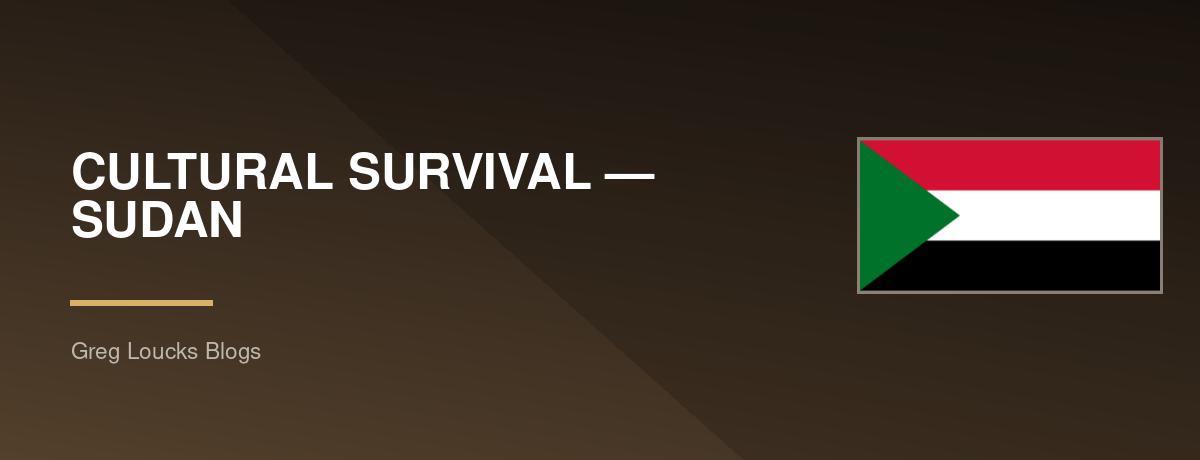
🇸🇩 CULTURAL SURVIVAL — SUDAN

🇸🇩 CULTURAL SURVIVAL — SUDAN PART 1 — THE ANCIENT LAND OF NUBIA The Nile, Early Human Settlement, Kerma, Kush, Napata, Meroë, the Pyramids of Sudan, Ancient Religion, Trade, Writing, Ironworking, and the Foundations of Sudanese Civilization Before Sudan was called Sudan, before Islam, before Christianity, before the Arab migrations, before European colonialism, and even before the kingdoms of Egypt and Kush, people were already living along the Nile Valley. This is one of the most important facts about Sudan. 🇸🇩 SUDAN IS ONE OF AFRICA'S GREAT ANCIENT CIVILIZATIONAL HEARTLANDS. The country is often discussed through the lens of its modern political struggles. But its history reaches back thousands upon thousands of years. The Nile created an environment where human communities could survive in the middle of otherwise harsh landscapes. Along its banks developed: AGRICULTURE. CITIES. KINGDOMS. RELIGIONS. TRADE NETWORKS. WRITING SYSTEMS. MONUMENTAL ARCHITECTURE. And eventually, one of the most powerful civilizations of the ancient African world: KUSH. 🇸🇩 THE LAND Modern Sudan occupies an enormous area in northeastern Africa. It connects several different ecological worlds. THE NILE VALLEY runs through the country. THE NUBIAN DESERT extends across northern Sudan. THE SAHEL transitions across central regions. SAVANNAH covers portions of the south and west. THE RED SEA forms Sudan's eastern coastline. THE HORN OF AFRICA lies farther southeast. THE SAHARA extends across the north. THIS made Sudan a natural crossroads. AFRICA. EGYPT. THE RED SEA. ARABIA. SUB-SAHARAN AFRICA. 🇸🇩 THE NILE The most important geographic feature in Sudanese history is: THE NILE RIVER. TWO GREAT RIVERS meet at modern: KHARTOUM. THE WHITE NILE flows northward from the Great Lakes region of Africa. THE BLUE NILE flows from the Ethiopian Highlands. THEY meet at Khartoum. FROM THERE the united Nile flows north toward Egypt and the Mediterranean. 🇸🇩 THE NILE AS A LIFELINE Outside the river system, much of northern Sudan is extremely dry. BUT along the Nile, water made settlement possible. FISH. WATER. AGRICULTURAL LAND. TRANSPORTATION. TRADE. THE RIVER was simultaneously: HIGHWAY. FOOD SOURCE. WATER SOURCE. BORDER. COMMUNICATION NETWORK. 🇸🇩 EARLY HUMANS Humans have occupied the region of modern Sudan for an extraordinarily long time. ARCHAEOLOGICAL EVIDENCE shows ancient human activity across the Nile Valley and surrounding regions. HUNTERS. FISHERS. GATHERERS. THESE early communities followed seasonal patterns. THE ENVIRONMENT was not always as dry as it is today. 🇸🇩 THE GREEN SAHARA Thousands of years ago, parts of what is now the Sahara were considerably wetter. GRASSLANDS. LAKES. RIVERS. WILDLIFE. HUMAN COMMUNITIES could live across regions that are now desert. ROCK ART provides evidence of ancient people and animals. CATTLE. GIRAFFES. ELEPHANTS. ANTELOPES. THESE IMAGES show that ancient northeastern Africa possessed environments very different from today's Sahara. 🇸🇩 CLIMATE CHANGE Over thousands of years, the African climate changed. RAINFALL declined in many areas. DESERTIFICATION expanded. PEOPLE increasingly concentrated around permanent water sources. THE NILE therefore became even more important. 🇸🇩 NUBIA The region south of ancient Egypt became known historically as: NUBIA. NUBIA was not always a single political state. IT was a broad cultural and geographic region. ITS boundaries changed over time. BUT the Nile corridor of northern Sudan became the heart of ancient Nubian civilization. 🇸🇩 WHO WERE THE NUBIANS? The term: NUBIAN covers a variety of ancient and later peoples of the Nile Valley. THEY developed their own: languages, cultures, political institutions, religions, and kingdoms. NUBIA was therefore not simply an extension of Egypt. IT was a civilization in its own right. 🇸🇩 EGYPT AND NUBIA The relationship between Egypt and Nubia was complicated. SOMETIMES: trade. SOMETIMES: diplomacy. SOMETIMES: war. SOMETIMES: conquest. SOMETIMES: cultural exchange. FOR THOUSANDS OF YEARS, the two civilizations influenced each other. 🇸🇩 THE FIRST GREAT KINGDOM One of the earliest major states in ancient Nubia was: KERMA. 🇸🇩 KERMA Kerma flourished in northern Sudan roughly between: 2500 BCE and 1500 BCE. THIS makes Kerma one of the earliest major urban civilizations in sub-Saharan Africa. 🇸🇩 THE CITY OF KERMA Kerma developed along the Nile. IT became a major center of: agriculture, trade, craft production, and political authority. THE CITY was strategically located between Egypt and the lands farther south. THIS allowed Kerma to become wealthy. 🇸🇩 TRADE Kerma participated in long-distance trade networks. GOODS moving through the region included: gold, ivory, ebony, animal skins, livestock, stone, and other valuable materials. EGYPT wanted access to many of these resources. KERMA could control important routes. THIS gave the kingdom political power. 🇸🇩 GOLD One of Nubia's greatest resources was: GOLD. GOLD was abundant in parts of the eastern desert and surrounding regions. EGYPTIAN RULERS highly valued Nubian gold. IT was used for: jewelry, royal objects, religious objects, and displays of wealth. THIS made Nubia strategically important to Egypt. 🇸🇩 IVORY Ivory was another valuable commodity. ELEPHANTS once lived across much larger portions of northeastern Africa. IVORY could be carved into: ornaments, tools, decorative objects, and luxury goods. 🇸🇩 EBONY Dark hardwoods from farther south were also valuable. THESE could be traded northward through Nubia. THIS made the Nile a commercial corridor connecting different ecological zones. 🇸🇩 KERMA AND EGYPT Egyptian rulers repeatedly sought greater control over Nubia. THE REASON was simple. NUBIA contained resources Egypt wanted. CONTROL OF NUBIA also protected Egypt's southern frontier. EGYPTIAN military expeditions therefore moved south. BUT Kerma was powerful enough to resist Egyptian expansion for long periods. 🇸🇩 KERMA'S POWER Kerma possessed: A KING. AN ARMY. AGRICULTURAL PRODUCTION. CRAFT SPECIALISTS. TRADE NETWORKS. IT was a genuine state. NOT simply a collection of villages. 🇸🇩 DEFFUFA One of the most remarkable surviving monuments at Kerma is the: WESTERN DEFFUFA. IT is a massive mud-brick structure. THE BUILDING was constructed from enormous quantities of mud brick. ITS exact original function has been debated. BUT it clearly demonstrates the organizational ability of Kerma's rulers. LARGE MONUMENTS require: workers, food supplies, engineering knowledge, administration, and political authority. 🇸🇩 KERMA CULTURE Kerma developed distinctive pottery. SOME Kerma ceramics are extraordinarily finely made. THEIR black-topped red surfaces became a recognizable feature of Kerma material culture. THIS shows that Nubian artisans developed their own artistic traditions. 🇸🇩 KERMA AND EGYPTIAN INFLUENCE Kerma imported Egyptian objects. BUT importing Egyptian goods did not mean Kerma became Egyptian. THE KINGDOM maintained its own political and cultural identity. THIS is important when understanding Nubia. CULTURAL EXCHANGE does not necessarily mean cultural replacement. 🇸🇩 THE EGYPTIAN CONQUEST During Egypt's: NEW KINGDOM, Egyptian rulers eventually conquered much of Nubia. BY AROUND the sixteenth century BCE, Egypt had established strong control over Nubian territory. EGYPT built: fortresses, temples, administrative centers, and military installations. NUBIA was incorporated into the Egyptian imperial system. BUT Nubian culture did not disappear. 🇸🇩 NUBIANS IN EGYPT Nubians participated in Egyptian society. SOLDIERS. OFFICIALS. MERCHANTS. ARTISANS. SOME Nubians became important military figures. THE EGYPTIAN ARMY recruited soldiers from Nubia. THIS created cultural exchange in both directions. 🇸🇩 EGYPTIAN TEMPLES IN NUBIA Egyptian rulers constructed monumental temples in Nubia. THESE included temples dedicated to Egyptian gods. BUT over time Nubian rulers would appropriate Egyptian religious traditions for their own political purposes. THIS would become extremely important later. 🇸🇩 THE COLLAPSE OF EGYPTIAN CONTROL Egyptian control over Nubia eventually weakened. THE: BRONZE AGE COLLAPSE and political changes in Egypt created opportunities for local powers. A NEW NUBIAN KINGDOM began emerging. ITS center eventually became: NAPATA. 🇸🇩 KUSH The kingdom that emerged around Napata became known as: KUSH. KUSH would become one of the most powerful states in ancient African history. 🇸🇩 NAPATA Napata was located near: JEBEL BARKAL. JEBEL BARKAL is a distinctive sacred mountain near the Nile. ANCIENT KUSHITES regarded the area as sacred. TEMPLES were built around it. THE SITE became a major religious and political center. 🇸🇩 AMUN The god: AMUN was extremely important in Kush. KUSHITE RULERS associated themselves strongly with the cult of Amun. THIS helped connect Kush with Egyptian religious traditions. BUT Kush developed its own political identity. 🇸🇩 THE KUSHITE KINGDOM Kush expanded its power. IT controlled important parts of the Nile Valley. ITS rulers adopted Egyptian royal symbols. THEY used Egyptian-style: crowns, titles, temples, and religious imagery. BUT they were African rulers governing an African kingdom. 🇸🇩 THE KUSHITE CONQUEST OF EGYPT Eventually, Kush became so powerful that its rulers conquered Egypt. THIS occurred during the eighth century BCE. THE KUSHITE RULERS became: PHARAOHS OF EGYPT. 🇸🇩 THE TWENTY-FIFTH DYNASTY Kushite rulers formed what Egyptologists call: THE TWENTY-FIFTH DYNASTY OF EGYPT. THIS was one of the greatest moments in ancient Nubian history. AN AFRICAN KINGDOM had conquered Egypt. 🇸🇩 PIYE One of the most famous Kushite rulers was: PIYE. HE expanded Kushite authority into Egypt. HIS campaign is recorded on the: PIYE VICTORY STELA. THE INSCRIPTION describes his military campaign and victory over rival Egyptian rulers. IT is one of the most important written sources for Kushite history. 🇸🇩 PIYE'S VICTORY Piye presented himself not merely as a conqueror. HE portrayed himself as a legitimate ruler restoring order. THIS was important to Egyptian political ideology. 🇸🇩 SHABAKA Another major Kushite ruler was: SHABAKA. HE strengthened Kushite rule in Egypt. KUSHITE religious and political influence expanded. 🇸🇩 TAHARQA Perhaps the most famous Kushite pharaoh was: TAHARQA. HE ruled during the seventh century BCE. TAHARQA was a major builder. TEMPLES were constructed and expanded. HIS monuments appear in both: EGYPT and NUBIA. 🇸🇩 KUSH AND ASSYRIA Kush eventually faced another great power. ASSYRIA. THE ASSYRIAN EMPIRE was one of the most powerful states in the ancient Near East. ASSYRIAN military technology was formidable. KUSHITE forces fought to maintain influence in Egypt. THE conflict eventually forced Kushite rulers to withdraw southward. 🇸🇩 KUSH SURVIVES The loss of Egypt did not destroy Kush. INSTEAD, Kush continued as an independent kingdom. ITS political center gradually shifted south. FROM: NAPATA toward: MEROË. 🇸🇩 MEROË Meroë became the most famous later capital of Kush. IT was located farther south along the Nile. THE REGION had several advantages. AGRICULTURAL LAND. ACCESS TO TRADE ROUTES. IRON RESOURCES. DISTANCE FROM EGYPT. 🇸🇩 THE MEROË PERIOD Kush became increasingly distinctive. EGYPTIAN INFLUENCE remained. BUT Kush developed its own: language, writing, art, architecture, and political traditions. 🇸🇩 MEROITIC LANGUAGE The Kushites eventually developed a writing system known as: MEROITIC. IT was written in two forms. MEROITIC HIEROGLYPHS. and MEROITIC CURSIVE. THE LANGUAGE has been partially deciphered. BUT many aspects of Meroitic remain difficult to understand. THIS means there is still much about Kush that historians are trying to recover. 🇸🇩 THE LOST VOICE OF KUSH This is one of the great mysteries of Sudanese history. WE have archaeological remains. WE have inscriptions. WE have temples. WE have pyramids. WE have pottery. BUT we cannot yet read every part of the Kushite historical record with certainty. THE CIVILIZATION therefore still contains unanswered questions. 🇸🇩 KUSHITE PYRAMIDS Kush developed its own pyramid tradition. AND this is one of the most recognizable features of ancient Sudan. SUDAN has more surviving ancient pyramids than Egypt. 🇸🇩 MEROË PYRAMIDS The pyramids at: MEROË are smaller and steeper than many of Egypt's famous pyramids. THEY were primarily royal burial monuments. KUSHITE kings and queens were buried in pyramid complexes. 🇸🇩 WHY PYRAMIDS? The pyramid tradition demonstrates the continuing influence of Egyptian religious ideas. BUT Kushite pyramids were not simply copies. THEY developed distinctive proportions, decoration, and burial traditions. THIS is another example of cultural adaptation. 🇸🇩 QUEENS OF KUSH One of the most fascinating features of Kushite civilization was the prominence of royal women. KUSH was ruled not only by kings. QUEENS could exercise major political power. 🇸🇩 KANDake The title: KANDAKE was used for powerful Kushite queens. THESE women could act as: rulers, regents, military leaders, and political authorities. 🇸🇩 AMANIRENAS One of the most famous Kushite queens was: AMANIRENAS. SHE led Kushite resistance against: ROME. 🇸🇩 KUSH VS. ROME After Rome conquered Egypt, Roman power reached the southern frontier. KUSH did not simply submit. KUSHITE forces attacked Roman territory. THE CONFLICT continued for years. 🇸🇩 AMANIRENAS The Kushite queen: AMANIRENAS became one of the leaders of this resistance. HER forces attacked Roman-controlled Egypt. ROMAN forces eventually invaded Kush. BUT Rome faced enormous logistical difficulties. THE DISTANCE from Egypt to Meroë was considerable. THE DESERT was harsh. KUSHITE resistance was strong. 🇸🇩 THE ROMAN-KUSHITE AGREEMENT Eventually, Rome and Kush negotiated. THE ROMANS withdrew from some disputed areas. KUSH remained independent. THIS was an extraordinary achievement. KUSH had resisted one of the greatest empires of the ancient world. 🇸🇩 KUSHITE MILITARY POWER Kush's military strength depended on several factors. ARCHERS. CAVALRY. INFANTRY. ELEPHANTS may also have been used in some periods. THE NILE provided a transportation corridor. THE DESERT provided natural protection. 🇸🇩 ARCHERY Kush was famous for archers. NUBIAN ARCHERS had long been respected by Egyptian armies. THEIR skills became a major component of Kushite warfare. THIS tradition may have contributed to the ancient reputation of Nubia as a land of powerful archers. 🇸🇩 IRON Meroë is also famous for its association with: IRONWORKING. IRON became increasingly important during the first millennium BCE. MEROË was located near resources needed for metal production. IRON TOOLS could improve: agriculture, construction, and warfare. 🇸🇩 MEROË AS AN INDUSTRIAL CENTER Some scholars have described Meroë as an important center of ancient iron production. FURNACES have been discovered. SLAG provides evidence of metalworking. TOOLS and artifacts demonstrate sophisticated craftsmanship. THE EXACT scale of Meroë's iron industry remains debated. BUT there is no question that metalworking was important. 🇸🇩 AGRICULTURE The Nile remained the foundation of Kushite civilization. FARMERS grew crops along the river. CATTLE were also important. LIVESTOCK had economic and cultural significance. WATER made large settlements possible. WITHOUT THE NILE, Kush could not have existed in the same form. 🇸🇩 TRADE Meroë was positioned between several worlds. EGYPT. RED SEA. HORN OF AFRICA. SAHARA. CENTRAL AFRICA. GOODS could move through the kingdom. GOLD. IVORY. EBONY. ANIMAL PRODUCTS. IRON. POTTERY. TEXTILES. 🇸🇩 RED SEA TRADE Routes toward the Red Sea connected Kush with regions farther east. MERCHANTS could reach: Arabia, the Red Sea, and ports connecting to the wider Indian Ocean world. THIS gave Kush access to international trade networks. 🇸🇩 AFRICAN CONNECTIONS Kush also maintained relationships with societies farther south. THIS is particularly important. KUSH was not simply a civilization oriented toward Egypt. IT was part of a broader African world. PEOPLE. GOODS. ANIMALS. TECHNOLOGY. RELIGIOUS IDEAS. ALL moved through northeastern Africa. 🇸🇩 RELIGION Religion was central to Kushite civilization. AMUN was extremely important. BUT Kushites also worshipped other gods. ISIS. OSIRIS. HORUS. APEDemak. 🇸🇩 APEDEMAK One of the most distinctly Kushite deities was: APEDEMAK. HE was often represented as a: LION GOD. APEDEMAK was associated with: power, war, royal authority, and fertility. HIS importance demonstrates that Kush was developing its own religious identity. 🇸🇩 NUBIAN RELIGION Kushite religion blended: EGYPTIAN TRADITIONS with LOCAL NUBIAN BELIEFS. THIS was not simple imitation. IT was cultural transformation. 🇸🇩 TEMPLE ARCHITECTURE Kushite temples often followed Egyptian architectural traditions. BUT their decoration and religious symbolism could be distinctly Nubian. TEMPLES served as: religious centers, political centers, economic centers, and symbols of royal authority. 🇸🇩 THE KING The Kushite king was not simply a political leader. HE was connected to the religious order. ROYAL POWER was closely tied to divine legitimacy. THIS was common throughout the ancient world. 🇸🇩 WOMEN AND POWER Kushite royal women deserve special attention. QUEENS could hold substantial authority. SOME were buried in monumental pyramids. SOME appear prominently in temple inscriptions. SOME participated directly in military and political affairs. THIS makes Kush particularly important in the study of ancient African women and political power. 🇸🇩 THE ART OF KUSH Kushite art developed its own style. ROYAL STATUES. RELIEF CARVINGS. JEWELRY. CERAMICS. SCULPTURE. KUSHITE rulers were often represented wearing distinctive crowns. THESE could include: double uraei, ram horns, and other royal symbols. 🇸🇩 THE DOUBLE URAEUS Kushite rulers sometimes wore crowns featuring: TWO COBRAS. THIS was distinct from many Egyptian royal traditions. IT could symbolize Kushite control over both: UPPER AND LOWER LANDS. 🇸🇩 MEROË AND THE ROMAN WORLD Even after the Roman conflict, trade continued. ROMAN goods reached Kush. KUSHITE goods reached Roman territory. THIS demonstrates that ancient African civilizations participated in international economies. 🇸🇩 THE DECLINE OF KUSH Like every great civilization, Kush eventually declined. THE REASONS are complex. CLIMATE CHANGE. TRADE ROUTE CHANGES. POLITICAL INSTABILITY. ECONOMIC PRESSURES. COMPETITION FROM NEIGHBORING STATES. A NEW POWER eventually emerged. AXUM. 🇸🇩 AXUM The Kingdom of Aksum was centered farther east, in what is now: ETHIOPIA and ERITREA. AXUM became an important regional power. TRADE through the Red Sea increasingly favored Aksum. THIS could weaken Meroë's economic position. 🇸🇩 THE END OF MEROË Meroë eventually declined during the fourth century CE. THE KINGDOM was eventually replaced by another Nubian political center: NOBATIA, and later Christian Nubian kingdoms. BUT Kush's cultural legacy did not disappear. IT became part of the foundation upon which later Sudanese civilizations developed. 🇸🇩 WHAT KUSH LEFT BEHIND Kush left: CITIES. TEMPLES. PYRAMIDS. WRITING. RELIGIOUS TRADITIONS. ART. TRADE NETWORKS. ROYAL INSTITUTIONS. AND perhaps most importantly: A HISTORICAL MEMORY. 🇸🇩 KUSH WAS AFRICAN For centuries, European interpretations of ancient history sometimes attempted to separate civilizations such as Kush from the broader history of Africa. BUT Kush was an African civilization. ITS people lived in northeastern Africa. ITS kingdom developed along the Nile. ITS rulers conquered Egypt. ITS armies fought Rome. ITS merchants participated in African and Red Sea trade. ITS culture developed from a mixture of local Nubian traditions and external influences. 🇸🇩 THIS MATTERS Sudan's ancient history demonstrates that Africa was never simply a place where civilizations arrived from elsewhere. AFRICANS built states. AFRICANS built cities. AFRICANS developed writing. AFRICANS built monumental architecture. AFRICANS developed international trade networks. AFRICANS fought empires. AND Africans built kingdoms that ruled other major civilizations. 🇸🇩 THE PYRAMIDS OF SUDAN Perhaps nothing symbolizes this better than the pyramids of Sudan. MEROË contains dozens of pyramids. NURI contains royal pyramids. EL-KURRU contains early Kushite royal burials. THESE sites demonstrate the scale of Kushite civilization. 🇸🇩 WHY ARE THEY LESS FAMOUS? Egypt's pyramids became globally famous. SUDAN'S PYRAMIDS received far less attention internationally. PART OF THE REASON is that Egypt became central to Western archaeological traditions. BUT Sudan contains an extraordinary archaeological heritage of its own. 🇸🇩 PRESERVING THE PAST Modern Sudan faces enormous challenges in preserving ancient sites. FLOODING. DEVELOPMENT. LOOTING. CLIMATE. POLITICAL INSTABILITY. ARCHAEOLOGICAL sites can be damaged or destroyed. THIS makes preservation extremely important. 🇸🇩 A LOST CIVILIZATION? Kush was never truly lost. THE physical remains survived. THE pyramids survived. THE temples survived. THE inscriptions survived. BUT the civilization's story was often neglected. TODAY, archaeologists continue reconstructing that story. 🇸🇩 THE NILE AS MEMORY The Nile connects Sudan's ancient and modern history. THE SAME RIVER that supported: Kerma, Napata, and Meroë still supports: modern Sudanese communities. THE RIVER remains central to: agriculture, transportation, settlement, and identity. 🇸🇩 THE ANCIENT FOUNDATION Before Sudan became: MUSLIM, before it became: CHRISTIAN, before it became: ARABIZED, before it became: COLONIAL, there was already a long African civilization along the Nile. KERMA. KUSH. NAPATA. MEROË. THESE form the ancient foundation of Sudanese history. 🇸🇩 PART 1 — FINAL LESSON Sudan's history did not begin with colonial borders. IT did not begin with Egypt's modern influence. IT did not begin with Islam. IT did not begin with the British. IT did not begin with the modern Republic of Sudan. IT began thousands of years earlier. ALONG THE NILE, people built communities. THOSE COMMUNITIES became cities. CITIES became kingdoms. KINGDOMS became empires. KERMA rose beside the Nile. KUSH conquered Egypt. KUSHITE PHARAOHS ruled one of the ancient world's greatest civilizations. MEROË became a center of trade and metalworking. KUSHITE QUEENS commanded armies and ruled kingdoms. KUSH resisted Rome. AND the pyramids of Sudan still stand as monuments to that civilization. 🇸🇩 BUT KUSH WAS NOT THE END. After the fall of Meroë, new Nubian kingdoms would rise. CHRISTIANITY would reach the Nile Valley. NOBATIA. MAKURIA. ALWA. THESE Christian Nubian kingdoms would survive for centuries. THEN Islam would gradually transform the region. ARAB MIGRATIONS would reshape Sudanese society. NEW SULTANATES would emerge. AND eventually the powerful: FUNJ SULTANATE would rise. 🇸🇩 NEXT PART 2 — CHRISTIAN NUBIA AND THE ISLAMIZATION OF SUDAN The Kingdoms of Nobatia, Makuria and Alwa, the Spread of Christianity, Nubian Churches, the Baqt with Egypt, Arab Migration, the Gradual Islamization of the Nile Valley, Sufi Traditions, the Rise of Muslim Sultanates, and the Transformation of Ancient Nubia into Medieval Sudan. 🇸🇩 CULTURAL SURVIVAL — SUDAN PART 2 — CHRISTIAN NUBIA AND THE ISLAMIZATION OF SUDAN Nobatia, Makuria, Alwa, Christian Nubian Civilization, the Baqt, Arab Migration, Islamization, Sufi Traditions, and the Birth of Medieval Sudan The fall of Meroë did not mean the end of civilization in the Nile Valley. It meant the beginning of another chapter. The great Kushite kingdom had disappeared, but the people of Nubia remained. New kingdoms emerged. New religions arrived. New languages developed. New political alliances were created. And gradually, the religious and cultural landscape of the Nile Valley transformed. For several centuries, much of northern and central Sudan became home to one of the most remarkable Christian civilizations in Africa. 🇸🇩 CHRISTIAN NUBIA. This civilization would survive for centuries between two powerful worlds: CHRISTIAN EGYPT to the north, and THE ISLAMIC WORLD to the north and east. Eventually Islam would become dominant. But the transformation was gradual. It took centuries. And Christian Nubia left behind an extraordinary legacy. 🇸🇩 AFTER MEROË The Kingdom of Kush declined during the fourth century CE. MEROË lost political importance. NEW KINGDOMS began emerging farther north and south. THREE became particularly important: NOBATIA. MAKURIA. ALWA. 🇸🇩 NOBATIA Nobatia developed in northern Nubia. ITS territory stretched along the Nile between Egypt and the regions farther south. THE KINGDOM was strategically positioned. EGYPT was directly to its north. THE RED SEA was to its east. THE NILE connected it to the rest of Nubia. 🇸🇩 MAKURIA Farther south, the Kingdom of: MAKURIA became one of the most powerful Nubian states. ITS capital was: DONGOLA. OLD DONGOLA became a major political and religious center. 🇸🇩 ALWA Farther south was: ALWA, also called: ALodia. ITS capital was probably located near the confluence of the: BLUE NILE and WHITE NILE. THIS placed it near the region of modern: KHARTOUM. 🇸🇩 THREE NUBIAN KINGDOMS The broad political landscape therefore included: NOBATIA in the north, MAKURIA in the central Nile Valley, and ALWA farther south. THESE were not identical states. EACH had its own political structures. BUT they shared aspects of: Nubian culture, Nile Valley traditions, Christianity, and interaction with Egypt. 🇸🇩 CHRISTIANITY ARRIVES Christianity had already spread through Egypt by late antiquity. EGYPTIAN CHRISTIANS became known as: COPTIC CHRISTIANS. MISSIONARIES and religious influences gradually moved southward. NUBIAN RULERS eventually adopted Christianity. THIS transformed Nubian civilization. 🇸🇩 CHRISTIANIZATION Christianization was not instantaneous. IT developed over generations. LOCAL RELIGIONS continued for some time. CHRISTIAN beliefs gradually became established. CHURCHES were constructed. MONASTERIES were established. CHRISTIAN ART developed. THE NILE VALLEY became part of the wider Christian world. 🇸🇩 NOBATIA BECOMES CHRISTIAN Nobatia adopted Christianity during the sixth century. MISSIONARIES from different Christian traditions were active in Nubia. THIS was partly connected to religious competition within the broader Christian world. BY THE END OF THE SIXTH CENTURY, Christianity had become firmly established among the Nubian kingdoms. 🇸🇩 BYZANTINE INFLUENCE The Byzantine Empire was the dominant Christian power in the eastern Mediterranean. BYZANTINE political and religious influence reached Egypt. FROM EGYPT, Christian traditions moved into Nubia. BUT Nubia was not simply a Byzantine colony. NUBIANS developed their own Christian culture. 🇸🇩 CHRISTIAN NUBIA Christian Nubian civilization lasted for centuries. THIS is one of the most important forgotten chapters of African history. AFRICA was not simply: PAGAN or MUSLIM. THERE WAS ALSO a major Christian civilization along the Nile. 🇸🇩 NUBIAN CHRISTIANITY Nubian Christianity was strongly connected with: COPTIC CHRISTIANITY. BUT Nubian churches developed distinctive local characteristics. ART. ARCHITECTURE. LITURGY. LANGUAGE. ALL developed within the Nubian environment. 🇸🇩 THE NUBIAN CHURCH Churches were constructed throughout Nubia. SOME were relatively small. OTHERS were substantial basilicas. WALLS were decorated with paintings. RELIGIOUS IMAGES depicted: Christ, Mary, angels, saints, and biblical scenes. 🇸🇩 NUBIAN MURALS Some of the most remarkable evidence for Christian Nubia comes from surviving wall paintings. THEY show: royal figures, saints, biblical scenes, angels, and religious symbols. THESE paintings demonstrate that Nubian Christianity had a sophisticated artistic tradition. 🇸🇩 FARAS One of the most famous Christian Nubian archaeological sites was: FARAS. FARAS was located in northern Nubia. ITS cathedral contained extraordinary murals. MANY were preserved after being buried and protected for centuries. TODAY these paintings provide valuable evidence about Christian Nubian society. 🇸🇩 NUBIAN KINGS Christian Nubian kings continued to exercise strong political authority. THEY were more than political administrators. THEY were also associated with the protection of Christianity. RELIGION and kingship remained closely connected. 🇸🇩 OLD DONGOLA The capital of Makuria, OLD DONGOLA, became one of the great centers of Christian Nubia. PALACES. CHURCHES. MONASTERIES. ADMINISTRATIVE BUILDINGS. ALL developed there. THE CITY was a major political center for centuries. 🇸🇩 THE GREAT CHURCH Old Dongola contained impressive churches. SOME were rebuilt multiple times. THIS suggests a stable and prosperous Christian community. 🇸🇩 MONASTERIES Christian Nubia also developed monastic traditions. MONKS lived in desert and river environments. MONASTERIES could become centers of: prayer, education, manuscript production, and community life. 🇸🇩 THE DESERT MONASTIC TRADITION The desert was not simply empty land. IT could become a place for: spiritual retreat, monasticism, and pilgrimage. THIS connected Nubia to the wider Christian traditions of Egypt. 🇸🇩 NUBIAN LANGUAGES Christian Nubia also developed written traditions in local languages. NOBIIN. OLD NUBIAN. OLD NUBIAN was written using an alphabet based largely on: COPTIC with additional characters. THIS is an extremely important development. NUBIAN was not merely spoken. IT could be written. DOCUMENTS could be recorded. RELIGIOUS TEXTS could be translated. ADMINISTRATION could use written communication. 🇸🇩 OLD NUBIAN DOCUMENTS Archaeologists have discovered Old Nubian texts dealing with: religion, legal matters, letters, contracts, and administration. THESE provide a direct window into medieval Nubian society. 🇸🇩 CHRISTIANITY AND LANGUAGE Religious traditions therefore helped preserve local language. THIS is a recurring historical pattern. A NEW RELIGION arrives. BUT local communities adapt it. THEY translate. THEY build. THEY create local artistic traditions. CHRISTIANITY became Nubian. 🇸🇩 THE BAQT One of the most famous agreements in medieval African history was the: BAQT. IT was an agreement between: MAKURIA and THE MUSLIM RULERS OF EGYPT. IT was established in the seventh century. THE agreement followed an attempted Muslim conquest of Nubia. 🇸🇩 THE MUSLIM CONQUEST After the Arab Muslim conquest of Egypt, Muslim forces moved south. THEY encountered: NUBIAN RESISTANCE. NUBIAN ARCHERS were particularly effective. THEY became famous for their ability to strike enemy forces from a distance. 🇸🇩 NUBIAN ARCHERS Arab sources developed a strong reputation for Nubian archery. THE Muslim armies faced serious difficulties. EVENTUALLY the two sides reached an agreement. 🇸🇩 THE BAQT AGREEMENT The Baqt established a long-term relationship between Egypt and Makuria. IT involved: trade, diplomatic relations, and exchanges of people. THE precise details and interpretation of the Baqt remain debated by historians. BUT its historical significance is enormous. IT helped create a relatively stable frontier between: CHRISTIAN NUBIA and MUSLIM EGYPT. 🇸🇩 A UNIQUE FRONTIER For centuries, a Christian kingdom existed immediately south of Muslim Egypt. THIS was unusual. CHRISTIAN NUBIA survived. MUSLIM EGYPT survived. TRADE continued. DIPLOMACY continued. CONFLICT occasionally occurred. BUT neither side immediately destroyed the other. 🇸🇩 NUBIA'S GOLD Trade remained important. GOLD continued to be one of the region's major resources. OTHER GOODS included: ivory, livestock, slaves, textiles, and agricultural products. EGYPT wanted access to Nubian resources. NUBIA wanted access to Egyptian markets. THIS created economic interdependence. 🇸🇩 SLAVE TRADING It is important to acknowledge that slavery existed in medieval Nubia and the wider Nile Valley. PEOPLE could be captured during warfare. ENSLAVEMENT was part of regional economies. THIS was not unique to one religion or civilization. SLAVERY existed across many societies in Africa, the Middle East, and Europe during the medieval period. BUT its existence became increasingly significant as Muslim trade networks expanded southward. 🇸🇩 ARAB MIGRATION One of the most important long-term transformations was the migration of: ARAB TRIBES into Sudan. THESE migrations occurred over centuries. THEY did not happen all at once. ARAB GROUPS entered the Nile Valley and surrounding regions. SOME settled permanently. OTHERS remained pastoral. SOME intermarried with local populations. THIS began gradually changing the ethnic and linguistic landscape. 🇸🇩 ARABIZATION Arabization was a long process. IT involved more than ancestry. IT also involved: language, culture, religion, political alliances, and social identity. PEOPLE could become Arabic-speaking without being recent immigrants from Arabia. THIS is an important distinction. 🇸🇩 ISLAMIZATION Islamization was similarly gradual. MUSLIM merchants and travelers entered Sudan. TRADERS established communities. RELIGIOUS SCHOLARS arrived. SUFI ORDERS eventually became extremely influential. BUT Christian Nubian kingdoms continued for centuries. 🇸🇩 CHRISTIAN NUBIA SURVIVES By the medieval period, Makuria remained a significant Christian kingdom. ITS rulers controlled the central Nile Valley. ITS churches remained active. ITS monasteries remained active. ITS trade networks remained active. THIS continued long after the rise of Islam in Egypt. 🇸🇩 THE FATIMIDS When the: FATIMID CALIPHATE controlled Egypt, relations with Nubia could be relatively cooperative. THE FATIMIDS were themselves Muslims, but they followed: ISMAILI SHI'A ISLAM. MAKURIA remained Christian. DIPLOMACY continued. 🇸🇩 THE AYYUBIDS Later, the: AYYUBIDS came to power in Egypt. THE Ayyubid dynasty was founded by: SALADIN. THE AYYUBIDS were Sunni Muslims. THEIR relationship with Nubia was more confrontational. 🇸🇩 THE MAMLUKS The next major power in Egypt was: THE MAMLUK SULTANATE. THE MAMLUKS became one of the most powerful states in the medieval Middle East. CAIRO became their great capital. MAMLUK rulers increasingly intervened in Nubian politics. 🇸🇩 NUBIAN POLITICAL FRAGMENTATION By this period, Makuria was experiencing internal problems. SUCCESSION DISPUTES. POLITICAL CONFLICT. ECONOMIC PRESSURES. THE MAMLUKS exploited these weaknesses. NUBIAN rulers became increasingly dependent on political relationships with Egypt. 🇸🇩 THE FALL OF MAKURIA By the fourteenth century, Makuria had weakened dramatically. ITS political structure fragmented. MUSLIM influence increased. CHRISTIAN institutions remained, but their political dominance declined. 🇸🇩 ALWA The southern kingdom of Alwa also eventually declined. THE exact process is not completely understood. BUT by the late medieval period, the great Christian Nubian kingdoms were disappearing. 🇸🇩 WAS CHRISTIANITY DESTROYED? No. CHRISTIAN communities survived for centuries. CHURCHES continued in some regions. MONASTERIES continued. LOCAL Christian traditions survived longer than the political kingdoms themselves. BUT Islam was becoming increasingly dominant. 🇸🇩 THE GRADUAL TRANSFORMATION The religious transformation of Sudan was therefore not: CHRISTIAN → MUSLIM OVERNIGHT. IT was: CHRISTIAN alongside MUSLIM for centuries. THEN Islam gradually became dominant. 🇸🇩 WHY DID ISLAM SPREAD? Several factors contributed. TRADE. MIGRATION. INTERMARRIAGE. POLITICAL ALLIANCES. SUFI MISSIONARY ACTIVITY. ECONOMIC CONNECTIONS. AND the growing influence of Muslim states. 🇸🇩 SUFISM One of the most important forces in Sudanese Islam became: SUFISM. SUFI traditions emphasize: spiritual devotion, remembrance of God, religious teachers, and personal spiritual experience. SUFI ORDERS developed networks throughout Sudan. SHEIKHS could become highly respected local leaders. ZAWIYAS and religious centers became places of: prayer, education, charity, and community life. 🇸🇩 ISLAM BECOMES SUDANESE As Islam spread, it did not simply erase older traditions. LOCAL CUSTOMS continued. LOCAL LANGUAGES continued. TRIBAL STRUCTURES continued. ISLAM became integrated into existing society. THIS created a distinctly Sudanese Islamic culture. 🇸🇩 ARABIC Arabic gradually became increasingly important. IT became the language of: trade, religion, administration, and eventually much of public life. BUT Sudan remained linguistically diverse. NUBIAN LANGUAGES survived. BEJA survived. FUR. NUBA LANGUAGES. NILOTIC LANGUAGES. MANY languages would continue into modern Sudan. 🇸🇩 BEJA The: BEJA people of eastern Sudan have an ancient history in the Red Sea region. THEIR language belongs to the: CUSHITIC language family. THEY maintained pastoral traditions and strong regional identities. 🇸🇩 THE NUBA MOUNTAINS The: NUBA MOUNTAINS became another important cultural region. MANY different peoples and languages developed there. THESE communities maintained distinctive cultural traditions. ISLAMIZATION did not affect every region equally. CHRISTIANITY did not disappear everywhere at the same time. LOCAL RELIGIONS also survived in some areas. 🇸🇩 DARFUR Farther west, the region of: DARFUR developed its own political traditions. THE NAME literally relates to the: LAND OF THE FUR. THE FUR became one of the region's major peoples. ISLAM eventually became important there. BUT Darfur developed separately from the Nile Valley. 🇸🇩 THE SULTANATES As Christian Nubian kingdoms declined, new Muslim states began emerging. THE FUNJ would eventually establish one of the most important. 🇸🇩 THE FUNJ The: FUNJ SULTANATE rose during the sixteenth century. ITS center was: SENNAR. THIS marked the beginning of a new era. 🇸🇩 SENNAR Sennar was located along the: BLUE NILE. ITS position allowed the Funj to control important agricultural and trade routes. THE FUNJ built a powerful Muslim kingdom. THIS state would become one of the foundations of early modern Sudan. 🇸🇩 THE FUNJ AND ISLAM The Funj rulers became Muslims. SUFI ISLAM became particularly influential. RELIGIOUS SCHOLARS gained importance. MOSQUES were built. ISLAMIC EDUCATION expanded. 🇸🇩 THE ABDALLAB Another important political force was: THE ABDALLAB. THEY controlled territories near the Nile north of the Funj heartland. THE relationship between the Funj and Abdallab was an important part of the political system. 🇸🇩 A NEW SUDAN By the early modern period, the region was increasingly recognizable as a Muslim Sudanese civilization. ARABIC was increasingly important. ISLAM was dominant in many areas. SUFI NETWORKS connected communities. SULTANATES controlled territory. TRADE linked the Nile to the Red Sea and Sahara. BUT Sudan remained extraordinarily diverse. 🇸🇩 SUDAN WAS NEVER ONE PEOPLE This is essential. SUDAN has always contained many peoples. NUBIANS. BEJA. FUR. NUBA. ARABIZED COMMUNITIES. NILOTIC PEOPLES. AND MANY OTHERS. THEIR languages, histories, and traditions differed. WHAT connected them was not a single ancient ethnic identity. IT was a constantly evolving network of: RIVERS. TRADE. RELIGION. MIGRATION. POLITICS. CULTURAL EXCHANGE. 🇸🇩 THE NILE AS A BRIDGE The Nile remained the great connector. NORTH. SOUTH. EGYPT. NUBIA. CENTRAL SUDAN. PEOPLE could move. GOODS could move. RELIGIONS could move. LANGUAGES could interact. THIS created the foundations of medieval Sudan. 🇸🇩 CHRISTIAN NUBIA'S LEGACY The Christian kingdoms eventually disappeared politically. BUT their legacy remains. OLD DONGOLA. FARAS. NUBIAN CHURCHES. OLD NUBIAN TEXTS. MONASTERIES. WALL PAINTINGS. THESE remind us that Sudan was once home to one of Africa's great Christian civilizations. 🇸🇩 THE ISLAMIC LEGACY The later transformation created another layer. ARABIC. ISLAM. SUFISM. MOSQUES. SULTANATES. THESE became central to Sudanese civilization. BUT they did not completely erase what came before. 🇸🇩 CULTURAL SURVIVAL This is the central theme. KUSH did not simply vanish. ITS people remained. NUBIAN languages remained. NUBIAN traditions remained. CHRISTIANITY remained for centuries. THEN Islam became dominant. BUT older cultural identities continued underneath the new religious landscape. 🇸🇩 PART 2 — FINAL LESSON After the fall of Kush, Sudan did not enter a dark age. NEW KINGDOMS rose. NOBATIA. MAKURIA. ALWA. CHRISTIANITY became dominant across much of the Nile Valley. NUBIAN churches were built. OLD NUBIAN was written. KINGS ruled Christian kingdoms. NUBIAN ARCHERS defended their homeland. MAKURIA signed the famous: BAQT with Muslim Egypt. CHRISTIAN NUBIA survived for centuries. THEN Arab migration increased. ISLAM spread gradually. SUFI ORDERS became powerful. ARABIC expanded. CHRISTIAN KINGDOMS declined. MUSLIM SULTANATES emerged. AND the foundations were laid for the next great period of Sudanese history. 🇸🇩 THE FUNJ SULTANATE. The Funj would establish a powerful state centered on Sennar. DARFUR would develop its own great sultanate. OTTOMAN-EGYPTIAN power would eventually move south. THE MAHDIST REVOLUTION would challenge foreign rule. AND Sudan would enter the modern age. 🇸🇩 NEXT PART 3 — THE SULTANATES, OTTOMAN-EGYPTIAN RULE, AND THE MAHDIST REVOLUTION The Funj Sultanate, Sennar, Darfur, Kordofan, Sufi Islam, Ottoman-Egyptian Expansion, Slavery and the Slave Trade, European Imperialism, Muhammad Ahmad al-Mahdi, the Siege of Khartoum, General Gordon, the Mahdist State, and Sudan's Resistance to Foreign Rule. 🇸🇩 CULTURAL SURVIVAL — SUDAN PART 3 — THE SULTANATES, OTTOMAN-EGYPTIAN RULE, AND THE MAHDIST REVOLUTION The Funj Sultanate, Sennar, Darfur, Kordofan, Ottoman-Egyptian Expansion, Sufi Islam, Slavery, European Imperialism, Muhammad Ahmad al-Mahdi, the Siege of Khartoum, and Sudanese Resistance By the sixteenth century, the great Christian kingdoms of medieval Nubia had largely disappeared as major political powers. But Sudan did not become politically empty. A new civilization was taking shape. ISLAMIC SUDAN. Power moved southward. New sultanates emerged. Trade expanded across the Nile, the Sahara, and the Red Sea. Sufi Islam became deeply rooted. And eventually, a new foreign power arrived with ambitions to control the entire Nile Valley. That power was: EGYPT. Behind Egypt stood another enormous empire: THE OTTOMAN EMPIRE. And behind the expanding European presence in Egypt stood an even larger imperial struggle. The result would eventually produce one of the most famous anti-colonial revolutions in nineteenth-century Africa: THE MAHDIST REVOLUTION. 🇸🇩 THE FUNJ SULTANATE The most important state in central Sudan during the early modern period was: THE FUNJ SULTANATE. ITS CAPITAL: SENNAR. THE KINGDOM emerged during the sixteenth century. ITS territory extended across much of the central Nile Valley and surrounding regions. THE FUNJ controlled important agricultural areas. THEY also controlled major trade routes. SENNAR became a major political center. 🇸🇩 THE BLUE NILE The location of Sennar was strategically important. THE BLUE NILE provided: water, fertile agricultural land, transportation, and access to trade. FARMERS could grow crops along the river. TRADERS could move goods. ARMIES could move along the river system. THE RIVER therefore remained the foundation of political power. 🇸🇩 FUNJ AGRICULTURE Agriculture supported the state. SORGHUM. MILLET. OTHER GRAINS. LIVESTOCK. FARMING was supplemented by pastoralism. CATTLE were particularly important. AGRICULTURAL SURPLUS allowed rulers to maintain: armies, administrators, religious institutions, and royal courts. 🇸🇩 ISLAMIC SENNAR The Funj rulers became Muslims. ISLAM became central to political legitimacy. BUT the religious transformation was not simply imposed from above. SUFI SCHOLARS. RELIGIOUS TEACHERS. MERCHANTS. LOCAL COMMUNITIES. ALL participated in the development of Sudanese Islam. 🇸🇩 SUFISM Sufi Islam became one of the defining features of Sudanese religious life. SUFI SHEIKHS could become enormously influential. THEY taught: Qur'an, Islamic law, spiritual disciplines, and religious traditions. RELIGIOUS CENTERS could also provide: education, charity, mediation, and community organization. 🇸🇩 THE QADIRIYYA The: QADIRIYYA became one of the important Sufi traditions in Sudan. ITS roots ultimately traced back to: ABD AL-QADIR AL-JILANI of Baghdad. THE ORDER spread across the Islamic world. SUDAN became one of the regions where Sufi traditions became deeply embedded in local society. 🇸🇩 THE SHADILIYYA Other Sufi traditions also reached Sudan. THESE religious networks connected Sudan with the broader Islamic world. BUT they also became distinctly Sudanese. LOCAL SHEIKHS developed their own communities. LOCAL CUSTOMS were incorporated. RELIGIOUS PRACTICE became part of everyday life. 🇸🇩 THE FUNJ AND THE ABDALLAB The Funj state developed a political relationship with the: ABDALLAB. THE ABDALLAB controlled areas farther north. THEIR territory included important sections of the Nile Valley. THE TWO POWERS worked together while maintaining separate political identities. THIS created a political order stretching across much of central Sudan. 🇸🇩 TRADE Sennar benefited from its position between several major trading zones. EGYPT. THE RED SEA. ETHIOPIA. THE SAHEL. THE SUDAN INTERIOR. GOODS moved in multiple directions. GOLD. IVORY. LIVESTOCK. GUM ARABIC. SLAVES. TEXTILES. SALT. WEAPONS. 🇸🇩 THE SAHARA The Sahara was not simply a barrier. IT was also a transportation network. CARAVANS crossed desert routes. CAMELS made long-distance travel possible. TRADERS connected: North Africa, the Nile Valley, and West Africa. 🇸🇩 DARFUR While the Funj ruled much of central Sudan, another major state developed in the west: THE SULTANATE OF DARFUR. DARFUR developed independently of Sennar. ITS rulers belonged to the: FUR. THE SULTANATE became an important regional power. 🇸🇩 DARFUR'S GEOGRAPHY Darfur lies west of the Nile Valley. IT contains: savannah, desert, mountains, and important seasonal water sources. THE: MARrah MOUNTAINS became particularly important. THEY provided: water, agricultural land, and strategic protection. 🇸🇩 THE FUR The Fur people developed a powerful political identity. THEIR language, culture, and traditions remain important to Darfur today. 🇸🇩 DARFUR AND ISLAM Islam became deeply established in Darfur. SULTANS used Islamic institutions. SCHOLARS served royal courts. MOSQUES were constructed. ISLAMIC learning expanded. BUT local traditions remained important. 🇸🇩 DARFUR'S TRADE Darfur connected the Nile Valley with: CHAD. LIBYA. THE CENTRAL SAHEL. CARAVAN ROUTES crossed the region. DARFUR therefore became an important intermediary between: North Africa and central Africa. 🇸🇩 KORDOFAN Another important region was: KORDOFAN. IT lies between the Nile Valley and western Sudan. KORDOFAN became strategically important because it connected: SENNAR, DARFUR, and EGYPT. WHOEVER CONTROLLED KORDOFAN could influence important trade routes. 🇸🇩 THE OTTOMAN EMPIRE Meanwhile, a powerful empire was expanding across the Middle East and North Africa. THE OTTOMAN EMPIRE. THE OTTOMANS had conquered: Egypt in: 1517. EGYPT became part of the Ottoman imperial system. BUT the Ottomans did not immediately establish direct control over all of Sudan. MUCH of Sudan remained under local rulers. 🇸🇩 THE OTTOMAN FRONTIER The Ottoman Empire therefore had influence around the northern Nile Valley, while independent Sudanese states controlled much of the territory farther south. THIS created a political frontier. 🇸🇩 EGYPT'S AMBITIONS By the nineteenth century, Egypt itself was becoming increasingly powerful. MUHAMMAD ALI PASHA had established a powerful dynasty in Egypt. HE wanted to build a strong centralized state. HE also wanted: land, soldiers, gold, and control of trade routes. SUDAN offered all four. 🇸🇩 THE EGYPTIAN CONQUEST In: 1820, Egyptian forces invaded Sudan. THEIR objective was to bring Sudan under Egyptian control. THE invasion was led by forces associated with: ISMAIL KAMIL PASHA. 🇸🇩 THE FALL OF SENNAR The Funj Sultanate was already weakened. EGYPTIAN military power was considerably stronger. THE Egyptians therefore conquered much of the Funj heartland. SENNAR lost its political independence. THE Funj state effectively ceased to be the dominant power. 🇸🇩 KORDOFAN Egyptian forces also moved into: KORDOFAN. THE REGION was brought under Egyptian rule. 🇸🇩 DARFUR RESISTS Darfur initially maintained its independence. THE Sultanate of Darfur remained a major regional power. EGYPT wanted to expand westward. BUT Darfur's distance and geography made conquest difficult. 🇸🇩 EGYPTIAN RULE The Egyptian administration attempted to centralize Sudan. TAXATION was imposed. GOVERNORS were appointed. MILITARY garrisons were established. TRADE was reorganized. SLAVE RAIDS became an important part of the economy. GOLD was sought. AGRICULTURAL production was taxed. 🇸🇩 THE TURKIYAH The period of Egyptian-Ottoman rule is commonly known in Sudanese history as: THE TURKIYAH. IT began in the nineteenth century. "TURKIYAH" refers broadly to the period of Turco-Egyptian rule. 🇸🇩 FOREIGN RULE For many Sudanese communities, the new government represented: FOREIGN RULE. TAX COLLECTORS arrived. SOLDIERS arrived. GOVERNORS arrived. NEW LAWS were imposed. LOCAL RULERS lost authority. THIS created resentment. 🇸🇩 TAXATION One major source of resentment was taxation. THE GOVERNMENT needed revenue. TAXES could be collected in: money, livestock, grain, and other forms. LOCAL COMMUNITIES often viewed these demands as excessive. 🇸🇩 CORRUPTION Corruption also became a serious problem. OFFICIALS could exploit their positions. LOCAL populations could face arbitrary demands. THIS weakened the legitimacy of Egyptian rule. 🇸🇩 SLAVERY The history of nineteenth-century Sudan cannot be understood without discussing slavery. SLAVERY had existed in the region for centuries. BUT under nineteenth-century expansion, slave raiding became increasingly significant. SOUTHERN REGIONS were particularly vulnerable. RAIDERS captured people. CAPTIVES could be transported north. SOME were incorporated into households. OTHERS were used in agriculture, military service, or other forms of labor. 🇸🇩 THE SLAVE TRADE Sudan became connected to broader slave-trading networks. PEOPLE were transported toward: Egypt, the Red Sea, and other markets. THIS had devastating consequences for affected communities. VILLAGES could be attacked. FAMILIES could be separated. COMMUNITIES could be displaced. 🇸🇩 SLAVERY AND THE MILITARY Some enslaved men were recruited into military forces. THESE soldiers could become important components of Egyptian-controlled armies. THE GOVERNMENT therefore had complicated interests in the institution. 🇸🇩 EUROPEAN PRESSURE By the nineteenth century, European powers were increasingly involved in African affairs. BRITAIN had become particularly powerful in Egypt. BRITAIN was determined to protect its route to: INDIA. THE SUEZ CANAL opened in: 1869. THIS made Egypt and the Nile Valley even more strategically important. 🇸🇩 THE SUEZ CANAL The canal connected: MEDITERRANEAN and RED SEA. EUROPEAN TRADE could move much more rapidly toward Asia. BRITAIN therefore became deeply interested in Egypt. AND because Egypt controlled Sudan, Sudan became strategically important to Britain as well. 🇸🇩 ISMAIL PASHA Egypt's ruler: ISMAIL PASHA attempted to expand Egyptian control farther south. HE wanted to build a modern Egyptian empire. HIS government expanded administration into: Sudan, the upper Nile, and areas toward the Red Sea. 🇸🇩 EQUATORIAL EXPANSION Egyptian forces moved southward. THEY established garrisons. ADMINISTRATORS attempted to impose authority. BUT the distances were enormous. SUPPLY was difficult. LOCAL RESISTANCE was common. DISEASE was another major problem. 🇸🇩 CHARLES GORDON One of the most famous Europeans involved in Sudan was: CHARLES GEORGE GORDON. HE became known as: GORDON PASHA. GORDON had previously served in China and had developed a reputation as a military commander. HE was appointed to important positions in Sudan. 🇸🇩 GORDON IN SUDAN Gordon attempted to strengthen administration. HE opposed some aspects of the slave trade. HE also tried to reform government institutions. BUT the political situation was deteriorating. TAXATION. CORRUPTION. MILITARY REPRESSION. FOREIGN RULE. SLAVE RAIDING. ALL created instability. 🇸🇩 THE RELIGIOUS BACKGROUND Sudan's Sufi religious networks had become extremely powerful. SHEIKHS could command enormous loyalty. RELIGIOUS leaders were often seen as more trustworthy than government officials. THIS created the environment in which a revolutionary religious movement could emerge. 🇸🇩 MUHAMMAD AHMAD In: 1881, a religious leader named: MUHAMMAD AHMAD IBN AS-SAYYID ABDALLAH declared himself: THE MAHDI. 🇸🇩 THE MAHDI In Islamic tradition, the: MAHDI is a divinely guided figure associated with the restoration of justice. MUHAMMAD AHMAD claimed that he was the awaited Mahdi. HIS message resonated deeply with many Sudanese. 🇸🇩 WHY? Because Sudanese society was already experiencing enormous pressure. FOREIGN RULE. TAXATION. CORRUPTION. ECONOMIC EXPLOITATION. RELIGIOUS CONFLICT. SLAVE RAIDS. THE MAHDI offered something different. ISLAMIC REVIVAL. JUSTICE. INDEPENDENCE. UNITY. 🇸🇩 THE MAHDIST MOVEMENT Muhammad Ahmad's followers became known as: ANSAR. THE ANSAR were intensely loyal to the Mahdi. THEY came from different regions and communities. THIS allowed the movement to grow rapidly. 🇸🇩 THE REVOLT BEGINS The Mahdist movement began in the countryside. GOVERNMENT forces attempted to suppress it. BUT the movement continued growing. MILITARY victories increased its prestige. 🇸🇩 EL OBEID In: 1883, Mahdist forces captured: EL OBEID. THIS was a major turning point. EL OBEID was the capital of Kordofan. ITS capture demonstrated that the Mahdists were no longer merely rebels. THEY were becoming a rival government. 🇸🇩 THE HICKS EXPEDITION Egypt sent a major military force under: WILLIAM HICKS. THE Hicks expedition attempted to defeat the Mahdists. IN: 1883, the expedition was destroyed at: SHEIKAN. THE DEFEAT was catastrophic. IT demonstrated the enormous military strength of the Mahdist movement. 🇸🇩 THE MAHDI'S ARMY Mahdist forces were often poorly equipped compared with European armies. BUT they possessed: NUMBERS. MOTIVATION. LOCAL KNOWLEDGE. RELIGIOUS ZEAL. THEY could move rapidly. THEY could operate in difficult terrain. THEY could draw support from local populations. 🇸🇩 KHARTOUM The next major target became: KHARTOUM. KHARTOUM was the administrative center of Egyptian Sudan. IT was located at the meeting point of: THE BLUE NILE and THE WHITE NILE. ITS strategic position was enormous. CONTROL KHARTOUM and you controlled a major portion of the Nile Valley. 🇸🇩 GORDON RETURNS The British government sent: CHARLES GORDON back to Sudan. HIS mission was primarily to evacuate Egyptian forces and civilians from Sudan. BUT the situation became increasingly dangerous. THE MAHDISTS were approaching. KHARTOUM became surrounded. 🇸🇩 THE SIEGE OF KHARTOUM The siege began in: 1884. GORDON remained inside the city. COMMUNICATION with the outside world became increasingly difficult. THE CITY was surrounded by Mahdist forces. FOOD became scarce. SUPPLIES declined. THE BRITISH debated whether to send a relief expedition. 🇸🇩 GORDON'S FATE A British relief force was eventually sent. BUT it arrived too late. ON: JANUARY 26, 1885, Mahdist forces captured Khartoum. GORDON was killed. HIS death became a major event in British imperial history. 🇸🇩 THE MAHDIST VICTORY The fall of Khartoum was a tremendous victory. THE MAHDISTS had defeated: Egyptian forces, and British-backed forces. SUDAN was effectively liberated from Egyptian control. 🇸🇩 THE MAHDIST STATE Muhammad Ahmad established a new state. ITS government was based on Islamic principles. THE MAHDI became the central political and religious authority. HIS followers viewed the movement as a restoration of Islamic justice. 🇸🇩 BUT the Mahdi died unexpectedly in: 1885. HIS movement did not collapse. LEADERSHIP passed to: ABDALLAH IBN MUHAMMAD. HE became known as: THE KHALIFA. 🇸🇩 THE KHALIFA Abdallahi consolidated the Mahdist state. HE established: an army, administration, taxation, and a centralized political system. THE Mahdist capital became: OMDURMAN. 🇸🇩 OMDURMAN Omdurman grew into a major city. IT became the center of the Mahdist state. MOSQUES. MARKETS. GOVERNMENT. MILITARY CAMPS. ALL developed around the city. 🇸🇩 THE MAHDIST EMPIRE The Mahdist state controlled enormous territory. IT extended across much of Sudan. BUT maintaining such a large state was extremely difficult. REBELLIONS occurred. FOOD SHORTAGES occurred. INTERNAL POLITICAL CONFLICT occurred. MILITARY PRESSURE continued. 🇸🇩 ETHIOPIA The Mahdist state also came into conflict with: ETHIOPIA. EMPEROR YOHANNES IV fought the Mahdists. THE CONFLICT was complicated by the wider rivalry between regional powers. 🇸🇩 BRITAIN RETURNS By the 1890s, Britain had decided that the Mahdist state could not be allowed to remain independent. EGYPT was increasingly under British control. BRITAIN wanted control of the Nile Valley. THE MAHDIST STATE stood directly in the way. 🇸🇩 KITCHENER The British campaign was led by: HERBERT KITCHENER. HE commanded a modern army. THIS army possessed: modern rifles, artillery, machine guns, and river transport. THE military balance had changed dramatically. 🇸🇩 THE ANGLO-EGYPTIAN RECONQUEST British and Egyptian forces advanced south. RAILWAYS were constructed. STEAMBOATS moved along the Nile. TELEGRAPH lines improved communication. THIS gave the invading army enormous logistical advantages. 🇸🇩 THE BATTLE OF OMDURMAN In: 1898, the decisive battle occurred at: OMDURMAN. MAHDIST forces attacked the Anglo-Egyptian army. THE RESULT was catastrophic for the Mahdists. MODERN machine guns and artillery inflicted enormous casualties. THE Mahdist army was defeated. 🇸🇩 KHALIFA ABDALLAHI The Khalifa escaped. HE continued resistance for another period. BUT the Mahdist state had been effectively destroyed. 🇸🇩 THE END OF THE MAHDIST STATE In: 1899, Khalifa Abdallahi was killed at: UMM DIWAYKARAT. THE organized Mahdist state collapsed. SUDAN was once again under foreign rule. 🇸🇩 BUT THE MAHDI'S LEGACY SURVIVED The Mahdist movement had demonstrated something important. SUDAN could unite across enormous distances. RELIGION could become a political force. FOREIGN RULE could be challenged. LOCAL communities could defeat powerful armies. THE Mahdist revolution became one of the most important examples of African resistance to imperialism. 🇸🇩 THE GREAT PATTERN The history of Sudan during this period follows a recurring pattern. FOREIGN POWER ARRIVES. LOCAL POWER RESISTS. FOREIGN POWER EXPANDS. LOCAL SOCIETY ADAPTS. NEW POLITICAL MOVEMENTS EMERGE. RESISTANCE RETURNS. THIS would continue into the twentieth century. 🇸🇩 PART 3 — FINAL LESSON The collapse of Christian Nubia did not end Sudanese civilization. THE FUNJ built a new Muslim state. SENNAR became a political center. DARFUR developed its own powerful sultanate. KORDOFAN became strategically important. SUFI ISLAM became deeply rooted. TRADE connected Sudan to Africa, Arabia, Egypt, and the Red Sea. THEN Egypt invaded. THE TURKIYAH brought foreign administration. TAXATION and corruption created resentment. SLAVE RAIDS caused enormous suffering. EUROPEAN IMPERIALISM increased the pressure. THEN Muhammad Ahmad declared himself: THE MAHDI. THE ANSAR rose. EL OBEID fell. HICKS was defeated. KHARTOUM was besieged. GORDON was killed. THE MAHDIST STATE was established. THEN Britain returned. OMDURMAN fell. AND Sudan entered another era of foreign domination. 🇸🇩 BUT THE STORY WAS NOT OVER. The twentieth century would bring: BRITISH RULE. THE ANGLO-EGYPTIAN CONDOMINIUM. NATIONALISM. EDUCATION. MODERN POLITICAL PARTIES. SUDANESE INDEPENDENCE. AND THE BIRTH OF THE MODERN STATE. 🇸🇩 NEXT PART 4 — BRITISH RULE AND SUDANESE INDEPENDENCE The Anglo-Egyptian Condominium, Lord Kitchener, British Administration, Northern and Southern Sudan, the Growth of Education, the Graduates' General Congress, Sudanese Nationalism, World War II, Political Parties, the Road to Independence, and the Birth of the Republic of Sudan.   🇸🇩 CULTURAL SURVIVAL — SUDAN PART 4 — BRITISH RULE AND THE ROAD TO INDEPENDENCE The Anglo-Egyptian Condominium, Colonial Administration, Northern and Southern Sudan, Education, Nationalism, World War II, Political Parties, and the Birth of Independent Sudan The defeat of the Mahdist state in 1898 began another chapter in Sudanese history. The country was no longer ruled by the Mahdist government. But Sudan did not become independent. Instead, a new political arrangement was created: THE ANGLO-EGYPTIAN CONDOMINIUM. For nearly sixty years, Sudan would be governed under a system in which Britain and Egypt were formally partners. In practice, however, BRITAIN held the dominant position. This period transformed Sudan profoundly. Modern government institutions developed. Railways crossed the country. Schools expanded. Cities grew. A new educated class emerged. Political organizations appeared. And eventually, Sudanese nationalists began demanding the thing that the colonial system could not permanently prevent: INDEPENDENCE. 🇸🇩 THE RECONQUEST OF SUDAN The decisive defeat of the Mahdist forces occurred at: OMDURMAN in: 1898. BRITISH AND EGYPTIAN FORCES under: HERBERT KITCHENER defeated the Mahdist army. THE MAHDIST STATE collapsed. BUT the question remained: WHO WOULD GOVERN SUDAN? 🇸🇩 BRITAIN'S INTEREST Britain already controlled Egypt. THE NILE was essential to Egypt. EGYPT depended upon the Nile for its survival. BRITAIN therefore considered control of Sudan strategically important. IF another power controlled Sudan, it could potentially threaten Egypt's Nile system. THIS made Sudan central to British imperial strategy. 🇸🇩 THE FASHODA CRISIS British expansion southward also brought Britain into conflict with: FRANCE. IN 1898, French forces reached: FASHODA in the Upper Nile region. BRITAIN considered the Nile Valley part of its strategic sphere. THE TWO European powers faced one another. WAR was possible. EVENTUALLY, France withdrew. THE RESULT was a major British diplomatic victory. 🇸🇩 THE ANGLO-EGYPTIAN CONDOMINIUM In: 1899, Britain and Egypt established the: ANGLO-EGYPTIAN CONDOMINIUM. "CONDOMINIUM" means that two powers formally share sovereignty. ON PAPER: BRITAIN + EGYPT. IN PRACTICE: BRITAIN. THE BRITISH controlled the most important aspects of administration. BRITISH OFFICIALS occupied senior positions. THE MILITARY was heavily influenced by Britain. FOREIGN POLICY was effectively controlled by Britain. 🇸🇩 LORD KITCHENER Kitchener became the first Governor-General of the condominium. HE had defeated the Mahdist state. NOW he faced a different task: BUILDING A COLONIAL GOVERNMENT. 🇸🇩 REBUILDING SUDAN The Mahdist wars had devastated parts of the country. THE NEW ADMINISTRATION attempted to establish: courts, taxation, police, roads, railways, telecommunications, and government offices. THE GOAL was to make Sudan governable. 🇸🇩 KHARTOUM Khartoum was rebuilt. THE CITY had been destroyed during the Mahdist conquest. NOW it became the center of the new colonial administration. GOVERNMENT BUILDINGS were constructed. ROADS were developed. TELEGRAPH LINES were established. RAILWAYS expanded. 🇸🇩 OMDURMAN Omdurman remained an important city. IT was the former capital of the Mahdist state. BUT Khartoum became the primary administrative center. THE TWO CITIES developed different identities. KHARTOUM became increasingly associated with: government, education, business, and administration. OMDURMAN retained strong connections with: religion, traditional culture, and Mahdist memory. 🇸🇩 THE RAILWAY One of Britain's most important projects was railway construction. RAILWAYS connected: Khartoum, Port Sudan, Atbara, and other parts of the country. THIS transformed transportation. BEFORE: goods could take enormous amounts of time to move. AFTER: the railway dramatically reduced travel times. 🇸🇩 PORT SUDAN Britain developed: PORT SUDAN on the Red Sea. THE PORT became Sudan's major maritime gateway. GOODS could move between: Sudan, the Red Sea, Egypt, Europe, and Asia. PORT SUDAN would eventually become one of the most strategically important cities in the country. 🇸🇩 THE NILE The Nile remained essential. STEAMBOATS moved along the river. RAILWAYS connected the interior. PORTS connected Sudan to the global economy. SUDAN was increasingly integrated into international trade. 🇸🇩 COTTON One of the most important colonial agricultural developments was: COTTON. BRITAIN needed enormous quantities of cotton for its textile industry. SUDAN possessed suitable agricultural regions. THE BLUE NILE provided water. THIS led to large-scale irrigation projects. 🇸🇩 THE GEZIRA The most important agricultural project became: THE GEZIRA SCHEME. THE GEZIRA lies between the: BLUE NILE and WHITE NILE. IRRIGATION transformed the region. CANALS carried water to agricultural fields. COTTON became the dominant cash crop. 🇸🇩 ECONOMIC TRANSFORMATION The Gezira Scheme transformed Sudan's economy. FARMERS could produce crops for export. COTTON generated foreign exchange. PORT SUDAN shipped agricultural products overseas. BRITISH INDUSTRY benefited from Sudanese cotton. BUT the system also served colonial economic interests. SUDAN was increasingly integrated into an economy designed partly around supplying raw materials to imperial markets. 🇸🇩 THE COLONIAL ECONOMY This created a complicated legacy. BRITISH RULE introduced infrastructure. BUT much of that infrastructure was designed around: EXTRACTION. ADMINISTRATION. EXPORT. RAILWAYS were useful for development. BUT they also moved cotton and other commodities toward ports. PORTS facilitated international trade. BUT they also served imperial commerce. THIS is a common pattern in colonial history. 🇸🇩 EDUCATION Education became one of the most important long-term changes. BEFORE the colonial period, Islamic schools and religious teachers provided education. DURING British rule, a modern school system expanded. PRIMARY SCHOOLS. SECONDARY SCHOOLS. TEACHER TRAINING. VOCATIONAL EDUCATION. 🇸🇩 GORDON MEMORIAL COLLEGE One of the most important institutions was: GORDON MEMORIAL COLLEGE. IT opened in: 1902. THE institution was named after: CHARLES GORDON. IT trained Sudanese students in: administration, education, science, and other fields. 🇸🇩 THE EDUCATED CLASS A new Sudanese elite began emerging. TEACHERS. LAWYERS. DOCTORS. CIVIL SERVANTS. JOURNALISTS. INTELLECTUALS. THIS would have enormous political consequences. WHY? Because education gave Sudanese people the tools to challenge colonial rule. 🇸🇩 THE COLONIAL PARADOX Britain wanted educated Sudanese administrators. BUT education also produced Sudanese nationalists. THE MORE people learned about: politics, law, history, and nationalism, the more they questioned why Sudan remained under foreign control. 🇸🇩 NORTHERN AND SOUTHERN SUDAN One of the most consequential features of British rule was the development of different administrative policies for: NORTHERN SUDAN and SOUTHERN SUDAN. NORTHERN SUDAN was predominantly: Muslim, Arabic-speaking, and connected to the Nile Valley's long Islamic history. SOUTHERN SUDAN contained many different: African ethnic groups, languages, religious traditions, and local political systems. 🇸🇩 THE SOUTHERN POLICY British authorities developed policies that restricted interaction between northern and southern Sudan in various ways. MOVEMENT could be restricted. TRADE could be regulated. ARABIC was discouraged in some southern administrative contexts. CHRISTIAN MISSIONARIES were given significant educational influence in parts of the south. THIS helped create two increasingly different political and cultural environments. 🇸🇩 MISSION SCHOOLS Christian missionary organizations established schools in southern Sudan. THEY provided education, medical services, and religious instruction. ENGLISH became important in southern education. THIS contrasted with the stronger role of: ARABIC in northern Sudan. 🇸🇩 THE LONG-TERM CONSEQUENCE These policies contributed to differences that would later become extremely important. NORTH: Arabic, Islam, Nile Valley political traditions. SOUTH: many African languages, Christianity and indigenous religions, different political structures. BUT these differences should not be understood as completely separate civilizations. TRADE continued. PEOPLE moved. INTERMARRIAGE occurred. COMMUNITIES interacted. THE colonial administration itself helped harden some of these distinctions. 🇸🇩 CULTURAL DIVERSITY Sudan remained extraordinarily diverse. NUBIANS. BEJA. FUR. NUBA. DINKA. NUER. SHILLUK. AZANDE. AND MANY OTHERS. HUNDREDS of languages and dialects existed across the region. THIS made governing Sudan extraordinarily complicated. 🇸🇩 RESISTANCE TO BRITISH RULE British control did not eliminate resistance. LOCAL communities sometimes resisted: taxation, administration, land policies, and military recruitment. SOME rebellions were religious. SOME were local. SOME were political. THE COLONIAL GOVERNMENT responded with military force. 🇸🇩 THE NYALA AND WESTERN REGIONS Western Sudan remained difficult to govern. DARFUR was particularly important. THE independent Sultanate of Darfur had survived the initial British conquest. BUT in: 1916, British forces invaded Darfur. THE SULTANATE was defeated. DARFUR was incorporated into the Anglo-Egyptian Sudan. 🇸🇩 DARFUR'S LEGACY Darfur had a long political tradition before colonial rule. THE SULTANATE had maintained its own: administration, army, trade, and religious institutions. COLONIAL INCORPORATION therefore represented another major loss of local sovereignty. 🇸🇩 THE FIRST WORLD WAR World War I changed the political environment. THE OTTOMAN EMPIRE entered the war against Britain. THE: OTTOMAN CALIPH declared a jihad against the Allied powers. BRITAIN feared unrest across its Muslim territories. BUT Sudan remained under British control. 🇸🇩 AFTER WORLD WAR I The end of the Ottoman Empire transformed the Middle East. ARAB NATIONALISM grew. EGYPTIAN NATIONALISM grew. AFRICAN NATIONALISM also began developing more strongly. SUDANESE intellectuals increasingly began asking: WHAT IS SUDAN? 🇸🇩 SUDANESE IDENTITY Was Sudan: ARAB? AFRICAN? MUSLIM? NUBIAN? AFRICAN AND ARAB? THE ANSWER would become increasingly complicated. SUDAN was all of these things in different combinations. 🇸🇩 THE 1924 REVOLUTIONARY MOVEMENT One important nationalist uprising occurred in: 1924. THE MOVEMENT included Sudanese officers and intellectuals. IT was influenced partly by Egyptian nationalism. BRITAIN suppressed the movement. BUT the uprising demonstrated that Sudanese nationalism was becoming a real political force. 🇸🇩 THE GRADUATES' GENERAL CONGRESS Sudanese educated elites organized politically through institutions such as the: GRADUATES' GENERAL CONGRESS. ITS members were educated Sudanese who wanted greater political participation. THEY discussed: education, economic development, constitutional reform, and Sudanese self-government. 🇸🇩 POLITICAL ORGANIZATION Political parties gradually emerged. TWO broad currents became especially important. THE UMMA PARTY. and THE NATIONAL UNIONIST PARTY. 🇸🇩 THE UMMA PARTY The Umma Party was associated strongly with: THE MAHDIST TRADITION. THE ANSAR remained a powerful religious and political community. THE PARTY favored Sudanese independence. 🇸🇩 THE NATIONAL UNIONIST MOVEMENT Another political current favored closer relations with: EGYPT. THE NATIONAL UNIONIST PARTY became an important force. THIS created a major political debate. SHOULD SUDAN be: COMPLETELY INDEPENDENT? OR should it become part of a political union with: EGYPT? 🇸🇩 EGYPTIAN CLAIMS Egypt continued to consider Sudan part of its historical sphere. EGYPT had ruled Sudan before British dominance. EGYPTIAN NATIONALISTS therefore argued that Sudan should remain connected to Egypt. SUDANESE NATIONALISTS increasingly rejected this. THEY wanted: SUDANESE SELF-DETERMINATION. 🇸🇩 THE SECOND WORLD WAR World War II had major consequences for Sudan. SUDAN was strategically important because of its position between: Egypt, East Africa, the Red Sea, and the wider Middle East. BRITISH forces used Sudan as a base. SUPPLIES moved through the country. TROOPS moved through the region. THE WAR also accelerated economic change. 🇸🇩 AFTER WORLD WAR II Britain emerged from the war weakened. COLONIALISM was increasingly difficult to sustain. INDIA became independent in: 1947. OTHER colonies began demanding independence. AFRICAN nationalist movements expanded. SUDAN was approaching its moment. 🇸🇩 CONSTITUTIONAL DEVELOPMENT Britain increasingly began discussing Sudan's future. REPRESENTATIVE INSTITUTIONS were expanded. POLITICAL PARTIES became more powerful. LEGISLATIVE BODIES were established. SUDANESE politicians gained greater experience. THIS created the institutional foundations of independence. 🇸🇩 THE 1952 EGYPTIAN REVOLUTION Egypt underwent a revolution in: 1952. THE Egyptian monarchy was overthrown. THE NEW Egyptian government initially continued to demand a role in Sudan. BUT Egyptian policy increasingly accepted the principle of: SUDANESE SELF-DETERMINATION. 🇸🇩 THE 1953 AGREEMENT Britain and Egypt reached an agreement concerning Sudan in: 1953. THE agreement established a transition toward self-government. SUDANESE elections were held. A GOVERNMENT was formed. INDEPENDENCE was becoming increasingly likely. 🇸🇩 THE LAST YEARS OF BRITISH RULE The political momentum became impossible to stop. SUDANESE politicians increasingly agreed that Sudan should become independent. THE QUESTION was no longer: "IF?" IT was: "WHEN?" 🇸🇩 THE FLAG A new national identity began forming. SUDAN would become a sovereign state. BUT the country inherited enormous challenges. REGIONAL INEQUALITY. NORTH-SOUTH DIVISIONS. WEAK INSTITUTIONS. ECONOMIC DEPENDENCE. LIMITED EDUCATIONAL ACCESS. POLITICAL RIVALRIES. 🇸🇩 SOUTHERN CONCERNS Southern Sudanese leaders were especially concerned about what independence would mean. WOULD the new country remain dominated by northern political elites? WOULD southern cultures be respected? WOULD southern regions receive equal political representation? WOULD the new state preserve the colonial distinction between north and south? THESE questions would become extremely important. 🇸🇩 THE TORIT MUTINY In: 1955, southern soldiers in the Sudanese military mutinied at: TORIT. THIS occurred before formal independence. THE mutiny was driven by fears about northern domination and the future of southern Sudan. IT became one of the early events leading toward the: FIRST SUDANESE CIVIL WAR. 🇸🇩 INDEPENDENCE Then came the historic moment. JANUARY 1, 1956. SUDAN became: INDEPENDENT. 🇸🇩 THE REPUBLIC OF SUDAN The new country was one of the first major African states to achieve independence in the postwar era. THE BRITISH left. THE EGYPTIANS left. THE CONDOMINIUM ended. SUDAN was sovereign. 🇸🇩 THE NEW FLAG The country adopted its own national symbols. THE NEW GOVERNMENT inherited the institutions created during the colonial period. BUT the government now belonged to Sudan. 🇸🇩 THE FIRST GOVERNMENT Sudan became a parliamentary republic. POLITICAL PARTIES competed. THE political system remained unstable. NO SINGLE political movement could easily unite all of Sudan. 🇸🇩 A COUNTRY OF MANY IDENTITIES This was perhaps the greatest challenge. SUDAN was not one homogeneous society. IT contained: Muslim communities, Christian communities, indigenous religious traditions, Arabic-speaking peoples, Nubian peoples, Beja peoples, Fur, Nuba, Dinka, Nuer, Shilluk, Azande, and many others. 🇸🇩 THE COLONIAL LEGACY The British had created a modern state. BUT they had not created a single unified national identity. IN SOME WAYS, their policies had reinforced regional divisions. THE NEW GOVERNMENT therefore inherited a state whose borders contained enormous diversity. 🇸🇩 THE GREAT QUESTION Could Sudan build: ONE NATION from all these communities? THE ANSWER would prove extraordinarily difficult. 🇸🇩 PART 4 — FINAL LESSON British rule transformed Sudan. RAILWAYS connected the country. PORT SUDAN connected Sudan to the world. THE GEZIRA SCHEME transformed agriculture. KHARTOUM became a modern capital. SCHOOLS expanded. A NEW EDUCATED CLASS emerged. POLITICAL PARTIES developed. SUDANESE NATIONALISM grew. BUT colonial rule also created deep problems. ECONOMIC DEPENDENCE. REGIONAL INEQUALITY. NORTH-SOUTH DIVISIONS. POLITICAL FRAGMENTATION. AND the struggle for independence did not erase those problems. JANUARY 1, 1956 brought freedom from foreign rule. BUT it also began the most difficult experiment of all: BUILDING A NATION. 🇸🇩 THE NEW SUDAN The country now had to answer: How should power be divided? How should religion relate to government? How should the north and south coexist? How should ethnic and linguistic diversity be represented? How should the economy develop? And could democracy survive? 🇸🇩 THE ANSWERS would be shaped by: military coups, civil wars, Islamic politics, regional rebellions, Cold War rivalries, and eventually the creation of: SOUTH SUDAN. 🇸🇩 NEXT PART 5 — MODERN SUDAN: CIVIL WAR, DICTATORSHIP, DARFUR, AND THE BIRTH OF SOUTH SUDAN The First Civil War, the 1969 Nimeiry Coup, the Second Civil War, Islamism, the 1989 Bashir Coup, Darfur, the Comprehensive Peace Agreement, the 2011 Independence of South Sudan, and the Unfinished Sudanese Revolution. 🇸🇩 CULTURAL SURVIVAL — SUDAN PART 5 — MODERN SUDAN Civil War, Military Rule, Islamism, the Second Civil War, Darfur, Omar al-Bashir, South Sudan, the 2019 Revolution, and the Collapse of the Old Order Sudan entered independence in 1956 with enormous hopes. The country had finally escaped British-Egyptian rule. It had its own government. It had its own army. It had its own parliament. It had its own flag. But independence immediately exposed a fundamental problem: SUDAN WAS A COUNTRY OF MANY PEOPLES, REGIONS, LANGUAGES, RELIGIONS, AND HISTORIES. The new state had inherited colonial borders. But it had not yet developed a political system capable of making everyone feel equally represented. That problem would dominate Sudanese history for the next several decades. 🇸🇩 THE FIRST YEARS OF INDEPENDENCE Sudan initially operated as a parliamentary democracy. POLITICAL PARTIES competed for power. THE UMMA PARTY represented one major political tradition. THE NATIONAL UNIONIST PARTY represented another. RELIGIOUS LEADERS continued to exercise enormous influence. BUT the political system was unstable. GOVERNMENTS rose and fell. COALITIONS collapsed. POLITICAL PARTIES struggled to cooperate. REGIONAL GRIEVANCES continued to grow. 🇸🇩 THE NORTH-SOUTH QUESTION The greatest unresolved problem was the relationship between: NORTHERN SUDAN and SOUTHERN SUDAN. NORTHERN SUDAN was predominantly Muslim and Arabic-speaking. SOUTHERN SUDAN contained numerous African peoples with different languages and traditions. CHRISTIANITY had become increasingly important in parts of the south. INDIGENOUS RELIGIONS also remained important. MANY SOUTHERNERS feared that independence would simply replace: BRITISH RULE with: NORTHERN RULE. 🇸🇩 THE FIRST CIVIL WAR The southern mutiny at: TORIT in 1955, before independence, developed into a much larger conflict. SOUTHERN REBELS fought against the central government. THE WAR became known as the: FIRST SUDANESE CIVIL WAR. IT would continue for years. 🇸🇩 WHY DID THE WAR HAPPEN? There were multiple causes. POLITICAL MARGINALIZATION. REGIONAL INEQUALITY. CULTURAL DIFFERENCES. RELIGIOUS DIFFERENCES. FEARS OF NORTHERN DOMINATION. MILITARY RECRUITMENT. QUESTIONS ABOUT FEDERALISM. THESE problems reinforced one another. 🇸🇩 SOUTHERN AUTONOMY Many southern politicians wanted: REGIONAL AUTONOMY. THEY wanted local control over: education, administration, culture, and political affairs. THE CENTRAL GOVERNMENT was reluctant to surrender substantial authority. THIS deepened the conflict. 🇸🇩 MILITARY COUPS Sudan's parliamentary system eventually collapsed. IN: 1958, the military seized power. GENERAL IBRAHIM ABBoud became the country's ruler. 🇸🇩 ABBoud Abboud suspended political institutions. THE MILITARY attempted to centralize the state. THE SOUTHERN QUESTION remained unresolved. THE GOVERNMENT also pursued policies that encouraged greater Arabization and Islamization in southern areas. THIS intensified resistance. 🇸🇩 RESISTANCE GROWS Southern rebel movements continued fighting. THE: ANYANYA movement became particularly important. GUERRILLA WARFARE spread through southern regions. THE GOVERNMENT struggled to defeat the insurgency. 🇸🇩 THE OCTOBER REVOLUTION In: 1964, mass protests erupted against military rule. STUDENTS. WORKERS. PROFESSIONALS. POLITICAL PARTIES. ALL participated in opposition. THE: OCTOBER REVOLUTION forced General Abboud to step down. SUDAN briefly returned to parliamentary government. 🇸🇩 DEMOCRACY RETURNS A new parliamentary period began. BUT the fundamental problems remained. THE SOUTHERN WAR continued. POLITICAL PARTIES continued fighting. ECONOMIC PROBLEMS continued. RELIGIOUS AND REGIONAL QUESTIONS remained unresolved. 🇸🇩 JA'FAR NIMEIRY In: 1969, another military coup occurred. COLONEL JAAFAR NIMEIRY became the dominant political figure. NIMEIRY initially aligned himself with: ARAB SOCIALISM. HE established a revolutionary government. POLITICAL PARTIES were restricted. THE STATE became more centralized. 🇸🇩 COLD WAR SUDAN Sudan became caught inside the global: COLD WAR. THE UNITED STATES and SOVIET UNION competed for influence across Africa and the Middle East. NIMEIRY initially developed relationships with the Soviet bloc. BUT his foreign policy later shifted dramatically. 🇸🇩 NIMEIRY TURNS WEST During the 1970s, Nimeiry increasingly aligned with: THE UNITED STATES. SUDAN received Western assistance. NIMEIRY also developed relationships with Egypt and other regional powers. 🇸🇩 THE 1972 PEACE AGREEMENT A major breakthrough occurred in: 1972. THE: ADDIS ABABA AGREEMENT ended the First Civil War. SOUTHERN SUDAN received regional autonomy. THE: ANYANYA rebellion ended. THE AGREEMENT brought relative peace. FOR THE FIRST TIME since before independence, large-scale war between the central government and southern rebels stopped. 🇸🇩 PEACE The peace lasted for approximately a decade. SOUTHERN institutions were established. EDUCATION expanded. POLITICAL participation increased. BUT the underlying question of Sudanese national identity remained unresolved. 🇸🇩 NIMEIRY'S ISLAMIC SHIFT During the late 1970s and early 1980s, Nimeiry increasingly moved toward Islamist politics. THIS was a dramatic change from his earlier socialist orientation. SHARIA became increasingly important to government policy. IN: 1983, Nimeiry introduced a new system of Islamic laws commonly known as: THE SEPTEMBER LAWS. 🇸🇩 THE SEPTEMBER LAWS The laws were presented as a major Islamic transformation of Sudan. THEY included strict punishments. THEY also changed the country's legal system. SOUTHERNERS strongly opposed the imposition of these policies. MANY saw them as evidence that the central government was abandoning the 1972 settlement. 🇸🇩 THE SECOND CIVIL WAR The peace agreement collapsed. IN: 1983, a new southern rebellion began. THE: SUDAN PEOPLE'S LIBERATION MOVEMENT and SUDAN PEOPLE'S LIBERATION ARMY emerged as the major southern insurgency. THEIR LEADER was: JOHN GARANG. 🇸🇩 JOHN GARANG Garang did not initially demand immediate separation of the south. HE advocated a different vision: A NEW SUDAN. HIS vision was of a Sudanese state transformed into a more inclusive political system. HE opposed the idea that Sudan should be defined exclusively as: ARAB or ISLAMIC. 🇸🇩 THE SPLM/A The: SPLM/A became one of Africa's most important rebel movements. IT operated primarily in southern Sudan. BUT it also gained support from marginalized communities elsewhere. NUBA MOUNTAINS. BLUE NILE. OTHER PERIPHERAL REGIONS. 🇸🇩 THE SECOND CIVIL WAR The conflict became enormous. MILLIONS of people were displaced. VILLAGES were destroyed. FAMILIES were separated. FAMINE became a devastating weapon and consequence of war. CHILDREN were recruited into armed groups. BOTH government forces and rebel forces committed serious abuses. 🇸🇩 THE LOST BOYS One of the most tragic consequences was the displacement of thousands of southern Sudanese children. MANY became known internationally as: THE LOST BOYS OF SUDAN. THEY walked enormous distances to escape fighting. SOME eventually reached refugee camps in: KENYA and ETHIOPIA. THEIR stories became symbols of the human cost of Sudan's civil wars. 🇸🇩 THE ECONOMIC COST War devastated development. ROADS were destroyed. SCHOOLS were destroyed. AGRICULTURE was disrupted. HEALTHCARE was disrupted. MILLIONS became refugees or internally displaced people. 🇸🇩 NIMEIRY'S FALL By the 1980s, Nimeiry's government faced increasing opposition. ECONOMIC PROBLEMS worsened. POLITICAL OPPOSITION expanded. ISLAMIST and secular opponents challenged the government. IN: 1985, mass protests erupted. THE MILITARY removed Nimeiry from power. 🇸🇩 THE 1985 UPRISING Sudanese workers, students, professionals, and political organizations again demonstrated the ability of popular movements to overthrow authoritarian government. NIMEIRY went into exile. SUDAN entered another period of civilian government. 🇸🇩 DEMOCRACY AGAIN Elections were held. POLITICAL PARTIES returned. SADDIQ AL-MAHDI became prime minister. BUT the Second Civil War continued. THE ECONOMY was weak. POLITICAL divisions remained. ISLAMIST groups became increasingly powerful. 🇸🇩 OMAR AL-BASHIR Then came: 1989. BRIGADIER OMAR AL-BASHIR seized power in a military coup. BEHIND the new regime was an Islamist political movement associated with: HASSAN AL-TURABI. 🇸🇩 THE NATIONAL ISLAMIC FRONT The coup was associated with the: NATIONAL ISLAMIC FRONT. THE NEW GOVERNMENT abolished democratic political institutions. PARTIES were banned. OPPOSITION was suppressed. THE: NATIONAL ISLAMIC FRONT became one of the most powerful forces in the country. 🇸🇩 BASHIR'S REGIME Omar al-Bashir would remain in power for nearly thirty years. HIS government became one of the most controversial regimes in modern African history. POLITICAL OPPONENTS were imprisoned. SECURITY SERVICES became powerful. PRESS FREEDOM was restricted. ISLAMIST policies were strengthened. 🇸🇩 SUDAN AND THE UNITED STATES During the 1990s, Sudan became increasingly isolated internationally. THE GOVERNMENT hosted or maintained relationships with radical Islamist figures. ONE OF THE MOST FAMOUS was: OSAMA BIN LADEN. BIN LADEN lived in Sudan during the 1990s. THIS contributed significantly to Sudan's international isolation. 🇸🇩 U.S. SANCTIONS The United States imposed sanctions on Sudan. INTERNATIONAL economic pressure increased. SUDAN became increasingly isolated from Western financial institutions. 🇸🇩 DARFUR Then another major crisis developed. DARFUR had long experienced: drought, land pressure, political marginalization, and ethnic tensions. BUT during the early twenty-first century, the situation exploded into a devastating war. 🇸🇩 THE DARFUR WAR In: 2003, rebel movements attacked government targets. TWO major rebel movements became especially prominent: SUDAN LIBERATION MOVEMENT/ARMY. and JUSTICE AND EQUALITY MOVEMENT. THE GOVERNMENT responded with military operations. AND with the mobilization of Arab militias commonly known as: JANJAWEED. 🇸🇩 THE JANJAWEED The term: JANJAWEED became internationally associated with atrocities in Darfur. VILLAGES were attacked. CIVILIANS were killed. WOMEN were subjected to sexual violence. HOMES were destroyed. LIVESTOCK was stolen. MILLIONS were displaced. 🇸🇩 THE DARFUR CRISIS The conflict became one of the world's most significant humanitarian crises. REFUGEE CAMPS expanded across Darfur. MANY fled into: CHAD. INTERNATIONAL organizations attempted to provide aid. BUT access to affected populations was often extremely difficult. 🇸🇩 INTERNATIONAL RESPONSE The international community became deeply involved. THE: AFRICAN UNION sent peacekeeping forces. THE: UNITED NATIONS later became heavily involved. THE: INTERNATIONAL CRIMINAL COURT also investigated crimes committed during the conflict. 🇸🇩 OMAR AL-BASHIR AND THE ICC In: 2009, the International Criminal Court issued an arrest warrant for Bashir on charges including: WAR CRIMES and CRIMES AGAINST HUMANITY. LATER, additional allegations including genocide were brought against him. BASHIR rejected the accusations. HE remained in power for years. 🇸🇩 THE DARFUR LEGACY Darfur demonstrated that Sudan's instability was not simply a: NORTH-SOUTH problem. WESTERN SUDAN also faced: political marginalization, economic inequality, land disputes, and armed conflict. THIS expanded the national crisis. 🇸🇩 THE COMPREHENSIVE PEACE AGREEMENT Meanwhile, the Second Civil War was approaching its end. IN: 2005, the: COMPREHENSIVE PEACE AGREEMENT was signed. THE GOVERNMENT and SPLM/A agreed to end the war. 🇸🇩 JOHN GARANG John Garang became a central figure in the peace settlement. HE became: FIRST VICE PRESIDENT OF SUDAN. SOUTHERN SUDAN received substantial autonomy. THE AGREEMENT also provided for: A REFERENDUM. SOUTHERNERS would eventually be able to vote on whether to remain part of Sudan. 🇸🇩 JOHN GARANG'S DEATH In: 2005, only months after the peace agreement, John Garang died in a helicopter crash. HIS death shocked Sudan. BUT the peace process continued. 🇸🇩 SALVA KIIR Garang was succeeded politically by: SALVA KIIR MAYARDIT. THE SOUTHERN GOVERNMENT continued moving toward self-government. 🇸🇩 THE REFERENDUM In: JANUARY 2011, southern Sudanese voted overwhelmingly for independence. THE RESULT was decisive. SOUTHERN SUDAN would become an independent country. 🇸🇩 JULY 9, 2011 The Republic of: SOUTH SUDAN became independent. THIS was one of the greatest territorial changes in modern African history. SUDAN had lost its southern region. 🇸🇸 SOUTH SUDAN became the world's newest country at the time. 🇸🇩 THE COST The independence of South Sudan ended one major war. BUT it did not solve Sudan's problems. BORDER DISPUTES remained. OIL became a major source of tension. ABYEI remained disputed. CONFLICT continued in: Darfur, South Kordofan, and Blue Nile. 🇸🇩 OIL Oil had become extremely important to Sudan's economy. MUCH of the country's oil reserves were located in the south. BEFORE INDEPENDENCE, oil revenues were shared between northern and southern authorities. AFTER 2011, South Sudan controlled most of the oil fields. BUT South Sudan depended heavily on pipelines through Sudan to export its oil. THIS created mutual dependence. 🇸🇩 A DIFFICULT PARTNERSHIP Sudan controlled: pipelines, ports, and infrastructure. SOUTH SUDAN controlled: much of the oil production. NEITHER could easily function without the other. 🇸🇩 BASHIR'S FINAL YEARS By the late 2010s, Bashir's government was facing increasing economic problems. INFLATION. CURRENCY COLLAPSE. FOOD PRICE INCREASES. FUEL SHORTAGES. UNEMPLOYMENT. PUBLIC DISSATISFACTION grew. 🇸🇩 THE 2018–2019 PROTESTS In late: 2018, protests began over economic conditions. BREAD PRICES became one immediate trigger. BUT the demonstrations soon became much larger. PROTESTERS demanded: FREEDOM. PEACE. JUSTICE. 🇸🇩 THE REVOLUTION The protests eventually spread across Sudan. STUDENTS. WORKERS. WOMEN. PROFESSIONALS. ACTIVISTS. ALL participated. WOMEN played an especially visible role. THE revolution became one of the most important popular movements in Sudanese history. 🇸🇩 THE SIT-IN A massive protest camp formed outside the: MILITARY HEADQUARTERS in: KHARTOUM. PROTESTERS demanded that the military remove Bashir and transfer power to civilians. 🇸🇩 BASHIR FALLS On: APRIL 11, 2019, Omar al-Bashir was removed from power. HIS nearly thirty-year rule had ended. BUT the military itself did not immediately surrender political authority. 🇸🇩 THE TRANSITIONAL MILITARY COUNCIL A: TRANSITIONAL MILITARY COUNCIL was established. PROTESTERS rejected military domination. THEY wanted civilian government. 🇸🇩 THE JUNE 2019 CRACKDOWN In: JUNE 2019, security forces violently dispersed the Khartoum sit-in. MANY people were killed. OTHERS were injured. THE crackdown became one of the darkest moments of the revolution. 🇸🇩 THE REVOLUTION CONTINUES Despite the violence, protesters continued demanding civilian government. MEDIATORS from the African Union and Ethiopia became involved. EVENTUALLY, political negotiations produced a transitional arrangement. 🇸🇩 THE TRANSITIONAL GOVERNMENT A power-sharing arrangement was established between: CIVILIAN and MILITARY representatives. ABDALLA HAMDOK became prime minister. THE: SOVEREIGN COUNCIL became the highest transitional authority. 🇸🇩 THE DREAM The goal was to transition Sudan toward: DEMOCRACY. BUT the transition remained fragile. THE MILITARY retained enormous power. ARMED GROUPS remained influential. THE ECONOMY remained extremely weak. REGIONAL CONFLICTS continued. 🇸🇩 THE 2021 COUP In: OCTOBER 2021, the military again seized power. THE TRANSITION was effectively broken. PROTESTS returned. SUDANESE continued demanding civilian government. BUT the political situation became increasingly unstable. 🇸🇩 THE TWO POWER CENTERS Two major military figures became increasingly important: GENERAL ABDEL FATTAH AL-BURHAN and GENERAL MOHAMED HAMdan DAGALO, better known as: HEMETI. BURHAN led the: SUDANESE ARMED FORCES. HEMETI led the: RAPID SUPPORT FORCES. THE RSF had developed from the networks associated with the: JANJAWEED. 🇸🇩 THE POWER STRUGGLE The transitional agreement called for the RSF to eventually be integrated into the regular military. BUT the two sides disagreed over: how quickly, under whose command, and under what political arrangement. TENSIONS grew. TROOPS were mobilized. THE COUNTRY moved toward another catastrophe. 🇸🇩 APRIL 2023 On: APRIL 15, 2023, fighting erupted between: THE SUDANESE ARMED FORCES and THE RAPID SUPPORT FORCES. SUDAN was once again at war. 🇸🇩 KHARTOUM The capital became a major battlefield. GOVERNMENT BUILDINGS were attacked. AIRPORTS were fought over. RESIDENTIAL AREAS were hit. CIVILIANS became trapped. 🇸🇩 DARFUR AGAIN The war also returned to: DARFUR. RSF forces gained control over large parts of the region. AL-FASHIR became one of the most important remaining centers of resistance. THE CONFLICT has involved mass displacement, atrocities, sexual violence, destruction of infrastructure, and severe food insecurity. THE UNITED NATIONS and humanitarian organizations have described Sudan as one of the world's worst humanitarian crises. Current reporting in 2026 continues to describe the war as ongoing, with millions displaced and severe hunger across the country. 🇸🇩 THE HUMAN COST The scale of the disaster is enormous. MILLIONS have been displaced. FAMILIES have been separated. HOSPITALS have been destroyed or severely damaged. SCHOOLS have closed. MARKETS have been destroyed. FOOD SUPPLIES have been disrupted. AGRICULTURE has been damaged. 🇸🇩 DARFUR'S DARK HISTORY RETURNS The current war has revived memories of the Darfur atrocities of the early 2000s. THE RSF has been accused by international investigators of grave abuses. THE SAF has also faced accusations of serious violations. THIS is not simply a conflict between two armies. CIVILIANS have suffered enormously. 🇸🇩 AN INTERNATIONAL WAR Sudan's conflict has also become increasingly internationalized. REGIONAL POWERS have interests in the conflict. WEAPONS. MONEY. LOGISTICS. MERCENARIES. POLITICAL SUPPORT. ALL have influenced the war. Recent investigations have documented complex external supply networks supporting the RSF, including aircraft routes through neighboring countries and alleged involvement of foreign fighters and military equipment. 🇸🇩 THE TRAGEDY Sudan has now experienced repeated cycles of: AUTHORITARIANISM. REVOLUTION. CIVIL WAR. PEACE AGREEMENT. POLITICAL TRANSITION. COUP. WAR. EACH generation has inherited unfinished problems from the previous one. 🇸🇩 BUT SUDAN HAS ALSO SURVIVED This is the other side of the story. SUDANESE have repeatedly organized. THEY overthrew: ABBoud in 1964. THEY helped remove: NIMEIRY in 1985. THEY overthrew: BASHIR in 2019. THESE events demonstrate something important. THE SUDANESE PEOPLE have repeatedly demonstrated a powerful desire for political participation and civilian government. 🇸🇩 SUDANESE WOMEN Women have played an especially important role. WOMEN participated heavily in the 2019 revolution. THEY organized protests. THEY provided food and medical assistance. THEY documented events. THEY demanded political change. 🇸🇩 THE CULTURAL MEMORY Sudan's modern history cannot be separated from its ancient history. NUBIA still matters. KUSH still matters. ISLAMIC traditions matter. CHRISTIAN heritage matters. SUFI traditions matter. AFRICAN identities matter. ARABIC identity matters. THESE different layers coexist. 🇸🇩 SUDAN IS NOT ONE SIMPLE IDENTITY It is tempting to describe Sudan as simply: ARAB. or: AFRICAN. or: MUSLIM. BUT Sudan is more complicated. IT is all of these things in different ways. NUBIAN. BEJA. FUR. NUBA. DINKA. NUER. SHILLUK. ARABIZED. AFRICAN. MUSLIM. CHRISTIAN. INDIGENOUS. 🇸🇩 THIS IS THE CHALLENGE OF BUILDING SUDAN The country's greatest weakness has often been the inability of its political system to accommodate its diversity. WHEN one region dominates another, resentment grows. WHEN one identity is imposed on everyone, resistance grows. WHEN political institutions fail, the military fills the vacuum. WHEN the military dominates, civilian resistance eventually returns. 🇸🇩 THE GREAT CYCLE Sudan's modern history has repeatedly followed this pattern: DEMOCRACY. ↓ INSTABILITY. ↓ MILITARY COUP. ↓ AUTHORITARIAN RULE. ↓ RESISTANCE. ↓ REVOLUTION. ↓ DEMOCRACY. ↓ INSTABILITY. ↓ COUP. THE CYCLE has been extraordinarily destructive. 🇸🇩 THE UNFINISHED REVOLUTION The revolution of 2019 was not simply about removing Bashir. IT was about creating a different Sudan. A SUDAN with: FREEDOM. PEACE. JUSTICE. THAT was the slogan of the revolution. BUT the revolution never fully achieved its goal. THE 2021 COUP interrupted the transition. THE 2023 WAR destroyed much of what remained. 🇸🇩 AND YET the dream remains. CIVILIAN GOVERNMENT. EQUAL CITIZENSHIP. REGIONAL REPRESENTATION. RELIGIOUS FREEDOM. CULTURAL RECOGNITION. PEACE. 🇸🇩 PART 5 — FINAL LESSON Sudan's modern history is not simply a history of war. IT is also a history of people repeatedly trying to build a better country. THE FIRST CIVIL WAR was partly about the failure to accommodate southern aspirations. THE ADDIS ABABA AGREEMENT demonstrated that negotiated autonomy could create peace. THE SECOND CIVIL WAR showed the catastrophic consequences of renewed centralization and conflict. THE COMPREHENSIVE PEACE AGREEMENT showed that even decades of war could eventually end. SOUTH SUDAN'S INDEPENDENCE showed that Sudan's territorial structure could fundamentally change. THE 2019 REVOLUTION showed the power of Sudanese civil society. THE 2021 COUP showed how fragile political transitions could be. THE 2023 WAR showed the terrible consequences when armed institutions compete for control of the state. 🇸🇩 BUT THE STORY CONTINUES. Sudan's future will depend upon whether its people can finally break the cycle. CAN SUDAN build a civilian state? CAN IT reconcile its regions? CAN IT protect its many cultures? CAN IT preserve its ancient heritage? CAN IT rebuild after war? CAN IT create an economy that serves ordinary people? CAN IT replace military competition with political institutions? THESE are the questions of Sudan's future. 🇸🇩 NEXT PART 6 — SUDAN'S FUTURE AND THE STRUGGLE FOR SURVIVAL The Current War, Humanitarian Crisis, Rebuilding Sudan, Darfur, Nubian Heritage, Cultural Survival, the Nile, Natural Resources, Agriculture, the Diaspora, Democracy, Federalism, Regional Identity, and the Future of One of Africa's Oldest Civilizational Lands.   🇸🇩 CULTURAL SURVIVAL — SUDAN PART 6 — THE FUTURE OF SUDAN War, Survival, Reconstruction, Cultural Heritage, the Nile, Sudanese Identity, the Diaspora, Democracy, and the Long Road Toward Peace Sudan's story does not end with war. It does not end with the fall of Omar al-Bashir. It does not end with the 2021 coup. And it does not end with the devastating conflict that began in April 2023. Because Sudan is much older than any of its modern governments. Much older than its military institutions. Much older than its political parties. Much older than its colonial borders. 🇸🇩 SUDAN IS A CIVILIZATION BEFORE IT IS A STATE. For thousands of years, people have survived along the Nile. They survived the rise and fall of: KERMA. KUSH. NAPATA. MEROË. NOBATIA. MAKURIA. ALWA. SENNAR. DARFUR. They survived foreign invasions. They survived colonialism. They survived civil wars. They survived dictatorships. And today, Sudanese people are once again fighting to preserve their families, communities, culture, and future. 🇸🇩 THE WAR OF 2023 On: APRIL 15, 2023, Sudan entered another devastating war. The principal combatants are: SUDANESE ARMED FORCES SAF and RAPID SUPPORT FORCES RSF. THE CONFLICT began as a struggle between two powerful military organizations. But it rapidly became much larger. CITIES became battlefields. VILLAGES were attacked. HOMES were destroyed. HOSPITALS were damaged. MARKETS were disrupted. FAMILIES were separated. MILLIONS were forced to flee. 🇸🇩 THE HUMANITARIAN CATASTROPHE By 2026, Sudan had become one of the world's largest humanitarian crises. The World Health Organization reported in April 2026 that roughly 34 million people needed humanitarian assistance, while about 21 million needed health assistance. More than four million people were estimated to be acutely malnourished during 2026. THIS IS NOT JUST A MILITARY CRISIS. It is: A FOOD CRISIS. A HEALTH CRISIS. A DISPLACEMENT CRISIS. AN EDUCATION CRISIS. AN ECONOMIC CRISIS. A CULTURAL HERITAGE CRISIS. AND A POLITICAL CRISIS. 🇸🇩 DISPLACEMENT Perhaps the greatest tragedy is the enormous number of people forced from their homes. Sudan has experienced the world's largest displacement crisis, with millions displaced internally and millions more crossing international borders. PEOPLE have fled toward: EGYPT. CHAD. SOUTH SUDAN. ETHIOPIA. LIBYA. CENTRAL AFRICAN REPUBLIC. AND OTHER COUNTRIES. SOME have crossed borders. OTHERS have remained inside Sudan. THESE people are: INTERNALLY DISPLACED PERSONS. 🇸🇩 DISPLACEMENT DESTROYS MORE THAN HOMES When someone is forced to flee, they can lose: their house, their land, their livestock, their business, their school, their documents, their community, and sometimes members of their family. A VILLAGE is not merely a collection of buildings. IT contains: MEMORIES. ANCESTRY. LANGUAGE. TRADITIONS. GRAVES. RELIGIOUS SITES. COMMUNITY RELATIONSHIPS. WHEN PEOPLE ARE DISPLACED, their entire social world can be shattered. 🇸🇩 THE HEALTH SYSTEM Sudan's healthcare system has suffered extraordinary damage. WHO reported in April 2026 that 37% of health facilities across Sudan's 18 states remained non-functional, while hundreds of attacks on healthcare had been verified since the beginning of the war. HOSPITALS have been attacked. DOCTORS have been forced to flee. NURSES have been displaced. MEDICINES have become difficult to obtain. AMBULANCES have been attacked or prevented from moving. THIS means that ordinary medical problems can become life-threatening. 🇸🇩 DISEASE War creates perfect conditions for disease. PEOPLE are crowded into shelters. CLEAN WATER may be unavailable. SANITATION can collapse. VACCINATION can be interrupted. FOOD can become scarce. AS A RESULT, Sudan has faced outbreaks of diseases including: CHOLERA. MALARIA. DENGUE. MEASLES. POLIO. HEPATITIS E. MENINGITIS. DIPHTHERIA. WHO reported that cholera, dengue, malaria and other outbreaks continued to threaten communities during 2026. 🇸🇩 HUNGER Food is one of the greatest challenges. WAR disrupts farming. FARMERS may be unable to reach their fields. LIVESTOCK can be stolen or killed. MARKETS can be destroyed. TRANSPORTATION can become impossible. FOOD PRICES rise. FAMILIES run out of money. CHILDREN become particularly vulnerable. 🇸🇩 FAMINE Some areas of Sudan have experienced famine conditions. WHO reported in 2026 that famine had been confirmed in areas including Al Fasher and Kadugli, while the risk was spreading to additional areas. THIS is one of the most devastating consequences of modern warfare. 🇸🇩 CHILDREN Children are among the most vulnerable. THEY can lose: parents, homes, schools, friends, food, healthcare, and a sense of security. EDUCATION can disappear for years. A CHILD who should be learning mathematics, reading, history, science, and languages may instead be learning: HOW TO SURVIVE WAR. 🇸🇩 EDUCATION IS SURVIVAL Rebuilding schools must therefore be one of Sudan's long-term priorities. SCHOOLS are not merely buildings. THEY are where a country creates its next generation. TEACHERS preserve knowledge. STUDENTS become doctors, engineers, teachers, farmers, scientists, artists, business owners, and political leaders. IF SUDAN loses an entire generation of education, the consequences could last decades. 🇸🇩 WOMEN Sudanese women have repeatedly played critical roles in society. THEY have been: teachers, doctors, farmers, business owners, activists, caregivers, community organizers, and political participants. DURING THE 2019 REVOLUTION, women became some of the most visible participants in the movement. THEIR role demonstrated that Sudan's future cannot be built without women. 🇸🇩 THE DIASPORA Millions of Sudanese now live outside the country. THEY are spread across: Egypt, Chad, South Sudan, Ethiopia, Saudi Arabia, the Gulf, Europe, North America, Australia, and elsewhere. THE DIASPORA is not simply a refugee population. IT is also: A KNOWLEDGE NETWORK. A FINANCIAL NETWORK. A CULTURAL NETWORK. A FAMILY NETWORK. 🇸🇩 REMITTANCES Sudanese living abroad can send money home. THAT MONEY can help families survive. IT can pay for: food, medicine, housing, education, transportation, and communication. IN A POSTWAR FUTURE, the diaspora could become one of Sudan's greatest resources. 🇸🇩 THE NILE No discussion of Sudan's future can ignore: THE NILE. THE NILE has supported Sudanese civilization for thousands of years. IT supported: Kerma. KUSH. NAPATA. MEROË. CHRISTIAN NUBIA. SENNAR. MODERN SUDAN. THE SAME RIVER continues flowing through the country. 🇸🇩 WATER The future of Sudan depends heavily upon water. AGRICULTURE requires it. CITIES require it. INDUSTRY requires it. PEOPLE require it. CLIMATE CHANGE could make water management increasingly difficult. THIS makes regional cooperation essential. 🇸🇩 THE NILE BASIN Sudan shares the Nile system with other countries. EGYPT. ETHIOPIA. SOUTH SUDAN. UGANDA. KENYA. TANZANIA. RWANDA. BURUNDI. DEMOCRATIC REPUBLIC OF THE CONGO. AND other Nile Basin countries. THE FUTURE will require cooperation rather than permanent confrontation. 🇸🇩 AGRICULTURE Sudan possesses enormous agricultural potential. IT has: vast land, major rivers, seasonal rainfall, pastoral regions, and important agricultural zones. THE GEZIRA remains one of the country's most important agricultural areas. BUT war can destroy agricultural potential. REBUILDING agriculture could therefore become one of Sudan's most important economic priorities. 🇸🇩 FOOD SECURITY Instead of depending heavily upon imported food, Sudan could potentially strengthen domestic food production. GRAINS. LIVESTOCK. VEGETABLES. FRUIT. COTTON. GUM ARABIC. THE COUNTRY has enormous agricultural possibilities. 🇸🇩 GUM ARABIC Sudan has historically been one of the world's major sources of: GUM ARABIC. IT is used in: food, beverages, pharmaceuticals, cosmetics, and manufacturing. THIS is an example of how Sudan's natural resources can become valuable international commodities. 🇸🇩 GOLD Gold is another major resource. BUT natural resources can become either: A BLESSING or A CURSE. IF resource wealth is controlled by competing armed groups, it can finance war. IF resource wealth is managed transparently, it can finance: schools, hospitals, roads, water systems, and economic development. THE QUESTION is therefore not simply: "WHAT RESOURCES DOES SUDAN HAVE?" IT IS: "WHO CONTROLS THEM, AND WHO BENEFITS?" 🇸🇩 THE FUTURE OF MINERAL WEALTH A peaceful Sudan will need: TRANSPARENT RESOURCE GOVERNANCE. MINING should generate public revenue. COMMUNITIES should benefit. ENVIRONMENTAL DAMAGE should be controlled. CORRUPTION should be prosecuted. ARMED GROUPS should not be allowed to turn natural resources into private war financing. 🇸🇩 INFRASTRUCTURE Sudan will eventually need enormous reconstruction. ROADS. BRIDGES. RAILWAYS. PORTS. AIRPORTS. ELECTRICITY. WATER SYSTEMS. HOSPITALS. SCHOOLS. TELECOMMUNICATIONS. KHARTOUM will require enormous rebuilding. BUT reconstruction cannot stop with the capital. DARFUR. KORDOFAN. BLUE NILE. EASTERN SUDAN. NUBIA. THE GEZIRA. AND SOUTHERN REGIONS. ALL must be included. 🇸🇩 DECENTRALIZATION One possible lesson from Sudan's history is that excessive centralization can be dangerous. KHARTOUM has historically held enormous political power. PERIPHERAL REGIONS have often felt neglected. THIS has contributed to rebellion. A FUTURE SUDAN could therefore require stronger: FEDERALISM. LOCAL GOVERNMENT. REGIONAL AUTONOMY. LOCAL COMMUNITIES should have meaningful authority over local affairs. BUT decentralization must not mean the destruction of national unity. 🇸🇩 UNITY WITHOUT UNIFORMITY This may be one of Sudan's most important future principles. SUDAN does not need everyone to become the same. NUBIANS can remain Nubian. BEJA can remain Beja. FUR can remain Fur. NUBA can remain Nuba. ARABIZED COMMUNITIES can maintain their identities. CHRISTIANS can remain Christian. MUSLIMS can remain Muslim. INDIGENOUS RELIGIOUS COMMUNITIES can preserve their traditions. NATIONAL UNITY does not require cultural uniformity. 🇸🇩 THE LANGUAGE QUESTION Sudan's linguistic diversity is enormous. ARABIC is widely used. BUT Sudan has many indigenous languages. NUBIAN LANGUAGES. BEJA. FUR. NUBA LANGUAGES. NILOTIC LANGUAGES. AND MANY OTHERS. A FUTURE EDUCATION SYSTEM could preserve these languages rather than allowing them to disappear. LOCAL LANGUAGES can be used in: early education, cultural programs, literature, radio, digital media, and community institutions. 🇸🇩 DIGITAL SUDAN Technology could transform the country. INTERNET ACCESS can connect communities. DIGITAL EDUCATION can reach students even when physical schools are unavailable. TELEMEDICINE can help communities where hospitals are limited. DIGITAL GOVERNMENT can reduce bureaucracy. MOBILE BANKING can help rebuild economic activity. ONLINE ARCHIVES can preserve Sudanese history. 🇸🇩 PRESERVING HISTORY This is especially important because Sudan possesses an extraordinary archaeological heritage. UNESCO currently lists three Sudanese World Heritage properties: the Archaeological Sites of the Island of Meroe, Gebel Barkal and the Sites of the Napatan Region, and the Sanganeb Marine National Park and Dungonab Bay–Mukkawar Island Marine National Park. 🇸🇩 MEROË The archaeological sites of Meroë include: THE ROYAL CITY. ROYAL CEMETERIES. NAQA. MUSawwarat ES-SUFRA. THESE are among the most important surviving monuments of the Kingdom of Kush. 🇸🇩 GEBEL BARKAL Gebel Barkal preserves the monumental legacy of the Napatan period. TEMPLES. PYRAMIDS. ROYAL BURIALS. THESE sites demonstrate the enormous cultural sophistication of ancient Sudan. 🇸🇩 CULTURAL HERITAGE UNDER THREAT War creates enormous risks for archaeological sites. LOOTING. ILLEGAL EXCAVATION. DAMAGE. MILITARY USE. TRAFFICKING. UNESCO has warned about these dangers. THE ISLAND OF MEROË has specifically faced concerns related to military activity and looting risks. 🇸🇩 THIS IS MORE THAN ARCHAEOLOGY When a pyramid is destroyed, the world loses history. WHEN an inscription disappears, a voice disappears. WHEN an ancient artifact is stolen, a piece of Sudan's story is removed from its cultural context. PRESERVATION is therefore part of: CULTURAL SURVIVAL. 🇸🇩 THE SUDAN NATIONAL MUSEUM The National Museum in Khartoum contains some of the country's most important archaeological collections. IT holds objects representing: prehistoric Sudan, Kerma, Kush, Christian Nubia, and later periods. THE WAR has put Sudan's cultural institutions under extraordinary pressure. BUT heritage workers have continued efforts to protect collections. In April 2026, UNESCO reported a conservation and collection-management workshop involving Sudanese heritage professionals, museums, antiquities authorities, and security officials. 🇸🇩 CULTURAL SURVIVAL This brings us back to the central theme of this series. CULTURES survive when people remember. LANGUAGES survive when people speak them. HISTORY survives when people teach it. MUSIC survives when people perform it. FOOD survives when families cook it. RELIGION survives when communities practice it. STORIES survive when grandparents tell them to children. 🇸🇩 SUDANESE MUSIC Sudan possesses rich musical traditions. DRUMMING. VOCAL MUSIC. POETRY. RELIGIOUS MUSIC. DANCE. MUSIC can preserve identity even when political institutions collapse. 🇸🇩 POETRY Poetry has historically been important throughout Sudanese culture. POETS have addressed: love, religion, politics, war, exile, identity, and homeland. IN TIMES OF WAR, poetry can become a form of memory. 🇸🇩 FOOD Sudanese cuisine also carries cultural history. STAPLES include foods based on: sorghum, millet, beans, meat, vegetables, and bread. FOOD travels with displaced communities. THIS means culture can survive even when people are forced far from home. 🇸🇩 RELIGION Islam remains central to much of Sudanese society. SUFI TRADITIONS remain particularly important. MAWLID celebrations, religious gatherings, mosques, and Qur'anic education are important elements of Sudanese Muslim life. CHRISTIANITY also remains part of Sudan's historical and contemporary story. THE CHRISTIAN NUBIAN KINGDOMS left an enormous legacy. MODERN CHRISTIAN COMMUNITIES also continue to exist. 🇸🇩 RELIGIOUS FREEDOM A stable future Sudan will need space for: MUSLIMS. CHRISTIANS. INDIGENOUS RELIGIOUS COMMUNITIES. AND PEOPLE OF OTHER OR NO RELIGIOUS BELIEFS. THE STATE should not require citizens to erase their identity. 🇸🇩 THE LESSON OF HISTORY Sudan's history demonstrates what happens when political power becomes concentrated and exclusionary. ONE GROUP dominates. ANOTHER feels excluded. EXCLUSION creates resentment. RESENTMENT creates rebellion. REBELLION creates militarization. MILITARIZATION creates authoritarianism. AUTHORITARIANISM eventually produces another revolt. THE CYCLE must be broken. 🇸🇩 DEMOCRACY A sustainable Sudan will require more than elections. DEMOCRACY also requires: RULE OF LAW. INDEPENDENT COURTS. FREE MEDIA. CIVILIAN GOVERNMENT. ACCOUNTABILITY. LOCAL REPRESENTATION. PROTECTION OF MINORITIES. TRANSPARENT ELECTIONS. ELECTIONS alone cannot solve Sudan's problems. INSTITUTIONS must be stronger than individuals. 🇸🇩 THE MILITARY QUESTION Perhaps the greatest political challenge is the relationship between: CIVILIAN GOVERNMENT and ARMED FORCES. SUDAN has experienced repeated military coups. 1958. 1969. 1989. 2019. 2021. THIS demonstrates how deeply the military has been embedded in political life. A STABLE DEMOCRACY requires the military to answer to civilian institutions. NOT THE OTHER WAY AROUND. 🇸🇩 DISARMAMENT A future peace agreement will have to address armed groups. THE COUNTRY cannot permanently remain divided among competing armies. THERE must eventually be: ONE NATIONAL MILITARY. ONE NATIONAL POLICE SYSTEM. ONE LEGAL SYSTEM. ONE CIVILIAN AUTHORITY. BUT integration must be carefully negotiated. FORCED integration could simply produce another war. 🇸🇩 JUSTICE Peace without justice can be fragile. VICTIMS need recognition. FAMILIES need answers. MISSING PEOPLE need to be identified. MASS GRAVES need investigation. PROPERTY may need to be restored. WAR CRIMES may need prosecution. BUT justice must also be designed carefully enough to support reconciliation. 🇸🇩 RECONCILIATION Sudan has experienced decades of conflict. COMMUNITIES have fought one another. PEOPLE have lost relatives. TRAUMA has been passed from one generation to another. RECONCILIATION will therefore take time. IT cannot be created by a single political agreement. IT must happen: FAMILY BY FAMILY. COMMUNITY BY COMMUNITY. REGION BY REGION. 🇸🇩 RETURNING HOME Eventually, millions of displaced Sudanese may want to return home. BUT returning requires more than opening a border. THEY need: SECURITY. HOMES. WATER. FOOD. SCHOOLS. HEALTHCARE. JOBS. DOCUMENTS. LAND RIGHTS. OTHERWISE returning home may simply produce another displacement. 🇸🇩 THE CITY OF KHARTOUM Khartoum's reconstruction could become one of the largest rebuilding projects in Africa. THE CAPITAL will need: housing, transportation, electricity, water, healthcare, education, business districts, and public institutions. BUT rebuilding Khartoum cannot mean rebuilding only the political center. THE ENTIRE COUNTRY must participate in reconstruction. 🇸🇩 DARFUR Darfur deserves particular attention. THE REGION has experienced repeated cycles of: war, displacement, land disputes, political marginalization, and humanitarian crisis. A LASTING PEACE must address the causes rather than simply stopping the shooting. LAND. WATER. PASTORAL ROUTES. LOCAL GOVERNMENT. SECURITY. RESOURCE DISTRIBUTION. THESE issues must be addressed together. 🇸🇩 EASTERN SUDAN Eastern Sudan also has enormous importance. THE RED SEA connects Sudan to international trade. PORT SUDAN has become particularly important during the war. THE COAST also contains important marine ecosystems. SANGANEB. DUNGONAB. THESE are internationally recognized natural heritage areas. 🇸🇩 THE NUBIAN NORTH Northern Sudan contains some of the country's greatest archaeological treasures. NUBIAN communities continue to maintain cultural traditions. BUT the region faces: water challenges, economic pressures, migration, and heritage preservation challenges. THE FUTURE should allow Nubian communities to benefit from their heritage without losing it. 🇸🇩 THE FUTURE OF TOURISM Sudan could eventually develop an extraordinary cultural tourism industry. IMAGINE: traveling along the Nile. VISITING: KERMA. JEBEL BARKAL. NURI. EL-KURRU. MEROË. NAQA. MUSawwarat ES-SUFRA. OLD DONGOLA. THE RED SEA. THIS could become one of Africa's great historical journeys. BUT tourism must come after security. HERITAGE must come before commercialization. 🇸🇩 THE GREAT OPPORTUNITY Sudan possesses something many countries spend enormous resources trying to create: A UNIQUE CIVILIZATIONAL STORY. KERMA. KUSH. CHRISTIAN NUBIA. ISLAMIC SUDAN. FUNJ. DARFUR. MAHDIST REVOLUTION. COLONIAL RESISTANCE. INDEPENDENCE. REVOLUTION. THIS is an extraordinary historical narrative. 🇸🇩 AFRICA'S NILE CIVILIZATION Sudan should not be treated merely as a country beside Egypt. IT possesses its own ancient civilization. KUSH was not simply Egyptian. NUBIA was not simply a frontier. MEROË was not merely an Egyptian outpost. SUDAN was a center of civilization in its own right. 🇸🇩 AFRICA AND THE WORLD Sudan's history also challenges simplistic ideas about Africa. AFRICA contained: kingdoms, empires, cities, universities, trade routes, religious institutions, writing systems, and monumental architecture. KUSH was one of them. 🇸🇩 THE FUTURE GENERATION The children of Sudan will eventually inherit the country. THEY will inherit: the Nile, the deserts, the farms, the cities, the languages, the memories, the scars, and the archaeological remains. THE QUESTION is what kind of Sudan they will inherit. 🇸🇩 ONE POSSIBILITY A fragmented Sudan. PERMANENT WAR. ARMED GROUPS. POVERTY. DISPLACEMENT. DESTROYED INSTITUTIONS. OR another possibility: A PEACEFUL SUDAN. A SUDAN with: DEMOCRACY. FEDERALISM. ECONOMIC DEVELOPMENT. EDUCATION. HEALTHCARE. CULTURAL FREEDOM. RELIGIOUS FREEDOM. REGIONAL REPRESENTATION. ACCOUNTABILITY. 🇸🇩 THE CHOICE The future is not predetermined. HISTORY does not guarantee success. BUT history provides lessons. SUDAN'S HISTORY shows that domination creates resistance. IT shows that exclusion creates rebellion. IT shows that military rule creates instability. IT shows that peace agreements can work when communities are included. IT shows that ordinary Sudanese people repeatedly demand civilian government. 🇸🇩 THE SUDANESE PEOPLE Ultimately, Sudan is not its governments. SUDAN is not Bashir. SUDAN is not the SAF. SUDAN is not the RSF. SUDAN is not one political party. SUDAN is its people. FARMERS. FISHERS. TEACHERS. DOCTORS. STUDENTS. MERCHANTS. MOTHERS. FATHERS. CHILDREN. ARTISTS. SCHOLARS. RELIGIOUS LEADERS. WORKERS. AND the generations that came before them. 🇸🇩 FROM KERMA TO TODAY Think about the extraordinary length of Sudanese history. KERMA. ↓ KUSH. ↓ NAPATA. ↓ MEROË. ↓ CHRISTIAN NUBIA. ↓ ISLAMIC SULTANATES. ↓ FUNJ. ↓ DARFUR. ↓ TURKIYAH. ↓ MAHDIYAH. ↓ ANGLO-EGYPTIAN SUDAN. ↓ INDEPENDENCE. ↓ CIVIL WARS. ↓ BASHIR. ↓ 2019 REVOLUTION. ↓ 2023 WAR. ↓ THE FUTURE. 🇸🇩 THOUSANDS OF YEARS OF SURVIVAL Empires have come and gone. KINGS have died. SULTANS have disappeared. COLONIAL GOVERNMENTS have vanished. PRESIDENTS have fallen. MILITARY REGIMES have collapsed. BUT the Nile continues flowing. THE PEOPLE continue living. THE LANGUAGES continue being spoken. THE MUSIC continues. THE STORIES continue. THE MEMORY continues. 🇸🇩 CULTURAL SURVIVAL That is ultimately what Sudan's history is about. SURVIVAL. THE SURVIVAL OF: A PEOPLE. A CULTURE. A MEMORY. A CIVILIZATION. 🇸🇩 THE PYRAMIDS STILL STAND The pyramids of Kush remain in the Sudanese desert. THEY were built thousands of years ago. THE PEOPLE who built them are gone. THEIR KINGS are gone. THEIR EMPIRES are gone. BUT their monuments remain. THEY say something extraordinarily powerful: "WE WERE HERE." 🇸🇩 AND SUDAN IS STILL HERE. After thousands of years, Sudan remains. THE NILE STILL FLOWS. THE DESERT STILL STRETCHES. THE RED SEA STILL REACHES THE COAST. THE PYRAMIDS STILL RISE. THE LANGUAGES STILL LIVE. THE PEOPLE STILL REMEMBER. 🇸🇩 THE FINAL LESSON OF SUDAN Sudan's history cannot be reduced to: WAR. It cannot be reduced to: FAMINE. It cannot be reduced to: DICTATORSHIP. It cannot be reduced to: DARFUR. It cannot be reduced to: THE CURRENT CONFLICT. BECAUSE BEFORE ALL OF THAT, there was: KERMA. THERE WAS: KUSH. THERE WAS: MEROË. THERE WAS: CHRISTIAN NUBIA. THERE WAS: SENNAR. THERE WAS: DARFUR. THERE WAS: MAHDIST RESISTANCE. THERE WAS: INDEPENDENCE. AND THROUGH EVERY PERIOD, ordinary Sudanese people continued to live, work, pray, raise families, trade, farm, create, and remember. 🇸🇩 THE FUTURE OF SUDAN The greatest question is therefore not: "CAN SUDAN SURVIVE?" IT ALREADY HAS. THE QUESTION IS: "WHAT WILL SUDAN BECOME?" WILL IT remain trapped in cycles of military rule and war? OR will it finally build institutions strong enough to contain its enormous diversity? WILL IT turn its Nile Valley, agricultural lands, Red Sea coast, gold, gum arabic, and human talent into prosperity? WILL IT protect Nubian and other indigenous languages? WILL IT preserve Kush's archaeological heritage? WILL IT allow Muslims, Christians, and others to live as equal citizens? WILL IT give Darfur, Kordofan, the east, the Blue Nile, Nubia, and other regions a meaningful political voice? WILL IT rebuild schools and hospitals? WILL IT bring displaced families home? WILL IT hold perpetrators accountable while allowing communities to reconcile? WILL IT finally establish civilian government? 🇸🇩 THESE QUESTIONS will determine Sudan's next chapter. 🇸🇩 CULTURAL SURVIVAL And perhaps the most important lesson of all is this: A COUNTRY CAN LOSE ITS GOVERNMENT WITHOUT LOSING ITS PEOPLE. IT CAN LOSE ITS CAPITAL. IT CAN LOSE ITS ROADS. IT CAN LOSE ITS POLITICAL SYSTEM. IT CAN LOSE ITS ECONOMY. BUT if its people preserve their: MEMORY, LANGUAGE, FAITH, CULTURE, FAMILY, and HISTORY, then civilization can begin again. 🇸🇩 SUDAN HAS BEGUN AGAIN MANY TIMES. After Kush, Nubia rose. After Nubia, new Islamic states rose. After foreign conquest, resistance rose. After colonialism, independence rose. After dictatorship, revolution rose. AND after the current catastrophe, another Sudan will eventually have to rise. 🇸🇩 A NEW SUDAN Not necessarily a Sudan that forgets its past. BUT a Sudan that finally learns from it. A SUDAN where: KERMA is remembered. KUSH is honored. NUBIA is preserved. DARFUR is protected. THE NILE is shared. THE REGIONS have a voice. THE PEOPLE choose their government. THE MILITARY serves the state. THE STATE serves the people. AND Sudan's extraordinary cultural heritage becomes a foundation for its future rather than another casualty of its wars. 🇸🇩 SUDAN FROM THE KINGDOM OF KUSH TO THE MODERN REPUBLIC THOUSANDS OF YEARS. COUNTLESS GENERATIONS. ONE LAND ALONG THE NILE. CULTURAL SURVIVAL. Sudan's cultural heritage is still being actively protected despite the war; UNESCO reported in April 2026 that Sudanese heritage professionals were working with national authorities to safeguard museum and archaeological collections. And the ancient sites remain a reminder of just how deep Sudan's history goes: UNESCO recognizes Meroe and Gebel Barkal among Sudan's World Heritage sites. 🇸🇩 END OF SUDAN — 6 PARTS
Read more 🇸🇩 CULTURAL SURVIVAL — SUDAN

🇲🇦 CULTURAL SURVIVAL — MOROCCO

🇲🇦 CULTURAL SURVIVAL — MOROCCO PART 1 — THE BIRTH OF MOROCCO The Amazigh Peoples, Prehistoric Morocco, Carthage, Mauretania, Rome, the Atlas Mountains, Trans-Saharan Trade, and the Foundations of Moroccan Civilization Morocco is one of the most geographically and culturally diverse countries in Africa. It sits at the extreme northwest of the continent, where several worlds meet. AFRICA. THE MEDITERRANEAN. THE ATLANTIC. THE SAHARA. EUROPE. For thousands of years, people living in this region have interacted with civilizations from across the Mediterranean and Africa. But long before Islam, long before Arab dynasties, long before Morocco became a modern kingdom, there were the indigenous peoples of North Africa. THE AMAZIGH. Their history is fundamental to understanding Morocco. 🇲🇦 THE LAND Morocco possesses an extraordinary variety of landscapes. THE ATLANTIC OCEAN lies to the west. THE MEDITERRANEAN SEA lies to the north. THE RIF MOUNTAINS stretch across northern Morocco. THE ATLAS MOUNTAINS extend through the center of the country. THE SAHARA extends across the southeast and south. THE PLAINS between the mountains and coast have provided some of Morocco's richest agricultural land. THIS created a country with several distinct geographic worlds. COAST. MOUNTAINS. PLAINS. DESERT. 🇲🇦 THE STRAIT OF GIBRALTAR Morocco is separated from Europe by the: STRAIT OF GIBRALTAR. SPAIN lies only a short distance across the water. THIS has made Morocco one of the most strategically located countries in Africa. EUROPE is immediately to the north. THE ATLANTIC opens toward: West Africa, the Americas, and the wider Atlantic world. THE MEDITERRANEAN connects Morocco to: Europe, North Africa, and the Middle East. THE SAHARA connects Morocco to: Mauritania, Mali, Niger, and the wider Sahel. MOROCCO has therefore always been a crossroads. 🇲🇦 THE FIRST PEOPLE Human settlement in Morocco reaches deep into prehistoric times. NORTH AFRICA was inhabited long before written history. CAVES, rock shelters, stone tools, and burial sites provide evidence of ancient human populations. MOROCCO is particularly important to the study of human evolution. 🇲🇦 JEBEL IRHOUD One of the most important archaeological sites is: JEBEL IRHOUD. FOSSILS discovered there have been dated to roughly: 300,000 YEARS AGO. THEY are among the oldest fossils widely attributed to: HOMO SAPIENS. THIS makes Morocco extremely important to the story of human origins. 🇲🇦 HUMANITY'S AFRICAN ORIGIN The discoveries at Jebel Irhoud reinforce a broader scientific picture. HOMO SAPIENS emerged in Africa. MOROCCO was therefore part of the African landscape in which early modern humans lived and evolved. THE STORY OF MOROCCO does not begin with an empire. IT begins with humanity itself. 🇲🇦 ANCIENT CLIMATE The Sahara has not always looked as it does today. THERE were periods when North Africa was considerably wetter. LAKES. GRASSLANDS. RIVERS. WILDLIFE. THIS allowed human populations to live in areas that are now desert. THE SAHARA expanded and contracted repeatedly over thousands of years. CLIMATE CHANGE therefore shaped human migration across North Africa long before modern civilization. 🇲🇦 ROCK ART Rock art across the Sahara and North Africa preserves evidence of ancient life. PEOPLE depicted: cattle, wild animals, hunters, ritual scenes, and daily activities. THIS demonstrates that ancient North Africa supported cultures far more diverse than the modern desert landscape might suggest. 🇲🇦 THE AMAZIGH The indigenous peoples of Morocco are commonly known collectively as: AMAZIGH. SINGULAR: AMAZIGH. PLURAL: IMAZIGHEN. THE WORD is generally understood to carry the meaning: "FREE PEOPLE" or "NOBLE PEOPLE," although interpretations vary. "BERBER" is another widely used historical term. BUT many people today prefer: AMAZIGH. 🇲🇦 THE AMAZIGH WORLD The Amazigh peoples are not one single tribe. THEY include numerous communities with different: dialects, traditions, regional identities, and histories. IN MOROCCO important Amazigh language varieties include: TASHELHIT, CENTRAL ATLAS TAMAZIGHT, and TARÍFIT. THESE belong to the broader: AMAZIGH LANGUAGE FAMILY. 🇲🇦 AMAZIGH CULTURAL CONTINUITY Amazigh culture survived enormous political changes. CARTHAGINIANS. ROMANS. VANDALS. ARABS. ALMORAVIDS. ALMOHADS. EUROPEANS. YET Amazigh communities remained. THIS is one of the central themes of Moroccan history. CULTURAL SURVIVAL. 🇲🇦 THE RIF Northern Morocco is dominated by the: RIF MOUNTAINS. THE RIF has historically supported strong local communities. MOUNTAIN TERRAIN can make centralized political control difficult. VILLAGES could maintain local traditions. CLANS. TRIBES. FAMILIES. LOCAL LEADERS. ALL played important roles. 🇲🇦 THE ATLAS MOUNTAINS Further south lie the: ATLAS MOUNTAINS. THEY include several major ranges. HIGH ATLAS. MIDDLE ATLAS. ANTI-ATLAS. THESE mountains have shaped: agriculture, pastoralism, trade, migration, and political history. 🇲🇦 THE HIGH ATLAS The: HIGH ATLAS contains some of the highest mountains in North Africa. MOUNT TOUBKAL is the highest peak in Morocco and North Africa. MOUNTAIN COMMUNITIES developed distinctive agricultural systems. TERRACING. IRRIGATION. PASTORALISM. THESE allowed communities to survive in difficult environments. 🇲🇦 THE PLAINS Between mountains and coast are broad agricultural regions. THESE became important centers of settlement. GRAIN. OLIVES. FRUIT. LIVESTOCK. AGRICULTURE provided the foundation for increasingly complex societies. 🇲🇦 THE ATLANTIC COAST Morocco's Atlantic coast also shaped its history. FISHING. TRADE. MARITIME CONTACT. COASTAL COMMUNITIES could interact with peoples from: Iberia, the Mediterranean, and farther south along the African coast. 🇲🇦 PHOENICIANS One of the earliest major Mediterranean trading peoples to establish connections with Morocco were the: PHOENICIANS. THE PHOENICIANS originated in the eastern Mediterranean. THEIR greatest cities included: Tyre, Sidon, and Byblos. THEY established trading settlements throughout the Mediterranean. MOROCCO was at the far western edge of their trading network. 🇲🇦 LIXUS One important ancient settlement was: LIXUS. LIXUS was located near the Atlantic coast. IT became an important trading center. PRODUCTS could include: fish, salt, agricultural goods, and other commodities. 🇲🇦 CARTHAGE The Phoenician settlement of: CARTHAGE eventually became a major Mediterranean power. CARTHAGE was located in modern Tunisia. ITS influence extended across much of the western Mediterranean. NORTH AFRICA became increasingly connected to Carthaginian commerce. MOROCCO was part of this broader western Mediterranean trading world. 🇲🇦 CARTHAGINIAN CONTACT Carthaginian merchants established relationships with communities in Morocco. TRADE linked: Morocco, Iberia, the central Mediterranean, and regions farther south. GOODS included: metals, fish products, agricultural products, salt, and luxury goods. 🇲🇦 THE GUANCHES? Morocco's Atlantic connections also point toward a much broader prehistoric maritime world. BUT evidence for specific long-distance contacts beyond established Mediterranean and Atlantic routes must be treated carefully. THE IMPORTANT FACT is that Morocco was not isolated. IT was part of networks connecting: Africa, Europe, and the Mediterranean. 🇲🇦 MAURETANIA By the last centuries BCE, a kingdom known as: MAURETANIA emerged in northwestern Africa. THIS should not be confused with the modern country: MAURITANIA. ANCIENT MAURETANIA covered portions of modern: Morocco and Algeria. 🇲🇦 THE MAURETANIAN KINGDOM The kingdom was ruled by local North African monarchs. ITS population included indigenous Amazigh communities. IT also had strong cultural and commercial connections with the Mediterranean. CARTHAGE had already introduced strong Punic influence. LATER Roman influence became increasingly important. 🇲🇦 JUBA II One of the most famous rulers associated with Mauretania was: JUBA II. JUBA II was originally from the royal family of: NUMIDIA. HE was educated within the Roman world. ROME eventually installed him as ruler of Mauretania. 🇲🇦 JUBA II AND CULTURE Juba II was not simply a Roman puppet. HE was a scholar, collector, and patron of culture. HE wrote about: geography, history, natural science, and culture. HIS court became an important center of Mediterranean intellectual life. 🇲🇦 VOLUBILIS One of Morocco's most important ancient archaeological sites is: VOLUBILIS. VOLUBILIS became an important city of Roman Mauretania. IT was located in the fertile region of northern Morocco. AGRICULTURE was important. OLIVE OIL was produced. GRAIN was produced. WINE was also produced. 🇲🇦 ROMAN MOROCCO Rome eventually annexed the Mauretanian kingdom. MAURETANIA was divided into Roman provinces. MOROCCO became part of the Roman imperial world. BUT Roman control was never equally strong everywhere. COASTAL AND URBAN AREAS were more closely integrated. MOUNTAIN AND INTERIOR COMMUNITIES often retained greater autonomy. 🇲🇦 ROMANIZATION Roman influence introduced: Latin, Roman law, urban architecture, roads, coins, administrative systems, and Mediterranean economic practices. BUT Romanization did not erase indigenous identity. AMAZIGH COMMUNITIES continued to exist. LOCAL LANGUAGES continued. LOCAL RELIGIOUS PRACTICES continued. LOCAL SOCIAL STRUCTURES continued. THIS would become a recurring pattern. FOREIGN EMPIRES could change institutions. THEY could not completely erase the people. 🇲🇦 VOLUBILIS The ruins of Volubilis reveal this cultural mixture. ROMAN COLUMNS. MOSAICS. LATIN INSCRIPTIONS. LOCAL NORTH AFRICAN TRADITIONS. THE CITY was simultaneously: African, Roman, Mediterranean, and local. 🇲🇦 THE ROMAN ROAD NETWORK Rome developed roads across its North African territories. ROADS connected: cities, farms, military installations, and ports. THIS helped move: soldiers, merchants, officials, and goods. 🇲🇦 AGRICULTURE Morocco was valuable to Rome partly because of its agricultural potential. OLIVE OIL was particularly important. ROMAN NORTH AFRICA became one of the empire's major agricultural regions. MOROCCO contributed to this wider system. 🇲🇦 THE ATLANTIC Morocco's Atlantic location gave it another advantage. IT was the western edge of the Roman world. BEYOND lay the Atlantic Ocean. ROMAN SAILORS were capable of Atlantic navigation. TRADE extended along portions of the Moroccan coast. 🇲🇦 THE CANARY ISLANDS Ancient Mediterranean writers knew of islands farther into the Atlantic. BUT the precise extent of ancient voyages and contacts remains debated. WHAT IS CLEAR is that Morocco's Atlantic coast was part of a maritime world. 🇲🇦 RELIGION BEFORE ISLAM Before Christianity and Islam, North African peoples practiced diverse religious traditions. LOCAL GODS. NATURE WORSHIP. ANCESTOR VENERATION. PUNIC RELIGIOUS TRADITIONS. ROMAN GODS. RELIGIOUS LIFE was often blended. A LOCAL DEITY could be identified with a Roman deity. A ROMAN GOD could be worshipped alongside local traditions. THIS created religious syncretism. 🇲🇦 CHRISTIANITY ARRIVES Christianity eventually spread across North Africa. ROMAN NORTH AFRICA became home to important Christian communities. HOWEVER, the Christian history of Morocco was not identical to that of Egypt. EGYPT developed a particularly strong and enduring Coptic tradition. MOROCCO experienced Christianity, but later political and religious transformations would dramatically change the region. 🇲🇦 AUGUSTINE'S NORTH AFRICA One of the greatest Christian thinkers of antiquity, AUGUSTINE OF HIPPO, came from North Africa. HIPPO was located in modern Algeria, not Morocco. BUT his life demonstrates the enormous importance of North Africa to early Christianity. NORTH AFRICA was not simply a peripheral region. IT was one of the major intellectual centers of the ancient Christian world. 🇲🇦 THE DECLINE OF ROME By the later Roman period, the empire faced enormous pressures. POLITICAL INSTABILITY. ECONOMIC PROBLEMS. MILITARY PRESSURES. INTERNAL CONFLICT. ROME gradually lost control of distant territories. 🇲🇦 THE VANDALS In the fifth century, the: VANDALS conquered much of Roman North Africa. THEIR main power center was farther east, but the western North African provinces were affected. ROMAN CONTROL weakened. 🇲🇦 THE BYZANTINES The Eastern Roman Empire, or Byzantine Empire, later reconquered portions of North Africa. BUT Byzantine control in the far west was limited compared with its stronger presence in places such as Egypt. MOROCCO was increasingly dominated by local political powers. 🇲🇦 THE AMAZIGH SURVIVE AGAIN This period illustrates another important theme. EMPIRES could collapse. LOCAL COMMUNITIES continued. ROMAN RULE weakened. BYZANTINE RULE remained limited. AMAZIGH COMMUNITIES continued to inhabit: the mountains, plains, deserts, and coastal regions. 🇲🇦 TRANS-SAHARAN CONNECTIONS Morocco was also connected to the African interior. THE SAHARA was difficult, but it was not an absolute barrier. CAMELS would eventually revolutionize desert trade. CARAVANS could cross enormous distances. GOODS moved between: North Africa and West Africa. GOLD. SALT. SLAVES. TEXTILES. METALS. LUXURY GOODS. THESE trade networks would become enormously important after the spread of Islam. 🇲🇦 THE SAHARA AS A BRIDGE The desert could divide people. BUT it could also connect them. MOROCCO sat at the northern end of routes leading toward: WEST AFRICA. THIS would eventually make Morocco a major participant in trans-Saharan civilization. 🇲🇦 THE ATLAS AS A CULTURAL BARRIER The mountains played a similar role. THEY could separate communities. BUT mountain passes also created trade routes. MERCHANTS moved through valleys. PASTORALISTS moved seasonally. VILLAGES developed along water sources. THIS created distinctive regional cultures. 🇲🇦 MOROCCAN DIVERSITY Even before Islam, Morocco was not culturally uniform. RIF. ATLANTIC PLAINS. ATLAS MOUNTAINS. SAHARA. COASTAL CITIES. EACH developed different traditions. THIS regional diversity would remain one of Morocco's defining characteristics. 🇲🇦 THE ARRIVAL OF ISLAM The next great transformation came in the seventh century. ISLAM emerged in Arabia. AFTER THE DEATH OF MUHAMMAD, Muslim armies expanded across the Middle East and North Africa. EGYPT was conquered. THEN Muslim armies moved west. LIBYA. TUNISIA. ALGERIA. EVENTUALLY: MOROCCO. 🇲🇦 UQBA IBN NAFI Arab military expansion into the Maghreb was associated with commanders such as: UQBA IBN NAFI. BUT the conquest of Morocco was not simple. LOCAL RESISTANCE was strong. AMAZIGH LEADERS organized against Arab armies. ONE OF THE MOST FAMOUS was: KAHINA. 🇲🇦 KAHINA Kahina was a powerful Amazigh leader associated with resistance to Arab expansion in North Africa. SHE has become an important figure in Amazigh historical memory. HER exact biography is difficult to reconstruct, and later traditions sometimes blend historical evidence with legend. BUT her significance is clear. SHE represents indigenous resistance to foreign conquest. 🇲🇦 MUSA IBN NUSAYR Another major figure was: MUSA IBN NUSAYR. HE was governor of North Africa under the Umayyad Caliphate. UNDER his administration, Muslim control over much of the Maghreb expanded. AMAZIGH began entering the new Islamic political order. 🇲🇦 CONVERSION Just as in Egypt, conquest and conversion were not the same thing. MOROCCANS did not instantly become Muslim. ISLAMIZATION was gradual. SOME converted quickly. OTHERS retained older traditions. OVER GENERATIONS, Islam became dominant. 🇲🇦 ARAB AND AMAZIGH The arrival of Arab political power did not erase Amazigh identity. IN FACT, Amazigh peoples would eventually become some of the most important builders of Islamic Morocco. THIS is one of the most important facts in Moroccan history. ISLAMIZATION did not mean the disappearance of Amazigh civilization. IN MANY CASES, Amazigh societies became the driving force behind new Islamic states. 🇲🇦 THE GREAT TRANSFORMATION By the eighth century, Morocco was entering a new historical era. THE OLD ROMAN WORLD was gone. THE OLD RELIGIOUS SYSTEMS were declining. ISLAM was spreading. ARABIC was spreading. AMAZIGH languages remained. NEW POLITICAL STATES were emerging. AND Morocco was about to become one of the most important centers of Islamic civilization in the western Mediterranean. 🇲🇦 PART 1 — FINAL LESSON The history of Morocco did not begin with the arrival of Islam. IT began thousands of years earlier. EARLY HUMANS lived here. AMAZIGH PEOPLES developed communities and cultures. PHOENICIANS established trading connections. CARTHAGE expanded its influence. MAURETANIA created a North African kingdom. ROME built cities and roads. CHRISTIANITY spread. LOCAL AMAZIGH CULTURES survived. AND the Sahara connected Morocco to the wider African continent. 🇲🇦 THE MOST IMPORTANT PATTERN Foreign powers repeatedly arrived. BUT Morocco was never simply an empty territory waiting for someone else to rule it. IT already possessed: peoples, languages, trade networks, religious traditions, mountain societies, agricultural communities, and political structures. THE AMAZIGH were not a footnote in Moroccan history. THEY are one of its foundations. 🇲🇦 CULTURAL SURVIVAL Morocco's later Islamic civilization would be profoundly shaped by: AMAZIGH HERITAGE. ARAB CULTURE. AFRICAN CONNECTIONS. MEDITERRANEAN CONTACT. ISLAMIC CIVILIZATION. ALL OF THESE would eventually become part of what we recognize as Morocco. 🇲🇦 NEXT PART 2 — THE RISE OF ISLAMIC MOROCCO The Idrisids, the Founding of Fez, Amazigh Dynasties, the Almoravids, the Almohads, Trans-Saharan Trade, the Conquest of al-Andalus, Moroccan Islam, Jewish Communities, Scholarship, Architecture, and the Birth of a Moroccan State.   🇲🇦 CULTURAL SURVIVAL — MOROCCO PART 2 — THE RISE OF ISLAMIC MOROCCO The Idrisids, the Founding of Fez, Amazigh Dynasties, the Almoravids, the Almohads, Trans-Saharan Trade, al-Andalus, Jewish Communities, Scholarship, and the Birth of a Moroccan State By the eighth century, Morocco was entering a completely new era. Islam had reached North Africa. Arab armies had established political control over much of the Maghreb. Amazigh peoples were converting to Islam. And Morocco was beginning to develop something it had never possessed on quite the same scale before: A POWERFUL, INDEPENDENT ISLAMIC STATE. But the story was not simply: ARABS CONQUER MOROCCO. The reality was much more complicated. Amazigh peoples became Muslims. Amazigh rulers established dynasties. Arab and Amazigh communities interacted. Jewish communities continued. African trade expanded. And Morocco became increasingly connected to: AL-ANDALUS. The result was one of the most remarkable civilizations of the medieval western Islamic world. 🇲🇦 THE FIRST ISLAMIC CENTURIES Following the Muslim conquest of North Africa, Morocco became part of the broader Islamic world. BUT political control remained difficult. THE DISTANCE from the eastern Islamic heartlands was enormous. DAMASCUS was thousands of kilometers away. THE ATLAS MOUNTAINS were difficult to control. THE RIF provided additional geographic protection for local communities. THE SAHARA created another frontier. LOCAL AMAZIGH LEADERS therefore retained considerable power. 🇲🇦 THE KHARIJITES One of the movements that influenced early North African politics was: KHARIJISM. KHARIJITE communities challenged the political authority of the Umayyad caliphs. THEIR ideas appealed to some groups that opposed distant centralized rule. MOROCCO experienced political fragmentation. LOCAL STATES began emerging. THIS created the conditions for Morocco's first major independent Islamic dynasty. 🇲🇦 IDRIS I A descendant of: ALI IBN ABI TALIB and: FATIMAH, the daughter of Muhammad, arrived in Morocco in the late eighth century. HIS NAME: IDRIS I. IDRIS was fleeing political conflict in the eastern Islamic world. HE found support among Amazigh communities. THIS was enormously important. AN ARAB DESCENDANT of the Prophet was now receiving support from: AMAZIGH PEOPLE. 🇲🇦 THE IDRISID DYNASTY Idris I established the foundations of what became the: IDRISID DYNASTY. THIS is generally regarded as Morocco's first major independent Islamic dynasty. IDRIS I did not rule an enormous centralized empire. BUT he established something extremely important: A MOROCCAN POLITICAL CENTER. 🇲🇦 IDRIS II After the death of Idris I, his son: IDRIS II continued the dynasty. HE became one of the most important figures in early Moroccan history. IDRIS II expanded the influence of the Idrisid state. AND he established the city that would become the intellectual heart of Morocco. 🇲🇦 FEZ FEZ. THE FOUNDING OF FEZ Fez was founded in the late eighth or early ninth century. IDRIS I is traditionally associated with the original foundation. IDRIS II developed and expanded the settlement. THE CITY was located in a strategically valuable valley. IT had access to: water, agricultural land, trade routes, and connections toward the mountains. 🇲🇦 FEZ BECOMES A GREAT CITY People arrived from different regions. AMAZIGH COMMUNITIES. ARABS. ANDALUSIANS. JEWS. MERCHANTS. SCHOLARS. FEZ became increasingly cosmopolitan. THIS was one of the foundations of its future importance. 🇲🇦 ANDALUSIAN IMMIGRANTS Political conflict in al-Andalus caused waves of migration into Morocco. MUSLIMS arrived. JEWS arrived. ARTISANS arrived. SCHOLARS arrived. THESE new arrivals brought: architecture, craft traditions, music, scholarship, and urban customs. FEZ became a meeting place between: MAGHREB and AL-ANDALUS. 🇲🇦 JEWISH FEZ Jewish communities became an important part of Moroccan urban society. JEWISH MERCHANTS participated in trade. JEWISH SCHOLARS participated in intellectual life. JEWISH QUARTERS developed in Moroccan cities. FEZ would eventually become home to one of Morocco's historic Jewish quarters: THE MELLAH. THIS developed later as a formal urban institution, but Jewish presence in Moroccan cities goes back much further. 🇲🇦 AL-QARAWIYYIN Fez became home to: AL-QARAWIYYIN. THE INSTITUTION was founded in: 859 CE by: FATIMA AL-FIHRI. FATIMA was a woman from a wealthy family whose endowment supported the institution. AL-QARAWIYYIN became a major center of: Qur'anic studies, Islamic law, Arabic, theology, and scholarship. OVER TIME its influence expanded enormously. FEZ became one of the great intellectual cities of the Islamic world. 🇲🇦 FATIMA AL-FIHRI Her story is particularly significant. A WOMAN helped establish one of the most enduring educational institutions in Islamic history. HER endowment became part of Fez's intellectual heritage. THIS also demonstrates that medieval Islamic societies contained complex educational and charitable institutions supported by: WAQF. 🇲🇦 WAQF A: WAQF was a charitable endowment. PROPERTY could be dedicated to: education, mosques, hospitals, water systems, or assistance for the poor. THESE institutions helped sustain urban society. 🇲🇦 FEZ'S INTELLECTUAL WORLD Scholars studied: MALIKI LAW. ARABIC GRAMMAR. HADITH. QUR'ANIC STUDIES. THEOLOGY. PHILOSOPHY. MATHEMATICS. MEDICINE. ASTRONOMY. FEZ was becoming a major intellectual center. 🇲🇦 THE MALIKI TRADITION Morocco eventually became strongly associated with: MALIKI SUNNI ISLAM. THE MALIKI SCHOOL was one of the four major Sunni schools of Islamic jurisprudence. IT became particularly influential in North and West Africa. MOROCCO remains predominantly associated with the Maliki tradition today. 🇲🇦 THE IDRISIDS DECLINE The Idrisid dynasty eventually weakened. RIVAL POWERS competed for control. THE UMAYYADS OF CÓRDOBA were expanding their influence. THE FATIMIDS were also powerful in North Africa. MOROCCO became a battleground between competing political forces. BUT the Idrisid legacy survived. FEZ survived. MOROCCAN STATEHOOD survived. AND the next great dynasty would transform Morocco dramatically. 🇲🇦 THE ALMORAVIDS The: ALMORAVIDS emerged from the western Sahara. THEY were closely associated with: SANHAJA AMAZIGH communities. THEIR movement began in a religious reform context. THE Almoravids sought to strengthen Islamic practice and political unity. 🇲🇦 ABDALLAH IBN YASIN One of the movement's key religious figures was: ABDALLAH IBN YASIN. HE provided religious leadership. THE MOVEMENT developed a disciplined military and religious organization. FROM THE SAHARA the Almoravid movement expanded north. 🇲🇦 MOROCCO UNITED The Almoravids conquered large portions of Morocco. FEZ came under their control. OTHER CITIES were incorporated. TRIBAL GROUPS were brought into a broader political structure. THE ALMORAVIDS were now building a genuine regional empire. 🇲🇦 MARRAKESH One of their greatest achievements was the founding of: MARRAKESH. MARRAKESH was founded in the eleventh century. THE CITY became the Almoravid capital. ITS location was strategic. IT stood near routes connecting: the Atlas Mountains, the Atlantic plains, and the Sahara. MARRAKESH would eventually become one of Morocco's most famous cities. 🇲🇦 THE RED CITY Marrakesh became famous for its distinctive reddish architecture. EARTHEN WALLS. PALACES. MOSQUES. GARDENS. MARKETS. THE CITY would eventually give its name to: MOROCCO in several European languages. 🇲🇦 MOROCCO The English name: MOROCCO and related European names derive historically from: MARRAKESH. THIS is a remarkable example of how one Moroccan city became identified with the entire country in European usage. 🇲🇦 THE ALMORAVIDS AND AL-ANDALUS The Almoravids did not remain confined to Morocco. AL-ANDALUS was politically divided into competing Muslim states known as: TAIFA KINGDOMS. CHRISTIAN KINGDOMS in northern Iberia were expanding. ONE MAJOR EVENT changed everything. 1085. TOLEDO fell to: ALFONSO VI of León and Castile. THE TAIFA RULERS requested help from the Almoravids. 🇲🇦 YUSUF IBN TASHFIN The great Almoravid ruler: YUSUF IBN TASHFIN crossed into Iberia. HE defeated Christian forces at: ZALLAQA, known in Spanish as: Sagrajas. THE ALMORAVIDS became the dominant power in al-Andalus. EVENTUALLY they incorporated much of Muslim Iberia into their empire. 🇲🇦 A MOROCCAN EMPIRE The Almoravid state now stretched across enormous territory. MOROCCO. WESTERN SAHARA. PARTS OF MAURITANIA. ALGERIA. AL-ANDALUS. THIS was one of the first great trans-Saharan empires centered in Morocco. 🇲🇦 THE SAHARA TRADE The Almoravid empire benefited enormously from trans-Saharan commerce. CARAVANS crossed the desert. GOLD came north from West Africa. SALT moved south. OTHER GOODS included: textiles, metals, horses, and luxury goods. MOROCCO became an important intermediary between: WEST AFRICA and MEDITERRANEAN EUROPE. 🇲🇦 GOLD West African gold was especially important. GOLD could move through Moroccan-controlled trade networks toward: AL-ANDALUS and THE MEDITERRANEAN. THIS helped finance the Almoravid state. 🇲🇦 ISLAMIC CURRENCY Gold coinage became an important part of the economy. THE: DINAR circulated widely. MOROCCAN GOLD and trans-Saharan gold helped connect African and Mediterranean economies. 🇲🇦 THE ALMORAVID MILITARY The Almoravids developed a powerful military system. CAMEL CORPS. CAVALRY. INFANTRY. THEIR Saharan origins gave them expertise in desert warfare and logistics. THEIR control of major trade routes gave them wealth. THEIR religious legitimacy gave them political authority. 🇲🇦 ALMORAVID RELIGIOUS REFORM The Almoravids emphasized: Islamic law, religious discipline, and Maliki jurisprudence. THEIR religious approach was influential across the western Islamic world. 🇲🇦 AL-ANDALUSIAN CULTURE But Morocco was not isolated from the sophisticated culture of al-Andalus. ANDALUSIAN scholars, artists, architects, musicians, and artisans continued interacting with Morocco. THIS helped create a distinctive western Islamic civilization. 🇲🇦 ARCHITECTURE The Almoravids contributed to Moroccan architectural traditions. MOSQUES. MINARETS. COURTYARDS. WATER SYSTEMS. ARCHITECTURAL STYLES developed across Morocco and al-Andalus. SOME of these traditions would influence later Moroccan dynasties. 🇲🇦 THE ALMOHADS The Almoravid empire eventually faced a new movement. THE: ALMOHADS. THE ALMOHADS were also rooted in Amazigh society. THEIR movement began in the Atlas Mountains. THE FOUNDER was: IBN TUMART. IBN TUMART criticized what he considered religious and political corruption. HE called for religious reform. HIS followers became known as: AL-MUWAHHIDUN, or: ALMOHADS. 🇲🇦 ABD AL-MU'MIN After Ibn Tumart's death, leadership passed to: ABD AL-MU'MIN. HE transformed the movement into a powerful military state. THE ALMOHADS conquered: Morocco, Algeria, Tunisia, and much of al-Andalus. 🇲🇦 ANOTHER MOROCCAN EMPIRE The Almohads created an empire even larger than the Almoravid state. MARRAKESH remained an important capital. SEVILLE became another major center. FEZ remained important. THE EMPIRE connected: North Africa, the Sahara, and Iberia. 🇲🇦 THE GREAT MOSQUE OF TINMEL The Almohad movement's early center was: TINMEL. THE MOSQUE OF TINMEL became an important symbol of Almohad architecture. 🇲🇦 THE KOUTOUBIA In Marrakesh, the Almohads constructed the: KOUTOUBIA MOSQUE. ITS minaret became one of the defining symbols of Morocco. THE DESIGN influenced later Moroccan architecture. 🇲🇦 THE HASSAN TOWER In Rabat, the Almohads began constructing the: HASSAN TOWER. THE monumental minaret was intended to be part of an enormous mosque complex. THE PROJECT was never completed. BUT the surviving tower became one of Morocco's most recognizable monuments. 🇲🇦 ALMOHAD CULTURE The Almohad period was an extraordinary intellectual age. PHILOSOPHY. MEDICINE. MATHEMATICS. ASTRONOMY. RELIGIOUS SCHOLARSHIP. SCHOLARS traveled between: Marrakesh, Fez, Seville, Córdoba, and other cities. 🇲🇦 IBN RUSHD One of the greatest philosophers associated with the Almohad world was: IBN RUSHD. IN EUROPE he became known as: AVERROES. HE was born in Córdoba, but became closely associated with the Almohad intellectual world. IBN RUSHD was a: philosopher, physician, jurist, and commentator on Aristotle. HIS writings would have enormous influence in medieval Europe. 🇲🇦 IBN TUFAIL Another major philosopher was: IBN TUFAIL. HE was a physician, philosopher, and court intellectual. HIS famous philosophical work: HAYY IBN YAQZAN explored questions about: reason, knowledge, religion, and human nature. 🇲🇦 JEWISH SCHOLARSHIP The Almohad period was more complicated for religious minorities. JEWISH COMMUNITIES had flourished under earlier Muslim rulers. BUT Almohad religious policies became considerably more restrictive. SOME Jews were pressured to convert. OTHERS fled. THIS was a major disruption to Jewish life in parts of the western Islamic world. 🇲🇦 MAIMONIDES The great Jewish philosopher: MOSES MAIMONIDES was born in Córdoba. HIS family eventually fled Almohad persecution. HE spent time in North Africa before eventually settling in Egypt. HIS life demonstrates how connected the medieval Islamic world was. CÓRDOBA. MOROCCO. EGYPT. SCHOLARS could travel across enormous distances. 🇲🇦 THE JEWISH-MUSLIM CONNECTION Despite periods of persecution, Jewish communities remained an important part of Moroccan history. JEWISH MERCHANTS participated in commerce. JEWISH ARTISANS worked in cities. JEWISH SCHOLARS participated in intellectual life. JEWISH COMMUNITIES would eventually become deeply rooted in Morocco. 🇲🇦 THE AMAZIGH ROLE One of the most remarkable characteristics of the Almoravid and Almohad eras is: BOTH WERE BUILT BY AMAZIGH PEOPLES. THIS complicates the simplistic idea that: "ARABS CONQUERED MOROCCO AND MADE IT ARAB." THE ACTUAL HISTORY was much more complicated. AMAZIGH people became Muslims. AMAZIGH leaders became rulers. AMAZIGH armies conquered territory. AMAZIGH dynasties ruled Iberia. AMAZIGH scholars participated in Islamic civilization. MOROCCO'S ISLAMIC HISTORY was therefore also deeply Amazigh. 🇲🇦 THE ARABIZATION OF MOROCCO Arabic spread through: government, religion, commerce, scholarship, and migration. BUT Amazigh languages survived. THEY survived especially strongly in: mountain regions, rural communities, and southern Morocco. THIS produced the bilingual and multilingual cultural landscape that remains characteristic of Morocco. 🇲🇦 AL-ANDALUS Morocco's relationship with Muslim Spain became one of the defining features of its civilization. THE STRAIT OF GIBRALTAR was narrow enough to facilitate constant movement. PEOPLE crossed the water. SCHOLARS. SOLDIERS. MERCHANTS. ARTISANS. MUSICIANS. REFUGEES. MOROCCO and AL-ANDALUS became deeply connected. 🇲🇦 THE ANDALUSIAN LEGACY Moroccan architecture was influenced by Andalusian styles. MUSIC was influenced. CUISINE was influenced. LITERATURE was influenced. URBAN DESIGN was influenced. CRAFTS were influenced. THIS legacy remains visible today. 🇲🇦 THE MEDIEVAL MOROCCAN CITY Cities developed around: MEDINA. THE MEDINA was the historic urban core. IT contained: markets, mosques, schools, homes, workshops, baths, and fountains. NARROW STREETS provided shade. COURTYARDS provided private living space. MARKETS were organized around trades. THIS created a distinctive urban civilization. 🇲🇦 THE SOUQ The: SOUQ was the marketplace. DIFFERENT CRAFTS often clustered together. LEATHER. METALWORK. TEXTILES. POTTERY. SPICES. WOODWORK. THESE traditions became central to Moroccan culture. 🇲🇦 MOROCCAN LEATHER Moroccan leather became famous. FEZ became particularly associated with: TANNERIES. HIDES were processed, dyed, and transformed into: shoes, bags, belts, book covers, and other products. 🇲🇦 MOROCCAN TEXTILES Textile production also flourished. WOOL. SILK. COTTON. WEAVERS developed distinctive regional designs. 🇲🇦 THE CARAVAN Moroccan cities were linked to the Sahara through: CARAVANS. CAMELS could carry heavy loads across the desert. CARAVANS could contain hundreds or even thousands of animals and people. THEIR journeys could take weeks or months. WATER was the most important resource. OASES became critical stopping points. 🇲🇦 WEST AFRICA Morocco's southern connections eventually reached the great civilizations of West Africa. GHANA. MALI. SONGHAI. GOLD was the great prize. MOROCCAN MERCHANTS could exchange: salt, cloth, metal goods, horses, and manufactured products for: GOLD. THIS created a transcontinental economic system. 🇲🇦 ISLAM AND WEST AFRICA Trade also spread Islam. MERCHANTS carried more than goods. THEY carried: religion, language, books, legal traditions, and ideas. MOROCCO therefore became an important northern gateway into the Islamic civilization of West Africa. 🇲🇦 THE ALMOHAD DECLINE The Almohad empire eventually weakened. INTERNAL CONFLICT grew. REGIONAL POWERS became stronger. CHRISTIAN KINGDOMS in Iberia continued expanding. THE GREAT MOROCCAN EMPIRE began fragmenting. BUT its cultural legacy remained enormous. FEZ remained. MARRAKESH remained. MALIKI ISLAM remained. ANDALUSIAN CULTURE remained. AMAZIGH IDENTITY remained. TRANS-SAHARAN TRADE continued. 🇲🇦 THE MERINIDS The next great Moroccan dynasty was the: MERINIDS. THEY were another Amazigh dynasty. THEY rose in the thirteenth century. FEZ became particularly important under their rule. 🇲🇦 MERINID FEZ The Merinids expanded Fez's intellectual and architectural importance. MADRASAS were constructed. MOSQUES were built. SCHOLARS were supported. FEZ became one of the great centers of Islamic learning. 🇲🇦 THE MADRASA A: MADRASA was an institution of higher religious education. STUDENTS studied: law, theology, Arabic, Qur'an, and related subjects. MERINID madrasas became famous for their architecture. 🇲🇦 IBN BATTUTA One of the greatest travelers of the medieval Islamic world was: IBN BATTUTA. HE was born in: TANGIER, Morocco, in: 1304. HE eventually traveled across enormous portions of: North Africa, the Middle East, East Africa, Central Asia, India, and Southeast Asia. HIS journeys covered tens of thousands of kilometers. 🇲🇦 IBN BATTUTA'S IMPORTANCE His writings provide an extraordinary window into the medieval Islamic world. HE demonstrates that Morocco was not isolated. MOROCCANS participated in a vast network stretching across: Africa, Asia, and the Mediterranean. 🇲🇦 TANGIER The city of: TANGIER was one of Morocco's important gateways. IT faced directly toward: EUROPE. THE STRAIT OF GIBRALTAR made Tangier strategically important. IBN BATTUTA left from this part of Morocco to begin his famous travels. 🇲🇦 A MOROCCAN CIVILIZATION By the end of this medieval period, Morocco had developed a distinctive civilization. AMAZIGH. ARAB. ISLAMIC. AFRICAN. MEDITERRANEAN. ANDALUSIAN. NONE of these identities completely erased the others. THEY interacted. THEY merged. THEY sometimes conflicted. BUT together they created: MOROCCO. 🇲🇦 PART 2 — FINAL LESSON The rise of Islamic Morocco was not simply the replacement of one civilization by another. IT was a process of transformation. ISLAM arrived from Arabia. AMAZIGH peoples adopted it. FEZ was founded. AL-QARAWIYYIN became a center of learning. THE ALMORAVIDS built an empire. THE ALMOHADS built an even larger empire. MARRAKESH became a great capital. MOROCCO became deeply connected with: AL-ANDALUS. THE SAHARA became a highway rather than simply a barrier. WEST AFRICAN GOLD flowed north. ISLAMIC SCHOLARSHIP flowed across borders. JEWISH COMMUNITIES became part of Moroccan urban life. AMAZIGH DYNASTIES ruled enormous territories. AND Morocco emerged as one of the great centers of western Islamic civilization. 🇲🇦 BUT THE STORY WAS NOT FINISHED. The great dynasties would rise and fall. European powers would increasingly challenge Morocco. The Portuguese would seize coastal strongholds. Spain would expand its influence. The Ottoman Empire would threaten from the east. And eventually Morocco would face the greatest external pressure of the modern era: EUROPEAN COLONIALISM. 🇲🇦 NEXT PART 3 — THE GREAT MOROCCAN DYNASTIES AND THE EUROPEAN CHALLENGE The Merinids, Wattasids, Saadians, the Rise of the Sharifian State, Portuguese Expansion, the Battle of the Three Kings, Ahmad al-Mansur, Trans-Saharan Empire, Morocco and the Ottoman Empire, the First European Encounters, and the Beginning of the Colonial Era.   🇲🇦 CULTURAL SURVIVAL — MOROCCO PART 3 — THE GREAT MOROCCAN DYNASTIES AND THE EUROPEAN CHALLENGE The Merinids, Wattasids, Saadians, Portuguese Expansion, the Battle of the Three Kings, Ahmad al-Mansur, Trans-Saharan Power, Morocco and the Ottoman Empire, and the Beginning of the Colonial Era By the fourteenth century, Morocco had already produced some of the most powerful Islamic dynasties in North African history. The Almoravids had built an empire stretching from the Sahara into Iberia. The Almohads had created an even larger state. Fez had become a center of scholarship. Marrakesh had become a great imperial capital. And Morocco had developed deep connections with: AL-ANDALUS. WEST AFRICA. THE MEDITERRANEAN. But the medieval order was changing. The Christian kingdoms of Iberia were expanding. Muslim rule in al-Andalus was shrinking. European maritime powers were beginning to explore the Atlantic. The Ottoman Empire was rising in the eastern Mediterranean. And Morocco was entering a period in which survival would increasingly depend on its ability to balance several powerful worlds at once. 🇲🇦 THE MERINIDS The: MERINID DYNASTY rose to power in the thirteenth century. THEY were another Amazigh dynasty. THEIR rise followed the weakening of Almohad power. FEZ became their principal political center. THE MERINIDS sought to restore Moroccan power. 🇲🇦 FEZ UNDER THE MERINIDS Under Merinid rule, Fez experienced an extraordinary period of architectural and intellectual development. MADRASAS were constructed throughout the city. MOSQUES were expanded. PUBLIC BUILDINGS were constructed. SCHOLARS were supported. FEZ became one of the most important centers of Sunni Islamic learning in the western Islamic world. 🇲🇦 THE MERINID MADRASAS The Merinids became especially famous for their madrasas. THESE were not simply schools. THEY were also centers of: religious scholarship, community life, and intellectual exchange. STUDENTS could come from different parts of: Morocco, the Maghreb, and the wider Islamic world. 🇲🇦 MOROCCAN JEWS Jewish communities continued to live in Morocco during this period. JEWISH MERCHANTS participated in commerce. JEWISH ARTISANS worked in urban centers. JEWISH SCHOLARS continued intellectual traditions. THE RELATIONSHIP between Muslim rulers and Jewish communities varied considerably over time. PERIODS OF COOPERATION existed alongside: PERIODS OF DISCRIMINATION, and sometimes persecution. THIS complex relationship would continue throughout Moroccan history. 🇲🇦 THE END OF MUSLIM IBERIA Meanwhile, the political situation across the Strait of Gibraltar was changing dramatically. CHRISTIAN KINGDOMS were expanding southward. CASTILE. ARAGON. PORTUGAL. ONE MUSLIM STATE remained in Iberia: THE KINGDOM OF GRANADA. GRANADA survived until: 1492. WHEN Granada fell, Muslim rule in Iberia effectively ended. 🇲🇦 THE MOROCCAN CONNECTION For centuries, Morocco had maintained close relationships with al-Andalus. WHEN Muslim Iberia collapsed, Morocco received waves of refugees. MUSLIMS arrived. JEWS arrived. ARTISANS arrived. SCHOLARS arrived. THESE refugees brought with them: books, music, architecture, craft traditions, and memories of Andalusian civilization. 🇲🇦 THE ANDALUSIAN LEGACY This migration helped strengthen a distinctive: MOROCCAN-ANDALUSIAN CULTURE. ANDALUSIAN MUSIC became an important part of Moroccan cultural life. ARCHITECTURAL STYLES continued. CUISINE was influenced. LANGUAGE was influenced. URBAN CUSTOMS were influenced. THE FALL OF GRANADA therefore did not mean the disappearance of Andalusian culture. MUCH OF IT continued across the Strait. 🇲🇦 PORTUGAL ENTERS THE STORY The next major challenge came from: PORTUGAL. PORTUGUESE maritime expansion accelerated during the fifteenth century. THEIR sailors explored the Atlantic coast of Africa. THEIR goals included: trade, strategic bases, gold, and competition with Muslim powers. 🇲🇦 CEUTA In: 1415, Portugal captured: CEUTA. CEUTA lies on the North African coast, near the entrance to the: STRAIT OF GIBRALTAR. ITS strategic position was extraordinary. CONTROL OF CEUTA gave Portugal a foothold on the African continent. 🇲🇦 THE PORTUGUESE COASTAL EXPANSION Portugal gradually captured or established control over several coastal locations. THESE included places such as: TANGIER and other Atlantic strongholds at various points. PORTUGUESE fortifications appeared along the Moroccan coast. THEIR goal was not necessarily to conquer all of Morocco. INSTEAD, they sought control of: PORTS. TRADE. MARITIME ROUTES. 🇲🇦 MOROCCAN RESISTANCE Moroccan rulers and local communities resisted Portuguese expansion. RELIGIOUS LEADERS could mobilize opposition. TRIBAL GROUPS could mobilize fighters. LOCAL RULERS could coordinate resistance. THE STRUGGLE became increasingly connected to Islamic ideas of defending Muslim territory. 🇲🇦 THE SAADIANS A new dynasty emerged from this period of crisis. THE: SAADIAN DYNASTY. THE SAADIANS were a sharifian dynasty. "SHARIFIAN" means that the ruling family claimed descent from: MUHAMMAD. THIS gave the dynasty important religious legitimacy. 🇲🇦 THE RISE OF THE SAADIANS The Saadians gained support partly through their resistance to: PORTUGUESE EXPANSION. MOROCCANS were looking for political leadership capable of defending the country. THE SAADIANS presented themselves as defenders of: ISLAM. MOROCCO. INDEPENDENCE. 🇲🇦 AGADIR One of the important Portuguese strongholds was: AGADIR. THE SAADIANS eventually captured it. OTHER PORTUGUESE POSITIONS were also attacked. PORTUGAL began losing its foothold in Morocco. 🇲🇦 THE BATTLE OF Ksar EL-KEBIR The greatest confrontation of the period occurred in: 1578. IT became known as: THE BATTLE OF THE THREE KINGS. THE BATTLE was fought near: Ksar el-Kebir. THREE RULERS became associated with the battle. TWO were fighting on opposing sides. THE THIRD was attempting to regain his throne. 🇲🇦 MOROCCAN FORCES The Saadian Sultan: ABD AL-MALIK was the ruler of Morocco. HIS forces confronted: KING SEBASTIAN OF PORTUGAL. SEBASTIAN wanted to intervene in Moroccan politics. HIS campaign ended catastrophically. 🇲🇦 THE THREE KINGS DIE All three rulers died in connection with the battle. ABD AL-MALIK died during the battle. SEBASTIAN also died. THE DEPENDENT CLAIMANT also died. THIS gave the battle its famous name: THE BATTLE OF THE THREE KINGS. 🇲🇦 PORTUGUESE DEFEAT The Moroccan victory was enormous. PORTUGAL suffered a devastating military and political setback. ITS king was dead. ITS army had been destroyed. ITS ambitions in Morocco were severely weakened. 🇲🇦 MOROCCAN INDEPENDENCE The battle demonstrated something extremely important. MOROCCO had successfully resisted one of Europe's major maritime powers. THE SAADIANS had preserved Moroccan independence. 🇲🇦 AHMAD AL-MANSUR After the battle, one of Morocco's greatest rulers came to power. AHMAD AL-MANSUR. HIS reign lasted from: 1578–1603. HE is often remembered as one of the greatest Moroccan rulers of the early modern period. 🇲🇦 THE GOLDEN AGE OF THE SAADIANS Under Ahmad al-Mansur, Morocco became wealthy and powerful. TRADE expanded. DIPLOMACY expanded. ARCHITECTURE flourished. MILITARY POWER increased. INTERNATIONAL PRESTIGE grew. 🇲🇦 EL BADi PALACE Ahmad al-Mansur built the magnificent: EL BADI PALACE in Marrakesh. THE PALACE was designed to demonstrate Saadian wealth. GOLD. MARBLE. TILEWORK. DECORATION. IT was intended to rival the great palaces of Europe and the Islamic world. 🇲🇦 THE SAADIAN TOMBS The: SAADIAN TOMBS in Marrakesh preserve elaborate royal burial architecture. THEY contain richly decorated chambers. THEIR design demonstrates the sophistication of Saadian artistic culture. 🇲🇦 MOROCCO AND THE OTTOMANS While Morocco was strengthening in the west, another empire was expanding in the east. THE OTTOMAN EMPIRE. THE OTTOMANS had conquered: Egypt, Syria, the Hejaz, and much of North Africa. ALGERIA came under Ottoman influence. TUNISIA came under Ottoman control. MOROCCO was different. 🇲🇦 MOROCCO REMAINS INDEPENDENT Morocco was one of the few major North African territories that remained outside direct Ottoman imperial control. THIS was extremely important. THE OTTOMANS were a powerful neighboring empire. BUT Morocco maintained its own ruling dynasty. ITS own political institutions. ITS own religious authority. ITS own diplomatic relationships. 🇲🇦 THE MOROCCAN-OTTOMAN FRONTIER There were conflicts and political tensions. THE OTTOMANS sometimes supported Moroccan rivals. MOROCCAN RULERS sometimes intervened in neighboring territories. BUT Morocco avoided becoming an Ottoman province. THIS became one of the most significant facts in Moroccan history. 🇲🇦 WHY DID MOROCCO REMAIN INDEPENDENT? Several factors mattered. GEOGRAPHY. THE ATLAS MOUNTAINS. THE RIF. THE DISTANCE from the Ottoman heartland. STRONG LOCAL DYNASTIES. RELIGIOUS LEGITIMACY. AND the ability of Moroccan rulers to mobilize local support. 🇲🇦 THE SAHARA Ahmad al-Mansur also looked south. WEST AFRICA contained enormous wealth. ESPECIALLY: GOLD. THE SONGHAI EMPIRE had become one of the most powerful states in West Africa. ITS capital was: GAO. ITS most famous city was: TIMBUKTU. 🇲🇦 THE MOROCCAN INVASION OF SONGHAI In: 1590, Ahmad al-Mansur sent an army across the Sahara. THIS was an extraordinary military undertaking. THE ARMY had to cross the desert. WATER was scarce. SUPPLIES had to be carefully managed. CAMELS were essential. 🇲🇦 THE BATTLE OF TONDIBI In: 1591, Moroccan forces fought the Songhai army at: TONDIBI. THE MOROCCANS won. SONGHAI was severely weakened. MOROCCO gained influence over important areas of the Niger River region. 🇲🇦 TIMBUKTU Timbuktu became connected to Moroccan political authority. BUT Morocco faced enormous difficulties governing territory so far south. THE DISTANCE was immense. COMMUNICATION was slow. LOCAL POWER remained strong. OVER TIME, Moroccan authority weakened. BUT the expedition demonstrated Morocco's extraordinary reach. 🇲🇦 MOROCCO AS AN AFRICAN POWER The Songhai campaign is important because it reminds us: MOROCCO'S HISTORY IS NOT ONLY MEDITERRANEAN. IT is also: AFRICAN. MOROCCO had longstanding connections with: Mauritania, Mali, Senegal, Niger, and other regions of West Africa. TRADE had connected these societies for centuries. ISLAM had spread along the same networks. GOLD had flowed north. SALT had flowed south. PEOPLE had moved in both directions. 🇲🇦 THE SAADIAN WORLD At its height, the Saadian state connected several worlds. ATLANTIC. MEDITERRANEAN. SAHARA. WEST AFRICA. AL-ANDALUSIAN LEGACY. THIS was Morocco at its most strategically ambitious. 🇲🇦 DIPLOMACY WITH EUROPE Ahmad al-Mansur also pursued diplomacy with European powers. MOROCCO maintained contacts with: England, France, Spain, and other states. TRADE was important. DIPLOMACY was important. MILITARY TECHNOLOGY was important. MOROCCO could negotiate with European powers as an independent state. 🇲🇦 ELIZABETHAN ENGLAND Morocco developed diplomatic relations with: ENGLAND. QUEEN ELIZABETH I and Ahmad al-Mansur's governments exchanged diplomatic communications. BOTH had strategic reasons to oppose Spanish power. THIS demonstrates how Moroccan diplomacy could operate across religious and political boundaries. 🇲🇦 THE SAADIAN DECLINE Ahmad al-Mansur died in: 1603. AFTER HIS DEATH succession disputes weakened the dynasty. RIVAL CLAIMANTS fought for power. REGIONAL LEADERS became stronger. THE STATE fragmented. EVENTUALLY the Saadian dynasty disappeared. 🇲🇦 THE ALAOUITE DYNASTY A new sharifian dynasty emerged. THE: ALAOUITE DYNASTY. IT eventually unified much of Morocco. THE ALAOUITES would become the ruling dynasty of Morocco. AND they remain Morocco's ruling dynasty today. 🇲🇦 THE ALAOUITE LEGITIMACY The Alaouites claimed descent from: MUHAMMAD. THIS gave them religious legitimacy. BUT their power also depended on: military strength, alliances, tribal relationships, religious authority, and political skill. 🇲🇦 MOULAY ISMAIL One of the most powerful Alaouite rulers was: MOULAY ISMAIL. HE ruled during the late seventeenth and early eighteenth centuries. HIS goal was to centralize the Moroccan state. HE built a powerful army. HE strengthened royal authority. HE reduced the independence of rival political factions. 🇲🇦 THE BLACK GUARD Moulay Ismail created a powerful military force known as: THE ABID AL-BOUKHARI. THEY became a major pillar of royal power. THE centralized army helped the sultan control territory. 🇲🇦 MEKNÈS Moulay Ismail established: MEKNÈS as a major royal capital. HE built enormous: palaces, walls, gates, granaries, and royal complexes. THE monumental architecture reflected his ambitions. 🇲🇦 BAB MANSOUR One of the most famous gates in Morocco is: BAB MANSOUR. LOCATED IN: MEKNÈS, it became a symbol of Moroccan royal architecture. 🇲🇦 THE ALAOUITE STATE By the eighteenth century, Morocco had developed a political system different from European monarchies. THE SULTAN was both: POLITICAL RULER and RELIGIOUS AUTHORITY. HIS legitimacy rested partly on his claimed descent from Muhammad. BUT the countryside remained politically complex. TRIBES. VILLAGES. RELIGIOUS LEADERS. LOCAL NOTABLES. ALL could exercise influence. 🇲🇦 BLED AL-MAKHZEN The areas under relatively direct government control were often described as: BLED AL-MAKHZEN. THE TERM refers broadly to territories under the authority of the central state. OTHER AREAS could have more limited direct control. THIS complexity would remain important into modern Moroccan history. 🇲🇦 MOROCCO AND EUROPE European pressure increased dramatically during the eighteenth and nineteenth centuries. EUROPE was becoming more industrialized. EUROPEAN ARMIES were becoming more powerful. EUROPEAN NAVIES were becoming more powerful. EUROPEAN CAPITAL was expanding. AFRICA was increasingly targeted by European imperial powers. MOROCCO was becoming one of the last independent states in North Africa. 🇲🇦 THE NAPOLEONIC ERA The rise of Napoleon and European imperial competition changed the Mediterranean balance. FRANCE became a major power in North Africa. ALGERIA was eventually conquered by France. MOROCCO now bordered a major European colonial possession. 🇲🇦 ALGERIA French conquest of Algeria began in: 1830. MOROCCO could no longer ignore the growing French presence. 🇲🇦 MOROCCAN SUPPORT FOR ABD AL-QADIR When the Algerian resistance leader: ABD AL-QADIR fought the French, Morocco became involved. MOROCCAN support for the Algerian resistance eventually brought Morocco into direct conflict with France. 🇲🇦 THE BATTLE OF ISLY In: 1844, French forces defeated the Moroccan army at: ISLY. THIS was a major warning. EUROPEAN MILITARY POWER was becoming overwhelming. MOROCCO needed to modernize. 🇲🇦 THE TREATY OF TANGIER Morocco was forced to accept agreements increasing European influence. FOREIGN TRADE became increasingly important. EUROPEAN MERCHANTS gained greater access. THE MOROCCAN ECONOMY became increasingly exposed to European markets. 🇲🇦 THE INTERNATIONALIZATION OF MOROCCO By the nineteenth century, Morocco was increasingly caught between: INDEPENDENCE and EUROPEAN PRESSURE. FRANCE wanted influence. SPAIN wanted influence. BRITAIN wanted influence. GERMANY wanted influence. EVERYONE understood Morocco's strategic position. 🇲🇦 WHY MOROCCO MATTERED Morocco controlled the southern side of the: STRAIT OF GIBRALTAR. IT stood directly across from Spain. IT possessed Atlantic ports. IT had access to the Mediterranean. IT was connected to the Sahara. IT was one of the last independent Muslim states in North Africa. THIS made Morocco extremely important to European geopolitics. 🇲🇦 THE MOROCCAN CRISIS BEGINS European powers increasingly competed over Moroccan influence. FRANCE was becoming the dominant power in neighboring Algeria. SPAIN wanted territories along Morocco's northern and southern coasts. BRITAIN wanted to protect Gibraltar. GERMANY wanted to challenge French influence. MOROCCO became an international diplomatic problem. 🇲🇦 THE SEEDS OF COLONIALISM The process was gradual. FIRST: trade. THEN: financial influence. THEN: military pressure. THEN: political intervention. FINALLY: formal control. MOROCCO was approaching the final stage. 🇲🇦 PART 3 — FINAL LESSON Morocco's medieval and early modern history was defined by resilience. THE MERINIDS preserved Moroccan statehood. THE PORTUGUESE attempted to seize the coast. MOROCCAN RESISTANCE pushed them back. THE SAADIANS created a powerful state. AHMAD AL-MANSUR made Morocco a major international power. MOROCCAN ARMIES crossed the Sahara. TIMBUKTU came under Moroccan influence. THE OTTOMANS never fully incorporated Morocco. THE ALAOUITES built a durable dynasty. BUT Europe was changing. INDUSTRIALIZATION was creating unprecedented military and economic power. FRANCE had conquered Algeria. SPAIN was expanding in North Africa. BRITAIN controlled Gibraltar. GERMANY wanted a place in the colonial competition. MOROCCO stood directly in the middle. 🇲🇦 THE NEXT QUESTION Could Morocco preserve its independence? OR would it become another territory divided among European powers? 🇲🇦 THE ANSWER would come in the twentieth century. 🇲🇦 NEXT PART 4 — COLONIAL MOROCCO AND THE STRUGGLE FOR INDEPENDENCE The First Moroccan Crisis, the Algeciras Conference, the French Protectorate, Spanish Morocco, the Rif War, Abd el-Krim, the Berber Resistance, Sultan Mohammed V, World War II, Operation Torch, Moroccan Nationalism, and the Road to Independence.   🇲🇦 CULTURAL SURVIVAL — MOROCCO PART 4 — COLONIAL MOROCCO AND THE STRUGGLE FOR INDEPENDENCE The Moroccan Crises, the French Protectorate, Spanish Morocco, the Rif War, Abd el-Krim, Amazigh Resistance, Sultan Mohammed V, World War II, Moroccan Nationalism, and the Road to Independence By the beginning of the twentieth century, Morocco stood in a dangerous position. For centuries it had remained one of the few independent states in North Africa. It had resisted Portuguese expansion. It had remained outside the Ottoman Empire. It had maintained its own dynasty. It had developed relationships with Europe while preserving its sovereignty. But the nineteenth century had changed the balance of power. European states possessed: INDUSTRIAL ECONOMIES. MODERN ARMIES. POWERFUL NAVIES. GLOBAL FINANCIAL SYSTEMS. Morocco was increasingly surrounded by European imperial powers. And eventually, the pressure became impossible to resist. 🇲🇦 THE EUROPEAN POWERS By the early twentieth century, several European countries had major interests in Morocco. FRANCE already controlled neighboring: ALGERIA. SPAIN had long-standing interests along the Moroccan coast. BRITAIN was concerned about: GIBRALTAR and Mediterranean trade. GERMANY wanted to challenge French dominance. ITALY was also expanding its influence in North Africa. MOROCCO was therefore caught inside a European imperial competition. 🇲🇦 THE SULTAN Morocco still had its own ruler: THE SULTAN. THE ALAOUITE DYNASTY remained in power. BUT the central government was increasingly financially dependent on foreign powers. FOREIGN LOANS created debt. FOREIGN BANKS gained influence. EUROPEAN MERCHANTS gained commercial privileges. MILITARY PRESSURE increased. THIS created a dangerous situation. MOROCCO was technically independent. BUT its independence was becoming increasingly limited in practice. 🇲🇦 THE FIRST MOROCCAN CRISIS The first major international confrontation occurred in: 1905. GERMAN EMPEROR: KAISER WILHELM II visited: TANGIER. HE declared support for Moroccan independence. THIS was not simply an act of friendship. GERMANY wanted to challenge: FRANCE. FRANCE was attempting to establish stronger control over Morocco. GERMANY wanted to prevent France from gaining an uncontested position. 🇲🇦 THE TANGIER CRISIS The crisis became an international confrontation. FRANCE. GERMANY. BRITAIN. SPAIN. ALL had competing interests. THE DISPUTE was eventually taken to an international conference. 🇲🇦 THE ALGECIRAS CONFERENCE In: 1906, the: ALGECIRAS CONFERENCE was held in Spain. EUROPEAN POWERS discussed the future of Morocco. MOROCCO was technically represented. BUT the conference demonstrated how much Moroccan sovereignty had already been weakened. FOREIGN POWERS were effectively deciding how Morocco's affairs would be regulated. 🇲🇦 THE CONFERENCE The agreement preserved the formal independence of the Moroccan Sultan. BUT European powers gained increasing influence over: policing, finance, trade, and administration. FRANCE emerged as the dominant European power. SPAIN received particular influence in northern Morocco. THIS was not yet formal colonial rule. BUT the road toward it was becoming clear. 🇲🇦 MOROCCO'S INTERNAL CRISIS At the same time, Morocco was experiencing political instability. THE SULTAN faced rebellions. TRIBAL LEADERS challenged the central government. FOREIGN POWERS intervened. THE ECONOMY was under pressure. THIS gave France additional justification for intervention. 🇲🇦 THE SECOND MOROCCAN CRISIS Another crisis erupted in: 1911. FRANCE sent troops into: FEZ. GERMANY responded by sending a gunboat to: AGADIR. THE CRISIS again threatened a European war. EVENTUALLY Germany accepted French dominance in Morocco in exchange for territorial concessions elsewhere. THE RESULT was devastating for Moroccan independence. 🇲🇦 THE PROTECTORATE In: 1912, Morocco formally became a: FRENCH PROTECTORATE. THE: TREATY OF FEZ established the French Protectorate. MOROCCO was not formally annexed as a French colony. THE SULTAN remained. THE ALAOUITE DYNASTY remained. BUT real political power increasingly belonged to French authorities. 🇲🇦 THE FRENCH PROTECTORATE France controlled: foreign affairs, military policy, much of the administration, and major economic decisions. THE SULTAN retained religious and symbolic authority. THIS created a dual system. MOROCCAN MONARCHY on one side. FRENCH ADMINISTRATION on the other. 🇲🇦 LYautey The first French Resident-General was: HUBERT LYAUTEY. LYAUTEY played a major role in designing the French Protectorate. HE believed Morocco should not simply be turned into another French department. INSTEAD, he sought to govern through existing Moroccan institutions. THE SULTAN was maintained. TRADITIONAL ELITES were incorporated. LOCAL CUSTOMS were sometimes preserved. BUT French political and economic power remained dominant. 🇲🇦 "PROTECTORATE" The term itself is important. FRANCE claimed that it was: PROTECTING Morocco. IN PRACTICE, the Protectorate meant that Morocco had lost much of its sovereignty. THIS was colonialism through indirect rule. 🇲🇦 SPANISH MOROCCO France did not control all of Morocco. SPAIN received its own zone of influence. NORTHERN MOROCCO was largely placed under Spanish administration. SPAIN also controlled areas in the south. TANGIER had a special international status. MOROCCO was therefore divided into different zones. 🇲🇦 THE THREE MOROCCOS In broad terms, there was: FRENCH MOROCCO. SPANISH MOROCCO. INTERNATIONAL TANGIER. THIS created a complicated political geography. THE MOROCCAN PEOPLE remained one population. BUT different foreign powers administered different territories. 🇲🇦 RESISTANCE Moroccans did not simply accept colonial rule. RESISTANCE began almost immediately. TRIBAL COMMUNITIES rose against French forces. MOUNTAIN COMMUNITIES resisted. RELIGIOUS LEADERS mobilized opposition. LOCAL RULERS challenged colonial authority. THE FRENCH faced years of fighting. 🇲🇦 THE ATLAS RESISTANCE The mountains proved especially difficult for France to control. THE: MIDDLE ATLAS and HIGH ATLAS contained communities with strong local traditions. TERRAIN favored guerrilla warfare. FRENCH FORCES could control cities and major roads. BUT the countryside was much harder to dominate. 🇲🇦 THE RIF The greatest resistance movement developed in: THE RIF. THE RIF is a mountainous region in northern Morocco. ITS Amazigh communities had long maintained strong local identities. A LEADER emerged who would become famous around the world. 🇲🇦 ABD EL-KRIM ABD EL-KRIM AL-KHATTABI. HE was a Rifian Amazigh leader, teacher, and political organizer. HE had experience with Spanish colonial institutions. BUT he eventually became one of Spain's most formidable opponents. 🇲🇦 THE RIF WAR In: 1921, Rifian forces defeated a major Spanish army at: ANNUAL. THE DEFEAT was catastrophic for Spain. THOUSANDS of Spanish soldiers were killed, captured, or forced to retreat. THE RIF had demonstrated that a well-organized indigenous resistance movement could defeat a European colonial army. 🇲🇦 THE RIF REPUBLIC Abd el-Krim established a political entity often referred to as the: RIF REPUBLIC. HE attempted to create a modern government. IT had: administration, military organization, taxation, and diplomatic ambitions. HIS goal was not simply to raid colonial forces. HE wanted to build a functioning independent state. 🇲🇦 ABD EL-KRIM'S STRATEGY His forces used: GUERRILLA WARFARE. THEY understood the terrain. THEY moved quickly through mountains. THEY used local knowledge. THEY could disappear into villages and valleys. THIS made them extremely difficult to defeat. 🇲🇦 SPAIN AND FRANCE Spain eventually realized it could not easily defeat the Rifian movement alone. FRANCE became involved. THIS dramatically changed the balance. TWO EUROPEAN POWERS were now fighting against the Rifian forces. 🇲🇦 CHEMICAL WARFARE The Rif War became notorious for the use of chemical weapons by Spanish forces. MUSTARD GAS was used against areas of the Rif. THE CONSEQUENCES were devastating. CIVILIANS were affected. AGRICULTURAL LAND was damaged. THE WAR became increasingly brutal. 🇲🇦 THE FINAL DEFEAT By: 1926, Abd el-Krim's resistance had been defeated. HE surrendered to French forces. HE was eventually exiled. BUT his reputation survived. 🇲🇦 ABD EL-KRIM'S LEGACY Abd el-Krim became an inspiration to later anti-colonial movements. HIS methods were studied by revolutionary movements around the world. HE demonstrated that: COLONIAL ARMIES COULD BE DEFEATED. HIS name became associated with: Amazigh resistance, Moroccan nationalism, and anti-colonial struggle. 🇲🇦 PACIFICATION Although the Rif War ended in 1926, French and Spanish campaigns continued elsewhere. THE LAST MAJOR AREAS of Morocco were gradually brought under colonial control during the following years. BY THE 1930s, France and Spain had achieved much greater military control. BUT military control did not mean cultural surrender. 🇲🇦 MOROCCAN CULTURE Moroccans continued maintaining: language, religion, family structures, tribal identities, crafts, music, and traditions. THE MEDINA continued. THE MOSQUE continued. THE SOUQ continued. ISLAMIC SCHOLARSHIP continued. AMAZIGH LANGUAGES continued. JEWISH COMMUNITIES continued. THIS was another example of: CULTURAL SURVIVAL. 🇲🇦 FRENCH MODERNIZATION Colonial rule also introduced major infrastructure projects. ROADS. RAILWAYS. PORTS. MODERN ADMINISTRATION. TELECOMMUNICATIONS. CASABLANCA expanded rapidly. RABAT became the administrative capital. FRENCH built modern neighborhoods alongside historic Moroccan cities. 🇲🇦 CASABLANCA Casablanca became the economic center of French Morocco. THE PORT became increasingly important. INDUSTRY expanded. TRADE expanded. EUROPEAN SETTLERS arrived. MOROCCAN WORKERS moved toward cities. THIS accelerated urbanization. 🇲🇦 THE VILLE NOUVELLE French colonial cities often developed: VILLE NOUVELLE or: "NEW CITY" districts. THESE stood alongside traditional: MEDINAS. THE RESULT was a distinctive urban landscape. OLD MOROCCO beside COLONIAL MODERNITY. 🇲🇦 COLONIAL ECONOMY French investment transformed parts of Morocco's economy. PHOSPHATES became increasingly important. AGRICULTURE was reorganized. MINING expanded. EXPORTS increased. BUT the benefits were uneven. EUROPEAN SETTLERS often received privileged access to land and economic opportunities. MANY MOROCCANS remained economically disadvantaged. THIS created resentment. 🇲🇦 EDUCATION Colonial education systems expanded. BUT educational access was unequal. EUROPEAN-STYLE SCHOOLS were established. TRADITIONAL ISLAMIC EDUCATION continued. THIS created competing educational systems. 🇲🇦 NATIONALISM A new generation of Moroccan intellectuals began asking: WHY SHOULD MOROCCO BE RULED BY FOREIGNERS? NATIONALIST MOVEMENTS began organizing. THEY demanded: political reform, greater Moroccan participation, and eventually independence. 🇲🇦 THE BERBER DAHIR One controversial French policy became particularly important. THE: BERBER DAHIR of: 1930. FRANCE attempted to establish different legal arrangements for certain Amazigh communities. THE POLICY was intended partly to administer communities according to local customary law. BUT nationalists argued that France was attempting to: DIVIDE MOROCCANS. THE RESPONSE became known as the: BERBER DAHIR CRISIS. 🇲🇦 MOROCCAN NATIONAL UNITY The controversy helped nationalist activists emphasize: MOROCCAN UNITY. ARABS and AMAZIGH were increasingly portrayed as members of the same Moroccan nation. THIS was politically powerful. THE NATIONALISTS argued that Morocco's diversity should not become a justification for foreign rule. 🇲🇦 MOHAMMED V The Moroccan Sultan during this period was: MOHAMMED V. HE became an increasingly important symbol of Moroccan identity. AT FIRST, his relationship with French authorities was cautious. BUT he gradually became associated with the nationalist cause. 🇲🇦 WORLD WAR II Then the Second World War transformed Morocco's situation again. 1940 France fell to Nazi Germany. THE FRENCH COLONIAL EMPIRE came under the authority of: VICHY FRANCE. MOROCCO was administered through the French colonial system. 🇲🇦 OPERATION TORCH In: 1942, Allied forces launched: OPERATION TORCH. AMERICAN and BRITISH forces landed in: Morocco and Algeria. MOROCCO became directly involved in the global war. 🇲🇦 CASABLANCA CONFERENCE In: JANUARY 1943, American President: FRANKLIN D. ROOSEVELT and British Prime Minister: WINSTON CHURCHILL met at the: CASABLANCA CONFERENCE. STALIN did not attend. THE CONFERENCE focused on Allied strategy. THIS gave Casablanca international historical significance. 🇲🇦 MOHAMMED V AND THE JEWS Morocco's Jewish population faced uncertainty during the Vichy period. VICHY FRANCE introduced discriminatory policies against Jews. MOHAMMED V is remembered in Moroccan historical memory as having resisted efforts to treat Moroccan Jews as separate from the Moroccan population. THE EXACT details of the sultan's actions and the extent of his practical ability to resist Vichy policies have been debated by historians. BUT the broader historical significance is clear: MOROCCAN JEWS WERE PART OF MOROCCAN SOCIETY. 🇲🇦 MOROCCAN JEWISH HERITAGE Jewish communities had lived in Morocco for centuries. THEY had their own: synagogues, schools, cemeteries, quarters, religious traditions, and commercial networks. MOROCCO had developed one of the largest Jewish communities in the Muslim world. THIS heritage remains part of Moroccan history. 🇲🇦 AFTER WORLD WAR II The war weakened European imperial power. EUROPE was exhausted. COLONIALISM was increasingly challenged. ASIA was moving toward independence. AFRICA was beginning to demand independence. MOROCCO was ready. 🇲🇦 THE 1944 MANIFESTO Moroccan nationalists issued the: MANIFESTO OF INDEPENDENCE. IT called for: Moroccan sovereignty, constitutional government, and an end to colonial rule. THE FRENCH rejected the demand. REPRESSION followed. 🇲🇦 MOHAMMED V The Sultan increasingly aligned himself with Moroccan nationalism. THIS made him a symbol of independence. THE FRENCH became increasingly concerned about his popularity. 🇲🇦 THE EXILE In: 1953, French authorities forced: MOHAMMED V into exile. HE was sent first to: CORSICA and then: MADAGASCAR. THE FRENCH installed another member of the royal family, SIDI MOHAMMED BEN ARAFA, as sultan. BUT the move backfired. 🇲🇦 THE PEOPLE RESPOND Mohammed V's exile produced widespread resistance. NATIONALISTS organized. PROTESTS spread. ARMED RESISTANCE increased. THE SULTAN became a symbol of Moroccan independence. 🇲🇦 THE "KING OF RESISTANCE" Mohammed V's image became increasingly powerful. HE was no longer simply a traditional monarch. HE was becoming a symbol of: NATIONAL UNITY. ARAB MOROCCO. AMAZIGH MOROCCO. MUSLIM MOROCCO. MODERN MOROCCO. 🇲🇦 THE FRENCH RETREAT By: 1955, France recognized that the Protectorate could no longer be sustained indefinitely. MOHAMMED V returned to Morocco. THE CROWDS welcomed him. HIS return became one of the great emotional moments in modern Moroccan history. 🇲🇦 INDEPENDENCE In: 1956, Morocco regained independence from France. SPAIN also ended most of its protectorate arrangements. MOROCCO was once again a sovereign state. 🇲🇦 THE END OF THE PROTECTORATE After decades of foreign domination, Morocco had regained: SOVEREIGNTY. THE ALAOUITE DYNASTY had survived. THE SULTAN returned. THE COUNTRY was reunified politically. BUT the colonial period had permanently changed Morocco. 🇲🇦 MODERN MOROCCO The country inherited: modern infrastructure, railways, ports, industrial institutions, new cities, and a modern bureaucracy. BUT it also inherited: economic inequality, territorial disputes, political divisions, and the complicated legacy of colonialism. 🇲🇦 MOHAMMED V BECOMES KING After independence, Mohammed V adopted the title: KING. THE MOROCCAN MONARCHY therefore entered the modern constitutional era. 🇲🇦 THE MONARCHY SURVIVES This is one of the most remarkable facts about Morocco. MANY North African monarchies disappeared. EGYPT'S MONARCHY fell in: 1952. LIBYA'S MONARCHY fell in: 1969. TUNISIA abolished its monarchy in: 1957. MOROCCO'S MONARCHY survived. WHY? Part of the answer lies in: RELIGIOUS LEGITIMACY. THE KING is traditionally regarded as: AMIR AL-MU'MININ, or: COMMANDER OF THE FAITHFUL. HE also claims descent from the Prophet Muhammad. THIS gives the monarchy a religious dimension not shared by every modern monarchy. 🇲🇦 CULTURAL SURVIVAL Morocco had survived colonialism. BUT its cultural identity had not been destroyed. AMAZIGH languages survived. ARABIC remained central. ISLAM remained central. JUDAISM remained part of Morocco's historical memory. ANDALUSIAN music survived. MOROCCAN crafts survived. MEDINAS survived. MOSQUES survived. TRADITIONAL family and community structures survived. 🇲🇦 THE COLONIAL PARADOX Colonialism attempted to impose European political control. BUT Moroccans adapted selected elements of European modernity. RAILWAYS. MODERN SCHOOLS. MODERN MEDICINE. INDUSTRY. ENGINEERING. WHILE maintaining: MOROCCAN IDENTITY. THIS is another example of cultural survival through adaptation. 🇲🇦 PART 4 — FINAL LESSON Morocco entered the twentieth century as an independent state. IT left the first half of the century as a country that had experienced: foreign intervention, military conquest, partition, colonial administration, economic transformation, resistance, and nationalism. FRANCE had attempted to control Morocco. SPAIN had attempted to control parts of Morocco. THE RIF had resisted. ABD EL-KRIM had challenged European armies. MOROCCAN NATIONALISTS had demanded independence. MOHAMMED V had become the symbol of national unity. AND IN: 1956, Morocco regained its sovereignty. 🇲🇦 BUT INDEPENDENCE WAS NOT THE END OF THE STORY. It was the beginning of modern Morocco. THE NEW COUNTRY now had to answer enormous questions: How should the monarchy govern? How should Morocco balance tradition and modernity? What would happen to the Amazigh identity? How would Morocco deal with France and Spain? What would happen to the Sahara? How would Morocco develop economically? And how would it position itself between: AFRICA, THE ARAB WORLD, EUROPE, and THE ATLANTIC? 🇲🇦 NEXT PART 5 — MODERN MOROCCO: MONARCHY, POLITICS, AND IDENTITY Mohammed V, Hassan II, the Years of Lead, Amazigh Identity, the Western Sahara Conflict, Moroccan Jews, Islam, Political Reform, Hassan II's Legacy, Mohammed VI, Economic Development, Women, Education, Tourism, and Morocco's Place in the Modern Arab and African Worlds.   🇲🇦 CULTURAL SURVIVAL — MOROCCO PART 5 — MODERN MOROCCO Mohammed V, Hassan II, the Years of Lead, Amazigh Identity, the Western Sahara Conflict, Moroccan Jews, Political Reform, Mohammed VI, Economic Development, and Morocco's Place in the Modern World Morocco regained independence in 1956. But independence did not mean that Morocco suddenly became a stable modern nation. The country had to rebuild its institutions, define its relationship with Europe, manage political opposition, integrate different regions, and decide what it meant to be Moroccan in a rapidly changing world. At the center of all of this stood one institution that had survived centuries of conquest, dynastic change, and colonialism: THE MOROCCAN MONARCHY. 🇲🇦 MOHAMMED V The man who symbolized independence was: MOHAMMED V. HE had returned from exile in 1955. INDEPENDENCE followed in 1956. MOHAMMED V became the symbol of the restored Moroccan state. HIS great political achievement was not simply surviving colonial rule. IT was helping transform the monarchy into the central symbol of: MOROCCAN NATIONAL UNITY. 🇲🇦 THE KINGDOM Morocco was now officially a kingdom. THE MONARCHY had several sources of legitimacy. HISTORY. RELIGION. DYNASTY. NATIONALISM. THE ALAOUITE DYNASTY could claim centuries of rule. THE KING claimed descent from: MUHAMMAD. AND the monarchy had participated in the nationalist struggle. THIS gave it an unusual position. IT was not simply a colonial institution left behind. IT could present itself as: THE INSTITUTION THAT HAD HELPED PRESERVE MOROCCO. 🇲🇦 THE DEATH OF MOHAMMED V Mohammed V died in: 1961. HIS SON succeeded him. HIS NAME: HASSAN II. 🇲🇦 HASSAN II Hassan II would dominate Moroccan political life for nearly four decades. HE became one of the most consequential rulers in modern Moroccan history. HIS reign would include: political conflict, economic modernization, military tensions, constitutional changes, repression, international diplomacy, and the Western Sahara conflict. 🇲🇦 THE CONSTITUTION Morocco adopted its first constitution in: 1962. THE CONSTITUTION established a constitutional monarchy. BUT the king retained enormous authority. THE MONARCHY remained the center of political power. THE KING could appoint governments, dissolve parliament, and exercise broad executive authority. 🇲🇦 POLITICAL OPPOSITION Morocco developed significant political opposition. NATIONALIST PARTIES wanted greater political participation. LEFT-WING GROUPS wanted deeper political reform. REPUBLICAN AND RADICAL MOVEMENTS challenged the monarchy. THE KING viewed some of these movements as threats to national stability. THIS created a recurring tension: MONARCHY versus POLITICAL PLURALISM. 🇲🇦 THE 1960s Morocco experienced political instability. OPPOSITION became increasingly organized. THE GOVERNMENT responded with stronger security measures. PARLIAMENTARY POLITICS continued, but the monarchy remained dominant. 🇲🇦 THE YEARS OF LEAD The most controversial period of Hassan II's reign became known as: THE YEARS OF LEAD. ROUGHLY the period from the 1960s through the 1980s is associated with severe political repression. OPPOSITION FIGURES were imprisoned. DISSIDENTS were monitored. SOME were tortured. SOME disappeared. POLITICAL ACTIVISTS could face lengthy imprisonment. HUMAN RIGHTS ABUSES became a defining part of the darker side of Hassan II's rule. 🇲🇦 THE BEN BARKA AFFAIR One of the most famous cases was: MEHDI BEN BARKA. BEN BARKA was a prominent Moroccan opposition leader. HE disappeared in: PARIS in: 1965. HIS disappearance became an international scandal. HIS fate remains one of the most controversial mysteries of modern Moroccan history. 🇲🇦 POLITICAL ASSASSINATION The Ben Barka affair demonstrated how far political conflict had extended beyond Morocco's borders. MOROCCAN political opposition and THE SECURITY APPARATUS became international issues. 🇲🇦 ATTEMPTS AGAINST HASSAN II The monarchy itself also faced serious threats. TWO MAJOR military coup attempts occurred. 1971. 1972. 🇲🇦 THE 1971 COUP ATTEMPT In: 1971, military officers attacked the royal palace at: SKHIRAT. THE KING was attending a birthday celebration. THE ATTACK was extremely violent. BUT Hassan II survived. 🇲🇦 THE 1972 COUP ATTEMPT The following year, another attempt was made to overthrow the king. MOROCCAN fighter jets attacked the royal aircraft carrying Hassan II. THE KING survived again. THESE events convinced the monarchy that its survival required even tighter control of the military and political system. 🇲🇦 THE MONARCHY SURVIVES Hassan II survived the attempts against him. THE MONARCHY survived. BUT the political system became increasingly authoritarian. SECURITY became a central priority. 🇲🇦 WESTERN SAHARA The greatest geopolitical issue of Hassan II's reign became: WESTERN SAHARA. THE TERRITORY lies south of Morocco along the Atlantic coast. IT was formerly controlled by Spain. SPAIN began withdrawing in the 1970s. BUT the territory was claimed by: MOROCCO. AND by the indigenous nationalist movement: POLISARIO FRONT. 🇲🇦 THE SAHRAWI PEOPLE The people of Western Sahara are commonly known as: SAHRAWIS. THEY have their own: cultural identity, tribal histories, Arabic dialect, and political traditions. THE QUESTION became: WHO SHOULD GOVERN WESTERN SAHARA? 🇲🇦 MOROCCAN CLAIM Morocco argued that Western Sahara had historical connections with Moroccan territory and communities. POLISARIO argued for: SELF-DETERMINATION. THE dispute became one of Africa's longest-running territorial conflicts. 🇲🇦 THE GREEN MARCH In: 1975, Hassan II organized the: GREEN MARCH. HUNDREDS OF THOUSANDS of Moroccan civilians participated. THEY marched toward Western Sahara. THE EVENT was intended to demonstrate Morocco's claim to the territory. 🇲🇦 SPAIN WITHDRAWS Spain negotiated its withdrawal from Western Sahara. MOROCCO took control of large portions of the territory. MAURITANIA also occupied part of the territory. POLISARIO continued fighting. 🇲🇦 THE WAR The conflict developed into a prolonged war. POLISARIO received significant support from: ALGERIA. MOROCCO built defensive walls across large sections of the territory. THE: MOROCCAN WALL, or: BERM, became one of the world's longest defensive barriers. 🇲🇦 THE WESTERN SAHARA CONFLICT The conflict eventually settled into a: CEASEFIRE. BUT the political dispute remains unresolved. THE UNITED NATIONS has remained involved in attempts to facilitate a political settlement. THIS continues to shape Morocco's: foreign policy, military strategy, relationship with Algeria, and national identity. 🇲🇦 MOROCCO AND ALGERIA Relations between Morocco and Algeria have often been extremely difficult. BOTH are major North African states. BOTH have significant military forces. BOTH have competing regional interests. THE WESTERN SAHARA ISSUE is one of the major sources of tension. THE BORDER between the two countries has been closed for years. 🇲🇦 ARAB IDENTITY During the twentieth century, Morocco increasingly identified with the broader: ARAB WORLD. ARABIC became central to education, government, media, and public life. MOROCCO joined the: ARAB LEAGUE in: 1958. BUT Morocco was never culturally only Arab. 🇲🇦 AMAZIGH IDENTITY Amazigh communities continued to preserve their languages and traditions. TASHELHIT. CENTRAL ATLAS TAMAZIGHT. TARÍFIT. THESE languages remained spoken by millions of Moroccans. BUT for much of the twentieth century, Amazigh identity received limited official recognition. 🇲🇦 THE AMAZIGH MOVEMENT During the later twentieth century, Amazigh activists increasingly demanded: language rights, cultural recognition, education, and historical recognition. THEY argued that Amazigh heritage was not a secondary component of Moroccan history. IT was foundational. 🇲🇦 MOHAMMED VI Hassan II died in: 1999. HIS SON became king: MOHAMMED VI. HIS accession marked a major change in tone. 🇲🇦 A NEW ERA Mohammed VI presented himself as a reforming monarch. THE GOVERNMENT began addressing some of the abuses associated with the Years of Lead. HUMAN RIGHTS became a major subject of public discussion. POLITICAL REFORM expanded. CIVIL SOCIETY became more active. 🇲🇦 THE EQUITY AND RECONCILIATION COMMISSION One of the most significant initiatives was the: EQUITY AND RECONCILIATION COMMISSION. ITS purpose was to investigate human rights abuses committed during earlier decades. VICTIMS could testify. FAMILIES could receive recognition. THE COMMISSION did not erase the past. BUT it represented an important attempt to confront it. 🇲🇦 AMAZIGH RECOGNITION Mohammed VI's reign also brought major changes in Amazigh cultural recognition. THE: ROYAL INSTITUTE OF AMAZIGH CULTURE was established in: 2001. THIS marked an important step toward institutional recognition of Amazigh heritage. 🇲🇦 TAMAZIGHT In: 2011, the Moroccan constitution recognized: AMAZIGH as an official language alongside Arabic. THIS was a historic development. FOR THE FIRST TIME the Amazigh language had formal constitutional recognition at the national level. 🇲🇦 THE AMAZIGH FLAG Amazigh identity also became increasingly visible through: THE AMAZIGH FLAG. ITS symbols represent Amazigh cultural identity across North Africa. MOROCCO became one of the most important centers of contemporary Amazigh cultural revival. 🇲🇦 THE ARAB SPRING In: 2011, protests swept across the Arab world. TUNISIA. EGYPT. LIBYA. SYRIA. YEMEN. BAHRAIN. MOROCCO also experienced protests. THE: FEBRUARY 20 MOVEMENT demanded: political reform, greater accountability, and reduced corruption. 🇲🇦 MOROCCO'S RESPONSE Unlike some governments in the region, the Moroccan monarchy responded with constitutional reform rather than allowing the protests to escalate into a revolutionary overthrow. A NEW CONSTITUTION was approved in: 2011. IT expanded certain powers of parliament and the prime minister. BUT the king remained the central political figure. 🇲🇦 THE MOROCCAN MODEL Morocco therefore developed a system combining: MONARCHY. PARLIAMENTARY INSTITUTIONS. MULTIPARTY POLITICS. ISLAMIC LEGITIMACY. TRADITION. MODERNIZATION. IT is neither a pure absolute monarchy nor a conventional European parliamentary monarchy. IT is a distinctly Moroccan political system. 🇲🇦 ISLAM Islam remains central to Moroccan identity. THE KING holds the title: AMIR AL-MU'MININ. THE MALIKI SCHOOL remains dominant. MOROCCO has also emphasized what it presents as: MODERATE ISLAM. 🇲🇦 RELIGIOUS EDUCATION Morocco has invested in religious education and training. THE GOAL has included preventing extremist interpretations of Islam while maintaining Morocco's traditional religious framework. 🇲🇦 MOROCCAN JUDAISM Morocco's Jewish heritage remains significant. THE JEWISH POPULATION is much smaller than it was before the twentieth century. MANY Moroccan Jews emigrated to: Israel, France, Canada, and elsewhere. BUT Jewish heritage remains visible. SYNAGOGUES. CEMETERIES. MELLahs. HISTORICAL SITES. 🇲🇦 THE MELLah The: MELLAH was historically a Jewish quarter in Moroccan cities. FEZ. MARRAKESH. MEKNÈS. ESSAOUIRA. THESE communities became an important part of Moroccan urban history. 🇲🇦 ESSAOUIRA The Atlantic city of: ESSAOUIRA is particularly famous for its Jewish heritage. FOR CENTURIES, Jewish merchants played important roles in trade between: Morocco, Europe, and Africa. 🇲🇦 MOROCCAN JEWISH MEMORY The modern Moroccan state has increasingly emphasized Jewish heritage as part of national history. THIS is significant. MOROCCO is presenting its history not as: ONLY ARAB. or: ONLY AMAZIGH. or: ONLY ISLAMIC. BUT as a civilization containing multiple historical layers. 🇲🇦 WOMEN Morocco has also undergone major changes regarding women's legal and social position. THE: MOUDAWANA or: FAMILY CODE was significantly reformed in: 2004. THE REFORMS expanded women's rights in areas including: marriage, divorce, and family law. THIS was a major social change. 🇲🇦 EDUCATION Education has expanded significantly since independence. UNIVERSITIES have multiplied. LITERACY has increased. WOMEN have increasingly entered: universities, professional careers, government, business, and science. BUT regional inequality remains. URBAN Morocco and RURAL Morocco can experience very different levels of opportunity. 🇲🇦 CASABLANCA Casablanca remains Morocco's economic center. IT is the country's largest city. BANKING. FINANCE. INDUSTRY. COMMERCE. BUSINESS. ALL are concentrated heavily in the Casablanca region. 🇲🇦 RABAT Rabat is the political capital. IT contains: government ministries, embassies, universities, and royal institutions. 🇲🇦 MARRAKESH Marrakesh has become one of Morocco's most important tourism centers. ITS historic medina, palaces, markets, gardens, and architecture attract visitors from around the world. 🇲🇦 FEZ Fez remains Morocco's great intellectual and historic city. ITS medina is one of the world's largest historic urban areas. AL-QARAWIYYIN continues its long intellectual tradition. 🇲🇦 TANGIER Tangier has experienced enormous economic transformation. ITS location near Europe makes it strategically valuable. THE: TANGIER MED PORT has become a major international shipping hub. 🇲🇦 THE AUTOMOTIVE INDUSTRY Morocco has developed a significant automotive manufacturing sector. FOREIGN INVESTMENT has created large industrial facilities. CARS and components are produced for export. THIS has helped Morocco become increasingly integrated into European manufacturing supply chains. 🇲🇦 RENAULT One major automotive manufacturer established substantial production in Morocco. THE: TANGIER facility became an important part of Morocco's industrial strategy. 🇲🇦 AEROSPACE Morocco has also developed an aerospace manufacturing sector. COMPANIES produce components for international aviation industries. THIS represents an important shift. MOROCCO is no longer dependent only on: agriculture, tourism, and traditional manufacturing. 🇲🇦 RENEWABLE ENERGY Morocco has invested heavily in renewable energy. SOLAR. WIND. HYDROPOWER. ONE OF THE MOST FAMOUS PROJECTS is: NOOR OUARZAZATE. 🇲🇦 NOOR The Noor solar complex near: OUARZAZATE became one of the world's most prominent large-scale concentrated solar power projects. MOROCCO has limited fossil-fuel resources compared with some neighboring countries. RENEWABLE ENERGY therefore offers strategic advantages. 🇲🇦 DESALINATION Water scarcity is another major challenge. MOROCCO faces increasing pressure from: drought, population growth, agriculture, and climate change. DESALINATION is therefore becoming increasingly important. AGRICULTURE remains a major consumer of water. 🇲🇦 THE ATLAS The Atlas Mountains remain essential to Morocco's water system. SNOW. RAIN. WATERSHEDS. MOUNTAIN WATER feeds rivers and reservoirs. CLIMATE CHANGE threatens this system. HOTTER TEMPERATURES and DROUGHT can reduce water availability. 🇲🇦 MOROCCAN AGRICULTURE Morocco produces: wheat, olives, citrus, vegetables, fruits, and other agricultural products. AGRICULTURE supports millions of people. BUT drought can cause enormous economic damage. 🇲🇦 TOURISM Tourism remains one of Morocco's most important industries. VISITORS come for: the medinas, the Sahara, the Atlas Mountains, the Atlantic coast, the Mediterranean, the architecture, the food, and the country's history. 🇲🇦 THE SAHARA Morocco's desert regions have become major tourism destinations. CAMEL TREKS. DESERT CAMPS. OASES. STARGAZING. THIS has transformed desert communities into tourism economies. 🇲🇦 MOROCCAN CUISINE Food is another expression of Morocco's cultural mixture. COUSCOUS. TAGINE. PASTILLA. HARIRA. MOROCCAN FOOD contains influences from: Amazigh traditions, Arab traditions, Andalusian culture, Jewish Moroccan cuisine, and Mediterranean trade. 🇲🇦 MUSIC Moroccan music reflects the country's diversity. ANDALUSIAN MUSIC. AMAZIGH MUSIC. GNawa. CHAABI. GNawa is particularly important. ITS traditions combine: African, Islamic, and Moroccan cultural elements. 🇲🇦 MOROCCO AND AFRICA Morocco has increasingly emphasized its African identity. IN: 2017, Morocco returned to the: AFRICAN UNION. THIS was a significant diplomatic decision. MOROCCO had previously withdrawn from the organization after the admission of the Sahrawi Arab Democratic Republic. RETURNING to the African Union allowed Morocco to pursue greater influence within African institutions. 🇲🇦 MOROCCO AND WEST AFRICA Morocco has developed strong economic and diplomatic relationships with West African countries. BANKING. TELECOMMUNICATIONS. CONSTRUCTION. INFRASTRUCTURE. MOROCCAN companies have expanded throughout Africa. 🇲🇦 MOROCCO AND EUROPE Europe remains Morocco's most important external economic partner. SPAIN is particularly important. FRANCE is particularly important. TRADE. TOURISM. INVESTMENT. MIGRATION. THE STRAIT OF GIBRALTAR continues to connect Morocco to Europe. 🇲🇦 MOROCCO AND THE UNITED STATES Morocco also maintains a longstanding relationship with the United States. MOROCCO was one of the earliest countries to recognize the independence of the United States. THIS relationship has continued into the modern era. 🇲🇦 THE WESTERN SAHARA QUESTION Despite economic and political modernization, Western Sahara remains unresolved. MOROCCO controls most of the territory. POLISARIO continues to claim independence. ALGERIA supports the Polisario position. THE UNITED NATIONS continues diplomatic efforts. THIS remains one of Morocco's most important foreign-policy issues. 🇲🇦 THE MOROCCAN WALL The defensive berm remains a physical reminder of the conflict. IT separates Moroccan-controlled territory from areas controlled by the Polisario. LANDMINES remain a serious hazard in some areas. 🇲🇦 THE FUTURE Morocco enters the twenty-first century with several enormous advantages. GEOGRAPHY. YOUTH. TOURISM. INDUSTRY. AGRICULTURE. RENEWABLE ENERGY. AFRICAN CONNECTIONS. EUROPEAN CONNECTIONS. BUT it also faces major challenges. WATER SCARCITY. CLIMATE CHANGE. UNEMPLOYMENT. INEQUALITY. POLITICAL REFORM. REGIONAL DISPARITIES. WESTERN SAHARA. 🇲🇦 CULTURAL SURVIVAL Morocco's modern identity is built from multiple layers. AMAZIGH. ARAB. AFRICAN. ISLAMIC. JEWISH. ANDALUSIAN. MEDITERRANEAN. ATLANTIC. NONE can completely explain Morocco by itself. TO UNDERSTAND MOROCCO, you have to understand all of them. 🇲🇦 THE MONARCHY Perhaps the most remarkable element of modern Moroccan history is the survival of the: ALAOUITE MONARCHY. IT survived: colonialism, nationalism, military coups, political opposition, the Cold War, the Arab Spring, and enormous social change. TODAY the monarchy remains central to Moroccan political life. 🇲🇦 THE KING The king is simultaneously: HEAD OF STATE. POLITICAL AUTHORITY. RELIGIOUS SYMBOL. NATIONAL SYMBOL. THIS makes the Moroccan monarchy unlike many other political institutions in North Africa. 🇲🇦 FROM MOHAMMED V TO MOHAMMED VI Three generations of the Alaouite monarchy define modern Morocco. MOHAMMED V symbolized independence. HASSAN II built a powerful centralized state. MOHAMMED VI pursued modernization and controlled reform. EACH inherited a different Morocco. 🇲🇦 THE GREAT MOROCCAN STORY Morocco's history is ultimately a story of survival through adaptation. AMAZIGH survived Romanization. AMAZIGH survived Arabization. MOROCCAN ISLAM developed its own identity. JEWISH COMMUNITIES became part of Moroccan society. ANDALUSIAN REFUGEES helped transform Moroccan culture. EUROPEAN COLONIALISM failed to erase Moroccan national identity. THE MONARCHY survived colonialism. AND modern Morocco continues to evolve. 🇲🇦 PART 5 — FINAL LESSON Morocco did not emerge from colonialism as a blank slate. IT emerged carrying thousands of years of history. THE AMAZIGH were still there. THE ARAB LANGUAGE was deeply rooted. ISLAM remained central. THE ALAOUITE DYNASTY remained. FEZ remained. MARRAKESH remained. THE MEDINAS remained. JEWISH HERITAGE remained. ANDALUSIAN MUSIC remained. THE SAHARA remained. THE ATLAS remained. MOROCCO had changed. BUT it had not disappeared. 🇲🇦 CULTURAL SURVIVAL That is the central lesson of Morocco. A civilization does not survive because nothing changes. IT survives because people learn how to change without completely abandoning: WHO THEY ARE. 🇲🇦 NEXT PART 6 — MOROCCO'S FUTURE Mohammed VI, the Next Generation, Water Scarcity, Climate Change, the Sahara, Renewable Energy, Technology, Africa, Europe, the Arab World, Amazigh Revival, Jewish Heritage, Tourism, the Economy, the Monarchy, and Morocco's Place in the Twenty-First Century.   🇲🇦 CULTURAL SURVIVAL — MOROCCO PART 6 — MOROCCO'S FUTURE The Monarchy, Mohammed VI, Water Scarcity, Climate Change, the Sahara, Renewable Energy, Technology, Africa, Europe, Amazigh Revival, Jewish Heritage, Tourism, the Economy, and Morocco in the Twenty-First Century Morocco has survived thousands of years of political transformation. The people who lived here before Rome are gone. Carthage is gone. Roman Mauretania is gone. The Almoravid Empire is gone. The Almohad Empire is gone. The Merinids are gone. The Saadians are gone. The colonial protectorates are gone. Yet Morocco remains. 🇲🇦 MOROCCO. The challenge of the twenty-first century is therefore not simply survival from foreign conquest. It is something different. Morocco must determine whether it can modernize rapidly enough to provide opportunity for its people while preserving the cultural inheritance that makes the country distinctive. 🇲🇦 MOHAMMED VI Since: 1999, Morocco has been ruled by: KING MOHAMMED VI. HIS reign has been characterized by a mixture of: political reform, economic modernization, large infrastructure projects, social programs, and continued strong royal authority. THE KINGDOM has attempted to position itself between tradition and modernity. MOROCCO wants: modern cities, modern industries, digital technology, foreign investment, renewable energy, and global trade. BUT it also wants to preserve: Islamic identity, the monarchy, Amazigh heritage, Arabic culture, and Moroccan traditions. 🇲🇦 THE CENTRAL BALANCE The future of Morocco may depend upon maintaining a difficult balance: MODERNIZATION without CULTURAL ERASURE. ECONOMIC GROWTH without ENVIRONMENTAL DESTRUCTION. POLITICAL REFORM without NATIONAL INSTABILITY. GLOBALIZATION without LOSING NATIONAL IDENTITY. 🇲🇦 THE YOUNGER GENERATION Morocco's future belongs primarily to its young people. THEY are growing up in a very different country from the one their grandparents knew. SMARTPHONES. SOCIAL MEDIA. INTERNATIONAL TRAVEL. ONLINE EDUCATION. GLOBAL MUSIC. STREAMING. ARTIFICIAL INTELLIGENCE. THE WORLD is entering Moroccan homes through the internet. THIS creates enormous opportunities. BUT it also creates cultural pressure. 🇲🇦 LANGUAGE Morocco already operates through multiple languages. ARABIC. TAMAZIGHT. FRENCH. SPANISH. ENGLISH. LANGUAGE will increasingly become a strategic question. FRENCH has historically been extremely important in: business, education, administration, and international commerce. ENGLISH is increasingly important in: technology, science, international business, and global communication. TAMAZIGHT is increasingly important as a symbol of: INDIGENOUS MOROCCAN IDENTITY. 🇲🇦 THE AMAZIGH REVIVAL One of the most important cultural developments of modern Morocco is the revival of Amazigh identity. FOR GENERATIONS, many Amazigh communities maintained their language and traditions without receiving full national recognition. TODAY, Amazigh culture is increasingly visible. MUSIC. LITERATURE. TELEVISION. EDUCATION. FESTIVALS. PUBLIC SIGNAGE. TAMAZIGHT has constitutional status. THIS means the Moroccan national identity is increasingly being presented as: ARAB AND AMAZIGH. NOT: ARAB INSTEAD OF AMAZIGH. BUT: ARAB AND AMAZIGH. 🇲🇦 CULTURAL RECONCILIATION This is significant because Morocco does not have to choose between its historical identities. A MOROCCAN can be: Amazigh, Arab-speaking, Muslim, African, Mediterranean, and Moroccan at the same time. THESE identities do not necessarily cancel each other. THEY can overlap. 🇲🇦 THE JEWISH LEGACY Morocco is also increasingly emphasizing its Jewish heritage. JEWISH MOROCCANS were once a major component of urban Moroccan society. TODAY the community inside Morocco is much smaller. BUT the heritage remains. SYNAGOGUES. CEMETERIES. MELLAHS. HISTORICAL HOMES. FAMILY RECORDS. THE MOROCCAN STATE has supported preservation of Jewish heritage sites. THIS creates another layer of Moroccan identity. 🇲🇦 A MULTILAYERED NATION Morocco's historical identity can therefore be described through several major layers: AMAZIGH. ARAB. ISLAMIC. JEWISH. ANDALUSIAN. AFRICAN. MEDITERRANEAN. ATLANTIC. NONE tells the entire story. TOGETHER, they tell the Moroccan story. 🇲🇦 WATER — THE GREAT FUTURE CHALLENGE Perhaps Morocco's greatest physical challenge is: WATER. THE COUNTRY has experienced increasingly serious droughts. AGRICULTURE is particularly vulnerable. RESERVOIRS can fall dramatically during prolonged dry periods. GROUNDWATER can be depleted. RAINFALL can become less predictable. 🇲🇦 CLIMATE CHANGE Climate change could make these problems more serious. HOTTER TEMPERATURES increase evaporation. DROUGHT reduces agricultural production. WATER DEMAND increases. THIS creates a dangerous cycle. LESS WATER means: less agricultural production. LESS AGRICULTURAL PRODUCTION can mean: higher food prices. HIGHER PRICES can increase: economic pressure. 🇲🇦 DESALINATION Morocco is increasingly turning toward: DESALINATION. THE ATLANTIC OCEAN provides an enormous potential water source. DESALINATION can transform seawater into freshwater. BUT it requires: energy, infrastructure, and money. THIS is why renewable energy and water security are increasingly connected. 🇲🇦 RENEWABLE ENERGY Morocco possesses enormous potential for: SOLAR POWER. THE COUNTRY receives abundant sunlight. THE SAHARA offers enormous open spaces. WIND also provides major opportunities. THE ATLANTIC COAST has strong wind resources. THE: ATLAS MOUNTAINS also offer opportunities for renewable energy development. 🇲🇦 NOOR OUARZAZATE The Noor solar complex near: OUARZAZATE has become one of Morocco's most recognizable renewable-energy projects. THE PROJECT demonstrated that Morocco could pursue large-scale solar development. MOROCCO has ambitions to become a major renewable-energy producer. 🇲🇦 WHY ENERGY MATTERS Morocco has historically depended heavily on imported energy. RENEWABLE ENERGY can reduce dependence on imported fossil fuels. IT can also support: desalination, industry, electric vehicles, and eventually hydrogen production. 🇲🇦 GREEN HYDROGEN Morocco is exploring opportunities in: GREEN HYDROGEN. THE BASIC IDEA is simple. RENEWABLE ELECTRICITY can be used to split water into: HYDROGEN and OXYGEN. IF Morocco can produce hydrogen competitively, it could potentially export energy to: EUROPE. 🇲🇦 EUROPEAN CONNECTION Morocco's proximity to Europe provides a major advantage. SPAIN is only across the Strait of Gibraltar. EUROPE needs to transition away from fossil fuels. MOROCCO has: sun, wind, land, and proximity. THIS creates an important potential economic opportunity. 🇲🇦 THE AUTOMOTIVE INDUSTRY Morocco has already demonstrated that it can attract advanced manufacturing. AUTOMOTIVE production has become one of the country's major industrial sectors. FACTORIES produce: vehicles, components, and related products. EXPORTS go to international markets. THIS creates jobs and strengthens industrial expertise. 🇲🇦 ELECTRIC VEHICLES The global shift toward electric vehicles could create another opportunity. MOROCCO could potentially become an important manufacturing center for: electric vehicles, batteries, and components. WHY? Because it already has: industrial infrastructure, ports, European market access, and manufacturing experience. 🇲🇦 TANGIER MED The: TANGIER MED PORT has become one of the most important logistics centers in Africa and the Mediterranean. ITS location is extraordinary. ATLANTIC. MEDITERRANEAN. EUROPE. AFRICA. CONTAINER SHIPPING can move through the port toward markets across the world. THIS could make Morocco an increasingly important: GLOBAL LOGISTICS HUB. 🇲🇦 THE STRAIT OF GIBRALTAR Morocco's geography remains one of its greatest assets. EUROPE is nearby. AFRICA extends south. THE ATLANTIC extends west. THE MEDITERRANEAN extends north. THE SAHARA connects Morocco to the Sahel. FEW COUNTRIES possess such a strategic combination. 🇲🇦 MOROCCO AND AFRICA Morocco increasingly sees itself as an African power. THIS is important. MOROCCO is geographically African. BUT for much of the modern period, its foreign-policy identity was strongly oriented toward: EUROPE. and THE ARAB WORLD. TODAY Africa is becoming increasingly important again. 🇲🇦 WEST AFRICA Moroccan companies have expanded throughout West Africa. BANKS. TELECOMMUNICATIONS. CONSTRUCTION. INSURANCE. INFRASTRUCTURE. MOROCCO is developing economic relationships with countries across the region. 🇲🇦 THE ATLANTIC INITIATIVE Morocco has also promoted stronger Atlantic connections with African countries. THE GOAL is to improve: trade, infrastructure, ports, and economic integration. THIS could make Morocco a bridge between: WEST AFRICA and EUROPE. 🇲🇦 MOROCCO AND EUROPE Europe will remain essential to Morocco's future. TRADE. TOURISM. INVESTMENT. TECHNOLOGY. EDUCATION. MIGRATION. FRANCE remains important. SPAIN is especially important because of geography. GERMANY and other European economies are also important investment partners. 🇲🇦 MOROCCO AND SPAIN Morocco's relationship with Spain is especially fascinating. FOR CENTURIES, the two societies were connected through: the Strait of Gibraltar, war, trade, migration, and culture. TODAY they are deeply economically connected. BUT historical disputes remain. CEUTA. MELILLA. WESTERN SAHARA. THESE continue to influence relations. 🇲🇦 CEUTA AND MELILLA Spain maintains sovereignty over: CEUTA and MELILLA, two cities on the North African coast. MOROCCO claims them. SPAIN considers them part of Spain. THEIR future remains a sensitive issue. 🇲🇦 WESTERN SAHARA The Western Sahara question remains even more significant. MOROCCO considers the territory part of its national territory. POLISARIO seeks self-determination. ALGERIA supports the Polisario position. THE UNITED NATIONS continues to seek a political solution. THIS conflict affects Morocco's relationship with: Algeria, African institutions, European governments, and the wider international community. 🇲🇦 ALGERIA The Morocco-Algeria relationship is one of the most important unresolved problems in North Africa. BOTH countries have enormous potential. BOTH could benefit from greater regional integration. TRADE could expand. TOURISM could expand. TRANSPORTATION could expand. ENERGY could be shared. BUT political tensions remain extremely high. 🇲🇦 THE MAGHREB The five major countries of the western Maghreb are commonly identified as: MOROCCO. ALGERIA. TUNISIA. LIBYA. MAURITANIA. TOGETHER they represent a potentially enormous regional market. BUT political divisions have prevented the region from reaching its full economic potential. 🇲🇦 THE AFRICAN FUTURE Morocco's future may therefore involve a balancing act. EUROPE. AFRICA. ARAB WORLD. UNITED STATES. CHINA. MOROCCO has relationships with all of them. THIS gives the country diplomatic flexibility. 🇲🇦 CHINA China has become increasingly important in Moroccan trade and investment. INFRASTRUCTURE. MANUFACTURING. TECHNOLOGY. TRADE. MOROCCO can potentially benefit from competition between global economic powers. BUT it must also avoid excessive dependence on any single partner. 🇲🇦 TECHNOLOGY Technology could transform Morocco's economy. ARTIFICIAL INTELLIGENCE. SOFTWARE. CYBERSECURITY. FINTECH. E-COMMERCE. DIGITAL SERVICES. MOROCCO has a large population of young people capable of entering these fields. EDUCATION will be the determining factor. 🇲🇦 EDUCATION Morocco needs to continue expanding access to: science, technology, engineering, mathematics, medicine, and advanced vocational training. UNIVERSITIES are important. BUT vocational education is equally important. MODERN INDUSTRY needs: technicians, mechanics, programmers, engineers, electricians, designers, and skilled workers. 🇲🇦 THE YOUTH CHALLENGE A young population can be a tremendous advantage. BUT only if young people can find: OPPORTUNITY. IF education improves but employment does not, frustration can increase. IF cities grow but housing does not, inequality can increase. IF the economy grows but wealth remains concentrated, social tensions can increase. 🇲🇦 THE MOROCCAN SOCIAL CONTRACT The monarchy's future will partly depend on its ability to deliver: STABILITY. DEVELOPMENT. OPPORTUNITY. SECURITY. WHILE responding to demands for: ACCOUNTABILITY. TRANSPARENCY. POLITICAL PARTICIPATION. THIS will be one of the defining political questions of the coming decades. 🇲🇦 THE MONARCHY'S FUTURE The Alaouite monarchy has survived for centuries. BUT no institution survives automatically. THE MONARCHY will need to continue adapting to: technology, demographics, education, urbanization, and changing expectations. THE NEXT GENERATION will have different expectations from previous generations. THEY will have grown up connected to the world. 🇲🇦 SOCIAL MEDIA Information now moves instantly. MOROCCANS can compare their lives with people in: Europe, America, Asia, and the rest of Africa. THIS changes political expectations. GOVERNMENTS can no longer control information as easily as they once could. 🇲🇦 CULTURAL GLOBALIZATION Globalization creates both opportunity and danger. MOROCCAN MUSIC can reach the world. MOROCCAN FILMMAKERS can reach global audiences. MOROCCAN FOOD can become internationally popular. MOROCCAN DESIGN can become global. MOROCCAN ARTISANS can sell products internationally. BUT foreign cultural products can also overwhelm local traditions. 🇲🇦 CULTURAL PRESERVATION The challenge is not to isolate Morocco. IT is to make Moroccan culture competitive in the global marketplace. MOROCCAN music should be able to reach the world. MOROCCAN films should be able to reach the world. TAMAZIGHT should be able to exist online. MOROCCAN literature should be digitized. HISTORIC documents should be preserved. MEDINAS should be protected. 🇲🇦 DIGITAL MOROCCO The internet could become one of the greatest tools for cultural preservation. ANCIENT MANUSCRIPTS can be digitized. HISTORIC RECORDS can be preserved. LANGUAGES can be documented. ORAL TRADITIONS can be recorded. MUSIC can be archived. THIS can ensure that cultural knowledge survives even when traditional transmission declines. 🇲🇦 THE MEDINAS Morocco's historic medinas are another critical part of the future. FEZ. MARRAKESH. MEKNÈS. RABAT. ESSAOUIRA. THESE historic cities are living cultural environments. THEY are not simply museums. PEOPLE still live, work, trade, worship, and create inside them. THE CHALLENGE is preserving them without turning them into artificial tourist attractions. 🇲🇦 TOURISM'S FUTURE Morocco has enormous tourism potential. HISTORY. CULTURE. FOOD. BEACHES. MOUNTAINS. DESERT. CITIES. THE COUNTRY can offer many different experiences. A TOURIST can visit: the Atlantic coast, the Atlas Mountains, a medieval medina, a desert oasis, and a modern city within the same trip. 🇲🇦 THE 2030s AND BEYOND The coming decades could transform Morocco significantly. HIGH-SPEED RAIL can connect major cities. PORTS can expand. RENEWABLE ENERGY can grow. AUTOMOTIVE manufacturing can expand. AEROSPACE can expand. DIGITAL SERVICES can grow. TOURISM can diversify. AFRICAN TRADE can increase. 🇲🇦 INFRASTRUCTURE Morocco has invested heavily in transportation. HIGH-SPEED RAIL has connected major cities. ROADS continue expanding. PORTS are becoming increasingly sophisticated. AIRPORTS connect Morocco to Europe and the rest of the world. THIS creates the infrastructure necessary for economic development. 🇲🇦 MOROCCO'S GREAT ADVANTAGE Perhaps Morocco's greatest advantage is not any individual resource. IT is: DIVERSITY. DIVERSE LANDSCAPES. DIVERSE CULTURES. DIVERSE ECONOMIC SECTORS. DIVERSE INTERNATIONAL PARTNERS. MOROCCO does not depend entirely on one industry. IT has: agriculture, tourism, manufacturing, shipping, phosphates, services, renewable energy, and increasingly technology. 🇲🇦 PHOSPHATES Morocco possesses enormous phosphate resources. PHOSPHATE is essential for fertilizer production. THIS gives Morocco a major role in global agriculture. FOOD SECURITY around the world is therefore indirectly connected to Moroccan mineral resources. BUT phosphate wealth also creates strategic dependence. MOROCCO must ensure that resource wealth contributes broadly to national development. 🇲🇦 FOOD SECURITY Climate change makes this even more important. WATER. AGRICULTURE. FERTILIZER. FOOD IMPORTS. ALL are connected. MOROCCO must increasingly develop agriculture that produces more food with less water. 🇲🇦 THE DESERT FUTURE The desert is not simply empty land. IT can support: solar energy, wind energy, tourism, research, and carefully planned development. BUT development must respect fragile ecosystems. DESERT ecosystems can be damaged quickly. WATER is limited. 🇲🇦 THE ATLAS FUTURE The Atlas Mountains face their own challenges. GLACIAL ICE is not the main issue in Morocco, but mountain snowpack and water availability are increasingly important. CLIMATE CHANGE could alter: snowfall, rainfall, agriculture, and river flows. MOUNTAIN COMMUNITIES may therefore face increasing pressure. 🇲🇦 THE RURAL FUTURE Morocco's development cannot focus only on: CASABLANCA. RABAT. TANGIER. MARRAKESH. RURAL MOROCCO must also have: schools, healthcare, internet, roads, employment, and water. OTHERWISE regional inequality will continue. 🇲🇦 CULTURAL SURVIVAL AND DEVELOPMENT Development can either preserve culture or destroy it. IF traditional communities receive economic opportunity, culture can survive. IF young people must abandon their communities to find work, rural traditions can weaken. THE FUTURE therefore requires development that allows people to remain connected to their communities. 🇲🇦 THE MOROCCAN DIASPORA Millions of Moroccans live outside Morocco. FRANCE. SPAIN. BELGIUM. NETHERLANDS. ITALY. CANADA. UNITED STATES. THE DIASPORA maintains strong connections to Morocco. REMITTANCES are economically important. FAMILY connections remain strong. CULTURAL EXCHANGE moves in both directions. 🇲🇦 A GLOBAL MOROCCO Morocco therefore exists beyond its borders. MOROCCAN CULTURE is present throughout Europe. RESTAURANTS. MUSIC. ART. MOSQUES. BUSINESSES. FAMILIES. THIS creates a global Moroccan identity. 🇲🇦 THE AFRICAN FUTURE Morocco may increasingly see itself as a bridge. EUROPE to the north. WEST AFRICA to the south. ATLANTIC to the west. MEDITERRANEAN to the north. ARAB WORLD to the east. THIS position is extraordinarily valuable. 🇲🇦 MOROCCO'S STRATEGIC FUTURE If Morocco can successfully combine: GEOGRAPHY. INFRASTRUCTURE. EDUCATION. RENEWABLE ENERGY. MANUFACTURING. TOURISM. AFRICAN TRADE. EUROPEAN TRADE. CULTURAL PRESERVATION. IT could become one of the most strategically important countries in Africa. 🇲🇦 BUT the greatest dangers are equally clear. WATER SCARCITY. CLIMATE CHANGE. YOUTH UNEMPLOYMENT. INEQUALITY. REGIONAL TENSIONS. WESTERN SAHARA. POLITICAL REPRESSION. ECONOMIC DISPARITY. THESE will determine whether Morocco's modernization succeeds. 🇲🇦 THE GREAT HISTORICAL PATTERN Morocco has survived because it has repeatedly adapted. THE AMAZIGH adapted to new empires. MOROCCO adopted Islam. MOROCCO developed Arab-Islamic civilization. AMAZIGH DYNASTIES ruled Islamic empires. ANDALUSIAN REFUGEES reshaped Moroccan culture. MOROCCO resisted Portugal. MOROCCO remained outside the Ottoman Empire. MOROCCO survived European colonialism. THE MONARCHY survived independence. MOROCCO adapted to globalization. 🇲🇦 THE NEXT ADAPTATION Now Morocco must adapt to: CLIMATE CHANGE. DIGITAL TECHNOLOGY. ARTIFICIAL INTELLIGENCE. GLOBAL COMPETITION. WATER SCARCITY. NEW ENERGY SYSTEMS. CHANGING DEMOGRAPHICS. 🇲🇦 THE QUESTION The question is not: "WILL MOROCCO CHANGE?" It will. THE QUESTION is: "WHAT WILL MOROCCO BECOME?" 🇲🇦 A MOROCCO OF THE FUTURE Perhaps the Morocco of the future will be: more technologically advanced, more industrial, more urban, more connected to Africa, more connected to Europe, and more environmentally conscious. BUT it may still retain: the medina, the souq, the mosque, the Amazigh language, the Moroccan Jewish memory, the Andalusian musical tradition, the tagine, the couscous, the riad, the Atlas Mountains, the Sahara, and the monarchy. 🇲🇦 THAT IS CULTURAL SURVIVAL. Not freezing history in place. BUT allowing history to continue living. 🇲🇦 FROM JEBEL IRHOUD TO THE FUTURE The story began hundreds of thousands of years ago. EARLY HOMO SAPIENS lived in this land. AMAZIGH peoples developed their societies. PHOENICIANS arrived. CARTHAGE expanded. ROME arrived. ISLAM arrived. THE IDRISIDS built a state. FEZ became a center of learning. THE ALMORAVIDS built an empire. THE ALMOHADS built another. THE MERINIDS developed Fez. THE SAADIANS defeated Portugal. AHMAD AL-MANSUR expanded Moroccan power into West Africa. THE ALAOUITES established a dynasty that still rules. EUROPE arrived with colonial ambitions. MOROCCO lost sovereignty. MOROCCO resisted. MOROCCO regained independence. AND NOW Morocco is writing another chapter. 🇲🇦 THE FINAL LESSON Morocco's greatest achievement is not that it avoided change. IT is that it survived change. THE COUNTRY has been: African, Amazigh, Arab, Islamic, Mediterranean, Atlantic, Andalusian, and modern all at once. ITS history is not a straight line. IT is a tapestry. EACH GENERATION adds another thread. 🇲🇦 THE FUTURE GENERATION will inherit the work of thousands of years. THEY will inherit: the Atlas, the Rif, the Sahara, the Atlantic, the Mediterranean, Fez, Marrakesh, Rabat, Casablanca, Tangier, the royal dynasty, the mosques, the medinas, the Amazigh heritage, the Arab heritage, the Jewish heritage, the Andalusian heritage, and the memory of everyone who came before them. 🇲🇦 THEIR RESPONSIBILITY will be to build a Morocco that is: PROSPEROUS. STABLE. EDUCATED. INNOVATIVE. ENVIRONMENTALLY SUSTAINABLE. CULTURALLY CONFIDENT. 🇲🇦 AND ABOVE ALL: MOROCCAN. 🇲🇦 CULTURAL SURVIVAL — MOROCCO FROM THE FIRST HUMANS OF JEBEL IRHOUD TO THE AMAZIGH TO THE GREAT ISLAMIC DYNASTIES TO FEZ AND MARRAKESH TO THE SAADIANS TO THE ALAOUITES TO COLONIALISM TO INDEPENDENCE TO THE MODERN KINGDOM AND INTO THE FUTURE 🇲🇦 MOROCCO SURVIVED. 🇲🇦 MOROCCO ADAPTED. 🇲🇦 MOROCCO REMAINS. 🇲🇦 AND THE STORY CONTINUES.      

Read more 🇲🇦 CULTURAL SURVIVAL — MOROCCO

🇪🇬 CULTURAL SURVIVAL — EGYPT

🇪🇬 CULTURAL SURVIVAL — EGYPT PART 1 — THE BIRTH OF ANCIENT EGYPT The Nile Valley, Predynastic Egypt, the Unification of Upper and Lower Egypt, the Pharaohs, Pyramids, Temples, Hieroglyphs, Religion, Mummification, Science, Agriculture, and the Civilization That Endured for Thousands of Years Egypt is one of the rare civilizations in human history whose name immediately evokes an entire world. The pyramids. The Sphinx. The pharaohs. The Nile. Hieroglyphs. Mummies. Temples. Gods and goddesses. But the civilization of ancient Egypt was much more than monuments. It was a society that developed sophisticated systems of: agriculture, government, writing, religion, engineering, mathematics, medicine, trade, law, art, and administration. It survived for thousands of years because Egyptians continually adapted their civilization while preserving a remarkably strong sense of cultural continuity. To understand Egypt, we must begin with the river that made Egyptian civilization possible. THE NILE. 🇪🇬 THE LAND OF EGYPT Egypt is dominated by one extraordinary geographical fact: MOST OF THE COUNTRY IS DESERT. The Sahara stretches across enormous portions of North Africa. Without water, much of Egypt would be extremely difficult to inhabit. And yet, running through this desert is one of the world's great rivers. THE NILE. 🇪🇬 THE NILE VALLEY The Nile flows northward through Egypt before reaching the Mediterranean Sea. For thousands of years, the river created a narrow corridor of fertile land surrounded by desert. THE DESERT provided a natural barrier. THE NILE provided: water, food, transportation, fertile soil, and communication. THIS created one of the most unusual environments for civilization on Earth. 🇪🇬 "THE GIFT OF THE NILE" The ancient Greek historian: HERODOTUS famously described Egypt as a gift of the Nile. The phrase captures an important truth. WITHOUT THE NILE there would have been no Egyptian civilization on the same scale. BUT the Nile alone did not build the civilization. PEOPLE DID. They learned how to organize: farming, irrigation, labor, trade, government, and religion around the river. 🇪🇬 THE ANNUAL FLOOD For much of ancient Egyptian history, the Nile's annual flooding was central to agriculture. WATER spread across the floodplain. SILT was deposited on the land. THE SOIL became fertile. FARMERS could then plant crops. THIS created a remarkably productive agricultural system. 🇪🇬 THE THREE SEASONS Ancient Egyptians traditionally divided the agricultural year into three seasons. AKHET was the season of inundation. PERET was the season when the waters receded and crops grew. SHEMU was the dry and harvest season. THIS meant the rhythm of Egyptian civilization was deeply connected to the river. FARMING. TAXATION. STORAGE. LABOR. RELIGION. CALENDAR. ALL were connected to the Nile. 🇪🇬 PREDYNASTIC EGYPT Before there were pharaohs, there were many communities along the Nile. THIS PERIOD is known broadly as: PREDYNASTIC EGYPT. PEOPLE lived in villages. THEY farmed. THEY raised animals. THEY hunted. THEY fished. THEY made pottery. THEY traded. THEY buried their dead with objects. OVER TIME some communities became larger and more politically powerful. 🇪🇬 UPPER AND LOWER EGYPT Ancient Egyptians eventually conceived their country as two major regions. UPPER EGYPT was the southern Nile Valley. LOWER EGYPT was the northern Nile Delta. THIS can seem backwards to modern geography. WHY? Because the Nile flows from south to north. SOUTH was therefore: UPSTREAM. NORTH was: DOWNSTREAM. THE DELTA was called Lower Egypt. THE SOUTHERN VALLEY was called Upper Egypt. 🇪🇬 THE NILE DELTA The Nile eventually divides into several branches before reaching the Mediterranean. THIS creates the: NILE DELTA. THE DELTA was extraordinarily fertile. IT also provided access to: the Mediterranean, the Levant, and the wider Near Eastern world. LOWER EGYPT therefore became extremely important. 🇪🇬 EARLY TRADE Egypt was never completely isolated. EVEN BEFORE THE PHARAONIC STATE, communities exchanged goods across long distances. TRADE connected Egypt with: Nubia, Libya, the Sinai, the Levant, and eventually regions farther away. GOODS included: stone, copper, gold, ivory, animal products, wood, pottery, and luxury objects. 🇪🇬 NUBIA To the south was: NUBIA. NUBIA corresponded roughly to parts of modern: southern Egypt and northern Sudan. THIS REGION would become one of Egypt's most important neighbors. NUBIA possessed valuable resources. GOLD was especially important. IVORY. EBONY. EXOTIC ANIMALS. OTHER GOODS. EGYPT would sometimes trade with Nubian communities. AT OTHER TIMES Egypt would fight them. THIS relationship would continue for thousands of years. 🇪🇬 THE SINAI To the east lay the: SINAI PENINSULA. THE SINAI connected Egypt with the Levant. IT also contained valuable mineral resources. COPPER was especially important. TRADE ROUTES through the Sinai connected Egypt to the wider Near East. 🇪🇬 THE RED SEA Egypt also had access to the: RED SEA. THIS eventually allowed Egyptian expeditions to travel toward: Punt, Arabia, and the broader Red Sea world. 🇪🇬 THE RISE OF POLITICAL POWER As settlements grew, some communities became more powerful. LOCAL RULERS could control: land, food storage, trade, religious institutions, and labor. POWER became increasingly centralized. THIS eventually produced larger political entities. 🇪🇬 HIERAKONPOLIS One important early center was: HIERAKONPOLIS. IT was located in Upper Egypt. THE SITE provides evidence of: early political organization, craft production, religious activity, and long-distance trade. 🇪🇬 ABYDOS Another important early center was: ABYDOS. ABYDOS would later become one of Egypt's most sacred religious sites. EARLY KINGS were associated with the region. ROYAL TOMBS were constructed there. THIS suggests that political and religious power were already becoming closely connected. 🇪🇬 THE PALETTE OF NARMER One of the most famous objects from early Egyptian history is: THE NARMER PALETTE. IT dates to approximately the late fourth millennium BCE. THE PALETTE shows a ruler wearing symbols associated with: Upper Egypt and Lower Egypt. IT has traditionally been interpreted as representing the unification of Egypt. THE KING is commonly identified as: NARMER. 🇪🇬 THE UNIFICATION OF EGYPT The formation of a unified Egyptian state was not necessarily a single event occurring on one day. RATHER it was probably the result of a longer process of: political consolidation, warfare, alliances, economic integration, and royal expansion. BUT ancient Egyptian tradition remembered the establishment of unified kingship as a foundational moment. 🇪🇬 THE PHARAONIC STATE A centralized monarchy emerged. THE KING became the supreme political authority. HE controlled: taxation, military forces, major construction, administration, and religious institutions. THE KING was not merely a politician. HE had a sacred role. 🇪🇬 THE PHARAOH The word: PHARAOH comes from an ancient Egyptian expression meaning approximately: "GREAT HOUSE." ORIGINALLY it referred to the royal palace. OVER TIME it became associated with the king himself. THE PHARAOH was regarded as the earthly ruler responsible for maintaining: MAAT. 🇪🇬 MAAT Maat was one of the most important concepts in ancient Egyptian civilization. IT represented: truth, justice, order, balance, and proper cosmic harmony. THE OPPOSITE was: ISFET. ISFET represented: chaos, disorder, injustice, and destructive forces. THE PHARAOH was expected to preserve Maat. THIS gave political authority a religious dimension. 🇪🇬 THE GODS AND THE KING Egyptian religion included many gods and goddesses. BUT the religious system changed over time. DIFFERENT CITIES had different important deities. THIS created a complex religious landscape. 🇪🇬 RA One of the most important gods was: RA. RA was associated with the sun. THE SUN was central to Egyptian religious thought. EVERY DAY the sun appeared, traveled across the sky, disappeared, and returned. THIS provided a powerful image of: death, rebirth, and eternal renewal. 🇪🇬 OSIRIS Another central deity was: OSIRIS. OSIRIS was associated with: death, resurrection, the afterlife, and fertility. HIS myth became one of the most important stories in Egyptian religion. 🇪🇬 ISIS Osiris's wife was: ISIS. ISIS became one of the most important goddesses in the Egyptian religious world. SHE was associated with: motherhood, magic, protection, and kingship. HER worship eventually spread far beyond Egypt. 🇪🇬 HORUS Their son was: HORUS. HORUS was associated with: the sky, kingship, and divine protection. THE PHARAOH could be associated with Horus during life. AFTER DEATH the deceased king became associated with Osiris. THIS created a religious explanation for royal succession. 🇪🇬 ANUBIS Another famous deity was: ANUBIS. ANUBIS was associated with: mummification, burial, and protection of the dead. HE was often depicted with the head of a jackal. 🇪🇬 THOTH THOTH was associated with: writing, knowledge, wisdom, and measurement. SCRIBES therefore operated within a world where writing itself had sacred significance. 🇪🇬 BASTET BASTET became associated with: protection, the home, women, fertility, and cats. CATS became especially significant in Egyptian religious culture. 🇪🇬 SEKHMET SEKHMET was a powerful goddess associated with: war, destruction, and healing. THIS illustrates the complexity of Egyptian religion. THE GODS could represent forces that were both: dangerous and protective. 🇪🇬 TEMPLES Temples were not simply places where ordinary people gathered for weekly worship. THEY were enormous institutions. TEMPLES could own: land, livestock, workshops, ships, and other resources. PRIESTS performed rituals. THE PURPOSE was to maintain relationships between: humans, gods, and the cosmic order. 🇪🇬 KARNAK One of Egypt's greatest religious complexes was: KARNAK. KARNAK was located at ancient Thebes. IT was associated particularly with: AMUN. THE COMPLEX was expanded by generations of rulers. COLUMNS. OBELISKS. STATUES. TEMPLES. COURTYARDS. THE SCALE is extraordinary. 🇪🇬 LUXOR The: LUXOR TEMPLE was another major religious complex. TEMPLES were often built over centuries. THIS means a monument could preserve the political history of multiple dynasties. 🇪🇬 ABU SIMBEL Farther south, the temples at: ABU SIMBEL were built under: RAMSES II. THE COLOSSAL STATUES of Ramses dominate the entrance. THE TEMPLE demonstrated royal power and Egypt's presence in Nubia. 🇪🇬 THE PYRAMIDS Nothing symbolizes ancient Egypt more strongly than: THE PYRAMIDS. BUT the pyramids did not appear suddenly. THEY developed from earlier burial traditions. 🇪🇬 MASTABAS Early elite tombs were often: MASTABAS. THESE were rectangular structures built above burial chambers. OVER TIME Egyptian architects experimented with increasingly monumental forms. 🇪🇬 THE STEP PYRAMID The: STEP PYRAMID OF DJOSER at Saqqara was one of the great breakthroughs. IMHOTEP was traditionally associated with its design. IMHOTEP became famous not only as an architect but eventually as a revered figure associated with wisdom and healing. 🇪🇬 THE GREAT PYRAMID The most famous pyramid is: THE GREAT PYRAMID OF GIZA. IT was built for: KHUFU. KHUFU was a king of the Fourth Dynasty. THE GREAT PYRAMID was originally covered with polished casing stones. IT was once significantly smoother and brighter than it appears today. 🇪🇬 ENGINEERING The construction of the pyramids required extraordinary organization. STONE had to be: quarried, transported, shaped, and positioned. WORKERS had to be: fed, housed, organized, and supplied. THIS required a powerful administrative system. 🇪🇬 WHO BUILT THE PYRAMIDS? Popular culture often imagines enormous armies of slaves building the pyramids. THE REALITY appears considerably more complicated. ARCHAEOLOGICAL EVIDENCE indicates that large organized workforces participated in pyramid construction. WORKERS were supplied with: food, housing, and medical care. SOME were likely seasonal laborers. OTHERS were skilled specialists. THIS does not mean ancient Egyptian society lacked slavery. SLAVERY did exist in different forms. BUT the pyramid workforce should not simply be imagined as millions of chained slaves. 🇪🇬 GIZA The Giza complex contains: KHUFU'S PYRAMID. KHAFRE'S PYRAMID. MENKAURE'S PYRAMID. THE SPHINX also stands nearby. 🇪🇬 THE GREAT SPHINX The: GREAT SPHINX has the body of a lion and the head of a human. IT is generally associated with the reign of: KHAFRE. THE LION represented strength. THE HUMAN HEAD represented intelligence and kingship. THE SPHINX therefore embodied royal power. 🇪🇬 WHY BUILD PYRAMIDS? The pyramids were royal tombs. BUT they also represented much more. THEY demonstrated: royal authority, religious belief, engineering capability, economic power, and the connection between the king and eternity. 🇪🇬 DEATH Ancient Egyptians did not see death as the absolute end. THEY believed existence continued after death. THIS made burial extremely important. 🇪🇬 THE AFTERLIFE The deceased needed: a preserved body, food, ritual protection, and a properly prepared burial. THIS produced one of the most famous practices of ancient Egypt: MUMMIFICATION. 🇪🇬 MUMMIFICATION Mummification was designed to preserve the body. WHY? Because the body was considered important to the continued existence of the deceased. ORGANS could be removed and treated separately. THE BODY was dried using: NATRON. AFTER drying, the body was wrapped in layers of linen. AMULETS could be placed among the wrappings. PRAYERS and magical formulas could accompany the burial. 🇪🇬 CANOPIC JARS Certain internal organs were traditionally preserved in: CANOPIC JARS. THESE were associated with protective deities. THE BURIAL therefore involved a complex religious system. 🇪🇬 THE BOOK OF THE DEAD Ancient Egyptian funerary traditions eventually included collections of spells commonly called: THE BOOK OF THE DEAD. IT was not one single book. RATHER it was a collection of funerary texts. THE SPELLS were intended to help the deceased navigate the afterlife. 🇪🇬 THE JUDGMENT OF THE DEAD One of the most famous Egyptian afterlife scenes shows the weighing of the deceased's heart. THE HEART was weighed against: THE FEATHER OF MAAT. IF the deceased had lived righteously, the heart could pass the test. IF the heart was found unworthy, it could be consumed by: AMMIT. THIS created a powerful moral concept. LIFE had consequences. 🇪🇬 WRITING Perhaps Egypt's greatest intellectual achievement was the development of: WRITING. HIEROGLYPHS are the most famous Egyptian writing system. THEY used signs representing: objects, sounds, ideas, and combinations of these. 🇪🇬 NOT JUST PICTURES Hieroglyphs were not simply a picture language. SOME signs represented sounds. SOME represented words. SOME helped clarify meaning. THIS made Egyptian writing extraordinarily flexible. 🇪🇬 HIEROGLYPHIC WRITING was used for: temples, tombs, monuments, royal inscriptions, religious texts, and official records. OTHER SCRIPTS were also used. HIERATIC was a more cursive form of Egyptian writing. DEMOTIC later developed as an even more practical script. 🇪🇬 PAPYRUS Egyptians developed an important writing material: PAPYRUS. IT was made from the papyrus plant. SHEETS could be prepared and joined together. THIS created a portable writing surface. PAPYRUS allowed Egyptian administration and literature to flourish. 🇪🇬 SCRIBES Scribes were among the most important educated professionals. THEY could work for: the government, temples, military, or wealthy individuals. WRITING was difficult to master. EDUCATION could therefore create social status. 🇪🇬 ADMINISTRATION Egyptian civilization required enormous bureaucratic organization. THE STATE needed to know: how much grain existed, how much land was being cultivated, how many workers were available, what taxes were owed, and what resources could be mobilized. SCRIBES recorded this information. THIS helped maintain the centralized state. 🇪🇬 MATHEMATICS Egyptian mathematics developed for practical purposes. ENGINEERING required measurement. AGRICULTURE required land surveying. TAXATION required accounting. CONSTRUCTION required geometry. EGYPTIANS used mathematical methods to solve practical problems. 🇪🇬 MEDICINE Ancient Egypt also developed significant medical knowledge. PHYSICIANS treated: wounds, fractures, infections, and other conditions. MEDICAL PAPYRI preserve information about ancient Egyptian medical practices. THE EDWIN SMITH PAPYRUS contains descriptions of injuries and treatments. THE EBERS PAPYRUS contains information about diseases, remedies, and medical practices. 🇪🇬 SURGERY Egyptian physicians had knowledge of: wound treatment, bandaging, bones, and certain surgical procedures. THEY also used plant and mineral substances as medicines. 🇪🇬 DENTISTRY Dental problems were common. SAND and FOOD PARTICLES could wear down teeth. Mummies show evidence of: tooth decay, abscesses, and severe dental disease. 🇪🇬 CALENDAR Egyptians developed a sophisticated calendar. THE YEAR was divided into: 12 months. EACH had 30 days. THAT produced: 360 days. FIVE ADDITIONAL DAYS were added at the end of the year. THIS produced a 365-day calendar. 🇪🇬 TIMEKEEPING Egyptians used: sundials, water clocks, and astronomical observations. ASTRONOMY was closely connected to: religion, agriculture, and calendar calculation. 🇪🇬 THE STARS The night sky played an important role in Egyptian religious thought. STARS could be associated with: gods, the afterlife, and the eternal cycle. ORION was particularly important. THE MILKY WAY may also have had religious associations in some traditions. 🇪🇬 ARCHITECTURE Egyptian architecture was designed to endure. STONE was used extensively for: temples, tombs, statues, and monuments. WHY? Stone could symbolize permanence. A TEMPLE was not merely a building. IT was an earthly representation of sacred order. 🇪🇬 OBELISKS The: OBELISK became one of Egypt's most recognizable architectural forms. IT was a tall stone monument with a pointed top. OBELISKS were associated with solar symbolism. THEY were often erected in pairs at temple entrances. 🇪🇬 ART Egyptian art followed recognizable conventions. FIGURES were often shown according to formal proportions. HEADS could be shown in profile. TORSOS could be shown more frontally. THIS was not because Egyptian artists lacked the ability to draw realistically. RATHER the artistic system communicated: identity, status, and meaning. 🇪🇬 SIZE The scale of a figure could communicate importance. THE PHARAOH might be shown much larger than ordinary people. THIS was symbolic. ART was therefore a visual language. 🇪🇬 COLOR Colors also had symbolic meanings. GREEN could represent: life, fertility, and renewal. BLACK could represent: fertility, the rich soil of the Nile, and regeneration. RED could represent: power, danger, or disorder, depending on context. GOLD was associated with: the gods, the sun, and eternity. 🇪🇬 WOMEN Women in ancient Egyptian society had legal and economic rights that could be notable compared with many other ancient societies. WOMEN could: own property, inherit property, make contracts, and in some circumstances initiate divorce. THIS does not mean Egyptian society was fully egalitarian. MEN still dominated many positions of political power. BUT women possessed important legal capacities. 🇪🇬 HATSHEPSUT One of Egypt's most remarkable rulers was: HATSHEPSUT. SHE became pharaoh in the eighteenth dynasty. HER reign was associated with: trade, monument building, and economic prosperity. 🇪🇬 PUNT One famous expedition traveled to: PUNT. THE LOCATION of Punt remains debated, but it was probably somewhere in the southern Red Sea region, possibly involving parts of the Horn of Africa. THE EXPEDITION returned with: incense, trees, animals, and other exotic goods. THIS demonstrates the reach of Egyptian trade. 🇪🇬 THUTMOSE III Another major ruler was: THUTMOSE III. HE expanded Egyptian influence across the Levant. EGYPT became a major imperial power. ITS sphere of influence reached deep into: Canaan and Syria. 🇪🇬 THE NEW KINGDOM The: NEW KINGDOM was one of the most powerful periods of ancient Egyptian history. EGYPT became an international empire. ARMIES moved beyond the Nile Valley. DIPLOMACY connected Egypt to other great powers. TRADE expanded. TEMPLES became enormous. ROYAL POWER was displayed on an unprecedented scale. 🇪🇬 AKHENATEN Then came one of the most dramatic religious experiments. AKHENATEN attempted to elevate the worship of: ATEN. ATEN was represented as the solar disk. AKHENATEN reduced the traditional prominence of many other gods. HE moved the royal capital to: AKHETATEN. THE CITY is now known as: AMARNA. 🇪🇬 THE AMARNA PERIOD The Amarna period produced a distinctive artistic style. ROYAL FIGURES were depicted differently from earlier traditions. THE PERIOD was highly unusual. AFTER AKHENATEN'S DEATH traditional religious institutions regained power. 🇪🇬 TUTANKHAMUN The young king: TUTANKHAMUN became famous largely because his tomb was discovered with extraordinary treasures. HIS reign was short. HIS historical importance was not comparable to rulers such as Ramses II. BUT the discovery of his tomb transformed modern understanding of Egyptian material culture. 🇪🇬 THE VALLEY OF THE KINGS New Kingdom rulers were increasingly buried in: THE VALLEY OF THE KINGS. WHY? The enormous pyramids of earlier periods were highly visible. ROYAL TOMBS could therefore be targeted by robbers. THE VALLEY provided a more concealed location. TOMBS were cut into the rock. WALLS were covered with: religious texts, images, and scenes of the afterlife. 🇪🇬 RAMSES II One of Egypt's most famous pharaohs was: RAMSES II. HE ruled for approximately six decades. HIS reign was marked by: military campaigns, diplomacy, monument construction, and enormous royal propaganda. 🇪🇬 THE BATTLE OF KADESH Ramses fought the: HITTITES at the Battle of Kadesh. THE BATTLE was not a simple Egyptian victory despite Egyptian royal inscriptions presenting it triumphantly. EVENTUALLY Egypt and the Hittite Empire concluded a major peace treaty. 🇪🇬 THE PEACE TREATY The Egyptian-Hittite treaty is among the earliest known surviving international peace agreements. THIS demonstrates that ancient diplomacy could be sophisticated. GREAT POWERS could move between: war, negotiation, marriage alliances, and trade. 🇪🇬 EGYPTIAN SOCIETY Ancient Egypt had a hierarchical social structure. AT THE TOP was the: PHARAOH. BELOW were elites such as: officials, priests, military commanders, and administrators. SCRIBES occupied an important educated class. ARTISANS produced: statues, jewelry, pottery, weapons, and tools. FARMERS formed the majority of the population. LABORERS supported construction, agriculture, and state projects. ENSLAVED PEOPLE also existed. BUT the social structure was more complicated than a simple pyramid of slaves beneath pharaoh. 🇪🇬 FARMERS Most Egyptians were farmers. THEY grew crops such as: wheat, barley, flax, vegetables, and fruits. LIVESTOCK included: cattle, sheep, goats, and donkeys. FISH from the Nile provided an important food source. 🇪🇬 BREAD AND BEER Two basic staples were: BREAD and BEER. BEER was not simply an alcoholic luxury. IT was a common part of the food system. BREAD was also fundamental. THE combination of grain, bread, and beer provided a major part of everyday nutrition. 🇪🇬 CLOTHING Linen was one of the most important textiles. FLAX was grown and processed into linen. CLOTHING was generally light, which suited Egypt's climate. JEWELRY was also extremely important. GOLD was prized. LAPIS LAZULI was imported from distant regions. TURQUOISE came from the Sinai. JEWELRY could communicate: status, religion, and identity. 🇪🇬 TRADE Egypt participated in extensive trade networks. SOUTH toward Nubia. EAST toward the Levant. NORTHEAST toward the Sinai. RED SEA toward Punt and Arabia. MEDITERRANEAN toward the wider ancient world. GOODS included: gold, incense, wood, metals, wine, oil, ivory, animals, and luxury products. 🇪🇬 EGYPTIAN CULTURAL INFLUENCE Egyptian civilization influenced neighboring regions. ART. RELIGION. ARCHITECTURE. WRITING. ROYAL SYMBOLS. TECHNOLOGY. EGYPT also absorbed foreign influences. THIS is important. ANCIENT EGYPT was not a completely isolated civilization. IT was African, but it was also connected to the: Mediterranean, Near East, Red Sea, and broader ancient world. 🇪🇬 AFRICAN EGYPT Egypt's location in northeastern Africa is fundamental. THE NILE connects Egypt deeply to the rest of the African continent. NUBIA was directly south. THE SAHARA connected Egypt to the wider North African world. THE RED SEA connected Egypt to the Horn of Africa. THE MEDITERRANEAN connected Egypt to Europe and the Near East. THIS made Egypt a crossroads. 🇪🇬 THE LONG SURVIVAL One of the most remarkable features of Egyptian civilization is its longevity. DYNASTIES rose. DYNASTIES fell. KINGS died. CAPITALS changed. RELIGIOUS PRACTICES evolved. FOREIGNERS invaded. YET Egyptian cultural identity continued. 🇪🇬 WHY DID IT LAST? Several factors mattered. THE NILE provided agricultural stability. THE DESERT provided natural geographic protection. THE STATE developed powerful institutions. RELIGION provided continuity. WRITING preserved knowledge. TRADITION connected generations. THE PHARAOH provided a symbol of political unity. 🇪🇬 CULTURAL CONTINUITY Egyptians could adapt without abandoning their identity. NEW GODS could be incorporated. NEW POLITICAL SYSTEMS could emerge. FOREIGN RULERS could adopt Egyptian traditions. THIS would become especially important later. 🇪🇬 THE BEGINNING OF A LONG STORY Ancient Egypt was not one uninterrupted political state. IT experienced: civil wars, foreign invasions, dynastic changes, economic crises, and periods of political fragmentation. BUT the civilization repeatedly rebuilt itself. THAT is perhaps its greatest lesson. 🇪🇬 CULTURAL SURVIVAL Egyptian civilization survived because people continued transmitting: language, religion, stories, art, administrative traditions, and cultural memory. EVEN when rulers changed, the civilization continued. EVEN when foreign peoples arrived, Egyptian culture remained influential. EVEN when the ancient religious system eventually disappeared, Egypt's identity did not. 🇪🇬 FROM PHARAOHS TO THE FUTURE The civilization that built: GIZA, KARNAK, LUXOR, ABYDOS, ABU SIMBEL, and countless other monuments would eventually face new conquerors. PERSIANS. GREEKS. ROMANS. ARABS. TURKS. BRITISH. YET Egypt would remain Egypt. 🇪🇬 PART 1 — FINAL LESSON The story of Egypt begins with a river. THE NILE created the environment. FARMERS created the food surplus. ADMINISTRATORS created the state. SCRIBES created the records. ARCHITECTS created the monuments. PRIESTS created and maintained religious institutions. ARTISTS created the visual language. SOLDIERS defended and expanded the kingdom. PHARAOHS provided the symbol of unified kingship. AND ORDINARY PEOPLE built the civilization. 🇪🇬 THE PYRAMIDS are therefore not simply monuments to dead kings. THEY are monuments to: organization, engineering, religion, agriculture, administration, labor, and human ambition. THE HIEROGLYPHS are not simply ancient pictures. THEY are a record of a civilization that wanted its memory to survive. THE MUMMIES are not simply preserved bodies. THEY are evidence of a civilization obsessed with the relationship between: life, death, and eternity. THE NILE is not simply a river. IT is the geographic foundation around which Egyptian civilization was organized. 🇪🇬 AND THAT IS THE FIRST LESSON OF EGYPT: A CIVILIZATION CAN SURVIVE FOR THOUSANDS OF YEARS when its people can adapt to changing circumstances while preserving the cultural memory that tells them who they are. 🇪🇬 NEXT PART 2 — EGYPT UNDER FOREIGN EMPIRES Persian Conquest, Alexander the Great, the Ptolemaic Dynasty, Cleopatra, Greek and Egyptian Culture, Roman Egypt, Christianity, the Coptic Tradition, Byzantine Rule, and the Arab-Muslim Conquest. 🇪🇬 CULTURAL SURVIVAL — EGYPT PART 2 — EGYPT UNDER FOREIGN EMPIRES Persian Conquest, Alexander the Great, the Ptolemies, Cleopatra, Greek and Egyptian Culture, Roman Egypt, Christianity, the Coptic Tradition, Byzantine Rule, and the Arab-Muslim Conquest Ancient Egypt is often imagined as though the pharaohs ruled continuously from the construction of the pyramids until the arrival of Islam. That is not what happened. Egypt experienced repeated periods of foreign domination. Persians ruled it. Greeks ruled it. Romans ruled it. Byzantines ruled it. And eventually Arab-Muslim armies conquered it. Yet something remarkable happened throughout these transformations: EGYPTIAN CULTURE DID NOT SIMPLY DISAPPEAR. Foreign rulers often adopted Egyptian institutions. They used Egyptian religious traditions. They presented themselves using Egyptian royal imagery. They continued the administrative system. They taxed the Nile Valley. They built monuments. And ordinary Egyptians continued living, farming, worshipping, speaking, marrying, raising families, and preserving their communities. This was another chapter in Egypt's extraordinary story of: CULTURAL SURVIVAL. 🇪🇬 THE END OF THE PHARAONIC GOLDEN AGE By the first millennium BCE, Egypt was no longer the dominant empire of the eastern Mediterranean. The great New Kingdom had already disappeared centuries earlier. Egypt experienced periods of political division. Foreign powers increasingly competed for influence. LIBYA. NUBIA. ASSYRIA. PERSIA. GREECE. ROME. EGYPT was becoming increasingly connected to the wider Mediterranean world. 🇪🇬 THE ASSYRIANS Before the Persians, Egypt was invaded by the: ASSYRIAN EMPIRE. ASSYRIA was one of the great military powers of the ancient Near East. ASSYRIAN ARMIES entered Egypt during the seventh century BCE. EGYPT was temporarily brought under Assyrian influence. BUT Assyrian control did not last. 🇪🇬 THE SAITE DYNASTY Egyptian rulers eventually reasserted control. SAIS in the Nile Delta became an important political center. THE 26TH DYNASTY is often associated with a revival of Egyptian traditions. EGYPTIANS looked back to their ancient past. OLD MONUMENTS were restored. RELIGIOUS TRADITIONS were emphasized. ARTISTS revived earlier artistic styles. THIS demonstrates something important about Egyptian civilization. THE PAST could be deliberately revived. 🇪🇬 THE FIRST PERSIAN CONQUEST In 525 BCE, the Persian king: CAMBYSES II conquered Egypt. EGYPT became part of the: ACHAEMENID PERSIAN EMPIRE. THIS was a major transformation. EGYPT was now incorporated into one of the largest empires the ancient world had seen. 🇪🇬 PERSIAN RULE The Persians did not simply destroy Egyptian institutions. THEY used many existing administrative structures. LOCAL OFFICIALS continued to play important roles. EGYPTIAN RELIGION continued. TEMPLES continued to operate. THE PERSIAN KINGS could even present themselves in Egyptian royal imagery. THIS was a recurring pattern. FOREIGN RULERS often discovered that ruling Egypt required understanding Egypt. 🇪🇬 EGYPT AS A PROVINCE The Persian Empire divided its enormous territory into administrative units called: SATRAPIES. EGYPT became one of these imperial territories. TAXES flowed toward the imperial center. EGYPTIAN GRAIN was economically valuable. THE NILE VALLEY remained one of the most productive agricultural regions in the ancient world. 🇪🇬 REVOLT Egyptians periodically rebelled against Persian authority. LOCAL RESISTANCE demonstrated that foreign rule was never completely uncontested. EGYPT briefly regained independence at different moments. BUT Persian power repeatedly returned. 🇪🇬 THE GREEKS ARRIVE Then came one of the most important figures in ancient history. ALEXANDER THE GREAT. 332 BCE. ALEXANDER defeated Persian forces and entered Egypt. THE EGYPTIANS were not necessarily eager to defend Persian rule. ALEXANDER was therefore welcomed in parts of Egypt as a liberator from Persian domination. 🇪🇬 ALEXANDER AS PHARAOH Alexander did something politically important. HE presented himself according to Egyptian traditions. HE visited the temple of: AMUN at the oasis of Siwa. THERE he was associated with divine kingship. ALEXANDER was recognized within Egyptian royal tradition. THIS allowed him to claim legitimacy as ruler of Egypt. 🇪🇬 ALEXANDRIA Alexander founded one of the most famous cities in human history: ALEXANDRIA. THE CITY was established on the Mediterranean coast. ITS LOCATION was strategically extraordinary. ALEXANDRIA could connect: Egypt, the Mediterranean, the Greek world, the Near East, and eventually Rome. THE CITY would become one of the greatest centers of: learning, science, literature, commerce, and philosophy in the ancient world. 🇪🇬 ALEXANDER'S DEATH Alexander died unexpectedly in 323 BCE. HIS EMPIRE did not remain united. HIS GENERALS fought over the territories he had conquered. EGYPT eventually came under the control of: PTOLEMY. 🇪🇬 PTOLEMY I Ptolemy was one of Alexander's generals. HE established a dynasty that would rule Egypt for nearly three centuries. THE: PTOLEMAIC DYNASTY. 🇪🇬 GREEK EGYPT The Ptolemies were Macedonian Greek rulers. THEIR court culture was Greek. THEIR administration used Greek extensively. THEIR capital was Alexandria. BUT they ruled a fundamentally Egyptian society. THIS created a fascinating cultural mixture. GREEK and EGYPTIAN traditions existed side by side. 🇪🇬 TWO WORLDS In Ptolemaic Egypt, there could be: Greek cities, Egyptian villages, Greek temples, Egyptian temples, Greek officials, Egyptian priests, and communities with mixed identities. THIS was not always peaceful. SOCIAL STATUS could vary depending on: language, occupation, location, and cultural background. BUT over generations, the cultures increasingly interacted. 🇪🇬 THE PTOLEMIES AS PHARAOHS The Ptolemaic rulers understood something crucial. TO RULE EGYPT THEY NEEDED EGYPTIAN LEGITIMACY. THEY therefore portrayed themselves as pharaohs. TEMPLE RELIEFS showed Ptolemaic kings making offerings to Egyptian gods. ROYAL IMAGES followed Egyptian conventions. THIS allowed a foreign dynasty to present itself as part of the ancient Egyptian tradition. 🇪🇬 TEMPLE BUILDING The Ptolemies built and expanded major Egyptian temples. EDFU is one of the best-preserved examples. THE TEMPLE was dedicated to: HORUS. DENDERA was another important religious center. ITS Temple of Hathor became one of the most famous surviving monuments from later Egyptian history. 🇪🇬 CULTURAL ADAPTATION The Ptolemaic period demonstrates that culture does not always survive through isolation. IT can survive through adaptation. EGYPTIAN RELIGION survived under Greek kings. GREEK LANGUAGE became influential. EGYPTIAN LANGUAGE continued among the population. BOTH could exist simultaneously. 🇪🇬 ALEXANDRIA'S GREAT LIBRARY Alexandria became famous for its: LIBRARY. THE GREAT LIBRARY became associated with the idea of collecting knowledge from across the known world. SCHOLARS were brought to Alexandria. TEXTS were collected. SCIENCE was studied. MATHEMATICS flourished. ASTRONOMY flourished. MEDICINE flourished. PHILOSOPHY flourished. 🇪🇬 THE MOUSEION Associated with the library was the: MOUSEION. IT was a scholarly institution. THE WORD eventually gave us: MUSEUM. ALEXANDRIA therefore became one of the ancient world's great intellectual capitals. 🇪🇬 EUCLID The mathematician: EUCLID was associated with Alexandria. HIS work on geometry became foundational to mathematical education for centuries. 🇪🇬 ARCHIMEDES The great mathematician: ARCHIMEDES also belonged to the broader Hellenistic intellectual world associated with Alexandria and the eastern Mediterranean. 🇪🇬 ERATOSTHENES One of Alexandria's most remarkable scholars was: ERATOSTHENES. HE estimated the circumference of the Earth. HIS method used: geometry, shadows, and distances. THE RESULT was remarkably close considering the technology available. 🇪🇬 ALEXANDRIA AND KNOWLEDGE The city became a place where different intellectual traditions interacted. EGYPTIAN knowledge. GREEK philosophy. NEAR EASTERN astronomical traditions. MATHEMATICS. MEDICINE. GEOGRAPHY. THIS created a multicultural intellectual environment. 🇪🇬 THE PTOLEMAIC ECONOMY The Ptolemies developed an elaborate economic system. AGRICULTURE remained central. GRAIN was extremely valuable. TAXATION was extensive. THE STATE regulated many aspects of economic life. PAPYRUS continued to be a major export. TEXTILES were produced. WINE was traded. GOLD came from southern regions. TRADE connected Egypt to: the Mediterranean, Red Sea, Arabia, East Africa, and India. 🇪🇬 THE RED SEA TRADE Ptolemaic rulers developed ports and routes toward the Red Sea. THIS allowed connections with: Arabia, the Horn of Africa, and Indian Ocean trade networks. EGYPT was becoming increasingly important as a bridge between continents. 🇪🇬 PTOLEMAIC POLITICS The dynasty was not always stable. SUCCESSION could become violent. ROYAL FAMILY members frequently competed for power. BROTHERS could become rivals. HUSBANDS could become rivals. POLITICAL INTRIGUE was common. THIS eventually brought the dynasty to one of its most famous rulers. 🇪🇬 CLEOPATRA VII CLEOPATRA. SHE was the final active ruler of the Ptolemaic kingdom. HER full historical importance is often overshadowed by romantic stories. BUT Cleopatra was a serious political leader. SHE was: intelligent, highly educated, politically experienced, and multilingual. 🇪🇬 CLEOPATRA'S LANGUAGES Ancient sources indicate that Cleopatra could communicate in multiple languages. THIS was politically valuable. SHE was also notable within the Ptolemaic dynasty for engaging directly with Egyptian culture. SHE presented herself as an Egyptian ruler. SHE was associated with the goddess: ISIS. 🇪🇬 CLEOPATRA AND JULIUS CAESAR Rome was increasingly powerful. CLEOPATRA became involved with: JULIUS CAESAR. THEIR relationship was political as well as personal. CAESAR supported Cleopatra in her struggle for the Egyptian throne. CLEOPATRA had a son: CAESARION. HE was presented as Caesar's son. 🇪🇬 MARK ANTONY After Caesar's assassination, Cleopatra became associated with: MARK ANTONY. ANTONY controlled Rome's eastern territories. CLEOPATRA provided political and economic support. THEIR relationship became one of the most famous political partnerships of antiquity. 🇪🇬 OCTAVIAN But another Roman leader was rising. OCTAVIAN. OCTAVIAN would eventually become: AUGUSTUS. THE Roman civil war ultimately reached Egypt. 31 BCE the forces of Octavian defeated Antony and Cleopatra at the: BATTLE OF ACTIUM. 🇪🇬 THE END OF PTOLEMAIC EGYPT The following year, Octavian's forces entered Egypt. MARK ANTONY died. CLEOPATRA also died. CAESARION was killed. THE PTOLEMAIC DYNASTY ended. EGYPT became a Roman possession. 🇪🇬 ROMAN EGYPT Egypt was extraordinarily important to Rome. WHY? GRAIN. EGYPT could produce enormous quantities of grain. ROME had a huge population to feed. THE NILE VALLEY therefore became strategically vital. EGYPTIAN GRAIN helped supply the Roman world. 🇪🇬 A SPECIAL PROVINCE Egypt was governed differently from many Roman provinces. THE EMPEROR maintained especially close control. SENATORS faced restrictions regarding travel to Egypt without imperial permission during much of the Roman period. WHY? Because control of Egyptian grain was politically sensitive. 🇪🇬 ALEXANDRIA UNDER ROME Alexandria remained one of the world's great cities. IT was: multicultural, wealthy, intellectual, and politically important. GREEKS. EGYPTIANS. JEWS. ROMANS. AND OTHER COMMUNITIES lived there. THIS sometimes produced extraordinary cultural exchange. IT also produced conflict. 🇪🇬 JEWISH EGYPT A large Jewish community lived in Egypt. ALEXANDRIA had one of the ancient world's largest Jewish populations. JEWISH SCHOLARS participated in Egyptian and Greek intellectual life. 🇪🇬 THE SEPTUAGINT One of the most important products of the Jewish community in Hellenistic Egypt was the: SEPTUAGINT. IT was a Greek translation of Hebrew biblical scriptures. THIS became enormously influential in early Christianity. 🇪🇬 PHILO OF ALEXANDRIA The Jewish philosopher: PHILO lived in Alexandria. HE attempted to connect: Jewish theology with Greek philosophy. THIS was part of a larger intellectual environment in which different traditions interacted. 🇪🇬 ROMAN RELIGION AND EGYPT Roman rulers also interacted with Egyptian religion. ISIS became particularly popular beyond Egypt. TEMPLES dedicated to Egyptian deities appeared across the Roman world. EGYPTIAN RELIGIOUS IDEAS therefore traveled far beyond the Nile Valley. 🇪🇬 THE ROMAN EMPERORS AS PHARAOHS Roman emperors continued the old political tradition. TEMPLE RELIEFS could depict Roman emperors wearing Egyptian royal crowns. THEY could be shown making offerings to Egyptian gods. THE MESSAGE was clear: THE FOREIGN RULER HAD BECOME PART OF EGYPT'S POLITICAL WORLD. 🇪🇬 EGYPTIAN CULTURAL SURVIVAL This is one of the central themes of Egypt's history. THE RULERS CHANGED. THE CULTURE ADAPTED. PERSIANS. GREEKS. ROMANS. YET Egyptian: religion, writing, architecture, burial traditions, and local communities continued. 🇪🇬 THE EGYPTIAN LANGUAGE The ancient Egyptian language also continued evolving. HIEROGLYPHS remained important for monumental inscriptions. DEMOTIC was widely used in everyday and administrative contexts. OVER TIME another form emerged: COPTIC. 🇪🇬 COPTIC Coptic represents the final major stage of the ancient Egyptian language. IT was written primarily using the Greek alphabet, with additional signs derived from Demotic. THIS created a bridge between ancient Egyptian writing traditions and the Christian era. 🇪🇬 CHRISTIANITY ARRIVES Christianity began spreading in Egypt during the first centuries CE. TRADITION attributes the founding of the Egyptian church to: MARK THE EVANGELIST. ALEXANDRIA became one of Christianity's major intellectual centers. 🇪🇬 THE COPTIC CHURCH Egyptian Christianity eventually developed into the tradition known today as: COPTIC CHRISTIANITY. COPTIC comes from a Greek term associated with: EGYPT. THE COPTIC CHURCH therefore represents a direct continuation of Egypt's Christian heritage. 🇪🇬 ALEXANDRIA'S CHRISTIAN INTELLECTUAL TRADITION Alexandria became famous for Christian scholarship. THEOLOGIANS debated: Christology, scripture, philosophy, and theology. CLEMENT OF ALEXANDRIA and ORIGEN were major Christian intellectual figures associated with Alexandria. THEIR work influenced Christian thought far beyond Egypt. 🇪🇬 MONASTICISM Egypt also became one of the birthplaces of Christian monasticism. THE DESERT provided an environment where Christians could withdraw from urban society. THEY sought: prayer, discipline, simplicity, and spiritual devotion. 🇪🇬 ANTHONY THE GREAT One of the most famous early Christian ascetics was: ANTHONY THE GREAT. HE became a foundational figure in Christian monastic tradition. HIS life inspired generations of monks. 🇪🇬 THE EGYPTIAN DESERT Soon, monastic communities spread across Egypt. MONKS lived in: cells, caves, monasteries, and desert settlements. EGYPT became a major center of Christian monasticism. THIS was another form of cultural transformation. THE OLD PHARAONIC RELIGION was eventually declining. A NEW RELIGION was taking root. BUT the Egyptian landscape remained central. 🇪🇬 THE ROMAN CRISIS The Roman Empire eventually entered a period of serious instability. CIVIL WARS. ECONOMIC PRESSURES. POLITICAL CRISES. EXTERNAL INVASIONS. EGYPT continued to be economically important. BUT the political world around it was changing. 🇪🇬 THE DIVISION OF THE ROMAN EMPIRE The Roman world gradually became divided into eastern and western spheres. THE EASTERN EMPIRE centered increasingly around: CONSTANTINOPLE. EGYPT became part of what historians call: THE EASTERN ROMAN EMPIRE. LATER it became known as: THE BYZANTINE EMPIRE. 🇪🇬 BYZANTINE EGYPT Byzantine Egypt was overwhelmingly Christian. ALEXANDRIA remained a major religious center. MONASTERIES spread. CHRISTIAN ART flourished. COPTIC became increasingly important. BUT religious disputes became intense. 🇪🇬 CHRISTIAN DIVISIONS Different Christian communities disagreed over theological questions. THE COUNCIL OF CHALCEDON in 451 CE became especially important. MANY EGYPTIAN CHRISTIANS rejected the Chalcedonian definition. THE EGYPTIAN CHURCH developed along a distinct path. THIS contributed to a growing divide between: the imperial Byzantine church and the Egyptian Coptic tradition. 🇪🇬 RELIGION AND POLITICS Theological disputes were not merely abstract. THEY could determine: who held office, which bishops were recognized, which churches were controlled, and how communities related to imperial authority. EGYPT became a center of religious tension. 🇪🇬 THE LAST YEARS OF BYZANTINE RULE By the seventh century, the Byzantine Empire was under enormous pressure. THE PERSIAN EMPIRE had recently invaded Byzantine territories. THE WAR had devastated much of the eastern Mediterranean. EGYPT was temporarily conquered by Persian forces. THE BYZANTINES eventually recovered Egypt. BUT another power was now rising rapidly. 🇪🇬 THE ARAB CONQUEST In the seventh century, a new political and religious civilization emerged from Arabia. ISLAM. THE ARAB MUSLIM STATE expanded rapidly after the death of: MUHAMMAD. ARMIES moved north into: Syria, Palestine, and eventually Egypt. 🇪🇬 AMR IBN AL-AS The Arab commander: AMR IBN AL-AS led the conquest of Egypt. 639–642 CE Arab Muslim forces invaded Byzantine Egypt. 🇪🇬 FORT BABYLON One important center of Byzantine resistance was: FORT BABYLON. THE FORT was located near modern Cairo. ARAB FORCES eventually captured it. 🇪🇬 ALEXANDRIA FALLS Alexandria was eventually brought under Arab control. BYZANTINE RULE in Egypt ended. A NEW ERA began. 🇪🇬 WAS EGYPT "ARABIZED" IMMEDIATELY? No. THIS is an important point. THE CONQUEST changed the political leadership quickly. CULTURAL CHANGE took much longer. MOST EGYPTIANS did not suddenly stop speaking Egyptian. THEY continued using the Egyptian language. COPTIC CHRISTIANS continued practicing Christianity. LOCAL COMMUNITIES continued farming. TAXATION continued. LIFE continued. 🇪🇬 THE LANGUAGE TRANSITION Over many centuries, Arabic gradually became increasingly important. ARABIC became the language of: government, administration, commerce, and eventually everyday life for much of the population. COPTIC continued in Christian communities. TODAY Coptic survives primarily as a liturgical language. 🇪🇬 ISLAMIZATION Islamization was also gradual. SOME Egyptians converted relatively early. OTHERS remained Christian for centuries. OVER GENERATIONS the Muslim population grew. BY THE MEDIEVAL PERIOD Egypt had become predominantly Muslim. BUT the Coptic Christian community survived. 🇪🇬 THE COPTS SURVIVE This is another extraordinary example of cultural survival. THE PHARAONIC RELIGION disappeared. THE ANCIENT POLITICAL SYSTEM disappeared. GREEK RULE disappeared. ROMAN RULE disappeared. BYZANTINE RULE disappeared. YET Egyptian Christianity survived. THE COPTIC CHURCH continues today. 🇪🇬 ALEXANDRIA'S LONG STORY Consider Alexandria. FOUNDED by Alexander. DEVELOPED under the Ptolemies. EXPANDED under Rome. BECAME a Christian intellectual center. SURVIVED Byzantine rule. ENTERED the Islamic era. AND TODAY remains one of Egypt's most important cities. THAT is the story of Egypt. CHANGE without complete disappearance. 🇪🇬 THE CULTURAL BRIDGE By the seventh century, Egypt stood at the intersection of several worlds. AFRICA. ARABIA. THE MEDITERRANEAN. THE LEVANT. THE RED SEA. THE NEW ISLAMIC WORLD would transform Egypt yet again. BUT the foundations laid over thousands of years would remain. THE NILE. AGRICULTURE. ALEXANDRIA. CAIRO'S FUTURE SITE. COPTIC CHRISTIANITY. EGYPTIAN IDENTITY. TRADE. ADMINISTRATION. 🇪🇬 PART 2 — FINAL LESSON Egypt's foreign rulers changed repeatedly. PERSIANS. GREEKS. PTOLEMIES. ROMANS. BYZANTINES. ARABS. BUT the Egyptian people did not simply vanish each time a new empire arrived. THEY adapted. THEY learned new languages. THEY adopted new religious traditions. THEY worked under new governments. THEY traded with new peoples. THEY married across cultural boundaries. AND they preserved elements of older identity. 🇪🇬 THIS IS CULTURAL SURVIVAL Culture does not always survive by remaining unchanged. SOMETIMES culture survives by transforming itself. ANCIENT EGYPT became: HELLENISTIC EGYPT. HELLENISTIC EGYPT became: ROMAN EGYPT. ROMAN EGYPT became: CHRISTIAN EGYPT. CHRISTIAN EGYPT became: ISLAMIC EGYPT. AND YET Egypt remained: EGYPT. 🇪🇬 NEXT PART 3 — ISLAMIC EGYPT AND THE MEDIEVAL WORLD The Arab Conquest, Fustat, the Rise of Cairo, Islamization and Arabization, the Fatimids, Al-Azhar, the Ayyubids, Saladin, the Crusades, the Mamluks, Medieval Scholarship, Trade, Coptic Christianity, and Egypt's Emergence as the Heart of the Islamic World.   🇪🇬 CULTURAL SURVIVAL — EGYPT PART 3 — ISLAMIC EGYPT AND THE MEDIEVAL WORLD The Arab Conquest, Fustat, the Rise of Cairo, Islamization and Arabization, the Fatimids, Al-Azhar, Saladin, the Crusades, the Mamluks, Medieval Scholarship, Trade, Coptic Christianity, and Egypt's Emergence as the Heart of the Islamic World When Arab-Muslim armies conquered Egypt in the seventh century, they did not erase the civilization that came before them. They inherited it. The Nile still flooded. Farmers still planted their fields. Coptic Christians still worshipped. Taxes still had to be collected. Trade still moved through Alexandria. And Egypt remained one of the richest agricultural regions in the Mediterranean world. But a profound transformation had begun. A new language was spreading. A new religion was taking root. A new political civilization was emerging. And eventually, a new capital would rise. CAIRO. 🇪🇬 THE ARAB CONQUEST The conquest of Egypt began in: 639 CE. The Arab commander: AMR IBN AL-AS led the Muslim forces into Egypt. EGYPT was still part of the Byzantine Empire. But Byzantine authority had been weakened by decades of warfare. THE BYZANTINES had recently fought a devastating war against the Persian Empire. Egypt had changed hands during that conflict. THE COUNTRY was therefore politically and economically exhausted. 🇪🇬 FORT BABYLON One of the most important Byzantine strongholds was: FORT BABYLON. It stood near the southern edge of modern Cairo. ARAB FORCES besieged the fortress. AFTER ITS FALL the Arab armies were able to move farther into Egypt. 🇪🇬 ALEXANDRIA The great city of Alexandria remained the most important Byzantine center in Egypt. BUT Arab forces eventually captured Alexandria. THE BYZANTINES would briefly return in later years, but permanent Byzantine control was gone. 🇪🇬 A NEW POLITICAL ERA Egypt was now part of the expanding: ISLAMIC CALIPHATE. BUT the conquest was primarily a political transformation at first. THE POPULATION did not instantly become Muslim. MOST EGYPTIANS were still Christian. COPTIC CHRISTIANITY remained deeply rooted. COPTIC MONASTERIES continued operating. COPTIC COMMUNITIES continued farming and conducting business. THIS is important when discussing the Arab conquest. CONQUEST and CONVERSION were not the same thing. 🇪🇬 FUSTAT Amr ibn al-As established a new settlement near Babylon. ITS NAME was: FUSTAT. FUSTAT became the first major Islamic city established in Egypt. THE CITY was located strategically. IT was close to: the Nile, the old Byzantine fortress, and important transportation routes. FUSTAT quickly developed into a major center of: government, trade, craft production, and settlement. 🇪🇬 THE MOSQUE OF AMR IBN AL-AS One of the most important early Islamic monuments in Egypt was: THE MOSQUE OF AMR IBN AL-AS. IT became the religious center of Fustat. THE MOSQUE was repeatedly expanded and rebuilt over the centuries. TODAY it is one of the most historically important mosques in Egypt. 🇪🇬 THE COPTIC COMMUNITY The Arab rulers initially relied heavily on existing Egyptian administrative structures. COPTIC OFFICIALS continued to work within the bureaucracy. WHY? Because they already knew: tax collection, agriculture, land records, and local administration. THIS was a recurring pattern in imperial history. NEW RULERS could replace political leadership without replacing every administrator. 🇪🇬 TAXATION Non-Muslim populations were subject to different taxation arrangements. CHRISTIANS could retain their religion under Islamic rule as protected communities. THE SYSTEM was not identical to modern concepts of religious equality. BUT it also meant that Christianity continued to exist openly for centuries. 🇪🇬 GRADUAL ISLAMIZATION Conversion to Islam happened over a long period. SOME converted for religious reasons. SOME were attracted by social or economic advantages. SOME converted over generations as Muslim communities became dominant. SOME families remained Christian. THERE WAS NO SINGLE MOMENT when Egypt suddenly became Muslim. IT was a centuries-long process. 🇪🇬 ARABIZATION Language change was similarly gradual. COPTIC continued to be spoken. ARABIC became increasingly important in: government, trade, religion, education, and urban life. EVENTUALLY Arabic became the dominant everyday language of Egypt. BUT the Egyptian language did not simply vanish overnight. COPTIC survived for centuries. TODAY it survives primarily within the liturgical tradition of the Coptic Church. 🇪🇬 EGYPT AND THE UMAYYADS After the early caliphate, Egypt became part of the: UMAYYAD CALIPHATE. DAMASCUS was the center of the Umayyad state. EGYPT was one of its important provinces. THE NILE VALLEY continued producing enormous agricultural revenues. GRAIN was particularly valuable. TAXES flowed out of Egypt to support the wider Islamic state. 🇪🇬 THE ABBASIDS In: 750 CE, the Abbasids overthrew the Umayyads. THE: ABBASID CALIPHATE moved the political center toward: IRAQ. BAGHDAD became the great capital of the Islamic world. EGYPT remained an important province. BUT distance from Baghdad made local political autonomy increasingly possible. 🇪🇬 AHMAD IBN TULUN In the ninth century, a remarkable ruler emerged: AHMAD IBN TULUN. HE established an effectively autonomous state in Egypt. THE: TULUNID DYNASTY. IBN TULUN built a magnificent mosque in his capital. 🇪🇬 THE MOSQUE OF IBN TULUN The: MOSQUE OF IBN TULUN is one of Cairo's most important surviving Islamic monuments. ITS large courtyard, spiral minaret, and monumental architecture reflect the influence of the wider Islamic world. BUT it also represents Egypt's emerging Islamic architectural identity. 🇪🇬 EGYPT AS A REGIONAL POWER Under autonomous rulers, Egypt increasingly became more than simply a province. IT could influence: Syria, the Hejaz, North Africa, and the Red Sea. ITS geographical position made it strategically important. 🇪🇬 THE FATIMIDS Then came another major transformation. 969 CE. THE FATIMID CALIPHATE conquered Egypt. THE FATIMIDS were an Ismaili Shi'a dynasty. THEY had originated in North Africa. THEIR goal was not merely to control Egypt. THEY wanted Egypt to become the center of a major rival caliphate. 🇪🇬 CAIRO The Fatimids founded a new city beside Fustat. ITS NAME was: AL-QAHIRA. IT eventually became known in English as: CAIRO. 🇪🇬 THE BIRTH OF CAIRO Cairo was originally a royal administrative city. IT was built near Fustat. OVER TIME the two urban areas expanded toward one another. EVENTUALLY Cairo became the dominant city. TODAY the modern metropolis encompasses the historical areas of both. 🇪🇬 AL-QAHIRA The name: AL-QAHIRA is generally translated as: "THE VICTORIOUS." THE CITY was intended to symbolize Fatimid power. BUT it became much more than a royal capital. IT became one of the great cities of the Islamic world. 🇪🇬 AL-AZHAR The Fatimids founded: AL-AZHAR. IT began as a center of Ismaili Shi'a teaching. OVER TIME its religious character changed. AFTER THE FATIMIDS Al-Azhar became associated primarily with Sunni Islam. TODAY Al-Azhar is one of the world's most important centers of Sunni Islamic scholarship. 🇪🇬 AL-AZHAR'S IMPORTANCE For centuries, students have traveled to Egypt to study: Qur'an, Hadith, Islamic law, Arabic, theology, and related disciplines. THIS made Cairo an intellectual center far beyond Egypt. 🇪🇬 THE FATIMID COURT The Fatimids developed a sophisticated court culture. ARCHITECTURE flourished. TRADE flourished. SCHOLARSHIP flourished. CAIRO became increasingly wealthy. EGYPT was now positioned at the center of a vast commercial network. 🇪🇬 THE RED SEA Fatimid Egypt controlled important routes through the: RED SEA. THESE connected Egypt to: Arabia, East Africa, the Indian Ocean, and eventually South Asia. MERCHANTS could move: spices, textiles, precious stones, incense, and other luxury goods. 🇪🇬 THE MEDITERRANEAN Egypt also maintained connections to: Europe, Byzantium, the Levant, and North Africa. CAIRO therefore stood between multiple worlds. AFRICA. ARABIA. MEDITERRANEAN. INDIAN OCEAN. 🇪🇬 A GLOBAL MEDIEVAL CITY Cairo was becoming an international city. MERCHANTS came from distant regions. SCHOLARS came to study. PILGRIMS passed through. GOVERNMENT OFFICIALS arrived from across the empire. RELIGIOUS FIGURES established institutions. ARTISANS created luxury goods. 🇪🇬 JEWISH EGYPT Jewish communities also remained important. CAIRO became home to an important Jewish community. THE: CAIRO GENIZA is one of the greatest collections of medieval documentary material ever preserved. IT contains thousands of documents. THEY record: business transactions, letters, legal matters, religious questions, family relationships, and everyday life. 🇪🇬 MAIMONIDES One of the most famous Jewish scholars associated with medieval Cairo was: MOSES MAIMONIDES. MAIMONIDES was born in Córdoba, but eventually settled in Egypt. HE became a physician, philosopher, and major Jewish legal scholar. HIS works influenced Jewish thought for centuries. HE also served in the court of Saladin's dynasty. 🇪🇬 MEDIEVAL CAIRO By the twelfth century, Cairo had become one of the great cities of the medieval world. BUT political instability threatened the Fatimid state. CRISIS grew. CRUSADER ARMIES were expanding into the eastern Mediterranean. SYRIA was divided among competing powers. EGYPT was increasingly vulnerable. 🇪🇬 THE CRUSADES European Christian armies launched the: CRUSADES beginning in 1096. THEIR primary target was the Holy Land. BUT Egypt eventually became strategically important. WHY? Because Egypt was the richest and most powerful Muslim state in the region. CONTROL EGYPT and YOU CONTROL A MAJOR SOURCE OF WEALTH AND MILITARY POWER. 🇪🇬 THE RISE OF SALADIN The Fatimid government eventually invited military assistance from Syria. ONE OF THE KEY FIGURES was: SALADIN. SALADIN was a Kurdish military and political leader. HE rose to power in Egypt. 🇪🇬 THE END OF THE FATIMIDS In: 1171, Saladin formally ended the Fatimid caliphate. SUNNI ISLAM was restored as the official religious orientation of the Egyptian state. EGYPT became part of Saladin's broader political system. 🇪🇬 THE AYYUBIDS Saladin established the: AYYUBID DYNASTY. HIS empire included: Egypt, Syria, and other territories. HIS greatest fame came from his struggle against the Crusaders. 🇪🇬 SALADIN AND JERUSALEM In: 1187, Saladin defeated the Crusader army at: HATTIN. JERUSALEM was subsequently recaptured by Muslim forces. THIS made Saladin famous throughout the Islamic world. 🇪🇬 SALADIN'S IMAGE Later generations remembered him as: a military leader, a statesman, and a symbol of Muslim unity. EUROPEAN SOURCES also developed a relatively respectful image of Saladin. THIS was unusual for a medieval enemy. 🇪🇬 THE THIRD CRUSADE European rulers responded with the: THIRD CRUSADE. RICHARD THE LIONHEART became the most famous Crusader leader. RICHARD and Saladin fought, but neither achieved total victory. EVENTUALLY a negotiated settlement allowed Christian pilgrims access to Jerusalem. 🇪🇬 THE AYYUBID PERIOD Saladin's successors continued ruling Egypt. CAIRO remained powerful. MADRASAS were established. FORTIFICATIONS were expanded. RELIGIOUS INSTITUTIONS grew. TRADE continued. BUT another group was becoming increasingly powerful. 🇪🇬 THE MAMLUKS The: MAMLUKS were military slaves. THEY were often recruited from regions outside Egypt, including Central Asia and the Caucasus. THEY were trained as elite soldiers. OVER TIME the Mamluks became politically powerful. EVENTUALLY they took control of Egypt. 🇪🇬 THE MAMLUK SULTANATE In: 1250, the Mamluks seized power. THEY established one of the most important states in medieval Egyptian history. 🇪🇬 THE MONGOLS The Mamluks soon faced another enormous threat. THE MONGOL EMPIRE was expanding westward. MONGOL ARMIES had destroyed major cities across the Middle East. BAGHDAD fell in: 1258. THE MONGOLS then threatened Syria and Egypt. 🇪🇬 THE BATTLE OF AIN JALUT In: 1260, Mamluk forces defeated the Mongols at: AIN JALUT. THIS was a major turning point. THE MONGOL ADVANCE was checked. EGYPT remained independent. 🇪🇬 WHY AIN JALUT MATTERED The battle demonstrated that the Mongol armies were not invincible. THE MAMLUKS became the dominant military power in the region. EGYPT became a center of resistance against Mongol expansion. 🇪🇬 THE MAMLUK CAPITAL Cairo flourished. SULTANS built: mosques, madrasas, mausoleums, markets, hospitals, and public works. 🇪🇬 MAMLUK ARCHITECTURE Mamluk architecture remains one of Cairo's greatest treasures. STONE was used extensively. DOMES became prominent. MINARETS became increasingly elaborate. GEOMETRIC PATTERNS and ARABESQUE DECORATION created distinctive visual styles. 🇪🇬 SULTAN HASSAN The: MOSQUE-MADRASA OF SULTAN HASSAN is one of the greatest examples. ITS monumental scale demonstrates the wealth and ambition of Mamluk Cairo. 🇪🇬 RELIGIOUS EDUCATION Madrasas were important educational institutions. STUDENTS could study: Islamic law, theology, Arabic, Qur'anic sciences, and other disciplines. CAIRO became one of the great intellectual capitals of the medieval Islamic world. 🇪🇬 MEDICINE Medical institutions also flourished. BİMARISTANS or hospitals provided medical care. PHYSICIANS worked within an established medical tradition inherited from: Greek, Persian, Egyptian, and Islamic scholarship. 🇪🇬 SCIENCE Medieval Egyptian scholars participated in broader Islamic scientific culture. ASTRONOMY. MATHEMATICS. MEDICINE. GEOGRAPHY. OPTICS. PHILOSOPHY. KNOWLEDGE moved across the Islamic world. BAGHDAD. DAMASCUS. CAIRO. CÓRDOBA. FEZ. SAMARKAND. SCHOLARS corresponded, traveled, and exchanged books. 🇪🇬 AL-AZHAR continued developing as an important center of Islamic scholarship. STUDENTS arrived from: North Africa, Sudan, the Levant, Arabia, and beyond. EGYPT was increasingly recognized as a major intellectual center. 🇪🇬 THE ARABIC LANGUAGE Arabic became the dominant language of public life. RELIGIOUS SCHOLARSHIP was conducted in Arabic. GOVERNMENT used Arabic. COMMERCE used Arabic. LITERATURE flourished in Arabic. BUT Coptic Christianity continued. 🇪🇬 COPTS UNDER ISLAMIC RULE Coptic Christians remained an important part of Egyptian society. THEY worked as: farmers, artisans, merchants, scribes, officials, and clergy. MONASTERIES continued operating. COPTIC LITURGY continued. COPTIC IDENTITY survived. THIS was a remarkable continuation of Egypt's ancient Christian tradition. 🇪🇬 THE MONASTERIES Monasteries in the Egyptian desert remained important. SOME had been founded centuries earlier. THEY preserved: religious texts, manuscripts, traditions, and communal life. THE DESERT continued to be a place of Christian spirituality. 🇪🇬 EGYPTIAN IDENTITY Something fascinating happened over the centuries. EGYPT became: predominantly Muslim, predominantly Arabic-speaking, and integrated into the Arab world. BUT Egyptians also retained a strong sense of distinct identity. EGYPT was not simply absorbed into Arabia. ITS population, geography, history, and institutions remained distinctive. 🇪🇬 THE EGYPTIAN DIALECT Egyptian Arabic eventually developed its own distinctive form. TODAY Egyptian Arabic is one of the most widely understood Arabic dialects in the Arab world. WHY? Because Egypt became a major center of: film, television, music, literature, and popular culture. 🇪🇬 CAIRO'S POPULATION The city grew enormously. MERCHANTS. SOLDIERS. SCHOLARS. ARTISANS. FARMERS. RELIGIOUS FIGURES. FOREIGNERS. ALL passed through Cairo. 🇪🇬 TRADE The Mamluk period benefited enormously from Egypt's geographical position. INDIAN OCEAN GOODS could travel through: the Red Sea, Egypt, and then the Mediterranean. SPICES were especially valuable. PEPPER. CINNAMON. CLOVES. OTHER GOODS. MERCHANTS could transport them north toward Mediterranean markets. 🇪🇬 VENICE European merchants, especially from: VENICE and other Italian trading cities, developed strong commercial relationships with Egypt. EGYPT therefore became a bridge between: ASIA and EUROPE. 🇪🇬 THE HAJJ Egypt also played an important role in the Islamic pilgrimage. CAIRO was connected to routes leading toward: MECCA and MEDINA. THE RED SEA provided another route. EGYPTIAN PILGRIMS traveled south toward the holy cities. THE MAHMAL A ceremonial palanquin known as the: MAHMAL became associated with the Egyptian pilgrimage caravan. IT symbolized Egypt's important role in the Hajj. 🇪🇬 AFRICA Egypt's medieval world was not only Arab and Mediterranean. IT was deeply African. TRADE connected Egypt to: Nubia, Sudan, the Horn of Africa, and East Africa. THE NILE remained the great African corridor. NUBIA was especially important. 🇪🇬 NUBIA AND EGYPT Relations between Egypt and Nubia changed over time. TRADE. WAR. DIPLOMACY. MIGRATION. RELIGION. CHRISTIAN NUBIAN KINGDOMS existed south of Egypt for centuries. THESE included: MAKURIA, NOBATIA, and ALWA. EGYPT therefore bordered a Christian African world to the south. 🇪🇬 THE BAQT An early agreement between Muslim Egypt and Nubia became known as: BAQT. IT regulated relations between Egypt and Nubia for centuries, although its precise historical development is debated. THE IMPORTANT POINT is that Egypt's southern frontier was an active zone of: trade, diplomacy, and cultural exchange. 🇪🇬 MEDIEVAL EGYPTIAN SOCIETY By the later medieval period, Egypt was a complex society. MUSLIMS. COPTS. JEWS. MERCHANTS. FARMERS. SOLDIERS. SCHOLARS. ARTISANS. THEY lived within a society shaped by: Islamic institutions, Egyptian traditions, African geography, and Mediterranean commerce. 🇪🇬 EVERYDAY LIFE Most Egyptians were not rulers. THEY were farmers. THEY grew: wheat, barley, beans, vegetables, and other crops. THEY raised animals. THEY fished. THEY worked in crafts. THEY paid taxes. THEY raised families. THEY celebrated religious festivals. THEY buried their dead. IN OTHER WORDS: despite changes in rulers, ordinary life continued. 🇪🇬 THE NILE REMAINED The political system changed repeatedly. THE NILE DID NOT. FARMING continued to depend upon the river. IRRIGATION continued. THE FLOODPLAIN continued to support enormous populations. THIS created continuity stretching from ancient Egypt into the medieval period. 🇪🇬 THE CULTURAL TRANSFORMATION By the end of the medieval period, Egypt looked very different from the Egypt of the pharaohs. THE PHARAONIC RELIGION had disappeared. HIEROGLYPHS were no longer everyday writing. THE PHARAONIC STATE was gone. GREEK had declined as the dominant language. ROMAN RULE was gone. CHRISTIANITY was no longer the majority religion. BUT Egypt remained culturally distinctive. THE NILE remained. EGYPTIAN AGRICULTURE remained. ALEXANDRIA remained. COPTIC CHRISTIANITY remained. EGYPTIAN SOCIAL CUSTOMS remained. AND a new Egyptian Arab-Islamic civilization had emerged. 🇪🇬 CAIRO'S GREAT TRANSFORMATION Cairo had gone from: A FATIMID ROYAL CITY to: A CENTER OF SUNNI ISLAMIC SCHOLARSHIP to: ONE OF THE GREAT CITIES OF THE MEDIEVAL WORLD. 🇪🇬 THE MAMLUKS had turned Egypt into a regional superpower. THEY defeated the Mongols. THEY controlled the Red Sea trade. THEY protected the pilgrimage routes. THEY supported scholarship. THEY built extraordinary monuments. BUT their power would eventually face another rising empire. 🇪🇬 THE OTTOMANS By the early sixteenth century, the: OTTOMAN EMPIRE was expanding rapidly. SULTAN SELIM I defeated the Mamluks. EGYPT was incorporated into the Ottoman Empire in: 1517. ANOTHER GREAT EMPIRE had now conquered Egypt. BUT once again, Egypt did not disappear. 🇪🇬 PART 3 — FINAL LESSON The Arab conquest transformed Egypt. THE LANGUAGE changed. THE RELIGIOUS MAJORITY changed. THE POLITICAL SYSTEM changed. THE CAPITAL changed. THE CULTURAL WORLD changed. BUT Egyptian civilization survived by adapting. FUSTAT rose. CAIRO rose. AL-AZHAR rose. COPTIC CHRISTIANITY survived. ARABIC became dominant. ISLAM became the majority religion. TRADE connected Egypt to three continents. AND the Nile continued to sustain the people. 🇪🇬 THE GREAT CONTINUITY Ancient Egypt had been transformed into something new. IT was no longer the Egypt of: Ra, Osiris, Horus, and the pharaohs. IT was becoming the Egypt of: Islam, Arabic, Cairo, Al-Azhar, Coptic Christianity, and the medieval Arab world. BUT the civilization's deepest characteristic remained: ADAPTATION. EGYPT had survived: Persians. Greeks. Romans. Byzantines. Arabs. Fatimids. Ayyubids. Mamluks. AND NOW another empire was coming. 🇪🇬 NEXT PART 4 — OTTOMAN EGYPT TO INDEPENDENCE Ottoman Rule, Muhammad Ali, Modernization, European Intervention, the Suez Canal, British Occupation, Egyptian Nationalism, the 1919 Revolution, the Egyptian Monarchy, and the Road to the 1952 Revolution.   🇪🇬 CULTURAL SURVIVAL — EGYPT PART 4 — OTTOMAN EGYPT TO INDEPENDENCE Ottoman Rule, Muhammad Ali, Modernization, European Intervention, the Suez Canal, British Occupation, Egyptian Nationalism, the 1919 Revolution, the Monarchy, and the Road to the 1952 Revolution By 1517, Egypt had already experienced thousands of years of political transformation. Pharaohs had been replaced by Persian kings. Persian kings had been replaced by Greek rulers. Greek rulers had been replaced by Roman emperors. Roman emperors had been replaced by Byzantine administrators. The Arab conquest had transformed Egypt into an Islamic and increasingly Arabic-speaking society. The Fatimids had founded Cairo. The Ayyubids had produced Saladin. The Mamluks had ruled for centuries. And now another empire was approaching. THE OTTOMAN EMPIRE. 🇪🇬 THE OTTOMAN CONQUEST In 1516–1517, Ottoman Sultan: SELIM I defeated the Mamluk Sultanate. EGYPT was incorporated into the: OTTOMAN EMPIRE. THE MAMLUKS had lost political sovereignty. BUT they did not disappear. THIS would become one of the defining characteristics of Ottoman Egypt. THE OTTOMANS controlled the country, but powerful local Mamluk families continued to possess enormous influence. 🇪🇬 OTTOMAN EGYPT Egypt became an Ottoman province. CONSTANTINOPLE was the imperial capital. CAIRO remained the political and economic center of Egypt. THE NILE continued to provide agricultural wealth. ALEXANDRIA continued its Mediterranean connections. THE RED SEA continued connecting Egypt with Arabia and the Indian Ocean. EGYPT therefore remained enormously valuable to the Ottoman Empire. 🇪🇬 THE HAJJ ROUTE Egypt's importance to the Islamic world continued. CAIRO was a major staging point for pilgrims traveling toward: MECCA and MEDINA. THE EGYPTIAN PILGRIMAGE CARAVAN was one of the most important Hajj caravans. EGYPT therefore maintained a special religious importance. 🇪🇬 AL-AZHAR Al-Azhar continued to develop as a center of Islamic scholarship. SCHOLARS came from throughout: North Africa, Sudan, the Levant, Arabia, and beyond. ARABIC remained the principal language of religious scholarship. COPTIC CHRISTIANS continued to maintain their communities. 🇪🇬 THE COPTS UNDER OTTOMAN RULE The Coptic community remained an important part of Egyptian society. COPTIC CHRISTIANS worked as: farmers, merchants, artisans, administrators, and clergy. MONASTERIES continued operating. COPTIC LITURGY continued. THE COPTIC CHURCH continued preserving an Egyptian Christian tradition that reached back to antiquity. 🇪🇬 THE OTTOMAN ECONOMY Egypt's greatest economic resource remained: AGRICULTURE. WHEAT. BARLEY. RICE. SUGAR. COTTON — LATER. FRUIT. VEGETABLES. THE NILE remained the foundation. TAXES collected from Egyptian agriculture supported: the Ottoman administration, local elites, religious institutions, and military structures. 🇪🇬 MAMLUK POWER RETURNS Although the Mamluk Sultanate had ended, Mamluk households continued to exercise influence. POWERFUL FAMILIES controlled: land, tax collection, military forces, and political offices. OVER TIME Egypt developed a complicated balance between: OTTOMAN OFFICIALS and LOCAL MAMLUK ELITES. THIS made Egypt increasingly autonomous in practice. 🇪🇬 THE 18TH CENTURY By the eighteenth century, Mamluk beys had become extremely powerful. CAIRO was effectively governed through a complicated network of: Mamluk leaders, Ottoman officials, religious authorities, merchants, and local notables. THE OTTOMAN SULTAN remained the ultimate sovereign. BUT distance from Constantinople mattered. EGYPT had developed its own political world. 🇪🇬 THE ARRIVAL OF NAPOLEON Then, in: 1798, a new European power arrived. FRANCE. NAPOLEON BONAPARTE invaded Egypt. WHY? Egypt was strategically important. FRANCE wanted to challenge British power. CONTROL OF EGYPT could potentially threaten Britain's route to India. 🇪🇬 THE BATTLE OF THE PYRAMIDS Napoleon defeated the Mamluk forces in the: BATTLE OF THE PYRAMIDS. BUT the battle was only one part of the story. THE FRENCH had captured Cairo. HOWEVER, their fleet was destroyed by the British at: THE BATTLE OF THE NILE. ADMIRAL HORATIO NELSON commanded the British fleet. THE FRENCH were now isolated. 🇪🇬 NAPOLEON'S EGYPTIAN CAMPAIGN Napoleon's invasion had another unusual characteristic. HE brought scholars, scientists, engineers, artists, and researchers. THEY studied: ancient monuments, plants, animals, geography, and Egyptian society. THIS helped produce enormous European interest in ancient Egypt. 🇪🇬 THE ROSETTA STONE One of the most important discoveries of the campaign was: THE ROSETTA STONE. IT contained inscriptions in: hieroglyphic, Demotic, and Greek. THE GREEK TEXT provided the key that eventually allowed scholars to decipher Egyptian hieroglyphs. JEAN-FRANÇOIS CHAMPOLLION eventually made the breakthrough. 🇪🇬 THE DECIPHERMENT OF HIEROGLYPHS In the nineteenth century, Champollion demonstrated that hieroglyphs represented a complex writing system involving sounds and words. THIS opened ancient Egyptian civilization to modern scholarship. FOR THE FIRST TIME in many centuries, the ancient Egyptian written record could be read again. 🇪🇬 FRENCH RULE ENDS Napoleon eventually left Egypt. FRENCH FORCES were expelled. THE OTTOMANS nominally regained control. BUT the old political order was collapsing. 🇪🇬 MUHAMMAD ALI A new figure emerged. MUHAMMAD ALI PASHA. HE was an Albanian-Ottoman military commander. HE arrived in Egypt as part of the Ottoman effort to restore control. BUT Muhammad Ali had his own ambitions. 🇪🇬 THE RISE OF MUHAMMAD ALI Through political maneuvering, military power, and alliances, Muhammad Ali became the dominant ruler of Egypt. IN 1805 he was recognized as the Ottoman governor of Egypt. BUT his ambitions went far beyond ordinary provincial administration. 🇪🇬 A NEW EGYPT Muhammad Ali wanted to build a powerful modern state. HE wanted: a modern army, a stronger economy, centralized government, industrial production, and agricultural expansion. THIS would transform Egypt. 🇪🇬 THE END OF MAMLUK DOMINANCE Muhammad Ali viewed the Mamluks as a threat. IN 1811 he invited many Mamluk leaders to a ceremony. THEY were trapped. MANY were killed. THIS became known as the: MASSACRE OF THE CITADEL. THE MAMLUKS lost much of their remaining political power. MUHAMMAD ALI could now centralize authority. 🇪🇬 AGRICULTURAL REFORM Muhammad Ali reorganized agriculture. THE STATE increasingly controlled: land, taxation, crop production, and agricultural marketing. COTTON became especially important. 🇪🇬 COTTON Egyptian long-staple cotton became highly valuable. EUROPEAN DEMAND increased. THE INDUSTRIAL REVOLUTION was transforming European textile production. EGYPT could supply raw cotton. THIS generated enormous wealth. BUT it also tied Egypt increasingly to the global economy. 🇪🇬 INDUSTRIALIZATION Muhammad Ali attempted to establish: textile factories, weapons production, shipbuilding, and other industries. HE wanted Egypt to manufacture what it needed. THIS was an ambitious project. 🇪🇬 EDUCATION Muhammad Ali also expanded technical education. STUDENTS were sent abroad, especially to Europe, to learn: engineering, medicine, military science, and other technical disciplines. THESE students returned with new knowledge. THIS helped create a new Egyptian educated elite. 🇪🇬 MODERN ARMY Muhammad Ali built a powerful military. CONSCRIPTION became increasingly important. EGYPTIAN SOLDIERS were trained using European methods. OFFICERS were educated in military sciences. THE ARMY became one of the foundations of the new state. 🇪🇬 EGYPTIAN EXPANSION Muhammad Ali's military did not remain inside Egypt. HIS forces expanded into: Arabia, Sudan, and Syria. 🇪🇬 SUDAN Muhammad Ali conquered large areas south of Egypt. THE PURPOSE included access to: gold, agricultural resources, and manpower. EGYPT therefore expanded deeper into northeastern Africa. 🇪🇬 THE OTTOMAN EMPIRE Muhammad Ali's growing power eventually alarmed the Ottoman government. EGYPTIAN ARMIES had become powerful enough to threaten Ottoman authority. MUHAMMAD ALI wanted control of Syria. CONFLICT followed. 🇪🇬 THE EGYPTIAN-OTTOMAN WAR Egyptian forces defeated Ottoman armies. THIS created a major international crisis. EUROPEAN POWERS intervened. BRITAIN was particularly concerned about maintaining the balance of power. MUHAMMAD ALI was forced to give up much of his territorial expansion. BUT Egypt received a hereditary ruling dynasty. 🇪🇬 THE MUHAMMAD ALI DYNASTY Muhammad Ali's family would rule Egypt for generations. THIS created a new political dynasty. EGYPT remained formally connected to the Ottoman Empire, but its autonomy increased substantially. 🇪🇬 MODERN EGYPT BEGINS Muhammad Ali's greatest historical significance may be this: HE HELPED CREATE THE MODERN EGYPTIAN STATE. CENTRALIZED GOVERNMENT. MODERN MILITARY. INDUSTRIALIZATION. EDUCATION. AGRICULTURAL COMMERCIALIZATION. BUREAUCRACY. THE TRANSFORMATION was enormous. 🇪🇬 THE SUEZ CANAL Then came one of the most consequential infrastructure projects in Egyptian history. THE SUEZ CANAL. BEFORE THE CANAL Ships traveling between Europe and Asia had to travel around Africa. THIS was enormously time-consuming. A CANAL across the Isthmus of Suez could dramatically shorten the route. 🇪🇬 CONSTRUCTION Construction began in the nineteenth century under: SAEED PASHA and later: ISMAIL PASHA. FRENCH ENGINEER FERDINAND DE LESSEPS played a central role in organizing the project. 🇪🇬 1869 The Suez Canal officially opened. THIS changed global trade. EUROPE could now reach: India, Southeast Asia, and East Asia without sailing around Africa. EGYPT had suddenly become one of the most strategically important places on Earth. 🇪🇬 THE SUEZ CANAL AND EMPIRE The canal created enormous opportunities. IT also created enormous dangers. EUROPEAN POWERS now had an even greater interest in controlling Egypt. BRITAIN especially cared about the canal. WHY? Because Britain controlled: INDIA. THE CANAL was Britain's fastest route between Britain and India. 🇪🇬 ISMAIL PASHA Ismail attempted to modernize Egypt dramatically. HE wanted Egypt to become: "A PART OF EUROPE." CAIRO was modernized. ROADS were built. PUBLIC WORKS expanded. OPERA was established. MODERN EDUCATIONAL INSTITUTIONS were developed. BUT modernization was expensive. 🇪🇬 DEBT Egypt borrowed enormous sums of money. EUROPEAN BANKS became deeply involved. THE GOVERNMENT struggled to repay its debts. EVENTUALLY European powers gained increasing influence over Egyptian finances. 🇪🇬 BRITISH OCCUPATION In: 1882, Britain invaded and occupied Egypt. FORMALLY Egypt remained part of the Ottoman Empire. IN PRACTICE Britain became the dominant power. 🇪🇬 BRITISH RULE British officials increasingly controlled: finance, foreign policy, and key strategic institutions. THE EGYPTIAN GOVERNMENT continued to exist. BUT real sovereignty was limited. THIS created a new political question: WHO OWNS EGYPT? 🇪🇬 EGYPTIAN NATIONALISM A new movement emerged. EGYPTIAN NATIONALISM. ITS supporters argued that Egyptians should control Egypt. ONE OF THE MOST IMPORTANT EARLY FIGURES was: AHMED URABI. URABI was an Egyptian military officer. HE opposed foreign domination and elite privilege. HIS movement became known as the: URABI REVOLT. 🇪🇬 THE BRITISH RESPONSE Britain intervened militarily. THE URABI MOVEMENT was defeated. BRITISH CONTROL deepened. BUT the idea of Egyptian national independence did not disappear. IT became stronger. 🇪🇬 NATIONAL IDENTITY Egyptian nationalism developed around several ideas. EGYPT had its own: history, language, territory, culture, and people. EGYPTIANS therefore increasingly argued: "EGYPT FOR THE EGYPTIANS." 🇪🇬 SAAD ZAGHLUL One of the greatest nationalist leaders was: SAAD ZAGHLUL. HE became associated with the: WAFD. THE WAFD became a major nationalist political movement. 🇪🇬 WORLD WAR I During World War I, Britain formally declared Egypt a: PROTECTORATE. THE OTTOMAN CONNECTION was finally ended. BUT Egyptians did not accept permanent British control. 🇪🇬 THE 1919 REVOLUTION After the war, Saad Zaghlul and other nationalist leaders demanded independence. BRITAIN arrested and deported Zaghlul. THIS triggered widespread protests. STUDENTS. WORKERS. FARMERS. WOMEN. CHRISTIANS. MUSLIMS. ALL participated in different ways. 🇪🇬 THE 1919 REVOLUTION The uprising spread across Egypt. RAILWAYS were disrupted. STRIKES occurred. DEMONSTRATIONS spread. BRITISH AUTHORITIES responded with force. THE REVOLT demonstrated something important. EGYPTIAN NATIONALISM was no longer merely an elite movement. IT had become a mass movement. 🇪🇬 MUSLIMS AND COPTS One of the most striking features of the 1919 movement was cooperation between: MUSLIM EGYPTIANS and COPTIC EGYPTIANS. NATIONALISM could temporarily unite religious communities. EGYPTIAN IDENTITY became a powerful political concept. 🇪🇬 THE EGYPTIAN FLAG The nationalist movement developed symbols of Egyptian unity. THE crescent and cross became an important symbol. IT represented cooperation between: Muslims and Copts. 🇪🇬 INDEPENDENCE Britain eventually recognized Egyptian independence in: 1922. BUT the independence was limited. BRITAIN retained significant influence over: defense, foreign affairs, the Suez Canal, and other strategic matters. EGYPT was now formally independent, but not fully sovereign. 🇪🇬 THE KINGDOM OF EGYPT A constitutional monarchy developed. FUAD I became king. PARLIAMENT was established. POLITICAL PARTIES competed for power. THE WAFD became the dominant nationalist party. BUT political instability remained. 🇪🇬 THE CONSTITUTION Egypt developed constitutional institutions. PARLIAMENT. MINISTRIES. COURTS. POLITICAL PARTIES. BUT the monarchy, British influence, and elected governments often competed for power. THIS created chronic instability. 🇪🇬 CAIRO IN THE 1920s Cairo became a modernizing metropolis. TRAMS. CARS. CINEMAS. NEWSPAPERS. UNIVERSITIES. MODERN SHOPS. MODERN EGYPTIAN CULTURE was developing rapidly. 🇪🇬 EGYPTIAN LITERATURE Arabic literature flourished. WRITERS debated: modernity, tradition, nationalism, religion, colonialism, and social reform. TAHA HUSSEIN became one of Egypt's most important intellectuals. HE advocated education and intellectual modernization. 🇪🇬 WOMEN'S MOVEMENT Egyptian women also became increasingly active in public life. HUDA SHAARAWI became one of the leading figures in the Egyptian women's movement. SHE advocated: women's education, social reform, and greater participation in public life. 🇪🇬 EDUCATION Modern universities expanded. CAIRO became increasingly important as an educational center. AL-AZHAR continued its traditional Islamic role. MODERN SECULAR EDUCATION expanded alongside it. THIS created multiple intellectual traditions within Egyptian society. 🇪🇬 CINEMA Egypt became a major center of Arabic cinema. CAIRO eventually became the: "HOLLYWOOD OF THE ARAB WORLD." EGYPTIAN FILMS could be seen throughout the Arab world. MUSIC. ACTING. COMEDY. DRAMA. EGYPT was becoming a cultural superpower. 🇪🇬 MUSIC One of Egypt's greatest musical figures was: UMM KULTHUM. HER voice became famous throughout the Arab world. RADIO allowed millions of people to hear her performances. EGYPTIAN CULTURE therefore reached audiences far beyond Egypt. 🇪🇬 WORLD WAR II During World War II, Egypt became strategically critical. THE SUEZ CANAL was essential to British military logistics. NORTH AFRICA became a major theater of war. BRITISH and AXIS forces fought across Libya and Egypt. 🇪🇬 EL ALAMEIN The: BATTLE OF EL ALAMEIN was one of the most important battles of the North African campaign. BRITISH FORCES under: BERNARD MONTGOMERY defeated German and Italian forces under: ERWIN ROMMEL. THE AXIS ADVANCE was stopped. EGYPT remained under Allied control. 🇪🇬 AFTER WORLD WAR II The war weakened European imperial power. BRITAIN was increasingly unable to maintain its old global empire. EGYPTIANS were increasingly unwilling to accept British military presence. NATIONALISM became stronger. THE MONARCHY also became increasingly unpopular. CORRUPTION. FOREIGN INTERFERENCE. SOCIAL INEQUALITY. PALESTINE. BRITISH TROOPS. ALL contributed to political dissatisfaction. 🇪🇬 THE 1948 WAR Egypt participated in the Arab-Israeli War of: 1948. EGYPTIAN FORCES entered the conflict. THE WAR ended with Israel maintaining its independence. THE ARAB DEFEAT deepened political frustration. EGYPTIAN OFFICERS increasingly believed that the existing political system had failed. 🇪🇬 THE FREE OFFICERS A group of military officers began organizing. THEY wanted to end: British influence, monarchical corruption, and political dysfunction. ONE OF THE MOST IMPORTANT FIGURES was: GAMAL ABDEL NASSER. ANOTHER was: MUHAMMAD NAGUIB. 🇪🇬 THE 1952 REVOLUTION In: JULY 1952, the: FREE OFFICERS overthrew King Farouk. THE MONARCHY was finished. IN 1953 Egypt was formally declared a: REPUBLIC. 🇪🇬 THE END OF AN ERA Egypt had now undergone another enormous transformation. PHARAONIC KINGDOM became: HELLENISTIC KINGDOM. HELLENISTIC EGYPT became: ROMAN EGYPT. ROMAN EGYPT became: ISLAMIC EGYPT. ISLAMIC EGYPT became: OTTOMAN EGYPT. OTTOMAN EGYPT became: MODERN EGYPT. AND NOW the monarchy had fallen. 🇪🇬 PART 4 — FINAL LESSON Egypt's path to independence was not simple. FOREIGN EMPIRES came and went. OTTOMANS. FRENCH. BRITISH. LOCAL RULERS rose and fell. MAMLUKS. MUHAMMAD ALI. KHEDIVES. KINGS. BUT Egyptian nationalism grew stronger. THE SUEZ CANAL made Egypt strategically indispensable. MODERN EDUCATION created a new intellectual class. PRINT MEDIA created a new political culture. WOMEN increasingly entered public life. MUSLIMS AND COPTS participated together in nationalist movements. AND the idea that: EGYPT SHOULD BE GOVERNED BY EGYPTIANS became increasingly powerful. 🇪🇬 THE REVOLUTION OF 1952 was therefore not an isolated military coup. IT was the culmination of decades of: nationalism, anti-colonialism, social reform, military frustration, and political dissatisfaction. BUT the end of the monarchy was only the beginning of another extraordinary chapter. 🇪🇬 NEXT PART 5 — MODERN EGYPT: REVOLUTION, WAR, AND SOCIETY Gamal Abdel Nasser, Arab Nationalism, the Suez Crisis, the Six-Day War, Anwar Sadat, Camp David, Hosni Mubarak, the Muslim Brotherhood, the Egyptian Economy, Coptic Christianity, Egyptian Culture, Literature, Music, Film, and Everyday Life.   🇪🇬 CULTURAL SURVIVAL — EGYPT PART 5 — MODERN EGYPT: REVOLUTION, WAR, AND SOCIETY Nasser, Arab Nationalism, the Suez Crisis, the Six-Day War, Sadat, Camp David, Mubarak, Political Islam, Egyptian Christianity, Culture, Music, Film, Literature, and Everyday Life The overthrow of King Farouk in 1952 marked the beginning of another dramatic transformation in Egyptian history. For the first time in generations, Egypt was no longer governed by a king from the Muhammad Ali dynasty. The monarchy was gone. British influence was being challenged. And a new generation of Egyptian military officers believed they could create a completely different country. At the center of this transformation stood: GAMAL ABDEL NASSER. 🇪🇬 THE FREE OFFICERS The revolution of 1952 was organized by a group of military officers known as the: FREE OFFICERS MOVEMENT. THEIR GOALS included ending: British occupation, monarchical corruption, foreign influence, and the dominance of the old political elite. MUHAMMAD NAGUIB initially became the public face of the new government. BUT the younger officers increasingly consolidated power around: GAMAL ABDEL NASSER. 🇪🇬 THE REPUBLIC In: 1953, Egypt formally became a republic. THE MONARCHY was abolished. KING FAROUK went into exile. A NEW ERA had begun. 🇪🇬 NASSER RISES Nasser became the dominant political figure. HIS VISION was larger than Egypt itself. HE wanted Egypt to become: independent, industrialized, militarily strong, socially egalitarian, and free from European domination. 🇪🇬 ARAB NATIONALISM Nasser became one of the most influential advocates of: ARAB NATIONALISM. THE IDEA was that Arabic-speaking peoples shared: language, history, culture, and political interests. NASSER believed Arab states could cooperate more closely. EGYPT could potentially become the political and cultural center of the Arab world. 🇪🇬 PAN-ARABISM Nasser's vision went beyond Egyptian nationalism. HE imagined a broader Arab political identity. THIS made him enormously popular throughout: Egypt, Syria, Iraq, Jordan, Palestine, North Africa, and the wider Arab world. 🇪🇬 THE VOICE OF NASSER Radio transformed politics. CAIRO RADIO broadcast Nasser's speeches across the Arab world. MILLIONS could hear his voice. HIS political message crossed national borders. THIS made Egypt an extraordinary cultural and political power. 🇪🇬 THE ARAB WORLD LOOKS TO CAIRO During the 1950s and 1960s, Cairo became one of the most important political capitals in the Arab world. POLITICIANS watched Egypt. ACTIVISTS watched Egypt. MILITARY OFFICERS watched Egypt. INTELLECTUALS watched Egypt. ARTISTS watched Egypt. EGYPTIAN CULTURE was becoming inseparable from the wider Arab cultural world. 🇪🇬 SOCIAL REFORM Nasser's government pursued major social reforms. LAND REFORM was one of the most important. LARGE LANDOWNERS had historically controlled enormous agricultural estates. THE REVOLUTION limited land ownership. LAND was redistributed among smaller farmers. THE GOAL was to reduce the power of the old landed elite. 🇪🇬 EDUCATION Nasser's government dramatically expanded access to education. UNIVERSITY EDUCATION became much more accessible to Egyptians from poorer backgrounds. THIS created a much larger educated middle class. TEACHERS. ENGINEERS. DOCTORS. GOVERNMENT EMPLOYEES. OFFICERS. ALL became part of the expanding professional class. 🇪🇬 WOMEN Women also gained greater access to: education, employment, and public life. EGYPT was becoming a modern mass society. 🇪🇬 NATIONALIZATION Nasser's government increasingly brought major industries under state control. BANKS. INDUSTRY. INSURANCE. TRANSPORTATION. THE STATE became the dominant economic actor. THIS was part of a broader socialist-oriented development strategy. 🇪🇬 THE ASWAN HIGH DAM One of Nasser's greatest projects was: THE ASWAN HIGH DAM. THE NILE had always been the foundation of Egyptian civilization. NOW modern engineering would attempt to control the river. THE DAM would provide: electricity, water storage, and greater control over agriculture. BUT building such a massive project required enormous financing. 🇪🇬 THE UNITED STATES AND BRITAIN Initially, Egypt sought Western financing. NEGOTIATIONS eventually broke down. THE WEST withdrew support for the dam. NASSER responded dramatically. 🇪🇬 THE SUEZ CANAL NATIONALIZATION On: JULY 26, 1956, Nasser announced the nationalization of the: SUEZ CANAL COMPANY. THE CANAL had been controlled largely by foreign shareholders. NASSER declared that Egypt would control the canal. THIS was a revolutionary act. 🇪🇬 THE SUEZ CRISIS Britain and France were furious. ISRAEL also had strategic interests in the conflict. SECRET NEGOTIATIONS produced a plan for Israel to invade the Sinai. BRITAIN AND FRANCE would then intervene. THEIR stated justification involved separating the combatants and protecting the canal. BUT the invasion was essentially a coordinated attempt to defeat Nasser. 🇪🇬 THE WAR Israel invaded the Sinai. BRITISH and FRENCH forces attacked. BUT international opposition became intense. THE UNITED STATES opposed the invasion. THE SOVIET UNION also threatened consequences. BRITAIN AND FRANCE were forced to withdraw. 🇪🇬 NASSER'S VICTORY Militarily, Egypt had suffered serious losses. POLITICALLY Nasser emerged enormously strengthened. HE became a hero throughout much of the Arab world. THE SUEZ CRISIS demonstrated that: EUROPEAN COLONIAL POWER WAS DECLINING. AND Egypt had asserted control over one of the world's most important waterways. 🇪🇬 THE ASWAN DAM Construction proceeded with Soviet assistance. THE: ASWAN HIGH DAM was eventually completed. IT transformed Egypt's relationship with the Nile. ELECTRICITY increased. WATER STORAGE increased. AGRICULTURAL CONTROL increased. BUT the dam also had environmental consequences. THE traditional annual flood was largely controlled. NILE SILT was no longer deposited naturally across the floodplain as it had been before. THIS created new agricultural management challenges. 🇪🇬 LAKE NASSER The dam created: LAKE NASSER. IT became one of the world's largest artificial lakes. BUT creating it also displaced communities. 🇪🇬 NUBIANS Thousands of Nubian people were relocated because of the rising waters. NUBIAN VILLAGES and archaeological sites were threatened. INTERNATIONAL EFFORTS helped save some major archaeological monuments. ABU SIMBEL was famously relocated to higher ground. 🇪🇬 ABU SIMBEL SAVED The massive temples of Ramses II at Abu Simbel were dismantled and reconstructed above the future lake level. THIS became one of the great archaeological engineering projects of the twentieth century. 🇪🇬 EGYPT AND SYRIA Nasser's dream of Arab unity eventually produced a political experiment. 1958. EGYPT and SYRIA formed: THE UNITED ARAB REPUBLIC. NASSER became president. THE GOAL was eventual Arab political unity. BUT the union lasted only until: 1961. SYRIA withdrew after political and economic tensions. THE UNITED ARAB REPUBLIC nevertheless demonstrated the strength of Nasser's pan-Arab vision. 🇪🇬 POLITICAL OPPOSITION Nasser's government was authoritarian. POLITICAL PARTIES were severely restricted. THE PRESS was heavily controlled. SECURITY SERVICES were powerful. OPPOSITION could be imprisoned. THE MUSLIM BROTHERHOOD was particularly important. 🇪🇬 THE MUSLIM BROTHERHOOD Founded in: 1928 by: HASSAN AL-BANNA, the Muslim Brotherhood had become one of Egypt's most important Islamic movements. ITS vision emphasized Islam's role in: society, politics, education, and morality. NASSER viewed the organization as a political threat. CONFLICT between the government and the Brotherhood became severe. 🇪🇬 SAYYID QUTB One of the most influential Islamist thinkers was: SAYYID QUTB. QUTB was imprisoned by the Nasser government. HIS writings became enormously influential among later Islamist movements. HIS ideas also contributed to debates about: Islam, political authority, modernity, and revolutionary change. 🇪🇬 COPTIC CHRISTIANS Nasser's Egypt was overwhelmingly Muslim, but millions of Christians remained. THE COPTIC CHURCH continued its ancient tradition. COPTIC CHRISTIANS participated in: education, business, government, medicine, agriculture, and professional life. THE RELATIONSHIP between the state and the Coptic community varied over time. EGYPTIAN NATIONAL IDENTITY could encompass both: Muslim Egyptians and Christian Egyptians. 🇪🇬 THE 1960s Egypt became a major regional power. CAIRO was the political center of Arab nationalism. EGYPT supported revolutionary movements and anti-colonial causes. NASSER became a symbol of: independence, anti-imperialism, and Arab unity. BUT the country faced enormous economic and military pressures. 🇪🇬 THE SIX-DAY WAR In: JUNE 1967, Egypt entered another catastrophic conflict with Israel. ISRAEL launched a preemptive strike against Egypt, Jordan, and Syria. THE EGYPTIAN AIR FORCE was devastated on the ground. ISRAEL captured the: SINAI PENINSULA. EGYPT suffered a major military defeat. 🇪🇬 NASSER RESIGNS After the defeat, Nasser announced his resignation. MASSIVE DEMONSTRATIONS erupted demanding that he remain. HE returned to office. BUT the defeat permanently damaged his reputation. 🇪🇬 THE WAR OF ATTRITION Egypt subsequently fought Israel in the: WAR OF ATTRITION. ARTILLERY. AIR ATTACKS. COMMANDO OPERATIONS. THE CONFLICT continued until a ceasefire in 1970. 🇪🇬 NASSER'S DEATH Gamal Abdel Nasser died suddenly in: SEPTEMBER 1970. HE was only 52. MILLIONS attended his funeral. NASSER remained one of the most influential figures in modern Arab history. 🇪🇬 ANWAR SADAT Nasser was succeeded by: ANWAR SADAT. SADAT had been one of the Free Officers. MANY initially underestimated him. THEY would soon discover that Sadat had his own vision. 🇪🇬 A NEW DIRECTION Sadat gradually moved Egypt away from some aspects of Nasser's socialist system. HE opened the economy to greater private investment. THIS became known as: INFITAH. INFITAH means approximately: "OPENING." EGYPT became more open to: foreign investment, private businesses, and international trade. 🇪🇬 THE 1973 WAR Sadat wanted to recover the Sinai. IN: OCTOBER 1973, Egypt and Syria launched attacks against Israel. EGYPTIAN FORCES crossed the: SUEZ CANAL. THEY breached Israeli defensive positions. THIS restored Egyptian military confidence after the trauma of 1967. 🇪🇬 THE YOM KIPPUR WAR The conflict is known as the: YOM KIPPUR WAR in Israel and many Western accounts, and the: OCTOBER WAR in Egypt and the Arab world. THE WAR eventually ended without a decisive Egyptian military victory. BUT its political consequences were enormous. SADAT had demonstrated that the Sinai could not simply be ignored. 🇪🇬 THE ROAD TO PEACE Sadat gradually moved toward diplomacy. THIS was a dramatic change. EGYPT had fought Israel repeatedly. NOW its president was considering peace. 🇪🇬 CAMP DAVID In: 1978, Sadat met Israeli Prime Minister: MENACHEM BEGIN at: CAMP DAVID. UNITED STATES PRESIDENT: JIMMY CARTER mediated the negotiations. 🇪🇬 THE CAMP DAVID ACCORDS The negotiations produced agreements that led toward an Egyptian-Israeli peace treaty. 1979. EGYPT became the first Arab state to formally recognize Israel and establish a peace treaty with it. 🇪🇬 THE SINAI Under the peace agreement, Israel eventually withdrew from the Sinai. EGYPT regained control of the peninsula. THIS was a major achievement for Sadat. 🇪🇬 THE ARAB WORLD REACTS The peace agreement was deeply controversial. MANY ARAB GOVERNMENTS opposed Sadat's decision. EGYPT was temporarily isolated from some Arab states. SADAT believed peace was necessary for Egypt's future. 🇪🇬 SADAT'S ASSASSINATION On: OCTOBER 6, 1981, Sadat was assassinated during a military parade. THE ATTACKERS were Islamist militants. SADAT was killed. 🇪🇬 HOSNI MUBARAK Sadat was succeeded by: HOSNI MUBARAK. MUBARAK would rule Egypt for nearly three decades. 1981–2011. 🇪🇬 THE MUBARAK ERA Mubarak's government maintained: the peace treaty with Israel, strong relations with the United States, and Egypt's position as a major Arab power. BUT political freedom remained restricted. EMERGENCY LAW gave the government broad powers. OPPOSITION was tightly controlled. SECURITY SERVICES were powerful. 🇪🇬 ECONOMIC REFORM Mubarak's government gradually introduced market-oriented reforms. PRIVATE BUSINESS expanded. FOREIGN INVESTMENT increased. TOURISM became increasingly important. TELECOMMUNICATIONS expanded. BUT economic growth was uneven. 🇪🇬 POPULATION Egypt's population grew dramatically. MILLIONS of Egyptians needed: jobs, housing, schools, healthcare, and transportation. CAIRO expanded into an enormous metropolitan region. URBANIZATION created new challenges. TRAFFIC. POLLUTION. HOUSING SHORTAGES. INFORMAL SETTLEMENTS. 🇪🇬 THE NILE The vast majority of Egyptians continued to live near the Nile. THIS made Egypt one of the most geographically concentrated populations on Earth. THE DESERT remained largely empty. THE NILE VALLEY remained densely populated. 🇪🇬 EGYPTIAN CULTURE While politics changed, Egypt's cultural influence continued expanding. MUSIC. CINEMA. TELEVISION. LITERATURE. THEATER. COMEDY. CAIRO remained the cultural capital of the Arab world. 🇪🇬 UMM KULTHUM One of Egypt's greatest cultural figures was: UMM KULTHUM. HER career stretched across decades. HER songs were heard across the Arab world. RADIO made her voice available to millions. SHE became more than a singer. SHE became a cultural symbol. 🇪🇬 ABDEL HALIM HAFEZ Another legendary Egyptian singer was: ABDEL HALIM HAFEZ. HIS music became especially popular among younger generations. HIS songs often dealt with: love, longing, patriotism, and loss. 🇪🇬 EGYPTIAN CINEMA Egypt became the largest film producer in the Arab world for much of the twentieth century. CAIRO produced: comedies, dramas, musicals, historical films, and political cinema. EGYPTIAN ACTORS became famous throughout the Arab world. 🇪🇬 OMAR SHARIF One Egyptian actor who achieved international fame was: OMAR SHARIF. HE appeared in major international films. HIS career demonstrated that Egyptian talent could reach a global audience. 🇪🇬 LITERATURE Modern Egyptian literature became internationally important. NAGUIB MAHFOUZ was perhaps its most famous writer. HE became the first Arab writer to receive the: NOBEL PRIZE IN LITERATURE. HIS novels portrayed Cairo's: families, streets, social classes, political tensions, and changing values. 🇪🇬 TAHA HUSSEIN Taha Hussein remained another giant of modern Egyptian intellectual life. HE advocated education, reason, and intellectual engagement with the wider world. 🇪🇬 NAGUIB MAHFOUZ Mahfouz demonstrated something important. EGYPT could tell its own story while speaking to the entire world. 🇪🇬 RELIGION Religion remained central to Egyptian society. ISLAM was practiced by the overwhelming majority. SUNNI ISLAM was dominant. AL-AZHAR remained one of the most influential institutions of Islamic scholarship. COPTIC CHRISTIANITY continued as one of the world's oldest Christian traditions. 🇪🇬 THE COPTIC CHURCH The twentieth century saw a revival of Coptic institutions. SUNDAY SCHOOLS expanded. MONASTERIES were renewed. COPTIC IDENTITY became increasingly visible. POPE SHENOUDA III became one of the most influential Coptic leaders of the modern era. 🇪🇬 MUSLIM-CHRISTIAN RELATIONS Egyptian society has experienced both: cooperation and tension between Muslims and Christians. MOST ordinary Egyptians have lived together within the same national society. BUT sectarian violence has also occurred. THIS has remained one of the country's social challenges. 🇪🇬 THE MUSLIM BROTHERHOOD UNDER MUBARAK The Muslim Brotherhood remained officially restricted. BUT it continued to operate through: social networks, charitable institutions, religious communities, and political activism. THE GOVERNMENT periodically arrested members. THE BROTHERHOOD remained one of the most organized opposition movements in Egypt. 🇪🇬 THE INTERNET ARRIVES By the 2000s, Egyptian society was changing rapidly. MOBILE PHONES. SATELLITE TELEVISION. INTERNET. SOCIAL MEDIA. YOUNG EGYPTIANS could communicate beyond traditional state-controlled media. THIS would become politically important. 🇪🇬 THE 2000s Economic reform produced new wealth. BUT many Egyptians still struggled with: unemployment, inflation, low wages, corruption, and unequal opportunity. THE GAP between wealthy elites and ordinary Egyptians became increasingly visible. 🇪🇬 THE NEXT GENERATION Young Egyptians increasingly asked: "WHY CAN'T WE CHANGE THIS?" THEY had watched: Tunisia. THEY had seen people organizing through: Facebook, Twitter, blogs, mobile phones, and online networks. THEN a spark arrived. 🇪🇬 THE ARAB SPRING In: 2010, a street vendor in Tunisia named: MOHAMED BOUAZIZI set himself on fire after a confrontation with authorities. HIS death helped ignite a revolutionary movement. TUNISIA overthrew its longtime president. THE movement spread. 🇪🇬 EGYPT was next. JANUARY 25, 2011. PROTESTS began across Egypt. CAIRO. ALEXANDRIA. SUEZ. MAHALLA. AND MANY OTHER CITIES. 🇪🇬 TAHRIR SQUARE The central symbol became: TAHRIR SQUARE. TAHRIR means: "LIBERATION." MILLIONS participated in demonstrations over the course of the uprising. THEIR DEMANDS included: freedom, political reform, economic opportunity, an end to corruption, and the departure of Mubarak. 🇪🇬 THE FALL OF MUBARAK After weeks of protests, Hosni Mubarak resigned on: FEBRUARY 11, 2011. AFTER nearly thirty years in power. EGYPT had experienced another revolution. 🇪🇬 THE STORY CONTINUES The 2011 revolution belongs partly to the next chapter of Egypt's history. BUT it represents the end of this period. FROM Nasser, to Sadat, to Mubarak, Egypt had undergone: war, peace, socialism, economic liberalization, authoritarianism, religious revival, technological transformation, and finally mass revolution. 🇪🇬 PART 5 — FINAL LESSON Modern Egypt cannot be understood through politics alone. IT is also a story of: music, film, literature, religion, education, urbanization, family, and national identity. NASSER gave Egypt a vision of: INDEPENDENCE AND ARAB UNITY. SADAT gave Egypt: PEACE WITH ISRAEL. MUBARAK provided: THREE DECADES OF POLITICAL STABILITY, but at the cost of: RESTRICTED POLITICAL FREEDOM. AND THE EGYPTIAN PEOPLE continued building their lives through all of it. 🇪🇬 THE FARMER continued working the Nile Valley. 🇪🇬 THE STUDENT continued going to school. 🇪🇬 THE COPTIC CHRISTIAN continued worshipping. 🇪🇬 THE MUSLIM continued praying. 🇪🇬 THE MUSICIAN continued creating. 🇪🇬 THE WRITER continued writing. 🇪🇬 THE FILMMAKER continued telling Egyptian stories. 🇪🇬 THE FAMILY continued raising children. THAT is cultural survival. 🇪🇬 EGYPT had survived foreign empires. IT had survived colonialism. IT had survived monarchy. IT had survived revolution. IT had survived war. IT had survived authoritarianism. AND in 2011, another generation demanded the right to shape its own future. 🇪🇬 NEXT PART 6 — THE FUTURE OF EGYPT The 2011 Revolution, Morsi, Sisi, the Military, Population Growth, Cairo, the Nile, the Grand Ethiopian Renaissance Dam, Water Security, Climate Change, the Suez Canal, Tourism, Technology, Artificial Intelligence, the Economy, African and Arab Identity, and Egypt's Future as a Bridge Between Africa and the Middle East.   🇪🇬 CULTURAL SURVIVAL — EGYPT PART 6 — EGYPT'S FUTURE The 2011 Revolution, Morsi, Sisi, the Military, Population Growth, Cairo, the Nile, the GERD, Water Security, Climate Change, the Suez Canal, Tourism, Technology, the Economy, African and Arab Identity, and Egypt's Place in the Future Egypt entered the twenty-first century carrying an extraordinary historical inheritance. It was the land of: THE PHARAOHS. ALEXANDRIA. THE COPTIC CHURCH. AL-AZHAR. CAIRO. THE SUEZ CANAL. NASSER. THE NILE. But Egypt's future would not be determined by its ancient monuments. It would be determined by whether a country of more than one hundred million people could successfully navigate: population growth, water scarcity, economic pressure, political conflict, climate change, technological transformation, and a rapidly changing world. The central question is therefore not whether Egypt has survived. It has. The question is: CAN EGYPT CONTINUE TO ADAPT? 🇪🇬 2011 — THE REVOLUTION On January 25, 2011, Egypt entered one of the most dramatic periods in its modern history. Millions of Egyptians participated in protests against: corruption, economic hardship, political repression, and the long rule of: HOSNI MUBARAK. TAHRIR SQUARE became the symbol of the uprising. THE WORD TAHRIR means: "LIBERATION." FEBRUARY 11, 2011 Mubarak resigned. THE OLD ORDER had collapsed. BUT removing a president was much easier than deciding what would replace him. 🇪🇬 THE MILITARY TAKES CONTROL After Mubarak's resignation, the: SUPREME COUNCIL OF THE ARMED FORCES assumed political authority. THE MILITARY promised to oversee a transition toward elected government. EGYPTIANS began preparing for elections. POLITICAL PARTIES reorganized. ISLAMIST MOVEMENTS became increasingly influential. LIBERAL GROUPS organized. LEFTISTS organized. NATIONALISTS organized. YOUNG REVOLUTIONARIES organized. THE COUNTRY was politically alive. 🇪🇬 THE MUSLIM BROTHERHOOD The: MUSLIM BROTHERHOOD was one of the best-organized political movements in Egypt. ITS long history of social networks and charitable activity gave it an organizational advantage. THE BROTHERHOOD formed a political party: FREEDOM AND JUSTICE PARTY. IT performed strongly in parliamentary elections. 🇪🇬 MOHAMED MORSI In: 2012, Mohamed Morsi won the presidential election. HE became Egypt's first democratically elected civilian president. THIS was a historic moment. FOR THE FIRST TIME in modern Egyptian history, an elected civilian government controlled the presidency after a competitive national election. 🇪🇬 THE PROBLEM Morsi inherited an extraordinarily difficult situation. THE ECONOMY was struggling. TOURISM had declined. FOREIGN INVESTMENT had weakened. POLITICAL POLARIZATION was increasing. THE MILITARY remained enormously powerful. THE OPPOSITION was increasingly hostile toward Morsi. 🇪🇬 THE CONSTITUTIONAL CRISIS Morsi's government became involved in intense disputes over: the constitution, judicial authority, the role of Islam, executive power, and the military. OPPOSITION accused the government of attempting to concentrate power. MORSI'S SUPPORTERS argued that entrenched institutions were attempting to prevent the elected government from governing. THE COUNTRY became deeply divided. 🇪🇬 JUNE 30, 2013 Mass protests erupted against Morsi. MILLIONS took to the streets. THE MILITARY issued an ultimatum. MORSI was removed from office in July 2013. HIS supporters described the event as: A MILITARY COUP. HIS opponents described it as: A SECOND REVOLUTION. THE political conflict became extremely violent. 🇪🇬 THE MUSLIM BROTHERHOOD CRACKDOWN The new authorities declared the Muslim Brotherhood illegal. LARGE PROTEST CAMPS were cleared. HUNDREDS were killed in the resulting violence. THOUSANDS of Brotherhood supporters and other opponents were arrested over subsequent years. MORSI was imprisoned. HE died in custody in 2019 after collapsing during a court hearing. 🇪🇬 ABDEL FATTAH EL-SISI The military officer who became the central political figure after Morsi's removal was: ABDEL FATTAH EL-SISI. SISI had been: MINISTER OF DEFENSE. HE resigned from the military and entered the presidential election. 2014 Sisi won the presidency. 🇪🇬 A NEW POLITICAL ERA Egypt entered another period of strong centralized government. THE MILITARY remained one of the most powerful institutions in the country. THE GOVERNMENT emphasized: security, stability, economic development, and combating terrorism. OPPOSITION remained heavily restricted. HUMAN RIGHTS ORGANIZATIONS have documented extensive allegations involving: arbitrary detention, restrictions on civil society, limits on press freedom, and political repression. THE GOVERNMENT argues that strong security measures are necessary to protect Egypt from: terrorism, instability, and regional conflict. 🇪🇬 THE CENTRAL QUESTION Egypt therefore faces a recurring tension: STABILITY versus POLITICAL FREEDOM. THIS is not a new problem. Egypt has repeatedly experienced periods when governments argued that political order required strong centralized authority. 🇪🇬 THE MILITARY The Egyptian military is not simply a fighting force. IT has historically been deeply involved in: national politics, infrastructure, industry, construction, and economic activity. THIS makes the Egyptian military unusual among many modern states. ITS economic role remains controversial. SUPPORTERS argue that military-linked companies help complete major projects efficiently. CRITICS argue that military economic influence can reduce competition and weaken private enterprise. 🇪🇬 THE NEW CAPITAL One of the most ambitious projects of the Sisi era has been construction of a: NEW ADMINISTRATIVE CAPITAL east of Cairo. THE GOAL is to reduce pressure on overcrowded Cairo. GOVERNMENT MINISTRIES. PARLIAMENT. EMBASSIES. BUSINESS DISTRICTS. HOUSING. ALL are being developed in the new urban area. 🇪🇬 WHY BUILD A NEW CAPITAL? Cairo is enormous. TRAFFIC is severe. AIR POLLUTION is a major problem. POPULATION DENSITY is enormous. INFRASTRUCTURE faces constant pressure. MOVING GOVERNMENT FUNCTIONS could reduce some pressure. BUT a new city does not automatically solve Cairo's deeper problems. 🇪🇬 CAIRO Cairo remains the heart of Egypt. IT is: political, economic, cultural, educational, and religious. CAIRO is home to: Al-Azhar, historic mosques, Coptic churches, universities, museums, markets, businesses, and millions of families. 🇪🇬 THE MEGACITY Greater Cairo has become one of the world's great megacities. ITS growth reflects one of Egypt's greatest challenges: POPULATION. 🇪🇬 POPULATION GROWTH Egypt's population has grown enormously over the past century. MORE PEOPLE means: more homes, more schools, more hospitals, more jobs, more food, more electricity, and more water. THE NILE cannot simply be expanded. THE DESERT cannot easily support traditional agriculture. THIS creates enormous pressure. 🇪🇬 THE NILE The Nile remains the foundation of Egyptian civilization. TODAY it is still the country's primary source of freshwater. THIS creates vulnerability. EGYPT is already one of the world's most water-stressed countries. 🇪🇬 WATER SECURITY Egypt's future is inseparable from: WATER. AGRICULTURE requires water. INDUSTRY requires water. CITIES require water. PEOPLE require water. THE ENVIRONMENT requires water. AND Egypt has limited alternative sources. 🇪🇬 THE GRAND ETHIOPIAN RENAISSANCE DAM One of the most important geopolitical issues facing Egypt is: THE GRAND ETHIOPIAN RENAISSANCE DAM. THE GERD is being built by: ETHIOPIA on the Blue Nile. WHY DOES THIS MATTER? Because the Blue Nile provides a major portion of the water that eventually reaches Egypt. ETHIOPIA views the dam as essential to: electricity generation, economic development, and national sovereignty. EGYPT fears that the project could threaten its water security if the Nile's flow is significantly reduced during periods of drought or if future operating rules are unfavorable. SUDAN lies between the two countries and has its own interests. 🇪🇬 THREE COUNTRIES therefore share a common river system: ETHIOPIA. SUDAN. EGYPT. THE CHALLENGE is finding a system that allows: Ethiopia to develop, Sudan to benefit, and Egypt to maintain adequate water security. 🇪🇬 DIPLOMACY The GERD dispute demonstrates an important fact. EGYPT'S FUTURE cannot be separated from the future of Africa. THE NILE does not respect national borders. COOPERATION will therefore be essential. 🇪🇬 CLIMATE CHANGE Climate change adds another layer of pressure. HOTTER TEMPERATURES can increase water demand. SEA LEVEL RISE threatens low-lying areas of the Nile Delta. EXTREME WEATHER could affect agriculture. CHANGING RAINFALL could affect Nile flows. THE DELTA is particularly vulnerable. 🇪🇬 THE NILE DELTA The Nile Delta is one of Egypt's most important agricultural regions. IT is also densely populated. SEA LEVEL RISE could threaten: farmland, settlements, and freshwater resources. SALTWATER INTRUSION could damage agricultural soils. THIS means climate change is not an abstract environmental issue for Egypt. IT is directly connected to: food, water, housing, and national security. 🇪🇬 FOOD SECURITY Egypt has a large population but limited agricultural land. THE COUNTRY therefore imports significant quantities of food. WHEAT is especially important. GLOBAL FOOD PRICES can therefore affect Egyptian households and government finances. THIS was demonstrated dramatically when global food markets were disrupted by: wars, pandemics, and supply-chain crises. 🇪🇬 THE ECONOMY Egypt's economy is highly diverse. AGRICULTURE. MANUFACTURING. CONSTRUCTION. TOURISM. SERVICES. ENERGY. SHIPPING. REMITTANCES. BUT the country faces recurring economic challenges. INFLATION. CURRENCY PRESSURE. DEBT. UNEMPLOYMENT. IMPORT COSTS. POPULATION GROWTH. 🇪🇬 THE SUEZ CANAL The Suez Canal remains one of Egypt's greatest economic assets. IT connects: THE MEDITERRANEAN with THE RED SEA. GLOBAL SHIPPING depends heavily upon this route. CANAL REVENUES provide Egypt with an important source of foreign currency. 🇪🇬 THE EVER GIVEN In: 2021, the container ship: EVER GIVEN became stuck in the Suez Canal. THE BLOCKAGE disrupted global shipping. THE EVENT demonstrated just how important the canal had become. ONE SHIP could disrupt an international supply chain. 🇪🇬 THE CANAL'S FUTURE Egypt continues investing in: canal expansion, ports, logistics, industrial zones, and maritime infrastructure. THE GOAL is to turn Egypt into more than a canal operator. IT wants Egypt to become a: GLOBAL LOGISTICS HUB. 🇪🇬 THE SUEZ CANAL ECONOMIC ZONE Industrial and logistics development around the canal could attract: manufacturing, shipping, warehousing, energy, and technology companies. IF SUCCESSFUL, Egypt could capture more value from the enormous volume of trade moving between Asia, Europe, and Africa. 🇪🇬 TOURISM Tourism remains another major part of Egypt's economy. THE PYRAMIDS. THE SPHINX. LUXOR. KARNAK. THE VALLEY OF THE KINGS. ABU SIMBEL. ALEXANDRIA. THE RED SEA. FEW COUNTRIES possess such a concentration of historical attractions. 🇪🇬 THE RED SEA Egypt's Red Sea coast has become a major tourism destination. SHARM EL-SHEIKH. HURGHADA. MARSA ALAM. CORAL REEFS are major attractions. DIVING. SNORKELING. BEACH TOURISM. BUT climate change and environmental pressure threaten fragile marine ecosystems. 🇪🇬 CULTURAL TOURISM Egypt's greatest tourism advantage remains its ancient heritage. PEOPLE travel from around the world to see monuments built thousands of years ago. THIS creates an unusual economic relationship. THE ANCIENT PAST helps finance the modern future. 🇪🇬 THE GRAND EGYPTIAN MUSEUM One of Egypt's most ambitious cultural projects is the: GRAND EGYPTIAN MUSEUM. LOCATED NEAR GIZA, it is designed to showcase enormous collections of ancient Egyptian artifacts. ITS location places the modern museum beside: THE PYRAMIDS. THIS creates a powerful connection between: ancient Egypt and modern Egypt. 🇪🇬 TECHNOLOGY Egypt is also attempting to build a stronger digital economy. MOBILE PHONES are widespread. INTERNET ACCESS has transformed communication. STARTUPS are emerging. FINTECH is expanding. E-COMMERCE is growing. DIGITAL SERVICES are becoming increasingly important. 🇪🇬 ARTIFICIAL INTELLIGENCE AI presents both opportunities and risks. EGYPT has a large young population. THIS could provide a substantial workforce for: software, AI, engineering, digital services, and technology companies. EDUCATION will be critical. THE FUTURE ECONOMY will require workers who can operate in: technology, science, engineering, medicine, and advanced manufacturing. 🇪🇬 THE YOUTH One of Egypt's greatest strengths is its young population. YOUNG PEOPLE can drive: entrepreneurship, innovation, culture, and technological development. BUT youth unemployment is dangerous. A YOUNG POPULATION without sufficient jobs can become a source of social instability. EDUCATION must therefore connect to actual economic opportunities. 🇪🇬 WOMEN Egypt's future also depends heavily on women. WOMEN represent a huge portion of the country's intellectual and economic potential. EDUCATION has expanded. WOMEN work as: doctors, teachers, engineers, lawyers, journalists, business owners, scientists, and government officials. BUT barriers remain. INCREASING women's participation in the economy could significantly increase Egypt's productive capacity. 🇪🇬 THE COPTIC FUTURE Egypt's Coptic Christian community remains one of the country's defining communities. THE COPTIC CHURCH is among the oldest Christian traditions in the world. COPTIC MONASTERIES continue operating. COPTIC LITURGY continues. COPTIC ART continues. COPTIC COMMUNITIES remain an integral part of Egyptian society. 🇪🇬 EGYPTIAN CHRISTIANITY The survival of Christianity in Egypt is extraordinary. PHARAONIC RELIGION disappeared. GREEK RULE disappeared. ROMAN RULE disappeared. BYZANTINE RULE disappeared. YET Christianity survived. THE COPTIC CHURCH connects modern Egypt to: the early Christian world, the ancient Egyptian language, and the religious history of late antiquity. 🇪🇬 ISLAMIC EGYPT At the same time, Egypt remains one of the central countries of the Sunni Muslim world. AL-AZHAR continues its international influence. MOSQUES remain central to Egyptian communities. ISLAMIC SCHOLARSHIP continues. RELIGION therefore remains a central component of Egyptian identity. 🇪🇬 EGYPTIAN IDENTITY What does it mean to be Egyptian? THAT QUESTION has no single answer. SOME emphasize: ancient Egyptian heritage. SOME emphasize: Arab identity. SOME emphasize: African identity. SOME emphasize: Islamic identity. SOME emphasize: Coptic identity. SOME see Egypt as: Mediterranean. OTHERS see Egypt as: Middle Eastern. STILL OTHERS see Egypt primarily as: African. 🇪🇬 THE ANSWER Egypt is all of these things simultaneously. GEOGRAPHICALLY Egypt is African. CULTURALLY it is deeply Arab. HISTORICALLY it is Mediterranean. RELIGIOUSLY it is predominantly Muslim with a major Christian minority. GEOPOLITICALLY it connects Africa, the Arab world, the Mediterranean, and the Red Sea. THAT may be Egypt's greatest strategic advantage. 🇪🇬 EGYPT AS A BRIDGE Egypt sits between worlds. AFRICA to the south. ARABIA to the east. MEDITERRANEAN EUROPE to the north. ASIA beyond the Sinai. THE RED SEA connecting it to the Indian Ocean. FEW COUNTRIES possess such a strategic position. 🇪🇬 EGYPT AND AFRICA Egypt has sometimes been perceived primarily through its Arab identity. BUT its African identity is unavoidable. THE NILE connects Egypt to: Sudan, South Sudan, Ethiopia, Uganda, Tanzania, Kenya, Rwanda, Burundi, and the wider Nile Basin. THIS means Egypt's future depends partly on stronger relationships with African neighbors. 🇪🇬 EGYPT AND THE ARAB WORLD Egypt remains one of the most culturally influential Arab countries. ITS population is enormous. ITS media industry is enormous. ITS religious institutions are influential. ITS military is powerful. ITS geographic position is strategically important. EGYPT therefore remains central to Arab politics. 🇪🇬 EGYPT AND EUROPE The Mediterranean connects Egypt directly with Europe. TRADE. TOURISM. MIGRATION. ENERGY. SECURITY. EUROPE has strong interests in Egypt's stability. 🇪🇬 EGYPT AND ASIA The Suez Canal makes Egypt essential to trade between: Asia and Europe. CHINA has increasingly invested in Egyptian infrastructure and industrial projects. GULF STATES also have major economic interests in Egypt. THIS gives Egypt relationships across multiple geopolitical blocs. 🇪🇬 THE DESERT One of Egypt's greatest opportunities may be its enormous desert territory. SOLAR ENERGY has enormous potential. WIND ENERGY also has enormous potential. NEW CITIES can be built. INDUSTRIAL ZONES can expand. TECHNOLOGY can be developed away from the overcrowded Nile Valley. THE CHALLENGE is building these projects economically and sustainably. 🇪🇬 RENEWABLE ENERGY Egypt has some of the world's best solar resources. THE DESERT receives enormous amounts of sunlight. WIND conditions along the Red Sea are also favorable. THIS could allow Egypt to diversify its energy system. 🇪🇬 HYDROGEN Egypt has also explored opportunities in: GREEN HYDROGEN. IF renewable electricity can be generated cheaply, Egypt could potentially use it to produce hydrogen for domestic use and export. THIS could eventually connect Egypt to European energy markets. 🇪🇬 THE NILE DELTA But development cannot ignore environmental realities. THE DELTA is fragile. WATER is limited. LAND is limited. POPULATION is growing. CLIMATE is changing. THIS means Egypt must become increasingly efficient. 🇪🇬 WATER-EFFICIENT AGRICULTURE Future Egyptian agriculture may increasingly depend on: efficient irrigation, desalination, water recycling, drought-resistant crops, and improved agricultural technology. DESALINATION could become more important along the Mediterranean and Red Sea coasts. WASTEWATER REUSE could also become increasingly important. 🇪🇬 FOOD Egypt's future food security will depend on a combination of: domestic production, imports, technology, trade, and water management. THIS is one of the country's greatest strategic challenges. 🇪🇬 THE NILE AND THE NEXT THOUSAND YEARS The ancient Egyptians built their civilization around the Nile. MODERN EGYPT still does. THE QUESTION is whether the Nile can support Egypt's population and economy in a warmer, more crowded, more politically complicated century. 🇪🇬 CULTURAL SURVIVAL And this brings us back to the central theme. EGYPT has survived for thousands of years. IT has survived: foreign invasions, political collapse, economic crises, religious transformation, colonialism, war, revolution, and regime change. WHY? Because Egypt has repeatedly adapted. 🇪🇬 ANCIENT EGYPT adapted to the Nile. 🇪🇬 HELLENISTIC EGYPT adapted to Greek rule. 🇪🇬 ROMAN EGYPT adapted to imperial administration. 🇪🇬 CHRISTIAN EGYPT adapted to a new religious world. 🇪🇬 ISLAMIC EGYPT adapted to Arabic language and Islamic civilization. 🇪🇬 OTTOMAN EGYPT adapted to imperial rule. 🇪🇬 MODERN EGYPT adapted to nationalism, industrialization, and globalization. 🇪🇬 THE FUTURE will require another adaptation. WATER. FOOD. ENERGY. JOBS. EDUCATION. TECHNOLOGY. GOVERNANCE. ENVIRONMENT. THESE will determine Egypt's next chapter. 🇪🇬 THE GREAT QUESTION OF THE TWENTY-FIRST CENTURY Egypt's ancient civilization survived because it found ways to use the Nile. MODERN EGYPT must find ways to use: technology, education, trade, renewable energy, and diplomacy. THE NILE will remain essential. BUT the Nile alone cannot solve Egypt's future. 🇪🇬 EGYPT'S GREATEST RESOURCE It may ultimately be: THE EGYPTIAN PEOPLE. MORE THAN ONE HUNDRED MILLION PEOPLE represent enormous challenges. BUT they also represent enormous potential. ENGINEERS. DOCTORS. TEACHERS. FARMERS. ARTISTS. ENTREPRENEURS. SCIENTISTS. MUSICIANS. WRITERS. PROGRAMMERS. WORKERS. ALL are part of Egypt's future. 🇪🇬 THE CULTURAL MEMORY And behind all of them stands an extraordinary historical memory. THE PYRAMIDS remind Egyptians and the world that their ancestors could accomplish extraordinary things. THE TEMPLES preserve thousands of years of religious and artistic history. THE COPTIC CHURCH preserves Egypt's ancient Christian heritage. AL-AZHAR preserves centuries of Islamic scholarship. CAIRO preserves medieval and modern Egypt. THE SUEZ CANAL represents modern Egypt's strategic importance. THE NILE connects everything. 🇪🇬 FROM PHARAOH TO FUTURE Egypt's history is not really a story about one civilization replacing another. IT is a story about layers. ANCIENT EGYPT remains beneath: ISLAMIC EGYPT. ISLAMIC EGYPT exists alongside: COPTIC EGYPT. MODERN EGYPT exists alongside: ANCIENT EGYPT. CAIRO exists beside: GIZA. SMARTPHONES exist beside: HIEROGLYPHS. MODERN UNIVERSITIES exist beside: ANCIENT TEMPLES. THE FUTURE exists beside: THE PAST. 🇪🇬 THE FINAL LESSON Egypt's greatest achievement is not simply that it built the pyramids. IT is that Egyptian civilization continued to exist after the world that built the pyramids had disappeared. THE PHARAOHS are gone. THEIR KINGDOM is gone. THEIR RELIGION is gone. THEIR POLITICAL SYSTEM is gone. THEIR LANGUAGE survives mainly through its final Coptic stage. AND YET Egypt remains. 🇪🇬 EGYPT remains: African. Arab. Mediterranean. Islamic. Christian. Ancient. Modern. ALL AT ONCE. 🇪🇬 CULTURAL SURVIVAL is therefore not the refusal to change. IT is the ability to change without losing every connection to the past. EGYPT has done this for thousands of years. THE NEXT CHAPTER will be written by a new generation. THEY will inherit: the Nile, the Delta, Cairo, the pyramids, the temples, the churches, the mosques, the universities, the canal, the desert, and the memory of thousands of years. THEIR CHALLENGE will be to build an Egypt capable of surviving another thousand years. 🇪🇬 EGYPT — CULTURAL SURVIVAL FROM THE NILE TO THE FUTURE A civilization began along a river. It built monuments that still stand. It developed one of humanity's earliest writing systems. It survived foreign empires. It became Christian. It became Muslim. It became Arabic-speaking. It became Ottoman. It experienced colonialism. It became a republic. It fought wars. It made peace. It experienced revolution. And through all of it, the Egyptian people continued. 🇪🇬 THE NILE STILL FLOWS. 🇪🇬 CAIRO STILL RISES. 🇪🇬 THE PYRAMIDS STILL STAND. 🇪🇬 THE COPTIC CHURCH STILL WORSHIPS. 🇪🇬 AL-AZHAR STILL TEACHES. 🇪🇬 THE SUEZ CANAL STILL CONNECTS WORLDS. 🇪🇬 AND EGYPT STILL ENDURES. 🇪🇬 THE STORY OF EGYPT IS THEREFORE NOT FINISHED. IT IS STILL BEING WRITTEN. 🇪🇬 EGYPT — COMPLETE Part 1: The Birth of Ancient EgyptPart 2: Egypt Under Foreign EmpiresPart 3: Islamic Egypt and the Medieval WorldPart 4: Ottoman Egypt to IndependencePart 5: Modern Egypt: Revolution, War, and SocietyPart 6: Egypt's Future 🇲🇦 NEXT COUNTRY: MOROCCO Morocco will follow the same six-part Cultural Survival format, beginning with the ancient Amazigh peoples, Carthaginian and Roman Morocco, the rise of Islam, the great Moroccan dynasties, al-Andalus, colonialism, independence, and modern Morocco.    

Read more 🇪🇬 CULTURAL SURVIVAL — EGYPT

🇿🇦 CULTURAL SURVIVAL — SOUTH AFRICA

🇿🇦 CULTURAL SURVIVAL — SOUTH AFRICA PART 1 — BEFORE COLONIALISM San and Khoekhoe Peoples, Early Human History, Bantu-Speaking Migrations, Ironworking, Mapungubwe, Great Zimbabwe, Early Kingdoms, Trade, Religion, and the Foundations of South African Civilization South Africa is often introduced through its modern history: colonialism, apartheid, Nelson Mandela, and democracy. But that is only the most recent chapter. Long before European ships appeared along the southern African coast, people were already living, hunting, farming, trading, raising cattle, working iron, building settlements, creating art, and developing complex societies across the region. The history of South Africa therefore does not begin in 1652. It begins thousands of years earlier. And to understand South Africa, we have to begin with the peoples who lived on the land before the modern borders of the country existed. 🇿🇦 THE LAND South Africa occupies the southern end of the African continent. Its geography is extraordinarily diverse. There are: mountains, grasslands, savannas, deserts, forests, rivers, wetlands, and enormous coastlines. THE COUNTRY contains several major ecological zones. THE HIGHVELD The interior plateau is relatively elevated. It became especially important for later agricultural and industrial development. THE LOWVELD The lower eastern regions contain warmer environments and extensive wildlife habitats. THE KAROO The Karoo is a vast semi-arid region. THE KALAHARI extends into northern areas and connects South Africa to a much larger southern African ecological world. THE COAST connects the region to: the Indian Ocean, the Atlantic Ocean, and the maritime world. THIS GEOGRAPHY shaped human civilization. People had to adapt to radically different environments. 🇿🇦 THE FIRST PEOPLE Some of the oldest evidence of human ancestors comes from southern Africa. THE CRADLE OF HUMANKIND The region around Gauteng and the North West contains important archaeological and paleoanthropological sites. FOSSILS have provided evidence about early human evolution. SITES such as: Sterkfontein, Swartkrans, Kromdraai, and others have become internationally important. THESE DISCOVERIES help demonstrate that southern Africa was part of the much larger story of human evolution. 🇿🇦 BUT modern humans are not the same thing as the ancient hominins whose fossils were found there. HUMAN HISTORY in southern Africa continued through many different populations and migrations. EVENTUALLY modern Homo sapiens occupied the region. THEY developed sophisticated technologies and cultural systems. 🇿🇦 ROCK ART One of the most extraordinary records of early southern African culture is: ROCK ART. SAN ROCK ART can depict: animals, hunters, ritual scenes, people, and supernatural experiences. THESE IMAGES are not merely decorations. THEY provide evidence about how people understood: animals, the environment, society, and the spiritual world. 🇿🇦 THE SAN The people commonly referred to collectively as: SAN represent several distinct communities. THEY have traditionally included groups such as: Juǀʼhoansi, ǃKung, ǀXam, and other southern African hunter-gatherer peoples. IMPORTANT The term "San" is a broad modern umbrella term. Different communities have their own names and identities. 🇿🇦 HUNTER-GATHERERS Traditional San societies relied heavily on: hunting, gathering, tracking, and extensive knowledge of the environment. THIS does not mean they simply wandered randomly across the landscape. THEY possessed detailed knowledge of: water sources, plants, animals, seasons, weather, and geography. A SAN TRACKER could interpret tiny signs left by animals. FOOTPRINTS. BROKEN VEGETATION. DROPPINGS. DISTURBED SOIL. HAIR. MOVEMENT. THIS was a sophisticated environmental science. 🇿🇦 PLANT KNOWLEDGE San communities developed extensive knowledge of edible and medicinal plants. THEY could identify: which plants were edible, which were poisonous, which contained water, which could be used medicinally, and when plants should be harvested. SURVIVAL therefore depended on knowledge accumulated across generations. 🇿🇦 WATER Water was one of the most important resources. IN SOUTHERN AFRICA water can be extremely scarce. KNOWING where to find water could mean the difference between life and death. SAN KNOWLEDGE of underground water, seasonal pools, plants containing moisture, and other sources was extraordinarily valuable. 🇿🇦 THE KHOEKHOE Another major indigenous population was the: KHOEKHOE. THE KHOEKHOE were traditionally associated more strongly with pastoralism. THEY raised livestock such as: cattle, sheep, and goats. THIS created a different economic system from hunting and gathering. LIVESTOCK provided: food, wealth, social status, and mobility. 🇿🇦 PASTORAL SOCIETY The Khoekhoe developed communities organized around: families, clans, livestock, leadership, and access to grazing and water. THEY were therefore not simply isolated pastoralists. THEY participated in regional networks. TRADE connected different communities. LIVESTOCK could be exchanged. GOODS could move between groups. INFORMATION could travel across enormous distances. 🇿🇦 KHOISAN The term: KHOISAN has historically been used to group Khoekhoe and San peoples together. BUT it is important to understand that these communities were never simply one single people. THEY spoke different languages. THEY had different cultures. THEY had different economic systems. THEY had different histories. THEIR CONNECTION is partly linguistic and historical rather than evidence of one unified ancient nation. 🇿🇦 CLICK LANGUAGES One of the most remarkable features of several southern African languages is: CLICK CONSONANTS. THESE include distinctive sounds produced using different parts of the mouth. CLICK SOUNDS are found in several Khoisan languages. SOME were also incorporated into neighboring Bantu languages. XHOSA is particularly famous for its click sounds. THIS demonstrates centuries of interaction between different language communities. 🇿🇦 LANGUAGE CONTACT Language itself preserves history. WHEN one language borrows words, sounds, or grammatical features from another, it can reveal centuries of contact. SOUTH AFRICA is therefore a remarkable linguistic laboratory. 🇿🇦 THE ARRIVAL OF BANTU-SPEAKING PEOPLES Over many centuries, Bantu-speaking populations expanded into southern Africa. THIS was not a single invasion. IT was a long and complicated process involving: migration, intermarriage, trade, cultural exchange, competition, and settlement. BANTU-SPEAKING PEOPLES eventually became established across much of southern Africa. THEY brought and developed technologies including: agriculture, livestock raising, and ironworking. 🇿🇦 AGRICULTURE Farming changed the economic possibilities of the region. CROPS could be cultivated. LIVESTOCK could be raised. COMMUNITIES could become more settled. POPULATIONS could increase. THIS created conditions for more complex political organization. 🇿🇦 IRONWORKING Iron technology was enormously important. IRON could be used to create: hoes, axes, spears, knives, and other tools. AGRICULTURE became more productive. WARFARE changed. CRAFT SPECIALIZATION expanded. TRADE increased. METALWORKING therefore became a major technological transformation. 🇿🇦 SOUTHERN AFRICAN KINGDOMS Over time, larger political systems emerged. CHIEFS could control: land, livestock, trade, labor, and military forces. SOME settlements became major centers of regional commerce. THIS eventually produced some of the most important civilizations in southern African history. 🇿🇦 MAPUNGUBWE One of the most important was: MAPUNGUBWE. MAPUNGUBWE flourished roughly between the eleventh and thirteenth centuries. IT was located near the borders of modern: South Africa, Zimbabwe, and Botswana. THIS was an important strategic position. WHY? Because Mapungubwe was connected to regional and long-distance trade. 🇿🇦 GOLD Gold became particularly important. SOUTHERN AFRICA possessed major gold resources. MAPUNGUBWE participated in trade networks extending toward the Indian Ocean. GOODS moved through the interior toward coastal trading centers. IMPORTED GOODS included items such as: glass beads, ceramics, and other objects from distant regions. THIS is crucial. SOUTHERN AFRICA was not isolated from the wider world. 🇿🇦 MAPUNGUBWE AND INTERNATIONAL TRADE Trade networks connected the interior to: East Africa, the Indian Ocean, Arab merchants, and eventually Asian markets. GOLD could travel northward. IVORY could travel northward. OTHER GOODS could move through the same networks. IN RETURN foreign manufactured objects reached southern Africa. THIS demonstrates the sophistication of precolonial African commerce. 🇿🇦 MAPUNGUBWE'S CAPITAL Mapungubwe developed a large settlement and elite center. THE HILL at Mapungubwe became associated with political and social elites. THIS suggests a society with significant social hierarchy. RULERS were separated symbolically from ordinary people. THE LANDSCAPE itself communicated political authority. 🇿🇦 GOLDEN RHINOCEROS One of the most famous archaeological discoveries from Mapungubwe is: THE GOLDEN RHINOCEROS. IT is a small gold-covered sculpture. ITS IMPORTANCE is enormous. IT demonstrates: metalworking skill, artistic sophistication, political symbolism, and elite culture. THE RHINOCEROS has become a powerful symbol of precolonial southern African civilization. 🇿🇦 WHY MAPUNGUBWE MATTERS Mapungubwe destroyed a common colonial-era assumption: that complex civilization in southern Africa was somehow created by Europeans. IT WASN'T. AFRICAN SOCIETIES had already developed: political hierarchies, urban settlements, specialized crafts, trade networks, and long-distance economic relationships. MAPUNGUBWE is therefore one of the clearest examples of African state development before European colonization. 🇿🇦 GREAT ZIMBABWE Further north, another extraordinary civilization emerged: GREAT ZIMBABWE. GREAT ZIMBABWE is today located in Zimbabwe, but its history is essential to understanding southern Africa. WHY? Because the civilizations of the region were interconnected. GREAT ZIMBABWE flourished roughly from the eleventh through fifteenth centuries. ITS massive stone structures remain. 🇿🇦 STONE WALLS Great Zimbabwe is famous for enormous dry-stone walls. THE STRUCTURES were built without modern cement. STONE was carefully shaped and stacked. THE GREAT ENCLOSURE is one of the most impressive structures. THE WALLS demonstrate remarkable engineering. 🇿🇦 COLONIAL MYTHS European observers once refused to believe Africans had built Great Zimbabwe. SOME claimed it must have been built by: Phoenicians, Arabs, or other outsiders. WHY? Because colonial ideology could not easily accept the evidence of complex African civilization. ARCHAEOLOGY eventually demonstrated the African origins of Great Zimbabwe. THIS is an important lesson. HISTORY can be distorted when political assumptions determine what evidence is considered believable. 🇿🇦 TRADE AT GREAT ZIMBABWE Great Zimbabwe was connected to long-distance commerce. GOLD was important. IVORY was important. TRADE GOODS moved toward the Indian Ocean. IMPORTED OBJECTS have been discovered at the site. THIS shows that inland southern African states were integrated into international commercial networks. 🇿🇦 THE INDIAN OCEAN WORLD Southern Africa's eastern coast was connected to the Indian Ocean trading system. MERCHANTS from the wider Indian Ocean world interacted with East African coastal communities. SWAHILI CITIES became important centers of trade. GOODS could travel between: Africa, Arabia, Persia, India, and beyond. SOUTHERN AFRICA was part of this wider commercial system. 🇿🇦 IVORY AND GOLD Two especially important commodities were: GOLD and IVORY. GOLD was valuable across the Indian Ocean world. IVORY was highly prized for: carving, ornamental objects, and luxury goods. SOUTHERN AFRICA therefore possessed commodities desired by distant markets. 🇿🇦 POLITICAL POWER Trade wealth could strengthen political leaders. RULERS who controlled trade routes could gain: wealth, prestige, military power, and political influence. THIS helped larger states develop. 🇿🇦 THE KINGDOM OF MUTAPA After Great Zimbabwe's decline, political power shifted in parts of the region. THE MUTAPA STATE became a major power in the Zimbabwe plateau. ITS ECONOMY was connected to: gold, agriculture, livestock, and trade. PORTUGUESE later became interested in the region because of its gold. THIS would eventually connect southern African political history to European imperial expansion. 🇿🇦 THE SOUTHEASTERN AFRICAN WORLD Southern Africa was never politically isolated. KINGDOMS interacted. COMMUNITIES migrated. LANGUAGES changed. TRADE connected distant regions. RELIGIONS spread. TECHNOLOGIES spread. THIS created a dynamic regional civilization. 🇿🇦 THE NGUNI Among the Bantu-speaking peoples of southern Africa were the: NGUNI. NGUNI is a broad cultural and linguistic grouping. IT includes communities such as: Zulu, Xhosa, Swati, and Ndebele. THESE groups developed distinct political identities while sharing linguistic and cultural connections. 🇿🇦 THE XHOSA The Xhosa became one of the most important peoples of southeastern South Africa. XHOSA society developed around: chiefdoms, clans, cattle, agriculture, and kinship. THE EASTERN CAPE became the heartland of Xhosa-speaking communities. 🇿🇦 THE ZULU The Zulu emerged later as a major political power. BUT the foundations of Zulu society existed before the rise of the nineteenth-century Zulu kingdom. CLANS formed important political units. CATTLE were central. LAND was central. KINSHIP was central. POLITICAL AUTHORITY was built through relationships among communities. 🇿🇦 THE SOTHO-Tswana WORLD Another major cultural grouping developed among Sotho-Tswana-speaking peoples. THESE include: Basotho, Batswana, and related communities. THEIR histories extended across the interior of southern Africa. AGRICULTURE and LIVESTOCK were important. CHIEFDOMS provided political organization. 🇿🇦 THE BASOTHO The Basotho would eventually develop a powerful kingdom under: MOSHOESHOE I. BUT Moshoeshoe belongs primarily to the nineteenth-century story. THE FOUNDATIONS of Basotho society existed earlier. POLITICAL CHANGE would accelerate dramatically as regional conflicts intensified. 🇿🇦 THE TSWANA Tswana-speaking peoples developed numerous chiefdoms. THESE included politically sophisticated communities with: leaders, councils, settlements, trade, and agricultural systems. THIS is another reminder that "precolonial Africa" was not politically empty. 🇿🇦 POLITICAL SYSTEMS African political institutions varied enormously. SOME were centralized kingdoms. SOME were federations of chiefdoms. SOME were decentralized village societies. SOME were organized around age groups and clans. SOME were pastoral networks. THERE WAS NO SINGLE "traditional African government." THERE WERE MANY. 🇿🇦 THE ROLE OF THE CHIEF In many southern African societies, chiefs had important responsibilities. THEY could oversee: land allocation, dispute resolution, ritual responsibilities, military organization, and relations with neighboring communities. BUT their power was not necessarily unlimited. COUNCILS and senior relatives could constrain political decisions. COMMUNITY could matter as much as hierarchy. 🇿🇦 LAND Land was one of the most important foundations of society. LAND provided: food, grazing, water, shelter, and political power. ACCESS TO LAND was therefore connected to survival. THIS would become enormously important once European colonization began. 🇿🇦 CATTLE Cattle had economic and cultural importance. THEY could represent: wealth, marriage arrangements, status, and social relationships. CATTLE also provided: milk, meat, hides, and other materials. IN MANY COMMUNITIES cattle were therefore more than livestock. THEY were part of the social system. 🇿🇦 MARRIAGE Marriage could involve the transfer of cattle. AMONG many southern African societies, LOBOLA or bridewealth traditions developed. THE PRACTICE helped connect families. IT was not simply a purchase of a woman. IT could symbolize the creation of a relationship between families. MODERN INTERPRETATIONS of lobola vary considerably. BUT its historical importance is undeniable. 🇿🇦 ANCESTORS Traditional southern African religious systems often emphasized relationships with ancestors. ANCESTORS could be understood as continuing to have a relationship with the living. RITUALS could honor ancestors. FAMILY and spirituality were closely connected. THIS created a worldview in which the living, the dead, the land, and the community were interconnected. 🇿🇦 THE SPIRITUAL WORLD Traditional religious systems varied greatly. THERE was no single southern African religion. DIFFERENT communities had different understandings of: God, spirits, ancestors, sacred places, ritual, and morality. BUT many traditions recognized a connection between: COMMUNITY and SPIRITUALITY. 🇿🇦 SACRED LANDSCAPES Mountains, rivers, forests, caves, and other natural locations could have spiritual significance. THIS means the environment was not merely a resource. IT could also be sacred. 🇿🇦 THE OCEAN For coastal communities, the ocean was central to life. FISHING provided food. TRADE connected communities. MARITIME KNOWLEDGE was passed between generations. THE COAST would later become the first point of European contact. 🇿🇦 EARLY EUROPEAN CONTACT Portuguese sailors reached the southern African coast in the late fifteenth century. 1488 is especially significant. BARTOLOMEU DIAS rounded the southern tip of Africa. HE called it the: CAPE OF STORMS. THE PORTUGUESE KING later associated it with a more optimistic name: CAPE OF GOOD HOPE. THIS was a turning point in global history. EUROPE had found a maritime route around Africa toward the Indian Ocean. 🇿🇦 BUT European arrival did not mean Europeans immediately controlled southern Africa. FAR FROM IT. LOCAL SOCIETIES remained powerful. AFRICAN KINGDOMS continued developing. EUROPEAN SHIPS were simply entering an already inhabited world. 🇿🇦 THE CAPE The southwestern Cape was home to Khoekhoe and San communities. EUROPEAN ships increasingly used the Cape as a stopping point. WATER was needed. FOOD was needed. LIVESTOCK was valuable. THIS created opportunities for trade. BUT it also created conflict. 🇿🇦 TRADE BECOMES CONFLICT When European sailors wanted livestock, they sometimes attempted to obtain animals through trade. WHEN local communities resisted, violence could occur. EUROPEAN settlement eventually transformed the relationship completely. THE FIRST PERMANENT DUTCH SETTLEMENT would come in: 1652. THIS marks the beginning of a new era. 🇿🇦 THE VOC The Dutch East India Company, known as the: VOC, established a settlement at the Cape. THE PURPOSE was initially not to conquer all of southern Africa. IT was to create a supply station for ships traveling between Europe and Asia. BUT the settlement grew. FARMERS were allowed to establish farms outside Cape Town. THESE became known as: FREE BURGHERS. 🇿🇦 THE LAND CHANGES The Dutch settlement began expanding. FARMS needed land. LIVESTOCK needed grazing. SETTLERS needed labor. THIS increasingly brought settlers into conflict with indigenous communities. THE KHOEKHOE lost access to land. LIVESTOCK became a source of conflict. DISEASE also had devastating consequences. SMALLPOX epidemics severely affected indigenous populations. 🇿🇦 THE KHOEKHOE-DUTCH WARS Conflict developed between settlers and Khoekhoe communities. THESE wars were not one single conflict. THEY were a series of struggles over: land, livestock, labor, and political control. EUROPEAN SETTLEMENT continued expanding. INDIGENOUS AUTONOMY declined. 🇿🇦 THE SAN San communities were also severely affected. COLONIAL EXPANSION pushed settler frontiers deeper into the interior. SAN COMMUNITIES resisted. SOME attacked settler livestock. SETTLERS responded with armed commandos. THE RESULT was devastating. MANY San communities were killed, displaced, or absorbed into other populations. 🇿🇦 THE CAPE COLONY The Dutch settlement eventually became a much larger colony. DUTCH control was later replaced by: BRITISH control. THIS would create another enormous transformation. 🇿🇦 THE BOERS Dutch-speaking settler communities became known as: BOERS. LATER many would increasingly identify as: AFRIKANERS. THEIR language developed into: AFRIKAANS. AFRIKAANS grew from Dutch and incorporated vocabulary and influences from: African languages, Malay, Portuguese, French, and other linguistic communities. THIS is itself a story of cultural interaction. 🇿🇦 CAPE SLAVERY The Dutch also imported enslaved people to the Cape. ENSLAVED PEOPLE came from parts of: East Africa, South Asia, Southeast Asia, Madagascar, and other regions. CAPE TOWN therefore developed a population with diverse origins. THIS would eventually contribute to the formation of the: CAPE COLOURED community. 🇿🇦 CULTURAL MIXING The Cape became a place where cultures collided and mixed. AFRICAN. DUTCH. MALAY. INDIAN. ASIAN. CHRISTIAN. MUSLIM. THIS created a distinctive society. 🇿🇦 CAPE MUSLIM COMMUNITY Enslaved Muslims and political exiles contributed significantly to the development of Islam at the Cape. MOSQUES eventually became important institutions. ISLAM therefore became part of South African history long before the modern democratic era. 🇿🇦 THE GREAT TRANSFORMATION By the eighteenth century, southern Africa was no longer the same world that existed before European settlement. EUROPEAN COLONIALISM had created: new settlements, new economies, new racial categories, new religions, new languages, and new political conflicts. BUT African societies remained powerful. THE NEXT ERA would bring even greater transformation. 🇿🇦 THE RISE OF POWERFUL AFRICAN STATES During the late eighteenth and early nineteenth centuries, political competition intensified across southern Africa. POPULATIONS grew. LAND became more contested. TRADE changed. WARFARE changed. NEW STATES emerged. ONE OF THE MOST IMPORTANT would become: THE ZULU KINGDOM. SHAKA ZULU would transform the region. BUT that belongs to the next chapter. 🇿🇦 PART 1 — FINAL LESSON South African civilization did not begin with Europeans. Long before the Cape Colony, there were: HUNTER-GATHERERS. PASTORALISTS. FARMERS. IRONWORKERS. TRADERS. CHIEFDOMS. KINGDOMS. CITIES. RELIGIOUS SYSTEMS. ARTISTS. CRAFTSMEN. MAPUNGUBWE demonstrated sophisticated African state formation. GREAT ZIMBABWE demonstrated monumental architecture and international trade. SAN ROCK ART preserved ancient knowledge and spiritual traditions. KHOEKHOE PASTORALISM demonstrated sophisticated adaptation to the environment. BANTU-SPEAKING SOCIETIES developed agriculture, livestock systems, ironworking, and complex political institutions. AND THEN Europe arrived. THE CAPE became a colonial settlement. LAND became contested. DISEASE devastated indigenous communities. SLAVERY created new populations. DUTCH became established. BRITISH would eventually take control. BUT the story was not over. 🇿🇦 NEXT PART 2 — COLONIAL CONQUEST AND THE RISE OF AFRICAN KINGDOMS The British and Dutch, Xhosa Wars, Great Trek, Mfecane, Shaka Zulu, the Zulu Kingdom, Moshoeshoe and Lesotho, Boer Republics, Diamonds, Gold, Cecil Rhodes, the Anglo-Zulu War, Anglo-Boer Wars, and the Creation of the Union of South Africa   🇿🇦 CULTURAL SURVIVAL — SOUTH AFRICA PART 2 — COLONIAL CONQUEST AND THE RISE OF AFRICAN KINGDOMS British Expansion, Xhosa Resistance, the Great Trek, Mfecane, Shaka Zulu, Moshoeshoe, Boer Republics, Diamonds, Gold, Cecil Rhodes, the Anglo-Zulu War, the Anglo-Boer Wars, and the Creation of the Union of South Africa The arrival of European settlers at the Cape did not immediately produce the South Africa we recognize today. For nearly two centuries, the region remained a contested frontier. Dutch-speaking settlers expanded inland. British forces took control of the Cape. Xhosa kingdoms resisted expansion. Afrikaner settlers left the British-controlled colony. African states became increasingly powerful. Missionaries moved across the interior. And then diamonds and gold transformed everything. By the end of the nineteenth century, southern Africa had become one of the most strategically important regions on the continent. The struggle over land, labor, minerals, and political power would create the foundations of twentieth-century South Africa. 🇿🇦 BRITISH CONTROL OF THE CAPE The British first occupied the Cape during the Napoleonic Wars. 1795 Britain temporarily took control of the Cape to prevent France from gaining access to the strategically important colony. 1803 Dutch control briefly returned. 1806 Britain occupied the Cape again. THIS TIME British control became permanent. 🇿🇦 A NEW COLONIAL POWER The arrival of Britain changed the political environment. ENGLISH became increasingly important. BRITISH LAW was introduced. BRITISH SETTLERS began arriving. BRITISH MILITARY POWER expanded. BUT the British did not simply replace the Dutch population. DUTCH-SPEAKING SETTLERS remained. OVER TIME they increasingly developed a distinct identity. 🇿🇦 THE AFRIKANERS The descendants of Dutch, German, and French settlers gradually developed the identity known as: AFRIKANER. THEIR LANGUAGE evolved into: AFRIKAANS. THEIR CULTURE became increasingly distinct from Europe. THEY developed their own churches, communities, political traditions, and frontier society. BUT many Afrikaners resented British rule. WHY? Because Britain increasingly changed: law, administration, language, and labor policies. 🇿🇦 SLAVERY One of the most important disagreements involved slavery. THE CAPE had depended heavily on enslaved labor. BRITAIN abolished slavery throughout its empire in the nineteenth century. THIS deeply affected the Cape's settler economy. MANY BOERS resented the new system. BUT the disagreement went beyond slavery. IT also concerned: land, political authority, language, and the future of Afrikaner society. 🇿🇦 THE GREAT TREK Beginning in the 1830s, large numbers of Dutch-speaking settlers moved away from the Cape. THIS became known as: THE GREAT TREK. THE MIGRANTS became known as: VOORTREKKERS. THEIR GOAL was to establish independent communities beyond British control. THEY moved north and east. THIS was not an empty frontier. AFRICAN KINGDOMS already controlled much of the interior. THE GREAT TREK therefore brought the Voortrekkers into direct contact with powerful African states. 🇿🇦 THE VOORTREKKERS The trekkers traveled in wagon groups. THEIR JOURNEY was difficult. THEY had to deal with: disease, drought, hostile terrain, wild animals, and political conflict. THEY also entered areas affected by major political upheavals. 🇿🇦 THE MFECANE The early nineteenth century saw enormous political and military transformation in southern Africa. THIS PERIOD has often been called: MFECANE. The term is associated with upheaval, warfare, migration, and the creation and destruction of states. IMPORTANT Historians debate how exactly to interpret the Mfecane. OLDER ACCOUNTS often presented it as a massive chain reaction caused almost entirely by Shaka and the rise of the Zulu kingdom. MODERN HISTORIANS generally emphasize a more complicated combination of: population pressure, drought, trade, slave raiding, political competition, European expansion, and state formation. THE REGION was already changing before Shaka became dominant. BUT Shaka's rise accelerated those transformations. 🇿🇦 SHAKA ZULU Shaka became the most famous ruler of the Zulu kingdom. HE lived approximately from: 1787 to 1828. SHAKA transformed a relatively small chiefdom into a powerful centralized kingdom. 🇿🇦 MILITARY REFORM Shaka reorganized his forces. HE emphasized disciplined formations. HE promoted close-combat fighting. THE SHORT SPEAR became especially associated with Zulu warfare. THE SHIELD was also important. ZULU SOLDIERS were organized into age-based regiments known as: AMABUTHO. THIS created a highly disciplined military organization. 🇿🇦 THE ZULU KINGDOM Under Shaka, the Zulu kingdom expanded rapidly. NEIGHBORING COMMUNITIES were defeated, absorbed, displaced, or allied with the growing state. ZULU POWER expanded across southeastern Africa. BUT Shaka's reign was not simply a story of warfare. HE also created political institutions. THE KING became the center of authority. MILITARY SERVICE was connected to political organization. ROYAL POWER became increasingly centralized. 🇿🇦 SHAKA'S LEGACY Shaka became one of the most famous African leaders in world history. BUT his historical image has often been exaggerated. COLONIAL WRITERS sometimes portrayed him as a uniquely violent African dictator. MODERN SCHOLARSHIP has shown that the political transformations of the period were much more complicated. SHAKA was certainly a powerful military ruler. BUT he was also operating within broader regional transformations. 🇿🇦 DINGAANE After Shaka's assassination in 1828, his half-brother: DINGAANE became king. HIS REIGN was marked by intense political conflict. THIS would bring the Zulu kingdom into direct confrontation with the Voortrekkers. 🇿🇦 PIET RETIEF One of the most famous Voortrekker leaders was: PIET RETIEF. RETIEF attempted to negotiate with Dingaan over land. THE NEGOTIATIONS ended disastrously. RETIEF and his delegation were killed. THE INCIDENT became one of the defining moments in Afrikaner historical memory. 🇿🇦 THE BATTLE OF BLOOD RIVER In December 1838, Voortrekkers fought a major battle against the Zulu. THE VOORTREKKERS won. THE BATTLE became enormously important in Afrikaner memory. IT was interpreted as evidence of divine protection. THE DATE December 16 later became a major political and symbolic holiday. 🇿🇦 THE NATAL REPUBLIC Voortrekkers established political control in parts of Natal. BUT British expansion eventually reached the region. BRITAIN annexed Natal in 1843. MANY Voortrekkers moved again. THIS helped produce new Boer republics farther inland. 🇿🇦 THE ORANGE FREE STATE The: ORANGE FREE STATE became an independent Boer republic. 🇿🇦 THE SOUTH AFRICAN REPUBLIC Another major Boer state became: THE SOUTH AFRICAN REPUBLIC. It is often called: TRANSVAAL. THESE REPUBLICS were largely controlled by Afrikaner settlers. THEY developed: their own governments, laws, churches, and political institutions. BUT their independence would not last. 🇿🇦 MOSHOESHOE I While Boer states were forming, another major African leader was building a powerful kingdom. MOSHOESHOE I became the founder of: THE BASOTHO KINGDOM. HE was an extraordinary diplomat. MOSHOESHOE understood that survival required more than military strength. HE used: diplomacy, alliances, fortified mountains, and strategic negotiation. 🇿🇦 THABA BOSIU Moshoeshoe established his stronghold at: THABA BOSIU. THE MOUNTAIN provided natural defensive advantages. COMMUNITIES could gather around the king. THIS helped create a durable Basotho state. 🇿🇦 LESOTHO The Basotho kingdom eventually survived as: LESOTHO. THIS is extraordinary. A SMALL AFRICAN KINGDOM managed to survive surrounded by much larger political powers. BRITISH and BOER expansion threatened Basotho independence. BUT Moshoeshoe repeatedly used diplomacy to preserve his people. 🇿🇦 MOSHOESHOE'S STRATEGY His approach was different from Shaka's. SHAKA built power through military centralization. MOSHOESHOE combined: military defense, diplomacy, political integration, and strategic geography. BOTH demonstrated the sophistication of African statecraft. 🇿🇦 THE XHOSA KINGDOMS To the southeast, Xhosa communities continued resisting colonial expansion. THE XHOSA were not one centralized kingdom. THEY were organized into several chiefdoms. MAJOR GROUPS included: Gcaleka, Rharhabe, Ndlambe, and others. THEIR political structure was decentralized compared with the Zulu kingdom. BUT that did not mean they lacked political organization. CHIEFS exercised authority. COUNCILS played important roles. CLANS maintained strong identities. 🇿🇦 THE FRONTIER The eastern Cape became a major zone of conflict. BRITISH and Boer settlers continued moving eastward. XHOSA communities defended their land. THIS produced a series of wars known as: THE CAPE FRONTIER WARS. 🇿🇦 THE FRONTIER WARS There were multiple conflicts over many decades. LAND. CATTLE. TRADE. POLITICAL CONTROL. SETTLEMENT. ALL were factors. THE XHOSA repeatedly resisted colonial expansion. 🇿🇦 MACOMA One major Xhosa leader was: MACOMA. HE became an important figure in resistance to colonial expansion. 🇿🇦 SANDILE Another important leader was: SANDILE. HE became associated with later Xhosa resistance. THESE LEADERS remain important in South African historical memory. 🇿🇦 THE CATTLE-KILLING MOVEMENT One of the most tragic episodes in nineteenth-century Xhosa history was the: CATTLE-KILLING MOVEMENT. IN 1856–1857 a prophetic movement emerged among the Xhosa. A YOUNG PROPHET named: NONGQAWUSE claimed to receive spiritual revelations. THE MESSAGE was that the Xhosa should destroy their cattle and crops. IN RETURN their ancestors would return, the dead would rise, and the colonial settlers would be driven away. MANY people followed the prophecy. THE RESULT was catastrophic. CROPS were destroyed. CATTLE were killed. FAMINE followed. THOUSANDS died from starvation and related hardship. 🇿🇦 WHY THIS MATTERS The cattle-killing movement is sometimes portrayed simply as irrational superstition. THAT is too simplistic. THE MOVEMENT emerged from a society experiencing: war, land loss, political pressure, economic disruption, and colonial expansion. IT was an attempt to find a spiritual solution to an existential political crisis. 🇿🇦 THE DIAMOND DISCOVERY Then southern Africa's history changed dramatically. 1867 Diamonds were discovered near the Orange River. THE DISCOVERY triggered an enormous rush. PEOPLE arrived from around the world. MINERS. MERCHANTS. INVESTORS. ADVENTURERS. A NEW ECONOMY began developing. 🇿🇦 KIMBERLEY The diamond fields around: KIMBERLEY became enormously important. MINING became increasingly industrial. DEEP MINES required: capital, machinery, and large numbers of workers. THIS transformed labor relations. 🇿🇦 CECIL RHODES One of the most important figures in the diamond era was: CECIL RHODES. RHODES became enormously wealthy through diamond mining. HE built political influence. HIS vision was imperial. HE wanted British power to expand across Africa. 🇿🇦 RHODES'S VISION Rhodes famously imagined a British-controlled corridor stretching across Africa. THIS became associated with: CAPE TO CAIRO. THE IDEA was to connect British territories from southern Africa toward Egypt. THIS was imperialism on a continental scale. 🇿🇦 DE BEERS Rhodes became closely associated with: DE BEERS. THE COMPANY became one of the world's most powerful diamond enterprises. DIAMONDS therefore created enormous concentrations of wealth. BUT the wealth was not distributed equally. MINING required labor. AFRICAN WORKERS were increasingly recruited into the mines. LABOR became controlled through contracts, passes, compounds, and restrictive systems. THIS would become one of the foundations of the later racial labor system. 🇿🇦 JOHANNESBURG Then came an even more important discovery. 1886 Gold was discovered on the Witwatersrand. THIS changed South Africa permanently. GOLD was far more economically significant than the diamond discoveries. JOHANNESBURG grew rapidly. A CITY appeared almost overnight. PEOPLE arrived from: Europe, southern Africa, and around the world. 🇿🇦 THE WITWATERSRAND The goldfields became one of the greatest mineral regions on Earth. MINING required enormous amounts of: capital, labor, technology, water, transportation, and administration. SOUTH AFRICA was becoming an industrial economy. BUT industrialization came with exploitation. 🇿🇦 MIGRANT LABOR Mining companies recruited African workers from across southern Africa. MEN left their rural homes. THEY worked in mines for periods of time. THEY then returned home. THIS created a migrant labor system. COMMUNITIES were separated. FAMILIES were divided. MONEY flowed back to rural areas. THE ENTIRE REGION became economically connected to the mines. 🇿🇦 MINING COMPOUNDS African miners often lived in tightly controlled compounds. THE SYSTEM was designed to: reduce costs, control workers, and prevent labor organization. THIS became a major feature of South African industrial history. 🇿🇦 JOHANNESBURG'S POPULATION Johannesburg became extraordinarily diverse. AFRIKANERS. BRITISH. SOTHO. ZULU. XHOSA. TSwana. INDIANS. JEWS. OTHER IMMIGRANTS. THIS created a multicultural urban society. BUT it was increasingly divided by race and class. 🇿🇦 THE MINING ECONOMY The mineral revolution created enormous wealth. BUT it also produced: inequality, labor exploitation, land pressure, and racial segregation. THESE would become central issues in twentieth-century South Africa. 🇿🇦 RHODES AND POLITICS Cecil Rhodes became Prime Minister of the Cape Colony. HE wanted to expand British influence. HE was deeply involved in politics north of the Cape. HIS activities contributed to conflicts with Boer governments. 🇿🇦 THE JAMESON RAID In 1895–1896, Rhodes-backed forces attempted to overthrow the government of the South African Republic. THE ATTEMPT failed. THE JAMESON RAID damaged Rhodes politically. IT also increased tensions between: British imperial interests and Boer nationalism. 🇿🇦 THE ROAD TO WAR The discovery of gold intensified political conflict. BRITAIN wanted greater influence over the gold-rich Transvaal. THE BOER GOVERNMENT wanted to preserve its independence. UITLANDERS foreign workers, especially British immigrants, became a major political issue. BRITAIN claimed they were being denied political rights. THE BOER GOVERNMENT feared that granting them political power would undermine Boer independence. TENSIONS continued rising. 🇿🇦 THE ANGLO-ZULU WAR Before the Anglo-Boer War, Britain fought another major war: THE ANGLO-ZULU WAR OF 1879. BRITAIN wanted to consolidate control in southern Africa. THE ZULU KINGDOM stood in the way. CETSHWAYO was king of the Zulu. THE BRITISH invaded Zululand. 🇿🇦 ISANDLWANA On January 22, 1879, Zulu forces achieved a stunning victory at: ISANDLWANA. A BRITISH ARMY was decisively defeated. THIS shocked the British Empire. THE ZULU demonstrated that African military forces could defeat a modern European army. 🇿🇦 RORKE'S DRIFT Later that same day, British troops defended the mission station at: RORKE'S DRIFT. A SMALL BRITISH GARRISON successfully resisted a much larger Zulu force. THE EVENT became famous in British military history. BUT Isandlwana remains equally important. IT demonstrated the military strength of the Zulu kingdom. 🇿🇦 THE END OF THE ZULU KINGDOM Britain eventually defeated the Zulu kingdom. ZULULAND was divided. ZULU POLITICAL UNITY was weakened. THIS opened the way for deeper British control. 🇿🇦 THE ANGLO-BOER WAR Then came the great conflict between Britain and the Boer republics. 1899 war broke out. THE SOUTH AFRICAN WAR is also known as: ANGLO-BOER WAR. TWO BOER REPUBLICS fought Britain: TRANSVAAL and ORANGE FREE STATE. 🇿🇦 THE FIRST PHASE The Boers initially achieved several victories. THEY used: mobility, local knowledge, rifles, and commandos. BRITISH forces suffered defeats. BUT Britain had enormous resources. TROOPS were sent from across the British Empire. EVENTUALLY British forces captured major Boer cities. 🇿🇦 GUERRILLA WAR The Boers then shifted to guerrilla warfare. COMMANDOS attacked: railways, supply lines, and military posts. BRITAIN responded with increasingly harsh tactics. 🇿🇦 SCORCHED EARTH British forces destroyed: farms, crops, livestock, and homes. THE GOAL was to deny guerrillas support. BUT the human consequences were devastating. 🇿🇦 CONCENTRATION CAMPS Britain established concentration camps for Boer civilians. MANY people died. AFRICAN CIVILIANS were also confined in separate camps. THIS is sometimes forgotten in simplified histories of the war. THE WAR affected both Boer and African communities. 🇿🇦 THE END OF THE WAR The Boers eventually negotiated peace. 1902 the Treaty of Vereeniging ended the war. THE BOER REPUBLICS lost their independence. BRITISH CONTROL became dominant across much of southern Africa. BUT the Afrikaner political movement did not disappear. IT would eventually become one of the most powerful political forces in South Africa. 🇿🇦 UNION OF SOUTH AFRICA In 1910, the British colonies and former Boer republics were united into: THE UNION OF SOUTH AFRICA. THIS created the political framework for modern South Africa. THE UNION combined: the Cape Colony, Natal, the Transvaal, and the Orange Free State. 🇿🇦 BUT WHO WAS INCLUDED? This is one of the most important questions. SOUTH AFRICA had become politically united. BUT its people were not politically equal. BLACK AFRICANS were largely excluded from meaningful national political power. COLOURED PEOPLE faced discrimination. INDIAN SOUTH AFRICANS faced discrimination. WHITE SOUTH AFRICANS held the overwhelming majority of political power. THIS created the foundations of the later apartheid system. 🇿🇦 LAND Land remained central. AFRICAN COMMUNITIES had lost enormous amounts of territory. WHITE SETTLER CONTROL expanded. THE MINING ECONOMY required cheap labor. POLITICAL SYSTEMS were increasingly designed to control African mobility. THIS was not yet apartheid in its later formal form. BUT the foundations were already being constructed. 🇿🇦 THE MINERAL REVOLUTION Diamonds and gold had transformed the country. SOUTH AFRICA was becoming: industrial, urban, capitalist, and increasingly interconnected. BUT the wealth was built on unequal access to: land, labor, political power, and resources. THIS created the central contradiction of modern South Africa: A MODERN INDUSTRIAL ECONOMY built alongside RACIAL INEQUALITY. 🇿🇦 PART 2 — FINAL LESSON The nineteenth century transformed southern Africa beyond recognition. AFRICAN KINGDOMS rose and fell. THE ZULU became a major military power. THE BASOTHO created a durable kingdom. XHOSA communities resisted colonial expansion. AFRIKANER settlers created independent republics. BRITAIN expanded its empire. DIAMONDS created industrial capitalism. GOLD created Johannesburg. MIGRANT LABOR reshaped African society. AND the Anglo-Boer War ended the independence of the Boer republics. 1910 produced a unified South African state. BUT unity did not mean equality. THE COUNTRY was politically united while its people were increasingly divided by race. THE NEXT CHAPTER would be about how that division became law. 🇿🇦 NEXT PART 3 — UNION, SEGREGATION, APARTHEID, AND RESISTANCE The Union of South Africa, Native Land Act, African National Congress, Industrialization, Urbanization, Pass Laws, Afrikaner Nationalism, Apartheid, Sharpeville, Soweto, Steve Biko, Nelson Mandela, the ANC, the Armed Struggle, International Sanctions, and the Long Road to Democracy 🇿🇦 CULTURAL SURVIVAL — SOUTH AFRICA PART 3 — UNION, SEGREGATION, APARTHEID, AND RESISTANCE The Union of South Africa, Land Dispossession, the ANC, Industrialization, Urbanization, Pass Laws, Afrikaner Nationalism, Apartheid, Sharpeville, Soweto, Steve Biko, Nelson Mandela, Armed Resistance, International Sanctions, and the Long Road to Democracy The creation of the Union of South Africa in 1910 brought together the major British and Boer territories. For white South Africans, this represented political reconciliation. For the African majority, it created something very different. The country had been united politically, but the majority of its people remained excluded from meaningful political power. Over the next four decades, racial segregation became increasingly systematic. Land was taken. Movement was restricted. Workers were controlled. Communities were separated. Political rights were restricted. And eventually, in 1948, the system known as: APARTHEID was formally established. But apartheid did not appear from nowhere. Its foundations had been laid during the colonial period and the first decades of the Union. 🇿🇦 THE UNION OF 1910 The Union of South Africa came into existence on: MAY 31, 1910. THE UNION combined: the Cape Colony, Natal, the Transvaal, and the Orange Free State. LOUIS BOTHA became the first prime minister. THE NEW STATE was largely self-governing within the British Empire. BUT political power was overwhelmingly concentrated among white citizens. 🇿🇦 THE QUESTION OF AFRICAN POLITICAL RIGHTS The Cape had historically allowed some Black and Coloured men who met property requirements to vote. THE UNION did not extend this system nationally. AFRICAN POLITICAL RIGHTS were increasingly restricted. THIS was one of the earliest signs that the new South African state would be built around racial hierarchy. 🇿🇦 WHITE RECONCILIATION One of the central political achievements of the Union was reconciliation between: BRITISH and AFRIKANER political elites. THE ANGLO-BOER WAR had devastated both communities. BUT the former enemies gradually formed a political partnership. THE PROBLEM was that this reconciliation largely excluded Black South Africans. WHITE UNITY could therefore coexist with: BLACK DISPOSSESSION. 🇿🇦 THE LAND QUESTION Land was perhaps the most important issue. AFRICAN COMMUNITIES needed land for: farming, livestock, housing, and community life. WHITE FARMERS wanted secure ownership. THE STATE increasingly sided with white land ownership. 🇿🇦 THE NATIVE LAND ACT OF 1913 One of the most consequential laws in South African history was: THE NATIVE LAND ACT OF 1913. THE LAW restricted African land ownership to designated areas. THESE AREAS represented only a small fraction of South Africa's total territory. AFRICANS were effectively prevented from purchasing land outside those designated areas. THIS had enormous consequences. FARMERS lost access to land. FAMILIES were displaced. COMMUNITIES were fragmented. MANY people became dependent on wage labor. 🇿🇦 LAND AND LABOR The connection between land policy and industrial labor was critical. IF African families could not maintain sufficient agricultural land, they became more dependent on wages. MINING needed workers. INDUSTRY needed workers. FARMS needed workers. THE LAND SYSTEM therefore helped create a large labor pool. THIS was one of the foundations of South Africa's industrial economy. 🇿🇦 THE SOUTH AFRICAN NATIVE NATIONAL CONGRESS In 1912, African political leaders founded: THE SOUTH AFRICAN NATIVE NATIONAL CONGRESS. IT would later become known as: THE AFRICAN NATIONAL CONGRESS. ANC. THE FOUNDERS included African lawyers, teachers, clergy, traditional leaders, and intellectuals. THEIR central objective was political representation. THEY wanted to oppose discriminatory laws through organized political action. 🇿🇦 JOHN LANGALIBALELE DUBE One of the ANC's founding figures was: JOHN LANGALIBALELE DUBE. DUBE was an educator, writer, and political leader. HE believed education was essential to African advancement. 🇿🇦 SOL PLAATJE Another important early ANC figure was: SOL PLAATJE. PLAATJE was: a writer, journalist, translator, and political activist. HE documented the consequences of the 1913 Land Act. HIS work became an important historical record of African dispossession. 🇿🇦 THE AFRICAN POLITICAL RESPONSE The early ANC initially emphasized: petitions, delegations, constitutional protest, and appeals to British authorities. THE STRATEGY was largely nonviolent. BUT the government repeatedly ignored African demands. THIS would eventually push later generations toward more confrontational forms of resistance. 🇿🇦 INDUSTRIALIZATION The mineral revolution continued transforming South Africa. GOLD remained the country's economic engine. JOHANNESBURG grew rapidly. INDUSTRIAL CENTERS expanded. RAILWAYS connected mines, farms, ports, and cities. FACTORIES appeared. SOUTH AFRICA became one of the most industrialized economies in Africa. BUT industrialization did not produce racial equality. IT often reinforced racial hierarchy. 🇿🇦 THE COLOR BAR Mining and other industries developed racial job restrictions. WHITE WORKERS were often protected in skilled positions. AFRICAN WORKERS were concentrated in lower-paid positions. THIS became known as the: COLOR BAR. THE SYSTEM protected white workers from competition. BUT it also institutionalized racial inequality in the workplace. 🇿🇦 THE MINES African workers were recruited from across southern Africa. MEN came from: Basutoland, Bechuanaland, Mozambique, Swaziland, and different parts of South Africa. THEY worked underground. THEY often lived in controlled compounds. THEY were separated from their families. THIS created a regional labor system. 🇿🇦 MIGRANT LABOR Migrant labor reshaped African family life. MEN could spend months away from home. MONEY was sent back to rural communities. WOMEN often remained responsible for: children, households, agriculture, and community life. THIS created long-term social consequences. THE MINING ECONOMY therefore transformed not only workplaces, but families. 🇿🇦 URBANIZATION South African cities continued growing. JOHANNESBURG. CAPE TOWN. DURBAN. PORT ELIZABETH. EAST LONDON. AFRICAN WORKERS were essential to urban economies. BUT white authorities did not want permanent Black urban populations. THIS created a contradiction. THE ECONOMY needed African workers. THE POLITICAL SYSTEM wanted to keep African people socially and geographically separated. 🇿🇦 THE PASS SYSTEM Government regulations increasingly controlled African movement. AFRICAN MEN could be required to carry documents proving: who they were, where they worked, and whether they had permission to be in particular areas. THESE became part of the broader: PASS LAWS. PASS LAWS allowed authorities to restrict movement. IF a person lacked the required documentation, they could be arrested. THIS created a system of constant surveillance. 🇿🇦 URBAN SEGREGATION African neighborhoods were increasingly separated from white neighborhoods. HOUSING was regulated. LAND was racially divided. PUBLIC FACILITIES could be segregated. TRANSPORTATION could be segregated. EDUCATION could be segregated. THIS was the development of: SEGREGATION AS A SYSTEM. 🇿🇦 THE AFRICAN NATIONAL CONGRESS The ANC continued organizing. ITS membership expanded. POLITICAL ACTIVISM increased. BUT the organization remained relatively moderate in its early decades. THEN a younger generation began demanding more radical action. 🇿🇦 THE ANC YOUTH LEAGUE In 1944, the: ANC YOUTH LEAGUE was founded. YOUNG ACTIVISTS included: ANTON LEMBEDE, WALTER SISULU, NELSON MANDELA, and OLIVER TAMBO. THEY believed the ANC needed stronger mass action. 🇿🇦 NELSON MANDELA Nelson Mandela was born in: 1918 in Mvezo, in the Eastern Cape. HIS birth name was: ROLIHLAHLA MANDELA. HE belonged to the Thembu royal house. MANDELA studied law. HE moved to Johannesburg. THERE he encountered the realities of: racial discrimination, urban inequality, and political repression. 🇿🇦 MANDELA AND THE ANC Mandela joined the ANC. HE became increasingly involved in political organizing. THE YOUTH LEAGUE wanted: mass mobilization, boycotts, strikes, and civil disobedience. THIS marked a new phase of resistance. 🇿🇦 1948 In 1948, the National Party won the election. THIS was the beginning of formal apartheid. 🇿🇦 WHAT DOES APARTHEID MEAN? The Afrikaans word: APARTHEID means approximately: "APARTNESS." THE IDEA was that different racial groups should live separately. BUT the system was not simply about separation. IT was about: CONTROL. WHITE MINORITY RULE was maintained through a massive legal structure. 🇿🇦 RACIAL CLASSIFICATION One of the first steps was to classify people by race. CATEGORIES included: WHITE BLACK COLOURED INDIAN CLASSIFICATION could determine: where a person could live, where they could work, what school they could attend, who they could marry, and what political rights they possessed. 🇿🇦 POPULATION REGISTRATION ACT The: POPULATION REGISTRATION ACT OF 1950 formalized racial classification. EVERYONE was assigned a racial category. THIS became the administrative foundation of apartheid. 🇿🇦 GROUP AREAS ACT The: GROUP AREAS ACT OF 1950 divided residential areas according to race. PEOPLE could be forcibly removed from neighborhoods. COMMUNITIES that had existed for generations could be destroyed. HOMES could be demolished. FAMILIES could be relocated. 🇿🇦 DISTRICT SIX One famous example occurred in: DISTRICT SIX in Cape Town. DISTRICT SIX was a diverse community. COLOURED. BLACK. INDIAN. MALAY. JEWISH. CHRISTIAN. MUSLIM. THE GOVERNMENT declared it a white area. THOUSANDS of residents were forcibly removed. HOMES were destroyed. THE COMMUNITY was broken apart. DISTRICT SIX became a symbol of apartheid's destruction of communities. 🇿🇦 BANTU EDUCATION Another major apartheid policy concerned education. THE: BANTU EDUCATION ACT OF 1953 created a separate educational system for Black South Africans. THE GOVERNMENT explicitly designed education around the apartheid economy. BLACK CHILDREN were not supposed to receive the same educational opportunities as white children. THIS was one of apartheid's most damaging legacies. EDUCATION was transformed into a mechanism of social control. 🇿🇦 HENDRIK VERWOERD One of apartheid's principal architects was: HENDRIK VERWOERD. HE served as prime minister from 1958 until his assassination in 1966. VERWOERD believed in the ideological separation of racial groups. HE promoted the concept of separate development. BUT separate development was not equal development. THE SYSTEM preserved white political and economic dominance. 🇿🇦 THE HOMELANDS Apartheid governments created or recognized territories designated as: HOMELANDS. THESE were presented as future self-governing territories for different African ethnic groups. THEY included territories associated with: Zulu, Xhosa, Sotho, Tswana, Venda, Tsonga, and others. THE GOVERNMENT claimed this system would give Africans political independence. BUT the homelands were economically weak. MUCH of the population continued living and working in white-controlled South Africa. 🇿🇦 BANTUSTANS Critics called these territories: BANTUSTANS. THE TERM emphasized that they were artificial political creations. MOST were heavily dependent on South Africa. THE SYSTEM attempted to deny Black South Africans full citizenship in the country where they lived. 🇿🇦 PASS LAWS EXPAND Pass laws became increasingly restrictive. AFRICAN PEOPLE could be required to carry documentation. POLICE could stop people. PEOPLE could be arrested for violating movement restrictions. THIS created enormous resentment. 🇿🇦 WOMEN AND PASS LAWS Women also became targets of pass-law enforcement. THIS produced powerful resistance. WOMEN were not simply victims of apartheid. THEY became major political organizers. 🇿🇦 THE 1952 DEFIANCE CAMPAIGN The ANC and allies organized: THE DEFIANCE CAMPAIGN. VOLUNTEERS deliberately violated discriminatory laws. THEY entered restricted areas. THEY ignored segregation rules. THEY accepted arrest. THE STRATEGY was nonviolent civil disobedience. THIS marked an important transition toward mass politics. 🇿🇦 THE FREEDOM CHARTER In 1955, representatives of the Congress Alliance met at: KLIPTOWN. THEY adopted: THE FREEDOM CHARTER. ITS CENTRAL IDEA was that: SOUTH AFRICA BELONGS TO ALL WHO LIVE IN IT. THIS became one of the foundational political statements of the anti-apartheid movement. 🇿🇦 THE CONGRESS ALLIANCE The movement included several organizations. ANC. SOUTH AFRICAN INDIAN CONGRESS. COLOURED PEOPLE'S CONGRESS. CONGRESS OF DEMOCRATS. SOUTH AFRICAN CONGRESS OF TRADE UNIONS. THIS demonstrated that resistance to apartheid crossed racial lines. 🇿🇦 THE TREASON TRIAL The government responded by arresting many activists. 1956 156 people were charged with treason. THE TRIAL lasted for years. EVENTUALLY the defendants were acquitted. BUT the government had demonstrated its willingness to use the legal system against political opposition. 🇿🇦 SHARPEVILLE Then came one of the most important dates in South African history: MARCH 21, 1960. SHARPEVILLE. PROTESTERS gathered to oppose pass laws. MANY were unarmed. POLICE opened fire. 69 PEOPLE were killed. HUNDREDS were wounded. THE SHARPEVILLE MASSACRE shocked the world. 🇿🇦 THE CONSEQUENCES The government declared a state of emergency. THE ANC was banned. OTHER organizations were restricted. PEACEFUL POLITICAL ORGANIZATION became much more difficult. THIS changed the strategy of the liberation movement. 🇿🇦 UMKHONTO WE SIZWE In 1961, the ANC's armed wing: UMKHONTO WE SIZWE was formed. THE NAME means: "SPEAR OF THE NATION." MK began a campaign of sabotage. TARGETS generally focused on: government infrastructure, power facilities, and other strategic targets. THE MOVEMENT initially sought to avoid loss of life. BUT the creation of MK marked a major change. NONVIOLENT RESISTANCE had been met with increasingly severe repression. THE LIBERATION MOVEMENT now included an armed component. 🇿🇦 NELSON MANDELA GOES UNDERGROUND Mandela became increasingly involved in underground organizing. HE eventually left South Africa secretly. HE received military training abroad. WHEN he returned, he was arrested. 🇿🇦 MANDELA'S ARREST In 1962, Mandela was arrested. HE was initially convicted of leaving the country illegally and inciting workers to strike. BUT the government soon brought broader charges against him and other leaders. 🇿🇦 THE RIVONIA TRIAL The most famous trial began in 1963. RIVONIA was a farm near Johannesburg used by activists. POLICE raided the site. IMPORTANT DOCUMENTS were discovered. MANDELA and other leaders were charged with sabotage and conspiracy. 🇿🇦 MANDELA'S SPEECH During the trial, Mandela delivered one of the most famous political statements of the twentieth century. HE explained his commitment to a democratic society without racial domination. THE TRIAL ended with: LIFE IMPRISONMENT. 🇿🇦 ROBBEN ISLAND Mandela was sent to: ROBBEN ISLAND. HE would spend approximately 18 years there. ROBBEN ISLAND became a symbol of political imprisonment. MANY other anti-apartheid activists were imprisoned there. PRISON did not destroy the movement. IN MANY WAYS it strengthened Mandela's symbolic importance. 🇿🇦 APARTHEID AT ITS HEIGHT During the 1960s and 1970s, apartheid became deeply institutionalized. RACIAL CLASSIFICATION was enforced. RESIDENTIAL SEGREGATION was enforced. PASS LAWS were enforced. BANTU EDUCATION continued. POLITICAL ORGANIZATIONS were banned. SECURITY SERVICES expanded. POLITICAL DISSIDENTS were arrested. TORTURE and DETENTION became associated with the security state. 🇿🇦 BUT RESISTANCE CONTINUED Resistance did not disappear. STUDENTS became increasingly important. CHURCHES became increasingly important. WORKERS became increasingly important. WOMEN became increasingly important. INTERNATIONAL ACTIVISTS became increasingly important. 🇿🇦 STEVE BIKO One of the most influential young leaders was: STEVE BIKO. BIKO was born in 1946. HE became a leading figure in: BLACK CONSCIOUSNESS. 🇿🇦 BLACK CONSCIOUSNESS Biko argued that oppression was not only political. IT was psychological. CENTURIES of racism had taught many Black people to see themselves through the eyes of white society. BIKO argued that liberation required: PSYCHOLOGICAL LIBERATION. BLACK PEOPLE needed to develop: pride, confidence, solidarity, and political consciousness. 🇿🇦 BIKO'S MESSAGE His philosophy emphasized: "BLACK IS NOT INFERIOR." THIS was revolutionary in a society built around racial hierarchy. 🇿🇦 SOUTH AFRICAN STUDENTS Black Consciousness influenced student movements. STUDENTS began rejecting the apartheid educational system. THEY wanted dignity, freedom, and equality. 🇿🇦 SOWETO Then came: JUNE 16, 1976. SOWETO. STUDENTS protested against the forced use of Afrikaans as a medium of instruction in parts of Black education. POLICE opened fire. STUDENTS were killed. THE IMAGE of young student: HECTOR PIETERSON being carried after being shot became one of the most famous images of apartheid. 🇿🇦 THE SOWETO UPRISING The protests spread. TOWNSHIPS across South Africa experienced unrest. YOUNG PEOPLE became a central force in resistance. THE GOVERNMENT responded with force. BUT the political consequences were enormous. THE WORLD saw the reality of apartheid. 🇿🇦 STEVE BIKO'S DEATH In 1977, Steve Biko died in police custody. HIS DEATH became an international symbol of apartheid repression. BIKO became a martyr. HIS ideas continued influencing the liberation movement. 🇿🇦 INTERNATIONAL OPPOSITION The anti-apartheid movement was no longer limited to South Africa. COUNTRIES around the world began increasing pressure on the apartheid government. SANCTIONS were imposed. CULTURAL BOYCOTTS were organized. SPORTING BOYCOTTS were organized. UNIVERSITIES divested. COMPANIES faced pressure. MUSICIANS performed against apartheid. SOUTH AFRICA became increasingly isolated internationally. 🇿🇦 FREE NELSON MANDELA The phrase: FREE NELSON MANDELA became internationally famous. MUSIC helped spread the message. PROTESTS helped spread the message. POLITICAL ORGANIZATIONS helped spread the message. MANDELA became one of the most famous political prisoners in history. 🇿🇦 THE 1980s By the 1980s, apartheid was facing increasing pressure. INTERNAL RESISTANCE grew. STRIKES grew. TOWNSHIP PROTESTS grew. INTERNATIONAL SANCTIONS increased. ECONOMIC PRESSURE increased. THE GOVERNMENT responded with states of emergency. SECURITY FORCES expanded their activities. BUT the system was becoming increasingly difficult to sustain. 🇿🇦 THE UNITED DEMOCRATIC FRONT In 1983, the: UNITED DEMOCRATIC FRONT was formed. THE UDF brought together a huge network of organizations. CHURCHES. CIVIC GROUPS. WOMEN'S ORGANIZATIONS. STUDENTS. TRADE UNIONS. COMMUNITY GROUPS. ITS goal was to oppose apartheid. 🇿🇦 TRADE UNIONS Workers also became increasingly powerful. STRIKES could shut down industries. MINING was especially important. THE WORKERS who had powered South Africa's industrial economy were now capable of challenging the political system. 🇿🇦 COSATU The: CONGRESS OF SOUTH AFRICAN TRADE UNIONS was founded in 1985. COSATU became one of the most powerful labor organizations in the country. WORKERS could mobilize nationwide. 🇿🇦 THE ECONOMIC CRISIS Apartheid was becoming increasingly expensive. SANCTIONS limited access to international capital. INVESTMENT declined. POLITICAL INSTABILITY hurt economic growth. THE GOVERNMENT was spending enormous amounts on security. THIS created pressure for reform. 🇿🇦 F. W. DE KLERK In 1989, F. W. DE KLERK became president. DE KLERK recognized that apartheid could not continue indefinitely. HE began dismantling the system. 🇿🇦 1990 On: FEBRUARY 11, 1990, Nelson Mandela was released from prison. HE had spent: 27 YEARS in imprisonment. HIS RELEASE became one of the defining moments of the twentieth century. 🇿🇦 MANDELA WALKS FREE The image of Mandela leaving Victor Verster Prison became symbolic of a new era. HE did not call for revenge. HE called for negotiation. THIS was crucial. 🇿🇦 NEGOTIATIONS The ANC and government began negotiations. THE PROCESS was difficult. POLITICAL VIOLENCE continued. HARDLINERS on both sides opposed compromise. BUT negotiations continued. 🇿🇦 APARTHEID LAWS DISMANTLED Major apartheid laws were repealed. POLITICAL ORGANIZATIONS were legalized. POLITICAL PRISONERS were released. EXILES returned. THE COUNTRY prepared for democratic elections. 🇿🇦 THE 1994 ELECTION Then came the historic election of: APRIL 1994. FOR THE FIRST TIME South Africans of all races could participate in a national democratic election. MILLIONS of people voted. LONG LINES formed outside polling stations. PEOPLE who had never before been allowed to vote stood alongside those who had. 🇿🇦 NELSON MANDELA The ANC won. NELSON MANDELA became: PRESIDENT OF SOUTH AFRICA. SOUTH AFRICA had transformed from a racial dictatorship into a constitutional democracy. 🇿🇦 THE MEANING OF 1994 The significance cannot be overstated. 1910 South Africa was politically united under white minority rule. 1948 apartheid formally began. 1960 Sharpeville demonstrated the brutality of the system. 1976 Soweto demonstrated that the younger generation would not accept it. 1990 Mandela was released. 1994 democracy arrived. 🇿🇦 PART 3 — FINAL LESSON Apartheid was not simply a collection of discriminatory laws. It was a complete political, economic, social, and geographic system. IT controlled: where people lived, where they worked, where they went to school, who they could marry, where they could travel, what political rights they possessed, and how the state classified them. BUT the system never completely defeated the human desire for freedom. RESISTANCE came from: the ANC, women, students, workers, churches, trade unions, community organizations, Black Consciousness activists, international allies, and millions of ordinary South Africans. NELSON MANDELA became the world's most famous symbol of that struggle. STEVE BIKO became a symbol of psychological liberation. THE CHILDREN OF SOWETO became symbols of youth resistance. THE WOMEN OF THE PASS-LAW CAMPAIGNS became symbols of grassroots resistance. THE MINERS became symbols of labor power. THE ANC became the principal political vehicle of liberation. AND IN 1994 the system finally broke. BUT the end of apartheid did not mean the end of inequality. SOUTH AFRICA inherited: massive economic disparities, unequal land ownership, poorly developed townships, unequal education, unemployment, and the long-term social consequences of racial segregation. THE NEXT CHAPTER therefore asks a different question: WHAT HAPPENS AFTER FREEDOM? How does a country move from: POLITICAL LIBERATION to ECONOMIC LIBERATION? How does it repair generations of racial injustice? How does it build a common national identity? How does it preserve democracy? How does it address poverty and inequality? And how does the country transform the promise of 1994 into a reality for everyone? 🇿🇦 NEXT PART 4 — DEMOCRATIC SOUTH AFRICA Nelson Mandela, the Truth and Reconciliation Commission, the Constitution, Thabo Mbeki, HIV/AIDS, Jacob Zuma, the ANC, Corruption, State Capture, Economic Inequality, Land Reform, Black Economic Empowerment, Marikana, Cyril Ramaphosa, the 2024 Election, the Rise of the GNU, and South Africa's Continuing Democratic Experiment   🇿🇦 CULTURAL SURVIVAL — SOUTH AFRICA PART 4 — DEMOCRATIC SOUTH AFRICA Nelson Mandela, the Truth and Reconciliation Commission, the Constitution, Thabo Mbeki, HIV/AIDS, Jacob Zuma, Corruption, State Capture, Economic Inequality, Land Reform, Marikana, Cyril Ramaphosa, and the New Era of Coalition Government The end of apartheid was one of the greatest political transformations of the twentieth century. But liberation was not the same thing as reconstruction. In 1994, South Africa inherited a country divided by decades of racial rule. The new democratic government had to answer enormous questions: How do you create one nation after generations of separation? How do you punish those responsible for apartheid? How do you avoid civil war? How do you redistribute opportunity without destroying the economy? How do you repair communities? How do you create jobs? How do you address land dispossession? How do you transform institutions that were designed to serve a minority? And perhaps most importantly: HOW DO FORMER ENEMIES LIVE TOGETHER? South Africa's answer was imperfect. But it became one of the world's most important experiments in democratic transition. 🇿🇦 1994 — A NEW SOUTH AFRICA On April 27, 1994, South Africans voted in the country's first democratic national election based on universal adult suffrage. MILLIONS of people stood in voting lines. SOME had walked for hours. SOME were elderly. SOME had never voted before. SOME had spent their lives under apartheid. NOW they could participate in choosing their government. THE ANC won the election. NELSON MANDELA became president. F. W. DE KLERK became deputy president alongside him. THABO MBEKI also became deputy president. 🇿🇦 MANDELA'S FIRST CHALLENGE Mandela inherited a country that could easily have descended into revenge. APARTHEID had caused enormous suffering. PEOPLE had been: imprisoned, tortured, killed, forcibly removed, discriminated against, and denied political rights. MANY victims wanted justice. MANY also wanted punishment. BUT South Africa faced another danger. REVENGE could produce: retaliation, counter-retaliation, and potentially civil war. MANDELA therefore emphasized: RECONCILIATION. 🇿🇦 THE RAINBOW NATION South Africa began promoting the idea of a: "RAINBOW NATION." THE IDEA was that people of different racial, ethnic, religious, and cultural backgrounds could become one nation. IT did not mean pretending the past never happened. IT meant building a common future without denying history. 🇿🇦 THE NEW CONSTITUTION South Africa developed one of the world's most influential modern constitutions. THE CONSTITUTION enshrined: human dignity, equality, freedom, democratic government, and fundamental rights. THE BILL OF RIGHTS became central. RIGHTS included protections for: freedom of expression, religion, assembly, association, privacy, equality, and political participation. 🇿🇦 CONSTITUTIONALISM The new South Africa was not supposed to be a government where the majority could simply do whatever it wanted. THE GOVERNMENT would itself be constrained by law. COURTS would have significant powers. INSTITUTIONS would provide checks and balances. THIS was one of the most important lessons of the apartheid era: GOVERNMENT POWER MUST HAVE LIMITS. 🇿🇦 THE TRUTH AND RECONCILIATION COMMISSION One of the most distinctive features of South Africa's transition was: THE TRUTH AND RECONCILIATION COMMISSION. TRC. ARCHBISHOP DESMOND TUTU became its chairman. THE COMMISSION investigated gross human-rights violations committed during the apartheid era. VICTIMS could tell their stories. PERPETRATORS could apply for amnesty under certain conditions. THE IDEA was not simply: FORGET. IT was: REMEMBER. TESTIFY. ACKNOWLEDGE. RECONCILE. 🇿🇦 WHY AMNESTY? The amnesty process remains controversial. SOME believed perpetrators should have faced criminal trials. OTHERS argued that full prosecution could destabilize the transition. THE TRC therefore attempted a difficult compromise. AMNESTY was not supposed to be automatic. APPLICANTS were required to provide full disclosure and demonstrate that the acts were politically motivated within the framework of the commission. 🇿🇦 THE POWER OF TESTIMONY The TRC gave South Africans a public record of suffering. VICTIMS described: abductions, torture, disappearances, killings, and political repression. FAMILIES learned what had happened to loved ones. THE COUNTRY was forced to confront its history. BUT truth did not automatically produce justice. NOR did reconciliation automatically eliminate inequality. 🇿🇦 MANDELA'S SYMBOLIC LEADERSHIP Mandela understood the power of symbolism. HE visited former political opponents. HE spoke to white South Africans. HE wore the Springbok rugby jersey. THE SPRINGBOK had become strongly associated with white Afrikaner identity. MANDELA used it as a symbol of national reconciliation. 🇿🇦 THE 1995 RUGBY WORLD CUP South Africa hosted the Rugby World Cup in 1995. THE SPRINGBOKS won the tournament. MANDELA presented the trophy to captain: FRANÇOIS PIENAAR. THE IMAGE became one of the defining photographs of post-apartheid South Africa. WHY? Because Mandela was using something historically associated with white South African identity to create a symbol of: NATIONAL UNITY. 🇿🇦 BUT SYMBOLS WERE NOT ENOUGH South Africa still faced enormous material problems. MILLIONS lived in poverty. TOWNSHIPS lacked adequate infrastructure. HOUSING was insufficient. UNEMPLOYMENT remained high. EDUCATION was unequal. HEALTHCARE was unequal. LAND OWNERSHIP remained heavily unequal. ECONOMIC POWER remained concentrated. THE NEW GOVERNMENT therefore needed a massive reconstruction program. 🇿🇦 RDP The government introduced: RECONSTRUCTION AND DEVELOPMENT PROGRAMME. RDP. THE GOAL was to improve living conditions. HOUSING. WATER. ELECTRICITY. SANITATION. EDUCATION. HEALTHCARE. INFRASTRUCTURE. MILLIONS of homes were eventually built or improved under post-apartheid housing programs. ELECTRICITY ACCESS also expanded dramatically. WATER and sanitation infrastructure expanded in many communities. BUT development remained uneven. 🇿🇦 THE ECONOMIC QUESTION South Africa had inherited a sophisticated industrial economy. MINING was powerful. BANKING was developed. MANUFACTURING was significant. AGRICULTURE was commercially advanced. BUT much of the wealth remained concentrated among people and companies that had benefited from the old system. THE GOVERNMENT therefore faced a difficult balancing act. IT wanted: ECONOMIC GROWTH. BUT ALSO ECONOMIC TRANSFORMATION. 🇿🇦 BLACK ECONOMIC EMPOWERMENT One major response was: BLACK ECONOMIC EMPOWERMENT. BEE. THE GOAL was to increase Black participation in: business ownership, management, employment, and economic decision-making. COMPANIES were encouraged or required in various contexts to improve transformation. THIS helped create a new Black business class. BUT critics argued that benefits sometimes went disproportionately to politically connected individuals. THE DEBATE over transformation versus patronage would continue for decades. 🇿🇦 LAND REFORM Land remained perhaps the most difficult unresolved legacy of apartheid. COLONIALISM and apartheid had produced enormous inequalities in land ownership. AFTER 1994 the government introduced land reform programs. THESE included: land restitution, land redistribution, and land tenure reform. THE GOAL was to address historical dispossession. BUT progress was slow. THIS created growing frustration. 🇿🇦 WHY LAND MATTERS Land is not simply an economic asset. IT can represent: history, identity, family, community, food, security, and justice. FOR MANY SOUTH AFRICANS land reform is therefore about more than property. IT is about correcting historical dispossession. 🇿🇦 MANDELA RETIRES Mandela served one presidential term. 1999 he stepped down. THIS was another important democratic precedent. HE did not attempt to remain president indefinitely. 🇿🇦 THABO MBEKI Thabo Mbeki became president in 1999. MBEKI was very different from Mandela. MANDELA was primarily associated with reconciliation and symbolism. MBEKI focused heavily on: economic development, African political identity, international diplomacy, and continental affairs. 🇿🇦 THE AFRICAN RENAISSANCE Mbeki promoted the concept of: THE AFRICAN RENAISSANCE. THE IDEA was that Africa should move beyond: colonial dependency, poverty, political instability, and negative stereotypes. AFRICAN COUNTRIES should build: strong institutions, modern economies, democratic governments, and greater continental cooperation. 🇿🇦 NEPAD Mbeki helped promote: NEW PARTNERSHIP FOR AFRICA'S DEVELOPMENT. NEPAD sought to encourage: investment, infrastructure, good governance, and development. 🇿🇦 THE AFRICAN UNION In 2002, the: AFRICAN UNION was launched. SOUTH AFRICA played an important role. MBEKI became one of the continent's most prominent diplomatic figures. 🇿🇦 SOUTH AFRICA'S INTERNATIONAL ROLE Post-apartheid South Africa became a major diplomatic actor. IT participated in: African peace efforts, international negotiations, United Nations diplomacy, and regional organizations. SOUTH AFRICA increasingly saw itself as: AN AFRICAN POWER with GLOBAL INFLUENCE. 🇿🇦 THE HIV/AIDS CRISIS But Mbeki's presidency was severely damaged by controversy over HIV/AIDS. SOUTH AFRICA was experiencing one of the world's largest HIV epidemics. MILLIONS were affected. THE GOVERNMENT'S RESPONSE became deeply controversial. MBEKI questioned aspects of the scientific and pharmaceutical consensus surrounding HIV/AIDS. HIS government was slow to implement widespread antiretroviral treatment. THIS had enormous human consequences. 🇿🇦 AIDS ACTIVISM One of the most important organizations responding to the crisis was: TREATMENT ACTION CAMPAIGN. TAC demanded access to life-saving medication. ACTIVISTS challenged government policy. THEY argued that people were dying because effective treatment was available but insufficiently accessible. 🇿🇦 THE CONSTITUTIONAL COURT South Africa's Constitutional Court played a major role in the HIV/AIDS debate. THE COURTS sometimes ordered the government to expand access to treatment. THIS demonstrated the importance of constitutional checks on executive power. 🇿🇦 THE HIV/AIDS LEGACY The crisis left deep scars. FAMILIES lost loved ones. COMMUNITIES were devastated. ORPHANS were created. THE ECONOMY was affected. SOUTH AFRICA eventually expanded antiretroviral treatment dramatically. TODAY HIV treatment is a major part of the country's healthcare system. 🇿🇦 JACOB ZUMA After Mbeki's resignation, KGALEMA MOTLANTHE briefly became president. 2009 Jacob Zuma became president. ZUMA was enormously popular within the ANC. HE had spent years as an ANC activist. HE had been part of the anti-apartheid struggle. BUT his presidency became increasingly controversial. 🇿🇦 CORRUPTION Corruption became one of the central issues. STATE INSTITUTIONS were increasingly accused of being manipulated for political and private interests. PUBLIC MONEY was allegedly diverted. STATE-OWNED COMPANIES experienced severe governance problems. THIS eventually became associated with the term: STATE CAPTURE. 🇿🇦 THE GUPTA FAMILY The Gupta family became central to the state-capture controversy. THE GUptas were a wealthy business family with extensive business relationships in South Africa. ALLEGATIONS emerged that they exercised undue influence over government appointments and contracts. ZUMA denied wrongdoing. BUT the controversy became increasingly damaging. 🇿🇦 STATE CAPTURE The broader concept of state capture means: PRIVATE INTERESTS gain extraordinary influence over public institutions. THIS can involve: politicians, businesspeople, state companies, contracts, appointments, and public procurement. SOUTH AFRICA spent years investigating these allegations. 🇿🇦 THE ZONDO COMMISSION A major investigation was established: THE JUDICIAL COMMISSION OF INQUIRY INTO ALLEGATIONS OF STATE CAPTURE. IT became known as the: ZONDO COMMISSION. THE COMMISSION heard extensive testimony. IT investigated: government departments, state-owned companies, politicians, businesspeople, and allegations involving the Zuma administration. THE REPORTS became some of the most important documents in post-apartheid South African political history. 🇿🇦 ESKOM One of the most important institutions affected was: ESKOM. ESKOM is South Africa's major electricity utility. FOR YEARS the country struggled with electricity shortages. LOAD SHEDDING became a regular part of life. HOMES lost electricity. BUSINESSES lost productivity. FACTORIES were affected. THE ECONOMY suffered. 🇿🇦 WHY ELECTRICITY MATTERS Electricity is not merely an inconvenience. IT affects: industry, hospitals, schools, communications, water systems, businesses, and households. LOAD SHEDDING therefore became a symbol of broader state capacity problems. 🇿🇦 MARIKANA One of the darkest moments of the post-apartheid period occurred at: MARIKANA. AUGUST 2012. MINERS at Lonmin's Marikana platinum mine went on strike. THEY demanded higher wages. TENSIONS escalated. POLICE opened fire. 34 MINERS were killed. THE EVENT shocked South Africa. 🇿🇦 WHY MARIKANA MATTERED Marikana raised painful questions. HOW could a democratic South Africa see police kill striking workers only eighteen years after apartheid ended? IT also revealed the continuing power of: mining, labor inequality, poverty, and economic exclusion. THE MARIKANA COMMISSION investigated the events. ITS FINDINGS became part of the national debate over policing, labor relations, and political accountability. 🇿🇦 ZUMA'S RESIGNATION Political pressure on Zuma continued increasing. 2018 Zuma resigned as president. CYRIL RAMAPHOSA became president. 🇿🇦 CYRIL RAMAPHOSA Ramaphosa had a unique background. HE had been: a lawyer, an anti-apartheid activist, a trade union leader, a businessman, and a politician. HE was one of the important negotiators during the transition to democracy. LATER he became a major businessman. HIS return to the presidency represented a different phase. 🇿🇦 THE RAMAPHOSA ERA Ramaphosa promised: RENEWAL. HE wanted to restore: state institutions, economic confidence, investment, and public trust. BUT he inherited enormous problems. UNEMPLOYMENT. LOAD SHEDDING. CORRUPTION. INEQUALITY. CRIME. WEAK STATE CAPACITY. LAND DISPUTES. 🇿🇦 COVID-19 Then came the COVID-19 pandemic. 2020 South Africa entered severe restrictions. THE ECONOMY was badly affected. BUSINESSES closed. UNEMPLOYMENT rose. HEALTHCARE was placed under enormous pressure. THE PANDEMIC also exposed the country's deep inequality. SOME people could work remotely. OTHERS could not work at all. SOME had secure homes. OTHERS lived in crowded townships. THE PANDEMIC therefore became another test of the democratic state's capacity. 🇿🇦 THE JULY 2021 UNREST In July 2021, South Africa experienced major unrest. THE IMMEDIATE TRIGGER was the imprisonment of former president Jacob Zuma. PROTESTS began in KwaZulu-Natal and spread elsewhere. LOOTING became widespread. SHOPPING CENTERS were attacked. INFRASTRUCTURE was damaged. THE GOVERNMENT struggled to restore order. THE EVENTS demonstrated how quickly political anger can combine with: poverty, unemployment, inequality, and social frustration. 🇿🇦 THE 2024 ELECTION South Africa reached another historic turning point in: 2024. FOR THE FIRST TIME since 1994, the African National Congress lost its parliamentary majority. THIS was a monumental political development. THE ANC remained the largest party. BUT it could no longer govern alone. 🇿🇦 THE GOVERNMENT OF NATIONAL UNITY Political parties negotiated a: GOVERNMENT OF NATIONAL UNITY. GNU. THIS created a new political environment. PARTIES that had previously competed against one another were now required to cooperate. THIS represented another stage in South Africa's democratic evolution. 🇿🇦 WHY 2024 MATTERS South Africa's democracy had now demonstrated something important. POWER could change through elections. THE ANC had dominated national politics for three decades. BUT voters could reduce its power without a military coup. THAT is a significant democratic achievement. 🇿🇦 DEMOCRATIC COMPETITION South Africa now has a more fragmented political system. ANC. DEMOCRATIC ALLIANCE. MK PARTY. ECONOMIC FREEDOM FIGHTERS. INKATHA FREEDOM PARTY. AND OTHER PARTIES. THIS means coalition politics may become increasingly important. 🇿🇦 THE BIG QUESTION Can South Africa build a stable political culture around coalition government? THAT will depend on: compromise, institutional strength, political discipline, and the ability to put national interests ahead of party interests. 🇿🇦 THE ECONOMIC PROBLEM Despite enormous natural resources, South Africa continues to face severe inequality. THE COUNTRY has: advanced financial institutions, major corporations, world-class universities, mining expertise, and sophisticated infrastructure. BUT millions remain poor. UNEMPLOYMENT remains extraordinarily high, particularly among young people. THIS creates one of South Africa's greatest contradictions. A COUNTRY with enormous wealth and ENORMOUS POVERTY. 🇿🇦 THE TOWNSHIP ECONOMY Townships remain economically important. SMALL BUSINESSES provide: food, transport, services, retail, construction, and informal employment. BUT many businesses face: crime, limited financing, poor infrastructure, and unreliable electricity. SUPPORTING township entrepreneurship could be a major part of South Africa's economic future. 🇿🇦 THE YOUTH South Africa has a young population. YOUNG PEOPLE are among the country's greatest resources. BUT youth unemployment is one of its greatest challenges. A YOUNG PERSON without: education, skills, employment, or hope can become vulnerable to: crime, political extremism, and social instability. THE ANSWER cannot simply be government employment. SOUTH AFRICA needs: entrepreneurship, technology, manufacturing, agriculture, construction, tourism, and new industries. 🇿🇦 THE DIGITAL ECONOMY South Africa already has a sophisticated technology sector. FINTECH is growing. SOFTWARE is growing. E-COMMERCE is growing. ARTIFICIAL INTELLIGENCE creates new opportunities. STARTUPS can serve the entire African market. CAPE TOWN and JOHANNESBURG are increasingly connected to global technology networks. 🇿🇦 SOUTH AFRICA'S GLOBAL ADVANTAGE South Africa has something many countries lack: A DIVERSE ECONOMIC BASE. MINING. FINANCE. MANUFACTURING. AGRICULTURE. TOURISM. TECHNOLOGY. LOGISTICS. ENERGY. THE CHALLENGE is turning those sectors into inclusive prosperity. 🇿🇦 THE LAND QUESTION REMAINS Land reform remains one of the most politically sensitive issues. SOME argue reform has been too slow. OTHERS warn that poorly designed reforms could damage agricultural productivity and investment. THE CENTRAL CHALLENGE is finding a system that achieves: JUSTICE without destroying: FOOD SECURITY, INVESTMENT, and PRODUCTIVITY. 🇿🇦 RECONCILIATION IS NOT COMPLETE The political transition succeeded. BUT social reconciliation remains unfinished. RACIAL INEQUALITY continues. WEALTH remains unevenly distributed. COMMUNITIES remain geographically separated. LANGUAGE and culture continue to reflect different historical experiences. THIS does not mean the democratic project failed. IT means the project is unfinished. 🇿🇦 THE SOUTH AFRICAN CONSTITUTIONAL IDEA Perhaps the most important achievement after 1994 was the creation of a constitutional framework that recognizes: ALL PEOPLE HAVE DIGNITY. NO racial group should own the country. NO government should possess unlimited power. NO political party should be above the law. THIS is the foundation of democratic South Africa. 🇿🇦 PART 4 — FINAL LESSON South Africa's democratic era is not a simple success story. Nor is it a failure story. It is a story of: ACHIEVEMENT and UNFINISHED WORK. SOUTH AFRICA ended apartheid peacefully. IT created a powerful constitution. IT held competitive elections. IT built democratic institutions. IT expanded access to electricity and housing. IT became an important African diplomatic power. BUT it also struggled with: corruption, inequality, unemployment, land reform, state capacity, crime, energy shortages, and political fragmentation. MANDELA showed the power of reconciliation. MBEKI promoted the African Renaissance. ZUMA became associated with the crisis of state capture. RAMAPHOSA inherited the task of institutional renewal. 2024 opened a new political era. THE ANC lost its national majority. COALITION GOVERNMENT became a reality. AND NOW South Africa faces a new question. CAN THE COUNTRY COMPLETE THE TRANSITION from: POLITICAL FREEDOM to: ECONOMIC AND SOCIAL FREEDOM? 🇿🇦 NEXT PART 5 — THE PEOPLES AND CULTURES OF SOUTH AFRICA Zulu, Xhosa, Sotho, Tswana, Pedi, Venda, Tsonga, Ndebele, Swazi, Khoisan Peoples, Afrikaners, Coloured Communities, Indian South Africans, South African Muslims, Christianity, Traditional Religion, Languages, Music, Food, Literature, Art, Fashion, Ubuntu, Family, and the Cultural Identity of the Rainbow Nation   🇿🇦 CULTURAL SURVIVAL — SOUTH AFRICA PART 5 — THE PEOPLES AND CULTURES OF SOUTH AFRICA Zulu, Xhosa, Sotho, Tswana, Pedi, Venda, Tsonga, Ndebele, Swazi, Khoisan Peoples, Afrikaners, Coloured Communities, Indian South Africans, Islam, Christianity, Traditional Religion, Languages, Music, Food, Literature, Art, Fashion, Ubuntu, Family, and the Cultural Identity of the Rainbow Nation South Africa is not one culture. It is a country made up of many peoples whose histories overlap, sometimes peacefully and sometimes violently. There are African cultures that existed long before colonialism. There are Afrikaner and English-speaking communities created through European settlement. There are Coloured communities whose histories connect Africa, Europe, Asia, slavery, and the Cape. There are Indian South Africans whose ancestors arrived during the colonial period. There are Jewish communities, Portuguese communities, Chinese communities, and many other immigrant populations. There are Muslims, Christians, followers of traditional African religions, Hindus, Jews, and people who combine different traditions. And there are eleven official languages. South Africa's cultural identity is therefore not a single identity. It is a conversation between many identities. 🇿🇦 THE IDEA OF THE RAINBOW NATION The phrase: RAINBOW NATION became strongly associated with post-apartheid South Africa. It represented the idea that people from different racial and cultural backgrounds could belong to one country. But the metaphor has another meaning. South Africa's diversity existed long before 1994. THE RAINBOW did not suddenly appear when apartheid ended. IT was already there. WHAT CHANGED was the possibility of building a national identity that did not require one racial group to dominate the others. 🇿🇦 THE ZULU The: ZULU are one of South Africa's largest cultural groups. ZULU HISTORY is closely connected to the rise of the Zulu kingdom in the nineteenth century. SHAKA ZULU became one of the most famous rulers in African history. BUT Zulu culture is much larger than the history of Shaka. ZULU SOCIETY has deep traditions involving: family, clan, land, cattle, music, dance, craft, storytelling, and spirituality. 🇿🇦 ISIZULU The Zulu language is: ISIZULU. IT belongs to the Nguni branch of the Bantu language family. ZULU is one of the most widely spoken languages in South Africa. LANGUAGE is central to cultural identity. PRAISE POETRY is particularly important. PRAISE POETS can preserve: family histories, royal histories, genealogies, and heroic traditions. 🇿🇦 ZULU MUSIC Traditional Zulu music includes: drums, singing, dance, and stringed instruments. DANCE can communicate: celebration, identity, military history, courtship, and community. 🇿🇦 ZULU BEADWORK Zulu beadwork is internationally recognized. BEADS can communicate information through: colors, patterns, and designs. THEY may be associated with: courtship, marriage, identity, status, or ceremonial occasions. 🇿🇦 THE XHOSA The: XHOSA are another major South African people. XHOSA communities historically developed primarily in the Eastern Cape. XHOSA SOCIETY was organized around: clans, chiefdoms, families, livestock, agriculture, and community relationships. 🇿🇦 ISIXHOSA The Xhosa language is: ISIXHOSA. IT is another Nguni language. XHOSA is famous internationally because of its click consonants. THESE sounds are part of the linguistic heritage of southern Africa. 🇿🇦 NELSON MANDELA Nelson Mandela was Xhosa. MORE SPECIFICALLY he belonged to the Thembu people. MANDELA'S cultural background influenced his understanding of: community, leadership, tradition, and reconciliation. 🇿🇦 XHOSA INITIATION Traditional Xhosa male initiation has historically been an important cultural institution. ULWALUKO is the term commonly associated with the initiation process. IT has religious, social, and cultural dimensions. IMPORTANT Modern practices vary considerably, and the subject has also become controversial because of health and safety concerns surrounding some initiation practices. 🇿🇦 THE SOTHO Another major cultural group is the: BASOTHO. THEIR historical homeland is closely associated with: LESOTHO and parts of South Africa. MOSHOESHOE I was the founder of the Basotho kingdom. HIS ability to combine: diplomacy, military defense, and political integration helped preserve Basotho independence. 🇿🇦 SESOTHO The Basotho language is: SESOTHO. IT is one of South Africa's official languages. BASOTHO CULTURE places strong importance on: family, community, livestock, music, poetry, and oral tradition. 🇿🇦 THE BASOTHO BLANKET One of the most recognizable symbols of Basotho culture is the: BASOTHO BLANKET. BLANKETS became deeply associated with Basotho identity. THEY can be worn for: ceremonies, everyday life, celebrations, and important cultural events. 🇿🇦 THE TSWANA The: TSWANA peoples are distributed across South Africa and Botswana. THEIR political and cultural traditions stretch across modern borders. THIS is important. AFRICAN CULTURES often existed long before today's national boundaries. A BORDER does not necessarily define a people's historical homeland. 🇿🇦 SETSWANA The Tswana language is: SETSWANA. TSWANA SOCIETY historically developed through: chiefdoms, agriculture, livestock, trade, and political councils. KGOTLA Traditional Tswana communities have used the: KGOTLA as an important community institution. IT can function as a place for: discussion, consultation, dispute resolution, and public decision-making. THIS reflects an important feature of many African political traditions: COMMUNITY DELIBERATION. 🇿🇦 THE PEDI The: PEDI are another important Sotho-speaking people. THEIR historic political center developed in the northeastern Transvaal, now largely associated with: LIMPOPO. THE PEDI KINGDOM became a significant regional power. PEDI traditions include: music, dance, agriculture, livestock, craft, and strong kinship networks. 🇿🇦 SEPEDI The language commonly called: SEPEDI is one of South Africa's official languages. IT is also commonly referred to as Northern Sotho in certain contexts. 🇿🇦 THE VENDA The: VENDA are primarily associated with northern South Africa. THEIR cultural traditions are distinctive. VHA-VENDA culture includes rich traditions involving: music, dance, craft, architecture, and sacred landscapes. 🇿🇦 THE SACRED LANDSCAPE The: SOUTPANSBERG region has particular cultural significance. LAKE FUNDUDZI is also associated with Venda spiritual traditions. THE LANDSCAPE can therefore function as part of cultural memory. 🇿🇦 VENDA ART Venda cultural traditions are famous for: wood carving, pottery, beadwork, and colorful visual art. 🇿🇦 THE TSONGA The: TSONGA people are associated with northeastern South Africa and neighboring Mozambique. THEIR history therefore crosses national borders. XITSONGA is one of South Africa's official languages. TSONGA MUSIC is particularly famous for rhythmic dance traditions. MODERN TSONGA MUSIC has become part of South Africa's broader popular music industry. 🇿🇦 THE NDEBELE The: NDEBELE include communities with distinctive artistic traditions. NDEBELE ART is particularly famous for geometric patterns. BRIGHTLY PAINTED HOMES have become internationally recognizable. GEOMETRIC DESIGNS can be used on: walls, clothing, beadwork, and other objects. 🇿🇦 ESTHER MAHLANGU One of the world's most famous contemporary Ndebele artists is: ESTHER MAHLANGU. HER work brought Ndebele artistic traditions to international audiences. THIS is an example of how traditional culture can enter the global art world without disappearing. 🇿🇦 THE SWAZI The: SWAZI or: EMAZULU? No. The people commonly known as: SWAZI are more properly associated with the: EMA-SWATI. THEIR cultural homeland includes: ESWATINI and parts of South Africa. SISWATI is one of South Africa's official languages. 🇿🇦 ESWATINI AND SOUTH AFRICA Modern borders separate Swazi communities. BUT cultural relationships continue. THIS is another example of African cultural geography extending beyond national borders. 🇿🇦 THE KHOISAN PEOPLES South Africa's indigenous heritage also includes: SAN and KHOEKHOE communities. THESE are not a single people. THEY include multiple communities with distinct languages and histories. 🇿🇦 SAN CULTURAL KNOWLEDGE San knowledge of the environment is extraordinary. TRACKING. HUNTING. PLANT KNOWLEDGE. WATER SOURCES. WEATHER. ANIMAL BEHAVIOR. THIS knowledge was developed through generations of observation. 🇿🇦 SAN STORYTELLING Stories passed between generations could explain: animals, people, morality, nature, and the spiritual world. ROCK ART preserved some of these cultural traditions visually. 🇿🇦 KHOEKHOE Khoekhoe societies traditionally placed greater emphasis on pastoralism. CATTLE were important economic and social resources. THEIR history was deeply affected by European settlement at the Cape. LAND LOSS and disease devastated many communities. BUT Khoekhoe identity did not disappear. 🇿🇦 AFRIKANERS Another major cultural community is: AFRIKANERS. THEIR history developed from European settlers at the Cape. DUTCH was the primary early European language. OVER TIME it developed into: AFRIKAANS. 🇿🇦 AFRIKAANS Afrikaans developed from Dutch but was shaped by contact with many communities. INFLUENCES included: Khoekhoe languages, Malay languages, Portuguese, French, English, and African languages. THIS means Afrikaans is itself a product of cultural interaction. 🇿🇦 AFRIKANER CULTURE Afrikaner culture developed through: farming, religion, language, frontier life, politics, literature, and family traditions. THE BOER REPUBLICS became central to Afrikaner historical memory. THE ANGLO-BOER WAR also became deeply embedded in Afrikaner identity. 🇿🇦 AFRIKANER RELIGION Dutch Reformed Christianity historically played a major role. CHURCH became central to: community, family, education, and political life. BUT Afrikaner identity has never been completely uniform. MODERN AFRIKANERS hold diverse political, religious, and cultural views. 🇿🇦 COLOURED SOUTH AFRICANS Another major community is: COLOURED SOUTH AFRICANS. THE TERM has a specific historical meaning in South Africa. IT does not simply mean "mixed race" in the generic international sense. COLOURED identity developed through complex histories involving: Khoekhoe, San, European settlers, enslaved people, Malay communities, South Asian people, and others. THE CAPE was particularly important. 🇿🇦 CAPE COLOURED CULTURE Cape Coloured communities developed distinctive traditions involving: food, music, religion, language, family, and neighborhood life. CAPE TOWN remains one of the major centers. 🇿🇦 CAPE MALAY CULTURE Muslim communities descended partly from enslaved people and political exiles from the Indian Ocean world contributed significantly to Cape culture. THEIR influence can be seen in: food, religion, architecture, and language. 🇿🇦 SOUTH AFRICAN INDIANS Another important community developed after the arrival of Indian laborers. MANY were brought to Natal as indentured workers during the nineteenth century. THEY worked particularly in: sugar plantations, railways, and other industries. OTHERS arrived as merchants. OVER TIME Indian South Africans developed vibrant communities. 🇿🇦 DURBAN became one of the most important centers of Indian culture outside India. INDIAN SOUTH AFRICANS include people with diverse: religious, linguistic, regional, and cultural backgrounds. HINDUS. MUSLIMS. CHRISTIANS. GUJARATI. TAMIL. TELUGU. HINDI. AND OTHER HERITAGES. 🇿🇦 MAHATMA GANDHI One of the most famous figures associated with South Africa's Indian community was: MOHANDAS K. GANDHI. GANDHI lived in South Africa for many years. THERE he developed important ideas about: civil resistance, political organization, and nonviolent protest. HIS South African experience profoundly influenced his later role in India. 🇿🇦 RELIGION Religion is central to South African cultural life. CHRISTIANITY is the largest religious tradition. BUT South Africa is religiously diverse. ISLAM. HINDUISM. JUDAISM. AFRICAN TRADITIONAL RELIGIONS. BUDDHISM. OTHER FAITHS. AND NONRELIGIOUS WORLDVIEWS. 🇿🇦 CHRISTIANITY Christianity arrived with European missionaries and settlers. BUT African Christians eventually developed their own churches. AFRICAN INITIATED CHURCHES became enormously important. THESE often combined: Christian theology with African cultural traditions. 🇿🇦 ZIONIST AND APOSTOLIC CHURCHES South Africa has large communities associated with African Indigenous Christian traditions. MUSIC. DANCE. HEALING. COMMUNITY. WORSHIP. THESE can take forms distinct from European Christianity. 🇿🇦 AFRICAN TRADITIONAL RELIGION Traditional African religious systems also continue influencing culture. ANCESTORS remain important in many communities. RITUALS can connect families to: ancestors, land, community, and identity. EVEN people who identify primarily as Christian may retain traditional cultural practices. THIS creates a complex religious landscape. 🇿🇦 ISLAM Islam has a long history in South Africa. THE CAPE developed an early Muslim community. LATER Indian Muslim communities expanded the religion. TODAY South African Muslims include people from: Cape Malay, Indian, African, and other backgrounds. MOSQUES can be found throughout the country. 🇿🇦 HINDUISM Hindu traditions became particularly significant among Indian South Africans. TEMPLES became centers of: worship, education, community, and cultural preservation. 🇿🇦 JUDAISM South Africa also has a historically significant Jewish community. JEWISH SOUTH AFRICANS have contributed to: business, medicine, law, science, arts, and politics. 🇿🇦 UBUNTU Perhaps the most internationally famous African philosophical concept associated with South Africa is: UBUNTU. A COMMON EXPLANATION is: "I AM BECAUSE WE ARE." THE IDEA emphasizes human interconnectedness. A PERSON does not exist entirely as an isolated individual. IDENTITY is formed through: family, community, relationships, responsibility, and mutual recognition. 🇿🇦 UBUNTU AND MANDELA Mandela and Desmond Tutu helped popularize the concept internationally. IT became associated with reconciliation. IF one believes that humanity is interconnected, then revenge becomes less attractive. THE GOAL becomes: RESTORING RELATIONSHIPS. 🇿🇦 FAMILY Family remains central across many South African cultures. EXTENDED FAMILY can include: parents, grandparents, siblings, aunts, uncles, cousins, and community members. CHILDREN may have relationships with multiple generations. GRANDPARENTS often play important roles. FAMILY can function as: economic support, childcare, cultural education, and emotional support. 🇿🇦 ANCESTRY Genealogy can be culturally important. KNOWING where you come from can help define: identity, clan, family, and community. PRAISE NAMES are especially important in some southern African cultures. A PERSON may have names or praise names connected to: ancestors, family history, character, or achievements. 🇿🇦 FOOD South African cuisine is a cultural mixture. IT contains: African, Dutch, Malay, Indian, British, and indigenous influences. 🇿🇦 PAP One of the most common traditional foods is: PAP. PAP is made from maize meal. IT can be served with: meat, vegetables, stews, or sauces. IT is a staple across many communities. 🇿🇦 BRAAI Perhaps the most famous South African food tradition is: BRAAI. A BRAAI is more than simply grilling meat. IT is a social gathering. PEOPLE gather around: fire, food, conversation, music, and family. BOEREWORS is a famous sausage associated with South African cuisine. 🇿🇦 BILTONG Another iconic food is: BILTONG. IT is dried and cured meat. BILTONG became strongly associated with Afrikaner and South African food culture. 🇿🇦 BUNNY CHOW In Durban, one of the most famous dishes is: BUNNY CHOW. IT is a hollowed loaf filled with curry. ITS history reflects the Indian South African community. THIS is exactly what makes South African cuisine fascinating. FOOD records migration. FOOD records trade. FOOD records colonization. FOOD records cultural adaptation. 🇿🇦 BOBOTIE Another famous dish is: BOBOTIE. IT is commonly associated with Cape cuisine and reflects a mixture of influences. SPICES and cooking techniques reflect connections to the Indian Ocean world. 🇿🇦 MUSIC South Africa has produced enormous musical influence. TRADITIONAL MUSIC includes: drums, voices, bows, flutes, string instruments, and percussion. CHORAL MUSIC has become particularly important. 🇿🇦 ISICATHAMIYA One famous South African musical tradition is: ISICATHAMIYA. IT developed particularly among Zulu-speaking migrant workers. HARMONY and VOCAL BLENDING are central. LADYSMITH BLACK MAMBAZO helped introduce the tradition to international audiences. 🇿🇦 MBUBE Another important musical tradition is: MBUBE. CHORAL SINGING became a major feature of South African cultural life. 🇿🇦 MARABI In the cities, new forms of popular music emerged. MARABI developed in urban communities during the twentieth century. IT combined African musical traditions with influences from: jazz, church music, and urban popular culture. 🇿🇦 KWELA Another famous style is: KWELA. THE PENNY WHISTLE became an important instrument. KWELA became associated with township life. 🇿🇦 JAZZ South Africa developed a powerful jazz tradition. MUSICIANS used jazz to express: politics, identity, urban life, and resistance. HUGH MASEKELA became one of the country's most famous musicians. MIRIAM MAKEBA became an international symbol of South African culture and resistance. 🇿🇦 MIRIAM MAKEBA Makeba was known internationally as: "MAMA AFRICA." HER MUSIC connected: African identity, anti-apartheid politics, and international popular music. 🇿🇦 JOHNNY CLEGG Another major musician was: JOHNNY CLEGG. CLEGG became famous for combining: African musical styles, Western music, and multicultural collaboration. HIS career challenged apartheid-era racial boundaries. 🇿🇦 KWAIto In the post-apartheid era, a new sound emerged: KWAITO. KWAITO developed from township culture. IT combined: house music, hip-hop influences, African rhythms, and local languages. 🇿🇦 AMAPIANO More recently, South Africa became the global center of: AMAPIANO. AMAPIANO emerged from South African house music. IT became internationally influential. MUSIC has therefore become one of South Africa's greatest cultural exports. 🇿🇦 AFROBEATS AND SOUTH AFRICAN MUSIC South Africa's music industry increasingly interacts with the rest of Africa. NIGERIA. GHANA. KENYA. TANZANIA. CONGO. AFRICAN MUSICIANS increasingly collaborate across borders. THIS is creating a broader African cultural marketplace. 🇿🇦 LITERATURE South Africa also has an extraordinary literary tradition. AUTHORS have written about: colonialism, apartheid, race, identity, love, family, politics, and exile. 🇿🇦 SOL PLAATJE Sol Plaatje was both a political activist and writer. HIS work documented African experiences under segregation. 🇿🇦 ALAN PATON Alan Paton's: CRY, THE BELOVED COUNTRY became internationally famous. THE BOOK explored: race, poverty, crime, religion, and social division. 🇿🇦 NADINE GORDIMER Nadine Gordimer became one of South Africa's most important writers. HER work examined apartheid and moral responsibility. SHE received the Nobel Prize in Literature. 🇿🇦 J. M. COETZEE J. M. Coetzee also received the Nobel Prize in Literature. HIS novels often examine: power, colonialism, violence, identity, and moral responsibility. 🇿🇦 DORIS LESSING Although not exclusively a South African writer, Doris Lessing's early life in southern Africa influenced her literary work. 🇿🇦 POETRY Poetry has played an important role in political resistance. PRAISE POETRY has ancient roots. MODERN POETS used language to challenge: apartheid, racism, and political repression. 🇿🇦 SOUTH AFRICAN ART Visual art also became a vehicle for resistance. ARTISTS created: paintings, photography, posters, sculpture, and political imagery. DURING APARTHEID art could document what official propaganda attempted to hide. 🇿🇦 PHOTOGRAPHY Photography became especially powerful. IMAGES of: Soweto, Sharpeville, police violence, forced removals, and township life circulated internationally. PHOTOGRAPHERS helped create a visual record of apartheid. 🇿🇦 FASHION South African fashion combines: traditional patterns, modern design, African identity, and global influences. NDEBELE PATTERNS have become internationally recognizable. BEADWORK continues to influence contemporary design. MODERN DESIGNERS increasingly combine traditional African aesthetics with international fashion. 🇿🇦 FILM South Africa has also developed an important film industry. FILMS have explored: apartheid, crime, race, family, history, and identity. DISTRICT 9 became an internationally successful science-fiction film. ITS allegorical themes drew on South Africa's history of segregation. 🇿🇦 TELEVISION South African television has become an important part of African popular culture. DRAMA. COMEDY. NEWS. REALITY TELEVISION. MUSIC. SOUTH AFRICA exports television programming across Africa. 🇿🇦 SPORT Sport is enormously important. RUGBY. SOCCER. CRICKET. ATHLETICS. BOXING. RUGBY became particularly symbolic because of its history under apartheid. THE SPRINGBOKS became a national symbol after 1994. 🇿🇦 SOCCER Football is also enormously popular. ORLANDO PIRATES. KAIZER CHIEFS. MAMELODI SUNDOWNS. SOUTH AFRICAN football culture is deeply connected to township life. 🇿🇦 CRICKET Cricket also has a long history. SOUTH AFRICA became one of the world's major cricketing nations. SPORT can therefore be both: entertainment and national identity. 🇿🇦 THE MEANING OF CULTURAL SURVIVAL South Africa's cultures survived enormous pressures. COLONIALISM. SLAVERY. LAND DISPOSSESSION. FORCED MIGRATION. APARTHEID. URBANIZATION. GLOBALIZATION. BUT culture adapted. LANGUAGES survived. MUSIC changed. FOOD evolved. RELIGIONS interacted. ART adapted. FAMILY continued. MEMORY remained. 🇿🇦 CULTURE IS NOT STATIC A common mistake is to imagine culture as something frozen in the past. SOUTH AFRICAN CULTURE has constantly changed. ZULU CULTURE changed. XHOSA CULTURE changed. AFRIKANER CULTURE changed. INDIAN SOUTH AFRICAN CULTURE changed. COLOURED CULTURE changed. SAN CULTURES changed. EVERY COMMUNITY has adapted. THAT is why these cultures survived. 🇿🇦 THE FUTURE OF LANGUAGE South Africa's eleven official languages create both an enormous cultural resource and a major educational challenge. ENGLISH is widely used in: business, higher education, government, and international communication. AFRIKAANS remains a major language. ISIZULU. ISIXHOSA. SESOTHO. SETSWANA. SEPedi. SISWATI. XITSONGA. TSHIVENDA. ISINDEBELE. ALL are part of South Africa's official linguistic heritage. 🇿🇦 THE LANGUAGE CHALLENGE The question is not whether South Africa should have one language. IT is whether all its languages can thrive. TECHNOLOGY could help. DIGITAL DICTIONARIES. SPEECH RECOGNITION. TRANSLATION. ONLINE EDUCATION. AI LANGUAGE TOOLS. THESE could make African languages increasingly useful in the digital world. 🇿🇦 THE DIGITAL AFRICAN FUTURE South African culture is increasingly being preserved and distributed digitally. YOUNG PEOPLE can now: record elders, publish music, create films, teach languages, document traditions, and share art with audiences around the world. THE PHONE has become a cultural archive. 🇿🇦 THE CULTURAL ARCHIVE Imagine a future in which every South African community can digitally preserve: stories, genealogies, songs, recipes, traditional medicine, language, photographs, craft, dance, and historical memories. THAT could become one of the greatest cultural projects of the twenty-first century. 🇿🇦 ONE COUNTRY — MANY PEOPLES South Africa's greatest cultural strength may be its diversity. ZULU. XHOSA. SOTHO. TSWANA. PEDI. VENDA. TSONGA. NDEBELE. SWATI. SAN. KHOEKHOE. AFRIKANER. COLOURED. INDIAN SOUTH AFRICAN. AND MANY OTHERS. NONE needs to disappear for South Africa to have a national identity. 🇿🇦 SOUTH AFRICAN IDENTITY A person can be: Zulu and South African. XHOSA and South African. AFRIKANER and South African. INDIAN and South African. COLOURED and South African. SAN and South African. MULTIPLE IDENTITIES can coexist. THAT may be one of the most important lessons of the country. 🇿🇦 UBUNTU AGAIN "I am because we are." THIS does not mean everyone has to be identical. IT means difference does not necessarily destroy community. A NATION can be composed of many peoples. 🇿🇦 PART 5 — FINAL LESSON South Africa's cultural survival is extraordinary. Its peoples survived: colonial conquest, land dispossession, slavery, industrialization, forced removals, apartheid, political repression, and rapid globalization. THEY preserved: languages, music, food, religion, family, art, storytelling, and memory. AND they continued creating. AMAPIANO did not exist centuries ago. MODERN SOUTH AFRICAN ART did not exist centuries ago. CONTEMPORARY FASHION did not exist centuries ago. DIGITAL CULTURE did not exist centuries ago. BUT they emerged from older traditions. THAT is cultural survival. NOT simply keeping the past untouched. BUT taking the past and creating the future from it. 🇿🇦 SOUTH AFRICA is therefore more than: apartheid, Mandela, gold, diamonds, or political history. IT is a civilization of many civilizations. A LAND where ancient San traditions coexist with modern technology. A COUNTRY where Zulu praise poetry exists alongside hip-hop. WHERE Ndebele art influences international fashion. WHERE Indian curry became part of South African cuisine. WHERE Afrikaans developed from colonial Dutch into a distinct African language. WHERE Islam, Christianity, Hinduism, Judaism, and traditional African beliefs exist side by side. WHERE eleven official languages share one constitutional framework. AND where the meaning of: UBUNTU continues to ask one fundamental question: HOW DO WE LIVE TOGETHER? 🇿🇦 NEXT PART 6 — THE FUTURE OF SOUTH AFRICA Youth, Population, Artificial Intelligence, Technology, Mining, Energy, Renewable Power, Agriculture, Water, Climate Change, Tourism, Wildlife, Education, Land Reform, Economic Inequality, BRICS, African Leadership, the Diaspora, Democracy, and South Africa's Place in the Twenty-First Century 🇿🇦 CULTURAL SURVIVAL — SOUTH AFRICA PART 6 — THE FUTURE OF SOUTH AFRICA Youth, Population, Technology, Artificial Intelligence, Mining, Energy, Agriculture, Water, Climate Change, Tourism, Wildlife, Education, Land Reform, Economic Inequality, BRICS, African Leadership, Democracy, and South Africa's Place in the Twenty-First Century South Africa enters the twenty-first century as one of the most important countries on the African continent. It is simultaneously: an industrial economy, a major mining nation, a constitutional democracy, a cultural powerhouse, a scientific center, a tourism destination, a financial hub, and a country still struggling with the consequences of centuries of inequality. Its future therefore matters far beyond its borders. What happens in South Africa will influence: southern Africa, the African Union, global mineral markets, energy policy, international diplomacy, technology, and the future of African democracy. 🇿🇦 A COUNTRY OF ENORMOUS POTENTIAL South Africa possesses extraordinary advantages. It has: vast mineral resources, a sophisticated financial sector, universities, ports, highways, railways, industrial capacity, agriculture, tourism, technology companies, creative industries, and a large domestic market. BUT South Africa also faces serious problems. UNEMPLOYMENT. POVERTY. INEQUALITY. CRIME. ELECTRICITY SHORTAGES. WATER PRESSURES. INFRASTRUCTURE PROBLEMS. CORRUPTION. POLITICAL FRAGMENTATION. LAND DISPUTES. EDUCATIONAL INEQUALITY. THE FUTURE will depend on whether South Africa can convert its enormous resources into broad-based prosperity. 🇿🇦 THE YOUTH Perhaps South Africa's greatest resource is its people. YOUNG SOUTH AFRICANS are growing up in a dramatically different country from the one their grandparents knew. THEY have access to: smartphones, social media, online education, global entertainment, digital banking, international travel, and global culture. BUT many young people face a serious obstacle: FINDING WORK. YOUTH UNEMPLOYMENT is one of the country's most serious economic challenges. A COUNTRY cannot fully realize its potential if millions of young people cannot enter the productive economy. 🇿🇦 EDUCATION Education will therefore be central to South Africa's future. THE COUNTRY has world-class universities. UNIVERSITIES such as: University of Cape Town, University of the Witwatersrand, Stellenbosch University, University of Pretoria, University of KwaZulu-Natal, and others produce major research. BUT the quality of education is highly uneven. SOME students attend excellent schools. OTHERS attend schools struggling with: overcrowding, poor infrastructure, limited resources, and inadequate preparation. THIS creates a major inequality before young people even enter the labor market. 🇿🇦 THE DIGITAL CLASSROOM Technology could help close some of these gaps. A STUDENT with a smartphone can potentially access: lectures, books, language resources, mathematics lessons, scientific databases, and educational videos. ARTIFICIAL INTELLIGENCE could make personalized tutoring available to millions. AI could potentially help students: practice languages, learn mathematics, understand science, translate materials, and receive individualized explanations. BUT technology cannot replace: teachers, schools, safe communities, food, electricity, or motivated students. TECHNOLOGY is a tool. IT cannot solve structural inequality by itself. 🇿🇦 ARTIFICIAL INTELLIGENCE South Africa has an opportunity to become one of Africa's major AI centers. WHY? Because it already has: universities, financial institutions, technology companies, researchers, telecommunications infrastructure, and a relatively developed digital economy. AI could transform: healthcare, banking, agriculture, education, mining, manufacturing, transportation, and government. 🇿🇦 AFRICAN-LANGUAGE AI One especially important opportunity is language technology. SOUTH AFRICA has eleven official languages. AI could help develop: speech recognition, translation, digital dictionaries, educational tools, voice assistants, and search systems for African languages. THIS could prevent technological development from being limited to English. 🇿🇦 THE LANGUAGE REVOLUTION Imagine a child being able to speak: isiZulu, isiXhosa, Sesotho, Setswana, or another African language into a computer and receive: a translation, a lesson, a historical explanation, or a digital book. THAT would be more than technological progress. IT would be: CULTURAL PRESERVATION. 🇿🇦 MINING Mining will remain important. SOUTH AFRICA possesses major deposits of: platinum-group metals, gold, manganese, chromium, coal, iron ore, and other minerals. PLATINUM is particularly important. SOUTH AFRICA has some of the world's most significant platinum-group metal resources. THESE minerals are important for: industrial processes, automotive technologies, electronics, and potentially hydrogen technologies. 🇿🇦 THE GREEN ECONOMY The global transition away from fossil fuels could create new opportunities. BATTERIES. ELECTRIC VEHICLES. RENEWABLE ENERGY. HYDROGEN. GRID STORAGE. ALL require minerals. SOUTH AFRICA has many of the resources needed for the energy transition. THE QUESTION is whether the country exports raw minerals or develops more manufacturing around them. 🇿🇦 VALUE-ADDED INDUSTRY Instead of simply exporting: RAW MATERIALS, South Africa could increasingly produce: processed minerals, components, batteries, industrial equipment, and advanced technologies. THIS could create more jobs. IT could also reduce dependence on commodity prices. 🇿🇦 THE ENERGY CRISIS For years, electricity shortages have been one of South Africa's greatest economic problems. LOAD SHEDDING has disrupted: homes, businesses, factories, schools, and hospitals. THE PROBLEM has involved issues including: aging infrastructure, maintenance failures, financial problems, generation shortages, and governance difficulties. BUT South Africa has enormous energy potential. 🇿🇦 SOLAR POWER South Africa receives abundant sunlight. LARGE-SCALE SOLAR can be developed in areas with excellent solar resources. ROOFTOP SOLAR has also expanded. HOUSEHOLDS and businesses increasingly use solar systems to reduce dependence on the grid. 🇿🇦 WIND POWER South Africa's coastal regions also have strong wind resources. WIND FARMS can contribute to electricity generation. 🇿🇦 BATTERY STORAGE Energy storage will become increasingly important. BATTERIES can help balance renewable generation. SOLAR produces electricity during daylight. WIND varies with weather conditions. STORAGE can help provide electricity when generation falls. 🇿🇦 HYDROGEN South Africa also has potential in: GREEN HYDROGEN. HYDROGEN could eventually be used in: heavy transportation, industrial processes, shipping, and chemical production. SOUTH AFRICA'S renewable energy resources could make it a significant player in the emerging hydrogen economy. 🇿🇦 AGRICULTURE Agriculture remains important. SOUTH AFRICA produces: maize, wheat, citrus, grapes, wine, sugar, fruit, vegetables, livestock, and other agricultural products. THE COUNTRY has sophisticated commercial agriculture. BUT agriculture faces challenges. DROUGHT. WATER SHORTAGES. CLIMATE CHANGE. LAND REFORM. INFRASTRUCTURE. RURAL POVERTY. 🇿🇦 LAND REFORM The land question remains unresolved. HISTORICAL DISPOSSESSION left enormous inequalities. THE DEMOCRATIC GOVERNMENT has attempted to address this through: restitution, redistribution, and tenure reform. BUT progress has been controversial and uneven. THE FUTURE will require balancing: JUSTICE with: PRODUCTIVITY. FOOD SECURITY must remain central. SOUTH AFRICA cannot create a land system that produces justice but destroys agricultural production. NOR can it preserve agricultural inequality indefinitely. THE CHALLENGE is finding a sustainable middle path. 🇿🇦 WATER Water may become one of South Africa's most important strategic issues. THE COUNTRY is relatively water-stressed. POPULATION is growing. CITIES are expanding. AGRICULTURE requires water. INDUSTRY requires water. MINING requires water. CLIMATE CHANGE could increase pressure on water systems. 🇿🇦 CAPE TOWN The Cape Town water crisis demonstrated how serious the issue can become. DROUGHT created fears that municipal reservoirs could approach catastrophic levels. THE CRISIS forced residents and businesses to drastically reduce consumption. IT became a global example of urban water vulnerability. THE LESSON was clear: WATER SECURITY IS NATIONAL SECURITY. 🇿🇦 CLIMATE CHANGE South Africa is vulnerable to climate change. POSSIBLE IMPACTS include: drought, heat, flooding, wildfires, changing rainfall patterns, and pressure on agriculture. COASTAL COMMUNITIES may also face increasing risks. ADAPTATION will require: better water systems, resilient agriculture, improved infrastructure, early warning systems, and careful urban planning. 🇿🇦 CONSERVATION South Africa is one of the world's great wildlife destinations. THE BIG FIVE are internationally famous: LION. LEOPARD. ELEPHANT. RHINOCEROS. CAPE BUFFALO. 🇿🇦 KRUGER NATIONAL PARK Kruger is one of Africa's most famous wildlife reserves. TOURISTS come from around the world to see: elephants, lions, leopards, rhinos, buffalo, giraffes, zebras, hippos, and countless other species. 🇿🇦 RHINO CONSERVATION South Africa has played a central role in global rhinoceros conservation. POACHING has been a serious threat. RHINO HORN has enormous illegal-market value. CONSERVATION therefore requires: rangers, technology, community involvement, law enforcement, and international cooperation. 🇿🇦 TOURISM Tourism is one of South Africa's major opportunities. CAPE TOWN is one of the world's most recognizable cities. TABLE MOUNTAIN is an international landmark. THE GARDEN ROUTE offers spectacular coastal landscapes. THE WINELANDS attract international visitors. KRUGER attracts wildlife tourists. DURBAN offers beaches and Indian Ocean culture. JOHANNESBURG offers business, history, arts, and museums. SOWETO has become an important historical and cultural destination. 🇿🇦 TOURISM AS CULTURAL DIPLOMACY Tourism does more than generate money. IT allows visitors to experience: food, music, languages, history, wildlife, architecture, and local communities. THIS can challenge stereotypes about Africa. 🇿🇦 SOUTH AFRICA'S CITIES South Africa's future will largely be urban. JOHANNESBURG is the country's major economic center. CAPE TOWN is a global tourism, technology, and cultural center. DURBAN is a major port and industrial city. PRETORIA is the administrative capital. GQEBERHA and EAST LONDON are important industrial and coastal centers. BLOEMFONTEIN has an important judicial and historical role. 🇿🇦 URBAN DEVELOPMENT Cities face enormous challenges. INFORMAL SETTLEMENTS continue expanding in some areas. HOUSING is insufficient. TRANSPORTATION can be difficult. CRIME affects communities. INFRASTRUCTURE requires investment. BUT cities also provide opportunity. THEY concentrate: universities, businesses, technology, creative industries, and employment. 🇿🇦 ENTREPRENEURSHIP Small businesses could become one of South Africa's greatest engines of employment. ENTREPRENEURS can operate in: technology, food, transport, construction, tourism, agriculture, retail, media, and creative industries. DIGITAL PAYMENTS make it increasingly possible for small businesses to participate in formal commerce. E-COMMERCE can allow South African businesses to reach customers beyond their neighborhoods. 🇿🇦 THE AFRICAN MARKET South Africa should not think only about its domestic market. AFRICA has more than a billion people. THE AFRICAN CONTINENTAL FREE TRADE AREA creates the possibility of deeper continental trade. SOUTH AFRICAN COMPANIES can potentially serve customers across: Nigeria, Kenya, Ghana, Egypt, Morocco, Tanzania, Zambia, Botswana, Namibia, and many other markets. THIS could become one of the country's greatest economic opportunities. 🇿🇦 BRICS South Africa also plays a role in: BRICS. THE GROUP has become an important platform for cooperation among major emerging economies. SOUTH AFRICA uses BRICS to strengthen relationships with countries outside the traditional Western economic system. THIS does not mean South Africa has abandoned relationships with: Europe, the United States, or other Western economies. SOUTH AFRICA attempts to maintain a diversified foreign policy. 🇿🇦 SOUTH AFRICA'S FOREIGN POLICY The country generally emphasizes: multilateralism, African interests, diplomacy, international law, and the peaceful resolution of disputes. SOUTH AFRICA has often attempted to position itself as a bridge between: AFRICA and THE GLOBAL COMMUNITY. 🇿🇦 THE AFRICAN UNION South Africa remains one of the continent's major diplomatic powers. IT has participated in efforts involving: peacekeeping, mediation, regional integration, and continental development. SOUTH AFRICA can use its experience with constitutional democracy to contribute to democratic institution-building elsewhere. 🇿🇦 THE LESSON OF 1994 Perhaps South Africa's greatest diplomatic resource is its own history. IT demonstrated that an extremely divided society could move from: RACIAL DICTATORSHIP to DEMOCRACY without descending into nationwide civil war. THAT does not mean the transition solved everything. BUT the precedent matters. 🇿🇦 DEMOCRACY'S NEXT TEST The 2024 election demonstrated that South African democracy is changing. THE ANC lost its parliamentary majority. OTHER PARTIES gained influence. COALITION GOVERNMENT became necessary. THIS creates risks. COALITIONS can become unstable. PARTIES can prioritize political survival. GOVERNMENTS can become paralyzed. BUT coalition politics also creates opportunity. PARTIES must learn to negotiate. COMPROMISE becomes necessary. VOTERS gain more political choice. THIS could ultimately strengthen democracy. 🇿🇦 THE RULE OF LAW South Africa's courts remain among its most important democratic institutions. THE CONSTITUTIONAL COURT has demonstrated that even powerful political leaders can be held accountable. THIS is critical. A DEMOCRACY is not merely: "WHO WON THE ELECTION?" IT is also: "WHAT ARE THE WINNERS ALLOWED TO DO?" SOUTH AFRICA'S CONSTITUTION provides an answer: GOVERNMENT IS LIMITED BY LAW. 🇿🇦 THE FIGHT AGAINST CORRUPTION South Africa's future depends heavily on restoring trust in public institutions. CORRUPTION damages: investment, services, infrastructure, and public confidence. STATE-OWNED COMPANIES need strong governance. PUBLIC PROCUREMENT needs transparency. POLICE need accountability. COURTS need independence. GOVERNMENT needs competent administration. 🇿🇦 THE ZONDO LESSON The state-capture investigations demonstrated how dangerous it can be when political influence overwhelms institutions. THE ANSWER is not simply electing better politicians. IT is building institutions strong enough to resist bad politicians. 🇿🇦 SOUTH AFRICA AND AFRICA South Africa's future is inseparable from Africa's future. THE COUNTRY cannot isolate itself from: regional migration, trade, security, climate, energy, and economic development. SOUTH AFRICA needs its neighbors. AND its neighbors need South Africa. 🇿🇦 SOUTHERN AFRICA South Africa is deeply connected to: Botswana, Namibia, Zimbabwe, Mozambique, Eswatini, Lesotho, and other regional economies. MILLIONS of people move across these borders for: work, family, trade, education, and opportunity. REGIONAL INTEGRATION will therefore become increasingly important. 🇿🇦 THE DIASPORA South Africans live around the world. COMMUNITIES can be found in: the United Kingdom, Australia, the United States, Canada, New Zealand, Europe, and elsewhere. THE DIASPORA can contribute: capital, skills, ideas, networks, and cultural exchange. SOUTH AFRICA can benefit from reconnecting with its global diaspora. 🇿🇦 CULTURAL EXPORTS South African culture already travels globally. AMAPIANO. RUGBY. SOUTH AFRICAN CUISINE. ART. LITERATURE. FILM. DESIGN. WILDLIFE. THESE create cultural influence far beyond the country's population. 🇿🇦 THE AFRICAN CREATIVE ECONOMY The creative industries could become much more important. MUSIC. FILM. TELEVISION. GAMING. FASHION. DIGITAL ART. PODCASTING. ONLINE EDUCATION. SOUTH AFRICA has the talent to become one of Africa's major creative production centers. 🇿🇦 THE NEXT GENERATION The future will ultimately be decided by young South Africans. THEY will inherit the unresolved problems of the past. BUT they will also inherit enormous opportunities. THEY are the first generations to grow up with: global internet access, digital communication, African social media, mobile banking, and rapidly advancing AI. THEIR South Africa may look very different. 🇿🇦 IMAGINE SOUTH AFRICA IN 2050 Imagine a South Africa where: electricity is reliable, water systems are resilient, public transportation is modern, cities are safer, schools use advanced technology, universities lead African research, renewable energy powers industry, mineral resources feed domestic manufacturing, African languages thrive online, tourism expands, small businesses flourish, and young people can find meaningful work. THAT is not impossible. BUT it requires long-term planning. 🇿🇦 THE OPPOSITE FUTURE There is another possibility. IF unemployment remains extremely high, IF infrastructure continues deteriorating, IF corruption remains entrenched, IF electricity and water systems weaken, IF political polarization increases, IF crime overwhelms communities, THEN economic stagnation could deepen. SOUTH AFRICA therefore stands at a crossroads. 🇿🇦 THE GREAT CHOICE The country's central question is no longer: "CAN SOUTH AFRICA BECOME A DEMOCRACY?" IT ALREADY DID. THE QUESTION is: "CAN SOUTH AFRICAN DEMOCRACY DELIVER?" CAN IT DELIVER: jobs? CAN IT DELIVER: quality education? CAN IT DELIVER: security? CAN IT DELIVER: electricity? CAN IT DELIVER: water? CAN IT DELIVER: economic opportunity? CAN IT DELIVER: justice? CAN IT DELIVER: a future for young people? 🇿🇦 FROM POLITICAL FREEDOM TO HUMAN FLOURISHING This may be the next stage of the South African story. THE FIRST LIBERATION was: POLITICAL. THE NEXT LIBERATION must be: ECONOMIC. AND perhaps ultimately: HUMAN. PEOPLE need more than the right to vote. THEY need the ability to: learn, work, build, create, raise families, own property, start businesses, practice their faith, speak their languages, and live with dignity. 🇿🇦 UBUNTU AND THE FUTURE The ancient idea of: UBUNTU may still have something important to teach the modern world. "I AM BECAUSE WE ARE." IF South Africa's future is built around: division, fear, revenge, and exclusion, then the country's diversity becomes a weakness. BUT if its diversity becomes a source of: creativity, cooperation, innovation, and mutual respect, then diversity becomes a strength. 🇿🇦 CULTURAL SURVIVAL That is ultimately the deeper story of South Africa. THE SAN survived. THE KHOEKHOE survived. THE XHOSA survived. THE ZULU survived. THE SOTHO survived. THE TSWANA survived. THE VENDA survived. THE TSONGA survived. THE NDEBELE survived. THE SWATI survived. AFRIKANER CULTURE survived. COLOURED CULTURES survived. INDIAN SOUTH AFRICAN CULTURES survived. SOUTH AFRICAN MUSLIM CULTURES survived. AND new cultures continue being created. 🇿🇦 THE STORY CONTINUES South Africa's history is therefore not finished. IT is still being written. EVERY election, EVERY new generation, EVERY song, EVERY new business, EVERY scientific discovery, EVERY school, EVERY community, EVERY act of reconciliation, AND EVERY struggle for justice adds another page. 🇿🇦 SOUTH AFRICA'S PLACE IN THE WORLD South Africa has already given the world: NELSON MANDELA. DESMOND TUTU. STEVE BIKO. MIRIAM MAKEBA. HUGH MASEKELA. CHRISTIAAN BARNARD. NADINE GORDIMER. J. M. COETZEE. AND MANY OTHERS. IT has produced: world-class athletes, scientists, artists, writers, musicians, entrepreneurs, and political leaders. THE NEXT GENERATION could produce even more. 🇿🇦 THE FINAL LESSON South Africa is not simply a country that survived apartheid. IT is a country that continues trying to transform itself. FROM ancient hunter-gatherer societies to MAPUNGUBWE. FROM African kingdoms to COLONIAL CONQUEST. FROM diamonds and gold to INDUSTRIALIZATION. FROM apartheid to DEMOCRACY. FROM Mandela to COALITION GOVERNMENT. AND NOW from the industrial age into: THE DIGITAL AGE. 🇿🇦 THE FUTURE OF SOUTH AFRICA will not be determined by one president. IT will not be determined by one political party. IT will not be determined by one ethnic group. IT will not be determined by one economic sector. IT will be determined by millions of people. FARMERS. WORKERS. STUDENTS. ENTREPRENEURS. TEACHERS. ENGINEERS. SCIENTISTS. ARTISTS. PARENTS. CHILDREN. COMMUNITY LEADERS. POLITICAL LEADERS. ALL will have a role. 🇿🇦 THE DREAM The dream of South Africa is ultimately larger than simply ending apartheid. THE DREAM is a country where: FREEDOM means more than voting. EQUALITY means more than legal equality. JUSTICE means more than remembering injustice. DEMOCRACY means more than elections. AND UBUNTU means more than a slogan. 🇿🇦 A COUNTRY OF MANY PEOPLES South Africa does not have to choose between: African identity and global identity. IT can be both. IT does not have to choose between: tradition and technology. IT can preserve tradition while embracing innovation. IT does not have to choose between: economic growth and social justice. THE GOAL should be to build an economy capable of producing both. 🇿🇦 THE NEXT 25 YEARS The coming decades could determine whether South Africa becomes: A GREAT AFRICAN SUCCESS STORY or A COUNTRY TRAPPED BY ITS PAST. THE CHOICE will depend upon: leadership, institutions, education, economic reform, technological innovation, social trust, and the ability to cooperate. 🇿🇦 FINAL WORD South Africa has already survived extraordinary historical pressures. IT survived colonial conquest. IT survived wars. IT survived dispossession. IT survived apartheid. IT survived political violence. IT survived democratic transition. AND it continues. 🇿🇦 SOUTH AFRICA is therefore not a story about a nation that reached its destination. IT is a story about a nation still becoming. A COUNTRY with ancient roots, a painful history, remarkable cultural diversity, extraordinary natural resources, and enormous human potential. AND ITS FUTURE will ultimately depend upon whether its people can transform that potential into a society in which every South African has the opportunity to say: "THIS IS MY COUNTRY." "THIS IS MY FUTURE." "I BELONG HERE." 🇿🇦 END OF SOUTH AFRICA — ALL 6 PARTS PART 1 Before Colonialism — San, Khoekhoe, Bantu-speaking peoples, ironworking, Mapungubwe, Great Zimbabwe, trade, and early kingdoms. PART 2 Colonial Conquest and African Kingdoms — British and Boer expansion, Shaka Zulu, Moshoeshoe, Xhosa resistance, diamonds, gold, Cecil Rhodes, Anglo-Zulu War, Anglo-Boer War, and Union. PART 3 Segregation and Apartheid — Land Act, ANC, apartheid, pass laws, Sharpeville, Mandela, Steve Biko, Soweto, international resistance, and the 1994 transition. PART 4 Democratic South Africa — Mandela, reconciliation, Constitution, Mbeki, HIV/AIDS, Zuma, state capture, Marikana, Ramaphosa, and the 2024 political transformation. PART 5 Peoples and Cultures — Zulu, Xhosa, Sotho, Tswana, Pedi, Venda, Tsonga, Ndebele, Swati, San, Khoekhoe, Afrikaners, Coloured communities, Indian South Africans, religion, language, food, music, literature, art, and Ubuntu. PART 6 The Future of South Africa — youth, education, AI, technology, mining, energy, agriculture, water, climate, tourism, conservation, land reform, entrepreneurship, BRICS, African leadership, democracy, and the next generation. 🇿🇦 SOUTH AFRICA — CULTURAL SURVIVAL A civilization of many peoples, one nation, and an unfinished future.    

Read more 🇿🇦 CULTURAL SURVIVAL — SOUTH AFRICA

🇸🇳 CULTURAL SURVIVAL — SENEGAL

🇸🇳 CULTURAL SURVIVAL — SENEGAL PART 1 — ANCIENT SENEGAL AND THE FOUNDATIONS OF SENEGAL’S CIVILIZATION The First Peoples, Ancient Settlements, Trans-Saharan Trade, Ghana and Takrur, Islam, Wolof Kingdoms, Serer Civilization, Jola and Toucouleur Traditions, and the Making of Senegal Senegal occupies one of the most historically important positions in West Africa. It sits at the westernmost edge of the African continent. To the west is the Atlantic Ocean. To the north is Mauritania. To the east is Mali. To the south are Guinea and Guinea-Bissau. And surrounding much of its southern territory is: THE GAMBIA. This geography has shaped Senegal for thousands of years. Senegal has been: a crossroads, a trading center, a meeting place of cultures, a center of Islamic scholarship, a land of kingdoms, a region of powerful oral traditions, and eventually one of the major centers of French colonial West Africa. But Senegal's history did not begin with France. It did not begin with Islam. It did not begin with the arrival of Europeans. It began thousands of years earlier. 🇸🇳 THE LAND OF SENEGAL Modern Senegal contains several major ecological zones. There is: the Atlantic coast, the Senegal River valley, the Sahel, the central savanna, the fertile peanut basin, the Senegal River delta, and the forested Casamance region in the south. THESE ENVIRONMENTS produced different ways of life. ALONG THE COAST people developed fishing and maritime traditions. ALONG THE RIVERS communities practiced agriculture and livestock raising. IN THE SAHEL pastoralism became particularly important. IN THE SOUTH greater rainfall supported different agricultural and cultural traditions. GEOGRAPHY therefore helped create cultural diversity. 🇸🇳 THE SENEGAL RIVER The Senegal River has been one of the great geographic foundations of West African civilization. IT provided: water, fish, fertile land, transportation, and access to trade. COMMUNITIES could settle near the river. FARMERS could cultivate crops. FISHERS could exploit the river and surrounding waters. HERDERS could move livestock through the wider region. TRADERS could use the river corridor to connect different areas. THE RIVER therefore became both: a source of life and a highway of civilization. 🇸🇳 ANCIENT HUMAN SETTLEMENT Human communities lived in the region for thousands of years. ARCHAEOLOGICAL EVIDENCE shows long-term settlement and changing economic systems. EARLY COMMUNITIES hunted, fished, gathered wild foods, and eventually developed agriculture and livestock production. OVER TIME people developed increasingly complex societies. METALWORKING became important. IRON transformed agriculture and warfare. TRADE expanded. POLITICAL ORGANIZATION became more sophisticated. THIS created the foundations for later kingdoms. 🇸🇳 THE MEGALITHIC TRADITIONS One of Senegal's most fascinating archaeological traditions is its megalithic landscape. STONE CIRCLES can be found in Senegal and neighboring Gambia. THESE include monuments made from carefully arranged stone pillars. THE STONE CIRCLES are associated with burial traditions. THEY demonstrate that ancient societies in the region possessed: organized labor, social structures, ritual systems, and sophisticated cultural traditions. 🇸🇳 SENEGAMBIA'S STONE CIRCLES The megalithic sites are especially significant because they remind us that complex African societies existed long before European colonialism. STONE was shaped. MONUMENTS were constructed. THE DEAD were honored. COMMUNITIES organized themselves around shared ritual traditions. THESE are not random piles of stones. THEY represent an ancient cultural landscape. 🇸🇳 THE RISE OF AGRICULTURE Agriculture gradually transformed societies across the region. PEOPLE began cultivating crops more systematically. LIVESTOCK became increasingly important. AGRICULTURAL PRODUCTION could support larger populations. SURPLUS FOOD could support: craft specialists, warriors, religious leaders, traders, and rulers. THIS helped create increasingly complex societies. 🇸🇳 IRON Iron technology was particularly important. IRON TOOLS made agriculture more productive. IRON WEAPONS changed warfare. BLACKSMITHS became highly skilled specialists. IN MANY WEST AFRICAN SOCIETIES blacksmiths developed distinctive social roles. METALWORKING was therefore not simply an economic activity. IT could have religious, social, and symbolic significance. 🇸🇳 THE SAHEL Northern Senegal lies within the broader Sahelian environment. THE SAHEL is a transition zone between: the Sahara and the wetter regions farther south. THIS made Senegal part of a much larger West African world. TO THE NORTH was the Sahara. TO THE SOUTH were the savannas and forests. SENEGAL therefore became a meeting point between different ecological and cultural zones. 🇸🇳 THE TRANS-SAHARAN WORLD The Sahara looks like a barrier. BUT for much of African history, it was also a highway. CARAVANS crossed the desert. CAMELS made long-distance desert transportation possible on a large scale. GOLD moved north. SALT moved south. CLOTH. HORSES. METAL GOODS. LUXURY ITEMS. and other products also moved across the Sahara. SENEGAL became connected to these networks. 🇸🇳 GOLD AND SALT Two commodities became especially important: GOLD and SALT. GOLD was abundant in parts of West Africa. SALT was particularly valuable in inland regions where natural supplies were limited. TRADE therefore connected: gold-producing regions, salt-producing regions, river valleys, desert oases, and North African markets. SENEGAL was located near important western routes into this trading system. 🇸🇳 THE ANCIENT GHANA EMPIRE One of the earliest great states associated with the western Sahel was: THE GHANA EMPIRE. IMPORTANT: The ancient Ghana Empire was not located primarily within the borders of today's Republic of Ghana. IT was centered farther northwest, in parts of what are now: Mauritania and Mali. BUT its history is deeply relevant to Senegal. WHY? Because the western Senegal River region was part of the broader economic and cultural world surrounding the empire. TRADE linked the region together. GOLD flowed northward. SALT flowed southward. ISLAMIC merchants and scholars traveled through the region. POLITICAL INFLUENCE expanded across the Sahel. 🇸🇳 TAKRUR One of the most important early states directly connected with the Senegal River was: TAKRUR. TAKRUR developed along the Senegal River. ITS location was strategically important. IT could participate in: agriculture, river commerce, trans-Saharan trade, and regional politics. TAKRUR became one of the earliest major West African states to adopt Islam at the level of its ruling elite. 🇸🇳 ISLAM ARRIVES Islam entered West Africa primarily through: TRADE. MUSLIM MERCHANTS traveled across the Sahara. SCHOLARS followed trade routes. RULERS encountered Muslim merchants and intellectuals. ISLAM therefore initially spread through elite and commercial networks. BUT over centuries, it spread much more widely. 🇸🇳 ISLAMIC SCHOLARSHIP Islam brought new intellectual connections. ARABIC became an important language of scholarship. WRITING expanded. RELIGIOUS TEXTS could be preserved. SCHOLARS could correspond with communities far beyond Senegal. WEST AFRICA became connected to the broader Islamic world. THIS would eventually have enormous consequences for Senegal. 🇸🇳 ISLAM DID NOT SIMPLY REPLACE AFRICAN CULTURE This is important. Islamization did not mean that West African societies suddenly became culturally identical to Arabia or North Africa. AFRICAN LANGUAGES continued. LOCAL CUSTOMS continued. FAMILY STRUCTURES continued. POLITICAL INSTITUTIONS continued. ART continued. MUSIC continued. ORAL TRADITIONS continued. ISLAM was incorporated into existing African societies. THIS produced distinctly West African Islamic traditions. 🇸🇳 THE TOUCOULEUR / TUKULOR WORLD The Senegal River valley became particularly important to the people commonly known as: TOUCOULEUR. They are closely associated with the broader: HALPULAAR or FULA cultural and linguistic world. PULAAR became an important language of the region. THE SENEGAL RIVER became a center of Islamic learning and political organization. 🇸🇳 FULANI CONNECTIONS The Fulani and related peoples have historically lived across a vast area stretching from: Senegal through Mauritania, Mali, Guinea, Burkina Faso, Nigeria, Cameroon, and beyond. MODERN BORDERS did not create these peoples. THEY divided existing cultural landscapes. LANGUAGE and CULTURE therefore connect Senegal to a much larger West African world. 🇸🇳 THE WOLof The Wolof are one of Senegal's most important peoples. WOLOF culture would eventually become central to the identity of modern Senegal. WOLOF LANGUAGE is one of the country's most widely spoken languages. BUT the Wolof were not always the dominant political force. THEIR HISTORY developed alongside other peoples and kingdoms. 🇸🇳 THE WALO KINGDOM One of the major Wolof states was: WALO. WALO was located in the lower Senegal River region. ITS position gave it access to: river commerce, agriculture, and regional trade. WALO became one of the important political foundations of later Senegalese history. 🇸🇳 THE DJOLOF / JOLof EMPIRE Another major development was the rise of: JOLOF. THE JOLOF EMPIRE emerged in the central and northern parts of present-day Senegal. IT brought several territories and political communities into a larger political framework. THE EMPIRE became one of the most important states in precolonial Senegal. 🇸🇳 THE BURBA The ruler of Jolof was known as the: BURBA. THE BURBA stood at the center of the imperial political system. BUT Jolof was not an absolute centralized state in the modern sense. DIFFERENT kingdoms and regional authorities maintained their own power. THE EMPIRE therefore functioned through relationships among: rulers, nobles, regional authorities, warriors, and communities. 🇸🇳 THE FOUR GREAT WOLOF KINGDOMS Over time, the Jolof political world developed into several major kingdoms. These included: JOLOF WALO CAYOR BAOL THESE became central to the political history of Senegal. 🇸🇳 CAYOR Cayor became one of the most powerful Wolof kingdoms. ITS political importance grew especially after the weakening of the Jolof Empire. THE RULER was known as the: DAMEL. CAYOR would later play an important role in resisting French expansion. 🇸🇳 BAOL Baol was another important Wolof kingdom. IT occupied territory between Cayor and the Sine-Saloum region. BAOL was culturally connected to the broader Wolof world. BUT its history also involved interaction with Serer communities. 🇸🇳 THE SERER The Serer are one of Senegal's most historically significant peoples. SERER communities are concentrated particularly in: central-western Senegal and The Gambia. THEIR HISTORY is extremely old. SERER CULTURE contains distinctive traditions involving: agriculture, family, religion, land, oral history, and political organization. 🇸🇳 SERER RELIGION Traditional Serer religion developed independently of Islam and Christianity. IT contains beliefs concerning: the Supreme Being, ancestral spirits, sacred places, and the relationship between humans and the spiritual world. THE SUPREME BEING is often associated with: ROOG. ROOG occupies the highest position in Serer traditional cosmology. ANCESTORS also play important roles. SACRED GROVES and other locations can have religious significance. 🇸🇳 SERER RESISTANCE The Serer have a particularly strong historical tradition of resisting outside political and religious domination. THEY resisted some attempts at forced Islamization. THEY also resisted French conquest. THIS does not mean that Serer society remained isolated. SERER participated in trade. SERER interacted with neighboring peoples. SERER adopted Islam in many communities. BUT traditional identity remained strong. 🇸🇳 THE SALOUM KINGDOM The Saloum region became one of the important centers of Serer political culture. SALOUM was closely connected to: agriculture, trade, and the Gambia River region. THE KINGDOM maintained traditional political institutions. THE MAAD was a title associated with Serer rulers. 🇸🇳 THE SINE KINGDOM Another major Serer kingdom was: SINE. SINE became an important center of Serer political and religious traditions. ITS RULERS were associated with the title: MAAD A SINIG. THE KINGDOM survived into the colonial period. 🇸🇳 THE TUBAAB AND THE RESISTANCE TO CONQUEST European expansion would eventually bring enormous changes. BUT before France conquered Senegal, there were centuries of political development. KINGDOMS were already competing with one another. TRADE was already international. RELIGIOUS SCHOLARSHIP was already sophisticated. POLITICAL SYSTEMS already existed. THIS is important when understanding colonialism. FRANCE did not enter an empty political landscape. IT entered a region full of states and societies. 🇸🇳 THE ATLANTIC WORLD European involvement began centuries before direct French conquest. PORTUGUESE sailors reached the West African coast in the fifteenth century. EUROPEANS became increasingly interested in: gold, ivory, gum, slaves, and other commodities. THE ATLANTIC became a new commercial system. SENEGAL became increasingly connected to it. 🇸🇳 THE SLAVE TRADE The Atlantic slave trade profoundly affected Senegal and the broader Senegambian region. ENSLAVED PEOPLE were captured through: war, raids, political conflict, and systems of dependency. EUROPEAN TRADERS purchased enslaved people. THEY were transported across the Atlantic. DESTINATIONS included: the Caribbean, Brazil, and North America. THE HUMAN COST was devastating. FAMILIES were separated. COMMUNITIES were disrupted. PEOPLE were turned into commodities. CULTURAL and DEMOGRAPHIC consequences lasted for generations. 🇸🇳 GORÉE ISLAND One of Senegal's most famous historical locations is: GORÉE ISLAND. GORÉE became associated with the Atlantic slave trade. EUROPEAN POWERS controlled the island at different times. IT became part of the larger Atlantic trading system. TODAY Gorée is a major site of historical memory. BUT the precise scale and role of Gorée in the slave trade have been debated by historians. WHAT is not in doubt is that the island participated in the wider Atlantic system of commerce and enslavement. 🇸🇳 THE HOUSE OF SLAVES The: HOUSE OF SLAVES on Gorée is one of Senegal's most famous historical sites. ITS "Door of No Return" has become an internationally recognized symbol. THE SYMBOL represents the forced departure of enslaved Africans from their homeland. TODAY Gorée serves as a place of: memory, education, mourning, and reflection. 🇸🇳 THE AFRICAN DIASPORA Senegal's history is therefore connected to millions of people throughout the Atlantic world. PEOPLE from the Senegambian region contributed to the formation of communities across: the Caribbean, Brazil, the United States, and other parts of the Americas. THEY carried: languages, music, food, religious ideas, family traditions, and cultural memories. CULTURAL SURVIVAL therefore crossed the Atlantic. 🇸🇳 ISLAM BECOMES CENTRAL By the eighteenth and nineteenth centuries, Islam was becoming increasingly important in Senegal. MUSLIM SCHOLARS established communities. SUFI ORDERS became particularly influential. TWO would become especially important: TIJANIYYA and MURIDIYYA. 🇸🇳 SUFISM Sufi Islam emphasized: spiritual discipline, devotion, scholarship, community, and religious teachers. IN SENEGAL Sufi orders became deeply integrated into society. THEY created networks connecting: religious leaders, farmers, traders, students, and communities. THIS would become one of the defining features of Senegalese society. 🇸🇳 EL HADJ OMAR TALL One of the most important nineteenth-century Muslim leaders was: EL HADJ OMAR TALL. HE was a major Tijani religious leader. HE also became a political and military leader. HIS movement spread across parts of: Senegal, Mauritania, Mali, and neighboring regions. HE sought to create a large Islamic state. HIS campaigns transformed the political landscape of the western Sudan. 🇸🇳 AL-HADJ OMAR TALL'S LEGACY Omar Tall remains controversial. TO SOME he represents: Islamic reform, scholarship, and resistance to European colonialism. TO OTHERS his military expansion involved conquest of neighboring African states. BOTH dimensions belong to the history. 🇸🇳 MAURITANIAN AND SENEGAL RIVER WORLD The Senegal River was never simply a border. PEOPLE moved across it. TRADE crossed it. FAMILIES crossed it. LANGUAGES crossed it. RELIGIOUS NETWORKS crossed it. COLONIAL BORDERS later transformed this region into separate countries. BUT the cultural connections remain. 🇸🇳 CASAMANCE Southern Senegal has a distinctive cultural history. CASAMANCE is geographically separated from much of the rest of Senegal by The Gambia. IT also has a wetter climate. THIS produced different agricultural and cultural traditions. THE REGION contains peoples including: Jola, Mandinka, Fula, and others. 🇸🇳 THE JOLA The Jola are one of the major peoples of Casamance. THEIR CULTURE is strongly associated with: rice cultivation, forest environments, family, community, and distinctive religious traditions. RICE has historically been especially important. JOLA AGRICULTURE demonstrates sophisticated adaptation to the wet environment. 🇸🇳 CASAMANCE CULTURE Casamance has preserved traditions that differ from those of the Wolof-dominated central regions. MUSIC is distinctive. DANCE is distinctive. FOOD is distinctive. RELIGION contains both Islamic and indigenous traditions. LANGUAGE is diverse. THIS is another example of Senegal's cultural complexity. 🇸🇳 MANDINKA The Mandinka are another major cultural group. THEIR HISTORY extends across: Senegal, The Gambia, Guinea, Guinea-Bissau, Mali, and Côte d'Ivoire. THE MANDÉ WORLD produced some of West Africa's greatest empires. THE MALI EMPIRE is one of the most famous. MANDING traditions preserve stories of: Sundiata Keita, Mansa Musa, warriors, kings, and griots. 🇸🇳 GRIOTS One of West Africa's most important cultural institutions is the: GRIOT. GRIOTS are hereditary oral historians, musicians, genealogists, and storytellers. THEY preserve: family histories, genealogies, political traditions, songs, and historical memory. A GRIOT can remember generations of history. BEFORE modern archives, this knowledge could be preserved through: voice, music, poetry, and memory. 🇸🇳 ORAL HISTORY Oral history is one of Senegal's great cultural technologies. A STORY can survive without a book. A SONG can preserve a king's name. A GENEALOGY can preserve family history. A PROVERB can preserve wisdom. A PERFORMANCE can preserve identity. THIS is cultural survival. 🇸🇳 THE WOLof LANGUAGE TODAY Wolof eventually became one of the most widely spoken languages in Senegal. EVEN PEOPLE whose ethnic identity is not Wolof may speak Wolof. THIS has made Wolof an important national lingua franca. FRENCH remains the official language. BUT Wolof is deeply embedded in everyday life. THIS creates an interesting linguistic situation. SENEGAL can operate simultaneously in: French, Wolof, Pulaar, Serer, Jola, Mandinka, and other languages. 🇸🇳 CULTURAL PLURALISM Senegal's history therefore cannot be reduced to one people. IT is the story of: Wolof. SERER. PULAAR. TOUCOULEUR. JOLA. MANDINKA. SONINKE. MALINKE. AND MANY OTHER COMMUNITIES. EACH has its own history. EACH has contributed to Senegal. 🇸🇳 BEFORE FRANCE By the time French expansion became serious, Senegal already possessed: kingdoms, cities, markets, religious schools, trade networks, agricultural systems, craft traditions, and political institutions. FRANCE was entering an already developed civilization. THIS is critical to understanding the colonial period. 🇸🇳 THE FOUNDATIONS OF SENEGAL The Senegalese story can therefore be traced through a long chain: Ancient settlements ↓ Agriculture ↓ Ironworking ↓ Senegal River civilization ↓ Trans-Saharan trade ↓ Takrur ↓ Islamization ↓ Wolof kingdoms ↓ Jolof Empire ↓ Cayor ↓ Baol ↓ Walo ↓ Sine and Saloum ↓ Serer civilization ↓ Mandinka and Fula networks ↓ Atlantic trade ↓ Slave trade ↓ Islamic reform movements ↓ European imperialism ↓ MODERN SENEGAL 🇸🇳 CULTURAL SURVIVAL Senegal's deepest historical story is therefore not simply about political rulers. It is about continuity. LANGUAGES survived. ORAL TRADITIONS survived. MUSIC survived. FAMILY SYSTEMS survived. RELIGIOUS TRADITIONS adapted. KINGDOMS disappeared. BUT their memories remained. ISLAM spread. BUT African languages remained. CHRISTIANITY later spread. BUT African cultural identity remained. COLONIALISM changed the political system. BUT Senegalese culture survived. 🇸🇳 THE GREAT LESSON Senegal's history demonstrates that Africa's civilizations were already deeply connected before European colonialism. GOLD connected regions. SALT connected regions. RIVERS connected regions. CAMEL CARAVANS connected regions. ISLAM connected regions. FAMILY connected regions. LANGUAGE connected regions. ORAL TRADITION connected generations. SENEGAL was never isolated. IT was part of a vast West African civilization. 🇸🇳 PART 1 — FINAL LESSON The Senegal of today was built upon layers of history. The stones of ancient burial monuments. The farms of early agricultural communities. The ironworkers. The traders. The Senegal River. The trans-Saharan caravans. Takrur. The Wolof kingdoms. Jolof. Cayor. Baol. Walo. Sine. Saloum. The Serer. The Fulani. The Toucouleur. The Jola. The Mandinka. The griots. The Muslim scholars. The Atlantic world. ALL OF THESE became part of the civilization that eventually became Senegal. 🇸🇳 SENEGAL'S STORY HAD ALREADY BEEN GOING ON FOR THOUSANDS OF YEARS. France would later attempt to reshape it. But France did not create Senegalese civilization. THE NEXT CHAPTER will examine the arrival of European powers and the transformation of Senegal into one of the most important centers of French colonial West Africa. 🇸🇳 NEXT PART 2 — THE ATLANTIC WORLD, SLAVERY, FRENCH EXPANSION, AND THE CONQUEST OF SENEGAL Gorée, Saint-Louis, the Slave Trade, French Trading Posts, the Kingdoms of Cayor and Walo, Lat Dior, Al-Hajj Umar Tall, Louis Faidherbe, Colonial Warfare, Islam, Resistance, and the Creation of French Senegal. 🇸🇳 CULTURAL SURVIVAL — SENEGAL PART 2 — THE ATLANTIC WORLD, SLAVERY, FRENCH EXPANSION, AND THE CONQUEST OF SENEGAL Gorée, Saint-Louis, the Atlantic Slave Trade, French Trading Posts, Al-Hajj Umar Tall, Lat Dior, Louis Faidherbe, Colonial Warfare, Islamic Resistance, and the Creation of French Senegal Senegal's second great historical transformation came through its connection to the Atlantic world. For centuries, Senegal had already been connected to North Africa through the trans-Saharan trade. But beginning in the fifteenth century, another commercial system began developing along the Atlantic coast. European ships arrived. European merchants established trading posts. African rulers negotiated with Europeans. Goods moved between Africa, Europe, and eventually the Americas. And human beings were increasingly treated as commodities. The Atlantic world would eventually become one of the most destructive forces ever experienced by West African societies. But it would also create new political, economic, religious, and cultural connections that would shape Senegal for centuries. 🇸🇳 THE PORTUGUESE ARRIVE Portuguese sailors were among the first Europeans to establish sustained contact with the Senegalese coast. During the fifteenth century, Portuguese expeditions moved farther and farther south along the Atlantic coast of Africa. WHY? European merchants wanted access to: gold, ivory, pepper, and eventually enslaved people. THE ATLANTIC offered something the Sahara could not: a maritime route directly connecting West Africa with Europe. AFRICAN COASTAL SOCIETIES therefore became increasingly important to European merchants. BUT Europeans did not simply arrive and immediately control Senegal. AFRICAN RULERS still controlled: territory, ports, markets, armed forces, and trade. EUROPEAN MERCHANTS had to negotiate. THIS created a complicated relationship. TRADE ↓ DIPLOMACY ↓ COMPETITION ↓ CONFLICT ↓ COLONIALISM. 🇸🇳 THE ATLANTIC SLAVE TRADE The most destructive part of the new Atlantic system was the trade in enslaved people. ENSLAVEMENT already existed in various forms in West Africa before European involvement. BUT the Atlantic system transformed its scale and economic significance. EUROPEAN DEMAND for enslaved labor in the Americas became enormous. PLANTATIONS in the Americas required huge quantities of labor. SUGAR was particularly important. SO WERE tobacco, coffee, cotton, and other commodities. EUROPEAN MERCHANTS therefore sought enslaved Africans. AFRICAN POLITICAL AUTHORITIES and merchants became involved in the trade in different ways. SOME sold captives taken during warfare. SOME participated in raids. SOME captured people through political conflicts. SOME used existing systems of servitude. EUROPEAN MERCHANTS then transported enslaved people across the Atlantic. 🇸🇳 THE HUMAN COST The consequences were catastrophic. PEOPLE were separated from: parents, children, siblings, spouses, and communities. PEOPLE were marched toward coastal trading centers. THEY could be imprisoned in forts or other holding facilities. THEY were then loaded onto ships. THE ATLANTIC CROSSING became known as the: MIDDLE PASSAGE. MANY died during the journey. THOSE who survived were sold into slavery in the Americas. THE SLAVE TRADE therefore created a massive forced migration. MILLIONS of Africans were transported across the Atlantic over several centuries. SENEGAL was part of this system. BUT Senegal was only one component of a much larger West African slave-trading world. 🇸🇳 GORÉE Few places in Senegal are more famous in the history of the Atlantic slave trade than: GORÉE ISLAND. GORÉE lies just offshore from Dakar. ITS LOCATION made it strategically valuable. EUROPEAN POWERS competed for control of the island. THE DUTCH controlled it for periods. THE FRENCH eventually became the dominant colonial power. 🇸🇳 THE HOUSE OF SLAVES The: MAISON DES ESCLAVES or HOUSE OF SLAVES is one of Gorée's most famous buildings. ITS HISTORY has become closely associated with the memory of the Atlantic slave trade. THE BUILDING contains a famous: DOOR OF NO RETURN. THE IMAGE has become a powerful symbol. AN ENSLAVED PERSON could pass through the doorway and be transported onto a ship. THEY might never see Africa again. TODAY the site represents: memory, loss, trauma, and remembrance. 🇸🇳 HISTORICAL DEBATE The precise scale of Gorée's role in the Atlantic slave trade has been debated by historians. SOME popular accounts have portrayed Gorée as one of the largest slave-trading centers in Africa. HISTORIANS have demonstrated that other ports and regions were substantially larger in terms of the number of people transported. BUT this does not make Gorée historically unimportant. ITS symbolic importance is enormous. GORÉE has become one of the places where Africa and the African diaspora confront the history of slavery together. 🇸🇳 SAINT-LOUIS Another crucial Senegalese city is: SAINT-LOUIS. SAINT-LOUIS was established by the French on an island near the mouth of the Senegal River. ITS LOCATION was strategically important. IT provided access to: the Senegal River, the Atlantic, trade routes, and the interior. SAINT-LOUIS eventually became one of the most important French centers in West Africa. 🇸🇳 THE SENEGAL RIVER Saint-Louis allowed France to connect coastal commerce with inland regions. GOODS could move toward the coast. TRADE could move inland. MILITARY FORCES could move along the river. ADMINISTRATORS could establish a permanent presence. THE RIVER therefore became a strategic instrument of French expansion. 🇸🇳 FRENCH TRADING POSTS France established a series of trading centers along the Senegalese coast and river. THESE included: Saint-Louis, Gorée, Rufisque, and other coastal settlements. THE FRENCH were initially interested primarily in commerce. BUT commercial influence eventually became territorial ambition. THIS was the beginning of a major transformation. 🇸🇳 FROM TRADE TO EMPIRE The early European presence can be summarized: TRADE. Then: FORTS. Then: DIPLOMACY. Then: MILITARY INTERVENTION. Then: TERRITORIAL CONTROL. THIS was a pattern repeated throughout Africa. 🇸🇳 THE GUM ARABIC TRADE One important commodity was: GUM ARABIC. GUM came from certain acacia trees. IT was used in: textiles, food, printing, pharmaceuticals, and other industries. THE SENEGAL RIVER VALLEY became an important source. FRANCE wanted to control the trade. THIS gave economic importance to the river and surrounding territories. 🇸🇳 THE PEANUT Another crop would eventually transform Senegal's economy: THE PEANUT. PEANUT CULTIVATION expanded dramatically during the nineteenth century. THE CROP was well suited to parts of the Senegalese environment. EUROPEAN INDUSTRY created demand for vegetable oils. PEANUTS could be processed into oil. SENEGAL therefore became increasingly integrated into the global commodity economy. BUT the peanut economy would also create long-term dependence on agricultural exports. 🇸🇳 ISLAMIC POLITICAL MOVEMENTS During the nineteenth century, Senegal was experiencing major Islamic political transformations. ISLAM was already deeply established. BUT religious leaders increasingly challenged existing political systems. THEY sought: religious reform, political transformation, and greater Islamic governance. ONE OF THE MOST IMPORTANT was: EL HADJ OMAR TALL. 🇸🇳 EL HADJ OMAR TALL Omar Tall was born in the region of modern Senegal. HE became a major Tijani scholar. HE traveled extensively through the Muslim world. HE performed the pilgrimage to Mecca. HIS journeys expanded his intellectual and religious networks. WHEN he returned to West Africa, he began building a powerful political movement. 🇸🇳 THE TALL EMPIRE Omar Tall established a large state centered farther east in the western Sudan. HIS forces conquered territories in parts of modern: Mali, Guinea, and neighboring areas. HE became one of the most powerful Muslim leaders in nineteenth-century West Africa. 🇸🇳 OMAR TALL AND COLONIALISM Omar Tall's movement is sometimes described as an anti-colonial resistance. BUT the historical reality is more complicated. HIS wars occurred before the final French conquest of much of the region. HE was primarily pursuing his own political and religious project. HE fought African states as well as European powers. THIS reminds us that nineteenth-century West African politics cannot be reduced to: Africans versus Europeans. AFRICAN STATES were competing with: other African states, Islamic movements, European powers, and internal political factions. 🇸🇳 FRENCH EXPANSION By the nineteenth century, France increasingly wanted direct control over the Senegal River and surrounding territories. WHY? Because France wanted: economic resources, strategic territory, trade routes, and a secure base for expansion into the interior. 🇸🇳 LOUIS FAIDHERBE One of the most important figures in French expansion was: LOUIS FAIDHERBE. HE served as governor of Senegal during the nineteenth century. FAIDHERBE expanded French military power. HE built administrative structures. HE expanded French control along the Senegal River. HE also promoted economic development that served French interests. 🇸🇳 FAIDHERBE'S STRATEGY French expansion relied on several methods. MILITARY FORCE. FORTIFICATIONS. DIPLOMACY. ALLIANCES. ECONOMIC PRESSURE. POLITICAL MANIPULATION. THESE were used together. THE FRENCH did not conquer every territory through one enormous invasion. INSTEAD they gradually weakened and isolated political opponents. 🇸🇳 THE KINGDOM OF WALO Walo was one of the first major targets. THE FRENCH wanted greater control over the lower Senegal River. WALO had its own political institutions. ITS RULER was known as the: BRAK. THE KINGDOM was caught between: French expansion, local political struggles, and regional economic pressures. EVENTUALLY French power expanded over the territory. 🇸🇳 CAYOR The Kingdom of Cayor became one of France's most determined opponents. CAYOR was strategically important. IT was located between the interior and the Atlantic coast. IT also had access to important trade routes. THE FRENCH wanted control. THE DAMEL wanted independence. THE CONFLICT became increasingly intense. 🇸🇳 LAT DIOR The most famous Cayor resistance leader was: LAT DIOR NGONÉ LATYR DIOP. LAT DIOR became a symbol of Senegalese resistance to French colonialism. HE was the Damel of Cayor. HE opposed French political expansion. HE also resisted the spread of French economic control. 🇸🇳 THE RAILWAY One of the major causes of conflict was the French plan to construct railways. WHY? Railways would connect: the interior to the coast. FOR FRANCE this meant: faster trade, faster troop movement, and stronger administrative control. FOR LAT DIOR the railway represented something else. IT represented the expansion of French power into the heart of Cayor. THE RAILWAY therefore became a symbol of colonial intrusion. 🇸🇳 LAT DIOR'S RESISTANCE Lat Dior fought the French repeatedly. HE used: military resistance, alliances, political negotiation, and strategic retreat. HE understood that France's ultimate goal was not merely commerce. IT was territorial control. 🇸🇳 THE BATTLE OF DEKHELE In 1886, Lat Dior fought his final battle against the French at: DEKHELE. HE was killed. HIS DEATH marked a major turning point. CAYOR was incorporated into the French colonial system. BUT Lat Dior became a national hero. 🇸🇳 LAT DIOR'S LEGACY His importance goes beyond military history. HE became a symbol of: independence, resistance, sovereignty, and national dignity. MODERN SENEGAL has memorialized him in: statues, roads, schools, and public institutions. HIS name remains part of Senegal's national memory. 🇸🇳 THE FRENCH CONQUEST OF THE INTERIOR Once the coastal and central kingdoms were weakened, France expanded farther inland. FRENCH FORCES moved toward: Mali, Mauritania, and other territories. SENEGAL became the foundation for a much larger French colonial system. DAKAR eventually became one of the major administrative centers. 🇸🇳 FRENCH WEST AFRICA In 1895, France created: FRENCH WEST AFRICA. Often abbreviated: AOF. THE FEDERATION eventually included territories corresponding broadly to modern: Senegal, Mauritania, Mali, Burkina Faso, Niger, Guinea, Côte d'Ivoire, Benin, and parts of other territories at different times. DAKAR eventually became the federation's capital. THIS made Senegal extraordinarily important within the French colonial empire. 🇸🇳 DAKAR Dakar developed rapidly. IT became: a port, a military center, an administrative capital, and a commercial hub. RAILWAYS connected Dakar to inland regions. SHIPPING connected Dakar to France and other parts of the Atlantic world. THIS transformed the city. 🇸🇳 THE FOUR COMMUNES One of the most unusual developments in French Senegal was the status of the: FOUR COMMUNES. These were: SAINT-LOUIS GORÉE RUFISQUE DAKAR. RESIDENTS of these cities eventually gained certain political and legal rights not generally available to people elsewhere in French West Africa. THIS created a distinctive political tradition. AFRICAN CITIZENSHIP developed in a limited but historically important form. 🇸🇳 BLAISE DIAGNE One of the most important Senegalese political figures of the colonial era was: BLAISE DIAGNE. HE became the first African elected to the French Chamber of Deputies representing Senegal. DIAGNE used French political institutions to advocate for Senegalese interests. HE demonstrated that colonial politics could sometimes be contested from inside the imperial system. 🇸🇳 CITIZENSHIP The political status of residents of the Four Communes became extremely significant. SOME could claim French citizenship. BUT this did not mean equality with Europeans in every respect. COLONIAL SOCIETY remained deeply unequal. ECONOMIC POWER remained concentrated. RACIAL HIERARCHIES remained. THE POLITICAL SYSTEM was still colonial. BUT Senegal had developed a distinctive political tradition that would later contribute to its postcolonial democracy. 🇸🇳 EDUCATION Missionaries and colonial authorities expanded Western-style education. FRENCH became increasingly important. SCHOOLS produced: teachers, clerks, interpreters, administrators, and political leaders. BUT Islamic education remained extremely important. SENEGAL therefore developed two major educational traditions: ISLAMIC SCHOLARSHIP and FRENCH EDUCATION. THESE sometimes competed. BUT they also interacted. 🇸🇳 THE QUR'ANIC SCHOOL Islamic education was deeply rooted in Senegalese society. CHILDREN could study: the Qur'an, Arabic, Islamic law, theology, and religious literature. MARABOUTS often played important educational roles. THIS helped preserve Islamic scholarship despite colonial rule. 🇸🇳 MARABOUTS The term: MARABOUT is often used in Senegal for an Islamic religious leader or spiritual teacher. MARABOUTS became extremely influential. THEY could provide: religious education, spiritual guidance, social organization, political leadership, and economic coordination. THIS created a distinctive Senegalese political-religious structure. 🇸🇳 THE TIJANIYYA The: TIJANIYYA became one of Senegal's most influential Sufi orders. TOWNS such as: Tivaouane became important centers of Tijani religious life. SCHOLARS built networks extending far beyond Senegal. 🇸🇳 THE MURIDIYYA Another uniquely important Senegalese Islamic movement was: THE MURIDIYYA. ITS founder was: AHMADOU BAMBA. 🇸🇳 AHMADOU BAMBA Ahmadou Bamba was born in the nineteenth century. HE became a major Islamic scholar and spiritual leader. HIS teachings emphasized: faith, discipline, work, education, and devotion. HIS followers became known as: MURIDS. 🇸🇳 TOUBA Bamba founded the sacred city of: TOUBA. TOUBA would become one of the most important religious centers in Senegal. TODAY millions of people participate in the broader Murid tradition. 🇸🇳 COLONIAL AUTHORITIES AND BAMBA French authorities became suspicious of Bamba's growing influence. THEY feared that his religious network could become politically dangerous. HE was exiled several times. BUT his movement continued to grow. THIS is one of the most remarkable examples of religious resilience under colonial rule. 🇸🇳 THE MURID WORK ETHIC The Murid tradition became strongly associated with: work, agriculture, community, discipline, and religious devotion. PEANUT FARMING became particularly important within the Murid economic network. THIS connected: religion and economic development. 🇸🇳 TOUBA AND THE PEANUT BASIN Murid communities expanded agricultural production across the peanut-growing regions. FARMERS produced peanuts. TRADE NETWORKS moved agricultural products. RELIGIOUS COMMUNITIES supported social organization. THE RESULT was an unusual combination of: religion, agriculture, commerce, and community. 🇸🇳 CULTURAL RESILIENCE Colonialism changed Senegal. BUT it did not erase: Islam. IT did not erase: Wolof. IT did not erase: Serer. IT did not erase: Pulaar. IT did not erase: Jola. IT did not erase: Mandinka. IT did not erase: griots. IT did not erase: traditional authority. IT did not erase: family networks. IT did not erase: religious institutions. 🇸🇳 THE COLONIAL ECONOMY France increasingly reorganized Senegal around export production. PEANUTS became extremely important. FISH became important. GUM ARABIC remained important. GROUNDNUT OIL became an export commodity. RAILWAYS connected production zones to ports. PORTS connected Senegal to France. THE ECONOMY became increasingly integrated into the global capitalist system. BUT Senegal's economy became dependent on commodities whose prices were largely determined outside Senegal. THIS would become a challenge after independence. 🇸🇳 THE COLONIAL CITY Cities such as Dakar and Saint-Louis developed distinctive architecture. FRENCH planning influenced: streets, government buildings, schools, railways, ports, and administrative quarters. AFRICAN COMMUNITIES developed their own neighborhoods. THIS created urban societies where: African, Islamic, European, and Atlantic influences interacted. 🇸🇳 SAINT-LOUIS Saint-Louis became one of the great historic cities of French West Africa. ITS colonial architecture remains important. THE ISLAND is now recognized for its historical and cultural significance. BUT Saint-Louis was not simply a French city. AFRICAN COMMUNITIES made it their own. MUSLIM SCHOLARS lived there. AFRICAN MERCHANTS operated there. FAMILIES built communities there. CULTURAL EXCHANGE transformed the city. 🇸🇳 THE FIRST WORLD WAR Senegalese soldiers served in the French military during the First World War. THEY were recruited from across French West Africa. MANY fought in Europe. THEY experienced extraordinary hardship. WHEN they returned, they brought new experiences. THESE included greater awareness of: European politics, racial inequality, military organization, and political rights. 🇸🇳 THE TIRAILLEURS The famous: SÉNÉGALAIS TIRAILLEURS were African soldiers serving in the French colonial military. DESPITE THE NAME they were not all ethnically Senegalese. THE TERM came to refer broadly to West African troops recruited by France. THEY served in multiple conflicts. THEIR history is an important part of the relationship between Senegal and France. 🇸🇳 THE SECOND WORLD WAR Senegalese soldiers again served during the Second World War. MANY fought for France. BUT the experience exposed contradictions. AFRICANS were being asked to defend: FREEDOM. WHILE many remained subjects of colonial rule. THIS contributed to the growth of postwar demands for political rights. 🇸🇳 THE ROAD TO DECOLONIZATION After the Second World War, the colonial system began weakening. AFRICAN POLITICAL ORGANIZATIONS expanded. TRADE UNIONS became more powerful. INTELLECTUALS demanded reform. POLITICAL LEADERS demanded representation. THE FRENCH EMPIRE was under increasing pressure. 🇸🇳 LEOPOLD SEDAR SENGHOR A new generation of Senegalese leaders emerged. LEOPOLD SEDAR SENGHOR became one of the most important. HE was: a poet, intellectual, politician, and advocate of African cultural identity. HIS philosophy became closely associated with: NÉGRITUDE. 🇸🇳 NÉGRITUDE Négritude was an intellectual and literary movement emphasizing the value and dignity of Black African culture and identity. SENGHOR argued that African civilization had its own intellectual and cultural traditions. AFRICA did not need to become a copy of Europe. AFRICAN CULTURE could contribute something distinctive to humanity. THIS was another form of cultural resistance. 🇸🇳 FROM COLONIAL SUBJECT TO CITIZEN Senegal's political transformation was underway. FRENCH RULE was weakening. AFRICAN POLITICAL LEADERS were gaining influence. ISLAMIC NETWORKS remained powerful. AFRICAN CULTURAL IDENTITY was being reaffirmed. THE QUESTION was no longer whether colonialism would last forever. THE QUESTION was: WHAT WOULD REPLACE IT? 🇸🇳 THE HISTORICAL CHAIN Senegal's colonial transformation can be summarized: Atlantic exploration ↓ European trading posts ↓ Slave trade ↓ Gorée ↓ Saint-Louis ↓ French commercial expansion ↓ Peanut economy ↓ Islamic reform movements ↓ Omar Tall ↓ French military expansion ↓ Faidherbe ↓ Walo ↓ Cayor ↓ Lat Dior ↓ French West Africa ↓ Dakar ↓ Islamic resistance and adaptation ↓ Muridiyya ↓ Ahmadou Bamba ↓ African political movements ↓ Senghor ↓ THE ROAD TO INDEPENDENCE 🇸🇳 PART 2 — FINAL LESSON Senegal's colonial history was not simply a story of Europeans arriving and Africans disappearing. It was a struggle among many forces. EUROPEAN EMPIRES competed. AFRICAN KINGDOMS resisted and negotiated. MUSLIM LEADERS built alternative political systems. TRADITIONAL RULERS defended sovereignty. MERCHANTS adapted to new markets. FARMERS responded to new crops. RELIGIOUS COMMUNITIES built institutions. INTELLECTUALS created new visions of African identity. AND ordinary families adapted to a world that was changing around them. 🇸🇳 SENEGAL SURVIVED COLONIAL TRANSFORMATION The French changed Senegal's political boundaries. THEY changed its economy. THEY changed its educational system. THEY changed its cities. THEY introduced French as the official language. THEY built railways and ports primarily around colonial economic priorities. BUT they did not erase Senegal's cultural foundations. ISLAM survived. WOLOF survived. SERER survived. PULAAR survived. JOLA survived. GRIOTS survived. FAMILY survived. MEMORY survived. AND a new generation began preparing for something that seemed impossible only decades earlier: INDEPENDENCE. 🇸🇳 NEXT PART 3 — SENGHOR, NEGRITUDE, INDEPENDENCE, AND THE BIRTH OF MODERN SENEGAL Léopold Sédar Senghor, Mamadou Dia, French West Africa, the Federation of Mali, Independence in 1960, Political Crisis, the First Republic, Négritude, African Socialism, and Senegal's Search for a National Identity. 🇸🇳 CULTURAL SURVIVAL — SENEGAL PART 3 — SENGHOR, NÉGRITUDE, INDEPENDENCE, AND THE BIRTH OF MODERN SENEGAL Léopold Sédar Senghor, Mamadou Dia, French West Africa, the Federation of Mali, Independence in 1960, Political Crisis, the First Republic, Négritude, African Socialism, and Senegal's Search for a National Identity Senegal entered the twentieth century as one of the most important territories of French West Africa. But colonial rule was not going to last forever. The Second World War had weakened European empires. African political consciousness was growing. Educated Africans were demanding greater rights. Trade unions were becoming more powerful. Religious leaders continued to influence millions of people. And a new generation of African intellectuals was beginning to ask a fundamental question: WHO ARE WE? Were Africans simply colonial subjects who would eventually become French? Or did Africa possess its own civilization, philosophy, literature, political traditions, and destiny? In Senegal, one of the most important people to answer that question was: LÉOPOLD SÉDAR SENGHOR. His answer would influence not only Senegal, but African literature, African political thought, Pan-Africanism, and the global understanding of Black identity. 🇸🇳 LEOPOLD SEDAR SENGHOR Senghor was born in 1906 in what was then French Senegal. He came from a Christian Serer family. This was significant because Senegal was overwhelmingly shaped by Muslim communities, while Senghor belonged to one of the country's important Christian minorities. HE received a French education. HE eventually traveled to France. THERE he entered the French intellectual world. BUT instead of simply abandoning his African identity, Senghor began exploring it more deeply. HE asked what had happened to African culture under colonialism. HE asked why European civilization was treated as universal while African civilization was often treated as primitive. HE believed that Africans needed to recover confidence in their own cultural heritage. 🇸🇳 NÉGRITUDE This became associated with: NÉGRITUDE. Négritude was not simply a political party. It was a literary, cultural, and intellectual movement. ITS CENTRAL IDEA was that Black African culture possessed its own value. AFRICAN HISTORY was not an empty space waiting for Europe. AFRICAN ART was not inferior European art. AFRICAN POETRY was not inferior European poetry. AFRICAN PHILOSOPHICAL TRADITIONS were not meaningless superstition. AFRICAN HUMANITY did not need European permission to exist. 🇸🇳 THE FOUNDERS OF NÉGRITUDE Senghor was associated with other major intellectuals, including: AIMÉ CÉSAIRE from Martinique and LÉON-GONTRAN DAMAS from French Guiana. THESE THREE came from different parts of the Black Atlantic. BUT they shared an experience. THEY lived in a world where European colonial culture was presented as the standard. NÉGRITUDE became a way of reclaiming Black identity. 🇸🇳 NÉGRITUDE AND AFRICAN CULTURE Senghor drew inspiration from: African oral traditions, music, rhythm, poetry, community, ancestral memory, and traditional artistic expression. HE believed African culture had something distinctive to contribute to humanity. THIS was not simply nostalgia. IT was a political argument. IF African civilization had value, then African people had the right to determine their own future. 🇸🇳 THE POLITICAL TRANSFORMATION While intellectuals were debating culture, the political world was changing. THE SECOND WORLD WAR had weakened European imperial power. AFRICAN SOLDIERS had fought in European wars. AFRICAN WORKERS were increasingly organized. AFRICAN POLITICIANS were demanding representation. COLONIALISM was becoming increasingly difficult to defend. 🇸🇳 THE FRENCH EMPIRE AFTER 1945 France attempted to reform its colonial system rather than immediately abandon it. AFRICANS were gradually given greater political representation. BUT the fundamental inequality remained. THE QUESTION was how quickly France would allow its African territories to govern themselves. 🇸🇳 SENGHOR ENTERS POLITICS Senghor became increasingly active in French politics. HE was elected to the French National Assembly. THIS gave him a platform to advocate for Senegalese and African interests. BUT Senghor was not initially demanding immediate independence in the same way that some later African nationalists would. HIS political thinking evolved. HE wanted greater African self-government. HE also recognized that Senegal's economic and political future was connected to the rest of West Africa. 🇸🇳 MAMADOU DIA Another enormously important figure was: MAMADOU DIA. DIA was a Muslim Senegalese politician. HE came from a very different background than Senghor. SENGHOR was primarily associated with: intellectual, literary, Christian, and Serer traditions. DIA was strongly connected to: Muslim, rural, and reformist Senegal. THE TWO nevertheless became political allies. 🇸🇳 SENGHOR AND DIA Their partnership became one of the defining political relationships of early independent Senegal. SENGHOR was the intellectual and international statesman. DIA was deeply involved in domestic administration and economic policy. TOGETHER they helped lead Senegal toward independence. 🇸🇳 THE IDEA OF FEDERATION One important question facing African leaders was: SHOULD AFRICA BECOME A COLLECTION OF SMALL INDEPENDENT STATES? Or: SHOULD AFRICAN COUNTRIES FORM LARGER FEDERATIONS? SENGHOR was strongly interested in African federation. MANY AFRICAN LEADERS believed that colonial borders had divided Africa artificially. IF each small colony simply became an independent state, then colonial economic structures could remain. AFRICA could remain politically fragmented. FEDERATION offered another possibility. 🇸🇳 FRENCH WEST AFRICA The French had administered a huge federation called: FRENCH WEST AFRICA. IT contained several colonies. THESE would eventually become independent countries. THE COLONIAL FEDERATION therefore already provided an administrative framework for regional cooperation. THE QUESTION was whether Africans could transform it into a genuine political federation. 🇸🇳 THE MALI FEDERATION One of the most important attempts was: THE MALI FEDERATION. Despite its name, it did not initially mean the modern Republic of Mali alone. THE FEDERATION was formed primarily by: SENEGAL and SUDAN which would become today's Mali. SENGHOR supported the federation. DIA also played an important role. THE IDEA was to create a larger independent West African state. 🇸🇳 WHY A FEDERATION? A federation could potentially provide: a larger market, greater economic resources, greater political influence, and a stronger foundation for independence. INSTEAD OF Senegal becoming a small state, and Sudan becoming another small state, the two could cooperate as one political federation. THIS was part of a broader Pan-African vision. 🇸🇳 INDEPENDENCE In 1960, the Federation of Mali became independent from France. THIS was a historic moment. AFRICAN RULE was replacing colonial rule. BUT the federation was unstable. POLITICAL DISAGREEMENTS emerged over: executive power, institutional authority, and the balance between the federal government and the member governments. 🇸🇳 THE FEDERATION COLLAPSES The Federation of Mali lasted only a few months. BY AUGUST 1960 the federation had broken apart. SENEGAL became an independent republic. SUDAN became the independent state that would soon be known as: MALI. THE DREAM of a Senegal-Mali federation had failed. BUT the larger idea of African unity did not disappear. 🇸🇳 INDEPENDENT SENEGAL Senegal became independent in 1960. LEOPOLD SEDAR SENGHOR became the country's first president. MAMADOU DIA became prime minister. THE NEW COUNTRY faced enormous challenges. IT had inherited: a colonial economy, limited industrialization, dependence on agricultural exports, high illiteracy, and institutions designed largely for French colonial administration. INDEPENDENCE therefore meant much more than changing the flag. IT meant rebuilding the entire country. 🇸🇳 THE FLAG The new Senegalese flag became a powerful symbol of national identity. GREEN is associated with ideas including hope and the country's religious traditions. YELLOW is associated with prosperity and wealth. RED is associated with sacrifice and struggle. THE STAR in the center represents unity and hope. THE COLORS also connect Senegal to the broader African independence movement. 🇸🇳 BUILDING A NATION The new government had to answer a difficult question: WHAT DOES IT MEAN TO BE SENEGALESE? SENEGAL contained: Wolof, Serer, Pulaar, Toucouleur, Jola, Mandinka, Soninke, and other peoples. IT contained: Muslims, Christians, and communities retaining traditional religious practices. IT contained: urban residents, farmers, fishermen, pastoralists, merchants, and intellectuals. THE GOVERNMENT therefore needed a national identity broad enough to include everyone. 🇸🇳 SENGHOR'S ANSWER Senghor emphasized: CULTURE. HE believed culture was fundamental to nation-building. A COUNTRY could not simply copy European institutions. IT needed its own identity. THIS was where Négritude and political leadership came together. 🇸🇳 AFRICAN SOCIALISM Senghor developed a political philosophy often called: AFRICAN SOCIALISM. THIS was not identical to Soviet communism. SENGHOR did not advocate the complete destruction of private property. HE wanted economic development combined with: community, cooperation, social responsibility, and African cultural values. HE believed traditional African societies possessed strong traditions of communal cooperation. THESE could inform a modern economic system. 🇸🇳 TRADITION AND MODERNITY Senghor therefore attempted to combine: African culture with modern government. AFRICAN IDENTITY with French intellectual traditions. SOCIALISM with democracy. TRADITION with modernization. THIS was an ambitious project. 🇸🇳 THE RURAL WORLD Most Senegalese at independence lived outside the major cities. AGRICULTURE was therefore central. PEANUTS were the dominant cash crop. FARMERS were essential to the national economy. BUT the agricultural system had been shaped by colonial economic priorities. SENEGAL exported raw agricultural products. FRANCE and other countries processed many of them. THIS created a difficult economic inheritance. 🇸🇳 THE PEANUT BASIN The central peanut-growing region became one of the most important economic areas in the country. MURID COMMUNITIES were particularly influential there. RELIGION and AGRICULTURE therefore remained deeply connected. FARMERS could belong to religious communities organized around marabouts. THESE NETWORKS could mobilize: labor, land, credit, trade, and social support. 🇸🇳 TOUBA Touba grew dramatically during the postcolonial period. THE CITY became one of the most important religious centers in West Africa. THE GRAND MOSQUE became a symbol of the Muridiyya. PILGRIMS travel there for: religious devotion, community, and the annual: MAGAL. 🇸🇳 THE MAGAL OF TOUBA The Magal is one of the largest religious gatherings in Senegal. MILLIONS of people may participate in the broader annual pilgrimage tradition. IT commemorates events in the life of Ahmadou Bamba. THE PILGRIMAGE also demonstrates the enormous organizational capacity of Senegalese religious communities. FOOD is distributed. TRAVEL is organized. HOMES receive visitors. RELIGIOUS CEREMONIES take place. THIS is both a spiritual and social institution. 🇸🇳 THE TIDJANI TRADITION The Tijaniyya also remained extremely important. TIVAOUANE became a major Tijani center. RELIGIOUS SCHOLARS maintained extensive networks. SENEGAL therefore developed multiple major Sufi centers. TOUBA for the Muridiyya. TIVAOUANE for the Tijaniyya. THESE became major centers of religious identity. 🇸🇳 SENGHOR AND RELIGION Senghor himself was Catholic. YET he governed a country where the overwhelming majority of people were Muslim. THIS required political accommodation. SENGHOR generally maintained respectful relationships with major Muslim leaders. THIS became an important part of Senegal's political stability. 🇸🇳 THE MARABOUTS AND THE STATE Senegal's political system developed an unusual relationship between: THE STATE and RELIGIOUS BROTHERHOODS. THE GOVERNMENT had formal political authority. BUT marabouts had enormous social influence. POLITICIANS therefore needed to maintain relationships with religious leaders. THIS did not mean Senegal was a theocracy. IT meant religion was an enormous social institution operating alongside the state. 🇸🇳 THE SENGHOR MODEL For much of his presidency, Senghor sought to maintain political stability. HE supported: education, culture, administrative development, and economic planning. HE also cultivated strong relationships with France. THIS created criticism. SOME believed Senegal remained too economically dependent on its former colonial ruler. OTHERS believed Senegal needed French expertise and investment. THE DEBATE continues in many former colonies: COOPERATION or DEPENDENCE? 🇸🇳 FRANCE AFTER INDEPENDENCE Political independence did not end all French influence. FRENCH remained the official language. FRENCH remained important in education. FRENCH remained important in administration. FRENCH COMPANIES continued operating in Senegal. FRENCH CULTURE remained influential. THIS was part of the broader phenomenon often called: NÉOCOLONIALISM. THE TERM describes situations in which former colonies are politically independent but remain heavily influenced by former colonial powers. SENGHOR was sometimes criticized for maintaining too close a relationship with France. BUT Senghor himself believed Senegal could maintain a partnership with France without surrendering sovereignty. 🇸🇳 SENGHOR'S CULTURAL VISION Senghor's greatest influence may ultimately have been cultural rather than economic. HE wanted Senegal to become a center of African culture. DAKAR became an intellectual and artistic capital. POETS gathered. WRITERS gathered. ARTISTS gathered. MUSICIANS gathered. SCHOLARS gathered. AFRICAN CULTURE was celebrated on an international stage. 🇸🇳 THE WORLD FESTIVAL OF BLACK ARTS In 1966, Dakar hosted the: FIRST WORLD FESTIVAL OF BLACK ARTS. THIS was an extraordinary event. ARTISTS from Africa and the African diaspora came together. MUSIC. DANCE. THEATER. LITERATURE. VISUAL ART. FILM. THE FESTIVAL was an international declaration: BLACK CULTURE MATTERS. AFRICA was not merely a continent being studied by outsiders. AFRICA was a producer of civilization. 🇸🇳 DAKAR AS A CULTURAL CAPITAL The festival strengthened Dakar's reputation. DAKAR became a center of: African intellectual life, Pan-African culture, literature, music, and art. THIS was directly connected to Senghor's philosophy. 🇸🇳 THE NATIONAL IDENTITY Senghor's Senegal was intended to be: African, modern, democratic, culturally confident, and internationally connected. BUT not everything went according to plan. POLITICAL TENSIONS were growing. 🇸🇳 SENGHOR AND DIA The relationship between the president and prime minister eventually deteriorated. THE TWO disagreed over: economic policy, political authority, and the direction of the country. THE CONSTITUTION also created tensions over executive power. SENGHOR increasingly favored a stronger presidency. DIA favored a stronger role for the government and prime minister. 🇸🇳 THE 1962 CRISIS In December 1962, the conflict reached a breaking point. DIA and his supporters attempted to change the political balance. SENGHOR responded by asserting control. THE CRISIS ended with Dia's arrest. HE was later sentenced to prison. THIS was a decisive moment in Senegal's political history. 🇸🇳 THE END OF THE DUAL EXECUTIVE After the crisis, Senghor strengthened the presidency. DIA was removed from political power. SENEGAL became increasingly dominated by the presidential system. THE COUNTRY remained formally democratic. BUT political competition was limited. THE SOCIALIST PARTY became dominant. 🇸🇳 SENGHOR'S ONE-PARTY ERA For years, Senghor's political party dominated Senegalese politics. OPPOSITION was restricted. BUT Senegal did not experience the repeated military coups that affected many other African countries. THIS became an important part of its historical reputation. 🇸🇳 WHY NO MILITARY COUP? There were several factors. STRONG CIVILIAN INSTITUTIONS. RELIGIOUS NETWORKS. POLITICAL CULTURE. THE LEGACY OF FRENCH ADMINISTRATION. SENGHOR'S PERSONAL AUTHORITY. THESE all contributed. SENEGAL developed a political culture in which negotiation often mattered more than military overthrow. 🇸🇳 THE OPPOSITION Opposition politics did not disappear. NEW PARTIES emerged. POLITICAL ACTIVISTS continued organizing. STUDENTS became increasingly politically active. TRADE UNIONS continued to demand reforms. THE GOVERNMENT therefore faced pressure from below. 🇸🇳 STUDENT MOVEMENTS University students became important political actors. THEY criticized: economic inequality, political restrictions, and educational conditions. STUDENT PROTESTS became part of a larger global wave of youth movements. THE GOVERNMENT had to respond. THIS demonstrated that Senegal's political system was changing. 🇸🇳 THE 1968 CRISIS In 1968, Senegal experienced major student and labor unrest. STUDENTS protested. WORKERS joined them. THE COUNTRY experienced serious political disruption. THE GOVERNMENT responded with repression and concessions. THE EVENTS demonstrated that the post-independence political model had limitations. YOUNG PEOPLE wanted a greater voice. WORKERS wanted better economic conditions. OPPOSITION wanted greater political freedom. 🇸🇳 SENGHOR ADAPTS Senghor eventually permitted greater political pluralism. OPPOSITION PARTIES were gradually legalized. THIS helped Senegal move toward a more competitive political system. 🇸🇳 SENGHOR'S LITERARY LEGACY Senghor was unusual among African presidents. HE was internationally known as a poet. HIS poetry explored: Africa, memory, identity, love, colonialism, and cultural belonging. HE demonstrated that a political leader could also be a major intellectual. 🇸🇳 LANGUAGE Senghor continued writing primarily in French. THIS created a paradox. HE was defending African identity while using the language of the colonial power. BUT Senghor argued that French could be transformed. AFRICAN WRITERS could use French to express African experiences. THE LANGUAGE could become a tool rather than merely a colonial instrument. THIS debate remains important throughout Africa. 🇸🇳 WOLOF AND FRENCH Senegal therefore developed a multilingual identity. FRENCH became the official administrative language. WOLOF became a major everyday language. OTHER AFRICAN LANGUAGES continued to thrive. THIS created a complex linguistic civilization. 🇸🇳 THE CULTURAL QUESTION The central question remained: CAN A MODERN AFRICAN STATE MODERNIZE WITHOUT BECOMING EUROPEAN? Senghor's answer was: YES. THE MODERN could be African. THE DEMOCRATIC could be African. THE INDUSTRIAL could be African. THE INTELLECTUAL could be African. THE NATIONAL could be African. THIS became one of Senegal's most important contributions to modern African thought. 🇸🇳 SENGHOR'S DECISION TO RETIRE In 1980, Senghor voluntarily resigned as president. THIS was extraordinary. HE was not overthrown by a military coup. HE did not remain president until death. HE chose to step down. ABDOU DIOUF succeeded him. THIS created an important precedent for peaceful political succession. 🇸🇳 THE END OF AN ERA Senghor's departure marked the end of the first great chapter of independent Senegal. HE had led the country for two decades. HE had survived political crises. HE had built strong relationships with France. HE had promoted African culture internationally. HE had maintained political stability. BUT his government had also restricted political competition. HIS economic policies had not solved Senegal's structural economic problems. HIS relationship with France remained controversial. HIS legacy is therefore complicated. 🇸🇳 SENGHOR'S LEGACY Senghor can simultaneously be understood as: a Pan-African intellectual, a nationalist, a poet, a democrat, a political pragmatist, a Francophone statesman, and a controversial postcolonial ruler. THESE descriptions do not necessarily contradict each other. HISTORY is rarely simple. 🇸🇳 THE DEEPER STORY Senegal's independence was not simply the replacement of a French flag with a Senegalese flag. IT was a struggle over: identity, language, culture, economics, religion, politics, and sovereignty. THE COUNTRY had to decide: What should remain? What should change? What should be rejected? What should be adapted? SENEGAL chose a distinctive path. IT did not completely reject France. IT did not completely imitate France. IT did not become a military dictatorship. IT did not abandon traditional religious institutions. IT did not abandon African culture. INSTEAD it created a complicated hybrid. 🇸🇳 THE POSTCOLONIAL SYNTHESIS Modern Senegal became a combination of: AFRICAN CULTURE   ISLAM   FRENCH INSTITUTIONS   DEMOCRATIC POLITICS   TRADITIONAL SOCIAL NETWORKS   MODERN NATIONALISM. THIS combination would define Senegal for decades. 🇸🇳 THE HISTORICAL CHAIN Ancient civilizations ↓ Takrur ↓ Jolof ↓ Walo ↓ Cayor ↓ Sine and Saloum ↓ Atlantic trade ↓ French colonialism ↓ Saint-Louis ↓ Dakar ↓ Islamic brotherhoods ↓ Ahmadou Bamba ↓ Blaise Diagne ↓ Négritude ↓ Senghor ↓ Mamadou Dia ↓ Federation of Mali ↓ Independence — 1960 ↓ First Republic ↓ African Socialism ↓ 1962 political crisis ↓ Political reform ↓ Senghor's resignation ↓ THE SECOND GENERATION OF SENEGAL 🇸🇳 PART 3 — FINAL LESSON The birth of modern Senegal was a negotiation between worlds. AFRICA and EUROPE. TRADITION and MODERNITY. ISLAM and SECULAR GOVERNMENT. AFRICAN LANGUAGES and FRENCH. NATIONALISM and PAN-AFRICANISM. CULTURAL PRIDE and GLOBALIZATION. SENGHOR believed these worlds did not necessarily have to destroy one another. HIS vision was imperfect. HIS government had serious limitations. BUT his fundamental question remains relevant: HOW CAN A PEOPLE ENTER THE MODERN WORLD WITHOUT LOSING THEMSELVES? SENEGAL'S ANSWER has been: ADAPT. PRESERVE. NEGOTIATE. CREATE. REMEMBER. 🇸🇳 NEXT PART 4 — SENEGAL AFTER SENGHOR: ABDOU DIOUF, DEMOCRACY, WADE, THE RISE OF MACKY SALL, AND THE POLITICS OF MODERN SENEGAL Economic Crisis, Structural Adjustment, Political Opposition, Abdoulaye Wade, the 2000 Democratic Transition, Youth Movements, the 2012 Election, Macky Sall, the 2024 Political Crisis, Bassirou Diomaye Faye, Ousmane Sonko, and Senegal's Continuing Democratic Experiment 🇸🇳 CULTURAL SURVIVAL — SENEGAL PART 4 — SENEGAL AFTER SENGHOR Abdou Diouf, Economic Crisis, Political Reform, Abdoulaye Wade, the 2000 Democratic Transition, Youth Movements, Macky Sall, Ousmane Sonko, Bassirou Diomaye Faye, and Senegal's Continuing Democratic Experiment When Léopold Sédar Senghor voluntarily left office in 1980, Senegal entered a new political era. The country had already achieved something unusual for postcolonial Africa. It had experienced: independence, a presidential government, a political crisis, student protests, economic difficulties, and the gradual expansion of political competition— without a military coup overthrowing the constitutional order. But the next decades would test that stability. Senegal would face: economic crisis, drought, structural adjustment, unemployment, urbanization, political opposition, student unrest, border conflict, and increasingly demanding voters. The country would also experience one of the most important democratic transitions in modern African history. And eventually, a new generation would challenge the established political order. 🇸🇳 ABDOU DIOUF When Senghor resigned in 1980, his successor was: ABDOU DIOUF. Diouf had served as Senghor's prime minister. He inherited a country with relatively strong institutions, but also serious economic problems. 🇸🇳 THE DIOUF ERA Diouf's presidency lasted from: 1981 TO 2000. That made him one of the longest-serving leaders in Senegalese history. HIS GOVERNMENT continued many aspects of Senghor's political system. BUT the political environment gradually became more competitive. OPPOSITION PARTIES became increasingly important. THE PRESS expanded. CIVIL SOCIETY became more active. STUDENTS continued to organize. RELIGIOUS LEADERS remained influential. 🇸🇳 THE ECONOMIC PROBLEM One of Diouf's greatest challenges was the economy. Senegal had inherited a system heavily dependent upon agriculture and commodity exports. PEANUTS remained important. BUT peanut production was vulnerable to: drought, changing prices, and environmental conditions. THE SAHEL experienced severe droughts. FARMERS suffered. RURAL COMMUNITIES suffered. THE GOVERNMENT faced declining revenues and increasing demands for public services. 🇸🇳 THE DROUGHTS The Sahel droughts of the 1970s and 1980s had devastating consequences across the region. SENEGAL was affected by: water shortages, livestock losses, agricultural decline, and rural poverty. MANY people moved toward cities. DAKAR grew. URBANIZATION accelerated. THIS created new social pressures. 🇸🇳 THE STRUCTURAL ADJUSTMENT ERA Senegal became part of a broader wave of economic reforms across Africa. INTERNATIONAL FINANCIAL INSTITUTIONS encouraged governments to reduce: state spending, subsidies, and government involvement in the economy. THE GOAL was to stabilize national finances and encourage private-sector growth. BUT the social consequences could be painful. GOVERNMENT JOBS were reduced. SUBSIDIES were cut. PUBLIC SERVICES came under pressure. WORKERS faced uncertainty. STUDENTS faced worsening conditions. THIS created political resentment. 🇸🇳 THE QUESTION OF DEVELOPMENT Senegal faced a dilemma that many African countries experienced: HOW DO YOU BUILD A MODERN ECONOMY WHEN THE STATE IS POOR? IF the government spends too much, debt can increase. IF it spends too little, education, healthcare, infrastructure, and social protection can suffer. THIS was one of the central economic debates of the Diouf era. 🇸🇳 URBAN SENEGAL Dakar continued expanding. PEOPLE moved from rural communities toward the capital. YOUNG PEOPLE looked for: jobs, education, and opportunity. BUT the formal economy could not always absorb them. THIS created a large informal economy. STREET VENDORS. TAXIS. SMALL SHOPS. ARTISANS. TRADERS. INDEPENDENT CONTRACTORS. THE INFORMAL ECONOMY became a critical part of Senegalese survival. 🇸🇳 THE FAMILY When formal economic systems failed, family and religious networks often provided support. RELATIVES helped one another. RELIGIOUS COMMUNITIES provided assistance. MARABOUTS continued to have social influence. THIS helped Senegal avoid some of the worst consequences of economic crisis. 🇸🇳 THE RELIGIOUS BROTHERHOODS The Muridiyya and Tijaniyya remained enormously influential. TOUBA continued to expand. TIVAOUANE continued to serve as an important Tijani center. RELIGIOUS NETWORKS connected: farmers, businesspeople, politicians, workers, and families. POLITICS therefore could not ignore religion. BUT Senegal remained constitutionally secular. THIS created a distinctive balance. 🇸🇳 THE CASAMANCE CONFLICT One of the most serious challenges of the Diouf period developed in: CASAMANCE. THE REGION had a distinct historical and cultural identity. THE JOLA are one of its largest cultural groups. SOME people in Casamance believed the region was economically and politically marginalized. THIS contributed to the emergence of: MFDC. The Movement of Democratic Forces of Casamance. THE CONFLICT became a long-running separatist insurgency. IT was one of the longest-running armed conflicts in Africa. 🇸🇳 WHY CASAMANCE? Several factors contributed. GEOGRAPHY. CULTURAL DIFFERENCES. ECONOMIC GRIEVANCES. POLITICAL MARGINALIZATION. HISTORICAL IDENTITY. THE REGION'S separation from the rest of Senegal by The Gambia also created a distinctive geography. 🇸🇳 THE CASAMANCE WAR The conflict involved: rebels, government forces, local communities, and changing political alliances. IT never completely destroyed the Senegalese state. BUT it caused: deaths, displacement, economic disruption, and insecurity. PEACE NEGOTIATIONS continued for decades. THE CONFLICT eventually declined substantially in intensity, although the underlying history remains important. 🇸🇳 THE GAMBIA The Gambia also became important to Casamance. WHY? Because The Gambia almost completely separates northern Senegal from southern Senegal. THE GAMBIA therefore sits like a narrow corridor inside Senegal's geography. THIS has enormous historical consequences. TRADE. TRANSPORTATION. MIGRATION. SECURITY. FAMILY. CULTURE. ALL cross the border. 🇸🇳 SENEGAL AND THE GAMBIA Despite being separate countries, Senegal and The Gambia share enormous cultural connections. WOLOF is spoken on both sides. MANDINKA is spoken on both sides. FULA is spoken on both sides. FAMILIES can span the border. RELIGIOUS NETWORKS can span the border. HISTORY predates the modern border. 🇸🇳 THE 1982 CONFLICT The Casamance rebellion began becoming militarized in the early 1980s. THE GOVERNMENT responded with military force. THE REBELS continued fighting. YEARS of conflict followed. THE REGION remained one of Senegal's most difficult political challenges. 🇸🇳 DEMOCRATIC REFORM At the same time, Senegal continued gradually expanding political competition. OPPOSITION became more organized. ONE OF THE MOST IMPORTANT opposition leaders was: ABDOULAYE WADE. 🇸🇳 ABDOULAYE WADE Wade had spent decades challenging the Socialist Party. HE was a lawyer, politician, and intellectual. HIS PARTY became known as: PDS. The Senegalese Democratic Party. WADE presented himself as an alternative to the long-established political establishment. HIS MESSAGE emphasized: change, economic reform, democracy, and an end to one-party dominance. 🇸🇳 THE 1988 ELECTION The presidential election of 1988 became highly controversial. WADE challenged Diouf. DIouf won. WADE and his supporters alleged electoral irregularities. PROTESTS followed. THE GOVERNMENT declared a state of emergency. THIS demonstrated how fragile the political system could become. 🇸🇳 THE 1990s The 1990s brought further political change. MULTIPARTY POLITICS became increasingly institutionalized. OPPOSITION became more legitimate. GOVERNMENT began negotiating with opposition forces. SENEGAL was slowly developing a culture of political alternation. 🇸🇳 WADE JOINS GOVERNMENT In the 1990s, Wade eventually joined a government led by Diouf. THIS was another example of Senegalese political pragmatism. POLITICAL RIVALS could negotiate. THEY could cooperate. THEY could later compete again. THIS was different from political systems where opposition automatically meant civil war. 🇸🇳 THE 2000 ELECTION Then came the election that changed Senegalese history. ABDOULAYE WADE ran against: ABDOU DIOUF. WADE had spent decades in opposition. NOW he had a realistic chance of winning. THE ELECTION was closely watched. WHEN the results became clear, Diouf conceded defeat. 🇸🇳 THE PEACEFUL TRANSITION Wade became president. THIS was historic. SENEGAL had experienced: PEACEFUL TRANSFER OF POWER from one political party to another. NO MILITARY COUP. NO CIVIL WAR. NO MASSIVE STATE COLLAPSE. THE INCUMBENT accepted defeat. THIS became one of the strongest symbols of Senegal's democratic reputation. 🇸🇳 THE "SOPI" ERA Wade's campaign was associated with the Wolof word: SOPI. It means: CHANGE. THE WORD captured the mood. AFTER decades of Socialist Party dominance, voters wanted something different. WADE promised modernization. HE promised economic development. HE promised infrastructure. HE promised a stronger Senegal. 🇸🇳 WADE'S DEVELOPMENT VISION Wade wanted to transform Senegal's infrastructure. ROADS. AIRPORTS. HIGHWAYS. MONUMENTS. PUBLIC BUILDINGS. URBAN DEVELOPMENT. HIS government pursued major construction projects. ONE OF THE MOST FAMOUS was the: AFRICAN RENAISSANCE MONUMENT. 🇸🇳 AFRICAN RENAISSANCE MONUMENT The monument stands on a hill overlooking Dakar. IT is enormous. IT depicts an African family looking toward the horizon. THE SYMBOLISM is clear. AFRICA is supposed to rise. THE CONTROVERSY was equally clear. CRITICS questioned: its cost, its design, and the financial arrangements surrounding it. SUPPORTERS saw it as a symbol of African dignity. THIS reflected a larger debate. SHOULD African governments spend money on symbols of cultural pride? Or should they focus exclusively on basic infrastructure? SENEGAL has faced both sides of that question. 🇸🇳 WADE AND THE ECONOMY Wade's government promoted: private investment, infrastructure, tourism, and economic modernization. DAKAR continued developing. TELECOMMUNICATIONS expanded. MOBILE PHONES became widespread. INTERNET ACCESS grew. A NEW digital Senegal began emerging. 🇸🇳 THE TECHNOLOGY REVOLUTION Mobile phones transformed Senegalese society. FARMERS could access market information. FAMILIES could stay connected. BUSINESS OWNERS could communicate with customers. MIGRANTS could communicate with relatives. MONEY could increasingly move electronically. THIS created new economic possibilities. 🇸🇳 MIGRATION Migration became one of the defining issues of modern Senegal. MANY young Senegalese sought opportunities abroad. DESTINATIONS included: France, Spain, Italy, the United States, and other countries. MIGRATION provided remittances. MONEY sent home could support: families, houses, education, businesses, and community projects. BUT migration also reflected a deeper problem: YOUNG PEOPLE WANTED OPPORTUNITY. 🇸🇳 "BACK WAY" MIGRATION Some young Senegalese attempted dangerous journeys toward Europe. BOATS crossed the Atlantic. THE JOURNEYS could be deadly. MANY people died. THIS became a symbol of the economic frustrations facing young Africans. THE QUESTION was painful: WHY would someone risk dying at sea to leave Senegal? THE ANSWER often involved: unemployment, low wages, economic inequality, family expectations, and the belief that Europe offered a better future. 🇸🇳 WADE'S SECOND TERM Wade won reelection in 2007. BUT his second term became increasingly controversial. CRITICS accused his government of: authoritarian tendencies, nepotism, corruption, and concentrating power. THE MOST CONTROVERSIAL issue eventually became: SUCCESSION. 🇸🇳 KARIM WADE Wade's son: KARIM WADE became a prominent political figure. HE held major government responsibilities. CRITICS accused the president of trying to prepare his son for political succession. SUPPORTERS argued that Karim was simply a capable government official. THE CONTROVERSY became politically explosive. 🇸🇳 THE THIRD-TERM QUESTION Another major controversy concerned presidential term limits. WADE sought another presidential term in 2012. OPPOSITION argued that the constitution prevented him from running again. THE ISSUE became a national political crisis. 🇸🇳 YOUTH PROTESTS Young Senegalese became particularly active. ONE MOVEMENT became famous: Y'EN A MARRE. In French, the phrase means approximately: "WE'VE HAD ENOUGH." THE MOVEMENT was founded by musicians and journalists. ITS message was aimed at: political corruption, poor governance, and youth frustration. MUSIC became political activism. THIS was a distinctly modern form of Senegalese political culture. 🇸🇳 THE POWER OF MUSIC Senegal has long used music to communicate political ideas. GRIOTS used music to preserve history. MODERN MUSICIANS could use music to challenge governments. RAP became especially powerful among young people. THE MESSAGE was simple: WE ARE WATCHING. 🇸🇳 2012 The 2012 presidential election became one of Senegal's most important democratic moments. WADE ran for another term. THE OPPOSITION mobilized strongly. PROTESTS occurred. BUT the election process continued. WADE lost to: MACKY SALL. 🇸🇳 MACKY SALL Macky Sall became president in 2012. HIS VICTORY was another peaceful transfer of power. SENEGAL'S DEMOCRATIC REPUTATION was strengthened again. THE MESSAGE was clear: PRESIDENTS COULD LOSE ELECTIONS. THIS is one of the most important foundations of democracy. 🇸🇳 MACKY SALL'S GOVERNMENT Sall emphasized: economic development, infrastructure, energy, agriculture, and investment. HIS government launched development initiatives intended to modernize the country. ONE OF THE MOST IMPORTANT was: PLAN SÉNÉGAL ÉMERGENT. THE GOAL was to transform Senegal into an emerging economy. INFRASTRUCTURE was a major focus. ROADS. RAIL. AIRPORTS. INDUSTRIAL PARKS. URBAN DEVELOPMENT. 🇸🇳 THE NEW AIRPORT The: BLAISE DIAGNE INTERNATIONAL AIRPORT became an important national infrastructure project. IT was designed to serve Dakar and the wider country. NAMING the airport after Blaise Diagne connected modern infrastructure with Senegalese political history. 🇸🇳 THE DIOMNIADIO DEVELOPMENT The area around: DIAMNIADIO was developed as a new urban and economic zone. THE VISION was to relieve pressure on Dakar. NEW government buildings, businesses, housing, and infrastructure were developed. THIS represented Senegal's attempt to create a modern metropolitan region. 🇸🇳 OIL AND GAS Another major transformation came from offshore discoveries. SENEGAL was found to possess significant oil and natural gas resources. THIS created enormous expectations. OIL could provide revenue. GAS could provide energy. INDUSTRY could develop. BUT natural resources also create risks. RESOURCE WEALTH can produce: corruption, inequality, environmental damage, and political conflict. SENEGAL therefore faced the challenge of avoiding the resource curse experienced elsewhere. 🇸🇳 THE DEMOCRATIC TENSION Despite economic development, political tensions increased. OPPOSITION became increasingly critical of Sall. ONE OF THE MOST IMPORTANT new opposition figures was: OUSMANE SONKO. 🇸🇳 OUSMANE SONKO Sonko emerged as a major political force among younger Senegalese. HE presented himself as an outsider. HIS political message emphasized: sovereignty, anti-corruption, economic reform, and greater independence from foreign influence. HE also criticized the long-standing political establishment. 🇸🇳 PASTEF Sonko became associated with: PASTEF. The party's full name is: African Patriots of Senegal for Work, Ethics and Fraternity. PASTEF attracted significant support among young voters. WHY? Because many young Senegalese felt that the established political class had failed to solve: unemployment, inequality, high living costs, and limited opportunity. 🇸🇳 SONKO'S MESSAGE His political movement emphasized: PATRIOTISM. SOVEREIGNTY. ACCOUNTABILITY. ECONOMIC INDEPENDENCE. AFRICAN IDENTITY. THIS resonated with a generation that had grown up after independence but still saw: French influence, economic dependence, and foreign companies as major parts of Senegal's economy. 🇸🇳 THE SONKO CASE In 2021, Sonko became involved in a highly controversial legal case involving allegations of sexual assault. SONKO denied the accusations. HIS supporters argued that the case was politically motivated. THE GOVERNMENT denied that the judicial process was being manipulated for political purposes. THE DISPUTE became much larger than the legal case itself. PROTESTS erupted. VIOLENCE occurred. PEOPLE were killed. BUSINESSES were damaged. THE COUNTRY experienced one of its most serious political crises in decades. 🇸🇳 WHY THE PROTESTS MATTERED The protests revealed something deeper. A LARGE NUMBER of young Senegalese were angry. THEY were angry about: unemployment, economic inequality, political exclusion, police repression, and the possibility that the political system was becoming less democratic. SONKO became a symbol of this frustration. 🇸🇳 THE 2023 CRISIS In 2023, Sonko's legal troubles intensified. HIS supporters again protested. THE GOVERNMENT restricted or dissolved political organizations associated with PASTEF. THE POLITICAL SITUATION became increasingly unstable. THEN another controversy emerged. 🇸🇳 THE 2024 ELECTION CRISIS Macky Sall's decision to postpone the presidential election triggered an enormous constitutional and political crisis. THE GOVERNMENT argued that there were serious problems with the electoral process. OPPOSITION argued that the postponement was an attempt to extend Sall's time in power. THE CONSTITUTIONAL COUNCIL rejected the indefinite postponement. EVENTUALLY the election was held in March 2024. 🇸🇳 BASSIROU DIOMAYE FAYE The election produced a stunning result. BASSIROU DIOMAYE FAYE won the presidency. HE had been imprisoned shortly before the election. HE was closely associated with Ousmane Sonko. THIS made his victory extraordinary. 🇸🇳 A NEW GENERATION Faye represented something different from previous Senegalese presidents. HE was relatively young. HE represented a political movement built around younger voters. HE promised institutional reform. HE promised greater national sovereignty. HE promised stronger economic independence. HE promised to fight corruption. 🇸🇳 OUSMANE SONKO BECOMES PRIME MINISTER After Faye's victory, Ousmane Sonko became: PRIME MINISTER. THE TWO became the leading figures of Senegal's new political order. 🇸🇳 THE "SYSTEM CHANGE" Their supporters described the political project as a transformation of the existing system. THIS included calls for: greater transparency, stronger institutions, economic sovereignty, reform of foreign relationships, and greater control over natural resources. 🇸🇳 NATIONAL SOVEREIGNTY One of the strongest themes of the new political movement is: SOVEREIGNTY. WHAT DOES THAT MEAN? It means Senegal should have greater control over: its economy, natural resources, security, currency, foreign policy, and development strategy. THIS has brought renewed attention to France's historical role. 🇸🇳 THE FRENCH MILITARY PRESENCE France maintained military forces in Senegal after independence. OVER TIME the relationship changed. THE NEW GOVERNMENT wanted to reassess the military relationship. THIS fit into a broader West African trend. MALI. BURKINA FASO. NIGER. and other countries have experienced major debates over French influence. SENEGAL has taken a different path, but the question of sovereignty remains central. 🇸🇳 THE CFA FRANC Another issue concerns the currency system. SENEGAL has historically used the: WEST AFRICAN CFA FRANC. THE CURRENCY is linked to the euro through a fixed exchange-rate arrangement. SUPPORTERS argue that the system provides monetary stability. CRITICS argue that it limits monetary sovereignty. THE DEBATE is part of a much larger African discussion about: economic independence. 🇸🇳 ECONOMIC SOVEREIGNTY The new generation of Senegalese politicians increasingly asks: WHO CONTROLS THE ECONOMY? WHO controls the oil? WHO controls the gas? WHO owns the land? WHO controls the banks? WHO benefits from foreign investment? WHO benefits from mining? THESE questions will shape Senegal's future. 🇸🇳 DEMOCRACY UNDER PRESSURE Senegal's recent political crisis demonstrated that democratic reputation cannot be taken for granted. A COUNTRY can have decades of relatively stable elections and still experience democratic backsliding. INSTITUTIONS must constantly defend themselves. COURTS. PARLIAMENT. PRESS. CIVIL SOCIETY. OPPOSITION. VOTERS. ALL are necessary. 🇸🇳 THE POWER OF THE VOTER The 2000 election proved that Senegalese voters could remove a ruling party. 2012 proved it again. 2024 proved it again. THIS is one of Senegal's greatest democratic achievements. THE PEOPLE can ultimately say: CHANGE. 🇸🇳 THE CULTURE OF POLITICAL NEGOTIATION Another important characteristic of Senegalese political life is negotiation. POLITICAL RIVALS often eventually negotiate. RELIGIOUS LEADERS can mediate. COMMUNITY LEADERS can mediate. CIVIL SOCIETY can pressure government. THIS has helped prevent political disagreements from permanently destroying the country. 🇸🇳 BUT DEMOCRACY IS NOT GUARANTEED Senegal's recent crisis demonstrates the opposite. DEMOCRACY must be protected. ELECTIONS must be credible. TERM LIMITS must be respected. COURTS must be independent. POLICE must respect citizens. OPPOSITION must be allowed to organize. JOURNALISTS must be able to investigate. 🇸🇳 THE YOUNG GENERATION Perhaps the greatest political force in Senegal today is the youth. YOUNG PEOPLE are more connected than ever. THEY use: Facebook, TikTok, YouTube, WhatsApp, X, and other platforms. INFORMATION moves instantly. GOVERNMENTS can no longer control political narratives as easily as they once could. A VIDEO of police violence can spread across the country in minutes. A POLITICAL SPEECH can reach millions without television. A MUSICIAN can become a political activist. THIS is a completely different Senegal from the one Senghor governed. 🇸🇳 RAP AND POLITICS Senegalese hip-hop has become one of the most important voices of youth. RAP can criticize: corruption, poverty, politicians, foreign influence, and inequality. Y'EN A MARRE demonstrated the power of combining: music, media, and activism. 🇸🇳 THE CULTURAL CONTINUITY And yet, despite all these changes, the older Senegal remains. THE GRIOT still exists. THE MARABOUT still exists. TOUBA still exists. TIVAOUANE still exists. WOLOF still exists. SERER still exists. PULAAR still exists. JOLA still exists. THE FAMILY still exists. THE FESTIVAL still exists. THE MUSIC still exists. 🇸🇳 THE HISTORICAL CHAIN Senegal's modern political story can now be traced: Senghor ↓ Abdou Diouf ↓ Economic crisis ↓ Structural adjustment ↓ Casamance conflict ↓ Political opposition ↓ Abdoulaye Wade ↓ 2000 peaceful transition ↓ Sopi — Change ↓ Infrastructure development ↓ Youth frustration ↓ 2012 election ↓ Macky Sall ↓ Oil and gas ↓ Ousmane Sonko ↓ PASTEF ↓ Political crisis ↓ 2024 election ↓ Bassirou Diomaye Faye ↓ Ousmane Sonko as Prime Minister ↓ A NEW GENERATION OF SENEGAL 🇸🇳 PART 4 — FINAL LESSON The most remarkable thing about modern Senegal may be that political power has repeatedly changed hands without the country collapsing into military dictatorship. 2000 Wade defeated Diouf. 2012 Sall defeated Wade. 2024 Faye defeated the established political order. THIS is not perfection. SENEGAL has experienced: protests, political repression, controversial elections, economic hardship, corruption allegations, and constitutional crises. BUT the political system has repeatedly demonstrated an ability to recover. 🇸🇳 THE SENEGAL MODEL The Senegalese experience is therefore not: "DEMOCRACY WITHOUT PROBLEMS." It is: "DEMOCRACY THAT HAS SURVIVED PROBLEMS." THAT may ultimately be more important. A DEMOCRACY does not prove itself by never experiencing a crisis. IT proves itself by whether institutions and citizens can resolve crises without destroying the constitutional order. 🇸🇳 THE NEXT QUESTION Now that Senegal has entered a new political generation, the country faces another challenge: CAN POLITICAL CHANGE BECOME ECONOMIC CHANGE? Can Senegal turn: oil, gas, technology, agriculture, fishing, tourism, and its young population into broad prosperity? CAN it reduce youth unemployment? CAN it protect its democracy? CAN it preserve its cultural identity? CAN it reduce dependence on foreign powers? CAN it build a stronger African economy? CAN it preserve the peaceful political culture that has distinguished it from many of its neighbors? 🇸🇳 NEXT PART 5 — THE PEOPLES AND CULTURES OF SENEGAL Wolof, Serer, Fulani, Toucouleur, Jola, Mandinka, Soninke, Lebou, Bassari and Other Peoples; Islam and Sufi Brotherhoods; Griots; Languages; Food; Music; Dance; Wrestling; Festivals; Clothing; Family; Art; Literature; Teranga; and the Senegalese Identity   🇸🇳 CULTURAL SURVIVAL — SENEGAL PART 5 — THE PEOPLES AND CULTURES OF SENEGAL Wolof, Serer, Fulani, Toucouleur, Jola, Mandinka, Soninke, Lebou, Bassari, Islam, Sufi Brotherhoods, Griots, Languages, Food, Music, Dance, Wrestling, Festivals, Clothing, Family, Art, Literature, Teranga, and the Senegalese Identity Senegal is often described as one country. But culturally, Senegal is many worlds living together. The modern republic contains numerous peoples whose histories extend far beyond the creation of the Senegalese state. There are: WOLOF SERER PULAAR-SPEAKING PEOPLES TOUCOULEUR JOLA MANDINKA SONINKE LEBou BASSARI BEDIK and many other communities. Each has its own: language, history, customs, music, food, dress, religious traditions, family structures, and oral history. Yet over time, these communities developed something else: A SENEGALESE IDENTITY. That identity did not erase older identities. Instead, it was layered over them. A person could be: Wolof and Senegalese. A person could be: Serer and Senegalese. A person could be: Jola and Senegalese. A person could be: Pulaar-speaking and Senegalese. This ability to combine local identity with national identity is one of the great stories of Senegalese cultural survival. 🇸🇳 THE WOLOF The Wolof are the largest ethnic group in Senegal. WOLOF CULTURE has had an enormous influence on modern Senegal. WOLOF LANGUAGE is one of the most widely spoken languages in the country. EVEN many Senegalese who do not identify ethnically as Wolof speak Wolof. THIS has made Wolof one of the country's most important lingua francas. 🇸🇳 THE WOLOF KINGDOMS Wolof history reaches deep into the precolonial period. JOLOF became the center of a major political system. WALO. CAYOR. BAOL. and JOLOF became important Wolof political centers. THESE KINGDOMS developed: royal courts, warrior classes, nobility, agricultural systems, trade networks, and religious institutions. 🇸🇳 THE DAMEL OF CAYOR Cayor's ruler was known as the: DAMEL. THE DAMEL was not simply a ceremonial king. HE had political, military, economic, and judicial responsibilities. THE MOST FAMOUS was: LAT DIOR. LAT DIOR became a symbol of resistance to French colonial expansion. HIS MEMORY remains part of Wolof and Senegalese national identity. 🇸🇳 WOLOF SOCIAL ORGANIZATION Traditional Wolof society developed complex social structures. NOBILITY. RELIGIOUS LEADERS. WARRIORS. FARMERS. ARTISANS. TRADERS. HEREDITARY SPECIALISTS. THESE roles created a highly organized society. MODERN SENEGAL has transformed many of these structures. BUT their historical influence remains. 🇸🇳 THE SERER The Serer are one of Senegal's oldest and most distinctive cultural communities. THEY are concentrated particularly in: the Sine-Saloum region, central Senegal, and neighboring parts of The Gambia. SERER history is deeply connected to: agriculture, land, ancestry, religion, and traditional political institutions. 🇸🇳 SERER AGRICULTURE The Serer developed sophisticated agricultural traditions. MILLET was especially important. FARMING was adapted to the semi-arid environment. TREES also played important roles in traditional landscapes. THE BAOBAB became especially significant. 🇸🇳 THE BAOBAB The baobab is one of Senegal's most recognizable trees. IT can survive in harsh environments. IT can store enormous amounts of water. IT can provide food and materials. IT appears in cultural traditions. THE BAOBAB has therefore become almost a symbol of African endurance. 🇸🇳 SERER RELIGION Traditional Serer religion contains a sophisticated cosmology. ROOG is associated with the Supreme Being. ANCESTORS also play an important role. SACRED PLACES can include: groves, trees, burial sites, and other locations. RELIGION is connected to: land, family, community, and ancestry. 🇸🇳 SERER AND ISLAM Many Serer eventually became Muslim. BUT traditional Serer culture did not simply disappear. CUSTOMS survived. FAMILY STRUCTURES survived. FESTIVALS survived. ORAL HISTORY survived. THIS is another example of cultural adaptation. 🇸🇳 THE FULA / FULANI The Fulani, often called: FULA or FULBE, are one of West Africa's most widespread peoples. THEIR HOMELAND extends across enormous parts of: Senegal, Mauritania, Mali, Guinea, Burkina Faso, Nigeria, Cameroon, and other countries. MODERN BORDERS therefore divide a much older cultural world. 🇸🇳 PULAAR One of the major languages of this cultural world is: PULAAR. PULAAR is widely spoken in Senegal. LANGUAGE is an important source of identity. IT connects communities across national borders. 🇸🇳 PASTORALISM Fulani traditions have historically been strongly associated with cattle herding. CATTLE were not merely economic assets. THEY could represent: wealth, social status, family security, and cultural identity. PASTORAL LIFE required knowledge of: water, grasslands, weather, migration routes, and livestock health. THIS created a sophisticated environmental knowledge system. 🇸🇳 THE TOUCOULEUR The Toucouleur are closely connected to the Pulaar-speaking world. THEY are particularly associated with the Senegal River valley. THE REGION became an important center of: Islamic scholarship, agriculture, trade, and political organization. 🇸🇳 TOUCOULEUR HISTORY The Toucouleur world became closely connected with the Islamic reform movements of the nineteenth century. EL HADJ OMAR TALL was one of its most important historical figures. HIS legacy remains complicated. HE was a religious scholar, a military commander, and a state-builder. HIS movement transformed West African politics. 🇸🇳 THE JOLA The Jola are one of the major peoples of Casamance. THEIR traditional homeland extends across parts of: Senegal, The Gambia, and Guinea-Bissau. JOLA CULTURE is strongly associated with: rice cultivation, forest environments, family, community, and traditional religion. 🇸🇳 RICE Rice has historically been extremely important to Jola communities. TRADITIONAL RICE CULTIVATION required sophisticated management of: water, soil, labor, and seasonal cycles. THIS was not primitive agriculture. IT was an adaptation to a specific ecological environment. 🇸🇳 JOLA RELIGION Traditional Jola religious systems existed before widespread Islam and Christianity. SACRED GROVES can be important. SPIRITUAL AUTHORITIES can hold social influence. ANCESTRAL CONNECTIONS remain important in traditional culture. MANY Jola are now Muslim or Christian. BUT traditional cultural identity remains strong. 🇸🇳 THE MANDINKA The Mandinka are part of the broader: MANDÉ cultural world. THEIR HISTORY extends across: Senegal, The Gambia, Mali, Guinea, Guinea-Bissau, and Côte d'Ivoire. THEY are closely connected to the history of: THE MALI EMPIRE. 🇸🇳 SUNDIATA The great founder figure of the Mali tradition is: SUNDIATA KEITA. HIS story is preserved through oral tradition. THE EPIC OF SUNDIATA is one of the great works of African oral literature. IT preserves: genealogy, warfare, politics, morality, leadership, and cultural identity. 🇸🇳 THE GRIOT The griot tradition is central to Mandinka culture. GRIOTS can serve as: historians, genealogists, musicians, poets, advisers, and storytellers. THEY preserve knowledge across generations. A GRIOT can know the history of a family for many generations. THIS was an information system before modern archives. 🇸🇳 THE KORA One of the most famous instruments associated with Mandé musical traditions is: THE KORA. THE KORA is a West African string instrument. IT has a large calabash resonator. IT can produce extraordinarily complex melodies. GRIOTS have traditionally used the kora to accompany: songs, genealogies, historical narratives, and praise poetry. TODAY the kora has become an international symbol of West African music. 🇸🇳 THE SONINKE The Soninke are another ancient West African people. THEIR HISTORY is closely connected to the ancient Ghana Empire. SONINKE communities are found across: Senegal, Mauritania, Mali, and neighboring areas. TRADE was historically extremely important. SONINKE MERCHANTS participated in long-distance commerce across the Sahara. THIS helped connect West Africa with North Africa and the Islamic world. 🇸🇳 THE LEBou The Lebou are closely associated with the Dakar peninsula and surrounding coastal communities. THEIR TRADITIONAL ECONOMY was strongly connected to: fishing, agriculture, and coastal trade. BEFORE Dakar became a giant modern capital, Lebou communities had already established themselves in the region. 🇸🇳 DAKAR modern Dakar therefore sits on an older cultural landscape. URBANIZATION transformed the region. BUT Lebou traditions remain important. 🇸🇳 THE BASSARI In southeastern Senegal, the Bassari have maintained distinctive cultural traditions. THE BASSARI live in a mountainous environment near the borders with: Guinea and Mali. THEIR CULTURE includes distinctive: initiation traditions, music, dance, dress, agriculture, and religious practices. 🇸🇳 THE BASSARI LANDSCAPE The Bassari cultural landscape is particularly important because culture and environment remain closely connected. MOUNTAINS. FARMS. FORESTS. VILLAGES. SACRED PLACES. ALL form part of the cultural system. 🇸🇳 BEDIK The Bedik are another small but culturally distinctive community in southeastern Senegal. THEIR communities are concentrated in mountainous areas. TRADITIONAL religious and initiation practices remain important. THEIR culture demonstrates that Senegal's diversity goes far beyond the largest ethnic groups. 🇸🇳 RELIGION Religion is one of the most important forces in Senegalese society. THE VAST MAJORITY of Senegalese are Muslim. BUT Senegalese Islam has developed its own distinctive character. SUFISM is particularly important. 🇸🇳 THE SUFI BROTHERHOODS Several Sufi orders are deeply rooted in Senegal. The most influential include: MURIDIYYA and TIJANIYYA. THERE are also other Sufi traditions. THESE BROTHERHOODS are more than religious organizations. THEY can provide: education, social support, economic networks, spiritual guidance, community identity, and political influence. 🇸🇳 THE MURIDiyya The Muridiyya was founded by: AHMADOU BAMBA. BAMBA emphasized: faith, discipline, work, knowledge, and spiritual devotion. HIS followers became known as: MURIDS. 🇸🇳 TOUBA Touba is the spiritual center of the Muridiyya. THE CITY has grown dramatically. ITS Grand Mosque is one of the most recognizable religious buildings in Senegal. TOUBA is not merely a tourist destination. IT is a living religious city. PILGRIMS travel there throughout the year. 🇸🇳 THE MAGAL The annual: MAGAL OF TOUBA is one of the largest religious gatherings in Senegal. PEOPLE travel long distances. FAMILIES host visitors. FOOD is prepared in enormous quantities. RELIGIOUS CEREMONIES take place. THE CITY becomes extraordinarily busy. THIS is a powerful demonstration of communal organization. 🇸🇳 TIJANIYYA The Tijaniyya is another major Sufi tradition. TIVAOUANE is one of its most important Senegalese centers. RELIGIOUS SCHOLARS have created extensive educational and spiritual networks. TIVAOUANE therefore occupies an important place in Senegalese Islamic life. 🇸🇳 ISLAMIC EDUCATION Islamic education remains important. CHILDREN can study the Qur'an. STUDENTS can learn Arabic. SCHOLARS can study Islamic law and theology. RELIGIOUS SCHOOLS therefore preserve intellectual traditions that connect Senegal to the wider Muslim world. 🇸🇳 RELIGION AND NATIONAL IDENTITY Islam is deeply integrated into Senegalese culture. BUT Senegal remains officially secular. CHRISTIANS are a minority. TRADITIONAL RELIGIOUS PRACTICES also survive. RELIGIOUS COEXISTENCE has generally been a major characteristic of Senegalese society. 🇸🇳 TERANGA One of the most famous words associated with Senegal is: TERANGA. TERANGA is commonly translated as: HOSPITALITY. But it means more than simply being polite to a guest. TERANGA can involve: generosity, welcome, sharing, respect, community, and social responsibility. A GUEST may be welcomed into a home. FOOD may be shared. CONVERSATION may continue for hours. THE IDEA is that society works through relationships. 🇸🇳 TERANGA AND FOOD Food is one of the strongest expressions of Teranga. A MEAL can bring together: family, friends, neighbors, and strangers. FOOD is often shared communally. THIS reinforces relationships. 🇸🇳 THIÉBOUDIENNE Perhaps the most famous Senegalese dish is: THIÉBOUDIENNE. Also known as: CEebu Jën. IT is a rice-and-fish dish. IT often includes: fish, rice, vegetables, tomato, and spices. THIÉBOUDIENNE has become a national symbol of Senegalese cuisine. 🇸🇳 CEebu JËN The Wolof name: CEEBU JËN literally relates to: rice and fish. THE DISH reflects Senegal's coastal environment. FISHING has always been important. RICE is important. VEGETABLES are integrated into the meal. THIS makes the dish a miniature expression of Senegalese geography. 🇸🇳 YASSA Another famous dish is: YASSA. YASSA often features: chicken or fish with a rich onion-based sauce. LEMON and MUSTARD can be important ingredients. IT is often served with rice. 🇸🇳 MAfé Another major Senegalese dish is: MAFÉ. MAFÉ is associated with a rich peanut-based sauce. PEANUTS have enormous historical importance in Senegal. THE DISH therefore connects: agriculture, history, and cuisine. 🇸🇳 MILLET Millet has historically been an important staple. IT is particularly suited to Sahelian environments. MILLET can be used in: porridge, couscous, and other dishes. 🇸🇳 THIAKRY A popular dessert is: THIAKRY. IT is commonly made from millet couscous combined with: milk, yogurt, sugar, and other ingredients. FOOD therefore preserves agricultural history. 🇸🇳 ATTAYA Another important social tradition is: ATTAYA. ATTAYA is Senegalese-style tea preparation. TEA is prepared through a lengthy process. IT can involve multiple rounds. PEOPLE sit together. CONVERSATION flows. TIME slows down. ATTAYA is therefore not simply a beverage. IT is a social institution. 🇸🇳 MUSIC Senegal has one of Africa's most influential musical traditions. MUSIC is connected to: religion, history, dance, politics, celebration, and identity. 🇸🇳 SABAR One of Senegal's most famous traditional instruments is: SABAR. THE SABAR is a drum. IT is closely associated with Wolof musical traditions. DRUMMING can accompany: dance, weddings, festivals, and celebrations. 🇸🇳 SABAR DANCE Sabar dance can be extraordinarily energetic. DANCERS respond to the rhythms of the drums. THE DRUMMER can change patterns. THE DANCER responds. THIS creates a conversation between: movement and sound. 🇸🇳 MBEUBEUS Senegalese traditional musical traditions contain many different rhythms and performance styles. DIFFERENT communities maintain their own musical heritage. THIS means Senegal does not have one single traditional music. IT has many. 🇸🇳 YOUNG SENEGAL Modern Senegalese music transformed dramatically during the twentieth century. ONE OF THE MOST IMPORTANT figures was: YOUSSOU N'DOUR. 🇸🇳 YOUSSOU N'DOUR Youssou N'Dour became internationally famous for combining: Senegalese rhythms, Mbalax, African traditions, and global popular music. MBALAX became one of Senegal's defining modern genres. IT draws heavily from: sabar drumming, Wolof rhythms, and modern instrumentation. 🇸🇳 MUSIC AND POLITICS Senegalese musicians have often been politically active. ARTISTS can influence public opinion. THEY can criticize politicians. THEY can encourage voting. THEY can speak about poverty. THEY can address youth unemployment. THEY can promote national pride. MUSIC therefore remains a political institution. 🇸🇳 HIP-HOP Senegalese hip-hop became particularly important among young people. RAP provided a new platform for: political criticism, social commentary, identity, and frustration. Y'EN A MARRE demonstrated how music could become organized political activism. 🇸🇳 WRESTLING One of Senegal's most popular sports is: LAAMB. Often simply called: SENEGALese WRESTLING. WRESTLING is far more than sport. IT includes: music, drumming, ritual, dance, costumes, spiritual preparation, and community identity. 🇸🇳 WRESTLERS can become major celebrities. THEY can earn enormous popularity. FANS follow their careers closely. MATCHES can attract huge audiences. 🇸🇳 WRESTLING AND HISTORY Traditional wrestling has deep roots in Senegalese culture. FARMING COMMUNITIES historically used wrestling as: competition, entertainment, and a demonstration of strength. MODERN WRESTLING has become a major commercial industry. BUT its cultural roots remain visible. 🇸🇳 CLOTHING Traditional Senegalese clothing is highly distinctive. MEN may wear: BOUBOUS. WOMEN may wear: colorful dresses, headwraps, and elaborate garments. FABRIC can communicate: wealth, status, religion, occasion, and personal style. 🇸🇳 THE BOUBOU The boubou is a flowing garment widely worn across West Africa. IN SENEGAL it has become strongly associated with elegance. MEN may wear elaborate embroidered boubous for: religious celebrations, weddings, Friday prayers, and important ceremonies. 🇸🇳 WOMEN'S FASHION Senegalese women's fashion is internationally respected. DESIGNERS combine traditional fabrics with modern styles. TEXTILES may include: wax prints, embroidered fabrics, silks, brocades, and locally inspired patterns. DAKAR has become an important fashion center. 🇸🇳 RELIGIOUS CLOTHING Religious identity can also influence clothing. MUSLIM dress traditions remain important. BUT Senegalese fashion is often colorful and expressive. THIS demonstrates that modesty and fashion are not necessarily opposites. 🇸🇳 FAMILY Family remains one of the central institutions of Senegalese life. EXTENDED FAMILY relationships can be very important. CHILDREN may have close relationships with: parents, grandparents, aunts, uncles, cousins, and other relatives. FAMILY can provide: housing, childcare, financial assistance, education, and social protection. 🇸🇳 RESPECT FOR ELDERS Respect for elders remains culturally important. ELDERS may be sources of: wisdom, family history, religious knowledge, and social authority. THIS connects younger generations to older ones. 🇸🇳 NAMING Names can carry important cultural information. A NAME can reflect: religion, family, ethnicity, ancestry, or historical circumstances. MUSLIM NAMES are widespread. AFRICAN FAMILY NAMES also preserve lineage. THIS creates another layer of identity. 🇸🇳 MARRIAGE Marriage is traditionally more than a relationship between two individuals. IT can connect: families, communities, religious networks, and economic relationships. WEDDINGS can therefore be large social events. MUSIC. DANCE. FOOD. CLOTHING. RELIGION. FAMILY. ALL come together. 🇸🇳 DEATH AND FUNERALS Funeral traditions are also important. DEATH is treated as a community event. RELIGIOUS ceremonies are common among Muslim communities. FAMILY and community members gather. FOOD may be prepared for visitors. PRAYER becomes central. THIS helps communities support families during grief. 🇸🇳 ART Senegal has a strong modern art tradition. DAKAR is one of the major artistic centers of Africa. PAINTING. SCULPTURE. TEXTILES. PHOTOGRAPHY. FILM. INSTALLATION ART. ALL have developed important communities. 🇸🇳 THE DAK'ART BIENNALE One of Africa's major contemporary art events is: DAK'ART. IT brings artists from Africa and the African diaspora together. THE EVENT reinforces Dakar's position as an international cultural center. 🇸🇳 LITERATURE Senegal has produced major writers. SENGHOR was one of the most internationally famous. BUT the country's literary tradition extends far beyond him. WRITERS have explored: colonialism, Islam, gender, identity, migration, family, modernity, and African history. 🇸🇳 MARIAMA BÂ One of Senegal's most famous writers was: MARIAMA BÂ. HER novel: SO LONG A LETTER became internationally influential. IT explored: marriage, women's lives, friendship, religion, and social change. HER work helped bring Senegalese women's experiences to an international audience. 🇸🇳 OUSMANE SEMBÈNE Another giant of Senegalese culture was: OUSMANE SEMBÈNE. HE was: a writer, filmmaker, and social critic. HE is often regarded as one of the fathers of African cinema. HIS films explored: colonialism, class, religion, gender, and political power. 🇸🇳 CINEMA Senegal became one of Africa's most important centers of filmmaking. OUSMANE SEMBÈNE helped demonstrate that African cinema could tell African stories from African perspectives. THIS was another form of cultural sovereignty. 🇸🇳 TOUBAB The Wolof word: TOUBAAB has historically been used to refer to a European or white person. LANGUAGE therefore contains evidence of historical contact. WORDS can preserve memories of: trade, colonialism, religion, and cultural encounters. 🇸🇳 LANGUAGE AS HISTORY Every language contains history. WOLOF contains centuries of cultural development. PULAAR connects Senegal to the wider Fulani world. SERER preserves a distinct cultural identity. JOLA preserves Casamance traditions. MANDINKA connects Senegal to the Mandé world. FRENCH reflects colonial history and modern international connections. SENEGAL is therefore a multilingual civilization. 🇸🇳 ORAL TRADITION Before widespread literacy, knowledge was preserved through: songs, proverbs, genealogies, stories, poetry, and performance. GRIOTS were central to this system. TODAY modern technology can preserve those traditions in new ways. AUDIO can record elders. VIDEO can record ceremonies. DIGITAL ARCHIVES can preserve manuscripts. ONLINE DICTIONARIES can preserve languages. THIS creates new possibilities for cultural survival. 🇸🇳 FESTIVALS Senegal has countless local festivals. SOME are religious. SOME are agricultural. SOME are cultural. SOME are associated with traditional communities. SOME celebrate Islamic traditions. THE MOST IMPORTANT often bring together: food, music, prayer, family, and community. 🇸🇳 TABASKI One of the major Muslim celebrations is: TABASKI. It corresponds to: EID AL-ADHA. FAMILIES gather. PEOPLE wear their finest clothing. FOOD is prepared. SHEEP play an important role in the celebration. THE FESTIVAL is both religious and social. 🇸🇳 KORITÉ Another major Islamic celebration is: KORITÉ. This corresponds to: EID AL-FITR. IT marks the conclusion of Ramadan. FAMILIES gather. PEOPLE pray. FOOD is shared. NEW CLOTHING is often worn. 🇸🇳 RELIGIOUS PILGRIMAGE Senegal's major religious cities become enormous centers of movement. TOUBA. TIVAOUANE. OTHER SACRED CENTERS. PEOPLE travel from: rural communities, Dakar, other African countries, Europe, and the Americas. RELIGION therefore creates transnational communities. 🇸🇳 THE SENEGALESE DIASPORA Senegalese people live throughout the world. FRANCE has a large Senegalese community. ITALY. SPAIN. UNITED STATES. CANADA. OTHER AFRICAN COUNTRIES. THE DIASPORA sends money home. REMITTANCES help families pay for: housing, education, healthcare, food, and businesses. BUT the diaspora also carries culture outward. SENEGAL travels with its people. 🇸🇳 SENEGAL ABROAD A Senegalese community in Paris may still celebrate: Tabaski. A SENEGALese FAMILY in New York may still cook: thiéboudienne. A SENEGALese musician in Italy may still perform: Mbalax. A Senegalese Muslim in Spain may still belong to: a Sufi brotherhood. THIS is cultural globalization. 🇸🇳 CULTURAL SURVIVAL Culture survives because people carry it. THEY carry it in: language, food, music, clothing, religion, stories, names, and memories. 🇸🇳 THE MODERN SENEGALESE The modern Senegalese identity is therefore layered. WOLOF. SERER. PULAAR. JOLA. MANDINKA. SONINKE. LEBou. BASSARI. MUSLIM. CHRISTIAN. URBAN. RURAL. AFRICAN. GLOBAL. SENEGALESE. THESE identities can coexist. 🇸🇳 TERANGA AS NATIONAL IDENTITY Perhaps the idea of Teranga provides one of the strongest common cultural symbols. WELCOME. GENEROSITY. SHARING. COMMUNITY. RESPECT. TERANGA can become a bridge between different ethnic groups. A WOLOF can practice Teranga. A SERER can practice Teranga. A JOLA can practice Teranga. A PULAAR SPEAKER can practice Teranga. THIS makes it more than an ethnic tradition. IT becomes part of national identity. 🇸🇳 THE SENEGALESE CULTURAL FORMULA Senegal's cultural survival can be understood as: REMEMBER THE ANCESTORS. ↓ SPEAK THE LANGUAGES. ↓ TEACH THE CHILDREN. ↓ HONOR THE ELDERS. ↓ SHARE THE FOOD. ↓ KEEP THE MUSIC. ↓ PRESERVE THE STORIES. ↓ ADAPT TO THE MODERN WORLD. ↓ PASS IT ON. 🇸🇳 THE GREAT CULTURAL PARADOX Senegal has changed enormously. NOMADIC and AGRICULTURAL traditions became part of modern urban society. KINGDOMS disappeared. COLONIALISM arrived. ISLAM expanded. FRENCH became the official language. CITIES exploded in size. TECHNOLOGY transformed communication. GLOBALIZATION changed fashion and music. YET Senegalese identity remained. 🇸🇳 FROM GRIOT TO SMARTPHONE A griot once preserved history through memory. TODAY a Senegalese historian can record an elder on a smartphone. A TRADITIONAL SONG can be uploaded to the internet. A WOLOF DICTIONARY can become digital. A RECIPE can be shared globally. A RELIGIOUS CEREMONY can be broadcast online. A YOUNG MUSICIAN can combine sabar with electronic production. THIS is not necessarily cultural destruction. IT can be cultural evolution. 🇸🇳 THE FUTURE OF SENEGAL'S CULTURE The greatest challenge will be preserving cultural depth while embracing modernity. WILL young people continue speaking African languages? WILL traditional music survive? WILL griots remain important? WILL traditional foods remain part of everyday life? WILL religious communities preserve their institutions? WILL small ethnic communities preserve their languages? THE ANSWER will depend on whether culture can adapt. 🇸🇳 CULTURE MUST LIVE A culture does not survive merely because it exists in a museum. IT SURVIVES when people use it. A LANGUAGE survives when children speak it. A SONG survives when people sing it. A RECIPE survives when families cook it. A STORY survives when grandparents tell it. A DANCE survives when young people learn it. A RELIGIOUS TRADITION survives when communities practice it. A FESTIVAL survives when people gather. THIS is Senegalese cultural survival. 🇸🇳 PART 5 — FINAL LESSON Senegal's culture is not one culture. It is a conversation among many cultures. WOLOF. SERER. PULAAR. TOUCOULEUR. JOLA. MANDINKA. SONINKE. LEBOU. BASSARI. BEDIK. AND MANY OTHERS. ISLAM provided another layer. CHRISTIANITY provided another layer. TRADITIONAL RELIGIONS provided another layer. FRENCH COLONIALISM provided another layer. MODERN GLOBALIZATION provided another layer. BUT none of these completely erased what came before. INSTEAD Senegal absorbed, adapted, combined, and transformed. 🇸🇳 THAT IS WHY a modern Senegalese person can: speak Wolof, write French, practice Islam, eat thiéboudienne, listen to Mbalax, watch Senegalese wrestling, attend a religious pilgrimage, use a smartphone, live in Dakar, and still know the stories of ancestors who lived centuries ago. 🇸🇳 THIS IS CULTURAL SURVIVAL. Not refusing change. Not freezing history. Not pretending the past never happened. BUT remembering enough of the past to enter the future without losing yourself. 🇸🇳 NEXT PART 6 — THE FUTURE OF SENEGAL Youth, Economy, Oil and Gas, Agriculture, Fishing, Technology, Education, Climate Change, Democracy, Pan-Africanism, African Sovereignty, Tourism, the Diaspora, Cultural Preservation, and Senegal's Place in Africa and the World. 🇸🇳 CULTURAL SURVIVAL — SENEGAL PART 6 — THE FUTURE OF SENEGAL Youth, Economy, Oil and Gas, Agriculture, Fishing, Technology, Education, Climate Change, Democracy, Pan-Africanism, African Sovereignty, Tourism, the Diaspora, Cultural Preservation, and Senegal's Place in Africa and the World Senegal's story does not end with independence. It does not end with Senghor. It does not end with Abdou Diouf. It does not end with Abdoulaye Wade. It does not end with Macky Sall. And it does not end with the political transformation that brought Bassirou Diomaye Faye and Ousmane Sonko to the center of national politics. The next chapter is being written now. Senegal enters the future with enormous advantages. It has: a young population, a strategic Atlantic location, major religious and cultural institutions, a long tradition of political competition, a growing digital economy, important agricultural resources, major fisheries, and significant offshore oil and gas resources. But it also faces serious challenges. 🇸🇳 THE CENTRAL QUESTION The fundamental question facing Senegal is: CAN SENEGAL TURN ITS HUMAN AND NATURAL RESOURCES INTO BROAD PROSPERITY? That question includes everything. Can the country create enough jobs? Can it educate its young population? Can it develop its industries? Can it protect its fisheries? Can it modernize agriculture? Can it manage oil and gas responsibly? Can it preserve its democracy? Can it maintain cultural identity? Can it reduce dependence on foreign powers? Can it become more economically sovereign? These questions will define the next generation. 🇸🇳 THE YOUTH OF SENEGAL Perhaps Senegal's greatest resource is not oil. It is not gas. It is not gold. It is: ITS PEOPLE. Senegal has a young population. That creates enormous potential. Young people can become: entrepreneurs, engineers, farmers, scientists, artists, teachers, doctors, builders, programmers, filmmakers, and political leaders. BUT a young population can also become a source of instability if the economy cannot provide opportunity. YOUTH + NO OPPORTUNITY can produce: frustration, migration, political unrest, and social instability. YOUTH + OPPORTUNITY can produce: innovation, economic growth, cultural creativity, and national renewal. SENEGAL must therefore turn its demographic structure into an advantage. 🇸🇳 EDUCATION Education will be central. SENEGAL needs schools that prepare students for the twenty-first century. THAT MEANS literacy. NUMERACY. SCIENCE. TECHNOLOGY. ENGINEERING. MATHEMATICS. LANGUAGES. ENTREPRENEURSHIP. CRITICAL THINKING. VOCATIONAL TRAINING. EDUCATION must also remain connected to Senegal's own cultural environment. A CHILD should be able to learn modern science without being taught that African culture is somehow inferior. THIS returns to one of Senghor's oldest questions. MODERNITY does not have to mean: EUROPEANIZATION. 🇸🇳 AFRICAN EDUCATION Senegal has the opportunity to build an educational model that combines: modern science with African history. TECHNOLOGY with local languages. GLOBAL KNOWLEDGE with local knowledge. MODERN MEDICINE with understanding of traditional cultural systems. THIS could produce a generation that is both globally capable and culturally grounded. 🇸🇳 LANGUAGE Language will be one of the biggest questions. FRENCH remains important. IT connects Senegal with: France, Europe, much of Africa, international organizations, and global business. BUT Senegalese languages are equally important to everyday life. WOLOF. PULAAR. SERER. JOLA. MANDINKA. SONINKE. and others. 🇸🇳 THE DIGITAL LANGUAGE REVOLUTION Technology could transform African-language preservation. AUDIO RECORDINGS can preserve elders' speech. DIGITAL DICTIONARIES can preserve vocabulary. ARTIFICIAL INTELLIGENCE can eventually support: translation, speech recognition, education, and language learning. ONLINE COURSES can be produced in African languages. THIS could prevent many smaller languages from disappearing. 🇸🇳 CULTURAL TECHNOLOGY Imagine a Senegalese child being able to open a phone and access: Senegalese history, Wolof vocabulary, Serer traditions, Pulaar stories, Mandinka oral history, traditional music, Islamic scholarship, colonial documents, and modern science. THAT would be a new kind of cultural preservation. NOT a museum. A LIVING DIGITAL LIBRARY. 🇸🇳 AGRICULTURE Agriculture will remain critical. PEANUTS have dominated Senegal's agricultural economy for generations. BUT Senegal cannot depend on a single major cash crop forever. THE COUNTRY needs greater agricultural diversification. RICE. MILLET. SORGHUM. VEGETABLES. FRUIT. LIVESTOCK. FISH. HORTICULTURE. 🇸🇳 FOOD SECURITY One of the most important goals should be: FEEDING SENEGAL WITH MORE FOOD PRODUCED IN SENEGAL. FOOD IMPORTS can create vulnerability. GLOBAL PRICES can change. SHIPPING can be disrupted. CLIMATE can damage crops. LOCAL PRODUCTION therefore matters. 🇸🇳 IRRIGATION Modern irrigation could increase agricultural productivity. WATER is one of Senegal's most important resources. THE SENEGAL RIVER offers enormous agricultural potential. BUT water must be managed carefully. FARMING must balance: agriculture, drinking water, livestock, ecosystems, and downstream needs. 🇸🇳 CLIMATE CHANGE Senegal is particularly vulnerable to climate change. RISING TEMPERATURES can affect agriculture. DROUGHT can damage crops. RAINFALL can become unpredictable. FLOODING can affect cities. SEA-LEVEL RISE can threaten coastal communities. 🇸🇳 THE COAST Senegal is an Atlantic country. ITS COAST supports: fishing, tourism, ports, cities, and millions of people. BUT coastal erosion is a serious concern. BEACHES can disappear. COMMUNITIES can lose homes. INFRASTRUCTURE can be damaged. CLIMATE POLICY therefore cannot be separated from economic policy. 🇸🇳 FISHING Fishing is enormously important. FISH provides: food, employment, income, and exports. COASTAL COMMUNITIES have developed generations of maritime knowledge. FISHERMEN understand: currents, weather, seasons, fish movements, and coastal ecosystems. BUT fisheries face pressure. OVERFISHING can reduce stocks. FOREIGN INDUSTRIAL FISHING can create conflict with local communities. POLLUTION can damage marine ecosystems. CLIMATE CHANGE can alter fish populations. 🇸🇳 THE FUTURE OF FISHING Senegal must balance: CONSERVATION with LIVELIHOODS. IF fish populations collapse, fishermen lose their income. IF fishing communities cannot survive, young people may seek dangerous migration routes. FISHERIES are therefore connected to: economics, food security, migration, and national sovereignty. 🇸🇳 OIL Senegal's discovery and development of offshore oil represents a major economic turning point. OIL can provide: government revenue, energy, investment, industrial development, and jobs. BUT oil can also create serious problems. THE RESOURCE CURSE has affected many countries. NATURAL RESOURCE WEALTH can encourage: corruption, political competition, inequality, and economic dependence. SENEGAL has an opportunity to avoid this. 🇸🇳 TRANSPARENCY The most important protection may be: TRANSPARENCY. Citizens should be able to know: How much oil is produced? Who owns the companies? How much does the government receive? Where does the money go? How much is saved? How much is invested? 🇸🇳 THE OIL MONEY If oil revenues are managed properly, they could fund: schools, hospitals, roads, water systems, electricity, technology, and industrial development. IF the money disappears through corruption, future generations inherit the consequences. 🇸🇳 NATURAL GAS Natural gas is equally important. SENEGAL has major offshore gas resources. GAS could help provide: electricity, industrial energy, and export revenue. BUT Senegal must think beyond simply exporting raw resources. THE BIGGER QUESTION is: CAN NATURAL RESOURCES HELP CREATE AN INDUSTRIAL ECONOMY? 🇸🇳 VALUE ADDITION Instead of simply exporting raw resources, Senegal could seek to develop: processing, manufacturing, engineering, petrochemicals, industrial services, and supporting businesses. THIS creates more jobs. IT also develops skills. 🇸🇳 ENERGY Reliable electricity is essential. WITHOUT reliable energy, factories cannot operate efficiently. BUSINESSES cannot grow. DATA CENTERS cannot expand. TECHNOLOGY cannot scale. MODERN ENERGY therefore becomes part of national sovereignty. 🇸🇳 RENEWABLE ENERGY Senegal also has significant potential for: solar, wind, and other renewable energy. THE COUNTRY has abundant sunlight. THIS creates opportunities for solar power. WIND can also contribute. A MIX of natural gas, solar, wind, and other energy sources could create a more resilient system. 🇸🇳 TECHNOLOGY Technology could become one of Senegal's most important new industries. DAKAR already has a growing technology ecosystem. YOUNG PEOPLE are increasingly involved in: software, digital marketing, fintech, e-commerce, media, and online services. MOBILE TECHNOLOGY has enormous potential. A SMALL BUSINESS can reach customers through a smartphone. A FARMER can access market information. A STUDENT can access online education. A FREELANCER can work with international clients. THIS means geography matters less than before. 🇸🇳 DIGITAL ENTREPRENEURSHIP Senegalese entrepreneurs can create businesses serving: Africa, Europe, the United States, and global markets. THE DIASPORA can play an important role. A SENEGALESE ENGINEER living in France can invest in Senegal. A SENEGALESE DEVELOPER living in Canada can build software for Senegal. A SENEGALESE BUSINESSPERSON living in the United States can create partnerships. THIS creates a global Senegalese economic network. 🇸🇳 THE DIASPORA AS A NATIONAL RESOURCE The Senegalese diaspora is not merely a source of remittances. IT can provide: skills, capital, business connections, technology, education, and international networks. SENEGAL could increasingly treat the diaspora as an extension of the national economy. 🇸🇳 TOURISM Tourism is another major opportunity. SENEGAL has: Atlantic beaches, historic cities, wildlife, islands, religious centers, music, food, and cultural festivals. 🇸🇳 GORÉE Gorée Island remains one of the most historically important destinations. IT connects visitors to the history of: Atlantic slavery, European colonialism, and African resistance. 🇸🇳 SAINT-LOUIS Saint-Louis provides another connection to Senegal's colonial and architectural history. 🇸🇳 TOUBA offers religious and cultural tourism. TIVAOUANE offers another major religious destination. CASAMANCE offers: forests, rivers, villages, beaches, and distinctive cultural traditions. 🇸🇳 THE NIOKOLO-KOBA REGION Senegal also contains important wildlife areas. NATIONAL PARKS can support: conservation, tourism, research, and local employment. 🇸🇳 TOURISM WITH RESPECT Tourism must be developed carefully. CULTURE should not become a commodity that loses its meaning. COMMUNITIES should benefit from tourism. HISTORICAL SITES should be protected. ENVIRONMENT must be preserved. THIS is sustainable tourism. 🇸🇳 DAKAR Dakar will remain the country's economic center. THE CITY contains: government, finance, media, universities, technology, fashion, music, and international organizations. BUT Dakar also faces: traffic, housing pressure, pollution, flooding, and inequality. 🇸🇳 URBAN PLANNING The future of Senegal requires better cities. PUBLIC TRANSPORTATION. HOUSING. WATER. ELECTRICITY. WASTE MANAGEMENT. GREEN SPACES. FLOOD CONTROL. DIAMNIADIO could help relieve some pressure. BUT the country must ensure that new urban development remains accessible to ordinary citizens. 🇸🇳 DEMOCRACY Senegal's political future will be just as important as its economic future. THE COUNTRY has developed a remarkable democratic tradition. BUT recent crises demonstrated that this tradition cannot be taken for granted. DEMOCRACY requires: credible elections, independent courts, free media, political opposition, civil liberties, and peaceful transfers of power. 🇸🇳 THE FAYE–SONKO GENERATION The political movement represented by: BASSIROU DIOMAYE FAYE and OUSMANE SONKO has promised major institutional change. THEIR supporters want: greater sovereignty, economic reform, anti-corruption measures, and a new political culture. THE CHALLENGE is turning political promises into institutions. 🇸🇳 GOVERNMENT A government cannot change a country simply through speeches. IT must build: effective institutions, professional civil services, transparent budgets, strong courts, reliable infrastructure, and predictable regulations. THIS is the difference between: POLITICAL CHANGE and STRUCTURAL CHANGE. 🇸🇳 AFRICAN SOVEREIGNTY Senegal's future will also be connected to a larger African debate. WHAT does sovereignty mean in the twenty-first century? IS political independence enough? OR does genuine independence require: economic independence, food security, energy security, technological independence, military capacity, and cultural confidence? 🇸🇳 THE PAN-AFRICAN QUESTION The African Union continues the dream of greater continental cooperation. SENEGAL has historically been involved in Pan-African intellectual and political movements. SENGHOR was deeply interested in African unity. MODERN SENEGAL continues to operate within a West African regional system. ECOWAS has historically been one of the most important institutions. THE REGION faces enormous challenges. POLITICAL INSTABILITY. EXTREMISM. ECONOMIC PRESSURE. CLIMATE CHANGE. MIGRATION. BORDER SECURITY. SENEGAL can potentially serve as one of the region's stabilizing powers. 🇸🇳 WEST AFRICAN COOPERATION No West African country can solve every major problem alone. TRADE requires neighbors. SECURITY requires neighbors. RIVERS cross borders. FAMILIES cross borders. LANGUAGES cross borders. CULTURES cross borders. MIGRATION crosses borders. AFRICA was divided into modern states by history, but its peoples remain interconnected. 🇸🇳 THE SENEGAL RIVER The Senegal River connects several countries. WATER therefore requires cooperation. AGRICULTURE requires cooperation. ENERGY can require cooperation. THIS demonstrates why regional integration matters. 🇸🇳 THE GAMBIA Senegal's relationship with The Gambia will remain particularly important. THE TWO COUNTRIES are geographically intertwined. TRADE can expand. TRANSPORTATION can improve. FAMILY NETWORKS can remain connected. SECURITY can be coordinated. TOURISM can benefit both countries. 🇸🇳 CASAMANCE A lasting peace in Casamance would be an important achievement. PEACE could unlock: tourism, agriculture, investment, infrastructure, and cultural development. MOST IMPORTANTLY it would strengthen national reconciliation. 🇸🇳 CULTURAL PRESERVATION Economic development cannot be the only goal. SENEGAL must preserve: languages, music, oral traditions, historic sites, religious institutions, traditional architecture, and local knowledge. 🇸🇳 DIGITAL PRESERVATION Technology offers a remarkable opportunity. IMAGINE a national digital archive containing: every major Senegalese language, recorded oral histories, historic photographs, traditional music, old manuscripts, genealogies, films, recipes, maps, and archaeological information. SUCH AN ARCHIVE could become a cultural treasure for future generations. 🇸🇳 THE GRIOT OF THE FUTURE The traditional griot preserved history through memory. THE MODERN GRIOT could preserve it through: video, podcasts, databases, digital archives, documentaries, and online education. THE MEDIUM changes. THE PURPOSE does not. REMEMBER. 🇸🇳 WOMEN The future of Senegal also depends heavily on women. WOMEN are central to: families, agriculture, education, commerce, healthcare, and community life. ENTREPRENEURSHIP offers new opportunities. EDUCATION can increase economic independence. DIGITAL TECHNOLOGY can open markets. WOMEN must therefore be fully included in the country's economic future. 🇸🇳 HEALTHCARE Economic development must also include healthcare. RURAL COMMUNITIES need access to: doctors, clinics, medications, maternal care, and emergency services. URBAN COMMUNITIES also face growing demands. TECHNOLOGY can help through: telemedicine, digital records, mobile health information, and remote consultation. 🇸🇳 FOOD AND HEALTH Traditional diets can also contribute to national health. FISH. GRAINS. VEGETABLES. FRUIT. LEGUMES. LOCAL FOOD SYSTEMS can support both culture and health. 🇸🇳 THE BLUE ECONOMY Senegal's Atlantic location creates enormous opportunities. THE OCEAN can support: fishing, shipping, tourism, aquaculture, marine research, and offshore energy. THIS is sometimes described as: THE BLUE ECONOMY. SENEGAL could become a major Atlantic economic hub. DAKAR is already strategically located. WEST AFRICA is increasingly important to global trade. 🇸🇳 LOGISTICS Senegal can potentially serve as a gateway to West Africa. PORTS can connect: Africa, Europe, the Americas, and other global markets. RAILWAYS can connect ports with inland countries. ROADS can expand regional commerce. THIS could make Senegal economically important far beyond its size. 🇸🇳 THE AFRICAN ATLANTIC Senegal has a unique geographic position. IT faces the Atlantic. IT sits near the western edge of Africa. IT has historic connections to: Europe, North America, Latin America, and the Caribbean. THIS makes Senegal part of the wider Black Atlantic world. 🇸🇳 AFRICA AND THE DIASPORA The relationship between Africa and the African diaspora is increasingly important. GORÉE is one symbol. MUSIC is another. LITERATURE is another. RELIGION is another. FAMILY is another. MODERN TECHNOLOGY makes these connections easier. SENEGAL can become a major bridge between: Africa and the global African diaspora. 🇸🇳 CULTURAL DIPLOMACY Senegal can use culture as international influence. MUSIC. FILM. ART. FASHION. FOOD. LITERATURE. RELIGION. THESE can build relationships that politics alone cannot. 🇸🇳 SOFT POWER Senegal's soft power already comes partly from: its democratic reputation, its cultural influence, its musicians, its artists, its religious traditions, and its international diaspora. THE FUTURE could strengthen this. 🇸🇳 THE NEXT GENERATION The children growing up in Senegal today will live in a completely different world. THEY will grow up with: smartphones, AI, digital education, social media, global entertainment, international migration, and rapidly changing economies. BUT they will also inherit: family traditions, religion, languages, music, food, history, and memory. THE CHALLENGE will be combining both worlds. 🇸🇳 DON'T CHOOSE BETWEEN AFRICA AND MODERNITY Senegal does not have to choose. AFRICA can be modern. AFRICA can be technological. AFRICA can be wealthy. AFRICA can be democratic. AFRICA can be scientifically advanced. AFRICA can remain culturally African. THAT may ultimately be the deepest lesson of Senegal's entire history. 🇸🇳 FROM KINGDOMS TO SMARTPHONES Senegal has passed through extraordinary transformations. ANCIENT KINGDOMS. ↓ ISLAMIC SCHOLARSHIP. ↓ TRANS-SAHARAN TRADE. ↓ ATLANTIC TRADE. ↓ SLAVERY. ↓ FRENCH COLONIALISM. ↓ RESISTANCE. ↓ INDEPENDENCE. ↓ SENGHOR. ↓ DEMOCRATIC TRANSITIONS. ↓ DIGITAL AFRICA. ↓ OIL AND GAS. ↓ A NEW GENERATION. AND THROUGH ALL OF IT people remained. THE LANGUAGES REMAINED. THE MUSIC REMAINED. THE FAMILY REMAINED. THE STORIES REMAINED. THE FAITH REMAINED. THE MEMORY REMAINED. 🇸🇳 THE MEANING OF CULTURAL SURVIVAL Cultural survival does not mean refusing change. SENEGAL changed constantly. IT absorbed Islam. IT absorbed French institutions. IT absorbed global capitalism. IT absorbed modern technology. IT absorbed new forms of music. IT absorbed new political ideas. BUT Senegal repeatedly adapted those influences to local circumstances. THAT is survival. 🇸🇳 SENEGAL'S GREAT STRENGTH Senegal's greatest strength may be its ability to combine. WOLOF with FRENCH. ISLAM with SECULAR GOVERNMENT. TRADITION with TECHNOLOGY. AFRICAN IDENTITY with GLOBAL CONNECTION. LOCAL COMMUNITY with INTERNATIONAL DIASPORA. THIS is not contradiction. IT is Senegal. 🇸🇳 THE FUTURE CHALLENGE The future will test whether Senegal can maintain that balance. ECONOMIC DEVELOPMENT must not destroy the environment. NATURAL RESOURCE WEALTH must not destroy democracy. GLOBALIZATION must not destroy culture. MODERNIZATION must not destroy community. POLITICAL CHANGE must not destroy stability. NATIONAL SOVEREIGNTY must not mean isolation. INTERNATIONAL COOPERATION must not mean dependency. THESE are difficult balances. BUT Senegal has already demonstrated that it can navigate difficult transitions. 🇸🇳 THE SIX-PART JOURNEY Senegal's story can now be seen as one continuous journey. PART 1 THE ANCIENT KINGDOMS Takrur, Ghana's influence, the Jolof Empire, Islam, trade, and the foundations of Senegalese civilization. PART 2 COLONIAL CONQUEST Gorée, Saint-Louis, the Atlantic slave trade, Faidherbe, Lat Dior, French expansion, and the creation of French West Africa. PART 3 INDEPENDENCE Senghor, Négritude, Mamadou Dia, the Mali Federation, independence, African Socialism, and the creation of the modern republic. PART 4 DEMOCRATIC SENEGAL Diouf, economic crisis, Wade, the 2000 transition, Macky Sall, Sonko, Faye, and Senegal's modern political struggles. PART 5 THE PEOPLES OF SENEGAL Wolof, Serer, Fulani, Jola, Mandinka, Soninke, Lebou, Bassari, Islam, Sufism, Teranga, food, music, literature, art, and family. PART 6 THE FUTURE Youth, education, technology, agriculture, fisheries, oil, gas, democracy, sovereignty, climate, tourism, the diaspora, and Senegal's place in Africa. 🇸🇳 THE FINAL LESSON Senegal's history is not simply a story of survival against outsiders. It is a story of adaptation. The people of Senegal survived the collapse of kingdoms. They survived political conquest. They survived the Atlantic slave trade. They survived colonialism. They survived economic crisis. They survived political conflict. They survived attempts to reshape their culture. And they continually rebuilt. THEY BUILT new communities. THEY BUILT new political institutions. THEY BUILT new cities. THEY BUILT new businesses. THEY BUILT new cultural movements. THEY BUILT a modern nation. 🇸🇳 SENEGAL DID NOT DISAPPEAR The names of ancient kingdoms changed. THE BORDERS CHANGED. THE LANGUAGES INTERACTED. RELIGIONS CHANGED. ECONOMIES CHANGED. TECHNOLOGY CHANGED. POLITICAL SYSTEMS CHANGED. BUT the people remained. 🇸🇳 FROM THE GRIOT'S VOICE The ancient griot preserved history through memory. TODAY the Senegalese story is carried through: books, schools, music, film, television, radio, podcasts, smartphones, social media, and the memories of families. THE MEDIUM HAS CHANGED. THE STORY CONTINUES. 🇸🇳 SENEGAL'S FUTURE The next chapter belongs to the generation that comes after the generations described here. THEY will decide whether Senegal's oil wealth becomes prosperity. THEY will decide whether its fisheries survive. THEY will decide whether its languages remain strong. THEY will decide whether its democracy remains resilient. THEY will decide whether its young people find opportunity at home. THEY will decide how Senegal relates to France, Africa, America, Europe, and the wider world. AND they will decide what parts of the past must never be forgotten. 🇸🇳 CULTURAL SURVIVAL Ultimately, Senegal's greatest inheritance is not simply its territory. It is not its buildings. It is not its oil. It is not its ports. It is not even its political institutions. ITS GREATEST INHERITANCE is the ability of its people to remember who they are while continuing to become something new. 🇸🇳 SENEGAL REMEMBER THE KINGDOMS. REMEMBER THE ANCESTORS. REMEMBER THE RESISTANCE. REMEMBER THE SLAVE TRADE. REMEMBER COLONIALISM. REMEMBER INDEPENDENCE. REMEMBER SENGHOR. REMEMBER BAMBA. REMEMBER LAT DIOR. REMEMBER THE GRIOTS. REMEMBER THE LANGUAGES. REMEMBER THE MUSIC. REMEMBER TERANGA. REMEMBER THE STRUGGLES. AND THEN BUILD THE FUTURE. 🇸🇳 SENEGAL FROM THE KINGDOMS OF WEST AFRICA THROUGH THE ATLANTIC WORLD THROUGH COLONIALISM THROUGH INDEPENDENCE THROUGH DEMOCRACY INTO THE FUTURE THE STORY CONTINUES.        

Read more 🇸🇳 CULTURAL SURVIVAL — SENEGAL

🇬🇭 GHANA — CULTURAL SURVIVAL

🇬🇭 GHANA — CULTURAL SURVIVAL PART 1 — Ancient Ghana, Early Peoples, Trade, and the Foundations of Ghanaian Civilization Ghana's story begins long before the modern Republic of Ghana. The territory of modern Ghana has been home to communities, kingdoms, traders, farmers, hunters, craftsmen, religious specialists, and warriors for thousands of years. Its location made it particularly important. Ghana sits along the Gulf of Guinea, between the forest zones of West Africa and the savanna farther north. That geography placed the region at the meeting point of different ecological and cultural worlds. To the north were the great Sahelian trading networks. To the south were the forests and Atlantic coast. Through these environments moved: people, gold, salt, ivory, kola nuts, textiles, cattle, food, ideas, languages, religions, and technologies. Eventually, these networks would produce powerful states such as: BONO DENKYIRA AKWAMU ASHANTI and numerous coastal and northern societies. But before those kingdoms emerged, there were much older communities. 🇬🇭 THE LAND Modern Ghana contains several major ecological zones. There is: COASTAL SAVANNA FOREST TRANSITION ZONE GUINEAN SAVANNA and northern savanna environments. Each environment encouraged different economic activities. THE COAST supported: fishing, salt production, maritime trade, and coastal agriculture. THE FOREST supported: farming, hunting, forest products, and eventually enormous gold production. THE NORTH supported: grain agriculture, livestock, long-distance trade, and connections with the Sahel. THIS geographical diversity became one of the foundations of Ghanaian civilization. 🇬🇭 EARLY HUMAN SETTLEMENT People have lived in the region of modern Ghana for thousands of years. Early communities practiced hunting and gathering before increasingly adopting agriculture. AGRICULTURE changed everything. Once communities could reliably produce food, they could support: larger populations, permanent settlements, specialized craftsmen, religious specialists, traders, and political leaders. SURPLUS FOOD created possibilities beyond simple survival. SOME PEOPLE could become: potters. SOME could become: weavers. SOME could become: blacksmiths. SOME could become: traders. SOME could become: religious specialists. SOME could become: warriors. AND eventually, some became rulers. 🇬🇭 FARMING AND THE FOREST The forest zone provided extraordinary natural resources. YAMS became important. PLANTAINS became important. OIL PALM became important. KOLA became important. FOREST PRODUCTS could be exchanged with communities farther north. THE FOREST was therefore not an obstacle to civilization. IT was an economic resource. 🇬🇭 GOLD Then there was gold. Gold would eventually become one of the defining features of Ghanaian history. GOLD was found in several parts of the region. GOLD could be washed from river deposits. IT could also be extracted from underground deposits. GOLD was valuable because it was: rare, durable, beautiful, and easily shaped. BUT gold had another advantage. It did not spoil. A FARMER could not store a harvest forever. GOLD could be preserved. THIS made it ideal for long-distance trade. 🇬🇭 GOLD AND TRADE Gold connected the forests of West Africa with the wider African world. TRADERS could exchange gold for: salt, textiles, horses, metal goods, weapons, beads, and luxury products. THE NORTH became especially important because it connected the forest regions to trans-Saharan trade. 🇬🇭 THE TRANS-SAHARAN WORLD Across the Sahara were powerful civilizations. North Africa was connected to: Morocco, Algeria, Tunisia, Libya, Egypt, and the wider Islamic world. CAMELS made long-distance desert trade much easier. CARAVANS crossed the Sahara. THEY carried: salt, cloth, metal, horses, books, and other goods. FROM THE SOUTH gold moved northward. THIS created enormous wealth. 🇬🇭 SALT AND GOLD Two commodities became especially important: GOLD and SALT. GOLD was abundant in the forest regions. SALT was more accessible in the Sahara and coastal areas. THIS created a natural trading relationship. SOUTHERN PRODUCERS could exchange gold. NORTHERN TRADERS could provide salt. THE RESULT was a long-distance economic system extending across enormous distances. 🇬🇭 BONO One of the earliest major states associated with the territory of modern Ghana was: BONO. It is sometimes referred to as the Bono State or Bono Kingdom. BONO emerged in the forest-savanna transition zone. ITS LOCATION was extremely important. It sat near trade routes linking: the northern savanna with the forest goldfields. BONO therefore became a major commercial center. BONO MANSO became an important settlement. GOLD was central to its economy. TRADE was central to its political power. BONO demonstrates an important principle of West African history: TRADE CAN CREATE STATES. WHEN a community controls a valuable commodity, and a major trade route, it can accumulate wealth. WEALTH can support: armies, palaces, craft production, religious institutions, and political administration. THAT can create a state. 🇬🇭 BONO MANSO Bono Manso became one of the important archaeological sites associated with early Ghanaian state formation. THE SITE provides evidence for: settlement, trade, craft production, and political organization. BONO also demonstrates that complex states developed in the forest region before European colonization. THIS is essential to understanding Ghanaian history. 🇬🇭 THE AKAN WORLD Many of the peoples who later became associated with the Akan cultural world developed strong connections across the forest and coastal regions. AKAN is not simply one ethnic group. It refers to a broad cultural and linguistic family that includes peoples such as: ASHANTI FANTE AKWAPIM AKYEM ADANSI DENKYIRA and others. THESE GROUPS share important linguistic and cultural relationships. BUT they also developed distinct political histories. 🇬🇭 AKAN LANGUAGES Akan languages belong to the Kwa branch of the Niger-Congo language family. TWI became particularly influential. There are several major varieties, including: ASANTE TWI and AKUAPEM TWI. FANTE is another major Akan language. LANGUAGE became one of the mechanisms through which cultural identity survived political changes. 🇬🇭 MATRILINEAL SOCIETY One of the most distinctive features of many Akan societies is the importance of matrilineal descent. IN A MATRILINEAL SYSTEM inheritance and political succession can be traced through the mother's lineage. THIS does not mean that fathers are unimportant. IT means that the social definition of lineage can follow the maternal line. THIS would become extremely important in Akan political organization. 🇬🇭 THE QUEEN MOTHER Akan political traditions included an institution commonly known as: THE QUEEN MOTHER. THE QUEEN MOTHER was not simply the wife of a king. SHE could be a major political authority. SHE could help select a ruler. SHE could advise the king. SHE could represent women. SHE could influence succession. THIS is an important reminder that precolonial African political systems could have sophisticated systems of checks and balances. 🇬🇭 GOLD AND AKAN CULTURE Gold became more than an economic resource. IT became a symbol of: power, royalty, wealth, spiritual authority, and prestige. GOLD was incorporated into: jewelry, royal regalia, ceremonial objects, and symbolic art. THE ASHANTI would eventually develop one of the world's most famous traditions of gold craftsmanship. 🇬🇭 GOLDWEIGHT A particularly fascinating Akan tradition is the use of: GOLDWEIGHTS. These small objects were used in weighing gold dust. BUT many goldweights were much more than functional objects. THEY could represent: animals, people, proverbs, objects, and scenes. A GOLDWEIGHT could therefore communicate an idea. THIS connected economics with philosophy. 🇬🇭 PROVERBS Akan culture places enormous importance on proverbs. A PROVERB can communicate wisdom in a few words. PROVERBS can discuss: leadership, friendship, courage, betrayal, patience, wealth, death, family, and responsibility. THE KING could use proverbs. THE ELDER could use proverbs. THE TRADER could use proverbs. THE STORYTELLER could use proverbs. THIS created a culture in which language itself became a form of social education. 🇬🇭 ORAL HISTORY Before widespread literacy, history was preserved through: oral traditions, genealogies, songs, proverbs, royal histories, and storytelling. THIS does not mean these societies had no history. IT means history was stored differently. A STORY could carry the memory of generations. A SONG could preserve a battle. A PRAISE POEM could preserve the reputation of a ruler. A PROVERB could preserve an old lesson. 🇬🇭 THE DRUM Music was another method of communication. DRUMS could accompany: ceremonies, royal events, festivals, war, dance, and religious rituals. SOME DRUMMING traditions could communicate messages. THE DRUMMER was therefore more than an entertainer. HE could be a historian, performer, messenger, and cultural specialist. 🇬🇭 THE FANTE The Fante are an important Akan people living primarily along the central and western coastal regions. THEIR LOCATION made them particularly important in Atlantic commerce. FANTE COMMUNITIES became major intermediaries between inland societies and European coastal traders. FANTE developed political organizations of their own. COASTAL TRADE eventually transformed their societies. EUROPEAN FORTS began appearing along the coast. TRADE expanded. BUT the Atlantic world would eventually bring enormous violence. 🇬🇭 THE COASTAL FORTS European powers built numerous fortified trading posts along the Gold Coast. PORTUGUESE arrived first among the major European powers. DUTCH later became important. DANISH traders established forts. BRITISH expanded their presence. THESE FORTS were used for trade and military purposes. GOLD was one major commodity. BUT another commodity became increasingly important. ENSLAVED PEOPLE. 🇬🇭 THE ATLANTIC SLAVE TRADE The Gold Coast became deeply connected to the transatlantic slave trade. PEOPLE were captured through warfare, raiding, political conflict, and other forms of enslavement. THEY were transported toward the coast. THEY were imprisoned in forts. THEY were shipped across the Atlantic. MANY died during the process. SURVIVORS were sold throughout the Americas. THIS created a profound rupture in African societies. 🇬🇭 CAPE COAST CASTLE One of the most famous sites is: CAPE COAST CASTLE. It became an important center of European trade and the slave trade. TODAY it stands as a monument to that history. VISITORS can see the architecture. BUT the building represents something much larger. IT represents the connection between: Africa, Europe, the Atlantic, slavery, colonialism, and the African diaspora. 🇬🇭 ELMINA CASTLE Another major site is: ELMINA CASTLE. Originally established by the Portuguese in the fifteenth century, it became one of the most important European forts on the West African coast. ELMINA was associated with gold trading before becoming deeply involved in the slave trade. THIS shows that the Atlantic economy changed over time. GOLD came first as a major attraction. SLAVERY became increasingly central. 🇬🇭 THE AFRICAN DIASPORA The people taken from the Gold Coast did not cease to exist culturally. THEY carried: music, food, religious traditions, names, stories, and cultural practices across the Atlantic. TODAY elements of West African culture can be found throughout: the Caribbean, Brazil, the United States, and other parts of the Americas. THIS is another example of cultural survival. 🇬🇭 THE SLAVE TRADE'S EFFECT ON AFRICA The slave trade was not simply an economic transaction. IT altered political incentives. IT encouraged warfare in some regions. IT changed trade routes. IT affected population patterns. IT created wealth for some political elites. IT destroyed communities. IT created long-term trauma. ITS EFFECTS cannot be reduced to one simple story. 🇬🇭 THE RISE OF POWERFUL AKAN STATES As trade expanded, powerful Akan states developed. DENKYIRA became one of the most powerful states in the region. AKWAMU also became a major power. ADANSI had an important historical role. THESE STATES competed for: territory, trade routes, gold, and political influence. THIS created the political environment from which the Ashanti Empire would eventually emerge. 🇬🇭 DENKYIRA Denkyira became a major power in southern Ghana before the rise of the Ashanti Empire. ITS POWER was connected to: gold, trade, military strength, and political organization. DENKYIRA controlled important territories and trade routes. BUT a new power was emerging inland. 🇬🇭 THE ASHANTI BEGINNINGS The people who would become the Ashanti, or Asante, were part of the broader Akan world. THEY lived in the forest zone around what is now central Ghana. MANY were organized into clans and local communities. THESE communities were connected through shared: language, religion, kinship, and culture. BUT they were not initially one centralized empire. THAT would change. 🇬🇭 OSEI TUTU One of the most important figures in Ashanti history was: OSEI TUTU. HE became central to the political unification of several Akan communities. HIS chief political and spiritual adviser was: OKOMFO ANOKYE. TOGETHER they became central figures in the traditions surrounding the creation of the Ashanti state. 🇬🇭 OKOMFO ANOKYE According to Ashanti tradition, Okomfo Anokye was a powerful priest and spiritual figure. HE is associated with one of the most famous objects in Ghanaian history: THE GOLDEN STOOL. 🇬🇭 THE GOLDEN STOOL The Golden Stool became the symbol of the Asante nation. IT was not simply furniture. IT represented: the soul of the nation, political unity, ancestral authority, and sovereignty. THIS is one of the most important examples of political symbolism in African history. THE STOOL represented the idea that the nation itself was greater than any individual ruler. THE KING could die. THE PEOPLE continued. THE STATE continued. THE GOLDEN STOOL symbolized that continuity. 🇬🇭 THE ASANTE EMPIRE By the early eighteenth century, the Asante state had become a powerful empire. KUMASI became its capital. KUMASI developed into one of the most important political and commercial centers in West Africa. THE ASANTE controlled substantial territories. THEY expanded their influence through: warfare, alliances, trade, and political organization. GOLD was enormously important. 🇬🇭 KUMASI Kumasi was not simply a royal residence. IT was a political center. IT was a commercial center. IT was a cultural center. IT was a religious center. IT was a military center. THE CITY became the heart of Asante power. 🇬🇭 THE ASANTE POLITICAL SYSTEM The Asante Empire had a sophisticated political structure. THE ASANTEHENE was the supreme ruler. BUT he did not rule alone. CHIEFS governed different territories. COUNCILS provided political advice. THE QUEEN MOTHER played an important role in succession and political authority. THE GOLDEN STOOL symbolized national sovereignty. THIS created a system in which authority was distributed through multiple institutions. 🇬🇭 THE ASANTEHENE The title of the Asante king is: ASANTEHENE. THE ASANTEHENE represented: political authority, military leadership, religious legitimacy, and national unity. BUT the ruler's authority was embedded within a larger political system. THIS is why the Golden Stool mattered so much. THE RULER did not own the nation. THE NATION belonged to the people and their ancestors. 🇬🇭 ASANTE MILITARY POWER The Asante Empire developed a powerful military. SOLDIERS could mobilize rapidly. FIREARMS became increasingly important. MILITARY ORGANIZATION allowed Asante to defeat rival states. THIS also allowed Asante to resist European expansion for decades. 🇬🇭 EUROPEANS AND THE ASHANTI European coastal powers increasingly encountered the Asante Empire. BRITAIN became especially important. BRITISH INTERESTS included: trade, territory, political influence, and access to resources. THE ASANTE wanted to preserve their sovereignty. THIS created conflict. 🇬🇭 THE GOLD COAST British influence expanded along the coast. BRITISH eventually consolidated several coastal territories. THE COLONY became known as the: GOLD COAST. THE NAME itself reflected the region's historic gold wealth. BUT the British did not initially control the entire interior. ASANTE remained powerful. THIS created a long confrontation. 🇬🇭 THE ANGLO-ASANTE WARS Britain and Asante fought multiple wars during the nineteenth century. ASANTE repeatedly resisted British expansion. THE WARS were not a single conflict. THEY occurred over decades. EACH reflected changing political and economic circumstances. ASANTE was defending sovereignty. BRITAIN was expanding imperial power. EVENTUALLY the balance shifted. 🇬🇭 YAA ASANTEWAA One of the most famous figures in Ghanaian history was: YAA ASANTEWAA. She was the queen mother of Ejisu. IN 1900 she became a leading figure in the resistance against British demands. SHE challenged the British attempt to seize the Golden Stool. HER leadership became a symbol of resistance. WOMEN were not passive observers of colonial history. YAA ASANTEWAA demonstrated that women could lead military resistance and defend national sovereignty. 🇬🇭 THE WAR OF THE GOLDEN STOOL The conflict of 1900 became known as: THE WAR OF THE GOLDEN STOOL. ASANTE RESISTANCE was ultimately defeated. BUT the Golden Stool survived. AND Yaa Asantewaa became a national symbol. HER legacy continues today. 🇬🇭 THE GOLDEN STOOL SURVIVES The survival of the Golden Stool is symbolic. COLONIALISM could defeat armies. IT could seize territory. IT could restructure governments. BUT symbols of identity could survive. THE STOOL became a physical representation of cultural continuity. 🇬🇭 FROM KINGDOMS TO COLONY By the beginning of the twentieth century, Britain had consolidated control over the Gold Coast and defeated Asante resistance. COLONIAL RULE changed Ghanaian society. ROADS were built. RAILWAYS were built. SCHOOLS expanded. CHRISTIAN MISSIONS expanded. EXPORT AGRICULTURE expanded. BUT the purpose of colonial development was largely connected to imperial economic interests. COCOA would become especially important. 🇬🇭 COCOA Ghana became one of the world's major cocoa-producing regions. FARMERS planted cocoa. EXPORTS increased. WEALTH grew. BUT the economy became increasingly connected to international commodity markets. THIS created both opportunity and vulnerability. 🇬🇭 CHRISTIANITY Christianity expanded substantially during the colonial period. MISSIONARIES established: schools, churches, printing presses, and medical institutions. EDUCATION became one of the most important mechanisms through which Christianity spread. BUT Ghanaians did not simply become passive recipients. THEY adapted Christianity to local circumstances. THEY created churches. THEY developed new religious movements. THEY combined Christian faith with Ghanaian cultural identity. 🇬🇭 ISLAM Islam also has a long history in northern Ghana. IT spread through: trade, scholarship, migration, and contact with Muslim communities farther north. NORTHERN GHANA therefore developed a religious landscape different from much of the southern coast. GHANA would eventually become a religiously diverse country. 🇬🇭 EDUCATION AND NATIONALISM Missionary and colonial schools produced an educated African population. STUDENTS learned: English, history, science, religion, law, and administration. SOME became: teachers, lawyers, journalists, doctors, politicians, and clergy. EVENTUALLY they began asking the same question that educated Africans elsewhere had begun asking: Why should Africans not govern themselves? 🇬🇭 THE GOLD COAST BECOMES GHANA A new generation of nationalist leaders emerged. THE MOST IMPORTANT was: KWAME NKRUMAH. NKRUMAH became one of the most influential African independence leaders of the twentieth century. HE believed that Ghana's independence should be part of a larger African liberation. HIS VISION extended beyond Ghana. HE dreamed of: AFRICAN UNITY. 🇬🇭 INDEPENDENCE On: MARCH 6, 1957, the Gold Coast became independent. THE NEW COUNTRY was named: GHANA. THE NAME was inspired by the ancient Ghana Empire of West Africa, although that empire was geographically centered much farther northwest than modern Ghana. THIS was a deliberate historical connection. MODERN GHANA was claiming a place within the wider history of African civilization. 🇬🇭 WHY GHANA MATTERED Ghana became the first sub-Saharan African colony to achieve independence from British colonial rule in the postwar era. ITS INDEPENDENCE became a major symbol. OTHER AFRICAN NATIONALISTS watched Ghana. IF GHANA could become independent, others could too. GHANA therefore became a catalyst for African decolonization. 🇬🇭 KWAME NKRUMAH Nkrumah's vision was much larger than national independence. HE believed political independence was only the beginning. AFRICA also needed economic independence. AFRICA needed industrialization. AFRICA needed education. AFRICA needed infrastructure. AFRICA needed unity. HIS famous political philosophy became associated with: PAN-AFRICANISM. 🇬🇭 THE PAN-AFRICAN VISION Nkrumah believed that African states could become vulnerable if divided. INDIVIDUAL COUNTRIES could be economically dependent. UNITED AFRICA could have greater bargaining power. THIS idea remains influential today. 🇬🇭 PART 1 — THE GREAT LESSON Ghana's history demonstrates that the modern country did not appear from nowhere. BEFORE GHANA there were: farmers, traders, gold miners, fishermen, craftsmen, scholars, warriors, chiefs, queens, kings, and entire civilizations. GOLD created wealth. TRADE created connections. KINGDOMS created political institutions. RELIGION created meaning. ART preserved memory. ORAL TRADITION preserved history. COLONIALISM transformed the region. RESISTANCE preserved sovereignty in memory. INDEPENDENCE created a new Ghanaian state. BUT the story was only beginning. 🇬🇭 THE CULTURAL SURVIVAL CHAIN Ancient settlements ↓ Agriculture ↓ Gold ↓ Trans-Saharan trade ↓ Bono ↓ Akan civilization ↓ Denkyira ↓ Akwamu ↓ Asante ↓ European trade ↓ Atlantic slave trade ↓ Gold Coast ↓ Colonialism ↓ Yaa Asantewaa ↓ Education ↓ Nationalism ↓ Kwame Nkrumah ↓ GHANA — 1957 🇬🇭 NEXT PART 2 — THE GREAT KINGDOMS OF GHANA Bono, Denkyira, Akwamu, Asante, Fante, Dagbon, Mamprugu, Gonja, Ga-Dangme, Ewe, Northern Kingdoms, Kumasi, the Golden Stool, Royal Institutions, Warfare, Trade, Gold, and the Political Civilization of Precolonial Ghana. 🇬🇭 CULTURAL SURVIVAL — GHANA PART 2 — THE GREAT KINGDOMS OF GHANA Bono, Denkyira, Akwamu, Asante, Fante, Dagbon, Mamprugu, Gonja, Ga-Dangme, Ewe, Northern Kingdoms, Kumasi, the Golden Stool, Royal Institutions, Warfare, Trade, Gold, and the Political Civilization of Precolonial Ghana The history of Ghana before colonialism was not the history of a single kingdom. It was a history of many kingdoms, chiefdoms, confederations, city-states, trading communities, farming societies, and coastal peoples. Some were located in the forest. Others occupied the savanna. Some controlled goldfields. Others controlled rivers. Some controlled important trade routes. Others controlled ports and coastal access. And some became powerful because they could combine several of these advantages. Over centuries, these societies developed sophisticated political institutions. They created systems of kingship. They developed councils. They established royal courts. They organized armies. They regulated trade. They maintained diplomatic relationships. They created elaborate religious institutions. They produced remarkable works of art. And they preserved their histories through oral traditions. The most famous of these states would eventually be the: ASANTE EMPIRE. But Asante was only one part of a much larger Ghanaian political world. 🇬🇭 THE BONO KINGDOM One of the earliest major states associated with the territory of modern Ghana was: BONO. Bono developed in the forest-savanna transition zone. This was a strategically important location. TO THE NORTH were the savanna trade routes. TO THE SOUTH were the forest goldfields. BETWEEN THEM were communities that could profit from trade. BONO therefore became an important commercial and political center. 🇬🇭 BONO MANSO The settlement of: BONO MANSO became particularly important. It was associated with gold production and long-distance trade. TRADERS could move between northern and southern markets. GOLD could move toward the north. SALT and other goods could move south. THIS created wealth. WEALTH supported political organization. POLITICAL ORGANIZATION supported armies. ARMIES protected territory. TERRITORY protected trade routes. THIS created a cycle through which states could grow. 🇬🇭 BONO AND THE ORIGINS OF AKAN STATECRAFT Bono is particularly important because it forms part of the history of Akan political civilization. The Akan world would eventually produce some of the most sophisticated states in West Africa. THESE STATES developed: royal institutions, clan systems, military organizations, councils, religious institutions, and complex systems of succession. 🇬🇭 DENKYIRA Another major Akan power was: DENKYIRA. Denkyira rose to prominence in southern Ghana before the emergence of Asante as the dominant regional power. DENKYIRA controlled substantial territory. IT benefited from: gold, trade, agriculture, and military organization. DENKYIRA'S POWER eventually brought it into conflict with communities that would become the core of the Asante state. 🇬🇭 THE ASANTE BEGINNINGS The future Asante Empire began as a collection of Akan communities. They shared important cultural connections. BUT they were not initially a single empire. EACH COMMUNITY had its own political leadership. EACH had its own territory. EACH had its own local interests. THE GREAT TRANSFORMATION came when political leaders began uniting these communities. 🇬🇭 OSEI TUTU The most famous leader associated with this unification was: OSEI TUTU. He became the first major Asantehene associated with the formation of the Asante Confederation. HIS political success depended upon alliances. MILITARY POWER was important. DIPLOMACY was important. RELIGION was important. SYMBOLISM was important. AND perhaps most importantly, UNITY was important. 🇬🇭 OKOMFO ANOKYE Osei Tutu's spiritual adviser was: OKOMFO ANOKYE. According to Asante tradition, Okomfo Anokye played a crucial role in uniting the Akan communities. HIS name became associated with extraordinary spiritual power. BUT his most important political legacy was the symbolism surrounding: THE GOLDEN STOOL. 🇬🇭 THE GOLDEN STOOL The Golden Stool is perhaps the most famous political symbol in Ghanaian history. According to Asante tradition, the stool descended from the sky through the spiritual power of Okomfo Anokye. WHETHER understood literally, symbolically, or spiritually, the meaning was profound. THE STOOL represented the collective soul of the Asante nation. IT was not merely the personal throne of the king. THE ASANTEHENE did not own the nation. THE STOOL represented the nation. THIS created a powerful distinction between: THE RULER and THE STATE. A KING could die. THE STOOL continued. A KING could be replaced. THE NATION continued. THIS gave Asante political identity an extraordinary sense of continuity. 🇬🇭 THE ASANTE CONFEDERATION The Asante political system developed as a federation of territories. THE ASANTEHENE stood at the center. BUT local rulers retained authority. CHIEFS governed their own areas. COUNCILS participated in political decisions. QUEEN MOTHERS played important roles. CLANS provided social organization. THIS was not a simple dictatorship. IT was a complex political system. 🇬🇭 THE QUEEN MOTHER The institution of the: OHEmaa or queen mother was especially important. QUEEN MOTHERS could influence: succession, politics, community affairs, and social welfare. THEY could advise chiefs. THEY could nominate candidates for political office. THEY could challenge rulers. THEY represented an important dimension of female political authority. THIS is an important part of Ghana's political heritage. 🇬🇭 MATrilineal SUCCESSION Many Akan societies traditionally followed matrilineal principles. LINEAGE was traced through the mother's side. POLITICAL SUCCESSION could therefore involve maternal relatives. A KING'S son was not automatically his successor. HIS sister's son could have a stronger dynastic claim. THIS created a very different concept of inheritance from the European model of direct father-to-son succession. 🇬🇭 THE ASANTEHENE The supreme ruler was the: ASANTEHENE. HE was a political leader. HE was a military leader. HE was a ceremonial leader. HE was connected to religious authority. BUT he operated within a network of councils and chiefs. THE KING needed political legitimacy. THE KING needed the support of powerful families. THE KING needed the support of chiefs. THE KING needed the symbolic legitimacy of the Golden Stool. THIS helped stabilize the political system. 🇬🇭 KUMASI The capital of Asante became: KUMASI. KUMASI grew into one of the great cities of West Africa. IT was a political center. IT was a military headquarters. IT was a commercial marketplace. IT was a cultural center. IT was a center of craftsmanship. IT was a center of royal ceremony. GOLD flowed through the city. TRADERS arrived from different regions. CRAFTSMEN produced: gold objects, textiles, weapons, woodcarvings, and other goods. 🇬🇭 THE ASANTE ECONOMY Asante's power rested upon several economic foundations. AGRICULTURE provided food. GOLD provided wealth. TRADE provided access to foreign goods. TAXATION provided state revenue. TRIBUTE provided resources from subordinate territories. CRAFT PRODUCTION created specialized industries. THIS allowed the empire to support a powerful military and political system. 🇬🇭 GOLD Gold was central to Asante civilization. GOLD was used for: jewelry, royal ornaments, ceremonial objects, religious objects, and economic exchange. GOLD also became a visual language. A PERSON could communicate rank through gold. A KING could communicate authority through gold. A RELIGIOUS OBJECT could communicate sacred power through gold. 🇬🇭 GOLDWEIGHTS The Akan goldweight tradition became extraordinarily sophisticated. SOME represented: animals. SOME represented: people. SOME represented: weapons. SOME represented: tools. SOME represented: proverbs. THE OBJECT could therefore communicate an entire idea. 🇬🇭 THE ADINKRA TRADITION Another famous Akan artistic tradition is: ADINKRA. Adinkra symbols communicate concepts through visual forms. SYMBOLS can represent: wisdom, strength, unity, leadership, faith, hope, and other ideas. ADINKRA demonstrates that Akan culture developed a sophisticated visual language. TODAY Adinkra symbols appear on: clothing, jewelry, architecture, logos, art, and educational materials. CULTURE therefore continues to live in modern Ghana. 🇬🇭 KENTE Perhaps the most internationally recognized Ghanaian textile is: KENTE. Kente is associated particularly with Akan weaving traditions. IT consists of brilliantly patterned woven strips. COLORS and patterns can carry symbolic meanings. KENTE became associated with: royalty, ceremony, status, and important occasions. TODAY Kente is worn worldwide. IT has become a symbol of African identity far beyond Ghana. 🇬🇭 ASANTE MILITARY ORGANIZATION Asante became powerful partly because it developed a sophisticated military structure. ARMIES could be mobilized through political divisions. SOLDIERS were organized into units. COMMANDERS were responsible for military operations. FIREARMS eventually became increasingly important. ASANTE obtained firearms through trade with Europeans. THIS changed warfare. BUT guns alone did not create Asante power. POLITICAL ORGANIZATION was equally important. 🇬🇭 ASANTE EXPANSION Asante expanded during the eighteenth and nineteenth centuries. ITS TERRITORY eventually covered a large part of what is now central and southern Ghana. ASANTE also influenced neighboring peoples through trade and political alliances. THE EMPIRE became one of the most powerful states in West Africa. 🇬🇭 AKWAMU Another major state was: AKWAMU. Akwamu emerged east of the Asante heartland. ITS LOCATION gave it access to important trade routes. AKWAMU became a major regional power. IT expanded its influence toward the coast. THIS brought it into contact with European traders. AKWAMU therefore became part of the larger Atlantic commercial world. 🇬🇭 AKWAMU AND TRADE Like Asante, Akwamu benefited from controlling trade. GOLD was important. SLAVE TRADE became important. COASTAL ACCESS was important. MILITARY POWER allowed Akwamu to project influence. BUT regional competition eventually weakened its dominance. 🇬🇭 THE FANTE The Fante developed a major political presence along the central Ghanaian coast. THEIR LOCATION was crucial. THEY stood between inland Akan states and European coastal forts. THIS made Fante communities important commercial intermediaries. FANTE merchants traded: gold, textiles, food, and other commodities. THEY also became deeply involved in Atlantic commerce. 🇬🇭 THE FANTE CONFEDERACY The Fante developed political organizations designed partly to protect their interests against stronger powers. THE FANTE had to balance relationships with: Asante, European powers, and neighboring communities. THIS required diplomacy. POLITICAL ORGANIZATION was therefore not simply about warfare. IT was also about survival. 🇬🇭 THE GA-DANGME Along the southeastern coast, the Ga and Dangme peoples developed their own political traditions. ACCRA became the major center of the Ga world. ACCRA eventually became the capital of modern Ghana. BUT its history extends far beyond the colonial period. GA COMMUNITIES developed systems of: fishing, farming, trade, and political organization. COASTAL LOCATION made them important participants in Atlantic commerce. 🇬🇭 ACCRA Accra grew because of its location. THE COAST provided access to the Atlantic. TRADE brought wealth. EUROPEAN FORTS increased commercial activity. MIGRATION brought new communities. EVENTUALLY Accra became the political center of the Gold Coast. AFTER INDEPENDENCE it became the capital of Ghana. 🇬🇭 THE EWE The Ewe are primarily associated with southeastern Ghana and neighboring Togo and Benin. THEIR HISTORY crosses modern national borders. THIS is important. MODERN BORDERS did not create the cultures. EUROPEAN COLONIAL POWERS later divided territories. EWE COMMUNITIES therefore found themselves living in different colonial and eventually national states. LANGUAGE remained an important source of cultural connection. 🇬🇭 EWE CULTURE Ewe societies developed strong traditions of: music, dance, weaving, farming, fishing, and storytelling. DRUMMING is especially important. DANCE is closely connected to communal celebrations and ceremonies. MUSIC can preserve history. 🇬🇭 THE NORTHERN KINGDOMS Ghana's northern regions developed their own powerful states. THEY should not be treated simply as peripheral regions. NORTHERN GHANA was connected to the larger Sahelian world. TRADE crossed the region. ISLAMIC INFLUENCE grew. HORSE CULTURE became important. AGRICULTURE supported large populations. KINGDOMS developed political systems of their own. 🇬🇭 DAGBON One of the most important northern states was: DAGBON. The Dagbon Kingdom is associated with the Dagomba people. ITS CAPITAL is: YENDI. DAGBON developed a powerful centralized political system. THE YAA-NA is the traditional ruler. THE TITLE means essentially the paramount king of Dagbon. DAGBON has maintained its traditional political institutions into the modern era. 🇬🇭 MAMPRUGU Another major northern kingdom is: MAMPRUGU. MAMPRUGU is historically important among the Mole-Dagbani peoples. ITS RULER is associated with the title: NAYIRI. THE KINGDOM played an important role in northern Ghanaian history. 🇬🇭 GONJA Another important state was: GONJA. The Gonja kingdom emerged partly through interactions among different peoples and political traditions. GONJA became important because of its position between: northern trade networks and southern forest states. THIS again demonstrates the importance of geography. GHANA'S NORTH was not isolated. IT was connected to: Mali, Burkina Faso, Togo, and the wider Sahel. 🇬🇭 ISLAMIC TRADE NETWORKS Muslim merchants and scholars traveled through northern Ghana. TRADE carried more than commodities. IT also carried: ideas, religion, writing, scholarship, and technology. ISLAM therefore became part of northern Ghanaian history long before British colonialism. 🇬🇭 THE MOSQUE Mosques became centers of: prayer, education, community, and scholarship. SCHOLARS could study: Qur'anic texts, Arabic, Islamic law, history, and theology. THIS created intellectual connections extending far beyond Ghana. 🇬🇭 THE COASTAL EUROPEANS By the fifteenth century, European ships were increasingly arriving on the Gold Coast. PORTUGUESE were among the first. THEY built: ELMINA CASTLE. THE CASTLE became an important center of European commerce. GOLD was the initial attraction. THE PORTUGUESE called the region the Gold Coast because of its extraordinary gold resources. 🇬🇭 EUROPEAN COMPETITION Eventually other European powers arrived. DUTCH. BRITISH. DANISH. SWEDISH. and others competed for influence. FORTS appeared along the coast. THE COAST became one of the most heavily fortified regions in Africa. 🇬🇭 THE FORT SYSTEM European forts served multiple purposes. TRADE. STORAGE. DEFENSE. MILITARY POWER. SLAVE HOLDING. DIPLOMACY. THE FORTS were therefore part of a larger commercial and political system. 🇬🇭 AFRICAN POWER European forts did not mean Europeans controlled the interior. THIS is an important distinction. AFRICAN STATES remained powerful. ASANTE remained powerful. FANTE remained powerful. AKWAMU remained powerful. EUROPEANS depended heavily on African trade networks and political relationships. FOR CENTURIES the relationship was one of negotiation. ONLY LATER did European military and imperial power become dominant. 🇬🇭 THE SLAVE TRADE The Atlantic slave trade profoundly changed the region. EUROPEAN MERCHANTS wanted enslaved labor for plantations in the Americas. AFRICAN POLITIES were sometimes involved in capturing and selling prisoners. EUROPEAN POWERS provided firearms and manufactured goods. THE SYSTEM created enormous wealth for European merchants and some African political elites. BUT the human cost was catastrophic. PEOPLE were captured. FAMILIES were separated. COMMUNITIES were destabilized. PEOPLE were transported across the Atlantic. MANY never returned. 🇬🇭 CULTURAL SURVIVAL THROUGH THE ATLANTIC Yet even under these circumstances, culture survived. AFRICANS carried: religion, music, food, language, craft traditions, and memories. THEIR DESCENDANTS created new cultures in the Americas. GHANA therefore has an extraordinary relationship with the African diaspora. 🇬🇭 RETURN In modern times, people of African descent from around the world have traveled to Ghana to reconnect with African history. CAPE COAST and ELMINA have become important destinations. THE "DOOR OF NO RETURN" became a powerful symbol of the Atlantic slave trade. FOR DESCENDANTS of enslaved Africans, these places can carry enormous emotional significance. 🇬🇭 ASANTE AND EUROPE Asante's growing power eventually brought it into increasingly direct conflict with Britain. THE BRITISH wanted greater control over the region. ASANTE wanted to preserve independence. TRADE was part of the conflict. TERRITORY was part of the conflict. SOVEREIGNTY was part of the conflict. THIS eventually produced a series of Anglo-Asante wars. 🇬🇭 THE ASANTE RESISTANCE Asante repeatedly demonstrated that European conquest would not be easy. ASANTE had: experienced commanders, organized armies, knowledge of local terrain, and strong political institutions. BRITAIN possessed: industrial resources, modern firearms, naval power, and eventually overwhelming military capacity. THE BALANCE gradually shifted. 🇬🇭 YAA ASANTEWAA In 1900, the final major Asante resistance against British authority erupted. YAA ASANTEWAA became its most famous leader. SHE challenged the British. SHE called for resistance. SHE became a symbol of national sovereignty. THE RESISTANCE was eventually defeated. BUT Yaa Asantewaa's name survived. 🇬🇭 WHY YAA ASANTEWAA MATTERS Her story demonstrates something important. WOMEN were political actors. WOMEN could hold authority. WOMEN could organize resistance. WOMEN could become symbols of national identity. THIS was not an exception to Ghanaian history. IT was part of the political traditions of many Ghanaian societies. 🇬🇭 THE FALL OF ASANTE INDEPENDENCE By the beginning of the twentieth century, Britain had defeated the major Asante resistance. ASANTE was incorporated into the British colonial system. BUT the Asante political identity did not disappear. THE GOLDEN STOOL survived. THE ASANTEHENE survived as a traditional institution. CHIEFS survived. LANGUAGE survived. KENTE survived. GOLD CRAFT survived. PROVERBS survived. FESTIVALS survived. CULTURE survived. 🇬🇭 THE GREAT LESSON OF THE KINGDOMS The precolonial history of Ghana demonstrates that African political systems could be sophisticated. THEY could organize large territories. THEY could maintain armies. THEY could regulate trade. THEY could establish diplomatic relationships. THEY could create succession systems. THEY could maintain courts. THEY could create art. THEY could preserve history. THEY could adapt to new technologies. THEY could negotiate with foreign powers. GHANA'S KINGDOMS were not primitive societies waiting for Europe to introduce civilization. THEY were civilizations in their own right. 🇬🇭 THE POLITICAL LEGACY Modern Ghana inherited more than colonial institutions. IT also inherited traditional institutions. CHIEFS continue to play important roles. QUEEN MOTHERS continue to exist. TRADITIONAL COUNCILS continue to operate. ROYAL FESTIVALS continue. STOOLS continue to symbolize authority. KINGS continue to hold cultural significance. THIS creates an unusual duality. GHANA has a modern democratic government. BUT it also has traditional political institutions. BOTH exist simultaneously. 🇬🇭 THE CULTURAL SURVIVAL CHAIN Bono ↓ Akan civilization ↓ Denkyira ↓ Akwamu ↓ Asante ↓ Fante ↓ Ga-Dangme ↓ Ewe ↓ Dagbon ↓ Mamprugu ↓ Gonja ↓ Northern Islamic networks ↓ European coastal trade ↓ Atlantic slave trade ↓ British expansion ↓ Yaa Asantewaa ↓ Modern Ghanaian traditional institutions 🇬🇭 PART 2 — FINAL LESSON The kingdoms of Ghana were not merely chapters in an ancient past. Their institutions still influence Ghana today. THE GOLDEN STOOL still symbolizes Asante identity. KENTE still represents Ghana internationally. ADINKRA still communicates Akan philosophy. CHIEFS still play important cultural roles. QUEEN MOTHERS still participate in traditional governance. FESTIVALS still preserve history. LANGUAGES still carry ancestral memory. ORAL TRADITIONS still preserve genealogy and history. AND the descendants of these civilizations are still building Ghana. 🇬🇭 NEXT PART 3 — COLONIALISM, THE GOLD COAST, AND THE STRUGGLE FOR INDEPENDENCE The next chapter will cover the British conquest of Asante, the Gold Coast colony, European forts and the slave trade, missionaries, Christianity and Islam, cocoa, railways, education, African nationalism, Yaa Asantewaa, Kwame Nkrumah, the independence movement, and how the Gold Coast became Ghana in 1957. 🇬🇭 CULTURAL SURVIVAL — GHANA PART 3 — COLONIALISM, THE GOLD COAST, AND THE STRUGGLE FOR INDEPENDENCE European Expansion, Asante Resistance, Yaa Asantewaa, Missionaries, Christianity, Islam, Cocoa, Railways, Education, Nationalism, Kwame Nkrumah, and the Birth of Ghana The story of Ghana changed dramatically when European powers began establishing permanent footholds along the West African coast. But colonialism did not begin with Europeans simply arriving and taking control of everything. For centuries, African kingdoms and European powers interacted through: trade, diplomacy, war, alliances, missionary activity, and competition. African rulers negotiated with European merchants. European merchants depended upon African political authorities. African states controlled much of the interior. European forts initially represented coastal commercial power rather than complete territorial control. That relationship would eventually change. By the nineteenth century, European imperialism was becoming increasingly aggressive. Industrialization gave European states greater military and economic capabilities. European governments increasingly sought direct territorial control. And the societies of what would become Ghana were forced to confront a new question: Could their political independence survive European imperial expansion? 🇬🇭 THE GOLD COAST The name: GOLD COAST became associated with the region because of its enormous gold resources. But the Gold Coast was never simply one unified precolonial kingdom. It contained numerous societies. Among them were: Asante, Fante, Ga, Dangme, Ewe, Akyem, Akuapem, Denkyira, Gonja, Dagbon, Mamprugu, and many others. 🇬🇭 EUROPEAN FORTS Beginning in the fifteenth century, Europeans established trading forts along the coast. The Portuguese were among the earliest. Later came: Dutch, British, Danish, Swedish, and other European interests. THE FORTS were often built at strategically important coastal locations. They provided: warehouses, military protection, trading facilities, and diplomatic bases. BUT the presence of a European fort did not mean the surrounding African population had become European territory. AFRICAN RULERS continued to control: land, labor, trade routes, and political authority. THIS remained true for centuries. 🇬🇭 ELMINA One of the most famous European forts was: ELMINA CASTLE. The Portuguese established it in 1482. It became a major center of the gold trade. GOLD was initially one of the primary attractions. EUROPEAN MERCHANTS wanted access to West African gold. AFRICAN TRADERS wanted access to European goods. TRADE therefore connected the two worlds. BUT the commercial relationship eventually became deeply entangled with slavery. 🇬🇭 THE ATLANTIC SLAVE TRADE The transatlantic slave trade became one of the darkest chapters in Ghana's history. ENSLAVED AFRICANS were transported toward the coast from various parts of West Africa. THEY could be captured during warfare, raids, political conflicts, or other forms of enslavement. EUROPEAN MERCHANTS purchased enslaved people through coastal trading networks. PEOPLE were held in fortified compounds and dungeons before being transported across the Atlantic. THE DESTINATION was the Americas. MANY were sent to plantations producing: sugar, tobacco, coffee, cotton, and other commodities. THE HUMAN COST was enormous. FAMILIES were separated. COMMUNITIES were disrupted. PEOPLE were treated as commodities. MANY died before reaching the Americas. MANY MORE died during the Middle Passage. THOSE WHO SURVIVED were forced to build societies under conditions of enslavement. 🇬🇭 CAPE COAST CASTLE Another major site was: CAPE COAST CASTLE. The castle became one of the most important British centers on the Gold Coast. ITS DUNGEONS held enslaved Africans before their forced transportation across the Atlantic. TODAY the castle is a historical monument. BUT it is also a place of memory. FOR THE AFRICAN DIASPORA places such as Cape Coast and Elmina can represent the point at which ancestors were violently separated from their homeland. 🇬🇭 THE DOOR OF NO RETURN At several former slave-trading sites, the phrase: DOOR OF NO RETURN has become associated with the final departure of enslaved Africans. THE SYMBOLISM is powerful. A PERSON could enter the dungeon as an African living in their homeland. THEY could leave as an enslaved person being transported into an unknown future. THERE WAS usually no expectation of return. 🇬🇭 CULTURAL SURVIVAL ACROSS THE ATLANTIC Yet the people who left carried more than their physical bodies. They carried culture. THEY carried: music, rhythm, food traditions, religious concepts, craft traditions, storytelling, names, and memories. OVER GENERATIONS these traditions changed. BUT they did not disappear. WEST AFRICAN CULTURAL INFLUENCE can be found throughout: Brazil, the Caribbean, the United States, and other parts of the Americas. GHANA'S HISTORY is therefore connected directly to the history of the African diaspora. 🇬🇭 THE END OF THE SLAVE TRADE Britain abolished its participation in the transatlantic slave trade in the early nineteenth century and later abolished slavery throughout the British Empire. BUT ending the slave trade did not mean ending European involvement in West Africa. THE ECONOMIC RELATIONSHIP changed. GOLD remained important. PALM PRODUCTS became increasingly important. TIMBER became important. AND EVENTUALLY one crop would transform the Gold Coast economy: COCOA. 🇬🇭 COCOA Cocoa became one of the most important agricultural exports of the Gold Coast. FARMERS planted cocoa across suitable areas. PRODUCTION expanded rapidly. EXPORTS created wealth. ROADS were developed. RAILWAYS expanded. PORTS became increasingly important. COCOA helped transform the Gold Coast into one of the world's major cocoa-producing regions. 🇬🇭 AFRICAN FARMERS An important part of this story is that African farmers played a major role in developing the cocoa economy. THEY adopted the crop. THEY expanded farms. THEY built commercial networks. THEY participated in international markets. THIS challenged the idea that colonial economic development was simply something Europeans created. AFRICANS were active economic participants. BUT colonial economic structures still favored imperial interests. 🇬🇭 THE RAILWAYS The colonial government invested heavily in transportation infrastructure. RAILWAYS connected important agricultural and mining regions with ports. THIS made it easier to export: cocoa, gold, timber, and other commodities. RAILWAYS also allowed people and goods to move more quickly. BUT the economic purpose of much colonial infrastructure was closely connected to exporting resources. THIS created a pattern that would continue to influence Ghana after independence. EXPORT ↓ REVENUE ↓ DEPENDENCE ON GLOBAL COMMODITY MARKETS 🇬🇭 COLONIAL EDUCATION Christian missionaries played a major role in education. MISSION SCHOOLS were established. CHILDREN learned: reading, writing, arithmetic, English, religion, and other subjects. EDUCATION created an expanding African educated class. SOME became: teachers, lawyers, doctors, journalists, clergy, administrators, and political activists. THIS would eventually create an unexpected consequence for colonialism. EDUCATED AFRICANS began questioning colonial rule. 🇬🇭 THE PRINTING PRESS Education was reinforced by newspapers and printing. JOURNALS and NEWSPAPERS created a public sphere. AFRICANS could debate: politics, economics, education, racial discrimination, and self-government. IDEAS could spread faster. NATIONALISM could organize. 🇬🇭 CHRISTIANITY Christianity became deeply established in the Gold Coast during the nineteenth and twentieth centuries. MISSIONARIES built: churches, schools, hospitals, and printing institutions. BUT Ghanaian Christians did not simply abandon their cultural identity. THEY often combined Christian belief with Ghanaian: language, music, social organization, and cultural traditions. GHANAIAN CHRISTIANITY therefore developed its own character. 🇬🇭 AFRICAN INDEPENDENT CHURCHES Eventually, African Christians increasingly created their own religious institutions. THIS was part of a larger African movement toward religious self-determination. GHANAIANS wanted to control their own: churches, leadership, education, and communities. RELIGIOUS INDEPENDENCE could therefore become connected to political independence. 🇬🇭 ISLAM IN THE GOLD COAST Islam remained especially important in northern Ghana. MUSLIM SCHOLARS continued traditions of: Qur'anic education, Arabic literacy, trade, and scholarship. NORTHERN GHANA therefore remained connected to broader Muslim networks across West Africa. THE COLONIAL BORDER did not erase these relationships. 🇬🇭 THE COLONIAL STATE Britain gradually expanded its political control. THE GOLD COAST COLONY covered the coastal areas under British administration. ASANTE was eventually conquered and incorporated into the colonial system. NORTHERN TERRITORIES were administered separately. BRITISH TOGO also became connected to the Gold Coast after the First World War through a League of Nations mandate. THIS helped create the territorial framework from which modern Ghana eventually emerged. 🇬🇭 ASANTE RESISTANCE Asante remained one of the greatest obstacles to British expansion. ASANTE had: a powerful military, strong political institutions, wealth from gold, and a deep sense of sovereignty. BRITAIN wanted greater control. THE CONFLICT produced several wars. 🇬🇭 THE ANGLO-ASANTE WARS The wars between Britain and Asante occurred over many decades. They reflected competing ideas of sovereignty. FOR ASANTE the issue was: INDEPENDENCE. FOR BRITAIN the issue increasingly became: IMPERIAL CONTROL. THE ASANTE were not simply fighting over one piece of territory. THEY were defending the right to govern themselves. 🇬🇭 THE GOLDEN STOOL The ultimate symbol of Asante sovereignty was: THE GOLDEN STOOL. BRITISH OFFICIALS eventually demanded that Asante recognize British authority. THE GOLDEN STOOL became central to the confrontation. THE STOOL represented the political and spiritual identity of the Asante people. TO ATTACK THE STOOL was therefore understood as an attack on the nation itself. 🇬🇭 YAA ASANTEWAA In 1900, the Asante resistance entered one of its most famous chapters. YAA ASANTEWAA the queen mother of Ejisu, became a central figure. SHE challenged the idea that Asante should simply surrender. SHE became a symbol of resistance. THE WAR became known as: THE WAR OF THE GOLDEN STOOL. 🇬🇭 WOMEN AND POLITICAL POWER Yaa Asantewaa's leadership is especially significant because it demonstrates the political importance of women within Akan society. SHE was not simply a symbolic figure. SHE could participate in political decision-making. SHE could mobilize resistance. SHE could influence public opinion. SHE could become a leader during a national crisis. HER legacy remains one of the most powerful symbols of Ghanaian resistance. 🇬🇭 THE DEFEAT OF ASANTE The British eventually defeated the resistance. ASANTE was incorporated into the British colonial system. THE ASANTE KING was removed and exiled. THE POLITICAL SYSTEM was weakened. BUT the culture survived. THE GOLDEN STOOL survived. THE ASANTE LANGUAGE survived. THE ROYAL TRADITION survived. THE CHIEFS survived. KENTE survived. GOLD CRAFT survived. THE FESTIVALS survived. THIS is the difference between political defeat and cultural destruction. 🇬🇭 CULTURAL SURVIVAL A state can be conquered. A CULTURE can still survive. A KINGDOM can disappear. A PEOPLE can remain. A COLONIAL GOVERNMENT can replace traditional administration. BUT language, memory, family, religion, art, and tradition can continue. 🇬🇭 THE RISE OF AFRICAN NATIONALISM By the twentieth century, a new political consciousness was emerging. EDUCATED GHANAIANS began demanding greater participation in government. THEY wanted: representation, economic opportunity, political rights, and eventually self-government. EARLY NATIONALISTS included figures such as: J. E. CASELY HAYFORD and JOSEPH CASSELY HAYFORD. POLITICAL ORGANIZATIONS developed. NEWSPAPERS spread nationalist ideas. TRADE UNIONS became important. WORKERS began organizing. THE POLITICAL MOVEMENT was growing. 🇬🇭 THE SECOND WORLD WAR The Second World War accelerated political change. GHANAIAN SOLDIERS served in the British military. THEY fought in different parts of the world. WHEN they returned, many questioned why they had fought for freedom abroad while colonial rule continued at home. THIS strengthened nationalist sentiment. 🇬🇭 THE 1948 RIOTS In 1948, political tensions exploded. EX-SERVICEMEN protested in Accra. POLICE opened fire. PROTESTERS were killed. THE INCIDENT triggered widespread unrest. SHOPS were attacked. BUSINESSES were disrupted. POLITICAL ORDER was shaken. THE EVENTS became a major turning point in Ghana's independence movement. 🇬🇭 THE BIG SIX Six prominent nationalist figures became known collectively as: THE BIG SIX. They included: KWAME NKRUMAH J. B. DANQUAH EDWARD AKUFO-ADDO WILLIAM OFORI ATTA EMMANUEL OBETSEBI-LAMPTEY EBENEZER AKO-ADJEI. THESE MEN did not always agree. THEY had different political philosophies. BUT they became associated with the nationalist movement. 🇬🇭 KWAME NKRUMAH Among them, KWAME NKRUMAH would become the most influential. NKRUMAH was born in the Gold Coast. HE studied abroad. HE became deeply influenced by: Pan-Africanism, anti-colonialism, socialism, and African nationalism. HE returned to the Gold Coast in 1947. HIS political career would transform Ghanaian history. 🇬🇭 CONVENTION PEOPLE'S PARTY In 1949, Nkrumah founded the: CONVENTION PEOPLE'S PARTY or: CPP. ITS MESSAGE was direct: SELF-GOVERNMENT NOW. NKRUMAH wanted rapid independence. HIS movement attracted: workers, young people, students, traders, and ordinary citizens. THE MOVEMENT became a mass political organization. 🇬🇭 POSITIVE ACTION Nkrumah's movement used: strikes, boycotts, demonstrations, and other forms of political pressure. THE CAMPAIGN became known as: POSITIVE ACTION. THE GOAL was to make colonial government increasingly difficult to maintain. 🇬🇭 NKRUMAH'S ARREST The British government arrested Nkrumah during the struggle. BUT his popularity increased. IN THE 1951 ELECTION the CPP performed extremely well. NKRUMAH was released from prison. HE became Leader of Government Business. LATER he became Prime Minister. THE COLONIAL GOVERNMENT was increasingly transformed from within. 🇬🇭 SELF-GOVERNMENT The Gold Coast moved toward internal self-government. AFRICAN POLITICAL LEADERS gained greater authority. THE BRITISH increasingly recognized that independence was inevitable. THE QUESTION was no longer: Will the Gold Coast become independent? IT was: When? 🇬🇭 MARCH 6, 1957 The answer came on: MARCH 6, 1957. THE GOLD COAST became independent. THE NEW COUNTRY was named: GHANA. KWAME NKRUMAH became the first Prime Minister. GHANA became the first sub-Saharan African colony to achieve independence in the postwar era. 🇬🇭 WHY THE NAME GHANA? The name deliberately referenced: THE ANCIENT GHANA EMPIRE. IMPORTANTLY the ancient Ghana Empire was located primarily in areas much farther west and north than modern Ghana. BUT the name was symbolic. IT connected modern Ghana to the wider history of African civilization. THE MESSAGE was powerful: AFRICA HAD A HISTORY BEFORE COLONIALISM. AFRICA had produced: kingdoms, empires, scholars, traders, cities, and civilizations. GHANA was reclaiming that history. 🇬🇭 INDEPENDENCE DAY March 6 became Ghana's national independence day. THE FLAG was raised. THE BRITISH FLAG was lowered. A NEW ERA began. 🇬🇭 THE BLACK STAR Ghana's flag contains the: BLACK STAR. THE BLACK STAR became a symbol of African freedom. IT was also connected to the idea of African unity. THE SYMBOL would eventually influence African and Pan-African identity beyond Ghana. 🇬🇭 KWAME NKRUMAH'S VISION Nkrumah did not see Ghanaian independence as the final destination. HE saw it as the beginning. HIS vision extended toward: PAN-AFRICAN UNITY. HE believed African countries were vulnerable if divided. AFRICA needed political independence. BUT it also needed: economic independence, industrialization, education, infrastructure, and continental cooperation. 🇬🇭 GHANA AS A SYMBOL Ghana's independence electrified Africa. NATIONALISTS throughout the continent watched. TANZANIA. KENYA. NIGERIA. UGANDA. ZAMBIA. MALAWI. GUINEA. SENEGAL. and many others were moving toward independence. GHANA demonstrated that colonial rule could end. 🇬🇭 THE AFRICAN INDEPENDENCE WAVE During the following decades, European empires across Africa rapidly collapsed. GHANA therefore became more than a country. IT became a symbol. THE SYMBOL was: FREEDOM. 🇬🇭 PAN-AFRICANISM Nkrumah invited African leaders and intellectuals to Ghana. ACCRA became a center of Pan-African political thought. ACTIVISTS came. WRITERS came. POLITICAL LEADERS came. INTELLECTUALS came. GHANA became a meeting place for the African liberation movement. 🇬🇭 W. E. B. DU BOIS The famous African American intellectual: W. E. B. DU BOIS spent his final years in Ghana. HE had long advocated Pan-African unity. GHANA provided a place where his ideas could be connected to the emerging independent African world. HE died in Accra in 1963. 🇬🇭 MARCUS GARVEY'S LEGACY The Pan-African movement had also been shaped by earlier figures such as: MARCUS GARVEY. GARVEY had promoted ideas of: African pride, self-determination, economic independence, and global Black solidarity. THESE ideas influenced the wider intellectual environment in which Ghanaian independence emerged. 🇬🇭 THE ROAD FROM COLONY TO NATION The transformation was enormous. 1400s European traders establish coastal contacts. ↓ 1600s–1700s Atlantic commerce expands. ↓ 1700s–1800s Asante becomes a major regional power. ↓ 1800s British influence expands. ↓ 1900 Yaa Asantewaa leads resistance. ↓ EARLY 1900s Colonial administration expands. ↓ COCOA BOOM African farmers transform the economy. ↓ 1940s Nationalist politics expands. ↓ 1948 Accra riots accelerate political change. ↓ 1949 Nkrumah establishes the CPP. ↓ 1951 CPP wins major electoral victory. ↓ 1957 GHANA BECOMES INDEPENDENT. 🇬🇭 BUT INDEPENDENCE WAS ONLY THE BEGINNING The new Ghanaian government inherited enormous challenges. THE ECONOMY was still heavily dependent on exports. INFRASTRUCTURE was uneven. EDUCATION needed expansion. INDUSTRY was limited. REGIONAL DIFFERENCES remained. POLITICAL OPPOSITION remained. THE NEW GOVERNMENT had to build a country. 🇬🇭 THE QUESTION OF NATIONAL IDENTITY Ghana inherited many different peoples and traditions. THE NEW NATIONAL IDENTITY had to coexist with: Asante identity, Fante identity, Ga identity, Ewe identity, Dagomba identity, Mamprusi identity, Gonja identity, and many others. THIS is one of the central themes of Ghanaian history. NATIONAL UNITY did not require eliminating local identities. GHANA could be both: ASANTE and GHANAIAN. BOTH could exist together. 🇬🇭 CULTURAL SURVIVAL This is the deeper story of Ghana's transition through colonialism. The colonial state changed political structures. BUT it did not erase: language. IT did not erase: family. IT did not erase: traditional authority. IT did not erase: religion. IT did not erase: music. IT did not erase: art. IT did not erase: Kente. IT did not erase: Adinkra. IT did not erase: the Golden Stool. IT did not erase: oral history. IT did not erase: the memory of Yaa Asantewaa. 🇬🇭 THE GREAT LESSON Ghana's colonial experience demonstrates that political conquest does not necessarily equal cultural destruction. A KINGDOM can fall. A COLONY can be created. A FOREIGN LANGUAGE can become dominant. A NEW RELIGION can spread. A NEW ECONOMIC SYSTEM can emerge. AND YET people can continue to remember who they were. 🇬🇭 THE BIRTH OF GHANA In 1957, the Gold Coast became Ghana. BUT Ghana was not created from nothing. IT was built upon: ancient communities, gold economies, Akan kingdoms, northern states, coastal societies, Islamic networks, Christian communities, European trade, African resistance, education, nationalism, and Pan-Africanism. GHANA was therefore both: OLD and NEW. OLD in its civilizations. NEW in its modern nation-state. 🇬🇭 PART 3 — FINAL LESSON The most powerful symbol of this transformation may be the moment when the colonial flag came down and the Ghanaian flag went up. But independence did not erase history. It inherited it. THE GOLDEN STOOL remained. KENTE remained. ADINKRA remained. CHIEFS remained. QUEEN MOTHERS remained. LANGUAGES remained. RELIGIONS remained. MEMORIES remained. AND a new national identity was added: GHANAIAN. 🇬🇭 NEXT PART 4 — NKRUMAH, INDEPENDENCE, COUPS, AND THE MODERN GHANAIAN STATE Kwame Nkrumah, Economic Development, Pan-Africanism, the 1966 Coup, Military Rule, Jerry Rawlings, Economic Crisis, the Fourth Republic, Democracy, and the Making of Modern Ghana. 🇬🇭 CULTURAL SURVIVAL — GHANA PART 4 — NKRUMAH, INDEPENDENCE, COUPS, AND THE MODERN GHANAIAN STATE Kwame Nkrumah, Economic Development, Pan-Africanism, Political Crisis, Military Rule, Jerry Rawlings, Economic Reform, Democracy, and the Making of Modern Ghana Ghana's independence in 1957 was one of the great turning points of twentieth-century Africa. But independence created a new challenge. The question was no longer: How do we defeat colonialism? It became: How do we govern ourselves? Ghana had won political independence. Now it had to build a functioning state. It had to create jobs. Expand education. Build infrastructure. Develop industry. Maintain national unity. Protect sovereignty. And determine what kind of political system Ghana would become. At the center of this transformation stood: KWAME NKRUMAH. 🇬🇭 KWAME NKRUMAH'S GHANA Nkrumah became Prime Minister in 1957 and Ghana's first President when Ghana became a republic in 1960. HIS VISION was extraordinarily ambitious. Nkrumah did not want Ghana merely to replace British officials with African officials. HE wanted transformation. GHANA would become: industrialized, educated, modern, self-reliant, and politically independent. BUT Nkrumah also believed Ghana's destiny was connected to Africa as a whole. HIS famous vision was: AFRICA MUST UNITE. 🇬🇭 THE AFRICAN VISION Nkrumah believed that political independence without economic independence could leave African countries vulnerable. A COUNTRY could have its own flag. IT could have its own president. IT could have its own parliament. BUT if its economy remained controlled by foreign interests, true independence would remain incomplete. NKRUMAH therefore emphasized: industrialization, state development, education, infrastructure, and African cooperation. 🇬🇭 INDUSTRIALIZATION The new government invested heavily in development. FACTORIES were established. ROADS were expanded. ELECTRICITY projects were developed. EDUCATION expanded. HEALTHCARE expanded. PUBLIC SERVICES expanded. THE GOVERNMENT wanted Ghana to become economically modern. 🇬🇭 THE VOLTA RIVER PROJECT One of the most ambitious projects was the: VOLTA RIVER PROJECT. THE IDEA was to develop hydroelectric power using the Volta River. ELECTRICITY could support industrialization. ALUMINUM production was particularly important to the development strategy. THE AKOSOMBO DAM became the centerpiece of the project. CONSTRUCTION began during Nkrumah's era. THE DAM was eventually completed in the mid-1960s. IT became one of the most important infrastructure projects in Ghanaian history. 🇬🇭 AKOSOMBO The Akosombo Dam transformed the country's electricity system. IT provided power for: industry, cities, businesses, and households. THE VOLTA therefore became more than a river. IT became part of Ghana's national development strategy. 🇬🇭 EDUCATION Nkrumah understood that political independence required educated citizens. EDUCATION therefore expanded dramatically. PRIMARY SCHOOLS were expanded. SECONDARY EDUCATION expanded. HIGHER EDUCATION expanded. THE UNIVERSITY became an important institution for producing: teachers, scientists, doctors, lawyers, engineers, and civil servants. 🇬🇭 THE UNIVERSITY OF GHANA The University of Ghana became one of the country's major intellectual institutions. EDUCATION was not simply about obtaining employment. IT was also about building national capacity. NKRUMAH wanted Africans to possess the intellectual resources needed to govern themselves. 🇬🇭 PAN-AFRICANISM IN ACCRA Accra became an international center of Pan-Africanism. AFRICAN LEADERS visited Ghana. ACTIVISTS visited. WRITERS visited. INTELLECTUALS visited. REVOLUTIONARIES visited. THE CITY became a meeting place for the African independence movement. 🇬🇭 INDEPENDENCE MOVEMENTS Ghana supported liberation movements from other African territories. THE IDEA was simple: Ghana had become independent. NOW other African countries should become independent too. THIS made Ghana's foreign policy unusually internationalist. 🇬🇭 AFRICAN UNITY Nkrumah strongly supported continental unity. IN 1963 the: ORGANIZATION OF AFRICAN UNITY was established. OAU was created in Addis Ababa. GHANA was one of its important founding participants. THE ORGANIZATION sought to promote: African solidarity, independence, sovereignty, and cooperation. NKRUMAH wanted even deeper political integration. HIS vision went beyond cooperation among independent states. HE imagined something closer to: UNITED STATES OF AFRICA. 🇬🇭 THE AFRICAN UNION Decades later, the OAU would be transformed into the: AFRICAN UNION. THE AU continues to pursue continental cooperation. NKRUMAH'S ideas therefore continued to influence African politics long after his death. 🇬🇭 NKRUMAH AND THE DIASPORA Ghana also became a center for the global African diaspora. AFRICAN AMERICANS began visiting Ghana. PAN-AFRICAN INTELLECTUALS came to Accra. WRITERS came. ARTISTS came. ACTIVISTS came. ONE OF THE MOST FAMOUS was: W. E. B. DU BOIS. DU BOIS moved to Ghana late in life. HE died in Accra in 1963. HIS presence symbolized the connection between: Africa and the African diaspora. 🇬🇭 THE NEW GHANAIAN IDENTITY Nkrumah's government promoted Ghanaian nationalism. BUT the country remained culturally diverse. ASANTE. FANTE. EWE. GA. DAGOMBA. MAMPRUSI. GONJA. AND MANY OTHERS. THE GOVERNMENT needed to create national unity without eliminating local identities. THIS was one of the central challenges of postcolonial Africa. 🇬🇭 NATIONAL UNITY Nkrumah promoted the idea that: GHANAIAN should become a powerful national identity. BUT regional and political differences remained. SOME opponents feared excessive centralization. OTHERS believed Nkrumah's government was moving too quickly toward authoritarianism. THE POLITICAL SYSTEM became increasingly centralized. 🇬🇭 THE CPP Nkrumah's: CONVENTION PEOPLE'S PARTY dominated Ghanaian politics. THE CPP had enormous popular support. BUT political opposition became increasingly restricted. THE PREVENTIVE DETENTION ACT allowed the government to detain people without normal judicial proceedings. OPPOSITION was increasingly suppressed. THIS created a contradiction. NKRUMAH was promoting freedom from colonialism. BUT his government was becoming less tolerant of political opposition. 🇬🇭 THE PRESIDENT FOR LIFE In 1964, Nkrumah became President for life. THE CPP became the only legal political party. GHANA was moving away from multiparty democracy. SUPPORTERS argued that national unity and development required political stability. CRITICS argued that democracy was being destroyed. BOTH parts of the story matter. 🇬🇭 ECONOMIC PROBLEMS Nkrumah's development programs were enormously ambitious. BUT they were expensive. GOVERNMENT SPENDING increased. FOREIGN DEBT increased. COCOA PRICES fell at important moments. EXPORT REVENUES declined. ECONOMIC PRESSURES grew. GHANA faced increasing financial difficulties. 🇬🇭 COCOA Cocoa remained central to Ghana's economy. BUT dependence on one major export created vulnerability. IF world cocoa prices fell, government revenue could fall. THIS was one of the problems Nkrumah's industrialization strategy attempted to solve. DIVERSIFICATION was essential. BUT diversification required enormous investment. 🇬🇭 THE 1966 COUP On: FEBRUARY 24, 1966, Nkrumah was overthrown in a military coup. THE COUP was carried out while Nkrumah was abroad. THE GOVERNMENT was replaced by: THE NATIONAL LIBERATION COUNCIL. NKRUMAH went into exile. HE eventually settled in Guinea. AHMED SEKOU TOURE the President of Guinea, gave Nkrumah an honorary position. 🇬🇭 NKRUMAH'S EXILE Nkrumah continued writing and thinking about African political and economic development. HE remained committed to Pan-Africanism. HE criticized neocolonialism. HIS book: NEO-COLONIALISM: THE LAST STAGE OF IMPERIALISM became an influential text. HIS argument was that political independence could exist alongside continued economic dependence. 🇬🇭 NKRUMAH'S LEGACY Nkrumah remains one of Africa's most controversial historical figures. SUPPORTERS see him as: a visionary, a Pan-African leader, a builder, an anti-colonial hero, and a symbol of African independence. CRITICS point to: authoritarianism, economic difficulties, political repression, and excessive centralization. BOTH aspects belong in the historical record. 🇬🇭 MILITARY RULE After Nkrumah, Ghana entered a long period of political instability. MILITARY GOVERNMENTS and civilian governments alternated. THE COUNTRY experienced repeated coups. THIS created uncertainty. GOVERNMENTS changed. POLICIES changed. ECONOMIC CONDITIONS deteriorated. 🇬🇭 THE NATIONAL LIBERATION COUNCIL The National Liberation Council attempted to stabilize Ghana. IT introduced economic reforms. SOME state enterprises were sold or reorganized. THE GOVERNMENT also attempted to restore closer relations with Western countries. BUT political instability continued. 🇬🇭 BUSIA In 1969, Ghana returned to civilian government. KOFI ABREFA BUSIA became Prime Minister. HIS government pursued economic reforms. BUT economic problems remained severe. IN 1972 the government was overthrown. 🇬🇭 IGNATIUS KUTU ACHEAMPONG General: IGNATIUS KUTU ACHEAMPONG became Head of State. HIS government introduced new economic and political policies. BUT economic conditions worsened. INFLATION increased. SHORTAGES appeared. PUBLIC CONFIDENCE declined. 🇬🇭 ECONOMIC CRISIS By the late 1970s, Ghana was facing severe economic difficulties. PRODUCTION had declined. INFRASTRUCTURE was deteriorating. GOVERNMENT FINANCES were strained. FOOD could become difficult to obtain. BLACK MARKETS expanded. MANY GHANAIANS faced hardship. THIS created an environment in which military intervention again became likely. 🇬🇭 JERRY RAWLINGS One of the most important figures in modern Ghanaian history was: JERRY JOHN RAWLINGS. HE was a young Air Force officer. IN 1979 he led a coup. THE COUP eventually led to the establishment of a short-lived civilian government. BUT Rawlings returned to power in 1981. 🇬🇭 THE PNDC Rawlings established the: PROVISIONAL NATIONAL DEFENCE COUNCIL. PNDC governed Ghana for much of the 1980s. RAWLINGS presented his government as a revolutionary alternative to corrupt political elites. HIS government emphasized: discipline, accountability, national mobilization, and economic reform. BUT the period was authoritarian. POLITICAL FREEDOMS were restricted. GHANA remained under military-backed rule. 🇬🇭 ECONOMIC REFORM One of the most important transformations occurred during the 1980s. GHANA adopted an economic recovery program supported by international financial institutions. THE PROGRAM included: currency reform, market liberalization, privatization, trade reform, and fiscal restructuring. THESE were controversial. SUPPORTERS argued that the reforms stabilized the economy. CRITICS argued that ordinary people paid a heavy price. BOTH effects need to be understood. 🇬🇭 ECONOMIC RECOVERY Ghana's economy eventually began to recover. EXPORTS increased. INVESTMENT increased. MACROECONOMIC CONDITIONS improved in important respects. BUT inequality and social costs remained concerns. THE LESSON was that economic reform could stabilize a country, but stability did not automatically create prosperity for everyone. 🇬🇭 THE END OF MILITARY RULE By the early 1990s, pressure for political reform was growing. RAWLINGS began transitioning Ghana toward multiparty democracy. A NEW CONSTITUTION was adopted in: 1992. MULTIPARTY ELECTIONS returned. RAWLINGS became president under the new constitutional system. 🇬🇭 THE FOURTH REPUBLIC The: FOURTH REPUBLIC began in 1993. THIS marked the beginning of Ghana's longest continuous period of constitutional democratic government. ELECTIONS became regular. POWER began transferring peacefully between political parties. THIS became one of Ghana's most important achievements. 🇬🇭 DEMOCRATIC TRANSITION In 2000, Ghana experienced a particularly important transition. JERRY RAWLINGS was constitutionally limited from seeking another presidential term. JOHN KUFUOR of the New Patriotic Party won the presidential election. POWER was transferred peacefully. THIS demonstrated that Ghana's democracy was becoming institutionalized. 🇬🇭 JOHN KUFUOR Kufuor's presidency emphasized: economic reform, private investment, healthcare, education, and international engagement. GHANA continued strengthening its democratic institutions. 🇬🇭 OIL A major new development occurred in the twenty-first century. COMMERCIAL OIL was discovered offshore. GHANA began producing petroleum in: 2010. OIL created enormous expectations. MANY hoped petroleum revenue would transform the economy. BUT oil also raised an old question. HOW can a country avoid becoming overly dependent on natural resources? GHANA had watched other African oil-producing countries struggle with: corruption, environmental damage, and economic dependency. GHANA therefore attempted to establish institutions for managing petroleum revenue. 🇬🇭 THE OIL QUESTION Oil can finance: roads, schools, hospitals, electricity, and infrastructure. BUT oil can also create: dependency, corruption, inequality, and environmental damage. GHANA'S CHALLENGE is to use petroleum as a source of investment rather than permanent dependence. 🇬🇭 GOLD Ironically, Ghana's traditional resource remains one of its most important modern exports. GOLD continues to be central to the economy. THE COUNTRY remains one of Africa's major gold producers. THIS creates continuity stretching from precolonial kingdoms to the modern state. THE GOLD that once supported Asante power now supports a modern national economy. 🇬🇭 COCOA Cocoa also remains extremely important. GHANA has remained one of the world's major cocoa producers. MILLIONS of livelihoods are connected directly or indirectly to agriculture. BUT farmers face challenges involving: prices, climate, disease, labor, and productivity. THE FUTURE requires increasing productivity while ensuring farmers receive a fair share of value. 🇬🇭 GHANA'S CITIES Modern Ghana is increasingly urban. ACCRA has grown into a major metropolitan center. KUMASI remains a major commercial and cultural center. TAMALE has become an important northern city. TAKORADI is important for industry and petroleum. CAPE COAST remains historically and culturally significant. URBANIZATION creates opportunities. BUT it also creates challenges. HOUSING. TRAFFIC. SANITATION. WATER. ELECTRICITY. EMPLOYMENT. all require investment. 🇬🇭 GHANA AND TECHNOLOGY Ghana has developed an increasingly important technology sector. DIGITAL PAYMENTS are expanding. MOBILE TECHNOLOGY has transformed commerce. STARTUPS are emerging. DIGITAL EDUCATION is expanding. ACCRA is becoming an increasingly important technology and business center in West Africa. 🇬🇭 GHANA'S DIASPORA Ghanaians have established communities throughout the world. UNITED STATES. UNITED KINGDOM. CANADA. GERMANY. NETHERLANDS. and many other countries contain significant Ghanaian communities. THE DIASPORA sends: money, knowledge, investment, skills, and cultural influence back to Ghana. 🇬🇭 RETURN TO AFRICA Ghana has also deliberately positioned itself as a destination for members of the African diaspora. DIASPORA TOURISM has become increasingly important. CAPE COAST. ELMINA. ACCRA. KUMASI. and other locations offer opportunities for reconnecting with African history. 🇬🇭 THE YEAR OF RETURN In 2019, Ghana launched the: YEAR OF RETURN. THE CAMPAIGN marked approximately four hundred years since the arrival of the first recorded enslaved Africans in Virginia in 1619. PEOPLE from the African diaspora traveled to Ghana. THE EVENT helped strengthen Ghana's role as a bridge between Africa and the global African diaspora. 🇬🇭 RELIGION IN MODERN GHANA Ghana remains deeply religious. CHRISTIANITY is the dominant religion nationally. ISLAM remains particularly important in northern communities and throughout the country. TRADITIONAL RELIGIONS continue to influence cultural identity. MANY GHANAIANS combine modern religious life with traditional cultural practices. FESTIVALS continue. STOOLS continue. CHIEFS continue. ANCESTRAL CUSTOMS continue. CULTURE continues. 🇬🇭 TRADITIONAL AUTHORITY Ghana's modern constitution recognizes a role for traditional leaders. CHIEFS do not govern Ghana as sovereign monarchs. BUT they remain influential in: land matters, community leadership, culture, customary law, and local development. THIS creates a distinctive political arrangement. MODERN DEMOCRACY and TRADITIONAL AUTHORITY exist side by side. 🇬🇭 DEMOCRATIC GHANA Ghana is often regarded as one of Africa's more stable democracies. THE COUNTRY has experienced: competitive elections, peaceful transfers of power, an active press, civil society organizations, and constitutional institutions. THIS does not mean Ghana has no political problems. CORRUPTION remains a concern. ECONOMIC PRESSURES remain. DEBT can create difficulties. UNEMPLOYMENT remains a concern. POLITICAL POLARIZATION exists. BUT the democratic system has endured. 🇬🇭 THE TWO GREAT POLITICAL TRADITIONS Modern Ghana is shaped by two major traditions. THE FIRST is the democratic republic. THE SECOND is the traditional political system. PRESIDENT and CHIEF. PARLIAMENT and COUNCIL OF ELDERS. CONSTITUTION and CUSTOM. MODERN LAW and TRADITIONAL LAW. THESE are not always in conflict. SOMETIMES they complement each other. 🇬🇭 THE LESSON OF RAWLINGS Rawlings' long political career demonstrates another important feature of Ghanaian history. GHANA experienced military rule. GHANA experienced economic crisis. GHANA experienced authoritarianism. BUT Ghana eventually returned to constitutional democracy. THIS was not automatic. IT required political negotiation. CONSTITUTIONAL REFORM. ELECTIONS. INSTITUTION BUILDING. AND public participation. 🇬🇭 THE GHANAIAN STATE TODAY Modern Ghana is therefore a mixture of many historical layers. ANCIENT CULTURES ↓ KINGDOMS ↓ ATLANTIC TRADE ↓ COLONIALISM ↓ CHRISTIANITY AND ISLAM ↓ NATIONALISM ↓ NKRUMAH ↓ MILITARY RULE ↓ RAWLINGS ↓ DEMOCRACY ↓ MODERN GHANA NONE of these periods completely erased the previous one. EACH left something behind. 🇬🇭 NKRUMAH'S SURVIVING LEGACY Even though Nkrumah's government ended in a coup, his legacy remains visible. PAN-AFRICANISM. INDUSTRIALIZATION. EDUCATION. INFRASTRUCTURE. AFRICAN UNITY. NATIONAL INDEPENDENCE. THESE remain part of Ghana's political identity. 🇬🇭 THE AKOSOMBO DAM The Volta project also remains a physical reminder of Nkrumah's developmental vision. THE DAM continues generating electricity. IT stands as evidence of a period when Ghana attempted to transform itself through massive state-led development. 🇬🇭 THE GOLDEN STOOL Meanwhile, the Golden Stool remains a reminder of a much older political tradition. THIS creates an extraordinary historical continuity. ANCIENT ROYAL SYMBOL ↓ COLONIAL RESISTANCE ↓ MODERN GHANA THE STOOL survived the empire. IT survived colonialism. IT survived independence. IT survived military rule. IT survives today. 🇬🇭 CULTURAL SURVIVAL This is the central theme. A government can change. A PRESIDENT can change. A CONSTITUTION can change. A COLONIAL POWER can leave. A MILITARY can take power. A DEMOCRATIC PARTY can replace another. BUT culture can continue. KENTE continues. ADINKRA continues. TWI continues. FANTE continues. EWE continues. GA continues. DAGBANI continues. TRADITIONAL CHIEFS continue. FESTIVALS continue. PROVERBS continue. MUSIC continues. FOOD continues. 🇬🇭 PART 4 — FINAL LESSON Ghana's post-independence story is not a simple success story. It is not a simple failure story either. It is a story of experimentation. NKRUMAH attempted rapid development. THE MILITARY intervened. CIVILIANS returned. MILITARY RULE returned. THE ECONOMY collapsed into crisis. RAWLINGS introduced radical political and economic change. DEMOCRACY eventually returned. AND it endured. THAT may be the most important achievement of modern Ghana. 🇬🇭 GHANA TODAY The country now faces a different generation of challenges: economic diversification, youth employment, education, infrastructure, energy, debt, agriculture, climate change, urbanization, digital transformation, and cultural preservation. THE QUESTION is no longer whether Ghana can become independent. GHANA already is. THE QUESTION is: What will Ghana do with its independence? 🇬🇭 THE CHAIN Nkrumah ↓ Development ↓ Pan-Africanism ↓ 1966 Coup ↓ Military Rule ↓ Economic Crisis ↓ Rawlings ↓ Economic Reform ↓ 1992 Constitution ↓ Fourth Republic ↓ Peaceful Transfers of Power ↓ Oil ↓ Technology ↓ MODERN GHANA 🇬🇭 NEXT PART 5 — THE PEOPLES AND CULTURES OF GHANA Akan, Asante, Fante, Ewe, Ga-Dangme, Dagomba, Mamprusi, Gonja, Nzema, Dagaaba, Gurunsi, Mole-Dagbani Peoples, Languages, Religion, Food, Kente, Adinkra, Music, Dance, Festivals, Chieftaincy, Family, Art, Literature, and the Ghanaian Identity. 🇬🇭 CULTURAL SURVIVAL — GHANA PART 5 — THE PEOPLES AND CULTURES OF GHANA Akan, Asante, Fante, Ewe, Ga-Dangme, Dagomba, Mamprusi, Gonja, Nzema, Dagaaba, Mole-Dagbani Peoples, Languages, Religion, Food, Kente, Adinkra, Music, Dance, Festivals, Chieftaincy, Family, Art, Literature, and the Ghanaian Identity Ghana is not culturally one single people. It is a country made up of many peoples whose histories developed across different ecological zones, languages, kingdoms, religions, and trade networks. That diversity is one of Ghana's greatest strengths. The modern nation contains the descendants of ancient kingdoms. It contains coastal trading communities. It contains forest peoples. It contains savanna societies. It contains Muslim communities with centuries-old connections to the Sahel. It contains Christian communities whose institutions developed during the colonial period. It contains traditional religious traditions that are much older than either Christianity or Islam. And it contains millions of people whose identities are simultaneously: local, ethnic, regional, religious, and national. A person can be: ASANTE and GHANAIAN. A person can be: EWE and GHANAIAN. A person can be: GA and GHANAIAN. A person can be: DAGOMBA and GHANAIAN. These identities do not necessarily compete. They can overlap. And this is one of the central stories of Ghanaian cultural survival. 🇬🇭 THE AKAN WORLD The largest broad cultural and linguistic grouping in Ghana is the: AKAN. Akan peoples are concentrated primarily in southern and central Ghana, with related communities extending into neighboring Côte d'Ivoire. AKAN is a cultural and linguistic family rather than a single homogeneous ethnic group. Among Akan peoples are: ASANTE FANTE AKYEM AKUAPEM DENKYIRA ADANSI NZEMA and others. THE AKAN LANGUAGES Akan languages belong to the Kwa branch of the Niger-Congo language family. TWI is one of the best-known Akan language varieties. ASANTE TWI is particularly widely spoken. AKUAPEM TWI is another important variety. FANTE is a major Akan language of the coastal regions. LANGUAGE is more than communication. It carries: history, humor, proverbs, genealogy, religious concepts, songs, and cultural memory. 🇬🇭 ASANTE The Asante are perhaps Ghana's most internationally recognizable ethnic group. Their history is deeply connected to the Asante Empire. KUMASI remains the cultural heart of Asante identity. THE ASANTEHENE continues to serve as the traditional king of the Asante people. THE GOLDEN STOOL remains the most important symbol of Asante national identity. KENTE is deeply associated with Asante weaving traditions. ADINKRA is also strongly associated with Akan culture. ASANTE FESTIVALS preserve historical memory and traditional authority. 🇬🇭 THE ASANTEHENE TODAY The Asantehene does not function as Ghana's political president. GHANA is a constitutional democracy. BUT the Asantehene remains a highly respected traditional authority. HIS ROLE includes: cultural leadership, traditional affairs, ceremonial functions, and community development. THIS demonstrates the coexistence of traditional authority and modern government. 🇬🇭 FANTE The Fante are another major Akan people. They are concentrated especially along the central and western coast. THEIR HISTORY was deeply shaped by the Atlantic. FANTE COMMUNITIES became important intermediaries between inland kingdoms and European coastal traders. CAPE COAST became one of the major centers of Fante history. FANTE CULTURE includes rich traditions of: music, fishing, storytelling, craft, religion, and political organization. FANTE also played an important role in Ghana's nationalist movement. 🇬🇭 AKYEM The Akyem peoples occupy areas in southeastern Ghana. AKYEM developed important political states of their own. THEY became involved in regional struggles involving: Asante, Akwamu, and European colonial powers. AKYEM also produced important political figures during modern Ghanaian history. 🇬🇭 AKUAPEM Akuapem society developed in the eastern part of the country. AKUAPEM is closely connected to Akan culture. AKUAPEM TWI became particularly important in Christian education and literacy. MISSION SCHOOLS helped create a written literary tradition in the language. THIS helped demonstrate how indigenous languages could adapt to new forms of education. 🇬🇭 NZEMA The Nzema people live primarily in southwestern Ghana and neighboring Côte d'Ivoire. THEIR LOCATION placed them within both forest and coastal environments. NZEMA CULTURE includes: farming, fishing, trade, music, dance, and traditional political institutions. LIKE MANY Ghanaian peoples, the Nzema have cultural connections extending beyond modern national borders. 🇬🇭 THE EWE The Ewe are one of Ghana's major peoples. They are concentrated primarily in the Volta Region and neighboring areas of Togo and Benin. THE EWE WORLD therefore extends beyond modern Ghana. COLONIAL BORDERS divided communities that had existed before European rule. EWE maintained their: language, family networks, religious traditions, music, and cultural identity. 🇬🇭 EWE LANGUAGE Ewe belongs to the Kwa branch of the Niger-Congo language family. IT has a rich literary and oral tradition. EWE is widely spoken in Ghana and Togo. LANGUAGE has become an important mechanism for maintaining cultural identity across national boundaries. 🇬🇭 EWE MUSIC Ewe musical traditions are among the most internationally studied African musical systems. DRUMMING plays a major role. DANCE is closely connected to music. COMMUNITY is central to performance. DRUMS can communicate: rhythm, emotion, social meaning, and sometimes historical narratives. MUSIC is not simply entertainment. IT can be education. IT can be history. IT can be ceremony. IT can be identity. 🇬🇭 GA-DANGME The Ga-Dangme peoples are concentrated primarily in southeastern Ghana. THE GA are strongly associated with: ACCRA. ACCRA became the capital of modern Ghana. BUT Ga history is much older than the modern city. GA COMMUNITIES developed traditions of: fishing, farming, trading, political organization, and religious practice. 🇬🇭 HOMOWO One of the most famous Ga festivals is: HOMOWO. The word is commonly associated with the idea of: "HOOTING AT HUNGER." THE FESTIVAL has roots in historical experiences of famine and the successful production of food. HOMOWO therefore connects: food, memory, community, and celebration. FESTIVALS often function this way. THEY preserve history while allowing communities to celebrate the present. 🇬🇭 DAGOMBA In northern Ghana, the Dagomba people are one of the most important cultural groups. THEIR historic political center is: DAGBON. YENDI is the traditional capital. THE YAA-NA is the paramount traditional ruler. DAGBON has preserved traditional institutions despite colonialism and modern political transformation. 🇬🇭 DAGBANI The Dagomba language is: DAGBANI. DAGBANI belongs to the Gur language group within the Niger-Congo family. LANGUAGE is an important part of northern Ghanaian identity. IT is spoken in homes, markets, communities, and traditional institutions. 🇬🇭 MAMPRUSI The Mamprusi are another important northern Ghanaian people. MAMPRUGU is their traditional kingdom. THE NAYIRI is the traditional paramount ruler. MAMPRUSI have longstanding historical relationships with other Mole-Dagbani peoples. THESE include: Dagomba, Mossi, Nanumba, and others. 🇬🇭 MOLE-DAGBANI PEOPLES The term: MOLE-DAGBANI is commonly used for a broad group of related peoples in northern Ghana and surrounding regions. THESE COMMUNITIES share historical and linguistic connections. THEY developed sophisticated political traditions. THEY were connected to: trade, Islam, agriculture, livestock, and regional kingdoms. 🇬🇭 GONJA The Gonja developed a kingdom in central and northern Ghana. GONJA was influenced by interactions between different peoples and the broader Muslim and Sahelian world. THE KINGDOM occupied an important geographic position between northern and southern Ghana. THIS allowed Gonja to participate in long-distance trade. 🇬🇭 DAGABA The Dagaaba are another major people of northern Ghana. They are concentrated especially in the Upper West Region. DAGAABA SOCIETY has strong traditions of: agriculture, family, community, music, dance, and oral history. THEIR CULTURE developed within the savanna environment. 🇬🇭 GURMA AND RELATED PEOPLES Northern Ghana is home to many additional communities. GURMA and other peoples have historical connections extending into: Burkina Faso, Togo, and neighboring regions. AGAIN modern borders do not perfectly correspond to cultural geography. AFRICAN CULTURES often existed across territories that were later divided by colonial borders. 🇬🇭 RELIGION Religion is central to Ghanaian life. CHRISTIANITY is the largest religious tradition nationally. ISLAM is a major religion, particularly in northern Ghana and urban communities throughout the country. TRADITIONAL RELIGIONS continue to influence cultural practices. THESE three religious worlds can overlap with everyday cultural traditions. 🇬🇭 TRADITIONAL RELIGION Before Christianity and Islam became dominant in many parts of Ghana, communities had their own religious systems. THESE included beliefs concerning: the Supreme Being, lesser spiritual beings, ancestors, sacred places, and natural forces. RELIGION was connected to: farming, birth, marriage, death, kingship, healing, and community life. 🇬🇭 THE SUPREME BEING Many Ghanaian traditional religious systems recognize a supreme creator. Different peoples use different names. AKAN traditions include concepts associated with: NYAME. THE IDEA of a supreme creator exists alongside other spiritual beings and ancestral relationships. THIS is an important feature of many indigenous African religious systems. 🇬🇭 ANCESTORS Ancestors have historically played important roles in many Ghanaian cultures. THE DEAD are not necessarily viewed as completely disconnected from the living. FAMILY can be understood as extending across generations. ANCESTORS may be remembered during: ceremonies, festivals, family events, and rituals. MEMORY therefore becomes part of spiritual life. 🇬🇭 CHRISTIANITY Christianity became deeply established through missionary activity and African-led churches. TODAY Ghana contains: Catholic communities, Anglican communities, Methodist communities, Presbyterian communities, Pentecostal churches, Charismatic churches, and many independent African churches. CHRISTIANITY has become part of Ghanaian national culture. CHURCHES are not only places of worship. THEY can provide: education, healthcare, charity, community, music, employment, and social support. 🇬🇭 PENTECOSTALISM Pentecostal and charismatic Christianity has become particularly influential in modern Ghana. WORSHIP often includes: music, singing, preaching, prayer, and large community gatherings. GHANAIAN CHRISTIANITY has also developed its own distinctive musical and cultural forms. 🇬🇭 ISLAM Islam has deep roots in northern Ghana. MUSLIM TRADERS and scholars traveled through the region for centuries. ISLAM became associated with: trade, education, Arabic literacy, scholarship, and political institutions. TODAY Ghana has a substantial Muslim population. MOSQUES can be found throughout the country. ISLAMIC FESTIVALS are celebrated by Muslim communities. 🇬🇭 CHRISTIAN-MUSLIM RELATIONS Ghana has generally maintained a strong tradition of religious coexistence. CHRISTIANS and MUSLIMS live throughout the country. INTERFAITH relationships are particularly important in communities where different religious groups live side by side. THIS is one of Ghana's important contributions to African religious pluralism. 🇬🇭 FOOD Food is one of the most powerful forms of cultural survival. GHANAIAN FOOD reflects: agriculture, geography, trade, migration, and local traditions. 🇬🇭 FUFU One of Ghana's most famous foods is: FUFU. Fufu is made by pounding cooked starchy foods into a smooth, elastic consistency. IT can be made using: cassava, plantain, yam, or combinations of these. FUFU is often served with soup or stew. 🇬🇭 LIGHT SOUP Light soup is commonly served with fufu. IT can contain: meat, fish, tomatoes, peppers, onions, and spices. FOOD therefore becomes communal. A LARGE BOWL can be shared among family or guests. 🇬🇭 GROUNDNUT SOUP Groundnut soup is another major Ghanaian dish. PEANUTS are transformed into a rich soup. IT can be served with: fufu, rice, or other foods. 🇬🇭 BANKU Banku is made from fermented corn dough, often combined with cassava. IT has a distinctive texture. BANKU is especially associated with southern Ghana. IT can be served with: fish, pepper sauce, or soup. 🇬🇭 KENKEY Kenkey is another important Ghanaian staple. IT is made from fermented maize dough. DIFFERENT regional traditions exist. GA KENKEY is particularly associated with the Ga people. FANTE KENKEY is another important variation. FOOD therefore carries ethnic and regional identity. 🇬🇭 WAakye Waakye is a popular rice-and-beans dish. IT is often served with a variety of accompaniments. THESE can include: stew, meat, fish, egg, plantain, and vegetables. WAAKYE demonstrates Ghanaian creativity in combining ingredients into a complete meal. 🇬🇭 JOLLOF Jollof rice is famous throughout West Africa. GHANA has its own version. NIGERIA has its own version. SENEGAL has its own traditions. THE FRIENDLY "JOLLOF WAR" between Ghanaian and Nigerian food lovers has become a famous part of West African popular culture. FOOD can therefore become a form of cultural pride. 🇬🇭 KENTE Few Ghanaian cultural symbols are more recognizable worldwide than: KENTE. KENTE is traditionally woven from narrow strips that are assembled into larger textiles. THE PATTERNS can carry meanings. COLORS can carry meanings. OCCASIONS can determine which cloth is appropriate. KENTE has historically been associated with: royalty, ceremonies, marriage, festivals, and important public events. TODAY Kente has become a global symbol of African identity. IT appears at: graduations, weddings, political ceremonies, religious events, and cultural celebrations. 🇬🇭 ADINKRA Adinkra is another important visual tradition. SYMBOLS represent ideas. SOME represent: wisdom. SOME represent: strength. SOME represent: unity. SOME represent: faith. SOME represent: leadership. THE SYMBOLS are a visual vocabulary. THEY allow abstract ideas to become visible. 🇬🇭 ART Ghanaian art has a long history. GOLDWORK became especially sophisticated among Akan peoples. WOODCARVING has long been important. TEXTILES became major artistic forms. POTTERY has ancient roots. BEADWORK is important in many communities. SCULPTURE continues to develop. MODERN ARTISTS combine traditional imagery with contemporary subjects. THIS is another form of cultural survival. 🇬🇭 DRUMMING Drumming remains central to Ghanaian culture. DRUMS can accompany: festivals, funerals, weddings, royal ceremonies, religious events, and dances. DIFFERENT PEOPLES have different musical traditions. EWE drumming is internationally famous. ASANTE and Akan traditions also include important drumming systems. GA music has its own traditions. NORTHERN GHANA has distinctive drum and musical styles. 🇬🇭 DANCE Dance is closely connected to music. DANCE can express: celebration, mourning, courtship, war, religion, and history. IT is usually communal. THIS means cultural knowledge is learned through participation. A CHILD watching elders dance is not simply watching entertainment. THE CHILD is learning culture. 🇬🇭 FESTIVALS Festivals are among the most important institutions of Ghanaian cultural survival. FESTIVALS bring together: families, chiefs, elders, musicians, dancers, traders, religious leaders, and visitors. THEY often combine: history, religion, food, music, politics, and community identity. 🇬🇭 HOMOWO As mentioned earlier, Homowo is associated with the Ga people. IT commemorates overcoming famine. THE FESTIVAL connects food with historical memory. 🇬🇭 ABUGYI? Ghana's many communities maintain numerous festivals with their own histories and traditions. SOME honor ancestors. SOME celebrate harvests. SOME commemorate historical victories. SOME reinforce royal authority. SOME celebrate community identity. 🇬🇭 ODwira One of the major Akan festivals is: ODwira. ODwira is strongly associated with Asante and other Akan communities. IT can involve: cleansing, ancestral remembrance, royal ceremonies, music, dance, and community gatherings. FESTIVALS therefore function as living history. 🇬🇭 Akwasidae Another important Asante tradition is: AKWASIDAE. IT is connected to the Asante royal calendar. THE ASANTEHENE and royal court participate in ceremonial traditions. GOLD appears. KENTE appears. DRUMMING appears. STOOLS appear. ANCESTRAL MEMORY appears. THIS is not simply a performance. IT is a continuation of an ancient political culture. 🇬🇭 CHIEFTAINCY Perhaps no institution better demonstrates Ghana's ability to preserve tradition than: CHIEFTAINCY. CHIEFS have existed for centuries. COLONIALISM did not eliminate them. INDEPENDENCE did not eliminate them. DEMOCRACY did not eliminate them. MODERNIZATION did not eliminate them. TODAY chiefs continue to play major roles in many communities. 🇬🇭 WHAT CHIEFS DO Modern chiefs do not normally exercise sovereign state power. BUT they can influence: land matters, customary law, community development, cultural preservation, conflict resolution, and traditional ceremonies. THEY can also serve as bridges between communities and government. 🇬🇭 STOOLS AND SKINS Different Ghanaian traditions use different symbols of traditional authority. SOUTHERN GHANA often uses: STOOLS. NORTHERN GHANA often uses: SKINS. BOTH can symbolize political authority and traditional legitimacy. THIS illustrates regional diversity. 🇬🇭 FAMILY Family remains central to Ghanaian society. EXTENDED FAMILY can be extremely important. A PERSON may have responsibilities toward: parents, siblings, cousins, aunts, uncles, grandparents, and other relatives. FAMILY can provide: economic support, childcare, housing, education, and social protection. 🇬🇭 MATRILINEAL AND PATRILINEAL SYSTEMS Different Ghanaian peoples have different systems of descent. AKAN traditionally emphasizes matrilineal descent. OTHER PEOPLES have different systems. THIS creates enormous cultural diversity within one country. 🇬🇭 NAMING Names can carry history. A NAME can identify: family, religion, birth circumstances, ancestry, or cultural identity. GHANAIAN NAMING SYSTEMS therefore preserve information about individuals and communities. 🇬🇭 DAY NAMES Among Akan peoples, children may traditionally receive names associated with the day of the week on which they were born. THESE include names associated with: Sunday, Monday, Tuesday, Wednesday, Thursday, Friday, and Saturday. THIS creates a fascinating connection between: time, identity, and language. 🇬🇭 PROVERBS Proverbs remain one of Ghana's most important cultural technologies. A PROVERB can teach a lesson without giving a lecture. IT can communicate: wisdom, caution, humility, patience, leadership, or social responsibility. ELDERS often use proverbs in conversation. THIS creates intergenerational transmission of knowledge. 🇬🇭 STORYTELLING Storytelling has historically been another major educational institution. STORIES can explain: why things exist, how people should behave, what leaders should do, and what mistakes should be avoided. ANANSE is perhaps the most famous figure in Akan storytelling. 🇬🇭 ANANSE Ananse is the spider trickster. HE can be: clever, funny, selfish, wise, greedy, and unpredictable. STORIES about Ananse often contain moral lessons. THE TRICKSTER can defeat stronger opponents through intelligence. THIS made Ananse stories particularly powerful. 🇬🇭 ANANSE ACROSS THE ATLANTIC Ananse traditions crossed the Atlantic during the era of slavery. IN THE CARIBBEAN the figure became associated with traditions such as: ANANSI. THIS is a remarkable example of cultural survival. A STORY that originated in West Africa traveled across the Atlantic and survived among descendants of enslaved Africans. 🇬🇭 LITERATURE Modern Ghana has produced internationally important writers. AMA ATA AIDOO was one of Ghana's major literary figures. HER work explored: gender, colonialism, identity, African society, and modernity. KOFI AWOONOR was another major Ghanaian writer and poet. HIS work drew deeply from Ewe cultural traditions. AYYI KWEI ARMAH became internationally known for his novels exploring: colonialism, African identity, politics, and postcolonial society. 🇬🇭 LITERATURE AS MEMORY Modern literature allows Ghanaian history to be preserved in another form. ORAL TRADITION preserved stories through speech. MODERN WRITERS preserve stories through books. FILMMAKERS preserve them through cinema. MUSICIANS preserve them through songs. THIS creates multiple layers of cultural memory. 🇬🇭 MUSIC Modern Ghanaian music has developed enormously. HIGH LIFE became one of the country's most influential musical traditions. IT combined: African rhythms, guitar, brass, dance, and other influences. HIGH LIFE became popular throughout West Africa. 🇬🇭 HIGHLIFE The music evolved over time. EARLY HIGHLIFE was influenced by coastal urban culture and European instruments. LATER HIGHLIFE incorporated: traditional rhythms, electric guitars, modern recording, and popular dance styles. 🇬🇭 HIP-LIFE Another major development was: HIPLIFE. HIPLIFE combined: hip-hop, Ghanaian languages, and highlife traditions. THIS created a distinctly Ghanaian modern sound. 🇬🇭 GHANA'S GLOBAL MUSIC Ghanaian artists increasingly reach international audiences. AFROBEATS and related genres have created new opportunities. GHANAIAN MUSIC can now travel instantly through: YouTube, Spotify, TikTok, radio, and social media. TECHNOLOGY has therefore become a new vehicle for cultural survival. 🇬🇭 FILM Ghana has its own film industry. GHANAIAN FILMMAKERS have produced movies dealing with: family, religion, romance, politics, history, and social change. GHANA also participates in the larger West African film economy. NOLLYWOOD in Nigeria has influenced Ghanaian popular culture. GHANA has produced actors who have become internationally recognized. 🇬🇭 FASHION Ghanaian fashion has become increasingly global. KENTE remains central. BUT modern designers combine Kente with: suits, dresses, streetwear, formalwear, and contemporary African fashion. ADINKRA also appears in modern clothing. THIS shows how traditional symbols can enter the global marketplace without disappearing. 🇬🇭 GOLD JEWELRY Gold remains an important part of Ghanaian identity. TRADITIONAL GOLDWORK is connected to centuries of Akan craftsmanship. MODERN GHANA continues that tradition through: jewelry, fashion, ceremonial objects, and contemporary design. 🇬🇭 THE CULTURE OF HOSPITALITY Ghana is widely associated with hospitality. COMMUNITY has historically been important. GUESTS can be treated as part of the community. FOOD is shared. STORIES are shared. MUSIC is shared. FESTIVALS bring communities together. THIS creates social bonds. 🇬🇭 CULTURAL DIVERSITY AS STRENGTH Ghana's diversity can sometimes produce political tensions. BUT it also gives the country enormous cultural richness. ONE COUNTRY contains: forest cultures, coastal cultures, savanna cultures, Islamic traditions, Christian traditions, indigenous traditions, royal traditions, trading traditions, and modern urban cultures. THIS is Ghana. 🇬🇭 THE GHANAIAN IDENTITY The modern Ghanaian identity is therefore layered. A PERSON can identify with: family, clan, ethnic group, language, region, religion, city, profession, and nation. NONE of these identities necessarily eliminates the others. THIS is one reason Ghana has been able to build a relatively strong national identity despite its enormous cultural diversity. 🇬🇭 CULTURAL SURVIVAL The deeper lesson is that culture survives through ordinary life. A MOTHER teaches a child a language. A GRANDFATHER tells a story. A CHIEF preserves a ceremony. A WEAVER creates Kente. A DRUMMER teaches a rhythm. A COOK prepares traditional food. A WRITER records a story. A MUSICIAN creates a new song. A CHILD learns a proverb. THIS is how civilizations survive. 🇬🇭 THE OLD AND THE NEW Ghana does not need to choose between ancient culture and modern life. A GHANAIAN can use: a smartphone, while speaking Twi. A STUDENT can study: computer science, while participating in an ancestral festival. A DESIGNER can use: digital software, to create modern Kente-inspired fashion. A FILMMAKER can use: modern cameras, to tell an ancient Ghanaian story. THIS is not cultural contradiction. IT is cultural evolution. 🇬🇭 THE CULTURAL SURVIVAL FORMULA Ghana's cultural history can be summarized as: REMEMBER. ↓ TEACH. ↓ ADAPT. ↓ CREATE. ↓ PASS IT ON. 🇬🇭 PART 5 — FINAL LESSON The cultures of Ghana survived enormous historical changes. THEY survived kingdoms rising and falling. THEY survived the Atlantic slave trade. THEY survived colonialism. THEY survived Christianization and Islamic expansion. THEY survived modernization. THEY survived political instability. THEY survived globalization. AND they continue to evolve. THE GOLDEN STOOL still matters. KENTE still matters. ADINKRA still matters. ANANSE still matters. TWI still matters. EWE still matters. GA still matters. DAGBANI still matters. FESTIVALS still matter. CHIEFTAINCY still matters. FOOD still matters. MUSIC still matters. STORYTELLING still matters. 🇬🇭 GHANA is therefore not simply a modern state created in 1957. It is the continuation of thousands of years of human communities. THE FUTURE will depend on whether Ghana can modernize without forgetting the cultural foundations that made its society possible. 🇬🇭 NEXT PART 6 — THE FUTURE OF GHANA Population, Youth, Education, Technology, Economy, Cocoa, Gold, Oil, Agriculture, Energy, Climate Change, Democracy, Tourism, the Diaspora, Pan-Africanism, Cultural Preservation, and Ghana's Place in Africa and the World.   🇬🇭 CULTURAL SURVIVAL — GHANA PART 6 — THE FUTURE OF GHANA Population, Youth, Education, Technology, Economy, Cocoa, Gold, Oil, Agriculture, Energy, Climate Change, Democracy, Tourism, the Diaspora, Pan-Africanism, Cultural Preservation, and Ghana's Place in Africa and the World Ghana's story has now traveled through thousands of years. From early farming communities. To the ancient trading networks of West Africa. From Bono and the northern kingdoms. To Denkyira and Akwamu. From the rise of Asante. To the great city of Kumasi. From the Atlantic trading world. To the tragedy of the slave trade. From European forts. To British colonial rule. From Yaa Asantewaa's resistance. To the nationalist movement. From Kwame Nkrumah. To independence in 1957. From coups and military governments. To the Fourth Republic. From cocoa and gold. To oil and technology. From traditional kingdoms. To a modern democratic nation. But history does not end in the present. Ghana's next chapter is still being written. And the decisions made today will determine whether Ghana becomes merely a stable African country or one of the continent's major economic, technological, cultural, and political powers. 🇬🇭 THE POPULATION Ghana's population has grown enormously since independence. MORE PEOPLE means: more workers, more students, more entrepreneurs, more consumers, more artists, more scientists, and more potential. BUT population growth also creates demands. GHANA must provide: schools, housing, hospitals, roads, water, electricity, jobs, transportation, and food. THE QUESTION therefore is not simply: HOW MANY PEOPLE WILL GHANA HAVE? The more important question is: WHAT KIND OF LIFE WILL THEY HAVE? 🇬🇭 GHANA'S YOUTH Young people will determine much of Ghana's future. A YOUNG POPULATION can be a tremendous economic advantage. YOUNG PEOPLE can learn new technologies quickly. THEY can create companies. THEY can work in emerging industries. THEY can create music and art. THEY can transform politics. THEY can build entirely new businesses. BUT young people need opportunities. WITHOUT education, skills, employment, and economic mobility, a young population can instead produce frustration. THIS makes youth development one of Ghana's most important national priorities. 🇬🇭 EDUCATION Education has always been central to Ghana's development. NKRUMAH understood this. GHANA expanded education dramatically after independence. TODAY the challenge is to improve both: ACCESS and QUALITY. CHILDREN need strong foundations in: reading, writing, mathematics, science, history, technology, and critical thinking. BUT education should not mean only university. GHANA also needs: electricians, plumbers, mechanics, builders, farmers, technicians, nurses, engineers, programmers, designers, and skilled tradespeople. VOCATIONAL EDUCATION can therefore be just as important as academic education. A MODERN ECONOMY needs both: THINKERS and BUILDERS. 🇬🇭 UNIVERSITIES Ghana has developed major higher-education institutions. UNIVERSITY OF GHANA remains one of the country's most important academic institutions. KWAME NKRUMAH UNIVERSITY OF SCIENCE AND TECHNOLOGY is particularly important for: engineering, science, technology, and applied research. UNIVERSITY EDUCATION can help create: scientists, doctors, teachers, engineers, lawyers, entrepreneurs, and researchers. BUT Ghana will increasingly need universities to connect education with economic development. RESEARCH must become useful to: industry, agriculture, medicine, technology, energy, and environmental protection. 🇬🇭 DIGITAL EDUCATION Technology creates a major opportunity. A STUDENT with internet access can potentially learn from institutions around the world. ONLINE COURSES can expand educational opportunities. DIGITAL LIBRARIES can preserve knowledge. ARTIFICIAL INTELLIGENCE can provide tutoring and language assistance. ONLINE UNIVERSITIES can reach students beyond major cities. BUT digital education requires infrastructure. INTERNET ACCESS must expand. ELECTRICITY must be reliable. DEVICES must be affordable. DIGITAL LITERACY must increase. OTHERWISE technology could deepen inequality rather than reduce it. 🇬🇭 TECHNOLOGY Technology could become one of Ghana's most important future industries. FINTECH is already expanding. MOBILE MONEY has transformed financial transactions. DIGITAL COMMERCE is growing. SOFTWARE is increasingly important. ARTIFICIAL INTELLIGENCE will create new opportunities. CYBERSECURITY will become increasingly important. DIGITAL GOVERNMENT could improve public services. THIS means Ghana does not have to repeat every stage of industrialization experienced by older economies. IT can potentially leapfrog certain stages. 🇬🇭 ACCRA Accra will probably remain the center of Ghana's modern economy. ACCRA is: the political capital, a financial center, a technology center, a media center, a cultural center, and an international gateway. BUT Accra also faces major challenges. TRAFFIC. HOUSING. FLOODING. WASTE. WATER. ELECTRICITY. URBAN SPRAWL. THE FUTURE will require better urban planning. 🇬🇭 KUMASI Kumasi will remain equally important. IT is the historical heart of Asante. IT is a major commercial center. IT is an important transportation hub. IT is a center of culture and education. KUMASI could become an even larger economic center if infrastructure continues to improve. 🇬🇭 TAMALE Tamale is becoming increasingly important in northern Ghana. IT can serve as a bridge between: southern Ghana, northern Ghana, and neighboring Sahelian countries. ITS future could involve: trade, agriculture, logistics, education, and renewable energy. 🇬🇭 TAKORADI Takoradi and the western coast have major economic potential. THE AREA is connected to: ports, industry, oil, gas, and trade. GHANA could use these assets to develop a larger industrial base. 🇬🇭 AGRICULTURE Agriculture remains one of Ghana's most important sectors. COCOA is the most famous export. BUT Ghana also produces: cassava, yam, maize, plantains, rice, sorghum, millet, vegetables, fruits, oil palm, and other crops. LIVESTOCK and FISHING are also important. THE CHALLENGE is transforming agriculture from low-productivity farming into a modern agricultural economy. 🇬🇭 MODERN FARMING Farmers need: better seeds, irrigation, fertilizer, machinery, storage, roads, credit, insurance, and reliable markets. STORAGE is particularly important. A FARMER can produce an excellent harvest and still lose money if the crop cannot reach the market. 🇬🇭 FOOD PROCESSING Ghana can create more value by processing agricultural products domestically. COCOA can become chocolate. CASSAVA can become industrial and food products. FRUIT can become juice. TOMATOES can become sauces and concentrates. COTTON can become textiles. THIS creates jobs beyond farming. 🇬🇭 COCOA Cocoa will remain important to Ghana's future. GHANA has been one of the world's leading cocoa-producing countries. BUT cocoa farmers face major challenges. CLIMATE CHANGE can affect growing conditions. DISEASE can damage crops. OLD TREES can become less productive. PRICE VOLATILITY can create uncertainty. THE FUTURE requires greater productivity and greater value added. 🇬🇭 THE CHOCOLATE OPPORTUNITY Ghana should not have to remain primarily a producer of cocoa beans. THE COUNTRY can potentially capture more value through: processing, chocolate manufacturing, branding, packaging, and international marketing. THIS is the difference between exporting a commodity and building an industry. 🇬🇭 GOLD Gold is another pillar of Ghana's economy. THE CONNECTION to the ancient past is remarkable. ANCIENT GOLDFIELDS helped build: Bono, Denkyira, and Asante. MODERN GOLD remains economically important. BUT gold mining can create environmental problems. ILLEGAL MINING can damage: rivers, forests, farmland, and communities. THIS creates a difficult balance. GHANA needs the economic benefits of mining. BUT it must protect the environment. 🇬🇭 GALAMSEY Illegal small-scale mining is often referred to as: GALAMSEY. IT has become a major environmental and political issue. RIVERS can become polluted. FORESTS can be destroyed. FARMLAND can be damaged. FUTURE GENERATIONS can inherit the consequences. THE SOLUTION requires: enforcement, legal mining opportunities, environmental restoration, alternative livelihoods, and responsible regulation. 🇬🇭 OIL Ghana entered the petroleum era in the twenty-first century. OFFSHORE OIL created new opportunities. OIL REVENUE can finance: infrastructure, education, healthcare, and investment. BUT oil also creates risks. PRICES can fluctuate. RESERVES are finite. ENVIRONMENTAL DAMAGE is possible. CORRUPTION can become a problem. GHANA therefore needs to treat oil as: A TOOL FOR DEVELOPMENT rather than THE FOUNDATION OF THE ENTIRE ECONOMY. 🇬🇭 NATURAL GAS Natural gas can also support Ghana's development. GAS can generate electricity. IT can support industry. IT can reduce dependence on imported fuels. BUT Ghana must also prepare for a future in which global energy systems increasingly shift toward lower-carbon technologies. 🇬🇭 RENEWABLE ENERGY Ghana has significant potential for: SOLAR. SOLAR could be especially useful in areas where grid expansion is difficult. SOLAR can power: homes, schools, clinics, farms, businesses, and telecommunications. HYDROPOWER will also remain important. WIND has potential in certain locations. THE FUTURE will probably involve an energy mix. 🇬🇭 ELECTRICITY Reliable electricity is fundamental to everything else. A FACTORY needs power. A HOSPITAL needs power. A SCHOOL needs power. A FARM needs power. A TECHNOLOGY COMPANY needs power. A HOME needs power. WITHOUT reliable electricity, economic development becomes much more difficult. 🇬🇭 INDUSTRIALIZATION Ghana's future requires more manufacturing. CEMENT. FOOD PROCESSING. TEXTILES. PHARMACEUTICALS. CHEMICALS. MACHINERY. BUILDING MATERIALS. ELECTRONICS. AUTOMOTIVE COMPONENTS. THE GOAL should be to move from: RAW MATERIALS to FINISHED PRODUCTS. 🇬🇭 THE AFRICAN MARKET Ghana's domestic market is important. BUT the larger opportunity is Africa. THE AFRICAN CONTINENTAL FREE TRADE AREA creates the possibility of a much larger integrated African market. GHANAIAN COMPANIES could sell products throughout: West Africa, East Africa, Central Africa, North Africa, and Southern Africa. ACCRA could become a major commercial gateway. 🇬🇭 GHANA AND ECOWAS Ghana is part of: ECOWAS. The Economic Community of West African States has historically promoted regional: trade, economic cooperation, and political coordination. GHANA can benefit from stronger regional commerce. ITS LOCATION makes it a potential bridge between: West African markets and Atlantic shipping routes. 🇬🇭 PORTS Ports such as: TEMA and TAKORADI are critical to Ghana's economy. MODERN PORTS can support: imports, exports, manufacturing, logistics, and regional trade. IF Ghana develops efficient transportation networks, it can become a major logistics center. 🇬🇭 TRANSPORTATION Roads and railways remain important. GOODS must move from farms to markets. EXPORTS must move from factories to ports. PEOPLE must move between cities. THIS requires: roads, rail, ports, airports, and public transportation. 🇬🇭 TOURISM Ghana has extraordinary tourism potential. HISTORY is one of its greatest assets. CAPE COAST. ELMINA. KUMASI. BONO MANSO. ACCRA. LARABANGA. MOLE. VOLTA. and many other destinations could attract visitors. 🇬🇭 CAPE COAST AND ELMINA These locations are particularly important for historical tourism. THEY connect visitors to: Atlantic history, the slave trade, colonialism, African resistance, and the African diaspora. 🇬🇭 KUMASI Kumasi offers another kind of historical tourism. VISITORS can encounter: Asante history, royal traditions, Kente, Adinkra, gold craftsmanship, markets, and festivals. 🇬🇭 NORTHERN GHANA Northern Ghana has enormous tourism potential. IT contains: traditional kingdoms, Islamic heritage, savanna landscapes, wildlife, architecture, and cultural traditions. THIS could help diversify tourism beyond the southern coast. 🇬🇭 WILDLIFE Ghana also possesses important natural areas. MOLE NATIONAL PARK is particularly significant. PROTECTED AREAS can support: tourism, biodiversity, research, and environmental education. 🇬🇭 CULTURAL TOURISM Ghana could develop a powerful cultural tourism circuit. Imagine a visitor traveling: from ACCRA to learn about Ga culture, then CAPE COAST to explore Atlantic history, then KUMASI to learn about Asante civilization, then BONO MANSO to explore early state formation, then TAMALE to experience northern Ghana, and finally YENDI to learn about Dagbon. THIS would tell the story of Ghana as a civilization rather than simply as a modern country. 🇬🇭 CULTURAL PRESERVATION Modernization creates an important question. HOW can Ghana modernize without destroying its heritage? HOW can traditional languages survive? HOW can historic buildings survive? HOW can traditional music survive? HOW can traditional crafts survive? HOW can oral histories survive? TECHNOLOGY can help. 🇬🇭 DIGITAL HERITAGE Ghana can digitize: old photographs, manuscripts, oral histories, songs, languages, genealogies, traditional stories, maps, art, and historical documents. AUDIO can preserve pronunciation. VIDEO can preserve ceremonies. DIGITAL ARCHIVES can preserve documents. AI can potentially help create tools for languages that currently have limited digital resources. THIS could become a major cultural preservation project. 🇬🇭 LANGUAGE PRESERVATION English is Ghana's official language. BUT Ghana contains many indigenous languages. AKAN. EWE. GA. DAGBANI. DAGAARE. GONJA. NZEMA. and many others. THESE languages carry cultural knowledge. WHEN a language disappears, it can take with it: proverbs, songs, stories, traditional ecological knowledge, and unique ways of understanding the world. PRESERVING LANGUAGES therefore means preserving knowledge. 🇬🇭 TECHNOLOGY AND LANGUAGE Modern technology can give Ghanaian languages new life. KEYBOARDS can support local scripts and spelling systems. DICTIONARIES can become digital. SPEECH RECORDINGS can build language databases. TRANSLATION SYSTEMS can expand access. EDUCATIONAL APPS can teach children. THIS could help ensure that modernization does not require linguistic disappearance. 🇬🇭 RELIGIOUS COEXISTENCE Ghana's religious diversity will remain important. CHRISTIANS MUSLIMS TRADITIONAL RELIGIOUS COMMUNITIES must continue to coexist. GHANA'S EXPERIENCE demonstrates that religious diversity does not automatically produce national instability. THE FUTURE will require continued religious tolerance. 🇬🇭 DEMOCRACY Ghana's democratic experience is one of its greatest national achievements. THE FOURTH REPUBLIC has lasted longer than previous democratic periods. POWER has transferred between political parties. ELECTIONS have become a normal part of political life. THIS creates an important foundation. BUT democracy requires constant maintenance. ELECTIONS must remain credible. COURTS must remain independent. JOURNALISTS must be able to investigate. OPPOSITION must be able to compete. GOVERNMENT must remain accountable. 🇬🇭 CORRUPTION Corruption remains one of Ghana's important challenges. WHEN public money disappears, citizens lose trust. PROJECTS become more expensive. INFRASTRUCTURE can be delayed. HEALTHCARE can suffer. EDUCATION can suffer. FIGHTING CORRUPTION requires: transparency, strong institutions, independent oversight, and public accountability. 🇬🇭 THE DEBT CHALLENGE Like many countries, Ghana faces the challenge of managing public debt. GOVERNMENT must balance: development spending with financial sustainability. TOO LITTLE INVESTMENT can slow development. TOO MUCH BORROWING can create financial crisis. THE FUTURE requires disciplined economic management. 🇬🇭 THE DIASPORA Ghana's global diaspora is an enormous resource. GHANAIANS ABROAD can contribute: capital, skills, research, business connections, education, and cultural influence. THE DIASPORA can also create international markets for Ghanaian products. KENTE. COCOA. FOOD. MUSIC. FASHION. ART. can all benefit from global Ghanaian communities. 🇬🇭 THE RETURN OF THE DIASPORA Ghana has deliberately encouraged members of the African diaspora to visit and invest. THIS creates something remarkable. FOR CENTURIES people of African descent were forcibly separated from Africa. TODAY some are choosing to return voluntarily. CULTURAL TOURISM can therefore become more than an economic activity. IT can become a form of reconnection. 🇬🇭 PAN-AFRICANISM Ghana's historical role in Pan-Africanism remains important. NKRUMAH believed Ghana's destiny was connected to Africa. THAT IDEA remains relevant. AFRICA has a combined population of more than a billion people. AFRICA has enormous natural resources. AFRICA has young populations. AFRICA has growing cities. AFRICA has enormous cultural diversity. THE CHALLENGE is turning that potential into economic and political strength. 🇬🇭 GHANA'S ROLE Ghana can contribute through: diplomacy, trade, education, culture, democracy, technology, and regional cooperation. 🇬🇭 GHANA AND AFRICAN UNITY The vision of African unity has changed since Nkrumah's time. TODAY the emphasis often involves: trade, regional integration, peace, infrastructure, and cooperation. THE AFRICAN CONTINENTAL FREE TRADE AREA could become one of the most important economic developments of the twenty-first century. GHANA has a particularly important role because the AfCFTA Secretariat is located in: ACCRA. THIS gives Ghana symbolic and practical importance in Africa's economic integration. 🇬🇭 GHANA'S CULTURAL POWER Ghana's influence is not limited to economics. KENTE is global. ADINKRA is global. HIGHLIFE influenced African music. GHANAIAN FOOD is increasingly global. GHANAIAN WRITERS are internationally recognized. GHANAIAN ATHLETES compete around the world. GHANAIAN FILMMAKERS reach international audiences. THIS is called: SOFT POWER. 🇬🇭 CULTURE AS DIPLOMACY A country can influence others through: music, food, fashion, literature, film, sports, and education. GHANA already possesses many of these tools. THE FUTURE is about using them strategically. 🇬🇭 SPORTS Football is enormously important in Ghana. THE BLACK STARS are one of the country's most recognizable national symbols. FOOTBALL creates national unity. A MATCH can bring together: Asante, Ewe, Ga, Dagomba, Fante, and many other Ghanaians. THEY may disagree about politics. THEY may speak different languages. BUT they can support the same national team. SPORTS therefore become another form of national identity. 🇬🇭 CLIMATE CHANGE Ghana's future will also be shaped by climate change. AGRICULTURE could face changing rainfall patterns. COCOA could be affected by temperature and rainfall changes. FLOODING could affect cities. COASTAL AREAS could face rising environmental pressure. THE NORTH could face additional water stress. CLIMATE ADAPTATION must therefore become part of national development planning. 🇬🇭 THE COAST Ghana has a long Atlantic coastline. COASTAL COMMUNITIES depend upon: fishing, tourism, trade, and ports. EROSION can threaten communities. POLLUTION can damage marine ecosystems. OVERFISHING can reduce livelihoods. PROTECTING THE COAST therefore means protecting both: the environment and the economy. 🇬🇭 FORESTS Ghana's forests are another national treasure. FORESTS provide: biodiversity, water protection, timber, food, medicine, and climate benefits. DEFORESTATION threatens these resources. AGRICULTURAL EXPANSION and ILLEGAL MINING can accelerate forest loss. REFORESTATION and sustainable land management will therefore become increasingly important. 🇬🇭 WATER Clean water is fundamental. RIVERS support: farming, drinking water, fishing, industry, and ecosystems. POLLUTION threatens all of these. PROTECTING Ghana's rivers must therefore become a national priority. 🇬🇭 THE FUTURE OF THE GOLDEN STOOL One of the most interesting questions is what traditional institutions will look like in the future. WILL young Ghanaians continue to care about chieftaincy? WILL traditional festivals remain important? WILL Kente remain popular? WILL indigenous languages survive? THE ANSWER depends partly on whether tradition can adapt. A CULTURE that refuses to change can become a museum. A CULTURE that changes without remembering can lose its identity. THE CHALLENGE is finding the middle. 🇬🇭 TRADITION + TECHNOLOGY Imagine a young Ghanaian using a smartphone to: learn Twi, study Adinkra, watch traditional drumming, learn family history, research the Asante Empire, and communicate with relatives abroad. THAT is not the destruction of tradition. THAT is tradition entering the digital age. 🇬🇭 THE NEXT GENERATION The most important people in Ghana's future may not yet be famous. THEY may be children in: Accra, Kumasi, Tamale, Cape Coast, Ho, Sunyani, Wa, Yendi, Takoradi, and thousands of smaller communities. SOME will become: scientists. SOME will become: engineers. SOME will become: farmers. SOME will become: teachers. SOME will become: artists. SOME will become: entrepreneurs. SOME will become: political leaders. SOME will become: filmmakers. SOME will become: musicians. AND some will become the historians who tell the story of Ghana's next century. 🇬🇭 THE GHANAIAN DREAM The future Ghanaian dream could combine: economic prosperity, democracy, education, technology, cultural pride, religious tolerance, and African unity. A GHANA where a child can grow up without having to leave the country to find opportunity. A GHANA where farmers can make a good living. A GHANA where entrepreneurs can build global companies. A GHANA where universities produce world-class research. A GHANA where cities are clean and efficient. A GHANA where electricity is dependable. A GHANA where traditional cultures remain alive. A GHANA where democracy continues to function. 🇬🇭 THE GREAT QUESTION Ghana has already accomplished something remarkable. IT survived colonialism. IT survived political instability. IT survived military rule. IT returned to democracy. IT built a national identity from many different peoples. IT maintained traditional institutions. IT became a symbol of Pan-African independence. NOW the question is: CAN GHANA TURN STABILITY INTO PROSPERITY? CAN cocoa become a larger manufacturing industry? CAN gold wealth become sustainable development? CAN oil revenue be invested wisely? CAN technology create millions of opportunities? CAN young people receive the skills they need? CAN traditional languages survive? CAN Ghana protect its forests and rivers? CAN the country maintain democratic stability? CAN Ghana become a major African trade hub? CAN the diaspora become an engine of investment? THESE are the questions that will shape Ghana's next century. 🇬🇭 GHANA'S HISTORICAL CHAIN The story can now be seen as one long chain: Ancient settlements ↓ Agriculture ↓ Gold ↓ Trade ↓ Bono ↓ Akan civilization ↓ Denkyira ↓ Akwamu ↓ Asante ↓ Kumasi ↓ Atlantic trade ↓ Slave trade ↓ European forts ↓ British colonialism ↓ Yaa Asantewaa ↓ Nationalism ↓ Kwame Nkrumah ↓ Independence ↓ Military rule ↓ Rawlings ↓ Democracy ↓ Technology ↓ Regional integration ↓ THE FUTURE OF GHANA 🇬🇭 CULTURAL SURVIVAL The deepest lesson of Ghana's history is not that nothing changed. Almost everything changed. POLITICAL SYSTEMS changed. RELIGIONS changed. ECONOMIES changed. LANGUAGES changed. TECHNOLOGIES changed. BORDERS changed. GOVERNMENTS changed. BUT the people continued. STORIES continued. MUSIC continued. FOOD continued. FAMILY continued. LANGUAGE continued. MEMORY continued. IDENTITY continued. 🇬🇭 THE GOLDEN STOOL Perhaps no object represents this better than the Golden Stool. It represents a political tradition that existed before colonialism. THE BRITISH could conquer Asante. THEY could exile a king. THEY could impose colonial administration. BUT they could not make the Golden Stool cease to mean something. THE SYMBOL survived. 🇬🇭 YAA ASANTEWAA Yaa Asantewaa represents another form of survival. SHE lost the war. BUT she did not disappear from history. HER NAME became larger than the battlefield. SHE became a symbol of: courage, sovereignty, resistance, and Ghanaian identity. 🇬🇭 NKRUMAH Nkrumah represents another form of survival. COLONIALISM ended. BUT he argued that political independence was only the beginning. HIS Pan-African vision remains part of Africa's political conversation. 🇬🇭 THE MODERN GHANAIAN And the modern Ghanaian represents the next stage. SOMEONE can be: traditional and modern. AFRICAN and global. CHRISTIAN or MUSLIM or connected to indigenous traditions. ASANTE and GHANAIAN. EWE and GHANAIAN. GA and GHANAIAN. DAGOMBA and GHANAIAN. THIS layered identity may ultimately be one of Ghana's greatest strengths. 🇬🇭 GHANA'S PLACE IN AFRICA Ghana has already played an outsized role in African history. THE GOLD COAST became Ghana. GHANA became independent. NKRUMAH became a Pan-African icon. ACCRA became a center of African political thought. GHANA helped inspire the independence movements of other African countries. TODAY Ghana can play another role. A MODEL of constitutional stability. A CENTER of African trade. A CENTER of technology. A CENTER of culture. A BRIDGE between Africa and the diaspora. 🇬🇭 GHANA'S PLACE IN THE WORLD Ghana does not have to be one of the world's largest countries to have enormous influence. IT can influence the world through: music, fashion, literature, food, history, democracy, education, technology, and Pan-African diplomacy. CULTURAL POWER can exceed population size. 🇬🇭 THE FUTURE IS NOT GUARANTEED Ghana's future could be extraordinarily successful. BUT success will require choices. INVEST in education. INVEST in infrastructure. INVEST in technology. INVEST in agriculture. PROTECT the environment. STRENGTHEN democratic institutions. PRESERVE languages. SUPPORT artists. DEVELOP manufacturing. DIVERSIFY the economy. BUILD African trade. CONNECT the diaspora. 🇬🇭 THE FUTURE GENERATION One day, a Ghanaian child will look back at the twenty-first century the way modern Ghanaians look back at Nkrumah. THAT CHILD will ask: What did our generation build? DID we preserve our history? DID we protect our languages? DID we educate our children? DID we protect our rivers? DID we create opportunity? DID we strengthen democracy? DID we build an economy that could stand on its own? DID we remember where we came from? THESE questions belong to every generation. 🇬🇭 THE GHANAIAN FUTURE Ghana does not need to become something completely different. IT needs to become the best version of itself. A MODERN GHANA can still be deeply Ghanaian. A TECHNOLOGICAL GHANA can still speak its indigenous languages. A GLOBAL GHANA can still preserve its local traditions. AN INDUSTRIAL GHANA can still celebrate its festivals. A DEMOCRATIC GHANA can still respect its chiefs. A MODERN CITY can still remember its history. 🇬🇭 REMEMBER. PRESERVE. ADAPT. BUILD. TEACH. CREATE. PASS IT ON. 🇬🇭 GHANA FROM ANCIENT KINGDOMS TO A MODERN AFRICAN DEMOCRACY Bono. Denkyira. Akwamu. Asante. Fante. Ga. Ewe. Dagbon. Mamprugu. Gonja. The Gold Coast. Yaa Asantewaa. Kwame Nkrumah. Independence. The Golden Stool. Kente. Adinkra. Cocoa. Gold. Oil. Democracy. Pan-Africanism. Technology. The diaspora. The future. 🇬🇭 GHANA'S STORY IS NOT OVER. IT IS STILL BEING WRITTEN. And the next chapter will be written not only by presidents and kings, but by farmers, students, teachers, engineers, artists, entrepreneurs, scientists, musicians, filmmakers, workers, families, and children. 🇬🇭 END OF THE GHANA SERIES 6 PARTS COMPLETE PART 1 — Ancient Ghana and the Foundations of Ghanaian Civilization PART 2 — The Great Kingdoms of Ghana PART 3 — Colonialism, the Gold Coast, and the Struggle for Independence PART 4 — Nkrumah, Independence, Coups, and the Modern Ghanaian State PART 5 — The Peoples and Cultures of Ghana PART 6 — The Future of Ghana

Read more 🇬🇭 GHANA — CULTURAL SURVIVAL

🇳🇬 CULTURAL SURVIVAL — NIGERIA

🇳🇬 CULTURAL SURVIVAL — NIGERIA PART 1 — ANCIENT NIGERIA Nok, Igbo-Ukwu, Ife, Ironworking, Ancient Cities, Early Trade, and the Foundations of Nigerian Civilization When people hear the word Nigeria, they often think of the modern country: Lagos. Abuja. Oil. Nollywood. Afrobeats. Christianity. Islam. Politics. Africa's largest population. But Nigeria did not begin in 1960. It did not begin with British colonialism. It did not begin with the creation of the name Nigeria. And it certainly did not begin with European contact. The land that is now Nigeria has been home to human communities for thousands of years. Farmers. Hunters. Fishermen. Ironworkers. Potters. Merchants. Priests. Artists. Kings. Queens. Warriors. Craftsmen. And ordinary families. Over thousands of years, these communities developed societies that would eventually produce some of the most remarkable artistic, technological, and political traditions in Africa. Among them were: THE NOK CULTURE IGBO-UKWU IFE BENIN OYO THE HAUSA STATES KANEM-BORNU and numerous other civilizations and societies. This first part begins at the beginning. 🇳🇬 THE LAND THAT BECAME NIGERIA Modern Nigeria occupies a remarkably diverse geographical region. IN THE NORTH there are broad savannas and semi-arid landscapes. IN THE CENTER there are plateaus, hills, forests, and river systems. IN THE SOUTH there are tropical forests, wetlands, and enormous river deltas. ALONG THE COAST there is access to the Atlantic Ocean. THE NIGER RIVER flows through the region. THE BENUE RIVER joins the Niger. TOGETHER these waterways create one of the most important river systems in West Africa. THIS GEOGRAPHY helped produce enormous cultural diversity. A society living in the northern savanna faced different challenges from one living in the rainforest. A fishing community along the Niger Delta lived differently from a farming community on the Jos Plateau. A forest kingdom could develop different technologies from a Sahelian trading state. GEOGRAPHY therefore helped shape civilization. 🇳🇬 BEFORE THE KINGDOMS Long before large kingdoms appeared, humans were already living throughout the region. Archaeological evidence shows long histories of: hunting, fishing, gathering, farming, pottery, stoneworking, and eventually metallurgy. THESE EARLY COMMUNITIES were not simply waiting for civilization to arrive. THEY were developing civilization themselves. AGRICULTURE changed human settlement. Instead of constantly moving in search of food, communities could establish more permanent settlements. FARMING allowed populations to grow. LARGER POPULATIONS created the possibility of specialization. Some people could become: potters, smiths, traders, religious specialists, builders, soldiers, or political leaders. THIS is one of the foundations of complex society. FOOD SURPLUS creates the possibility of specialization. SPECIALIZATION creates new skills. NEW SKILLS create new technologies. TECHNOLOGY can create greater productivity. GREATER PRODUCTIVITY can support larger settlements. LARGER SETTLEMENTS can produce political organization. POLITICAL ORGANIZATION can eventually produce kingdoms and states. 🇳🇬 THE NOK CULTURE One of the most famous early archaeological cultures associated with present-day Nigeria is: NOK. The Nok culture is generally dated to roughly the first millennium BCE through the early centuries CE, although the chronology and interpretation of Nok sites continue to develop as archaeological research progresses. NOK is especially famous for its extraordinary terracotta sculptures. THE SCULPTURES include: human heads, human figures, animals, and other forms. MANY have distinctive facial features. SOME are remarkably detailed. SOME display elaborate hairstyles. SOME show jewelry or other forms of adornment. THESE are not crude objects. THEY demonstrate sophisticated artistic skill. 🇳🇬 THE MYSTERY OF NOK For many years, archaeologists knew relatively little about the people who created Nok art. THERE were no surviving written histories from Nok society. THEREFORE archaeology became essential. ARCHAEOLOGISTS studied: terracotta, pottery, iron, settlement remains, soil layers, and other archaeological evidence. THE RESULT was a picture of a complex ancient society whose technological and artistic achievements deserve a central place in Nigerian history. 🇳🇬 NOK AND IRON One of the most significant aspects of Nok archaeology is evidence for ironworking. IRON was revolutionary. IRON TOOLS could be stronger and more versatile than many earlier tools. FARMING could benefit. WOODWORKING could benefit. HUNTING could benefit. WARFARE could benefit. CRAFT PRODUCTION could benefit. THE ABILITY to smelt and work iron required specialized knowledge. IT required: ore, fuel, heat, furnaces, airflow, technical skill, and experience. A BLACKSMITH therefore possessed knowledge that could take years to acquire. THIS was not simply manual labor. IT was technology. 🇳🇬 THE TECHNOLOGY OF THE FURNACE Imagine an ancient ironworker. ORE must be obtained. CHARCOAL must be prepared. A FURNACE must be constructed. AIR must reach the fire. TEMPERATURE must become high enough. IMPURITIES must be separated. METAL must be worked. TOOLS must be made. A MISTAKE could destroy an entire production cycle. THIS required accumulated knowledge. THAT KNOWLEDGE was cultural capital. A MASTER could teach an apprentice. THE APPRENTICE could eventually become a master. GENERATIONS could preserve the technology. THIS is how technological traditions survive. 🇳🇬 NOK ART Nok terracotta is particularly important because it provides clues about the people who made it. HAIRSTYLES can tell us about appearance. ORNAMENTATION can tell us about social identity. CLOTHING can provide clues about society. BODY POSITIONS can provide clues about artistic conventions. ANIMAL FIGURES may reveal something about the surrounding environment or symbolic world. BUT archaeologists must be careful. A SCULPTURE does not automatically tell us exactly what its maker believed. WITHOUT WRITTEN SOURCES interpretation remains uncertain. THIS is one of the great challenges of ancient African history. WE must listen to the evidence without pretending to know more than the evidence actually tells us. 🇳🇬 WHY NOK MATTERS Nok matters because it destroys a simplistic idea. THE IDEA that complex technological and artistic traditions somehow arrived in Africa only through Europeans. NOK predates European colonialism by more than a millennium. ITS ART is indigenous. ITS TECHNOLOGY developed in an African context. ITS COMMUNITIES belonged to the history of West Africa. THIS makes Nok one of the foundational archaeological traditions of Nigeria. 🇳🇬 THE MIDDLE BELT The region associated with Nok is located broadly in what is now central Nigeria. THIS REGION became an important meeting zone between different ecological and cultural environments. NORTH connected toward the savanna. SOUTH connected toward forest regions. RIVERS provided movement. TRAILS connected communities. TRADE could move across ecological zones. THIS helped create long-term cultural exchange. 🇳🇬 CULTURE DOES NOT DEVELOP IN ISOLATION One of the most important principles of Nigerian history is that societies interacted. FARMERS met traders. FISHERS met farmers. HERDERS met agricultural communities. CRAFTSMEN traded with rulers. RELIGIOUS SPECIALISTS traveled. TECHNOLOGIES spread. LANGUAGES influenced one another. IDEAS moved. THIS created cultural complexity. 🇳🇬 THE NIGER-BENUE CONFLUENCE One of the most important geographical areas in Nigeria is where the Niger and Benue rivers meet. THE CONFLUENCE helped connect different regions. WATER provided transportation. FISH provided food. AGRICULTURAL LAND supported communities. RIVER ROUTES supported commerce. OVER TIME these geographic advantages helped make the region strategically important. 🇳🇬 IGBO-UKWU Farther east, another remarkable archaeological discovery revealed the sophistication of ancient societies in southeastern Nigeria. IGBO-UKWU. Archaeological excavations at Igbo-Ukwu uncovered extraordinary objects dating to roughly the ninth century CE. BRONZE. COPPER ALLOYS. BEADS. CEREMONIAL OBJECTS. ORNAMENTS. POTTERY. THE CRAFTSMANSHIP was extraordinary. 🇳🇬 THE LOST-WAX TRADITION Some Igbo-Ukwu metal objects demonstrate highly sophisticated casting techniques. One important technique associated with West African metalworking is: LOST-WAX CASTING. THE PROCESS begins with a model made from wax. CLAY is built around it. THE MOLD is heated. THE WAX melts away. MOLTEN METAL is poured into the space. THE MOLD is broken. THE FINISHED OBJECT is revealed. THIS requires extraordinary precision. TEMPERATURE must be controlled. METAL must be prepared. THE MOLD must be constructed correctly. THE ARTIST must understand the entire process. IGBO-UKWU therefore provides evidence of highly developed metalworking traditions. 🇳🇬 THE IGBO-UKWU TREASURES The objects discovered at Igbo-Ukwu included elaborate vessels and ornaments. SOME were decorated with intricate patterns. SOME included tiny details. SOME were made from materials that demonstrate connections with wider trade networks. BEADS are especially interesting. GLASS BEADS could travel enormous distances. THEIR PRESENCE suggests that Igbo-Ukwu was not isolated. TRADE NETWORKS connected the community to a wider world. THIS is a recurring theme in Nigerian history. ANCIENT NIGERIA was connected. 🇳🇬 TRADE BEFORE COLONIALISM It is easy to imagine ancient African communities as isolated villages. BUT archaeology repeatedly challenges that assumption. TRADE could connect communities over long distances. SALT METAL BEADS CLOTH FOOD LIVESTOCK CRAFTS could all move through regional networks. MERCHANTS could act as cultural bridges. THIS created relationships between distant communities. 🇳🇬 IFE Then we come to one of the most extraordinary artistic traditions in African history: IFE. Ife, or Ile-Ife, became a major cultural and political center in what is now southwestern Nigeria. ITS HISTORY extends back many centuries. IFE became especially famous for its sculpture. 🇳🇬 THE IFE HEADS Ife's naturalistic sculptures are among the masterpieces of African art. SOME depict human heads with astonishing realism. FACIAL FEATURES are carefully rendered. PROPORTIONS are sophisticated. EXPRESSIONS can appear remarkably lifelike. MATERIALS include terracotta and metal. THE ART demonstrates extraordinary craftsmanship. 🇳🇬 THE QUESTION OF REALISM Ife art is particularly important because it challenges stereotypes about African artistic traditions. AFRICAN ART has sometimes been wrongly described in Western traditions as primarily symbolic or abstract. IFE demonstrates that African artists could produce highly naturalistic representations. THIS does not mean African art had to follow European standards. IT means African artists possessed their own range of artistic possibilities. ABSTRACT. SYMBOLIC. NATURALISTIC. CEREMONIAL. POLITICAL. RELIGIOUS. ALL could coexist. 🇳🇬 WHO WERE THE IFE ARTISTS? We do not know the names of most ancient Ife artists. THIS is common in ancient history. MODERN ART often celebrates the individual artist. MANY ANCIENT SOCIETIES focused more on the finished work and its social or sacred purpose. THE ARTIST may have belonged to a specialized guild. KNOWLEDGE could be passed from master to apprentice. TECHNIQUES could remain within families or professional communities. THIS created artistic continuity. 🇳🇬 IFE AND YORUBA CIVILIZATION Ife became central to Yoruba historical traditions. YORUBA is not simply one ancient kingdom. IT is a broad cultural world containing many cities, kingdoms, communities, and traditions. IFE occupies a particularly important place within that world. YORUBA TRADITIONS often identify Ife as a sacred place of origin. ORAL TRADITIONS tell stories about ancestral founders. ODUDUWA is one of the most important figures in Yoruba traditions concerning the origins of political authority. THESE are traditions that combine: history, religion, genealogy, politics, and mythology. HISTORIANS must therefore distinguish between traditional narratives and independently documented historical evidence. BUT the traditions themselves are historically important. THEY show how Yoruba communities understood: origin, kingship, ancestry, and sacred geography. 🇳🇬 THE YORUBA CITY One of the defining features of Yoruba civilization was urbanism. CITIES became centers of: politics, religion, craftsmanship, markets, and culture. IFE was one. OYO would later become another. BENIN CITY developed farther east. THIS means precolonial Nigeria contained major urban centers long before modern cities such as Lagos and Abuja. 🇳🇬 THE CITY AS A CULTURAL ENGINE A city creates opportunities for specialization. A FARMER produces food. A POTTER produces vessels. A SMITH produces tools. A WEAVER produces cloth. A TRADER moves goods. A PRIEST performs rituals. A RULER administers government. A SOLDIER protects the state. A SCHOLAR preserves knowledge. A CITY brings these roles together. THIS creates civilization. 🇳🇬 THE YORUBA LANGUAGE WORLD Yoruba became one of West Africa's major linguistic traditions. IT belongs to the Niger-Congo language family. TODAY Yoruba is spoken by tens of millions of people. BUT its history reaches deep into the precolonial period. LANGUAGE carried: proverbs, poetry, religion, genealogy, songs, and history. A LANGUAGE is therefore more than communication. IT is a library. 🇳🇬 ORAL TRADITION Many Nigerian societies preserved knowledge orally. STORIES could transmit history. PROVERBS could transmit wisdom. SONGS could transmit genealogy. PRAISE POETRY could preserve political memory. RITUALS could preserve religious traditions. THIS was a form of education. CHILDREN learned by listening. YOUNG PEOPLE learned by participating. ELDERS became living archives. 🇳🇬 THE POWER OF PROVERBS Proverbs are particularly important in many Nigerian cultures. A PROVERB can compress an entire lesson into one sentence. IT can teach: patience, wisdom, respect, responsibility, humility, leadership, or social behavior. A GOOD PROVERB can be remembered for generations. THIS is one reason oral traditions can survive for centuries. 🇳🇬 SACRED GEOGRAPHY Ancient Nigerian societies often connected geography with spirituality. RIVERS could be sacred. FORESTS could be sacred. GROVES could be sacred. HILLS could be sacred. SPRINGS could be sacred. ANCESTRAL PLACES could be sacred. THE LAND was therefore not merely property. IT could be part of identity. THIS would remain important in later Nigerian history. 🇳🇬 YORUBA RELIGIOUS TRADITIONS Yoruba religious traditions developed complex understandings of the spiritual world. ORISA are important divine or spiritual beings within Yoruba religious traditions. DIFFERENT ORISA became associated with different aspects of existence. OBA or kingship, RIVERS, THUNDER, IRON, FERTILITY, HEALING, and many other aspects of life could have spiritual significance. THESE traditions would later spread far beyond Africa. 🇳🇬 THE ATLANTIC DIASPORA Yoruba religious traditions eventually traveled across the Atlantic through the forced migration of enslaved Africans. THEY influenced traditions in: Brazil, Cuba, the Caribbean, and other parts of the Americas. ORISA survived. SONGS survived. RITUALS survived. NAMES survived. STORIES survived. THIS is one of the most extraordinary examples of cultural survival in world history. PEOPLE were violently removed from their homeland. BUT they carried culture with them. 🇳🇬 BENIN Another civilization would eventually become famous for its extraordinary artistic achievements: THE KINGDOM OF BENIN. Its greatest period came later than the ancient Nok and early Ife traditions, but its roots belong to the long development of Nigerian civilization. BENIN CITY became a major urban center. THE OBA was the king. COURT ARTISTS produced extraordinary works. BRONZE became famous. IVORY became important. WOOD was carved. METAL was worked. THE CITY developed sophisticated political and architectural traditions. THIS would eventually become one of Africa's most famous kingdoms. 🇳🇬 THE FOREST ZONE The southern forest environment supported different economic possibilities from the northern savanna. PALM PRODUCTS YAMS PLANTAINS FRUITS FOREST RESOURCES could support communities. RIVERS provided transportation. COASTAL AREAS provided access to Atlantic trade. THIS created the foundation for later southern kingdoms. 🇳🇬 THE HAUSA WORLD Farther north, another major cultural zone developed. THE HAUSA created important cities and states. KANO KATSINA ZAZZAU GOBIR and others became significant political and commercial centers. THEIR greatest development belongs largely to later periods, but the foundations of northern Nigerian urban civilization reach deep into the precolonial past. THE NORTH was connected to trans-Saharan commerce. THIS created links with: North Africa, the Sahara, and the wider Islamic world. 🇳🇬 KANO Kano would eventually become one of West Africa's great commercial cities. TEXTILES LEATHER DYEING AGRICULTURE TRADE helped make Kano prosperous. MERCHANTS could travel across enormous distances. ISLAM eventually became deeply influential. BUT the Islamic transformation of northern Nigeria belongs primarily to later historical periods. THE IMPORTANT POINT is that northern Nigeria was already connected to long-distance networks before European colonialism. 🇳🇬 KANEM-BORNU To the northeast, the Kanem-Bornu civilization became one of the great political powers of the central Sahel. ITS CORE was around Lake Chad. THE REGION connected territories that are now: Nigeria, Niger, Chad, Cameroon, and surrounding areas. THIS shows again how modern borders can obscure ancient realities. THE LAKE CHAD REGION was an interconnected cultural zone. TRADE HORSES SALT LIVESTOCK TEXTILES ISLAM all moved through the region. 🇳🇬 LAKE CHAD Lake Chad was once much larger than it is today. ITS WATERS supported fishing. AGRICULTURE could benefit from water. LIVESTOCK could graze nearby. TRADE could move around the basin. COMMUNITIES developed around the lake. ENVIRONMENT therefore shaped political history. THIS remains relevant today as the Lake Chad basin faces severe environmental and security challenges. 🇳🇬 ANCIENT AGRICULTURE Agriculture was one of the foundations of Nigerian civilization. YAMS became particularly important in many southern societies. MILLET and SORGHUM were important in northern regions. RICE was cultivated in appropriate environments. OIL PALM became important in the humid south. AGRICULTURE supported population growth. SURPLUS supported specialists. SPECIALISTS supported complex society. THIS was the economic foundation beneath later kingdoms. 🇳🇬 THE YAM In many southern Nigerian cultures, the yam became much more than a crop. IT could symbolize: wealth, masculinity, agricultural achievement, and community prosperity. HARVEST FESTIVALS could celebrate the new crop. THE YAM therefore became part of cultural identity. FOOD can become history. A CROP can become ceremony. A CEREMONY can become identity. 🇳🇬 FISHING COMMUNITIES Along the rivers and coast, fishing became a major way of life. FISH provided protein. CANOES provided transportation. RIVERS provided trade routes. DELTAS created complex ecosystems. FISHING KNOWLEDGE could be transmitted across generations. THIS created specialized communities whose identities were tied to water. 🇳🇬 THE NIGER DELTA The Niger Delta is one of the most ecologically complex regions of Nigeria. MANGROVES RIVERS CREEKS FORESTS COASTAL WATERS create a huge network. PEOPLE developed ways of living within this environment. BOATS were essential. FISHING was essential. TRADE was essential. THIS would eventually make the region strategically important when Atlantic trade expanded. 🇳🇬 ANCIENT TRADE NETWORKS Trade connected Nigerian societies internally. NORTH could exchange with south. EAST could exchange with west. RIVER SYSTEMS facilitated movement. FOREST PRODUCTS could move north. SAVANNA PRODUCTS could move south. SALT was valuable. METAL was valuable. CLOTH was valuable. BEADS were valuable. FOOD was traded. THIS created economic interdependence. 🇳🇬 CULTURAL EXCHANGE Trade does more than move objects. A MERCHANT can learn another language. A CRAFTSMAN can copy a technique. A RELIGIOUS SPECIALIST can hear a new idea. A FAMILY can establish connections elsewhere. A CITY can become cosmopolitan. THIS is how cultures change. NIGERIAN CIVILIZATION was never static. IT was constantly interacting. 🇳🇬 THE RISE OF COMPLEX SOCIETY Over centuries, some communities became more centralized. RULERS emerged. PALACES were built. COURTS developed. RELIGIOUS INSTITUTIONS developed. MILITARY ORGANIZATION developed. CRAFT GUILDS developed. MARKETS expanded. TAXATION could develop. THIS created the foundations of states. BUT not every Nigerian society became a centralized kingdom. THIS is extremely important. SOME COMMUNITIES developed kings. OTHERS developed councils. OTHERS organized around clans. OTHERS used age-grade systems. OTHERS combined several institutions. THERE WAS NO SINGLE MODEL of African government. NIGERIA'S HISTORY is therefore a history of political diversity. 🇳🇬 AGE-GRADE SYSTEMS In some societies, age grades became important institutions. PEOPLE born around the same period could form social groups. THEY could have responsibilities. THEY could work on community projects. THEY could participate in defense. THEY could have ceremonial roles. THIS created social organization without requiring a centralized monarchy. 🇳🇬 COUNCIL GOVERNMENT Some communities also relied heavily on councils. ELDERS could have authority. FAMILY HEADS could participate. COMMUNITY LEADERS could negotiate. DECISIONS could involve debate. THIS demonstrates that political sophistication does not require a king. 🇳🇬 THE IDEA OF THE KING Where monarchies did develop, kingship could have both political and sacred dimensions. A KING could represent: authority, ancestry, tradition, religion, and national identity. THE PALACE could become a center of: politics, art, ritual, and administration. COURT ARTISTS could preserve royal history. THIS would become especially important in Ife, Benin, and later Yoruba and Edo states. 🇳🇬 ART AS HISTORY One of the greatest characteristics of ancient Nigerian civilization is that art could preserve political memory. A SCULPTURE could represent a ruler. A MASK could represent an ancestral power. A CEREMONIAL OBJECT could represent authority. A PALACE could embody political legitimacy. ART therefore was not simply decoration. IT could be: history, religion, politics, identity, and memory. 🇳🇬 THE ANCESTORS Ancestors were important within many traditional Nigerian societies. THE DEAD were not necessarily understood as completely disconnected from the living. FAMILY extended across generations. ANCESTORS could remain part of collective memory. RITUALS could honor them. STORIES could remember them. NAMES could preserve them. THIS created a sense of continuity. A PERSON was not simply an individual. THEY were part of: a family, a lineage, a community, and a historical chain. 🇳🇬 THE IMPORTANCE OF NAMES Names could carry history. A CHILD could be named after: an ancestor, an event, a circumstance, a religious belief, or a hope for the future. A NAME could therefore become a piece of cultural memory. WHEN a language survives, names survive. WHEN names survive, history survives. 🇳🇬 WOMEN IN ANCIENT NIGERIA Women were central to ancient Nigerian societies. AGRICULTURE depended heavily on women's work. MARKETS often depended heavily on women's commercial activity. FAMILY depended on women. CRAFTS could involve women. RELIGIOUS INSTITUTIONS could involve women. ROYAL COURTS could contain powerful women. THIS is another area where historical records can be incomplete. WRITTEN HISTORIES often emphasize kings and wars. BUT civilization depends on everyone. FARMERS. TRADERS. MOTHERS. FATHERS. CHILDREN. CRAFTSMEN. FISHERS. HERDERS. SCHOLARS. PRIESTS. WARRIORS. ALL contributed to the civilization. 🇳🇬 THE ENVIRONMENT AS TEACHER Ancient Nigerians learned to adapt to different environments. SAVANNA required different agricultural strategies. FOREST required different strategies. RIVER required different strategies. DESERT EDGE required different strategies. DELTA required different strategies. THIS created enormous environmental knowledge. PEOPLE learned: when to plant, when to harvest, where to find water, which plants were useful, which animals were dangerous, where fish migrated, and how weather affected crops. THIS was science expressed through daily life. 🇳🇬 MEDICINE Traditional knowledge also included medicine. PLANTS were studied. ROOTS were used. LEAVES were used. BARK was used. MINERALS could be used. HEALERS passed knowledge through generations. NOT ALL traditional treatments were medically effective by modern standards. BUT the accumulated knowledge of local plants and environments represented an important intellectual tradition. MODERN SCIENCE can document and test such knowledge. THIS creates another bridge between past and future. 🇳🇬 THE FIRST GREAT NIGERIAN LESSON Ancient Nigeria teaches us that civilization is not one event. IT is a process. FIRST people learn the environment. ↓ THEN they develop food systems. ↓ THEN settlements grow. ↓ THEN specialization develops. ↓ THEN technology advances. ↓ THEN trade expands. ↓ THEN political institutions develop. ↓ THEN cities emerge. ↓ THEN complex cultures flourish. NIGERIA experienced this process repeatedly. 🇳🇬 NOK gave us evidence of ancient artistic and technological sophistication. 🇳🇬 IGBO-UKWU gave us extraordinary evidence of metalworking and long-distance exchange. 🇳🇬 IFE gave us one of Africa's greatest traditions of naturalistic sculpture and Yoruba sacred history. THESE were not isolated miracles. THEY were products of communities. COMMUNITIES that accumulated knowledge. KNOWLEDGE that was transmitted. TRANSMISSION that created civilization. 🇳🇬 THE CULTURAL CHAIN Early human settlement ↓ Agriculture ↓ Permanent communities ↓ Pottery ↓ Specialization ↓ Ironworking ↓ Nok ↓ Regional trade ↓ Urban development ↓ Igbo-Ukwu ↓ Ife ↓ Yoruba civilization ↓ Benin ↓ Hausa states ↓ Kanem-Bornu ↓ Oyo ↓ Sokoto ↓ Colonial Nigeria ↓ Independent Nigeria THE STORY has only begun. 🇳🇬 WHAT MAKES ANCIENT NIGERIA IMPORTANT? It is not simply that Nigeria possesses ancient artifacts. IT is that these artifacts reveal people who possessed: technical knowledge, artistic imagination, economic networks, political institutions, religious systems, and sophisticated social organization. THE TERRACOTTA tells us something. THE BRONZE tells us something. THE CITY tells us something. THE FARM tells us something. THE RIVER tells us something. THE LANGUAGE tells us something. THE ORAL TRADITION tells us something. TOGETHER they reveal a civilization. 🇳🇬 BUT THIS IS ONLY THE BEGINNING The societies of ancient Nigeria would eventually produce kingdoms whose names became famous across Africa and the world. BENIN would become renowned for its bronze masterpieces and enormous capital. OYO would become one of the most powerful Yoruba states. HAUSA CITIES would become major centers of trade and Islamic scholarship. KANEM-BORNU would become one of the great political powers of the central Sahel. IGBO SOCIETIES would develop sophisticated decentralized political systems. YORUBA KINGDOMS would create powerful urban traditions. AND the arrival of Islam and later Christianity would transform Nigerian religious history. BUT those developments belong to the next chapter. 🇳🇬 PART 1 — THE FINAL LESSON Before Nigeria was a country, there were civilizations. Before there was a Nigerian flag, there were communities. Before there was a Nigerian government, there were kingdoms, cities, councils, families, and villages. Before colonial borders, there were cultural networks. Before European historians wrote about the region, people were already making art. Before modern universities, people were already transmitting knowledge. Before modern industry, people were already smelting iron. Before modern cities, people were already building urban centers. NIGERIA DID NOT BEGIN WITH COLONIALISM. NIGERIA'S STORY BEGINS WITH ITS PEOPLE. And those people built civilizations whose legacy would eventually become one of the richest and most diverse cultural traditions in Africa. 🇳🇬 NEXT PART 2 — THE GREAT KINGDOMS AND EMPIRES OF NIGERIA Ife, Benin, Oyo, Hausa City-States, Kanem-Bornu, Nupe, Igala, the Igbo World, Islam, Trade, Kingship, Warfare, Scholarship, and the Rise of Powerful Nigerian States The next part moves from the archaeological foundations into the great political civilizations that transformed Nigeria into one of the most sophisticated regions of precolonial Africa. 🇳🇬 CULTURAL SURVIVAL — NIGERIA PART 2 — THE GREAT KINGDOMS AND EMPIRES Ife, Benin, Oyo, Kanem-Bornu, the Hausa States, Nupe, Igala, the Igbo World, Islam, Trade, Kingship, and the Rise of Powerful Nigerian States The archaeological foundations described in Part 1 eventually developed into some of the most sophisticated political societies in West Africa. The people of this region did not create one single Nigerian civilization. They created many. Some were kingdoms ruled by powerful monarchs. Some were city-states. Some were federations. Some were organized around councils and extended families. Some were enormous empires. Others were smaller communities that maintained remarkable independence. Together, these societies created the political and cultural foundations from which modern Nigeria would eventually emerge. 🇳🇬 IFE — THE SACRED CITY We begin again with: IFE. Ife was not merely an ancient city. Within Yoruba traditions, it became a sacred center associated with creation, ancestry, kingship, and the origins of Yoruba civilization. ILE-IFE means, broadly, the ancient or original home. TRADITION connects Ife with: ODUDUWA. Oduduwa occupies a central place in Yoruba origin traditions. ACCORDING TO TRADITION Oduduwa became the ancestor of a line of rulers and founders associated with numerous Yoruba kingdoms. THESE STORIES should not simply be treated as literal political chronicles. They contain layers of: myth, religion, genealogy, politics, and historical memory. BUT they have shaped Yoruba identity for centuries. 🇳🇬 IFE AND THE OBA The ruler of Ife became known as the: OONI. The Ooni remains an important traditional ruler in Nigeria today. THE OONI has historically been associated with: royal authority, religion, ancestry, and Yoruba identity. THIS is an important distinction. A traditional ruler in modern Nigeria does not possess the same political authority as a precolonial king. BUT traditional authority can survive even after political authority disappears. THIS is one of the central themes of cultural survival. 🇳🇬 IFE'S ARTISTIC GOLDEN AGE Ife became particularly famous for its sculpture. TERRACOTTA BRONZE COPPER ALLOYS STONE were used by highly skilled artists. THE HEADS are especially famous. Some are astonishingly realistic. THEY show: carefully proportioned faces, detailed hairstyles, scarification or facial markings, ornaments, and expressions. THESE were not accidental achievements. THEY required: specialized craftsmen, raw materials, technical knowledge, training, and institutions capable of supporting artists. ART therefore tells us something about political organization. A KINGDOM capable of supporting specialists must possess economic resources. ECONOMIC RESOURCES often come from: agriculture, trade, taxation, and tribute. ART can therefore reveal the structure of society. 🇳🇬 IFE AND TRADE Ife was connected to wider networks. GOODS moved across the region. METALS could be imported. BEADS could travel long distances. ARTISTIC TECHNIQUES could spread. IDEAS could spread. RELIGIOUS TRADITIONS could spread. THIS helped create the wider Yoruba cultural world. 🇳🇬 FROM IFE TO THE YORUBA KINGDOMS Over time, numerous Yoruba kingdoms and political communities developed. Among them were: OYO IJEŠA EKITI EGBA ONDO IFE and many others. THEY shared cultural connections. BUT they were not one centralized country. EACH could have its own: ruler, army, palace, markets, religious institutions, and political traditions. THIS created a political landscape of competing states. 🇳🇬 OYO Among the most powerful was: THE OYO EMPIRE. Oyo became a major power in the savanna-forest transition zone. ITS LOCATION was strategically important. IT could interact with: forest societies, savanna societies, and transregional trade networks. HORSES became especially important. CAVALRY helped Oyo project power. THE EMPIRE expanded across large territories. 🇳🇬 THE ALAafin The ruler of Oyo was the: ALAafin. THE ALAafin was the central political figure. BUT Oyo's political system contained checks on royal power. THIS is one of its most fascinating characteristics. THE OYO MESI was a council of important political leaders. THE BASORUN was particularly powerful within the political structure. THE KING therefore did not simply govern without constraint. POLITICAL POWER was distributed among institutions. THIS demonstrates that precolonial African political systems could contain complex constitutional relationships. 🇳🇬 THE OYO EMPIRE'S MILITARY Oyo became famous for cavalry. HORSES were expensive. THEY required: food, water, care, and specialized knowledge. A POWERFUL CAVALRY therefore required a strong economic base. OYO used cavalry to dominate neighboring territories. TRIBUTE could flow toward the imperial center. TRADE expanded. POLITICAL POWER grew. 🇳🇬 THE OYO ECONOMY Oyo's economy was supported by: agriculture, trade, craftsmanship, and tribute. MARKETS connected communities. CLOTH was important. LEATHER was important. HORSES were important. SALT was important. FOOD was traded. OYO therefore became part of a much wider West African economic system. 🇳🇬 THE KINGDOM OF BENIN Now we move eastward to one of the most famous kingdoms in Nigerian history: BENIN. The Kingdom of Benin should not be confused with the modern Republic of Benin. THE KINGDOM was centered around: BENIN CITY. ITS PEOPLE were primarily Edo-speaking. ITS RULER was the: OBA. BENIN became one of the most sophisticated political systems in West Africa. 🇳🇬 BENIN CITY Benin City became a major urban center. THE CITY was surrounded by enormous earthworks. THESE included: ditches, embankments, walls, and roads. THE BENIN EARTHWORKS were among the largest earthmoving projects in precolonial Africa. THIS is frequently overlooked. BEFORE modern construction machinery, people moved enormous quantities of earth manually. ORGANIZATION was required. LABOR was required. PLANNING was required. POLITICAL AUTHORITY was required. THE EARTHWORKS therefore reveal the organizational capacity of Benin. 🇳🇬 THE OBA'S PALACE At the center of Benin's political system was the palace. THE PALACE was a political center. IT was also an artistic center. IT was also a religious center. IT was also a historical center. COURT ARTISTS created works commemorating: kings, warriors, officials, ceremonies, and historical events. 🇳🇬 THE BENIN BRONZES The most famous products of Benin's artistic tradition are the: BENIN BRONZES. The name is somewhat misleading because many are made from brass or other copper alloys rather than bronze in the strict metallurgical sense. THEY include: plaques, heads, figures, bells, ornaments, and ceremonial objects. SOME depict kings. SOME depict warriors. SOME depict court officials. SOME depict Portuguese visitors. THIS makes the collection a historical record. ART was preserving history. 🇳🇬 BENIN AND PORTUGAL Portuguese sailors reached the West African coast in the late fifteenth century. CONTACT created new commercial possibilities. IVORY became important. PEPPER was traded. TEXTILES were traded. METALS were traded. EUROPEAN GOODS entered African markets. THIS was not initially a simple story of Europeans controlling Africans. IT was a story of negotiation. BENIN was a powerful kingdom. EUROPEANS were foreign merchants seeking access. THE OBA could regulate trade. DIPLOMACY developed. THIS would change dramatically in later centuries. 🇳🇬 THE ATLANTIC SLAVE TRADE The expansion of Atlantic commerce eventually transformed West Africa. EUROPEAN DEMAND for enslaved people grew enormously. AFRICAN STATES became involved in complex systems of warfare, capture, trade, and resistance. THIS must be understood carefully. EUROPEAN POWERS created the Atlantic commercial system. BUT African political actors also participated in the capture and sale of enslaved people. THIS does not make African societies responsible for the system as a whole. IT means the history was complicated. WARS could produce captives. RULERS could sell captives. MERCHANTS could transport captives. EUROPEAN SLAVERS purchased and transported them across the Atlantic. THE RESULT was catastrophic. MILLIONS of Africans were forcibly transported. FAMILIES were destroyed. COMMUNITIES were destabilized. CULTURES were displaced. BUT culture also traveled with the enslaved. 🇳🇬 CULTURAL SURVIVAL ACROSS THE ATLANTIC Yoruba traditions survived in the Americas. EDO influences traveled. IGBO traditions traveled. KONGO traditions traveled. WEST AFRICAN languages, names, foods, rhythms, beliefs, and artistic traditions survived. THIS created the African diaspora. NIGERIAN CULTURAL HISTORY therefore became global long before modern globalization. 🇳🇬 IGBO SOCIETIES In southeastern Nigeria, many Igbo communities developed political systems very different from centralized monarchies. THERE was no single ancient "Igbo Empire." INSTEAD many communities governed themselves through combinations of: village assemblies, elders, lineages, age grades, title societies, and religious institutions. THIS is an important part of Nigerian history. A SOCIETY does not need a king to be politically sophisticated. 🇳🇬 THE VILLAGE ASSEMBLY In many Igbo communities, important decisions could be discussed collectively. ELDERS had authority. TITLE HOLDERS had influence. FAMILY HEADS participated. COMMUNITY MEMBERS could have responsibilities. THIS created decentralized political systems. POWER was distributed. THIS could make communities difficult for centralized states to control. 🇳🇬 THE IGBO MARKET Markets were important institutions. WOMEN were particularly important participants in many regional market systems. TRADE could connect villages. MARKET ASSOCIATIONS could have political influence. MONEY could take different forms. COWRIE SHELLS became particularly important in later periods. TRADE therefore connected economics and politics. 🇳🇬 NUPE The Nupe people developed another important political tradition in central Nigeria. NUPE communities lived around the Niger-Benue region. THEIR LOCATION was strategically important. THEY interacted with: Yoruba states, Hausa states, Borgu, Igala, and other neighboring peoples. TRADE was important. AGRICULTURE was important. CRAFTS were important. ISLAM later became influential. NUPE therefore became another bridge between cultural zones. 🇳🇬 IGALA The Igala kingdom developed along the Niger-Benue region. ITS LOCATION gave it access to major waterways. THE A'TA was the traditional ruler. POLITICAL POWER could extend over surrounding communities. TRADE connected Igala with neighboring societies. AGAIN geography helped create political importance. 🇳🇬 HAUSA CITY-STATES Farther north, the Hausa world produced a collection of major cities and states. KANO KATSINA ZAZZAU GOBIR DAURA RANO BIRAM and others became important political centers. THESE are often collectively associated with the: HAUSA BAKWAI. THE SEVEN HAUSA STATES became a major political tradition. BUT the Hausa world also included other states and political communities. THE IMPORTANT POINT is that northern Nigeria developed a sophisticated urban civilization. 🇳🇬 DAURA Daura occupies an especially important place in Hausa traditions. THE BAYAJIDDA TRADITION tells a famous story concerning the origins of the Hausa states. LIKE the traditions surrounding Oduduwa, it combines: myth, genealogy, politics, and cultural memory. HISTORIANS must distinguish legend from independently verifiable chronology. BUT the tradition itself reveals how Hausa communities understood their origins. 🇳🇬 KANO Kano eventually became one of the great commercial cities of West Africa. ITS MARKETS connected: savanna, Sahel, forest, and trans-Saharan trade. TEXTILES became famous. LEATHERWORK became famous. DYEING became important. METALWORKING became important. TRADE created wealth. WEALTH supported scholarship. SCHOLARSHIP supported religious institutions. THE CITY became increasingly connected to the Islamic world. 🇳🇬 ISLAM ARRIVES AND EXPANDS Islam entered West Africa centuries before European colonialism. TRADE was one of the major mechanisms. NORTH AFRICAN MERCHANTS traveled south. WEST AFRICAN MERCHANTS traveled north. SCHOLARS traveled. PILGRIMS traveled. BOOKS traveled. IDEAS traveled. OVER TIME Islam became deeply established in many northern Nigerian societies. BUT Islam did not simply erase existing culture. IT interacted with local traditions. THIS created distinct West African Islamic societies. 🇳🇬 KANEM-BORNU One of the most important Islamic states in the wider region was: KANEM-BORNU. Its political center eventually shifted toward Bornu, around the western side of Lake Chad. THE MAI was the ruler. THE DYNASTY became Muslim. SCHOLARS were supported. ISLAMIC LAW became influential. TRADE expanded. DIPLOMACY connected Bornu to North Africa. 🇳🇬 MAI IDRIS ALOOMA One of Bornu's greatest rulers was: IDRIS ALOOMA. He ruled in the sixteenth century. HIS REIGN is remembered for military and administrative reforms. HE strengthened the army. HE used firearms. HE developed diplomatic relationships. HE supported Islamic institutions. HE strengthened administration. BORNUs power became considerable. THIS demonstrates that African states were actively adapting to new technologies. FIREARMS did not automatically make Europeans invincible. AFRICAN STATES could acquire and use firearms themselves. 🇳🇬 THE SAHEL AS A NETWORK Northern Nigeria was part of a larger Sahelian system. KANEM-BORNU connected to: North Africa, the Sahara, Hausaland, and regions farther west. CAMELS crossed the desert. HORSES moved south. SALT moved south. GOLD moved north. TEXTILES moved. BOOKS moved. THIS created a civilization connected across enormous distances. 🇳🇬 ISLAMIC SCHOLARSHIP Islamic cities developed schools and scholarly communities. SCHOLARS studied: Qur'anic interpretation, law, Arabic grammar, theology, history, and other subjects. MANUSCRIPTS were copied. BOOKS were traded. MOSQUES became educational centers. THIS created another intellectual tradition alongside indigenous systems of oral knowledge. 🇳🇬 ARABIC AND AFRICAN LANGUAGES Arabic became an important written language for Islamic scholarship. LOCAL LANGUAGES continued to be spoken. THIS produced multilingual societies. A SCHOLAR could speak a local language, conduct daily life in it, and use Arabic for religious scholarship. LANGUAGE therefore became layered. 🇳🇬 AJAMI African languages were sometimes written using modified Arabic scripts. THIS is known broadly as: AJAMI. HAUSA was among the languages written in Ajami. OTHER AFRICAN LANGUAGES also developed written traditions using Arabic-derived scripts. THIS is important because it demonstrates that literacy in Africa did not depend exclusively on European alphabets. AFRICAN LANGUAGES could be written using locally adapted systems. 🇳🇬 RELIGIOUS PLURALISM Precolonial Nigeria was not uniformly Muslim. SOUTHERN KINGDOMS maintained indigenous religious traditions. YORUBA had complex traditions involving the orisa. EDO had their own religious institutions. IGBO had their own spiritual systems. NORTHERN STATES increasingly became Muslim. THIS created a religiously diverse region. CHRISTIANITY would arrive much later and transform the religious landscape again. 🇳🇬 THE ROLE OF ORAL TRADITION Even where written scholarship existed, oral traditions remained important. GRIOTS and praise singers preserved political memory. ROYAL HISTORIES were transmitted. GENEALOGIES were preserved. PRAISE POETRY celebrated rulers. PROVERBS preserved wisdom. SONGS preserved history. THIS created multiple forms of historical memory. WRITTEN HISTORY and ORAL HISTORY could coexist. 🇳🇬 ROYAL ART Kingship produced enormous demand for art. PALACES required decoration. CEREMONIES required objects. RELIGIOUS RITUALS required objects. ROYAL COURTS needed symbols of authority. ARTISTS therefore became important members of society. BENIN became especially famous for this. IFE became famous for it. OYO developed its own court traditions. ART was part of government. 🇳🇬 THE BENIN PALACE WORKSHOPS Benin's court artists worked in specialized guilds. METALWORKERS had specialized knowledge. IVORY CARVERS had specialized knowledge. WOODCARVERS had specialized knowledge. KNOWLEDGE could be inherited through families. THIS created institutional continuity. WHEN a king died, the artistic tradition did not necessarily die. THE WORKSHOPS continued. THE KNOWLEDGE continued. THE CULTURE continued. 🇳🇬 THE KINGDOM OF BENIN AND HISTORY Benin's artworks provide visual records of its political world. THEY show: clothing, weapons, ceremonies, royal regalia, foreign visitors, and social hierarchy. THIS makes art an historical source. A PLAQUE can tell us things a written document might not. A SCULPTURE can preserve a hairstyle. AN IVORY CARVING can reveal trade relationships. ART can therefore function as an archive. 🇳🇬 THE GREAT CITY Benin City was also famous to European visitors for its scale and organization. ROADS were laid out. PALACE COMPLEXES were maintained. EARTHWORKS surrounded the city. SPECIALIZED CRAFT DISTRICTS developed. THIS was urban civilization. 🇳🇬 THE GREAT WALLS OF BENIN The earthworks associated with Benin remain one of the great engineering achievements of precolonial Africa. THEY were not one simple wall. THEY formed an enormous network of earthworks. DITCHES were excavated. EARTH was piled into embankments. COMMUNITIES were enclosed. THE SCALE was enormous. THIS required sustained organization. 🇳🇬 THE OYO POLITICAL SYSTEM Oyo provides another lesson. THE ALAafin was powerful. BUT political institutions constrained the king. THE OYO MESI could oppose royal decisions. THE BASORUN could become extremely powerful. THIS created a balance of power. POLITICAL SYSTEMS could therefore be sophisticated without resembling modern Western democracies. 🇳🇬 DEMOCRACY IS NOT THE ONLY FORM OF POLITICAL COMPLEXITY This is an important historical point. Precolonial African societies should not be judged solely by whether they had modern elections. THEY developed their own systems. SOME were monarchies. SOME were councils. SOME were federations. SOME were age-grade systems. SOME combined institutions. THE QUESTION is not: "Did they have modern democracy?" THE QUESTION is: "How did they organize political power?" 🇳🇬 THE MILITARY War was another major institution. STATES needed to defend themselves. EMPIRES needed armies. CAVALRY was important in the north. INFANTRY was important throughout the region. ARCHERY was important. LATER firearms became increasingly significant. WAR could produce territory. WAR could produce tribute. WAR could produce captives. WAR could also destroy communities. THIS was true across the world. PRECOLONIAL AFRICA was neither a paradise without conflict nor a continent defined entirely by warfare. IT was a complex human world. 🇳🇬 THE RISE OF OYO Oyo eventually became a major regional power. ITS CAVALRY gave it advantages. ITS POLITICAL SYSTEM allowed centralized coordination. ITS ECONOMY supported military expansion. ITS POSITION allowed access to trade. THE EMPIRE expanded significantly. TRIBUTE flowed inward. BUT imperial systems are difficult to maintain. INTERNAL POLITICAL CONFLICT could weaken them. EXTERNAL PRESSURE could weaken them. ECONOMIC CHANGE could weaken them. OYO eventually declined. BUT Yoruba civilization did not disappear. THE PEOPLE remained. THE LANGUAGE remained. THE RELIGION remained. THE CITIES remained. THE CULTURE remained. 🇳🇬 BENIN ALSO SURVIVED The Kingdom of Benin would eventually face catastrophic conflict with Britain. THE KINGDOM would be invaded. THE PALACE would be looted. ROYAL ART would be taken. THE OBA would be exiled. THE POLITICAL SYSTEM would be dismantled. BUT the Edo people survived. THE OBA survived as a traditional institution. THE CULTURE survived. THE ART survived. THE MEMORY survived. THIS will become crucial in the next part of Nigeria's story. 🇳🇬 THE SECOND GREAT NIGERIAN LESSON Precolonial Nigeria was not one civilization. IT was a civilization of civilizations. NOK IFE BENIN OYO HAUSA STATES KANEM-BORNU IGALA NUPE IGBO SOCIETIES AND MANY OTHERS all developed their own institutions. THEY sometimes fought. THEY sometimes traded. THEY sometimes intermarried. THEY sometimes borrowed technologies. THEY sometimes adopted religions. THEY sometimes formed alliances. THIS created the extraordinary diversity that characterizes Nigeria today. 🇳🇬 THE CULTURAL CHAIN Nok ↓ Igbo-Ukwu ↓ Ife ↓ Yoruba kingdoms ↓ Benin ↓ Oyo ↓ Hausa city-states ↓ Kanem-Bornu ↓ Nupe ↓ Igala ↓ Igbo political communities ↓ Atlantic trade ↓ Islamic expansion ↓ European colonial expansion ↓ Modern Nigeria 🇳🇬 BUT THE NEXT TRANSFORMATION WOULD BE ENORMOUS For centuries, Nigerian societies had developed according to their own political and economic systems. Then European powers began imposing a completely different order. TRADE would become increasingly unequal. SLAVERY would transform into colonial labor systems. CHRISTIAN MISSIONARIES would establish schools and churches. EUROPEAN COMPANIES would seek control over resources. BRITISH MILITARY POWER would expand inland. KINGDOMS would be conquered. CALIPHATES would be defeated. COMMUNITIES would resist. AND in 1914, the British would formally unite the northern and southern colonial territories into the entity that became known as: NIGERIA. 🇳🇬 NEXT PART 3 — COLONIALISM AND THE CREATION OF NIGERIA The Atlantic Slave Trade, British Expansion, the Sokoto Caliphate, Christian Missions, the Royal Niger Company, Resistance, the 1914 Amalgamation, Colonial Rule, and the Birth of Nigerian Nationalism The next part will examine how Britain conquered and reorganized these very different societies, how the name Nigeria emerged, how colonial borders brought hundreds of peoples into one political framework, and how Nigerians began turning that imposed colonial territory into a national identity of their own. 🇳🇬 CULTURAL SURVIVAL — NIGERIA PART 3 — COLONIALISM AND THE CREATION OF NIGERIA The Atlantic Slave Trade, British Expansion, the Sokoto Caliphate, Christian Missions, the Royal Niger Company, Resistance, the 1914 Amalgamation, Colonial Rule, and the Birth of Nigerian Nationalism The great kingdoms and societies described in Part 2 were not waiting for Europe to give them history. They already had history. They already had cities. They already had governments. They already had trade networks. They already had armies. They already had religions. They already had scholars. They already had artistic traditions. Then the relationship between West Africa and Europe changed. Trade became increasingly connected to the Atlantic world. The slave trade expanded. European merchants became more deeply involved in African commerce. Christian missionaries established themselves in southern regions. European industrialization increased the demand for African resources. And eventually, European governments stopped seeking merely to trade with African states. They began seeking to rule them. For the peoples living in the territory that would eventually become Nigeria, this produced one of the greatest transformations in their history. 🇳🇬 BEFORE COLONIAL RULE Before Britain conquered the region, there was no single country called Nigeria. There were many political systems. THE SOKOTO CALIPHATE dominated much of northern Nigeria. THE BORNU STATE remained important around Lake Chad. THE OYO WORLD had shaped southwestern politics. BENIN remained an important Edo kingdom. NUPE had its own political traditions. IGALA had its own kingdom. YORUBA KINGDOMS continued to exist. IGBO COMMUNITIES maintained decentralized systems. IJAW and other Niger Delta peoples controlled their own communities and waterways. THESE were not provinces of a country called Nigeria. They were independent or semi-independent societies. 🇳🇬 THE ATLANTIC WORLD European contact with West Africa was initially heavily commercial. Portuguese sailors reached the West African coast in the fifteenth century. Other European powers followed. TRADE expanded. EUROPEAN MERCHANTS wanted: pepper, ivory, gold, textiles, and eventually enslaved people. AFRICAN MERCHANTS wanted European goods. These could include: metal goods, textiles, firearms, alcohol, and other manufactured products. THE RELATIONSHIP was unequal and increasingly destructive. 🇳🇬 THE ATLANTIC SLAVE TRADE The transatlantic slave trade became one of the greatest human catastrophes in history. Millions of Africans were forcibly transported across the Atlantic. PEOPLE were captured. FAMILIES were separated. COMMUNITIES were attacked. PEOPLE were marched to the coast. THEY were confined. THEY were transported across the Atlantic. MANY died during capture, the marches, confinement, or the Middle Passage. THOSE who survived were sold into systems of hereditary slavery throughout the Americas. 🇳🇬 THE SLAVE TRADE AND NIGERIA The coastal regions of modern Nigeria became deeply involved in Atlantic commerce. BONNY BRASS CALABAR LAGOS and other coastal centers became important commercial locations. EUROPEAN SHIPS arrived. AFRICAN MERCHANTS negotiated. GOODS changed hands. PEOPLE were enslaved. THIS transformed coastal economies. 🇳🇬 THE BIGHT OF BIAFRA The southeastern coast became part of what Europeans called the: BIGHT OF BIAFRA. SLAVE SHIPS left the region carrying enslaved Africans to the Americas. THIS connected communities in southeastern Nigeria to the wider Atlantic world in a profoundly violent way. BUT the people taken from Africa did not disappear culturally. THEY carried languages. THEY carried names. THEY carried songs. THEY carried food traditions. THEY carried religious beliefs. THEY carried memories. THIS created an enduring Nigerian and West African presence in the Americas. 🇳🇬 ABOLITION During the nineteenth century, Britain increasingly moved against the Atlantic slave trade. Britain abolished its slave trade in 1807. Slavery itself was later abolished throughout the British Empire in the 1830s. BUT abolishing the slave trade did not mean Britain stopped expanding its influence. THE ECONOMIC SYSTEM changed. INSTEAD OF PEOPLE the British increasingly sought: palm oil, agricultural products, raw materials, and markets for manufactured goods. THIS became known as the: "LEGITIMATE COMMERCE" era. 🇳🇬 PALM OIL Palm oil became one of the most important exports of the Niger Delta. IT was useful in industrial production. IT could be used in: soap, candles, lubricants, and other products. BRITISH INDUSTRY wanted more. AFRICAN PRODUCERS could make money from the trade. MERCHANTS became wealthy. PORT CITIES grew. BUT economic dependence also increased. 🇳🇬 THE MISSIONARIES Christian missionaries became increasingly active in southern Nigeria during the nineteenth century. THEY established: schools, churches, printing presses, medical institutions, and mission stations. CHRISTIANITY began spreading among some communities. EDUCATION became one of the most important tools of missionary influence. CHILDREN could learn: reading, writing, arithmetic, Bible studies, and sometimes vocational skills. THIS created a new educated class. 🇳🇬 SAMUEL AJAYI CROWTHER One of the most important figures in Nigerian Christian history was: SAMUEL AJAYI CROWTHER. He was born in the Yoruba region, was enslaved as a child, was liberated, educated through missionary institutions, and eventually became the first African Anglican bishop. HIS LIFE was extraordinary. HE experienced slavery. HE was liberated. HE received education. HE became a Christian. HE became a scholar. HE became a missionary. HE became a bishop. HIS STORY illustrates the extraordinary contradictions of the nineteenth-century Atlantic world. The same world that enslaved Africans also produced movements that fought slavery. 🇳🇬 LANGUAGE AND CHRISTIANITY Missionaries recognized that Christianity could not spread effectively without local languages. THEY translated religious texts. THEY developed dictionaries. THEY created written forms of local languages. THIS sometimes helped preserve languages. BUT missionary education also encouraged European cultural norms. CHRISTIANITY therefore became both: a new religion and a force for cultural transformation. 🇳🇬 PRINTING The printing press became revolutionary. BOOKS could be reproduced. BIBLES could be printed. NEWSPAPERS could eventually circulate. EDUCATED AFRICANS could write. POLITICAL IDEAS could spread. THIS would become enormously important in the development of Nigerian nationalism. 🇳🇬 THE RISE OF AFRICAN CHRISTIAN INTELLECTUALS Christian schools produced a new generation of educated Africans. THEY learned European languages. THEY learned Western political ideas. THEY studied Christianity. THEY learned administration. THEY became teachers, lawyers, clergy, journalists, doctors, and merchants. EVENTUALLY some of them began asking a dangerous question: Why should Africans educated in European institutions not govern themselves? 🇳🇬 THE SOKOTO CALIPHATE While Christianity was expanding in the south, a very different political transformation had already occurred in northern Nigeria. USMAN DAN FODIO launched a major Islamic reform movement beginning in the early nineteenth century. HIS MOVEMENT challenged existing Hausa rulers. IT combined religious reform with political transformation. THE RESULT was the creation of the: SOKOTO CALIPHATE. 🇳🇬 SOKOTO The Sokoto Caliphate became one of the largest political formations in nineteenth-century Africa. ITS TERRITORIES extended across much of what is now northern Nigeria and neighboring regions. SOKOTO was not simply a military empire. IT was also an Islamic intellectual civilization. SCHOLARS were important. BOOKS were important. EDUCATION was important. LAW was important. RELIGIOUS SCHOLARSHIP was important. WOMEN also played important intellectual roles within the reform movement. 🇳🇬 NANA ASMA'U One of the most remarkable figures was: NANA ASMA'U. She was a scholar, poet, teacher, and daughter of Usman dan Fodio. SHE wrote extensively. SHE supported women's education. SHE helped develop educational networks. HER WORK demonstrates that nineteenth-century northern Nigeria contained sophisticated intellectual traditions. WOMEN were not simply spectators. THEY could be scholars and teachers. 🇳🇬 THE SOKOTO EDUCATIONAL SYSTEM The Sokoto Caliphate developed networks of Islamic education. QUR'ANIC SCHOOLS were important. SCHOLARS traveled. MANUSCRIPTS circulated. TEACHERS trained students. RELIGIOUS KNOWLEDGE was transmitted. THIS created an intellectual infrastructure that would survive the destruction of the caliphate itself. 🇳🇬 THE CALIPHATE AND BRITAIN Britain eventually moved toward military confrontation with Sokoto. BRITISH EXPANSION from the south and west gradually brought British power closer to northern territories. THE BRITISH wanted: trade, territory, security, and political control. SOKOTO wanted to preserve its political and religious independence. THE CONFLICT was inevitable once British expansion reached the caliphate's sphere. 🇳🇬 THE ROYAL NIGER COMPANY One of the most important institutions in the early colonial process was the: ROYAL NIGER COMPANY. IT was a British commercial company. ITS BUSINESS focused on trade along the Niger River and surrounding regions. THE COMPANY acquired treaties. IT established trading posts. IT used armed force when necessary. IT negotiated with African rulers. THIS was part of a broader European pattern. PRIVATE COMPANIES could establish commercial influence. GOVERNMENTS could later convert that influence into direct colonial control. 🇳🇬 GEORGE GOLDIE George Goldie became one of the central figures in the Royal Niger Company's expansion. HIS OBJECTIVE was commercial and political. THE COMPANY sought control over trade routes and territories. AFRICAN RULERS were often pressured into signing treaties. THE MEANING of those treaties was not always understood in the same way by both sides. EUROPEAN DOCUMENTS could interpret agreements as transfers of sovereignty. AFRICAN RULERS could understand them as commercial agreements or alliances. THIS became a recurring colonial problem. 🇳🇬 THE SCRAMBLE FOR AFRICA During the late nineteenth century, European powers accelerated their competition for African territory. BRITAIN FRANCE GERMANY BELGIUM PORTUGAL and other powers competed for territory. THIS is known as: THE SCRAMBLE FOR AFRICA. THE BERLIN CONFERENCE of 1884–1885 established rules among European powers for recognizing territorial claims. AFRICANS were not the principal decision-makers. EUROPEAN POWERS were dividing influence over a continent whose peoples had their own states and political systems. THIS would have consequences for generations. 🇳🇬 BRITISH WEST AFRICA Britain gradually consolidated its possessions in the region. LAGOS became a British colony in the nineteenth century. SOUTHERN NIGERIA was progressively brought under British control. NORTHERN TERRITORIES were conquered later. THE PROCESS was not peaceful. THERE was resistance. 🇳🇬 RESISTANCE African societies did not simply surrender. THEY negotiated. THEY rebelled. THEY fought. THEY withdrew. THEY used diplomacy. THEY adapted. THEY sometimes accepted British authority temporarily while preserving local power. COLONIAL CONQUEST was therefore a long and uneven process. 🇳🇬 THE BRITISH CONQUEST OF BENIN One of the most famous examples occurred in Benin. IN 1897 a British expedition was attacked. BRITAIN responded with a military invasion. BENIN CITY was captured. THE ROYAL PALACE was looted. THOUSANDS of artworks were taken. THE OBA was exiled. THE KINGDOM'S independent political authority was destroyed. 🇳🇬 THE BENIN BRONZES The objects taken from Benin became dispersed throughout European and North American museums and collections. TODAY they are at the center of a major international debate. WHO owns them? WHO has the right to preserve them? WHERE should they be displayed? SHOULD they be returned? THESE are questions of cultural justice. THE BRONZES are not merely beautiful artworks. THEY were part of a royal cultural system. THEIR REMOVAL was connected directly to military conquest. 🇳🇬 THE FALL OF KANO British expansion also reached the Hausa states. KANO was eventually conquered by British forces in the early twentieth century. THE CITY had been a major center of commerce and scholarship. BRITISH RULE did not erase its commercial importance. BUT political sovereignty changed. THE BRITISH now stood above local rulers. 🇳🇬 THE DEFEAT OF SOKOTO In 1903, British forces defeated the Sokoto Caliphate. SULTAN Attahiru I was killed during the British conquest. THE CALIPHATE was dismantled as an independent political system. BUT Britain did something unusual. IT did not completely eliminate the existing emirate structure. INSTEAD it incorporated many traditional rulers into colonial administration. THIS became: INDIRECT RULE. 🇳🇬 INDIRECT RULE The British system attempted to govern through existing African institutions. EMIRS remained. CHIEFS remained. LOCAL AUTHORITIES remained. BUT their authority now operated under British supremacy. THIS reduced the cost of colonial administration. BRITAIN did not need to directly administer every village. LOCAL RULERS could collect taxes. LOCAL RULERS could administer customary law. LOCAL RULERS could enforce colonial policies. THIS created a complicated relationship. SOME traditional rulers benefited. SOME lost power. SOME resisted. SOME cooperated pragmatically. COLONIAL RULE therefore cannot be reduced to a simple European-versus-African story. IT created new African political elites as well. 🇳🇬 LORD LUGARD One of the most important British colonial officials was: FREDERICK LUGARD. LUGARD became central to British administration in northern Nigeria. HE developed the philosophy of indirect rule. HIS IDEA was that Britain could govern through existing political structures. THIS was presented as practical administration. BUT it also had consequences. COLONIAL GOVERNMENT could freeze or reshape traditional institutions. SOME rulers gained new authority. OTHER communities were placed under chiefs they had not traditionally recognized. THIS could create long-term tensions. 🇳🇬 THE SOUTHERN DIFFERENCE Indirect rule worked differently in southern Nigeria. MANY SOUTHERN COMMUNITIES did not have centralized monarchies equivalent to the northern emirates. BRITISH OFFICIALS therefore sometimes created or empowered "warrant chiefs." THIS could produce resentment. IN SOME COMMUNITIES the new chiefs possessed authority that traditional political institutions had never given them. THIS contributed to resistance. 🇳🇬 THE WOMEN'S WAR One of the most famous examples was the: WOMEN'S WAR OF 1929. It occurred primarily in southeastern Nigeria. WOMEN protested colonial taxation and political interference. THEY organized demonstrations. THEY challenged colonial officials. THEY used traditional forms of collective protest. BRITISH FORCES responded with violence. THE EVENT demonstrated that colonial rule could provoke resistance not only from male political leaders but from entire communities. 🇳🇬 COLONIAL TAXATION Taxes were central to colonial administration. GOVERNMENTS needed revenue. ROADS cost money. ADMINISTRATION cost money. POLICE cost money. MILITARY cost money. COLONIAL GOVERNMENTS therefore imposed taxation. BUT taxes could be deeply unpopular. PEOPLE were now being required to pay money to a government that they had not created. THIS was one of the central grievances of colonial rule. 🇳🇬 THE RAILWAYS The British built railways across Nigeria. RAILWAYS were genuinely transformative. THEY connected: ports, cities, markets, mining regions, and agricultural areas. PEOPLE could travel farther. GOODS could move faster. MARKETS expanded. BUT the railway system was also designed to serve colonial economic interests. RAW MATERIALS could be moved toward ports. IMPORTED GOODS could be moved inland. THIS made infrastructure part of colonial economics. 🇳🇬 COLONIAL ECONOMY Nigeria became increasingly integrated into Britain's imperial economy. EXPORTS included: palm oil, palm kernels, cocoa, cotton, groundnuts, and other agricultural commodities. IMPORTS included: manufactured goods. THIS created dependence on global commodity markets. WHEN prices rose, producers could benefit. WHEN prices collapsed, communities could suffer. THIS economic structure continued to influence Nigeria after independence. 🇳🇬 EDUCATION Colonial education expanded. MISSIONARY SCHOOLS were especially important in the south. NORTHERN EDUCATION was more heavily regulated by colonial authorities and remained more closely connected to Islamic institutions. THIS created regional differences. SOUTHERN NIGERIA developed a large English-educated elite. NORTHERN NIGERIA developed a different relationship with colonial education. THESE DIFFERENCES would become extremely important in the politics of independent Nigeria. 🇳🇬 THE NEW ELITE A new class of educated Nigerians emerged. LAWYERS. TEACHERS. JOURNALISTS. DOCTORS. CLERGY. CIVIL SERVANTS. MERCHANTS. THEY began writing newspapers. THEY formed political organizations. THEY debated colonialism. THEY demanded greater African participation in government. EVENTUALLY they demanded independence. 🇳🇬 THE NIGERIAN PRESS Newspapers became extremely important. JOURNALISTS could criticize colonial authorities. THEY could discuss: taxation, education, racism, politics, economic policy, and self-government. PRINT created a public sphere. IDEAS could travel. POLITICAL CONSCIOUSNESS could expand. THIS helped create Nigerian nationalism. 🇳🇬 HERBERT MACAULAY One of the early nationalist figures was: HERBERT MACAULAY. He became an important critic of British colonial rule. HE helped organize political opposition. HE used journalism and political activism. HE became a symbol of early Nigerian nationalism. 🇳🇬 NIGERIAN NATIONALISM The idea of Nigeria itself gradually changed. AT FIRST "Yoruba" might have been the dominant identity for one person. "IGBO" for another. "HAUSA" for another. "EDO" for another. "FULANI" for another. "KANURI" for another. BUT colonial rule placed all these peoples inside one political structure. THIS created a paradox. COLONIALISM divided Africans from European rulers. BUT it also created political institutions through which different African peoples could eventually cooperate. THE COLONIAL STATE created the framework of modern Nigeria. NIGERIANS would eventually take that framework and make it their own. 🇳🇬 THE 1914 AMALGAMATION One of the most consequential events occurred in: 1914. The British amalgamated: the Colony and Protectorate of Southern Nigeria with the Northern Nigeria Protectorate. THE RESULT was the political entity called: NIGERIA. THIS was not the creation of an ancient Nigerian nation. IT was a colonial administrative decision. THE NORTH and SOUTH had major differences. RELIGION. LANGUAGE. ECONOMY. POLITICAL SYSTEMS. EDUCATION. HISTORY. THE BRITISH chose to administer them as one colony. 🇳🇬 WHY DID BRITAIN AMALGAMATE NIGERIA? Economic and administrative considerations were important. SOUTHERN NIGERIA generated significant revenue. NORTHERN NIGERIA required greater administrative expenditure. AMALGAMATION allowed Britain to manage finances across the larger territory. RAILWAYS could be coordinated. ADMINISTRATION could be centralized. THIS was an imperial decision. BUT the consequences became much larger than British administrators could have predicted. 🇳🇬 THE NAME NIGERIA The name "Nigeria" is generally associated with British journalist Flora Shaw, who proposed the term in the late nineteenth century. SHE derived it from the Niger River. THE NAME therefore comes from one of West Africa's great geographical features. THE NIGER RIVER had connected the region for centuries. NOW its name became attached to a new political territory. 🇳🇬 ONE COUNTRY, MANY HISTORIES The creation of Nigeria brought together peoples with very different histories. YORUBA had ancient kingdoms. EDO had Benin. IGBO had decentralized political systems. HAUSA had city-states. FULANI had pastoral traditions and political states. KANURI had Kanem-Bornu. IJAW had Niger Delta communities. TIV had their own political traditions. NUPE had their own kingdom. IGALA had their own kingdom. MANY OTHERS had their own histories. COLONIAL NIGERIA therefore contained hundreds of cultural identities. 🇳🇬 THE COLONIAL CONTRADICTION Britain claimed to be bringing: civilization, education, law, and development. BUT colonial rule also involved: political domination, economic extraction, racial hierarchy, forced policies, and suppression of sovereignty. MODERN INFRASTRUCTURE was built. BUT it was built within an imperial system. EDUCATION expanded. BUT access remained unequal. CHRISTIANITY expanded. BUT missionary culture often challenged traditional beliefs. ISLAMIC INSTITUTIONS survived. BUT colonial authorities reshaped them. THIS is why colonial history must be understood in its complexity. 🇳🇬 CULTURAL SURVIVAL UNDER COLONIALISM Despite enormous change, Nigerians preserved their cultures. LANGUAGES survived. TRADITIONAL RULERS survived. RELIGIOUS TRADITIONS survived. FESTIVALS survived. FAMILY SYSTEMS survived. MUSIC survived. FOOD survived. ORAL HISTORY survived. ART survived. NAMES survived. COLONIALISM could control territory. IT could not completely control identity. 🇳🇬 THE BIRTH OF NATIONALISM By the twentieth century, a new generation was emerging. THEY had grown up under colonial rule. THEY were educated in colonial schools. THEY read newspapers. THEY traveled. THEY formed organizations. THEY studied politics. AND they increasingly asked: "Why should Nigeria remain under British rule?" 🇳🇬 WORLD WAR II The Second World War accelerated political change. NIGERIAN SOLDIERS served in the British military. THEY fought in Africa and elsewhere. THEY returned home with new experiences. MANY had seen the wider world. THEY had fought for Britain. THEY had witnessed colonial peoples elsewhere. AFTER THE WAR demands for political reform increased. BRITAIN was economically weakened. ANTI-COLONIAL MOVEMENTS were growing throughout Africa and Asia. THE AGE OF EMPIRE was beginning to end. 🇳🇬 THE NEXT GENERATION OF NATIONALISTS Figures such as: Nnamdi Azikiwe, Obafemi Awolowo, and Ahmadu Bello would become central to the struggle over Nigeria's political future. BUT they did not always agree. AZIKIWE emphasized Nigerian nationalism. AWOLOWO developed a powerful Yoruba political base while also advocating federalism and modernization. AHMADU BELLO represented northern political interests and the political tradition of the Sokoto sphere. THESE DIFFERENCES would become central to the politics of independent Nigeria. 🇳🇬 THE THIRD GREAT NIGERIAN LESSON Nigeria was not simply created in 1914. A COLONIAL TERRITORY was created. THEN Nigerians gradually transformed that territory into a nation. THAT is an important distinction. THE BRITISH created the administrative framework. NIGERIANS would decide what that framework meant. THE NATION would eventually belong to its people. 🇳🇬 THE COLONIAL CHAIN Atlantic contact ↓ Slave trade ↓ Abolition ↓ "Legitimate commerce" ↓ Palm oil ↓ Christian missions ↓ Islamic scholarship ↓ Royal Niger Company ↓ British expansion ↓ Resistance ↓ Fall of Benin ↓ Fall of Sokoto ↓ Indirect rule ↓ Colonial taxation ↓ Railways ↓ Western education ↓ Nigerian newspapers ↓ Political organizations ↓ Nationalism ↓ 1914 Amalgamation ↓ The struggle for self-government 🇳🇬 PART 3 — THE FINAL LESSON Colonialism changed Nigeria permanently. It changed: politics, economics, education, religion, language, transportation, law, and geography. But it did not erase the civilizations that existed before colonialism. BENIN remained. IFE remained. OYO remained. HAUSA CULTURE remained. SOKOTO'S ISLAMIC TRADITION remained. IGBO CULTURE remained. YORUBA CULTURE remained. THE LANGUAGES remained. THE MUSIC remained. THE FOOD remained. THE MEMORY remained. AND SOMETHING NEW was beginning. NIGERIAN NATIONAL IDENTITY. It was still young. It was still contested. It was still divided by regional, ethnic, religious, and political differences. But it was emerging. 🇳🇬 NEXT PART 4 — INDEPENDENCE, CIVIL WAR, OIL, AND THE MODERN NIGERIAN STATE The next part will cover the final years of British rule, independence in 1960, the First Republic, the military coups, the Biafran War, the rise of petroleum, decades of military government, the return to democracy, and the enormous transformation of Nigeria into one of Africa's most important modern states.   🇳🇬 CULTURAL SURVIVAL — NIGERIA PART 4 — INDEPENDENCE, CIVIL WAR, OIL, AND THE MODERN NIGERIAN STATE 1960 Independence, the First Republic, Military Coups, Biafra, Petroleum, Military Rule, Democracy, and the Making of Modern Nigeria Nigeria entered the final years of colonial rule with enormous promise. It had: a large population, major agricultural regions, important cities, educated political leaders, valuable natural resources, established commercial networks, and a growing sense of national identity. But independence would not be easy. Nigeria had inherited a political structure designed by a colonial government to administer a huge and diverse territory. The new country had to transform that structure into a functioning national state. That meant answering difficult questions: Who should have political power? How much power should the federal government have? How much power should the regions have? How should ethnic diversity be represented? How should religion be balanced? How should Nigeria distribute its resources? And perhaps most importantly: Could hundreds of different peoples build one country without losing their identities? The answer would be tested repeatedly. 🇳🇬 THE ROAD TO INDEPENDENCE After the Second World War, pressure for self-government increased. The British Empire was changing rapidly. India became independent in 1947. Other colonies were moving toward self-government. African nationalist movements were growing. Nigeria's educated political class became increasingly organized. THREE MAJOR POLITICAL CENTERS Three major political forces became especially important. WESTERN REGION The dominant political force was associated with: OBAFEMI AWOLOWO and the Action Group. EASTERN REGION The National Council of Nigeria and the Cameroons, later associated with: NNAMDI AZIKIWE, was particularly influential. NORTHERN REGION The Northern People's Congress was strongly associated with: AHMADU BELLO and ABUBAKAR TAFAWA BALEWA. THESE were not simply personal political rivalries. They reflected real regional differences. THE NORTH had a large Muslim population and strong ties to the emirate system. THE WEST contained the major Yoruba kingdoms and a rapidly expanding educated and commercial population. THE EAST contained many Igbo communities and a rapidly expanding Christian and commercial population. THESE DIFFERENCES did not make Nigerian unity impossible. But they made federalism extremely important. 🇳🇬 FEDERALISM The basic idea was simple. Instead of concentrating all power in Lagos, Nigeria could divide authority between: THE FEDERAL GOVERNMENT and THE REGIONS. THIS allowed different parts of Nigeria to maintain considerable political autonomy. BUT federalism also created competition. REGIONS competed for: revenue, jobs, political influence, education, infrastructure, and control of the federal government. POLITICS could therefore become a struggle over regional power. 🇳🇬 INDEPENDENCE On: OCTOBER 1, 1960, Nigeria became independent from Britain. THE UNION JACK came down. THE NIGERIAN FLAG rose. NIGERIA became a sovereign state. THE FIRST PRIME MINISTER was: SIR ABUBAKAR TAFAWA BALEWA. NNAMDI AZIKIWE became Governor-General and later Nigeria's first President under the republican system. THE MOMENT was historic. AFTER DECADES of colonial rule, Nigerians were now responsible for governing Nigeria. 🇳🇬 THE FIRST REPUBLIC The First Republic began with tremendous optimism. NIGERIA had enormous potential. AGRICULTURE was strong. REGIONAL ECONOMIES were developing. COCOA was important in the west. GROUNDNUTS were important in the north. PALM PRODUCTS were important in the east. COAL was mined. COTTON was important. NIGERIA was not yet dependent on petroleum. THIS is an important point. THE NIGERIAN ECONOMY before the oil boom was much more agriculturally diverse. 🇳🇬 REGIONAL DEVELOPMENT The regions pursued their own development programs. WESTERN NIGERIA became famous for expanding education. PRIMARY EDUCATION was dramatically expanded. THE UNIVERSITY OF IBADAN became an important intellectual institution. THE WEST also invested in: roads, agriculture, broadcasting, and public services. NORTHERN NIGERIA also pursued modernization, although the pace and educational structure differed significantly. THE EAST developed strong commercial and educational networks. THIS created a competitive environment. COMPETITION could produce progress. BUT it could also intensify political rivalry. 🇳🇬 THE 1962 CENSUS CRISIS Population figures became politically sensitive. WHY? Because representation and political power were tied partly to population. IF one region had more people, it could have greater political influence. THEREFORE the census became controversial. ACCUSATIONS of manipulation and irregularities followed. THIS damaged trust. 🇳🇬 THE WESTERN REGION CRISIS Political conflict also intensified in the Western Region. THE ACTION GROUP split. OBAFEMI AWOLOWO and SAMUEL LADOKE AKINTOLA became political rivals. THE CONFLICT became severe. VIOLENCE broke out. POLITICAL INSTITUTIONS became increasingly unstable. THE CRISIS demonstrated how fragile the First Republic could be. 🇳🇬 THE 1964 ELECTION The federal election of 1964 became highly controversial. POLITICAL PARTIES formed alliances. BOYCOTTS occurred. ACCUSATIONS of electoral manipulation spread. TRUST declined. THE GOVERNMENT became increasingly unstable. THEN the situation became even more dangerous. 🇳🇬 THE 1965 WESTERN REGION ELECTION The Western Region election of 1965 produced another major crisis. VIOLENCE spread. POLITICAL RIVALS clashed. THE PRESS described the unrest dramatically. THE CRISIS became known as: "OPERATION WETIE." POLITICAL ORDER was collapsing. THE MILITARY was watching. 🇳🇬 THE FIRST COUP On: JANUARY 15, 1966, a group of military officers launched a coup. PRIME MINISTER Abubakar Tafawa Balewa was killed. OTHER POLITICAL LEADERS were also killed. THE COUP failed to establish complete control, but Nigeria's democratic system was effectively shattered. MAJOR GENERAL JOHNSON AGUIYI-IRONSI became Head of State. 🇳🇬 THE SECOND COUP The political crisis did not end. ON JULY 29, 1966, a counter-coup occurred. AGUIYI-IRONSI was killed. YAKUBU GOWON became Head of State. THE COUNTRY was increasingly divided. ETHNIC and REGIONAL tensions became extremely dangerous. 🇳🇬 THE 1966 MASSACRES Violence against Igbo and other eastern Nigerians occurred in parts of northern Nigeria during 1966. MANY PEOPLE were killed. HUNDREDS OF THOUSANDS fled toward the Eastern Region. FAMILIES were separated. COMMUNITIES were traumatized. THE QUESTION became unavoidable: Could Nigeria remain one country? 🇳🇬 BIAFRA On: MAY 30, 1967, Lieutenant Colonel: ODUMEGWU OJUKWU declared the independence of: THE REPUBLIC OF BIAFRA. BIAFRA covered much of southeastern Nigeria. ITS GOVERNMENT claimed that the Eastern Region could no longer safely remain within Nigeria. THE FEDERAL GOVERNMENT rejected secession. THE NIGERIAN CIVIL WAR began. 🇳🇬 THE BIAFRAN WAR The war lasted from: 1967 TO 1970. IT was one of the most devastating conflicts in African history. BOTH SIDES mobilized large forces. TERRITORY changed hands. BLOCKADES were imposed. CITIES were bombed. CIVILIANS suffered enormously. FOOD became scarce in Biafra. CHILDREN became victims of famine. IMAGES of starving Biafran children shocked the world. 🇳🇬 HUMANITARIAN DISASTER The Biafran famine became one of the defining humanitarian crises of the twentieth century. INTERNATIONAL RELIEF was organized. CHURCHES became involved. CHARITIES became involved. MEDICAL TEAMS became involved. PILOTS flew dangerous relief missions. THE WAR therefore helped create modern humanitarian activism. 🇳🇬 THE END OF BIAFRA Biafra surrendered in: JANUARY 1970. OJUKWU left Nigeria. THE FEDERAL GOVERNMENT reunified the country. YAKUBU GOWON famously declared: "No victor, no vanquished." THE PHRASE was intended to promote reconciliation. BUT the consequences of the war remained. TRAUMA remained. MEMORIES remained. GRIEVANCES remained. THE BIAFRAN EXPERIENCE became part of Igbo historical memory. 🇳🇬 RECONCILIATION After the war, Nigeria attempted to reintegrate the former Biafran territory. THE FEDERAL GOVERNMENT introduced policies intended to promote national unity. THE THREE Rs were often summarized as: RECONSTRUCTION REHABILITATION RECONCILIATION. THE GOAL was to rebuild the country. BUT the war changed Nigeria permanently. 🇳🇬 THE OIL REVOLUTION At almost exactly the same time, another transformation was occurring. OIL. Petroleum had been discovered in commercial quantities in Nigeria before the civil war. But after the war, oil production became increasingly central to the Nigerian economy. THE NIGER DELTA became the center of petroleum production. PORT HARCOURT became one of the major centers of the oil industry. FOREIGN COMPANIES became deeply involved. THE FEDERAL GOVERNMENT received enormous revenues. OIL changed Nigeria. 🇳🇬 BEFORE OIL Nigeria's economy had been strongly agricultural. AFTER THE OIL BOOM the economic balance shifted. PETROLEUM generated enormous government revenue. THIS allowed the government to fund: roads, airports, universities, military spending, public buildings, and major infrastructure. BUT it also created dependency. 🇳🇬 THE RESOURCE CURSE Oil wealth can be both blessing and curse. WHEN a government receives large revenues from natural resources, it may become less dependent on taxation. WHEN citizens pay fewer direct taxes, they may have less leverage over government. THIS can weaken accountability. OIL can also encourage corruption. POLITICAL POWER becomes extremely valuable because whoever controls the government can influence resource revenues. THIS can intensify political competition. 🇳🇬 THE NIGER DELTA The people living in the Niger Delta experienced the oil boom differently. THE REGION produced enormous wealth. BUT many communities experienced: pollution, oil spills, environmental degradation, and inadequate infrastructure. THIS created a profound contradiction. THE REGION was producing enormous national wealth. YET many local communities did not experience equivalent prosperity. THIS became a major source of political anger. 🇳🇬 KEN SARO-WIWA One of the most famous environmental and political activists was: KEN SARO-WIWA. He was a writer and activist from the Ogoni people. HE organized the Ogoni struggle against environmental degradation and political marginalization. HIS MOVEMENT demanded greater environmental protection and community rights. IN 1995 Saro-Wiwa and eight other Ogoni activists were executed by the military government after a controversial trial. THEIR DEATHS provoked international condemnation. THE OGONI STRUGGLE became a symbol of environmental justice. 🇳🇬 MILITARY RULE Nigeria experienced a long period of military government. MILITARY leaders repeatedly intervened in politics. WHY? They often justified intervention by pointing to: corruption, political instability, economic crisis, and national unity. BUT military government also meant: limited political freedom, suppression of opposition, and periods of authoritarian rule. 🇳🇬 YAKUBU GOWON Gowon governed from 1966 until 1975. HIS GOVERNMENT oversaw: the civil war, reconstruction, and the early oil boom. BUT corruption concerns increased. IN 1975 Gowon was overthrown. MURTALA MUHAMMED became Head of State. 🇳🇬 MURTALA MUHAMMED Murtala Muhammed launched major reforms. HE reorganized the states. HE moved toward a new federal capital. ABUJA was selected as the future capital. HE also promised a return to civilian rule. BUT in 1976, he was assassinated during an attempted coup. OLUSEGUN OBASANJO then became Head of State. 🇳🇬 ABUJA The decision to build Abuja as the new federal capital was historically significant. LAGOS was crowded. IT was heavily associated with the south. ABUJA was geographically more central. THE NEW CAPITAL was intended to symbolize national unity. MODERN ABUJA eventually became the political center of Nigeria. 🇳🇬 THE SECOND REPUBLIC Nigeria returned to civilian government in: 1979. SHEHU SHAGARI became President. THE SECOND REPUBLIC attempted to restore democratic politics. BUT economic difficulties emerged. OIL PRICES fell. GOVERNMENT SPENDING remained high. POLITICAL CORRUPTION became a major issue. IN 1983 the military returned to power. 🇳🇬 MUHAMMADU BUHARI Major General: MUHAMMADU BUHARI became Head of State after the 1983 coup. HIS GOVERNMENT emphasized: discipline, anti-corruption, and economic reform. BUT it was authoritarian. POLITICAL FREEDOMS were restricted. JOURNALISTS were pressured. POLITICIANS were detained. THE GOVERNMENT eventually lost power. 🇳🇬 IBRAHIM BABANGIDA General: IBRAHIM BABANGIDA came to power in 1985. HIS GOVERNMENT introduced major economic reforms. NIGERIA implemented structural adjustment policies. THE ECONOMY was liberalized in important ways. THE NAIRA was devalued. SUBSIDIES were reduced. THESE were deeply controversial. SUPPORTERS argued that reforms were necessary. CRITICS argued that ordinary Nigerians suffered. 🇳🇬 JUNE 12 One of the most important moments in Nigerian democratic history occurred in: 1993. A presidential election was held. MOSHOOD ABIOLA appeared to have won. THE ELECTION was annulled. THIS produced enormous political anger. THE JUNE 12 STRUGGLE became a symbol of the Nigerian demand for democracy. ABIOLA became a symbol of that struggle. 🇳🇬 SANI ABACHA General: SANI ABACHA seized power in 1993. HIS REGIME became increasingly authoritarian. POLITICAL OPPOSITION was suppressed. ACTIVISTS were imprisoned. HUMAN RIGHTS were widely criticized. THE INTERNATIONAL COMMUNITY increasingly isolated Nigeria. 🇳🇬 DEMOCRACY RETURNS Abacha died unexpectedly in: 1998. ABDULSALAMI ABUBAKAR became Head of State. HE moved rapidly toward elections. IN 1999 Nigeria returned to civilian democratic government. OLUSEGUN OBASANJO was elected president. THE ERA OF MILITARY RULE had finally ended. 🇳🇬 THE FOURTH REPUBLIC The Fourth Republic began in 1999. SINCE THEN Nigeria has maintained civilian government through multiple electoral cycles. THIS does not mean democracy has been perfect. ELECTIONS have been contested. CORRUPTION remains a problem. SECURITY remains a problem. ECONOMIC INEQUALITY remains a problem. BUT civilian government has endured. THAT is historically significant. 🇳🇬 NIGERIA'S POPULATION EXPLOSION One of the most important changes in modern Nigeria has been population growth. NIGERIA has become one of the world's largest countries by population. MEGACITIES have emerged. LAGOS has become a massive urban center. KANO has expanded. IBADAN has expanded. ABUJA has expanded. PORT HARCOURT has expanded. THIS creates enormous opportunities. BUT also enormous challenges. HOUSING. TRANSPORTATION. ELECTRICITY. WATER. HEALTHCARE. EDUCATION. EMPLOYMENT. all must expand. 🇳🇬 NIGERIA'S ECONOMIC POTENTIAL Nigeria possesses enormous economic potential. OIL NATURAL GAS AGRICULTURE MINERALS TECHNOLOGY FINANCE ENTERTAINMENT TELECOMMUNICATIONS MANUFACTURING all contribute to the economy. THE CHALLENGE is turning population and natural resources into broad-based prosperity. 🇳🇬 NOLLYWOOD One of Nigeria's most remarkable modern cultural achievements is: NOLLYWOOD. Nigeria developed one of the world's largest film industries. FILMS can be produced relatively cheaply. DIGITAL CAMERAS reduced production costs. VIDEO DISTRIBUTION allowed films to reach enormous audiences. STORIES could be told quickly. NIGERIAN FILMMAKERS built an industry outside the traditional Hollywood system. THIS is cultural entrepreneurship. 🇳🇬 AFROBEATS Nigeria has also become one of the world's most influential centers of popular music. AFROBEATS has become an international phenomenon. NIGERIAN ARTISTS perform around the world. MUSIC has become an export. THIS is important because it represents a different kind of Nigerian resource. NOT OIL. CULTURE. 🇳🇬 THE MODERN NIGERIAN IDENTITY Modern Nigeria contains multiple identities. YORUBA. IGBO. HAUSA. FULANI. EDO. IJAW. KANURI. TIV. NUPE. IGALA. IBIBIO. EFIK. AND HUNDREDS OF OTHERS. BUT there is also: NIGERIAN. THAT identity has grown over generations. IT was not created by ancient kings. IT was not created entirely by Britain. IT was built through shared experiences. COLONIALISM. INDEPENDENCE. WAR. FOOTBALL. MUSIC. EDUCATION. MIGRATION. POLITICS. CULTURE. THESE have created common Nigerian experiences. 🇳🇬 THE FOURTH GREAT NIGERIAN LESSON Nigeria's modern history demonstrates that national unity is not automatic. IT must be continually rebuilt. A COUNTRY can survive a civil war. IT can survive military dictatorship. IT can survive economic crises. IT can survive political corruption. IT can survive enormous demographic change. BUT it must continually renegotiate: identity, representation, resources, and belonging. 🇳🇬 THE MODERN CHAIN Independence — 1960 ↓ First Republic ↓ Political crisis ↓ 1966 coups ↓ Civil War — 1967–1970 ↓ Reconstruction ↓ Oil boom ↓ Military rule ↓ Abuja ↓ Second Republic ↓ Military return ↓ June 12 crisis ↓ Abacha ↓ Democracy — 1999 ↓ Fourth Republic ↓ Population growth ↓ Nollywood ↓ Afrobeats ↓ Technology ↓ MODERN NIGERIA 🇳🇬 PART 4 — THE FINAL LESSON Nigeria's twentieth century was not simply a story of failure. It was a story of survival. THE COUNTRY survived colonialism. IT survived independence. IT survived civil war. IT survived military coups. IT survived dictatorship. IT survived economic shocks. IT survived enormous population growth. AND it became one of the world's most influential cultural powers. BUT Nigeria's greatest challenges are still ahead. The country must answer questions about: education, electricity, infrastructure, corruption, security, economic diversification, federalism, environmental protection, and national unity. THE STORY therefore continues. 🇳🇬 NEXT PART 5 — THE PEOPLES AND CULTURE OF NIGERIA Yoruba, Hausa, Igbo, Fulani, Edo, Ijaw, Kanuri, Tiv, Ibibio, Efik, Nupe, Igala, Religion, Languages, Food, Music, Clothing, Family, Festivals, Traditional Religion, Christianity, Islam, Nollywood, Afrobeats, and the Cultural Identity of Modern Nigeria 🇳🇬 CULTURAL SURVIVAL — NIGERIA PART 5 — THE PEOPLES AND CULTURES OF NIGERIA Yoruba, Hausa, Igbo, Fulani, Edo, Kanuri, Ijaw, Tiv, Ibibio, Efik, Nupe, Igala, Languages, Religion, Food, Music, Clothing, Festivals, Family, Art, Nollywood, Afrobeats, and the Nigerian Identity Nigeria cannot be understood simply by studying its presidents, wars, borders, or political parties. To understand Nigeria, you have to understand its people. Nigeria is one of the world's most culturally diverse countries. Hundreds of ethnic groups live within its borders, speaking hundreds of languages and maintaining traditions that developed over centuries. Some communities trace their histories to ancient kingdoms. Others preserve traditions from decentralized village societies. Some are predominantly Muslim. Some are predominantly Christian. Others maintain indigenous religious traditions, sometimes alongside Christianity or Islam. Some live in enormous cities. Others maintain strong connections to farming communities. Some traditions are ancient. Others are modern creations born from the interaction of many cultures. And increasingly, all of these identities exist alongside another: NIGERIAN. That national identity does not replace the older identities. Instead, Nigeria has developed a layered identity. A person can be: Yoruba and Nigerian. Igbo and Nigerian. Hausa and Nigerian. Fulani and Nigerian. Edo and Nigerian. Ijaw and Nigerian. Kanuri and Nigerian. And many other combinations. That complexity is one of Nigeria's greatest strengths. 🇳🇬 THE YORUBA The Yoruba are one of the largest cultural groups in Nigeria. Their traditional homeland is concentrated primarily in southwestern Nigeria, although Yoruba communities are found throughout the country and across the world. Major Yoruba cities include: LAGOS IBADAN IFE OYO ABEOKUTA AKURE OSOGBO ONDO and many others. 🇳🇬 YORUBA CIVILIZATION Yoruba civilization has deep historical roots. Its history includes: Ife, Oyo, Ijesha, Egba, Ekiti, Ondo, and numerous other kingdoms and communities. There was therefore never simply one Yoruba political state. Instead, there was a network of related societies. 🇳🇬 THE OBA Traditional Yoruba rulers are often called: OBA. Different kingdoms have their own royal institutions. The Ooni of Ife is one of the most prominent. The Alaafin of Oyo represents another historic royal institution. The Alake of Egbaland is another. The Oba of Benin belongs to a different Edo tradition, but the title illustrates how widespread the institution of kingship became in southern Nigeria. 🇳🇬 YORUBA LANGUAGE Yoruba is a major language of the Niger-Congo family. It is spoken by millions of people. Yoruba is also a tonal language. That means differences in pitch can distinguish meaning. THIS is extremely important. A language is not simply vocabulary. It contains an entire way of organizing reality. YORUBA has an enormous tradition of: proverbs, poetry, praise names, songs, religious literature, storytelling, and oral history. 🇳🇬 ORIKI One particularly important tradition is: ORIKI. Oriki can involve praise poetry or praise names associated with individuals, families, communities, rulers, or deities. A PERSON can therefore carry history in their name. 🇳🇬 YORUBA RELIGION Traditional Yoruba religion includes a complex spiritual system involving: ORISA and concepts such as: OLODUMARE and ASE. Ase can be understood broadly as a vital spiritual force or power associated with the ability to bring things into being, although its meaning is richer than any single English translation. ORISA are associated with different dimensions of existence. Among the best known are: OBÁTALA YEMOJA OSUN SHANGO OGUN ESHU and others. OGUN is strongly associated with iron, metalworking, labor, technology, and warfare. SHANGO is associated with thunder and lightning and is connected to the historic Oyo tradition. OSUN is strongly associated with the Osun River and fertility and spiritual traditions. YEMOJA became particularly influential throughout the Atlantic diaspora. 🇳🇬 THE ATLANTIC YORUBA DIASPORA Yoruba traditions survived the Atlantic slave trade. They became influential in: Brazil, Cuba, the Caribbean, and other parts of the Americas. CANDOMBLÉ in Brazil and SANtería in Cuba contain important Yoruba influences. THIS is one of the most remarkable examples of cultural survival in world history. People were forcibly removed from their homeland. But culture traveled with them. 🇳🇬 THE HAUSA The Hausa are one of the major peoples of northern Nigeria and the wider West African Sahel. Major Hausa centers include: KANO KATSINA ZARIA DAURA and others. 🇳🇬 HAUSA CITY CULTURE Hausa civilization developed powerful urban traditions. Markets were central. Craft production was important. Trade was important. Islamic scholarship became deeply influential. KANO became one of the great commercial centers of West Africa. 🇳🇬 HAUSA CRAFTS Hausa artisans became famous for: textiles, leatherworking, metalworking, dyeing, and other crafts. INDIGO DYEING became particularly important. LEATHER was transformed into: shoes, bags, belts, saddles, and other products. CRAFT therefore became an economic and cultural identity. 🇳🇬 HAUSA LANGUAGE Hausa is one of Africa's major languages. It serves as a lingua franca across large parts of West Africa. HAUSA is spoken not only in Nigeria but also in neighboring countries. THIS has made Hausa one of the most important languages for regional commerce and communication. 🇳🇬 HAUSA AND ISLAM Islam became deeply embedded in Hausa society. MOSQUES became centers of worship. SCHOOLS became centers of learning. SCHOLARS studied Arabic and Islamic law. MANUSCRIPTS were preserved. AJAMI allowed Hausa to be written using Arabic-derived script traditions. THIS created a rich literary culture. 🇳🇬 THE FULANI The Fulani are another major West African people. They are spread across a vast region extending from Senegal through the Sahel and into Nigeria and beyond. FULANI traditions have historically included pastoralism. CATTLE became particularly important. HERDING required mobility. MOBILITY created relationships across enormous distances. BUT not all Fulani are pastoralists. Many Fulani communities have long been: farmers, merchants, scholars, urban residents, and political leaders. 🇳🇬 FULANI AND ISLAMIC SCHOLARSHIP Fulani Islamic scholarship became enormously influential. USMAN DAN FODIO was a Fulani scholar and reformer. His movement produced the Sokoto Caliphate. NANA ASMA'U his daughter, became a major scholar and educator. THIS shows the importance of intellectual traditions within the Fulani world. 🇳🇬 THE HAUSA-FULANI WORLD Hausa and Fulani cultures became deeply interconnected. LANGUAGE RELIGION POLITICS COMMERCE MARRIAGE EDUCATION all contributed to this interaction. THE TERM "Hausa-Fulani" is therefore sometimes used in Nigerian political discussion. But it is important to remember that Hausa and Fulani are distinct peoples with their own histories. 🇳🇬 THE IGBO The Igbo are one of Nigeria's largest peoples. Their traditional homeland lies primarily in southeastern Nigeria. Major Igbo cities include: ONITSHA ENUGU ABA OWERRI UMUAHIA AWKA and many others. 🇳🇬 IGBO POLITICAL TRADITION Unlike Benin or Oyo, many traditional Igbo societies were not centralized monarchies. VILLAGE ASSEMBLIES were important. ELDERS were important. LINEAGES were important. AGE GRADES were important. TITLE SOCIETIES were important. THIS created decentralized political systems. 🇳🇬 IGBO PHILOSOPHY A famous Igbo concept is: IGWEBUIKE. It is commonly associated with the idea that strength or capacity comes through collective unity. THIS fits well with the importance of community in many Igbo traditions. AN INDIVIDUAL was connected to: family, village, lineage, and wider community. 🇳🇬 IGBO LANGUAGE Igbo belongs to the Niger-Congo language family. There are numerous dialects and varieties. LANGUAGE is central to: proverbs, storytelling, songs, names, and cultural memory. IGBO PROVERBS are particularly famous. A PROVERB can express an entire philosophy in a few words. 🇳🇬 IGBO RELIGION Traditional Igbo religious systems include belief in: CHUKWU and a complex spiritual world involving: deities, ancestors, spirits, and sacred places. ALA is particularly important in many traditions as a powerful earth-related deity. COLONIAL CHRISTIANITY later transformed Igbo religious life. Today the Igbo population is predominantly Christian, although traditional cultural concepts remain influential. 🇳🇬 IGBO-UKWU The ancient site of Igbo-Ukwu demonstrates that southeastern Nigeria possessed sophisticated metalworking traditions centuries ago. BRONZE BEADS CEREMONIAL OBJECTS SPECIALIZED CRAFTSMANSHIP all reveal a complex ancient society. THE MODERN IGBO therefore inherit a cultural history that reaches back long before colonialism. 🇳🇬 THE EDO The Edo people are associated primarily with southern Nigeria and the historic Kingdom of Benin. BENIN CITY remains their major cultural center. THE OBA OF BENIN remains one of Nigeria's most prominent traditional rulers. 🇳🇬 BENIN ART The Edo are world famous for their artistic heritage. BRASS CASTING IVORY CARVING WOODCARVING CORAL BEADS ROYAL REGALIA form part of a remarkable cultural tradition. THE BENIN BRONZES are among Africa's most famous artworks. 🇳🇬 THE BENIN ROYAL COURT Art was closely connected to kingship. COURT ARTISTS created objects commemorating rulers. HISTORY was encoded into art. ROYAL CEREMONIES used elaborate regalia. THE PALACE served as a center of political and cultural life. TODAY Edo identity remains strongly connected to Benin's historical legacy. 🇳🇬 THE IJAW The Ijaw are one of the major peoples of the Niger Delta. THEIR HOMELAND is dominated by: rivers, creeks, mangroves, wetlands, and coastal environments. WATER has therefore always been central to Ijaw life. FISHING became important. BOAT BUILDING became important. TRADE became important. RIVER NAVIGATION became essential. 🇳🇬 IJAW CULTURE Ijaw communities traditionally developed strong relationships with the waterways. THE ENVIRONMENT was not simply a resource. IT was home. THIS helps explain why environmental destruction associated with petroleum production has become such an important political issue in the Niger Delta. 🇳🇬 THE KANURI The Kanuri are primarily associated with northeastern Nigeria and the Lake Chad region. THEIR HISTORY is closely connected to: KANEM-BORNU. THIS was one of the great civilizations of the central Sahel. ISLAM became deeply established. SCHOLARSHIP flourished. TRADE connected the region to North Africa. THE KANURI therefore inherited a history much older than the modern Nigerian state. 🇳🇬 LAKE CHAD Lake Chad remains central to the cultural geography of northeastern Nigeria. FISHING FARMING LIVESTOCK TRADE all historically depended on the region. TODAY climate change, desertification, water stress, and conflict have transformed life around the lake. CULTURAL SURVIVAL therefore increasingly involves environmental survival. 🇳🇬 THE TIV The Tiv are primarily associated with central Nigeria. THEIR LANGUAGE belongs to the Benue-Congo branch of the Niger-Congo family. TIV SOCIETY traditionally placed strong importance on: family, kinship, agriculture, and community. YAMS have been particularly important. FARMING has traditionally been central to Tiv life. THE TIV also developed distinctive political traditions that did not depend on a centralized monarchy. 🇳🇬 THE IBIBIO AND EFIK In southeastern Nigeria, the Ibibio and Efik are major cultural groups. THEIR HOMELANDS include parts of the Cross River region and neighboring areas. FISHING FARMING TRADE CRAFTS became important. THE EFIK also became heavily involved in Atlantic trade. CALABAR became an important center of commerce. 🇳🇬 CALABAR Calabar became one of the most important commercial centers in the eastern Niger Delta. EUROPEAN MERCHANTS arrived. AFRICAN MERCHANTS negotiated. SLAVE TRADE transformed the region. LATER Christianity and colonialism transformed it again. TODAY Calabar is also famous for its cultural festivals. 🇳🇬 THE NUPE The Nupe are associated primarily with central Nigeria around the Niger River. NUPE CULTURE is particularly famous for: craftsmanship, textiles, metalworking, and political history. THE NUPE interacted extensively with neighboring peoples. THEIR LOCATION made them an important link between northern and southern Nigeria. 🇳🇬 THE IGALA The Igala are primarily associated with the confluence of the Niger and Benue rivers. THEIR TRADITIONAL KING is the: ATA. THE IGALA KINGDOM developed its own political institutions. THE RIVERS provided transportation. THE REGION became a meeting place between different cultural zones. 🇳🇬 NIGERIA'S MANY LANGUAGES Nigeria's cultural diversity is reflected most dramatically in its languages. There are hundreds of languages spoken across the country. ENGLISH is the official language. BUT English is only one part of Nigeria's linguistic landscape. HAUSA YORUBA IGBO FULFULDE KANURI IBIBIO EFIK TIV EDO NUPE IGALA and hundreds of others remain important. 🇳🇬 NIGERIAN PIDGIN One of the most fascinating modern linguistic developments is: NIGERIAN PIDGIN. It developed through interactions among speakers of different languages and English. TODAY it is widely used as a lingua franca. IT is not simply "bad English." IT is a living language variety with its own: grammar, vocabulary, expressions, humor, and cultural identity. LANGUAGE continues to evolve. 🇳🇬 RELIGION Modern Nigeria is predominantly divided between: CHRISTIANITY and ISLAM. BUT traditional religious systems remain culturally significant. NORTHERN NIGERIA has large Muslim populations. SOUTHERN NIGERIA has large Christian populations. MANY COMMUNITIES contain both. RELIGIOUS IDENTITY therefore overlaps with geography, history, and culture. 🇳🇬 ISLAM IN NIGERIA Islam has centuries of history in Nigeria. IT did not arrive through European colonialism. IT spread through: trade, scholarship, migration, political expansion, and religious conversion. TODAY Nigeria contains one of the largest Muslim populations in the world. 🇳🇬 CHRISTIANITY IN NIGERIA Christianity expanded dramatically during the nineteenth and twentieth centuries. CATHOLIC ANGLICAN BAPTIST METHODIST PENTECOSTAL and many independent churches are now part of Nigerian religious life. NIGERIAN CHRISTIANITY has also become an important global force. PENTECOSTAL CHURCHES have millions of followers. NIGERIAN PASTORS preach internationally. NIGERIAN CHURCHES have established congregations throughout Europe and North America. 🇳🇬 TRADITIONAL RELIGION Traditional religious systems did not simply disappear. THEY continue through: festivals, music, names, proverbs, rituals, royal ceremonies, family traditions, and cultural symbolism. SOMETIMES people participate culturally without describing themselves as adherents of the traditional religion. THIS is another form of cultural survival. 🇳🇬 NIGERIAN FOOD Food may be one of the strongest expressions of Nigerian culture. JOLLOF RICE is internationally famous. BUT Nigerian cuisine is far more diverse. POUNDED YAM EGUSI SOUP OKRA SOUP PEPPER SOUP SUYA MOI MOI AKARA TUWO OFADA RICE AMALA EBA FUFU PIRI PIRI-STYLE PEPPER DISHES and countless regional foods form the Nigerian culinary landscape. 🇳🇬 FOOD AND IDENTITY Food preserves geography. A DISH can tell you: where someone grew up, what crops their ancestors cultivated, what spices were available, what religious rules influenced cooking, and which neighboring peoples influenced their cuisine. FOOD is therefore history you can eat. 🇳🇬 SUYA Suya is a famous spicy grilled meat dish associated particularly with northern Nigerian culinary traditions and now popular throughout the country. ITS POPULARITY demonstrates how food crosses cultural boundaries. A FOOD can begin within one cultural region and become national. THIS is how Nigerian culture continually recombines itself. 🇳🇬 JOLLOF RICE Jollof rice has become one of the most famous dishes associated with West Africa. NIGERIAN JOLLOF has its own distinctive style. OTHER WEST AFRICAN COUNTRIES have their own versions. THE FRIENDLY "JOLLOF WARS" between Nigerians, Ghanaians, Senegalese, and others are really an expression of regional cultural pride. FOOD becomes identity. 🇳🇬 CLOTHING Nigerian clothing is extraordinarily diverse. AGbADA is a flowing robe associated particularly with Yoruba and broader West African dress traditions. IRO AND BUBA are traditional Yoruba garments. HAUSA clothing includes flowing robes and embroidered garments. IGBO traditional clothing includes distinctive wrappers, shirts, beads, and ceremonial attire. CORAL BEADS are particularly important in many southern Nigerian royal and ceremonial traditions. CLOTHING can communicate: age, status, religion, marriage, royal position, ethnicity, and occasion. 🇳🇬 FESTIVALS Nigeria's calendar contains enormous numbers of festivals. OSUN-OSOGBO is one of the most famous Yoruba festivals. IT is associated with the Osun sacred grove and the Osun tradition. THE GROVE is also a UNESCO World Heritage Site. 🇳🇬 DURBAR In northern Nigeria, the: DURBAR is a spectacular equestrian and ceremonial tradition. HORSEMEN dress in elaborate clothing. HORSES are decorated. EMIRS and dignitaries participate. DRUMMERS perform. CROWDS gather. THE TRADITION reflects the historical importance of cavalry and Islamic royal culture. 🇳🇬 NEW YAM FESTIVALS Among many Igbo communities, the New Yam Festival celebrates the agricultural cycle. YAMS represent: food, wealth, agriculture, community, and renewal. FESTIVALS therefore connect modern Nigerians with agricultural traditions thousands of years old. 🇳🇬 CARNIVAL AND MODERN FESTIVALS Nigeria has also developed modern cultural festivals. CALABAR CARNIVAL has become one of Africa's best-known contemporary festivals. MUSIC DANCE COSTUMES PARADE TOURISM combine into a modern cultural celebration. 🇳🇬 MUSIC Music may be Nigeria's greatest global cultural export. TRADITIONAL DRUMMING TALKING DRUMS PRAISE SINGING HIGHlife JUJU FUJI AFROBEATS represent different generations of Nigerian musical development. 🇳🇬 FELA KUTI One of the most important Nigerian musicians was: FELA ANIKULAPO-KUTI. He pioneered Afrobeat. HIS MUSIC combined: African rhythms, jazz, funk, political criticism, and social commentary. FELA used music as political resistance. HE criticized military government. HE criticized corruption. HE criticized colonial influence. HE criticized political elites. MUSIC became journalism. 🇳🇬 AFROBEATS TODAY Modern Nigerian artists have taken Nigerian music onto the global stage. Artists such as: BURNA BOY WIZKID DAVIDO TEMS and many others have helped make Nigerian music internationally influential. THIS is one of the most important cultural developments of twenty-first-century Nigeria. 🇳🇬 NOLLYWOOD Nigeria's film industry is equally remarkable. NOLLYWOOD became one of the world's largest film industries by volume. FILMMAKERS produce stories about: family, religion, wealth, poverty, romance, crime, tradition, spirituality, politics, and modern life. NOLLYWOOD often combines traditional storytelling with modern technology. THIS is a continuation of Nigeria's ancient storytelling tradition. THE MEDIUM changed. THE STORYTELLER remained. 🇳🇬 STORYTELLING The traditional storyteller has not disappeared. STORIES now appear in: films, television, music, YouTube, podcasts, social media, and literature. THE TECHNOLOGY is new. THE HUMAN NEED to tell stories is ancient. 🇳🇬 CHINUA ACHEBE One of Nigeria's greatest writers was: CHINUA ACHEBE. His novel: THINGS FALL APART became one of the most influential African novels ever written. THE NOVEL explores: Igbo society, colonialism, religion, masculinity, family, tradition, and cultural disruption. IT helped introduce African perspectives to millions of readers worldwide. 🇳🇬 WOLE SOYINKA Another giant of Nigerian literature is: WOLE SOYINKA. He became the first African Nobel laureate in Literature in 1986. HIS WORK has explored: politics, colonialism, myth, power, theater, and human freedom. 🇳🇬 BEN OKRI Ben Okri became another major Nigerian literary figure. His work combines: history, myth, spirituality, politics, and imagination. 🇳🇬 THE NIGERIAN DIASPORA Nigeria's culture is no longer contained within Nigeria. NIGERIANS live throughout: Britain, the United States, Canada, Germany, Ireland, South Africa, the Middle East, and many other regions. THE DIASPORA has become part of Nigerian identity. NIGERIAN DOCTORS work abroad. NIGERIAN ENGINEERS work abroad. NIGERIAN STUDENTS study abroad. NIGERIAN ARTISTS perform abroad. NIGERIAN ENTREPRENEURS build businesses abroad. CULTURE moves with them. 🇳🇬 THE NIGERIAN FAMILY Family remains one of the most important institutions in Nigerian society. EXTENDED FAMILY can include: parents, siblings, grandparents, aunts, uncles, cousins, and other relatives. FAMILY can provide: financial assistance, childcare, housing, education, emotional support, and social connections. THIS can be both a strength and a burden. EXPECTATIONS can be enormous. FAMILY can influence: marriage, career, religion, education, and where someone lives. 🇳🇬 RESPECT FOR ELDERS Respect for elders is important in many Nigerian communities. AGE can carry authority. EXPERIENCE can carry authority. ANCESTRY can carry authority. BUT modern Nigeria is changing. YOUNGER GENERATIONS increasingly challenge traditional expectations. THIS creates tension between tradition and modernity. 🇳🇬 WOMEN Nigerian women have played enormous roles in the country's cultural and economic life. WOMEN have been: farmers, traders, queens, scholars, teachers, activists, politicians, artists, business owners, scientists, and community leaders. MARKET WOMEN in particular have historically possessed significant economic influence in many southern Nigerian societies. MODERN NIGERIAN WOMEN continue this tradition through entrepreneurship and professional careers. 🇳🇬 NIGERIAN ENTREPRENEURSHIP Nigeria has one of Africa's most dynamic entrepreneurial cultures. SMALL BUSINESSES are everywhere. TRADERS are everywhere. TECHNOLOGY STARTUPS have expanded rapidly. LAGOS has become a major technology and business hub. FINTECH has become especially important. DIGITAL COMMERCE is expanding. THIS represents another transformation of Nigerian culture. 🇳🇬 TECHNOLOGY Young Nigerians are increasingly connected to the global digital economy. SMARTPHONES have transformed communication. SOCIAL MEDIA has transformed political discussion. STREAMING has transformed entertainment. DIGITAL PAYMENTS have transformed commerce. ONLINE EDUCATION has transformed learning. NIGERIAN CULTURE is therefore entering a new era. 🇳🇬 CULTURAL SURVIVAL The central question of this entire series is: How does a culture survive? Nigeria provides many answers. LANGUAGE survives through children. FOOD survives through families. MUSIC survives through performers. RELIGION survives through communities. ART survives through craftsmen. HISTORY survives through storytellers. TRADITION survives through festivals. IDENTITY survives through memory. AND culture evolves. IT does not have to remain frozen. 🇳🇬 NIGERIA'S CULTURE IS NOT A MUSEUM This may be the most important lesson. Nigerian culture is not something that existed only in the past. IT is alive. A YOUNG NIGERIAN can listen to Afrobeats, speak English and Nigerian Pidgin, practice Christianity or Islam, eat traditional food, wear Western clothing, use an American smartphone, watch Nollywood, follow global sports, and still identify strongly with their ancestral culture. THAT is not cultural failure. THAT is cultural adaptation. 🇳🇬 THE CULTURAL CHAIN Ancient traditions ↓ Kingdoms ↓ Oral history ↓ Religion ↓ Languages ↓ Colonialism ↓ Christianity and Islam ↓ Urbanization ↓ National identity ↓ Literature ↓ Film ↓ Music ↓ Digital culture ↓ GLOBAL NIGERIAN CULTURE 🇳🇬 PART 5 — THE FINAL LESSON Nigeria's greatest resource may not be petroleum. It may not be natural gas. It may not be minerals. It may not even be its enormous population. IT MAY BE CULTURE. Because culture allows a civilization to survive transformation. NOK survived in archaeology. IFE survived in Yoruba identity. BENIN survived through Edo culture and the Oba. SOKOTO survived through Islamic scholarship and traditional institutions. IGBO survived colonialism and civil war. YORUBA survived the Atlantic slave trade. HAUSA survived political transformation. NIGERIAN MUSIC crossed the world. NIGERIAN FILM crossed the world. NIGERIAN LITERATURE crossed the world. NIGERIAN PEOPLE crossed the world. AND they carried Nigeria with them. 🇳🇬 NEXT PART 6 — THE FUTURE OF NIGERIA Population, Youth, Education, Technology, Economy, Oil, Agriculture, Security, Democracy, Religion, Environment, Diaspora, Cultural Preservation, and Nigeria's Place in Africa and the World Nigeria's story now moves into the future. The question is no longer simply: Where did Nigeria come from? It is: What will Nigeria become? 🇳🇬 CULTURAL SURVIVAL — NIGERIA PART 6 — THE FUTURE OF NIGERIA Population, Youth, Education, Technology, Economy, Oil, Agriculture, Security, Democracy, Religion, Environment, Diaspora, Cultural Preservation, and Nigeria's Place in Africa and the World Nigeria's story has now moved through thousands of years. From ancient settlements to the Nok culture. From Igbo-Ukwu to Ife. From Benin to Oyo. From Kano to Sokoto. From the Niger Delta to the great cities of the south. From colonial conquest to independence. From civil war to military rule. From oil dependence to the digital economy. From local traditions to global music, film, literature, and technology. But history does not end with the present. Every generation inherits a country. Every generation then decides what to preserve, what to change, and what to build. For Nigeria, that question is enormous. Nigeria is already one of the world's most important countries. Its population is enormous. Its economy is one of Africa's largest. Its cultural influence extends around the world. Its cities are growing rapidly. Its technology sector is expanding. Its musicians and filmmakers have global audiences. Its religious institutions have international influence. Its diaspora is enormous. Its natural resources are considerable. And its young population gives it extraordinary potential. But Nigeria also faces enormous challenges. The future will depend on whether the country can transform its enormous potential into broad-based prosperity. 🇳🇬 THE POPULATION QUESTION Nigeria's population is one of the defining facts of its future. The country has one of the largest populations in the world. And it is still growing. THIS creates an enormous opportunity. A large population means: more workers, more entrepreneurs, more consumers, more students, more scientists, more artists, more engineers, more inventors, and more potential customers for Nigerian businesses. BUT population growth also creates enormous demands. More people require: housing, schools, hospitals, roads, electricity, water, food, jobs, transportation, and security. THE QUESTION is therefore not simply: How many people will Nigeria have? The more important question is: What opportunities will those people have? 🇳🇬 NIGERIA'S YOUTH Nigeria has a remarkably young population. This could become one of the country's greatest advantages. YOUNG PEOPLE are often: more adaptable, more technologically comfortable, more willing to experiment, and more entrepreneurial. A YOUNG POPULATION can power economic growth. BUT only if young people have opportunities. WITHOUT education, skills, employment, and economic mobility, a large youth population can instead produce frustration. THIS makes youth policy one of Nigeria's most important national priorities. 🇳🇬 EDUCATION Education may be the single most important investment Nigeria can make. A COUNTRY cannot build a modern economy without educated citizens. NIGERIA already possesses major universities and educational institutions. BUT access and quality remain uneven. CHILDREN need strong foundations in: reading, writing, mathematics, science, technology, history, and critical thinking. YOUNG PEOPLE also need practical skills. ELECTRICIANS. ENGINEERS. FARMERS. PROGRAMMERS. MECHANICS. NURSES. TEACHERS. BUILDERS. DESIGNERS. ENTREPRENEURS. TECHNICIANS. EDUCATION should not mean only university. VOCATIONAL EDUCATION can be equally important. A COUNTRY needs both: THINKERS and BUILDERS. 🇳🇬 DIGITAL EDUCATION Technology provides Nigeria with an extraordinary opportunity. A student in a remote community can potentially access educational resources that were once available only in major cities. ONLINE COURSES DIGITAL LIBRARIES VIDEO EDUCATION ARTIFICIAL INTELLIGENCE OPEN-SOURCE SOFTWARE ONLINE UNIVERSITIES can dramatically expand access to knowledge. BUT digital education requires infrastructure. INTERNET ACCESS must expand. ELECTRICITY must become more reliable. DEVICES must become affordable. DIGITAL LITERACY must increase. OTHERWISE the digital revolution can actually increase inequality. 🇳🇬 TECHNOLOGY Nigeria has already demonstrated that it can produce globally significant technology companies. FINTECH has been particularly successful. DIGITAL PAYMENTS have transformed commerce. MOBILE BANKING has expanded financial access. ONLINE COMMERCE is growing. SOFTWARE DEVELOPMENT is expanding. ARTIFICIAL INTELLIGENCE is creating new opportunities. THIS could become one of Nigeria's most important economic transformations. 🇳🇬 LAGOS Lagos is already one of Africa's most important cities. IT is a commercial center. IT is a financial center. IT is a technology center. IT is a media center. IT is a cultural center. IT is a transportation hub. IT is also extraordinarily crowded. TRAFFIC HOUSING FLOODING INFRASTRUCTURE ELECTRICITY WATER and other challenges must be addressed as the city grows. BUT Lagos also demonstrates what Nigerian urbanization can become. ENTREPRENEURSHIP is everywhere. MUSIC is everywhere. FILM is everywhere. TECHNOLOGY is everywhere. COMMERCE is everywhere. 🇳🇬 ABUJA Abuja represents a different model. IT was deliberately designed as a federal capital. ITS LOCATION was intended to be more geographically central. ITS DEVELOPMENT symbolized national unity. TODAY Abuja is a major political and administrative center. BUT Nigeria's future cannot depend entirely on its capital. THE COUNTRY needs strong cities throughout its territory. KANO. IBADAN. PORT HARCOURT. ENUGU. BENIN CITY. KADUNA. ONITSHA. ABA. JOS. ILORIN. CALABAR. AND MANY OTHERS. URBAN DEVELOPMENT must become a national project. 🇳🇬 AGRICULTURE Nigeria has enormous agricultural potential. YAMS. CASSAVA. RICE. MAIZE. SORGHUM. MILLET. COCOA. PALM PRODUCTS. LIVESTOCK. FISH. FRUITS. VEGETABLES. can all contribute to the economy. THE CHALLENGE is moving from subsistence and low-productivity farming toward modern agriculture while protecting farmers and communities. MODERN AGRICULTURE requires: irrigation, storage, roads, fertilizer, machinery, research, financing, insurance, and access to markets. FOOD SECURITY will become increasingly important as Nigeria's population grows. 🇳🇬 FOOD PROCESSING Nigeria does not have to export only raw agricultural products. COCOA can become chocolate. CASSAVA can become processed food and industrial products. TOMATOES can become sauces and concentrates. PALM PRODUCTS can become higher-value manufactured goods. COTTON can become textiles. THIS is called: VALUE ADDITION. INSTEAD OF exporting raw materials, Nigeria can increasingly manufacture products domestically. THAT creates jobs. 🇳🇬 INDUSTRIALIZATION Nigeria's future requires more manufacturing. CEMENT STEEL CHEMICALS PHARMACEUTICALS MACHINERY ELECTRONICS TEXTILES AUTOMOTIVE COMPONENTS and other industries could expand. INDUSTRIALIZATION requires reliable electricity. 🇳🇬 ELECTRICITY Few issues are more important to Nigeria's economic future than power. A FACTORY cannot operate efficiently without reliable electricity. A HOSPITAL cannot function properly without electricity. A SCHOOL needs electricity. A TECHNOLOGY COMPANY needs electricity. A FARMER using modern irrigation needs electricity. A HOUSEHOLD needs electricity. THIS means power generation and distribution are foundational to almost everything else. NIGERIA has enormous energy resources. OIL. NATURAL GAS. HYDROPOWER. SOLAR. WIND. and other possibilities all exist. THE FUTURE may require a mixture of these sources. 🇳🇬 SOLAR POWER Nigeria's geography gives it substantial solar potential. SOLAR can be especially useful for rural communities that are difficult to connect to large centralized grids. MICROGRIDS could provide electricity locally. SOLAR could power: schools, clinics, farms, businesses, and homes. THIS could transform rural development. 🇳🇬 NATURAL GAS Nigeria possesses enormous natural gas resources. GAS can provide electricity. GAS can support industry. GAS can serve as a transition resource while renewable energy expands. THE CHALLENGE is building infrastructure and preventing waste. 🇳🇬 OIL Oil will remain important to Nigeria for the foreseeable future. BUT Nigeria's future cannot depend entirely on oil. OIL PRICES can fall. GLOBAL ENERGY MARKETS can change. TECHNOLOGY can change. CLIMATE POLICY can change. THIS means diversification is essential. 🇳🇬 ECONOMIC DIVERSIFICATION Nigeria needs an economy in which oil is important but not everything. POTENTIAL GROWTH AREAS include: agriculture, manufacturing, technology, finance, entertainment, tourism, logistics, education, healthcare, construction, and renewable energy. THE MORE sectors Nigeria develops, the more resilient the economy becomes. 🇳🇬 TOURISM Nigeria has enormous tourism potential. IT has: beaches, forests, mountains, waterfalls, historic cities, royal palaces, archaeological sites, religious sites, national parks, and cultural festivals. OLUMO ROCK OSUN-OSOGBO YANKARI OBUDU CALABAR BENIN CITY IFE KANO ABUJA and countless other destinations could support a larger tourism industry. BUT tourism requires: security, roads, airports, hotels, marketing, preservation, and reliable services. 🇳🇬 CULTURAL TOURISM Nigeria could also develop a major cultural tourism industry. Imagine visitors traveling through: IFE to explore Yoruba civilization, then OYO to learn about the Oyo Empire, then BENIN CITY to study Edo history, then KANO to experience Hausa urban culture, then SOKOTO to explore Islamic scholarship, then IGBO COMMUNITIES to learn about southeastern traditions, and finally THE NIGER DELTA to understand riverine culture. THIS would tell a story that cannot be captured by one museum. NIGERIA ITSELF could become the museum. 🇳🇬 CULTURAL PRESERVATION Modernization creates another challenge. HOW do you modernize without destroying heritage? HOW do you preserve languages while using English? HOW do you preserve traditional architecture while building modern cities? HOW do you preserve indigenous knowledge while embracing science? HOW do you preserve traditional music while creating new music? THE ANSWER should not be to freeze culture. CULTURE must remain alive. 🇳🇬 LANGUAGE PRESERVATION Many Nigerian languages face pressure from larger languages and English. SMALLER LANGUAGES can become endangered when children stop learning them. THIS is a global problem. DIGITAL TECHNOLOGY could help. LANGUAGES can be documented. DICTIONARIES can be created. AUDIO RECORDINGS can preserve pronunciation. STORIES can be digitized. OLD TEXTS can be scanned. ARTIFICIAL INTELLIGENCE could eventually help build language tools for languages that currently have very little digital representation. THIS could become one of the greatest cultural preservation projects of the twenty-first century. 🇳🇬 RELIGION AND THE FUTURE Religion will remain enormously important in Nigeria. CHRISTIANITY will remain powerful. ISLAM will remain powerful. TRADITIONAL CULTURAL SYSTEMS will continue to influence identity. THE FUTURE will require peaceful coexistence. RELIGIOUS FREEDOM is essential. NO RELIGIOUS COMMUNITY should have to surrender its identity in order to belong to Nigeria. 🇳🇬 RELIGIOUS DIVERSITY Nigeria demonstrates that a country can contain enormous religious diversity. MUSLIMS and CHRISTIANS live throughout the country. THE CHALLENGE is preventing religious differences from becoming political violence. RELIGION can inspire: charity, education, community, and service. BUT religious identity can also be exploited politically. NIGERIA will need leaders who resist turning religion into a weapon. 🇳🇬 SECURITY Security remains one of Nigeria's greatest challenges. THE COUNTRY has faced: terrorism, insurgency, banditry, kidnapping, communal violence, and criminal organizations. BOKO HARAM became one of the most notorious extremist organizations operating in the region. THE NORTHEAST experienced enormous suffering. FAMILIES were displaced. SCHOOLS were attacked. COMMUNITIES were destroyed. THE CHIBOK SCHOOLGIRLS became an international symbol of the crisis after their abduction in 2014. SECURITY therefore cannot simply mean military victory. IT also requires: education, jobs, justice, community development, good governance, and opportunities for young people. 🇳🇬 BANDITRY Northwestern Nigeria has also experienced severe insecurity involving criminal gangs and armed bandits. RURAL COMMUNITIES can become particularly vulnerable. FARMERS may be unable to reach their fields. CHILDREN may be unable to attend school. BUSINESSES may close. THIS can create a cycle: poverty ↓ insecurity ↓ economic decline ↓ greater poverty. BREAKING that cycle requires more than military operations. 🇳🇬 THE NIGER DELTA AND ENVIRONMENT Nigeria's environmental future is closely connected to the Niger Delta. OIL has produced enormous national wealth. BUT oil production has also caused environmental damage. OIL SPILLS can contaminate: water, soil, fisheries, and agricultural land. FOR COMMUNITIES that depend on fishing and farming, environmental damage becomes an economic problem. ENVIRONMENTAL POLICY must therefore be treated as economic policy. 🇳🇬 CLIMATE CHANGE Nigeria will also face climate-related challenges. THE NORTH faces risks involving: drought, desertification, and water stress. THE MIDDLE BELT can experience changing agricultural conditions. THE SOUTH faces flooding risks. COASTAL CITIES face additional vulnerability. LAGOS and other coastal communities must prepare for rising environmental pressures. CLIMATE ADAPTATION will therefore become increasingly important. 🇳🇬 WATER Water may become one of Nigeria's most strategically important resources. RIVERS support: agriculture, fishing, transportation, industry, and communities. LAKE CHAD is especially important in the northeast. WATER MANAGEMENT will increasingly require cooperation between states and neighboring countries. 🇳🇬 REGIONAL COOPERATION Nigeria does not exist alone. It is part of: WEST AFRICA. THE ECONOMIC COMMUNITY OF WEST AFRICAN STATES known as: ECOWAS, has historically been an important regional institution. NIGERIA is one of its most important members. NIGERIA'S SIZE means that what happens in Nigeria can affect the entire region. ECONOMY. SECURITY. MIGRATION. TRADE. ENERGY. FOOD. TRANSPORTATION. all cross borders. 🇳🇬 NIGERIA AND AFRICA Nigeria is one of the major political and cultural powers of Africa. ITS SIZE gives it influence. ITS MILITARY gives it regional capabilities. ITS ECONOMY gives it leverage. ITS CULTURE gives it global influence. ITS POPULATION gives it enormous long-term significance. BUT leadership requires responsibility. A POWERFUL NIGERIA can contribute to: peacekeeping, regional trade, African diplomacy, economic development, and cultural exchange. 🇳🇬 THE AFRICAN CONTINENTAL FREE TRADE AREA The expansion of African continental trade creates another opportunity. IF African countries can trade more easily with one another, Nigeria could become a major manufacturing and commercial hub. NIGERIAN PRODUCTS could reach: Ghana, Kenya, South Africa, Egypt, Morocco, Ethiopia, and many other markets. AFRICAN INTEGRATION could therefore create a larger market for Nigerian businesses. 🇳🇬 THE DIASPORA Nigeria's diaspora may become one of its greatest strategic assets. NIGERIANS ABROAD send money home. THEY invest. THEY build companies. THEY teach. THEY conduct research. THEY create art. THEY build political connections. THEY introduce Nigerian culture to new audiences. THE DIASPORA is therefore not simply a population that left Nigeria. IT is part of Nigeria's global network. 🇳🇬 BRAIN DRAIN But there is another side. DOCTORS leave. NURSES leave. ENGINEERS leave. SCIENTISTS leave. PROFESSIONALS leave. THIS can weaken domestic institutions. THE SOLUTION is not necessarily to prevent Nigerians from leaving. PEOPLE should be free to travel. STUDY ABROAD. WORK ABROAD. BUILD LIVES ABROAD. THE GOAL should be creating reasons to return. 🇳🇬 BRAIN CIRCULATION A Nigerian scientist might: study in Britain, work in America, start a company in Nigeria, and collaborate with researchers in South Africa. THAT is not brain drain. THAT is brain circulation. THE FUTURE could involve enormous global Nigerian networks. 🇳🇬 THE NIGERIAN DIASPORA AS A BRIDGE Nigerians abroad can connect Nigeria to: technology, capital, education, research, medicine, business, and global markets. THIS could become a major national advantage. 🇳🇬 DEMOCRACY Nigeria's political future will depend heavily on the strength of its democratic institutions. ELECTIONS must be credible. COURTS must be independent. JOURNALISTS must be able to work freely. CITIZENS must be able to criticize government. POLITICAL OPPOSITION must be legitimate. CORRUPTION must be confronted. GOVERNMENT must be accountable. DEMOCRACY is more than voting. IT is a culture of accountability. 🇳🇬 FEDERALISM Nigeria's size and diversity make federalism especially important. STATES need meaningful authority. LOCAL COMMUNITIES need meaningful representation. THE FEDERAL GOVERNMENT must maintain national standards. THE QUESTION is how to balance unity and autonomy. TOO MUCH CENTRALIZATION can create resentment. TOO MUCH FRAGMENTATION can weaken national coordination. NIGERIA must continually find the balance. 🇳🇬 CORRUPTION Corruption has been one of Nigeria's most persistent challenges. MONEY can disappear. CONTRACTS can be manipulated. PUBLIC RESOURCES can be diverted. CORRUPTION damages trust. IT also makes everything more expensive. A ROAD costs more. A HOSPITAL costs more. A SCHOOL costs more. A POWER PROJECT costs more. WHEN public money is stolen, ordinary Nigerians pay the price. 🇳🇬 THE FIGHT AGAINST CORRUPTION Nigeria has created institutions designed to fight corruption. BUT institutions alone are not enough. THE CULTURE of accountability must become stronger. PUBLIC OFFICIALS must know that corruption carries consequences. BUSINESSES must know that bribery is not normal. CITIZENS must demand transparency. JOURNALISTS must investigate. COURTS must enforce laws. 🇳🇬 NIGERIA'S FUTURE CITIES Nigeria's cities will become increasingly important. AFRICA is urbanizing. NIGERIA is at the center of that transformation. FUTURE CITIES will need: mass transit, affordable housing, waste management, clean water, reliable electricity, parks, schools, hospitals, and digital infrastructure. GOOD URBAN PLANNING could transform millions of lives. BAD URBAN PLANNING could create decades of congestion and inequality. 🇳🇬 THE FUTURE OF LAGOS Lagos may eventually become one of the world's great megacities. THE QUESTION is whether it can become: a productive megacity, or an overwhelmed megacity. INVESTMENT in infrastructure will determine much of the answer. 🇳🇬 CULTURAL POWER Nigeria's greatest future advantage may ultimately be cultural. NIGERIAN MUSIC is already global. NIGERIAN FILM is already global. NIGERIAN LITERATURE is already global. NIGERIAN FASHION is increasingly global. NIGERIAN FOOD is increasingly global. NIGERIAN CHRISTIANITY is global. NIGERIAN ISLAMIC SCHOLARSHIP is connected to global networks. NIGERIAN ENTREPRENEURSHIP is increasingly global. CULTURE creates influence that money alone cannot buy. 🇳🇬 SOFT POWER A country does not need to conquer another country to influence it. MUSIC can influence. FILM can influence. FOOD can influence. LANGUAGE can influence. RELIGION can influence. STORIES can influence. NIGERIA possesses enormous soft power. 🇳🇬 AFRICAN CULTURAL LEADERSHIP Nigeria can help shape how the world sees Africa. NOT as a continent defined only by poverty. NOT as a continent defined only by conflict. BUT as a continent of: cities, technology, creativity, history, entrepreneurship, science, art, music, and civilization. NIGERIA can be one of the countries telling that story. 🇳🇬 THE FUTURE OF NIGERIAN HISTORY The next chapter will not be written only by presidents. IT will be written by: farmers, students, engineers, artists, teachers, doctors, entrepreneurs, musicians, filmmakers, scientists, traders, workers, families, and communities. HISTORY belongs to ordinary people as much as rulers. 🇳🇬 THE CHILD IN LAGOS Imagine a Nigerian child growing up in Lagos. THAT CHILD could someday become: a programmer, a doctor, a filmmaker, a scientist, an entrepreneur, a musician, an engineer, a teacher, or a political leader. NOW IMAGINE that child has: a good school, reliable electricity, fast internet, safe transportation, access to healthcare, and a functioning economy. THAT is Nigeria's potential. 🇳🇬 THE CHILD IN RURAL NIGERIA Now imagine another child growing up in a rural community. THAT CHILD has access to: clean water, electricity, quality education, internet, modern farming technology, healthcare, and markets. THAT CHILD does not have to leave home simply to have a future. THAT is another version of Nigeria's potential. 🇳🇬 THE DREAM OF NIGERIA Nigeria's future does not require abandoning tradition. IT requires building upon it. ANCIENT AGRICULTURAL KNOWLEDGE can meet modern science. TRADITIONAL ART can meet digital design. ORAL STORYTELLING can meet film. TRADITIONAL MUSIC can meet modern production. INDIGENOUS LANGUAGES can meet artificial intelligence. ANCIENT CITIES can become cultural tourism centers. TRADITIONAL MEDICINE can be scientifically studied. LOCAL ENTREPRENEURSHIP can meet global finance. THIS is not the destruction of tradition. IT is evolution. 🇳🇬 PRESERVING THE PAST WHILE BUILDING THE FUTURE Nigeria does not have to choose between: tradition and modernity. IT can have both. A MODERN NIGERIAN can use artificial intelligence and speak Yoruba. A NIGERIAN ENGINEER can work with advanced technology and participate in a traditional festival. A NIGERIAN MUSICIAN can use digital production and incorporate traditional rhythms. A NIGERIAN FILMMAKER can use modern cameras and tell an ancient story. THIS is how civilizations survive. 🇳🇬 THE CULTURAL SURVIVAL FORMULA Nigeria's history suggests a simple formula: REMEMBER. ↓ PRESERVE. ↓ ADAPT. ↓ CREATE. ↓ TEACH. ↓ BUILD. ↓ PASS IT ON. 🇳🇬 NIGERIA'S PLACE IN THE WORLD Nigeria is no longer simply a West African country. IT is a global cultural power. ITS PEOPLE live across the planet. ITS MUSIC is heard around the planet. ITS FILMS are watched around the planet. ITS WRITERS are read around the planet. ITS CHURCHES exist around the planet. ITS BUSINESSES operate around the planet. ITS UNIVERSITIES educate generations. ITS ATHLETES compete internationally. ITS ENTREPRENEURS build global companies. NIGERIA is therefore already part of the global future. 🇳🇬 THE GREAT QUESTION The ultimate question for Nigeria is not whether it has potential. IT DOES. THE QUESTION is whether Nigeria can convert potential into reality. CAN its young population become an educated workforce? CAN its oil wealth become diversified investment? CAN its agricultural land become a modern food system? CAN its cities become productive rather than overwhelmed? CAN its political institutions become stronger? CAN its religious communities coexist peacefully? CAN its many ethnic groups maintain their identities while strengthening national unity? CAN its environment be protected? CAN its cultural heritage be preserved? CAN its diaspora become a bridge rather than simply an escape route? THESE are the questions that will define the next century. 🇳🇬 THE NIGERIAN STORY From the Nok artists, to the craftsmen of Igbo-Ukwu, to the sculptors of Ife, to the kings of Benin, to the cavalry of Oyo, to the scholars of Sokoto, to the traders of Kano, to the farmers of the Middle Belt, to the fishermen of the Niger Delta, to the communities of southeastern Nigeria, to the independence generation, to the soldiers and civilians of the civil war, to the oil workers, to the entrepreneurs, to the musicians, to the filmmakers, to the students, to the millions of Nigerians living around the world— the story is one of continual adaptation. 🇳🇬 NIGERIA HAS BEEN REBUILT MANY TIMES. Ancient societies built communities. Kingdoms built states. Merchants built trade networks. Scholars built intellectual traditions. Artists built cultural memory. Colonialism created a new political framework. Nationalists transformed that framework into a nation. Independence created a new responsibility. War tested the nation. Democracy rebuilt it. Technology is transforming it again. 🇳🇬 THE FINAL LESSON Nigeria's greatest story is not simply that it survived. IT IS THAT IT CONTINUED TO CREATE. After colonialism, it created new political institutions. After war, it rebuilt. After military dictatorship, it returned to civilian government. After economic crises, entrepreneurs continued building. As technology changed, Nigerians adapted. As Nigerian culture crossed borders, the diaspora expanded it. AND NOW Nigeria stands at another crossroads. ONE PATH could produce: greater poverty, weak institutions, environmental destruction, insecurity, unemployment, and political fragmentation. ANOTHER PATH could produce: education, industrialization, technology, agricultural prosperity, cleaner energy, strong institutions, cultural preservation, and global influence. THE FUTURE will not be predetermined. IT will be built. 🇳🇬 THE NIGERIAN FUTURE The country that once produced: Nok terracotta, Ife sculpture, Benin bronzes, Oyo cavalry, Hausa scholarship, Sokoto manuscripts, Igbo political traditions, and Niger Delta trading cultures now has the opportunity to produce: scientists, engineers, technologists, universities, companies, films, music, literature, and new forms of African civilization. THE ANCIENT PAST does not have to compete with the future. THE PAST can become its foundation. 🇳🇬 CULTURAL SURVIVAL That is ultimately what Nigeria's history teaches. Civilizations survive not because nothing changes. THEY SURVIVE because people change without forgetting everything that came before. NOK survived in the archaeological record. IFE survived in Yoruba memory. BENIN survived in Edo identity. SOKOTO survived in Islamic scholarship. IGBO survived colonialism and war. YORUBA survived across the Atlantic. HAUSA survived centuries of political transformation. NIGERIAN MUSIC survived and became global. NIGERIAN FILM survived and became global. NIGERIAN PEOPLE survived and carried their culture around the world. AND NOW a new generation inherits the responsibility. 🇳🇬 REMEMBER WHERE YOU CAME FROM. 🇳🇬 KNOW WHO YOU ARE. 🇳🇬 BUILD WHAT COMES NEXT. 🇳🇬 NIGERIA FROM ANCIENT CIVILIZATIONS TO A GLOBAL CULTURAL POWER Nok. Ife. Benin. Oyo. Kano. Sokoto. Igbo-Ukwu. The Niger Delta. The Hausa world. The Yoruba world. The Igbo world. Independence. Biafra. Oil. Democracy. Nollywood. Afrobeats. Technology. The diaspora. The future. 🇳🇬 NIGERIA'S STORY IS NOT OVER. IT IS STILL BEING WRITTEN. And perhaps the most important chapter has not yet been written at all. Because the future of Nigeria belongs to the generations that come next. END OF THE NIGERIA SERIES 6 PARTS COMPLETE PART 1 — Ancient Nigeria PART 2 — The Great Kingdoms and Empires PART 3 — Colonialism and the Creation of Nigeria PART 4 — Independence, Civil War, Oil, and the Modern State PART 5 — The Peoples and Cultures of Nigeria PART 6 — The Future of Nigeria:::    

Read more 🇳🇬 CULTURAL SURVIVAL — NIGERIA

🇲🇱 CULTURAL SURVIVAL — MALI

🇲🇱 CULTURAL SURVIVAL — MALI PART 1 — THE ANCIENT ROOTS OF MALI The Sahel, Ancient Peoples, Gold, the Niger River, and the Foundations of West African Civilization Mali is one of the great historical centers of Africa. Long before the modern Republic of Mali existed, the lands around the Niger River supported farming communities, cities, trading networks, kingdoms, and eventually some of the most powerful empires in African history. The name Mali is therefore associated with a civilization whose historical importance reaches far beyond its modern borders. 🇲🇱 THE LAND Modern Mali occupies an enormous area of West Africa. It stretches from the humid regions around the upper Niger River toward the Sahara Desert. THE SAHARA To the north lies one of the greatest deserts on Earth. THE SAHEL South of the Sahara lies the Sahel, a vast transitional zone between desert and savanna. THE SAVANNA Farther south, rainfall becomes more favorable for agriculture. THE NIGER RIVER And through this enormous landscape flows one of Africa's great rivers. THE NIGER The river would become one of the foundations of West African civilization. WATER meant agriculture. AGRICULTURE meant permanent settlement. PERMANENT SETTLEMENT created markets. MARKETS created trade. TRADE created wealth. WEALTH could create states. STATES could create empires. THIS is one of the great geographical foundations of Malian history. 🇲🇱 THE NIGER RIVER The Niger River has an unusual course. Instead of simply flowing directly toward the Atlantic, it travels deep into the interior of West Africa before eventually turning toward the Gulf of Guinea. THIS created an enormous inland river system. THE INNER NIGER DELTA became particularly important. FLOODWATERS created fertile agricultural land. FISHING became possible. CATTLE could graze. FARMERS could cultivate crops. BOATS could transport people and goods. MARKETS could develop. THE RIVER became a transportation network. THIS helped make the interior of West Africa economically connected. ANCIENT COMMUNITIES People lived in the region for thousands of years before the great medieval empires. FARMING developed. FISHING developed. HUNTING remained important. LIVESTOCK became important. IRONWORKING eventually transformed production. POTTERY became widespread. TRADE expanded. ARCHAEOLOGY has revealed evidence of complex settlements. JENNÉ-JENO One of the most important archaeological sites is Jenné-Jeno, near the modern city of Djenné. JENNÉ-JENO developed centuries before the height of the Mali Empire. THIS is extremely important. BECAUSE West African civilization did not suddenly appear with Mansa Musa. CIVILIZATION already existed. CITIES already existed. FARMING already existed. TRADE already existed. SPECIALIZED CRAFTS already existed. JENNÉ-JENO demonstrates the depth of this history. THE CITY was part of a wider network of settlements. POTTERY was produced. IRON was worked. FOOD was produced. GOODS were exchanged. PEOPLE moved through the region. THIS was an urban civilization long before European colonialism. 🇲🇱 DJENNÉ The later city of Djenné became one of the great commercial and religious centers of West Africa. DJENNÉ was located near the Niger River system. ITS LOCATION made it ideal for trade. GOLD could arrive from the south. SALT could arrive from the Sahara. GRAIN could move through the region. LIVESTOCK could be traded. TEXTILES could be traded. BOOKS could eventually be traded. IDEAS could travel. DJENNÉ therefore became much more than a marketplace. IT became an intellectual center. IT became a religious center. IT became an architectural center. IT became one of the great cities of the western Sahel. 🇲🇱 TIMBUKTU Farther north lies another city that would become legendary: TIMBUKTU. Timbuktu is one of the most famous names in African history. BUT its fame is sometimes misunderstood. TIMBUKTU was not simply an isolated city sitting in the middle of nowhere. IT was connected to enormous trade networks. CAMELS crossed the Sahara. CARAVANS connected North Africa to West Africa. MERCHANTS carried goods. SCHOLARS carried ideas. BOOKS carried knowledge. RELIGION traveled. LANGUAGE traveled. TIMBUKTU became a meeting point between the Sahara and the Sahel. 🇲🇱 GOLD Gold was one of the most important resources in the history of medieval West Africa. GOLD was found in major producing regions farther south and west. MINING created enormous wealth. THAT WEALTH moved through trade networks. NORTH AFRICA wanted gold. MEDITERRANEAN MARKETS wanted gold. ISLAMIC EMPIRES wanted gold. WEST AFRICA possessed it. THIS helped make the region economically significant. GOLD could be exchanged for: salt, horses, textiles, metal goods, luxury products, and other commodities. SALT was especially important. THE SAHARA contains major salt deposits. TAGHAZA became one of the famous salt-producing centers. SALT was essential for human survival. IT was also valuable for preserving food. A CARAVAN could travel south carrying salt. IT could return north carrying gold. THIS created one of the great economic systems of the medieval world. 🇲🇱 THE TRANS-SAHARAN TRADE The Sahara was not simply a barrier. IT was also a highway. CAMELS made long-distance desert travel possible. CARAVANS could contain hundreds or even thousands of animals and people. ROUTES connected: West Africa with North Africa. MALI therefore became connected indirectly with: Morocco, Algeria, Tunisia, Libya, Egypt, and the wider Mediterranean world. THIS means medieval West Africa was not isolated from global history. IT was part of it. 🇲🇱 THE SPREAD OF ISLAM Islam entered West Africa gradually. MERCHANTS were among the earliest transmitters. SCHOLARS followed. RULERS eventually adopted Islam in various states. BUT Islam did not arrive in an empty cultural landscape. INDIGENOUS RELIGIONS were already deeply established. ANCESTORS SPIRITS SACRED PLACES RITUAL SPECIALISTS COMMUNITY CEREMONIES were already part of local life. ISLAM therefore entered into an existing cultural world. SOMETIMES Islamic practices and local customs interacted. SOMETIMES they remained distinct. SOMETIMES rulers were Muslim while much of the population continued traditional practices. THIS produced a complex religious landscape. 🇲🇱 THE SONINKE One of the most important peoples in the early history of the western Sahel were the Soninke. SONINKE traditions are closely connected with the ancient Ghana Empire. THE GHANA EMPIRE was centered farther west than modern Ghana. THIS is an important distinction. ANCIENT GHANA was not the same state as modern Ghana. THE EMPIRE was located primarily in parts of what are now: Mauritania, Mali, and Senegal. THE SONINKE played a major role in its development. GOLD was important. TRADE was important. MILITARY POWER was important. TAXATION was important. THE GHANA EMPIRE became one of the major powers of the western Sahel. ITS RULERS controlled important trade routes. MERCHANTS paid taxes. GOLD created wealth. THE SAHARA connected the empire to North Africa. 🇲🇱 THE GHANA EMPIRE The rise of Ghana demonstrates something fundamental about African history. WEST AFRICAN STATES were capable of: centralized government, taxation, military organization, international trade, urbanization, and diplomacy. THEY were not isolated tribal communities. THEY were complex political societies. THE KING could control trade. THE STATE could collect taxes. ARMIES could protect territory. MERCHANTS could travel internationally. CITIES could become wealthy. THIS created the foundations for the empires that followed. 🇲🇱 THE RISE OF MANDING Further south and east, Manding-speaking peoples were developing powerful political traditions. MANDING would eventually become one of the great cultural worlds of West Africa. MANDINKA MALINKÉ BAMBARA and related peoples would all participate in the broader Manding cultural sphere. LANGUAGE was important. ORAL TRADITION was important. TRADE was important. AGRICULTURE was important. POLITICAL ORGANIZATION was important. AND eventually, one of the greatest empires in African history would emerge. 🇲🇱 SUNDIATA KEITA The traditional founding figure of the Mali Empire is: SUNDIATA KEITA. His story is preserved most famously through the Epic of Sundiata. SUNDIATA is remembered as a prince who overcame extraordinary obstacles. EXILE POLITICAL STRUGGLE WAR ALLIANCES all form part of the traditional narrative. HIS GREAT OPPONENT was the powerful ruler: SOUMANGOUROU KANTÉ. THE BATTLE OF KIRINA Tradition places a decisive confrontation between Sundiata and Soumangourou at Kirina in the thirteenth century. SUNDIATA emerged victorious. THIS opened the way for the Mali Empire. BUT the historical story is more complicated than the epic. ORAL TRADITION contains layers of memory. HISTORY and LEGEND interact. THE EPIC is nevertheless enormously important. WHY? Because it preserves a cultural memory of: kingship, war, family, honor, alliances, politics, and identity. THE GRIOTS have been central to preserving this tradition. 🇲🇱 GRIOTS A griot can be a: historian, genealogist, musician, poet, storyteller, and keeper of memory. THE GRIOT does not simply entertain. THE GRIOT preserves history. A KING could have his ancestry remembered. A FAMILY could have its genealogy remembered. A BATTLE could be remembered. A treaty could be remembered. A hero could be remembered. THIS created an alternative historical archive. NOT a written archive. BUT a living archive. 🇲🇱 THE MALI EMPIRE After Sundiata's victory, the Mali Empire expanded. ITS TERRITORY eventually became enormous. IT controlled major parts of the western Sahel. GOLD flowed through its territories. TRADE expanded. CITIES grew. ISLAM became increasingly important among elites. THE MALI EMPIRE became one of the wealthiest states in the medieval world. BUT its greatest ruler would come later. MANSA MUSA. 🇲🇱 MANSA MUSA Mansa Musa became one of the most famous rulers in world history. WHY? Because of his wealth. BUT his wealth was only one part of his importance. HE was a major political ruler. HE was a Muslim. HE supported architecture. HE supported scholarship. HE expanded the prestige of Mali. HIS PILGRIMAGE to Mecca became legendary. HE traveled across North Africa. HE reached Cairo. HIS DISPLAY OF GOLD became famous. EUROPEAN MAPMAKERS eventually depicted Mansa Musa. THE CATALAN ATLAS famously portrayed a West African ruler holding gold. THE IMAGE helped make Mali famous in Europe. THIS is remarkable. A WEST AFRICAN EMPEROR had become known across the Mediterranean world. 🇲🇱 TIMBUKTU AND SCHOLARSHIP Under the Mali Empire and later the Songhai Empire, Timbuktu became a major intellectual center. SCHOLARS studied: theology, law, grammar, astronomy, mathematics, history, and literature. MANUSCRIPTS were copied by hand. LIBRARIES were maintained. SCHOLARS traveled between cities. THIS created an African intellectual tradition deeply connected to the Islamic world. SANKORE The Sankore scholarly tradition became especially famous. TIMBUKTU was therefore not simply a commercial city. IT was a university city in the broad historical sense. BOOKS were valuable. KNOWLEDGE was valuable. SCHOLARS were respected. RELIGIOUS EDUCATION was important. THIS is one of Mali's greatest cultural legacies. 🇲🇱 DJENNÉ MOSQUE The Great Mosque of Djenné is another symbol of this civilization. EARTHEN ARCHITECTURE is one of the great achievements of the region. MUD can become architecture. WALLS can become monumental. A MOSQUE can become a symbol of an entire civilization. THE GREAT MOSQUE represents: Islam, Sahelian architecture, community organization, craftsmanship, and historical continuity. THE ANNUAL REPLASTERING of the mosque has traditionally involved community participation. THIS is more than maintenance. IT is cultural participation. PEOPLE work together to preserve a monument. ARCHITECTURE therefore becomes community. 🇲🇱 THE SONGHAI The Mali Empire eventually declined. BUT West African civilization did not collapse. ANOTHER POWER rose. SONGHAI. THE SONGHAI EMPIRE became one of the largest empires in West African history. GAO became its major political center. SONNI ALI became one of its most famous rulers. ASKIA MUHAMMAD later expanded the empire and strengthened Islamic institutions. SONGHAI controlled enormous territories. TRADE continued. GOLD continued. SALT continued. TIMBUKTU continued. DJENNÉ continued. THE SAHEL continued to function as a major economic zone. 🇲🇱 THE MOROCCAN INVASION In 1591, Moroccan forces invaded the Songhai Empire. FIREARMS gave the Moroccan army a major military advantage. THE BATTLE OF TONDIBI became a turning point. SONGHAI was defeated. THE GREAT EMPIRE fragmented. BUT the cultural world did not disappear. TIMBUKTU continued. DJENNÉ continued. ISLAMIC SCHOLARSHIP continued. TRADE continued. LOCAL KINGDOMS continued. THIS is another recurring pattern in West African history. EMPIRE can disappear. CULTURE can survive. 🇲🇱 THE BAMANA Later centuries saw the rise of other political powers. THE BAMANA became particularly important in the region of modern Mali. SEGOU became a major political center. THE BAMANA EMPIRE was powerful. IT maintained armies. IT controlled agriculture. IT participated in trade. IT developed distinctive political traditions. BAMANA CULTURE remains an important part of Mali today. 🇲🇱 THE TOUAREG Northern Mali is also home to Tuareg communities. TUAREG are part of the broader Amazigh-speaking peoples of the Sahara. THEIR CULTURAL WORLD extends across: Mali, Niger, Algeria, Libya, and Burkina Faso. NOMADIC AND SEMI-NOMADIC LIFE has historically been important for many Tuareg communities. CAMELS DESERT TRADE HERDING CARAVANS POETRY MUSIC DISTINCTIVE CLOTHING are all associated with Tuareg cultural traditions. THE DESERT is not simply empty space. IT is a cultural landscape. ROUTES have names. OASES have histories. FAMILIES have migration patterns. POEMS preserve memory. MUSIC preserves identity. 🇲🇱 THE DOGON Central Mali is also associated with the Dogon people. DOGON COUNTRY is especially famous for its dramatic landscapes and cultural traditions. CLIFFS VILLAGES MASKS DANCES ARCHITECTURE have attracted international attention. BUT Dogon culture should not be reduced to exotic images. IT is a living society. FARMING FAMILY RELIGION LANGUAGE COMMUNITY remain important. THE DOGON also demonstrate how many distinct civilizations exist within the borders of modern Mali. 🇲🇱 THE FULANI Fulani communities are also an important part of Mali. PASTORALISM CATTLE MOBILITY ISLAM POETRY MUSIC are important components of Fulani cultural traditions. FULANI also live across much of West Africa. THIS again demonstrates that modern borders divide older cultural networks. 🇲🇱 THE BAMANA, MALINKÉ, SONGHAI, TUAREG, DOGON, FULANI, AND OTHERS Modern Mali is therefore not the continuation of one single ancient kingdom. IT is a country containing many historical civilizations. MANDING SONGHAI TUAREG DOGON FULANI BAMANA SONINKE and many other communities contribute to the modern national identity. THIS is one of Mali's greatest strengths. BUT it also creates challenges. HOW do you build one nation from so many historical worlds? THE MODERN REPUBLIC would eventually have to answer that question. 🇲🇱 FRENCH COLONIALISM In the late nineteenth century, France expanded into the western Sahel. FRENCH ARMIES moved across the region. LOCAL KINGDOMS resisted. TUAREG resisted. SAMORY TOURÉ and other African leaders resisted French expansion. BUT French military power eventually prevailed. THE REGION became part of the French colonial empire. FRENCH SUDAN became the colonial designation for much of the territory corresponding to modern Mali. COLONIALISM transformed: administration, education, trade, transportation, agriculture, and political authority. FRENCH became the language of government. COLONIAL BORDERS became fixed. TRADITIONAL POLITICAL SYSTEMS were reorganized. TAXATION was imposed. FORCED LABOR was used. MILITARY RECRUITMENT expanded. RAILROADS were constructed. COLONIAL ECONOMIC SYSTEMS were established. BUT Malian culture did not disappear. LANGUAGES survived. ISLAM survived. TRADITIONAL RELIGIONS survived. ORAL HISTORY survived. MUSIC survived. FAMILY survived. COMMUNITY survived. THIS would eventually provide the foundations for nationalism. 🇲🇱 THE ROAD TO INDEPENDENCE After World War II, African nationalism expanded. EDUCATION created new political elites. TRADE UNIONS organized workers. POLITICAL PARTIES developed. PAN-AFRICANISM spread. COLONIALISM was increasingly challenged. MODIBO KEÏTA emerged as a major political leader. 1960 French Sudan joined with Senegal in the short-lived Mali Federation. THE FEDERATION collapsed quickly. MODIBO KEÏTA then became the first president of the independent Republic of Mali. A NEW ERA had begun. BUT the independent country would inherit enormous challenges. POVERTY. DROUGHT. LIMITED INFRASTRUCTURE. REGIONAL TENSIONS. ECONOMIC DEPENDENCE. ETHNIC AND REGIONAL COMPLEXITY. THE NEW REPUBLIC would have to transform a colonial territory into a national state. 🇲🇱 THE CULTURAL CHAIN Mali's story can now be seen as a continuous chain: Ancient Niger River Communities ↓ Jenné-Jeno ↓ Trans-Saharan Trade ↓ Ghana Empire ↓ Manding World ↓ Sundiata Keita ↓ Mali Empire ↓ Mansa Musa ↓ Timbuktu ↓ Songhai Empire ↓ Bamana States ↓ Tuareg and Other Sahelian Peoples ↓ French Sudan ↓ Independence ↓ Modern Mali 🇲🇱 THE FIRST GREAT MALIAN LESSON Mali's greatest historical achievement was not simply creating enormous empires. IT was creating networks. RIVER NETWORKS. TRADE NETWORKS. SCHOLARLY NETWORKS. RELIGIOUS NETWORKS. FAMILY NETWORKS. CULTURAL NETWORKS. THE NIGER connected communities. THE SAHARA connected civilizations. GOLD connected Mali to distant economies. ISLAM connected Mali to the wider Muslim world. ORAL TRADITION connected generations. THE MODERN STATE would inherit all of these connections. 🇲🇱 THE DEEPER STORY The history of Mali is therefore not simply: Ghana → Mali → Songhai → colonialism → independence. It is much deeper. IT IS a story of farmers. HERDERS. MERCHANTS. SCHOLARS. WARRIORS. KINGS. QUEENS. GRIOTS. ARTISANS. RELIGIOUS LEADERS. FAMILIES. CHILDREN. GENERATION AFTER GENERATION these people built a civilization whose influence reached across the Sahara and into the wider world. AND the story is still continuing. 🇲🇱 PART 2 THE MALI EMPIRE — SUNDIATA, MANSA MUSA, AND THE GOLDEN AGE OF WEST AFRICA The next part will go deeply into the rise of the Mali Empire, the Epic of Sundiata, the political organization of the empire, Mansa Musa's legendary pilgrimage, gold and salt, Timbuktu, Djenné, Islamic scholarship, architecture, trade, the role of griots, and why medieval Mali became one of the most famous civilizations in African history. 🇲🇱 CULTURAL SURVIVAL — MALI PART 2 — THE MALI EMPIRE Sundiata Keita, Mansa Musa, Gold, Salt, Timbuktu, and the Golden Age of West African Civilization The foundations of Mali were laid long before the empire itself existed. The Niger River had already supported cities. Trade routes already crossed the Sahel. Gold already moved north. Salt already moved south. Islam had already entered West Africa. And the peoples of the Manding world had already developed sophisticated political and cultural traditions. Then, in the thirteenth century, these forces came together to create one of the greatest empires in African history. THE MALI EMPIRE Its rise would transform West Africa. Its rulers would become known across the Islamic world. Its wealth would become legendary. Its cities would become centers of scholarship. And its cultural traditions would survive long after the empire itself disappeared. 🇲🇱 THE WORLD BEFORE MALI Before the Mali Empire emerged, the western Sahel was already politically complex. GHANA had previously dominated important portions of the region. SONINKE communities played major roles in trade. MANDING communities were developing their own political networks. SONGHAI was becoming increasingly important farther east. FULANI communities occupied extensive areas. TUAREG controlled important Saharan routes. THIS was not an empty landscape waiting for civilization. IT was a civilization already in motion. BUT political power was changing. THE RISE OF SUNDIATA The traditional founding story of Mali centers on: SUNDIATA KEITA. His life is preserved through one of the great oral epics of Africa. THE EPIC OF SUNDIATA. THE STORY describes a prince born into a world of political conflict. HIS FATHER was Nare Maghan Konaté. HIS MOTHER was Sogolon. SUNDIATA was traditionally portrayed as having physical difficulties during childhood. BUT the story emphasizes his eventual transformation. HE became a powerful leader. HE built alliances. HE gathered supporters. HE challenged his rivals. THE GREAT OPPONENT was: SOUMANGOUROU KANTÉ. SOUMANGOUROU is remembered as the ruler of the Sosso kingdom. THE CONFLICT between Sundiata and Soumangourou became one of the foundational stories of Manding civilization. KIRINA Tradition identifies the Battle of Kirina as the decisive confrontation. SUNDIATA won. THE VICTORY allowed him to establish a new political order. THE MALI EMPIRE had begun. 🇲🇱 HISTORY AND EPIC The Epic of Sundiata deserves special attention. IT is not simply a biography. IT is an oral tradition. GRIOTS preserved it across generations. THE STORY contains: history, genealogy, political memory, moral lessons, poetry, symbolism, and legend. THIS means historians cannot treat every detail as a literal contemporary record. BUT that does not make the epic unimportant. QUITE THE OPPOSITE. IT reveals how Manding societies remembered their origins. IT shows what qualities were associated with legitimate leadership. IT preserves ancestral traditions. IT demonstrates the importance of oral history. IT connects modern Mali to the medieval past. THE GRIOT therefore became one of the guardians of civilization. 🇲🇱 THE GRIOT TRADITION In Manding societies, specialized families traditionally preserved historical knowledge. A GRIOT could know: genealogies, royal histories, battles, alliances, proverbs, poems, and songs. THIS was an enormous intellectual responsibility. A WRITTEN BOOK can be placed on a shelf. AN ORAL HISTORY must live inside people. IT must be memorized. IT must be performed. IT must be transmitted. IT must be remembered. THE GRIOT was therefore a human archive. WHEN one generation died, the next had to remember. THAT is one reason the Epic of Sundiata survived for centuries. 🇲🇱 THE FOUNDING OF THE MALI EMPIRE After the victory at Kirina, Sundiata consolidated power. THE NEW STATE was not simply a kingdom in the narrow sense. IT was an expanding imperial system. TERRITORY was brought under control. TRADE ROUTES were protected. TAXATION generated revenue. MILITARY POWER protected the state. LOCAL RULERS could be incorporated into the political system. THE EMPIRE therefore became a network of different peoples and territories. THIS would become one of Mali's defining characteristics. IT was not culturally uniform. IT was an empire. EMPIRE means different peoples, languages, religions, and local traditions can exist under one political authority. 🇲🇱 THE GAYA CHARTER Manding oral tradition also preserves traditions concerning political principles associated with the founding era. One famous tradition is often referred to as the: KURUKAN FUGA CHARTER. IT is traditionally associated with the founding of the Mali Empire. THE TRADITION contains ideas concerning: social organization, political responsibilities, community relationships, and rules governing society. IMPORTANT Modern historians debate exactly how much of the surviving version reflects thirteenth-century institutions and how much represents later oral development. BUT the tradition itself is important. WHY? Because it demonstrates the importance of constitutional and social memory in Manding culture. POLITICAL ORDER was not understood simply as the personal property of a king. SOCIETY contained: families, clans, occupations, warriors, farmers, religious specialists, and political authorities. THE STATE had to manage relationships among them. 🇲🇱 THE MALI EMPIRE EXPANDS After Sundiata, Mali expanded dramatically. GOLD-PRODUCING AREAS became especially important. TRADE ROUTES were brought under imperial influence. NIGER RIVER provided transportation. SAHEL provided agricultural and pastoral resources. SAHARA provided access to North African trade. THE EMPIRE therefore controlled a strategic economic system. GOLD moved north. SALT moved south. CLOTH moved across the region. HORSES moved south. BOOKS moved across the Sahara. IDEAS moved with the merchants. THIS made Mali internationally significant. 🇲🇱 GOLD AND POWER Gold was the foundation of much of Mali's international reputation. GOLD was not simply valuable because it was beautiful. IT was money. IT was wealth. IT was political power. IT was international leverage. GOLD allowed rulers to purchase: horses, weapons, luxury goods, textiles, and other products. GOLD also strengthened diplomacy. FOREIGN MERCHANTS wanted access to West African gold. NORTH AFRICAN STATES wanted access. MEDITERRANEAN MARKETS wanted access. MALI possessed the supply. THIS gave the empire enormous economic importance. 🇲🇱 SALT The other half of the great trade system was salt. SALT was essential. HUMANS need salt. FOOD could be preserved with salt. LIVESTOCK required salt. THE SAHARA contained important salt deposits. TAGHAZA became one of the best-known centers. CARAVANS transported salt south. GOLD moved north. THE TWO met in the trading cities of the Sahel. THIS created enormous commercial wealth. 🇲🇱 CARAVANS Imagine a medieval caravan crossing the Sahara. CAMELS carry supplies. MERCHANTS travel together. GUIDES know the desert. WATER must be carefully managed. WEATHER can become deadly. SANDSTORMS can appear. DISTANCE can be enormous. BUT the reward is great. A CARAVAN connects two worlds. NORTH AFRICA ↓ SAHARA ↓ SAHEL ↓ WEST AFRICA GOODS move. PEOPLE move. RELIGION moves. KNOWLEDGE moves. LANGUAGES mix. CULTURES interact. THIS is how the medieval African world became interconnected. 🇲🇱 MANSA The rulers of Mali used the title: MANSA. It can broadly be understood as an imperial ruler or sovereign. THE MANSA was the central political authority. BUT he did not personally administer every village. LOCAL AUTHORITIES continued to exist. REGIONAL LEADERS continued to exist. TRADITIONAL STRUCTURES continued to exist. THIS allowed a large empire to function across enormous distances. THE IMPERIAL SYSTEM was therefore a combination of: central authority and local governance. 🇲🇱 MANSA MUSA Then came the ruler who would make Mali famous across the world. MANSA MUSA. HIS REIGN is generally placed in the first half of the fourteenth century. HE was one of the most powerful rulers of his age. HIS EMPIRE was enormous. HIS WEALTH was enormous. HIS RELIGIOUS COMMITMENT was important. HIS ARCHITECTURAL PATRONAGE was important. HIS PILGRIMAGE became legendary. 🇲🇱 THE HAJJ Mansa Musa undertook a pilgrimage to Mecca. THIS was one of the most famous journeys in African history. HIS CARAVAN was enormous. GOLD was carried. ATTENDANTS traveled with him. OFFICIALS traveled with him. SERVANTS traveled with him. ANIMALS traveled with him. THE PROCESSION demonstrated the extraordinary wealth of Mali. CAIRO was one of the most important stops. THERE Mansa Musa spent large quantities of gold. HIS SPENDING became so significant that it reportedly affected the value of gold in regional markets. THIS is one reason later writers remembered him as extraordinarily wealthy. BUT the pilgrimage had a deeper purpose. IT demonstrated that Mali was part of the wider Islamic world. THE MANSA was not an isolated African king. HE was a Muslim ruler participating in an international religious civilization. 🇲🇱 MALI ENTERS THE WORLD MAP European and Islamic mapmakers became increasingly aware of West Africa. MALI appeared on maps. MANSA MUSA appeared on maps. GOLD was associated with Mali. THE MEDITERRANEAN WORLD became more aware of West African wealth. THIS is a remarkable historical fact. MEDIEVAL WEST AFRICA was not outside the world's major economic systems. IT was one of them. 🇲🇱 TIMBUKTU Mansa Musa's reign is strongly associated with the development of Timbuktu. TIMBUKTU had existed before the Mali Empire reached its greatest heights. BUT its importance increased significantly. TRADE expanded. SCHOLARSHIP expanded. ISLAMIC LEARNING expanded. ARCHITECTURE expanded. THE CITY became one of the intellectual centers of West Africa. 🇲🇱 SANKORE The Sankore scholarly tradition became famous. STUDENTS came to study. SCHOLARS came to teach. BOOKS were copied. MANUSCRIPTS were collected. SUBJECTS included: Qur'anic studies, Islamic law, grammar, logic, astronomy, mathematics, history, and philosophy. THIS was an intellectual ecosystem. THE IMAGE of Africa as having no intellectual tradition is therefore historically false. TIMBUKTU was a major center of scholarship. BOOK CULTURE was strong. SCHOLARS were respected. KNOWLEDGE was valuable. 🇲🇱 THE MANUSCRIPTS OF TIMBUKTU One of Mali's greatest cultural treasures is its manuscript tradition. MANUSCRIPTS were written by hand. THEY covered religious subjects. BUT they also covered many other areas. LAW SCIENCE MEDICINE HISTORY ASTRONOMY MATHEMATICS POETRY FAMILY MATTERS could all appear in written records. THESE DOCUMENTS demonstrate that intellectual life in medieval West Africa was extraordinarily sophisticated. FAMILY LIBRARIES also preserved manuscripts. THIS means knowledge was not confined to one institution. FAMILIES could become custodians of books. GENERATIONS could preserve manuscripts. THIS is another form of cultural survival. 🇲🇱 DJENNÉ Another great city was Djenné. DJENNÉ had ancient roots. IT was an important commercial center. IT was also a major Islamic center. THE GREAT MOSQUE became one of the great architectural symbols of West Africa. EARTH was transformed into monumental architecture. COMMUNITY was necessary to maintain it. THE BUILDING therefore represents more than religion. IT represents: engineering, craftsmanship, faith, community, and adaptation to the environment. 🇲🇱 ARCHITECTURE Sahelian architecture developed in response to climate. THICK WALLS help regulate temperature. EARTH is locally available. SMALLER OPENINGS can reduce heat. COURTYARDS can create usable living space. ROOFTOPS can provide additional functionality. ARCHITECTURE therefore reflects environmental knowledge. THIS is another form of indigenous science. 🇲🇱 ISLAM AND LOCAL CULTURE Mali's Islamic civilization did not exist completely separately from local cultures. MANDÉ TRADITIONS continued. GRIOTS continued. LOCAL LANGUAGES continued. FAMILY STRUCTURES continued. TRADITIONAL ARTS continued. ISLAM became an important layer of society. THIS created a uniquely West African Islamic civilization. IT was African. IT was Islamic. IT was Sahelian. IT was Mande. THESE identities could coexist. 🇲🇱 MANSA MUSA'S ARCHITECTURAL LEGACY Mansa Musa is traditionally associated with bringing scholars and architects from the wider Islamic world to Mali. ARCHITECTURE became a major expression of imperial power. MOSQUES were built. PALACES were constructed. CITIES expanded. EDUCATIONAL INSTITUTIONS developed. THE MANSA was therefore not merely collecting wealth. HE was investing wealth into institutions. THIS is one of the most important distinctions. WEALTH can disappear. INSTITUTIONS can outlive rulers. BOOKS can outlive rulers. BUILDINGS can outlive rulers. EDUCATION can outlive rulers. CULTURE can outlive rulers. 🇲🇱 THE ROLE OF WOMEN Women were also essential to the economic and social structure of the empire. AGRICULTURE depended heavily on women's labor. HOUSEHOLDS depended heavily on women. TRADE included women. FAMILY was fundamental to social organization. QUEENS and royal women could possess political influence. BUT the historical record often focuses much more heavily on male rulers. THIS creates a challenge for historians. EMPIRE was not built by kings alone. IT was built by millions of people. FARMERS. CRAFTSMEN. MERCHANTS. WOMEN. CHILDREN. SOLDIERS. SCHOLARS. HERDERS. THE GREAT EMPIRE depended on all of them. 🇲🇱 THE MILITARY Mali also required military strength. AN EMPIRE cannot control enormous territory without organized power. CAVALRY was particularly important in many West African states. HORSES were valuable. ARCHERS were important. INFANTRY was important. MILITARY ORGANIZATION protected trade routes. IT also enforced political authority. THE EMPIRE therefore combined: economic power with military power. 🇲🇱 THE ADMINISTRATION OF THE EMPIRE Mali's size required administration. TAXATION was important. TRADE was monitored. LOCAL RULERS were integrated. PROVINCES were administered. IMPERIAL REPRESENTATIVES could exercise authority. THE SYSTEM was not identical to a modern nation-state. BUT it was sophisticated enough to govern an enormous territory. THIS is another reason the Mali Empire deserves a central place in African history. 🇲🇱 MANSA SULEYMAN After Mansa Musa, other rulers continued the empire. MANSA SULEYMAN was among the important successors. THE EMPIRE remained powerful. TRADE continued. TIMBUKTU continued developing. ISLAMIC SCHOLARSHIP continued. BUT the empire eventually faced challenges. DISTANCE was a problem. SUCCESSION could be a problem. REGIONAL RIVALS could become stronger. LOCAL RULERS could become more independent. THE EMPIRE gradually weakened. 🇲🇱 THE SONGHAI SUCCESSOR As Mali declined, Songhai rose. GAO became increasingly important. SONGHAI expanded. TIMBUKTU eventually came under Songhai control. DJENNÉ also became part of the Songhai imperial system. THIS shows that political succession did not destroy the cultural system. THE EMPIRE CHANGED. THE CITIES REMAINED. THE TRADE REMAINED. THE SCHOLARSHIP REMAINED. THE LANGUAGES REMAINED. THE RELIGION REMAINED. THE PEOPLE REMAINED. THAT is cultural survival. 🇲🇱 THE GREAT WEST AFRICAN SYSTEM By the height of these empires, West Africa had become part of a vast interconnected world. WEST AFRICA ↓ SAHARA ↓ NORTH AFRICA ↓ MEDITERRANEAN ↓ MIDDLE EAST GOLD moved north. SALT moved south. BOOKS moved. SCHOLARS moved. HORSES moved. TEXTILES moved. TECHNOLOGY moved. RELIGIOUS IDEAS moved. CULTURES interacted. MALI was therefore not an isolated civilization. IT was a crossroads. 🇲🇱 WHAT MADE MALI POWERFUL? Several forces came together. 1. GEOGRAPHY The Niger River supported agriculture and transportation. 2. GOLD Created enormous wealth. 3. SALT Created another major trade commodity. 4. TRADE Connected the region to North Africa. 5. MILITARY POWER Protected territory. 6. POLITICAL ORGANIZATION Allowed large territories to be governed. 7. ISLAM Connected Mali to a broader intellectual and commercial world. 8. LOCAL CULTURES Provided the social foundations of the empire. 9. ORAL TRADITION Preserved history. 10. CITIES Created centers of commerce and scholarship. THESE together created one of medieval Africa's greatest civilizations. 🇲🇱 THE SECOND GREAT MALIAN LESSON Mali demonstrates that wealth alone does not create civilization. GOLD created wealth. BUT knowledge created institutions. TRADE created connections. BUT culture gave those connections meaning. ISLAM created intellectual networks. BUT local traditions gave Mali its distinctive character. KINGS created political structures. BUT ordinary people maintained society. THIS is why the Mali Empire is more than a story about Mansa Musa. IT is a story about millions of people. 🇲🇱 THE LIVING LEGACY Today, Mali's medieval empires remain central to its national identity. SUNDIATA remains a cultural hero. MANSA MUSA remains internationally famous. TIMBUKTU remains a symbol of African scholarship. DJENNÉ remains a symbol of architecture. THE NIGER remains a lifeline. THE GRIOT remains a symbol of oral memory. THE MANDE WORLD remains culturally influential. THE SONGHAI remain part of Mali's historical identity. THE TUAREG remain part of the country's northern cultural landscape. THE DOGON remain part of the country's cultural heritage. THE FULANI remain part of the country's social fabric. THIS is the inheritance of modern Mali. 🇲🇱 THE CULTURAL CHAIN Ancient Niger River Civilization ↓ Jenné-Jeno ↓ Ghana Empire ↓ Manding Civilization ↓ Sundiata Keita ↓ Mali Empire ↓ Mansa Musa ↓ Timbuktu ↓ Islamic Scholarship ↓ Songhai ↓ Bamana States ↓ French Colonial Rule ↓ Modern Mali THE STORY did not end when Mansa Musa died. IT did not end when Mali declined. IT did not end when Songhai conquered Timbuktu. IT did not end when Morocco invaded Songhai. IT did not end under French colonialism. THE CULTURAL MEMORY continued. AND that memory would become crucial when Mali entered the modern age. 🇲🇱 NEXT PART 3 — COLONIALISM, FRENCH SUDAN, INDEPENDENCE, AND MODIBO KEÏTA The next part will trace the destruction and reorganization of the old political order under French colonialism, resistance leaders such as Samory Touré and Tuareg communities, forced labor and colonial economics, the creation of French Sudan, the rise of African nationalism, independence in 1960, Modibo Keïta's socialist vision, and the difficult birth of the modern Republic of Mali.   🇲🇱 CULTURAL SURVIVAL — MALI PART 3 — COLONIALISM, FRENCH SUDAN, AND INDEPENDENCE Resistance, Colonial Transformation, African Nationalism, Modibo Keïta, and the Birth of the Modern Republic The great empires of West Africa eventually disappeared. But the civilizations they created did not. After the decline of the Songhai Empire, Mali's territory became divided among numerous political communities. THE OLD EMPIRE WAS GONE But: the languages remained. the cities remained. the trading networks remained. Islam remained. the griots remained. the families remained. the traditions remained. THIS would become extremely important when a new foreign power arrived. 🇲🇱 FRANCE ENTERS WEST AFRICA During the nineteenth century, France expanded its colonial empire across West Africa. THE FRENCH were competing with other European powers. BRITAIN was expanding. GERMANY was expanding. PORTUGAL already possessed territories. EUROPEAN POWERS were increasingly dividing Africa among themselves. THIS became known as the: SCRAMBLE FOR AFRICA. BUT European maps did not represent empty territory. THEY were mapping societies that already had: kingdoms, empires, trade networks, religions, armies, cities, and political institutions. FRANCE therefore had to conquer existing states. RESISTANCE was inevitable. 🇲🇱 SAMORY TOURÉ One of the most important West African resistance leaders was: SAMORY TOURÉ. He built a powerful state in the nineteenth century. HIS POWER extended across parts of what are now: Guinea, Mali, Côte d'Ivoire, and neighboring regions. SAMORY TOURÉ built an organized military. HE expanded his territory. HE participated in regional trade. HE understood the growing French threat. FRANCE wanted to expand. SAMORY wanted to preserve his independence. THE TWO eventually collided. 🇲🇱 RESISTANCE TO COLONIALISM French expansion was not peaceful. AFRICAN RULERS resisted. SOLDIERS resisted. COMMUNITIES resisted. RELIGIOUS LEADERS resisted. NOMADIC GROUPS resisted. THE FRENCH possessed increasingly powerful firearms and military organization. BUT African resistance was often fierce. SAMORY TOURÉ fought the French for years. HIS FORCES used mobility. THEY moved through difficult terrain. THEY used local knowledge. THEY adapted their military tactics. BUT French military resources were eventually overwhelming. SAMORY was captured in 1898. HE was exiled. HE died in 1900. HIS LEGACY remains important in West African historical memory. HE became a symbol of resistance to European conquest. 🇲🇱 TUAREG RESISTANCE French expansion into the northern regions also encountered Tuareg resistance. TUAREG SOCIETIES had their own political structures. THEIR mobility was adapted to the Sahara. THEIR knowledge of desert routes was extensive. FRENCH COLONIAL ADMINISTRATION was fundamentally different. THE COLONIAL STATE wanted: fixed boundaries, taxation, administration, military control, and political authority. TUAREG POLITICAL TRADITIONS did not necessarily fit comfortably into this system. CONFLICT followed. RESISTANCE continued in various forms. THE FRENCH eventually imposed colonial authority. BUT the relationship between the northern populations and the central government would remain complicated long after independence. 🇲🇱 FRENCH SUDAN The territory became part of the French colonial system in West Africa. THE COLONIAL ADMINISTRATION used the name: FRENCH SUDAN. THIS was not the same as the modern country of Sudan. FRENCH SUDAN was part of the larger federation of French West Africa. DAKAR became the administrative center of French West Africa. THE COLONIAL SYSTEM was highly centralized. FRENCH became the language of official administration. COLONIAL OFFICIALS were placed in charge. LOCAL AUTHORITIES were reorganized. TAXES were imposed. LABOR was demanded. AGRICULTURE was reorganized around colonial economic priorities. TRANSPORTATION was developed largely to serve colonial needs. THIS created a fundamental contradiction. INFRASTRUCTURE was built. BUT it was built primarily to support colonial extraction. RAILWAYS connected producing regions with ports. ROADS supported military and economic administration. COTTON became increasingly important. AGRICULTURAL PRODUCTION was shaped by colonial demand. THE ECONOMY was integrated into the French imperial system. 🇲🇱 FORCED LABOR One of the most painful aspects of colonial rule was forced labor. AFRICAN MEN could be compelled to work on: roads, railways, plantations, and other projects. PEOPLE could be removed from their communities. FAMILIES could be separated. WORK could be dangerous. CONDITIONS could be harsh. COLONIAL DEVELOPMENT therefore came at a human cost. THIS is essential to understanding the colonial period. RAILROADS may represent modernization. BUT the people who built them often experienced exploitation. A COLONIAL ECONOMY could produce infrastructure while simultaneously extracting wealth. 🇲🇱 EDUCATION Colonial education also had contradictory effects. THE FRENCH established schools. BUT access was extremely limited. MOST PEOPLE did not receive a Western-style formal education. THE COLONIAL SYSTEM trained a relatively small educated elite. THIS elite later became important in nationalist politics. COLONIALISM therefore unintentionally created some of the people who would challenge colonialism. THEY learned French. THEY studied European political ideas. THEY learned about: liberty, citizenship, socialism, nationalism, and democracy. THEN they began asking: Why should these principles apply to Europeans but not Africans? THIS became one of the great intellectual contradictions of colonialism. 🇲🇱 ISLAM UNDER COLONIALISM Islam remained deeply rooted. MOSQUES continued operating. SCHOLARS continued teaching. QUR'ANIC SCHOOLS continued. RELIGIOUS COMMUNITIES maintained their traditions. THE FRENCH could control political institutions. BUT they could not simply erase religious identity. ISLAM remained one of the major social institutions of Malian life. THIS would become important in the postcolonial state. 🇲🇱 ORAL CULTURE UNDER COLONIALISM The colonial state produced written documents. BUT oral history remained powerful. GRIOTS continued transmitting: genealogies, stories, songs, and historical memory. CHILDREN continued hearing stories from elders. LANGUAGES continued being spoken. TRADITIONS continued. THIS meant colonial rule never completely replaced indigenous culture. A COLONIAL GOVERNMENT could control the state. IT could not easily control every family conversation. IT could not control every song. IT could not control every oral tradition. IT could not erase every memory. THIS is one of the central themes of cultural survival. 🇲🇱 AFRICAN NATIONALISM After World War II, the colonial order began weakening. AFRICAN SOLDIERS had fought in European wars. AFRICAN WORKERS had organized. AFRICAN INTELLECTUALS had become politically active. COLONIALISM was increasingly difficult to defend. THE UNITED NATIONS promoted principles of self-determination. ANTI-COLONIAL MOVEMENTS spread throughout Africa. MALI was part of this transformation. 🇲🇱 MODIBO KEÏTA One of the most important Malian nationalist leaders was: MODIBO KEÏTA. He became central to the movement for independence. KEÏTA came from an educated African background. HE became involved in teaching. HE became involved in politics. HE became involved in trade union activity. HE opposed colonial domination. HIS VISION was strongly influenced by: African nationalism, socialism, Pan-Africanism, and anti-colonialism. HE wanted Mali to become genuinely independent. NOT simply politically independent. BUT economically and culturally independent as well. 🇲🇱 THE RDA Keïta became associated with the: RASSEMBLEMENT DÉMOCRATIQUE AFRICAIN or RDA. THE RDA became one of the major political movements in French West Africa. ITS GOAL was greater African political autonomy. PARTY ACTIVISTS organized. WORKERS organized. STUDENTS became politically active. NATIONALISM grew. THE COLONIAL SYSTEM was increasingly challenged from within. 🇲🇱 THE MALI FEDERATION In 1960, French colonial rule was collapsing across West Africa. SENEGAL and FRENCH SUDAN joined together to form: THE MALI FEDERATION. THE FEDERATION became independent from France in June 1960. MODIBO KEÏTA became the federation's leader. LEOPOLD SÉDAR SENGHOR was another major figure. BUT the federation did not last. POLITICAL DISAGREEMENTS developed. THE FEDERATION collapsed within months. FRENCH SUDAN became the independent: REPUBLIC OF MALI. SEPTEMBER 1960 Modibo Keïta became president. A NEW COUNTRY had been born. 🇲🇱 INDEPENDENCE The independence of Mali represented the end of formal French colonial rule. BUT political independence did not automatically create economic independence. THE COUNTRY still faced: poverty, limited infrastructure, low literacy, drought, and economic dependence. MOST PEOPLE were still rural. AGRICULTURE remained central. MODIBO KEÏTA wanted to transform the economy. 🇲🇱 SOCIALISM Keïta pursued a socialist economic model. THE STATE played a major role in economic planning. NATIONALIZATION was pursued in some sectors. STATE ENTERPRISES were created. COOPERATIVES were promoted. THE GOVERNMENT wanted to reduce dependence on France. THE CURRENCY also became an important issue. MALI withdrew from the CFA franc system in 1962. THE GOVERNMENT introduced its own currency. THIS was a dramatic expression of economic sovereignty. BUT the experiment faced serious problems. INFLATION increased. TRADE became difficult. THE ECONOMY struggled. THE STATE had limited resources. THE COUNTRY remained poor. THIS demonstrated the difficulty of rapidly transforming a postcolonial economy. 🇲🇱 PAN-AFRICANISM Modibo Keïta also believed strongly in African unity. MALI participated in efforts to strengthen Pan-African cooperation. KEÏTA believed African states were stronger together. COLONIAL BORDERS had divided peoples. ECONOMIC SYSTEMS had been designed around colonial needs. AFRICAN COUNTRIES needed cooperation. THIS was one of the foundations of Pan-Africanism. GHANA under Kwame Nkrumah was another major center of Pan-African thought. GUINEA under Sékou Touré also pursued a strongly independent path. MALI participated in this wider movement. THE VISION was an Africa that could control its own destiny. 🇲🇱 CULTURAL INDEPENDENCE Keïta's government also promoted African cultural identity. COLONIALISM had elevated European culture within formal institutions. INDEPENDENCE created an opportunity to restore African identity. AFRICAN LANGUAGES remained important. TRADITIONAL MUSIC remained important. NATIONAL CULTURE was promoted. HISTORY was reclaimed. THE ANCIENT EMPIRES became part of national identity. SUNDIATA MANSA MUSA SONGHAI TIMBUKTU became symbols of national heritage. THIS was psychologically important. A COLONIZED PEOPLE had been taught that European civilization was the standard. INDEPENDENCE allowed Malians to say: OUR CIVILIZATION HAS ITS OWN HISTORY. 🇲🇱 THE ARMY But the new republic faced political tensions. THE GOVERNMENT became increasingly centralized. OPPOSITION was restricted. THE STATE became more authoritarian. ECONOMIC PROBLEMS increased public frustration. THE MILITARY watched. 1968 Lieutenant Moussa Traoré led a military coup. MODIBO KEÏTA was removed from power. THE FIRST REPUBLIC had ended. 🇲🇱 MOUSSA TRAORÉ Traoré ruled Mali for more than two decades. MILITARY RULE became entrenched. THE GOVERNMENT reduced some of Keïta's socialist policies. MARKET-ORIENTED ECONOMIC REFORMS were introduced. RELATIONS WITH INTERNATIONAL FINANCIAL INSTITUTIONS became increasingly important. BUT political freedom remained restricted. OPPOSITION was suppressed. STUDENTS protested. WORKERS protested. THE GOVERNMENT responded with force. THIS created long-term resentment. 🇲🇱 THE DROUGHTS Mali was also hit by severe Sahelian droughts. RAINFALL failed. CROPS failed. LIVESTOCK died. FAMILIES suffered. FOOD became scarce. MIGRATION increased. THE DROUGHT demonstrated the vulnerability of Sahelian economies. IT also contributed to political instability. A GOVERNMENT cannot easily maintain legitimacy when people are hungry. 🇲🇱 TUAREG GRIEVANCES Northern Mali remained politically difficult. TUAREG COMMUNITIES felt marginalized by successive governments. DEVELOPMENT was uneven. STATE PRESENCE was weaker in many remote northern areas. POLITICAL TENSIONS grew. 1963 Tuareg rebellion broke out in northern Mali. THE GOVERNMENT responded militarily. THE CONFLICT left deep memories. THESE would return decades later. THE NORTHERN QUESTION would become one of the central problems of modern Mali. 🇲🇱 THE 1980s By the 1980s, Mali faced: economic difficulties, political repression, drought, and regional tensions. INTERNATIONAL PRESSURE for political reform increased. CIVIL SOCIETY became more active. STUDENTS became increasingly vocal. TRADE UNIONS became increasingly vocal. OPPOSITION became increasingly vocal. 1991 A military coup overthrew Moussa Traoré. AMADOU TOUMANI TOURÉ became a central figure in the transition. MULTIPARTY DEMOCRACY was introduced. A NEW CONSTITUTION was adopted. ELECTIONS followed. MALI had entered a new democratic era. 🇲🇱 ALPHA OUMAR KONARÉ Alpha Oumar Konaré became president in 1992. DEMOCRATIC INSTITUTIONS were strengthened. DECENTRALIZATION was promoted. POLITICAL PARTIES multiplied. CIVIL SOCIETY became more active. MALI became internationally known as a democratic success story in Africa. BUT the country's deeper problems remained. POVERTY DROUGHT REGIONAL INEQUALITY NORTHERN GRIEVANCES LIMITED STATE CAPACITY remained. DEMOCRACY could change the political system. BUT it could not instantly solve structural problems. 🇲🇱 THE 1990s PEACE PROCESS The government negotiated with northern Tuareg rebels. PEACE AGREEMENTS were reached. DEMOBILIZATION was attempted. INTEGRATION of former combatants was attempted. DECENTRALIZATION was expanded. BUT peace remained fragile. WHY? Because the underlying questions had not disappeared. DEVELOPMENT in the north remained limited. STATE PRESENCE remained weak. DESERT made infrastructure expensive. BORDER REGIONS were difficult to control. SMUGGLING became important. REGIONAL INSTABILITY continued. THESE conditions would eventually create an opening for armed extremist groups. 🇲🇱 MALI ENTERS THE TWENTY-FIRST CENTURY By the beginning of the twenty-first century, Mali had achieved important political progress. DEMOCRATIC ELECTIONS were held. CIVIL SOCIETY was active. CULTURAL LIFE was vibrant. MUSIC became internationally recognized. FILM continued. TIMBUKTU remained an international symbol. BUT the foundations were fragile. NORTHERN MALI remained marginalized. THE SAHEL was experiencing environmental pressure. LIBYA was becoming increasingly unstable. ARMS were circulating. REGIONAL MILITARY NETWORKS were changing. THEN 2011 changed everything. 🇱🇾 THE FALL OF LIBYA The collapse of Muammar Gaddafi's government in Libya had enormous consequences for the Sahel. WEAPONS spread. ARMED FIGHTERS returned south. TUAREG FIGHTERS who had served in Libya returned to Mali. THEY brought weapons and military experience. THE NORTHERN REBELLION reignited. 2012 The National Movement for the Liberation of Azawad, known as the MNLA, launched a major rebellion. NORTHERN MALI fell rapidly out of government control. BUT the situation soon became even more complicated. ISLAMIST GROUPS expanded. ANSAR DINE AQIM MUJAO became major forces. THE SECULAR TUAREG REBELLION and JIHADIST INSURGENCY were not the same movement. THEY eventually came into conflict with one another. THIS created a chaotic security situation. 🇲🇱 TIMBUKTU UNDER EXTREMISTS In 2012, armed Islamist groups took control of Timbuktu. THE CITY that had once symbolized scholarship was now controlled by militants. SHRINES were destroyed. HISTORIC STRUCTURES were damaged. MUSIC was restricted. CULTURAL LIFE was threatened. MANUSCRIPTS were at risk. BUT Malian librarians and residents secretly protected many manuscripts. THIS became one of the most powerful examples of cultural survival in modern Mali. PEOPLE risked their lives to save books. WHY? Because they understood: IF THE BOOKS DISAPPEAR, PART OF THE CIVILIZATION DISAPPEARS. 🇲🇱 THE THIRD GREAT MALIAN LESSON Mali's colonial and postcolonial history demonstrates that independence is not a single event. 1960 ended formal French rule. BUT economic dependence remained. POLITICAL INDEPENDENCE did not automatically create: prosperity, democracy, security, or equality. MODIBO KEÏTA attempted radical economic independence. HIS GOVERNMENT made serious mistakes. MILITARY RULE followed. DEMOCRACY later returned. BUT regional inequalities remained. NORTHERN GRIEVANCES remained. ENVIRONMENTAL PRESSURES remained. REGIONAL INSTABILITY remained. THE RESULT was a country with extraordinary cultural wealth but fragile political foundations. 🇲🇱 THE CULTURAL CHAIN Mali Empire ↓ Songhai ↓ Bamana and Other States ↓ French Conquest ↓ French Sudan ↓ African Nationalism ↓ Modibo Keïta ↓ Independence ↓ Socialist Experiment ↓ Military Rule ↓ Democracy ↓ Northern Rebellions ↓ 2012 Crisis ↓ Timbuktu Under Militants ↓ Modern Mali THE STORY had entered a new and dangerous chapter. THE QUESTION was no longer simply: Who controls Mali? IT was becoming: Can Mali preserve its civilization while fighting for its survival? NEXT 🇲🇱 PART 4 — THE MALI CRISIS The 2012 Collapse, Timbuktu, Jihadist Expansion, French Intervention, Coups, and the Struggle for Sovereignty The next part will follow Mali's modern crisis from the 2012 rebellion through the intervention of France, the rise of jihadist violence, the fragile peace process, the 2020 and 2021 coups, the breakdown of relations with France, Russia's growing role, and the continuing struggle over who controls Mali's future. 🇲🇱 CULTURAL SURVIVAL — MALI PART 4 — THE MALI CRISIS The 2012 Collapse, Timbuktu, Jihadist Expansion, French Intervention, Coups, and the Struggle for Sovereignty The history of modern Mali entered one of its most difficult periods in 2012. For decades, Mali had struggled with poverty, regional inequality, drought, weak infrastructure, and unresolved tensions in the north. But a series of events beginning with the collapse of Libya would transform these problems into a national crisis. 🇱🇾 THE LIBYAN SHOCK In 2011, Muammar Gaddafi's government in Libya collapsed after a civil war and international military intervention. THE CONSEQUENCES extended far beyond Libya. WEAPONS flowed across borders. FIGHTERS returned to the Sahel. MILITARY EQUIPMENT became more available. POLITICAL INSTABILITY spread across the region. FOR MALI this was especially significant. TUAREG FIGHTERS who had served in Libya returned to northern Mali. MANY possessed: military experience, weapons, and knowledge of modern warfare. THE NORTHERN REBELLION soon intensified. 🇲🇱 THE MNLA The National Movement for the Liberation of Azawad, or MNLA, launched a major rebellion in northern Mali in early 2012. ITS GOAL was the creation of an independent state called: AZAWAD. AZAWAD was the name used for the northern region claimed by the movement. THE REBELLION quickly overwhelmed government forces in several northern areas. MALI'S ARMY was poorly equipped. MORALE was weak. COMMAND was fragmented. SOLDIERS complained that they lacked: weapons, food, ammunition, and adequate support. THE GOVERNMENT was increasingly unable to defend the north. 🇲🇱 THE FALL OF THE NORTH By early 2012, Malian government forces had lost control of enormous portions of northern Mali. KIDAL fell. GAO fell. TIMBUKTU fell. THE STATE was collapsing across the north. BUT the rebellion did not remain under the control of the MNLA. OTHER GROUPS were moving into the vacuum. ANSAR DINE AL-QAEDA IN THE ISLAMIC MAGHREB or AQIM MUJAO and associated extremist organizations expanded their influence. THE RESULT was a fundamental transformation of the conflict. IT was no longer simply: MALI VS. A TUAREG SEPARATIST MOVEMENT. IT had become a complicated struggle involving: separatists, Islamist extremists, local communities, criminal networks, the Malian government, neighboring states, and eventually foreign military powers. 🇲🇱 THE MNLA AND JIHADISTS The relationship between the MNLA and Islamist groups was complicated. AT FIRST both benefited from the collapse of Malian control. BUT they had very different objectives. THE MNLA wanted an independent or autonomous Azawad. JIHADIST GROUPS wanted an Islamist political order. THESE were fundamentally different visions. EVENTUALLY the jihadist groups pushed the MNLA aside. THIS allowed extremist organizations to dominate much of northern Mali. 🇲🇱 TIMBUKTU Then came one of the most painful episodes in Mali's modern history. TIMBUKTU had been famous for: scholarship, books, mosques, Sufi traditions, and centuries of Islamic learning. NOW armed extremists controlled the city. MUSIC was restricted. SHRINES were attacked. HISTORIC TOMBS were destroyed. CULTURAL LIFE was suppressed. THE IRONY was profound. A CITY famous for Islamic scholarship was being attacked in the name of an extreme interpretation of Islam. 🇲🇱 THE DESTRUCTION OF SHRINES Several historic mausoleums and shrines were destroyed. THESE were not simply old buildings. THEY represented centuries of Malian Islamic tradition. MANY were associated with respected religious figures. LOCAL MUSLIMS had incorporated these traditions into their religious life. THE EXTREMISTS considered some of these practices unacceptable. CULTURAL HERITAGE therefore became a target. THIS demonstrates an important principle: EXTREMISM CAN ATTACK CULTURE AS WELL AS PEOPLE. 🇲🇱 THE MANUSCRIPTS But another story was developing quietly. TIMBUKTU contained enormous manuscript collections. SOME were centuries old. THEY contained religious texts. HISTORY. LAW. SCIENCE. MEDICINE. ASTRONOMY. POETRY. SCHOLARSHIP. THE MANUSCRIPTS represented one of the greatest documentary records of African intellectual history. THE EXTREMISTS threatened them. LIBRARIANS and local residents began secretly moving manuscripts out of danger. BOXES were prepared. DOCUMENTS were concealed. MANUSCRIPTS were transported away from the city. PEOPLE risked their lives. THE GOAL was simple: SAVE THE KNOWLEDGE. THIS became one of the greatest examples of cultural resistance in modern African history. THE BUILDINGS could be repaired. THE SHRINES could be rebuilt. BUT if the manuscripts were burned, the information inside them could be permanently lost. 🇲🇱 FRANCE INTERVENES By late 2012, the extremist groups had begun moving farther south. THE MALIAN GOVERNMENT was increasingly alarmed. THE POSSIBILITY of an extremist advance toward Bamako became a major international concern. JANUARY 2013 France launched: OPÉRATION SERVAL. FRENCH FORCES intervened at the request of Mali's government. FRENCH AIRCRAFT struck militant positions. FRENCH GROUND FORCES advanced rapidly. MALIAN FORCES participated. AFRICAN FORCES also became involved. THE INITIAL RESULT was dramatic. EXTREMIST GROUPS were pushed out of major northern cities. TIMBUKTU was retaken. GAO was retaken. KIDAL was retaken. THE GOVERNMENT regained formal control over major urban centers. BUT the war was not over. 🇲🇱 SERVAL BECOMES BARKHANE France later reorganized its military presence in the Sahel. OPÉRATION BARKHANE was launched in 2014. ITS MISSION was broader. THE GOAL was to fight jihadist networks across the Sahel. MALI was now part of a larger regional counterterrorism campaign. FRANCE worked with: Malian forces, Niger, Chad, Mauritania, Burkina Faso, and other regional partners. THE G5 SAHEL was created as a framework for regional security cooperation. BUT the security situation continued deteriorating. 🇲🇱 THE PROBLEM WITH MILITARY VICTORY France could retake cities. BUT it could not solve every underlying problem. A CITY could be secured. THEN militants could move into the countryside. A ROAD could be patrolled. THEN an ambush could occur elsewhere. A MILITANT GROUP could lose territory. THEN it could reorganize. THIS is the difference between defeating an army and defeating an insurgency. JIHADIST GROUPS often avoided conventional battles. THEY used: ambushes, improvised explosive devices, assassinations, raids, and intimidation. THEY also exploited local grievances. 🇲🇱 LOCAL GRIEVANCES This is one of the most important aspects of the crisis. EXTREMIST GROUPS did not create every local grievance. MANY already existed. FARMERS could be angry about land. HERDERS could be angry about grazing restrictions. COMMUNITIES could be angry about corruption. LOCAL AUTHORITIES could be viewed as abusive. GOVERNMENT SERVICES could be absent. JUSTICE SYSTEMS could be inaccessible. EXTREMISTS could exploit these frustrations. THEY could present themselves as alternative authorities. THEY could settle disputes. THEY could impose taxes. THEY could recruit. THIS is why counterterrorism cannot rely only on military force. A GOVERNMENT must also provide: justice, security, schools, healthcare, roads, water, and economic opportunity. 🇲🇱 THE CENTRAL GOVERNMENT Mali's government struggled to provide these services across the entire country. THE NORTH was enormous. THE TERRAIN was difficult. THE POPULATION was widely dispersed. THE ROADS were limited. THE STATE had limited resources. THIS created enormous logistical challenges. 🇲🇱 ETHNIC TENSIONS As violence increased, intercommunal tensions also became more dangerous. DOGON and FULANI communities experienced severe conflict in central Mali. FARMERS and HERDERS could become caught in cycles of violence. ARMED GROUPS sometimes recruited along communal lines. LOCAL MILITIAS emerged. RETALIATION created more retaliation. THIS created a vicious cycle. ATTACK ↓ REVENGE ↓ COUNTERATTACK ↓ MORE REVENGE ↓ MORE DISPLACEMENT ↓ MORE POVERTY ↓ MORE INSTABILITY BREAKING this cycle is one of Mali's greatest challenges. 🇲🇱 THE HUMAN COST The conflict has produced enormous suffering. CIVILIANS have been killed. SOLDIERS have been killed. PEACEKEEPERS have been killed. AID WORKERS have been threatened. COMMUNITIES have been displaced. FARMERS have abandoned land. HERDERS have lost access to grazing routes. CHILDREN have lost access to education. HEALTH SERVICES have been disrupted. CULTURAL HERITAGE has been damaged. THE CRISIS therefore affects almost every part of life. 🇲🇱 THE UNITED NATIONS The United Nations established: MINUSMA the United Nations Multidimensional Integrated Stabilization Mission in Mali. ITS MISSION included: supporting security, protecting civilians, supporting political processes, and helping stabilize the country. PEACEKEEPERS came from many countries. AFRICAN COUNTRIES provided major contingents. EUROPEAN COUNTRIES also contributed. THE MISSION became one of the largest and most dangerous UN peacekeeping operations. PEACEKEEPERS were killed in attacks. BUT the mission faced increasing criticism. SOME MALIANS believed international forces had failed to make the country safer. OTHERS argued that the mission faced impossible conditions. BOTH perspectives became part of the political debate. 🇲🇱 THE RISE OF ANTI-FRENCH SENTIMENT As the security crisis continued, frustration with France increased among some Malians. WHY? Several factors contributed. THE WAR continued despite years of French military involvement. MILITANTS remained active. CIVILIAN CASUALTIES continued. POLITICAL DISAPPOINTMENT grew. NATIONALISM grew. SOME MALIANS began asking: Why are foreign troops still here if the country remains insecure? THIS became a powerful political question. 🇲🇱 THE 2020 COUP In August 2020, Malian military officers overthrew President Ibrahim Boubacar Keïta. THE COUP followed months of political unrest. PROTESTERS had accused the government of: corruption, poor governance, and electoral problems. THE SECURITY CRISIS also fueled dissatisfaction. KEÏTA was forced to resign. A TRANSITIONAL GOVERNMENT was created. BUT the political crisis did not end. 🇲🇱 THE 2021 SECOND COUP In May 2021, Colonel Assimi Goïta and allied officers removed the transitional civilian leadership. GOÏTA became the dominant political figure. THE MILITARY was now firmly in control. THIS marked a major turning point. MALI had returned to military rule. 🇲🇱 ASSIMI GOÏTA Goïta became the face of a new political era. HIS GOVERNMENT emphasized: sovereignty, national independence, security, and reduced dependence on foreign powers. THESE messages resonated with many Malians. PARTICULARLY among people frustrated with: France, international organizations, and previous civilian governments. BUT the military government also faced international pressure. REGIONAL ORGANIZATIONS demanded a return to constitutional rule. THE ECONOMIC COMMUNITY OF WEST AFRICAN STATES or ECOWAS imposed sanctions. THE MILITARY GOVERNMENT resisted. NATIONAL SOVEREIGNTY became one of its central arguments. 🇲🇱 FRANCE AND MALI BREAK Relations deteriorated rapidly. MALI demanded changes to the French military relationship. FRANCE eventually withdrew its forces from Mali. OPÉRATION BARKHANE ended its mission in Mali. FRENCH TROOPS left. BUT the security crisis remained. THIS created another fundamental question: WHO WOULD REPLACE FRANCE? 🇲🇱 RUSSIA Russia became increasingly important. MALI deepened its military relationship with Russia. RUSSIAN PERSONNEL became involved in security operations. THE WAGNER GROUP also became associated with Mali. THE GOVERNMENT presented the partnership as part of its sovereign right to choose its own allies. CRITICS argued that Russian involvement brought serious human-rights concerns and new geopolitical risks. THIS became part of the broader struggle for influence in Africa. THE CONFLICT was no longer simply: Mali vs. jihadists. IT was also connected to: France, Russia, the United States, the European Union, ECOWAS, the African Union, and neighboring African governments. 🇲🇱 SOVEREIGNTY The word: SOVEREIGNTY became central to Mali's political identity. WHAT does sovereignty mean? IT means the right of a country to determine its own political future. MALIAN NATIONALISTS argue that Mali should choose its own allies. THEY argue that foreign governments should not dictate domestic policy. THEY argue that Mali should control its own resources. THEY argue that the country should develop its own military capabilities. THESE are legitimate questions. BUT sovereignty also carries responsibilities. A SOVEREIGN GOVERNMENT must protect its civilians. IT must respect its citizens. IT must maintain institutions. IT must provide security. IT must preserve the rule of law. SOVEREIGNTY is therefore not simply freedom from foreign influence. IT is also responsibility toward one's own people. 🇲🇱 THE ALLIANCE OF SAHEL STATES Mali's military government increasingly moved away from traditional regional alliances. MALI joined with: BURKINA FASO and NIGER in creating a new regional framework: ALLIANCE OF SAHEL STATES. THE THREE COUNTRIES shared several experiences. MILITARY GOVERNMENTS. JIHADIST INSURGENCIES. FRUSTRATION WITH FRANCE. CONCERNS ABOUT ECOWAS. DEMANDS FOR GREATER SOVEREIGNTY. THIS created a new geopolitical alignment in the Sahel. 🇲🇱 THE WITHDRAWAL FROM ECOWAS Mali, Burkina Faso, and Niger announced their withdrawal from ECOWAS. THIS was historically significant. FOR DECADES ECOWAS had been one of West Africa's most important regional institutions. NOW three Sahelian military governments were creating a different political path. THE REGION was becoming increasingly divided. 🇲🇱 THE 2024 END OF MINUSMA The United Nations peacekeeping mission in Mali was terminated in 2023 after the Malian government requested its withdrawal. MINUSMA closed down. UN PEACEKEEPERS left. THE MALIAN GOVERNMENT assumed greater responsibility for security. BUT the insurgency remained. THIS again raised the central question: CAN THE MALIAN STATE PROVIDE SECURITY WITHOUT LARGE FOREIGN MILITARY PRESENCE? THE ANSWER remains uncertain. 🇲🇱 THE RETURN OF CONFLICT Even after foreign troops withdrew, armed groups remained active. JNIM or JAMA'AT NUSRAT AL-ISLAM WAL-MUSLIMIN became one of the most important jihadist coalitions in the region. ISLAMIC STATE affiliated groups also remained active. THESE groups operate across borders. MALI BURKINA FASO NIGER are deeply interconnected. THIS means the security crisis cannot be solved entirely inside one country's borders. 🇲🇱 THE SAHEL PROBLEM The deeper crisis is regional. DESERT CLIMATE PRESSURE POVERTY WEAK GOVERNANCE BORDER POROSITY ARMED GROUPS SMUGGLING POLITICAL INSTABILITY all interact. A BORDER does not stop a militant group. A BORDER does not stop drought. A BORDER does not stop migration. A BORDER does not stop weapons. A BORDER does not stop climate change. THEREFORE regional cooperation remains essential. 🇲🇱 CULTURE UNDER ATTACK One of the most important lessons from the crisis is that cultural survival is not separate from security. WHEN Timbuktu is attacked, culture is attacked. WHEN a village is emptied, culture is disrupted. WHEN families are displaced, traditions are threatened. WHEN schools close, knowledge transmission is interrupted. WHEN languages disappear from public life, cultural diversity weakens. WHEN religious extremists impose their ideology, traditional religious culture can be suppressed. SECURITY therefore protects more than physical lives. IT protects civilization. 🇲🇱 THE PEOPLE OF TIMBUKTU The people who protected the manuscripts offer a powerful symbol. THEY did not have tanks. THEY did not have fighter aircraft. THEY did not have an international army. THEY had boxes. THEY had boats. THEY had cars. THEY had secrecy. AND they had determination. THEY understood that civilization can survive only if someone protects its memory. THAT is the essence of cultural survival. 🇲🇱 THE FOURTH GREAT MALIAN LESSON Mali's modern crisis demonstrates that military intervention can change the battlefield without necessarily solving the political problem. FRANCE helped prevent an extremist advance toward Bamako in 2013. BUT the insurgency survived. INTERNATIONAL FORCES could defeat militants in some locations. BUT they could not eliminate the social conditions that allowed insurgencies to regenerate. GOVERNMENTS must therefore address: security, justice, development, corruption, education, land disputes, community relations, and political legitimacy. WITHOUT THESE military victories can be temporary. 🇲🇱 THE CENTRAL QUESTION OF THE FUTURE Mali now faces a fundamental choice. WILL it rebuild a centralized state? WILL it negotiate with communities in the north? WILL it develop a new regional security architecture? WILL it maintain close relations with Russia? WILL it eventually rebuild relations with Europe? WILL it strengthen democratic institutions? WILL military rule continue? THESE questions remain unresolved. BUT one fact is already clear. MALI has entered a new chapter. 🇲🇱 FROM MANSA MUSA TO ASSIMI GOÏTA The historical distance is enormous. MANSA MUSA ruled an empire built on: gold, trade, Islam, and scholarship. MODIBO KEÏTA ruled a newly independent republic seeking: socialism, Pan-Africanism, and sovereignty. MOUSSA TRAORÉ ruled through military authority. DEMOCRATIC GOVERNMENTS attempted political liberalization. THE 2012 CRISIS brought war. THE 2020–2021 COUPS returned the military to power. TODAY Mali is again debating: sovereignty, identity, security, and the meaning of independence. THE QUESTIONS are remarkably similar to those asked after colonialism. WHO CONTROLS THE COUNTRY? WHO CONTROLS THE RESOURCES? WHO PROVIDES SECURITY? WHO DEFINES NATIONAL IDENTITY? WHO WRITES THE FUTURE? 🇲🇱 THE CULTURAL CHAIN Ancient Niger civilizations ↓ Ghana ↓ Sundiata ↓ Mali Empire ↓ Mansa Musa ↓ Songhai ↓ Bamana ↓ Tuareg and other regional societies ↓ French Sudan ↓ Independence ↓ Modibo Keïta ↓ Military rule ↓ Democracy ↓ 2012 rebellion ↓ Timbuktu crisis ↓ French intervention ↓ Military coups ↓ Sovereignty movement ↓ Alliance of Sahel States ↓ The future 🇲🇱 BUT THE STORY IS NOT ONLY POLITICAL The most important question for this series is: WHAT HAPPENS TO THE CULTURE? THE ANSWER is surprisingly hopeful. THE GRIOTS still exist. THE LANGUAGES still exist. THE MUSIC still exists. THE MANUSCRIPTS survived. TIMBUKTU survived. DJENNÉ survived. THE NIGER still flows. THE MANDING TRADITION survives. THE TUAREG survive. THE DOGON survive. THE SONGHAI survive. THE FULANI survive. THE BAMANA survive. THE PEOPLE survive. 🇲🇱 NEXT PART 5 — THE PEOPLE OF MALI Mandé, Bambara, Malinké, Soninke, Songhai, Tuareg, Fulani, Dogon, Islam, Christianity, Traditional Religion, Music, Art, Languages, and the Living Culture of Mali The next part will move away from governments and warfare and focus on the people themselves—the extraordinary cultural diversity of Mali, its languages and ethnic communities, griot traditions, music, masks, textiles, architecture, religion, food, family, festivals, and the cultural traditions that have survived thousands of years of political change.   🇲🇱 CULTURAL SURVIVAL — MALI PART 5 — THE PEOPLE OF MALI Mandé, Bambara, Malinké, Soninke, Songhai, Tuareg, Fulani, Dogon, Islam, Traditional Religion, Music, Art, Language, and the Living Culture of Mali The political history of Mali is extraordinary. But political history is not the whole story. Empires rise. Empires fall. Presidents come and go. Borders change. Governments collapse. Foreign armies arrive and leave. Yet ordinary people continue. They raise children. They cultivate fields. They herd animals. They trade in markets. They build houses. They make music. They tell stories. They worship. They celebrate weddings. They mourn their dead. And they teach the next generation who they are. That is where the deepest form of cultural survival happens. 🇲🇱 A COUNTRY OF MANY PEOPLES Modern Mali contains a remarkable number of cultural and linguistic communities. Among the most important are: BAMBARA MALINKÉ SONINKE SONGHAI FULANI TUAREG DOGON BOZO SENOUFO and many others. THESE are not simply names on a map. EACH has: languages, histories, family structures, religious traditions, music, food, clothing, stories, and memories. 🇲🇱 THE MANDING WORLD One of the greatest cultural worlds of Mali is the Manding tradition. MANDING is not simply one ethnic group. IT is a broader cultural and linguistic world. BAMBARA MALINKÉ MANINKA and related communities share historical connections. THIS is the world that produced: Sundiata Keita, the Mali Empire, the Epic of Sundiata, and generations of griots. 🇲🇱 BAMBARA The Bambara are one of the largest cultural communities in modern Mali. THEIR LANGUAGE Bambara, or Bamanankan, is one of the most widely spoken languages in the country. BAMANANKAN has become an important language of communication beyond Bambara communities themselves. WHY? Because languages can become bridges. A PERSON does not necessarily have to belong ethnically to the Bambara community to speak Bambara. THIS makes language an important part of national communication. BAMANA CULTURE also contains distinctive traditions of: agriculture, music, masking, initiation, craftsmanship, and storytelling. 🇲🇱 MALINKÉ The Malinké or Maninka are closely connected to the broader Manding world. THEIR HISTORY is deeply connected to the Mali Empire. MANDING LANGUAGES cross modern national boundaries. THEY are spoken in: Mali, Guinea, Senegal, Côte d'Ivoire, and neighboring areas. THIS shows something important. MODERN AFRICAN BORDERS do not necessarily correspond to ancient cultural boundaries. A FAMILY may have relatives in another country. A LANGUAGE may cross a border. A SONG may cross a border. A HISTORICAL MEMORY may cross a border. CULTURE is therefore larger than the modern state. 🇲🇱 SONINKE The Soninke have an especially important place in West African history. THEIR ANCESTORS are strongly associated with the ancient Ghana Empire. SONINKE communities also became deeply involved in long-distance trade. MERCHANT NETWORKS connected West Africa to North Africa. ISLAM spread along these networks. MIGRATION also spread. SONINKE DIASPORA communities can be found throughout West Africa and beyond. THIS is another example of how trade created cultural networks. MERCHANTS did not carry only goods. THEY carried: language, religion, customs, stories, and family connections. 🇲🇱 SONGHAI The Songhai people are particularly associated with the Niger River and the great Songhai Empire. GAO was one of the empire's major centers. TIMBUKTU became one of its great intellectual cities. DJENNÉ became part of its commercial world. SONGHAI therefore represents one of the great civilizations of the western Sahel. SONGHAI LANGUAGE belongs to a different linguistic family from the Manding languages. THIS is significant. MODERN MALI contains multiple linguistic worlds. MANDING SONGHAI FULANI TUAREG DOGON and others all contribute to the country's identity. 🇲🇱 THE FULANI The Fulani, also known as Fulɓe or Peul, are one of Africa's great transnational peoples. THEIR COMMUNITIES stretch across enormous portions of West Africa. MALI is one of the major centers of Fulani life. PASTORALISM has historically been particularly important. CATTLE are central to many Fulani communities. HERDING requires mobility. MOBILITY requires knowledge of: water, pasture, weather, animals, and geography. THIS creates a sophisticated environmental knowledge system. A HERDER may know where water can be found. WHICH pastures are safe. WHEN animals should move. WHERE grazing will be possible. THIS knowledge is cultural inheritance. 🇲🇱 FARMERS AND HERDERS The relationship between agriculturalists and pastoralists is complicated. SOMETIMES they cooperate. FARMERS can benefit from livestock manure. HERDERS can benefit from agricultural markets. TRADE can connect communities. BUT conflicts can occur. CROPS can be damaged by animals. WATER can be contested. LAND can become scarce. CLIMATE CHANGE can increase pressure. ARMED GROUPS can exploit tensions. THIS is why modern conflict should not simply be described as an ethnic struggle. LAND WATER POLITICS SECURITY ECONOMICS AND identity can all interact. 🇲🇱 THE TUAREG Northern Mali contains major Tuareg communities. TUAREG are part of the broader Amazigh cultural world of North Africa and the Sahara. THEIR CULTURAL NETWORK crosses several modern borders. SAHARA has historically been their environment. CAMELS LIVESTOCK TRADE DESERT ROUTES OASES have all been important. TUAREG CULTURE also contains distinctive: poetry, music, clothing, metalwork, and social traditions. 🇲🇱 TAMASHEQ One of the major Tuareg languages is: TAMASHEQ. IT belongs to the Berber/Amazigh language family. THIS creates a linguistic connection across the Sahara. MODERN NATIONAL BORDERS do not eliminate that connection. A TUAREG in Mali can share language and cultural heritage with communities in Niger or Algeria. 🇲🇱 THE TIFINAGH SCRIPT Tuareg cultural traditions also preserve the use of: TIFINAGH. THIS is one of the oldest surviving writing traditions associated with Amazigh peoples. SYMBOLS can be used for inscriptions. NAMES can be written. DECORATIVE DESIGNS can incorporate the script. WRITING therefore becomes another link between ancient and modern identity. 🇲🇱 THE DOGON The Dogon are one of Mali's most internationally recognized cultural communities. DOGON COUNTRY is centered around the Bandiagara region. CLIFFS define much of the landscape. VILLAGES are built into and around dramatic rock formations. ARCHITECTURE is adapted to the terrain. AGRICULTURE is fundamental. COMMUNITY is fundamental. RELIGION is fundamental. MASKS are famous. DANCES are famous. BUT Dogon culture should not be reduced to tourism. THE DOGON are living communities. THEY have modern lives. THEY work. THEY go to school. THEY use technology. THEY participate in national politics. THEY also preserve traditions. THESE realities can coexist. 🇲🇱 DOGON MASKS Dogon masks are among the most famous artistic traditions in West Africa. MASKS can represent: animals, ancestors, spiritual beings, or aspects of the natural world. MASK DANCES can accompany funerary ceremonies. DANCE can become a form of historical memory. MUSIC accompanies the ritual. COSTUMES transform the performer. THE COMMUNITY participates. THIS creates a form of living theater. BUT these traditions have religious and social meanings. THEY should not simply be treated as museum objects. 🇲🇱 THE BOZO Another important community is the Bozo. THE BOZO have traditionally been strongly associated with fishing along the Niger River. THE RIVER is their environment. FISHING provides food. FISHING provides income. BOATS provide transportation. THE RIVER connects communities. THIS shows how culture can develop around an ecosystem. A PEOPLE can build an identity around: water, fish, boats, and seasonal cycles. 🇲🇱 THE NIGER AS A CULTURAL HIGHWAY For Mali, the Niger River is much more than geography. IT is a cultural artery. FARMERS depend on it. FISHERS depend on it. HERDERS depend on it. MERCHANTS depend on it. CITIES depend on it. TRANSPORTATION depends on it. FOOD depends on it. HISTORY depends on it. THE RIVER has connected Malians for centuries. 🇲🇱 MUSIC Music is one of Mali's greatest cultural exports. MALIAN MUSIC has influenced audiences far beyond West Africa. TRADITIONAL MUSIC contains: drums, strings, flutes, percussion, and vocals. MODERN MUSIC can incorporate: rock, blues, reggae, jazz, Afropop, and other international styles. THIS does not mean traditional culture has disappeared. IT means tradition has adapted. 🇲🇱 THE KORA One of West Africa's most famous instruments is the: KORA. It is a stringed instrument associated especially with Manding musical traditions. THE KORA combines: harp-like construction with lute-like playing techniques. GRIOTS have historically been important performers of kora music. THE INSTRUMENT can accompany: songs, genealogies, praise poetry, and historical narratives. MUSIC therefore becomes historical documentation. 🇲🇱 THE NGONI Another important instrument is the: NGONI. IT is a traditional West African string instrument. VARIATIONS exist across different communities. MODERN MUSICIANS have incorporated ngoni sounds into contemporary music. THIS is cultural adaptation in action. AN ANCIENT INSTRUMENT can enter a modern recording studio. 🇲🇱 THE BLUES CONNECTION Malian music has also attracted attention because of its relationship to global blues traditions. MUSIC crosses oceans. AFRICAN MUSICAL TRADITIONS influenced the development of African American music. MODERN MALIAN MUSICIANS then drew inspiration from blues. THIS creates a fascinating musical circle. AFRICAN TRADITIONS ↓ AFRICAN DIASPORA ↓ BLUES ↓ ROCK AND MODERN MUSIC ↓ MODERN AFRICAN MUSICIANS CULTURE does not simply travel in one direction. IT moves back and forth. 🇲🇱 MUSIC AS MEMORY Songs can preserve: history, love, politics, religion, family, war, and social criticism. A SONG can communicate something that a political speech cannot. A SONG can cross ethnic boundaries. A SONG can cross borders. A SONG can reach young people. THIS makes musicians important cultural ambassadors. 🇲🇱 THE GRIOT TODAY The traditional griot role continues to evolve. A MODERN GRIOT may perform with: traditional instruments, microphones, recording equipment, radio, television, or the internet. THE TECHNOLOGY changes. THE ROLE can continue. THE GRIOT'S CORE FUNCTION remains: MEMORY. WHO are we? WHERE did we come from? WHO were our ancestors? WHAT did they accomplish? WHAT mistakes did they make? WHAT should we remember? THESE are questions every society must answer. 🇲🇱 RELIGION Religion is another fundamental part of Malian life. ISLAM is the dominant religion. BUT Islam in Mali developed within a rich cultural environment. SUFI ORDERS have historically been particularly influential. SCHOLARS and religious leaders have played important roles. MOSQUES remain central community institutions. QUR'ANIC EDUCATION remains important. RELIGIOUS FESTIVALS bring communities together. FAMILY and religion often overlap. 🇲🇱 SUFISM Sufi traditions have historically played an important role in West African Islam. SUFI TEACHINGS emphasize spiritual development. SCHOLARSHIP DEVOTION COMMUNITY can all be important. BROTHERHOODS created networks extending across enormous distances. THESE networks were not simply religious. THEY could also connect: families, merchants, scholars, political leaders, and communities. 🇲🇱 INDIGENOUS RELIGIONS Before Islam, Malian communities had their own religious systems. THESE included traditions involving: ancestors, spirits, nature, sacred places, ritual specialists, and ceremonies. SOME of these traditions continue. OTHERS have been transformed. MANY have influenced cultural practices even among people who identify as Muslim or Christian. THIS demonstrates the difference between: RELIGION and CULTURE. A CULTURAL PRACTICE can survive even when religious affiliation changes. 🇲🇱 FAMILY The family remains one of Mali's most important institutions. EXTENDED FAMILY can include: parents, children, grandparents, aunts, uncles, cousins, and other relatives. FAMILY can provide: economic support, childcare, education, social protection, and identity. GRANDPARENTS can preserve stories. PARENTS can preserve language. CHILDREN carry traditions forward. THIS creates a cultural chain. 🇲🇱 MARRIAGE Marriage is traditionally not simply a relationship between two individuals. IT can connect families. IT can connect communities. IT can create economic relationships. IT can strengthen social networks. WEDDINGS can involve: music, dance, clothing, food, religious ceremonies, and extended families. THESE are cultural institutions as much as family events. 🇲🇱 FOOD Food is another form of cultural memory. MILLET SORGHUM RICE MAIZE PEANUTS BEANS VEGETABLES are important foods. FISH is particularly important along the Niger. MEAT is important in many communities. SAUCES provide flavor and nutrients. GRAINS can be stored for dry periods. FOOD reflects the environment. A RIVER CULTURE will have different foods from a desert culture. A PASTORAL CULTURE will have different food traditions from an agricultural community. THIS creates enormous culinary diversity. 🇲🇱 CLOTHING Traditional clothing is also important. BOGOLAN or BOGOLANFini is one of Mali's most famous textile traditions. CLOTH is dyed and decorated using traditional techniques. PATTERNS can carry meaning. COLORS can have symbolic associations. CLOTHING can communicate: identity, age, status, occasion, and artistic taste. MODERN DESIGNERS have also incorporated Malian textile traditions into international fashion. THIS is another example of cultural adaptation. 🇲🇱 CRAFTSMANSHIP Mali has long traditions of: wood carving, leatherworking, metalworking, pottery, textiles, jewelry, and weaving. ARTISANS preserve specialized knowledge. A CRAFT can take years to learn. A MASTER teaches an apprentice. THE APPRENTICE learns by watching. THEN by practicing. THEN by making mistakes. THEN by producing increasingly complex objects. THIS is education outside the formal school system. 🇲🇱 ARCHITECTURE Mali's architecture is one of its most recognizable cultural achievements. DJENNÉ TIMBUKTU MOPTI DOGON COUNTRY contain distinctive architectural traditions. EARTH is a major building material. MUD BRICK can be formed. WALLS can be thick. WOODEN BEAMS can support structures. COURTYARDS can organize domestic life. ARCHITECTURE is adapted to climate. THIS is indigenous engineering. 🇲🇱 THE GREAT MOSQUE OF DJENNÉ Few buildings symbolize Mali more strongly. THE GREAT MOSQUE is a masterpiece of Sahelian architecture. ITS SCALE is enormous. ITS MATERIAL is local. ITS MAINTENANCE depends on community participation. THE ANNUAL FESTIVAL associated with repairing and replastering the mosque turns maintenance into communal celebration. PEOPLE work together. MUSIC can accompany the event. FOOD can be shared. COMMUNITY is strengthened. ARCHITECTURE becomes social memory. 🇲🇱 TIMBUKTU'S MOSQUES Timbuktu's historic mosques are equally important. DJINGAREY BER SANKORE SIDI YAHYA are associated with Timbuktu's Islamic heritage. THESE represent centuries of scholarship. THEY also represent architectural adaptation to the Sahel. 🇲🇱 MANUSCRIPTS The manuscript collections of Mali remain among the country's greatest treasures. THEY prove that written intellectual traditions flourished in West Africa. A MANUSCRIPT can contain: religious commentary, law, medicine, astronomy, mathematics, history, poetry, or philosophy. A FAMILY may have preserved it for generations. THIS makes the manuscript itself part of the family story. 🇲🇱 LANGUAGE PRESERVATION Mali's linguistic diversity creates both challenges and opportunities. FRENCH has historically been important in government and education. BAMBARa is widely spoken. FULFULDE SONGHAY TAMASHEQ DOGON LANGUAGES SONINKE and many others remain important. THE FUTURE does not necessarily require choosing one language. MULTILINGUALISM can be a strength. A CHILD can learn: a family language, a regional language, and an international language. THIS can produce both: cultural rootedness and global opportunity. 🇲🇱 THE THREAT OF LANGUAGE LOSS But language preservation cannot be assumed. WHEN children stop speaking a language, WHEN elders die, WHEN communities become displaced, WHEN education excludes local languages, the chain can weaken. DIGITAL TECHNOLOGY can help. RECORDINGS DICTIONARIES ONLINE COURSES DIGITAL BOOKS LANGUAGE APPS AI LANGUAGE TOOLS can help document languages. THE GOAL should not be to freeze languages. IT should be to keep them alive. 🇲🇱 THE CITY AND THE VILLAGE Modern Mali is increasingly urban. BAMAKO has grown dramatically. PEOPLE move to cities seeking: education, employment, healthcare, and opportunity. THIS changes culture. URBAN YOUTH may speak multiple languages. THEY may listen to global music. THEY may use smartphones. THEY may live far from traditional villages. BUT they can still maintain cultural identity. CULTURE does not require living in a village. IT requires memory. 🇲🇱 THE MALIAN DIASPORA Malians live throughout West Africa and around the world. FRANCE has a major Malian diaspora. OTHER EUROPEAN COUNTRIES also have Malian communities. NORTH AMERICA has growing communities. DIASPORA can create cultural challenges. CHILDREN may become less fluent in ancestral languages. BUT it can also create opportunities. DIASPORA COMMUNITIES can support: families, schools, businesses, cultural organizations, and humanitarian projects. THEY can also introduce Malian culture to the wider world. 🇲🇱 CULTURAL DIPLOMACY Music, film, food, fashion, art, and literature can function as cultural diplomacy. A MUSICIAN can tell the world about Mali. A FILMMAKER can tell the world about Mali. AN ARTIST can tell the world about Mali. A CHEF can tell the world about Mali. A HISTORIAN can tell the world about Mali. THIS is particularly important when a country is known internationally mainly because of war. MALI is more than its security crisis. IT is an ancient civilization. 🇲🇱 THE PROBLEM OF STEREOTYPES International media often focuses on: terrorism, poverty, coups, and drought. THESE are real problems. BUT they are not the entire country. MALI also means: music, scholarship, architecture, history, agriculture, trade, family, art, religion, and language. A COUNTRY should not be reduced to its crisis. 🇲🇱 CULTURE AS RESISTANCE This is especially important in times of war. WHEN people continue singing, they resist cultural destruction. WHEN people continue teaching children, they resist cultural destruction. WHEN people preserve manuscripts, they resist cultural destruction. WHEN people maintain traditional crafts, they resist cultural destruction. WHEN people speak their language, they resist cultural destruction. WHEN people rebuild a destroyed mosque, they resist cultural destruction. CULTURE can therefore become a form of resistance. 🇲🇱 THE FIFTH GREAT MALIAN LESSON Mali's greatest cultural resource is not gold. IT is not oil. IT is not uranium. IT is not military power. IT is memory. THE MEMORY of Sundiata. THE MEMORY of Mansa Musa. THE MEMORY of Timbuktu. THE MEMORY of Songhai. THE MEMORY of the villages. THE MEMORY of the ancestors. THE MEMORY of families. THIS is wealth that cannot simply be measured in money. 🇲🇱 THE LIVING CIVILIZATION Mali is often described as a poor country. ECONOMICALLY that description reflects serious realities. BUT cultural wealth is another matter. MALI possesses: thousands of years of history, ancient cities, major empires, manuscript traditions, living languages, music, architecture, religious traditions, and diverse peoples. THIS is civilization. AND it is still alive. 🇲🇱 THE CULTURAL CHAIN Ancient Niger peoples ↓ Jenné-Jeno ↓ Soninke ↓ Ghana ↓ Manding ↓ Sundiata ↓ Mali Empire ↓ Mansa Musa ↓ Songhai ↓ Bamana ↓ Tuareg ↓ Fulani ↓ Dogon ↓ French Sudan ↓ Independent Mali ↓ Modern Mali THE CHAIN has never completely broken. IT has changed. IT has adapted. IT has absorbed new influences. IT has survived political upheaval. AND now it faces the future. 🇲🇱 THE QUESTION OF CULTURAL SURVIVAL The future of Mali will not be determined solely by politics. IT will also depend on whether: languages survive, manuscripts are preserved, children receive education, communities remain connected, traditional knowledge is documented, artists can create, religious communities can coexist, and young people can imagine a future inside their own country. THAT is the real cultural question. 🇲🇱 NEXT PART 6 — THE FUTURE OF MALI Cultural Survival, National Identity, the Sahel, Security, the Diaspora, Education, the Niger River, and the Next Generation The final part will bring Mali's entire story together—from the ancient Niger civilizations and the Mali Empire through colonialism, independence, modern war, and the current struggle for sovereignty—and examine what Mali must preserve, what it must change, and how its people can carry one of Africa's great civilizations into the future. 🇲🇱 CULTURAL SURVIVAL — MALI PART 6 — THE FUTURE OF MALI Cultural Survival, National Identity, the Sahel, Security, Sovereignty, the Diaspora, Education, and the Next Generation Mali's story began thousands of years before the modern republic. It passed through ancient communities along the Niger River. It produced cities such as Jenné-Jeno. It produced the great Ghanaian, Malian, and Songhai political traditions. It produced Sundiata Keita. It produced Mansa Musa. It produced Timbuktu's scholars. It produced Djenné's architects. It produced generations of griots. Then came colonialism. Then independence. Then military rule. Then democracy. Then rebellion. Then jihadist insurgency. Then foreign intervention. Then another era of military government. Through all of it, something much deeper continued. THE PEOPLE. 🇲🇱 THE CENTRAL QUESTION The question facing Mali is no longer simply: Who will govern Mali? It is also: What kind of civilization will Mali become? That question is larger. It includes: security, politics, economics, education, language, religion, culture, the environment, and national identity. 🇲🇱 A COUNTRY BETWEEN WORLDS Mali sits between several major cultural and geographic worlds. THE SAHARA connects Mali to North Africa. THE SAHEL connects Mali to the wider belt of West and Central Africa. THE NIGER RIVER connects communities inside the country. WEST AFRICA connects Mali to Senegal, Guinea, Côte d'Ivoire, Burkina Faso, Niger, and beyond. THE ISLAMIC WORLD connects Mali to a civilization stretching across Africa, the Middle East, and Asia. THE GLOBAL WORLD connects Mali to Europe, North America, and the rest of the planet. THIS has always been Mali's position. It is not isolated. It is a crossroads. 🇲🇱 THE FUTURE OF SOVEREIGNTY Sovereignty has become one of the most powerful political ideas in contemporary Mali. The military government has emphasized independence from foreign influence. That sentiment has deep historical roots. COLONIALISM was imposed from outside. ECONOMIC SYSTEMS were structured around French interests. THE FRENCH LANGUAGE became dominant in government and formal education. AFTER INDEPENDENCE Malian leaders continued debating how much political and economic independence was actually possible. MODIBO KEÏTA attempted a strongly independent socialist path. LATER GOVERNMENTS reopened stronger relationships with France and international institutions. THEN the security crisis transformed the debate again. MANY MALIANS began questioning the value of foreign military intervention. THIS helped produce a new nationalist movement. 🇲🇱 SOVEREIGNTY DOES NOT MEAN ISOLATION There is an important distinction. A sovereign country does not have to be an isolated country. MALI can cooperate with: African countries, European countries, Arab countries, Asian countries, and others. TRADE does not necessarily destroy sovereignty. DIPLOMACY does not necessarily destroy sovereignty. FOREIGN INVESTMENT does not necessarily destroy sovereignty. EDUCATIONAL EXCHANGE does not necessarily destroy sovereignty. THE QUESTION is whether Mali retains the ability to make its own decisions. THAT is the deeper meaning of sovereignty. 🇲🇱 THE ALLIANCE OF SAHEL STATES Mali's alliance with Burkina Faso and Niger represents a major change in regional politics. THE THREE COUNTRIES share: military governments, security problems, frustration with previous regional arrangements, and strong sovereignty narratives. THEY have increasingly sought to build their own political and security structures. THIS could become an important experiment. IF the alliance succeeds, it could produce a new model of Sahelian cooperation. IF it fails, the region could become even more fragmented. THE OUTCOME will depend on whether the alliance can produce more than political declarations. IT will need: security, trade, infrastructure, food systems, energy, education, and economic development. 🇲🇱 SECURITY FIRST No cultural renaissance can flourish without basic security. A CHILD cannot easily study when schools are closed. A FARMER cannot produce food if the road to the farm is unsafe. A HERDER cannot move livestock if traditional migration routes are blocked. A MERCHANT cannot operate normally if markets are threatened. A CULTURAL INSTITUTION cannot function if its community has been displaced. SECURITY is therefore the foundation beneath everything else. BUT security cannot mean military force alone. TRUE SECURITY requires: law, justice, economic opportunity, education, community trust, and legitimate government. 🇲🇱 THE RURAL QUESTION Mali is still heavily dependent on rural communities. FARMERS feed cities. HERDERS support livestock economies. FISHERS depend on the Niger River. ARTISANS support local economies. MERCHANTS connect villages and cities. THE FUTURE must therefore include rural Mali. DEVELOPMENT cannot be concentrated only in Bamako. IF the capital becomes modern while rural regions remain neglected, the national divide will grow. 🇲🇱 BAMAKO Bamako is becoming the center of a rapidly urbanizing Mali. THE CITY contains: government, universities, business, media, music, technology, religious institutions, and millions of people. URBANIZATION creates opportunities. BUT it also creates problems. HOUSING TRANSPORTATION WATER SANITATION EMPLOYMENT EDUCATION all require investment. THE FUTURE will require cities that can absorb population growth without losing social cohesion. 🇲🇱 EDUCATION Education may be the most important long-term investment Mali can make. PRIMARY EDUCATION must expand. SECONDARY EDUCATION must expand. UNIVERSITIES must strengthen. VOCATIONAL TRAINING must expand. AGRICULTURAL EDUCATION must expand. DIGITAL EDUCATION must expand. BUT education should not simply reproduce a foreign curriculum. MALI has its own history. CHILDREN should learn about: Jenné-Jeno, Ghana, Sundiata, Mansa Musa, Songhai, Timbuktu, the manuscript tradition, colonialism, independence, Modibo Keïta, and the modern crisis. HISTORY should be taught critically. NOT as propaganda. NOT as romantic mythology. BUT as an honest account of achievement, failure, conflict, and resilience. 🇲🇱 THE LANGUAGE OF EDUCATION One of Mali's most important educational questions is language. FRENCH has historically dominated formal education. BUT children may grow up speaking: Bambara, Fulfulde, Songhay, Tamasheq, Dogon languages, Soninke, or other languages. THIS can create a disconnect. A CHILD may understand a local language extremely well but be educated primarily in another. MULTILINGUAL EDUCATION could help bridge this gap. CHILDREN can learn foundational concepts in languages they understand. THEN they can develop proficiency in national and international languages. THIS could improve both education and cultural preservation. 🇲🇱 DIGITAL LANGUAGE PRESERVATION Technology creates extraordinary possibilities. IMAGINE a digital library containing recordings of every major Malian language. ELDER SPEAKERS could record: stories, songs, proverbs, genealogies, traditional knowledge, and everyday conversations. LINGUISTS could document grammar. DICTIONARIES could be created. CHILDREN could learn online. AI could eventually help with: translation, speech recognition, language documentation, and educational tools. THIS could preserve linguistic knowledge for centuries. 🇲🇱 THE MANUSCRIPT FUTURE Timbuktu's manuscripts deserve special attention. THE SURVIVAL of these documents was a remarkable achievement. NOW the challenge is preservation. MANUSCRIPTS must be: catalogued, stored safely, digitized, studied, and made accessible. DIGITAL COPIES can protect against: fire, flood, war, decay, and accidental loss. BUT digitization should not mean abandoning the originals. THE PHYSICAL DOCUMENT contains information about: ink, paper, binding, handwriting, and material culture. THE FUTURE should preserve both. 🇲🇱 CULTURAL HERITAGE Mali possesses enormous cultural heritage. TIMBUKTU DJENNÉ DOGON COUNTRY GAO ANCIENT SETTLEMENTS MOSQUES MANUSCRIPTS TRADITIONAL ARCHITECTURE all require protection. WAR can destroy heritage. CLIMATE can damage heritage. NEGLECT can damage heritage. UNCONTROLLED DEVELOPMENT can damage heritage. RESPONSIBLE PRESERVATION is therefore essential. 🇲🇱 CULTURAL TOURISM Tourism could eventually become an important part of Mali's economy. VISITORS could come to learn about: the Mali Empire, Timbuktu, Djenné, Dogon architecture, Tuareg culture, Malian music, and traditional crafts. BUT tourism should not turn culture into a performance for outsiders. LOCAL COMMUNITIES should benefit. HISTORIC PLACES should be protected. TRADITIONS should be respected. LOCAL PEOPLE should have a voice. THIS is sustainable cultural tourism. 🇲🇱 MUSIC AS AN ECONOMIC INDUSTRY Malian music has enormous international potential. ARTISTS can reach global audiences through digital platforms. RECORDING is cheaper than ever. DISTRIBUTION is global. SOCIAL MEDIA can promote musicians internationally. THIS means a musician no longer needs to wait for a foreign record company to discover them. THE SAME is true for: filmmakers, writers, painters, designers, and photographers. CULTURE can become an economic sector. 🇲🇱 FILM Malian cinema also has enormous potential. FILM can tell stories about: Mansa Musa, Sundiata, Timbuktu, the Songhai Empire, Tuareg communities, the Niger River, modern Mali, and the diaspora. THESE are stories with international appeal. AFRICAN CINEMA does not need to depend entirely on stories produced outside Africa. MALI has thousands of stories. THE CHALLENGE is developing the infrastructure to tell them. 🇲🇱 WOMEN Women are essential to Mali's future. WOMEN play major roles in: agriculture, commerce, family life, education, healthcare, craft production, and cultural transmission. WOMEN also preserve enormous amounts of practical knowledge. FOOD TEXTILES CHILDCARE AGRICULTURE FAMILY HISTORY COMMUNITY TRADITIONS are frequently transmitted through women. EDUCATION FOR GIRLS therefore has consequences far beyond the individual. AN EDUCATED GIRL can become: a teacher, a doctor, an entrepreneur, a scientist, an artist, a community leader, or a political leader. SHE can also become a cultural bridge between generations. 🇲🇱 YOUTH Mali has a very young population. THAT is both a challenge and an opportunity. YOUNG PEOPLE need: education, employment, security, purpose, and hope. WITHOUT these, young people can become vulnerable to: extremist recruitment, criminal networks, or dangerous migration. WITH these, they can become the country's greatest resource. 🇲🇱 THE DIASPORA Mali's diaspora can play a major role. MONEY sent home supports families. KNOWLEDGE can return through education. INVESTMENT can return through businesses. CULTURE can travel through music and art. EDUCATION can connect diaspora children to their heritage. A MALIAN CHILD growing up in France does not have to choose between two identities. THEY can be: French, Malian, West African, Muslim or Christian, and part of a global society. IDENTITY can be layered. 🇲🇱 THE ENVIRONMENT Mali's future also depends on the environment. DESERTIFICATION DROUGHT CLIMATE CHANGE WATER SCARCITY SOIL DEGRADATION all create pressure. THE NIGER RIVER is especially important. IF the river system is damaged, millions of people can be affected. AGRICULTURE depends on water. FISHING depends on water. LIVESTOCK depends on water. CITIES depend on water. ECOSYSTEMS depend on water. PROTECTING THE NIGER is therefore a national priority. 🇲🇱 CLIMATE ADAPTATION Traditional knowledge can contribute. FARMERS have generations of knowledge about: soil, seeds, rain, and seasons. HERDERS have knowledge of: pasture, water, and animal movement. FISHERS understand: river cycles, fish populations, and seasonal changes. MODERN SCIENCE can complement these systems. BETTER WEATHER FORECASTING can help. DROUGHT-RESISTANT CROPS can help. WATER STORAGE can help. SOLAR PUMPS can help. AGROFORESTRY can help. THE FUTURE should combine knowledge rather than forcing one system to replace another. 🇲🇱 ENERGY Solar energy offers enormous possibilities. MALI has abundant sunlight. SOLAR POWER could provide electricity for: homes, schools, clinics, businesses, water systems, and communications. RURAL ELECTRIFICATION could transform communities. ENERGY is also economic power. A VILLAGE with reliable electricity can support: refrigeration, internet, education, small businesses, and healthcare. 🇲🇱 ECONOMIC DIVERSIFICATION Mali needs more than one economic foundation. AGRICULTURE will remain essential. GOLD will remain important. LIVESTOCK will remain important. BUT the country can also expand: manufacturing, technology, renewable energy, education, creative industries, tourism, and digital services. GOLD can generate wealth. BUT knowledge can generate wealth repeatedly. EDUCATION can produce doctors. TECHNOLOGY can produce companies. CULTURE can produce music. FILM can produce international revenue. TOURISM can support communities. THIS is economic diversification. 🇲🇱 THE ROLE OF GOLD Gold remains one of Mali's most important resources. BUT resource wealth can create difficult problems. WHO controls the mines? WHO benefits? HOW are workers treated? WHAT happens to the environment? HOW is revenue distributed? THESE are questions of national sovereignty. RESOURCE WEALTH should strengthen the entire country. NOT only a small group. 🇲🇱 NATIONAL UNITY Mali must continue building an identity capable of containing diversity. BAMANA can be Bamana. SONGHAI can be Songhai. TUAREG can be Tuareg. FULANI can be Fulani. DOGON can be Dogon. SONINKE can be Soninke. BOZO can be Bozo. AND ALL can be Malian. THIS is the foundation of national unity. UNITY does not require sameness. UNITY requires shared belonging. 🇲🇱 RELIGIOUS COEXISTENCE Mali's future also requires religious coexistence. ISLAM is central to the country's identity. BUT different Islamic traditions exist. SUFI REFORMIST TRADITIONAL and other interpretations have existed. CHRISTIAN COMMUNITIES also form part of the national population. INDIGENOUS TRADITIONS continue to influence culture. NO SINGLE INTERPRETATION should erase the country's historical diversity. RELIGIOUS FREEDOM and social peace must remain important. 🇲🇱 THE DANGER OF EXTREMISM Mali's experience demonstrates what happens when armed ideology attacks pluralism. EXTREMISM can destroy: music, shrines, schools, manuscripts, communities, and trust. IT can turn neighbors against each other. IT can exploit grievances. IT can recruit young people. THE BEST LONG-TERM RESPONSE is not only military. IT is also: education, justice, community development, religious dialogue, economic opportunity, and legitimate government. 🇲🇱 THE LESSON OF TIMBUKTU Timbuktu provides perhaps the most powerful symbol for Mali's future. THE CITY was attacked. SHRINES were destroyed. CULTURAL LIFE was threatened. MANUSCRIPTS were endangered. BUT people protected the books. THEY saved the memory. THAT is the essence of Mali. THE CITY could be occupied. THE CULTURE could still survive. THE BUILDINGS could be damaged. THE KNOWLEDGE could survive. THIS is why cultural preservation matters. 🇲🇱 THE FUTURE OF TIMBUKTU Timbuktu should not merely become a monument to the past. IT should remain a living city. EDUCATION should return. SCHOLARSHIP should expand. MANUSCRIPT RESEARCH should expand. CULTURAL TOURISM can eventually expand. LOCAL BUSINESSES should benefit. YOUNG PEOPLE should have opportunities. TIMBUKTU can become again what its history suggests it can be: A CITY OF KNOWLEDGE. 🇲🇱 THE FUTURE OF DJENNÉ Djenné faces similar challenges. ITS ARCHITECTURE must be protected. ITS COMMUNITY must remain involved. MODERN DEVELOPMENT must be compatible with heritage. THE GREAT MOSQUE must remain a living institution. PRESERVATION should not mean freezing the city in time. IT should mean allowing the city to live while protecting its historic identity. 🇲🇱 THE FUTURE OF DOGON COUNTRY Dogon cultural traditions also face pressure. CLIMATE MIGRATION SECURITY TOURISM MODERNIZATION all affect traditional communities. THE GOAL should not be to prevent modernization. IT should be to allow communities to modernize without losing their cultural memory. 🇲🇱 THE FUTURE OF THE TUAREG Northern Mali will remain central to the national question. TUAREG COMMUNITIES need: security, economic opportunity, political representation, infrastructure, and respect for cultural identity. THE GOVERNMENT cannot simply treat northern Mali as a security problem. IT must also treat it as a human community. DEVELOPMENT can be a form of peacebuilding. 🇲🇱 THE FUTURE OF THE FULANI Fulani communities also need protection and political inclusion. PASTORALISM must be considered in land policy. MIGRATION ROUTES must be protected. WATER must be shared. FARMER-HERDER conflicts must be addressed through local institutions and fair law. COMMUNITY must be stronger than revenge. 🇲🇱 THE FUTURE OF THE GRIOT Perhaps one of the most beautiful possibilities is that the griot tradition can enter the digital age. IMAGINE a digital griot archive. Thousands of hours of recorded oral history. FAMILY GENEALOGIES. SONGS. PROVERBS. EPICS. HISTORICAL ACCOUNTS. LANGUAGES. THIS could preserve knowledge for centuries. A CHILD could hear a story from an elder who died decades earlier. A STUDENT could study an ancient song. A researcher could compare regional traditions. THE INTERNET could become a giant cultural memory system. 🇲🇱 THE SIXTH GREAT MALIAN LESSON Mali's future depends on understanding that modernization and tradition are not necessarily enemies. A SMARTPHONE does not erase a language. SOCIAL MEDIA does not automatically destroy tradition. A MODERN SCHOOL does not have to destroy history. A SOLAR PANEL does not destroy culture. A MODERN HOSPITAL does not destroy tradition. A MODERN FARM does not have to destroy ancestral knowledge. THE QUESTION is how these things are integrated. MODERNITY can become a tool for cultural survival. 🇲🇱 THE CULTURAL SURVIVAL FORMULA Mali's story can be summarized this way: MEMORY   LANGUAGE   FAMILY   EDUCATION   COMMUNITY   RELIGION   ART   HISTORY   ECONOMIC OPPORTUNITY   SECURITY   ADAPTATION = CULTURAL SURVIVAL 🇲🇱 FROM SUNDIATA TO THE FUTURE Think about the distance between the thirteenth century and today. SUNDIATA lived in a world of: horses, warriors, caravans, oral tradition, and medieval kingdoms. MANSA MUSA lived in a world of: gold, camels, Islamic scholarship, and trans-Saharan trade. THE SCHOLARS OF TIMBUKTU lived in a world of: manuscripts, mosques, libraries, and intellectual networks. MODIBO KEÏTA lived in a world of: decolonization, socialism, Pan-Africanism, and new nation-states. TODAY'S MALIAN YOUTH live in a world of: smartphones, social media, global markets, satellite television, artificial intelligence, and international migration. YET the same basic human questions remain. WHO ARE WE? WHERE DID WE COME FROM? WHAT DO WE BELIEVE? WHAT SHOULD WE REMEMBER? WHAT SHOULD WE TEACH? WHAT KIND OF FUTURE DO WE WANT? 🇲🇱 THE ANSWER Mali does not have to choose between its ancient past and its modern future. IT can carry the past forward. THE GRIOT can use the internet. THE FARMER can use modern agricultural technology. THE STUDENT can learn ancient history online. THE ARTIST can combine traditional music with modern production. THE ARCHITECT can combine Sahelian design with modern engineering. THE ENTREPRENEUR can build a global business from Bamako. THE DIASPORA can remain connected to home. THIS is what cultural continuity looks like. 🇲🇱 THE FINAL MALIAN LESSON The greatest civilization is not necessarily the one that builds the largest empire. IT is the civilization that can survive the collapse of its empire. MALI proves this. GHANA fell. MALI rose. MALI declined. SONGHAI rose. SONGHAI fell. COLONIALISM arrived. COLONIALISM ended. INDEPENDENCE came. GOVERNMENTS changed. WARS came. COUPS came. FOREIGN ARMIES came. FOREIGN ARMIES left. BUT the people remained. THE LANGUAGE remained. THE MUSIC remained. THE MEMORY remained. THE NIGER remained. TIMBUKTU remained. DJENNÉ remained. THE GRIOTS remained. THE STORIES remained. 🇲🇱 MALI Mali is more than the ruins of an empire. It is more than Mansa Musa. It is more than Timbuktu. It is more than gold. It is more than the Sahara. It is more than military coups. It is more than terrorism. It is more than poverty. MALI is a living civilization. A CIVILIZATION of many peoples. MANY LANGUAGES. MANY TRADITIONS. MANY RELIGIOUS EXPRESSIONS. MANY HISTORIES. ONE HOMELAND. 🇲🇱 THE GREAT MALIAN CHAIN Ancient Niger River communities ↓ Jenné-Jeno ↓ Ghana ↓ Manding civilization ↓ Sundiata Keita ↓ Mali Empire ↓ Mansa Musa ↓ Timbuktu ↓ Songhai ↓ Bamana ↓ Tuareg ↓ Fulani ↓ Dogon ↓ French Sudan ↓ Independence ↓ Modibo Keïta ↓ Military rule ↓ Democracy ↓ Northern rebellion ↓ 2012 crisis ↓ Timbuktu's cultural struggle ↓ Foreign intervention ↓ Military coups ↓ Sovereignty movement ↓ Alliance of Sahel States ↓ THE NEXT GENERATION 🇲🇱 THE NEXT GENERATION The future of Mali will ultimately belong to its young people. They will decide: which languages survive, which traditions continue, which stories are remembered, which historical mistakes are avoided, which institutions are rebuilt, and what kind of country Mali becomes. THEY will inherit Mansa Musa's memory. THEY will inherit Timbuktu. THEY will inherit the Niger. THEY will inherit the manuscripts. THEY will inherit the griot tradition. THEY will inherit the struggles of the modern state. AND they will inherit the responsibility of building something better. 🇲🇱 CULTURAL SURVIVAL The deepest lesson of Mali is therefore not about empire. IT is about continuity. A KINGDOM can disappear. A GOVERNMENT can collapse. A BORDER can change. A CITY can be occupied. A MONUMENT can be damaged. BUT if people remember, if children learn, if languages are spoken, if songs are sung, if books are preserved, if families remain connected, and if communities continue creating, then civilization survives. 🇲🇱 MALI The empire is gone. The emperors are gone. The caravans have changed. The political systems have changed. The colonial period is history. The modern crises continue. But the civilization is still alive. THE STORY OF MALI IS NOT OVER. IT IS BEING WRITTEN BY THE NEXT GENERATION.    

Read more 🇲🇱 CULTURAL SURVIVAL — MALI

🇧🇫 CULTURAL SURVIVAL — BURKINA FASO

🇧🇫 CULTURAL SURVIVAL — BURKINA FASO PART 1 — THE ANCIENT ROOTS OF BURKINA FASO The Mossi Kingdoms, Ancient Peoples, Trade, Islam, and the Foundations of Burkinabè Identity Burkina Faso is a country whose modern borders are relatively recent, but whose peoples have lived, traded, fought, migrated, and built civilizations across the region for many centuries. Located in the heart of West Africa, Burkina Faso is a landlocked country surrounded by: Mali Niger Benin Togo Ghana Côte d’Ivoire Its location placed it directly within some of the most important cultural and commercial networks of West Africa. 🇧🇫 THE LAND Modern Burkina Faso lies primarily within the savanna belt of West Africa. THE SAHEL The northern portion of the country lies within the broader Sahelian transition zone. THE SAVANNA Further south, vegetation becomes more favorable for agriculture. THE VOLTA RIVER SYSTEM The region is connected to major waterways flowing toward the Volta basin. THIS GEOGRAPHY Created both opportunities and challenges. AGRICULTURE Was fundamental. LIVESTOCK Was fundamental. TRADE Was fundamental. WATER Was precious. SEASONAL RAINFALL Could determine whether communities prospered or suffered. THE LAND Therefore shaped political organization. ANCIENT PEOPLES Long before the creation of Burkina Faso, numerous peoples inhabited the region. MOSSI The Mossi became the dominant political tradition in much of the central region. GURMA Peoples associated with Gurma traditions lived in the eastern areas and surrounding regions. FULANI Fulani communities developed extensive pastoral networks across West Africa. BOB0 The Bobo developed important communities in western Burkina Faso and neighboring areas. SENOUFO Senoufo peoples inhabited parts of the southwest and neighboring regions. GURUNSI Gurunsi-speaking communities developed across parts of the central and southern regions. SAMO Samo communities developed particularly in the northwest. DOGON Dogon communities were especially associated with neighboring Mali, though the broader cultural landscape crossed modern borders. THESE PEOPLES Did not live according to today's national boundaries. THERE WAS NO modern Burkina Faso. THERE WAS NO modern Mali. THERE WAS NO modern Ghana. THERE WAS NO modern Côte d'Ivoire. PEOPLE Moved across landscapes that modern borders would later divide. TRADE ROUTES Connected communities. MARRIAGE Connected communities. WAR Connected communities. MIGRATION Connected communities. LANGUAGE Connected communities. THE ANCIENT WEST AFRICAN WORLD Was therefore highly interconnected. FARMING COMMUNITIES Developed permanent settlements. FARMERS Cultivated: millet, sorghum, rice, beans, and other crops. LIVESTOCK Included: cattle, goats, sheep, and other animals. HUNTERS Also played important roles. CRAFT SPECIALISTS Produced: iron tools, weapons, pottery, textiles, jewelry, and agricultural equipment. IRON Was particularly transformative. IRONWORKING Allowed communities to produce stronger agricultural tools. AXES HOES KNIVES SPEARS FARMING Could become more productive. WARFARE Could become more organized. SPECIALIZED CRAFTS Could develop. IRON Therefore helped transform West African societies. ANCIENT SETTLEMENTS Archaeology reveals that the region contained complex societies long before European colonialism. RUINS BURIALS POTTERY METALWORK TERRACED LANDSCAPES Provide evidence of sophisticated settlement patterns. LOOBI In southwestern Burkina Faso, ancient settlement traditions produced remarkable stone architecture. STONE HOUSES FORTIFIED COMMUNITIES AGRICULTURAL LANDSCAPES These demonstrate that western Burkina Faso contained organized communities with sophisticated relationships to their environment. THE LOROPÉNI RUINS Perhaps the most famous archaeological site in Burkina Faso is the Ruins of Loropéni. STONE WALLS Rise from the landscape. FORTIFICATIONS Enclose an ancient settlement complex. THE SITE Is associated with the wider history of the trans-Saharan gold trade. GOLD Was one of the great engines of West African history. WEST AFRICAN GOLD Was enormously valuable. NORTH AFRICA Had demand for gold. MEDITERRANEAN MARKETS Had demand for gold. ISLAMIC EMPIRES Had demand for gold. GOLD Traveled north. SALT Traveled south. TEXTILES Traveled across the region. HORSES Moved across trade networks. METAL GOODS Moved across trade networks. THE SAHEL Was therefore not an isolated region. IT Was connected to one of the largest commercial systems of the medieval world. TRANS-SAHARAN TRADE Caravans crossed the Sahara. CAMELS Made large-scale desert transportation possible. CARAVANS Connected West Africa with: Morocco, Algeria, Tunisia, Libya, Egypt, and the broader Islamic world. THE NIGER RIVER Was one of the great centers of West African civilization. TRADE Moved along the Niger basin. THEN Goods moved southward into the savanna. THE REGION OF MODERN BURKINA FASO Was therefore connected indirectly to major West African empires. GHANA EMPIRE The ancient Ghana Empire dominated parts of the western Sahel centuries before modern Burkina Faso existed. MALI EMPIRE Later became one of the greatest empires in West African history. SONGHAI EMPIRE Eventually dominated much of the Niger region. THESE EMPIRES Did not directly correspond to modern Burkina Faso. BUT Their economic and cultural networks affected the region. ISLAM Was spreading through West African trade networks. MUSLIM MERCHANTS Traveled across the Sahel. SCHOLARS Traveled. BOOKS Traveled. ARABIC Became an important written language of commerce and scholarship. BUT Islam did not immediately replace local religious traditions. INDIGENOUS RELIGIONS Remained deeply rooted. ANCESTOR VENERATION Was important in many societies. SACRED GROVES Could be important. SPIRITS Could be incorporated into religious systems. RITUAL SPECIALISTS Maintained religious traditions. THIS Created a complex religious landscape. ISLAM and INDIGENOUS RELIGIONS Could coexist. CHRISTIANITY Would arrive much later. THE MOSSI Among the most important political traditions to emerge in the region was that of the Mossi. ORIGINS Mossi oral traditions trace the founding of their political communities to migration narratives involving warrior elites and local populations. OUEDRAOGO One important figure in Mossi tradition is Ouédraogo. YENNENGA Mossi traditions connect Ouédraogo's ancestry to the legendary princess Yennenga. YENNENGA Has become one of the foundational figures of Mossi cultural memory. SHE Is remembered as a warrior princess. HORSE Is central to her story. HER DESCENDANTS Are traditionally associated with the founding of Mossi political dynasties. ORAL HISTORY Is extremely important here. THE STORY Was transmitted through generations. GENEALOGIES Were remembered. RULERS Were remembered. BATTLES Were remembered. MIGRATIONS Were remembered. THIS Demonstrates why oral tradition is so important in African history. WRITTEN RECORDS Are not the only form of historical evidence. ORAL HISTORIANS Can preserve information across generations. GRIOTS In many West African societies, specialized oral historians, musicians, and genealogists preserved historical traditions. THEY Could remember: genealogies, royal histories, wars, alliances, and heroic stories. MEMORY Was therefore institutionalized. THE MOSSI KINGDOMS Mossi political organization eventually produced several important kingdoms. OUAGADOUGOU Became the center of one of the most important Mossi states. YATENGA Was another major Mossi kingdom. TENKODOGO Was another important political center. FADA N'GOURMA Was associated with another major regional kingdom. THESE STATES Were politically independent from one another. BUT They shared related cultural and political traditions. THE MORO NABA The ruler of Ouagadougou became known as the Moro Naba. THE MORO NABA Remains an important traditional authority even in modern Burkina Faso. THIS Is remarkable. A TRADITIONAL INSTITUTION That emerged centuries ago continues to exist within a modern republic. THE MORO NABA CEREMONY The weekly ceremony known as Nabayius Gou or the Moro Naba's traditional Friday ceremony has become an important cultural institution. THE CEREMONY Reenacts a traditional royal narrative. HORSE COURTIERS ROYAL SYMBOLISM MUSIC MEMORY All come together. THE MODERN REPUBLIC Does not recognize the Moro Naba as a sovereign king. BUT The institution retains cultural authority. THIS Shows how traditional political structures can survive the disappearance of the states that originally created them. MOGHO NABA The title of the ruler became associated with the broader Mossi political tradition. THE KING Was traditionally understood as a symbolic center of society. POLITICAL AUTHORITY Was balanced by councils and other traditional institutions. THIS Created a complex political system. NOT A modern democracy. NOT A centralized European-style monarchy. BUT A distinctly West African political tradition. MOSSI MILITARY POWER The Mossi states became particularly known for cavalry. HORSES Were enormously valuable. CAVALRY Allowed rulers to project military power across the savanna. RAIDING DEFENSE TRADE POLITICAL EXPANSION All involved horses. BUT The environment limited cavalry. TSETSE-FLY AREAS Could make horses difficult to maintain in some southern regions. THIS Helped shape the geography of Mossi power. THE MOSSI STATES Controlled important trade and agricultural territories. FARMING Provided food. TRIBUTE Supported rulers. CRAFTS Supported the economy. TRADE Connected kingdoms to the wider region. THE MALI EMPIRE The expansion of Mali affected the broader western Sahel. MANSA MUSA One of the most famous rulers in African history, Mansa Musa of Mali, became famous throughout the Islamic world. HIS PILGRIMAGE Demonstrated the enormous wealth of West African gold-producing regions. THE GOLD TRADE Was one of the major foundations of West African power. BUT The Mossi states often maintained their independence from the great Muslim empires farther west. WHY? Geography. MILITARY POWER. POLITICAL ORGANIZATION. LOCAL TRADITIONS. All mattered. THE MOSSI KINGDOMS Were not isolated. THEY Traded with Muslim communities. THEY Fought neighboring states. THEY Negotiated with merchants. THEY Interacted with Islamic political centers. BUT They maintained distinctive religious and political traditions. ISLAM IN THE MOSSI KINGDOMS Islam gradually became more influential. MUSLIM MERCHANTS Were active in trade. MUSLIM COMMUNITIES Developed in towns. ISLAMIC SCHOLARS Appeared. BUT Mossi rulers did not simply abandon traditional religion. INDIGENOUS RELIGIOUS PRACTICES Remained important. THIS Created a religiously plural society. THE ARRIVAL OF EUROPEAN COLONIALISM By the nineteenth century, European imperial powers were expanding rapidly into Africa. FRANCE Was building an enormous colonial empire in West Africa. FRENCH WEST AFRICA Eventually included territories corresponding to modern: Senegal, Mali, Burkina Faso, Niger, Benin, Côte d'Ivoire, Guinea, and Mauritania. BUT The French did not simply arrive in an empty political landscape. THEY Encountered kingdoms. CHIEFDOMS. VILLAGES. MERCHANT NETWORKS. RELIGIOUS COMMUNITIES. MILITARY ORGANIZATIONS. THE MOSSI KINGDOMS Resisted French expansion. OUAGADOUGOU Eventually came under French control. COLONIAL RULE Transformed the region profoundly. TAXATION Was introduced in new forms. LABOR Was reorganized. ROADS Were constructed. ADMINISTRATION Was centralized. FRENCH Became the language of colonial government and education. CHRISTIAN MISSIONARIES Also expanded their activities. ISLAM Continued spreading. INDIGENOUS RELIGIONS Continued. THREE RELIGIOUS WORLDS Would increasingly coexist: traditional African religions Islam Christianity COLONIAL BORDERS Created another major transformation. PEOPLE Who had historically interacted across flexible regional boundaries were now placed within fixed colonial territories. MODERN BURKINA FASO Was therefore created within a colonial framework. BUT The peoples living there were much older than the borders. THIS Is critical to understanding Burkina Faso. THE COUNTRY Is modern. THE CULTURES Are ancient. THE STATE Is relatively young. THE PEOPLE Are not. COLONIAL NAME During French colonial rule, the territory was known as Upper Volta. HAUTE-VOLTA Was established as a French colonial territory in 1919. THE NAME Reflected the territory's relationship to the Volta river system. COLONIAL ADMINISTRATION Reorganized traditional political structures. SOME Traditional rulers were incorporated into colonial administration. OTHERS Lost power. THE FRENCH Attempted to govern through a combination of direct administration and local intermediaries. FORCED LABOR Was a major feature of colonial rule. TAXATION Was imposed. AGRICULTURAL PRODUCTION Was reshaped. MILITARY RECRUITMENT Also affected local communities. WORLD WAR I Many Africans from French West Africa were recruited into French military forces. WORLD WAR II Would bring further demands. COLONIALISM Was increasingly questioned. EDUCATION Produced a new African elite. LITERACY Created new political possibilities. NEWSPAPERS Spread ideas. NATIONALISM Developed. THE FUTURE Would eventually lead to independence. BUT Before Burkina Faso could become an independent nation, another enormous transformation had to occur. THE SECOND WORLD WAR Would weaken European colonial power. AFRICAN NATIONALISM Would accelerate. THE FRENCH EMPIRE Would begin to dissolve. AND The peoples of Upper Volta would begin asking a new question: What does freedom mean? 🇧🇫 THE FIRST GREAT BURKINA FASO LESSON Burkina Faso did not begin with the creation of a modern republic. Its roots extend much deeper. ANCIENT COMMUNITIES developed agriculture. IRONWORKERS transformed technology. MERCHANTS connected the region to the wider world. GOLD connected the region to trans-Saharan commerce. ISLAM created new intellectual and commercial networks. MOSSI KINGDOMS created enduring political institutions. ORAL HISTORIANS preserved memory. TRADITIONAL RULERS preserved institutions. COLONIALISM created new borders. MODERN BURKINA FASO inherited all of these layers. THE CULTURAL CHAIN Ancient West African Communities ↓ Ironworking and Agriculture ↓ Trans-Saharan Trade ↓ Mossi Kingdoms ↓ Ouagadougou ↓ Islamic and Indigenous Cultural Exchange ↓ French Colonial Rule ↓ Upper Volta ↓ Independence ↓ Modern Burkina Faso THE STORY Is therefore not simply about the creation of a country. IT IS about the survival of peoples across changing political systems. NEXT 🇧🇫 PART 2 — THE MOSSI KINGDOMS AND COLONIAL CONQUEST We will follow the rise of the Mossi states in greater depth, the Moro Naba tradition, Islamic influence, French conquest, resistance to colonial rule, forced labor, World War I, and the transformation of the traditional political order. 🇧🇫 CULTURAL SURVIVAL — BURKINA FASO PART 2 — THE MOSSI KINGDOMS AND COLONIAL CONQUEST The Moro Naba, Regional Kingdoms, French Expansion, Resistance, and the Transformation of Upper Volta The story of Burkina Faso cannot be understood without understanding the Mossi kingdoms. For centuries before the creation of the modern state, Mossi rulers governed large portions of what is now central Burkina Faso. They built political institutions. They organized armies. They controlled agricultural territories. They developed systems of tribute. They maintained diplomatic relationships with neighboring peoples. And they created a political tradition that survived even after the kingdoms themselves were absorbed into the French colonial system. 🇧🇫 THE MOSSI WORLD The Mossi were not organized as one centralized empire. Instead, a number of related kingdoms developed. Among the most important were: Ouagadougou Yatenga Tenkodogo Gourma These kingdoms had their own rulers and political structures. OUAGADOUGOU The kingdom centered on Ouagadougou became the most famous of the Mossi states. THE MORO NABA Its ruler was known as the Moro Naba. THE TITLE Could be understood as the paramount ruler of the Ouagadougou Mossi kingdom. BUT The Moro Naba did not govern through a modern centralized bureaucracy. AUTHORITY Was distributed through traditional institutions. ROYAL COURTS NOBLES CHIEFS FAMILY NETWORKS RELIGIOUS AUTHORITIES All played roles. THE KING Was therefore both political and symbolic. THE ROYAL COURT Represented continuity. THE ANCESTORS Were important to political legitimacy. TRADITION Was part of governance. YATENGA The kingdom of Yatenga became another major Mossi political center. YATENGA Was located in the northwestern portion of the Mossi world. ITS RULERS Were independent of the Moro Naba. YATENGA Developed its own political traditions. COMPETITION Could exist between Mossi kingdoms. BUT They also shared cultural connections. TENKODOGO Tenkodogo is particularly important in Mossi origin traditions. IT Is often regarded as one of the oldest Mossi political centers. ORIGIN STORIES Connect the region to the earliest generations of Mossi rulers. THESE STORIES Were not simply entertainment. THEY Provided political legitimacy. A DYNASTY Needed an origin. A KING Needed ancestors. A KINGDOM Needed a history. ORAL TRADITION Provided all three. YENNENGA The legendary figure of Yennenga remains one of the most famous women in Mossi tradition. SHE Is remembered as a warrior princess. HORSEWOMAN HUNTER ROYAL DAUGHTER Her story is closely connected to the origins of the Mossi ruling tradition. THE LEGEND Tells of Yennenga leaving her father's kingdom after a conflict. SHE Encountered a hunter named Rialé. THEIR SON Was Ouédraogo. OUÉDRAOGO Is traditionally regarded as an ancestor of the Mossi ruling dynasties. THE NAME Ouédraogo is associated with the horse in the traditional story. HORSES Would become central to Mossi political and military power. THE STORY Therefore connects: women, warfare, horses, migration, family, and kingship. ORAL HISTORY Preserved the story across generations. TODAY Yennenga remains a powerful symbol in Burkina Faso. THE YENNENGA STATUE In Ouagadougou has become an important national symbol. THE PAN-AFRICAN FILM AND TELEVISION FESTIVAL The FESPACO film festival awards the Étalon de Yennenga, or Stallion of Yennenga. THE SYMBOL Connects contemporary African cinema to ancient Mossi cultural memory. THIS Is cultural survival in action. A LEGEND That existed in oral tradition has become part of modern national culture. MOSSI MILITARY POWER The Mossi kingdoms were especially famous for cavalry. HORSES Allowed rulers to move quickly across the savanna. CAVALRY Could raid neighboring territories. CAVALRY Could defend political centers. CAVALRY Could enforce royal authority. HORSES Were therefore more than military animals. THEY Were symbols of status. THEY Were symbols of power. THEY Were associated with the ruling class. THE SAVANNA Was particularly suited to mounted warfare in areas where environmental conditions allowed horses to thrive. MOSSI WARFARE Could involve: raids, defense, territorial expansion, and the capture of prisoners. BUT Mossi political power was not based entirely on warfare. AGRICULTURE Was fundamental. MILLET Was an important staple. SORGHUM Was another major crop. LIVESTOCK Was important. FARMING Provided the economic foundation of the kingdoms. TRIBUTE Supported royal institutions. VILLAGES Provided labor and agricultural production. CRAFTSMEN Produced specialized goods. TRADE Connected kingdoms to neighboring societies. THE MORO NABA Could therefore be viewed as the center of a complex political network. THE ROYAL COURT Was surrounded by officials. CHIEFS Governed local communities. FARMERS Produced food. SOLDIERS Protected and expanded the kingdom. CRAFTSMEN Produced essential goods. MERCHANTS Connected the kingdom to external markets. RELIGIOUS SPECIALISTS Maintained ritual traditions. THIS Was a functioning civilization. ISLAM Mossi society interacted with Islam for centuries. MUSLIM MERCHANTS Traveled through the region. MUSLIM SCHOLARS Established communities. TRADE Created contact with Muslim societies. BUT Islam did not completely replace traditional Mossi religion. INDIGENOUS RELIGIOUS SYSTEMS Remained important. ANCESTORS SPIRITS SACRED PLACES RITUALS ROYAL CEREMONIES Could remain central. THIS Produced a religiously diverse society. THE MOSSI KINGDOMS Were not isolated from the wider Islamic world. BUT They did not simply become Islamic states. POLITICAL AUTHORITY Continued to rest heavily on traditional institutions. THE MORO NABA Retained ritual authority. ROYAL ANCESTORS Remained important. THIS Would become significant later. BECAUSE French colonial officials would discover that the traditional political system could be useful to colonial administration. EUROPEAN EXPANSION By the late nineteenth century, European powers were competing to control Africa. FRANCE Was expanding across West Africa. BRITAIN Was expanding from the Gold Coast. GERMANY Had interests in parts of Africa. THE SCRAMBLE FOR AFRICA Was transforming the continent. THE BERLIN CONFERENCE Of 1884–1885 established rules for European colonial claims. AFRICA Was increasingly divided into European-controlled territories. BUT European maps did not reflect the political reality on the ground. THEY Encountered: kingdoms, chiefdoms, empires, trading networks, religious communities, and independent villages. FRENCH EXPANSION French forces moved eastward from Senegal and southward through the Sahel. MILITARY EXPEDITIONS Were sent to establish French control. TREATIES Were imposed. LOCAL RULERS Were pressured. RESISTANCE Developed. THE MOSSI Were not immediately willing to surrender their independence. FRENCH MILITARY POWER Eventually became overwhelming. MODERN WEAPONS Gave European armies significant advantages. MACHINE GUNS ARTILLERY BETTER LOGISTICS MILITARY ORGANIZATION All contributed to European conquest. BUT Colonial conquest was not effortless. LOCAL RESISTANCE Was widespread. MOSSI RULERS Attempted to preserve their political independence. SOME Negotiated. SOME Fought. SOME Used diplomacy. SOME Attempted to balance European powers against one another. THE COLONIAL STATE Was therefore constructed through a mixture of: war, negotiation, coercion, alliances, and administrative restructuring. OUAGADOUGOU Eventually came under French control. THE MORO NABA Was not simply eliminated. INSTEAD The French incorporated the institution into the colonial political order. THIS Was a common colonial strategy. TRADITIONAL RULERS Could become intermediaries between colonial authorities and local populations. THE FRENCH Could use traditional institutions to collect taxes and maintain order. THE MORO NABA Could retain symbolic authority. BUT Sovereignty had changed. THE KING Was no longer an independent ruler. FRANCE Held ultimate political authority. THIS Created a complicated relationship. TRADITIONAL AUTHORITY Survived. POLITICAL SOVEREIGNTY Did not. THIS Is another recurring pattern in cultural survival. AN INSTITUTION Can survive by changing its role. THE MORO NABA Was transformed from sovereign monarch into traditional authority. BUT The institution itself remained. COLONIAL UPPER VOLTA In 1919, the French established the colony of Upper Volta. THE TERRITORY Was organized around the upper Volta river system. OUAGADOUGOU Became the colonial capital. FRENCH Became the official language of administration. COLONIAL SCHOOLS Were established. MISSIONARIES Expanded educational work. BUT Education remained limited compared with later mass schooling. COLONIAL ECONOMY Was designed largely around the interests of the French empire. TAXES Were collected. LABOR Was mobilized. AGRICULTURE Was reorganized. COTTON Eventually became increasingly important. MIGRATION Was also encouraged or compelled. MANY PEOPLE From Upper Volta migrated or were recruited to work in neighboring colonies. GOLD COAST CÔTE D'IVOIRE SENEGAL Different colonial economies depended on labor from across West Africa. COLONIAL BORDERS Therefore did not prevent migration. THEY Often redirected it. FORCED LABOR Was one of the most controversial aspects of French colonial rule. AFRICAN SUBJECTS Could be compelled to perform labor for colonial projects. ROADS RAILWAYS PUBLIC WORKS AGRICULTURAL PROJECTS Required labor. THIS Created enormous burdens on rural communities. WORLD WAR I The First World War intensified colonial demands. AFRICAN SOLDIERS Were recruited into French forces. WEST AFRICAN TROOPS Served in Europe and elsewhere. THEY Experienced the modern industrial war. SOME Returned with new political perspectives. THE WAR Had changed their understanding of Europe. EUROPE Was not invincible. EUROPEAN STATES Could destroy one another. EUROPEAN POLITICS Was not inherently superior. THIS Would contribute to the growth of African political consciousness. BETWEEN THE WARS Colonial administration continued. SCHOOLS Expanded slowly. CHRISTIANITY Expanded. ISLAM Continued to grow. INDIGENOUS RELIGIONS Continued. URBAN CENTERS Developed. OUAGADOUGOU Became increasingly important. NEW AFRICAN ELITES Began emerging. TEACHERS CLERKS SOLDIERS MERCHANTS RELIGIOUS LEADERS Could gain literacy and access to new political ideas. THE COLONIAL SCHOOL Had an unintended consequence. IT Produced people capable of criticizing colonialism. EDUCATION Created political consciousness. PRINT Created political consciousness. TRAVEL Created political consciousness. WORLD WAR II Would accelerate these changes dramatically. THE FALL OF FRANCE In 1940 shocked the colonial world. FRENCH WEST AFRICA Was placed under the authority of Vichy France. AFRICAN SOLDIERS Continued to serve. COLONIAL RESOURCES Were mobilized for the war. THE WAR Created shortages and economic hardship. BUT It also weakened the legitimacy of European colonialism. AFTER 1945 The international system changed. THE UNITED NATIONS Was created. ANTI-COLONIAL MOVEMENTS Expanded. INDIA Became independent. ASIA Was decolonizing. AFRICA Was increasingly demanding self-government. UPPER VOLTA Was entering a new political era. AFRICAN POLITICAL ORGANIZATION Developed. AFRICAN REPRESENTATIVES Entered French political institutions. POLITICAL PARTIES Expanded. THE QUESTION Was no longer whether Africans should eventually govern themselves. IT Was when. INDEPENDENCE Would finally arrive in 1960. BUT The country that emerged would inherit borders created by colonial administrators. IT Would also inherit: French as an official language, colonial institutions, new administrative divisions, an economy shaped by colonial priorities, and traditional political systems that had survived but been transformed. THIS Would create a complicated modern state. THE NAME Would eventually change. UPPER VOLTA Would become: BURKINA FASO. THE NAME Would itself represent a cultural and political revolution. BURKINA A word associated with Mossi language traditions. FASO A word from Dyula associated with fatherland or homeland. TOGETHER The name Burkina Faso is commonly interpreted as: "Land of upright people." THE NAME Combined linguistic traditions from different peoples. THIS Was deliberate. THE NEW COUNTRY Was attempting to create a national identity larger than any one ethnic group. MOSSI Bobo Fulani Gurunsi Senoufo Gourmantché Samo and many others would all belong to the new nation. THIS Was one of the great challenges of independence. HOW do you build a nation when the cultural landscape contains many peoples? THE ANSWER Could not simply be ethnic uniformity. IT Had to be shared citizenship. SHARED HISTORY SHARED LAND SHARED FUTURE THE BURKINABÈ IDENTITY Would therefore emerge as a modern national identity layered over older identities. A PERSON Could be Mossi. AND Burkinabè. A PERSON Could be Fulani. AND Burkinabè. A PERSON Could be Bobo. AND Burkinabè. NATIONAL IDENTITY Did not necessarily require the disappearance of ethnic identity. THE CHALLENGE Was making them coexist. 🇧🇫 THE SECOND GREAT BURKINA FASO LESSON The history of the Mossi kingdoms demonstrates that political institutions can survive even when sovereignty disappears. THE MOSSI KINGDOMS Lost independence. THE MORO NABA Lost sovereign power. COLONIAL ADMINISTRATION Took control. BUT Traditional institutions remained. THE ROYAL COURT Survived. ORAL HISTORY Survived. YENNENGA Survived. OUÉDRAOGO Survived. MORO NABA Survived. FOLKLORE Survived. LANGUAGE Survived. AND When the colonial state disappeared, these traditions remained available to the new nation. THE CULTURAL CHAIN Ancient West African Communities ↓ Mossi Political Traditions ↓ Tenkodogo ↓ Ouagadougou ↓ Yatenga ↓ Moro Naba ↓ French Colonial Conquest ↓ Upper Volta ↓ Independence ↓ Burkina Faso BUT The next chapter would be turbulent. INDEPENDENCE Did not immediately bring stability. POLITICAL COUPS Would become common. MILITARY GOVERNMENTS Would repeatedly take power. THE COLD WAR Would influence the country. AND THEN One of Africa's most famous revolutionary leaders would transform the nation. THOMAS SANKARA In the 1980s, Thomas Sankara would attempt to radically redefine Burkina Faso. HIS VISION Included: self-reliance, anti-colonialism, women's rights, mass mobilization, public health, literacy, and national dignity. THE COUNTRY Would be renamed Burkina Faso. A NEW FLAG Would be introduced. A NEW NATIONAL VISION Would emerge. BUT Sankara's revolution would end violently. 1987 Sankara was assassinated. HIS LEGACY Would become enormously influential. AND The story of Burkina Faso's cultural survival would enter its next chapter. 🇧🇫 PART 3 THOMAS SANKARA AND THE BIRTH OF BURKINA FASO The next part will examine the independence era, the coups, Thomas Sankara's revolutionary government, the transformation from Upper Volta to Burkina Faso, mass literacy and health campaigns, women's rights, environmental policies, anti-colonialism, Sankara's assassination, and the enduring legacy of the "African Che Guevara."   🇧🇫 CULTURAL SURVIVAL — BURKINA FASO PART 3 — THOMAS SANKARA AND THE BIRTH OF BURKINA FASO Independence, Coups, Revolution, National Dignity, and the Transformation of Upper Volta When Upper Volta became independent in 1960, the new country inherited a difficult legacy. It had colonial borders. It had a fragile economy. It had limited infrastructure. It had a largely rural population. It had numerous ethnic and linguistic communities. And it had inherited political institutions designed under French colonial rule. The country was independent. But independence did not automatically mean economic independence, political stability, or cultural self-confidence. The next decades would be turbulent. And eventually, one of Africa's most famous revolutionary leaders would attempt to transform the country from the ground up. His name was: THOMAS SANKARA 🇧🇫 INDEPENDENCE Burkina Faso was originally known as Upper Volta. 1960 Upper Volta became independent from France. MAURICE YAMÉOGO Became the country's first president. THE NEW REPUBLIC Had enormous hopes. BUT The country faced severe economic limitations. MOST PEOPLE Lived in rural communities. AGRICULTURE Was the foundation of the economy. INFRASTRUCTURE Was limited. INDUSTRY Was limited. EDUCATION Was limited. HEALTHCARE Was limited. THE STATE Was heavily dependent on external assistance. COLONIAL ECONOMIC STRUCTURES Had not disappeared simply because the flag had changed. THIS Created a fundamental problem. POLITICAL INDEPENDENCE did not necessarily equal ECONOMIC INDEPENDENCE. MAURICE YAMÉOGO Yaméogo's government became increasingly authoritarian. POLITICAL OPPOSITION Was restricted. TRADE UNIONS Became increasingly important. WORKERS Protested. ECONOMIC PRESSURE Increased. 1966 Mass demonstrations and strikes contributed to Yaméogo's removal. THE MILITARY Took power. COLONEL SANGOUlÉ LAMIZANA Became president. MILITARY RULE Would become a recurring feature of Upper Volta's political history. WHY? The civilian political system was fragile. THE MILITARY Presented itself as a stabilizing institution. BUT Military governments faced the same underlying problems. POVERTY DROUGHT FOOD INSECURITY LIMITED DEVELOPMENT POLITICAL DISCONTENT THE SAHEL Upper Volta was also vulnerable to environmental crisis. DROUGHT Could devastate agricultural production. CATTLE Could die. CROPS Could fail. FAMILIES Could lose their livelihoods. RURAL COMMUNITIES Could be pushed toward migration. 1970s Severe drought affected much of the Sahel. UPPER VOLTA Was among the countries affected. THIS Made economic development even more difficult. TRADE UNIONS Meanwhile became increasingly powerful. TEACHERS CIVIL SERVANTS WORKERS STUDENTS Could organize. POLITICAL PRESSURE Continued growing. 1978 Sangoulé Lamizana returned to civilian constitutional government after years of military rule. BUT Political instability remained. THE COUNTRY Was experiencing repeated crises. THE MILITARY Remained politically powerful. THE ECONOMY Remained weak. THE PEOPLE Wanted change. YOUNG OFFICERS Were increasingly influenced by radical political ideas. AMILCAR CABRAL FRANTZ FANON PAN-AFRICANISM ANTI-COLONIALISM AFRICAN SOCIALISM These ideas circulated throughout the continent. THOMAS SANKARA Thomas Isidore Noël Sankara was born in 1949. HE Came from a modest background. HE Joined the military. BUT He was not simply a conventional military officer. SANKARA Became increasingly political. HE Developed a strong interest in: African independence, anti-colonialism, social justice, economic self-reliance, and revolutionary politics. MILITARY TRAINING Took him outside Upper Volta. MADAGASCAR Was particularly important. THERE He encountered revolutionary political ideas. HE Studied political theory. HE Observed social movements. HE Became increasingly convinced that Africa's problems could not be solved simply by copying European models. AFRICA Needed its own solutions. THIS Would become central to Sankara's worldview. 1980 A military coup brought Colonel Saye Zerbo to power. SANKARA Was becoming increasingly influential. BUT He was unwilling to remain silent. 1981 Sankara became Secretary of State for Information. HIS POSITION Was short-lived. HE Resigned publicly. WHY? He opposed the government's political direction. THIS Made him increasingly popular among younger officers and political activists. 1982 Another coup brought Major Jean-Baptiste Ouédraogo to power. SANKARA Became prime minister. BUT His revolutionary politics alarmed conservative elements. HE Was arrested. THE ARREST Created enormous political tension. YOUNG OFFICERS Rallied around him. ONE OF THEM Was Blaise Compaoré. 1983 A new coup occurred. THOMAS SANKARA Became president. HE Was only 33 years old. THE REVOLUTION Had begun. 🇧🇫 RENAMING THE COUNTRY One of Sankara's most famous acts was changing the country's name. UPPER VOLTA Was the name inherited from French colonial geography. SANKARA Wanted a name representing African identity and dignity. 1984 The country became: BURKINA FASO BURKINA From Mooré, associated with ideas of uprightness, integrity, or honorable people. FASO From Dyula, associated with fatherland or homeland. THE NAME Was deliberately drawn from different African linguistic traditions. THIS Was important. THE COUNTRY Was not being defined exclusively by one ethnic group. MOSSI Bobo Fulani Gourmantché Gurunsi Senoufo Samo And many others were being incorporated into a shared national identity. THE NEW NAME Was therefore a political statement. IT SAID: The country belongs to its people. NATIONAL DIGNITY Became one of Sankara's central themes. REVOLUTIONARY GOVERNMENT Sankara's government attempted to transform society rapidly. THE GOAL Was not merely to change political leadership. THE GOAL Was to change everyday life. SELF-RELIANCE Became central. SANKARA Argued that African countries could not become genuinely free while remaining permanently dependent on foreign assistance. THIS Was a controversial position. FOREIGN AID Could provide valuable resources. BUT Sankara feared that dependency could become another form of political control. THE REVOLUTION Therefore promoted: local production, domestic consumption, public health, education, women's rights, and national mobilization. AGRICULTURE Was a major priority. BURKINA FASO Needed to produce more of its own food. FARMERS Were encouraged to increase production. IRRIGATION Was promoted. WATER PROJECTS Were undertaken. FOOD SECURITY Was treated as a national priority. THE IDEA Was simple: A COUNTRY THAT CANNOT FEED ITSELF IS NOT FULLY FREE. PUBLIC HEALTH Sankara's government launched ambitious vaccination campaigns. CHILDREN Were targeted. MASS VACCINATION Was used to fight major infectious diseases. THOUSANDS of children were vaccinated in a short period. HEALTH Became a symbol of the revolution. THE MESSAGE Was that development should improve ordinary people's lives. HEALTHCARE Could not be reserved for cities. IT Needed to reach rural communities. EDUCATION Was another major priority. LITERACY Was extremely low. THE REVOLUTION Promoted mass literacy campaigns. SCHOOLS Were expanded. TEACHERS Were mobilized. EDUCATION Was presented as a fundamental tool of liberation. WHY? Because ignorance could reinforce dependency. EDUCATION Created citizens capable of participating in national life. WOMEN Sankara also made women's rights a major part of the revolution. THIS Was unusually ambitious for the region at the time. WOMEN Were encouraged to participate in public life. WOMEN Were appointed to government positions. FEMALE MILITARY SERVICE Was expanded. FORCED MARRIAGE Was condemned. FEMALE GENITAL MUTILATION Was opposed. POLYGAMY Was criticized. EARLY MARRIAGE Was challenged. WOMEN Were presented not simply as beneficiaries of development, but as full participants in national transformation. THIS Was one of Sankara's most important legacies. THE REVOLUTION Attempted to transform gender relations. ENVIRONMENT Sankara also recognized environmental problems. DESERTIFICATION Was a major threat. DEFORESTATION Was damaging ecosystems. TREE PLANTING Was promoted. FIREWOOD CONSUMPTION Was addressed. ENVIRONMENTAL PROTECTION Was connected to national survival. THE SAHEL Could not support unlimited environmental exploitation. THIS Made environmental policy a national-security issue. HOUSING The government also attempted to address housing problems. PUBLIC PROJECTS Were launched. NEW HOUSING Was constructed. INFRASTRUCTURE Was expanded. ROADS WATER SYSTEMS PUBLIC BUILDINGS Were developed. BUT The revolutionary government was not simply a development agency. IT Was also a political revolution. REVOLUTIONARY COMMITTEES Were established. LOCAL PARTICIPATION Was encouraged. BUT The revolutionary system also became increasingly authoritarian. POLITICAL OPPONENTS Were repressed. DISSENT Could be dangerous. TRADE UNIONS Could be brought into conflict with the government. FORMER OFFICIALS Were targeted. THE REVOLUTION Had a coercive side. THIS Must be remembered alongside its social achievements. SANKARA Was not simply a heroic figure without contradictions. HE Was a revolutionary leader. HE Used military power. HE Suppressed political opposition. HE Supported revolutionary tribunals. HIS GOVERNMENT Limited political freedoms. AT THE SAME TIME He pursued ambitious social reforms. HISTORY Requires both realities to be remembered. THE REVOLUTIONARY TRIBUNALS Sankara's government established popular tribunals to prosecute corruption and other offenses. CORRUPTION Was treated as a major enemy. GOVERNMENT OFFICIALS Were expected to live more modestly. SANKARA Rejected extravagant presidential lifestyles. GOVERNMENT Attempted to reduce elite privilege. THIS Was popular among many ordinary citizens. BUT The tribunals were criticized for lacking adequate legal protections. POLITICAL JUSTICE Could become revolutionary justice. THIS Created fear among opponents. THE REVOLUTION Was therefore both idealistic and authoritarian. NATIONAL SYMBOLS Sankara's government also transformed national symbols. FLAG A new national flag was introduced. ANTHEM A new revolutionary anthem was adopted. MOTTO Revolutionary language became part of public life. NATIONAL IDENTITY Was deliberately reconstructed. THE GOVERNMENT Wanted citizens to stop seeing themselves primarily as subjects of a poor former colony. INSTEAD They were encouraged to see themselves as builders of a sovereign African nation. THIS Was perhaps Sankara's greatest psychological goal. DIGNITY SELF-RESPECT SELF-RELIANCE NATIONAL RESPONSIBILITY These became central themes. INTERNATIONALISM Sankara was also strongly Pan-African. HE Did not view Burkina Faso's struggle as isolated. AFRICA Was interconnected. COLONIALISM Had affected the entire continent. ECONOMIC DEPENDENCY Could affect the entire continent. DEBT Could affect the entire continent. AFRICAN COUNTRIES Needed greater cooperation. SANKARA Was particularly critical of international debt. HE Argued that African countries should question whether inherited debts should automatically be repaid regardless of how those debts had been created. THIS Made him controversial internationally. WESTERN GOVERNMENTS Were suspicious of his policies. SOME AFRICAN LEADERS Also disagreed with him. SANKARA Wanted an Africa capable of standing on its own. THE BURKINABÈ REVOLUTION Became internationally famous. YOUNG AFRICANS Admired Sankara. INTELLECTUALS Discussed his ideas. ACTIVISTS Studied his speeches. PAN-AFRICANISTS Celebrated his emphasis on dignity and self-reliance. HIS IMAGE Began traveling far beyond Burkina Faso. BUT The revolution was under enormous internal pressure. FOUR YEARS Was not enough time to completely transform a country. ECONOMIC PROBLEMS Remained. POLITICAL OPPOSITION Remained. INTERNATIONAL PRESSURE Remained. INTERNAL DIVISIONS Increased. BLAISE COMPAORÉ Sankara's longtime ally became increasingly important. THE RELATIONSHIP Between Sankara and Compaoré became increasingly strained. 1987 A coup occurred. THOMAS SANKARA Was killed. THE REVOLUTION Was effectively ended. BLAISE COMPAORÉ Became president. THE COUNTRY Entered a new political era. THE NAME Burkina Faso remained. THAT Was one of Sankara's most enduring achievements. HIS SOCIAL PROGRAMS Were modified or abandoned in many areas. HIS POLITICAL SYSTEM Was dismantled. BUT The name remained. THE SYMBOLS Remained. THE MEMORY Remained. THE IDEAS Remained. THE LEGEND Grew. 🇧🇫 SANKARA'S LEGACY Over time, Sankara became one of the most influential symbols of African revolutionary politics. WHY? Because his message was unusually direct. AFRICA could govern itself. AFRICA could produce for itself. AFRICA could educate itself. AFRICA could protect its people. AFRICA could reject corruption. AFRICA could demand dignity. THESE IDEAS continued circulating long after his death. HIS IMAGE Appeared on: shirts, murals, posters, books, documentaries, music, and political campaigns. HIS SPEECHES Continued being quoted. YOUNG AFRICANS Continued studying him. HIS LEGACY Became larger than his four years in office. BUT There is another important part of his legacy. BURKINA FASO Did not simply preserve Sankara as a revolutionary hero. IT Also had to confront the violence of his death. HIS ASSASSINATION Remained politically sensitive for decades. QUESTIONS surrounded the circumstances of his death. HIS FAMILY Continued seeking answers. SUPPORTERS Demanded justice. HISTORICAL MEMORY Remained contested. 2014 Compaoré's long presidency ended after mass protests. THIS Created an opening for renewed public discussion of Sankara. HIS MEMORY Returned to the center of national debate. 2015 Burkina Faso underwent another major political crisis. 2016 A formal investigation into Sankara's assassination moved forward. 2022 A military tribunal convicted several individuals in connection with his assassination. THE CASE Was historically significant. AFTER DECADES The state was formally confronting one of the country's defining political crimes. THIS Was another form of cultural memory. REMEMBERING Can itself become an act of justice. 🇧🇫 THE THIRD GREAT BURKINA FASO LESSON Sankara's era demonstrates that national identity can be consciously rebuilt. A COUNTRY Can inherit a colonial name. IT Can choose a new one. A PEOPLE Can inherit colonial institutions. THEY Can attempt to transform them. A SOCIETY Can inherit poverty. IT Can attempt mass education. A COUNTRY Can inherit food insecurity. IT Can attempt self-sufficiency. A STATE Can inherit gender inequality. IT Can attempt major reforms. BUT Revolution itself carries risks. IDEALISM Can become authoritarianism. RAPID CHANGE Can create resistance. POLITICAL PURITY Can become repression. THIS Is why Sankara's legacy must be studied honestly. HE Was neither simply a saint nor simply a dictator. HE Was a revolutionary leader who attempted extraordinary transformations in a very short period. HIS achievements, failures, ideals, contradictions, and death all became part of Burkina Faso's historical memory. THE CULTURAL CHAIN Mossi Kingdoms ↓ French Upper Volta ↓ Independence in 1960 ↓ Military Rule ↓ Political Instability ↓ Thomas Sankara ↓ Burkina Faso ↓ Revolution ↓ Social Reform ↓ Sankara's Assassination ↓ Blaise Compaoré ↓ The Struggle over Sankara's Memory ↓ Modern Burkina Faso BUT The story did not end in 1987. COMPAORÉ Would rule for decades. HIS GOVERNMENT Would reverse many of Sankara's policies. THE COUNTRY Would become more politically stable in some respects. BUT Political opposition remained constrained. CORRUPTION Remained a major concern. ECONOMIC DEVELOPMENT Remained difficult. AND new security challenges would eventually transform Burkina Faso once again. ISLAMIST MILITANCY Would spread across the Sahel. MALI Would experience major conflict. NIGER Would experience major conflict. BURKINA FASO Would eventually become one of the countries most severely affected. THIS Would bring the story into the twenty-first century. 🇧🇫 PART 4 THE COMPAORÉ ERA, DEMOCRATIC TRANSITION, AND THE RISE OF SAHEL INSECURITY The next chapter will follow Blaise Compaoré's long presidency, the changing political system, Burkina Faso's economic development, the 2014 popular uprising, the transition after Compaoré, the rise of jihadist violence in the Sahel, and the enormous challenges now facing the Burkinabè people.   🇧🇫 CULTURAL SURVIVAL — BURKINA FASO PART 4 — THE COMPAORÉ ERA, DEMOCRATIC TRANSITION, AND THE RISE OF SAHEL INSECURITY From 1987 to the Crisis of the Modern Burkina Faso The assassination of Thomas Sankara in October 1987 did not end the history he had begun. But it did end the revolutionary government that had attempted to transform Burkina Faso in only four years. A new leader emerged. His name was: BLAISE COMPAORÉ Compaoré would remain the dominant political figure in Burkina Faso for nearly three decades. His government would pursue a very different course from Sankara's revolutionary experiment. The country would become more integrated into the international economy. Relations with France and other Western powers would improve. Private enterprise would expand. Political institutions would gradually change. But beneath the appearance of stability, deep questions remained. Who controlled the country? How democratic was the political system? What had happened to Sankara? What should Burkina Faso's relationship with France be? And what would happen when instability from the wider Sahel eventually reached the country? These questions would eventually help produce another political transformation. 🇧🇫 THE RISE OF BLAISE COMPAORÉ After Sankara's death in 1987, Blaise Compaoré became president. THE REVOLUTION Was over. BUT The name Burkina Faso remained. THAT Was significant. The country did not return to being Upper Volta. The revolutionary national identity had become established. COMPAORÉ'S GOVERNMENT Moved away from many of Sankara's policies. RADICAL ECONOMIC POLICIES Were reduced. RELATIONS WITH WESTERN COUNTRIES Improved. FRANCE Again became an important partner. INTERNATIONAL FINANCIAL INSTITUTIONS Became more influential. PRIVATIZATION Expanded. MARKET ECONOMICS Became increasingly important. THE STATE Was no longer attempting to organize society around Sankara's revolutionary model. THE NEW MESSAGE Was stability. STABILITY Could attract investment. STABILITY Could improve international relations. STABILITY Could allow the government to remain in power. THE LAST POINT Would become increasingly controversial. POLITICAL POWER Compaoré consolidated his position. OPPOSITION Was permitted in limited forms. ELECTIONS Were held. BUT The political playing field was heavily tilted toward the ruling system. THE PEOPLE'S REVOLUTION Had been replaced by a more conventional presidential state. THE 1991 CONSTITUTION A new constitution established a presidential republic. MULTIPARTY POLITICS Was formally restored. BUT The ruling party remained dominant. COMPAORÉ Won repeated elections. HIS RULE Became one of the longest presidencies in modern African history. POLITICAL OPPOSITION Continued to exist. CIVIL SOCIETY Continued to develop. JOURNALISTS Continued reporting. TRADE UNIONS Continued organizing. BUT The political system remained controversial. THE ECONOMY Burkina Faso remained one of the poorer countries in the world. AGRICULTURE Still employed a large share of the population. COTTON Became particularly important. COTTON PRODUCTION Expanded. EXPORTS Generated foreign exchange. BUT Burkina Faso remained vulnerable to international commodity prices. DROUGHT Remained a threat. CLIMATE CHANGE Added further uncertainty. RAINFALL Could determine whether rural families had a successful year. THE SAHEL Remained environmentally fragile. WATER Was precious. LAND Was precious. FOOD Was precious. RURAL COMMUNITIES Could not simply depend upon international markets. MIGRATION Therefore remained important. MANY BURKINABÈ Moved to neighboring countries for employment. CÔTE D'IVOIRE Was particularly important. GHANA Was another destination. THE REGIONAL ECONOMY Connected Burkina Faso to its neighbors. THIS Created both opportunities and tensions. BURKINABÈ MIGRANTS Contributed enormously to neighboring economies. BUT Political conflicts sometimes produced discrimination against migrants. NATIONALITY Became politically important. CITIZENSHIP Became politically important. THE COMPAORÉ GOVERNMENT Had to navigate these regional tensions. BURKINA FASO Was not an isolated country. IT Was part of a West African system. THE IVORIAN CRISIS The crisis in Côte d'Ivoire became particularly important. CÔTE D'IVOIRE Had a large population with roots in Burkina Faso. MILLIONS of people had family, cultural, or economic connections across the border. WHEN Côte d'Ivoire entered political crisis, Burkinabè communities were affected. MIGRATION Increased. REFUGEES Moved. TRADE Was disrupted. FAMILY NETWORKS Were divided. THIS Demonstrated how artificial modern borders can be. PEOPLE Had been moving across the region for generations. THE BORDER Could not erase those relationships. THE SANKARA QUESTION Throughout Compaoré's presidency, the memory of Thomas Sankara remained. HIS NAME Was never forgotten. HIS PORTRAITS Remained visible. HIS SPEECHES Continued circulating. HIS IDEAS Continued influencing young Africans. HIS DEATH Remained controversial. WHO was responsible? WHY was he killed? WHAT actually happened? THESE were questions that continued for decades. THE FAMILY Wanted answers. ACTIVISTS Wanted justice. HISTORIANS Wanted documentation. GOVERNMENTS Were reluctant to fully confront the issue. THIS Made Sankara's memory even more powerful. THE MARTYR Became larger than the politician. THE REVOLUTIONARY Became a symbol. THE SYMBOL Could no longer easily be controlled. THE 1990s The post-Cold War world transformed Africa. THE SOVIET UNION Collapsed. THE COLD WAR Ended. AFRICAN STATES Could no longer rely on the same ideological divisions. DEMOCRATIC PRESSURE Increased. INTERNATIONAL DONORS Pushed for political reform. CIVIL SOCIETY Expanded. BURKINA FASO Gradually experienced greater political competition. BUT The ruling establishment remained powerful. THE 1998 ASSASSINATION OF NORBERT ZONGO One event profoundly affected Burkina Faso's political history. NORBERT ZONGO Was a prominent investigative journalist. 1998 He was murdered along with three others. THE CASE Produced widespread public outrage. PROTESTS Spread. JOURNALISTS Demanded answers. STUDENTS Protested. CIVIL SOCIETY Mobilized. THE GOVERNMENT Faced enormous pressure. THE ZONGO CASE Became a symbol of concerns about: impunity, political power, press freedom, and the rule of law. THE MEDIA Became increasingly important to Burkinabè political life. JOURNALISTS Were no longer simply reporting events. THEY Were becoming watchdogs. THIS Was important for democratic development. THE 2000s The country experienced relative political stability. ECONOMIC GROWTH Improved in some periods. COTTON Remained important. GOLD Became increasingly important. MINING Expanded significantly. GOLD Would eventually become one of Burkina Faso's most important exports. BUT Mining created its own problems. ENVIRONMENTAL DAMAGE Could occur. LOCAL COMMUNITIES Could object to mining operations. INFORMAL MINING Expanded. ARTISANAL GOLD MINING Became an important source of income. BUT It could also involve: dangerous conditions, environmental damage, child labor, and exploitation. THE ECONOMY Was therefore becoming more diversified, but poverty remained widespread. EDUCATION Expanded. HEALTHCARE Expanded. INFRASTRUCTURE Expanded. BUT The country remained vulnerable. DEMOGRAPHY Burkina Faso has one of the world's youngest populations. CHILDREN Make up a very large share of the population. THIS Creates enormous potential. A YOUNG POPULATION Can produce: workers, entrepreneurs, teachers, artists, scientists, soldiers, farmers, and political leaders. BUT It also creates enormous pressure. CHILDREN Need schools. YOUNG PEOPLE Need jobs. FAMILIES Need healthcare. COMMUNITIES Need security. THE STATE Must provide services. IF IT CANNOT Frustration grows. THIS Would become increasingly important after 2010. THE 2014 UPRISING Compaoré had been president for decades. THE CONSTITUTION Limited presidential terms. BUT The government attempted to change the constitutional rules. THE PLAN Would allow Compaoré to remain in power. THE PUBLIC Reacted strongly. PROTESTS Spread throughout the country. YOUNG PEOPLE Participated. CIVIL SOCIETY Participated. TRADE UNIONS Participated. OPPOSITION PARTIES Participated. THE NATIONAL ASSEMBLY Was attacked and set on fire. THE COUNTRY Was entering a revolutionary moment. OCTOBER 2014 Compaoré resigned. HIS 27-year presidency had ended. HE Left Burkina Faso. CÔTE D'IVOIRE Eventually became his place of exile. THE PEOPLE Had removed a leader who had ruled for nearly three decades. THIS Was one of the most important political moments in modern Burkinabè history. THE TRANSITION The military initially attempted to take control. BUT Public pressure demanded a civilian transition. MICHEL KAFANDO Became transitional president. YACOUBA ISAAC ZIDA Became transitional prime minister. THE GOAL Was to prepare the country for democratic elections. 2015 Blaise Compaoré supporters attempted a coup. THE COUP Was led by elements of the presidential security regiment. THE POPULATION Opposed it. THE COUP Collapsed. THIS Strengthened the perception that Burkinabè society had become politically mobilized. 2015 ELECTIONS Democratic elections were held. ROCH MARC CHRISTIAN KABORÉ Became president. BURKINA FASO Had entered a new democratic era. BUT A much larger threat was approaching. THE SAHEL SECURITY CRISIS The fall of Libya in 2011 had enormous consequences across the Sahel. WEAPONS Spread through the region. ARMED GROUPS Expanded. MALI Entered severe instability. 2012 Northern Mali was seized by armed groups. FRENCH MILITARY INTERVENTION Followed in 2013. BUT The conflict did not disappear. IT Spread. EXTREMIST GROUPS Moved across porous borders. BURKINA FASO Eventually became a major target. WHY? Several factors mattered. POROUS BORDERS WEAK STATE PRESENCE RURAL POVERTY LOCAL GRIEVANCES REGIONAL INSTABILITY CLIMATE PRESSURE ETHNIC AND COMMUNITY TENSIONS Could all contribute to instability. 2015 The first major jihadist attacks began affecting Burkina Faso. OUAGADOUGOU Was attacked. HOTELS Were targeted. RESTAURANTS Were targeted. PUBLIC PLACES Were targeted. THE COUNTRY Was entering a new era. FROM political revolution to SECURITY CRISIS. THE BURKINABÈ MILITARY Was increasingly stretched. RURAL COMMUNITIES Were especially vulnerable. ARMED GROUPS Could exploit areas where the state had limited presence. SECURITY Became the central political issue. THE HUMAN COST Was enormous. VILLAGES Were attacked. CIVILIANS Were killed. FAMILIES Were displaced. SCHOOLS Were closed. TEACHERS Fled. HEALTH CENTERS Were abandoned in some areas. FARMERS Were unable to safely work their land. THIS Created a vicious cycle. INSECURITY ↓ DISPLACEMENT ↓ LOST AGRICULTURAL PRODUCTION ↓ POVERTY ↓ GREATER VULNERABILITY ↓ MORE INSECURITY INTERNAL DISPLACEMENT Became one of Burkina Faso's greatest humanitarian challenges. FAMILIES Often fled with little more than what they could carry. HOST COMMUNITIES Had to absorb displaced populations. FOOD Was needed. WATER Was needed. SHELTER Was needed. EDUCATION Was needed. HEALTHCARE Was needed. THE COUNTRY Was under enormous pressure. THE ROLE OF TRADITIONAL LEADERS Traditional institutions again became important. MORO NABA Continued to possess symbolic authority. LOCAL CHIEFS Remained important. RELIGIOUS LEADERS Remained important. COMMUNITY ELDERS Remained important. WHEN the formal state was absent, people often relied on local institutions. THIS Was another example of cultural survival. THE STATE Could weaken. THE COMMUNITY Could remain. BUT The security crisis also threatened social cohesion. COMMUNITIES Could become suspicious of one another. ETHNIC IDENTITY Could become politicized. RELIGIOUS IDENTITY Could become politicized. FARMER-HERDER CONFLICTS Could become more dangerous. THE SAHEL Was experiencing a dangerous combination of: climate pressure, population growth, economic inequality, political instability, and armed conflict. THE CRISIS Could not be explained by one cause. NOR Could it be solved by military force alone. THE 2020 ELECTIONS Kaboré was reelected. BUT The security situation continued worsening. TERRITORY In some regions became difficult for the government to control. THE MILITARY Faced heavy casualties. PUBLIC CONFIDENCE Declined. PEOPLE Demanded stronger security. THE 2022 COUPS In January 2022, military officers overthrew President Kaboré. PAUL-HENRI SANDaOGO DAMIBA Became transitional leader. BUT Security did not improve quickly enough. SEPTEMBER 2022 Another military takeover occurred. IBRAHIM TRAORÉ Became transitional leader. TRAORÉ Was one of the youngest national leaders in the world. HIS GOVERNMENT Presented itself as a nationalist and sovereignty-focused movement. THE MESSAGE Was increasingly: Burkina Faso must defend itself. BURKINABÈ SOVEREIGNTY Became a central political theme. FOREIGN MILITARY PRESENCE Became controversial. FRANCE Had previously been a major security partner. BUT Relations deteriorated. FRENCH FORCES Left Burkina Faso in 2023. RUSSIAN CONNECTIONS Became increasingly prominent in the government's international messaging and security relationships. THE COUNTRY Was entering another geopolitical realignment. THIS Was not simply a foreign-policy issue. IT Was also about national identity. THE MEMORY OF COLONIALISM Remained powerful. SANKARA Had emphasized sovereignty decades earlier. NOW A new generation was invoking similar language. BUT The circumstances were different. SANKARA Had emphasized revolutionary self-reliance. MODERN BURKINA FASO Was confronting an existential security crisis. THE QUESTION Was no longer simply: How do we develop? IT Was: How do we survive? 🇧🇫 THE FOURTH GREAT BURKINA FASO LESSON Burkina Faso's modern history demonstrates that political independence is never a finished achievement. 1960 Independence from France. 1983 Revolution. 1984 Burkina Faso renamed. 1987 Sankara assassinated. 2014 Compaoré removed by popular uprising. 2015 Democratic elections. 2022 Military coups. EACH represented another struggle over the meaning of sovereignty. WHO should govern? WHO should control the military? WHO should control the economy? WHO should define national identity? WHAT does independence actually mean? THESE questions remain unresolved. 🇧🇫 THE CULTURAL CHAIN Ancient Peoples ↓ Mossi Kingdoms ↓ French Colonial Rule ↓ Upper Volta ↓ Independence ↓ Military Rule ↓ Sankara Revolution ↓ Burkina Faso ↓ Compaoré Era ↓ 2014 Popular Uprising ↓ Democratic Transition ↓ Sahel Security Crisis ↓ 2022 Military Takeovers ↓ The Search for Sovereignty THE MOST IMPORTANT QUESTION Burkina Faso's greatest challenge is no longer simply preserving an ancient culture. IT is preserving an entire society under extraordinary pressure. THE COUNTRY Must preserve: language, traditions, religion, education, agriculture, community, and national unity. WHILE ALSO defending its population. THIS Makes cultural survival inseparable from physical survival. A CLOSED SCHOOL Is not simply an educational problem. IT Can become a cultural problem. A DISPLACED FAMILY Is not simply a humanitarian statistic. IT Can lose its connection to land and community. AN ABANDONED VILLAGE Is not simply an economic problem. IT Can represent the disappearance of centuries of local history. THIS Is why the future of Burkina Faso matters far beyond politics. THE PEOPLE Are carrying an inheritance much older than the modern republic. AND That inheritance is now under pressure from forces that are both ancient and modern: war, poverty, climate, migration, political instability, and globalization. NEXT 🇧🇫 PART 5 — THE BURKINABÈ PEOPLE, CULTURE, RELIGION, LANGUAGE, AND RESILIENCE The next part will move deeper into the people themselves: the Mossi, Fulani, Bobo, Gurunsi, Gourmantché, Senoufo, Samo, and other communities; their languages, traditional religions, Islam and Christianity, music, dance, masks, festivals, family structures, food, crafts, traditional rulers, and the ways ordinary Burkinabè communities preserve culture despite enormous modern pressures. 🇧🇫 CULTURAL SURVIVAL — BURKINA FASO PART 5 — THE BURKINABÈ PEOPLE, CULTURE, RELIGION, LANGUAGE, AND RESILIENCE Mossi, Fulani, Bobo, Gurunsi, Gourmantché, Senoufo, Samo, Traditional Religion, Islam, Christianity, Music, Art, and Community The political history of Burkina Faso is only one part of the story. Governments have risen and fallen. Presidents have been overthrown. Colonialism came and went. Revolutionary governments appeared. Military governments returned. Borders changed. International alliances changed. But beneath all of those political transformations were millions of ordinary people. Farmers. Pastoralists. Merchants. Craftsmen. Musicians. Teachers. Parents. Children. Religious leaders. Traditional chiefs. Artists. And storytellers. These people carried the cultures that eventually became what we now call Burkinabè culture. 🇧🇫 A COUNTRY OF MANY PEOPLES Burkina Faso is not culturally homogeneous. It contains many ethnic and linguistic communities. Among the most important are: Mossi Fulani Bobo Gourmantché Gurunsi Senoufo Samo Bissa Dyula and others. THIS Is important. BURKINABÈ IDENTITY does not replace every older identity. INSTEAD People can possess multiple identities simultaneously. A PERSON can be: Mossi, Muslim, Burkinabè, West African, and part of a particular village community. ANOTHER PERSON can be: Bobo, Christian, Burkinabè, and part of a particular extended family. IDENTITY is layered. THIS has been true throughout West African history. 🇧🇫 THE MOSSI The Mossi are the largest ethnic group in Burkina Faso. THEIR HISTORY is closely connected to the great kingdoms of: Ouagadougou, Yatenga, Tenkodogo, and other Mossi political centers. MORO NABA The traditional ruler of the Ouagadougou Mossi kingdom remains an important cultural institution. BUT Being Mossi is not simply about kingship. IT also involves: language, family, agriculture, tradition, history, music, religion, and community. MOORÉ The Mossi language, Mooré, is one of the most widely spoken languages in Burkina Faso. LANGUAGE Is one of the most powerful mechanisms of cultural transmission. A CHILD learns words from parents. THEN learns stories. THEN learns songs. THEN learns jokes. THEN learns proverbs. THEN learns the history of the community. LANGUAGE therefore carries much more than vocabulary. IT carries a worldview. 🇧🇫 THE FULANI The Fulani, also known as Fulɓe or Peul in French, are one of the great trans-Saharan and West African peoples. THEIR COMMUNITIES extend across a vast area of West and Central Africa. SENEGAL MAURITANIA MALI BURKINA FASO NIGER NIGERIA CAMEROON and beyond. PASTORALISM has historically been central to many Fulani communities. CATTLE are especially important. MOBILITY has therefore been a defining feature of many Fulani societies. SEASONAL MOVEMENT allows pastoralists to search for: water, pasture, and safer grazing areas. BUT modern borders increasingly complicate these movements. CLIMATE CHANGE also affects pastoral life. DROUGHT can reduce pasture. WATER SHORTAGES can increase competition. FARM EXPANSION can reduce grazing land. THESE can create tensions between farmers and herders. IT IS IMPORTANT not to reduce these conflicts to ethnicity or religion. THEY often involve complicated combinations of: land, water, livestock, security, politics, and armed groups. FULANI CULTURE also includes rich traditions of: music, poetry, oral history, craftsmanship, and pastoral knowledge. 🇧🇫 THE BOBO The Bobo are particularly associated with western Burkina Faso and neighboring Mali. BOBO CULTURE has strong agricultural traditions. FARMING COMMUNITY RITUAL MASKS MUSIC are important components of cultural life. MASK TRADITIONS can involve elaborate costumes and performances. MASKS are not merely decorative objects. THEY can represent spiritual beings, ancestors, animals, or forces of the natural world. A MASK may therefore have a religious function. A CEREMONY can connect: community, ancestors, nature, and the spiritual world. THIS makes traditional art inseparable from religion. 🇧🇫 THE GURUNSI The term Gurunsi has historically been used for several related communities in Burkina Faso and neighboring regions. THESE COMMUNITIES have developed distinctive traditions of: architecture, agriculture, religion, music, and art. EARTH ARCHITECTURE is particularly important. HOUSES can be built from local earth materials. WALLS can be thick. COURTYARDS can organize domestic life. DECORATION can carry symbolic meaning. THE ARCHITECTURE is adapted to the climate. EARTH provides insulation. COMMUNITY provides security. DESIGN reflects local environmental knowledge. THIS is indigenous architecture as environmental technology. 🇧🇫 THE GOURMANTCHÉ The Gourmantché people are particularly associated with eastern Burkina Faso and neighboring areas. GOURMANTCHÉ traditions developed within a landscape connected to the wider Volta region. AGRICULTURE is important. COMMUNITY is important. ROYAL TRADITIONS also developed. THE GOURMA was historically a significant political region. THE PEOPLE maintained their own languages and traditions while interacting with Mossi, Fulani, Hausa, and other communities. THIS is typical of the region. CULTURES did not develop in isolation. THEY interacted constantly. 🇧🇫 THE SENOUFO The Senoufo are another major cultural group in the region. THEIR HOMELANDS extend across: Burkina Faso, Côte d'Ivoire, and Mali. SENOUFO CULTURE is famous for: agriculture, wood carving, masks, music, and initiation traditions. ART can have deep social and religious meaning. SCULPTURE can represent: ancestors, animals, spiritual beings, or social institutions. THE ARTIST is therefore not simply producing decoration. THE ARTIST may be participating in the preservation of community knowledge. 🇧🇫 THE SAMO The Samo are particularly associated with northwestern Burkina Faso. THEIR LANGUAGE is part of the broader Mande linguistic world. SAMO COMMUNITIES have maintained distinctive traditions of: agriculture, family, religion, and oral history. THE MANDÉ CONNECTION also demonstrates how modern borders divide older cultural networks. CULTURAL GEOGRAPHY does not always match political geography. A LANGUAGE may cross a border. A FAMILY may cross a border. A RELIGION may cross a border. A TRADING NETWORK may cross a border. THIS has always been true in West Africa. 🇧🇫 DYULA The Dyula are especially important to understanding commerce and Islam in West Africa. DYULA is both a people and a language associated with a wider Mande-speaking commercial tradition. MERCHANTS historically traveled extensively. TRADE connected distant communities. ISLAM often traveled along the same networks. BOOKS traveled. MONEY traveled. IDEAS traveled. LANGUAGES traveled. DYULA became an important regional language of commerce. THIS helped create a cultural bridge between different communities. 🇧🇫 RELIGION Religion is another major dimension of Burkinabè identity. THREE MAJOR RELIGIOUS TRADITIONS are especially important: Islam Christianity Indigenous African religions BUT These categories should not always be treated as completely separate. PEOPLE can maintain cultural traditions inherited from older societies while belonging to a world religion. A PERSON may be Muslim and still participate in cultural traditions inherited from ancestors. A PERSON may be Christian and still maintain traditional family customs. CULTURE and RELIGION are related, but they are not identical. 🇧🇫 INDIGENOUS RELIGIONS Before Islam and Christianity became widespread, communities throughout the region developed their own religious systems. THESE often involved: ancestors, spirits, sacred places, nature, ritual specialists, and ceremonies. ANCESTORS could be viewed as continuing members of the community. THE DEAD were not necessarily understood as completely disconnected from the living. SACRED GROVES could be protected. TREES could have spiritual importance. WATER could have spiritual importance. MOUNTAINS could have spiritual importance. ANIMALS could have symbolic roles. THIS created a worldview in which human beings existed within a larger spiritual environment. 🇧🇫 ISLAM Islam has been present in the region for centuries. MERCHANTS helped spread Islam. SCHOLARS helped spread Islam. TRADE helped spread Islam. URBAN CENTERS became important centers of Muslim life. MOSQUES were constructed. ISLAMIC EDUCATION developed. ARABIC was used for religious scholarship. BUT Islam did not eliminate every local tradition. INSTEAD different forms of religious life developed. SOME COMMUNITIES became predominantly Muslim. OTHERS remained more closely connected to indigenous religions. OTHERS became predominantly Christian. THIS created religious diversity. 🇧🇫 CHRISTIANITY Christianity expanded significantly during the colonial period. CATHOLIC MISSIONARIES established schools. CHURCHES were built. EDUCATION became one of the major ways Christianity spread. PROTESTANT MISSIONS also developed. TODAY Christian communities are an important part of Burkinabè society. CHRISTIANITY is particularly strong in parts of the south and west. BUT religious boundaries are not always rigid. CHRISTIAN and MUSLIM communities can live side by side. INTERFAITH RELATIONS have historically been an important part of Burkinabè social life. 🇧🇫 THE FAMILY Perhaps the most important cultural institution is the family. EXTENDED FAMILY has traditionally played a major role. GRANDPARENTS PARENTS CHILDREN AUNTS UNCLES COUSINS can all belong to interconnected family networks. FAMILY is not simply a private unit. IT can be an economic network. IT can be a social network. IT can be an educational network. IT can be a support system. IT can preserve history. CHILDREN learn traditions from older relatives. GRANDPARENTS can teach stories. PARENTS can teach language. FAMILY can preserve recipes. FAMILY can preserve songs. FAMILY can preserve religious customs. THIS is why demographic disruption can have cultural consequences. WHEN young people leave, WHEN villages lose population, WHEN families become scattered, the chain of transmission becomes harder. BUT modern communications can partially reconnect families. PHONE INTERNET VIDEO SOCIAL MEDIA can allow grandparents and grandchildren to remain connected across enormous distances. 🇧🇫 ORAL TRADITION West African civilization has historically placed enormous importance on oral transmission. STORIES PROVERBS SONGS GENEALOGIES EPIC POEMS PRAISE SONGS can carry historical information. GRIOTS are among the best-known specialists in West African oral tradition. A GRIOT may serve as: historian, genealogist, musician, poet, and storyteller. MEMORY becomes a profession. THIS is extraordinary. A SOCIETY without extensive written archives can still maintain detailed historical traditions. BUT Oral history must be interpreted carefully. MEMORY can change. STORIES can develop. Political legitimacy can influence historical narratives. THIS does not make oral history worthless. IT means it should be studied alongside: archaeology, linguistics, written sources, and comparative history. 🇧🇫 PROVERBS Proverbs are particularly important. A PROVERB can contain an entire philosophy in one sentence. COMMUNITY can teach children through proverbs. ELDERS can use proverbs to settle disputes. STORIES can communicate moral lessons. THIS is education outside the classroom. 🇧🇫 MUSIC Music is central to Burkinabè cultural life. DRUMS FLUTES STRING INSTRUMENTS VOCAL MUSIC DANCE all contribute to cultural expression. MUSIC can accompany: weddings, funerals, harvests, religious celebrations, royal ceremonies, festivals, and community events. MUSIC therefore connects private life with public life. 🇧🇫 DANCE Dance is equally important. DANCE can tell stories. DANCE can represent animals. DANCE can honor ancestors. DANCE can celebrate harvests. DANCE can accompany initiation. DANCE can strengthen community identity. THE BODY becomes part of historical memory. 🇧🇫 MASKS Burkina Faso is famous for its mask traditions. MASKS can be enormous. MASKS can represent animals. MASKS can represent spirits. MASKS can represent ancestors. MASKS can appear during elaborate ceremonies. COSTUMES may completely transform the performer. MUSIC accompanies the performance. DANCE accompanies the performance. COMMUNITY watches. THE PERFORMANCE can therefore become a living theater. BUT traditional masks should not simply be removed from their religious context and treated as decorative objects. THEIR ORIGINAL MEANINGS can be extremely important. 🇧🇫 BRONZE AND METALWORK Metalworking has deep roots in West Africa. IRON was essential to agriculture. BLACKSMITHS could possess specialized knowledge. TOOLS were produced. WEAPONS were produced. AGRICULTURAL EQUIPMENT was produced. METALWORK could also have symbolic meaning. THE BLACKSMITH in some societies held a distinctive social position. THIS demonstrates how technology and culture can become intertwined. 🇧🇫 POTTERY Pottery has also played an important role. WOMEN have traditionally been central to pottery production in many West African communities. CLAY is shaped by hand. VESSELS are formed. FIRED in traditional or modern kilns. POTTERY can be used for: water, grain, cooking, storage, and ritual purposes. A POT can therefore be both practical and cultural. 🇧🇫 TEXTILES Textile production is another major cultural tradition. COTTON is important to Burkina Faso's economy. WEAVING has a long history. STRIPS OF CLOTH can be woven separately and then sewn together. CLOTHING can communicate: age, status, community, occasion, and identity. INDIGO and other natural dyes have long been used across West Africa. CLOTH can therefore function as visual language. 🇧🇫 FOOD Food is another powerful form of cultural memory. MILLET has historically been fundamental. SORGHUM is also important. MAIZE RICE BEANS PEANUTS VEGETABLES are all important parts of the agricultural system. TO these are added: meat, fish, milk, and other foods depending on region and community. TO traditional foods are adapted to local climates. THICK PORRIDGES can provide energy. SAUCES provide nutrients and flavor. GRAINS can be stored for dry seasons. FOOD therefore reflects environmental knowledge. 🇧🇫 THE SAHEL AND CLIMATE Burkinabè culture has always had to respond to environmental uncertainty. RAINY SEASON determines agricultural possibilities. DRY SEASON requires preparation. DROUGHT can threaten survival. FARMERS must understand rainfall patterns. HERDERS must understand grazing patterns. COMMUNITIES must understand water sources. THIS has produced enormous environmental knowledge. MODERN CLIMATE CHANGE is now increasing the pressure. TEMPERATURES are rising. RAINFALL can become more unpredictable. LAND can become degraded. WATER can become more scarce. CULTURAL KNOWLEDGE therefore remains important. TRADITIONAL KNOWLEDGE can complement modern science. NEITHER has to replace the other. 🇧🇫 TRADITIONAL LEADERS One of Burkina Faso's distinctive features is the continuing importance of traditional authorities. MORO NABA remains a major example. LOCAL CHIEFS remain important in many communities. RELIGIOUS LEADERS also play major roles. ELDERS can mediate disputes. THIS creates a layered system of authority. MODERN GOVERNMENT has legal sovereignty. TRADITIONAL AUTHORITIES can possess cultural legitimacy. RELIGIOUS LEADERS can possess moral authority. THESE can overlap. SOMETIMES they cooperate. SOMETIMES they conflict. BUT all remain part of the social landscape. 🇧🇫 FESPACO Modern Burkina Faso has also become one of Africa's most important centers for cinema. FESPACO The Panafrican Film and Television Festival of Ouagadougou was founded in 1969. IT became one of the most important African film festivals. FILMMAKERS from across Africa come together. CINEMA becomes a tool for storytelling. HISTORY can be explored. COLONIALISM can be explored. AFRICAN IDENTITY can be explored. POLITICS can be explored. FAMILY can be explored. RELIGION can be explored. FESPACO is therefore much more than an entertainment event. IT is a cultural institution. THE ÉTALON DE YENNENGA The festival's major prize is named after the legendary figure Yennenga. THIS connects: ancient Mossi tradition with modern African cinema. THAT is cultural continuity. 🇧🇫 MUSIC AND MODERN CULTURE Modern Burkinabè musicians increasingly combine traditional forms with contemporary genres. TRADITIONAL RHYTHMS can be combined with: hip-hop, reggae, Afrobeats, electronic music, and modern popular styles. THIS creates something new. CULTURE does not have to choose between: old and new. IT can transform. A TRADITIONAL DRUM can appear in a modern recording. A MODERN MUSIC VIDEO can contain traditional clothing. A YOUNG ARTIST can sing in a local language. A MODERN FILM can tell an ancient story. THIS is one of the most promising forms of cultural survival. 🇧🇫 LANGUAGE AND THE FUTURE One of the biggest challenges facing Burkina Faso is linguistic diversity. DOZENS OF LANGUAGES are spoken. FRENCH has historically been the major language of formal government and education. BUT many people speak local languages at home. MOORÉ DYULA FULFULDE GOURMANCHÉMA BISA SAMO and many others are part of the country's linguistic landscape. THIS creates both richness and difficulty. NATIONAL COMMUNICATION requires shared languages. EDUCATION requires standardized systems. GOVERNMENT requires administrative languages. BUT local languages carry cultural knowledge. IF a language disappears, the world encoded inside it can also disappear. WORDS for plants, animals, family relationships, agricultural practices, rituals, and landscapes may have no exact equivalent elsewhere. LANGUAGE PRESERVATION is therefore cultural preservation. 🇧🇫 RELIGIOUS COEXISTENCE Burkina Faso has historically been known for significant religious coexistence. MUSLIMS CHRISTIANS FOLLOWERS OF INDIGENOUS RELIGIONS have often lived within the same broader communities. FAMILIES can contain different religious affiliations. INTERFAITH MARRIAGES can occur. FESTIVALS can bring communities together. LOCAL CUSTOM can sometimes transcend religious differences. THIS makes religious coexistence an important part of Burkinabè social history. BUT the rise of armed extremist groups has placed enormous pressure on this tradition. EXTREMIST VIOLENCE can deliberately target religious and community divisions. THE RESPONSE therefore cannot simply be military. IT also requires protecting: trust, community, religious freedom, and social cohesion. 🇧🇫 THE DISPLACED The modern security crisis has created millions of displaced people over time. PEOPLE have fled violence. FARMERS have left fields. HERDERS have abandoned grazing routes. CHILDREN have lost access to schools. FAMILIES have been separated. COMMUNITIES have been uprooted. THIS is one of the greatest threats to cultural continuity. CULTURE requires place. A FARMING TRADITION requires land. A HERDING TRADITION requires grazing routes. A FESTIVAL requires a community. A LANGUAGE requires speakers. A CHURCH requires worshippers. A MOSQUE requires a community. A TRADITIONAL CEREMONY requires participants. WHEN people are displaced, all of these become vulnerable. BUT displaced people also carry culture with them. THEY carry language. THEY carry songs. THEY carry recipes. THEY carry memories. THEY carry religious practices. THEY carry family histories. CULTURE can therefore survive displacement. IF the next generation learns it. 🇧🇫 THE GREAT BURKINABÈ CULTURAL CHAIN The story can now be seen more clearly. ANCIENT PEOPLES ↓ AGRICULTURE ↓ IRONWORKING ↓ TRADE ↓ MOSSI KINGDOMS ↓ ORAL TRADITION ↓ ISLAM ↓ CHRISTIANITY ↓ FRENCH COLONIALISM ↓ UPPER VOLTA ↓ INDEPENDENCE ↓ BURKINA FASO ↓ SANKARA ↓ MODERN DEMOCRACY ↓ SAHEL CRISIS ↓ DISPLACEMENT ↓ DIASPORA ↓ CULTURAL SURVIVAL THE PEOPLE are the connecting thread. GOVERNMENTS come and go. BUT families remain. LANGUAGES remain. MUSIC remains. FOOD remains. STORIES remain. RELIGION remains. MEMORY remains. 🇧🇫 THE FIFTH GREAT BURKINA FASO LESSON The deepest cultural institutions of Burkina Faso are not government buildings. THEY ARE the family. THE VILLAGE. THE LANGUAGE. THE SONG. THE DANCE. THE STORY. THE FARM. THE HERD. THE MOSQUE. THE CHURCH. THE SACRED PLACE. THE TRADITIONAL COURT. THESE are the institutions that can survive political collapse. AND they have. COLONIALISM could not erase them completely. REVOLUTION could not erase them. MILITARY GOVERNMENTS could not erase them. DEMOCRACY did not erase them. WAR has not erased them. DISPLACEMENT has not erased them. THE FUTURE will depend on whether they can be passed to another generation. 🇧🇫 THE NEXT GENERATION The most important cultural question is therefore simple: Will young Burkinabè inherit the knowledge of their ancestors? WILL THEY speak their languages? WILL THEY know their family histories? WILL THEY understand the Mossi kingdoms? WILL THEY know who Yennenga was? WILL THEY understand the significance of the Moro Naba? WILL THEY know the traditional songs? WILL THEY understand the meaning of masks? WILL THEY remember the history of colonialism? WILL THEY understand Sankara? WILL THEY remember the victims of modern violence? WILL THEY preserve the traditions of their communities? THESE questions will determine whether Burkina Faso's cultural inheritance remains alive. 🇧🇫 CULTURE IS NOT A MUSEUM The greatest danger is thinking that cultural preservation means putting traditions behind glass. A CULTURE is alive when people use it. A LANGUAGE is alive when children speak it. A SONG is alive when people sing it. A DANCE is alive when people dance it. A RECIPE is alive when families cook it. A STORY is alive when grandparents tell it. A CRAFT is alive when apprentices learn it. A RELIGIOUS TRADITION is alive when communities practice it. A NATIONAL MEMORY is alive when schools teach it honestly. THIS is the real meaning of cultural survival. 🇧🇫 BURKINA FASO A country of many peoples. A country of many languages. A country of ancient traditions. A country shaped by Islam, Christianity, and indigenous religions. A country of kingdoms and villages. A country of farmers and herders. A country of musicians and storytellers. A country of filmmakers and revolutionaries. A country that has endured colonialism, political upheaval, poverty, drought, terrorism, and displacement. AND YET the cultural inheritance remains. THE MOSSI KINGDOMS remain in memory. YENNENGA remains a symbol. THE MORO NABA remains an institution. FESPACO remains a cultural center. MUSIC remains. LANGUAGE remains. FAMILY remains. COMMUNITY remains. THE STORY continues. NEXT 🇧🇫 PART 6 — THE FUTURE OF BURKINA FASO Cultural Survival, National Identity, Security, the Sahel, the Diaspora, and the Next Generation The final part will bring the entire story together: from the ancient kingdoms to modern Burkina Faso, examining the country's greatest threats and greatest sources of resilience, the future of its many languages and peoples, the role of the diaspora, the legacy of Sankara, the preservation of traditional institutions, and what it will take for Burkina Faso to survive and flourish in the twenty-first century.::: 🇧🇫 CULTURAL SURVIVAL — BURKINA FASO PART 6 — THE FUTURE OF BURKINA FASO Cultural Survival, National Identity, Security, the Sahel, the Diaspora, and the Next Generation The story of Burkina Faso has reached the present. But it has not reached its end. The ancient communities that inhabited this region did not know the borders of the modern republic. The Mossi kingdoms did not know the name Burkina Faso. The people who built the settlements of the Volta region did not know the French colonial map. The farmers who cultivated millet and sorghum centuries ago could not have imagined modern Ouagadougou. The rulers of Tenkodogo and Ouagadougou could not have imagined the internet. The people who lived under French colonial rule could not have imagined the modern Burkinabè state. Thomas Sankara could not have known how powerfully his words would resonate with generations born after his death. And today's young Burkinabè are growing up in a world completely different from all of these earlier eras. Yet they have inherited something from every generation that came before them. That inheritance is now their responsibility. 🇧🇫 THE CENTRAL QUESTION The future of Burkina Faso ultimately comes down to one question: CAN A NATION PRESERVE ITS CULTURAL IDENTITY WHILE SURVIVING THE PRESSURES OF THE MODERN WORLD? Those pressures are enormous. WAR TERRORISM POVERTY CLIMATE CHANGE DEMOGRAPHIC PRESSURE MIGRATION GLOBALIZATION POLITICAL INSTABILITY ECONOMIC DEPENDENCE DIGITAL TRANSFORMATION All are changing Burkina Faso. BUT Burkina Faso possesses something equally powerful. COMMUNITY. FAMILY. LANGUAGE. HISTORY. TRADITION. MEMORY. NATIONAL PRIDE. These can become the foundations of resilience. 🇧🇫 THE SECURITY CRISIS The most immediate challenge remains security. Burkina Faso has suffered enormous violence from armed extremist organizations and other armed groups. VILLAGES have been attacked. CIVILIANS have been killed. SOLDIERS have been killed. VOLUNTEERS have been killed. CHILDREN have been displaced. FAMILIES have fled. SCHOOLS have closed in some affected areas. HEALTH CENTERS have been disrupted. MARKETS have been disrupted. AGRICULTURE has been disrupted. THE EFFECT goes far beyond the battlefield. WAR changes the structure of society. A FARMER who cannot safely reach his field cannot harvest. A TEACHER who cannot safely reach a school cannot teach. A CHILD who cannot attend school loses more than a year of education. A FAMILY forced to flee loses its connection to land. A COMMUNITY that loses its elders can lose historical knowledge. THIS is why security is also a cultural issue. CULTURAL SURVIVAL requires communities to remain capable of living normal lives. 🇧🇫 THE DANGER OF CULTURAL FRAGMENTATION Conflict can divide people. ETHNIC TENSIONS can increase. RELIGIOUS TENSIONS can increase. FARMER-HERDER TENSIONS can increase. POLITICAL TENSIONS can increase. WHEN people become afraid, they may begin viewing neighbors as enemies. THIS is particularly dangerous in a country with many communities. THE ANSWER cannot be to eliminate diversity. THE ANSWER must be to build a national identity strong enough to contain diversity. MOSSI can remain Mossi. FULANI can remain Fulani. BOBO can remain Bobo. GOURMANTCHÉ can remain Gourmantché. SENOUFO can remain Senoufo. GURUNSI can remain Gurunsi. SAMO can remain Samo. AND ALL can remain: BURKINABÈ. THIS is one of the most important principles for the future. 🇧🇫 NATIONAL IDENTITY A nation does not have to erase local identities to create national unity. IT can build a larger identity above them. FAMILY ↓ VILLAGE ↓ ETHNIC COMMUNITY ↓ REGION ↓ BURKINA FASO ↓ WEST AFRICA THESE identities can coexist. A PERSON can love their village without hating another village. A PERSON can preserve their language without rejecting another language. A PERSON can preserve their religion while respecting another person's religion. THIS is what pluralism requires. 🇧🇫 THE LANGUAGE QUESTION Language will be one of the greatest cultural questions of the next century. FRENCH has historically been the major official language of the state. BUT Burkina Faso possesses a remarkable linguistic diversity. MOORÉ DYULA FULFULDE GOURMANCHÉMA BISA SAMO and many other languages remain part of everyday life. THE CHALLENGE is not necessarily choosing one language and destroying the others. THE FUTURE can be multilingual. A CHILD can learn a local language at home. THEN learn a national or regional lingua franca. THEN learn French or another international language. THIS creates a powerful combination. LOCAL IDENTITY   NATIONAL COMMUNICATION   GLOBAL COMMUNICATION A CHILD who knows three linguistic worlds possesses enormous cultural and economic potential. TECHNOLOGY can help. DIGITAL KEYBOARDS can support local languages. DIGITAL DICTIONARIES can preserve vocabulary. AUDIO RECORDINGS can preserve pronunciation. ONLINE COURSES can teach languages. ARTIFICIAL INTELLIGENCE can eventually help document endangered linguistic knowledge. DIGITAL ARCHIVES can preserve oral traditions. THIS could create a cultural archive larger than anything previous generations could imagine. 🇧🇫 THE DIGITAL REVOLUTION The internet is one of the greatest changes in human history. BURKINABÈ PEOPLE can now communicate instantly across enormous distances. A PERSON in Ouagadougou can communicate with someone in Paris. SOMEONE in Bobo-Dioulasso can communicate with family in Abidjan. A STUDENT can access information from universities around the world. AN ARTIST can publish music globally. A FILMMAKER can reach an international audience. A WRITER can publish without a traditional publisher. THIS creates enormous opportunities. BUT digital globalization can also accelerate cultural homogenization. YOUNG PEOPLE may consume more foreign media than local media. ENGLISH may dominate online. FOREIGN MUSIC may dominate playlists. FOREIGN CULTURAL models may dominate social media. THIS does not mean globalization is inherently bad. IT means Burkina Faso needs to create its own digital culture. LOCAL MUSIC should be online. LOCAL FILMS should be online. LOCAL LANGUAGES should be online. LOCAL HISTORY should be online. LOCAL ART should be online. LOCAL EDUCATION should be online. THE DIGITAL WORLD should not merely import culture. IT should also export Burkinabè culture. 🇧🇫 THE DIASPORA The Burkinabè diaspora can become an enormous cultural resource. BURKINABÈ live in neighboring West African countries. THEY also live in Europe, North America, and elsewhere. MIGRATION can be painful. FAMILIES can be separated. CHILDREN can grow up far from their ancestral villages. LANGUAGES can weaken. BUT diaspora communities can also become cultural bridges. A BURKINABÈ FAMILY living in France can raise children who know both French and a Burkinabè language. A STUDENT living abroad can return with new knowledge. AN ENTREPRENEUR can invest in Burkina Faso. A DOCTOR can support medical projects. AN ENGINEER can contribute technical knowledge. AN ARTIST can promote Burkinabè culture internationally. THE DIASPORA does not have to mean cultural disappearance. IT can mean cultural expansion. 🇧🇫 THE ROLE OF WOMEN The future of Burkina Faso will depend heavily on women. WOMEN are central to: family, agriculture, commerce, education, health, religion, community, and cultural transmission. WOMEN also preserve enormous amounts of practical knowledge. FOOD CHILDCARE MEDICINAL KNOWLEDGE TEXTILES POTTERY SONGS STORIES FAMILY HISTORY Much of this knowledge has traditionally passed through generations of women. EDUCATION FOR GIRLS is therefore not merely a social policy. IT is cultural policy. WHEN a girl receives an education, SHE can preserve tradition and adapt it to the modern world. THIS is exactly the balance Burkina Faso needs. 🇧🇫 YOUTH Burkina Faso has a remarkably young population. THIS could become one of the country's greatest strengths. YOUNG PEOPLE can create: businesses, technology, music, films, art, agriculture, science, and new political institutions. BUT youth requires opportunity. A YOUNG PERSON without education, without employment, and without hope can become vulnerable to exploitation. A YOUNG PERSON with education, skills, purpose, and opportunity can transform a nation. THE QUESTION is therefore not whether Burkina Faso has enough young people. IT is whether the country can give them a future. 🇧🇫 EDUCATION Education may be the single most important long-term investment. PRIMARY SCHOOL SECONDARY SCHOOL UNIVERSITY VOCATIONAL TRAINING AGRICULTURAL EDUCATION TECHNICAL EDUCATION all matter. EDUCATION should also include history. CHILDREN should know about: the ancient peoples, the Mossi kingdoms, the Moro Naba, Yennenga, colonialism, independence, Sankara, Compaoré, the democratic era, and the modern security crisis. BUT history should not be taught simply as political propaganda. IT should teach complexity. CHILDREN should understand that heroes can have flaws. POLITICAL LEADERS can accomplish great things and make serious mistakes. HISTORY can contain both. THIS creates mature citizens. 🇧🇫 THE LEGACY OF THOMAS SANKARA Sankara's influence will almost certainly continue. WHY? Because he represented something larger than one political program. HE represented the possibility of African self-definition. HE argued that Africans should not automatically accept the assumption that their countries must remain dependent. HE challenged corruption. HE promoted women's rights. HE promoted literacy. HE promoted health. HE promoted environmental protection. HE promoted national dignity. THESE remain relevant. BUT his authoritarianism must also be remembered. A COMPLETE HISTORY must include both. THE BEST WAY to honor Sankara is not to turn him into a mythological perfect leader. IT is to study his ideas critically. KEEP the ideas that remain useful. REJECT the mistakes. LEARN from the contradictions. THIS is how history becomes wisdom. 🇧🇫 THE LEGACY OF THE MORO NABA Sankara represents revolutionary change. The Moro Naba represents historical continuity. THESE might appear contradictory. BUT they can actually complement each other. A SOCIETY needs the ability to change. AND the ability to remember. IF everything changes, nothing remains. IF nothing changes, society becomes stagnant. THE BALANCE is continuity through adaptation. THE MORO NABA can preserve historical memory. MODERN GOVERNMENT can provide modern institutions. BOTH can exist within the same society. THIS is one of the distinctive features of Burkina Faso. 🇧🇫 TRADITIONAL KNOWLEDGE AND MODERN SCIENCE Burkina Faso does not need to choose between traditional knowledge and modern science. FARMERS possess knowledge about: soil, rain, seeds, animals, and seasons. SCIENTISTS possess knowledge about: climate, genetics, agriculture, water systems, and disease. THESE can work together. TRADITIONAL SEED KNOWLEDGE can complement modern agricultural science. LOCAL WATER KNOWLEDGE can complement engineering. TRADITIONAL MEDICINAL KNOWLEDGE can be studied scientifically. INDIGENOUS ENVIRONMENTAL KNOWLEDGE can complement climate science. THIS is not a rejection of modernity. IT is a recognition that useful knowledge can come from many sources. 🇧🇫 AGRICULTURE AND FOOD SECURITY Agriculture will remain fundamental. MILLET SORGHUM MAIZE RICE COTTON LIVESTOCK all remain important. BUT climate change will make agriculture more difficult. THE FUTURE will require: better water management, drought-resistant crops, soil conservation, agroforestry, irrigation, storage, transport, and access to markets. FOOD SECURITY is national security. A COUNTRY that can feed its people is stronger. A COUNTRY that depends completely on imported food is more vulnerable. SANKARA understood part of this principle decades ago. TODAY the challenge is even greater. 🇧🇫 THE ENVIRONMENT The future of Burkina Faso is inseparable from the future of its environment. DESERTIFICATION DEFORESTATION WATER SCARCITY SOIL DEGRADATION CLIMATE CHANGE all present serious challenges. BUT Burkinabè communities have enormous environmental knowledge. TREE PLANTING WATER CONSERVATION SOIL MANAGEMENT TERRACING AGROFORESTRY can help. MODERN TECHNOLOGY can also help. SOLAR POWER is particularly promising. BURKINA FASO receives abundant sunlight. SOLAR ENERGY could support: homes, schools, clinics, water pumps, businesses, and communications. ENERGY INDEPENDENCE could strengthen rural communities. 🇧🇫 THE ECONOMIC FUTURE Burkina Faso's economy will need diversification. AGRICULTURE remains essential. BUT the country can also expand: manufacturing, technology, renewable energy, tourism, education, creative industries, and digital services. GOLD will remain important. BUT a country should not depend too heavily on one resource. CULTURAL INDUSTRIES could become especially important. FILM MUSIC ART FASHION CRAFTS LITERATURE TOURISM all have economic potential. FESPACO already demonstrates the international cultural potential of Burkina Faso. THE WORLD knows the name. NOW the country can build more cultural industries around it. 🇧🇫 TOURISM Burkina Faso possesses extraordinary historical and cultural resources. LOROPÉNI RUINS OF ANCIENT SETTLEMENTS MANDÉ AND BOBO CULTURAL TRADITIONS MOSSI HERITAGE OUAGADOUGOU BOBO-DIOULASSO FESPACO TRADITIONAL FESTIVALS could all contribute to responsible cultural tourism. BUT security is essential. TOURISM cannot flourish where people cannot travel safely. PRESERVATION therefore depends partly on peace. 🇧🇫 NATIONAL MEMORY One of Burkina Faso's most important responsibilities is preserving historical memory. ANCIENT HISTORY must be preserved. COLONIAL HISTORY must be preserved. INDEPENDENCE must be preserved. SANKARA must be remembered. ZONGO must be remembered. VICTIMS OF TERRORISM must be remembered. DISPLACED FAMILIES must be remembered. SOLDIERS must be remembered. COMMUNITY LEADERS must be remembered. ORDINARY PEOPLE must be remembered. HISTORY is not only the story of presidents. IT is the story of people. THE FARMER THE TEACHER THE MOTHER THE CHILD THE SOLDIER THE MERCHANT THE MUSICIAN THE RELIGIOUS LEADER THE VILLAGE ELDER All belong in the historical record. 🇧🇫 DIGITAL PRESERVATION The twenty-first century offers tools previous generations never possessed. AUDIO can preserve elders' voices. VIDEO can preserve ceremonies. PHOTOGRAPHS can preserve architecture. SCANNING can preserve documents. GPS can preserve locations. DATABASES can organize historical knowledge. DIGITAL MAPS can preserve disappearing villages. ONLINE ARCHIVES can make Burkinabè history accessible worldwide. THIS could become one of the greatest cultural preservation projects of the coming decades. 🇧🇫 THE DIASPORA AS A BRIDGE A future Burkinabè cultural network could connect: Ouagadougou ↓ Bobo-Dioulasso ↓ regional communities ↓ West Africa ↓ Europe ↓ North America ↓ the global diaspora. CULTURE would no longer be restricted by geography. A CHILD in Canada could learn Mooré. A STUDENT in France could study Burkina Faso's history. A FILMMAKER in Ouagadougou could reach audiences worldwide. A MUSICIAN could publish globally. A historian could digitize oral traditions. TECHNOLOGY can make this possible. 🇧🇫 THE FUTURE OF RELIGION Burkina Faso's religious diversity will remain important. ISLAM CHRISTIANITY INDIGENOUS RELIGIOUS TRADITIONS will continue shaping society. THE FUTURE will require religious coexistence. NO RELIGION should be used as an excuse to destroy another community. FAITH can become a source of peace. RELIGIOUS LEADERS can help mediate conflicts. INTERFAITH DIALOGUE can strengthen national unity. COMMUNITY must remain stronger than extremist ideology. 🇧🇫 THE FUTURE OF TRADITION Tradition should not be preserved merely because it is old. IT should be preserved when it carries meaning. FAMILY COMMUNITY RESPECT FOR ELDERS MUSIC LANGUAGE CRAFTS HISTORY FESTIVALS STORYTELLING These can remain valuable in a modern society. BUT harmful practices should be questioned. CULTURAL SURVIVAL does not mean preserving every practice unchanged. IT means preserving the best of an inheritance while allowing society to grow. THIS is how living cultures survive. 🇧🇫 THE GREAT BURKINABÈ PARADOX Burkina Faso has experienced enormous instability. YET its communities have repeatedly demonstrated resilience. COLONIALISM did not erase them. POLITICAL COUPS did not erase them. REVOLUTION did not erase them. AUTHORITARIAN GOVERNMENT did not erase them. DEMOCRATIC CRISIS did not erase them. TERRORISM has not erased them. DISPLACEMENT has not erased them. THE CULTURE continues. WHY? Because culture is distributed. ONE PERSON can die. A GOVERNMENT can fall. A BUILDING can be destroyed. A BORDER can move. BUT if thousands of people continue teaching their children, the culture survives. 🇧🇫 THE CULTURAL SURVIVAL FORMULA Burkina Faso's history suggests a simple formula: LANGUAGE   FAMILY   COMMUNITY   MEMORY   EDUCATION   ART   RELIGION   HISTORY   ADAPTATION = CULTURAL SURVIVAL THIS is not unique to Burkina Faso. BUT Burkina Faso demonstrates it with extraordinary clarity. 🇧🇫 FROM YENNENGA TO THE DIGITAL AGE Imagine the historical distance. YENNENGA belongs to the world of horses, warriors, oral traditions, and royal kingdoms. THE MORO NABA belongs to the world of traditional kingship. THE COLONIAL PERIOD belongs to the world of European imperialism. SANKARA belongs to the world of revolutionary Africa. TODAY'S YOUNG BURKINABÈ belong to the world of smartphones, social media, satellite communications, global education, and artificial intelligence. THESE appear to be completely different worlds. BUT they are connected. THE STORY was transmitted. THE LANGUAGE was transmitted. THE MEMORY was transmitted. THE CULTURE was transmitted. THE QUESTION is whether the chain will continue. 🇧🇫 THE NEXT GENERATION A child born today may live well into the twenty-second century. THAT CHILD may inherit a Burkina Faso very different from today's country. THE COUNTRY may be more urban. MORE DIGITAL. MORE CONNECTED. MORE MULTILINGUAL. MORE CLIMATE-CHALLENGED. PERHAPS MORE PROSPEROUS. PERHAPS still struggling with insecurity. NO ONE can know exactly what the future will look like. BUT one thing can be predicted. THE CHILD will inherit the decisions made today. IF languages are documented, they can survive. IF schools are strengthened, young people can build. IF communities remain connected, traditions can continue. IF history is preserved, future generations can understand themselves. IF peace is established, displaced communities can return. IF economic opportunities expand, young people can remain connected to their homeland. 🇧🇫 THE MEANING OF BURKINA FASO The name itself carries a powerful message. BURKINA is associated with uprightness. FASO is associated with fatherland. THE LAND therefore carries an ideal: A HOMELAND OF UPRIGHT PEOPLE. THAT is more than a political slogan. IT is a challenge. What does it mean to be an upright people? HONEST? COURAGEOUS? UNITED? INDEPENDENT? COMPASSIONATE? RESPONSIBLE? FAITHFUL TO COMMUNITY? WILLING TO DEFEND THE COUNTRY? WILLING TO BUILD THE COUNTRY? EVERY GENERATION must answer that question for itself. 🇧🇫 THE COMPLETE BURKINA FASO STORY The cultural survival story now stretches across centuries. ANCIENT COMMUNITIES ↓ AGRICULTURE ↓ IRONWORKING ↓ TRADE ↓ GOLD ↓ TRANS-SAHARAN CONNECTIONS ↓ MOSSI KINGDOMS ↓ YENNENGA ↓ OUAGADOUGOU ↓ MORO NABA ↓ ISLAM ↓ CHRISTIANITY ↓ FRENCH COLONIALISM ↓ UPPER VOLTA ↓ INDEPENDENCE ↓ MILITARY RULE ↓ THOMAS SANKARA ↓ BURKINA FASO ↓ BLAISE COMPAORÉ ↓ 2014 UPRISING ↓ DEMOCRATIC TRANSITION ↓ SAHEL SECURITY CRISIS ↓ MILITARY TAKEOVERS ↓ MODERN NATIONALISM ↓ CULTURAL RESILIENCE ↓ THE NEXT GENERATION 🇧🇫 WHAT SURVIVED? The answer is extraordinary. THE PEOPLE survived. THE LANGUAGES survived. THE MUSIC survived. THE STORIES survived. THE KINGDOMS survived in memory. THE MORO NABA survived as a traditional institution. YENNENGA survived as legend. THE FAMILY survived. THE VILLAGE survived. RELIGIOUS TRADITIONS survived. ART survived. FOOD survived. NATIONAL IDENTITY developed. AND the country continues. 🇧🇫 THE FINAL LESSON Burkina Faso's history teaches that cultural survival does not require uninterrupted political stability. A people can lose a kingdom. They can lose independence. They can experience colonial rule. They can experience dictatorship. They can experience revolution. They can experience poverty. They can experience war. They can experience displacement. And still preserve the essential elements of their identity. BUT survival is not automatic. EVERY GENERATION must choose what to preserve. EVERY PARENT must decide what to teach. EVERY TEACHER must decide what to explain. EVERY ARTIST must decide what to create. EVERY HISTORIAN must decide what to document. EVERY COMMUNITY must decide what traditions to continue. EVERY YOUNG PERSON must decide what inheritance to carry forward. 🇧🇫 THE FUTURE Burkina Faso's future will not be determined only by presidents. NOT ONLY by armies. NOT ONLY by foreign powers. NOT ONLY by international organizations. IT will also be determined in homes. IN SCHOOLS. IN VILLAGES. IN MOSQUES. IN CHURCHES. IN FARMS. IN MARKETS. IN MUSIC. IN FILMS. IN BOOKS. ONLINE. AND in the minds of the next generation. 🇧🇫 BURKINA FASO A land of ancient peoples. A land of kingdoms. A land of farmers and herders. A land of merchants and craftsmen. A land of oral historians. A land of Muslims, Christians, and indigenous traditions. A land of Yennenga and the Moro Naba. A land transformed by colonialism. A land renamed by revolution. A land shaped by Thomas Sankara. A land scarred by political violence. A land challenged by terrorism. A land of displaced families. A land of young people. A land of extraordinary cultural diversity. AND A land that is still here. 🇧🇫 THE CULTURAL SURVIVAL OF BURKINA FASO The deepest story is not that Burkina Faso has avoided suffering. It has not. The deeper story is that suffering has not completely erased identity. THE KINGDOMS FELL. THE COLONIAL SYSTEM ENDED. THE REVOLUTION ENDED. PRESIDENTS FELL. GOVERNMENTS CHANGED. BORDERS REMAINED. BORDERS CHANGED. THE WORLD CHANGED. BUT the people continued. THE SONG CONTINUED. THE STORY CONTINUED. THE LANGUAGE CONTINUED. THE MEMORY CONTINUED. THE CULTURE CONTINUED. 🇧🇫 AND NOW The responsibility passes to another generation. FROM the ancestors, TO the grandparents, TO the parents, TO the children, TO the future. THAT is the cultural chain. 🇧🇫 BURKINA FASO The kingdom became history. The colony became history. The revolution became history. The presidents became history. But the people remain the living continuation of the story. And as long as the people remember, teach, create, speak, sing, build, and pass their inheritance to their children, the story of Burkina Faso is not ending. IT IS CONTINUING. :::

Read more 🇧🇫 CULTURAL SURVIVAL — BURKINA FASO

🇧🇬 CULTURAL SURVIVAL — BULGARIA

🇧🇬 CULTURAL SURVIVAL — BULGARIA PART 1 — THE ANCIENT ROOTS OF BULGARIA Thracians, Rome, the First Bulgarian Empire, and the Birth of a Bulgarian Civilization Bulgaria occupies one of the most historically important crossroads in Europe. Situated between the Danube and the Balkan Mountains, Bulgaria connects Central Europe with the Balkans and the Black Sea with the Aegean world. For thousands of years, armies, merchants, settlers, missionaries, and empires passed through this land. The region witnessed the rise of ancient Thracian kingdoms. It became part of the Greek and Roman worlds. Slavic peoples settled across the Balkans. The Bulgars arrived from the northeast. The Byzantine Empire fought repeatedly for control. And from these different peoples emerged one of Europe's oldest continuously recognized national traditions: the Bulgarian people. 🇧🇬 THE LAND Modern Bulgaria occupies a strategic position in southeastern Europe. THE DANUBE The great Danube forms much of Bulgaria's northern frontier. THE BLACK SEA The eastern coast connects Bulgaria to the wider Black Sea world. THE BALKAN MOUNTAINS Cross the country from west to east. THE RHODOPE MOUNTAINS Extend through southern Bulgaria. THE THRACIAN PLAIN Provided fertile agricultural land. THESE LANDSCAPES Created several different cultural zones. THE NORTH Was connected to the Danube and Central Europe. THE EAST Was connected to the Black Sea. THE SOUTH Was connected to Thrace and the Aegean. THE MOUNTAINS Provided defensible territory and isolated communities. GEOGRAPHY Would repeatedly shape Bulgarian history. ANCIENT THRACE Long before Bulgaria existed as a nation-state, the region was home to the Thracians. WHO WERE THE THRACIANS? The Thracians were not a single unified nation. THEY WERE Numerous tribes and political communities spread across southeastern Europe. THRACIAN PEOPLES Occupied territories extending across parts of modern: Bulgaria, Greece, Turkey, Romania, and neighboring regions. THEIR LANGUAGE Was Indo-European. THEIR CULTURE Was diverse. THEIR RELIGION Included complex beliefs concerning: nature, warfare, death, the afterlife, and heroic figures. THRACIAN KINGS Established powerful regional states. THE ODrysian KINGDOM Became one of the most important Thracian political formations. THRACIAN ART Was particularly famous for its metalwork. GOLD SILVER JEWELRY CEREMONIAL OBJECTS Thracian craftsmen produced extraordinary objects. THE PANAGYURISHTE TREASURE Is one of the most famous examples. GOLD VESSELS Decorated with elaborate mythological scenes. THE TREASURE Demonstrates the sophistication of ancient Thracian craftsmanship. TOMBS Are another major part of Thracian heritage. KAZANLAK The Thracian Tomb of Kazanlak contains famous ancient frescoes. THE FRESCOES Provide rare evidence of Thracian artistic traditions. SVESHTARI The Thracian Tomb of Sveshtari is another extraordinary archaeological site. THESE MONUMENTS Connect modern Bulgaria with civilizations that existed more than two thousand years ago. THRACIAN RELIGION One of the most famous figures associated with Thracian religious culture is: Dionysus, although the relationship between Greek and Thracian religious traditions was complex. ORPHEUS Was also strongly associated with Thrace in Greek literary tradition. THE THRACIAN WORLD Became part of the mythology of the ancient Mediterranean. GREEK COLONIES Greek settlers established cities along the Black Sea coast. APOLLONIA Later known as Sozopol. MESSEMBRIA Modern Nessebar. ODESSOS Modern Varna. THESE CITIES Connected the region to the Greek Mediterranean. TRADE Expanded. COINS Circulated. WRITING Expanded. RELIGIOUS IDEAS Moved across the region. ART Mixed. THE BLACK SEA Became a cultural highway. ROME Eventually entered the region. ROMAN EXPANSION During the first centuries BC and AD, Rome expanded into the Balkans. THRACIAN RESISTANCE Occurred. BUT Rome eventually established control over much of the region. THRACE Was incorporated into the Roman imperial system. ROMAN ROADS Crossed the Balkans. CITIES Expanded. FORTRESSES Were constructed. TRADE Expanded enormously. LATIN Became important in administration. GREEK Remained important, particularly in the eastern Mediterranean cultural sphere. ROMAN CULTURE Was layered over existing local traditions. BUT The ancient peoples did not simply vanish. POPULATIONS Mixed. LANGUAGES Interacted. RELIGIONS Changed. LOCAL CUSTOMS Survived. THE ROMAN EMPIRE Eventually became Christian. CONSTANTINE THE GREAT Was born in the Balkans and later transformed the Roman world by embracing Christianity. CHRISTIANITY Spread throughout the region. BISHOPRICS Developed. CHURCHES Were constructed. CHRISTIAN ART Appeared. THE BALKANS Were becoming part of a Christian civilization. THE DIVISION OF THE ROMAN EMPIRE The eastern Roman Empire increasingly became centered on Constantinople. BYZANTIUM Would eventually dominate much of the Balkans. BUT A new population movement was approaching. THE SLAVIC MIGRATIONS During the sixth and seventh centuries, Slavic-speaking peoples settled throughout the Balkans. SLAVIC COMMUNITIES Established themselves across large portions of the region. THIS Would profoundly affect the linguistic future of Bulgaria. THE SLAVIC LANGUAGE Eventually became the dominant language of the Bulgarian state. BUT The people who created that state were not simply Slavs. THE BULGARS Another people was arriving. THE BULGARS The origins of the early Bulgars remain the subject of extensive historical discussion. THEY Were a political and military people associated with the Eurasian steppe. THEIR LEADERS Eventually established a powerful state south of the Danube. 681 Is traditionally regarded as the foundation date of the First Bulgarian Empire. THIS Was one of the decisive moments in Balkan history. THE FIRST BULGARIAN EMPIRE The new Bulgarian state brought together different populations. BULGARS SLAVS LOCAL BALKAN POPULATIONS These groups gradually became part of a new political and cultural civilization. THE NAME Bulgaria would become attached to this emerging state. KHAN ASPARUH Is traditionally associated with the establishment of the Bulgarian state south of the Danube. THE BYZANTINE EMPIRE Recognized the new Bulgarian state following military conflict. THIS Was the beginning of a remarkable rivalry. BULGARIA and BYZANTIUM would compete for centuries. THE BALKANS Would repeatedly become the battlefield. BUT The rivalry would also produce extraordinary cultural achievements. KHAN KRUM One of the most famous early Bulgarian rulers was Khan Krum. Krum Expanded Bulgarian power. HIS ARMIES Defeated Byzantine forces. 811 The Byzantine emperor Nikephoros I was killed during a disastrous campaign against Bulgaria. KRUM Became one of the most powerful rulers in the Balkans. THE BULGARIAN STATE Was expanding. BUT Military power alone could not create a lasting civilization. LANGUAGE Would become decisive. RELIGION Would become decisive. WRITING Would become decisive. AND THIS Would bring Bulgaria to one of the most important cultural transformations in medieval European history. BORIS I In the ninth century, Bulgaria was ruled by Boris I. BORIS Recognized that Christianity could transform the Bulgarian state. 864–865 Boris accepted Christianity. THIS Was an enormous turning point. CHRISTIANITY Provided Bulgaria with a new cultural framework. THE OLD PAGAN RELIGION Was increasingly replaced. CHURCHES Were built. CLERGY Arrived. LITERACY Expanded. BUT Another problem emerged. WHAT LANGUAGE Would Bulgarian Christians use? THE ANSWER Would eventually transform the entire Slavic world. CYRIL AND METHODIUS Two Byzantine missionaries, Cyril and Methodius, had developed a written language for Christian missionary work among Slavic peoples. GLAGOLITIC The earliest Slavic literary alphabet was the Glagolitic script. THEIR STUDENTS Continued the mission. CLEMENT OF OHRID NAUM And others brought Slavic Christian learning into Bulgaria. PRESLAV Became an important intellectual center. OHRID Became another major center of Slavic Christianity and education. THE CYRILLIC SCRIPT The Bulgarian literary tradition played a central role in the development and spread of the Cyrillic script. THIS Would become one of Bulgaria's greatest contributions to world civilization. TODAY Cyrillic is used by numerous languages. BULGARIAN RUSSIAN UKRAINIAN SERBIAN MACEDONIAN BELARUSIAN and others use Cyrillic-based writing systems. THE BULGARIAN WORLD Had therefore become a center of Slavic literacy. TSAR SIMEON I Bulgaria reached one of its greatest cultural heights under Simeon I. SIMEON Ruled from 893 to 927. HIS REIGN Is often regarded as the Golden Age of the First Bulgarian Empire. BULGARIA Became a major power. MILITARY POWER Expanded. LITERATURE Flourished. EDUCATION Expanded. CHRISTIANITY Deepened. PRESLAV Became a major cultural center. OHRID Became another major center. OLD CHURCH SLAVONIC Developed as a major literary language. THE BULGARIAN LITERARY SCHOOL Produced religious and literary works that would spread throughout the Slavic world. THIS Is one of the most important reasons Bulgaria occupies such a central place in European cultural history. BULGARIA Was not merely receiving civilization. IT WAS transmitting civilization. BOOKS Moved outward. CLERGY Moved outward. WRITERS Moved outward. ALPHABETIC TRADITIONS Moved outward. CHRISTIAN TEXTS Moved outward. THE BULGARIAN LITERARY TRADITION Helped shape the intellectual development of Eastern Europe. THE EASTERN SLAVIC WORLD Would eventually inherit this tradition. KYIVAN RUS' Christianity and Slavic literacy spread into the East Slavic world in the late tenth century. 988 Prince Vladimir of Kyiv adopted Christianity. THE LITERARY TRADITION Was transmitted through the Slavic Christian world. BULGARIA Had therefore become an important bridge between Byzantium and the Slavic peoples. THIS Was a civilization-building achievement. THE FIRST BULGARIAN EMPIRE Eventually declined. BYZANTIUM Recovered territory. INTERNAL CONFLICTS Weakening occurred. MILITARY PRESSURE Increased. SAMUEL The Bulgarian ruler Samuel led a powerful state centered in the western Balkans. HIS STATE Continued the Bulgarian political tradition. BUT Byzantine pressure eventually became overwhelming. 1018 The First Bulgarian Empire was conquered by Byzantium. BULGARIA Lost its independence. BUT The Bulgarian people did not disappear. THE LANGUAGE Survived. THE LITERARY TRADITION Survived. CHRISTIANITY Survived. MEMORY Survived. THIS Would prove crucial. BECAUSE A century and a half later, Bulgaria would rise again. 🇧🇬 THE FIRST GREAT BULGARIAN LESSON The first Bulgarian state demonstrates one of the central principles of cultural survival: A civilization is larger than its government. The First Bulgarian Empire could fall. But the Bulgarian language continued. Bulgarian religious traditions continued. Bulgarian literary traditions continued. The Cyrillic tradition continued. The memory of the medieval Bulgarian state continued. THE POLITICAL STATE could disappear. THE CULTURAL TRADITION could remain. AND WHEN political circumstances changed, that cultural inheritance could become the foundation for renewal. NEXT The story continues with: PART 2 — THE SECOND BULGARIAN EMPIRE where we will follow the rise of the Asen dynasty, Tarnovo, Bulgarian Orthodox Christianity, medieval literature, the struggle against Byzantium and the Mongols, and the eventual Ottoman conquest. 🇧🇬 BULGARIA The empire fell. The civilization remained. 🇧🇬 CULTURAL SURVIVAL — BULGARIA PART 2 — THE SECOND BULGARIAN EMPIRE Tarnovo, the Asen Dynasty, Medieval Culture, and the Struggle Against Byzantium The First Bulgarian Empire had fallen in 1018. For more than a century, Bulgaria existed under Byzantine rule. But political conquest did not erase Bulgarian identity. The Bulgarian language survived. The Bulgarian Church survived. Bulgarian literary traditions survived. And the memory of independent Bulgaria remained. Then, in the late twelfth century, that memory became a political movement. THE BYZANTINE CENTURY After 1018, Bulgaria became part of the Byzantine Empire. CONSTANTINOPLE Was once again the dominant imperial center of the Balkans. BULGARIAN TERRITORIES Were incorporated into Byzantine administration. BUT Local populations remained. VILLAGES Continued. FAMILIES Continued. MONASTERIES Continued. CHURCHES Continued. THE BULGARIAN LANGUAGE Continued. CULTURAL MEMORY Continued. THIS Would eventually make rebellion possible. TAXATION Was one source of resentment. ADMINISTRATION Could also create tensions. RELIGIOUS POLICY Created additional concerns. LOCAL ELITES Had lost much of their previous political power. THE BALKANS Were also changing. NORMANS Attacked Byzantine territory. PECHENEGS Pressed into the Balkans. CUMANS Later became important military actors. SERBIAN STATES Were becoming increasingly powerful. BYZANTIUM Was facing pressure from many directions. THE ASEN BROTHERS In 1185, two brothers, Peter and Asen, led a rebellion against Byzantine rule. THE REBELLION Began in the region around Tarnovo. TARNOVO Would become the political heart of the restored Bulgarian state. THE SECOND BULGARIAN EMPIRE Was born. THIS Was one of the great political revivals of medieval Europe. THE ASEN DYNASTY The new state was initially associated with the Asen brothers. PETER ASEN KALoyan Their successors would transform Bulgaria into a major regional power. KALOYAN Kaloyan became one of the most important early rulers of the Second Bulgarian Empire. HIS GOAL Was to strengthen Bulgaria. BYZANTIUM Remained a major threat. BUT Another power was approaching. THE CRUSADERS The Fourth Crusade transformed the political structure of the eastern Mediterranean. 1204 Crusaders captured Constantinople. THE LATIN EMPIRE Was established. BYZANTINE POWER Was fragmented. KALOYAN Took advantage of the situation. BULGARIA Became a major regional power. 1205 At the Battle of Adrianople, Kaloyan's forces defeated the Latin army. THE LATIN EMPEROR Baldwin I was captured. THIS Was a major Bulgarian victory. KALOYAN Had demonstrated that the restored Bulgarian state was a serious power. THE SECOND BULGARIAN EMPIRE Was growing. BUT Its greatest cultural and political achievements were still ahead. IVAN ASEN II One of Bulgaria's greatest medieval rulers was Ivan Asen II. HIS REIGN From 1218 to 1241 represented a high point of the Second Bulgarian Empire. TERRITORIAL EXPANSION Bulgaria became one of the strongest states in southeastern Europe. TRADE Expanded. DIPLOMACY Expanded. RELIGION Expanded. CULTURE Expanded. TARNOVO Became a major political and cultural center. THE BULGARIAN CAPITAL Was increasingly connected to the wider European world. MERCHANTS Traveled through Bulgaria. DIPLOMATS Visited Bulgaria. CLERGY Traveled between Christian centers. THE BALKANS Were once again a crossroads. THE BULGARIAN ORTHODOX CHURCH Religion was central to the medieval Bulgarian state. ORTHODOXY Connected Bulgaria to the Byzantine Christian world. BUT The Bulgarian Church also developed its own institutional identity. PATRIARCHATE The Bulgarian Church regained patriarchal status during the Second Empire. TARNOVO Became a major center of Orthodox Christianity. THIS Strengthened Bulgarian cultural identity. MONASTERIES Were especially important. MONASTERIES Were not simply places of worship. THEY WERE schools, libraries, scriptoria, art centers, and repositories of memory. MANUSCRIPTS Were copied. RELIGIOUS TEXTS Were preserved. LITERATURE Was produced. ICONS Were painted. CHURCHES Were decorated. THE TARNOVO LITERARY SCHOOL The medieval Bulgarian literary tradition reached another major flowering. TARNOVO Became one of the great intellectual centers of Orthodox Europe. WRITERS Produced religious works. TRANSLATORS Translated texts. SCRIBES Copied manuscripts. CLERGY Educated new generations. THIS Was a continuation of the literary tradition that had developed during the First Bulgarian Empire. THE CULTURAL CHAIN Had survived the Byzantine conquest. NOW It was flourishing again. BULGARIAN LANGUAGE The medieval Bulgarian literary language became an important medium throughout the Orthodox Slavic world. BOOKS Could travel beyond Bulgaria. RELIGIOUS TEXTS Could travel beyond Bulgaria. MANUSCRIPTS Could travel beyond Bulgaria. THIS Gave Bulgaria cultural influence far beyond its political borders. RUSSIA SERBIA WALLACHIA MOLDAVIA and other Orthodox lands participated in a broader Slavic literary world. BULGARIA Was an important contributor. TARNOVO Could therefore be viewed as one of the intellectual bridges between Byzantium and the wider Slavic world. ART The Second Bulgarian Empire also produced extraordinary art. BOYANA CHURCH Near Sofia, the Boyana Church contains famous medieval frescoes. THE FRESCOES Are remarkable for their emotional detail. FACES Appear unusually individualized. EXPRESSIONS Are powerful. MOVEMENT Is carefully represented. THESE Demonstrate the sophistication of medieval Bulgarian artistic traditions. IVANOVO ROCK-HEWN CHURCHES Another extraordinary group of medieval monuments is found at Ivanovo. CHURCHES Were carved into cliffs. FRESCOES Decorated the interiors. THE LANDSCAPE Became part of the religious environment. THESE MONUMENTS Demonstrate how deeply religion, art, and geography were connected. TSAREVETS At Tarnovo, the fortress of Tsarevets became the symbolic center of the medieval Bulgarian capital. PALACE CHURCHES FORTIFICATIONS ROYAL COMPLEX The hill represented Bulgarian political power. TARNOVO Was not simply a capital. IT WAS a symbol. THE SYMBOL OF RESTORATION The city represented the return of Bulgarian independence after Byzantine rule. BUT The Second Empire faced growing external pressure. THE MONGOL EXPANSION The Mongol conquests transformed Eurasia. MONGOL ARMIES Destroyed states across Eastern Europe. BALKAN STATES Were forced to adapt. BULGARIA Faced pressure from the steppe. INTERNAL DIVISIONS Also became increasingly important. SUCCESSION Was sometimes unstable. NOBLE FACTIONS Competed for power. REGIONAL RIVALS Grew stronger. SERBIA Expanded. BYZANTINE SUCCESSOR STATES Competed for influence. THE OTTOMANS Would eventually become the greatest threat of all. THE RISE OF THE OTTOMAN EMPIRE During the fourteenth century, the Ottoman state expanded into Europe. GALLIPOLI Provided a bridge into southeastern Europe. ADRIANOPLE Became an important Ottoman center. THE BALKANS Were increasingly threatened. BULGARIA Was divided politically. DIFFERENT BULGARIAN TERRITORIES Were controlled by different rulers. THIS Made coordinated resistance difficult. THE OTTOMANS Advanced. CITIES Fell. FORTRESSES Fell. THE BULGARIAN EMPIRE Contracted. TARNOVO Was increasingly isolated. 1393 Ottoman forces captured Tarnovo. THE SECOND BULGARIAN EMPIRE Was effectively destroyed. THE BULGARIAN STATE Lost its independence. THE OTTOMAN AGE Had begun. BUT Once again, political conquest did not mean cultural extinction. THE BULGARIAN PEOPLE Did not disappear. THE LANGUAGE Did not disappear. ORTHODOX CHRISTIANITY Did not disappear. VILLAGES Did not disappear. MONASTERIES Did not disappear. FAMILY Did not disappear. MEMORY Did not disappear. THE BULGARIAN CHURCH Would become one of the most important institutions preserving cultural continuity during the centuries of Ottoman rule. MONASTERIES Would preserve manuscripts. CLERGY Would preserve liturgy. FAMILIES Would preserve traditions. VILLAGES Would preserve local customs. FOLK SONGS Would preserve memory. ORAL TRADITION Would preserve stories. THE SECOND EMPIRE Had fallen. THE CULTURAL CHAIN Had not. 🇧🇬 THE SECOND GREAT BULGARIAN LESSON The Second Bulgarian Empire demonstrates another principle of cultural survival: Political restoration can happen because cultural memory survives political defeat. The Bulgarian state disappeared in the fourteenth century. But the idea of Bulgaria did not. TARNOVO Would become a symbol. THE MEDIEVAL TSARS Would become symbols. THE ORTHODOX CHURCH Would preserve continuity. THE LITERARY TRADITION Would preserve memory. THE LANGUAGE Would preserve identity. CENTURIES LATER Bulgarian national revivalists would look backward to this period. THEY WOULD REMEMBER Simeon. Samuel. Kaloyan. Ivan Asen II. Tarnovo. THE MEDIEVAL EMPIRE Would become part of the historical foundation for modern Bulgarian nationalism. THE EMPIRE Was gone. BUT The civilization had not vanished. NEXT PART 3 — BULGARIA UNDER OTTOMAN RULE The next chapter will examine the centuries of Ottoman rule, the Bulgarian Orthodox Church, monasteries, village life, the preservation of the Bulgarian language, the rise of the Bulgarian National Revival, and the struggle that eventually produced liberation.:::   🇧🇬 CULTURAL SURVIVAL — BULGARIA PART 3 — BULGARIA UNDER OTTOMAN RULE Five Centuries of Imperial Rule, Orthodox Christianity, Monasteries, Language, and the Preservation of Bulgarian Identity The fall of Tarnovo in 1393 was one of the great turning points in Bulgarian history. The Second Bulgarian Empire had been destroyed. The medieval capital was gone. The Bulgarian political elite had lost its independent state. Ottoman power was expanding across the Balkans. For Bulgaria, the next centuries would be fundamentally different. There would be no independent Bulgarian kingdom. No Bulgarian emperor. No sovereign Bulgarian government. And yet Bulgaria would not disappear. THE OTTOMAN CONQUEST The Ottoman Empire did not conquer the Bulgarian lands in a single battle. IT WAS A PROCESS. FORTRESSES fell one after another. CITIES were incorporated into the Ottoman system. LOCAL RULERS were defeated or absorbed. 1393 Tarnovo fell. 1396 The defeat of the Christian forces at Nicopolis marked another major step in the consolidation of Ottoman control over the region. THE MEDIEVAL BULGARIAN STATE Was finished. BUT The Bulgarian population remained. THIS Is one of the central themes of Bulgarian history. A STATE can disappear. A PEOPLE can remain. OTTOMAN RULE The Ottoman Empire was an enormous and diverse imperial system. IT INCLUDED Muslims, Orthodox Christians, Catholics, Jews, Armenians, Greeks, Serbs, Bulgarians, Albanians, Romanians, Arabs, Turks, Kurds, and many other peoples. THE EMPIRE Was not organized as a collection of modern nation-states. IDENTITY Was often connected to: religion, local community, occupation, family, language, and region. BULGARIANS Were primarily associated with the Orthodox Christian population. THE ORTHODOX CHURCH Therefore became enormously important. THE CHURCH Was not merely a religious institution. IT WAS one of the major institutions preserving Bulgarian cultural continuity. THE BULGARIAN PATRIARCHATE Had been abolished as an independent patriarchate after the Ottoman conquest. THE ECUMENICAL PATRIARCHATE In Constantinople became the principal Orthodox ecclesiastical authority over many Orthodox Christians in the Ottoman Empire. THIS Created a complicated situation. BULGARIAN ORTHODOX CHRISTIANS Were part of an ecclesiastical system in which Greek-speaking clergy and institutions could become influential. GREEK Was an important language of Orthodox education and administration. BULGARIAN Continued primarily through local communities. THIS Would eventually become a major source of Bulgarian national revival. MONASTERIES Perhaps no institutions were more important to Bulgarian cultural survival than monasteries. MONASTERIES Provided: religious services, education, manuscript preservation, icon painting, literacy, and cultural memory. RILA MONASTERY The Rila Monastery became one of the most important centers of Bulgarian religious and cultural life. FOUNDED Traditionally associated with the tenth-century hermit Saint Ivan of Rila. THE MONASTERY Survived centuries of political change. BOOKS Were preserved. MANUSCRIPTS Were copied. RELIGIOUS TRADITIONS Were transmitted. PILGRIMS Continued visiting. RILA Became much more than a monastery. IT BECAME a symbol of Bulgarian continuity. THE MONASTERY Still stands today as one of the most important symbols of Bulgarian heritage. OTHER MONASTERIES Also played important roles. BACHKOVO TROYAN PREOBRAZHENSKI ZEMEN And numerous smaller monasteries helped maintain religious and cultural traditions. VILLAGES Were equally important. THE BULGARIAN VILLAGE Preserved everyday culture. FAMILY MARRIAGE FOOD CLOTHING FOLK SONGS DANCES AGRICULTURAL CUSTOMS These traditions could continue even without a Bulgarian state. LANGUAGE Was particularly important. BULGARIAN Continued to be spoken in homes and communities. CHILDREN Learned it from parents. GRANDPARENTS Passed down stories. VILLAGES Maintained local speech. THE OTTOMAN STATE Did not eliminate Bulgarian as a spoken language. THIS Allowed a cultural foundation to survive. THE BULGARIAN LITERARY TRADITION Was more complicated. MEDIEVAL BULGARIAN LITERATURE Had been connected to monasteries and Orthodox Christianity. AFTER THE CONQUEST Production became more limited. BUT It did not stop. MONKS Copied manuscripts. RELIGIOUS TEXTS Continued circulating. SAINTS' LIVES Were copied. SERMONS Were preserved. CHURCH BOOKS Were reproduced. THE WRITTEN TRADITION Survived. FOLK CULTURE Meanwhile remained overwhelmingly oral. SONGS BALLADS LEGENDS EPIC STORIES FAIRY TALES PROVERBS RIDDLES All helped preserve collective memory. THIS Is one of the most important mechanisms of cultural survival. WHEN a civilization loses its political institutions, ORAL CULTURE can preserve what written institutions cannot. THE GRANDMOTHER Can become an archive. THE VILLAGE Can become a library. THE SONG Can become a historical document. THE STORY Can become a national memory. BULGARIAN FOLKLORE Developed extraordinary richness. KOLEDA Winter traditions. MARTENITSA One of Bulgaria's best-known spring traditions. MARTENITSA Is associated with March 1. RED AND WHITE THREADS Are worn or exchanged. THE TRADITION Connects modern Bulgarians with older Balkan customs. NESTINARSTVO Another fascinating tradition is fire-dancing. PARTICIPANTS Walk barefoot over hot coals during ritual celebrations. THE TRADITION Is associated particularly with communities in southeastern Bulgaria. FOLK DANCE Bulgaria developed extraordinarily complex dance traditions. HORO The horo is perhaps the most recognizable Bulgarian communal dance form. PEOPLE Join hands or link together. THE DANCE Becomes a communal expression of identity. MUSIC Bulgarian folk music also developed distinctive rhythms. IRREGULAR METERS Are especially famous. 7/8 9/8 11/8 And other complex rhythmic patterns occur in Bulgarian music. THIS Has attracted international musical interest. BULGARIAN POLYPHONY Also became famous. THE VOICES Can interlock in remarkable ways. FOLK MUSIC Was therefore not simply entertainment. IT Preserved regional identity. THE OTTOMAN ECONOMY Bulgarian communities also participated in agriculture, crafts, trade, and local commerce. FARMERS Produced grain. SHEEP CATTLE WINE FRUIT TOBACCO Different regions developed different economic specialties. CRAFTSMEN Produced: textiles, pottery, metalwork, woodwork, leather, and other goods. TOWNS Became increasingly important. PLOVDIV SOFIA RUSE SHUMEN KOTEL KOPRIVSHTITSA Different communities developed commercial and cultural importance. BULGARIAN MERCHANTS Could participate in regional trade networks. THE BLACK SEA Connected Bulgarian territory to international commerce. THE DANUBE Provided another commercial route. THE OTTOMAN WORLD Was therefore not simply a world of isolation. BULGARIANS Were connected to: Constantinople, Vienna, Venice, the Danube, the Black Sea, and other regional markets. BUT The nineteenth century would bring a profound transformation. NATIONALISM Was spreading throughout Europe. GREEKS Had established an independent state. SERBS Were building their own national state. ROMANIANS Were creating a modern nation-state. BULGARIANS Began asking a new question. WHO ARE WE? THE ANSWER Would increasingly become: We are Bulgarians. THE BULGARIAN NATIONAL REVIVAL The nineteenth-century Bulgarian National Revival is one of the most important cultural movements in Bulgarian history. IT WAS NOT simply a political revolution. IT WAS a cultural transformation. LANGUAGE EDUCATION LITERATURE HISTORY CHURCH INDEPENDENCE NATIONAL CONSCIOUSNESS All became interconnected. PAISIY HILENDARSKI One of the foundational figures was the monk Paisius of Hilendar. 1762 He completed his famous work: Istoriya Slavyanobolgarskaya or Slavonic-Bulgarian History. THE BOOK Was more than a historical chronicle. IT WAS a call to cultural awakening. PAISIUS Encouraged Bulgarians to remember their historical achievements. HE Emphasized Bulgarian language and history. THE MESSAGE Was powerful. DO NOT forget your people. DO NOT forget your language. DO NOT forget your history. DO NOT allow foreign cultural dominance to erase your identity. THIS Was the intellectual beginning of a larger national revival. SOFRONIY VRACHANSKI Another important figure was Sofroniy Vrachanski. HE Helped develop Bulgarian literature and education. PRINTING Became increasingly important. BOOKS Could reach larger audiences. TEXTBOOKS Could educate children. NEWSPAPERS Could spread political ideas. LANGUAGE Could be standardized. EDUCATION Could become national. THE BULGARIAN SCHOOL MOVEMENT Schools became central to national revival. CHILDREN Could be taught in Bulgarian. THIS Was revolutionary. A SCHOOL Was no longer merely a place for religious instruction. IT BECAME a place where national identity was constructed. STUDENTS Learned: reading, writing, arithmetic, history, geography, and Bulgarian literature. TEACHERS Became cultural leaders. TOWNS Established schools. COMMUNITIES Raised money. FAMILIES Supported education. THE REVIVAL Was therefore a grassroots process. CHURCH STRUGGLE One of the most important conflicts involved ecclesiastical independence. BULGARIAN CHRISTIANS Wanted greater control over their own religious institutions. GREEK CLERGY Had substantial influence in many Orthodox institutions. BULGARIAN NATIONALISTS Demanded Bulgarian bishops and Bulgarian-language worship. THE STRUGGLE Became increasingly political. THE BULGARIAN EXARCHATE In 1870, the Ottoman government recognized the Bulgarian Exarchate. THIS Was a major victory for Bulgarian national organization. THE EXARCHATE Created an institutional framework for Bulgarian religious and educational life. SCHOOLS Expanded. CHURCHES Expanded. CLERGY Expanded. NATIONAL IDENTITY Strengthened. THE BULGARIAN NATIONAL REVIVAL Had now become impossible to reverse. REVOLUTIONARY ORGANIZATION Political nationalism also developed. VASIL LEVSKI One of the greatest figures in Bulgarian history was Vasil Levski. LEVSKI Worked to create a revolutionary network inside Bulgaria. HIS VISION Went beyond simply replacing Ottoman rulers. HE Imagined a free Bulgaria. A COUNTRY Where people would have political rights. LEVSKI Is remembered as an apostle of freedom. HIS NETWORK Created local revolutionary committees. THE IDEA Was to build a national uprising from within. CHRISTO BOTEV Another major revolutionary and poet was Hristo Botev. Botev Combined nationalism with revolutionary politics and literature. HIS POETRY Became part of Bulgaria's national canon. THIS Demonstrates another characteristic of national revival. THE REVOLUTIONARY Could also be a poet. THE POET Could also be a political symbol. LITERATURE Could become part of national liberation. THE APRIL UPRISING In 1876, Bulgarian revolutionaries launched the April Uprising against Ottoman rule. THE UPRISING Was militarily unsuccessful. BUT The violence surrounding its suppression attracted international attention. EUROPEAN OPINION Shifted. RUSSIAN PUBLIC OPINION Was particularly mobilized. THE OTTOMAN EMPIRE Was increasingly under pressure. RUSSIA Entered war against the Ottoman Empire in 1877. THE RUSSO-TURKISH WAR Would transform the Balkans. SAN STEFANO The Treaty of San Stefano proposed a very large Bulgarian state. BUT The European powers rejected that settlement. BERLIN The Congress of Berlin in 1878 dramatically revised the arrangement. THE RESULT Was a smaller autonomous Principality of Bulgaria. EASTERN RUMELIA Was established as a separate autonomous province. MACEDONIA Remained within the Ottoman Empire. BULGARIAN POPULATIONS Were therefore divided. THE NATIONAL QUESTION Was not solved. BUT The Bulgarian state had returned. 🇧🇬 THE THIRD GREAT BULGARIAN LESSON Bulgaria demonstrates that cultural revival can precede political independence. FIRST Came memory. THEN language. THEN education. THEN literature. THEN church institutions. THEN political organization. THEN revolution. THEN international diplomacy. THEN statehood. THE MODERN BULGARIAN STATE Was therefore built upon a cultural revival that had already transformed society. THE OTTOMAN EMPIRE Had ruled for centuries. BUT It had not erased Bulgarian identity. INSTEAD The Bulgarian people emerged from Ottoman rule with a renewed sense of national consciousness. THE LANGUAGE Was stronger. THE LITERATURE Was stronger. THE SCHOOLS Were stronger. THE CHURCH Was reorganized. THE HISTORICAL MEMORY Was stronger. THE NATION Was ready. NEXT PART 4 — LIBERATION, UNIFICATION, AND THE KINGDOM OF BULGARIA The next chapter will follow Bulgaria after 1878: the creation of the modern state, the Unification of 1885, independence from the Ottoman Empire, Ferdinand, the Balkan Wars, World War I, and the difficult path toward modern Bulgarian statehood.:::   🇧🇬 CULTURAL SURVIVAL — BULGARIA PART 4 — LIBERATION, UNIFICATION, AND THE KINGDOM OF BULGARIA From the Bulgarian Revival to Independence, the Balkan Wars, and World War I The Bulgarian National Revival had transformed the cultural landscape. The language had been strengthened. Schools had multiplied. Bulgarian literature had expanded. The Bulgarian Exarchate had created national institutions. Revolutionaries had organized. The April Uprising had awakened international attention. And the Russo-Turkish War had changed the political map. After centuries without an independent Bulgarian state, Bulgaria was returning to the European political system. But independence would not immediately produce unity. In fact, the next decades would be among the most turbulent in Bulgarian history. 🇧🇬 THE TREATY OF BERLIN The Treaty of Berlin in 1878 created a much smaller Bulgarian political entity than the one proposed at San Stefano. THE PRINCIPALITY OF BULGARIA Was established as an autonomous state under Ottoman suzerainty. EASTERN RUMELIA Was created as a separate autonomous province. MACEDONIA Remained under direct Ottoman administration. THRACE Also remained outside the Bulgarian state. THIS Created enormous frustration. MANY BULGARIANS Believed that the Bulgarian national territory had been divided. THE NATIONAL QUESTION Was therefore not finished. SOFIA Became the capital of the new Bulgarian principality. THE STATE Had to build institutions. PARLIAMENT ADMINISTRATION MILITARY COURTS SCHOOLS INFRASTRUCTURE Everything had to be developed rapidly. ALEXANDER OF BATTENBERG Prince Alexander became Bulgaria's first modern prince. THE NEW STATE Was politically inexperienced. RUSSIA Had enormous influence. BUT Bulgarian politicians increasingly wanted greater independence from Russian control. LIBERALISM Became an important political force. CONSERVATISM Also became influential. THE TARNOVO CONSTITUTION Adopted in 1879, the Tarnovo Constitution established a relatively liberal constitutional framework. THIS Was an important milestone. BULGARIA Was not simply rebuilding a medieval kingdom. IT WAS creating a modern European constitutional state. EDUCATION Expanded rapidly. PRINTING Expanded. NEWSPAPERS Expanded. POLITICAL PARTIES Developed. NATIONAL CULTURE Continued flourishing. THE UNIFICATION OF 1885 One of the most important events in Bulgarian history occurred in 1885. EASTERN RUMELIA And the Principality of Bulgaria were united. THIS Was accomplished largely through Bulgarian political and revolutionary organization. THE GREAT POWERS Had not originally designed this outcome. BUT Bulgarian nationalists acted. PLOVDIV Became the center of the movement. THE UNIFICATION Was proclaimed on September 6, 1885. THIS Was an extraordinary achievement. BULGARIA Had changed its borders through its own political action. SERBIA Reacted by declaring war. THE SERBO-BULGARIAN WAR Began shortly afterward. SERBIA Expected the Bulgarian military to be vulnerable. INSTEAD Bulgarian forces defeated Serbia. THE BATTLE OF SLIVNITSA Became one of the most important victories in modern Bulgarian history. BULGARIAN SOLDIERS Successfully defended the newly unified state. THE UNIFICATION Survived. THIS Strengthened Bulgarian national confidence enormously. BUT Political instability remained. PRINCE ALEXANDER Was eventually overthrown. 1886 A political crisis led to his abdication. BULGARIA Entered another period of uncertainty. FERDINAND In 1887, Ferdinand of Saxe-Coburg and Gotha became prince of Bulgaria. FERDINAND Would dominate Bulgarian political life for decades. STATE-BUILDING Continued. RAILWAYS Expanded. INDUSTRY Expanded. EDUCATION Expanded. URBANIZATION Accelerated. SOFIA Grew. PLOVDIV Grew. VARNA Grew. RUSE Grew. BULGARIA Was becoming a modern European state. THE BULGARIAN ECONOMY Agriculture remained dominant. FARMERS Made up a large portion of the population. GRAIN Was important. TOBACCO Became important. ROSE OIL Became a famous Bulgarian export. THE ROSE VALLEY Developed an international reputation. BULGARIAN CULTURE Was becoming increasingly visible internationally. LITERATURE Expanded. THE ARTS Expanded. UNIVERSITIES Developed. SCIENCE Developed. THE NATIONAL THEATRE MUSEUMS LIBRARIES Became part of modern Bulgarian cultural life. THE BULGARIAN NATIONAL IDENTITY Was being transformed from a revival movement into a state identity. THE MACEDONIAN QUESTION But the issue of Macedonia remained. MACEDONIA Contained many communities. BULGARIANS GREEKS VLACHS ALBANIANS SERBS TURKS Different identities overlapped. BULGARIAN NATIONALISTS Considered many Macedonian Slavic-speaking communities part of the Bulgarian national world. SERBIAN NATIONALISTS Claimed many of the same populations. GREEK NATIONALISTS Also competed for influence. THE OTTOMAN EMPIRE Still controlled Macedonia. THE INTERNAL MACEDONIAN REVOLUTIONARY ORGANIZATION Known as IMRO, became one of the major revolutionary organizations operating in Macedonia and the wider region. REVOLUTIONARY ACTIVITY Expanded. THE GOAL Was liberation from Ottoman rule. BUT Different factions had different visions. BULGARIA Often became deeply involved. THE ILINDEN UPRISING In 1903, a major uprising occurred in Macedonia and Thrace. OTTOMAN FORCES Suppressed it. VILLAGES Were destroyed. PEOPLE Were displaced. THE MACEDONIAN QUESTION Became increasingly international. BULGARIA Wanted to protect Bulgarian interests. GREECE Wanted to protect Greek interests. SERBIA Wanted to protect Serbian interests. THE OTTOMAN EMPIRE Wanted to retain control. THIS Created an explosive political environment. INDEPENDENCE Bulgaria had been autonomous since 1878. BUT It was still formally under Ottoman suzerainty. 1908 Ferdinand declared Bulgaria's full independence. PRINCE He became: TSAR FERDINAND I THE KINGDOM Bulgaria was now fully sovereign. THE OTTOMAN CONNECTION Was formally ended. THIS Was the culmination of decades of state-building. BULGARIA Had moved from: Ottoman province, to autonomous principality, to unified state, to independent kingdom. THE BALKAN WARS But another crisis was approaching. THE OTTOMAN EMPIRE Was rapidly losing territory in Europe. BULGARIA SERBIA GREECE MONTENEGRO formed the Balkan League. 1912 The First Balkan War began. THE OTTOMAN EMPIRE Was rapidly defeated in much of Europe. BULGARIA Captured territory in Thrace. ADRIANOPLE Was besieged and eventually captured. THE BALKANS Were being redrawn. BUT The allies disagreed over the division of territory. MACEDONIA Was the central problem. BULGARIA Wanted a larger share. SERBIA Had expanded significantly. GREECE Had expanded. THIS Led to conflict. THE SECOND BALKAN WAR In 1913, Bulgaria attacked Serbia and Greece. ROMANIA Entered the war. THE OTTOMAN EMPIRE Also regained some territory. BULGARIA Was defeated. THE TREATY OF BUCHAREST Redrew the map. BULGARIA Lost much of the territory it had expected to gain. THE RESULT Created deep resentment. NATIONAL DISAPPOINTMENT Became powerful. THE DREAM OF NATIONAL UNIFICATION Had become more difficult. WORLD WAR I Then transformed Europe. 1914 World War I began. BULGARIA Initially remained neutral. BUT The government eventually joined the Central Powers. GERMANY AUSTRIA-HUNGARY OTTOMAN EMPIRE Became Bulgaria's wartime partners. WHY? Territorial ambitions were central. BULGARIA Wanted to recover territories lost in 1913. THE WAR Initially appeared promising. BULGARIAN FORCES Achieved military successes. MACEDONIA Was partly occupied by Bulgarian forces. BUT The war became disastrous. ECONOMIC PRESSURE Increased. FOOD SHORTAGES Increased. MILITARY LOSSES Increased. 1918 The Central Powers collapsed. BULGARIA Was forced to surrender. FERDINAND Abdicated. BORIS III Became tsar. THE POSTWAR SETTLEMENT Bulgaria faced harsh consequences. TERRITORIAL LOSSES REPARATIONS MILITARY RESTRICTIONS The country was weakened. NATIONAL TRAUMA Deepened. THE BULGARIAN STATE Had survived. BUT The dream of national unification had not been fulfilled. 🇧🇬 THE FOURTH GREAT BULGARIAN LESSON The creation of a nation-state does not automatically resolve questions of identity. 1878 Bulgaria became autonomous. 1885 Bulgaria achieved unification with Eastern Rumelia. 1908 Bulgaria achieved full independence. 1913 Bulgaria suffered defeat. 1918 Bulgaria suffered another defeat. HISTORY Was not moving in a straight line. NATIONALISM Could unite people. BUT It could also create conflicts with neighboring peoples. BULGARIA Was caught between: Russia, Austria-Hungary, the Ottoman Empire, Serbia, Greece, Romania, and the great European powers. THE MODERN STATE Was therefore born into a dangerous geopolitical environment. BUT Cultural development continued. BULGARIAN LITERATURE Continued. MUSIC Continued. EDUCATION Continued. SCIENCE Continued. THE ORTHODOX CHURCH Continued. THE BULGARIAN LANGUAGE Continued. THE CULTURAL CHAIN Remained intact. THE NEXT CHAPTER The twentieth century would bring Bulgaria some of its greatest political upheavals. The country would experience: monarchy, authoritarianism, World War II, communism, industrialization, state atheism, political repression, and eventually democracy. The next chapter will examine how Bulgarian culture survived the twentieth century's most radical transformations. 🇧🇬 PART 5 COMMUNISM, WORLD WAR II, AND THE BULGARIAN PEOPLE The kingdom would fall. The communist state would rise. And once again, Bulgaria would have to discover how to preserve its identity while its political system was transformed.   🇧🇬 CULTURAL SURVIVAL — BULGARIA PART 5 — WORLD WAR II, COMMUNISM, AND THE SURVIVAL OF BULGARIAN CULTURE Monarchy, Occupation, State Socialism, Religious Suppression, Industrialization, and the Fall of Communism The first half of the twentieth century had been extraordinarily difficult for Bulgaria. The country had gained independence. It had unified with Eastern Rumelia. It had fought the Balkan Wars. It had suffered defeat in World War I. It had lost territory. It had experienced political instability. And yet the Bulgarian state survived. Then came another transformation. The Second World War would bring Bulgaria into a geopolitical crisis that would eventually destroy the monarchy and open the way for a communist regime. For the second half of the twentieth century, Bulgaria would exist within the Soviet sphere. Its political system would change. Its economy would change. Its relationship with religion would change. Its society would change. But once again, Bulgarian culture would prove more durable than the political system governing it. 🇧🇬 BORIS III After the First World War, Boris III became one of the central figures of Bulgarian political life. THE MONARCHY Attempted to maintain Bulgaria's independence in an increasingly dangerous Europe. THE BALKANS Were becoming strategically important. GERMANY Was expanding. ITALY Was expanding. THE SOVIET UNION Was expanding its influence. THE WESTERN POWERS Were attempting to contain the spread of another major European war. BULGARIA Had to navigate between competing powers. 1939 World War II began. BULGARIA Initially attempted to remain neutral. BUT The country's geographical position made neutrality increasingly difficult. GERMAN PRESSURE Increased. SOVIET PRESSURE Also increased. THE BALKANS Were becoming a major theater of the war. 1941 Bulgaria joined the Axis powers. GERMANY Had become the dominant power in southeastern Europe. BULGARIA Allowed German forces to move through its territory. TERRITORIAL EXPANSION Bulgaria also gained control over territories in Yugoslavia and Greece during the war. BUT Bulgaria's relationship with Germany was complicated. THE JEWISH POPULATION One of the most discussed aspects of Bulgaria's wartime history concerns the fate of Bulgarian Jews. BULGARIA Had a Jewish community numbering tens of thousands. NAZI GERMANY Pressured Bulgaria to deport Jews to Nazi extermination camps. BULGARIAN AUTHORITIES Introduced anti-Jewish legislation. JEWISH PEOPLE Were subjected to discrimination, restrictions, and persecution. BUT Large-scale deportation of Jews from the prewar territory of Bulgaria was ultimately prevented. POLITICAL FIGURES RELIGIOUS LEADERS PARLIAMENTARIANS INTELLECTUALS ORDINARY CITIZENS All played roles in resisting or obstructing deportations. DIMItAR PESHEV Parliamentarian Dimitar Peshev became one of the most important figures associated with the effort to stop deportations. METROPOLITAN STEFAN The Bulgarian Orthodox Church also played an important role in opposing deportations. METROPOLITAN KIRIL Was another prominent church leader involved in efforts to protect Bulgarian Jews. THIS Is an important part of Bulgarian history. BUT It must be told accurately. BULGARIA Did not simply protect all Jews under its control. JEWS In territories occupied or administered by Bulgaria outside its prewar borders, particularly parts of Greek and Yugoslav territories, were deported and murdered. THIS Creates a complicated historical legacy. BULGARIA Was simultaneously: an Axis ally, a participant in persecution, a state that resisted the deportation of most Jews from its prewar territory, and a power whose authorities participated in the deportation of Jews from territories under Bulgarian occupation. HISTORY Is often more complicated than national mythology. THIS Is why historical memory matters. 1943 King Boris III died unexpectedly. HIS DEATH Created political uncertainty. THE WAR Was increasingly turning against Germany. THE SOVIET ADVANCE Was approaching the Balkans. 1944 The Soviet Union entered Bulgaria. THE COMMUNIST TAKEOVER In September 1944, the Bulgarian political system was transformed. THE FATHERLAND FRONT Came to power. COMMUNISTS Quickly became dominant. THE MONARCHY Was eventually abolished. 1946 A referendum formally ended the monarchy. SIMEON II The young king went into exile. BULGARIA Became a people's republic. THE COMMUNIST ERA A new political order was established. THE BULGARIAN COMMUNIST PARTY Became the central political institution. GEORGI DIMITROV Became one of the most important early communist leaders. DIMITROV Had been internationally known as a communist politician. HIS GOVERNMENT Began transforming Bulgarian society. PRIVATE PROPERTY Was increasingly restricted. INDUSTRY Was nationalized. BANKS Were brought under state control. AGRICULTURE Was collectivized. POLITICAL OPPOSITION Was suppressed. THE PEOPLE'S COURTS Were established after the war. THOUSANDS Were executed, imprisoned, or persecuted in the political repression surrounding the transition. POLITICAL ELITES Were removed. JOURNALISTS Were controlled. INTELLECTUALS Were pressured. RELIGIOUS INSTITUTIONS Were brought under increasing state control. THE OLD POLITICAL ORDER Was being dismantled. THE NEW STATE Wanted to create a completely different society. SOCIALISM Was not simply a political system. IT WAS an attempt to restructure everyday life. INDUSTRIALIZATION The communist government launched rapid industrialization. FACTORIES Were built. STEEL CHEMICALS MACHINERY ELECTRONICS ENERGY Industrial production expanded. SOFIA Grew rapidly. PLOVDIV Grew. VARNA Grew. BURGAS Grew. RUSE Grew. INDUSTRIAL CITIES Expanded throughout the country. RURAL POPULATIONS Moved toward cities. THIS Transformed Bulgarian society. THE OLD VILLAGE WORLD Began changing. THE NEW WORKER Became a central figure in communist ideology. WOMEN Entered industrial employment in much larger numbers. EDUCATION Expanded. LITERACY Expanded. HEALTHCARE Expanded. UNIVERSITIES Expanded. THE STATE Attempted to create a modern industrial society. BUT Modernization came with authoritarian control. POLITICAL FREEDOM Was severely restricted. TRAVEL Was restricted. MEDIA Was controlled. RELIGION Was monitored. CENSORSHIP Was widespread. SECRET POLICE Played an important role. CULTURAL LIFE Was closely supervised. THE ARTS Were expected to serve socialist ideology. SOCIALIST REALISM Became the dominant officially approved artistic framework. LITERATURE Was expected to portray socialist values. FILM Was controlled. THEATRE Was controlled. MUSIC Was monitored. BUT Artists found ways to work within and sometimes around the system. FOLK CULTURE Was particularly interesting. THE COMMUNIST STATE Did not simply destroy Bulgarian folklore. IN SOME CASES It actively promoted it. WHY? Because folk culture could be presented as evidence of national tradition. FOLK SONGS Were recorded. FOLK DANCES Were performed. NATIONAL ENSEMBLES Were created. TRADITIONAL COSTUMES Were preserved. FOLK FESTIVALS Expanded. THIS Created a paradox. THE STATE Was attempting to control culture. YET Its preservation programs sometimes helped document traditions that might otherwise have declined. BUT Folklore could also be sanitized. COMPLEX TRADITIONS Could be turned into staged performances. REAL VILLAGE CULTURE Was changing rapidly. URBANIZATION Was weakening some traditional communities. INDUSTRIALIZATION Was changing family structures. THE STATE Was replacing some religious and local institutions. CULTURE Was therefore simultaneously: preserved, transformed, and politicized. RELIGION The communist state had a complicated relationship with the Bulgarian Orthodox Church. RELIGION Was not immediately abolished. BUT The state brought religious institutions under heavy control. CLERGY Were monitored. CHURCH PROPERTY Was restricted. RELIGIOUS EDUCATION Was limited. PUBLIC RELIGIOUS LIFE Was reduced. BUT The Church survived. CHURCHES Continued operating. MONASTERIES Continued operating. RILA MONASTERY Continued to exist. RELIGIOUS ART Survived. ICONS Survived. FAMILY TRADITIONS Survived. CHRISTMAS EASTER NAME DAYS Religious traditions continued in various forms, even when public religious practice was constrained. THE FAMILY Again became important. GRANDPARENTS Could teach traditions. PARENTS Could maintain customs. CHILDREN Could inherit them. THE STATE Could control the institution. BUT It could not completely control memory. BULGARIAN LITERATURE The twentieth century also produced important Bulgarian writers. IVAN VAZOV Often regarded as one of the central figures of Bulgarian national literature. UNDER THE YOKE His famous novel about Ottoman rule became deeply connected with Bulgarian historical consciousness. ALEKO KONSTANTINOV Provided a different literary perspective. ELIN PELIN Captured aspects of Bulgarian rural life. YORDAN YOVKOV Also contributed significantly to Bulgarian literature. ELISAVETA BAGRYANA Became one of Bulgaria's most important poets. DORA GABÉ Was another important literary figure. LITERATURE Provided a way to explore identity beyond political ideology. EVEN UNDER COMMUNISM Writers could engage with: history, memory, family, rural life, love, death, and human experience. CULTURE Could never be completely reduced to ideology. BULGARIAN MUSIC The twentieth century also saw major international recognition. BULGARIAN FOLK MUSIC Became known around the world. THE BULGARIAN STATE TELEVISION FEMALE VOCAL CHOIR Later internationally marketed as The Mystery of the Bulgarian Voices, brought Bulgarian choral traditions to global audiences. THEIR SOUND Was distinctive. COMPLEX HARMONIES STRONG VOCAL TECHNIQUE FOLK MELODIES Combined into a remarkable musical style. CULTURAL EXPORT Became possible. BULGARIA Was no longer simply preserving culture internally. IT Was exporting culture internationally. THE 1960s–1980s The communist system became more institutionalized. TODOR ZHIVKOV In 1954, Todor Zhivkov became leader of the Bulgarian Communist Party. HE Would dominate Bulgarian politics for more than three decades. ZHIVKOV Built a highly centralized political system. BUT Compared with some other communist regimes, Bulgaria often maintained relatively close relations with the Soviet Union. BULGARIA Was sometimes described as one of Moscow's closest allies in Eastern Europe. SOVIET INFLUENCE Was enormous. ECONOMICALLY Bulgaria became deeply integrated into the socialist economic system. MILITARILY It joined the Warsaw Pact. POLITICALLY It aligned closely with Moscow. CULTURALLY Soviet influence became significant. RUSSIAN Was widely taught. SOVIET LITERATURE Was widely available. SCIENCE Was influenced by Soviet institutions. BUT Bulgarian national identity did not disappear. BULGARIAN HISTORY Continued being taught. MEDIEVAL TSARS Continued appearing in textbooks. CYRIL AND METHODIUS Continued being celebrated. RILA Continued being celebrated. THE NATIONAL REVIVAL Continued being celebrated. VASIL LEVSKI Continued being celebrated. HRISTO BOTEV Continued being celebrated. THE COMMUNIST STATE Attempted to place these figures within a socialist interpretation of history. BUT Their continued presence also preserved Bulgarian historical memory. THIS Was another paradox. IDEOLOGY Could reinterpret history. BUT It could also keep history alive. MAY 24 The celebration of the Bulgarian and Slavic alphabet, education, and culture became one of the most important national holidays. CYRIL METHODIUS THEIR DISCIPLES THE BULGARIAN LITERARY TRADITION Were celebrated. THIS Created a powerful connection between Bulgaria and the Cyrillic world. THE HOLIDAY Was cultural as much as political. THE NAME of the holiday changed over time, but the underlying celebration of literacy and education remained. THE "REVIVAL PROCESS" The late communist period also brought one of the darkest chapters in modern Bulgarian history. BULGARIAN TURKS A significant Turkish minority had lived in Bulgaria for centuries. RELIGION LANGUAGE FAMILY COMMUNITY Had preserved a distinct identity. IN THE 1980s The communist government launched an aggressive campaign against Turkish names and cultural identity. NAMES Were forcibly changed. TURKISH LANGUAGE Was restricted. RELIGIOUS PRACTICES Were restricted. THIS Was officially presented as an attempt to assimilate the population. IN REALITY It represented a severe violation of cultural and human rights. RESISTANCE Developed. 1989 Large numbers of Bulgarian Turks left or were pushed into leaving for Turkey. THIS Became one of the largest population movements in late communist Bulgaria. THE CAMPAIGN Eventually collapsed. TURKISH NAMES Were restored. CULTURAL RIGHTS Were expanded. THIS Demonstrates that cultural survival is not always peaceful. Sometimes people must actively defend their identity against state pressure. THE FALL OF COMMUNISM By the late 1980s, the communist system was weakening. THE SOVIET UNION Was changing. MIKHAIL GORBACHEV Introduced reforms. EASTERN EUROPE Was becoming politically unstable. BULGARIA Could not remain isolated from the transformation. 1989 Todor Zhivkov was removed from power. THE COMMUNIST ERA Was coming to an end. MULTIPARTY POLITICS Returned. FREEDOM OF SPEECH Expanded. RELIGIOUS FREEDOM Expanded. PRIVATE BUSINESS Returned. TRAVEL Opened. EMIGRATION Expanded. BULGARIA Entered another enormous transformation. THE POST-COMMUNIST CHALLENGE The end of communism did not immediately create prosperity. INDUSTRIES Collapsed or were restructured. UNEMPLOYMENT Increased. INFLATION Became severe. POPULATION Declined. EMIGRATION Increased. MANY YOUNG BULGARIANS Left for: Germany, Britain, Spain, Italy, Greece, the United States, and other countries. THE DIASPORA Expanded. BUT This also created a new cultural network. BULGARIANS ABROAD Could maintain: language, family relationships, food, music, religion, and national identity. THE INTERNET Would later make this easier. THE COMMUNIST PERIOD Had ended. BUT Its legacy remained. FACTORIES APARTMENT BLOCKS MONUMENTS ARCHIVES MEMORIES FAMILY STORIES All preserved traces of the period. BULGARIA Now had to confront its twentieth-century past. WHAT Should be remembered? WHAT Should be removed? WHAT Should be preserved? WHAT Should be condemned? WHAT Should be studied? THESE Would become major questions after 1989. 🇧🇬 THE FIFTH GREAT BULGARIAN LESSON The twentieth century demonstrates that cultural survival is not always about foreign conquest. SOMETIMES The pressure comes from the state itself. MONARCHY Attempted to shape national identity. FASCISM Attempted to reshape society. COMMUNISM Attempted to create a new socialist citizen. ASSIMILATION Attempted to erase minority identities. YET Bulgarian culture survived. THE LANGUAGE Survived. THE CHURCH Survived. FOLKLORE Survived. LITERATURE Survived. MUSIC Survived. FAMILY Survived. MEMORY Survived. THE CULTURAL CHAIN Once again proved stronger than the political system. NEXT 🇧🇬 PART 6 — MODERN BULGARIA AND THE FUTURE The final chapter will examine post-1989 Bulgaria, democracy, European integration, the Bulgarian diaspora, the Cyrillic world, language preservation, Orthodox Christianity, folklore, demographic decline, modern Bulgarian identity, and the future of Bulgarian civilization. 🇧🇬 BULGARIA The monarchy fell. The communist state fell. The borders changed. The economy changed. The ideology changed. But the Bulgarian cultural chain continued.   🇧🇬 CULTURAL SURVIVAL — BULGARIA PART 6 — MODERN BULGARIA AND THE FUTURE Democracy, Europe, the Diaspora, the Cyrillic World, and the Future of Bulgarian Civilization The story of Bulgaria has now crossed more than a millennium. The First Bulgarian Empire rose. It fell. The Second Bulgarian Empire rose. It fell. The Ottoman Empire ruled the Bulgarian lands for centuries. The Bulgarian National Revival awakened a new national consciousness. The modern Bulgarian state was created. The monarchy came and went. World wars devastated Europe. Communism transformed Bulgarian society. And in 1989, that system collapsed. Yet through all of these transformations, one remarkable fact remained: Bulgaria survived. The political systems changed. The borders changed. The rulers changed. The economic system changed. The religious environment changed. But the Bulgarian language, cultural memory, traditions, literature, music, and sense of historical identity continued. The final question is therefore not simply: How did Bulgaria survive? It is: How will Bulgaria survive into the future? 🇧🇬 1989 — A NEW BEGINNING The fall of Todor Zhivkov in 1989 marked the beginning of Bulgaria's transition away from communist rule. THE OLD SYSTEM Had dominated Bulgarian political life for decades. NOW A completely different political order was emerging. MULTIPARTY POLITICS Returned. FREEDOM OF SPEECH Expanded. FREEDOM OF RELIGION Returned. PRIVATE PROPERTY Returned. PRIVATE BUSINESS Returned. FOREIGN TRAVEL Became possible on a much greater scale. BULGARIA Was reconnecting with Europe. BUT The transition was extremely difficult. THE ECONOMY Had been built around the socialist system. STATE FACTORIES Were no longer competitive in the same way. INDUSTRIES Were restructured. ENTERPRISES Were privatized. UNEMPLOYMENT Rose. INFLATION At times became severe. FAMILIES Experienced economic uncertainty. THE 1990s Were therefore a period of enormous change. FREEDOM Was expanding. BUT Security was declining for many people. THIS Created a complicated public memory of the transition. SOME Remembered communism primarily as repression. OTHERS Remembered aspects of the period such as employment, social stability, or predictable services. MANY Remembered both. HISTORY Rarely fits into one simple narrative. THE NEW DEMOCRACY Bulgaria gradually developed democratic institutions. PARLIAMENTARY ELECTIONS Became normal. POLITICAL PARTIES Competed. GOVERNMENTS Changed. PRESIDENTS Changed. MEDIA Became more diverse. CIVIL SOCIETY Expanded. PROTESTS Became part of political life. ELECTIONS Became the primary mechanism for political change. BUT Democracy remained imperfect. CORRUPTION Became a major public concern. INSTITUTIONAL TRUST Was often weak. POLITICAL POLARIZATION Could be intense. DEMOCRATIC INSTITUTIONS Continued developing. THIS Is part of the broader Bulgarian story. CULTURAL SURVIVAL Does not mean that a society stops changing. IT MEANS The society retains enough continuity to recognize itself across generations. EUROPEAN INTEGRATION One of Bulgaria's greatest post-communist transformations was its integration into European institutions. NATO Bulgaria joined NATO in 2004. EUROPEAN UNION Bulgaria joined the European Union in 2007. THIS Was historically significant. FOR CENTURIES Bulgaria had existed between competing political worlds. BYZANTINE OTTOMAN RUSSIAN CENTRAL EUROPEAN BALKAN NOW Bulgaria was firmly integrated into the European political and economic system. THE EU Created new opportunities. TRADE Expanded. INVESTMENT Expanded. EDUCATION Became more internationally connected. TRAVEL Became easier. STUDY ABROAD Became increasingly common. WORK ABROAD Became increasingly common. YOUNG BULGARIANS Could move across Europe for education and employment. THIS Created opportunities. BUT It also created one of Bulgaria's greatest modern challenges. DEMOGRAPHIC DECLINE Bulgaria has experienced significant population decline since the end of communism. WHY? Several factors contribute. LOW BIRTH RATES EMIGRATION AGING POPULATION ECONOMIC MIGRATION RURAL DEPOPULATION These have transformed the demographic structure. VILLAGES Some have lost large portions of their populations. SMALL TOWNS Have faced similar problems. YOUNG PEOPLE Often move toward Sofia or abroad. THIS Creates a serious cultural problem. BECAUSE Culture requires people. A VILLAGE Cannot easily preserve its traditions if no young generation remains. A DIALECT Can disappear if children stop speaking it. A FOLK SONG Can disappear if no one learns it. A CRAFT Can disappear if no apprentice takes it up. A CHURCH Can become empty if the surrounding community disappears. THEREFORE Demography is not simply an economic issue. IT IS a cultural issue. THE FUTURE OF BULGARIA Will depend partly on whether communities can remain alive. SOFIA Sofia has become the center of modern Bulgarian life. GOVERNMENT BUSINESS UNIVERSITIES TECHNOLOGY MEDIA CULTURE The capital concentrates enormous amounts of Bulgaria's economic and intellectual activity. SOFIA Is also a city where multiple historical periods overlap. ANCIENT SERDICA ROMAN RUINS MEDIEVAL CHURCHES OTTOMAN-ERA MOSQUES ORTHODOX CATHEDRALS COMMUNIST ARCHITECTURE MODERN BUILDINGS All exist within the same urban landscape. THIS Makes Sofia a living illustration of Bulgarian history. BUT Bulgaria is much more than Sofia. PLOVDIV One of Europe's oldest continuously inhabited cities, Plovdiv contains layers from antiquity through the modern era. ROMAN THEATER OLD TOWN OTTOMAN ARCHITECTURE MODERN CULTURAL LIFE Plovdiv demonstrates how historical continuity can become a modern cultural resource. VELIKO TARNOVO Tarnovo remains one of the most important symbols of medieval Bulgaria. TSAREVETS The old fortress continues to represent the Second Bulgarian Empire. THE CITY Connects modern Bulgaria with its medieval political heritage. RILA MONASTERY Rila remains perhaps the greatest symbol of Bulgarian religious and cultural continuity. FOR CENTURIES It survived: Ottoman rule, political transformation, wars, communism, and modernization. TODAY It remains an active monastery and a major heritage site. THIS Is cultural survival made visible. THE CYRILLIC WORLD Perhaps Bulgaria's greatest international cultural contribution is its role in the development and transmission of the Cyrillic literary tradition. CYRILLIC Is now used by dozens of languages and hundreds of millions of people. RUSSIAN UKRAINIAN BELARUSIAN BULGARIAN MACEDONIAN SERBIAN And other languages use Cyrillic-based scripts. BUT The history of Cyrillic is more complicated than simply saying that one person invented it. CYRIL AND METHODIUS Created the earlier Glagolitic script for their missionary work. THEIR DISCIPLES Developed and transmitted Slavic literacy. BULGARIA Became one of the most important centers of this literary tradition. PRESLAV OHRID TARNOVO These centers played enormous roles in the development and transmission of Slavic Christian literature. TODAY The Cyrillic alphabet is therefore part of Bulgaria's global cultural legacy. MAY 24 The Bulgarian celebration of Saints Cyril and Methodius and Slavic literacy remains one of the country's most important cultural observances. IT CELEBRATES language, education, literature, alphabet, and cultural memory. THIS May be one of the most powerful symbols of Bulgarian identity. BECAUSE The alphabet is not merely a writing system. IT is a bridge across centuries. MEDIEVAL SCRIBES ↓ MODERN STUDENTS MONASTIC BOOKS ↓ DIGITAL TEXT OLD MANUSCRIPTS ↓ MODERN SCIENCE THE WRITTEN WORD Connects generations. THE BULGARIAN LANGUAGE Bulgarian remains one of the most important South Slavic languages. IT Has a long literary tradition. IT Has developed distinctive grammatical characteristics. IT Has contributed to the broader study of Slavic linguistics. BULGARIAN Is particularly important for understanding the development of the Balkan linguistic area. THE BALKAN LINGUISTIC AREA Contains languages that have influenced one another across linguistic family boundaries. BULGARIAN MACEDONIAN ALBANIAN GREEK ROMANIAN Have developed certain structural similarities through long-term contact. THIS Demonstrates another characteristic of Bulgarian civilization. IT Has never existed in isolation. BULGARIA Has always been connected to its neighbors. GREECE SERBIA NORTH MACEDONIA ROMANIA TURKEY THE BLACK SEA The Bulgarian cultural story is therefore simultaneously: Slavic, Balkan, European, Black Sea, Orthodox, and uniquely Bulgarian. BULGARIAN FOLKLORE Modern Bulgaria has also preserved extraordinary folk traditions. HORO Remains one of the best-known forms of Bulgarian communal dance. FOLK COSTUMES Remain important during festivals. FOLK SONGS Continue being performed. BAGPIPE The gaida remains one of the distinctive instruments of Bulgarian folk music. KAVAL The traditional end-blown flute remains important. GADULKA A bowed string instrument associated with Bulgarian folk music. TAMBOURA A long-necked string instrument. THESE INSTRUMENTS Create a distinctive Bulgarian musical sound. ISO-POLYPHONY Southern Bulgarian vocal traditions remain internationally recognized. UNESCO Has recognized Bulgarian intangible cultural heritage. THIS Demonstrates that cultural preservation can have global importance. FOLKLORE Is not simply something from the past. IT Can become part of contemporary identity. MODERN MUSICIANS Sample traditional sounds. FILMMAKERS Use folk music. COMPOSERS Adapt traditional melodies. CULTURAL FESTIVALS Bring traditions to younger audiences. THIS Allows tradition to evolve. A TRADITION Does not have to remain frozen. IT Can be transformed without being erased. BULGARIAN FOOD Cuisine is another form of cultural memory. BANITSA One of the most recognizable Bulgarian foods. SHOPSKA SALAD Has become internationally associated with Bulgaria. YOGURT Bulgaria has a particularly strong cultural association with yogurt and traditional fermentation. LYUTENITSA A popular pepper-and-tomato spread. KEBAPCHE A familiar grilled meat dish. TARATOR A cold yogurt-based soup particularly associated with Bulgarian cuisine. ROSE OIL Perhaps one of Bulgaria's most famous products. ROSE VALLEY The Kazanlak region is internationally associated with rose cultivation and rose-oil production. FOOD Preserves geography. A RECIPE Can tell the story of a region. A DISH Can preserve family memory. A FESTIVAL Can preserve a community. THE BULGARIAN DIASPORA Modern migration has created a global Bulgarian community. BULGARIANS Live throughout: Germany, Spain, Italy, the United Kingdom, Greece, the United States, Canada, Australia, and many other countries. MIGRATION Can create cultural loss. BUT It can also create cultural expansion. BULGARIAN SCHOOLS Can operate abroad. CULTURAL ASSOCIATIONS Can organize festivals. ORTHODOX PARISHES Can serve communities. ONLINE GROUPS Can connect families. SOCIAL MEDIA Can spread Bulgarian music and language. VIDEO Can preserve oral history. DIGITAL ARCHIVES Can preserve manuscripts and photographs. THIS Creates a new form of cultural survival. THE OLD VILLAGE Had one cultural archive. THE MODERN DIASPORA Can have thousands. A GRANDMOTHER Can record a traditional song. A CHILD Can upload it. A COMMUNITY Can preserve it. THE WORLD Can hear it. TECHNOLOGY Can therefore become an instrument of preservation. BUT Technology can also accelerate cultural assimilation. YOUNG BULGARIANS Living abroad may become more fluent in another language. ENGLISH GERMAN ITALIAN SPANISH Can become dominant. BULGARIAN May become a heritage language. THIS Creates a challenge. THE ANSWER Is not to reject foreign languages. THE ANSWER Is bilingualism or multilingualism. A BULGARIAN CHILD Can speak English. AND Bulgarian. A BULGARIAN STUDENT Can study in Germany. AND Still read Bulgarian literature. A BULGARIAN FAMILY Can live in Britain. AND Still celebrate Bulgarian traditions. GLOBALIZATION Does not automatically destroy identity. IT Can provide new tools for preserving it. THE BULGARIAN ORTHODOX CHURCH Religion remains another important part of cultural memory. THE BULGARIAN ORTHODOX CHURCH Represents centuries of continuity. FROM the medieval Bulgarian states, THROUGH Ottoman rule, THROUGH the National Revival, THROUGH communism, INTO the modern democratic era. RELIGION Has changed in social importance. MODERN BULGARIA Is more secular than many earlier periods. BUT Religious heritage remains visible. CHURCHES Remain active. MONASTERIES Remain active. ICONS Remain culturally significant. RELIGIOUS HOLIDAYS Remain important. THE CHURCH Therefore remains part of the historical chain even for Bulgarians who are not deeply religious. HISTORY And RELIGION are not always the same thing. A PERSON Can appreciate the cultural importance of Orthodox Christianity without being personally devout. THIS Is part of modern Bulgarian identity. PRESERVING HISTORY Modern Bulgaria also faces the difficult task of preserving its twentieth-century history. COMMUNIST MONUMENTS Remain controversial. SOME See them as historical artifacts. OTHERS See them as symbols of repression. BOTH Can be historically meaningful. THE QUESTION Is what to do with them. DESTROY THEM? PRESERVE THEM? MOVE THEM? INTERPRET THEM? A STRONG APPROACH Is often to preserve them with context. A MONUMENT Can be preserved. A PLAQUE Can explain its historical purpose. ARCHIVES Can document the regime. SURVIVORS Can tell their stories. VICTIMS Can be remembered. HISTORY Can become education rather than propaganda. THE COMMUNIST ERA Should therefore remain part of Bulgarian historical education. SO SHOULD the monarchy, the wars, the Ottoman period, the National Revival, the medieval empires, and antiquity. A NATION Does not become weaker by confronting its history. IT Becomes more mature. BULGARIA AND ITS NEIGHBORS Another part of Bulgaria's future is its relationship with neighboring countries. SERBIA NORTH MACEDONIA GREECE ROMANIA TURKEY THESE Are not merely foreign countries. THEY Share centuries of intertwined history with Bulgaria. CULTURES Have influenced one another. LANGUAGES Have borrowed from one another. FAMILIES Have crossed borders. TRADE Has crossed borders. WARS Have crossed borders. PEACE Must therefore also cross borders. NORTH MACEDONIA Relations with North Macedonia are particularly sensitive because of overlapping historical interpretations and identities. THE MEDIEVAL PERIOD Is interpreted differently by Bulgarian and Macedonian national narratives. HISTORICAL FIGURES Can be claimed by both traditions. LANGUAGE Is also politically sensitive. THE BEST SOLUTION Is not to erase disagreement. IT Is to study the evidence honestly. HISTORY Should not become a weapon. ARCHIVES Should be opened. SCHOLARS Should be allowed to debate. DOCUMENTS Should be examined. MULTIPLE PERSPECTIVES Can coexist. THIS Is particularly important for the Balkans. CULTURAL SURVIVAL Does not require historical hatred. BULGARIA Can preserve its own historical identity while respecting the identities of its neighbors. THE BLACK SEA The Black Sea remains strategically important to Bulgaria. VARNA BURGAS Are major coastal centers. SHIPPING TOURISM FISHING TRADE Connect Bulgaria to the wider region. THE BLACK SEA Also connects Bulgaria to: Romania, Ukraine, Georgia, Turkey, and the wider Eurasian world. THIS Makes Bulgaria strategically important even in the modern era. THE DANUBE The Danube remains equally important. RUSE Is one of Bulgaria's major Danube cities. THE RIVER Connects Bulgaria with Central and Eastern Europe. TRADE TRANSPORT TOURISM The Danube remains a major geographic link. GEOGRAPHY Therefore continues shaping Bulgarian destiny. THE FUTURE OF RURAL BULGARIA Perhaps one of the greatest challenges is rural depopulation. EMPTY HOUSES Can increasingly be seen in some villages. SCHOOLS Have closed in some areas. SHOPS Have disappeared. CHURCH COMMUNITIES Have weakened. THIS Creates cultural risk. THE SOLUTION Requires more than nostalgia. RURAL AREAS Need: jobs, internet, transportation, healthcare, schools, business opportunities, and investment. CULTURAL TOURISM Can help. AGRICULTURE Can help. SMALL BUSINESS Can help. DIGITAL WORK Can help. ECO-TOURISM Can help. DIASPORA INVESTMENT Can help. THE GOAL Should not be to freeze villages in the past. IT Should be to make them livable in the future. A VILLAGE Should be able to contain: tradition and modern technology. THE FUTURE GENERATION Ultimately, Bulgaria's cultural survival depends on young Bulgarians. THEY Will decide whether the language remains strong. THEY Will decide whether traditions continue. THEY Will decide whether villages survive. THEY Will decide whether the diaspora remains connected. THEY Will decide whether Bulgarian history is remembered. THEY Will decide whether cultural heritage becomes a living tradition or merely a museum exhibit. EDUCATION Is therefore critical. HISTORY Should be taught. LANGUAGE Should be taught. MUSIC Should be taught. ART Should be taught. DIGITAL SKILLS Should be taught. SCIENCE Should be taught. GLOBAL LANGUAGES Should be taught. A MODERN BULGARIAN Does not have to choose between: tradition and modernity. THEY Can possess both. THE BULGARIAN MODEL OF CULTURAL SURVIVAL Looking back across the entire story, several patterns become visible. FIRST Language. Bulgarian survived centuries without an independent Bulgarian state. SECOND Religion. Orthodox Christianity provided institutional continuity. THIRD Monasteries. They preserved manuscripts, education, art, and memory. FOURTH Family. Traditions survived through generations. FIFTH Village life. Local communities preserved customs. SIXTH Literature. Writers transformed memory into permanent cultural forms. SEVENTH Music. Folk traditions preserved identity through sound. EIGHTH Historical memory. Medieval Bulgaria remained part of the national imagination. NINTH Education. Schools transformed cultural memory into national consciousness. TENTH Diaspora. Migration spread Bulgarian culture beyond Bulgaria. THE CULTURAL CHAIN Can therefore be represented like this: Ancient Thrace ↓ Roman Balkans ↓ Slavic Settlement ↓ First Bulgarian Empire ↓ Cyrillic and Slavic Literary Tradition ↓ Byzantine Rule ↓ Second Bulgarian Empire ↓ Ottoman Rule ↓ Monasteries and Folk Culture ↓ National Revival ↓ Bulgarian Exarchate ↓ Liberation ↓ Modern Bulgarian State ↓ Monarchy ↓ World Wars ↓ Communism ↓ 1989 ↓ Democracy ↓ European Integration ↓ Global Bulgarian Diaspora ↓ The Next Generation THE CHAIN Was repeatedly threatened. BUT It was never completely broken. THE FIRST EMPIRE Fell. THE SECOND EMPIRE Fell. THE OTTOMAN EMPIRE Ruled for centuries. THE MONARCHY Ended. COMMUNISM Ended. YET The Bulgarian cultural identity remained. THIS Is the central lesson. 🇧🇬 WHAT DOES IT MEAN TO BE BULGARIAN? The answer has changed across history. IN THE MEDIEVAL ERA It could mean loyalty to a Bulgarian ruler and Church. UNDER OTTOMAN RULE It could be connected strongly to Orthodox Christianity and local community. DURING THE NATIONAL REVIVAL Language and historical memory became central. UNDER COMMUNISM National identity was reinterpreted through socialist ideology. TODAY Bulgarian identity can include: language, citizenship, family, history, religion, culture, music, food, geography, and personal belonging. THERE IS No single experience of being Bulgarian. A BULGARIAN Can live in Sofia. OR Plovdiv. OR Varna. OR Veliko Tarnovo. OR a small mountain village. OR London. OR Berlin. OR Chicago. OR Melbourne. THE CULTURE Can travel. THE LANGUAGE Can travel. THE FAMILY Can travel. THE MEMORY Can travel. THIS Is the modern form of cultural survival. 🇧🇬 FROM EMPIRE TO NATION Bulgaria's history also demonstrates the difference between empire and civilization. EMPIRES Depend on political power. CIVILIZATIONS Depend on cultural continuity. THE FIRST BULGARIAN EMPIRE Was powerful. BUT Its greatest legacy may not have been its armies. IT Was its literature. ITS WRITING. ITS CHRISTIAN CULTURE. ITS EDUCATIONAL TRADITION. ITS CONTRIBUTION TO THE SLAVIC WORLD. THE SECOND EMPIRE Similarly left: art, architecture, religious traditions, literature, and historical memory. THIS Is why political collapse did not mean cultural extinction. THE BULGARIAN STORY Therefore teaches an important historical principle: A civilization's deepest institutions are not always its political institutions. SOMETIMES The deepest institution is the language. SOMETIMES It is the family. SOMETIMES It is the church. SOMETIMES It is the school. SOMETIMES It is the song. SOMETIMES It is the story. SOMETIMES It is simply memory. 🇧🇬 THE FUTURE OF BULGARIA Bulgaria's future will depend on whether it can combine continuity with renewal. PRESERVE the Bulgarian language. PRESERVE the Cyrillic tradition. PRESERVE the monasteries. PRESERVE the churches. PRESERVE the medieval monuments. PRESERVE the folk traditions. PRESERVE the music. PRESERVE the historical archives. PRESERVE the memories of the twentieth century. BUT ALSO Build. INNOVATE. EDUCATE. CREATE. INVEST. CONNECT. MODERNIZE. A COUNTRY Cannot survive by looking backward alone. BUT It cannot survive culturally by forgetting the past either. THE FUTURE Requires both. THE OLD and THE NEW. THE MOUNTAIN MONASTERY and THE TECHNOLOGY COMPANY. THE FOLK SONG and THE MODERN RECORDING STUDIO. THE MEDIEVAL MANUSCRIPT and THE DIGITAL LIBRARY. THE VILLAGE and THE MODERN CITY. THE DIASPORA and THE HOMELAND. THESE Do not have to be enemies. THEY Can form one continuous cultural story. 🇧🇬 THE FINAL BULGARIAN LESSON Bulgaria's history is a story of repeated endings. 1018 The First Bulgarian Empire fell. 1393 Tarnovo fell. 1878 The old Ottoman political order ended. 1918 The First World War brought national disaster. 1944 The old political system collapsed. 1946 The monarchy ended. 1989 Communism ended. AND YET Each ending became the beginning of another chapter. THE FIRST EMPIRE Gave way to Byzantine rule. BYZANTINE RULE Gave way to the Second Empire. THE SECOND EMPIRE Gave way to Ottoman rule. OTTOMAN RULE Gave way to the National Revival. THE NATIONAL REVIVAL Gave way to the modern state. THE KINGDOM Gave way to communism. COMMUNISM Gave way to democracy. DEMOCRACY Has brought Bulgaria into a new European era. THE STORY Is therefore not finished. 🇧🇬 THE BULGARIAN CULTURAL CHAIN Thracian heritage ↓ Roman civilization ↓ Slavic settlement ↓ First Bulgarian Empire ↓ Cyrillic literary tradition ↓ Christian Bulgaria ↓ Byzantine centuries ↓ Second Bulgarian Empire ↓ Ottoman centuries ↓ Monasteries ↓ Village traditions ↓ Bulgarian National Revival ↓ Language and education ↓ Liberation ↓ Modern Bulgaria ↓ World wars ↓ Communism ↓ Democracy ↓ European Bulgaria ↓ Global Bulgarian diaspora ↓ The future 🇧🇬 THE LAST WORD The Bulgarian story is not the story of a people who were never conquered. They were conquered. Again and again. IT IS NOT the story of a people who never experienced political collapse. They experienced it repeatedly. IT IS NOT the story of a culture that never changed. Bulgarian culture changed enormously. IT IS the story of a people who repeatedly carried something forward. A LANGUAGE. A SONG. A BOOK. A CHURCH. A MONASTERY. A FAMILY. A MEMORY. A NAME. A LAND. THESE became the threads connecting generations that otherwise lived in completely different worlds. THE THRACIAN WORLD was not the medieval Bulgarian world. THE MEDIEVAL WORLD was not Ottoman Bulgaria. OTTOMAN BULGARIA was not communist Bulgaria. COMMUNIST BULGARIA was not modern Bulgaria. BUT Modern Bulgaria inherited something from every one of them. THAT is what civilization means. IT is not a frozen object. IT is an inheritance. EVERY GENERATION receives it. EVERY GENERATION changes it. EVERY GENERATION either preserves it, or allows part of it to disappear. THE RESPONSIBILITY now belongs to Bulgaria's children. THEY will decide whether the Bulgarian language remains vibrant. THEY will decide whether the villages survive. THEY will decide whether the diaspora remains connected. THEY will decide whether the country's monuments survive. THEY will decide whether Bulgarian literature continues to be read. THEY will decide whether traditional music continues to be heard. THEY will decide whether history becomes wisdom or propaganda. THEY will decide what Bulgaria becomes. 🇧🇬 BULGARIA From Thrace to the First Empire. From Preslav to Ohrid. From Tarnovo to the Ottoman centuries. From Paisius to Levski. From liberation to the kingdom. From world wars to communism. From 1989 to the European Union. From the homeland to the diaspora. THE EMPIRES CHANGED. THE RULERS CHANGED. THE BORDERS CHANGED. THE IDEOLOGIES CHANGED. THE ECONOMY CHANGED. THE WORLD CHANGED. BUT THE STORY CONTINUED. 🇧🇬 BULGARIA A civilization does not survive because history leaves it untouched. It survives because generation after generation refuses to let its deepest inheritance disappear. The Bulgarian story is still being written.    

Read more 🇧🇬 CULTURAL SURVIVAL — BULGARIA

🇦🇱 CULTURAL SURVIVAL — ALBANIA

🇦🇱 CULTURAL SURVIVAL — ALBANIA PART 1 — THE ANCIENT ROOTS OF ALBANIA Illyrians, Ancient Kingdoms, Rome, and the Origins of the Albanian People Albania is one of Europe's most fascinating examples of cultural survival. Small in territory, Albania sits at one of the great crossroads of European history. To the west lies the Adriatic Sea. Across the water lies Italy. To the north are Montenegro and Kosovo. To the east are North Macedonia and Greece. To the south lies Greece. For thousands of years, peoples, armies, religions, languages, and empires have crossed this region. Greeks came. Romans came. Slavs came. Byzantines came. Normans came. Venetians came. Ottomans came. Yet from this complicated landscape emerged a distinct people: the Albanians. The origins of the Albanian people remain one of the most debated subjects in Balkan history. But one thing is unmistakable. The Albanian language represents a unique branch of the Indo-European language family. And Albanian culture preserved a remarkable identity through centuries of political domination. THE LAND OF ALBANIA Modern Albania occupies approximately 28,000 square kilometers along the eastern Adriatic and Ionian Seas. THE ADRIATIC The Adriatic connected Albania to Italy and the wider Mediterranean. THE IONIAN SEA The southern coastline connects Albania to the Greek world. THE MOUNTAINS Much of Albania is mountainous. THE HIGHLANDS Created isolated communities. THE VALLEYS Created routes between communities. THE COAST Created opportunities for trade. GEOGRAPHY Would become one of the great factors in Albanian survival. MOUNTAINS Can protect communities. BUT They can also isolate them. ALBANIA Developed both characteristics. THE ANCIENT BALKANS Before the emergence of modern nations, the Balkans contained many peoples. THRACIANS ILLYRIANS GREEKS MACEDONIANS CELTS ROMANS Different peoples interacted across the region. THE ILLYRIANS The ancient Illyrians are central to Albanian historical identity. WHO WERE THE ILLYRIANS? The term refers to a collection of peoples who lived across parts of the western Balkans during antiquity. THEY WERE NOT A modern nation-state. THEY WERE Different tribes and political communities. THEIR LANGUAGES Are poorly documented. THEIR CULTURE Is reconstructed from archaeology and ancient sources. THEIR POLITICAL ORGANIZATION Changed over time. BUT Illyrian identity became extremely important to later Albanian nationalism. THE ALBANIAN QUESTION Did the modern Albanians descend directly from ancient Illyrians? SCHOLARS Have debated this question for generations. THE EVIDENCE Is incomplete. ANCIENT ILLYRIAN Is not sufficiently documented to establish a simple direct linguistic chain. YET Many scholars recognize continuity between ancient Balkan populations and later Albanian populations as an important possibility. THE ALBANIAN LANGUAGE Provides one of the strongest reasons for studying this question. ALBANIAN Is its own branch of the Indo-European language family. IT IS NOT A Slavic language. IT IS NOT A Romance language. IT IS NOT A Greek dialect. IT IS A separate Indo-European branch. THIS Is extraordinary. SURROUNDED BY Greek, Slavic, Romance, and other linguistic traditions, Albanian survived. THAT Is cultural survival. ANCIENT KINGDOMS Political organization developed in the region. KINGDOM OF ILLYRIA Became a significant regional power. QUEEN TEUTA One of the best-known ancient Illyrian rulers was Queen Teuta. SHE Ruled during the third century BC. ADRIATIC POWER Illyrian political entities became involved in maritime trade and conflict. PIRACY Ancient sources frequently describe Illyrian maritime raiding. ROME Eventually became deeply concerned with Illyrian power in the Adriatic. THE ILLYRIAN WARS Rome fought several wars against Illyrian rulers. ROMAN EXPANSION Eventually brought much of the western Balkans under Roman control. ROME Changed the region profoundly. ROADS CITIES FORTIFICATIONS TRADE ADMINISTRATION LATIN Roman influence introduced Latin throughout the region. BUT Local populations did not simply disappear. CULTURAL MIXING Occurred. LOCAL LANGUAGES Survived in various forms. LOCAL CUSTOMS Survived. LOCAL COMMUNITIES Survived. ROMAN ALBANIA The territory of modern Albania became integrated into Roman provincial administration. EPIRUS ILLYRICUM DALMATIA Different administrative arrangements developed across different periods. DURRËS The ancient city of Dyrrachium became one of the most important cities in the region. DURRËS Connected the Balkans to Italy. THE VIA EGNATIA The great Roman road crossed the Balkans from the Adriatic toward Byzantium. TRADE Expanded. MILITARY MOVEMENT Expanded. CULTURAL EXCHANGE Expanded. ALBANIA Was becoming part of the Mediterranean world. CHRISTIANITY Christianity eventually transformed the region. EARLY CHRISTIAN COMMUNITIES Developed throughout the Balkans. ROMAN EMPIRE Eventually became Christianized. CONSTANTINE The Roman emperor Constantine was born in the Balkans, traditionally associated with Naissus, in the wider region. BYZANTINE WORLD After the division of the Roman Empire, the eastern Roman Empire became the dominant political force in much of the Balkans. CONSTANTINOPLE Became the center of the Byzantine Empire. THE ALBANIAN LANDS Were influenced by Byzantine political and religious institutions. BUT They remained geographically and culturally diverse. THE GREAT SCHISM In 1054, the Christian world formally divided between eastern and western traditions. ALBANIA Would eventually develop a complex religious geography. NORTHERN ALBANIANS Were historically more closely associated with Catholic Christianity. SOUTHERN ALBANIANS Were more strongly connected with Eastern Orthodox Christianity. LATER Islam would become another major religious tradition. THIS Would make Albania one of Europe's most religiously diverse societies. THE SLAVIC MIGRATIONS During the early medieval period, Slavic-speaking peoples settled throughout much of the Balkans. SOUTHERN SLAVS Established communities across the region. BULGARIAN EMPIRE At different times exerted influence. SERBIAN STATES Would later expand into Albanian-speaking territories. BYZANTIUM Continued competing for influence. LOCAL LORDS Also exercised power. THE BALKANS Were politically fragmented. THIS Made Albania difficult for any one empire to permanently control. MEDIEVAL ALBANIAN IDENTITY By the medieval period, references to Albanians and Albanian-speaking populations become increasingly visible in historical sources. ARBËR A medieval name associated with Albanians was Arbër or Arbën. ARBËRIA Was associated with Albanian territories and political communities. THE LANGUAGE Continued developing. LOCAL NOBILITY Rose. CASTLES Were built. PRINCIPALITIES Developed. ALBANIAN POLITICAL FAMILIES Became increasingly important. THE ANGELOI THOPIA DUKAGJINI KASTRIOTI Various noble families competed for power. THE BALKANS Were becoming increasingly connected to the wider European political system. VENICE Venetian influence became particularly important along the Adriatic. VENETIAN TRADE Connected coastal Albanian cities to the Mediterranean. SHKODËR Became strategically important. DURRËS Remained important. LEZHË Also became politically significant. THE ADRIATIC Was therefore both a frontier and a bridge. THE OTTOMAN ARRIVAL Then came one of the greatest transformations in Balkan history. OTTOMAN EXPANSION The Ottoman Empire began expanding into southeastern Europe during the fourteenth century. KOSOVO MACEDONIA BULGARIA GREECE ALBANIAN LANDS All became part of the Ottoman strategic sphere. ALBANIAN RESISTANCE Developed. BUT Before that story reaches its greatest figure, one man would become the symbol of Albanian resistance. GJERGJ KASTRIOTI Known internationally as Skanderbeg. HE Would become the greatest national hero in Albanian history. BUT His story belongs to the next chapter. THE FIRST GREAT LESSON Albanian identity was already developing before the modern nation-state. IT WAS BUILT THROUGH language, local communities, religious traditions, family networks, mountain societies, trade, and memory. ALBANIAN SURVIVAL Would depend heavily on these networks. BECAUSE Albania would spend centuries without a fully independent modern state. YET The people would continue. THE LANGUAGE Would continue. THE FAMILIES Would continue. THE CUSTOMS Would continue. THE STORIES Would continue. THE NEXT CHAPTER Would bring the Ottoman Empire, Skanderbeg, the League of Lezhë, and one of the most famous resistance movements in Balkan history. 🇦🇱 PART 2 — SKANDERBEG AND THE OTTOMAN AGE Resistance, Ottoman Rule, Religion, and the Survival of Albanian Identity The fifteenth century brought Albania into one of the most dramatic periods of its history. The Ottoman Empire was expanding rapidly. Constantinople remained the center of Byzantine civilization. Venice competed for control of the Adriatic. The Balkans were politically fragmented. And Albanian nobles were struggling to preserve their territories. Into this world came Gjergj Kastrioti, better known as Skanderbeg. SKANDERBEG Skanderbeg was born into the Kastrioti family. THE KASTRIOTI FAMILY Was one of the important Albanian noble houses. OTTOMAN SERVICE As a young man, Skanderbeg entered Ottoman service. MILITARY EDUCATION He became an experienced commander. BUT He eventually turned against the Ottoman Empire. 1443 Skanderbeg abandoned Ottoman service and returned to the Albanian lands. KRUJË He established his center of resistance at Krujë. THE LEAGUE OF LEZHË In 1444, Albanian nobles gathered at Lezhë. THE LEAGUE Attempted to coordinate resistance against Ottoman expansion. SKANDERBEG Became its most important military leader. RESISTANCE Continued for decades. OTTOMAN ARMIES Repeatedly attempted to defeat him. KRUJË Became the symbolic center of resistance. THE CASTLE Was strategically important. MOUNTAIN WARFARE Favored defenders familiar with the terrain. SKANDERBEG Used mobility and knowledge of the landscape effectively. VENICE At different times cooperated with Albanian forces. NAPLES Also became an important ally. PAPACY Supported resistance against Ottoman expansion. EUROPEAN POLITICS Was deeply connected to Skanderbeg's struggle. SKANDERBEG Became a European symbol of resistance to Ottoman expansion. BUT His forces were not capable of permanently defeating the Ottoman Empire. 1468 Skanderbeg died. HIS DEATH Was a major turning point. RESISTANCE Continued for some time. BUT Ottoman power eventually prevailed. KRUJË Eventually fell. ALBANIAN TERRITORIES Were incorporated into the Ottoman Empire. THE OTTOMAN AGE Would last for centuries. THIS Did not mean Albanian identity disappeared. FAR FROM IT. THE OTTOMAN EMPIRE Was extraordinarily diverse. ALBANIANS Became part of an imperial system containing: Turks, Greeks, Slavs, Armenians, Kurds, Arabs, Jews, and many other peoples. ALBANIAN COMMUNITIES Developed throughout the empire. RELIGION Changed substantially. ISLAM Spread among Albanian populations. CATHOLICISM Survived. ORTHODOXY Survived. THIS Created a distinctive religious pluralism. MODERN ALBANIA Would eventually become one of Europe's most religiously diverse societies. ISLAM IN ALBANIA Many Albanians converted to Islam over several centuries. WHY? The reasons were complex. TAXATION Muslim and non-Muslim subjects faced different fiscal arrangements under the Ottoman system. SOCIAL MOBILITY Conversion could create new opportunities. POLITICAL ADVANCEMENT Could be easier for Muslims. URBANIZATION Also played a role. FAMILY Played a role. PERSONAL BELIEF Played a role. THE PROCESS Was gradual. IT WAS NOT One single event. BY THE LATE OTTOMAN PERIOD A large majority of Albanians were Muslim. BUT Albania remained religiously diverse. CATHOLIC NORTH ORTHODOX SOUTH MUSLIM COMMUNITIES Across many regions. BEKTASHISM A particularly important Islamic tradition in Albanian history was Bektashism. BEKTASHI ORDER Developed a significant presence among Albanians. RELIGIOUS PLURALISM Would later become a central component of Albanian national identity. THE ALBANIAN LANGUAGE Meanwhile continued developing. BUT Ottoman administration did not use Albanian as the primary language of government. TURKISH Was important. GREEK Was important in Orthodox cultural institutions. ITALIAN Was important along the Adriatic. LATIN Remained important among Catholics. ALBANIAN Was largely maintained through communities and families. THIS Made the family crucial. THE MOUNTAIN Was crucial. THE VILLAGE Was crucial. ORAL TRADITION Was crucial. SONGS Were crucial. EPIC POETRY Was crucial. THE KANUN Another important element was customary law. KANUN The best-known version is associated with Lekë Dukagjini. THE KANUN Was a body of customary rules. FAMILY HONOR PROPERTY MARRIAGE HOSPITALITY BLOOD FEUD Were among the subjects addressed by customary law traditions. IMPORTANT The Kanun should not be treated as a complete description of all Albanian society. IT Represented particular customary traditions. BUT It demonstrates the importance of local law. WHEN CENTRAL GOVERNMENT Was distant, communities relied heavily on local institutions. FAMILY CLAN VILLAGE ELDER CUSTOM Could regulate social life. THIS Helped communities maintain continuity. THE ALBANIAN HIGHLANDS Developed particularly strong local traditions. MOUNTAIN COMMUNITIES Could be difficult for imperial authorities to control directly. THIS Allowed local identities to survive. ALBANIAN MUSIC Oral traditions preserved historical memory. EPIC SONGS Celebrated heroes. BATTLE HONOR FAMILY LAND FAITH Stories were passed from generation to generation. THE EPIC TRADITION Would later become an important part of Albanian cultural nationalism. THE ALBANIAN DIASPORA Ottoman-era Albanians also migrated. ITALY Arbëresh communities developed in southern Italy. ARBËRESH These communities became one of the most extraordinary examples of Albanian cultural survival outside the homeland. THEY PRESERVED Albanian dialects. RELIGIOUS TRADITIONS. SONGS. CUSTOMS. FAMILY NAMES. MEMORY. CENTURIES LATER Arbëresh communities still exist in Italy. THIS Demonstrates something fundamental. CULTURE Can survive outside its homeland. THE OTTOMAN PERIOD Also produced important Albanian political figures. ALBANIANS Served at high levels within the Ottoman administration and military. GRAND VIZIERS Some were of Albanian origin. GOVERNORS MILITARY COMMANDERS POLITICIANS Albanians could rise within the imperial system. THIS Created another paradox. ALBANIANS Could simultaneously participate in the Ottoman Empire and retain distinct Albanian identities. NATIONALISM Would emerge later. BUT The foundations were already present. LANGUAGE FAMILY REGION CUSTOM MEMORY RELIGION THE ALBANIAN RENAISSANCE By the nineteenth century, nationalism was transforming Europe. GREEKS SERBS ROMANIANS BULGARIANS ALBANIANS All faced questions of national identity. THE CENTRAL QUESTION Was: What makes a nation? FOR ALBANIANS Language became one of the strongest answers. ALBANIAN LANGUAGE Had to be written. ALBANIAN BOOKS Had to be produced. ALBANIAN SCHOOLS Had to be created. ALBANIAN LITERATURE Had to be developed. THIS Would lead directly to the Albanian National Awakening. 🇦🇱 PART 3 — THE ALBANIAN NATIONAL AWAKENING Language, Education, the League of Prizren, and Independence By the nineteenth century, a new force was transforming Europe: nationalism. Greeks were establishing an independent state. Serbs were building an autonomous and later independent Serbia. Romanians were uniting their principalities. Bulgarians were developing a national movement. And Albanians faced a difficult question. They had a distinct language. They had distinct traditions. They had communities across several Ottoman provinces. But they did not yet have an independent Albanian state. THE ALBANIAN RENAISSANCE The Albanian national movement became known as the Rilindja Kombëtare, or National Renaissance. ITS GOAL Was not merely political independence. IT WAS ALSO Cultural. LANGUAGE EDUCATION LITERATURE HISTORY NATIONAL CONSCIOUSNESS All became central. NAIM FRASHËRI One of the most important figures was Naim Frashëri. POET WRITER EDUCATOR He became one of the great literary voices of Albanian nationalism. HIS WORK Celebrated: Albanian language, Albanian landscape, Albanian history, education, and national unity. LANGUAGE Was the key. WHY? Because Albanians were divided by religion. MUSLIM CATHOLIC ORTHODOX These communities followed different religious traditions. NATIONALISTS Needed another foundation. THE ANSWER Was: Albanian language and shared homeland. THE FAMOUS IDEA Religion should not destroy national unity. LANGUAGE Could unite. CULTURE Could unite. ALBANIAN WRITING One of the greatest challenges was choosing a writing system. ALBANIANS Used different alphabets. LATIN GREEK ARABIC-BASED Different communities had different traditions. THIS Made standardized education difficult. THE MONASTIR CONGRESS In 1908, Albanian intellectuals gathered at Monastir, now Bitola in North Macedonia. THE CONGRESS Helped establish a standardized Latin-based Albanian alphabet. THIS Was a monumental cultural achievement. A COMMON ALPHABET Made possible: schools, books, newspapers, literature, and mass literacy. LANGUAGE Had become a national institution. THE LEAGUE OF PRIZREN In 1878, Albanian leaders gathered in Prizren. THE LEAGUE Was created partly in response to the territorial changes being discussed after the Russo-Turkish War. ALBANIAN LANDS Were threatened with division among neighboring states. THE LEAGUE Demanded greater protection for Albanian-populated territories. IT Was one of the foundational organizations of Albanian nationalism. THE CENTRAL IDEA Was that Albanians needed to organize collectively. NOT JUST as Muslims, or Catholics, or Orthodox Christians. BUT As Albanians. THIS Was revolutionary. THE NATIONAL MOVEMENT Was therefore attempting to create unity across religious divisions. ALBANIAN SCHOOLS Education became central. THE MËSONJËTORJA E PARË SHQIPE The first recognized Albanian-language school opened in Korçë in 1887. ALBANIAN Could now be taught openly in an organized educational institution. THIS Was a major victory. SCHOOL Was more than education. IT WAS nation-building. CHILDREN Learned the language. They learned literature. They learned history. They developed a common identity. ALBANIAN NEWSPAPERS Also expanded. PRINT Allowed national ideas to spread. WRITERS Could reach larger audiences. POLITICAL ORGANIZATION Expanded. THE OTTOMAN EMPIRE Was weakening. BALKAN NATIONALISM Was growing. THE BALKAN WARS Then transformed the region. 1912 The First Balkan War began. OTTOMAN POWER Collapsed rapidly in much of the Balkans. ALBANIAN LEADERS Recognized that the moment for independence had arrived. VLORË On November 28, 1912, Ismail Qemali declared Albanian independence in Vlorë. THE ALBANIAN FLAG Was raised. THE BLACK DOUBLE-HEADED EAGLE Became the national symbol. ALBANIA Had become an independent state. BUT Independence did not solve everything. THE BORDERS Were determined through international diplomacy. MANY ALBANIAN-INHABITED TERRITORIES Remained outside the new Albanian state. KOSOVO Became part of Serbia. ALBANIANS Were now divided among several states. NORTH MACEDONIA MONTENEGRO GREECE Also contained Albanian populations. THIS Would become one of the central questions of Albanian history. WHAT IS ALBANIA? Is it the territory of the Albanian state? OR Is Albanian identity larger than the state? THE ANSWER Would be complicated. THE ALBANIAN NATION Had become larger than its borders. THE DIASPORA Already existed. KOSOVO Had a large Albanian population. NORTH MACEDONIA Had Albanian communities. MONTENEGRO Had Albanian communities. GREECE Had Albanian communities and historical Arbëresh connections elsewhere. THE ALBANIAN WORLD Was therefore larger than Albania. THE FIRST WORLD WAR The new state immediately faced enormous difficulties. GREAT POWERS Competed for influence. NEIGHBORING STATES Had territorial interests. INTERNAL POLITICS Were unstable. ALBANIA Was poor. INSTITUTIONS Were weak. THE NEW COUNTRY Had to build a state almost from scratch. BUT The national idea had survived. THE LANGUAGE Had been standardized. THE FLAG Had become a symbol. INDEPENDENCE Had been declared. A NATIONAL IDENTITY Had been created. THE NEXT CHALLENGE Would be whether the new Albania could survive as a state. 🇦🇱 PART 4 — KINGDOM, OCCUPATION, AND COMMUNISM Zog, Fascist Italy, World War II, Enver Hoxha, and the Survival of Albanian Culture Under Dictatorship The creation of Albania in 1912 did not immediately create stability. The new country was surrounded by stronger neighbors. Its institutions were fragile. Its economy was poor. Its political factions competed intensely. And its population was divided by region, religion, class, and political allegiance. AHMED ZOGU One of the most important figures in interwar Albania was Ahmet Zogu. POLITICAL LEADER He gradually consolidated power. PRESIDENT In 1925, Albania became a republic with Zogu as president. KING In 1928, Zogu became King Zog I. THE KINGDOM Attempted to modernize Albania. GOVERNMENT ADMINISTRATION MILITARY EDUCATION The state attempted to strengthen institutions. BUT Albania remained economically weak. ITALY Became increasingly influential. MUSSOLINI Fascist Italy wanted greater control over Albania. 1939 Italy invaded Albania. KING ZOG Fled the country. ITALIAN OCCUPATION Began. ALBANIAN RESISTANCE Developed. COMMUNISTS Became increasingly organized. NATIONALISTS Also resisted. PARTISANS Fought the occupation. 1943 Germany occupied Albania after Italy's withdrawal from the war. RESISTANCE Continued. 1944 German forces withdrew. COMMUNISTS Under Enver Hoxha emerged as the dominant political force. COMMUNIST ALBANIA A new era began. ENVER HOXHA Would rule Albania for decades. COMMUNIST PARTY Became the center of political power. OPPOSITION Was suppressed. POLITICAL PURGES Were carried out. RELIGIOUS INSTITUTIONS Were increasingly targeted. PROPERTY Was nationalized. INDUSTRY Was nationalized. AGRICULTURE Was collectivized. ALBANIA Became one of Europe's most isolated communist states. RELIGION In 1967, the communist government declared Albania an officially atheist state. MOSQUES Were closed. CHURCHES Were closed. MONASTERIES Were closed. RELIGIOUS PRACTICE Was prohibited. THIS Was one of the most radical cultural transformations in Albanian history. FOR CENTURIES Religion had been central to Albanian life. NOW The state attempted to eliminate organized religion entirely. BUT Memory remained. FAMILIES Remembered religious traditions. NAMES Survived. CUSTOMS Survived. FOOD Survived. FESTIVALS Survived in altered forms. FAMILY STORIES Survived. RELIGIOUS MEMORY Could not simply be legislated away. THE ALBANIAN LANGUAGE Meanwhile became one of the most important tools of national identity. STANDARD ALBANIAN The communist state promoted a standardized form of Albanian. EDUCATION Expanded dramatically. LITERACY Improved substantially. SCHOOLS Were built throughout the country. UNIVERSITY OF TIRANA Was established in 1957. EDUCATION Became central to modernization. BUT Education existed within a highly controlled ideological system. HISTORY Was rewritten through communist ideology. LITERATURE Was censored. ART Was controlled. RELIGION Was prohibited. POLITICAL DISSENT Was dangerous. ISOLATION Became extreme. ALBANIA Eventually broke with Yugoslavia. THEN It broke with the Soviet Union. THEN It broke with China. THE COUNTRY Was increasingly isolated from the outside world. ALBANIA Built bunkers across the country. THOUSANDS Of concrete bunkers were constructed. FEAR OF INVASION Was central to the regime. THE BUNKERS Became one of the strangest physical symbols of communist Albania. THEY REPRESENTED Isolation, militarization, paranoia, and authoritarian rule. ECONOMIC DEVELOPMENT Was uneven. INDUSTRIALIZATION Did occur. ELECTRICITY Expanded. HEALTHCARE Expanded. EDUCATION Expanded. BUT Living standards remained low compared with much of Europe. THE STATE Controlled nearly every aspect of life. TRAVEL Was restricted. FOREIGN MEDIA Was restricted. RELIGION Was banned. POLITICAL ORGANIZATION Was controlled. ALBANIAN SOCIETY Was highly isolated. YET The national culture did not disappear. FOLK MUSIC Survived. FOLK DANCE Survived. LANGUAGE Survived. FAMILY Survived. CUISINE Survived. REGIONAL IDENTITIES Survived. ORAL TRADITIONS Survived. THIS Is one of the central themes of cultural survival. A GOVERNMENT Can control institutions. IT CAN CONTROL schools, newspapers, radio, churches, factories, and political organizations. BUT It cannot completely control what a grandmother tells her grandchild. THE FAMILY Became a repository of memory. THE END OF COMMUNISM Enver Hoxha died in 1985. RAMIZ ALIA Succeeded him. THE COMMUNIST SYSTEM Gradually weakened. EASTERN EUROPE Was changing rapidly. 1989 Communist governments across Eastern Europe began collapsing. ALBANIA Could not remain isolated forever. 1990 Mass protests and political changes accelerated. RELIGIOUS FREEDOM Returned. POLITICAL PARTIES Were legalized. PEOPLE Could increasingly travel. COMMUNISM Was ending. 1991 Albania held its first multiparty elections. THE OLD SYSTEM Was collapsing. A NEW ERA Was beginning. BUT Freedom brought enormous challenges. THE ECONOMY Was weak. INFRASTRUCTURE Was poor. INSTITUTIONS Were inexperienced. EMIGRATION Exploded. ITALY Became a major destination. GREECE Became a major destination. OTHER EUROPEAN COUNTRIES Also received Albanian migrants. THE DIASPORA Expanded dramatically. ALBANIA Was reconnecting with Europe. BUT It was also losing large numbers of its people. THIS Created a new form of cultural survival. THE ALBANIAN WORLD Was becoming transnational. 🇦🇱 PART 5 — THE ALBANIAN DIASPORA AND THE MODERN ALBANIAN WORLD Kosovo, Migration, Religion, Language, Culture, and the Global Albanian Identity The fall of communism did not end Albania's story of cultural survival. Instead, it opened an entirely new chapter. For the first time in decades, Albanians could travel freely. They could communicate with relatives abroad. They could practice religion openly. They could publish freely. They could establish businesses. They could study abroad. They could reconnect with communities that had been separated by political borders. MIGRATION Large numbers of Albanians left during the 1990s. ITALY Became one of the largest destinations. GREECE Also became a major destination. UNITED STATES CANADA UNITED KINGDOM GERMANY SWITZERLAND AUSTRIA Albanians established communities throughout Europe and North America. THIS Created an enormous diaspora. THE DIASPORA Was not simply an economic phenomenon. IT Changed Albanian culture. LANGUAGE Was carried abroad. MUSIC Was carried abroad. FOOD Was carried abroad. RELIGION Was carried abroad. FAMILY Was carried abroad. NATIONAL MEMORY Was carried abroad. THE ALBANIAN FAMILY Became increasingly transnational. ONE FAMILY Could have: grandparents in Albania, parents in Italy, children in Switzerland, and relatives in the United States. YET They could remain connected. PHONE CALLS TELEVISION INTERNET SOCIAL MEDIA Made this possible. THE ALBANIAN LANGUAGE Became a global diaspora language. BUT Migration also created a danger. LANGUAGE LOSS Children born abroad might speak the local language more fluently than Albanian. THIS Creates a major challenge. IF THE SECOND GENERATION Stops speaking Albanian, the chain weakens. IF THE THIRD GENERATION Does not understand it, the connection can become primarily symbolic. THEREFORE Albanian schools and cultural organizations abroad are important. WEEKEND SCHOOLS CULTURAL CENTERS CHURCHES MOSQUES COMMUNITY ASSOCIATIONS Can help maintain language and identity. KOSOVO Another central part of Albanian identity is Kosovo. KOSOVO Contains a large Albanian majority. ITS HISTORY Is deeply connected to the wider Albanian story. MEDIEVAL SERBIAN RULE OTTOMAN RULE NATIONALISM YUGOSLAVIA WAR INTERNATIONAL ADMINISTRATION INDEPENDENCE Kosovo's history is extraordinarily complex. THE KOSOVO WAR In 1998–1999, conflict between Serbian forces and the Kosovo Liberation Army escalated dramatically. CIVILIANS Suffered enormously. DISPLACEMENT Occurred on a massive scale. NATO Intervened militarily in 1999. SERBIAN FORCES Withdrew. KOSOVO Came under international administration. 2008 Kosovo declared independence. ALBANIA Recognized Kosovo. MANY COUNTRIES Recognize Kosovo. SERBIA Does not. THE QUESTION Remains politically sensitive. BUT For many Albanians, Kosovo represents an essential part of Albanian cultural history. LANGUAGE Is shared. FAMILY Crosses the border. MUSIC Crosses the border. LITERATURE Crosses the border. THE ALBANIAN WORLD Therefore exists beyond state boundaries. NORTH MACEDONIA Also contains a substantial Albanian population. ALBANIAN Is an important language there. POLITICAL PARTICIPATION Has expanded. CULTURAL INSTITUTIONS Have developed. MONTENEGRO Contains Albanian communities. GREECE Contains communities with Albanian historical connections. THE ARBËRESH In Italy preserve older Albanian traditions. THIS Creates an extraordinary cultural geography. ALBANIAN IDENTITY Exists in several states. RELIGION The modern Albanian world is also religiously diverse. MUSLIMS CATHOLICS ORTHODOX CHRISTIANS BEKTASHIS All contribute to Albanian society. THIS Is one reason nationalism became so important. RELIGION Could divide. LANGUAGE Could unite. THE ALBANIAN NATIONAL IDEA Therefore often emphasized: Feja e shqiptarit është shqiptaria. The famous phrase is commonly translated as: "The religion of the Albanian is Albanianism." THE IDEA Was that national identity should transcend religious divisions. THIS Was particularly important during the National Renaissance. MODERN ALBANIA Has maintained this tradition of religious coexistence. RELIGIOUS HARMONY Is frequently presented as one of Albania's defining characteristics. BUT It should not be romanticized as perfect. ALBANIA Has experienced religious tensions and political changes. STILL The coexistence of several traditions remains significant. CULTURE Often crosses religious boundaries. MUSIC FOOD FAMILY LANGUAGE NATIONAL SYMBOLS Can be shared. THE ALBANIAN FLAG Is perhaps the strongest example. BLACK DOUBLE-HEADED EAGLE Appears across the Albanian world. HISTORY The symbol connects modern Albanians to centuries of memory. SKANDERBEG The helmet and eagle are frequently used in cultural symbolism. ALBANIAN LITERATURE Modern Albanian literature has developed enormously. ISMAIL KADARE One of Albania's most internationally famous writers was Ismail Kadare. HIS NOVELS Explored: history, power, identity, memory, and authoritarianism. THE GENERAL OF THE DEAD ARMY THE PALACE OF DREAMS BROKEN APRIL His works brought Albanian themes to international audiences. LITERATURE Became another form of cultural diplomacy. ALBANIAN MUSIC Music has also become one of the most visible parts of modern Albanian culture. FOLK MUSIC Remains important. ISO-POLYPHONY Southern Albanian polyphonic singing is one of Albania's most distinctive musical traditions. MULTIPLE VOICES Combine into a complex musical structure. ORAL TRADITION Is central. UNESCO Recognizes Albanian folk iso-polyphony as intangible cultural heritage. THIS Demonstrates the global significance of Albanian cultural traditions. MODERN POP MUSIC Has also become important. ALBANIAN-SPEAKING ARTISTS From Albania, Kosovo, North Macedonia, and the diaspora have developed a shared music industry. MUSIC Crosses borders. A SONG Released in Pristina can become popular in Tirana. A SINGER From Albania can become famous in Switzerland. AN ARTIST From Kosovo can become internationally known. CULTURE Moves faster than borders. ALBANIAN CUISINE Food is another cultural bridge. BYREK TAVË KOSI FËRGESË QOFTE SPEC A ME GJIZË BAKLAVA Different regions have different traditions. THE DIASPORA Adapts recipes to local ingredients. BUT The memory remains. FOOD Creates family continuity. MODERNIZATION Albania has also undergone enormous modernization. TIRANA Has transformed dramatically. MODERN ARCHITECTURE TECHNOLOGY BUSINESS UNIVERSITIES TOURISM The capital has become a rapidly changing European city. COASTAL TOURISM Has expanded. ADRIATIC BEACHES IONIAN COAST HISTORIC TOWNS Attract visitors. BERAT Known for its historic architecture. GJIROKASTËR Known for its stone architecture and castle. BUTRINT Preserves ancient Greek, Roman, Byzantine, and later archaeological layers. ALBANIA Is therefore becoming increasingly important as a heritage destination. THE DANGER Is uncontrolled development. HISTORIC BUILDINGS Can be damaged. COASTLINES Can be overdeveloped. ENVIRONMENT Can suffer. CULTURAL TOURISM Must therefore be sustainable. THE ALBANIAN ECONOMY The future of cultural survival is also economic. YOUNG ALBANIANS Need jobs. BUSINESSES Need opportunity. RURAL AREAS Need investment. UNIVERSITIES Need resources. CULTURAL INSTITUTIONS Need funding. OTHERWISE Emigration continues. EMIGRATION Can weaken communities. BUT The diaspora can also send money home. REMITTANCES Have been extremely important to Albania. DIASPORA Can invest. RETURN Can bring skills. EDUCATION ABROAD Can produce new knowledge. THIS Creates a potential circular relationship. ALBANIA ↓ DIASPORA ↓ KNOWLEDGE ↓ INVESTMENT ↓ ALBANIA Cultural survival can become economically connected to the diaspora. THE DIGITAL ALBANIAN WORLD The internet has transformed Albanian identity. BEFORE Communities were separated by borders. NOW They communicate instantly. TIRANA PRISTINA SKOPJE ROME LONDON NEW YORK ZÜRICH All can participate in one digital Albanian cultural space. ALBANIAN MEDIA Crosses borders. ALBANIAN MUSIC Crosses borders. ALBANIAN NEWS Crosses borders. ALBANIAN SOCIAL MEDIA Crosses borders. THIS Has strengthened a transnational identity. 🇦🇱 PART 6 — MODERN ALBANIA AND THE FUTURE From Survival to Renewal Albania's story has never been merely a story of resistance. It is a story of adaptation. THE ILLYRIANS THE ROMANS THE BYZANTINES THE OTTOMANS THE NATIONAL REVIVAL COMMUNISM DEMOCRACY Every era transformed Albanian society. BUT Every generation also carried something forward. THE LANGUAGE THE FAMILY THE FLAG THE MUSIC THE STORIES THE LAND THE MEMORY TODAY Albania is a modern European country. BUT Its history remains unusually visible. ANCIENT RUINS MEDIEVAL CASTLES OTTOMAN TOWNS COMMUNIST BUNKERS MODERN CITIES All exist within the same landscape. ALBANIA Is almost a living historical archive. THE FUTURE Will depend on how that inheritance is handled. PRESERVE THE LANGUAGE Albanian is perhaps the greatest achievement of cultural survival. FOR CENTURIES The language existed without an independent Albanian state. IT SURVIVED Ottoman administration. RELIGIOUS DIVISION. IMPERIAL LANGUAGES. POLITICAL BORDERS. COMMUNISM. GLOBALIZATION. THE LANGUAGE Still lives. BUT It must continue evolving. NEW WORDS TECHNOLOGY SCIENCE DIGITAL MEDIA Albanian must be able to express modern life. A LANGUAGE That cannot describe the modern world risks becoming restricted to heritage contexts. ALBANIAN Must remain a language of: science, business, education, technology, literature, music, and everyday life. PRESERVE REGIONAL VARIETY Albanian has major dialect traditions. GHEG Associated primarily with northern Albania and other northern Albanian-speaking areas. TOSK Associated primarily with southern Albania. STANDARD ALBANIAN Was largely based on Tosk features. THIS Created a standardized national language. BUT Standardization should not erase dialects. DIALECTS Contain history. LOCAL WORDS Contain history. PRONUNCIATION Contains history. ORAL TRADITIONS Contain history. PRESERVING the standard language and regional varieties can happen together. PRESERVE THE ALBANIAN DIASPORA The Albanian diaspora is now an essential part of Albanian civilization. ITALY GREECE SWITZERLAND GERMANY UNITED KINGDOM UNITED STATES CANADA AUSTRALIA Albanians have established communities around the world. THE DIASPORA Can help preserve: language, music, genealogy, food, religion, literature, and history. BUT The homeland also needs to preserve its connection with the diaspora. CULTURAL EXCHANGE Should work both ways. ALBANIA Can learn from the diaspora. THE DIASPORA Can learn from Albania. THE FUTURE Could create a genuinely global Albanian cultural network. KOSOVO Must remain part of the cultural conversation. NORTH MACEDONIA Must remain part of the cultural conversation. MONTENEGRO Must remain part of the cultural conversation. ARBËRESH ITALY Must remain part of the cultural conversation. THE ALBANIAN WORLD Is larger than one state. BUT That does not mean that all Albanian communities should be politically unified. CULTURAL UNITY Does not require political unification. PEOPLE Can share: language, history, music, literature, and family ties while living in different countries. THIS Is especially important in the modern Balkans. CULTURAL SURVIVAL Should not require political conflict. PRESERVE RELIGIOUS PLURALISM Albania's religious diversity is another important part of its heritage. ISLAM CATHOLICISM ORTHODOXY BEKTASHISM The history of all these traditions belongs to Albania. THE FUTURE Should protect religious freedom. NO SINGLE RELIGION Should be required to define Albanian identity. LANGUAGE HISTORY CULTURE CITIZENSHIP Can provide common ground. THIS Was one of the great insights of the National Renaissance. ALBANIAN IDENTITY Could transcend religious differences. PRESERVE THE HISTORIC LANDSCAPE Albania's archaeological heritage is extraordinary. BUTRINT APOLLONIA BYLLIS BERAT GJIROKASTËR KRUJË SHKODËR KORÇË DURRËS Each contains different layers of Albanian history. THE COMMUNIST PERIOD Should also be preserved historically. BUNKERS PRISONS LABOR CAMPS COMMUNIST MONUMENTS ARCHIVES These are uncomfortable parts of history. BUT They must not be forgotten. A NATION That remembers only its victories cannot fully understand itself. ALBANIA Should remember: the victims of dictatorship, the resistance, the ordinary people, the political prisoners, and the complicated realities of the communist era. HISTORY Should be evidence-based. CULTURAL MEMORY Should not become propaganda. EDUCATION Must therefore teach the full story. TEACH the ancient world. TEACH the Illyrian debate. TEACH Skanderbeg. TEACH the Ottoman period. TEACH the National Renaissance. TEACH independence. TEACH Zog. TEACH Italian occupation. TEACH World War II. TEACH Hoxha. TEACH communism. TEACH democracy. TEACH Kosovo. TEACH the diaspora. TEACH modern Albania. THIS Creates historical confidence. ALBANIA Does not need to hide its complicated history. ITS COMPLEXITY Is precisely what makes the story powerful. ECONOMIC FUTURE Albania's cultural future is connected to economic development. TOURISM Can create jobs. TECHNOLOGY Can create new industries. ENERGY Can create opportunities. AGRICULTURE Can support rural communities. EDUCATION Can produce skilled workers. DIASPORA INVESTMENT Can bring capital and expertise. BUT Development must be sustainable. ENVIRONMENT Must be protected. COASTLINES Must be protected. HISTORIC CITIES Must be protected. MOUNTAIN COMMUNITIES Must be protected. CULTURE Cannot survive if the physical communities carrying it disappear. THE FUTURE OF TIRANA Tirana is becoming a modern European capital. THAT Is an opportunity. BUT Modernization should not mean destroying historic identity. OLD and NEW can coexist. HISTORIC BUILDINGS Can coexist with modern architecture. ALBANIAN Can coexist with international languages. TRADITIONAL MUSIC Can coexist with modern music. FOLK ART Can coexist with digital art. THE FUTURE Does not need to choose between tradition and modernity. IT CAN HAVE BOTH. ALBANIAN YOUTH Young Albanians will determine the future. THEY ARE Connected to Europe. Connected to the diaspora. Connected to global culture. Connected to social media. Connected to modern technology. BUT They also inherit: Skanderbeg, the Albanian language, the eagle, the mountains, the stories, the music, the family. THE CHALLENGE Is to connect those two worlds. AN ALBANIAN CHILD Should be able to learn coding and Albanian poetry. STUDY ABROAD and know Albanian history. SPEAK ENGLISH and speak Albanian. USE MODERN TECHNOLOGY and understand traditional culture. THIS Is what cultural survival looks like in the twenty-first century. THE ALBANIAN WORLD Albanian culture has never been limited to the borders of Albania. ALBANIA KOSOVO NORTH MACEDONIA MONTENEGRO ARBËRESH ITALY DIASPORA Together they form a broader cultural network. BUT This network does not have to become politically unified. IT CAN BE a cultural civilization. LANGUAGE is the bridge. MUSIC is the bridge. FAMILY is the bridge. HISTORY is the bridge. THE INTERNET has made the bridge stronger. THE ALBANIAN FUTURE Could therefore be increasingly global. A PERSON Can live in Tirana. Another in Pristina. Another in New York. Another in Milan. Another in London. Another in Skopje. Another in Toronto. ALL can participate in Albanian cultural life. THIS Is one of the great opportunities of the modern era. CULTURAL SURVIVAL No longer requires geographic isolation. IT REQUIRES connection. THE GREAT ALBANIAN LESSON Albania's history demonstrates that a people can survive without possessing a powerful empire. ALBANIANS Did not build an empire comparable to Rome. They did not control enormous territories. They did not possess uninterrupted political sovereignty. Yet they survived. HOW? Through: language, family, mountain communities, oral tradition, religion, custom, literature, music, education, and memory. THEN When the opportunity came, they built a state. 1912 Albania became independent. BUT The state was the product of cultural survival. NOT THE BEGINNING OF IT. THIS Is an important distinction. A NATION Can exist before the nation-state. A CULTURE Can survive without political sovereignty. A LANGUAGE Can survive without official status. A PEOPLE Can survive divided by borders. ALBANIA Demonstrates all four. THE ALBANIAN CHAIN Ancient Balkan Peoples ↓ Illyrian World ↓ Roman and Byzantine Balkans ↓ Medieval Arbër Communities ↓ Skanderbeg ↓ Ottoman Albania ↓ Albanian National Renaissance ↓ League of Prizren ↓ Albanian Alphabet ↓ Independence of 1912 ↓ Kingdom of Albania ↓ Occupation and Resistance ↓ Communist Albania ↓ Post-1991 Democracy ↓ Albanian Diaspora ↓ Modern Albania ↓ The Next Generation THE CHAIN Was never perfect. THERE WERE wars, divisions, migrations, religious transformations, occupations, dictatorships, and enormous losses. BUT The chain continued. THE ALBANIAN LANGUAGE Continued. THE FAMILY Continued. THE MUSIC Continued. THE STORIES Continued. THE FLAG Continued. THE PEOPLE Continued. 🇦🇱 THE FINAL ALBANIAN STORY The history of Albania is not simply the history of a small Balkan state. It is the history of a people who repeatedly survived political circumstances larger than themselves. THE ILLYRIANS Represent the ancient roots associated with Albanian identity. THE ROMANS Connected the region to the Mediterranean world. BYZANTIUM Added another layer of civilization. THE OTTOMANS Ruled for centuries. SKANDERBEG Became the great symbol of resistance. THE NATIONAL RENAISSANCE Turned language into a political and cultural weapon. 1912 Created an independent Albania. COMMUNISM Attempted to transform society completely. 1991 Opened the door to democracy. THE DIASPORA Turned Albanian identity into a global network. MODERN ALBANIA Is now building a future within a changing Europe. THE CULTURE Has changed repeatedly. BUT It has not disappeared. THE LANGUAGE STILL SPEAKS. THE EAGLE STILL FLIES. THE MUSIC STILL PLAYS. THE STORIES ARE STILL TOLD. THE FAMILY STILL REMEMBERS. THE DIASPORA STILL CONNECTS. THE MOUNTAINS STILL STAND. THE ADRIATIC STILL LINKS ALBANIA TO THE WORLD. 🇦🇱 A PRAYER FOR ALBANIA May Albania preserve the wisdom of its ancient past. May the Albanian language remain strong. May its regional dialects and traditions be preserved. May its children know the history of their ancestors. May the memory of Skanderbeg remain connected to historical truth rather than mythology alone. May the sacrifices of the National Renaissance be remembered. May the victims of dictatorship never be forgotten. May religious freedom remain protected. May Catholics, Orthodox Christians, Muslims, Bektashis, and those without religious belief live together in peace. May Albania protect its ancient ruins. May its castles and historic towns survive. May its mountains and coastline be protected. May rural communities remain alive. May young Albanians have opportunities at home. May the diaspora remain connected. May Albanian culture flourish in Tirana, Pristina, Skopje, Montenegro, Italy, Europe, North America, and everywhere Albanians have made a home. May modernization strengthen rather than erase heritage. May technology become a tool for preserving language and memory. May future generations inherit not only the stories of survival, but the opportunity to create a better future. 🇦🇱 FROM THE ANCIENT BALKANS To the modern Albanian. FROM THE ILLYRIAN WORLD To Arbër. FROM ARBËR To Skanderbeg. FROM SKANDERBEG To the National Renaissance. FROM THE NATIONAL RENAISSANCE To the Albanian alphabet. FROM THE ALPHABET To independence. FROM INDEPENDENCE Through occupation and dictatorship. FROM DICTATORSHIP To freedom. FROM ALBANIA To the diaspora. FROM THE DIASPORA Back to Albania. THE CIRCLE CONTINUES. 🇦🇱 ALBANIA A people does not survive because history is kind to them. It survives because people continue to carry something forward. A word. A song. A name. A recipe. A story. A language. A flag. A memory. A homeland. ALBANIA'S GREATEST ACHIEVEMENT May therefore not be the survival of one particular government. It is the survival of the Albanian cultural chain itself. EMPIRES ROSE. EMPIRES FELL. KINGDOMS ROSE. KINGDOMS FELL. BORDERS MOVED. RELIGIONS CHANGED. POLITICAL SYSTEMS CHANGED. PEOPLE MIGRATED. DICTATORSHIPS CAME. DICTATORSHIPS FELL. BUT The Albanian language remained. The Albanian people remained. The Albanian story remained. AND NOW The responsibility passes to a new generation. NOT TO RECREATE THE PAST. BUT To understand it. NOT TO LIVE IN HISTORY. BUT To learn from it. NOT TO REJECT THE MODERN WORLD. BUT To enter that world without forgetting where they came from. 🇦🇱 ALBANIA A civilization survives when each generation receives the inheritance of the past—and chooses to carry it forward. The Albanian story is still being written.  

Read more 🇦🇱 CULTURAL SURVIVAL — ALBANIA

🏴 CULTURAL SURVIVAL — SCOTLAND

🏴 CULTURAL SURVIVAL — SCOTLAND PART 1 — THE ANCIENT ROOTS OF SCOTLAND From the Picts and Celts to the Birth of a Distinct Scottish Identity Scotland's story is a story of survival. It is the story of a people living on the northern edge of Europe who developed a distinctive identity through thousands of years of migration, warfare, language, religion, kingship, literature, and tradition. Scotland has never been simply one thing. It has been: Pictish, Celtic, Gaelic, Brythonic, Norse, Anglo-Saxon, Norman, Christian, Presbyterian, British, and distinctly Scottish. These identities did not simply replace one another. They accumulated. Each left something behind. And from these layers emerged the Scotland that exists today. THE LAND Scotland occupies the northern portion of the island of Great Britain. THE HIGHLANDS The Highlands contain some of Europe's most dramatic landscapes. MOUNTAINS LOCHS GLENS ISLANDS FORESTS The geography profoundly influenced Scottish history. THE LOWLANDS The Lowlands developed differently. AGRICULTURE TOWNS TRADE ROYAL CENTERS The Lowlands became more closely connected to England and continental Europe. THE ISLANDS Scotland also includes hundreds of islands. ORKNEY SHETLAND THE HEBRIDES These islands preserve some of the strongest evidence of Scotland's Norse heritage. THE SEA Was never simply a boundary. IT WAS A HIGHWAY The sea connected Scotland to: Ireland, Scandinavia, England, France, and the wider Atlantic world. THE FIRST PEOPLES Human settlement in Scotland reaches back thousands of years. MESOLITHIC COMMUNITIES Hunter-gatherers lived across the landscape. NEOLITHIC FARMERS Later communities practiced agriculture. STONE MONUMENTS They built extraordinary structures. CAIRNS STONE CIRCLES CHAMBERED TOMBS BROCHS These monuments demonstrate that prehistoric Scotland contained organized communities capable of complex construction. SKARA BRAE One of Scotland's most famous prehistoric sites is Skara Brae in Orkney. STONE HOUSES The settlement contains remarkably preserved stone dwellings. FURNITURE Stone beds and storage structures remain visible. DRAINAGE The settlement even contained sophisticated drainage features. THOUSANDS OF YEARS AGO People were building permanent communities in northern Scotland. THE BROCHS Another remarkable feature of ancient Scotland was the broch. BROCHS Are massive circular stone towers. DUNS And fortified settlements appeared throughout parts of Scotland. DEFENSE Was clearly important. COMMUNITY Was important. STATUS Was important. ARCHITECTURE Was important. ANCIENT SCOTLAND Was therefore far more sophisticated than the old stereotype of isolated tribes suggests. THE CELTIC WORLD During the Iron Age, Scotland became part of the broader cultural world commonly described as Celtic. CELTIC Is not the name of one unified ancient nation. It describes a broad group of languages and cultural traditions. GAELIC Would eventually become one of Scotland's most important Celtic languages. BRYTHONIC Was another Celtic linguistic tradition present in parts of ancient Britain. ART Celtic art developed distinctive forms. SPIRALS INTERLACING ANIMAL DESIGNS GEOMETRIC PATTERNS These artistic traditions would continue influencing Scottish culture for centuries. THE ROMANS ARRIVE In the first centuries AD, the Roman Empire expanded into Britain. ROMAN BRITAIN Eventually occupied much of what is now England and Wales. BUT SCOTLAND Was never fully incorporated into the Roman Empire. CALEDONIA The Romans used names such as Caledonia for the northern region. CALEDONIANS Various northern peoples resisted Roman expansion. THE ROMAN FRONTIER Became one of the defining features of ancient Scotland. HADRIAN'S WALL The Romans built Hadrian's Wall across northern England. BUT The Roman frontier eventually moved farther north. ANTONINE WALL The Romans constructed the Antonine Wall across central Scotland. IT DID NOT LAST The Romans eventually withdrew southward. WHY? The northern frontier was difficult to maintain. DISTANCE TERRAIN RESISTANCE COST All mattered. ROME Could conquer much of Britain. BUT It could not permanently absorb northern Scotland. THIS BECAME AN EARLY PATTERN External empires could reach Scotland. BUT Scotland's geography and local societies made permanent domination difficult. THE PICTS After the Roman withdrawal, northern Britain developed new political identities. PICTS The Romans and later writers used the term Picts for peoples north of the Roman frontier. WHO WERE THE PICTS? This remains one of the fascinating questions of Scottish history. THEY WERE NOT A single modern-style nation. THEY WERE A collection of communities and kingdoms. THEIR LANGUAGE Was probably a Brittonic Celtic language, though its exact character remains debated. THEIR SYMBOLS Are famous. PICTISH STONES Hundreds of carved stones survive. ANIMALS ABSTRACT SYMBOLS CROSSES WARRIORS Appear in different combinations. THE SYMBOL STONES Remain one of the great mysteries of early Scottish history. WHAT DID THEY MEAN? Scholars continue to debate the precise meanings of many Pictish symbols. THE PICTS Created powerful kingdoms. FORTRIU Was probably one of the most important. KINGDOMS Competed with one another. BUT They also faced external threats. NORTHUMBRIA To the south. DAL RIATA To the west. VIKINGS Would eventually arrive from the north and west. THE GAELS Meanwhile, Gaelic-speaking peoples were becoming increasingly important. DAL RIATA The kingdom of Dál Riata connected parts of western Scotland and northeastern Ireland. GAELIC CULTURE Moved across the Irish Sea. IONA One of the most important centers was the island of Iona. SAINT COLUMBA The Irish missionary Columba, known in Gaelic as Colum Cille, founded a monastery on Iona in AD 563. IONA Became a major center of Christianity. MANUSCRIPTS MONASTIC LIFE EDUCATION ART MISSIONARY WORK The monastery became influential far beyond the island. THE BOOK OF KELLS The exact origins of the Book of Kells remain debated, but Iona is strongly associated with its early history and production. ILLUMINATED MANUSCRIPTS Represented an extraordinary fusion of: Christian theology, Celtic artistic traditions, calligraphy, and manuscript culture. CHRISTIANITY Was transforming Scotland. BUT It did not erase everything that came before. LOCAL TRADITIONS Were incorporated into Christian society. PLACE NAMES Survived. CUSTOMS Survived. ARTISTIC PATTERNS Survived. LANDSCAPES Retained ancient associations. CULTURAL TRANSFORMATION Was gradual. THE KINGDOM OF ALBA During the early medieval period, the political map of northern Britain changed dramatically. PICTS And GAELS Became increasingly interconnected. KENNETH MACALPIN A ninth-century ruler traditionally associated with the creation of the Kingdom of Alba was Cináed mac Ailpin, commonly known as Kenneth MacAlpin. ALBA The Gaelic name Alba became associated with the kingdom. PICTISH AND GAELIC TRADITIONS Were increasingly merged. THIS WAS A MAJOR TURNING POINT A new Scottish political identity was beginning to emerge. THE VIKINGS Then came another transformation. NORSE RAIDERS Began attacking Scotland's western and northern islands. MONASTERIES Were especially vulnerable. IONA Was attacked repeatedly. ORKNEY Came under strong Norse influence. SHETLAND Became Norse. HEBRIDES Were heavily influenced by Norse rule. NORSE LANGUAGE Left its mark. PLACE NAMES Many Scottish island names have Norse origins. THE SEA Again became central. NORSE SCOTLAND Was not simply foreign occupation. NORSE SETTLERS Established communities. INTERMARRIAGE Occurred. TRADE Expanded. CULTURAL EXCHANGE Followed. THE SCOTTISH ISLANDS Became a meeting point between: Gaelic, Norse, and later Scottish traditions. THE LORDSHIP OF THE ISLES Centuries later, the western islands would develop a powerful Gaelic maritime political system known as the Lordship of the Isles. GAELIC CULTURE Remained extremely strong in the Highlands and islands. CLANS Would become one of the defining institutions of Highland society. THE CLAN SYSTEM A clan was not simply a large family. IT WAS A social network. POLITICAL NETWORK. MILITARY NETWORK. LANDHOLDING NETWORK. KINSHIP Was central. LOYALTY Was central. LAND Was central. THE CHIEF Could provide leadership and protection. THE CLAN Could provide belonging. THIS HELPED CREATE A powerful regional identity. BUT Clan society was not uniform. DIFFERENT CLANS Had different histories. DIFFERENT TERRITORIES DIFFERENT ALLIANCES DIFFERENT RIVALS The Highlands were politically complex. THE LOWLANDS Were becoming increasingly integrated with European institutions. BURGHS Developed. TRADE Expanded. AGRICULTURE Expanded. EDINBURGH Became increasingly important. ST ANDREWS Became an important religious and educational center. ABERDEEN Developed as a major northern city. DUNDEE Became important in trade. SCOTLAND Was becoming a kingdom with both Highland and Lowland worlds. LANGUAGE Became another major dividing line. GAELIC Was dominant in much of the Highlands and western regions. SCOTS Developed in the Lowlands. LATIN Was important in the Church and scholarship. FRENCH Was used by parts of the medieval aristocracy and in diplomacy. NORSE Survived in parts of the islands. SCOTLAND Was multilingual. THIS MATTERS Because Scottish identity never depended upon one language alone. THE SCOTTISH MONARCHY Medieval Scotland gradually developed a stronger centralized monarchy. DAVID I King David I played a major role in transforming Scotland's institutions during the twelfth century. BURGHS Expanded. CHURCHES Expanded. ADMINISTRATION Became more organized. TRADE Expanded. FEUDAL INSTITUTIONS Were introduced and adapted. EUROPEAN CONNECTIONS Strengthened. SCOTLAND Was becoming part of medieval Europe while retaining distinctive traditions. THE ENGLISH THREAT Then became one of the defining forces in Scottish history. EDWARD I The English king Edward I attempted to impose control over Scotland in the late thirteenth century. 1296 English forces invaded Scotland. SCOTTISH RESISTANCE Began. WILLIAM WALLACE One of the most famous figures of Scottish history emerged. WALLACE Became a leader of resistance to English rule. STIRLING BRIDGE In 1297, Scottish forces under Wallace and Andrew Moray defeated a larger English army at the Battle of Stirling Bridge. WALLACE Became a national symbol. BUT He was eventually captured. 1305 He was executed by the English. HIS STORY Became legendary. ROBERT THE BRUCE Another leader emerged. ROBERT I Known as Robert the Bruce, he became one of Scotland's most important kings. BANNOCKBURN In 1314, Scottish forces defeated the English at the Battle of Bannockburn. THE VICTORY Strengthened Scottish independence. THE DECLARATION OF ARBROATH In 1320, Scottish nobles sent a famous letter to Pope John XXII. THE DECLARATION Argued for Scotland's independence. ONE OF ITS MOST FAMOUS IDEAS Was that the legitimacy of kingship depended on the freedom of the kingdom. NATIONAL IDENTITY Was being expressed politically. SCOTLAND Was not simply a territory. IT WAS A COMMUNITY A KINGDOM A PEOPLE A HISTORY A MEMORY INDEPENDENCE Was becoming part of that identity. THE WARS OF INDEPENDENCE Left a deep cultural memory. WALLACE BRUCE BANNOCKBURN ARBROATH These became part of Scotland's national mythology and historical consciousness. BUT SCOTLAND Did not emerge from the medieval period as a completely unified society. HIGHLANDS LOWLANDS ISLANDS BORDERLANDS All had different experiences. ENGLISH-SPEAKING And GAELIC-SPEAKING Communities coexisted. NORSE HERITAGE Remained in the islands. BRITTONIC HERITAGE Remained in place names and traditions. PICTISH MEMORY Survived through archaeology and historical tradition. SCOTLAND Was a civilization built from layers. THE REFORMATION Another enormous transformation would come centuries later. 1560 Scotland formally adopted the Protestant Reformation. JOHN KNOX The preacher John Knox became one of the leading figures of the Scottish Reformation. THE CHURCH OF SCOTLAND Eventually developed a Presbyterian structure. PRESBYTERIANISM Would become one of the defining traditions of Scottish religious history. BUT THE REFORMATION Was deeply disruptive. MONASTERIES Were destroyed or abandoned. CHURCH ART Was removed. RELIGIOUS AUTHORITY Was transformed. SCOTTISH SOCIETY Changed. EDUCATION The Reformed tradition placed strong emphasis on literacy and Bible reading. SCHOOLS Expanded over time. LITERACY Became increasingly important. THE BIBLE Became central to religious life. EDUCATION Became part of Scottish identity. THIS WOULD HAVE LONG-TERM CONSEQUENCES Scotland would eventually develop a reputation for scholarship and education. THE SCOTTISH ENLIGHTENMENT In the eighteenth century, Scottish thinkers made extraordinary contributions to philosophy, economics, medicine, science, and history. DAVID HUME ADAM SMITH ADAM FERGUSON JAMES HUTTON JOSEPH BLACK These thinkers helped transform modern intellectual life. ADAM SMITH His The Wealth of Nations became one of the foundational works of modern economics. DAVID HUME Transformed philosophy. JAMES HUTTON Helped establish modern geology. SCOTLAND Was no longer merely surviving. IT WAS CONTRIBUTING To the intellectual transformation of the modern world. BUT The next stage of Scottish history would be painful. THE UNION In 1707, the Acts of Union united the Scottish and English parliaments. GREAT BRITAIN The Kingdom of Great Britain was created. SCOTLAND Retained important institutions. SCOTS LAW Remained distinct. SCOTTISH EDUCATION Remained distinct. CHURCH OF SCOTLAND Remained distinct. BUT The Scottish Parliament ceased to exist. UNION Was controversial. SOME Supported it. OTHERS Opposed it. JACOBITISM Support for the Stuart monarchy continued. JACOBITE RISINGS Attempted to restore the Stuart dynasty. 1745 Charles Edward Stuart, known as Bonnie Prince Charlie, launched his attempt to reclaim the throne. CULLODEN In 1746, Jacobite forces were defeated at the Battle of Culloden. THE AFTERMATH Was devastating for Highland society. CLAN STRUCTURES Were weakened. MILITARY RESTRICTIONS Were imposed. GAELIC CULTURE Faced increasing pressure. THE HIGHLAND CLEARANCES Later, large numbers of Highland tenants were displaced from their lands. EMIGRATION Followed. NORTH AMERICA Many Scots emigrated. CANADA UNITED STATES AUSTRALIA NEW ZEALAND THE DIASPORA Became enormous. BUT The diaspora became another vehicle of cultural survival. SCOTTISH MUSIC Traveled. GAELIC Traveled. CLAN NAMES Traveled. STORIES Traveled. FOOD Traveled. TRADITIONS Traveled. SCOTTISH IDENTITY Became global. THE GREAT PARADOX Scotland entered political union with England. YET Scottish identity did not disappear. SCOTLAND Retained: its legal system, its education system, its churches, its literature, its music, its traditions, its national symbols, and eventually its own parliament again. THIS IS THE CENTRAL QUESTION OF SCOTTISH CULTURAL SURVIVAL How does a nation remain culturally distinct while sharing a state with another nation? THE ANSWER Is complicated. IDENTITY Can survive political union. LANGUAGE Can survive decline. TRADITIONS Can survive modernization. MEMORY Can survive conquest. CULTURE Can survive institutional change. SCOTLAND Demonstrates all of these. 🇬🇧 PART 2 — SCOTLAND AND THE UNION Empire, Industrialization, the Highland Clearances, Scottish Enlightenment, and the Global Scottish Diaspora The next part will follow Scotland through: the 1707 Union, Jacobitism, Culloden, the Highland Clearances, the Scottish Enlightenment, the Industrial Revolution, Glasgow and Edinburgh, Scottish participation in the British Empire, migration around the world, the survival and decline of Gaelic, Scottish literature, Robert Burns, and the emergence of modern Scottish nationalism. Scotland had survived conquest. Now it faced a different challenge: remaining Scottish while becoming part of Great Britain. 🏴 CULTURAL SURVIVAL — SCOTLAND PART 2 — SCOTLAND AND THE UNION Empire, Industrialization, the Highland Clearances, the Scottish Enlightenment, and the Global Scottish Diaspora The Act of Union of 1707 changed Scotland forever. But it did not erase Scotland. Instead, Scotland entered one of the most complicated periods in its history. It became part of a new political state: the Kingdom of Great Britain. Yet Scotland retained many of the institutions that made it distinct. Its legal system remained separate. Its educational system remained distinctive. Its church remained distinctive. Its cultural traditions continued. Its people continued to call themselves Scottish. And, over the following centuries, Scotland would contribute enormously to the intellectual, industrial, political, and cultural development of Britain and the wider world. At the same time, the transformation came with tremendous costs. Highland society was disrupted. Gaelic declined. Thousands of people were displaced. Scots emigrated around the globe. And the old Scotland increasingly collided with an industrial modern Scotland. THE ACTS OF UNION In 1707, the Scottish and English parliaments passed the Acts of Union. GREAT BRITAIN A new kingdom was created. ONE PARLIAMENT The separate Scottish and English parliaments were replaced by a Parliament of Great Britain at Westminster. BUT SCOTLAND DID NOT SIMPLY BECOME ENGLAND This distinction is crucial. SCOTS LAW Scotland retained its own legal system. EDUCATION Scotland retained a distinctive educational tradition. THE CHURCH The Church of Scotland remained institutionally separate. UNIVERSITIES Scottish universities continued developing their own traditions. CULTURE Scottish literature, music, customs, and identity continued. THIS CREATED A UNIQUE ARRANGEMENT Scotland was politically united with England. BUT It remained institutionally and culturally distinctive. THE UNION Was therefore neither complete absorption nor complete independence. IT WAS A UNION In which Scottish identity remained alive within a larger British state. WHY DID SCOTLAND ACCEPT UNION? The reasons were complicated. ECONOMIC PRESSURE Scotland had suffered economic difficulties. THE DARIEN SCHEME One of the great failures of Scottish history was the attempt to establish a Scottish colony at Darien in Panama. 1698 The Company of Scotland launched the Darien expedition. DISASTER Disease, poor planning, Spanish opposition, and inadequate supplies devastated the settlement. THE COLONY FAILED FINANCIAL LOSSES Were enormous. SCOTTISH ELITES Faced serious financial pressure. TRADE Union with England offered potential access to English colonial markets. POLITICS Security also mattered. ENGLAND And Scotland had repeatedly fought wars. THE UNION Could reduce the likelihood of another major conflict between the two kingdoms. BUT Not everyone wanted union. OPPOSITION Was widespread. SOME SCOTS Saw the Union as surrendering national sovereignty. OTHERS Saw economic opportunity. OTHERS Wanted political stability. OTHERS Opposed England on religious or political grounds. THE UNION Was therefore controversial from the beginning. JACOBITISM The Union did not end support for the Stuart monarchy. THE STUARTS Had been removed from the British throne during the seventeenth-century political conflicts. JACOBITES Supported the restoration of the Stuart dynasty. SCOTTISH SUPPORT Was particularly strong in parts of the Highlands. BUT JACOBITISM Was not exclusively Scottish. It attracted supporters in England, Ireland, and elsewhere. 1715 A Jacobite rising attempted to restore the Stuarts. IT FAILED 1745 Another and much more famous rising began. CHARLES EDWARD STUART Known as Bonnie Prince Charlie, landed in Scotland. THE JACOBITE ARMY Moved south. EDINBURGH Was captured. PRESTONPANS Jacobite forces defeated a government army. THE JACOBITES Advanced into England. DERBY They reached Derby before turning back. RETREAT The army eventually returned to Scotland. CULLODEN On April 16, 1746, Jacobite forces met government troops at Culloden near Inverness. THE BATTLE Ended in a decisive government victory. THE JACOBITE ARMY Was defeated. BONNIE PRINCE CHARLIE Escaped to the Hebrides and eventually fled Scotland. THE AFTERMATH Was especially severe in the Highlands. CLAN STRUCTURES Were increasingly targeted. WEAPONS Were restricted. HIGHLAND DRESS Was restricted for a period under legislation. MILITARY CONTROL Was strengthened. THE GOVERNMENT Wanted to prevent another rebellion. BUT The consequences went beyond military security. HIGHLAND CULTURE Was increasingly associated with political rebellion. GAELIC Was increasingly marginalized. TRADITIONAL CLAN AUTHORITY Was weakened. A WAY OF LIFE Was beginning to disappear. THE HIGHLAND CLEARANCES One of the most painful chapters of Scottish history followed. WHAT WERE THE CLEARANCES? Large numbers of Highland and island tenants were removed from traditional lands, particularly during the eighteenth and nineteenth centuries. WHY? The causes varied. LANDOWNERS Sought higher profits. SHEEP FARMING Became increasingly attractive. COMMERCIAL AGRICULTURE Replaced some traditional systems. RENTAL INCOME Became a major priority. POPULATION PRESSURE Also mattered. THE RESULT Was displacement. FAMILIES Were forced to leave homes. COMMUNITIES Were broken apart. COASTAL RESETTLEMENT Some people were moved to less fertile coastal areas. EMIGRATION Others left Scotland entirely. NORTH AMERICA CANADA NOVA SCOTIA PRINCE EDWARD ISLAND CAPE BRETON UNITED STATES AUSTRALIA NEW ZEALAND Scottish migration transformed the wider world. THE GAELIC LANGUAGE Suffered enormously. GAELIC Had once been dominant across large parts of the Highlands and islands. BUT Population displacement and economic change weakened Gaelic communities. ENGLISH Became increasingly dominant. SCOTS Also remained important. GAELIC Survived most strongly in parts of the Highlands and Hebrides. CULTURAL LOSS Was profound. SONGS ORAL HISTORY PLACE NAMES POETRY TRADITIONS Many survived. BUT The communities that had carried them were increasingly scattered. THIS IS AN IMPORTANT LESSON Cultural survival does not mean that nothing is lost. CULTURES Can survive while still suffering enormous losses. LANGUAGE Can decline. TRADITIONS Can disappear. COMMUNITIES Can migrate. YET Enough can survive to allow later generations to revive what was threatened. THE SCOTTISH ENLIGHTENMENT While Highland society was undergoing tremendous disruption, another part of Scotland was experiencing an extraordinary intellectual transformation. THE EIGHTEENTH CENTURY Scotland became one of Europe's great centers of intellectual life. EDINBURGH Became famous as an intellectual capital. GLASGOW Developed into a major center of commerce and scholarship. ST ANDREWS Continued its long university tradition. ABERDEEN Also became an important center of learning. PHILOSOPHY SCIENCE MEDICINE ECONOMICS HISTORY ENGINEERING Scots thinkers contributed to all of these fields. DAVID HUME David Hume became one of the most important philosophers of the eighteenth century. HUMAN NATURE He investigated how people form beliefs and judgments. EMPIRICISM He emphasized experience as a foundation of knowledge. SKEPTICISM He challenged assumptions about certainty and causation. HUME Would become one of the foundational figures of modern philosophy. ADAM SMITH Another towering figure was Adam Smith. THE WEALTH OF NATIONS Published in 1776. ECONOMICS Smith helped establish many of the foundations of modern economic thought. DIVISION OF LABOR He examined how specialization could increase productivity. MARKETS He analyzed the mechanisms through which markets coordinate economic activity. MORAL PHILOSOPHY Before economics, Smith had written about ethics in The Theory of Moral Sentiments. SCOTLAND Was therefore contributing not merely to British intellectual life. IT WAS CONTRIBUTING TO THE WORLD JAMES HUTTON The Scottish geologist James Hutton transformed understanding of Earth's history. DEEP TIME He argued that geological processes operating today had shaped the Earth over enormous periods. UNIFORMITARIAN THINKING His work helped lay foundations for modern geology. THE EARTH Was understood as dynamic. NOT STATIC. JOSEPH BLACK The chemist and physicist Joseph Black made important discoveries concerning heat and gases. LATENT HEAT CARBON DIOXIDE His work helped advance modern chemistry and physics. JAMES WATT Another Scottish figure would transform the industrial world. STEAM ENGINE James Watt greatly improved the efficiency and practicality of steam engines. INDUSTRIAL REVOLUTION His innovations became enormously important to industrialization. COAL FACTORIES MINES TRANSPORTATION MANUFACTURING Steam power transformed all of them. SCOTLAND Was entering the industrial age. GLASGOW Became one of the world's major industrial cities. THE RIVER CLYDE Became famous for shipbuilding. SHIPYARDS Produced enormous numbers of vessels. ENGINEERING Became a major Scottish strength. LOCOMOTIVES STEAMSHIPS MACHINERY BRIDGES INDUSTRIAL DESIGN Scottish engineers became internationally influential. SCOTLAND Was changing from an agricultural society into an industrial one. EDINBURGH Developed as an intellectual and financial center. GLASGOW Developed as an industrial and commercial center. DUNDEE Became famous for jute and manufacturing. ABERDEEN Developed around maritime trade, fishing, granite, and later energy industries. SCOTLAND Was becoming urban. INDUSTRIAL CITIES Attracted workers from the countryside. POPULATION Moved. COMMUNITIES Changed. WORKING CLASS CULTURE Developed. TRADE UNIONS Developed. POLITICAL MOVEMENTS Developed. SCOTTISH IDENTITY Was becoming increasingly urban as well as Highland. ROBERT BURNS At the same time, Scottish literary culture experienced one of its greatest revivals. ROBERT BURNS Born in 1759. FARMER He came from a rural background. POET He became one of Scotland's most beloved literary figures. SCOTS LANGUAGE Burns wrote extensively in Scots. LOVE NATURE SOCIAL JUSTICE FRIENDSHIP POLITICS HUMANITY His poetry covered all of them. "A MAN'S A MAN FOR A' THAT" Burns expressed ideas of human dignity and equality. "AULD LANG SYNE" His name became associated with the song now sung around the world at New Year's celebrations. BURNS NIGHT January 25 became a celebration of Burns's life and poetry. HAGGIS BAGPIPES POETRY TOASTS Scottish identity became ritualized. THIS IS CULTURAL SURVIVAL A poet from eighteenth-century Scotland became part of a global cultural tradition. SCOTTISH LITERATURE Did not stop with Burns. SIR WALTER SCOTT Walter Scott became one of the most influential novelists of the nineteenth century. WAVERLEY His novels helped popularize Scottish historical themes. ROB ROY THE HEART OF MIDLOTHIAN IVANHOE Scott's influence extended far beyond Scotland. HE HELPED CREATE A romantic image of Scotland for international audiences. HIGHLANDS CLANS CASTLES BATTLEFIELDS TARTAN SCOTTISH HISTORY Became part of global popular culture. BUT The romantic image sometimes obscured the painful realities of Highland history. SCOTLAND Was not simply a land of castles and warriors. IT WAS ALSO A land of poverty. DISPLACEMENT. INDUSTRIAL LABOR. URBAN POVERTY. EMIGRATION. RELIGIOUS CONFLICT. POLITICAL STRUGGLE. Understanding Scotland requires remembering both. THE SCOTTISH DIASPORA The nineteenth century saw enormous Scottish emigration. CANADA Scots settled throughout Canada. NOVA SCOTIA Became an important center of Gaelic culture. CAPE BRETON Preserved Gaelic traditions. UNITED STATES Large Scottish communities developed. AUSTRALIA Scottish settlers became part of colonial society. NEW ZEALAND Scottish migration was especially important in places such as Otago. SOUTH AFRICA Scottish migrants also became part of the colonial population. INDIA Scots played major roles within the British imperial system. THE SCOTTISH DIASPORA Became global. CLAN SOCIETIES Developed abroad. SCOTTISH CHURCHES Developed abroad. HIGHLAND GAMES Developed abroad. BAGPIPE MUSIC Traveled. TARTAN Traveled. ROBERT BURNS Traveled. GAELIC Traveled. THE DIASPORA Created new Scottish communities outside Scotland. BUT There is a complicated side to this story. THE BRITISH EMPIRE Scots participated extensively in the British Empire. SOLDIERS MERCHANTS ADMINISTRATORS ENGINEERS MISSIONARIES SCIENTISTS DOCTORS Scots were deeply involved in Britain's imperial expansion. INDIA Large numbers of Scots participated in British rule. AFRICA Scots participated in exploration, missionary work, commerce, and colonial administration. CANADA Scottish settlers played major roles in colonial development. AUSTRALIA Scottish migrants participated in settlement and government. THIS CREATED A COMPLEX LEGACY Scotland itself had experienced conquest and political pressure. YET Some Scots participated in imperial systems that exercised power over other peoples. BOTH HISTORIES Must be remembered. CULTURAL SURVIVAL Should not become romantic mythology. HISTORY Should include: achievement, suffering, responsibility, and contradiction. THE SCOTTISH CHURCH Religion remained a major component of Scottish identity. PRESBYTERIANISM The Church of Scotland became one of the defining institutions of Scottish society. THE KIRK Was central to many communities. SCHOOLS PARISHES COMMUNITY LIFE MORAL EDUCATION The church influenced everyday life. BUT Religious divisions developed. 1843 The Disruption created the Free Church of Scotland. WHY? Disagreements centered on church governance and the rights of congregations. THOUSANDS Left the established Church of Scotland. CHURCHES Were built. COMMUNITIES Were divided. RELIGION Was deeply connected to Scottish identity. SCOTLAND Was not religiously uniform. PRESBYTERIANS EPISCOPALIANS CATHOLICS FREE CHURCHES All formed part of Scottish religious life. THE HIGHLANDS Catholicism remained particularly important in some Highland and island communities. THE IRISH MIGRATION The nineteenth century also brought large numbers of Irish migrants to Scotland. GLASGOW Became home to a large Irish Catholic population. CATHOLIC SCHOOLS CHURCHES COMMUNITIES Developed. SCOTTISH IDENTITY Became increasingly diverse. THE INDUSTRIAL WORKING CLASS Industrialization transformed Scotland's political culture. FACTORIES MINES SHIPYARDS RAILWAYS Workers organized. TRADE UNIONS Became powerful. SOCIALISM Gained influence. LABOR POLITICS Became increasingly important. GLASGOW Became famous for political activism. RED CLYDESIDE The term Red Clydeside became associated with the strong labor movement around Glasgow and the Clyde. WORKERS Demanded: better wages, shorter working hours, housing, political representation, and improved conditions. SCOTLAND Was becoming a center of working-class political culture. WOMEN Also played important roles. WOMEN WORKERS Participated in industrial labor. SUFFRAGE Scottish women participated in the struggle for voting rights. POLITICAL ORGANIZATION Expanded. EDUCATION Expanded. THE MODERN SCOTTISH NATION Was becoming increasingly diverse. HIGHLANDER LOWLANDER URBAN WORKER INDUSTRIALIST FARMER GAELIC SPEAKER SCOTS SPEAKER ENGLISH SPEAKER CATHOLIC PRESBYTERIAN IMMIGRANT All could be part of Scottish society. THE UNION Had not erased Scotland. IT HAD TRANSFORMED SCOTLAND. THE SCOTTISH NATIONAL IDENTITY By the nineteenth century, Scottish identity was being expressed through symbols. THE SALTIRE The blue-and-white Saltire became the national flag. ST ANDREW The cross represents Saint Andrew, Scotland's patron saint. LION RAMPANT The royal standard became another famous Scottish symbol. TARTAN Tartan became increasingly associated with Scotland. KILTS Became symbols of Highland identity. BAGPIPES Became globally recognizable. THESE SYMBOLS Were sometimes standardized or romanticized during the nineteenth century. BUT They became powerful markers of Scottish identity. THE GLOBAL SCOTTISH IMAGE Scotland's cultural identity became internationally recognizable. CASTLES BAGPIPES TARTAN HIGHLANDS LOCHS WHISKY BURNS SCOTTISH LITERATURE These became part of Scotland's global image. SOMETIMES The image was romanticized. SOMETIMES It ignored historical complexity. BUT It also created enormous international interest in Scottish heritage. THE SCOTTISH DIASPORA Became an important carrier of that heritage. FAMILY HISTORIES Were recorded. GENEALOGY Became popular. CLAN ASSOCIATIONS Were formed. HIGHLAND GAMES Were organized around the world. BURNS SUPPERS Were celebrated internationally. ST ANDREW'S DAY Became a global celebration. CULTURE Was now crossing oceans. THE INDUSTRIAL AGE Had therefore created a paradox. SCOTLAND Was becoming more integrated into Britain. YET Scottish culture was becoming more visible internationally. THE UNION Had not erased identity. GLOBALIZATION Had not erased identity. MODERNIZATION Had not erased identity. IN SOME WAYS They had amplified it. THE EARLY TWENTIETH CENTURY Scotland entered the twentieth century with a complicated identity. BRITISH SCOTTISH Both were widely held identities. EMPIRE Was important. INDUSTRY Was important. RELIGION Was important. LABOR Was important. LANGUAGE Was important. HISTORY Was important. BUT A new political movement was beginning to grow. SCOTTISH NATIONALISM The idea of restoring Scottish political autonomy became increasingly organized. HOME RULE Support grew for some form of Scottish self-government. NATIONAL PARTY OF SCOTLAND Was founded in 1934. SCOTTISH PARTY Merged with it. SCOTTISH NATIONAL PARTY The modern SNP was created. THE MOVEMENT Would take decades to become politically dominant. BUT The idea of Scottish self-government was no longer merely historical memory. IT WAS BECOMING A modern political project. THE CULTURAL QUESTION Was therefore becoming a political question: Can Scotland remain culturally distinct while governing itself within or outside the United Kingdom? THE ANSWER Would unfold throughout the twentieth century. 🇬🇧 PART 3 — SCOTLAND IN THE MODERN WORLD World Wars, Decline of Empire, Gaelic Revival, Nationalism, Devolution, and the Road to the Scottish Parliament The next part will continue with: Scotland in World War I, the industrial crisis of the interwar years, World War II, the decline of heavy industry, postwar Britain, the survival and revival of Gaelic, Scottish literature and music, the rise of the SNP, the 1979 and 1997 devolution referendums, the creation of the Scottish Parliament in 1999, the 2014 independence referendum, Brexit, and the continuing debate over Scotland's future. The central question becomes even sharper: After centuries inside larger political structures, can Scotland preserve its identity—and perhaps regain full political independence—without losing the cultural inheritance that survived for more than a thousand years? 🏴 CULTURAL SURVIVAL — SCOTLAND PART 3 — SCOTLAND IN THE MODERN WORLD World Wars, Industrial Decline, Gaelic Revival, Nationalism, Devolution, and the Road to the Scottish Parliament Scotland entered the twentieth century as a nation with a complicated identity. It was Scottish. It was British. It was part of a global empire. It possessed ancient traditions. It had modern industrial cities. It had Gaelic-speaking communities. It had universities producing scientists and philosophers. It had shipyards producing vessels for the world. It had workers demanding political and economic reform. And increasingly, it had people asking whether Scotland should govern itself. The twentieth century would test Scottish identity more intensely than almost any previous period. Two world wars would take enormous numbers of Scottish lives. The old industrial economy would decline. The British Empire would disappear. Gaelic would suffer further decline but also begin a remarkable revival. Scottish nationalism would grow. And eventually, after almost three centuries without its own parliament, Scotland would regain a national legislature. WORLD WAR I When the First World War began in 1914, Scotland was part of the United Kingdom. SCOTTISH SOLDIERS Thousands joined the British armed forces. HIGHLAND REGIMENTS Scottish regiments became famous throughout the British military. KILTS Some Highland units wore traditional Highland dress as part of their military uniforms. BAGPIPES Military pipers became famous symbols of Scottish regiments. THE WESTERN FRONT Scottish soldiers fought in some of the bloodiest battles of the war. FRANCE BELGIUM FLANDERS THE SOMME PASSCHENDAELE Scottish units suffered enormous casualties. THE HUMAN COST Was devastating. VILLAGES Lost young men. FAMILIES Lost fathers and sons. COMMUNITIES Lost entire generations. MEMORIALS Were erected across Scotland. THE WAR Entered Scottish family memory. POETRY Remembered it. SONGS Remembered it. MONUMENTS Remembered it. REMEMBRANCE Became part of Scottish public culture. THE INDUSTRIAL WAR Scotland also played a major role in producing the equipment necessary for the war. GLASGOW CLYDEBANK SHIPBUILDING ENGINEERING STEEL COAL Scottish industry became part of the British war economy. THE CLYDE Was one of the great industrial centers of wartime Britain. BUT The postwar period would expose weaknesses in Scotland's industrial economy. BETWEEN THE WARS The years after 1918 were difficult. INDUSTRIAL DECLINE Traditional industries faced increasing competition. SHIPBUILDING COAL MINING STEEL HEAVY ENGINEERING All experienced serious problems. GLOBAL COMPETITION Was increasing. TECHNOLOGY Was changing. DEMAND Was changing. UNEMPLOYMENT Rose dramatically in some industrial areas. GLASGOW Was particularly affected. CLYDESIDE Developed a reputation for political activism and working-class organization. RED CLYDESIDE The labor movement remained powerful. SOCIALISM TRADE UNIONISM LABOR POLITICS Were deeply embedded in industrial Scotland. THE GREAT DEPRESSION The worldwide economic crisis after 1929 intensified Scotland's problems. FACTORIES Closed. SHIPYARDS Lost orders. MINES Declined. WORKERS Lost jobs. POVERTY Became widespread. EMIGRATION Again became an option for many. CANADA AUSTRALIA NEW ZEALAND UNITED STATES Scottish migration continued. A REPEATED PATTERN Scotland repeatedly experienced periods in which people left because economic opportunity at home was limited. YET Those migrants often carried Scotland with them. THE SECOND WORLD WAR In 1939, Britain entered another world war. SCOTLAND Again became a major military and industrial center. SHIPBUILDING Returned to enormous levels. ENGINEERING Expanded. AIRCRAFT PRODUCTION Expanded. MILITARY BASES Were established throughout the country. THE FIRTH OF CLYDE Became strategically important. SCAPA FLOW The naval anchorage in Orkney was a major base for the Royal Navy. THE ATLANTIC Was a crucial theater of war. MERCHANT SHIPS Carried supplies. CONVOYS Passed through dangerous waters. U-BOATS Threatened shipping. SCOTLAND Was deeply connected to the Atlantic war. THE HOME FRONT Scottish civilians experienced rationing. FOOD Was rationed. CLOTHING Was rationed. FUEL Was restricted. FAMILIES Contributed to the war effort. WOMEN Entered industries and other jobs in large numbers. FACTORIES TRANSPORT HEALTHCARE AGRICULTURE Women became essential to the wartime economy. VICTORY Came in 1945. BUT The old British world was beginning to disappear. THE END OF EMPIRE After World War II, European empires began to collapse. INDIA Became independent in 1947. AFRICA Underwent decolonization. ASIA Underwent decolonization. THE BRITISH EMPIRE Shrank dramatically. THIS AFFECTED SCOTLAND Because Scotland had been deeply connected to the British imperial system. SCOTTISH SOLDIERS Had served throughout the empire. SCOTTISH MERCHANTS Had traded across it. SCOTTISH ENGINEERS Had worked across it. SCOTTISH MISSIONARIES Had traveled across it. SCOTTISH MIGRANTS Had settled across it. NOW The imperial world was disappearing. BRITISH IDENTITY Was changing. SCOTTISH IDENTITY Was also changing. THE POSTWAR WELFARE STATE After 1945, Britain developed a much larger welfare state. NATIONAL HEALTH SERVICE The NHS was established in 1948. EDUCATION Expanded. SOCIAL SECURITY Expanded. HOUSING Expanded. SCOTLAND Participated fully in this transformation. BUT Traditional Scottish industries continued to decline. SHIPYARDS Faced increasing international competition. COAL Declined. STEEL Changed. MANUFACTURING Declined in many areas. INDUSTRIAL COMMUNITIES Were disrupted. THE CLYDE Would never again employ workers on the scale it had during the great industrial age. THIS CREATED A CULTURAL TRAUMA For generations, industrial Scotland had defined itself through work. SHIPBUILDING Was not simply an industry. IT WAS IDENTITY. MINING Was not simply employment. IT WAS COMMUNITY. THE FACTORY Was not simply a building. IT WAS A SOCIAL WORLD. WHEN INDUSTRY DISAPPEARED Communities changed. EMPTY SHIPYARDS Became symbols of economic decline. CLOSED MINES Became symbols of a vanished Scotland. BUT Scotland began transitioning toward a different economy. SERVICES FINANCE EDUCATION TOURISM TECHNOLOGY ENERGY New industries gradually emerged. NORTH SEA OIL One of the most important developments came from the discovery and exploitation of North Sea oil and gas. ABERDEEN Became a major center of the offshore energy industry. THE NORTH SEA Transformed Scotland's economy. OFFSHORE ENGINEERING Became a major Scottish specialization. PLATFORMS PIPELINES HELICOPTERS MARITIME SERVICES ENGINEERING Scotland again demonstrated its ability to adapt technologically. BUT Oil also created a political question. WHO OWNS THE RESOURCE? WHO RECEIVES THE REVENUE? WHO CONTROLS ECONOMIC POLICY? THESE QUESTIONS Would become important to Scottish nationalism. THE GAELIC LANGUAGE Meanwhile, Scotland's oldest surviving Celtic language faced serious challenges. SCOTTISH GAELIC Had declined dramatically over previous centuries. ENGLISH Was dominant across most of the country. SCOTS Remained widely spoken in different forms. GAELIC Was concentrated primarily in the Highlands and islands. LANGUAGE LOSS Was accelerating. BUT The twentieth century also saw the beginnings of organized Gaelic revival. GAELIC EDUCATION Expanded. GAELIC BROADCASTING Expanded. GAELIC LITERATURE Continued. GAELIC MUSIC Continued. GAELIC SIGNAGE Became increasingly visible. BBC ALBA Eventually became a major Gaelic-language broadcaster. GAELIC-MEDIUM EDUCATION Expanded. THE LANGUAGE Was no longer merely being remembered. IT WAS BEING REBUILT. THIS IS A CRITICAL DISTINCTION A language can decline without disappearing. REVIVAL Can begin. TEACHERS Can restore transmission. PARENTS Can raise children bilingually. MEDIA Can create new audiences. MUSIC Can attract young people. TECHNOLOGY Can make a minority language visible. GAELIC Entered the digital age. THE SCOTS LANGUAGE Scots followed another path. SCOTS Developed from the Germanic language traditions of northern Britain. ROBERT BURNS Had used it brilliantly. MODERN SCOTS Continues to be spoken across Scotland. DORIC Northern Scots varieties remain particularly strong in parts of northeast Scotland. LANGUAGE Again demonstrates Scotland's diversity. ENGLISH SCOTS GAELIC All form part of modern Scottish linguistic life. SCOTTISH LITERATURE The twentieth century produced another remarkable generation of Scottish writers. HUGH MACDIARMID The poet Hugh MacDiarmid became one of the central figures in the Scottish literary renaissance. SCOTS He experimented with literary Scots. NATIONAL IDENTITY His work explored Scottish identity and modernity. SCOTTISH RENAISSANCE A broader literary movement sought to renew Scottish literature. EDWIN MUIR NEIL M. GUNN COMPTON MACKENZIE And many others contributed to modern Scottish literature. ROBERT LOUIS STEVENSON Though earlier, his works continued to influence global perceptions of Scotland. MODERN SCOTTISH WRITERS Expanded the image of Scotland beyond romantic Highland stereotypes. URBAN SCOTLAND Became literary territory. WORKING-CLASS SCOTLAND Became literary territory. INDUSTRIAL SCOTLAND Became literary territory. CONTEMPORARY SCOTLAND Became literary territory. JAMES KELMAN IRVINE WELSH ALASDAIR GRAY And many others developed internationally influential Scottish voices. FILM Scottish culture also increasingly appeared on screen. CINEMA Could bring Scottish landscapes to global audiences. BUT Modern Scottish filmmakers increasingly explored ordinary Scottish life rather than merely castles and Highland scenery. MUSIC Became another major vehicle of identity. TRADITIONAL MUSIC Survived. FOLK MUSIC Survived. ROCK POP PUNK ELECTRONIC MUSIC Scotland produced influential musicians in every generation. CELTIC MUSIC Became internationally popular. BAGPIPES Entered modern arrangements. FIDDLE Continued. DRUMMING Continued. TRADITION And MODERNITY Could coexist. THE RISE OF SCOTTISH NATIONALISM Political nationalism gradually became more influential after World War II. SCOTTISH NATIONAL PARTY The SNP had existed since 1934. BUT For decades it remained a relatively small political force. THE 1960s Changed the political environment. ECONOMIC DECLINE Created dissatisfaction. CULTURAL REVIVAL Strengthened Scottish identity. NORTH SEA OIL Created new political arguments. "IT'S SCOTLAND'S OIL" The SNP used the slogan to argue that Scotland should have greater control over its natural resources. WESTMINSTER Was increasingly portrayed by nationalists as distant from Scottish interests. LABOR POLITICS Remained extremely important. UNIONISM Also remained strong. SCOTLAND Was politically divided. SOME Wanted independence. SOME Wanted devolution. SOME Wanted the existing United Kingdom. OTHERS Wanted different combinations of autonomy and union. THERE WAS NO SINGLE SCOTTISH VIEW AND THERE STILL ISN'T. DEVOLUTION The idea of restoring a Scottish legislature without necessarily leaving the United Kingdom gained momentum. HOME RULE Became increasingly popular. 1979 REFERENDUM A referendum on Scottish devolution was held in 1979. A MAJORITY Voted in favor. BUT The required threshold was not met. DEVOLUTION Did not happen. THE CAMPAIGN Nevertheless demonstrated substantial support for Scottish self-government. THE 1980s Political tensions increased. MARGARET THATCHER The Conservative government pursued major economic reforms. SCOTLAND Was often politically out of step with Westminster. POLL TAX The Community Charge was introduced in Scotland before England and Wales. OPPOSITION Was intense. THIS BECAME Another symbol for some Scots of decisions being imposed from Westminster. NATIONAL IDENTITY Became increasingly political. 1997 A new opportunity emerged. LABOR Under Tony Blair campaigned for constitutional reform. SCOTTISH REFERENDUM A referendum on devolution was held. THE RESULT Was strongly in favor of establishing a Scottish Parliament. THIS TIME The project succeeded. THE SCOTTISH PARLIAMENT Was created. 1999 The Scottish Parliament opened. HOLYROOD The parliament's new home in Edinburgh would become one of the defining symbols of modern Scottish government. AFTER NEARLY THREE CENTURIES Scotland once again had its own national legislature. THIS WAS A HISTORIC MOMENT. BUT It was not independence. SCOTLAND Remained part of the United Kingdom. WESTMINSTER Retained powers. HOLYROOD Received devolved powers. HEALTH EDUCATION JUSTICE SOME TAXATION LOCAL GOVERNMENT Many areas of domestic policy became matters for Scottish institutions. A NEW POLITICAL ERA Had begun. SCOTTISH GOVERNMENT Developed. SCOTTISH POLITICAL PARTIES Competed. SCOTTISH ELECTIONS Became a regular feature of political life. NATIONAL IDENTITY Could now be expressed through democratic institutions. THE SNP The SNP gradually grew into a major political force. 2007 The party formed the Scottish Government. 2011 The SNP won a majority at Holyrood. INDEPENDENCE Became the central constitutional issue. 2014 Scotland held a referendum on independence. THE QUESTION Was direct: Should Scotland be an independent country? THE CAMPAIGN Was enormous. YES Supported independence. NO Supported remaining in the United Kingdom. MILLIONS Participated. TURNOUT Was extraordinarily high. THE RESULT Scotland voted to remain in the United Kingdom. BUT The independence movement did not disappear. NEARLY HALF Of voters had supported independence. THE QUESTION Remained alive. BREXIT Then transformed the political landscape again. 2016 The United Kingdom voted to leave the European Union. SCOTLAND Voted by a majority to remain. THIS CREATED A major constitutional tension. SCOTLAND Wanted to remain in the EU. THE UNITED KINGDOM As a whole voted to leave. BREXIT Therefore became another argument about Scotland's constitutional future. THE QUESTION Returned: Should Scotland remain in the United Kingdom? OR Should Scotland become independent and potentially seek a different relationship with Europe? THE DEBATE Continues. CULTURAL SURVIVAL But political independence is not the only measure of cultural survival. SCOTLAND Already demonstrates remarkable continuity. THE SALTIRE Still flies. BAGPIPES Still play. HIGHLAND GAMES Still take place. BURNS NIGHT Still happens. NOW Wait—that is not Scotland. ROBERT BURNS Still read. HAGGIS Still eaten. WHISKY Still produced. GAELIC Still spoken. SCOTS Still spoken. TARTAN Still worn. ST ANDREW'S DAY Still celebrated. CEILIDHS Still bring communities together. CLAN HISTORY Still fascinates millions. SCOTTISH LITERATURE Still thrives. SCOTTISH UNIVERSITIES Still attract students from around the world. SCOTTISH SCIENCE Still contributes globally. SCOTTISH MUSIC Still travels globally. THE DIASPORA Still remembers Scotland. THIS Is cultural survival. THE GLOBAL SCOTTISH DIASPORA Today, Scottish ancestry is claimed by millions around the world. CANADA Has deep Scottish cultural roots. NOVA SCOTIA Its very name means New Scotland. CAPE BRETON Has preserved strong Gaelic traditions. UNITED STATES Contains enormous numbers of people of Scottish ancestry. AUSTRALIA Has deep Scottish heritage. NEW ZEALAND Especially the Otago region has strong Scottish historical connections. SOUTH AFRICA Contains Scottish-descended communities. ARGENTINA Also has a Scottish historical presence. THE CARIBBEAN Scottish migration formed part of the complex history of the region. THE DIASPORA Has become part of Scottish identity itself. THIS CREATES A UNIQUE SITUATION Scotland's cultural territory is larger than Scotland's political territory. SCOTTISH CULTURE Exists: in Scotland, in Canada, in America, in Australia, in New Zealand, and throughout Europe and elsewhere. A CHILD Can be born in Toronto. Another in Sydney. Another in Auckland. Another in Boston. Another in Edinburgh. And all can inherit pieces of the same cultural tradition. LANGUAGE Can connect them. MUSIC Can connect them. GENEALOGY Can connect them. HISTORY Can connect them. FAMILY Can connect them. THE INTERNET Has made that connection easier than ever. DIGITAL GENEALOGY Allows descendants around the world to investigate their Scottish ancestry. DIGITAL ARCHIVES Make historical records accessible. ONLINE GAELIC COURSES Allow people outside Scotland to learn the language. STREAMING Allows Scottish music and television to reach global audiences. SOCIAL MEDIA Allows Scottish communities to communicate internationally. CULTURE Has become increasingly portable. THE FUTURE OF GAELIC Perhaps one of the most important tests of Scottish cultural survival will be Gaelic. GAELIC Once dominated much of the Highlands and islands. TODAY It is a minority language. BUT It is not dead. SCHOOLS Teach it. UNIVERSITIES Teach it. MEDIA Broadcast it. MUSICIANS Perform it. WRITERS Write it. CHILDREN Learn it. DIGITAL TOOLS Support it. REVIVAL Is possible. LANGUAGE REVIVAL Requires more than nostalgia. IT REQUIRES speakers, schools, families, media, books, music, and communities. IF CHILDREN Speak Gaelic to one another, the language lives. IF THEY ONLY Study it as an ancient subject, it becomes increasingly symbolic. THE FUTURE Therefore depends on transmission. THE SAME IS TRUE Of Scottish culture more broadly. A TARTAN Cannot preserve a culture by itself. A CASTLE Cannot preserve a culture by itself. A BAGPIPE Cannot preserve a culture by itself. A FLAG Cannot preserve a culture by itself. PEOPLE Preserve culture. FAMILIES Preserve culture. SCHOOLS Preserve culture. COMMUNITIES Preserve culture. ARTISTS Preserve culture. WRITERS Preserve culture. MUSICIANS Preserve culture. HISTORIANS Preserve culture. THE FUTURE OF SCOTLAND Scotland now faces a different challenge than the one faced by its medieval ancestors. THE THREAT Is not an invading army. THE THREAT Is not Roman conquest. THE THREAT Is not Viking invasion. THE THREAT Is not necessarily political absorption. THE CHALLENGE Is globalization. CULTURAL HOMOGENIZATION Can make smaller cultures increasingly similar to one another. ENGLISH Is a global language. AMERICAN POP CULTURE Has enormous influence. DIGITAL CULTURE Crosses borders instantly. YOUNG PEOPLE Can consume the same entertainment anywhere in the world. THIS Can weaken local traditions. BUT It can also strengthen them. A SCOTTISH MUSICIAN Can reach the entire world online. A GAELIC TEACHER Can teach students anywhere. A SCOTTISH HISTORIAN Can publish globally. A MUSEUM Can digitize its collections. A FAMILY Can preserve its genealogy. TECHNOLOGY Can therefore become a weapon for cultural preservation. SCOTLAND'S STORY Is ultimately not a story of isolation. IT IS A STORY OF ADAPTATION. PICTS Adapted. GAELS Adapted. NORSE SETTLERS Adapted. MEDIEVAL SCOTS Adapted. THE REFORMATION Changed Scotland. THE UNION Changed Scotland. INDUSTRIALIZATION Changed Scotland. EMPIRE Changed Scotland. WORLD WARS Changed Scotland. DEINDUSTRIALIZATION Changed Scotland. DEVOLUTION Changed Scotland. GLOBALIZATION Is changing Scotland. AND YET Something recognizable has remained. SCOTLAND THE FINAL QUESTION The question is not whether Scotland will remain exactly as it was. It cannot. No civilization does. THE QUESTION Is whether future generations will still recognize themselves as part of the Scottish story. WILL THEY KNOW the Picts? WILL THEY KNOW the Gaels? WILL THEY KNOW the Norse heritage of the islands? WILL THEY KNOW Wallace and Bruce? WILL THEY KNOW Culloden? WILL THEY KNOW the Clearances? WILL THEY KNOW Burns? WILL THEY KNOW the Scottish Enlightenment? WILL THEY KNOW the industrial workers of Glasgow? WILL THEY KNOW the soldiers of the world wars? WILL THEY KNOW the story of Gaelic? WILL THEY KNOW why Scotland has its own legal and educational institutions? WILL THEY KNOW why the Scottish Parliament matters? WILL THEY KNOW why independence remains such a powerful question? IF THEY DO Then Scotland's story continues. SCOTLAND'S SURVIVAL Was never about keeping everything unchanged. IT WAS ABOUT remembering, adapting, creating, and transmitting. THE PICTISH STONE Became an archaeological memory. THE GAELIC LANGUAGE Became a revival project. THE CLAN Became a historical and cultural identity. THE BURNS POEM Became a global tradition. THE INDUSTRIAL SHIPYARD Became a historical memory. THE SCOTTISH PARLIAMENT Became a modern political institution. THE DIASPORA Became a global Scottish community. THE CULTURE Continues. 🏴 SCOTLAND A country can lose territory. A kingdom can lose political power. A parliament can disappear for centuries. An empire can collapse. Industries can vanish. Languages can decline. People can scatter across the world. And yet a civilization can continue. Scotland demonstrates this extraordinary principle. FROM THE PICTS To the modern Scot. FROM IONA To Edinburgh. FROM DÁL RIATA To the Highlands. FROM ROBERT THE BRUCE To the Scottish Parliament. FROM CULLODEN To the modern independence debate. FROM THE CLEARANCES To the worldwide Scottish diaspora. FROM GAELIC SONG To digital media. FROM THE INDUSTRIAL CLYDE To modern engineering. FROM THE SCOTTISH ENLIGHTENMENT To modern science and economics. FROM ROBERT BURNS To people singing Auld Lang Syne around the world. SCOTLAND Has changed repeatedly. BUT It has not disappeared. THE SALTIRE STILL FLIES. THE BAGPIPES STILL PLAY. GAELIC STILL SPEAKS. SCOTS STILL SPEAKS. BURNS IS STILL READ. HIGHLAND GAMES STILL TAKE PLACE. CEILIDHS STILL BRING PEOPLE TOGETHER. NOW SCOTLAND HAS ITS OWN PARLIAMENT AGAIN. AND THE QUESTION OF ITS FUTURE REMAINS OPEN. CULTURAL SURVIVAL Scotland's greatest achievement may not be that it preserved everything. It didn't. Much was lost. Languages declined. Communities disappeared. People were displaced. Industries collapsed. Political institutions vanished and later returned. The old Highland world cannot simply be recreated. BUT Scotland preserved enough. Enough language. Enough literature. Enough music. Enough memory. Enough institutions. Enough symbols. Enough stories. Enough people. Enough connection. TO CONTINUE THE STORY. 🏴 THE SCOTTISH STORY CONTINUES The next generation will determine what survives next. Not by freezing Scotland in the past. But by taking the inheritance of: the Picts, the Gaels, the Scots, the Norse, the medieval kingdom, the Reformation, the Enlightenment, the industrial age, the diaspora, and modern Scotland and creating something new from it. Because that is what cultural survival has always meant. Not merely remembering who you were. But carrying who you are into the future. 🏴 CULTURAL SURVIVAL — SCOTLAND PART 4 — SCOTLAND, DEVOLUTION, AND THE QUESTION OF INDEPENDENCE From the Return of Parliament to the Modern Struggle Over Scottish Identity, Sovereignty, and the Future The restoration of the Scottish Parliament in 1999 did not end the Scottish constitutional question. In many ways, it transformed it. For the first time since 1707, Scotland once again possessed a national legislature with substantial domestic powers. But the return of Holyrood raised a larger question: If Scotland could govern many of its own affairs, why should it remain part of the United Kingdom? And the opposing question was equally powerful: Why abandon a political union that had lasted for more than three centuries and connected Scotland to one of the world's major states? The debate was no longer simply about history. It was about economics. Government. Europe. National identity. Democracy. Resources. Security. And the meaning of sovereignty in the modern world. THE RETURN OF HOLYROOD The opening of the Scottish Parliament in 1999 was historic. 1707 The old Scottish Parliament had ceased to exist as a separate legislature. 1999 A Scottish Parliament returned. NEARLY 300 YEARS Had passed. THE SYMBOLISM Was enormous. EDINBURGH Again became the home of a Scottish national legislature. HOLYROOD Became one of the most recognizable institutions of modern Scotland. BUT Devolution was not independence. WESTMINSTER Remained the sovereign parliament of the United Kingdom. HOLYROOD Received powers delegated through the devolution settlement. THE DIVISION OF POWERS Created a new political system. DEVOLVED MATTERS Included major areas such as: health, education, justice, local government, and many aspects of domestic policy. RESERVED MATTERS Remained under Westminster. These included major areas such as: defence, foreign affairs, immigration, and much of taxation and economic policy. TWO GOVERNMENTS Now operated within Scotland. SCOTTISH GOVERNMENT UK GOVERNMENT Their responsibilities overlapped in important ways. THIS CREATED A new political reality. SCOTLAND Could make different choices from England and Wales in many domestic areas. EDUCATION Became one of the clearest examples. SCOTTISH EDUCATION Developed its own policies. UNIVERSITIES Scottish higher education retained distinctive traditions. HEALTHCARE Scotland developed its own approach through NHS Scotland. JUSTICE Scotland retained its separate legal system. THIS WAS IMPORTANT Because Scotland's distinct institutions had survived the Union. DEVOLUTION Did not create Scottish institutions from nothing. IT RESTORED POLITICAL EXPRESSION To institutions that had historical roots stretching back centuries. THE SCOTTISH POLITICAL SYSTEM Soon developed its own character. HOLYROOD Was not simply Westminster relocated north. THE ELECTORAL SYSTEM Was different. POLITICAL CULTURE Was different. PARTIES Competed differently. COALITIONS Were common during the early years. THE SNP Was becoming increasingly important. THE LABOUR PARTY Had long been dominant in Scottish politics. THE CONSERVATIVE PARTY Had historically been strong in some parts of Scotland but became much weaker electorally. THE LIBERAL DEMOCRATS Also played an important role. SCOTTISH GREENS Eventually became an important force on the independence and environmental questions. POLITICAL DIVERSITY Became one of the characteristics of modern Scotland. THE SNP'S RISE The Scottish National Party had existed for decades. BUT Devolution gave it a much larger political platform. 2007 The SNP formed the Scottish Government. A NATIONALIST GOVERNMENT Was now governing Scotland within the United Kingdom. THIS CREATED A fascinating constitutional paradox. THE PARTY Wanted Scottish independence. YET It was operating the institutions created by devolution. HOLYROOD Became a platform from which the independence case could be developed. 2011 The SNP won an outright majority at the Scottish Parliament election. THE RESULT Changed the political landscape. A REFERENDUM On independence became increasingly likely. THE EDINBURGH AGREEMENT The UK and Scottish governments agreed to hold a legally recognized referendum. 2014 Scotland would vote on independence. THE QUESTION Was deliberately simple: Should Scotland be an independent country? THE YES CAMPAIGN Argued that Scotland should become a sovereign state. THE NO CAMPAIGN Argued that Scotland was stronger within the United Kingdom. THE DEBATE Covered almost every area of national life. CURRENCY OIL TAXATION DEFENCE EUROPEAN UNION SOCIAL POLICY PUBLIC SERVICES NATIONAL DEBT TRADE MONARCHY INTERNATIONAL RECOGNITION The referendum was not simply emotional. IT WAS A debate about the practical mechanics of creating a new state. TURNOUT Was exceptionally high. 84.6% Approximately 85 percent of registered voters participated. THIS Was one of the highest turnouts ever recorded in a major UK election or referendum. THE RESULT The independence side lost. NO Received approximately 55 percent. YES Received approximately 45 percent. SCOTLAND Would remain in the United Kingdom. BUT The referendum changed Scotland permanently. WHY? Because nearly half the electorate had voted for independence. INDEPENDENCE Was no longer a fringe political idea. IT HAD BECOME A central question of Scottish political identity. THE SMITH COMMISSION After the referendum, further powers were transferred to Scotland. DEVOLUTION Deepened. TAX POWERS Expanded. WELFARE POWERS Expanded. PARLIAMENTARY AUTHORITY Expanded. BUT The constitutional question remained. THEN CAME BREXIT 2016 The United Kingdom held its referendum on European Union membership. THE UNITED KINGDOM Voted to leave. SCOTLAND Voted differently. SCOTLAND Voted by a substantial majority to remain in the European Union. ENGLAND Voted to leave. WALES Voted to leave. NORTHERN IRELAND Voted to remain. THIS CREATED A major constitutional tension. SCOTLAND Had voted to remain in the EU. THE UNITED KINGDOM Had voted to leave. THE INDEPENDENCE QUESTION Returned to the center of Scottish politics. THE ARGUMENT Was now different. IN 2014 Independence had partly been presented as a choice between: Scotland alone and Scotland inside the United Kingdom. AFTER BREXIT Another possibility emerged: Scotland could potentially become independent and seek membership in the European Union. SUPPORTERS Argued that Scotland's European preference had been overridden. UNIONISTS Argued that the United Kingdom's constitutional system required the result to be respected collectively. THE DEBATE Became intensely political. BUT It also revealed something deeper. SCOTTISH IDENTITY Was not identical to British identity. MANY SCOTS Consider themselves both Scottish and British. MANY Primarily Scottish. SOME Primarily British. SOME Feel little attachment to either label. IDENTITY Is not binary. IT IS LAYERED. A PERSON Can feel: Scottish, British, European, and local all at once. ANOTHER PERSON May feel exclusively Scottish. ANOTHER May strongly identify as British. NONE Of these positions makes someone less Scottish culturally. THIS IS IMPORTANT National identity cannot be measured solely through political voting. SCOTTISH CULTURE Exists beyond the independence debate. THE LANGUAGE QUESTION Perhaps one of the most important cultural questions concerns language. ENGLISH Is overwhelmingly dominant. SCOTS Remains widely spoken. GAELIC Remains a minority language. BUT The government has increasingly supported Gaelic revival. GAELIC-MEDIUM SCHOOLS Have expanded. GAELIC SIGNAGE Has become more visible. PUBLIC BROADCASTING Supports Gaelic programming. MUSIC Has helped popularize Gaelic. FESTIVALS Support the language. THE LANGUAGE Has gained symbolic importance beyond the number of speakers. WHY? Because Gaelic connects modern Scotland to a much older Scotland. IT CONNECTS The present to the Highlands, the islands, the medieval Gaelic world, and the traditions of Dál Riata. GAELIC Is therefore both: a language and a historical memory. BUT Scotland must avoid treating Gaelic as a museum artifact. A LIVING LANGUAGE Needs living communities. CHILDREN Must speak it. TEACHERS Must teach it. FAMILIES Must use it. MEDIA Must produce it. MUSIC Must modernize it. TECHNOLOGY Must support it. OTHERWISE It becomes ceremonial rather than living. SCOTS Faces a different problem. SCOTS Is spoken by large numbers of people. BUT Many speakers do not always identify their everyday speech as a separate language. LANGUAGE ATTITUDES Matter. ACCENTS Matter. DIALECTS Matter. WORDS Matter. LOCAL EXPRESSIONS Matter. A LANGUAGE Can survive through ordinary conversation. THE FUTURE OF SCOTTISH CULTURE Will therefore depend partly on whether younger generations see their linguistic heritage as something valuable. NOT SOMETHING EMBARRASSING. NOT SOMETHING OLD-FASHIONED. NOT SOMETHING ONLY FOR TOURISTS. BUT Something alive. SCOTTISH MUSIC Music has become another major cultural bridge. TRADITIONAL MUSIC Continues to flourish. FIDDLE BAGPIPE HARP ACCORDION DRUM These instruments remain part of Scottish musical culture. CEILIDHS Remain popular. A CEILIDH Is not merely a historical reenactment. IT IS SOCIAL. PEOPLE Meet. DANCE. MUSIC. COMMUNITY. CULTURE Is experienced physically. THIS IS IMPORTANT A civilization survives not only through books. IT SURVIVES Through participation. DANCE FOOD MUSIC FESTIVALS FAMILY COMMUNITY RELIGION SPORT These create shared experiences. THE HIGHLAND GAMES Are another example. CABER TOSS HAMMER THROW STONE LIFTING BAGPIPES DANCE Highland Games combine sport, music, community, and historical memory. THEY ARE HELD Not only in Scotland. BUT AROUND THE WORLD. CANADA UNITED STATES AUSTRALIA NEW ZEALAND OTHER COUNTRIES Scottish communities organize their own events. THE DIASPORA Therefore does more than remember Scotland. IT RECREATES SCOTLAND. ROBERT BURNS The same is true of Burns celebrations. BURNS SUPPERS Are held internationally. HAGGIS Is served. PIPES Are played. POETRY Is recited. TOASTS Are made. THE POET Has become part of a global cultural ritual. SCOTTISH WHISKY Whisky provides another example. DISTILLING Has a long history in Scotland. SINGLE MALT Became one of Scotland's most famous exports. SPEYSIDE ISLAY HIGHLANDS LOWLANDS CAMPBELTOWN Different whisky regions developed distinctive traditions. WHISKY Is now a global industry. BUT Its identity remains strongly tied to Scotland. THIS IS ANOTHER FORM OF CULTURAL EXPORT. A SCOTTISH PRODUCT Can carry Scottish identity around the world. FOOD Does the same. HAGGIS SHORTBREAD SALMON OATCAKES CULLEN SKINK SCOTTISH CHEESES Cuisine becomes memory. TOURISM Scotland's landscape has also become an enormous cultural asset. THE HIGHLANDS Attract visitors from around the world. ISLE OF SKYE LOCH NESS GLENCOE CAIRNGORMS ORKNEY SHETLAND EDINBURGH STIRLING THE LANDSCAPE Has become part of Scotland's international identity. BUT Tourism can create a problem. A CULTURE Can become commodified. HISTORY Can become a costume. CLANS Can become marketing brands. HIGHLAND LIFE Can become romantic fantasy. THIS IS WHY Historical education matters. SCOTLAND Was not simply: kilts, castles, bagpipes, and warriors. IT WAS ALSO farmers, fishermen, miners, engineers, teachers, poets, scientists, workers, immigrants, merchants, and families. THE FULL STORY Is more interesting than the stereotype. SCOTTISH UNIVERSITIES Another major part of cultural survival is education. ST ANDREWS GLASGOW EDINBURGH ABERDEEN STRATHCLYDE Scottish universities have long traditions. MEDICINE PHILOSOPHY ENGINEERING SCIENCE ECONOMICS Scotland has contributed enormously to global education. THE UNIVERSITY Is one of the institutions through which Scottish identity has repeatedly adapted. THE SCOTTISH ENLIGHTENMENT Demonstrated this. MODERN SCIENCE Continues it. TECHNOLOGY Continues it. MEDICINE Continues it. ENGINEERING Continues it. CULTURAL SURVIVAL Does not require remaining premodern. QUITE THE OPPOSITE. SCOTLAND'S HISTORY Shows that tradition and innovation can coexist. THE INDUSTRIAL REVOLUTION Did not destroy Scottish identity. IT CREATED NEW SCOTTISH IDENTITIES. THE DIGITAL REVOLUTION Can do the same. MODERN SCOTLAND Is increasingly connected to the world. EDINBURGH Is a major financial and cultural center. GLASGOW Is a major cultural and creative center. ABERDEEN Has major energy and engineering traditions. DUNDEE Has developed around technology, design, and cultural institutions. THE HIGHLANDS Combine tourism, renewable energy, agriculture, fisheries, and local culture. THE ISLANDS Continue developing distinct communities. SCOTLAND Is not one economy. IT IS MANY SCOTLANDS. URBAN RURAL HIGHLAND LOWLAND ISLAND GAELIC SCOTS MULTICULTURAL MODERN All exist together. IMMIGRATION Modern Scotland has also become more diverse. PEOPLE Have arrived from: Ireland, South Asia, Eastern Europe, Africa, the Middle East, the Americas, and many other parts of the world. GLASGOW Has long been shaped by migration. EDINBURGH Has become increasingly international. SCOTLAND Is therefore not ethnically frozen in the past. NATIONAL IDENTITY Can expand. SOMEONE Can move to Scotland, learn about Scottish history, participate in Scottish society, and eventually identify strongly with Scotland. CULTURE Can absorb newcomers. THIS Is another way civilizations survive. THEY DO NOT SIMPLY REPRODUCE THEMSELVES. THEY ADAPT. THEY ABSORB. THEY TRANSFORM. THE CONSTITUTIONAL FUTURE The question of Scottish independence remains unresolved. SOME Want independence. SOME Want stronger devolution. SOME Want the United Kingdom preserved. THE DEBATE Will likely continue. BUT Whatever happens politically, Scotland will remain Scotland. IF INDEPENDENCE OCCURS Scottish culture does not suddenly become Scottish. IT ALREADY IS. IF THE UNION CONTINUES Scottish culture does not suddenly become British. IT ALREADY HAS ITS OWN HISTORY. POLITICAL STATUS And CULTURAL IDENTITY Are related. BUT They are not identical. THIS IS PERHAPS The greatest lesson of the Scottish experience. SCOTLAND Lost its parliament. BUT It did not lose its identity. SCOTLAND Joined Great Britain. BUT It did not become England. SCOTLAND Became part of a global empire. BUT Retained its own institutions. SCOTLAND Industrialized. BUT Retained traditional music. SCOTLAND Experienced mass emigration. BUT Created a worldwide diaspora. GAELIC Declined. BUT A revival began. INDUSTRY Declined. BUT New industries emerged. THE PARLIAMENT Disappeared. BUT It returned. INDEPENDENCE Was rejected in 2014. BUT The question survived. BREXIT Created a new constitutional challenge. BUT Scottish democracy continued. THIS Is cultural resilience. THE SCOTTISH FUTURE The future of Scotland will likely be shaped by several major questions. 1. LANGUAGE Can Gaelic continue to recover? 2. IDENTITY Can Scottish identity remain strong in a globalized world? 3. ECONOMY Can Scotland build prosperity beyond traditional industries? 4. ENVIRONMENT Can Scotland protect its landscapes and marine ecosystems? 5. DEMOGRAPHICS Can rural and island communities remain viable? 6. POLITICS Will Scotland remain within the United Kingdom? 7. EUROPE What relationship should Scotland have with the European Union? 8. CULTURAL MEMORY How should Scotland remember both its achievements and its darker history? 9. DIASPORA How can Scots abroad remain connected? 10. THE NEXT GENERATION Will young Scots continue carrying the inheritance? THESE QUESTIONS Will determine what Scottish cultural survival looks like in the twenty-first century. THE FINAL MEASURE The ultimate measure of survival is not whether Scotland looks exactly like it did 500 years ago. IT DOESN'T. IT CAN'T. THE WORLD CHANGED. SCOTLAND CHANGED. THE QUESTION Is whether something recognizable continues. A LANGUAGE. A STORY. A SONG. A MEMORY. A PLACE. A COMMUNITY. A WAY OF SEEING THE WORLD. SCOTLAND Still possesses all of these. THE PICTS Left stones. THE GAELS Left language. THE MEDIEVAL KINGDOM Left institutions. THE REFORMATION Left a religious tradition. THE ENLIGHTENMENT Left intellectual institutions. THE INDUSTRIAL AGE Left cities and engineering traditions. THE DIASPORA Left global communities. THE MODERN AGE Left a parliament. THE FUTURE Will determine what comes next. 🏴 THE SCOTTISH STORY From the ancient stone circles to Skara Brae. From the Picts to the Kingdom of Alba. From Iona to Edinburgh. From Robert the Bruce to Holyrood. From Gaelic poetry to modern Scottish literature. From the Clyde shipyards to modern engineering. From the Highland Clearances to the worldwide Scottish diaspora. From Culloden to the independence referendum. From the Union to devolution. From the ancient clan to the modern citizen. Scotland has repeatedly transformed. BUT IT HAS NOT DISAPPEARED. CULTURAL SURVIVAL Scotland's survival was never guaranteed. It was created by generations of people who: remembered, adapted, fought, built, wrote, sang, taught, migrated, returned, and passed things down. THAT PROCESS Is still happening. THE STORY OF SCOTLAND Therefore remains unfinished. And perhaps that is the greatest sign that the culture is still alive. A dead civilization has only a past. A living civilization has a future. 🏴 SCOTLAND HAS A FUTURE. :::   🏴 CULTURAL SURVIVAL — SCOTLAND PART 5 — SCOTTISH CULTURE, LANGUAGE, AND THE GLOBAL DIASPORA How Scotland Preserved Its Identity Beyond Its Borders Scotland's cultural survival cannot be understood by looking only at the territory north of the English border. For centuries, Scots have moved. They moved because of war. They moved because of poverty. They moved because of the Highland Clearances. They moved because of industrialization. They moved because of opportunity. They moved because of empire. They moved because of family. And wherever they went, they carried pieces of Scotland with them. THE SCOTTISH DIASPORA There is a Scotland beyond Scotland. CANADA UNITED STATES AUSTRALIA NEW ZEALAND SOUTH AFRICA ARGENTINA CARIBBEAN COMMUNITIES EUROPE Scottish communities and people of Scottish descent can be found throughout the world. BUT DIASPORA Does not necessarily mean disappearance. SOMETIMES It means expansion. THE MIGRANT Carries: a surname, a story, a recipe, a song, a religious tradition, a language, a memory, and a connection to a place. THE CHILD Born somewhere else may inherit those things. THE GRANDCHILD May inherit fewer. THE GREAT-GRANDCHILD May inherit only fragments. BUT Fragments can be enough to begin rediscovery. GENEALOGY Has therefore become an important part of modern Scottish cultural identity. CLAN NAMES FAMILY RECORDS CHURCH RECORDS IMMIGRATION RECORDS GRAVESTONES OLD LETTERS PHOTOGRAPHS Can reconnect people with ancestors. THE INTERNET Has accelerated this process enormously. A PERSON IN TEXAS Can research a family that left Scotland two centuries ago. A PERSON IN CANADA Can discover the village where an ancestor lived. A PERSON IN AUSTRALIA Can trace a Highland family. A PERSON IN NEW ZEALAND Can investigate the Scottish origins of a settlement. DIGITAL GENEALOGY Has therefore created a new relationship between Scotland and its diaspora. CLANS Clan identity has also survived. BUT Modern clan identity is different from medieval clan society. A MEDIEVAL CLAN Was a political, social, military, and landholding organization. A MODERN CLAN ASSOCIATION Is generally a cultural and genealogical organization. THE DIFFERENCE Matters. MODERN CLAN IDENTITY Is not a continuation of medieval political power. BUT It can preserve: family history, symbols, genealogy, stories, and connections. TARTAN Tartan became one of the strongest visual symbols of this identity. DIFFERENT PATTERNS Became associated with particular families, regions, institutions, or organizations. BUT The historical development of tartan is more complicated than modern popular culture sometimes suggests. TARTAN Was not always organized according to the rigid clan system commonly portrayed today. ITS MODERN SYMBOLISM Developed over time. NEVERTHELESS Tartan became unmistakably associated with Scotland. IT APPEARS At weddings. FUNERALS. MILITARY CEREMONIES. HIGHLAND GAMES. FESTIVALS. PARADES. CULTURAL EVENTS. FAMILY CELEBRATIONS. THE KILT The kilt developed into another major Scottish symbol. HIGHLAND DRESS Became particularly associated with Scottish military regiments and later with Scottish cultural identity. TODAY Kilts can be worn at: weddings, formal events, Highland Games, cultural celebrations, and ceremonial occasions. THE KILT Is therefore no longer simply clothing. IT IS MEMORY. BAGPIPES Few instruments are more strongly associated with Scotland than the Great Highland Bagpipe. MILITARY PIPERS Played an important role in Scottish regiments. CIVILIAN MUSICIANS Carried the tradition forward. PIPE BANDS Became major cultural institutions. COMPETITIONS Are held internationally. YOUNG PEOPLE Learn the instrument. THE BAGPIPE Has therefore moved from battlefield communication to global cultural performance. HIGHLAND GAMES Highland Games are another powerful form of cultural transmission. ATHLETICS MUSIC DANCE FOOD COMMUNITY Come together. THE CABER Perhaps the most famous event. STONE LIFTING HAMMER THROWING TUG-OF-WAR PIPING HIGHLAND DANCE The games combine physical competition with cultural identity. AND They are not limited to Scotland. THE UNITED STATES Has numerous Highland Games. CANADA Has numerous Highland Games. AUSTRALIA Has Scottish festivals. NEW ZEALAND Has Scottish cultural events. THE DIASPORA Recreates the traditions. ROBERT BURNS Perhaps no Scottish writer has been more successfully exported through cultural ritual than Robert Burns. BURNS NIGHT January 25. SUPPER HAGGIS PIPES POETRY TOASTS SONG The ritual has become a global Scottish tradition. "AULD LANG SYNE" Is perhaps the clearest example. NEW YEAR People around the world sing a song associated with Scotland. MOST May not even know all the words. BUT The song survives. THIS IS CULTURAL TRANSMISSION. FOOD Food is another mechanism of survival. HAGGIS The dish has become one of the most famous symbols of Scotland. SHORTBREAD OATCAKES SALMON PORRIDGE CULLEN SKINK SCOTCH BROTH Food carries memory because it is repeated. A RECIPE Can survive when a book does not. A GRANDMOTHER Can teach it. A CHILD Can remember it. A FAMILY Can make it. A RESTAURANT Can introduce it to outsiders. CULTURE Can travel through taste. SCOTTISH WHISKY Whisky became one of Scotland's most famous global cultural exports. DISTILLERIES Developed across different regions. ISLAY SPEYSIDE HIGHLANDS LOWLANDS CAMPBELTOWN Each became associated with different traditions and styles. WHISKY Created economic value. BUT It also created cultural recognition. A BOTTLE Can carry a place name around the world. A LABEL Can carry Scottish history. A DISTILLERY Can become a heritage site. CULTURE Can therefore become an economic asset without necessarily becoming meaningless. THE DANGER Comes when commercial branding replaces historical understanding. SCOTLAND Must preserve the difference between: heritage and stereotype. THE SCOTTISH STEREOTYPE Sometimes reduces Scotland to: kilts, bagpipes, castles, whisky, clans, and rugged landscapes. ALL OF THESE Are real parts of Scottish culture. BUT They are not the whole culture. SCOTLAND Also produced: scientists, engineers, economists, philosophers, doctors, novelists, industrial workers, politicians, artists, inventors, and entrepreneurs. THE SCOTTISH ENLIGHTENMENT Changed the intellectual world. THE INDUSTRIAL REVOLUTION Changed the technological world. SCOTTISH UNIVERSITIES Changed education. THE SHIPYARDS Changed global transportation. SCOTTISH MEDICINE Had enormous international influence. THE FULL SCOTTISH STORY Is therefore both: traditional and modern. GAELIC Language remains perhaps the most delicate part of this cultural inheritance. SCOTTISH GAELIC Is a Celtic language related to Irish and Manx. ITS HISTORY Reaches deep into the medieval Gaelic world. IONA DÁL RIATA THE LORDSHIP OF THE ISLES HIGHLAND COMMUNITIES Gaelic was once much more widespread than it is today. LANGUAGE SHIFT Toward English occurred over centuries. EDUCATION Often favored English. ECONOMIC OPPORTUNITY Favored English. GOVERNMENT Favored English. MIGRATION Weakened Gaelic communities. THE CLEARANCES Were particularly damaging in some Highland and island areas. BUT Gaelic survived. ISLANDS Especially retained strong Gaelic traditions. HEBRIDES Remain the heartland of Scottish Gaelic. TODAY Gaelic is being taught to new generations. GAELIC-MEDIUM EDUCATION Has expanded. GAELIC BROADCASTING Has expanded. GAELIC MUSIC Has expanded. GAELIC LITERATURE Continues. GAELIC DIGITAL CONTENT Continues to grow. THIS Is a cultural revival. BUT Revival is not guaranteed. LANGUAGE Needs speakers. SPEAKERS Need communities. COMMUNITIES Need economic viability. ECONOMIC VIABILITY Requires jobs, housing, schools, transportation, and infrastructure. THEREFORE Language preservation is not merely a linguistic problem. IT IS A COMMUNITY PROBLEM. IF PEOPLE Cannot afford to remain in a community, the language community weakens. IF YOUNG PEOPLE Must leave for work, language transmission suffers. IF HOUSING Becomes unaffordable, families disappear. CULTURAL POLICY Must therefore connect language with economic development. THIS Is one of the major challenges facing Gaelic Scotland. SCOTS Scots has a different story. IT IS Much more widely spoken. SCOTS Has many varieties. DORIC CENTRAL SCOTS ULSTER-SCOTS CONNECTIONS And other forms exist across Scotland and beyond. ROBERT BURNS Demonstrated its literary possibilities. MODERN WRITERS Continue using Scots. SCOTS Can express humor. ANGER. LOVE. WORKING-CLASS EXPERIENCE. RURAL EXPERIENCE. LOCAL IDENTITY. LANGUAGE Is therefore closely connected to identity. ACCENTS Matter too. GLASGOW Has distinctive speech. ABERDEENSHIRE Has distinctive speech. EDINBURGH Has distinctive speech. THE HIGHLANDS Have distinctive speech. ISLANDS Have distinctive speech. THESE DIFFERENCES Are part of Scotland's cultural richness. MODERN IMMIGRATION Scotland is also becoming increasingly multicultural. THIS Does not necessarily weaken Scottish identity. IT CAN EXPAND IT. PEOPLE FROM India, Pakistan, Poland, Ireland, Nigeria, China, the Caribbean, the Middle East, and many other regions have become part of modern Scottish society. GLASGOW Has long been shaped by immigration. EDINBURGH Is increasingly international. SCOTLAND Is therefore creating new forms of Scottish identity. A NEW SCOT Does not necessarily need centuries of ancestry. THEY CAN Learn Scottish history. Participate in Scottish society. Support Scottish institutions. Learn Gaelic or Scots. Celebrate Scottish traditions. Become Scottish. NATIONAL IDENTITY Can be inherited. BUT It can also be adopted. THIS Is how cultures grow. SCOTLAND'S CULTURAL FUTURE Will therefore probably be more diverse than its past. BUT Diversity does not have to mean cultural disappearance. A CULTURE Can have a strong core while absorbing new influences. SCOTLAND Has already done this repeatedly. CELTIC NORSE ANGLO-SAXON NORMAN FRENCH IRISH EUROPEAN GLOBAL Scottish culture has always been influenced by outside forces. THAT IS NOT FAILURE. IT IS HISTORY. THE DIGITAL SCOTLAND The internet has created an entirely new environment for cultural preservation. ARCHIVES Can be digitized. MANUSCRIPTS Can be scanned. RECORDINGS Can be preserved. FAMILY PHOTOS Can be archived. ORAL HISTORIES Can be recorded. GAELIC Can be taught online. SCOTTISH MUSIC Can be streamed globally. HISTORY Can be taught through video. GENEALOGY Can connect families across continents. A PERSON No longer needs to travel to Scotland to begin learning about Scotland. THIS Could become one of the greatest opportunities in Scottish cultural history. THE DIGITAL ARCHIVE Imagine a comprehensive digital Scottish cultural archive. PICTISH STONES ANCIENT SITES MEDIEVAL MANUSCRIPTS GAELIC RECORDINGS SCOTS DICTIONARIES FAMILY HISTORIES INDUSTRIAL PHOTOGRAPHS SHIPYARD RECORDS WAR MEMORIALS IMMIGRATION RECORDS FOLK SONGS RECIPES ORAL HISTORIES FILMS PHOTOGRAPHS LETTERS All could become part of one interconnected cultural memory. ARTIFICIAL INTELLIGENCE Could potentially help with: translation, transcription, manuscript recognition, genealogy, language learning, historical mapping, and preservation. BUT Technology must be used carefully. CULTURE Should not become an algorithmic stereotype. HUMAN SCHOLARS Remain necessary. LOCAL COMMUNITIES Must participate. CULTURAL OWNERSHIP Must be respected. TRADITIONS Should not simply be extracted and commercialized. THE FUTURE Requires partnership between technology and communities. SCOTTISH RELIGIOUS HERITAGE Religion also remains part of Scotland's story. PRESBYTERIANISM Has shaped Scottish society for centuries. THE CHURCH OF SCOTLAND FREE CHURCH TRADITIONS EPISCOPALIANISM CATHOLICISM All have contributed to modern Scotland. THE REFORMATION Was one of the most important turning points in Scottish history. BUT Modern Scotland is increasingly secular. THIS Does not mean religious history has disappeared. CHURCHES Remain historical landmarks. CEMETERIES Preserve family histories. BIBLES Preserve family traditions. RELIGIOUS MUSIC Preserves cultural memory. THEOLOGY Influenced Scottish literature and philosophy. CULTURAL HISTORY Therefore survives even when religious practice changes. SCOTTISH SPORT Sport is another major source of identity. FOOTBALL Is enormously popular. CELTIC RANGERS The rivalry between the two Glasgow clubs has become one of the most famous sporting rivalries in the world. HEART OF MIDLOTHIAN HIBERNIAN ABERDEEN DUNDEE UNITED And many other clubs contribute to Scottish football culture. RUGBY Is also important. SIX NATIONS Provides an international stage for Scottish sporting identity. GOLF Has deep Scottish historical associations. ST ANDREWS Is famous as one of the world's historic centers of golf. SPORT Creates another kind of national ritual. FLAGS SONGS COLORS NATIONAL ANTHEMS OR SONGS COMMUNITIES come together. SCOTTISH NATIONAL IDENTITY Is therefore experienced not only through politics. IT IS EXPERIENCED At football matches. At ceilidhs. At Burns suppers. At Highland Games. At weddings. At funerals. At concerts. At family gatherings. At the dinner table. THIS May be more important than political institutions. BECAUSE Governments change. CULTURE Lives in ordinary life. THE INDEPENDENCE QUESTION Whatever Scotland's political future becomes, cultural survival will remain a separate question. IF SCOTLAND BECOMES INDEPENDENT It will still need to preserve Gaelic. STILL NEED to protect historical monuments. STILL NEED to preserve literature. STILL NEED to maintain relationships with the diaspora. STILL NEED to educate children. IF SCOTLAND REMAINS IN THE UNITED KINGDOM Those same responsibilities remain. POLITICAL STATUS Does not automatically determine cultural health. CULTURAL POLICY Does. EDUCATION Does. COMMUNITY Does. FAMILY Does. LANGUAGE Does. THE FUTURE Will therefore depend less on political slogans than on whether people continue transmitting the inheritance. A CHILD Who learns a Gaelic song is participating in cultural survival. A FAMILY That cooks a traditional recipe is participating in cultural survival. A TEACHER Who explains the history of the Picts is participating in cultural survival. A MUSICIAN Who learns traditional fiddle is participating in cultural survival. A WRITER Who uses Scots is participating in cultural survival. A HISTORIAN Who preserves oral testimony is participating in cultural survival. A FAMILY That records its genealogy is participating in cultural survival. A COMMUNITY That maintains a ceilidh is participating in cultural survival. THESE SMALL ACTS Are what make civilization continue. THE GREAT LESSON Scotland's survival is not primarily the story of armies. IT IS THE STORY OF TRANSMISSION. TRANSMISSION From parent to child. TEACHER TO STUDENT. MUSICIAN TO MUSICIAN. WRITER TO READER. COMMUNITY TO COMMUNITY. COUNTRY TO DIASPORA. GENERATION TO GENERATION. THIS Is why Scotland remains recognizable after centuries of political transformation. THE COUNTRY Has changed. THE PEOPLE Have changed. THE ECONOMY Has changed. THE RELIGION Has changed. THE LANGUAGES Have changed. THE POLITICAL SYSTEM Has changed. BUT The chain was never completely broken. PICTISH MEMORY GAELIC TRADITION SCOTS LANGUAGE MEDIEVAL HISTORY REFORMATION ENLIGHTENMENT INDUSTRIAL HERITAGE DIASPORA MODERN DEVOLUTION All form part of one enormous historical chain. 🏴 THE SCOTTISH CHAIN Picts ↓ Gaels ↓ Kingdom of Alba ↓ Medieval Scotland ↓ Wars of Independence ↓ Reformation ↓ Union ↓ Enlightenment ↓ Industrial Scotland ↓ Diaspora ↓ Modern Scotland ↓ Devolution ↓ The Scottish Parliament ↓ The Future THE CHAIN Is not perfectly continuous. THERE ARE GAPS. THERE ARE LOSSES. THERE ARE DISASTERS. THERE ARE CONTRADICTIONS. BUT There is enough continuity to make the modern story recognizable. THAT Is cultural survival. 🏴 SCOTLAND'S FUTURE Scotland's future will not be determined only in Westminster. IT WILL ALSO BE DETERMINED in homes, schools, islands, villages, cities, universities, museums, churches, concert halls, sports grounds, and online communities. THE FUTURE Will be determined by whether young people care. WHETHER THEY Learn the history. Learn the language. Hear the music. Read the literature. Visit the historic sites. Understand the sacrifices. Question the myths. Preserve the evidence. Create something new. THAT LAST PART Is essential. CULTURAL SURVIVAL Does not mean endlessly reproducing the past. IT MEANS Creating a future that still remembers where it came from. SCOTLAND Does not need to become medieval again. IT DOES NOT NEED to recreate the clan system. IT DOES NOT NEED to abandon modern technology. IT DOES NOT NEED to reject globalization. IT NEEDS to ensure that globalization does not erase memory. A MODERN SCOT Can use artificial intelligence. Build software. Work internationally. Live in a city. Travel the world. And still speak Gaelic, read Burns, attend a ceilidh, wear tartan, study Scottish history, and celebrate Scotland. THAT Is not contradiction. THAT Is cultural evolution. FINAL THOUGHT Scotland has spent much of its history adapting to forces larger than itself. ROME NORSE EXPANSION ENGLISH POWER RELIGIOUS REFORMATION UNION INDUSTRIALIZATION EMPIRE GLOBALIZATION DIGITAL TECHNOLOGY Every era brought something that could have transformed Scotland beyond recognition. AND YET Scotland repeatedly found ways to adapt. IT LOST THINGS. IT GAINED THINGS. IT CHANGED. IT REMEMBERED. IT CREATED. IT SURVIVED. 🏴 SCOTLAND The story of Scotland is therefore not simply the story of a nation that resisted disappearance. It is the story of a culture that repeatedly reinvented itself. From ancient stone builders, to Pictish kingdoms, to Gaelic monasteries, to medieval kings, to Reformation communities, to Enlightenment philosophers, to industrial workers, to emigrants, to modern citizens, Scotland has carried its identity through extraordinary changes. THE FUTURE SCOT May speak English. May speak Scots. May speak Gaelic. May have ancestors from another continent. May live in Edinburgh, Glasgow, Inverness, Skye, or somewhere thousands of miles away. May support independence. May support the Union. May be religious. May be secular. May be Highland. May be Lowland. May be urban. May be rural. AND STILL Be Scottish. BECAUSE CULTURE Is not a bloodline. It is not merely a passport. It is not merely a political system. It is not merely a flag. CULTURE Is memory, participation, language, story, music, place, family, community, and inheritance. SCOTLAND'S GREATEST SURVIVAL May therefore be this: It has remained capable of creating new Scots without requiring the old Scotland to disappear. 🏴 THE STORY CONTINUES The Picts are gone. The medieval kings are gone. The old clans are gone as political institutions. The industrial Scotland of the Clyde is largely gone. The British Empire is gone. The old Scotland is gone. BUT The memory remains. THE LANGUAGE REMAINS. THE MUSIC REMAINS. THE LITERATURE REMAINS. THE LAND REMAINS. THE STORIES REMAIN. THE PEOPLE REMAIN. AND THE FUTURE REMAINS OPEN. 🏴 SCOTLAND A civilization survives not by refusing to change, but by changing without forgetting.:::   🏴 CULTURAL SURVIVAL — SCOTLAND PART 6 — THE FUTURE OF SCOTLAND Independence, Language, Heritage, the Diaspora, and the Next Generation Scotland's story does not end with the return of the Scottish Parliament. It does not end with the 2014 independence referendum. It does not end with Brexit. And it does not end with the arguments between nationalists and unionists. Those are chapters. The larger story is the survival and transformation of a people. For more than a thousand years, Scotland has repeatedly encountered forces that could have fundamentally altered its identity. Roman expansion reached its borders. Norse settlers transformed its islands. English monarchs attempted to control it. The Reformation transformed its religion. The Union transformed its political system. Industrialization transformed its economy. The Highland Clearances transformed its population. The British Empire scattered Scots across the world. Deindustrialization transformed its cities. Globalization transformed its culture. And yet Scotland remains. THE QUESTION OF INDEPENDENCE The most visible question facing Scotland is political. SHOULD SCOTLAND BECOME INDEPENDENT? For supporters of independence, the argument begins with sovereignty. SCOTLAND They argue, is a nation with its own: history, legal system, culture, institutions, political identity, and democratic mandate. THEREFORE Scotland should have the authority to govern itself as a sovereign state. UNIONISTS Present a different argument. THE UNITED KINGDOM They argue, provides: economic scale, international influence, shared institutions, defence, a common currency, and a political union that has existed for centuries. MANY SCOTS Also identify as both Scottish and British. THAT IDENTITY Should not be dismissed. THE CONSTITUTIONAL QUESTION Is therefore more complicated than: Scotland versus England. IT IS ALSO A question about what kind of political community Scotland wants to be. THE 2014 REFERENDUM Settled the immediate question. SCOTLAND Voted to remain in the United Kingdom. BUT It did not permanently eliminate the independence movement. BREXIT Changed the circumstances. SCOTLAND Voted to remain in the European Union. THE UK Voted to leave. THAT DIFFERENCE Created a new constitutional argument. THE FUTURE Could therefore bring another major debate over Scotland's constitutional status. BUT Whatever the political outcome, Scotland's cultural identity does not depend upon one referendum. THE LANGUAGE QUESTION Perhaps a more profound long-term question is linguistic. CAN GAELIC SURVIVE? CAN SCOTS REMAIN A LIVING LANGUAGE? CAN SCOTTISH ENGLISH Continue developing distinctive forms? GAELIC Has already survived extraordinary pressure. FOR CENTURIES It was pushed backward. ENGLISH Became dominant. EDUCATION Favored English. GOVERNMENT Favored English. ECONOMIC OPPORTUNITY Favored English. MIGRATION Scattered Gaelic-speaking communities. THE CLEARANCES Accelerated disruption in parts of the Highlands and islands. AND YET Gaelic survived. WHY? Because people continued speaking it. THAT Is the fundamental rule of language survival. A LANGUAGE Lives in conversation. NOT ONLY In museums. NOT ONLY In dictionaries. NOT ONLY On signs. NOT ONLY In government programs. CHILDREN Must hear it. CHILDREN Must speak it. FAMILIES Must use it. COMMUNITIES Must sustain it. MEDIA Must make it useful. MUSIC Must make it attractive. TECHNOLOGY Must make it accessible. THE FUTURE OF GAELIC Will therefore depend on transmission. GAELIC-MEDIUM EDUCATION Is one of the most important tools available. A CHILD Can enter school knowing little Gaelic. AND Gradually become fluent. THAT Creates a new generation of speakers. GAELIC BROADCASTING Creates another important environment. TELEVISION RADIO DIGITAL MEDIA MUSIC A minority language needs a modern media ecosystem. IF GAELIC Exists only in historical documents, it becomes heritage. IF GAELIC Exists in schools, homes, music, television, technology, and everyday life, it remains a language. THAT DISTINCTION Will determine its future. SCOTS Faces a different challenge. SCOTS Has a much larger speaker base. BUT Many people do not necessarily recognize their everyday speech as Scots. THEY MAY Call it an accent. OR A dialect. OR Simply Scottish English. THE QUESTION Is partly one of identity. LANGUAGE Is not just grammar. LANGUAGE Is belonging. WHEN A PERSON Uses distinctive Scottish vocabulary, they are carrying cultural memory. WORDS Can survive empires. WORDS Can survive migration. WORDS Can survive political change. WORDS Can survive modernization. ROBERT BURNS Demonstrated the power of Scots as literature. MODERN WRITERS Continue the tradition. THE FUTURE Will depend on whether new writers continue using Scottish linguistic forms creatively. THE CULTURAL LANDSCAPE Scotland possesses an extraordinary archaeological inheritance. SKARA BRAE CALLANISH STONES BROCHS PICTISH STONES IONA DUNNOTTAR STIRLING CASTLE EDINBURGH CASTLE CULLODEN These places are more than tourist attractions. THEY ARE physical evidence. HISTORY Can be debated. MEMORY Can be interpreted. BUT Archaeology provides tangible connections to the past. PRESERVATION Is therefore essential. CLIMATE CHANGE Creates new threats. COASTAL EROSION STORMS FLOODING TEMPERATURE CHANGES Can threaten archaeological sites. HISTORIC BUILDINGS Need constant maintenance. REMOTE ISLANDS Face special challenges. PRESERVATION Will require both traditional conservation and new technology. DIGITAL ARCHIVING Can create backup records. 3D SCANNING Can preserve structures digitally. DRONE IMAGING Can document remote sites. PHOTOGRAMMETRY Can create detailed models. THESE TECHNOLOGIES Could become increasingly important to Scottish heritage. BUT Digital preservation cannot replace physical preservation. A DIGITAL CASTLE Is not a castle. A DIGITAL RECORD Is not the original artifact. THE GOAL Is to preserve both. THE SCOTTISH COUNTRYSIDE Scotland's environment is another part of its cultural identity. THE HIGHLANDS THE ISLANDS THE LOCHS THE GLENS THE MOORS THE FORESTS These landscapes are deeply embedded in Scottish literature and imagination. BUT They are also living environments. AGRICULTURE FISHING FORESTRY TOURISM ENERGY All depend on them. RENEWABLE ENERGY Will increasingly influence Scotland's future. WIND HYDROPOWER TIDAL ENERGY OFFSHORE ENERGY Scotland has enormous renewable-energy potential. THIS Creates opportunities. BUT It also creates debates. LANDSCAPE Must be balanced with development. LOCAL COMMUNITIES Must be involved. WILDLIFE Must be protected. THE FUTURE Will require careful choices. RURAL SCOTLAND Another major challenge is population. SOME REMOTE COMMUNITIES Have experienced population decline. YOUNG PEOPLE May leave for education. THEN Move to larger cities. HOUSING Can become difficult. JOBS Can be limited. TRANSPORTATION Can be expensive. THIS Creates a cultural problem. IF A COMMUNITY Loses its young people, it loses future parents. IF IT LOSES FAMILIES, it loses schools. IF IT LOSES SCHOOLS, the community weakens further. CULTURAL PRESERVATION Therefore requires viable communities. NOT JUST Museums. A LIVING COMMUNITY Needs: housing, jobs, schools, healthcare, transportation, internet, and opportunity. THIS Is especially important for Gaelic-speaking regions. THE ISLANDS Need economic sustainability. OTHERWISE Cultural preservation becomes increasingly difficult. THE SCOTTISH DIASPORA The diaspora can help. SCOTS ABROAD Can support: cultural organizations, genealogy, language education, festivals, music, tourism, research, and heritage preservation. BUT The diaspora should not be treated merely as consumers of Scottish heritage. THEY ARE Participants. FAMILY STORIES Matter. ORAL HISTORY Matters. OLD PHOTOGRAPHS Matter. LETTERS Matter. RECIPES Matter. SONGS Matter. DIALECTS Matter. A GLOBAL SCOTTISH ARCHIVE Could preserve these materials for future generations. IMAGINE A digital map showing where Scottish families went. FROM the Highlands to Nova Scotia. FROM Glasgow to Melbourne. FROM Edinburgh to New Zealand. FROM the islands to the United States. EACH FAMILY Could contribute its story. EACH STORY Would become part of the larger history. THIS Would transform the meaning of diaspora. NOT Scotland's people scattered. BUT Scotland's story expanded. CULTURAL DIPLOMACY Could also strengthen Scotland's global presence. MUSIC LITERATURE UNIVERSITIES FILM DESIGN FOOD WHISKY TOURISM These are all forms of cultural diplomacy. SCOTLAND Does not need to isolate itself to preserve its identity. IT CAN Share its identity. THE GLOBALIZED SCOT A modern Scot can be connected to the entire world. THEY MAY work internationally, study abroad, speak multiple languages, use global technology, and participate in international business. AND STILL Be deeply Scottish. THIS Is not a contradiction. SCOTLAND Has always been connected to the outside world. THE NORSE Came. THE FRENCH Influenced medieval Scotland. ENGLAND Became its political partner. EUROPE Influenced Scottish intellectual life. EMPIRE Connected Scotland globally. AMERICA Influenced modern Scottish culture. GLOBALIZATION Is simply the latest stage. CULTURAL SURVIVAL Does not require isolation. IT REQUIRES confidence. A CULTURE That knows its history does not need to fear every outside influence. IT CAN borrow, adapt, combine, and create. SCOTTISH SCIENCE This principle is visible in science. JAMES CLERK MAXWELL The Scottish physicist James Clerk Maxwell transformed understanding of electromagnetism. HIS WORK Helped establish foundations of modern physics. ELECTRICITY MAGNETISM LIGHT His equations became fundamental to modern science. A SCOTTISH INTELLECTUAL TRADITION Continued into the modern scientific world. ALEXANDER FLEMING Born in Scotland, Fleming discovered penicillin, one of the most consequential developments in modern medicine. SCOTTISH MEDICINE Has therefore influenced humanity on an enormous scale. ENGINEERING Scotland also continues its engineering legacy. JAMES WATT WILLIAM MURDOCH JAMES NASMYTH MODERN ENGINEERS The tradition continues. CULTURAL SURVIVAL Can therefore include innovation. A COUNTRY Does not preserve its identity by refusing progress. IT PRESERVES its intellectual traditions while producing new knowledge. THE ARTS Scottish culture continues through contemporary arts. VISUAL ART THEATRE CINEMA LITERATURE MUSIC DESIGN Scotland remains culturally productive. EDINBURGH FESTIVAL Has become one of the world's major cultural events. THE FRINGE Brings artists from around the world to Scotland. THIS Creates an interesting reversal. FOR CENTURIES Scotland absorbed outside influences. NOW The world comes to Scotland. EDINBURGH Becomes a global cultural meeting place. THIS Can strengthen rather than weaken Scottish culture. BECAUSE Scottish artists are given international audiences. THE FUTURE OF SCOTTISH LITERATURE The next generation of writers will determine whether Scottish literature remains distinct. WILL THEY WRITE in Scots? in English with Scottish voices? in Gaelic? about cities? about migration? about modern identity? about independence? about globalization? about climate change? ABOUT the future? THE ANSWER Will probably be all of the above. CULTURE Does not have one voice. IT HAS MANY. THAT Is strength. THE NEXT GENERATION Ultimately, Scotland's cultural survival will depend on its children. NOT POLITICIANS ALONE. NOT HISTORIANS ALONE. NOT MUSEUMS ALONE. CHILDREN. IF CHILDREN Know the stories, the stories continue. IF THEY Know the songs, the songs continue. IF THEY Know the language, the language continues. IF THEY Know the places, the places continue to matter. IF THEY Know the failures, they can avoid repeating them. IF THEY Know the achievements, they can build upon them. EDUCATION Is therefore the foundation. TEACH THE PICTS. TEACH THE GAELS. TEACH THE NORSE. TEACH THE MEDIEVAL KINGDOM. TEACH WALLACE. TEACH BRUCE. TEACH THE REFORMATION. TEACH THE UNION. TEACH CULLODEN. TEACH THE CLEARANCES. TEACH THE ENLIGHTENMENT. TEACH THE INDUSTRIAL REVOLUTION. TEACH THE EMPIRE. TEACH THE WORLD WARS. TEACH THE INDUSTRIAL DECLINE. TEACH DEVOLUTION. TEACH THE INDEPENDENCE REFERENDUM. TEACH BREXIT. TEACH MODERN SCOTLAND. AND Teach the debates honestly. DO NOT Turn history into propaganda. DO NOT Pretend Scotland was always united. DO NOT Pretend Scotland was always independent. DO NOT Pretend Scotland was always oppressed. DO NOT Pretend Scotland was always innocent. DO NOT Pretend Scotland was always one culture. TEACH THE COMPLEXITY. BECAUSE Complexity is what makes the history real. SCOTLAND Was simultaneously: a nation, a kingdom, a partner in union, an industrial society, an imperial participant, a diaspora, a cultural community, and a modern democracy. ALL OF THESE Can be true at once. THE MEANING OF SCOTTISHNESS Perhaps the most important question is: What does it mean to be Scottish? IS IT ancestry? LANGUAGE? PLACE? CITIZENSHIP? CULTURE? POLITICS? MEMORY? THE ANSWER Is probably some combination. SOMEONE Born in Edinburgh may be Scottish. SOMEONE Born in Glasgow may be Scottish. SOMEONE Born in the Highlands may be Scottish. SOMEONE Born in Canada may have deep Scottish ancestry. SOMEONE Born in Poland who later makes Scotland home may become Scottish. SOMEONE May identify as: Scottish and British. ANOTHER Scottish and European. ANOTHER Simply Scottish. IDENTITY Can be layered. THAT Is not weakness. IT IS MODERN REALITY. THE GREAT SCOTTISH PARADOX Scotland has spent centuries connected to larger political and economic systems. YET It repeatedly preserved distinct institutions. SCOTTISH LAW Survived. SCOTTISH EDUCATION Survived. SCOTTISH CHURCH TRADITIONS Survived. SCOTTISH LITERATURE Survived. SCOTTISH MUSIC Survived. SCOTTISH SPORTS Survived. SCOTTISH SYMBOLS Survived. GAELIC Survived. SCOTS Survived. NATIONAL MEMORY Survived. THIS Is extraordinary. SCOTLAND Demonstrates that sovereignty and culture are not identical concepts. A PEOPLE Can retain a strong cultural identity even when political sovereignty changes. BUT Political institutions can help protect culture. THAT Is why the Scottish Parliament matters. HOLYROOD Can make policies affecting: education, language, culture, heritage, and communities. POLITICAL POWER Can therefore become a tool of cultural preservation. THE FUTURE Will likely require cooperation between: government, communities, schools, universities, museums, artists, families, and the diaspora. NO SINGLE INSTITUTION Can preserve Scotland. IT TAKES A NETWORK. THE SCOTTISH CULTURAL NETWORK Family ↓ Community ↓ School ↓ University ↓ Museum ↓ Government ↓ Diaspora ↓ Global Culture THE CHAIN Must remain connected. BREAK THE CHAIN And something disappears. STRENGTHEN THE CHAIN And culture becomes resilient. THE FINAL LESSON OF SCOTLAND Scotland's survival is not evidence that nothing can be lost. MUCH Has been lost. PICTISH LANGUAGE Is no longer spoken as a living language. MANY GAELIC COMMUNITIES Were lost. TRADITIONAL CLAN STRUCTURES Disappeared. INDUSTRIAL COMMUNITIES Were transformed. HISTORIC BUILDINGS Have disappeared. SONGS Have been forgotten. FAMILY STORIES Have been lost. CULTURAL SURVIVAL Therefore does not mean perfect preservation. IT MEANS Enough survives for the next generation to rebuild. THAT Is why revival is possible. A LANGUAGE Can be revived. A SONG Can be rediscovered. A TRADITION Can be reconstructed. A HISTORIC SITE Can be preserved. A FAMILY Can rediscover its ancestors. A PEOPLE Can reconnect with its past. SCOTLAND Has repeatedly demonstrated this. 🏴 THE SCOTTISH FUTURE The Scotland of 2100 will not look exactly like Scotland today. IT SHOULD NOT. CULTURE Must remain alive. IT MUST change. innovate. create. adapt. But it should also remember. REMEMBER the ancient peoples. REMEMBER the Gaelic world. REMEMBER the medieval kingdom. REMEMBER the wars of independence. REMEMBER the Reformation. REMEMBER the Union. REMEMBER the Enlightenment. REMEMBER the Clearances. REMEMBER the industrial workers. REMEMBER the emigrants. REMEMBER the soldiers. REMEMBER the writers. REMEMBER the scientists. REMEMBER the ordinary families. BECAUSE History is not only made by kings. IT IS MADE BY farmers, workers, teachers, mothers, fathers, children, immigrants, soldiers, artists, scientists, and ordinary people. SCOTLAND'S TRUE HISTORY belongs to all of them. 🏴 THE FINAL SCOTTISH CHAIN Ancient Scotland ↓ Picts ↓ Gaelic Scotland ↓ Kingdom of Alba ↓ Medieval Scotland ↓ Wars of Independence ↓ Reformation ↓ Union ↓ Scottish Enlightenment ↓ Industrial Scotland ↓ Empire and Diaspora ↓ Modern Nationalism ↓ Devolution ↓ Scottish Parliament ↓ Independence Debate ↓ Modern Scotland ↓ The Next Generation THE CHAIN CONTINUES. SCOTLAND HAS SURVIVED because generation after generation found something worth carrying forward. A LANGUAGE. A SONG. A STORY. A PLACE. A NAME. A MEMORY. A COMMUNITY. AND SOMETIMES simply the belief that: "This is where we come from." 🏴 SCOTLAND From the stones of Skara Brae to the towers of Edinburgh. From Pictish symbols to digital technology. From Gaelic poetry to modern literature. From the medieval kingdom to the Scottish Parliament. From the Highland Clearances to the global diaspora. From the shipyards of the Clyde to modern science. From Robert Burns to contemporary musicians. From the old clans to modern families. Scotland has changed. Scotland has suffered. Scotland has adapted. Scotland has contributed. Scotland has remembered. And Scotland continues. CULTURAL SURVIVAL The greatest evidence that a culture is alive is not that it looks exactly like it did in the past. It is that it can carry the past forward while creating something new. That is Scotland's challenge. And that is Scotland's opportunity. 🏴 SCOTLAND The old Scotland is gone. The new Scotland is still being created. But the story between them has never been broken.

Read more 🏴 CULTURAL SURVIVAL — SCOTLAND

Everything

One feed with all of it - requests, prayers and news, as they are posted.

Or choose a section

Follow the blogs

Every blog is filed under one of four sections. Take the lot, or just the ones you want.

What would you like to be sent?

One confirmation email, then only the posts.

Feed readers: RSS Atom JSON

Subscribe to the blogs

Choose which blogs you want. Every post in a section you pick reaches you by email.

What would you like to hear about?

Comments and reactions 0

No comments yet. Yours would be the first.

Add emoji to your comment (optional, as many as you like)