Part 3: Faithful Presence What Christian Engagement Actually Looks Like

If Part 1 dismantled the myth of neutrality and Part 2 examined the cost of silence, Part 3 must answer the most important question of all: What does faithful Christian engagement actually look like — right now, in real life — without fear, coercion, or compromise?   Because the goal is not to reclaim nostalgia.It is not to dominate culture.It is not to win every argument. The goal is faithful presence. Engagement Is Not the Same as Control One of the most persistent misunderstandings about Christian involvement in public life is the assumption that engagement equals control. It doesn’t. Christianity does not advance primarily through law, force, or coercion. Historically, it advances through: Conviction Sacrifice Truth spoken clearly Love that refuses to lie Political power can restrain evil, but it cannot regenerate hearts. That has never been the mission of the church. Christian engagement is not about making the state do the church’s job.It is about ensuring the state does not become a substitute god. The Difference Between Influence and Faithfulness Influence is seductive because it can be measured.Faithfulness cannot. Scripture never promises cultural dominance.It promises presence. Sometimes faithfulness produces influence.Sometimes it produces resistance.Sometimes it produces suffering. The mistake Christians often make is assuming that losing influence means losing faithfulness — or that regaining influence must come at the cost of integrity. Neither is true. Faithfulness means: Speaking truth even when it costs social capital Refusing to lie, even for “your side” Rejecting fear as a motivator Remembering that people are not enemies The Role of Conscience in a Free Society A free society depends on something fragile: conscience. When conscience is alive: Law has limits Power is restrained Dissent is possible Minorities can survive majorities Christianity has historically formed conscience by teaching that: Every person bears God’s image Authority is delegated, not absolute Obedience to God sometimes requires disobedience to men When conscience erodes, law expands.When law expands without conscience, freedom contracts. Christian engagement is, at its core, a defense of conscience — for everyone. Why Withdrawal Is More Dangerous Than Engagement Many Christians withdrew not out of apathy, but out of exhaustion. They were told: Politics is dirty Faith should be private Speaking up is divisive Silence is loving But withdrawal does not neutralize power.It concentrates it. Institutions do not pause while believers reflect.They move forward — forming habits, policies, and generations. The absence of Christian voices did not produce peace.It produced moral acceleration without brakes. What Faithful Engagement Is Not Before defining what engagement is, it’s important to name what it is not. Faithful engagement is not: Blind loyalty to a political party Excusing immoral behavior for “wins” Treating opponents as irredeemable Reducing faith to slogans Living in constant outrage Replacing discipleship with activism When Christians mirror the worst habits of the culture, they lose the very thing that made them distinct. What Faithful Engagement Does Look Like Faithful engagement is slower, quieter, and more demanding than culture wars. It looks like: Thinking before reacting Speaking truth without mockery Voting with conscience, not panic Serving locally, not only nationally Teaching children how to think, not what to chant Refusing to dehumanize anyone Telling the truth even when it costs your “side” It looks like Christians who: Can explain what they believe calmly Know history well enough to recognize patterns Are grounded in Scripture more than news cycles Can lose an argument without losing love The Seven Mountains Revisited — With Maturity The Seven Mountain framework is often misunderstood because it’s framed in terms of power instead of presence. Christians engaging education, media, business, arts, or government are not called to conquer those spaces — but to inhabit them faithfully. That means: Teachers who refuse to indoctrinate Artists who tell the truth beautifully Business leaders who act ethically Journalists who resist manipulation Public servants who remember they are not saviors Influence grows organically where faithfulness endures. The Role of Suffering (and Why It Still Matters) One truth modern Christians struggle with is this:faithfulness does not guarantee comfort. The early church did not transform the Roman world by winning elections.It did so by: Refusing to worship Caesar Caring for the unwanted Speaking truth under pressure Loving enemies Suffering is not failure.It is often the cost of refusing to lie. A church that fears discomfort will always trade truth for safety. Hope Without Illusion Christian hope is not optimism.It is not confidence that “things will work out.”It is not belief in inevitable progress. Christian hope is rooted in this conviction: Truth does not expire.God is not absent.Faithfulness is never wasted. Cultures rise and fall.Empires collapse.Ideologies burn through generations. The church remains — when it tells the truth. Final Reflection The future will not be decided only by elections or courts.It will be decided by: What people believe is real What they believe is good What they are willing to say out loud What they refuse to deny Christians are not called to control the outcome.They are called to show up. Faithfully.Clearly.Without fear.Without silence. Because history is not shaped only by those who seize power —but by those who refuse to surrender truth. Sources & References — Part 3: Judgment, Worldviews, and the Battle of Ideas Biblical Texts & Context (Judging, Discernment, Authority) The Holy Bible (ESV / NIV / KJV) Matthew 7:1–5 (judging with right judgment, not hypocrisy) John 7:24 (“Judge with righteous judgment”) 1 Corinthians 2:14–16 (spiritual discernment) 1 Corinthians 5:9–13 (judging inside the church vs outside) Romans 12:2 (worldview transformation) Isaiah 5:20 (moral inversion) Proverbs 27:6; 28:5 (truth, correction, understanding justice) N.T. Wright, Matthew for Everyone — full-context reading of Matthew 7 D.A. Carson, Jesus’ Sermon on the Mount Worldview & Belief Systems (Everyone Believes Something) James Sire, The Universe Next Door — worldview framework Francis Schaeffer, The God Who Is There C.S. Lewis, Mere Christianity and The Abolition of Man R.C. Sproul, If There Is No God Marxism, Socialism, and Ideological Power Karl Marx & Friedrich Engels, The Communist Manifesto Karl Marx, Critique of Hegel’s Philosophy of Right Vladimir Lenin, State and Revolution Aleksandr Solzhenitsyn, The Gulag Archipelago Paul Kengor, Dupes: How America’s Adversaries Have Manipulated Progressives Saul Alinsky & Modern Political Strategy Saul Alinsky, Rules for Radicals Saul Alinsky, Reveille for Radicals Paul Kengor, The Devil and Karl Marx (sections on Alinsky’s influence) Historical Suppression of Religion Under Socialist / Communist Regimes Richard Pipes, Communism: A History Orlando Figes, Revolutionary Russia Jung Chang & Jon Halliday, Mao: The Unknown Story Timothy Snyder, Bloodlands Hannah Arendt, The Origins of Totalitarianism Countries referenced for historical comparison: Soviet Union Nazi Germany (National Socialism) Maoist China Communist Romania Fascist Italy (state-controlled ideology) Islam, Governance, and Political Theology Raymond Ibrahim, Sword and Scimitar Samuel P. Huntington, The Clash of Civilizations Bernard Lewis, The Crisis of Islam Qur’an (historical and political context readings, not devotional endorsement) Moral Decline, Cultural Capture, and Power Romans 1:18–32 (Biblical foundation for moral collapse) Os Guinness, The Suicide of a Superpower Patrick Deneen, Why Liberalism Failed George Orwell, 1984 and Politics and the English Language Christian Cultural Engagement & Responsibility Johnny Enlow, The Seven Mountain Prophecy Lance Wallnau, Invading Babylon Abraham Kuyper, Lectures on Calvinism Dietrich Bonhoeffer, Ethics Recommended Disclaimer Line Sources are cited for historical, philosophical, and theological discussion. Inclusion does not imply endorsement of every view expressed by each author.

Read more Part 3: Faithful Presence What Christian Engagement Actually Looks Like

Part 2: Power, Culture, and the Cost of Silence Greg Loucks

If Part 1 dealt with how “separation of church and state” was redefined, Part 2 must confront something harder: why that redefinition stuck, and what it has produced in real life. Ideas don’t merely float in the abstract.They move into institutions.They train generations.They shape what is rewarded, punished, celebrated, or erased.   And over time, they become invisible assumptions. Power Never Disappears — It Only Changes Hands One of the great illusions of modern secularism is that removing religion from public life reduces power struggles. It does the opposite. When Christianity is excluded, power does not evaporate — it centralizes. Authority once limited by God, conscience, and natural law becomes consolidated in: The state Bureaucracies Courts Media Cultural elites This is why historically, regimes that aggressively removed religious influence did not become freer. They became more totalizing. Christian theology insists that: No human authority is ultimate Power is accountable to something higher The state is not God Any ideology that rejects those limits will eventually expand until it meets resistance — or until resistance is impossible. Education: Where Worldviews Are Normalized Education is never neutral. Curriculum always answers: What matters? What is true? What is outdated? What must be questioned — and what must not? When Christianity was gradually removed from education, it wasn’t replaced by “nothing.” It was replaced by secular moral formation, often without admitting it was moral formation at all. Students are still taught: What justice is What identity means What freedom looks like What progress requires But those teachings are framed as obvious, settled, and beyond debate. The result is not critical thinking — it is unquestioned formation. Media and the Rewriting of Moral Language Language shapes reality. Words like: Tolerance Inclusion Harm Safety Justice have been redefined — not to broaden freedom, but to police dissent. Christian moral claims are often reframed as: “Hate” “Violence” “Dangerous speech” Meanwhile, opposing moral claims are presented as morally neutral or inevitable. This isn’t accidental. It’s how power protects itself: by controlling definitions. Once language is captured, debate ends before it begins. Law Without Transcendence Becomes Raw Force Law always reflects moral assumptions. The question is not whether morality will guide law, but whose morality. When law is detached from transcendent moral limits: Rights become permissions Justice becomes mutable Power becomes precedent What was once “unthinkable” becomes “debatable,” then “legal,” then “required.” This progression is visible throughout history — and it rarely stops on its own. Why Silence Was So Effective Christians didn’t retreat because they hated society. They retreated because they were told it was loving. “Don’t impose.”“Don’t judge.”“Don’t divide.”“Don’t offend.” But silence does not produce peace — it produces misrepresentation. When Christians stopped speaking: Others defined Christianity for them Moral categories were severed from their roots Power went unchecked by transcendent authority Silence felt virtuous — until it wasn’t. Secularism as a Competing Faith Secularism is often described as the absence of belief. It is not. It makes strong claims: There is no higher authority than human reason Meaning is constructed, not revealed Morality evolves with culture Truth must submit to consensus These are faith claims. And like all faith claims, they seek expression, protection, and dominance. The irony is this:Secularism demands public authority while insisting it has no beliefs worth debating. Fear of “Becoming the Bad Guys” One of the deepest fears Christians carry today is not persecution — it’s hypocrisy. They don’t want to become: Power-hungry Cruel Self-righteous Blindly partisan That fear is valid. But fear of corruption is not a call to retreat — it’s a call to maturity. The answer to past abuses is not absence, but: Repentance Accountability Wisdom Love rooted in truth Withdrawal doesn’t make Christianity purer.It makes the culture poorer. The Cost of Total State Reliance When moral authority is removed from outside the state, the state becomes the final referee of: Truth Goodness Identity Worth This is how freedom erodes without anyone voting to remove it. The more the state promises to protect everyone from everything, the more it must: Monitor speech Regulate belief Enforce conformity Suppress dissent History does not hide this pattern. Christianity as a Restraining Force, Not a Weapon Christianity at its best has never been a tool of domination. It has been a brake: On tyranny On dehumanization On absolute power It insists that: Leaders answer to God The poor matter Truth is not malleable Power is temporary That is precisely why it has always made centralized power uncomfortable. Where This Leaves Us Now This is not a call for panic.It is not a call for rage.It is not a call for domination. It is a call for clarity. Christians must decide whether they believe: Their faith speaks to the whole of life Or only to private comfort They must decide whether silence is humility — or surrender. And they must decide whether loving their neighbor includes telling the truth about the forces shaping their future. Closing Reflection History does not punish bad intentions.It punishes vacant spaces. When those who believe in transcendent truth withdraw from public life, something else always fills the gap. The question is not whether Christians will rule.It is whether they will remain present. Because absence is never neutral.And silence is never empty. Sources & References — Part 2: Power, Culture, and the Cost of Silence Biblical & Theological Foundations The Holy Bible (ESV / NIV / KJV) Romans 1:18–32 (moral collapse and suppression of truth) Proverbs 29:2, 29:18 (authority, vision, and societal health) Acts 5:29 (“We must obey God rather than men”) Matthew 22:21 (limits of state authority) Ephesians 6:12 (spiritual dimensions of power) Augustine, The City of God — distinctions between earthly power and divine authority John Calvin, Institutes of the Christian Religion (Book IV) — limits of civil authority Power, Authority, and the State James Madison, Memorial and Remonstrance Against Religious Assessments Alexis de Tocqueville, Democracy in America — religion as a restraint on tyranny Lord Acton, “Power tends to corrupt, and absolute power corrupts absolutely” (Letter to Bishop Mandell Creighton) Secularism, Worldview, and Moral Authority Charles Taylor, A Secular Age Alasdair MacIntyre, After Virtue — loss of shared moral language Peter Berger, The Sacred Canopy — secularization and social order Os Guinness, The Suicide of a Superpower Education, Culture, and Formation Neil Postman, Amusing Ourselves to Death James Davison Hunter, To Change the World Abraham Kuyper, Lectures on Calvinism (“There is not a square inch…”) C.S. Lewis, The Abolition of Man — moral formation and objective values Law, Conscience, and Totalizing Power Hannah Arendt, The Origins of Totalitarianism Aleksandr Solzhenitsyn, Live Not By Lies (essay & later works) Dietrich Bonhoeffer, Ethics and Letters and Papers from Prison History & Patterns of Centralized Power Richard Pipes, Russia Under the Bolshevik Regime Paul Johnson, Modern Times Timothy Snyder, On Tyranny (selected principles on institutional drift) Cultural Engagement & Christian Responsibility Francis Schaeffer, How Should We Then Live? Johnny Enlow, The Seven Mountain Prophecy Lance Wallnau, Invading Babylon Optional Disclaimer Line Sources are provided for historical, philosophical, and theological context. Inclusion does not imply agreement with every conclusion drawn by each author.

Read more Part 2: Power, Culture, and the Cost of Silence Greg Loucks

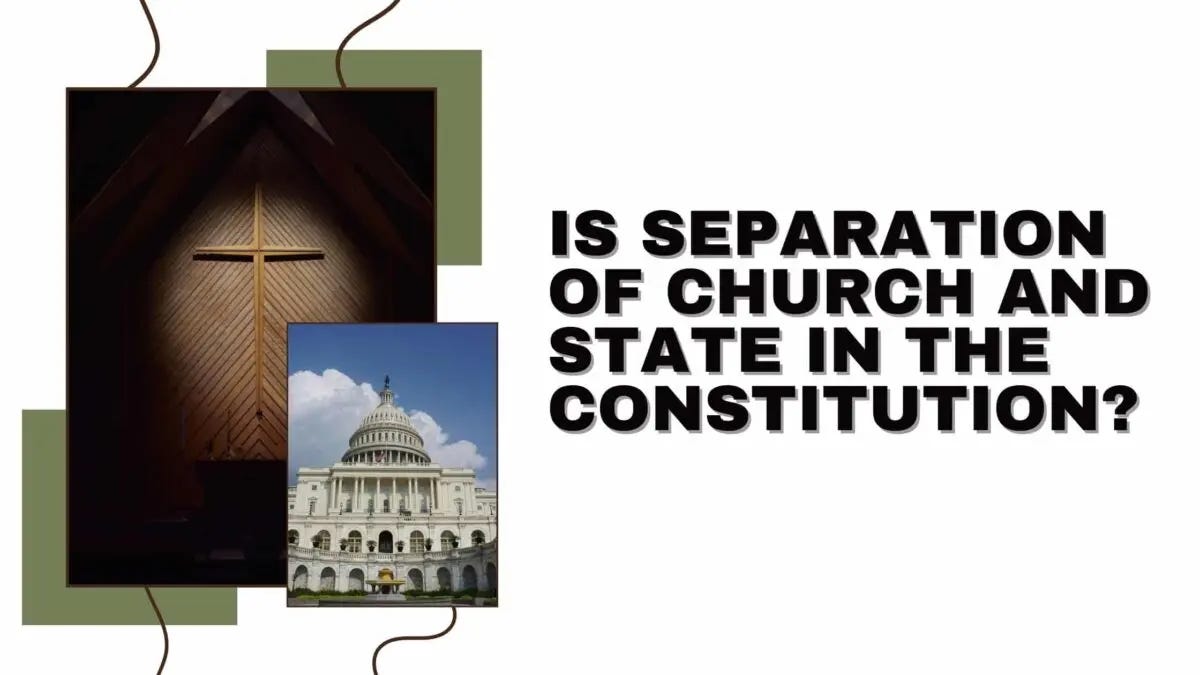
Part 1: Separation of Church and State What It Actually Meant, How It Was Rewritten, and Why That Rewrite Changed Everything

Few phrases in American public life are quoted more confidently — and understood less accurately — than “separation of church and state.” Today, the phrase is wielded like a constitutional muzzle, aimed almost exclusively at Christians, as if faith itself were a contaminant that must be scrubbed from public discourse. It is invoked not as a legal principle but as a cultural veto: your argument doesn’t count because it comes from faith.   But that is not what the phrase meant when it was written.It is not how it functioned historically.And it is not how it has ever been applied consistently. What we are witnessing is not constitutional fidelity — it is ideological repurposing. Where the Phrase Actually Came From (and Why Direction Matters) The phrase “separation of church and state” does not appear in the U.S. Constitution. Not once. It originates from an 1802 private letter written by Thomas Jefferson to the Danbury Baptist Association. The Baptists were not asking Jefferson how to silence themselves; they were asking how to protect themselves. Their fear was rooted in history. In Europe, state-run churches had persecuted dissenting Christians for centuries. The Baptists wanted assurance that the federal government would never control doctrine, clergy, or conscience. Jefferson responded by explaining that the First Amendment created “a wall of separation between church and state.” But the direction of the wall mattered. It was built: To keep government out of the church To prevent a national denomination To protect free exercise, not suppress it The First Amendment itself could not be clearer: “Congress shall make no law respecting an establishment of religion, or prohibiting the free exercise thereof.” This is a restriction on Congress, not believers.It bans state religion, not religious reasoning.It protects expression — it does not erase it. The same generation that ratified this amendment: Opened congressional sessions with prayer Appointed chaplains using public funds Quoted Scripture in political speeches Taught moral instruction rooted in biblical ethics They did not see faith and governance as enemies. They saw tyranny as the enemy — and conscience as the safeguard. The modern interpretation — that faith must remain invisible to be legitimate — would have been unrecognizable to the founders. “Neutrality” Is Not Real — It Never Was One of the most damaging lies in modern political theory is the claim that public life can be value-neutral. It cannot. Every society is shaped by answers to ultimate questions: What is a human being? Is there objective good and evil? Where does authority come from? What limits power? Those answers don’t disappear when God is removed — they are simply answered differently. Everyone believes something: The Christian believes God is the source of truth The atheist believes there is no transcendent authority The secularist believes meaning is self-constructed The humanist believes morality emerges from consensus The Marxist believes history is driven by power and material struggle These are not scientific conclusions. They are philosophical commitments. So when Christianity is excluded from public reasoning, what actually happens is not neutrality — it is replacement. A different belief system takes the throne, while pretending it doesn’t exist. That belief system still legislates morality.Still defines justice.Still punishes dissent. It just no longer admits where its authority comes from. “Judge Not” — How One Verse Became a Cultural Gag Order No verse is quoted more frequently by people who reject Christianity than: “Judge not, lest you be judged.” (Matthew 7:1) It is almost always used as a rhetorical shutdown: To end moral disagreement To delegitimize Christian conviction To demand silence without accountability But the verse is never quoted honestly. Jesus continues: “For with the judgment you pronounce you will be judged…Why do you see the speck in your brother’s eye, but do not notice the log in your own eye?First take the log out of your own eye, and then you will see clearly to take the speck out of your brother’s eye.” Jesus does not forbid judgment.He forbids hypocrisy. The goal is clearer judgment, not no judgment. The Apostle Paul makes this unmistakable in 1 Corinthians 5, rebuking the church for refusing to confront sin: “Is it not those inside the church whom you are to judge?” Modern culture lifts one sentence out of Scripture, strips it of context, and then uses it to silence the very worldview it came from — usually by people who deny biblical authority altogether. That is not biblical interpretation.It is ideological appropriation. Moral Decline Is Predictable, Not Mysterious When transcendent moral authority is removed, societies do not become freer — they become unstable. Scripture names this pattern repeatedly: “Woe to those who call evil good and good evil.” (Isaiah 5:20) “When there is no vision, the people perish.” (Proverbs 29:18) But this isn’t uniquely biblical insight. Even Sun Tzu, writing centuries before Christ, understood that a nation’s strength depends on: Moral cohesion Shared values Discipline Internal unity A society that loses its moral compass becomes vulnerable — not just to invasion, but to internal collapse. You don’t need armies when confusion does the work for you. Marxism, Socialism, and the War on Transcendence Karl Marx was not subtle about religion: “Religion is the opium of the people.” Christianity posed a threat because it placed authority above the state. Any ideology seeking total control must eliminate rival loyalties — especially to God. That is why Marxist and socialist regimes consistently followed the same playbook: Churches controlled or destroyed Clergy imprisoned or executed Faith rebranded as dangerous or regressive The state positioned as moral arbiter This happened in: The Soviet Union Communist China Eastern Europe Nazi Germany (despite propaganda otherwise) Romania, Italy, and beyond Different flags. Same strategy. Secularism was never the end goal. It was the gateway. Saul Alinsky and the Mechanics of Cultural Takeover Saul Alinsky understood something many conservatives ignored: culture precedes law. In Rules for Radicals, he emphasizes: Ridicule as a weapon Moral inversion Framing opponents as illegitimate Winning institutions before elections This is why debates feel impossible today. The goal is not persuasion — it is delegitimization. Faith is not debated; it is disqualified. The Seven Mountains — Responsibility, Not Theocracy The Seven Mountain framework (articulated by thinkers like Johnny Enlow and Lance Wallnau) is often mischaracterized as domination. It is not. It begins with a simple reality: every sphere of society will be shaped by someone’s values. Those spheres are: Government Education Media Arts & Entertainment Business Family Religion Withdrawal does not produce neutrality. It produces capture. Christians are not called to force belief — but they are called to participate, lead, and bear witness. Salt that stays in the shaker does nothing. Islam, America, and Honest Distinction The United States was founded within a Judeo-Christian moral framework — not Islamic jurisprudence, Marxist materialism, or secular relativism. That does not mean Muslims should be denied civil rights.It does mean Islamic political theology — which historically fuses religious law and state power — is fundamentally different from America’s founding vision. Acknowledging that difference is not hatred.It is clarity. Pluralism only works when differences are named honestly. How We Got Here Christians were told: Stay out of politics Keep faith private Morality is subjective Judgment is unloving They listened. The vacuum was filled. Government expanded.Speech narrowed.Morality was enforced — just without God. History shows this pattern clearly:When the church retreats, the state advances. Final Reflection This is not about forcing belief.It is about refusing silence. Christianity shaped the moral architecture of the West — imperfectly, but profoundly. To erase that influence is not progress; it is amnesia. The question now is not whether Christians are allowed to believe. It is whether they will speak, participate, and lead — or allow others to define the future unchallenged. Because someone always will. FAQ: Answering Common Questions About Church, State, Faith, and Public Life This post exists to answer predictable questions and objections that arise whenever Christians talk openly about faith, politics, and culture. It’s not written to inflame, but to clarify. If you haven’t read the main essay yet, start there. This FAQ assumes good faith curiosity—even when we disagree. ❓“Are you arguing for a theocracy?” No. Explicitly no. A theocracy is a system where religious authorities rule by force and dissent is criminalized. That is not what I’m advocating—and it is not consistent with Christian theology or American constitutional principles. What I am arguing for is this: Christians have the same right as anyone else to bring their moral reasoning into public life Faith-based arguments should not be disqualified simply because they are faith-based Participation is not domination Christian involvement in culture is about witness and responsibility, not coercion. ❓“Doesn’t separation of church and state mean religion should stay out of politics?” That interpretation is modern—and historically inaccurate. The phrase “separation of church and state” comes from a private letter by Thomas Jefferson, not the Constitution. It was meant to protect churches from government control, not to silence religious citizens. The First Amendment restrains Congress, not conscience. Preventing a state-sponsored religion is not the same thing as banning moral reasoning shaped by faith. ❓“But what about ‘judge not’—aren’t Christians told not to judge?” This verse is almost always quoted without context. Jesus condemns hypocritical judgment, not moral discernment. In the same passage, He instructs people to examine themselves so that they can judge rightly. The Apostle Paul goes further, explicitly teaching that moral accountability—especially within the community of faith—is necessary. Using “judge not” to shut down all moral disagreement is not biblical; it’s rhetorical. ❓“Aren’t you just trying to impose your beliefs on others?” Everyone’s beliefs shape policy—whether they admit it or not. Laws about life, family, education, speech, economics, and justice all reflect moral assumptions. The only real question is whose assumptions get priority. Christians are not asking for special privileges. They are asking for equal standing in the public square. Excluding religious viewpoints doesn’t eliminate belief—it just replaces one worldview with another. ❓“Isn’t this kind of thinking dangerous? Look at history.” History is precisely why these questions matter. Totalitarian regimes—across ideologies—consistently suppressed Christianity because it placed moral authority above the state. That pattern is documented, not speculative. Pointing that out is not fearmongering. It’s pattern recognition. Warning about historical outcomes is not the same as predicting identical ones—it’s learning from precedent. ❓“Why bring Marxism, socialism, or secularism into this?” Because ideas have consequences. Political systems don’t emerge in a vacuum; they grow out of philosophical and moral frameworks. Marxism explicitly viewed religion as an obstacle to social control. Secularism often claims neutrality while enforcing its own moral vision. Understanding these roots helps explain why certain beliefs are marginalized while others are normalized. This is analysis, not name-calling. ❓“What about pluralism? Don’t we live in a diverse society?” Yes—and true pluralism requires open participation, not selective exclusion. Pluralism does not mean pretending differences don’t exist. It means allowing competing worldviews to speak, persuade, and coexist under shared legal protections. Silencing one worldview in the name of tolerance is not pluralism. It’s preference disguised as principle. ❓“Are you saying atheists or non-Christians shouldn’t have rights?” Absolutely not. Civil rights are not dependent on belief. Religious liberty protects everyone, including those who reject religion entirely. But equal rights do not require equal silence. Disagreement is not discrimination. A healthy society allows moral debate without treating conviction as violence. ❓“Why should Christians get involved at all?” Because withdrawal doesn’t create neutrality—it creates a vacuum. Every major cultural institution will be shaped by someone’s values: Government Education Media Business Family Arts Religion The question isn’t whether Christians should control these spaces, but whether they should abdicate responsibility for them. Salt that never leaves the shaker changes nothing. ❓“So what’s the goal, really?” Not power.Not domination.Not nostalgia. The goal is: Faithful presence Honest participation Moral clarity without coercion Love without silence Christians aren’t called to win arguments at all costs—but neither are they called to disappear. Final Note If you disagree with these conclusions, that’s okay. Disagreement is part of a free society. But freedom only survives when people are allowed to speak from what they actually believe—without being told that belief itself disqualifies them. That’s the conversation worth having. Sources & Further Reading Founding Documents & Early American Thought The United States Constitution, First Amendment Thomas Jefferson, Letter to the Danbury Baptist Association (1802) James Madison, Memorial and Remonstrance Against Religious Assessments (1785) George Washington, Farewell Address (1796) John Adams, A Defence of the Constitutions of Government of the United States of America Biblical Texts (Primary Source) The Holy Bible, ESV / KJV / NIV Matthew 7 1 Corinthians 5 Isaiah 5 Proverbs 29 Romans 1 Matthew 28 Church, State, and Religious Liberty Roger Williams, The Bloudy Tenent of Persecution Mark David Hall, Did America Have a Christian Founding? John Witte Jr., Religion and the American Constitutional Experiment Michael Novak, On Two Wings: Humble Faith and Common Sense at the American Founding Political Philosophy & Ideology Karl Marx, Critique of Hegel’s Philosophy of Right Karl Marx & Friedrich Engels, The Communist Manifesto Hannah Arendt, The Origins of Totalitarianism Aleksandr Solzhenitsyn, The Gulag Archipelago Marxism, Socialism, and Historical Regimes Richard Pipes, Communism: A History Paul Johnson, Modern Times Orlando Figes, A People’s Tragedy: The Russian Revolution Frank Dikötter, Mao’s Great Famine Saul Alinsky & Modern Political Strategy Saul Alinsky, Rules for Radicals Saul Alinsky, Reveille for Radicals Cultural and Moral Decline Os Guinness, The Suicide of a Superpower Rod Dreher, Live Not By Lies C.S. Lewis, The Abolition of Man Dietrich Bonhoeffer, Letters and Papers from Prison Military & Strategic Thought Sun Tzu, The Art of War Seven Mountains / Christian Cultural Engagement Johnny Enlow, The Seven Mountain Prophecy Lance Wallnau, God’s Chaos Candidate Francis Schaeffer, How Should We Then Live? Islam, Political Theology, and the West Bernard Lewis, What Went Wrong? Niall Ferguson, Civilization: The West and the Rest Samuel P. Huntington, The Clash of Civilizations and the Remaking of World Order Secularism & Worldview Critique Charles Taylor, A Secular Age Alasdair MacIntyre, After Virtue Peter Berger, The Sacred Canopy Scripture citations are taken from widely used English translations. Historical and philosophical sources are provided for context, not endorsement of every conclusion drawn by their authors.

Read more Part 1: Separation of Church and State What It Actually Meant, How It Was Rewritten, and Why That Rewrite Changed Everything

Part 3: Daily Faithfulness: How Small Obedience Builds a Big Life with God

Where Faith Becomes Lived If Part 1 reframed how we think about God’s will, and Part 2 steadied us around freedom and responsibility, Part 3 brings everything down to ground level.   This is where theology becomes practice. Because most of life is not lived in dramatic crossroads.It is lived in ordinary days. And it is in those ordinary days that faith is either formed — or neglected.

Read more Part 3: Daily Faithfulness: How Small Obedience Builds a Big Life with God

Perception, Truth, and Spiritual Sight Belief, Prayer, Media, and the Question of the Law of Attraction

When Belief Shapes Reality — Faith, Prayer, and the Limits of Attraction The Law of Attraction is often dismissed by Christians as New Age fantasy—or embraced uncritically by others as a substitute for God. I sit somewhere in between.

Read more Perception, Truth, and Spiritual Sight Belief, Prayer, Media, and the Question of the Law of Attraction

Perception, Truth, And Spiritual Sight How We Came to Watch Different Realities — and What It Takes to See Clearly Again

Part 1: Two Movies, One World — How We Lost Shared Reality We are no longer arguing about opinions. We are arguing about what is. Two people can watch the same event, read the same headline, hear the same words—and walk away convinced they witnessed entirely different realities. It feels less like disagreement and more like living inside parallel films projected onto the same physical world.

Read more Perception, Truth, And Spiritual Sight How We Came to Watch Different Realities — and What It Takes to See Clearly Again

Nations, Borders, and the God Who Loves the Whole World Why Loving Countries Isn’t the Same as Worshiping Them — and Why America Is Struggling to Hold Two Truths at Once

Before anything political is said, before statistics are cited, before theology is invoked, it’s worth acknowledging something quietly and honestly: Many Americans are no longer arguing with one another.They are inhabiting different realities. They are watching different footage.Trusting different institutions.Living inside different moral imaginations.

Read more Nations, Borders, and the God Who Loves the Whole World Why Loving Countries Isn’t the Same as Worshiping Them — and Why America Is Struggling to Hold Two Truths at Once

Manufacturing Reality Media, Power, Propaganda, and the Battle for Truth: Seeing Through the Fog — Or Building a New One?

There is something deeply unsettling happening in America right now, and it goes far beyond elections, parties, or policies. We are no longer simply divided by opinion.We are divided by reality itself. Millions of Americans are living inside two opposing worldviews that barely overlap—each with its own facts, moral framework, villains, heroes, and version of history. When people argue today, they are often not disagreeing about conclusions; they are disagreeing about what is real. This is not normal political disagreement.Psychologically, historically, and spiritually, it is a warning sign.

Read more Manufacturing Reality Media, Power, Propaganda, and the Battle for Truth: Seeing Through the Fog — Or Building a New One?

Narcissism, Pride, and Spiritual Power Biblical Discernment, Spiritual Ramifications, and the Patterns Often Called Leviathan and Jezebel

In recent years, conversations about narcissism have exploded. Much of that discussion lives in the world of psychology and relationships — and rightly so. But Scripture suggests that persistent narcissistic patterns are not merely relational problems or personality quirks. They carry spiritual ramifications that affect individuals, families, churches, and entire cultures. This essay is not written to label people, diagnose demons, or fuel suspicion. It is written to offer biblical discernment — the kind that protects truth, preserves humility, and helps believers recognize destructive patterns without becoming destructive themselves.

Read more Narcissism, Pride, and Spiritual Power Biblical Discernment, Spiritual Ramifications, and the Patterns Often Called Leviathan and Jezebel

America's Leftist, "Woke" Psychological Sickness: The Moral Depravity of Society

I originally posted this on my Substack and brought it over to my new site... “Woe unto them that call evil good, and good evil; that put darkness for light, and light for darkness; that put bitter for sweet, and sweet for bitter!” - Isaiah 5:20 "It is not the evil itself which is horrifying about our times – it is the way we not only tolerate evil, but have made a cult of positively worshipping weakness, depravity, rottenness and evil itself." - George Lincoln Rockwell Thanks for reading! Subscribe for free to receive new posts and support my work.   The 2024 Election and Complete Meltdowns A lot of people are talking about the election that we just had on November 5th. People are either thrilled and excited and happy or mad and pissed off, and having serious emotional breakdowns. They are even posting their emotional breakdowns online, and going as far as shaving their heads and promising to abstain from sex! The winning side can and is making fun of the losing side. Like we are enjoying liberal tears. What the losing liberal side are posting online can be viewed as funny. Because some of it is so ridiculous and even asinine. I personally don’t think it is funny. I find it really sad and very disturbing. I decided to research the psychology of this because something is happening and did happen. Cognitive Dissonance: In the field of psychology, cognitive dissonance is described as the mental disturbance people feel when they realize their cognitions and actions are inconsistent or contradictory. This may ultimately result in some change in their cognitions or actions to cause greater alignment between them so as to reduce this dissonance. Relevant items of information include peoples' actions, feelings, ideas, beliefs, values, and things in the environment. Cognitive dissonance is typically experienced as psychological stress when persons participate in an action that goes against one or more of those things. According to this theory, when an action or idea is psychologically inconsistent with the other, people do all in their power to change either so that they become consistent. The discomfort is triggered by the person's belief clashing with new information perceived, wherein the individual tries to find a way to resolve the contradiction to reduce their discomfort. Cognition is the "mental action or process of acquiring knowledge and understanding through thought, experience, and the senses". It encompasses all aspects of intellectual functions and processes such as: perception, attention, thought, imagination, intelligence, the formation of knowledge, memory and working memory, judgment and evaluation, reasoning and computation, problem-solving and decision-making, comprehension and production of language. Cognitive processes use existing knowledge to discover new knowledge. The left is having cognitive dissonance over accepting the fact they lost, and their messages and actions were not resonating with the majority of Americans. Many of them will forever have a hard time accepting they lost because of what our society has done to them, rather than for them! A society they helped create! What does this inconsistency-related discomfort look like in everyday life? Here are just a few cognitive dissonance examples that you may notice in your own life: You want to be healthy, but you don't exercise regularly or eat a nutritious diet. You feel guilty as a result. You know that smoking (or drinking too much) is harmful to your health, but you do it anyway. You rationalize this action by pointing to your high stress levels. You'd like to build up your savings but tend to spend extra cash as soon as you get it. You regret this decision later, such as when facing an unexpected expense that you don't have the money to cover. You have a long to-do list but spend the day watching your favorite shows instead. You don't want your spouse to know, so you try to make it look like you've worked hard all day. It’s basically like people can’t admit they are wrong. Why do so many people have a hard time admitting they are wrong? Lack of accountability: People may not feel accountable for their mistakes, or they may believe that admitting their mistakes would not lead to a solution. Ego: People may be reluctant to admit their mistakes due to a desire to protect their self-image or to maintain the perception of being always right. What does narcissism correlate with? Grandiose narcissism showed significant negative correlations with lack of emotional awareness and clarity, whereas vulnerable narcissism showed significant positive correlations with overall emotion regulation difficulties, impulse control difficulties, and lack of emotional clarity. Grandiosity is the defining characteristic of narcissism. More than just arrogance or vanity, grandiosity is an unrealistic sense of superiority. Narcissists believe they are unique or “special” and can only be understood by other special people. Left-wing extremism is linked to toxic, psychopathic tendencies and narcissism, according to a new study published to the peer-reviewed journal Current Psychology. “Based on existing research, we expected individuals with higher levels of left-wing authoritarianism to also report higher levels of narcissism,” the authors wrote. As result of the new data, study authors Ann Krispenz and Alex Bertrams have coined a new term for such psychological behavior: the “dark-ego-vehicle principle.” “According to this principle, individuals with dark personalities — such as high narcissistic and psychopathic traits — are attracted to certain forms of political and social activism which they can use as a vehicle to satisfy their own ego-focused needs instead of actually aiming at social justice and equality,” they told PsyPost. “In particular, certain forms of activism might provide them with opportunities for positive self-presentation and displays of moral superiority, to gain social status, to dominate others, and to engage in social conflicts and aggression to satisfy their need for thrill seeking.” The study on left-wing authoritarianism also showed that many times they do not practice what they so loudly preach. Social justice is often used as a guise for these activists to behave unhinged, the research noted. “An individual high in LWA might declare anyone to be ‘old fashioned’ who is opposing their own ‘progressive values,’ strive to suppress free speech to regulate the expression of right-wing beliefs in educational institutions, and even endorse the use of violence to reach their own political goals,” the authors said. Beyond using any means necessary, people of privileged backgrounds who are aligned with LWA often use their narcissism to make activism solely about themselves instead of achieving social equality for struggling groups. “Minority groups should be made aware of the narcissistic ‘enemies’ from within their activist movement, as these individuals could hijack the cause thereby reducing the success of the activism in many ways,” the authors added. “As grandiose narcissists typically desire fame, distinction, elevated social status and high social importance, they can be assumed to strive for influential positions that involve social visibility and outreach as well as access to financial and other resources.” The authors also made it clear that authoritarianism exists on both sides of the political spectrum and that “there is a wide range of literature and research in the field of right-wing authoritarianism. “However, research on authoritarianism observed in individuals who are supportive of left-wing political ideologies are still rare.” From: “Left-wing extremism linked to psychopathy and narcissism: study” https://nypost.com/2023/05/25/left-wing-extremism-linked-to-psychopathy-narcissism-study/ Moral Depravity Defines US Politics American linguist and activist Noam Chomsky wrote an article in 2018 that “Moral Depravity Defines US Politics” https://www.globalpolicyjournal.com/blog/23/11/2018/noam-chomsky-moral-depravity-defines-us-politics A lot can be written and shared, and has been about powerful people who do not have America’s best interest at heart. They want to destroy America in order to rebuild it into their dystopian nightmare. Many of these people are so powerful that they have all the money they need, it’s about conrol. We know people will follow and believe something always. Even disbelief is belief. Even belief and worship in self is belief. So, the left’s common view that “religion and politics don’t mix” is not a logical belief, it’s a ideological belief. It’s a way to shut up and silence the Christian Conservative Right. Many followers in the Democrat Party are too ignorant to realize that, but their leaders know and realize this. A lot of what they are doing is by design and plan. These same powerful people have beliefs and religions. It is impossible to vote for someone, anyone without beliefs and a set of morals they live by, and people and things they follow and believe in. Even immorality is morals. A person’s “morals” are only based on what they view is right and wrong. There are societal morals and a persons own morals. What is morally right and wrong is defined by a society and by a person’s own convictions. People can believe they are right even when they do very heinous things like murder and rape. They justify it in their mind and they aren’t wrong. It takes a lot of humility to admit you are wrong or were wrong. Getting there is the first stage of repentance and turning your life around and no longer doing that action. Generally how it is supposed to be is the majority of society defines and chooses what is morally right and wrong in a society. So, giving into the wishes of just a few is societally morally bankrupt. And that’s what we have been doing. It has been shown that narcissistic grandiosity and psychotic-like experiences (PLEs) may share the common psychological mechanisms. If our society rewards bad behavior and rewards losers and whiners and gives participation torphies. And gives into people's always and easily being offended. And we make ways for a small minority over a majority, like transgenders, it helps contribute to the moral depravity of society. This has been happening in stages by design. It’s scary when people become narcissists and in their mind they can do no wrong and are always right. People at this stage can lack sympathy or even empathy just like psychosis. When we get here we will start to see people like Jose Ibarra who was convicted of killing 22 year old college student Laken Riley in Georgia today. And as her family and friends stood there testifying to missing their daughter, friend, etc. And when he was sentenced with 2 life sentences, he just sat there and showed no emotions whatsoever. It was scary. Most know Jose Ibarra was also here illegally. He even flew to Georgia hunting women on a tax funded airplane from New York City, where his hotel was also being paid for. Politicians on the left decided on this insanity. They didn’t decide it on the majority and the will of the people. They likely decided on it from a few very powerfully people who they listen to and who pays them. Like lobbysists and special intersts. The same lobbies that want to destroy America. We Need Morals in a Society We need morals in a society. Morals and laws can and do go together. 'Simply put, a law changes ''morality'' when it changes a person's behavior or attitudes, by changing how the person believes they and others ''ought'' to behave or think. The classic example is the control of crime. When we criminally punish a particular behavior, we expect less of it. We can’t survive as a country or even a free society without laws and enforced laws. We can’t survive as a society with an immoral society run amuck. We can’t survive as a society without responsibility for actions. Including justice being served. There is a fine line between rules and laws and freedom and liberty. This is why it is moral and right to have the majority decide, not the minority. We can vote and choose our morals and freedoms. This is why the founders of our country called it “we the people” in our documents including the US Constitution. This is why when a person is being charged with a murder, it is the state prosecutor prosecuting them. And we elect and vote who our “represetatives” in Washington DC should be. Politics in America is identical to pro wrestling I can admit we have people trying to destroy us from within on both sides of the political spectrum. Both political parties got away from the will of the people. Jesse Ventura said "Politics in America is identical to pro wrestling. In front of the crowd, in front of TV, they pretend they hate each other. They pretend like they are big adversaries and that’s the sell job they do to us, the citizens. Just like pro wrestling, my job was to go out and piss everybody off so bad they would pay their hard earned money to go out and see me get my butt kicked. Well, the point is, we are all friends in the locker room. We all work together. It’s entertainment. We put on a show and this is no different. They are putting on a show, because behind the scenes, they are all friends. They go out to dinner together and cut their deals together. It’s a show.” George Carlin said “It’s a big club and you ain’t in it.” Wokeism can drift off into superiority, narcissism and moral depravity The left call themselves “woke”. Their wokeism can be and often is moral depravity. Proponent of wokeism Michael Karson Ph.D. wrote for Psychology Today: “Wokeness, in my view, is a good thing, as I have often blogged.” But he goes on in his blog, “On the political left, wokeness sometimes drifts into wokeism—a system of thought and behavior characterized by intolerance, policing the speech of others, and proving one’s own superiority by denouncing others.” Source: https://www.psychologytoday.com/us/blog/feeling-our-way/202108/the-psychology-wokeism I quote this “doctor”, because even though he believes in wokeism he admits wokeism is intolerant, policing or silencing the speech of others, and a superiority complex and denouncing others, again just like a narcissist. “Blueskies” A lot of the left especially after the election are now leaving “X” once called “Twitter” for “bluer skies”, a social media platform called “Bluesky”. They can’t accept that Elon Musk a now Trump supporter bought it. They make claims that Elon “broke it” or “ruined it”. He broke it or ruined it because a person they disagree with now owns it. They can’t in “good conscience” (their morality or superiority they established for themselves) be on such a site with such “hate”. When Elon Musk decided to buy Twitter for a bad price, and expose what they were doing to repress free speech, and decided to give the right a voice again. And then when Elon decided to freely support Trump and talk about his beliefs that got him there. The left decided they weren’t going to have it. They claimed all of Twitter now is bad and a swamp. Twitter was already online and one of the largest public social networks. It was always plagued by bot accounts and bad people too! “Hate Speech”, Redefined We already know the left has already redefined words like “woke”, “hate”, “racist”. It often now means people that disagree with them. Many of them don’t even know what they are doing! Saul Alinsky a community activist and political theorist, who Hillary Clinton wrote a thesis on, wrote “12 Rules For Radicals”. Rule number 5 is “Ridicule is man’s most potent weapon.” There is no defense. It’s irrational. It’s infuriating. It also works as a key pressure point to force the enemy into concessions. (Pretty crude, rude and mean, huh? They want to create anger and fear.)” The left repeat left wing talking points they hear like “a woman’s body”, “a right to chose”, “racist, racist”, etc. Regular citizen Democrat voters are just followers, they dont even see what they are saying and doing, and what is happening. A lot of their politicians know exactly what they are doing or atleast their handlers, lobbyists and special interests do. You will hear subtle lies to twist and lie about the narrative. Trump said the first time he ran that “some” illegals were rapists and murderers. We noticed the news then left out that key word. They made him out to be a racist. Now they (liberal politicians and “journalists”) are claiming that Trump and Tom Homan the new “border Czar” are “going to deport immigrants and citizens.” That is not what they are saying and going to do. They are going for the criminals who shouldn’t be here anywway. People that broke our laws including people like Jose Ibarra who killed Laken Riley! They always try to scare people into fear tactics and continually lie! Propaganda: “Woe unto them that call evil good, and good evil” Joseph Goebbels the propagandist of Nazi Germany said "If you tell a lie big enough and keep repeating it, people will eventually come to believe it." Most news media in America today is political commentary and propaganda to support one side. A more Conserative person will just watch Fox News or Newsmax and a more liberal person will just watch MSNBC or CNN. They will listen to they agree with to continue solidifying their beliefs and they are right. This has become dangerous! The same “Deep State” people who want to destroy America and control us know all of this. Look to their quotes and beliefs and what they have said. Again a lot can and has been said and written about them. We can also look back at history and see when America’s trajectory was set on this course and different things happened. I don’t even believe they always knew what they were doing either. They have made plenty of mistakes or they would have already succeed with what they planned to do. But they still did a lot to get us here. Certain justified arguments can be made that things like taking prayer and ten commandments out of school got us here. There was a lot more than just that, for instance! Operation Mockingbird is an alleged large-scale program of the United States Central Intelligence Agency (CIA) that began in the early years of the Cold War and attempted to manipulate domestic American news media organizations for propaganda purposes. According to author Deborah Davis, Operation Mockingbird recruited leading American journalists into a propaganda network and influenced the operations of front groups. CIA support of front groups was exposed when an April 1967 Ramparts article reported that the National Student Association received funding from the CIA. In 1975, Church Committee Congressional investigations revealed Agency connections with journalists and civic groups. There was a long existing law called “The Smith-Mundt Act”, but was officially called the “U.S. Information and Educational Exchange Act of 1948”, where the Act was developed to regulate broadcasting of programs for foreign audiences produced under the guidance by the State Department, and it prohibited domestic dissemination of materials produced by such programs as one of its provisions. H.R. 4310 refers to the National Defense Authorization Act for Fiscal Year 2013, a bill that outlined the budget and expenditures for the Department of Defense for that fiscal year. Obama signed it into law in January 2013, according to a White House press release. A search of the law’s text turned up no clause about what traditional, private news organizations can or cannot publish. A person online wrote: “Thanks to Obama, it is perfectly legal for the media to purposely lie to the American people,” reads the text inside the image. “He quietly signed into law HR 4310 in 2012, allowing propaganda to be used on the citizens of the USA by its own government, essentially repealing the Smith-Mundt act of 1948, banning the use of domestic propaganda.” I don’t know what the truth on this is, factcheck believes the poster was wrong. However, they (meaning: “the elite”) have been slowly eroding our society, laws, speech and morals over a long period of time. To write all about it and what they have been doing for decades could be written in novels and has been. We know many of them look to “The Art of War” by Sun Tzu and to Karl Marx. What is going on with the left? I can’t say for complete certainty all that is going on with the left in this country. I’m not the biggest expert on any of this and I certainly don’t think like them. I’m writing about what I’m observing. My name means “watchman”. I’m also writing snipets of what others have said. What I do know is that we are dealing with a bunch of morally superiority narcissists. They are suffering from cognitive dissonance. They will attack and call others “stupid” and put a smiley face laughter emoji on any social media post they disagree with. They can never admit they were wrong and will never learn from their mistakes. They claim to be “woke” but they are very asleep and can’t see where they were wrong and made mistakes. Many of their politicians and news anchors are suffering from this too. Many of them really believed they were right and what they were saying was the truth. They believe they are morally superior and enjoy being heard and listened to and the attention. Many of them are told and paid off what to say. Someone is a news journalist (political commentator)’s boss and pays their paycheck. And it is just a few big US Corporations who own all mainstram news. Which is why people are now listening to independent online journalists and podcasts. We who are really woke or awake, know we are and we don’t have to prove it to anyone. Narcissists usually deep down inside are weak and have low self-esteem. This is why they don’t like to be challenged and have to be right. It’s dangerous that these same people are looking for answers and truth and they end up rejecting the truth. It’s all about the source. They reject the bible and Christianity. They will reject you if you quote any source that is more Conservative. They believe they are tolerant and open-minded but anything but. Do you know the majority of progressives are white? Only like 8% are Hispanic and 13% are black according to Pew Research? Again they push their agendas on people the most. People can’t be individualistic. They want to lump people together in groups and terms for a reason, it’s a way to control and control the dialogue. Sadly, so many of them haven’t woke up yet and believe everything they’re told and are hearing. Their “journalists” compared Trump to Hitler and his followers like Nazis. Joe Biden insulted us and called us “garbage”. Hillary Clinton called us a “basket of deplorables”. They repeat these lies. They wanted their side to bring up “the fact” and believe “Trump is a convicted felon.” His followers are “insurrectionists” and he “tried to overthrow the government”. They don’t even know the truth on any of that and what really happened! I could write novels about this, but others already have as well. When the truth does come out like Robert Mueller after his tax payer funded investigations saying “he found no evidence of Trump Russian Collusion”, the news seems to forget to tell their listeners or don’t cover it or repeat it as much as their lies they want people to believe and follow! You can’t debate people like this. You can’t tell and share the truth with people like this. They don’t think they are wrong and they put up a defense if you call them out and revert back to liberal talking points. If they really aren’t being seen or heard they will post about it online, cry on Tiktok or shave their heads or say they are abstaining from sex. They can’t accept they were wrong and no one really cares what they have to say and they weren’t that important after all. They parrot arround talking points and if you disagree with them “racist", racist”! It just isn’t working as much as it used to be! More people are waking up especially after we had 4 years of Joe Biden and Kamala Harris and what was happening! More people have woken up! Those who haven’t yet it’s like the Matrix, to quote Morpheus, “you have to understand most of these people are not ready to be unplugged. And many of them are so inert, so hopelessly dependent on the system that they will fight to protect it.” Again I have been saying since the Obama days that, the left are like the “reprobate minds” of Romans chapter 1:21-23: (“For although they knew God, they neither glorified him as God nor gave thanks to him, but their thinking became futile and their foolish hearts were darkened. Although they claimed to be wise, they became fools and exchanged the glory of the immortal God for images made to look like a mortal human being and birds and animals and reptiles. Therefore God gave them over in the sinful desires of their hearts to sexual impurity for the degrading of their bodies with one another.  They exchanged the truth about God for a lie, and worshiped and served created things rather than the Creator—who is forever praised. Amen.”) When Obama was running for reelection in 2012 the DNC booed God at their convention! Anyone can still find this video! Which party mostly embraces homsexuality that is clearly defined in this passage? Yes, Trump tried to unite and get their support too. He’s called to be a president, not a minister! Something the world will never understand until they join our side and decide to follow God and Jesus too. The Holy Spirit dwells in Christian believers. The Holy Spirit in the bible is called the “Spirit of Truth” (John 14:17, 15:26 and 16:13 and 1 John 4:6 and 5:6). We are the ones following and believing the truth and are awake! We are not “brainwashed Nazis” or “stupid”. I have heard preachers compare the left’s woke movement, to eating the fruit of the tree of knowledge of good and evil, and Adam and Eve’s eyes being awakened. Freemasons are all about enlightenment and spiritual understanding while getting away from God. You actually learn higher levels of freemasonry, they actually worship Satan, Baal and Baphomet, etc and do oaths to them. They call it “the Dawn of Man” and the “age of Aquarius”. There is a reason we (Trump supporters) feel we won a major victory for America, even for them, even if they are too stupid to see it. Only the elite want to destroy America, a lot of Americans are stupid and brainwashed. America was given a second chance and grace from God to turn around from going down this path to Hell! God heard our prayers. I truly believe after Covid and what they tried to do, and then after Joe Biden, many more woke up. In the long run it’s better we had to deal with Biden and the left’s “garbage” for 4 years! And now we have a reset on the Deep State’s plan for a “Great Reset”, as the founder of the World Economic Forum, Klaus Schwab wrote a book called “Covid: The Great Reset”! Support me and future writings!

Read more America's Leftist, "Woke" Psychological Sickness: The Moral Depravity of Society

Truth vs. Feeling Why Modern America Treats Opinions as More Important Than Facts — and Why History and Scripture Warn Us This Never Ends Well

“Buy the truth, and do not sell it; buy wisdom, instruction, and understanding.” — Proverbs 23:23 We are living through something deeper than political polarization, deeper than media bias, and deeper than generational disagreement. What we are witnessing is an epistemological collapse — a breakdown in how people determine what is real, what is true, and what deserves authority. In today’s America, many people sincerely believe they can disagree with facts themselves, not merely with interpretations. Feelings, lived experience, and personal opinion are often treated not as inputs into understanding reality, but as final authorities that override it. The phrase “my truth” has become socially sacrosanct — even when it directly contradicts evidence, logic, biology, history, or shared experience. This is not merely a cultural irritation.It is not just “kids these days.”It is not confined to one political side. It is a civilizational fault line. 1. This Is Not New — But It Is Unprecedented in Scale and Structure Human beings have always struggled with truth. Ancient empires employed propaganda.Medieval authorities suppressed inconvenient facts.Totalitarian regimes in the 20th century perfected mass psychological manipulation. But something fundamentally different is happening now. The scale, speed, and personalization of modern information systems have created an environment where millions of parallel realities can coexist simultaneously — each emotionally reinforced, socially rewarded, and algorithmically protected from challenge. The RAND Corporation’s concept of Truth Decay captures this shift precisely: a measurable decline in the role of facts, evidence, and shared reality in public life. Earlier eras experienced intense disagreement over interpretation. Our era increasingly experiences disagreement over whether facts exist at all. That distinction is not academic.It is existential. A society can survive competing interpretations of reality.It cannot survive competing realities. 2. Why Facts Lose to Feelings: The Human Mind Was Never Neutral Modern neuroscience and psychology now confirm what Scripture has declared for thousands of years: human beings are not objective information processors. “The heart is deceitful above all things, and desperately sick; who can understand it?” — Jeremiah 17:9 This verse is not poetic pessimism.It is a diagnostic statement. Human cognition prioritizes: emotional coherence over accuracy identity protection over truth narrative meaning over empirical verification This made sense in small tribal societies. It is disastrous in complex, technological civilizations. Cognitive Bias Is Not a Bug — It’s a Feature Biases such as: confirmation bias motivated reasoning the illusory truth effect mean that people often evaluate claims based on how those claims make them feel or what they imply about their identity — not whether they correspond to reality. Scripture anticipated this long before psychology named it: “There is a way that seems right to a man, but its end is the way to death.” — Proverbs 14:12 What feels right is not the same as what is right. 3. Social Media Didn’t Create the Crisis — It Weaponized It Social media platforms did not invent human bias.They industrialized it. Algorithms are optimized for: engagement retention emotional reaction They are not optimized for: truth coherence long-term social stability Content that provokes anger, fear, affirmation, or moral superiority spreads faster than content that carefully explains facts. Over time, popularity becomes a proxy for truth, and emotional resonance replaces verification. The result is not merely misinformation.It is epistemic fragmentation. People do not simply disagree — they inhabit different conceptual universes. Scripture describes this condition with startling clarity: “Truth has stumbled in the public squares, and uprightness cannot enter.” — Isaiah 59:14 When truth collapses publicly, justice soon follows it into the ground. 4. Feelings Are Not the Enemy — But They Are Terrible Masters This must be said clearly and repeatedly: Truth is not anti-compassion.Truth is what makes compassion possible. Modern culture often frames facts as cold and feelings as moral. This is a false and dangerous dichotomy. The Bible never dismisses emotion: Jesus wept. David cried out in anguish. The Psalms are saturated with grief, joy, anger, longing, and hope. But Scripture never treats emotion as authoritative. “Whoever trusts in his own heart is a fool, but he who walks in wisdom will be delivered.” — Proverbs 28:26 Feelings are indicators, not judges.They tell us that something matters, not what is true. When feelings become supreme, compassion detaches from reality. At that point: mercy becomes indulgence empathy becomes enablement love becomes affirmation without accountability This is not kindness. It is abandonment disguised as care. 5. History’s Relentless Warning: When Truth Becomes Optional, Power Takes Over Here is the historical pattern that repeats without exception: When truth collapses, power fills the vacuum. When facts can no longer arbitrate disputes, the winners are not the wise — they are the loud, the manipulative, and the coercive. Throughout history: Regimes did not begin by banning facts — they relativized them. Propaganda did not replace truth overnight — it buried it under emotion. Atroccity was rarely justified with logic — it was justified with feelings, fear, and identity. Once shared reality disappears, persuasion gives way to force. The Bible names this danger explicitly: **“For the time is coming when people will not endure sound teaching, but having itching ears they will accumulate for themselves teachers to suit their own (2 Timothy 4:3-4)6. The Compassion Trap: How Truth Came to Be Seen as CruelOne of the most effective cultural sleights of hand in the modern era is the idea that truth and compassion are opposites.In contemporary discourse:Facts are framed as coldEvidence is framed as harmfulDisagreement is framed as violenceCorrection is framed as oppressionThis framing did not arise organically. It emerged from a slow cultural shift in which emotional safety became the highest moral good, eclipsing truth, responsibility, and accountability.But Scripture draws a very different picture.“Faithful are the wounds of a friend; profuse are the kisses of an enemy.” — Proverbs 27:6Here, the Bible teaches that truth can wound, and that this is not cruelty — it is fidelity. By contrast, affirmation without truth is portrayed as deceitful, even predatory.The modern insistence that truth must never cause discomfort misunderstands both truth and compassion. Real compassion aims at healing, not merely soothing. And healing often requires diagnosis — which means naming what is, not what feels pleasant.“Speak the truth in love.” — Ephesians 4:15This verse is often quoted but rarely obeyed in full.Love without truth becomes indulgence.Truth without love becomes brutality.Scripture demands both — not as rivals, but as partners.7. Predictable Objections — and Why They FailAny serious defense of truth in a post-truth culture will encounter the same objections. It’s important to address them directly, not dismissively.Objection 1: “All truth is relative.”This claim collapses under its own weight.If all truth is relative, then that statement itself must also be relative — and therefore not universally binding.Biblically, truth is grounded not in human perspective but in God’s nature:“God is not a man, that he should lie.” — Numbers 23:19Reality does not bend to perception. Perception bends to reality — or breaks.Objection 2: “Facts are just tools of power.”It is true that facts can be abused.It is not true that facts are abuse.The solution to corrupted truth is not abandoning truth, but recovering it. When facts are discarded, power does not disappear — it becomes unchecked.Scripture warns against exactly this inversion:“Woe to those who call evil good and good evil, who put darkness for light and light for darkness.” — Isaiah 5:20When truth is reduced to power dynamics, the strongest narrative wins — not the truest one.Objection 3: “Lived experience matters more than data.”Lived experience matters — but it does not interpret itself.Experience is evidence, not conclusion. Without a truthful framework, experience can be misunderstood, misdirected, or weaponized.The Bible consistently submits experience to discernment:“Test the spirits to see whether they are from God.” — 1 John 4:1Testing implies standards. Standards imply truth.8. Historical Case Studies: When Feeling Replaced FactHistory does not need to be mined selectively to make this point — the pattern is universal.A. Propaganda and Emotional NarrativeTotalitarian movements did not convince populations through spreadsheets and peer-reviewed studies. They mobilized:grievancefearhumiliationidentityFacts were not debated — they were drowned.Once emotion replaced verification, dissent became treason and questioning became betrayal.B. Moral Panics and Mass DelusionSocieties periodically enter moments where emotional contagion overrides reason:accusations multiplyskepticism disappearsevidence becomes irrelevantIn every case, the inability to appeal to shared facts leads to injustice — not enlightenment.Scripture captures this dynamic soberly:“The simple believes everything, but the prudent gives thought to his steps.” — Proverbs 14:159. Why This Crisis Is Also SpiritualThe decay of truth is not only cultural or psychological.It is spiritual.Jesus tied deception directly to spiritual rebellion:“Everyone who is of the truth listens to my voice.” — John 18:37To reject truth is not merely to make an intellectual error — it is to reject an ordering principle of reality itself.Scripture portrays deception not as neutral confusion, but as captivity:“They exchanged the truth about God for a lie.” — Romans 1:25This exchange always comes at a cost — personally and collectively.10. What an Individual Can Do in a Truth-Decaying WorldLarge cultural trends feel overwhelming, but Scripture never leaves responsibility at the abstract level.1. Cultivate Intellectual HumilityAdmit fallibility without surrendering conviction.“If any of you lacks wisdom, let him ask God.” — James 1:52. Learn to Distinguish Emotion from EvidenceFeelings are signals.Truth is structure.Wisdom learns to listen to both — in the right order.3. Refuse to Share What You Cannot VerifyTruth dies not only through lies, but through carelessness.“Let every person be quick to hear, slow to speak.” — James 1:194. Speak Carefully — But Do Not Stay SilentSilence in the face of falsehood is not neutrality.“Whoever knows the right thing to do and fails to do it, for him it is sin.” — James 4:175. Anchor Yourself in What Does Not MoveTruth rooted in God does not fluctuate with outrage cycles.“The grass withers, the flower fades, but the word of our God will stand forever.” — Isaiah 40:811. Final Warning — and Final HopeCivilizations do not collapse only from external threats.They collapse when they lose the ability to tell the truth about themselves.When feelings replace facts:justice erodestrust collapsespower concentratesreality fracturesBut truth is resilient.It does not need to be reinvented — only recovered.Jesus did not promise comfort.He promised freedom.“You will know the truth, and the truth will set you free.” — John 8:32Freedom begins when reality is faced — not reimagined.Preface: Why This Essay ExistsThis is not written to persuade everyone.It is written because a society that cannot agree on what is true cannot remain free, just, or humane — no matter how sincere its intentions.The following pages do not argue that feelings are fake, that compassion is weakness, or that disagreement is immoral. They argue something more uncomfortable: that truth is prior to all of those things, and when truth is dethroned, everything built on top of it begins to warp.This is not an attack on people.It is a warning about patterns.It is not a call to domination.It is a call to clarity.Readers should not expect comfort. They should expect coherence.12. How This Essay Will Be Misread — and Why That MattersIn a culture shaped by emotional primacy, arguments about truth are often distorted before they are even encountered. This section exists to remove common misinterpretations before they take root.Misreading 1: “This is anti-emotion.”It is not.Emotions are acknowledged throughout as real, meaningful, and powerful. What is rejected is emotional sovereignty — the belief that feeling determines reality.Scripture never condemns emotion; it consistently condemns misplaced authority.“Why are you cast down, O my soul? … Hope in God.” — Psalm 42:5The emotion is real.The emotion is not in charge.Misreading 2: “This is about winning arguments.”It is not.A culture obsessed with winning arguments has already lost the truth. This essay is about shared ground, not rhetorical dominance.When facts disappear, persuasion gives way to coercion. No one truly wins in that environment — they merely survive until power shifts.Misreading 3: “This is nostalgia for a perfect past.”It is not.No historical era handled truth perfectly. But many recognized that truth existed independently of preference, and that acknowledgment alone restrained excess.The argument here is not for returning to a moment in time, but for returning to a principle.13. Why Neutrality Is No Longer PossibleIn a functioning society, neutrality toward truth is conceivable. In a truth-fragmented society, it is not.When facts are negotiable:silence favors the loudest voicehesitation empowers manipulationrestraint benefits those willing to exploit itThis is why Scripture treats truth as an active responsibility, not a passive posture:“Have nothing to do with the fruitless deeds of darkness, but rather expose them.” — Ephesians 5:11Exposure is not cruelty.It is prevention.14. The Difference Between Conviction and ContemptOne of the great moral confusions of the present moment is the belief that strong conviction is identical to hatred.Scripture rejects this equation.Jesus spoke with uncompromising clarity while displaying unmatched compassion. The problem is not firmness; the problem is pride.“If I speak in the tongues of men and of angels, but have not love, I am a noisy gong.” — 1 Corinthians 13:1Truth spoken without love corrodes the speaker.Love spoken without truth deceives the hearer.The essay you are reading attempts neither.15. A Structural Summary (For Readers Who Need Orientation)This work advances a single, coherent claim:Truth is objective and prior to feelingModern culture increasingly treats emotion as authoritativeThis shift erodes shared realityWhen shared reality collapses, power replaces persuasionHistory confirms this pattern repeatedlyScripture explains why this pattern is spiritually dangerousIndividuals still retain moral agency within cultural decayRecovery begins with truth, not outrageIf any one of these steps is removed, the argument weakens. Together, they form a single diagnostic arc.16. Final Conclusion: The Choice Before UsEvery generation inherits the same decision, though it dresses itself in new language:Will reality be discovered — or declared?Will truth be received — or negotiated?Will feelings inform wisdom — or replace it?Scripture frames the choice plainly:“See, I have set before you today life and good, death and evil.” — Deuteronomy 30:15A culture that elevates feeling above fact does not become more humane. It becomes more unstable. And instability always invites control.Truth does not promise safety.It promises orientation.And orientation is what allows a society — and a soul — to remain free even in turbulent times.17. Publication Note (Optional but Intentional)This piece is designed to be:read slowlyshared selectivelyreturned to over timeIt is not optimized for outrage cycles or viral consumption. Its value lies in durability, not immediacy.Truth rarely trends.But it endures.Final Word (Author to Reader)If this essay unsettles you, pause — not to dismiss it, but to examine why.Discomfort is not always a warning sign.Sometimes it is the sensation of reality pressing back.“Let God be true though every one were a liar.” — Romans 3:418. Beyond America: This Is a Human Pattern, Not a National FlawAlthough this essay has focused on modern America, the phenomenon it describes is not uniquely American. It is human.Cultures across geography and time demonstrate the same progression when subjective feeling overtakes objective truth. Limiting this diagnosis to one nation would itself be a failure of truth.A. Revolutionary France: Emotion as Moral AuthorityDuring the French Revolution, appeals to reason were publicly celebrated — but in practice, emotion and ideological purity became the real arbiters.Fear of being labeled an enemy of the people replaced evidence.Accusation became proof.Moral outrage justified execution.The guillotine did not fall because facts disappeared entirely — it fell because facts no longer mattered once a feeling-aligned narrative took hold.This is the danger of moral certainty unrestrained by truth: it becomes self-justifying.Scripture warned of this long before 1789:“The one who states his case first seems right, until the other comes and examines him.” — Proverbs 18:17When examination is no longer permitted, injustice accelerates.B. Maoist China: Lived Experience as Ideological WeaponDuring the Cultural Revolution, personal testimony replaced objective reality.“Correct” feelings toward the Party mattered more than observable facts.Revision of history became a moral duty.Public confession of incorrect thoughts was treated as moral cleansing.The result was not liberation but mass trauma.This illustrates a recurring truth: when feelings are treated as proof, dissent becomes heresy.“They have healed the wound of my people lightly, saying, ‘Peace, peace,’ when there is no peace.” — Jeremiah 6:14C. The Soviet Union: Reality by DeclarationIn the USSR, science itself bent under ideological pressure.Genetics was rewritten to match political doctrine.Agricultural reality was ignored in favor of ideological optimism.Millions starved while official narratives declared success.The state did not deny that reality existed — it claimed authority to redefine it.This is what happens when truth is subordinated to power.“A lying tongue hates its victims, and a flattering mouth works ruin.” — Proverbs 26:2819. Why Education Alone Cannot Fix ThisA common response to epistemological collapse is to call for “better education.” While education matters, history shows it is insufficient on its own.Highly educated societies have embraced mass delusions before.Intelligence does not immunize against self-deception.In some cases, it merely rationalizes it more elegantly.Scripture explains why:“Claiming to be wise, they became fools.” — Romans 1:22Knowledge without moral orientation does not produce wisdom. It produces sophistication in error.Truth requires not only information, but submission to reality — something no credential can guarantee.20. The Psychological Cost of Living Without TruthA rarely discussed consequence of truth relativism is psychological fragmentation.When reality is negotiable:anxiety increasesidentity becomes fragilesocial trust collapsesmeaning becomes unstableHumans are not built to create reality ex nihilo. We are built to inhabit one.The Bible frames this not merely as confusion, but as exhaustion:“They are weary of following worthless pursuits.” — Jeremiah 2:5A world without truth does not feel freeing for long. It feels disorienting — then oppressive.21. Why This Moment Feels Different (Even Though It Isn’t New)This cultural shift feels unprecedented because of three converging forces:Technological AmplificationEmotion spreads faster than reason at digital scale.Moral InversionQuestioning feelings is framed as cruelty, while rejecting facts is framed as authenticity.Institutional AbdicationMany institutions once tasked with truth-keeping now mirror public emotion instead of correcting it.When all three align, correction becomes nearly impossible from within the system.“If the foundations are destroyed, what can the righteous do?” — Psalm 11:322. What This Essay Is Ultimately DefendingThis essay is not defending tradition for its own sake.It is not defending religion as a tribal identity.It is not defending authority as such.It is defending the possibility of correction.A society that believes truth exists can repent.A society that believes truth is negotiable cannot — because repentance requires a standard.“Who can discern his errors? Declare me innocent from hidden faults.” — Psalm 19:12Only truth reveals what needs correcting.23. Why Scripture Refuses to Separate Truth from FreedomModern culture often treats truth as restrictive and freedom as expressive.Scripture reverses this entirely.“I will walk about in freedom, for I have sought out your precepts.” — Psalm 119:45Freedom does not come from inventing reality.It comes from aligning with it.A train is not free because it can leave the tracks.It is free because it moves powerfully on them.24. A Final Historical ObservationCivilizations rarely announce their collapse.They explain it away.They rename confusion as progress.They rename indulgence as compassion.They rename denial as courage.But reality remains unmoved.“Do not be deceived: God is not mocked, for whatever one sows, that will he also reap.” — Galatians 6:7Truth has a long memory.History records the bill when it comes due.25. Closing Addendum: Why This Still Leaves Room for HopeThe endurance of truth is precisely why hope remains.Truth does not require majority approval.It does not require constant defense.It does not expire when ignored.It waits.And when cultures exhaust their experiments with self-created reality, truth remains what it always was: the only stable ground left to stand on.“The sum of your word is truth, and every one of your righteous rules endures forever.” — Psalm 119:160 

Read more Truth vs. Feeling Why Modern America Treats Opinions as More Important Than Facts — and Why History and Scripture Warn Us This Never Ends Well

Everything

One feed with all of it - requests, prayers and news, as they are posted.

Or choose a section

Follow the blogs

Every blog is filed under one of four sections. Take the lot, or just the ones you want.

What would you like to be sent?

One confirmation email, then only the posts.

Feed readers: RSS Atom JSON

Subscribe to the blogs

Choose which blogs you want. Every post in a section you pick reaches you by email.

What would you like to hear about?

Comments and reactions 0

No comments yet. Yours would be the first.

Add emoji to your comment (optional, as many as you like)