



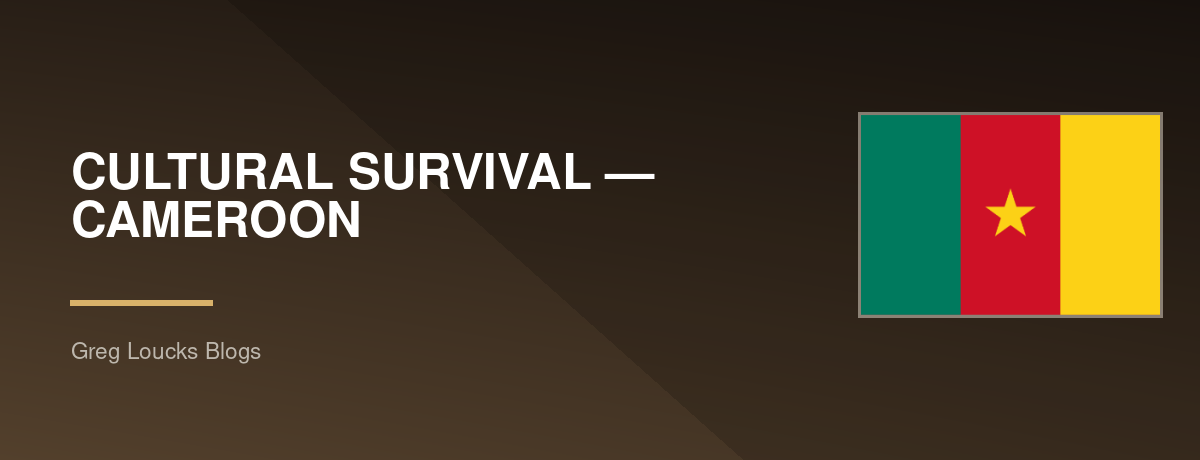
🇨🇲 CULTURAL SURVIVAL — CAMEROON
🇨🇲 CULTURAL SURVIVAL — CAMEROON PART 1 — THE LAND, THE PEOPLES, AND THE ANCIENT ROOTS OF CAMEROON The “Africa in Miniature,” Forests, Mountains, Sahel, Coastal Peoples, Bantu Expansion, Ancient Trade, Kingdoms, Chiefdoms, the Cameroon Grassfields, Kanem-Bornu Connections, and the Foundations of Cameroonian Culture Cameroon is one of the most culturally and geographically diverse countries in Africa. It stretches from: THE ATLANTIC OCEAN to: THE SAHEL. From: RAINFOREST to: SAVANNA. From: VOLCANIC MOUNTAINS to: DESERT-LIKE NORTHERN LANDSCAPES. 🇨🇲 THIS IS WHY CAMEROON IS OFTEN CALLED: "AFRICA IN MINIATURE." The description is not accidental. Within one country are found enormous differences in: CLIMATE. GEOGRAPHY. LANGUAGES. RELIGIONS. PEOPLES. ECONOMIES. HISTORICAL TRADITIONS. 🇨🇲 CAMEROON'S LOCATION Cameroon is located in: CENTRAL-WESTERN AFRICA. It borders: NIGERIA. CHAD. CENTRAL AFRICAN REPUBLIC. REPUBLIC OF THE CONGO. GABON. EQUATORIAL GUINEA. And to the southwest: THE ATLANTIC OCEAN. 🇨🇲 THE COUNTRY'S GEOGRAPHY Cameroon can be divided into several major geographic zones. THE COASTAL REGION. THE SOUTHERN RAINFOREST. THE CAMEROON HIGHLANDS. THE ADAMAWA PLATEAU. THE NORTHERN SAVANNAS. THE FAR NORTH. EACH has shaped human civilization differently. 🇨🇲 THE COAST Cameroon's southwestern edge reaches the: GULF OF GUINEA. THIS connected coastal communities to: FISHING. MARITIME TRADE. RIVER SYSTEMS. FOREIGN MERCHANTS. THE COAST would eventually become one of the first parts of the region to experience sustained European contact. BUT people were living there long before Europeans arrived. 🇨🇲 THE FOREST Southern Cameroon contains extensive tropical forest. THE FOREST provided: FOOD. MEDICINES. TIMBER. HUNTING. FISHING. MATERIALS. FOREST COMMUNITIES developed detailed knowledge of their environment. THEY understood: SEASONS. RIVERS. ANIMALS. PLANTS. WEATHER. THIS knowledge was passed through generations. 🇨🇲 THE CAMEROON HIGHLANDS Moving inland, the landscape rises. MOUNTAINS. PLATEAUS. VALLEYS. GRASSLANDS. THIS region became one of Africa's great centers of traditional political organization. THE: CAMEROON GRASSFIELDS are especially important. 🇨🇲 THE GRASSFIELDS The Grassfields cover much of the western highlands. THEY became home to numerous: KINGDOMS. CHIEFDOMS. VILLAGES. CLANS. THESE societies developed elaborate systems of: ROYAL AUTHORITY. COURTS. ART. AGRICULTURE. RELIGION. TRADE. 🇨🇲 THE NORTHERN REGION Further north, the landscape changes dramatically. SAVANNA. GRASSLAND. SEASONAL RIVERS. DRYLAND. THE NORTH was connected to the wider: SAHEL. THIS created historical links with: CHAD. NIGERIA. LAKE CHAD. SUDAN. 🇨🇲 TWO MAJOR CULTURAL WORLDS Cameroon therefore developed at the intersection of two enormous cultural zones. THE FOREST AND BANTU WORLD to the south. THE SAHELIAN AND SUDANIC WORLD to the north. BETWEEN THEM stood: THE HIGHLANDS. THIS helped produce extraordinary diversity. 🇨🇲 ANCIENT HUMAN PRESENCE Human beings have occupied the region for thousands of years. HUNTER-GATHERER COMMUNITIES developed relationships with the forests and savannas. THEY hunted. THEY gathered. THEY fished. THEY moved according to environmental conditions. 🇨🇲 FOREST PEOPLES Several peoples in the wider Cameroon-Central African forest region have historically practiced forest-based lifeways. THESE include communities associated with: BAKA. and other forest peoples. IMPORTANT: These communities are not one single ancient nation. THEY have their own: LANGUAGES. HISTORIES. SOCIAL SYSTEMS. TERRITORIES. CULTURAL TRADITIONS. 🇨🇲 FOREST KNOWLEDGE Forest peoples developed extraordinary environmental knowledge. THEY could identify: MEDICINAL PLANTS. EDIBLE PLANTS. POISONOUS PLANTS. ANIMAL TRACKS. WATER SOURCES. SEASONAL CHANGES. THIS knowledge could mean the difference between: SURVIVAL and DEATH. 🇨🇲 BANTU EXPANSION One of the most important developments in Central African history was the long expansion of: BANTU-SPEAKING PEOPLES. THIS was not a single migration. IT occurred over many centuries. COMMUNITIES moved into new regions. LANGUAGES spread. AGRICULTURE expanded. IRONWORKING spread. NEW political and social relationships developed. 🇨🇲 LANGUAGE Modern Cameroon contains an extraordinary number of languages. DOZENS. AND depending upon classification, HUNDREDS of distinct languages and varieties. THIS makes Cameroon one of Africa's great linguistic centers. 🇨🇲 WHY SO MANY LANGUAGES? Geography is one reason. MOUNTAINS. FORESTS. RIVERS. VALLEYS. SAVANNAS. THESE could separate communities. WHEN communities remained relatively isolated, their languages could develop independently. OVER TIME, new languages and dialects emerged. 🇨🇲 LANGUAGE IS MEMORY Every language carries: HISTORY. WORLDVIEW. FAMILY RELATIONSHIPS. ECOLOGICAL KNOWLEDGE. RELIGIOUS IDEAS. POETRY. SONGS. WHEN a language disappears, something more than vocabulary disappears. A WAY OF UNDERSTANDING THE WORLD can disappear. 🇨🇲 THE SAHEL AND LAKE CHAD Northern Cameroon was connected to the great civilization zone around: LAKE CHAD. LAKE CHAD was one of the major geographic centers of inland African civilization. PEOPLE moved around its basin. TRADE moved around its basin. ARMIES moved around its basin. RELIGIONS moved around its basin. IDEAS moved around its basin. 🇨🇲 KANEM-BORNU One of the most important states in the Lake Chad region was: KANEM-BORNU. ITS history stretches across many centuries. THE STATE became an important center of: TRADE. POLITICS. ISLAMIC LEARNING. MILITARY POWER. ITS influence reached areas that today include: CHAD. NIGERIA. NIGER. CAMEROON. 🇨🇲 TRADE ROUTES Northern Cameroon participated in trans-Saharan and regional trade. MERCHANTS moved: SALT. TEXTILES. METALS. LIVESTOCK. GRAIN. OTHER GOODS. TRADE connected northern Cameroon with the wider: SAHEL. 🇨🇲 ISLAM Islam spread into northern Cameroon through: TRADE. SCHOLARS. POLITICAL NETWORKS. MIGRATION. IT became particularly influential among northern peoples. BUT Islam did not erase earlier cultural identities. LOCAL traditions continued. FAMILY. CLAN. LANGUAGE. CUSTOM. ALL remained important. 🇨🇲 THE FULANI The: FULANI became an important population throughout northern Cameroon. THEY were connected to wider West and Central African networks. FULANI communities historically practiced: CATTLE HERDING. TRADE. AGRICULTURE. ISLAMIC SCHOLARSHIP. SOME Fulani political states became powerful in northern Cameroon. 🇨🇲 THE ADAMAWA REGION The: ADAMAWA HIGHLANDS became a major crossroads. FROM HERE, trade and political influence moved between: NORTHERN CAMEROON. NIGERIA. CHAD. CENTRAL AFRICAN REPUBLIC. 🇨🇲 THE FULANI JIHADS During the nineteenth century, Islamic reform movements expanded across parts of the region. ONE of the most important figures was: USMAN DAN FODIO. HIS jihad movement began in what is now northern Nigeria. ITS political consequences spread throughout the wider region. 🇨🇲 ADAMAWA EMIRATE The: ADAMAWA EMIRATE became a major political power. IT was associated with the wider Sokoto Caliphate system. THE EMIRATE controlled significant portions of the region. ITS influence extended into areas of modern Cameroon. 🇨🇲 MODERN CAMEROON'S NORTH The legacy of these states remains visible. ISLAMIC TRADITIONS. EMIRATES. CHIEFDOMS. HORSE CULTURE. TRADE. ARCHITECTURE. ALL remain part of northern Cameroon's historical identity. 🇨🇲 THE CAMEROON GRASSFIELDS While northern states were developing, the western highlands were developing their own extraordinary political systems. THE GRASSFIELDS became home to numerous: FONDOMS. 🇨🇲 THE FON A: FON is a traditional ruler. FONDOMS could vary greatly in size and organization. SOME were relatively small communities. OTHERS became powerful kingdoms. THE FON could have authority over: LAND. LAW. RITUAL. ROYAL COURTS. SOCIAL ORGANIZATION. 🇨🇲 BAMUM One of the most famous Grassfields kingdoms was: BAMUM. THE BAMUM KINGDOM became a major political and cultural center. ITS capital was: FOUMBAN. 🇨🇲 FOUMBAN Foumban became famous for: ROYAL ART. PALACES. WOODCARVING. METALWORK. TEXTILES. RELIGIOUS OBJECTS. THE BAMUM developed a highly sophisticated court culture. 🇨🇲 KING IBRAHIM NJOYA One of the most remarkable rulers in African history was: KING IBRAHIM NJOYA. HE ruled the Bamum kingdom around the turn of the twentieth century. NJOYA was famous for: INVENTION. DIPLOMACY. ART. ADMINISTRATION. WRITING. 🇨🇲 THE BAMUM SCRIPT Njoya developed a writing system for the Bamum language. THIS was extraordinary. AN AFRICAN KING was creating a writing system to preserve: HIS PEOPLE'S LANGUAGE. THE SCRIPT went through multiple stages of development. IT demonstrated that African societies were capable of creating their own systems of written communication. 🇨🇲 WHY THIS MATTERS African history is sometimes presented as if literacy arrived only through: EUROPEAN COLONIALISM. THE BAMUM SCRIPT is a powerful counterexample. AFRICAN SOCIETIES could innovate independently. THEY could create: WRITING. ART. GOVERNMENT. TECHNOLOGY. 🇨🇲 THE BAMUM PALACE The Bamum royal palace became a symbol of: ROYAL POWER. ARCHITECTURE. CULTURAL MEMORY. TODAY, Foumban remains an important center of: CAMEROONIAN ART. 🇨🇲 BAMILEKE Another major cultural world in the Grassfields is associated with: BAMILEKE peoples. THE BAMILEKE include numerous related communities. THEY developed elaborate systems of: CHIEFTAINCY. TRADE. AGRICULTURE. ART. FAMILY. 🇨🇲 BAMILEKE ART Bamileke artistic traditions are famous for: BEADED OBJECTS. MASKS. WOODCARVING. TEXTILES. ROYAL REGALIA. ART could communicate: STATUS. ANCESTRY. AUTHORITY. SPIRITUAL POWER. 🇨🇲 ROYAL SYMBOLS In many Grassfields societies, objects were more than decoration. A MASK could represent: POWER. A STOOL could represent: ROYAL AUTHORITY. A BEADED OBJECT could represent: SOCIAL STATUS. ART therefore became a language. 🇨🇲 THE TIKAR The: TIKAR cultural region is another important part of the Grassfields. TIKAR traditions influenced political systems across portions of central and western Cameroon. THEIR history demonstrates the interconnected nature of Grassfields societies. 🇨🇲 CHIEFTAINCY Traditional rulers remain important in Cameroon. MODERN GOVERNMENT may control: THE STATE. BUT traditional rulers may retain authority in: COMMUNITY. CUSTOM. CULTURE. LAND. CEREMONY. THIS creates a dual structure: MODERN STATE and TRADITIONAL AUTHORITY. 🇨🇲 THE COASTAL PEOPLES Along the coast, different cultural systems developed. DUALA peoples became especially important. THE DUALA were involved in: FISHING. TRADE. RIVER TRANSPORT. COASTAL COMMERCE. THEIR location gave them access to maritime trade networks. 🇨🇲 THE WOURI ESTUARY The: WOURI RIVER and surrounding estuary became a major center of commerce. RIVERS provided: TRANSPORT. COAST provided: ACCESS TO THE ATLANTIC. THIS made the region strategically important. 🇨🇲 DOUALA The modern city of: DOUALA grew from this coastal trading world. TODAY it is Cameroon's largest city and major commercial center. BUT its origins go much deeper than modern colonial history. 🇨🇲 BEFORE EUROPEANS African merchants were already trading along the coast. PALM PRODUCTS. FISH. IVORY. FOOD. OTHER GOODS. TRADE connected coastal communities to inland regions. 🇨🇲 EUROPEAN CONTACT Portuguese sailors reached the coast of Cameroon in the: FIFTEENTH CENTURY. THE NAME "Cameroon" is generally traced to Portuguese encounters with the abundant: SHRIMP. or PRAWNS found in the Wouri River. PORTUGUESE called the area: RIO DOS CAMARÕES. MEANING: "RIVER OF PRAWNS." THE NAME eventually evolved into: CAMEROON. 🇨🇲 THE ATLANTIC SLAVE TRADE European contact eventually became deeply connected to: THE ATLANTIC SLAVE TRADE. ENSLAVED PEOPLE were transported from coastal regions. SOME were captured in warfare. SOME were kidnapped. SOME were enslaved through local political systems. EUROPEAN DEMAND dramatically intensified the trade. 🇨🇲 THE COASTAL ECONOMY Some coastal elites became involved in trade with European merchants. EUROPEAN GOODS included: TEXTILES. METAL GOODS. FIREARMS. ALCOHOL. AFRICAN EXPORTS included: ENSLAVED PEOPLE. IVORY. PALM PRODUCTS. OTHER COMMODITIES. THIS created enormous changes in coastal political power. 🇨🇲 THE DUALA TRADING HOUSES Coastal trading families became increasingly powerful. THEY served as intermediaries between: EUROPEAN MERCHANTS and INTERIOR COMMUNITIES. THIS created a new coastal elite. BUT the slave trade also created violence and instability. 🇨🇲 ABOLITION During the nineteenth century, European powers increasingly abolished the transatlantic slave trade. BUT European economic interest in Africa did not disappear. IT changed form. SLAVES were increasingly replaced in European economic planning by: RAW MATERIALS. PALM OIL. RUBBER. IVORY. TIMBER. 🇨🇲 PALM OIL Palm oil became particularly important. EUROPEAN INDUSTRY used palm products for: SOAP. LUBRICANTS. INDUSTRIAL PRODUCTS. AFRICAN producers and traders became deeply involved. BUT European colonial expansion was approaching. 🇨🇲 THE SCRAMBLE FOR AFRICA During the late nineteenth century, European powers competed to control African territory. BRITAIN. FRANCE. GERMANY. ALL wanted influence. CAMEROON would become a major target of German expansion. 🇨🇲 THE GERMAN ARRIVAL In: 1884, Germany established a protectorate over territories along the Cameroon coast. THE COLONY became known as: KAMERUN. GERMAN colonial rule would dramatically transform the region. BUT before we reach colonialism, we need to understand what existed beforehand. 🇨🇲 AFRICAN POLITICAL SYSTEMS Cameroon did not have one single precolonial government. INSTEAD, there were: KINGDOMS. EMIRATES. CHIEFDOMS. VILLAGES. CLANS. CITY-STATES. TRADING NETWORKS. 🇨🇲 THE BAMUM KINGDOM had: A KING. COURT. ADMINISTRATION. ARTISANS. SOLDIERS. RELIGIOUS INSTITUTIONS. 🇨🇲 THE ADAMAWA EMIRATE had: EMIRS. ISLAMIC SCHOLARS. MILITARY ORGANIZATION. TRADE NETWORKS. 🇨🇲 COASTAL SOCIETIES had: TRADING ELITES. FISHING COMMUNITIES. RIVER NETWORKS. MERCHANT FAMILIES. 🇨🇲 FOREST COMMUNITIES had: LOCAL LEADERSHIP. KINSHIP SYSTEMS. ENVIRONMENTAL KNOWLEDGE. THERE WAS NO SINGLE MODEL. THAT is one of the most important facts about Cameroonian history. 🇨🇲 CAMEROON WAS ALREADY DIVERSE Before colonial borders, the territory contained: MANY PEOPLES. MANY LANGUAGES. MANY POLITICAL SYSTEMS. MANY RELIGIOUS TRADITIONS. COLONIALISM did not create Cameroon's diversity. IT inherited it. 🇨🇲 RELIGION Traditional African religions existed throughout the territory. THEY could involve: ANCESTORS. SACRED FORESTS. RITUALS. SPIRITUAL AUTHORITIES. SACRED OBJECTS. RELIGION was often deeply connected to: FAMILY. LAND. POLITICS. AGRICULTURE. 🇨🇲 ISLAM Islam became especially influential in northern Cameroon. TRADE. SCHOLARSHIP. POLITICAL EXPANSION. MIGRATION. ALL helped spread Islam. 🇨🇲 CHRISTIANITY Christianity arrived through European missionary activity. BUT Christianity would later become deeply embedded in Cameroonian society. CATHOLIC. PROTESTANT. EVANGELICAL. THESE traditions would become major parts of modern Cameroon. 🇨🇲 THE RELIGIOUS MAP Modern Cameroon therefore contains: CHRISTIAN SOUTH. MUSLIM NORTH. TRADITIONAL RELIGIOUS PRACTICES. MIXED AND OVERLAPPING IDENTITIES. BUT these boundaries are not absolute. PEOPLE move. FAMILIES intermarry. CITIES bring communities together. 🇨🇲 FOOD Food also reflects Cameroon's diversity. CASSAVA. PLANTAINS. YAMS. CORN. MILLET. SORGHUM. FISH. MEAT. PEANUTS. LEAFY VEGETABLES. NORTHERN CUISINE reflects Sahelian influences. SOUTHERN CUISINE reflects forest and coastal traditions. WESTERN CUISINE reflects highland agriculture. FOOD is therefore geography on a plate. 🇨🇲 AGRICULTURE Different environments produced different agricultural systems. SOUTH: PLANTAINS. CASSAVA. COCOA. COFFEE. WEST: CORN. BEANS. ROOT CROPS. MARKET GARDENING. NORTH: MILLET. SORGHUM. COTTON. LIVESTOCK. 🇨🇲 ANIMAL HUSBANDRY Northern communities developed important cattle-herding traditions. CATTLE were not simply economic assets. THEY could represent: WEALTH. STATUS. MARRIAGE RESOURCES. SOCIAL POWER. 🇨🇲 HORSES Horses became particularly important among northern political elites. HORSE could represent: MILITARY POWER. PRESTIGE. ROYAL AUTHORITY. 🇨🇲 THE CAMEROON MOUNTAINS Cameroon contains one of the most remarkable volcanic landscapes in Africa. MOUNT CAMEROON is one of the continent's great volcanic mountains. IT rises dramatically above the coastal region. VOLCANIC SOILS can be highly fertile. THIS helped support agriculture. 🇨🇲 MOUNT CAMEROON The mountain also became part of the cultural and spiritual landscape. MOUNTAINS often become: SACRED PLACES. THEY can represent: POWER. CREATION. ANCESTRY. SPIRITUAL PRESENCE. 🇨🇲 LAKE NYOS Cameroon is also known for: LAKE NYOS. IN: 1986, a catastrophic natural event released carbon dioxide from the lake. THOUSANDS of people and large numbers of animals died. THE EVENT became one of the world's most significant examples of a: LIMNIC ERUPTION. THIS is a reminder that Cameroon's geography is not merely beautiful. IT can also be dangerous. 🇨🇲 THE LAND SHAPED THE PEOPLE This is the central lesson of Part 1. THE COAST created: TRADERS. THE FOREST created: FOREST SPECIALISTS. THE HIGHLANDS created: KINGDOMS. THE NORTH created: SAHELIAN TRADING AND ISLAMIC STATES. THE RIVERS created: CONNECTIVITY. THE MOUNTAINS created: AGRICULTURAL AND SPIRITUAL LANDSCAPES. 🇨🇲 CAMEROON WAS NEVER EMPTY Before: GERMANY. BEFORE: BRITAIN. BEFORE: FRANCE. BEFORE: CHRISTIAN MISSIONARIES. BEFORE: EUROPEAN COLONIAL BORDERS. THERE WERE: KINGDOMS. CHIEFDOMS. VILLAGES. TRADING NETWORKS. FARMERS. FISHERS. HUNTERS. HERDERS. SCHOLARS. ARTISTS. KINGS. QUEENS. ELDERS. FAMILIES. 🇨🇲 AND THEY CREATED CIVILIZATIONS The Bamum created: A KINGDOM. NJOYA CREATED: A WRITING SYSTEM. NORTHERN STATES CREATED: ISLAMIC SCHOLARSHIP AND TRADE NETWORKS. COASTAL PEOPLES CREATED: MARITIME COMMERCE. FOREST PEOPLES CREATED: COMPLEX ENVIRONMENTAL KNOWLEDGE. THESE were not primitive societies waiting for civilization. THEY were civilizations in their own right. 🇨🇲 THEN THE EUROPEANS ARRIVED Portuguese explorers came first. THEN: OTHER EUROPEAN MERCHANTS. THEN: MISSIONARIES. THEN: GERMAN COLONIALISM. AND EVENTUALLY: BRITISH AND FRENCH RULE. THE NEXT PART will examine how European colonialism transformed Cameroon. 🇨🇲 PART 1 — FINAL LESSON Cameroon is one of Africa's great crossroads. IT connects: FOREST. SAHEL. ATLANTIC. CENTRAL AFRICA. WEST AFRICA. ITS people developed extraordinary diversity because their environments were extraordinary. THE BAMUM. BAMILEKE. TIKAR. DUALA. FULANI. AND MANY OTHER PEOPLES created their own histories. THEY built: KINGDOMS. CHIEFDOMS. TRADING NETWORKS. FARMING SYSTEMS. RELIGIOUS TRADITIONS. ARTISTIC TRADITIONS. LANGUAGES. 🇨🇲 CAMEROON'S HISTORY DID NOT BEGIN WITH COLONIALISM. It began with: PEOPLE. PEOPLE living in forests. PEOPLE crossing mountains. PEOPLE trading across savannas. PEOPLE fishing along rivers. PEOPLE raising cattle. PEOPLE building kingdoms. PEOPLE creating art. PEOPLE preserving stories. PEOPLE speaking languages. AND passing their culture from: GENERATION to GENERATION. 🇨🇲 NEXT PART 2 — GERMAN KAMERUN, COLONIAL CONQUEST, FORCED LABOR, MISSIONARIES, RESISTANCE, AND THE FIRST WORLD WAR The German Protectorate, Coastal Resistance, King Njoya and German Relations, Colonial Infrastructure, Plantation Labor, Mission Schools, German Repression, the First World War, and the Division of Cameroon Between France and Britain. 🇨🇲 CULTURAL SURVIVAL — CAMEROON PART 2 — GERMAN KAMERUN, COLONIAL CONQUEST, RESISTANCE, AND THE FIRST WORLD WAR The German Protectorate, Coastal Resistance, King Njoya, Forced Labor, Plantations, Mission Schools, Colonial Infrastructure, Repression, the First World War, and the Division of Cameroon The arrival of Germany transformed Cameroon. But German colonialism did not enter an empty territory. It entered a country containing: KINGDOMS. EMIRATES. CHIEFDOMS. TRADING COMMUNITIES. FARMING SOCIETIES. FOREST PEOPLES. COASTAL MERCHANTS. 🇨🇲 THE GERMAN ARRIVAL In: 1884, Germany established control over the coastal territory that became known as: KAMERUN. THE GERMAN EMPIRE was relatively late to the European colonial competition in Africa. BRITAIN and FRANCE had already established extensive influence elsewhere. GERMANY wanted its own African colonies. KAMERUN became one of Germany's most important territories in Africa. 🇨🇲 THE PROTECTORATE The German government initially relied heavily upon treaties with coastal rulers and commercial interests. BUT a treaty on paper was not the same thing as actual control. GERMANY still had to conquer and administer a huge territory. 🇨🇲 THE COLONIAL FRONTIER German authority expanded outward from the coast. MILITARY EXPEDITIONS moved inland. ADMINISTRATORS established stations. TRADERS followed. MISSIONARIES followed. PLANTATION OWNERS followed. THIS created an entirely new political order. 🇨🇲 RESISTANCE Cameroonians did not simply accept German rule. RESISTANCE occurred in different forms and in different regions. SOME communities fought militarily. SOME refused taxes. SOME resisted labor demands. SOME attempted to maintain political independence. OTHERS used diplomacy to protect their kingdoms. 🇨🇲 WHY DID PEOPLE RESIST? The German colonial state interfered with existing systems of: LAND. LABOR. TRADE. TAXATION. POLITICAL AUTHORITY. LOCAL RULERS could lose power. FARMERS could lose access to land. TRADERS could lose economic independence. ORDINARY PEOPLE could be forced into colonial labor systems. THIS created widespread resentment. 🇨🇲 THE DUALA The coastal: DUALA were among the first communities to experience intense German intervention. THEY had already developed extensive commercial relationships with Europeans. BUT German colonialism sought to place trade increasingly under: COLONIAL CONTROL. 🇨🇲 COASTAL ELITES Some traditional leaders attempted to negotiate with Germany. OTHERS resisted. THE RESULT was an increasingly tense relationship between: AFRICAN POLITICAL AUTHORITY and GERMAN COLONIAL POWER. 🇨🇲 KING BELL AND KING AKWA The German relationship with major Duala leaders became particularly important. KING BELL and KING AKWA were prominent coastal figures. THEY had to navigate a rapidly changing political environment. EUROPEAN commercial and political power was becoming stronger. AFRICAN leaders were attempting to preserve their own influence. 🇨🇲 THE 1884 TREATIES The German protectorate was established through agreements with coastal rulers. BUT the meaning of those agreements was interpreted differently by the two sides. GERMANY viewed the treaties as foundations for sovereignty. AFRICAN RULERS often understood them through existing diplomatic traditions. THIS created major misunderstandings. 🇨🇲 COLONIAL CONQUEST Germany gradually expanded its military authority. MILITARY POSTS were established. ROADS were built. ADMINISTRATIVE CENTERS were created. THE COLONIAL STATE expanded deeper into the territory. 🇨🇲 THE INTERIOR The interior was much harder to control. FORESTS. MOUNTAINS. RIVERS. VAST DISTANCES. THESE made colonial conquest difficult. LOCAL KNOWLEDGE was often superior to German knowledge of the terrain. THIS made resistance possible. 🇨🇲 THE GRASSFIELDS German forces eventually pushed into the western highlands. THERE they encountered: FONDOMS. KINGDOMS. CHIEFDOMS. THESE were not politically disorganized societies. THEY had: RULERS. COURTS. WARRIORS. TAX SYSTEMS. RELIGIOUS AUTHORITIES. AGRICULTURAL ECONOMIES. GERMANY therefore had to negotiate or fight with established political institutions. 🇨🇲 BAMUM One of the most fascinating relationships was between Germany and: THE BAMUM KINGDOM. KING IBRAHIM NJOYA was an extraordinary ruler. HE recognized that the political world around him was changing. EUROPEAN POWERS were expanding. MILITARY TECHNOLOGY was changing. TRADE was changing. ADMINISTRATION was changing. NJOYA attempted to adapt. 🇨🇲 NJOYA'S STRATEGY Rather than simply fighting Germany, Njoya attempted to maintain the independence and survival of Bamum through: DIPLOMACY. TECHNOLOGY. ADMINISTRATIVE REFORM. CULTURAL DEVELOPMENT. HE understood that survival might require: ADAPTATION. 🇨🇲 RELATIONS WITH GERMANY Njoya developed a relationship with German authorities. HE sought access to: MODERN TECHNOLOGY. EDUCATION. WEAPONS. NEW POLITICAL KNOWLEDGE. THIS was a calculated strategy. NJOYA did not simply want to become German. HE wanted: BAMUM TO SURVIVE. 🇨🇲 THE BAMUM SCRIPT During this period, Njoya's intellectual achievements became especially significant. HE developed the: BAMUM SCRIPT. THIS allowed the Bamum language to be written. THE SCRIPT was used for: RECORDS. COMMUNICATION. HISTORY. ADMINISTRATION. CULTURE. THIS was an extraordinary example of African intellectual innovation during the colonial era. 🇨🇲 NATIVE ADMINISTRATION The Germans often attempted to govern indirectly through local rulers. THIS could be useful. WHY? Because colonial administrators were too few to govern the entire territory directly. LOCAL RULERS could collect: TAXES. ENFORCE: ORDERS. PROVIDE: LABOR. MAINTAIN: LOCAL CONTROL. BUT indirect rule had a major consequence. IT could transform traditional rulers into: COLONIAL AGENTS. 🇨🇲 THE POWER OF THE FON A traditional ruler who had once represented: HIS PEOPLE could now be expected to enforce: COLONIAL POLICY. THIS could damage the legitimacy of traditional authority. PEOPLE could begin to see rulers as: COLLABORATORS. THE COLONIAL SYSTEM therefore altered relationships inside communities. 🇨🇲 TAXATION The colonial government introduced various forms of taxation. TAXES forced people into the colonial cash economy. FARMERS needed money. MONEY could be earned by selling: CASH CROPS. OR by working for: COLONIAL EMPLOYERS. THIS changed traditional economic patterns. 🇨🇲 CASH CROPS German colonial authorities promoted crops such as: COCOA. COFFEE. BANANAS. PALM PRODUCTS. THESE could be exported to Europe. THE COLONIAL ECONOMY was therefore increasingly oriented toward: EXPORT PRODUCTION. 🇨🇲 PLANTATIONS One of the most important developments was the establishment of: PLANTATIONS. LARGE plantations were developed particularly in fertile southern and coastal regions. EUROPEAN companies controlled significant agricultural operations. THEY produced: COCOA. BANANAS. PALM PRODUCTS. RUBBER. 🇨🇲 LABOR Plantations required workers. THIS became one of the most controversial aspects of German rule. LABOR was often obtained through coercive systems. PEOPLE could be compelled to work. COMMUNITIES could be required to provide labor. THIS created enormous resentment. 🇨🇲 FORCED LABOR Colonial authorities used forms of: FORCED LABOR. PEOPLE could be required to: BUILD ROADS. CARRY GOODS. WORK ON PLANTATIONS. CONSTRUCT COLONIAL FACILITIES. THE BURDEN fell disproportionately upon local populations. 🇨🇲 THE CARRIER SYSTEM Cameroon had limited colonial transportation infrastructure. GOODS therefore often had to be moved by: HUMAN CARRIERS. PEOPLE were forced to carry: SUPPLIES. EQUIPMENT. FOOD. MILITARY MATERIAL. THIS could be extraordinarily dangerous. LONG DISTANCES. DISEASE. EXHAUSTION. MALNUTRITION. MANY suffered terribly. 🇨🇲 COLONIAL INFRASTRUCTURE Germany did build infrastructure. ROADS. RAILWAYS. PORT FACILITIES. ADMINISTRATIVE BUILDINGS. BUT the purpose was primarily colonial. INFRASTRUCTURE was designed to move: PEOPLE. SOLDIERS. RAW MATERIALS. EXPORT GOODS. THIS is an important distinction. DEVELOPMENT could occur. BUT development was structured around: COLONIAL INTERESTS. 🇨🇲 THE RAILWAY Germany began developing railway infrastructure connecting the interior with coastal ports. THE GOAL was to facilitate: TRADE. MILITARY MOVEMENT. ADMINISTRATION. RAILROADS could transform geography. A JOURNEY that once took weeks or months could become dramatically faster. BUT the workers building those railways paid a terrible human price. 🇨🇲 WORKER DEATHS Colonial construction projects were dangerous. WORKERS faced: ACCIDENTS. DISEASE. EXHAUSTION. VIOLENCE. COLONIAL RECORDS often reveal enormous human suffering associated with these projects. 🇨🇲 MISSIONARIES Christian missionaries also expanded during the colonial period. CATHOLIC. PROTESTANT. MISSIONS established: SCHOOLS. CHURCHES. CLINICS. MISSIONARIES translated Christian materials into local languages. THEY also introduced European-style education. 🇨🇲 EDUCATION Colonial education was limited. THE GOAL was not to create a fully educated population. IT was often to train: CLERKS. TEACHERS. INTERPRETERS. LOW-LEVEL ADMINISTRATORS. THIS created a new African educated class. AND that class would eventually become central to: NATIONALISM. 🇨🇲 THE PARADOX OF COLONIAL EDUCATION Colonial governments wanted educated Africans who could help operate the colonial system. BUT education gave Africans: LITERACY. POLITICAL KNOWLEDGE. HISTORY. ORGANIZATIONAL SKILLS. THESE could then be used against colonial rule. 🇨🇲 CHRISTIANITY Christianity also produced complicated results. MISSIONARIES sometimes attacked traditional beliefs. THEY could describe local religions as: "PAGAN." BUT African Christians increasingly adapted Christianity to local cultural contexts. THIS created distinctly African Christian communities. 🇨🇲 AFRICAN AGENCY Cameroonians were not simply passive recipients of European culture. THEY selected. THEY adapted. THEY rejected. THEY combined. THEY created something new. THIS is one of the most important themes in colonial African history. 🇨🇲 COLONIAL CITIES Colonialism also transformed urban life. DOUALA became increasingly important. BUEA became another major colonial center. YAOUNDÉ grew as an administrative center. THESE cities became places where: AFRICANS. EUROPEANS. MERCHANTS. MISSIONARIES. GOVERNMENT OFFICIALS. interacted. 🇨🇲 BUEA Buea became particularly important under German rule. IT was located near: MOUNT CAMEROON. THE fertile volcanic environment supported plantation agriculture. GERMAN authorities developed plantations around the region. 🇨🇲 THE KAMERUN MOUNTAIN REGION The mountain's fertile slopes became valuable to colonial agricultural interests. COCOA. BANANAS. OTHER CASH CROPS. THIS helped integrate Cameroon into global commodity markets. 🇨🇲 THE COST OF EXPORT AGRICULTURE The global market benefited from: CHEAP RAW MATERIALS. BUT the people producing them did not necessarily receive proportional benefits. THIS pattern would remain a major issue long after colonialism ended. 🇨🇲 RESISTANCE IN THE GRASSFIELDS As German influence expanded, some Grassfields rulers resisted. THEY understood that colonial rule threatened: SOVEREIGNTY. LAND. TRADITIONAL AUTHORITY. GERMAN military campaigns could be brutal. VILLAGES could be attacked. RULERS could be removed. PEOPLE could be punished. 🇨🇲 RESISTANCE WAS NOT ALWAYS OPEN WAR Resistance could also be: DELAY. NONCOOPERATION. ESCAPE. REFUSAL TO PAY. REFUSAL TO WORK. MIGRATION. THESE were ways of protecting autonomy. 🇨🇲 WOMEN Women also experienced colonial transformation. COLONIAL ECONOMIES often depended heavily on women's agricultural labor. WOMEN continued producing: FOOD. WHILE MEN were increasingly drawn into: WAGE LABOR. THIS could increase women's economic responsibilities. 🇨🇲 FAMILY LIFE Colonialism changed family structures. MEN could be absent for long periods. THEY might work: ON PLANTATIONS. ON RAILWAYS. IN CITIES. IN MINES. WOMEN often remained responsible for: CHILDREN. FARMS. HOUSEHOLDS. THIS created long-term social changes. 🇨🇲 THE COLONIAL ECONOMY By the early twentieth century, Cameroon was increasingly integrated into the global economy. EXPORTS. IMPORTS. MONEY. TAXES. WAGE LABOR. ALL were changing everyday life. 🇨🇲 THEN CAME WORLD WAR I In: 1914, Europe entered: WORLD WAR I. THE WAR quickly spread into Africa. CAMEROON became a battlefield. 🇨🇲 THE ALLIED INVASION British, French, and Belgian forces attacked German Cameroon. GERMAN FORCES attempted to defend the colony. BUT Germany was heavily outnumbered and strategically isolated. 🇨🇲 THE CAMPAIGN Fighting spread across the territory. SOLDIERS. PORTERS. CIVILIANS. ALL were affected. 🇨🇲 GERMAN RETREAT German forces gradually lost territory. BY: 1916, German control of Cameroon had effectively collapsed. GERMAN TROOPS retreated toward: SPANISH GUINEA. MANY German soldiers crossed into Spanish territory. 🇨🇲 THE COLONY IS DIVIDED The end of German rule did not mean immediate independence. INSTEAD, Cameroon was divided between: FRANCE and BRITAIN. THIS would have enormous consequences. 🇨🇲 FRENCH CAMEROON France received the larger portion of the former German colony. IT became: FRENCH CAMEROON. 🇨🇲 BRITISH CAMEROON Britain received a smaller portion. IT became: BRITISH CAMEROON. THIS created a unique situation. ONE historical territory. TWO colonial powers. TWO administrative systems. TWO educational traditions. TWO legal traditions. TWO political cultures. 🇨🇲 THE LEGACY The division would eventually contribute to one of modern Cameroon's most important political problems. THE ANGLOPHONE QUESTION. 🇨🇲 WHY? Because British Cameroon developed under: ENGLISH. BRITISH ADMINISTRATION. COMMON LAW. FRENCH CAMEROON developed under: FRENCH. FRENCH ADMINISTRATION. CIVIL LAW. WHEN the territories were eventually brought together, these systems had to coexist inside one country. 🇨🇲 TWO CAMEROONS This became one of the defining features of modern Cameroon. FRANCOPHONE CAMEROON. ANGLOPHONE CAMEROON. THE distinction is not simply linguistic. IT also concerns: LAW. EDUCATION. ADMINISTRATION. POLITICAL IDENTITY. 🇨🇲 COLONIALISM CREATED A NEW MAP Before European colonialism, communities were connected through: KINGDOMS. TRADE. LANGUAGE. CULTURE. COLONIALISM imposed: TERRITORIAL BORDERS. GERMANY created: KAMERUN. THEN Britain and France divided it. THIS created the territorial framework from which modern Cameroon emerged. 🇨🇲 BUT CULTURE SURVIVED Despite German colonial rule, Cameroonian cultures remained. BAMUM remained. BAMILEKE remained. DUALA remained. FULANI remained. TIKAR remained. FOREST PEOPLES remained. THEIR LANGUAGES remained. THEIR FAMILIES remained. THEIR MEMORIES remained. 🇨🇲 AND SOMETHING NEW WAS BORN A new educated generation was emerging. THEY could read. THEY could write. THEY could travel. THEY could communicate across communities. THEY could compare colonial rule with ideas of: FREEDOM. SELF-DETERMINATION. NATIONALISM. THIS would eventually produce: CAMEROONIAN NATIONALISM. 🇨🇲 THE GREAT PARADOX Colonialism attempted to control Cameroon. BUT it unintentionally created some of the tools that would eventually undermine colonialism. SCHOOLS created: EDUCATED LEADERS. ROADS created: CONNECTIONS. CITIES created: POLITICAL NETWORKS. PRINT created: POLITICAL DEBATE. COLONIAL BORDERS created: A TERRITORIAL NATIONAL IDENTITY. 🇨🇲 THE ROAD TO INDEPENDENCE The next generation would increasingly ask: WHY SHOULD EUROPE RULE CAMEROON? THAT question would become impossible to suppress. 🇨🇲 PART 2 — FINAL LESSON German colonialism profoundly changed Cameroon. IT introduced: COLONIAL ADMINISTRATION. IT expanded: EXPORT AGRICULTURE. IT built: ROADS AND RAILWAYS. IT expanded: MISSION EDUCATION. BUT it also brought: FORCED LABOR. LAND DISPOSSESSION. MILITARY REPRESSION. ECONOMIC EXPLOITATION. POLITICAL SUBORDINATION. 🇨🇲 CAMEROONIANS RESISTED Some fought. Some negotiated. Some adapted. Some escaped. Some preserved their culture quietly. AND leaders such as: KING NJOYA demonstrated another strategy: ADAPTATION FOR SURVIVAL. 🇨🇲 THEN WORLD WAR I CHANGED EVERYTHING Germany lost Cameroon. FRANCE received most of the territory. BRITAIN received a smaller portion. AND the division created a problem that would continue into the modern era: ONE COUNTRY. TWO COLONIAL LEGACIES. 🇨🇲 NEXT PART 3 — FRENCH CAMEROON, BRITISH CAMEROON, CHRISTIAN MISSIONARIES, EDUCATION, NATIONALISM, AND THE ROAD TO INDEPENDENCE The French Mandate, British Mandate, Douala and Yaoundé, the Growth of Christianity and Islam, African Political Movements, Ruben Um Nyobè, the UPC, Colonial Repression, the United Nations, and Cameroon's Struggle for Independence. 🇨🇲 CULTURAL SURVIVAL — CAMEROON PART 3 — FRENCH CAMEROON, BRITISH CAMEROON, NATIONALISM, AND THE ROAD TO INDEPENDENCE The Mandate System, French and British Rule, Education, Christianity and Islam, the Growth of Nationalism, Ruben Um Nyobè, the UPC, Colonial Repression, the United Nations, and the Birth of Independent Cameroon The First World War had ended German rule in Cameroon. But Cameroon did not become independent. Instead, the former German colony was divided between: FRANCE and BRITAIN. This division would shape Cameroon's political history for generations. 🇨🇲 THE MANDATE SYSTEM After World War I, the former German colonies were placed under the authority of the: LEAGUE OF NATIONS. CAMEROON was divided into mandated territories. FRENCH CAMEROON received the overwhelming majority of the former German territory. BRITISH CAMEROON received a much smaller territory along the Nigerian border. THIS was not independence. IT was another form of foreign rule. 🇨🇲 FRENCH CAMEROON France administered its portion through: FRENCH COLONIAL INSTITUTIONS. THE FRENCH expanded: ADMINISTRATION. EDUCATION. ROADS. AGRICULTURAL PRODUCTION. CHRISTIAN MISSIONS. BUT the central principle remained: FRENCH SOVEREIGNTY. 🇨🇲 BRITISH CAMEROON Britain administered its portion differently. BRITISH CAMEROON was governed largely through the administrative system of neighboring: NIGERIA. THIS had enormous consequences. BRITISH administration emphasized: INDIRECT RULE. LOCAL RULERS were often incorporated into the colonial system. FRENCH rule was generally more centralized. BRITISH rule relied more heavily upon: LOCAL AUTHORITIES. 🇨🇲 TWO COLONIAL SYSTEMS Cameroonians were therefore living under two different colonial models. FRENCH CAMEROON: FRENCH LANGUAGE. FRENCH ADMINISTRATION. FRENCH EDUCATIONAL SYSTEM. FRENCH LEGAL TRADITIONS. BRITISH CAMEROON: ENGLISH LANGUAGE. BRITISH ADMINISTRATION. BRITISH EDUCATIONAL SYSTEM. COMMON LAW TRADITIONS. THIS difference would eventually become one of the defining issues of the modern Cameroonian state. 🇨🇲 EDUCATION Education expanded during the mandate period. MISSIONARIES continued establishing: SCHOOLS. CATHOLIC MISSIONS were particularly important in French Cameroon. PROTESTANT MISSIONS were important in several regions as well. BRITISH CAMEROON also developed mission schools. EDUCATION created a new generation of Cameroonians who could: READ. WRITE. ORGANIZE. DEBATE. COMMUNICATE. THIS would have consequences for colonial rule. 🇨🇲 THE EDUCATED CLASS Colonial governments needed Africans who could serve as: CLERKS. TEACHERS. INTERPRETERS. SECRETARIES. ADMINISTRATORS. BUT education created something the colonial system could not completely control: POLITICAL CONSCIOUSNESS. A YOUNG CAMEROONIAN who learned about: LIBERTY. EQUALITY. SELF-DETERMINATION. could naturally begin asking: "WHY DOES THIS NOT APPLY TO US?" 🇨🇲 CHRISTIANITY Christianity expanded dramatically during the colonial period. CATHOLIC. PROTESTANT. PRESBYTERIAN. BAPTIST. OTHER CHRISTIAN TRADITIONS. CHURCHES became important institutions. THEY provided: EDUCATION. HEALTHCARE. LITERACY. COMMUNITY. BUT Christianity also produced complicated cultural changes. MISSIONARIES sometimes attacked traditional religious practices. AFRICAN religious traditions were often described as: "PAGAN." BUT Cameroonians increasingly reshaped Christianity in their own cultural environment. AFRICAN CHRISTIANITY became: CAMEROONIAN CHRISTIANITY. 🇨🇲 ISLAM Northern Cameroon remained strongly connected to: ISLAMIC CULTURE. MOSQUES. QUR'ANIC SCHOOLS. ISLAMIC SCHOLARSHIP. TRADE. THE NORTH therefore developed a cultural identity distinct from the southern Christian regions. BUT the boundaries were never absolute. TRADE. MIGRATION. MARRIAGE. URBANIZATION. ALL created connections between communities. 🇨🇲 THE CITIES Colonial cities became centers of political change. DOUALA became a major commercial center. YAOUNDÉ became an important administrative center. BUEA became important in the Anglophone territory. THESE cities brought together people from different regions. CITY LIFE created new forms of identity. PEOPLE could increasingly identify themselves as: CAMEROONIANS. 🇨🇲 NATIONALISM Nationalism developed gradually. AT FIRST, many political movements sought: BETTER TREATMENT. BETTER: WAGES. EDUCATION. REPRESENTATION. LAND RIGHTS. BUT the political demands gradually became stronger. EVENTUALLY, the question became: INDEPENDENCE. 🇨🇲 THE SECOND WORLD WAR World War II accelerated political change. AFRICAN SOLDIERS served in Allied forces. AFRICANS saw the global struggle against: FASCISM. THEY heard political language about: FREEDOM. DEMOCRACY. SELF-DETERMINATION. THIS made continued colonial domination increasingly difficult to justify. 🇨🇲 THE UNITED NATIONS After World War II, the: UNITED NATIONS replaced the League of Nations. CAMEROON became a: UN TRUST TERRITORY. THE PURPOSE was supposedly to prepare the territory for: SELF-GOVERNMENT. THIS gave Cameroonian nationalists an international platform. 🇨🇲 CAMEROONIAN NATIONALISM Political organizations began demanding greater autonomy. ONE of the most important was: THE UNION OF THE PEOPLES OF CAMEROON. UPC. 🇨🇲 THE UPC The UPC was founded in: 1948. ITS most famous leader was: RUBEN UM NYOBÈ. UM NYOBÈ became one of the most important figures in Cameroon's struggle for independence. 🇨🇲 RUBEN UM NYOBÈ He was known for his: NATIONALISM. ANTI-COLONIALISM. ORGANIZATIONAL ABILITY. HE argued that Cameroon should achieve: TRUE INDEPENDENCE. NOT simply a transfer of authority from one colonial administrator to another. 🇨🇲 UM NYOBÈ AND THE UNITED NATIONS Um Nyobè became internationally known for presenting the Cameroonian cause. HE sought to bring the question of Cameroon's independence before: THE UNITED NATIONS. HIS objective was to establish Cameroon as a sovereign state. 🇨🇲 WHAT DID THE UPC WANT? The UPC demanded: INDEPENDENCE. NATIONAL UNITY. SELF-DETERMINATION. END OF COLONIAL DOMINATION. THE UPC also opposed continued French control. THIS put it directly into conflict with the colonial government. 🇨🇲 WHY WAS THE UPC CONSIDERED DANGEROUS? French authorities increasingly viewed the UPC as: RADICAL. THE MOVEMENT had strong support among sections of the population. IT also had connections with: TRADE UNIONS. STUDENTS. URBAN WORKERS. FARMERS. THE FRENCH feared that the movement could destabilize colonial rule. 🇨🇲 THE COLD WAR The UPC's struggle also unfolded during: THE COLD WAR. FRENCH AUTHORITIES sometimes portrayed anti-colonial movements through the lens of: COMMUNISM. THIS was politically powerful. ANTI-COLONIAL NATIONALISM could be portrayed as: SOVIET-INFLUENCED. BUT the UPC's central objective was: CAMEROONIAN INDEPENDENCE. 🇨🇲 THE STRIKE In: 1955, political tensions exploded. UPC supporters organized demonstrations and strikes. VIOLENCE broke out. THE FRENCH responded with repression. THE UPC was banned in French Cameroon. THIS pushed the movement further underground. 🇨🇲 THE WAR The banning of the UPC did not end the movement. INSTEAD, armed resistance increasingly developed. THE CONFLICT would eventually become a prolonged and bloody struggle. 🇨🇲 THE BASSA REGION The UPC had especially strong support among: BASSA communities. THE BASSA region became one of the major centers of resistance. FRENCH forces responded with: MILITARY OPERATIONS. VILLAGES were attacked. PEOPLE were displaced. SUSPECTED UPC SUPPORTERS were arrested. THE CONFLICT became increasingly brutal. 🇨🇲 UM NYOBÈ GOES INTO HIDING After the UPC was banned, Um Nyobè withdrew into the countryside. HE continued organizing. HE continued communicating. HE continued advocating independence. BUT French forces were determined to eliminate the movement's leadership. 🇨🇲 THE DEATH OF UM NYOBÈ On: SEPTEMBER 13, 1958, Ruben Um Nyobè was killed by French forces. HIS death became one of the defining tragedies of Cameroonian history. 🇨🇲 UM NYOBÈ'S LEGACY The French government had eliminated a major nationalist leader. BUT it could not eliminate: THE IDEA OF INDEPENDENCE. UM NYOBÈ became a symbol of: ANTI-COLONIAL RESISTANCE. HIS name remains deeply important in discussions of Cameroonian history. 🇨🇲 OTHER UPC LEADERS The struggle continued after Um Nyobè. FELIX-ROLAND MOUMIÉ became another important UPC figure. HE continued the international campaign. BUT he was assassinated in: 1960. HIS death further demonstrated the extreme lengths to which the conflict had reached. 🇨🇲 COLONIAL REPRESSION The UPC conflict became one of the darkest chapters in Cameroon's transition to independence. MILITARY OPERATIONS. EXECUTIONS. DETENTIONS. VILLAGE DESTRUCTION. DISPLACEMENT. THE EXACT scale of the violence remains debated by historians. BUT there is no serious doubt that: THOUSANDS OF CAMEROONIANS were killed or displaced during the conflict. 🇨🇲 WHY THIS HISTORY MATTERS Cameroon's independence is sometimes presented as a simple: "COLONIAL POWER LEAVES." story. IT WAS NOT. INDEPENDENCE was preceded by: POLITICAL ORGANIZATION. STRIKES. PROTEST. REPRESSION. GUERRILLA WAR. INTERNATIONAL DIPLOMACY. DEATH. 🇨🇲 BRITISH CAMEROON While the UPC conflict was developing in French Cameroon, British Cameroon followed a somewhat different political path. BRITISH CAMEROON was administered as part of the British colonial system connected to Nigeria. EDUCATION was heavily influenced by: BRITISH MISSION SCHOOLS. ENGLISH became the principal administrative language. COMMON LAW developed as an important legal tradition. 🇨🇲 SOUTHERN CAMEROONS The southern portion of British Cameroon became politically significant. POLITICAL LEADERS debated the future. SHOULD Southern Cameroons: JOIN NIGERIA? BECOME: INDEPENDENT? OR join: FRENCH CAMEROON? THIS was not a simple question. 🇨🇲 THE ANGLOPHONE QUESTION BEGINS The future political relationship between the British and French territories became one of the defining issues of the late colonial period. SOME wanted integration with Nigeria. SOME wanted a separate Southern Cameroons. SOME supported reunification with the French-speaking territory. 🇨🇲 THE UNITED NATIONS The United Nations became central to the process. CAMEROON'S future had to be determined through international negotiations. 🇨🇲 1959–1960 Political change accelerated rapidly. FRENCH CAMEROON moved toward independence. BRITISH CAMEROON prepared for a separate decision. 🇨🇲 INDEPENDENCE On: JANUARY 1, 1960, French Cameroon became: INDEPENDENT CAMEROON. THE COUNTRY was formally known as: THE REPUBLIC OF CAMEROON. 🇨🇲 AHMADOU AHIDJO The first president was: AHMADOU AHIDJO. HE became one of the most important political figures in Cameroonian history. AHIDJO was a northern Muslim politician. HIS rise was historically significant. IT demonstrated that political power in the new state would not be confined to the southern regions. 🇨🇲 BUT INDEPENDENCE WAS INCOMPLETE French Cameroon was independent. BRITISH CAMEROON was not yet part of it. TWO Cameroons still existed. 🇨🇲 THE 1961 PLEBISCITE In: FEBRUARY 1961, the United Nations organized a plebiscite in British Cameroons. NORTHERN CAMEROONS voted to join: NIGERIA. SOUTHERN CAMEROONS voted to join: THE REPUBLIC OF CAMEROON. 🇨🇲 FEDERAL REPUBLIC On: OCTOBER 1, 1961, Southern Cameroons united with the Republic of Cameroon. THE NEW STATE became: THE FEDERAL REPUBLIC OF CAMEROON. 🇨🇲 TWO LEGACIES The new federation contained: FRANCOPHONE CAMEROON. and ANGLOPHONE CAMEROON. THE CHALLENGE was enormous. TWO different colonial histories had to coexist. TWO educational systems. TWO legal traditions. TWO administrative cultures. ONE country. 🇨🇲 THE FEDERAL SYSTEM Federalism was intended to provide a structure through which the two territories could retain elements of their distinct identities. WEST CAMEROON represented the former British territory. EAST CAMEROON represented the former French territory. BUT the balance of power was unequal. FRENCH CAMEROON was much larger. IT contained the overwhelming majority of the population and territory. THIS created tensions over: POLITICAL POWER. LANGUAGE. RESOURCES. ADMINISTRATION. 🇨🇲 THE GREAT CONTRADICTION Cameroon had achieved independence. BUT the question remained: WHAT KIND OF COUNTRY WOULD IT BECOME? WOULD IT remain federal? WOULD IT become more centralized? WOULD Anglophone institutions be protected? WOULD Francophone institutions dominate? THESE questions would become increasingly important. 🇨🇲 AHMADOU AHIDJO Ahidjo sought to consolidate the new state. HIS argument was essentially: NATIONAL UNITY FIRST. AFTER years of colonial division, he wanted a strong central government. BUT centralization had consequences. 🇨🇲 ONE-PARTY POLITICS Political competition gradually narrowed. THE: CAMEROON NATIONAL UNION became the dominant political organization. EVENTUALLY Cameroon moved toward: ONE-PARTY RULE. THE GOVERNMENT argued that political unity was necessary to prevent: REGIONALISM. ETHNIC CONFLICT. SEPARATISM. CRITICS argued that one-party rule weakened: DEMOCRACY. POLITICAL FREEDOM. REGIONAL AUTONOMY. 🇨🇲 THE UPC CONTINUES Even after independence, the UPC conflict did not immediately disappear. GOVERNMENT forces continued fighting UPC-related insurgents. THIS meant that Cameroon entered independence while still dealing with: INTERNAL WAR. 🇨🇲 INDEPENDENCE AND VIOLENCE This is an important part of Cameroon's story. 1960 was officially the year of independence. BUT independence did not mean: PEACE. IT did not mean: DEMOCRACY. IT did not mean: EQUALITY. IT did not mean: THE END OF POLITICAL VIOLENCE. INDEPENDENCE was the beginning of another struggle: BUILDING THE NATION. 🇨🇲 CULTURAL SURVIVAL Throughout all of this, ordinary Cameroonians continued their lives. FARMERS continued farming. FISHERS continued fishing. TRADERS continued trading. FAMILIES continued raising children. CHURCHES continued worshiping. MOSQUES continued worshiping. TRADITIONAL LEADERS continued preserving customs. ARTISTS continued creating. LANGUAGES continued being spoken. 🇨🇲 COLONIALISM COULD CHANGE THE STATE But it could not completely erase: COMMUNITY. FAMILY. MEMORY. LANGUAGE. CULTURE. 🇨🇲 THE GREAT LESSON Cameroon entered independence with a difficult inheritance. GERMAN COLONIALISM. FRENCH COLONIALISM. BRITISH COLONIALISM. FORCED LABOR. MISSION EDUCATION. NATIONALISM. UPC RESISTANCE. POLITICAL REPRESSION. REGIONAL DIVISION. AND: TWO COLONIAL LEGACIES. 🇨🇲 1960 Cameroon became independent. 🇨🇲 1961 The former Southern Cameroons joined the independent Republic of Cameroon. THE COUNTRY was reunited. BUT the reunification created a new challenge: HOW DO TWO DIFFERENT COLONIAL HISTORIES BECOME ONE NATION? THAT question would remain unresolved. 🇨🇲 PART 3 — FINAL LESSON Cameroon's independence was not handed to it. IT was fought for. IT was negotiated. IT was debated. IT was internationally contested. AND thousands suffered during the struggle. RUBEN UM NYOBÈ became one of the great symbols of that struggle. AHMADOU AHIDJO became the central figure of the new independent state. THE UPC became a symbol of resistance. THE FEDERATION became the attempt to reconcile: FRENCH and BRITISH Cameroon. BUT the story was far from over. 🇨🇲 NEXT PART 4 — AHMADOU AHIDJO, CENTRALIZATION, ONE-PARTY RULE, THE ANGLOPHONE QUESTION, AND THE RISE OF PAUL BIYA The First Republic, the End of Federalism, the United Republic of Cameroon, the CNU, Political Repression, Economic Development, the 1982 Transition, Paul Biya, and the Transformation of Cameroonian Politics. 🇨🇲 CULTURAL SURVIVAL — CAMEROON PART 4 — AHMADOU AHIDJO, CENTRALIZATION, ONE-PARTY RULE, AND THE RISE OF PAUL BIYA The First Republic, the End of Federalism, the United Republic of Cameroon, Political Consolidation, Economic Development, the 1982 Transition, and the Transformation of Cameroonian Politics When Cameroon entered the 1960s, independence had been achieved—but the country was still extraordinarily fragile. It contained: FRANCOPHONE CAMEROON. ANGLOPHONE CAMEROON. MUSLIM NORTH. CHRISTIAN SOUTH. TRADITIONAL KINGDOMS. HUNDREDS OF LANGUAGES. DIFFERENT COLONIAL LEGACIES. REGIONAL POLITICAL INTERESTS. And the country was still dealing with armed conflict. 🇨🇲 AHMADOU AHIDJO The central figure of the first decades of independence was: AHMADOU AHIDJO. He became Cameroon's first president in: 1960. HIS challenge was enormous. He inherited a country that had: JUST BECOME INDEPENDENT. But independence had not erased the divisions created by colonialism. 🇨🇲 THE NEW PRESIDENT'S PRIORITY Ahidjo's central political objective was: NATIONAL UNITY. HE believed that Cameroon needed a strong central state. THE ALTERNATIVE was a country divided by: REGION. LANGUAGE. ETHNICITY. RELIGION. COLONIAL HISTORY. 🇨🇲 FEDERAL CAMEROON The country initially operated as a federation. WEST CAMEROON represented the former British Southern Cameroons. EAST CAMEROON represented the former French-administered territory. THE FEDERATION was intended to protect the distinct identities of the two regions. BUT the federal arrangement was difficult. WHY? Because the two territories had developed under very different systems. 🇬🇧 WEST CAMEROON had inherited: ENGLISH. BRITISH EDUCATION. COMMON LAW. BRITISH-STYLE ADMINISTRATION. 🇫🇷 EAST CAMEROON had inherited: FRENCH. FRENCH EDUCATION. CIVIL LAW. FRENCH-STYLE ADMINISTRATION. 🇨🇲 ONE COUNTRY Now these systems had to operate together. THIS created constant administrative problems. EDUCATION. COURTS. GOVERNMENT. POLITICAL REPRESENTATION. ALL required balancing. 🇨🇲 THE 1961 FEDERATION The federal system gave the former British territory considerable internal autonomy. BUT the federal government controlled major national matters. DEFENSE. FOREIGN POLICY. CURRENCY. NATIONAL DEVELOPMENT. THE SYSTEM was therefore a compromise. BUT Ahidjo increasingly favored: CENTRALIZATION. 🇨🇲 WHY CENTRALIZE? The government faced multiple threats. REGIONALISM. SEPARATISM. UPC INSURGENCY. POLITICAL OPPOSITION. AHIDJO believed a strong central government was necessary to prevent Cameroon from breaking apart. HIS supporters saw centralization as: NATION-BUILDING. HIS critics saw it as: AUTHORITARIANISM. BOTH interpretations are important to understanding the era. 🇨🇲 THE UPC WAR The UPC insurgency remained a major security issue after independence. GOVERNMENT FORCES continued fighting armed opponents. THE conflict was especially serious in parts of: BASSA COUNTRY. WESTERN CAMEROON. OTHER SOUTHERN REGIONS. THE GOVERNMENT responded with military operations. VILLAGES were searched. SUSPECTED INSURGENTS were arrested. ARMED resistance continued. 🇨🇲 THE COST The conflict left deep scars. COMMUNITIES were displaced. FAMILIES were divided. POLITICAL trust was damaged. AND the government became increasingly convinced that: STRONG CENTRAL AUTHORITY was essential. 🇨🇲 THE END OF THE FEDERATION In: 1972, Cameroon held a referendum on replacing the federal system with a unitary state. THE RESULT was overwhelmingly in favor of change. THE FEDERAL REPUBLIC OF CAMEROON became: THE UNITED REPUBLIC OF CAMEROON. 🇨🇲 THIS WAS A MAJOR TURNING POINT The federal structure disappeared. WEST CAMEROON lost its separate federal status. THE COUNTRY became more centrally governed. AHIDJO had achieved one of his most important political objectives: CENTRALIZED NATIONAL GOVERNMENT. 🇨🇲 WHY THIS MATTERED The decision had long-term consequences. SUPPORTERS argued that the federation was: EXPENSIVE. INEFFICIENT. DIVISIVE. CRITICS argued that federalism had protected: ANGLOPHONE IDENTITY. REGIONAL AUTONOMY. INSTITUTIONAL DIFFERENCES. THE DEBATE would continue for decades. 🇨🇲 THE ANGLOPHONE QUESTION The former British territories increasingly felt that their institutions were being absorbed into a predominantly Francophone state. ENGLISH remained important. COMMON LAW remained important. BUT the central government increasingly operated through: FRENCH-SPEAKING INSTITUTIONS. THIS created resentment. 🇨🇲 THE UNITED REPUBLIC After 1972, the country was increasingly organized as a unitary state. REGIONAL autonomy decreased. CENTRAL GOVERNMENT became stronger. YAOUNDÉ became the dominant political center. 🇨🇲 THE CAPITAL Yaoundé's importance increased dramatically. GOVERNMENT. MINISTRIES. DIPLOMACY. NATIONAL POLITICS. ALL were concentrated there. 🇨🇲 ONE-PARTY POLITICS Ahidjo also consolidated political power through a dominant political party. THE CAMEROON NATIONAL UNION became the central political organization. IT brought together political networks from across the country. THE GOVERNMENT presented this as a way of preventing: ETHNIC. REGIONAL. POLITICAL fragmentation. 🇨🇲 THE PARTY-STATE The distinction between: GOVERNMENT and PARTY became increasingly blurred. POLITICAL competition narrowed. OPPOSITION was heavily restricted. THIS created political stability. BUT it also created: AUTHORITARIAN RULE. 🇨🇲 THE AHIDJO MODEL Ahidjo's political system emphasized: ORDER. DISCIPLINE. UNITY. DEVELOPMENT. IT did not emphasize: MULTIPARTY COMPETITION. 🇨🇲 POLITICAL REPRESSION Opponents of the government could face: ARREST. DETENTION. EXILE. POLITICAL MARGINALIZATION. THE political system therefore became increasingly authoritarian. BUT Ahidjo's government also pursued economic development. 🇨🇲 DEVELOPMENT The government invested in: ROADS. SCHOOLS. HEALTHCARE. AGRICULTURE. PUBLIC ADMINISTRATION. THE objective was to create a functioning national state. 🇨🇲 AGRICULTURE Agriculture remained the foundation of much of the economy. COCOA. COFFEE. COTTON. BANANAS. FOOD CROPS. DIFFERENT regions specialized in different products. 🇨🇲 COCOA Southern Cameroon became an important cocoa-producing region. COCOA provided: EXPORT REVENUE. FARM INCOME. RURAL EMPLOYMENT. 🇨🇲 COFFEE Coffee also became an important export. WESTERN highland regions were particularly significant for agricultural production. 🇨🇲 COTTON Northern Cameroon became increasingly important for: COTTON. COTTON was tied to broader development programs in the north. 🇨🇲 LIVESTOCK Northern communities also continued major: CATTLE. SHEEP. GOAT. production. 🇨🇲 CAMEROON'S ECONOMY The country therefore had multiple economic zones. SOUTH: COCOA. COFFEE. BANANAS. TIMBER. WEST: COFFEE. FOOD CROPS. TRADE. NORTH: COTTON. LIVESTOCK. GRAIN. COAST: TRADE. PORTS. INDUSTRY. 🇨🇲 OIL Then Cameroon discovered a resource that would transform the economy: PETROLEUM. OIL production became increasingly important during the 1970s. THIS provided the government with: REVENUE. OIL MONEY could finance: ROADS. PUBLIC BUILDINGS. GOVERNMENT SERVICES. DEVELOPMENT PROJECTS. 🇨🇲 THE OIL BOOM During periods of high oil prices, Cameroon's government had much more financial capacity. THIS created optimism. CAMEROON appeared to be on a path toward: MODERNIZATION. 🇨🇲 "CAMEROON'S ECONOMIC MIRACLE" The 1970s were remembered as a period of relatively strong economic performance. BUT the boom created vulnerabilities. GOVERNMENT became increasingly dependent on: COMMODITY REVENUE. WHEN global commodity prices fell, the country's finances suffered. 🇨🇲 THE GLOBAL ECONOMIC CRISIS During the 1980s, Cameroon experienced a major economic downturn. COMMODITY PRICES fell. EXPORT REVENUES declined. GOVERNMENT revenues weakened. DEBT increased. THE ECONOMIC MODEL began to break down. 🇨🇲 THE AGRICULTURAL CRISIS Farmers were affected by falling commodity prices. COCOA. COFFEE. COTTON. LOWER PRICES meant lower incomes. RURAL COMMUNITIES suffered. 🇨🇲 A COUNTRY UNDER PRESSURE By the early 1980s, Cameroon faced: ECONOMIC PROBLEMS. POLITICAL TENSIONS. GOVERNMENT CENTRALIZATION. REGIONAL GRIEVANCES. THEN Ahidjo made a dramatic decision. 🇨🇲 1982 On: NOVEMBER 6, 1982, Ahidjo resigned as president. THE NEW PRESIDENT was: PAUL BIYA. 🇨🇲 PAUL BIYA Biya had served as: PRIME MINISTER. HIS transition to the presidency was initially presented as a peaceful transfer of power. AHIDJO retired. BIYA became president. 🇨🇲 THE TRANSITION At first, the change appeared relatively smooth. AHIDJO remained influential. BIYA promised continuity. BUT the relationship between the two men quickly deteriorated. 🇨🇲 AHIDJO VS. BIYA The former president increasingly disagreed with the direction of the new government. POLITICAL tensions grew. AHIDJO eventually left the country. HE spent the rest of his life largely outside Cameroon. 🇨🇲 THE 1984 COUP ATTEMPT In: 1984, Cameroon experienced an attempted military coup. THE attempt was defeated. THE GOVERNMENT responded with: ARRESTS. EXECUTIONS. PURGES. THE EVENT strengthened Biya's control. 🇨🇲 THE BIYA ERA BEGINS Paul Biya would become one of the longest-serving heads of state in the world. HIS presidency would fundamentally shape modern Cameroon. 🇨🇲 THE POLITICAL SYSTEM Biya inherited the centralized state created under Ahidjo. BUT he would eventually make important changes. THE WORLD was changing. THE COLD WAR was weakening. AFRICA was experiencing political pressure for: DEMOCRATIZATION. 🇨🇲 THE 1980s Economic problems became increasingly severe. THE GOVERNMENT implemented austerity policies. SALARIES were cut. PUBLIC SPENDING was reduced. STATE-OWNED COMPANIES faced restructuring. THIS created hardship. 🇨🇲 THE STRUCTURAL ADJUSTMENT ERA International financial institutions became increasingly involved. THE WORLD BANK. INTERNATIONAL MONETARY FUND. THEY supported economic reform programs. THESE often emphasized: PRIVATIZATION. BUDGET REDUCTION. LIBERALIZATION. MARKET REFORM. 🇨🇲 THE SOCIAL COST Economic reforms could have severe consequences. GOVERNMENT employment declined. PUBLIC SERVICES came under pressure. HOUSEHOLDS lost income. YOUTH faced unemployment. 🇨🇲 THE POLITICAL CONSEQUENCES Economic hardship created political dissatisfaction. PEOPLE began demanding: CHANGE. MULTIPARTY DEMOCRACY became an increasingly important demand. 🇨🇲 THE END OF THE COLD WAR The collapse of the Soviet Union changed global politics. AFRICAN GOVERNMENTS could no longer rely upon the Cold War framework to justify authoritarian systems as easily as before. WESTERN GOVERNMENTS increasingly promoted: DEMOCRACY. HUMAN RIGHTS. MULTIPARTY POLITICS. 🇨🇲 CAMEROON faced growing pressure. OPPOSITION became stronger. CIVIL SOCIETY became more active. STUDENTS. WORKERS. CHURCHES. JOURNALISTS. ALL became increasingly involved in political debate. 🇨🇲 THE 1990s Cameroon entered a new political era. MULTIPARTY POLITICS returned. OPPOSITION PARTIES were legalized. ELECTIONS became competitive. BUT the old political structures did not disappear. THE RULING PARTY remained dominant. 🇨🇲 THE ANGLOPHONE QUESTION RETURNS Political liberalization also reopened old questions. WHO owns Cameroonian identity? WHAT does national unity mean? HOW should Anglophone institutions be protected? WHAT does federalism mean? THESE questions became increasingly important. 🇨🇲 ANGLOPHONE GRIEVANCES Anglophone communities increasingly complained about: FRENCH DOMINANCE. CENTRALIZATION. EDUCATIONAL POLICY. JUDICIAL POLICY. POLITICAL REPRESENTATION. LANGUAGE was only part of the problem. THE DEEPER ISSUE was: POWER. 🇨🇲 THE BILINGUAL STATE Cameroon officially became a bilingual country. FRENCH. ENGLISH. BUT official equality did not always mean practical equality. THIS would become a major political issue. 🇨🇲 TRADITIONAL AUTHORITY Throughout the Ahidjo and Biya eras, traditional rulers continued to play cultural roles. FONS. CHIEFS. EMIRS. VILLAGE LEADERS. THEY remained important for: CULTURAL IDENTITY. COMMUNITY MEDIATION. CEREMONY. CUSTOMARY LAND. 🇨🇲 CULTURE UNDER CENTRALIZATION Even while the political system became highly centralized, Cameroon's cultural diversity remained extraordinary. BAMILEKE. BAMUM. DUALA. BETI. BASSA. FULANI. TUPURI. KOTOKO. MANY OTHERS. THE STATE could centralize political authority. IT could not erase: LOCAL IDENTITY. 🇨🇲 MUSIC Modern Cameroonian music became one of the country's great cultural exports. MAKOSSA. BIKUTSI. MAQOSSA. GOSPEL. POPULAR MUSIC. 🇨🇲 MAKOSSA Makossa became strongly associated with: DOUALA. IT combined: AFRICAN RHYTHMS. DANCE. MODERN INSTRUMENTATION. THE STYLE became internationally famous. 🇨🇲 BIKUTSI Bikutsi developed primarily among: BETI communities. ITS rhythms and dances became an important expression of central Cameroonian culture. MUSIC therefore became another way of expressing regional identity. 🇨🇲 FOOTBALL Another national institution emerged: FOOTBALL. CAMEROON'S NATIONAL TEAM became one of Africa's most famous sporting institutions. THE: INDOMITABLE LIONS. THEY would eventually become a symbol of: NATIONAL PRIDE. WHY? Because football could unite people who disagreed about: POLITICS. LANGUAGE. REGION. RELIGION. 🇨🇲 THE 1990 WORLD CUP Cameroon stunned the world at the: 1990 FIFA WORLD CUP. THE INDOMITABLE LIONS defeated: ARGENTINA. THE WORLD suddenly learned the name: CAMEROON. FOOTBALL became one of the strongest expressions of national identity. 🇨🇲 THE CULTURAL PARADOX Cameroon was politically centralized. BUT culturally decentralized. THE GOVERNMENT could operate from: YAOUNDÉ. BUT culture lived everywhere. IN: VILLAGES. MARKETS. CHURCHES. MOSQUES. PALACES. FOOTBALL STADIUMS. MUSIC CLUBS. 🇨🇲 CULTURAL SURVIVAL This distinction is essential. POLITICAL POWER can be concentrated. CULTURE is much harder to centralize. A GOVERNMENT can change a constitution. IT cannot easily change: A GRANDMOTHER'S LANGUAGE. A PRESIDENT can create laws. BUT he cannot create: ANCESTRAL MEMORY. 🇨🇲 THE AHIDJO LEGACY Ahidjo left behind: A STRONG CENTRAL STATE. NATIONAL UNITY. ECONOMIC INSTITUTIONS. AUTHORITARIAN POLITICS. HIS legacy remains contested. SUPPORTERS remember: STABILITY. DEVELOPMENT. NATIONAL COHESION. CRITICS remember: REPRESSION. ONE-PARTY RULE. POLITICAL CENTRALIZATION. 🇨🇲 THE BIYA LEGACY Paul Biya inherited that system. HE would eventually govern Cameroon for decades. HIS era would include: MULTIPARTY POLITICS. ECONOMIC REFORM. POLITICAL OPPOSITION. ANGLOPHONE CRISIS. INTERNATIONAL PRESSURE. CONTINUING AUTHORITARIANISM. 🇨🇲 THE GREAT QUESTION Did political stability create national unity? YES in some respects. BUT did centralization solve Cameroon's regional differences? NO. IN FACT, some differences became more politically powerful. 🇨🇲 THE ANGLOPHONE QUESTION would eventually become one of the country's greatest crises. ENGLISH-SPEAKING COMMUNITIES would increasingly argue that: THEIR INSTITUTIONS. THEIR LANGUAGE. THEIR LEGAL SYSTEM. THEIR POLITICAL VOICE were being threatened. 🇨🇲 THIS would eventually lead to: PROTEST. THEN: REPRESSION. THEN: ARMED CONFLICT. THAT will become one of the central subjects of the next part. 🇨🇲 PART 4 — FINAL LESSON Ahidjo's Cameroon was built around: UNITY. BUT the method used to achieve unity was: CENTRALIZATION. FEDERALISM was abolished. POLITICAL competition was restricted. THE STATE became stronger. THE ECONOMY expanded. OIL provided new revenue. BUT regional differences did not disappear. 🇨🇲 THE ANGLOPHONE COMMUNITIES continued to preserve: ENGLISH. COMMON LAW. DISTINCT EDUCATIONAL TRADITIONS. REGIONAL IDENTITY. AND the next generation would increasingly demand recognition of those differences. 🇨🇲 PAUL BIYA inherited a strong centralized state. BUT he also inherited: ECONOMIC PROBLEMS. POLITICAL OPPOSITION. REGIONAL GRIEVANCES. ANGLOPHONE TENSIONS. THE NEXT CHAPTER would test whether Cameroon's centralized political system could survive the democratic pressures of the 1990s and the increasingly powerful Anglophone movement. 🇨🇲 NEXT PART 5 — PAUL BIYA, MULTIPARTY DEMOCRACY, THE ANGLOPHONE CRISIS, THE BAKASSI QUESTION, AND THE RISE OF THE AMBAZONIAN CONFLICT Democratization, Opposition Politics, the SDF, the 1990s Crisis, Constitutional Change, Anglophone Grievances, Lawyers and Teachers, Protests, Government Repression, the Emergence of Armed Separatism, and the Struggle Over Cameroon's Future. 🇨🇲 CULTURAL SURVIVAL — CAMEROON PART 5 — PAUL BIYA, MULTIPARTY DEMOCRACY, THE ANGLOPHONE CRISIS, AND THE RISE OF THE AMBAZONIAN CONFLICT Democratization, Opposition Politics, the SDF, the 1990s Crisis, Constitutional Change, Anglophone Grievances, Lawyers and Teachers, Protests, Government Repression, Armed Separatism, and the Struggle Over Cameroon's Future When Paul Biya became president in 1982, he inherited the highly centralized political system built under Ahmadou Ahidjo. For several years, that system remained largely intact. But by the end of the 1980s, Cameroon was entering a completely different era. The: COLD WAR was ending. The: ECONOMY was deteriorating. The: ONE-PARTY SYSTEM was under increasing pressure. And in the English-speaking regions, a long-simmering question was becoming impossible to ignore: WHAT DOES IT MEAN TO BE ANGLOPHONE IN CAMEROON? 🇨🇲 THE ECONOMIC CRISIS Cameroon entered the 1980s with serious economic difficulties. COCOA PRICES. COFFEE PRICES. COTTON PRICES. OIL REVENUE. ALL were vulnerable to international markets. WHEN commodity prices fell, the government's revenue declined. THE STATE had fewer resources. PUBLIC EMPLOYMENT was affected. PRIVATE BUSINESSES struggled. FARMERS suffered from lower export earnings. 🇨🇲 STRUCTURAL ADJUSTMENT Cameroon eventually entered structural-adjustment programs supported by international financial institutions. THE GOVERNMENT was pressured to: REDUCE SPENDING. REFORM STATE COMPANIES. LIBERALIZE MARKETS. CUT PUBLIC PAYROLLS. REDUCE SUBSIDIES. THESE policies were intended to restore economic stability. BUT ordinary people often experienced them as: AUSTERITY. SALARIES were reduced. JOBS disappeared. PUBLIC SERVICES came under pressure. 🇨🇲 THE SOCIAL EFFECT Economic hardship changed political attitudes. PEOPLE who had once tolerated authoritarian government in exchange for stability increasingly began asking: "WHERE IS THE DEVELOPMENT?" YOUNG PEOPLE faced unemployment. EDUCATED PEOPLE could not necessarily find jobs matching their qualifications. THIS created a growing generation of politically dissatisfied citizens. 🇨🇲 THE END OF THE COLD WAR Then the international environment changed. 1989. 1990. 1991. COMMUNIST GOVERNMENTS collapsed across Eastern Europe. THE SOVIET UNION was weakening. THE WEST increasingly promoted: MULTIPARTY DEMOCRACY. HUMAN RIGHTS. POLITICAL LIBERALIZATION. AFRICAN GOVERNMENTS were under growing pressure to reform. CAMEROON was no exception. 🇨🇲 THE RETURN OF MULTIPARTY POLITICS Cameroon formally moved away from its one-party system. NEW POLITICAL PARTIES appeared. POLITICAL OPPOSITION became increasingly organized. ONE of the most important new parties was: THE SOCIAL DEMOCRATIC FRONT. 🇨🇲 THE SDF The: SOCIAL DEMOCRATIC FRONT was founded in: 1990. ITS political base was particularly strong in: ANGLOPHONE CAMEROON. THE PARTY demanded: DEMOCRACY. POLITICAL REFORM. GREATER ACCOUNTABILITY. 🇨🇲 THE BAMENDA LAUNCH The SDF launched its political movement in: BAMENDA. THE EVENT was met with government resistance. SECURITY FORCES opened fire on demonstrators. PEOPLE were killed. THIS became one of the defining moments of Cameroon's transition toward multiparty politics. 🇨🇲 THE OPPOSITION GROWS The SDF became a major political force. ITS leader: JOHN FRU NDI, became one of Cameroon's most prominent opposition figures. FRU NDI represented the frustration of many citizens who wanted: POLITICAL CHANGE. 🇨🇲 THE 1990s The country entered a period of: POLITICAL UNCERTAINTY. THE GOVERNMENT wanted to preserve control. THE OPPOSITION wanted democratic reform. CIVIL SOCIETY wanted greater freedom. STUDENTS wanted better conditions. WORKERS wanted economic security. THE RESULT was increasing political confrontation. 🇨🇲 "GHOST TOWN" STRIKES Opposition movements increasingly used: GHOST TOWN. THIS meant shutting down: SHOPS. BUSINESSES. TRANSPORT. SCHOOLS. THE PURPOSE was to demonstrate political opposition without necessarily engaging in armed conflict. GHOST TOWN would later become especially important in the Anglophone regions. 🇨🇲 THE ANGLOPHONE QUESTION But political opposition was only part of the story. ANGLOPHONE CAMEROON had deeper grievances. THESE included concerns about: LANGUAGE. EDUCATION. COURTS. ADMINISTRATION. POLITICAL REPRESENTATION. REGIONAL DEVELOPMENT. 🇨🇲 THE LEGAL SYSTEM One of the most important issues concerned: COMMON LAW. ANGLOPHONE CAMEROON had inherited British common-law traditions. FRANCOPHONE CAMEROON had inherited French civil-law traditions. AFTER REUNIFICATION, these systems increasingly operated inside the same national state. BUT Anglophone lawyers argued that the common-law system was being weakened. 🇨🇲 LAWYERS In the 2010s, lawyers in the Anglophone regions began protesting. THEY complained about: THE APPOINTMENT OF FRANCOPHONE JUDGES. THE USE OF FRENCH. LEGAL PROCEDURES. THE FUNCTIONING OF COURTS. THE ARGUMENT was not simply: "WE WANT TO SPEAK ENGLISH." IT was: "WE WANT OUR LEGAL INSTITUTIONS PROTECTED." 🇨🇲 TEACHERS Teachers also became involved. ENGLISH-SPEAKING teachers complained about educational policies and the increasing use of French-speaking personnel in Anglophone schools. THE education system became another major source of tension. 🇨🇲 WHY EDUCATION MATTERS Education is deeply connected to identity. A SCHOOL teaches more than: MATH. IT also teaches: LANGUAGE. HISTORY. CULTURE. NATIONAL IDENTITY. IF parents believe their children's educational system is being transformed against their wishes, they may see it as a threat to: CULTURAL SURVIVAL. 🇨🇲 2016 The Anglophone crisis entered a new phase in: 2016. LAWYERS protested. TEACHERS protested. STUDENTS protested. CIVIL SOCIETY protested. THE GOVERNMENT responded with security measures. INTERNET SHUTDOWNS were imposed in the Anglophone regions during periods of unrest. THIS further intensified anger. 🇨🇲 THE GOVERNMENT'S POSITION The government argued that: NATIONAL UNITY had to be protected. OFFICIAL BILINGUALISM already existed. THE STATE argued that separatism threatened: TERRITORIAL INTEGRITY. OPPOSITION argued that: CENTRALIZATION had undermined the Anglophone regions. THE CONFLICT therefore contained two competing ideas. ONE: ONE CAMEROON. TWO: GREATER ANGLOPHONE AUTONOMY. 🇨🇲 THE PROTESTS ESCALATE What began largely as peaceful protests increasingly became violent. SECURITY FORCES used force. PROTESTERS sometimes attacked security personnel. GOVERNMENT buildings were targeted. ARRESTS increased. THE POLITICAL SPACE narrowed. 🇨🇲 FROM AUTONOMY TO SEPARATISM A significant change occurred. SOME Anglophone activists stopped demanding merely: FEDERALISM. THEY began demanding: SEPARATION. THE IDEA was that the former British territories should become an independent state. 🇨🇲 AMBAZONIA The proposed state became known as: AMBAZONIA. THE NAME was derived from the: AMBAS BAY area around the Cameroon coast. SUPPORTERS began describing the English-speaking territory as: AMBAZONIA. 🇨🇲 THE AMBAZONIAN PROJECT The separatist movement argued that: SOUTHERN CAMEROONS had entered a political union with French Cameroon under conditions that had not been respected. THEIR vision was an independent: REPUBLIC OF AMBAZONIA. 🇨🇲 NOT EVERY ANGLOPHONE AGREES This distinction is extremely important. NOT every English-speaking Cameroonian supports: SECESSION. SOME support: FEDERALISM. SOME support: DECENTRALIZATION. SOME support: REFORM WITHIN ONE CAMEROON. SOME support: INDEPENDENCE. THEREFORE "Anglophone" does not automatically mean: "SEPARATIST." 🇨🇲 THE CAMEROON GOVERNMENT The government rejected the idea of an independent Ambazonia. IT maintains that: CAMEROON IS ONE SOVEREIGN STATE. SEPARATIST claims are therefore treated as: THREATS TO TERRITORIAL INTEGRITY. 🇨🇲 ARMED GROUPS As the crisis escalated, armed separatist organizations emerged. SOME groups called themselves: AMBAZONIAN DEFENSE FORCES. OTHERS operated under different names and political structures. THESE groups did not always agree with one another. THERE WAS no single unified separatist army. 🇨🇲 THE CONFLICT BECOMES COMPLEX The conflict developed into a fragmented insurgency. DIFFERENT armed groups had different: LEADERS. COMMAND STRUCTURES. POLITICAL GOALS. LOCAL BASES. SOME demanded complete independence. SOME demanded autonomy. SOME were primarily local armed networks. 🇨🇲 VIOLENCE The conflict has produced enormous human suffering. CIVILIANS have been killed. VILLAGES have been burned. PEOPLE have been displaced. SCHOOLS have been attacked or closed. BUSINESSES have suffered. SECURITY FORCES have been killed. SEPARATIST FIGHTERS have been killed. THE CONFLICT has therefore become a tragedy for ordinary people. 🇨🇲 SCHOOL CLOSURES One of the greatest consequences has been disruption to education. CHILDREN have missed: MONTHS. YEARS. of schooling in some areas. THIS creates a long-term problem. A CHILD who loses education today may have fewer opportunities: TEN YEARS FROM NOW. 🇨🇲 THE FUTURE COST Political violence therefore creates consequences far beyond the battlefield. LOST EDUCATION. LOST BUSINESSES. LOST INCOME. LOST HOMES. LOST TRUST. LOST YEARS. 🇨🇲 DISPLACEMENT Hundreds of thousands of people have been displaced by the Anglophone conflict. SOME have fled to: NIGERIA. OTHERS have moved to: OTHER PARTS OF CAMEROON. MANY have lost: HOMES. FARMS. BUSINESSES. COMMUNITY NETWORKS. 🇨🇲 REFUGEES Cross-border displacement has created another challenge. NIGERIA has received many Cameroonian refugees from the conflict. REFUGEES need: FOOD. SHELTER. MEDICINE. EDUCATION. SECURITY. 🇨🇲 THE GOVERNMENT'S RESPONSE Cameroon has deployed security forces throughout the affected regions. MILITARY. POLICE. GENDARMERIE. THE GOVERNMENT argues that military operations are necessary to protect: CIVILIANS. NATIONAL TERRITORY. STATE INSTITUTIONS. BUT human-rights organizations have documented serious allegations of abuses by security forces. 🇨🇲 SEPARATIST ABUSES Armed separatist groups have also been accused of: KILLINGS. KIDNAPPINGS. BURNING PROPERTY. ATTACKING SCHOOLS. EXTORTION. THIS is another reason civilians have suffered so badly. 🇨🇲 CIVILIANS BETWEEN TWO SIDES In many areas, ordinary people have been caught between: GOVERNMENT FORCES and ARMED SEPARATISTS. BOTH can demand: LOYALTY. BOTH can punish suspected: COLLABORATION. CIVILIANS often have little real choice. 🇨🇲 THE INFORMATION WAR The conflict is also fought through: SOCIAL MEDIA. VIDEOS. PHOTOGRAPHS. PROPAGANDA. ONLINE ACTIVISM. SEPARATIST supporters use social media to spread: INTERNATIONAL AWARENESS. THE GOVERNMENT uses communication platforms to emphasize: NATIONAL UNITY. THE INTERNET has therefore become another battlefield. 🇨🇲 THE DIASPORA The Cameroonian diaspora plays an important role. PEOPLE in: UNITED STATES. CANADA. UNITED KINGDOM. EUROPE. have organized political campaigns. SOME support: THE CAMEROONIAN GOVERNMENT. SOME support: FEDERALISM. SOME support: AMBAZONIAN INDEPENDENCE. THE DIASPORA therefore reflects the same political divisions found inside Cameroon. 🇨🇲 THE BAKASSI PENINSULA Another important territorial issue has involved: BAKASSI. BAKASSI is a peninsula in the Gulf of Guinea. IT was historically administered by Britain as part of the Nigerian sphere. CAMEROON claimed sovereignty over it. NIGERIA also claimed sovereignty. THE DISPUTE eventually reached the: INTERNATIONAL COURT OF JUSTICE. 🇨🇲 2002 The International Court of Justice ruled in favor of Cameroon's sovereignty over Bakassi. NIGERIA eventually transferred control. THE PROCESS was completed through international diplomacy. 🇨🇲 WHY BAKASSI MATTERS The Bakassi dispute demonstrates that Cameroon has faced territorial questions on multiple fronts. WEST: NIGERIA. SOUTHWEST: ATLANTIC OCEAN. EAST: CENTRAL AFRICAN REGION. NORTH: CHAD. THE COUNTRY therefore occupies an important strategic position. 🇨🇲 THE 1996 CONSTITUTIONAL REFORMS Cameroon introduced constitutional changes during the 1990s. THESE included provisions for: DECENTRALIZATION. THE IDEA was to give regions greater administrative responsibility. BUT implementation remained limited for many years. THIS became especially important in the Anglophone crisis. 🇨🇲 FEDERALISM RETURNS The word: FEDERALISM returned to the political debate. MANY Anglophone leaders argued that federalism could preserve: UNITY while also protecting: REGIONAL AUTONOMY. THE GOVERNMENT was reluctant to restore the old federal system. INSTEAD, it emphasized: DECENTRALIZATION. 🇨🇲 THE DIFFERENCE Federalism means: REGIONS HAVE CONSTITUTIONALLY GUARANTEED POWERS. DECENTRALIZATION can mean: THE CENTRAL STATE DELEGATES POWERS. THIS is an important distinction. 🇨🇲 THE 2018 ELECTION Paul Biya continued to dominate national politics. THE OPPOSITION became increasingly competitive. ONE of the most important opposition figures was: MAURICE KAMTO. KAMTO ran for president in: 2018. THE ELECTION was disputed. THE GOVERNMENT declared Biya the winner. THE OPPOSITION challenged the result. 🇨🇲 THE 2020s The political situation remained tense. CAMEROON continued to face: ANGLOPHONE WAR. ECONOMIC PRESSURE. POLITICAL OPPOSITION. REGIONAL INEQUALITY. BUT the country also remained remarkably resilient. 🇨🇲 CULTURAL LIFE CONTINUES Even during political crisis, Cameroon continues to produce: MUSIC. FILMS. ART. LITERATURE. FASHION. SPORTS. 🇨🇲 MUSIC Cameroonian music remains internationally influential. MAKOSSA. BIKUTSI. GOSPEL. AFROBEATS. HIP-HOP. ARTISTS continue blending: TRADITION with MODERNITY. 🇨🇲 FOOTBALL Football remains perhaps the strongest national cultural institution. THE INDOMITABLE LIONS have repeatedly represented Cameroon internationally. FOOTBALL can temporarily overcome: LANGUAGE. REGION. POLITICS. A GOAL can unite: DOUALA. BAMENDA. GAROUA. YAOUNDÉ. BUEA. MAROUA. 🇨🇲 THE CULTURAL PARADOX The political state is divided over: UNITY. BUT culture continues crossing boundaries. MUSIC crosses them. FOOD crosses them. FOOTBALL crosses them. FAMILY crosses them. TRADE crosses them. 🇨🇲 TRADITIONAL RULERS Traditional institutions also remain important. FONS. CHIEFS. EMIRS. They continue to provide: COMMUNITY LEADERSHIP. CULTURAL LEGITIMACY. MEDIATION. CEREMONIAL AUTHORITY. 🇨🇲 BAMUM The Bamum kingdom remains one of the most visible examples of cultural continuity. FOUMBAN continues to be associated with: BAMUM ART. ROYAL HISTORY. CRAFTS. CULTURE. 🇨🇲 THE BAMUM SCRIPT Njoya's writing system remains a symbol of: AFRICAN INTELLECTUAL CREATIVITY. TODAY, digital technology creates new possibilities for preserving it. FONTS. DIGITAL ARCHIVES. KEYBOARDS. ONLINE DICTIONARIES. THESE can help preserve historical scripts. 🇨🇲 THE LANGUAGE QUESTION Cameroon officially uses: FRENCH. and ENGLISH. BUT the country contains a much larger linguistic landscape. LOCAL LANGUAGES remain the languages of: FAMILY. VILLAGE. CULTURE. MUSIC. ORAL HISTORY. 🇨🇲 CULTURAL SURVIVAL The danger is not only political fragmentation. ANOTHER DANGER is the gradual loss of local languages. IF young people stop speaking their ancestral languages, then cultural knowledge can disappear. 🇨🇲 TECHNOLOGY can help. RECORD: ELDERS. DIGITIZE: DICTIONARIES. RECORD: SONGS. PRESERVE: STORIES. TEACH: CHILDREN. 🇨🇲 THE FUTURE OF ANGLOPHONE CAMEROON The ultimate political question remains unresolved. ONE POSSIBILITY: STRONGER DECENTRALIZATION. ANOTHER: FEDERALISM. ANOTHER: CONTINUED UNITARY GOVERNMENT. ANOTHER: INDEPENDENCE. THE political future will depend upon whether these competing visions can be negotiated peacefully. 🇨🇲 THE COST OF CONTINUED WAR Every year of conflict creates another generation that grows up knowing: VIOLENCE. A CHILD born into conflict may know: CHECKPOINTS. SOLDIERS. SCHOOL CLOSURES. DISPLACEMENT. THIS creates psychological and social consequences that can last decades. 🇨🇲 PEACE A lasting solution therefore requires more than: MILITARY FORCE. IT requires: POLITICAL DIALOGUE. JUSTICE. LOCAL GOVERNMENT. EDUCATION. ECONOMIC OPPORTUNITY. SECURITY. 🇨🇲 THE GREAT QUESTION The question is no longer simply: "WHO CONTROLS CAMEROON?" IT is: "HOW CAN CAMEROON REMAIN ONE COUNTRY WHILE RESPECTING THE DIFFERENCES WITHIN IT?" 🇨🇲 UNITY WITHOUT ERASURE That may be the central lesson. NATIONAL UNITY does not necessarily require: CULTURAL UNIFORMITY. A COUNTRY can have: ENGLISH. FRENCH. HUNDREDS OF LOCAL LANGUAGES. IT can have: CHRISTIANITY. ISLAM. TRADITIONAL BELIEFS. IT can have: COMMON LAW. CIVIL LAW. IT can have: DIFFERENT REGIONAL IDENTITIES. AND STILL remain: CAMEROON. 🇨🇲 CULTURAL SURVIVAL The Anglophone crisis has demonstrated something larger than a political disagreement. PEOPLE want to be recognized. THEY want their: LANGUAGE. HISTORY. INSTITUTIONS. CULTURE. DIGNITY to matter. 🇨🇲 THE SAME PRINCIPLE APPLIES EVERYWHERE A nation becomes stronger when its people can say: "I AM CAMEROONIAN" without having to stop saying: "I AM BAMILEKE." "I AM BAMUM." "I AM DUALA." "I AM FULANI." "I AM ANGLOPHONE." "I AM FRANCOPHONE." "I SPEAK MY ANCESTRAL LANGUAGE." "I PRACTICE MY FAITH." 🇨🇲 THAT IS THE CHALLENGE The future of Cameroon will depend upon whether the country can transform: DIFFERENCE from a source of conflict into: A SOURCE OF STRENGTH. 🇨🇲 PART 5 — FINAL LESSON Cameroon entered the multiparty era with enormous political pressure. THE ECONOMY had weakened. ONE-PARTY RULE was collapsing. OPPOSITION was growing. ANGLOPHONE GRIEVANCES were becoming louder. THE GOVERNMENT responded with a combination of: REFORM. and REPRESSION. BY 2016, the Anglophone crisis had become a national emergency. PEACEFUL PROTESTS turned into: POLITICAL CONFRONTATION. POLITICAL CONFRONTATION turned into: ARMED CONFLICT. AND the idea of: AMBAZONIA became a powerful separatist vision. 🇨🇲 BUT THE STORY IS NOT OVER The next question is what happens when a country experiences: WAR. DISPLACEMENT. POLITICAL DIVISION. ECONOMIC PRESSURE. while still possessing extraordinary cultural wealth. 🇨🇲 NEXT PART 6 — THE CAMEROONIAN PEOPLE, CULTURAL SURVIVAL, MUSIC, LANGUAGE, RELIGION, TRADITIONAL KINGDOMS, THE CONGO BASIN, YOUTH, DIASPORA, AND THE FUTURE OF CAMEROON From Bamum and Bamileke heritage to Makossa and Bikutsi, from English and French to hundreds of local languages, from Mount Cameroon to the northern Sahel, and from today's political crisis toward a future in which Cameroon must decide whether diversity will divide the nation—or become its greatest strength. 🇨🇲 CULTURAL SURVIVAL — CAMEROON PART 6 — THE CAMEROONIAN PEOPLE AND THE FUTURE OF CULTURAL SURVIVAL Languages, Music, Religion, Traditional Kingdoms, Indigenous Communities, Women, Youth, Football, Food, Fashion, Diaspora, the Environment, and the Future of Cameroon Cameroon enters its future carrying an extraordinary inheritance. It is a country of: MOUNTAINS. FORESTS. SAVANNAS. RIVERS. CITIES. KINGDOMS. VILLAGES. HUNDREDS OF LANGUAGES. MULTIPLE RELIGIONS. TWO COLONIAL LEGACIES. ONE NATIONAL STATE. 🇨🇲 THE CENTRAL QUESTION The future of Cameroon is ultimately a question of: UNITY WITHOUT ERASURE. A country does not become stronger because everyone becomes identical. It becomes stronger when different communities can preserve their identities while participating in a common national life. 🇨🇲 CAMEROON'S GREAT DIVERSITY Cameroon contains enormous cultural diversity. Among its major cultural communities are: BAMILEKE. BAMUM. DUALA. BETI. BASSA. FULANI. TIKAR. KOTOKO. TUPURI. AND MANY OTHERS. EACH has its own history. EACH has its own traditions. EACH has its own languages or language varieties. EACH has contributed something to: CAMEROON. 🇨🇲 THE COUNTRY IS NOT ONE CULTURE It is a: CULTURAL MOSAIC. THAT is one of its greatest strengths. 🇨🇲 THE LANGUAGE TREASURE Cameroon is one of Africa's extraordinary linguistic centers. FRENCH and ENGLISH are official languages. BUT they are only the beginning. HUNDREDS of indigenous languages have historically been spoken across the country. THESE LANGUAGES contain: FAMILY HISTORY. PLACE NAMES. SONGS. PROVERBS. STORIES. RITUALS. ECOLOGICAL KNOWLEDGE. HUMOR. MEMORY. 🇨🇲 A LANGUAGE IS A WORLD When a person speaks an ancestral language, they are not simply communicating information. THEY are entering a cultural world created by generations. A PROVERB may contain centuries of wisdom. A PLACE NAME may preserve historical memory. A SONG may preserve an old story. A WORD may describe an environmental phenomenon that has no exact equivalent in another language. 🇨🇲 LANGUAGE LOSS One of the greatest cultural dangers facing Cameroon is language decline. URBANIZATION changes language use. EDUCATION often emphasizes French or English. GLOBALIZATION introduces new languages and cultural influences. YOUNG PEOPLE may increasingly use: FRENCH. ENGLISH. Pidgin English. URBAN SLANG. LOCAL LANGUAGES can consequently lose ground. 🇨🇲 THIS DOES NOT MEAN MODERN LANGUAGES ARE THE ENEMY French and English can provide enormous advantages. THEY connect Cameroonians to: INTERNATIONAL EDUCATION. BUSINESS. DIPLOMACY. SCIENCE. TECHNOLOGY. THE GOAL should not be to eliminate French or English. THE GOAL should be: MULTILINGUALISM. A CHILD should ideally be able to say: "I CAN SPEAK THE LANGUAGE OF MY COMMUNITY." and: "I CAN ALSO PARTICIPATE IN THE NATIONAL AND GLOBAL WORLD." 🇨🇲 DIGITAL LANGUAGE PRESERVATION Technology creates extraordinary opportunities. MOBILE PHONES can record elders. COMPUTERS can store dictionaries. DIGITAL CAMERAS can record ceremonies. THE INTERNET can distribute: STORIES. MUSIC. LESSONS. LANGUAGE COURSES. ARTIFICIAL INTELLIGENCE could eventually help build: DIGITAL DICTIONARIES. SPEECH CORPORA. TRANSLATION TOOLS. SPELL-CHECKERS. LANGUAGE LEARNING SYSTEMS. BUT the technology must be created with: COMMUNITY PARTICIPATION. 🇨🇲 BAMUM The Bamum provide one of Cameroon's greatest examples of cultural innovation. KING NJOYA demonstrated that African intellectual traditions could produce: WRITING. ADMINISTRATION. ART. TECHNOLOGY. HISTORICAL RECORDS. THE BAMUM SCRIPT is more than an old writing system. IT is evidence of: INTELLECTUAL SELF-DETERMINATION. 🇨🇲 KING NJOYA'S LESSON Njoya faced a rapidly changing world. HE could have simply rejected everything foreign. OR he could have abandoned his own culture. INSTEAD, he experimented with: ADAPTATION. HE learned from outside influences while attempting to strengthen: BAMUM. THIS is an important model for cultural survival. 🇨🇲 CULTURAL SURVIVAL DOES NOT MEAN CULTURAL ISOLATION A culture can: BORROW. ADAPT. INVENT. MIX. TRANSFORM. WITHOUT necessarily disappearing. 🇨🇲 BAMILEKE CULTURE Bamileke communities have maintained strong traditions of: CHIEFTAINCY. FAMILY. AGRICULTURE. TRADE. ART. CEREMONY. TRADITIONAL PALACES remain important cultural institutions. ROYAL OBJECTS preserve: HISTORY. STATUS. ANCESTRY. POLITICAL MEMORY. 🇨🇲 THE FON Traditional rulers remain important in many communities. THE FON may serve as a: CULTURAL LEADER. MEDIATOR. SYMBOL OF CONTINUITY. MODERN GOVERNMENT and TRADITIONAL AUTHORITY therefore coexist. 🇨🇲 THIS DUAL SYSTEM can be complicated. THE MODERN STATE has formal legal authority. THE TRADITIONAL LEADER may have enormous community legitimacy. WHEN the two cooperate, communities can benefit. WHEN they conflict, political tensions can emerge. 🇨🇲 THE NORTH Northern Cameroon has its own enormous cultural heritage. FULANI. KOTOKO. TUPURI. MANDARA. AND OTHER COMMUNITIES. ISLAM has played an important role in the region. MOSQUES. QUR'ANIC EDUCATION. ISLAMIC SCHOLARSHIP. TRADITIONAL LEADERSHIP. THESE remain important parts of northern identity. 🇨🇲 THE SAHEL Northern Cameroon is also connected to the wider Sahel. TRADE. MIGRATION. LIVESTOCK. RELIGION. LANGUAGE. PEOPLE have historically moved across the borders of: CAMEROON. CHAD. NIGERIA. CENTRAL AFRICAN REPUBLIC. MODERN BORDERS did not erase these older connections. 🇨🇲 CHRISTIANITY In southern and western Cameroon, Christianity has become deeply embedded. CATHOLIC. PROTESTANT. EVANGELICAL. PENTECOSTAL. CHURCHES serve as: PLACES OF WORSHIP. COMMUNITY CENTERS. SCHOOLS. CHARITABLE INSTITUTIONS. 🇨🇲 AFRICAN CHRISTIANITY Cameroonian Christianity has developed its own forms of: MUSIC. WORSHIP. PREACHING. COMMUNITY. CHRISTIANITY has therefore become part of Cameroonian culture rather than remaining simply a foreign import. 🇨🇲 TRADITIONAL RELIGIOUS MEMORY At the same time, traditional cultural ideas remain important. ANCESTORS. SACRED PLACES. RITUAL OBJECTS. COMMUNITY CEREMONIES. EVEN when individuals identify strongly as Christian or Muslim, older cultural traditions may continue through: FAMILY. CUSTOM. ART. CEREMONY. 🇨🇲 WOMEN Women are essential to Cameroon's cultural survival. THEY work as: FARMERS. TRADERS. TEACHERS. DOCTORS. NURSES. BUSINESS OWNERS. ARTISTS. JOURNALISTS. POLITICIANS. MOTHERS. 🇨🇲 THE MARKET Across Cameroon, women have historically played major roles in market commerce. THEY sell: FOOD. CLOTHING. VEGETABLES. FISH. HOUSEHOLD GOODS. THESE small businesses support families and communities. 🇨🇲 AGRICULTURE Women are also central to food production. CASSAVA. PLANTAINS. CORN. VEGETABLES. PEANUTS. FARMING is not simply an economic activity. IT is also a means of preserving: FOOD CULTURE. 🇨🇲 FOOD AS CULTURAL MEMORY Cameroonian cuisine reflects its geography. THE COAST. FOREST. HIGHLANDS. SAHEL. EACH has contributed different foods and cooking traditions. CASSAVA. PLANTAINS. YAMS. CORN. MILLET. SORGHUM. RICE. FISH. MEAT. PEANUTS. 🇨🇲 NDOLÉ One of Cameroon's best-known dishes is: NDOLÉ. IT is associated particularly with coastal and southwestern culinary traditions. LEAFY VEGETABLES. PEANUTS. MEAT OR FISH. FOOD becomes another way of expressing: PLACE. 🇨🇲 ACHU Another important dish is: ACHU. IT is especially associated with western Cameroon. POUNDED YELLOW YAM. SOUP. SPICES. FOOD connects: FAMILY. REGION. MEMORY. 🇨🇲 MUSIC Perhaps no modern cultural institution has connected Cameroon more strongly than: MUSIC. MAKOSSA. BIKUTSI. GOSPEL. AFROBEATS. HIP-HOP. 🇨🇲 MAKOSSA Makossa emerged from the cultural environment of: DOUALA. IT developed through: DANCE. RHYTHM. URBAN LIFE. COASTAL CULTURE. MAKOSSA became internationally influential. 🇨🇲 MANU DIBANGO One of the greatest Cameroonian musicians was: MANU DIBANGO. HIS music helped connect Cameroon with the wider world. HIS famous song: "SOUL MAKOSSA" became an international musical landmark. HIS career demonstrated that Cameroonian music could cross: AFRICA. EUROPE. AMERICA. THE WORLD. 🇨🇲 BIKUTSI Bikutsi developed among: BETI communities. IT contains powerful rhythmic traditions. DANCE. DRUMMING. GUITAR. VOCALS. BIKUTSI became another national symbol of cultural creativity. 🇨🇲 MUSIC AND LANGUAGE Music can preserve languages. A SONG in a local language may reach: MILLIONS. A YOUNG PERSON who rarely speaks an ancestral language might still know: ITS SONGS. THIS makes music a powerful cultural preservation tool. 🇨🇲 FOOTBALL Cameroon's national football team is one of Africa's most famous. THE INDOMITABLE LIONS. THEIR history includes: WORLD CUP SUCCESS. AFRICAN CUP TITLES. ICONIC PLAYERS. 🇨🇲 ROGER MILLA Roger Milla became an international football legend. HIS performances at the: 1990 WORLD CUP helped make Cameroon a global sporting power. 🇨🇲 SAMUEL ETO'O Another legendary Cameroonian footballer is: SAMUEL ETO'O. HE became one of Africa's most successful footballers. FOOTBALL gave Cameroonians a powerful source of: NATIONAL PRIDE. 🇨🇲 WHY FOOTBALL MATTERS A football match can temporarily unite people divided by: LANGUAGE. REGION. POLITICS. RELIGION. WHEN the Indomitable Lions play, people across Cameroon can celebrate: TOGETHER. 🇨🇲 THE ANGLOPHONE CRISIS But football cannot permanently solve political problems. CAMEROON still faces the question of how to reconcile: UNITY with: REGIONAL AUTONOMY. THE ANGLOPHONE REGIONS have experienced years of conflict. CIVILIANS have suffered. SCHOOLS have closed. BUSINESSES have been destroyed. FAMILIES have been displaced. 🇨🇲 PEACE The future requires: DIALOGUE. BUT dialogue must address real grievances. PEOPLE need to feel that: THEIR VOICES MATTER. THEIR LANGUAGE MATTERS. THEIR INSTITUTIONS MATTER. THEIR FUTURE MATTERS. 🇨🇲 FEDERALISM OR DECENTRALIZATION? This remains one of the central political debates. FEDERALISM could give regions constitutionally protected powers. DECENTRALIZATION could give local governments greater authority. UNITARY GOVERNMENT could preserve a strong national state. SEPARATISM would create a completely new political map. NONE of these options is simple. 🇨🇲 THE BEST SOLUTION Whatever political structure ultimately emerges, it must protect: PEACE. SECURITY. HUMAN RIGHTS. LOCAL CULTURE. LANGUAGE. EDUCATION. ECONOMIC OPPORTUNITY. 🇨🇲 THE CONGO BASIN Cameroon is also a major environmental country. SOUTHERN CAMEROON contains part of the: CONGO BASIN FOREST SYSTEM. THESE FORESTS are home to: ELEPHANTS. GORILLAS. CHIMPANZEES. FOREST ANTELOPES. COUNTLESS OTHER SPECIES. 🇨🇲 FOREST COMMUNITIES Communities living in and around the forests possess extensive environmental knowledge. THEY understand: PLANTS. ANIMALS. RIVERS. SEASONS. FOREST PATHS. THIS knowledge should be considered part of: CULTURAL HERITAGE. 🇨🇲 THE BAKA The: BAKA are among the best-known forest peoples of Cameroon. THEIR traditional culture has been closely connected to: FOREST LIFE. HUNTING. GATHERING. MUSIC. ORAL TRADITION. COMMUNITY. BUT forest communities face serious challenges. LAND RIGHTS. DISCRIMINATION. POVERTY. LIMITED ACCESS TO SERVICES. ENVIRONMENTAL PRESSURE. 🇨🇲 CONSERVATION Forest conservation must therefore include: PEOPLE. PROTECTING a forest while excluding the communities that have historically depended upon it can create new injustice. THE GOAL should be: FOREST PROTECTION plus HUMAN DIGNITY. 🇨🇲 CLIMATE CHANGE Cameroon is also affected by global environmental changes. DROUGHT. FLOODING. CHANGING RAINFALL. HEAT. AGRICULTURAL PRESSURE. THESE can affect: FARMERS. HERDERS. FISHERS. FOREST COMMUNITIES. 🇨🇲 MOUNT CAMEROON Mount Cameroon remains one of the country's great natural landmarks. IT is volcanic. IT is fertile. IT is culturally significant. IT also represents the extraordinary geographic diversity of Cameroon. 🇨🇲 FROM MOUNTAIN TO SAHEL Few African countries can move from: ATLANTIC RAINFOREST to: VOLCANIC MOUNTAINS to: GRASSLAND to: SAHEL within the same national territory. THIS is why: "AFRICA IN MINIATURE" remains such a powerful description. 🇨🇲 YOUTH The future of Cameroon belongs to its young people. THEY will inherit: THE ECONOMY. THE POLITICAL SYSTEM. THE CULTURE. THE ENVIRONMENT. THEY will also inherit unresolved questions. WHAT happens to the Anglophone conflict? HOW will Cameroon create enough jobs? HOW will local languages survive? HOW will the country manage its forests? HOW will democracy develop? 🇨🇲 EDUCATION Education is perhaps the most important long-term investment. CHILDREN need: GOOD SCHOOLS. TRAINED TEACHERS. BOOKS. COMPUTERS. SCIENCE. LANGUAGES. BUT education should not force children to choose between: MODERN KNOWLEDGE and CULTURAL KNOWLEDGE. THEY need both. 🇨🇲 A CAMEROONIAN CHILD should be able to learn: MATHEMATICS. SCIENCE. COMPUTER PROGRAMMING. HISTORY. AND their: LOCAL LANGUAGE. THEIR community's: STORIES. THEIR country's: CULTURAL HISTORY. 🇨🇲 THE DIASPORA Millions of Africans live outside their countries of birth. Cameroonians are part of this global diaspora. CONGOLESE. CAMEROONIANS. NIGERIANS. GHANAIANS. OTHER AFRICANS. CAMEROONIAN COMMUNITIES exist throughout: EUROPE. NORTH AMERICA. OTHER AFRICAN COUNTRIES. 🇨🇲 THE DIASPORA'S ROLE The diaspora can provide: INVESTMENT. EDUCATION. TECHNOLOGY. BUSINESS. CULTURAL EXCHANGE. BUT diaspora politics can also become polarized. THE ANGLOPHONE CRISIS has generated significant political activism abroad. SOME diaspora organizations support: THE GOVERNMENT. SOME support: FEDERALISM. SOME support: AMBAZONIAN INDEPENDENCE. 🇨🇲 THE FUTURE OF CAMEROONIAN IDENTITY The country may increasingly have to think beyond the old categories. NOT: FRENCH VS. ENGLISH. NOT: NORTH VS. SOUTH. NOT: CHRISTIAN VS. MUSLIM. NOT: TRADITION VS. MODERNITY. INSTEAD: CAMEROON. A NATIONAL IDENTITY can contain many identities. 🇨🇲 NATIONAL UNITY WITHOUT UNIFORMITY This may be Cameroon's greatest opportunity. A BAMILEKE PERSON can be: BAMILEKE. and: CAMEROONIAN. A BAMUM PERSON can be: BAMUM. and: CAMEROONIAN. A FULANI PERSON can be: FULANI. and: CAMEROONIAN. AN ANGLOPHONE can preserve: ENGLISH. and: CAMEROONIAN IDENTITY. A FRANCOPHONE can preserve: FRENCH. and: CAMEROONIAN IDENTITY. 🇨🇲 THE COUNTRY DOES NOT NEED TO ERASE ITS DIFFERENCES It needs institutions capable of: MANAGING DIFFERENCES PEACEFULLY. THAT is what a mature nation does. 🇨🇲 CULTURAL SURVIVAL Culture survives when: CHILDREN LEARN. CULTURE SURVIVES WHEN: LANGUAGES ARE SPOKEN. CULTURE SURVIVES WHEN: STORIES ARE TOLD. CULTURE SURVIVES WHEN: MUSIC IS PLAYED. CULTURE SURVIVES WHEN: FOOD IS COOKED. CULTURE SURVIVES WHEN: TRADITIONS ARE ADAPTED. CULTURE SURVIVES WHEN: HISTORY IS REMEMBERED. 🇨🇲 THE BAMUM SCRIPT survives as a cultural memory. THE FONDOMS survive as traditional institutions. MAKOSSA survives through music. BIKUTSI survives through dance. LOCAL LANGUAGES survive through families. THE FOREST survives through conservation. FOOTBALL creates national identity. 🇨🇲 THE FUTURE Cameroon has enormous challenges. POLITICAL CONFLICT. POVERTY. UNEMPLOYMENT. REGIONAL INEQUALITY. ENVIRONMENTAL PRESSURE. LANGUAGE LOSS. BUT it also has enormous strengths. HUMAN CAPITAL. CULTURAL DIVERSITY. NATURAL RESOURCES. AGRICULTURAL LAND. STRATEGIC LOCATION. YOUNG PEOPLE. 🇨🇲 THE CHOICE Cameroon can remain trapped in: DIVISION. OR it can transform diversity into: STRENGTH. IT can remain dependent on: RAW MATERIALS. OR develop: INDUSTRY. TECHNOLOGY. EDUCATION. SERVICES. IT can allow: CULTURAL DIFFERENCES to become political warfare. OR it can create institutions that allow: DIFFERENCE to coexist with: UNITY. 🇨🇲 THE DEEPEST LESSON Cameroon's history demonstrates that borders are not the same thing as identity. COLONIALISM drew boundaries. GERMANY created Kamerun. BRITAIN and FRANCE divided it. INDEPENDENCE reunited much of it. BUT the people inside those borders already had: THEIR OWN HISTORIES. 🇨🇲 THE PEOPLE CAME FIRST Before the modern state, there were: FAMILIES. VILLAGES. KINGDOMS. CHIEFDOMS. TRADING COMMUNITIES. LANGUAGES. RELIGIONS. CULTURES. AND those cultures remain. 🇨🇲 CAMEROON'S STORY IS THEREFORE NOT ONLY A POLITICAL STORY It is a story of: SURVIVAL. ADAPTATION. MEMORY. CREATIVITY. RESILIENCE. 🇨🇲 THE FOREST REMEMBERS The forest preserves ecological knowledge. THE PALACES REMEMBER The kingdoms preserve political memory. THE LANGUAGES REMEMBER Communities preserve ancestral knowledge. THE MUSIC REMEMBERS Songs preserve emotion and history. THE FAMILY REMEMBERS Grandparents transmit stories. 🇨🇲 THAT IS CULTURAL SURVIVAL It is not simply surviving war. IT is surviving: FORGETTING. A PEOPLE survives when it remembers: WHO IT IS. 🇨🇲 CAMEROON The country now stands at another historical crossroads. IT can continue the cycle of: CENTRALIZATION. RESISTANCE. REPRESSION. CONFLICT. OR it can begin a new cycle of: DIALOGUE. RECONCILIATION. DECENTRALIZATION. DEVELOPMENT. CULTURAL PROTECTION. PEACE. 🇨🇲 THE FUTURE MUST BE BIGGER THAN THE CONFLICT The Anglophone crisis is one part of Cameroon's story. IT must not become the entire identity of the nation. BECAUSE CAMEROON is also: BAMUM. BAMILEKE. DUALA. BETI. BASSA. FULANI. TUPURI. KOTOKO. AND MANY MORE. IT is: FRENCH. ENGLISH. AND HUNDREDS OF AFRICAN LANGUAGES. IT is: CHRISTIAN. MUSLIM. TRADITIONAL. IT is: FOREST. MOUNTAIN. GRASSLAND. SAHEL. OCEAN. 🇨🇲 IT IS AFRICA IN MINIATURE But perhaps the deeper meaning of that phrase is not geographical. IT is human. CAMEROON contains many Africas inside one country. MANY histories. MANY peoples. MANY languages. MANY traditions. ONE future. 🇨🇲 THE FINAL LESSON OF CAMEROON The strongest nation is not necessarily the nation with: ONE LANGUAGE. ONE CULTURE. ONE RELIGION. ONE REGION. ONE POLITICAL VIEW. THE STRONGEST NATION may be the one capable of saying: "WE ARE DIFFERENT—AND WE BELONG TOGETHER." 🇨🇲 THAT IS THE CHALLENGE OF CAMEROON To preserve: DIVERSITY without allowing it to become: WAR. To preserve: UNITY without allowing it to become: ERASURE. To pursue: DEVELOPMENT without destroying: CULTURE. To embrace: MODERNITY without forgetting: HISTORY. To protect: THE FOREST while protecting: THE PEOPLE. 🇨🇲 THE STORY CONTINUES Cameroon has survived: KINGDOMS. COLONIALISM. TWO WORLD WARS. INDEPENDENCE. ONE-PARTY RULE. ECONOMIC CRISIS. POLITICAL REPRESSION. DEMOCRATIZATION. ANGLOPHONE CONFLICT. AND STILL: THE MUSIC PLAYS. THE LANGUAGES ARE SPOKEN. THE MARKETS ARE OPEN. THE PALACES STAND. THE CHURCHES WORSHIP. THE MOSQUES CALL TO PRAYER. THE CHILDREN LEARN. THE FOOTBALLERS PLAY. THE FORESTS LIVE. 🇨🇲 CAMEROON'S CULTURAL SURVIVAL is ultimately a story about people refusing to disappear. THEY adapted. THEY created. THEY remembered. THEY rebuilt. AND they continue writing the next chapter. 🇨🇲 END OF THE SIX-PART SERIES — CAMEROON NEXT COUNTRY: 🇨🇫 CENTRAL AFRICAN REPUBLIC PART 1 — THE LAND, THE FORESTS AND SAVANNAS, ANCIENT PEOPLES, BANTU AND UBANGIAN CULTURES, KINGDOMS AND TRADE, THE SLAVE TRADES, AND THE DEEP CULTURAL ROOTS OF THE CENTRAL AFRICAN REPUBLIC
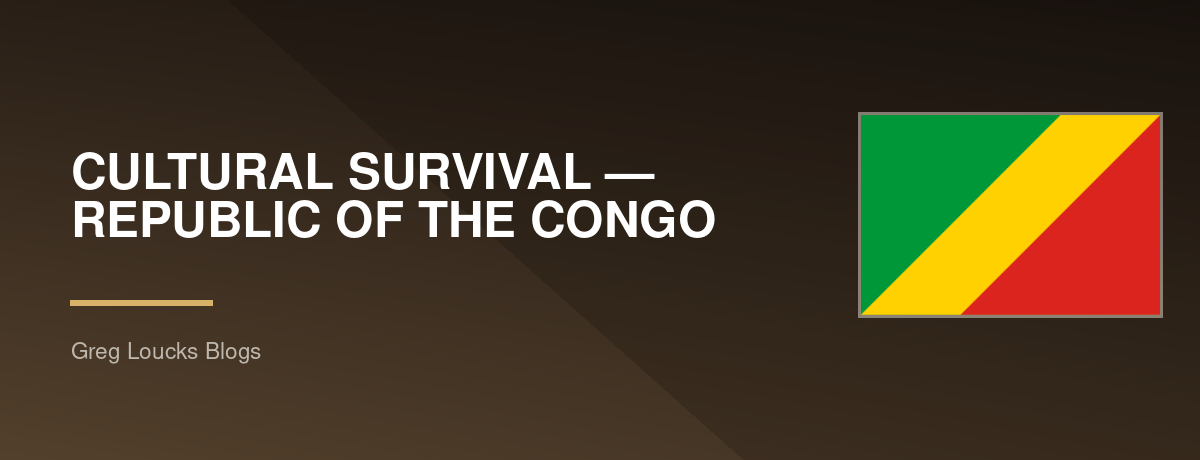
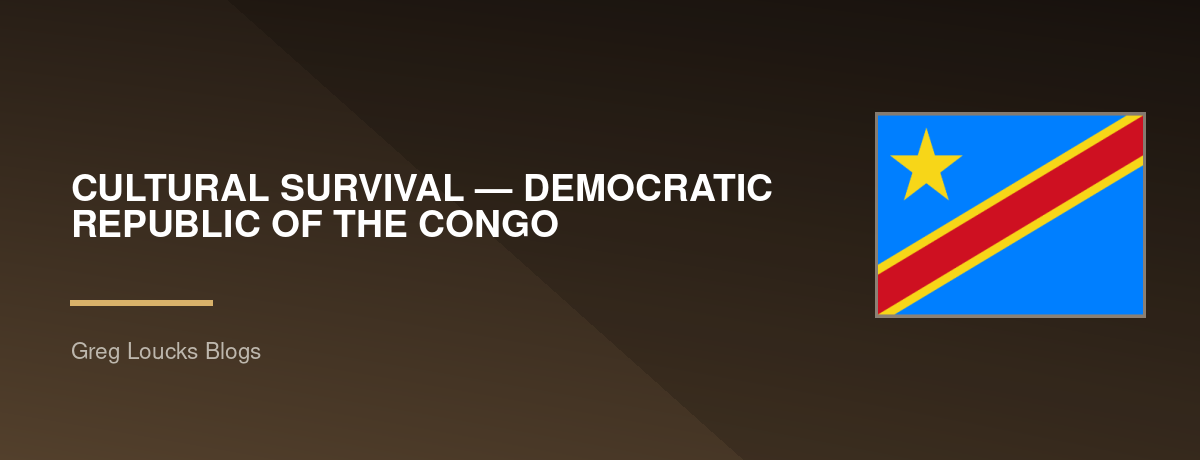
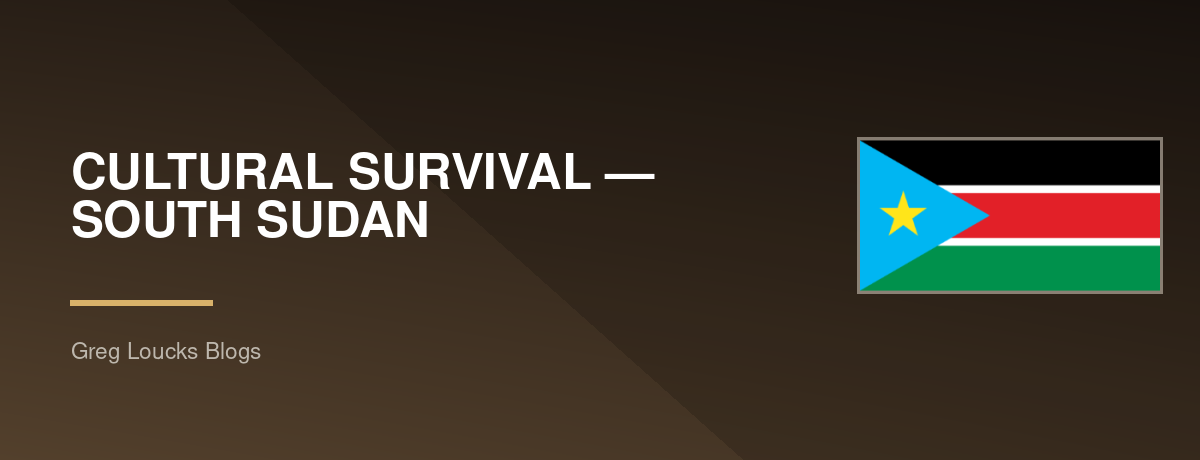

Comments and reactions 0
No comments yet. Yours would be the first.