


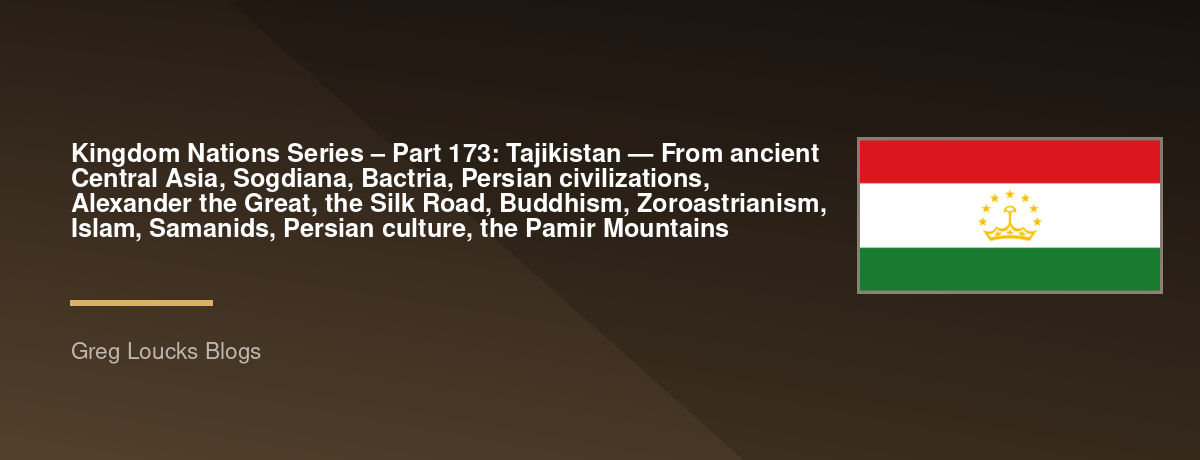
🌎 Kingdom Nations Series – Part 173: 🇹🇯 Tajikistan — From ancient Central Asia, Sogdiana, Bactria, Persian civilizations, Alexander the Great, the Silk Road, Buddhism, Zoroastrianism, Islam, Samanids, Persian culture, the Pamir Mountains
🌎 Kingdom Nations Series – Part 172 🇹🇯 Chapter 1 – Part 1 Tajikistan: The Roof of the World Ancient Central Asia, Bactria, Sogdiana, Persia, Alexander the Great, the Silk Road, Zoroastrianism, Buddhism, Islam, the Samanids, Persian Civilization, the Pamir Mountains, the Amu Darya, Dushanbe, Khujand, the Tajik Language, Persian Literature, Ismail Samani, Soviet Tajikistan, Independence, the Civil War, Agriculture, Cotton, Hydropower, Glaciers, the Pamirs, Nowruz, and Tajikistan's Kingdom Calling "The mountains shall bring peace to the people, and the little hills, by righteousness." — Psalm 72:3 Introduction Tajikistan is: A mountain nation at the heart of Central Asia. It is: One of the world's most mountainous countries. More than: Most of its territory is covered by: Mountains. The country lies between: Uzbekistan. Kyrgyzstan. China. And: Afghanistan. Its southern frontier follows: The: Panj River for significant stretches. The Panj eventually joins: The: Vakhsh to form: The: Amu Darya. Tajikistan is therefore: A nation of: Mountains. Rivers. Glaciers. Valleys. And: Ancient trade routes. Its capital is: Dushanbe. Its second major historic center is: Khujand. Its highest mountains rise within: The: Pamir Mountains. The Pamirs have earned: The title: "Roof of the World." The Land Tajikistan possesses: Some of: The most dramatic: Mountain landscapes in: Central Asia. Pamir Mountains The: Pamir Mountains occupy: Much of: Eastern Tajikistan. Pamir Plateau The eastern Pamirs contain: High: Plateaus. Deep: Valleys. And: Massive: Mountain ranges. Gorno-Badakhshan The: Gorno-Badakhshan Autonomous Region covers: Much of: Eastern Tajikistan. Pamir Highway The: Pamir Highway crosses: Some of: The most remote: Mountain landscapes in: Central Asia. Ismoil Somoni Peak Ismoil Somoni Peak is: Tajikistan's highest: Mountain. It rises to: 7,495 meters. Former Name The mountain was formerly known as: Communism Peak. Korzhenevskaya Peak Korzhenevskaya Peak is another: Major: Pamir summit. Fann Mountains The: Fann Mountains lie: In: Western Tajikistan. Seven Lakes The: Seven Lakes are: A famous: Mountain landscape in: The Fann region. Rivers Tajikistan possesses: Major: Central Asian: River sources. Amu Darya The: Amu Darya is: One of: Central Asia's greatest: Rivers. Panj The: Panj River forms: Much of: The border between: Tajikistan. And: Afghanistan. Vakhsh The: Vakhsh River is: One of: Tajikistan's most important: Rivers. Syr Darya The: Syr Darya also has: Connections to: Northern Tajikistan. Glaciers Tajikistan contains: Thousands of: Glaciers. Fedchenko Glacier The: Fedchenko Glacier is: One of: The world's longest: Mountain glaciers outside: Polar regions. Water Tajikistan possesses: Enormous: Water resources. Hydropower The country's mountains make: Hydroelectric power one of: Its greatest: Natural advantages. Nurek Dam The: Nurek Dam became: One of: The world's great: Hydroelectric projects. Rogun Dam The: Rogun Dam is: One of: The country's most ambitious: Hydroelectric projects. Mountain Nation Tajikistan's geography has: Shaped: Its: History. Economy. Culture. And: Identity. Ancient Central Asia Tajikistan lies within: An ancient: Civilizational crossroads. Bactria Parts of: Modern Tajikistan were connected with: Ancient: Bactria. Sogdiana Northern and western areas were associated with: Sogdiana. Sogdians The: Sogdians were: An ancient Iranian-speaking: People. Sogdian Traders Sogdian merchants became: Major: Traders along: The: Silk Road. Silk Road The Silk Road crossed: Central Asia. Trade Merchants transported: Silk. Spices. Metals. Horses. Textiles. Jewels. And: Ideas. Languages The Silk Road carried: Languages. Religions. Writing systems. And: Technologies. Persian Civilization Tajikistan became: Deeply connected with: The: Persian cultural world. Iranian Heritage The ancestors of: Modern Tajiks belonged to: The broader: Iranian-speaking civilization. Persian Language Persian became: A major: Language of: Culture. Government. Literature. And: Scholarship. Zoroastrianism Ancient Iranian religious traditions: Were present: Across: Central Asia. Zoroastrian Heritage Zoroastrianism influenced: The religious: Landscape of: Ancient Central Asia. Buddhism Buddhism also: Reached: Central Asia. Kushan Empire The: Kushan Empire helped connect: Central Asia. India. And: China. Buddhist Networks Buddhist communities existed: Along: Silk Road routes. Alexander the Great Alexander the Great invaded: Central Asia in: The fourth century BC. Alexander His armies encountered: Bactrian. Sogdian. And: Other: Central Asian peoples. Greek Influence Hellenistic culture became: Part of: The region's: Complex cultural history. Seleucid Empire After Alexander: The region became: Connected with: The: Seleucid world. Greco-Bactrian Kingdom The: Greco-Bactrian Kingdom emerged: In: Central Asia. Kushans The: Kushans later: Created: A major: Central Asian empire. Silk Road Civilization Central Asia became: A meeting place for: Persian. Greek. Indian. Chinese. Turkic. And: Later: Islamic cultures. Arab Conquests Islamic armies: Entered: Central Asia during: The seventh and: Eighth centuries. Islam Islam eventually became: The dominant: Religion of: The region. Persian-Islamic Civilization Persian culture and: Islamic civilization became: Deeply intertwined. Samanids One of: The most important dynasties in: Tajik cultural memory is: The: Samanid dynasty. Samanid Empire The Samanids ruled: Much of: Central Asia during: The ninth and: Tenth centuries. Bukhara Bukhara became: A major: Samanid center. Samarkand Samarkand also became: A major: Cultural center. Persian Renaissance The Samanid era is often remembered as: A major: Revival of: Persian language. Literature. And: Culture. Ismail Samani Ismail Samani became: The most famous: Samanid ruler. Dushanbe Monument A major: Monument to: Ismail Samani stands in: Dushanbe. Tajik Identity The Samanids became: An important: Symbol of: Modern Tajik national identity. Rudaki Rudaki is traditionally regarded as: One of: The founders of: Classical Persian poetry. Persian Literature Persian literature became: One of: The great intellectual traditions of: Central Asia. Ferdowsi Ferdowsi created: The: Shahnameh one of: The world's great: Epic poems. Persian Cultural World Tajikistan belongs to: A vast: Persianate cultural world that historically included: Central Asia. Iran. Afghanistan. And: Parts of: South Asia. Turkic Migrations Over centuries: Turkic peoples: Entered and: Settled across: Central Asia. Cultural Blending Iranian and: Turkic cultures interacted: For: Centuries. Mongol Invasions The: Mongol invasions transformed: Central Asia. Chagatai World Later: Turkic and: Persian traditions continued: Interacting. Timur Timur, also known as: Tamerlane, built: A powerful: Central Asian empire. Samarkand Timur made: Samarkand his: Imperial capital. Tajik Cultural Region The territories of: Modern Tajikistan remained: Connected to: The broader: Persianate world. Russian Expansion The: Russian Empire expanded into: Central Asia during: The nineteenth century. Russian Turkestan Much of: Modern Tajikistan eventually became: Part of: Russian-controlled: Central Asia. Soviet Era After the: Russian Revolution: Central Asia was: Reorganized. Tajik Autonomous Republic A Tajik autonomous republic: Was established: Within: Soviet Central Asia. Tajik Soviet Socialist Republic In: 1929 Tajikistan became: A: Soviet Socialist Republic. Dushanbe Dushanbe developed: As: The capital. Industrialization The Soviet period introduced: Factories. Infrastructure. Schools. Hospitals. And: Modern administration. Collectivization Agriculture was: Restructured under: Soviet collectivization. Cotton Cotton became: A major: Cash crop. Irrigation Large irrigation projects: Expanded: Cotton production. Environmental Costs Soviet agricultural policy: Contributed to: Serious: Water-management problems across: Central Asia. Tajik Language Tajik is: An Iranian language. Persian Connection Tajik is: Closely related to: Persian varieties spoken in: Iran. And: Dari-speaking Afghanistan. Cyrillic During the Soviet period: Tajik was: Written using: The: Cyrillic alphabet. Persian Script Historically: Tajik was: Written using: Perso-Arabic: Scripts. Tajik Identity Modern Tajik identity therefore combines: Persian linguistic heritage. Islamic civilization. Central Asian history. Soviet modernization. And: Independent nationhood. Independence Tajikistan declared: Independence in: 1991. Civil War Independence was followed by: A devastating: Civil war. Tajik Civil War The: Tajik Civil War lasted: From: 1992 to: Peace Agreement A: General Agreement on the Establishment of Peace and National Accord was signed: In: Reconstruction The country subsequently: Entered: A period of: Reconstruction. Dushanbe Dushanbe became: The center of: Modern: Tajik statehood. Dushanbe The capital's name: Literally refers to: Monday. Monday Market The name reflects: A historical: Market day. Khujand Khujand is: One of: Central Asia's oldest: Cities. Syr Darya Khujand lies: Along: The: Syr Darya. Alexander The region around: Khujand has: Ancient: Hellenistic connections. Fergana Valley Khujand is: Near: The: Fergana Valley. Fergana The Fergana Valley became: One of: Central Asia's most fertile: Regions. Panjakent Panjakent was: An important: Sogdian city. Ancient Panjakent The archaeological remains: Reveal: Sogdian: Urban culture. Sogdian Art Sogdian murals demonstrate: Remarkable: Artistic: Achievement. Sarazm Sarazm is: One of: Central Asia's most important: Ancient settlements. Sarazm Its history reaches: Back: Thousands of: Years. UNESCO Heritage Sarazm is: Recognized as: A: World Heritage Site. Iskanderkul Iskanderkul is: A famous: Mountain lake. Fann Mountains The Fann Mountains contain: Dramatic: Peaks. Lakes. And: Valleys. Pamir Culture Pamir communities maintain: Distinctive: Languages. Music. Architecture. And: Religious traditions. Pamiri Languages Several: Eastern Iranian languages are spoken: In: The Pamir region. Ismailism Many Pamiri communities: Historically follow: Nizari Ismaili Islam. Aga Khan The: Aga Khan Development Network has played: A significant role in: Development projects in: Tajikistan. Mountain Communities Pamir communities face: Difficult: Transportation. Harsh: Winters. And: Economic challenges. Traditional Houses Traditional Pamiri homes: Contain: Distinctive: Architectural features. Pamiri Music Pamiri musical traditions are: Distinctive: Cultural treasures. Nowruz Nowruz is: One of: Tajikistan's most important: Cultural celebrations. Persian New Year Nowruz marks: The: Spring equinox. Ancient Tradition Nowruz predates: Islam. Islamic Tajikistan Yet: Nowruz became: Part of: Tajik cultural life alongside: Islamic traditions. Islam Most Tajiks are: Muslim. Sunni Islam The majority belong: To: Sunni Islam. Hanafi Tradition The: Hanafi school has: Historically influenced: Tajik religious life. Ismaili Communities Ismaili communities are: Particularly prominent: In: The Pamirs. Religious Heritage Tajikistan's religious history includes: Zoroastrianism. Buddhism. Islam. And: Christian traditions. Christian History Christian communities existed: Along: Central Asian trade routes. Church of the East The: Church of the East reached: Parts of: Central Asia. Silk Road Christianity Christian missionaries: Traveled: Across: The Silk Road. Trade Tajikistan remains: A crossroads between: China. South Asia. Central Asia. And: The Middle East. China Tajikistan shares: A border with: China. Wakhan The: Wakhan Corridor of Afghanistan lies: Near: Tajikistan's southern: Pamir frontier. Afghanistan The: Panj River separates: Much of: Tajikistan from: Afghanistan. Uzbekistan Tajikistan borders: Uzbekistan to: The west. Kyrgyzstan Kyrgyzstan lies: To: The north. Mountain Passes Mountain passes connect: Tajikistan with: Neighboring: Regions. Economy Tajikistan's economy includes: Agriculture. Mining. Hydropower. Construction. Remittances. And: Trade. Aluminum Aluminum production has: Historically been: Important. TALCO The: Tajik Aluminium Company became: A major: Industrial enterprise. Cotton Cotton remains: An important: Agricultural crop. Fruits Tajikistan produces: Apricots. Grapes. Apples. And: Other: Fruit. Apricots Tajikistan is: Especially famous for: Its: Apricots. Agriculture Mountain valleys provide: Fertile: Agricultural land. Livestock Sheep. Goats. Cattle. And: Yaks are: Important in: Mountain communities. Yak Herding High-altitude Pamir communities: Rely on: Yaks for: Milk. Meat. Transport. And: Wool. Hydropower Water is: One of: Tajikistan's greatest: Natural resources. Nurek Nurek remains: A major: Hydroelectric center. Rogun Rogun is intended: To become: One of: The world's largest: Hydropower stations. Electricity Hydropower can: Transform: Tajikistan's: Economy. Regional Power Electricity exports could: Strengthen: Regional: Economic cooperation. Tourism Tajikistan possesses: Enormous: Tourism potential. Pamir Highway The Pamir Highway attracts: Adventure: Travelers. Mountains Mountaineering. Trekking. Climbing. And: Skiing are: Growing: Tourism activities. Iskanderkul Iskanderkul attracts: Visitors seeking: Mountain: Scenery. Fann Mountains The Fann Mountains offer: Some of: Central Asia's: Greatest: Trekking routes. Seven Lakes The Seven Lakes provide: Spectacular: Alpine landscapes. Cultural Tourism Ancient cities and: Archaeological sites can: Support: Cultural tourism. Silk Road Tourism Tajikistan can become: A major: Silk Road: Tourism destination. Environmental Challenges Tajikistan faces: Climate change. Glacier retreat. Water-management pressures. Deforestation. And: Natural disasters. Glacier Retreat Glaciers are: Critical: Sources of: Water. Climate Change Warming temperatures: Threaten: Mountain: Glaciers. Landslides Mountain communities face: Landslides. Floods Spring and: Summer: Flooding can: Damage: Communities. Avalanches High mountain regions face: Avalanche: Risks. Earthquakes Tajikistan is: Seismically: Active. Mountain Resilience Tajik communities have: Developed: Strong: Mountain resilience. Tajik Culture Tajik culture combines: Persian heritage. Central Asian traditions. Islamic civilization. Mountain culture. And: Soviet-era influences. Poetry Poetry is: Central to: Tajik culture. Rudaki Rudaki remains: A foundational: Cultural figure. Ferdowsi Ferdowsi's: Shahnameh remains: Important to: Persian cultural identity. Persian Poetry Tajik literature continues: The: Persian poetic tradition. Music Tajik music includes: Classical. Folk. And: Pamiri traditions. Shashmaqam Shashmaqam is: A major: Central Asian classical: Music tradition. Tajik Cuisine Tajik cuisine reflects: Central Asian: Agriculture. Plov Plov is: One of: Tajikistan's most famous: Foods. Qurutob Qurutob is: A distinctive: Tajik dish. Bread Bread is: Central to: Tajik meals. Tea Tea is: An important: Part of: Daily life. Hospitality Tajik culture places: Strong emphasis on: Hospitality. Mountains and Community Mountain life emphasizes: Family. Community. Hospitality. And: Mutual support. Tajik Identity Tajik identity is: Deeply connected to: Persian language. Nowruz. Poetry. Islam. Central Asia. And: The mountains. Kingdom Assignment Tajikistan's Kingdom assignment can be summarized as: Roof of the World nation. Pamir nation. Mountain nation. River nation. Glacier nation. Silk Road nation. Sogdian nation. Bactrian nation. Persian heritage nation. Tajik Persian-speaking nation. Samanid nation. Ismail Samani nation. Rudaki nation. Nowruz nation. Islamic nation. Ismaili Pamir nation. Hydropower nation. Agricultural nation. Cotton nation. Apricot nation. Silk Road crossroads nation. Central Asian nation. Mountain-resilience nation. Prayer for Tajikistan Pray: For Tajikistan. For Dushanbe. For Khujand. For Kulob. For Qurghonteppa. For Panjakent. For Khorugh. For every city. For every village. For every mountain community. For the Tajik people. For Pamiri peoples. For Tajik-speaking communities. For Eastern Iranian language communities. For children. For youth. For women. For men. For elders. For families. For farmers. For shepherds. For yak herders. For merchants. For teachers. For students. For doctors. For nurses. For engineers. For scientists. For entrepreneurs. For artists. For poets. For musicians. For writers. For religious communities. For Sunni Muslims. For Ismaili Muslims. For Christians. For every religious community. For religious freedom. For Tajik. For Pamiri languages. For Persian literature. For ancient languages. For schools. For universities. For libraries. For historians. For archaeologists. For cultural preservation. For Sarazm. For Panjakent. For the Sogdian heritage. For the Bactrian heritage. For the Samanid heritage. For Rudaki. For Ismail Samani. For Persian literature. For Nowruz. For the Pamir Mountains. For Gorno-Badakhshan. For the Fann Mountains. For Yaghnob Valley. For the Panj River. For the Vakhsh River. For the Amu Darya. For the Syr Darya. For the Fedchenko Glacier. For every glacier. For every mountain ecosystem. For forests. For wildlife. For snow leopards. For mountain communities. For agriculture. For cotton farmers. For fruit growers. For apricot farmers. For livestock herders. For yak herders. For hydropower. For Nurek. For Rogun. For responsible water management. For regional cooperation. For electricity development. For roads. For bridges. For the Pamir Highway. For mountain transportation. For tourism. For trekking. For mountaineering. For cultural tourism. For Silk Road tourism. For disaster preparedness. For earthquakes. For landslides. For floods. For avalanches. For glacier preservation. For climate resilience. For economic development. For honest government. For justice. For peace. For reconciliation. For Tajikistan's future generations. For Tajikistan to become: A center of Persian cultural scholarship. A center of Silk Road research. A center of mountain science. A center of hydropower. A center of sustainable agriculture. A center of ecotourism. A center of cultural preservation. A center of Central Asian cooperation. For the nations. Tajikistan Before the Throne Tajikistan has experienced: Bactria. Sogdiana. Sogdian merchants. Alexander the Great. Hellenistic kingdoms. The Kushans. Zoroastrianism. Buddhism. The Silk Road. Arab conquest. Islam. Persian civilization. The Samanids. Ismail Samani. Rudaki. Persian poetry. Turkic migrations. Mongol invasions. Timur. Russian expansion. Soviet rule. Cotton agriculture. Industrialization. Independence. Civil war. Peace. Reconstruction. And: Modern nationhood. From Bactria to Sogdiana Tajikistan demonstrates: The ancient: Complexity of: Central Asia. From Sogdians to the Silk Road Tajikistan demonstrates: The power of: Trade to move: Goods. Ideas. Languages. And: Religions. From Alexander to the Kushans Tajikistan demonstrates: How: Greek. Iranian. Indian. And: Central Asian cultures interacted. From Zoroastrianism to Islam Tajikistan demonstrates: Religious transformation over: Centuries. From the Samanids to Tajik Identity Tajikistan demonstrates: The enduring power of: Language. Literature. And: Memory. From Rudaki to Persian Poetry Tajikistan demonstrates: The importance of: Words. From the Pamirs to the Roof of the World Tajikistan demonstrates: The majesty of: Creation. From Glaciers to Rivers Tajikistan demonstrates: The connection between: Mountains. Water. And: Life. From Soviet Cotton to Hydropower Tajikistan demonstrates: The transformation of: Natural resources. From Civil War to Peace Tajikistan demonstrates: The possibility of: Reconciliation. Kingdom Perspective Tajikistan teaches: A mountain nation can carry the memory of an entire civilization through its language, poetry, rivers, trade routes, and people. Mountains Teach: Perseverance. Glaciers Teach: Provision. Rivers Teach: Connection. Silk Roads Teach: Exchange. Sogdians Teach: Commerce. Samanids Teach: Cultural renewal. Rudaki Teaches: The power of: Poetry. Nowruz Teaches: Renewal. Pamiri Communities Teach: Mountain resilience. Civil War Teaches: The cost of: Division. Peace Teaches: The possibility of: Restoration. Kingdom Calling Tajikistan's calling can be understood as: To serve as a mountain gateway between civilizations, preserving the Persian and Central Asian heritage of its people while stewarding the waters of the Pamirs, advancing peaceful regional cooperation, and becoming a center of cultural, scientific, agricultural, and ecological renewal. Tajikistan's Future Tajikistan can continue to develop: Hydropower. Agriculture. Mountain tourism. Silk Road tourism. Archaeology. Persian studies. Mountain science. Glacier research. Water management. Renewable energy. Sustainable development. Dushanbe Dushanbe can remain: The political and: Cultural heart of: Tajikistan. Khujand Khujand can remain: A gateway to: The Fergana Valley. Panjakent Panjakent can become: A major center of: Sogdian heritage. Khorugh Khorugh can remain: A center of: Pamir culture. Pamirs The Pamirs can become: A global center of: Mountain science. Water Tajikistan can become: A leader in: Responsible: Water management. Hydropower Tajikistan can become: A major: Clean-energy producer. Agriculture Tajikistan can expand: High-value: Agriculture. Tourism Tajikistan can become: A premier: Mountain destination. Culture Tajikistan can become: A major: Center of: Persian cultural scholarship. Silk Road Tajikistan can become: A bridge between: China. Central Asia. Afghanistan. And: The wider: Persian world. Final Commission May Tajikistan become a nation of: Peace. Wisdom. Strength. Hospitality. Scholarship. Stewardship. Resilience. Prosperity. May Dushanbe flourish. May Khujand flourish. May Kulob flourish. May Qurghonteppa flourish. May Panjakent flourish. May Khorugh flourish. May every city flourish. May every village flourish. May every mountain community flourish. May Tajik families flourish. May Pamiri communities flourish. May children flourish. May youth flourish. May women flourish. May men flourish. May elders receive: Honor. May farmers prosper. May shepherds prosper. May yak herders prosper. May merchants prosper. May teachers prosper. May students prosper. May doctors prosper. May nurses prosper. May engineers prosper. May scientists prosper. May entrepreneurs prosper. May artists prosper. May poets prosper. May musicians prosper. May writers prosper. May religious communities flourish. May Sunni communities flourish. May Ismaili communities flourish. May Christian communities flourish. May every religious community flourish. May religious freedom flourish. May Tajik flourish. May Pamiri languages flourish. May Persian literature flourish. May ancient-language scholarship flourish. May schools flourish. May universities flourish. May libraries flourish. May historians flourish. May archaeologists flourish. May Sarazm remain: Protected. May ancient Panjakent remain: Protected. May Sogdian heritage remain: Protected. May Bactrian heritage remain: Protected. May Samanid heritage remain: Protected. May the legacy of Ismail Samani remain: Remembered. May the poetry of Rudaki remain: Remembered. May Nowruz flourish. May the Pamirs remain: Protected. May Gorno-Badakhshan flourish. May the Fann Mountains remain: Protected. May the Yaghnob Valley remain: Protected. May the Panj remain: Healthy. May the Vakhsh remain: Healthy. May the Amu Darya remain: Healthy. May the Syr Darya remain: Healthy. May Fedchenko Glacier remain: Protected. May Tajikistan's glaciers remain: Protected. May snow leopard populations flourish. May mountain ecosystems flourish. May forests flourish. May agriculture flourish. May cotton farmers prosper. May fruit growers prosper. May apricot orchards flourish. May livestock herds flourish. May yak herders prosper. May Nurek flourish. May Rogun develop: Responsibly. May water management be: Wise. May regional electricity cooperation flourish. May roads improve. May bridges improve. May the Pamir Highway remain: A bridge between: Communities. May mountain transportation improve. May tourism flourish. May trekking flourish. May mountaineering flourish. May cultural tourism flourish. May Silk Road tourism flourish. May disaster preparedness improve. May earthquake resilience improve. May landslide protection improve. May flood protection improve. May avalanche protection improve. May glacier research flourish. May climate resilience flourish. May economic development flourish. May honest government flourish. May justice flourish. May peace flourish. May reconciliation flourish. May Tajikistan's future generations inherit: A stable nation. May Tajikistan become: A leader in Persian cultural scholarship. May Tajikistan become: A leader in Silk Road research. May Tajikistan become: A leader in mountain science. May Tajikistan become: A leader in hydropower. May Tajikistan become: A leader in sustainable agriculture. May Tajikistan become: A leader in ecotourism. May Tajikistan become: A leader in cultural preservation. May Tajikistan become: A leader in Central Asian cooperation. May Tajikistan contribute: To peace in Central Asia. May Tajikistan contribute: To responsible water sharing. May Tajikistan contribute: To the preservation of Persian culture. May Tajikistan contribute: To the flourishing of the nations. May its mountains provide: Water. May its glaciers provide: Life. May its valleys provide: Food. May its rivers provide: Energy. May its ancient cities provide: Knowledge. May its poets provide: Wisdom. May its people provide: Hospitality. And may the people of Tajikistan, together with every nation, tribe, people, and language, remember: "The mountains shall bring peace to the people, and the little hills, by righteousness." (Psalm 72:3) Amen. 🇹🇯 Kingdom Nations Series – Part 172 Tajikistan From Bactria to Sogdiana. From Sogdiana to the Silk Road. From Sogdian merchants to Central Asian trade. From Alexander the Great to Hellenistic Central Asia. From the Seleucids to the Greco-Bactrian world. From the Kushans to Buddhist Central Asia. From Zoroastrianism to Islam. From ancient Persia to Persian civilization. From Arabic conquest to Islamic Central Asia. From the Samanids to Persian cultural renewal. From Ismail Samani to Tajik identity. From Rudaki to Persian poetry. From Bukhara to Samarkand. From Persian literature to Central Asian civilization. From Turkic migrations to cultural blending. From the Mongols to Timur. From Russian expansion to Soviet Central Asia. From Soviet rule to Tajikistan. From cotton to irrigation. From irrigation to water challenges. From 1929 to the Tajik Soviet Socialist Republic. From Dushanbe to modern statehood. From 1991 to independence. From civil war to peace. From reconstruction to renewal. From Tajik Persian to modern identity. From Cyrillic to the preservation of Persian heritage. From Nowruz to spring renewal. From the Pamirs to the Roof of the World. From Ismoil Somoni Peak to mountain greatness. From the Fann Mountains to Seven Lakes. From the Panj to Afghanistan. From the Vakhsh to the Amu Darya. From the Syr Darya to the Fergana Valley. From Fedchenko Glacier to Central Asian water. From Nurek to hydropower. From Rogun to energy development. From cotton to apricots. From agriculture to mountain livelihoods. From yak herders to Pamiri communities. From Khorugh to the Pamirs. From Panjakent to Sogdian heritage. From Sarazm to ancient civilization. From Silk Road caravans to modern trade. From Persian poetry to cultural memory. From Islam to Tajik religious life. From Sunni traditions to Pamiri Ismailism. From ancient Christianity to the Silk Road. From mountain villages to regional cooperation. From glaciers to rivers. From rivers to agriculture. From rivers to electricity. From mountains to resilience. From Tajikistan to Central Asia. From Tajikistan to the Persian world. From Tajikistan to the Silk Road. From Tajikistan to the nations. From Tajikistan to the Kingdom. From the Roof of the World to the throne. End of Kingdom Nations Series – Part 172: 🇹🇯 Tajikistan Coming Next: 🌎 Kingdom Nations Series – Part 173: 🇹🇿 Tanzania — From ancient East African civilizations, Bantu migrations, Swahili coast, Kilwa, Zanzibar, Great Lakes cultures, Arab and Persian trade, Portuguese exploration, Omani Zanzibar, the slave trade and its abolition, German East Africa, Tanganyika, British rule, independence, Julius Nyerere, Ujamaa, Zanzibar, the Union of Tanganyika and Zanzibar, Dar es Salaam, Dodoma, Mount Kilimanjaro, Serengeti, Ngorongoro, Lake Victoria, Lake Tanganyika, the Indian Ocean, Maasai culture, Swahili, wildlife conservation, agriculture, tourism, and Tanzania's Kingdom calling.

Comments and reactions 0
No comments yet. Yours would be the first.