



🇩🇯 CULTURAL SURVIVAL — DJIBOUTI
PART 1 — ANCIENT LANDS, THE HORN OF AFRICA, AFAR AND ISSA PEOPLES, RED SEA TRADE, ISLAM, AND THE RISE OF THE PORT OF DJIBOUTI
From prehistoric settlement and ancient trade routes through the medieval Islamic world and the arrival of European powers
Djibouti is one of the smallest countries in Africa.
But its geographic importance is enormous.
It sits at one of the most strategically important points on Earth:
THE HORN OF AFRICA.
THE RED SEA.
THE GULF OF ADEN.
THE BAB-EL-MANDEB STRAIT.
This tiny country sits between Africa and the Arabian Peninsula.
And because of that location, people have been moving through this region for thousands of years.
Traders.
Pastoralists.
Fishermen.
Sailors.
Merchants.
Scholars.
Soldiers.
Empires.
Colonial powers.
Today, Djibouti is known for its:
PORT.
DESERT.
MILITARY BASES.
STRATEGIC LOCATION.
AFAR AND SOMALI CULTURES.
ISLAM.
But the modern republic is only the latest chapter in a much older story.
🇩🇯 THE LAND
Djibouti occupies the northeastern corner of the Horn of Africa.
It borders:
ERITREA
to the north,
ETHIOPIA
to the west and southwest,
and
SOMALIA
to the southeast.
To the east is:
THE GULF OF ADEN.
And beyond the Gulf of Aden lies:
YEMEN.
🇩🇯 A CROSSROADS OF CONTINENTS
Djibouti is positioned between:
AFRICA
and
ARABIA.
Its waters connect the:
INDIAN OCEAN
with the:
RED SEA.
🇩🇯 THE BAB-EL-MANDEB
One of the most important geographical features is the:
BAB-EL-MANDEB STRAIT.
The strait connects the Gulf of Aden with the Red Sea.
SHIPS
traveling between the Indian Ocean and the Mediterranean must pass through this general corridor.
THIS
gives Djibouti extraordinary strategic importance.
🇩🇯 THE COUNTRY IS SMALL
But its geography is enormous in historical importance.
DESERT.
VOLCANOES.
SALT LAKES.
MOUNTAINS.
COASTLINE.
CORAL REEFS.
MANGROVES.
🇩🇯 LAKE ASSAL
One of the country's most spectacular natural features is:
LAKE ASSAL.
It lies in a deep depression and is famous for its extremely high salinity.
THE LANDSCAPE
around the lake demonstrates how unusual Djibouti's geology is.
🇩🇯 THE GREAT RIFT
Djibouti lies within the geological system associated with:
THE EAST AFRICAN RIFT.
THE EARTH
is literally being pulled apart in this region.
VOLCANIC ACTIVITY.
EARTHQUAKES.
DEEP BASINS.
SALT DEPOSITS.
ALL
are part of the geological story.
🇩🇯 THIS IS A LAND OF EXTREMES
Djibouti can appear almost completely barren.
BUT
the country also contains:
CORAL REEFS.
MANGROVES.
MOUNTAIN FORESTS.
MARINE LIFE.
🇩🇯 THE FOREST OF DAY
One of the most remarkable ecosystems is the:
DAY FOREST.
It lies in the Goda Mountains.
UNESCO describes it as the remnant of an ancient primary forest and notes that it is the country's only remaining forest.
🇩🇯 WHY IS THIS IMPORTANT?
Because Djibouti is usually imagined as:
DESERT.
BUT
the country contains a surprising ecological diversity.
MOUNTAIN.
DESERT.
COAST.
MARINE.
FOREST.
🇩🇯 THE EARLIEST HUMAN HISTORY
Human history in this part of Africa stretches deep into prehistory.
THE HORN OF AFRICA
has been one of the world's great corridors of human movement.
PEOPLE
have moved through the region between:
AFRICA.
THE RED SEA.
ARABIA.
THE COAST
provided access to:
FISH.
SHELLFISH.
MARINE RESOURCES.
THE INTERIOR
provided opportunities for:
PASTORALISM.
HUNTING.
GATHERING.
🇩🇯 PASTORALISM
For thousands of years,
mobile pastoralism became an important way of life throughout the Horn of Africa.
CAMELS.
GOATS.
SHEEP.
CATTLE.
LIVESTOCK
could be moved between:
WATER.
PASTURE.
SEASONAL CAMPS.
🇩🇯 WATER
was the great challenge.
In an arid country,
water determines:
MOVEMENT.
SETTLEMENT.
TRADE.
SURVIVAL.
🇩🇯 NOMADIC LIFE
Pastoral communities developed detailed knowledge of:
WELLS.
PASTURES.
SEASONAL WEATHER.
ANIMAL ROUTES.
THIS
knowledge was transmitted across generations.
🇩🇯 THE AFAR
One of the major peoples of Djibouti is the:
AFAR.
THE AFAR
are also found across neighboring areas of:
ERITREA.
ETHIOPIA.
THEIR LANGUAGE
is:
AFAR.
AFAR
belongs to the:
CUSHITIC
branch of the Afroasiatic language family.
🇩🇯 AFAR CULTURE
Traditional Afar society developed around:
PASTORALISM.
CLANS.
CUSTOMARY LAW.
ORAL TRADITION.
ISLAM.
🇩🇯 CUSTOMARY LAW
Traditional law has been extremely important.
COMMUNITY
could be governed not only through formal government institutions,
but also through:
CUSTOM.
ELDERS.
AGREEMENTS.
MEDIATION.
🇩🇯 MADQA
UNESCO currently lists the:
MADQA
as an Afar system of oral customary law under ongoing nomination for intangible cultural heritage.
🇩🇯 THIS
is an extraordinary example of cultural survival.
A LEGAL SYSTEM
does not always need to be written in a government code to have:
AUTHORITY.
ORAL LAW
can preserve:
RIGHTS.
OBLIGATIONS.
SOCIAL RULES.
CONFLICT-RESOLUTION METHODS.
🇩🇯 THE ISSA
Another major cultural community is the:
ISSA.
The Issa are a Somali-speaking community associated with the broader Somali cultural world.
The Library of Congress notes that the Issa are Somali speakers and have historical communities extending across Djibouti, northern Somalia, and parts of Ethiopia.
🇩🇯 SOMALI CULTURE
The Issa are therefore part of a much larger:
SOMALI CULTURAL WORLD.
LANGUAGE.
POETRY.
PASTORALISM.
CLAN ORGANIZATION.
ISLAM.
ORAL TRADITION.
ALL
connect Djibouti to neighboring societies.
🇩🇯 DJIBOUTI WAS NEVER AN ISOLATED ISLAND
Modern borders can make it appear that:
DJIBOUTI.
SOMALIA.
ETHIOPIA.
ERITREA.
are completely separate cultural worlds.
HISTORICALLY,
they were deeply interconnected.
PEOPLE
moved across them.
LANGUAGES
crossed them.
FAMILIES
crossed them.
HERDS
crossed them.
TRADE
crossed them.
🇩🇯 THE RED SEA
The Red Sea was one of the great highways of the ancient world.
AFRICA
and
ARABIA
were separated by water,
but they were connected by:
SHIPS.
TRADE.
FISHING.
MIGRATION.
🇩🇯 ANCIENT TRADE
The Horn of Africa was connected to ancient commercial networks reaching toward:
EGYPT.
ARABIA.
INDIA.
GOODS
moved across the region.
FRANKINCENSE.
MYRRH.
SPICES.
ANIMAL PRODUCTS.
IVORY.
GOLD.
🇩🇯 FRANKINCENSE AND MYRRH
The Horn of Africa has long been connected with the trade in aromatic products.
THESE
were highly valuable in ancient religious and commercial systems.
TEMPLES.
PALACES.
FUNERALS.
RITUALS.
ALL
used aromatic substances.
🇩🇯 THE RED SEA NETWORK
The region therefore connected:
AFRICAN INTERIOR
with
RED SEA PORTS.
FROM THERE,
goods could travel toward:
ARABIA.
EGYPT.
MEDITERRANEAN.
🇩🇯 ADEN
Across the Gulf of Aden lies:
ADEN.
Aden became one of the great ports of the Indian Ocean world.
DJIBOUTI
would eventually develop in relation to this same maritime system.
🇩🇯 THE ANCIENT WORLD
The region was never simply a blank desert between civilizations.
IT
was a:
CROSSROADS.
🇩🇯 THE KINGDOM OF A||||
Ancient sources describe a powerful trading civilization in the wider Horn of Africa known as:
THE KINGDOM OF Aksum.
AKSUM
was centered farther west in present-day Ethiopia and Eritrea.
BUT
its economic world extended toward:
THE RED SEA.
TRADE
connected the Horn to:
ARABIA.
EGYPT.
MEDITERRANEAN MARKETS.
🇩🇯 THE COASTAL CORRIDOR
Djibouti's location placed it near these major commercial routes.
PORTS.
ANCHORAGES.
WATER SOURCES.
ALL
could become strategically valuable.
🇩🇯 ISLAM ARRIVES
From the early centuries of Islam onward,
the Horn of Africa became increasingly connected to the Islamic world.
ARABIAN MERCHANTS.
SAILORS.
SCHOLARS.
TRADERS.
ALL
crossed the Red Sea and Gulf of Aden.
🇩🇯 ISLAM
eventually became the dominant religion of the peoples living in what is now Djibouti.
TODAY
Djibouti is overwhelmingly:
MUSLIM.
BUT
Islamic culture developed alongside older:
AFRICAN.
AFAR.
SOMALI.
ARAB.
traditions.
🇩🇯 ISLAMIC TRADE
Muslim merchants connected the region to a vast commercial network.
EAST AFRICA.
ARABIA.
PERSIA.
INDIA.
GOODS
could travel across enormous distances.
🇩🇯 THE INDIAN OCEAN WORLD
Djibouti's historical position therefore belongs not only to:
AFRICA.
IT
also belongs to:
THE INDIAN OCEAN WORLD.
🇩🇯 MEDIEVAL TRADE
During the medieval period,
ports along the Horn of Africa participated in commerce involving:
LIVESTOCK.
HIDES.
IVORY.
FRAGRANCES.
FOODSTUFFS.
ENSLAVED PEOPLE.
SLAVE TRADE
was also part of the history of the Red Sea and Indian Ocean.
PEOPLE
were trafficked through regional networks.
THIS
was a painful part of the economic history of the region.
🇩🇯 TADJOURAH
One of the historic centers of Djibouti is:
TADJOURAH.
THE GULF OF TADJOURAH
penetrates deeply into the country.
ITS LOCATION
made it an important maritime corridor.
🇩🇯 TADJOURAH
became associated with:
TRADE.
ISLAM.
FISHING.
PASTORAL COMMUNITIES.
REGIONAL COMMERCE.
🇩🇯 OBOCK
Another historic coastal settlement is:
OBOCK.
OBOCK
lies along the Gulf of Aden near the Bab-el-Mandeb.
IT
became extremely important during the nineteenth century.
BUT
its history goes back further.
🇩🇯 THE COAST AND YEMEN
Obock's maritime connections with Yemen were especially important.
UNESCO describes Obock as a historic city whose inhabitants have long had connections with the sea, fishing, and Yemen.
🇩🇯 YEMENI CONNECTIONS
Arab communities became part of the social and commercial life of the region.
MERCHANTS.
SAILORS.
TRADERS.
FAMILIES.
ALL
could cross the Gulf of Aden.
🇩🇯 THE ARAB PRESENCE
The relationship between the Horn and Arabia was therefore not simply:
AFRICA
versus
ARABIA.
IT
was a:
SHARED MARITIME WORLD.
🇩🇯 LANGUAGE
Djibouti's modern linguistic situation reflects this history.
FRENCH
became important through colonialism.
ARABIC
has deep religious and historical significance.
SOMALI
is central to the country's Somali-speaking communities.
AFAR
is central to Afar communities.
🇩🇯 FOUR WORLDS
Modern Djibouti therefore sits at the intersection of:
AFRICAN LANGUAGES.
ARABIC.
FRENCH.
ISLAMIC CULTURE.
🇩🇯 ORAL TRADITION
One of the most important forms of cultural survival in the Horn has been:
POETRY.
SOMALI CULTURE
has a particularly powerful oral poetic tradition.
POETRY
could preserve:
HISTORY.
GENEALOGY.
POLITICAL COMMENTARY.
RELIGION.
PERSONAL MEMORY.
🇩🇯 WHY ORAL TRADITION MATTERED
For pastoral communities,
written libraries were not always accessible.
A POEM
could travel with:
THE PEOPLE.
A SONG
could cross:
THE DESERT.
A STORY
could cross:
GENERATIONS.
🇩🇯 CULTURAL MEMORY
could therefore survive without:
BOOKS.
🇩🇯 AFAR ORAL TRADITION
The same principle applies to Afar society.
CUSTOMARY LAW.
HISTORY.
GENEALOGY.
MORAL TEACHING.
ALL
could be transmitted orally.
🇩🇯 THE DESERT
The desert itself shaped culture.
PEOPLE
had to know:
WHERE WATER WAS.
WHERE:
PASTURE
could be found.
WHERE:
SALT
could be collected.
WHERE:
TRADE ROUTES
passed.
🇩🇯 CAMELS
became essential.
A CAMEL
could carry:
PEOPLE.
WATER.
FOOD.
GOODS.
ACROSS:
ARID LAND.
🇩🇯 SALT
Salt was one of the region's important resources.
LAKE ASSAL
contains enormous salt deposits.
SALT
could be transported toward:
ETHIOPIA.
TRADE
connected the coast to the interior.
🇩🇯 THE ETHIOPIAN CONNECTION
The region that is now Djibouti became increasingly connected to the Ethiopian highlands.
WHY?
Because the highlands needed access to:
THE SEA.
AND
the coast needed access to:
THE INTERIOR.
🇩🇯 THIS
created a powerful economic relationship.
COAST:
PORTS.
INTERIOR:
MARKETS.
BETWEEN THEM:
TRADE ROUTES.
🇩🇯 THE GREAT TRADE CORRIDOR
The future importance of Djibouti would ultimately depend on this relationship.
ETHIOPIA
is landlocked today.
ITS
most important maritime trade routes pass through:
DJIBOUTI.
BUT
that relationship has much deeper roots.
🇩🇯 THE ARRIVAL OF EUROPEAN POWERS
By the nineteenth century,
European imperial powers became increasingly interested in the Horn of Africa.
WHY?
Because of:
THE RED SEA.
THE SUEZ CANAL.
THE INDIAN OCEAN.
🇪🇬 THE SUEZ CANAL
The opening of the Suez Canal in:
1869
transformed global trade.
EUROPEAN SHIPS
could now travel much more directly between:
EUROPE.
THE MEDITERRANEAN.
THE RED SEA.
THE INDIAN OCEAN.
🇩🇯 THIS
made the Horn dramatically more important.
THE BAB-EL-MANDEB
became one of the world's critical maritime chokepoints.
🇫🇷 FRANCE
France became interested in establishing a presence in the region.
🇬🇧 BRITAIN
was already deeply interested in:
ADEN.
🇮🇹 ITALY
was also expanding its influence around the Red Sea.
🇪🇹 ETHIOPIA
was defending its independence and expanding its own regional influence.
🇩🇯 THE SCRAMBLE FOR THE HORN
The region became part of the broader:
SCRAMBLE FOR AFRICA.
🇫🇷 FRANCE
wanted a strategic position along the Gulf of Aden.
🇬🇧 BRITAIN
wanted to protect its route to:
INDIA.
🇮🇹 ITALY
wanted colonial territory in:
ERITREA.
SOMALIA.
🇪🇹 ETHIOPIA
wanted to maintain and expand access to:
THE SEA.
🇩🇯 THE COAST BECAME STRATEGIC
The French began negotiating with local rulers.
1862
France acquired territory around:
OBOCK
through a treaty with local leaders.
UNESCO identifies 1862 as the point when France entered the Obock region through such an agreement.
🇫🇷 THE FRENCH PRESENCE
At first,
the French presence was relatively small.
OBOCK
served as an early French base.
BUT
the French soon realized that another location offered greater potential.
🇩🇯 DJIBOUTI
The site of modern Djibouti City had enormous advantages.
IT
opened onto:
THE GULF OF ADEN.
IT
was close to:
THE BAB-EL-MANDEB.
IT
could become:
A PORT.
🇫🇷 LÉONCE LAGARDE
French administrator:
LÉONCE LAGARDE
played an important role in developing the new settlement.
🇩🇯 1890
The French administration transferred its center from Obock toward:
CAP DJIBOUTI.
UNESCO's historical description places this transfer around 1890.
🇩🇯 THE BIRTH OF DJIBOUTI CITY
The modern city began growing around this strategic coastal location.
AT FIRST
it was difficult terrain.
MARSHLAND.
HEAT.
WATER SHORTAGES.
BUT
the location was extraordinary.
🇩🇯 TRADE
European merchants arrived.
YEMENI MERCHANTS
arrived.
AFRICAN TRADERS
arrived.
THE CITY
began developing into a:
MULTICULTURAL PORT.
🇩🇯 1896
The French established Djibouti City as the capital of their new colonial territory, then known as:
FRENCH SOMALILAND.
UNESCO records 1896 as the year Djibouti became the capital of the colony known as Côte Française des Somalis.
🇩🇯 THE RAILWAY
The next great transformation came through:
RAIL.
FRANCE
wanted to connect the port of Djibouti with:
ETHIOPIA.
WHY?
Because Ethiopia had:
PEOPLE.
MARKETS.
AGRICULTURE.
LIVESTOCK.
TRADE.
AND
Djibouti had:
THE SEA.
🇩🇯 THE DJIBOUTI–ETHIOPIA RAILWAY
Construction of the railway created a powerful economic corridor.
GOODS
could move:
FROM THE ETHIOPIAN INTERIOR
to
DJIBOUTI PORT.
IMPORTS
could travel:
FROM THE PORT
to
ETHIOPIA.
🇩🇯 THIS
would ultimately transform Djibouti's destiny.
THE COUNTRY
was no longer simply a coastal pastoral society.
IT
was becoming:
A PORT ECONOMY.
🇩🇯 THE PORT
would eventually become the foundation of modern Djibouti's economy.
🇩🇯 BUT COLONIALISM CHANGED MORE THAN TRADE
The French colonial government imposed:
ADMINISTRATION.
TAXATION.
BORDERS.
POLITICAL HIERARCHIES.
LOCAL COMMUNITIES
were increasingly incorporated into:
A COLONIAL STATE.
🇩🇯 THE TWO MAJOR COMMUNITIES
The French administration governed a territory containing large:
AFAR
and
ISSA
populations.
THIS
would become politically significant.
🇩🇯 COLONIAL IDENTITY
The French eventually renamed the territory:
FRENCH TERRITORY OF THE AFARS AND ISSAS.
THIS
was more than a name.
IT
reflected the importance of the two major communities in colonial political organization.
🇩🇯 BUT
the population was not simply divided into two categories.
THERE WERE ALSO:
ARAB COMMUNITIES.
OTHER SOMALI GROUPS.
ETHIOPIANS.
EUROPEANS.
MERCHANT COMMUNITIES.
🇩🇯 THE PORT
made Djibouti increasingly cosmopolitan.
🇩🇯 CULTURAL SURVIVAL
Despite colonial rule,
the core traditions of the region remained.
AFAR PASTORALISM.
ISSA/SOMALI CULTURE.
ISLAM.
ORAL LAW.
POETRY.
FAMILY.
CLAN.
THESE
survived the transformation of:
THE STATE.
🇩🇯 THE CITY CHANGED
but the people did not simply abandon their older identities.
THEY
adapted.
🇩🇯 THIS
is the central theme of Djibouti's history.
A NOMADIC WORLD
met:
A PORT CITY.
AN AFRICAN CULTURE
met:
ARABIAN COMMERCE.
ISLAMIC TRADITION
met:
FRENCH COLONIALISM.
PASTORALISM
met:
INDUSTRIAL TRANSPORTATION.
🇩🇯 AND FROM THAT
the modern nation of Djibouti would eventually emerge.
🇩🇯 PART 1 — FINAL LESSON
Djibouti may look small on the map.
BUT
its history is enormous.
IT
is a land where:
AFRICA
meets
ARABIA.
WHERE:
THE RED SEA
meets
THE INDIAN OCEAN.
WHERE:
DESERT
meets
OCEAN.
WHERE:
PASTORALISTS
meet
MERCHANTS.
WHERE:
ORAL TRADITION
meets
WRITTEN EMPIRES.
🇩🇯 THE AFAR
preserved their:
LANGUAGE.
CUSTOMARY LAW.
PASTORAL CULTURE.
ORAL TRADITIONS.
🇩🇯 THE ISSA
preserved:
SOMALI LANGUAGE.
POETRY.
CLAN TRADITIONS.
PASTORAL CULTURE.
🇩🇯 ISLAM
connected the region to:
ARABIA.
AFRICA.
THE INDIAN OCEAN.
🇩🇯 TRADE
connected:
THE INTERIOR
to
THE SEA.
🇫🇷 THEN
France arrived.
THE PORT
began to grow.
THE RAILWAY
connected Djibouti to Ethiopia.
AND
a small coastal settlement began becoming one of the most strategically important cities in the Horn of Africa.
🇩🇯 NEXT
PART 2 — FRENCH SOMALILAND, THE RAILWAY TO ETHIOPIA, COLONIAL RULE, WORLD WARS, AFAR AND ISSA POLITICS, THE RISE OF NATIONALISM, AND THE ROAD TO INDEPENDENCE
The transformation of Djibouti from a French colonial port into a modern political territory, the impact of World War II, the 1967 referendum, the changing relationship between Afar and Issa communities, and the struggle for independence in 1977.
🇩🇯 CULTURAL SURVIVAL — DJIBOUTI
PART 2 — FRENCH SOMALILAND, THE RAILWAY TO ETHIOPIA, COLONIAL RULE, WORLD WAR II, AFAR AND ISSA POLITICS, THE RISE OF NATIONALISM, AND THE ROAD TO INDEPENDENCE
1896–1977 — From Colonial Port to Independent Republic
The creation of Djibouti as a French colonial territory transformed a region that had long been connected through pastoralism, trade, Islam, and Red Sea commerce.
The French did not create the region's history.
But they created:
A COLONIAL STATE.
They built:
A MODERN PORT.
They built:
A RAILWAY.
They imposed:
COLONIAL ADMINISTRATION.
And they drew the territory into the increasingly competitive politics of the Horn of Africa.
For the people living there, colonialism meant both:
DISRUPTION
and
OPPORTUNITY.
It created new cities and economic possibilities.
But it also introduced new political divisions and systems of control.
The story of Djibouti's road to independence therefore cannot be understood simply as:
FRANCE VS DJIBOUTI.
It was also a story of:
AFAR AND ISSA.
CITY AND COUNTRYSIDE.
PASTORALISM AND MODERNITY.
COLONIAL POWER AND LOCAL AUTHORITY.
SOMALI IDENTITY AND DJIBOUTIAN IDENTITY.
🇫🇷 FRENCH SOMALILAND
In:
1896,
Djibouti became the capital of the French colony known as:
CÔTE FRANÇAISE DES SOMALIS
or:
FRENCH SOMALILAND.
The new colonial capital was positioned at one of the most strategically valuable points in the Horn of Africa.
🇩🇯 DJIBOUTI CITY
The city grew around:
THE PORT.
THE PORT
was the reason the French were interested in the territory.
THE RAILWAY
would make the port even more important.
THE COLONIAL GOVERNMENT
therefore concentrated enormous resources in the city.
🇩🇯 A NEW KIND OF CITY
Djibouti City became a place where different worlds met.
AFAR.
ISSA.
ARAB.
ETHIOPIAN.
FRENCH.
OTHER AFRICAN.
MERCHANT COMMUNITIES.
MOSQUES
stood near:
COLONIAL BUILDINGS.
MARKETS
stood near:
EUROPEAN COMMERCIAL DISTRICTS.
CAMELS
could be seen alongside:
RAILWAY TRAINS.
🇩🇯 THE RAILWAY
The greatest economic transformation came through the:
DJIBOUTI–ETHIOPIA RAILWAY.
WHY BUILD A RAILWAY?
Because Ethiopia had:
NO DIRECT ACCESS TO THE SEA.
DJIBOUTI
had:
A NATURAL PORT.
ETHIOPIA
had:
A LARGE INTERIOR MARKET.
THE SOLUTION
was to connect them.
🇩🇯 THE RAILWAY
Construction began in the late nineteenth century.
The line eventually connected Djibouti with:
ADDIS ABABA.
🇪🇹 ADDIS ABABA
was the capital of the Ethiopian Empire.
THE RAILWAY
created a direct economic relationship between:
THE HORN'S INTERIOR
and
THE RED SEA.
🇩🇯 GOODS
could move toward the coast.
🇪🇹 ETHIOPIAN PRODUCTS
could reach:
DJIBOUTI.
IMPORTED GOODS
could move inland.
🇩🇯 THIS
transformed Djibouti into a major commercial gateway.
THE PORT
grew.
THE CITY
grew.
THE RAILWAY
grew.
THE ECONOMY
grew.
🇩🇯 BUT THE RAILWAY HAD ANOTHER EFFECT
It changed:
TIME.
BEFORE
trade depended heavily on:
CAMELS.
CARAVANS.
SEASONAL ROUTES.
NOW
goods could move by:
TRAIN.
THIS
was the beginning of a new economic era.
🇩🇯 THE RAILWAY AND LABOR
Railway construction required:
WORKERS.
LARGE NUMBERS
of workers were recruited.
PEOPLE
came from different parts of the region.
THIS
increased the population of settlements along the railway.
🇩🇯 URBANIZATION
People who had previously lived primarily through:
PASTORALISM
increasingly encountered:
WAGE LABOR.
SHOPS.
PORT JOBS.
RAILWAY JOBS.
ADMINISTRATIVE JOBS.
🇩🇯 A NEW SOCIAL CLASS
A small but growing:
URBAN WORKING CLASS
emerged.
THIS
would eventually become important in:
NATIONALISM.
🇩🇯 COLONIAL ADMINISTRATION
The French introduced a centralized colonial bureaucracy.
TAXATION.
POLICE.
COURTS.
CUSTOMS.
PERMITS.
ADMINISTRATIVE DISTRICTS.
🇩🇯 THIS
changed the relationship between people and political authority.
BEFORE COLONIAL RULE
authority often operated through:
CLANS.
ELDERS.
CUSTOMARY LAW.
RELIGIOUS LEADERS.
LOCAL RULERS.
UNDER COLONIALISM
people increasingly had to deal with:
THE COLONIAL STATE.
🇩🇯 TWO SYSTEMS
For decades,
two systems existed alongside one another.
CUSTOMARY AUTHORITY
and
COLONIAL ADMINISTRATION.
THIS
created both cooperation and conflict.
🇩🇯 ISLAM
Islam remained central to everyday life.
MOSQUES
continued operating.
RELIGIOUS SCHOLARS
continued teaching.
FAMILIES
continued following:
ISLAMIC CUSTOMS.
THE FRENCH
were therefore governing a society with a strong religious identity.
🇩🇯 FRENCH CULTURAL INFLUENCE
The colonial government expanded:
FRENCH EDUCATION.
FRENCH
became the language of:
ADMINISTRATION.
OFFICIAL DOCUMENTS.
GOVERNMENT.
FORMAL EDUCATION.
COMMERCIAL DEALINGS.
🇩🇯 BUT
French did not replace:
SOMALI.
or
AFAR.
INSTEAD,
Djibouti became increasingly:
MULTILINGUAL.
🇩🇯 LANGUAGE
This multilingual character would eventually become one of the defining features of the independent republic.
FRENCH.
ARABIC.
SOMALI.
AFAR.
🇩🇯 THE COLONIAL ECONOMY
The colonial economy was centered around:
THE PORT.
SHIPPING.
CUSTOMS.
RAILWAY.
TRADE.
DJIBOUTI
was not a plantation colony like some other African territories.
ITS VALUE
came primarily from:
LOCATION.
🇩🇯 GEOGRAPHY
was its greatest natural resource.
THE FRENCH
could control a strategically important maritime corridor without needing vast agricultural estates.
🇩🇯 THE ETHIOPIAN CONNECTION
The railway made Djibouti economically dependent upon:
ETHIOPIAN TRADE.
THIS
relationship continues today.
🇩🇯 THE PORT
became the maritime outlet for Ethiopia.
🇪🇹 ETHIOPIA
became Djibouti's most important economic partner.
🇩🇯 THIS
would become even more important after Ethiopia lost direct access to the sea following the independence of Eritrea.
🇩🇯 WORLD WAR I
The First World War affected the wider colonial world.
THE HORN OF AFRICA
was strategically important because of:
SHIPPING.
THE RED SEA.
THE SUEZ ROUTE.
BUT
the most dramatic wartime transformation would come during:
WORLD WAR II.
🇩🇯 WORLD WAR II
When World War II began,
Djibouti became strategically important to competing powers.
FRANCE
controlled the territory.
BUT
France itself became divided after the German occupation of much of France in:
1940.
🇫🇷 VICHY FRANCE
The colonial administration initially remained loyal to:
VICHY FRANCE.
🇬🇧 BRITAIN
considered the French territory strategically important.
WHY?
Because it sat next to:
BRITISH-CONTROLLED ADEN.
🇬🇧 ADEN
was a crucial British naval and commercial base.
🇩🇯 DJIBOUTI
therefore became caught between:
BRITISH.
FRENCH.
ITALIAN.
ETHIOPIAN.
interests.
🇮🇹 ITALIAN EAST AFRICA
Italy controlled:
ERITREA.
ETHIOPIA.
ITALIAN SOMALILAND.
THIS
placed Djibouti near a major theater of the war.
🇩🇯 THE BLOCKADE
British forces blockaded French Somaliland during the war.
FOOD
became scarce.
FUEL
became scarce.
MEDICINE
became scarce.
THE POPULATION
suffered.
🇩🇯 STARVATION
The wartime blockade became one of the most painful experiences in Djibouti's colonial history.
PEOPLE
had to survive under severe shortages.
TRADE
collapsed.
THE RAILWAY
was disrupted.
THE PORT
was restricted.
🇩🇯 THE LESSON
The war demonstrated something that would remain true throughout Djibouti's history:
ITS LOCATION WAS BOTH ITS GREATEST ASSET
and
ITS GREATEST VULNERABILITY.
WHEN GLOBAL TRADE WAS STRONG,
Djibouti prospered.
WHEN REGIONAL CONFLICT DISRUPTED TRADE,
Djibouti suffered.
🇩🇯 1942
The Vichy administration eventually surrendered control of the territory.
ALLIED CONTROL
was established.
THE WAR
had transformed political expectations throughout Africa.
🇩🇯 AFTER WORLD WAR II
The colonial system began changing.
AFRICAN NATIONALISM
was spreading.
PEOPLE
were increasingly asking:
WHY SHOULD EUROPEAN POWERS RULE AFRICAN TERRITORIES?
🇩🇯 POLITICAL PARTICIPATION
France gradually expanded limited political representation.
AFRICANS
could increasingly participate in:
LOCAL POLITICS.
BUT
full independence remained far away.
🇩🇯 THE RISE OF POLITICAL ORGANIZATION
Political movements began emerging.
URBAN ELITES.
MERCHANTS.
RELIGIOUS LEADERS.
WORKERS.
COMMUNITY LEADERS.
ALL
became increasingly involved in politics.
🇩🇯 MAHMOUD HARBI
One of the most important early nationalist politicians was:
MAHMOUD HARBI.
HARBI
became a major advocate for greater autonomy and political rights.
HE
was associated with Somali nationalism and with political movements seeking greater self-government.
🇩🇯 HIS POLITICS
were especially influential among:
ISSA.
BUT
politics in Djibouti were increasingly shaped by competition between:
ISSA.
and
AFAR.
🇩🇯 WHY DID THIS MATTER?
Because the colonial government had to balance:
DIFFERENT COMMUNITIES.
THE AFAR
had strong connections to:
NORTHERN DJIBOUTI.
ERITREA.
ETHIOPIA.
THE ISSA
had strong connections to:
SOUTHERN DJIBOUTI.
SOMALIA.
ETHIOPIA.
🇩🇯 THE BORDER PROBLEM
Modern national borders did not correspond neatly to cultural boundaries.
ISSA
were connected across borders.
AFAR
were connected across borders.
FAMILIES
could live on both sides of:
INTERNATIONAL BORDERS.
THIS
made nationalism complicated.
🇩🇯 TWO POSSIBLE FUTURES
Some people imagined a future connected to:
SOMALIA.
OTHERS
favored:
A SEPARATE DJIBOUTIAN STATE.
OTHERS
favored continued association with:
FRANCE.
🇩🇯 THE QUESTION
was therefore not simply:
"INDEPENDENCE OR COLONIALISM?"
IT
was:
"WHAT KIND OF INDEPENDENCE?"
🇩🇯 1958 REFERENDUM
A major referendum was held in:
1958.
THE QUESTION
concerned whether the territory would remain within the:
FRENCH COMMUNITY.
THE RESULT
favored remaining associated with France.
🇩🇯 BUT
the political struggle continued.
THE POPULATION
was changing.
URBANIZATION
was increasing.
EDUCATION
was expanding.
NATIONALISM
was growing.
🇩🇯 THE 1960s
Across Africa,
European colonial rule was collapsing.
1960
became known as:
THE YEAR OF AFRICA.
MANY
African countries became independent.
SOMALIA
became independent in:
1960.
🇩🇯 SOMALIA
The creation of the Somali Republic intensified questions about the future of French Somaliland.
SOMALI NATIONALISTS
wanted to unite Somali-speaking populations.
THIS
included communities in:
DJIBOUTI.
ETHIOPIA.
KENYA.
SOMALIA.
🇩🇯 THE IDEA
became known as:
GREATER SOMALIA.
BUT
not everyone in Djibouti supported that vision.
AFAR COMMUNITIES
had their own political interests.
SOME
feared domination by a Somali state.
🇩🇯 THIS
made independence politics extremely complicated.
THE QUESTION
was not only:
"DO WE WANT INDEPENDENCE?"
IT
was:
"WHAT HAPPENS TO OUR COMMUNITY AFTER INDEPENDENCE?"
🇩🇯 1966
French President:
CHARLES DE GAULLE
visited the territory.
NATIONALIST PROTESTS
occurred.
THE FRENCH
responded forcefully.
POLITICAL TENSIONS
continued.
🇩🇯 1967 REFERENDUM
Another referendum was held in:
1967.
THE TERRITORY
voted to remain associated with France.
ITS NAME
was changed to:
FRENCH TERRITORY OF THE AFARS AND ISSAS.
🇩🇯 THIS NAME
reflected the French government's attempt to recognize the two major communities explicitly.
BUT
it did not resolve the political problem.
NATIONALISTS
continued demanding:
INDEPENDENCE.
🇩🇯 THE 1970s
The pressure became increasingly difficult for France to ignore.
SOMALIA
supported the idea of independence.
ETHIOPIA
was concerned about regional instability.
FRANCE
wanted to preserve its strategic interests.
LOCAL POLITICIANS
wanted greater control over their own future.
🇩🇯 THE PORT
made Djibouti too strategically important for France to simply abandon without careful consideration.
🇩🇯 WHY DID FRANCE CARE?
Because Djibouti provided:
MILITARY ACCESS.
NAVAL ACCESS.
AIR ACCESS.
COMMERCIAL ACCESS.
IT
sat directly beside:
THE BAB-EL-MANDEB.
🇩🇯 THE STRATEGIC VALUE
was enormous.
EVEN TODAY,
the location remains one of the greatest geopolitical assets in Africa.
🇩🇯 THE FINAL ROAD TO INDEPENDENCE
By the mid-1970s,
the political situation had changed dramatically.
AFRICAN INDEPENDENCE
had become the norm.
COLONIALISM
was rapidly disappearing.
NATIONALISM
was stronger.
DJIBOUTI
was increasingly difficult to govern as a permanent French territory.
🇩🇯 HASSAN GOULED APTIDON
One of the central figures of the independence movement was:
HASSAN GOULED APTIDON.
HE
would become the first president of independent Djibouti.
HIS
political movement increasingly advocated:
INDEPENDENCE.
🇩🇯 THE POLITICAL BALANCE
The challenge was creating a state that could include:
ISSA.
AFAR.
ARAB.
OTHER COMMUNITIES.
THE NEW COUNTRY
could not afford to become simply:
A SOMALI STATE.
NOR
could it become simply:
AN AFAR STATE.
IT
needed to become:
DJIBOUTIAN.
🇩🇯 1977
The decisive year arrived.
A REFERENDUM
was held on independence.
THE RESULT
was overwhelmingly:
YES.
🇩🇯 JUNE 27, 1977
Djibouti became:
INDEPENDENT.
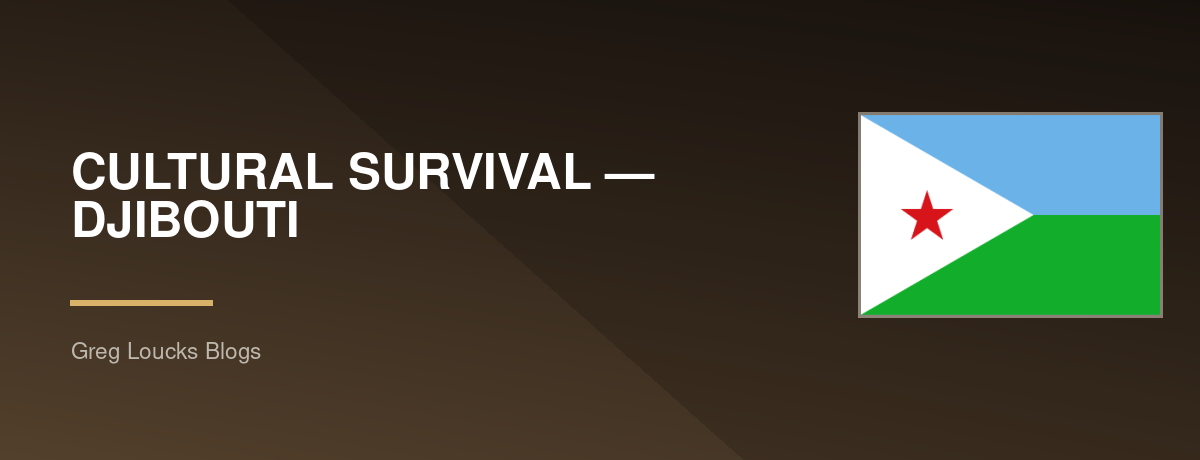
🇩🇯 THE FLAG
The new national flag contained:
LIGHT BLUE.
GREEN.
WHITE.
A RED STAR.
🇩🇯 THE SYMBOLISM
The colors represented the country's major communities and political aspirations.
BLUE
was associated with:
THE SEA.
GREEN
with:
THE LAND.
WHITE
with:
PEACE.
RED STAR
with:
UNITY.
🇩🇯 THE NEW REPUBLIC
After nearly a century of French colonial rule,
Djibouti was finally:
SOVEREIGN.
THE FRENCH FLAG
came down.
THE DJIBOUTIAN FLAG
went up.
🇩🇯 HASSAN GOULED APTIDON
became the first president.
🇩🇯 BUT INDEPENDENCE DID NOT MEAN STARTING FROM ZERO
The new republic inherited:
A PORT.
A RAILWAY.
A CITY.
A MULTILINGUAL POPULATION.
A STRATEGIC LOCATION.
A FRENCH-BASED ADMINISTRATIVE SYSTEM.
IT
also inherited:
COMMUNITY TENSIONS.
THE AFAR QUESTION.
THE ISSA QUESTION.
THE SOMALIA QUESTION.
THE ETHIOPIA QUESTION.
THE FRANCE QUESTION.
🇩🇯 THE NEW STATE
had to answer:
HOW DO WE BUILD ONE NATION?
🇩🇯 CULTURAL SURVIVAL
The people had survived colonial rule without abandoning their core cultural identities.
AFAR
remained:
AFAR.
ISSA
remained:
SOMALI.
ISLAM
remained:
CENTRAL.
ORAL TRADITIONS
remained:
ALIVE.
PASTORALISM
remained:
IMPORTANT.
BUT
the new country now had another identity:
DJIBOUTIAN.
🇩🇯 THAT
was the beginning of a new historical experiment.
PART 2 — FINAL LESSON
The colonial period transformed Djibouti permanently.
THE RAILWAY
connected:
DJIBOUTI
to
ETHIOPIA.
THE PORT
connected:
AFRICA
to
THE RED SEA.
COLONIALISM
created:
A MODERN STATE.
BUT
it also created:
POLITICAL DIVISIONS.
NATIONALISM
eventually transformed those divisions into a struggle for:
INDEPENDENCE.
🇩🇯 JUNE 27, 1977
The struggle succeeded.
DJIBOUTI
became:
A REPUBLIC.
BUT
the hardest part was still ahead.
HOW
would this tiny country survive between:
SOMALIA.
ETHIOPIA.
ERITREA.
YEMEN.
FRANCE.
and the great powers of the:
RED SEA?
🇩🇯 NEXT
PART 3 — HASSAN GOULED APTIDON, INDEPENDENCE, THE ETHIOPIA-SOMALIA CONFLICT, DJIBOUTI'S STRATEGIC SURVIVAL, THE 1991 CIVIL WAR, AFAR REBELLION, AND THE CREATION OF A FRAGILE BUT INDEPENDENT STATE
1977–1999 — Independence, Regional Wars, Refugees, Internal Rebellion, Political Consolidation, and the Struggle to Keep Djibouti From Being Pulled Apart by Its Larger Neighbors.
🇩🇯 CULTURAL SURVIVAL — DJIBOUTI
PART 3 — INDEPENDENCE, HASSAN GOULED APTIDON, REGIONAL WARS, THE AFAR REBELLION, THE 1991 CIVIL WAR, AND THE STRUGGLE TO KEEP DJIBOUTI UNITED
1977–1999 — Building a Nation Between Ethiopia, Somalia, Eritrea, and the Red Sea
When Djibouti became independent on:
JUNE 27, 1977,
it became one of Africa's newest states.
But independence did not mean that the country suddenly became secure.
Djibouti was surrounded by countries with:
LARGE POPULATIONS.
POWERFUL ARMIES.
TERRITORIAL AMBITIONS.
INTERNAL CONFLICTS.
To the west was:
ETHIOPIA.
To the southeast:
SOMALIA.
To the north:
ERITREA,
which at that time remained part of Ethiopia.
Across the Gulf of Aden:
YEMEN.
And behind Djibouti's new government stood the former colonial power:
FRANCE.
The new republic therefore faced an extraordinary challenge.
It had to remain independent without becoming dominated by any of its larger neighbors.
🇩🇯 THE FIRST PRESIDENT
The first president of independent Djibouti was:
HASSAN GOULED APTIDON.
He had been one of the leading figures in the independence movement.
HIS TASK
was enormous.
He had to transform:
A COLONIAL TERRITORY
into:
A NATIONAL STATE.
🇩🇯 WHAT DID THE NEW GOVERNMENT INHERIT?
Djibouti inherited:
A PORT.
A RAILWAY.
A CAPITAL CITY.
A SMALL ECONOMY.
A STRATEGIC LOCATION.
A MULTILINGUAL POPULATION.
A MULTIETHNIC SOCIETY.
BUT IT ALSO INHERITED:
REGIONAL TENSIONS.
WEAK INSTITUTIONS.
LIMITED NATURAL RESOURCES.
HIGH UNEMPLOYMENT.
DEPENDENCE ON FOREIGN TRADE.
🇩🇯 THE BIGGEST PROBLEM
Djibouti was extremely small.
Its neighbors were enormous by comparison.
ETHIOPIA
had a huge population.
SOMALIA
had a much larger territory.
DJIBOUTI
had only a tiny amount of land and very few natural resources.
🇩🇯 SO WHAT DID DJIBOUTI HAVE?
Its greatest asset was:
LOCATION.
THE PORT.
THE RAILWAY.
THE GULF OF ADEN.
THE BAB-EL-MANDEB.
🇩🇯 GEOGRAPHY
was the country's natural wealth.
🇩🇯 THE ETHIOPIAN CONNECTION
The relationship with Ethiopia became especially important.
ETHIOPIA
was:
LANDLOCKED.
DJIBOUTI
had:
A PORT.
THE RAILWAY
connected the two.
🇪🇹 ETHIOPIA
therefore depended heavily upon Djibouti for access to international commerce.
🇩🇯 DJIBOUTI
in turn depended heavily upon Ethiopian trade.
THIS
created a relationship of mutual dependence.
🇩🇯 THE STRATEGIC BALANCE
Djibouti had to maintain good relations with Ethiopia.
AT THE SAME TIME,
it had to maintain relations with:
SOMALIA.
🇸🇴 SOMALIA
shared deep cultural connections with Djibouti's Somali-speaking population.
LANGUAGE.
RELIGION.
CLAN.
FAMILY.
HISTORY.
🇩🇯 THE ISSA
had relatives and cultural connections across the border.
🇩🇯 THIS
created a difficult question:
HOW CAN DJIBOUTI BE A DISTINCT COUNTRY WHILE SHARING SO MUCH CULTURE WITH SOMALIA?
🇩🇯 THE ANSWER
was:
DJIBOUTIAN NATIONALISM.
NOT:
ETHIOPIAN.
NOT:
SOMALI.
NOT:
FRENCH.
BUT:
DJIBOUTIAN.
🇩🇯 THIS
became one of the central political ideas of the republic.
🇩🇯 THE ETHIOPIA-SOMALIA WAR
Djibouti's independence came at a dangerous moment in Horn of Africa history.
1977
was also the year Somalia invaded the Ethiopian Ogaden region.
🇸🇴 SOMALIA
wanted to incorporate Somali-inhabited areas of Ethiopia into a larger Somali state.
🇪🇹 ETHIOPIA
fought to maintain its territorial integrity.
THE RESULT
was:
WAR.
🇩🇯 DJIBOUTI
was caught between two sides.
IT
had strong cultural connections with Somalia.
BUT
its economic survival depended heavily upon Ethiopia.
🇩🇯 DJIBOUTI COULD NOT AFFORD TO CHOOSE ONE SIDE
If Djibouti openly aligned with Somalia,
it risked:
ETHIOPIAN HOSTILITY.
If it aligned with Ethiopia,
it risked:
SOMALI HOSTILITY.
THE SOLUTION
was to remain:
DIPLOMATICALLY BALANCED.
🇩🇯 THIS
became a recurring principle of Djiboutian foreign policy.
GOOD RELATIONS
with:
ETHIOPIA.
SOMALIA.
FRANCE.
ARAB STATES.
INTERNATIONAL POWERS.
🇩🇯 THE REFUGEE CRISIS
Regional wars created another challenge.
PEOPLE
fleeing conflict in:
ETHIOPIA.
SOMALIA.
ERITREA.
could enter Djibouti.
THE COUNTRY
had to absorb populations much larger than its own resources could comfortably support.
🇩🇯 THIS
became a recurring pattern.
Djibouti's location made it:
A REFUGE.
BUT
being a refuge came at enormous economic cost.
🇩🇯 THE COLD WAR
The Horn of Africa became one of the most strategically important regions of the:
COLD WAR.
THE UNITED STATES
supported Ethiopia at different points.
THE SOVIET UNION
supported Somalia for a period.
CUBA
also became involved on the Ethiopian side.
🇩🇯 DJIBOUTI
had to navigate the competition between:
EAST.
and
WEST.
🇫🇷 FRANCE
remained particularly important.
THE FRENCH
maintained a military presence.
WHY?
Because Djibouti remained strategically valuable.
🇩🇯 FRENCH SUPPORT
The continued French presence provided:
SECURITY.
MILITARY TRAINING.
ECONOMIC SUPPORT.
BUT
it also meant that Djibouti's independence existed alongside:
A CONTINUING FRENCH PRESENCE.
🇩🇯 THE QUESTION
was whether this represented:
PROTECTION
or
DEPENDENCE.
🇩🇯 THE GOVERNMENT
generally viewed France as an important security partner.
🇩🇯 OPPONENTS
could view the relationship as:
NEO-COLONIAL.
THIS
debate would continue for decades.
🇩🇯 ONE-PARTY POLITICS
Hassan Gouled's government became increasingly dominated by:
RPP.
The:
RASSEMBLEMENT POPULAIRE POUR LE PROGRÈS
became the ruling political organization.
POLITICAL POWER
became increasingly concentrated.
🇩🇯 WHY?
The government argued that national unity was necessary because Djibouti was:
SMALL.
VULNERABLE.
SURROUNDED BY CONFLICT.
POLITICAL DIVISION
was presented as a potential threat to:
NATIONAL SURVIVAL.
🇩🇯 BUT
the result was limited political competition.
OPPOSITION
had little room to operate.
🇩🇯 THE CENTRAL POLITICAL QUESTION
Once again,
Djibouti faced a familiar problem:
STABILITY
versus
POLITICAL PLURALISM.
🇩🇯 AFAR POLITICS
The Afar community became increasingly concerned about its political position.
THE GOVERNMENT
was increasingly dominated by Issa political networks.
MANY AFAR
felt:
EXCLUDED.
🇩🇯 WHY DID THIS MATTER?
Because the Afar were not simply a minority without political organization.
THEY
had:
CLANS.
LEADERS.
CUSTOMARY LAW.
REGIONAL CONNECTIONS.
THEY
also had connections across:
ETHIOPIA.
ERITREA.
🇩🇯 THE AFAR
therefore had their own political identity.
🇩🇯 THE FRONT FOR THE RESTORATION OF UNITY AND DEMOCRACY
In the late 1980s,
an armed movement emerged:
FRUD.
The:
FRONT FOR THE RESTORATION OF UNITY AND DEMOCRACY.
🇩🇯 FRUD
was primarily associated with:
AFAR.
ITS GRIEVANCES
included:
POLITICAL EXCLUSION.
REGIONAL MARGINALIZATION.
ECONOMIC DISPARITY.
🇩🇯 1991
The situation became dramatically worse.
ETHIOPIA
was experiencing enormous political change.
THE DERG
was collapsing.
ERITREAN REBELS
were advancing.
SOMALIA
was entering its own catastrophic collapse.
AND
Djibouti itself entered:
CIVIL WAR.
🇩🇯 THE DJIBOUTIAN CIVIL WAR
FRUD forces launched attacks against government positions.
THE FIGHTING
was concentrated particularly in:
NORTHERN DJIBOUTI.
GOVERNMENT FORCES
responded militarily.
🇩🇯 WHY WAS THIS SO DANGEROUS?
Because Djibouti's political divisions were connected to:
ETHNIC IDENTITY.
THE GOVERNMENT
was strongly associated with:
ISSA.
FRUD
was strongly associated with:
AFAR.
THIS
created the risk that political conflict could become:
ETHNIC CONFLICT.
🇩🇯 THE GOVERNMENT'S RESPONSE
The army launched operations against FRUD.
PEOPLE
were displaced.
VILLAGES
were affected.
COMMUNITIES
were divided.
🇩🇯 BUT DJIBOUTI WAS DIFFERENT FROM MANY OTHER CIVIL WARS
The government retained:
THE CAPITAL.
THE PORT.
THE MAIN INTERNATIONAL CONNECTIONS.
FRANCE
remained an important ally.
THIS
made it difficult for the rebellion to overthrow the state.
🇩🇯 FRENCH PRESENCE
France helped stabilize the government through:
MILITARY SUPPORT.
SECURITY COOPERATION.
BUT
France also encouraged:
NEGOTIATION.
🇩🇯 WHY?
Because prolonged civil war threatened French interests.
IT
could destabilize:
THE PORT.
THE RAILWAY.
THE RED SEA.
🇩🇯 THE PEACE PROCESS
Eventually,
the government and FRUD began negotiating.
1994
a major peace agreement was reached between the government and a significant faction of FRUD.
FRUD
was brought into the political process.
🇩🇯 THIS
was an important turning point.
THE GOVERNMENT
had realized:
MILITARY VICTORY
was not enough.
IT
needed:
POLITICAL INCLUSION.
🇩🇯 FRUD POLITICIANS
entered government.
THIS
helped reduce the risk of continued armed conflict.
🇩🇯 BUT
not all FRUD members accepted the settlement immediately.
A HARDLINE FACTION
continued resistance for several years.
EVENTUALLY,
another peace agreement was reached in:
2001.
🇩🇯 THE LONG-TERM RESULT
Djibouti avoided becoming another:
SOMALIA.
It avoided the complete collapse of:
THE STATE.
THAT
was an extraordinary achievement.
🇩🇯 LOOK AT THE REGION
At the same time,
Somalia was experiencing:
STATE COLLAPSE.
ETHIOPIA
was experiencing:
REGIME CHANGE.
ERITREA
was emerging as a new state.
YEMEN
was experiencing:
POLITICAL INSTABILITY.
🇩🇯 DJIBOUTI
remained:
INDEPENDENT.
ITS GOVERNMENT
survived.
ITS PORT
continued operating.
ITS STATE
did not collapse.
🇩🇯 WHY?
Several factors mattered.
1. GEOGRAPHY
The country's location made it strategically important.
2. FRANCE
France provided security support.
3. ETHIOPIA
Djibouti's relationship with Ethiopia provided an economic lifeline.
4. POLITICAL COMPROMISE
The government eventually negotiated with significant elements of the opposition.
5. NATIONAL IDENTITY
A distinct:
DJIBOUTIAN
identity increasingly developed.
🇩🇯 NATIONAL IDENTITY
This was particularly important.
THE COUNTRY
could have been swallowed politically by:
SOMALI NATIONALISM.
OR
it could have been destabilized by:
ETHIOPIAN REGIONAL POLITICS.
INSTEAD,
Djibouti developed its own:
NATIONAL STATE.
🇩🇯 DJIBOUTIAN IDENTITY
could contain:
SOMALI CULTURE.
AFAR CULTURE.
ISLAM.
ARAB CONNECTIONS.
FRENCH LANGUAGE.
THESE
did not have to be mutually exclusive.
🇩🇯 CULTURAL SURVIVAL
The civil war did not erase the traditions of the country's peoples.
AFAR
continued maintaining:
LANGUAGE.
PASTORALISM.
CUSTOMARY LAW.
ISSA
continued maintaining:
SOMALI.
POETRY.
CLAN NETWORKS.
PASTORALISM.
ISLAM
remained:
CENTRAL TO SOCIETY.
🇩🇯 PASTORALISM
Even as Djibouti became increasingly urban,
pastoralism remained important.
LIVESTOCK
continued providing:
FOOD.
INCOME.
SOCIAL STATUS.
CAMELS
remained an important cultural symbol.
🇩🇯 THE NOMADIC WORLD
was not simply destroyed by:
URBANIZATION.
IT
adapted.
PEOPLE
could have:
URBAN HOMES
and
RURAL LIVESTOCK.
🇩🇯 DJIBOUTI CITY
became the center of political and economic life.
BUT
the countryside remained culturally important.
🇩🇯 THE CITY
was increasingly connected to:
GLOBALIZATION.
SATELLITE TELEVISION.
RADIO.
FRENCH EDUCATION.
ARAB MEDIA.
INTERNATIONAL TRADE.
THE COUNTRYSIDE
remained connected to:
PASTORALISM.
CUSTOMARY LAW.
FAMILY.
CLAN.
🇩🇯 TWO WORLDS
were increasingly existing together.
MODERN.
and
TRADITIONAL.
🇩🇯 BUT
this was not necessarily a contradiction.
A DJIBOUTIAN
could be:
MODERN
and
TRADITIONAL.
MUSLIM
and
URBAN.
SOMALI
and
DJIBOUTIAN.
AFAR
and
DJIBOUTIAN.
🇩🇯 LANGUAGE
Language became another tool of national identity.
FRENCH
remained important in government.
ARABIC
remained important in religion and international relationships.
SOMALI
remained central to Somali-speaking communities.
AFAR
remained central to Afar communities.
🇩🇯 THIS
created a unique linguistic environment.
🇩🇯 THE RED SEA
Djibouti also increasingly developed relationships with:
ARAB STATES.
YEMEN.
SAUDI ARABIA.
UNITED ARAB EMIRATES.
OTHER GULF COUNTRIES.
TRADE
across the Gulf of Aden continued.
🇩🇯 THE PORT
remained the center.
🇩🇯 THE PORT ECONOMY
By the 1990s,
Djibouti's economy remained heavily dependent upon:
SERVICES.
PORTS.
TRANSPORT.
FOREIGN MILITARY PRESENCE.
THE COUNTRY
did not have large:
OIL RESERVES.
It did not have enormous:
AGRICULTURAL LAND.
It did not have:
LARGE FORESTS.
🇩🇯 THEREFORE
the country had to monetize:
LOCATION.
🇩🇯 THIS
would become the foundation of the modern economy.
🇩🇯 THE RAILWAY
The old railway remained crucial.
IT
connected:
DJIBOUTI
to
ETHIOPIA.
BUT
by the 1990s,
the railway was aging.
INFRASTRUCTURE
needed investment.
🇩🇯 THE FUTURE
would require:
MODERN PORTS.
MODERN ROADS.
MODERN RAIL.
🇩🇯 THE STRATEGIC COUNTRY
By the end of the 1990s,
Djibouti had survived its most dangerous early decades.
IT
had survived:
COLONIALISM.
IT
had survived:
REGIONAL WAR.
IT
had survived:
REFUGEE CRISES.
IT
had survived:
CIVIL WAR.
IT
had survived:
ETHNIC POLITICAL TENSION.
AND
the republic remained intact.
🇩🇯 BUT
the next chapter would transform Djibouti even more dramatically.
SOMALIA
would collapse.
ETHIOPIA
would become an increasingly important economic partner.
ERITREA
would become independent.
THE UNITED STATES
would establish a major military presence.
FRANCE
would remain.
JAPAN
would arrive.
CHINA
would arrive.
ITALY.
SPAIN.
OTHER INTERNATIONAL POWERS.
🇩🇯 THE TINY COUNTRY
would become one of the most militarized and strategically important places on Earth.
🇩🇯 PART 3 — FINAL LESSON
Djibouti survived its first decades of independence because its leaders understood one basic reality:
THE COUNTRY COULD NOT AFFORD TO BE DOMINATED BY ANY ONE OUTSIDE POWER.
IT
needed:
ETHIOPIA.
IT
needed:
SOMALIA.
IT
needed:
FRANCE.
AND EVENTUALLY,
it would need relationships with:
THE UNITED STATES.
CHINA.
JAPAN.
THE GULF STATES.
🇩🇯 BUT
foreign relationships could not replace:
NATIONAL UNITY.
The civil war demonstrated that Djibouti's greatest vulnerability was not necessarily an invading army.
IT
was:
INTERNAL DIVISION.
🇩🇯 THE AFAR–ISSA QUESTION
remained one of the country's most important political questions.
THE PEACE PROCESS
showed that:
INCLUSION
could prevent:
PERMANENT CONFLICT.
🇩🇯 CULTURAL SURVIVAL
also depended on the ability of the country to preserve:
AFAR.
SOMALI.
ISLAMIC.
ARAB.
DJIBOUTIAN.
identities simultaneously.
🇩🇯 BY 1999
Djibouti had survived.
BUT
its most extraordinary transformation was still ahead.
🇩🇯 NEXT
PART 4 — ISMAIL OMAR GUELLEH, THE WAR ON TERROR, THE AMERICAN BASE AT CAMP LEMONNIER, FRANCE, JAPAN, CHINA, ETHIOPIA'S PORT DEPENDENCE, NEW PORTS, AND DJIBOUTI'S RISE AS ONE OF THE WORLD'S MOST STRATEGIC COUNTRIES
1999–2015 — How a Tiny Desert Republic Became a Global Military and Maritime Hub at the Entrance to the Red Sea.
🇩🇯 CULTURAL SURVIVAL — DJIBOUTI
PART 4 — ISMAIL OMAR GUELLEH, THE WAR ON TERROR, CAMP LEMONNIER, FRANCE, JAPAN, CHINA, ETHIOPIA'S PORT DEPENDENCE, AND THE RISE OF DJIBOUTI AS A GLOBAL STRATEGIC HUB
1999–2015 — How a Tiny Desert Republic Became One of the Most Militarily and Economically Strategic Countries on Earth
By the end of the 1990s, Djibouti had survived the most dangerous years of its early independence.
The civil war had largely been brought under control.
The state had survived.
The port was still operating.
And the country remained independent despite being surrounded by much larger and more turbulent neighbors.
Then, in:
1999,
Djibouti entered another era.
A new president came to power:
ISMAIL OMAR GUELLEH.
He would become one of the longest-serving leaders in the country's history.
Under Guelleh,
Djibouti would transform from a small postcolonial republic into something much larger than its physical size suggested:
A GLOBAL STRATEGIC HUB.
🇩🇯 ISMAIL OMAR GUELLEH
Ismail Omar Guelleh had already been an important political figure before becoming president.
He had served as:
CHIEF OF STAFF
to President Hassan Gouled Aptidon.
HE
had therefore been deeply involved in the country's political system for years.
🇩🇯 1999
Guelleh succeeded:
HASSAN GOULED APTIDON.
THE TRANSITION
was relatively peaceful.
THIS
was significant.
Djibouti had successfully transferred presidential power without:
COUP.
CIVIL WAR.
STATE COLLAPSE.
🇩🇯 THE NEW PRESIDENT
inherited a country with major challenges.
HIGH UNEMPLOYMENT.
LIMITED NATURAL RESOURCES.
WATER SCARCITY.
POVERTY.
REGIONAL INSTABILITY.
BUT
he also inherited something incredibly valuable:
GEOGRAPHY.
🇩🇯 THE BAB-EL-MANDEB
Djibouti sits beside one of the world's most important maritime chokepoints.
SHIPS
traveling between:
THE INDIAN OCEAN
and
THE SUEZ CANAL
must pass through the wider Bab-el-Mandeb corridor.
🇩🇯 THIS
became increasingly important as global trade expanded.
🇩🇯 ETHIOPIA
Djibouti's most important economic relationship remained:
ETHIOPIA.
ETHIOPIA
had become:
LANDLOCKED.
ERITREA
had become independent in:
1993.
ETHIOPIA
therefore lost its former coastline.
🇩🇯 DJIBOUTI
became Ethiopia's primary maritime gateway.
THIS
was one of the most important geopolitical developments in Djibouti's modern history.
🇪🇹 ETHIOPIAN TRADE
Large quantities of goods moving into and out of Ethiopia passed through:
DJIBOUTI.
FUEL.
FOOD.
MACHINERY.
CONSUMER GOODS.
CONSTRUCTION MATERIALS.
ALL
could pass through Djibouti's port system.
🇩🇯 THE PORT
therefore became more than a national economic asset.
IT
became:
ETHIOPIA'S LIFELINE TO THE SEA.
🇩🇯 BUT SOMETHING ELSE WAS ABOUT TO HAPPEN
The world changed dramatically on:
SEPTEMBER 11, 2001.
🇺🇸 SEPTEMBER 11
The terrorist attacks in the United States transformed American foreign policy.
THE UNITED STATES
began the:
GLOBAL WAR ON TERROR.
🇩🇯 THE HORN OF AFRICA
became strategically important.
WHY?
Because the region sits near:
YEMEN.
SOMALIA.
THE RED SEA.
THE GULF OF ADEN.
🇩🇯 SOMALIA
had been without an effective central government since:
1991.
THE REGION
was increasingly viewed by international governments as vulnerable to:
TERRORISM.
PIRACY.
ARMS TRAFFICKING.
SMUGGLING.
🇩🇯 DJIBOUTI
offered something extremely valuable:
STABILITY.
THE GOVERNMENT
was internationally recognized.
THE PORT
was operational.
THE AIRPORT
could support military aircraft.
THE COUNTRY
had existing French military infrastructure.
🇺🇸 THE UNITED STATES
therefore became increasingly interested in Djibouti.
🇺🇸 CAMP LEMONNIER
The United States established a major military base at:
CAMP LEMONNIER.
THE BASE
was located near:
DJIBOUTI–AMBULI INTERNATIONAL AIRPORT.
🇺🇸 ITS IMPORTANCE
grew dramatically after 9/11.
THE UNITED STATES
used Djibouti as a base for operations related to:
COUNTERTERRORISM.
MARITIME SECURITY.
REGIONAL SURVEILLANCE.
HUMANITARIAN OPERATIONS.
🇩🇯 THE GEOGRAPHY
made it ideal.
FROM DJIBOUTI,
aircraft and naval forces could operate around:
SOMALIA.
YEMEN.
THE GULF OF ADEN.
THE RED SEA.
🇩🇯 THIS
gave Djibouti an extraordinary geopolitical importance.
A COUNTRY
with a relatively small population
could suddenly host military forces from:
THE UNITED STATES.
🇫🇷 FRANCE
France also maintained a major military presence.
🇯🇵 JAPAN
Japan eventually established its first overseas military base since World War II in Djibouti.
🇮🇹 ITALY
also established a military presence.
🇪🇸 SPAIN
maintained military cooperation.
🇨🇳 CHINA
would later establish an important military base.
🇩🇯 DJIBOUTI
was becoming something almost unique:
A COUNTRY FULL OF FOREIGN MILITARY BASES.
🇩🇯 WHY WOULD COUNTRIES WANT BASES HERE?
Because Djibouti offers:
LOCATION.
LOCATION.
LOCATION.
LOCATION.
🇩🇯 THE RED SEA
is one of the world's most important shipping corridors.
EUROPE.
ASIA.
AFRICA.
GLOBAL TRADE
passes through this region.
🇩🇯 THE GULF OF ADEN
connects the:
INDIAN OCEAN
to:
THE RED SEA.
🇩🇯 THE SUEZ CANAL
connects the Red Sea to:
THE MEDITERRANEAN.
THIS
creates a maritime corridor connecting:
ASIA
to
EUROPE.
🇩🇯 DJIBOUTI
sits beside the entrance.
🇩🇯 PIRACY
Then another regional security problem emerged:
SOMALI PIRACY.
🇸🇴 SOMALIA
had experienced state collapse.
SOMALI COASTAL WATERS
became associated with:
PIRACY.
COMMERCIAL SHIPS
were attacked and seized.
CREWS
were taken hostage.
SHIPPING COMPANIES
faced enormous risks.
🇩🇯 DJIBOUTI
became an important base for:
ANTI-PIRACY OPERATIONS.
INTERNATIONAL NAVIES
began patrolling the Gulf of Aden.
🇺🇸 UNITED STATES.
🇫🇷 FRANCE.
🇪🇺 EUROPEAN UNION.
🇨🇳 CHINA.
🇯🇵 JAPAN.
MANY
used Djibouti as a logistical hub.
🇩🇯 THE PORT
therefore benefited from:
MILITARY DEMAND.
COMMERCIAL DEMAND.
ETHIOPIAN DEMAND.
🇩🇯 A NEW BUSINESS MODEL
Djibouti had discovered a way to monetize its geography.
RENT THE LOCATION.
PROVIDE:
PORT SERVICES.
LOGISTICS.
FUEL.
TRANSPORT.
SECURITY.
MILITARY FACILITIES.
🇩🇯 THIS
became the foundation of the modern economy.
🇩🇯 BUT THERE WAS A PRICE
The country became increasingly dependent upon:
FOREIGN POWERS.
🇺🇸 AMERICA.
🇫🇷 FRANCE.
🇨🇳 CHINA.
🇯🇵 JAPAN.
EACH
had different:
INTERESTS.
🇺🇸 UNITED STATES
wanted:
SECURITY.
🇨🇳 CHINA
wanted:
TRADE.
INFRASTRUCTURE.
NAVAL ACCESS.
🇫🇷 FRANCE
wanted:
REGIONAL SECURITY.
STRATEGIC ACCESS.
🇯🇵 JAPAN
wanted:
MARITIME SECURITY.
🇩🇯 DJIBOUTI
had to balance them all.
🇩🇯 THE CHINESE ARRIVAL
China's relationship with Djibouti expanded dramatically during the 2010s.
CHINA
became heavily involved in:
INFRASTRUCTURE.
PORTS.
RAILWAYS.
INDUSTRIAL ZONES.
🇨🇳 CHINA
also became:
A MAJOR LENDER.
🇩🇯 THE DJIBOUTI INTERNATIONAL FREE TRADE ZONE
China-backed investment helped develop large-scale commercial infrastructure.
THE IDEA
was to turn Djibouti into:
A REGIONAL LOGISTICS HUB.
🇩🇯 THE NEW RAILWAY
One of the most important projects was the modern:
ADDIS ABABA–DJIBOUTI RAILWAY.
IT
replaced the aging colonial-era railway system.
ELECTRIC TRAINS
could move goods between:
ETHIOPIA
and
DJIBOUTI.
🇪🇹 ETHIOPIA
could move cargo to the coast more efficiently.
🇩🇯 DJIBOUTI
could increase:
PORT TRADE.
🇩🇯 THIS
was one of the greatest infrastructure transformations in the country's history.
🇩🇯 THE OLD CAMEL ROUTES
had once connected:
INTERIOR
to
COAST.
THEN:
RAILWAY.
NOW:
MODERN ELECTRIFIED RAIL.
🇩🇯 HISTORY
was repeating itself.
THE SAME GEOGRAPHY
was producing:
A NEW FORM OF TRADE.
🇩🇯 THE PORT EXPANSION
Djibouti began developing multiple modern port facilities.
DORALÉH.
DORALÉH CONTAINER TERMINAL.
DORALÉH MULTIPURPOSE PORT.
DORALÉH OIL TERMINAL.
🇩🇯 WHY DORALÉH?
Because the government wanted to transform Djibouti into:
A GLOBAL LOGISTICS CENTER.
NOT JUST:
A NATIONAL PORT.
BUT:
A REGIONAL PORT.
🇩🇯 ETHIOPIA
was the key customer.
🇪🇹 ETHIOPIAN TRADE
provided enormous cargo volumes.
🇩🇯 THE RESULT
Djibouti became increasingly dependent upon:
ETHIOPIAN ECONOMIC GROWTH.
🇪🇹 WHEN ETHIOPIA GROWS,
Djibouti benefits.
🇪🇹 WHEN ETHIOPIA EXPERIENCES:
CONFLICT.
ECONOMIC DOWNTURN.
TRADE DISRUPTION.
DJIBOUTI
can suffer.
🇩🇯 THIS
is another historical paradox.
DJIBOUTI
is politically independent.
BUT
its economy is deeply connected to:
ITS LARGER NEIGHBOR.
🇩🇯 THE PORT ECONOMY
created jobs.
BUT
not everyone benefited equally.
UNEMPLOYMENT
remained high.
POVERTY
remained significant.
WATER
remained scarce.
ELECTRICITY
could be expensive.
🇩🇯 THIS
created another contradiction.
FOREIGN MILITARIES
could spend:
MILLIONS.
PORTS
could handle:
BILLIONS.
BUT
ordinary households could still struggle.
🇩🇯 DEVELOPMENT
therefore remained one of the government's central challenges.
🇩🇯 WATER
Djibouti is one of the world's driest countries.
RAINFALL
is extremely limited.
MOST WATER
must come from:
GROUNDWATER.
DESALINATION.
IMPORTED SOURCES.
🇩🇯 CLIMATE CHANGE
makes this more difficult.
DROUGHT.
EXTREME HEAT.
WATER SCARCITY.
ALL
threaten:
LIVELIHOODS.
🇩🇯 PASTORALISTS
are particularly vulnerable.
WHEN:
PASTURE
disappears,
livestock suffer.
WHEN:
WATER
disappears,
families may be forced to:
MOVE.
🇩🇯 CLIMATE
therefore affects:
CULTURE.
PASTORALISM
cannot survive without:
PASTURE.
🇩🇯 CULTURAL SURVIVAL
requires environmental survival.
🇩🇯 THE AFAR
continue to face these pressures.
TRADITIONAL PASTORALISM
must adapt to:
CLIMATE CHANGE.
URBANIZATION.
ECONOMIC CHANGE.
🇩🇯 THE ISSA
face similar pressures.
PASTORALISM
is increasingly combined with:
URBAN LIFE.
WAGE LABOR.
TRADE.
🇩🇯 DJIBOUTI CITY
has become the dominant urban center.
PEOPLE
continue moving toward the capital.
WHY?
Because the capital offers:
JOBS.
EDUCATION.
HEALTHCARE.
GOVERNMENT SERVICES.
PORT WORK.
🇩🇯 URBANIZATION
creates opportunities.
BUT
it also creates:
INFORMAL SETTLEMENTS.
HOUSING SHORTAGES.
UNEMPLOYMENT.
INFRASTRUCTURE PRESSURE.
🇩🇯 THE CITY
is increasingly modern.
HOTELS.
OFFICES.
PORT FACILITIES.
GOVERNMENT BUILDINGS.
MILITARY FACILITIES.
BUT
behind the modern skyline are neighborhoods where:
POVERTY
remains visible.
🇩🇯 THIS
is the central development contradiction of modern Djibouti.
GLOBAL STRATEGIC IMPORTANCE
does not automatically produce:
UNIVERSAL PROSPERITY.
🇩🇯 THE MILITARY ECONOMY
Foreign military bases generate:
RENT.
EMPLOYMENT.
CONTRACTS.
SERVICES.
BUT
they can also create:
DEPENDENCE.
IF
foreign governments change their strategic priorities,
Djibouti could lose:
REVENUE.
🇩🇯 THIS
is why diversification matters.
PORTS.
LOGISTICS.
TOURISM.
FISHERIES.
RENEWABLE ENERGY.
DIGITAL SERVICES.
ALL
could become part of a more diversified economy.
🇩🇯 RENEWABLE ENERGY
Djibouti has enormous potential for:
GEOTHERMAL ENERGY.
WHY?
Because of:
VOLCANIC GEOLOGY.
THE SAME GEOLOGY
that creates:
EARTHQUAKES.
VOLCANOES.
RIFT VALLEYS.
CAN ALSO PROVIDE:
GEOTHERMAL POWER.
🇩🇯 SOLAR ENERGY
is another obvious opportunity.
DJIBOUTI
receives enormous amounts of:
SUNLIGHT.
SOLAR POWER
could help reduce dependence upon:
IMPORTED FUEL.
🇩🇯 WIND
also has potential in selected regions.
THE FUTURE
could therefore involve:
CLEAN ENERGY.
🇩🇯 THE RED SEA
also offers marine resources.
FISHING.
TOURISM.
DIVING.
COASTAL ECOSYSTEMS.
BUT
these must be developed carefully.
🇩🇯 MARINE CONSERVATION
is important because:
CORAL REEFS.
MANGROVES.
FISH.
MARINE LIFE.
ALL
are vulnerable to:
CLIMATE CHANGE.
POLLUTION.
OVERFISHING.
🇩🇯 THE 2000s AND 2010s
therefore transformed Djibouti from a small strategic port into:
A GLOBAL CROSSROADS.
🇩🇯 LOOK AT THE MAP
Within a relatively small area,
you can find:
AMERICAN FORCES.
FRENCH FORCES.
CHINESE FORCES.
JAPANESE FORCES.
ITALIAN FORCES.
OTHER INTERNATIONAL MILITARY PERSONNEL.
🇩🇯 FEW PLACES ON EARTH
contain such a concentration of foreign military powers.
🇩🇯 WHY?
Because whoever has access to Djibouti has access to:
THE RED SEA.
THE GULF OF ADEN.
EAST AFRICA.
THE SUEZ CORRIDOR.
🇩🇯 THIS
makes Djibouti one of the most strategically valuable countries in Africa.
🇩🇯 BUT STRATEGIC IMPORTANCE IS NOT NEW
The French knew it.
THE BRITISH KNEW IT.
THE ETHIOPIANS KNEW IT.
THE SOMALIS KNEW IT.
THE AMERICANS KNOW IT.
THE CHINESE KNOW IT.
THE JAPANESE KNOW IT.
🇩🇯 THE GEOGRAPHY
has remained the same.
WHAT CHANGED
was the:
TECHNOLOGY.
CAMEL CARAVANS
became:
RAILWAYS.
RAILWAYS
became:
CONTAINER SHIPS.
CONTAINER SHIPS
became:
GLOBAL LOGISTICS NETWORKS.
🇩🇯 AND
the same tiny piece of coastline remained at the center.
🇩🇯 CULTURAL SURVIVAL IN THE GLOBAL ERA
The danger now is not colonial conquest.
IT
is:
CULTURAL HOMOGENIZATION.
GLOBAL MEDIA
can overwhelm local cultures.
FRENCH.
ARABIC.
ENGLISH.
GLOBAL POP CULTURE.
🇩🇯 YOUNG DJIBOUTIANS
can now access:
AMERICAN MUSIC.
ARAB MUSIC.
FRENCH MUSIC.
AFRICAN MUSIC.
THIS
creates opportunities.
BUT
local traditions can be pushed aside.
🇩🇯 LANGUAGE PRESERVATION
is therefore essential.
AFAR
must be documented.
SOMALI
must be documented.
ORAL HISTORY
must be recorded.
CUSTOMARY LAW
must be preserved.
🇩🇯 THE MADQA
Traditional Afar customary law is an especially important example.
IF
young people no longer learn:
CUSTOMARY LAW,
a major part of Afar cultural identity could disappear.
🇩🇯 CULTURAL SURVIVAL
therefore requires:
RECORDING.
TEACHING.
DIGITIZING.
PRACTICING.
🇩🇯 THE SAME IS TRUE OF POETRY
Poetry should not simply be treated as:
OLD TRADITION.
IT
can become:
DIGITAL CONTENT.
PODCASTS.
VIDEOS.
AUDIO ARCHIVES.
SCHOOL MATERIALS.
🇩🇯 CULTURE
can enter the digital world without disappearing into it.
🇩🇯 PART 4 — FINAL LESSON
The presidency of Ismail Omar Guelleh coincided with one of the greatest transformations in Djibouti's modern history.
BEFORE:
SMALL POSTCOLONIAL STATE.
AFTER:
GLOBAL STRATEGIC HUB.
BEFORE:
ONE MAJOR FOREIGN PARTNER.
AFTER:
MULTIPLE GLOBAL POWERS.
BEFORE:
AGING RAILWAY.
AFTER:
MODERN RAIL CONNECTION.
BEFORE:
LOCAL PORT.
AFTER:
REGIONAL LOGISTICS SYSTEM.
BEFORE:
LIMITED INTERNATIONAL MILITARY ROLE.
AFTER:
MULTIPLE FOREIGN MILITARY BASES.
🇩🇯 BUT
the transformation created a new challenge.
HOW
does a small country maintain:
SOVEREIGNTY
while hosting some of the world's most powerful militaries?
HOW
does it maintain:
CULTURAL IDENTITY
while becoming increasingly global?
HOW
does it create:
PROSPERITY
when its economy depends heavily upon:
FOREIGN TRADE?
HOW
does it protect:
PASTORAL CULTURE
when:
CLIMATE CHANGE
is reducing traditional livelihoods?
🇩🇯 THESE
are the questions of modern Djibouti.
AND
the next stage of the story will show just how important Djibouti became in the twenty-first century.
🇩🇯 NEXT
PART 5 — CHINA'S MILITARY BASE, THE BELT AND ROAD INITIATIVE, ETHIOPIA'S ECONOMIC RISE, PORT COMPETITION, THE RED SEA CRISIS, SOMALIA, YEMEN, CLIMATE CHANGE, AND DJIBOUTI'S STRUGGLE TO BALANCE THE WORLD'S GREAT POWERS
2015–2024 — How China, the United States, France, Japan, Ethiopia, and Gulf powers transformed Djibouti into one of the most contested strategic spaces on Earth.
🇩🇯 CULTURAL SURVIVAL — DJIBOUTI
PART 5 — CHINA, THE BELT AND ROAD INITIATIVE, FOREIGN MILITARY POWERS, ETHIOPIA, PORT COMPETITION, THE RED SEA CRISIS, AND THE STRUGGLE FOR SOVEREIGNTY
2015–2024 — How a Tiny Country Became One of the Most Contested Strategic Spaces on Earth
By the middle of the 2010s, Djibouti had become something extraordinary.
It was one of Africa's smallest countries.
Yet within its borders were military forces representing:
THE UNITED STATES.
FRANCE.
JAPAN.
ITALY.
And increasingly:
CHINA.
At the same time, the country was becoming the principal maritime gateway for:
ETHIOPIA.
And the waters surrounding Djibouti were becoming increasingly important because of:
SOMALIA.
YEMEN.
THE RED SEA.
THE GULF OF ADEN.
This was no longer simply the story of a small African republic.
It had become a story about:
GLOBAL POWER.
🇩🇯 2015 — A NEW ERA
The year:
2015
marked an important period in Djibouti's transformation.
China's economic involvement was expanding rapidly.
🇨🇳 CHINA
was looking for:
PORTS.
RAILWAYS.
TRADE ROUTES.
LOGISTICS.
STRATEGIC ACCESS.
🇨🇳 BELT AND ROAD
China's:
BELT AND ROAD INITIATIVE
was beginning to reshape infrastructure across Africa and Asia.
DJIBOUTI
was perfectly positioned for this strategy.
WHY?
Because the country sits at the entrance to:
THE RED SEA.
🇨🇳 CHINA'S INTEREST
was initially presented primarily in economic terms.
PORTS.
TRADE.
INFRASTRUCTURE.
INDUSTRIAL DEVELOPMENT.
BUT
Djibouti also had another feature that made it extraordinarily valuable:
MILITARY ACCESS.
🇨🇳 2017
China opened its first overseas military support base in:
DJIBOUTI.
🇨🇳 THE CHINESE BASE
was located near:
DORALÉH.
ITS LOCATION
placed Chinese military forces close to:
THE RED SEA.
THE GULF OF ADEN.
EAST AFRICA.
🇨🇳 WHY DJIBOUTI?
Because the country provides access to one of the world's most important maritime corridors.
CHINA
is heavily dependent upon international maritime trade.
CHINESE GOODS
travel through:
THE INDIAN OCEAN.
RED SEA.
SUEZ CANAL.
MEDITERRANEAN.
🇨🇳 THEREFORE
the security of the Red Sea corridor matters directly to China.
🇩🇯 THE CHINESE BASE
could support:
ANTI-PIRACY OPERATIONS.
EVACUATION OPERATIONS.
LOGISTICS.
NAVAL DEPLOYMENTS.
BUT
its existence also demonstrated something much larger.
🇨🇳 CHINA
had become:
A GLOBAL MILITARY POWER.
🇩🇯 AND
Djibouti was now part of China's:
GLOBAL STRATEGIC NETWORK.
🇩🇯 THE AMERICAN RESPONSE
The United States was already operating:
CAMP LEMONNIER.
🇺🇸 CAMP LEMONNIER
had become one of America's most important bases in Africa.
FROM DJIBOUTI
the United States could conduct operations involving:
SOMALIA.
YEMEN.
THE RED SEA.
EAST AFRICA.
🇺🇸 THIS
gave Djibouti an unusual distinction.
AMERICA
and
CHINA
were now operating military facilities:
IN THE SAME SMALL COUNTRY.
🇩🇯 THIS
would have been almost unimaginable only a few decades earlier.
🇫🇷 FRANCE
also remained.
🇯🇵 JAPAN
remained.
🇮🇹 ITALY
remained.
🇩🇯 DJIBOUTI
had become:
A MILITARY CROSSROADS.
🇩🇯 THE COUNTRY'S STRATEGY
Djibouti's leadership understood something very important.
NEVER DEPEND ENTIRELY ON ONE POWER.
🇫🇷 FRANCE
could provide:
SECURITY.
🇺🇸 UNITED STATES
could provide:
MILITARY COOPERATION.
🇨🇳 CHINA
could provide:
INFRASTRUCTURE.
🇯🇵 JAPAN
could provide:
DEVELOPMENT AND MARITIME SECURITY COOPERATION.
🇪🇹 ETHIOPIA
could provide:
TRADE.
🇸🇦 GULF STATES
could provide:
INVESTMENT.
🇩🇯 THIS
was a diplomatic balancing act.
🇩🇯 THE RISK
was that the great powers might eventually compete so intensely that Djibouti would be forced to choose sides.
🇩🇯 THE OPPORTUNITY
was that Djibouti could extract benefits from all of them.
🇩🇯 THE PORT ECONOMY
The central question remained:
WHAT DOES DJIBOUTI SELL?
OIL?
No.
GOLD?
No.
COCOA?
No.
LARGE AGRICULTURAL EXPORTS?
No.
🇩🇯 IT SELLS:
ACCESS.
ACCESS TO:
THE SEA.
THE PORT.
THE RAILWAY.
THE REGION.
THE MILITARY CORRIDOR.
🇩🇯 LOCATION
became:
THE NATIONAL BUSINESS MODEL.
🇩🇯 DORALÉH
The Doraléh area became increasingly important.
CONTAINERS.
BULK CARGO.
FUEL.
VEHICLES.
INDUSTRIAL GOODS.
ALL
could pass through Djibouti.
🇪🇹 ETHIOPIA
remained the largest reason.
🇪🇹 ETHIOPIA
had a population of more than:
100 MILLION PEOPLE.
🇩🇯 DJIBOUTI
had only a fraction of that population.
🇪🇹 ETHIOPIA
therefore represented an enormous market.
🇩🇯 THE RELATIONSHIP
could be summarized simply:
ETHIOPIA NEEDS THE SEA.
DJIBOUTI NEEDS ETHIOPIAN TRADE.
🇩🇯 THIS
made the two countries economically intertwined.
🇩🇯 THE NEW RAILWAY
The modern:
ADDIS ABABA–DJIBOUTI RAILWAY
became one of the most important infrastructure projects in the region.
🇪🇹 ADDIS ABABA
could now be connected to:
DJIBOUTI PORT
by modern rail.
🇩🇯 THIS
reduced dependence on:
LONG-DISTANCE ROAD TRANSPORT.
TRAINS
could carry:
CONTAINERS.
FUEL.
INDUSTRIAL GOODS.
FOOD.
🇩🇯 HISTORY HAD COME FULL CIRCLE.
1890s:
FRENCH RAILWAY.
2010s:
MODERN ELECTRIFIED RAILWAY.
SAME GEOGRAPHY.
NEW TECHNOLOGY.
🇩🇯 THE ETHIOPIAN ECONOMY
As Ethiopia developed into one of Africa's largest economies,
Djibouti's importance increased.
ETHIOPIA'S GROWTH
created:
MORE IMPORTS.
MORE EXPORTS.
MORE CONTAINERS.
MORE FUEL.
🇩🇯 MORE BUSINESS
for Djibouti.
🇩🇯 BUT ETHIOPIA
also wanted alternatives.
WHY?
Because dependence upon one port creates:
VULNERABILITY.
🇪🇹 ETHIOPIA
began exploring other maritime routes.
BERBERA.
PORT SUDAN.
KENYAN PORTS.
🇩🇯 THIS
created competition.
🇩🇯 DJIBOUTI
could not assume that Ethiopian trade would remain permanently guaranteed.
THEREFORE:
PORT COMPETITION.
🇸🇴 SOMALILAND
The development of:
BERBERA PORT
became especially significant.
BERBERA
is located across the Gulf of Aden in:
SOMALILAND.
🇦🇪 UAE
became heavily involved in the development of Berbera.
🇪🇹 ETHIOPIA
also developed an interest in access to Berbera.
🇩🇯 THIS
created a strategic challenge for Djibouti.
THE COUNTRY
had spent decades building itself into:
ETHIOPIA'S GATEWAY TO THE SEA.
NOW
another gateway was emerging.
🇩🇯 THE RESPONSE
was to continue investing in:
PORT QUALITY.
LOGISTICS.
RAIL.
FREE TRADE.
INDUSTRIAL ZONES.
🇩🇯 COMPETITION
could therefore push Djibouti to become:
MORE EFFICIENT.
🇩🇯 THE GULF POWERS
Another major group entered the picture:
THE GULF STATES.
🇦🇪 UNITED ARAB EMIRATES
became deeply involved in Red Sea infrastructure.
🇸🇦 SAUDI ARABIA
also had strategic interests.
🇶🇦 QATAR
had its own regional relationships.
🇩🇯 WHY?
Because the Red Sea connects:
GULF.
AFRICA.
EUROPE.
🇩🇯 RED SEA POLITICS
became increasingly complex.
YEMEN
was experiencing civil war.
SOMALIA
was struggling with:
AL-SHABAAB.
ETHIOPIA
was dealing with:
INTERNAL POLITICAL CONFLICT.
ERITREA
was emerging from decades of isolation.
SUDAN
was experiencing instability.
🇩🇯 DJIBOUTI
was located in the middle of all of it.
🇩🇯 YEMEN
Across the Gulf of Aden,
Yemen descended into a devastating war.
2014–2015
the Yemeni conflict escalated dramatically.
🇸🇦 SAUDI ARABIA
and its allies intervened militarily.
🇮🇷 IRAN
was accused by its opponents of supporting the Houthi movement.
🇾🇪 THE HOUTHIS
controlled large parts of Yemen, including:
SANAA.
🇩🇯 DJIBOUTI
was only a short distance across the water.
🇩🇯 THIS
made Yemen's instability a direct security concern.
REFUGEES
also crossed the Gulf.
PEOPLE
fleeing Yemen reached:
DJIBOUTI.
🇩🇯 THE COUNTRY
again became:
A REFUGE.
🇩🇯 BUT
this time the refugee crisis was arriving from across the sea.
🇩🇯 RED SEA SECURITY
The Yemeni war also increased the importance of:
MARITIME SECURITY.
SHIPPING
had to pass through dangerous waters.
NAVIES
increased patrols.
DJIBOUTI
became even more valuable as a:
LOGISTICS HUB.
🇩🇯 THE 2020s
Then came another major transformation.
🇩🇯 RED SEA SHIPPING
again became a major international security issue.
2023–2024
attacks on commercial shipping in the Red Sea and Gulf of Aden dramatically increased the strategic importance of the Bab-el-Mandeb corridor.
🇾🇪 HOUTHI ATTACKS
Commercial vessels were targeted amid the regional conflict.
🇺🇸 UNITED STATES.
🇬🇧 UNITED KINGDOM.
🇪🇺 EUROPEAN COUNTRIES.
ALL
became increasingly involved in protecting shipping.
🇩🇯 DJIBOUTI
was again positioned at:
THE CENTER.
🇩🇯 THIS
demonstrated a fundamental truth about Djibouti.
WHEN THE RED SEA IS PEACEFUL,
Djibouti is important.
WHEN THE RED SEA IS IN CRISIS,
Djibouti becomes:
EVEN MORE IMPORTANT.
🇩🇯 THE ECONOMIC COST
But regional conflict can also hurt Djibouti.
SHIPPING COMPANIES
may reroute vessels around:
THE CAPE OF GOOD HOPE.
THIS
can reduce traffic through:
THE RED SEA.
🇩🇯 THAT MEANS
a security crisis thousands of miles away can directly affect:
DJIBOUTI'S ECONOMY.
🇩🇯 THIS
shows the vulnerability of a country whose economic model depends heavily upon:
GLOBAL TRADE.
🇩🇯 THE COVID-19 PANDEMIC
Then came:
2020.
THE COVID-19 PANDEMIC
disrupted:
GLOBAL TRADE.
TRAVEL.
PORT OPERATIONS.
TOURISM.
SUPPLY CHAINS.
🇩🇯 DJIBOUTI
was affected like the rest of the world.
BUT
the country's strategic position remained.
PORTS
continued to be important.
LOGISTICS
continued to matter.
🇩🇯 THE PANDEMIC
demonstrated another lesson:
GLOBALIZATION IS POWERFUL.
BUT
it is also:
VULNERABLE.
🇩🇯 THE DEBT QUESTION
Chinese infrastructure investment brought major opportunities.
BUT
it also generated debate about:
DEBT.
🇨🇳 CHINESE LOANS
helped finance:
RAILWAYS.
PORTS.
INDUSTRIAL INFRASTRUCTURE.
🇩🇯 CRITICS
warned that Djibouti could become overly dependent upon:
CHINA.
🇨🇳 SUPPORTERS
argued that infrastructure investment could transform the country's economy.
🇩🇯 THE REALITY
was more complicated.
CHINA
was not Djibouti's only major partner.
🇺🇸 UNITED STATES.
🇫🇷 FRANCE.
🇯🇵 JAPAN.
🇪🇺 EUROPE.
GULF STATES.
ETHIOPIA.
ALL
had important relationships with Djibouti.
🇩🇯 THE COUNTRY
therefore possessed something valuable:
CHOICE.
BUT
choice requires:
DIPLOMATIC SKILL.
🇩🇯 BALANCING CHINA AND AMERICA
This became one of the most interesting geopolitical features of Djibouti.
🇺🇸 AMERICA
saw China's growing military presence as strategically significant.
🇨🇳 CHINA
saw American military presence as part of a broader global security architecture.
🇩🇯 DJIBOUTI
had to work with:
BOTH.
🇩🇯 THIS
is not easy.
IF
Djibouti becomes too close to one side,
the other may become concerned.
IF
Djibouti maintains good relations with everyone,
it can maximize:
INVESTMENT.
SECURITY.
TRADE.
🇩🇯 DIPLOMACY
therefore becomes one of Djibouti's most valuable national resources.
🇩🇯 THE UNITED STATES
America's military presence remained substantial.
CAMP LEMONNIER
became a major platform for American operations in Africa and the Middle East.
DRONES.
AIRCRAFT.
SPECIAL OPERATIONS.
LOGISTICS.
🇩🇯 THIS
made Djibouti deeply connected to American national security policy.
🇨🇳 CHINA
China's base created a similar connection.
NAVAL VESSELS.
LOGISTICS.
EVACUATION OPERATIONS.
ANTI-PIRACY MISSIONS.
🇨🇳 CHINA
could project maritime power farther into:
THE INDIAN OCEAN.
🇯🇵 JAPAN
Japan's presence was also significant.
JAPAN
had become deeply concerned about:
PIRACY.
SHIPPING SECURITY.
ITS BASE
supported maritime patrols.
🇫🇷 FRANCE
France remained an especially important partner.
THE FRENCH MILITARY
had historical relationships with Djibouti.
🇩🇯 THE FRENCH PRESENCE
therefore represented continuity between:
COLONIAL HISTORY
and
MODERN STRATEGIC PARTNERSHIP.
🇩🇯 THIS
raises an important historical question:
WHEN DOES A FORMER COLONIAL RELATIONSHIP BECOME A MODERN ALLIANCE?
THE ANSWER
is complicated.
FRANCE
is no longer Djibouti's colonial ruler.
DJIBOUTI
is a sovereign state.
BUT
the two countries remain:
DEEPLY CONNECTED.
🇩🇯 CULTURAL SURVIVAL
The political transformation has been enormous.
BUT
ordinary cultural life continues.
🇩🇯 ISLAM
remains central.
MOSQUES
remain major community institutions.
RAMADAN
remains important.
FAMILY
remains important.
CLAN.
COMMUNITY.
ORAL TRADITION.
ALL
remain part of social life.
🇩🇯 SOMALI CULTURE
Poetry continues to matter.
MUSIC
continues to evolve.
WEDDINGS
continue combining:
ISLAMIC.
SOMALI.
DJIBOUTIAN.
traditions.
🇩🇯 AFAR CULTURE
Afar traditions also continue.
CUSTOMARY LAW.
PASTORALISM.
ORAL HISTORY.
COMMUNITY STRUCTURES.
🇩🇯 BUT CULTURE IS CHANGING
Young Djiboutians increasingly live:
DIGITAL LIVES.
SMARTPHONES.
SOCIAL MEDIA.
ONLINE VIDEO.
MUSIC STREAMING.
THE GLOBAL WORLD
is now available:
IN YOUR POCKET.
🇩🇯 THIS
creates a new form of cultural competition.
WHO
will tell the stories of Djibouti?
INTERNATIONAL MEDIA?
OR
DJIBOUTIANS THEMSELVES?
🇩🇯 THE ANSWER
should be:
DJIBOUTIANS.
🇩🇯 DIGITAL CULTURAL PRESERVATION
The country has an opportunity to build:
DIGITAL ARCHIVES.
RECORD:
AFAR LANGUAGE.
RECORD:
SOMALI POETRY.
RECORD:
TRADITIONAL MUSIC.
RECORD:
GENEALOGIES.
RECORD:
CUSTOMARY LAW.
RECORD:
ORAL HISTORY.
🇩🇯 THIS
could ensure that modernization does not become:
CULTURAL AMNESIA.
🇩🇯 THE ENVIRONMENT
Another challenge is:
CLIMATE CHANGE.
DJIBOUTI
is extremely vulnerable.
EXTREME HEAT.
DROUGHT.
WATER SCARCITY.
DESERTIFICATION.
COASTAL PRESSURES.
🇩🇯 PASTORALISTS
can be particularly vulnerable.
LIVESTOCK
need:
WATER.
GRASS.
WHEN BOTH DISAPPEAR,
traditional livelihoods become increasingly difficult.
🇩🇯 URBANIZATION
can therefore accelerate.
PEOPLE
move toward:
DJIBOUTI CITY.
🇩🇯 BUT
the city must then provide:
HOUSING.
WATER.
EDUCATION.
HEALTHCARE.
JOBS.
🇩🇯 THE FUTURE
therefore depends upon balancing:
ECONOMIC DEVELOPMENT
with
ENVIRONMENTAL RESILIENCE.
🇩🇯 THE BLUE ECONOMY
Djibouti also has an opportunity to develop its:
OCEAN ECONOMY.
FISHERIES.
MARITIME SERVICES.
TOURISM.
PORT SERVICES.
MARINE RESEARCH.
🇩🇯 TOURISM
could focus on:
LAKE ASSAL.
DAY FOREST.
GULF OF TADJOURAH.
CORAL REEFS.
MOUNTAIN LANDSCAPES.
🇩🇯 BUT
tourism must be carefully managed.
OTHERWISE
the same fragile environments that attract visitors could be damaged.
🇩🇯 THE FUTURE OF DJIBOUTI
By the end of the 2010s and beginning of the 2020s,
Djibouti had become:
WEALTHIER.
MORE CONNECTED.
MORE STRATEGIC.
MORE GLOBAL.
BUT
it remained:
VULNERABLE.
DEPENDENCE ON ETHIOPIA.
DEPENDENCE ON FOREIGN MILITARY RENT.
DEPENDENCE ON GLOBAL SHIPPING.
DEPENDENCE ON IMPORTED FOOD.
WATER SCARCITY.
🇩🇯 THE CENTRAL QUESTION
is therefore:
CAN DJIBOUTI TURN GEOGRAPHY INTO LASTING NATIONAL DEVELOPMENT?
NOT JUST:
RENT THE LOCATION.
BUT:
BUILD A KNOWLEDGE ECONOMY.
NOT JUST:
HOST FOREIGN BASES.
BUT:
EDUCATE ITS PEOPLE.
NOT JUST:
MOVE OTHER COUNTRIES' GOODS.
BUT:
BUILD DJIBOUTIAN BUSINESSES.
NOT JUST:
PRESERVE TRADITIONS IN MUSEUMS.
BUT:
TEACH THEM TO THE NEXT GENERATION.
🇩🇯 PART 5 — FINAL LESSON
Djibouti's greatest asset is still:
LOCATION.
BUT LOCATION ALONE
does not guarantee survival.
THE COUNTRY
has survived because it has repeatedly adapted.
CARAVANS
became:
RAILWAYS.
RAILWAYS
became:
CONTAINER PORTS.
COLONIAL MILITARY PRESENCE
became:
MULTINATIONAL SECURITY PARTNERSHIPS.
REGIONAL TRADE
became:
GLOBAL LOGISTICS.
🇩🇯 THE NEXT TRANSFORMATION
must be:
HUMAN DEVELOPMENT.
EDUCATION.
HEALTHCARE.
JOBS.
TECHNOLOGY.
CULTURAL PRESERVATION.
ENVIRONMENTAL RESILIENCE.
🇩🇯 THE COUNTRY
cannot change its geography.
AND
it does not need to.
THE SAME GEOGRAPHY
that made Djibouti vulnerable for centuries
is also what gives it:
POWER.
🇩🇯 THE QUESTION
is how that power will be used.

Comments and reactions 0
No comments yet. Yours would be the first.